Article

Antibiotic Resistance of Escherichia coli and Salmonella Isolates from Table Eggs, Poultry Sausages, and Clinical Samples in Southwest Benin


1
Communicable Disease Research Unit, Applied Research Laboratory, Polytechnic School of Abomey-Calavi, University of Abomey-Calavi, Cotonou P.O. Box 2009, Benin
2
Laboratory of Food Sciences, Faculty of Veterinary Medicine, FARAH-Veterinary Public Health, University of Liege, 4000 Liege, Belgium
3
Laboratory of Food Sciences and Technology, Faculty of Agronomic Sciences, University of Abomey-Calavi, Jericho, Cotonou P.O. Box 2819, Benin
*
Author to whom correspondence should be addressed.
Submission received: 23 December 2025 / Revised: 4 February 2026 / Accepted: 5 February 2026 / Published: 11 February 2026
(This article belongs to the Section Food Hygiene and Safety)

Abstract

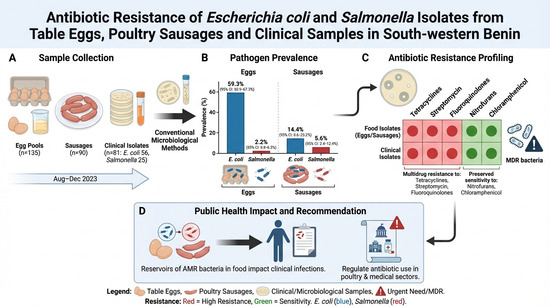
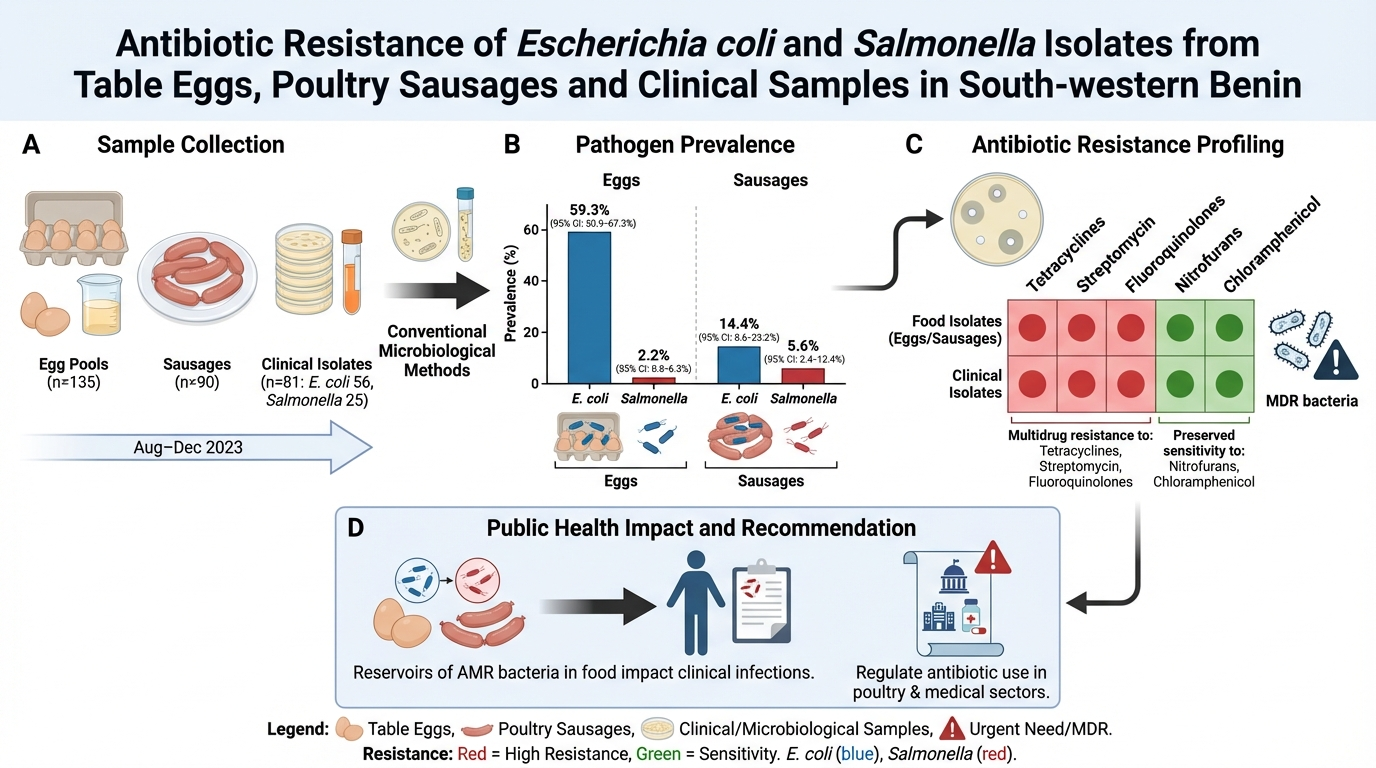
Antimicrobial resistance (AMR) in foodborne pathogens poses a major public health risk in Benin. Table eggs and poultry sausages have been identified as potential reservoirs of resistant bacteria. Nevertheless, the lack of integrated AMR data from food and clinical sources limits the ability to assess public health risks and design evidence-based interventions. Therefore, this study aimed to determine the prevalence of Escherichia coli and Salmonella in table eggs and poultry sausages and to evaluate the antibiotic resistance profile of isolates from these foods and clinical samples alongside clinical isolates. A total of 135 table egg pools, 90 poultry sausages, and 81 clinical isolates of E. coli (56) and Salmonella (25) were collected between August and December 2023. Table eggs and poultry sausages were analysed for Escherichia coli and Salmonella using conventional methods. Antibiotic resistance (n = 99 isolates) was tested using Kirby–Bauer disc diffusion. Clinical isolates (n = 77) were included for comparison. High Escherichia coli prevalence (eggs: 59.3%, 95% CI: 50.9–67.3%; sausages: 14.4%, 95% CI: 8.6–23.2%) and lower Salmonella prevalence (eggs: 2.2%, 95% CI: 0.8–6.3%; sausages: 5.6%, 95% CI: 2.4–12.4%) were observed. According to antibiotic resistance data, predominant multidrug resistance to tetracyclines, streptomycin, and fluoroquinolones, followed by preserved sensitivity to nitrofurans and chloramphenicol, was noticed. These findings highlight the urgent need to regulate antibiotic use in Benin’s poultry and medical sectors.

Graphical Abstract

1. Introduction

In sub-Saharan Africa, poultry farming is becoming more intensive, yet in many countries, such as Benin, it remains largely informal and continues to play a major role in family agriculture and poverty reduction [1,2,3]. Eggs are widely consumed worldwide because they are affordable, highly nutritious, and can be stored for several weeks in their natural state, although storage conditions may affect their internal and external quality over time [4,5]. However, data on antimicrobial resistance (AMR) in poultry products (eggs and sausages) and associated clinical isolates remain scarce, limiting targeted intervention [6,7,8]. In 2023, the laying hen population in Benin was estimated at 1,068,000 birds, producing approximately 17,388 tonnes of eggs in 2023 [9]. This nearly corresponds to 289.8 million table eggs with an average unit weight of 60 g from both traditional and modern systems [10]. In parallel, the demand for processed poultry products, particularly sausages, has increased steadily in Benin, driven by urbanization and changing dietary habits. Local needs are partly met by imports, which can reach around 280 tonnes of poultry sausages per month, and partly by the recent development of domestic charcuterie industries producing finely textured sausages [11,12]. These consumption trends heighten AMR contamination risks, as imported and processed poultry products often harbor multidrug-resistant bacteria (e.g., E. coli, Salmonella) introduced via chicks/eggs and amplified by inadequate hygiene and cold chain controls. These products are highly perishable and require strict compliance with hygiene standards, food safety regulations, and cold chain management, yet in Benin, food processing beyond fresh meat slaughter remains limited, and controls over manufacturing, storage, and retail conditions are often insufficient [12]. Eggs and poultry meat products harbor pathogens such as Salmonella enterica, pathogenic E. coli, Enterobacter cloacae, Klebsiella, Enterococcus, and Staphylococcus, contaminating shells, contents, and minced meat [13]. Sausages are particularly vulnerable due to the grinding, mixing, and stuffing steps, favoring cross-contamination and biofilms persisting on surfaces under suboptimal cleaning [14]. Escherichia coli is a commensal inhabitant of the intestinal tract of humans and warm-blooded animals and is released into the environment through faeces and wastewater [15]. Salmonella enterica is one of the most important foodborne pathogens globally and has been associated with tens of millions of gastroenteritis cases and hundreds of thousands of deaths each year, with poultry meat and eggs identified as major vehicles in many outbreaks [16]. Furthermore, biofilms formed by Salmonella and pathogenic E. coli on eggshells, processing equipment, and food-contacting surfaces significantly enhance pathogen persistence and resistance to sanitizers, as their extracellular matrix shields bacteria from disinfectants [17,18,19]. These structured communities facilitate cross-contamination during egg handling, sausage mincing, and storage, particularly under Benin’s limited cold chain and hygiene controls. The widespread use of antibiotics in poultry production has historically improved animal health and productivity, helping to ensure regular supplies of affordable meat and eggs. However, the inclusion of antimicrobial agents in feed or water to treat, control, or prevent diseases has exerted a strong selective pressure on bacterial populations, promoting the emergence and dissemination of resistance genes, metabolic adaptation, and biofilm formation [20]. In developing countries, poultry meat consumption is projected to grow markedly in the coming years, which is likely to be accompanied by intensified production and, in the absence of strict regulations, by sustained or increased antibiotic use [21]. In Benin, veterinary drugs can often be obtained directly from clinics or pharmacies on customer request, sometimes without proper prescription, and self-medication by farmers [22,23], misuse of antimicrobial molecules, incorrect dosing, inadequate treatment duration, and failure to respect withdrawal periods are frequently reported [24]. In the human sector, antibiotic overuse and self-medication further accelerate resistance. Studies in Benin have reported high rates of hospital-acquired infections and high levels of resistance among Gram-positive and Gram-negative bacteria, including methicillin-resistant Staphylococcus aureus and third-generation cephalosporin-resistant E. coli [25]. However, data on AMR in food products of animal origin, particularly table eggs and poultry sausages, are still scarce. Possible links between foodborne isolates and clinical strains circulating in hospitals are poorly documented, which limits risk assessment and control. The key gaps hindering effective AMR control in Benin include weak multisectoral coordination, limited surveillance systems, insufficient resources, and inadequate communication and education efforts. Additionally, there are gaps in laboratory capacity, antimicrobial use monitoring, infection prevention programs, and integration of WASH practices, which collectively impede progress against antimicrobial resistance [22,26,27]. WASH refers to integrated water, sanitation, and hygiene interventions aimed at ensuring access to safe water, adequate sanitation facilities, and basic hygiene behaviours (e.g., handwashing with soap), which are essential for preventing infections and reducing antimicrobial resistance. In Benin, most available data focus either on clinical settings or on food, but rarely on both. It can be hypothesized that Escherichia coli and Salmonella isolated from table eggs and poultry sausages show high levels of resistance to antimicrobials commonly used in veterinary and human medicine. Phenotypic analyses of AMR may reveal similarities between foodborne (eggs/sausages) and clinical E. coli and Salmonella isolates, potentially indicating shared selective pressures or circulation within Benin’s food–animal–human interface. This study, therefore, aims to adopt an integrated approach to determine the prevalence and antimicrobial resistance profiles of E. coli and Salmonella in table eggs and poultry sausages, as well as in clinical samples from the National University Hospital Centre in Cotonou. It also aims to compare resistance patterns across these compartments to identify overlapping phenotypes and explore potential food–human AMR linkages to inform surveillance priorities and stewardship measures. By combining data from the food and hospital sectors, the study describes the prevalence.

2. Materials and Methods

2.1. Study Area

The present study was carried out from August to December 2023 (average temperature of 31 °C), corresponding to a dry period with minimal rainfall. Five departments in southwest Benin, Atlantique, Littoral, Mono, Ouémé, and Couffo (Figure 1), organized into two agricultural development poles (ADPs), were selected on account of their high levels of poultry meat production and consumption.

2.2. Sampling

A convenience sampling approach incorporating snowball techniques was employed to collect table egg and poultry sausage samples across the five departments. This was necessary because no exhaustive up-to-date list of poultry producers and vendors was available. Ministry lists are outdated, and the majority of farms and vendors were identified through word of mouth from local stakeholders. We analysed 135 pooled egg samples (675 eggs in total, 60 from farms and 75 commercial samples) and 90 pre-cooked poultry sausages (15 from the three most recognized local producers who agreed to collaborate and 75 imported samples). For eggs, composites of five eggs per farm were taken, and for sausages, one package of ten pieces per producer or vendor was taken. Samples were transported at 4 °C to the laboratory. Sample sizes provided reasonable precision for detecting contamination at moderate prevalence (e.g., > 99% probability of detecting ≥ 5% contaminated egg pools with n = 135, assuming independence). The results reflect sampling period conditions and may not capture full seasonality. Source distribution mirrored product availability at accessible sites rather than stratified balancing.
Additionally, 56 Escherichia coli isolates and 25 Salmonella isolates from urine, blood, and stool samples at the National University Hospital Centre of Cotonou in Benin were included. These clinical isolates were anonymised, precluding patient identification.

2.3. Microbial Analysis of Table Eggs

Microbial analysis of the table eggs involved separate enumeration, isolation, and identification of Escherichia coli and Salmonella spp. from eggshells and egg contents. Egg samples were pooled in groups of five to form composite samples and processed as per Adesiyun et al. [28] with adaptations. For eggshells, each composite sample’s surface was swabbed using a sterile, Buffered Peptone Water-moistened (BPW) swab covering the entire area. Swabs were placed in 9 mL of BPW, diluted in 90 mL BPW, and incubated at 37 °C for Salmonella detection [29]. For E. coli, 0.1 mL of the main suspension was plated onto Tryptone Bile X-Glucuronide agar (TBX) and incubated at 44 °C for 24 h [30]. Representative blue–green colonies were presumptively re-streaked on TBX for purification. For egg contents, the same composite sample was disinfected (70% ethanol, 2 min). The blunt end was flame-sterilised, and eggs were aseptically opened. Contents were pooled, homogenised, and 25 mL of the mixture were combined with 225 mL BPW. For E. coli enumeration, 0.1 mL of the neat and serial dilutions was plated on TBX agar and incubated at 44 °C for 24 h. Presumptive E. coli were identified as typical blue–green colonies purified by re-streaking on TBX.

2.4. Microbial Analysis of Poultry Sausages

Twenty-five-gram portions of both locally produced and imported poultry sausages were homogenized with 225 mL BPW for simultaneous Salmonella spp. detection and E. coli enumeration. Salmonella spp. detection followed ISO 6579-1:2017 [29], incorporating selective enrichment and plating. E. coli were quantified on TBX agar, incubated at 44 °C for 24 h. Presumptive E. coli, typical blue–green colonies were re-isolated on a fresh TBX agar for purity.

2.5. Serotyping of Salmonella Isolates and Preservation

Presumptive Salmonella isolates obtained from a xylose lysine deoxycholate (XLD) agar were confirmed biochemically with a Triple Sugar Iron (TSI) agar and API 20E strips (bioMérieux, Brussels, Belgium). Serotyping was carried out by the Belgian National Reference Laboratory for Salmonella (Sciensano, Brussels, Belgium) using classical slide agglutination according to the Kauffmann–White scheme combined with molecular genoserotyping (Luminex-based method). All isolates (Escherichia coli and Salmonella spp.) were preserved in a BHI broth containing 50% glycerol and stored at −80 °C.

2.6. Antibiotic Susceptibility Testing

Antibiograms were conducted using the Kirby–Bauer disk diffusion technique on ready-prepared Mueller–Hinton agar, in line with Clinical and Laboratory Standards Institute (CLSI) M100 30th ed. 2020 guidelines [31]. The isolates tested comprised 86 Escherichia coli and 3 Salmonella spp. from table eggs, 13 E. coli and 5 Salmonella spp. from poultry sausages, and 56 E. coli and 25 Salmonella spp. clinical isolates from urine, blood, and stool. Bacterial suspensions were standardised to 0.5 McFarland using sterile saline. Suspensions were swabbed onto Mueller–Hinton agar, and antibiotic discs (Becton Dickinson Benelux, Aalst, Belgium) were applied aseptically. Plates were incubated aerobically at 37 °C for 18–24 h. The diameter of inhibition zones was measured and interpreted according to the CLSI criteria. Ten antibiotics from six classes were included: cephalosporins (cefotaxime (CTX): 30 µg; cefuroxime (CXM): 30 µg), aminoglycoside (gentamicin (GM): 10 µg; streptomycin (S): 10 µg), cyclins (tetracycline (TE): 30 µg), quinolones and fluoroquinolones (nalidixic acid (NA): 30 µg; ciprofloxacin: 5 µg), penicillins/β-lactamase inhibitors (amoxicillin/clavulanic acid (AMC): 20/10 µg), phenicols (chloramphenicol (C): 30 µg), and furans (nitrofurantoin (F/M): 300 µg). Table 1 below presents the inhibition zone diameters (in mm) for the interpretation of antibiotic resistance test results. Multidrug resistance (MDR) was defined as resistance to ≥3 antibiotic classes [32]. Susceptibility categories (S, I, and R) were recorded and reported separately in all AST tables and figures. For multidrug resistance (MDR) classification, only resistant (R) results were considered; isolates with intermediate (I) results were not counted as resistant. Supplementary Materials (Tables S1–S3) provide the inhibition zone diameters measured for all isolates.

2.7. Statistical Analysis

All analyses were performed in R version 4.5.0. Contamination prevalence was assessed by origin (farm/commercial eggs; local/imported sausages), matrix (shell/contents), and locality via chi-squared test with 95% CI. Antibiotic resistance prevalence (%R/I/S) of shells and contents was calculated in R using Fisher’s exact test. All analyses were conducted at a 95% confidence level, with significance set at p < 0.05.

3. Results

3.1. Prevalence of Escherichia coli and Salmonella spp. in Table Eggs

Of the 135 composite egg samples analyzed, Escherichia coli was isolated from 80 samples (59.3%) across eggshells and contents. Specifically, E. coli was detected on eggshells in 76 samples (56.3%) and in egg contents in 10 samples (7.4%); six samples showed co-contamination. The prevalence was significantly higher on eggshells than in contents (56.3% vs. 7.4%, p < 0.001). For Salmonella spp., 3 of the 135 eggs (2.2%) tested positive, with 2 isolates from shells (farm—1, retail—1) and 1 from contents (farm) (see Table 2). The identified serotypes included Muenster, Larochelle, and Subsp. I 3,10:eh:-. Prevalence of E. coli varied by sampling area, with the highest in Mono (83.3%, 25/30), followed by Atlantique (46.7%), Couffo (56.7%), Ouémé (60%), and Littoral (73.3%). However, these differences were not significant (p > 0.05). Escherichia coli was found in 61.7% of farm eggs (36/60) and 66.6% of commercial eggs (50/75), with no significant differences between the sources (p ≥ 0.05).

3.2. Prevalence of Escherichia coli and Salmonella spp. in Poultry Sausages

In poultry sausages, microbiological analysis revealed contamination rates of 14.4% for Escherichia coli and 5.6% for Salmonella spp., with higher prevalence detected in locally produced samples. Fisher’s exact test revealed significant differences (p < 0.01) in E. coli and Salmonella spp. prevalence according to product origin (imported vs. local) (see Table 3). Salmonella serotypes identified were Hadar and Give (two isolates each from local sausages) and Infantis (one isolate from an imported sausage).

3.3. Antimicrobial Resistance Profiles in Table Eggs

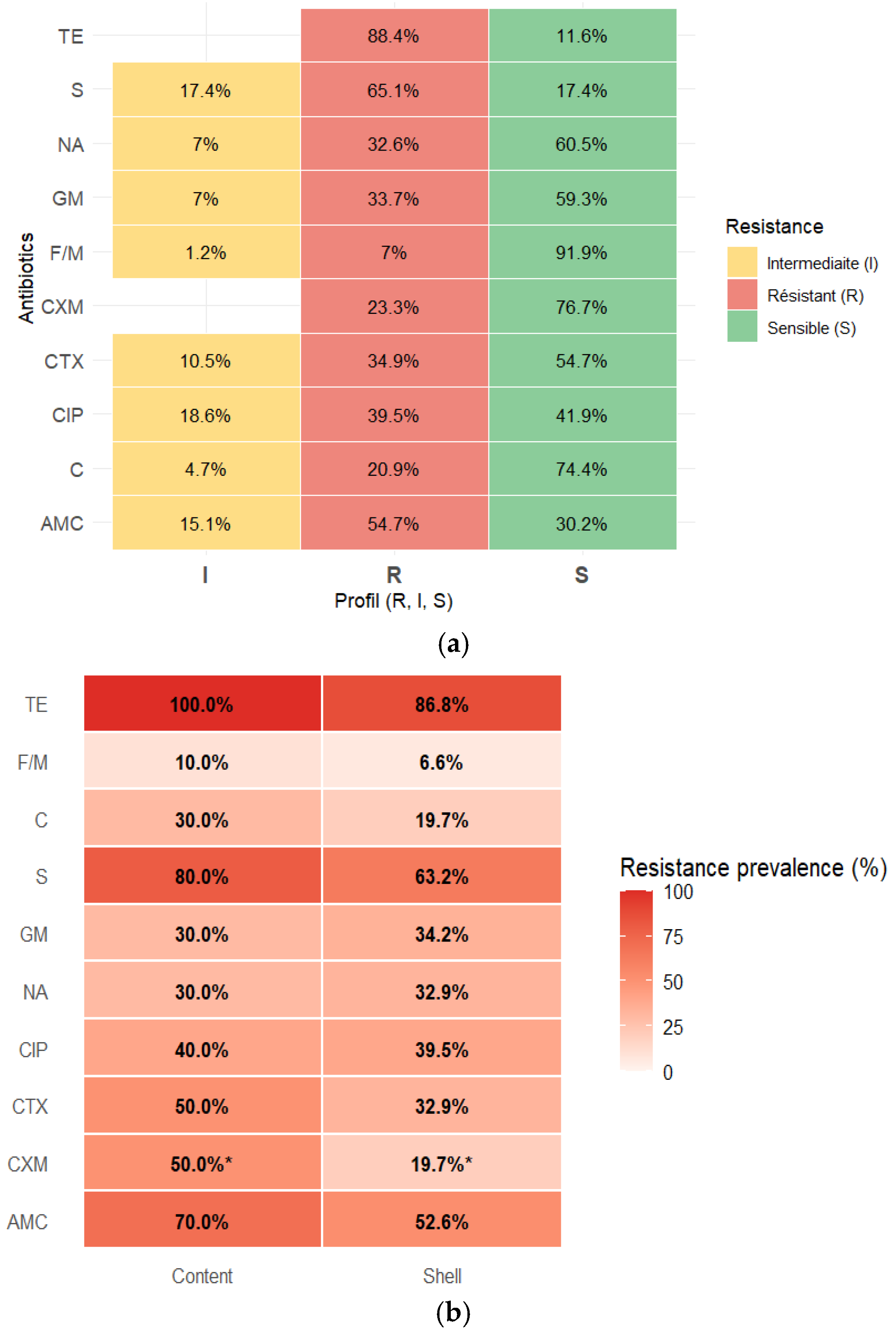
Among the 86 Escherichia coli isolates from table eggs, 88.4% (95% CI: 80.1–94.0) were resistant to tetracycline. Resistance exceeded 50% for amoxicillin–clavulanic acid (54.7%; 95% CI: 43.6–65.4) and streptomycin (65.1%; 95% CI: 53.3–75.3). A significant difference (p = 0.048) in resistance to cefuroxime was found between isolates from egg contents (50.0%; 95% CI: 23.7–76.3) and shells (19.7%; 95% CI: 12.3–30.0); other antibiotics showed no significant differences. Sensitivity was highest for nitrofurantoin (91.9%), cefuroxime (76.7%), and chloramphenicol (74.4%). Overall, 95.4% (82/86) of the isolates were resistant to at least one antibiotic, and 59.3% (51/86) exhibited multidrug resistance (see Figure 2a,b). Of the three Salmonella isolates from table eggs, the Muenster serotype showed intermediate sensitivity to amoxicillin–clavulanic acid and ciprofloxacin, but was resistant to nalidixic acid, streptomycin, and tetracycline. The Larochelle serotype was resistant to tetracycline and showed intermediate sensitivity to amoxicillin–clavulanic acid, ciprofloxacin, and streptomycin. The Subsp. I 3,10:eh:- serotype was resistant to all the tested antibiotics except gentamicin. Except for Larochelle, the isolates were MDR. Table 4 details the various resistance patterns.

3.4. Antimicrobial Resistance Profiles in Poultry Sausages

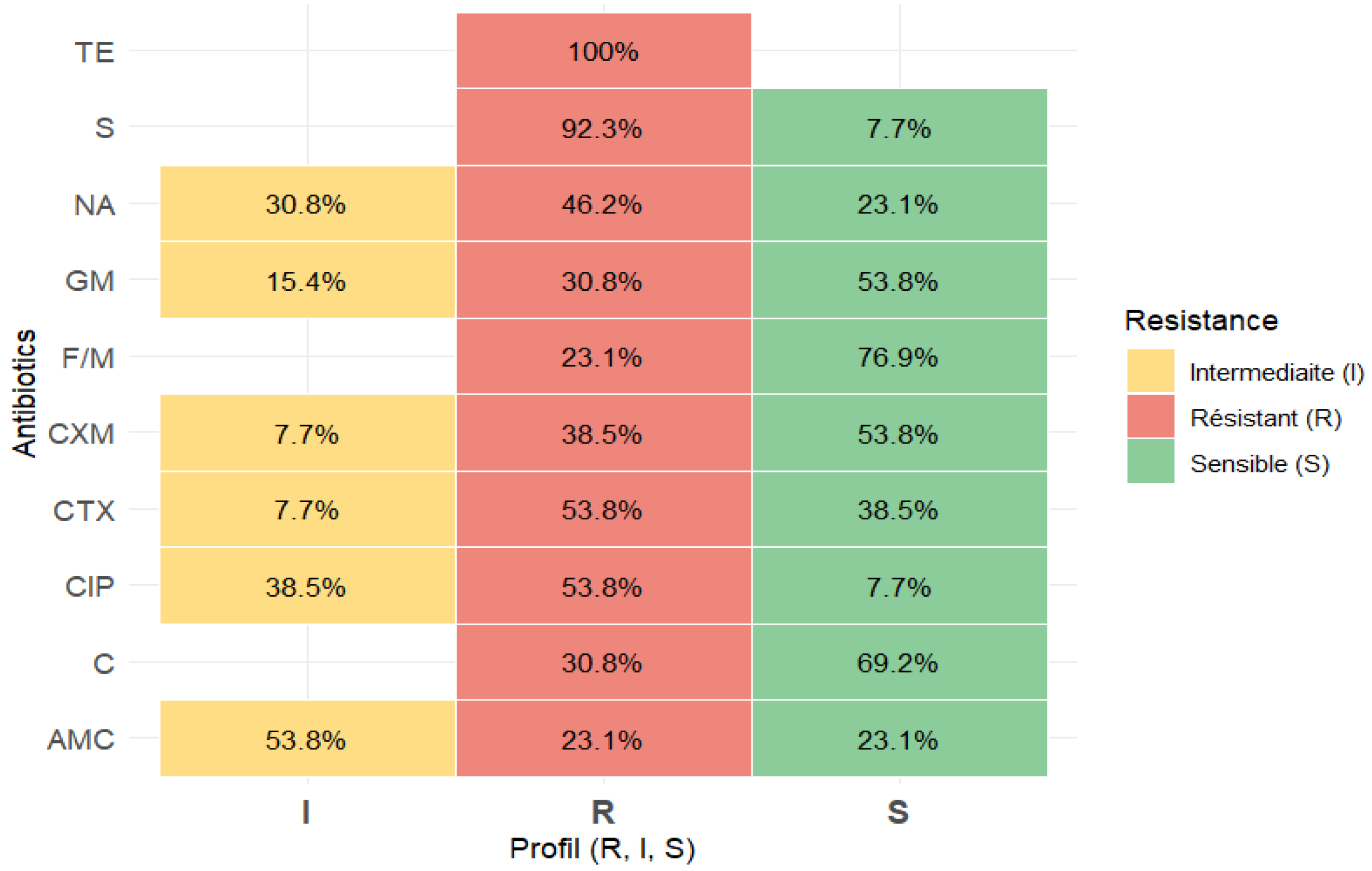
All 13 E. coli isolates from poultry sausages were resistant to tetracycline, with 92.3% also resistant to streptomycin. Resistance to ciprofloxacin and cefotaxime was observed in 53.8% of the isolates. Sensitivity above 50% was recorded for nitrofurantoin (76.9%), chloramphenicol (69.2%), gentamicin (53.8%), and cefuroxime (53.8%) (see Figure 3). Every isolate was resistant to at least one antibiotic, and 92.3% exhibited multidrug resistance. Among the Salmonella serotypes, Infantis showed intermediate sensitivity to ciprofloxacin and streptomycin and resistance to nalidixic acid. The Give serotype exhibited intermediate sensitivity to ciprofloxacin; one isolate was resistant to all other antibiotics, the other was sensitive. The Hadar serotype showed intermediate sensitivity to ciprofloxacin and chloramphenicol, but resistance to all other antibiotics. Table 4 lists the different resistance patterns.

3.5. Antimicrobial Resistance Profiles in the Clinical Escherichia coli and Salmonella spp. Isolates

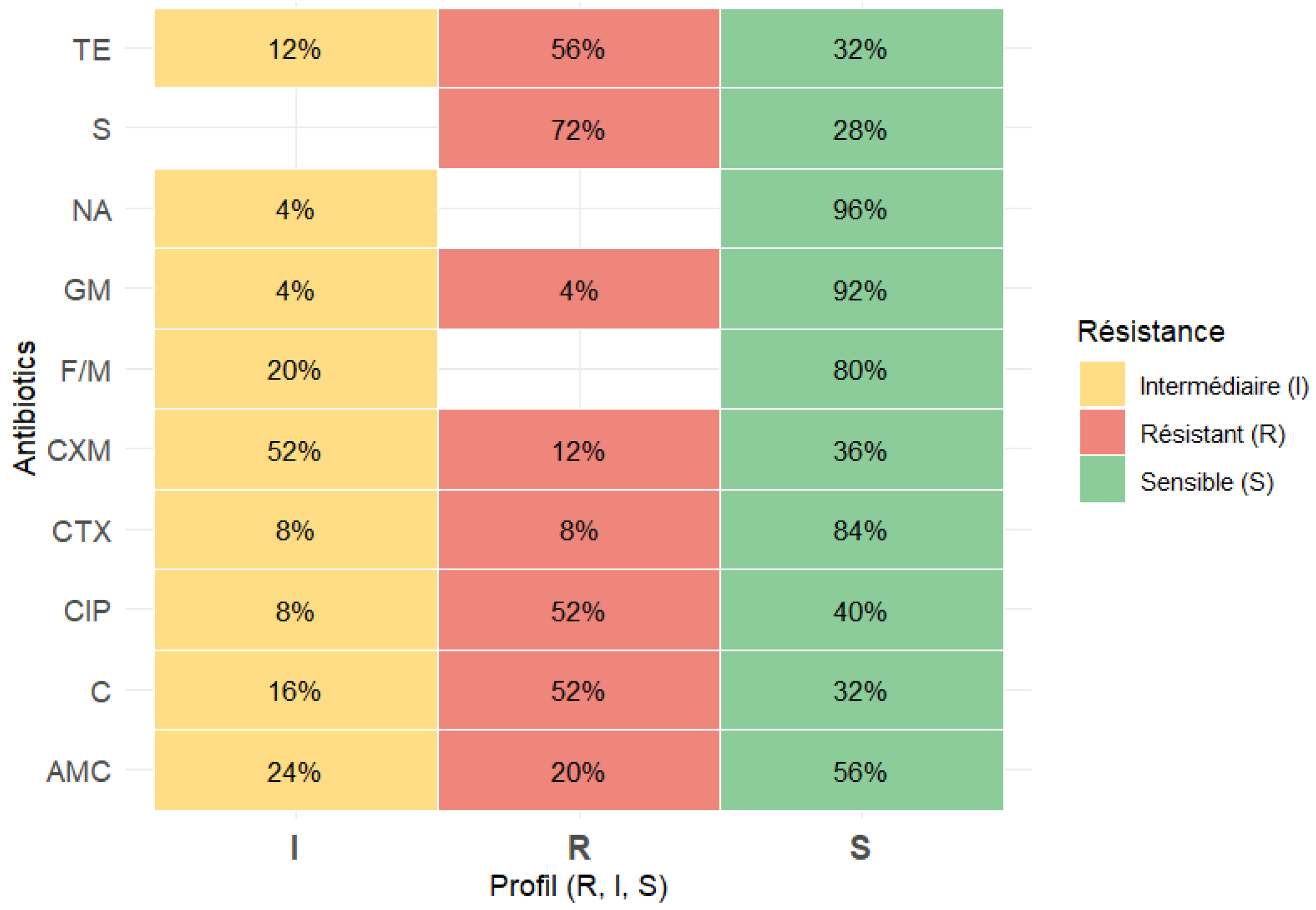
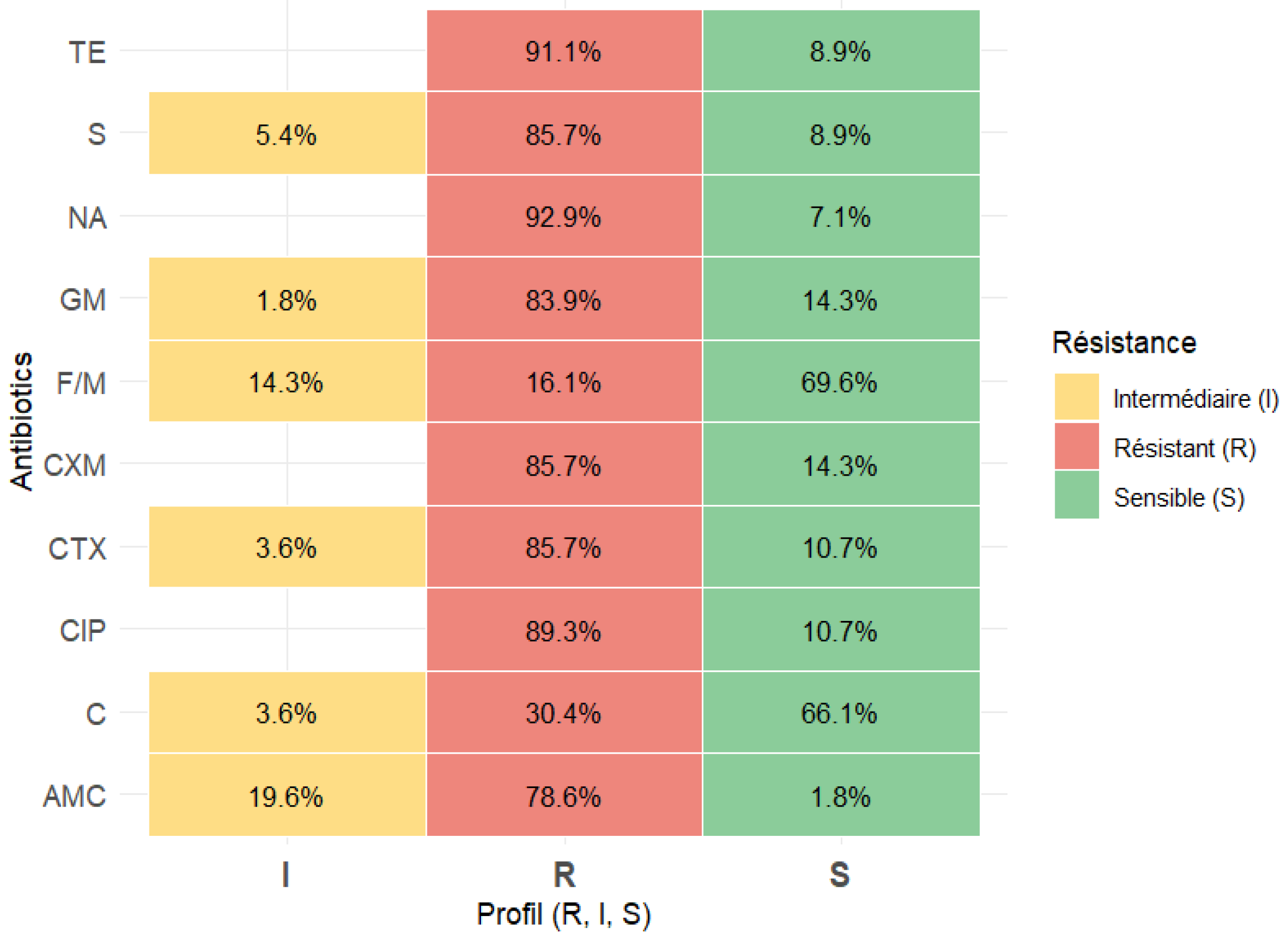
Over half of the 56 E. coli isolates exhibited resistance to amoxicillin–clavulanic acid (78.6%), cefotaxime, cefuroxime, and streptomycin (85.7% each), gentamicin (83.9%), ciprofloxacin (89.3%), tetracycline (91.1%), and nalidixic acid (92.9%). Sensitivity was mainly observed to chloramphenicol (66.1%) and nitrofurantoin (69.6%) (see Figure 4). Multidrug resistance was identified in 96.4% of the isolates. Among the 25 Salmonella isolates from body fluids, resistance was highest to streptomycin (72%), chloramphenicol and ciprofloxacin (52% each), and tetracycline (56%). Most Salmonella isolates were sensitive to nalidixic acid (96%, gentamicin (92%), cefotaxime (84%), and nitrofurantoin (80%). Overall, 56% were multidrug-resistant, with only two isolates resistant solely to streptomycin (see Figure 5).

4. Discussion

4.1. Prevalence Findings

This study assesses the sanitary quality of table eggs and poultry sausages as reservoirs of foodborne bacteria. Salmonella is common in poultry products, frequently linked to human foodborne illness through undercooked meat and eggs [33]. Only 2.2% of the eggs tested positive for Salmonella, a rate lower than Ghana’s (5.7%) and comparable to Korea’s (2.3%) [34,35]. Unlike a previous Benin study [23], which detected no Salmonella in egg yolk, this study detected isolates in both eggshells and egg contents. Variations may be due to changes in contamination patterns, improved detection techniques, health management practices, rearing conditions, storage, sample size, or bacterial isolation methods. Of the three Salmonella serotypes detected, two were isolated from eggshells but not the contents, supporting the view that shell contamination does not necessarily reflect contamination within the contents. One serotype was recovered from egg contents, likely due to bacterial presence in the ovary or oviduct before shell formation [36]. The Muenster serotype found in egg contents has been reported in animal and human samples worldwide [37,38]. The Larochelle serotype from eggshells has also been documented in poultry and pig samples in Nigeria, Ethiopia, and Egypt [39,40]. For sausages, Salmonella prevalence was 5.6%, lower than the 33% reported in Morocco [41] but higher than the 3.9% found on Réunion Island [42,43] for pre-cooked sausages. This prevalence may indicate cross-contamination, inadequate storage, contamination of raw meat, or cold chain failures [44]. Non-compliance with sanitary standards in Benin’s artisanal sausage workshops likely contributes. The presence of Salmonella in sausages may be due to increased heat resistance with the high fat content (around 69%), which protects bacteria during cooking [45]. The fat’s amount and temperature influence the heat resistance of Salmonella, Escherichia coli, and Listeria monocytogenes [46].
Although serotypes such as Muenster, Larochelle, Give, and Hadar are infrequently reported, they have been sporadically associated with foodborne infections in different settings. Reports of Salmonella Muenster and Larochelle in human cases linked to various food products in Europe illustrate their potential public health relevance [47,48]. However, these observations are independent of the present study and do not imply any direct epidemiological or transmission link with the isolates described here. Salmonella Infantis is increasingly prevalent worldwide and remains a leading cause of human salmonellosis in the European Union, underscoring the importance of continued surveillance [49].
The overall E. coli prevalence in table eggs was 59.3%, exceeding the rates reported in India (11.7%) [50], Egypt (18%) [51], and Nigeria (54.4%) [52]. Contamination was primarily on the shell (88.4%) rather than the contents (11.6%). Similar shell-specific contamination has been reported in Nigeria (61%) and Pakistan (38.2%), whereas an Ethiopian study found 13.4% for shells and none in contents [53]. High eggshell prevalence is attributed to factors in production and marketing, including cloacal contamination, environmental exposure, insufficient protection, repeated handling, and poor storage. Floor-rearing with infrequently changed litter further increases the risk. No significant differences were found between farm and commercial eggs, suggesting upstream production factors are critical [54]. These findings emphasise the necessity of improved hygiene practices on farms to reduce the microbiological risk at the source. E. coli prevalence in poultry sausages (14.4%) aligns with studies by Abdel-Atty et al. [55] and Heybet et al. [56], which link E. coli in African sausages to diarrhoeal illness [57]. Contamination is often due to poor handling before and after cooking, leading to direct or indirect faecal and environmental exposure. Local sausage production, increasingly common in West Africa, including Benin, suffers from inadequate mastery and lacks regular sanitary inspections, favouring bacterial presence [58]. Additionally, cold chain disruptions, sometimes intentional to reduce electricity costs, promote bacterial growth, spoilage, and increase foodborne risk [59].

4.2. AMR Patterns Across Sources

Salmonella isolates from table eggs and poultry sausages in Benin showed high multidrug resistance, consistent with reports from Egypt [60], the United States [61], and China [62]. Predominant resistance to nalidixic acid (6/7) and tetracycline (5/7) likely reflects widespread, often unregulated quinolones and cyclins use in local livestock [63]. Ciprofloxacin resistance was intermediate in several serotypes, raising concern given its role as the first-line therapy for invasive salmonellosis, and resistance may limit treatment options, especially where alternatives are scarce [64]. Two Salmonella Give isolates exhibited differing resistance, possibly reflecting variable on-farm antibiotic exposures. Similar resistance profiles between food and clinical Salmonella isolates, especially to streptomycin, tetracycline, and ciprofloxacin, may reflect comparable antibiotic selection pressures across animal and human settings [4]. E. coli isolates from eggs, sausages, and clinical samples commonly resisted antibiotics used in veterinary and human medicine. Tetracycline resistance was 88.4% for eggs, 100% for sausages, and 91.1% for clinical samples, comparable to findings from Zambia [65], India [66], Turkey [56], Kenya [67], and Nigeria [68]. Resistance to streptomycin, amoxicillin–clavulanic acid, cefuroxime, and ciprofloxacin was also widespread across the sources, reflecting patterns in other African and Asian countries [69,70]. Nonetheless, the isolates remained largely sensitive to nitrofurantoin and chloramphenicol in this study. In contrast, Okorie-Kanu et al. [52] reported resistance to nitrofurantoin among E. coli isolates in Nigeria, indicating that this antibiotic is still being used despite regulations. Similar resistance patterns in avian-derived foods and clinical isolates may indicate overlapping antibiotic usage and shared selective pressures rather than direct evidence of transmission.

4.3. Implications for Public Health and AMR Control

Resistance to multiple antibiotics, including ciprofloxacin, cefotaxime, and gentamicin, was observed across eggshells, contents, sausages, and human isolates, indicating possible cross-transmission. The common AMC/S/TE resistance pattern in eggs implies antibiotic use for growth promotion [70]. Eggshells act as significant reservoirs of multidrug-resistant isolates, while sausage-specific fluoroquinolone resistance indicates selective pressure from food processing. Given these findings, enhanced antimicrobial resistance surveillance with phenotypic and genotypic integration is crucial. Limited data on antibiotic usage in Benin and widespread illegal distribution, with no national antimicrobial resistance monitoring system, exacerbate challenges. Animal products, such as milk, beef, and poultry, are often contaminated with antibiotic residues, sometimes exceeding the permitted limits [27].

4.4. Study Limitations

Sampling was limited to convenience selection across five southwestern Benin departments, restricting national representativeness. The small local subsample limits robust origin-based comparisons. Reliance on phenotypic characterization precludes molecular source tracking and genotypic AMR confirmation. Microbial identification of food isolates relied on culture on chromogenic media and ISO-based screening (e.g., TBX for β-glucuronidase-positive E. coli and ISO 6579-1:2017 [29] enrichment for Salmonella), without additional biochemical panels or molecular confirmatory testing for Escherichia coli. As a result, some degree of misclassification cannot be excluded, particularly for atypical E. coli (β-glucuronidase-negative strains) or closely related Enterobacteriaceae with similar colony morphology, which may slightly over- or underestimate true prevalence and influence observed resistance distributions. Furthermore, the absence of molecular typing and genotypic AMR characterization prevents source attribution, detection of specific virulence/AMR determinants, and comparison with international clonal lineages.

5. Conclusions

Table eggs and poultry sausages are widely consumed in Benin, but microbiological analyses expose flaws in hygiene, marketing practices, and sanitary oversight. Pathogens, including Salmonella (serotypes Hadar, Infantis, Muenster, Give, Larochelle, Subsp. I 3,10 eh:-) and E. coli, consistently contaminate these products. Isolates of E. coli and Salmonella from these foods, as well as from clinical samples, display multidrug resistance to the antibiotics commonly used in veterinary and human medicine, including fluoroquinolones, tetracyclines, penicillins, and cephalosporins. This poses a significant public health risk by restricting therapeutic options. Complex resistance patterns suggest ongoing selection for resistance to agents such as fluoroquinolones and cephalosporins, likely a result of unregulated therapeutic practices that compromise effective treatment of systemic infections. There is an urgent need for coordinated surveillance encompassing veterinary, food, and clinical domains. Additionally, awareness campaigns targeting stakeholders throughout the poultry value chain are essential, promoting alternatives to antibiotics, their rational use, and adherence to withdrawal periods before commercialisation.

Supplementary Materials

The following supporting information can be downloaded at https://www.mdpi.com/article/10.3390/hygiene6010009/s1. Table S1: Measured inhibition zone diameters (mm) for Escherichia coli isolates from egg matrices and sausages. Table S2: Measured inhibition zone diameters (mm) for Salmonella spp. isolates from egg matrices and sausages. Table S3: Measured inhibition zone diameters (mm) for Escherichia coli and Salmonella spp. isolates from clinical isolates.

Author Contributions

Conceptualization, C.H., P.S., P.A., G.D. and N.K.; methodology, C.H., P.S. and N.K.; software, C.H.; validation, P.S., P.A., G.D. and N.K.; formal analysis, C.H., P.S., P.A., G.D. and N.K.; investigation, C.H.; resources, P.S., N.K. and G.D.; data curation, C.H.; writing—original draft preparation, C.H.; writing—review and editing, P.S., P.A., G.D. and N.K.; visualization, C.H.; supervision, P.S., P.A., G.D. and N.K.; project administration, P.S. and N.K.; funding acquisition, P.S. and N.K. All authors have read and agreed to the published version of the manuscript.

Funding

This research was funded by ARES – CCD (Academy of Research and Higher Education of the Commission for Development Cooperation) through an exceptional doctoral scholarship; no specific grant number is applicable.

Data Availability Statement

The original contributions presented in the study are included in the article; further inquiries can be directed to the corresponding author.

Acknowledgments

The authors would like to thank the ARES-CCD (Academy of Research and Higher Education of the Commission for Development Cooperation) for its support in the realization of this study through the financing of an exceptional doctoral scholarship.

Conflicts of Interest

The authors declare no conflicts of interest.

References

  1. Moreki, J.C.; Bhawa, S.; Moreki, M.I.; Adesehinwa, A.O.K. Poultry Production in Africa: Present Status, Challenges, Opportunities, and Prospects. Egypt. J. Vet. Sci. 2025, 1–15. [Google Scholar] [CrossRef]
  2. Toth, G.; Szabo, S.; Haidegger, T.; Alexy, M.; Toth, G.; Szabo, S.; Haidegger, T.; Alexy, M. Edge or Cloud Architecture: The Applicability of New Data Processing Methods in Large-Scale Poultry Farming. Technologies 2025, 13, 17. [Google Scholar] [CrossRef]
  3. Koffi, A.R.; Kouadio-N’gbesso, N.; Timothee, T.; Atobla, K.; Kouame, N.D.; Dadie, A. Health and Nutritional Quality Assessment of Salmonella-Contaminated Poultry Products in Sub-Saharan Africa; A Case of Cote Divoire. Afr. J. Microbiol. Res. 2018, 12, 1067–1072. [Google Scholar] [CrossRef]
  4. Sabeq, I.; Awad, D.; Hamad, A.; Nabil, M.; Aboubakr, M.; Abaza, M.; Fouad, M.; Hussein, A.; Shama, S.; Ramadan, H.; et al. Prevalence and Molecular Characterization of Foodborne and Human-Derived Salmonella Strains for Resistance to Critically Important Antibiotics. Transbound. Emerg. Dis. 2022, 69, e2153–e2163. [Google Scholar] [CrossRef]
  5. El-Soufi, A.; Al Khatib, A.; Khazaal, S.; El Darra, N.; Raafat, K. Evaluation of Essential Oils as Natural Antibacterial Agents for Eggshell Sanitization and Quality Preservation. Processes 2025, 13, 224. [Google Scholar] [CrossRef]
  6. Dougnon, P.; Dougnon, V.; Legba, B.; Fabiyi, K.; Soha, A.; Koudokpon, H.; Sintondji, K.; Deguenon, E.; Hounmanou, G.; Quenum, C.; et al. Antibiotic Profiling of Multidrug Resistant Pathogens in One-Day-Old Chicks Imported from Belgium to Benin. BMC Vet. Res. 2023, 19, 17. [Google Scholar] [CrossRef]
  7. Ouoba, L.I.I.; Treilles, M.; Noumedem, R.N.G.; Keck, N.; Kiptiness, J.K.; Diallo, A.A.; Mouillé, B.; Gourlaouen, M.; Kimani, T.; Obonyo, M.; et al. Building Capacities in Sub-Saharan African Countries for Antimicrobial Resistance Surveillance in the Food and Agriculture Sectors Using the FAO ATLASS Tool. Front. Vet. Sci. 2025, 12, 1607013. [Google Scholar] [CrossRef] [PubMed]
  8. Founou, L.L.; Amoako, D.G.; Founou, R.C.; Essack, S.Y. Antibiotic Resistance in Food Animals in Africa: A Systematic Review and Meta-Analysis. Microbial. Drug Resist. 2018, 24, 648–665. [Google Scholar] [CrossRef] [PubMed]
  9. DSA-Bénin. Les Chiffres Definitifs de la Campagne Agricole 2023–2024; MAEP: Cotonou, Benin, 2024; p. 20.
  10. Crinot, G.F.; Adegbola, P.Y.; Atacolodjou, A.L.; Mensah, E.; Kouton-Bognon, B.Y.F. Analyse de l’efficacité technique des producteurs d’œufs de volaille en République du Bénin. In Proceedings of the 2019 Sixth International Conference, Abuja, Nigeria, 23–26 September 2019; Volume 13. [Google Scholar]
  11. Gbaguidi, M.; Kpatinvoh, B.T.D.-G.; Aboudou, K.; Degnon, R.G. Characterization and Manufacturing Conditions of Cooked Local Chicken Sausage in Benin. World J. Adv. Res. Rev. 2023, 17, 333–341. [Google Scholar] [CrossRef]
  12. Güngör, E.; Gököglu, N. Determination of Microbial Contamination Sources at a Frankfurter Sausage Processing Line. Turk. J. Vet. Anim. Sci. 2010, 34, 53–59. [Google Scholar] [CrossRef]
  13. Chousalkar, K.K.; Khan, S.; McWhorter, A.R. Microbial Quality, Safety and Storage of Eggs. Curr. Opin. Food Sci. 2021, 38, 91–95. [Google Scholar] [CrossRef]
  14. Habimana, O.; Heir, E.; Langsrud, S.; Asli, A.W.; Moretro, T. Enhanced Surface Colonization by Escherichia coli O157:H7 in Biofilms Formed by an Acinetobacter Calcoaceticus Isolate from Meat-Processing Environments. Appl. Environ. Microbiol. 2010, 76, 4557–4559. [Google Scholar] [CrossRef]
  15. Jang, J.; Hur, H.-G.; Sadowsky, M.J.; Byappanahalli, M.N.; Yan, T.; Ishii, S. Environmental Escherichia coli: Ecology and Public Health Implications—A Review. J. Appl. Microbiol. 2017, 123, 570–581. [Google Scholar] [CrossRef]
  16. Majowicz, S.E.; Musto, J.; Scallan, E.; Angulo, F.J.; Kirk, M.; O’Brien, S.J.; Jones, T.F.; Fazil, A.; Hoekstra, R.M. For the International Collaboration on Enteric Disease “Burden of Illness” Studies The Global Burden of Nontyphoidal Salmonella Gastroenteritis. Clin. Infect. Dis. 2010, 50, 882–889. [Google Scholar] [CrossRef] [PubMed]
  17. Thames, H.T.; Theradiyil Sukumaran, A. A Review of Salmonella and Campylobacter in Broiler Meat: Emerging Challenges and Food Safety Measures. Foods 2020, 9, 776. [Google Scholar] [CrossRef] [PubMed]
  18. Shaji, S.; Selvaraj, R.K.; Shanmugasundaram, R. Salmonella Infection in Poultry: A Review on the Pathogen and Control Strategies. Microorganisms 2023, 11, 2814. [Google Scholar] [CrossRef] [PubMed]
  19. Merino, L.; Procura, F.; Trejo, F.M.; Bueno, D.J.; Golowczyc, M.A. Biofilm Formation by Salmonella Sp. in the Poultry Industry: Detection, Control and Eradication Strategies. Food Res. Int. 2019, 119, 530–540. [Google Scholar] [CrossRef]
  20. Crump, J.A.; Griffin, P.M.; Angulo, F.J. Bacterial Contamination of Animal Feed and It’s Relashionship to Human Foodborne Illness. Clin Infect. Dis. 2002, 37, 859–865. [Google Scholar] [CrossRef]
  21. Langata, L.M.; Maingi, J.M.; Musonye, H.A.; Kiiru, J.; Nyamache, A.K. Antimicrobial resistance genes in Salmonella and Escherichia coli isolates from chicken droppings in Nairobi, Kenya. BMC Res. Notes 2019, 12, 22. [Google Scholar] [CrossRef]
  22. Sariola, S.; Butcher, A.; Cañada, J.A.; Aïkpé, M.; Compaore, A. Closing the GAP in Antimicrobial Resistance Policy in Benin and Burkina Faso. mSystems 2022, 7, e00150-22. [Google Scholar] [CrossRef]
  23. Aguidissou, N.O.; Boko, C.K.; Sessou, P.; Yovo, M.; Komagbe, G.S.; Ayihou, Y.; Alitonou, A.G.; Avlessi, F.; Farougou, S.; Sohounhloue, K.C.D. Antibacterial Activity of Essential Oil of Aeollanthus Pubescens on Multidrug Resistant Strains of Salmonella and Escherichia coli Isolated from Laying Hens Farming in Benin. Adv. Microbiol. 2019, 9, 804–823. [Google Scholar] [CrossRef]
  24. MAEP. Formation «Contrôle et Certification des Produits Vétérinaires» (Code C2); Ministère de l’Agriculture de l’Elevage et de la pêche/Programme d’Appui au Développement Durable du Secteur Agricole: Cotonou, Benin, 2022.
  25. Ahoyo, T.A.; Bankolé, H.S.; Adéoti, F.M.; Gbohoun, A.A.; Assavèdo, S.; Amoussou-Guénou, M.; Kindé-Gazard, D.A.; Pittet, D. Prevalence of Nosocomial Infections and Anti-Infective Therapy in Benin: Results of the First Nationwide Survey in 2012. Antimicrob. Resist. Infect. Control 2014, 3, 17. [Google Scholar] [CrossRef]
  26. Aissi, A.K.; Koudjo, T.E.C.; Tokponnon, F.T.; Onifade, A.F.; Wadagni, A.A.C.; Padonou, G.S.R.; Gbegnide, H.A.; Azakpa, L.A.; Hodonou, A.M.; Johnson, R.C.; et al. Overview of Antimicrobial Resistance Mitigation Efforts in Benin 2024. J. Public Health Afr. 2025, 16, 1332. [Google Scholar] [CrossRef]
  27. Gouvernement du Bénin. Plan d’Action National Multisectoriel de Lutte Contre la Résistance aux Antimicrobiens en République du Bénin; Gouvernement du Bénin: Cotonou, Benin, 2024; p. 95.
  28. Adesiyun, A.A.; Nkuna, C.; Mokgoatlheng-Mamogobo, M.; Malepe, K.; Simanda, L. Food Safety Risk Posed to Consumers of Table Eggs from Layer Farms in Gauteng Province, South Africa: Prevalence of Salmonella Species and Escherichia coli Antimicrobial Residues, and Antimicrobial Resistant Bacteria. J. Food Saf. 2020, 40, e12783. [Google Scholar] [CrossRef]
  29. ISO 6579-1; Microbiology of the Food Chain—Horizontal Method for the Detection, Enumeration and Serotyping of Salmonella—Part 1: Detection of Salmonella spp. ISO: Geneva, Switzerland, 2017.
  30. ISO 16649-2; Microbiology of Food and Animal Feeding Stuffs—Horizontal Method for the Enumeration of Β-Glucuronidase-Positive Escherichia coli—Part 2: Colony-Count Technique at 44 °C Using 5-Bromo-4-chloro-3-indolyl β-D-Glucuronide. ISO: Geneva, Switzerland, 2001.
  31. Clinical and Laboratory Standards Institute (CLSI). Performance Standards for Antimicrobial Susceptibility Testing; Clinical and Laboratory Standards Institute (CLSI): Wayne, PA, USA, 2020. [Google Scholar]
  32. Magiorakos, A.-P.; Srinivasan, A.; Carey, R.B.; Carmeli, Y.; Falagas, M.E.; Giske, C.G.; Harbarth, S.; Hindler, J.F.; Kahlmeter, G.; Olsson-Liljequist, B.; et al. Multidrug-Resistant, Extensively Drug-Resistant and Pandrug-Resistant Bacteria: An International Expert Proposal for Interim Standard Definitions for Acquired Resistance. Clin. Microbiol. Infect. 2012, 18, 268–281. [Google Scholar] [CrossRef]
  33. Kabeta, T.; Tolosa, T.; Duchateau, L.; Van Immerseel, F.; Antonissen, G. Prevalence and Serotype of Poultry Salmonellosis in Africa: A Systematic Review and Meta-Analysis. Avian Pathol. 2024, 53, 325–349. [Google Scholar] [CrossRef]
  34. Jung, H.-R.; Lee, Y.J. Prevalence and Characterization of Non-Typhoidal Salmonella in Egg from Grading and Packing Plants in Korea. Food Microbiol. 2024, 120, 104464. [Google Scholar] [CrossRef]
  35. Archer, E.W.; Chisnall, T.; Tano-Debrah, K.; Card, R.M.; Duodu, S.; Kunadu, A.P.-H. Prevalence and Genomic Characterization of Salmonella Isolates from Commercial Chicken Eggs Retailed in Traditional Markets in Ghana. Front. Microbiol. 2023, 14, 1283835. [Google Scholar] [CrossRef] [PubMed]
  36. Salihu, M.D.; Garba, B.; Isah, Y. Evaluation of Microbial Contents of Table Eggs at Retail Outlets in Sokoto Metropolis, Nigeria. Sokoto J. Vet. Sci. 2015, 13, 22–28. [Google Scholar] [CrossRef]
  37. Andoh, L.A.; Dalsgaard, A.; Obiri-Danso, K.; Newman, M.J.; Barco, L.; Olsen, J.E. Prevalence and Antimicrobial Resistance of Salmonella Serovars Isolated from Poultry in Ghana. Epidemiol. Infect. 2016, 144, 3288–3299. [Google Scholar] [CrossRef] [PubMed]
  38. Aworh, M.K.; Nilsson, P.; Egyir, B.; Owusu, F.A.; Hendriksen, R.S. Rare Serovars of Non-Typhoidal Salmonella Enterica Isolated from Humans, Beef Cattle and Abattoir Environments in Nigeria. PLoS ONE 2024, 19, e0296971. [Google Scholar] [CrossRef]
  39. Fagbamila, I.O.; Ramon, E.; Lettini, A.A.; Muhammad, M.; Longo, A.; Antonello, K.; Aworh, M.K.; Kwaga, J.K.P.; Abdu, P.A.; Umoh, J.U.; et al. Assessing the Mechanisms of Multi-Drug Resistant Non-Typhoidal Salmonella (NTS) Serovars Isolated from Layer Chicken Farms in Nigeria. PLoS ONE 2023, 18, e0290754. [Google Scholar] [CrossRef]
  40. Osman, K.M.; Yousef, A.M.M.; Aly, M.M.; Radwan, M.I. Salmonella Spp. Infection in Imported 1-Day-Old Chicks, Ducklings, and Turkey Poults: A Public Health Risk. Foodborne Pathog. Dis. 2010, 7, 383–390. [Google Scholar] [CrossRef]
  41. Bennani, L.; Berrada, S.; Salame, B.; Aabouch, M.; El, A.; El Ouali Lalami, A. Evaluation de La Qualité Hygiénique Des Viandes et de Certains Produits Carnés Prélevés de La Ville de Fès, Maroc. Inst. Natl. Agrom. Tunis. 2016, 15, 547–554. [Google Scholar]
  42. Tîrziu, E.; Barbalan, G.; Morar, A.; Herman, V.; Cristina, R.T.; Imre, K. Occurrence and Antimicrobial Susceptibility Profile of Salmonella Spp. in Raw and Ready-To-Eat Foods and Campylobacter Spp. in Retail Raw Chicken Meat in Transylvania, Romania. Foodborne Pathog. Dis. 2020, 17, 479–484. [Google Scholar] [CrossRef]
  43. Trimoulinard, A.; Beral, M.; Henry, I.; Atiana, L.; Porphyre, V.; Tessier, C.; Leclercq, A.; Cardinale, E. Contamination by Salmonella spp., Campylobacter spp. and Listeria spp. of Most Popular Chicken- and Pork-Sausages Sold in Reunion Island. Int. J. Food Microbiol. 2017, 250, 68–74. [Google Scholar] [CrossRef] [PubMed]
  44. Jaramillo-Bedoya, E.; Flórez-Elvira, L.J.; Ocampo-Ibáñez, I.D. High Prevalence of Salmonella spp. in Ready-to-Eat Artisanal Pork Sausages Sold at Food Outlets in Quindío, Colombia. Pathogens 2025, 14, 31. [Google Scholar] [CrossRef] [PubMed]
  45. Ozturk, S.; Huang, L.; Hwang, C.-A.; Sheen, S. Thermal Resistance of Listeria Monocytogenes, Escherichia coli O157:H7 and Salmonella in Animal Fat–Kinetic Analysis and Mathematical Modeling. Food Res. Int. 2024, 190, 114652. [Google Scholar] [CrossRef]
  46. Huang, T.; Peng, X.-Y.; Gao, B.; Wei, Q.-L.; Xiang, R.; Yuan, M.-G.; Xu, Z.-H. The Effect of Clostridium Butyricum on Gut Microbiota, Immune Response and Intestinal Barrier Function During the Development of Necrotic Enteritis in Chickens. Front. Microbiol. 2019, 10, 2309. [Google Scholar] [CrossRef]
  47. Pavlova, M.; Stoyanova, R. Analysis of Diarrheal Diseases in Humans Caused by Salmonella in Bulgaria. Bulg. One Health J. 2024, 1, 114–125. [Google Scholar] [CrossRef]
  48. van Cauteren, D.; Jourdan-da Silva, N.; Weill, F.X.; King, L.; Brisabois, A.; Delmas, G.; Vaillant, V.; de Valk, H. Outbreak of Salmonella Enterica Serotype Muenster Infections Associated with Goat’s Cheese, France, March 2008. Eurosurveillance 2009, 14, 19290. [Google Scholar] [CrossRef]
  49. Osasah, V.; Whitfield, Y.; Danish, A.; Murphy, A.; Mather, R.; Adams, J.; Majury, A.; Aloosh, M. An Outbreak of Salmonella Infantis Linked to Shredded Pork Products from an Unlicensed Source in Multiple Health Districts, Ontario, Canada, 2021. Can. Commum. Dis. Rep. 2024, 50, 158–165. [Google Scholar] [CrossRef] [PubMed]
  50. Sharan, M.; Dhaka, P.; Bedi, J.S.; Singh, R.; Mehta, N. Characterization of Chicken Eggs Associated Escherichia coli and Staphylococcus Aureus for Biofilm Production and Antimicrobial Resistance Traits. Anim. Biotechnol. 2023, 34, 3533–3544. [Google Scholar] [CrossRef]
  51. Elafify, M.; Elsherbini, M.; Abdelkhalek, A.; AlAshmawy, M. Prevalence and Molecular Characterization of Enteropathogenic Escherichia coli Isolated from Table Eggs in Mansoura, Egypt. J. Adv. Vet. Anim. Res. 2016, 3, 1–7. [Google Scholar] [CrossRef]
  52. Okorie-Kanu, O.J.; Ezenduka, E.V.; Okorie-Kanu, C.O.; Ugwu, L.C.; Nnamani, U.J. Occurrence and Antimicrobial Resistance of Pathogenic Escherichia coli and Salmonella Spp. in Retail Raw Table Eggs Sold for Human Consumption in Enugu State, Nigeria. Vet. World 2016, 9, 1312–1319. [Google Scholar] [CrossRef] [PubMed]
  53. Shimelis, E. Prevalence and Antimicrobial Resistant Status of E. coli in Commercial Chicken Eggs in Bishoftu, Shwa, Central Ethiopia. Biomed. J. Sci. Tech. Res. 2022, 46, 37221–37229. [Google Scholar] [CrossRef]
  54. Mehmood, M.D.; Fatima, S.; Habib, R.; Ul-Haq, H.A.; Ghani, M.U. Prevalence and Drug Susceptibility of E. coli, Campylobacter, and Citrobacter from the Eggshell Surface of Table and Hatchable Eggs in Lahore, Pakistan. Int. J. Biol. Med. Res. 2024, 15, 7825–7832. [Google Scholar]
  55. Abdel-Atty, N.S.; Abdulmalek, E.M.; Taha, R.M.; Hassan, A.H.A.; Adawy, A.A. Predominance and Antimicrobial Resistance Profiles of Salmonella and E. coli From Meat and Meat Products. J. Adv. Vet. Res. 2023, 13, 647–655. [Google Scholar]
  56. Heybet, Z.; Ozkaya, Y.; Gundog, D.A.; Gungor, C.; Ertaş Onmaz, N. Animal-Originated Foods as Potential Sources of Multidrug-Resistant Diarrheagenic E. coli Pathotypes in Kayseri, Türkiye. Food Control 2024, 164, 110586. [Google Scholar] [CrossRef]
  57. Karoki, W.H.; Karanja, D.N.; Bebora, L.C.; Njagi, L.W. Isolation, Characterization, and Quantification of Bacteria from African Sausages Sold in Nairobi County, Kenya. Int. J. Food Sci. 2018, 2018, 3861265. [Google Scholar] [CrossRef]
  58. Kabore, M.; Sanon, H.O.; Nianogo, A.J.; Kiema, A.; Ouedraogo, O.M. Étude de la charcuterie dans les villes de Ouagadougou et Bobo-Dioulasso au Burkina Faso. J. Anim. Plant Sci. 2022, 51, 9187–9200. [Google Scholar]
  59. Ganiero, E.G.H.A.; Quenum, L.M.G.; Dotche, I.; Salifou, C.F.A.; Karim, I.Y.A.; Karou, S. Evaluation of the Sanitary Quality of Sales Channels and Transport Equipment for Frozen Poultry Meat Imported Into Benin. J. Food Qual. 2025, 2025, 1990566. [Google Scholar] [CrossRef]
  60. Abou Elez, R.M.M.; Elsohaby, I.; El-Gazzar, N.; Tolba, H.M.N.; Abdelfatah, E.N.; Abdellatif, S.S.; Mesalam, A.A.; Tahoun, A.B.M.B. Antimicrobial Resistance of Salmonella Enteritidis and Salmonella Typhimurium Isolated from Laying Hens, Table Eggs, and Humans with Respect to Antimicrobial Activity of Biosynthesized Silver Nanoparticles. Animals 2021, 11, 3554. [Google Scholar] [CrossRef]
  61. Alali, W.Q.; Thakur, S.; Berghaus, R.D.; Martin, M.P.; Gebreyes, W.A. Prevalence and Distribution of Salmonella in Organic and Conventional Broiler Poultry Farms. Foodborne Pathog. Dis. 2010, 7, 1363–1371. [Google Scholar] [CrossRef]
  62. Zhao, X.; Gao, Y.; Ye, C.; Yang, L.; Wang, T.; Chang, W. Prevalence and Characteristics of Salmonella Isolated from Free-Range Chickens in Shandong Province, China. BioMed Res. Int. 2016, 2016, 8183931. [Google Scholar] [CrossRef] [PubMed]
  63. Plan National Antibiotiques. Surveillance de la Consommation d’Antibiotiques, de l’Antibiorésistance et de la Présence de Résidus D’antibiotiques au Luxembourg; Direction de la santé: Luxembourg, 2024; p. 68.
  64. Kapena, M.S.; Muma, J.B.; Mubita, C.M.; Munyeme, M. Antimicrobial Resistance of Escherichia coli and Salmonella in Raw Retail Table Eggs in Lusaka, Zambia. Vet. World 2020, 13, 2528–2533. [Google Scholar] [CrossRef] [PubMed]
  65. Taskeen, S.; Singh, R.; Bedi, J.S.; Arora, A.K.; Aulakh, R.S.; Singh, J. Occurrence, Multidrug Resistance, and Multilocus Sequence Typing of Extended-Spectrum Beta-Lactamase/AmpC-Producing Escherichia coli from Farmed Eggs. Foodborne Pathog. Dis. 2024, 22, 551–559. [Google Scholar] [CrossRef]
  66. Kipkorir, K.C.; Ang’ienda, P.O.; Onyango, D.M.; Onyango, P.O. Antibiotic Resistance of Escherichia coli from Humans and Black Rhinoceroses in Kenya. EcoHealth 2020, 17, 41–51. [Google Scholar] [CrossRef] [PubMed]
  67. Perewari, D.O.; Otokunefor, K.; Agbagwa, O.E. Tetracycline-Resistant Genes in Escherichia coli from Clinical and Nonclinical Sources in Rivers State, Nigeria. Int. J. Microbiol. 2022, 2022, 9192424. [Google Scholar] [CrossRef]
  68. Fenollar, A.; Doménech, E.; Ferrús, M.A.; Jiménez-Belenguer, A. Risk Characterization of Antibiotic Resistance in Bacteria Isolated from Backyard, Organic, and Regular Commercial Eggs. J. Food Protect. 2019, 82, 422–428. [Google Scholar] [CrossRef]
  69. Kulasooriya, G.D.B.N.; Amarasiri, M.K.U.T.; Abeykoon, A.M.H.; Kalupahana, R.S. Salmonella, Campylobacter and Escherichia coli in Raw Chicken Meat, Chicken Products and Cooked Chicken in Retail Markets in Kandy, Sri Lanka. Sri Lanka Vet. J. 2019, 66, 19. [Google Scholar] [CrossRef][Green Version]
  70. Rahman, M.R.T.; Fliss, I.; Biron, E. Insights in the Development and Uses of Alternatives to Antibiotic Growth Promoters in Poultry and Swine Production. Antibiotics 2022, 11, 766. [Google Scholar] [CrossRef] [PubMed]
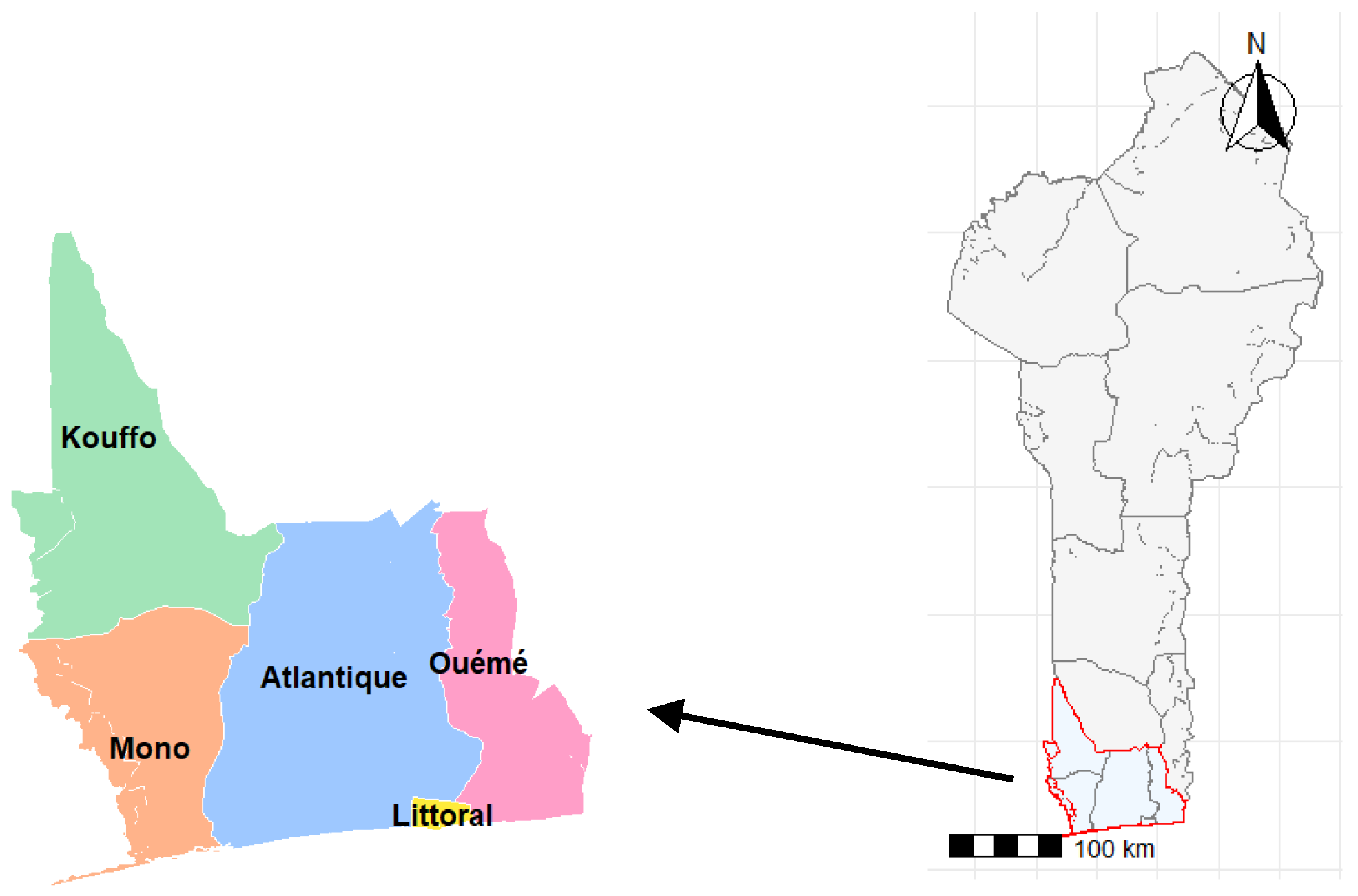
Figure 1. Geographical location of the study area in southwest Benin, including the different departments. Legend: eggs and poultry sausages were collected in Mono, Atlantique, Couffo, Ouémé, and Littoral; clinical samples were collected in the Littoral Department only.
Hygiene 06 00009 g001
Figure 2. (a) Distribution of resistance (R), intermediate susceptibility (I), and susceptibility (S) to antibiotics among the E. coli isolates from table eggs. (b) Comparison of resistance prevalence (%) to antibiotics among E. coli isolates from egg contents and eggshells. Legend: AMC: amoxicillin + clavulanic acid, CTX: cefotaxime, CXM: cefuroxime, CIP: ciprofloxacin, C: chloramphenicol, S: streptomycin, NA: nalidixic acid, GM: gentamicin, F/M: nitrofurantoin, TE: tetracycline; *: CXM values marked with an asterisk indicate a significant difference in resistance between egg contents and shells (p = 0.048); no significant differences were observed for the other antibiotics.
Hygiene 06 00009 g002
Figure 3. Antimicrobial resistance profiles of the E. coli isolates from poultry sausages. Legend: AMC: amoxicillin + clavulanic acid, CTX: cefotaxime, CXM: cefuroxime, CIP: ciprofloxacin, C: chloramphenicol, S: streptomycin, NA: nalidixic acid, GM: gentamicin, F/M: nitrofurantoin, TE: tetracycline; S: susceptible, I: intermediate, R: resistant.
Hygiene 06 00009 g003
Figure 4. Antimicrobial resistance profiles of the E. coli isolates from clinical samples.
Hygiene 06 00009 g004
Figure 5. Antimicrobial resistance profile of the Salmonella spp. isolates from clinical samples. Legend: AMC: amoxicillin + clavulanic acid, CTX: cefotaxime, CXM: cefuroxime, CIP: ciprofloxacin, C: chloramphenicol, S: streptomycin, NA: nalidixic acid, GM: gentamicin, F/M: nitrofurantoin, TE: tetracycline; S: susceptible, I: intermediate, R: resistant.
Hygiene 06 00009 g005
Table 1. Inhibition zone diameters (in mm) for interpreting antibiotic resistance test results.
BacteriaAntibioticQuantity (µg)SIR
Salmonella spp.Cefotaxime30≥2623–25≤22
Tetracycline30≥1512–15≤11
Ciprofloxacin5≥3121–30≤20
Chloramphenicol30≥1813–17≤12
EnterobacteriaceaeCefuroxime30≥1815–17≤14
Cefotaxime30≥2623–25≤22
Gentamicin10≥1815–17≤14
Streptomycin10≥1512–14≤11
Tetracycline30≥1512–14≤11
Ciprofloxacin5≥2622–25≤21
Chloramphenicol30≥1813–17≤12
Nitrofurantoin300≥1715–16≤14
Nalidixic acid30≥1914–18≤13
Amoxicillin + clavulanic acid20/10≥1814–17≤13
Legend: antimicrobial susceptibility testing was performed using the disk diffusion method according to the CLSI guidelines. Breakpoints were interpreted as per the Performance Standards for Antimicrobial Susceptibility Testing, 30th ed. (M100): S: susceptible, I: intermediate, R: resistant.
Table 2. Prevalence of E. coli and Salmonella spp. in table eggs by Matrix (shells/contents) and sampling site (farm/retail).
Sampling SiteEscherichia coliSalmonella spp.
ContentShellContentShell
Farm (n = 60)6.7% (4)55.0% (33)1.7% (1)1.7% (1)
95% CI2.6–15.9%42.5–66.9%0.3–8.9%0.3–8.9%
Retail (n = 75)8.0% (6)57.3% (43)1.3% (1)0.0% (0)
95% CI3.7–16.4%46.1–67.9%0.2–7.2%0.0–4.9%
Total (n = 135)7.4% (10)56.3% (76)1.5% (2)0.7% (1)
95% CI4.1–13.147.9–64.40.4–5.2%0.1–4.1%
p-value (Fisher)NSNSNSNS
Legend: number in parentheses = positive samples; NS = not significant (p ≥ 0.05).
Table 3. Prevalence of E. coli and Salmonella spp. in imported vs. local poultry sausages.
PathogenImported
(n = 75)
95% CILocal (n = 15)95% CIp-Value (Fisher’s Test)Total
(n = 90)
95% CI
Escherichia coli4.0% (3) 1.4–11.166.7% (10)41.7–84.4***14.4%8.6–23.2
Salmonella spp.1.3% (1)0.2–7.226.7% (4)10.9–52.0***5.6%2.4–12.4
Legend: values in parentheses indicate positive samples; *** p < 0.05 (significant difference).
Table 4. Antibiotic multidrug resistance profiles of the Salmonella spp. isolates from eggshells, egg contents, poultry sausages, and clinical samples.
OriginSerotypesResistance PatternsNumber
EggshellsSubsp. I 3,10: eh:-AMC/CIP/CTX/C/F/M/NA/S/CXM/TE1
Egg contentsMuensterNA/S/TE1
Clinical samplesShubraAMC/CTX/CIP/S/C/TE1
EnteritidisAMC/CIP/S/C/TE1
Typhimurium, Enteritidis, TyphiAMC/CIP/S/C3
EnteritidisCIP/GM/S/TE1
TyphiCIP/S/C/TE1
Enteritidis, Typhi, Agbeni, AgonaCIP/S/TE5
OaklandS/C/TE1
TyphimuriumAMC/CTX/C/F/M/NA/S/CXM/TE1
SausagesGiveAMC/CTX/GM/F/M/NA/S/CXM/TE1
HadarAMC/CIP/S/C/TE2
Legend AMC: amoxicillin + clavulanic acid, CTX: cefotaxime, CXM: cefuroxime, CIP: ciprofloxacin, C: chloramphenicol, S: streptomycin, NA: nalidixic acid, GM: gentamicin, F/M: nitrofurantoin, TE: tetracycline; The values in the table indicate the count of isolates resistant to each antibiotic profile.
Disclaimer/Publisher’s Note: The statements, opinions and data contained in all publications are solely those of the individual author(s) and contributor(s) and not of MDPI and/or the editor(s). MDPI and/or the editor(s) disclaim responsibility for any injury to people or property resulting from any ideas, methods, instructions or products referred to in the content.