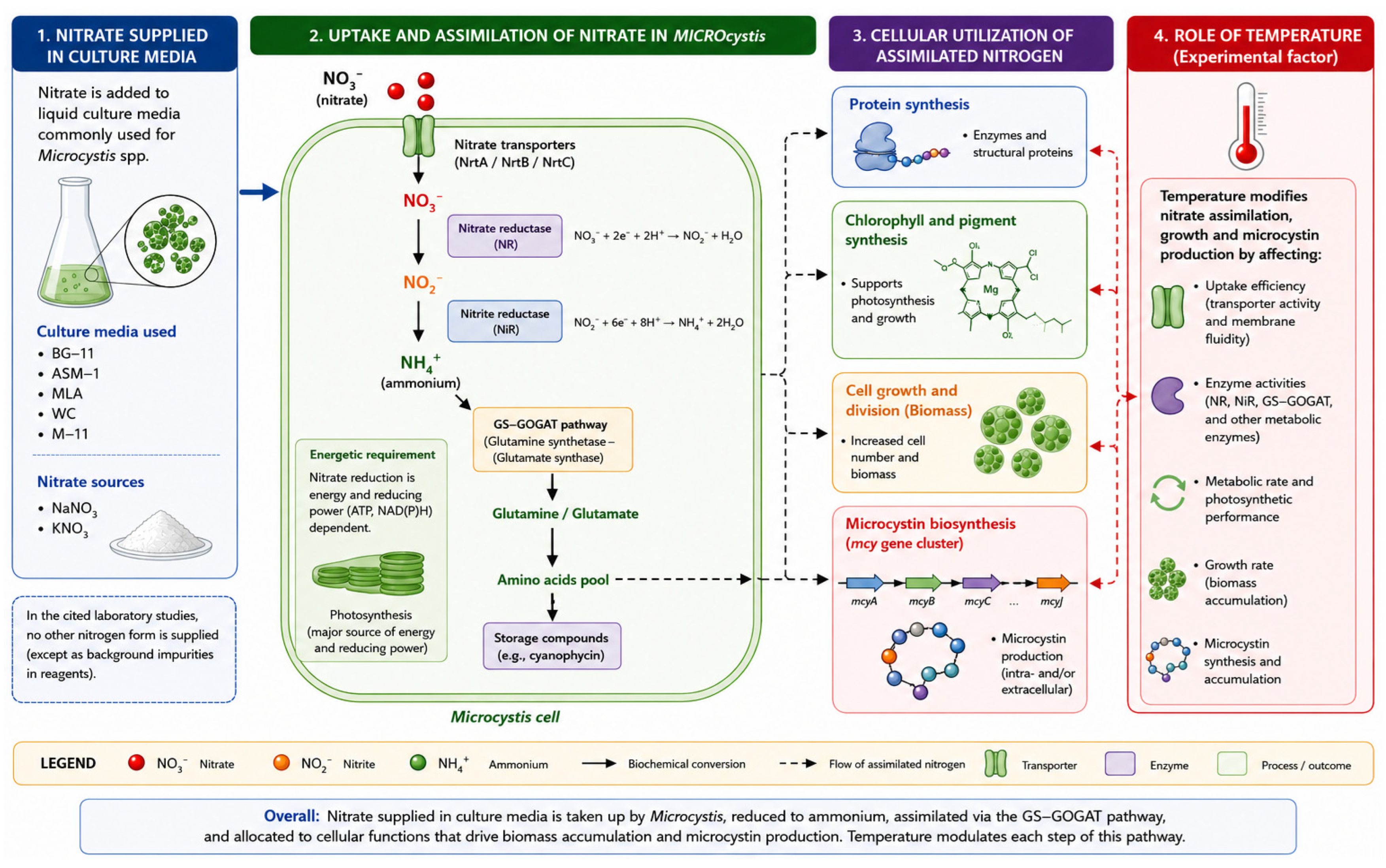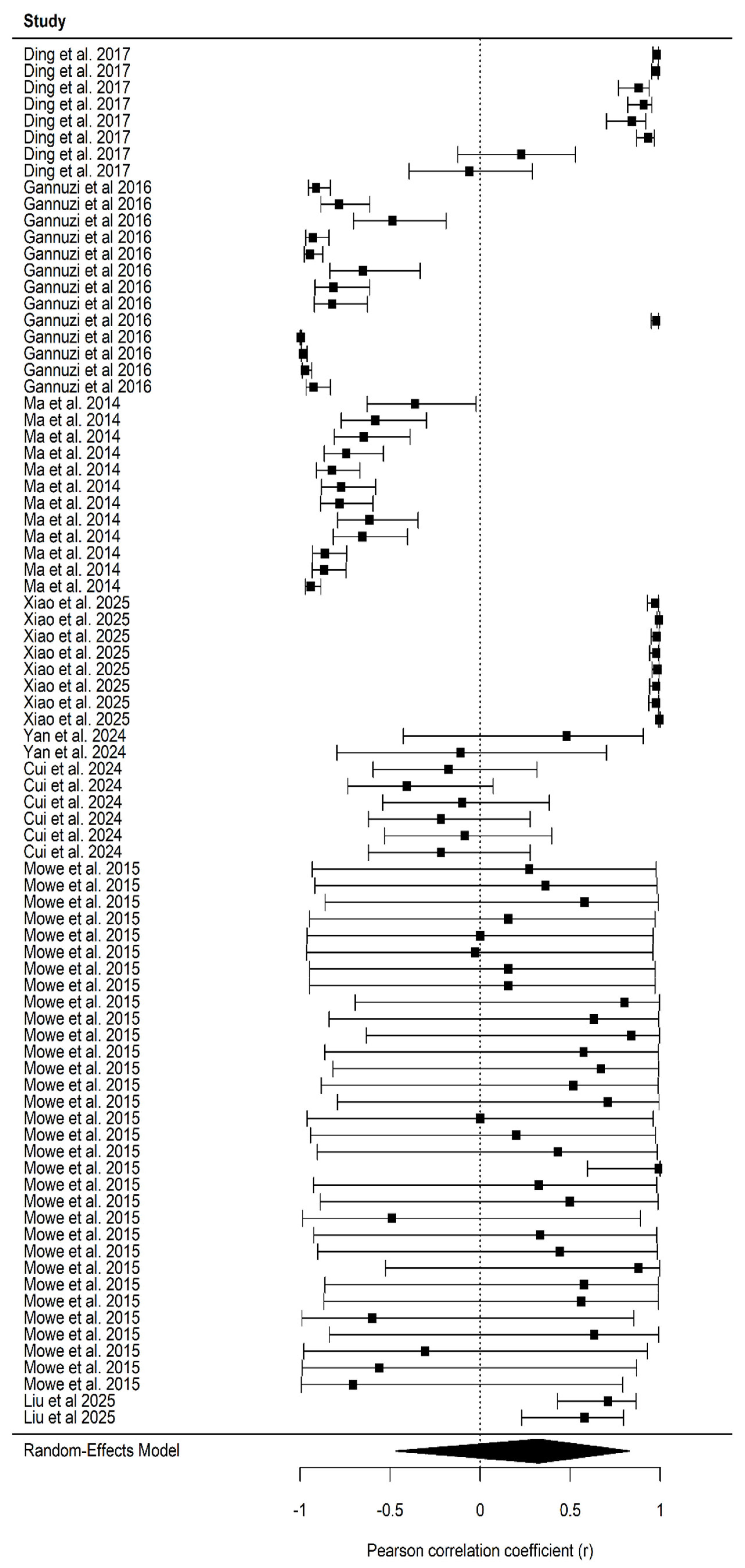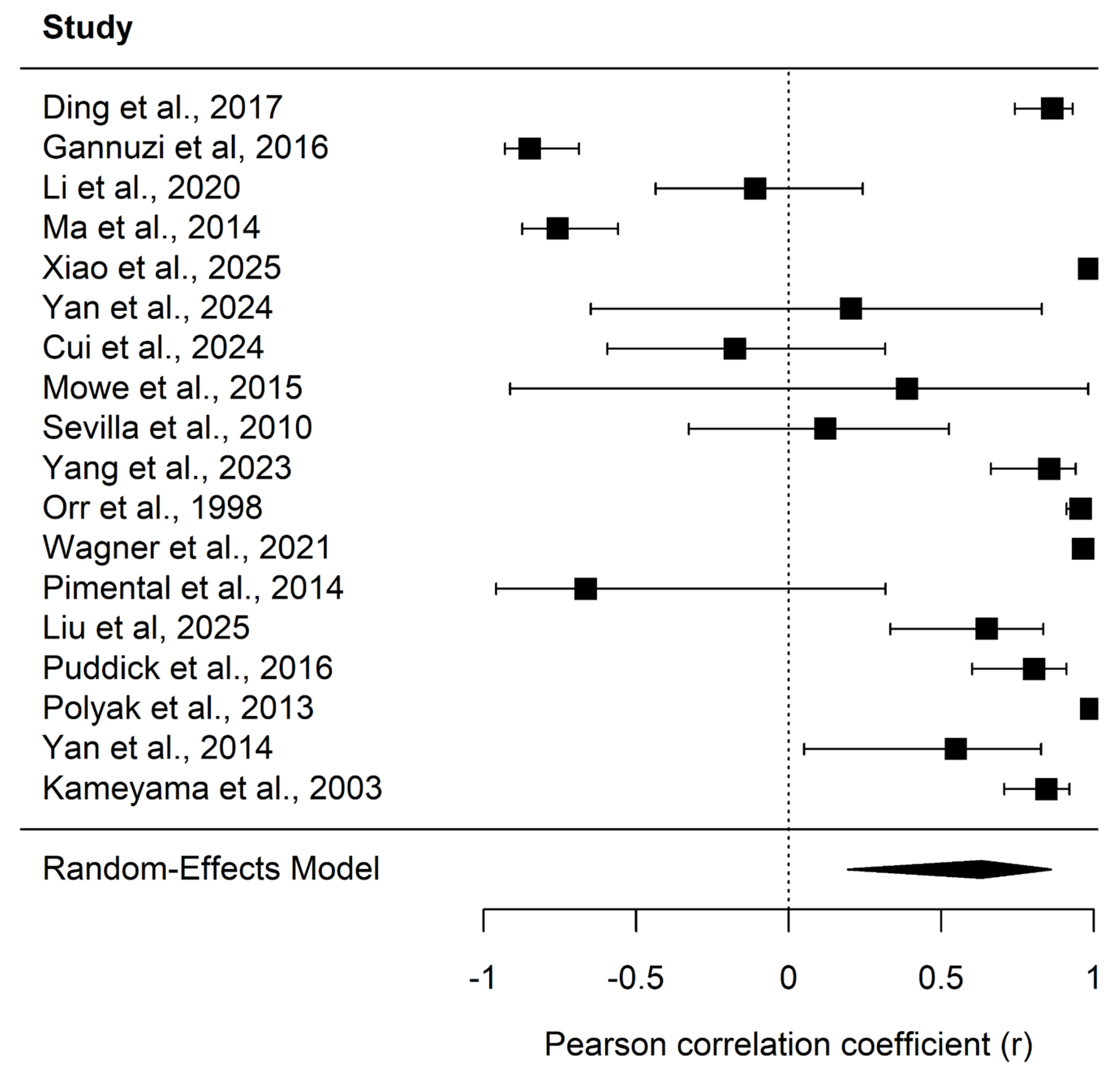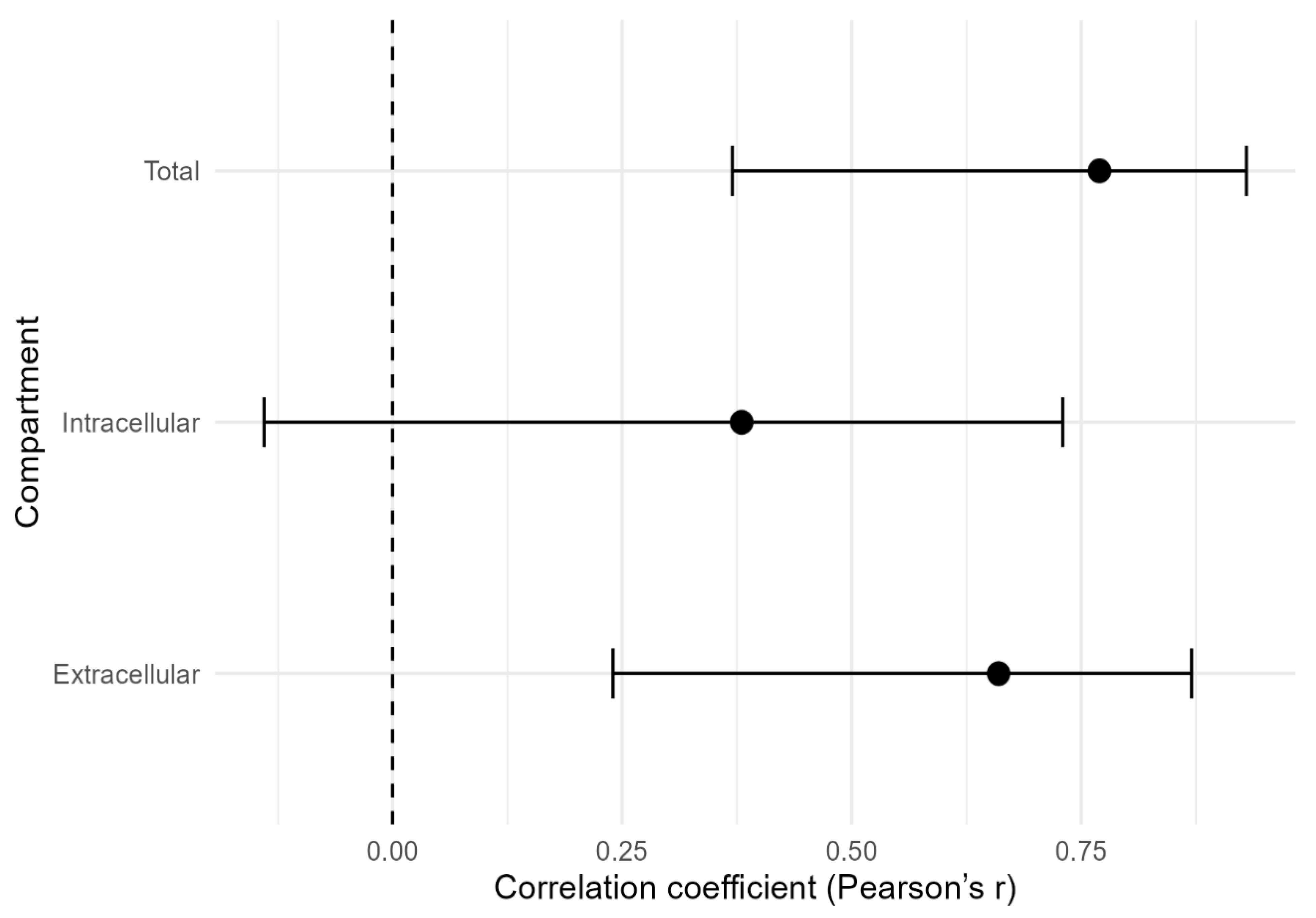

Temperature and Nitrate Effects on Biomass and Microcystin Compartmentalization in Microcystis spp.: A Multilevel Meta-Analysis
 , , ,
, , ,  , and
, and
Abstract
1. Introduction
1.1. Introduction
1.2. Biomass Scaling Versus Toxin Synthesis Regulation
1.3. Importance of Microcystin Compartmentalization
2. Materials and Methods
2.1. Literature Search and Study Selection
- Inclusion Criteria
- Exclusion Criteria
2.2. Data Extraction and Variable Classification
2.3. Biomass as an Associated Response Variable
- Temperature/nitrate and biomass;
- Temperature/nitrate and microcystin;
- Biomass and microcystin.
2.4. Meta-Analytic Models
2.5. Moderator Analyses
3. Results
3.1. Overview of the Dataset
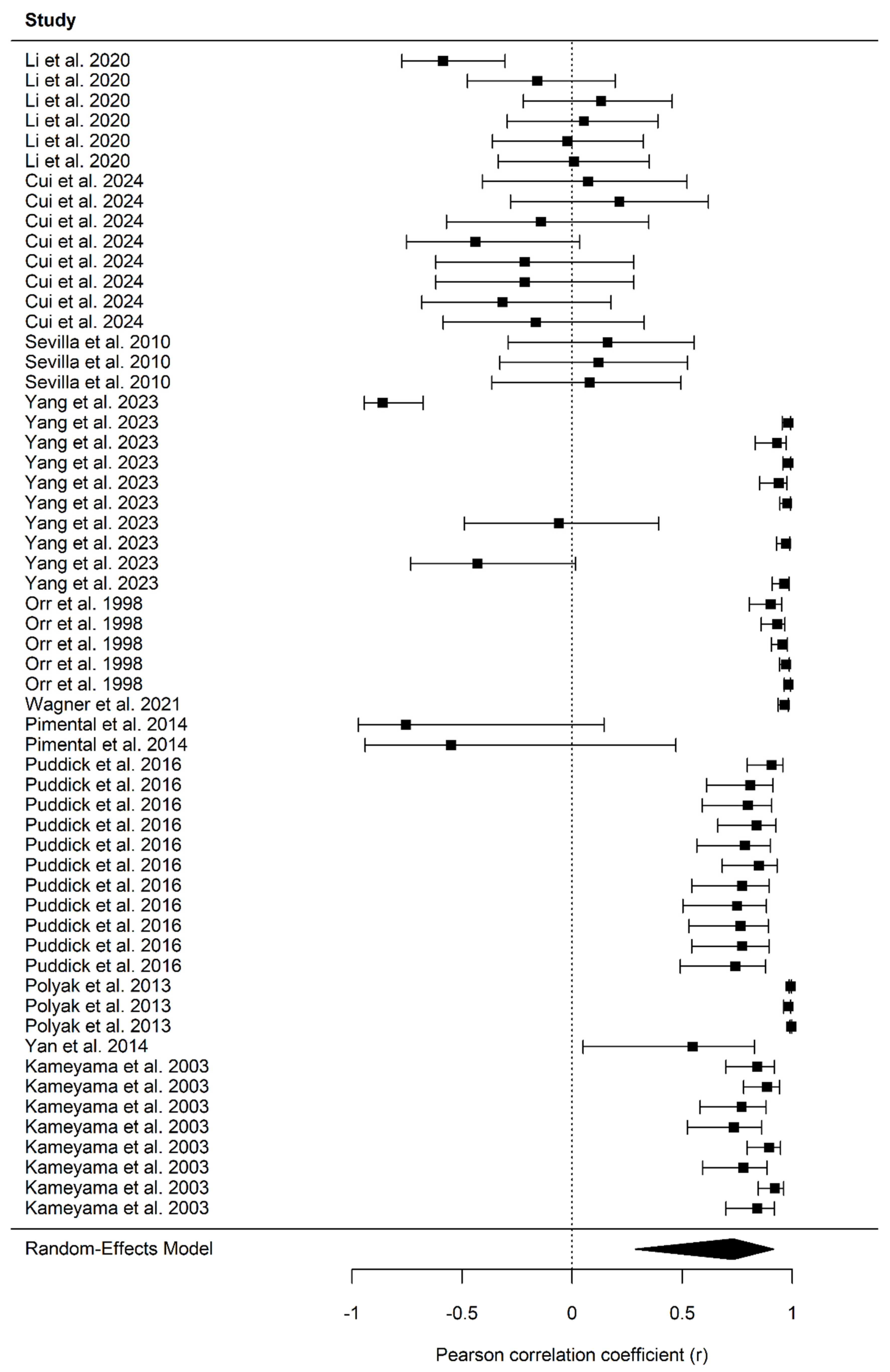
3.2. Temperature and Nitrate as Environmental Drivers of Biomass Accumulation
3.3. Relationships Between Temperature, Nitrate, and Microcystin Concentrations in Microcystis spp.
3.4. Biomass and Microcystin Relationships
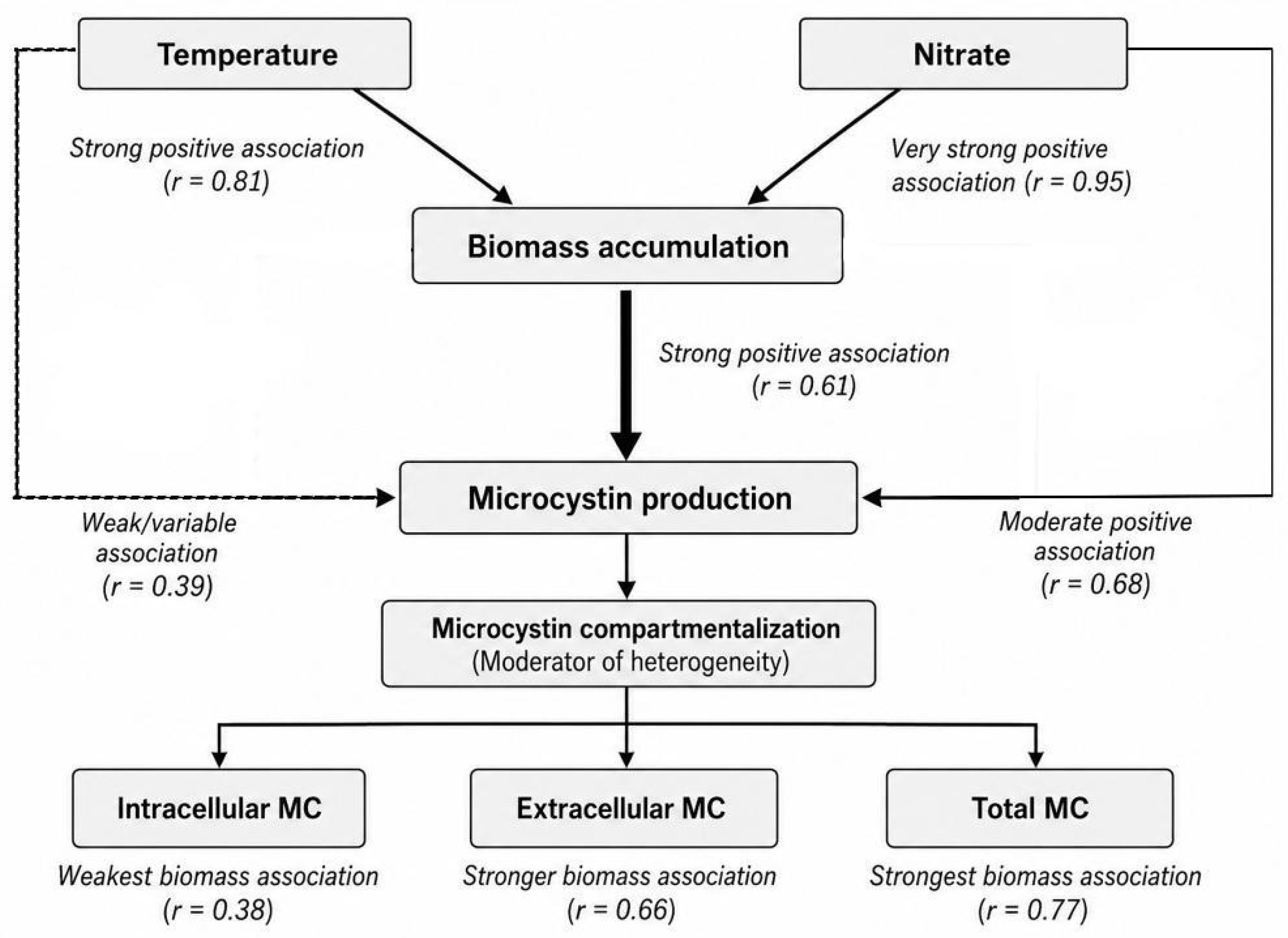
3.5. Summary of Pooled Effect Sizes
3.6. Publication Bias Assessment
4. Discussion
4.1. Environmental Regulation of Biomass and Microcystin Relationships
4.2. Compartmentalization and Implications for Toxin Assessment
4.3. Ecological and Bloom Management Implications
4.4. Limitations and Future Directions
- Controlled Laboratory Studies and Ecological Realism
- Residual Heterogeneity Among Studies
- Strain-Specific Responses and Toxin Regulation
- Publication Bias and Study Effects
4.5. Conclusions
Supplementary Materials
Author Contributions
Funding
Data Availability Statement
Acknowledgments
Conflicts of Interest
References
- Sousa, B.M. UNESP Estudo Sobre Florações Algais Nocivas (HAB’s) e Seus Efeitos Ambientais: Revisão Bibliográfica. Bachelor’s Thesis, Universidade Estadual Paulista, São Paulo, Brazil, 2025. [Google Scholar]
- Wang, W.; Huang, H.; Zhao, K.; Lv, J.; Liu, X.; Xie, S.; Feng, J. Multiple Influences on Cyanobacterial Abundance and Diversity in the Beijing-Tianjin-Hebei Economic Circle and Nearby Areas of China. Curr. Res. Microb. Sci. 2025, 8, 100400. [Google Scholar] [CrossRef] [Scilit] [PubMed]
- MacKintosh, C.; Beattie, K.A.; Klumpp, S.; Cohen, P.; Codd, G.A. Cyanobacterial Microcystin-LR Is a Potent and Specific Inhibitor of Protein Phosphatases 1 and 2A from Both Mammals and Higher Plants. FEBS Lett. 1990, 264, 187–192. [Google Scholar] [CrossRef] [Scilit] [PubMed]
- Carmichael, W.W. Cyanobacteria Secondary Metabolites—The Cyanotoxins. J. Appl. Bacteriol. 1992, 72, 445–459. [Google Scholar] [CrossRef] [Scilit] [PubMed]
- Harke, M.J.; Steffen, M.M.; Gobler, C.J.; Otten, T.G.; Wilhelm, S.W.; Wood, S.A.; Paerl, H.W. A Review of the Global Ecology, Genomics, and Biogeography of the Toxic Cyanobacterium, Microcystis spp. Harmful Algae 2016, 54, 4–20. [Google Scholar] [CrossRef] [Scilit] [PubMed]
- Melaram, R.; Newton, A.R.; Chafin, J. Microcystin Contamination and Toxicity: Implications for Agriculture and Public Health. Toxins 2022, 14, 350. [Google Scholar] [CrossRef] [Scilit] [PubMed]
- Kaneko, T.; Nakajima, N.; Okamoto, S.; Suzuki, I.; Tanabe, Y.; Tamaoki, M.; Nakamura, Y.; Kasai, F.; Watanabe, A.; Kawashima, K.; et al. Complete Genomic Structure of the Bloom-Forming Toxic Cyanobacterium Microcystis aeruginosa NIES-843. DNA Res. 2007, 14, 247–256. [Google Scholar] [CrossRef] [Scilit] [PubMed]
- Azevedo, S. Toxic Cyanobacteria and the Caruaru Tragedy. J. Venom. Anim. Toxins 1997, 3, 93. [Google Scholar]
- Paerl, H.W.; Otten, T.G. Harmful Cyanobacterial Blooms: Causes, Consequences, and Controls. Microb. Ecol. 2013, 65, 995–1010. [Google Scholar] [CrossRef] [Scilit] [PubMed]
- Walls, J.T.; Wyatt, K.H.; Doll, J.C.; Rubenstein, E.M.; Rober, A.R. Hot and Toxic: Temperature Regulates Microcystin Release from Cyanobacteria. Sci. Total Environ. 2018, 610–611, 786–795. [Google Scholar] [CrossRef] [Scilit] [PubMed]
- Burford, M.A.; Carey, C.C.; Hamilton, D.P.; Huisman, J.; Paerl, H.W.; Wood, S.A.; Wulff, A. Perspective: Advancing the Research Agenda for Improving Understanding of Cyanobacteria in a Future of Global Change. Harmful Algae 2020, 91, 101601. [Google Scholar] [CrossRef] [Scilit] [PubMed]
- Wagner, N.D.; Quach, E.; Buscho, S.; Ricciardelli, A.; Kannan, A.; Naung, S.W.; Phillip, G.; Sheppard, B.; Ferguson, L.; Allen, A.; et al. Nitrogen Form, Concentration, and Micronutrient Availability Affect Microcystin Production in Cyanobacterial Blooms. Harmful Algae 2021, 103, 102002. [Google Scholar] [CrossRef] [Scilit] [PubMed]
- Yang, Z.; Zhang, M.; Yu, Y.; Shi, X. Temperature Triggers the Annual Cycle of Microcystis, Comparable Results from the Laboratory and a Large Shallow Lake. Chemosphere 2020, 260, 127543. [Google Scholar] [CrossRef] [Scilit] [PubMed]
- Davis, T.W.; Berry, D.L.; Boyer, G.L.; Gobler, C.J. The Effects of Temperature and Nutrients on the Growth and Dynamics of Toxic and Non-Toxic Strains of Microcystis during Cyanobacteria Blooms. Harmful Algae 2009, 8, 715–725. [Google Scholar] [CrossRef] [Scilit]
- Pimentel, J.S.M.; Giani, A. Microcystin Production and Regulation under Nutrient Stress Conditions in Toxic Microcystis Strains. Appl. Environ. Microbiol. 2014, 80, 5836–5843. [Google Scholar] [CrossRef] [Scilit] [PubMed]
- Roy, S.; Guljamow, A.; Dittmann, E. Impact of Temperature on the Temporal Dynamics of Microcystin in Microcystis aeruginosa PCC7806. Front. Microbiol. 2023, 14, 1200816. [Google Scholar] [CrossRef] [Scilit] [PubMed]
- Mowe, M.A.D.; Porojan, C.; Abbas, F.; Mitrovic, S.M.; Lim, R.P.; Furey, A.; Yeo, D.C.J. Rising Temperatures May Increase Growth Rates and Microcystin Production in Tropical Microcystis Species. Harmful Algae 2015, 50, 88–98. [Google Scholar] [CrossRef] [Scilit]
- Bui, T.; Dao, T.-S.; Vo, T.-G.; Lürling, M. Warming Affects Growth Rates and Microcystin Production in Tropical Bloom-Forming Microcystis Strains. Toxins 2018, 10, 123. [Google Scholar] [CrossRef] [Scilit] [PubMed]
- van der Westhuizen, A.J.; Eloff, J.N. Effect of Temperature and Light on the Toxicity and Growth of the Blue-Green Alga Microcystis aeruginosa (UV-006). Planta 1985, 163, 55–59. [Google Scholar] [CrossRef] [Scilit] [PubMed]
- Peng, G.; Martin, R.M.; Dearth, S.P.; Sun, X.; Boyer, G.L.; Campagna, S.R.; Lin, S.; Wilhelm, S.W. Seasonally Relevant Cool Temperatures Interact with N Chemistry to Increase Microcystins Produced in Lab Cultures of Microcystis aeruginosa NIES-843. Environ. Sci. Technol. 2018, 52, 4127–4136. [Google Scholar] [CrossRef] [Scilit] [PubMed]
- Martin, R.M.; Moniruzzaman, M.; Stark, G.F.; Gann, E.R.; Derminio, D.S.; Wei, B.; Hellweger, F.L.; Pinto, A.; Boyer, G.L.; Wilhelm, S.W. Episodic Decrease in Temperature Increases Mcy Gene Transcription and Cellular Microcystin in Continuous Cultures of Microcystis aeruginosa PCC 7806. Front. Microbiol. 2020, 11, 601864. [Google Scholar] [CrossRef] [Scilit] [PubMed]
- Gobler, C.J.; Burkholder, J.M.; Davis, T.W.; Harke, M.J.; Johengen, T.; Stow, C.A.; Van de Waal, D.B. The Dual Role of Nitrogen Supply in Controlling the Growth and Toxicity of Cyanobacterial Blooms. Harmful Algae 2016, 54, 87–97. [Google Scholar] [CrossRef] [Scilit] [PubMed]
- Wang, S.; Ding, P.; Lu, S.; Wu, P.; Wei, X.; Huang, R.; Kai, T. Cell Density-Dependent Regulation of Microcystin Synthetase Genes (Mcy) Expression and Microcystin-LR Production in Microcystis aeruginosa That Mimics Quorum Sensing. Ecotoxicol. Environ. Saf. 2021, 220, 112330. [Google Scholar] [CrossRef] [Scilit] [PubMed]
- Horst, G.P.; Sarnelle, O.; White, J.D.; Hamilton, S.K.; Kaul, R.B.; Bressie, J.D. Nitrogen Availability Increases the Toxin Quota of a Harmful Cyanobacterium, Microcystis Aeruginosa. Water Res. 2014, 54, 188–198. [Google Scholar] [CrossRef] [Scilit] [PubMed]
- Le, K.T.N.; Maldonado, J.F.G.; Nguyen, T.-L.; Goitom, E.; Trigui, H.; Ndiaye, N.A.; Terrat, Y.; Shapiro, B.J.; Husk, B.R.; Zamyadi, A.; et al. The Short-Term Effect of Nitrogen on Freshwater Cyanobacteria and Cyanotoxins. Front. Water 2024, 6, 1432183. [Google Scholar] [CrossRef] [Scilit]
- Schampera, C.; Hellweger, F.L. Nitrogen Availability Controls Response of Microcystin Concentration to Phosphorus Reduction: Evidence from Model Application to Multiple Lakes. Harmful Algae 2024, 139, 102711. [Google Scholar] [CrossRef] [Scilit] [PubMed]
- Yin, L.; Xu, L.; Shi, K.; Chen, W.; Zhang, Y.; Wang, J.; An, J.; He, H.; Yang, S.; Ni, L.; et al. Physiology, Microcystin Production, and Transcriptomic Responses of Microcystis aeruginosa Exposed to Calcium and Magnesium. Sci. Total Environ. 2024, 913, 169786. [Google Scholar] [CrossRef] [Scilit] [PubMed]
- Scherer, P.I.; Raeder, U.; Geist, J.; Zwirglmaier, K. Influence of Temperature, Mixing, and Addition of Microcystin-LR on Microcystin Gene Expression in Microcystis aeruginosa. MicrobiologyOpen 2017, 6, e00393. [Google Scholar] [CrossRef] [Scilit] [PubMed]
- Briand, E.; Bormans, M.; Quiblier, C.; Salençon, M.-J.; Humbert, J.-F. Evidence of the Cost of the Production of Microcystins by Microcystis aeruginosa under Differing Light and Nitrate Environmental Conditions. PLoS ONE 2012, 7, e29981. [Google Scholar] [CrossRef] [Scilit] [PubMed]
- Hedges, L.V.; Gurevitch, J.; Curtis, P.S. The Meta-Analysis of Response Ratios in Experimental Ecology. Ecology 1999, 80, 1150–1156. [Google Scholar] [CrossRef]
- Gurevitch, J.; Koricheva, J.; Nakagawa, S.; Stewart, G. Meta-Analysis and the Science of Research Synthesis. Nature 2018, 555, 175–182. [Google Scholar] [CrossRef] [Scilit] [PubMed]
- Wang, Z.; Akbar, S.; Sun, Y.; Gu, L.; Zhang, L.; Lyu, K.; Huang, Y.; Yang, Z. Cyanobacterial Dominance and Succession: Factors, Mechanisms, Predictions, and Managements. J. Environ. Manag. 2021, 297, 113281. [Google Scholar] [CrossRef] [Scilit] [PubMed]
- Li, M.; Zhu, W.; Guo, L.; Hu, J.; Chen, H.; Xiao, M. To Increase Size or Decrease Density? Different Microcystis Species Has Different Choice to Form Blooms. Sci. Rep. 2016, 6, 37056. [Google Scholar] [CrossRef] [Scilit] [PubMed]
- Cui, X.; Yang, N.; Cui, H.; Yang, Q.; Wu, Z.; Shao, B.; Zhao, Y.; Tong, Y. Interspecific Competition Enhances Microcystin Production by Microcystis aeruginosa under the Interactive Influences of Temperature and Nutrients. Water Res. 2024, 265, 122308. [Google Scholar] [CrossRef] [Scilit] [PubMed]
- Weisbrod, B. Dynamics of Toxic Cyanobacteria in Lakes and Artificial Water Reservoirs. Doctoral Dissertation, University of Konstanz, Konstanz, Germany, 2021. [Google Scholar]
- Neilan, B.A.; Pearson, L.A.; Muenchhoff, J.; Moffitt, M.C.; Dittmann, E. Environmental Conditions That Influence Toxin Biosynthesis in Cyanobacteria. Environ. Microbiol. 2012, 15, 1239–1253. [Google Scholar] [CrossRef] [Scilit] [PubMed]
- Hernández-Zamora, M.; Santiago-Martínez, E.; Martínez-Jerónimo, F. Toxigenic Microcystis aeruginosa (Cyanobacteria) Affects the Population Growth of Two Common Green Microalgae: Evidence of Other Allelopathic Metabolites Different to Cyanotoxins. J. Phycol. 2021, 57, 1530–1541. [Google Scholar] [CrossRef] [Scilit] [PubMed]
- Guljamow, A.; Barchewitz, T.; Große, R.; Timm, S.; Hagemann, M.; Dittmann, E. Diel Variations of Extracellular Microcystin Influence the Subcellular Dynamics of RubisCO in Microcystis aeruginosa PCC 7806. Microorganisms 2021, 9, 1265. [Google Scholar] [CrossRef] [Scilit] [PubMed]
- Makower, A.K.; Schuurmans, J.M.; Groth, D.; Zilliges, Y.; Matthijs, H.C.P.; Dittmann, E. Transcriptomics-Aided Dissection of the Intracellular and Extracellular Roles of Microcystin in Microcystis aeruginosa PCC 7806. Appl. Environ. Microbiol. 2015, 81, 544–554. [Google Scholar] [CrossRef] [Scilit] [PubMed]
- Schmidt, J.R.; Wilhelm, S.W.; Boyer, G.L. The Fate of Microcystins in the Environment and Challenges for Monitoring. Toxins 2014, 6, 3354–3387. [Google Scholar] [CrossRef] [Scilit] [PubMed]
- Borenstein, M.; Hedges, L.V.; Higgins, J.P.T.; Rothstein, H.R. Introduction to Meta-Analysis; John Wiley & Sons: New York, NY, USA, 2021; ISBN 978-1-119-55838-5. [Google Scholar]
- Cohen, J. Statistical Power Analysis for the Behavioral Sciences; Routledge: London, UK, 2013; ISBN 978-1-134-74277-6. [Google Scholar]
- Ding, Y.; Gan, N.; Liu, J.; Zheng, L.; Li, L.; Song, L. Survival, Recovery and Microcystin Release of Microcystis Aeruginosa in Cold or Dark Condition. Chin. J. Ocean. Limnol. 2017, 35, 313–323. [Google Scholar] [CrossRef] [Scilit]
- Ma, G.; Pei, H.; Hu, W.; Xu, X.; Ma, C.; Li, X. The Removal of Cyanobacteria and Their Metabolites through Anoxic Biodegradation in Drinking Water Sludge. Bioresour. Technol. 2014, 165, 191–198. [Google Scholar] [CrossRef] [Scilit] [PubMed]
- Yang, N.; Li, Z.; Wu, Z.; Liu, X.; Zhang, Y.; Sun, T.; Wang, X.; Zhao, Y.; Tong, Y. Differential Effects of Nitrate and Ammonium on the Growth of Algae and Microcystin Production by Nitrogen-Fixing Nostoc Sp. and Non-Nitrogen-Fixing Microcystis Aeruginosa. Water Sci. Technol. 2023, 88, 136–150. [Google Scholar] [CrossRef] [Scilit] [PubMed]
- Liu, W.; Semmouri, I.; Bulckaert, S.; Janssen, C.R.; Asselman, J. Temperature and Salinity Affect Growth and Toxin Content of Cyanobacterium Microcystis Aeruginosa (PCC 7806) in Estuarine Environments. Harmful Algae 2025, 146, 102871. [Google Scholar] [CrossRef] [Scilit] [PubMed]
- Giannuzzi, L.; Krock, B.; Minaglia, M.C.C.; Rosso, L.; Houghton, C.; Sedan, D.; Malanga, G.; Espinosa, M.; Andrinolo, D.; Hernando, M. Growth, Toxin Production, Active Oxygen Species and Catalase Activity of Microcystis Aeruginosa (Cyanophyceae) Exposed to Temperature Stress. Comp. Biochem. Physiol. Part C Toxicol. Pharmacol. 2016, 189, 22–30. [Google Scholar] [CrossRef] [Scilit] [PubMed]
- Sevilla, E.; Martin-Luna, B.; Vela, L.; Teresa Bes, M.; Luisa Peleato, M.; Fillat, M.F. Microcystin-LR Synthesis as Response to Nitrogen: Transcriptional Analysis of the mcyD Gene in Microcystis Aeruginosa PCC7806. Ecotoxicology 2010, 19, 1167–1173. [Google Scholar] [CrossRef] [Scilit] [PubMed]
- Xiao, Y.; Yu, X.; Wang, D.; Wu, X.; Lu, L.; Li, Z. Morphology vs. Toxicity: How Temperature Reshapes Microcystis’ Adaptive Strategies in a Warming World? Harmful Algae 2025, 148, 102927. [Google Scholar] [CrossRef] [Scilit] [PubMed]
- Orr, P.T.; Jones, G.J. Relationship between Microcystin Production and Cell Division Rates in Nitrogen-Limited Microcystis Aeruginosa Cultures. Limnol. Oceanogr. 1998, 43, 1604–1614. [Google Scholar] [CrossRef] [Scilit]
- Yan, F.; Li, M.; Zang, S.; Xu, Z.; Bao, M.; Wu, H. UV Radiation and Temperature Increase Alter the PSII Function and Defense Mechanisms in a Bloom-Forming Cyanobacterium Microcystis Aeruginosa. Front. Microbiol. 2024, 15, 1351796. [Google Scholar] [CrossRef] [Scilit] [PubMed]
- Yan, H.; Pan, G.; Zou, H.; Song, L.; Zhang, M. Effects of Nitrogen Forms on the Production of Cyanobacterial Toxin Microcystin-LR by an Isolated Microcystis Aeruginosa. J. Environ. Sci. Health Part A 2004, 39, 2993–3003. [Google Scholar] [CrossRef]
- Polyak, Y.; Zaytseva, T.; Medvedeva, N. Response of Toxic Cyanobacterium Microcystis Aeruginosa to Environmental Pollution. Water Air Soil Pollut. 2013, 224, 1494. [Google Scholar] [CrossRef] [Scilit]
- Li, J.; Luo, L.; Zhang, Z.; Hu, J. Growth and Cellular Responses of Toxigenic Microcystis to Chloramphenicol-Stress at Various Environmentally-Relevant Nitrogen Levels. Bull. Environ. Contam. Toxicol. 2020, 105, 337–344. [Google Scholar] [CrossRef] [Scilit] [PubMed]
- Kameyama, K.; Sugiura, N.; Inamori, Y.; Maekawa, T. Characteristics of Microcystin Production in the Cell Cycle of Microcystis Viridis. Environ. Toxicol. 2004, 19, 20–25. [Google Scholar] [CrossRef] [Scilit] [PubMed]
- Puddick, J.; Prinsep, M.R.; Wood, S.A.; Cary, S.C.; Hamilton, D.P. Modulation of Microcystin Congener Abundance Following Nitrogen Depletion of a Microcystis Batch Culture. Aquat. Ecol. 2016, 50, 235–246. [Google Scholar] [CrossRef] [Scilit]
- Kieley, C.M.; Roelke, D.L.; Park, R.; Campbell, K.L.; Klobusnik, N.H.; Walker, J.R.; Cagle, S.E.; Kneer, M.L.; Stroski, K.M.; Brooks, B.W.; et al. Concentration of Total Microcystins Associates with Nitrate and Nitrite, and May Disrupt the Nitrogen Cycle, in Warm-Monomictic Lakes of the Southcentral United States. Harmful Algae 2023, 130, 102542. [Google Scholar] [CrossRef] [Scilit] [PubMed]
- Long, B.M.; Jones, G.J.; Orr, P.T. Cellular Microcystin Content in N-Limited Microcystis aeruginosa Can Be Predicted from Growth Rate. Appl. Environ. Microbiol. 2001, 67, 278–283. [Google Scholar] [CrossRef] [Scilit] [PubMed]
- Dai, R.; Wang, P.; Jia, P.; Zhang, Y.; Chu, X.; Wang, Y. A Review on Factors Affecting Microcystins Production by Algae in Aquatic Environments. World J. Microbiol. Biotechnol. 2016, 32, 51. [Google Scholar] [CrossRef] [Scilit] [PubMed]
- Lürling, M.; Oosterhout, F.V.; Faassen, E. Eutrophication and Warming Boost Cyanobacterial Biomass and Microcystins. Toxins 2017, 9, 64. [Google Scholar] [CrossRef] [Scilit] [PubMed]
- Godoy, R.F.B.; Trevisan, E.; Battistelli, A.A.; Crisigiovanni, E.L.; do Nascimento, E.A.; da Fonseca Machado, A.L. Does Water Temperature Influence in Microcystin Production? A Case Study of Billings Reservoir, São Paulo, Brazil. J. Contam. Hydrol. 2023, 255, 104164. [Google Scholar] [CrossRef] [Scilit] [PubMed]
- Wang, Z.Y.; Wang, P.F.; Wang, C.; Zhang, S.H.; Hou, J.; Ao, Y.H. Statistical Optimization of Microcystis Growth and Microcystin Production in Natural Phytoplankton Community Using Microcosm Bioassays. J. Environ. Inform. 2022, 40, 1–15. [Google Scholar] [CrossRef] [Scilit]
- Mohamed, Z.A.; Deyab, M.A.; Abou-Dobara, M.I.; El-Raghi, W.M. Occurrence of Toxic Cyanobacteria and Microcystin Toxin in Domestic Water Storage Reservoirs, Egypt. J. Water Supply Res. Technol.-Aqua 2016, 65, 431–440. [Google Scholar] [CrossRef] [Scilit]
- Harris, T.D.; Wilhelm, F.M.; Graham, J.L.; Loftin, K.A. Experimental Manipulation of TN:TP Ratios Suppress Cyanobacterial Biovolume and Microcystin Concentration in Large-Scale in Situ Mesocosms. Lake Reserv. Manag. 2014, 30, 72–83. [Google Scholar] [CrossRef] [Scilit]
- Guo, Y.; Meng, H.; Zhao, S.; Wang, Z.; Zhu, L.; Deng, D.; Liu, J.; He, H.; Xie, W.; Wang, G.; et al. How Does Microcystis aeruginosa Respond to Elevated Temperature? Sci. Total Environ. 2023, 889, 164277. [Google Scholar] [CrossRef] [Scilit] [PubMed]
- Stark, G.F.; Martin, R.M.; Smith, L.E.; Wei, B.; Hellweger, F.L.; Bullerjahn, G.S.; McKay, R.M.L.; Boyer, G.L.; Wilhelm, S.W. Microcystin Aids in Cold Temperature Acclimation: Differences between a Toxic Microcystis Wildtype and Non-Toxic Mutant. Harmful Algae 2023, 129, 102531. [Google Scholar] [CrossRef] [Scilit] [PubMed]
- Georges des Aulnois, M.; Roux, P.; Caruana, A.; Réveillon, D.; Briand, E.; Hervé, F.; Savar, V.; Bormans, M.; Amzil, Z. Physiological and Metabolic Responses of Freshwater and Brackish-Water Strains of Microcystis aeruginosa Acclimated to a Salinity Gradient: Insight into Salt Tolerance. Appl. Environ. Microbiol. 2019, 85, e01614-19. [Google Scholar] [CrossRef] [Scilit] [PubMed]
- Wood, S.A.; Dietrich, D.R.; Cary, S.C.; Hamilton, D.P. Increasing Microcystis Cell Density Enhances Microcystin Synthesis: A Mesocosm Study. Inland Waters 2012, 2, 17–22. [Google Scholar] [CrossRef] [Scilit]
- Beaver, J.R.; Tausz, C.E.; Scotese, K.C.; Pollard, A.I.; Mitchell, R.M. Environmental Factors Influencing the Quantitative Distribution of Microcystin and Common Potentially Toxigenic Cyanobacteria in U.S. Lakes and Reservoirs. Harmful Algae 2018, 78, 118–128. [Google Scholar] [CrossRef] [Scilit] [PubMed]
- Carmichael, W.W. Toxic Microcystis and the Environment. In Toxic Microcystis; CRC Press: Boca Raton, FL, USA, 1995. [Google Scholar]
- Paerl, H.W. Mitigating Toxic Planktonic Cyanobacterial Blooms in Aquatic Ecosystems Facing Increasing Anthropogenic and Climatic Pressures. Toxins 2018, 10, 76. [Google Scholar] [CrossRef] [Scilit] [PubMed]
- Gokce, D. Limnology: Some New Aspects of Inland Water Ecology; IntechOpen: London, UK, 2019; Available online: https://books.google.com.br/books?hl=en&lr=&id=dhT8DwAAQBAJ&oi=fnd&pg=PA13&dq=6.%09Benayache,+N.-Y.,+Nguyen-Quang,+T.,+Hushchyna,+K.,+McLellan,+K.,+Afri-Mehennaoui,+F.-Z.,+%26+Boua%C3%AFcha,+N.+(2019).+An+overview+of+cyanobacteria+harmful+algal+bloom+(CyanoHAB)+issues+in+freshwater+ecosystems.+Limnology+Some+New+Aspects+of+Inland+Water+Ecology,+13%E2%80%9337.&ots=b5HTVfKAJc&sig=juPOH44FxMiPupj8XZQrK_B8H18&redir_esc=y#v=onepage&q&f=false (accessed on 23 June 2026).
- Lakshmikandan, M.; Li, M.; Pan, B. Cyanobacterial Blooms in Environmental Water: Causes and Solutions. Curr. Pollut. Rep. 2024, 10, 606–627. [Google Scholar] [CrossRef] [Scilit]
- Visser, P.M.; Ibelings, B.W.; Mur, L.R.; Walsby, A.E. The Ecophysiology of the Harmful Cyanobacterium Microcystis. In Harmful Cyanobacteria; Huisman, J., Matthijs, H.C.P., Visser, P.M., Eds.; Springer: Dordrecht, The Netherlands, 2005; pp. 109–142. ISBN 978-1-4020-3022-2. [Google Scholar]
- Anas, M.; Khattak, W.A.; Hakki, E.E.; Fahad, S. Introduction to Cyanobacterial Blooms and Global Perspective. In Cyanobacterial Blooms: Ecology, Evolution and Biogeochemical Impacts: Microbial Dynamics and Global Implications; Fahad, S., Saud, S., Song, J., Nawaz, T., Zhou, R., Eds.; Springer Nature: Cham, Switzerland, 2026; pp. 1–24. ISBN 978-3-032-06042-6. [Google Scholar]
- Amorim, C.A.; Moura, A.d.N. Ecological Impacts of Freshwater Algal Blooms on Water Quality, Plankton Biodiversity, Structure, and Ecosystem Functioning. Sci. Total Environ. 2021, 758, 143605. [Google Scholar] [CrossRef] [Scilit] [PubMed]
- Huisman, J.; Codd, G.A.; Paerl, H.W.; Ibelings, B.W.; Verspagen, J.M.H.; Visser, P.M. Cyanobacterial Blooms. Nat. Rev. Microbiol. 2018, 16, 471–483. [Google Scholar] [CrossRef] [Scilit] [PubMed]
- Drugă, B.; Turko, P.; Spaak, P.; Pomati, F. Cyanobacteria Affect Fitness and Genetic Structure of Experimental Daphnia Populations. Environ. Sci. Technol. 2016, 50, 3416–3424. [Google Scholar] [CrossRef] [Scilit] [PubMed]
- Chen, L.; Chen, J.; Zhang, X.; Xie, P. A Review of Reproductive Toxicity of Microcystins. J. Hazard. Mater. 2016, 301, 381–399. [Google Scholar] [CrossRef] [Scilit] [PubMed]
- Kawan, A.; Zhang, T.; Liu, W.; Mukhtar, H.; Zhan, C.; Zhang, X. Recovery of Reproductive Function of Female Zebrafish from the Toxic Effects of Microcystin-LR Exposure. Aquat. Toxicol. 2019, 214, 105240. [Google Scholar] [CrossRef] [Scilit] [PubMed]
- Ye, S.-N.; Ip, J.C.-H.; Yang, Y.; Han, B.-P.; Zhou, G.-J. Ecological Risks of Microcystins and the Implications on Their Adverse Effects to Freshwater Ecosystems under Multiple Temperature Scenarios. Environ. Chem. Ecotoxicol. 2026, 8, 1563–1570. [Google Scholar] [CrossRef] [Scilit]
- Massey, I.Y.; Wu, P.; Wei, J.; Luo, J.; Ding, P.; Wei, H.; Yang, F. A Mini-Review on Detection Methods of Microcystins. Toxins 2020, 12, 641. [Google Scholar] [CrossRef] [Scilit] [PubMed]
- Hellweger, F.L.; Martin, R.M.; Eigemann, F.; Smith, D.J.; Dick, G.J.; Wilhelm, S.W. Models Predict Planned Phosphorus Load Reduction Will Make Lake Erie More Toxic. Science 2022, 376, 1001–1005. [Google Scholar] [CrossRef] [Scilit] [PubMed]
- Facey, J.A.; Violi, J.P.; King, J.J.; Sarowar, C.; Apte, S.C.; Mitrovic, S.M. The Influence of Micronutrient Trace Metals on Microcystis aeruginosa Growth and Toxin Production. Toxins 2022, 14, 812. [Google Scholar] [CrossRef] [Scilit] [PubMed]
- Buley, R.P.; Gladfelter, M.F.; Fernandez-Figueroa, E.G.; Wilson, A.E. Can Correlational Analyses Help Determine the Drivers of Microcystin Occurrence in Freshwater Ecosystems? A Meta-Analysis of Microcystin and Associated Water Quality Parameters. Env. Monit. Assess. 2022, 194, 493. [Google Scholar] [CrossRef] [Scilit] [PubMed]
- Kurmayer, R.; Christiansen, G.; Chorus, I. The Abundance of Microcystin-Producing Genotypes Correlates Positively with Colony Size in Microcystis sp. and Determines Its Microcystin Net Production in Lake Wannsee. Appl. Environ. Microbiol. 2003, 69, 787–795. [Google Scholar] [CrossRef] [Scilit] [PubMed]





| Species | No. of Independent Studies | Representative Studies |
|---|---|---|
| Microcystis aeruginosa | 15 | [12,15,34,43,44,45,46,47,48,49,50,51,52,53,54] |
| Microcystis ichthyoblabe | 1 | [17] |
| Microcystis flos-aquae | 1 | [17] |
| Microcystis viridis | 1 | [55] |
| Microcystis sp. (species not specified) | 1 | [56] |
| Relationship | k | r | 95% CI | τ2 | p |
|---|---|---|---|---|---|
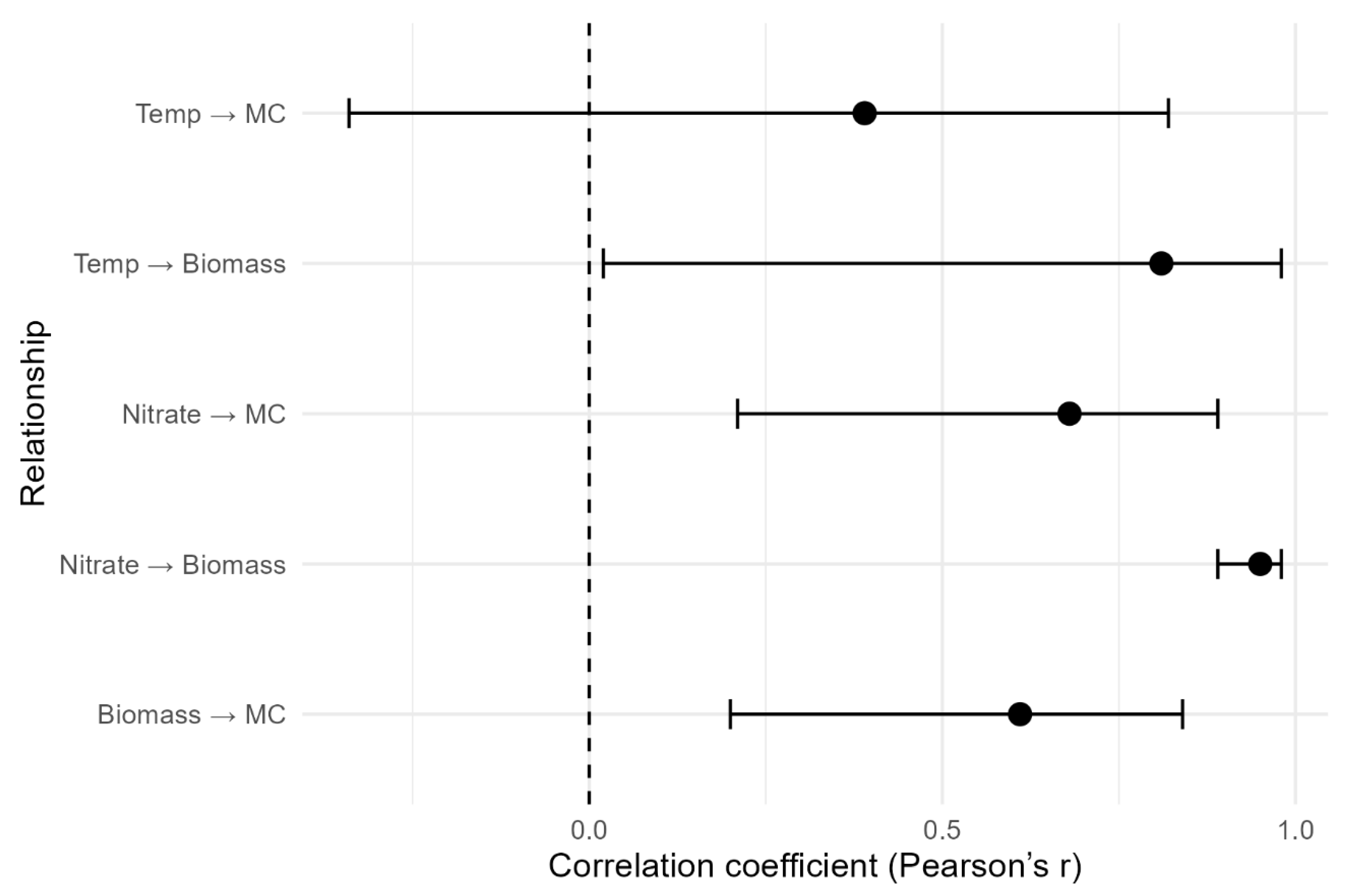
| Temp–Biomass | 37 | 0.81 | 0.02–0.98 | 1.87 | 0.046 |
| Nitrate–Biomass | 58 | 0.95 | 0.89–0.98 | 0.55 | <0.001 |
| Temp–MC | 83 | 0.39 | −0.34–0.82 | 1.33 | 0.2923 |
| Nitrate–MC | 58 | 0.68 | 0.21–0.89 | 1.15 | 0.0079 |
| Biomass–MC | 141 | 0.61 | 0.20–0.84 | 1.26 | 0.0065 |
Disclaimer/Publisher’s Note: The statements, opinions and data contained in all publications are solely those of the individual author(s) and contributor(s) and not of MDPI and/or the editor(s). MDPI and/or the editor(s) disclaim responsibility for any injury to people or property resulting from any ideas, methods, instructions or products referred to in the content. |
© 2026 by the authors. Licensee MDPI, Basel, Switzerland. This article is an open access article distributed under the terms and conditions of the Creative Commons Attribution (CC BY) license.
Share and Cite
Ahmed, Z.P.; Abdulmalik, E.; Daniel, B.A.; Abdullahi, A.K.; Dauda, S.; Samuel, S.A.; Yisa, A.G.; Agee, J.T.; Okpanachi, I.Y.; Chia, M.A. Temperature and Nitrate Effects on Biomass and Microcystin Compartmentalization in Microcystis spp.: A Multilevel Meta-Analysis. Phycology 2026, 6, 77. https://doi.org/10.3390/phycology6030077
Ahmed ZP, Abdulmalik E, Daniel BA, Abdullahi AK, Dauda S, Samuel SA, Yisa AG, Agee JT, Okpanachi IY, Chia MA. Temperature and Nitrate Effects on Biomass and Microcystin Compartmentalization in Microcystis spp.: A Multilevel Meta-Analysis. Phycology. 2026; 6(3):77. https://doi.org/10.3390/phycology6030077
Chicago/Turabian StyleAhmed, Zubeidat Precious, Elizabeth Abdulmalik, Besna Armando Daniel, Abdullahi Kusogi Abdullahi, Suleiman Dauda, Sadiya Awala Samuel, Abraham Gana Yisa, Jerry Tersoo Agee, Ibrahim Yusuf Okpanachi, and Mathias Ahii Chia. 2026. "Temperature and Nitrate Effects on Biomass and Microcystin Compartmentalization in Microcystis spp.: A Multilevel Meta-Analysis" Phycology 6, no. 3: 77. https://doi.org/10.3390/phycology6030077
APA StyleAhmed, Z. P., Abdulmalik, E., Daniel, B. A., Abdullahi, A. K., Dauda, S., Samuel, S. A., Yisa, A. G., Agee, J. T., Okpanachi, I. Y., & Chia, M. A. (2026). Temperature and Nitrate Effects on Biomass and Microcystin Compartmentalization in Microcystis spp.: A Multilevel Meta-Analysis. Phycology, 6(3), 77. https://doi.org/10.3390/phycology6030077