Article

Break on Through to the Inland Side: A Novel Record of Chara corfuensis (Charophyceae, Characeae) from Serbia


1
Institute of Botany and Botanical Garden “Jevremovac”, Faculty of Biology, University of Belgrade, Takovska 43, 11000 Belgrade, Serbia
2
Natural History Museum in Belgrade, Njegoševa 51, 11000 Belgrade, Serbia
3
Independent Researcher, Dobra Voda, 85356 Bar, Montenegro
*
Author to whom correspondence should be addressed.
Phycology 2026, 6(3), 76; https://doi.org/10.3390/phycology6030076
Submission received: 7 June 2026 / Revised: 6 July 2026 / Accepted: 10 July 2026 / Published: 12 July 2026

Abstract

The rare charophyte species Chara corfuensis, which has an almost exclusively Mediterranean distribution, was recorded for the first time in two small waterbodies in southern Serbia, deep inland and far from the coast. Habitat characteristics were described in detail, as was the morphometry of the collected specimens, which corresponded well with literature data. In particular, reproductive structures—oospores and gyrogonites—were analyzed in detail, as the previous data on oospores was scarce and none existed for gyrogonites. The genetic profile of the Serbian specimens was determined based on DNA barcoding of the matK and rbcL plastid genes, confirming their taxonomic identity and showing close evolutionary relationships with most species of the subsection Hartmania.

1. Introduction

Chara corfuensis J. Groves ex Fil. is a rare and unique charophyte species, long known only from the Mediterranean region of the Balkans [1]. The species was assessed as Regionally Critically Endangered (CR) in the Balkans [2], and is on the provisional Red List of European Charophytes. Its status was estimated as Endangered (EN) in Europe and globally [3].
According to the literature, the species’ distribution includes the Mediterranean coastal regions of Turkey (TR), Greece (GR), Albania (AL), Montenegro (MNG), and Croatia (CRO). Chara corfuensis is known from 13 localities, most of which are in Greece; there is one locality each in Albania and Montenegro and two localities each in Croatia and Turkey [1,4,5,6]. At least two sites, including the type locality in Corfu, are currently considered lost or no longer exist [1,3,7]. Kaifas Lagoon in western Greece is considered the only locality still supporting a stable subpopulation of C. corfuensis [1,8].
Subpopulations in the other localities are small [3], or their status is unknown. The last (and only) record in Albania was made more than 10 years ago (in 2014 [9]), and in Croatia more than 30 years ago (in 1989 [10]). Apart from the fact that the record was made during the field survey in 2017, no further information is available on the Turkish C. corfuensis subpopulation (initially identified as C. polyacantha A. Braun ex Braun, Rabenhorst et Stizenberger) in Köyceğiz Coastal Lake and Dalaman Wetlands [4,5]. The most recent findings of the species were reported in Montenegro (in 2023) in several proximal microsites, in freshwater interdunal ponds and inundated sand pits east of Ulcinj. The authors highlighted the presence of numerous threats (urbanization, dumping, sand extraction) to the species’ survival at the locality [6]. Recently, records of the species have been reported from the North Black Sea region and the Atlantic coast [5], challenging the current understanding of its distribution and consequently, its ecology and conservation status.
Chara corfuensis mainly inhabits coastal brackish habitats located on the immediate coast, such as coastal lagoons, lakes, and ponds. However, in a few cases, it has been found in freshwater habitats near the coast, including Baćinska Lakes, Lake Desne, and the Argyroupolis spring [1,11] as well as ponds in Montenegro [6]. The deepest inland habitat of C. corfuensis currently known is Argyroupolis spring, located about 10 km in a straight line from the coast.
A recent chapter on C. corfuensis in the monograph Charophytes of Europe, published in 2024 [1], summarized all currently available information on the species’ morphological traits and ecological preferences. This species is not considered a variable charophyte, but this conclusion is based on a small number of findings and an even smaller number of processed samples and detailed habitat descriptions. The recognized knowledge gaps involve the reproductive structures: oospores are commonly found in an immature stage; quantitative data on oogonium dimensions are highly variable and are based on an unknown sample size; gyrogonites are unknown.
Chara corfuensis belongs to the Hartmania subsection, a charophyte group comprising morphologically distinctive species. However, the currently available phylogenetic results for species in this subsection are strongly dependent on the methods (markers/barcodes) used and, to some extent, are contradictory, i.e., not consistent with morphological species boundaries [12]. At present, only the plastid markers matK and rbcL are available, both obtained from one specimen collected in Greece in 2010. matK was also cataloged from another specimen collected in Greece in 2006, but rbcL was not. All markers consistently place this species within the Hartmania subsection in subsequent phylogenetic analyses [12,13].
In this study, we report the first occurrence of C. corfuensis deep inland and far from the coast, in southern Serbia. Our aim was to provide a detailed overview of the morphological characteristics, particularly the reproductive structures and the phylogenetic affinity (based on matK and rbcL genes) of this new population, and to compare it with those currently available in the literature. We hypothesize that our results will broaden the known range of morphological traits of the species and confirm the genetic affiliation of the newly discovered population. We also discuss the species’ distribution and potential future conservation practices.

2. Materials and Methods

2.1. Study Site and Field Work

On 24 July 2025, Pond 1 (GPS coordinates 42.9357 N, 22.0253 E) in southern Serbia near Velika Grabovnica (City of Leskovac) was surveyed for dragonflies by the entomology team from the Natural History Museum in Belgrade (HNMBEO), during which charophytes were collected.
Interestingly, in this location the records of adult Odonata during 2024 and the summer of 2025 include a relatively rich fauna of up to 19 species. Slightly more than one-fifth of these are species that, according to Dijkstra et al. [14], are increasingly undertaking large-scale invasions from the Mediterranean (Anax ephippiger (Burmeister, 1839) and Sympetrum fonscolombii (Selys, 1840)), or are rapidly expanding their range from the same direction by moving along the increasingly warm and anthropogenically altered river valleys of the central part of the Balkan Peninsula (Selysiothemis nigra (Vander Linden, 1825) and Lindenia tetraphylla (Vander Linden, 1825)). For the species L. tetraphylla, Pond 1 is currently the only known habitat in Serbia [15].
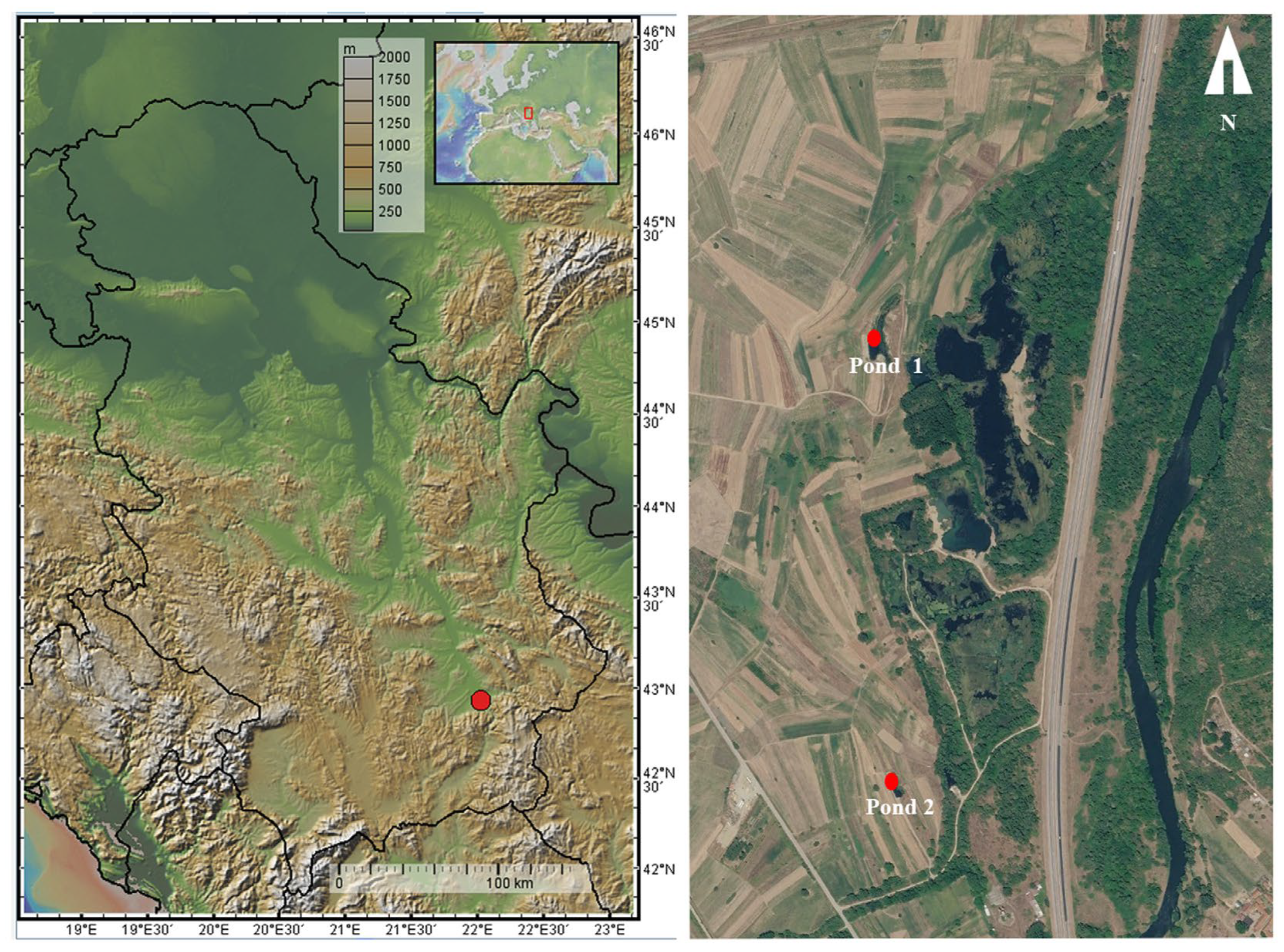
A time series of satellite imagery from the Sentinel-2 Level-2A mission [16] was visually inspected using the timelapse tool in the Copernicus Browser to determine the approximate period of pond formation. The pond was created in 2023, most likely by sand/gravel extraction. It is located near highway A1, in agricultural land in the alluvium (river floodplain) of the Južna Morava River (Figure 1). The result was additionally supported by visual inspection of higher-resolution imagery obtained via Google Earth Pro [17] (Supplementary Figure S1). The approximate surface of the pond is 0.2 ha. Nearby larger water bodies are subjected to impacts from the fishing camp.
Charophyte sampling was opportunistic and did not follow a systematic protocol, as it was carried out by colleagues from NHMBEO, who were primarily conducting an Odonata survey. A random charophyte sample was collected by hand from the middle of a single patch and stored in a 70% alcohol solution, and subsequently, the sample was deposited in the herbarium collection of the HNMBEO under referent number B673. Approximate volume/biomass of the collected sample was 1 dm3. At our request, a small part of the sample NHMBEO B673 was extracted and transferred to the University of Belgrade, the BEOU Charophyte Collection under the referent numbers BEOU 3016 and BEOU 3023.
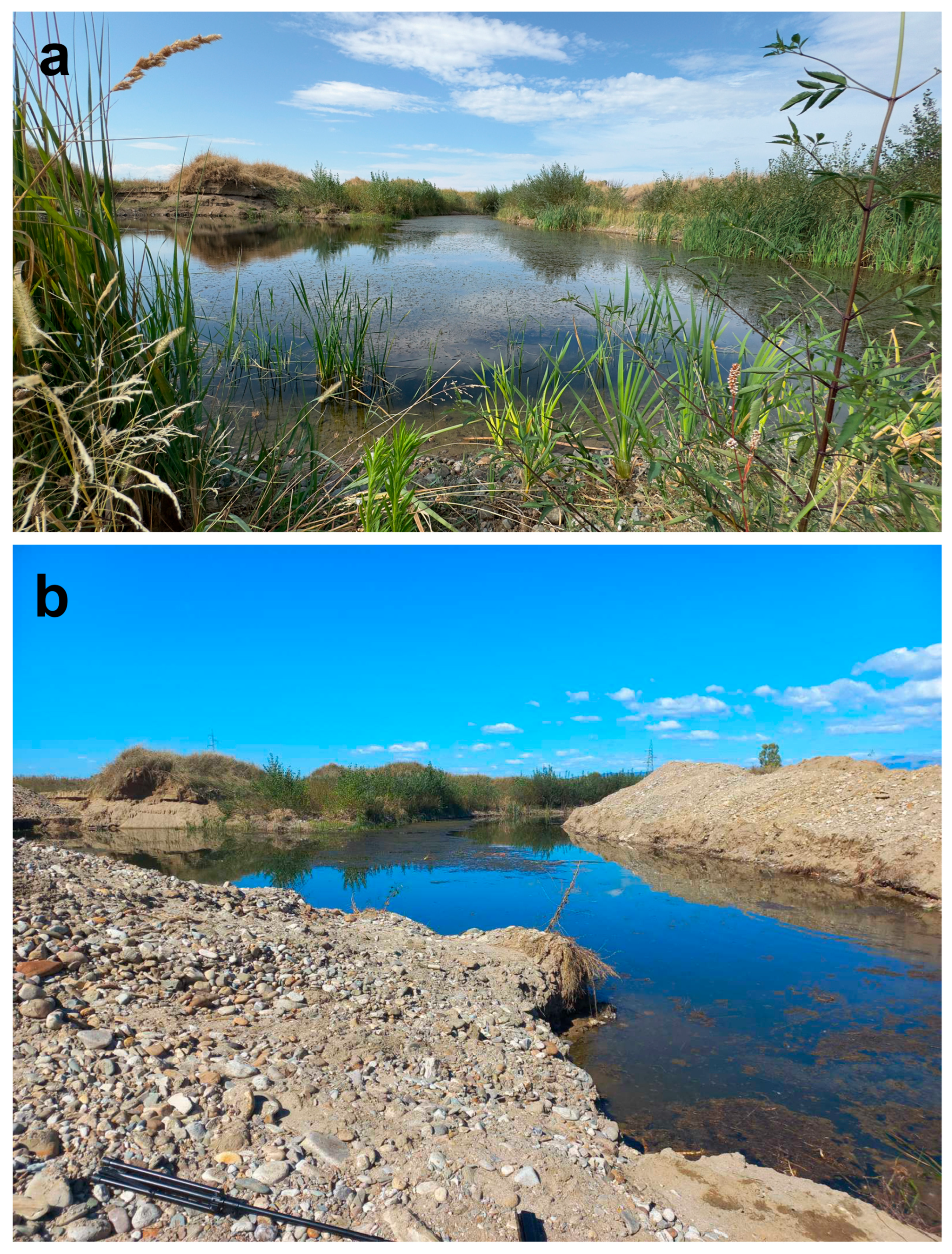
Pond 1 was again visited on 20 September 2025, for a detailed examination of the macrophyte flora. Unfortunately, the habitat was found partially ruined, supposedly by waste dumping in the riparian zone and/or further excavation in the part of the pond where charophytes were established (Figure 2). Plants were mainly senesced and only one (partly decayed) charophyte plant was collected and herbarized for further molecular analyses. On that occasion, in situ measurement of water parameters (pH, conductivity, total dissolved solids (TDS), salinity, oxygen concentration and saturation) was done in the least affected part of the pond, using the field instruments Eutech/Oakton® Singapore, Singapore, Multi-Parameter Instrument and a YSI ProODO (YSI, Yellow Springs, OH, USA), optical dissolved oxygen meter. A single water sample for further chemical analyses was collected below the surface in a clean 1 L PVC bottle. A single epipelic phytobenthos sample was collected with a transfer pipette for subsequent diatom indices calculation, i.e., for the assessment of ecological status in accordance with Serbian legislation [19,20].
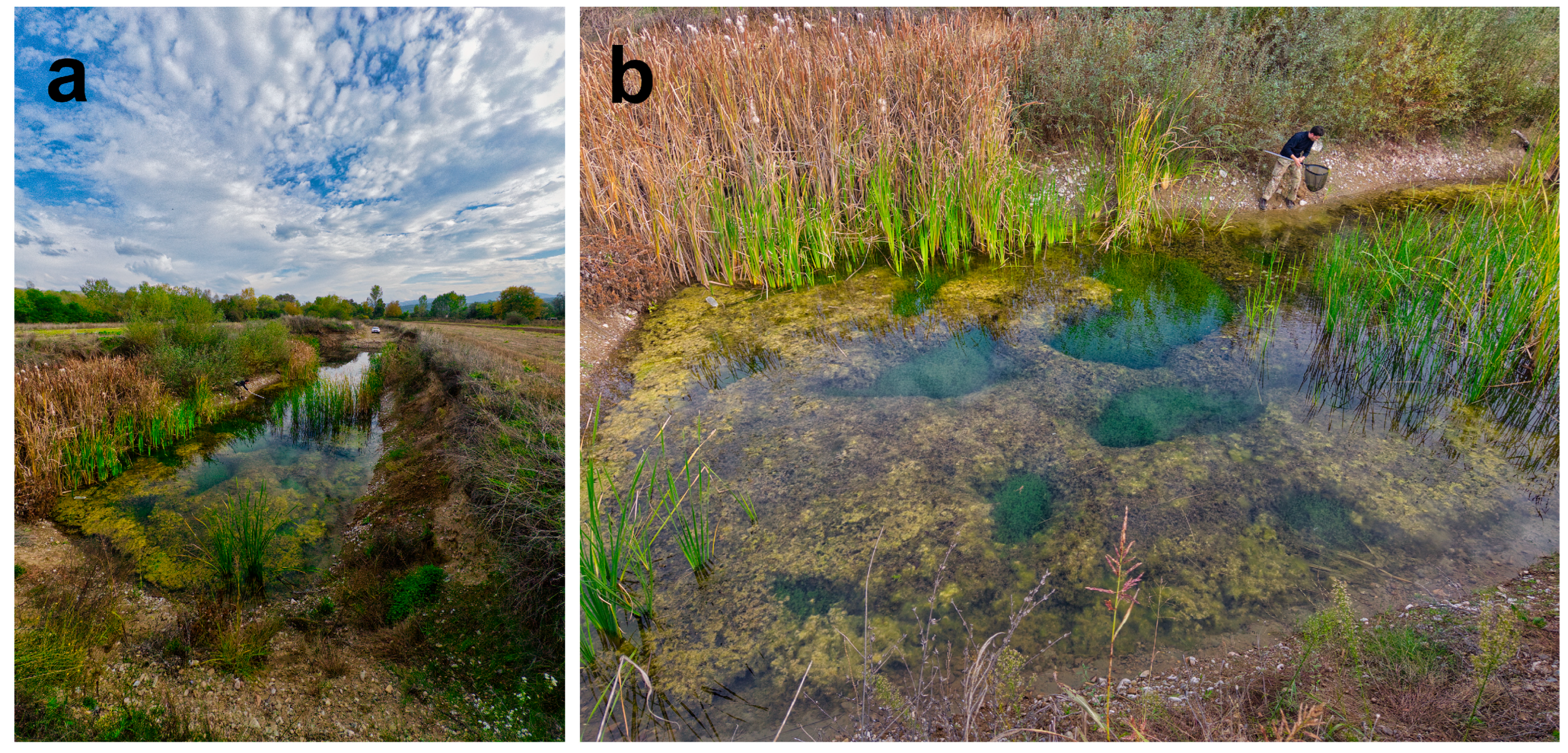
On 20 October 2025, the study site was visited again. On that occasion Pond 1 was found in the same condition as in September, but in the nearby Pond 2 (GPS coordinates 42.9284N, 22.0258E), the charophyte patches were detected and plants were collected by hand from a singular patch (Figure 3). The exact time of formation of Pond 2 could not be determined, as Sentinel-2 Level-2A imagery provided by the European Space Agency [16] does not provide sufficient spatial resolution to reliably detect such a small water body (˂0.1 ha). Furthermore, historical imagery available in Google Earth Pro [17] is limited to March 2023, when no pond is visible at the site, and July 2025, when the pond is clearly discernible. Part of the collected sample was kept fresh in a refrigerator and delivered to the Institute of Botany and Botanical Garden “Jevremovac”, Laboratory for Algology and Mycology, where part of the sample was herbarized for further molecular analyses and part was included in the BEOU Charophyte Collection under referent number BEOU 3024. Part of the collected material was stored in 70% alcohol solution in the field, and subsequently, the sample was deposited in the herbarium collection of the HNMBEO under referent number NHMBEO B720. Approximate volume/biomass of the collected sample was 1.5 dm3.

2.2. Laboratory Work

2.2.1. Environmental Parameters, Diatom Indices

Water chemistry of the sample collected from the Pond 1 was analyzed according to the standard analytical procedures in the Institute for Public Health “Dr Milan Jovanović Batut”. The water chemistry parameters analyzed were the degree of general hardness of water (°dH), nitrates (NO3-N), ammonia (NH4-N), total nitrogen (TN), orthophosphates (PO4-P), total phosphorus (TP) and total organic carbon (TOC) [21].
After transferring the epipelic phytobenthos sample to the laboratory, the organic content of the diatom cells was removed using KMnO4 and HCl. A permanent slide was then prepared by mounting the cleaned material in Naphrax® (Chippenham, UK), medium [22]. The slide was examined using a Carl Zeiss AxioImagerM.1 light microscope equipped with an AxioCam MRc5 camera and differential interference contrast (DIC), at magnifications of 1600× and 1000×. Diatom micrographs were processed with AxioVision 4.9 software (Carl Zeiss AG, Oberkochen, Germany).
Qualitative and quantitative analyses of the diatom community were performed. Diatom identification was performed using the relevant literature [23,24]. The relative abundance of diatom taxa (quantitative analysis) were determined by counting 400 valves, and the resulting data were used to calculate diatom indices using the OMNIDIA 6.1 software package [25]. The dominant taxa were defined as those with a relative abundance >20%, whereas subdominant taxa were defined as those with a relative abundance of 10–20%. The ecological status of Pond 1 was assessed based on phytobenthos (diatom indices values) and the class boundaries defined by Prygiel and Coste [26]. Additionally, a preliminary assessment of ecological status based on physicochemical parameters and phytobenthos was conducted in accordance with Serbian legislation [19,20]. Pond 1 was classified as a marsh–swamp ecosystem; according to Serbian legislation [19], the IPS is the only parameter used for assessing ecological status based on phytobenthos in this ecosystem type. Regarding the physicochemical parameters, a few of them are used to assess the ecological status of this ecosystem type. The overall ecological status of surface water bodies in the Republic of Serbia is classified according to the “one-out, all-out” principle, whereby the final status is determined by the lowest quality grade assigned to any assessed parameter.

2.2.2. Morphological Examination and Identification of the Plant Material

The samples NHMBEO B673 and NHMBEO B720 were borrowed and delivered to the Institute of Botany and Botanical Garden “Jevremovac”, Laboratory for Algology and Mycology, where they were carefully examined together with the samples BEOU 3016, 3023 and 3024, using a Nikon SMZ 745T stereomicroscope equipped with a Dual Sight 1000 camera (Nikon, Tokyo, Japan). Charophyte plants were identified using relevant literature [27]. Morphometry was done on samples BEOU 3023 and 3024 with 6 plants in total. In each plant several measurements of each parameter were done between the 3rd and the 5th whorl from the top. Measured parameters were the main axes diameter (27 measurements), spine cell length (44 measurements), antheridia diameter (17 measurements) and oogonia set of characteristics—height, width, number of helical stripes and coronula (23 measurements). Despite the fact that each sample was collected from a single patch, which clearly limits the representativeness of the morphometric dataset relative to the whole population, this is the first report on species morphometry in which the exact number of specimens and the specific parameters measured are explicitly stated.

2.2.3. Oospores and Gyrogonites

A total number of 196 gyrogonites were mechanically collected from the specimens using forceps; 44 gyrogonites were randomly selected and left in 30% H2O2 for 15 min [28] in order to obtain insight into the oospores.
Height (longest polar axis—LPA), width (largest equatorial diameter—LED), number of spiral cells/ridges, width of spiral cells/fossa and the distance between the apical pole of the gyrogonite/oospore and the LED parameter (anisopolar distance—AND) were measured using image-analysis software ImageJ version 1.53a [29] on the photographs of dry specimens taken using the stereomicroscope Nikon SMZ 745 T and a Dual Sight 1000 camera. The ISI (isopolarity index) and ANI (anisopolarity index) were calculated using the following formulas [30,31]:
ISI = LPA/LED × 100
ANI = AND/LPA × 100
In order to gain insight into the oospore appearance in a wet state, as well as their wall structure, several micrographs were made using a Carl Zeiss AxioImager M1 microscope and an AxioCam MRc5 digital camera with AxioVision 4.8 software (Carl Zeiss AG, Oberkochen, Germany).

2.2.4. DNA Barcoding and Phylogenetic Tree

For PCR amplification of the two plastid protein-coding genes, maturase K (matK) and the gene coding for the ribulose-1,5-bisphosphate carboxylase/oxygenase (RUBISCO) large subunit (rbcL), charophyte DNA was extracted using the Quick-DNA™ Miniprep Plus Kit (Zymo Research, Irvine, CA, USA) following manufacturer instructions. The extracted DNA was used as a template for PCR reactions with primers designed for selected gene regions [32,33] (Table 1).
Each 25 μL PCR reaction contained 12.5 μL of 2× PCR TaqNova-RED (Blirt), 9.5 μL of deionized water, 1 μL of template DNA and 1 μL of each primer. The PCR method for matK gene amplification, as described in Langangen et al. [33] and Trbojević et al. [34], was performed in a thermal cycler (SuperCycler SC300T Kyratec, manufacturer) under the following conditions: 10 cycles of 1 min each at 94 °C, 55 °C, 72 °C, followed by 25 cycles of 1 min each at 94 °C, 52 °C, 72 °C. The PCR method for rbcL gene amplification [32] was performed under the following conditions: initial denaturation (94 °C) for 5 min, followed by 15 cycles of 1 min each at 94 °C, 55 °C, 72 °C, and a subsequent 20 cycles of 1 min each at 94 °C, 52 °C, 72 °C. The amplified DNA fragments were fractionated in 1% agarose gels in 0.5× TBE buffer and the visualization was performed using MIDORIGreen staining (NIPPON Genetics EUROPE, Düren, Germany) under UV illumination. DNA concentration was measured using an Implen NanoPhotometer N50 (Implen GmbH, Munich, Germany), and the concentration of the extracted DNA was 20.5 ng/μL. The resulting PCR products were sent for purification and sequencing (Macrogene, The Netherlands). For primary identification, the sequences were compared against related entries in the NCBI database using the BLAST tool (BLAST+ version 2.7.1, NCBI). The obtained sequences were deposited in the NCBI GenBank database under accession numbers PZ237790 (matK) and PZ237791 (rbcL). The alignment of sequences was performed using the ClustalW algorithm of MEGA11 software. The concatenated phylogenetic tree was built using the maximum likelihood phylogeny model (1000 bootstrap replicas), with the General Time Reversible model and gamma distribution determined as the best for estimating genetic distances between tested sequences (retrieved from the NCBI GenBank Database, Supplementary Table S1) using the Akaike Information Criterion in MEGA11 software. Lychnothamnus barbatus (Meyen) Leonh. GEC2-1 was used as an outgroup.

3. Results

3.1. Environmental Parameters and Diatom Indices

Water chemistry results for Pond 1 on 20 September 2025 are presented in Table 2. Eutrophication is evident from the high nitrogen concentrations. However, phosphorus concentrations are below the limit of detection. This marked nutrient imbalance indicates phosphorus-limited conditions, yet the pond remains eutrophic, most likely due to high agricultural runoff, which is typically rich in nitrates. Measured nitrate values indicated water quality class IV (poor ecological status), while the other relevant parameters were within limits for high and good ecological status. Consequently, according to Serbian legislation, the pond was classified as having poor ecological status (class IV) based on the physicochemical assessment, with the final classification determined by the nitrate status.
A taxonomically diverse diatom flora (32 diatom taxa) with Nitzschia Hassall as the most species-rich genus (8 species) was identified in the analyzed sample from the Pond 1 (Supplementary Table S2, list of diatom taxa). Brachysira vitrea (Grunow) R.Ross was the dominant species with a relative abundance of 39.81%, while two Nitzschia species were subdominant (N. capitellata Hustedt and N. palea (Kützing) W.Smith with relative abundances of 10.42% and 10.18% respectively). The obtained values for selected diatom indices are presented in Table 3. The IBD and Rott SI indicated the best water quality (class I—high ecological status) of Pond 1, while the Rott TI the worst (class IV—poor ecological status). The Pollution Sensitivity Index (IPS), the only index prescribed by national legislation for marsh–swamp ecosystems, indicated class II water quality (good ecological status) according to the class boundaries defined in Serbian legislation, and class III (moderate ecological status) according to the boundaries proposed by Prygiel and Coste [26]. However, when the measured biological and physicochemical quality elements were considered together, the overall ecological status of the Chara corfuensis habitat in Serbia was classified as poor ecological status (class IV). This classification was based on the “one-out, all-out” principle, as prescribed by Serbian legislation.

3.2. Morphological Traits of Plant

A detailed examination of the plant material confirmed the presence of Chara corfuensis in both Pond 1 and Pond 2. In the sample collected in July from Pond 1, among dozens of C. corfuensis plants, only one C. papillosa Kützing plant was detected. The C. papillosa plant was complete and fully developed, showing typical characteristics that allow differentiation between species: short spine cells (shorter than the axis diameter), absence of long verticillate bract cells, and adaxial bract cells longer than the abaxial cells. The sample collected in October from Pond 2 contained only C. corfuensis plants.
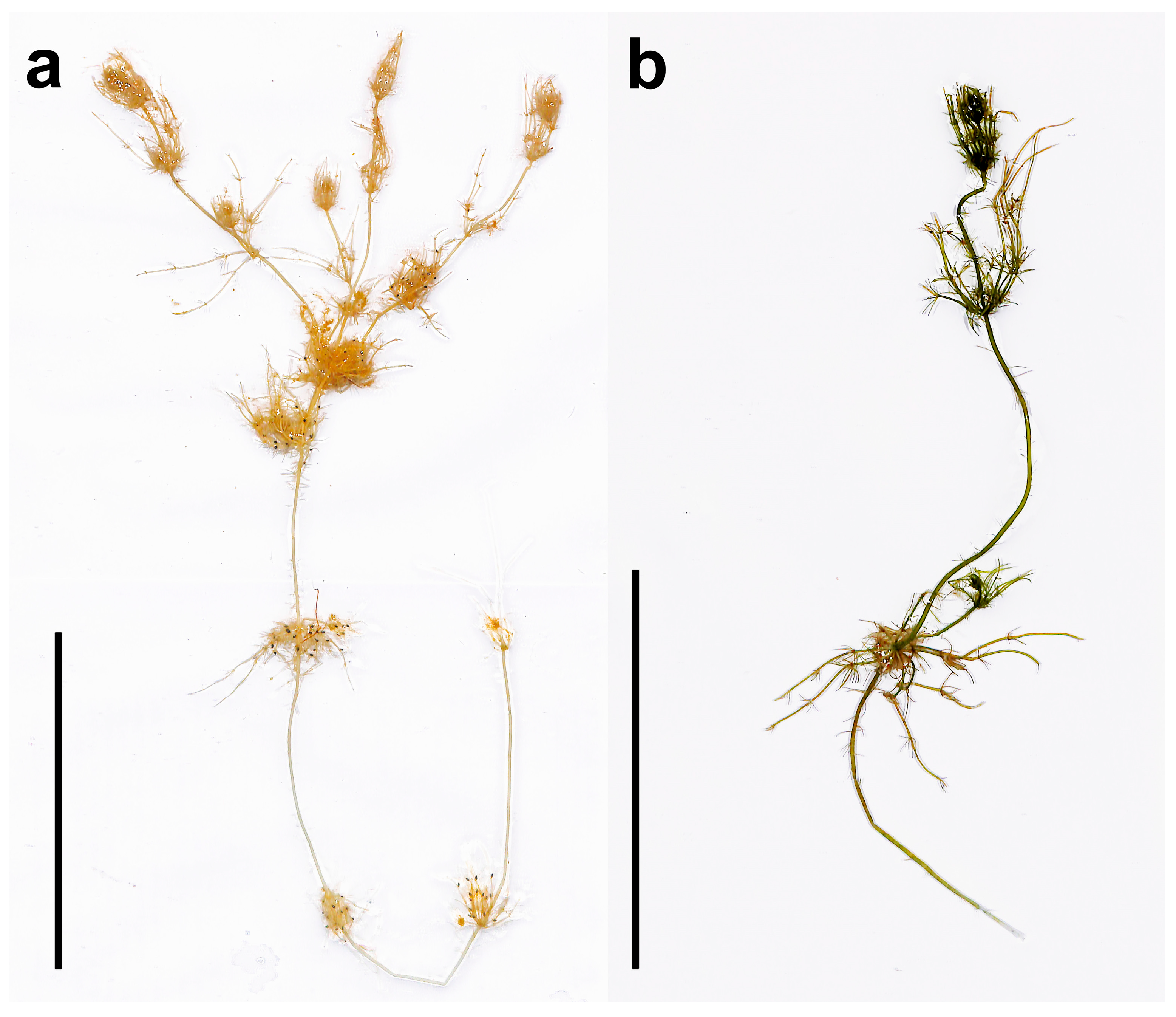
The general habit of Chara corfuensis plants was typical for the species. The plants were robust, medium to large in size, green to bright green, with no to moderate or heavy incrustations on the thalli. Long internodes (up to about 10 cm), long branchlets, and long verticillate bract cells were conspicuous in the macroscopic overview (Figure 4).
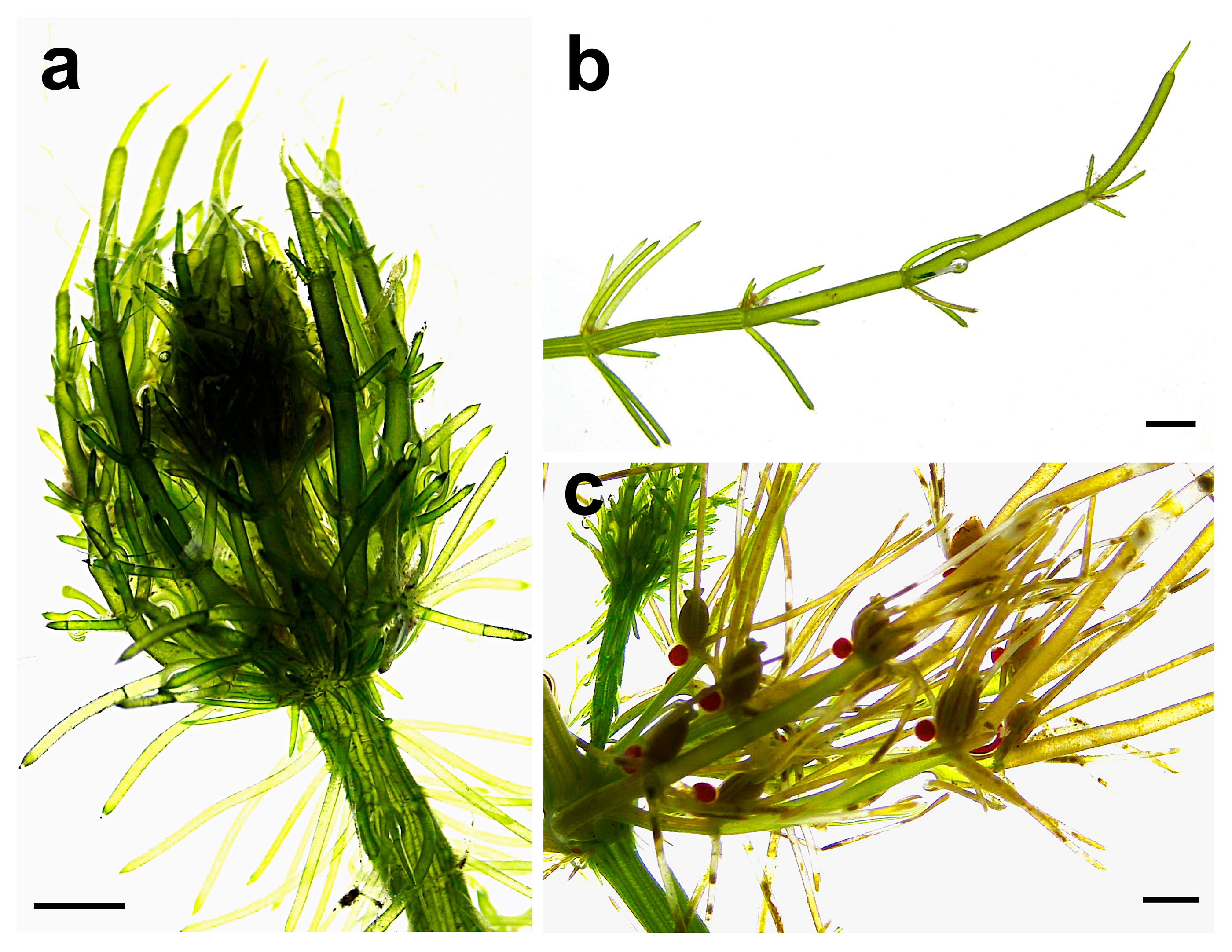
A typical whorl appearance, originating from long verticillate bract cells, was observed. Whorls mainly consisted of up to 10 branchlets. Long branchlets at lower nodes exceeded 5 cm in length. None to three segments of branchlets were corticated, while the remainder (and most) of the branchlets were ecorticated. Plants were richly fertile, both those collected in July and in October (Figure 5). The plants collected in July carried mostly gyrogonites, oospores, and oogonia in the late development phase; only a few relatively young antheridia were observed. In plants collected in October, fully developed antheridia and oogonia in the early development stage were observed.
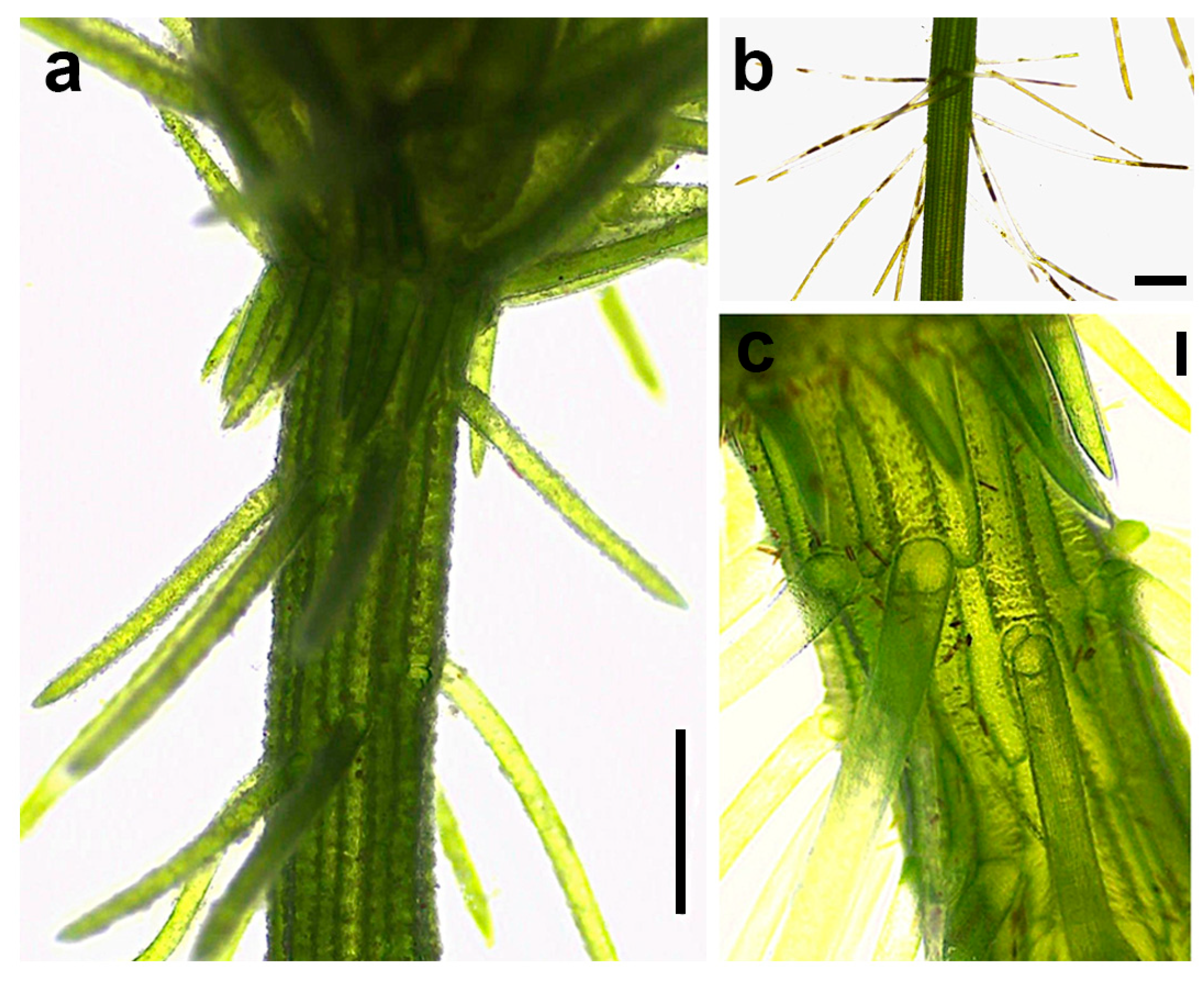
The plant’s main axes on average exceeded 1 mm (1034 µm). The stem cortex was clearly tylacanthous and diplostichous. Stipulodes in two tiers were well developed and long. Spine cells were mainly single, but sometimes formed clusters of up to three, occasionally a few times longer than the main axis diameter, averaging 3586 µm, and reaching about 7 mm in some cases (Figure 6). The longest spine cells were formed at the uppermost parts of the plants.
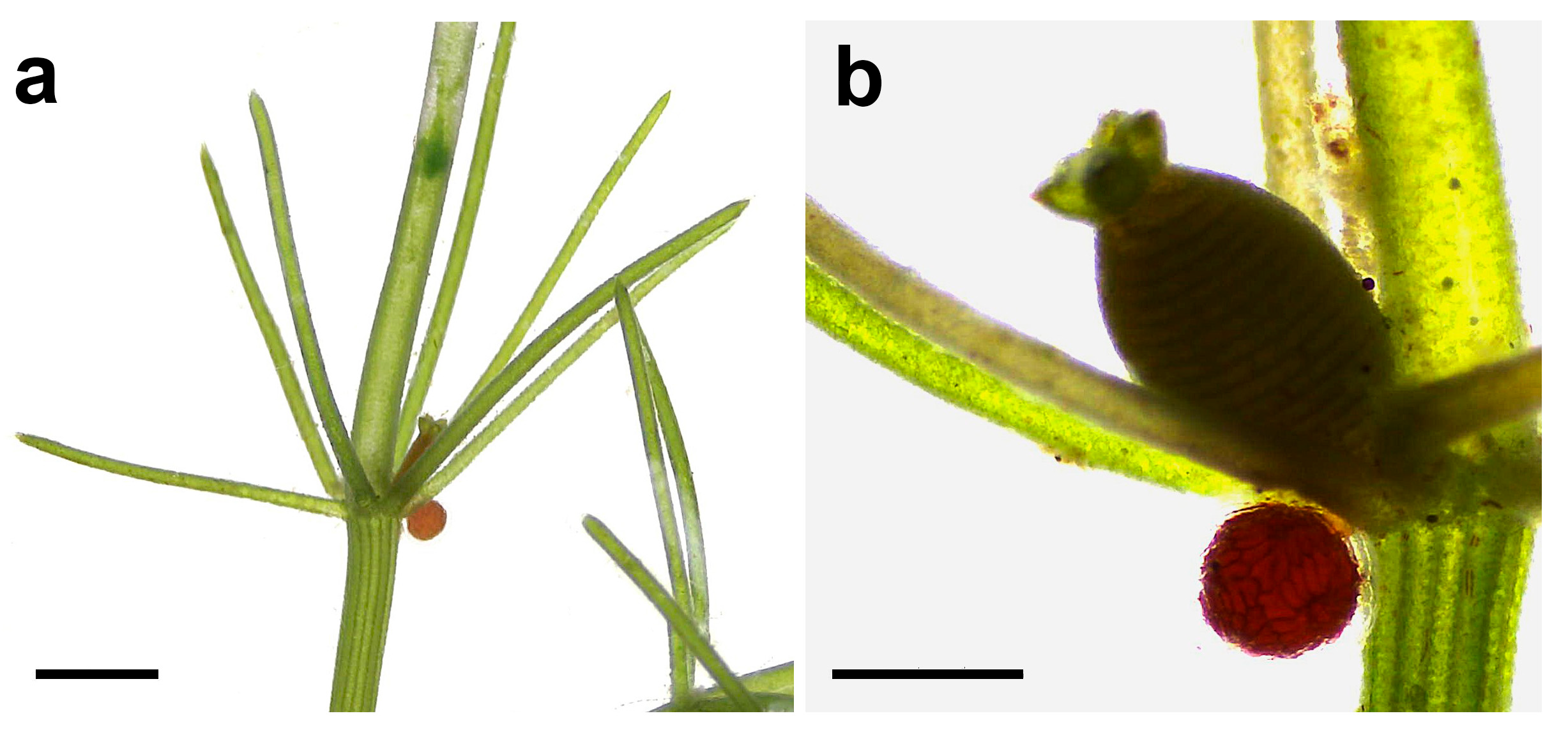
Long verticillate bract cells and bracteoles far exceeded the oogonia in length. The gametangia were solitary and conjoined; they were formed at a few of the lowest branchlet nodes only. Young oogonia had markedly green and spreading coronula, while later coronula cells narrowed towards each other (Figure 7 and Figure 8a). On average, oogonia were 1036 µm long, 631 µm wide, and had 15 helical stripes. The coronula height was 161 µm on average. Antheridia were octoscutate, orange to brick red in color, with a mean diameter of 442 µm.
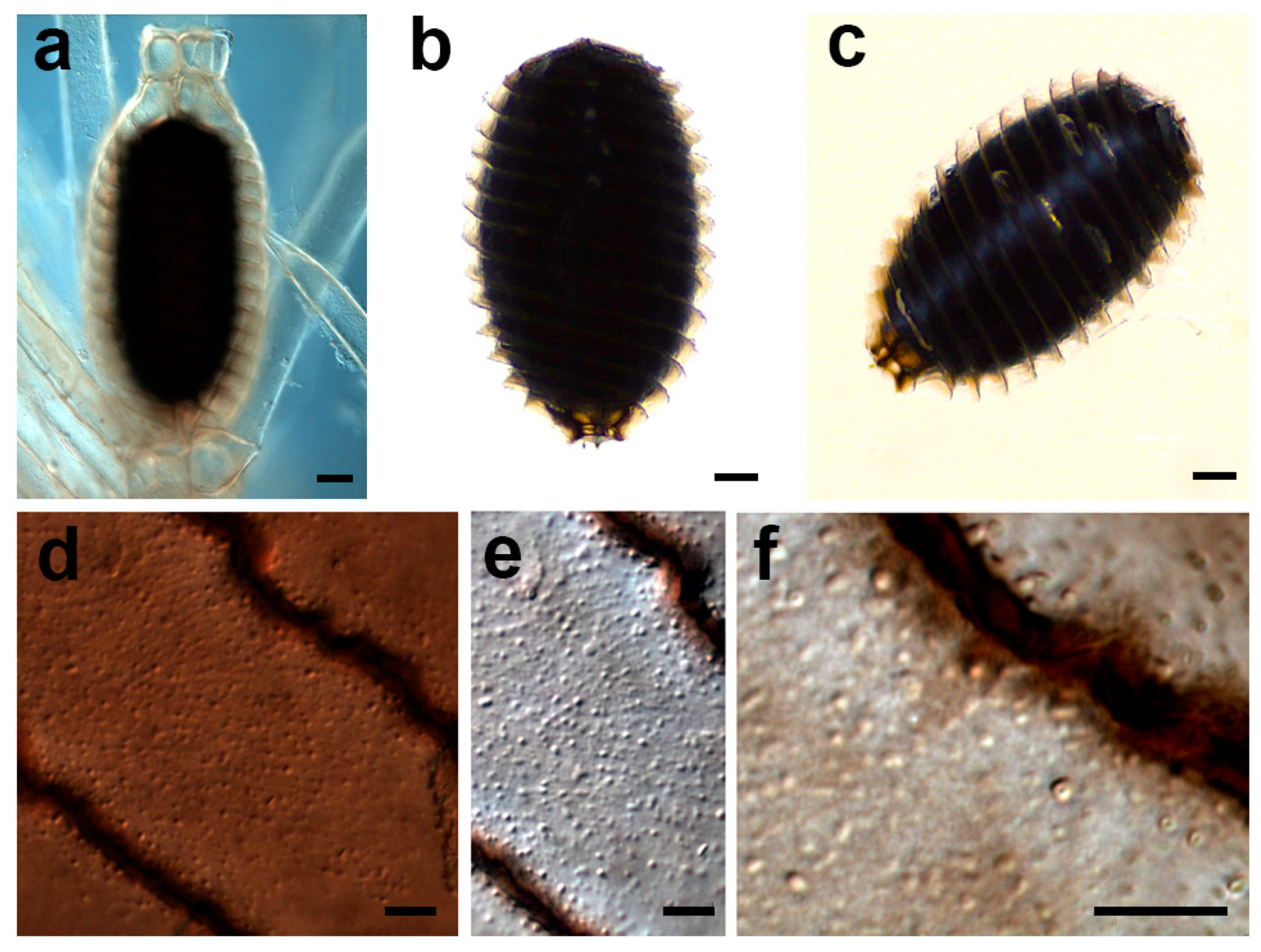
Mature oospores were large, with a complete fenestrate two-level cage at the base (Figure 8b,c). In cleaned oospores in the wet state, ribbon structures on the ridges could be observed (Figure 8b,c). The fossa wall was decorated with small pustules under the light microscope (Figure 8d–f).
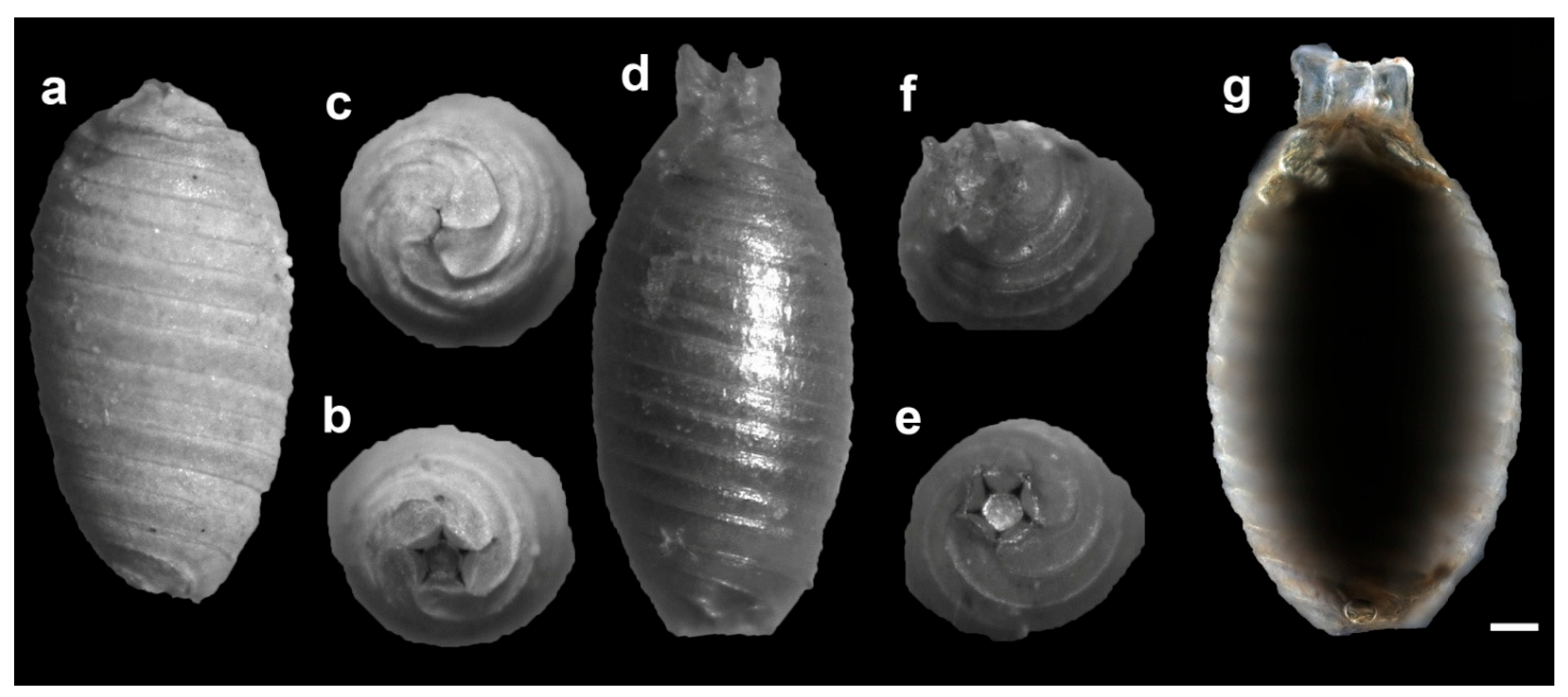
Gyrogonites collected from available plants appeared to be at different stages of maturity (Figure 9a,d). Fully mature ones were characterized as being non-transparent with a short basal funnel and a visible basal plug on the basal pole (Figure 9b), and an expanded apical junction of the spiral cells (Figure 9c). In contrast, about one-third of the collected gyrogonites showed incomplete maturity (likely representing an intermediate stage between the oosporangium and the gyrogonite—oogonia harboring gyrogonites inside were visible because of transparent spiral cells), with a transparent color and a calcified coronula consisting of multiple calcified cells on their apical pole (Figure 9d–g).
Descriptive statistics of the analyzed morphometric parameters of gyrogonites and oospores of C. corfuensis are summarized in Table 4. Overall, the measured characters showed low to moderate variability, as indicated by the coefficients of variation. The number of ridges exhibited a narrow range of values, whereas ISI showed the highest level of variation among the analyzed traits.

3.3. DNA Barcoding and Phylogenetic Tree

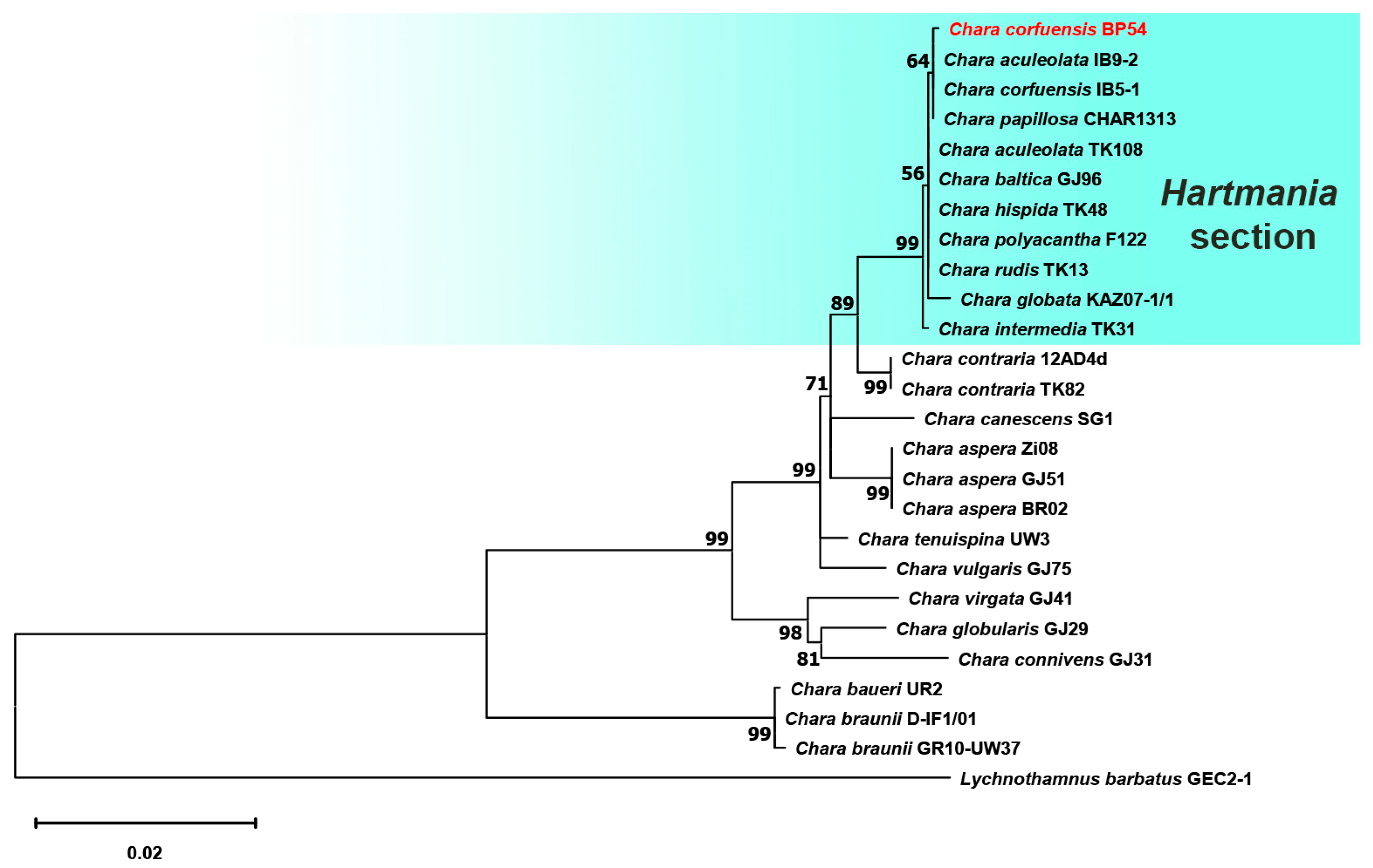
The combined matK + rbcL dataset resolved the major infrageneric relationships within the genus Chara L. The resulting maximum likelihood phylogeny (Figure 10) recovered a well-supported clade corresponding to the traditionally recognized subsection Hartmania R.D. Wood (bootstrap value = 99) and related adjacent lineages. Bootstrap values for most internal nodes were also high, indicating strong phylogenetic support based on concatenated plastid markers. Chara corfuensis BP54 (this study) grouped together with C. corfuensis IB5-1, C. papillosa CHAR1313 and C. aculeolata Kütz. in Rchb. IB9-2, which suggests that these three species are probably indistinguishable on the basis of the matK and rbcL markers, and our specimen differed from them in only one base pair. The placement of the Serbian isolate within this clade confirms its taxonomic identity and reveals its close evolutionary relationship with the other abovementioned species.

4. Discussion

4.1. Ecological, Phenological, and Distributional Perspective

According to its known and recently summarized ecology, C. corfuensis is typical of coastal and inland brackish habitats (both temporary and permanent), but it is also known from freshwater ecosystems, usually situated near the coast [1]. In Serbia, habitats supporting small populations of C. corfuensis are small water bodies—ponds, very young (not more than five years old), created by random sand or gravel excavation and located in agricultural land. This is the first time that this type of habitat has been described for C. corfuensis. Ponds inhabited by C. corfuensis in southern Serbia are approximately 250 km in a straight line from the nearest coast. Although Serbia is located in the Central Balkans, according to Stosic et al. [35] its climate varies from continental in the northern and central parts to modified Mediterranean in the southern regions. Thus, it could be hypothesized that the climatic characteristics of southern Serbia, together with chance dispersal as a contributing factor, may favor the establishment of new populations of Mediterranean species, such as C. corfuensis. In support of our hypothesis, Supplementary Figure S2 presents Köppen–Geiger climate classification maps for historical (1931–1960, 1961–1990 and 1991–2020) and future climate conditions (2041–2070), based on climate projections for the socio-economic scenario SSP1-2.6 (low emissions) for the Balkans, following Beck et al. [36]. These maps clearly show that all currently known C. corfuensis localities along the Mediterranean coast are stably situated in a typical Mediterranean climate (Csa, temperate, dry summer, hot summer/Mediterranean), while in the recent period a climate shift has occurred in southern Serbia from one major class—D (Dfb, continental, no dry season, warm summer/humid continental)—to another—C (Cfa, temperate, no dry season, hot summer/humid subtropical). A comparative overview of the historical and future climate conditions in Figure S2 also reveals that, in future scenarios, this change will be observable on much larger spatial scales across the Balkans [36].
Based on Serbian legislation, the ecological status of the C. corfuensis habitat in Serbia is poor due to extreme nitrogen concentration, in this particular case likely caused by agricultural runoff. Studying the phytobenthos of Pond 1, a low Rott TI diatom index value also indicates elevated nutrient levels (Table 2). In Lake Koumoundourou, a known habitat of C. corfuensis in Greece, high values of nitrates have also been reported (up to 9.13 mg/L, and on average 4.06 mg/L) ([1] and references therein), thus aligning with our finding that high nitrogen values do not limit the existence of C. corfuensis in a habitat. Compared to other environmental parameters recognized by Serbian legislation, the ecological status of the C. corfuensis habitat is good (Class II) to high (Class I), and the overall water chemistry matches the currently known habitat conditions preferred by the species ([1] and references therein), except that it is typically freshwater (according to conductivity and salinity, Table 1).
Data on the phenology and reproductive characteristics of C. corfuensis are almost completely absent from the literature [1]. Christia et al. [1] note that C. corfuensis can form large, monospecific, dense perennial mats (probably under typical Mediterranean climate conditions). The Serbian population (based on the collected sample) also exhibited monospecific characteristics, with the exception of one C. papillosa plant isolated from the bulk collected in Pond 1. Further studies are needed to determine the phenological cycle of the species in the Serbian population. The data provided here on rich fructification in early summer (in July, mainly mature oospores and gyrogonites were recorded) and in early autumn (October—mainly antheridia and young oogonia were recorded) are the first insights into the species’ reproductive dynamics, and probably reflect the specificity of the local habitat and climate.

4.2. Morphological and Phylogenetic Perspective

The combination of long verticillate bract cells, sparsely distributed very long spine cells, and usually incomplete cortication of branchlets allows for the recognition of well-developed plants of C. corfuensis in comparison to C. aculeolata Kütz. in Rchb. and C. globata Mig., the species most morphologically similar to C. corfuensis [27]. The delineation of these species in the case of under developed or suppressed plants having shorter bract cells and spine cells is challenging. This is due to the expression of morphological traits of these species, as well as C. papillosa and Mediterranean Chara (a taxon of uncertain affiliation), overlapping. According to our observations of numerous living plants from Montenegrin populations and checking specimens stored in the University of Helsinki (H) and the Komarov Botanical Institute of the Russian Academy of Sciences (LE), plants of C. corfuensis collected during summer and especially autumn growing in good insolation usually have well-expressed morphological traits in their uppermost parts, allowing reliable species delineation. Plants from new inland localities have the typical expression of species traits at the uppermost parts only (Figure 4 and Figure 5).
Chara corfuensis is considered a non-variable charophyte [1], in contrast to the majority of species, and the Serbian population confirms this standpoint. Analyses of morphological traits of specimens collected in Serbia mostly match literature data well, but also provide new insights, particularly regarding the reproductive structures. Documented characteristics of oogonia and oospores provide clear photographic evidence of literature data such as delicate ribbon-like structures on the ridges, a pronounced fenestrated cage, and a fossa surface, smooth or with irregularly arranged pustules ([1] and references therein, [37]). It should be noted that the oogonia observed in the studied plants were larger than those reported previously, reaching an average length of 1036 μm compared to the earlier known maximum of 1000 μm. In addition, the numbers of helical oogonial stripes and oospore ridges exceeded the ranges documented so far, reaching 15 and 16, respectively, whereas the previously reported maxima were 13 and 12 ([1] and references therein). The broader ranges of oospore morphological traits detected in this study, compared with those reported in the available literature (Supplementary Table S3), may be related to specific habitat conditions, including differences in habitat size, water-level fluctuations, and vegetation structure. Such environmental factors have previously been identified as important drivers of variation in oospore characteristics among populations of the same species (e.g., C. baueri populations from Poland and Germany [38]). Notably, both Langangen [39] and Urbaniak and Blaženčić [37], who reported oospore traits from other populations (Lake Kournas and Lake Desne, respectively), examined specimens collected from considerably larger waterbodies than those investigated in the present study. Furthermore, Langangen [39] explicitly stated that C. corfuensis occurred in the deeper parts of Lake Kournas, where water transparency reached up to 8 m. In contrast, the populations investigated in the present study inhabit considerably smaller and shallower waterbodies, suggesting that differences in habitat characteristics may have contributed to the observed expansion of oospore morphological ranges. Alternatively, as previously published data on morphological traits are based on unknown sample sizes, the potentially larger sample size in this study could be the source of the differences observed. Due to limitations arising from the study design (samples were collected from a single patch within each water body, so the sampling design does not provide the independent biological replicates required for valid inferential comparisons among populations), inferential statistics could not be applied in this study. Future studies should be specifically designed to collect valid data and compare the morphology of reproductive structures among different C. corfuensis populations through robust statistical analyses, so that genuine population-level differences can be confirmed.
Gyrogonites are described for the first time for C. corfuensis in this study, and an unusual characteristic for extant charophytes has been observed—a calcified coronula at an intermediate stage of maturity. According to Peck [40], Kesling and Boneham [41], and Conkin and Conkin [42], extant charophytes do not possess calcified coronula cells in their female reproductive structures. Soulié-Märsche [43], on the other hand, described the “silvula”, a specific structure on the apical pole of Nitellopsis obtusa (Desv.) J. Groves and Sphaerochara Mädler representatives, formed as a result of independent calcification within the terminal parts of spiral cells, and not from calcified coronular cells. However, Figure 9g shows that the calcified coronula can persist at least at the intermediate stage between oosporangium and gyrogonite, and consists of multiple calcified cells.
The phylogenetic affinity of the Serbian population of C. corfuensis is the same as previous for this species from earlier studies. Molecular markers widely used for charophytes allows delineation of C. corfuensis from C. globata and C. hanii R.E.Romanov, V.Yu.Nikulin, A.Yu.Nikulin, L.V.Zhakova et A.A.Gontcharov [13,27,44], but they are not informative for delineation of C. corfuensis, C. aculeolata, and C. papillosa, as well as other species of the subsection Hartmania.
Based on concatenated plastid markers matK and rbcL, the Serbian specimen grouped with C. corfuensis collected in Greece (IB5-1 [41]), C. papillosa collected in Germany (CHAR1313 [12]), and C. aculeolata collected in Italy (IB9-2 [12]). The Hartmania group of charophyte species—to which all the above-mentioned species belong—are known to be closely related and indistinguishable based on these particular genetic markers, despite substantial morphological specificity. There is potential value in including additional nuclear markers (such as ITS) in phylogenetic analyses, as they could provide better discriminatory power within the Harmania subsection. However, as no other ITS sequences are available for C. corfunesis (and, more generally, are available for only a small number of charophyte species from Hartmania subsection), we found little benefit in investing the effort required to obtain ITS for our specimen. In this context, Nowak et al. [12] suggest two possible scenarios: either these species are phylogenetically very young and we are possibly witnessing ongoing speciation, or the morphological specificities are a reflection of specific environmental conditions. Our results align with those of Nowak et al. [12], and highlight the urgent need for targeted collection of more sequences of plastid markers from these species originating from various geographic areas to potentially resolve which of the suggested scenarios is more likely.

4.3. Conservation Perspective

Due to its restricted distribution and scarce monitoring data, conservation action for the species and its habitat is challenging. As mentioned earlier, the type locality is definitely and permanently lost, and many others are under various kinds of anthropogenic pressures—construction, tourism, urbanization, dumping, extraction, and other causes of habitat destruction [1,6]. Based on our findings, restoration and/or creation of small ponds in agricultural landscapes within the species’ distribution range, which is already established as a practice for biodiversity conservation alongside agricultural benefits [45], could also be an option for C. corfuensis. Previous studies on diaspore banks in Serbia confirm this practice as urgent and preferable for protecting native charophyte biodiversity [46]. However, at present no such practices are known to be systematically applied in Serbia or the wider region, and consequently there is no available data on potential restoration success. This recommendation therefore has to be considered cautiously and supported by thorough preliminary investigation.

5. Conclusions

Our study provides entirely new insights into the distribution range, ecology, morphology, and reproductive strategy of the rare and unique charophyte C. corfuensis. Gyrogonites are described for this species for the first time.
The discovery in southern Serbia, in small ponds within agricultural land, separates the species’ range from the Mediterranean and opens a debate on the hypothesis that areas with climates shifting towards Mediterranean-like conditions will provide habitats for the spread of Mediterranean species, which is important in the context of both climate change and conservation. Restoring and creating small ponds in agricultural landscapes to support both agricultural sustainability and freshwater biodiversity could be considered as potential conservation action throughout the region to contribute to charophyte conservation.

Supplementary Materials

The following supporting information can be downloaded at https://www.mdpi.com/article/10.3390/phycology6030076/s1, Figure S1: Historical imagery available in Google Earth Pro in March 2023 (a), when no pond is visible at the site, and July 2025 (b), when Pond 1 is clearly discernible.; Figure S2: Köppen–Geiger climate classification maps for historical (1931–1960, 1961–1990 and 1991–2020) and future climate conditions (2041–2070) based on climate projections for the socio-economic scenario SSP1-2.6 (low emissions) for the Balkans; Table S1: Sequences dataset; Table S2: List of diatom taxa; Table S3: Comparative overview of oospore morphometric measurements obtained in this study and in the available literature. References [47,48,49,50] are cited in the Supplementary Materials.

Author Contributions

Conceptualization, investigation, formal analysis, writing—original draft preparation, I.T.; investigation, formal analysis, writing—review and editing, visualization V.M., Ž.S. and O.J.; investigation, writing—review and editing, M.J. and M.M.; validation, writing—review and editing, R.R. and G.S.S. All authors have read and agreed to the published version of the manuscript.

Funding

This research was funded by the Ministry of Science, Technological Development and Innovation of the Republic of Serbia, grant numbers 451-03-33/2026-03/200178 and 451-03-34/2026-03/200178.

Institutional Review Board Statement

Not applicable.

Informed Consent Statement

Not applicable.

Data Availability Statement

The original contributions presented in this study are included in the article. Further inquiries can be directed to the corresponding author.

Acknowledgments

The authors are sincerely grateful to Milica Petrović Ðurić for her support, expertise, and commitment in material processing and literature search. Her constructive and supportive comments and suggestions guided and shaped our research outcomes. We also extend our gratitude to Jelena Krizmanić for providing her expertise in microphotography. We thank Nadezda Buntic for her English language correction.

Conflicts of Interest

The authors declare no conflicts of interest.

Abbreviations

The following abbreviations are used in this manuscript:
LPAlongest polar axis
LEDlargest equatorial diameter
ANDanisopolar distance
ISIisopolarity index
ANIanisopolarity index
SDstandard deviation
CVcoefficient of variation

References

  1. Christia, C.; Papastergiadou, E.; Blindow, I.; Romanov, R.  Chara corfuensis. In Charophytes of Europe; Schubert, H., Blindow, I., Nat, E., Korsch, H., Gregor, T., Denys, L., Stewart, N., van de Weyer, K., Romanov, R., Casanova, M.T., Eds.; Springer: Cham, Switzerland, 2024; pp. 387–396. [Google Scholar] [CrossRef]
  2. Blaženčić, J.; Stevanović, B.; Blaženčić, Ž.; Stevanović, V. Red Data List of Charophytes in the Balkans. Biodivers. Conserv. 2006, 15, 3445–3457. [Google Scholar] [CrossRef]
  3. Stewart, N.F. Provisional Red List of European charophytes. In Charophytes of Europe; Schubert, H., Blindow, I., Nat, E., Korsch, H., Gregor, T., Denys, L., Stewart, N., van de Weyer, K., Romanov, R., Casanova, M.T., Eds.; Springer: Cham, Switzerland, 2024; pp. 177–199. [Google Scholar] [CrossRef]
  4. Cabi, E.; Şekerciler, F.; Çingay, B.; Turan, N. A new stonewort record for Turkey: Chara polyacantha A. Braun. Acta Biol. Turc. 2019, 32, 206–210. [Google Scholar]
  5. Romanov, R.E.; Zhakova, L.V.; Efremov, A.N.; Konechnaya, G.Y.; Boldina, O.N.; Afanasyev, D.F.; Akatova, T.V.; Melnikov, D.G. The Charophytes (Characeae, Charophyceae) of the Caucasus. Plants 2025, 14, 1788. [Google Scholar] [CrossRef] [PubMed]
  6. Romanov, R.; Biberdžić, V.; Dragičević, S.; Bednár, F. New national species records of charophytes (Characeae) for Montenegro, Croatia, and Cyprus: Update of rare species distribution in Southeast Europe. Hacquetia 2025, 24, 159–170. [Google Scholar] [CrossRef]
  7. Langangen, A. Some charophytes collected on the island of Evia, Greece. Flora Mediterr. 2010, 20, 149–157. [Google Scholar]
  8. Christia, C.; Papastergiadou, E.; Papatheodorou, G.; Geraga, M.; Papadakis, E. Seasonal and spatial variations of water, substrate and aquatic macrophytes based on side scan sonar, in an eastern Mediterranean lagoon (Kaiafas, Ionian Sea). Environ. Earth Sci. 2014, 71, 3543–3558. [Google Scholar] [CrossRef]
  9. Langangen, A. Charophytes collected in the southern part of Sarandë District, Albania. Bull. Sci. Nat. 2015, 19, 6–11. [Google Scholar]
  10. Blaženčić, J.; Blaženčić, Ž. Rare and threatened species of charophytes (Charophyta) in Southeast Europe. Phytol. Balc. 2002, 8, 315–326. [Google Scholar]
  11. Blaženčić, J. Chara corfuensis J. Gr. ex Fil. 1937 (Characeae)—An endemic species of the Balkan Peninsula, rare and globally endangered. In Advances in Phycological Studies: Festschrift in Honour of Prof. Dobrina Temniskova-Topalova; Ognjanova-Rumenova, N., Manoylov, K., Eds.; Pensoft: Sofia, Bulgaria, 2006; pp. 191–202. [Google Scholar]
  12. Nowak, P.; Karol, K.G.; Schneider, S.C. Systematics and phylogeny of European Characeae. In Charophytes of Europe; Schubert, H., Blindow, I., Nat, E., Korsch, H., Gregor, T., Denys, L., Stewart, N., van de Weyer, K., Romanov, R., Casanova, M.T., Eds.; Springer: Cham, Switzerland, 2024; pp. 101–123. [Google Scholar] [CrossRef]
  13. Schneider, S.C.; Nowak, P.; von Ammon, U.; Ballot, A. Species differentiation in the genus Chara (Charophyceae): Considerable phenotypic plasticity occurs within homogenous genetic groups. Eur. J. Phycol. 2016, 51, 282–293. [Google Scholar] [CrossRef]
  14. Dijkstra, K.D.B.; Schröter, A.; Lewington, R. Field Guide to the Dragonflies of Britain and Europe, 2nd ed.; Bloomsbury: London, UK, 2020. [Google Scholar]
  15. Jović, M. Tiha invazija—Lindenia tetraphylla u Srbiji. In Proceedings of the Serbian Biological Society Conference “Stevan Jakovljević”, Kragujevac, Serbia, 17–19 September 2025; p. 68. [Google Scholar]
  16. European Space Agency (ESA). Copernicus Sentinel-2 Level-2A Data. 2026. Available online: https://browser.dataspace.copernicus.eu (accessed on 23 March 2026).
  17. Google Earth Pro, version 7.3.7.1155. Satellite Imagery of the Investigated Region in Serbia. Google LLC: Ann Arbor, MI, USA, 2026.
  18. GeoMapApp, version 3.7.7. Geo Mapp App Is a Java-Based Geoscience Data Visualization and Analysis Application. Marine Geoscience Data System (MGDS), Lamont-Doherty Earth Observatory, Columbia University: Palisades, NY, USA, 2026. Available online: https://www.geomapapp.org (accessed on 3 June 2026).
  19. Official Gazette of Republic of Serbia. Rulebook on Surface and Groundwater Bodies; RS No. 96/2010; Official Gazette of the Republic of Serbia: Belgrade, Serbia, 2010.
  20. Official Gazette of Republic of Serbia. Ecological and Chemical Status of Waters; RS No. 74/2011; Official Gazette of the Republic of Serbia: Belgrade, Serbia, 2011.
  21. APHA. Standard Methods for the Examination of Water and Wastewater, 19th ed.; American Public Health Association: Washington, DC, USA, 1995. [Google Scholar]
  22. Taylor, J.C.; Harding, W.R.; Archibald, C.G.M. Methods Manual for Diatom Analysis; WRC Report TT 281/07; Water Research Commission: Pretoria, South Africa, 2007. [Google Scholar]
  23. Lange-Bertalot, H. Navicula sensu stricto. In Diatoms of Europe; Gantner: Ruggell, Liechtenstein, 2001; Volume 2, pp. 1–526. [Google Scholar]
  24. Lange-Bertalot, H.; Hofmann, G.; Werum, M.; Cantonati, M. Freshwater Benthic Diatoms of Central Europe; Koeltz Botanical Books: Schmitten-Oberreifenberg, Germany, 2017. [Google Scholar]
  25. Lecointe, C.; Coste, M.; Prygiel, J. “Omnidia”: Software for diatom indices. Hydrobiologia 1993, 269, 509–513. [Google Scholar] [CrossRef]
  26. Prygiel, J.; Coste, M. Guide Méthodologique Pour Les Indices Diatomées NF T 90-354; Agence de l’Eau Artois-Picardie: Douai, France, 2000. [Google Scholar]
  27. Schubert, H.; Blindow, I.; Nat, E.; Korsch, H.; Gregor, T.; Denys, L.; Stewart, N.; van de Weyer, K.; Romanov, R.; Casanova, M.T. (Eds.) Charophytes of Europe; Springer: Cham, Switzerland, 2024; pp. i–xiii, 1–1144. [Google Scholar] [CrossRef]
  28. Holzhausen, A.; Nowak, P.; Niedrig, C.; Feike, M.; Schubert, H. Morphometry of Chara aspera, C. canescens, C. baltica var. baltica, C. baltica var. liljebladii and C. intermedia oospores: Local variation versus taxonomic differences. Aquat. Bot. 2015, 120, 60–66. [Google Scholar] [CrossRef]
  29. Abràmoff, M.D.; Magalhães, P.J.; Ram, S.J. Image processing with ImageJ. Biophotonics Int. 2004, 11, 36–42. [Google Scholar]
  30. Peck, R.E.; Morales, G.A. The Devonian and Lower Mississippian charophytes of North America. Micropaleontology 1966, 12, 303–324. [Google Scholar] [CrossRef]
  31. Soulié-Märsche, I.; García, A. Gyrogonites and oospores, complementary viewpoints to improve the study of the charophytes (Charales). Aquat. Bot. 2015, 120, 7–17. [Google Scholar] [CrossRef]
  32. Schaible, R.; Bergmann, I.; Bögle, M.; Schoor, A.; Schubert, H. Genetic characterisation of sexually and parthenogenetically reproductive populations of Chara canescens (Charophyceae) using AFLP, rbcL, and SNP markers. Phycologia 2009, 48, 105–117. [Google Scholar] [CrossRef]
  33. Langangen, A.; Ballot, A.; Nowak, P.; Schneider, S.C. Charophytes in warm springs on Svalbard (Spitsbergen): DNA barcoding identifies Chara aspera and Chara canescens with unusual morphological traits. Bot. Lett. 2020, 167, 179–186. [Google Scholar] [CrossRef]
  34. Trbojević, I.; Marković, A.; Blaženčić, J.; Subakov Simić, G.; Nowak, P.; Ballot, A.; Schneider, S.C. Genetic and morphological variation in Chara contraria and a taxon morphologically resembling Chara connivens. Bot. Lett. 2020, 167, 187–200. [Google Scholar] [CrossRef]
  35. Stosic, T.; Stosic, B.; Tošić, M.; Lazić, I.; Djurdjević, V.; Tošić, I. Climate Change Effects Through MFDFA Study of Temperature in Serbia. Atmosphere 2023, 14, 1532. [Google Scholar] [CrossRef]
  36. Beck, H.E.; McVicar, T.R.; Vergopolan, N.; Berg, A.; Lutsko, N.J.; Dufour, A.; Zeng, Z.; Jiang, X.; van Dijk, A.I.J.M.; Miralles, D.G. High-resolution (1 km) Köppen-Geiger maps for 1901–2099 based on constrained CMIP6 projections. Sci. Data 2023, 10, 724. [Google Scholar] [CrossRef] [PubMed]
  37. Urbaniak, J.; Blaženčić, J. SEM study of oospores in Balkan charophytes. Cryptogam. Algol. 2012, 33, 277–288. [Google Scholar] [CrossRef]
  38. Pukacz, A.; Boszke, P.; Pelechaty, M.J.; Raabe, U. Comparative study of the oospore morphology of two populations of a rare species Chara baueri A. Braun in Cedynia (Poland) and Batzlow (Germany). Acta Soc. Bot. Pol. 2012, 81, 131–136. [Google Scholar] [CrossRef]
  39. Langangen, A. Charophytes (Charales) from Crete (Greece) collected in 2010. Flora Mediterr. 2012, 22, 25–32. [Google Scholar] [CrossRef]
  40. Peck, R.E. Fossil Charophyta. Am. Midl. Nat. 1946, 36, 275–278. [Google Scholar] [CrossRef]
  41. Kesling, R.V.; Boneham, R.F. Trochiliscus bellatulus Peck from the Middle Devonian. Contrib. Mus. Paleontol. Univ. Mich. 1966, 20, 179–194. [Google Scholar]
  42. Conkin, J.E.; Conkin, B.M. North American primitive Paleozoic charophytes and descendants. In Geobotany; Romans, R.C., Ed.; Springer: Boston, MA, USA, 1977; pp. 179–194. [Google Scholar] [CrossRef] [PubMed]
  43. Soulié-Märsche, I. Etude Comparée de Gyrogonites de Charophytes Actuelles et Fossiles et Phylogénie des Genres Actuels. Ph.D. Thesis, Université des Sciences et Techniques du Languedoc, Montpellier, France, 1989. [Google Scholar]
  44. Romanov, R.E.; Nikulin, V.Y.; Nikulin, A.Y.; Zhakova, L.V.; Gontcharov, A.A. Morphology and phylogenetic affinity of Chara hanii, nom. nov. (Charophyceae, Characeae) from Xinjiang, China. Phytotaxa 2026, 740, 50–62. [Google Scholar] [CrossRef]
  45. Hill, M.J.; White, J.C.; Hawkins, J.; Binu, N.; Baker, E.; Greaves, H.M.; Sayer, C.D. Both pond creation and restoration provide long term biodiversity gains in agricultural landscapes: Implications for conservation. Biol. Conserv. 2025, 309, 111279. [Google Scholar] [CrossRef]
  46. Milovanović, V.; Sekulić, J.Š.; Simić, G.S.; Trbojević, I. Unveiling hidden diversity: Charophytes in vanished and ephemeral ponds of the Special Nature Reserve “Deliblato Sands” pondscape (Serbia). Hydrobiologia 2026, 1–17. [Google Scholar] [CrossRef]
  47. Nowak, P.; van de Weyer, K.; Becker, R. The occurrence of sexual Chara canescens (Charales, Charophyceae) in Sardinia. Webbia 2019, 74, 103–109. [Google Scholar] [CrossRef]
  48. Nowak, P.; Schubert, H.; Schaible, R. Molecular evaluation of the validity of the morphological characters of three Swedish Chara sections: Chara, Grovesia, and Desvauxia (Charales, Charophyceae). Aquat. Bot. 2016, 134, 113–119. [Google Scholar] [CrossRef]
  49. Mann, H.; Hanel, C.; Langangen, A.; Nowak, P. Chara contraria var. hispidula Braun (Charales) in Newfoundland, Canada a new variety described from North America. Bot. Lett. 2021, 169, 250–258. [Google Scholar]
  50. Sanders, E.R.; Karol, K.G.; McCourt, R.M. Occurrence of matK in a trnK group II intron in charophyte green algae and phylogeny of the Characeae. Am. J. Bot. 2003, 90, 628–633. [Google Scholar] [CrossRef]
Figure 1. Locality investigated in the study and its geographical position in Serbia (Source GeoMapApp v3.7.6 [18]).
Phycology 06 00076 g001
Figure 2. Field photograph of the locality Pond 1 in July 2025 (a) and in September 2025 (b) (photographs by Miloš Jović).
Phycology 06 00076 g002
Figure 3. Field photograph of the locality Pond 2 in October 2025 (a,b) (photographs by Miloš Jović).
Phycology 06 00076 g003
Figure 4. General habit of the Chara corfuensis plants: (a) general appearance, (b) apical part. Scale 10 cm (photographs by Ivana Trbojević and Milica Petrović Đurić).
Phycology 06 00076 g004
Figure 5. Morphological traits of Chara corfuensis: (a) top whorls with visible long verticillate bract cells, (b) one branchlet with few and ecorticated top segments, (c) fertile branchlets with gametangia. Scale 1000 μm (photographs by Ivana Trbojević and Milica Petrović Đurić).
Phycology 06 00076 g005
Figure 6. Morphological traits of Chara corfuensis: (a) long displostephanous stipulodes and main axis with cortex and long spine cells, (b) spine cells significantly exceeding the main axis diameter, (c) tylacanthous, diplostichous cortex. Scales: 500 μm (a), 1000 μm (b) and 100 μm (c) (photographs by Ivana Trbojević and Milica Petrović Đurić).
Phycology 06 00076 g006
Figure 7. Morphological traits of Chara corfuensis: (a) Verticilate bract cells and bracteoles with gametangia, (b) antheridia and young oogonia with spreading coronula cells. Scales: 1000 μm (a) and 500 μm (b) (photographs by Ivana Trbojević and Milica Petrović Đurić).
Phycology 06 00076 g007
Figure 8. Morphological traits of Chara corfuensis: (a) mature oogonia on plant with narrowed coronula cells, scale 500 µm, (b,c) wet oospores with well-developed ribbon structures on the ridges and a complete fenestrate two-level cage at the base, (df) oospore wall ornamentation, scales: 100 µm (ac), 10 µm (df) (photographs by Ivana Trbojević, Milica Petrović Đurić and Jelena Krizmanić).
Phycology 06 00076 g008
Figure 9. Morphological traits of gyrogonites of Chara corfuensis: (a) completely mature gyrogonite in (b) basal pole and (c) apical pole perspective; (d) intermediate stage between the oosporangium and the gyrogonite in (e) basal pole perspective and (f) apical pole perspective; (g) intermediate stage between the oosporangium and the gyrogonite with calcified coronula cells. Scale 100 μm (photographs by Vanja Milovanović and Jelena Krizmanić).
Phycology 06 00076 g009
Figure 10. Maximum likelihood multilocus (matK + rbcL) phylogeny of the subsection Hartmania and related Chara species. Bootstrap support values (>50%) are indicated at the corresponding nodes. The scale bar represents the number of nucleotide substitutions per site. Red font – specimen from Serbia.
Phycology 06 00076 g010
Table 1. Primers used in the study.
PrimerSequenceReference
matK-F25′-AATGAGCTTAAACAAGGATTC-3′Langangen et al. [33]
matK-R1b5′-GCAGCCTTATGAATTGGATAGC-3′Langangen et al. [33]
rbcL-1a5′-TCGTGTAACTCCACAACCTG-3′Schaible et al. [32]
rbcL-1b5′-TACTCGGTTAGCTACAGCTC-3′Schaible et al. [32]
Table 2. Water chemistry parameters, quality class and ecological status according to the national legislative [17,18] in the Pond 1 on 20 September 2025.
ParameterUnitValueWater Quality Class and Ecological Status
Ammonia (NH4-N)mg/L˂0.05I class; high ecological status
Nitrates (NO3-N)mg/L6.3IV class; poor ecological status
Orthophosphates (PO4-P)mg/L˂0.01I class; high ecological status
Total phosphorus (TP)mg/L˂0.01I class; high ecological status
Total nitrogen (TN)mg/L6.4
Total hardness°dH15.3
Total organic carbon (TOC)mg/L3.8II class; good ecological status
Temperature°C24.2
ConductivityµS/cm666
pH 7.7
Oxygen concentration (O2)mg/L11.27I class; high ecological status
Oxygen saturation (O2)%128.8
TDSppm470
Salinityppm257
Colour codes for the different levels of ecological status: blue for high ecological status, green for good ecological status and orange for poor ecological status.
Table 3. Water quality classification and ecological status assessment of the Pond 1 based on the values of diatom indices according to Prygiel and Coste [26] and Serbian legislative (national legislative [19,20]).
Diatom IndexValueWater Quality Classification [26]Water Quality Class and Ecological Status [19,20]
Biological Diatom Index (IBD)17.7I class; high ecological status
Pollution Sensitivity Index
(IPS)
10.9III class; moderate ecological statusII class; good ecological status
Trophic index
Rott (TI)
8.7IV class; poor ecological status
Saprobic index
Rott (SI)
17.4I class; high ecological status
Trophic Diatom Index for Lakes (TDIL)9.2III class; moderate ecological status
Trophic Diatom Index (TDI)15.6II class; good ecological status
Colour codes for the different levels of ecological status: blue for high ecological status, green for good ecological status, yellow for moderate ecological status and orange for poor ecological status.
Table 4. Morphometric parameters of gyrogonites and oospores of Chara corfuensis, μm.
ParameterMeanMedianMinMaxSDCV (%)
Gyrogonites
LPA1026.201022.83889.791172.6354.455.31
LED561.58560.14412.21702.4048.858.70
AND477.94476.96357.24581.3243.259.05
Number of ridges13.621411150.856.23
Width of fossa69.3968.9152.2885.016.709.66
ISI184.11183.45149.39245.9718.8410.23
ANI46.5846.8437.5756.793.587.68
Oospores (dry)
LPA874.32878.28785.97978.4149.875.70
LED406.10413.18315.52487.8040.9610.09
AND443.41435.14385.34512.7232.217.26
Number of ridges13.861412160.825.94
Width of fossa61.9861.6250.4576.275.348.62
ISI217.81211.75174.69306.2328.6413.15
ANI50.7550.8645.4558.722.985.87
Abbreviations: LPA—height, LED—width, AND—anisopolar distance, ISI—isopolarity index, ANI—anisopolarity index, SD—standard deviation, CV—coefficient of variation.
Disclaimer/Publisher’s Note: The statements, opinions and data contained in all publications are solely those of the individual author(s) and contributor(s) and not of MDPI and/or the editor(s). MDPI and/or the editor(s) disclaim responsibility for any injury to people or property resulting from any ideas, methods, instructions or products referred to in the content.