1. Introduction
Red macroalgae are increasingly recognized as sustainable marine bioresources for natural pigments, proteins, polysaccharides, phenolic-like compounds, minerals, and functional ingredients. Among marine algae, Rhodophyta is particularly important because many red seaweeds contain phycobiliproteins, especially phycoerythrin (PE), which contribute to their characteristic red to pink color and function as a light-harvesting pigment in photosynthesis [
1,
2]. The interest in red seaweed pigments has increased because the food and biotechnology sectors are seeking natural colorants that offer both visual quality and additional functional value [
2,
3]. Recent reviews have emphasized that seaweed-derived pigments are promising alternatives to synthetic colorants, but wider application remains limited by extraction efficiency, pigment stability, regulatory acceptance, and formulation performance [
3,
4,
5].
Phycoerythrin is a water-soluble pigment–protein complex with intense color, strong fluorescence, and potential use as a natural food colorant, fluorescent biomolecule, and functional ingredient [
4,
5,
6]. In food-related applications, PE is attractive because it provides a bright red to pink color while also contributing proteinaceous and antioxidant-associated properties to the extract matrix [
5,
7]. However, PE is structurally sensitive to processing conditions, including temperature, pH, light, oxygen, ionic strength, and matrix composition [
6,
8]. Therefore, PE extraction requires a careful balance between preserving pigment structure and promoting sufficient release from the algal biomass.
Previous studies have shown that PE extraction from red macroalgae is strongly dependent on species, biomass state, solvent system, extraction time, biomass-to-solvent ratio, and cell disruption strategy. In
Gracilaria gracilis, the extraction of phycobiliprotein pigments was affected by buffer conditions, extraction time, and biomass-to-solvent ratio [
9]. In
Grateloupia turuturu, ultrasound-assisted enzymatic hydrolysis improved R-PE recovery from wet biomass, indicating that disruption of the algal matrix enhanced pigment release [
10]. In
Solieria filiformis, pressurized-water extraction showed that biomass condition and process intensity influenced R-PE recovery and extract characteristics [
11]. These findings indicated that extraction conditions are not directly transferred across red seaweed species without biomass-specific optimization.
A central challenge in PE extraction is the trade-off between pigment stability and mass transfer efficiency. One interpretation is that low-temperature extraction protects thermolabile phycobiliproteins from degradation during processing [
6,
8], while another suggests that moderate temperature or extraction intensification improves hydration, matrix swelling, and diffusion of soluble pigment–protein complexes from the seaweed tissue [
9,
10]. This divergence is particularly relevant for dried macroalgal biomass, where cell wall rigidity, polysaccharide-rich matrices, salt residues, and protein–polysaccharide interactions restrict pigment release [
12,
13]. Therefore, extraction studies should evaluate the PE concentration and yield, purity index, soluble protein recovery, co-extracted bioactive compounds, and functional properties of the crude extract.
Halymenia durvillei is a tropical red macroalga with potential as a source of high-value nutritional and biological compounds, including proteins, lipids, fatty acids, phenolic-like constituents, and other extractable bioactives [
14,
15]. Biological activities reported from
H. durvillei extracts suggest that this species contains composition-dependent functional constituents [
16,
17]. Red seaweeds such as
Palmaria,
Gracilaria,
Grateloupia, and
Solieria have been widely studied, but limited information is available on the extraction conditions for PE aqueous extracts and co-extractives from
H. durvillei.
H. durvillei can be cultivated and processed as a practical tropical biomass, but its potential as a functional source of phycoerythrin (PE)-containing fractions requires further investigation.
For functional ingredient development, PE extracts should be interpreted as multi-constituent systems rather than single-compound fractions. Aqueous seaweed extracts also contain soluble proteins, peptides, polysaccharide fragments, phenolic-equivalent compounds, flavonoid-equivalent compounds, salts, and other water-soluble constituents [
12,
18]. These co-extracted compounds contribute to antioxidant activity and other biological responses, but they also complicate interpretation because functional activity cannot be attributed to PE alone [
18,
19].
Antioxidant activity is commonly used to evaluate the functional potential of seaweed extracts, but the interpretation depends strongly on the assay used. The DPPH, ABTS, and FRAP assays measure different chemical responses, including radical scavenging ability and ferric reducing capacity [
19,
20], but the antioxidant results differ depending on the relative abundance of pigments, phenolic-like compounds, peptides, polysaccharide fragments, and reducing substances in each extract [
20,
21]. Recent studies on seaweed antioxidants have shown that extraction solvent, solvent ratio, temperature, time, and extraction technology strongly affect both the quantity and composition of antioxidant-associated compounds [
21,
22]. Thus, the extraction condition that maximizes PE recovery may not necessarily maximize antioxidant capacity. Aqueous extraction of red macroalgae may recover PE together with co-extractives such as soluble proteins, peptides, polysaccharides, phenolic-equivalent compounds, salts, and other matrix-derived constituents. This is relevant to
Halymenia because recent studies have reported antioxidant-related bioactivities in seaweed extracts and in sulfated polysaccharides from related
Halymenia species [
23,
24,
25]. Seaweed sulfated polysaccharides also show structure-dependent antioxidant effects [
26,
27]. As previously stated, antioxidant responses in crude
Halymenia extracts should not be attributed only to PE, but rather to combined contributions from PE-containing fractions and non-PE co-extractives.
This study investigated the effects of biomass-to-solvent ratio, extraction temperature, extraction time, and extraction cycle on the aqueous recovery of crude phycoerythrin (PE)-containing fractions from sun-dried H. durvillei biomass. The extraction variables were treated as process factors, whereas PE-related indices, phytochemical contents, and antioxidant capacity were treated as response variables. PE concentration, PE extraction yield, PE purity index, soluble protein yield, total phenolic content, total flavonoid content, and antioxidant capacity were evaluated to determine whether PE-related responses and antioxidant-associated co-extractives followed similar or different extraction patterns. This study provides a practical extraction condition framework for cultivated, sun-dried H. durvillei to obtain crude PE-containing aqueous proteinaceous fractions and associated water-soluble co-extractives.
3. Results
The physicochemical environment during outdoor cultivation of
H. durvillei is shown in
Table S1. Over the 90-day cultivation period, the pH, temperature, and salinity ranged from 7.96 to 8.45, 24.0 to 27.0 °C, and 27 to 34 ppt, respectively, with average values of 8.29, 25.5 °C, and 32 ppt. Morning and afternoon light intensities ranged from 3010 to 9240 Lux and from 8244 to 17,780 Lux, respectively, with average values of 7214 and 14,618 Lux. These variations reflected the natural fluctuation of outdoor cultivation conditions. Phycoerythrin, a bioactive compound, was extracted from sun-dried
H. durvillei microalgal biomass under various conditions. The concentrations of phycoerythrin, extraction yield, and purity index were systematically evaluated, alongside assessments of protein content, total phenolic content, total flavonoid content, and antioxidant activity. These analyses evaluated the potential of the red microalgal extract as a source of crude phycoerythrin-rich fractions and associated co-extractives.
The results of the factorial ANOVA are summarized in
Table S2. Factors such as biomass-to-solvent ratio, extraction temperature, extraction time, and extraction cycle significantly influenced most of the measured responses, including parameters related to PE, soluble protein yield, phenolic and flavonoid-equivalents, and antioxidant screening responses. Several two-way interactions were also significant, suggesting that the effect of one extraction factor depended on the level of another. Consequently, these interaction effects were not interpreted as separate optimal conditions for each treatment combination. Instead, the findings were primarily analyzed in terms of response-specific extraction trends. Overall, the factorial analysis supported the conclusion that PE-related recovery and non-PE co-extractive responses exhibited distinct extraction patterns.
3.1. Phycoerythrin
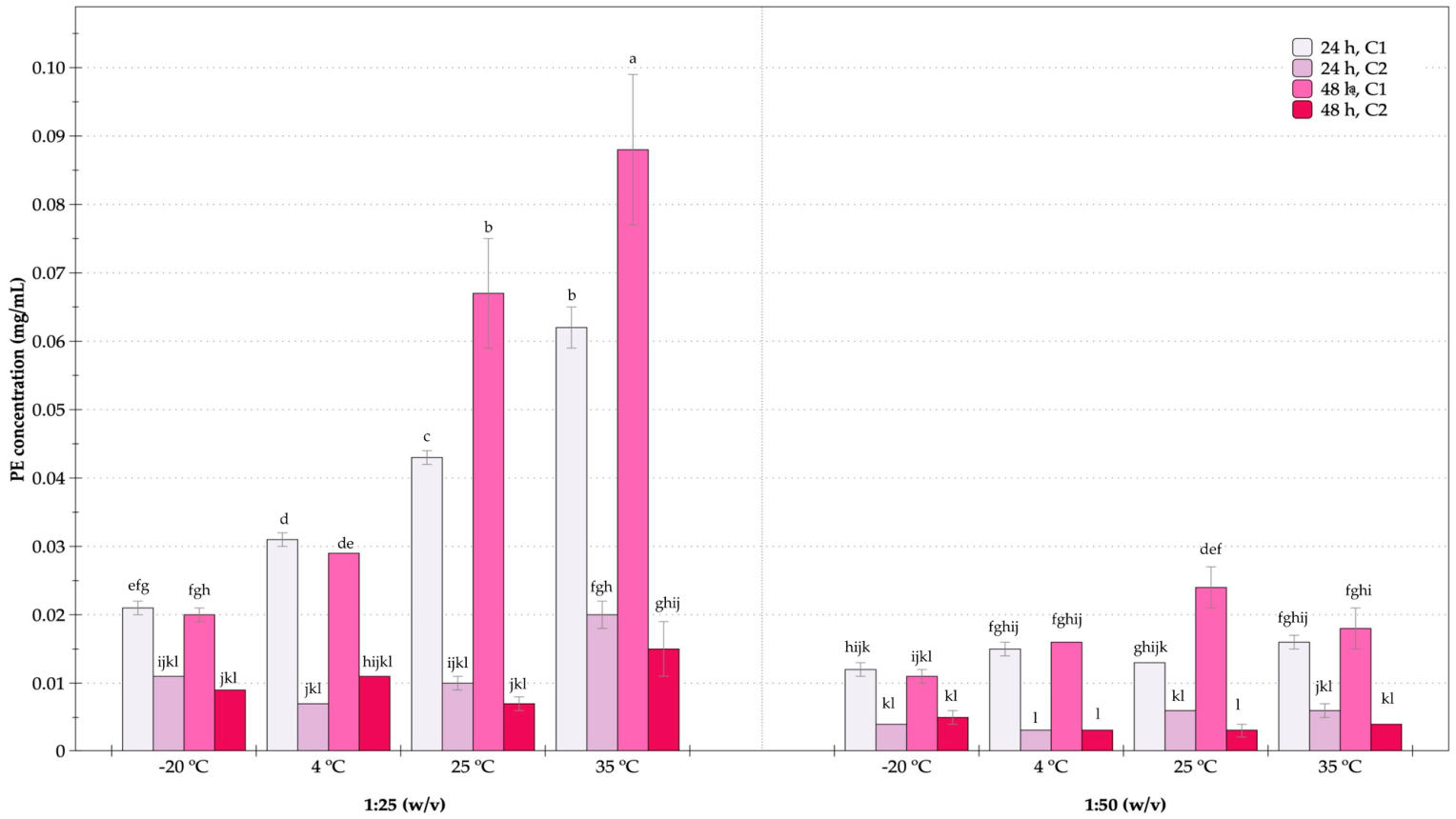
The effect of extraction conditions on PE concentration is shown in
Figure 1. The PE concentration of the aqueous extracts varied depending on the biomass-to-solvent ratio, extraction temperature, extraction time, and number of extraction cycles. The 1:25 (
w/
v) biomass-to-solvent ratio gave higher PE concentrations than the 1:50 (
w/
v) ratio, indicating that a lower solvent volume gave a more concentrated PE extract. However, this result should be interpreted as an effect on extract concentration, rather than total extraction efficiency alone, because dilution effects are directly associated with the biomass-to-solvent ratio.
At the 1:25 (w/v) ratio, PE concentration increased when the extraction temperature was raised from −20 °C and 4 °C to 25 °C and 35 °C, particularly during the first extraction cycle. The highest PE concentration was observed at 35 °C for 48 h in cycle 1, reaching 0.09 mg/mL, followed by extraction at 25 °C for 48 h in cycle 1 and 35 °C for 24 h in cycle 1. These results suggested that extraction at 25–35 °C was more suitable for obtaining PE aqueous extracts from H. durvillei biomass under the tested conditions, possibly related to enhanced hydration of dried algal tissues and increased diffusion of soluble proteins or pigments into the extraction medium. By contrast, extraction at −20 °C and 4 °C resulted in low PE concentrations, generally below 0.03 mg/mL under most conditions, indicating that low-temperature extraction was less effective for releasing PE from the dried biomass within the tested extraction time range. Low temperature may help preserve pigment stability, but our results indicated that low-temperature extraction was less effective at recovering PE-soluble fractions from the biomass during the tested extraction period.
The number of extraction cycles also strongly influenced PE concentration. For temperature conditions, cycle 1 produced higher PE concentrations than cycle 2, particularly at 25 °C and 35 °C. This pattern suggested that a major proportion of readily extractable PE was released during the first extraction cycle, whereas the second cycle recovered a smaller residual fraction. The second extraction cycle provided only a lower incremental PE yield, indicating that most readily extractable PE was recovered during the first extraction cycle. At the 1:50 (w/v) ratio, PE concentrations were lower across all temperatures, times, and cycles. The maximum PE concentration under this ratio was 0.02–0.025 mg/mL, indicating that increasing solvent volume did not improve the concentration of PE in the recovered extract, possibly reflecting dilution of the extracted PE or limited additional release of PE from the biomass under the tested conditions. The results indicated that the most favorable condition for obtaining PE extracted from H. durvillei biomass was 1:25 (w/v), 35 °C, 48 h, cycle 1.
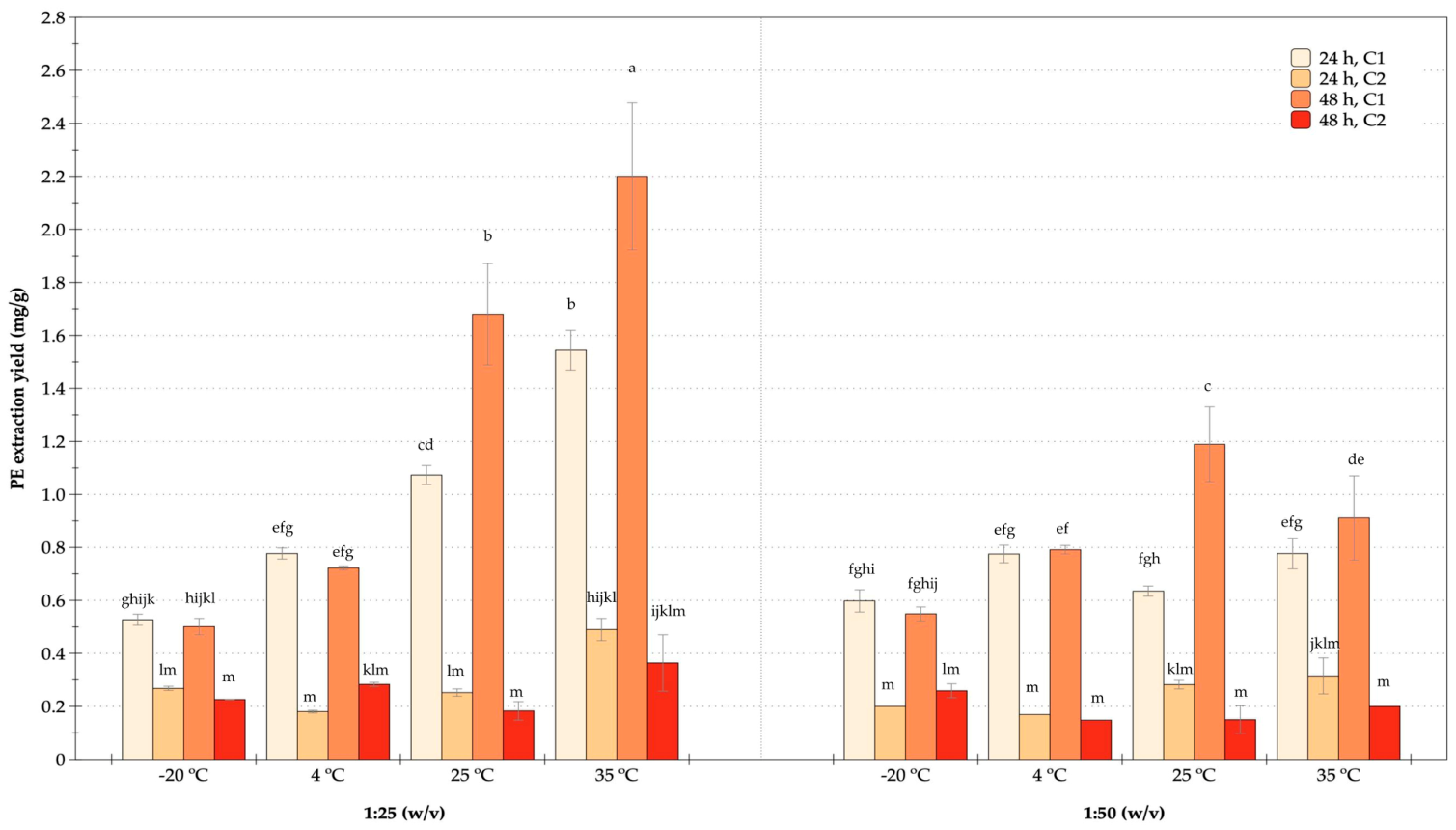
The effect of biomass-to-solvent ratio, extraction temperature, extraction time, and the number of extraction cycles on PE extraction yield is presented in
Figure 2. The 1:25 (
w/
v) ratio resulted in higher PE extraction yields than the 1:50 (
w/
v) ratio, particularly at moderate extraction temperatures. This trend indicated that increasing the solvent volume to 1:50 did not proportionally improve PE recovery from
H. durvillei biomass under the tested conditions. At the 1:25 (
w/
v) ratio, PE extraction yield increased as the extraction temperature increased from −20 °C and 4 °C to 25 °C and 35 °C. The highest yield was obtained at 35 °C for 48 h in cycle 1, reaching 2.2 mg/g dry biomass, and this condition was significantly higher than the other treatments. High yields were also observed at 25 °C for 48 h in cycle 1 and 35 °C for 24 h in cycle 1, suggesting that moderate temperature promoted the release of PE-containing soluble fractions from the dried algal matrix. Low-temperature extraction at −20 °C and 4 °C resulted in low PE yields. Low temperatures may reduce pigment degradation, but our results suggested that they were less effective for recovering PE from biomass within the extraction period, possibly reflecting limited tissue hydration, slower diffusion, or incomplete release of soluble pigment–protein complexes from the dried
H. durvillei matrix.
The number of extraction cycles had a pronounced effect on PE yield. Among the treatments, cycle 1 gave higher PE yields than cycle 2, especially under the higher-yielding conditions at 25 °C and 35 °C. This pattern indicated that most readily extractable PE was recovered during the first extraction cycle, while the second cycle recovered residual PE fractions. Therefore, repeated extraction showed a limited increase in recovery and did not compensate for the reduced PE yield observed in the second cycle. At the 1:50 (w/v) ratio, PE extraction yields were lower with a narrower response range. The highest yield was observed at 25 °C for 48 h in cycle 1, followed by extraction at 35 °C for 48 h in cycle 1. However, these values remained lower than the maximum yield obtained under the 1:25 condition, suggesting that increasing the solvent volume to 1:50 did not enhance PE recovery sufficiently to produce a higher PE yield under the tested conditions. The results indicated that 1:25 (w/v), 35 °C, 48 h, cycle 1 was the optimal condition for PE recovery from H. durvillei biomass based on extraction yield.
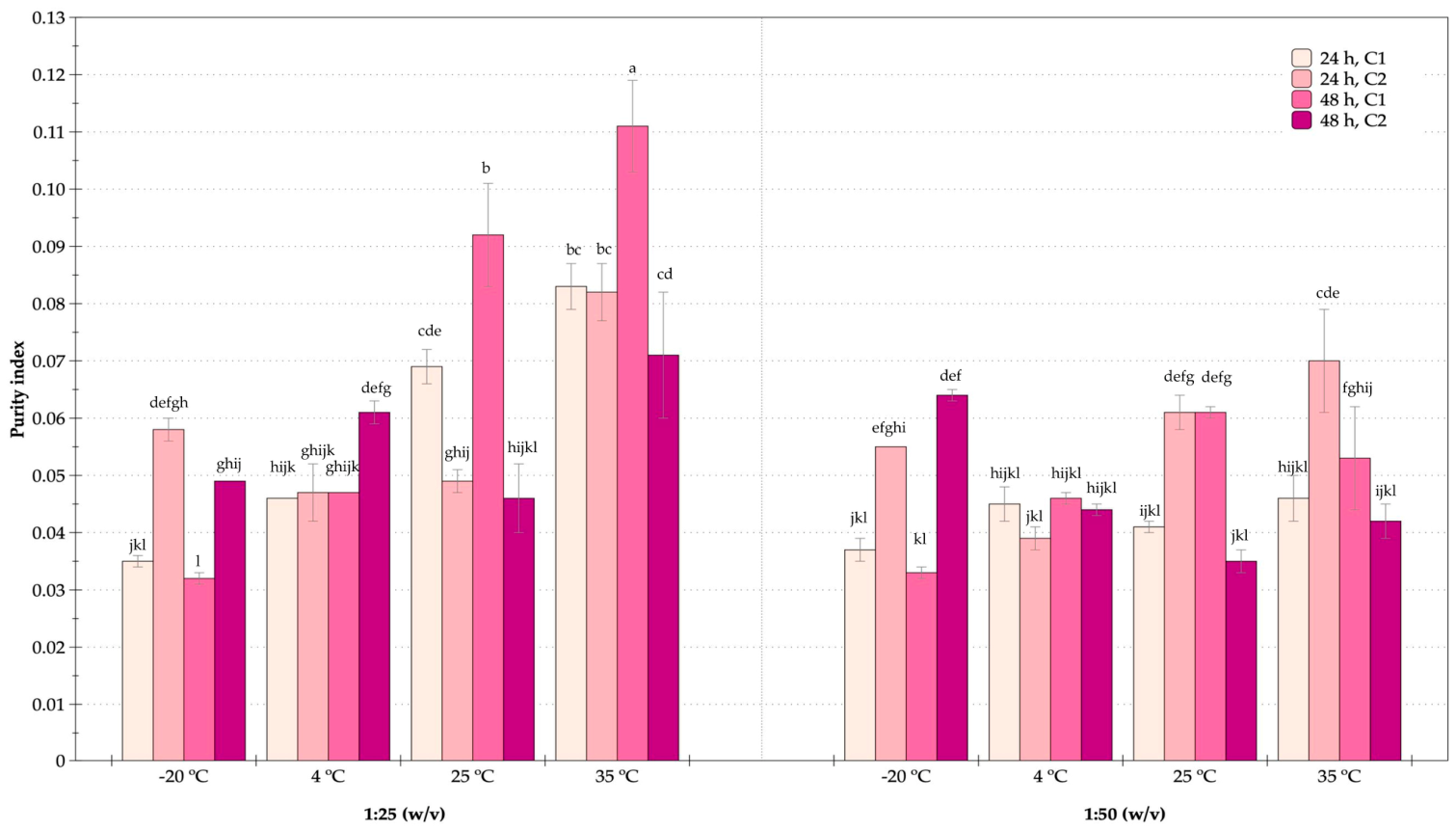
The PE purity index of the extracts was also impacted by the extraction ratio, temperature, time, and number of extraction cycles (
Figure 3). The purity index remained low across all treatments, ranging from 0.03 to 0.11. Therefore, the extracts characterized in this study should be considered as crude PE-containing aqueous proteinaceous fractions rather than as purified PE. However, this was expected for a direct aqueous extraction step, with PE likely co-extracted with other water-soluble proteins, polysaccharides, salts, and non-PE compounds from
H. durvillei biomass. At the 1:25 (
w/
v) ratio, the PE purity index increased with increasing extraction temperature, particularly under the first extraction cycle. The highest purity index was observed at 35 °C for 48 h in cycle 1, reaching 0.11, consistent with the condition that also yielded the highest PE concentration and PE yield. High-purity indices were also observed at 25 °C for 48 h in cycle 1 and 35 °C for 24 h in cycle 1, suggesting that moderate extraction temperatures increased the release of PE-containing soluble fractions compared with extraction at −20 °C and 4 °C.
Low-temperature extraction at −20 °C and 4 °C produced lower and less distinct purity indices. Lower temperatures may help minimize pigment degradation, but our results suggested that they were not sufficient to promote efficient release of PE from the dried algal matrix. Therefore, under these conditions, the limited PE recovery reduced the relative PE signal in the crude extract. The number of extraction cycles showed a condition-dependent effect. In several treatments, cycle 1 gave a higher purity index than cycle 2, particularly at 25 °C and 35 °C under the 1:25 ratio. This indicated that the first extraction cycle recovered a fraction richer in PE, while the second cycle extracted more residual non-PE soluble compounds or lower amounts of PE. However, this trend was not uniform across all conditions, suggesting that the effect of repeated extraction depended on the balance between PE release and co-extraction of other soluble constituents. At the 1:50 (w/v) ratio, the purity index was generally lower and showed a narrower range than at 1:25. The highest purity value under this ratio was recorded at 35 °C for 24 h in cycle 2, but this value remained below the maximum obtained at 1:25, 35 °C, 48 h, cycle 1, suggesting that increasing the solvent volume did not improve the relative purity of PE in the crude supernatant. The purity index results supported 1:25 (w/v), 35 °C, 48 h, cycle 1 as the optimal condition for obtaining a crude PE extract from H. durvillei biomass.
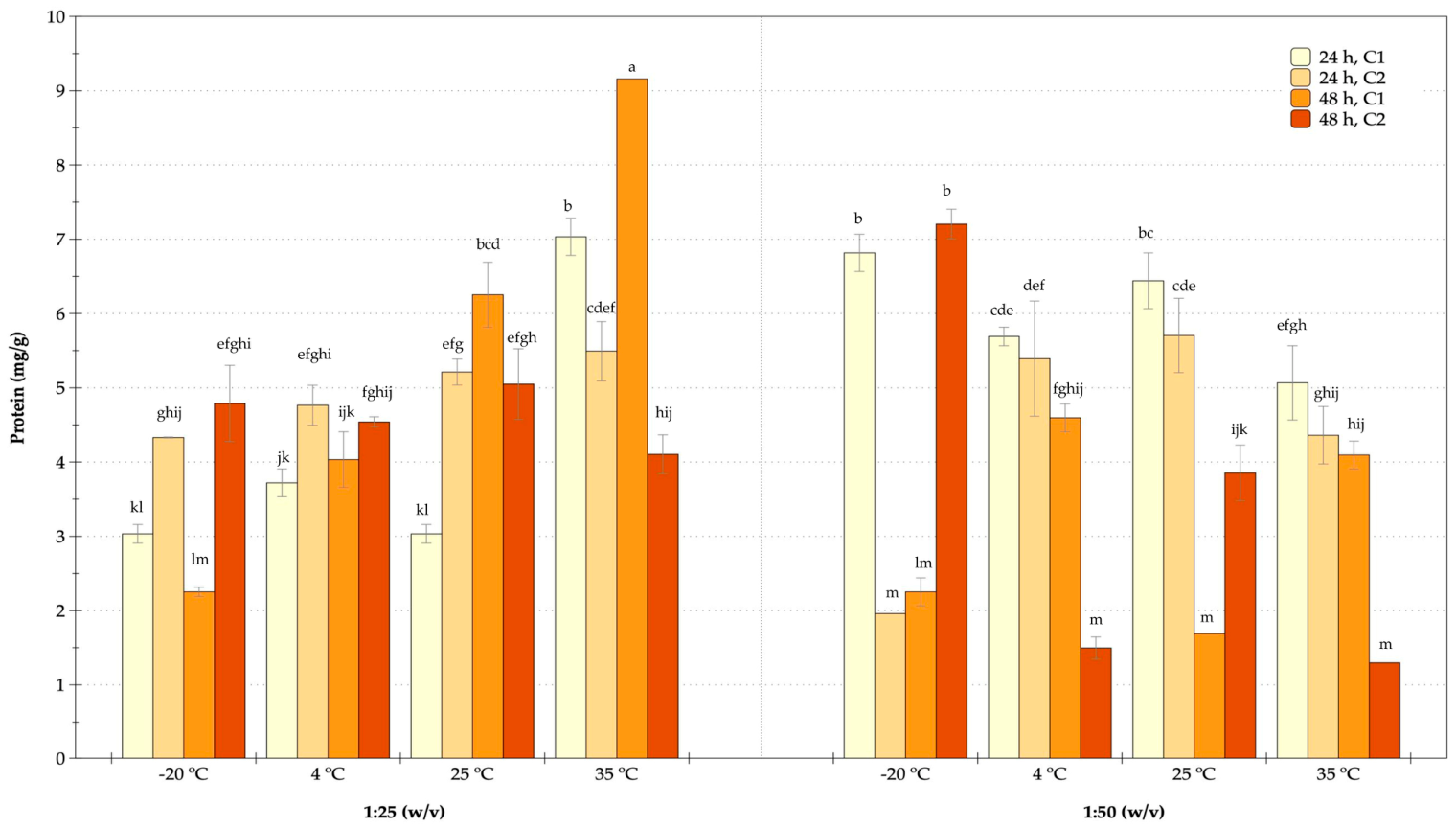
Total protein yield varied among the extraction conditions, indicating that biomass-to-solvent ratio, extraction temperature, extraction time, and the number of extraction cycles all influenced the recovery of water-soluble proteinaceous compounds from the
H. durvillei biomass (
Figure 4). Values ranged from 1.3 to 9.1 mg/g dry biomass, with significant differences among the treatments. For the 1:25 (
w/
v) ratio, the highest protein yield was obtained at 35 °C for 48 h in cycle 1, reaching 9 mg/g dry biomass. High yields were also observed at 35 °C for 24 h in cycle 1 and 25 °C for 48 h in cycle 1. These results indicated that moderate-temperature extraction favored the release of soluble proteins from the dried algal matrix, possibly associated with improved tissue hydration and diffusion of intracellular or matrix-associated proteins into the aqueous phase.
The number of extraction cycles also affected protein recovery. Under several conditions at the 1:25 ratio, particularly at 25–35 °C, cycle 1 produced higher protein yields than cycle 2. This suggested that a substantial proportion of readily extractable proteins was released during the first extraction cycle, whereas the second cycle recovered residual soluble proteins. However, the cycle effect was not uniform across all temperatures, indicating that protein release was condition-dependent rather than simply proportional to the number of extractions. At the 1:50 (w/v) ratio, protein yields remained high under −20 °C, 4 °C, and 25 °C, despite the lower PE concentration and PE yield observed under this ratio. This pattern indicated that total protein yield did not directly reflect PE recovery. The higher protein yield under some of the 1:50 conditions possibly represented the extraction of non-PE soluble proteins or other proteinaceous compounds rather than the selective enrichment of PE. The protein yield results showed that total soluble protein recovery and PE recovery were related but not identical. The condition 1:25 (w/v), 35 °C, 48 h, cycle 1 provided the highest total protein yield and also the highest PE concentration, PE yield, and PE purity index.
3.2. Total Phenolic and Flavonoid Contents
The total phenolic content (TPC) and total flavonoid content (TFC) of the crude PE-containing fraction varied significantly among the extraction conditions, indicating that biomass-to-solvent ratio, temperature, extraction time, and the number of extraction cycles influenced the co-extraction of non-pigment bioactive constituents from
H. durvillei biomass (
Table 1). The TPC ranged from 0.832 to 6.648 mg GAE/g, whereas the TFC ranged from 0.847 to 7.934 mg QE/g. These variations suggested that phenolic-equivalent and flavonoid-equivalent compounds were differentially released under diverse extraction conditions. The highest TPC was obtained at 1:50 (
w/
v), 25 °C, 48 h, cycle 1 (6.648 mg GAE/g), followed by 1:50 (
w/
v), 35 °C, 24 h, cycle 1 and 1:25 (
w/
v), 25 °C, 48 h, cycle 1. The results showed that the first extraction cycle produced higher TPC values than the second cycle, suggesting that most readily extractable phenolic constituents were recovered during the initial extraction. The reduction in TPC during cycle 2 indicated that repeated extraction recovered residual fractions with lower phenolic abundance. The highest TFC was observed at 1:50 (
w/
v), 25 °C, 24 h, cycle 1 (7.934 mg QE/g), followed by 1:50 (
w/
v), 25 °C, 48 h, cycle 1 and 1:50 (
w/
v), 35 °C, 24 h, cycle 1. Compared with the 1:25 ratio, the 1:50 ratio gave higher flavonoid recovery, particularly during the first extraction cycle at 25–35 °C. This suggested that a higher solvent volume improved the diffusion or solubilization of flavonoid-like compounds from the dried algal matrix.
The number of extraction cycles had a pronounced effect on both TPC and TFC. Across most temperature and ratio combinations, cycle 1 yielded significantly higher phenolic and flavonoid contents than cycle 2. This pattern supported the interpretation that phenolic- and flavonoid-like compounds were preferentially extracted during the first contact between biomass and solvent, whereas the second extraction cycle recovered a depleted residual fraction. However, the response was not entirely uniform, suggesting that extraction behavior depended on the combined effects of biomass-to-solvent ratio, temperature, and time. The conditions that maximized TPC and TFC were not the same as those that optimized PE concentration, PE yield, PE purity index, and soluble protein yield. Due to the heterogeneous composition of macroalgal biomass, PE recovery and TPC and TFC responses do not necessarily reflect the same chemical fractions extracted. PE is a water-soluble pigment–protein complex, and its recovery differs from TPC and TFC measurements, which are colorimetric responses to phenolic and flavonoid compounds that may also indicate other reducing agents or matrix-associated substances in crude seaweed extracts. The 1:25 (w/v) biomass-to-solvent ratio yielded a more concentrated PE-containing protein fraction, particularly at 35 °C for 48 h in the first extraction cycle. Conversely, the 1:50 (w/v) ratio likely facilitated broader diffusion of lower-abundance phenolic-, flavonoid-, peptide-like, polysaccharide-related, or other water-soluble reducing compounds. Therefore, PE recovery and phenolic- and flavonoid-equivalent extraction were condition-dependent and not simultaneously optimized. These results indicated that sun-dried H. durvillei biomass contains water-extractable phenolic-flavonoid-equivalent constituents, but their recovery pattern differed from the PE-containing proteinaceous fraction.
3.3. Screening of Antioxidant-Associated Properties
The DPPH, ABTS, and FRAP assays served as preliminary screening methods to assess antioxidant activity in the crude aqueous extracts containing phenolic compounds (PE). Detailed results are available in
Supplementary Table S3. The measured values ranged from 0.063 to 16.170 mg AAE/g for DPPH, 0.304 to 1.906 mg AAE/g for ABTS, and 0.029 to 1.266 mg AAE/g for FRAP. However, the extracts were not purified and compound-level profiling was not performed. Therefore, these findings should be interpreted as responses at the crude matrix level, rather than indicative of specific antioxidant compounds or purified bioactive constituents. The highest DPPH activity was observed at an extraction condition of 1:50
w/
v, 35 °C, 24 h, cycle 1. The peak ABTS response occurred at 1:50
w/
v, 4 °C, 24 h, cycle 2, while the maximum FRAP response was attained at 1:50
w/
v, 35 °C, 48 h, cycle 1. The variation in optimal conditions across the assays suggested that the antioxidant responses were assay-dependent and did not follow a single extraction pattern. However, these optimal conditions differed from those that maximized PE concentration, extraction yield, and purity index, which were 1:25
w/
v, 35 °C, 48 h, cycle 1. Thus, no universal extraction condition existed for antioxidants, with antioxidant-associated co-extractives and PE-containing protein fractions not optimally recovered under identical conditions. Consequently, the antioxidant data were retained solely as supplementary screening information and were not employed to attribute antioxidant activity to PE or specific compound classes. Further purification and detailed compound profiling are necessary to identify the constituents responsible for the observed radical scavenging and reducing activities.
3.4. Comparative Profiling of Chemical Parameters
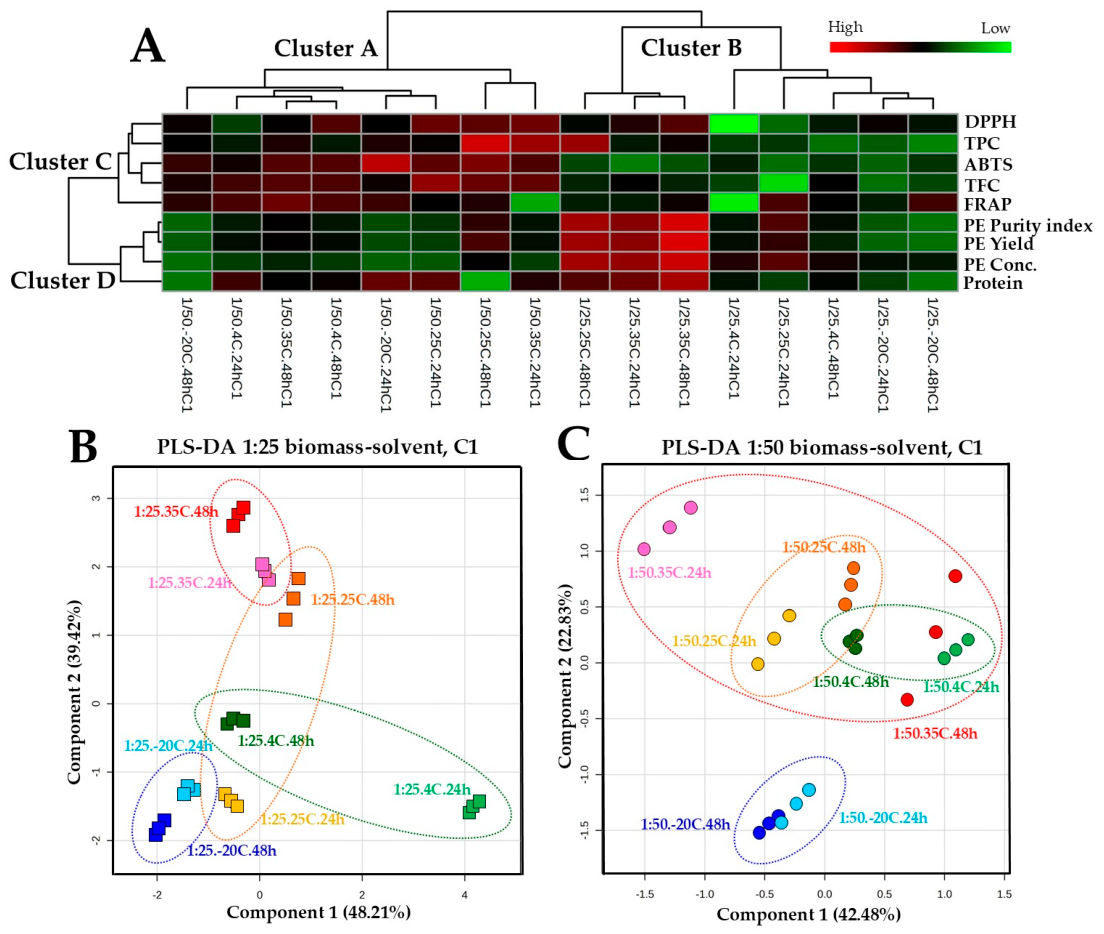
The individual responses exhibited diverse extraction-dependent patterns, and the initial interpretation focused on the quantitative results before conducting comparative profiling. The heatmap, PLS-DA score plots, and correlation plots were applied as descriptive tools to visualize normalized response patterns. Comparative profiling of the chemical parameters from extraction cycle 1 was analyzed. The results from Pearson’s correlation–based hierarchical cluster analysis revealed that both the biomass-to-solvent ratio and extraction temperature influenced the chemical profiles of sun-dried
H. durvillei red biomass extracts (
Figure 5A). At the sample clustering level (top dendrogram), samples extracted at biomass-to-solvent ratios of 1:50 (cluster A) and 1:25 (cluster B) were separated into different clusters, indicating that solvent dilution was a primary determinant of chemical variation. Within each main cluster, further sub-grouping reflected the effects of extraction temperature and time, with a moderate separation between the 24 and 48 h treatments, suggesting that extraction time exerted a secondary, but noticeable influence on the sample chemical profiles. At the variable clustering level (left dendrogram), chemical parameters were grouped into two clusters with contrasting abundance patterns. Parameters associated with phenolic content and antioxidant activities, i.e., total phenolic content (TPC), total flavonoid content (TFC), ABTS, DPPH, and FRAP, were generally more abundant (red) in samples extracted at a biomass-to-solvent ratio of 1:50 (cluster C). This observation suggested that the 1:50 ratio enhanced extraction efficiency, yielding broader and more intense phenolic and antioxidant profiles across samples. By contrast, phycoerythrin (PE) and protein-related parameters exhibited greater variability, without a consistent trend across the tested experimental conditions (cluster D).
To further elucidate the effects of extraction temperature and time, samples within each biomass-to-solvent ratio were analyzed using separate PLS-DA models. For the 1:25 (
w/
v) extraction ratio, the PLS-DA score plot, with a prediction accuracy of 77.47%,
R2 = 0.808 and
Q2 = 0.647 (
Figure 5B), demonstrated sample discrimination, primarily driven by extraction temperature, with a secondary contribution from extraction time. Distinct grouping was observed for each temperature condition, indicating that extraction temperature substantially influenced the chemical profile of
H. durvillei red biomass extracts even under limited solvent conditions. The extracts obtained at 35 °C (24 h and 48 h) and 25 °C (48 h) were separated from the other experimental conditions, suggesting that elevated extraction temperature and prolonged extraction time contributed to the development of distinct chemical profiles. Minimal separation between 24 h and 48 h was observed at −20 °C and 35 °C, indicating limited benefit of prolonged extraction time under these conditions. By contrast, the higher separation observed between 24 h and 48 h at 4 °C and 25 °C indicated enhanced extraction efficiency and increased chemical variability with prolonged extraction time. For the 1:50 (
w/
v) extraction ratio, the PLS-DA score plot, with a prediction accuracy of 70.66%,
R2 = 0.676 and
Q2 = 0.563 (
Figure 5C), demonstrated a separation pattern predominantly driven by extraction temperature, while extraction time exerted a secondary influence. The extracts obtained at −20 °C (24 h and 48 h) clustered closely together and were distinctly separated from the other conditions, indicating limited extraction efficiency and a constrained chemical profile. By contrast, a more pronounced separation between 24 and 48 h at 35 °C suggested a time-dependent enhancement or transformation of extracted compounds at higher temperature.
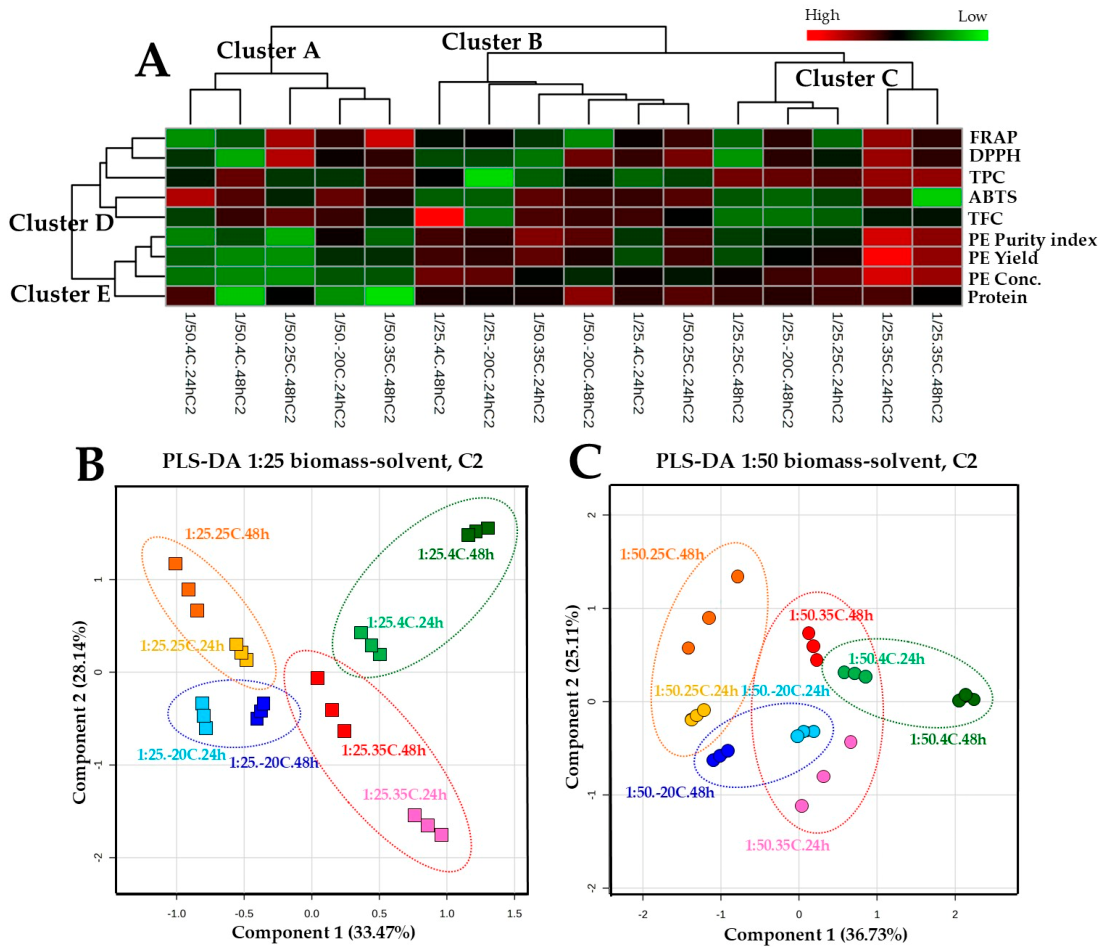
For the second extraction cycle, Pearson’s correlation-based hierarchical cluster analysis revealed that the biomass-to-solvent ratio remained the primary factor governing sample grouping; however, its discriminative power was less pronounced than during the first extraction cycle (
Figure 6A). At the sample clustering level (top dendrogram), samples extracted at biomass-to-solvent ratios of 1:50 and 1:25 were mainly assigned to clusters A and C, respectively, with partial overlap observed. Several samples from both ratios co-clustering within cluster B indicated reduced separation between extraction conditions. At the variable clustering level (left dendrogram), the chemical parameters were grouped into two major clusters with distinct abundance patterns. By contrast to the first extraction cycle, phycoerythrin (PE) and protein-related parameters (cluster E), which exhibited higher relative abundances (red), were associated with samples in clusters B and C, while phenolic content and antioxidant activity indices (cluster D) displayed greater variability and lacked a consistent trend across the experimental conditions.
To further elucidate the effects of extraction temperature and time, samples within each biomass-to-solvent ratio were analyzed using separate PLS-DA models. For the 1:25 (
w/
v) extraction ratio, the PLS-DA score plot, constructed with a prediction accuracy of 66.03%,
R2 = 0.813 and
Q2 = 0.678 (
Figure 6B), demonstrated sample discrimination, primarily driven by extraction temperature, with a secondary contribution from extraction time. Separation among temperature conditions was more pronounced than observed during the first extraction cycle. With respect to extraction time, minimal separation between 24 and 48 h was observed at −20 °C and 25 °C, indicating limited benefit from prolonged extraction under these conditions. By contrast, higher separation between 24 and 48 h at 4 °C and 35 °C suggested enhanced extraction efficiency and increased chemical variability with extended extraction time. This temporal effect differed from that observed during the first extraction cycle, highlighting a shift in extraction dynamics during the second cycle. Regarding the 1:50 (
w/
v) extraction ratio, the PLS-DA score plot, constructed with a prediction accuracy of 82.66%,
R2 = 0.760 and
Q2 = 0.606 (
Figure 6C), revealed partially overlapping and mixed clustering patterns across extraction temperatures. This observation suggested that increased solvent availability diminished temperature selectivity, thereby facilitating the extraction of a broader and partially overlapping chemical profile. The effect of extraction time (24 h vs. 48 h) was minimal and consistent across all temperature conditions, as paired samples at each temperature exhibited only slight positional shifts without time-dependent separation.
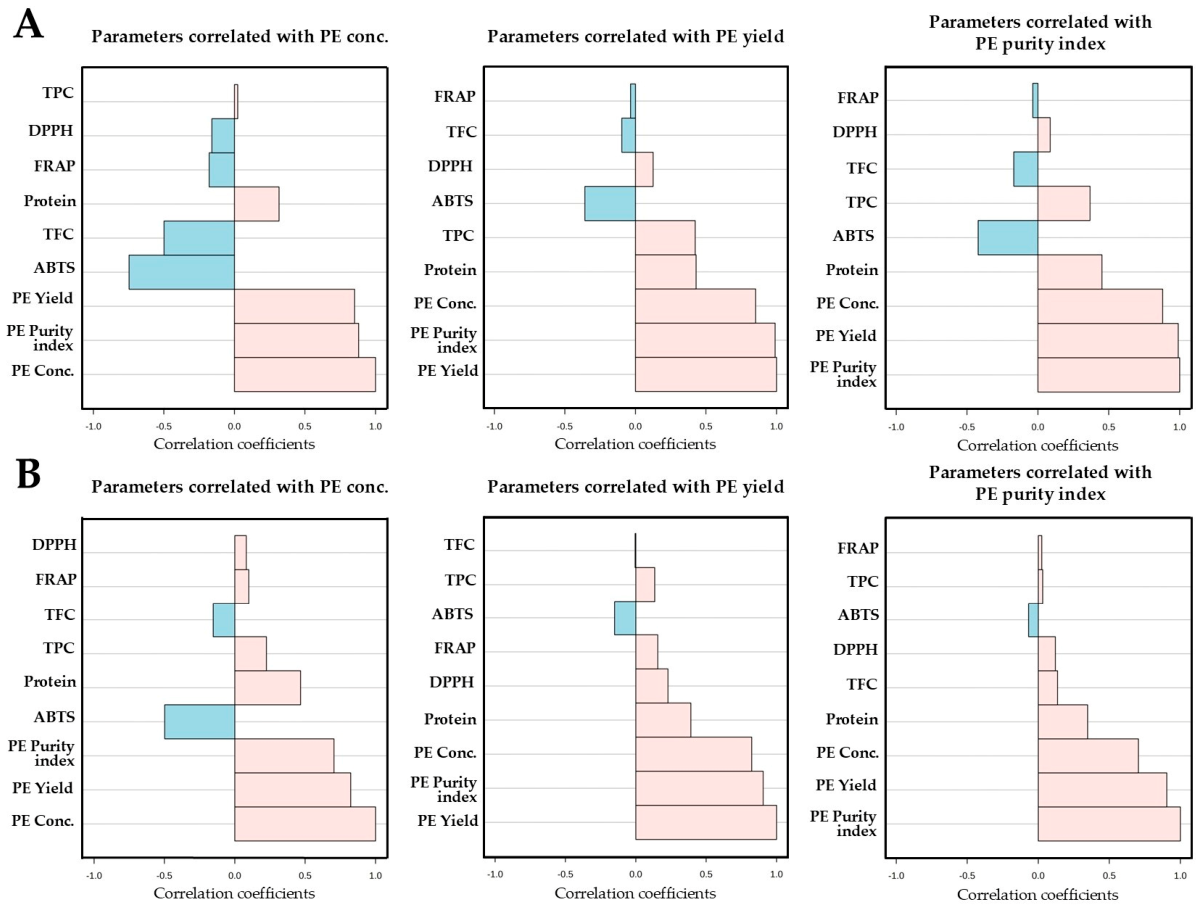
Correlation analysis was performed to investigate the relationships between phycoerythrin (PE)-related parameters, including PE concentration, extraction yield, and purity index, and other measured chemical variables. Results from extraction cycle 1 (
Figure 7A) and 2 (
Figure 7B) consistently demonstrated that PE concentration in
H. durvillei red biomass extracts was positively correlated with PE yield, PE purity index, and protein content, while showing negative correlations with TFC and ABTS radical scavenging activity. Similarly, PE yield exhibited positive correlations with PE purity index, PE concentration, protein content, and TPC, but was negatively correlated with ABTS radical scavenging activity. The PE purity index was likewise positively correlated with PE yield, PE concentration, and protein content, whereas negative correlations were observed with ABTS radical scavenging activity and TFC.
Figure 5,
Figure 6 and
Figure 7 were interpreted as supportive visualizations of the measured extraction responses, while the comparative plots supported the conclusion that PE-related parameters and antioxidant-associated responses followed different extraction patterns.
4. Discussion
Red macroalgae represent an important marine resource for natural pigments, proteinaceous bioactives, and functional food ingredients. Many Rhodophyta species contain phycobiliproteins, phenolic-like compounds, polysaccharides, minerals, and other water-soluble constituents with potential technological and biological relevance [
1,
2,
3]. In this study,
Halymenia durvillei cultivated in an outdoor pond was processed into sun-dried biomass and used as a practical raw material for mapping aqueous extraction conditions for phycoerythrin (PE)-rich extracts. This approach is relevant because macroalgal pigment recovery is strongly affected by algal species and also by biomass state, drying history, solvent ratio, extraction temperature, extraction duration, and the number of extraction cycles [
4,
9,
10,
33]. The condition 1:25
w/
v, 35 °C, 48 h, cycle 1 was the most favorable for PE concentration, PE extraction yield, PE purity index, and soluble protein yield, whereas selected 1:50
w/
v conditions favored total phenolic content (TPC), total flavonoid content (TFC), and antioxidant responses. This separation indicated that the extraction of crude PE proteinaceous pigments and the recovery of antioxidant-associated co-extractives were partially decoupled, supporting the value of extraction condition mapping rather than a single-condition extraction strategy.
The higher PE recovery observed at 1:25
w/
v, 35 °C, 48 h, cycle 1 was explained by the combined effects of extract concentration, tissue hydration, diffusion, and soluble protein release from the dried red algal matrix. Phycobiliproteins, including PE, are water-soluble pigment–protein complexes. They are commonly recovered using aqueous or phosphate-buffered systems because these conditions support protein solubilization while maintaining a near-neutral pH environment [
4,
34]. A previous report on
Palmaria palmata showed that sodium phosphate buffer at pH 7 supported R-PE extraction, while the solid-to-liquid ratio significantly affected pigment yield [
33]. The novelty of this study should be interpreted in relation to the biomass state and extraction response framework. Previous studies on
Gracilaria gracilis,
Grateloupia turuturu, and
Solieria filiformis demonstrated that PE recovery depends on biomass-to-buffer ratio, biomass condition, extraction time, and the use of physical or enzymatic disruption [
9,
10,
11]. By contrast, this study focused on sun-dried
H. durvillei, with the aqueous recovery of crude PE-containing fractions less well characterized. The findings indicated that conditions favoring PE recovery did not necessarily align with those promoting phenolic, flavonoid, and antioxidant responses, suggesting a condition-dependent trade-off between PE-containing protein fractions and non-PE co-extractives in sun-dried
H. durvillei. The primary contribution of this study is the empirical identification of a promising extraction condition (1:25
w/
v, 35 °C, 48 h, cycle 1) and the demonstration that biomass-specific interpretation is essential when extracting sun-dried
H. durvillei. Factors such as drying, cell wall accessibility, pigment–protein stability, and co-extraction behavior may collectively influence the measured responses [
4,
35,
36].
A recent study on
Gracilaria gracilis demonstrated that R-PE recovery is influenced by biomass condition, enzyme-assisted disruption, and extraction strategy, underscoring the importance of matrix accessibility in PE release [
37]. A previous study on
Grateloupia turuturu further indicated that extraction temperature, solvent-to-biomass ratio, extraction time, and biomass condition significantly impacted R-PE recovery, confirming that PE extraction is governed by multiple process factors rather than a single variable [
10]. These findings aligned with our results, which revealed significant main and interaction effects of biomass-to-solvent ratio, temperature, time, and extraction cycle on both PE concentration and PE yield. The favorable PE recovery at 35 °C observed in this study should be considered in the context of the sun-dried biomass state of
H. durvillei. Lower temperatures may better preserve the native pigment structure in fresh or minimally processed red seaweeds, while moderate heating can enhance hydration, diffusion, and the release of soluble proteins from dried tissues. Water-based extraction of R-PE from
Sarcopeltis skottsbergii using ultrasound and high-pressure homogenization also emphasized that extraction efficiency depends on the balance between cell disruption and pigment preservation [
38]. Similarly, pressurized-water extraction of
Solieria filiformis showed that biomass condition and extraction severity influence R-PE recovery and extract characteristics [
11]. Therefore, the condition of 1:25
w/
v, 35 °C, 48 h, cycle 1 should not be regarded as a universal optimum for PE extraction from all red macroalgae, but rather a promising condition for recovering crude PE-containing aqueous proteinaceous fractions from sun-dried
H. durvillei biomass. The PE-related responses did not fully align with the phenolic, flavonoid, and antioxidant responses. This suggested that the antioxidant capacity of the crude extracts was not solely attributable to PE, but likely resulted from the combined contributions of PE-containing protein fractions and other non-PE water-soluble co-extractives. These co-extractives may include soluble proteins, phenolic-like compounds, sulfated polysaccharide-associated fractions, and additional matrix-derived compounds. This interpretation was supported by recent research on
H. durvillei water extract, where R-PE-containing aqueous extracts exhibited antioxidant-related activity, but the extract remained a mixed water-soluble fraction [
39]. Similarly, studies on red macroalgal biorefinery and water-based extraction demonstrated that crude aqueous extracts frequently contain multiple bioactive fractions, underscoring the necessity of response-specific interpretation [
10,
37]. Therefore, comparison with recent studies suggested that extraction recommendations should be tailored to the specific target. For the recovery of crude PE-containing proteinaceous fractions, the condition of 1:25
w/
v, 35 °C, 48 h, cycle 1 is recommended based on PE concentration and yield. Conversely, for antioxidant-associated co-extractives, extraction conditions should be selected according to the relevant antioxidant response, such as TPC, TFC, DPPH, ABTS, or FRAP, rather than relying solely on PE recovery. This distinction enables a more comprehensive recommendation for the extraction process and prevents mischaracterization of the crude extract as purified PE or a single bioactive compound.
The positive effect of 25–35 °C compared with −20 and 4 °C suggested that moderate extraction temperatures improved hydration and swelling of the sun-dried biomass, thereby facilitating diffusion of PE-containing soluble fractions into the phosphate buffer. Low temperatures may reduce the degradation of thermolabile pigments, but our results showed that low-temperature extraction alone was insufficient to release PE efficiently from the dried
H. durvillei matrix within 24–48 h. This behavior concurred with recent seaweed protein and pigment extraction studies, showing that the macroalgal cell wall, polysaccharide-rich matrix, drying process, and solvent accessibility all limited the recovery of intracellular or matrix-associated compounds [
12,
13,
40]. By contrast, 35 °C was high enough to enhance water penetration and diffusion, but not sufficiently severe to cause major loss of the PE signal under the present conditions. This point should be stated cautiously because PE stability is affected by pH, temperature, light, oxygen exposure, and surrounding matrix composition, and this study did not directly measure degradation products or chromophore stability [
6,
8,
41].
The low PE purity index observed across the crude extracts was expected, given the direct aqueous extraction approach. This study was designed as a preliminary screening of mild aqueous extraction conditions, and the extracts were considered crude PE-containing aqueous proteinaceous fractions rather than purified PE. The A562/A280-type purity index reflects the relative abundance of PE compared with UV-absorbing proteins and other soluble compounds. Crude seaweed extracts can contain PE, non-PE proteins, peptides, polysaccharides, salts, phenolic-like compounds, nucleic acid residues, and other UV-absorbing constituents [
4,
12,
14]. From an application perspective, the crude extract should not be regarded as purified or colorant-grade PE, but rather as a crude PE-containing aqueous proteinaceous fraction containing antioxidant-associated co-extractives. Further purification, spectral confirmation, protein profiling, pigment stability testing, and application-specific evaluation are required before high-purity PE, precise pigment standardization, or colorant-grade use can be claimed [
4,
41,
42]. Thus, the practical value of this study lies in identifying extraction conditions that favor recovery of crude PE-containing fractions from sun-dried
H. durvillei biomass and in recognizing the trade-off with antioxidant-associated co-extractives.
The soluble protein yield generally followed the PE recovery pattern, with the highest protein yield also observed at 1:25
w/
v, 35 °C, 48 h, cycle 1. This relationship is reasonable because PE is a proteinaceous pigment and therefore contributes to the total soluble protein pool. However, total protein yield should not be treated as a direct surrogate for PE recovery. Some of the 1:50 treatments produced measurable protein recovery without corresponding PE enrichment, indicating that non-PE soluble proteins were also extracted. This result concurred with the current understanding that seaweed protein extraction is affected by species-specific cell wall structure, protein–polysaccharide interactions, protein–polyphenol interactions, mineral content, pH, temperature, and pretreatment history [
12,
13,
40]. Thus, the correlation between PE yield and protein yield under the optimal PE condition strengthened the interpretation that 1:25
w/
v, 35 °C, 48 h, cycle 1 favored the release of PE-containing proteinaceous fractions, while the divergence under some of the other conditions indicated the co-extraction of non-PE proteins.
By contrast, TPC and TFC were maximized mainly under 1:50 (
w/
v), cycle 1 conditions, particularly at 25 °C. This indicated that higher solvent availability promoted the release or solubilization of phenolic- and flavonoid-equivalent constituents from the dried
H. durvillei matrix. The different optimal conditions for PE recovery and TPC and TFC responses were attributed to the distinct chemical characteristics and extraction behaviors of these response groups. PE is a soluble pigment–protein complex, and its recovery is closely associated with the release of proteinaceous phycobiliprotein fractions under near-neutral aqueous conditions [
4,
9,
10]. By contrast, TPC and TFC are operational colorimetric indices that represent phenolic- and flavonoid-equivalent responses rather than compound-specific quantification. These assays may also respond to other reducing or matrix-derived constituents in crude seaweed extracts, including peptides, soluble polysaccharide fragments, and other redox-active compounds [
18,
19,
21]. However, the results of TPC and TFC should be regarded as operational colorimetric indicators rather than measurements of specific compounds. In our study, a detailed profiling of individual phenolic and flavonoid components was not conducted, and the phenolic- and flavonoid-equivalent values should not be linked to particular compounds. These assays may also react with other reducing agents or matrix-derived constituents in crude seaweed extracts, such as peptides, soluble polysaccharide fragments, and other redox-active compounds [
18,
19]. Therefore, the higher TPC and TFC observed under 1:50 (
w/
v) conditions may reflect better solvent accessibility for the diffusion of non-PE co-extractives, whereas the 1:25 (
w/
v) condition favored a more concentrated PE-containing proteinaceous fraction. These findings supported the interpretation that PE recovery and phenolic- and flavonoid-equivalent recovery were condition-dependent but not co-optimized under the same extraction conditions.
The antioxidant results further revealed that PE recovery, phenolic- and flavonoid-equivalent responses, and overall antioxidant capacity were not directly correlated. Some elevated DPPH values were observed under 1:50 (
w/
v) extraction conditions, alongside relatively high TPC and TFC responses, but the ABTS and FRAP results exhibited distinct extraction patterns. This divergence was expected, given that the DPPH, ABTS, and FRAP assays are based on different reaction mechanisms and influenced by different classes of compounds. The DPPH and ABTS assays measure radical scavenging capacity, while the FRAP assay assesses ferric reducing potential. Compound-level profiling of phenolics and flavonoids was not conducted in this study, and the antioxidant responses cannot be attributed to specific phenolic or flavonoid constituents. However, these activities may impact matrix-level responses of crude aqueous extracts that contain PE, non-PE proteins, peptides, soluble polysaccharide fragments, phenolic- and flavonoid-equivalent compounds, and other water-soluble reducing agents [
18,
20,
43]. The observed variation in optimal extraction conditions across the assays supported the conclusion that antioxidant-associated co-extractives exhibited assay-dependent extraction behavior.
The extraction cycle effect also provided useful process information. Cycle 1 generally gave higher PE concentration, PE yield, PE purity index, protein yield, TPC, TFC, and DPPH activity than cycle 2, indicating that the readily extractable pigment-rich and DPPH-active fractions were mainly recovered during the first extraction contact. This result concurred with the general extraction principle that the steepest concentration gradient and greatest mass transfer occur during the initial solvent–biomass contact [
9,
10,
33]. However, some second-cycle extracts retained ABTS or FRAP activity, suggesting that the residual biomass still contained compounds with different redox behavior. From a process design perspective, cycle 1 was more efficient for producing a crude PE extract, whereas a second extraction cycle was only justified to recover residual antioxidant fractions rather than maximizing PE enrichment. This interpretation is important for scalable macroalgal bioprocessing because repeated extraction increases time, solvent use, labor, and downstream concentration requirements [
44,
45]. The antioxidant responses observed in this study should be interpreted as activities of crude aqueous extracts derived from the PE-containing proteinaceous fractions. These extracts may also contain sulfated polysaccharides, peptides, phenolic-like compounds, soluble minerals, and other reducing constituents. This is particularly pertinent to
Halymenia, as recent studies have reported antioxidant-related bioactivities in
H. durvillei extracts and sulfated polysaccharides from related
Halymenia species, including
H. dilatata and
H. pseudofloresia [
23,
24]. Seaweed sulfated polysaccharides may contribute to antioxidant activity, depending on factors such as sulfate content, molecular weight, structural features, and potential interactions with proteins or phenolic compounds [
26,
27]. Therefore, the varying optimal conditions for PE recovery and antioxidant responses likely reflected different co-extraction patterns.
The use of sun-dried biomass is practically relevant because drying reduces biomass water content, improves handling, facilitates storage and transportation, and supports seasonal or decentralized macroalgal processing. This is particularly important for outdoor-cultivated seaweeds, where biomass supply, moisture content, salinity, and postharvest stability can vary. Drying can also alter pigment stability, protein solubility, membrane integrity, and cell wall accessibility. Recent studies on red seaweed proteins and pigments showed that drying and pretreatment can either facilitate extraction through structural weakening or reduce recovery through protein denaturation and pigment degradation, depending on the biomass and process conditions [
6,
8,
12]. In this study, sun-dried
H. durvillei yielded crude PE-containing aqueous extracts, supporting the feasibility of this biomass format. However, comparison with fresh, frozen, freeze-dried, or oven-dried biomass is required before concluding that sun-drying is superior to other postharvest strategies. The state of biomass after sun-drying is a crucial factor in assessing PE recovery in this study. Drying is of practical significance for algal biomass, as it reduces water content, facilitates handling, enhances storage stability, and simplifies transportation and decentralized processing, benefiting farmers [
35]. However, the choice of drying method must be aligned with the preservation of target bioactive compounds, since processing conditions can impact pigment–protein complexes. PE, belonging to the phycobiliprotein family, is a water-soluble pigment–protein whose color and spectral properties are dependent on the integrity of bilin chromophores and the surrounding protein structure. Previous research indicated that phycobiliproteins, including PE and phycocyanin, are sensitive to variables such as temperature, light, pH, and oxygen, with PE being susceptible to thermal and photic stress during drying [
34,
46]. Therefore, sun-drying may exert dual effects on algae biomass. It could weaken tissue structure, thereby enhancing solvent access during rehydration, but also potentially diminishing extractable phycobiliproteins through pigment–protein denaturation, chromophore modification, oxidation, or decreased protein solubility [
47,
48]. Dehydration may also alter matrix swelling and diffusion within polysaccharide-rich cell walls of red macroalgae [
49,
50]. Therefore, the PE levels reported herein should be regarded as the extractable crude PE fractions from sun-dried
H. durvillei, rather than representing the total PE content present in fresh biomass.
This study developed a practical framework for optimizing extraction conditions to recover crude PE-containing aqueous fractions from sun-dried
H. durvillei biomass. The primary contribution is not the identification of a universal optimal condition across all responses, but rather the elucidation of an extraction trade-off. The 1:25
w/
v, 35 °C, 48 h cycle 1 condition favored the recovery of PE-associated proteinaceous fractions, whereas the 1:50
w/
v conditions preferentially extracted phenolic and flavonoid-equivalents and antioxidant-related co-extractives. This study should be regarded as a factorial screening experiment rather than a definitive optimization investigation. The chosen factor levels were intended to compare practical extraction conditions for sun-dried
H. durvillei biomass and to identify trends in specific responses. Given the multiple factors and treatment combinations involved, various statistical groupings were anticipated. Consequently, the primary emphasis was placed on elucidating extraction response patterns rather than on individual treatment-level comparisons. Future research should employ more targeted optimization techniques, such as response surface methodology or narrower factor ranges around the most promising extraction conditions, to enhance PE recovery, improve purification efficiency, and optimize compound-specific activity. The utilization of sun-dried biomass is highly relevant for algae cultivation and biomass valorization. Sun-drying reduces moisture content, enhances handling and storage stability, lowers transportation costs, and enables low-cost, decentralized processing. These benefits are especially important for macroalgal biomass used off-site for extraction. Thus, the extraction responses in this study offer practical insights into the use of sun-dried
H. durvillei as a cost-effective biomass source for producing crude PE-containing aqueous fractions. This finding is also significant because macroalgal extracts are complex, multi-component systems, and their composition should be tailored to specific applications. Further purification steps, compound-level characterization, pigment stability assessments, and application trials are necessary before definitive claims regarding pigment grade or functional ingredients can be made. Cultivated
H. durvillei offers a viable biomass platform, but aspects such as pigment stability, polysaccharide composition, purification processes, batch-to-batch consistency, and scalability for aquaculture must be further assessed before supporting claims of industrial or environmentally sustainable production. [
51].





 ,
,