Article

Sustainable Removal of Spirulina platensis Using PEG-Modified Membranes Derived from EPS Waste

by
Kemal Salam Ramadhan
1,
Budi Arifvianto
2,
Muslim Mahardika
2,*,
Ario Sunar Baskoro
3,
Norihisa Miki
4,
Tutik Sriani
5 and
Gunawan Setia Prihandana
1,6,*
1
Department of Industrial Engineering, Faculty of Advanced Technology and Multidiscipline, Universitas Airlangga, Jl. Dr. Ir. H. Soekarno, Surabaya 60115, Indonesia
2
Department of Mechanical and Industrial Engineering, Faculty of Engineering, Universitas Gadjah Mada, Jalan Grafika No. 2, Yogyakarta 55281, Indonesia
3
Department of Mechanical Engineering, Faculty of Engineering, Universitas Indonesia, Kampus UI Depok, Jawa Barat 16424, Indonesia
4
Department of Mechanical Engineering, Keio University, 3-14-1 Hiyoshi, Kohoku-ku, Yokohama 223-8522, Japan
5
Department of Research and Development, PT. Global Meditek Utama—IITOYA, Sardonoharjo, Ngaglik, Sleman, DI. Yogyakarta 55581, Indonesia
6
Research Group of Industrial Management, System Engineering & Manufacturing, Universitas Airlangga, Jl. Dr. Ir. H. Soekarno, Surabaya 60115, Indonesia
*
Authors to whom correspondence should be addressed.
Phycology 2026, 6(2), 47; https://doi.org/10.3390/phycology6020047
Submission received: 31 March 2026 / Revised: 22 April 2026 / Accepted: 27 April 2026 / Published: 30 April 2026

Abstract

The rapid proliferation of microalgae in aquatic systems poses significant environmental and public health challenges, particularly in regions lacking adequate water treatment facilities. This study reports a sustainable approach for microalgae removal through the development of low-cost membranes derived from expanded polystyrene (EPS) waste and modified with polyethylene glycol (PEG) as a pore-forming agent. Membranes were fabricated via non-solvent-induced phase separation with PEG loadings of 0–20 wt.% and characterized in terms of morphology, porosity, wettability, and hydraulic performance. Filtration efficiency was evaluated using Spirulina platensis as a model microalga. Incorporation of PEG (up to 15 wt.%) enhanced membrane porosity (77–84%), improved hydrophilicity (water contact angle reduced from 68° to 48°), and increased water flux (10.98–39.2 L·m−2·h−1), while maintaining complete microalgal rejection (100%). Optimized membranes exhibited asymmetric finger-like structures, contributing to improved permeability.

1. Introduction

The excessive proliferation of microalgae in natural water bodies has emerged as a critical environmental challenge, particularly in regions with limited water treatment infrastructure. This phenomenon is primarily driven by nutrient enrichment from agricultural runoff, domestic wastewater, and industrial effluents, leading to eutrophication characterized by oxygen depletion, harmful algal blooms, and ecosystem degradation [1,2]. Beyond ecological impacts, microalgal overgrowth significantly deteriorates water quality and poses risks to human health and economic activities, especially where water is utilized for drinking, irrigation, and aquaculture [3]. These challenges are particularly pronounced in developing countries, including Indonesia, where access to affordable and efficient water treatment technologies remains limited [4].
Conventional water treatment methods, such as coagulation–flocculation, sedimentation, and advanced oxidation processes, are effective but often constrained by high operational costs and technical complexity, limiting their applicability in decentralized settings [5]. In this context, membrane filtration has gained considerable attention due to its high separation efficiency, operational simplicity, and low chemical requirements [6]. Membrane systems are particularly effective for microalgae removal through size exclusion and surface interactions, making them suitable for point-of-use and small-scale water treatment applications [7,8]. However, the widespread adoption of membrane technology is hindered by the high cost of commercial membranes and challenges related to fouling, especially in resource-limited environments [9].
The use of recycled polymeric waste as membrane feedstock offers a promising strategy to address both economic and environmental concerns. Expanded polystyrene (EPS), commonly known as Styrofoam, is a non-biodegradable material with low recycling rates and significant environmental impact [10]. Converting EPS waste into filtration membranes supports circular economy principles while reducing material costs. Nevertheless, EPS-based membranes inherently exhibit hydrophobic characteristics, which contribute to fouling susceptibility, limited wettability, and low water permeability [11,12]. Additionally, conventional fabrication methods often result in dense or irregular pore structures, further restricting membrane performance. Previous approaches, including polymer blending and inorganic filler incorporation, have shown some improvements but are frequently limited by phase incompatibility, particle agglomeration, and compromised mechanical integrity [13,14].
To overcome these limitations, the incorporation of pore-forming agents such as polyethylene glycol (PEG) represents a viable strategy. PEG can induce the formation of interconnected pore structures during membrane fabrication, enhancing porosity, surface area, and water permeability without compromising structural stability [15]. Moreover, PEG exhibits good compatibility with EPS-based casting systems and enables tunable pore characteristics through controlled variation in its concentration and molecular weight [16].
In this study, sustainable filtration membranes were developed from recycled EPS and modified with PEG 600 as a pore-forming agent. The membranes were fabricated via a phase inversion method, followed by PEG extraction to generate porous structures. The effects of PEG concentration on membrane morphology, porosity, wettability, permeability, and separation performance were systematically investigated. Filtration efficiency was evaluated using Spirulina platensis as a model microalga. This work aims to establish an effective and scalable approach for transforming EPS waste into high-performance membranes for microalgae removal, contributing to sustainable water treatment solutions in resource-constrained regions.

2. Materials and Methods

2.1. Materials

Styrofoam food containers collected directly from local manufacturers were used as the primary source of expanded polystyrene (EPS) for membrane fabrication. The pore-forming agent, polyethylene glycol 600 (PEG 600), was obtained from Sigma-Aldrich, St. Louis, MO, USA. N-methyl-2-pyrrolidone (NMP), used as the solvent for dissolving EPS, was supplied by Merck KGaA, Darmstadt, Germany. Deionized water used in washing and leaching processes was sourced from CV Saba Kimia, Surabaya, Indonesia. Spirulina platensis, a filamentous microalgal species with lengths ranging from 100 to 1000 µm, was selected as the model organism for filtration performance evaluation due to its size, morphology, and relevance in water pollution studies. The microalgae used in this study were obtained from a local cultivator in Indonesia.

2.2. Membrane Fabrication

The EPS-based membranes were fabricated using a solution casting and phase inversion method, with PEG 600 incorporated as a pore-forming agent. Initially, Styrofoam food containers were cleaned and cut into small pieces to facilitate dissolution. Approximately 20 wt.% of EPS were gradually dissolved in NMP under room temperature (~25 °C) for 6 to 8 h, until a homogeneous solution was formed. Once fully dissolved, PEG 600 was added to the solution at concentrations of 0 wt.%, 5 wt.%, 10 wt.%, 15 wt.% and 20 wt.% relative to the weight of EPS. The mixture was stirred for an additional 2 h to ensure uniform dispersion of PEG throughout the polymer matrix. The resulting solution was then cast onto a non-woven fabric using a casting knife with a fixed gap of 100 µm to control membrane thickness. Immediately after casting, the membrane film was immersed into a deionized water coagulation bath at room temperature to induce phase inversion via the non-solvent-induced phase separation (NIPS) process. This step also allowed the leaching of PEG from the polymer matrix, forming porous structures within the membrane, as illustrated in Figure 1. The membranes were kept in the water bath for 24 h with several water changes to ensure complete removal of residual solvent and PEG. The prepared membranes were labeled according to their PEG content (EPS-PEG0, EPS-PEG5, EPS-PEG10, EPS-PEG15 and EPS-PEG20) as shown in Table 1 for further characterization and performance testing.

2.3. Membrane Characterization

2.3.1. Water Flux

Water flux is an important performance measure that represents the volume of water going through the membrane per unit area during a particular time. It reflects the membrane’s permeability and its ability to promote water movement under pressure-driven situations. In this work, all membrane samples were examined using pure water as the feed solution under a constant nitrogen gas pressure of 1 bar ( P ). Each membrane was exposed to filtration for a predetermined time of 30 min ( t ) using a dead-end filtration cell, with an effective membrane area ( A ) of 19 cm2. The volume of permeate water ( Q ) was obtained by measuring the mass of the collected water and translating it into volume using the density of water at room temperature (0.998 g/cm3). The following equations were used to compute the volumetric flux ( J V ) and permeability flux ( L p ) [17]:
J V = Q A t
L p = J V P

2.3.2. Microalgae Rejection

Rejection refers to a membrane’s ability to prevent particles or solutes from passing through its pore structure. It is assessed by comparing the concentration of a material in the feed solution (before filtration) and in the permeate (after filtration). In this investigation, solute rejection was utilized to examine the membrane’s capability to retain microalgae (Spirulina platensis), with concentrations determined in terms of turbidity using a turbidimeter. Prior to filtration, the turbidity of the microalgae-containing water was measured to determine the concentration of suspended particles in the feed solution ( C f ). After filtering through the EPS-PEG membranes using a dead-end filtration cell at 1 bar pressure, the permeate solution ( C p ) was collected, and its turbidity was evaluated again to determine the concentration of microalgae that went through the membrane. An ideal membrane is generally expected to produce a solute rejection ( S R ) of at least 80%, demonstrating excellent effectiveness in keeping suspended pollutants. The solute rejection % was estimated using the following equation [18]:
%   SR   =   1 C p C f × 100

2.3.3. Membrane Porosity

Porosity is a key metric that shows the fraction of void volume within the membrane structure, which directly affects both fluid flow and separation performance. A membrane with larger porosity often allows for greater water permeability, as it has more interconnected routes for fluid transfer. In this investigation, porosity was evaluated using a gravimetric approach [17]. Membrane samples were cut into 2 × 2   c m 2 , and their surface was lightly wiped with tissue paper to eliminate surface moisture. The wet weight ( W w ) was immediately recorded using an analytical balance. The samples were subsequently dried in a convection oven at 100 °C for 1 h, after which the dry weight ( W d ) was measured. The membrane thickness ( L ) was assessed using a digital micrometer at various places to produce an average value. Porosity ( ε ) was then estimated using the following equation [19]:
ε = W w W d ρ H 2 O × A × L × 100

2.3.4. Water Contact Angle

The water contact angle is defined as the angle produced at the interface between a liquid droplet, the solid surface, and the surrounding air. It represents the degree of wetness of a surface: if the contact angle is less than 90°, the surface is defined as hydrophilic, whereas an angle larger than 90° denotes a hydrophobic surface [18]. This metric is significant in membrane research, as surface wettability impacts both water permeability and fouling behavior during filtering. In this investigation, membrane samples were first dried in an oven at 100 °C for 1 h to remove any remaining moisture that could interfere with the accuracy of the WCA measurement. After drying, a 5 µL droplet of distilled water was dropped onto the membrane surface using a micropipette. The droplet was instantly observed and recorded using a digital microscope, and the contact angle was assessed using ImageJ software version 1.54p equipped with a contact angle plugin.

2.3.5. Membrane Morphology

Membrane morphology relates to the physical structure and surface features of the membrane, including pore shape, pore size distribution, layer thickness, and surface texture. Morphological analysis plays a critical role in membrane research, as these structural properties directly influence key performance measures such as permeability, selectivity, and mechanical durability [20]. In this investigation, membrane samples were first dried in an oven at 100 °C for 1 h to eliminate any remaining moisture that could interfere with imaging quality. After drying, the morphological properties of the membranes were studied using a scanning electron microscope. SEM examination was undertaken on three parts of each membrane sample: the top surface, the bottom surface, and the cross-sectional area. This comprehensive technique enables thorough imaging of the pore structure, distribution, and internal layering, which are critical for understanding the effect of PEG concentration on the creation and uniformity of membrane porosity. Prior to SEM investigation, the membrane samples were sliced into appropriate sizes and mounted onto aluminum stubs using carbon tape. The samples were then sputter-coated with a thin coating of osmium to enhance surface conductivity and improve image resolution. All observations were made in vacuum at an accelerating voltage acceptable for polymeric materials. The SEM images acquired were utilized to subjectively analyze morphological variations between membranes produced with varied PEG concentrations.

3. Results and Discussion

3.1. Impact of PEG Incorporation on Pure Water Flux Performance

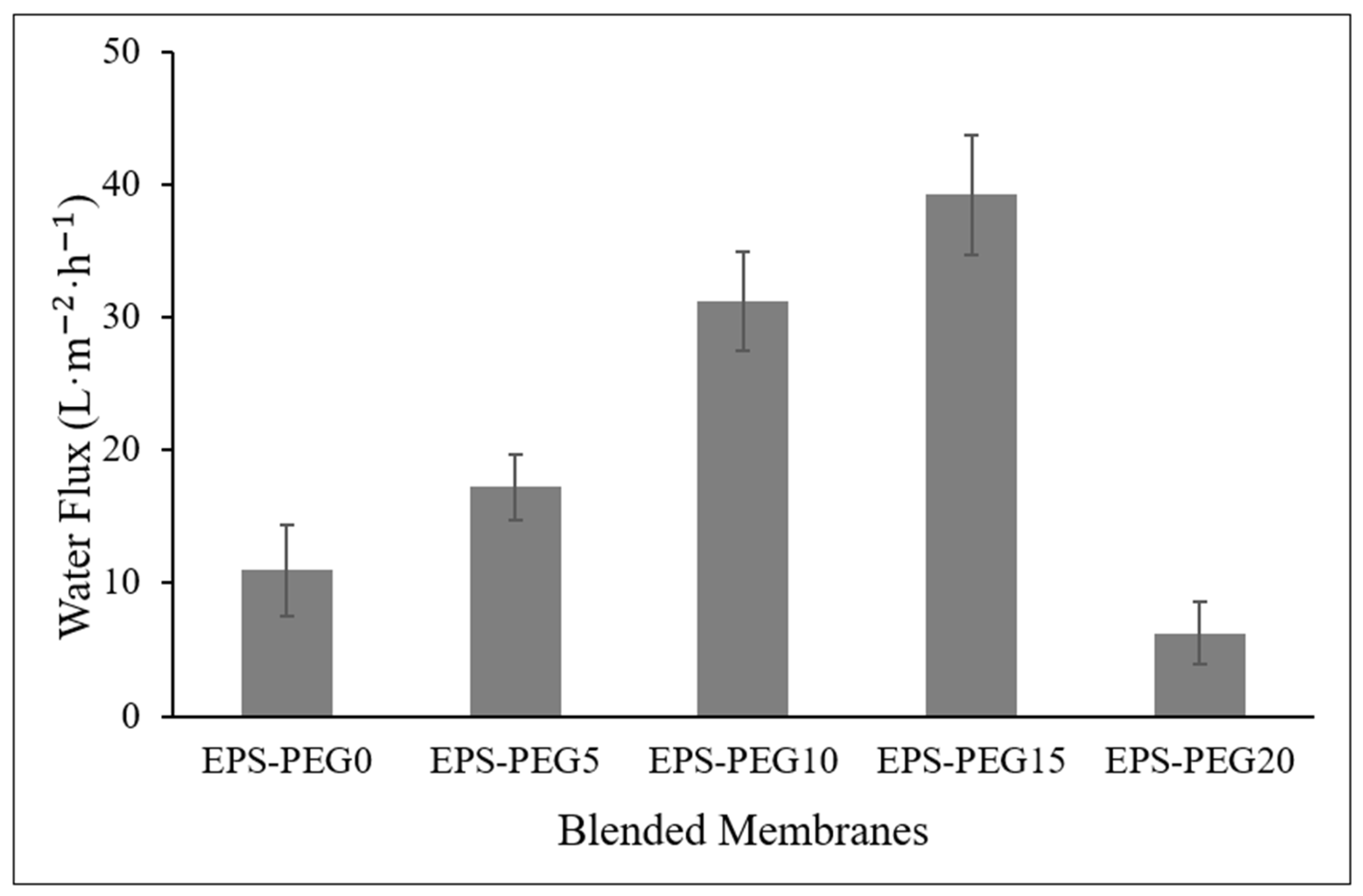
Figure 2 presents the effect of PEG concentration on the pure water flux of the fabricated membranes. As observed, the water flux increased significantly with increasing PEG content from 0 to 15 wt.%, rising from 10.98 to 39.2 L·m−2·h−1. This trend highlights the dual function of PEG as both a hydrophilic modifier and a pore-forming agent during membrane formation via phase inversion. The presence of PEG accelerates the exchange between the solvent (NMP) and non-solvent (deionized water) during coagulation, promoting rapid demixing and the formation of interconnected macrovoid structures. In addition, the hydrophilic ether groups of PEG enhance membrane wettability, reducing interfacial resistance and facilitating water transport.
The improvement in flux up to 15 wt.% PEG is further attributed to increased pore interconnectivity and effective porosity, as supported by porosity measurements and SEM observations (Section 3.3 and Section 3.5). These structural enhancements reduce hydraulic resistance and enable more efficient water permeation under constant pressure. Moreover, a more uniform pore distribution minimizes flow constrictions, resulting in stable permeation pathways.
A decline in water flux was observed at 20 wt.% PEG. At elevated concentrations, PEG tends to aggregate, thereby disrupting the phase inversion kinetics and promoting the formation of denser, sponge-like membrane structures with a reduced number of open pores. Furthermore, excess PEG may occupy pore spaces, leading to a decrease in the number of effective transport pathways. Consequently, these morphological alterations reduce the effective filtration area and overall membrane permeability. This observation is consistent with previous findings [21,22], which indicate that excessive PEG content can induce pore constriction or even structural collapse within the membrane matrix.
The maximum flux obtained at 15 wt.% PEG indicates an optimal balance between pore formation and structural integrity. At this concentration, the membrane exhibits enhanced porosity, improved hydrophilicity, and minimal pore blockage, resulting in superior filtration performance. Beyond this level, the adverse effects of excess PEG outweigh its benefits, indicating a concentration-dependent optimization behaviour.
From a practical standpoint, these results demonstrate that controlled incorporation of PEG provides an effective strategy to tailor membrane performance. When combined with recycled EPS as a base material, this approach offers a low-cost and sustainable pathway for developing high-performance membranes suitable for decentralized water treatment applications.

3.2. Effect of PEG Concentration on Spirulina platensis Rejection

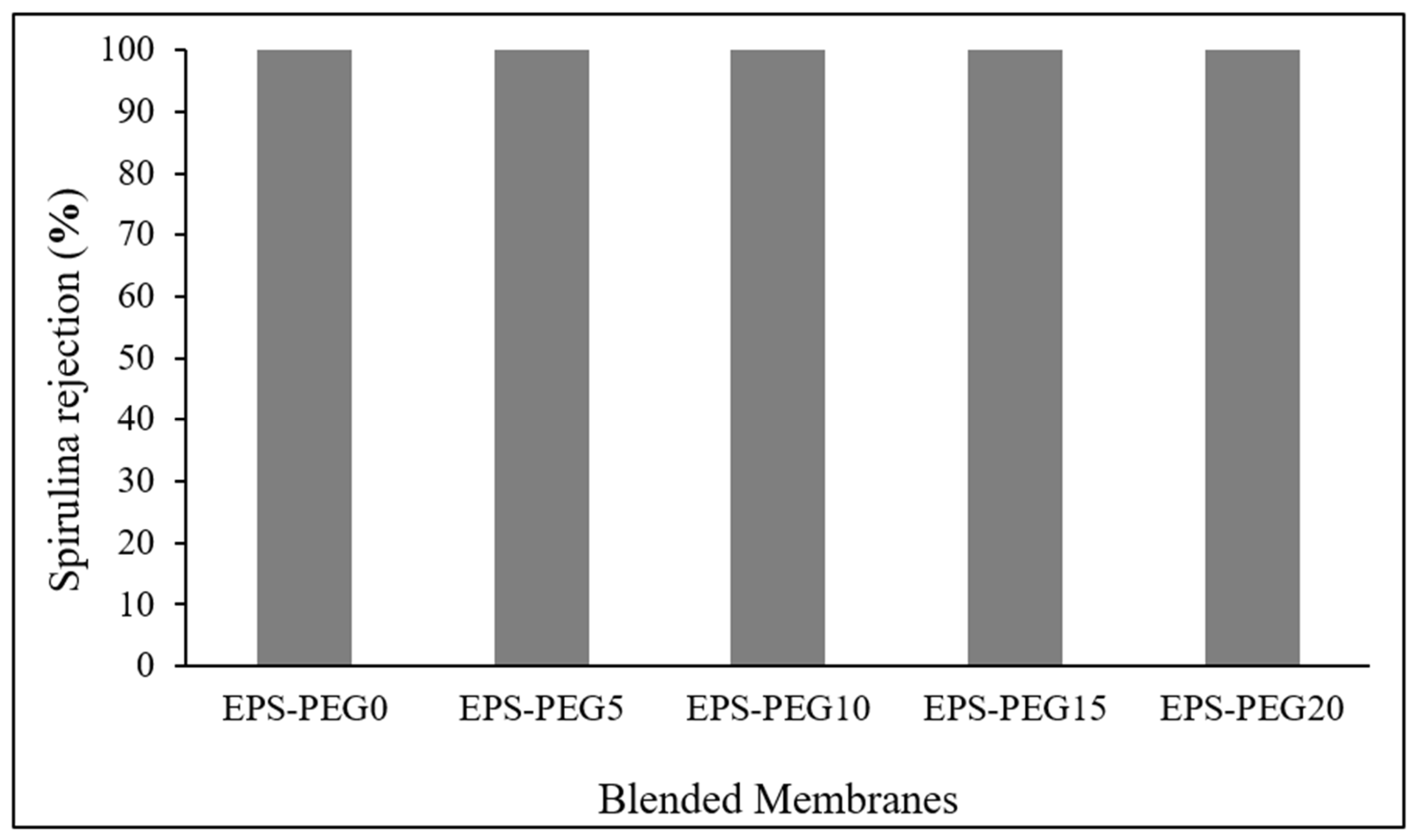
Figure 3 presents the rejection performance of membranes with varying PEG concentrations (0–20 wt.%) toward Spirulina platensis. All membranes exhibited complete removal of microalgae, as indicated by the reduction in turbidity from 1052 NTU in the feed solution to 0 NTU in the permeate, corresponding to a rejection rate of 100%.
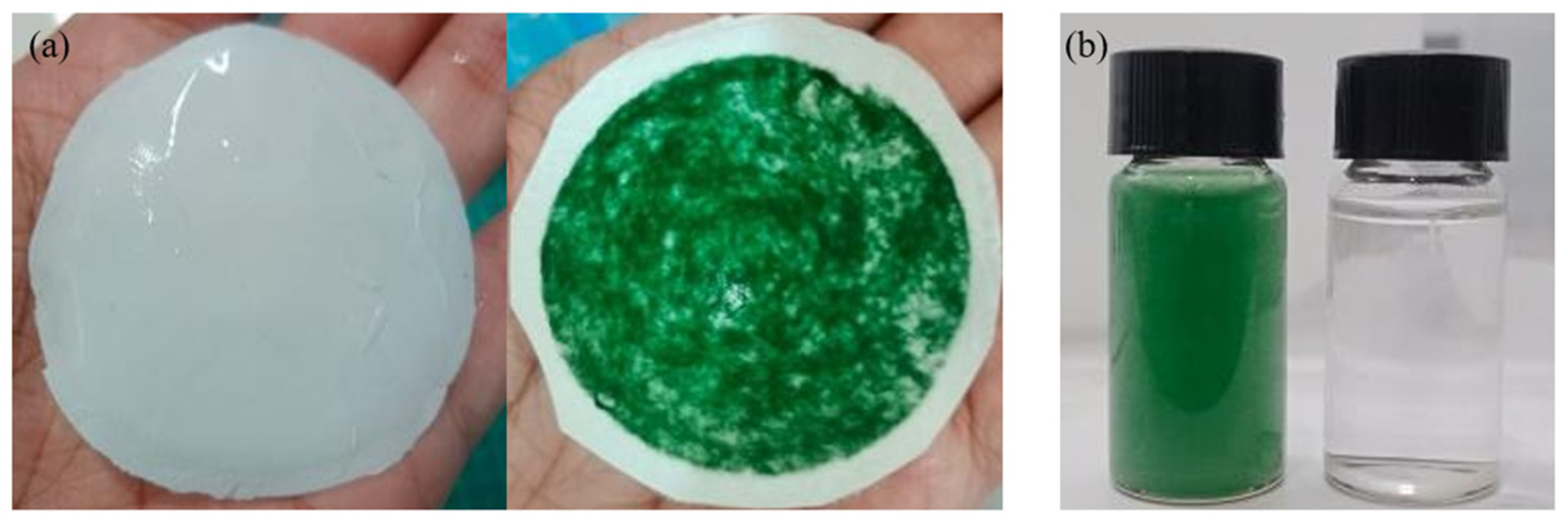
This observation is further supported by the visual evidence shown in Figure 4, where the membrane surface after filtration appears covered with retained microalgal biomass, confirming effective separation. The results indicate that the incorporation of PEG does not compromise rejection performance, as all membranes maintained consistently high removal efficiency regardless of PEG concentration.
The absence of variation in rejection can be explained by the dominant size-exclusion mechanism. Spirulina platensis cells typically have dimensions in the micrometer range, which are significantly larger than the effective pore size of the fabricated membranes. As a result, all membranes—despite differences in porosity and internal morphology induced by PEG—retain the microalgae effectively at the selective surface layer. Similar behaviour has been widely reported in membrane filtration processes, where suspended particles and microorganisms are completely rejected when their size exceeds the membrane pore size.
The complete turbidity removal demonstrates that the membranes not only meet but exceed typical water quality requirements for suspended solids removal. It also indicates that PEG primarily influences permeability related properties rather than selectivity toward large particles. Overall, these findings confirm that all fabricated membranes are highly effective for microalgae removal and are suitable for water treatment applications, particularly in addressing microalgae-related pollution in resource-limited settings.

3.3. Effect of PEG Concentration on Membrane Porosity

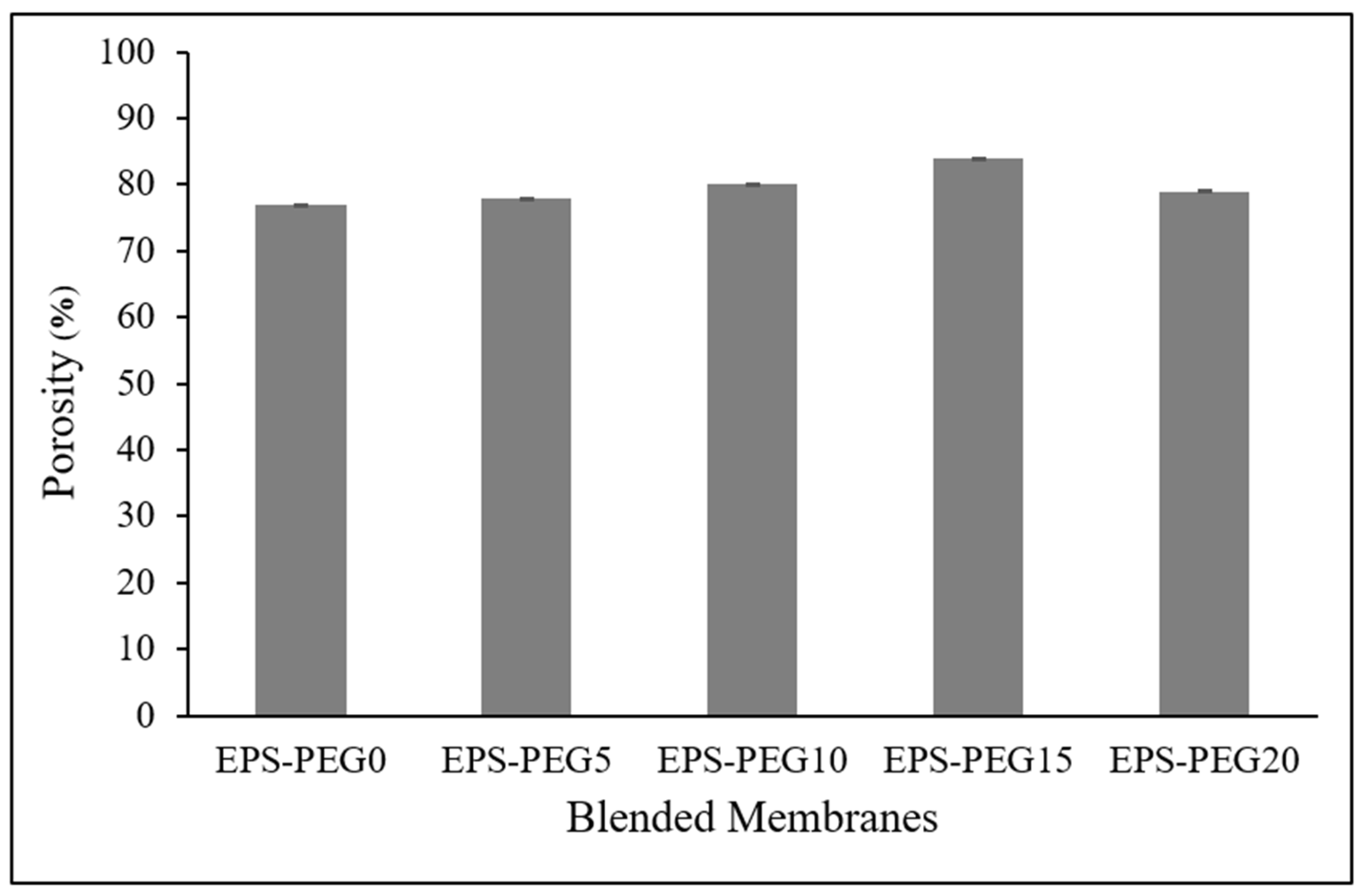
Figure 5 illustrates the influence of PEG 600 concentration on membrane porosity. PEG acts as an effective pore-forming agent during membrane fabrication via the phase inversion process. When incorporated into the polymer–solvent system, PEG diffuses into the coagulation bath during phase separation, leaving behind voids that form pore cavities within the membrane structure [23]. The porosity results reveal a clear increasing trend from 77% at 0 wt.% PEG to 84% at 15 wt.%, indicating a positive correlation between PEG concentration and membrane porosity within this range.
The enhanced porosity at low to moderate PEG loadings can be attributed to accelerated demixing during phase inversion. PEG promotes a faster exchange between the solvent and non-solvent, facilitating the formation of interconnected macrovoids and increasing overall pore volume. Additionally, the hydrophilic nature of PEG enhances water uptake during coagulation, further contributing to pore expansion.
However, at 20 wt.% PEG, the porosity decreased to 79%, indicating a deviation from the increasing trend. This reduction is likely associated with increased solution viscosity at higher PEG concentrations, which slows down the diffusion of the non-solvent into the polymer matrix during phase inversion. As a result, delayed demixing leads to the formation of a denser structure with fewer or smaller pores. Furthermore, excessive PEG may induce aggregation within the casting solution, generating more compact regions that hinder pore development.
These observations are consistent with previous studies [24], which reported a decline in porosity beyond a critical PEG concentration. Therefore, although PEG effectively enhances membrane porosity at moderate concentrations, excessive addition adversely affects membrane structure by altering phase inversion dynamics.
Overall, a PEG concentration of 15 wt.% was identified as optimal, providing the highest porosity while maintaining structural integrity. These findings underscore the importance of carefully optimizing additive content to achieve a balance between porosity and membrane performance.

3.4. Effect of PEG Concentration on Water Contact Angle

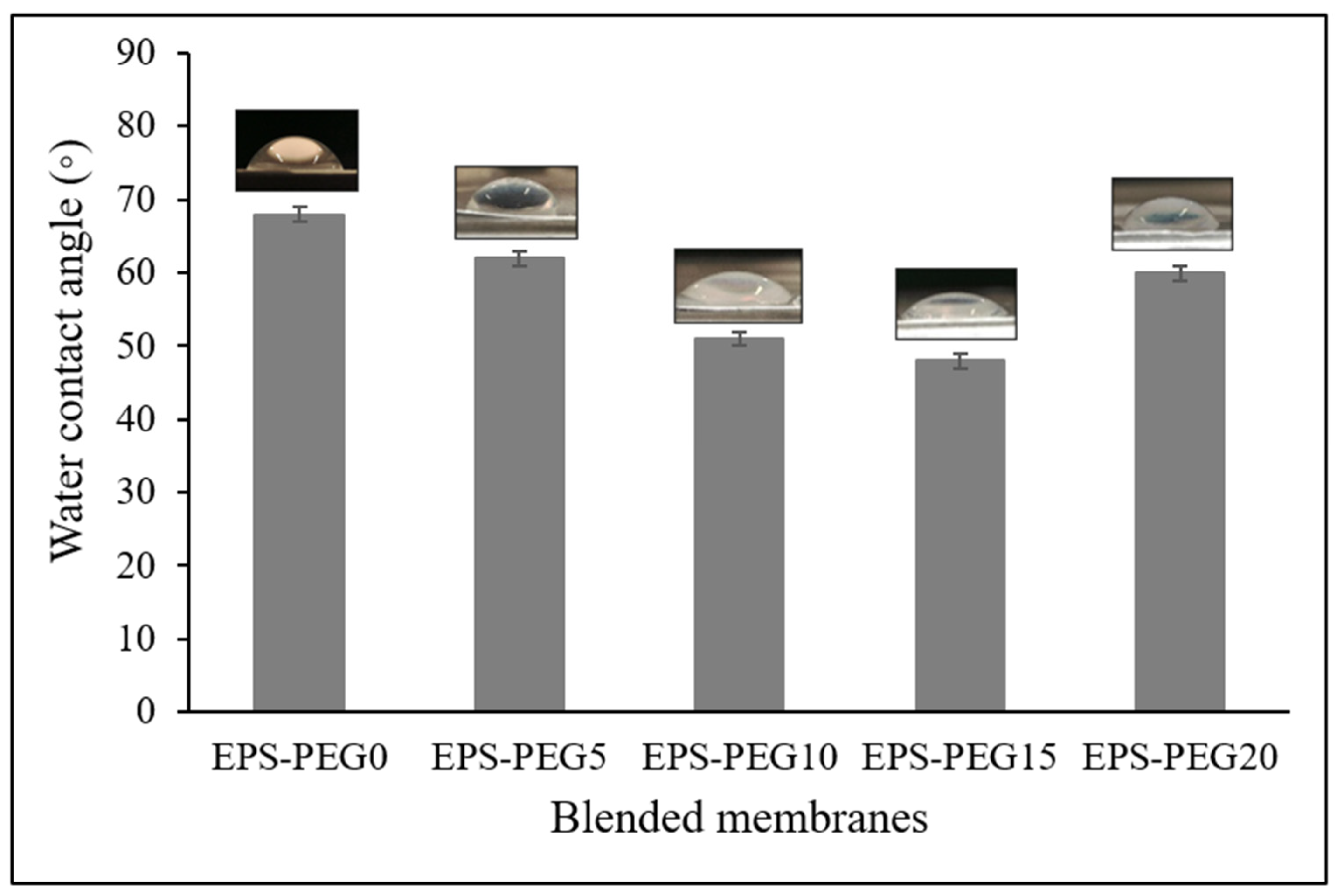
Figure 6 presents the effect of PEG concentration on the water contact angle (WCA) of the membranes, which serves as an indicator of surface hydrophilicity and plays a key role in determining fouling resistance and filtration performance. In this study, WCA values ranged from 48° to 68°, indicating that all membranes exhibited hydrophilic characteristics. The lowest contact angle (48°) was observed at 15 wt.% PEG 600, which corresponds to the highest pure water flux (39.2 L·m−2·h−1) reported in Section 3.1, highlighting the strong relationship between hydrophilicity and membrane permeability.
Hydrophilic membranes generally demonstrate enhanced resistance to fouling, as they tend to repel hydrophobic contaminants and reduce the adsorption of organic matter and microorganisms on the membrane surface [25]. The formation of a hydration layer on hydrophilic surfaces acts as a physical barrier, limiting the attachment of microalgae cells, proteins, and colloidal particles. Accordingly, membranes with lower contact angles, particularly those containing 10–15 wt.% PEG, are expected to exhibit improved antifouling performance during prolonged filtration.
In contrast, the increase in WCA at 20 wt.% PEG (60°) indicates a reduction in surface hydrophilicity and a potential increase in fouling susceptibility. This behaviour may be attributed to non-uniform PEG distribution or partial exposure of hydrophobic EPS domains due to altered phase inversion dynamics. The concurrent decrease in porosity and water flux at this concentration further supports this interpretation, suggesting that excessive PEG adversely affects both membrane structure and surface properties.
Overall, the results demonstrate a clear correlation between increased hydrophilicity (lower WCA) and improved filtration performance up to an optimal PEG concentration. Membranes modified with 15 wt.% PEG exhibit the most favourable balance, combining high permeability, enhanced hydrophilicity, and improved resistance to fouling. These characteristics are essential for the development of efficient and sustainable membranes for microalgae removal, particularly in water systems with high organic or biological loading.

3.5. Effect of PEG Concentration on Membrane Morphology

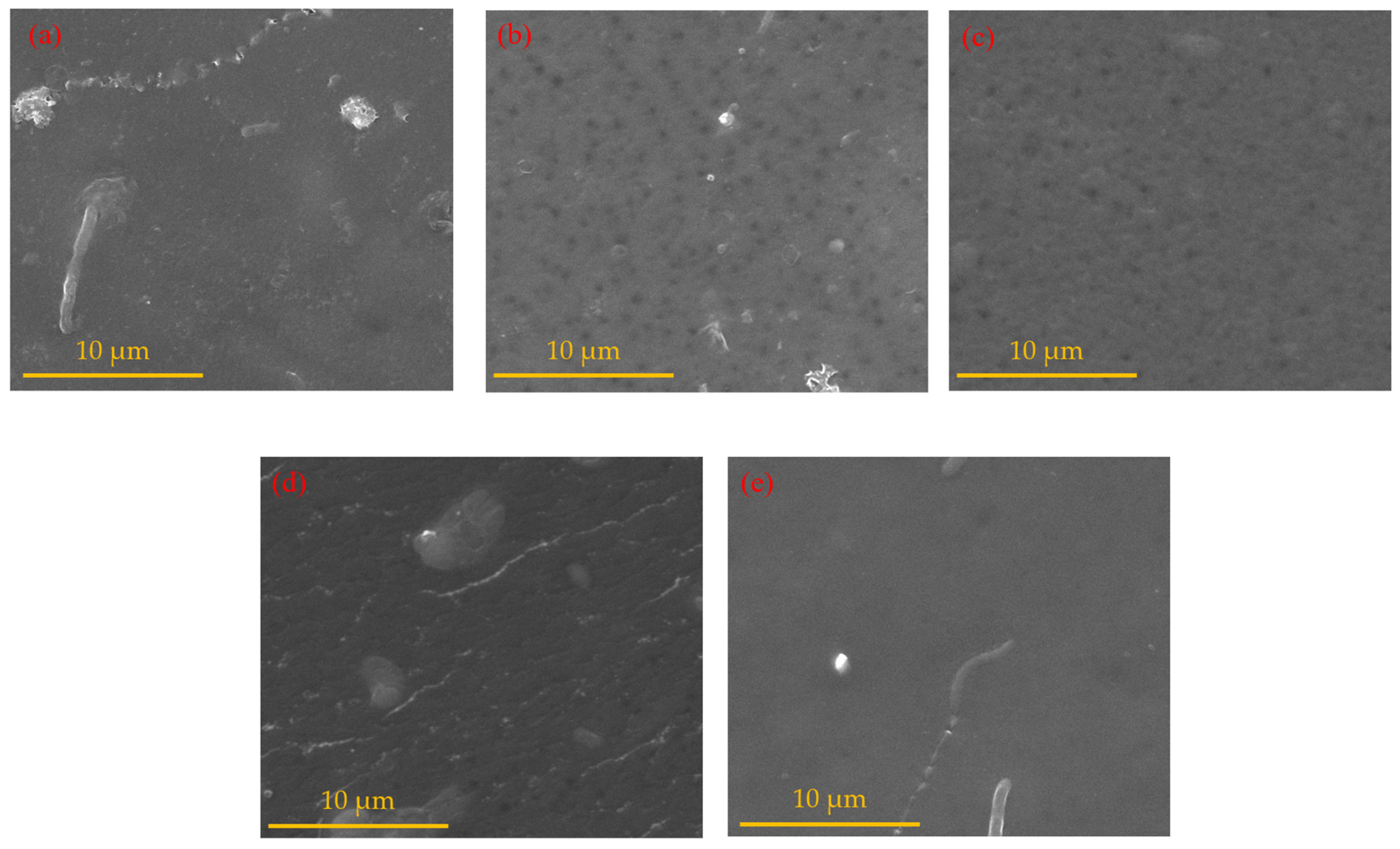
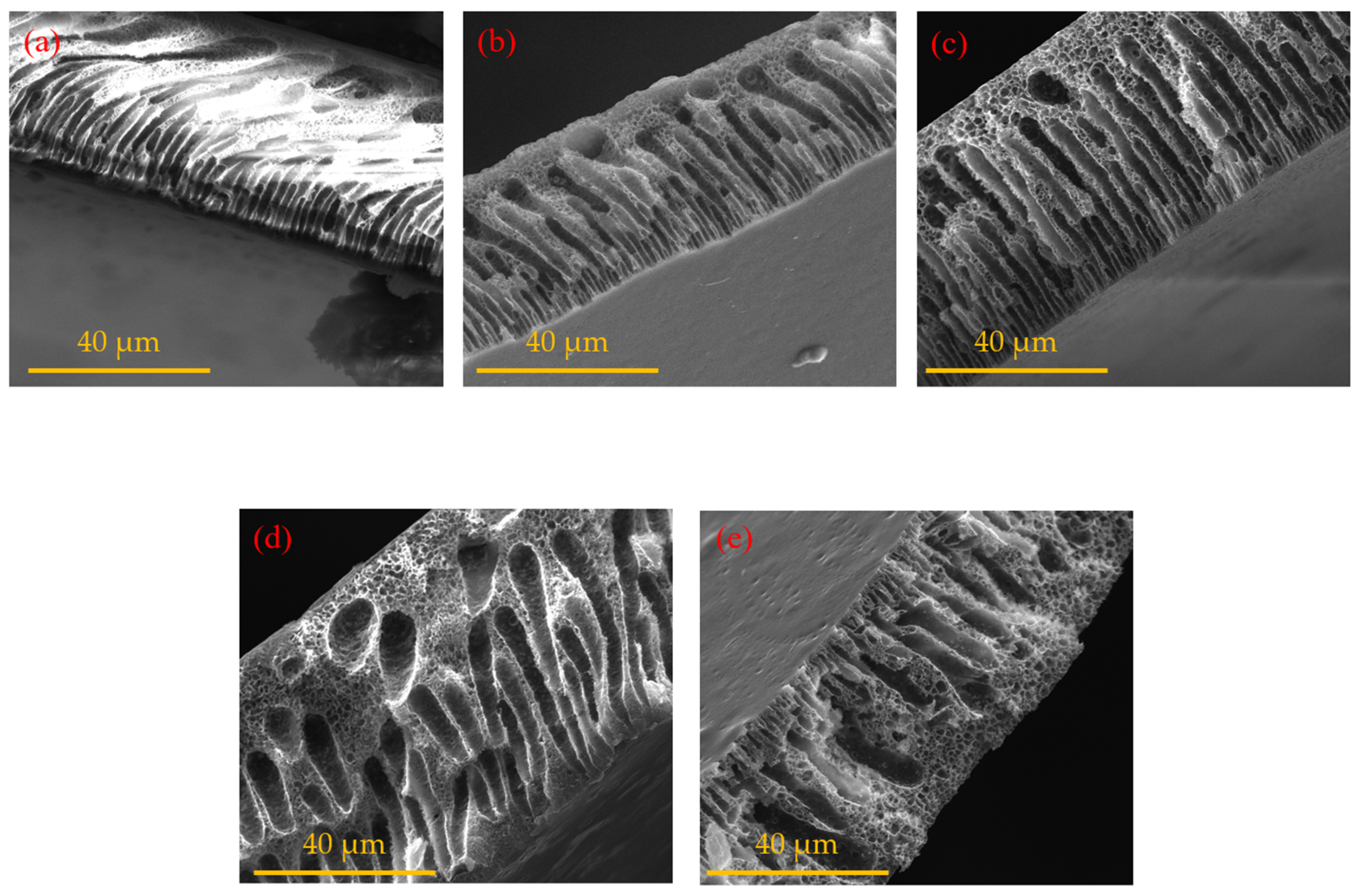
Figure 7 and Figure 8 present the surface and cross-sectional morphologies of membranes prepared with varying PEG concentrations, providing insight into the role of PEG in pore formation during the phase inversion process.
As shown in Figure 7, the membrane fabricated without PEG exhibited a relatively dense and smooth surface with very few visible pores, indicating limited phase separation and a compact structure. In contrast, membranes containing 5 and 10 wt.% PEG displayed rougher surfaces with more uniformly distributed pores, confirming the role of PEG as an effective pore-forming agent. The presence of PEG enhances the solvent–non-solvent exchange rate during phase inversion, promoting the formation of interconnected porous networks.
Cross-sectional images (Figure 8) further support these observations. All membranes exhibited an asymmetric structure consisting of a thin selective top layer and a porous sublayer, characteristic of membranes formed via non-solvent-induced phase separation (NIPS). The top layer appeared denser due to partial solvent evaporation prior to immersion, which suppresses macrovoid formation. Beneath this layer, finger-like macrovoid structures were observed, with their size and extent increasing as PEG concentration increased up to 15 wt.%. These vertical channels reduce hydraulic resistance and contribute to enhanced water flux.
At 20 wt.% PEG, a transition from finger-like to sponge-like morphology was observed. This structure, characterized by smaller, more uniformly distributed pores, is attributed to increased solution viscosity at higher PEG concentrations, which slows solvent–non-solvent exchange and delays phase separation [26]. Consequently, a denser and more homogeneous matrix is formed. Sponge-like structures typically exhibit lower permeability due to reduced pore connectivity and increased tortuosity, explaining the decline in flux at this concentration [27].
Overall, the SEM analysis confirms that PEG concentration plays a critical role in governing membrane morphology. Moderate PEG loadings (10–15 wt.%) promote the formation of well-developed finger-like structures that enhance permeability, whereas excessive PEG leads to structural densification and reduced performance. These findings are consistent with the observed trends in porosity and water flux.
In addition, previous studies summarized in Table 2 have reported similar approaches utilizing EPS waste as a membrane precursor, commonly employing NIPS with solvents such as NMP or DMF for applications in water treatment, including microalgae removal and protein separation. Consistent with these reports, the present study demonstrates that PEG incorporation effectively improves membrane hydrophilicity and porosity up to an optimal concentration. Beyond this point, structural limitations arise due to altered phase inversion dynamics.
These results further emphasize the importance of optimizing additive concentration to achieve a balance between membrane structure and performance, particularly for sustainable membrane development using recycled polymeric materials.

4. Conclusions

This study establishes a viable pathway for upcycling post-consumer expanded polystyrene waste into high-performance filtration membranes, effectively transforming a common pollutant into a value-added asset for water treatment. By optimizing the concentration of polyethylene glycol (PEG) as a pore-forming agent, we have demonstrated that membrane permeability and surface characteristics can be precisely tailored to meet specific filtration demands.
From an operational standpoint, the following key outcomes are established:
A PEG concentration of 15 wt.% is identified as the operational optimum, yielding the best balance between membrane porosity, hydrophilicity, and water flux.
The consistent 100% rejection efficiency, reducing turbidity from 1052 NTU to 0 NTU, confirms that these EPS-based membranes are robust solutions for harvesting Spirulina platensis or mitigating microalgae blooms in water sources.
The transition from raw EPS waste to a functional filtration medium provides a low-cost, sustainable model for decentralized water treatment facilities.
Moving forward, the implementation of these membranes should focus on long-term stability testing under varied industrial wastewater conditions. Given the proven efficacy in controlled microalgae removal, the next phase of this technology should transition to pilot-scale integration to evaluate durability, membrane cleaning cycles.

Author Contributions

Conceptualization, G.S.P. and M.M.; methodology, G.S.P.; validation, T.S., B.A. and M.M.; formal analysis, N.M. and G.S.P.; investigation, K.S.R.; resources, N.M. and M.M.; data curation, K.S.R.; writing—original draft preparation, K.S.R.; writing—review and editing, G.S.P. and M.M.; visualization, K.S.R.; supervision, G.S.P. and M.M.; project administration, T.S.; funding acquisition, G.S.P., M.M., N.M. and A.S.B. All authors have read and agreed to the published version of the manuscript.

Funding

This research was funded by Hibah Riset Kolaborasi Indonesia Scheme: Universitas Airlangga (Grant No. 1702/B/UN3.LPPM/PT.01.03/2025), Universitas Gadjah Mada (Grant No. 1569/UN1/DITLIT/Dit-Lit/PT.01.03/2025) and Universitas Indonesia (Grant No. PKS-636/UN2.RST/HKP.05/2025).

Data Availability Statement

The data presented in this study are available on request from the corresponding authors.

Conflicts of Interest

The authors declare no conflict of interest.

References

  1. Smith, V.H.; Joye, S.B.; Howarth, R.W. Eutrophication of freshwater and marine ecosystems. Limnol. Oceanogr. 2006, 51, 351–355. [Google Scholar] [CrossRef]
  2. Heisler, J.; Glibert, P.M.; Burkholder, J.M.; Anderson, D.M.; Cochlan, W.; Dennison, W.C.; Dortch, Q.; Gobler, C.J.; Heil, C.A.; Humphries, E.; et al. Eutrophication and harmful algal blooms: A scientific consensus. Harmful Algae 2008, 8, 3–13. [Google Scholar] [CrossRef] [PubMed]
  3. Paerl, H.W.; Otten, T.G. Harmful cyanobacterial blooms: Causes, consequences, and controls. Microb. Ecol. 2013, 65, 995–1010. [Google Scholar] [CrossRef]
  4. Fawell, J.; Nieuwenhuijsen, M.J. Contaminants in drinking water: Environmental pollution and health. Br. Med. Bull. 2003, 68, 199–208. [Google Scholar] [CrossRef] [PubMed]
  5. Matilainen, A.; Vepsäläinen, M.; Sillanpää, M. Natural organic matter removal by coagulation during drinking water treatment: A review. Adv. Colloid Interface Sci. 2010, 159, 189–197. [Google Scholar] [CrossRef]
  6. Shannon, M.A.; Bohn, P.W.; Elimelech, M.; Georgiadis, J.G.; Marinas, B.J.; Mayes, A.M. Science and technology for water purification in the coming decades. Nature 2008, 452, 301–310. [Google Scholar] [CrossRef]
  7. Castro-Muñoz, R.; García-Depraect, O. Membrane-based harvesting processes for microalgae and their valuable-related molecules: A review. Membranes 2021, 11, 585. [Google Scholar] [CrossRef]
  8. Prihandana, G.S.; Maulana, S.S.; Soedirdjo, R.S.; Tanujaya, V.; Pramesti, D.M.A.; Sriani, T.; Jamaludin, M.F.; Yusof, F.; Mahardika, M. Preparation and Characterization of Polyethersulfone/Activated Carbon Composite Membranes for Water Filtration. Membranes 2023, 13, 906. [Google Scholar] [CrossRef]
  9. Ali, J.; Wang, L.; Waseem, H.; Sharif, H.M.A.; Djellabi, R.; Zhang, C.; Pan, G. Bioelectrochemical recovery of silver from wastewater with sustainable power generation and its reuse for biofouling mitigation. J. Clean. Prod. 2019, 235, 1425–1437. [Google Scholar] [CrossRef]
  10. Al-Salem, S.M.; Lettieri, P.; Baeyens, J. Recycling and recovery routes of plastic solid waste (PSW): A review. Waste Manag. 2009, 29, 2625–2643. [Google Scholar] [CrossRef]
  11. Saffarimiandoab, F.; Gul, B.Y.; Tasdemir, R.S.; Ilter, S.E.; Unal, S.; Tunaboylu, B.; Menceloglu, Y.Z.; Koyuncu, I. A review on membrane fouling: Membrane modification. Desalin. Water Treat. 2021, 216, 47–70. [Google Scholar] [CrossRef]
  12. Shah, S.T.U.R.; Haq, F.U.; Hussain, T.; Bajwa, S.Z.; Bekchanov, D.; Din, M.I.; Mujahid, A.; Afzal, A. Expanded polystyrene (EPS) waste upcycling and efficient oil/water emulsion separation with advanced EPS cotton membranes. Desalin. Water Treat. 2024, 320, 100647. [Google Scholar] [CrossRef]
  13. Oleiwi, A.H.; Akram, R.J.; Alsalhy, Q.F. Preparation of polystyrene/polyacrylonitrile blends by electrospinning technique. J. Phys. Conf. Ser. 2021, 1879, 022065. [Google Scholar] [CrossRef]
  14. Sihombing, Y.A.; Sinaga, M.Z.E.; Hardiyanti, R.; Saragi, I.R.S.; Rangga. Preparation, characterization, and desalination study of polystyrene membrane integrated with zeolite using the electrospinning method. Heliyon 2022, 8, e10113. [Google Scholar] [CrossRef]
  15. Chakrabarty, B.; Ghoshal, A.K.; Purkait, M.K. Effect of molecular weight of PEG on membrane morphology and transport properties. J. Membr. Sci. 2008, 309, 209–221. [Google Scholar] [CrossRef]
  16. Arthanareeswaran, G.; Mohan, D.; Raajenthiren, M. Preparation, characterization and performance studies of ultrafiltration membranes with polymeric additive. J. Membr. Sci. 2010, 350, 130–138. [Google Scholar] [CrossRef]
  17. Bhattacharya, D.; McCarthy, J.M.; Grieves, R.B. Charged membrane ultrafiltration of inorganic ions in single and multi-salt systems. AIChE J. 1974, 20, 1206–1212. [Google Scholar] [CrossRef]
  18. Sarbolouki, M.N. A general diagram for estimating pore size of ultrafiltration and reverse osmosis membranes. Sep. Sci. Technol. 1982, 17, 381–386. [Google Scholar] [CrossRef]
  19. Manorma; Ferreira, I.; Alves, P.; Gil, M.H.; Gando-Ferreira, L.M. Lignin separation from black liquor by mixed matrix polysulfone nanofiltration membrane filled with multiwalled carbon nanotubes. Sep. Purif. Technol. 2021, 260, 118231. [Google Scholar] [CrossRef]
  20. Tung, K.L.; Chang, K.S.; Wu, T.T.; Lin, N.J.; Lee, K.R.; Lai, J.Y. Recent advances in the characterization of membrane morphology. Curr. Opin. Chem. Eng. 2014, 4, 121–127. [Google Scholar] [CrossRef]
  21. Nguyen, H.T.; Nguyen, M.L.T.; Nguyen, N.C.; Chen, S.-S.; Ngo, H.H.; Huynh, D.D.; Huynh, T.T.; Ray, S.S. Optimized polysulfone/polyethylene glycol forward osmosis membranes with a poly(vinyl alcohol)/glutaraldehyde crosslinked interlayer for high water flux and low salt leakage. Chem. Eng. Sci. 2026, 330, 123915. [Google Scholar] [CrossRef]
  22. Kayani, A.; Raza, M.A.; Raza, A.; Hussain, T.; Akram, M.S.; Sabir, A.; Islam, A.; Haider, B.; Khan, R.U.; Park, S.H. Effect of Varying Amount of Polyethylene Glycol (PEG-600) and 3-Aminopropyltriethoxysilane on the Properties of Chitosan based Reverse Osmosis Membranes. Int. J. Mol. Sci. 2021, 22, 2290. [Google Scholar] [CrossRef] [PubMed]
  23. Chen, J.; Li, J.; Zhan, X. Effect of PEG additives on properties and morphologies of polyetherimide membranes prepared by phase inversion. Front. Chem. Eng. China 2010, 4, 300–306. [Google Scholar] [CrossRef]
  24. Idris, A.; Zain, N.M.; Noordin, M.Y. Synthesis, characterization and performance of asymmetric polyethersulfone (PES) ultrafiltration membranes with polyethylene glycol of different molecular weights as additives. Desalination 2007, 207, 324–339. [Google Scholar] [CrossRef]
  25. Prihandana, G.S.; Sanada, I.; Ito, H.; Noborisaka, M.; Kanno, Y.; Suzuki, T.; Miki, N. Antithrombogenicity of fluorinated diamond-like carbon films coated nanoporous polyethersulfone (PES) membrane. Materials 2013, 6, 4309–4323. [Google Scholar] [CrossRef] [PubMed]
  26. Said, N.; Mansur, S.; Abidin, M.N.Z.; Ismail, A.F. Fabrication and characterization of polysulfone/iron oxide nanoparticle mixed matrix hollow fiber membranes for hemodialysis: Effect of dope extrusion rate and air gap. J. Membr. Sci. Res. 2023, 9, e699978. [Google Scholar] [CrossRef]
  27. Kingsbury, B.F.K.; Li, K. A morphological study of ceramic hollow fibre membranes. J. Membr. Sci. 2009, 328, 134–140. [Google Scholar] [CrossRef]
  28. Ghaly, S.T.; Noby, H.; Hayashi, J.I.; El-Shazly, A.H. Various waste polystyrene for useful membrane fabrication: Comparative experimental study. Mater. Today Proc. 2023; in press. [CrossRef]
  29. Sriani, T.; Mahardika, M.; Aldhama, S.A.; Wulandari, C.P.; Prihandana, G.S. Upcycling of expanded polystyrene waste-impregnated PVP using wet-phase inversion for effective microalgae harvesting. Polymers 2024, 16, 2703. [Google Scholar] [CrossRef]
  30. Sriani, T.; Mahardika, M.; Miki, N.; Wulandari, C.P.; Prihandana, G.S. Impact of polyimide on the recycling of waste expanded polystyrene into flat-sheet filtration membrane. J. Mater. Cycles Waste Manag. 2024, 26, 3745–3756. [Google Scholar] [CrossRef]
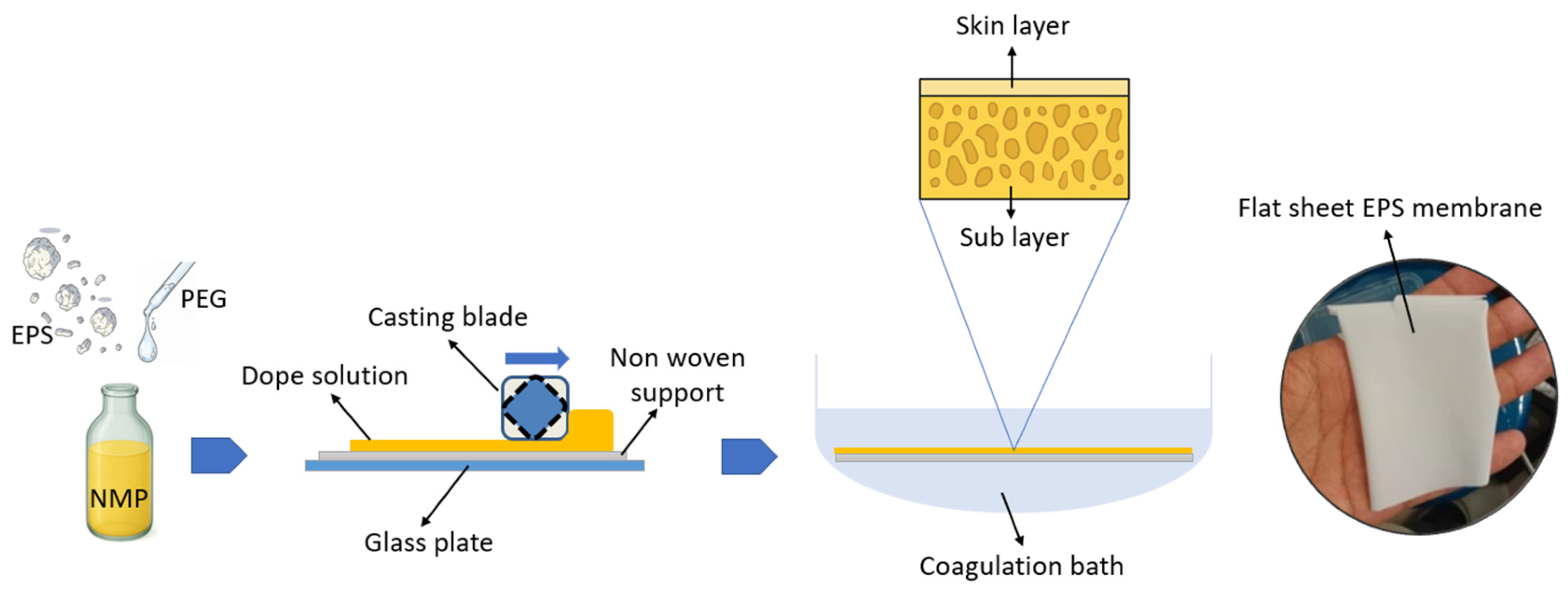
Figure 1. Schematic diagram illustrating the non-solvent-induced phase separation process for fabricating a flat sheet EPS membrane supported on a non-woven fabric.
Phycology 06 00047 g001
Figure 2. Water flux test result of the fabricated membranes.
Phycology 06 00047 g002
Figure 3. Spirulina platensis rejection of the EPS-PEG blended membranes.
Phycology 06 00047 g003
Figure 4. Rejection test result: (a) Membranes before and after rejection test; (b) Comparison of Spirulina platensis solution, before and after rejection test.
Phycology 06 00047 g004
Figure 5. Porosity of the EPS-PEG blended membranes.
Phycology 06 00047 g005
Figure 6. Water contact angle of the EPS-PEG blended membranes.
Phycology 06 00047 g006
Figure 7. SEM top photograph of the (a) EPS-PEG0, (b) EPS-PEG5, (c) EPS-PEG10, (d) EPS-PEG15, and (e) EPS-PEG20.
Phycology 06 00047 g007
Figure 8. SEM cross-section photograph of the (a) EPS-PEG0, (b) EPS-PEG5, (c) EPS-PEG10, (d) EPS-PEG15, and (e) EPS-PEG20.
Phycology 06 00047 g008
Table 1. Blend Composition of EPS-PEG 600 Membranes.
Membrane CodeBlend Composition, wt.%
StyrofoamPEG 600NMP
EPS-PEG020080
EPS-PEG520575
EPS-PEG10201070
EPS-PEG15201565
EPS-PEG20202060
Table 2. Comparison of the performance of EPS membranes.
Membrane CompositionWater Flux ( L · m 2 · h 1 ) Water Contact Angle (°)PorosityRef
EPS/DMF-84°-[28]
EPS/PVP/NMP970.585°-[29]
EPS/PI/NMP248.568°12.75[30]
EPS/PEG/NMP39.248°84This Work
Disclaimer/Publisher’s Note: The statements, opinions and data contained in all publications are solely those of the individual author(s) and contributor(s) and not of MDPI and/or the editor(s). MDPI and/or the editor(s) disclaim responsibility for any injury to people or property resulting from any ideas, methods, instructions or products referred to in the content.