Review

Microalgal Biofactories: Sustainable Solutions for Nutrition and Cosmetics

by
Khalifa S. H. Eldiehy
1,*,
Yasmeen G. Haraz
2,
Ibrahim S. Alkhazi
3,
Malek Alrashidi
4,
Mansoor Alghamdi
4,
Norhan M. Elbanhawy
5 and
Omar Mohammad Atta
1
1
Department of Botany and Microbiology, Faculty of Science, Al-Azhar University, Assiut 71524, Egypt
2
Department of Science and Basic Studies, Applied College, University of Tabuk, Tabuk 71491, Saudi Arabia
3
Department of Computer Science, College of Computers and Information Technology, University of Tabuk, Tabuk 71491, Saudi Arabia
4
Department of Computer Science, Applied College, University of Tabuk, Tabuk 71491, Saudi Arabia
5
Department of Animal Husbandry and Animal Wealth Development, Faculty of Veterinary Medicine, Alexandria University, Alexandria 21944, Egypt
*
Author to whom correspondence should be addressed.
Phycology 2026, 6(1), 17; https://doi.org/10.3390/phycology6010017
Submission received: 14 December 2025 / Revised: 14 January 2026 / Accepted: 16 January 2026 / Published: 1 February 2026
(This article belongs to the Special Issue Development of Algal Biotechnology)

Abstract

Microalgae have emerged as sustainable biofactories producing diverse bioactive compounds with significant applications in nutrition and cosmetics. Their high metabolic versatility makes them promising alternatives to conventional resources for addressing global challenges such as malnutrition, food insecurity, and environmental degradation. This review provides an integrated perspective on microalgal bioactives, highlighting their role in functional foods, dietary supplements, and maternal and infant nutrition, as well as their incorporation into cosmetic formulations for anti-aging, photoprotection, hydration, and microbiome support. Mechanistic insights reveal antioxidant, anti-inflammatory, and extracellular matrix-preserving effects, alongside UV absorption and barrier reinforcement. The review also discusses their biochemical diversity, mechanisms of action, safety, regulatory considerations, and emerging technologies for formulation and delivery. AI-driven and machine-learning approaches using microalgae for cosmetic and nutritional applications have also been discussed. Overall, microalgae serve as a cornerstone for next-generation nutraceuticals and cosmeceuticals, aligning with sustainability and circular-economy principles.

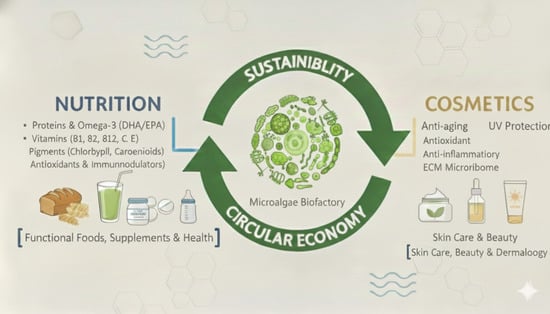
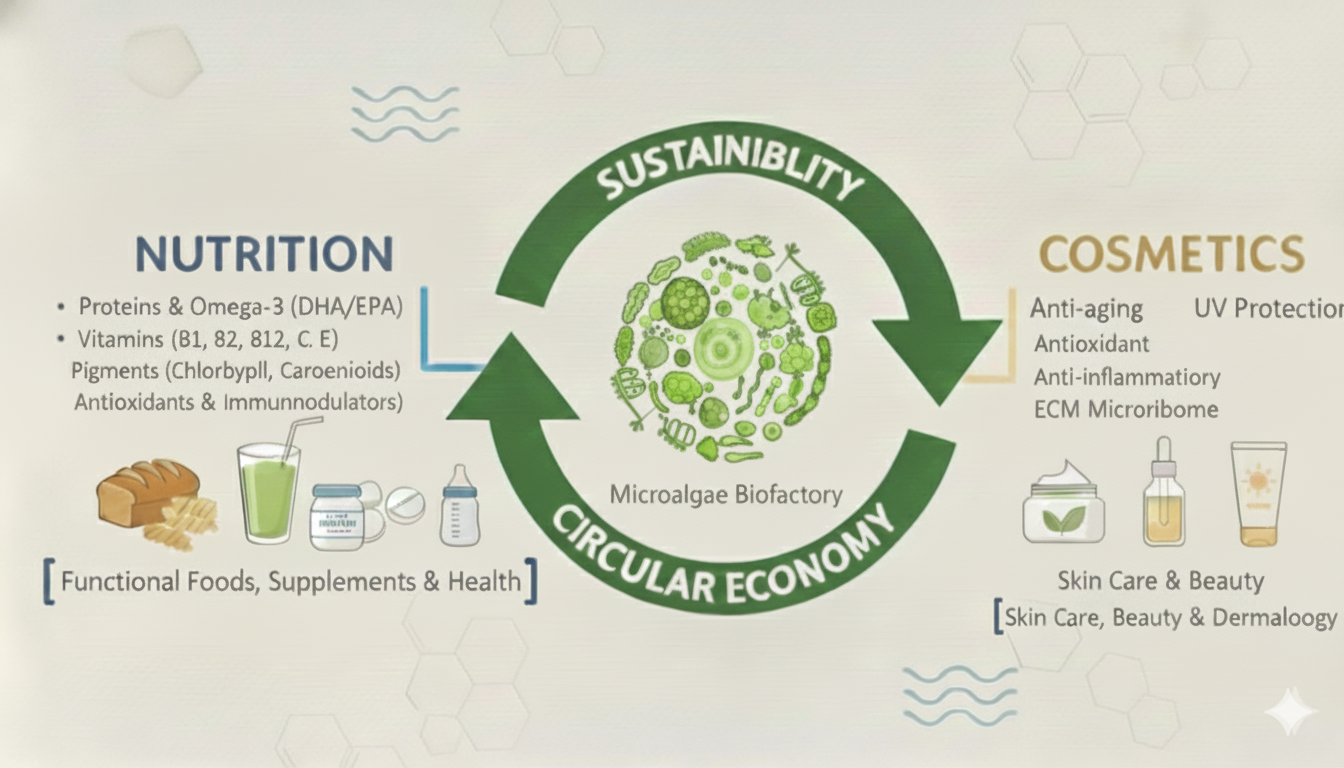
Graphical Abstract

1. Introduction

In an era marked by unprecedented global population growth, projected to reach 9.22 billion by 2075 [1], the formidable challenges to food security, nutrition, and public health necessitate the exploration of sustainable, nutrient-rich, and health-enhancing food sources. This population growth, combined with reduced arable land and rising environmental issues, highlights the urgent need for new biological solutions [2].
Microalgae and macroalgae have emerged as transformative biological resources for addressing global challenges in food security, sustainability, and human health. These photosynthetic organisms exhibit remarkable metabolic flexibility, enabling the biosynthesis of high-value compounds, including proteins, polyunsaturated fatty acids, pigments, vitamins, polysaccharides, and phenolic compounds [3,4,5]. Compared with macroalgae, microalgae offer several advantages that underpin their growing importance in diverse applied applications. Microalgae generally display higher growth rates and biomass productivity, can be cultivated year-round in controlled systems such as photobioreactors and fermenters, and provide more consistent biochemical profiles, thereby minimizing variability associated with seasonal and geographic factors that commonly affect macroalgae [6,7]. In addition, their cellular structure facilitates efficient downstream processing and biotechnological optimization, enabling scalable, sustainable, and standardized production of high-value bioactive compounds. Furthermore, their ability to thrive in diverse aquatic environments and modest resource requirements positions microalgae as sustainable alternatives to conventional agriculture.
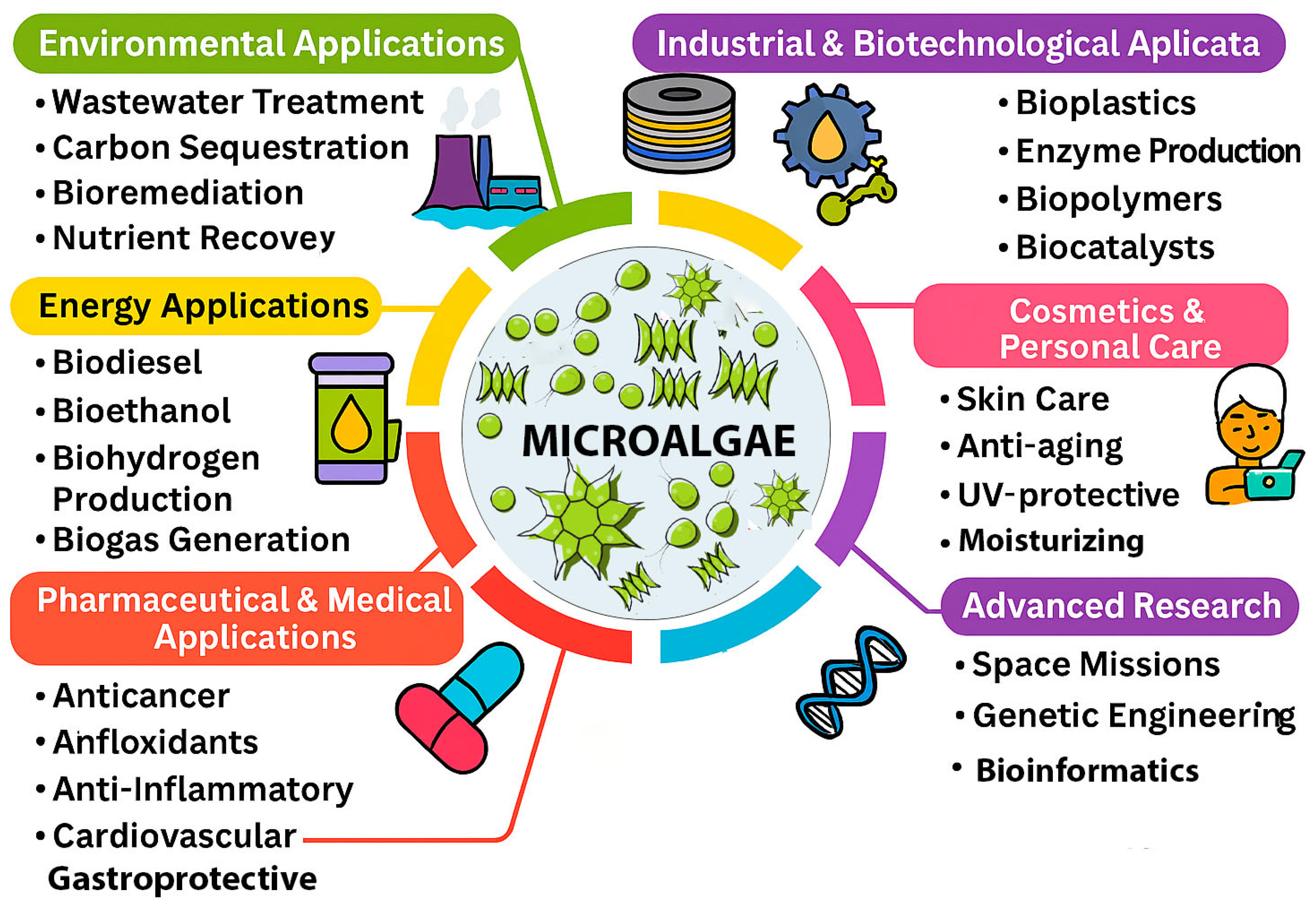
Among the proposed solutions, microalgae serve as versatile biofactories with applications across multiple sectors. Their biochemical richness supports diverse uses, including bioenergy (biodiesel, bioethanol), environmental remediation (CO2 capture, wastewater treatment), agriculture (biofertilizers, animal feed), and industrial biotechnology. Figure 1 provides an integrated overview of these multifaceted roles.
While their contributions to energy and environmental sustainability are significant, the role of microalgae in human health, particularly nutrition, stands out as most impactful. Their rapid biomass accumulation, efficient solar energy conversion, and modest resource requirements further position them as superior alternatives to conventional agriculture, particularly in addressing global malnutrition, which accounts for more than 3.5 million deaths annually [8]. In addition to their nutritional role, microalgae provide a sustainable platform for innovation in cosmetics and personal care. Bioactive pigments, polyphenols, and polysaccharides derived from microalgae exhibit anti-aging, photoprotective, and skin-repairing properties, aligning with the growing demand for natural and eco-friendly cosmeceuticals.
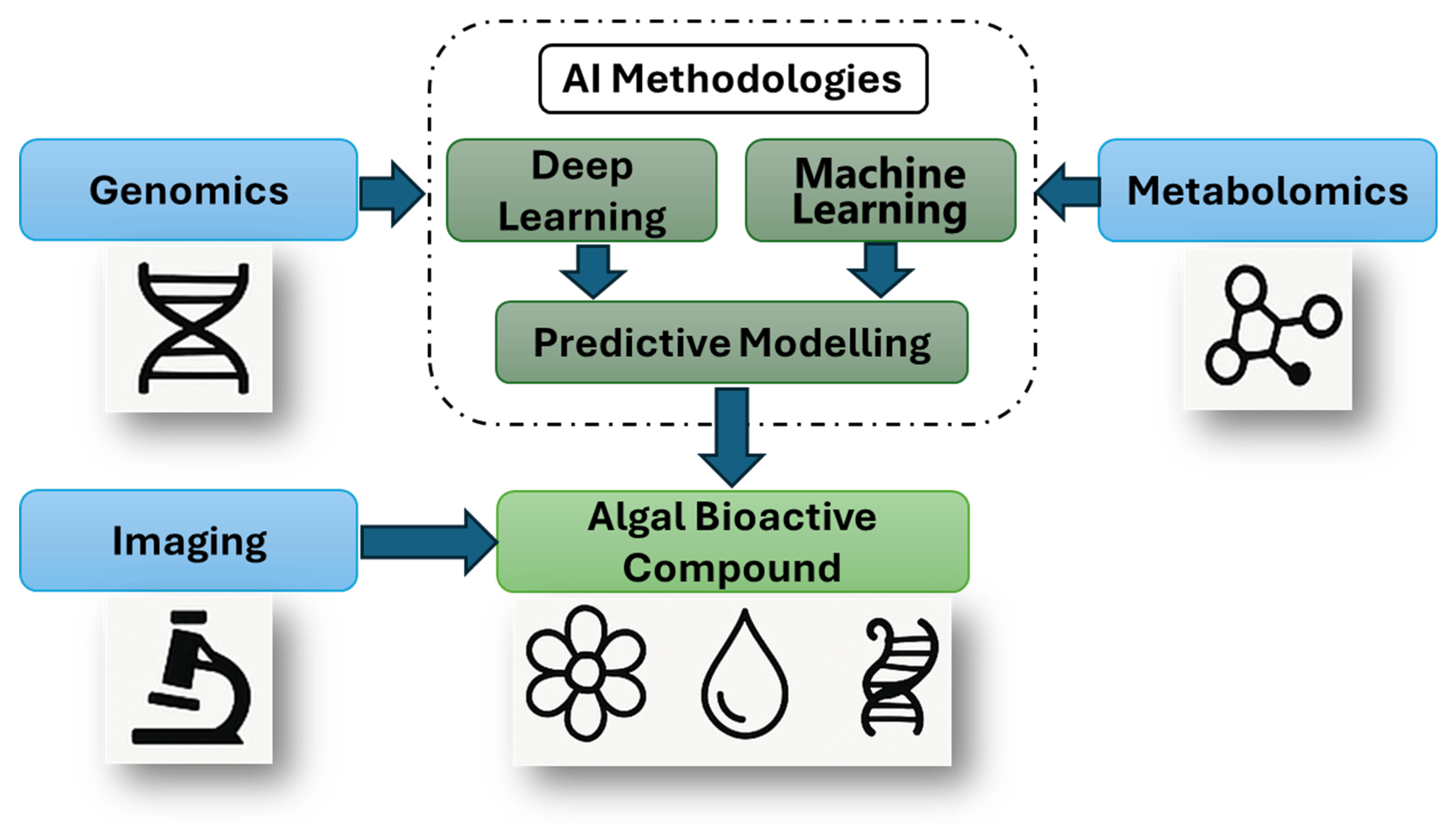
Together, these attributes position microalgae at the intersection of sustainability, nutrition, and health. Their integration into functional foods, supplements, and biomedical formulations reflects a paradigm shift toward holistic, preventive healthcare strategies that emphasize natural, safe, and environmentally responsible solutions [7,9]. Although several reviews have examined the role of microalgae in biotechnology, most have focused narrowly on industrial applications, such as biofuels and wastewater treatment, or on isolated biomedical applications. In contrast, this review offers a holistic perspective by integrating nutritional and cosmetic applications with mechanistic insights, safety considerations, and market trends. It further introduces computational and AI-driven approaches, such as machine learning, genome-scale metabolic modeling, and smart biorefineries, as emerging tools for sustainable microalgal applications.

2. Nutritional Applications of Microalgae

The diverse portfolio of bioactive compounds synthesized by microalgae underpins their growing relevance in health-oriented industries. While these molecules, ranging from pigments and lipids to polysaccharides and peptides, form the biochemical basis of their nutraceutical and therapeutic potential, their broader nutritional significance lies in how they are incorporated into human diets. Moving from molecular diversity to practical utility, the following section highlights the nutritional applications of microalgae, focusing on their role as whole foods, supplements, functional ingredients, and contributors to global food security and human well-being.

2.1. Microalgae as Natural Foods and Dietary Supplements

Microalgae are recognized as nutrient-dense organisms that provide high levels of protein, essential fatty acids, vitamins, minerals, and bioactive compounds, making them valuable for combating malnutrition and formulating functional foods [8].
Among the most commercially successful applications of microalgae is their use as whole foods and dietary supplements. Spirulina (Cyanophyceae) and Chlorella (Chlorophyta) are the most established species, together representing over 90% of global microalgal biomass production [10]. Their dominance reflects robust cultivation traits, validated safety, and well-documented nutritional and therapeutic potential [11]. They are marketed worldwide in tablet, powder, and capsule forms and are increasingly incorporated into smoothies, snack bars, and fortified products (Table 1). Their nutrient density, including protein levels of 58–65% dry weight, a complete essential amino acid spectrum, and a comprehensive array of vitamins (provitamin A, E, K, B12), essential minerals (iron, calcium, magnesium, zinc), and omega-3 fatty acids, combined with a long history of safe human use, underpins their widespread acceptance [8,12].
Regulatory validation has been critical in advancing their market presence. The U.S. Food and Drug Administration (FDA) and the European Food Safety Authority (EFSA) have granted Spirulina and Chlorella Generally Recognized as Safe (GRAS) status, enabling their use in a broad range of supplements and nutraceutical products [2,12]. This recognition, supported by extensive toxicological studies, has bolstered consumer confidence and driven their growing role in sports nutrition, weight management, and wellness markets [13].
The economic significance of microalgae-based supplements is considerable. Annual production reaches approximately 10,000 tons for Spirulina and 4000 tons for Chlorella, contributing to a multi-billion-dollar industry [14]. The global value of Spirulina is projected to exceed USD 779 million by 2026, with phycocyanin alone expected to reach over USD 232.9 million by 2025 [14]. Overall, the algae-based supplement market is forecasted to reach USD 2.52 billion by 2025, with microalgae accounting for nearly 60% of this sector [8].
Microalgae also represent a promising source of essential nutrients for maternal and infant health (Table 1). Species such as Spirulina, Chlorella, and Dunaliella salina (Chlorophyta) are rich in iron, vitamin A (β-carotene), vitamin B12, folate, and long-chain polyunsaturated fatty acids, which are critical for fetal development, cognitive growth, and immune function in infants [15,16]. Incorporating microalgal powders or extracts into maternal diets improves micronutrient status, prevents anemia, and enhances the nutritional quality of breast milk [14]. For infants, these nutrients can be delivered through fortified formulas, complementary foods, or dietary supplements, providing bioavailable alternatives to traditional sources such as fish oils while supporting sustainable and environmentally friendly production [17]. The combination of high-quality proteins, bioactive compounds, and essential micronutrients offers a holistic approach to preventing deficiencies and promoting overall health in both mothers and infants.
Unlike traditional crops, microalgae can be cultivated in controlled aquatic systems with minimal land, freshwater, or agricultural inputs, while producing high yields of nutrient-dense biomass [6]. Their environmental advantages, combined with their rich nutritional and bioactive profiles, place microalgae at the forefront of next-generation functional foods and supplements that advance both human health and global sustainability.

2.2. Microalgae in Animal Feed and Indirect Human Nutrition

Microalgae represent a sustainable alternative to conventional feed ingredients, helping meet the growing global demand for animal protein while reducing environmental stress [18]. With high photosynthetic efficiency, rapid growth, and minimal land and water requirements, they provide proteins, essential fatty acids, vitamins, pigments, and bioactive compounds, making them ideal for enriching animal diets [19]. Their composition can also be tailored by cultivation conditions to improve feed quality.
Aquaculture remains the most established application, in which microalgae provide essential nutrition for larval fish and shrimp due to their small cell size, digestibility, and biochemical richness [20]. Species such as Nannochloropsis (Eustigmatophyceae), Isochrysis (Haptophyta), and Tetraselmis (Chlorophyta) improve survival, pigmentation, immunity, and growth. Marine species, rich in EPA and DHA, enhance the lipid profile of farmed fish, producing seafood with superior nutritional value [21]. Replacing fishmeal and fish oil with algal biomass reduces reliance on wild fisheries, alleviating ecological and economic pressures while improving fatty acid content and coloration of fillets [22,23]. These advantages are borne out in controlled feeding trials across taxa: in Pacific white shrimp (Litopenaeus vannamei), supplementing diets with Nannochloropsis at 0.5–2% increased resilience to thermal shock, while 1–2% elevated reactive oxygen species consistent with activated stress responses, without compromising lipid/EPA digestibility under clear-water tank conditions [24]; a 49-day clear-water study using a blend of Aurantiochytrium (DHA-rich) and Nannochloropsis confirmed that 0–100% fish-oil substitution maintained growth (final weight ~16.6 g), feed conversion (~1.47) and survival (>97%), while preserving muscle n-3/n-6 PUFA profiles even at full replacement [25]. On the protein side, a deoiled Nannochloropsis co-product (post-oil extraction) replaced fishmeal at 33–100% in rainbow trout (Oncorhynchus mykiss) over 64 days, with the 100% replacement diet delivering similar growth, feed conversion, and survival to fishmeal controls and the lowest feed cost per kilogram of fish [26]. In Atlantic salmon (Salmo salar) sea-cage grow-out, full fish-oil replacement with Schizochytrium oil maintained performance and fillet quality while reducing dioxin-like contaminants (Polychlorinated dibenzo-p-dioxins and dibenzofurans and Dioxin-like polychlorinated biphenyls) by 70–79%, highlighting a co-benefit for indirect human nutrition via cleaner omega-3 sources [27]. Beyond growth and product quality, immunomodulatory effects are evident: in red hybrid tilapia (Oreochromis spp.), dietary Isochrysis galbana at 2.5–5% over 14 days consistently enhanced innate immune markers (phagocytosis, respiratory burst, lysozyme) and upregulated lipid/UFA metabolite signatures in spleen metabolomics, indicating functional immunostimulation at modest inclusion levels [28]. At farm scale, supplementing giant tiger prawn (Penaeus monodon) diets with benthic algae (Chaetomorpha sp.) and microsnails (Stenothyra sp.) improved productivity (133%), feed efficiency (89%), and profitability (146%) versus conventional feeds, with no extra costs reported [29]. Comparable outcomes are observed across finfish systems: in gilthead seabream (Sparus aurata), substituting 67% of fish oil with microalgae blends (Microchloropsis/Isochrysis; Phaeodactylum/Isochrysis; Schizochytrium/Phaeodactylum) led to midgut microbiota adaptation and shifts in presumptive metabolic pathways (e.g., fucose metabolism), supporting functional accommodation to microalgae-based lipids [30]; for Japanese flounder larvae (Paralichthys olivaceus), rotifers enriched with growth-phase-optimized Tisochrysis lutea (deceleration phase) increased larval growth and survival and boosted n-3 HUFA to levels comparable with fish-oil-enriched rotifers, providing a fish-oil-free enrichment option [31]; in red tilapia fry, 10% Vischeria magna (EPA-rich) improved growth, FCR and PER over the control, whereas fucoxanthin-rich Mallomonas furtiva alone did not, underscoring EPA-focused supplementation in starter feeds [32]; in common carp (Cyprinus carpio), Spirulina or Chlorella replacing 25% fishmeal for 60 days increased final weight and SGR and improved digestibility and protease/lipase activities while maintaining FCR, indicating feasible partial fishmeal substitution [33]; and in zebrafish larvae (Danio rerio), rotifer enrichment with industrial microalgae showed paste forms of Nannochloropsis oceanica (Eustigmatophyceae) and Tetraselmis chui (Chlorophyta) outperforming freeze-dried forms for length and weight at 15–30 days postfertilization, with enriched rotifers improving growth versus microdiets alone [34].
In poultry, microalgae supplementation enhances egg quality and meat composition. Spirulina and Chlorella increase omega-3 fatty acids, antioxidants, and yolk pigmentation, reducing reliance on synthetic additives. Enriched eggs are marketed as functional foods, providing essential fatty acids and carotenoids for human health [19]. In broilers, supplementation improves growth, immune status, and oxidative stability, producing meat with better nutritional and sensory qualities [35]. Beyond nutrition, algae-derived polysaccharides (ADPs) protect against stress. In heat-stressed broilers, ADP supplementation improved intestinal morphology, reduced apoptosis, reinforced tight junction integrity, enhanced antioxidant defenses, and modulated immune pathways by activating Nrf2 and downregulating NF-κB signaling, lowering TNF-α and IL-1β expression [36].
In ruminants, microalgae supplementation improves milk and meat fatty acid profiles by increasing omega-3 and conjugated linoleic acid [37]. Such modifications align with functional food trends, offering consumers enriched products while reducing dependence on conventional feed. For instance, supplementation with DHA-rich Schizochytrium sp. in Qaidamford cattle enhanced antioxidant capacity, elevated glutathione peroxidase activity, increased EPA and DHA deposition, improved the n-3 PUFA profile, and enriched flavor-related volatile compounds, ultimately improving beef sensory quality [38]. In addition to microalgae used in poultry nutrition, selected marine macroalgae, including Sarcodiotheca gaudichaudii (Rhodophyta), have been investigated as feed supplements in poultry production systems. Dietary inclusion of red seaweed that contained S. gaudichaudii in laying hen diets was shown to improve specific host responses; supplementation at 2% enhanced gut morphology (increased villus height and surface area), shifted gut microbiota toward beneficial bacteria (e.g., Bifidobacterium longum and Streptococcus salivarius), and increased cecal short-chain fatty acid concentrations, indicating potential prebiotic effects that support digestive health [39]. In an infection challenge model, feed supplemented with S. gaudichaudii (2% and 4%) prevented adverse effects of Salmonella enteritidis on body weight and egg production, and reduced pathogen colonization in the gut relative to control diets, providing in vivo protection against this poultry pathogen [40]. Complementary in vitro work on cultivated red seaweed extracts demonstrated that water extracts of S. gaudichaudii at 400–800 µg/mL, when combined with tetracycline, completely inhibited S. enteritidis growth, and purified components such as floridoside significantly potentiated antibiotic activity, suggesting functional antimicrobial potential that could support feed supplementation strategies [41].
Overall, integrating microalgae into animal feed benefits both animals and humans. Algal nutrients, such as DHA, EPA, carotenoids, and antioxidants, are transferred into animal-derived foods, thereby indirectly supporting human health [42]. Additionally, bioactive compounds such as polysaccharides, β-glucans, and pigments enhance animal immunity, modulate gut microbiota, and reduce infection risks [16,43], thereby lowering antibiotic dependence and contributing to antimicrobial resistance mitigation [44]. Antioxidant-rich carotenoids and polyphenols also protect animal tissues from oxidative stress, enhancing welfare and productivity [1]. By recycling CO2 and nutrients into biomass, reducing reliance on fishmeal and additives, and enriching animal products with health-promoting compounds, microalgae play a vital role in sustainable agriculture, the circular bioeconomy, and global food security [19].

2.3. Enrichment of Functional Foods and Beverages

The incorporation of microalgae into functional foods and beverages represents one of the most dynamic developments in the nutraceutical and food industries. By enriching bakery products, snacks, pasta, dairy alternatives, and beverages, microalgae provide not only essential macronutrients and micronutrients but also a diverse spectrum of bioactive compounds (Table 1). These attributes simultaneously elevate nutritional quality, introduce natural colorants, and align with consumer preferences for clean-label, sustainable, and plant-based food options.
The enrichment of bakery goods such as bread, biscuits, cakes, and cookies with microalgae (e.g., Spirulina and Chlorella) significantly improves their protein, fiber, and mineral composition while imparting natural green or blue pigmentation [45]. For example, incorporating Limnospira platensis (formerly Arthrospira platensis) (Cyanophyceae) into sourdough crostini enhanced both nutritional and functional properties, albeit with only a minor effect on loaf volume [46]. Comparative studies demonstrate that adding L. platensis, Chlorella vulgaris, Tetraselmis suecica, or Phaeodactylum tricornutum to wheat crackers boosts antioxidant activity and biochemical richness [47]. These improvements directly support consumer demand for naturally colored bakery goods with health-promoting qualities [48].
Microalgae fortification in snack products such as energy bars, chips, and extruded snacks enhances protein and omega-3 fatty acid content while introducing natural pigments, such as phycobiliproteins and carotenoids [14,43]. The global proliferation of Spirulina- or Chlorella-enriched snack bars, chips, and seed-based bars illustrates the strong commercial viability of microalgae in this sector. Incorporation of algal biomass into pasta, noodles, and breakfast cereals improves their essential amino acid content and micronutrient density while providing natural pigmentation derived from chlorophylls, carotenoids, and phycobiliproteins [19,49]. This not only enhances antioxidant activity but also eliminates the need for synthetic colorants [50]. Commercial Spirulina-enriched pasta brands, for example, highlight the value of microalgae as functional fortifiers that combine nutrition with natural aesthetic appeal [51].
Microalgae have found increasing applications in plant-based yogurts, cheeses, and frozen desserts. Their proteins contribute to improved texture and emulsification, while algal polysaccharides act as natural thickeners [52]. Fortification with algal omega-3 fatty acids, particularly EPA and DHA, helps overcome nutritional gaps in vegan dairy substitutes [42]. Additionally, the high digestibility of microalgal proteins, combined with their complete amino acid profiles, makes them competitive with animal-derived proteins in terms of quality [53]. This functional and nutritional synergy is highly attractive to the growing consumer segment committed to plant-based diets [3].
Microalgae-enriched beverages, including functional juices, smoothies, and sports drinks, are gaining traction as consumers demand natural, nutrient-rich options. Species such as Spirulina and Haematococcus lacustris (formerly Haematococcus pluvialis) (a source of astaxanthin) are incorporated to enhance antioxidant, anti-inflammatory, and immunomodulatory properties [4,43]. Microalgal proteins also improve beverage stability due to their oil-holding and solubility capacities [54]. Phycocyanin from Spirulina, now widely used as a natural blue pigment, exemplifies how microalgal compounds add both nutritional value and visual appeal to beverages, positioning them as premium functional products [14]. Table 1 presents representative commercial microalgae products, illustrating their transition from niche supplements to mainstream nutrient-dense and functional foods. The rapid expansion of microalgae-enriched foods and beverages reflects strong consumer trends toward clean-label, plant-based, and sustainable products. Microalgae not only provide dense nutrition but also produce bioactives with therapeutic potential for treating lifestyle diseases such as obesity, cardiovascular dysfunction, and cancer [43]. With Spirulina- and Chlorella-based products already representing the majority of commercial microalgal applications, the incorporation of microalgae into snacks, pasta, dairy alternatives, and beverages underscores their transition from niche supplements to mainstream functional ingredients. Market projections anticipate continued growth, cementing microalgae as key contributors to the next generation of sustainable nutraceuticals and functional foods [55].

2.4. Role in Addressing Malnutrition and Food Security

Malnutrition and food insecurity remain pressing global challenges, particularly in low- and middle-income regions. Microalgae are emerging as a powerful tool in combating global malnutrition and food insecurity due to their exceptional nutritional density and biochemical versatility. These photosynthetic microorganisms produce high-quality proteins with complete essential amino acid profiles, making them a viable alternative to conventional protein sources, particularly in regions with limited access to animal-based nutrition [8]. Species such as Spirulina (Limnospira platensis) and Chlorella vulgaris are widely used in nutritional interventions, with protein contents reaching up to 70% of dry biomass and high digestibility.
Microalgae are rich in micronutrients often lacking in conventional diets, including provitamin A (β-carotene), vitamins B12, C, and E, iron, zinc, calcium, and omega-3 fatty acids [19,56]. These nutrients are available in bioavailable forms, enhancing absorption and effectively correcting deficiencies such as iron-deficiency anemia and vitamin A and B12 deficiencies, which are key contributors to “hidden hunger” [1]. Notably, species such as Isochrysis galbana, Euglena gracilis, and Tetraselmis suecica offer diverse micronutrient profiles, further broadening the nutritional applications of microalgae [43].
Microalgae have been successfully integrated into food fortification programs and public health initiatives, particularly targeting vulnerable populations such as children, pregnant women, and the elderly. Spirulina supplementation has demonstrated efficacy in improving iron status and reducing anemia in malnourished communities [57]. The synergistic effects of microalgal nutrients and bioactives also enhance immune function and help reduce the risk of chronic diseases, extending benefits beyond basic nutrition [58].
From a food security perspective, microalgae offer significant advantages over traditional crops. Their rapid growth, high biomass productivity, and ability to be cultivated year-round on non-arable land using freshwater, brackish water, or wastewater make them a sustainable and scalable solution [6]. Microalgae also contribute to environmental resilience by capturing CO2 and transforming nutrient-rich waste streams into valuable biomass, aligning with circular economy principles.
Global organizations such as WHO and UNICEF have recognized the potential of microalgae, particularly Spirulina, for humanitarian nutrition programs. Its low growth requirements, high nutrient density, and ease of distribution make it suitable for school feeding initiatives and emergency food aid [59]. Community-based cultivation models further improve accessibility and allow locally tailored nutrition strategies, reducing dependence on global supply chains.
Despite these benefits, microalgae face challenges such as high production costs, strong taste or odor, and the need for advanced processing, which limit widespread adoption [6]. Overcoming these barriers through biorefinery approaches, strain selection, and consumer education is essential for scaling microalgae-based solutions.
Overall, microalgae represent a scientifically validated, nutritionally potent, and environmentally sustainable resource for addressing malnutrition and enhancing global food security. Their integration into food systems supports Sustainable Development Goal 2 (Zero Hunger) while promoting resilient and low-impact agricultural practices.

2.5. Safety, Digestibility, and Regulatory Perspectives

Microalgae are recognized for their rich nutritional composition, including proteins, essential fatty acids, vitamins, pigments, and antioxidants, but their safe use requires careful regulation and processing. Safety concerns arise from species-specific toxins, such as microcystins and okadaic acid, and from potential contamination with heavy metals, pesticides, or microbes in uncontrolled environments [8,60]. While species like Spirulina, Chlorella, Dunaliella salina (Chlorophyta), and Schizochytrium (Fungi) have Generally Recognized as Safe (GRAS) status, broader adoption of novel strains is limited by insufficient toxicological and nutritional data [19]. Ensuring safety requires rigorous screening, species authentication, and adherence to good manufacturing practices.
Digestibility varies across species due to differences in cell wall composition. Rigid-walled species such as Chlorella and Nannochloropsis require cell disruption methods, whereas species like Dunaliella and Isochrysis are more readily absorbed [43,61]. Anti-nutritional factors, including trypsin inhibitors and phenolics, further limit nutrient utilization, necessitating processing strategies such as fermentation, enzymatic hydrolysis, bead milling, or high-pressure homogenization [62]. However, intensive treatments can increase costs and reduce nutritional quality. Genetic engineering offers a promising approach to enhance digestibility, nutrient yields, and tolerance to suboptimal growth conditions. In this regard, Erpel et al. [63] reported that transgenic Chlamydomonas reinhardtii expressing a heterologous phytase exhibited enzymatic activity under gastrointestinal pH and temperature conditions, thereby enhancing phytate hydrolysis and increasing nutrient (phosphorus) availability from algal biomass, which supports its potential to improve digestibility in animal feed systems. Furthermore, site-specific CRISPR-Cas9–mediated knock-in of a bacterial phytase gene into the nuclear genome of C. reinhardtii demonstrated stable expression of an enzyme capable of releasing bound phosphorus, thereby illustrating a mechanistic route to improve nutrient bioavailability in microalgal biomass [64]. Beyond digestibility, pathway engineering has enabled higher nutrient yields, as demonstrated in Nannochloropsis oceanica, where synthetic stacking of lipid and fatty-acid biosynthesis modules significantly increased eicosapentaenoic acid (EPA) content and its accumulation in neutral lipids under controlled culture conditions [65]. In parallel, tolerance to suboptimal growth conditions has been enhanced through genetic modulation of stress-response pathways; for example, overexpression of heat-shock–related regulators in Phaeodactylum tricornutum improved thermal tolerance and antioxidant capacity, supporting sustained growth and productivity under elevated temperature stress [66].
Regulatory frameworks differ globally. In the European Union, species not consumed before May 1997 are regulated as novel foods under Regulation (EU) 2015/2283, requiring EFSA’s detailed, species-specific safety assessments. In the United States, the FDA oversees microalgae through the GRAS framework; while Spirulina, Chlorella, and Schizochytrium are approved, formal safety notifications supported by toxicological data are increasingly expected. Asian countries are also advancing regulatory systems: Japan and South Korea focus on contaminant limits and labeling standards, while China’s State Administration for Market Regulation (SAMR) is strengthening oversight of ingredient safety and markets. Despite regulatory progress, commercialization remains limited to a few well-characterized strains with established safety profiles, while many others face barriers due to insufficient data and high approval costs [67]. Broader adoption will require harmonized international regulations, streamlined approval pathways, and stronger collaboration between academia, industry, and regulators to ensure safe and sustainable market expansion. Consumer acceptance also influences commercialization. The natural pigments, flavors, and textures of microalgae may limit palatability, though encapsulation and processing innovations can improve sensory properties and bioactive stability [14,60]. With growing demand for functional foods, advancing the use of microalgae in nutrition will require robust safety assessments, harmonized global regulations, cost-effective bioprocessing, and strategies to strengthen consumer confidence [19,51].

3. Microalgae for Cosmetic Uses

Beyond their medical and pharmaceutical significance, microalgae have gained increasing attention in cosmetic science. Their diverse metabolism enables the production of bioactive compounds, such as carotenoids, phycobiliproteins, sulfated polysaccharides, polyunsaturated fatty acids, phenolics, and peptides, with multifunctional roles in skin and hair care. These molecules provide antioxidant, photoprotective, moisturizing, anti-inflammatory, and barrier-supporting effects, which are essential for maintaining healthy skin and mitigating the signs of aging. Driven by consumer demand for natural and sustainable ingredients, the cosmetics industry is transitioning toward safer, eco-friendly formulations. It has been reported that the global market for algae-derived cosmetic ingredients and products is projected to exceed USD 1.3 billion by 2030 [68], reflecting strong commercial momentum for the use of algae in anti-aging and photoprotective applications. Microalgae fit this trend, offering renewable, high-yield biomass consistent with green chemistry and circular economy principles. Their bioactives show potential as natural alternatives or complements to synthetic compounds, supporting anti-aging, photoprotective, and antimicrobial benefits [69,70].

3.1. Microalgal-Derived Bioactive Compounds for Cosmetic Use

3.1.1. Carotenoids

Carotenoids are lipophilic pigments with high singlet-oxygen quenching and radical-scavenging capacity [60]. In skin, they attenuate lipid peroxidation, stabilize cellular membranes, and modulate redox-sensitive and inflammatory signaling (e.g., Nrf2 activation, NF-κB suppression), thereby helping to preserve the extracellular matrix (ECM) by down-regulating MMPs and supporting pro-collagen synthesis [69,71]. These actions translate into functional benefits central to anti-aging and photoprotection, notably elasticity and hydration maintenance and wrinkle mitigation.
Astaxanthin, a high-value carotenoid predominantly produced by Haematococcus lacustris, has attracted significant attention in the cosmetics industry due to its remarkable ability to neutralize reactive oxygen species and protect the skin from UV-induced aging (Table 2). Many studies have examined the activity of astaxanthin across various cosmetic applications. For instance, Zhou et al. [72] conducted a meta-analysis of randomized controlled trials (N = 11; 9 oral RCTs and 2 open-label topical/combined studies) using astaxanthin derived from Haematococcus lacustris, which reported significant improvements in skin moisture (SMD = 0.53) and elasticity (SMD = 0.77) compared with placebo, although effects on wrinkle depth were less consistent across studies. In a recent study, Nurdianti et al. [73] developed a radiance serum incorporating an astaxanthin–zeaxanthin nanoemulsion (AZ-NE) exhibiting potent antioxidant activity. The formulation demonstrated excellent stability, efficient ex vivo skin penetration, and substantial in vivo anti-wrinkle efficacy, achieving 80% to 93% wrinkle reduction after 28 days of topical application. Mechanistically, astaxanthin engages Nrf2/ARE signaling, suppresses NF-κB, and inhibits MMP-1, providing a biological rationale for these clinical endpoints [74]. Ongoing and recent clinical investigations continue to assess topical and nutricosmetic astaxanthin regimens for improvements in photoaging.
Fucoxanthin, the hallmark carotenoid of brown algae and diatoms such as Phaeodactylum tricornutum, has emerged as a focal point in cosmeceutical research due to its multifaceted skin benefits (Table 2). This marine-derived compound exhibits potent antioxidant activity, neutralizing reactive oxygen species and mitigating oxidative stress, a primary driver of photoaging [75]. Mechanistically, fucoxanthin downregulates matrix metalloproteinases (MMPs), enzymes responsible for collagen degradation, while simultaneously promoting procollagen synthesis, thereby supporting dermal structure and elasticity. Additionally, its ability to modulate melanogenesis through tyrosinase inhibition and suppression of melanogenic signaling pathways positions fucoxanthin as a promising agent for skin brightening and pigmentation control [76]. A study using fucoxanthin concentrate from Phaeodactylum tricornutum demonstrated significant increases in procollagen synthesis and reductions in MMP expression at concentrations of 12.5–25 μg/mL. Furthermore, an eight-week clinical trial involving a cream containing 0.03% fucoxanthin reported measurable improvements in skin elasticity, hydration, and wrinkle reduction, without adverse effects [77]. In addition to structural benefits, fucoxanthin exhibits anti-pigmentary activity. Shimoda et al. [78] demonstrated that topical fucoxanthin (0.01–1%) inhibited tyrosinase activity and suppressed melanogenesis-related mRNA expression (MC1R, tyrosinase-related proteins) in UVB-irradiated models, leading to reduced pigmentation. Oral administration (10 mg/kg) produced effects similar to those observed with topical application, suggesting systemic and topical applicability for skin-brightening formulations. Animal studies further support its photoprotective role. Liu et al. [79] reported that dietary fucoxanthin (0.001–0.01%) prevented UVA-induced photoaging in hairless mice by maintaining skin barrier function, reducing wrinkle formation, and modulating ceramide composition and natural moisturizing factor synthesis. These effects were linked to inhibition of collagen degradation and inflammatory responses in the dermis. Despite these promising outcomes, formulation challenges remain. Fucoxanthin’s poor water solubility and structural instability under heat and light necessitate advanced delivery systems. Fucoxanthin’s poor water solubility and structural instability under heat and light necessitate advanced delivery systems. Recent work on solid lipid nanoparticles (SLNs) achieved encapsulation efficiencies of ~98% and improved oral bioavailability by over 2700% compared to crystalline fucoxanthin, while topical lipid nanoparticle hydrogels enhanced photostability and skin permeation without systemic absorption [80]. Similarly, oil-in-water emulsions stabilized with whey protein isolate improved fucoxanthin bioaccessibility to over 90%, indicating potential for cosmetic emulsions [81].
Lutein and zeaxanthin have been investigated for cutaneous photoprotection and anti-aging benefits, particularly against blue light and UV-induced oxidative stress [82]. These carotenoids act as natural filters for high-energy visible light (400–500 nm) and exhibit strong antioxidant activity, reducing reactive oxygen species (ROS) and preserving extracellular matrix (ECM) integrity mechanisms that parallel those described for other carotenoids. Recent clinical and mechanistic studies provide compelling evidence. In a double-blind, placebo-controlled trial, oral supplementation with 10 mg lutein and 2 mg zeaxanthin isomers for 12 weeks significantly improved skin luminance, enhanced overall tone, and increased the minimal erythemal dose (MED), indicating greater resistance to UV-induced erythema. These effects were accompanied by modulation of melanogenesis pathways and reduction in pro-inflammatory cytokines, suggesting both skin-brightening and anti-inflammatory benefits [83]. At the molecular level, lutein supplementation has been shown to downregulate UVA1-induced expression of oxidative stress markers and MMP-1, a key enzyme in collagen degradation, in human skin biopsies. This was demonstrated in a randomized, crossover study in which lutein reduced HO-1, ICAM-1, and MMP-1 mRNA expression following UVA/B exposure, supporting its role in ECM preservation and wrinkle prevention [84]. Mechanistically, these carotenoids act by quenching ROS, activating the Nrf2 pathway, and inhibiting melanogenic enzymes, consistent with their ability to filter blue light and UV radiation. Their lipophilic nature allows them to accumulate in skin tissues, where they stabilize cell membranes and mitigate oxidative damage, contributing to improved elasticity, hydration, and tone.

3.1.2. Phycobiliproteins (C Phycocyanin)

C-phycocyanin (C-PC), a water-soluble phycobiliprotein derived from cyanobacteria such as Limnospira platensis, is widely recognized for its vivid blue color and potent antioxidant and anti-inflammatory properties. Beyond its role as a natural colorant, C-PC has demonstrated significant photoprotective and anti-photoaging effects in skin models exposed to ultraviolet B (UVB) radiation [85].
Recent in vivo evidence supports the anti-photoaging efficacy of C-phycocyanin (C-PC). Zhou et al. [85] demonstrated in a UVB-induced photoaging BALB/c-nu mouse model that topical C-PC using a nanodispersion as a delivery system significantly reduced epidermal thickening, restored dermal collagen organization, and elevated hydroxyproline levels. The treatment enhanced antioxidant enzyme activities (SOD, CAT, GSH-Px), decreased malondialdehyde content, and suppressed pro-inflammatory cytokines (IL-1α, IL-1β, IL-6, TNF-α). Moreover, C-PC downregulated MMP-3 and MMP-9 and inhibited the phosphorylation of MAPK (JNK, ERK, and p38), thereby mitigating oxidative and inflammatory pathways associated with wrinkle formation. In another study, Jang and Kim [86] demonstrated that Spirulina-derived C-PC significantly improved the survival of UVB-irradiated HaCaT keratinocytes (from 50.8% to 80.3%) and reduced ROS generation by over 50%. C-PC also restored barrier protein expression (involucrin, filaggrin, loricrin) and decreased MMP-1 and MMP-9 levels, confirming its role in preserving the ECM and mitigating oxidative stress.
Mechanistic insights extend to anti-melanogenic activity. C-PC modulates pigmentation by upregulating ERK phosphorylation and downregulating p38 MAPK, leading to MITF degradation and suppression of tyrosinase [87]. This dual pathway regulation reduces melanin synthesis, suggesting potential for skin-brightening applications alongside anti-aging benefits. Formulation advances are addressing C-PC’s inherent instability under heat and light. Recent work on cubosome-based nanocarriers achieved high encapsulation efficiency (~87%) and tripled C-PC stability under UV exposure compared to free solution. These carriers also improved transdermal permeability and sustained antioxidant activity, positioning C-PC as a viable active for next-generation cosmeceuticals [88].

3.1.3. Mycosporine-like Amino Acids (MAAs)

Mycosporine-like amino acids (MAAs) are small, water-soluble molecules synthesized by algae and cyanobacteria as natural sunscreens. Representative compounds such as shinorine and porphyra-334 exhibit strong UV absorption across UVA (320–400 nm) and UVB (280–320 nm) ranges, with molar extinction coefficients up to 58,800 M−1·cm−1, making them highly efficient photoprotective agents [89]. Beyond primary UV screening, MAAs provide secondary antioxidant defense, mitigating reactive oxygen species (ROS) generated during UV exposure and reducing oxidative stress in skin cells [90]. Recent experimental studies confirm their multifunctional bioactivity. For instance, MAAs extracted from Gracilaria gracilis (red macroalga) demonstrated anti-collagenase and anti-elastase activity (IC50 values: 0.028–0.059 mg·mL−1 for collagenase inhibition), suggesting potential for anti-aging formulations (Table 2). These extracts also showed sun protection factor (SPF) values of 5.55–9.34 in vitro, validating their photoprotective efficacy [91]. Similarly, MAAs isolated from Lyngbya sp. (Cyanophyceae) exhibited strong free radical scavenging capacity and structural stability under UV exposure, reinforcing their role as eco-friendly alternatives to synthetic filters [92]. Photostability and biodegradability are key advantages of MAAs over conventional UV filters such as oxybenzone and octinoxate, which have raised environmental concerns due to their coral reef toxicity. MAAs are inherently biodegradable and non-toxic, aligning with global trends toward reef-safe and sustainable sunscreen ingredients. Their eco-toxicological profile, combined with high photostability, positions them as promising candidates for next-generation sun care products [93].
Recent technological and patent developments highlight the growing commercial interest in MAAs. A 2025 patent review identified a surge in formulations incorporating MAAs into sunscreens, anti-aging creams, and antioxidant serums, often combined with nanoemulsions or self-preserving systems to enhance stability and SPF performance. Patented products report MAA concentrations ranging from 0.001% to 15%, with claims of improved water resistance and protection against electromagnetic radiation [89]. Additionally, recent extraction optimization studies have improved MAA yields from macroalgae such as Bangia fuscopurpurea and Gelidium amansii (Rhodophyta), addressing supply chain challenges for commercial-scale production [94].

3.1.4. Polysaccharides and Exopolysaccharides

Red microalgae such as Porphyridium purpureum (formerly Porphyridium cruentum) secrete sulfated exopolysaccharides (SEPs) that exhibit multifunctional benefits in cosmetic formulations (Table 2). These polymers form a hydrating, protective film on the skin surface, reducing transepidermal water loss (TEWL), improving barrier integrity, and imparting a soft, smooth after-feel [95]. Their humectant properties help maintain skin hydration, while anti-inflammatory activity provides soothing effects for sensitive or irritated skin.
Recent in vitro and in vivo studies confirm these benefits. A study on Porphyridium-derived SEPs (derived from a mutant of P. purpureum LIMS-PS-1061) demonstrated upregulation of aquaporin-3, filaggrin, involucrin, loricrin, elastin, and fibrillin-1 genes critical for hydration and barrier reinforcement. These polysaccharides also promoted fibroblast migration, supporting wound healing and elasticity restoration [96]. Antioxidant and anti-pollution properties are reinforced by their ability to scavenge free radicals and shield against environmental aggressors. Comparative studies on Porphyridium strains revealed strong antioxidant activity (up to 74% hydroxyl radical scavenging at 1 mg·mL−1), attributed to their high sulfate content and unique monosaccharide composition (xylose, glucose, galactose) [97].
From a safety perspective, the Cosmetic Ingredient Review (CIR) Expert Panel concluded that Porphyridium-derived ingredients show low irritation and sensitization potential under current use conditions. A human repeat insult patch test (HRIPT) on 107 subjects using 0.000545% Porphyridium extract confirmed non-irritating and non-sensitizing properties. However, systemic toxicity data remain limited, and further studies are recommended for complete safety determinations [98]. Porphyridium-derived polysaccharides fit seamlessly into modern ‘sensitive skin’ and ‘urban defense’ formulations by delivering hydration, soothing effects, and antioxidant protection, making them ideal for moisturizers, anti-aging creams, and pollution-shielding serums [99]. Recent advances in cosmetic technology incorporate these biopolymers into nanoencapsulation systems to improve stability, preserve bioactivity, and address challenges related to large-scale production and quality consistency.

3.1.5. Lipids and Polyunsaturated Fatty Acids

Microalgae produce a wide spectrum of structural and signaling lipids, including neutral lipids, glycolipids, and phospholipids, which serve as emollients, conditioners, texture modifiers, and carriers for lipophilic actives in cosmetic formulations [100]. These lipids enhance sensorial properties and contribute to formulation stability through natural emulsifying and surfactant functions.
PUFA-rich fractions, particularly eicosapentaenoic acid (EPA) and docosahexaenoic acid (DHA), have demonstrated significant benefits for skin health (Table 2). Experimental studies show that EPA and DHA restore barrier function and reduce transepidermal water loss (TEWL) by reinforcing the lipid matrix and stimulating ceramide synthesis [101]. They also modulate inflammation by generating specialized pro-resolving mediators that inhibit pro-inflammatory cytokines such as TNF-α and IL-6, reducing oxidative stress and irritation in UV-exposed skin [102]. These mechanisms collectively help improve elasticity and hydration, as confirmed by topical application studies in cosmetic dermatology.
Beyond PUFAs, glycolipids such as monogalactosyldiacylglycerols (MGDGs) and sulfoquinovosyl diacylglycerols (SQDGs) from microalgae exhibit anti-inflammatory and antioxidant properties, making them valuable for anti-aging and reparative formulations. Lipidomic analyses reveal their potential for controlled-release systems and nanocarrier technologies, enabling efficient delivery of lipophilic actives in skin care [103].
Neutral lipids, primarily triacylglycerols (TAGs), are key components in cosmetic formulations due to their ability to enhance sensorial properties, provide emolliency, and act as carriers for lipophilic actives such as pigments and fragrances. Experimental studies on microalgal oils have demonstrated their effectiveness in improving skin hydration and softness when incorporated into emulsions and creams. For instance, a study has evaluated extracts from various microalgae species, including Tisochrysis lutea (Haptophyta), Nannochloropsis oculate (Eustigmatophyceae), Isochrysis galbana (Haptophyta), Dunaliella salina, and Mychonastes homosphaera (formerly Chlorella minutissima) (Chlorophyta), for their sun protection and skin benefits. SPF values reached approximately 30 for T. lutea and M. homosphaera, while N. oculata extract achieved SPF 12.5. In vivo application of creams containing N. oculata extract significantly enhanced skin hydration within 1 h, though no improvement in a disturbed skin barrier was observed [104]. These results demonstrate the potential of lipid-rich microalgal extracts as multifunctional ingredients for moisturizing, photoprotective, and anti-aging formulations.

3.1.6. Proteins and Peptides

Microalgae are emerging as sustainable platforms for producing proteins and peptides with multifunctional roles in cosmetics. Among these, antimicrobial peptides (AMPs), short, cationic peptides with broad-spectrum activity, are gaining attention for their membrane-targeting mechanisms, which differ from traditional antibiotics. While AMPs are primarily explored for pharmaceutical applications, their topical potential aligns with cosmetic needs such as microbiome balance, blemish control, and odor management. Recent studies emphasize that AMPs derived from microalgae can inhibit pathogenic bacteria without disrupting commensal skin flora, supporting their use in preservative systems and biofunctional claims for next-generation formulations [105].
Beyond antimicrobial activity, microalgal peptides exhibit antioxidant, anti-inflammatory, and signaling properties relevant to skin repair and soothing. Experimental evidence shows that peptides derived from Limnospira platensis and Chlorella vulgaris significantly inhibit skin-aging enzymes, including elastase (84%), collagenase (90%), and tyrosinase (66%), while demonstrating strong antioxidant activity (ABTS IC50 = 23.44 µg/mL), supporting their role in anti-aging and skin-brightening formulations [106]. Recent innovations focus on delivery systems to overcome peptide instability and poor skin penetration. Nanoencapsulation strategies, such as liposomes, niosomes, and ethosomes, have been successfully applied to enhance peptide bioavailability and reduce irritation, enabling their incorporation into serums, creams, and masks for visible skin benefits [107]. Collectively, these findings position microalgal proteins and peptides as multifunctional cosmetic actives that provide antimicrobial protection, antioxidant defense, and regenerative signaling, while supporting sustainability and clean-label trends.
Table 2. Microalgae-Derived Bioactive Compounds used in Cosmetic Applications.
Microalgae StrainCultivation ConditionsConcentration/YieldBioactive ClassRef.Applications
Haematococcus lacustrisNitrogen starvation in photobioreactors under light intensity of 250 µmol m−2 s−1Up to 3.21% DWCarotenoid (Astaxanthin)[108]
  • Antioxidant
  • UV protection
  • ECM preservation
  • Anti-inflammatory
  • Anti-pigmentation
Haematococcus lacustrisHybrid open–closed pond cultivation systemBiomass rate of 0.51 g L−1 and astaxanthin content of 0.52 μg mL−1Carotenoid (Astaxanthin)[109]
Phaeodactylum tricornutumOptimized nutrients (−50% N, +50% P, zero Si), glycerol, low-intensity blue light (100 μmol m−2 s−1).Biomass up to 1.6 g L−1
and Fucoxanthin of 20.44 mg g−1
Carotenoid (Fucoxanthin)[110]
Isochrysis galbanaWalne medium under optimized conditions (temperature of 30 °C, pH of 6.5, light intensity of 100 µmol/m2/s, air flow rate of 1.0 L/min and CO2 flow rate of 0.2 L/min)Fucoxanthin up to 13.4 mg/g DWCarotenoid (Fucoxanthin)[111]
Tetraselmis suecicaMethanol extraction under optimized conditions (42.4 °C, 4.0 h and 125 g/L biomass loading)Lutein 22.3 mg/g biomassCarotenoid (Lutein)[112]
Limnospira platensisUltrasound-assisted extraction for 15 min; alkaline mediumUp to 200 mg/g biomassPhycobiliprotein (C-PC)[111]
  • ROS scavenging
  • Anti-inflammatory
  • MAPK inhibition
  • MMP suppression
Limnospira platensisFreeze–thaw twice (20 min each), agitated 24 h at 120 rpm, 1:50 biomass/solvent ratio54.65 mg C-PC∙g−1 DWPhycobiliprotein (C-PC)[113]
Porphyridum purpureum (formerly Porphyridium cruentum)mutant of P. purpureum LIMS-PS-1061 under white lightExopolysaccharides of P. purpureum upregulated genes such as aquaporin-3, filaggrin, involucrin, loricrin, elastin, and fibrillin-1 genesSulfated Exopolysaccharides[96]
  • Hydration
  • Barrier reinforcement
  • Anti-inflammatory
Porphyridium purpureum50 salinity29.1 pg·cell−1Exopolysaccharides[114]
Nannochloropsis oculateNitrogen starvation; shaken three times a day, Light intensity of 100 µmol m−2 s−1; 23 °C for N. oculate 15–30 °C.EPA value increased by 5%Eicosapentaenoic acid[115]
  • Barrier repair
  • Hydration
  • Anti-inflammatory
Schizochytrium sp. (Fungi) Using 5 L Fermentor optimization Conditions (60 g/L glucose, 5 g/L of Yeast extract, and inoculum volume of 8%)DHA 61.3% of total FA (~341 mg/g DW)Docosahexaenoic Acid[116]
Schizochytrium sp. (Fungi)engineered strain OACL-ACC/∆pex10 (Overexpression genes LIKE MAE and DGA1 in ∆pex10)7.04 g/LDocosahexaenoic acid[117]
Gracilaria gracilisSolvent extraction; HPLC/UV/MS analysisSun protection factor of 5.6–9.3; anti-elastase IC50 0.095–0.20 mg/mLMAAs (shinorine, bostrychine-A, porphyra-334, palythine, mycosporine-GABA)[91]
  • UV absorption (UVA/UVB), Antioxidant
  • Anti-collagenase
Fischerella sp. (Cyanophyceae)Phosphate of 0.235
g/L and Nitrate of 4.622 g/L under optimized extraction conditions: Time of 41 min, temperature of 50 °C, sonication time of 30 min, methanol ratio of 81.59, and solvent volume of 3.0
57.07%MAA[118]
Chlorella vulgaris
Limnospira platensis
The algae cultivated, and their proteins were subsequently extracted, enzymatically hydrolyzed with alcalase, and fractionated through ultrafiltrationAlkaline extraction yielded 72% from C. vulgaris and 82% protein from L. platensis.
Peptides: elastase inhibition 84%, collagenase 90%
Peptides[106]
  • Antioxidant
  • Anti-aging enzyme inhibition
  • Microbiome balance
Chlorella sorokinianaEnzymatic hydrolysis; UF < 3 kDaDPPH scavenging 22.04%Peptides (LSSATSAPS (LS9))[119]

3.2. Mechanisms of Action Relevant to Cosmetic Efficacy

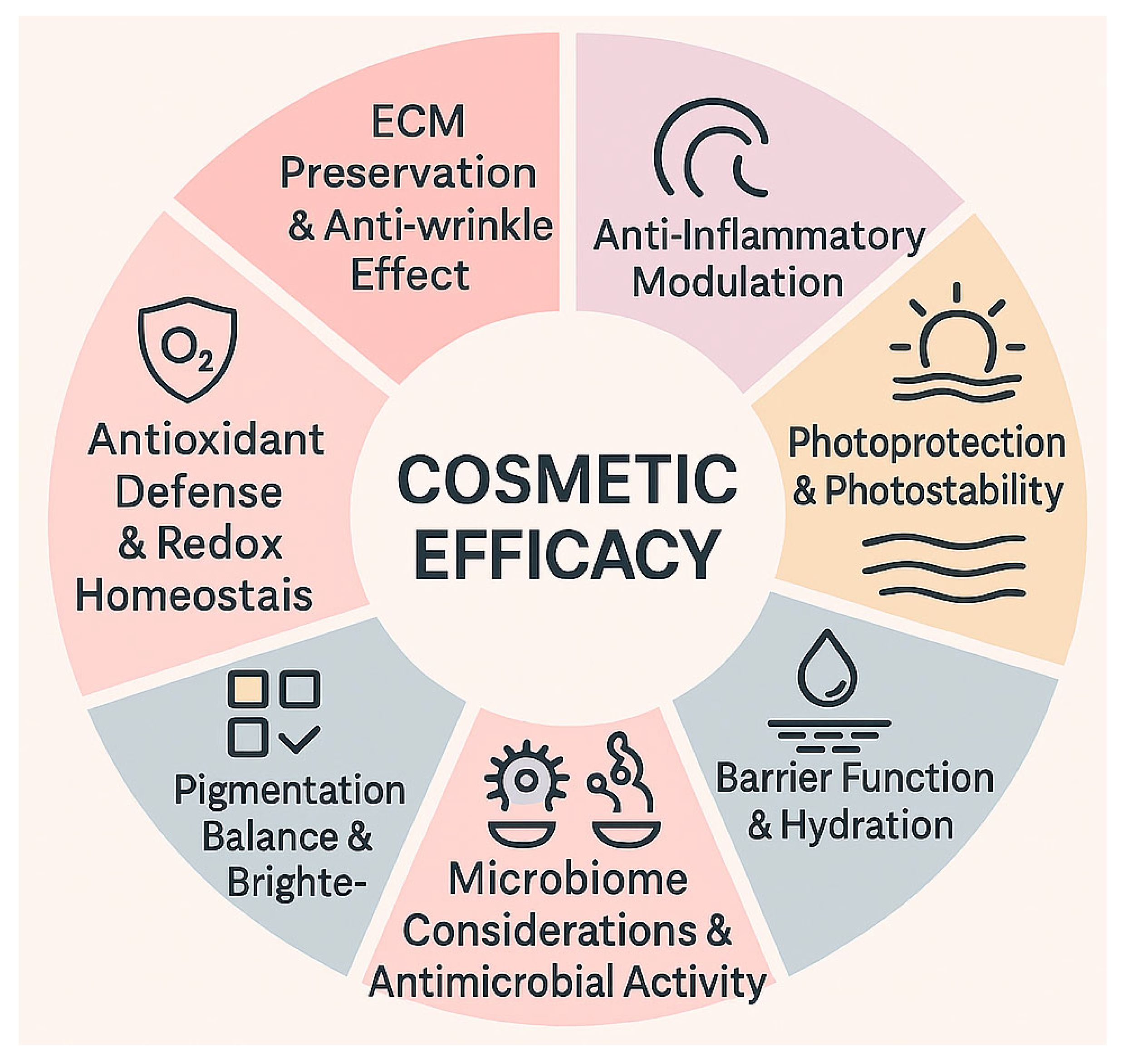
Microalgal bioactives exert multifaceted effects on skin health and cosmetic performance through biochemical and biophysical pathways. These mechanisms collectively address oxidative stress, inflammation, extracellular matrix (ECM) integrity, photoprotection, pigmentation, barrier function, and microbiome balance, key determinants of skin aging and resilience (Figure 2).

3.2.1. Antioxidant Defense and Redox Homeostasis

Skin is continuously exposed to oxidative insults from UV radiation, pollutants, and endogenous metabolic processes, leading to the generation of reactive oxygen species (ROS) [120]. Excess ROS initiates lipid peroxidation, protein carbonylation, and DNA damage, which activate signaling cascades that upregulate matrix metalloproteinases (MMPs) and compromise barrier integrity [121]. Microalgal compounds such as carotenoids (e.g., astaxanthin, fucoxanthin), phycobiliproteins (C-phycocyanin), mycosporine-like amino acids (MAAs), phenolics, and sulfated polysaccharides exhibit potent antioxidant properties [122,123]. These molecules neutralize ROS directly and enhance endogenous antioxidant systems, including superoxide dismutase (SOD), catalase, and glutathione peroxidase [124]. By restoring redox homeostasis, these actives prevent oxidative signaling that drives MMP induction, reduce inflammatory mediators, and preserve collagen and elastin networks, thereby mitigating wrinkle formation and structural deterioration.

3.2.2. Anti-Inflammatory Modulation

Chronic parainflammation, a low-grade, persistent inflammatory state, accelerates skin aging and compromises structural resilience by sustaining cytokine-driven damage to the extracellular matrix and barrier function [125]. Among microalgal bioactives, astaxanthin has demonstrated strong immunomodulatory potential by inhibiting NF-κB signaling, which reduces the expression of pro-inflammatory cytokines such as IL-6 and TNF-α; these molecular effects correlate with improved skin elasticity and hydration in clinical trials [74,126]. Similarly, C-phycocyanin (C-PC) suppresses UVB-induced cytokines, including IL-1α/β, IL-6, and TNF-α, while attenuating MAPK phosphorylation (ERK, JNK, p38), thereby reducing erythema and histological markers of photoaging in murine models [85]. In addition, sulfated polysaccharides exhibit soothing and anti-irritant effects, as demonstrated by human repeat insult patch tests that confirm their low irritation potential [127]. Collectively, these mechanisms support skin comfort, alleviate redness, and maintain homeostasis, making microalgal actives promising candidates for formulations targeting sensitive or inflamed skin.

3.2.3. ECM Preservation and Anti-Wrinkle Effects

The extracellular matrix (ECM) provides structural integrity to the skin through collagen, elastin, and associated glycoproteins. However, exposure to ultraviolet (UV) radiation and environmental pollutants accelerates ECM degradation by upregulating matrix metalloproteinases (MMPs), particularly MMP-1, MMP-3, and MMP-9, which break down collagen and elastin, leading to wrinkle formation and loss of elasticity [128]. This process is further exacerbated by oxidative stress and chronic inflammation, which activate signaling pathways such as MAPK and NF-κB, promoting collagen fragmentation [129].
Microalgal carotenoids, notably astaxanthin, exert protective effects by inhibiting oxidative stress and inflammatory signaling, while simultaneously stimulating collagen synthesis through activation of the TGF-β pathway and suppression of MMP-1 expression [74]. Preclinical and clinical studies confirm that astaxanthin supplementation reduces wrinkle depth, improves elasticity, and increases collagen fiber density in UV-exposed skin [130]. Similarly, fucoxanthin demonstrates dual activity by reducing oxidative stress and inhibiting MMP expression while enhancing procollagen synthesis. In vitro studies show fucoxanthin significantly decreases MMP-1, MMP-2, and MMP-9 expression and increases procollagen levels in fibroblasts, while clinical trials report improved skin moisture, elasticity, and wrinkle reduction after eight weeks of topical application [76,131]. Furthermore, C-PC complements these effects by attenuating UVB-induced oxidative stress and reducing MMP-3 and MMP-9 expression. Animal studies reveal that C-PC treatment prevents dermal collagen fiber loosening, increases hydroxyproline content, and inhibits MAPK phosphorylation (ERK, JNK, p38), thereby preserving ECM integrity under photoaging conditions [85,86]. Collectively, these mechanisms highlight the synergistic role of microalgal bioactives in maintaining ECM structure, reducing wrinkle formation, and promoting skin firmness, making them promising candidates for advanced anti-aging formulations.

3.2.4. Photoprotection and Photostability

Ultraviolet (UV) radiation is a major extrinsic factor contributing to photoaging, oxidative stress, and DNA damage in skin cells. Microalgal metabolites provide a multi-layered defense against these effects. MAAs act as natural UV filters by absorbing UVA and UVB wavelengths and dissipating the energy harmlessly, while also functioning as antioxidants, a dual mechanism that prevents photodamage and oxidative stress [132,133]. In addition to MAAs, carotenoids such as astaxanthin and fucoxanthin, along with C-phycocyanin (C-PC), serve as secondary photoprotectants. These compounds do not directly absorb UV but mitigate downstream effects of UV exposure by reducing reactive oxygen species (ROS) generation and suppressing inflammatory signaling pathways, including NF-κB and MAPK cascades [69,87]. This synergistic activity makes microalgal bioactives highly suitable for incorporation into sunscreen formulations, after-sun care products, and adjacent photoprotective regimens, offering both immediate UV defense and long-term skin health benefits.

3.2.5. Pigmentation Balance and Brightening

Hyperpigmentation is a multifactorial condition primarily driven by tyrosinase activity, oxidative stress, and inflammatory signaling, which collectively stimulate melanogenesis and uneven skin tone [78]. Tyrosinase catalyzes the rate-limiting steps in melanin synthesis, and its overexpression under oxidative stress conditions leads to excessive pigment deposition [134]. Recent studies highlight the potential of microalgal bioactives, particularly fucoxanthin and MAA-rich extracts, to modulate melanogenesis through antioxidant and signaling pathways. Fucoxanthin has been shown to inhibit tyrosinase activity and downregulate melanogenic gene expression, while also reducing oxidative stress markers in melanocytes [78,134]. Similarly, MAAs contribute indirectly by mitigating UV-induced ROS and inflammatory cascades, thereby reducing melanocyte hyperactivation [69]. These mechanisms position microalgal compounds as promising candidates for brightening and tone-evening regimens, offering a natural alternative to conventional depigmenting agents. However, current evidence is largely preclinical or based on short-term trials, and dose–response relationships along with long-term clinical validation remain critical research priorities before widespread cosmetic adoption.

3.2.6. Barrier Function and Hydration

The skin barrier plays a critical role in maintaining hydration and protecting against environmental stressors. Disruption of this barrier leads to increased TEWL, dryness, and compromised resilience. Microalgal bioactives offer multiple strategies to reinforce barrier integrity and improve hydration. Sulfated polysaccharides derived from Porphyridium species form moisture-retentive films on the skin surface, creating a physical layer that reduces TEWL and enhances subjective comfort [135]. These polysaccharides exhibit high water-binding capacity and film-forming properties, making them valuable in moisturizing formulations. In addition, PUFAs from microalgal lipids contribute to barrier repair by supporting the organization of lipid lamellae within the stratum corneum. This structural reinforcement complements humectants and emollients in topical products, improving skin hydration and elasticity [136]. Furthermore, astaxanthin, a potent carotenoid antioxidant, has demonstrated significant improvements in skin hydration and elasticity in human clinical trials. These effects are attributed to its ability to reduce oxidative stress, preserve extracellular matrix components, and maintain lipid integrity, thereby indirectly supporting barrier function [72]. Collectively, these mechanisms highlight the synergistic role of microalgal polysaccharides, lipids, and carotenoids in restoring barrier function and optimizing skin hydration, positioning them as multifunctional actives for advanced cosmetic formulations.

3.2.7. Microbiome Considerations and Antimicrobial Activity

The skin microbiome plays a pivotal role in maintaining cutaneous health, influencing barrier function, immune modulation, and overall resilience against pathogens. Disruption of this delicate microbial balance, known as dysbiosis, can lead to conditions such as acne, dermatitis, and malodor. In this context, microalgal metabolites offer innovative solutions for microbiome-aware cosmetic formulations. Among these metabolites, AMPs have garnered significant attention for their broad-spectrum activity against bacteria, fungi, and viruses, coupled with a low propensity to develop resistance. AMPs act by disrupting microbial membranes and modulating immune responses, making them ideal candidates for next-generation cosmetic preservatives and targeted antimicrobial strategies [137]. Recent studies highlight microalgae as a sustainable source of AMPs, leveraging their ease of cultivation, genetic engineering potential, and ability to express complex peptides in chloroplasts [138].
Beyond AMPs, microalgae produce diverse bioactive compounds, such as phenolics, fatty acids, and phycobiliproteins, that exhibit antimicrobial and antibiofilm properties, further supporting skin health and product preservation [139]. These compounds can help mitigate opportunistic pathogens without disrupting beneficial commensals, aligning with the growing demand for microbiome-friendly cosmetics [140]. Although clinical cosmetic data remain limited, integrating microalgal AMPs and related metabolites into formulations represents a promising frontier for personal care preservation, blemish control, and odor management, while reducing reliance on synthetic preservatives that may trigger irritation or resistance.

3.3. Cosmetic and Personal Care Applications of Microalgae

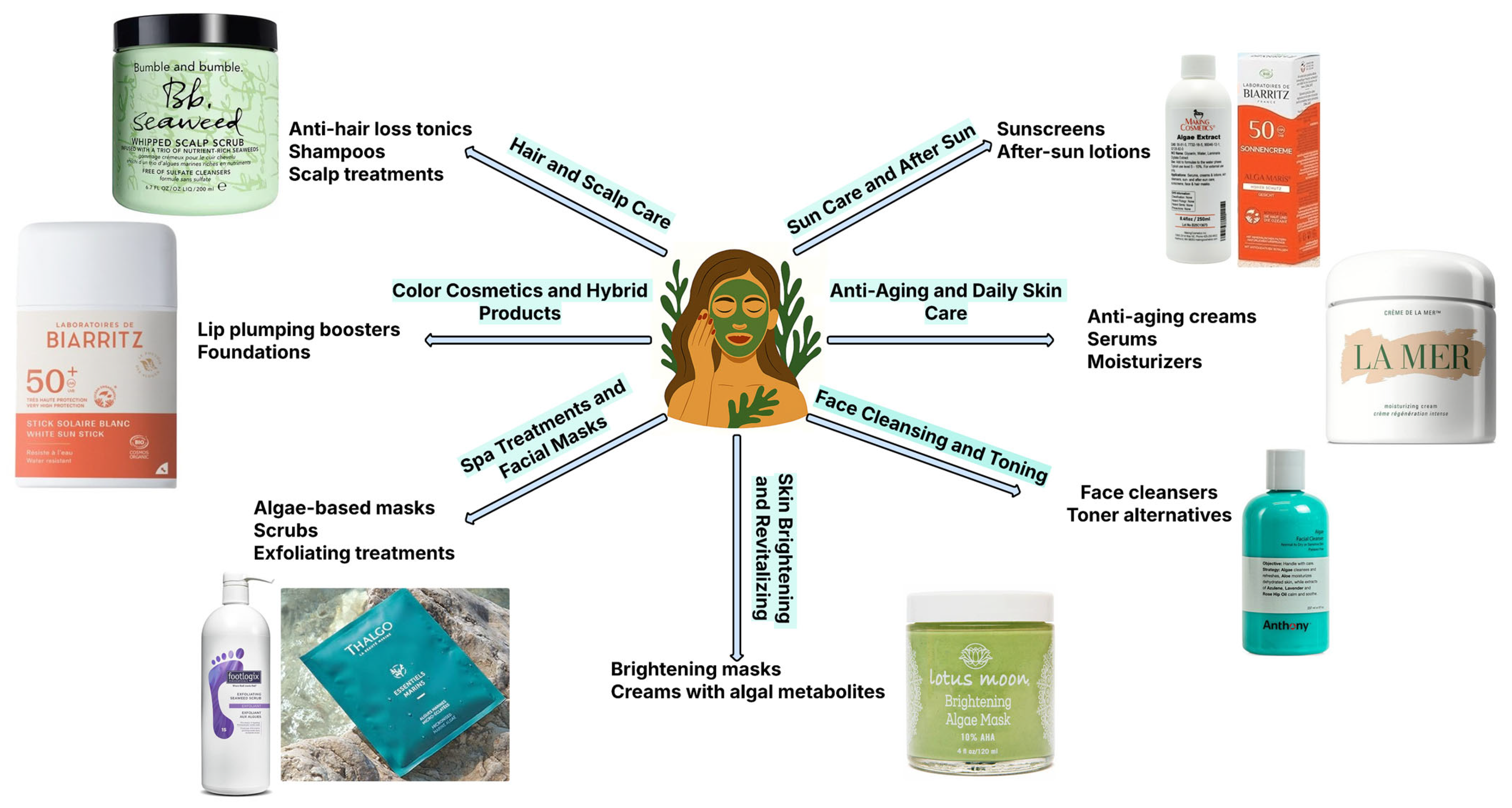
Microalgae have gained significant attention in the cosmetic industry due to their ability to produce a wide range of bioactive compounds with multifunctional benefits. These include antioxidants, pigments, polysaccharides, fatty acids, and UV-protective molecules that support skin health, hydration, and protection against environmental stressors. Their natural origin and sustainability make them ideal for formulating eco-friendly products that meet growing consumer demand for clean beauty solutions. Applications span various categories, including anti-aging and daily skin care, sun care and after-sun products, color cosmetics and hybrid formulations, hair and scalp care, spa treatments, facial masks, exfoliating scrubs, and skin brightening solutions. Figure 3 summarizes the main cosmetic applications of microalgae and highlights commercial products formulated with algae-derived ingredients across multiple categories.

3.3.1. Anti-Aging and Daily Skin Care

Microalgae have emerged as sustainable sources of bioactive compounds for cosmetic and dermatological applications. They synthesize carotenoids, MAAs, sulfated polysaccharides, phycobiliproteins, and polyunsaturated fatty acids, which exhibit antioxidant, photoprotective, moisturizing, and anti-inflammatory properties [69]. These activities target key aging mechanisms, including oxidative stress, collagen degradation, and barrier dysfunction, making microalgae promising candidates for anti-aging and daily skin care [141]. Growing consumer demand for natural and eco-friendly products further supports their integration into cosmetics [142].
Skin aging is a multifactorial process influenced by intrinsic and extrinsic factors. Intrinsic aging is genetically programmed and associated with a gradual loss of dermal elasticity and hydration, while extrinsic aging is driven by environmental stressors, primarily UV radiation. UV exposure induces ROS, which activate matrix metalloproteinases (MMPs) that degrade collagen and elastin, leading to wrinkles and sagging. Glycation further accelerates aging by forming advanced glycation end-products (AGEs) that stiffen collagen fibers [143]. These pathways highlight the need for multifunctional strategies targeting oxidative stress, photodamage, and glycation. Recent experimental studies provide quantitative evidence supporting the use of microalgae-derived ingredients for anti-aging and daily skin care. In an in vitro human keratinocyte model, astaxanthin significantly inhibited UVB-induced oxidative stress and apoptosis-related endpoints, supporting direct protection against photo-oxidative damage, a central factor in extrinsic skin aging [144]. In addition, exopolysaccharides from Porphyridium purpureum showed hydration- and barrier-relevant activity in skin models: Aquaporin 3 (AQP3) expression increased to 1.66- and 2.80-fold, filaggrin (FLG) to 1.72- and 3.23-fold, involucrin (IVL) to 1.12- and 2.60-fold, and loricrin (LOR) to 1.86- and 3.60-fold, compared with control; in a fibroblast scratch assay, wound recovery after 16 h reached 54.7% with EPS versus 40.3% in untreated cells [96]. Complementing these cellular results, an in vivo UVB photoaging model demonstrated that topical C-phycocyanin significantly reduced epidermal thickening, with epidermal thickness approximately 28.92% lower than the UVB model group, alongside improvements in oxidative-stress parameters [85].
Microalgal carotenoids, such as astaxanthin and fucoxanthin, counteract oxidative stress by scavenging ROS and inhibiting MMP activity, thereby preserving dermal structure [72,77]. MAAs provide natural UV protection and antioxidant protection, while sulfated polysaccharides enhance hydration and barrier function by upregulating genes involved in moisturization and elasticity [96]. Additionally, Dunaliella salina carotenoids mitigate glycation, reducing collagen stiffening and improving skin resilience [143]. These mechanisms collectively address the major biochemical drivers of skin aging.
Among microalgal metabolites, carotenoids are the most studied. Astaxanthin from Haematococcus lacustris improves skin elasticity and hydration in clinical trials [72], while fucoxanthin from diatoms stimulates procollagen synthesis and reduces MMP expression [77]. MAAs offer photoprotection and antioxidant benefits, and recent advances in their biosynthesis support scalable production [132,133]. Sulfated polysaccharides from Porphyridium purpureum act as natural moisturizers and antioxidants, while phycocyanin from Spirulina and peptides from Chlorella vulgaris contribute anti-inflammatory and collagen-stimulating effects [145,146].
Several species dominate cosmetic applications. Haematococcus lacustris is the main source of astaxanthin, Phaeodactylum tricornutum provides fucoxanthin, and Dunaliella salina supplies β-carotene and colorless carotenoids with antiglycation properties [143]. Porphyridium purpureum offers sulfated polysaccharides for hydration, while Chlorella and Spirulina extracts deliver peptides and phycobiliproteins for antioxidant and anti-inflammatory benefits [147]. In addition, polysaccharide fractions from red macroalgae Sarcodiotheca gaudichaudii have demonstrated anti-inflammatory and cytoprotective effects, along with improved scratch-wound healing in vitro, supporting a mechanistic rationale for skin barrier recovery and the mitigation of stress pathways associated with skin aging [148]. Furthermore, S. gaudichaudii has been described in the cosmetic patent literature (US Patent No. 9717932) for use in anti-aging formulations, including skin-conditioning and elastase-related applications, indicating its emerging relevance as a marine-derived ingredient for topical anti-aging products [149].
Microalgal ingredients are formulated into topical creams, serums, sunscreens, and oral supplements. Nanoemulsions of astaxanthin and zeaxanthin improve stability and skin penetration [73], while MAAs are explored as reef-safe UV filters [132]. Moisturizers enriched with red-algal polysaccharides enhance hydration and reduce transepidermal water loss [96]. Oral astaxanthin supplementation complements topical use, improving elasticity and reducing wrinkles [72].
Despite these advances, challenges remain. Clinical evidence for many compounds is limited, and regulatory approval for MAAs as UV filters is pending. Safety assessments such as human repeat insult patch tests (HRIPT) are essential to confirm a low sensitization risk [98]. Large-scale production requires synthetic biology and process optimization, while variability in bioactive content demands standardization [142]. Future research should prioritize robust clinical trials, omics-driven strain improvement, green extraction technologies, and integration into circular biorefineries to ensure sustainability. Advanced delivery systems such as nanoencapsulation will further enhance stability and efficacy. Addressing these gaps will enable microalgae to play a central role in next-generation, eco-friendly skin care solutions.

3.3.2. Sun Care and After-Sun

Microalgae have attracted growing interest as natural sources of photoprotective and skin-repairing agents for sun care and after-sun formulations. Their ability to thrive under intense solar radiation has led to the evolution of unique metabolites, including MAAs, carotenoids, sulfated polysaccharides, and antioxidant pigments, which collectively provide broad-spectrum UV protection and post-exposure skin recovery [150,151]. These compounds offer an eco-friendly alternative to synthetic UV filters such as oxybenzone and octinoxate, which are increasingly restricted due to their environmental impacts on marine ecosystems [150].
MAAs are among the most studied microalgal metabolites for sunscreen development. These water-soluble molecules absorb UVA and UVB radiation (309–362 nm) with high molar absorptivity and exhibit antioxidant and anti-inflammatory properties, making them ideal for multifunctional sun care products [89,132]. Recent patents highlight their incorporation into formulations with enhanced SPF, water resistance, and stability [89]. Carotenoids such as astaxanthin and β-carotene from Haematococcus lacustris and Dunaliella salina act as natural sunscreens by neutralizing reactive oxygen species and preventing photooxidative damage [69]. These pigments also inhibit UV-induced matrix metalloproteinases, preserving collagen integrity and reducing photoaging [151]. Recent experimental studies provide direct support for algal actives in sun-care/after-sun applications. In human keratinocytes (HaCaT), a chitosan-nanoparticle formulation loaded with an MAA-rich algal extract provided complete protection at low–moderate UVA doses (5–30 J/cm2) and still retained 64.7% protection efficacy at a lethal UVA dose (60 J/cm2); in post-treatment conditions it restored viability to 100% at 30 J/cm2 and ~43% at 60 J/cm2 [152]. Complementary UVB-focused evidence was reported using a lipid extract from the microalga Nannochloropsis oceanica: UVB exposure (60 mJ/cm2) reduced keratinocyte viability by ~30%, while low extract doses (≤0.003 mg/mL) increased survival to nearly 100% and attenuated oxidative/inflammatory readouts [153]. At the formulation/skin-model level, an oil-in-water nanoemulsion containing 1% algae extract (Dictyopteris justii YP17501) (Rhodophyta) was tested on excised pig-skin membranes and showed limited UVB-induced barrier damage, with a 15% decrease in electrical resistance compared with 50% for the control [154].
Beyond photoprotection, microalgal extracts support skin repair after UV exposure. Sulfated polysaccharides from red microalgae exhibit strong moisturizing and anti-inflammatory effects, reducing erythema and restoring barrier function [96]. Polar microalgae extracts have demonstrated the ability to protect keratinocytes from oxidative stress and UVB-induced damage while downregulating pro-inflammatory cytokines, accelerating recovery in inflamed or sunburned skin [125]. Carotenoids and phycobiliproteins further contribute to soothing effects by scavenging reactive oxygen species and modulating inflammatory pathways. These properties make microalgal bioactives suitable for after-sun gels, lotions, and soothing sprays designed to reduce redness, oxidative stress, and dehydration.
Although MAAs and other microalgal compounds show excellent photostability and biocompatibility, regulatory approval for their use as primary UV filters is still pending in most jurisdictions [89]. Safety assessments, including human repeat-insult patch tests, are essential to confirm a low sensitization potential. Current trends favor their inclusion as boosters or secondary actives in hybrid formulations while regulatory frameworks evolve [150]. Advances in synthetic biology and metabolic engineering are expected to overcome supply limitations of MAAs and carotenoids, enabling cost-effective, large-scale production [133]. Omics-driven strain improvement, green extraction technologies, and integration into circular biorefineries will enhance sustainability and reduce environmental impact. Furthermore, innovative delivery systems such as nanoemulsions and bio-carriers are being explored to improve skin penetration, stability, and synergistic effects in multifunctional sun care and after-sun products.

3.3.3. Color Cosmetics and Hybrid

The color cosmetics market is undergoing a significant transformation driven by consumer demand for clean-label, sustainable, and multifunctional products. This shift has given rise to hybrid formulations, often referred to as “make care,” which combine decorative functions with skincare benefits. Microalgae have emerged as promising ingredients in this segment due to their ability to produce natural pigments and bioactive compounds that deliver both aesthetic appeal and functional properties [51]. Unlike synthetic dyes, microalgal pigments such as carotenoids, chlorophyll derivatives, and phycobiliproteins offer vibrant colors while providing antioxidant, anti-inflammatory, and photoprotective effects, aligning with the growing trend of skinification in makeup [155].
Microalgal bioactives perfectly fit the hybrid beauty concept by combining color with hydration, anti-aging, and barrier-supporting properties. For example, carotenoid-rich extracts incorporated into tinted moisturizers or serum foundations enhance skin elasticity, reduce photoaging markers, and provide natural coverage [156]. Similarly, peptides and sulfated polysaccharides from Chlorella and Porphyridium can be integrated into lip and cheek products to improve hydration and barrier function [70]. Phycobiliproteins, beyond their role as colorants, exhibit antioxidant and anti-inflammatory effects, making them suitable for hybrid formulations targeting sensitive or reactive skin [155].
Carotenoids such as astaxanthin and β-carotene are widely studied for their dual roles as colorants and skin protectants. Astaxanthin from Haematococcus lacustris imparts red-orange tones suitable for lipsticks and tinted balms, while β-carotene from Dunaliella salina provides golden hues for foundations and BB creams. Phycocyanin from Spirulina offers a rare natural blue pigment, expanding the color palette for eye makeup and hybrid products [155]. Beyond coloration, these compounds act as potent antioxidants, reducing oxidative stress and mitigating UV-induced damage, which makes them ideal for multifunctional formulations [156]. Additionally, peptides and sulfated polysaccharides from Chlorella and Porphyridium can be incorporated into lip and cheek products to enhance hydration and barrier function [70].
Safety and regulatory considerations are critical for the adoption of microalgal pigments in color cosmetics. While carotenoids and phycobiliproteins are generally recognized as safe for topical use, their application in lip and eye products requires compliance with regional cosmetic regulations. Stability and allergenicity testing are essential to ensure consumer safety and maintain product performance [51]. Formulation challenges also exist, as natural pigments are sensitive to environmental factors. Phycocyanin, for instance, is highly susceptible to pH and light degradation, while carotenoids are prone to oxidation. These limitations necessitate the use of encapsulation technologies, such as liposomes or biopolymer matrices, and the inclusion of antioxidant systems to preserve pigment integrity and extend shelf life.
Future perspectives for microalgae in color cosmetics focus on improving pigment yield, stability, and functionality through advanced biotechnological approaches. Omics-driven strain selection and metabolic engineering are being employed to enhance pigment biosynthesis, while green extraction methods reduce environmental impact and align with sustainability goals. Furthermore, smart delivery systems such as nanoemulsions and microcapsules are being developed to improve pigment dispersion, color stability, and bioactive release in hybrid formulations. These innovations position microalgae as a cornerstone of next-generation color cosmetics, offering a unique combination of natural aesthetics, skin health benefits, and environmental responsibility.

3.3.4. Hair and Scalp Care

Microalgae have become increasingly relevant in hair and scalp care due to their rich bioactive compound profile, including proteins, polysaccharides, polyunsaturated fatty acids, pigments, and antioxidants. These compounds provide multifunctional benefits, including scalp hydration, anti-inflammatory effects, and stimulation of hair follicle activity, making them suitable for shampoos, conditioners, and scalp treatments [157]. The growing demand for natural and sustainable cosmetic solutions has driven research into microalgae-based formulations. The mechanisms of action include stimulation of hair follicle growth through upregulation of keratin and collagen synthesis, antioxidant and anti-inflammatory effects that reduce oxidative stress and cytokine activity, and inhibition of 5α-reductase, which lowers dihydrotestosterone (DHT) levels associated with androgenic alopecia [158,159]. Additionally, polysaccharides and fatty acids from microalgae restore scalp hydration and reinforce the skin barrier [160].
Recent experimental studies provide strong evidence for these effects. Oliva et al. [161] demonstrated that Botryococcus terribilis (Chlorophyta) extract (which contains a novel compound, C32 botryococcene and methylated-meijicoccene), applied at low micromolar concentrations, significantly upregulated hair growth-related genes and enhanced keratin and collagen synthesis in dermal papilla cells without cytotoxicity. Abdoul-Latif et al. [162] formulated hair care products with Isochrysis galbana extract applied at approximately 9 µL/cm2 to rabbit skin; after two months, treated areas showed markedly longer hair compared to controls. Jang et al. [159] tested Spirulina extracts prepared via distilled water and ethanol extraction: the water extract exhibited superior anti-inflammatory activity, while the ethanol extract strongly inhibited 5α-reductase. Both extracts promoted hair growth in vivo and increased β-catenin expression. Clinical trials with Algaktiv’s Densidyl, a blend of Graesiella emersonii (formerly Chlorella emersonii) (Chlorophyta) and Limnospira maxima (formerly Spirulina maxima) (Cyanophyceae) at 2% concentration, reported a 25.9% increase in anagen hairs, an 11.4% rise in hair density (≈10,200 new hairs), and a 26.7% improvement in scalp moisturization after five months of topical application [163].
The advantages of microalgae in hair care include their natural origin, sustainability, and multifunctionality, offering antioxidant, anti-inflammatory, and moisturizing benefits in a single ingredient. They are generally safe and hypoallergenic, making them suitable for sensitive scalp care. However, challenges remain, including high production costs, stability issues during formulation, and regulatory hurdles to cosmetic approval. Continued innovation in biotechnology and green extraction methods is expected to improve scalability and cost-effectiveness, while encapsulation and nanotechnology can enhance stability and targeted delivery. Personalized scalp care formulations containing microalgal bioactives are anticipated to align with the growing trend toward sustainable, functional cosmetics.

3.3.5. Algae-Based Cosmetics for Spa, Facial Masks, and Skin Scrubbing

Algae serve as multifunctional ingredients in spa treatments, facial masks, and scrubbing products. Their richness in sulfated polysaccharides (e.g., fucoidan, alginates), phlorotannins, carotenoids, phycobiliproteins, peptides, and minerals underlies their hydration, antioxidant, anti-inflammatory, and photoprotective properties, supporting consumer demand for natural, sustainable skincare [70,164].
The main mechanism is twofold: film-forming polysaccharides, such as alginates and fucoidan, enhance skin barrier function and moisture retention, while pigments, such as phycocyanin, lutein, carotenoids, and phlorotannins, provide ROS scavenging and anti-inflammatory defense against photoaging [69,165,166]. Fucoidan, notably, exhibits anti-wrinkle, pigmentation modulation, UV protection, and wound-healing potential, making it ideal for post-treatment recoveries [167,168].
In spa applications, ex vivo studies using alginate/fucoidan hydrogels with essential oils demonstrated pseudoplastic rheology and improved permeation in Franz diffusion assays, delivering ~15 mg of calcein out of 75 mg and increasing retention by ~15%, highlighting enhanced delivery in wraps and leave-on masks [169]. In parallel, fucoidan-rich polysaccharides extracted from Sargassum horneri (Phaeophyceae) showed anti-wrinkle/anti-photoaging relevance experimentally: in UVB-induced fibroblasts, treatment significantly increased procollagen synthesis and inhibited MMP-1 and MMP-3; importantly, in a clinical forearm study, a lotion containing the extract reduced TEWL after 3 weeks versus placebo [5].
Facial mask trials include a study by Janssens-Böcker et al. [170], where lyophilized brown-algae/calcium sheet masks improved hydration, reduced wrinkle depth, balanced pH, and maintained skin microbiome diversity after multiple applications. Another clinical study with seaweed-complex masks in 57 subjects showed notable improvements in moisture, brightness, pore refinement, and dryness reduction [171]. A 12-week Spirulina-enriched topical trial with olive extract enhanced hydration, barrier integrity, brightness, and dermal echogenicity in 31 women (with an age of 39 to 60 years) [172].
For scrubbing, finely milled macroalgae powders provide gentle mechanical exfoliation, while co-delivered polysaccharides and phlorotannins soothe and hydrate post-scrub skin (Table 3). Reviews emphasize the necessity of standardization to ensure consistent barrier recovery and anti-inflammatory outcomes [165,173]. Novel research on Auxenochlorella protothecoides (formerly Chlorella protothecoides)-derived polydeoxyribonucleotides (PDRNs) demonstrated enhanced keratinocyte and fibroblast proliferation, increased collagen synthesis, and angiogenesis via VEGF and ERK/AKT pathways, signaling strong potential for exfoliation recovery applications in vitro [174]. Encapsulation techniques stabilize sensitive pigments and phenolics, enhancing product shelf-life and dermal availability for rinse-off scrubs and masks [67]. Table 3 summarizes representative commercial products formulated with algae-derived ingredients across multiple categories, including spa treatments, anti-aging care, sun care, color cosmetics, and hair care.
Advantages of algae-based formulations include multifunctionality, structural benefits, natural positioning, and growing clinical evidence. However, challenges remain: bioactive variability from species or seasonal change, color/odor concerns, limited controlled trials, and potential heavy-metal contaminants [173]. Safety and regulatory compliance require validated testing for elemental impurities (As, Cd, Pb, Hg) and microbial safety per MoCRA and international standards, with ingredient-specific assessments necessary [175].
Future research should prioritize well-designed randomized controlled trials that incorporate objective measures, such as transepidermal water loss (TEWL), profilometry, and colorimetry, to validate efficacy. Equally important is the molecular standardization of key algal components, such as fucoidan and alginates, to ensure consistent performance. Advances in encapsulation technologies will be critical for stabilizing microalgal pigments and enhancing bioavailability, while robust quality control protocols must be implemented across production. Integrating algae-derived actives into circular biorefinery systems and framing them within sustainable product narratives will strengthen alignment with consumer expectations and global eco-conscious trends.
The formulation and commercialization of cosmetic products, including those containing microalgae-derived ingredients, are subject to comprehensive regulatory frameworks to ensure consumer safety, product efficacy, and compliance with region-specific legal requirements. In the European Union, Regulation (EC) No. 1223/2009 remains the principal legislative framework governing cosmetics placed on the EU market, mandating a scientific safety assessment, a designated responsible person, and prior notification through the Cosmetic Products Notification Portal before placing any cosmetic product on the market [176]. This regulatory framework also enforces bans on animal testing for cosmetic purposes and requires ingredient safety data to be accessible via the CosIng database. In addition to sector-specific legislation, the EU’s General Product Safety Regulation (GPSR) (Regulation (EU) 2023/988) reinforces safety obligations for cosmetic products sold via online and distance-selling platforms, complementing existing labelling, market surveillance, and responsible person duties outlined in the Cosmetic Products Regulation [177]. Furthermore, ongoing regulatory reviews have targeted amendments to restricted and prohibited substances, addressing specific ingredient concerns such as certain solvents, UV filters, and emerging hazard classes.
In the United States, cosmetic products are regulated by the Food and Drug Administration (FDA) under the Federal Food, Drug, and Cosmetic Act. The Modernization of Cosmetics Regulation Act (MoCRA), enacted in 2022, significantly strengthened regulatory oversight by introducing mandatory facility registration, product listing, adverse event reporting, and enhanced safety substantiation requirements [178]. Although cosmetic ingredients do not require pre-market approval (except for color additives), manufacturers remain legally responsible for ensuring product safety. At the global level, algae-based cosmetic products must also comply with international standards and region-specific regulations, particularly when novel or bioactive algal compounds are used. Overall, regulatory compliance, ingredient standardization, and robust safety testing are essential to support the safe and sustainable integration of microalgae-derived ingredients into cosmetic and personal care products.

4. Computational and AI-Based Approaches

Artificial intelligence and machine learning now enable comprehensive microalgal workflows, and deep learning models, such as YOLOv5, are integrated into portable microfluidic platforms to detect and classify species in real time while also tracking pigment induction (astaxanthin) with an accuracy of 92–97%. Convolutional neural networks also automate species recognition and growth monitoring on a lab scale, and additionally, machine learning viability assays [179,180]. Genome-scale metabolic models and network biology are useful in engineering bioactive pathways and exploiting stress responses in microalgae. Recent works also highlight advances in light/dynamic modelling, metabolomics, and machine learning-augmented flux prediction. Furthermore, protein–protein interactions reveal regulatory leverage points for carbon fixation and nutrient sensing. This systems approach is being used in food innovation that seeks to improve pigment and protein content, thereby aligning computational design with consumer acceptance and scalability [181,182]. Data-centric optimisation significantly improves the processes. Additionally, artificial methodology outperforms traditional response surface methodology in modelling multivariable bioactive extractions, indicating the potential for hybrid strategies to enable greener and more scalable microalgal separations. Bibliometric reviews reveal a growing interest in ultrasonic, enzymatic, and supercritical treatments within circular bioeconomic frameworks that prioritise efficiency and sustainability [183,184]. These diverse AI and computational applications are summarised in Table 4, while their conceptual integration across sensing, modelling, and bioprocess optimisation is illustrated in Figure 4, providing a clear overview of how digital tools support sustainable microalgal biotechnology.
Modern systems biology approaches, including multiomics (genomics, transcriptomics, proteomics, metabolomics), provide detailed insights into microalgae biology, revealing key molecules and pathways important for protein quality and yield. The vast amount of data generated requires advanced computational and statistical methods, with AI and mathematical modelling offering promising systems approaches for processing and analysing microalgae data [185]. According to cosmetic research, microalgal actives provide benefits such as photoprotection, whitening, moisturization, anti-ageing, and anti-inflammatory properties. Some works during 2024–2025 focused on ingredient classes (carotenoids, phycobiliproteins, polysaccharides, and peptides), mechanisms, extraction methods, and market products. Scientometric mapping over the last two decades shows significant growth and international collaboration, facilitating the transition to sustainable, nature-derived skincare formulations based on mechanistic evidence and safety considerations [69].
AI-enabled platforms monitor and classify some cultures and pigment accumulation for astaxanthin, allowing for more responsive stress induction schedules. Dynamic, model-guided biofilm production saves water and energy by predicting pigment yields. Comprehensive reviews till 2025 synthesise upstream and downstream bottlenecks as well as industrial roadmaps, emphasising the importance of computation in lowering operational costs and accelerating commercialisation in the food and personal care sectors. Effective management of key risks and constraints is critical to maintaining this momentum [180,186]. Persistent data scarcity and heterogeneity, characterised by species variability and low sensor fidelity, can limit model generalisability. This challenge can be addressed using simulation-based data, modular designs, and adaptive learning. Regulatory and safety concerns are paramount, especially with genetically engineered strains created using CRISPR technology. Other research works from 2020 to 2023 emphasise the importance of clear biosafety and public acceptance frameworks [187]. So, successful commercialisation is dependent on the incorporation of artificial intelligence into the strain selection and formulation processes within intelligent, circular biorefineries designed to reduce costs and environmental impact. Implementing this necessitates a systematic and comprehensive approach.
Deep learning can be used to identify species, and machine learning can help with rapid screening. A hybrid approach can be implemented that combines genome-scale metabolic models and machine learning to predict trade-offs in pathways and conditions, with validation from metabolomics, and incorporate findings into food and cosmetic formulations using evidence-based mechanisms, safety assessments, and sensory optimization, ideally within a smart biorefinery that incorporates artificial intelligence throughout cultivation, harvesting, extraction, and product development. The interconnected layers of sensing, modelling, processing, application, and governance demonstrate how computational and AI methodologies can aid in the large-scale extraction of bioactive compounds from microalgae for nutritional and cosmetic purposes [69,180,188]. Industry technologies, including AI and 3D printing, are leveraged to drive sustainable innovation in the cosmetic sector. These technologies support the extraction of bioactive compounds in alignment with green chemistry principles and enable transparent supply chain management [189]. The convergence of digital tools and stakeholder collaboration facilitates sustainability at every stage of the value chain, promoting the commercialization and environmental viability of microalgae-derived bioactive compounds.
Beyond traditional deep learning for species detection, recent research has looked into advanced AI paradigms to address complex bioprocess challenges [190]. Generative AI models are being used to create novel metabolic pathways and predict enzyme variants for improved pigment and protein synthesis, thereby accelerating strain engineering through in silico simulations [191]. Reinforcement learning algorithms enable adaptive control of cultivation systems by dynamically adjusting light intensity, nutrient supply, and stress levels to maximise bioactive yields in changing environments [191]. Furthermore, digital twin frameworks, virtual replicas of bioreactors, combine real-time sensor data with predictive models to simulate process outcomes, optimise resource use, and lower experimental costs [192]. These advancements, combined with multiomics-driven feature extraction and hybrid AI-physics models, signal a shift towards intelligent, self-optimizing biorefineries that adhere to circular economy principles and sustainability objectives [187]. Such approaches improve scalability and increase resilience to variation in species performance and environmental conditions, paving the way for next-generation food and cosmetic formulations [157]. Recent studies have combined AI with multiomics datasets to better understand regulatory networks and improve carbon fixation and nutrient sensing. The advancements collectively establish AI-enabled systems as intelligent and adaptive systems capable of enhancing commercialisation while adhering to sustainability and circular economy principles.
Table 4. AI and Computational Applications in Microalgae-Derived Bioactive.
Application AreaAI/Computational ApproachOutcomes/BenefitsRef.
Cosmetics FormulationAI-driven data analysis & simulations (ML/DL for ingredient profiling and formulation design)Optimized microalgal cosmetic formulations (photoprotection, anti-aging, whitening)[69]
Functional Foods & NutritionAI-enabled omics data mining.
AI-informed cultivation & strain selection.
synthetic biology interfaces
Growth prediction and yield forecasting.
pathway control for targeted compound biosynthesis
[193,194]
Biorefinery & WastewaterMLAs/AI algorithms.
hybrid optimization (RSM + ML)
Process optimization and control; nutrient recovery.
model-predictive control pathways
[195]
Bioactive Peptide DiscoveryMolecular docking.
integrated proteomics/peptidomics + bioinformatics.
omics bioprospecting
In silico identification of novel microalgal peptides; multifunctionality prediction as anti-inflammatory and antimicrobial.
Accelerated candidate triage for health applications
[196,197]
Circular Economy & Industry 4.0AI, 3D printing of bioreactors, digital twinsSustainable business models; transparent supply chains.
improved cultivation via 3D-printed photobioreactors
[189,198,199]
Process Simulation & OptimizationDigital Twin FrameworksReduced experimental costs; optimized resource utilization[200]
Adaptive Cultivation ControlReinforcement Learning (RL)Maximized bioactive yields under variable environments[201]
Dynamic Process ControlML-based Predictive SchedulingReduced water and energy use; higher pigment productivity[202]

5. Future Perspectives

The future of microalgae-derived bioactives lies in their integration into sustainable biotechnological platforms that address global health, nutrition, and environmental challenges. Advances in synthetic biology and omics-driven strain engineering will enable the development of high-yield microalgal strains optimized for the production of carotenoids, phycobiliproteins, polysaccharides, and polyunsaturated fatty acids. Coupled with green extraction technologies and circular biorefinery models, these innovations will reduce production costs and environmental impact, enabling large-scale commercialization. Clinical validation remains a critical priority; robust, long-term trials are needed to substantiate the efficacy and safety of microalgal compounds in nutraceutical and cosmetic applications. Harmonized international regulations and standardized quality control will further accelerate market adoption. Future formulations will increasingly rely on advanced delivery systems such as nanoencapsulation and lipid carriers to enhance bioavailability, stability, and targeted action, enabling multifunctional products that combine antioxidant, photoprotective, and anti-aging benefits. Integration with carbon-neutral systems, wastewater treatment, and CO2 capture will position microalgae as a cornerstone of circular economy strategies. Additionally, the convergence of microalgal biotechnology with personalized nutrition and microbiome-focused cosmetics will open new avenues for tailored health and beauty solutions. Overcoming sensory limitations and improving consumer awareness through education and transparent labeling will be essential for mainstream acceptance. Collectively, these developments will transform microalgae from niche applications into a central component of sustainable food, health, and cosmetic industries. The integration of AI and computational modeling into microalgal biorefineries will be pivotal for future advancements. Predictive algorithms, digital twins, and omics-informed machine learning will optimize cultivation, extraction, and formulation processes, reducing operational costs and environmental impact. These technologies will also enable personalized nutrition and smart cosmetic solutions, aligning with Industry and circular economy principles.

6. Conclusions

Microalgae have emerged as versatile biofactories capable of producing a wide array of bioactive compounds with significant applications in nutrition, cosmetics, and healthcare. Their unique metabolic flexibility, high productivity, and sustainability credentials position them as promising alternatives to conventional resources in addressing global challenges such as malnutrition, food security, and environmental degradation. In the cosmetic sector, microalgal metabolites, including carotenoids, phycobiliproteins, polysaccharides, polyunsaturated fatty acids, and peptides, offer multifunctional benefits ranging from antioxidant and photoprotective effects to hydration, anti-aging, and microbiome support. These attributes align with the growing consumer demand for natural, eco-friendly, and multifunctional products. Despite these advantages, wider industrial adoption of microalgae remains constrained by high capital and operational costs for controlled cultivation, energy-intensive harvesting and downstream purification, and batch-to-batch variability, which require strict quality control for cosmetic-grade claims. Additional challenges include regulatory and scale-up barriers related to safety and efficacy substantiation, as well as the current lack of large-scale clinical validation.
Future progress will depend on advances in synthetic biology, green extraction technologies, and integrated biorefinery models to enhance cost-effectiveness and sustainability. Additionally, innovative delivery systems and personalized formulations will drive the next generation of microalgae-based products. Computational and AI-based strategies represent a critical frontier for microalgal biotechnology, offering tools to enhance efficiency, scalability, and sustainability across nutritional and cosmetic applications. By bridging scientific innovation with regulatory harmonization and consumer education, microalgae can transition from niche applications to mainstream solutions, contributing to a circular economy and promoting global health and environmental resilience.

Author Contributions

Conceptualization, K.S.H.E., N.M.E. and O.M.A.; Methodology, K.S.H.E. and N.M.E.; Validation, K.S.H.E., O.M.A. and Y.G.H.; Formal analysis, K.S.H.E., N.M.E. and Y.G.H.; Investigation, Y.G.H., I.S.A., M.A. (Mansoor Alghamdi) and M.A. (Malek Alrashidi); Data curation, K.S.H.E. and N.M.E.; Writing—original draft preparation, K.S.H.E. and N.M.E.; Writing—review and editing, K.S.H.E., O.M.A., N.M.E., I.S.A., M.A. (Malek Alrashidi) and M.A. (Mansoor Alghamdi); Visualization, Y.G.H., O.M.A., N.M.E. and I.S.A.; Supervision, K.S.H.E. and O.M.A.; Project administration, K.S.H.E.; Funding acquisition, I.S.A., M.A. (Malek Alrashidi) and M.A. (Mansoor Alghamdi). All authors have read and agreed to the published version of the manuscript.

Funding

This research received no external funding.

Data Availability Statement

Data are contained within the article. The original contributions presented in this study are included in the article. Further inquiries can be directed to the corresponding author.

Conflicts of Interest

The authors declare no conflicts of interest.

References

  1. Ampofo, J.; Abbey, L. Microalgae: Bioactive composition, health benefits, safety and prospects as potential high-value ingredients for the functional food industry. Foods 2022, 11, 1744. [Google Scholar] [CrossRef] [PubMed]
  2. Lafarga, T.; Acién, G. Microalgae for the food industry: From biomass production to the development of functional foods. Foods 2022, 11, 765. [Google Scholar] [CrossRef] [PubMed]
  3. Naik, B.; Mishra, R.; Kumar, V.; Mishra, S.; Gupta, U.; Rustagi, S.; Gupta, A.K.; Preet, M.S.; Bhatt, S.C.; Rizwanuddin, S. Micro-algae: Revolutionizing food production for a healthy and sustainable future. J. Agric. Food Res. 2024, 15, 100939. [Google Scholar] [CrossRef]
  4. Osathanunkul, M.; Thanaporn, S.; Karapetsi, L.; Nteve, G.M.; Pratsinakis, E.; Stefanidou, E.; Lagiotis, G.; Avramidou, E.; Zorxzobokou, L.; Tsintzou, G.; et al. Diversity of Bioactive Compounds in Microalgae: Key Classes and Functional Applications. Mar. Drugs 2025, 23, 222. [Google Scholar] [CrossRef]
  5. Kang, J.W.; Hyun, S.H.; Kim, H.M.; Park, S.Y.; Lee, J.A.; Lee, I.C.; Bae, J.S. The effects of fucoidan-rich polysaccharides extracted from Sargassum horneri on enhancing collagen-related skin barrier function as a potential cosmetic product. J. Cosmet. Dermatol. 2024, 23, 1365–1373. [Google Scholar] [CrossRef]
  6. Eldiehy, K.S.H.; Bardhan, P.; Borah, D.; Gohain, M.; Rather, M.A.; Deka, D.; Mandal, M. A comprehensive review on microalgal biomass production and processing for biodiesel production. Fuel 2022, 324, 124773. [Google Scholar] [CrossRef]
  7. Udayan, A.; Pandey, A.K.; Sharma, P.; Sreekumar, N.; Kumar, S. Emerging industrial applications of microalgae: Challenges and future perspectives. Syst. Microbiol. Biomanufacturing 2021, 1, 411–431. [Google Scholar] [CrossRef]
  8. Martínez-Ruiz, F.E.; Andrade-Bustamante, G.; Holguín-Peña, R.J.; Renganathan, P.; Gaysina, L.A.; Sukhanova, N.V.; Puente, E.O.R. Microalgae as Functional Food Ingredients: Nutritional Benefits, Challenges, and Regulatory Considerations for Safe Consumption. Biomass 2025, 5, 25. [Google Scholar] [CrossRef]
  9. Benetto, E.; Gericke, K.; Guiton, M. Designing Sustainable Technologies, Products and Policies: From Science to Innovation; Springer Nature: Cham, Switzerland, 2018. [Google Scholar]
  10. Abreu, A.P.; Martins, R.; Nunes, J. Emerging applications of Chlorella sp. and Spirulina (Arthrospira) sp. Bioengineering 2023, 10, 955. [Google Scholar] [CrossRef]
  11. Dimopoulou, M.; Kolonas, A.; Stagos, D.; Gortzi, O. A Review of the Sustainability, Chemical Composition, Bioactive Compounds, Antioxidant and Antidiabetic Activity, Neuroprotective Properties, and Health Benefits of Microalgae. Biomass 2025, 5, 11. [Google Scholar] [CrossRef]
  12. Čmiková, N.; Kowalczewski, P.Ł.; Kmiecik, D.; Klimowicz, P.; Drożdżyńska, A.; Ślachciński, M.; Królak, J.; Matić, S.; Marković, T.; Popović, S.; et al. Comparative analysis of nutritional composition and bioactive properties of Chlorella vulgaris and Arthrospira platensis: Implications for functional foods and dietary supplements. Open Chem. 2025, 23, 20250150. [Google Scholar] [CrossRef]
  13. Verni, M.; Demarinis, C.; Rizzello, C.G.; Pontonio, E. Bioprocessing to preserve and improve microalgae nutritional and functional potential: Novel insight and perspectives. Foods 2023, 12, 983. [Google Scholar] [CrossRef] [PubMed]
  14. Sun, H.; Wang, Y.; He, Y.; Liu, B.; Mou, H.; Chen, F.; Yang, S. Microalgae-derived pigments for the food industry. Mar. Drugs 2023, 21, 82. [Google Scholar] [CrossRef]
  15. Vijay, A.P.; Chakraborty, K.; Pai, S.K. Nutritional profiling of Chlorella salina, Dunaliella salina, and Arthrospira platensis as sustainable functional foods for human nutrition. J. Food Meas. Charact. 2025, 19, 769–4782. [Google Scholar] [CrossRef]
  16. Li, Y.; Sun, H.; Fu, Y.; Yang, S.; Lu, X. Optimizing microalgae cultivation for enhanced lutein production: Screening of high-yield strains and cultivation strategy development. J. Appl. Phycol. 2025, 37, 2281–2293. [Google Scholar] [CrossRef]
  17. Guil-Guerrero, J.L.; Prates, J.A.M. Microalgae Bioactives for Functional Food Innovation and Health Promotion. Foods 2025, 14, 2122. [Google Scholar] [CrossRef]
  18. Vanthoor-Koopmans, M.; Cordoba-Matson, M.V.; Arredondo-Vega, B.O.; Lozano-Ramírez, C.; Garcia-Trejo, J.F.; Rodriguez-Palacio, M.C. Microalgae and cyanobacteria production for feed and food supplements. In Biosystems Engineering: Biofactories for Food Production in the Century XXI; Guevara-Gonzalez, R., Torres-Pacheco, I., Eds.; Springer: Cham, Switzerland, 2014; pp. 253–275. [Google Scholar]
  19. Dolganyuk, V.; Belova, D.; Babich, O.; Prosekov, A.; Ivanova, S.; Katserov, D.; Patyukov, N.; Sukhikh, S. Microalgae: A promising source of valuable bioproducts. Biomolecules 2020, 10, 1153. [Google Scholar] [CrossRef]
  20. Ma, M.; Hu, Q. Microalgae as feed sources and feed additives for sustainable aquaculture: Prospects and challenges. Rev. Aquac. 2024, 16, 818–835. [Google Scholar] [CrossRef]
  21. Esteves, A.F.; Pires, J.C.M.; Gonçalves, A.L. Current utilization of microalgae in the food industry beyond direct human consumption. In Cultured Microalgae for the Food Industry; Lafarga, T., Acién, G., Eds.; Elsevier: Cambridge, MA, USA, 2021; pp. 199–248. [Google Scholar]
  22. Ahmad, A.; Hassan, S.W.; Banat, F. An overview of microalgae biomass as a sustainable aquaculture feed ingredient: Food security and circular economy. Bioengineered 2022, 13, 9521–9547. [Google Scholar] [CrossRef]
  23. Sarker, P.K. Microorganisms in fish feeds, technological innovations, and key strategies for sustainable aquaculture. Microorganisms 2023, 11, 439. [Google Scholar] [CrossRef]
  24. Guimarães, A.M.; Guertler, C.; do Vale Pereira, G.; da Rosa Coelho, J.; Costa Rezende, P.; Nóbrega, R.O.; do Nascimento Vieira, F. Nannochloropsis spp. as feed additive for the Pacific white shrimp: Effect on midgut microbiology, thermal shock resistance and immunology. Animals 2021, 11, 150. [Google Scholar] [CrossRef]
  25. Martins Guimarães, A.; Mattioni, B.; Miranda, C.S.; Morais, A.P.M.; da Rosa Coelho, J.; Fracalossi, D.M.; do Vale Pereira, G.; do Nascimento Vieira, F. Aurantiochytrium sp. and Nannochloropsis spp. meals as substitutes for fish oil in practical diets for Pacific white shrimp Penaeus vannamei. Lat. Am. J. Aquat. Res. 2024, 52, 209–219. [Google Scholar] [CrossRef]
  26. Sarker, P.K.; Schoffstall, B.V.; Kapuscinski, A.R.; McKuin, B.; Fitzgerald, D.; Greenwood, C.; O’Shelski, K.; Pasion, E.N.; Gwynne, D.; Gonzalez Orcajo, D.; et al. Towards sustainable aquafeeds: Microalgal (Nannochloropsis sp. QH25) co-product biomass can fully replace fishmeal in the feeds for rainbow trout (Oncorhynchus mykiss). Foods 2025, 14, 781. [Google Scholar] [CrossRef] [PubMed]
  27. Zatti, K.M.; Ceballos, M.J.; Vega, V.V.; Denstadli, V. Full replacement of fish oil with algae oil in farmed Atlantic salmon (Salmo salar)–Debottlenecking omega 3. Aquaculture 2023, 574, 739653. [Google Scholar] [CrossRef]
  28. Bustamam, M.S.A.; Pantami, H.A.; Azam, A.A.; Shaari, K.; Min, C.C.; Ismail, I.S. The immunostimulant effects of Isochrysis galbana supplemented diet on the spleen of red hybrid tilapia (Oreochromis spp.) evaluated by nuclear magnetic resonance metabolomics. Aquac. Nutr. 2022, 2022, 1154558. [Google Scholar] [CrossRef]
  29. Tsutsui, I.; Aue-Umneoy, D.; Pinphoo, P.; Thuamsuwan, W.; Janeauksorn, K.; Meethong, G.; Keattanaworada, P.; Songphatkaew, J.; Ganmanee, M.; Abe, O.; et al. Use of a filamentous green alga (Chaetomorpha sp.) and microsnail (Stenothyra sp.) as feed at an early stage of intensive aquaculture promotes growth performance, artificial feed efficiency, and profitability of giant tiger prawn (Penaeus monodon). PLoS ONE 2020, 15, e0244607. [Google Scholar] [CrossRef]
  30. Katsoulis-Dimitriou, S.; Nikouli, E.; Gkalogianni, E.Z.; Karapanagiotidis, I.T.; Kormas, K.A. The effect of dietary fish oil replacement by microalgae on the gilthead sea bream midgut bacterial microbiota. Peer Community J. 2024, 4, e113. [Google Scholar] [CrossRef]
  31. Matsui, H.; Kono, S.; Ishibashi, K.; Ishikawa, M.; Kotani, T. Assessment of microalga Tisochrysis lutea in the deceleration growth phase as a n-3 HUFA source for Brachionus plicatilis rotifers in Japanese flounder larviculture. Aquac. Int. 2024, 32, 6665–6687. [Google Scholar] [CrossRef]
  32. Sorokin, B.; Gusev, E.; Namsaraev, Z.; Emelianova, A.; Patova, E.; Novakovskaya, I.; Vinokurov, V.; Kuzmin, D. Effect of microalgae feed supplementation on growth performance and feeding efficiency of tilapia fry. J. Appl. Phycol. 2024, 36, 1767–1780. [Google Scholar] [CrossRef]
  33. Harmantepe, B.; Yılmaz, E. Effects of Spirulina and Chlorella Used as Protein Source on Growth and Digestion Enzymes of Common Carp (Cyprinus carpio, L., 1758). Turk. J. Agric. Food Sci. Technol. 2025, 13, 787–793. [Google Scholar] [CrossRef]
  34. Castro, D.T.d.; Castaldi, M.; Martins, G.; Santos, T.; Pereira, H.; Diogo, P.; Varela, J.; Gavaia, P.J. Comparison of Different Microalgae Biomass Typologies Used in Rotifers Enrichment for Zebrafish (Danio rerio) Larvae Nutrition. Aquac. Nutr. 2025, 2025, 5351038. [Google Scholar] [CrossRef]
  35. Mohammed, A.A.; Al-Khamis, S. Effects of Dietary Microalgae Inclusion on Feed Utilization, Morphological and Chemical Characteristics and Body Health in Fish: Advantages and Disadvantages. Indian J. Anim. Res. 2024, 58, 1452–1459. [Google Scholar] [CrossRef]
  36. Liu, W.-C.; Zhu, Y.-R.; Zhao, Z.-H.; Jiang, P.; Yin, F.-Q. Effects of dietary supplementation of algae-derived polysaccharides on morphology, tight junctions, antioxidant capacity and immune response of duodenum in broilers under heat stress. Animals 2021, 11, 2279. [Google Scholar] [CrossRef] [PubMed]
  37. Carvalho, M.; Izquierdo, M.; Valdés, M.; Montero, D.; Farías, A. Oils Combination with Microalgal Products as a Strategy for Increasing the N-3 Long-Chain Polyunsaturated Fatty Acid Content in Fish Oil-Free Diets for Meagre (Argyrosomus regius). Aquac. Nutr. 2022, 2022, 5275570. [Google Scholar] [CrossRef]
  38. Xu, C.; Zhang, S.; Sun, B.; Xie, P.; Liu, X.; Chang, L.; Lu, F.; Zhang, S. Dietary supplementation with microalgae (Schizochytrium sp.) improves the antioxidant status, fatty acids profiles and volatile compounds of beef. Animals 2021, 11, 3517. [Google Scholar] [CrossRef]
  39. Kulshreshtha, G.; Rathgeber, B.; Stratton, G.; Thomas, N.; Evans, F.; Critchley, A.; Hafting, J.; Prithiviraj, B. Feed supplementation with red seaweeds, Chondrus crispus and Sarcodiotheca gaudichaudii, affects performance, egg quality, and gut microbiota of layer hens. Poult. Sci. 2014, 93, 2991–3001. [Google Scholar] [CrossRef]
  40. Kulshreshtha, G.; Rathgeber, B.; MacIsaac, J.; Boulianne, M.; Brigitte, L.; Stratton, G.; Thomas, N.A.; Critchley, A.T.; Hafting, J.; Prithiviraj, B. Feed supplementation with red seaweeds, Chondrus crispus and Sarcodiotheca gaudichaudii, reduce Salmonella Enteritidis in laying hens. Front. Microbiol. 2017, 8, 567. [Google Scholar] [CrossRef]
  41. Kulshreshtha, G.; Critchley, A.; Rathgeber, B.; Stratton, G.; Banskota, A.H.; Hafting, J.; Prithiviraj, B. Antimicrobial effects of selected, cultivated red seaweeds and their components in combination with tetracycline, against poultry pathogen Salmonella enteritidis. J. Mar. Sci. Eng. 2020, 8, 511. [Google Scholar] [CrossRef]
  42. Sarıtaş, S.; Kalkan, A.E.; Yılmaz, K.; Gurdal, S.; Göksan, T.; Witkowska, A.M.; Lombardo, M.; Karav, S. Biological and nutritional applications of microalgae. Nutrients 2024, 17, 93. [Google Scholar] [CrossRef]
  43. Eze, C.N.; Onyejiaka, C.K.; Ihim, S.A.; Ayoka, T.O.; Aduba, C.C.; Ndukwe, J.K.; Nwaiwu, O.; Onyeaka, H. Bioactive compounds by microalgae and potentials for the management of some human disease conditions. AIMS Microbiol. 2023, 9, 55–74. [Google Scholar] [CrossRef]
  44. Charoonnart, P.; Purton, S.; Saksmerprome, V. Applications of microalgal biotechnology for disease control in aquaculture. Biology 2018, 7, 24. [Google Scholar] [CrossRef]
  45. Hernández-López, I.; Abadias, M.; Prieto-Santiago, V.; Chic-Blanco, Á.; Ortiz-Solà, J.; Aguiló-Aguayo, I. Exploring the nutritional potential of microalgae in the formulation of bakery products. Foods 2023, 13, 84. [Google Scholar] [CrossRef] [PubMed]
  46. Niccolai, A.; Venturi, M.; Galli, V.; Pini, N.; Rodolfi, L.; Biondi, N.; D’Ottavio, M.; Batista, A.P.; Raymundo, A.; Granchi, L.; et al. Development of new microalgae-based sourdough “crostini”: Functional effects of Arthrospira platensis (spirulina) addition. Sci. Rep. 2019, 9, 19433. [Google Scholar] [CrossRef] [PubMed]
  47. Batista, A.P.; Niccolai, A.; Bursic, I.; Sousa, I.; Raymundo, A.; Rodolfi, L.; Biondi, N.; Tredici, M.R. Microalgae as functional ingredients in savory food products: Application to wheat crackers. Foods 2019, 8, 611. [Google Scholar] [CrossRef] [PubMed]
  48. Çelekli, A.; Özbal, B.; Bozkurt, H. Challenges in functional food products with the incorporation of some microalgae. Foods 2024, 13, 725. [Google Scholar] [CrossRef]
  49. Saddiqa, A.; Faisal, Z.; Akram, N.; Afzaal, M.; Saeed, F.; Ahmed, A.; Almudaihim, A.; Touqeer, M.; Ahmed, F.; Asghar, A.; et al. Algal pigments: Therapeutic potential and food applications. Food Sci. Nutr. 2024, 12, 6956–6969. [Google Scholar] [CrossRef]
  50. Christaki, E.; Bonos, E.; Florou-Paneri, P. Innovative microalgae pigments as functional ingredients in nutrition. In Handbook of Marine Microalgae; Kim, S.-K., Ed.; Elsevier: Amsterdam, The Netherlands, 2015; pp. 233–243. [Google Scholar]
  51. Chini Zittelli, G.; Lauceri, R.; Faraloni, C.; Silva Benavides, A.M.; Torzillo, G. Valuable pigments from microalgae: Phycobiliproteins, primary carotenoids, and fucoxanthin. Photochem. Photobiol. Sci. 2023, 22, 1733–1789. [Google Scholar] [CrossRef]
  52. Hernández, H.; Nunes, M.C.; Prista, C.; Raymundo, A. Innovative and healthier dairy products through the addition of microalgae: A review. Foods 2022, 11, 755. [Google Scholar] [CrossRef]
  53. Procházka, P.; Abrham, J.; Cerveny, J.; Soukupová, J.; Ouma, C.N.; Mullen, K.J.; Sanova, P.; Smutka, L. Algae as a source of protein in the sustainable food and gastronomy industry. Front. Sustain. Food Syst. 2023, 7, 1256473. [Google Scholar] [CrossRef]
  54. Bleakley, S.; Hayes, M. Functional and bioactive properties of protein extracts generated from Spirulina platensis and Isochrysis galbana T-Iso. Appl. Sci. 2021, 11, 3964. [Google Scholar] [CrossRef]
  55. Jacob-Lopes, E.; Maroneze, M.M.; Deprá, M.C.; Sartori, R.B.; Dias, R.R.; Zepka, L.Q. Bioactive food compounds from microalgae: An innovative framework on industrial biorefineries. Curr. Opin. Food Sci. 2019, 25, 1–7. [Google Scholar] [CrossRef]
  56. Diaz, C.J.; Douglas, K.J.; Kang, K.; Kolarik, A.L.; Malinovski, R.; Torres-Tiji, Y.; Molino, J.V.; Badary, A.; Mayfield, S.P. Developing algae as a sustainable food source. Front. Nutr. 2023, 9, 1029841. [Google Scholar] [CrossRef] [PubMed]
  57. Li, C.; Du, M.; Han, Y.; Sun, W.; Chen, Z.; Liu, Q.; Zhu, H.; Zhao, L.; Li, S.; Wang, J. Microalgae in health care and functional foods: β-glucan applications, innovations in drug delivery and synthetic biology. Front. Pharmacol. 2025, 16, 1557298. [Google Scholar] [CrossRef] [PubMed]
  58. Boukid, F.; Castellari, M. Algae as nutritional and functional food sources. Foods 2022, 12, 122. [Google Scholar] [CrossRef]
  59. Tavakoli, Z.; Kavoosi, G.; Siahbalaei, R.; Karimi, J. Spirulina maxima as a valuable ingredient: Determination of broad fatty acid and amino acid profiles and nutritional quality and anti-amylase capacity. Appl. Food Res. 2025, 5, 100741. [Google Scholar] [CrossRef]
  60. Saide, A.; Martínez, K.A.; Ianora, A.; Lauritano, C. Unlocking the health potential of microalgae as sustainable sources of bioactive compounds. Int. J. Mol. Sci. 2021, 22, 4383. [Google Scholar] [CrossRef]
  61. Paterson, S.; Gómez-Cortés, P.; de la Fuente, M.A.; Hernández-Ledesma, B. Bioactivity and digestibility of microalgae Tetraselmis sp. and Nannochloropsis sp. as basis of their potential as novel functional foods. Nutrients 2023, 15, 477. [Google Scholar] [CrossRef]
  62. Weber, S.; Grande, P.M.; Blank, L.M.; Klose, H. Insights into cell wall disintegration of Chlorella vulgaris. PLoS ONE 2022, 17, e0262500. [Google Scholar] [CrossRef]
  63. Erpel, F.; Restovic, F.; Arce-Johnson, P. Development of phytase-expressing Chlamydomonas reinhardtii for monogastric animal nutrition. BMC Biotechnol. 2016, 16, 29. [Google Scholar] [CrossRef]
  64. Zadabbas Shahabadi, H.; Akbarzadeh, A.; Ofoghi, H.; Kadkhodaei, S. Site-specific gene knock-in and bacterial phytase gene expression in Chlamydomonas reinhardtii via Cas9 RNP-mediated HDR. Front. Plant Sci. 2023, 14, 1150436. [Google Scholar] [CrossRef]
  65. Miao, C.; Du, M.; Du, H.; Xu, T.; Wu, S.; Huang, X.; Chen, X.; Lei, S.; Xin, Y. Enhanced Eicosapentaenoic Acid Production via Synthetic Biological Strategy in Nannochloropsis oceanica. Mar. Drugs 2024, 22, 570. [Google Scholar] [CrossRef] [PubMed]
  66. Huang, D.; Cheng, C.-Q.; Zhang, H.-Y.; Huang, Y.; Li, S.-Y.; Huang, Y.-T.; Huang, X.-L.; Pei, L.-L.; Luo, Z.; Zou, L.-G.; et al. Heat shock transcription factor-mediated thermal tolerance and cell size plasticity in marine diatoms. Nat. Commun. 2025, 16, 3404. [Google Scholar] [CrossRef] [PubMed]
  67. Vieira, M.V.; Pastrana, L.M.; Fuciños, P. Microalgae encapsulation systems for food, pharmaceutical and cosmetics applications. Mar. Drugs 2020, 18, 644. [Google Scholar] [CrossRef]
  68. Chinjoo, N.; Golzary, A. Microalgae: Revolutionizing skin repair and enhancement. Biotechnol. Rep. 2025, 47, e00911. [Google Scholar] [CrossRef] [PubMed]
  69. Leong, H.J.-Y.; Teoh, M.-L.; Beardall, J.; Convey, P. Green beauty unveiled: Exploring the potential of microalgae for skin whitening, photoprotection and anti-aging applications in cosmetics. J. Appl. Phycol. 2024, 36, 3315–3328. [Google Scholar] [CrossRef]
  70. Saini, K.C.; Rani, A.; Gupta, S.K.; Sharma, P. Algae a potential source in cosmetics: Current status, challenges, and economic implications. Indian J. Microbiol. 2024, 64, 1445–1460. [Google Scholar] [CrossRef]
  71. Stanescu, C.; Chiscop, I.; Mihalache, D.; Popa, F.; Tamas, C.; Stoleriu, G. Skin Aging and Carotenoids: A Systematic Review of Their Multifaceted Protective Mechanisms. Nutrients 2025, 17, 2596. [Google Scholar] [CrossRef]
  72. Zhou, X.; Cao, Q.; Orfila, C.; Zhao, J.; Zhang, L. Systematic review and meta-analysis on the effects of astaxanthin on human skin ageing. Nutrients 2021, 13, 2917. [Google Scholar] [CrossRef]
  73. Nurdianti, L.; Setiawan, F.; Maya, I.; Rusdiana, T.; Kusumawulan, C.K.; Gozali, D.; Virgianti, D.P. Formulation and evaluation of radiance serum containing astaxanthin–zeaxanthin nanoemulsions as an anti-wrinkle agent: Stability, ex vivo, and in vivo assessments. Cosmetics 2024, 11, 182. [Google Scholar] [CrossRef]
  74. Sariharyanti, R.; Wargasetia, T.L.; Ratnawati, H. The potential of astaxanthin as a natural compound for decelerating skin aging: An update review. Aging Pathobiol. Ther. 2024, 6, 191–198. [Google Scholar] [CrossRef]
  75. Budzianowska, A.; Banaś, K.; Budzianowski, J.; Kikowska, M. Antioxidants to defend healthy and youthful skin—Current trends and future directions in cosmetology. Appl. Sci. 2025, 15, 2571. [Google Scholar] [CrossRef]
  76. Abu Bakar, M.F.; Setapar, S.H.M. Fucoxanthin: An Emerging Ingredient in Cosmeceutical Applications. J. Dermatol. Sci. Cosmet. Technol. 2025, 2, 100085. [Google Scholar] [CrossRef]
  77. Kang, S.Y.; Kang, H.; Lee, J.E.; Jo, C.S.; Moon, C.B.; Ha, J.; Hwang, J.S.; Choi, J. Antiaging Potential of Fucoxanthin Concentrate Derived from Phaeodactylum tricornutum. J. Cosmet. Sci. 2020, 71, 53–64. [Google Scholar] [PubMed]
  78. Shimoda, H.; Tanaka, J.; Shan, S.-J.; Maoka, T. Anti-pigmentary activity of fucoxanthin and its influence on skin mRNA expression of melanogenic molecules. J. Pharm. Pharmacol. 2010, 62, 1137–1145. [Google Scholar] [CrossRef] [PubMed]
  79. Liu, S.; Mohri, S.; Tsukamoto, M.; Yanai, Y.; Manabe, Y.; Sugawara, T. Preventive effects of dietary fucoxanthin on ultraviolet A induced photoaging in hairless mice. J. Sci. Food Agric. 2025, 105, 453–464. [Google Scholar] [CrossRef]
  80. Ding, L.; Luo, X.; Xian, Q.; Zhu, S.; Wen, W. Innovative Approaches to Fucoxanthin Delivery: Characterization and Bioavailability of Solid Lipid Nanoparticles with Eco-Friendly Ingredients and Enteric Coating. Int. J. Mol. Sci. 2024, 25, 12825. [Google Scholar] [CrossRef]
  81. Ma, Z.; Khalid, N.; Shu, G.; Zhao, Y.; Kobayashi, I.; Neves, M.A.; Tuwo, A.; Nakajima, M. Fucoxanthin-loaded oil-in-water emulsion-based delivery systems: Effects of natural emulsifiers on the formulation, stability, and bioaccessibility. ACS Omega 2019, 4, 10502–10509. [Google Scholar] [CrossRef]
  82. Ma, Y.; Li, C.; Su, W.; Sun, Z.; Gao, S.; Xie, W.; Zhang, B.; Sui, L. Carotenoids in Skin Photoaging: Unveiling Protective Effects, Molecular Insights, and Safety and Bioavailability Frontiers. Antioxidants 2025, 14, 577. [Google Scholar] [CrossRef]
  83. Juturu, V.; Bowman, J.P.; Deshpande, J. Overall skin tone and skin-lightening-improving effects with oral supplementation of lutein and zeaxanthin isomers: A double-blind, placebo-controlled clinical trial. Clin. Cosmet. Investig. Dermatol. 2016, 9, 325–332. [Google Scholar] [CrossRef]
  84. Grether-Beck, S.; Marini, A.; Jaenicke, T.; Stahl, W.; Krutmann, J. Molecular evidence that oral supplementation with lycopene or lutein protects human skin against ultraviolet radiation: Results from a double-blinded, placebo-controlled, crossover study. Br. J. Dermatol. 2017, 176, 1231–1240. [Google Scholar] [CrossRef]
  85. Zhou, Y.; Bai, R.; Huang, Y.; Li, W.; Chen, J.; Cheng, Z.; Wu, X.; Diao, Y. The anti-photoaging effect of C-phycocyanin on ultraviolet B-irradiated BALB/c-nu mouse skin. Front. Bioeng. Biotechnol. 2023, 11, 1229387. [Google Scholar] [CrossRef] [PubMed]
  86. Jang, Y.A.; Kim, B.A. Protective effect of spirulina-derived C-phycocyanin against ultraviolet B-induced damage in HaCaT cells. Medicina 2021, 57, 273. [Google Scholar] [CrossRef]
  87. Dranseikienė, D.; Balčiūnaitė-Murzienė, G.; Karosienė, J.; Morudov, D.; Juodžiukynienė, N.; Hudz, N.; Gerbutavičienė, R.J.; Savickienė, N. Cyano-phycocyanin: Mechanisms of action on human skin and future perspectives in medicine. Plants 2022, 11, 1249. [Google Scholar] [CrossRef] [PubMed]
  88. Zhu, C.; Duan, W.; Jing, H.; Long, J.; Huang, Y.; Huang, D.; Wu, C. Improving the stability and transdermal permeability of phycocyanin loaded cubosomes. Front. Nanotechnol. 2024, 6, 1359219. [Google Scholar] [CrossRef]
  89. Urrea-Victoria, V.; Hernández, A.R.; Castellanos, L.; Alves, I.A.; Novoa, D.M.A. The role of mycosporine-like amino acids in skin care formulations: A patent review (2014–2024). Photochem. Photobiol. Sci. 2025, 24, 847–861. [Google Scholar] [CrossRef] [PubMed]
  90. Yamamoto, R.; Toriumi, S.; Kawagoe, C.; Saburi, W.; Kishimura, H.; Kumagai, Y. Extraction and antioxidant capacity of mycosporine-like amino acids from red algae in Japan. Biosci. Biotechnol. Biochem. 2024, 88, 830–838. [Google Scholar] [CrossRef]
  91. Al Qoh, S.; Amine, J.; Assobhei, O.; Etahiri, S. Investigation of UV protection and anti-aging properties of mycosporine-like amino acids in the Moroccan red alga Gracilaria gracilis (Gracilariales, Rhodophyta). J. Appl. Phycol. 2025, 37, 1341–1356. [Google Scholar] [CrossRef]
  92. Pandey, A.; Amin, N.; Kannaujiya, V.K.; Sinha, R.P. Extraction, characterization and antioxidative potentials of UV-screening compound, mycosporine-like amino acids from epilithic cyanobacterium Lyngbya sp. HKAR−15. World J. Microbiol. Biotechnol. 2024, 40, 378. [Google Scholar] [CrossRef]
  93. Geraldes, V.; Pinto, E. Mycosporine-like amino acids (MAAs): Biology, chemistry and identification features. Pharmaceuticals 2021, 14, 63. [Google Scholar] [CrossRef]
  94. Li, Y.; Wang, J.; Wang, S.; Jiang, X.; Shi, S.; Sun, Y. Research on the optimization of preparation and the application analysis of antioxidant activity of mycosporine-like amino acids derived from marine macroalgae. Blue Biotechnol. 2025, 2, 2. [Google Scholar] [CrossRef]
  95. Yao, Y.; Xu, B. Skin health promoting effects of natural polysaccharides and their potential application in the cosmetic industry. Polysaccharides 2022, 3, 818–830. [Google Scholar] [CrossRef]
  96. Han, S.-I.; Heo, Y.M.; Jeon, M.S.; Kyung, S.; Kang, S.; Kwon, S.-J.; Ryu, J.H.; Kim, J.H.; Ahn, J.-W. The effect of exopolysaccharides from EMS-induced Porphyridium cruentum mutant on human epidermal and dermal layers. Front. Mar. Sci. 2024, 11, 1365311. [Google Scholar] [CrossRef]
  97. Wang, W.-N.; Li, Y.; Zhang, Y.; Xiang, W.-Z.; Li, A.-F.; Li, T. Comparison on characterization and antioxidant activity of exopolysaccharides from two Porphyridium strains. J. Appl. Phycol. 2021, 33, 2983–2994. [Google Scholar] [CrossRef]
  98. Bergfeld, W.F.; Belsito, M.D.; Klaassen, C.D.; Liebler, D.C.; Marks, J.G., Jr.; Shank, R.C. Safety Assessment of Red Algae-Derived Ingredients as Used in Cosmetics; Cosmetic Ingredient Review (CIR): Washington, DC, USA, 2021. [Google Scholar]
  99. Grand Ingredients. AlgaeTech™ Porphyridium. Available online: https://grandingredients.com/active/porphyridium-cosmetic-active/ (accessed on 20 October 2025).
  100. Fioroni, G.; Katahira, R.; Van Wychen, S.; Rowland, S.M.; Christensen, E.D.; Dong, T.; Pienkos, P.T.; Laurens, L.M.L. Synthesis of hydrophilic derivative surfactants from algae-derived unsaponifiable lipids. Front. Chem. Eng. 2022, 3, 768382. [Google Scholar] [CrossRef]
  101. Parke, M.A.; Perez-Sanchez, A.; Zamil, D.H.; Katta, R. Diet and skin barrier: The role of dietary interventions on skin barrier function. Dermatol. Pract. Concept. 2021, 11, e2021132. [Google Scholar] [CrossRef]
  102. Balić, A.; Vlašić, D.; Žužul, K.; Marinović, B.; Bukvić Mokos, Z. Omega-3 versus omega-6 polyunsaturated fatty acids in the prevention and treatment of inflammatory skin diseases. Int. J. Mol. Sci. 2020, 21, 741. [Google Scholar] [CrossRef]
  103. Da Costa, E.; Silva, J.; Mendonca, S.H.; Abreu, M.H.; Domingues, M.R. Lipidomic approaches towards deciphering glycolipids from microalgae as a reservoir of bioactive lipids. Mar. Drugs 2016, 14, 101. [Google Scholar] [CrossRef]
  104. Liakopoulou, A.; Mountsaki, S.; Andriopoulos, V.; Gkioni, M.; Kornaros, M.; Lamari, F.; Hatziantoniou, S. Study of the cosmetic properties of microalgae extracts—The case of Nannochloropsis oculata. Rev. Clin. Pharmacol. Pharmacokinet. Int. Ed. 2022, 36, 31–36. [Google Scholar] [CrossRef]
  105. Badilli, U.; Inal, O. Current approaches in cosmeceuticals: Peptides, biotics and marine biopolymers. Polymers 2025, 17, 798. [Google Scholar] [CrossRef]
  106. Masoumifeshani, B.; Abedian Kenari, A.; Sottorff, I.; Crüsemann, M.; Amiri Moghaddam, J. Identification and evaluation of antioxidant and anti-aging peptide fractions from enzymatically hydrolyzed proteins of Spirulina platensis and Chlorella vulgaris. Mar. Drugs 2025, 23, 162. [Google Scholar] [CrossRef]
  107. Pintea, A.; Manea, A.; Pintea, C.; Vlad, R.-A.; Bîrsan, M.; Antonoaea, P.; Rédai, E.M.; Ciurba, A. Peptides: Emerging candidates for the prevention and treatment of skin senescence: A review. Biomolecules 2025, 15, 88. [Google Scholar] [CrossRef]
  108. Samhat, K.; Kazbar, A.; Takache, H.; Ismail, A.; Pruvost, J. Influence of light absorption rate on the astaxanthin production by the microalga Haematococcus pluvialis during nitrogen starvation. Bioresour. Bioprocess. 2023, 10, 78. [Google Scholar] [CrossRef] [PubMed]
  109. An, Y.; Kim, T.; Byeon, H.; Rayamajhi, V.; Lee, J.; Jung, S.; Shin, H. Improved production of Astaxanthin from Haematococcus pluvialis using a hybrid open–closed cultivation system. Appl. Sci. 2024, 14, 1104. [Google Scholar] [CrossRef]
  110. Elshobary, M.E.; Abo-Shanab, W.A.; Ende, S.S.W.; Alquraishi, M.; El-Shenody, R.A. Optimizing Phaeodactylum tricornutum cultivation: Integrated strategies for enhancing biomass, lipid, and fucoxanthin production. Biotechnol. Biofuels Bioprod. 2025, 18, 7. [Google Scholar] [CrossRef] [PubMed]
  111. Mohamed Abdoul-Latif, F.; Ainane, A.; Achenani, L.; Merito Ali, A.; Mohamed, H.; Ali, A.; Jutur, P.P.; Ainane, T. Production of fucoxanthin from microalgae Isochrysis galbana of Djibouti: Optimization, correlation with antioxidant potential, and bioinformatics approaches. Mar. Drugs 2024, 22, 358. [Google Scholar] [CrossRef]
  112. Lee, K.H.; Jang, Y.W.; Kim, H.; Ki, J.S.; Yoo, H.Y. Optimization of Lutein Recovery from Tetraselmis suecica by Response Surface Methodology. Biomolecules 2021, 11, 182. [Google Scholar] [CrossRef]
  113. Khandual, S.; Sanchez, E.O.L.; Andrews, H.E.; De la Rosa, J.D.P. Phycocyanin content and nutritional profile of Arthrospira platensis from Mexico: Efficient extraction process and stability evaluation of phycocyanin. BMC Chem. 2021, 15, 24. [Google Scholar] [CrossRef]
  114. Li, Q.; Chen, Y.; Liu, X.; Li, Y.; Xu, J.; Li, T.; Xiang, W.; Li, A. Effect of salinity on the biochemical characteristics and antioxidant activity of exopolysaccharide of Porphyridium purpureum FACHB 806. Front. Mar. Sci. 2023, 9, 1097200. [Google Scholar] [CrossRef]
  115. Şirin, P.A.; Serdar, S. Effects of nitrogen starvation on growth and biochemical composition of some microalgae species. Folia Microbiol. 2024, 69, 889–902. [Google Scholar] [CrossRef]
  116. Long, L.; Ren, X.; Zhang, F.; Shi, A.; Zhai, Y.; Chen, W.; Duan, Y.; Shi, P.; Chen, L.; Li, D. Enhanced Fermentation Process for Production of High Docosahexaenoic Acid Content by Schizochytrium sp. GCD2032. Fermentation 2024, 10, 460. [Google Scholar] [CrossRef]
  117. Han, X.; Liu, Y.; Yuan, Y.; Chen, Z. Metabolic engineering of Schizochytrium sp. for superior docosahexaenoic acid production. Algal Res. 2024, 77, 103355. [Google Scholar] [CrossRef]
  118. Salehian, S.; Saadatbakht, M.; Tabarzad, M.; Hosseinabadi, T. Culture optimization to produce high yields of mycosporine-like amino acids by Fischerella sp. F5. Mol. Biotechnol. 2025, 67, 3109–3119. [Google Scholar] [CrossRef] [PubMed]
  119. Safitri, N.M.; Hsu, J.-L.; Violando, W.A. Antioxidant activity from the enzymatic hydrolysates of Chlorella sorokiniana and its potential peptides identification in combination with molecular docking analysis. Turk. J. Fish. Aquat. Sci. 2021, 22, TRJFAS20316. [Google Scholar] [CrossRef]
  120. Yang, N.; Zhang, Q.; Chen, J.; Wu, S.; Chen, R.; Yao, L.; Li, B.; Liu, X.; Zhang, R.; Zhang, Z. Study on bioactive compounds of microalgae as antioxidants in a bibliometric analysis and visualization perspective. Front. Plant Sci. 2023, 14, 1144326. [Google Scholar] [CrossRef]
  121. Mustafa, S.; Koran, S.; AlOmair, L. Insights into the role of matrix metalloproteinases in cancer and its various therapeutic aspects: A review. Front. Mol. Biosci. 2022, 9, 896099. [Google Scholar] [CrossRef]
  122. Tamaki, S.; Mochida, K.; Suzuki, K. Diverse biosynthetic pathways and protective functions against environmental stress of antioxidants in microalgae. Plants 2021, 10, 1250. [Google Scholar] [CrossRef]
  123. Cichoński, J.; Chrzanowski, G. Microalgae as a source of valuable phenolic compounds and carotenoids. Molecules 2022, 27, 8852. [Google Scholar] [CrossRef]
  124. Sachdev, S.; Ansari, S.A.; Ansari, M.I. Antioxidant defensive mechanisms to regulate cellular redox homeostatic balance. In Reactive Oxygen Species in Plants: The Right Balance; Sachdev, S., Ansari, S.A., Ansari, M.I., Eds.; Springer: Singapore, 2023; pp. 143–172. [Google Scholar]
  125. Choo, W.-T.; Teoh, M.-L.; Phang, S.-M.; Convey, P.; Yap, W.-H.; Goh, B.-H.; Beardall, J. Microalgae as potential anti-inflammatory natural product against human inflammatory skin diseases. Front. Pharmacol. 2020, 11, 1086. [Google Scholar] [CrossRef]
  126. Heidari, M.; Chaboksafar, M.; Alizadeh, M.; Sohrabi, B.; Kheirouri, S. Effects of Astaxanthin supplementation on selected metabolic parameters, anthropometric indices, Sirtuin1 and TNF-α levels in patients with coronary artery disease: A randomized, double-blind, placebo-controlled clinical trial. Front. Nutr. 2023, 10, 1104169. [Google Scholar] [CrossRef]
  127. Fiume, M.M.; Bergfeld, W.F.; Belsito, D.V.; Hill, R.A.; Klaassen, C.D.; Liebler, D.C.; Marks, J.G., Jr.; Shank, R.C.; Slaga, T.J.; Snyder, P.W.; et al. Safety assessment of monosaccharides, disaccharides, and related ingredients as used in cosmetics. Int. J. Toxicol. 2019, 38, S5–S38. [Google Scholar] [CrossRef]
  128. Zhang, M.; Lin, Y.; Han, Z.; Huang, X.; Zhou, S.; Wang, S.; Zhou, Y.; Han, X.; Chen, H. Exploring mechanisms of skin aging: Insights for clinical treatment. Front. Immunol. 2024, 15, 1421858. [Google Scholar] [CrossRef] [PubMed]
  129. Qian, H.; Shan, Y.; Gong, R.; Lin, D.; Zhang, M.; Wang, C.; Wang, L. Mechanism of action and therapeutic effects of oxidative stress and stem cell-based materials in skin aging: Current evidence and future perspectives. Front. Bioeng. Biotechnol. 2023, 10, 1082403. [Google Scholar] [CrossRef] [PubMed]
  130. Li, X.; Matsumoto, T.; Takuwa, M.; Saeed Ebrahim Shaiku Ali, M.; Hirabashi, T.; Kondo, H.; Fujino, H. Protective effects of astaxanthin supplementation against ultraviolet-induced photoaging in hairless mice. Biomedicines 2020, 8, 18. [Google Scholar] [CrossRef] [PubMed]
  131. Wakuda, N.; Manabe, Y.; Seko, T.; Sugawara, T. Different suppressive effects of canthaxanthin and fucoxanthin on cellular responses of human dermal fibroblasts to ultraviolet A irradiation. Biosci. Biotechnol. Biochem. 2025, 89, 1038–1044. [Google Scholar] [CrossRef]
  132. Rosic, N.; Climstein, M.; Boyle, G.M.; Thanh Nguyen, D.; Feng, Y. Exploring mycosporine-like amino acid UV-absorbing natural products for a new generation of environmentally friendly sunscreens. Mar. Drugs 2023, 21, 253. [Google Scholar] [CrossRef]
  133. Chen, M.; Jiang, Y.; Ding, Y. Recent progress in unraveling the biosynthesis of natural sunscreens mycosporine-like amino acids. J. Ind. Microbiol. Biotechnol. 2023, 50, kuad038. [Google Scholar] [CrossRef]
  134. Mumu, M.; Das, A.; Emran, T.B.; Mitra, S.; Islam, F.; Roy, A.; Karim, M.M.; Das, R.; Park, M.N.; Chandran, D. Fucoxanthin: A promising phytochemical on diverse pharmacological targets. Front. Pharmacol. 2022, 13, 929442. [Google Scholar] [CrossRef]
  135. Chen, Y.; Li, Q.; Xu, B.; Xiang, W.; Li, A.; Li, T. Extraction optimization of polysaccharides from wet red microalga Porphyridium purpureum using response surface methodology. Mar. Drugs 2024, 22, 498. [Google Scholar] [CrossRef]
  136. De Luca, M.; Pappalardo, I.; Limongi, A.R.; Viviano, E.; Radice, R.P.; Todisco, S.; Martelli, G.; Infantino, V.; Vassallo, A. Lipids from microalgae for cosmetic applications. Cosmetics 2021, 8, 52. [Google Scholar] [CrossRef]
  137. Mekhalfi, M.; Berteina-Raboin, S. Microalgae, Cell Factories for Antimicrobial Peptides: A Promising Response to Antibiotic Resistance. Antibiotics 2025, 14, 959. [Google Scholar] [CrossRef]
  138. Wang, Q.; Ma, Y.; Sun, F.; Wang, K.; Ma, J.; Zhu, B.; Cao, K.; Shao, Y.; Cui, Y.; Zhang, H.; et al. Development and research progress of microalgae as a production platform for antimicrobial peptides. J. Appl. Phycol. 2025, 37, 1659–1677. [Google Scholar] [CrossRef]
  139. Lakman, S.S.; Zakaria, N.A.; Jalil, M.T.M. Microalgae as Antimicrobial and Antibiofilm Agents: A Review. Sci. Lett. 2025, 19, 60–74. [Google Scholar] [CrossRef]
  140. Martínez-Ruiz, M.; Martínez-González, C.A.; Kim, D.-H.; Santiesteban-Romero, B.; Reyes-Pardo, H.; Villaseñor-Zepeda, K.R.; Meléndez-Sánchez, E.R.; Ramírez-Gamboa, D.; Díaz-Zamorano, A.L.; Sosa-Hernández, J.E.; et al. Microalgae bioactive compounds to topical applications products—A review. Molecules 2022, 27, 3512. [Google Scholar] [CrossRef] [PubMed]
  141. Searby, L. Microalgae-Based Cosmetics? Popularity of New Skin Care Products Not Yet Matched by Science. Available online: https://geneticliteracyproject.org/2023/02/16/microalgae-based-cosmetics-popularity-of-new-skin-care-products-not-yet-matched-by-science/ (accessed on 21 October 2025).
  142. Hidhayati, N.; Purba, L.D.A.; Firman, N.F.A.; Admirasari, R.; Rahman, D.Y.; Agustini, N.W.S.; Maryati, M.; Anam, K.; Prayitno, J. Current status and future prospects of Chlorella as raw materials in cosmeceuticals: Cultivation, extraction, and commercial applications. J. Appl. Phycol. 2025, 37, 343–354. [Google Scholar] [CrossRef]
  143. Havas, F.; Krispin, S.; Cohen, M.; Loing, E.; Farge, M.; Suere, T.; Attia-Vigneau, J. A Dunaliella salina extract counteracts skin aging under intense solar irradiation thanks to its antiglycation and anti-inflammatory properties. Mar. Drugs 2022, 20, 104. [Google Scholar] [CrossRef]
  144. Chung, B.Y.; Park, S.H.; Yun, S.Y.; Yu, D.S.; Lee, Y.B. Astaxanthin protects ultraviolet B-induced oxidative stress and apoptosis in human keratinocytes via intrinsic apoptotic pathway. Ann. Dermatol. 2022, 34, 125–131. [Google Scholar] [CrossRef]
  145. Casas-Arrojo, V.; Arrojo Agudo, M.d.l.Á.; Cárdenas García, C.; Carrillo, P.; Pérez Manríquez, C.; Martínez-Manzanares, E.; Abdala Díaz, R.T. Antioxidant, immunomodulatory and potential anticancer capacity of polysaccharides (glucans) from Euglena gracilis GA klebs. Pharmaceuticals 2022, 15, 1379. [Google Scholar] [CrossRef]
  146. Abdolbaghian, S.; Jamili, S.; Manayi, A.; Mashinchian Moradi, A. Chlorella growth factor extraction and its effect on gene expression of types I and III collagen in skin fibroblast cells. Iran. J. Fish. Sci. 2021, 20, 1664–1673. [Google Scholar] [CrossRef]
  147. Chwil, M.; Mihelič, R.; Matraszek-Gawron, R.; Terlecka, P.; Skoczylas, M.M.; Terlecki, K. comprehensive review of the latest investigations of the health-enhancing effects of selected properties of Arthrospira and Spirulina Microalgae on Skin. Pharmaceuticals 2024, 17, 1321. [Google Scholar] [CrossRef]
  148. Premarathna, A.D.; Ahmed, T.A.E.; Rjabovs, V.; Hammami, R.; Critchley, A.T.; Tuvikene, R.; Hincke, M.T. Immunomodulation by xylan and carrageenan-type polysaccharides from red seaweeds: Anti-inflammatory, wound healing, cytoprotective, and anticoagulant activities. Int. J. Biol. Macromol. 2024, 260, 129433. [Google Scholar] [CrossRef]
  149. Ceccoli, J.D.; Costello, B.; Pillai, S. Marine Extracts and Biofermentations for Use in Cosmetics. U.S. Patent 9717932 B2, 1 August 2017. Available online: https://patentimages.storage.googleapis.com/4e/72/2a/591c4e34805cd4/US9717932.pdf (accessed on 15 October 2025).
  150. Najafi, A.; Heidary, M.; Martinez, R.M.; Baby, A.R.; Morowvat, M.H. Microalgae-based sunscreens as green and sustainable cosmetic products. Int. J. Cosmet. Sci. 2025, 47, 213–222. [Google Scholar] [CrossRef] [PubMed]
  151. Santiesteban-Romero, B.; Martínez-Ruiz, M.; Sosa-Hernández, J.E.; Parra-Saldívar, R.; Iqbal, H.M.N. Microalgae photo-protectants and related bio-carriers loaded with bioactive entities for skin applications—An insight of microalgae biotechnology. Mar. Drugs 2022, 20, 487. [Google Scholar] [CrossRef] [PubMed]
  152. Vásquez, O.; Contreras-Trigo, B.; Castillo, E.; Contreras, N.; Lemus, J.; Zuniga, F.A.; Oyarce, K.; Núñez, D.; Díaz-García, V.; Oyarzún, P. Chitosan Nanoformulations of Mycosporine-like Amino Acid (MAA)-Rich Extracts from Mazzaella laminarioides Effectively Protect Human Keratinocytes Against UVA Radiation Damage. Int. J. Mol. Sci. 2025, 26, 10394. [Google Scholar] [CrossRef] [PubMed]
  153. Stasiewicz, A.; Conde, T.; Gęgotek, A.; Domingues, M.R.; Domingues, P.; Skrzydlewska, E. Prevention of UVB induced metabolic changes in epidermal cells by lipid extract from microalgae Nannochloropsis oceanica. Int. J. Mol. Sci. 2023, 24, 11302. [Google Scholar] [CrossRef]
  154. Hernández, A.R.; Sepulveda, L.; Hata, Y.; Castellanos, L.; Björklund, S.; Ruzgas, T.; Aragón, M. Algae extract-based nanoemulsions for photoprotection against UVB radiation: An electrical impedance spectroscopy study. Sci. Rep. 2025, 15, 1911. [Google Scholar] [CrossRef]
  155. Tounsi, L.; Ben Hlima, H.; Hentati, F.; Hentati, O.; Derbel, H.; Michaud, P.; Abdelkafi, S. Microalgae: A promising source of bioactive phycobiliproteins. Mar. Drugs 2023, 21, 440. [Google Scholar] [CrossRef]
  156. Prates, J.A.M. Applications of Bioactive Compounds from Marine Microalgae in Health, Cosmetics, and Functional Foods. Appl. Sci. 2025, 15, 6144. [Google Scholar] [CrossRef]
  157. Mago, Y.; Sharma, Y.; Thakran, Y.; Mishra, A.; Tewari, S.; Kataria, N. Next-generation organic beauty products obtained from algal secondary metabolites: A sustainable development in cosmeceutical industries. Mol. Biotechnol. 2025, 67, 2881–2901. [Google Scholar] [CrossRef]
  158. Im, S.T.; Mun, H.; Kang, N.; Heo, S.-J.; Lee, S.-H. Anti-androgenetic effect of diphlorethohydroxycarmalol on testosterone-induced hair loss by inhibiting 5α-reductase and promoting Wnt/β-catenin signaling pathway in human dermal papilla cells. Toxicol. In Vitro 2025, 104, 106017. [Google Scholar] [CrossRef]
  159. Jang, J.Y.; Jang, B.J.; Shin, H.S. Evaluation of hair growth-promoting, anti-inflammatory, and 5α-reductase inhibitory effects of Spirulina extract using in vitro and in vivo models. Biotechnol. Bioprocess Eng. 2025, 30, 786–793. [Google Scholar] [CrossRef]
  160. Mourelle, M.L.; Gómez, C.P.; Legido, J.L. Revealing the Potential Use of Macro and Microalgae Compounds in Skin Barrier Repair. Appl. Sci. 2025, 15, 11899. [Google Scholar] [CrossRef]
  161. Oliva, A.K.; Bejaoui, M.; Hirano, A.; Arimura, T.; Linh, T.N.; Uchiage, E.; Nukaga, S.; Tominaga, K.; Nozaki, H.; Isoda, H. Elucidation of the potential hair growth-promoting effect of Botryococcus terribilis, its novel compound methylated-meijicoccene, and C32 Botryococcene on cultured hair follicle dermal papilla cells using DNA microarray gene expression analysis. Biomedicines 2022, 10, 1186. [Google Scholar] [CrossRef] [PubMed]
  162. Abdoul-Latif, F.M.; Oumaskour, K.; Boujaber, N.; Ainane, A.; Mohamed, J.; Ainane, T. Formulations of a cosmetic product for hair care based on extract of the microalga Isochrysis galbana: In vivo and in vitro activities. J. Anal. Sci. Appl. Biotechnol. 2021, 3, 15–19. [Google Scholar] [CrossRef]
  163. Algaktiv. Algaktiv’s Microalgae-derived Densidyl Fights the Emossome and Exposome to Combat Hair Loss and Graying. Available online: https://www.cosmeticsandtoiletries.com/cosmetic-ingredients/actives/news/22918140/algaktiv-algaktivs-microalgaederived-densidyl-fights-the-emossome-and-exposome-to-combat-hair-loss-and-graying (accessed on 16 November 2025).
  164. López-Hortas, L.; Flórez-Fernández, N.; Torres, M.D.; Ferreira-Anta, T.; Casas, M.P.; Balboa, E.M.; Falqué, E.; Domínguez, H. Applying seaweed compounds in cosmetics, cosmeceuticals and nutricosmetics. Mar. Drugs 2021, 19, 552. [Google Scholar] [CrossRef]
  165. Kalasariya, H.S.; Maya-Ramírez, C.E.; Cotas, J.; Pereira, L. Cosmeceutical significance of seaweed: A focus on carbohydrates and peptides in skin applications. Phycology 2024, 4, 276–313. [Google Scholar] [CrossRef]
  166. Ragusa, I.; Nardone, G.N.; Zanatta, S.; Bertin, W.; Amadio, E. Spirulina for skin care: A bright blue future. Cosmetics 2021, 8, 7. [Google Scholar] [CrossRef]
  167. Naghipour, A.; Zare, P.; Langarizadeh, M.A.; Mottaghi, A.; Ghaedi, B.; Tavakoli, M.R.; Sharififar, F. Dermo-cosmetic potential of fucoidans. J. Appl. Phycol. 2025, 37, 1431–1446. [Google Scholar] [CrossRef]
  168. Cadar, E.; Popescu, A.; Dragan, A.-M.-L.; Pesterau, A.-M.; Pascale, C.; Anuta, V.; Prasacu, I.; Velescu, B.S.; Tomescu, C.L.; Bogdan-Andreescu, C.F.; et al. Bioactive compounds of marine algae and their potential health and nutraceutical applications: A review. Mar. Drugs 2025, 23, 152. [Google Scholar] [CrossRef]
  169. Barbosa, A.I.; Lima, S.A.C.; Yousef, I.; Reis, S. Evaluating the skin interactions and permeation of alginate/fucoidan hydrogels per se and associated with different essential oils. Pharmaceutics 2023, 15, 190. [Google Scholar] [CrossRef]
  170. Janssens-Böcker, C.; Wiesweg, K.; Doberenz, C. Exploring the Therapeutic Potential of Algae-Based Sheet Masks in Skincare: A Comprehensive Study of Cosmetological Benefits and Microbiome Balanced Interactions. J. Cosmet. Dermatol. Sci. Appl. 2023, 13, 277–301. [Google Scholar] [CrossRef]
  171. Yoon, H.; Park, C. A Clinical Trial of Facial Mask using Seaweed Complex Extracts. J. Korean Soc. Integr. Med. 2025, 13, 159–170. [Google Scholar] [CrossRef]
  172. D’Angelo Costa, G.M.; Maia Campos, P.M.B.G. Development of cosmetic formulations containing olive extract and Spirulina sp.: Stability and clinical efficacy studies. Cosmetics 2024, 11, 68. [Google Scholar] [CrossRef]
  173. Bogdan, C.; Molnar, M.; Dima, E.I.; Olteanu, A.A.; Safta, D.A.; Moldovan, M.-L. Marine macroalgae in topical formulations: Bioactive compounds, variability, analytical challenges and skin benefits. Pharmaceutics 2025, 17, 1143. [Google Scholar] [CrossRef] [PubMed]
  174. Park, J.M.; Nam, G.B.; Lee, E.-S.; Kim, H.-M.; Kim, H.; Myoung, K.; Lee, J.E.; Baek, H.S.; Ko, J.; Lee, C.S. Effects of Chlorella protothecoides-derived polydeoxyribonucleotides on skin regeneration and wound healing. Arch. Dermatol. Res. 2025, 317, 483. [Google Scholar] [CrossRef] [PubMed]
  175. FDA. FDA’s Testing of Cosmetics for Arsenic, Cadmium, Chromium, Cobalt, Lead, Mercury, and Nickel Content; FDA: Silver Spring, MD, USA, 2022.
  176. European Commission. Regulation (EC) No 1223/2009 of the european parliament and of the council of 30 November 2009 on cosmetic products. Off. J. Eur. Union L 2009, 342, 59–209. [Google Scholar]
  177. Żywicka, A.; Wierzbowski, M. Trader Information Requirements as per EU Regulation 2023/988 on General Product Safety (GPSR) and Consumer Protection in the E-Commerce Market. Teka Kom. Prawniczej PAN Oddz. Lub. 2025, 18, 603–617. [Google Scholar] [CrossRef]
  178. FDA. Modernization of Cosmetics Regulation Act of 2022; FDA: Silver Spring, MD, USA, 2023. Available online: https://www.fda.gov/cosmetics/cosmetics-laws-regulations/modernization-cosmetics-regulation-act-2022-mocra (accessed on 22 September 2025).
  179. Kim, T.; Pradhan, B.; Ki, J.-S. Staining to machine learning: An emerging technology for determination of microalgal cell viability. J. Appl. Phycol. 2024, 36, 2573–2592. [Google Scholar] [CrossRef]
  180. Zheng, J.; Cole, T.; Zhang, Y.; Bayinqiaoge; Yuan, D.; Tang, S.-Y. An automated and intelligent microfluidic platform for microalgae detection and monitoring. Lab. A Chip 2024, 24, 244–253. [Google Scholar] [CrossRef]
  181. Saini, D.K.; Manchanda, G.; Chaudhary, R.G.; Singh, R.P. Microalgal Metabolomes and Recent Biotechnological Advances for Their Industrial Application. Microbiol. Res. 2024, 15, 2056–2069. [Google Scholar] [CrossRef]
  182. Tamburro, J.; Boyle, N.R. Charting the state of GEMs in microalgae: Progress, challenges, and innovations. Front. Plant Sci. 2025, 16, 1614397. [Google Scholar] [CrossRef]
  183. Rangel Pinto, J.D.; Guerrero, J.L.; Rivera, L.; Parada-Pinilla, M.P.; Cala, M.P.; López, G.; González Barrios, A.F. Predicting the microalgae lipid profile obtained by supercritical fluid extraction using a machine learning model. Front. Chem. 2024, 12, 1480887. [Google Scholar] [CrossRef] [PubMed]
  184. Subramani, V.; Tomer, V.; Balamurali, G.; Mansingh, P. Artificial neural network in optimization of bioactive compound extraction: Recent trends and performance comparison with response surface methodology. Anal. Sci. 2024, 41, 101–117. [Google Scholar] [CrossRef] [PubMed]
  185. Pires, J.C.M. Mathematical Modeling and Simulation Applied to Microalgae. In Microalgae Horizons: Fundamentals, Innovations, and Industrial Applications; Severo, I.A., Ordóñez, J.C., Mariano, A.B., Vargas, J.V.C., Eds.; Springer Nature: Cham, Switzerland, 2025; pp. 87–104. [Google Scholar]
  186. Morgado, D.; Fanesi, A.; Chachuat, B.; Tebbani, S.; Bernard, O.; Lopes, F. Model guided development of astaxanthin production in microalgae biofilms. Algal Res. 2025, 91, 104201. [Google Scholar] [CrossRef]
  187. Abdullah, M.; Malik, H.A.; Ali, A.; Boopathy, R.; Vo, P.H.N.; Danaee, S.; Ralph, P.; Malik, S. AI-Driven Algae Biorefineries: A New Era for Sustainable Bioeconomy. Curr. Pollut. Rep. 2025, 11, 21. [Google Scholar] [CrossRef]
  188. Garg, D.; Bala, S.; Phutela, U.G. Microalgal nutraceuticals: Unravelling solution to food-health nexus. Phytochem. Rev. 2023, 23, 321–348. [Google Scholar] [CrossRef]
  189. Sun, H.; Gong, Q.; Fan, Y.; Wang, Y.; Wang, J.; Zhu, C.; Mou, H.; Yang, S.; Liu, J. Unlocking 3D printing technology for microalgal production and application. Adv. Biotechnol. 2024, 2, 2–14. [Google Scholar] [CrossRef]
  190. Imamoglu, E. Artificial intelligence and/or machine learning algorithms in microalgae bioprocesses. Bioengineering 2024, 11, 1143. [Google Scholar] [CrossRef]
  191. Guo, B.; Lu, X.; Jiang, X.; Shen, X.-L.; Wei, Z.; Zhang, Y. Artificial Intelligence in Advancing Algal Bioactive Ingredients: Production, Characterization, and Application. Foods 2025, 14, 1783. [Google Scholar] [CrossRef]
  192. Canzoneri, M.; Horner, M.; Banerjee, P. Digital Twins in Biomanufacturing. In Bioconvergence Revolution; Siragusa, N., Nemat, A.T., Eds.; Springer Nature: Cham, Switzerland, 2024; pp. 59–81. [Google Scholar]
  193. Alzahmi, A.S.; Daakour, S.; Nelson, D.; Al-Khairy, D.; Twizere, J.-C.; Salehi-Ashtiani, K. Enhancing algal production strategies: Strain selection, AI-informed cultivation, and mutagenesis. Front. Sustain. Food Syst. 2024, 8, 1331251. [Google Scholar] [CrossRef]
  194. Ayub, A.; Rahayu, F.; Khamidah, A.; Antarlina, S.S.; Iswari, K.; Supriyadi, K.; Mufidah, E.; Singh, A.; Chopra, C.; Wani, A.K. Harnessing microalgae as a bioresource for nutraceuticals: Advancing bioactive compound exploration and shaping the future of health and functional food innovation. Discov. Appl. Sci. 2025, 7, 389. [Google Scholar] [CrossRef]
  195. Ning, H.; Li, R.; Zhou, T. Machine learning for microalgae detection and utilization. Front. Mar. Sci. 2022, 9, 947394. [Google Scholar] [CrossRef]
  196. Lin, J.; Wen, L.; Zhou, Y.; Wang, S.; Ye, H.; Su, J.; Li, J.; Shu, J.; Huang, J.; Zhou, P. PepQSAR: A comprehensive data source and information platform for peptide quantitative structure–activity relationships. Amino Acids 2022, 55, 235–242. [Google Scholar] [CrossRef]
  197. Romdhani, M.; Dhaouafi, J.; Deracinois, B.; Flahaut, C.; Nedjar, N.; Balti, R. Proteomics and bioinformatics guided discovery of microalgal multifunctional peptides for novel nutraceutical applications. Bioprocess Biosyst. Eng. 2025, 48, 1509–1531. [Google Scholar] [CrossRef]
  198. de Mattos Nascimento, D.L.; de Oliveira-Dias, D.; Moyano-Fuentes, J.; Maqueira Marín, J.M.; Garza-Reyes, J.A. Interrelationships between circular economy and Industry 4.0: A research agenda for sustainable supply chains. Bus. Strategy Environ. 2023, 33, 575–596. [Google Scholar] [CrossRef]
  199. Santos, B.; Freitas, F.; Sobral, A.J.F.N.; Encarnação, T. Microalgae and circular economy: Unlocking waste to resource pathways for sustainable development. Int. J. Sustain. Eng. 2025, 18, 2501488. [Google Scholar] [CrossRef]
  200. Riezzo, L.; Kay, H.; Feng, Y.; Jing, K.; Zhang, D. Accelerating bioprocess digital twin development by integrating hybrid modelling with transfer learning. Chem. Eng. J. 2025, 511, 162018. [Google Scholar] [CrossRef]
  201. Doan, Y.T.-T.; Ho, M.-T.; Nguyen, H.-K.; Han, H.-D. Optimization of Spirulina sp. cultivation using reinforcement learning with state prediction based on LSTM neural network. J. Appl. Phycol. 2021, 33, 2733–2744. [Google Scholar] [CrossRef]
  202. Mafat, I.H.; Palla, S.; Surya, D.V. Machine Learning and Artificial Intelligence for Algal Cultivation, Harvesting Techniques, Wastewater Treatment, Nutrient Recovery, and Biofuel Production and Optimization. In Value Added Products from Bioalgae Based Biorefineries: Opportunities and Challenges; Arya, S.K., Khatri, M., Singh, G., Eds.; Springer Nature: Singapore, 2024; pp. 463–487. [Google Scholar]
Figure 1. Integrated overview of microalgae applications in human health and biotechnology.
Phycology 06 00017 g001
Figure 2. Overview of key mechanisms by which microalgal bioactives support cosmetic efficacy.
Phycology 06 00017 g002
Figure 3. Overview of Cosmetic Applications of Microalgae and Representative Commercial Products.
Phycology 06 00017 g003
Figure 4. Overview of AI methodologies and their relation to algal bioactive compounds.
Phycology 06 00017 g004
Table 1. Commercial microalgae-based products for nutritional supplements, functional foods, beverages and maternal/infant nutrition.
ProductBrand/FactoryCountryCategoryApprox. Price (USD)
NOW Certified Organic Spirulina 1000 mg (120 tablets)NOW FoodsUSASupplement (tablets)~$16–20
Nutrikraft Spirulina Tabs 500 mg (120 tabs)NutrikraftNetherlandsSupplement (tablets)~$12–15
On Target Living Spirulina/Chlorella 50/50On Target LivingUSASupplement (tablets)~$45–55
Original Superfoods Chlorella Spirulina 50/50Original SuperfoodsNetherlandsSupplement (tablets)~$35–40
Olé Blue Spirulina Powder (100 g)Olé BlueSpainPowder~$18–22
SpiruUp Organic Drink (240 mL)Spirulina BecagliItalyBeverage (detox drink)~$3–4 per bottle
Sol-ti Blue Spirulina SuperAde (14.9 fl oz)Sol-tiUSAFunctional Beverage~$5–6
Spirulina ElixirAlgoriginSwitzerlandFunctional sports drink~$4–5 per serving
Astaxanthin Ready-to-Mix PowderSolabia-Algatech NutritionFrance/IsraelSupplement & beverage mix~$25–30 (per 30 servings)
Fruit Drink with Spirulina (Apple & Peach, 250 mL)Cocowoods.czCzech RepublicFunctional Juice~$2.50–3.00
Go Raw Spirulina Seed Bar (14 g)Go RawUSASnack Bar~$1.25–1.50 per bar
Spireat Spirulina Bio Snack (35 g)SpireatItalySnack Bar~$2.00–2.50
Mulberry Cacao + Spirulina Seedbar (12-pack)Elemental SuperfoodUSASnack Bar~$20–25 per box
Roo’Bar High Protein Chia & Spirulina (60 g)RoobarEU/Middle EastSnack Bar~$2.00–2.50
Spirudle—Spirulina Vegan Pasta (4 × 75 g)Beatus NaturaItalyPasta~$6–8 per pack
Natoo Organic Spirulina Pasta (Chiocciole, 250 g)NatooItalyPasta~$5–6
Spring Spirulina Premium Pasta (Linguine/Fusilli, 500 g)Spring SpirulinaItalyPasta~$6–7
Premibio Primerice Plant-Based Infant FormulaPremibioUSAInfant Formula~$35–40 per can
Else Nutrition Plant-Based Toddler FormulaElse NutritionCanadaInfant/Toddler Formula~$40–45 per can
Kendamil Organic Infant Formula (with Algal DHA)KendamilUKInfant Formula~$50–55 per can
Bebe M Organic Rice-Based Anti-Reflux Infant FormulaBebe MGermanyInfant Formula~$30–35 per pack
BHK’s Prenatal DHA Algae Oil SoftgelsBHKUSAPrenatal Supplement~$20–25
Mama’s Select Prenatal DHA SupplementMama’s SelectUSAPrenatal Supplement~$25–30
Nordic Naturals Algae Omega PrenatalNordic NaturalsUSAPrenatal Supplement~$30–35
Table 3. Some Commercial Cosmetic Products Formulated with Algae.
BrandProductTypeAlgae SourceKey Algae-Derived ActivesClaimed BenefitsCategoryApprox. Price (USD) *
La MerCrème de la Mer (Miracle Broth™)Facial creamGiant sea kelp (Macrocystis pyrifera) (Phaeophyceae)Fermented kelp “Miracle Broth™”Barrier support, soothing, anti-agingAnti-Aging & Daily Skin Care~$3999.99 for 16.5 Oz
ALGENISTGENIUS Liquid Collagen®SerumCylindrotheca fusiformis (Bacillariophyceae), Parachlorella beijerinckii (Chlorophyta)Exopolysaccharides, Auxenochlorella protothecoides (Chlorophyta) OilAlguronic Acid®; microalgae oilFirming, smoothing, radianceAnti-Aging & Daily Skin Care$131.49 for 3.4 Fl Oz
ALGENISTTriple Algae Eye Renewal BalmEye balmMicroalgae blendAlguronic Acid® + algae complexPuffiness, dark circles, fine linesAnti-Aging & Daily Skin Care$55.29 for 0.5 Oz
OSEAUndaria Algae™ Body OilBody oilBrown seaweed (Undaria pinnatifida)Undaria soak infusionElasticity, firming, deep moisturizationAnti-Aging & Daily Skin Care $84 for 9.6 Fl Oz
OSEAUndaria Algae™ Body LotionBody lotionBrown seaweed (Undaria pinnatifida)Undaria + hyaluronic acidVisibly firms in 4 h; hydration (brand clinical)Anti-Aging & Daily Skin Care $48 for 5.0 Fl Oz
AlgothermUrban [Flash] MaskSheet/second-skin maskGreen microalga (Chlorella vulgaris) + marine alginatesChlorella extract; alginatesAnti-pollution; +67% hydration (brand test)Anti-Aging & Daily Skin Care~$68.99 for a pack containing 5 masks
Algotherm[Glow-Age] Targeting MaskCream maskBrown macroalgae (Alaria esculenta; Dictyopteris)Alaria extract; sea-fern extractRadiance; instant tightening (brand test)Anti-Aging & Daily Skin Care~$60.80 for 50 mL
The Body ShopSeaweed Oil-Control Gel CreamGel-creamSaccharina latissima (Royal sugar kelp) (Phaeophyceae)/Laminaria (range)Seaweed extractOil control; 48-h hydration (brand)Anti-Aging & Daily Skin Care (oil-balance)~$21.05 for 50 mL
Laboratoires de BiarritzALGA MARIS SPF50 Sun Milk/Family SPF50+ SpraySunscreen (face/body)Red algae (Gelidium corneum–formerly Gelidium sesquipedale)Alga-Gorria®UV protection; water-resistantSun Care & After Sun~$34.49 for a 150 mL
Laboratoires de BiarritzALGA MARIS SPF50 Tinted Sun CreamTinted sunscreenRed algae (Gelidium corneum)Alga-Gorria®UV + blue-light protection; complexion unifyingColor Cosmetics & Sun Care~$27.95 for a 50 mL
ThalgoMicronised Marine AlgaeProfessional spa wrapMicro-crushed marine algaeMinerals; alginatesRemineralizing; purifying; body contour startSpa Treatments (Body)~$52.02 for 10 sachets/40 g per sachet
VOYAOrganic Seaweed Leaf Wrap (spa)Professional wrapLaminaria (Phaeophyceae) leavesWhole-leaf seaweedDetoxifying; firming; softeningSpa Treatments (Body)$24.75 for a pack containing 5 items
VOYALazy Days Detoxifying Seaweed BathFucus serratusHydrating alginatesMoisturizing; relaxationSpa/At-Home Ritual~$33.91 for 400 g
Bumble and bumbleSeaweed Nourishing ShampooShampooRoyal sugar kelp; Pacific sea kelp; green microalgaeKelp extracts; Chlorella vulgarisScalp hydration; lightweight cleansingHair & Scalp Care~$121.61 for 1000 mL
Bumble and bumbleSeaweed Nourishing ConditionerConditionerRoyal sugar kelp; Pacific sea kelp; green microalgaeKelp extracts; Chlorella vulgarisHydration; frizz reductionHair & Scalp Care~$119.27 for 1000 mL
Bumble and bumbleSeaweed Whipped Scalp ScrubScalp scrubTrio of seaweeds + Dead Sea saltKelp + Chlorella extractsGentle exfoliation; supports scalp environmentHair & Scalp Care~$45.60 for 200 mL
L’Oréal ParisPure Clay Face MaskFace maskPalmaria palmataRed algae extractDeep cleansing; exfoliation; anti-dullnessDaily Skin Care$21.96 for 1.7 Oz
GarnierSuper Purifying Charcoal Sheet MaskSheet maskAlgae extract (brand disclosure)Algae extract + charcoalPurifying; pore cleansing; hydrationDaily Skin Care~$4.08 for sheet
* The prices were calculated in US dollars, based on the official exchange rate of 1.17 USD per euro, and reflect the prices listed in December 2025.
Disclaimer/Publisher’s Note: The statements, opinions and data contained in all publications are solely those of the individual author(s) and contributor(s) and not of MDPI and/or the editor(s). MDPI and/or the editor(s) disclaim responsibility for any injury to people or property resulting from any ideas, methods, instructions or products referred to in the content.