1. Introduction
The growing demand for sustainable agricultural practices and the need to reduce the negative environmental impacts of agricultural production have intensified the search for alternative, renewable sources of biocomponents that support plant growth and protection [
1]. In this context, microalgae and cyanobacteria are currently regarded as some of the most promising biological resources. They are characterised by rapid growth rates, efficient photosynthetic performance, and the ability to accumulate a wide spectrum of primary and secondary metabolites. Consequently, they can be used in the production of biostimulants, biofertilisers, and biopesticides [
2]. An additional advantage is their ability to be cultivated under diverse environmental conditions, including nutrient-poor media, municipal and industrial wastewater, or in closed photobioreactor systems [
3].
Microalgal and cyanobacterial biomass is a rich source of biologically active compounds such as proteins, lipids, carbohydrates, vitamins, pigments, and phytohormones [
4]. These compounds can regulate plant physiological processes, including stimulation of growth, cell division, and chlorophyll synthesis, as well as enhancement of stress resistance [
5]. Microalgae-derived phytohormones, such as auxins, gibberellins, and cytokinins, can activate biochemical processes in plant cells in a manner comparable to their synthetic counterparts [
6]. In recent years, increasing attention has also been directed towards the potential of microalgae and cyanobacteria as sources of natural biopesticides. These microorganisms synthesise numerous secondary metabolites, including flavonoids, terpenoids, alkaloids, carotenoids, and phenolic compounds, which exhibit antibacterial, antifungal, and antioxidant properties [
7]. As a result, they can suppress the development of plant pathogens and support natural plant defence mechanisms [
8]. It has been demonstrated that carotenoids such as β-carotene, lutein, and fucoxanthin play a key role not only in photosynthetic processes but also in plant protection against oxidative stress and infections [
9]. Similarly, phenolic compounds synthesised by microalgae, including phenol, hexadecanoic acid, and phytol, may inhibit the growth of pathogenic bacteria and fungi [
10].
The use of microalgal and cyanobacterial biomass in agriculture aligns well with the principles of the circular economy and sustainable bioeconomy [
11]. Their application in wastewater treatment or in the capture of carbon dioxide from exhaust gases enables simultaneous production of valuable biomass and reduction in pollutant emissions [
12]. This approach facilitates the integration of biomass production, biogas generation, organic fertiliser synthesis, and bioproduct development within a single, integrated bioengineering system [
13]. In recent years, there has also been growing interest in the application of microalgae and cyanobacteria in so-called space agriculture [
14]. This is a new, interdisciplinary research direction pursued within ESA and NASA programmes focused on bioregenerative life support systems (BLSS) [
15]. Due to their ability to perform photosynthesis under controlled conditions, efficiently fix CO
2, produce oxygen, and accumulate nutritionally rich biomass, microalgae represent a promising component of closed cultivation systems in lunar and Martian habitats [
16]. Species such as
Chlorella vulgaris,
Arthrospira platensis, and
Scenedesmus obliquus may simultaneously serve as a food source, natural biofertiliser, and a component of organic waste recycling, making them a key element of future extraterrestrial agroecosystems [
17]. The development of research in this field opens a new perspective for microalgal biotechnology applications in extreme environments and resource-limited conditions.
Despite their numerous advantages, the commercialisation of microalgae in agriculture faces some challenges. The most significant include optimising cultivation, harvesting, and biomass processing costs, standardising metabolite extraction procedures, and developing effective application methods for agricultural practice [
18]. Moreover, regulatory frameworks and environmental safety standards must be adapted, as current legislation does not always encompass microbiologically derived bioproducts [
19]. Nevertheless, advancements in photobioreactor technologies, nutrient recycling, and process automation suggest that the agricultural use of microalgae and cyanobacteria may become economically feasible in the near future [
20].
This review aims to synthesise current knowledge on the biochemical composition, functional properties, and mechanisms of action of microalgal and cyanobacterial biomass in the context of their established agricultural applications as biostimulants, biofertilisers, and biopesticides. Although these application areas have been addressed in previous review studies, they are often discussed in a fragmented or predominantly descriptive manner. In contrast, the present review adopts a more integrative perspective by linking biomass functionality with broader technological and regulatory contexts relevant to practical implementation.
In addition to consolidating established agronomic applications, the review discusses prevailing research trends and identifies selected technological and organisational factors associated with the production and use of microalgal and cyanobacterial biomass. Issues related to production scale, product standardisation, and regulatory frameworks are addressed as contextual elements influencing implementation potential, without assigning them a dominant role. Furthermore, the scope of the review is extended to emerging and prospective application contexts, including controlled ecological systems and space-oriented cultivation systems, in order to outline possible directions for future research and development.
2. Publication Trends in the Potential Use of Microalgae and Cyanobacteria in Agriculture
The increasing scientific interest in the use of microalgae and cyanobacteria in agriculture is reflected in publication trends observed over the last decade. To provide contextual background for the scope and dynamics of research activity in this field, a targeted publication trend analysis was conducted using selected scientific databases. This analysis was not intended as a comprehensive bibliometric study, but rather as a descriptive overview supporting the thematic scope of the review.
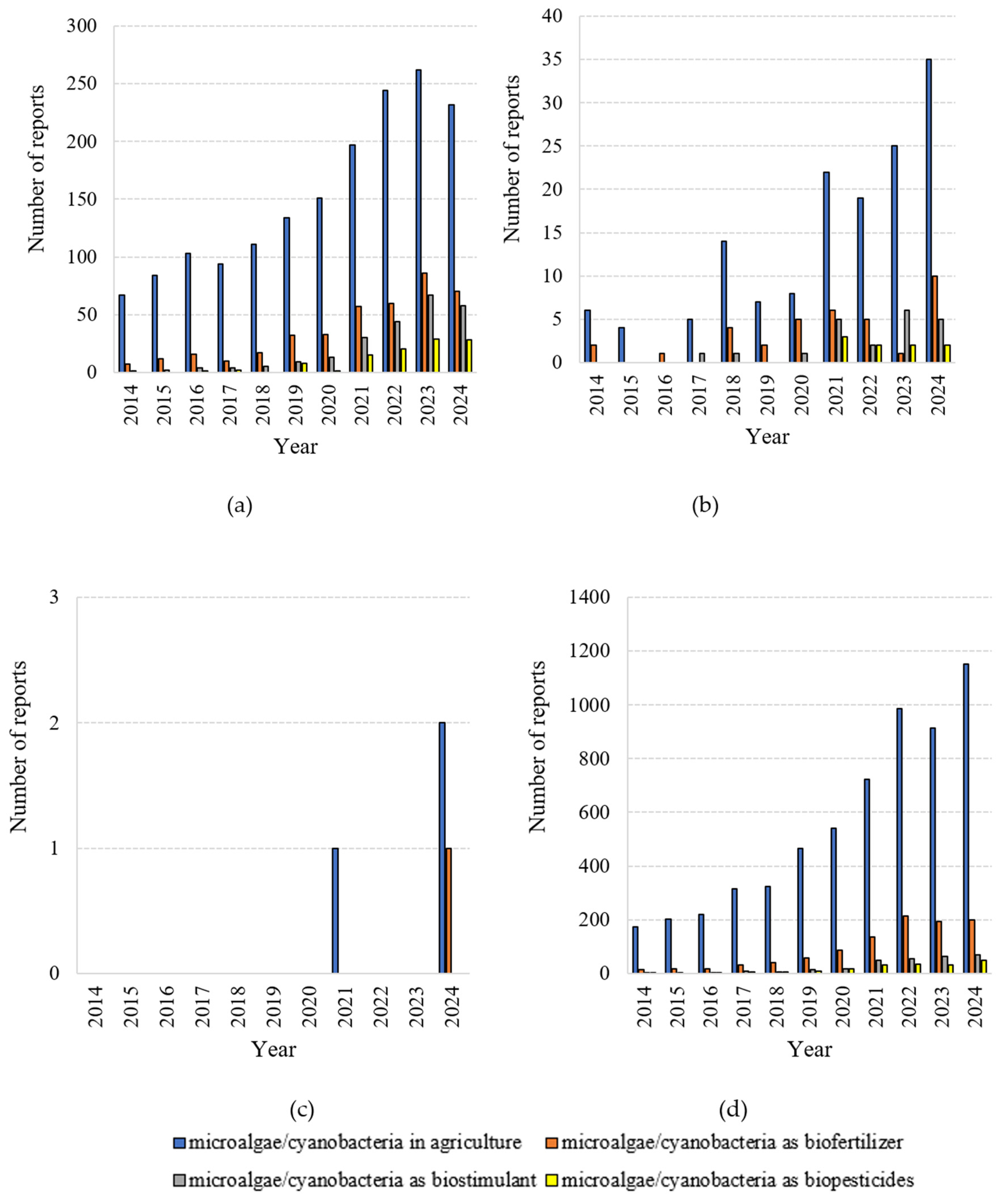
Publication data were collected for the period 2014–2024 using four widely used databases: Google Scholar, Scopus, Scilit, and ScienceDirect. Searches were performed using predefined keyword combinations, including “microalgae/cyanobacteria in agriculture”, “microalgae/cyanobacteria as biofertiliser”, “microalgae/cyanobacteria as biostimulant”, and “microalgae/cyanobacteria as biopesticides”. The number of records returned for each keyword and year was used as an indicator of research activity and thematic focus (
Figure 1). The results demonstrate a consistent increase in publications addressing the agricultural use of microalgae and cyanobacteria, confirming the sustained relevance of this topic. The highest number of records was associated with the general keyword “microalgae/cyanobacteria in agriculture”. In Google Scholar, the number of publications increased from 67 in 2014 to 232 in 2024, while in Scopus the corresponding increase was from 6 to 35 records. ScienceDirect showed a similar upward trend, with records increasing from 174 to 1151 over the analysed period. Scilit returned comparatively fewer records, which likely reflects differences in database coverage rather than a lack of scientific output. More application-specific terms, such as “microalgae/cyanobacteria as biostimulant” and “microalgae/cyanobacteria as biopesticides”, were less frequently represented across the analysed databases, and no records were identified for these keywords in Scilit. This suggests that such applications are often embedded within broader studies on agricultural or environmental uses of microalgae and cyanobacteria, rather than being explicitly labelled using narrowly defined terminology.
Several limitations of this publication trend analysis should be acknowledged. First, the use of keyword-based searches may underestimate research activity where alternative terminology is employed. Second, differences in database indexing policies, coverage, and search algorithms limit direct quantitative comparability between databases. Finally, the analysis is restricted to publication counts and does not assess citation impact, research quality, or thematic depth. For these reasons, the analysis is intentionally limited to the data presented in
Figure 1 and is used solely to contextualise the review rather than to draw exhaustive bibliometric conclusions.
3. Microalgae and Cyanobacteria Composition and Characteristics of Biomass
The diverse composition of microalgal and cyanobacterial biomass underpins their increasing significance in agricultural biotechnology [
21]. The proportions of proteins, lipids, carbohydrates, and secondary metabolites in this biomass depend strongly on species, cultivation conditions, growth phase, and the availability of mineral nutrients, enabling targeted use as organic fertilisers, growth biostimulants, or biopesticides [
22]. Proper optimisation of cultivation parameters (e.g., light intensity, N:P ratio, CO
2 concentration) allows control over the C/N ratio and the content of key biochemical fractions, determining the application value of the biomass [
23].
Numerous studies have shown that microalgae are among the most protein-rich photosynthetic organisms, with protein content typically ranging from 30 to 60% of dry weight (DW), and in species such as
Chlorella vulgaris,
Spirulina platensis, and
Scenedesmus obliquus, exceeding 65% DW [
24,
25]. Cyanobacteria exhibit similar values (30–50% DW), with the unique ability to biologically fix atmospheric nitrogen due to the presence of heterocysts, providing both organic and mineral nitrogen sources [
26]. This nitrogen occurs primarily as soluble proteins, amino acids (mainly alanine, leucine, and glutamic acid), and ammonium forms, which are released during mineralisation in the soil, enhancing fertility and nitrogen availability for plants [
27]. Field studies have demonstrated that the application of cyanobacterial biomass in rice and maize cultivation can reduce the use of nitrogen fertilisers by 20–30% without negatively affecting yield or plant biomass quality [
28].
Lipid content in microalgal biomass varies widely—from 10 to 50% DW—depending on species and environmental conditions. In oleaginous species such as
Nannochloropsis gaditana and
Botryococcus braunii, it may exceed 60% DW [
29]. High lipid content, particularly triacylglycerols, phospholipids, and free fatty acids, influences not only the energy value of the biomass but also its behaviour in soil, prolonging mineralisation and conferring slow-release fertiliser properties [
30]. Cyanobacteria have lower lipid content (5–15% DW); however, their lipids are more unsaturated and biologically active, promoting faster biodegradation and nutrient availability for plants [
31].
Carbohydrates constitute 10–30% DW of microalgal biomass and 15–25% DW of cyanobacterial biomass [
32]. Extracellular polysaccharides (EPS) play a key role, participating in the formation of biological soil crusts. EPS stabilise the soil surface, enhance water retention, and reduce erosion. They also serve as a source of readily available carbon for soil microorganisms, supporting microbiome development and improving soil structure [
33]. The composition of EPSs is highly diverse, dominated by rhamnose, galactose, mannose, glucose, and uronic acids, which influence their capacity to complex heavy metal ions and immobilise them in the soil [
34].
The content of major macronutrients in microalgal and cyanobacterial biomass includes 4–8% nitrogen (N), 0.5–1.5% phosphorus (P), and 0.2–1.0% potassium (K) [
35]. Cyanobacteria, through atmospheric nitrogen fixation, can enhance its availability in mineral forms in soil, whereas microalgae, despite lacking this ability, provide substantial amounts of organic nitrogen, contributing to long-term soil enrichment [
36]. Both groups accumulate phosphorus as polyphosphates (PolyP), which are gradually released upon biomass mineralisation, ensuring a prolonged fertilisation effect. Microalgae and cyanobacteria are also rich sources of micronutrients such as Fe, Mg, Zn, Mn, and Cu [
37], which play crucial roles in plant metabolic processes including photosynthesis and respiration.
Furthermore, the biomass of these microorganisms contains numerous secondary metabolites, including phenols, alkaloids, cyclopeptides, and glycopeptides, exhibiting biostimulatory, antioxidant, and allelopathic properties [
38]. These compounds can suppress the growth of fungal and bacterial pathogens (e.g.,
Fusarium sp.,
Alternaria sp.,
Pseudomonas sp.), induce systemic resistance mechanisms in plants (ISR), and influence hormonal regulation of growth [
39]. Recent studies also suggest that certain microalgal protein fractions can act as natural chelators, enhancing nutrient bioavailability and facilitating their transport across cell membranes [
40]. Therefore, the integrated use of microalgal and cyanobacterial biomass in agriculture requires not only knowledge of its biochemical composition but also an understanding of the mechanisms underlying the interactions of these compounds with soil microbiota, plants, and the environment. This approach allows fuller exploitation of the potential of these microorganisms to improve productivity, plant health, and agroecosystem sustainability [
41].
Table 1 summarises representative ranges of chemical composition parameters of microalgal and cyanobacterial biomass relevant to fertilisation. Values derive from studies with clearly reported cultivation and analytical conditions, and the table is not intended to represent all available species or experimental designs.
Table 1.
Chemical composition of microalgal and cyanobacterial biomass in the context of its fertilisation potential.
Table 1.
Chemical composition of microalgal and cyanobacterial biomass in the context of its fertilisation potential.
| Component/Parameter | Microalgae | Cyanobacteria | Agronomic Relevance/Significance | Reference |
|---|
|
Protein
| 30–60% (up to 65% in Chlorella, Scenedesmus) | 30–50% | Main source of organically bound nitrogen; mineralisation rate depends on biomass processing and C/N ratio; supports gradual N availability | [42,43,44] |
|
Lipids
| 10–50% (up to 60% in oleaginous species, e.g., Botryococcus) | 5–15% | High lipid content slows microbial decomposition, contributing to prolonged nutrient release and reduced leaching losses | [45,46,47] |
|
Carbohydrates
| 10–30% | 15–25% | Carbon source for soil microbiota; stimulates microbial activity and supports nutrient cycling | [32,33,42] |
|
Extracellular polysaccharides
| 5–20% | 10–30% | Stabilisation of soil aggregates, improvement of soil structure and water retention; binding of metal ions and reduction in nutrient losses | [5,33,34,48] |
|
Nitrogen (N)
| 4–8% | 4–8% (partially from N2 fixation) | Key macronutrient; organic N contributes to slow-release fertilisation; in cyanobacteria, atmospheric N2 fixation increases soil N pools | [26,35,42] |
|
Phosphorus (P)
| 0.5–1.5% | 0.5–1.2% | Accumulated partly as polyphosphates (PolyP); gradual release supports prolonged P availability | [35,37,49] |
|
Potassium (K)
| 0.2–1.0% | 0.2–0.8% | Regulation of plant water balance, enzyme activation, and stress tolerance | [35,49] |
|
Micronutrients (Fe, Mg, Zn, Mn, Cu)
| 0.1–1.0% total | 0.1–1.0% total | Essential enzyme cofactors; support photosynthesis, respiration, and plant metabolic activity | [5,37,50] |
|
C/N ratio (molar)
| 6–12 | 5–10 | Determines mineralisation dynamics; lower C/N promotes faster nutrient release, higher C/N favours prolonged fertilisation effect | [23,36,42] |
|
Bioactive compounds (phenols, alkaloids, peptides, glycopeptides)
| + | +++ | Biostimulatory, allelopathic, antifungal, and plant defence–modulating effects | [20,51] |
|
Nitrogen fixation ability
| – | +++ | Presence of heterocysts enables atmospheric N2 fixation, enhancing soil fertility and reducing fertiliser inputs | [32,52,53] |
4. The Importance of Microalgae and Cyanobacteria for Biological Soil Crusts
Microalgae and cyanobacteria play a key role in the formation and maintenance of biological soil crusts (BSCs), which are an essential component of terrestrial ecosystems, particularly in arid and semi-arid regions [
54]. These structures influence soil surface stability, nutrient cycling, and hydrological processes. BSCs are dominated by cyanobacteria and microalgae, which, through photosynthetic activity and the secretion of EPS, provide cohesion and functional integrity to the crusts [
55].
Cyanobacteria, including representatives of the genera
Nostoc,
Microcoleus, and
Scytonema, initiate the formation of BSCs [
56]. Their extracellular polysaccharides bind soil mineral particles into a stable matrix, stabilising the soil surface and reducing erosion [
57]. EPS enhance the soil’s water retention capacity, improve porosity, and facilitate colonisation by other microorganisms, including lichens and mosses [
58]. Microalgae, in addition to providing structural support, enrich the soil with organic compounds, increasing organic carbon and mineral nitrogen content, thereby improving fertility and microbiological activity [
59].
It has been demonstrated that microalgal and cyanobacterial biomass is a source of numerous secondary metabolites, including phenols, amino acids, carotenoids, phycobiliproteins, and antioxidant compounds, which protect cells from oxidative stress and UV radiation, enhancing the resilience of BSCs under extreme environmental conditions [
60]. Particularly important are phycocyanin and scytonemin, cyanobacterial pigments that absorb UV-A and UV-B radiation, limiting DNA and protein damage [
61]. Cyanobacteria within BSCs also play a crucial role in biological nitrogen fixation, supplying the ecosystem with reactive nitrogen in ammonium and organic forms [
62]. The diazotrophic activity of these organisms can serve as the primary nitrogen source for vegetation in desert ecosystems, which is critical for maintaining biological productivity under limited fertilisation conditions [
62]. In addition to nitrogen, microalgae and cyanobacteria participate in the phosphorus cycle through polyphosphate accumulation and contribute to organic carbon retention in degraded soils [
63].
Field studies have shown that inoculation of soils with cyanobacteria improves physicochemical properties, increases nutrient content, and stimulates plant growth [
64]. In the context of degraded land reclamation, the introduction of cyanobacteria and microalgae accelerates BSC formation, reduces organic matter loss, and promotes carbon sequestration [
65]. Such interventions can reduce soil dusting, increase water-holding capacity, and support pioneer vegetation succession. The practical application of this phenomenon in agricultural systems, particularly in dry, saline, or erosion-prone areas, is increasingly recognised. Soil inoculation with cyanobacteria–microalgae mixtures can be considered a natural approach to restoring soil structure and microbiome activity, offering an alternative to mineral fertilisers and soil amendments [
66].
Microalgal and cyanobacterial biomass represents a valuable resource with high application potential, providing a promising alternative to conventional natural fertilisers [
42]. This is particularly relevant in the context of a circular economy, where biological waste is converted into value-added products, minimising environmental impact [
67]. In natural environments, microalgae and cyanobacteria, together with fungi and bacteria, form complex and dynamic consortia that enhance soil fertility, support crop growth, and increase microbial biodiversity [
68]. Their presence has been confirmed in a variety of soil types, from clay [
69] to sandy soils [
70], which are often characterised by low organic matter, limited nutrient availability, and high abiotic stress, making photosynthetic microorganisms a key driver of ecological succession. Within BSC structures, dominant taxa include members of the orders
Oscillatoriales,
Nostocales,
Chroococcales,
Synechococcales,
Chroococcidiopsidales,
Pleurocapsales,
Microcoleaceae, and
Chlorellales [
71]. Their survival is supported by adaptive mechanisms such as heterocyst formation for N
2 assimilation and EPS production that stabilises cell and soil structure [
72].
Microalgae and cyanobacteria in biological soil crusts perform multifaceted roles in terrestrial ecosystems—they stabilise soil surfaces, enrich soils with organic matter and mineral nutrients, improve water balance, and support biological succession (
Table 2). Their potential in agriculture and soil reclamation is highly promising, although still underutilised. Further long-term studies are needed to assess the stability of inoculants, their interactions with soil microbiomes, and their efficacy under field conditions.
Table 2 provides a representative overview of ecological and applied functions of microalgae and cyanobacteria within biological soil crusts (BSCs), based on studies combining mechanistic insight with agronomic relevance.
Table 2.
Ecological and applied functions of microalgae and cyanobacteria within biological soil crusts (BSCs).
Table 2.
Ecological and applied functions of microalgae and cyanobacteria within biological soil crusts (BSCs).
| Function Category | Representative Taxa | Mechanism of Action | Ecological/Agricultural Effect | Reference |
|---|
| Soil stabilisation | Microcoleus vaginatus, Nostoc commune, Scytonema javanicum | Secretion of EPS; formation of organic–mineral matrices binding soil particles | Increased soil cohesion; reduced wind and water erosion; enhanced surface stability in dryland and degraded soils | [33,36,73] |
| Water retention | Nostoc, Phormidium, Chlorella spp. | High sorption capacity of EPS; increased surface porosity and capillary retention | Improved soil moisture availability; reduced drought stress; buffering of short-term water deficits | [33,58,74] |
| Nitrogen fixation | Anabaena cylindrica, Nostoc punctiforme, Scytonema hofmanni | Diazotrophic activity of heterocysts via nitrogenase complex | Enrichment of soil with bioavailable nitrogen; support of early plant establishment and soil fertility | [36,62,75] |
| Carbon sequestration | Chlorella vulgaris, Synechococcus elongatus | Autotrophic CO2 fixation; accumulation of organic carbon within BSC matrix | Increase in soil organic carbon pools; contribution to carbon cycling and climate mitigation | [65,76] |
| Phosphorus accumulation | Anabaena flos-aquae, Chlorella pyrenoidosa | Intracellular storage of polyphosphates; microbial turnover and release | Gradual enrichment of soil with bioavailable P; improved nutrient-use efficiency | [37,63,77] |
| Secondary metabolite production | Scytonema sp., Nostoc sp. | Synthesis of UV-screening pigments (scytonemin), phycobiliproteins, antioxidants | Protection of BSC organisms against UV and oxidative stress; increased resilience of soil surface communities | [22,38,75] |
| Development of biological structure | Microcoleus, Nostoc, Chlorella spp. | Colonisation of bare substrates; interaction with bacteria, fungi, lichens, and mosses | Initiation of ecological succession; formation of stable microbial consortia | [53,61,77] |
| Degraded soil reclamation | Nostoc commune, Phormidium sp., Chlorella vulgaris | Inoculation with cyanobacteria–microalgae consortia; EPS-mediated soil binding | Accelerated soil regeneration; improved structure, nutrient content, and biological activity | [53,61,74] |
| Improvement of agricultural soil fertility | Anabaena sp., Chlorella sp., Synechococcus sp. | Accumulation of C, N, P, and micronutrients; stimulation of soil microbiome | Enhanced soil health and crop performance; support of sustainable farming systems | [52,68,77] |
| Enhanced resistance to abiotic stress | Scytonema sp., Nostoc sp., Chlorella sp. | Activation of antioxidant systems; EPS production; synthesis of stress-protective pigments | Increased resilience of soil and microbiome to drought, UV radiation, salinity, and temperature extremes | [71,74,78] |
5. Microalgae and Cyanobacteria as Biostimulants
Extracts and metabolites from various taxonomic groups of microalgae, including
Chlorella spp.,
Spirulina platensis,
Acutodesmus spp.,
Scenedesmus spp.,
Dunaliella spp., and
Calothrix elenkini, are widely used as biostimulants to enhance plant growth and development (
Table 3). These preparations activate natural physiological mechanisms, increase nutrient uptake and use efficiency, improve tolerance to abiotic stress, and positively influence yield quality traits [
78]. Microalgae provide numerous bioactive compounds, such as amino acids, vitamins, growth hormones (auxins, gibberellins, cytokinins), and polyamines, which stimulate cell division, root system development, and biomass accumulation, ultimately enhancing growth and productivity [
79].
Substances derived from cyanobacteria, belonging to genera such as
Nostoc sp.,
Anabaena sp.,
Aulosira sp.,
Tolypothrix sp.,
Nodularia sp.,
Cylindrospermum sp.,
Scytonema sp.,
Aphanothece sp.,
Calothrix sp., and
Anabaenopsis sp., also show strong biostimulatory properties [
80]. Auxins are one of the key groups of compounds regulating plant developmental processes. Various cyanobacterial species have been found to produce indole-3-acetic acid (IAA), indole-3-butyric acid (IBA), indole-3-propionic acid (IPA), and 3-methylindole [
81]. According to Lee and Ryu [
82], auxins produced by microalgae may function as signalling molecules mediating plant–microalgae interactions, positively influencing their mutual relationships.
Table 3 compiles representative groups of microalgal biostimulant compounds and their physiological effects. The examples illustrate cross-species trends rather than provide an exhaustive catalogue.
Table 3.
Microalgae-derived biostimulant compounds and their effects on plant growth and stress resilience.
Table 3.
Microalgae-derived biostimulant compounds and their effects on plant growth and stress resilience.
| Compound Group | Representative Microalgal/Cyanobacterial Sources | Representative Compounds | Typical Concentration Range | Functional Significance (Mechanism of Action) | Effects on Plant Growth and Stress Tolerance | Reference |
|---|
| Auxins | Chlorella spp., Coenochloris spp., Acutodesmus spp., Scenedesmus spp., Chlorococcum spp.; Nostoc sp., Anabaena sp., Calothrix sp. | IAA (indole-3-acetic acid), IBA (indole-3-butyric acid), IPA (indole-3-propionic acid), IAM (indole-3-acetamide) | 0.18–99.83 nmol/g DW | Regulation of cell elongation and division; stimulation of lateral root initiation; modulation of plant–microalgae signalling | Enhanced root architecture, increased biomass accumulation, improved nutrient uptake | [79,81,83] |
| Gibberellins (GAs) | Chlorella vulgaris, Scotiellopsis terrestris, Gyoerffyana humicola | GA1, GA3, GA7, GA15 | 3 pg–3.45 ng/g DW | Promotion of seed germination and shoot elongation; regulation of chlorophyll synthesis and enzyme activity | Accelerated germination, enhanced shoot growth, improved tolerance to drought and heavy metals | [78,79,84] |
| Cytokinins (CKs) | Nannochloropsis spp., Klebsormidium flaccidum, Stigeoclonium nanum | cis-zeatin, trans-zeatin, isopentenyladenine (iP), dihydrozeatin | 0.29–21.4 nmol/g DW | Regulation of cell division; delay of leaf senescence; enhancement of nutrient mobilisation | Improved photosynthetic efficiency, increased productivity, reduced water and nitrogen stress | [67,79,85] |
| Polyamines (PAs) | Arthrospira (Spirulina) platensis, Scenedesmus sp. | PUT (putrescine), SPS (spermidine), SPM (spermine) | 50–150 mg/g DW; SPM 3.31 mg/g DW; PUT 0.76 mg/g DW; SPS 0.67 mg/g DW | Stabilisation of membranes and nucleic acids; regulation of stress signalling and antioxidant responses | Faster organ development, enhanced stress tolerance, increased biomass | [79,86,87] |
| Jasmonate-related compounds | Tetraselmis sp., Dunaliella salina, Nannochloropsis gaditana, Aphanothece sp., Arthrospira maxima | Oxylipin and jasmonic acid (JA) precursors | — | Activation of jasmonate-dependent defence pathways; modulation of systemic stress responses | Increased resistance to oxidative stress and biotic factors | [88,89,90] |
| ABA-related compounds | Dunaliella spp., Chlorella spp., Scenedesmus spp. | Abscisic acid (ABA) analogues | trace–ng/g DW | Regulation of stomatal conductance; osmotic adjustment under stress conditions | Improved drought and salinity tolerance | [84,91,92] |
| Secondary metabolites and bioactive complexes | Mixed microalgal and cyanobacterial extracts | Amino acids, vitamins, phenolic compounds, carotenoids, peptides | — | Activation of antioxidant systems; synergistic modulation of metabolic and hormonal pathways | Improved plant vigour, stress resilience, and yield quality | [21,35,42] |
It has been demonstrated that treating plants with liquid extracts from eukaryotic microalgae, such as
Tetraselmis sp.,
Dunaliella salina,
Nannochloropsis gaditana,
Aphanothece sp., and
Arthrospira maxima, induces the accumulation of a jasmonic acid precursor in tomato, indicating activation of plant hormonal defence mechanisms [
82]. Auxins are largely responsible for cell elongation, the elongational growth of roots and shoots, and the determination of their growth direction [
93]. Cell elongation results from water uptake and increased turgor pressure, while auxins increase cell wall plasticity, allowing stretching and volume expansion [
94]. Microalgae such as
Chlorella spp.,
Coenochloris spp.,
Acutodesmus spp.,
Scenedesmus spp., and
Chlorococcum spp. contain auxins in concentrations ranging from 0.18 to 99.83 nmol/g dry biomass, mainly as IAA and indole-3-acetamide (IAM) [
78].
Gibberellins (GA) also play a crucial role in stimulating plant growth, particularly during germination, by activating enzymatic processes that enable the mobilisation of seed storage compounds [
95]. Additionally, gibberellins support tissue elongation and shoot development, which are important for plant architecture. These compounds also enhance plant tolerance to abiotic stresses, such as drought, salinity, and high temperatures, by influencing osmoregulation, antioxidant enzyme activity, and ion homeostasis [
96]. Approximately 19 types of gibberellins have been identified in various microalgal species, with the most important ones regulating stem elongation, germination initiation (via α-amylase activation), and flower development and blooming [
78]. Han et al. [
84] reported that extracts containing gibberellins from
C. vulgaris mitigated the toxic effects of heavy metals (lead and cadmium), enhancing plant resilience. Total gibberellin concentrations in microalgae range from 3 pg/mg biomass (GA
7 in Gyoerffyana humicola) to 3452.9 pg/mg (GA
15 in
Scotiellopsis terrestris) [
97].
Cytokinins regulate cell division, lateral bud and root development, nutrient transport and uptake, and also influence leaf morphology, vascular tissue development, gametophytes, and embryos. They play a key role in chlorophyll metabolism, delaying leaf senescence and enhancing photosynthetic efficiency, thereby increasing productivity and yield [
79]. Cytokinins can alleviate both biotic and abiotic stresses—for example, extracts from
Nannochloropsis spp. containing cytokinins reduced water and nitrogen stress in tomato [
85]. Analysis of 24 microalgal strains by Stirk et al. [
98] identified 19 types of cytokinins, with total concentrations ranging from 0.29 nmol/g dry weight (
Klebsormidium flaccidum MACC-692) to 21.40 nmol/g (
Stigeoclonium nanum MACC-790). cis-Zeatin-type cytokinins were dominant, while isopentenyladenine-type cytokinins were present in moderate amounts; trans-zeatin and dihydrozeatin occurred in low or very low concentrations.
Polyamines, such as putrescine (PUT), spermine (SPM), and spermidine (SPS), are organic cations that play important roles in cell division, tissue differentiation, and plant responses to abiotic stress [
99]. Polyamine content in microalgae falls within the typical range observed in higher plants (50–150 µg/g fresh weight) [
100]. Biosynthetic pathways of these compounds in microalgae show significant similarity to those in higher plants.
Spirulina platensis is characterised by high polyamine content—0.76 µg PUT, 3.31 µg SPM, and 0.67 µg SPS per gram of dry biomass [
87]. Mógor et al. [
101] confirmed that polyamines from
A. platensis stimulated the growth of sugar beet seedlings, demonstrating a biostimulatory effect. In another experiment, foliar application of solutions containing
A. platensis and
Scenedesmus sp. (10 g/dm
3, five applications) on
Petunia ×
hybrida accelerated root, leaf, and shoot development and induced earlier flowering [
102]. Cyanobacteria increased root dry mass, flower number, and tissue water content, although in the case of
A. platensis, a reduction in the dry mass of conductive tissues was observed compared to
Scenedesmus sp. and the control. These results suggest that delivering microalgae in the form of hydrolysates can positively influence plant growth and development [
102].
Microalgae-derived biostimulants comprehensively support plants in adapting to adverse environmental conditions, enhancing plant health, stress resilience, and metabolic efficiency. Consequently, they contribute to increased crop yields and improved crop quality [
103].
Table 4 summarises the biostimulatory effects associated with the use of microalgal and cyanobacterial biomass.
Table 4.
Effects of applying microalgal and cyanobacterial extracts and biomass as plant growth biostimulants.
Table 4.
Effects of applying microalgal and cyanobacterial extracts and biomass as plant growth biostimulants.
| Microalgal/Cyanobacterial Species/Genus | Application Form | Crop Plant | Observed Biostimulatory Effect | Mechanism/Biochemical Observation | References |
|---|
| Arthrospira (Spirulina) platensis | Foliar spray, hydrolysate (10 g/dm3, 5 applications) | Petunia × hybrida | Accelerated root, leaf, and shoot development; earlier flowering | Increased activity of oxidoreductive enzymes, higher tissue water content | [104] |
| Scenedesmus sp. | Aqueous extract (10 g/dm3) | Petunia × hybrida | Increased root dry mass, higher flower number | Activation of growth hormones and photosynthesis | [105] |
| Chlorella vulgaris | Methanolic extract | Pisum sativum, Lycopersicon esculentum | Increased biomass yield, darker green leaf coloration | High gibberellin and cytokinin content; improved photosynthetic efficiency | [106] |
| Nannochloropsis spp. | Aqueous extract | Solanum lycopersicum | Mitigation of water and nitrogen stress | Presence of cytokinins (cis-zeatin); increased Rubisco activity | [107] |
| Aphanothece sp., Arthrospira maxima | Aqueous extract | Solanum lycopersicum | Accumulation of jasmonic acid precursor; induced resistance | Activation of JA-dependent defence mechanisms | [108] |
| Arthrospira platensis | Live biomass suspension | Beta vulgaris | Seedling growth stimulation; increased chlorophyll content | Presence of polyamines (PUT, SPM, SPS) | [88] |
| Dunaliella salina, Tetraselmis sp. | Ethanolic extract | Triticum aestivum | Enhanced root and shoot growth; higher grain mass | Activation of auxin and cytokinin synthesis | [88] |
6. Microalgae and Cyanobacteria as Biopesticides
Microalgae and cyanobacteria are an exceptionally rich source of natural secondary metabolites with antimicrobial, antifungal, insecticidal, and allelopathic properties (
Table 5). These substances, known as biopesticides, offer a promising alternative to chemical plant protection agents, supporting the strategy of sustainable and ecological agriculture [
67]. Unlike synthetic pesticides, microalgal biopesticides are biodegradable, non-toxic to beneficial organisms and the environment, and their activity is often selective towards specific groups of pathogens [
109].
Table 5.
Major groups of bioactive compounds produced by microalgae and cyanobacteria and their modes of action as biopesticides.
Table 5.
Major groups of bioactive compounds produced by microalgae and cyanobacteria and their modes of action as biopesticides.
| Compound Group | Examples | Producer (Microalga/Cyanobacteria) | Mode of Action | Target Organisms | Reference |
|---|
| Carotenoids | β-carotene, lutein, astaxanthin, fucoxanthin | Dunaliella salina, Haematococcus pluvialis, Nannochloropsis sp. | Antioxidation, membrane destabilisation, disruption of insect hormonal enzymes | Fusarium oxysporum, Aphididae spp. | [60,110,111] |
| Phenolic Compounds and Polyphenols | Ferulic acid, gallic acid, caffeic acid, phytol | Chlorella sorokiniana, Scenedesmus sp. | Inhibition of pathogen oxidative enzymes, induction of systemic acquired resistance (SAR) | Staphylococcus aureus, Candida albicans, Aspergillus niger | [7,35,112] |
| Cyclic Peptides and Lipopeptides | Microcystins, nodularins, anabaenopeptins | Nostoc sp., Anabaena sp., Scytonema sp. | Inhibition of protein and cell membrane synthesis in soil fungi | Rhizoctonia solani, Phytophthora infestans | [67,72,76] |
| Fatty Acids | Palmitic, linoleic, oleic, EPA | Chlorella vulgaris, Nannochloropsis oculata | Disruption of bacterial membrane structure, biofilm inhibition | Pantoea agglomerans, Xanthomonas campestris | [30,72,113] |
| Flavonoids and Terpenoids | Phytosterols, monoterpenes | Chlorella sp., Spirulina platensis | Lipid membrane disruption, insect repellent action | Botrytis cinerea, aphids | [7,72,82] |
| Alkaloids | Tryptamine, indolizidines | Anabaena sp., Calothrix sp. | Disruption of nerve conduction in insects and nematodes | Helicoverpa armigera, Meloidogyne incognita | [30,67,72] |
Microalgae and cyanobacteria synthesise a wide range of secondary metabolites, including flavonoids, terpenoids, alkaloids, carotenoids, polyphenols, cyclic peptides, and fatty acids, which can inhibit the growth of pathogenic bacteria, fungi, and insects [
72]. Their mechanisms of action include destabilisation of pathogen cell membranes, inhibition of protein and nucleic acid synthesis, disruption of oxidative pathways, and modulation of hydrolase enzyme activity. In vitro studies have shown that extracts from the microalgae
Chlorella vulgaris and
Scenedesmus obliquus reduce the growth of
Pseudomonas syringae,
Xanthomonas campestris, and
Agrobacterium tumefaciens by 70–90% at concentrations of around 50 µg/mL [
109]. Antifungal activity has also been confirmed against pathogens such as
Fusarium oxysporum,
Botrytis cinerea, and
Alternaria alternata [
112].
Carotenoids are among the most important bioactive compounds in microalgae. In addition to their key role in photosynthesis, they act as strong antioxidants, protecting plant cells from oxidative stress. Carotenoids, including β-carotene, lutein, astaxanthin, and fucoxanthin, are also involved in the biosynthesis of phytohormones—abscisic acid (ABA) and strigolactones—which modulate plant responses to biotic and abiotic stress [
91]. The species
Dunaliella salina is one of the best-known β-carotene producers, achieving a biomass productivity of 80 g/m
3·d and 1.25–2.45 mg/L β-carotene under semi-continuous cultivation at 25 °C [
110]. These compounds can also function as repellents, reducing insect feeding by inhibiting digestive enzymes and disrupting hormonal pathways [
92].
Phenolic compounds, such as ferulic, gallic, and caffeic acids, and phytol, play a key role in resistance to microbial infections and oxidative stress [
114]. Microalgae species
Chlorella sorokiniana (UKM2),
Chlorella sp. (UKM8), and
Scenedesmus sp. (UKM9) produce phenolic metabolites with antibacterial activity, inhibiting the growth of
Staphylococcus aureus,
E. coli, as well as the fungi
Candida albicans and
Aspergillus niger [
104]. Foliar application can increase plant defence enzyme activities (peroxidases, polyphenol oxidases), inducing systemic acquired resistance (SAR) [
109].
Cyanobacteria, such as
Nostoc sp.,
Anabaena sp.,
Calothrix sp.,
Scytonema sp., and
Aphanothece sp., produce cyclic peptides, lipopeptides, and alkaloids with strong antimicrobial and cytotoxic activity. Well-known compounds include microcystins, nodularins, and anabaenopeptins, which inhibit soil pathogens such as
Rhizoctonia solani and
Phytophthora infestans [
80]. Cyanobacterial extracts at 50 µg/mL reduced the mycelial growth of these pathogens by over 80% without showing toxicity to plants [
67]. At the molecular level, microalgal biopesticides can induce the expression of plant defence genes, such as PR1 (pathogenesis-related protein 1), PAL (phenylalanine ammonia-lyase), and CAT (catalase), enhancing resistance to infections and oxidative stress [
82].
Microalgae also play a key role in modulating the rhizosphere microbiome. Certain species, such as
Chlorella vulgaris and
Nannochloropsis oculata, can reduce colonisation of plant surfaces by pathogenic bacteria, for example,
Pantoea agglomerans, commonly found on maize leaves and capable of causing tissue rot under environmental stress [
115]. Bioactive microalgal metabolites, including long-chain fatty acids and polyphenols, limit the ability of these bacteria to form biofilms and compete for carbon and nitrogen sources [
113].
Table 6 presents the use of microalgae and cyanobacteria as biopesticides.
Table 6.
Selected microalgae and cyanobacteria species used as biopesticides and their biological effectiveness.
Table 6.
Selected microalgae and cyanobacteria species used as biopesticides and their biological effectiveness.
| Species | Type of Organism | Activity Type | Effectiveness (Example) | Target (Pathogen/Pest) | Notes and Practical Applications | Reference |
|---|
| Chlorella vulgaris | Green microalga | Antibacterial, antifungal | Reduction in P. syringae and A. tumefaciens growth by 70–90% (50 µg/mL) | Phytopathogenic bacteria and fungi | Component of biostimulants and crop protection products (e.g., PhycoTerra® (PhycoTerra, Gilbert, AZ, USA)) | [49,109,116] |
| Scenedesmus obliquus | Green microalga | Antioxidant, fungistatic | Reduction in B. cinerea and A. alternata by 80% | Pathogenic fungi | Used in biocontrol formulations for vegetable crops | [109,112] |
| Dunaliella salina | Halophilic green microalga | Repellent, antioxidant | β-carotene: 1.25–2.45 mg/L; inhibition of insect feeding | Sucking and chewing insects | Natural source of carotenoids and phytohormones (ABA) | [88,110] |
| Arthrospira (Spirulina) platensis | Cyanobacterium | Fungistatic, immunostimulant | Reduction in Fusarium and Rhizoctonia by >70% | Soil fungi | Extract used in Spirulex® (Planctontech, Aosta, Italy) formulation | [49,67,88] |
| Nostoc sp. | Cyanobacterium | Antifungal, biostimulant | Reduction in P. infestans growth by >80% | Soil pathogens | Cyclic peptides with selective activity | [80,117] |
| Nannochloropsis oculata | Marine microalga | Antibacterial, biofilm-inhibiting | Inhibition of P. agglomerans colonisation by 60% | Rhizosphere bacteria | Supports microbiome and root resistance | [115,118] |
Several commercial products based on microalgal biomass or extracts are already available on the market and are used as biostimulants and biopesticides. The product Algifol
® (Neomed Pharma GmbH, Lübeck, Germany) (based on extracts from
Ascophyllum nodosum and planktonic microalgae) provides protective effects against leaf diseases and improves resistance to water stress. Spirulex
®, containing an extract from
Arthrospira platensis, acts as a natural fungicide, limiting the development of
Fusarium and
Rhizoctonia. PhycoTerra
®, based on hydrolysed microalgal biomass, enhances soil structure and stimulates soil microbial activity, indirectly increasing plant resistance to pathogens [
49]. However, large-scale implementation of microalgal biopesticides still requires further research on metabolite stability in the environment, optimisation of extraction methods, and standardisation of application doses. A promising research direction involves modular bioreactors that enable the production of metabolite mixtures with synergistic effects, which can increase the efficiency of biological protection with minimal environmental impact.
Microalgae and cyanobacteria represent a modern and promising biotechnological platform for biological plant protection. Their secondary metabolites—from carotenoids to cyclic peptides—exhibit multifaceted activity, ranging from direct inhibition of pathogens to activation of systemic plant defence mechanisms. The combination of high biological efficacy, environmental safety, and compatibility with regenerative agricultural systems makes microalgal biopesticides a key component in the transition towards low-emission, environmentally friendly agriculture.
Table 7 compares the properties of microalgal biopesticides with those of synthetic pesticides.
Table 7.
Specific properties of microalgae- and cyanobacteria-derived biopesticides compared with synthetic pesticides.
Table 7.
Specific properties of microalgae- and cyanobacteria-derived biopesticides compared with synthetic pesticides.
| Criterion | Microalgae/Cyanobacteria (Representative Species) | Reference | Synthetic Pesticides | Reference | Species-Specific Notes/Environmental Implications |
|---|
| Biological origin of active compounds | Scytonema spp. (scytonemin), Nostoc spp. (cyclic peptides), Arthrospira platensis (phycobiliproteins), Dunaliella salina (carotenoids) | [80,88,117] | Organophosphates, neonicotinoids, carbamates | [119,120] | Algal compounds are secondary metabolites linked to photosynthetic stress responses |
| Production system | Chlorella vulgaris, Scenedesmus obliquus cultivated in photobioreactors or open ponds with CO2 fixation | [3,65] | Fossil-based chemical synthesis | [119,121] | Biopesticide production coupled with CO2 capture and nutrient recovery |
| Mode of action | Nostoc spp., Anabaena spp. (membrane disruption, enzyme inhibition, ROS induction); Scenedesmus spp. (induced systemic resistance) | [39,72,82] | Single or narrow molecular targets | [122,123] | Multi-target action reduces resistance development |
| Chemical complexity | Scytonema, Nostoc, Arthrospira spp. produce mixtures of peptides, pigments, phenolics | [60,114] | Typically one active substance | [122,123] | Complex mixtures enhance robustness of pest suppression |
| Selectivity toward non-target organisms | Chlorella, Arthrospira extracts show low toxicity to beneficial microbes and pollinators | [102,106,107] | Frequently toxic to non-target organisms | [122,123] | Protection of soil microbiome and ecosystem services |
| Environmental fate | Rapid biodegradation of algal metabolites | [7,83,113] | Persistent residues common | [124,125] | Lower long-term contamination risk |
| Human and animal safety | Arthrospira, Chlorella generally recognised as safe (GRAS) | [126,127] | Many compounds classified as toxic or carcinogenic | [120,128] | Reduced food-chain and occupational risks |
| Biopesticide–biostimulant duality | Chlorella, Scenedesmus, Arthrospira | [38,42] | No biostimulatory effects | [122,125] | Unique feature of algal products |
| Resistance pressure on pathogens | Algal consortia (Nostoc–Chlorella, Scenedesmus–Arthrospira) | [129,130] | High resistance pressure | [121,125] | Reduced selective pressure |
| Commercial examples | Algal-based products (e.g., Chlorella, Arthrospira extracts) | [18,49] | Roundup® (Evergreen Garden Care South Africa (Pty) Ltd, Cape Town, South Africa), Confidor® (Bayer CropScience Limited (Bayer House), Thane, India), Dithane® (Southern Agricultural Insecticides, Inc., Palmetto, FL, USA) | [131,132] | Different regulatory and environmental profiles |
7. Microalgae and Cyanobacteria as Biofertilisers
The term biofertiliser refers to a substance or a group of microorganisms introduced into soil to supply essential nutrients and stimulate plant growth through natural biological processes such as nitrogen fixation, phosphate solubilisation, and biosynthesis of plant growth-promoting compounds [
80]. This term is sometimes interpreted as a biological “vaccine”, derived from algae, bacteria, or fungi, aimed at improving nutrient availability in the soil regardless of their direct content in the product [
133]. Another definition describes a biofertiliser as a biodegradable product containing live microorganisms capable of solubilising phosphates and fixing nitrogen (PGPR—Plant Growth-Promoting Rhizobacteria) [
134]. The key difference between biofertilisers and biostimulants is that the latter do not directly supply nutrients to plants but act indirectly by stimulating plant physiology [
135].
Algae-based biofertilisers are among the most promising natural sources of nitrogen for soil [
136]. Nitrogen deficiency significantly limits crop productivity, causing stunted growth, leaf chlorosis, reduced resistance to fungal infections, and consequently, lower yields. Moreover, a substantial portion of applied mineral nitrogen is lost through volatilisation (NH
3), leaching, denitrification, and soil erosion [
137]. In a study by Izzati et al. [
138], the application of macroalgae
Sargassum and
Gracilaria to sandy and clay soils increased organic matter content, lowered pH, and decreased the C/N ratio, indicating improved soil chemical quality.
Photosynthetic microorganisms, including microalgae and cyanobacteria, support the assimilation of nitrogen, phosphorus, and potassium, enhancing plant nutrient uptake from soil [
139]. Cyanobacteria, as diazotrophs, can fix atmospheric nitrogen (N
2) using the enzyme nitrogenase, which under anaerobic conditions reduces N
2 to ammonia (NH
3) [
140]. In filamentous species such as
Anabaena sp., this process occurs in specialised heterocysts that provide an anaerobic environment. The produced ammonia is converted into glutamine and other organic nitrogen forms, which are transported to photosynthetic cells [
141].
After cyanobacterial biomass is applied to soil, nitrogen enrichment occurs via two pathways: directly, if the cyanobacteria remain biologically active and continue fixing nitrogen, and indirectly, through biomass mineralisation that releases ammonia, amino acids, and organic nitrogen compounds [
142]. Symbiotic relationships of cyanobacteria with plants allow colonisation of leaf and root tissues, increasing nitrogen transfer efficiency.
Anabaena sp. and
Tolypothrix sp. have been observed as endophytes colonising wheat and cotton roots, while
Nostoc sp. is commonly found in the rice rhizosphere [
143]. Notably, an endophytic strain of
Nostoc sp. isolated from rice produces phytohormones, primarily cytokinins, which promote root colonisation and stimulate growth [
117]. Microalgae can be applied in various forms: cyanobacteria as live inoculum, and green algae as dried biomass or suspensions [
144]. Using microalgae as a nitrogen source reduces leaching because less than 5% of the nitrogen in biomass is in mineral form. Unlike urea fertilisation, there is no ammonia volatilisation [
145].
In addition to nitrogen, microalgae are also a source of readily available phosphorus, which, after nitrogen, is the second most limiting element for plant growth [
146]. Due to the non-renewable nature of phosphate deposits (e.g., phosphate rock), there is growing interest in alternative phosphorus sources. Phosphorus in mineral fertilisers often occurs in forms inaccessible to plants, and its excess can cause water eutrophication. Microalgal biofertilisers release phosphorus gradually, at a rate similar to plant uptake, improving fertilisation efficiency and reducing phosphate leaching [
147].
Microalgae and cyanobacteria belong to the group of phosphate-solubilising microorganisms (PSM). They increase phosphorus availability by secreting organic acids, Ca
2+ and Al
3+ chelators, and phosphatase enzymes, which dissolve insoluble phosphate salts. Species such as
Anabaena variabilis and
Westelliopsis sp. secrete phthalic acid, which enables phosphorus solubilisation from calcium phosphate and phosphate rock [
148]. Additionally, microalgae store phosphorus as polyphosphates inside cells and can release it under phosphorus-deficient conditions.
Nannochloropsis gaditana and
Tetraselmis suecia have shown the ability to relocate phosphorus and adapt metabolically under phosphate stress [
149].
The effectiveness of microalgae and cyanobacteria as biofertilisers is supported by numerous experimental studies (
Table 8). Faheed and Abd-el Fattah [
150] reported that adding 3 g dry weight of microalgae per kg of soil increased the dry mass of butterhead lettuce by 260% (from 0.50 to 1.80 g DW) and the fresh mass by 220% compared to the control. In a study by Díaz et al. [
130], lyophilised biomass of
C. vulgaris (UTEX 265),
S. obliquus (UTEX 393), and
H. pluvialis (UTEX 2505) increased the average dry mass of lettuce (
Lactuca sativa L.) by 48%, with the highest gain for
S. obliquus (SO3). Dai et al. [
151] observed a 91% increase in fresh root mass after applying supernatant from autotrophic
C. vulgaris cultures, and increases of 53% and 48.5% in mixotrophic and heterotrophic cultures, respectively. Results by Mutale-joan et al. [
152] showed that crude biomass extracts (CBE) of microalgae increased tomato root dry mass (
Solanum lycopersicum L.) by 34.8% for
Aphanothece sp., 29.1% for
Chlorella ellipsoidea, and 28.5% for
Arthrospira maxima. Marine species such as
Tetraselmis suecia and
Porphyridium sp. also showed positive effects, though to a lesser extent (24.7% and 19.6%, respectively).
These results clearly demonstrate that microalgae and cyanobacteria are highly effective and environmentally friendly sources of nitrogen and phosphorus. Their use can significantly reduce mineral fertiliser consumption and mitigate the negative effects of excessive fertilisation, aligning with the principles of sustainable agriculture and the circular economy.
Table 8.
Application of microalgae and cyanobacterial biomass in fertilisation and soil quality improvement.
Table 8.
Application of microalgae and cyanobacterial biomass in fertilisation and soil quality improvement.
| Species/Biomass Source | Application Form | Test Plant Species | Biological Effect | Change Compared to Control | Reference |
|---|
| Sargassum sp., Gracilaria sp. | Fresh biomass | Sandy/clay soil | ↑ Organic matter, ↓ pH, ↓ C/N | Improved soil fertility | [138,153] |
| Anabaena sp., Tolypothrix sp., Nostoc sp. | Live culture (inoculum) | Wheat, rice, cotton | Root colonisation, N2 fixation, cytokinin production | ↑ Root growth and development | [117,143] |
| Chlorella vulgaris, Scenedesmus obliquus, Haematococcus pluvialis | Lyophilized biomass (1–3 g·kg−1 soil) | Lactuca sativa L. | ↑ Dry mass (up to 48%), ↑ Growth | Up to +48% dry mass | [24,130] |
| C. vulgaris (autotrophic/mixotrophic/heterotrophic) | Culture supernatant | Lactuca sativa L. | ↑ Fresh root mass | +91% (autotrophic), +53% (mixotrophic), +48.5% (heterotrophic) | [130,151] |
| Aphanothece sp., Chlorella ellipsoidea, Arthrospira maxima | Biomass extracts (CBE) | Solanum lycopersicum L. | ↑ Dry root mass | +27–35% | [80,152] |
| Anabaena variabilis, Westelliopsis sp. | Live culture | Soil with calcium phosphate | Phosphate solubilization, phthalic acid secretion | ↑ P availability | [147,148] |
| Nannochloropsis gaditana, Tetraselmis suecia | Stress culture | – | Phosphorus storage and relocation (polyphosphates) | – | [82,149] |
8. Strengths and Weaknesses of Using Microalgae and Cyanobacteria in Agriculture and Required Research Directions
Interest in the use of microalgae and cyanobacteria in agriculture has increased significantly in recent years, as shown by the growing number of scientific publications and research projects funded under European and national sustainable agriculture programmes. This trend arises from the need to identify alternative, environmentally friendly sources of fertilisers and biostimulants that could reduce the use of conventional agrochemicals while improving soil health and plant resilience. The potential of microalgae and cyanobacteria in this context is considerable, yet their widespread implementation still faces numerous technological, economic, and regulatory barriers. An analysis of the strengths and weaknesses of this technology therefore requires consideration from both biological and economic perspectives (
Table 9).
The main advantages include their multifaceted impact on plant growth and yield. Studies on
Chlorella vulgaris have shown that the application of aqueous biomass extracts can increase the fresh weight of tomato by up to 28% compared to the control, along with a more than 20% increase in leaf chlorophyll content [
154]. Similar effects were observed following the use of
Spirulina platensis extracts, which accelerated germination and root system development in wheat, increasing root length by 15–18% [
155]. In leafy vegetable crops such as lettuce, fertilisation with
Chlorella biomass increased marketable yield by 12.4%, accompanied by a 9% rise in nitrogen content in plant tissues [
156]. These results indicate that microalgae function not only as a source of macronutrients but also as growth biostimulants through the synthesis of phytohormones, amino acids, and phenolic compounds [
108]. Additionally, a positive effect of microalgal biomass on the activity of soil enzymes (dehydrogenase, acid phosphatase) has been observed, promoting more efficient nutrient cycling [
157].
A particular advantage of cyanobacteria is their ability to biologically fix atmospheric nitrogen. Field experiments in India demonstrated that the application of Anabaena and Nostoc mixtures in rice cultivation allowed a reduction in mineral fertiliser doses by 25–30% without decreasing yields [
158]. Cost analysis showed that such a biofertilisation system can be approximately 18% cheaper per hectare compared to conventional mineral fertilisation. Moreover, cyanobacteria improve soil structure, increase organic carbon content, and support the soil microbiome through the secretion of EPS that stabilise soil aggregates [
159]. In the long term, this can contribute to the restoration of degraded soil fertility and the reduction in greenhouse gas emissions associated with synthetic fertilisation [
160].
Table 9.
Strengths and weaknesses of using microalgae and cyanobacteria in agriculture.
Table 9.
Strengths and weaknesses of using microalgae and cyanobacteria in agriculture.
| Aspect | Microalgae (e.g., Chlorella, Scenedesmus) | Cyanobacteria (e.g., Anabaena, Nostoc) | Source |
|---|
| Biostimulant capacity | Enhance growth and yield, improve chlorophyll content and soil enzyme activity | Promote root growth and plant resistance, act through phytohormonal pathways | [117,161] |
| Biomass composition | Rich in protein (30–55% DW), lipids, amino acids, and phenolics | Contain EPS stabilising soil, capable of N2 fixation | [158,162] |
| Soil impact | Improve soil structure and microbial activity, increase organic carbon content | Support soil microbiome and water retention in degraded soils | [156,159] |
| Environmental aspect | Integration with wastewater treatment, reduce CO2 emissions by 25–40% | Reduce mineral fertiliser use by 25–30% | [12,158] |
| Production costs | 3–5 € kg−1 (photobioreactors), 1.2–1.8 € kg−1 (open ponds) | Lower, but risk of culture contamination | [163,164] |
| Safety | Risk of microbiological contamination in open systems | Potential production of toxins (microcystins, anatoxins) | [164,165] |
| Stability and application | Aqueous extracts are unstable; microencapsulation improves durability | Require development of standardised formulations | [158,166] |
| Regulatory framework | No unified EU standards | Differences in national certification | [19,167] |
Despite these advantages, microalgae technology faces several limitations. The most significant barrier remains the high cost of biomass production. Producing 1 kg of dry microalgal biomass in closed photobioreactors is estimated to cost €3–5 [
163], whereas the equivalent amount of nutrients in mineral fertilisers does not exceed €0.5. In open pond systems, this price decreases to €1.2–1.8 kg
−1, but at the expense of reduced culture control and increased contamination risk. Another challenge is the variability of biomass composition—protein content in
Chlorella vulgaris can range from 30 to 55% DW depending on light intensity, nitrogen concentration, and growth phase [
162]. Such variability complicates formulation standardisation and achieving consistent effects in agricultural applications.
Environmental safety is also a concern. Some cyanobacterial species, such as
Microcystis or
Anabaena, can produce toxins (microcystins, anatoxins) that accumulate in the environment and pose risks to humans, animals, and the soil microbiome. Although non-toxic strains are used in bioproducts, the risk of accidental culture contamination remains and requires strict quality control [
164]. Additionally, the lack of consistent legal regulations regarding the commercialisation of algal preparations, and differences between national certification systems, hinder product standardisation and market development [
167].
A key knowledge gap is the incomplete understanding of the molecular mechanisms of algal metabolite action. It is not yet clear which compound groups—phytohormones, amino acids, exopolysaccharides, or phenolics—play the dominant role in inducing systemic resistance in plants. Integrated “multi-omics” studies (transcriptomics, proteomics, metabolomics) are needed to identify signalling pathways activated by algal extracts. Equally important are long-term studies on the effects of microalgal biomass application on the soil microbiome and physicochemical properties. Field studies to date show short-term benefits, such as increased organic matter content and improved aggregate structure, but data over multiple fertilisation cycles are lacking, making it difficult to assess effect durability.
Technological challenges also include the development of stable formulations. Currently, dried biomass, pastes, or aqueous extracts are most commonly used, but these have limited stability and are sensitive to environmental conditions. Microencapsulation of
Chlorella biomass has improved stability and enabled gradual nutrient release in soil, but these solutions remain at the pre-commercial research stage [
168]. Developing such carriers, as well as integrating microalgae with organic materials (e.g., biochar, lignin), could in future enhance the agronomic efficiency and environmental safety of bioproducts [
169].
From an environmental perspective, life cycle analyses (LCA) are crucial to assess actual greenhouse gas emissions and energy consumption throughout production. According to Iasimone et al. [
170], integrating microalgal cultivation with wastewater treatment can reduce CO
2 emissions by 35% compared to synthetic fertiliser production, while recovering biogenic nutrients from wastewater. Similar results were obtained in cascade systems, where algal cultivation residues were used for biogas production, reducing the overall carbon footprint by 25–40% [
171].
In summary, microalgae and cyanobacteria represent a promising but still underdeveloped technology supporting sustainable agriculture (
Table 10). Their potential in biological fertilisation, soil quality improvement, and plant resistance is well documented, yet fully harnessing this potential requires further research on biomass standardisation, environmental safety, and economic efficiency of cultivation processes.
Table 10.
Key research and development directions for microalgae and cyanobacteria technology in agriculture.
Table 10.
Key research and development directions for microalgae and cyanobacteria technology in agriculture.
| Research Area | Description and Significance | Example Approach/Recommendations | Source |
|---|
| “Omics” studies | Identification of metabolites and genes responsible for biostimulant effects | Integration of transcriptomics, proteomics, and metabolomics in the analysis of algal extracts | [20,168] |
| Long-term experiments | Assessment of impact on soil, microbiome, and crop yields over multi-year cycles | Monitoring changes in organic carbon, enzyme activity, and microbiome structure | [115,168,172] |
| Biomass standardisation | Reducing variability in composition and activity of bioproducts | Optimisation of cultivation conditions (light, N:P ratio, temperature) | [88,154] |
| Environmental safety | Elimination of toxic strains, contamination control | Implementation of certification systems for algal bioproducts | [167,173] |
| New product formulations | Improving stability and effectiveness | Microencapsulation, biochar, lignin, biopolymers | [168,169] |
| Life cycle analysis (LCA) | Assessment of GHG emissions and environmental costs | Integration with wastewater treatment and biogas facilities | [170,174] |
| Economics and business models | Evaluation of profitability and deployment barriers | Creation of agricultural-industrial clusters (algae + biogas) | [171,175] |
9. Potential Applications of Microalgae and Cyanobacteria Biomass in Space Agriculture
The development of space agriculture is a key component of long-term extraterrestrial exploration and colonisation. Ensuring sustainable food production under conditions of limited resources, microgravity, and absence of atmosphere requires the design of closed, self-regulating biological systems. In this context, microalgae and cyanobacteria play a fundamental role as photosynthetic organisms capable of converting carbon dioxide into oxygen and nutrient-rich biomass, serving as a central component of Bioregenerative Life Support Systems (BLSS) [
176]. These systems, part of Controlled Ecological Life Support Systems (CELSS) concepts, maintain balance between the metabolic processes of humans, microorganisms, and plants in enclosed environments, minimising the need for Earth-supplied resources.
Microalgae such as
Chlorella vulgaris and
Scenedesmus obliquus are considered highly promising for space agriculture due to their high biomass productivity, CO
2 fixation capacity, and oxygen generation under microgravity [
177]. In the PBR@LSR (PhotoBioReactor@LifeSupportRack) experiment conducted aboard the International Space Station (ISS),
C. vulgaris was shown to grow efficiently and perform photosynthesis in low-gravity conditions while maintaining high gas exchange efficiency [
177]. These results demonstrate that microalgae can serve not only as oxygen producers but also as a source of protein and feedstock for further processing within BLSS.
The application of microalgae and cyanobacteria for future lunar and Martian colonies is also considered for bioremediation and regolith improvement. These soils, lacking organic matter and essential nutrients, are extremely nutrient-poor environments [
178]. Adding microalgal biomass can enhance agronomic potential by supplying nitrogen, phosphorus, and micronutrients, as well as improving physical structure through exopolysaccharide production, which binds regolith particles and enhances water retention [
179]. Cyanobacteria such as
Anabaena and
Nostoc can fix atmospheric nitrogen via nitrogenase activity, accumulating nitrogen in plant-available forms [
180]. In lunar or Martian habitats, where external fertiliser inputs are unavailable, microbial nitrogen fixation becomes a crucial process for maintaining biogeochemical cycles.
A major integrative project in this field is MELiSSA (Micro-Ecological Life Support System Alternative), led by the European Space Agency. The initiative aims to develop an integrated biological system in which microalgae, bacteria, and plants collaborate to recycle water, air, and food [
181]. Microalgae act as the central link in the carbon and oxygen cycle, converting CO
2 into oxygen and biomass suitable for human consumption or as a substrate for other biological processes. In MELiSSA Module IV, microalgae are used for photosynthetic oxygen production, which supports astronaut life, while their biomass can be consumed after processing or used as a biofertiliser in plant cultivation modules [
182].
Recent research has also highlighted the potential of microalgal biomass for enhancing lunar and Martian regolith simulants. Caporale et al. [
183] showed that adding organic compost to the Martian soil simulant MMS-1 increased potato yields by over 50%, and microalgal bioproducts could further improve mineral nutrient availability. Experiments with
C. vulgaris biomass demonstrated increases in organic matter content and plant-available phosphorus, as well as improved physicochemical properties of the substrate [
133]. Studies on microalgal organic acid biosynthesis indicate their potential to solubilise otherwise insoluble calcium phosphates, crucial for phosphorus availability in regolith simulants [
144].
An emerging area is the integration of microalgal biotechnology with solar energy conversion into biomass and biofuels in extraterrestrial conditions [
184]. Such systems could support not only food and oxygen production but also generate energy-rich compounds (e.g., lipids and fatty acids) for power generation or thermal energy in space habitats. Additionally, microalgae in space biotechnology can produce bioactive compounds with therapeutic or protective potential, such as antioxidant carotenoids and metabolites that mitigate the effects of ionising radiation on humans [
111].
One of the greatest challenges for implementing microalgae in space agriculture remains ensuring stable growth under microgravity, limited light, and elevated cosmic radiation. EXPOSE-E and LiFE experiments demonstrated that certain microalgal strains, including Stichococcus sp., can survive prolonged exposure to vacuum and UV radiation, indicating exceptional resilience suitable for interplanetary missions [
185]. Further studies should focus on selecting the most resistant species and developing bioreactor systems capable of providing stable growth conditions with minimal energy input.
Microalgae and cyanobacteria present unique opportunities for future space agriculture, serving as photosynthetic oxygen producers, protein sources, and biofertilisers (
Table 11). Their incorporation into closed biological systems could provide the basis for self-sustaining extraterrestrial ecosystems. However, to fully realise this potential, further research is required on their adaptation to microgravity, biomass safety, photosynthetic efficiency, and effects on regolith simulants. Combining astrobiological, biotechnological, and engineering approaches will support the development of integrated microalgal systems capable of sustaining human life beyond Earth and underpinning sustainable space agriculture.
Table 11.
Potential applications of microalgae and cyanobacteria in space agriculture.
Table 11.
Potential applications of microalgae and cyanobacteria in space agriculture.
| Application Area | Function/Mechanism of Action | Example Species | Benefits for Extraterrestrial Systems (CELSS/BLSS) | Key Research and Technological Challenges | Source |
|---|
| Oxygen production and CO2 assimilation | Photosynthetic conversion of CO2 exhaled by astronauts into O2, stabilisation of gas balance in closed systems | Chlorella vulgaris, Scenedesmus obliquus, Arthrospira platensis | Maintaining balanced O2 and CO2 levels in habitats; integration with life support systems (MELiSSA, NASA CELSS) | Optimisation of photosynthetic efficiency under microgravity and limited light | [181,182,186,187] |
| Nutrient recycling | Bioconversion of human organic waste into algal biomass and mineralization of nutrients (N, P, K) | Anabaena cylindrica, Nostoc muscorum, Chlorella pyrenoidosa | Reduced dependence on external fertilisers; closed-loop nutrient cycling | Development of stable microbial consortia resistant to cosmic radiation | [20,157,188] |
| Edible biomass and nutritional supplements | Microalgae as source of protein, vitamins (B12, β-carotene), PUFA, and antioxidants | Arthrospira platensis (Spirulina), Chlorella vulgaris | High nutritional density with minimal space and water requirements | Assessment of nutritional safety and metabolite stability in space conditions | [16,189] |
| Bioremediation and water purification | Removal of nitrates, ammonia, and organic compounds from closed water systems | Nannochloropsis gaditana, Chlorella vulgaris | Maintaining water quality in habitat loops; integration with hydroponic modules | Impact of microgravity on flocculation and biomass sedimentation | [178,188] |
| Biostimulant and phytohormone production | Biosynthesis of auxins, cytokinins, and polyphenols enhancing crop growth in controlled systems | Scenedesmus quadricauda, Chlorella sorokiniana | Stimulates germination and growth under limited gravity and light | Limited knowledge of gene expression regulating hormone biosynthesis under space stress | [108,135,188] |
| Biopolymer and biocomposite production | Production of biopolymers (PHA, alginates) as construction or filtration materials | Synechococcus elongatus, Anabaena variabilis | Local source of raw materials in habitat ISRU (In Situ Resource Utilisation) systems | Efficiency of biopolymer production under radiation and low-pressure conditions | [169,188] |
| Photobioreactors integrated with hydroponics | Co-cultivation of microalgae and plants in a single system—exchange of gases, minerals, and water | Chlorella sp., Anabaena sp. | Increased efficiency of CO2, water, and nutrient cycling; miniaturisation of cultivation systems | Optimisation of reactor geometry for light penetration and gas flow | [163,164,190] |
10. Microalgae and Cyanobacteria: Perspectives and Limitations in Agriculture
The agricultural application of microalgae and cyanobacteria cannot be adequately assessed solely on the basis of individual experimental results or short-term field trials, but instead requires an integrated analysis encompassing mechanisms of action, technological scalability, production costs, and regulatory and economic conditions. Experience gained in other sectors utilising algal biomass, particularly in the fields of algal biofuels and bioenergy, clearly demonstrates that high biological potential alone does not guarantee successful implementation unless it is supported by appropriate technological, economic, and policy frameworks [
154,
175]. Although the scientific literature extensively documents the agronomic potential of algal biomass, its practical deployment ultimately depends on the interaction between biological functionality, production systems, and policy and regulatory frameworks at the system level [
191].
From a mechanistic perspective, the effects of microalgal and cyanobacterial biomass are inherently multifactorial and extend well beyond a simple fertilisation function. At the biochemical level, algal biomass supplies organic nitrogen, phosphorus—often stored intracellularly as polyphosphates—potassium, micronutrients, amino acids, phytohormones (including auxins, cytokinins, and gibberellins), and a wide spectrum of bioactive secondary metabolites [
22]. These compounds act synergistically, modulating root system architecture, enhancing nutrient uptake efficiency, stimulating photosynthetic activity, and activating plant stress-response pathways. As a result, plants exhibit increased tolerance to drought, salinity, oxidative stress, and nutrient deficiencies; however, the magnitude of these effects is strongly dependent on algal species, cultivation conditions, and the form in which the biomass is applied [
192].
At the soil level, microalgae and cyanobacteria influence both physical and biological soil properties. The production of extracellular polysaccharides and organic carbon fractions contributes to the stabilisation of soil aggregates, improved water retention, and the formation of microbial habitats [
65]. Cyanobacteria provide an additional functional dimension through biological nitrogen fixation, directly linking atmospheric N
2 to plant-available nitrogen forms and reducing reliance on synthetic nitrogen fertilisers [
193]. Importantly, the dominant mode of action depends strongly on the application form: live cyanobacterial inocula primarily act through rhizosphere engineering and microbial interactions, whereas dried or processed microalgal biomass functions mainly as a slow-release biofertiliser and biostimulant [
5]. This functional plasticity represents a clear advantage over conventional agricultural inputs with single modes of action, while simultaneously complicating the standardisation of agronomic outcomes.
Despite well-documented biological efficacy, the large-scale implementation of algal technologies is constrained primarily by technological and economic factors rather than biological limitations. Closed photobioreactor systems ensure high biomass quality, compositional reproducibility, and biosafety, but are associated with high capital investment and substantial energy demands [
194]. In contrast, open pond systems offer lower production costs, albeit at the expense of increased contamination risk, greater variability in biomass composition, and limited process control [
195]. As observed in the algal biofuel sector, the absence of a single dominant production model suggests that hybrid approaches integrating algal biomass production with wastewater treatment, carbon dioxide capture from flue gases, and nutrient recovery are the most promising pathways for scalable implementation [
196].
Experience from the biofuel sector also indicates that biomass harvesting, dewatering, and drying processes account for a substantial proportion of total energy consumption and production costs [
197]. In the agricultural context, this represents both a constraint and a potential advantage. Agronomic applications do not require pharmaceutical-grade purity or fully dried biomass, enabling the use of wet or partially dewatered biomass, as well as formulations such as suspensions, granulates, or compost amendments [
198]. Reducing the degree of biomass processing can therefore significantly improve the overall energy and economic balance of algal-based agricultural systems.
Another critical challenge, well documented in the algal biofuel literature, is the variability of biomass chemical composition as a function of cultivation conditions, seasonal dynamics, and culture structure [
199]. In agricultural applications, such variability may lead to inconsistent agronomic effects and complicate product standardisation. Unlike mineral fertilisers with precisely defined compositions, algal products require quality control approaches based on functional performance indicators—such as plant growth responses or soil quality improvements—rather than strictly fixed chemical parameters [
2]. Addressing this issue represents a key research and regulatory challenge for the widespread adoption of algal-based products.
From a regulatory and policy perspective, the deployment of microalgae- and cyanobacteria-based products currently faces significant barriers arising from fragmented and often ambiguous legal frameworks. In many regions, including the European Union, algal products fall at the intersection of fertiliser regulations, biostimulant legislation, plant protection laws, and organic farming standards, resulting in classification uncertainty and prolonged market authorisation processes [
200]. At the same time, algal technologies are increasingly aligned with prevailing public policy objectives. The European Green Deal, the Farm to Fork Strategy, and the Circular Economy Action Plan promote nutrient recycling, reduced dependence on mineral fertilisers, soil restoration, and climate neutrality—areas in which algal biomass offers distinct functional advantages [
191].
At national and regional levels, the adoption of microalgae and cyanobacteria may be substantially accelerated through policy instruments supporting wastewater valorisation, bio-based fertilisers, carbon sequestration, and nature-based solutions [
201]. Lessons learned from the algal biofuel sector indicate that the absence of stable and long-term policy frameworks significantly limits the pace of commercialisation, regardless of biological potential [
18]. Our analysis suggests that linking algal products to mechanisms such as eco-schemes, carbon credits, nutrient trading systems, or climate adaptation programmes may prove more effective than direct subsidies alone.
Microalgae and cyanobacteria should not be viewed as direct substitutes for conventional agricultural inputs, but rather as system-level innovations capable of simultaneously improving soil health, nutrient-use efficiency, and agroecosystem resilience to climate change. Their greatest potential lies in multifunctional applications that combine agronomic performance with ecological restoration and sustainability-driven policy objectives [
202]. However, translating laboratory-scale successes into practical, large-scale implementation requires a coordinated approach that integrates technological development, regulatory clarity, economic viability, and long-term field validation, supported by life cycle assessment and systems-level analyses.
11. Conclusions
The use of microalgae and cyanobacteria in agriculture represents an important component of sustainable agrotechnologies aimed at reducing the environmental impacts of intensive crop production. Current evidence confirms that both fresh and processed algal biomass can function as biofertilisers, biostimulants, and biological plant protection agents, improving nutrient use efficiency, plant health, and crop productivity. These effects result not only from nutrient supplementation but also from the presence of bioactive compounds that stimulate plant growth and activate natural defence mechanisms, while simultaneously supporting soil structure and microbial activity. Cyanobacteria further contribute through biological nitrogen fixation, reducing dependence on synthetic nitrogen fertilisers.
From a technological perspective, the integration of microalgal production with circular economy systems—such as wastewater treatment plants, biogas facilities, or agri-food processing chains—offers a viable pathway for nutrient recovery, biomass valorisation, and greenhouse gas mitigation. Such integrated systems illustrate the multifunctional role of microalgae and cyanobacteria within sustainable resource management frameworks. However, wider agricultural adoption remains constrained by production costs, variability in biomass composition, formulation stability, and the lack of harmonised regulatory frameworks. Addressing these challenges through improved cultivation strategies, product standardisation, and long-term field validation remains essential.
Beyond terrestrial agriculture, microalgae and cyanobacteria are increasingly recognised as promising components of bioregenerative life support systems (BLSS) for space-oriented cultivation. Their capacity for carbon dioxide fixation, oxygen production, nutrient recycling, and edible biomass generation positions them as valuable biological elements in closed, controlled ecological systems. Nevertheless, significant technological and biological uncertainties remain, particularly regarding long-term metabolic stability under space-relevant stress conditions and the integration of photobioreactors into autonomous life-support infrastructures.
Overall, this review consolidates existing knowledge on the agricultural use of microalgal and cyanobacterial biomass and places established agronomic applications within a broader functional, technological, and emerging application context. By integrating biological mechanisms, application pathways, and implementation-related considerations, the manuscript provides a structured interpretative framework that may support future research efforts and informed discussions on the practical use of microalgae and cyanobacteria in sustainable terrestrial and extraterrestrial agricultural systems.