
Review

Comprehensive Review on the Biomedical Applications of Marine Algal Polysaccharides

1
Department of Biotechnology, AKS University, Satna 485001, Madhya Pradesh, India
2
Department of Biotechnology, Institute of Applied Sciences & Humanities, GLA University, Mathura 281001, Uttar Pradesh, India
3
Department of Biotechnology Engineering and Food Technology, Chandigarh University, Mohali 140413, Punjab, India
4
Zoology and Environmental Science, Deen Dayal Upadhyaya Gorakhpur University, Gorakhpur 273010, Uttar Pradesh, India
5
Department of Biotechnology, Motilal Nehru National Institute of Technology Allahabad, Prayagraj 211004, Uttar Pradesh, India
6
Department of Biotechnology & Bioengineering, School of Biosciences & Technology, Galgotias University, Greater Noida 203201, Uttar Pradesh, India
7
Department of Chemical Engineering, College of Engineering, Kyung Hee University, 1732 Deogyeong-daero, Giheung-gu, Yongin-si 17104, Gyeonggi-do, Republic of Korea
*
Authors to whom correspondence should be addressed.
These authors contributed equally to this work.
Phycology 2025, 5(4), 80; https://doi.org/10.3390/phycology5040080 (registering DOI)
Submission received: 28 August 2025 / Revised: 11 November 2025 / Accepted: 12 November 2025 / Published: 1 December 2025
(This article belongs to the Special Issue Seaweed Metabolites)

Abstract

Marine algal polysaccharides (MAPs) are multifunctional biopolymers with significant potential in biomedical applications. Derived from brown, red, and green algae, key examples include alginate, agar, carrageenan, fucoidan, ulvan, and laminarin. Their structural diversity underlies a broad range of biological activities, particularly among sulfated polysaccharides, which exhibit antiviral, anticancer, anticoagulant, immunomodulatory, and antioxidant effects. Owing to their biocompatibility and tunable physicochemical properties, MAPs are also valuable in wound healing, tissue regeneration, and drug delivery. Advances in ultrasound-, microwave-, and enzyme-assisted extraction methods have enhanced yield and functionality. This review combines structural, extraction, and biomedical views on MAPs, with a focus on how molecular characteristics relate to their potential as drugs. Future work should focus on scalable green extraction, molecular-level characterization, and clinical validation to develop MAPs-based biomaterials for next-generation drug delivery, wound healing, and tissue engineering.

1. Introduction

Algal polysaccharides represent complex carbohydrates sourced from diverse algal species. They are essential to the structural and functional characteristics of algae and have attracted considerable attention due to their varied applications across several industries, such as food, pharmaceuticals, biotechnology, and environmental management [1,2]. Marine macroalgae (seaweeds) are classified into three major phyla (divisions) based on their unique photosynthetic pigments and other cellular characteristics: rhodophyta (red algae), ochrophyta, class phaeophyceae (brown algae) and chlorophyta (green algae) [3].
Polysaccharides represent a category of biomacromolecules located within the structural components of marine algal cell walls. Numerous polysaccharides isolated from marine algae have recently attracted significant interest for applications in cosmetics, functional foods, and pharmaceuticals such as anticoagulant, antioxidant, anticancer, and immunomodulatory effects [4]. Various marine algal species across different divisions are rich sources of diverse polysaccharides. For instance, Enteromorpha linza (Ulva) and Capsosiphon fulvescens from the Chlorophyta group produce polysaccharides with well-documented health benefits [5]. The Phaeophyceae class, including Sargassum muticum, Ecklonia cava, Undaria pinnatifida, and Laminaria japonica, produces fucoidans and alginates with promising biological activities, such as anti-inflammatory, anticoagulant, and immunomodulatory effects [6]. Additionally, red algae from the rhodophyta group, such as Carpopeltis affinis, Chondrus ocellatus, and Scinaia japonica, are known for carrageenan and agar production and are used in the medical, pharmaceutical, and food industries [7]. Collectively, these marine algae serve as rich repositories of bioactive compounds with potential applications in drug development, nutraceuticals, and other health-related fields [8] (Figure 1).
Marine macroalgae represent rich sources of polysaccharides, predominantly sulfated polysaccharides, which exhibit remarkable diversity. Sulfate groups play a crucial role in the bioactivity of marine polysaccharides, significantly enhancing their biomedical potential. These groups contribute to various biological activities, including anticoagulant, antiviral, anticancer, and immunomodulatory effects. The presence and degree of sulfation influence the structural conformation, solubility, and interaction of polysaccharides with biological targets. Marine algal polysaccharides, such as fucoidan, carrageenan, and sulfated galactans, derive their therapeutic properties from these sulfate groups, making them promising candidates for drug development, functional foods, and regenerative medicine. Further research is needed to optimize sulfation patterns for enhanced efficacy in biomedical applications [9]. Marine sulfated polysaccharides exhibit strong binding to cationic proteins and enhanced bioactivity due to their sulfate groups, making them valuable for food, cosmetic, and pharmaceutical applications. Despite significant progress in understanding their structure and biological activity, their complex molecular nature leaves structure–activity relationships only partially understood. Further research is needed to address these gaps [10].
Sulfated alginate (S–Alg) has emerged as a promising heparin-mimetic with applications in drug development and biomaterials. Recent studies (2017–2023) have advanced its synthesis, characterization, and material fabrication, including scaffolds, coatings, and multicomponent biomaterials. Notably, S–Alg shows potential as an antitumor agent, with ongoing research into its safety, biodistribution, and therapeutic efficacy, highlighting its biomedical significance [11]. The chlorosulfonic-acid–pyridine method is a preferred technique for synthesizing sulfated polysaccharides, whose anticoagulant activity depends on sulfate group substitution, degree of substitution, molecular weight, side chain structure, and glycosidic bond conformation. These polysaccharides exert anticoagulant effects through multiple pathways, including inhibiting coagulation factors, activating antithrombin III and heparin cofactor II, preventing platelet aggregation, and promoting fibrinolysis [11,12].
Although some similarities exist between polysaccharides derived from these organisms, they can vary significantly in their structure and composition. The biological origin and biodegradability of these biopolymers, combined with their diverse functionalities, make them promising candidates for applications in pharmaceuticals, therapeutics, and regenerative medicine [13]. MAPs and their composites have garnered considerable interest in biomedical research, owing to their unique properties and potential therapeutic benefits. Polysaccharides, derived from various seaweeds and algae, exhibit a diverse range of chemical compositions and structures, making them versatile materials for biomedical applications. Their biocompatibility, biodegradability, and abundance make them attractive candidates for use in various medical applications [14].
Currently, bioactive natural ingredients are in demand in a range of industries, including food, pharmaceuticals, biomedicine, and cosmetics. Industries highly value bioactive natural ingredients, but synthetic ingredients and genetically modified organisms (GMOs) also play significant roles. While synthetic ingredients provide consistency, cost-effectiveness, and scalability, they frequently spark safety concerns, have greater environmental effects, and are not as popular among consumers. GMOs can enhance production efficiency and yield but face public resistance and regulatory challenges due to concerns about safety and ecological impacts [15]. Developing sustainable and consumer-acceptable solutions remains a key challenge for effective integration of these alternatives. This has led to an increased focus on studying marine species (macroalgae) [16].
The growing interest in natural products for disease treatment and health improvement has intensified research on marine organisms such as cyanobacteria and algae. In the last ten years, research has shown that brown, red, and green seaweeds and their polysaccharides can be good for your health and nutrition [17]. This review provides an integrated analysis of MAPs and their composites, emphasizing structural features, extraction techniques, and biomedical applications. Unlike existing reviews, it offers a comparative perspective linking structural characteristics to therapeutic potential, including anti-inflammatory, antioxidant, antimicrobial, and anticancer properties. Additionally, it outlines current challenges and future opportunities in developing MAP-based materials for pharmaceuticals and regenerative medicine (Table 1).

2. Biochemical Composition and Structural Characteristics

Polysaccharides are polymers of monosaccharides or simple sugars bound together by glycosidic linkages. MAPs are complex molecules primarily derived from seaweeds that show remarkable biochemical diversity and structural characteristics. Composed of various monosaccharide units, such as glucose, mannose, galactose, and fucose, these polysaccharides exhibit distinct arrangements and functional groups, influencing their solubility, gelation behaviour, and biological activities [25]. The composition may also include sulfate groups, which contribute to the sulfated polysaccharide nature of some algal polysaccharides. The specific composition varies among different algal species, and even within different parts of the same alga [9]. Polysaccharides, particularly cell wall structural polysaccharides, are abundant in marine algae along with mucopolysaccharides and storage polysaccharides. Structurally, they range from linear to highly branched chains, forming intricate three-dimensional networks. These polysaccharides play essential roles in marine organisms as structural components and physiological processes [26]. The seaweed species of interest had a total polysaccharide content ranging from 4% to 76% of dry weight [27]. Ascophyllum, Porphyra, and Palmaria species have the highest levels; however, green seaweed species such as Ulva also have significant contents, reaching up to 65% of the dry weight [28]. The biochemistry of MAPs is a complex and diverse field that encompasses their composition, structure (Figure 2), biosynthesis, and biological activity. Here, we provide an overview of the biochemistry of MAPs and their composites. The biological activities of these polysaccharides appear closely linked to their structural features, especially the type of glycosidic bonds and the presence of sulphate groups. For instance, both carrageenan and sulphated galactan exhibit anticoagulant properties, suggesting that sulphation plays a key role in blood-thinning effects. The therapeutic potential of fucoidan and laminarin—two bioactive polysaccharides with distinct structures and functions—has been well documented [29]. Fucoidan, composed mainly of fucose and uronic acid, possesses anti-inflammatory and anticancer properties, which are influenced by its α-1,3 and α-1,4 glycosidic linkages [30]. Laminaran, consisting of glucose units with β-1,3 and β-1,6 linkages, exhibits strong anticancer activity. Molecular weight variation plays a crucial role in their bioactivity; fucoidan’s higher molecular weight is associated with enhanced anti-inflammatory effects, while laminarin’s lower molecular weight contributes to its anticancer potential [31]. These polysaccharides hold great promise for biomedical applications, functional foods, and pharmaceutical development, warranting further investigation into their mechanisms and clinical use [13]. Naturally occurring bioactive compounds, particularly seaweed-derived polysaccharides, are widely recognized for their health benefits and have been traditionally used in folk medicine. These polysaccharides demonstrate diverse biological activities, including antioxidant, anticancer, antiviral, drug-delivery, wound-healing, and anti-inflammatory effects. Recent studies highlight their significant biomedical and pharmaceutical potential [32,33].

2.1. Alginic Acid and Its Derivatives

Brown seaweeds contain polysaccharides called alginates, which were discovered in the 1880s by British scientist E.C.C. Stanford. In 1929, California began producing alginates on an industrial scale [34]. Alginate is in the walls and intracellular regions of algal cells. The properties of alginate can vary based on the species, growing season, and extraction method [35]. Alginates are extracted from seaweeds and exist in both salt and acid forms. The salt form, which can account for a sizable amount of the seaweed’s dry weight, is essential for the cell walls of brown seaweeds, while the acid form, alginic acid, is a linear polyuronic acid [36]. Alginate is primarily composed of linear chains of β-D-mannuronic acid and α-L-guluronic acid, which are synthesized within algal cells by enzymes such as mannuronan C5-epimerase and guluronan C5-epimerase. These enzymes convert precursor molecules, such as GDP-mannuronic acid and GDP-guluronic acid, into their respective monosaccharide units. Subsequently, polymerization occurs via the action of glycosyltransferases, leading to the formation of alginate chains [36]. The arrangement of β-D-mannuronic acid and α-L-guluronic acid units in alginate chains varies, which influences its physical and chemical properties. The presence of these monosaccharide units allows alginate to form gels through ionic interactions with divalent cations such as calcium [36,37]. Brown algae, such as Laminaria and Macrocystis, are rich sources of alginate [38]. Commercial alginate is primarily extracted from brown seaweeds, such as Macrocystis pyrifera, Laminaria hyperborea, and Ascophyllum nodosum [39,40]. The resultant alginic acid was a white to yellowish-brown powder with a melting point above 300 °C and an average molecular weight of approximately 240,000 Dalton. Its aqueous solution, the viscosity is approximately five times that of starch and is mildly soluble in hot water, but insoluble in cold water and organic solvents [41]. Although it is acid-resistant, when it comes in contact with intense hydrochloric acid, it is decarboxylated. Selective adsorption effects were observed for metal ions, namely Fe (II) ions [42,43].

2.2. Agar

Agar is a hydrocolloid seaweed that is based on polysaccharides and has notable gelling ability [44]. Agarose and agaropectin, components of agar, are synthesized within red algae cells through enzymatic processes [45]. Agarose consists of linear chains of alternating D-galactose and 3,6-anhydro-L-galactose units, whereas agaropectin has a more heterogeneous structure. Agar biosynthesis involves glycosyltransferases and modifying enzymes that catalyze the polymerization and modification of precursor molecules. Agarose forms double helices through hydrogen bonding between D-galactose and 3,6-anhydro-L-galactose units, which contributes to its gel-forming properties [46]. On the other hand, agaropectin has a more branched structure with various glycosidic linkages. Red algae species, such as Gracilaria and Gelidium, are commonly used for agar extraction [47]. Several species of macroalgae, such as Gracilaria, Gelidium, and Pterocladia, are rich sources of agar. Variations in agar content among different species can be attributed to genetic factors, environmental conditions, and cultivation techniques. For example, Gracilaria species are commonly cultivated for agar production because of their high agar content and robust growth in various aquatic environments. In contrast, Gelidium species thrive in colder waters and are preferred for agar extraction in certain regions [48].

2.3. Carrageenan

Carrageenan is a linear sulfated polysaccharide extracted from red seaweeds [49]. It is composed of repeating D-galactose and 3,6-anhydro-D-galactose units, which are sulfated to varying degrees depending on the type of carrageenan [50]. There are three main types of carrageenan based on their sulfation patterns: kappa-, iota-, and lambda-carrageenan [50]. Kappa carrageenan contains one sulfate group per disaccharide unit, iota carrageenan contains two sulfate groups per disaccharide unit, and lambda-carrageenan contains three sulfate groups. The sulfation pattern in carrageenan plays a crucial role in its gel-forming properties and applications in various industries, such as food, pharmaceuticals, and cosmetics [51]. The unique biochemical structure of carrageenan allows it to form strong and elastic gels, making it a valuable ingredient in a wide range of products per disaccharide unit.
Carrageenan is primarily extracted from various red seaweed species belonging to the class rhodophyceae [52]. Kappaphycus alvarezii is another red seaweed species cultivated for carrageenan production in the Philippines and Tanzania (orbita). Chondrus crispus, also known as Irish moss, is a wild-harvested red seaweed found in the North Atlantic Ocean, and is a traditional source of carrageenan. Various species of Gigartina, such as Gigartina skottsbergii, are also used as sources of carrageenan. Red seaweeds are rich in carrageenan, which is extracted from their cell walls and used in various industries for its gelling, thickening, and stabilizing properties [53].
Carrageenan derivatives are modified forms of carrageenan that have been chemically altered to enhance certain properties and functionalities for specific applications. Common carrageenan derivatives include hydrolyzed carrageenan, carboxymethyl carrageenan, and succinylated carrageenan [54]. These carrageenan derivatives offer unique functionalities and advantages compared to native carrageenans, allowing for a broader range of applications in different industries [54]. Several chemical changes have been made to native kappa carrageenan, which have produced new derivatives with unique properties. For example, Barahona et al. [55] synthesized novel cationic kappa carrageenan derivatives with enhanced amphoteric characteristics for use as flocculating agents for wastewater treatment. Similarly, Bardajee et al. [56] synthesized kappa-carrageenan-g-poly (acrylic acid) and graft copolymer (kappa-carrageenan-g-vinylsulfonic acid), known for their improved gel-forming, hydrophilic, and sensitive qualities. Additionally, Chen et al. [56] reported the synthesis of kappa-carrageenan-g-poly (methacrylic acid)/poly (N, N-diethylacrylamide) with heightened heat and pH sensitivity. Jiang et al. [57] synthesized O-succinyl and O-maleoyl derivatives of kappa-carrageenan, noted for their enhanced molecular stiffness and elevated negative charge density. The derivatives possess potential applications across multiple industries due to their customized properties.

2.4. Fucoidans

Fucoidans are sulfated polysaccharides that are found naturally in brown algae and are thought to be useful metabolic modifiers for cancer treatment because they prevent many types of cancer cells from proliferating, forming colonies, and migrating [58,59]. The composition of monosaccharides (sulfated fucans, sulfated galactofucans, sulfated fucogalactans, etc.), the types of α- and β-glycosidic bonds between the monosaccharide residues, and the substituents (primarily sulfation, acetylation, and/or branching) can differ greatly in the structure of these polysaccharides [60]. Fucoidans from brown algae have various chemical derivatives, such as over-sulfated, aminated, phosphorylated, and acetylated fucoidans, which have more noticeable functional characteristics than native polysaccharides [61]. The wide spectrum of biological activities of these polysaccharides, such as antiviral, anticancer, antioxidant, radio-sensitizing, radioprotective, antithrombotic, and anticoagulant properties, has attracted a lot of attention [62]. It is well known that fucoidans and other marine polysaccharides containing sulfated fucose have anticoagulant qualities comparable to those of heparin. Owing to their plant-based composition and high fucoidan content, brown algae are comparatively safe, inexpensive, and eco-friendly anticoagulants [6].
Several macroalgae species are known for their high fucoidan content, which is a sulfated polysaccharide with various bioactive properties. Among them, species such as Fucus vesiculosus (commonly known as bladder wrack) and Undaria pinnatifida (wakame) are notable for their commercial importance. Fucus vesiculosus, found in cold seawater, is harvested for its fucoidan-rich extracts, which are used in dietary supplements and skincare products because of their antioxidant and anti-inflammatory properties. Undaria pinnatifida, native to East Asia and now cultivated globally, is known for its high fucoidan content, contributing to its use in functional foods, nutraceuticals, and cosmetics. These macroalgae exemplify the potential of fucoidans from marine sources for various industrial and health applications [63]. Not all fucoidans and/or their derivatives exhibit anticoagulant properties [64]. Additionally, smaller molecular weight (Mw) fractions of fucoidan have higher biological activity and are also used as dietary supplements, whereas the low cell permeability and high viscosity of high Mw fucoidan may restrict its pharmacological efficacy [65]. Various derivatives of fucoidan, such as low molecular weight, over-sulfated, phosphorylated, aminated, acetylated, and benzoylated forms, have been studied for their anticoagulant and antioxidant properties. The fucoidan derivative and benzoylated low-molecular-weight fucoidan derivative exhibit greater antioxidant activity [66].

2.5. Ulvan

Green macroalgae (chlorophyta) belonging to the genus Ulva are consumable seaweeds that possess many bioactive components that promote good health [67]. Ulva has a high dietary fibre content that helps gastrointestinal health and may lower the risk of developing chronic illnesses. The primary active ingredient in Ulva is the soluble fibre ulvan, a gelling sulfated polysaccharide that has biological properties that include antiviral, antioxidant, immunomodulatory, antihyperlipidemic, and anticancer properties [68]. Ulvan is a polysaccharide found in marine algal cell walls that accounts for 9–36% of the dry weight of total biomass. It is mostly composed of xylose, glucuronic acid, iduronic acid, and sulfated rhamnose [69]. The main sugar components of ulvans, which are polyanionic heteropolysaccharides, are rhamnose (45.0 mol%), glucuronic acid (22.5 mol%), iduronic acid (5.0 mol%), and xylose (9.6 mol%). Frequently, α- and β-(1,4)-linked monosaccharides (rhamnose, xylose, glucuronic acid, and iduronic acid) with distinctive repeating disaccharide units comprise the ulvan backbone [70].
Ulva oligosaccharide, sometimes referred to as a degraded ulvan, has higher solubility and bioavailability [71]. As a result, research on the breakdown and processing of Ulva oligosaccharides has become increasingly important. Ulva oligosaccharides can be divided into three categories based on their preparation: enzymatic, physical, and chemical degradation [71]. Chi et al. employed ulvan lyase to cleave ulvan from U. clathrata via a β-elimination reaction [72]. This results in the formation of three degradation products, UO-1, UO-2, and UO-3, each with a distinct molecular weight. UO-1 and UO-2 are disaccharides, D-ΔGlcA-(1 → 4)-α/β-L-Rha3S, and tetrasaccharides, D-ΔGlcA-(1→4)-α-L-Rha3S-(1 → 4)-β-D-Xyl-(1→ 4)-α/β-L-Rha3S, respectively, with lower molecular weights. The study of the UO-3 structure, which has a large molecular weight, revealed that it primarily consists of A3s and U3s type disaccharide repeat units, with a minor presence of U2′,3s type disaccharide repeat units. This indicates that ulvan is a complex polysaccharide predominantly composed of A3s or B3s type disaccharide repeat units, along with a smaller proportion of U3s-or U2′,3 s-type disaccharide repeats units [71]. Give examples of physical and chemical degradation as well as usage/application.
Depending on the intended use, ulvan’s structural degradation during the extraction process may decrease or increase its functionality. During the extraction process, the degree of polymerization and the degree of sulfation of ulvan are the two structural characteristics most vulnerable to deterioration [71]. Ulva oligosaccharides are prepared through chemical degradation by breaking the glycosidic bonds in ulvan using strongly acidic or oxidizing agents. Yaich et al. [73] observed that during ulvan extraction, alcohol precipitation under low pH conditions yielded numerous low-molecular-weight components. This finding supports the use of strong acids for further preparation of oligosaccharides, facilitating the effective degradation of the polysaccharide structure. Additionally, ulvan can be degraded using strong oxidants. For instance, hydrogen peroxide (H2O2) has been used to break down ulvan into oligosaccharides with molecular weights of 10.6 kDa and 6.8 kDa, respectively [68]. However, studies on the physical degradation of ulvan are limited. Yu et al. used microwave and high-pressure methods for ulvan degradation [74]. Moreover, Simona et al. showed that ulvan could undergo self-hydrolysis in hot water at high temperatures, and by optimizing the temperature, up to 78.7% of rare sugars like rhamnose, glucuronic acid, and other minor degradation products could be recovered [75].

2.6. Laminarin

Laminarin is a storage glucan composed of 25–50 glucose units linked primarily by β-1,3-glycosidic bonds, with occasional β-1,6-glycosidic branches at the O-6 position. It is found in the fibrillar cell walls and intercellular spaces of brown algae. Structural variations in laminarin depend on the nature of its reducing end—G-type laminarins contain a terminal glucose residue, whereas M-type laminarins possess a mannitol residue, resulting in differences in solubility [76,77]. Laminarin, a water-soluble polysaccharide, exhibits promising medicinal properties but remains underutilized. Due to its biodegradable, biocompatible, and non-toxic nature, it has attracted attention for use in functional foods, nutraceuticals, and biomedical applications [78,79]. This bioactive compound offers a wide range of health benefits, with potential protective effects against cardiovascular diseases, metabolic disorders, cancer, diabetes, obesity, inflammation, osteoarthritis, oral diseases, multiple sclerosis, Alzheimer’s disease, Parkinson’s disease, and vision-related conditions [80,81]. Kadam et al. [82] investigated the antioxidant and antibacterial properties of crude laminarin extracts, reporting a high free radical scavenging activity that confirms its antioxidant potential. Similarly, Choi et al. [83] demonstrated the anti-inflammatory properties of laminarin and its ability to activate immune responses, underlining its therapeutic potential due to its antioxidant characteristics. Liu et al. [84] further supported these findings, reporting its antioxidant effects against free radicals and oxidative damage caused by reactive oxygen species (ROS).
Laminarin exerts its anti-inflammatory effects by stimulating innate immunity through β-glucan interactions. In tumour microenvironments, it enhances immune responses, suppresses inflammation, and promotes tumour inhibition. Studies indicate that β-glucans enhance antimicrobial activity in macrophages, monocytes, and neutrophils, leading to their maturation and increased release of cytokines and chemokines. Laminarin also activates adaptive immune cells, including CD4+T cells, CD8+ cytotoxic T lymphocytes, and B cells. Furthermore, it induces apoptosis in tumour cells by generating ROS, causing oxidative stress and promoting tumour cell destruction [81,85].

3. Extraction and Purification Methods

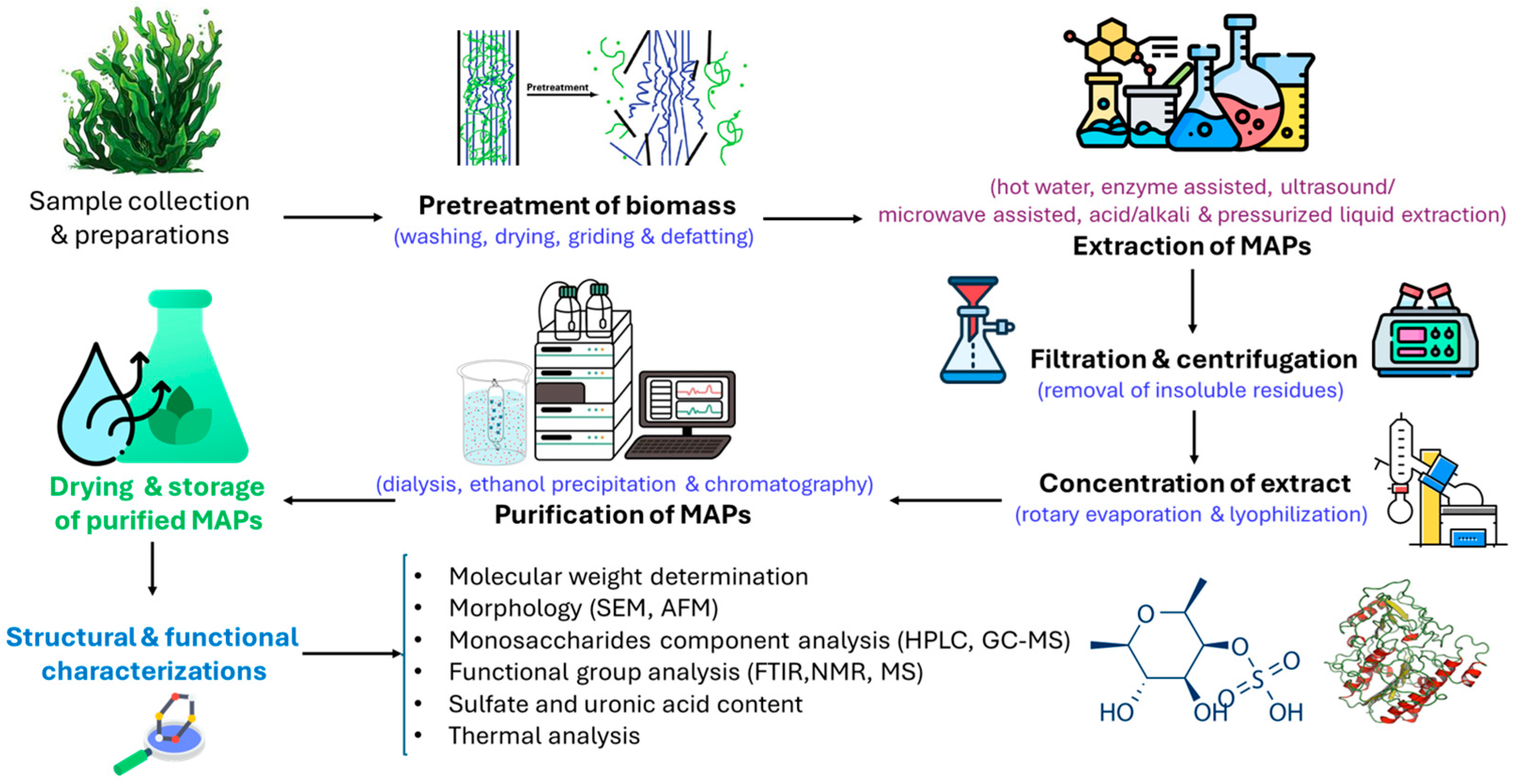
A sequence of extraction procedures can be used to successfully separate the crystalline, fibrillar, and matrix polysaccharides found in algal cell walls from the raw materials. Figure 2 illustrates a comprehensive workflow for the extraction, purification, and structural characterization of MAPs. The process begins with macroalgae cultivation, followed by cell harvesting to obtain biomass. Various extraction techniques, including high-pressure steam, Soxhlet, alkali, and acid extraction, are employed to isolate polysaccharides, while advanced methods like hydrothermal, microwave-assisted, ultrasound-assisted, gamma irradiation, and UV degradation further enhance yield and functionality. Enzymatic methods such as enzymatic hydrolysis, agarose application, biosynthesis, and microbial fermentation are also utilized for specific MAPs modifications. Post-extraction, MAPs undergo separation and purification using methods like ultracentrifugation, electrophoresis, membrane separation, aqueous two-phase systems, and ammonium sulfate precipitation. MAPs are structurally characterized to elucidate their potential applications or to determine their structure–function ratio. The difference in the solubilities of these chemicals serves as the foundation for their isolation. Depending on whether the polysaccharides comprise sulfate or carboxylic groups, the extraction procedure proceeds differently in the following steps [86]. The process begins with cold-water extraction, followed by extraction using hot water and alkali solutions at various temperatures and pH levels. This method is highly effective for isolating key polysaccharides from different types of algae, such as sulfated galactans, agars, and carrageenans from red algae; sulfated fucoidans and xylans from brown algae; and heteroglycuronans and ulvans from green algae. Owing to its versatility, it can be considered a universal technique. This approach can be applied to polysaccharides in a range of media under alkaline, acidic, or neutral conditions [9].
Alginate is primarily extracted from brown seaweeds, including Macrocystis pyrifera, Ascophyllum nodosum, and various types of laminaria [10]. Two recovery methods are commonly employed for extracting sodium alginate from algal sources. In one method, known as acid precipitation, a sodium alginate solution is treated with acid, resulting in the formation of insoluble alginic acid [36]. The solid was separated from the aqueous solution. Subsequently, alcohol and sodium carbonate were added to convert alginic acid back into sodium alginate. The resulting sodium alginate paste was suitable for drying and milling, enabling its use in various applications. Conversely, another method, referred to as calcium precipitation, involves the addition of a calcium salt to a sodium alginate solution [36,87]. This induces the formation of calcium alginate, which is characterized by a fibrous texture and insolubility in water. The separated calcium alginate was then suspended in water and acid was introduced to convert it into alginic acid. Following separation, alginic acid undergoes a conversion process aided by alcohol and sodium carbonate, reverting to sodium alginate. The resulting sodium alginate paste can be extruded into pellets, dried, and milled for further use. The process of purifying sodium alginate involves dissolving the extracted alginate in an alkaline solution to form a high-viscosity slurry. Seaweeds’ biomass residue was separated by filtration and centrifugation. Sodium alginate was then precipitated using sodium alginate, calcium alginate, or alginic acid. The precipitated alginate was isolated, redissolved in an alkali solution, and reprecipitated to achieve the desired purity. These recovery methods offer distinct pathways for the extraction and processing of sodium alginate from marine algal sources, meeting various industrial requirements. In summary, extraction and conversion processes yield sodium alginate, a versatile compound used in various industries, such as food and pharmaceuticals [88].
Agar extract is produced by cooking refined seaweeds at high temperatures above 100 °C with the addition of a precise amount of acid, such as 0.02% sulfuric acid or 0.05% acetic acid, to facilitate proper separation. In the traditional Japanese methods, multiple species of agarophytes are cooked in a single pot with a capacity of 3–8 square meters [89]. In industrial production, modern facilities create standardized agars that meet strict physicochemical and pathological standards while adhering to sanitation protocols. Top manufacturing plants comply with the ISO-9000 standards, ensuring controlled processes and traceability of exported raw materials and finished products [89,90]. Recently, various strategies have been introduced to enhance the MAPs extraction efficiency of macroalgae. These techniques include enzyme-, microwave-, and ultrasonic-assisted extractions [91]. Microwave-assisted extraction is commonly employed for the extraction of polysaccharides from marine algae. The parameters of microwave-assisted extraction, which can be optimized by response surface methods, include the microwave power, irradiation period, solid-to-liquid ratio, and temperature [92]. Compared to conventional methods, microwave-assisted extraction exhibits greater extraction efficiency, albeit at the expense of a shorter extraction time, lower energy consumption, and lower cost [93]. According to Yuan and Macquarrie’s research, the conventional extraction approach took three hours to extract fucoidan, whereas the microwave-assisted extraction method only required 15 min [94]. However, it was also anticipated that polysaccharides would break down when the microwave-assisted extraction approach was used. According to Tsubaki et al., the temperature at which polysaccharides are microwave-processed can affect their molecular weights and viscosities [95]. The decrease in polysaccharide viscosity with rising temperature is mainly due to reduced molecular interactions and possible chain degradation, as viscosity depends on molecular weight, concentration, and temperature. Thus, in microwave-assisted extraction, the effects of the microwave parameters on the molecular weight, sulfate content, viscosity, composition of monosaccharides, and percentage of polysaccharide breakdown were also taken into consideration [96]. Another cutting-edge extraction technique gaining popularity is ultrasonic-assisted extraction, which is used to extract polysaccharides from materials made of marine algae. The cavitation phenomenon can be caused by the propagation of ultrasound waves, which is the reason for the impact of ultrasonic-assisted extraction [97].

4. Advanced Technologies for Polysaccharide Extraction from Marine Brown Algae

Advanced technologies are crucial for polysaccharide extraction from marine brown algae because of the complexity and diversity of the algal matrix and polysaccharides themselves. Traditional methods are often inefficient and can degrade polysaccharides or require harsh chemicals, leading to environmental and economic issues. Advanced techniques such as enzymatic treatments, ultrasound-assisted extraction, and green solvents enhance extraction efficiency, preserve polysaccharide integrity, and reduce environmental impact, enabling scalable, consistent, and eco-friendly processes [98]. The seaweeds must be cleaned, ideally with distilled water, to remove salts and other contaminants. They must also be dried, freeze-dried, and ground to produce a powder with a higher surface-to-volume ratio. To avoid contaminating the target polysaccharide, it is helpful to remove interfering algal components before polysaccharide extraction. Traditionally, hot aqueous or acidic solutions are heated at elevated temperatures for extended periods to extract polysaccharides [98,99].
Pre-treated seaweeds were subsequently exposed to traditional vacuum or freeze-drying techniques before MAPs extraction. Furthermore, because the strong cell walls of seaweed are difficult to break, a pre-treatment known as cell disruption is typically necessary to eliminate or weaken the walls, which allows intracellular molecules to be more easily accessed by the solvent in subsequent extraction processes. Several pre-treatment approaches for cell disruption, including mechanical, chemical, thermal, enzymatic, and sophisticated methods such as ultrasound and microwave, can be used for this purpose [99].
  • Modern extraction techniques such as pressurized liquid extraction (PLE), ultrasound-assisted extraction, microwave-assisted extraction, and enzyme-assisted extraction are increasingly being used to isolate polysaccharides from algae [98]. However, the extraction method and conditions can significantly influence the characteristics of MAPs, including their viscosity, sulfate content, monosaccharide composition, molecular weight, and overall bioactivity—due to possible degradation during the process. Therefore, optimizing key extraction parameters such as temperature, extraction time, power, and sample-to-solvent ratio is essential to maximize polysaccharide yield while preserving their native structural and functional properties [98].
  • Microwave-assisted extraction (MAE) is an efficient technique that overcomes the drawbacks of conventional methods by generating heat directly within a material [98]. This facilitates cell wall rupture and releases intracellular compounds into the extraction solvent. MAE has been successfully utilized for isolating bioactive compounds from seaweeds and polysaccharides from other plants, with notable effects on the chemical structure and bioactivity of the target polysaccharides [100]. Numerous studies have demonstrated the effectiveness of microwave-assisted extraction (MAE) in terms of operational capability and sustainability [101,102]. Microwave irradiation generates heat through dipole rotation when it interacts with the polar compounds in the material, leading to a high yield of extracted compounds [100,101].
  • Ultrasound-Assisted Extraction (UAE) has emerged as the most practical industrial technique owing to its simplicity, faster extraction rate, increased yield, reduced cost, and shorter processing time [103]. It can be combined with other technologies, such as enzymatic processing or MAE, utilizing acoustic cavitation to disrupt cell walls, reduce particle size, and enhance contact between the solvent and compounds. UAE induces structural and microstructural modifications in sulfated APS, with efficiency dependent on factors such as ultrasound power, temperature, and solvent ratio, necessitating the optimization of extraction conditions [104,105].
  • Pressurized Liquid Extraction (PLE) is an innovative technique that utilizes elevated temperatures and pressures to extract compounds from samples in a short time using less solvent. In addition, pressurized fluid extraction, pressurized solvent extraction, accelerated solvent extraction, and PLE can achieve higher solubility and diffusion rates without boiling the solvent. Various static and dynamic methods have been utilized for polysaccharide extraction from brown algae, with commercial options available since 1995 [106,107].
  • Enzyme-Assisted Extraction (EAE) is a valuable technique for improving the extraction efficiency of bioactive compounds from seaweeds, although it is more commonly used with terrestrial plants [108]. EAE offers a higher extraction yield, faster rates, lower energy consumption, and simpler recovery compared to conventional extraction methods. This involves the use of enzymes capable of degrading cell walls or partially breaking down polysaccharides to facilitate extraction. Commercially available carbohydrate hydrolytic enzymes and proteases are commonly used for polysaccharide extraction from seaweeds [109,110].
Apart from exhibiting fluctuations in MWs, the composition of monosaccharides, and the amount of sulfate, extracted APS are typically tainted with proteins and low molecular weight molecules that are also dissolved in water during the extraction process [98]. As a result, they can be further purified by employing various purification techniques, such as affinity chromatography, ion exchange, membrane separation, ethanol precipitation, and size-exclusion. There are no defined standard purification processes because they all rely on additional functions and purity needs. Although membrane separation can be utilized in scale-up testing, ethanol precipitation is the most employed approach in the functional food industry [4].
In conclusion, the exploration of advanced technologies for polysaccharide extraction from marine brown algae represents a significant advancement in biotechnology and marine science. Researchers have made substantial progress in overcoming the challenges associated with conventional extraction methods through innovative approaches, such as enzymatic hydrolysis, ultrasound-assisted extraction, and subcritical water extraction. These advanced technologies offer several advantages, including increased extraction efficiency, reduced extraction time, and improved preservation of the polysaccharide bioactivity. Additionally, they contribute to sustainable practices by minimizing the use of chemical solvents and reducing environmental impact [4].

5. Biomedical Applications

MAPs have emerged as promising biomaterials with diverse biomedical applications. These natural compounds, which are extracted from seaweeds and algae, possess unique chemical structures and properties that make them suitable for a wide range of medical purposes [13]. From wound healing and drug delivery to tissue engineering and cancer therapy, MAPs have garnered significant attention because of their biocompatibility, biodegradability, and low toxicity [111]. As researchers delve deeper into their potential, these polysaccharides are paving the way for innovative biomedical solutions that harness the power of the ocean for human health and well-being. Algal polysaccharides are essential for several bioactivities, including immune system molecular recognition, cell addition, and cell–cell interactions [112].
Polysaccharides have a wide range of beneficial effects, including antibacterial, antifungal, antiviral, antidiabetic, anticancer, antioxidative, anti-inflammatory, and immunoregulatory [113]. MAPs play crucial roles in various bioactivities, including immune system modulation, cell adhesion, and cell–cell interactions. Several microalgal species produce polysaccharides that have significant applications. Chlorella vulgaris is known to produce sulfated polysaccharides, which are utilized for their immunomodulatory and antioxidant properties and have potential antiviral applications. Spirulina platensis produces calcium spirulan and other sulfated polysaccharides that exhibit antiviral, antibacterial, and immune-enhancing properties, making them valuable in dietary supplements and functional foods.
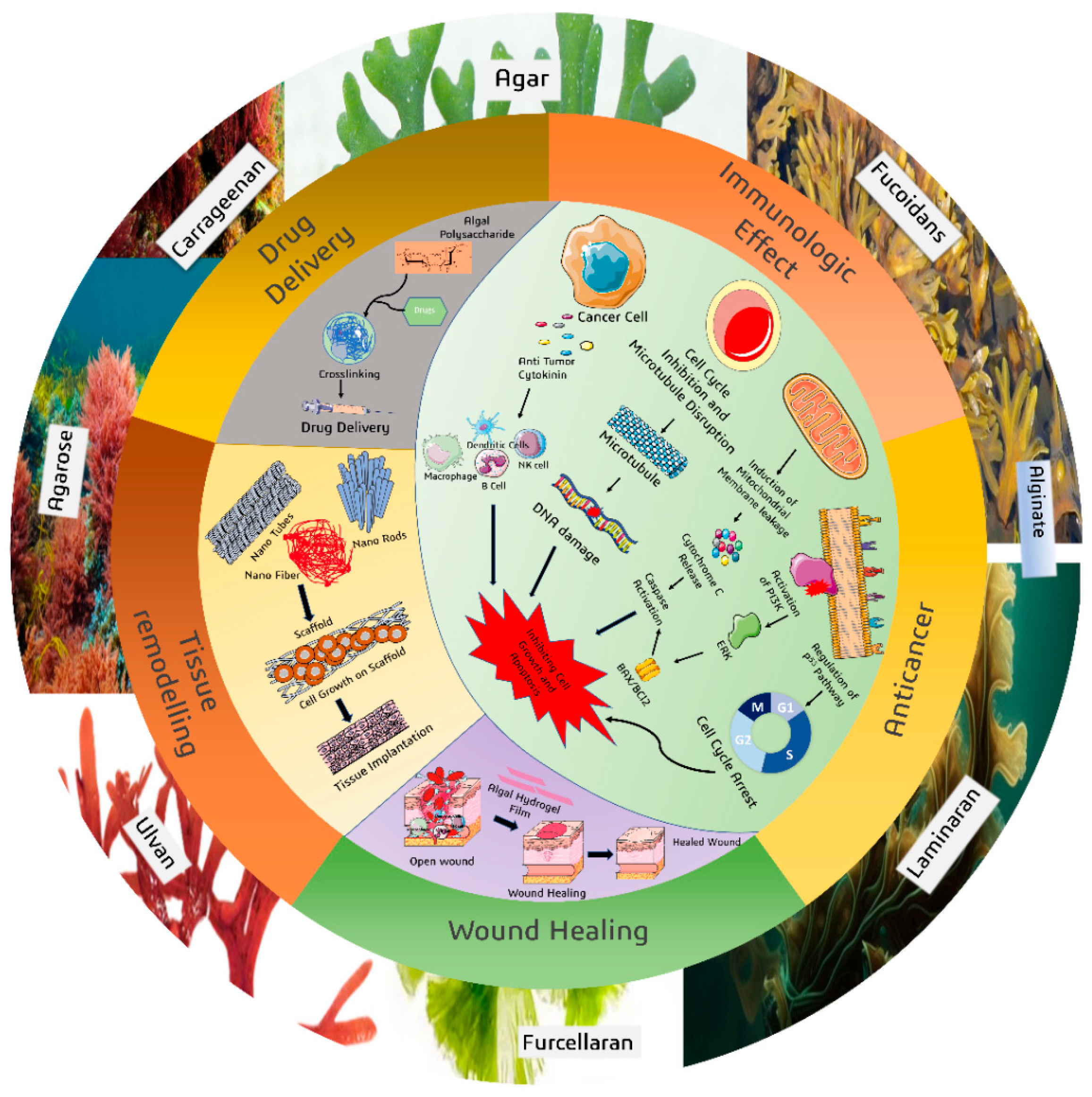
Porphyridium cruentum generates exopolysaccharides that possess anti-inflammatory and wound-healing properties and are used in cosmetics and pharmaceuticals [13]. Abu-Rabeah and Marks [114] constructed a highly sensitive amperometric glucose biosensor using alginate-pyrrole as the host matrix. Adrogué and Madias [115] focused their research on investigating the roles of sodium and potassium in the pathogenesis of hypertension. Venkatesan et al. [116] explored potential biomedical applications of seaweed polysaccharides in their paper. Vitko et al. [117] investigated the use of a novel guluronate oligomer to improve intestinal transit and survival in mice with cystic fibrosis. MAPs offer a range of health benefits, including immunomodulatory, antiviral, and antibacterial properties; anticancer potential; wound healing; and tissue regeneration (Figure 3), as discussed below. Their diverse effects render them promising candidates for biomedical applications (Table 2; Figure 3).

5.1. Immunomodulatory Effects

The current trend of using natural products to treat illnesses and improve health has led to a focus on studying marine organisms such as cyanobacteria and macro- and microalgae [126]. Fucoidan, a compound found in certain types of seaweeds, has shown promise for the treatment of atopic dermatitis (AD), a skin condition characterized by inflammation and itchiness. Yang [127] demonstrated that fucoidan effectively alleviated AD-like symptoms in mice treated with 1-chloro 2,4-dinitrobenzene (DNCB), showing comparable effectiveness to dexamethasone, a commonly used corticosteroid. Fucoidan exhibits strong anti-inflammatory effects by downregulating AD-associated cytokine and chemokine expression. In the fucoidan-treated group, the levels of inflammatory factors such as interleukins (ILs) and histamine were significantly reduced, leading to a decrease in mast cell infiltration and immunoglobulin E secretion at the lesion site. This suggests that fucoidan could offer a potential alternative to corticosteroid drugs for treating AD symptoms [127].
In an open-label study by Myers et al., fucoidan was investigated as an immunomodulator. Twelve healthy participants received varying doses of fucoidan orally for four weeks [128]. Fucoidan increased Tc cell count and enhanced monocyte phagocytic capacity. In addition, it decreased the levels of IL-6, a key inflammatory cytokine. These findings suggest that fucoidan is a promising potential anti-inflammatory drug. Carrageenan derived from marine macroalgae can significantly suppress immune responses both in vivo and in vitro. They impair complement activity, humoral responses, and cell-mediated immunity, prolong graft survival, and potentiate tumour growth. Immune suppression by carrageenan is attributed to its selective cytopathic effect on macrophages, making it a useful tool for studying the role of these cells in immune reactivity [129].
Alginate, a natural polysaccharide primarily extracted from marine brown seaweeds (Phaeophyceae), has gained significant attention for its diverse biological properties and biomedical potential. Although alginate itself shows no adverse effects on lymphocyte viability, its particulate and low-viscosity forms can actively modulate immune responses. Studies have shown that particulate alginate elicits a pronounced inflammatory reaction, leading to increased production of cytokines such as IL-1β, IL-8, TNF-α, and IFN-γ [130]. In addition, low-viscosity and particulate alginates are more effective than high-viscosity variants in stimulating dendritic cells, as reflected by enhanced expression of activation markers CD80, CD86, and CD40 [131]. Particulate alginate also induces slightly higher levels of granulocyte colony-stimulating factor (G-CSF) in macrophages. Collectively, these findings suggest that alginate—particularly in its particulate form—can influence immune mechanisms by promoting inflammatory cytokine production and dendritic cell activation, thereby offering potential for therapeutic applications in inflammation-related disorders [40].
Ulvan, extensively researched both in vitro and in vivo, shows a diverse array of medicinal properties, including antioxidant, anti-inflammatory, antibacterial, anticancer, antiviral, and cytotoxic effects [132]. It holds promise as a polymer in pharmaceutical formulations, particularly for creating smart films in bone tissue engineering, emphasizing the importance of preserving its structural integrity. With potent anticancer and immunomodulatory capabilities, ulvan not only inhibits abnormal tumour cell proliferation but also aids in repairing cellular atypia and immune system damage induced by tumours. Its potential medicinal value warrants further exploration for human medical applications; however, investigations into its bioavailability and refining processes are crucial prerequisites for its therapeutic use [133]. Numerous studies have investigated the biological activities and health benefits of ulvan, highlighting its significance in medical research [134]. Ulvan polysaccharides contain sulfated groups, which are essential for their therapeutic effects. These groups allow polysaccharides to interact with biological targets and hence have anti-viral, anti-inflammatory, antioxidant, and anti-hyperlipidemic properties. Additionally, important functions are performed by ulvan’s gelling qualities, which provide support, promote wound healing, and ease medication distribution [135].
Marine-derived polysaccharides such as fucoidan, carrageenan, alginate, and ulvan have potent immunomodulatory characteristics, including anti-inflammatory and immune-enhancing capabilities. They work by modulating cytokines, increasing immune cell function, and treating inflammation-related diseases. These natural chemicals show potential for therapeutic usage, particularly in treating immune-related and inflammatory illnesses, but further study is needed to optimise their use and efficacy [13].

5.2. Antiviral and Antibacterial Activities

The antibacterial properties of MAPs have garnered significant attention in recent years because of their potential application in combating bacterial infections and addressing the global challenge of antibiotic resistance. These polysaccharides, derived from various species of marine algae such as brown, red, and green algae, exhibit a wide range of antibacterial activities against both Gram-positive and Gram-negative bacteria [136]. Global interest in research on the antiviral properties of natural marine materials, particularly marine polysaccharides, has increased recently. Numerous antiviral effects have been demonstrated for marine-derived polysaccharides and their low-molecular-weight oligosaccharide derivatives [29]. The antiviral characteristics of marine polysaccharides, as well as their synergistic effects when combined with other antiviral drugs, demonstrate impressive antiviral responses for future medical research [137]. Antiviral medications derived from marine algal polysaccharides, which are biogenic, biocompatible, and renewable, have been in great demand in the emerging pharmaceutical sector after they have received clinical approval [113].
Buck et al. showed that carrageenans block human papillomavirus (HPV) during its initial infection process [138]. Moreover, γ-carrageenan has a stronger antiviral effect than λ- and κ-carrageenan. According to Talarico et al., γ-carrageenan can prevent dengue virus (DENV) from replicating in both mosquito and mammalian cells, although it acts in both cell types somewhat differently [139,140]. O-Acylated carrageenan polysaccharides with varying molecular weights have been shown by Yamada and colleagues to exhibit enhanced anti-HIV action by depolymerization and sulfation [38,39]. Consequently, the molecular weight and sulfate concentration of carrageenan polysaccharides are linked to their antiviral properties. Xin et al. reported that a marine polysaccharide drug derived from alginate could significantly inhibit acute infection of MT4 cells and chronic infection of H9 cells with HIV-1 [141].
Sulfated fucans from the seaweed species Lobophora variegata, Dictyota mertensii, Spatoglossum schroederi, and Fucus vesiculosus can suppress the activity of HIV reverse transcriptase (RT) [142]. A fucan polysaccharide from Cladosiphon okamuranus prevents BHK-21 cell infection by dengue virus type 2 (DENV-2), while showing minimal effect on serotypes DENV-1, DENV-3, and DENV-4 [143]. The antiviral potential of Gracilaria corticate extract was demonstrated when tested against HSV-1 and HSV-2 [144]. Several marine sulfated polysaccharides, such as chondroitin sulfate from sharks, fucoidan from brown algae, iota-carrageenan from red algae, and sea cucumber sulfated polysaccharide (SCSP), inhibit SARS-CoV-2. At doses of 3.90–500 μg/mL, SCSP, fucoidan, and carrageenan all showed significant antiviral activities. The ability of SCSP to bind to S glycoprotein and obstruct SARS-CoV-2 host cell entrance was validated by an examination of pseudotyped viruses containing S-glycoprotein [145]. The antiviral potential of agar against dengue-2 virus was assessed in a study by Schulze et al. [146]. Based on these findings, sulfated polysaccharides from agar gel directly interact with the virus particle to suppress its hemagglutinating capabilities and prevent infection, as opposed to interacting with the host cells or erythrocytes [146]. Research findings indicate that carrageenan has a direct antiviral effect on certain enveloped viruses, rendering them incapable of infecting cells and minimizing viral replication. Herpes simplex viruses HSV-1 and HSV-2 have been successfully prevented by several carrageenan formulations [147]. The superiority of sulfated polysaccharides such as fucoidan and porphyrin implies that the structure of these polysaccharides may obstruct membrane fusion and the efficacy of the delivery mechanism. A review of minor alterations to the established delivery system regarding the level of sulfation, molecular weight, and resemblance to the β-carrageenan successor path may yield prospective antiviral options and suggest the conditions required to combat viral infections [148].
MAPs possess strong antiviral and antibacterial properties, showing potential in fighting infections and antibiotic-resistant pathogens. Compounds like carrageenan, fucoidan, and alginate effectively inhibit viruses, often by blocking viral entry or replication. Their activity is influenced by factors like molecular weight and sulfate content.

5.3. Anticancer Potential

Polysaccharides found in algae exhibit a range of biological actions, including immunomodulatory and anticancer effects. Algae also have a high nutritional value. By causing apoptosis, cell cycle arrest, anti-angiogenesis, and regulation of intestinal flora and immunological function, algal polysaccharides have anticancer effects. For example, various reports have suggested that clodosiphon fucoidan decreases the incidence of gastric cancer by preventing Helicobacter pylori from adhering to the mucus of the stomach tract [149,150]. The growth of melanoma B16 cells was dose-responsively inhibited by fucose-containing sulfated polysaccharides derived from Sargassum henslowianum and F. vesiculosus [151]. When laminarin and fucoidan were used, the AO/EB (Acriding Orange/Ethidium Bromide) assay showed a substantial increase in apoptosis and necrosis, respectively. Necrotic cancer cell death was supported by the DNA fragmentation data [31]. Thus, laminarin and fucoidan are promising bioactive substances for anticancer treatment. Both fucoidan and laminarin exert anticancer effects through multi-faceted mechanisms that induce programmed cell death and halt tumour progression [31]. Fucoidan primarily triggers the mitochondrial-mediated intrinsic apoptotic pathway by upregulating pro-apoptotic proteins like Bax and cleaving executioner caspases, while simultaneously downregulating survival signals through the inhibition of the PI3K/Akt and ERK pathways [152,153]. It further suppresses cancer proliferation by inducing cell cycle arrest in the G0/G1 phase and enhances the body’s immune response by activating N K cells and stimulating cytokines like IL-2 and IFN-γ [154]. Conversely, laminarin promotes apoptosis through both the extrinsic pathway, by activating death receptors like Fas, and the intrinsic pathway, by inhibiting survival signals such as IGF-IR [155]. Its anti-proliferative action is characterized by halting the cell cycle at the G2/M phase, preventing mitosis, and it demonstrates a direct, dose-dependent cytotoxic effect that effectively reduces overall cancer cell viability [156]. In conclusion, algal polysaccharides demonstrate significant anticancer potential through mechanisms such as apoptosis induction, cell cycle arrest, and anti-angiogenesis. Their ability to inhibit cancer cell growth and interfere with pathogenic adhesion, as seen with fucoidan and laminarin, highlights their promise as natural, bioactive agents in cancer prevention and therapy.

5.4. Wound Healing and Tissue Regeneration

Marine-derived polysaccharides have been investigated as potential materials for wound dressings because of their favourable qualities of low toxicity, biocompatibility, and biodegradability. It also has various advantages, including the promotion of wound healing through the creation of a moist environment that encourages cell migration and proliferation. They can also provide a layer of protection to prevent additional wound damage and function as a barrier against external pollutants [157]. Alginates have special qualities that make them promising materials for modern biotechnologies, including the creation of wound dressings [158]. These qualities include high biological activity, biocompatibility, biodegradability, non-toxicity, lack of immunogenicity, high absorption capacity, hydrogel-forming ability, and low production costs. Alginate-based materials for wound dressings are typically used as foams, nanofibers, amorphous gels, membranes, and films [159]. Dressings made of alginate can be used on wounds that are infected or not, because they have the capacity to absorb fluids up to 20 times their weight [160]. Fucoidan-containing wound dressings have several properties that help speed up the healing process, such as encouraging the production of collagen, stimulating the growth of new hair follicles, lowering inflammatory reactions, minimizing scar formation, and encouraging angiogenesis [161]. Marine-derived polysaccharides such as alginate and fucoidan show strong potential in wound healing due to their biocompatibility, biodegradability, and ability to promote cell growth, absorb fluids, prevent infection, and stimulate collagen and angiogenesis, making them ideal for advanced wound dressings.

5.5. Antiviral Therapy

Viral infections are often driven by oxidative processes that aid viral replication and disrupt cell regulation. Marine algae offer a rich source of natural antiviral compounds, including sulfated polysaccharides, phlorotannins (from brown algae), and phycobiliproteins (from marine algae), all showing strong antiviral activity. To develop effective natural antivirals, research should prioritize understanding their mechanisms and exploring macroalgae for their rapid growth and ease of cultivation [162]. A diverse array of antiviral polysaccharides derived from marine organisms exhibit their potential against numerous viral pathogens. Carrageenan, extracted from red algae Gigartina skottsbergii demonstrates broad-spectrum antiviral activity against influenza, dengue virus (DENV), herpes simplex viruses (HSV-1, HSV-2), human papillomavirus (HPV), human rhinovirus (HRV), and HIV [163]. Galactans from red algae species such as Callophyllis variegate and Schizymenia binderi exhibit efficacy against HSV, HIV, DENV, and hepatitis A virus (HAV). Similarly, alginates from brown algae like Laminaria hyperborea and Macrocystis pyrifera are active against HIV, influenza A virus (IAV), and hepatitis B virus (HBV) [164].
Other noteworthy examples include fucoidans from various brown algae, which inhibit HSV, HCMV, VSV, Sindbis virus, and HIV-1. Laminaran from Fucus vesiculosus and Saccharina longicruris also targets HIV [162,165]. Diatom-derived naviculan shows activity against HSV, while microalgal polysaccharides such as p-KG03 (Gyrodinium impudicum) and A1/A2 (Cochlodinium polykrikoides) offer protection against influenza and RSV [166]. Additionally, blue-green algae like Arthrospira platensis and Nostoc flagelliforme produce calcium spirulan and nostaflan, respectively, which are potent against multiple viruses, including HIV, mumps, measles, and cytomegalovirus [167]. This wide range of antiviral efficacy underscores the promise of marine-derived polysaccharides as natural antiviral agents. MAPs offer strong, broad-spectrum antiviral potential due to their ability to block virus activity and support immune defence. Their natural origin and sustainability make them ideal candidates for future antiviral therapies.

5.6. Anti-Diabetic and Anti-Obesity Effects

Fucoidan has demonstrated potential efficacy in mitigating obesity via many mechanisms identified in laboratory research. Research using 3T3-L1 cells demonstrated a reduction in the expression of several genes associated with adipogenesis, including AAP2, ACC, and PPARγ. It also decreased the quantities of deleterious reactive oxygen species (ROS), curtailed fat formation in cells, and facilitated the catabolism of fats [168]. Additionally, fucoidan reduced the overall process of adipogenesis, which is the formation of fat cells [169]. In other laboratory tests without using cell lines, fucoidan was able to block the activity of enzymes like pancreatic lipase, α-amylase, and α-glucosidase, which are responsible for breaking down fats and carbohydrates. These actions suggest that fucoidan may help in managing obesity by both reducing fat storage and limiting fat and carbohydrate absorption in the body [170].
Marine polysaccharides such as alginate, ulvan, carrageenan, galactofucan, and laminarin have shown significant potential in managing obesity and diabetes through various biochemical and cellular mechanisms. Alginate, derived from brown algae, promotes satiety by forming a gel in the stomach, thereby reducing gastric emptying and fat absorption. It also inhibits digestive enzymes like pancreatic lipase and slows glucose diffusion, supporting glycemic control [14]. Carrageenan, sourced from red algae, regulates lipid metabolism and reduces fat accumulation in cells, while also exhibiting inhibitory effects on α-glucosidase, contributing to lowered glucose absorption [171]. These diverse mechanisms highlight the potential of marine polysaccharides as multi-target therapeutic agents in combating obesity and type 2 diabetes.

5.7. Neuroprotective Effects

Marine polysaccharides such as alginate, ulvan, carrageenan, galactofucan, and laminarin exhibit promising neuroprotective effects through diverse biochemical mechanisms. Alginate has been found to reduce oxidative stress, inhibit neuroinflammation, and stabilize mitochondrial function, thereby preserving neuronal health [172]. Ulvan protects neurons from oxidative damage, reduces apoptosis, and helps regulate neurotransmitter levels, which are crucial for normal brain signalling [173]. Carrageenan demonstrates anti-inflammatory properties by suppressing the release of pro-inflammatory cytokines such as IL-6 and TNF-α, which are often elevated in neurodegenerative conditions [174]. Collectively, these marine-derived polysaccharides target multiple pathways, including antioxidant defence, anti-inflammatory response, enzyme inhibition, and neurotrophic support, offering a multifaceted approach to neuroprotection.

5.8. Antibacterial Coatings and Medical Implants

MAPs have attracted growing attention as bio-based materials for producing antibacterial coatings on medical devices because of their biocompatibility, biodegradability, and natural antimicrobial properties [175]. Drawn from brown, red, and green seaweeds, polysaccharides including alginate, carrageenan, fucoidan, and ulvan have shown great promise in avoiding bacterial colonization on implant surfaces [176]. Research on polysaccharide-based strategies to combat antimicrobial resistance, a global threat causing healthcare-associated infections, is being devoted to developing effective antibacterial coatings. Polysaccharides, essential building blocks and renewable resources, have significant biological potential for antibacterial activities [176]. By functionalizing these natural polymers with metallic nanoparticles such as silver or zinc oxide, their antibacterial activity can be improved and tissue integration and wound healing supported at the same time [177].
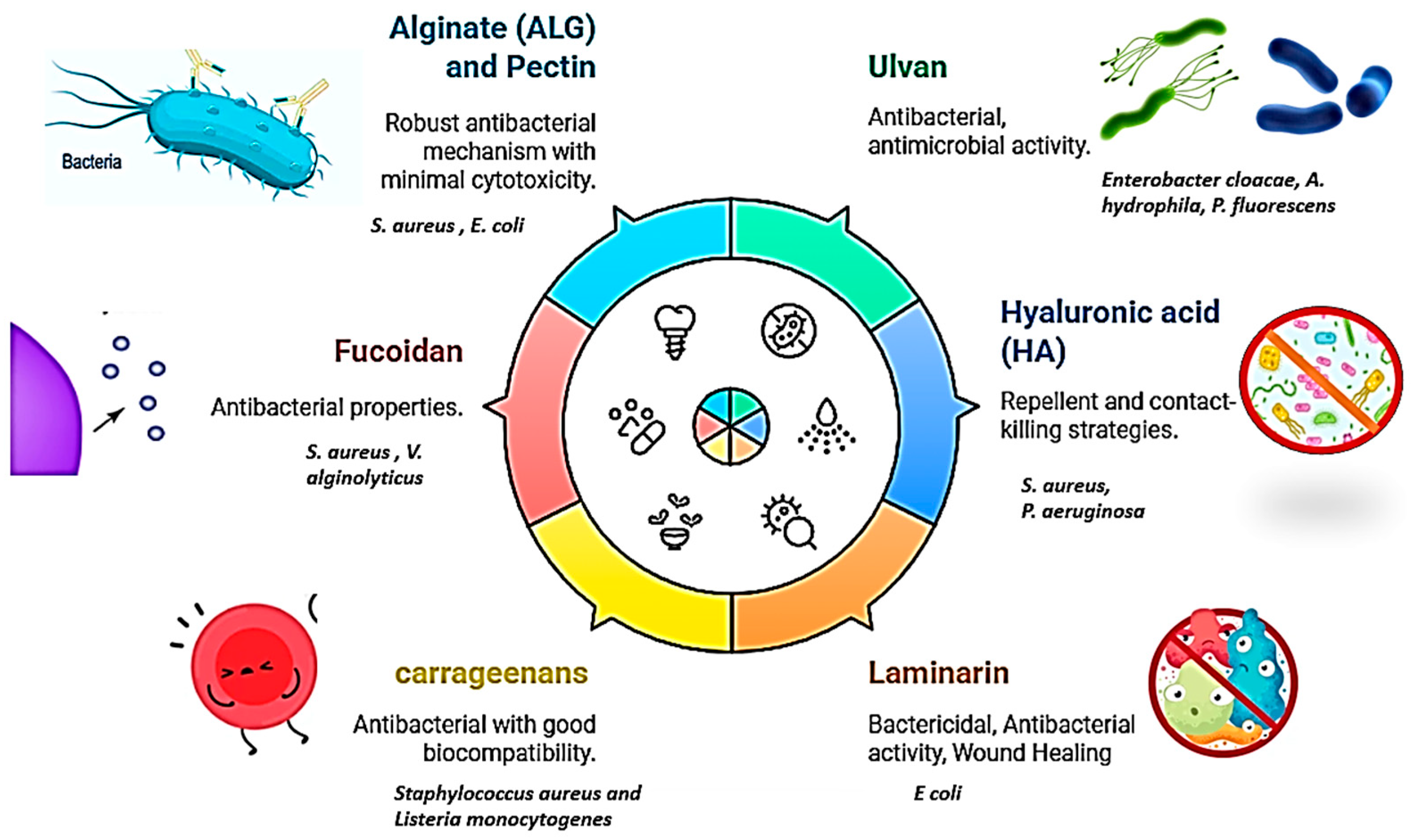
Various naturally derived polysaccharides exhibit promising antibacterial and antimicrobial properties, making them valuable in biomedical and pharmaceutical applications (Figure 4). Ulvan, extracted from green algae, shows strong antimicrobial activity against Enterobacter cloacae, Aeromonas hydrophila, and Pseudomonas fluorescens. Fucoidan, a sulfated polysaccharide from brown seaweeds, is known for its antibacterial effects against S. aureus and Vibrio alginolyticus [178]. Carrageenans provide effective antibacterial action with excellent biocompatibility, targeting organisms such as Staphylococcus aureus and Listeria monocytogenes [179]. Alginate (ALG) exhibits strong antibacterial activity with low cytotoxicity, effectively targeting Staphylococcus aureus and Escherichia coli [180]. Meanwhile, laminarin displays bactericidal activity along with wound-healing properties, especially against E. coli. These findings underscore the therapeutic potential of these polysaccharides in combating bacterial infections and enhancing wound care [79].

5.9. Anticoagulant and Antithrombotic Agent

Marine algal polysaccharides, such as fucoidan, carrageenan, alginate, and ulvan, have emerged as promising natural anticoagulant and antithrombotic agents. These sulfated polysaccharides possess structural similarities to heparin, a widely used anticoagulant, enabling them to inhibit key enzymes in the coagulation cascade, like thrombin and factor Xa [63,181]. Fucoidan, derived from brown algae, is particularly notable for its strong anticoagulant activity, attributed to its high sulfate content and unique molecular structure [182]. Carrageenan, from red algae, and ulvan, from green algae, also demonstrate clot-preventing properties by enhancing antithrombin activity and reducing platelet aggregation [183]. These natural compounds are biocompatible, biodegradable, and exhibit low toxicity, making them attractive alternatives to synthetic anticoagulants. Their dual role in preventing blood clot formation and dissolving existing clots positions them as valuable candidates in cardiovascular disease management and biomaterial surface modifications for blood-contacting devices [23].

6. Molecular Mechanisms Underlying the Biomedical Activities of Marine Macroalgae Polysaccharides

Seaweed is one of the major producers of biomass and has an active metabolite that can treat tumours. The most common polysaccharides in cancer management are sulfide polysaccharides, fucoidans, carageenans and ulvans from various algae species, which are known to have chemoprotective effects in vitro and in vivo [134]. The underlying anticancer mechanisms of algae polysaccharides include the induction of apoptosis, the suspension of the cell cycle, the modulation of the transmission signalling pathways, the suppression of migration and angiogenesis, and the activation of immune responses and antioxidant systems. VEGF/VEGFR2, TGFR/Smad/Snail, TLR4/ROS/ER, CXCL12/CXCR4, TGFR/Smad7/Smurf2, PI3K/AKT/mTOR, PBK/TOPK and -catenin/Wnt are among the main cell signaling pathways modulated by the algal polysaccharides. These pathways serve as checkpoints for normal cellular growth and are regulated by multiple extracellular stimuli [184,185].
Macrophages are crucial players in the innate immune system, serving diverse functions such as phagocytosis, antigen presentation, and T cell modulation [186]. A polysaccharide derived from the red algae Porphyra haitanensis has been shown to enhance phagocytosis in the RAW264.7 macrophage cell line [84]. Macrophages are highly versatile cells that can adapt to various microenvironmental cues, enabling them to maintain immune homeostasis in both normal and disease states [187]. These cells are capable of phagocytosing pathogens, dead cells, and other foreign materials, as well as secreting an array of cytokines, chemokines, and growth factors that can profoundly influence the immune response [157].
A polysaccharide extracted from brown algae Hizikia fusiforme has shown that RAW264.7 macrophages increase the production of nitrogen oxides (NOs) and the expression of induced nitrogen oxide synthesis (iNOS) [188]. Polysaccharides extracted from Laminaria japonica show significant macrophage stimulation and enhanced cytokine production, such as tumour necrosis factor (TNF), IL-1, IL-6 and IL-10. This polysaccharide has a positive effect on the phosphorylation of signal-regulated extracellular kinase (ERK1/2), JNK1/2 and P38 [189]. The maturation of dendritic cells plays an important role in the function of the immune system and the adaptive immune system. Recent research has shown that Fucoidan of Fucus evanescens induces stimulation and maturation of dendritic cells [190]. The study suggests that the maturation of dendritic cells caused by fucoidan is mediated by the production of TNF- and involves signal transmission through p38, phosphoinositide-3 and glycogen synthase kinase 3. Jeong et al. [190] reported that fucoidan of marine algae has the effect of cytoprotection on the viability and size of dendritic cells against 5-fluorouracil. 5FU is considered as an important chemoprotective drug for cancer treatment. This study suggests that fucoidan can maintain cancer patients’ immunity. Natural killer cells (NKs) also play an important role in immune modulation activity because they are able to secrete cytokines, lymph nodes, and tissues that expand in human cells during increased immune tolerance [191]. Fucoidan of Ascophyllum nodusum, Macrocystis pyrifera, Undaria pinnatifida and Fucus vesuculosus promoted the activation of mouse NK cells. Among them, Undaria pinnatifida fucoidan showed the strongest effect as a result of the expansion of NK cells [192].
It was also shown that carrageenan is strongly associated with serum proteins used in cell cultures, especially fetal serum proteins, and that they may be involved in its mechanism of action. Two mouse macrophage cell lines (RAW 264.7 and 23ScCr), human colon epithelial cell lines NCM 460, and human colon cells were used to identify several receptors, including toll-like receptors and B cell lymphoma/leukemia B cell protein 10 (BCL10) that can bind to carrageenan [193]. Both receptors can stimulate NF-β transmission pathways and then activate pro-inflammatory genes and cytokines. In addition, the characteristic of preventing the interaction of certain proteins and receptors binding to these proteins and inhibiting the interaction with other proteins and receptors, as well as the stabilization properties (gel, thickness and binding), suggest that they can be used to bind to drugs with various effects, such as bactericides or cytotoxic drugs [194,195].
Red algae Gracilariopsis lemaneiformis (Gp. lemaneiformis) has anti-tumour activity, while polysaccharides of Gp. lemaneiformis (PGL) have been shown to have anticancer activity [196]. PGL inhibited the growth of three human cancer cell lines by suppressing cell proliferation, reducing cellular function, and altering cell morphology in a time- and concentration-dependent manner. Transcriptome analysis showed that PGL could regulate 758 genes involved in apoptosis, cell cycle, nuclear division, and cell death. In addition, the study demonstrated that PGL induces apoptosis and cell cycle suppression, and modulates the expression of A549 cell-line-related genes [197]. Marine polysaccharides show antiviral effects by disrupting key stages of the viral life cycle. They prevent virion binding to host cells via electrostatic interference, block penetration and uncoating by hindering conformational viral changes, and impair transcription and replication by targeting viral enzymes post-entry. Some can even directly deactivate virions prior to infection. Their effectiveness is closely tied to their structural features and is specific to certain viral types [67,198].
Overall, these polysaccharides, especially those derived from seaweeds, demonstrated promising potential for inhibiting viral replication and transcription, offering new avenues for antiviral therapy. Sulfated polysaccharides, fucoidans, carrageenan, and ulvan, from several algal species that have been identified in vitro and in vivo, are the most commonly used polysaccharides in cancer care. Algal polysaccharides have been found to have anticancer properties that involve induction of apoptosis, cell cycle arrest, modulation of transduction signalling pathways, suppression of migration and angiogenesis, and boosting of the antioxidant and immune systems [66].

7. Interaction with Cellular Receptors, Signal Transduction Pathways, and Immune Cells

MAPs interact with the immune system to activate various signalling pathways and induce immune responses. This activation involves molecular events, including the stimulation of the Akt, ERK1/2, JNK1/2, and PI3K pathways, as well as the engagement of receptors such as CR3, SR, and TLR-4. MAPs trigger the production of cytokines, such as IFN, IL, and TNF-α, leading to immune system activation. These interactions demonstrate the potential of MAPs to modulate immune responses, highlighting their significance in immunotherapy and defence against foreign invaders. Fucoidan extracted from various marine sources, such as Ascophyllum nodosum, Macrocystis pyrifera, Undaria pinnatifida, and Fucus vesiculosus, enhances the activation of mouse NK cells, with Undaria pinnatifida fucoidan exhibiting the most potent effects by expanding NK cell populations. Additionally, sulfated polysaccharides from marine materials have been shown to inhibit the adhesion of Helicobacter pylori and reduce biofilm formation. Researchers have suggested that these polysaccharides likely influence the infectious process involving H. pylori through their actions on cells of both innate and adaptive immunity [4,165,192]. MAPs have shown the ability to support the immune system by activating important signalling pathways and promoting the production of immune-related molecules. They can enhance the activity of natural killer cells, reduce harmful bacterial adhesion, and help regulate immune responses. These properties suggest their potential use in improving immunity and protecting against infections.

8. Challenges and Future Directions

MAPs offer immense potential for biomedical applications; however, their extraction poses significant challenges. The structural diversity and complexity of these polysaccharides make their extraction and purification difficult, often necessitating the use of harsh chemicals and energy-intensive processes that can diminish their yield and bioactivity [13,17]. Additionally, the high variability in polysaccharide composition across different algal species complicates the standardization of extraction protocols [199]. To address these challenges, future research should focus on developing efficient and sustainable extraction techniques. Emerging methods, such as enzyme-assisted extraction, supercritical fluid extraction, and the use of green solvents, offer promising alternatives that can improve yield and maintain bioactivity while reducing environmental impact. Advancing our understanding of the molecular mechanisms underlying the extraction process and optimizing the large-scale cultivation of specific algal strains will also be crucial for harnessing the full biomedical potential of MAPs [200].
In biomedical applications, MAPs present both promise and challenges. Standardization and quality control are essential for ensuring consistency across different extraction methods and sources. Understanding their bioavailability and pharmacokinetics is crucial for optimizing their therapeutic efficacy. Biocompatibility and safety must be thoroughly assessed for clinical use. Mechanistic insights into their actions are necessary for the development of targeted therapies. Clinical translation requires rigorous validation in large-scale trials. Cost-effective production methods are required to achieve scalability. Exploring synergistic effects with other biomaterials could enhance the therapeutic outcomes. Overcoming these challenges requires interdisciplinary collaboration and has the potential to revolutionize biomedical therapeutics (Table 3). One significant challenge lies in optimizing the extraction and purification methods to enhance the yield and purity while minimizing the environmental impact and production costs [199].
Improving scalability and sustainability of the extraction process is crucial for the widespread application of MAPs in biomedical contexts [201]. Further research is needed to fully understand the complex mechanisms underlying the therapeutic effects of marine algal polysaccharides. This entails exploring their interactions with biological systems at the molecular level and elucidating their modes of action in various biomedical applications. Additionally, efforts to develop innovative delivery systems and formulations to enhance the bioavailability and efficacy of MAPs in vivo represent an exciting avenue for future research. Addressing these challenges and advancing our understanding of MAPs will unlock their potential as valuable resources for improving human health and well-being [13,17,29].
Table 3. Commercial and experimental products based on marine algal polysaccharides.
PolysaccharideProduct/Brand NameBiomedical UseFormulation TypeStatusApproved/In TrialsReferences
AlginateAlgiMatrix®3D cell culture scaffold, Multicellular tumor spheroid (MCTS) assays, organogenesis studies (hepatocytes, cardiomyocytes), co-culture modelsPorous sponge matrixCommercialApproved (research use)[202,203]
AlginateAlgisite™ MWound healing, exudate absorption, high-throughput drug screening, and 3D stem cell differentiationCalcium alginate dressingApprovedCE Marked
CarrageenanCarraguard®Vaginal microbicide (anti-HIV)GelClinical trial completedPhase III (discontinued)[204]
CarrageenanIota-Carrageenan nasal sprayCold & flu treatment relieves nasal symptoms through antiviral action rather than affecting blood vessels or glands.Nasal sprayCommercialApproved (EU/OTC)[205,206]
FucoidanMaritech® FucoidanEffectively reduced osteoarthritis symptoms such as pain and stiffness. Immunity, inflammation, and oncology supportCapsule, powderCommercialApproved (nutraceutical)[128]
FucoidanFucoidan wound dressingsWound healing, angiogenesisHydrogel, biofilmIn developmentPreclinical[207]
FucoidanFucoidan-cisplatin nanoparticleCancer drug deliveryNanoparticle systemExperimentalIn vitro/in vivo[208]
UlvanUlvans in wound healing scaffoldsAntioxidant, antimicrobial, promotes wound healing by maintaining moisture and absorbing exudate.Ulvan-based hydrogel filmExperimentalIn vitro[133]
UlvanUlvan–chitosan hydrogelsSkin regeneration, tissue engineeringInjectable hydrogelExperimentalPreclinical[209,210]
LaminarinLaminarin microparticlesDrug delivery, immune modulationMicroparticle systemExperimentalIn vitro[211]
LaminarinLaminarin in vaccine adjuvantsImmune adjuvantInjectable vaccine adjuvantExperimentalIn vivo (animal models)[212]
LaminarinAgar-based wound dressingsWound healing, moist environmentFilm/dressingExperimentalPreclinical[213]
LaminarinAgar-based hydrogels for drug releaseControlled drug deliveryHydrogelExperimentalIn vitro/in vivo[214]

9. Conclusions

Marine algae hold significant importance in their natural environments and are gaining increasing attention in the realm of green technology. The growing interest in both the scientific community and industry stems from rapid advancements in modern biotechnology. MAPs offer a vast array of biomedical applications and have demonstrated significant potential as therapeutic agents. Their immunomodulatory effects, antiviral and antibacterial activities, anticancer potential, and role in wound healing and tissue regeneration underscore their versatility and importance in medical research. Furthermore, elucidation of the molecular mechanisms underlying these activities provides valuable insights into their therapeutic benefits, paving the way for the development of novel treatments and therapies. With ongoing advancements in extraction techniques and a deeper understanding of their biochemical composition, MAPs hold promise in addressing various health challenges and improving patient outcomes in the future. In summary, the multifaceted properties of MAPs make them promising candidates for biomedical applications. Their diverse range of therapeutic benefits, coupled with ongoing research efforts to uncover their mechanistic insights, positions them as valuable resources in the pursuit of innovative medical treatments. As we continue to explore and harness the potential of these compounds, they stand poised to play a pivotal role in shaping the future of healthcare by offering hope for improved patient care and well-being.

Author Contributions

Conceptualization, writing—original draft preparation, formal analysis, methodology, A.P., A.A.W., S.S. and S.M., sample collection, data curation, validation, resources, J.M., N.C., S.S., A.K.J. and M.P.S. and conceptualization performed the final review and editing J.C.J., J.M. and A.P. All authors have read and agreed to the published version of the manuscript.

Funding

This research received no external funding.

Institutional Review Board Statement

Not applicable.

Informed Consent Statement

Not applicable.

Data Availability Statement

Not applicable.

Conflicts of Interest

The authors declare that they have no known competing financial interests or personal relationships that could have influenced the work reported in this study.

References

  1. Magnabosco, C.; Santaniello, G.; Romano, G. Microalgae: A Promising Source of Bioactive Polysaccharides for Biotechnological Applications. Molecules 2025, 30, 2055. [Google Scholar] [CrossRef]
  2. Patel, A.; Karageorgou, D.; Rova, E.; Katapodis, P.; Rova, U.; Christakopoulos, P.; Matsakas, L. An Overview of Potential Oleaginous Microorganisms and Their Role in Biodiesel and Omega-3 Fatty Acid-Based Industries. Microorganisms 2020, 8, 434. [Google Scholar] [CrossRef] [PubMed]
  3. El-Beltagi, H.S.; Mohamed, A.A.; Mohamed, H.I.; Ramadan, K.M.A.; Barqawi, A.A.; Mansour, A.T. Phytochemical and Potential Properties of Seaweeds and Their Recent Applications: A Review. Mar. Drugs 2022, 20, 342. [Google Scholar] [CrossRef] [PubMed]
  4. Xu, S.-Y.; Huang, X.; Cheong, K.-L. Recent Advances in Marine Algae Polysaccharides: Isolation, Structure, and Activities. Mar. Drugs 2017, 15, 388. [Google Scholar] [CrossRef]
  5. Ning, L.; Yao, Z.; Zhu, B. Ulva (Enteromorpha) Polysaccharides and Oligosaccharides: A Potential Functional Food Source from Green-Tide-Forming Macroalgae. Mar. Drugs 2022, 20, 202. [Google Scholar] [CrossRef]
  6. Anisha, G.S.; Padmakumari, S.; Patel, A.K.; Pandey, A.; Singhania, R.R. Fucoidan from Marine Macroalgae: Biological Actions and Applications in Regenerative Medicine, Drug Delivery Systems and Food Industry. Bioengineering 2022, 9, 472. [Google Scholar] [CrossRef]
  7. Kasanah, N.; Ulfah, M.; Imania, O.; Hanifah, A.N.; Marjan, M.I.D. Rhodophyta as Potential Sources of Photoprotectants, Antiphotoaging Compounds, and Hydrogels for Cosmeceutical Application. Molecules 2022, 27, 7788. [Google Scholar] [CrossRef]
  8. Synytsya, A.; Čopíková, J.; Kim, W.J.; Park, Y.I. Cell Wall Polysaccharides of Marine Algae. In Hb25_Springer Handbook of Marine Biotechnology; Kim, S.-K., Ed.; Springer Berlin Heidelberg: Berlin, Heidelberg, 2015; pp. 543–590. ISBN 978-3-642-53970-1. [Google Scholar]
  9. Jiao, G.; Yu, G.; Zhang, J.; Ewart, H.S. Chemical Structures and Bioactivities of Sulfated Polysaccharides from Marine Algae. Mar. Drugs 2011, 9, 196–223. [Google Scholar] [CrossRef]
  10. Kang, J.; Jia, X.; Wang, N.; Xiao, M.; Song, S.; Wu, S.; Li, Z.; Wang, S.; Cui, S.W.; Guo, Q. Insights into the Structure-Bioactivity Relationships of Marine Sulfated Polysaccharides: A Review. Food Hydrocoll. 2022, 123, 107049. [Google Scholar] [CrossRef]
  11. Mutch, A.L.; Yang, J.; Ferro, V.; A, A.; Grøndahl, L. Sulfated Alginate for Biomedical Applications. Macromol. Biosci. 2024, 24, 2400237. [Google Scholar] [CrossRef] [PubMed]
  12. Chen, Q.; Zhang, M.; Liu, Y.; Liu, W.; Peng, C.; Zheng, L. Sulfated Polysaccharides with Anticoagulant Potential: A Review Focusing on Structure-Activity Relationship and Action Mechanism. Chem. Biodivers. 2024, 21, e202400152. [Google Scholar] [CrossRef]
  13. De Jesus Raposo, M.; De Morais, A.; De Morais, R. Marine Polysaccharides from Algae with Potential Biomedical Applications. Mar. Drugs 2015, 13, 2967–3028. [Google Scholar] [CrossRef]
  14. Carrasqueira, J.; Bernardino, S.; Bernardino, R.; Afonso, C. Marine-Derived Polysaccharides and Their Potential Health Benefits in Nutraceutical Applications. Mar. Drugs 2025, 23, 60. [Google Scholar] [CrossRef] [PubMed]
  15. Twardowski, T.; Małyska, A. Uninformed and Disinformed Society and the GMO Market. Trends Biotechnol. 2015, 33, 1–3. [Google Scholar] [CrossRef] [PubMed]
  16. Wawoczny, A.; Gillner, D. The Most Potent Natural Pharmaceuticals, Cosmetics, and Food Ingredients Isolated from Plants with Deep Eutectic Solvents. J. Agric. Food Chem. 2023, 71, 10877–10900. [Google Scholar] [CrossRef]
  17. Lesco, K.C.; Williams, S.K.R.; Laurens, L.M.L. Marine Algae Polysaccharides: An Overview of Characterization Techniques for Structural and Molecular Elucidation. Mar. Drugs 2025, 23, 105. [Google Scholar] [CrossRef]
  18. Estevez, J.M.; Ciancia, M.; Cerezo, A.S. The System of Galactans of the Red Seaweed, Kappaphycus Alvarezii, with Emphasis on Its Minor Constituents. Carbohydr. Res. 2004, 339, 2575–2592. [Google Scholar] [CrossRef] [PubMed]
  19. Torres, M.D.; Flórez-Fernández, N.; Domínguez, H. Integral Utilization of Red Seaweed for Bioactive Production. Mar. Drugs 2019, 17, 314. [Google Scholar] [CrossRef]
  20. Usov, A.I.; Bilan, M.I.; Ustyuzhanina, N.E.; Nifantiev, N.E. Fucoidans of Brown Algae: Comparison of Sulfated Polysaccharides from Fucus Vesiculosus and Ascophyllum Nodosum. Mar. Drugs 2022, 20, 638. [Google Scholar] [CrossRef]
  21. Cui, Y.; Zhu, L.; Li, Y.; Jiang, S.; Sun, Q.; Xie, E.; Chen, H.; Zhao, Z.; Qiao, W.; Xu, J.; et al. Structure of a Laminarin-Type β-(1→3)-Glucan from Brown Algae Sargassum Henslowianum and Its Potential on Regulating Gut Microbiota. Carbohydr. Polym. 2021, 255, 117389. [Google Scholar] [CrossRef]
  22. Pramanik, S.; Singh, A.; Abualsoud, B.M.; Deepak, A.; Nainwal, P.; Sargsyan, A.S.; Bellucci, S. From Algae to Advancements: Laminarin in Biomedicine. RSC Adv. 2024, 14, 3209–3231. [Google Scholar] [CrossRef] [PubMed]
  23. Pari, R.F.; Uju, U.; Hardiningtyas, S.D.; Ramadhan, W.; Wakabayashi, R.; Goto, M.; Kamiya, N. Ulva Seaweed-Derived Ulvan: A Promising Marine Polysaccharide as a Sustainable Resource for Biomaterial Design. Mar. Drugs 2025, 23, 56. [Google Scholar] [CrossRef] [PubMed]
  24. Tran, V.H.N.; Mikkelsen, M.D.; Truong, H.B.; Vo, H.N.M.; Pham, T.D.; Cao, H.T.T.; Nguyen, T.T.; Meyer, A.S.; Thanh, T.T.T.; Van, T.T.T. Structural Characterization and Cytotoxic Activity Evaluation of Ulvan Polysaccharides Extracted from the Green Algae Ulva Papenfussii. Mar. Drugs 2023, 21, 556. [Google Scholar] [CrossRef]
  25. Bilal, M.; Iqbal, H.M.N. Marine Seaweed Polysaccharides-Based Engineered Cues for the Modern Biomedical Sector. Mar. Drugs 2019, 18, 7. [Google Scholar] [CrossRef] [PubMed]
  26. Murata, M.; Nakazoe, J. Production and Use of Marine AIgae in Japan. JARQ 2001, 35, 281–290. [Google Scholar] [CrossRef]
  27. Gullón, P.; Astray, G.; Gullón, B.; Franco, D.; Campagnol, P.C.B.; Lorenzo, J.M. Inclusion of Seaweeds as Healthy Approach to Formulate New Low-Salt Meat Products. Curr. Opin. Food Sci. 2021, 40, 20–25. [Google Scholar] [CrossRef]
  28. Bixler, H.J.; Porse, H. A Decade of Change in the Seaweed Hydrocolloids Industry. J. Appl. Phycol. 2011, 23, 321–335. [Google Scholar] [CrossRef]
  29. Akter, A.; Sobuj, M.K.A.; Islam, M.S.; Chakroborty, K.; Tasnim, N.; Ayon, M.H.; Hossain, M.F.; Rafiquzzaman, S.M. Seaweed Polysaccharides: Sources, Structure and Biomedical Applications with Special Emphasis on Antiviral Potentials. Future Foods 2024, 10, 100440. [Google Scholar] [CrossRef]
  30. Yue, Q.; Liu, Y.; Li, F.; Hong, T.; Guo, S.; Cai, M.; Zhao, L.; Su, L.; Zhang, S.; Zhao, C.; et al. Antioxidant and Anticancer Properties of Fucoidan Isolated from Saccharina Japonica Brown Algae. Sci. Rep. 2025, 15, 8962. [Google Scholar] [CrossRef]
  31. Sanniyasi, E.; Gopal, R.K.; Damodharan, R.; Arumugam, A.; Sampath Kumar, M.; Senthilkumar, N.; Anbalagan, M. In Vitro Anticancer Potential of Laminarin and Fucoidan from Brown Seaweeds. Sci. Rep. 2023, 13, 14452. [Google Scholar] [CrossRef]
  32. Hentati, F.; Tounsi, L.; Djomdi, D.; Pierre, G.; Delattre, C.; Ursu, A.V.; Fendri, I.; Abdelkafi, S.; Michaud, P. Bioactive Polysaccharides from Seaweeds. Molecules 2020, 25, 3152. [Google Scholar] [CrossRef]
  33. Lomartire, S.; Gonçalves, A.M.M. An Overview of Potential Seaweed-Derived Bioactive Compounds for Pharmaceutical Applications. Mar. Drugs 2022, 20, 141. [Google Scholar] [CrossRef]
  34. Kraan, S. Algal Polysaccharides, Novel Applications and Outlook. In Carbohydrates—Comprehensive Studies on Glycobiology and Glycotechnology; Chang, C.-F., Ed.; InTech: London, UK, 2012; ISBN 978-953-51-0864-1. [Google Scholar]
  35. Pereira, L.; Cotas, J. Introductory Chapter: Alginates—A General Overview. In Alginates—Recent Uses of This Natural Polymer; Pereira, L., Ed.; IntechOpen: London, UK, 2020; ISBN 978-1-78985-641-5. [Google Scholar]
  36. Abka-khajouei, R.; Tounsi, L.; Shahabi, N.; Patel, A.K.; Abdelkafi, S.; Michaud, P. Structures, Properties and Applications of Alginates. Mar. Drugs 2022, 20, 364. [Google Scholar] [CrossRef]
  37. Bi, D.; Yang, X.; Yao, L.; Hu, Z.; Li, H.; Xu, X.; Lu, J. Potential Food and Nutraceutical Applications of Alginate: A Review. Mar. Drugs 2022, 20, 564. [Google Scholar] [CrossRef]
  38. Lu, S.; Na, K.; Wei, J.; Zhang, L.; Guo, X. Alginate Oligosaccharides: The Structure-Function Relationships and the Directional Preparation for Application. Carbohydr. Polym. 2022, 284, 119225. [Google Scholar] [CrossRef]
  39. Szekalska, M.; Puciłowska, A.; Szymańska, E.; Ciosek, P.; Winnicka, K. Alginate: Current Use and Future Perspectives in Pharmaceutical and Biomedical Applications. Int. J. Polym. Sci. 2016, 2016, 1–17. [Google Scholar] [CrossRef]
  40. Yarkent, C.; Aslanbay Guler, B.; Gurlek, C.; Sahin, Y.; Kose, A.; Oncel, S.S.; Imamoglu, E. Algal Alginate in Biotechnology: Biosynthesis and Applications. In Properties and Applications of Alginates; Deniz, I., Imamoglu, E., Keskin-Gundogdu, T., Eds.; IntechOpen: London, UK, 2022; ISBN 978-1-83969-499-8. [Google Scholar]
  41. Zhong, H.; Gao, X.; Cheng, C.; Liu, C.; Wang, Q.; Han, X. The Structural Characteristics of Seaweed Polysaccharides and Their Application in Gel Drug Delivery Systems. Mar. Drugs 2020, 18, 658. [Google Scholar] [CrossRef]
  42. Vernero, M.; Boano, V.; Ribaldone, D.G.; Pellicano, R.; Astegiano, M. Oral Iron Supplementation with Feralgine® in Inflammatory Bowel Disease: A Retrospective Observational Study. Minerva Gastroenterol. Dietol. 2019, 65, 200–203. [Google Scholar] [CrossRef] [PubMed]
  43. Barbosa, A.I.; Coutinho, A.J.; Costa Lima, S.A.; Reis, S. Marine Polysaccharides in Pharmaceutical Applications: Fucoidan and Chitosan as Key Players in the Drug Delivery Match Field. Mar. Drugs 2019, 17, 654. [Google Scholar] [CrossRef] [PubMed]
  44. Rhein-Knudsen, N.; Ale, M.; Meyer, A. Seaweed Hydrocolloid Production: An Update on Enzyme Assisted Extraction and Modification Technologies. Mar. Drugs 2015, 13, 3340–3359. [Google Scholar] [CrossRef]
  45. Zhang, Y.; Fu, X.; Duan, D.; Xu, J.; Gao, X. Preparation and Characterization of Agar, Agarose, and Agaropectin from the Red Alga Ahnfeltia Plicata. J. Ocean. Limnol. 2019, 37, 815–824. [Google Scholar] [CrossRef]
  46. Zucca, P.; Fernandez-Lafuente, R.; Sanjust, E. Agarose and Its Derivatives as Supports for Enzyme Immobilization. Molecules 2016, 21, 1577. [Google Scholar] [CrossRef]
  47. Jönsson, M.; Allahgholi, L.; Sardari, R.R.R.; Hreggviðsson, G.O.; Nordberg Karlsson, E. Extraction and Modification of Macroalgal Polysaccharides for Current and Next-Generation Applications. Molecules 2020, 25, 930. [Google Scholar] [CrossRef]
  48. Vuai, S.A.H. Characterization of Agar Extracted from Gracilaria Species Collected along Tanzanian Coast. Heliyon 2022, 8, e09002. [Google Scholar] [CrossRef]
  49. Yermak, I.; Mischchenko, N.; Davydova, V.; Glazunov, V.; Tarbeeva, D.; Kravchenko, A.; Pimenova, E.; Sorokina, I. Carrageenans-Sulfated Polysaccharides from Red Seaweeds as Matrices for the Inclusion of Echinochrome. Mar. Drugs 2017, 15, 337. [Google Scholar] [CrossRef]
  50. Knutsen, S.H.; Myslabodski, D.E.; Larsen, B.; Usov, A.I. A Modified System of Nomenclature for Red Algal Galactans. Bot. Mar. 1994, 37. [Google Scholar] [CrossRef]
  51. Rupert, R.; Rodrigues, K.F.; Thien, V.Y.; Yong, W.T.L. Carrageenan From Kappaphycus Alvarezii (Rhodophyta, Solieriaceae): Metabolism, Structure, Production, and Application. Front. Plant Sci. 2022, 13, 859635. [Google Scholar] [CrossRef] [PubMed]
  52. Carpena, M.; Garcia-Perez, P.; Garcia-Oliveira, P.; Chamorro, F.; Otero, P.; Lourenço-Lopes, C.; Cao, H.; Simal-Gandara, J.; Prieto, M.A. Biological Properties and Potential of Compounds Extracted from Red Seaweeds. Phytochem. Rev. 2023, 22, 1509–1540. [Google Scholar] [CrossRef]
  53. Orbita, M.L. Growth Rate and Carrageenan Yield of Kappaphycus Alvarezii (Rhodophyta, Gracilariales Cultivated in Kolambugan, Lanao Del Norte, Mindanao, Philippines. Adv. Agric. Bot. Int. J. Bioflux Soc. 2013, 5, 128–139. [Google Scholar]
  54. Toumi, S.; Yahoum, M.M.; Lefnaoui, S.; Hadjsadok, A. Synthesis, Characterization and Potential Application of Hydrophobically Modified Carrageenan Derivatives as Pharmaceutical Excipients. Carbohydr. Polym. 2021, 251, 116997. [Google Scholar] [CrossRef] [PubMed]
  55. Barahona, T.; Prado, H.J.; Bonelli, P.R.; Cukierman, A.L.; Fissore, E.L.; Gerschenson, L.N.; Matulewicz, M.C. Cationization of Kappa- and Iota-Carrageenan—Characterization and Properties of Amphoteric Polysaccharides. Carbohydr. Polym. 2015, 126, 70–77. [Google Scholar] [CrossRef] [PubMed]
  56. Chen, J.; Liu, M.; Chen, S. Synthesis and Characterization of Thermo- and pH-Sensitive Kappa-Carrageenan-g-Poly(Methacrylic Acid)/Poly(N,N-Diethylacrylamide) Semi-IPN Hydrogel. Mater. Chem. Phys. 2009, 115, 339–346. [Google Scholar] [CrossRef]
  57. Jiang, Y.-P.; Guo, X.-K.; Tian, X.-F. Synthesis and NMR Structural Analysis of O-Succinyl Derivative of Low-Molecular-Weight κ-Carrageenan. Carbohydr. Polym. 2005, 61, 399–406. [Google Scholar] [CrossRef]
  58. Koh, H.S.A.; Lu, J.; Zhou, W. Structural Dependence of Sulfated Polysaccharide for Diabetes Management: Fucoidan From Undaria Pinnatifida Inhibiting α-Glucosidase More Strongly Than α-Amylase and Amyloglucosidase. Front. Pharmacol. 2020, 11, 831. [Google Scholar] [CrossRef]
  59. Van Weelden, G.; Bobiński, M.; Okła, K.; Van Weelden, W.J.; Romano, A.; Pijnenborg, J.M.A. Fucoidan Structure and Activity in Relation to Anti-Cancer Mechanisms. Mar. Drugs 2019, 17, 32. [Google Scholar] [CrossRef]
  60. Zvyagintseva, T.N.; Usoltseva, R.V.; Shevchenko, N.M.; Surits, V.V.; Imbs, T.I.; Malyarenko, O.S.; Besednova, N.N.; Ivanushko, L.A.; Ermakova, S.P. Structural Diversity of Fucoidans and Their Radioprotective Effect. Carbohydr. Polym. 2021, 273, 118551. [Google Scholar] [CrossRef]
  61. Malyarenko, O.S.; Usoltseva, R.V.; Silchenko, A.S.; Zueva, A.O.; Ermakova, S.P. The Combined Metabolically Oriented Effect of Fucoidan from the Brown Alga Saccharina Cichorioides and Its Carboxymethylated Derivative with 2-Deoxy-D-Glucose on Human Melanoma Cells. IJMS 2023, 24, 12050. [Google Scholar] [CrossRef]
  62. Claus-Desbonnet, H.; Nikly, E.; Nalbantova, V.; Karcheva-Bahchevanska, D.; Ivanova, S.; Pierre, G.; Benbassat, N.; Katsarov, P.; Michaud, P.; Lukova, P.; et al. Polysaccharides and Their Derivatives as Potential Antiviral Molecules. Viruses 2022, 14, 426. [Google Scholar] [CrossRef] [PubMed]
  63. Mensah, E.O.; Kanwugu, O.N.; Panda, P.K.; Adadi, P. Marine Fucoidans: Structural, Extraction, Biological Activities and Their Applications in the Food Industry. Food Hydrocoll. 2023, 142, 108784. [Google Scholar] [CrossRef]
  64. Silchenko, A.S.; Taran, I.V.; Usoltseva, R.V.; Zvyagintsev, N.V.; Zueva, A.O.; Rubtsov, N.K.; Lembikova, D.E.; Nedashkovskaya, O.I.; Kusaykin, M.I.; Isaeva, M.P.; et al. The Discovery of the Fucoidan-Active Endo-1→4-α-L-Fucanase of the GH168 Family, Which Produces Fucoidan Derivatives with Regular Sulfation and Anticoagulant Activity. IJMS 2023, 25, 218. [Google Scholar] [CrossRef] [PubMed]
  65. Ummat, V.; Sivagnanam, S.P.; Rai, D.K.; O’Donnell, C.; Conway, G.E.; Heffernan, S.M.; Fitzpatrick, S.; Lyons, H.; Curtin, J.; Tiwari, B.K. Conventional Extraction of Fucoidan from Irish Brown Seaweed Fucus Vesiculosus Followed by Ultrasound-Assisted Depolymerization. Sci. Rep. 2024, 14, 6214. [Google Scholar] [CrossRef]
  66. Wang, J.; Wang, F.; Yun, H.; Zhang, H.; Zhang, Q. Effect and Mechanism of Fucoidan Derivatives from Laminaria Japonica in Experimental Adenine-Induced Chronic Kidney Disease. J. Ethnopharmacol. 2012, 139, 807–813. [Google Scholar] [CrossRef]
  67. Khan, N.; Sudhakar, K.; Mamat, R. Eco-Friendly Nutrient from Ocean: Exploring Ulva Seaweed Potential as a Sustainable Food Source. J. Agric. Food Res. 2024, 17, 101239. [Google Scholar] [CrossRef]
  68. Kidgell, J.T.; Magnusson, M.; De Nys, R.; Glasson, C.R.K. Ulvan: A Systematic Review of Extraction, Composition and Function. Algal Res. 2019, 39, 101422. [Google Scholar] [CrossRef]
  69. Lahaye, M.; Robic, A. Structure and Functional Properties of Ulvan, a Polysaccharide from Green Seaweeds. Biomacromolecules 2007, 8, 1765–1774. [Google Scholar] [CrossRef]
  70. Paradossi, G.; Cavalieri, F.; Pizzoferrato, L.; Liquori, A.M. A Physico-Chemical Study on the Polysaccharide Ulvan from Hot Water Extraction of the Macroalga Ulva. Int. J. Biol. Macromol. 1999, 25, 309–315. [Google Scholar] [CrossRef]
  71. Li, C.; Tang, T.; Du, Y.; Jiang, L.; Yao, Z.; Ning, L.; Zhu, B. Ulvan and Ulva Oligosaccharides: A Systematic Review of Structure, Preparation, Biological Activities and Applications. Bioresour. Bioprocess. 2023, 10, 66. [Google Scholar] [CrossRef] [PubMed]
  72. Chi, Y.; Li, H.; Wang, P.; Du, C.; Ye, H.; Zuo, S.; Guan, H.; Wang, P. Structural Characterization of Ulvan Extracted from Ulva Clathrata Assisted by an Ulvan Lyase. Carbohydr. Polym. 2020, 229, 115497. [Google Scholar] [CrossRef]
  73. Yaich, H.; Garna, H.; Besbes, S.; Paquot, M.; Blecker, C.; Attia, H. Effect of Extraction Conditions on the Yield and Purity of Ulvan Extracted from Ulva Lactuca. Food Hydrocoll. 2013, 31, 375–382. [Google Scholar] [CrossRef]
  74. Pengzhan, Y. Antihyperlipidemic Effects of Different Molecular Weight Sulfated Polysaccharides from Ulva Pertusa (Chlorophyta). Pharmacol. Res. 2003, 48, 543–549. [Google Scholar] [CrossRef] [PubMed]
  75. Podolean, I.; Coman, S.M.; Bucur, C.; Teodorescu, C.; Kikionis, S.; Ioannou, E.; Roussis, V.; Primo, A.; Garcia, H.; Parvulescu, V.I. Catalytic Transformation of the Marine Polysaccharide Ulvan into Rare Sugars, Tartaric and Succinic Acids. Catal. Today 2022, 383, 345–357. [Google Scholar] [CrossRef]
  76. Stiger-Pouvreau, V.; Bourgougnon, N.; Deslandes, E. Carbohydrates From Seaweeds. In Seaweed in Health and Disease Prevention; Elsevier: Amsterdam, The Netherlands, 2016; pp. 223–274. ISBN 978-0-12-802772-1. [Google Scholar]
  77. Tagliapietra, B.L.; Clerici, M.T.P.S. Brown Algae and Their Multiple Applications as Functional Ingredient in Food Production. Food Res. Int. 2023, 167, 112655. [Google Scholar] [CrossRef]
  78. Sellimi, S.; Maalej, H.; Rekik, D.M.; Benslima, A.; Ksouda, G.; Hamdi, M.; Sahnoun, Z.; Li, S.; Nasri, M.; Hajji, M. Antioxidant, Antibacterial and in Vivo Wound Healing Properties of Laminaran Purified from Cystoseira Barbata Seaweed. Int. J. Biol. Macromol. 2018, 119, 633–644. [Google Scholar] [CrossRef]
  79. Dhahri, M.; Alghrably, M.; Mohammed, H.A.; Badshah, S.L.; Noreen, N.; Mouffouk, F.; Rayyan, S.; Qureshi, K.A.; Mahmood, D.; Lachowicz, J.I.; et al. Natural Polysaccharides as Preventive and Therapeutic Horizon for Neurodegenerative Diseases. Pharmaceutics 2021, 14, 1. [Google Scholar] [CrossRef]
  80. Mourelle, M.L.; Gómez, C.P.; Legido, J.L. Role of Algal Derived Compounds in Pharmaceuticals and Cosmetics. In Recent Advances in Micro and Macroalgal Processing; Rajauria, G., Yuan, Y.V., Eds.; Wiley: Hoboken, NJ, USA, 2021; pp. 537–603. ISBN 978-1-119-54258-2. [Google Scholar]
  81. Karuppusamy, S.; Rajauria, G.; Fitzpatrick, S.; Lyons, H.; McMahon, H.; Curtin, J.; Tiwari, B.K.; O’Donnell, C. Biological Properties and Health-Promoting Functions of Laminarin: A Comprehensive Review of Preclinical and Clinical Studies. Mar. Drugs 2022, 20, 772. [Google Scholar] [CrossRef]
  82. Kadam, S.U.; Álvarez, C.; Tiwari, B.K.; O’Donnell, C.P. Extraction of Biomolecules from Seaweeds. In Seaweed Sustainability; Elsevier: Amsterdam, The Netherlands, 2015; pp. 243–269. ISBN 978-0-12-418697-2. [Google Scholar]
  83. Choi, J.; Kim, H.-J.; Lee, J.-W. Structural Feature and Antioxidant Activity of Low Molecular Weight Laminarin Degraded by Gamma Irradiation. Food Chem. 2011, 129, 520–523. [Google Scholar] [CrossRef]
  84. Liu, Q.; Xu, S.; Li, L.; Pan, T.; Shi, C.; Liu, H.; Cao, M.; Su, W.; Liu, G. In Vitro and in Vivo Immunomodulatory Activity of Sulfated Polysaccharide from Porphyra Haitanensis. Carbohydr. Polym. 2017, 165, 189–196. [Google Scholar] [CrossRef]
  85. Cognigni, V.; Ranallo, N.; Tronconi, F.; Morgese, F.; Berardi, R. Potential Benefit of β-Glucans as Adjuvant Therapy in Immuno-Oncology: A Review. Explor. Target. Anti-Tumor Ther. 2021, 2, 122–138. [Google Scholar] [CrossRef] [PubMed]
  86. Shi, L. Bioactivities, Isolation and Purification Methods of Polysaccharides from Natural Products: A Review. Int. J. Biol. Macromol. 2016, 92, 37–48. [Google Scholar] [CrossRef] [PubMed]
  87. Bojorges, H.; López-Rubio, A.; Martínez-Abad, A.; Fabra, M.J. Overview of Alginate Extraction Processes: Impact on Alginate Molecular Structure and Techno-Functional Properties. Trends Food Sci. Technol. 2023, 140, 104142. [Google Scholar] [CrossRef]
  88. McHugh, D.J. A Guide to the Seaweed Industry; FAO fisheries technical paper; Food and Agriculture Organization of the United Nations: Rome, Italy, 2003; ISBN 978-92-5-104958-7. [Google Scholar]
  89. Pandya, Y.; Bakshi, M.; Sharma, A. Agar-Agar Extraction, Structural Properties and Applications: A Review. Pharma Innov. J. 2022, 11, 1151–1157. [Google Scholar]
  90. UNE EN ISO 9000:2015; Quality Management Systems—Fundamentals and Vocabulary (ISO 9000:2015). European Standards: Brussels, Belgium, 2015. Available online: https://www.en-standard.eu/une-en-iso-9000-2015-quality-management-systems-fundamentals-and-vocabulary-iso-9000-2015/ (accessed on 10 November 2025).
  91. Vo, T.P.; Pham, T.V.; Tran, T.N.H.; Vo, L.T.V.; Vu, T.T.; Pham, N.D.; Nguyen, D.Q. Ultrasonic-Assisted and Microwave-Assisted Extraction of Phenolics and Terpenoids from Abelmoschus sagittifolius (Kurz) Merr Roots Using Natural Deep Eutectic Solvents. ACS Omega 2023, 8, 29704–29716. [Google Scholar] [CrossRef] [PubMed]
  92. Sousa, A.M.M.; Alves, V.D.; Morais, S.; Delerue-Matos, C.; Gonçalves, M.P. Agar Extraction from Integrated Multitrophic Aquacultured Gracilaria Vermiculophylla: Evaluation of a Microwave-Assisted Process Using Response Surface Methodology. Bioresour. Technol. 2010, 101, 3258–3267. [Google Scholar] [CrossRef]
  93. Hahn, T.; Lang, S.; Ulber, R.; Muffler, K. Novel Procedures for the Extraction of Fucoidan from Brown Algae. Process Biochem. 2012, 47, 1691–1698. [Google Scholar] [CrossRef]
  94. Yuan, Y.; Macquarrie, D. Microwave Assisted Extraction of Sulfated Polysaccharides (Fucoidan) from Ascophyllum Nodosum and Its Antioxidant Activity. Carbohydr. Polym. 2015, 129, 101–107. [Google Scholar] [CrossRef]
  95. Tsubaki, S.; Oono, K.; Hiraoka, M.; Onda, A.; Mitani, T. Microwave-Assisted Hydrothermal Extraction of Sulfated Polysaccharides from Ulva Spp. and Monostroma Latissimum. Food Chem. 2016, 210, 311–316. [Google Scholar] [CrossRef] [PubMed]
  96. Rodriguez-Jasso, R.M.; Mussatto, S.I.; Pastrana, L.; Aguilar, C.N.; Teixeira, J.A. Microwave-Assisted Extraction of Sulfated Polysaccharides (Fucoidan) from Brown Seaweed. Carbohydr. Polym. 2011, 86, 1137–1144. [Google Scholar] [CrossRef]
  97. Kadam, S.U.; Tiwari, B.K.; O’Donnell, C.P. Application of Novel Extraction Technologies for Bioactives from Marine Algae. J. Agric. Food Chem. 2013, 61, 4667–4675. [Google Scholar] [CrossRef]
  98. Dobrinčić, A.; Balbino, S.; Zorić, Z.; Pedisić, S.; Bursać Kovačević, D.; Elez Garofulić, I.; Dragović-Uzelac, V. Advanced Technologies for the Extraction of Marine Brown Algal Polysaccharides. Mar. Drugs 2020, 18, 168. [Google Scholar] [CrossRef]
  99. Quitério, E.; Grosso, C.; Ferraz, R.; Delerue-Matos, C.; Soares, C. A Critical Comparison of the Advanced Extraction Techniques Applied to Obtain Health-Promoting Compounds from Seaweeds. Mar. Drugs 2022, 20, 677. [Google Scholar] [CrossRef]
  100. Hu, W.; Zhao, Y.; Yang, Y.; Zhang, H.; Ding, C.; Hu, C.; Zhou, L.; Zhang, Z.; Yuan, S.; Chen, Y.; et al. Microwave-Assisted Extraction, Physicochemical Characterization and Bioactivity of Polysaccharides from Camptotheca Acuminata Fruits. Int. J. Biol. Macromol. 2019, 133, 127–136. [Google Scholar] [CrossRef] [PubMed]
  101. Ekezie, F.-G.C.; Sun, D.-W.; Cheng, J.-H. Acceleration of Microwave-Assisted Extraction Processes of Food Components by Integrating Technologies and Applying Emerging Solvents: A Review of Latest Developments. Trends Food Sci. Technol. 2017, 67, 160–172. [Google Scholar] [CrossRef]
  102. Drevelegka, I.; Goula, A.M. Recovery of Grape Pomace Phenolic Compounds through Optimized Extraction and Adsorption Processes. Chem. Eng. Process.—Process Intensif. 2020, 149, 107845. [Google Scholar] [CrossRef]
  103. Shen, L.; Pang, S.; Zhong, M.; Sun, Y.; Qayum, A.; Liu, Y.; Rashid, A.; Xu, B.; Liang, Q.; Ma, H.; et al. A Comprehensive Review of Ultrasonic Assisted Extraction (UAE) for Bioactive Components: Principles, Advantages, Equipment, and Combined Technologies. Ultrason. Sonochemistry 2023, 101, 106646. [Google Scholar] [CrossRef]
  104. Alboofetileh, M.; Rezaei, M.; Tabarsa, M.; You, S. Bioactivities of Nizamuddinia Zanardinii Sulfated Polysaccharides Extracted by Enzyme, Ultrasound and Enzyme-Ultrasound Methods. J. Food Sci. Technol. 2019, 56, 1212–1220. [Google Scholar] [CrossRef]
  105. Yan, J.-K.; Wang, Y.-Y.; Ma, H.-L.; Wang, Z.-B. Ultrasonic Effects on the Degradation Kinetics, Preliminary Characterization and Antioxidant Activities of Polysaccharides from Phellinus Linteus Mycelia. Ultrason. Sonochemistry 2016, 29, 251–257. [Google Scholar] [CrossRef] [PubMed]
  106. Saravana, P.S.; Tilahun, A.; Gerenew, C.; Tri, V.D.; Kim, N.H.; Kim, G.-D.; Woo, H.-C.; Chun, B.-S. Subcritical Water Extraction of Fucoidan from Saccharina Japonica: Optimization, Characterization and Biological Studies. J. Appl. Phycol. 2018, 30, 579–590. [Google Scholar] [CrossRef]
  107. Santoyo, S.; Plaza, M.; Jaime, L.; Ibañez, E.; Reglero, G.; Señorans, J. Pressurized Liquids as an Alternative Green Process to Extract Antiviral Agents from the Edible Seaweed Himanthalia Elongata. J. Appl. Phycol. 2011, 23, 909–917. [Google Scholar] [CrossRef]
  108. Teixeira-Guedes, C.; Gomes-Dias, J.S.; Cunha, S.A.; Pintado, M.E.; Pereira, R.N.; Teixeira, J.A.; Rocha, C.M.R. Enzymatic Approach for the Extraction of Bioactive Fractions from Red, Green and Brown Seaweeds. Food Bioprod. Process. 2023, 138, 25–39. [Google Scholar] [CrossRef]
  109. Nadar, S.S.; Rao, P.; Rathod, V.K. Enzyme Assisted Extraction of Biomolecules as an Approach to Novel Extraction Technology: A Review. Food Res. Int. 2018, 108, 309–330. [Google Scholar] [CrossRef]
  110. Charoensiddhi, S.; Lorbeer, A.J.; Lahnstein, J.; Bulone, V.; Franco, C.M.M.; Zhang, W. Enzyme-Assisted Extraction of Carbohydrates from the Brown Alga Ecklonia Radiata: Effect of Enzyme Type, pH and Buffer on Sugar Yield and Molecular Weight Profiles. Process Biochem. 2016, 51, 1503–1510. [Google Scholar] [CrossRef]
  111. Silva, T.H.; Alves, A.; Popa, E.G.; Reys, L.L.; Gomes, M.E.; Sousa, R.A.; Silva, S.S.; Mano, J.F.; Reis, R.L. Marine Algae Sulfated Polysaccharides for Tissue Engineering and Drug Delivery Approaches. Biomatter 2012, 2, 278–289. [Google Scholar] [CrossRef] [PubMed]
  112. Murphy, E.J.; Fehrenbach, G.W.; Abidin, I.Z.; Buckley, C.; Montgomery, T.; Pogue, R.; Murray, P.; Major, I.; Rezoagli, E. Polysaccharides—Naturally Occurring Immune Modulators. Polymers 2023, 15, 2373. [Google Scholar] [CrossRef]
  113. Geetha Bai, R.; Tuvikene, R. Potential Antiviral Properties of Industrially Important Marine Algal Polysaccharides and Their Significance in Fighting a Future Viral Pandemic. Viruses 2021, 13, 1817. [Google Scholar] [CrossRef]
  114. Abu-Rabeah, K.; Marks, R.S. Impedance Study of the Hybrid Molecule Alginate–Pyrrole: Demonstration as Host Matrix for the Construction of a Highly Sensitive Amperometric Glucose Biosensor. Sens. Actuators B Chem. 2009, 136, 516–522. [Google Scholar] [CrossRef]
  115. Adrogué, H.J.; Madias, N.E. Sodium and Potassium in the Pathogenesis of Hypertension. N. Engl. J. Med. 2007, 356, 1966–1978. [Google Scholar] [CrossRef]
  116. Venkatesan, J.; Lowe, B.; Anil, S.; Manivasagan, P.; Kheraif, A.A.A.; Kang, K.; Kim, S. Seaweed Polysaccharides and Their Potential Biomedical Applications. Starch 2015, 67, 381–390. [Google Scholar] [CrossRef]
  117. Vitko, M.; Valerio, D.M.; Rye, P.D.; Onsøyen, E.; Myrset, A.H.; Dessen, A.; Drumm, M.L.; Hodges, C.A. A Novel Guluronate Oligomer Improves Intestinal Transit and Survival in Cystic Fibrosis Mice. J. Cyst. Fibros. 2016, 15, 745–751. [Google Scholar] [CrossRef] [PubMed]
  118. Liyanage, N.M.; Lee, H.-G.; Nagahawatta, D.P.; Jayawardhana, H.H.A.C.K.; Song, K.-M.; Choi, Y.-S.; Jeon, Y.-J.; Kang, M.-C. Fucoidan from Sargassum Autumnale Inhibits Potential Inflammatory Responses via NF-κB and MAPK Pathway Suppression in Lipopolysaccharide-Induced RAW 264.7 Macrophages. Mar. Drugs 2023, 21, 374. [Google Scholar] [CrossRef]
  119. Liberti, D.; Imbimbo, P.; Giustino, E.; D’Elia, L.; Silva, M.; Barreira, L.; Monti, D.M. Shedding Light on the Hidden Benefit of Porphyridium Cruentum Culture. Antioxidants 2023, 12, 337. [Google Scholar] [CrossRef]
  120. Goyal, M.; Baranwal, M.; Pandey, S.K.; Reddy, M.S. Hetero-Polysaccharides Secreted from Dunaliella Salina Exhibit Immunomodulatory Activity Against Peripheral Blood Mononuclear Cells and RAW 264.7 Macrophages. Indian. J. Microbiol. 2019, 59, 428–435. [Google Scholar] [CrossRef]
  121. Park, S.-J.; Sharma, A.; Lee, H.-J. An Update on the Chemical Constituents and Biological Properties of Selected Species of an Underpinned Genus of Red Algae: Chondrus. Mar. Drugs 2024, 22, 47. [Google Scholar] [CrossRef] [PubMed]
  122. Nozid, N.A.C.; Ibrahim, N.H.; Yoshida, A.; Huang, Y.; Hirose, T.; Hirasaka, K. Valorization of Agar Extracted from Gelidium Elegans via Ultrasound-Assisted Extraction as Potential Film Packaging by Optimizing the Incorporation of Chitosan and Curcumin. Int. J. Biol. Macromol. 2025, 327, 147323. [Google Scholar] [CrossRef] [PubMed]
  123. Cebrián-Lloret, V.; Martínez-Abad, A.; López-Rubio, A.; Martínez-Sanz, M. Exploring Alternative Red Seaweed Species for the Production of Agar-Based Hydrogels for Food Applications. Food Hydrocoll. 2024, 146, 109177. [Google Scholar] [CrossRef]
  124. Cholaraj, R.; Venkatachalam, R. Investigation of Antioxidant and Anticancer Potential of Fucoidan (in-Vitro & in-Silico) from Brown Seaweed Padina Boergesenii. Algal Res. 2024, 79, 103442. [Google Scholar] [CrossRef]
  125. Cindana Mo’o, F.R.; Wilar, G.; Devkota, H.P.; Wathoni, N. Ulvan, a Polysaccharide from Macroalga Ulva Sp.: A Review of Chemistry, Biological Activities and Potential for Food and Biomedical Applications. Appl. Sci. 2020, 10, 5488. [Google Scholar] [CrossRef]
  126. De Jesus Raposo, M.F.; De Morais, A.M.M.B.; De Morais, R.M.S.C. Bioactivity and Applications of Polysaccharides from Marine Microalgae. In Polysaccharides; Ramawat, K.G., Mérillon, J.-M., Eds.; Springer International Publishing: Cham, Switzerland, 2014; pp. 1–38. ISBN 978-3-319-03751-6. [Google Scholar]
  127. Yang, J. Topical Application of Fucoidan Improves Atopic Dermatitis Symptoms in NC/Nga Mice. Phytother. Res. 2012, 26, 1898–1903. [Google Scholar] [CrossRef]
  128. Myers, S.; O’Connor, J.; Fitton, H.; Brooks, L.; Rolfe, M.; Connellan; Wohlmuth, H.; Cheras, P.A.; Morris, C. A Combined Phase I and II Open-Label Study on the Immunomodulatory Effects of Seaweed Extract Nutrient Complex. BTT 2011, 45, 45–60. [Google Scholar] [CrossRef]
  129. Thomson, A.W.; Fowler, E.F. Carrageenan: A Review of Its Effects on the Immune System. Agents Actions 1981, 11, 265–273. [Google Scholar] [CrossRef]
  130. Lukova, P.; Kokova, V.; Baldzhieva, A.; Murdjeva, M.; Katsarov, P.; Delattre, C.; Apostolova, E. Alginate from Ericaria Crinita Possesses Antioxidant Activity and Attenuates Systemic Inflammation via Downregulation of Pro-Inflammatory Cytokines. Mar. Drugs 2024, 22, 482. [Google Scholar] [CrossRef]
  131. Park, J.; Babensee, J.E. Differential Functional Effects of Biomaterials on Dendritic Cell Maturation. Acta Biomater. 2012, 8, 3606–3617. [Google Scholar] [CrossRef] [PubMed]
  132. Flórez-Fernández, N.; Rodríguez-Coello, A.; Latire, T.; Bourgougnon, N.; Torres, M.D.; Buján, M.; Muíños, A.; Muiños, A.; Meijide-Faílde, R.; Blanco, F.J.; et al. Anti-Inflammatory Potential of Ulvan. Int. J. Biol. Macromol. 2023, 253, 126936. [Google Scholar] [CrossRef]
  133. Millotti, G.; Lagast, J.; Jurman, J.; Paliaga, P.; Laffleur, F. Ulvan as an Underrated Material for Wound Dressings: A Review. Int. J. Biol. Macromol. 2025, 319, 145113. [Google Scholar] [CrossRef]
  134. Pradhan, B.; Bhuyan, P.; Ki, J.-S. Immunomodulatory, Antioxidant, Anticancer, and Pharmacokinetic Activity of Ulvan, a Seaweed-Derived Sulfated Polysaccharide: An Updated Comprehensive Review. Mar. Drugs 2023, 21, 300. [Google Scholar] [CrossRef]
  135. Kraithong, S.; Bunyameen, N.; Theppawong, A.; Ke, X.; Lee, S.; Zhang, X.; Huang, R. Potentials of Ulva Spp.-Derived Sulfated Polysaccharides as Gelling Agents with Promising Therapeutic Effects. Int. J. Biol. Macromol. 2024, 273, 132882. [Google Scholar] [CrossRef]
  136. Shannon, E.; Abu-Ghannam, N. Antibacterial Derivatives of Marine Algae: An Overview of Pharmacological Mechanisms and Applications. Mar. Drugs 2016, 14, 81. [Google Scholar] [CrossRef]
  137. Andrew, M.; Jayaraman, G. Marine Sulfated Polysaccharides as Potential Antiviral Drug Candidates to Treat Corona Virus Disease (COVID-19). Carbohydr. Res. 2021, 505, 108326. [Google Scholar] [CrossRef] [PubMed]
  138. Buck, C.B.; Thompson, C.D.; Roberts, J.N.; Müller, M.; Lowy, D.R.; Schiller, J.T. Carrageenan Is a Potent Inhibitor of Papillomavirus Infection. PLoS Pathog. 2006, 2, e69. [Google Scholar] [CrossRef]
  139. Talarico, L.B.; Noseda, M.D.; Ducatti, D.R.B.; Duarte, M.E.R.; Damonte, E.B. Differential Inhibition of Dengue Virus Infection in Mammalian and Mosquito Cells by Iota-Carrageenan. J. Gen. Virol. 2011, 92, 1332–1342. [Google Scholar] [CrossRef]
  140. Talarico, L.B.; Damonte, E.B. Interference in Dengue Virus Adsorption and Uncoating by Carrageenans. Virology 2007, 363, 473–485. [Google Scholar] [CrossRef] [PubMed]
  141. Xin, X.; Geng, M.; Guan, H.; Li, Z. Study on the mechanism of inhibitory action of 911 on replication of HIV-1 in vitr. Zhongguo Hai Yang Yao Wu=Chin. J. Mar. Drugs 2000, 19, 15–18. [Google Scholar]
  142. Queiroz, K.C.S.; Medeiros, V.P.; Queiroz, L.S.; Abreu, L.R.D.; Rocha, H.A.O.; Ferreira, C.V.; Jucá, M.B.; Aoyama, H.; Leite, E.L. Inhibition of Reverse Transcriptase Activity of HIV by Polysaccharides of Brown Algae. Biomed. Pharmacother. 2008, 62, 303–307. [Google Scholar] [CrossRef]
  143. Hidari, K.I.P.J.; Takahashi, N.; Arihara, M.; Nagaoka, M.; Morita, K.; Suzuki, T. Structure and Anti-Dengue Virus Activity of Sulfated Polysaccharide from a Marine Alga. Biochem. Biophys. Res. Commun. 2008, 376, 91–95. [Google Scholar] [CrossRef]
  144. Mazumder, S.; Ghosal, P.K.; Pujol, C.A.; Carlucci, M.J.; Damonte, E.B.; Ray, B. Isolation, Chemical Investigation and Antiviral Activity of Polysaccharides from Gracilaria Corticata (Gracilariaceae, Rhodophyta). Int. J. Biol. Macromol. 2002, 31, 87–95. [Google Scholar] [CrossRef] [PubMed]
  145. Song, S.; Peng, H.; Wang, Q.; Liu, Z.; Dong, X.; Wen, C.; Ai, C.; Zhang, Y.; Wang, Z.; Zhu, B. Inhibitory Activities of Marine Sulfated Polysaccharides against SARS-CoV-2. Food Funct. 2020, 11, 7415–7420. [Google Scholar] [CrossRef] [PubMed]
  146. Schulze, I.T. Reversible Inhibition of Type 2 Dengue Virus by Agar Polysaccharide. Virology 1964, 22, 79–90. [Google Scholar] [CrossRef]
  147. Zacharopoulos, V.R.; Phillips, D.M. Vaginal Formulations of Carrageenan Protect Mice from Herpes Simplex Virus Infection. Clin. Diagn. Lab. Immunol. 1997, 4, 465–468. [Google Scholar] [CrossRef] [PubMed]
  148. Panggabean, J.A.; Adiguna, S.P.; Rahmawati, S.I.; Ahmadi, P.; Zainuddin, E.N.; Bayu, A.; Putra, M.Y. Antiviral Activities of Algal-Based Sulfated Polysaccharides. Molecules 2022, 27, 1178. [Google Scholar] [CrossRef] [PubMed]
  149. Shibata, H.; Iimuro, M.; Uchiya, N.; Kawamori, T.; Nagaoka, M.; Ueyama, S.; Hashimoto, S.; Yokokura, T.; Sugimura, T.; Wakabayashi, K. Preventive Effects of Cladosiphon Fucoidan Against Helicobacter pylori Infection in Mongolian Gerbils. Helicobacter 2003, 8, 59–65. [Google Scholar] [CrossRef]
  150. Fedorov, S.; Ermakova, S.; Zvyagintseva, T.; Stonik, V. Anticancer and Cancer Preventive Properties of Marine Polysaccharides: Some Results and Prospects. Mar. Drugs 2013, 11, 4876–4901. [Google Scholar] [CrossRef]
  151. Ale, M.T.; Maruyama, H.; Tamauchi, H.; Mikkelsen, J.D.; Meyer, A.S. Fucoidan from Sargassum Sp. and Fucus Vesiculosus Reduces Cell Viability of Lung Carcinoma and Melanoma Cells in Vitro and Activates Natural Killer Cells in Mice in Vivo. Int. J. Biol. Macromol. 2011, 49, 331–336. [Google Scholar] [CrossRef]
  152. Bai, X.; Wang, Y.; Hu, B.; Cao, Q.; Xing, M.; Song, S.; Ji, A. Fucoidan Induces Apoptosis of HT-29 Cells via the Activation of DR4 and Mitochondrial Pathway. Mar. Drugs 2020, 18, 220. [Google Scholar] [CrossRef]
  153. Choo, G.-S.; Lee, H.-N.; Shin, S.-A.; Kim, H.-J.; Jung, J.-Y. Anticancer Effect of Fucoidan on DU-145 Prostate Cancer Cells through Inhibition of PI3K/Akt and MAPK Pathway Expression. Mar. Drugs 2016, 14, 126. [Google Scholar] [CrossRef]
  154. Li, Y.; McGowan, E.; Chen, S.; Santos, J.; Yin, H.; Lin, Y. Immunopotentiating Activity of Fucoidans and Relevance to Cancer Immunotherapy. Mar. Drugs 2023, 21, 128. [Google Scholar] [CrossRef]
  155. Malyarenko, O.S.; Usoltseva, R.V.; Zvyagintseva, T.N.; Ermakova, S.P. Laminaran from Brown Alga Dictyota Dichotoma and Its Sulfated Derivative as Radioprotectors and Radiosensitizers in Melanoma Therapy. Carbohydr. Polym. 2019, 206, 539–547. [Google Scholar] [CrossRef]
  156. Tian, L.; Li, C.-M.; Li, Y.-F.; Huang, T.-M.; Chao, N.-X.; Luo, G.-R.; Mo, F.-R. Laminarin from Seaweed (Laminaria Japonica) Inhibits Hepatocellular Carcinoma Through Upregulating Senescence Marker Protein-30. Cancer Biother. Radiopharm. 2020, 35, 277–283. [Google Scholar] [CrossRef]
  157. Kumar, M.; Kumar, D.; Garg, Y.; Mahmood, S.; Chopra, S.; Bhatia, A. Marine-Derived Polysaccharides and Their Therapeutic Potential in Wound Healing Application—A Review. Int. J. Biol. Macromol. 2023, 253, 127331. [Google Scholar] [CrossRef] [PubMed]
  158. Mazurek, Ł.; Kuś, M.; Jurak, J.; Rybka, M.; Kuczeriszka, M.; Stradczuk-Mazurek, M.; Konop, M. Biomedical Potential of Alginate Wound Dressings—From Preclinical Studies to Clinical Applications: A Review. Int. J. Biol. Macromol. 2025, 309, 142908. [Google Scholar] [CrossRef]
  159. Sudarsan, S.; Franklin, D.S.; Guhanathan, S. Imbibed Salts and pH-Responsive Behaviours of Sodium Alginate Based Eco-Friendly Biopolymeric Hydrogels—A Solventless Approach. MMAIJ 2015, 11, 24–29. [Google Scholar]
  160. Ching, S.H.; Bansal, N.; Bhandari, B. Alginate Gel Particles–A Review of Production Techniques and Physical Properties. Crit. Rev. Food Sci. Nutr. 2017, 57, 1133–1152. [Google Scholar] [CrossRef] [PubMed]
  161. Shanmugapriya, K.; Kim, H.; Lee, Y.W.; Kang, H.W. Multifunctional Heteropolysaccharide Hydrogel under Photobiomodulation for Accelerated Wound Regeneration. Ceram. Int. 2020, 46, 7268–7278. [Google Scholar] [CrossRef]
  162. Sansone, C.; Brunet, C.; Noonan, D.M.; Albini, A. Marine Algal Antioxidants as Potential Vectors for Controlling Viral Diseases. Antioxidants 2020, 9, 392. [Google Scholar] [CrossRef] [PubMed]
  163. Álvarez-Viñas, M.; Souto, S.; Flórez-Fernández, N.; Torres, M.D.; Bandín, I.; Domínguez, H. Antiviral Activity of Carrageenans and Processing Implications. Mar. Drugs 2021, 19, 437. [Google Scholar] [CrossRef] [PubMed]
  164. Ahmadi, A.; Zorofchian Moghadamtousi, S.; Abubakar, S.; Zandi, K. Antiviral Potential of Algae Polysaccharides Isolated from Marine Sources: A Review. BioMed Res. Int. 2015, 2015, 1–10. [Google Scholar] [CrossRef]
  165. Besednova, N.N.; Zaporozhets, T.S.; Somova, L.M.; Kuznetsova, T.A. Review: Prospects for the Use of Extracts and Polysaccharides from Marine Algae to Prevent and Treat the Diseases Caused by Helicobacter pylori. Helicobacter 2015, 20, 89–97. [Google Scholar] [CrossRef]
  166. Yim, J.H.; Kim, S.J.; Ahn, S.H.; Lee, C.K.; Rhie, K.T.; Lee, H.K. Antiviral Effects of Sulfated Exopolysaccharide from the Marine Microalga Gyrodinium Impudicum Strain KG03. Mar. Biotechnol. 2004, 6, 17–25. [Google Scholar] [CrossRef]
  167. Kanekiyo, K.; Hayashi, K.; Takenaka, H.; Lee, J.-B.; Hayashi, T. Anti-Herpes Simplex Virus Target of an Acidic Polysaccharide, Nostoflan, from the Edible Blue-Green Alga Nostoc Flagelliforme. Biol. Pharm. Bull. 2007, 30, 1573–1575. [Google Scholar] [CrossRef]
  168. Din, N.A.S.; Aiemcharoen, P.; Sermwittayawong, D.; Lim, S.J.; Ishak, A.A.; Sofian-Seng, N.-S.; Razali, N.S.M.; Rahman, H.A.; Mustapha, W.A.W. Bioactive Properties of Fucoidan from Malaysian Brown Seaweed (Sargassum Binderi) with an Assessment of Its Anti-Diabetic Potential in 3T3-L1 Adipocytes. J. Food Sci. Technol. 2025. [Google Scholar] [CrossRef]
  169. Jung, H.A.; Jung, H.J.; Jeong, H.Y.; Kwon, H.J.; Ali, M.Y.; Choi, J.S. Phlorotannins Isolated from the Edible Brown Alga Ecklonia Stolonifera Exert Anti-Adipogenic Activity on 3T3-L1 Adipocytes by Downregulating C/EBPα and PPARγ. Fitoterapia 2014, 92, 260–269. [Google Scholar] [CrossRef]
  170. Mabate, B.; Daub, C.D.; Malgas, S.; Edkins, A.L.; Pletschke, B.I. Fucoidan Structure and Its Impact on Glucose Metabolism: Implications for Diabetes and Cancer Therapy. Mar. Drugs 2021, 19, 30. [Google Scholar] [CrossRef]
  171. Chellappan, D.K.; Chellian, J.; Rahmah, N.S.N.; Gan, W.J.; Banerjee, P.; Sanyal, S.; Banerjee, P.; Ghosh, N.; Guith, T.; Das, A.; et al. Hypoglycaemic Molecules for the Management of Diabetes Mellitus from Marine Sources. DMSO 2023, 16, 2187–2223. [Google Scholar] [CrossRef]
  172. El-Missiry, M.A.; Othman, A.I.; Amer, M.A.; Sedki, M.; Ali, S.M.; El-Sherbiny, I.M. Nanoformulated Ellagic Acid Ameliorates Pentylenetetrazol-Induced Experimental Epileptic Seizures by Modulating Oxidative Stress, Inflammatory Cytokines and Apoptosis in the Brains of Male Mice. Metab. Brain Dis. 2020, 35, 385–399. [Google Scholar] [CrossRef]
  173. Shah, S.; Famta, P.; Shahrukh, S.; Jain, N.; Vambhurkar, G.; Srinivasarao, D.A.; Raghuvanshi, R.S.; Singh, S.B.; Srivastava, S. Multifaceted Applications of Ulvan Polysaccharides: Insights on Biopharmaceutical Avenues. Int. J. Biol. Macromol. 2023, 234, 123669. [Google Scholar] [CrossRef]
  174. Barbalace, M.C.; Malaguti, M.; Giusti, L.; Lucacchini, A.; Hrelia, S.; Angeloni, C. Anti-Inflammatory Activities of Marine Algae in Neurodegenerative Diseases. IJMS 2019, 20, 3061. [Google Scholar] [CrossRef]
  175. Jeong, G.-J.; Khan, F.; Kim, D.-K.; Cho, K.-J.; Tabassum, N.; Choudhury, A.; Hassan, M.I.; Jung, W.-K.; Kim, H.-W.; Kim, Y.-M. Marine Polysaccharides for Antibiofilm Application: A Focus on Biomedical Fields. Int. J. Biol. Macromol. 2024, 283, 137786. [Google Scholar] [CrossRef]
  176. Ruan, H.; Aulova, A.; Ghai, V.; Pandit, S.; Lovmar, M.; Mijakovic, I.; Kádár, R. Polysaccharide-Based Antibacterial Coating Technologies. Acta Biomater. 2023, 168, 42–77. [Google Scholar] [CrossRef] [PubMed]
  177. Nqoro, X.; Taziwa, R. Polymer-Based Functional Materials Loaded with Metal-Based Nanoparticles as Potential Scaffolds for the Management of Infected Wounds. Pharmaceutics 2024, 16, 155. [Google Scholar] [CrossRef]
  178. Habibi, M.; Golmakani, M.-T.; Eskandari, M.H.; Hosseini, S.M.H. Potential Prebiotic and Antibacterial Activities of Fucoidan from Laminaria Japonica. Int. J. Biol. Macromol. 2024, 268, 131776. [Google Scholar] [CrossRef] [PubMed]
  179. Zhu, M.; Ge, L.; Lyu, Y.; Zi, Y.; Li, X.; Li, D.; Mu, C. Preparation, Characterization and Antibacterial Activity of Oxidized κ-Carrageenan. Carbohydr. Polym. 2017, 174, 1051–1058. [Google Scholar] [CrossRef]
  180. Urzedo, A.L.; Gonçalves, M.C.; Nascimento, M.H.M.; Lombello, C.B.; Nakazato, G.; Seabra, A.B. Cytotoxicity and Antibacterial Activity of Alginate Hydrogel Containing Nitric Oxide Donor and Silver Nanoparticles for Topical Applications. ACS Biomater. Sci. Eng. 2020, 6, 2117–2134. [Google Scholar] [CrossRef] [PubMed]
  181. Patil, N.P.; Le, V.; Sligar, A.D.; Mei, L.; Chavarria, D.; Yang, E.Y.; Baker, A.B. Algal Polysaccharides as Therapeutic Agents for Atherosclerosis. Front. Cardiovasc. Med. 2018, 5, 153. [Google Scholar] [CrossRef]
  182. Wang, Y.; Xing, M.; Cao, Q.; Ji, A.; Liang, H.; Song, S. Biological Activities of Fucoidan and the Factors Mediating Its Therapeutic Effects: A Review of Recent Studies. Mar. Drugs 2019, 17, 183. [Google Scholar] [CrossRef]
  183. Sokolova, E.V.; Byankina, A.O.; Kalitnik, A.A.; Kim, Y.H.; Bogdanovich, L.N.; Solov’eva, T.F.; Yermak, I.M. Influence of Red Algal Sulfated Polysaccharides on Blood Coagulation and Platelets Activation in Vitro. J. Biomed. Mater. Res. 2014, 102, 1431–1438. [Google Scholar] [CrossRef]
  184. Nigam, S.; Singh, R.; Bhardwaj, S.K.; Sami, R.; Nikolova, M.P.; Chavali, M.; Sinha, S. Perspective on the Therapeutic Applications of Algal Polysaccharides. J. Polym. Env. 2022, 30, 785–809. [Google Scholar] [CrossRef]
  185. Sharma, R.; Mondal, A.S.; Trivedi, N. Anticancer Potential of Algae-Derived Metabolites: Recent Updates and Breakthroughs. Futur. J. Pharm. Sci. 2023, 9, 44. [Google Scholar] [CrossRef]
  186. Chen, S.; Saeed, A.F.U.H.; Liu, Q.; Jiang, Q.; Xu, H.; Xiao, G.G.; Rao, L.; Duo, Y. Macrophages in Immunoregulation and Therapeutics. Sig Transduct. Target. Ther. 2023, 8, 207. [Google Scholar] [CrossRef]
  187. Kuznetsova, T.A.; Andryukov, B.G.; Besednova, N.N.; Zaporozhets, T.S.; Kalinin, A.V. Marine Algae Polysaccharides as Basis for Wound Dressings, Drug Delivery, and Tissue Engineering: A Review. JMSE 2020, 8, 481. [Google Scholar] [CrossRef]
  188. Flores-Contreras, E.A.; Araújo, R.G.; Rodríguez-Aguayo, A.A.; Guzmán-Román, M.; García-Venegas, J.C.; Nájera-Martínez, E.F.; Sosa-Hernández, J.E.; Iqbal, H.M.N.; Melchor-Martínez, E.M.; Parra-Saldivar, R. Polysaccharides from the Sargassum and Brown Algae Genus: Extraction, Purification, and Their Potential Therapeutic Applications. Plants 2023, 12, 2445. [Google Scholar] [CrossRef] [PubMed]
  189. Li, N.; Wang, C.; Georgiev, M.I.; Bajpai, V.K.; Tundis, R.; Simal-Gandara, J.; Lu, X.; Xiao, J.; Tang, X.; Qiao, X. Advances in Dietary Polysaccharides as Anticancer Agents: Structure-Activity Relationship. Trends Food Sci. Technol. 2021, 111, 360–377. [Google Scholar] [CrossRef]
  190. Jeong, B.-E.; Ko, E.-J.; Joo, H.-G. Cytoprotective Effects of Fucoidan, an Algae-Derived Polysaccharide on 5-Fluorouracil-Treated Dendritic Cells. Food Chem. Toxicol. 2012, 50, 1480–1484. [Google Scholar] [CrossRef] [PubMed]
  191. Kiselevskiy, M.V.; Anisimova, N.Y.; Ustyuzhanina, N.E.; Vinnitskiy, D.Z.; Tokatly, A.I.; Reshetnikova, V.V.; Chikileva, I.O.; Shubina, I.Z.; Kirgizov, K.I.; Nifantiev, N.E. Perspectives for the Use of Fucoidans in Clinical Oncology. IJMS 2022, 23, 11821. [Google Scholar] [CrossRef] [PubMed]
  192. Zhang, W.; Oda, T.; Yu, Q.; Jin, J.-O. Fucoidan from Macrocystis Pyrifera Has Powerful Immune-Modulatory Effects Compared to Three Other Fucoidans. Mar. Drugs 2015, 13, 1084–1104. [Google Scholar] [CrossRef] [PubMed]
  193. Borsani, B.; De Santis, R.; Perico, V.; Penagini, F.; Pendezza, E.; Dilillo, D.; Bosetti, A.; Zuccotti, G.V.; D’Auria, E. The Role of Carrageenan in Inflammatory Bowel Diseases and Allergic Reactions: Where Do We Stand? Nutrients 2021, 13, 3402. [Google Scholar] [CrossRef]
  194. Sabu Mathew, S.; Jaiswal, A.K.; Jaiswal, S. Carrageenan-Based Sustainable Biomaterials for Intelligent Food Packaging: A Review. Carbohydr. Polym. 2024, 342, 122267. [Google Scholar] [CrossRef]
  195. Lopes, A.H.; Silva, R.L.; Fonseca, M.D.; Gomes, F.I.; Maganin, A.G.; Ribeiro, L.S.; Marques, L.M.M.; Cunha, F.Q.; Alves-Filho, J.C.; Zamboni, D.S.; et al. Molecular Basis of Carrageenan-Induced Cytokines Production in Macrophages. Cell Commun. Signal 2020, 18, 141. [Google Scholar] [CrossRef]
  196. Kang, Y.; Wang, Z.-J.; Xie, D.; Sun, X.; Yang, W.; Zhao, X.; Xu, N. Characterization and Potential Antitumor Activity of Polysaccharide from Gracilariopsis Lemaneiformis. Mar. Drugs 2017, 15, 100. [Google Scholar] [CrossRef]
  197. Zhang, X.; Hu, C.; Sun, X.; Zang, X.; Zhang, X.; Fang, T.; Xu, N. Comparative Transcriptome Analysis Reveals Chitooligosaccharides-Induced Stress Tolerance of Gracilariopsis Lemaneiformis under High Temperature Stress. Aquaculture 2020, 519, 734876. [Google Scholar] [CrossRef]
  198. Carlucci, M.J.; Scolaro, L.A.; Damonte, E.B. Herpes Simplex Virus Type 1 Variants Arising after Selection with an Antiviral Carrageenan: Lack of Correlation between Drug Susceptibility and Syn Phenotype. J. Med. Virol. 2002, 68, 92–98. [Google Scholar] [CrossRef] [PubMed]
  199. Holdt, S.L.; Kraan, S. Bioactive Compounds in Seaweed: Functional Food Applications and Legislation. J. Appl. Phycol. 2011, 23, 543–597. [Google Scholar] [CrossRef]
  200. Siddhnath; Surasani, V.K.R.; Singh, A.; Singh, S.M.; Hauzoukim; Murthy, L.N.; Baraiya, K.G. Bioactive Compounds from Micro-Algae and Its Application in Foods: A Review. Discov. Food 2024, 4, 27. [Google Scholar] [CrossRef]
  201. Beetul, K.; Gopeechund, A.; Kaullysing, D.; Mattan-Moorgawa, S.; Puchooa, D.; Bhagooli, R. Challenges and Opportunities in the Present Era of Marine Algal Applications. In Algae—Organisms for Imminent Biotechnology; Thajuddin, N., Dhanasekaran, D., Eds.; InTech: London, UK, 2016; ISBN 978-953-51-2431-3. [Google Scholar]
  202. AlgiMatrix 3D Cell Culture System—IN. Available online: https://www.thermofisher.com/in/en/home/life-science/cell-culture/organoids-spheroids-3d-cell-culture/extracellular-matrices-ecm/algimatrix-3d-cell-culture-system.html (accessed on 30 October 2025).
  203. Alginate Dressing AlgiSite M 6 × 8 Inch Rectangle—McKesson. Available online: https://mms.mckesson.com/product/373245/Smith-Nephew-59480300 (accessed on 30 October 2025).
  204. Friedland, B.A.; Stoner, M.; Chau, M.M.; Plagianos, M.G.; Govender, S.; Morar, N.; Altini, L.; Skoler-Karpoff, S.; Ahmed, K.; Ramjee, G.; et al. Baseline Predictors of High Adherence to a Coitally Dependent Microbicide Gel Based on an Objective Marker of Use: Findings from the Carraguard Phase 3 Trial. AIDS Behav. 2016, 20, 2565–2577. [Google Scholar] [CrossRef]
  205. Eccles, R.; Meier, C.; Jawad, M.; Weinmüllner, R.; Grassauer, A.; Prieschl-Grassauer, E. Efficacy and Safety of an Antiviral Iota-Carrageenan Nasal Spray: A Randomized, Double-Blind, Placebo-Controlled Exploratory Study in Volunteers with Early Symptoms of the Common Cold. Respir. Res. 2010, 11, 108. [Google Scholar] [CrossRef]
  206. Hemilä, H.; Chalker, E. Carrageenan Nasal Spray May Double the Rate of Recovery from Coronavirus and Influenza Virus Infections: Re-analysis of Randomized Trial Data. Pharmacol. Res. Perspec 2021, 9, e00810. [Google Scholar] [CrossRef] [PubMed]
  207. Lu, Y.; Zhu, X.; Hu, C.; Li, P.; Zhao, M.; Lu, J.; Xia, G. A Fucoidan-Gelatin Wound Dressing Accelerates Wound Healing by Enhancing Antibacterial and Anti-Inflammatory Activities. Int. J. Biol. Macromol. 2022, 223, 36–48. [Google Scholar] [CrossRef] [PubMed]
  208. Hwang, P.-A.; Lin, X.-Z.; Kuo, K.-L.; Hsu, F.-Y. Fabrication and Cytotoxicity of Fucoidan-Cisplatin Nanoparticles for Macrophage and Tumor Cells. Materials 2017, 10, 291. [Google Scholar] [CrossRef]
  209. Salamat, Q.; Moradi, R.; Nadizadeh, Z.; Kavehpour, P.; Soylak, M.; Asimov, A.; Zillur Rahman, M.; Kovářík, T.; Babuška, V.; Deshmukh, K. Chitosan Based Smart Injectable Hydrogels for Biomedical Applications: A Comprehensive Review. Bioact. Mater. 2026, 55, 703–753. [Google Scholar] [CrossRef]
  210. Mariia, K.; Arif, M.; Shi, J.; Song, F.; Chi, Z.; Liu, C. Novel Chitosan-Ulvan Hydrogel Reinforcement by Cellulose Nanocrystals with Epidermal Growth Factor for Enhanced Wound Healing: In Vitro and in Vivo Analysis. Int. J. Biol. Macromol. 2021, 183, 435–446. [Google Scholar] [CrossRef] [PubMed]
  211. Castanheira, E.J.; Correia, T.R.; Rodrigues, J.M.M.; Mano, J.F. Novel Biodegradable Laminarin Microparticles for Biomedical Applications. Bull. Chem. Soc. Jpn. 2020, 93, 713–719. [Google Scholar] [CrossRef]
  212. Sinani, G.; Şenel, S. Advances in Vaccine Adjuvant Development and Future Perspectives. Drug Deliv. 2025, 32, 2517137. [Google Scholar] [CrossRef]
  213. Athamneh, T.; Hajnal, A.; Al-Najjar, M.A.A.; Alshweiat, A.; Obaidat, R.; Awad, A.A.; Al-Alwany, R.; Keitel, J.; Wu, D.; Kieserling, H.; et al. In Vivo Tests of a Novel Wound Dressing Based on Agar Aerogel. Int. J. Biol. Macromol. 2023, 239, 124238. [Google Scholar] [CrossRef]
  214. Liu, B.; Chen, K. Advances in Hydrogel-Based Drug Delivery Systems. Gels 2024, 10, 262. [Google Scholar] [CrossRef] [PubMed]
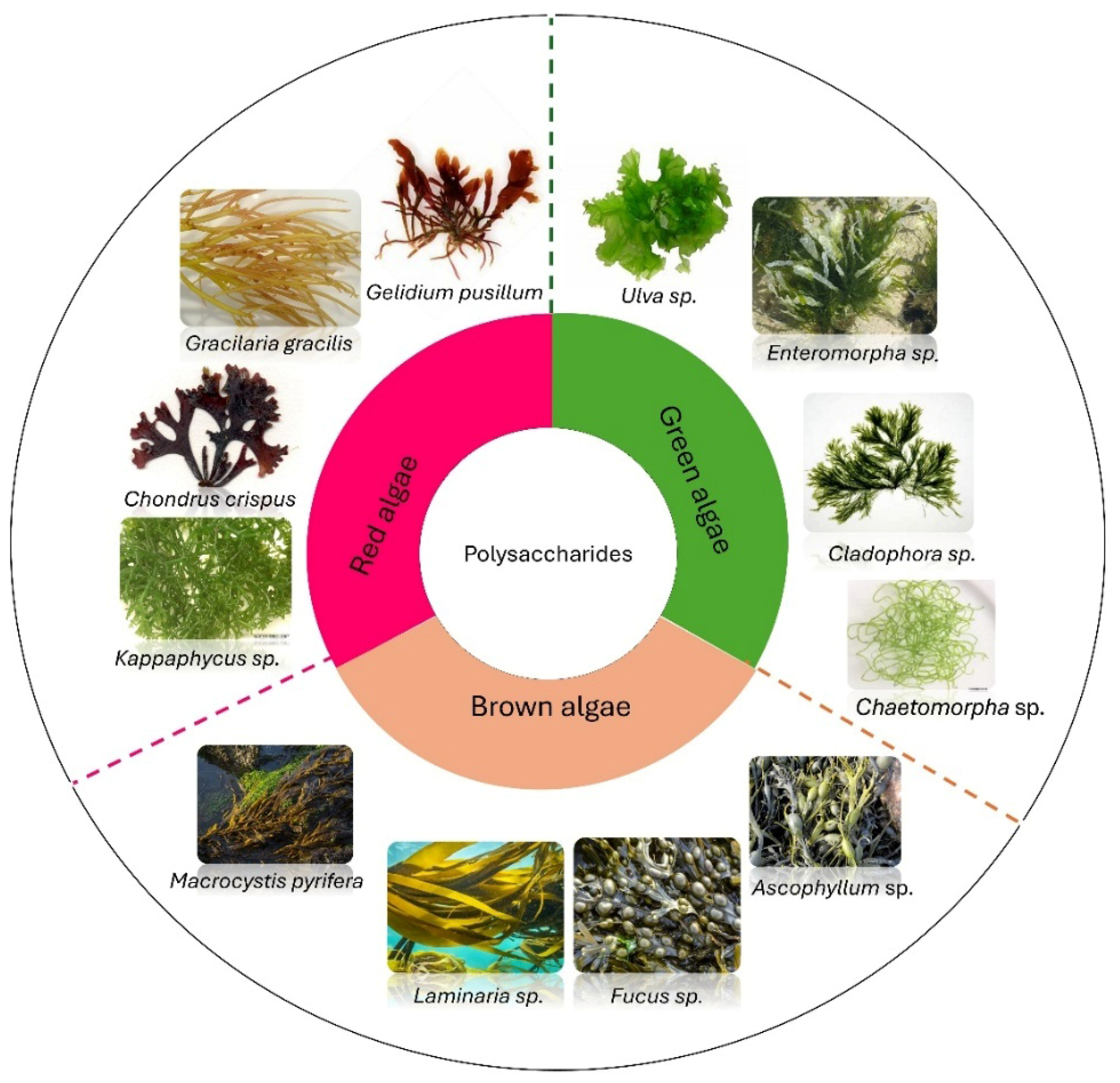
Figure 1. Marine algae species are known for producing a variety of polysaccharides.
Phycology 05 00080 g001
Figure 2. Workflow for the extraction, purification, and structural characterization of marine algal polysaccharides. (SEM-scanning electron microscopy; AFM—Atomic Force Microscopy; HPLC—High-Performance Liquid Chromatography; GC-MS—Gas Chromatography–Mass Spectrometry; FTIR—Fourier Transform Infrared Spectroscopy; NMR—Nuclear Magnetic Resonance spectroscopy and MS—Mass Spectrometry).
Phycology 05 00080 g002
Figure 3. Different biomedical applications of polysaccharides extracted from marine algae.
Phycology 05 00080 g003
Figure 4. Marine algal polysaccharide-based materials and their antibacterial mechanism.
Phycology 05 00080 g004
Table 1. Classification and structural features of major polysaccharides from marine algae.
PolysaccharideSource AlgaeChemical CompositionStructural CharacteristicsClassificationReferences
AlginateBrown algae (Laminaria, Ascophyllum)β-D-mannuronic acid (M) and α-L-guluronic acid (G)Linear copolymer of (1→4)-linked M and G residues arranged in blocks (MM, GG, MG)Structural polysaccharide[17]
CarrageenanRed algae (Kappaphycus, Chondrus)Sulfated galactose unitsLinear galactans with alternating (1→3)-β-D-galactose and (1→4)-α-D-galactose with sulfate groupsSulfated galactan[18,19]
AgarRed algae (Gelidium, Gracilaria)Galactose and 3,6-anhydro-L-galactoseRepeating disaccharide units of agarose; low sulfate contentStructural galactan[19]
FucoidanBrown algae (Fucus, Undaria)Sulfated L-fucose, with possible galactose, xyloseHighly branched, heterogeneous sulfated polysaccharide with varying structureSulfated fucan[20]
LaminarinBrown algae (Laminaria, Eisenia)GlucoseStorage β-glucan, mostly linear with some branchingStorage polysaccharide[21,22]
UlvanGreen algae
Ulva
Sulfated rhamnose, glucuronic acid, iduronic acid, xyloseComplex branched polysaccharide with high uronic acid and sulfate contentSulfated rhamnan[23,24]
Table 2. Biomedical applications of polysaccharides derived from marine algal strains.
Algal SpeciesMarine PolysaccharideBiomedical ApplicationsReferences
Sargassum swartziiFucoidanAntiviral activity, antibacterial, anticoagulant, anti-inflammatory, antiviral, antithrombosis, anti-tumor, anticancer[118]
Laminaria digitataLaminarananti-inflammatory and anti-oxidative, anti-oxidative and anti-inflammatory[81]
Porphyridium cruentumSulfated Polysaccharides (EPS)Anti-inflammatory, antiviral, wound healing[119]
Dunaliella salinaβ-Glucans, Sulfated PolysaccharidesAntioxidant, anti-inflammatory, immune-stimulating[120]
Chondrus crispus
(Irish Moss)
Carrageenan (κ-, ι-, and λ-carrageenan)Thickening agent, anti-inflammatory, potential antitumor[121]
Gelidium amansiiAgar, AgaroseMicrobiological media, food industry[122]
Gracilaria spp.Agar, AgaroseFood gelling agent, microbiology[123]
Laminaria spp.AlginateFood thickener, wound dressing[87]
Sargassum spp.Fucoidan, AlginateAnti-inflammatory, anticoagulant, potential anticancer[124]
Ulva spp.
(Sea Lettuce)
UlvanAntioxidant, anti-inflammatory, antiviral[125]
Disclaimer/Publisher’s Note: The statements, opinions and data contained in all publications are solely those of the individual author(s) and contributor(s) and not of MDPI and/or the editor(s). MDPI and/or the editor(s) disclaim responsibility for any injury to people or property resulting from any ideas, methods, instructions or products referred to in the content.