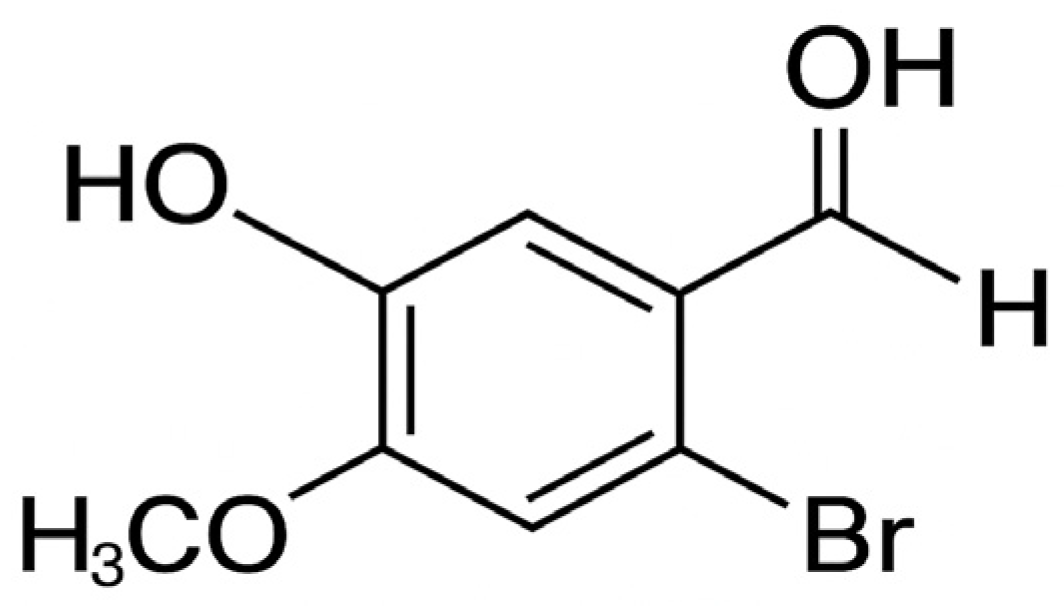

2-Bromo-5-Hydroxy-4-Methoxybenzaldehyde Exhibits Anti-Inflammatory Effects Through the Inactivation of ERK, JNK, and NF-kB Pathways in RAW 264.7 Cells

Abstract
1. Introduction
2. Materials and Methods
2.1. Materials
2.2. Cell Culture
2.3. Measurement of Lactate Dehydrogenase (LDH) Cytotoxicity
2.4. Measurement of NO Production
2.5. Measurement of Cytokine Levels
2.6. Reverse Transcriptase-PCR (RT-PCR) Analysis
2.7. Western Blotting
2.8. Statistical Analysis
3. Results and Discussion
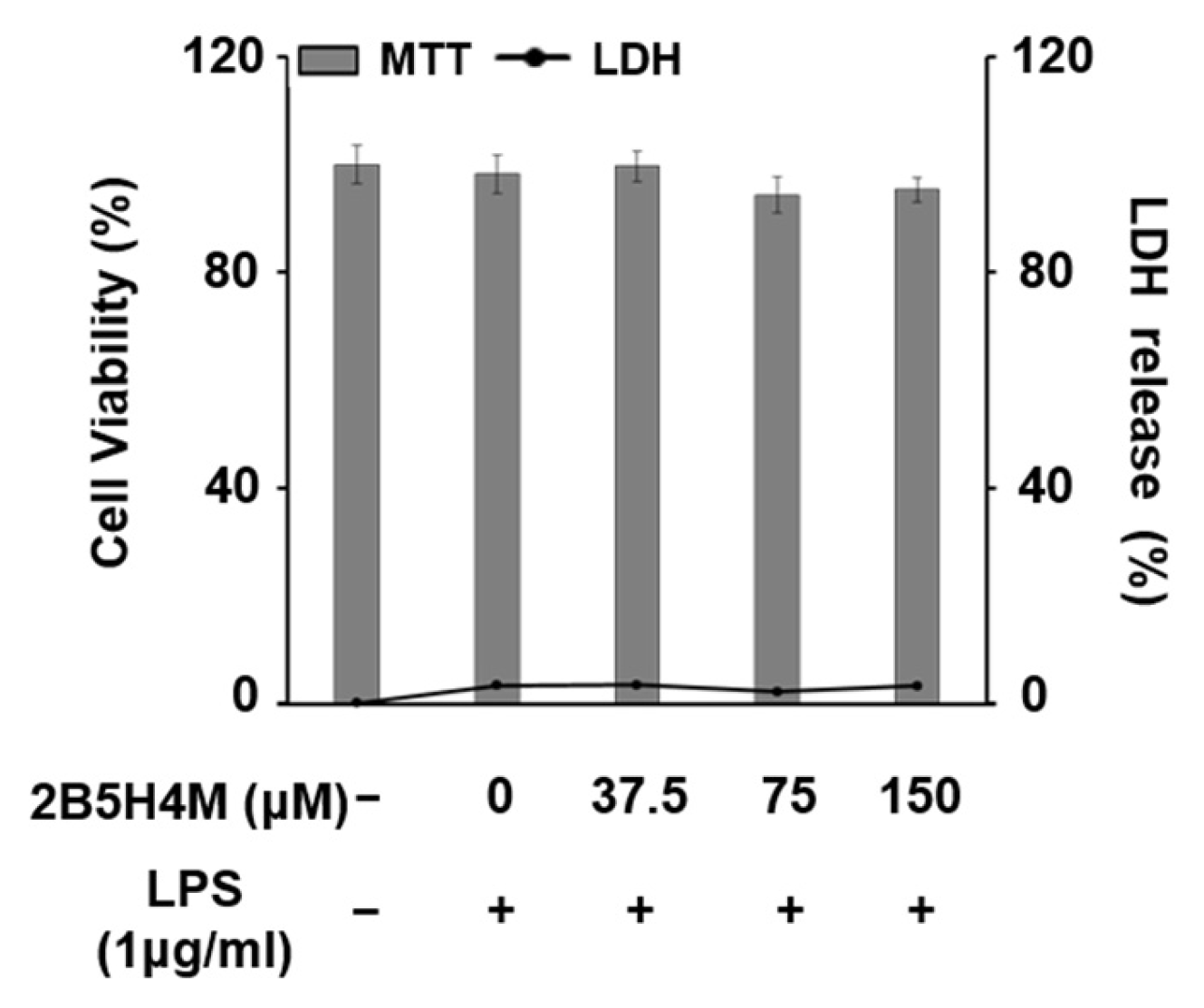
3.1. Cytotoxicity of 2B5H4M in RAW 264.7 Cells
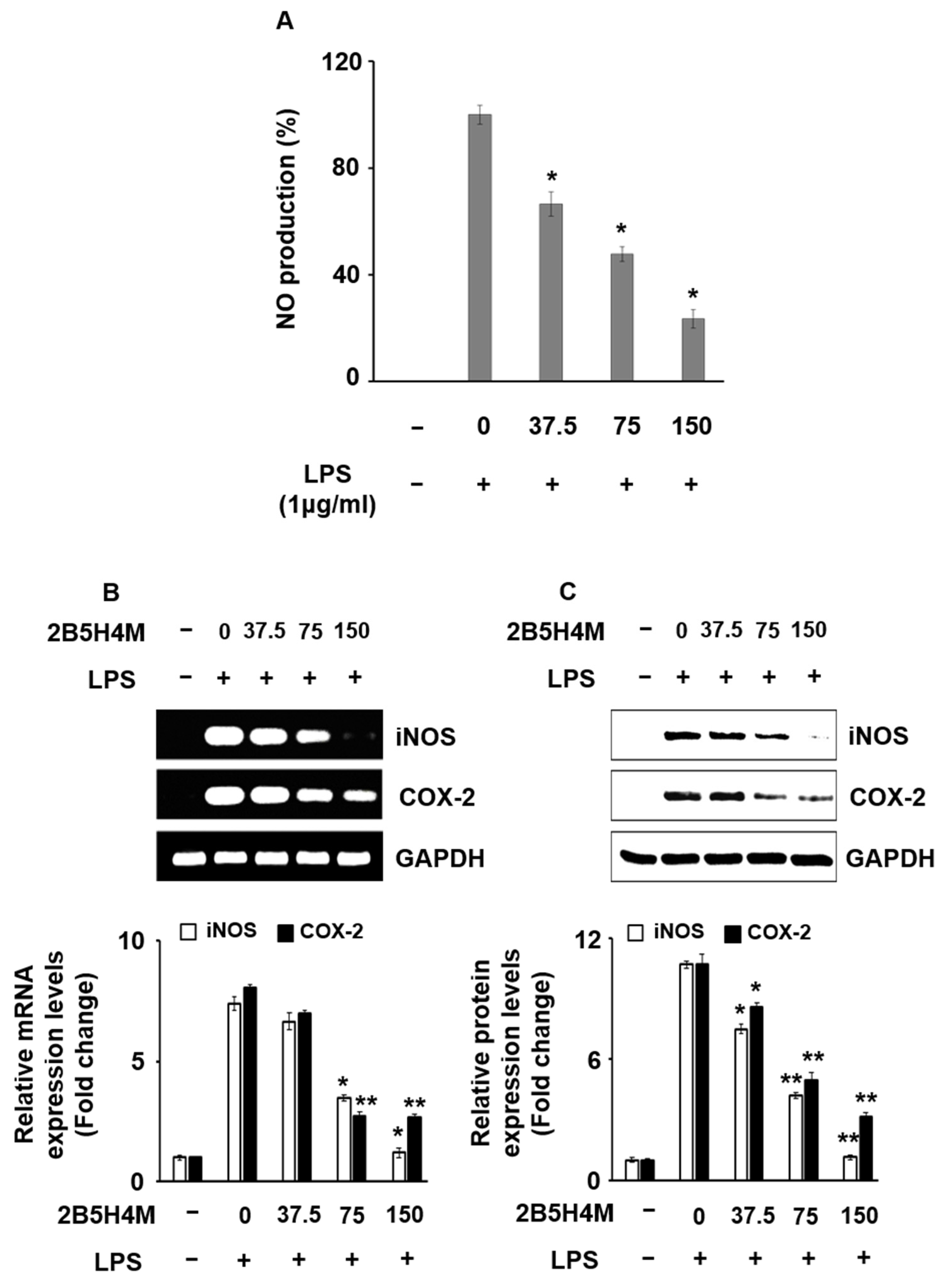
3.2. Effect of 2B5H4M on LPS-Stimulated NO Production and iNOS and COX-2 Expression in RAW 264.7 Cells
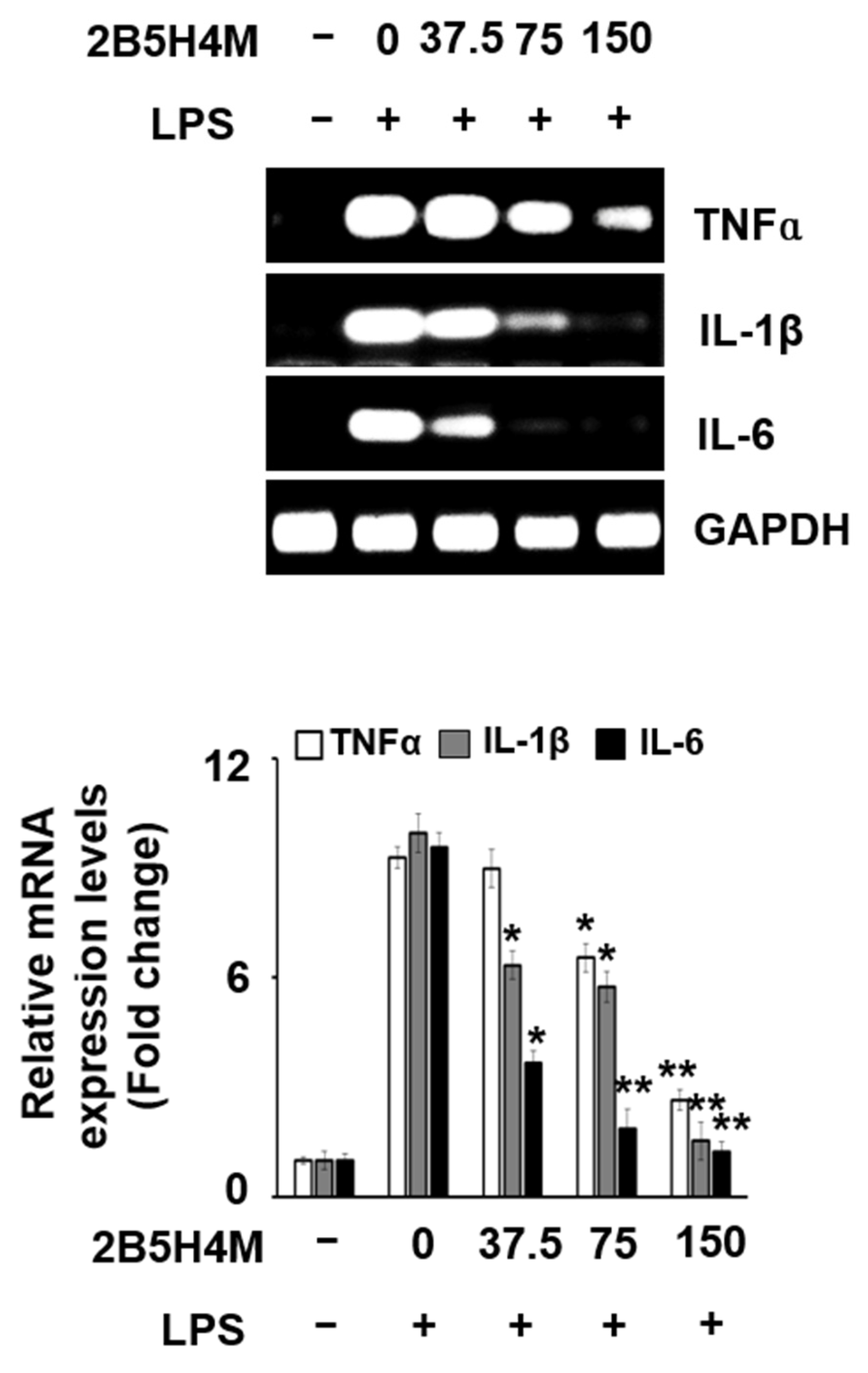
3.3. Effect of 2B5H4M on Cytokine Expression in RAW 264.7 Cells
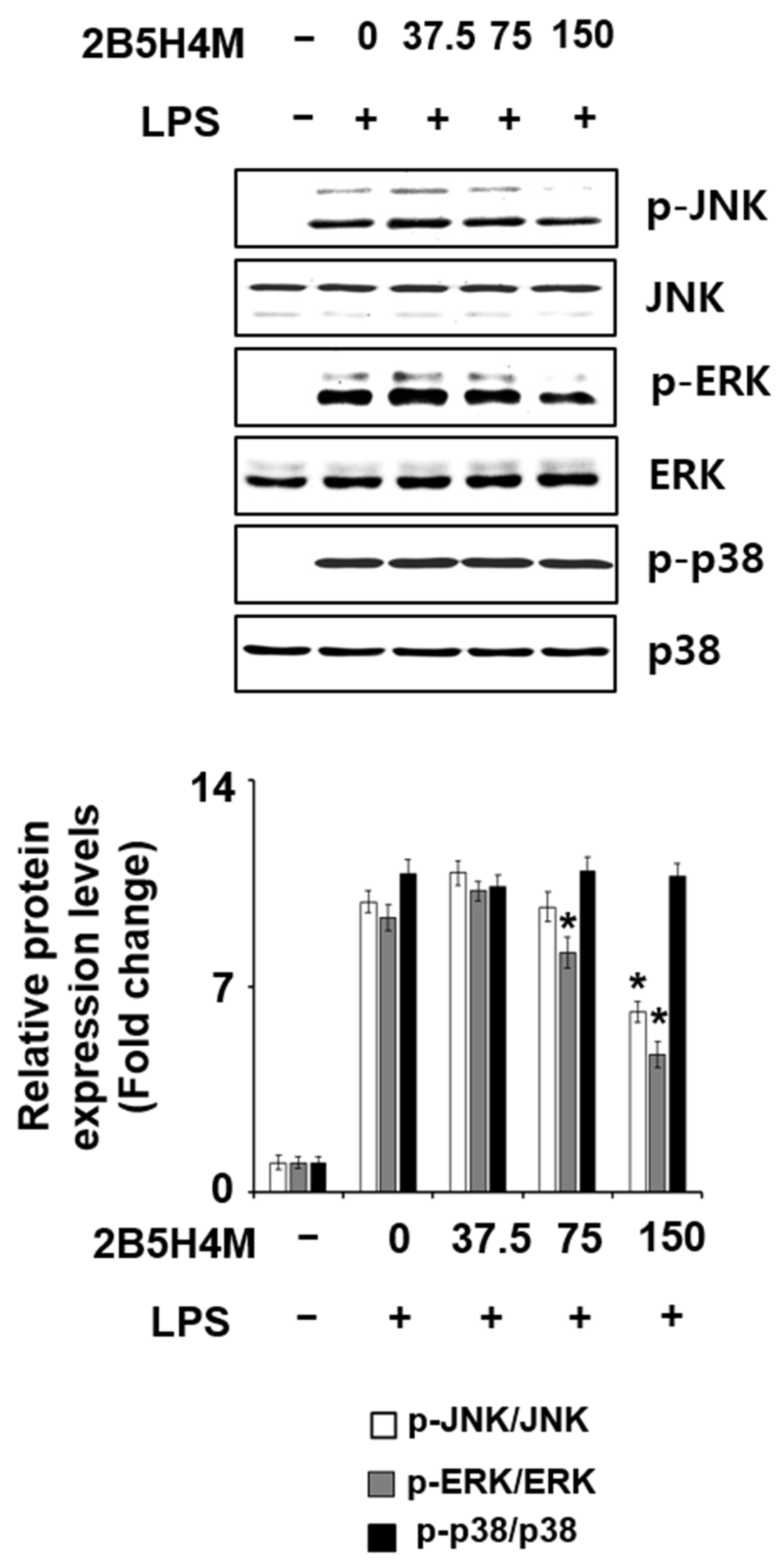
3.4. Effect of 2B5H4M on MAPK Phosphorylation in RAW 264.7 Cells
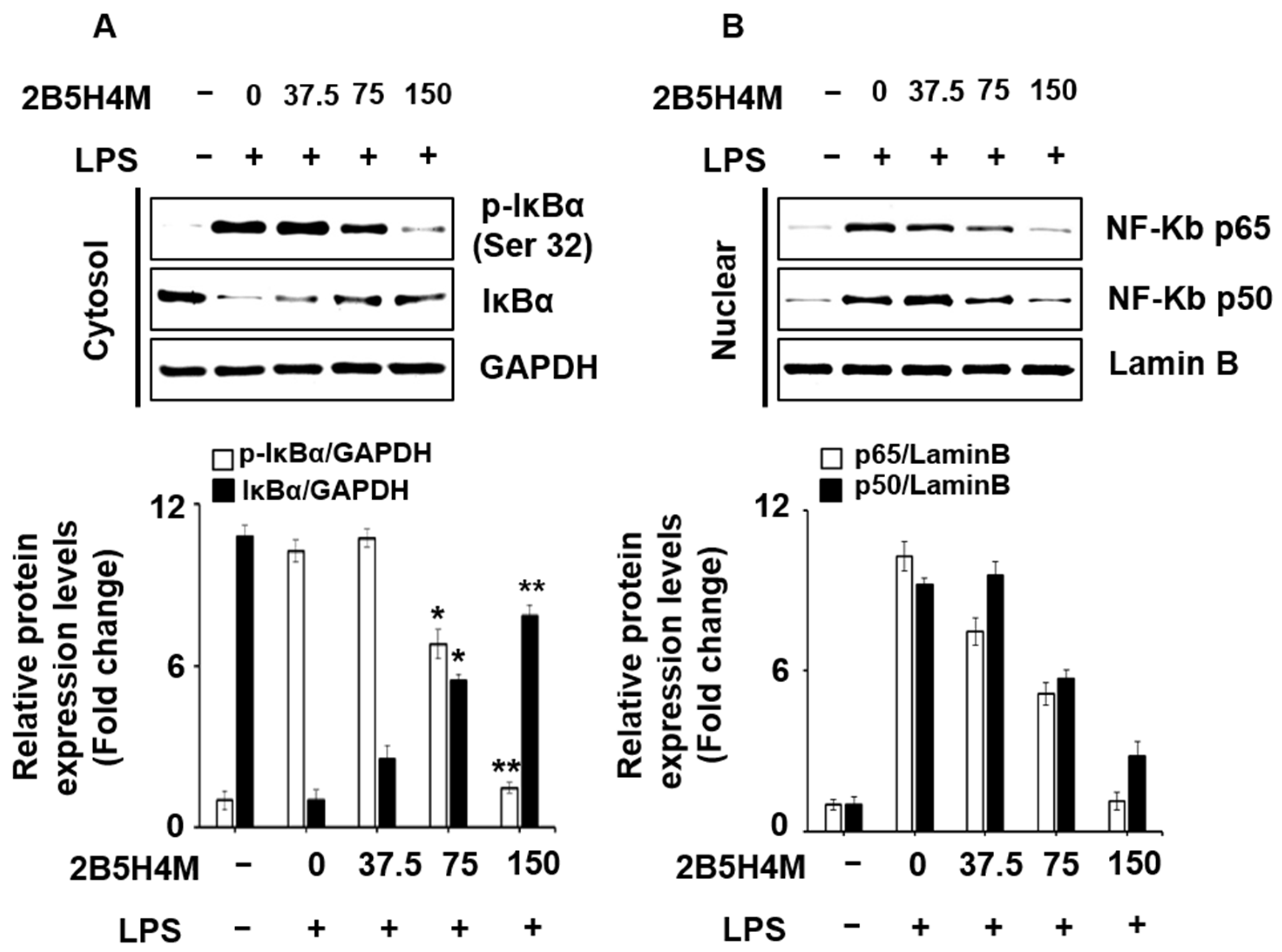
3.5. Effect of 2B5H4M on NF-kB Activation in RAW 264.7 Cells
Author Contributions
Funding
Data Availability Statement
Acknowledgments
Conflicts of Interest
References
- Kim, E.-A.; Kim, S.-Y.; Kim, J.; Oh, J.-Y.; Kim, H.-S.; Yoon, W.-J.; Kang, D.-H.; Heo, S.-J. Tuberatolide B isolated from Sargassum macrocarpum inhibited LPS-stimulated inflammatory response via MAPKs and NF-κB signaling pathway in RAW264. 7 cells and zebrafish model. J. Funct. Foods 2019, 52, 109–115. [Google Scholar] [CrossRef]
- Fernando, I.S.; Nah, J.-W.; Jeon, Y.-J. Potential anti-inflammatory natural products from marine algae. Environ. Toxicol. Pharmacol. 2016, 48, 22–30. [Google Scholar] [CrossRef]
- Islam, M.N.; Ishita, I.J.; Jin, S.E.; Choi, R.J.; Lee, C.M.; Kim, Y.S.; Jung, H.A.; Choi, J.S. Anti-inflammatory activity of edible brown alga Saccharina japonica and its constituents pheophorbide a and pheophytin a in LPS-stimulated RAW 264.7 macrophage cells. Food Chem. Toxicol. 2013, 55, 541–548. [Google Scholar] [CrossRef] [PubMed]
- Wang, L.; Oh, J.-Y.; Yang, H.-W.; Fu, X.; Kim, J.-I.; Jeon, Y.-J. Fucoidan isolated from the popular edible brown seaweed Sargassum fusiforme suppresses lipopolysaccharide-induced inflammation by blocking NF-κB signal pathway. J. Appl. Phycol. 2021, 33, 1845–1852. [Google Scholar] [CrossRef]
- Lu, C.-C.; Yen, G.-C. Antioxidative and anti-inflammatory activity of functional foods. Curr. Opin. Food Sci. 2015, 2, 1–8. [Google Scholar] [CrossRef]
- Xie, Q.W.; Whisnant, R.; Nathan, C. Promoter of the mouse gene encoding calcium-independent nitric oxide synthase confers inducibility by interferon gamma and bacterial lipopolysaccharide. J. Exp. Med. 1993, 177, 1779–1784. [Google Scholar] [CrossRef]
- Weinstein, S.L.; Sanghera, J.; Lemke, K.; DeFranco, A.; Pelech, S. Bacterial lipopolysaccharide induces tyrosine phosphorylation and activation of mitogen-activated protein kinases in macrophages. J. Biol. Chem. 1992, 267, 14955–14962. [Google Scholar] [CrossRef]
- Guha, M.; Mackman, N. LPS induction of gene expression in human monocytes. Cell. Signal. 2001, 13, 85–94. [Google Scholar] [CrossRef]
- Han, J.; Lee, J.-D.; Bibbs, L.; Ulevitch, R. A MAP kinase targeted by endotoxin and hyperosmolarity in mammalian cells. Science 1994, 265, 808–811. [Google Scholar] [CrossRef]
- Gautam, R.; Jachak, S.M. Recent developments in anti-inflammatory natural products. Med. Res. Rev. 2009, 29, 767–820. [Google Scholar] [CrossRef]
- Cheung, R.C.F.; Ng, T.B.; Wong, J.H.; Chen, Y.; Chan, W.Y. Marine natural products with anti-inflammatory activity. Appl. Microbiol. Biotechnol. 2016, 100, 1645–1666. [Google Scholar] [PubMed]
- Wang, G.-F.; Shi, L.-P.; Ren, Y.-D.; Liu, Q.-F.; Liu, H.-F.; Zhang, R.-J.; Li, Z.; Zhu, F.-H.; He, P.-L.; Tang, W. Anti-hepatitis B virus activity of chlorogenic acid, quinic acid and caffeic acid in vivo and in vitro. Antivir. Res. 2009, 83, 186–190. [Google Scholar] [CrossRef] [PubMed]
- Perron, N.R.; Brumaghim, J.L. A review of the antioxidant mechanisms of polyphenol compounds related to iron binding. Cell Biochem. Biophys. 2009, 53, 75–100. [Google Scholar] [CrossRef] [PubMed]
- Hirose, M.; Fukushima, S.; Shirai, T.; Hasegawa, R.; Kato, T.; Tanaka, H.; Asakawa, E.; Ito, N. Stomach carcinogenicity of caffeic acid, sesamol and catechol in rats and mice. Jpn. J. Cancer Res. 1990, 81, 207–212. [Google Scholar] [CrossRef]
- Chanwitheesuk, A.; Teerawutgulrag, A.; Kilburn, J.D.; Rakariyatham, N. Antimicrobial gallic acid from Caesalpinia mimosoides Lamk. Food Chem. 2007, 100, 1044–1048. [Google Scholar] [CrossRef]
- Yan, Z.; Liu, X.; Wang, Y.; Chen, F. Anti-inflammatory effects of phenolic acids: Focus on NF-κB, Akt and MAPK signaling pathways in LPS-stimulated RAW264.7 cells. J. Inflamm. Res. 2023, 16, 1185–1203. [Google Scholar]
- Hu, F.; Li, Y.; Zhang, J.; Zhao, H. Phenolic compounds from Chaenomeles speciosa exert anti-inflammatory effects via NF-κB and MAPK modulation in LPS-stimulated RAW264.7 macrophages. J. Funct. Foods 2023, 104, 105694. [Google Scholar]
- Lamichhane, G.; Kim, J.M.; Lee, S.; Ahn, M.J. Evaluation of anti-inflammatory potential of extract and fractions from Ponciri Fructus in RAW264.7 macrophages. Heliyon 2023, 9, e13485. [Google Scholar]
- Yang, M.O.; Myung, N.Y. The anti-inflammatory mechanism of blueberry is through suppression of NF-κB/caspase-1 activation in LPS-induced RAW264.7 cells. Korean J. Plant Resour. 2024, 37, 256–262. [Google Scholar]
- Lee, J.; Park, S.H.; Kim, H.E.; Choi, K.W. Methanol extract of Euphorbia cotinifolia L. leaf attenuates inflammation and oxidative stress in RAW264.7 macrophages via TAK1-mediated suppression of NF-κB/MAPK and activation of Nrf2 pathways. J. Ethnopharmacol. 2025, 312, 117569. [Google Scholar]
- Lionta, E.; Spyrou, G.; Vassilatis, D.K.; Cournia, Z. Molecular docking: Principles and applications in drug discovery. Curr. Top. Med. Chem. 2014, 14, 1923–1938. [Google Scholar] [CrossRef] [PubMed]
- Yang, Y.-I.; Shin, H.-C.; Kim, S.H.; Park, W.-Y.; Lee, K.-T.; Choi, J.-H. 6, 6′-Bieckol, isolated from marine alga Ecklonia cava, suppressed LPS-induced nitric oxide and PGE2 production and inflammatory cytokine expression in macrophages: The inhibition of NFκB. Int. Immunopharmacol. 2012, 12, 510–517. [Google Scholar] [CrossRef] [PubMed]
- Hollingsworth, S.A.; Dror, R.O. Molecular dynamics simulation for drug discovery. Nat. Rev. Drug Discov. 2018, 17, 351–367. [Google Scholar]
- Ghallab, D.S.; Ibrahim, R.S.; Mohyeldin, M.M.; Shawky, E. Marine algae: A treasure trove of bioactive anti-inflammatory compounds. Mar. Pollut. Bull. 2024, 199, 116023. [Google Scholar] [CrossRef]
- Silva, M.; Ferreira, A.; Pinto, D.; Braga, S. The Ocean’s Pharmacy: Health discoveries in marine algae. Molecules 2024, 29, 1900. [Google Scholar] [CrossRef]
- Goya, L.; Martín, M.A.; Ramos, S. Antioxidant and anti-inflammatory effects of marine bioactive compounds: Phlorotannins and bromophenols. Nutr. Rev. 2025, 83, e1225–e1247. [Google Scholar] [CrossRef]
- Kim, M.E.; Na, J.Y.; Park, Y.-D.; Lee, J.S. Anti-neuroinflammatory effects of vanillin through the regulation of inflammatory factors and NF-κB signaling in LPS-stimulated microglia. Appl. Biochem. Biotechnol. 2019, 187, 884–893. [Google Scholar] [CrossRef]
- Wang, J.; An, W.; Wang, Z.; Zhao, Y.; Han, B.; Tao, H.; Wang, J.; Wang, X. Vanillin has potent antibacterial, antioxidant, and anti-inflammatory activities in vitro and in mouse colitis induced by multidrug-resistant Escherichia coli. Antioxidants 2024, 13, 1544. [Google Scholar] [CrossRef]
- Choudhary, S.A.; Gupta, A.; Khan, H.; Faisal, M.; Patel, S. A small molecule potent IRAK4 inhibitor abrogates LPS-induced TLR4 activation; vanillin inhibits LPS-induced TLR4 activation in macrophages. Eur. J. Pharmacol. 2023, 952, 175–186. [Google Scholar]
- Kim, K.-N.; Ko, S.-C.; Ye, B.-R.; Kim, M.-S.; Kim, J.; Ko, E.-Y.; Cho, S.-H.; Kim, D.; Heo, S.-J.; Jung, W.-K. 5-Bromo-2-hydroxy-4-methyl-benzaldehyde inhibited LPS-induced production of pro-inflammatory mediators through the inactivation of ERK, p38, and NF-κB pathways in RAW 264.7 macrophages. Chem. Biol. Interact. 2016, 258, 108–114. [Google Scholar] [CrossRef]
- Gu, M.-M.; Li, M.; Gao, D.; Liu, L.-H.; Lang, Y.; Yang, S.-M.; Ou, H.; Huang, B.; Zhou, P.-K.; Shang, Z.-F. The vanillin derivative 6-bromo-5-hydroxy-4-methoxybenzaldehyde induces aberrant mitotic progression and enhances radiosensitivity accompanying suppression the expression of PLK1 in esophageal squamous cell carcinoma. Toxicol. Appl. Pharmacol. 2018, 348, 76–84. [Google Scholar] [CrossRef] [PubMed]
- Karin, M.; Ben-Neriah, Y. Phosphorylation meets ubiquitination: The control of NF-κB activity. Annu. Rev. Immunol. 2000, 18, 621–663. [Google Scholar] [CrossRef] [PubMed]
- Khan, M.A.; Khan, M.J. Nano-gold displayed anti-inflammatory property via NF-kB pathways by suppressing COX-2 activity. Artif. Cells Nanomed. Biotechnol. 2018, 46, 1149–1158. [Google Scholar] [CrossRef] [PubMed]
- Dejardin, E. The alternative NF-κB pathway from biochemistry to biology: Pitfalls and promises for future drug development. Biochem. Pharmacol. 2006, 72, 1161–1179. [Google Scholar] [CrossRef]
- Zhu, Z.; Gu, Y.; Zhao, Y.; Song, Y.; Li, J.; Tu, P. GYF-17, a chloride substituted 2-(2-phenethyl)-chromone, suppresses LPS-induced inflammatory mediator production in RAW264. 7 cells by inhibiting STAT1/3 and ERK1/2 signaling pathways. Int. Immunopharmacol. 2016, 35, 185–192. [Google Scholar] [CrossRef]
- Kaminska, B. MAPK signalling pathways as molecular targets for anti-inflammatory therapy—From molecular mechanisms to therapeutic benefits. Biochim. Biophys. Acta (BBA)-Proteins Proteom. 2005, 1754, 253–262. [Google Scholar]
- Kyriakis, J.M.; Avruch, J. Mammalian MAPK signal transduction pathways activated by stress and inflammation: A 10-year update. Physiol. Rev. 2012, 92, 689–737. [Google Scholar] [CrossRef]
- Chi, H.; Barry, S.P.; Roth, R.J.; Wu, J.J.; Jones, E.A.; Bennett, A.M.; Flavell, R.A. Dynamic regulation of pro-and anti-inflammatory cytokines by MAPK phosphatase 1 (MKP-1) in innate immune responses. Proc. Natl. Acad. Sci. 2006, 103, 2274–2279. [Google Scholar] [CrossRef]
- Chen, H.; Sohn, J.; Zhang, L.; Tian, J.; Chen, S.; Bjeldanes, L.F. Anti-inflammatory effects of chicanine on murine macrophage by down-regulating LPS-induced inflammatory cytokines in IκBα/MAPK/ERK signaling pathways. Eur. J. Pharmacol. 2014, 724, 168–174. [Google Scholar]
- Huang, S.-S.; Deng, J.-S.; Lin, J.-G.; Lee, C.-Y.; Huang, G.-J. Anti-inflammatory effects of trilinolein from Panax notoginseng through the suppression of NF-κB and MAPK expression and proinflammatory cytokine expression. Am. J. Chin. Med. 2014, 42, 1485–1506. [Google Scholar]
- Dong, M.; Dong, Y.; Xu, H.; Zhang, Y.; Wang, B.; Zhao, Y.; Zhou, Y.; Hu, J. Progress of bromophenols in marine algae from 2011 to 2020. Mar. Drugs 2020, 18, 411. [Google Scholar] [CrossRef]
- Li, C.-Q.; Chen, J.-J.; Zhang, L.; Guo, J.; Zhang, W. Anti-inflammatory compounds from marine organisms. Mar. Drugs 2021, 19, 613. [Google Scholar]


Disclaimer/Publisher’s Note: The statements, opinions and data contained in all publications are solely those of the individual author(s) and contributor(s) and not of MDPI and/or the editor(s). MDPI and/or the editor(s) disclaim responsibility for any injury to people or property resulting from any ideas, methods, instructions or products referred to in the content. |
© 2026 by the authors. Licensee MDPI, Basel, Switzerland. This article is an open access article distributed under the terms and conditions of the Creative Commons Attribution (CC BY) license.
Share and Cite
Kim, J.; Heo, S.-Y.; Kim, E.-A.; Kang, N.; Heo, S.-J. 2-Bromo-5-Hydroxy-4-Methoxybenzaldehyde Exhibits Anti-Inflammatory Effects Through the Inactivation of ERK, JNK, and NF-kB Pathways in RAW 264.7 Cells. Phycology 2026, 6, 10. https://doi.org/10.3390/phycology6010010
Kim J, Heo S-Y, Kim E-A, Kang N, Heo S-J. 2-Bromo-5-Hydroxy-4-Methoxybenzaldehyde Exhibits Anti-Inflammatory Effects Through the Inactivation of ERK, JNK, and NF-kB Pathways in RAW 264.7 Cells. Phycology. 2026; 6(1):10. https://doi.org/10.3390/phycology6010010
Chicago/Turabian StyleKim, Junseong, Seong-Yeong Heo, Eun-A Kim, Nalae Kang, and Soo-Jin Heo. 2026. "2-Bromo-5-Hydroxy-4-Methoxybenzaldehyde Exhibits Anti-Inflammatory Effects Through the Inactivation of ERK, JNK, and NF-kB Pathways in RAW 264.7 Cells" Phycology 6, no. 1: 10. https://doi.org/10.3390/phycology6010010
APA StyleKim, J., Heo, S.-Y., Kim, E.-A., Kang, N., & Heo, S.-J. (2026). 2-Bromo-5-Hydroxy-4-Methoxybenzaldehyde Exhibits Anti-Inflammatory Effects Through the Inactivation of ERK, JNK, and NF-kB Pathways in RAW 264.7 Cells. Phycology, 6(1), 10. https://doi.org/10.3390/phycology6010010