
Evaluating the Efficacy of a Novel Multi-Component Feed Additive for Methane Mitigation and Performance Enhancement in Sheep
by
 , , , ,
M. Jordana Rivero
1,* ,
,
Afsal A. Khan
1,2 ,
,
Tersur T. Akpensuen
1,3 ,
,
Paulo Meo-Filho
4 ,
,
Simón Pérez-Márquez
1 and
Andy Jones
1 1
Net-Zero and Resilient Farming, Rothamsted Research, Okehampton EX20 2SB, UK
2
Bristol Veterinary School, University of Bristol, Langford BS40 5DU, UK
3
Faculty of Agriculture, University of Jos, Jos 930001, Nigeria
4
Department of Animal Science, University of California, Davis, CA 95616, USA
*
Author to whom correspondence should be addressed.
Ruminants 2025, 5(2), 17; https://doi.org/10.3390/ruminants5020017
Submission received: 28 February 2025
/
Revised: 23 April 2025
/
Accepted: 25 April 2025
/
Published: 28 April 2025
(This article belongs to the Special Issue Nutrients and Feed Additives in Ruminants)
Simple Summary
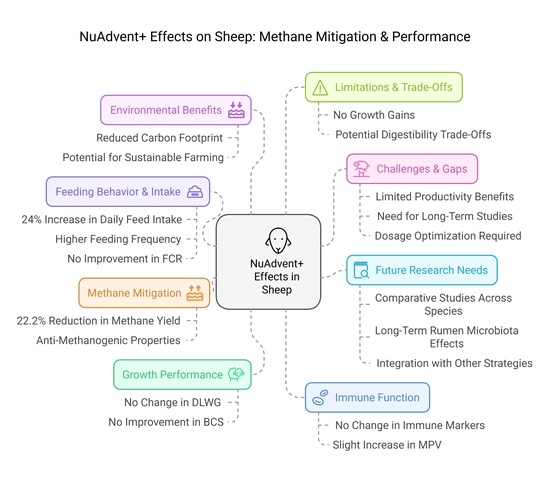
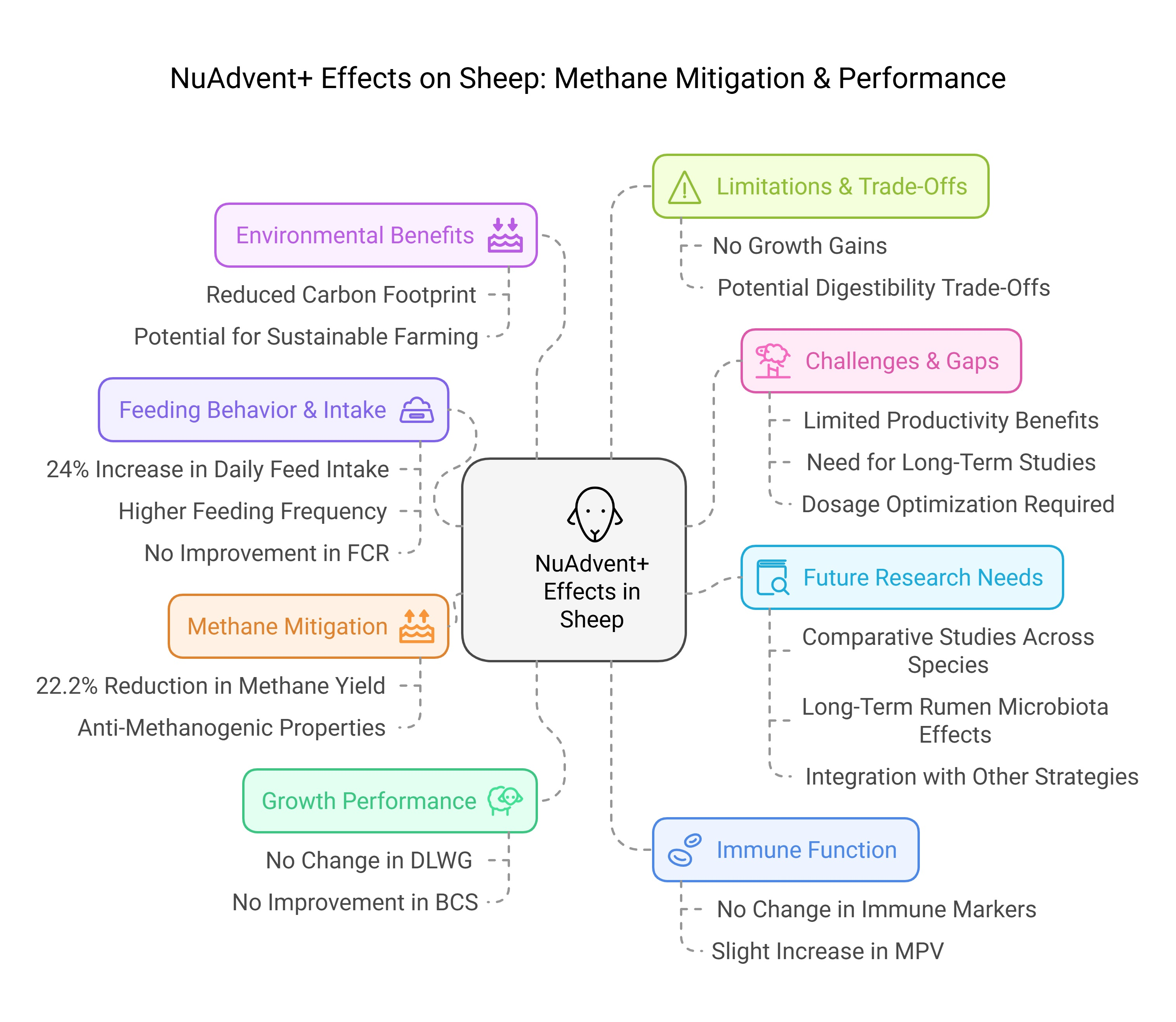
Livestock farming, particularly with sheep and cattle, releases methane gas, which accelerates climate change by trapping heat more effectively than carbon dioxide. This study examined a new feed mixture, a novel multi-component feed additive, composed of natural substances, such as fatty acids, yeast, plant extracts, and vitamins, to determine its ability to reduce methane emissions from sheep while also improving their growth and health. Twenty sheep were divided evenly into two groups for approximately 10 weeks; one group received the standard feed and the novel feed additive, and the other consumed standard feed only. The sheep fed the novel feed additive produced less methane per unit of feed consumed and increased their feeding frequency, suggesting greater acceptance of the mixture. However, these animals did not exhibit improved weight gain or enhanced health compared to the standard-feed-only group. This suggests that the novel feed additive lowers methane output per unit of feed, offering potential environmental benefits, yet it does not enhance sheep productivity or well-being as anticipated.
Abstract
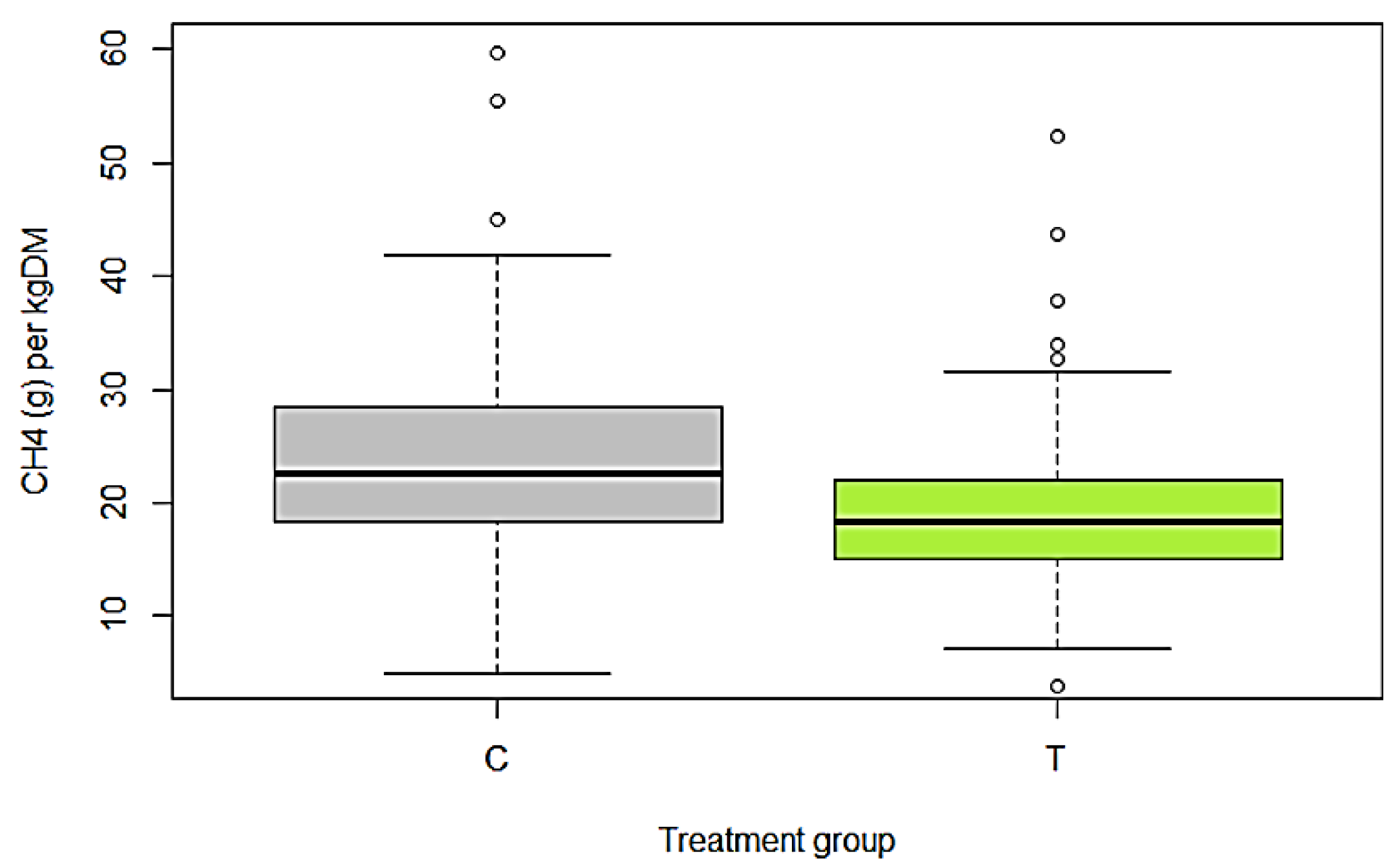
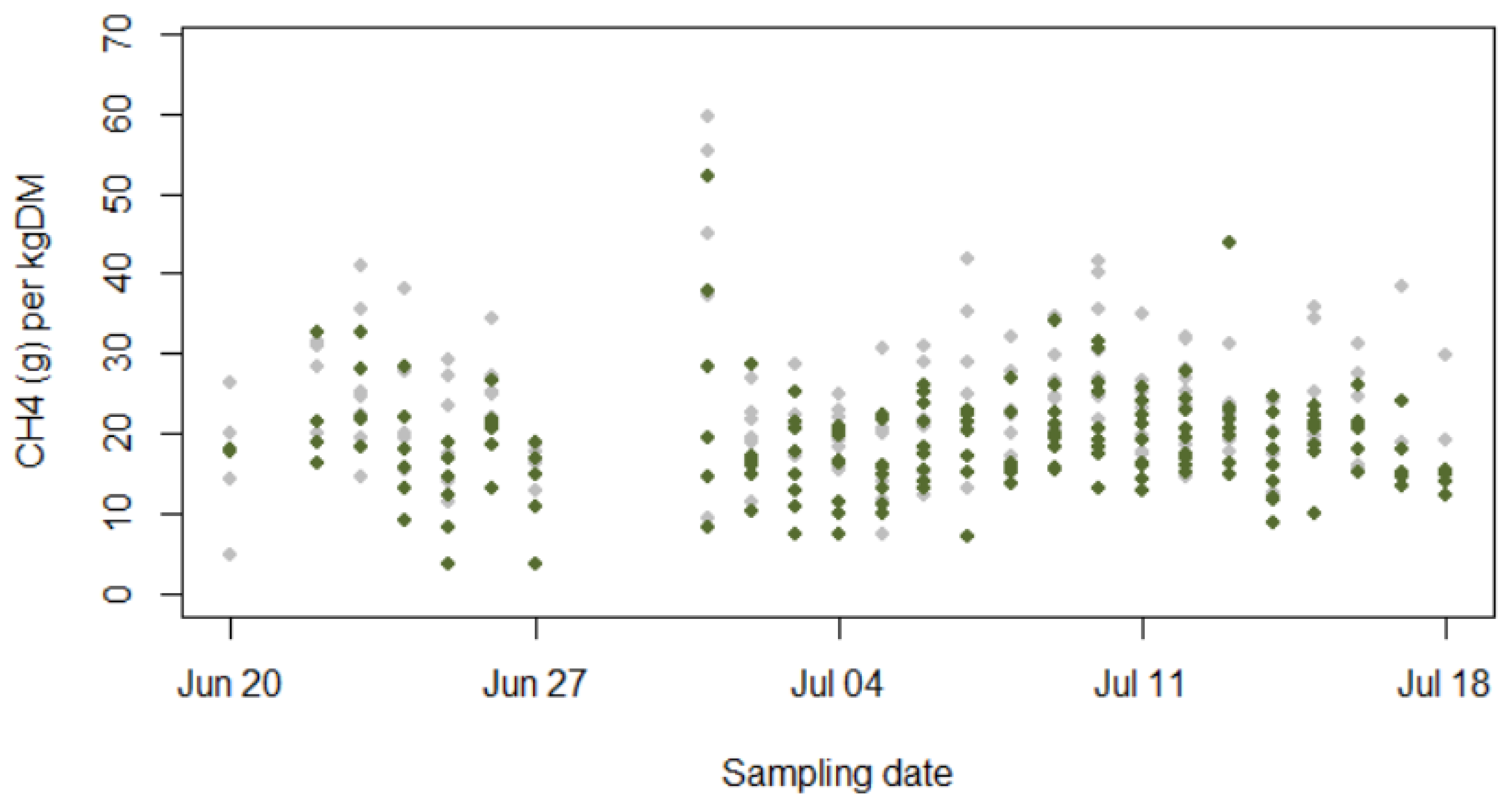
Enteric methane emissions from ruminants substantially contribute to global greenhouse gas emissions, necessitating effective mitigation strategies that also support animal productivity. This study assessed the efficacy of a multi-component feed additive that combines medium-chain fatty acids (MCFAs), live yeast, plant-based agents, and Vitamin B, in reducing methane emissions, improving feed efficiency, and enhancing growth and immune function in sheep. Twenty crossbred castrated male sheep (52 ± 3.7 kg) were divided into control and treatment groups (n = 10 each), with the treatment group receiving grass pellets supplemented with the multi-component feed additive (20 g/day) for 71 days, including a 30-day acclimatisation period. Feed intake, methane emissions, growth performance, and blood parameters were monitored using BioControl pens, GreenFeed units, and haematological analyses. The treatment group exhibited a 24% increase in daily feed intake (p < 0.001) and a 22.2% reduction in methane yield per kg of dry matter ingested (p < 0.001), which could be attributed to MCFAs’ anti-methanogenic properties and yeast’s rumen modulation. However, no significant improvements were observed in daily live weight gain, feed conversion efficiency, or immune parameters, suggesting limited energy utilisation for growth. These findings highlight this novel multi-component feed additive as a promising strategy for methane mitigation in forage-based systems. Further dosage optimisation and dietary integration could enhance its application across ruminant species, contributing to sustainable livestock production.
Keywords:
enteric methane; NuAdvent+; ruminants; sheep; sustainability; methane mitigation