2. Materials and Methods
This study used a video elicitation approach informed by the reflective, participant-focused principles of photovoice to explore participants’ experiences. Video elicitation utilizes video recordings as data for discussion and analysis [
13,
14]. The approach was selected in response to participants’ desire to capture movement rather than static images, thereby effectively portraying the dance experience. Incorporating visual data into the research process helped build rapport with participants. It supported rich discussions about their experiences during the dance class, while maintaining participant engagement without requiring control over the recording process [
13,
14]. Participants reviewed professionally recorded footage in focus groups, with some participants able to isolate a still moment for reflection.
Photovoice, a participatory research method, positions participants as facilitators of the research process, allowing them to share their personal experiences and guide the research, in contrast to traditional methods where researchers solely direct a study [
16]. Photovoice was developed in the 1990s as a participant-guided, action-oriented approach that enables participants to identify, record, and share concerns about their communities through visual photographs with various audiences [
16,
17]. The three main goals of photovoice are to allow participants to identify, document, and reflect on their community’s concerns; to initiate conversations about those concerns; and to promote social change by connecting with policymakers [
16]. To facilitate a traditional photovoice study, the following steps are typically taken [
16]:
Recruit photovoice participants.
Share the photovoice methodology with participants.
Obtain informed consent from participants.
Provide a theme for taking photographs.
Provide cameras to participants and explain the instructions.
Allocate time for participants to capture photographs.
Meet with participants to review photographs.
Select an audience of policymakers who can implement sociopolitical changes.
Discuss the dissemination of photographs and stories with policymakers.
2.1. Epistemology and Theoretical Orientation
This qualitative study used a constructivist approach to understand subjective human behavior [
18]. Researchers chose this lens to explore individual behaviors, focusing on each participant’s views on how the dance class brought them joy, their perceptions of dance accessibility, and related factors. Additionally, constructivism emphasized shared subjective experiences among participants [
18]. Through focus groups, participants shared their insights on dance and accessibility, allowing them to identify common viewpoints and perspectives.
In addition to conceptualizing joy as a meaningful experiential outcome in dance, this study was informed by Activity Theory of Aging, embodiment, and embodied cognition, which were used as sensitizing concepts to support the interpretation of how accessibility, participation, and meaning were experienced in the dance context. Activity Theory of Aging emphasizes the role of sustained engagement in meaningful activities and social roles in supporting identity and well-being in later life [
19,
20]. It suggests that later life may involve changes in social roles and opportunities for engagement, and that continued participation in valued activities can support continuity, connection, and life satisfaction [
19,
20]. Early formulations of the theory distinguish between informal activities that foster social interaction, formal activities (e.g., volunteering), and solitary activity, arguing that informal social engagement is particularly important because it provides role support and affirmation through relationships and everyday interaction [
20,
21].
We also draw on scholarship on embodiment and embodied cognition to frame joy not as an abstract psychological state, but as an experience that can emerge through bodily participation, sensory engagement, and relational movement in context [
22,
23,
24]. Embodied cognition research suggests that cognition, affect, and meaning-making are shaped by the body’s capacities and by the environment, and that aging can involve changes in sensory processing and action–perception dynamics that influence how older adults engage with movement-based activities [
23,
24,
25,
26]. From this perspective, accessibility features in dance (e.g., seated participation, supportive instruction, and socially safe environment) may not simply “accommodate” limitations, but may actively enable older adults to experience agency, connection, and positive affect through the body [
27,
28].
2.2. Study Design
2.2.1. Data Collection Site
Data were collected during an SDOA class at NBS. SDOA is a program organized by NBS that provides older adults with the opportunity to dance in a way that is most comfortable for them, such as seated or on their feet, allowing them to engage in social interaction, movement, and joy [
29].
Bar and Dalrymple’s work traced the evolution of the SDOA program [
5]. It emphasized the growing need for dance programs tailored to older adults aged 55 and above. The authors discussed an initial study on dance and older adults with PD, which demonstrated a high demand for and interest in maintaining programs at NBS and beyond. This interest essentially informed the development of the current program and indicated the need for increased programming to ensure older adults have access to this form of movement [
5].
2.2.2. Participants
Participant inclusion criteria were as follows: 55 years or older; attending the SDOA program at the NBS; comfortable being video-recorded; and comfortable being audio-recorded if participating in the focus group.
2.2.3. Materials
A demographic questionnaire was created to describe the sample, focusing on age, sex, ethnicity, and dance experience. The research team iteratively developed the interview script to understand participants’ experiences with SDOA better, their perceptions of joy within the class, and how the class could be made more accessible. The interview script began with general questions about the dance program, asked by one researcher as participants responded in a roundtable format. To help participants reflect on their experiences that day, the group was reminded of the different sections they had completed during the dance class and prompted to recall their favorite moments.
Participants reviewed professionally recorded footage from the SDOA class, identified their favorite sections that illustrated their joy, and reflected on their experiences, with the discussion guided by the content of the footage. This approach allowed participants to guide the discussion’s focus. When participants selected a moment of joy, they were invited to reflect using questions adapted from the SHOWeD [
16], including the following:
What do you feel when you look at these videos/photographs? What is happening?
How does what you see/feel relate to dance accessibility?
Why do you see joy here?
What do you want people to understand if they were to look at these videos/photographs?
Video elicitation was used rather than static photographs to capture the movement inherent in dance better and to support participant-led reflection on embodied experiences [
13,
14,
15]. To conclude, the focus groups shifted to questions about dance accessibility. Participants were asked to describe barriers and enablers to accessing dance, what information they wanted to share with policymakers, and how dance programs could be more inclusive. These questions were designed to directly address the study’s research questions and generate actionable solutions, aligning with the goals of social change derived from photovoice methodology [
16,
17].
2.2.4. Procedure
Using Sutton–Brown’s steps to conduct a photovoice research study, researchers adapted the method to incorporate video elicitation [
6]. The following section outlines the steps taken during the study and the implementation of video elicitation.
Participants arrived at the NBS 30 min before the dance class to complete informed consent, a media release, and a demographic questionnaire. Then, they participated in a 30 min SDOA class, professionally recorded by NBS for later use in focus groups. The first author collected field notes and recorded observations during the class. Afterward, participants had a lunch break, with food provided by the research team. During this time, the first author performed the SHOWeD method [
16,
17] using the video recording to capture themes and meanings derived from the dance class from the researcher’s perspective. This involved the researcher further analyzing the observations collected during the class by reviewing field notes and the dance video prior to hearing from participants. These observations later supported the development of themes.
Following the break, researchers conducted a 1 h in-person, semi-structured focus group with a sub-sample of six participants from the SDOA class, forming two groups of three. Using the semi-structured moderator script, participants discussed experiences with SDOA and reviewed the pre-recorded video, selecting segments that demonstrated their joy. If participants wanted a photograph of an exact moment, screenshots were taken. Participants then performed the adapted SHOWeD method after viewing the video recording and explained what they experienced as joyful during their favorite video segments. The discussions were audio-recorded and transcribed using Otter.ai Pro (a transcription software) for later analysis. Based on participants’ explanations of their most joyful moments, researchers aimed to capture these experiences by taking stills of participants’ favorite sections to communicate this joy through the research paper.
2.3. Data Analysis
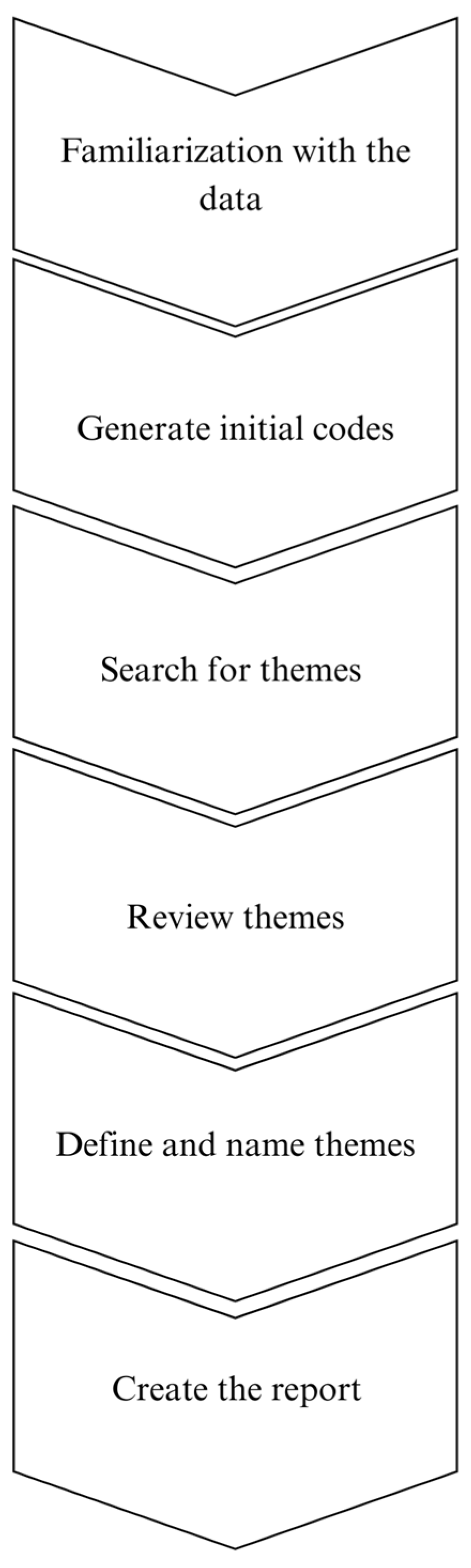
To analyze the data, researchers performed reflexive thematic analysis following the six stages outlined by Braun and Clarke [
30]. This approach involved the systematic identification and assignment of codes to identify themes from the data [
31] (See
Figure 1). The reflexive thematic analysis involved using a constant comparative method (data examination and re-examination) and reflective practice (consideration of researcher influence and bias) during and after data collection [
31]. Researchers reviewed the transcriptions on Microsoft Word several times to become very familiar with the data [
30].
Initial codes were generated by reviewing each interview question and the participant’s response, noting keywords and explanations to support each line of the transcript [
30]. Next, each researcher re-examined their codes on each transcript and created a list of preliminary themes derived from these keywords [
30,
31]. Following this, all the researchers met to share, discuss, and integrate their interpretations of codes and themes through reflexive discussion, rather than to reach agreement [
30]. This process allowed themes to be refined and developed through collective reflection while acknowledging the multiple researcher perspectives. These themes were organized in a Microsoft Excel data extraction chart and interpreted within the broader context of dance accessibility for older adults, informed by focus group discussions and the researcher’s observations during the dance class [
30].
3. Results
All nine participants in the dance class attended the SDOA class on the day of data collection. However, as shown in
Table 1, only participants 1–6 remained for the focus group discussions (i.e., participants who did not take part in the focus group have their focus group number depicted as N/A). These discussions were divided into two groups of three, with participants grouped by transportation method to ensure those who traveled together stayed together. Demographic information for the participants is presented in
Table 1. The table outlines each participant’s number (#), focus group assignment, age (in years), sex (M/F), ethnicity, and length of time dancing (in years).
The thematic analysis of the focus group discussions and the researcher’s observations, both during and after the class, are shared when presenting the findings. It is important to note that some aspects of this research, such as mental or physical health benefits, could not be directly observed by researchers, as they were unique experiences embodied by the participants. Video elicitation involved participants reviewing professionally recorded video segments and reflecting on the most meaningful moments to them [
13,
14]. As videos cannot be included in this paper, the researchers aimed to capture stills that supported participants’ statements. However, if participants did isolate a specific moment for a photograph, those stills were included below. Participant names were not stated, and their information was not shared. Participants are represented by numbers (e.g., participant 1, 2, 3, 4, etc.).
The themes that emerged from the two focus group discussions with participants 1–6 following the SDOA class, along with exemplar participant comments, are summarized in
Table 2. This table provides an overview of the key themes and illustrative quotes, with the sections that follow describing each theme in more detail from both participant and researcher perspectives.
3.1. Experiencing Joy Through Dance
Researchers examined how participants experienced joy through their involvement in the dance program. Four key themes emerged through a series of focus group discussions: mental health benefits, physical benefits, social connection, and emotional, cognitive, and spiritual benefits. These themes reflected the diverse ways dance contributed to participants’ overall well-being.
3.1.1. Mental Health Benefits
Mental health benefits, specifically in reducing depression and anxiety, were primarily identified through participants’ experiences in the focus groups, as this aspect of health could not be directly observed. While researchers recognized expressions of joy during the class, the internal health benefits described were subjectively experienced internally by individual participants.
The focus groups revealed that participating in the SDOA class supported participants’ mental well-being by enabling them to focus on themselves in the moment and to improve their movement. For example,
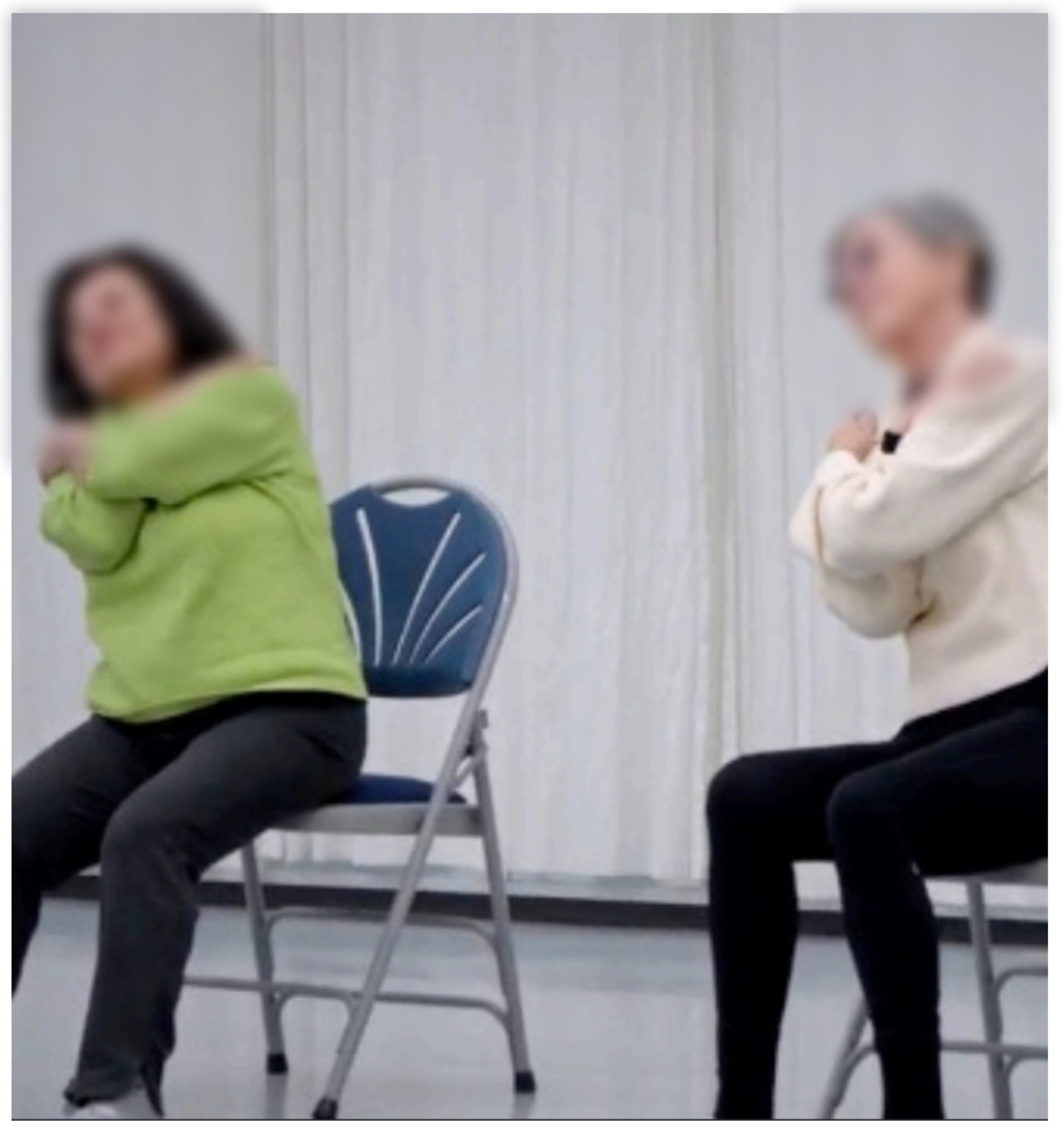
Figure 2 illustrates participants’ sense of presence in the dance class, which contributes to an uplift in mood and the ability to set aside any prior worries. Participant 5 directly showcased the positive impact of dance on mental health by stating that “I think there is a mental aspect of it as well, the joy and the movement, and it does for the depression or anxiety or whatever it might be, which is very advantageous for all of us.” All six participants in the focus groups expressed that engaging in movement and music within a social setting made them feel good. Participant 3 described how dance benefited them personally: “If I have lots of problem and coming here, and then all the problem is gone.” The class provided structure yet flexibility for participants to move however they would like, shift their focus away from personal thoughts and worries, and experience the mental benefits of joy in dancing.
Additionally, the structured routine of attending dance classes benefited participants due to its consistency and stability, as they noted. For example, Participant 5 shared that “There is a routine to this class,” and Participant 4 shared that “I always leave feeling much better than when I came in the door...more about the atmosphere in that sense.” Participants reported feeling better after engaging in the class and following their typical routine, which made them feel mentally well and joyful. Through movement, music, and routine, the class helped reduce feelings of depression and anxiety. Through storytelling and fostering a mental presence, participants experienced mental health benefits, which led to feelings of joy and an improved mood.
3.1.2. Physical Benefits
Physical health benefits such as improved posture, recovery, and body awareness were identified primarily through participants’ statements in the focus groups. While researchers observed physical engagement and expressions of joy, participants described only specific personal health benefits (see
Figure 3).
Figure 3 is a still that captures the physical benefits described by participants, including exercise, stretching, recovery, and balance, which were achieved through a variety of moments involving both seated and standing positions. Many participants found that engaging in dance allowed them to move their bodies in enjoyable and beneficial ways, without the strain often associated with traditional forms of exercise, such as going to the gym (See
Figure 3). For example, Participant 2 emphasized the importance of physical exercise, but in a gentler fashion:
“What I love most about it is that we are exercising in a very, how shall I say, pleasant way, rather than going to a gym, and, you know, like hard work, this that the other this is exercise in a soft fashion.”
(Participant 2)
Participants further discussed that the physical benefits of the class were so powerful that they continued to attend, demonstrating the joy experienced through physical movement, “...that means we are really interested in this.” Similarly, Participant 6 described how the class played a role in their recovery from surgery, allowing their body to heal as they engaged in the sessions while moving in natural and supportive ways. Specifically, they stated that “This class has led me into better posture and better physical being.” Their experience demonstrated that the class’s structured yet flexible nature allowed participants to listen to their bodies, facilitating movement that aided both rehabilitation and overall well-being.
Another important aspect was the option to sit while dancing (See
Figure 3). Participant 6 described this flexibility of the class as being “...pretty amazing what you can get physically by sitting down and doing it.” The class provided physical benefits while ensuring accessibility for those with mobility limitations. By fostering a positive, supportive environment, participants can engage in movement and exercise without the pressures often associated with traditional forms of physical activity.
3.1.3. Social Connection
Social connection was identified through participants’ descriptions in the focus groups, as these experiences were individual and subjective. Researchers observed the joy and interactions participants shared, but the deeper sense of community and connection was conveyed directly by the participants themselves.
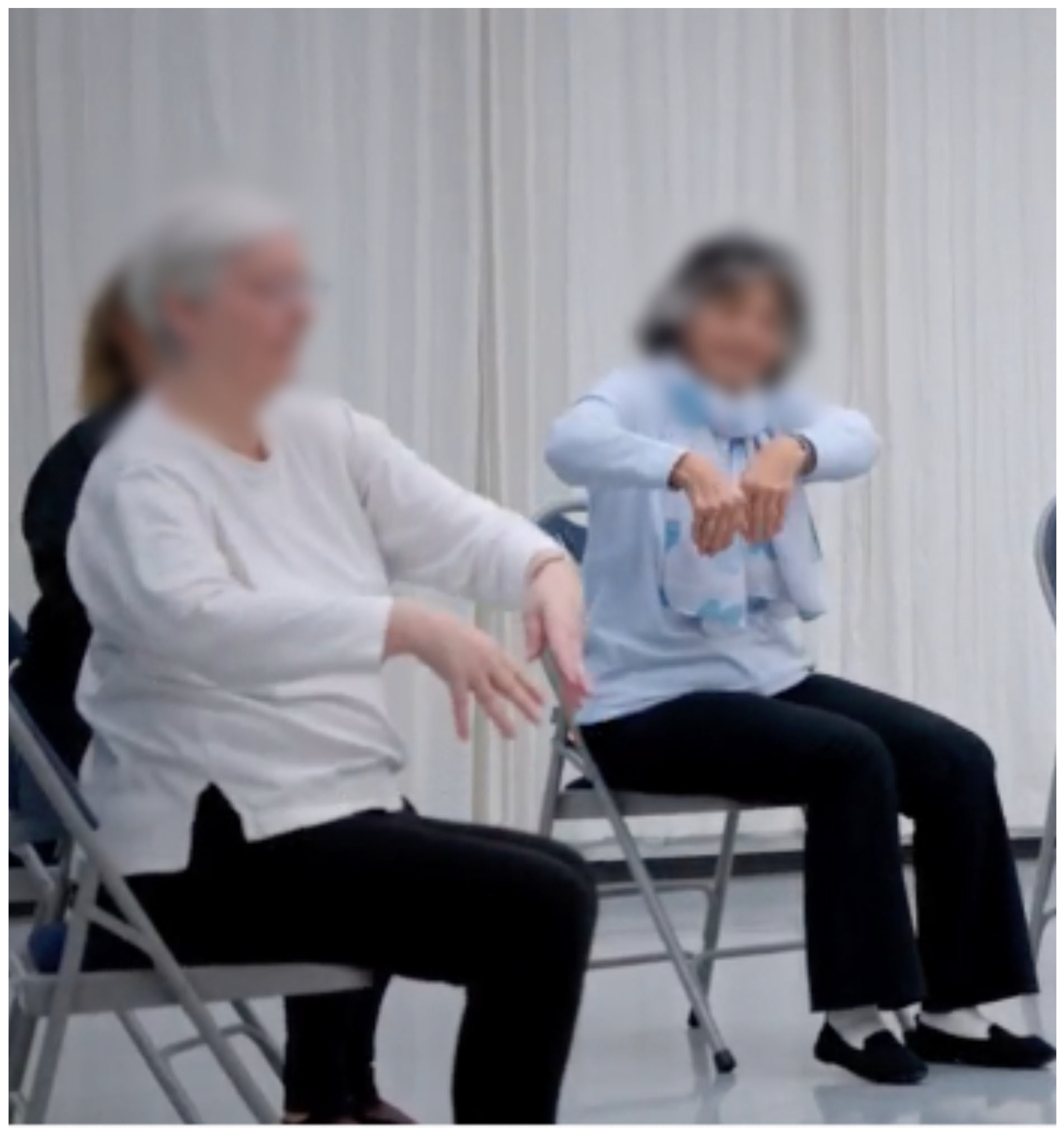
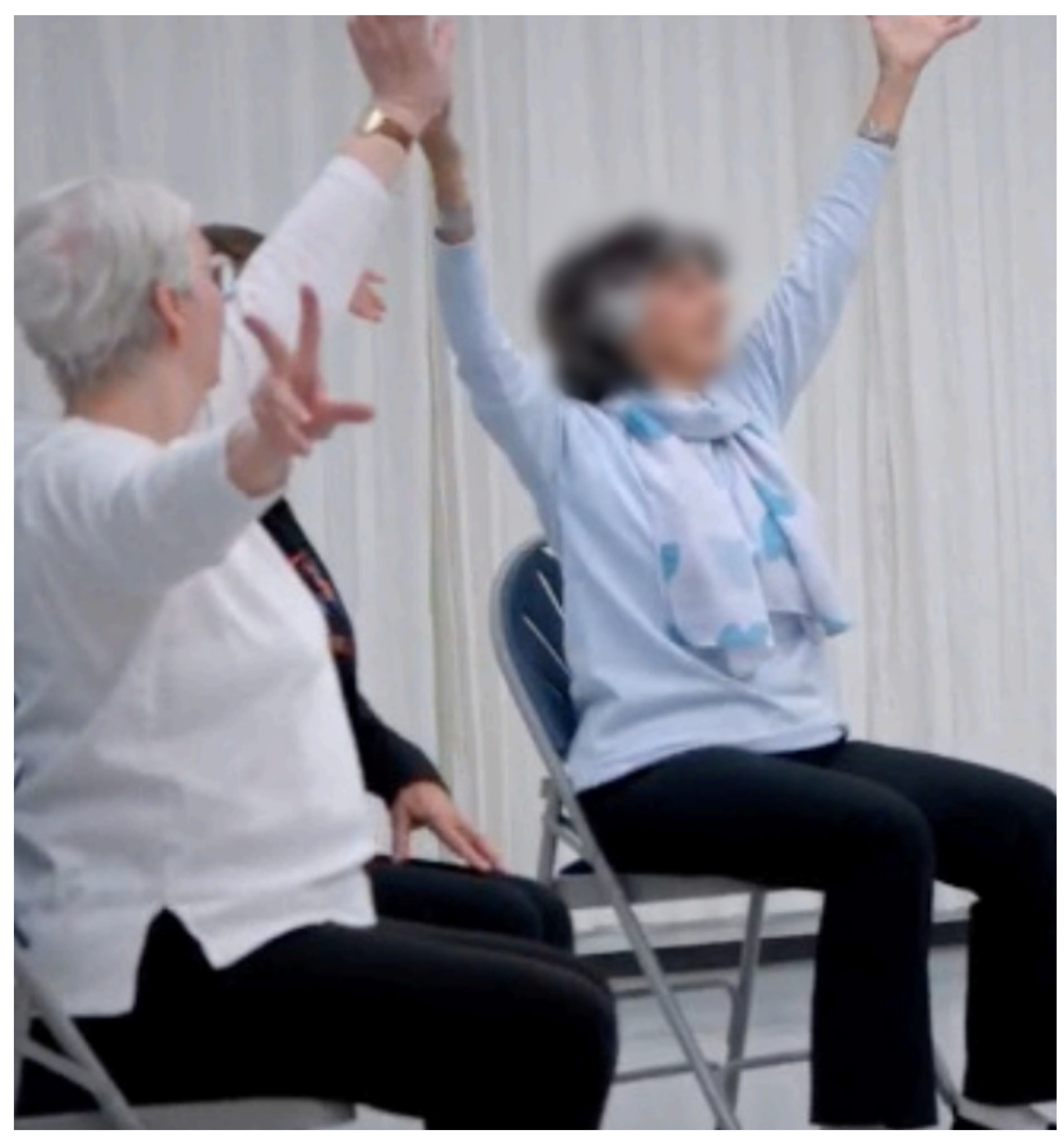
Figure 4 illustrates a moment where participants were asked to imagine and move in synchronicity like waves at a beach. At this moment, participants expressed enjoyment and focused on this movement, as described by Participant 5, who stated they were “having fun” and “not thinking about anything else.” Participants described these group exercises as opportunities to connect with others through movement (see
Figure 4 and
Figure 5).
Figure 5 illustrates a moment where participants acted out the imagery of the sun during a guided exercise. Participants shared that these creative prompts brought a sense of warmth, familiarity, and connection within the group. Participant 4 described this experience as part of the “spirit” that united the class.
Participants also expressed a strong sense of belonging to the NBS dance community. They frequently described the setting as prestigious and meaningful. Participant 5 stated that “There’s a cache of telling people that you’re gonna go with dancing in one of the studios again because they’re all so lovely.” Many participants also described their long-term connection to NBS, being introduced to the program through family and friends. Participant 5 commented that having the class at the NBS “really was an advantage, because I knew the National Ballet School,” while Participant 6 shared that “My son has called this his second home.”
Researchers observed that social connections extended beyond the dance class. Participants arrived in carpool groups, typically greeting each other with smiles and conversations before entering the building. During the class, they verbally interacted, made eye contact, and smiled while performing dance movements and warm-ups. Participant 4 shared that the instructors encouraged them to “smile at others,” which participants followed as they engaged in imaginative dance scenarios (See
Figure 4 and
Figure 5).
After the dance class and focus group sessions, participants stayed, sat at a table with their friends and family, ate food, and socialized. Witnessing these relationships and social interactions outside the class made the social connections within the program extremely evident.
3.1.4. Emotional, Cognitive, and Spiritual Benefits
Emotional, cognitive, and spiritual benefits emerged through participants’ personal reflections in focus groups. Joy was evident in laughter, smiles, and lively conversations during class. Participants were mentally engaged through storytelling and imaginative activities that sparked memory and creativity. Spiritually, they described being transported by the music and imagery, which evoked personal memories and a deep sense of presence. Moments of connection and laughter fostered collective joy and well-being, while specific cognitive and spiritual insights, such as memories triggered by music, were shared directly by participants (see
Figure 6).
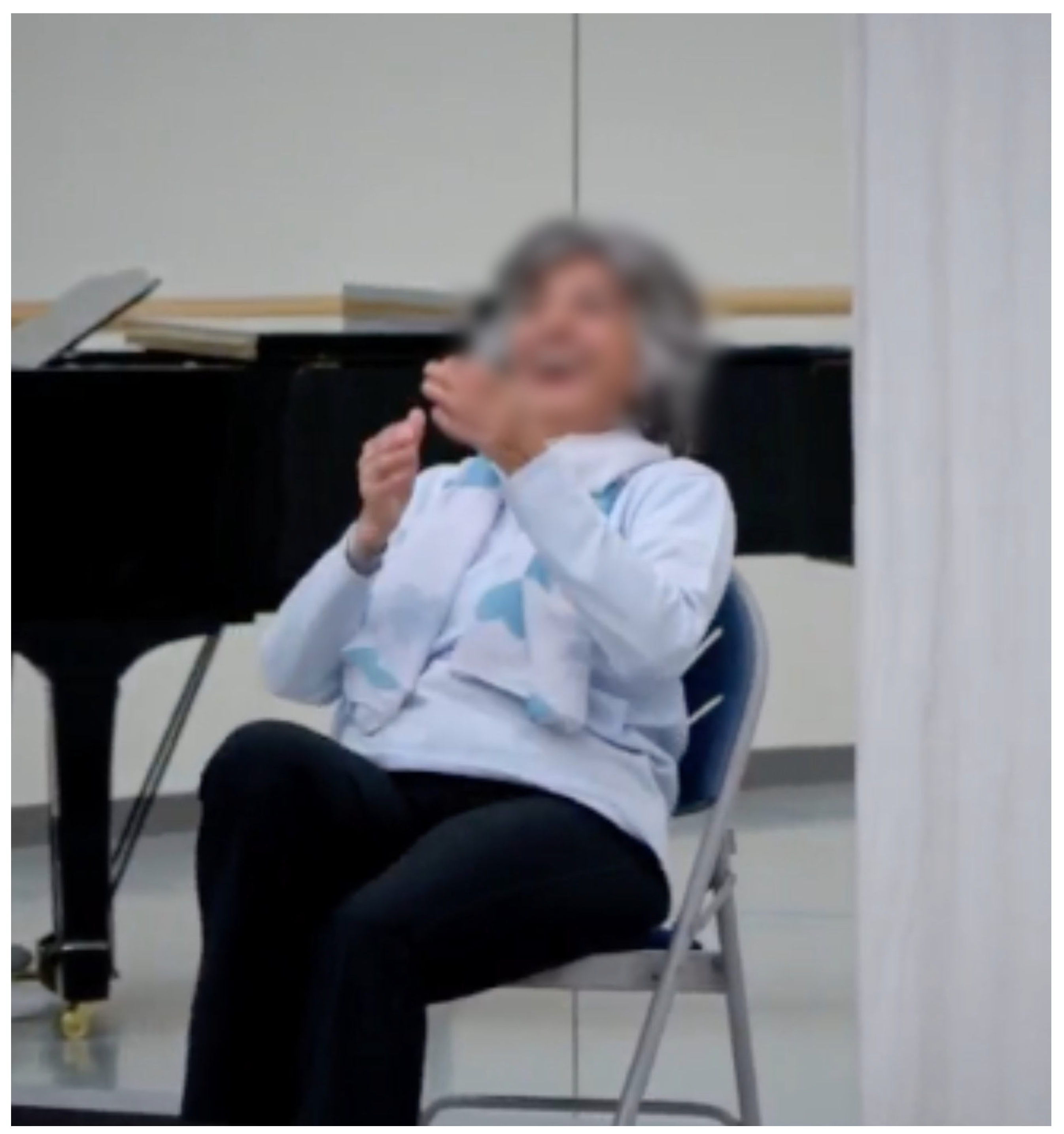
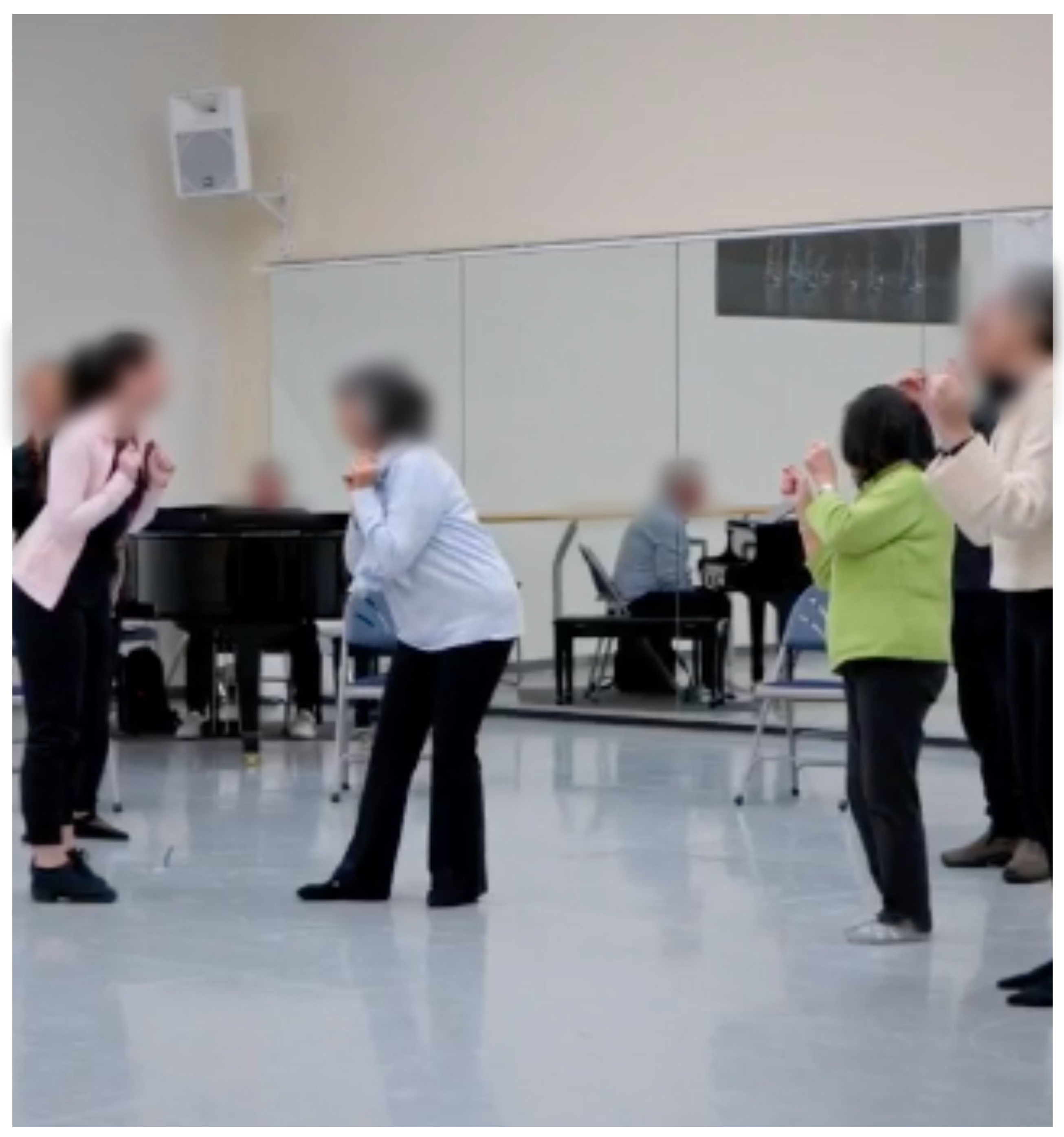
Figure 6 captures a moment during the warm-up when participants expressed the emotional benefits they experienced during the class. Participant 1 reflected that “I’m smiling here. I sort of caught myself smiling...that’s how happy I am” (see
Figure 6). Participant 1 also highlighted the emotional impact of live piano music, stating that “The music is good, especially if you have someone who’s really into it.” Participants described the pianist’s enthusiasm and familiar song evoked personal memories and deepened emotional connections to the class. For example, Participant 3 shared that “Yeah, recalling...memor[ies]...is very important. Sometimes...I was very emotional, and I was crying...[and] dancing...[and] happy.” Participant 2 agreed, stating that “It’s all our memories. The pieces that they are playing are not like today’s techno, or something.” These quotes demonstrate how live music prompted participants to recall personal experiences and express emotional joy within the dance class.
Cognitively, participants were stimulated through storytelling and imaginative activities. Participant 2 explained how the teachers guided them to “...tell stories...while making us move our legs so we’re imagining it at the same time.” This approach helped participants stay mentally engaged. For example, Participant 5 described a moment when the class was encouraged to imagine walking on a beach, skiing down a mountain, or gardening (See
Figure 6). Participant 1 described the impact of the imagery created by the teachers by stating that “...it’s sort of the way they talk. I’m telling you, you can’t...talk yourself. You can’t help but imagine.” Participant 2 agreed with this statement: “It’s a big contributor, ...You can just be quiet, just do the movements. It’s not gonna have the same thing.” These imaginative scenarios allowed participants to be creative and engage cognitively.
Spiritually, participants also found deep emotional connections through the music. Participant 3 described how hearing live music reminded them of their late husband, triggering a powerful emotional response. They stated that “I’m crying because the music [is] coming from my husband.” This illustrated how participants connected personally and spiritually to the music played.
Researchers observed several emotional, cognitive, and spiritual benefits that aligned with participants’ descriptions. Emotionally, facial expressions such as smiling were common indicators of joy. During warm-ups, participants engaged in light conversation, laughed, and imagined cold weather before transitioning into movements to “warm themselves up” (see
Figure 6). Cognitively, researchers observed that the storytelling component of the class played a significant role in engaging participants’ imaginations. Participants were guided through mental exercises such as imagining walking on a beach or skiing down a mountain, which encouraged interaction and discussion among the class. Spiritually, live music, as participants described, had a visible effect on the group. During these moments, participants appeared deeply moved by the music, and the teachers’ use of it enhanced participants’ engagement throughout the class
Collectively, participant descriptions and researcher observations indicated that the combination of emotional, cognitive, and spiritual engagement contributed to participants’ overall joy and well-being during the class. Shared experiences of imagination, music, and movement fostered connection and happiness among participants, demonstrating the overlapping benefits of dance.
3.2. Perceptions of Dance Accessibility
Researchers investigated how participants experienced accessibility in the dance program. Focus group discussions revealed two main areas that shaped perceptions of accessibility: inclusive class design and environmental barriers. These themes reflected how the structure, instruction, and physical space of the dance class either supported or challenged participants’ ability to fully engage in movement.
3.2.1. Inclusive Class Design
Participants reported that the inclusive class design, flexible movement options, and teachers’ storytelling approach contributed to their sense of joy and accessibility. Researchers observed that the class structure, physical setup, and instructor strategies supported a welcoming, accommodating environment for the older adults.
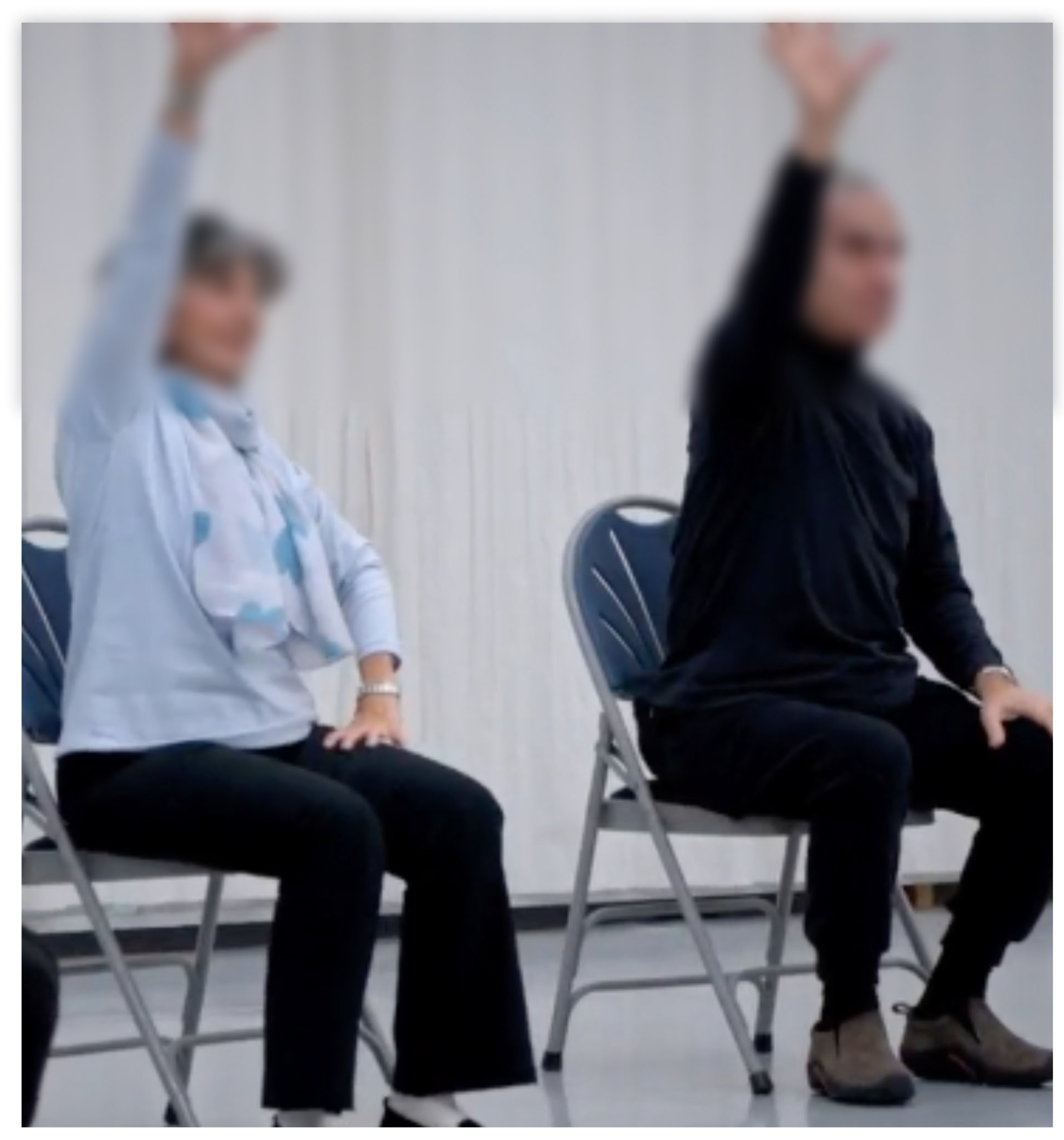
Figure 7 illustrates a moment that represents how participants viewed the teachers as central to the accessibility and overall enjoyment of the class through their use of storytelling and movement options. Participant 4 explained that “...the teachers also provide a...number of options actually.” In both focus groups, participants shared that the teachers’ ability to tell stories, provide options without judgment, and create a welcoming environment made the class an enjoyable and accessible experience (see
Figure 7). Participants shared that each class was different, offering new movements that participants looked forward to, further supporting the idea that class design and teacher engagement were key factors in dance accessibility:
“I must also emphasize that the teachers are making a huge difference…This whole thing can be extremely dull if the teachers are just doing it, ...They always tell stories, you know, etc., while they are making us move our legs so we’re imagining it at the same time. So, the teachers, for me, are very important.”
(Participant 2)
Similarly, Participant 5 also expressed their appreciation for the teachers:
“The amount of work that that the teachers put in, you know, creating it for us is really amazing, because we don’t do the same thing every time. We may be doing a lot of the same steps or the same actions, but we’ve got a whole different story. We’re at the beach, skiing down a mountain, or gardening or whatever.”
(Participant 5)
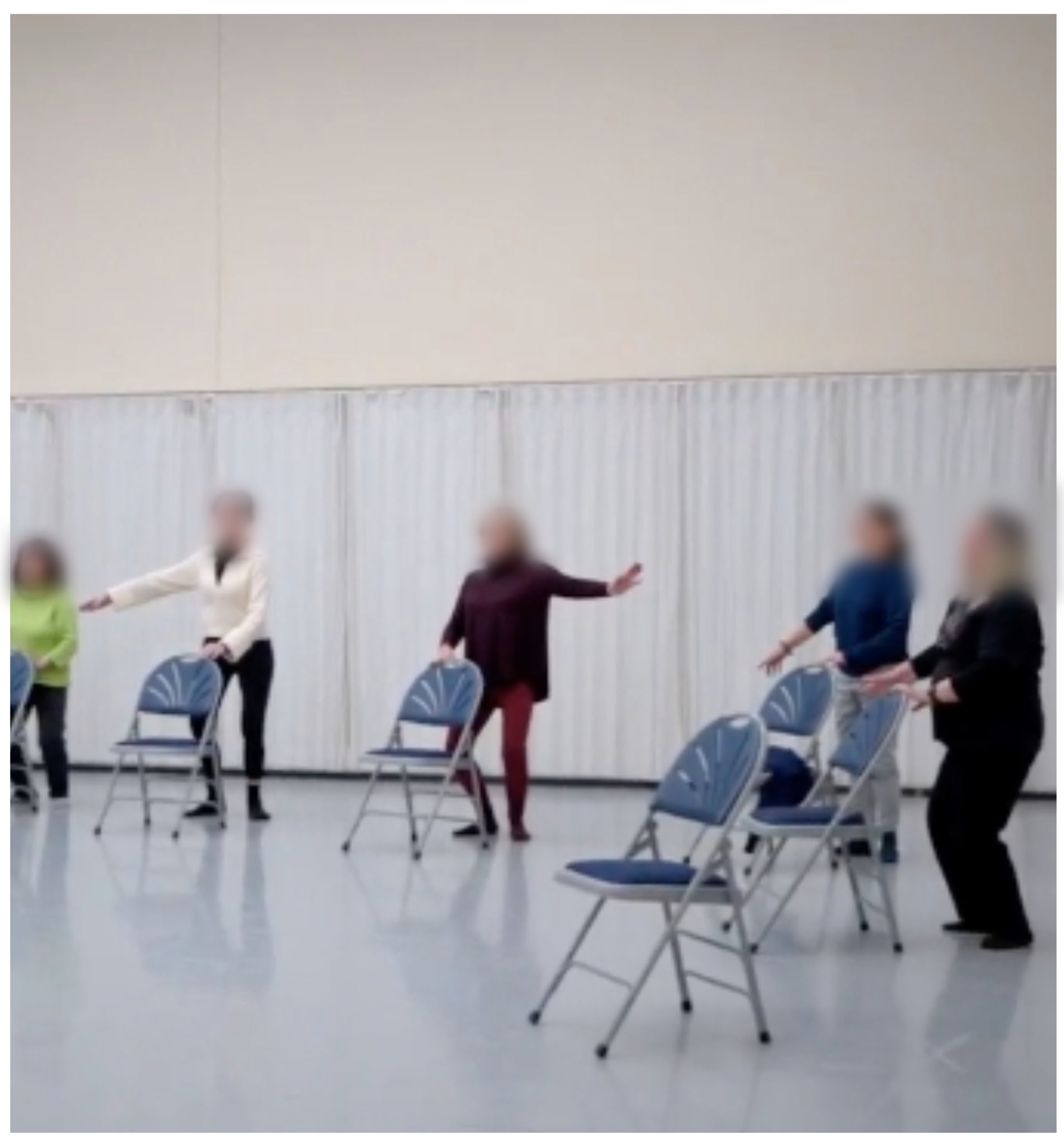
Figure 8 depicts a moment when teachers made the class accessible by having the class setup in a circle, with the option to use the chairs for support. Participant 6 shared that any new participant should be encouraged to “...come dance with us because they’d be welcomed.” Participant 1 echoed this by stating that “Anybody is welcomed, whether you can dance...nobody is excluded or...looked down at...I would like everybody to be able to experience the joy.”
Figure 8 illustrates a moment when Participant 1 described themselves as joyful, supporting their statement that the class is an inclusive place. Their testimonies emphasized how inclusivity and a welcoming environment were essential to their perception of accessibility. Participants expressed that they enjoyed knowing they would not be judged or corrected publicly, suggesting the importance of creating a space where older adults feel free to dance without pressure or expectations to be “perfect.”
Participant 5 described themselves and the class members as “We’re not perfect. We are perfect in our own right,” reinforcing the idea that accessibility should emphasize self-expression rather than perfection. Participant 2 also discussed having knee issues and proceeding with caution during the plié section (See
Figure 8). Their ability to still participate in this section and be welcomed in the class demonstrates the acceptance and freedom to move as needed within the classroom environment. This moment suggests how making movement accessible contributes to joy. The concept of a judgment-free environment was a significant factor in perceived accessibility. Participants appreciated the freedom to move without fear of being corrected constantly or of needing to be perfect.
It was also understood in the discussions that the class provides opportunities and accommodations for both recovery and healing. Participant 6 described recovering from extensive surgery and found that the class was accommodating and contributed to healing their posture and body alignment. Each participant had varying needs, and the class was designed to support individuals with different abilities.
Returning participants wanted to increase the pace of the class, perform movements more quickly, and allow for greater freedom of expression. Participant 5 expressed that “I would really love to be able to take another stream.” Similarly, Participant 6 shared their desire to “...continue the progression ...[for] people who want to be challenged more to keep going.” Participant 4 also agreed on the importance of continuing to be challenged and having a stream that supports their interests and dance abilities, while giving new participants a chance to take classes at the NBS.
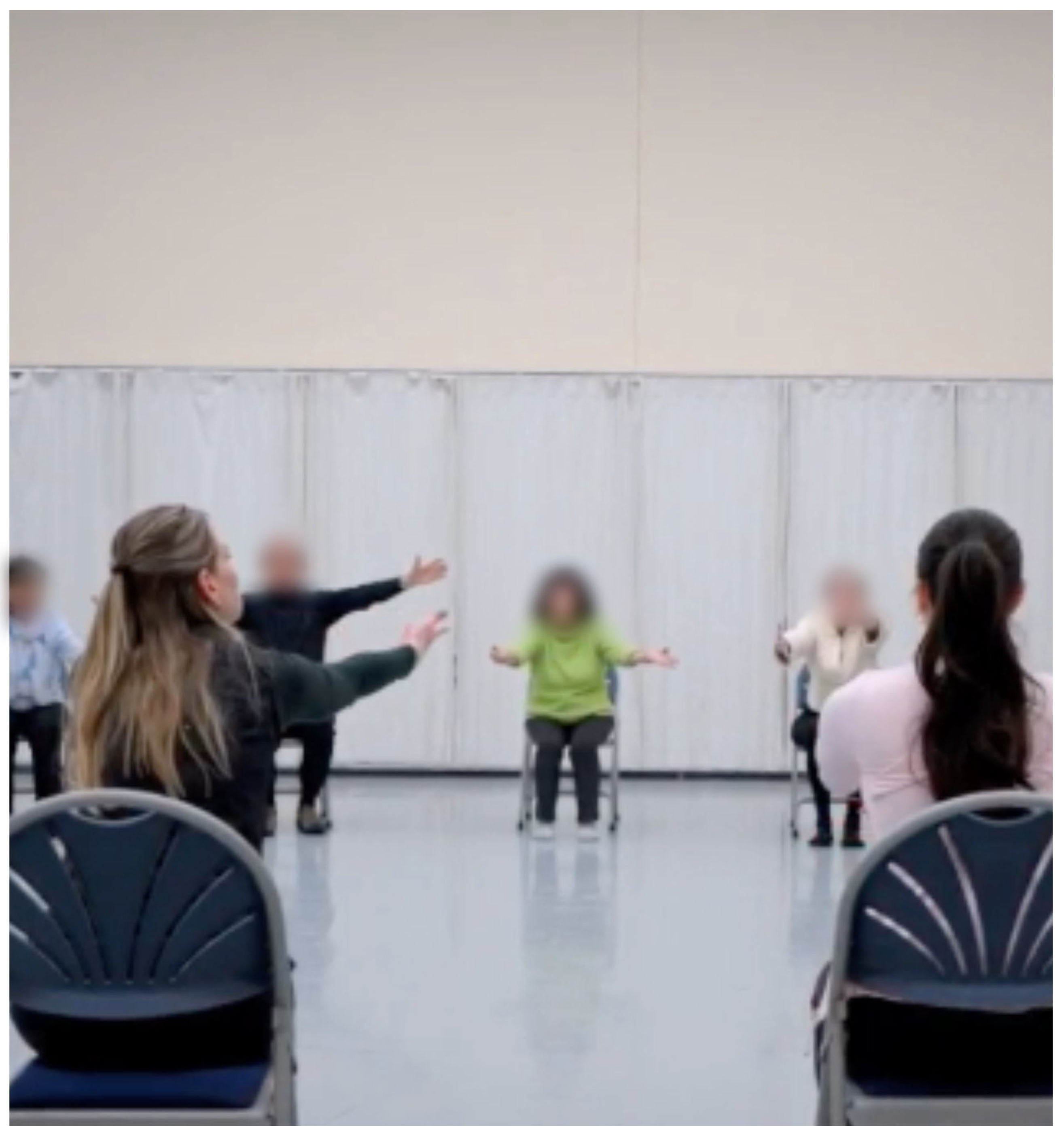
Researchers observed the class design, which included a seated warm-up with individual movements, pliés (standing or sitting), movements across the circle (standing or sitting), and a cooldown. The classroom setup involved a piano in the corner with a live pianist, and participants and teachers seated in a circle on foldout chairs. Most of the class offered seating options, allowing participants to modify their movements without being publicly corrected. Participant 6 shared that sometimes they just feel like “sitting down.” Researchers observed the value of having one teacher always seated and another demonstrating movement standing, ensuring that no participant felt alone in their choice of movement or that their age or abilities hindered dance (See
Figure 9).
3.2.2. Environmental Barriers
One participant explicitly described challenges related to the physical setup of the class, specifically for individuals with hearing or vision impairments. The challenges emerged from focus group discussions rather than the researcher’s observations, as these sensory impacts of the environment were not directly observable in field notes.
Figure 9 illustrates the classroom configuration discussed by Participant 6 and demonstrates how sitting in a circle was experienced by this participant as posing challenges when it came to seeing the instructors and following along, particularly depending on where they were positioned in the circle. For example, Participant 6 described how their view could be blocked by other participants or the piano, even when attempting to use the mirror to see the teachers.
“So when they’re talking, I’m just kind of turning my thumbs and looking around and doing whatever, because you can’t hear like I can’t really take it in. I mean, I watched them, but I have to be able to follow. So sometimes it’s really hard, because the class…it is a circle, and then there’s only mirrors there. Sometimes I even noticed, yesterday, I was thinking of that because [the teacher] stands beside the piano, but I’m over here and the piano blocks me seeing her in the mirror.”
(Participant 6)
Additionally, Participant 6 reported difficulty hearing the instructors, both with and without music playing, which further affected their ability to follow instructions during (See
Figure 9). While these sensory challenges were not directly observable through the researcher’s field notes, they were clearly stated during the focus group discussions.
Despite these challenges, Participant 6 described developing individual strategies to navigate the classroom environment over time. Specifically, they identified peers they could follow during class, specifically at the barre, which supported their ability to remain engaged and have access:
“...I have discovered...there’s certain people in the class who agreed to have me follow them. So, when we go to the barre, I follow them. And that...really made a huge difference, because now I’m not going to miss looking at the teacher.”
(Participant 6)
From the researcher’s observation, field notes indicated that participants were able to follow instructions within the circular seating arrangement, and the setup allowed them to sit or stand at their own discretion. However, this contrast between observable participation and the access challenges described by Participant 6 suggests the difference between what researchers could observe and what the participant experienced. While the classroom setup appeared accessible to all participants, the focus group discussions provided important insights into individualized challenges that may not be readily observable. These participant-informed perspectives offer direction for how the NBS can further explore and integrate strategies to promote access to the dance program.
3.3. Factors Affecting Dance Accessibility
Researchers identified three key themes that influenced participants’ ability to access and engage in the dance program: location and transportation, marketing and awareness, and waitlist challenges. These themes, which emerged through focus group discussions, reflected the logistical and systemic barriers that shaped participants’ experiences. Issues such as travel convenience, limited awareness of the program, and restricted class availability impacted both current and prospective participants. The following subsections examine how these factors affected perceptions of accessibility beyond the dance class itself.
3.3.1. Location and Transportation
Participants shared mixed experiences with the class location’s convenience and accessibility. At the same time, researchers observed that transportation methods and logistical challenges influenced how participants arrived at and accessed the program.
The location of the NBS influenced transportation and parking, with participants perceiving it differently. For example, Participant 2 shared that the location was “inconvenient.” They explained that “...if we are taking the time to drive all the way down early in the morning, at our age, that means we are really interested in this.” In contrast, Participant 5 shared,
“For me, having it for National Ballet School really was an advantage, because I knew the National Ballet School. I knew how much I loved it here. I was coming someplace, an area that I knew how to get to so there wasn’t any sort of, well, do I really want to do that? Do I really want to go and meet new people, see new people, find a new place? I didn’t have to worry about that. So having it at the National Ballet School is certainly a plus.”
(Participant 5)
Participants 2 and 3 suggested creating additional locations or branches of SDOA classes while maintaining the organization’s status and excellence. Participant 2 noted that “I would just prefer this if there was a ballet school, had a branch at Yonge and Finch.” They also described the NBS as a beautiful “castle,” and others agreed by sharing that “Here is a different place. I know that one…It’s very nice for coming here” (Participant 3). This posed questions about how the NBS could maintain this image and high-quality dance classes for older adults while providing more accessible location options.
Researchers observed that all six participants carpooled in groups of three, which influenced the selection of participants to remain for the focus groups. Others traveled in smaller groups, used public transportation, or were dropped off at the institution. Even for researchers, the downtown Toronto location and minimal parking options presented challenges for access and convenience. These observations further emphasized the importance of considering geographic barriers when planning program locations.
3.3.2. Marketing and Awareness
Participants shared that limited awareness of the program affected how people found and accessed it. Most participants learned about the class through friends or family, and they said they might not have known about it otherwise. Researchers observed that this reliance on word of mouth and the lack of clear information about the program and its virtual options created barriers to participation.
Five participants reported learning about the program through friends and family, and two noted that without that social connection, they might never have known about it. Participant 5 stated the general lack of “knowledge” about programs like this and emphasized the need to “...develop these resources for our senior community.” Participant 6 discussed how their mother and their community would have appreciated this type of program and even suggested offering virtual classes in addition to the regular in-person classes. Although the NBS offers virtual programming, awareness of these offerings is limited.
Focus group discussions revealed that the limited public knowledge of the program and restricted scheduling created barriers to access. Expanding outreach efforts and providing clearer information about virtual and in-person options could support broader participation while acknowledging current capacity limitations.
3.3.3. Waitlist Challenges for New Members
Focus group discussions revealed that the program’s waitlist system was a barrier to access, especially for new members. These discussions showed that returning dancers were given priority, which made it difficult for others to join. Researchers could not observe this theme directly, as it could not be captured during the single day of class observation and recording.
Participant 5 said that “…because the same people come back year after year…[new participants]…are never gonna be off the waiting list.” Participant 6 also said that “They have to follow that policy, because they always say returning dancers get priority. So I want that returning dancer spot, but what if I wanted in?” Although this policy made returning dancers feel valued and encouraged continued attendance, it limited access for new people. The limited number of class spots meant that many interested participants were unable to participate.
Participant 1 stated that “I don’t know if it’s desirable to have more people, since they ...can only offer it one day a week.” Further, Participant 5 suggested adding “a lot more classes” to have more opportunities to participate and possibly have different class options or levels. This demonstrated the need to improve access while supporting returning participants by increasing the number of classes.
4. Discussion
Interpreting these findings through Activity Theory of Aging, embodiment, and embodied cognition strengthens the explanatory account of why accessibility features supported joy. Activity theory suggests that older adults’ well-being is supported by continued participation in meaningful, socially embedded activities that provides opportunities for role affirmation, connection, and continuity as life circumstances and social roles shift [
19,
32]. Contemporary gerontological scholarship further emphasizes that it is not activity engagement alone, but the meaningful and relational nature of participation that contributes to positive aging experiences [
20,
21].
In parallel, embodiment and embodied cognition perspectives emphasize that affect and meaning are not solely cognitive outcomes but are produced through bodily participation, sensory engagement, and action–perception dynamics within social and environmental context [
22,
23]. Although these processes may shift with age, research demonstrates that embodied engagement remains deeply responsive within supportive and adaptable environments [
24,
25]. Together, Activity Theory of Aging and embodiment suggest that accessible dance design (e.g., collective participation, non-judgmental instruction, and seated options) can enable joy by restoring a sense of agency in movement, supporting social affirmation through shared participation, and activating memory and meaning through embodied participation [
26,
27].
The findings from this study demonstrate that joy was an integral component of participants’ experiences, with benefits extending beyond physical health to emotional, social, and spiritual well-being. These findings align with broader evidence demonstrating that participation in arts and creative activities in later life is associated with improvements in physical, psychological, and social well-being, with dance emerging as one of the most frequently examined and impactful art forms within the literature [
33]. Within the present study, participants described experiencing joy in numerous ways, including through social connections, physical movement, familiarity with a prestigious institution, and the role of music in evoking memories. These findings support prior research that recognizes the ability to dance as a form of self-expression and social interaction [
1,
10,
34], yet expand on it by identifying that joy is not a secondary outcome, but is integral to participants’ experiences [
3,
35]. The existing research has primarily emphasized the physical and cognitive benefits of dance for older adults, typically presenting dance participation to prevent age-related decline rather than as an avenue for joy [
3,
35]. This research aligns with global perspectives, including the World Health Organization’s (WHO) report on arts and health, which emphasized the role of the arts in fostering well-being, social inclusion, and improved quality of life among older adults [
12]. The report suggested that dance has been associated with cognitive stimulation, enhanced mobility, and mental health benefits, reinforcing the importance of integrating arts-based initiatives into public health policies [
12]. It is important to note that these findings are not intended to position dance as a clinical intervention, but rather to highlight how non-medical community spaces can support well-being through accessible, embodied participation.
Unlike previous research that focused on structured, therapeutic dance programs, this study emphasized how inclusive, community-based dance settings promoted accessibility and fostered meaningful experiences [
3,
36]. Participants frequently described feelings of happiness and connection, which were related to the impact of the music and the teachers [
11,
36,
37]. This aligns with Kojima and colleagues’ [
11] research centering joy as a positive emotion, and Zhang and Wang’s findings [
10] that joy in dance is created through a supportive and emotionally fulfilling environment. Participants noted that the familiar class structure, along with flexibility in movement levels, allowed them feel comfortable and encouraged. This reinforces the importance of designing community dance programs that have teachers who guide participants and allow them to explore movement in their own ways. It also showcases the integral roles of music and classroom setup in enabling joy.
The findings also highlighted barriers and enablers to dance accessibility, including location, transportation, familiarity with the program, accommodations for functional impairments, and waitlist challenges, similar to themes in previous studies [
2]. While participants highly valued the opportunity to dance, their experiences highlighted the need for expanded access within the program and across the GTA. SDOA, developed by the NBS and Baycrest [
3,
38,
39], served as an example of how community dance can be made accessible to older adults both in-person and [
39].
To the best of researchers’ knowledge, dance accessibility is also underdiscussed in policy, despite research showing that environmental and structural barriers influence participation [
2]. This research supports previous findings that logistical factors, such as transportation and program awareness, affect accessibility. Also, it introduces new considerations, including the role of music in evoking personal memories and the importance of flexible class design [
2]. Dance scholarship also emphasizes that movement and music can function as embodied sites of memory and meaning, where participants experience identity and connection through culturally and sensorially mediated engagement [
28,
40]. While Bungay and colleagues emphasized the need for adapted dance classes, this study suggests that participants value a balance between structure and freedom, where movements are guided by the dance teachers, but could also be modified to increase or decrease the physical requirements for participants with varying abilities [
2].
Although participants described clear benefits and access barriers, a review of Canadian policies related to aging, arts-based health interventions, and community dance accessibility revealed that no specific policies support structured and equitable access to dance programs for older adults. This policy gap limits the opportunity to offer such programs or ensure consistent delivery across communities.
One potential model for improving accessibility is social prescribing—a healthcare approach that connects individuals to community-based supports for health and well-being [
39,
41]. The UK’s National Health Service (NHS) currently uses social prescribing to refer patients to community activities, including dance, through “link workers” [
42]. To effectively integrate dance initiatives in Canada, policymakers should consider adopting referral systems similar to those used in other countries to connect older adults with non-clinical, movement-based interventions. By embedding dance into social prescribing models, health professionals can promote holistic wellness, combat isolation, and enhance the overall quality of life for older adults.
4.1. Implications and Future Research
This study demonstrates the effectiveness of video elicitation for capturing older adults’ dance experiences. Unlike traditional photovoice, which requires participants to capture their images over time [
16], video elicitation allowed participants to reflect on recorded footage and discuss their experiences of joy. The lack of procedural guidelines and the need to adapt the approach during focus group discussions led to a blend of video elicitation and photovoice methods, offering a valuable approach for studying movement-based experiences. Dance cannot be fully conveyed through photographs alone, making video elicitation suitable for this context [
13,
14,
15].
Future research should build on these findings with longitudinal studies to explore the long-term benefits of dance and how accessibility factors change over time. No prior studies have used video elicitation to capture dance experiences, representing a new direction for research. Efforts should also focus on promoting this method to diverse communities, such as those with limited access to dance programs. As suggested in focus groups, using virtual or hybrid models, such as those already studied by Herron and colleagues [
38] on SDOA’s virtual programming, would be valuable for increasing accessibility.
In summary, this research emphasizes joy as a core benefit of dance for older adults and emphasizes the need for policies that support accessible programs in the GTA. Ensuring dance continues to foster well-being and connection requires addressing structural barriers and promoting inclusive environments.
4.2. Limitations
The adapted video elicitation approach deviated from traditional photovoice, which typically involves participant-chosen images and longer-term engagement [
16]. While this approach supported participants’ recall of dance experiences, future studies could incorporate participant-captured images or videos over time, including barriers to access such as transportation [
16]. Although video elicitation better represents movement, dissemination relies on still images, which may constrain how experiences are communicated. Focus groups were limited to one hour, potentially restricting depth; longer or follow-up sessions could provide richer insights into accessibility challenges and experiences. Additionally, the sample came from a single program at the NBS, which may reduce generalizability to other community programs with different enabling or hindering factors. Lastly, the absence of Canadian policies supporting dance accessibility posed challenges for advocating systemic change, highlighting the need for frameworks to support older adults’ well-being through dance.
5. Conclusions
Participants in this study reported that the benefits of dance extended beyond the physical and included fostering joy, inclusivity, and social connection. While previous research often described dance as a physical activity to prevent cognitive and physical decline, this study demonstrated that joy was a central component of older adults’ dance experiences. The findings revealed that accessibility was influenced by program design, location, transportation, and awareness, as well as adaptable movement options, motivating teachers, and live music, which played an essential role in participation. Barriers, including waitlists, transportation difficulties, and the lack of awareness of available programs, suggested the need for policy implementation. Without existing structures that support dance accessibility for older adults in Canada, efforts to expand programming must address institutional and structural barriers. To ensure that older adults can fully experience this joy through dance, it is essential to recognize and address the barriers and enablers that affect access. However, this study contributes to ongoing discussions on accessibility by demonstrating the value of video elicitation as a movement-based experience tool and platform to initiate policy recommendations.
Future research is encouraged to expand on these findings through longitudinal studies to better understand the long-term benefits of dancing and to identify actionable solutions to accessibility challenges. Additionally, detailed research on integrating video elicitation methods for dance research could strengthen its use in community-based settings. By addressing structural barriers and emphasizing joy as a key aspect of dance, future research could make dance more accessible, inclusive, and beneficial for aging populations.




 ,
,