
Article

The Recommendation on Historic Urban Landscape for Conserving Latin American and Caribbean Cities: Scope, Comprehension and Implementation

by
Sebastián Astudillo-Cordero
1,*,
Julia Rey-Pérez
2,
Jessica Ortiz-Fernández
1,
Elena Jerves-Hermida
3 and
Maria Eugenia Siguencia
1
1
Faculty of Architecture and Urbanism, University of Cuenca, Cuenca 010203, Ecuador
2
Department of History, Theory, and Architectural Composition, University of Sevilla, 41004 Seville, Spain
3
Faculty of Philosophy, Humanities and Education Sciences, University of Cuenca, Cuenca 010203, Ecuador
*
Author to whom correspondence should be addressed.
Architecture 2026, 6(1), 5; https://doi.org/10.3390/architecture6010005
Submission received: 5 September 2025 / Revised: 3 January 2026 / Accepted: 5 January 2026 / Published: 6 January 2026

Abstract

This study presents the first systematic regional assessment of how the Historic Urban Landscape (HUL) approach has been understood and applied in Latin American and Caribbean (LAC) cities between 2011 and 2022. The HUL approach is framed as a socio-spatial perspective shaped by historical layering, cultural practices, ecological structures, and contemporary development pressures. A systematic review of academic publications and institutional gray literature (Scopus, Google Scholar, and municipal repositories) was conducted to evaluate both conceptual understanding and methodological implementation aligned with the six steps of the 2011 HUL Recommendation. Findings reveal a clear implementation gap: although awareness of the HUL approach has increased across the region, its practical application remains partial. Steps 1 and 2 focused on value identification and participatory engagement show the highest adoption, while steps 4 and 6 which require interinstitutional coordination and integration into statutory planning instruments exhibit limited progress. Academic and research institutions play a more prominent role than local governments in leading or supporting HUL-related actions, indicating persistent institutional and governance constraints. Results highlight the need to strengthen municipal capacities, integrate HUL-based diagnostics into urban planning systems, and consolidate participatory, interdisciplinary, and multilevel governance mechanisms to close the gap between conceptual uptake and operational implementation.

1. Introduction

Urban conservation—shaped during the second half of the twentieth century—has lost its capacity to address emerging challenges in historic urban environments [1]. Nowadays, historic cities experience intense social, environmental, and economic pressures that demand a reconsideration of existing theoretical and methodological frameworks for their management [2]. Cities also face accelerating climate impacts that increasingly threaten the stability of complex urban systems. In this context, it becomes essential to build consensus, through participatory planning processes, around which values should be protected and how their vulnerabilities should be assessed [1,3].
On the one hand, urbanization can generate economic and socio-cultural opportunities that enhance the quality of life and reinforce local identity. On the other hand, uncontrolled expansion can erode the spirit of place, alter urban form, and weaken community cohesion, often resulting in the disappearance of traditional urban and rural structures and the rapid transformation of local cultures [4]. Some historic urban ensembles currently show not only population loss but also a deterioration of their functionality and traditional roles [4].
As Conti [2] suggests, the development of cultural industries—particularly tourism—often turns cultural heritage and cities into spectacles, merchandise, and objects of mass consumption. At the same time, cities struggle to position themselves in a competitive and globalized world, where strategies to be recognized, valued, and visited do not always consider outstanding universal values. This situation threatens their integrity and authenticity, even when interventions take place outside of protected areas, generating important visual impacts [5].
Despite these challenges, many such economic processes also represent opportunities to counteract urban poverty. Thus, creating synergies between heritage development and protection may contribute to sustainable urban revitalization, promoting the cultural, social, and economic development of historic centers and the city.
In response, UNESCO introduced the Historic Urban Landscape (HUL) approach at the 2005 Vienna Conference and later adopted the Recommendation on the Historic Urban Landscape (R_HUL) in 2011. The HUL approach conceptualizes urban heritage as an integral component of sustainable development. Its purpose is to preserve the quality of the living environment and enhance the productive and sustainable use of urban spaces. At the same time, it acknowledges the dynamic nature of cities and their social and functional diversity [3].
In line with the 2011 HUL Recommendation, the HUL is understood as ‘a historic layering of cultural and natural values and attributes’ that transcends the boundaries of the historic center and includes the wider urban context and its geographical setting [3]. This definition does not imply that all cities qualify as Historic Urban Landscapes in a strict sense. Instead, the term applies to urban areas in which the stratification of heritage values—tangible and intangible, cultural and natural— has been identified and is explicitly considered in relation to contemporary development dynamics. Accordingly, this article focuses on those cities and districts in Latin America and the Caribbean where the Historic Urban Landscape approach has been explicitly adopted, cited, or operationalized as both a conceptual and methodological framework.
Bandarin and Van Oers [1] argue that this stratification results from continuous interactions between human societies and the natural environment across time. Consequently, heritage is not limited to monuments but includes cities, landscapes, and territories—a holistic perspective that integrates economic, technical, environmental, social, geographic, aesthetic, and natural dimensions [6,7,8]. Recent comparative studies confirm that this holistic perspective is being implemented in different governance and planning cultures. For example, in European World Heritage cities such as Porto, Florence and Lyon [9], in the HUL approach becomes a key interface between heritage governance, metropolitan dynamics and local participation.
The HUL promotes a landscape-based heritage management model in which inventories, value identification, and vulnerability assessments inform urban development policies. Rather than being marginal components of urban systems, historic areas should serve as resources for responding to new needs, informing innovative physical and social patterns, and leveraging centuries-old knowledge embedded in urban forms [1].
The identification of values and resources is therefore a fundamental step [10]. In this sense, case studies such as Xidi in China reveals that heritage values operate across several intertwined dimensions: (i) morphological, tied to village layouts and water systems; (ii) architectural, evident in traditional dwellings and ancestral halls; (iii) environmental, linked to irrigation, forests and terraces; (iv) intangible, encompassing rituals, social traditions and everyday practices; and (v) productive, associated with agriculture, tea cultivation and artisanal livelihoods [11].
Developing policies, plans, and spatial designs for the future requires acting upon pre-existing elements such as structures, uses, ideas, values, and environmental conditions. Although such layers may appear as constraints, they can also offer opportunities for place-based innovation. Meanwhile, global and local issues such as climate change, environmental justice, and sustainability increasingly shape heritage planning decisions. Much contemporary research explores heritage-related climate risks through strategies of mitigation, vulnerability assessment, and resilience building [10]. The HUL-based work in Ilha de Moçambique shows how conservation in small African island settings can draw on community knowledge and local coastal risk assessments—erosion, flooding and other climate pressures—together with everyday practices, to shape a landscape-oriented and resilient management strategy [12].
The cases reviewed here mirror trends observed in other regions applying the HUL approach. In several European World Heritage cities, the broad conceptual scope of HUL often exceeds existing planning capacities, creating gaps between intention and practice [9]. Post-disaster contexts such as Beirut reveal similar constraints, where limited institutional coordination complicates the integration of modern heritage and community perspectives [13]. Rural sites in China show that, even with detailed landscape analyses, management tools may remain restricted by administrative structures and tourism pressures [11]. In African island settings like Ilha de Moçambique, the need to incorporate coastal risk assessments into heritage planning highlights the importance of adaptive and community-based governance [12]. Cities framing HUL within SDG debates likewise struggle to balance cultural and social priorities within fragmented policy environments [14]. Across these examples, successful implementation appears to depend on stable institutional commitment and the ability to align technical, social and governance dimensions over time.
In the Global South—and particularly in Latin America and the Caribbean—the challenges are intensified by structural governance constraints. Cities in the region face fragmented planning systems and persistent socio-economic pressures that complicate the adoption of holistic landscape-based conservation tools [15,16]. These conditions create a pronounced gap between the international frameworks promoting the HUL and the realities of its local implementation. Addressing this gap requires examining how the HUL approach has been conceptually understood and applied across LAC cases.
In Latin America and Caribbean (LAC), these global challenges intersect with problems such as socio-spatial inequality, informal urbanization, limited technical and fiscal capacities of local governments, and high exposure to climate-related hazards. Historic centers and their surrounding landscapes are often affected by speculative real-estate pressures, tourism-driven commodification, and infrastructure projects that are only partially regulated by existing planning and environmental instruments [2,5]. At the same time, many historic districts face depopulation, functional decline, informality, and service deficits, while development agendas—ranging from national identity narratives to tourism and investment strategies—further intensify tensions between conservation and urban transformation [17]. These intertwined dynamics shape how the HUL approach is interpreted and operationalized in the region, conditioning the scope of heritage debates.
In this context, the Historic Urban Landscape (HUL) approach proposes a holistic and territorially integrated framework that shifts heritage management beyond the protection of monuments and historic centers. Rooted in landscape urbanism and multilevel heritage governance, the HUL approach positions cultural and natural values as drivers for sustainable urban transitions [4,6,18].
Global policy frameworks—including the 2011 HUL Recommendation, the Hangzhou Declaration, and the New Urban Agenda—highlight culture as an asset for inclusive development and a component of resilience-oriented planning. Yet despite this normative consolidation, practical uptake of the HUL in LAC remains partial and uneven.
This study, therefore, provides a systematic assessment of how the HUL approach has been interpreted and operationalized in LAC cities, examining conceptual comprehension as well as the application of the six steps defined in the HUL Recommendation. By the analysis of 18 documented cases, the study identifies patterns of adoption, methodological imbalances, and governance limitations that prevent heritage management from adopting a holistic, landscape-based approach.

2. Materials and Methods

To ensure replicability and methodological rigor in the screening and selection process, this study was organized based on PRISMA guidelines [19]. Although PRISMA was originally developed for systematic reviews in the health sciences, its use has increasingly expanded to interdisciplinary fields—such as urban studies, governance, and cultural heritage—where evidence is dispersed across heterogeneous sources and where explicit documentation of inclusion and exclusion decisions is essential. Accordingly, six methodological components were defined: (i) search strategy; (ii) data sources; (iii) inclusion and exclusion criteria (iv) screening procedure; (v) analytical framework; and (vi) classification based on HUL approach.

2.1. Search Strategy

A systematic search was conducted to identify empirical applications, pilot initiatives, and planning instruments referencing the HUL approach in Latin American and Caribbean (LAC) cities. The search focused on documents published between 2011 and 2022, corresponding to the period following the publication of the HUL Recommendation.
Search strings combined the terms “Historic Urban Landscape”, “HUL Recommendation”, “urban conservation”, “heritage governance”, and “Latin America and the Caribbean”, using Boolean operators adapted to each database. These combinations ensured the retrieval of documents explicitly referring to the HUL approach as defined in the 2011 Recommendation. Documents using the term “landscape” in unrelated contexts, without explicit mention of UNESCO’s HUL framework, were excluded at this stage.

2.2. Data Sources

2.2.1. Academic Databases

A systematic search was carried out in Scopus and Google Scholar—the databases with the broadest coverage of scientific and professional literature relevant to urban heritage in the region.

2.2.2. Institutional and Gray Literature Sources

In the context of Historic Urban Landscape (HUL) research in Latin America and the Caribbean, a significant proportion of empirical evidence is documented in institutional reports, municipal plans, and technical documents rather than exclusively in peer-reviewed journals. To capture non-indexed documentation, the search was complemented with targeted consultation of:
  • Municipal planning portals;
  • National heritage portals;
  • UNESCO regional offices;
  • Local government repositories.
A significant proportion of HUL-related initiatives in LAC were documented through municipal plans, technical studies, consultancy reports, and project evaluations. Including these sources aligns with methodological guidance in urban heritage research, which recommends the systematic incorporation of institutional documents in regions where practice-based outputs exceed academic production [18,20]. As emphasized by Abdulai and Abukari [21], gray literature frequently contains “policy reports, guidelines, research reports, and institutional records practitioners must locate and use to inform their practice” (p. 13).

2.3. Inclusion and Exclusion Criteria

The inclusion criteria were:
  • Documents reported empirical applications, pilot initiatives, or planning instruments based on the HUL approach.
  • Documents referred to cities located within the LAC region. The geographic scope follows the regional classification used by the United Nations and UNESCO, including independent states, dependent territories, and overseas departments within Latin America and the Caribbean. Urban settlements—cities, metropolitan areas, and historic urban districts—were included.
  • They were academic publications (articles, book chapters, monographs)
  • Gray literature, such as official documents produced by competent heritage or planning authorities that meet the AACODS checklist [22] (Authority, Accuracy, Coverage, Objectivity, Date, Significance). Supplementary Material S1 provides an overview of AACODS assessments for gray literature and theses.
  • Doctoral theses that met the AACODS criteria and provided empirical evidence related to the implementation of the HUL approach in cities of LAC.
  • Publication date between 2011 and 2022
  • Written in English, Spanish, or Portuguese.
The exclusion criteria were:
  • Documents addressed theoretical discussions with no implementation component.
  • Documents examined cases outside LAC.
  • Institutional documents that lacked explicit evidence of HUL application.
  • Master’s and undergraduate theses were excluded due to limited methodological depth and inconsistent reporting standards, as indicated by AACODS scoring.
  • Rural archeological sites, purely natural areas, and architectural elements were excluded to ensure alignment with the objectives of the HUL framework.

2.4. Screening Procedure

The screening process included:
  • Identification of records;
  • Removal of duplicates;
  • Title and abstract screening;
  • Full-text assessment;
  • Final eligibility verification.
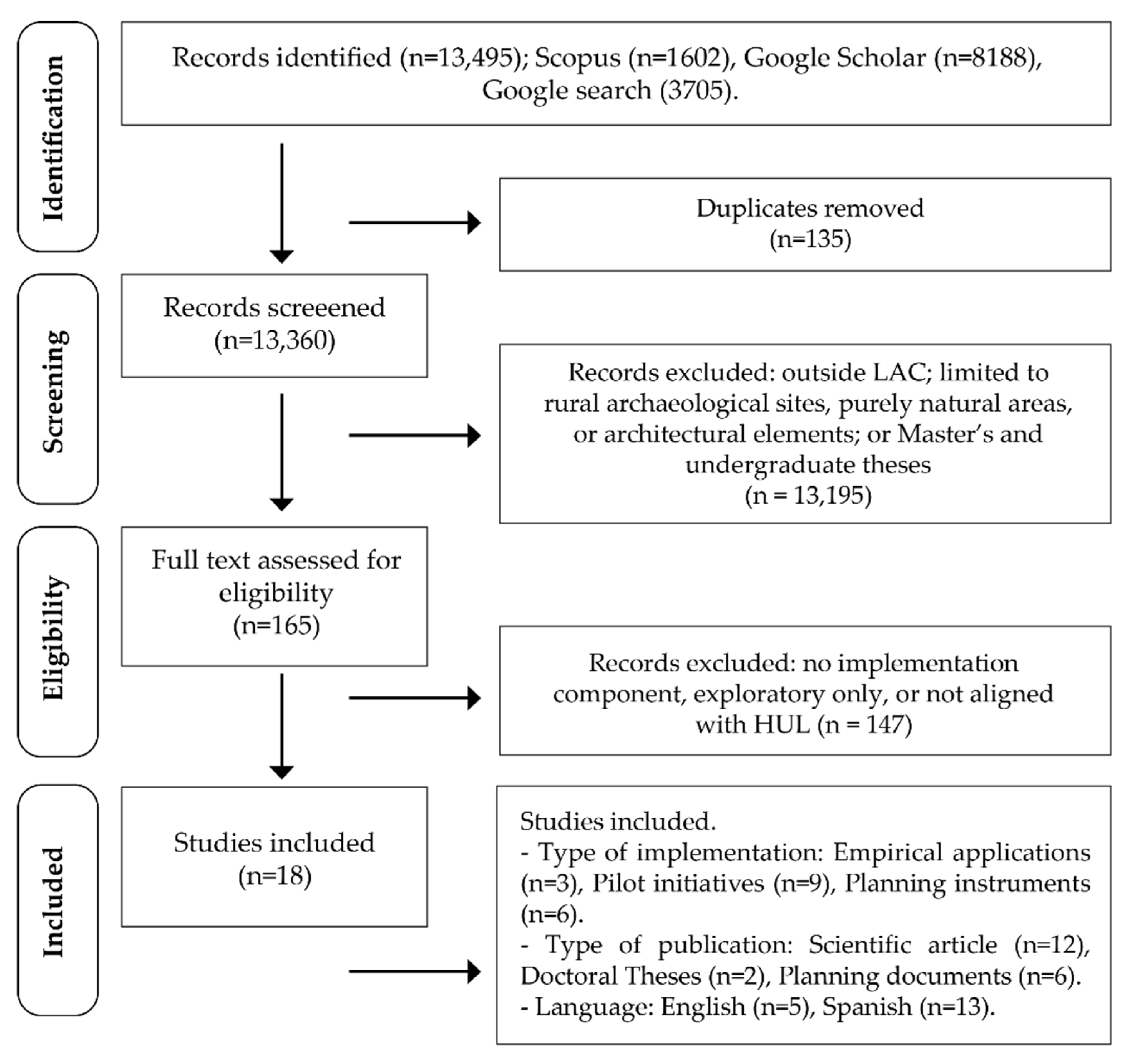
The PRISMA flow diagram is provided in Figure 1.

2.5. Analytical Framework and Coding

To evaluate both conceptual comprehension and operational application, an analytical framework consisting of two components was developed:

2.5.1. Conceptual Understanding of the HUL Approach

Conceptual understanding was assessed using qualitative dimensions that examined:
  • Interpretation of the HUL concept;
  • Presence of a holistic and integrative vision of the urban landscape. Recognition of historical layering and territorial context. Consideration of cultural, natural, and intangible values;
  • Recognition of the need for interdisciplinarity;
  • Incorporation of participatory processes and stakeholder engagement.
  • The explicit alignment with the principles of the 2011 HUL Recommendation.
Each dimension received an ordinal rating (low, medium, high) from which a general level of conceptual understanding was derived.

2.5.2. Implementation of the Six Steps of the HUL Recommendation

Implementation was verified through a coding matrix recording the presence or absence of each step and the total number of steps implemented. For each step, its presence (yes) or absence (no) was identified and supported by qualitative observations derived from the reviewed documents. The six steps reviewed were:
  • Comprehensive surveys and resource mapping
  • Participatory consensus-building on values
  • Identification of risks and vulnerabilities
  • Integration of values and vulnerabilities into urban development frameworks
  • Prioritization of conservation and development actions
  • Establishment of partnerships and institutional frameworks

2.6. Classification System

Following Rey-Pérez and Pereira Roders [23], each case was classified into one of four categories:
  • UU (Unaware, Understood)—The UNESCO/HUL approach is not referenced, and no steps are implemented.
  • UL (Understanding: Low)—limited or partial conceptual understanding and implementation of none or only one step.
  • AL (Aware–Limited Understanding)—explicit reference to UNESCO/HUL with partial or incomplete implementation.
  • AU (Aware–Understanding)—strong conceptual understanding and consistent implementation of at least three of the six steps.
The classification was conducted based on these categories. Any discrepancies were discussed and resolved through consensus. A more detailed description of all categories can be found in Supplementary Material S2.

3. Results

3.1. Selected Documents

A summary of the document selection results is presented in Table 1. The table presents the city and year of HUL application, World Cultural Heritage (WCH) status, the scope of implementation, and the institutional stakeholders involved in each of the 18 documents.
Mexico accounts for the highest number of documented applications (n = 6), followed by Ecuador (n = 3) and Cuba (n = 2). Additional cases were identified in Brazil (n = 1), Colombia (n = 1), Guatemala (n = 1), Chile (n = 1), Honduras (n = 1), Peru (n = 1), and Argentina (n = 1). Mexico’s prominence reflects several structural conditions, including its well-established institutional framework for heritage conservation—supported by the National Institute of Anthropology and History (INAH) and the National Institute of Fine Arts and Literature (INBA)—its strong academic and research networks, and sustained cooperation with UNESCO’s World Heritage Centre and regional offices.
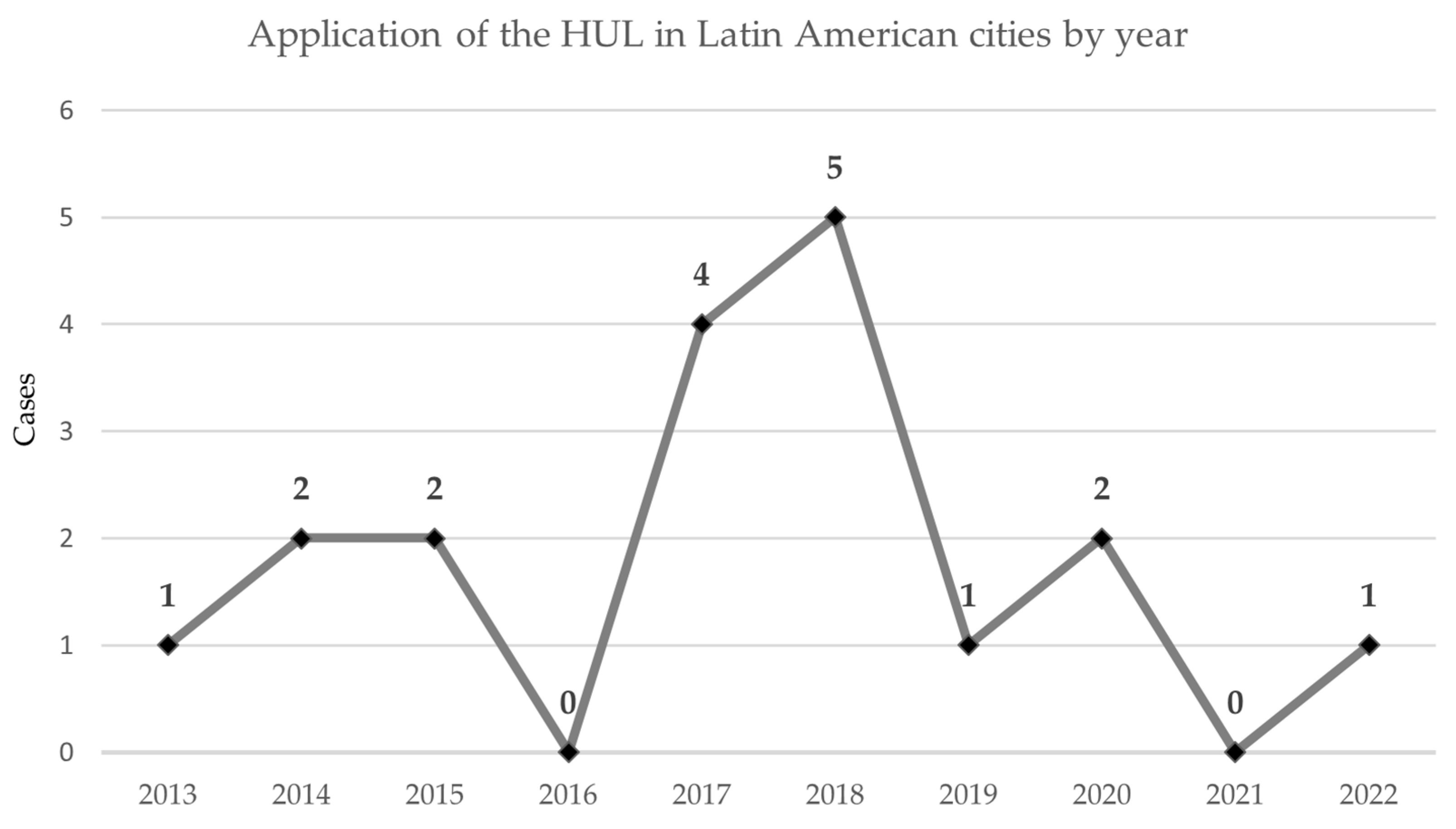
The earliest documented HUL application corresponds to Olinda–Recife in 2013, Brazil [24]. Peaks in application activity are observed in 2017 (n = 4) and 2018 (n = 5) (Figure 2), coinciding with increased dissemination of key publications like Bandarin and Van Oers [1] and the international promotion of the Recommendation by WHITRAP. After 2019, the number of documented cases declines, a trend associated with the reorientation of municipal priorities toward emergency response during the COVID-19 pandemic [42].
Regarding World Cultural Heritage (WCH) status, 12 of the 18 cities are inscribed as WCH, while the remaining six are not (Table 1). Most WCH cities fall under criterion (iv) of the World Heritage Convention, with Valparaíso as the only case listed under criterion (iii) [43]. Of the 18 case studies, 12 are classified as experimental applications, meaning that the HUL approach was tested as a management tool without being formally incorporated into official planning instruments. The remaining six cases correspond to municipal plans developed in Bogotá, Antigua Guatemala, Mexico City, Tegucigalpa, Havana, and Lima.
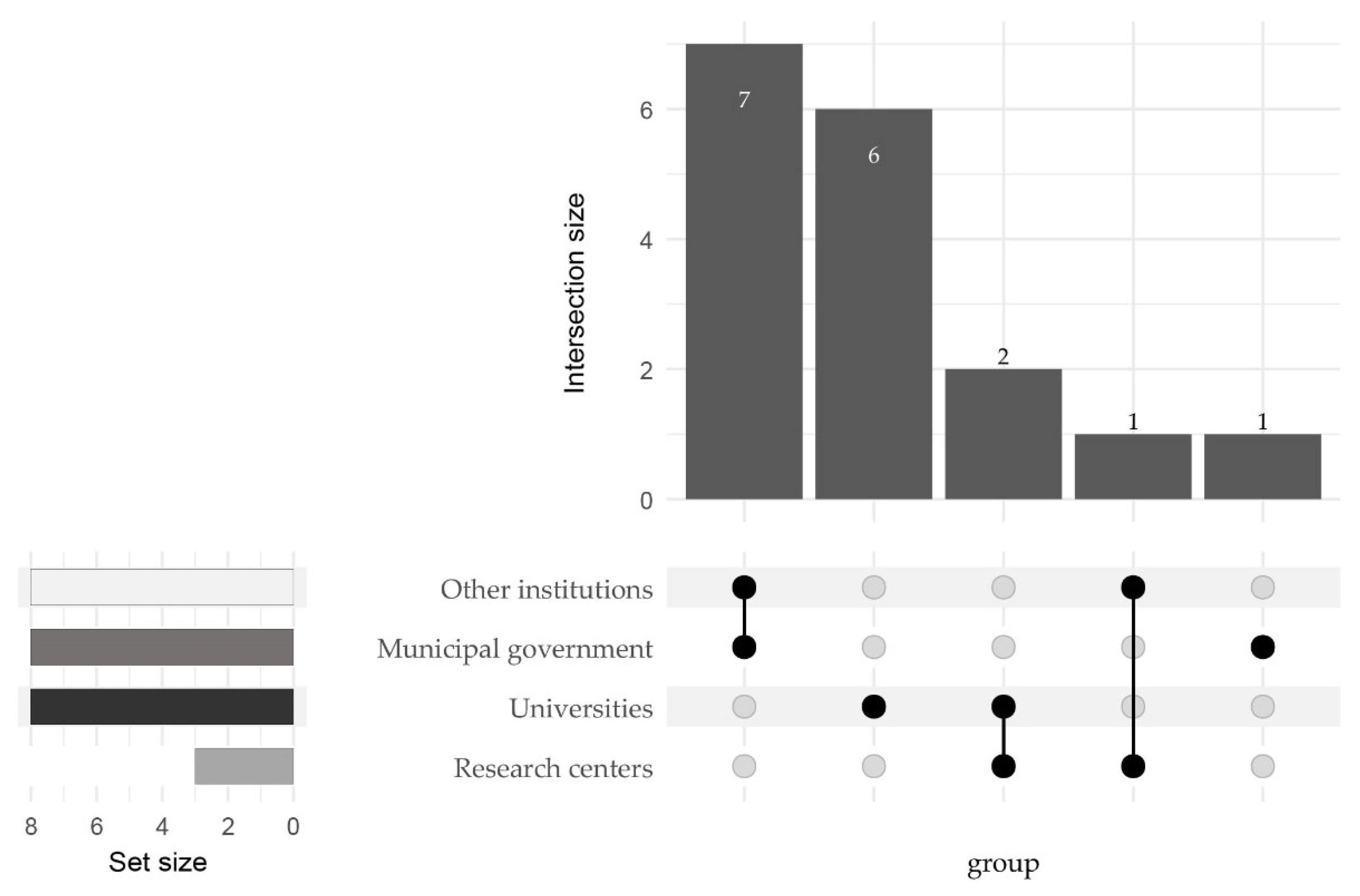
With respect to institutional stakeholders (Figure 3), universities participate in 11 cases, frequently in collaboration with municipal governments, national heritage agencies, or international organizations such as UNESCO, AECID, CECI, and WHITRAP. Local governments participate in eight cases, generally as co-authors of initiatives developed with academic or international partners. One case (Querétaro) is led by an international research institute (NIKU).

3.2. Conceptual Understanding of the HUL Approach

Across the sample, both WCH and non-WCH cities exhibit substantial variability in levels of conceptual understanding and methodological uptake. Table 2 presents the results of the analysis based on the dimensions outlined in Section 2.5.1. The complete table, including qualitative descriptors for each of the 18 documents, as well as the assessment of overall levels of understanding, is provided in Supplementary Material S3.

3.3. Implementation of the Six HUL Steps

The analysis of the application of the R_HUL steps (Table 3) shows that Steps 1 and 2 are implemented in most cases, while Steps 4 and 6 present the lowest levels of adoption across sample. This pattern reflects recurrent institutional and governance limitations—such as fragmented planning systems and weak inter-agency coordination—which hinder the integration of HUL principles into statutory instruments and long-term management frameworks.
Additionally, only nine cities tried to properly implement the HUL approach with varying levels of compliance (3 to 5 steps), while the remaining nine only comply with two or fewer of the suggested steps. Cuenca and Buenos Aires stand out for having completed 5 steps each. However, Buenos Aires does not prioritize actions aimed at conservation and sustainable development. In the case of Cuenca, the absence of a municipal decision to implement the HUL makes it difficult to create local associations, which is understandable, as it is an academic project that exceeds its institutional competencies.
Finally, the cases of Morelia and Camagüey comply with one step, while Queretaro does not comply with any of the suggested steps for the application of the HUL. A more detailed description of the application of the R_HUL steps can be found in Supplementary Material S4.

3.3.1. Step 1

Within the HUL framework, comprehensive inventories are used to establish a diagnostic baseline from which heritage attributes can be identified and subsequent steps can be structured.
The analysis determined that Puebla and Queretaro do not carry out an inventory, while in the remaining sixteen case studies, inventories are related to resources and values (Table 3).
In six case studies, Mexico City, Central District of Honduras, Morelia, Lima, Buenos Aires, and Valparaíso, elements of tangible and intangible heritage are recorded, whilst they do not consider natural heritage [33]. In three other cases, only the tangible heritage is considered, whether buildings or urban spaces; this happens in Olinda-Recife, Antigua Guatemala, and Guanajuato, while in Camagüey, an inventory of elements of the tangible and natural heritage is carried out.
Public participation in inventory processes is uneven: in ten cases, inventories were developed without participatory mechanisms, whereas six cases—Cuenca, Guanajuato, the Central District of Tegucigalpa, Havana, Zapopan, and Buenos Aires—incorporated participatory approaches.

3.3.2. Step 2

According to the HUL approach, participatory mechanisms are used to involve communities and stakeholders in identifying values, validating proposed boundaries, and contributing to the formulation of priorities.
Thirteen of the cases incorporate public participation and other social stakeholders in some stage of the process: Olinda-Recife, Antigua Guatemala, Havana, Bogota, Cuenca, Puebla, Guanajuato, Valparaíso, Mexico City, Central District of Tegucigalpa, Lima, Zapopan, and Buenos Aires. The participation processes are performed in different ways, through participative workshops, discussion roundtables, or focus groups, etc.
The intention of social participation is for citizens to contribute to the management from the beginning, for example, by validating the delimitations proposed by the experts or contributing, from their perspective, to the identification of hidden or unnoticed values [28].

3.3.3. Step 3

Step 3 addresses the identification of risks and vulnerabilities affecting heritage values. Eight cases explicitly consider such risks, although with varying levels of rigor. Some of them refer to problems, not specifically to risks and vulnerabilities, although they identify issues such as earthquakes, natural risks, and pollution. Several authors highlight the relevance of compiling natural hazard maps as a basis for updating prevention programs [25]. Risks are also understood as pressures or factors that can alter or deteriorate the HUL, which can be social, economic, physical, or environmental [39]. The other analyzed cases do not show concern for these issues and are not addressed in the studies.

3.3.4. Step 4

In the HUL methodology, integration into development frameworks refers to linking diagnostics on values and vulnerabilities with formal planning instruments and regulatory tools.
While seven cases identify risks and vulnerabilities, only Cuenca, Riobamba, and Buenos Aires integrate these values and vulnerabilities into their urban development frameworks. In Buenos Aires, this integration forms part of a broader planning model in which heritage-related elements are linked to general city planning and sustainable development objectives [44]. In Cuenca, the co-participation of municipal governments is still pending—an important aspect for advancing planning processes. This situation, also observed in several other cases, limits the integration of heritage-related diagnostics into statutory planning instruments, which remains one of the main gaps identified in the implementation of the HUL approach in the region.

3.3.5. Step 5

Within the HUL framework, prioritization of actions is used to organize proposed interventions, sequence implementation, and allocate resources in accordance with diagnostic results. Only six cases—Bogotá, Cuenca, Guayaquil, Mexico City, and Lima—prioritize actions, strategies, or projects for conservation and sustainable development based on identified values, risks, and vulnerabilities. Across these cases, urban strategies commonly emphasize themes such as sustainability, innovation, cultural revitalization, social cohesion, and public safety [27]. Although the HUL approach is applied at the scale of the city, the greatest efforts tend to concentrate on revitalizing historic centers, where guidelines are formulated to address the historic urban landscape as a stratification of values accumulated over different periods and meanings [37].

3.3.6. Step 6

In the HUL approach, the establishment of partnerships and management frameworks is aimed at organizing long-term coordination among the institutions and stakeholders involved in heritage and urban development. In the analyzed cases, only four cities—Mexico City, the Central District of Tegucigalpa, Havana, and Buenos Aires—demonstrate efforts toward establishing such partnerships and management structures. In Mexico City, this is achieved through a Consultative Council composed of federal and municipal institutions, political authorities from borough-level governments, as well as private-sector and civil-society actors, including neighborhood representatives, academic and cultural institutions, religious entities, welfare associations, business organizations, and independent professionals [35]. In the Central District of Tegucigalpa and Havana, the incorporation of HUL-related processes into municipal plans facilitates coordination by providing formal competencies and resources. In the case of Buenos Aires, the documents emphasize the need to establish a dedicated management body for HUL implementation, conceived as an intermediary authority with institutional autonomy, planning and participation instruments, and financial capacity, with citizen involvement as a central component [40].
The analysis does not show a direct or consistent relationship between WCH designation and the degree of HUL implementation. Although WCH status may provide greater visibility, international support, or established institutional frameworks, these conditions do not necessarily correspond to a more comprehensive application of the HUL steps. Several WCH cities exhibit partial or limited implementation, whereas some non-WCH cities demonstrate comparatively strong methodological engagement, reflecting implementation trajectories that appear to be shaped more by local institutional conditions than by WH inscription itself.
Academic involvement is commonly associated with clearer articulation of conceptual frameworks and more systematic engagement with the HUL steps, a pattern explored further in the analytical classification.
The predominance of academic leadership appears to be associated with comparatively higher levels of conceptual understanding of the HUL approach, particularly in terms of articulating the six methodological steps and situating them within broader urban agendas.

3.4. Classification System

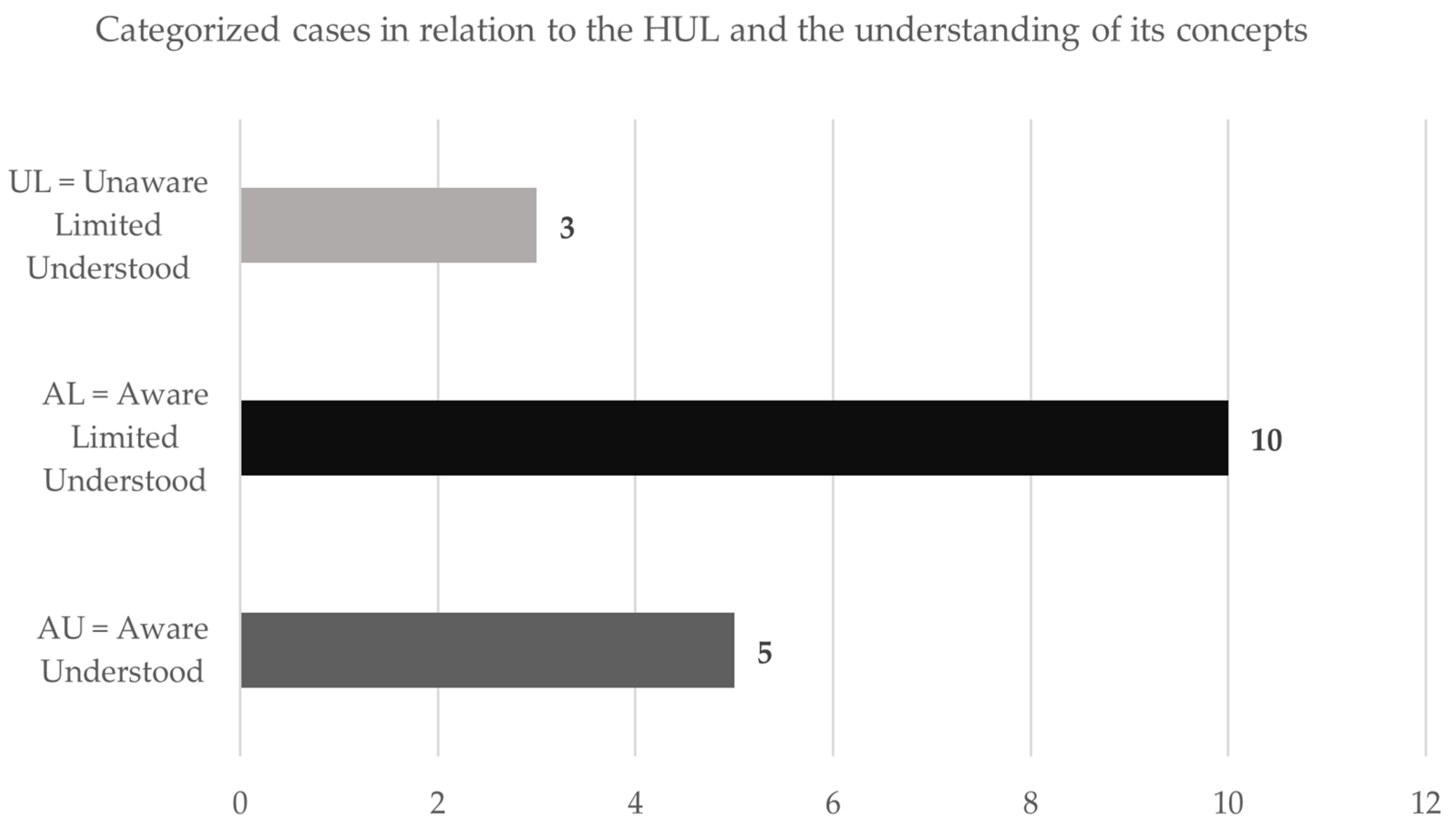
The 18 case studies were classified according to the four categories based on the results presented in Section 3.1, Section 3.2 and Section 3.3 and are show in Figure 4. Emphasis was placed on key aspects of the HUL concept, such as a holistic vision of the urban landscape, the historical layering of natural and cultural values beyond the limits of the historic center, the need for a multidisciplinary approach, the participation of diverse social actors, and the exploration of mechanisms for applying the HUL in local contexts [3]. A more detailed description of the classification system can be found in Supplementary Material S5.

3.4.1. UL Category

Three cases—Mexico City, Zapopan, and Querétaro—were classified as UL. This classification reflects the limited engagement of these cases with the conceptual and methodological components of the HUL Recommendation. Although the term “Historic Urban Landscape” appears in the documents, the concept is not analyzed in depth and no references are made to UNESCO or to the six steps proposed in the 2011 Recommendation. These cases identify certain values, problems, and potentialities, establishing links between cultural heritage and the environmental dimension of sustainability, often through an emphasis on natural risks. Their interpretation of the landscape is primarily based on visible elements and associated social meanings, reflecting a perceptual understanding of the urban environment that integrates nature, built form, and social life [38].
This emphasis on perceptual or environmental attributes contrasts with the broader understanding of the historic urban landscape advanced in the HUL Recommendation, which conceives the urban landscape as a historically layered socio-spatial system shaped by cultural and natural values, intangible dimensions, and contemporary urban dynamics. As a consequence, key components of the HUL approach—such as the consideration of territorial context, historical layering, intangible values, and structured participatory or governance mechanisms—are not systematically incorporated in these cases.

3.4.2. AL Category

Ten cases were classified as AL. These cases explicitly reference the HUL approach or UNESCO, but their interpretation of the concept remains partial, and the methodological structure of the Recommendation is not addressed in a comprehensive manner. Eight cases—Antigua Guatemala, Puebla, Guanajuato, Valparaíso, the Central District of Tegucigalpa, Havana, Morelia, and Camagüey—acknowledge key ideas associated with the HUL, yet do not fully integrate its holistic vision, the extension of analysis beyond the historic center, or the stratification of cultural and natural values. Two additional cases, Olinda–Recife and Bogotá, show a somewhat deeper conceptual engagement, incorporating new elements or reflecting on selected components of the approach.
Public participation is recognized across most AL cases, although with varying scopes and modalities. Documented levels of participation range from high (Havana, Bogotá, Puebla, Guanajuato, Valparaíso, Tegucigalpa), to medium (Olinda–Recife), to low (Antigua Guatemala, Morelia, Camagüey). Participation generally takes place through workshops, roundtables, or consultation exercises, contributing to the identification or validation of heritage values but seldom extending into shared decision-making.
Multidisciplinarity is addressed unevenly. Five cases (Olinda–Recife, Havana, Morelia, Valparaíso) present medium levels of disciplinary integration, whereas the remaining five (Antigua Guatemala, Bogotá, Puebla, Camagüey, Tegucigalpa) show more limited articulation between different knowledge domains. In several documents, the landscape is described primarily through perceptual, architectural, or urban-form considerations, with emerging references to socio-cultural or environmental dimensions. The case of Morelia illustrates the conceptual difficulties involved in reconciling different disciplinary perspectives, particularly when defining landscape boundaries or integrating diverse heritage attributes [31].
Overall, AL cases demonstrate an intermediate level of engagement with the HUL approach: the concept is recognized, and some dimensions of the Recommendation are incorporated, but its holistic and territorially integrated perspective is not systematically applied.

3.4.3. AU Category

Five cases—Cuenca, Guayaquil, Lima, Buenos Aires, and Riobamba—were classified as AU. These cases show a strong conceptual understanding of the HUL approach and a more consistent application of its methodological steps. They adopt a holistic interpretation of the urban landscape, recognizing the stratification of cultural and natural values, the relevance of territorial context, and the dynamic interactions between socio-cultural, economic, and environmental processes. In these cases, the analysis extends beyond the boundaries of the historic center and incorporates multiple dimensions of the urban environment, including topography, ecological structures, cultural practices, and the historical trajectories of local communities.
Multidisciplinary and interdisciplinary approaches are systematically incorporated, allowing for a more comprehensive identification of heritage attributes and urban dynamics. These cases also demonstrate broader and more structured public participation mechanisms, integrating community perspectives in the identification of values, boundaries, risks, and potential strategies for heritage management. In doing so, they explore or test new management instruments consistent with the HUL framework.
Among the AU cases, only Lima has formally integrated the HUL approach into an official municipal plan. In the remaining cases, applications emerge primarily from academic or collaborative initiatives, which articulate the conceptual and methodological components of the Recommendation but are not yet embedded in statutory planning instruments. Despite this limitation, these cases constitute regional benchmarks due to their robust conceptual engagement and their consistent implementation of foundational HUL steps, particularly comprehensive inventories, participatory processes, and risk and vulnerability assessments.

3.5. Advantages and Limitations of Implementing the HUL Six-Step Approach

The comparative analysis of the 18 cases shows that the advantages of the HUL approach emerge primarily when the six steps are implemented as a coherent and progressive process. Cases that moved beyond diagnostic activities and advanced toward later steps—particularly those related to integration into statutory planning instruments and governance arrangements—demonstrate stronger alignment between heritage conservation objectives and broader urban development agendas. In these cases, the HUL framework facilitates interdisciplinary coordination and supports the translation of identified cultural and natural values into operational planning and conservation actions.
Conversely, partial implementation highlights clear limitations. In many cases, diagnostic efforts were not followed by regulatory integration or the establishment of long-term governance and management mechanisms, resulting in analytical outputs with limited operationalization. This reinforces the implementation gap identified throughout the study, whereby progress in Steps 1–3 is not matched by equivalent advances in Steps 4–6.
The absence of steps requiring inter-institutional coordination and embedding within statutory planning frameworks does not merely delay implementation but actively constrains the capacity of the HUL approach to function as an effective tool for urban governance and sustainable development.
Taken together, these findings confirm that incomplete application of the six-step approach tends to reproduce existing institutional fragilities, while systematic implementation strengthens the ability of the HUL framework to move beyond conceptual adoption and contribute meaningfully to heritage-led sustainable urban development in Latin America and the Caribbean. This supports the central conclusion of the study: that the principal barriers to HUL implementation in the region are institutional rather than conceptual.

4. Discussion

The findings of this study reveal a consistent regional pattern: although the HUL Recommendation has been available for more than a decade, its operationalization in Latin America and the Caribbean (LAC) remains limited, heterogeneous, and highly dependent on local institutional conditions. While conceptual awareness of the HUL approach has expanded, the transition from diagnostic exercises to integrated planning and management remains limited. This confirms that the principal barriers in the region are not methodological but institutional, particularly those related to governance structures, regulatory frameworks, and municipal capacities.

4.1. Institutional and Governance Constraints

One of the most significant findings is the limited involvement of local governments in leading or sustaining HUL implementation processes. Although universities and research centers played a central role in 11 of the 18 cases, most applications remained disconnected from formal municipal planning frameworks. This reflects a broader regional pattern in which heritage management is frequently under-resourced, institutionally fragmented, and subordinated to short-term political agendas [1,6].
Where conceptual understanding of HUL is relatively advanced, institutional fragility still undermines the consolidation of tools, regulatory instruments, or long-term management mechanisms. As the heritage governance literature suggests, durable coalitions between public administrations, academia and civil society are essential for sustained implementation—yet such coalitions remain weak or intermittent in most of the analyzed cases [4,18]. This explains why implementation often remains at the level of diagnosis or conceptual exploration rather than becoming a stable planning instrument.
The limited consolidation of HUL initiatives into formal planning or management instruments further illustrates the governance fragility that characterizes many LAC cities. Although several cases generated methodological innovations or valuable diagnostic outputs, only a small subset progressed toward adoption within municipal plans or regulatory frameworks. This gap reflects structural constraints such as insufficient technical capacities, the absence of dedicated heritage units within local governments, and the low priority often assigned to heritage in contexts facing pressing social challenges including poverty, public health, housing deficits, and educational needs. As a result, HUL initiatives frequently remain project-based or academically driven, lacking the political commitment and administrative continuity required to transform them into durable tools for urban planning and sustainable development.

4.2. Methodological Imbalances: From Diagnosis to Operationalization

A clear methodological imbalance is evident between the diagnostic steps of the HUL approach (Steps 1–3) and those requiring operational integration (Steps 4–6). Although most cases reference the HUL framework, only half implement more than three of the six methodological steps, indicating that conceptual uptake is progressing more rapidly than the institutional and technical capacities needed for full implementation. The steps that demand integration into formal planning systems—particularly Step 4 (integration into development frameworks) and Step 6 (institutional partnerships)—remain systematically underdeveloped across the region.
Significant gaps also persist within the diagnostic phases themselves. While inventories have increasingly incorporated intangible cultural elements, the systematic inclusion of natural heritage and broader territorial attributes is still limited, narrowing the holistic understanding of landscape envisioned by the 2011 Recommendation. Similarly, the identification of risks and vulnerabilities (Step 3) is inconsistently addressed. Although some cities recognize the exposure of heritage to natural hazards, socio-economic stressors, climate-related impacts, and inadequate planning processes, vulnerability assessments remain fragmented and seldom integrated into territorial analyses. This is especially concerning given the chronic fragility of many historic environments in the region, where deteriorated building stock, fragile materials, insufficient maintenance, and the erosion of intangible cultural practices heighten vulnerability. Such limitations constrain the potential of the HUL approach to inform preventive, adaptive, and resilience-oriented strategies.
A more rigorous treatment of Step 3 would require the systematic development of risk maps and vulnerability assessments that capture the full spectrum of pressures affecting historic urban landscapes. Risks must be understood not only as physical or environmental hazards but also as social and economic stressors that can accelerate deterioration, weaken community resilience, and undermine the continuity of cultural practices. Without these analytical tools, preventive planning remains fragmented and the HUL approach cannot effectively guide adaptive or resilience-oriented strategies.
With regard to the integration of values and vulnerabilities into urban planning and development frameworks, which corresponds to Step 4, this is addressed in some way in only three of the cases. This step is central to operationalizing the HUL approach, yet only three cases incorporate it into planning processes. To this end, the involvement of local governments is key, as it requires the political will and vision of decision-makers and those responsible for land use and planning.
There are a few cases in which actions for conservation and sustainable development are prioritized (Step 5). In these cases, strategies and projects are proposed based on the prior identification of values, risks, and vulnerabilities. There are also a few cases in which Step 6, aimed at establishing institutional partnerships and cooperation frameworks, is fulfilled. This task is facilitated when the HUL is implemented by local governments and when it forms part of a municipal plan, which has the resources and, above all, the powers to do so.
These weaknesses in the diagnostic stages are compounded by the even more limited implementation of operational steps. Structural challenges commonly faced by LAC cities—including the scarcity of cross-sectoral planning instruments, weak regulatory environments, and limited technical teams capable of operationalizing landscape-based approaches—impede the translation of diagnostic outputs into binding policies, zoning regulations, and integrated management frameworks [45,46]. Consequently, the methodological progression from understanding and assessing the landscape to integrating it within statutory planning remains incomplete.
The UL–AL–AU classification further reinforces this dynamic: although many cases acknowledge the relevance of the HUL approach and engage with its conceptual underpinnings, only a minority achieve consistent methodological uptake and advance toward integrated, landscape-based governance.

4.3. The Governance Gap: Participation Is Expanding, but Shared Decision-Making Remains Limited

Thirteen cases incorporated participatory processes; however, participation was generally consultative rather than deliberative or collaborative. Although public participation has expanded across the region—consistent with the requirements of Step 2 of the HUL approach—most initiatives rely on workshops, forums, or consultation events that help validate boundaries or identify values but rarely evolve into shared decision-making structures. This limits the ability of participatory processes to influence planning outcomes or contribute to institutionalized governance arrangements. As a result, participation seldom translates into stronger management frameworks, particularly in cities where governmental involvement is weak. These findings reflect broader regional analyses that characterize participatory mechanisms as largely symbolic and disconnected from actual decision-making power in urban planning.
This pattern aligns with critiques of participatory planning in Latin America, where engagement often remains episodic, representational, or strategically instrumental rather than transformative [47]. Effective implementation of the HUL approach requires deeper forms of collaborative governance—multi-actor coordination, co-responsibility, and shared decision-making—conditions that few cities in the region have been able to institutionalize to date.

4.4. Conceptual and Territorial Limitations: The Persistence of Heritage-Centered and Center-Focused Approaches

Despite progress in adopting the terminology of the HUL approach, important conceptual limitations persist. In several cases, the urban landscape continues to be interpreted primarily through visual or aesthetic criteria, with limited attention to the historic layering, socio-spatial dynamics, and intangible dimensions emphasized by the 2011 Recommendation. These conceptual gaps are reflected in diagnostic practices: although some inventories have expanded to include both tangible and intangible heritage elements—a notable improvement over traditional monument-centered approaches—natural heritage and broader territorial attributes remain largely absent. As a result, inventories continue to prioritize architectural features over ecological structures, cultural practices, and community-based values.
This restricted understanding undermines the holistic and territorial perspective central to the HUL approach. The historic urban landscape is conceived as an integrated system in which natural features, environmental processes, and topographic structures operate as heritage attributes shaping urban form and identity. Yet few cases adopt the territorial expansion required to incorporate peripheral areas, functional dynamics, and environmental systems into heritage management. The limited attention to these dimensions indicates that diagnostic processes still operate within conventional heritage categories, constraining the potential of the HUL approach to support more integrated, landscape-based planning and governance.

4.5. A Systemic Interpretation of the Implementation Gap

Taken together, these findings suggest that the limited implementation of the HUL approach in Latin America and the Caribbean is not primarily a conceptual problem, but a governance problem, rooted in:
  • Uneven institutional capacities;
  • Fragmented administrative frameworks;
  • Limited integration of heritage into urban development agendas;
  • Insufficient technical and financial resources;
  • Weak mechanisms for intersectoral coordination;
  • Instability of political priorities; and
  • Persistent traditional understandings of heritage and urban space.
This interpretation advances the scholarly conversation by reframing HUL implementation as a systemic challenge that depends less on the availability of conceptual tools and more on the broader political, institutional, and governance dynamics of Latin American cities.

4.6. Policy Implications and Strategic Recommendations

The results highlight the need to strengthen municipal leadership, enhance inter-institutional coordination, and consolidate governance frameworks capable of integrating cultural and natural values into urban development processes. Strategic actions include: (i) institutionalizing deliberative and co-decision participatory mechanisms; (ii) embedding HUL-based diagnostics into statutory planning instruments; (iii) promoting interdisciplinary collaboration and capacity building within municipal teams; and (iv) developing multilevel governance arrangements that link local governments, national agencies, and international organizations. These measures address the structural conditions that hinder the implementation of Steps 4–6 and are essential for advancing heritage-led sustainable urban development in the region.
Taken together, these strategic directions highlight the need for long-term institutional strengthening to ensure that the HUL approach can move beyond conceptual adoption and become an operational framework for sustainable urban development in LAC.

5. Conclusions

This study provides the first systematic, region-wide assessment of how the Historic Urban Landscape (HUL) approach has been interpreted and implemented in Latin America and the Caribbean since the adoption of the 2011 Recommendation. The analysis of 18 documented cases shows that, although conceptual awareness of the HUL framework has expanded, its operationalization remains partial, uneven, and highly dependent on local institutional conditions. The majority of initiatives demonstrate progress in diagnostic activities—such as the identification of values, initial participatory processes, and preliminary assessments of vulnerabilities—yet most remain unable to translate these efforts into integrated planning instruments or enduring governance arrangements.
Three overarching conclusions emerge from the findings. First, institutional fragility and fragmented governance structures constitute the primary barriers to advancing HUL implementation in the region. The limited involvement of local governments, the absence of specialized technical teams, and the low priority typically assigned to heritage in contexts facing acute social pressures hinder the transition from pilot initiatives to formal planning tools. As a result, HUL processes often remain project-based or academically driven, lacking the political commitment and administrative continuity necessary for long-term impact.
Second, the study identifies a systematic methodological imbalance between diagnostic and operational steps. While Steps 1–3 are increasingly adopted, albeit with important limitations—particularly in the treatment of natural heritage and the integration of risk and vulnerability analyses—Steps 4–6 show the weakest levels of implementation. This reflects the difficulty of embedding HUL principles into statutory instruments, prioritization processes, and inter-institutional partnerships. Strengthening these steps is essential for the approach to move beyond conceptual exploration toward integrated, landscape-oriented urban governance.
Third, the persistence of narrow, centered-focused and monument-centered understandings of heritage limits the potential of the HUL approach to address the territorial, ecological, and socio-cultural dimensions of urban landscapes. Expanding diagnostic and planning boundaries, incorporating natural and intangible attributes, and recognizing dynamic urban processes are crucial for aligning local practice with the holistic perspective advocated by UNESCO.
The study also highlights broader policy implications. Advancing HUL implementation in the region will require: (i) stronger municipal leadership and political commitment; (ii) enhanced inter-sectoral and multilevel governance mechanisms; (iii) institutionalized participatory processes that move beyond consultation toward co-decision; (iv) capacity-building for technical teams; and (v) the integration of HUL-based diagnostics into statutory planning instruments. These actions are necessary to operationalize the approach and to ensure that heritage contributes meaningfully to sustainable urban development.
This study highlights the critical role of gray literature in documenting how the HUL approach is being interpreted and enacted in practice. In much of the region, key processes and outcomes are recorded not in academic publications but in municipal plans, technical reports, and institutional documents whose fragmented and heterogeneous nature reflects the broader governance challenges identified in this research. Strengthening the production, accessibility, and systematization of such materials is therefore essential for improving regional knowledge, supporting comparative analysis, and consolidating the HUL approach as a tool for heritage-led sustainable development.
Finally, this research opens several avenues for further study. Future work should examine the continuity of HUL initiatives beyond their initial phases, assess the effectiveness of implemented actions, analyze governance dynamics in greater depth, and develop indicators to evaluate the long-term impact of HUL-based interventions. Such investigations would contribute to refining the approach and supporting its consolidation as a tool for heritage-led, resilience-oriented urban planning in Latin America and the Caribbean.

Supplementary Materials

The following supporting information can be downloaded at: https://www.mdpi.com/article/10.3390/architecture6010005/s1, Supplementary S1: Overview of AACODS assessments; Supplementary S2: HUL approach implementation (classification); Supplementary S3: Level of conceptual understanding of the HUL approach; Supplementary S4: Application of the steps of the HUL Recommendation in case studies; Supplementary S5: Categorization of the analyzed cases.

Author Contributions

Conceptualization, S.A.-C. and J.R.-P.; methodology, S.A.-C. and J.R.-P.; formal analysis, S.A.-C., and J.O.-F.; investigation, S.A.-C., M.E.S., and J.O.-F.; resources, S.A.-C., E.J.-H.; data curation, S.A.-C., J.O.-F., and M.E.S.; writing—original draft preparation, S.A.-C., E.J.-H., J.R.-P., and M.E.S.; writing—review and editing, S.A.-C., J.R.-P. and J.O.-F.; visualization, J.O.-F.; supervision, J.R.-P., and E.J.-H.; project administration, S.A.-C., and J.R.-P.; funding acquisition, E.J.-H. All authors have read and agreed to the published version of the manuscript.

Funding

This research and the APC were funded by the Vice-Rectory for Research of the University of Cuenca, grant number A300.352.01.00.

Institutional Review Board Statement

Not applicable.

Informed Consent Statement

Not applicable.

Data Availability Statement

The original contributions presented in this study are included in the article. Further inquiries can be directed to the corresponding author.

Acknowledgments

We express our gratitude, as this manuscript is the result of the research project “Implementation of the Historic Urban Landscape Recommendation: A methodology for the sustainable planning of the Ingachaca Urban Action Unit in the city of Cuenca”, which was funded by the Vice-Rectory for Research of the University of Cuenca, Cuenca–Ecuador.

Conflicts of Interest

The authors declare no conflicts of interest.

Abbreviations

The following abbreviations are used in this manuscript:
HULHistoric Urban Landscape
LACLatin American an Caribbean
RHULRecommendation for Historic Urban Landscape
WCHWorld Cultural Heritage

References

  1. Bandarin, F.; Van Oers, R. Reconnecting the City. The Historic Urban Landscape Approach an the Future of Urban Heritage; UNESCO: Oxford, UK, 2015. [Google Scholar]
  2. Conti, A. The conservation and management of historic cities from the perspective of the Historic Urban Landscape. In Proceedings of the International Meeting “The Historic Urban Landscape as a tool for sustainable urban development”, Quito, Ecuador, 9–11 September 2015. [Google Scholar]
  3. UNESCO. Recommendation on the Historic Urban Landscape. In Proceedings of the Records of the General Conference 36th Session, Paris, France, 25 October–10 November 2011. [Google Scholar]
  4. Verdini, G. Planetary Urbanisation and the Built Heritage from a Non-Western Perspective: The Question of ‘How’ We Should Protect the Past. Built Herit. 2017, 1, 73–82. [Google Scholar] [CrossRef]
  5. Jokilehto, J. Engaging Conservation: Communities, place and capacity building. In Heritage, Conservation and Communities: Engagement, Participation and Capacity Building; Chitty, G., Ed.; Routledge: London, UK, 2017; pp. 17–33. [Google Scholar]
  6. Veldpaus, L.; Pereira Roders, A. Historic urban landscape approach as a tool for sustainable urban heritage management. In Culture in Sustainability: Towards a Transdisciplinary Approach; Asikainen, S., Brites, C., Plebańczyk, K., Rogač Mijatović, L., Soini, K., Eds.; University of Jyväskylä: Helsinki, Finland, 2017; pp. 61–73. [Google Scholar]
  7. Veldpaus, L. Historic urban landscapes: Framing the Integration of Urban and Heritage Planning in Multilevel Governance; Technische Universiteit Eindhoven: Eindhoven, The Netherlands, 2015; Volume 207. [Google Scholar]
  8. Throsby, D. Cultural Capital and Sustainability Concepts in the Economics of Cultural Heritage. In Assessing the Values of Cultural Heritage; De la Torre, M., Ed.; The Getty Conservation Institute: Los Angeles, CA, USA, 2002. [Google Scholar]
  9. Cunha Ferreira, T.; Rey-Pérez, J.; Pereira Roders, A.; Tarrafa Silva, A.; Coimbra, I.; Breda Vazquez, I. The Historic Urban Landscape Approach and the Governance of World Heritage in Urban Contexts: Reflections from Three European Cities. Land 2023, 12, 1020. [Google Scholar] [CrossRef]
  10. Veldpaus, L.; Kisić, V.; Stegmeijer, E.; Janssens, J. Towards a more just world: An agenda for transformative heritage planning futures. In A Research Agenda for Heritage Planning, Perspectives from Europe; Stegmeijer, E., Veldpaus, L., Eds.; Elgar Research Agendas: Cheltenham, UK, 2023. [Google Scholar]
  11. Tu, L. Optimization of Heritage Management Mechanisms through the Prism of Historic Urban Landscape: A Case Study of the Xidi and Hongcun World Heritage Sites. Sustainability 2024, 16, 5136. [Google Scholar] [CrossRef]
  12. Macamo, S.; Raimundo, M.; Moffett, A.; Lane, P. Developing Heritage Preservation on Ilha de Moçambique Using a Historic Urban Landscape Approach. Heritage 2024, 7, 2011–2030. [Google Scholar] [CrossRef]
  13. Makhzoumi, J.; Al-Harithy, H.; Bazzi, M. Contextualizing UNESCO’s Historic Urban Landscape Approach: A Framework for Identifying Modern Heritage in Post-Blast Beirut. Land 2024, 13, 2241. [Google Scholar] [CrossRef]
  14. El Faouri, B.F.; Sibley, M. Balancing Social and Cultural Priorities in the UN 2030 Sustainable Development Goals (SDGs) for UNESCO World Heritage Cities. Sustainability 2024, 16, 5833. [Google Scholar] [CrossRef]
  15. UN-Habitat. State of Latin American and Caribbean cities 2012: Towards a New Urban Transition; Ainor Editorials: Naples, FL, USA, 2012. [Google Scholar]
  16. UN-Habitat. World Cities Report 2020: The Value of Sustainable Urbanization; UN-Habitat: Nairobi, Kenya, 2020. [Google Scholar]
  17. Carrión Mena, F. Urban Regeneration and Revitalization in the Americas: Toward a Stable State; Carrion Mena, F., Hanley, L.M., Eds.; FLACSO: Quito, Ecuador, 2005. [Google Scholar]
  18. Taylor, K. The Historic Urban Landscape paradigm and cities as cultural landscapes. Challenging orthodoxy in urban conservation. Landsc. Res. 2016, 41, 471–480. [Google Scholar] [CrossRef]
  19. Page, M.J.; McKenzie, J.E.; Bossuyt, P.M.; Boutron, I.; Hoffmann, T.C.; Mulrow, C.D.; Shamseer, L.; Tetzlaff, J.M.; Akl, E.A.; Brennan, S.E.; et al. Declaración PRISMA 2020: Una guía actualizada para la publicación de revisiones sistemáticas. Rev. Esp. Cardiol. 2021, 74, 790–799. [Google Scholar] [CrossRef]
  20. Adams, J.; Hillier-Brown, F.C.; Moore, H.J.; Lake, A.A.; Araujo-Soares, V.; White, M.; Summerbell, C. Searching and synthesising ‘grey literature’ and ‘grey information’ in public health: Critical reflections on three case studies. Syst. Rev. 2016, 5, 164. [Google Scholar] [CrossRef] [PubMed]
  21. Abdulai, S.; Abukari, A. Grey Literature (GL): Access and use potentials for healthcare education professionals in developing context: Ghana as a case. J. Res. Educ. Pract. Theory 2024, 7, 4–36. [Google Scholar]
  22. Tyndall, J. AACOD Checklist. 2010 Flinders University. Available online: https://fac.flinders.edu.au/dspace/api/core/bitstreams/e94a96eb-0334-4300-8880-c836d4d9a676/content (accessed on 4 January 2026).
  23. Rey-Pérez, J.; Pereira Roders, A. Historic urban landscape. J. Cult. Herit. Manag. Sustain. Dev. 2020, 10, 233–258. [Google Scholar] [CrossRef]
  24. Mendes Zancheti, S. Dynamic integrity as an approach to the conservation of Historic Urban Landscape (HUL): The case of Olinda and Recife. In Proceedings of the International Meeting of Contemporary Architecture on Historic Settings, Seville, Spain, 17–19 September 2013. [Google Scholar]
  25. Martín Hernández, M.; Guerrero González, B. Tourism and Heritage. An Integral plan for la Antigua Guatemala. ACE Archit. City Environ. 2016, 11, 157–176. [Google Scholar] [CrossRef]
  26. Office of the Historian of the City of Havana. Management Plan for the Cultural Landscape of Havana Bay: Progress; Master Plan, Office of the Historian of the City of Havana: Havana, Cuba, 2017. [Google Scholar]
  27. Mayor’s Office of Bogotá. Revitalization Plan for the Traditional Center of Bogotá; Ezquiaga Dominguez, J.M., Ed.; District Institute of Cultural Heritage: Bogota, Colombia, 2015. [Google Scholar]
  28. Rey Pérez, J.; Auquilla, S.; Moscoso, P. Revaluation of the cultural and natural heritage of the city of Cuenca through sustainable development strategies supported by the concept of Historic Urban Landscape. In City Is to Say City: LLactaCamp 2.0, the City as a Process; University of Cuenca: Cuenca, Ecuador, 2015. [Google Scholar]
  29. Sanz Gallego, N.; Panero Pardo, Á.; Delmont Mauri, F. The City of Short Distances: Puebla in Its Historic Urban Landscape, 1st ed.; UNESCO Publishing: Paris, France, 2017; p. 162. [Google Scholar]
  30. Sanz, N.; Delmont, F.; Panero, Á. Guanajuato. The Historic Urban Landscape, a Model for Living; UNESCO: Mexico City, Mexico, 2017; p. 152. [Google Scholar]
  31. Pedraza Gómez, C.; Hiriart Pard, C.; Bojórquez Vargas, A.R. Approaches to the Concept of Historical Urban Landscape. Morelia, Michoacán, as a Case Study. Spatialities 2019, 9, 88–105. [Google Scholar]
  32. Almeida Torrens, M.; Gómez Consuegra, L. The Area of Protection of Relevant Urban Views as a Buffer Zone of the Historic Center of Camagüey, Cuba. Notes J. Stud. Cult. Herit. 2022, 34, 23. [Google Scholar] [CrossRef]
  33. Ortega, A. An evaluation on how to implement the Historic urban Landscape (HUL) approach in a critical case study: The city of Valparaíso, Chile. In Proceedings of the XVI International Forum World Heritage and Knowledge, Naples, Italy, 14–16 June 2018. [Google Scholar]
  34. Rey-Pérez, J.; Avellán, D.V. Towards the Implementation of the Historic Urban Landscape Approach in the Guayaquil Waterfront (Ecuador): A Scoping Case Study. Hist. Environ. Policy Pract. 2018, 9, 349–375. [Google Scholar] [CrossRef]
  35. Government of Mexico City. Comprehensive Management Plan for the Historic Center of Mexico City 2017–2022; University Program for Urban Studies: Mexico City, Mexico, 2018. [Google Scholar]
  36. Municipal Mayor’s Office of the Central District. Master Plan for the Historic Center of the Central District of Honduras; Municipal Mayor’s Office of the Central District: Tegucigalpa, Honduras, 2018. Available online: https://idus.us.es/items/786f0627-0b95-49da-9f1f-19312b0703dc (accessed on 4 January 2026).
  37. Pacheco Ponce, D.A. Planning of Historical Centers: Case analysis with a Historical Urban Landscape approach. Devenir 2020, 7, 135–152. [Google Scholar] [CrossRef]
  38. Camacho Gálvez, D.A. Assessment of the historic urban landscape of an industrial colony: The Experience, Zapopan, Jalisco. Hist. Conserv. Built Herit. 2020, 4, 6–21. [Google Scholar] [CrossRef]
  39. Guzman, P. Assessing the sustainable development of the historic urban landscape through local indicators. Lessons from a Mexican World Heritage City. J. Cult. Herit. 2020, 46, 320–327. [Google Scholar] [CrossRef]
  40. González Biffis, A. Historic Urban Landscape. Methodological Suggestions for the Management Plan of the Historic District of Buenos Aires. Tur. Patrim. 2022, 18, 9–29. [Google Scholar] [CrossRef]
  41. Cardet García, J.J.; Colcha Guilcapi, M. Unesco recommendation on Historic Urban Landscape in the city of Riobamba. Ecuador. Modul. Arquit. CUC 2022, 29, 39–66. [Google Scholar] [CrossRef]
  42. Piza Fontes, M.L.; Fontenelle-Weber, A.; Ungaretti, D.; Valencia, N. Urban Planning in Times of Pandemic. Changes in Four Latin American Cities; United Nations: Santiago, Chile, 2022; p. 68. [Google Scholar]
  43. UNESCO. The Criteria for Selection. Available online: https://whc.unesco.org/en/criteria (accessed on 15 January 2023).
  44. González-Biffis, A. A proposal for Latin American historical centers from the integral perspective of the landscape. Estoa J. Fac. Archit. Urban. 2020, 9, 21–35. [Google Scholar] [CrossRef]
  45. United Nations. New Urban Agenda. In Proceedings of the Habitat III, Quito, Ecuador, 17–20 October 2016. [Google Scholar]
  46. UNESCO. Culture: 2023 Indicator. Available online: https://culture2030goal.net/ (accessed on 10 December 2025).
  47. Jordán-Salinas, J.; Pérez-Eguíluz, V.; Rivas-Sanz, J.-L.D.l. Historic Urban Landscape: Learning from a City Landscape, Segovia. EURE Rev. Estud. Urbano Reg. 2020, 46, 87–110. [Google Scholar]
Figure 1. PRISMA flow diagram of document selection process used in the present study.
Architecture 06 00005 g001
Figure 2. Cases of application of the HUL by year. Source: Compiled by the authors based on published data.
Architecture 06 00005 g002
Figure 3. Stakeholders involved in the application of the HUL approach. Source: Compiled by the authors based on published data.
Architecture 06 00005 g003
Figure 4. Categorization of the analyzed cases, based on the proposed categories of Rey-Pérez and Pereira Roders [23]. Source: Compiled by the authors based on published data.
Architecture 06 00005 g004
Table 1. List of the documents selected of the HUL application in Latin America and Caribbean.
AuthorApplicationCity-CountryWCHScope *Stakeholders
Mendes Zancheti [24]2013Olinda-Recife, Brazil1982EAFederal University of Pernambuco
Martín Hernández and Guerrero González [25]2014Antigua Guatemala, Guatemala1979PPAntigua Guatemala Municipality—Canary Islands Government
Office of the Historian of the City of Havana [26]2014Havana, Cuba1982MOffice of the Historian of the city of Havana—E.U.
Mayor’s Office of Bogotá [27]2015Bogota, ColombiaN/A **MPMayor’s Office of Bogota
Rey-Pérez and Siguencia Ávila [28]2015Cuenca, Ecuador1999EAUniversity of Cuenca—WHITRAP
Sanz et al. [29]2017Puebla, Mexico1987EAMunicipal Government of Puebla—UNESCO
Sanz et al. [30]2017Guanajuato, Mexico1988EAUNESCO—Municipal Government of Guanajuato
Pedraza Gómez et al. [31]2017Morelia Michoacan, Mexico1991EAAutonomous University of San Luis Potosí—Michoacana University of San Nicolás de Hidalgo
Almeida Torrens and Gómez Consuegra [32]2017Camagüey, Cuba2008EACamagüey University
Ortega [33]2018Valparaiso, Chile2003EAThe University of Melbourne
Rey-Pérez and Avellán [34]2018Guayaquil, EcuadorN/A **EACatholic University of Santiago de Guayaquil—University of Sevilla
Government of Mexico City [35]2018Mexico City, Mexico1987MPGovernment of Mexico City—UNAM—UNESCO
Municipal Mayor’s Office of the Central District [36]2018Central District—Tegucigalpa, HondurasN/A **MPMunicipality of the Central District—University of Sevilla
Pacheco Ponce [37]2018Lima, Peru1988–1991 extensionMPMetropolitan Municipality of Lima—UNESCO—ICOMOS
Camacho Gálvez [38]2019Zapopan Jalisco, MexicoN/AEAUniversity of Guadalajara
Guzman [39]2020Querétaro, Mexico1996EANIKU
González Biffis [40]2020Buenos Aires, ArgentinaN/A **EANational University of La Plata
Cardet García and Colcha Guilcapi [41]2022Riobamba, EcuadorN/A **EAIndoamerica Technological University
Source: Compiled by the authors based on published data. * Scope: EA. Experimental Application; MP. Municipal Plan; PP Plan Proposal; M Masterplan. ** N/A. Not Applicable. It does not have a declaration as a World Cultural Heritage site.
Table 2. Level of conceptual understanding of the HUL approach.
City-CountryApplication YearDimensions
Interpretation of the HUL ConceptPresence of a Holistic and Integrative Vision Recognition of the Need for InterdisciplinarityIncorporation of Participatory Processes and Stakeholder EngagementExplicit Alignment with the Principles of the 2011 HUL Recommendation
Olinda-Recife, Brazil2013mediummediummediummediumlow
Antigua Guatemala, Guatemala2016mediummediumlowlowmedium
Havana, Cuba2018mediummediummediumhighmedium
Bogota, Colombia2015mediummediumlowhighmedium
Cuenca, Ecuador2017highhighhighhighhigh
Puebla, Mexico2017lowmediumlowhighlow
Guanajuato, Mexico2017mediummediummediumhighlow
Morelia Michoacan, Mexico2020mediumlowmediumlowlow
Camagüey, Cuba2021mediumhighlowlowlow
Valparaiso, Chile2018mediumhighmediumhighlow
Guayaquil, Ecuador2018highmediumhighhighhigh
Mexico City, Mexico2018lowlowlowhighmedium
Central District—Tegucigalpa, Honduras2018mediummediumlowhighhigh
Lima, Peru2020mediumhighhighhighmedium
Zapopan Jalisco, Mexico2020lowlowlowmediumlow
Querétaro, Mexico2020lowlowlowmediumlow
Buenos Aires, Argentina2021highhighhighhighhigh
Riobamba, Ecuador2022highhighhighhighhigh
Source: Author’s own work.
Table 3. Application of the six steps of the HUL Recommendation in the analyzed cases.
CountryCityStepsNumber of Steps Completed
123456
MexicoPuebla 2
Guanajuato 2
Morelia 1
Mexico city 4
Zapotan 2
Queretaro 0
EcuadorCuenca 5
Guayaquil 2
Riobamba 4
CubaHavana 4
Camaguey 1
BrasilOlinda y Recife 2
ColombiaBogota 4
GuatemalaAntigua Guatemala 3
ChileValparaiso 2
HondurasTegucigalpa 4
PeruLima 4
ArgentinaBuenos Aires 5
Sum17138454
Source: Author’s own work. The background color indicates the steps that were completed.
Disclaimer/Publisher’s Note: The statements, opinions and data contained in all publications are solely those of the individual author(s) and contributor(s) and not of MDPI and/or the editor(s). MDPI and/or the editor(s) disclaim responsibility for any injury to people or property resulting from any ideas, methods, instructions or products referred to in the content.