

Article

Rotational Triboelectric Energy Harvester Utilizing Date-Seed Waste as Tribopositive Layer

by
Haider Jaafar Chilabi
1,2,
Luqman Chuah Abdullah
3,
Waleed Al-Ashtari
4,5,
Azizan As’arry
1,
Hanim Salleh
6,* and
Eris E. Supeni
1,*
1
Department of Mechanical and Manufacturing, Faculty of Engineering, Universiti Putra Malaysia, Serdang 43400, Selangor, Malaysia
2
Midland Refineries Company (MRC), Ministry of Oil, Republic of Iraq, Baghdad 10022, Iraq
3
Department of Chemical and Environmental Engineering, Faculty of Engineering, Universiti Putra Malaysia, Serdang 43400, Selangor, Malaysia
4
Mechanical Engineering Department, College of Engineering, University of Baghdad, Baghdad 10022, Iraq
5
Engineering Applications Department, College of Artificial Intelligence, University of Baghdad, Baghdad 10022, Iraq
6
Institute of Sustainable Energy, Universiti Tenaga Nasional, Jalan IKRAM-UNITEN, Kajang 43000, Selangor, Malaysia
*
Authors to whom correspondence should be addressed.
Submission received: 7 November 2025 / Revised: 11 December 2025 / Accepted: 30 December 2025 / Published: 5 January 2026

Abstract

The growing need for self-powered Internet of Things networks has raised interest in converting abundant waste into reliable energy harvesters despite long-standing material and technology challenges. As demand for environmentally friendly self-powered IoT devices continues to rise, attention toward green waste as an eco-friendly energy source has strengthened. However, its direct utilisation in high-performance energy harvesters remains a significant challenge. Driven by the growing need for renewable sources, the triboelectric nanogenerator has emerged as an innovative technology for converting mechanical energy into electricity. In this work, the design, fabrication, and characterisation of a rotating triboelectric energy harvester as a prototype device employing date seed waste as the tribopositive layer are presented. The date seeds particles, measuring 1.2 to 2 mm, were pulverised using a grinder, mixed with epoxy resin, and subsequently applied to the grating-disc structure. The coated surface was machined on a lathe to provide a smooth surface facing. The performance of the prototype was evaluated through a series of experiments to examine the effects of rotational speed, the number of grating-disc structures, the epoxy mixing process, and the prototype’s influence on the primary system, as well as to determine the optimal power output. An increase in rotational speed (RPM) enhanced power generation. Furthermore, increasing the number of gratings and pre-mixing of epoxy with the biomaterial resulted in enhanced output power. Additionally, with 10 gratings, operating at 1500 rpm, and a 24 h pre-mixing method, the harvester achieved maximum voltage and power outputs of 129 volts and 1183 μW at 7 MΩ.

1. Introduction

Energy harvesting is the process of converting mechanical energy into electrical power. It is an important technology for providing sustainable energy solutions for self-powered sensing and low-power electronic systems, including wireless sensor network (WSN) equipment [1,2,3]. This method reduces dependence on conventional power sources, such as batteries, especially in remote areas where maintenance and replacing parts are impractical and costly [4,5]. WSNs, which monitor environmental and physical conditions, are mainly constrained by energy limitations due to their dependence on batteries [6,7]. WSN has broad use in different fields, including environmental monitoring [8], healthcare [9], and industrial automation [10], among others, but there are many challenges facing its utilisation, such as validating operational reliability [11]. Among recent methods, triboelectric energy harvesting is attracting considerable attention due to its scaling properties and simplicity in which the triboelectric effect is used for charge generation by material separation and contact assisted by opposite electron attraction [12,13,14,15]. It can be readily applied to WSNs to increase the network lifetime and robustness in a wide range of applications. Recent advances in material and prototype synthesis technologies have enhanced the integration of triboelectric harvester with WSNs, addressing critical challenges such as lifetime and efficiency [16,17].
Rotational kinetic energy serves as a primary source for the triboelectrification-based energy generation method, by converting mechanical work into electric charge through a triboelectric process. This technology captures energy from rotary mechanical motions for triboelectric energy harvesting, such as wind [18], human motion [19], rotating machines, and automobile tyres [20]. These applications are indicative of the relevance and potential of rotating triboelectric energy harvesting.
The use of biomaterials in energy harvesting devices has increasingly gained attention, owing to their eco-compatibility, biodegradability, and environmentally friendly nature [21,22,23]. New advances in triboelectric systems have centred on natural and eco-friendly materials such as bio-waste, agricultural waste, etc. Cellulose, a natural polymer found in plant cell walls, has been used for triboelectric nanogenerators (TENGs) fabrication because of its higher triboelectric properties and biodegradability [24]. Agricultural waste, such as wheat straw and rice husk, has also been adopted for TENG to achieve both energy-harvesting functionality and material valorisation [25]. Moreover, the introduction of biopolymers (e.g., chitosan and silk fibroin) into TENG devices contributes to obtaining improved performance owing to their mechanical flexibilities and environmental friendliness [26,27,28]. These findings suggest a bright future for green materials in TENGs and realise sustainable, highly efficient energy harvesting systems that will contribute to environmental protection with regard to energy harvesting and storage toward wireless devices [29].
In recent years, numerous bio-derived triboelectric materials have been incorporated into TENGs, including rice paper, wheat straw, rice husk silica networks, natural leaves, sunflower husk powder, bacterial nanocellulose, and silk fibroin. These materials enable the development of low-cost, sustainable, and environmentally benign energy harvesters. Reported studies demonstrate that such biomass-based materials exhibit promising triboelectric performance across various TENG architectures, confirming their suitability for eco-friendly energy-harvesting applications. Representative examples reported in the literature include rice-paper-based contact–separation devices [30], silk-fibroin/rice-paper bio-interfaces [27], rice-husk-derived silica composites [25], leaf-based fluttering generators [31], and wheat-straw windmill configurations [32]. Collectively, these studies highlight the diversity and potential of natural waste-derived materials when paired with appropriate device structures. To frame the current study within this broader context, a consolidated comparison of representative biomaterial-based TENGs is provided in Section 4, highlighting their reported characteristics relative to the proposed date-seed composite system. Date-seed biomass exhibits several intrinsic properties that make it a promising tribopositive candidate for TENGs. Powdered date seeds show low dielectric loss and high electrical resistivity under dry conditions, attributes that minimise charge dissipation during triboelectrification [33]. Compositional analyses indicate that date seeds possess a predominantly lignocellulosic structure with substantial cellulose and lignin content and naturally low moisture levels, supporting stable insulation and charge retention [34]. Furthermore, date-seed powder forms mechanically stable composites when incorporated into epoxy matrices due to good interfacial bonding [35,36]. These attributes align with those observed in other successful lignocellulosic tribomaterials such as rice husk and coconut shell. However, to date, date seeds have not been utilised as a tribopositive layer in any documented TENG architecture. This gap underscores the potential for developing date-seed-based triboelectric harvesters.
Recent investigations have identified that biowaste produced as a result of agriculture is a possible alternative in this perspective [37]. Materials derived from date seeds could also be applicable in TENGs for energy harvesting through contact electrification. The triboelectric characteristics of date seeds are ascribed to their surface structure and chemical composition, which lend them optimal features for efficient energy harvesting [38,39]. Additionally, the application of date-seed-based materials in triboelectric harvesters is an environmentally friendly approach for energy harvesting and increasing agricultural waste value, supporting a circular economy. This new application of biomaterials demonstrates the potential for using natural materials in emerging advanced energy systems for cleaner and cost-effective solutions [37,38,39].
Although biomass has been used in several TENG designs, including some rotary, sliding, and contact–separation configurations, the reported device architectures are generally limited to single-layer films, unsegmented discs, or sliding-sheet/contact–separation interfaces rather than multi-segmented grating-disc structures. To the best of the authors’ knowledge, no prior study has reported a date-seed–epoxy composite configured as a segmented tribopositive layer in a rotational grating-disc TENG, nor has it conducted a systematic evaluation of rotational speed, grating number, and mixing method on output performance. To date, no work has utilised ground date seed as a biomaterial tribopositive layer for triboelectric energy harvesting.
Thus, this study introduces a novel approach based on the crushing of date seeds to fabricate TENG in order to convert agricultural wastes into “green” and efficient energy-harvesting devices. This concept is demonstrated through the preparation, machining, and testing of a compact prototype featuring discs with surface-induced grating structures. As a result, such efforts have led to reliance on rotational grating-disc structures and biomaterials as effective TENGs.
The advantages of this approach include the use of an eco-friendly, low-cost, and mechanically robust bio-waste material capable of delivering substantial output power. The proposed model can be integrated with other rotary sources, such as steam or wind-driven systems, or adapted for environmental monitoring applications. Furthermore, its compact design enables opportunities for human-motion energy harvesting in portable or wearable devices.

2. Theory and Analytical Equation

A theory and analytical expressions have been derived for the prototype model and triboelectric energy harvesting as follows.

2.1. Theoretical Model for the Prototype

For theoretical modelling of the rotational structure TENG, it is required to understand the mechanism of the triboelectric effect and dominate in energy conversion electrostatic. The material properties of the grating-disc structure, i.e., dielectric constants and surface charge density, etc., should be considered in the model as they have a great impact on triboelectric charge generation when two objects are in contact and separated [40]. Moreover, the mechanical properties of the grating-disc structure, such as surface area and curvature, also influence the contact area, and hence the transfer efficiency [41]. Integrating these factors into a single model makes it possible to predict TENG’s voltage and current output characteristics in response to different operational environments. The quantity of grating-disc arrays in a TENG will have a direct impact on the power output and conversion efficiency. An expression with N permitted a simple qualitative discussion about the effect of the number of disc structures on the triboelectric charge generation by grating can be given as follows [41,42].
Formula and equation: output Voltage and number of blades
The overall output voltage (Vtotal) of an N structure can be expressed as in Equation (1):
Vtotal = N⋅Vsingle
where Vtotal = total output voltage, N = number of gratings, and Vsingle = Output voltage from a single blade. The power output (P) in TENGs is increase proportional with voltage (V); hence, when more gratings are incorporated, the power output can be improved as expressed in Equation (2) by assuming uniform participation of all the segments:
Ptotal = N⋅Psingle
where Ptotal = Total output power, Psingle = Power generated from a single blade.

2.2. Theory of Triboelectric Energy Harvesting

Triboelectric-based energy harvesting is based on the triboelectric effect, in which materials generate electric charges by contact and separation, and it can consequently convert mechanical power to electrical power. This process is controlled by the cooperation of triboelectrification and electrostatic induction. Two materials with different electron affinities generate surface charges when contacted, because the electrons are transferred from one to the other. When separated, they generate an electric potential through which electrons are conducted to an external circuit. The voltage (V) of the TENG is given in Equation (3):
V = σ⋅A/C
where σ is the surface charge density, A is the contact area, and C is capacitance. The generated current (I) is equal to the rate of change in transferred charge (dQ/dt), which can be described in Equation (4):
I = dQ/dt
Factors such as material type, contact conditions, and environmental constraints all affect the efficiency of TENGs. The current focus is to overcome or regulate these factors to enhance the working efficacy and application scope of TENG for sustainable energy harvesting [43].
TENGs proceed through various methods, which are determined by the types of relative motion and interaction between materials. The main modes of operation are vertical contact–separation, lateral sliding, single-electrode, and freestanding triboelectric-layer schemes. Each mode has its special characteristics and is used to meet the specific requirements of applications based on different motions. The lateral sliding mode studied in this paper refers to a parallel-surfaces sliding condition, and charge transfer is realised by frictional contact.

3. Materials and Methods

This paper describes a proof-of-concept prototype with several grating patterns as basic units for evaluating the potential of rotational triboelectric energy harvesting as well as improvement in terms of performance and sustainability, using biomaterials extracted from date seeds. The materials and prototype processing procedure are described as follows.

3.1. Characterisation of the Materials (Date Seeds, Epoxy)

Date seed (biomaterial) and epoxy resin are used for the triboelectric layer that is applied on the grating structure:
  • Date seeds: The date seeds are crushed into small particles measuring between 1.2 and 2 mm in size. Date seed particles were mixed with epoxy to make a composite material to improve the triboelectric performance of the harvester.
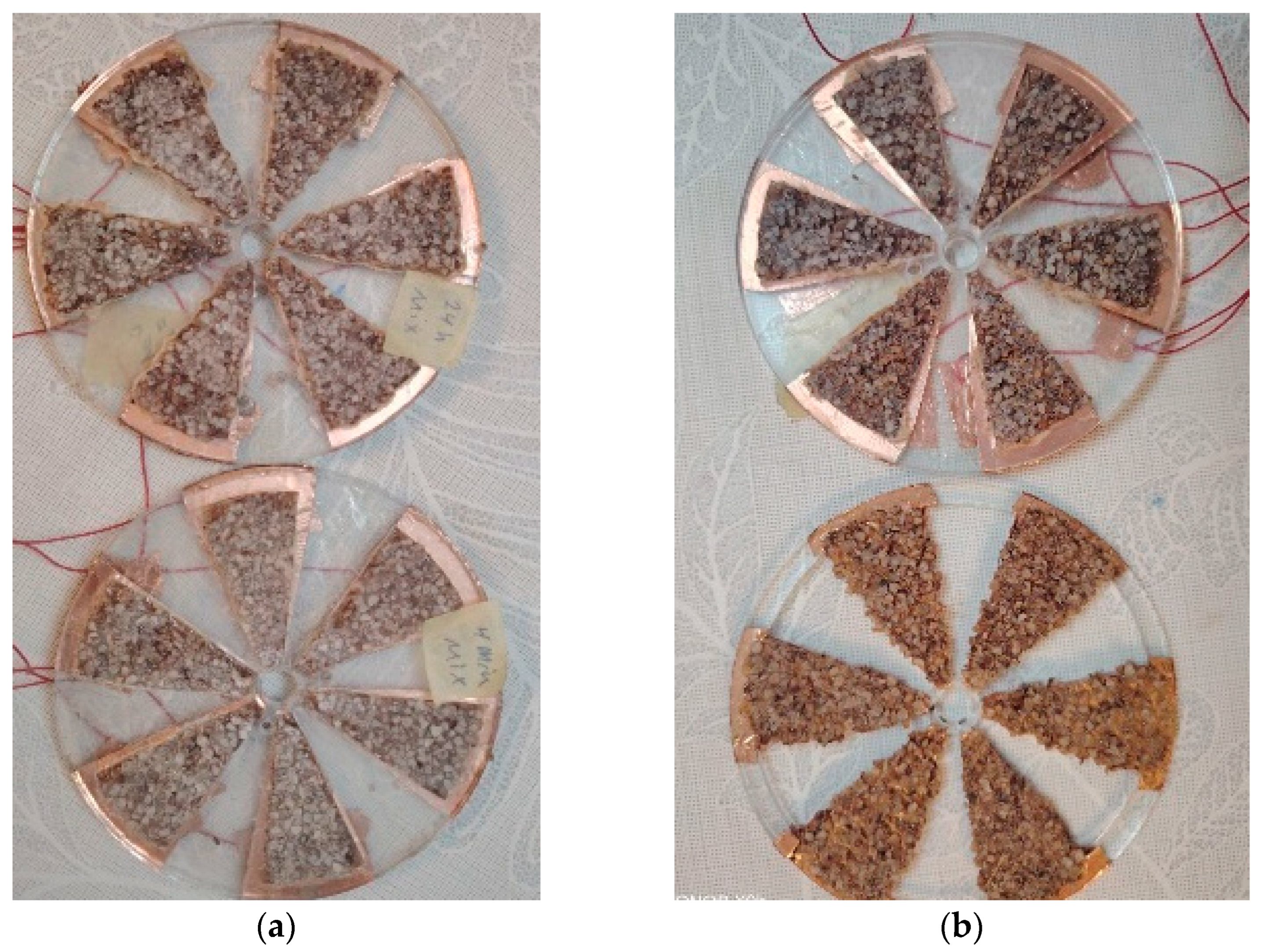
  • Epoxy resin: Two types of epoxy hardeners were used: a rapid-curing 4 min hardener and a slow-curing 24 h hardener, as in Figure 1a. Also, the date seed particles were integrated with the epoxy resin, using two methods:
    (a)
    Spreading the date seed particles on the epoxy surface and letting it cure, as seen in Figure 1b.
    (b)
    Pre-mixing the date seed particles directly into the epoxy resin before application, as shown in Figure 1a.
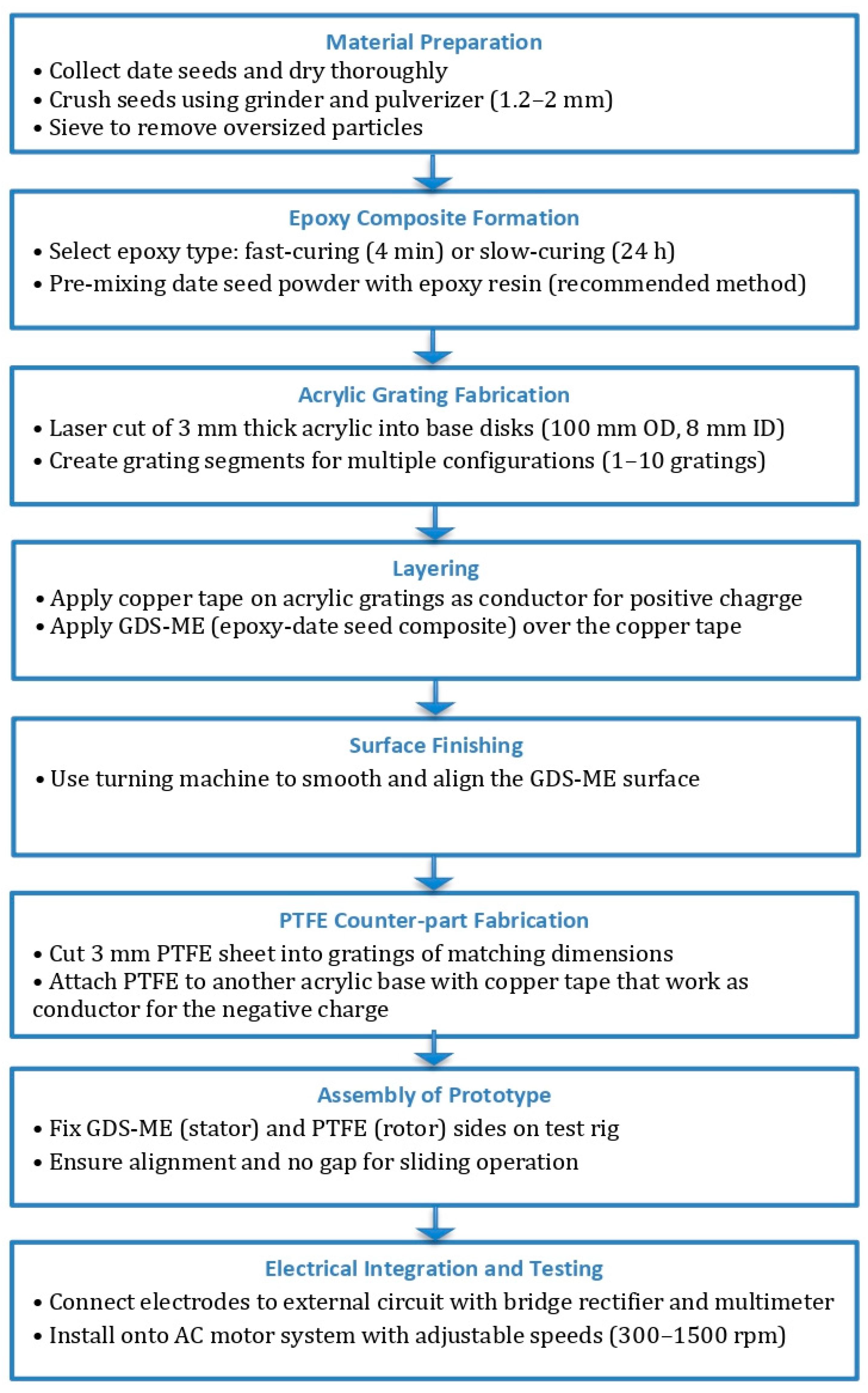
The entire fabrication process is summarised in the flowchart shown in Figure 2.

3.2. Prototype Fabrication

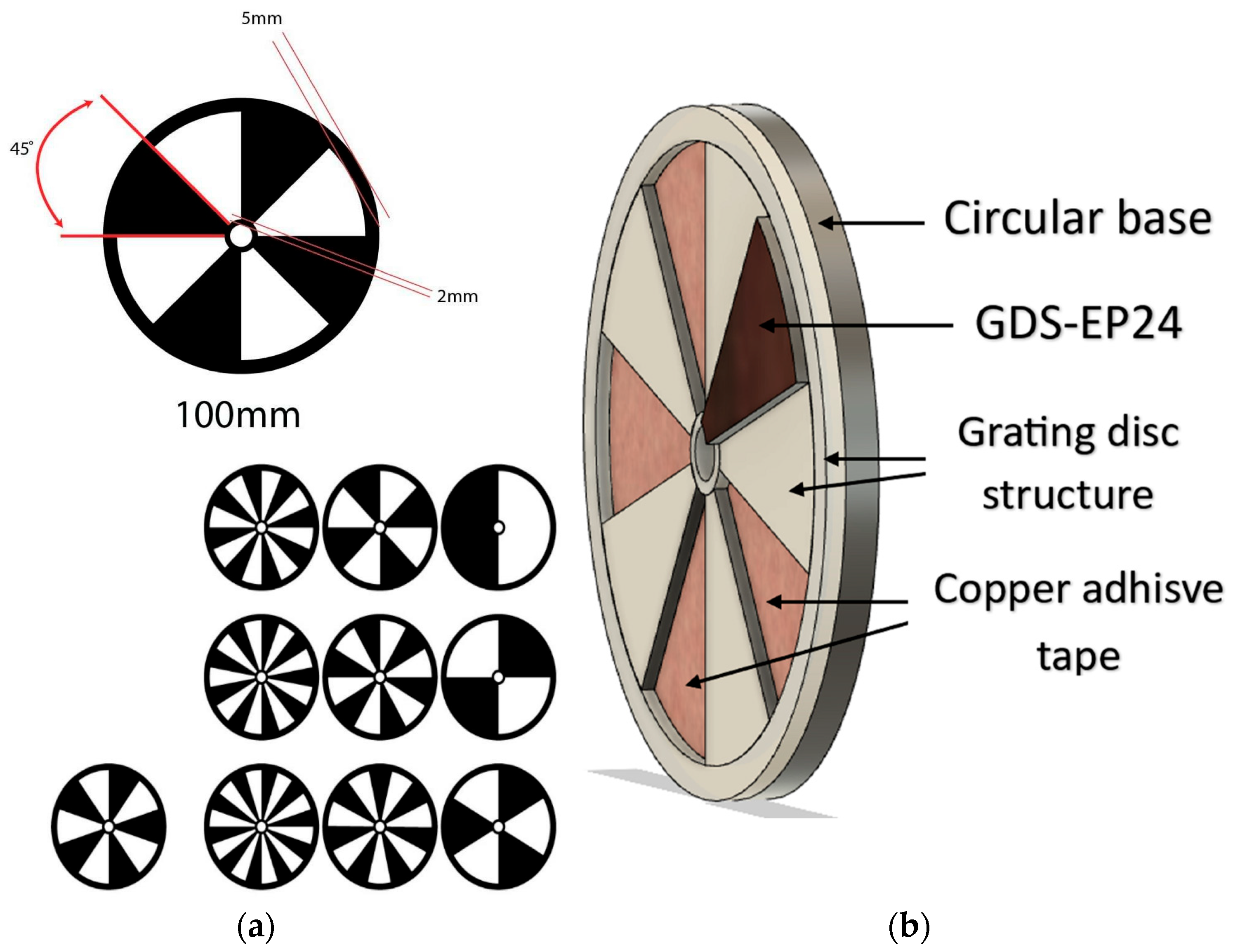
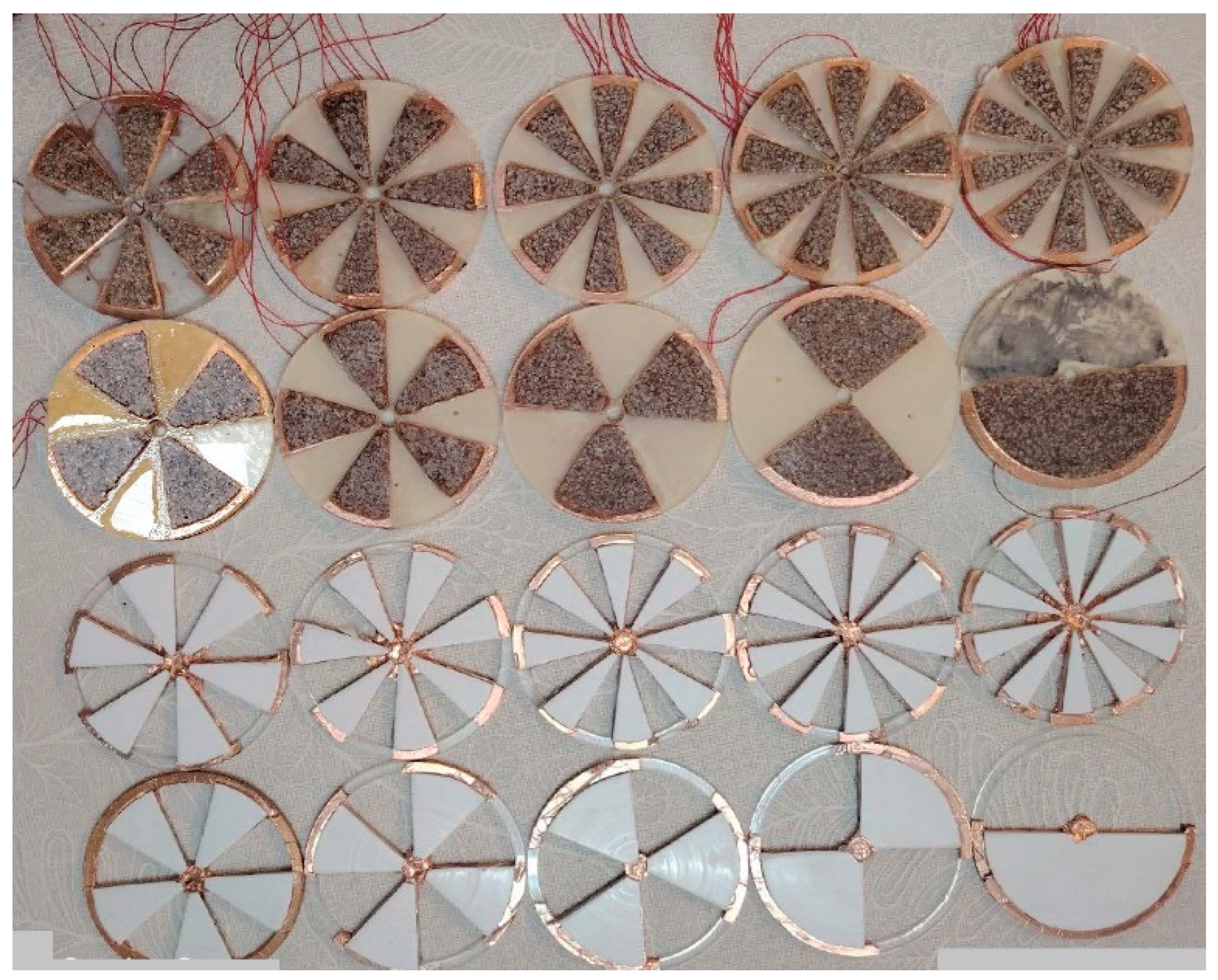
The prototype of the rotational triboelectric energy harvester was fabricated using a laser-cutting acrylic machine to process the acrylic material. Ten models were developed, varying in grating-disc structure from one to ten, with each grating possessing an outer diameter of 100 mm, an inner diameter of 8 mm, and a thickness of 3 mm (Figure 3a). The gratings were affixed on a circular base composed of 3 mm-thick acrylic with a diameter of 100 mm. Copper tape was affixed to the intervals between the gratings to serve as a conductor for positive charges. The composite material of ground date seeds mixed with epoxy (GDS–ME) was put on this copper tape to enhance triboelectric performance, as shown in Figure 3b. A 3 mm-thick Teflon sheet was cut into a grating-disc structure with uniform dimensions and affixed to an acrylic base, which was also lined with copper tape beneath to function as a conductor for negative charges, but without a fixed circular base underneath, as illustrated in Figure 4. In this arrangement, the Teflon functions as the tribonegative rotating component, whereas the biomaterial gratings serve as the tribopositive stationary element. This concept uses the sliding mode of the TEG, harnessing the friction between tribopositive and tribonegative contacts to generate electrical power. This design highlights the integration of biomaterials and advanced methods of fabrication to improve energy harvesting solutions. Figure 4 shows the ten gratings of (GDS–ME and PTFE), with their dimensions and designs.
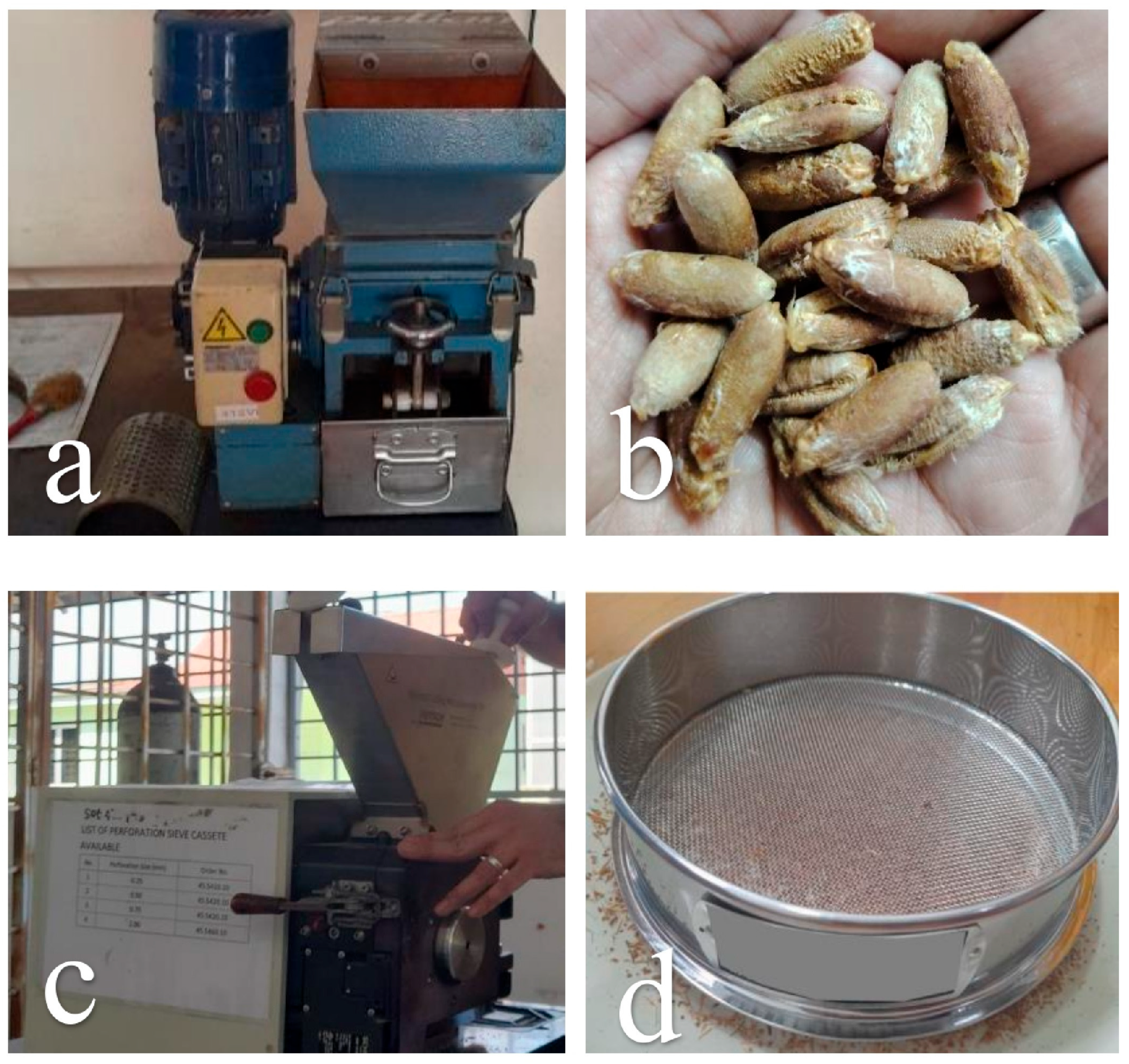
In the fabrication of the triboelectric energy harvester, date seeds were employed as the principal biomaterial due to their tribopositive characteristics. The ground date seeds were crushed with a grinder machine and subsequently processed with a pulveriser set to 2 mm, yielding small particles measuring 1.2 to 2 mm, as illustrated in Figure 5a–c. A mesh was employed to segregate the powder from remaining crystalline pieces, as illustrated in Figure 5d. The generated date seed particles were later combined with epoxy resin in two ways: a rapid-curing epoxy with a 4 min curing time and a slow-curing epoxy with a 24 h curing period. The pre-mixed combination of GDS–ME enhances triboelectric performance. The GDS–ME was processed on a turning machine to enhance surface uniformity and mechanical stability, to achieve a smooth and linear surface. This strategy coincides with recent developments in the utilisation of agricultural waste in energy harvesting applications, including energy storage, generators, and sensors.
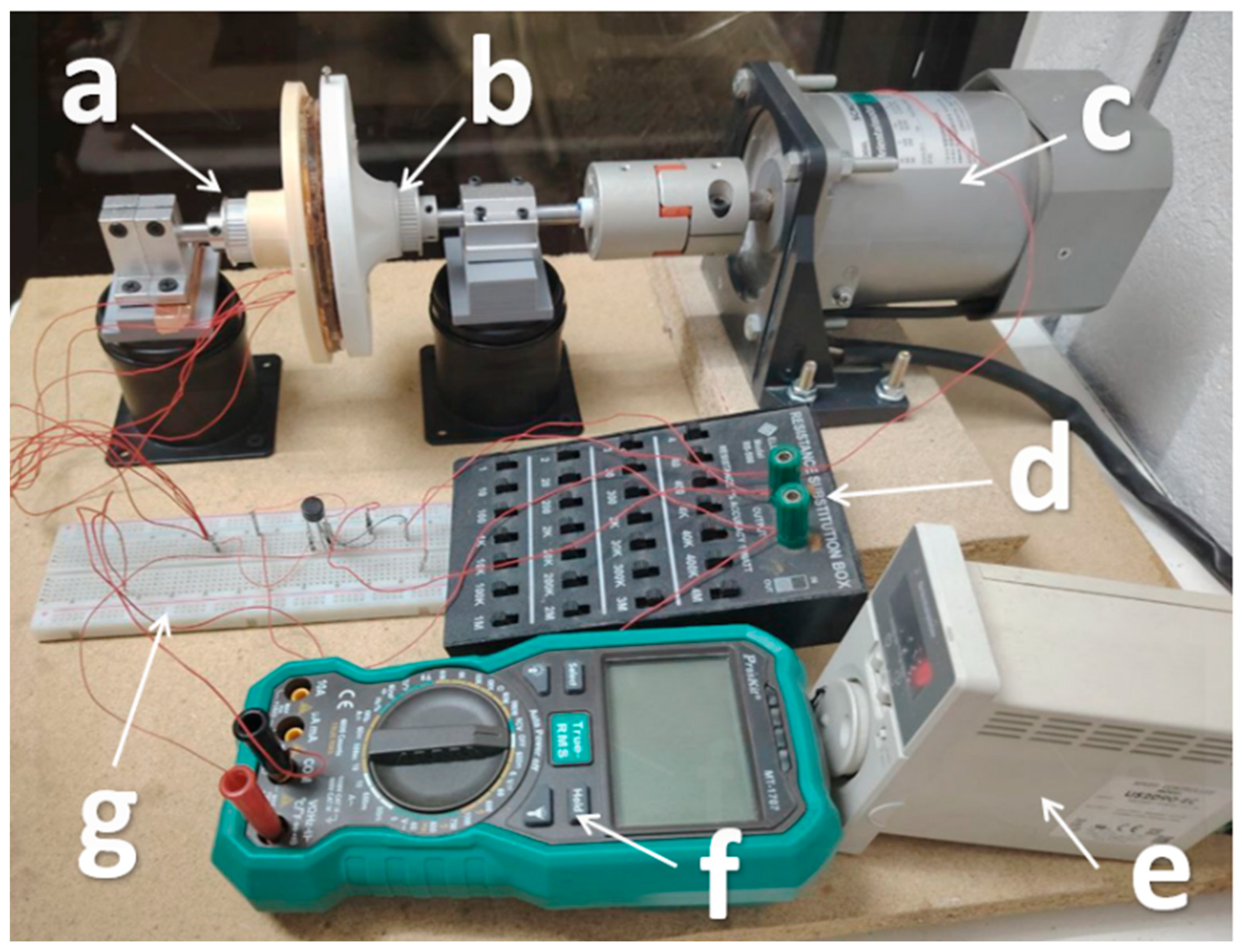
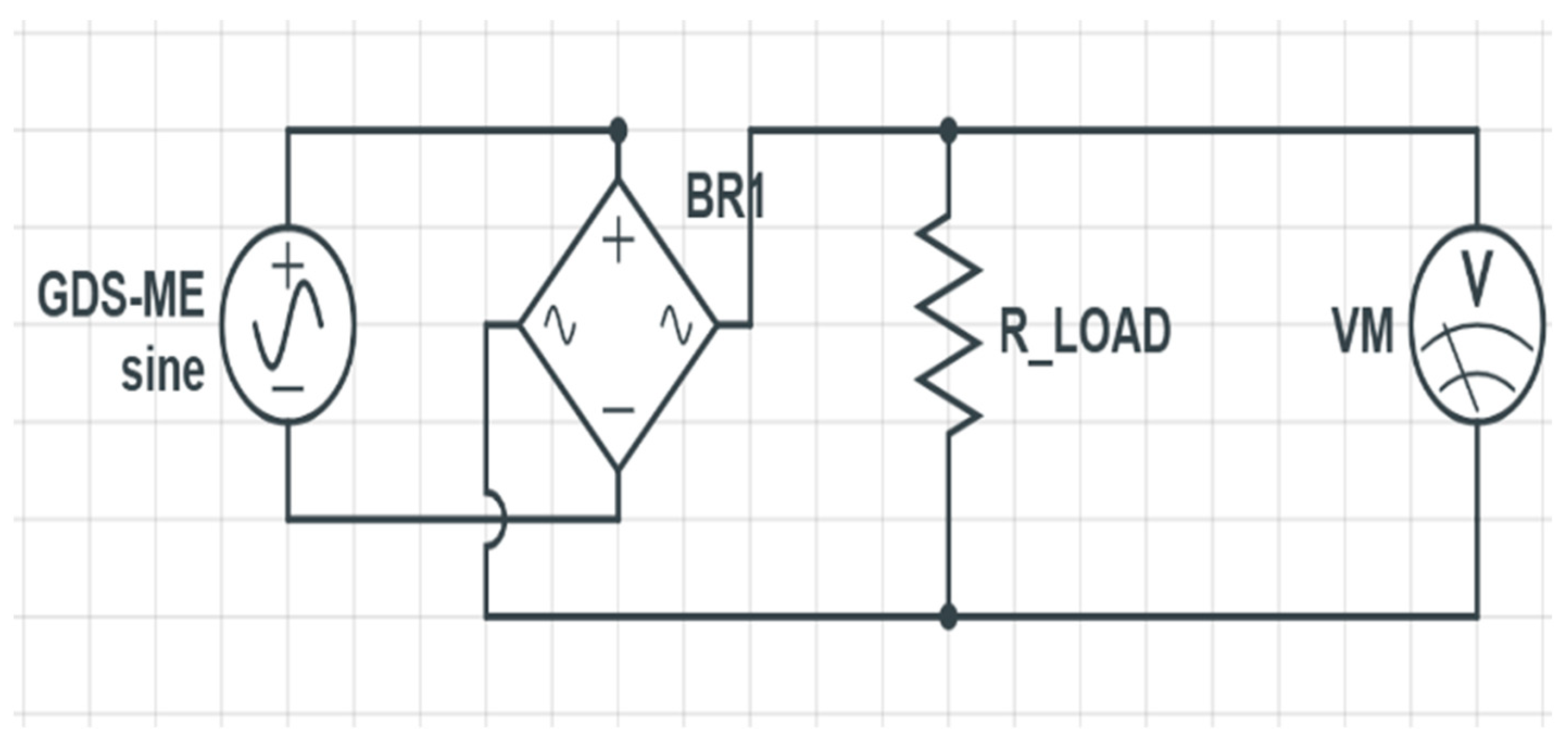
In the experiment, each triboelectric energy-harvesting grating was always connected by wires to record its exact electrical output. The circuit consisted of a bridge rectifier for converting AC to DC, a variable resistance box (RS-500W) from 1 Ω to 11 MΩ for different load resistances, and a multimeter to measure the output voltage precisely. The output power (P) was measured by P = V2/R, where V is the voltage measured using the load resistance (R). Rotating motion was generated by an AC Oriental Motor (Tokyo, Japan), with the rotation speed between 300 and 1500 rpm controlled by a digital speed controller for more precise and consistent outputs. The prototype components were produced commercially via a Ultimaker 2+ 3D printer (Utrecht, The Netherlands), which has excellent resolution and surface finish and very good dimensional accuracy.

3.3. Experimental Setup and Procedures

A series of experimental tests was conducted to assess the prototype’s power-generating efficacy under rotational settings that replicate actual machine operation. Key parameters, such as rotating velocity, the quantity of segments in the grating structure (varying from one to ten), epoxy formulation and mixing technique, as well as the prototype’s impact on the primary system, were methodically assessed.
The power was quantified by imposing different load resistances on the prototype to obtain the energy harvester efficiency. For the triboelectric harvester, it was working at speeds of 300, 600, 900, 1200, and 1500 rpm, while optimal performance in sliding mode was obtained by settling a zero-separation distance between the rotor and stator. A rotator and a stator are possible parts of the prototype shown in Figure 6, along with its structural characteristics and operating principles for the prototype under consideration. In the TENG-based applications, the maximum power transfer theorem is satisfied when a load external resistance (RL) matches the internal impedance of the TENG [44,45]. The resistance (R) for maximum power was found by measuring the DC voltage at different load resistances and using the following Equation (5):
P = V2/R
Here, V is the voltage reading of the multimeter, RL is the resistance value of the load box (RS-500W), and ΔRL is from 250 Ω to 11 MΩ. Power vs. resistance curves for different rotation numbers and numbers of gratings were obtained. The measurement setup included a bridge rectifier circuit for converting the AC into DC, coupled to a resistive load box presenting different loads. The commercial bridge rectifier used in the circuit has a supplier-rated efficiency of 81.2%. The circuit diagram used in the experiments is shown in Figure 7, distinguishing the elements related to the energy collector device. For power density calculations, the effective tribocontact area ( A eff ) was defined as the total active surface area of the ten-grating disc, corresponding to the sum of all triboactive segment surfaces (31.56 cm2). All reported power densities were obtained using this reference area.

3.3.1. Rotational Speed Test Conditions

It has been demonstrated that there is a clear positive correlation between the rotation speed and the output performance of the triboelectric energy harvester. With an increase in rotational velocity, the frequency of triboelectric contact was increased, resulting in increased charge transfer and enhanced output voltage as well as power. Maximum power output occurred at 1500 rpm, exceeding that obtained at lower speeds, in agreement with earlier studies on rotary TENGs [46,47]. The harvested power density increased with the rise in rotational speeds, indicating that rotational frequency plays a dominant role in energy conversion efficiency. On the other hand, durability (long-term operability and material wear) became a major issue when increasing the operating speed; thus, further examination to provide outstanding durability was required. These findings validate the experimental hypothesis and offer a foundation to optimise the design and operation parameters of the harvester so as to further enhance the output energy.

3.3.2. Various Number of Gratings

The second experiment tested the influence of the number of gratings on the performance of the TENG system, especially output voltage and power. Several setups were fabricated, including one with up to 10 gratings, and the effect of the number of gratings on the performance of triboelectric energy harvesters was investigated. All experiments were performed with the grating rotating at a fixed speed of 1500 rpm, providing homogenous mechanical stimulation. The output voltage was measured with a high-precision multimeter (Preskit 1714), and the output power was estimated. All open-circuit voltages reported in this study correspond to peak values (Vpeak) measured from the multimeter under steady periodic operation. This extensive assessment demonstrated the dependence of the harvester efficiency on the number of gratings, indicating that it is capable of effective power generation over a wide range of working conditions. The present experimental setup is in good agreement with the approaches described in previous works investigating the effect of grating number on energy conversion efficiency of a TENG [18,46,47].

3.3.3. Epoxy Type and Mixing

The third test demonstrated the epoxy species and mixing process on the output voltage and physical morphology of the triboelectric energy harvester. Also, two different epoxy hardeners were used for the study: 4 min fast-curing and 24 h slow-curing ones to observe changes in performance and material structure. In addition, two ways of mixing the ground date seed particles in epoxy were investigated. First, epoxy was poured between the gratings, and then ground date seeds were spread on it to cure. In the second process, the date seed particles were pre-mixed with epoxy and filled between blades. It was found by comparison that the second way had a more positive effect on the output voltage and material homogeneity, indicating its superior performance in promoting the harvester.

3.3.4. Evaluation of the Primary System

An experiment was carried out using a laser tachometer to evaluate the effect of rotor–stator friction on the primary system. This was a test to investigate the influence of the friction factor on the rotating speed decrease when the stator and rotor move relative to each other in an energy-harvesting case. This analysis gives good insights into the performance of the system and potential energy loss due to frictional effects, and the number of gratings.

4. Results and Discussion

A number of experiments were conducted to investigate their effect on enhancing the output power and voltage of the triboelectric energy harvester. The outcomes of these tests are detailed below and provide significant insights into the improvement of harvester performance.

4.1. Effect of Rotational Speed

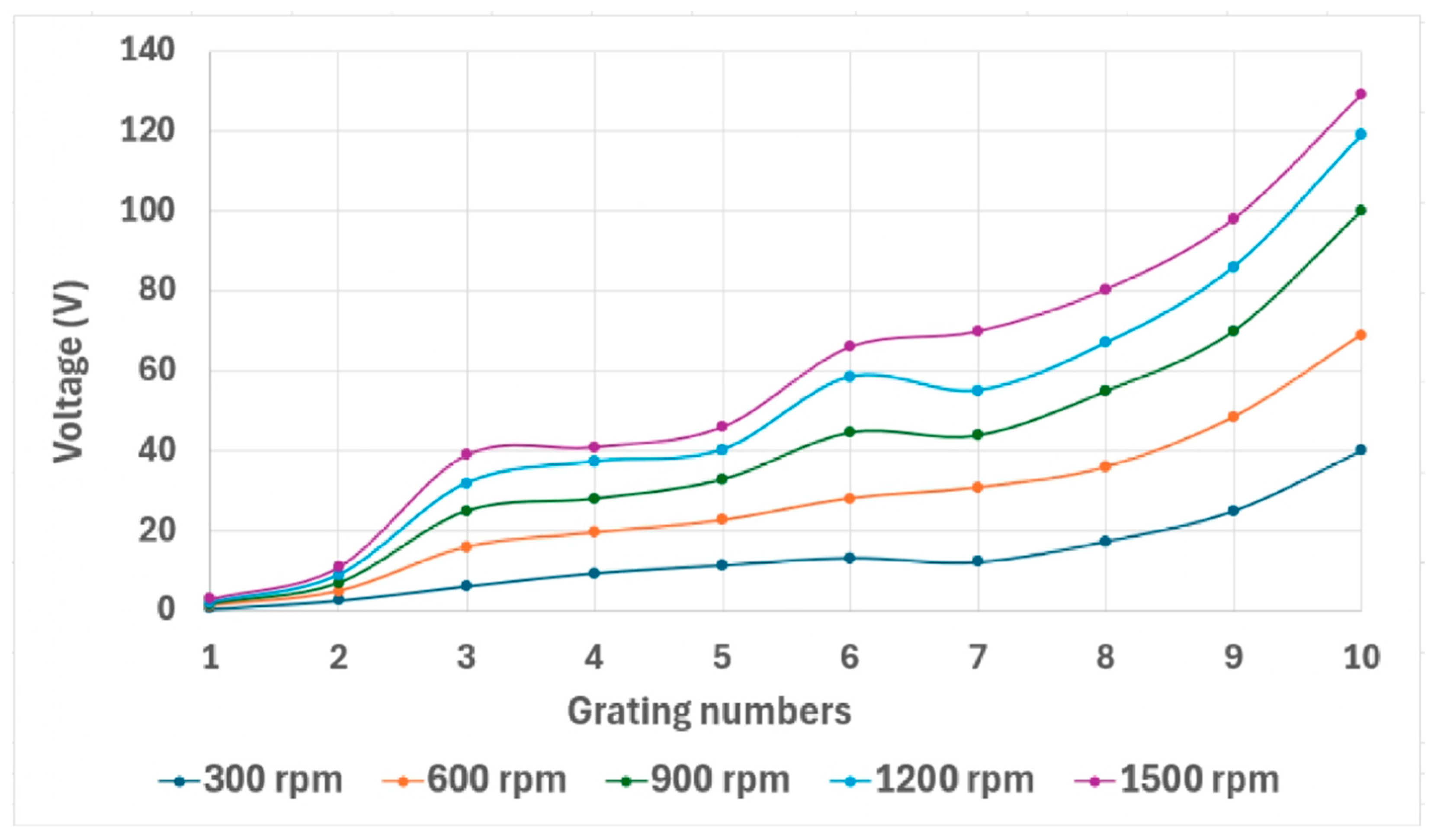
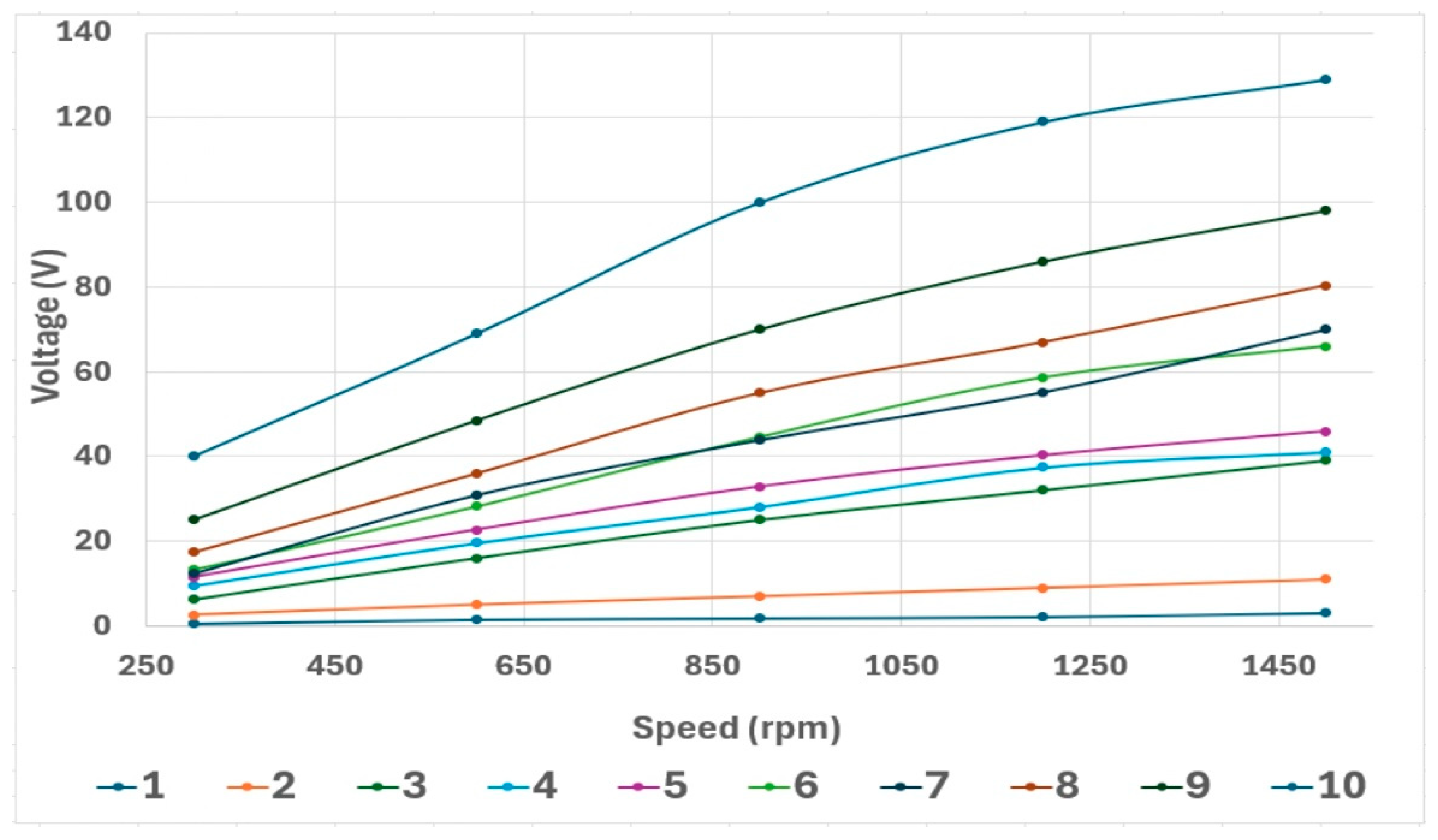
The rpm considerably impacts the output voltage and power of the TENG. The frequency of sliding/contact events of triboelectric materials escalates with rotational speed, leading to an increased charge transfer rate, which ultimately enhances output voltage and power. This aligns with several studies, indicating the importance of optimising the rotational speed to achieve the best performance of the TEG. Figure 8 illustrates the experimentally determined no-load AC voltage at various rotational speeds across 10 distinct grating designs. The data indicate that the no-load AC voltage increases consistently with rotating speed.
Figure 8 illustrates the varying performance of the TENG at different rotational speeds. The figure indicates that the output voltage increases with an increase in rotation speed (from 300 rpm to 1500 rpm) across all grating designs, demonstrating that a higher frequency of sliding/contact–separation cycles enhances charge transfer efficiency in fundamental operations. The open circuit voltage of the 10-grating design is the highest, reaching 129 V at a speed of 1500 rpm, and that of the 1-grating design is far below, less than 20 V at the same speed. This trend is consistent with previous works that claimed a generally increases between rotational speed and triboelectric response [46,48,49,50,51,52].
Research on rotary TENGs has similarly shown that output voltage and current increase with rotational speed due to the greater frequency of contact–separation events. For example, Yoon et al. [53] reported a steady rise in peak voltage and current as rotational speed increased, with the output approaching an optimised operating range at higher speeds. Such studies demonstrate that rotational frequency is a key parameter governing charge-generation efficiency, although prolonged high-frequency sliding operation may also introduce issues related to mechanical wear, heat generation, and charge leakage, which can reduce long-term stability [47]. Therefore, optimising rotational speed is essential to balance electrical performance and durability.

4.2. Effect of Grating Numbers

It is experimentally demonstrated that the enhancement of output power and voltage for TENGs could be observed due to the grating numbers. Grating configurations from single to ten were evaluated at a uniform rotation speed of 1500 rpm (optimum). They reported that as the grating is increased, energy harvesting increases due to increasing the effective contact area and operating frequency of TENGs, see Figure 9. The output powers of the 10 gratings were found to be the highest, which reflected the importance of grating number optimisation in terms of energy conversion efficiency. These observations are consistent with other reports and show the room for optimising the effect for upscaling of the triboelectric system by modifying its structure.
Figure 9 shows changes in AC voltage according to grating number, in a rotational triboelectric energy harvester. It is shown that a linear positive relation holds between the number of gratings and the output voltage. The 10-grating pattern yields the highest voltage, about 129 V, whereas lower grating designs (1-grating and 2-grating) generate much lower voltages (below 20 V). This trend is consistent with other reports where a larger number of contact points results in higher accumulation of charge and thus improves energy conversion efficiency [53]. The output voltage increases consistently with the number of gratings, as more electrode–dielectric interactions occur per rotation. At higher segment counts, the incremental voltage gain gradually tapers due to charge accumulation and partial saturation effects, a behaviour commonly observed in segmented TENG architectures.
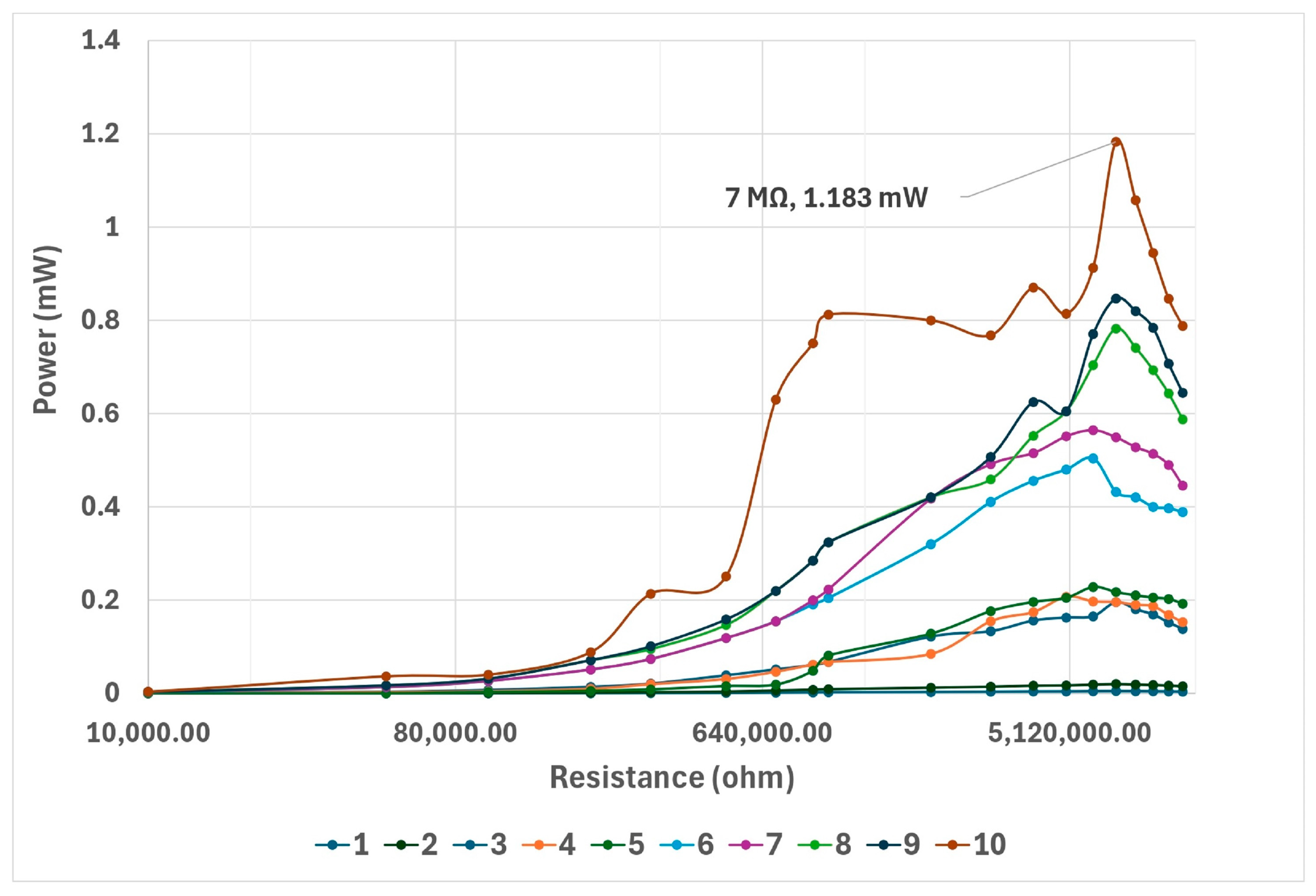
In addition, voltage increases steeply at first as resistance increases, but levels off beyond 7 MΩ or so, because the added resistive steps have less and less effect on voltage. This is consistent with what has been reported in disc-type triboelectric generators: saturation is caused by limited charge transfer and collection abilities at high resistances [54]. Moreover, the results show that the power output is maximised at 6–7 MΩ, which has been reported to be necessary for reaching the maximal power transfer efficiency in grating-based TENGs. The higher voltages observed in the 10-grating design reaffirm that increasing grating number enhances triboelectric interactions, supporting optimisation-driven architectures [55]. However, problems such as the degradation of the material and wear on the triboelectric layer due to an increased contact frequency remain unsolved for long-term stability [53].
Figure 10 illustrates the optimum resistance values with their peak power outputs for each configuration. To evaluate the effect of grating number on power generation, ten grating configurations, varying from one to ten, were analysed at 1500 rpm. With the increase in grating number, the power gradually increases until it reaches the peak at the optimum resistance, then declines. The optimum powers for 6, 7, 8, and 9 gratings are 0.5 mW, 0.56 mW, 0.78 mW, and 0.84 mW, respectively, corresponding to optimum resistances of 6, 6, 7, and 7 MΩ. Furthermore, for the 10 gratings, the optimum power is 1.183 mW at 7 MΩ. Figure 10 shows the relation between output power and resistance for various numbers of gratings. This trend aligns with previous studies indicating that a higher number of gratings improves the efficiency of charge transfer and enhances output power through augmented triboelectric interactions [49,53].
Nevertheless, at the optimum resistance, the power output stabilises due to saturation, where accumulated charge reaches equilibrium, and no further energy is produced [55]. Furthermore, compared with current works on sliding-mode TENGs, the presented rotating design provides continuous periodic contact, enabling more stable output cycles [56]. In addition, upward drift in power density implies that high efficiency can be realised through optimisation of the structure prototype, and it also verifies the effectiveness of multi-grating design for energy harvesting applications [57]. These results are vital for improving the efficiency of a rotating TENG for sustainable energy harvesting applications on WSNs in a remote area [58].

4.3. Effect of Epoxy Type and Mixing

The experimental results demonstrate that pre-mixing date seed particles with epoxy resin before its application can significantly enhance the electrical output of a triboelectric energy harvester using the proposed process method. In this approach, the output voltage increases for both the fast cure (4 min) and the slow cure (24 h) of epoxy hardener when the particles were uniformly dispersed within the resin. However, the date seed particles spreader on the surface after epoxy application caused a quick voltage fall. When a six-grating disc set was used, the output voltage was 66 V for pre-mixed resin cured for 24 h, and only 16 V under the same conditions was recorded when they had been post-spread. These results emphasised the need for a homogeneous distribution of date seed particles in epoxy for better energy harvesting efficiency.
In addition, the slow cure 24 h hardener is convenient and more versatile, giving the customer extra working time to achieve perfect results. For comparison and to highlight the advantages of the bio-composite solution, an experiment was conducted using pure epoxy as a tribopositive material without any intercalation fillers and PTFE as a tribonegative material, employing a configuration of five gratings. At 1500 rpm without load, the voltage of the pure epoxy structure was less than 1 V, while that of the epoxy-date seed composite reached 46 V. The remarkable increase in voltage reflects the crucial role of bio-based fillers for enhancing triboelectric performance.
In this rotary sliding architecture, the tribopositive layer is necessarily constructed from epoxy or epoxy–biomaterial composites, and therefore pure epoxy represents the appropriate baseline for isolating the effect of the date-seed particles. Because the date-seed/epoxy composite replaces only the tribopositive layer, while all other structural and geometric factors remain unchanged. The observed enhancement can be directly attributed to the presence, distribution, and triboelectric behaviour of date seeds rather than the epoxy itself.

4.4. Effect on the Primary System

This experiment investigates the influence of the frictional force between rotor and stator on the operational rotational speed of the harvester. Sliding friction introduces minor energy losses by decelerating rotation when both surfaces move against each other. A larger number of grating units further reduces the rotational speed. These results underscore the importance of frictional behaviour and the grating structure in enhancing the effectiveness of the energy harvesting device. Nevertheless, for this model, the reduction in speeds was minimal due to the smoothness of the two frictional surfaces and the torque provided by the motor.
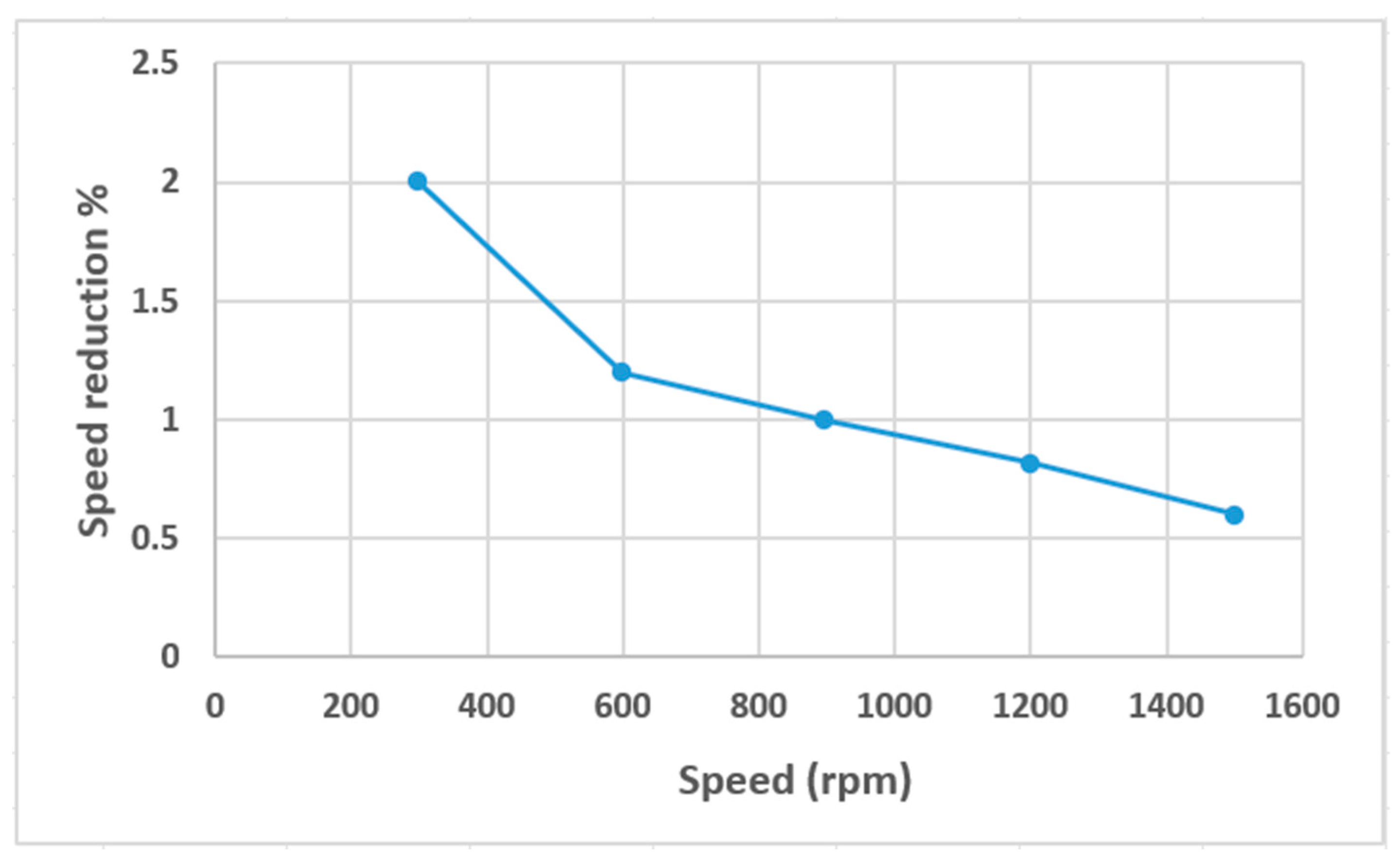
The impact of rotor-stator friction on system performance was experimentally quantified using a laser tachometer. Although friction slightly decreases rotational speed, its overall effect is negligible. At 300, 600, 900, 1200, and 1500 rpm, the measured reductions were 2.13%, 1.21%, 1.09%, 0.82%, and 0.60%, respectively (Figure 11, Table 1). This trend shows that the relative influence of friction decreases with increasing rotational speed, reflecting the motor’s ability to compensate for small load variations. Based on the 90 W rating of the SCM590A-EC drive motor and its nominal torque (≈0.7 N·m at 1200–1450 rpm), these reductions correspond to an additional mechanical load of approximately 0.5–0.7 W across the investigated range, as shown in Table 1. Consequently, the TENG increases the effective shaft load by less than 1% of the motor’s rated power, confirming that the harvester imposes only a minimal perturbation on the primary system.
While this study focuses on the electrical and mechanical performance under short-term operation, systematic long-duration endurance tests (e.g., many hours or 105–106 cycles) were not performed and remain an area for future work. Based on the known tribological behaviour of PTFE and epoxy/biomass composites, some gradual wear is expected under sliding contact. Accordingly, future development will prioritise non-contact or reduced-contact configurations, as well as surface-treatment strategies, to improve operational lifetime and stability.

4.5. Comparison with Previous Studies

Table 2 presents a comparison of previous research that used biomaterials and/or grating-disc structures. The table shows the input/output parameters of some newly reported energy harvesters, which also indicates that this work has shown advantages in output voltage and power density. In other research, raw biomaterials have been studied for energy harvesting, focusing on TENGs where a biomaterial and a grating disc were investigated to enhance output power and power density. A comparison of structurally similar investigations to the study at hand indicates that this work obtains good results and represents an important step forward in this field. All the studies on biomaterials and rotational mechanical energy sources have shown a lot of potential for energy harvesting. There is a detailed summary of the selected research, which focuses particularly on the use of biomaterial-based sources, as shown in Table 2.
It is also noted that most biomaterial-based TENGs listed in Table 1 operate in contact–separation mode, whereas the present work employs a sliding-mode rotational configuration; therefore, the comparison highlights material influence rather than mode-matched output equivalence. Compared with previously reported biomaterial-based TENGs, the present date-seed–epoxy composite demonstrates competitive performance. For instance, leaf-based TENGs typically generate 150–230 V with power densities of 180 µW cm−2 under wind-driven contact–separation [31], rice-husk silica devices report ≈180 V with ≈84 µW cm−2 under tapping [25], and wheat-straw windmill TENGs achieve ≈250 V with power densities around 40 µW cm−2 [32]. Rice-paper-based TENGs, where RP serves as the tribopositive layer paired with PVC, have delivered ≈244 V and 37.64 µW cm−2 under periodic vertical tapping [30], while silk-fibroin/rice-paper biomaterial interfaces fabricated through ICP nanostructuring have generated 55 V and 2.16 µW cm−2 under 1 Hz linear-motor excitation [27]. Under similar or lower mechanical excitation levels, the 10-grating rotational date-seed TENG in this study achieves 129 V and 37.48 µW cm−2 at 1500 rpm, demonstrating output performance within the upper range of natural-material TENGs despite operating in a sliding-mode rotational architecture.
This comparison confirms that date-seed composites are a viable and high-performing tribopositive alternative and that the multi-grating rotational architecture enables sustained and stable energy generation. Overall, the performance of biomaterial-based TENGs varies widely depending on the excitation mode, mechanical input, and material architecture. Some contact–separation systems, such as leaf- and rice-husk-based TENGs, achieve high power densities under intermittent tapping or wind-driven flutter, while others report more modest outputs under low-frequency manual excitation. In comparison, the present date-seed–epoxy TENG delivers 37.48 µW cm−2 under continuous rotational sliding, demonstrating that date-seed composites can perform competitively within the reported range of natural-material TENGs while operating in a fundamentally different mode. This highlights the effectiveness of the multi-grating rotational architecture for sustained energy harvesting.

5. Conclusions

Despite growing interest in triboelectric energy harvesting, few studies have investigated rotating systems using grating-disc structures. To the authors’ knowledge, there is no previous study that has examined the use of biomaterial-based date seeds in this application. To bridge such a gap, in this paper, a prototype of a rotating TENG has been developed and implemented for performance assessment. The prototype works at different rotation speeds and shows high generation power from the grating-disc structure. Four experiments were performed to study the effects of different factors on output voltage and power. The findings in this study show that the pre-mixing of date seed particles into an epoxy resin before applying can have beneficial effects on the electrical response of TENG. Additionally, a 24 h slow cure hardener is easier and less wasteful to work with than a 4 min curing resin, which provides more time for material processing and fewer steps. Another experiment was concerned with the effects of rpm and number of gratings; the increase in voltage output with increased rotational speed was noticed, e.g., a device that included ten gratings tested under rotational speeds of 300, 600, 900, 1200, and 1500 rpm had no-load output voltages of 18, 36, 56, 70 and 129 V, accordingly.
Furthermore, increasing the number of gratings amplifies both output voltage and power. At a rotational speed of 1500 rpm, increasing the number of gratings from one to ten resulted in a progressive rise in output voltage, measured at 3, 11, 43, 44, 46, 66, 70, 80.4, 84, and129 V, respectively. A similar pattern was observed in output power, which increased with the number of gratings. The measured optimum powers were 0.03, 0.08, 0.195, 0.197, 0.228, 0.504, 0.564, 0.782, 0.847, and 1.183 mW, with gratings numbered from 1 to 10, respectively. At 1500 rpm, the maximum output power reached was 1183 μW, providing an optimum power density of 37.48 μW/cm2.
Future work may include many ways to increase output power, including prevention of direct contact, a combination of diverse biomaterials, exploring other tribonegative materials, and alternatives to copper in electrode substrates. Future studies may also investigate the integration of advanced surface engineering techniques, such as micro- or nano-patterning, to improve charge generation and transfer efficiency.

Author Contributions

Conceptualisation: H.J.C.; writing—original draft preparation: H.J.C.; writing—review and editing: H.S.; visualisation: H.J.C.; supervision: E.E.S.; project administration: H.S.; funding acquisition: H.S.; review and editing: A.A.; writing—review and editing: W.A.-A.; writing—review and editing, L.C.A. All authors have read and agreed to the published version of the manuscript.

Funding

This research was funded by the AAIBE Chair for Renewable Energy Grant. 202405KETTHA, Development of A Bioenergy Harvesting Smart Material as a Hybrid Nanogenerator.

Institutional Review Board Statement

Not applicable.

Informed Consent Statement

Not applicable.

Data Availability Statement

All data are included in the article.

Acknowledgments

Some of this work has been conducted in the Vib Lab, UNITEN, UPM Labs, and Baghdad University Labs. Special thanks are extended to the technicians, Muhammad Wildan, Mohd Saiful, and Mohd Hafizul, for helping with experimental work. Also, many thanks are extended to Moaath al-Rifaay, Nuradeen M. Nasidi, Ahmed Hassan Saad, Mahmoud Abdlrahman, Helmi (MPOB), and Muhammad Aqmal Saparin for their help.

Conflicts of Interest

The authors declare no conflicts of interest.

References

  1. Zhu, Q.; Sun, E.; Sun, Y.; Cao, X.; Wang, N. Biomaterial Promotes Triboelectric Nanogenerator for Health Diagnostics and Clinical Application. Nanomaterials 2024, 14, 1885. [Google Scholar] [CrossRef] [Scilit]
  2. Patil, O.A.; Ghode, S.B.; Patil, S.L.; Chougale, M.Y.; Patil, S.R.; Patil, C.S.; Bagade, A.A.; Sonkawade, A.R.; Tiwari, A.P.; Kamat, R.K. Environmentally friendly agar-agar biomaterial-based triboelectric nanogenerator for sustainable electronics. Environ. Prog. Sustain. Energy 2025, 44, e14564. [Google Scholar]
  3. Najeeb, M.I.; Razeman, N.A.; Itam, Z.; Beddu, S.; Zahari, N.M.; Ramli, M.Z.; Zawawi, M.H.; Kamal, N.L.M.; Syamsir, A.; Mohamad, D. A Review on Experimental, Numerical, and Machine Learning-based Solar Energy Harvesting for Road Pavements Application. Pertanika J. Sci. Technol. 2025, 33, 1185–1207. [Google Scholar] [CrossRef] [Scilit]
  4. Chilabi, H.J.; Salleh, H.; Supeni, E.E.; As’arry, A.B.; Md Rezali, K.A.; Atrah, A.B. Harvesting energy from planetary gear using piezoelectric material. Energies 2020, 13, 223. [Google Scholar] [CrossRef] [Scilit]
  5. Mi, Y.; Lu, Y.; Wang, X.; Zhao, Z.; Cao, X.; Wang, N. From Triboelectric Nanogenerator to Uninterrupted Power Supply System: The Key Role of Electrochemical Batteries and Supercapacitors. Batteries 2022, 8, 215. [Google Scholar] [CrossRef] [Scilit]
  6. White, N.M.; Zaghari, B. Energy Harvesting: An Overview of Techniques for Use Within the Transport Industry. IEEE Electr. Insul. Mag. 2022, 38, 24–32. [Google Scholar] [CrossRef] [Scilit]
  7. Ibrahim, A.; Razali, A.R.; Jusoh, M.; Mohd Faudzi, N.; Mozi, A.M. Bending Effects on Polyvinyl Alcohol Thin Film for Flexible Wearable Antenna Substrate. Pertanika J. Sci. Technol. 2024, 32, 2055–2067. [Google Scholar] [CrossRef] [Scilit]
  8. Rahman, M.T.; Salauddin, M.; Maharjan, P.; Rasel, M.S.; Cho, H.; Park, J.Y. Natural wind-driven ultra-compact and highly efficient hybridized nanogenerator for self-sustained wireless environmental monitoring system. Nano Energy 2019, 57, 256–268. [Google Scholar] [CrossRef] [Scilit]
  9. Chen, X.; Song, Y.; Su, Z.; Chen, H.; Cheng, X.; Zhang, J.; Han, M.; Zhang, H. Flexible fiber-based hybrid nanogenerator for biomechanical energy harvesting and physiological monitoring. Nano Energy 2017, 38, 43–50. [Google Scholar] [CrossRef] [Scilit]
  10. Zhu, G.; Yang, W.Q.; Zhang, T.; Jing, Q.; Chen, J.; Zhou, Y.S. Self-Powered, Ultrasensitive, Flexible Tactile Sensors Based on Contact Electri fi cation. Nano Lett. 2014, 14, 3208–3213. [Google Scholar] [CrossRef] [Scilit] [PubMed]
  11. Mehamud, I.; Björling, M.; Marklund, P.; An, R.; Shi, Y. Enhanced Machine Condition Monitoring Based on Triboelectric Nanogenerator (TENG): A Review of Recent Advancements. Adv. Sustain. Syst. 2024, 8, 2400575. [Google Scholar] [CrossRef] [Scilit]
  12. Lin, Z.; Chen, J.; Yang, J. Recent Progress in Triboelectric Nanogenerators as a Renewable and Sustainable Power Source. J. Nanomater. 2016, 2016, 5651613. [Google Scholar] [CrossRef] [Scilit]
  13. Zheng, Q.; Shi, B.; Li, Z.; Wang, Z.L. Recent Progress on Piezoelectric and Triboelectric Energy Harvesters in Biomedical Systems. Adv. Sci. 2017, 4, 1700029. [Google Scholar] [CrossRef] [Scilit] [PubMed]
  14. Ahmad, K.A.; Abdullah, N.; Abd Rahman, M.F.; Osman, M.K.; Boudville, R. Characterization of Polyvinylidene Difluoride-based Energy Harvesting with IDE Circuit Flexible Cantilever Beam. Pertanika J. Sci. Technol. 2022, 30, 605–619. [Google Scholar] [CrossRef] [Scilit]
  15. Difeo, M.; Castro, M. Effect of Zr Doping on BNT–5BT Lead-Free Ceramics: Substitutional and Excess Incorporation Analysis. Micro 2025, 5, 35. [Google Scholar] [CrossRef] [Scilit]
  16. Wang, Z.L. Triboelectric nanogenerators as new energy technology and self-powered sensors–Principles, problems and perspectives. Faraday Discuss. 2014, 176, 447–458. [Google Scholar] [CrossRef] [Scilit]
  17. Chilabi, H.J.; Salleh, H.; Al-Ashtari, W.; Supeni, E.E.; Abdullah, L.C.; As’arry, A.B.; Rezali, K.A.M.; Azwan, M.K. Rotational Piezoelectric Energy Harvesting: A Comprehensive Review on Excitation Elements, Designs, and Performances. Energies 2021, 14, 3098. [Google Scholar] [CrossRef] [Scilit]
  18. Segkos, A.; Tsamis, C. Rotating triboelectric nanogenerators for energy harvesting and their applications. Nanoenergy Adv. 2023, 3, 170–219. [Google Scholar] [CrossRef] [Scilit]
  19. Su, K.; Lin, X.; Liu, Z.; Tian, Y.; Peng, Z.; Meng, B. Wearable triboelectric nanogenerator with ground-coupled electrode for biomechanical energy harvesting and sensing. Biosensors 2023, 13, 548. [Google Scholar] [CrossRef] [Scilit]
  20. Basset, P.; Beeby, S.P.; Bowen, C.; Chew, Z.J.; Delbani, A.; Dharmasena, R.D.I.G.; Dudem, B.; Fan, F.R.; Galayko, D.; Guo, H.; et al. Roadmap on nanogenerators and piezotronics. APL Mater. 2022, 10, 109201. [Google Scholar] [CrossRef] [Scilit]
  21. Li, X.; Jiang, C.; Ying, Y.; Ping, J. Biotriboelectric Nanogenerators: Materials, Structures, and Applications. Adv. Energy Mater. 2020, 10, 2002001. [Google Scholar] [CrossRef] [Scilit]
  22. Patil, S.R.; Chougale, M.Y.; Kim, J.; Shaukat, R.A.; Noman, M.; Saqib, Q.M.; Khan, M.U.; Dongale, T.D.; Bae, J. Triboelectric Nanogenerator Based on Biowaste Tribopositive Delonix Regia Flowers Powder. Energy Technol. 2022, 10, 2200876. [Google Scholar] [CrossRef] [Scilit]
  23. Zheng, Q.; Jin, Y.; Liu, Z.; Ouyang, H.; Li, H.; Shi, B.; Jiang, W.; Zhang, H.; Li, Z.; Wang, Z.L. Robust Multilayered Encapsulation for High-Performance Triboelectric Nanogenerator in Harsh Environment. ACS Appl. Mater. Interfaces 2016, 8, 26697–26703. [Google Scholar] [CrossRef] [Scilit] [PubMed]
  24. Zhou, J.; Wang, H.; Du, C.; Zhang, D.; Lin, H.; Chen, Y.; Xiong, J. Cellulose for sustainable triboelectric nanogenerators. Adv. Energy Sustain. Res. 2022, 3, 2100161. [Google Scholar] [CrossRef] [Scilit]
  25. Wu, J.M.; Chang, C.K.; Chang, Y.T. High-output current density of the triboelectric nanogenerator made from recycling rice husks. Nano Energy 2016, 19, 39–47. [Google Scholar] [CrossRef] [Scilit]
  26. Kim, J.; Lee, J.; Won, T.; Rajabi-abhari, A.; Mahato, M.; Young, J.; Lee, H.; Oh, I. Nano Energy Skin-attachable and biofriendly chitosan-diatom triboelectric nanogenerator. Nano Energy 2020, 75, 104904. [Google Scholar] [CrossRef] [Scilit]
  27. Jiang, W.; Li, H.; Liu, Z.; Li, Z.; Tian, J.; Shi, B.; Zou, Y.; Ouyang, H.; Zhao, C.; Zhao, L.; et al. Fully Bioabsorbable Natural-Materials-Based Triboelectric Nanogenerators. Adv. Mater. 2018, 30, 1801895. [Google Scholar] [CrossRef] [Scilit] [PubMed]
  28. He, F.; You, X.; Gong, H.; Yang, Y.; Bai, T.; Wang, W.; Guo, W.; Liu, X.; Ye, M. Stretchable, Biocompatible, and Multifunctional Silk Fibroin-Based Hydrogels toward Wearable Strain/Pressure Sensors and Triboelectric Nanogenerators. ACS Appl. Mater. Interfaces 2020, 12, 6442–6450. [Google Scholar] [CrossRef] [Scilit]
  29. Liu, S.; Tong, W.; Gao, C.; Liu, Y.; Li, X.; Zhang, Y. Environmentally friendly natural materials for triboelectric nanogenerators: A review. J. Mater. Chem. A 2023, 11, 9270–9299. [Google Scholar] [CrossRef] [Scilit]
  30. Chi, Y.; Xia, K.; Zhu, Z.; Fu, J.; Zhang, H.; Du, C.; Xu, Z. Rice paper-based biodegradable triboelectric nanogenerator. Microelectron. Eng. 2019, 216, 111059. [Google Scholar] [CrossRef] [Scilit]
  31. Feng, Y.; Zhang, L.; Zheng, Y.; Wang, D.; Zhou, F.; Liu, W. Leaves based triboelectric nanogenerator (TENG) and TENG tree for wind energy harvesting. Nano Energy 2019, 55, 260–268. [Google Scholar] [CrossRef] [Scilit]
  32. Ma, P.; Zhu, H.; Lu, H.; Zeng, Y.; Zheng, N.; Wang, Z.L.; Cao, X. Design of biodegradable wheat-straw based triboelectric nanogenerator as self-powered sensor for wind detection. Nano Energy 2021, 86, 106032. [Google Scholar] [CrossRef] [Scilit]
  33. Sait, H.H.; Salema, A.A. Microwave dielectric characterization of Saudi Arabian date palm biomass during pyrolysis and at industrial frequencies. Fuel 2015, 161, 239–247. [Google Scholar] [CrossRef] [Scilit]
  34. Habib, H.M.; Ibrahim, W.H. Nutritional quality evaluation of eighteen date pit varieties. Int. J. Food Sci. Nutr. 2009, 60, 99–111. [Google Scholar] [CrossRef] [Scilit] [PubMed]
  35. Abdelhussien, A.; Yang, G.; Hussein, E.K.; Li, L.; Al-Abboodi, H.; Mohamad, B. Analysis of the mechanical characteristics of date seed powder-based composite carbon fiber reinforced polymers. Facta Univ. Ser. Mech. Eng. 2025, 23, 251. [Google Scholar] [CrossRef] [Scilit]
  36. Hassan, M.K.; Assas, M. Evaluation of the hardness and wear behavior of date seed powder/epoxy composites as potential biomaterials. J. Eng. Therm. Sci. 2023, 3, 47–61. [Google Scholar] [CrossRef] [Scilit]
  37. Bhaduri, A.; Ha, T. Biowaste-Derived Triboelectric Nanogenerators for Emerging Bioelectronics. Adv. Sci. 2024, 11, 2405666. [Google Scholar] [CrossRef] [Scilit]
  38. Al-Farsi, M.A.; Lee, C.Y. Nutritional and functional properties of dates: A review. Crit. Rev. Food Sci. Nutr. 2008, 48, 877–887. [Google Scholar] [CrossRef] [Scilit]
  39. Sawaya, W.N.; Khalil, J.K.; Safi, W.J. Chemical composition and nutritional quality of date seeds. J. Food Sci. 1984, 49, 617–619. [Google Scholar] [CrossRef] [Scilit]
  40. Wang, Z.L. Triboelectric Nanogenerators as New Energy Technology for Self-Powered Systems and as Active Mechanical and Chemical Sensors. ACS Nano 2013, 7, 9533–9557. [Google Scholar] [CrossRef] [Scilit]
  41. Niu, S.; Wang, S.; Liu, Y.; Zhou, Y.S.; Lin, L.; Hu, Y.; Pradel, K.C.; Wang, Z.L. A theoretical study of grating structured triboelectric nanogenerators. Energy Environ. Sci. 2014, 7, 2339–2349. [Google Scholar] [CrossRef] [Scilit]
  42. Shao, J.; Jiang, T.; Wang, Z. Theoretical foundations of triboelectric nanogenerators (TENGs). Sci. China Technol. Sci. 2020, 63, 1087–1109. [Google Scholar] [CrossRef] [Scilit]
  43. Wang, Z.L. Fundamentals of Triboelectric Nanogenerators. In Handbook of Triboelectric Nanogenerators; Springer: Berlin/Heidelberg, Germany, 2023; pp. 1–30. [Google Scholar]
  44. Phillips, T. Dynamo-Electric Machinery: A Manual for Students of Electrotechnics; BiblioBazaar, LLC.: Charleston, SC, USA, 2009; ISBN 1110351100. [Google Scholar]
  45. Roshani, H.; Dessouky, S.; Montoya, A.; Papagiannakis, A.T.T. Energy harvesting from asphalt pavement roadways vehicle-induced stresses: A feasibility study. Appl. Energy 2016, 182, 210–218. [Google Scholar] [CrossRef] [Scilit]
  46. Lin, L.; Wang, S.; Xie, Y.; Jing, Q.; Niu, S.; Hu, Y.; Wang, Z.L. Segmentally Structured Disk Triboelectric Nanogenerator for Harvesting Rotational Mechanical Energy. Nano Lett. 2013, 13, 2916–2923. [Google Scholar] [CrossRef] [Scilit]
  47. Heo, D.; Son, J.; Hur, J.; Yong, H.; Cha, K.; Hwang, P.T.J.; Koo, B.; Gwak, Y.; Jin, Y.; Kim, D.; et al. Ultra-High Peak Power Generation for Rotational Triboelectric Nanogenerator via Simple Charge Control and Boosted Discharge Design. Adv. Funct. Mater. 2024, 34, 2406032. [Google Scholar] [CrossRef] [Scilit]
  48. Kuri, M.; Zhao, H. Self-Powered Wireless Sensor Node Based on Rotational Triboelectric Nanogenerator. In Proceedings of the 2020 IEEE International Instrumentation and Measurement Technology Conference (I2MTC), Dubrovnik, Croatia, 25–28 May 2020; IEEE: Piscataway, NJ, USA, 2020; pp. 1–5. [Google Scholar]
  49. Chen, J.; Tang, W.; Han, K.; Xu, L.; Chen, B.; Jiang, T.; Wang, Z.L. Bladeless-Turbine-Based Triboelectric Nanogenerator for Fluid Energy Harvesting and Self-Powered Fluid Gauge. Adv. Mater. Technol. 2018, 4, 1800560. [Google Scholar] [CrossRef] [Scilit]
  50. Wang, W.; Wu, Y.; Chang, Z.; Chen, F.; Wang, H.; Gu, G.; Zheng, H.; Cheng, G.; Wang, Z.L. Self-Powered Intelligent Water Meter for Electrostatic Scale Preventing, Rust Protection, and Flow Sensor in a Solar Heater System. ACS Appl. Mater. Interfaces 2019, 11, 6396–6403. [Google Scholar] [CrossRef] [Scilit] [PubMed]
  51. Zhai, N.; Wen, Z.; Chen, X.; Wei, A.; Sha, M.; Fu, J.; Liu, Y.; Zhong, J.; Sun, X. Blue Energy Collection toward All-Hours Self-Powered Chemical Energy Conversion. Adv. Energy Mater. 2020, 10, 2001041. [Google Scholar] [CrossRef] [Scilit]
  52. Lin, L.; Wang, S.; Niu, S.; Liu, C.; Xie, Y.; Wang, Z.L. Noncontact free-rotating disk triboelectric nanogenerator as a sustainable energy harvester and self-powered mechanical sensor. ACS Appl. Mater. Interfaces 2014, 6, 3031–3038. [Google Scholar] [CrossRef] [Scilit]
  53. Yoon, J.; Lee, J.; Ryu, S.; Park, J. Enhanced energy harvesting in rotational triboelectric nanogenerator via Gaussian process regression-based Bayesian optimization. Nano Energy 2025, 135, 110653. [Google Scholar] [CrossRef] [Scilit]
  54. Tcho, I.W.; Jeon, S.B.; Park, S.J.; Kim, W.G.; Jin, I.K.; Han, J.K.; Kim, D.; Choi, Y.K. Disk-based triboelectric nanogenerator operated by rotational force converted from linear force by a gear system. Nano Energy 2018, 50, 489–496. [Google Scholar] [CrossRef] [Scilit]
  55. Machado, L.Q.; Zhao, H.; Amjadi, M.; Ouyang, H.; Basset, P.; Yurchenko, D. Optimisation-driven design of sliding mode triboelectric energy harvesters. Nano Energy 2023, 115, 108735. [Google Scholar] [CrossRef] [Scilit]
  56. Wang, Y.; Liu, X.; Zheng, Z.; Yin, Y.; Wang, X.; You, Z. Numerical analysis and structural optimization of cylindrical grating-structured triboelectric nanogenerator. Nano Energy 2021, 90, 106570. [Google Scholar] [CrossRef] [Scilit]
  57. Shen, H.; Lv, Y.; Kong, Y.; Han, Q.; Chen, K.; Geng, Z.; Dong, M. Triboelectric Nanogenerator-Embedded Intelligent Self-Aligning Roller Bearing with the Capability of Self-Sensing, Monitoring, and Fault Diagnosis. Sensors 2024, 24, 7618. [Google Scholar] [CrossRef] [Scilit]
  58. Lone, S.A.; Lim, K.C.; Kaswan, K.; Chatterjee, S.; Fan, K.-P.; Choi, D.; Lee, S.; Zhang, H.; Cheng, J.; Lin, Z.-H. Recent advancements for improving the performance of triboelectric nanogenerator devices. Nano Energy 2022, 99, 107318. [Google Scholar] [CrossRef] [Scilit]
  59. Shaukat, R.A.; Saqib, Q.M.; Khan, M.U.; Chougale, M.Y.; Bae, J. Bio-waste sunflower husks powder based recycled triboelectric nanogenerator for energy harvesting. Energy Rep. 2021, 7, 724–731. [Google Scholar] [CrossRef] [Scilit]
  60. Yao, C.; Hernandez, A.; Yu, Y.; Cai, Z.; Wang, X. Triboelectric nanogenerators and power-boards from cellulose nanofibrils and recycled materials. Nano Energy 2016, 30, 103–108. [Google Scholar] [CrossRef] [Scilit]
  61. Jie, Y.; Jia, X.; Zou, J.; Chen, Y.; Wang, N.; Wang, Z.L.; Cao, X. Natural Leaf Made Triboelectric Nanogenerator for Harvesting Environmental Mechanical Energy. Adv. Energy Mater. 2018, 8, 1703133. [Google Scholar] [CrossRef] [Scilit]
  62. Jayaweera, E.N.; Wijewardhana, K.R.; Ekanayaka, T.K.; Shahzad, A.; Song, J.-K. Triboelectric Nanogenerator Based on Human Hair. ACS Sustain. Chem. Eng. 2018, 6, 6321–6327. [Google Scholar] [CrossRef] [Scilit]
  63. Kim, H.-J.; Yim, E.-C.; Kim, J.-H.; Kim, S.-J.; Park, J.-Y.; Oh, I.-K. Bacterial Nano-Cellulose Triboelectric Nanogenerator. Nano Energy 2017, 33, 130–137. [Google Scholar] [CrossRef] [Scilit]
  64. Kim, H.; Kim, J.; Jun, K.; Kim, J.; Seung, W.; Kwon, O.H.; Park, J.; Kim, S.; Oh, I. Silk Nanofi ber-Networked Bio-Triboelectric Generator: Silk Bio-TEG. Adv. Energy Mater. 2016, 6, 1502329. [Google Scholar] [CrossRef] [Scilit]
  65. Zhang, Y.; Zhou, Z.; Sun, L.; Liu, Z.; Xia, X.; Tao, T.H. “Genetically Engineered” Biofunctional Triboelectric Nanogenerators Using Recombinant Spider Silk. Adv. Mater. 2018, 30, 1805722. [Google Scholar] [CrossRef] [Scilit] [PubMed]
Figure 1. Mixing date seed particles with epoxy: (a) the upper section shows the slow-curing 24 h hardener, and the lower section presents the fast-curing 4 min hardener, both are pre-mixed; (b) sprinkling the date seed particles on the surface of epoxy.
Micro 06 00003 g001
Figure 2. Step-by-step fabrication procedure of the rotational triboelectric energy harvester.
Micro 06 00003 g002
Figure 3. The experimental ten gratings of GDS–ME and PTFE, including dimensions and design sketches; (a) dimensions and design sketch; (b) the simulated structure of the grating disc with detailed features.
Micro 06 00003 g003
Figure 4. The 10 gratings configurations of GDS–ME and PTFE.
Micro 06 00003 g004
Figure 5. (a) The grinding machine, (b) the date seeds (row), (c) the particle size reduction machine, and (d) one of the sieve meshes used for particle separation.
Micro 06 00003 g005
Figure 6. Prototype of the test rig harvester with labelled components: (a) stator (PTFE); (b) rotor (GDS–ME); (c) oriental motor; (d) variable resistance box; (e) motor speed regulator; (f) multimeter (Preskit 1714, Prokit’s Industries Co., Ltd., New Taipei City, Taiwan); (g) breadboard.
Micro 06 00003 g006
Figure 7. Circuit diagram.
Micro 06 00003 g007
Figure 8. The impact of increasing rotation speed on output voltage with varying numbers of gratings, from one to ten.
Micro 06 00003 g008
Figure 9. The effect of increasing grating number on output voltage, where the numbers 1 to 10 stand for the number of gratings used.
Micro 06 00003 g009
Figure 10. The effect of increasing grating number on enhancing output power at 1500 rpm.
Micro 06 00003 g010
Figure 11. Percentage reduction in rotational speed due to rotor–stator friction at different input speeds.
Micro 06 00003 g011
Table 1. Measured speed reduction due to rotor–stator friction.
Rated rpmMotor Without TENGMotor with the TENGrpm Reduction %
300302.32962.13
600602594.81.21
900902.78931.09
120012021192.20.82
15001502.51493.50.60
Table 2. Comprehensive triboelectric energy harvesting studies utilising biomaterial-based materials.
NoBiomaterialTribopositiveTribonegativeTENG ModeFabrication MethodsElectric Characterisation (Voltage V, Power Density µW/cm2)Mechanical ExcitationApplicationRef
1Rice paper (RP)RPPVCContact–separationRP laminated with PVC; metal electrodes244 V,
37.64 µW/cm2
Periodic vertical tappingGreen/wearable electronics, LEDs[30]
2Silk fibroin (SF)/Rice paper (RP)SFRPVertical contact–separationICP nanostructuring + Mg electrodes8–55 V,
2.16 µW/cm2
Linear motor (1 Hz)Implantable stimulation[27]
3Natural leavesNatural leafPTFEFluttering/wind-drivenLeaf membrane + PTFE≈150–230 V,
4.5 µW/cm2
Wind flowWind harvesting, sensors[31]
4Wheat strawWheat strawFEPSingle-electrodeStraw windmill rotor + FEP250 V
≈40.4 µW/cm2
Low-speed airflowEnvironmental sensing[32]
5Sunflower husk powderSunflower husk powderPETContact–separationSHP layer on PET≈488 V,
48 μW/cm2
Periodic pressingWearable/environmental harvesting[59]
6Cellulose nanofibrils (CNFs)CNFsFEPContact–separationTEMPO-oxidised CNFs on recycled substrate≈30 V,
14 µW/cm2
Manual pressingSustainable paper-based TENG[60]
7Natural leafNatural leafPMMASingle electrodeDirect adhesive layer230 V,
4.5 µW/cm2
Wind flowLED, temperature Sensors[61]
8Human hairHuman hairKaptonContact–separationSpin-coating, cutting, and direct assembly103 V,
6 µW/cm2
Manual pressingPowering LEDs[62]
9Bacterial nanocelluloseBacterial nanocelluloseFlat polyoxymethylene (POM) plateContact–separationSolubilization process, direct adhesive layer13 V,
0.48 µW/cm2
Press and release (function generator)Biomedical, wearable devices[63]
10Silk fibroinSilk fibroinpolyimide (PI) filmContact–separationElectrospun silk fibroin16 V,
0.43 µW/cm2
Press and release (mechanical shaker)self-powered systems, LED bulb[64]
11Spider silkrecombinant spider silk proteins (RSSP)PET layersContact–separationGenetic engineering, and cast or spin-coated145 V,
12.9 µW/cm2 (calculated)
Liner motorEco/biocompatible energy harvesting, intelligent sensing, and biomedical applications[65]
12Cellulose nanofibrils
and recycled materials
Cellulose nanofibrils (CNFs)FEP (fluorinated ethylene propylene)Contact–separationTetramethylpiperidine-1-oxy (TEMPO)-mediated oxidation30 V,
14 µW/cm2 (calculated)
Manual pressingCreating large-scale and environmentally sustainable[60]
13Current workGDS–MEPTFESliding modeLaser cut, adhesive layers with 24 h slow hardener epoxy129 V,
37.48 µW/cm2
Rotational motionEnvironmental and motion sensors, powering LEDs
Note: All voltage values reported in Table 2 correspond to peak open-circuit voltage (Voc) as presented in the original sources.
Disclaimer/Publisher’s Note: The statements, opinions and data contained in all publications are solely those of the individual author(s) and contributor(s) and not of MDPI and/or the editor(s). MDPI and/or the editor(s) disclaim responsibility for any injury to people or property resulting from any ideas, methods, instructions or products referred to in the content.