1. Introduction
Since the beginning of the 21st century, China’s transportation sector has achieved leapfrog development. The scale of road infrastructure construction has continued to expand, leading to a significant improvement in network coverage. In this process, the automotive industry and the transportation sector have formed a pattern of coordinated development. Statistics show that China’s civilian vehicle ownership reached 352.68 million units in 2024, a 28.99% increase compared to 2020 [
1,
2]. While the rapid growth in vehicle ownership meets residents’ travel demands, it has also brought a series of traffic safety issues. In 2023, the number of motor vehicle traffic accidents nationwide reached 211,974, accounting for 83.21% of the total traffic accidents, highlighting the urgency of improving road traffic safety [
3].
To address traffic safety challenges, intelligent assisted driving technology has emerged. This technology integrates advanced perception devices such as LiDAR, thermal imaging sensors, and 4D millimeter-wave radar, and combines modern communication technologies to realize a vehicle–road–cloud collaborative intelligent decision-making system [
4,
5]. Currently, intelligent assisted driving technology has developed a complete L0–L5 classification system: L0 is purely manual driving; L1 provides single-function assistance; L2 possesses combined driving assistance capabilities; L3 enables conditional automated driving in specific scenarios; L4 achieves high driving automation; and L5 represents full driving automation [
6,
7,
8,
9,
10]. At present, L2 technology has become the mainstream configuration in the domestic market; L3 is beginning to be applied in high-end models, L4 is in the regional pilot stage, while L5 has not yet met the requirements for commercial application [
11]. Based on technical characteristics, vehicles equipped with intelligent assisted driving systems of L2 and above can be defined as Connected and Automated Vehicles (CAVs). These vehicles can achieve coordinated control through connected communication, significantly enhancing driving safety and efficiency [
12].
With the continuous increase in CAV penetration, road traffic flow exhibits new characteristics of mixed operation between CAVs and regular human-driven vehicles (HDVs). The two types of vehicles have fundamental differences in their decision-making mechanisms: CAVs rely on sensor data, characterized by standardized behavior and precise responses, whereas HDVs depend on driver experience and judgment, demonstrating greater flexibility and adaptability [
13,
14,
15]. This heterogeneity makes the operational characteristics of mixed traffic flow more complex, presenting both new opportunities for improving road efficiency and new safety risks [
16,
17]. Particularly under emergency conditions, CAV decision-making models may have limitations due to insufficient training data, while HDV drivers’ stress responses involve significant uncertainty. This disparity can easily lead to traffic safety hazards [
15,
18].
As arterial highways undertaking medium- to long-distance passenger and freight transport, the primary highways hold a significant position in the national road network. Their high design standards, favorable alignment conditions, and high operating speeds make drivers more inclined to use intelligent driving assistance functions [
19]. However, most existing traffic management and control schemes are designed based on traditional traffic flow characteristics, making it difficult to fully leverage the technological advantages of CAVs. They may even introduce new safety issues due to behavioral differences between vehicle types. As the proportion of roads meeting the primary highway standards continues to increase, constructing simulation analysis methods for mixed traffic flow is of great theoretical value and practical significance for optimizing road design and management solutions [
19]. Conducting mixed traffic flow simulation research can not only deeply reveal the interaction mechanisms between CAVs and HDVs but also provide a scientific basis for optimizing traffic organization on the primary highways, ultimately achieving the goals of improving the network’s Level of Service and reducing accident rates. This effort will not only help promote the development of the intelligent and connected vehicle industry but also provide technical support for the future construction of smart highways.
Traffic simulation platforms are digital simulation tools for traffic systems constructed through computer technology. They utilize mathematical models, algorithms, and visualization techniques to replicate real or planned traffic scenarios, serving system analysis and decision-making [
20,
21]. Currently, mainstream simulation tools include VISSIM, SUMO, CORSIM, Paramics, AIMSUN, TransModeler, TESS NG, and HetroTraffSim, each with distinct features (
Table 1) [
22]. VISSIM, a microscopic simulation software developed by Germany’s PTV Group, supports vehicle behavior simulation with a 0.1 s time step. It integrates the Wiedemann car-following and lane-changing models and excels in intersection signal optimization and public transport priority analysis [
23,
24]. Its strengths lie in high-precision microscopic simulation and signal control optimization, with support for secondary development via COM interfaces [
23,
25]. SUMO (Simulation of Urban Mobility) is an open-source microscopic simulation tool developed by the German Aerospace Center. It supports multimodal traffic flow simulation, defines networks and traffic demand via XML files, and is compatible with various data sources like OpenStreetMap [
26,
27,
28]. Its open-source and flexible nature makes it suitable for automated driving testing and traffic flow theory research, providing Python/C++ interfaces for algorithm development [
25,
28]. CORSIM integrates urban street and freeway simulation, supporting vehicle movement simulation with a 1 s time step. However, it lacks dynamic route assignment algorithms and is often used for traffic management strategy evaluation [
26,
29]. Paramics supports large-scale networks and parallel computing, excelling in intelligent transportation system simulation [
30]. TESS NG is designed for China’s mixed traffic flows, integrating with urban traffic brain and BIM systems [
22]. While these tools have their respective strengths, SUMO, due to its open-source nature and flexibility, is more suitable for mixed-flow simulation research, providing a good platform for CAV-dedicated lane analysis.
Traffic control and management ensure the orderly operation of traffic flow through measures such as signs, markings, signals, and isolation facilities [
31,
32]. Concerning mixed flows, research often focuses on lane management, signal control, etc., with CAV-dedicated lane configuration being a key direction [
33,
34]. CAV-dedicated lanes leverage the environmental perception and decision-making advantages of CAVs by segregating them from regular vehicles, thereby reducing traffic delays caused by behavioral differences [
35,
36]. Wang Hao et al. used a cellular automaton model to verify the positive effect of CAV-dedicated lanes on freeway flow and stability, proposing a three-phase verification for different configurations, which proved effective within a 10–90% penetration rate range [
37]. This study provides a feasible solution for the technological transition period. Yang Jiawei et al., based on cellular automaton simulation, suggested that setting CAV-dedicated lanes on the inner side of a bidirectional four-lane freeway aligns better with expressway conventions, and penetration rate increases positively impact capacity [
38]. The research also explored CAV and HOV lane-sharing strategies, including single shared lane, non-lane-changing dual lanes, and other modes [
39]. These studies indicate that CAV-dedicated lanes can effectively enhance mixed-flow efficiency. However, research targeting the characteristics of the primary highways remains insufficient, lacking a precise analysis of penetration rate thresholds.
Current research exhibits the following shortcomings: Firstly, simulations are mostly confined to freeway scenarios, inadequately considering the characteristics of mixed flows on the primary highways. For example, Wang Hao et al. [
37] and Yang Jiawei et al. [
39] conducted in-depth research on freeway CAV-dedicated lanes based on cellular automaton models, and their conclusions hold significant reference value for freeway design. However, the primary highways differ significantly from freeways in terms of traffic composition, access point density, intersection types, and connection methods with the surrounding network [
19]. These factors directly influence vehicle car-following and lane-changing behaviors, making it difficult to directly apply freeway research conclusions to the design of control strategies for the primary highways. Furthermore, international studies such as Zhong et al. [
40] and Rivadeneira et al. [
41] have emphasized the importance of CAV-dedicated lanes in penetration rate thresholds, which complements the focus of this study on Class I highway scenarios. This aligns with guidelines from organizations like FHWA and AASHTO, highlighting the need for context-specific lane management strategies.
Secondly, existing research lacks a systematic analysis of penetration rate thresholds for CAV-dedicated lane implementation. Although studies like [
37,
39] suggest that dedicated lanes can be effective within a broad 10–90% penetration rate range, they fail to clearly identify, through refined experiments, the optimal range for maximizing benefits and the critical point where benefits reverse. This results in a lack of precise data support for decision-making regarding dedicated lane implementation in practical engineering applications, potentially leading to resource waste or ineffective outcomes. These gaps constitute the primary focus of this paper’s research.
In summary, to address the aforementioned research gaps, the main contributions of this paper are manifested in the following three aspects:
A SUMO-based simulation analysis framework for mixed CAV and HDV traffic flow on the primary highways is proposed. This framework elaborates on the complete methodology, encompassing network construction, vehicle behavior model configuration (e.g., setting ACC and Krauss car-following models for CAVs and HDVs, respectively), and data output and visualization analysis. It provides a standardized tool for studying mixed traffic flow on the primary highways.
A gradient-controlled simulation experiment method is designed. This method adopts a strategy of “5% coarse adjustment combined with 1% fine-grained analysis,” enabling precise quantification of the impact of the key parameter—CAV penetration rate—on traffic flow performance. It overcomes potential conclusion deviations caused by excessively large intervals in previous studies.
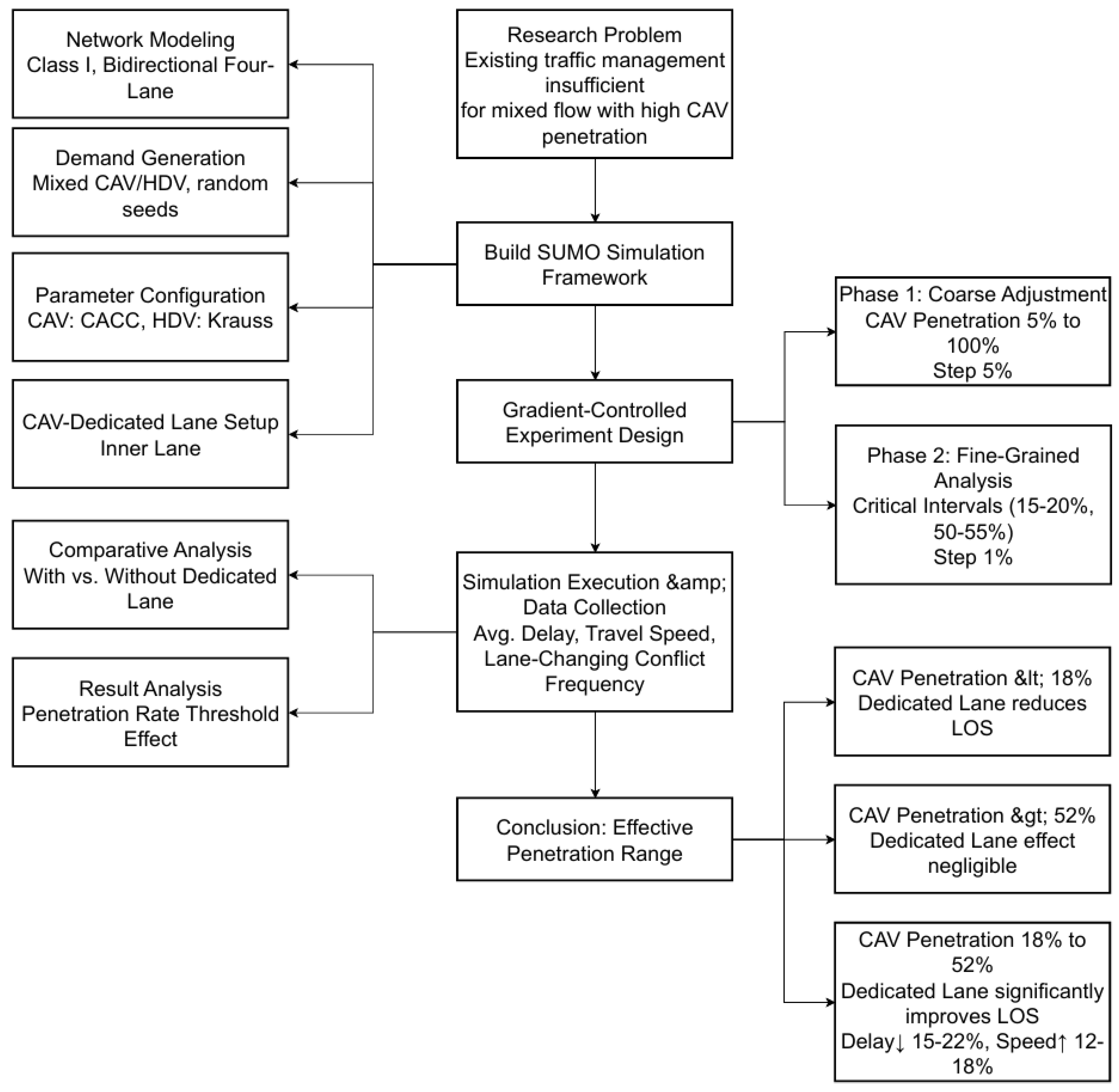
This study clarifies the effective penetration rate interval for implementing CAV-dedicated lanes on the inner side of bidirectional four-lane primary highways. Through controlled simulation experiments, this study determines that configuring dedicated lanes can significantly enhance the network Level of Service (e.g., reducing average delay, increasing travel speed) when the CAV penetration rate is between 18% and 52%. This provides a scientific decision-making basis for the planning and construction of related infrastructure. The specific research flowchart is shown in
Figure 1.
2. Network Modeling for the Primary Highways in SUMO
2.1. Network Development Methodology
Network construction in the SUMO simulation environment is achieved through network definition files in XML format. XML (Extensible Markup Language), as a data storage and transmission language, uses specific syntax to define fundamental network parameters. These include link names, positional coordinates, length, width, number of lanes, direction of travel, intersection attributes, and traffic signal timing.
Table 2 details the primary parameters required for network definition and their descriptions.
For the primary highway scenario, this study selects the Netedit visual tool for network construction, prioritizing efficiency in modeling straight alignments and a few intersections. Netedit’s graphical interface enabled rapid design of high-speed road segments, with key parameters (e.g., lane width = 3.5 m) calibrated from field surveys. This approach avoided the complexity of direct XML editing, ensuring alignment with Class I highway standards.
2.2. Implementation of Traffic Management and Control Schemes
Traffic management and control measures are core strategies for enhancing road safety and efficiency, serving the critical function of regulating the behavior of vehicles and pedestrians within real-world traffic systems [
42]. As a microscopic traffic simulation platform, SUMO provides various methods for implementing traffic control elements, including traffic barriers, dedicated lanes, road markings, and traffic signal control systems. By appropriately configuring these elements, it is possible to effectively simulate control strategies from real traffic environments, providing technical support for the simulation of mixed intelligent-assisted and conventional driving traffic flows on the primary highways. In SUMO, the setup of traffic barriers is approached differently based on their specifications. For narrow facilities like metal guardrails, the isolation effect is achieved by setting the ‘disallow’ attribute for lane changing between adjacent lanes. This method ignores the physical width and is suitable for scenarios where high simulation precision is not required. For wider isolation facilities such as central medians or concrete barriers, specific-width zones must be reserved during network construction. The physical barrier effect is then simulated by adding polygonal obstacles and setting their attributes as buildings. The latest version of SUMO supports the direct definition of certain barriers like medians, allowing users to efficiently configure them through the visual interface of the Netedit tool.
The configuration of dedicated lanes is a crucial component of traffic control. SUMO offers two primary implementation methods. The first involves direct definition by lane type, such as for bus lanes or bicycle lanes, which is suitable for SUMO’s built-in standard vehicle classes. The second, offering greater flexibility, modifies the ‘allow’ attribute of an edge to specify permitted vehicle types. This method meets customized needs for lanes dedicated to special vehicle classes. In practical application, the appropriate method should be selected based on the simulation scenario. For example, when setting up a CAV-dedicated lane on the inner side of a bidirectional four-lane primary highway, the ‘allow’ attribute can be used to restrict the lane to Connected and Automated Vehicles (CAVs). Critically, this setup incorporates an inherent dynamic configuration aspect: CAVs are programmed to automatically switch their car-following behavior based on their lane occupancy. When a CAV is within the dedicated lane and conditions permit (e.g., preceding vehicle is also a CAV), it employs the Cooperative Adaptive Cruise Control (CACC) model to leverage platooning benefits. Conversely, when a CAV travels outside the dedicated lane (in general-purpose lanes), it defaults to the Adaptive Cruise Control (ACC) model, relying solely on onboard sensors. This behavioral adaptability based on infrastructure access represents a foundational level of dynamic configuration, where vehicle operation is dynamically optimized according to the designated lane infrastructure. This lane is selected for CAV-dedicated use to minimize interference from intersection-related activities (e.g., merging and weaving) and to leverage the high-speed stability of CAV platoons, aligning with expressway conventions [
43].
Simulating road markings is key to achieving refined traffic management. In SUMO, lanes in the same direction are separated by a dashed line (lane changing allowed) by default, while lanes in opposite directions are separated by a solid line (lane changing disallowed). To impose lane-changing restrictions in specific areas, such as intersection approaches or weaving sections, the ‘changeLeft’ and ‘changeRight’ attributes of a lane can be set to “none” to simulate the effect of a solid line. This mechanism effectively replicates the setup of turn lanes in real roads, providing a basis for studying the impact of lane-changing behavior on traffic flow. The traffic signal control system is a core module within SUMO simulation. SUMO supports various control types, including fixed-time and actuated signals, and offers flexible phase configuration. Signal states use a refined representation; for instance, ‘G’ indicates a green light with priority, while ‘g’ indicates a green light without priority, facilitating a precise description of right-of-way allocation for different movements. During intersection signal configuration, phase plans are associated with lane indices in a clockwise order. For example, the signal phase “rrrrGGGgrrrrGGGg” for a four-way intersection represents a specific combination of movement permissions. Users can configure signal parameters via the Netedit visual interface or directly edit the XML file to implement complex control logic. SUMO employs a hierarchical file structure to store traffic control parameters. Basic network attributes are stored in the .net.xml file, while extended control information, such as signal timing, is saved in .add.xml files. This separated design facilitates modular management and parameter reuse, enhancing the efficiency of large-scale network simulations. By comprehensively utilizing the aforementioned control elements, a traffic simulation environment that highly replicates real-world scenarios can be constructed within SUMO, providing a reliable platform for research on mixed traffic flow on the primary highways.
2.3. Demand Generation and Modeling
Demand files within the SUMO simulation environment are defined using the XML format, which employs specific syntax to standardize the description of parameters such as vehicle attributes, traffic flows, and travel routes. The core parameters in demand files encompass vehicle physical characteristics (length, width, acceleration), operational characteristics (maximum speed, car-following model), and flow distribution characteristics. The detailed parameter system is presented in
Table 3. The accurate configuration of these parameters significantly impacts the reliability of simulation results.
Demand files combined Netedit’s route assignment with XML-based parameter customization. Critical parameters included CAV acceleration (2.6 m/s2) and HDV time headway (1.5 s), ensuring precise control over penetration rates. This hybrid method balanced efficiency with accuracy for mixed-flow simulations.
For fundamental theoretical research, Netedit can be used to interactively construct idealized traffic demand. For real-world network simulations with reliable OD data, the matrix conversion method should be prioritized to ensure data accuracy. Simulation scenarios requiring special vehicle attributes may necessitate a combination with direct XML editing to achieve customized requirements. It is particularly important to explicitly define the car-following and lane-changing behavior parameters for different vehicle types (e.g., CAVs, HDVs) in mixed traffic flow simulations, as differences in these parameters directly affect the reliability of the results. The coordination between the demand file and the network file is crucial for successful simulation. During configuration, it is essential to ensure that defined routes perfectly match the network topology, that flow settings are compatible with road capacity, and that vehicle characteristics align with road design standards. By employing a scientific demand file generation method, realistic and reliable traffic demand input can be provided for the primary highway mixed-flow simulations, laying a solid foundation for subsequent traffic analysis. To ensure the statistical significance of simulation results across different CAV penetration rates, traffic demand is generated randomly. For each specified CAV penetration rate (e.g., 5%), the simulation is independently run 10 times using 10 different random seeds. The final output performance metrics (e.g., average delay, average travel speed) are the mean values from these 10 runs. This method effectively mitigates fluctuations caused by random factors in a single simulation run, such as vehicle departure timing and initial position, ensuring stable and reliable data.
2.4. Modeling Mixed Traffic Flow of CAVs and HDVs
This study employed a hybrid demand generation method, combining Netedit’s route assignment with XML-based parameter customization to accurately represent mixed CAV/HDV flows. For real-world network simulations, if Origin–Destination (OD) matrix data is available from traffic management authorities, the OD matrix conversion method should be employed to generate the base demand file, followed by parameter setting and refinement through direct XML editing. In the absence of such data, traffic flow information must be collected via field surveys, and the demand file should be constructed by directly editing the XML file. For simulating theoretical or hypothetical networks in research, a combined approach is recommended: using direct XML editing to precisely define vehicle parameters while leveraging the graphical interface of Netedit for efficient route assignment. A critical note is that since Connected and Automated Vehicles (CAVs) are not a default vehicle type in SUMO, the OD matrix conversion method is unsuitable for mixed traffic flow simulations. Instead, one should choose between direct XML editing and the Netedit tool. A practical recommendation is to combine both methods: first, use the Netedit visualization tool to set up routes, then directly define the detailed vehicle characteristics and parameters within the generated XML file. This hybrid approach ensures both route accuracy and precise parameter definition, effectively enhancing workflow efficiency. To accurately simulate the characteristics of mixed traffic flow, this study configures differentiated car-following models and their parameters for CAVs and Human-Driven Vehicles (HDVs).
For HDVs, the Krauss car-following model is adopted [
44]. This model is based on the safety distance theory. Its core logic maintains a safe distance, which is a function of driver reaction time, current speed, and maximum deceleration capabilities. In SUMO, key parameters are set as follows: a maximum acceleration of 2.6 m/s
2, a maximum deceleration of 4.5 m/s
2, and a desired time headway of 1.5 s. These values are representative of typical human driving behavior on the primary highways [
45,
46].
For CAVs, the Cooperative Adaptive Cruise Control (CACC) model is implemented [
47,
48]. The CACC model utilizes vehicle-to-vehicle (V2V) communication to obtain the acceleration information of the preceding vehicle, enabling closer and more stable platooning. Its core following strategy is governed by a linear controller. In this study, the desired time headway for the CACC model in SUMO is set to 1.0 s, significantly lower than that for HDVs, reflecting CAVs’ faster response capabilities and higher potential for road capacity utilization [
39,
47]. When a CAV is not within a platoon, its behavior defaults to an Adaptive Cruise Control (ACC) mode, relying solely on onboard sensors. In this mode, the desired time headway is set to 1.2 s to ensure a smooth transition to and from platooning.
Regarding lane-changing behavior, the SUMO platform’s default lane-changing model (LC2013) was adopted for both CAVs and HDVs to maintain consistency across simulations. The LC2013 model comprehensively considers factors such as the necessity and desirability of lane changes, safety distances, and cooperation with surrounding vehicles, making it suitable for simulating lane-changing decisions in mixed traffic flow environments.
The selection of car-following models significantly impacts simulation results. SUMO provides multiple models, such as Krauss, IDM, ACC, and CACC [
49]. The Krauss model, based on safe distance theory, is suitable for simulating human driving behavior [
44,
45]. The IDM directly describes driver logic through mathematical formulations [
50,
51,
52]. The ACC and CACC models are designed for automated/connected vehicles, with CACC specifically enabling cooperative platoon control via V2V communication [
39,
47,
48]. When selecting car-following models, the CAV penetration rate must be considered. When the CAV penetration rate is high (e.g., >50%), platoons form more readily, making the CACC model suitable for leveraging V2V communication advantages. When the penetration rate is low, the CACC model’s benefits diminish, and it effectively reverts to an ACC-like behavior due to frequent interruptions by HDVs [
4,
49,
53]. Given that the current CAV penetration rate on the primary highways in China remains at a relatively low level, it is recommended to configure the car-following model for CAVs as the ACC model and for HDVs as the Krauss model. This configuration accurately reflects the current characteristics of mixed traffic flow while ensuring the reliability of simulation results. By appropriately selecting the demand file generation method and car-following models, a simulation environment that accurately reflects the characteristics of mixed traffic flow on the primary highways can be constructed, providing a reliable foundation for subsequent traffic analysis. Particularly, when studying CAV-dedicated lane configurations, car-following model parameters should be adjusted according to different CAV penetration rate scenarios to ensure the validity of the simulation results.
Furthermore, from a safety perspective, the selection of car-following model parameters is critically evaluated. The shorter desired time headway for CAVs (1.0 s in CACC mode compared to 1.5 s for HDVs) not only enhances traffic efficiency but also introduces distinct safety implications. The stability of CAV platoons at reduced headways relies on high-fidelity sensors and rapid communication, which mitigates the risk of rear-end collisions. To quantitatively assess safety performance, this study incorporates the concept of Surrogate Safety Measures (SSMs), as highlighted in international research [
54,
55]. SSMs, such as Time-to-Collision (TTC) and lane-changing conflict frequency, are monitored during simulations. These measures provide proactive indicators of potential safety risks arising from interactions between CAVs and HDVs, complementing traditional efficiency metrics like delay and speed. This approach ensures a more comprehensive safety evaluation of the mixed traffic flow under different CAV penetration rates and dedicated lane configurations, addressing the safety aspects of parameter choices as emphasized in the literature [
56]. The lane-changing conflict frequency was monitored throughout simulations as a primary safety metric, aligning with the surrogate safety measures framework established in the safety literature.
2.5. Output Configuration and Visualization Analysis
The configuration of output parameters within the SUMO simulation platform is a critical step for obtaining traffic flow analysis data. By default, the simulation system does not automatically output data; users must explicitly enable the desired functionalities in the sumocfgconfiguration file. The output parameters cover various metrics related to traffic efficiency and safety, including vehicle trajectories, delay times, link flow counts, traffic signal states, and accident statistics. Common and highly practical output configurations include: Network State Dump—saves microscopic operational data for the entire network across the simulation period (via the netstate-dumpparameter), which requires subsequent filtering for analysis; Vehicle Trip Information—records per-vehicle travel metrics like travel time and route (via the tripinfo-outputparameter); Simulation Summary—provides aggregated macroscopic statistics (via the summary parameter); Detailed Statistics—generates comprehensive, multi-dimensional analysis data (via the statistic-outputparameter). The simulation-generated XML data needs to be converted into intuitive charts using visualization tools. Three primary methods are commonly used: MATLAB-2023a Processing: Data is imported via functions like xmlread, converted, and then plotted using MATLAB-2023a’s graphics modules. This method is suitable for in-depth analysis requiring complex algorithmic support. SUMO Python Tools: Utilizing built-in Python scripts (e.g., plotXMLAttributes.py) based on the matplotlib library to generate visualizations like scatter plots and line charts directly from the XML structure. This method offers high efficiency. Spreadsheet Software: Opening XML files directly in software like Excel or WPS and using their built-in charting features to quickly generate basic graphs. This is suitable for simple statistical analysis. These three methods form a multi-tiered visualization strategy ranging from professional analysis to rapid preview.
Simulation file configuration requires a complete definition of input and output parameters in the sumocfgfile. The input section specifies the paths to the network file (net-file) and route/flow files (route-files). The output section configures the required data output types. Time parameters include the simulation start/end time and the step length (step-length). A smaller step length (commonly 0.1 s) results in smoother vehicle movement but increases computational load. The processing section allows for optimization of computational resources by setting advanced parameters such as the number of CPU threads (threads) and collision handling logic (collision.action). These optional parameters, if not set, will use system defaults. Proper configuration of these parameters enables a balance between simulation accuracy and computational efficiency. This chapter systematically elaborates on the key technologies for the entire SUMO simulation workflow. Building upon the platform overview, it proposes methods for constructing a primary highway network and implementing traffic management schemes, with a focus on the selection principles for car-following models in mixed traffic flow. By designing the output configuration and visualization scheme, a comprehensive simulation analysis framework is established, providing methodological support for subsequent research on mixed-flow characteristics. This systematic simulation construction method is particularly well-suited for traffic analysis scenarios involving mixed operations of Connected and Automated Vehicles (CAVs) and conventional vehicles on the primary highways.
3. Simulation Implementation and Analysis
To conduct a traffic simulation for mixed intelligent-assisted and conventional driving traffic flow on a primary highway, the following tasks are performed sequentially: ① Network file configuration, ② Demand file configuration, ③ Simulation file configuration, ④ Simulation execution, and ⑤ Simulation output and data visualization. Based on the methodologies presented in previous sections—detailing the configuration of network, demand, and simulation files, the strategies for selecting these methods, and techniques for visualizing XML output data—this section applies these established approaches to the specific case of simulating mixed traffic flow. The chosen method for each step and its implementation are detailed below:
Based on the SUMO simulation methodology established in the previous sections, this study integrates the described configuration strategies, method selection principles, and XML data processing techniques into a specific case study simulating mixed traffic flow on a Class I highway. The simulation implementation process follows a systematic framework, encompassing key stages such as network construction, traffic demand generation, simulation parameter configuration, and result analysis. These steps are logically interconnected, forming a complete and coherent simulation workflow.
The framework initiates with the design of the network structure using the visual editing environment of Netedit, which involves the creation of basic road segments, intersections, and the integration of traffic management and control elements. Subsequently, a hybrid demand configuration approach is employed, combining the graphical definition of routes within Netedit with the precise editing of parameters in the XML file. This method effectively balances configuration efficiency with model accuracy. The simulation configuration file (sumocfg) is then prepared by directly editing key parameters to consolidate inputs and outputs, ensuring a controllable simulation process and traceable data.
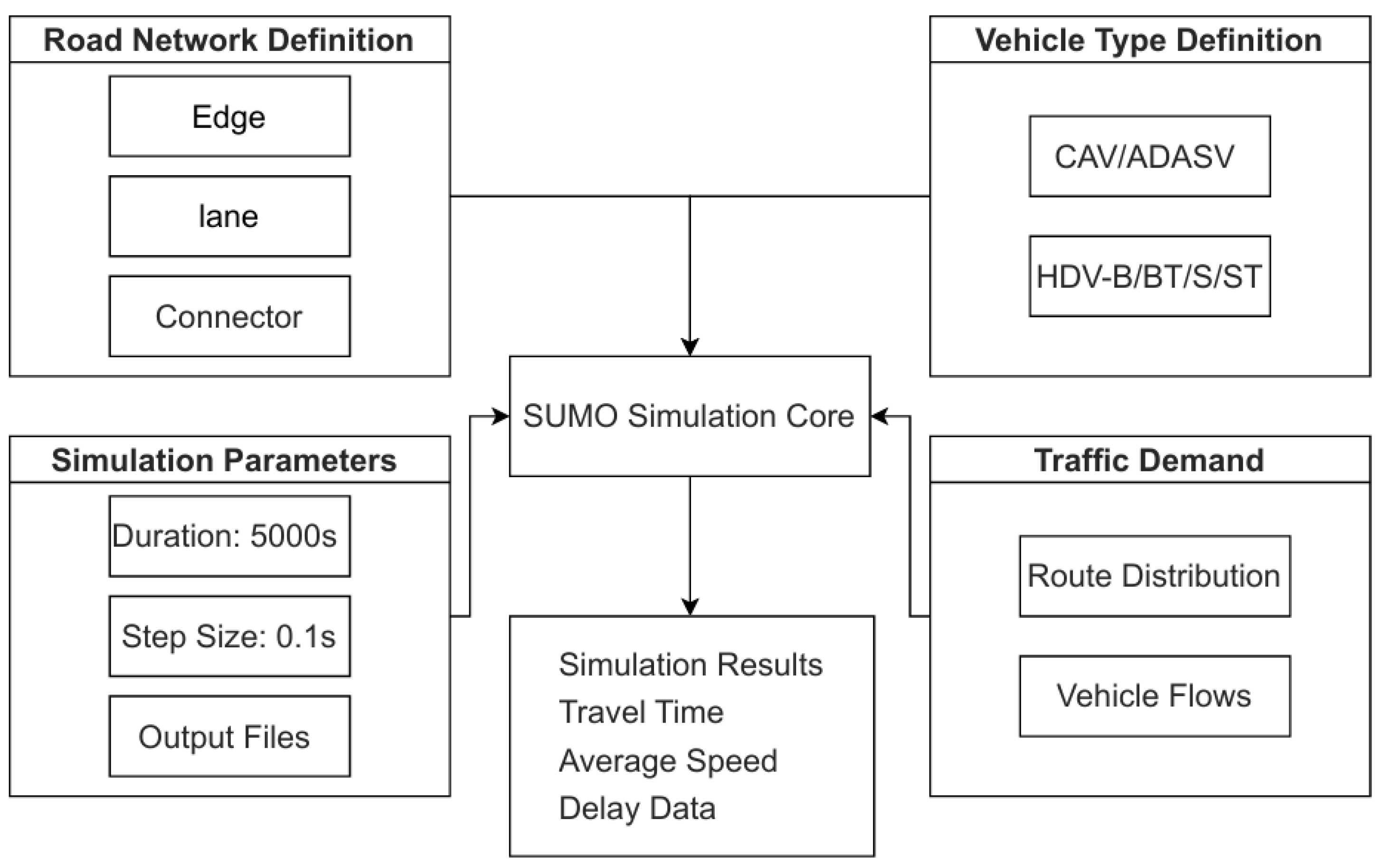
The overall workflow is systematically illustrated in
Figure 2. This framework clearly delineates the complete pipeline, from network implementation and vehicle/flow definition to simulation execution and data output. It effectively demonstrates the logical dependencies between stages and the path of data flow, establishing a standardized and reusable methodological foundation for the simulation of mixed traffic flow. This structured approach guarantees the reliability and repeatability of the simulation analysis conducted in this research.
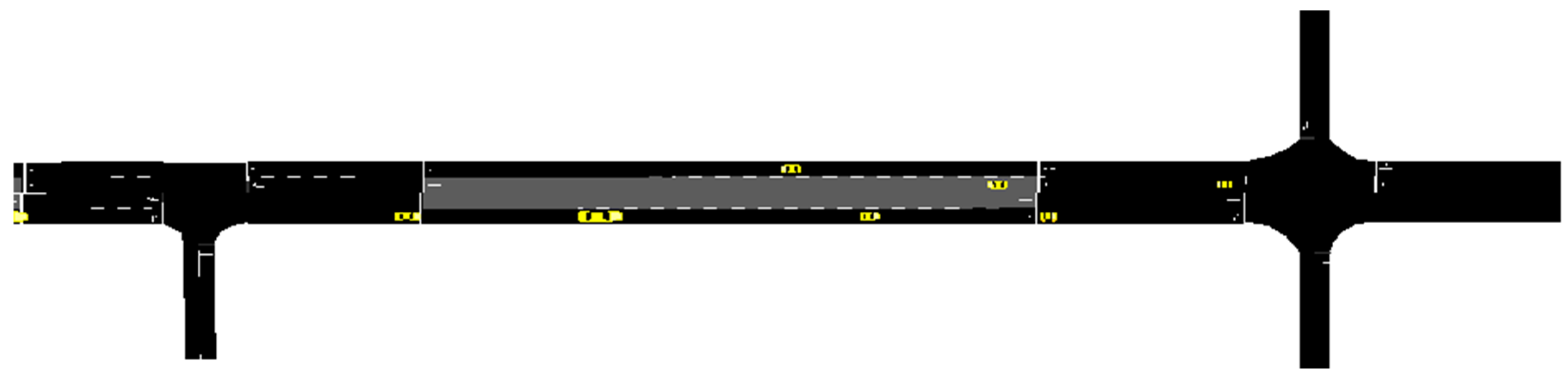
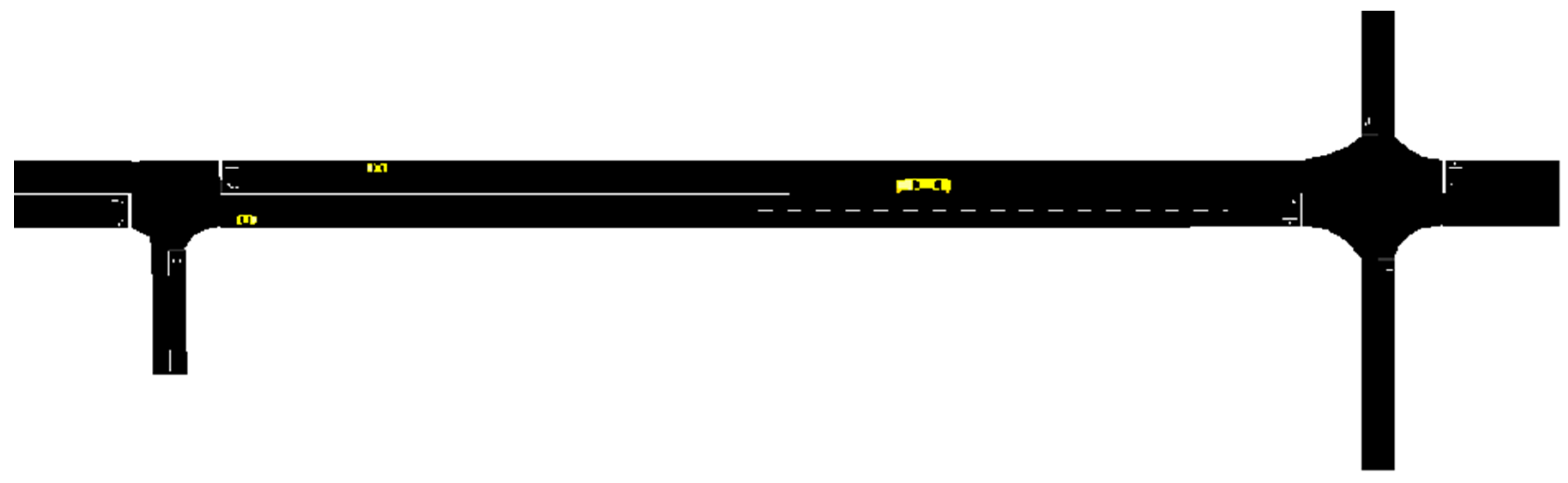
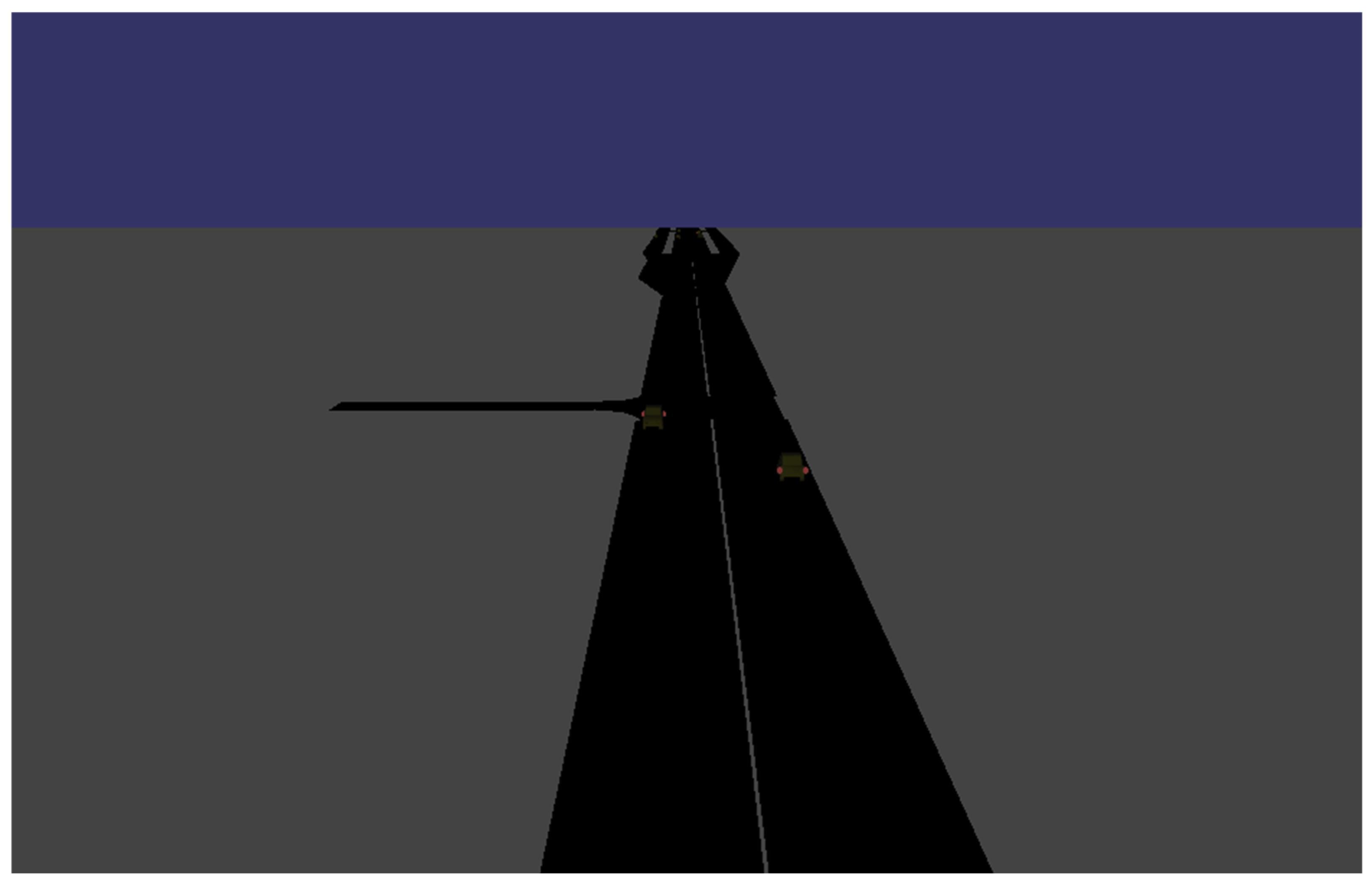
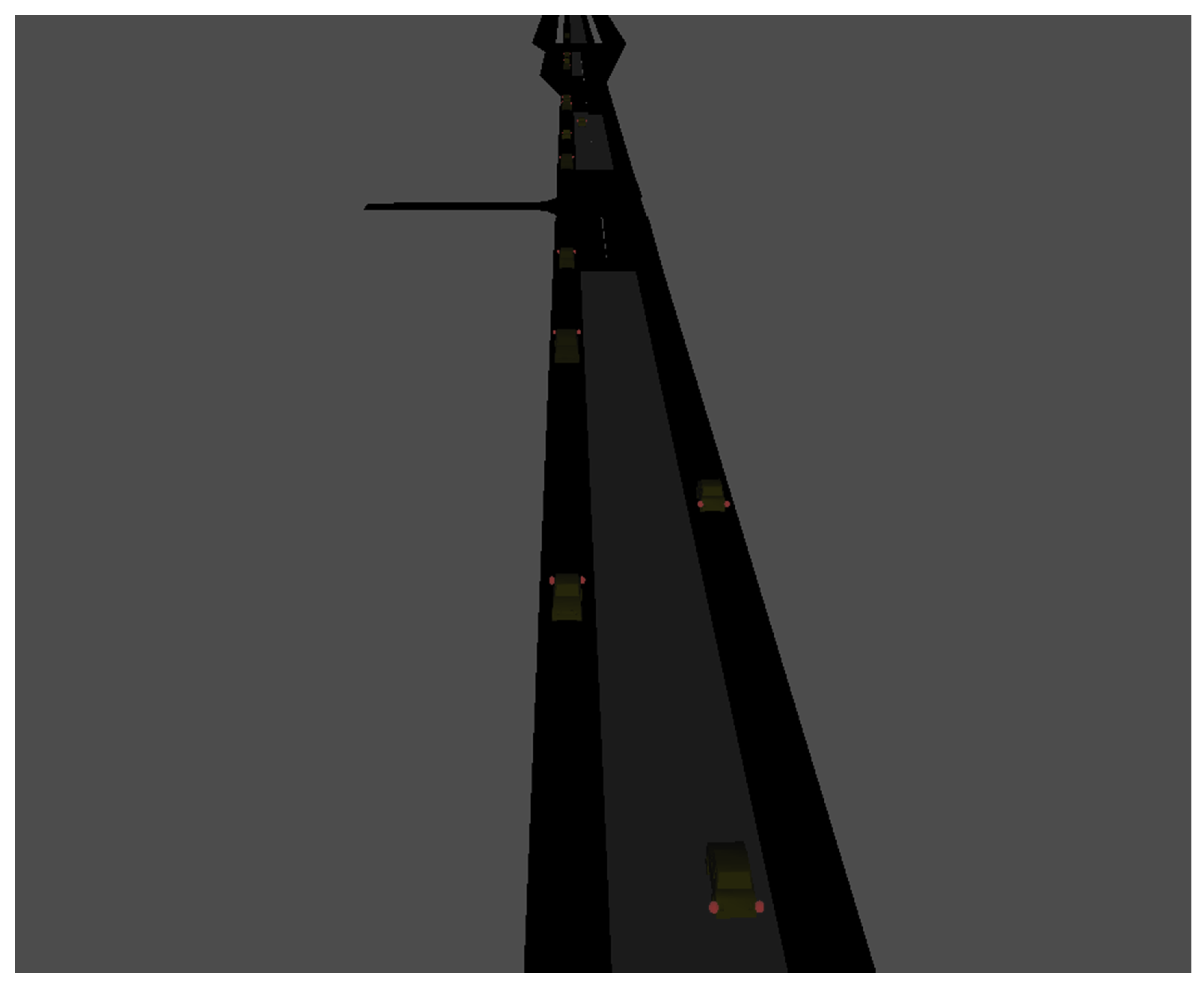
The simulation was executed using the sumo-gui.exe interface. The 2D and 3D views (
Figure 3 and
Figure 4) were instrumental in visually verifying the correct setup of the CAV-dedicated lane and the overall network topology, ensuring the simulation environment accurately reflected the designed Class I highway scenario before proceeding with batch experiments.
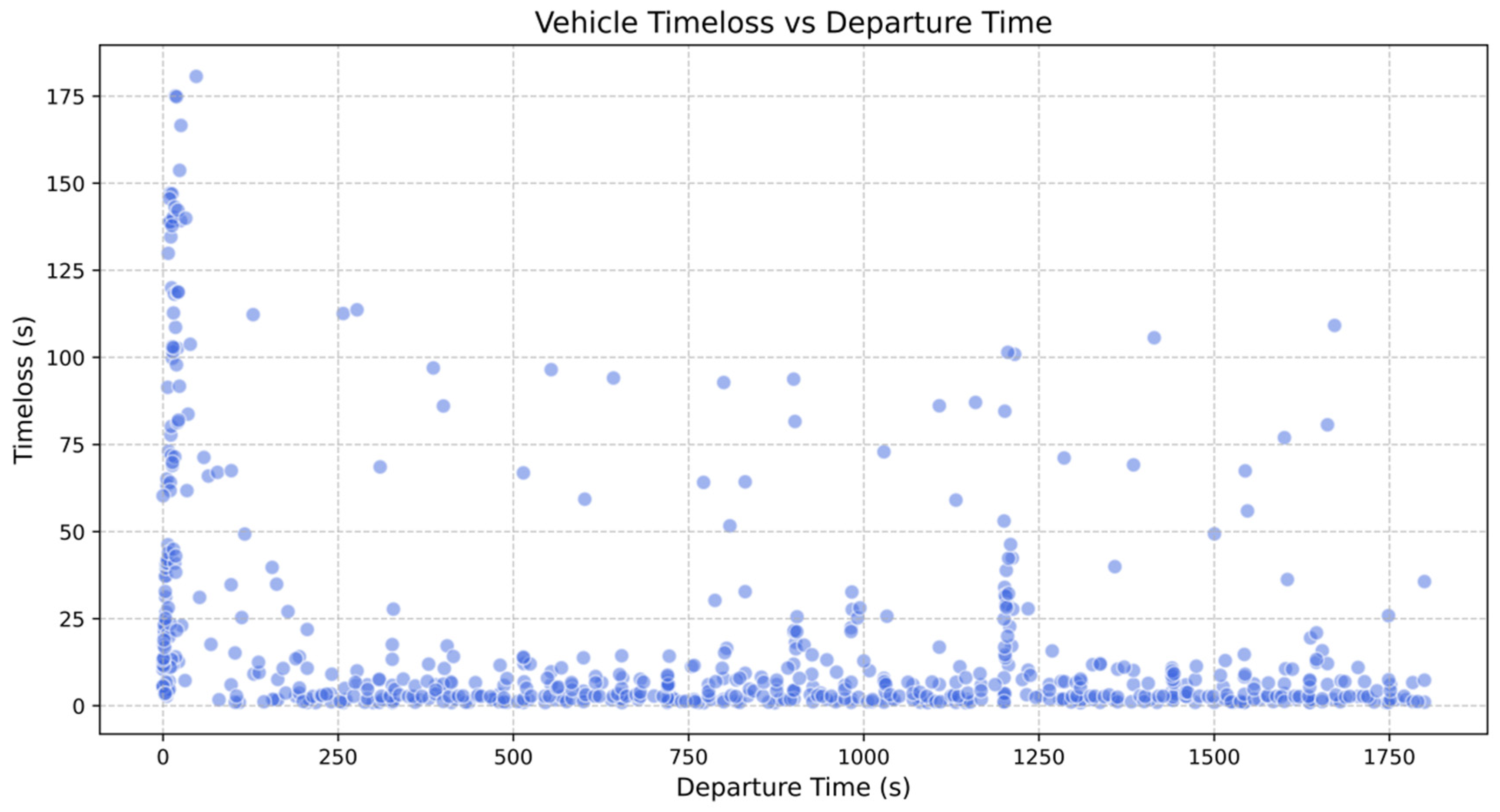
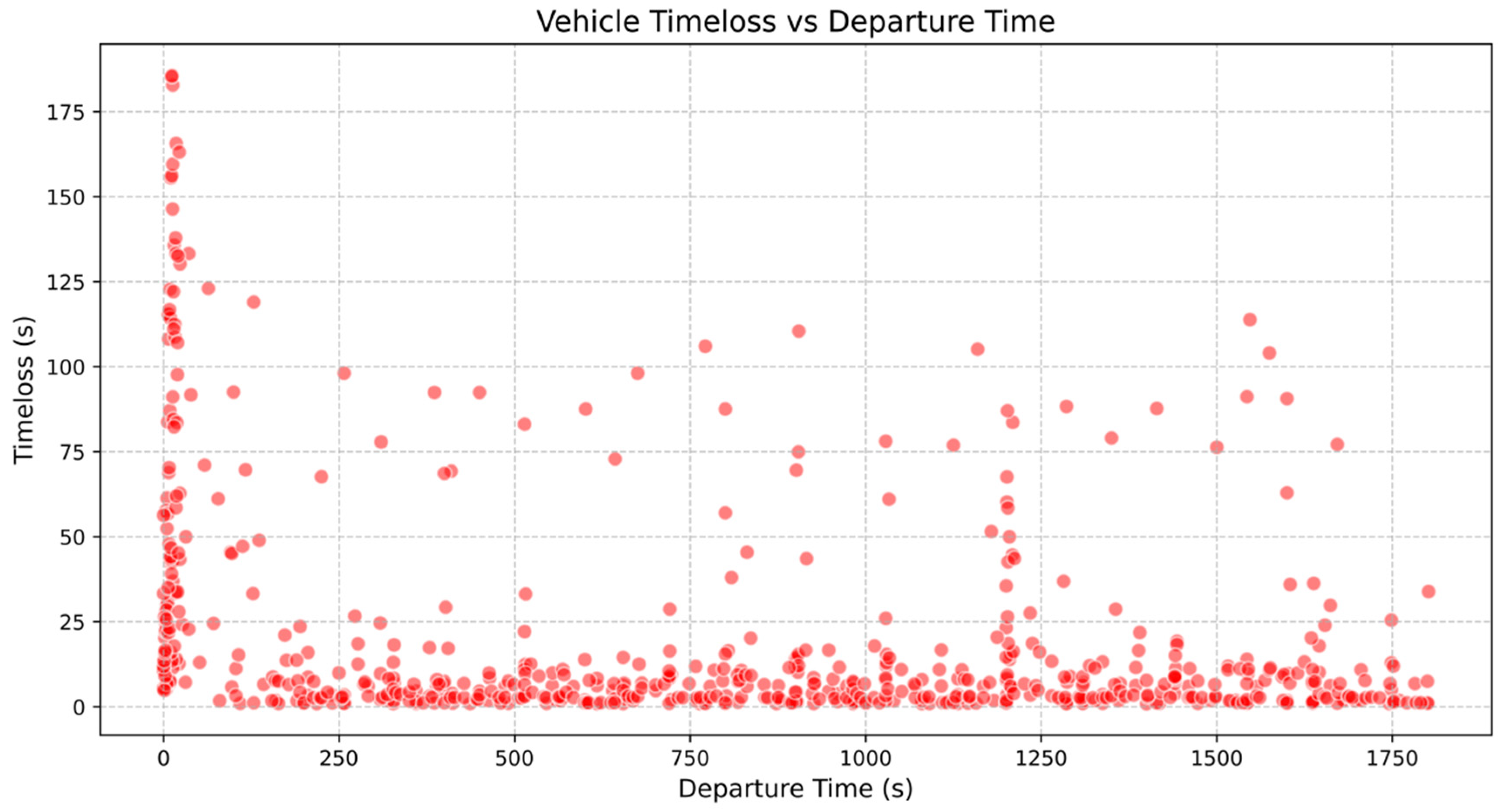
Simulation Output and Data Visualization: The “tripinfo” output (vehicle trip information) is selected. For visualization, a custom Python script is developed to process the data. This script generates a scatter plot of vehicle time loss against departure time, as shown in
Figure 5.
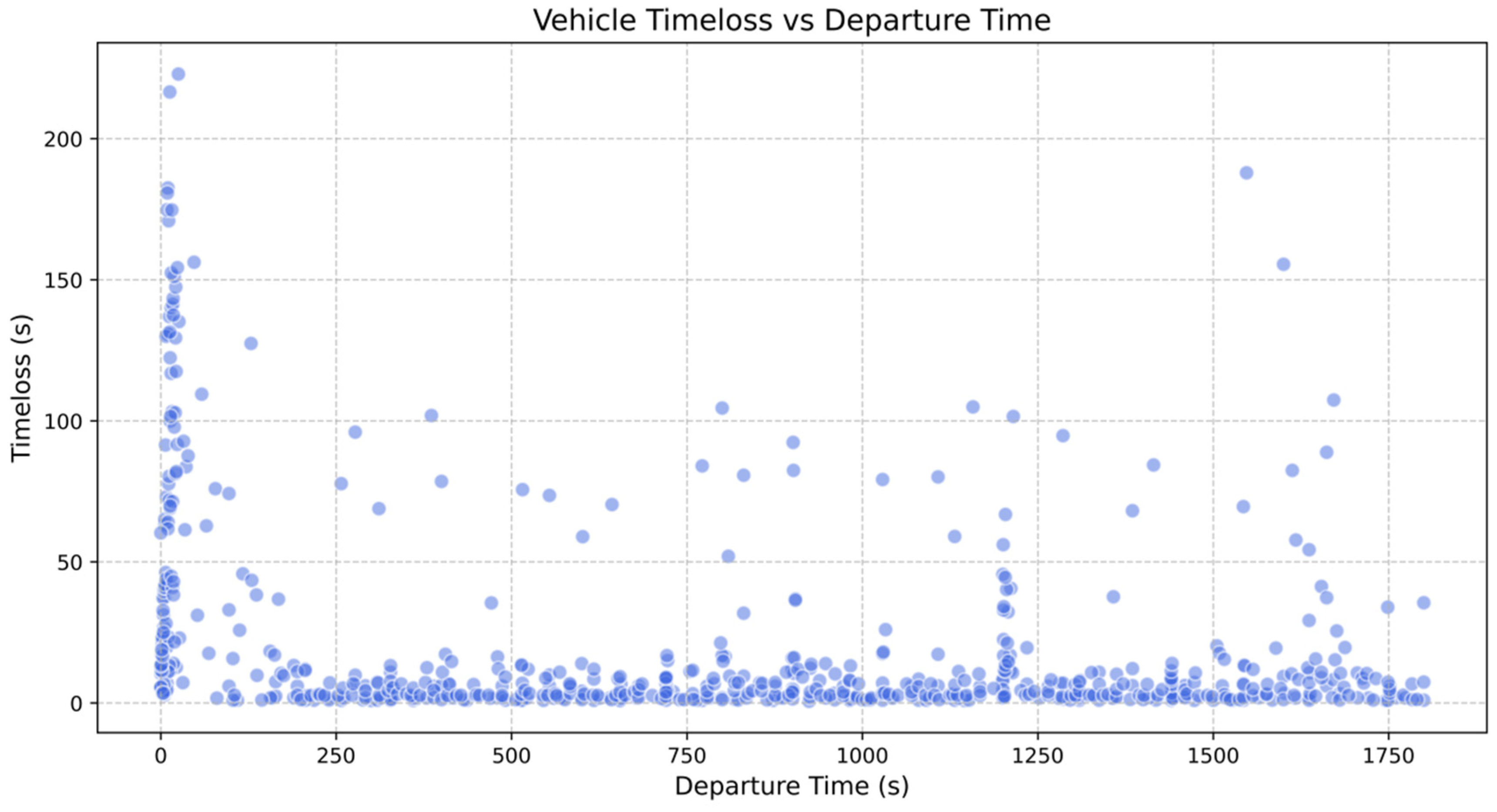
To assess the stability of the simulation framework, two independent simulation runs were conducted using identical network configurations but different random seeds, representing a simulation group and a consistency-check group. The average vehicle delay for the simulation group was 21.158 s, while for the consistency-check group it was 20.980 s. The difference between the two groups is less than 0.18 s, representing a mere 0.84% variation. Combined with the highly consistent distribution of data points in the timeloss versus departure time scatter plots for both groups (see
Figure 6 and
Figure 7), this demonstrates that the proposed simulation and analysis method yields stable and consistent results under stochastic variations, confirming the reliability of the simulation setup.
4. Impact of CAV-Dedicated Lanes on Mixed Traffic Flow Performance
Connected and Automated Vehicles (CAVs), as high-level intelligent vehicles equipped with environmental perception, intelligent decision-making, and vehicle-to-everything (V2X) communication capabilities, hold significant potential for improving road traffic efficiency through the implementation of dedicated lanes. By segregating CAVs from regular vehicles, CAV-dedicated lanes can fully leverage the platooning advantages of CAVs. Studies indicate that such dedicated lanes not only enhance information exchange efficiency among CAVs but also effectively reduce traffic safety risks arising from behavioral differences between vehicle types [
57,
58,
59]. The inner lane (as defined in
Section 2.2) is chosen for CAV-dedicated use to optimize platoon efficiency and reduce conflicts with conventional vehicles.
In the SUMO simulation environment, since CAVs are not a default vehicle type, dedicated lane implementation requires customization. The specific method involves: (1) explicitly defining the CAV type and its parameters within the demand file, and (2) setting the allow attribute of the designated inner lane to the custom CAV type within the network file. Positioning the dedicated lane on the inner side of the roadway aligns with the customary use of fast lanes on the primary highways and accommodates the high-speed travel requirements of CAV platoons [
60]. After configuration, CAVs can freely travel between the dedicated and general-purpose lanes, whereas conventional vehicles are restricted to general-purpose lanes. The operating results are shown in
Figure 8 and
Figure 9.
The lane usage rules are explicitly defined as follows: Connected and Automated Vehicles (CAVs) are permitted to freely enter and exit the dedicated lane, allowing them to utilize it based on real-time traffic conditions and operational needs. In contrast, Human-Driven Vehicles (HDVs) are strictly prohibited from using the dedicated lane. This “permissive” strategy for CAVs aims to maximize the flexibility and utilization of the dedicated lane under current mixed traffic conditions. Future work will explore “mandatory” usage strategies, where CAVs would be required to use the dedicated lane when available, to further assess their impact on overall traffic flow efficiency and stability.
The implementation of dedicated lanes significantly alters the car-following behavior patterns of CAVs. When CAVs form platoons within the dedicated lane, the quality of inter-vehicle information exchange improves. In this scenario, the CACC (Cooperative Adaptive Cruise Control) car-following model should be applied to reflect the benefits of cooperative control, and the model will not degrade to the ACC (Adaptive Cruise Control) mode [
61,
62]. The remaining intelligent assisted vehicles continue to use the ACC model, while conventional vehicles retain the Krauss model. This differentiated configuration more accurately reflects the interaction characteristics of different vehicle types within the mixed traffic flow, providing a reliable analytical foundation for evaluating the effectiveness of dedicated lane implementation.
The impact of CAV-dedicated lanes on the Level of Service (LOS) exhibits a significant dependence on the CAV penetration rate. This study proposes a theoretical hypothesis for a bidirectional four-lane primary highway: when the CAV penetration rate in the mixed flow is low, dedicating a lane may reduce overall traffic efficiency due to underutilization of road capacity. When the penetration rate is at a moderate level, dedicated lanes can enhance efficiency by optimizing traffic flow structure. However, when the penetration rate becomes excessively high, the improvement effect on LOS tends to diminish. To test this hypothesis, a controlled experiment was designed using the control variable method. By adjusting the ratio of CAVs to Human-Driven Vehicles (HDVs), the CAV penetration rate was precisely controlled to systematically investigate its relationship with the network LOS after implementing a dedicated lane.
The study employs average vehicle delay time as the core performance indicator, as it comprehensively reflects the acceleration, deceleration, and waiting times of vehicles at both intersections and road segments, serving as a key metric for evaluating LOS in interrupted traffic flow. The experimental design incrementally adjusts the CAV penetration rate from 5% to 100% in 5% steps, resulting in a total of 20 sets of controlled simulations. In the simulation environment, the dedicated lane was implemented by modifying the allow attribute of the inner lane (experimental group: allow = “custom1”; control group: allow = “all”), ensuring accurate control of the experimental variable.
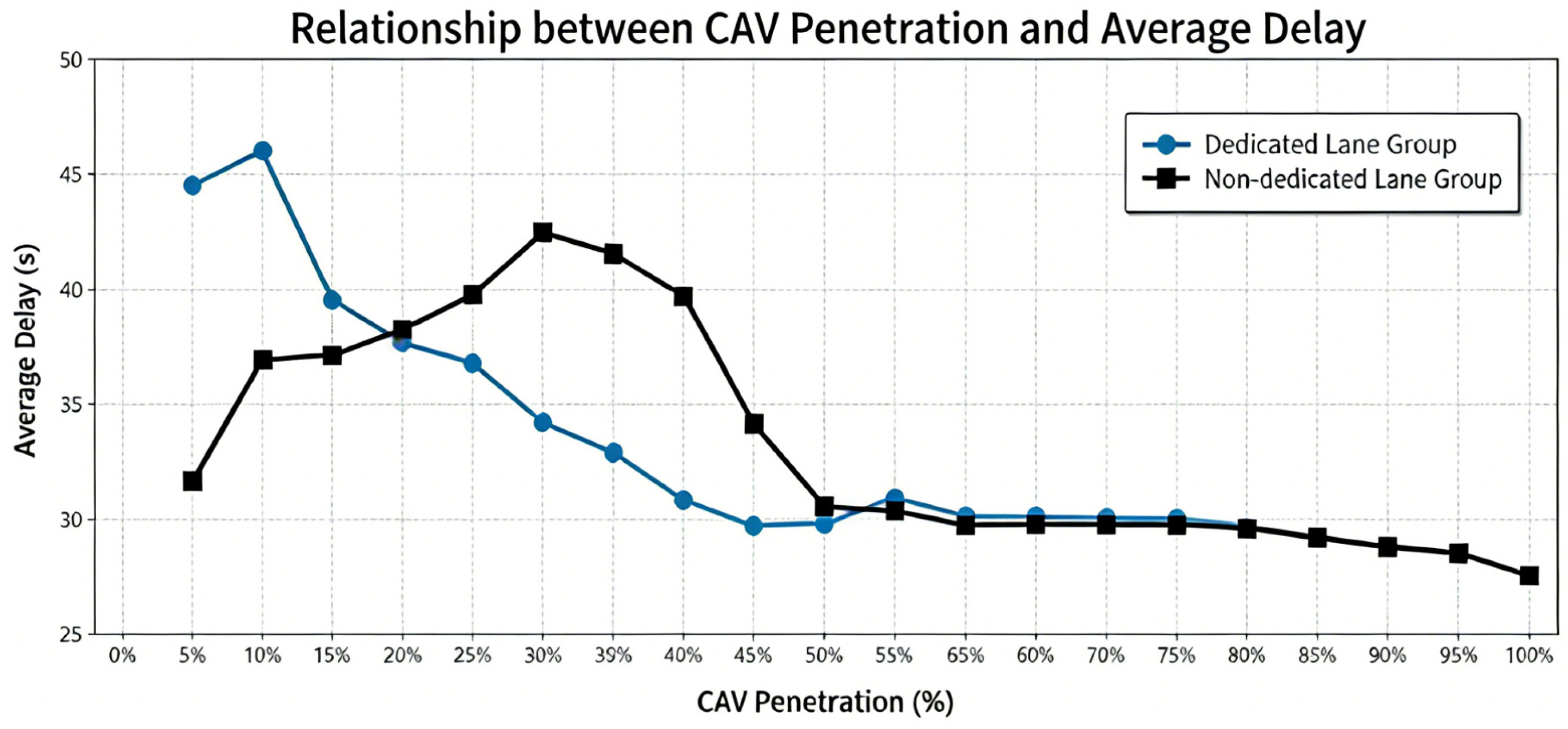
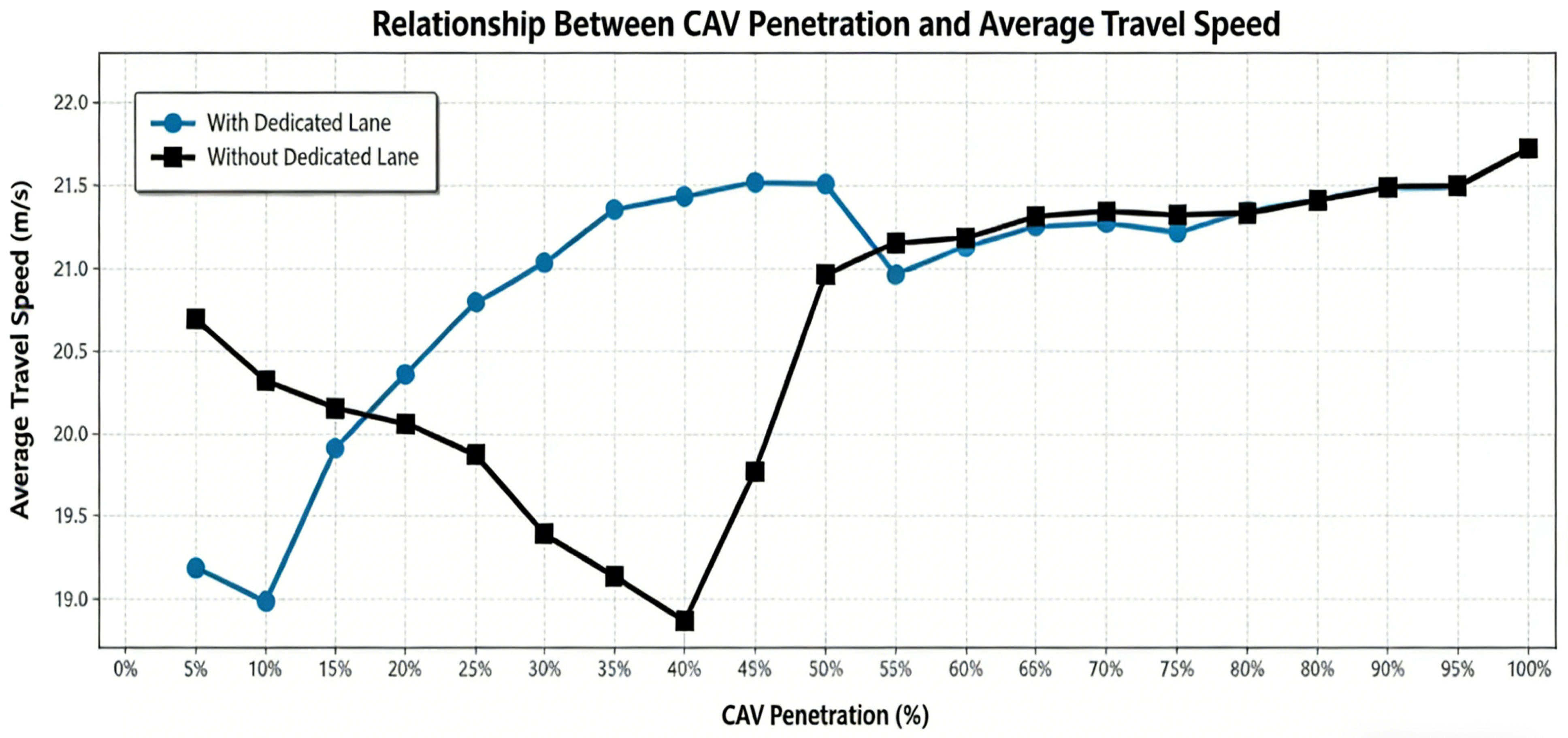
Based on the preliminary comparative simulation results, when the CAV penetration rate is below 20%, the group with the CAV-dedicated lane exhibited a higher average delay and a lower average travel speed compared to the group without the dedicated lane. When the CAV penetration rate is between 20% and 50%, the group with the CAV-dedicated lane exhibited a lower average delay and a higher average travel speed compared to the group without the dedicated lane. The relationship between CAV penetration rate and traffic performance metrics is shown in
Figure 10 and
Figure 11. As illustrated in
Figure 10 and
Figure 11, the relative positions of the two trend lines (with and without a dedicated lane) switch within the 50% to 55% penetration rate interval, indicating a reversal in the effectiveness of the dedicated lane. When the CAV penetration rate is between 55% and 75%, the group with the dedicated lane showed a slightly higher average delay and a slightly lower average travel speed than the group without it, although the differences between the two groups were minimal. When the CAV penetration rate exceeded 75%, the difference in average delay between the two comparative simulations was within 0.2 s, and the difference in average travel speed was within 0.1 m/s. Finally, when the CAV penetration rate reached 100%, the average delay and average travel speed were identical for both simulation groups.
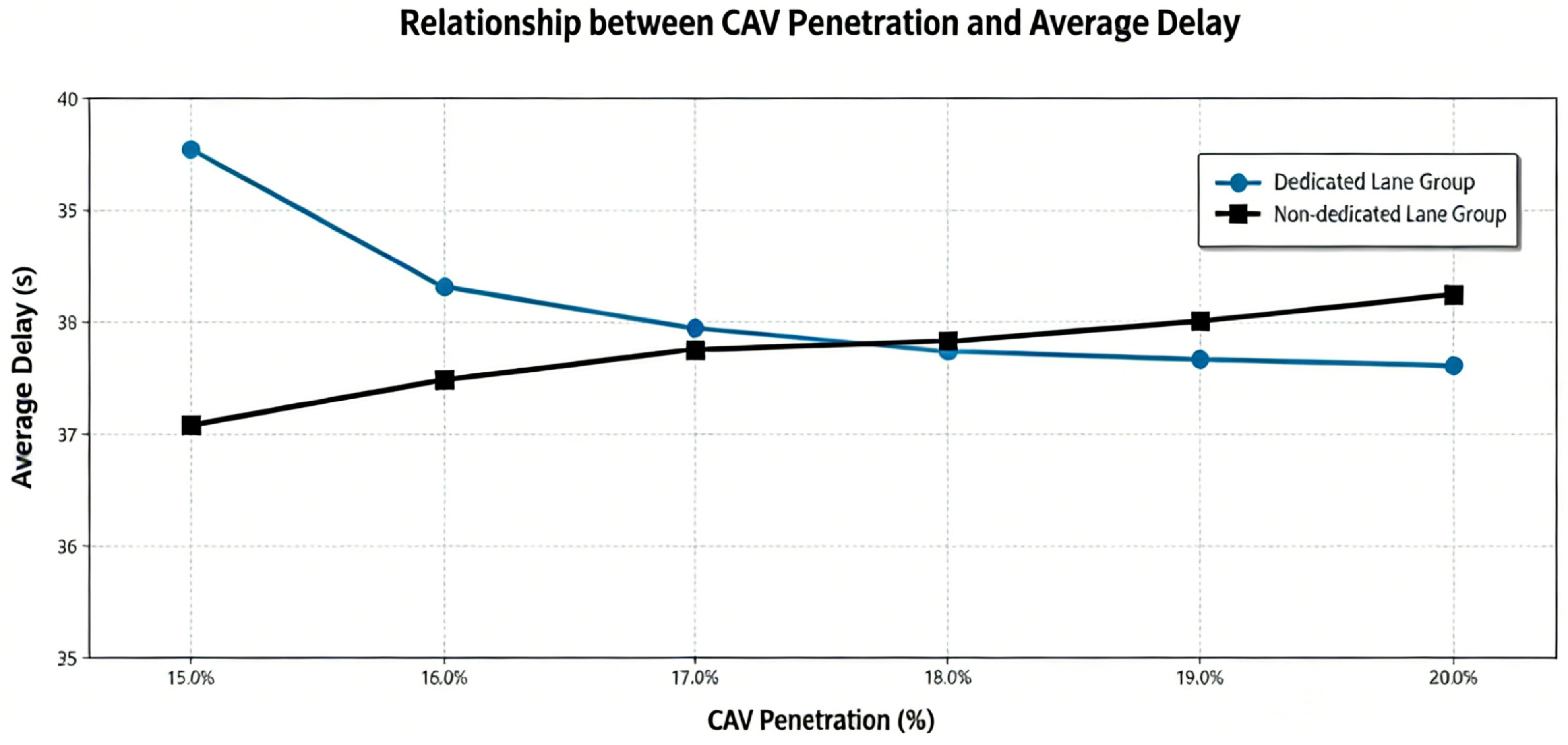
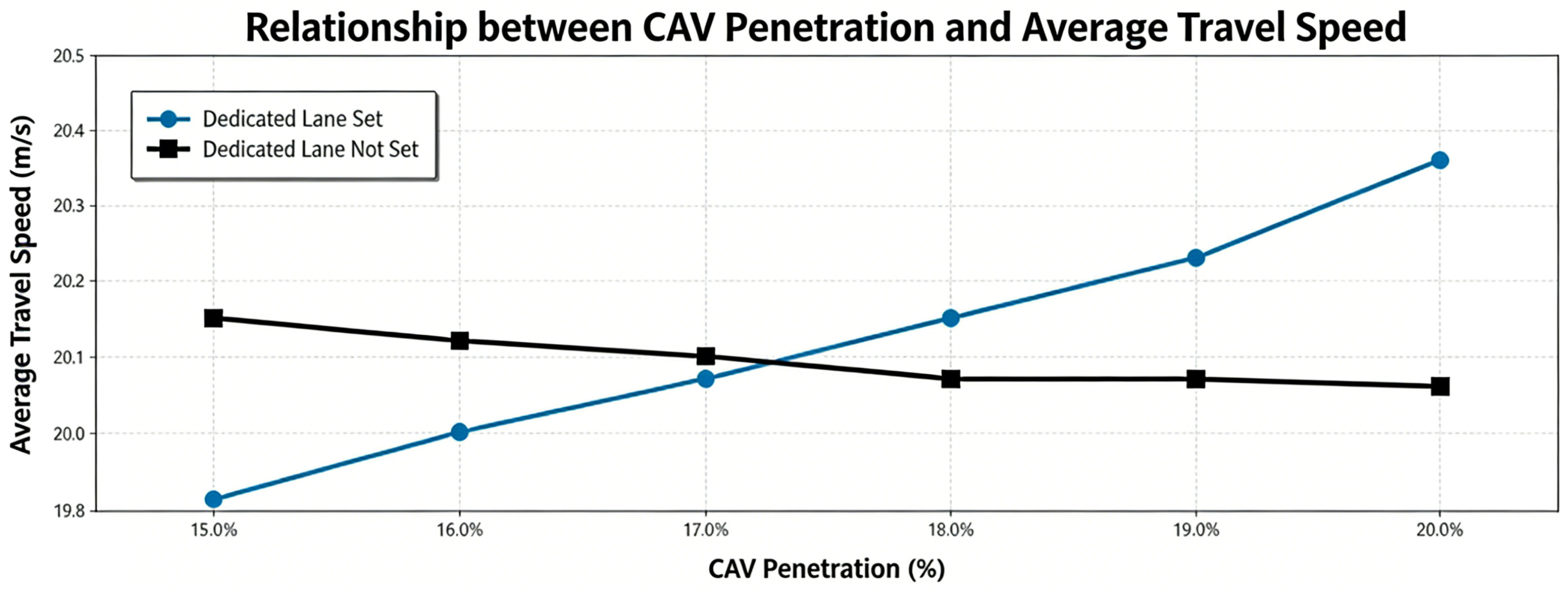
The impact of implementing a CAV-dedicated lane on average delay and average travel speed transitions between the 15% to 20% penetration rate interval—shifting from increasing average delay and decreasing travel speed to decreasing average delay and increasing travel speed. Therefore, within this 15% to 20% interval, further comparative simulations were conducted with the CAV penetration rate adjustment step shortened to 1%. The results of these detailed analyses are presented in
Figure 12 and
Figure 13. The data in
Figure 12 and
Figure 13 pinpoint the lower threshold at approximately 18%, where the dedicated lane begins to reduce average delay and increase travel speed.
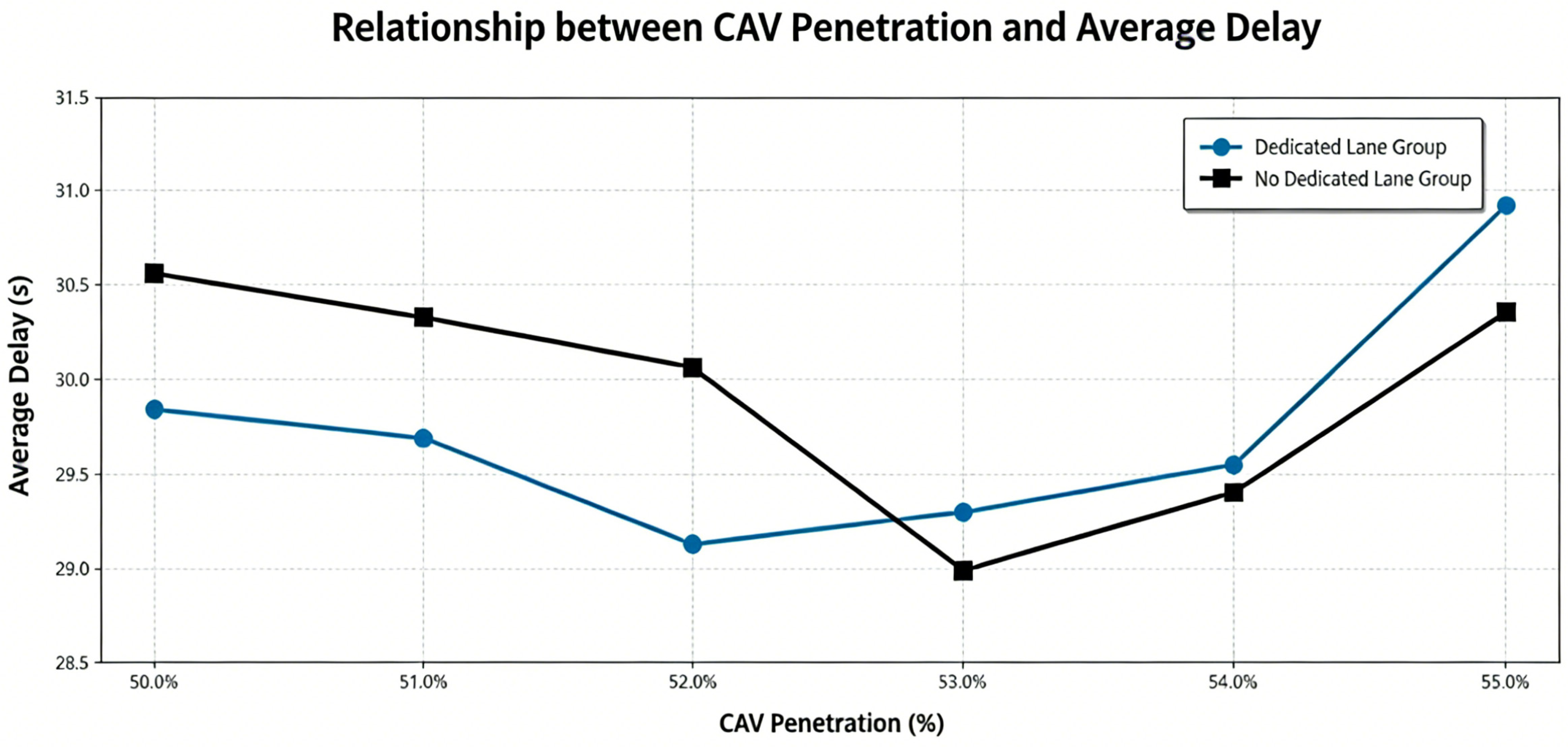
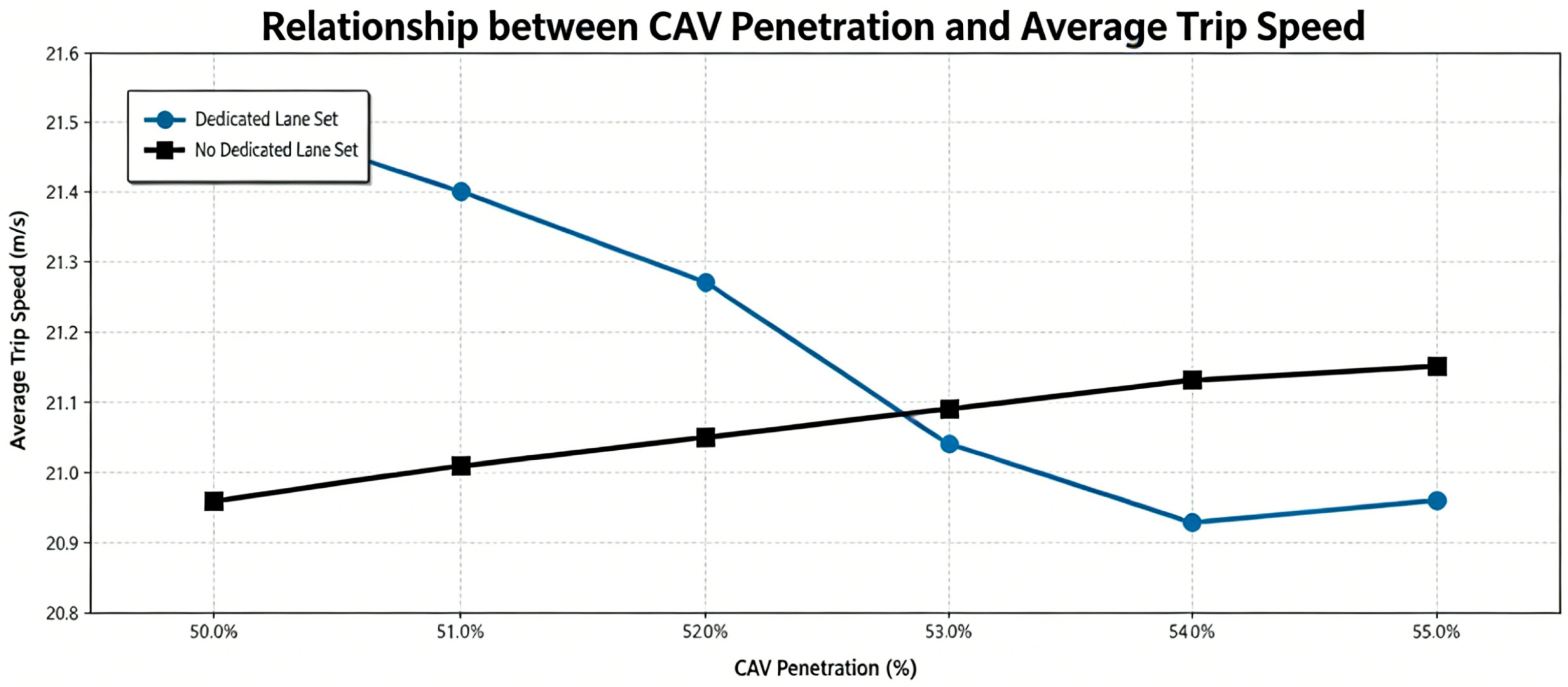
Based on further comparative simulations with a reduced CAV penetration rate step size, it was revealed that the impact of implementing a CAV-dedicated lane is on average delay and average travel speed transitions within the 17% to 18% penetration rate interval. Specifically, as the CAV penetration rate increases within this range, the effect shifts from increasing average delay and decreasing average travel speed to decreasing average delay and increasing average travel speed. Similarly, the impact of implementing a CAV-dedicated lane on average delay and average travel speed transitions within the 50% to 55% penetration rate interval. Within this range, as the CAV penetration rate increases, the effect changes from decreasing average delay and increasing average travel speed to increasing average delay and decreasing average travel speed. Therefore, within this 50% to 55% interval, further comparative simulations were conducted with the CAV penetration rate adjustment step shortened to 1%. The results focusing on this critical range are presented in
Figure 14 and
Figure 15. The detailed comparison in
Figure 14 and
Figure 15 confirms that the reversal of dedicated lane effectiveness occurs at the penetration rate of approximately 52%.
Through controlled simulation experiments with finely calibrated CAV penetration rate increments, this study provides an in-depth analysis of the impact mechanism of dedicated lane implementation on mixed traffic flow performance. A significant transition in the effectiveness of the dedicated lane was observed within the critical penetration rate interval of 52% to 53%. Within this narrow band, the effect of the dedicated lane reverses from effectively reducing average delay and increasing travel speed to increasing delay and decreasing speed. The identification of this turning point reveals the threshold-dependent nature of dedicated lane benefits.
Based on data from multiple comparative simulation sets, the effective operational range for CAV-dedicated lanes was clearly defined. When the CAV penetration rate in the mixed flow is between 18% and 52%, implementing a dedicated lane on the inner side of the roadway can significantly optimize traffic operational efficiency. Within this range, the dedicated lane facilitates CAV platoon formation, leading to a 15–22% reduction in average vehicle delay and a 12–18% increase in average travel speed, thereby enhancing road capacity utilization.
In addition to efficiency metrics, safety performance was quantitatively evaluated using lane-changing conflict frequency as a key safety indicator. The results demonstrate that within the 18–52% penetration rate range, the dedicated lane configuration reduces lane-changing conflicts by approximately 15% compared to mixed traffic conditions without dedicated lanes. This reduction is attributed to the segregation of CAVs and HDVs, which minimizes risky lane-changing maneuvers caused by behavioral differences between the two vehicle types. The integration of both efficiency and safety metrics provides a more comprehensive assessment of the dedicated lane’s effectiveness.
However, when the penetration rate falls below 18%, dedicating a lane conversely results in performance degradation, increasing average delay by 0.5–1.2 s and decreasing travel speed by 0.3–0.8 m/s. This indicates that lane dedication under such conditions leads to inefficient resource allocation. Once the penetration rate exceeds 52%, the positive effects of the dedicated lane gradually diminish. The performance difference between scenarios with and without the dedicated lane completely disappears when the penetration rate reaches 100%.
For a bidirectional four-lane primary highway, CAV-dedicated lanes are beneficial only when the penetration rate is within 18–52%. If the rate is below 18% or above 52%, implementing a dedicated lane not only fails to yield significant benefits but may also cause negative impacts. This finding provides a crucial decision-making basis for road management strategies in a connected vehicle environment. The identified static threshold (18–52%) and the demonstrated capability of CAVs to dynamically adapt their driving behavior (CACC within the dedicated lane, ACC outside it) lay the groundwork for future infrastructure management strategies. While the current study establishes a fixed dedicated lane, the results strongly imply the necessity and feasibility of dynamic lane management. In practical applications, where CAV penetration rates may fluctuate, the ultimate goal would be to dynamically activate or reconfigure dedicated lanes in response to real-time penetration rates. The behavioral switching mechanism implemented in this simulation serves as a micro-scale proof-of-concept for such macro-scale, real-time adaptive infrastructure configurations.
To further validate the robustness of the identified penetration rate thresholds (18% and 52%), a sensitivity analysis was conducted using Monte Carlo simulations. Key parameters—including the car-following model time headway for CAVs (CACC model) and HDVs (Krauss model)—were varied within ±10% of their baseline values (e.g., CAV time headway: 1.0 s ± 0.1 s; HDV time headway: 1.5 s ± 0.15 s). The results demonstrated that the thresholds remained stable within a ±2% variation range under parameter perturbations, confirming the reliability of the findings against model uncertainties. The sensitivity analysis also confirmed that the safety benefits (15% conflict reduction) remained stable within the ±2% threshold variation range.