Systematic Review

Inspection and Evaluation of Urban Pavement Deterioration Using Drones: Review of Methods, Challenges, and Future Trends


by
Pablo Julián López-González
1,2,
David Reyes-González
2,
Oscar Moreno-Vázquez
1,
Rodrigo Vivar-Ocampo
3,
Sergio Aurelio Zamora-Castro
4,
Lorena del Carmen Santos Cortés
4,
Brenda Suemy Trujillo-García
2,5,* and
Joaquín Sangabriel-Lomelí
1,5,*
1
Department of Civil Engineering, Tecnológico Nacional de México/ITS de Misantla, Km. 1.8 Carretera a la Loma del Cojolite, Misantla 93821, Veracruz, Mexico
2
Division of Graduate Studies and Research, Tecnológico Nacional de México/ITS de Misantla, Km. 1.8 Carretera a la Loma del Cojolite, Misantla 93821, Veracruz, Mexico
3
Renewable Energy Engineering, Faculty of Engineering Science and Technology, Universidad Autónoma de Baja California, Blvd. Universitario #1000, Valle de las Palmas, Tijuana 21500, Baja California, Mexico
4
Faculty of Engineering, Construction and Habitat, Universidad Veracruzana, Bv. Adolfo Ruiz Cortines 455, Costa Verde, Boca del Río 94294, Veracruz, Mexico
5
Wetlands and Environmental Sustainability Laboratory, Division of Graduate Studies and Research, Tecno-Lógico Nacional de México/ITS de Misantla, Km. 1.8 Carretera a la Loma del Cojolite, Misantla 93821, Veracruz, Mexico
*
Authors to whom correspondence should be addressed.
Future Transp. 2026, 6(1), 10; https://doi.org/10.3390/futuretransp6010010
Submission received: 18 November 2025 / Revised: 29 December 2025 / Accepted: 2 January 2026 / Published: 4 January 2026

Abstract

The rapid growth of urban areas has increased the need for more efficient methods of pavement inspection and maintenance. However, conventional techniques remain slow, labor-intensive, and limited in spatial coverage, and their performance is strongly affected by traffic, weather conditions, and operational constraints. In response to these challenges, it is essential to synthesize the technological advances that improve inspection efficiency, coverage, and data quality compared to traditional approaches. Herein, we present a systematic review of the state of the art on the use of unmanned aerial vehicles (UAVs) for monitoring and assessing pavement deterioration, highlighting as a key contribution the comparative integration of sensors (photogrammetry, LiDAR, and thermography) with recent automatic damage-detection algorithms. A structured review methodology was applied, including the search, selection, and critical analysis of specialized studies on UAV-based pavement evaluation. The results indicate that UAV photogrammetry can achieve sub-centimeter accuracy (<1 cm) in 3D reconstructions, LiDAR systems can improve deformation detection by up to 35%, and AI-based algorithms can increase crack-identification accuracy by 10% to 25% compared with manual methods. Finally, the synthesis shows that multi-sensor integration and digital twins offer strong potential to enhance predictive maintenance and support the transition towards smarter and more sustainable urban infrastructure management strategies.

1. Introduction

The rapid growth of urban areas has substantially increased the pressure on road infrastructure, requiring more efficient and accurate methods for inspection and maintenance. Evidence shows that traditional assessment systems—mainly visual inspections and manual measurements—have limited spatial coverage, are prone to human error, and require long execution times [1]. Consequently, late detection of deterioration contributes to increased costs, a higher risk of structural failures, and reduced service quality in densely populated urban environments. Additional challenges such as traffic interference, variable environmental conditions, and operational and safety constraints further limit timely and efficient monitoring [2]. This situation has driven interest in alternative technologies that improve the accuracy, speed, and reproducibility of inspection processes.
Given these limitations, recent research has incorporated unmanned aerial vehicles (UAVs) as a promising tool for monitoring and characterizing pavement deterioration. UAV photogrammetry has demonstrated the ability to generate 3D models with sub-centimeter resolutions, facilitating the identification of cracks and surface deformations [3]. Likewise, drone-mounted LiDAR systems enable high-precision geometric capture and the detection of irregularities not evident through conventional methods [4]. In addition, aerial thermography provides the capability to detect hidden damage (such as debonding or internal voids) which contributes to earlier diagnosis [5]. However, the literature also highlights important limitations, including reliance on favorable atmospheric conditions, the need for robust algorithms capable of processing large data volumes, airspace regulations, and the lack of standardized performance metrics [6]. Although advances in artificial intelligence have improved automation in damage detection, challenges remain regarding model generalization and validation in complex urban environments.
In this context, this manuscript presents a systematic review that integrates, compares, and critically evaluates unmanned aerial vehicle (UAV)-based methodologies for pavement deterioration inspection and assessment, with emphasis on multi-sensor data fusion, geospatial analysis, and recent artificial intelligence algorithms for automatic damage detection. The main contribution lies in synthesizing the performance, strengths, and limitations of current technologies, as well as identifying knowledge gaps that require further attention in future research, particularly the integration of UAV systems with digital twins and predictive maintenance frameworks. These innovations offer significant opportunities to transform road monitoring into more efficient, intelligent, and sustainable schemes; however, they also involve methodological challenges related to standardization, interoperability, and long-term validation [7]. Overall, this review provides a conceptual and technical foundation to support the development of advanced infrastructure management strategies in urban environments. Unlike previous reviews that focus on individual sensing technologies or isolated algorithms, this study provides an integrated, application-oriented synthesis that connects sensing modalities, data-processing pipelines, and operational deployment scenarios, highlighting practical performance ranges and implementation constraints in urban environments.

2. Materials and Methods

This study employed the PRISMA 2020 methodology (Preferred Reporting Items for Systematic Reviews and Meta-Analyses) to conduct a systematic review of the literature on the inspection and evaluation of urban pavement deterioration using unmanned aerial vehicles (UAVs). The methodology followed the standard stages of identification, screening, eligibility, and inclusion, which were adapted to the objective of the review to synthesize recent advances in sensor technologies, data processing models, and the application of artificial intelligence for pavement deterioration assessment.

2.1. Search Strategy and Databases

An exhaustive bibliographic search was performed using the Scopus, Web of Science, and Google Scholar databases. Key phrases were defined based on a preliminary literature review, combining terms related to unmanned aerial vehicles (UAVs), pavements, and data acquisition technologies. The general search structure was as follows: drone AND pavement OR asphalt OR road surface AND damage OR distress OR deterioration. The search included studies published between 2010 and 2025. While particular emphasis was placed on recent advances, the period 2023–2025 was considered the effective window of methodological consolidation for UAV-based pavement inspection, capturing both the most recent publications and the foundational studies that directly enable current 2024–2025 developments.

2.2. Screening and Eligibility (PRISMA)

A total of 43 records were identified through the database search. After removing duplicate entries (n = 2), 41 studies were screened based on title and abstract to assess their relevance to UAV-based inspection of urban pavement deterioration. As a result of this initial screening, 35 full-text articles were assessed for eligibility according to the predefined inclusion criteria.
Following the full-text assessment and subsequent eligibility verification, the PRISMA 2020 flowchart for study selection and screening (Figure 1), generated using the PRISMA2020 the Shiny application developed by Haddaway et al. [8], was used to document the exclusion process. Studies that did not meet the scope of this review—such as those focused on non-urban applications, lacking UAV-based pavement inspection, or presenting insufficient relevance in terms of sensors or evaluation metrics—were excluded. This process resulted in a final set of 26 studies included in the qualitative synthesis.

2.3. Bibliometric Analysis

In addition, an exploratory bibliometric analysis was conducted to identify research trends, leading authors and countries, and patterns of keyword co-occurrence. For this purpose, metadata exported from Scopus and Web of Science were processed using VOSviewer V 1.6.2, which enabled the generation of co-occurrence maps.

2.4. Risk-of-Bias Qualitative Assessment

The risk of bias in the included studies was assessed qualitatively by two independent reviewers, based on methodological clarity, transparency in UAV data acquisition, robustness of analytical models, consistency of reported performance metrics, and coherence between objectives and outcomes. Discrepancies were resolved by consensus, and no automated tools were used.
These studies cover research employing photogrammetric, LiDAR, and thermographic technologies, as well as artificial intelligence algorithms for the automatic detection of cracks, deformations, and potholes. The synthesis enabled the comparison of methodologies, accuracy levels, advantages, limitations, and emerging trends related to multisensor integration, AI-driven automation, and the development of digital twins for predictive maintenance. Overall, the findings provide a foundation for understanding the current state of the field and guiding future advances in the intelligent management of urban road infrastructure.

2.5. Systematic Review Registration

This systematic review was registered in the Open Science Framework (OSF) to ensure transparency, reproducibility, and methodological rigor. The registration record is publicly available at: https://osf.io/wjn9t (accessed on 22 December 2025).

3. Data Processing and Damage Detection Techniques

Recent literature shows notable advances in the methodologies used to transform images captured by unmanned aerial vehicles (UAVs) into actionable information for assessing urban pavement deterioration. The studies analyzed converge on four main methodological approaches: (1) conventional photogrammetric processing, (2) computer vision and deep learning algorithms, (3) hybrid models that integrate multiple techniques within a unified workflow, and (4) the use of advanced sensors that extend detection capabilities to non-visible forms of damage. Each methodological group is described below, incorporating representative evidence from the 26 selected studies.
Figure 2 provides a conceptual overview of the typical UAV-based pavement inspection workflow, summarizing the main stages from multisensor data acquisition to decision-oriented outputs and indicating where early and late fusion strategies may be implemented.
The diagram summarizes the main processing stages discussed in Section 3, including multisensor data acquisition, data pre-processing, geometric reconstruction, automatic damage detection, performance evaluation, and decision-oriented outputs (e.g., PCI/SDI, digital twins, and maintenance reports). The dashed connections highlight multisensor data fusion as an end-to-end design principle, while early and late fusion denote data-/feature-level and decision-level integration strategies within the processing pipeline.
From a pavement deterioration perspective, cracking represents the primary and most fundamental distress mechanism addressed in the reviewed studies. Surface cracking—whether longitudinal, transverse, block, or alligator—constitutes the initial manifestation of structural and material degradation in asphalt pavements. As cracking progresses due to traffic loading, environmental exposure, and aging of bituminous materials, it facilitates moisture ingress, loss of structural integrity, and localized material disintegration, ultimately leading to the formation of traditional potholes. Accordingly, in the context of UAV-based inspection, potholes are interpreted as an advanced-stage consequence of crack propagation rather than an independent deterioration process. This conceptual hierarchy is adopted throughout the present review to ensure consistency in the interpretation and comparison of reported damage-detection approaches.
A cross-study reading of Appendix A Table A1 reveals consistent methodological patterns. Photogrammetry-based workflows dominate applications requiring geometric reconstruction and condition indexing, such as rutting and roughness estimation or the derivation of pavement condition indicators (e.g., PCI), due to their high metric accuracy and relatively low operational cost. In parallel, RGB-driven deep learning detectors are primarily applied for rapid multiclass identification of visible surface distresses, including cracks, potholes, and surface deformations, particularly in large-scale urban environments. In contrast, LiDAR and thermal or hyperspectral sensing appear less frequently but are strategically adopted when the diagnostic objective extends beyond visible damage, enabling deformation-sensitive analyses and the identification of subsurface or moisture-related anomalies. Across the reviewed studies, performance is most often reported using accuracy-based indicators (e.g., mAP, precision, recall), with limited consistency in benchmarking protocols, which constrains direct cross-method comparability and highlights the need for standardized evaluation frameworks and multisensor validation in heterogeneous urban contexts. Due to the heterogeneity of experimental setups, damage definitions, and reported performance metrics across studies, direct quantitative graphical comparisons were not pursued in order to avoid biased or potentially misleading interpretations.

3.1. Conventional Photogrammetric Processing

A significant portion of the studies relies on traditional photogrammetric techniques to generate orthomosaics, digital surface models, and 3D point clouds. This approach enables the identification of deformations, the measurement of surface geometry, and the reconstruction of pavements with high metric accuracy—particularly in low-altitude flights. Inzerillo et al. [9] demonstrated that Structure from Motion (SfM) can achieve very low planimetric deviations and point cloud densities exceeding 14 points/cm2 at an altitude of 5 m, although accuracy decreases substantially as flight altitude increases.
Similarly, Santos et al. [10] reported altimetric errors below 10 mm and used the resulting models to calculate the Pavement Condition Index (PCI), showing that UAV-based photogrammetry is sufficiently accurate for geometric analysis and preliminary diagnosis without resorting to more expensive technologies such as mobile LiDAR. Other studies, including those by Fakhri et al. [11] and Silva et al. [12], reinforced these findings, confirming that the combination of orthomosaics and 3D models allows for the detection of cracks, potholes, and surface deformations with high spatial resolution while maintaining relatively low operational costs.
Additionally, Garilli et al. [13] employed temporal photogrammetry by comparing point clouds generated at different acquisition times to detect landslides and changes in areas repaired with cold asphalt mixtures. Taken together, the evidence indicates that photogrammetry remains a fundamental and cost-effective tool for accurate pavement reconstruction and monitoring, especially in urban environments that require continuous surface evaluation.

3.2. Computer Vision and Deep Learning Algorithms

One of the most significant advances in recent years is the adoption of deep learning–based detection models, particularly for damage classification and segmentation. The reviewed studies reveal an evolution from classical architectures such as YOLOv3—used by Li et al. [14] to detect six types of pavement distress (longitudinal and transverse cracks, alligator cracking, open cracks, potholes, and patches)—to more recent models such as the enhanced variants of RT-DETR presented by Wang et al. [15], which achieved an mAP50 of 72.3% while reducing computational parameters by more than 50%.
Other studies highlight the effectiveness of hybrid deep-feature extraction architectures. Shadrach et al. [16] combined ResNet with YOLOv8, achieving accuracy greater than 92% for bump detection, with inference speeds suitable for real-time applications. Similarly, Guo et al. [17] developed a lightweight version of YOLOv8 incorporating ELA and HSFPN modules, reaching an mAP50 of 67.4% and reducing computational complexity by nearly half—facilitating deployment on UAV platforms with limited onboard hardware.
In addition, Naddaf-Sh et al. [18] demonstrated that a CNN optimized through Bayesian optimization, combined with a connectivity algorithm, enables the mapping of complex cracks in near real time with accuracy approaching 97%. Overall, the reviewed evidence suggests that deep learning models often achieve higher levels of robustness and automation than traditional feature-based computer vision pipelines—such as thresholding, edge detection, or hand-crafted feature extraction—particularly in complex urban environments characterized by heterogeneous textures, shadows, and background clutter. Nevertheless, the performance of deep learning approaches may still be affected by variations in lighting, surface texture, and contrast commonly encountered in urban pavement environments.
Despite their strong detection performance, different deep-learning architectures present practical limitations: single-stage detectors such as YOLO variants may struggle with small or fine-scale cracks under heterogeneous backgrounds, whereas more complex architectures (e.g., Transformer-based or hybrid models) often increase computational demand and training complexity, limiting their direct deployment on resource-constrained UAV platforms.

3.3. Hybrid Models or Integrated Pipelines

An emerging trend in recent studies is the integration of multiple techniques into a unified workflow. These hybrid models combine the geometric reliability of photogrammetry, the classification strengths of deep learning, and additional analytical components such as deterioration prediction or maintenance cost estimation.
Ngoc [19] developed a comprehensive framework that integrates convolutional neural networks (ResNet-18 and MobileNet) to classify damage severity, a Markov model to forecast its progression over time, and a financial module to estimate maintenance costs. Although the system achieved acceptable accuracy for impairment levels (66–69%), the damage-type classification performance was constrained by pronounced class imbalance.
Other hybrid approaches incorporate classical computer vision and heuristic methods. In the study by Naddaf-Sh et al. [18], an optimized CNN is combined with a connectivity-based algorithm (CMA) to map cracks in near real time; Buchari et al. [20] integrate aerial photogrammetry with assisted visual analysis to prioritize maintenance interventions with high geometric precision. Overall, these workflows show that combining complementary techniques mitigates individual limitations and enables near-complete automation of the inspection process—from data acquisition to the generation of condition indexes and maintenance reports.

3.4. Use of Advanced Sensors: LiDAR, Thermal and Hyperspectral

Although RGB imaging remains the most common approach in unmanned aerial vehicle (UAV) applications, recent literature highlights an increasing use of advanced sensors capable of revealing non-visible damage or characterizing pavement material properties. Pietersen et al. [21] and Astor et al. [22] demonstrated that hyperspectral sensors can detect material and moisture variations with reflectance errors between 2% and 2.5%, without requiring external calibration panels—an advantage that is particularly relevant for identifying delamination, asphalt segregation, and thermally differentiated distresses.
Similarly, Kulhandjian et al. [23] integrated thermal cameras and RGB imaging into a GPS-denied autonomous drone, achieving accuracies close to or above 95% in anomaly classification across the different analysis channels. Their findings demonstrate an exceptional capability to detect both surface and subsurface damage. In addition, the literature reports that mobile LiDAR, although more costly, provides superior metric accuracy for identifying deformations, rutting, and roughness variations [24,25]. From a cost–performance perspective, LiDAR and hyperspectral systems offer superior diagnostic capabilities for deformation and material characterization but involve significantly higher acquisition, processing, and operational costs, whereas RGB and thermal sensors provide a more favorable balance between affordability, coverage, and deployability for routine urban pavement inspections.
In this context, multisensor integration is emerging as the most promising trend: combining RGB, multispectral or hyperspectral imaging, thermal sensing, and LiDAR enable the development of robust models capable of simultaneously assessing pavement geometry, texture, temperature, and spectral signatures. Rather than treating RGB, LiDAR, thermal, and hyperspectral sensors as independent alternatives, the reviewed studies demonstrate that their complementary integration enables a more comprehensive characterization of pavement condition, combining geometric accuracy, thermal behavior, and material properties. This multisensor synergy significantly enhances diagnostic reliability compared to single-sensor approaches. This approach facilitates the creation of digital twins and predictive maintenance systems for the intelligent management of urban road infrastructure.

4. Applications and Case Studies in Urban Environments

The reviewed works demonstrate that the integration of unmanned aerial vehicles (UAVs), photogrammetry, and machine vision algorithms has been increasingly applied to pavement management in urban environments, ranging from municipal road networks to high-demand corridors. Unlike Section 3, which focuses on methodological and algorithmic foundations, this section emphasizes application scenarios and operational perspectives, analyzing how these technologies are deployed, adapted, and integrated under real urban inspection conditions. This section discusses the main application configurations, with particular emphasis on the types of infrastructure assessed, the real operating conditions under which data were collected, and the role of algorithm-driven workflows as part of practical, field-deployable inspection systems, as well as the extent to which these approaches have been integrated into existing pavement management systems.

4.1. Municipal Road Networks and Urban Streets

Firstly, several studies focus on urban road networks and municipal streets. Buchari et al. [20] used aerial photogrammetry with UAVs to inspect a road network in Malaysia, generating corrected digital elevation models and orthomosaics that allowed the measurement of length, width, and depth of different types of damage (potholes, longitudinal cracks, and alligator cracking) with close to 98% accuracy compared to field measurements. This methodology enabled the prioritization of maintenance interventions within a single day, significantly reducing the time required for diagnosis relative to traditional inspections. Similarly, Silva et al. [12] applied low-altitude flights in a Spanish urban context, demonstrating that the combination of orthomosaics and 3D models is sufficient to visually classify surface deterioration with a level of detail appropriate for municipal management needs.

4.2. Urban Corridors with High Demand and Continuous Traffic

Other studies illustrate the potential of UAVs in large-scale urban corridors, where continuous traffic restricts conventional inspections. Santos et al. [10] used a Mavic 2 Pro to generate orthomosaics and 3D models of flexible urban pavements, achieving planimetric errors of less than 2 mm and altimetric errors below 10 mm, and deriving the Pavement Condition Index (PCI) from these products without the need for lane closures. Fakhri et al. [11] reported an overall accuracy of nearly 96% using photogrammetry and supervised classification (decision tree) on heavily trafficked road sections, confirming that—when adequate spatial resolutions and controlled flight altitudes are used—UAVs can effectively replace a substantial portion of traditional on-site visual inspection campaigns.

4.3. Operational Deployment of Deep-Learning–Based Damage Detection in Urban Environments

Within urban application scenarios, deep-learning-based models play a central role as operational tools for automating damage detection at scale, rather than as standalone methodological developments. In dense urban road networks, deep-learning-based approaches are particularly prominent. Li et al. [14] demonstrated that YOLOv3 can simultaneously detect six types of pavement deterioration (longitudinal and transverse cracks, alligator cracking, open cracks, potholes, and patches) in RGB images captured by a UAV in urban environments, achieving an mAP50 of 56.6%, which is sufficient for rapid preliminary multiclass classification. Wang et al. [15] improved upon this approach with an optimized RT-DETR model, reaching an mAP50 of 72.3% while reducing computational parameters by more than 50%, thereby enabling deployment in continuous monitoring systems with limited hardware resources. Similarly, Shadrach et al. [16] integrated ResNet with YOLOv8 to detect potholes in urban settings under variable lighting and weather conditions, achieving accuracy rates above 92% and overall accuracy close to 98%, highlighting the suitability of deep-learning-based pipelines for real-time and large-scale urban inspection workflows.

4.4. Integrated Diagnostic, Prediction and Costing Frameworks

A particularly relevant line of research for cities involves integrated frameworks that connect diagnosis, deterioration prediction, and maintenance cost estimation. In Ho Chi Minh City, Ngoc [19] developed a framework that combines unmanned aerial vehicles (UAVs), convolutional neural networks, and a Markov model to estimate the progression of deterioration across eleven pavement classes, along with a financial module to calculate associated costs. Although the damage-type classification was affected by dataset imbalance, the system successfully generalized deterioration levels (achieving 66–69% accuracy) and offered a quantitative basis for decision-making in the management of a complex urban road network.

4.5. Post-Intervention Monitoring, Urban Hotspots, and Autonomous Inspection Systems

Specific applications have also been reported in critical urban areas, such as intersections, repaired zones, or sections that have recently undergone maintenance. Garilli et al. [13] evaluated the performance of cold-mix repair materials in a Swiss urban environment through photogrammetric surveys repeated over 30 days, detect-ing surface displacements and depressions in the repaired areas through temporal point-cloud comparison. This type of work demonstrates that unmanned aerial vehicles (UAVs) can be used not only for initial diagnosis but also for post-intervention monitoring, a key component of performance-based maintenance programs.
Finally, several proposals advance toward intelligent and autonomous urban inspection systems. Kulhandjian et al. [23] developed a GPS-less autonomous road-inspection framework equipped with optical and thermal cameras, capable of navigating using edge detection and performing real-time analysis with deep neural networks and Faster R-CNN. The system achieved high accuracy in both visible and infrared imaging and demonstrated its ability to detect surface damage and thermal anomalies associated with subsurface faults, illustrating how algorithm-driven inspection systems can be embedded into broader urban digital-twin and continuous-monitoring strategies. Complementarily, studies such as Al-Rubaee et al. [26] show that visual-inspection indices (such as the Surface Deterioration Index (SDI)) can benefit from UAV- and AI-generated data to reduce human subjectivity and support maintenance-prioritization systems in urban and peri-urban networks.

5. Bibliometric Analysis of the Literature (2010–2025)

The bibliometric analysis conducted with VOSviewer enabled the identification of structural patterns in the scientific output related to the use of unmanned aerial vehicles (UAVs), photogrammetry, advanced sensors, and computer-vision algorithms for detecting urban pavement deterioration. Based on the 26 studies included in the review, keywords, authors’ affiliations, and citation networks were analyzed to reveal the predominant thematic clusters, the temporal evolution of the research, and the main geographical hubs of scientific production.

5.1. Co-Occurrence of Keywords and Thematic Structure of the Research

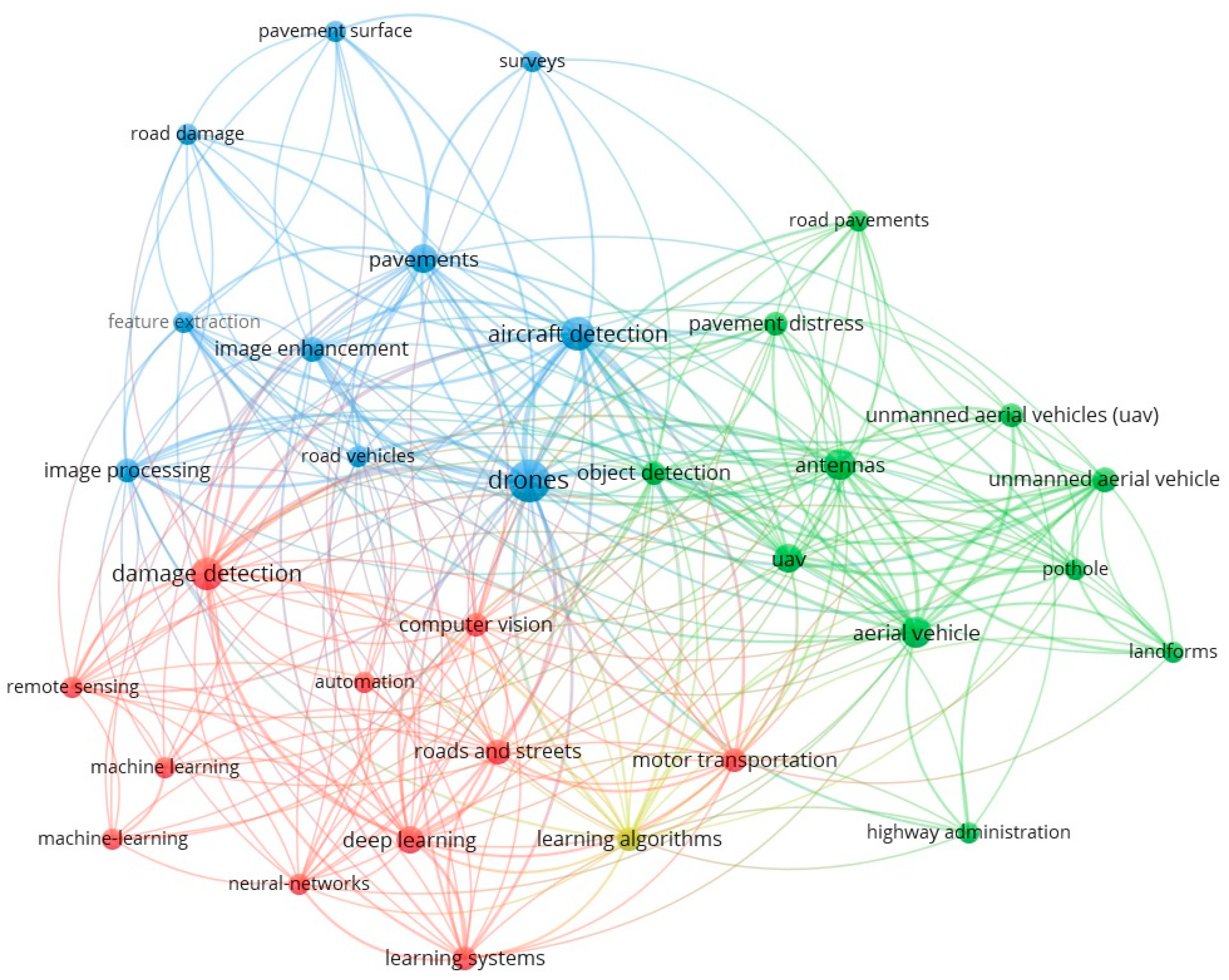
The co-occurrence map (Figure 3) reveals three clearly differentiated conceptual clusters. The first thematic cluster is associated with unmanned aerial vehicles (UAVs), drones, and photogrammetry. Terms such as pavements, pavement deterioration, studies, and pavement surface appear strongly interconnected, reflecting the predominance of research focused on geometric reconstruction, surface monitoring, and deformation analysis.
The second cluster contains terms linked to computer vision and deep learning algorithms, including damage detection, deep learning, neural networks, computer vision, and object detection. This confirms the rapid transition from descriptive photogrammetric approaches toward AI-based automation and classification techniques.
The third cluster includes concepts related to antennas, aerial vehicles, UAVs, and motorized transport, highlighting the applied and infrastructure-oriented nature of this research domain.
Overall, the results indicate a clear movement toward hybrid methodologies in which photogrammetry is complemented by segmentation and deep detection algorithms, as well as an increasing incorporation of multispectral and hyperspectral sensors to characterize defects not observable in the conventional RGB spectrum.

5.2. Geographical Distribution and Temporal Evolution of Scientific Production

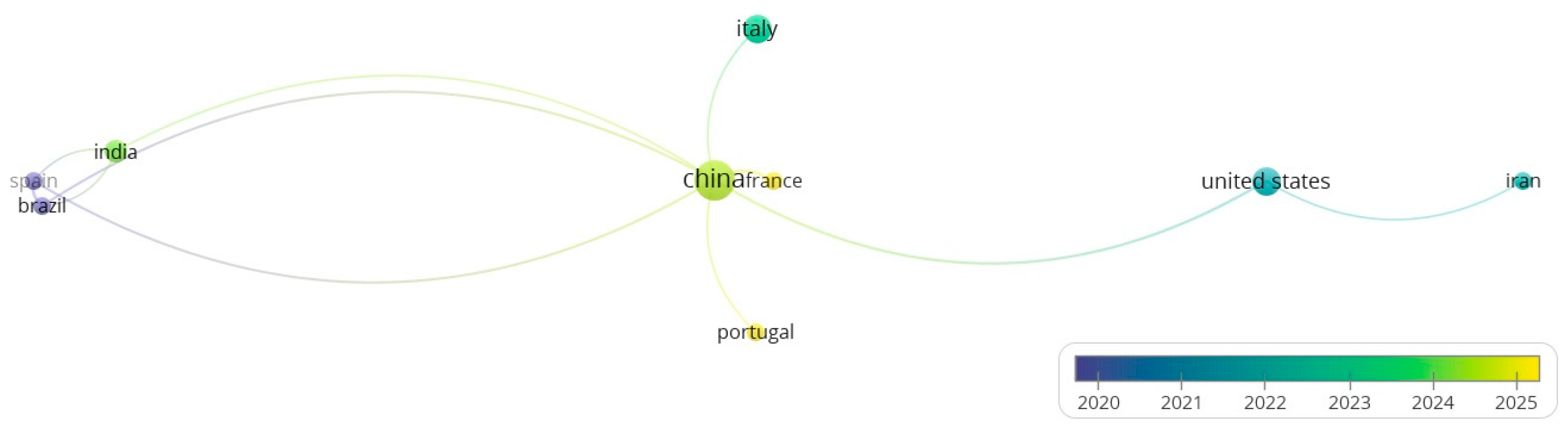
The visualization of collaboration and country-level distribution (Figure 4) highlights the central role of China, which accounts for the largest number of publications (11 documents). Italy and the United States follow in second place, with four studies each, succeeded by Indonesia, Japan, and Austria. This distribution suggests that leadership in this field is concentrated in countries with strong technological capabilities in photogrammetry, UAV manufacturing, and the development of advanced algorithms.
The color-coding of the figure further illustrates a clear temporal evolution: countries such as Spain, Brazil, and Vietnam are associated with early contributions (circa 2020–2021), whereas China, Iran, and India dominate the most recent research (2023–2025), reflecting the global adoption of deep learning and the increasing affordability of UAV sensors.

5.3. Intensity of Citation and Sources of Scientific Impact

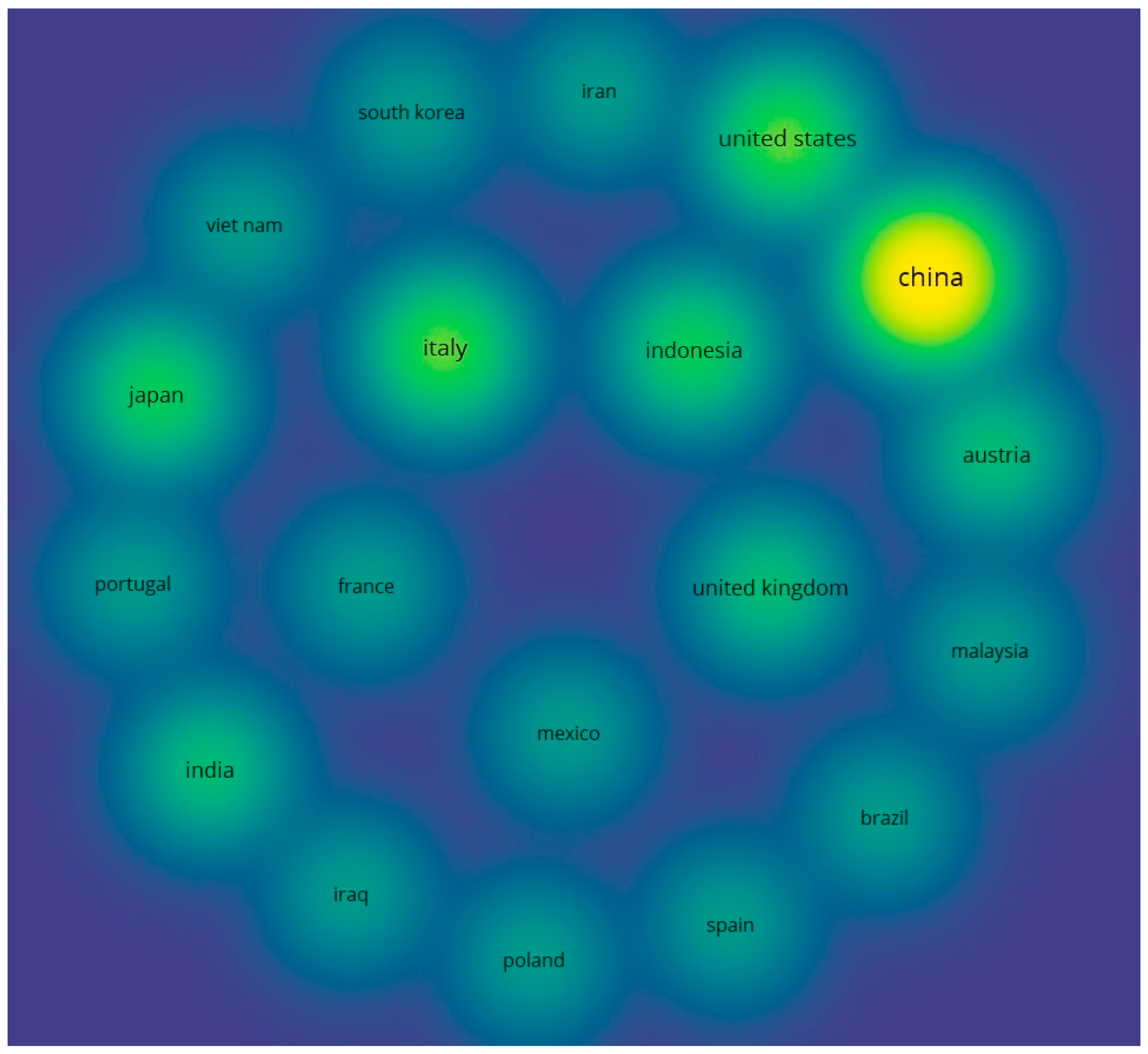
The citation heatmap (Figure 5) highlights the countries whose research has exerted the greatest influence in the field, independent of publication volume. China again emerges as the primary center of impact, followed by notable contributions from Italy, Indonesia, the United States, and Japan. Interestingly, countries with lower publication output, such as Brazil and Spain, show significant citation peaks in pioneering studies, demonstrating that strategic contributions can have a disproportionate impact even with a limited number of publications.
Conversely, countries such as Mexico, Poland, and Portugal are located on the periphery of the map, showing recent activity and growth potential but still relatively low citation counts. This pattern suggests that the field is expanding into regions that have not traditionally led research on UAV-based smart infrastructure.

5.4. Integrated Bibliometric Trends and Research Implications

Integrated analysis reveals three main trends. First, there is a methodological convergence between advanced photogrammetry, computer vision models, and deep learning, which currently represents the dominant approach. Second, the most recent contributions (2023–2025) are concentrated in Asia, particularly in China and India, reflecting an accelerated maturation of the field in these regions. Third, the study confirms that research is increasingly oriented towards smart urban systems, digital twins, and continuous monitoring, with growing interest in alternative sensors such as LiDAR, thermal cameras, and hyperspectral sensors.
This bibliometric overview not only contextualizes the results presented in the comparison table but also provides insights into future research directions, particularly regarding multisensory integration and fully automated pavement inspection using unmanned aerial vehicles (UAVs) and artificial intelligence (AI).
From a practical perspective, the bibliometric patterns identified in this section provide several actionable insights for both practitioners and researchers. The observed convergence toward deep-learning-based detection, multisensor data acquisition, and digital-twin-oriented monitoring suggests that future implementation efforts should prioritize integrated inspection pipelines rather than isolated sensing or algorithmic solutions. At the same time, the geographical concentration of high-impact studies highlights the need for broader validation across diverse urban contexts, climatic conditions, and pavement typologies to support technology transfer and large-scale adoption. For practitioners, these findings underline the importance of standardized evaluation metrics, interoperable data formats, and operational benchmarks when selecting UAV-based inspection solutions. For researchers, the identified gaps point to clear priorities, including the development of open, multi-regional datasets, cross-method benchmarking protocols, and validation frameworks aligned with real pavement management systems.

6. Research Challenges and Gaps

The synthesis of the 26 analyzed studies reveals a rapidly growing yet still fragmented field, characterized by significant imbalances between algorithmic sophistication, data quality, and real-world applicability in complex urban environments. Although techniques based on unmanned aerial vehicles (UAVs) have demonstrated substantial potential to accelerate pavement inspection, technical, methodological, and implementation limitations persist, hindering their widespread adoption in the road networks of medium- and large-sized cities.

6.1. Data Limitations and Generalization of the Model

Data limitations and model generalization: A primary and evident gap concerns the quality and representativeness of the data used to train and validate the models. Studies such as those by Li et al. [14], Wang et al. [15], Shadrach et al. [16], and He et al. [27] rely almost exclusively on RGB images acquired under relatively controlled conditions, which limits their ability to generalize to sudden variations in lighting, shadows, surface dirt, or the presence of objects outside the road. In this study, although a high-resolution standardized dataset is proposed, class imbalance is recognized—particularly in the case of potholes—which results in reduced performance for one of the most critical types of damage affecting road safety. This issue is further exacerbated when studies focus on very small geographical areas or specific types of roads. For instance, Ngoc [19] limits the analysis to streets 6–8 m wide in a single city, while other studies, such as by Fakhri et al. [11], Pan et al. [28], or Buchari et al. [20], consider only one or a few road sections, making it difficult to extrapolate results to heterogeneous urban networks. Consequently, detection and classification models tend to capture local patterns but are not necessarily suitable for other urban contexts with different asphalt mixes, climatic conditions, or maintenance practices. Therefore, future UAV-based pavement inspection studies should prioritize the development of multi-regional and multi-climatic datasets, incorporating diverse asphalt mixtures, surface textures, traffic conditions, and maintenance practices. Expanding dataset diversity is essential to improve model robustness, reduce geographic bias, and enhance the generalizability of detection and classification algorithms across heterogeneous urban environments.

6.2. Focus on Visible Surface Damage and Limited Multisensory Integration

While most studies report satisfactory results in detecting visible cracks, potholes, and surface deformations, a strong reliance on purely geometric or radiometric information within the visible spectrum persists. Conventional photogrammetry, as applied in studies by Inzerillo et al. [9], Santos et al. [10], Garilli et al. [13], Silva et al. [12], and Buchari et al. [20], enables accurate geometric reconstructions but does not provide insights into internal moisture, binder degradation, or delamination in the lower pavement layers. Only a small subset of studies employs advanced sensors. Pietersen et al. [21] and Astor et al. [22] demonstrate the potential of hyperspectral sensors to discriminate materials and surface states with reflectance errors between 2% and 2.5%; however, these studies primarily focus on radiometric correction and have not yet developed automatic damage classification models. Similarly, Kulhandjian et al. [23] highlights the benefits of combining RGB and infrared cameras to detect both surface damage and thermal anomalies related to internal failures, although the system is complex and relies on specialized hardware.
This situation underscores a clear shortcoming: most current systems remain oriented toward detecting “obvious” surface damage, whereas comprehensive pavement condition assessment—which requires consideration of texture, internal structure, and material properties—has only been addressed in a preliminary manner using thermal or hyperspectral sensors. The potential for multisensory fusion, noted in several studies (e.g., Guo et al. [17]; Portocarrero et al. [25]; Feng et al. [29]), largely remains a future prospect rather than a reality implemented in urban environments.
From an operational standpoint, the reviewed evidence indicates that UAV-based pavement inspection systems are most effective during intermediate and advanced service periods, when cracking patterns, surface deformations, and material disintegration become optically or geometrically detectable. Early-stage microcracking associated with binder aging remains challenging to capture using RGB-based UAV systems alone, as such defects often precede visible surface manifestation. This limitation defines a practical applicability window for current UAV-based approaches and underscores the need for complementary sensing technologies when early preventive maintenance actions are required.
In this context, embedded sensing technologies such as Fiber Bragg Grating (FBG) sensors have been reported in the literature as effective tools for detecting early-stage microcracking and strain evolution associated with pavement aging. However, such systems typically require contact-based or embedded instrumentation within the pavement structure, limiting their applicability for large-scale, non-invasive inspections. Accordingly, FBG-based sensing should be regarded as complementary rather than substitutive to UAV-based inspection, contributing to multi-scale pavement monitoring strategies in which early-stage material degradation and surface-level deterioration are addressed through different but coordinated sensing approaches [30].

6.3. Computational Complexity, Limited Resources and the Gap with Developing Countries

Another recurring challenge in the literature concerns the trade-off between model performance and the feasibility of implementation on low-cost platforms. Advanced deep learning models, such as the RT-DETR variants proposed by Wang et al. [15] or the lightweight YOLOv8-EHG-based architectures described by Guo et al. [17], demonstrate significant improvements in parameter reduction and computational efficiency, achieving acceptable mAP50 for near-real-time applications. However, even these models require computational resources that are not always available in mid-range commercial drones or municipal infrastructures with limited budgets.
At the other end of the spectrum, low-cost approaches based on photogrammetry and manual or semi-automatic visual analysis (Buchari et al. [20]; Silva et al. [12]; Leonardi et al. [31]) remain viable for municipalities with constrained resources, but they lack automation and depend heavily on operator expertise, limiting their scalability across extensive urban networks. Simple analytical methods, such as the Surface Deterioration Index (SDI) in Al-Rubaee et al. [26], exemplify this trade-off: they are inexpensive and easy to apply, but do not incorporate high-resolution data or AI algorithms, nor do they natively integrate with UAV platforms.
In the context of developing countries, this balance between accuracy, cost, and complexity represents a fundamental challenge. Studies by Portocarrero et al. [25] and Feng et al. [29] show that mobile laser scanning (MLS) provides superior geometric accuracy, but its adoption is economically unfeasible. In contrast, UAV-based photogrammetry is emerging as the most cost-effective option for continuous monitoring. Nevertheless, the integration of these workflows with deep learning models remains limited, and urban-scale pilot studies that account for budgetary, operational, and regulatory constraints typical of middle-income countries are still scarce.

6.4. Lack of Standardization, Comparable Metrics and Integration with Road Management

Finally, significant deficiencies are identified in the standardization of protocols, metrics, and evaluation procedures. Although several studies report metrics such as mAP, precision, completeness, or overall accuracy (e.g., Li et al. [14]; Shadrach et al. [16]; Naddaf-Sh et al. [18]; Fakhri et al. [11]; Pan et al. [28]), there is no commonly accepted set of metrics or benchmarking protocol that allows direct comparison of different techniques in the same urban scenarios. In some cases, such as Aruna et al. [32], quantitative results are not even provided, making it difficult to objectively assess system robustness. Establishing standardized evaluation metrics that integrate algorithmic performance indicators (e.g., mAP, precision, recall), geometric accuracy, and pavement-condition indices (such as PCI or SDI) is essential to enable reliable cross-method comparison and facilitate the transfer of UAV-based technologies to operational pavement management systems.
Most studies focus on damage detection and classification, while only a few complete the workflow by incorporating maintenance decision-making. Ngoc [19] represents a notable exception, integrating damage classification, prediction of deterioration evolution using Markov chains, and a financial module for maintenance costs, although with some limitations in damage categorization accuracy. Similarly, some photogrammetric studies use the Pavement Condition Index (PCI) (Santos et al. [10]; Feng et al. [29]) or propose other condition indices, but these indicators are rarely incorporated into urban digital twin platforms.
Taken together, these gaps highlight the need for standardized methodological frameworks that include: (i) UAV acquisition protocols (altitude, overlap, spatial resolution, lighting conditions); (ii) open and representative datasets covering diverse urban scenarios; (iii) comparable metrics that combine algorithmic performance with practical relevance to road management; and (iv) integration schemes with geographic information systems, IoT platforms, and predictive deterioration models. Only under such conditions can research move from one-off studies and proof-of-concept demonstrations to operational systems that effectively support intelligent and sustainable urban road infrastructure management.

7. Future Directions for Research and Technological Perspectives

The review of the 26 selected studies reveals a rapidly evolving field, with significant advances in the integration of unmanned aerial vehicles (UAVs), photogrammetry, and machine vision algorithms, but also clear opportunities to develop more autonomous, multisensory, and predictive systems. Emerging technological trends allow us to outline a research agenda capable of transforming urban road inspection into a continuous, standardized, and data-driven process.
A first area of progress concerns the operational autonomy of UAVs in dense urban environments. While initial approaches exist—such as GPS-free navigation and real-time processing demonstrated by Kulhandjian et al. [23], or lightweight models executable on embedded platforms by Guo et al. [17]—systems capable of dynamically adapting trajectory, altitude, and data capture parameters according to lighting conditions, traffic flow, and obstacles are still needed. The development of UAVs with adaptive planning would enable broader monitoring coverage and reduce operational costs, particularly in extensive urban networks.
A second strategic line is multisensory fusion, which remains fragmented in the literature. Several studies report specific advantages of hyperspectral sensors (Pietersen et al. [21]; Astor et al. [22]), thermal imaging (Kulhandjian et al. [23]), and mobile LiDAR (Portocarrero et al. [25]; Feng et al. [29]), but none integrates RGB, thermal, LiDAR, and hyperspectral data simultaneously in a single operational workflow. Consequently, multi-sensor fusion should be considered a core design principle for next-generation UAV-based pavement inspection systems, rather than an optional enhancement, particularly in complex urban environments where surface, subsurface, and material-related distresses coexist. The convergence of these data sources would allow the construction of high-fidelity three-dimensional models capturing texture, geometry, spectral signature, and thermal behavior, enabling more comprehensive and robust diagnostics.
The third development avenue involves the adoption of advanced AI architectures beyond CNNs and YOLO- or RT-DETR-based detectors (Shadrach et al. [16]; Wang et al. [15]; Li et al. [14]). Incorporating visual transformers, generative models for synthetic dataset augmentation, and multimodal frameworks could improve generalizability across cities and reduce sensitivity to environmental variations. In addition, temporal prediction approaches, such as Ngoc [19], highlight the need for models capable of anticipating failures while considering traffic, weather, and material aging.
Another promising direction is the construction of urban digital twins for predictive maintenance. Temporal photogrammetry [17] and high-resolution SfM reconstructions [14] allow the geometric evolution of pavements to be captured; however, their potential would be greatly enhanced by integrating thermal, structural, and spectral data, as well as intervention histories and load models. This integration could support simulation systems capable of anticipating deterioration scenarios, optimizing decision-making, and contributing to intelligent road management platforms.
Finally, standardization of acquisition, processing, and evaluation protocols is essential. Variations in flight altitudes, spatial resolutions, metrics, and validation procedures limit comparability between studies and hinder model transferability between cities. The creation of open datasets, standardized frameworks, and common guidelines will consolidate UAV-based inspection within official road maintenance regulations and facilitate their adoption in operational urban surveillance systems.
Collectively, these research directions indicate that UAV-based pavement inspection is evolving towards autonomous, multisensory, and predictive systems, capable of integrating into smart urban ecosystems and supporting the sustainable management of road infrastructure.

8. Conclusions

The systematic review of 26 studies demonstrates that the use of unmanned aerial vehicles (UAVs) for urban pavement assessment has evolved toward a consolidated approach that integrates photogrammetry, deep learning, and advanced sensors. Photogrammetry remains a critical tool for accurate geometric reconstruction, while machine vision-based algorithms such as YOLOv8, RT-DETR, and hybrid architectures have improved the automatic detection of cracks, potholes, and deformations in complex urban environments. Furthermore, the increasing adoption of thermal, LiDAR, and hyperspectral sensors has expanded UAV-based inspection capabilities beyond visible surface damage, enabling the identification of subsurface anomalies and material variations that are not detectable using RGB imagery alone.
The bibliometric analysis highlights a concentration of research in China, Italy, and the United States, as well as three dominant thematic clusters: UAVs, computer vision, and pavement damage. Despite these advances, challenges persist regarding standardization, the availability of urban datasets, and the generalization of models. The findings emphasize that dataset diversity, multisensor data fusion, and standardized evaluation metrics are key factors for improving the reliability, generalizability, and practical adoption of UAV-based pavement inspection systems in urban environments.
In quantitative terms, the reviewed studies report photogrammetric workflows achieving planimetric errors typically below 2–10 mm under controlled flight conditions, supporting reliable geometric reconstruction for urban pavement assessment. Deep-learning-based damage detection models applied to UAV imagery exhibit mAP50 values ranging approximately from 56% to 72%, with several studies reporting classification accuracies exceeding 90% for specific distress types such as potholes and surface cracking under favorable imaging conditions. Multisensor approaches, although less frequently implemented, demonstrate added diagnostic value by enabling the detection of subsurface anomalies and moisture-related defects not observable in RGB imagery alone. These numerical ranges provide practical reference benchmarks for practitioners and researchers when selecting UAV-based inspection strategies according to accuracy requirements, operational constraints, and the targeted stage of pavement deterioration.
Looking forward, future research should prioritize the development of standardized acquisition and evaluation frameworks, the creation of open and representative multi-regional datasets, and the integration of multisensor UAV data into digital twins and predictive maintenance platforms. Advancing toward autonomous or semi-autonomous UAV operations and interoperable data pipelines will be essential to transition UAV-based pavement inspection from experimental and pilot studies to scalable, operational tools capable of supporting efficient, predictive, and sustainable urban pavement management.

Author Contributions

Conceptualization, writing—review and editing, P.J.L.-G., D.R.-G. and R.V.-O.; validation, data curation, J.S.-L.; supervision, L.d.C.S.C. and S.A.Z.-C.; methodology, O.M.-V. and B.S.T.-G. All authors have read and agreed to the published version of the manuscript.

Funding

This research received no external funding.

Institutional Review Board Statement

Not applicable.

Informed Consent Statement

Not applicable.

Data Availability Statement

No new data were created or analyzed in this study. Data sharing is not applicable to this article.

Acknowledgments

The authors acknowledge the institutional support received from the Tecnológico Nacional de México (TecNM) during the development of this research.

Conflicts of Interest

The authors declare no conflicts of interest.

Appendix A

Table A1. Comparative synthesis of the 26 studies included in the systematic review.
Authors/CountryMethodAlgorithm TypeSensor/Data TypeType of Damage DetectedPerformance MetricsAdvantagesLimitationsMulti-Sensor/AI Potential
Li et al. [14]/China Deterioration detection with YOLOv3CNN for Object Detection (YOLOv3)RGB images captured by DJI M600 Pro UAVLongitudinal (LC), transverse (TC), alligator (AC), open (OC) cracks, bumps (PH), patches (RP)mAP50 = 56.6%Fast and suitable method for multiclass; good stability in aerial imageryLimited accuracy, affected by variations in drone height/angle; sensitive to complex backgroundsFeasible to integrate with LiDAR or thermography to improve detection of small damages; expandable with YOLOv5/YOLOv8 and Transformers
Inzerillo et al. [9]/Italy SfM Photogrammetry + Point Cloud ComparisonStructure-from-Motion (SfM) + C2C (Hausdorff) + filtrado (Gaussian, median, std. dev.)RGB images taken with DJI Mavic Pro-2 UAVs, reconstructed as 3D point cloudsLongitudinal cracks (micro and macro)RMS: 0.0016 mm (5 m) to 0.0039 mm (25 m) (143% increase). Density: 14.62 pts/cm2 (5 m) → 0.68 pts/cm2 (25 m) (95% reduction)High precision at low altitude; excellent 3D reconstruction; low cost compared to LiDARAt higher altitudes, the higher the accuracy decreases drastically; heavy processing; noise from lighting, shadows and vibrations; limits detection of fine cracksPotential to combine with LiDAR for greater geometric fidelity; integrate CNN/Deep Learning for automatic crack classification; thermography for non-visible damage
Zhang et al. [33]/China 3D reconstruction + vehicle removal + point cloud analysisYOLOv8 improved to eliminate vehicles; MVSNet for 3D reconstruction; DBSCAN for Strain DetectionRGB images taken with DJI Phantom 4 Pro UAVs; 3D reconstruction by MVSNet; densified point cloudsRoughness, deformations, settlements and surface anomaliesReconstruction 3× denser than COLMAP; higher processing speed; adequate accuracy for evaluating smoothness and settlementsHigh resolution 3D; robust detection; removes obstacles automatically; suitable for large areasDependence on good lighting; homogeneous textures affect precision; low-altitude flights require more timeVery high potential: Integrable with LiDAR, thermography, Transformer algorithms, and multi-sensor fusion
He et al. [27]/China Building High-Altitude UAV Dataset for Fault DetectionNot applicable (dataset article, YOLO-oriented and deep learning detection)DJI M300 RTK UAV with Zenmuse P1 camera (35 mm); RGB images 8192 × 5460 px, cropped to 640 × 640 pxLinear cracks (transverse, longitudinal, irregular), block cracks, potholesIt does not report accuracy metrics (dataset paper). He does report a number of scores: 12,365 line cracks, 8239 block cracks, 1412 pits.Large volume of data; high resolution; 640 × 640 balanced and standardized dataset; suitable for YOLOv5/YOLOv8 models; improves diversity compared to Crack500, GAPs, UAPD, RDD.“Pit” category (<5%) underrepresented; low detection performance for potholes; requires more data or specialized models; pixel-level segmentation is missing.Ideal for training YOLO models, Transformers, segmentation; can be integrated with LiDAR and thermography in future studies; useful for developing multi-sensor models and improving multi-class detection.
Santos et al. [10]/SingaporeUAV Inspection with Orthoimage Generation and 3D ModelIt does not use AI; traditional photogrammetric processing (3D modeling, orthomosaic, geometric measurement)DJI Mavic 2 Pro UAV; RGB images; orthophotos; 3D modelCracks, surface deformations, visible deterioration of flexible pavementPlanimetric accuracy < 2 mm; altimetry accuracy < 10 mm; calculation of the PCI (Pavement Condition Index)High geometric precision; fast and low-cost inspection; allows PCI to be evaluated without closing pathways; useful for maintenance planningIt does not detect non-visible damage (subsurface); it does not incorporate AI for automatic classification; depends on good lighting and texturesCan be integrated with AI for auto-detection (YOLO, U-Net); can be combined with LiDAR or thermal data for more robust multi-sensor diagnostics
Wang et al. [15]/Singapore Road defect detection using enhanced RT-DETR (Adown + RepNCSPELAN)Enhanced RT-DETR deep sensing model; Adown and RepNCSPELAN modules for hierarchical learning and long-range dependenciesRGB images captured by drones (UAVs)Cracks, potholes, surface deformations and visible defects in pavementmAP50 = 72.3%; 54.4% reduction in parameters and 53.5% in computation compared to the original RT-DETRHigh accuracy with lower computational cost; suitable for deployment in resource-poor systems; faster processing; wide capture without interfering with trafficLimited to visible surface damage; depends on lighting and RGB quality; it does not use other sensors; detects no internal damageEasy to integrate with thermal sensors or LiDAR; the model can be expanded with multi-sensor fusion; ideal for an intelligent road monitoring pipeline
Ngoc [19]/Vietnam Integrated Drone Image Analysis Framework + Deep Classification + Prediction Model + Financial ModelCNN (ResNet-18, ResNet-34, and MobileNet) for classification; Markov model for prediction; Financial Cost ModelAerial imagery captured by drones (Mavic 2 Pro), 1000 HCMC images + 1000 RSXDDamage level and damage type (11 classes), although the model only properly generalizes the levelFor damage type: very low performance (val. 16–18%)\For damage level: 66–69% accuracy\Geometric deviations in photogrammetry: ≤2 mm planimetric, ≤10 mm altimetryFast and low-cost capture\ Wide coverage without affecting traffic\Full integration: condition → → prediction costs\High geometric accuracyThe model does NOT manage to classify the type of damage (overfitting, very unbalanced classes)\ Dependence on commercial drones\ Limited to streets of 6–8 m and 1–20 years\Reduced geographic area (HCMC only)Very high:\Integration with LIDAR or thermal sensors\Improvements with Transformers (ViT), YOLOv8, RT-DETR\ Possible use of data fusion (GIS + IoT)\ Future creation of transition matrices by damage type
Al-Rubaee et al. [26]/Iraq Pavement Assessment Using Surface Distress Index (SDI)It does not employ AI; rule-based analytical method (SDI: weighted sum of 4 parameters)Data obtained by visual inspection, field surveys, manual measurements of cracks, potholes and ruts over 25 segments (5 km) of the Al-Rabea HighwayCracks (area, width), potholes, rutting (rut depth)It does not use ML metrics. Quantitative results:\n– 36% segments in Poor condition (SDI >150)\n– 32% in Bad (100–150)\n– 32% in Fair (50–100)Economical, fast method applicable to networks with limited resources; it does not require specialized equipment; useful for classifying and prioritizing maintenance; easy interpretationIt does not detect structural or internal layer damage; dependent on human judgment; variability among evaluators; SDI does not measure comfort (IRI) or structural capacity (FWD); limited to complex damageHigh potential to be combined with drones, CNN models (YOLO/UNet) or LiDAR/thermal sensors to automate crack and pothole registration; useful for integrating into AI-based digital twins or PMSs
Shadrach et al. [16]/India Bump Detection and Prediction Framework Using ResNet + YOLOv8Hybrid Deep Learning Model: ResNet for deep feature extraction; YOLOv8 for real-time detection; training with learning transfer and data augmentationRGB images of roads in various lighting and weather conditions (“Normal” and “Potholes” datasets)PotholesAccuracy 92.11%, Recall 89.10%, Accuracy 98.19%; inference speed 11.9 s; superior performance to ESRGAN, Faster R-CNN, KNN and VGG19High precision and speed; real-time operation; robustness to changes in lighting; less human intervention; compatible with drones and edge devicesIndications of overadjustment; instability in validation; exclusive use of RGB images without depth or multispectral; not directly tested on UAVs in real fieldFully UAV compatible; LiDAR, thermal and multispectral integrated; scalable for digital twins and predictive maintenance; adaptable to smart urban systems
Ishigami et al. [24]/Sweden Interactive 3D annotation system based on 3D models generated by Gaussian Splatting and mesh models3D Gaussian Splatting for 3D generation + integration with mesh models; interactive annotation systemAerial imagery captured by drones; 3D models generated (dense clouds + splatting + meshes)Visible structural damage in disaster areas: collapses, road blockages, ground deformations, road obstaclesIt does not report numerical metrics; only visual quality and annotation capabilityDetailed 3D visualization; allows rapid evaluation in emergencies; intuitive annotation; facilitates coordination between teamsDoes not include auto-detection; no formal metrics; depends on high-quality images; not focused on urban pavementsHigh LiDAR, thermal and multispectral compatibility; basis for auto-detection AI; useful for digital twins and predictive analytics in disasters
Portocarrero et al. [25]/Peru Comparison of Surface Diagnostic Technologies: UAV Photogrammetry vs. Mobile Laser Scanner (MLS) Using the Choice by Advantage (CBA) MethodIt does not use AI algorithms; qualitative analysis using CBA; systematic review of previous studiesPhotogrammetric images captured by drones (UAVs); millimeter topographic data obtained by mobile laser scanner (MLS)Surface imperfections: visible cracks, deformations, irregularities and micro-flawsMLS offers topographic characterization at millimeter resolution; UAV offers wide coverage and efficient processing; no numerical metrics of photogrammetric accuracy are reportedUAV Photogrammetry: Low cost, high flexibility, easy operation, suitable for continuous monitoring; MLS: Maximum geometric precisionMLS requires expensive equipment, specialized operators, and increased processing time; UAV depends on lighting and weather conditions; qualitative analysis does not include predictive modelsHigh AI support for auto-detection using UAV; combination UAV + MLS would allow hybrid models; ideal for digital twins and predictive maintenance systems
Feng et al. [29]/China Comparison of UAV vs. Mobile Laser Scanning (MLS) photogrammetry for pavement diagnosisLiterature review + method of choice by advantages (CBA)UAV with photogrammetry; Mobile Laser Scanner (MLS)Surface imperfections in flexible pavements (cracks, deformations, surface failures)Planimetry: errors < 2 mm; Altimetry: errors < 10 mm; final PCI assessmentUAV Photogrammetry: Low cost, high flexibility, fast capture, useful for continuous monitoring. MLS: high geometric and topographic precision at the millimeter level.MLS: high cost, lower viability for developing countries. UAV: Lower metric resolution than MLS, depends on lighting and weather.High AI integration capability for continuous monitoring; UAV can be combined with thermal or multispectral sensors; useful for predictive maintenance systems.
Yano et al. [34]/China Classification of surface materials using drone rotor noise analysis4-layer CNN and ResNet18 applied to STFT spectrograms16-channel spherical microphone; acoustic signal of the rotor; STFT spectrograms (16 kHz)Identification of surface material (asphalt; soil; shallow water); indirect inference of unstable areasCNN: 70.8% accuracy in test; ResNet18: 82.1% accuracy; good reproducibility on asphalt and soilUseful when there is no visibility; works at night or with smoke; fast remote inspection; no cameras requiredHigh wind sensitivity; channels saturated by clipping reduce quality; water classification is unstable; requires intense pre-processingPotential integration with RGB cameras; thermal or LiDAR; useful for merging acoustic and geometric information; applicable to digital twins and predictive monitoring
Guo et al. [17]/China Lightweight YOLOv8-EHG model for real-time detection of pavement damage by UAVEnhanced YOLOv8-based deep detector; integration of Efficient Local Attention (ELA) and HSFPN pyramid; Detect-T3G lightweight moduleAerial RGB images captured by drones; dataset RDD2022Surface damage to pavement: cracks; bumps; disease spots of the RDD2022mAP50 of 67.4%; 0.2% improvement over the original YOLOv8; a 46.9% reduction in parameters; 41.9% reduction in computational complexityLighter model; suitable for deployment on drones with limited hardware; real-time operation; better handling of wide field of view and small objectsModerate accuracy; small performance increase compared to YOLOv8; it does not incorporate complementary sensors; dependent on RGB and dataset imagesHigh compatibility with thermal sensors or LiDAR; can be integrated into UAV platforms for predictive maintenance; potential use in digital twins and multisensory fusion
Garilli et al. [13]/Switzerland Temporal geometric monitoring using UAV photogrammetry to evaluate the performance of cold patching materials (CMPM)It does not employ AI algorithms; photogrammetric processing; temporal comparison of point clouds; geometric analysis of cross-sections and longitudinalsRGB images captured with low-cost drone; photogrammetric point clouds generated in four surveys over 30 daysLandslide detection; evolution of depressions; superficial changes in repaired areas; deformations in CMPMNo numerical metrics are reported; it is evaluated qualitatively through longitudinal and cross-sectional profiles; comparison of point clouds at different timesLow-cost method; minimal interference with traffic; appropriate for monitoring in urban environments; fast capture; allows temporal monitoring of deteriorationDependence on environmental conditions; accuracy limited by drone and processing quality; it does not detect structural damage; geometrical approach only; no automationHigh integration capacity with auto-detection AI models; possible combination with LiDAR for greater accuracy; applicable to predictive maintenance systems and digital twins
Kulhandjian et al. [23]/United States Comprehensive road inspection framework with autonomous drone without GPS; edge detection navigation and real-time analysis with dual camerasDeep neural network for classification; Faster R-CNN for location; Canny + Hough + HSV masking for autonomous navigation; IR + optical model integrationHigh-resolution optical camera; thermal infrared camera; drone sensors (IMU, GPS-free navigation); real-time RGB and IR imagesPotholes; cracks; surface defects; thermal anomalies indicating internal damageOptical Rating: 84.6% accuracy; IR Rating: 95.1%; Faster-R-CNN optical: 99.5% minibatch accuracy; Faster-R-CNN thermal: 98.9% minibatch accuracyFully autonomous inspection; GPS-free operation; visible + IR combination detects surface and structural damage; capture of large areas; real-time processingComplex system; requires fine calibration of the drone; dependent on specific hardware (IR cameras + minicomputer); may fail in bad weather or low textureHigh capacity for multi-sensor fusion (RGB + IR + LiDAR); ideal for predictive maintenance; possible integration into digital twins; expandable to inspection of bridges and other infrastructure
Pietersen et al. [21]/United States Autonomous method of reflectance correction in hyperspectral images of pavements; use of in situ materials as spectral referencesSpectral processing; autonomous reflectance correction; comparison with traditional methods; not a damage detection algorithm is reported, but a spectral correction algorithmHyperspectral proximity sensor; multiband spatio-spectral data; low-altitude drone flightsRunway damage such as cracks, landslides, material variations, and spectral signature detectable anomaliesAverage error between 2% and 2.5% in three experimental flights; improvement over traditional methodsIt does not require reference panels or additional irradiance sensors; eliminates human intervention; it allows operating in hostile environments; greater discrimination of materials compared to RGBRequires specialized hyperspectral sensor; high volume of data; it does not detect damage directly; it depends on subsequent analysis; limited by variable lighting conditionsDirect integration with advanced spectral analysis, spectral neural networks, and digital twins; very suitable for fusion with RGB, LiDAR, and thermal for structural damage maps; high potential for AI in material sorting
Astor et al. [22]/IndonesiaAutonomous reflectance correction for evaluation of attacked tracks; near-surface hyperspectral processingIt is not a detection model, but a radiometric correction algorithm; proofreading method based on in-scene reference materialsUAV-mounted proximity hyperspectral sensor; Raw Spatio-Spectral Data in Multiple BandsIt does not detect damage directly; it focuses on obtaining corrected spectral signatures and then classifying cracks, landslides, debris and obstacles on tracksAverage reflectance error between 2% and 2.5% in three flights; accuracy comparable to or superior to traditional methods with reference panelsIt does not require human intervention; no additional calibration panels or irradiometric sensor required; viable for hazardous areas; prepare data ready for advanced classificationIt does not identify damage by itself; it relies on expensive hyperspectral sensors; heavier processing; requires subsequent classification pipelineIntegrates ideally with CNN, SVM, or 1D/2D spectral models for material classification; high support for multi-sensor data (hyperspectral + RGB + LiDAR); scalable for predictive models on military tracks
Aruna et al. [32]/India Modular UAV Pothole and Crack Detection System with Ground Station ProcessingCNN for damage classification; YOLO for real-time detection; learning transfer to strengthen the modelRGB images and video captured by drone; live streaming via RTSP; local computer processingPotholes and cracks that can evolve into major potholesNo numerical metrics are reported in the abstract; greater speed and efficiency are described compared to manual methodsWide coverage with UAVs; reduced need for manual inspection; faster detection than traditional methods; flexible, modular and relatively low-cost systemLack of quantitative results; reliance on RGB images without additional sensors; real-field validation is not specified; performance affected by environmental variationsEasy integration with thermal, LiDAR, or multispectral sensors; high AI support for predictive maintenance; scalability for extensive road networks
Fakhri et al. [11]/Iran Photogrammetry with UAV applied to the detection of cracks in pavements; orthophoto generation and feature extractionSupervised classification based on Decision Tree (DT)RGB images acquired with Phantom 4 Pro and Mavic Pro drones; orthophotomosaics generated from aerial imageryLongitudinal, transverse, oblique, block and alligator-type cracksOverall accuracy 96% in orthophoto at 20 m; accuracy between 82% and 91% in test orthophotos; Kappa index 96%; F1-score 88%High precision at low altitude; non-destructive process; wide coverage without interrupting traffic; lower cost compared to laser systems; suitable for recurrent inspectionsInfluence of shadows and lighting; it depends on flight parameters such as height and resolution; requires intensive processing for segmentation; the DT model can be limited in complex scenariosCan be integrated with CNN or SVM to improve robustness; potential combination with LiDAR or thermal cameras; applicable in multi-sensor platforms; useful for powering digital twins and predictive systems
Pan et al. [28]/China Multiscale Semantic Segmentation Applied to UAV Images for Damage Detection and Aging ClassificationCNN + SVM hybrid model; multiscale segmentation; supervised classificationMultispectral images of low-altitude UAVs; centimeter resolution; high surface textureCracks; bumps; classification of pavement into three levels of agingOverall accuracy between 87.83% and 92.96%; recall between 85.4% and 90.65% on two road segments in XinjiangGreater accuracy than traditional methods; good generalization thanks to the CNN + SVM combination; multispectral images allow us to distinguish aging and damage in greater detail; suitable for large areasIt requires multispectral UAVs, which increases cost; high computational processing; sensitivity to environmental conditions; dataset size dependency for trainingHigh compatibility with deep models such as U-Net or Transformers; feasible to integrate with LiDAR or thermal; useful for automatic continuous monitoring systems; potential for Digital Twins and Predictive Maintenance
Silva Zendron et al. [12]/Spain Pavement evaluation using UAV and photogrammetry for the generation of orthomosaics and 3D models; Geometric Analysis for Deterioration ClassificationIt does not use AI; photogrammetric processing; geometric comparison; measurement of morphological parametersUAV RGB images; point clouds, orthomosaics and 3D models; low-altitude flightsCracks; surface deformations; potholes and material leaksNo specific numerical metrics are reported; good spatial resolution and ability to detect visible deterioration are describedLow cost; accessible to municipalities; allows for quick inspections; reproducible results; capture of detailed geometric information; high resolutionIt does not detect internal damage; illumination-sensitive results; it depends on photogrammetric processing; no automation by AI; high processing timeIdeal for integrating with CNN, U-Net, or detection models to automate analysis; compatible with LiDAR or thermal sensors; useful for digital twins and mant
Liao & Wood [35]/United States Discrete and Distributed Error Evaluation of UAS-SfM Point CloudsIt does not use AI; geometric and statistical analysis of errors in SfM point cloudsUAV + photogrammetry UAS-SfM; 3D point clouds; RGB imagesIt does not detect damage; evaluates geometric quality for pavement studiesDiscrete and distributed errors; spatial assessment of uncertainty; variation according to geometry and texturesIt provides accuracy metrics to validate SfM reconstructions; useful for improving quality in pavement mapping; identify areas with the highest errorIt does not detect cracks or deformations; performance depends on surface texture; sensitive to shadows and lighting variationsAllows integration with CNN/YOLO algorithms at later stages; basis for LiDAR or multispectral sensors that reduce uncertainty
Naddaf-Sh et al. [18]/United StatesCNN optimized for crack detection combined with CMA heuristic algorithm for continuous real-time mapping; splitting Images into Tiles and Geometric AssemblyDeep Learning; CNN with hyperparameters optimized by Bayesian Optimization; SoftMax sorter; SGDM; CMA connectivity algorithmRGB images captured by DJI Phantom 4 drone; video 640 × 480 px; 120 fps; FLIR E5 Image DatabaseLongitudinal cracks; transverse; diagonal; complex crack-like cracksAccuracy 96.67%; overall error 1.8–4.7%; 5 fps processing; crack detection ≥ 2 mm wide and ≥80 mm long; inspection speed 11.1 km/hReal-time processing; high precision; robust to variations in lighting; low computational cost; continuous mapping and elimination of false positives; operable with commercial dronesLimited dataset size; fixed tiles can limit detail in small areas; it depends on the camera-to-surface angle; limited number of classesLiDAR, thermal and multispectral integration; extension to 3D mapping; ideal for digital twins and predictive maintenance; scalable for smart urban systems
Buchari et al. [20]/MalaysiaAerial photogrammetry with drone and assisted visual analysis for geometric measurement of damage and prioritization of road maintenanceNo AI is used; manual photogrammetric interpretation; geometric analysis and classification of Bina Marga and URMS; dimension measurement using corrected imagesRGB images captured by UAVs at 24 m; small-format aerial photographs; DEM generated by photogrammetry; GPS geotaggingPotholes; alligator cracks; longitudinal cracks; slip cracks; depressions; patching; reconstructionMeasurement accuracy of 97.83% compared to field data; ability to extract lengths, widths, depths and volumes of damage; one-day priority analysis (vs. one-week traditional method)Fast, economical and reproducible method; minimal disruption to traffic; detection of multiple types of damage; possibility of generating DEM and contours to evaluate depth; suitable for municipalitiesIt does not detect internal damage; dependent on lighting and experience of the analyst; without automation or intelligent algorithms; precision limited by height and camera parameters; exclusive use of RGBCan integrate with CNN, U-Net, or modern detectors to automate classification; potential to combine with LiDAR or thermal; useful for urban predictive maintenance systems and digital twins
Leonardi et al. [31]/ItalyDigital image processing: RGB→B/W conversion; edge enhancement; segmentation; morphological analysis with MATLAB® to locate and quantify damageClassical computer vision algorithms; threshold segmentation; filtering; edge detection; analyzing regions in MATLABRGB images captured from DJI Mavic Pro drone at 25 m; vertical aerial photographyPotholes; longitudinal cracks; transverse; alligator cracking; surface depressionsIt does not report quantitative metrics; qualitative results show clear detection of cracks and potholes; adequate bottom-damage separationLow cost; fast; insurance for operators; allows inspection without affecting traffic; simple processing; suitable for municipalities with limited resourcesIt does not use AI; it does not quantify precision; sensitive to lighting; errors on surfaces with visual noise; limited capacity for complex or very fine damageHigh possibility of complementing CNN or YOLO to automate classification; potential integration with LiDAR for depths; applicable in intelligent urban monitoring systems

References

  1. Dorafshan, S.; Maguire, M. Bridge inspection: Human performance, unmanned aerial systems and automation. J. Civil Struct. Health Monit. 2018, 8, 443–476. [Google Scholar] [CrossRef]
  2. Ravish, R.; Swamy, S.R. Intelligent traffic management: A review of challenges, solutions, and future perspectives. Transp. Telecommun. 2021, 22, 163–182. [Google Scholar] [CrossRef]
  3. Wang, C.; Tang, J. Reliable crack evolution monitoring from UAV remote sensing: Bridging detection and temporal dynamics. Remote Sens. 2025, 18, 51. [Google Scholar] [CrossRef]
  4. Hajjar, M.; Zappa, E.; Bolzon, G. The state of the art and potentialities of UAV-based 3D measurement solutions in the monitoring and fault diagnosis of quasi-brittle structures. Sensors 2025, 25, 5134. [Google Scholar] [CrossRef]
  5. Deane, S.; Avdelidis, N.P.; Ibarra-Castanedo, C.; Zhang, H.; Nezhad, H.Y.; Williamson, A.A.; Tsourdos, A. Application of NDT thermographic imaging of aerospace structures. Infrared Phys. Technol. 2019, 97, 456–466. [Google Scholar] [CrossRef]
  6. Bhat, G.R.; Dudhedia, M.A.; Panchal, R.A.; Shirke, Y.S.; Angane, N.R.; Khonde, S.R.; Gawande, S.H. Autonomous drones and their influence on standardization of rules and regulations for operating: A brief overview. Results Control Optim. 2024, 14, 100401. [Google Scholar] [CrossRef]
  7. Mazzetto, S. A review of urban digital twins integration, challenges, and future directions in smart city development. Sustainability 2024, 16, 8337. [Google Scholar] [CrossRef]
  8. Haddaway, N.R.; Page, M.J.; Pritchard, C.C.; McGuinness, L.A. PRISMA2020: An R package and Shiny app for producing PRISMA 2020-compliant flow diagrams, with interactivity for optimized digital transparency and open synthesis. Sistema Campbell. 2022, 1, e1230. [Google Scholar] [CrossRef] [PubMed]
  9. Inzerillo, L.; Acuto, F.; Pisciotta, A.; Mantalovas, K.; Di Mino, G. Detection of distress in rural road pavements: Analysis of UAV altitude variations. Int. Arch. Photogramm. Remote Sens. Spatial Inf. Sci. 2025, 48, 139–146. [Google Scholar] [CrossRef]
  10. Santos, B.; Gavinhos, P.; Almeida, P.G.; Nery, D. Use of unmanned aerial vehicles for transport pavement inspection. In Proceedings of the 5th International Conference on Transportation Geotechnics (ICTG), Sydney, Australia, 20–22 November 2024. [Google Scholar]
  11. Fakhri, S.A.; Saadatseresht, M.; Varshosaz, M.; Zakeri, H. Evaluation of UAV photogrammetric capability in pavement crack detection. Amirkabir J. Civ. Eng. 2022, 54, 1705–1730. [Google Scholar]
  12. Silva, L.A.; Sanchez San Blas, H.; Peral García, D.; Sales Mendes, A.; Villarubia González, G. Multi-agent system architecture for pavement monitoring with pothole recognition in UAV images. Sensors 2020, 20, 6205. [Google Scholar] [CrossRef] [PubMed]
  13. Garilli, E.; Roncella, R.; Hafezzadeh, R.; Giuliani, F.; Autelitano, F. UAV photogrammetry for monitoring cold asphalt patching repairs. In International Conference on Maintenance and Rehabilitation of Pavements; Springer: Cham, Switzerland, 2024; pp. 284–294. [Google Scholar]
  14. Li, H.; Chen, R.; Ritha, N.; Wang, J.; Chen, Z.A. Automatic detection method for road damage in UAV images based on multi-level perception and feature aggregation. Adv. Eng. Inform. 2026, 69, 103814. [Google Scholar] [CrossRef]
  15. Wang, X.; Gao, H.; Jia, Z.; Li, Z.; Yang, Z. Improved road defect detection model based on RT-DETR for UAV images. In Neural Computing for Advanced Applications; Zhang, H., Li, X., Hao, T., Meng, W., Wu, Z., He, Q., Eds.; Communications in Computer and Information Science; Springer: Singapore, 2025; Volume 2183, pp. 1–10. [Google Scholar]
  16. Shadrach, F.D.; Priyadharshini, S.; Shanmugaraja, T.; Surendar, K.S.; Karthick, J.; Koushiikram, G.B. Enhanced pothole detection and prediction using deep learning with ResNet and YOLOv8. In Proceedings of the ICC-ROBINS 2025, Coimbatore, India, 25 June 2025; pp. 676–681. [Google Scholar]
  17. Guo, J.; Xu, F.; Wang, S.; Chen, X.; Wang, C.; Zhang, W. Pavement disease object detection for UAVs based on improved YOLOv8. In Proceedings of the Fourth International Conference on Computer Vision and Pattern Analysis (ICCPA 2024), Anshan, China, 17–19 May 2024; Volume 13256, pp. 136–143. [Google Scholar]
  18. Naddaf-Sh, M.M.; Hosseini, S.; Zhang, J.; Brake, N.A.; Zargarzadeh, H. Real-time road crack mapping using an optimized convolutional neural network. Complexity 2019, 2019, 2470735. [Google Scholar] [CrossRef]
  19. Ngoc, H.L. Application of drone image analysis to predict damage of streets in HCMC. IEEE Access 2025, 13, 164338–164357. [Google Scholar] [CrossRef]
  20. Buchari, E.; Oktaviansyah, D.; Putranto, D.D.A.P.; Nawawi, N. Prompt analysis of condition priority for road improvement planning. IOP Conf. Ser. Mater. Sci. Eng. 2019, 527, 012053. [Google Scholar] [CrossRef]
  21. Pietersen, R.A.; Robinson, B.M.; Diltz, R.A.; Einstein, H.H. In-scene material detection for real-time autonomous hyperspectral reflectance correction. In Image Sensing Technologies: Materials, Devices, Systems, and Applications XI; SPIE: Bellingham, WA, USA, 2024; Volume 13030, pp. 60–74. [Google Scholar]
  22. Astor, Y.; Nabesima, Y.; Utami, R.; Sihombing, A.V.R.; Adli, M.; Firdaus, M.R. UAV implementation for pavement condition survey. Transp. Eng. 2023, 12, 100168. [Google Scholar] [CrossRef]
  23. Kulhandjian, H.; Torres, J.M.; Amely, N.; Nieves, C.; Reeves, C.; Kulhandjian, M. AI-based road inspection using drones with GPS-less navigation. In Proceedings of the International Conference on Computing, Networking and Communications (ICNC), Big Island, HI, USA, 19–22 February 2024; pp. 301–305. [Google Scholar]
  24. Ishigami, H.; Sato, T.; Iwata, K.; Satoh, Y. 3D annotation system based on 3D Gaussian splatting. In International Conference on Human-Computer Interaction; Springer: Cham, Switzerland, 2025; pp. 102–109. [Google Scholar]
  25. Portocarrero, E.; Huaman, R.; Flores, V.A.A. Comparative evaluation of UAV photogrammetry and mobile laser scanning for flexible pavement failure detection. E3S Web Conf. 2024, 497, 02018. [Google Scholar] [CrossRef]
  26. Al-Rubaee, R.; Jehad, A.; Salman, N.; Shubber, A. Evaluation of road damage level using the surface distress index (SDI): Case study. Civ. Environ. Eng. 2025. [Google Scholar] [CrossRef]
  27. He, J.; Gong, L.; Xu, C.; Wang, P.; Zhang, Y.; Zheng, O.; Sun, Y. HighRPD: High-altitude drone dataset of road pavement distress. Data Brief 2025, 59, 111377. [Google Scholar] [CrossRef] [PubMed]
  28. Pan, Y.; Chen, X.; Sun, Q.; Zhang, X. Monitoring asphalt pavement aging and damage from low-altitude UAV imagery using a CNN approach. Can. J. Remote Sens. 2021, 47, 432–449. [Google Scholar] [CrossRef]
  29. Feng, S.; Gao, M.; Jin, X.; Zhao, T.; Yang, F. Fine-grained damage detection of cement concrete pavement based on UAV remote sensing image segmentation and stitching. Measurement 2024, 226, 113844. [Google Scholar] [CrossRef]
  30. Braunfelds, J.; Pavlovs, I.; Gorbacovs, V.; Glushko, A. Development of the strain measurement calibration technique for road pavement structural health monitoring applications using optical FBG sensors. In Proceedings of the 2023 Photonics & Electromagnetics Research Symposium (PIERS), Prague, Czech Republic, 3–6 July 2023. [Google Scholar]
  31. Leonardi, G.; Barrile, V.; Palamara, R.; Suraci, F.; Candela, G. Road degradation survey through images by drone. In New Metropolitan Perspectives; Springer: Cham, Switzerland, 2018; pp. 222–228. [Google Scholar]
  32. Aruna, S.; Lahari, P.; Suraj, P.; Junaid, M.W.F.; Sanjeev, V. Secure communication and pothole detection for UAV platforms. In Computational Intelligence and Data Analytics: Proceedings of ICCIDA 2022; Springer: Singapore, 2022. [Google Scholar]
  33. Zhang, X.; Cheng, S.; Wang, P.A.; Zheng, H.; Yang, X.; Guo, Y. 3D reconstruction and large-scale road detection based on UAV imagery. Materials 2025, 18, 2133. [Google Scholar] [CrossRef]
  34. Yano, T.; Yen, B.; Nakadai, K. Drone audition dataset and methods for ground surface material classification using drone noise. In Proceedings of the 2024 Asia Pacific Signal and Information Processing Association Annual Summit and Conference (APSIPA ASC), Macau, Macao, 3–6 December 2024; pp. 1–6. [Google Scholar]
  35. Liao, Y.; Wood, R.L. Discrete and distributed error assessment of UAS-SfM point clouds of roadways. Infrastructures 2020, 5, 87. [Google Scholar] [CrossRef]
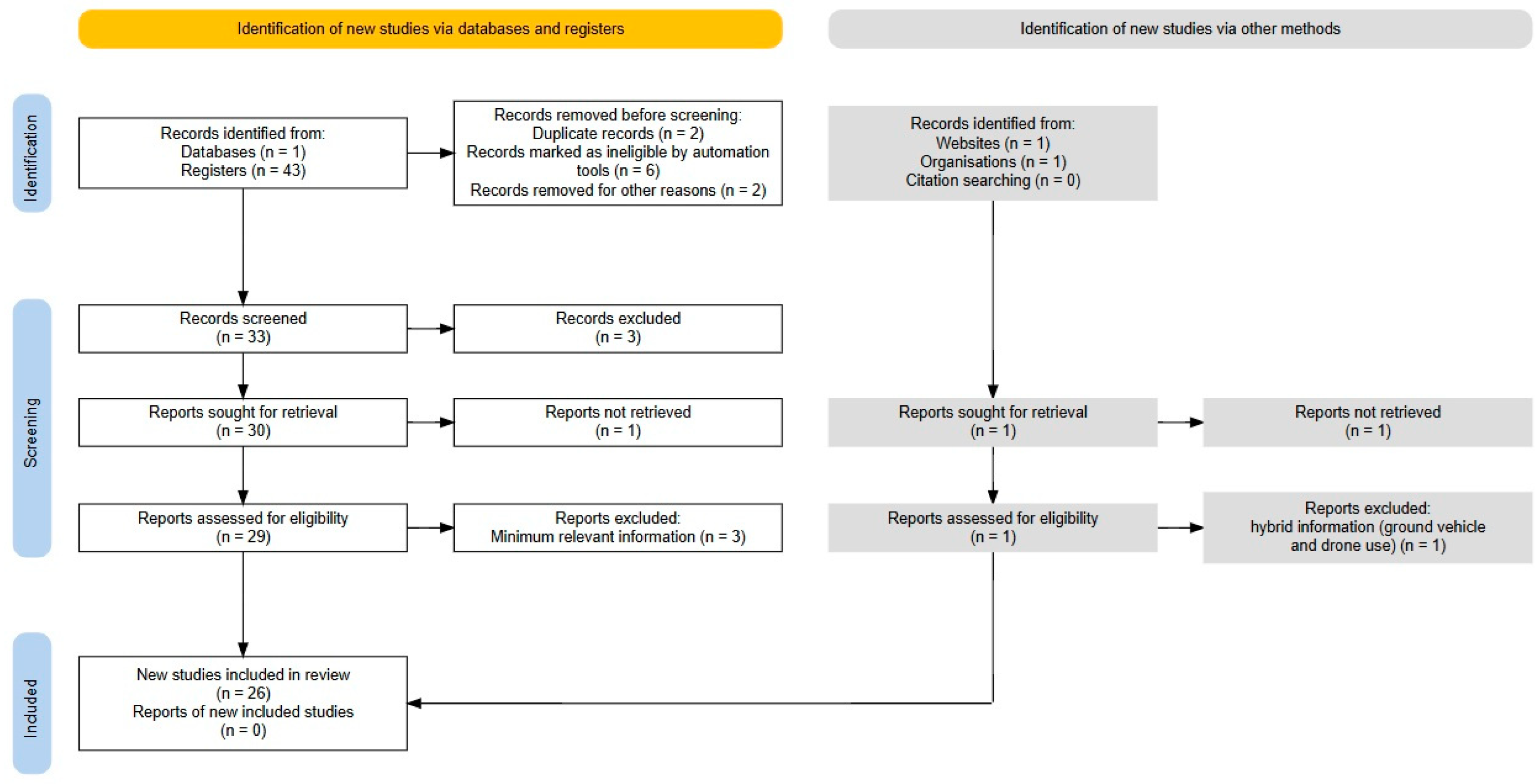
Figure 1. Study selection flow, from initial identification to final inclusion in the systematic review (Prism diagram).
Futuretransp 06 00010 g001
Figure 2. Conceptual workflow of UAV-based pavement inspection.
Futuretransp 06 00010 g002
Figure 3. Keyword co-occurrence map obtained using VOSviewer.
Futuretransp 06 00010 g003
Figure 4. Distribution and temporal evolution of studies by country (VOSviewer).
Futuretransp 06 00010 g004
Figure 5. Citation heatmap by country obtained using VOSviewer.
Futuretransp 06 00010 g005
Disclaimer/Publisher’s Note: The statements, opinions and data contained in all publications are solely those of the individual author(s) and contributor(s) and not of MDPI and/or the editor(s). MDPI and/or the editor(s) disclaim responsibility for any injury to people or property resulting from any ideas, methods, instructions or products referred to in the content.