
Article

Development of a Technological Transformation Strategy for the Automotive Sector of Southeastern Lower Saxony


1
Institute for Engineering Design, Technische Universität Braunschweig, Hermann Blenk Straße 42, 38108 Braunschweig, Germany
2
Institute of Automotive Engineering, Technische Universität Braunschweig, Hans Sommer Straße 4, 38106 Braunschweig, Germany
*
Author to whom correspondence should be addressed.
Future Transp. 2026, 6(2), 52; https://doi.org/10.3390/futuretransp6020052
Submission received: 28 January 2026 / Revised: 17 February 2026 / Accepted: 22 February 2026 / Published: 24 February 2026

Abstract

This paper develops a region-specific technological transformation strategy for the automotive and mobility sector in Southeast Lower Saxony (SON) under conditions of high uncertainty driven by electrification, digitalization, and automation. The study integrates three analytical components: (i) a SWOT-based baseline assessment of SON’s current strengths, weaknesses, opportunities, and threats; (ii) a scenario-technique framework describing alternative German mobility futures toward 2035; and (iii) a two-round Delphi survey with experts from the Institutes of Automotive Engineering and Engineering Design to evaluate actionable transformation measures. SWOT factors are mapped to scenario key-factor projections and assessed using a trinary impact scale (−1/0/+1), followed by aggregation and normalization to derive scenario-specific change factors. Delphi-rated measures are then prioritized using scenario-overarching performance and SWOT relevance, yielding a tiered strategy concept. The resulting strategy is organized around five interdependent pillars: strengthening industry–research cooperation, advancing research in modern mobility, developing key mobility-support technologies (battery technology, AI, circular economy), expanding digital infrastructure, and upgrading R&D infrastructure and talent capacity, supported by enabling regulatory and workforce measures. The paper provides focus points from regional diagnosis to prioritized action, supporting robust strategic decision-making and adaptive capability building in SON.

1. Introduction

This section introduces the technological transformation challenge for Southeast Lower Saxony’s automotive and mobility industry and frames the motivation and aims of this study under conditions of profound structural change and uncertainty.

1.1. Motivation

The technological transformation of the automotive industry in Southeast Lower Saxony (SON) is strategically critical because the region’s economy and labor market are structurally anchored in the mobility sector, while global electrification, digitalization, and automation are reshaping value chains, competence requirements, and competitive positions. SON combines strong path-dependent assets, dense industrial ecosystems and innovation capabilities, with high disruption exposure, making proactive technological strategy formation a necessity. The regional SWOT analysis identifies strengths including highly localized automotive competence, growing future-oriented sectors (logistics, ICT), strong science–industry linkages with pilot projects (intelligent infrastructure, automated driving), a substantial R&D workforce, and dense networks in “digitalized and intelligent mobility,” providing a robust basis for capability upgrading. Concurrent vulnerabilities include strong automotive dependence, uneven regional development and qualification gradients, skill bottlenecks (e.g., unfilled apprenticeships), broadband catch-up needs, and high occupational substitutability potentials. Opportunities relate to digitalization-driven mobility business models (Connected Mobility, MaaS, TaaS), cross-modal innovation, and broadening the innovation base via SME R&D and start-up activity, while threats include geopolitical and export uncertainty, new critical-material dependencies, potential production job losses under automation and electrification, and a hardware-to-software value shift that can undermine incumbent (especially SME) business models. Because these effects depend on evolving regulatory, technological, and societal conditions, scenario techniques are required to define plausible corridors for Germany to 2035, from stagnation under fragmented regulation to breakthroughs under harmonized frameworks and rapid diffusion of connected/autonomous technologies. Integrating global trends with SON’s SWOT thus motivates deriving robust, actionable transformation priorities that leverage strengths and mitigate scenario-contingent risks to competitiveness, employment, and long-term value creation.

1.2. Aims of This Study

This study aims to define a robust, region-specific strategy for the technological transformation of the automotive and mobility industry in Southeast Lower Saxony (SON) under conditions of high uncertainty driven by electrification, digitalization, and automation. Starting from a structured baseline diagnosis, the regional state was characterized via a SWOT analysis derived from the Prognos report, capturing strengths, weaknesses, opportunities, and threats of the SON mobility ecosystem [1]. In parallel, alternative future development corridors were operationalized through a scenario analysis for Germany to 2035, providing three contrasting but plausible futures [2]. To connect present characteristics with future dynamics, each SWOT factor was mapped to the scenario key-factor projections and scored, followed by aggregation and normalization to yield scenario-specific change factors. Building on this integrated framework, a two-round Delphi survey with experts from the Institute of Automotive Engineering and the Institute for Engineering Design of the Technical University Braunschweig elicited and refined evaluative judgments on actionable transformation measures across four thematic domains (technology/R&D, workforce, networking, and regional economy). Finally, measures were ranked for scenario-robustness and SWOT relevance, producing a tiered strategy of core and supporting as well as contextual supporting elements.

2. State of the Art

This chapter synthesizes the current research on the automotive industry’s technological transformation, structured future scenarios for Germany to 2035, and the present position of the Southeast Lower Saxony mobility cluster as the baseline for the subsequent analysis.

2.1. Transformation of the Automotive Industry

The current automotive industry is undergoing a systemic transformation characterized by the coupled megatrends of electrification, digitalization, automation, and platform-enabled mobility services [3,4,5]. Electrification is reconfiguring product architectures and manufacturing logics, thereby reshaping global value chains, supplier hierarchies, and plant-level competition for future vehicle programs [4,6]. Because electric powertrains substitute or eliminate numerous internal-combustion subsystems, the transition is associated with a contraction and recomposition of incumbent supplier capabilities and employment structures, with geographically uneven effects across European clusters [4,7,8]. At the macroeconomic level, road-transport electrification in the EU has been assessed as an economy-wide structural change that redistributes value added across sectors and modifies technology and energy-demand linkages [9]. A dominant constraint in this transition is the strategic centrality of batteries, which shifts value capture toward cell manufacturing, materials processing, and associated industrial ecosystems rather than combustion engine-centric competencies [6,10]. Peer-reviewed analyses emphasize that battery supply chains create sustainability, ethical, and operational exposure across mining, refining, manufacturing, and end-of-life stages, with direct implications for procurement strategies and risk management in Europe [11]. In response, European policy experimentation has increasingly targeted endogenous battery innovation and production networks (e.g., through coordinated state-aid instruments), reflecting a strategic attempt to reduce external dependency in a geoeconomic environment [12]. Parallel to capacity build-out, the regulatory design of battery recycling frameworks has been analyzed as a key determinant of whether Europe can develop a competitive recycling industry and close material loops at scale [13]. Scientific reviews in high-impact journals identify recycling and reuse as central levers for securing critical materials, improving sustainability performance, and mitigating supply risks as electrification accelerates [14,15]. Life-cycle assessment evidence indicates that the climate performance of electric vehicles is contingent on production emissions, electricity-system carbon intensity, and end-of-life management, motivating European OEMs to treat energy procurement and circularity as strategic variables rather than peripheral compliance topics [16,17]. Circular-economy syntheses specific to the automobile sector further suggest that environmental and socioeconomic outcomes depend on the portfolio of implemented strategies (e.g., remanufacturing, reuse, recycling, servitization) and on how impacts are measured across time and system boundaries [18]. Concurrently, the industry is shifting toward software-defined vehicles in which functionality, differentiation, and revenue opportunities increasingly derive from software architectures, over-the-air updates, and digital feature deployment rather than purely mechanical innovation [3,19,20]. Empirical work on connected-car ecosystems highlights the emergence of data-centric business models and platform logics, with implications for how OEMs structure partnerships, monetize services, and manage multi-sided interactions among users, developers, and infrastructure providers [21,22,23]. Architectural proposals for vehicle data management emphasize that the connected-vehicle stack requires systematic data handling, which increases the strategic importance of interoperability, governance, and scalable in-vehicle computing [24]. The expansion of connectivity simultaneously enlarges attack surfaces and risk externalities, making cybersecurity and privacy engineering material determinants of trust, regulatory exposure, and lifecycle cost in connected mobility offerings [22]. Automated-driving development is frequently treated as a complementary transformation pathway that amplifies sensing, compute, and liability complexities, thereby interacting with insurance, regulation, and adoption dynamics relevant to European deployment contexts [25,26]. Mobility-service diffusion has been analyzed as capable of reshaping incumbent market structures through platform-mediated access models (e.g., car-sharing and ride-hailing), while not necessarily eliminating incumbents’ strategic relevance if incumbents adapt their business models and asset strategies [5,27]. Recent supply-chain research, stimulated by semiconductor disruptions, underscores that automotive production systems are increasingly sensitive to chokepoints in upstream electronics, elevating the salience of resilience strategies, redesign choices, and sourcing architectures for European manufacturers [28,29]. For European automakers specifically, the combined electrification–digitalization transition implies simultaneous capital reallocation toward batteries and software, organizational restructuring across OEM–supplier interfaces, and heightened distributional conflict around jobs and skills, which has been framed as a “just transition” challenge in Europe’s car-dependent regions [4,6,8,30]. Evidence on Europe’s internal core–periphery production geographies indicates that electrification can reinforce uneven development patterns unless capability formation (e.g., batteries, advanced electronics, software) diffuses beyond incumbent cores and foreign-controlled peripheries [7]. Finally, sectoral labor-intensity analyses suggest that electrification does not mechanically translate into uniform job losses but instead induces heterogeneous labor demand shifts across activities, implying that European OEM competitiveness will increasingly depend on targeted capability upgrading, workforce transformation, and strategic positioning in emerging value pools [8,31].

2.2. Future Scenarios for the German Automotive Industry

The attached scenario analysis described by Stein and Everding et al. applies a structured scenario-management process to the German mobility sector (with a regional focus on Southeast Lower Saxony) with a time horizon to 2035 and derives three logically consistent scenario clusters that span a worst-case, best-case, and trend corridor: “Innovation Standstill and Societal Withdrawal,” “Breakthrough in Innovation Centers,” and “Connected Transition Phase” [2]. In the “Innovation Standstill and Societal Withdrawal” scenario posits failed AV diffusion: pilot projects do not scale and nationwide rollout remains distant. Fragmented standards and weak cooperation impede security, raise costs, and delay automated parking. Low acceptance, regulatory/geopolitical fragmentation, hardware bottlenecks, slow Computer Vision (CV) improvements, delayed Vehicle-to-X (V2X) technology adoption, and limited behavior estimation reduce demand and competitiveness [2]. In contrast, the “Breakthrough in Innovation Centers” scenario assumes rapid regional transformation via dedicated operational areas, purpose-built infrastructure, adaptive cybersecurity, and scaled automated parking with connected systems. Scale and modularity cut costs and boost acceptance; harmonized EU rules speed scaling. Advanced sensing/CV, V2X, and behavior estimation enable broad deployment and positive spillovers [2]. The scenario, “Connected Transition Phase,” depicts incremental autonomy coexisting with legacy infrastructure, delaying transformation and limiting scale. Safety/security progress unevenly amid fragmented standards. Automated parking grows mainly in cities/garages. Costs stay high, access selective, acceptance ambivalent; geoeconomic tensions persist. Governance relies on local pilot projects; V2X and behavior estimation diffuse slowly in restricted zones [2]. Taken together, the scenarios primarily differentiate along the axes of regulatory harmonization versus fragmentation, cost trajectories and scale effects, infrastructure and connectivity maturity (notably V2X), and the resulting societal acceptance that conditions whether automated mobility remains niche, diffuses incrementally, or scales systemically.

2.3. Current State of the Southeast Lower Saxon Mobility Industry

Southeast Lower Saxony (Braunschweig–Wolfsburg region; SüdOstNiedersachsen) comprises the cities Braunschweig, Wolfsburg, Salzgitter and the counties Gifhorn, Goslar, Helmstedt, Peine and Wolfenbüttel, covering 5093 km2 with ~1.14 million inhabitants. Its automotive-centered mobility economy is the dominant specialization: regional GDP exceeds €60 bn (+~36% from 2010 to 2023), industrial value creation has increased despite national tertiarization, and mobility-economy activities account for roughly every third job. “Manufacture of motor vehicles and parts” is the largest sector, employing 90,871 socially insured workers in 2021 (19.3% of total employment); value-chain linkages indicate ~182,000 of ~591,000 employed persons are directly or indirectly tied to mobility. Input–output modeling attributes ~182,000 jobs and ~€21.8 bn value-added effects to the mobility economy (direct, indirect incl. aftersales, and induced), and ~117,000 jobs and ~€17.5 bn gross value added within core mobility branches. Wolfsburg anchors the system via Volkswagen (≈70,000 jobs; ≈€14.5 bn GVA), with spillovers to Braunschweig (finance, R&D, engineering) and Salzgitter/Gifhorn (metalworking, engineering). Nearly half of mobility-economy organizations operate in aftersales (49.8%), 35.5% in OEM/supplier/vehicle-related services and 8.4% in logistics, with industry concentrated in Braunschweig/Wolfsburg and aftersales in rural counties. Activity mapping showed in 2023 overall: 365 combustion-related firms, 139 “green mobility” firms (including 90 charging-infrastructure firms) and 166 robotics/automation firms, indicating incremental diversification. Innovation capacity is high (>18,000 R&D employees; 3.9% R&D share, Wolfsburg 11.2%) but requires extra-regional knowledge “pipelines.” The automotive core faces pressures from electrification, connectivity/automation, digitalization, business-model shifts and ESG requirements, implying major changes in skills and investment; transition speed depends on EV diffusion drivers, notably incentives and charging availability, making regulatory coordination and infrastructure rollout pivotal for competitiveness [1].
Based on a situational assessment, company and network analysis, and expert interviews, the Prognos report synthesizes a SWOT profile for the Braunschweig–Wolfsburg mobility region in Southeast Lower Saxony. Strengths comprise very high localization and corresponding industry competence in automotive activities, growing future-oriented sectors (logistics, information and communication, vehicle manufacturing, business-related services), a comparatively high share of tertiary-educated workers, an above-average share of R&D personnel, especially in Wolfsburg and Gifhorn, a high share of highly complex task profiles with strong employment growth at expert level, numerous science and research institutions in technical/engineering and mobility domains plus forward-looking pilot projects (intelligent transport infrastructure; automated driving) in science–industry co-production, a high share of “digital impulse providers” with strong growth relative to federal and state levels, a dense corporate network in the cluster “digitalized and intelligent mobility,” and positive net migration among young adults, labor-market entrants, and families. Weaknesses include weak employment growth (2011–2021) versus Germany and Lower Saxony, employment losses in metal production/processing and metal construction occupations, R&D concentrated in the Volkswagen group with comparatively lower R&D staffing among Small and Medium-sized Enterprises (SMEs), a high and rising share of unfilled apprenticeships alongside a decline in apprenticeship places, below-average economic development in Salzgitter and in Goslar, Helmstedt, Peine, and Wolfenbüttel, strong dependence on the automotive industry as the only very highly localized sector, population growth that is positive but below national/state trends (and declining in some counties), a qualification gradient between Braunschweig/Wolfsburg and other jurisdictions, high substitutability potentials in manufacturing and large service occupational groups, below-average start-up intensity (except Braunschweig, Goslar), limited region-wide anchoring of high-transformation/value-added sectors, and deficits in >100 Mbit/s broadband, notably Helmstedt and Wolfenbüttel. Opportunities include cross-modal innovation (road, rail, aviation), digitalization-enabled concepts/models (Connected Mobility, Shared Mobility, MaaS), stronger translation of scientific–technical competence via networking, a broader innovation base through higher SME R&D and start-ups, suburban/rural attractiveness within a “sustainable mobility region,” climate-protection and circular-economy value-added and jobs, alleviating skill shortages via training/careers and demand-oriented immigration, renewables and hydrogen infrastructure expansion, urban-to-rural know-how transfer, and job safeguarding through support for technology adoption, new models, ICT reskilling, and improved continuing-education matching. Threats comprise political/global uncertainty under export dependence, new critical-material dependencies (lithium, cobalt, graphite), production job losses from automation/digitalization and EV powertrain simplicity plus skill mismatches, reduced attractiveness via regional competition and education out-migration, hardware-to-software value shifts that may obsolete many (especially SME) models, rural exposure from combustion-engine dependence, rising technological depth (e.g., automated driving) outside leading centers given limited resources, and high exposure to highly substitutable occupations with sharply declining demand for vehicle-technical jobs [1].

2.4. Methodological Approaches for Strategic Planning Under Uncertainty

Developing robust strategies for structural transformation requires integrating qualitative expert insights with systematic future projections. In strategic foresight literature, hybrid methodologies that combine SWOT analysis and Delphi surveys, sometimes based on Scenario techniques, are established by multiple scientific publications with a focus on business model development and strategic decision-making. These integrated frameworks have been successfully employed across various sectors facing fundamental transitions. For instance, Celiktaş and Kocar utilized a combined Delphi-SWOT approach to develop foresight for renewable energy transitions, while Rauch et al. applied a ‘hybrid policy Delphi-SWOT’ to derive resource utilization strategies in the forestry and bioeconomy sectors. These studies demonstrate that applying these integrated methods for strategic decision-making is a sensible strategy for deriving high level strategic goals [32,33]. Within the automotive sector, similar approaches have already been applied for deriving business models and decision-making on the vehicle concept level. Wang et al. applied a SWOT-based hybrid framework to prioritize strategic choices for the New Energy Vehicle industry, and Fritschy and Spinler utilized Delphi-based scenario studies to forecast the impact of autonomous trucks on logistics business models [34,35]. Recent applications have further extended this to market structure assessments (e.g., Hossain et al.) [36]. This study builds upon this established methodological state of the art, applying it to the specific context of Southeast Lower Saxonies automotive industry transformation.

3. Methods

This chapter describes the methodological workflow used to integrate scenario-driven impacts on regional SWOT factors with a two-round Delphi expert survey and a structured ranking procedure to derive a robust, region-specific transformation strategy for the SON automotive industry. The step-by-step process detailed in this Section is summarized visually in Figure 1. For this study, the methodological integration follows a sequential logic. The Scenario Analysis from Stein et al. and the SWOT-Analysis by Schwienbacher et al. serve as the fixed boundary condition, establishing the external environment which is the basis of the transformation measures to be designed [1,2]. Consequently, the feedback loops are concentrated within the Delphi process to refine the consensus on measures, rather than retroactively modifying the initial scenario definitions or SWOT factors during the survey phase. This ensures a stable and consistent evaluation framework for all experts.

3.1. Impact of Scenarios on the SWOT of the SON Automotive Industry

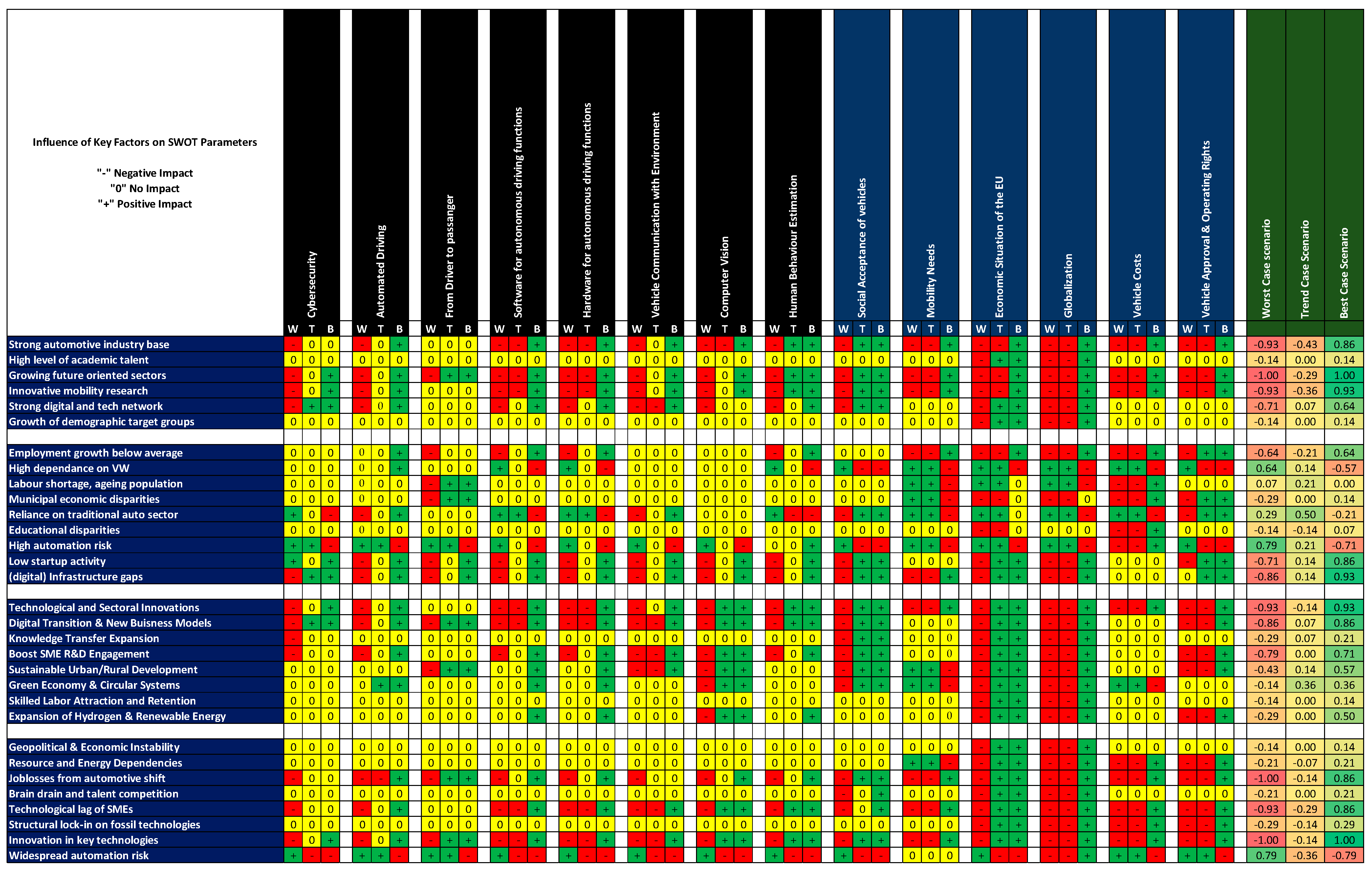
In order to quantify how the present state of the SON mobility region may evolve under alternative futures, the SWOT elements derived for the region were systematically linked to the scenario analysis via a key-factor–projection mapping. For each SWOT factor (strength, weakness, opportunity, threat), an impact matrix was constructed in which the factor was mapped to every key-factor projection defined in the scenario set. For each scenario separately, the directional effect of each projection on the respective SWOT factor was coded on a discrete trinary scale (−1, 0, +1), indicating weakening, neutrality, or strengthening of the factor under the projection assumptions. The projection-level scores were then aggregated per SWOT factor and scenario to obtain a composite impact score representing the net directional pressure exerted by the scenario on the factor across all mapped projections. To ensure comparability across SWOT factors with different numbers of mapped projections, aggregated scores were normalized (e.g., by the maximum possible absolute score or by the number of contributing projections), yielding a bounded change-factor value for each SWOT factor in each of the three scenarios. The resulting scenario-specific change factors provide a compact, internally consistent measure of how strengths, weaknesses, opportunities, and threats are expected to shift relative to the baseline under each scenario, thereby enabling a structured comparison of regionally salient vulnerabilities and capabilities across divergent future pathways. The detailed analysis is provided in Figure A1.

3.2. Questionnaire About Measures for the SON Automotive Industry

Based on the Delphi method, an analysis of possible actions to improve the mobility industry of the SON region was undertaken. The Delphi method is a structured, iterative expert-elicitation approach using multiple rounds of (typically anonymous) questionnaires with controlled feedback to develop consensus or stabilize judgments on complex, uncertain topics. Between rounds, participants receive aggregated group results and may revise their responses, which helps mitigate dominance effects and promotes convergence [37,38].
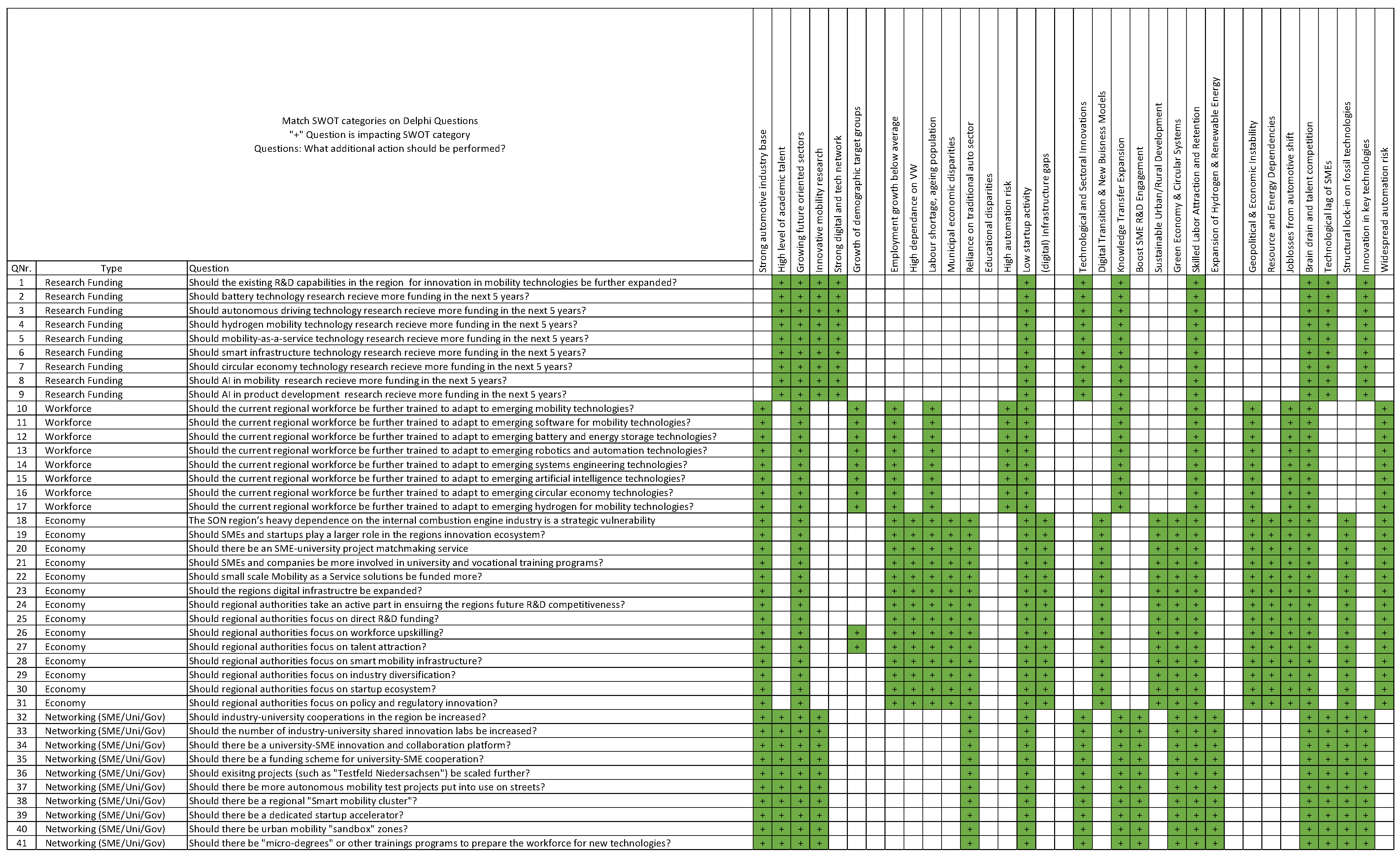
In the first step, domain experts from the Institute of Automotive Engineering and the Institute for Engineering Design were purposively selected to design a questionnaire capturing the most salient and regionally actionable metrics. The instrument was scoped to emphasize levers that can be adjusted through integration of existing infrastructure, the opening of additional communication channels, and the pooling of regional know-how, without presupposing major infrastructure investments, large-scale funding programs, or changes in the global macro-environment. The resulting questionnaire was structured around four core thematic domains: (i) technological progress and R&D, (ii) regional workforce dynamics, (iii) networking and collaboration among regional actors, and (iv) the regional economy. During questionnaire development, each item was concurrently mapped to the corresponding SWOT factors to anchor expert elicitation in the current characteristics of the SON region. This alignment enabled subsequent scenario impacts to be interpreted directly in terms of strengths, weaknesses, opportunities, and threats. By using the SWOT structure as a common reference layer, the scenario projections, the regional baseline assessment, and the Delphi questionnaire were integrated into a single, coherent analytical information ecosystem. A detailed list of questions is provided in Figure A2.
In accordance with established Delphi procedures, experts from the two institutes completed anonymized questionnaires in two iterative rounds. In Round 1, each topic was assessed on a five-point Likert-type scale ranging from strongly negative (−2) to strongly positive (+2), and the responses were aggregated for evaluation. The same items were then redistributed for Round 2 together with the group-level results and each item’s prior-round rating made visible, enabling participants to revise their judgments in light of the collective assessment while preserving anonymity. The final round results were used to identify the core elements of the technological transformation strategy, its supporting components, and additional contextually relevant aspects.

3.3. Strategy Definition Process for the SON Automotive Industry

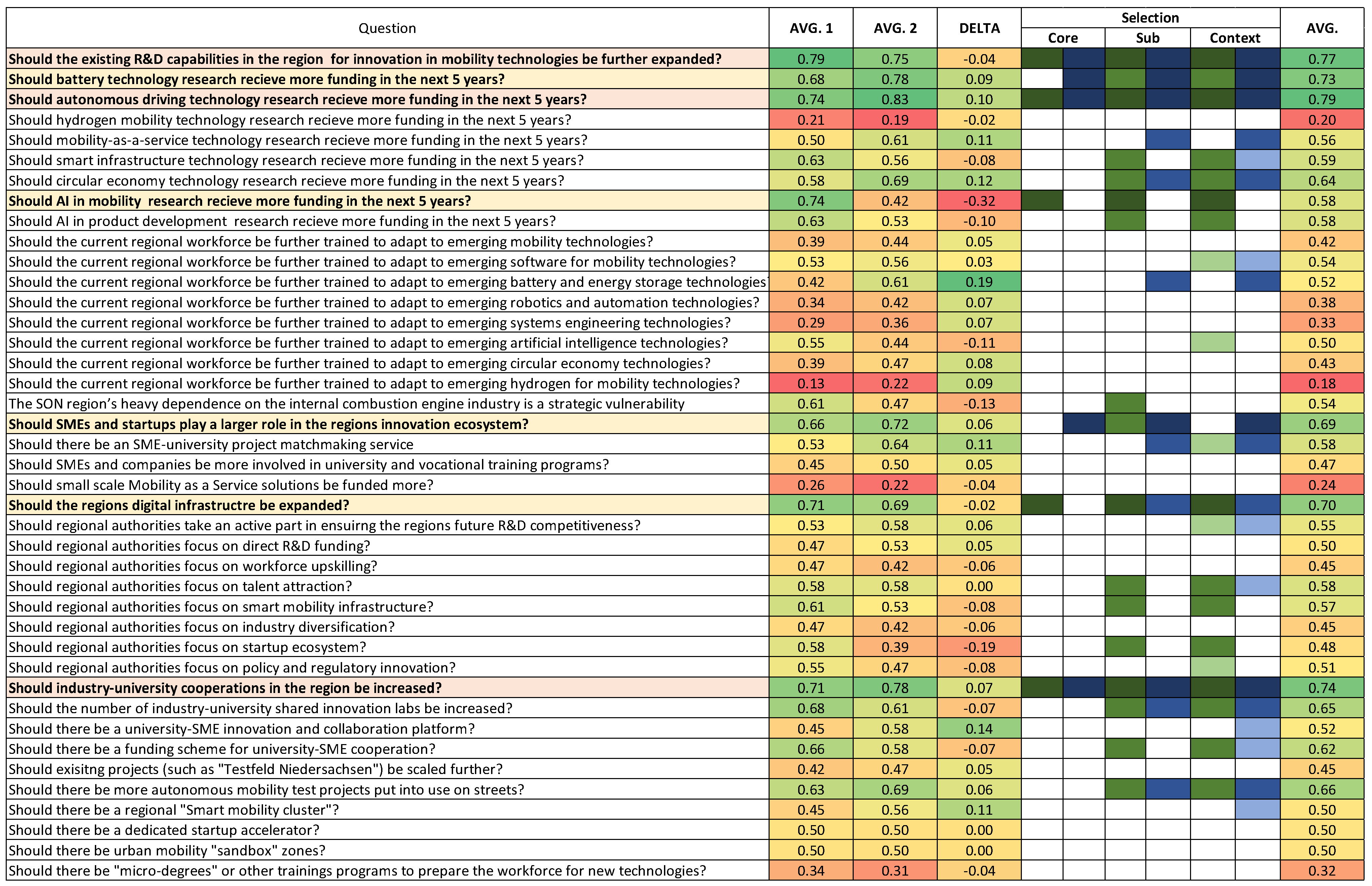
Strategy definition was conducted by integrating the scenario-based impact assessment of SWOT factors with the Delphi-derived evaluation of candidate measures, thereby prioritizing actions that remain robust across divergent futures while directly addressing region-specific strengths, weaknesses, opportunities, and threats. Measures were ranked using their combined evaluation across scenarios (i.e., scenario-overarching performance) and their alignment with the SWOT-derived needs. The top 10% of measures constituted the core components of the technological transformation strategy, representing the highest-priority and most resilient levers. Measures in the upper third formed the supporting components, providing complementary actions that strengthen implementation breadth and resilience. All remaining measures rated above the overall mean were incorporated as context-dependent options, expanding the strategy concept with modular extensions to support adaptive, situation-specific strategic decision-making. An overview of the final evaluation of the Delphi-Questionnaire is provided in Figure A3.

4. Technological Transformation Strategy

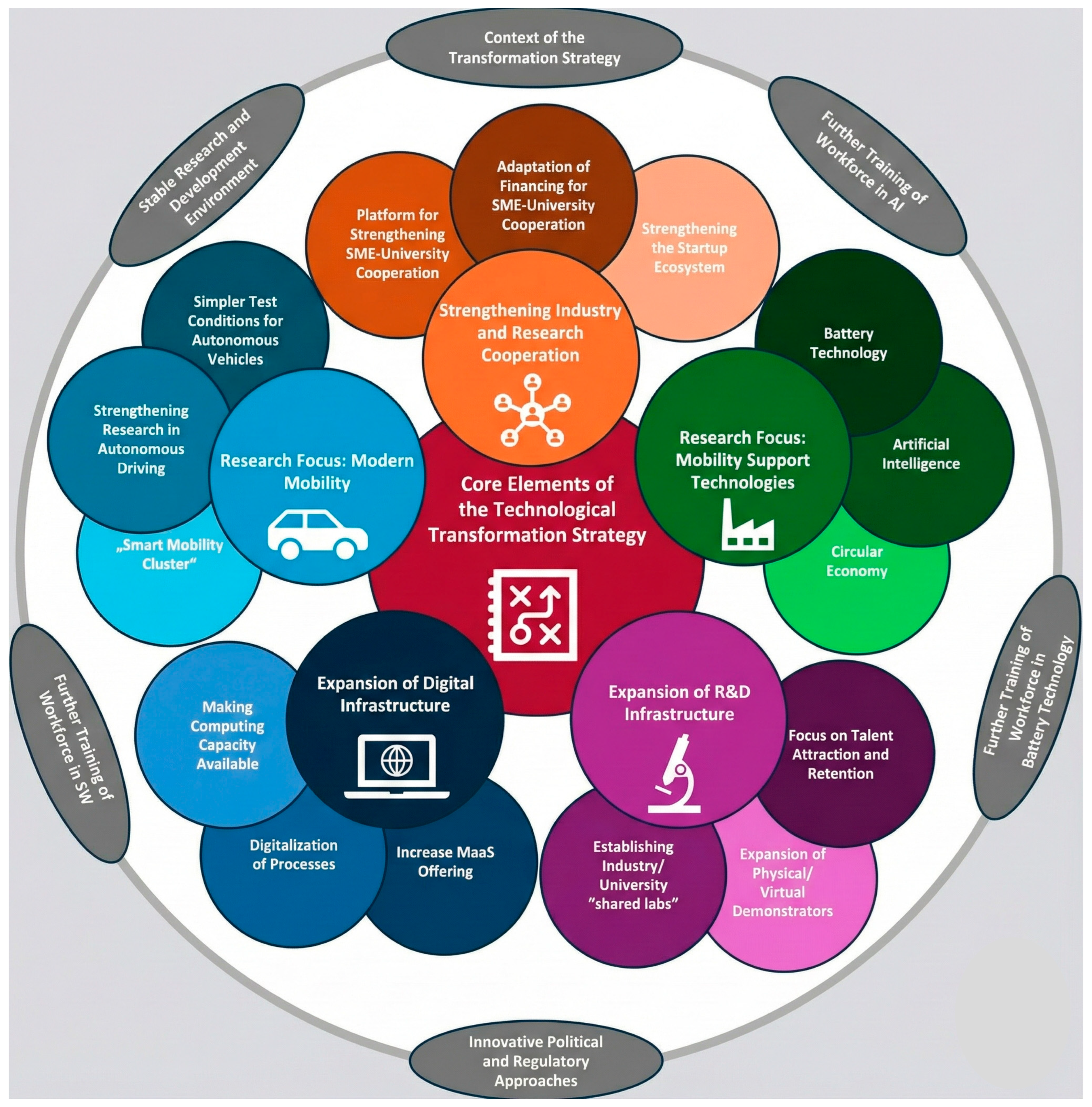
The technological transformation strategy for Southeast Lower Saxony is structured as an integrated portfolio in which a central strategic core is operationalized through five mutually reinforcing pillars, each complemented by concrete supporting measures and embedded in enabling framework conditions. At the center, the strategy conceptualizes technological transformation as a coordinated capability shift in the regional automotive and mobility ecosystem toward innovation-driven, future-proof value creation. The first pillar, strengthening industry–research cooperation, targets the systematic acceleration of knowledge transfer and joint development by establishing a dedicated platform for SME–university collaboration, adapting financing instruments to the needs and time horizons of cooperative R&D, and strengthening the regional start-up ecosystem as a mechanism for rapid commercialization, spin-offs, and experimentation. The second pillar, research focus on modern mobility, concentrates on advancing automated and intelligent mobility solutions by intensifying research in autonomous driving, institutionalizing a “smart mobility cluster” as a coordinating structure for cross-actor collaboration and visibility, and improving real-world validation through simpler and more practicable test conditions for autonomous vehicles in public and semi-public environments. The third pillar, research focus on mobility support technologies, addresses cross-cutting technological enablers that increasingly determine competitiveness in automotive value creation, specifically by prioritizing battery technology, artificial intelligence, and circular-economy approaches; together, these elements aim to strengthen regional competencies in energy storage, data-driven functions and operations, and resource-efficient lifecycle concepts that reduce dependency risks while supporting sustainability targets. The fourth pillar, expansion of digital infrastructure, treats digital capabilities as a foundational production factor for modern mobility innovation and diffusion; it therefore includes making computing capacity broadly accessible (e.g., for simulation, AI training, and data-intensive development), digitalizing processes across organizational interfaces to reduce friction in collaboration and implementation, and increasing Mobility-as-a-Service (MaaS) offerings as a living laboratory for integrating multimodal services, testing digital platforms under real conditions, and generating empirical feedback for iterative improvement. The fifth pillar, expansion of R&D infrastructure, secures long-term innovation capacity by focusing on talent attraction and retention, establishing shared industry–university laboratories that enable co-creation and efficient use of specialized equipment, and expanding physical and virtual demonstrators to accelerate prototyping, validation, stakeholder communication, and societal acceptance through tangible, testable artifacts.
These five pillars of the strategy are supported by overarching context factors that define the boundary conditions for successful implementation. A stable research and development environment provides planning security and continuity for multi-year capability building, while innovative political and regulatory approaches reduce barriers to experimentation and facilitate learning-oriented governance for emerging technologies. In parallel, targeted workforce upskilling, specifically further training in software, artificial intelligence, and battery technology, ensures that technological investments translate into deployable competencies and resilient employment pathways. In combination, the core pillars, their attached measures, and the contextual enablers form a coherent strategic architecture: cooperation and infrastructure increase the regional innovation throughput, modern mobility and support technologies define the thematic direction of R&D and commercialization, and the regulatory and skills context ensures that scaling and diffusion remain feasible under real-world constraints. A brief overview of the main concepts of the regional transformation strategy is provided in Figure 2.

5. Discussion

This study presents an integrated approach for deriving a region-specific technological transformation strategy for the automotive and mobility system in Southeast Lower Saxony (SON) under high uncertainty. Its key contribution is the combined use of (i) a structured SWOT baseline, (ii) scenario-based key-factor projections, and (iii) a two-round Delphi assessment to translate uncertainty and regional conditions into prioritized, actionable strategy components. By mapping each SWOT factor to each scenario projection and scoring directional effects on a trinary scale, scenario-specific change factors were derived, which were then combined with expert-rated measures to form a tiered strategy (core, supporting, and context-dependent options).
The analysis indicates strong contingency of SON’s outlook on regulatory harmonization, technology diffusion, infrastructure maturity, and societal acceptance: strengths can erode under stagnation scenarios and compound under breakthrough scenarios. At the same time, recurring vulnerabilities, SME capability gaps, infrastructure deficits, and skill-transition risks, explain why capability building (R&D, digital infrastructure, transfer mechanisms, and workforce development) emerges as the dominant cross-cutting theme. The Delphi results reinforce this orientation, prioritizing measures that expand R&D capacities, strengthen SME/startup participation, deepen industry–university collaboration (e.g., platforms, shared labs), and build enabling digital infrastructure for data-intensive innovation, while other measures are ranked lower, suggesting either reduced leverage or stronger dependence on external boundary conditions.
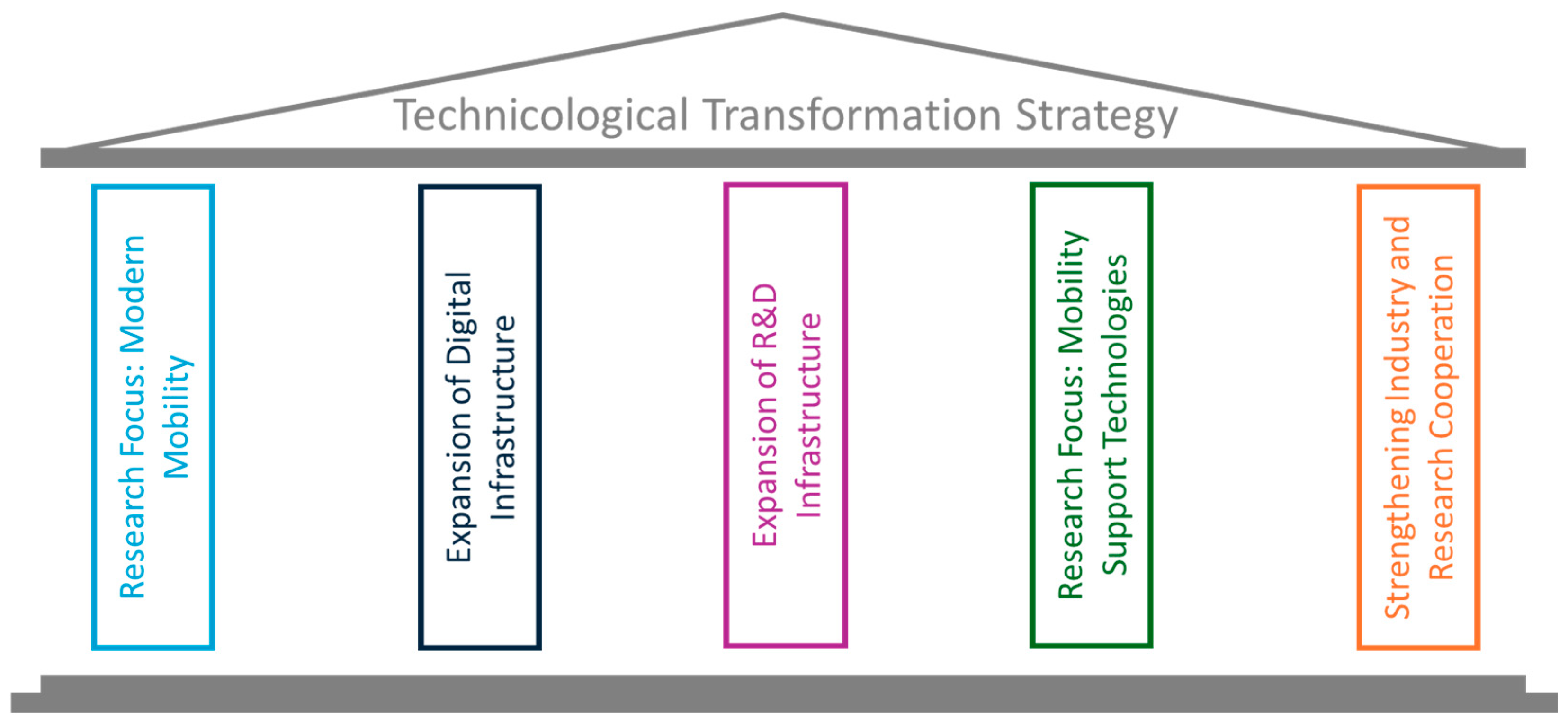
Limitations follow directly from the method design. The discrete (−1/0/+1) scoring and equal aggregation increase transparency but may underrepresent nonlinearities and factor interactions; sensitivity checks with alternative weighting would strengthen robustness. The Delphi panel’s institutional concentration supports technical coherence but may bias results toward research-centric interventions; future panels should include firms (especially SMEs), labor-market actors, municipalities, and regulators. Finally, prioritization thresholds (top 10%, upper third, above mean) are practical but not linked to any empirical values. Overall, the results support interpreting SON’s transformation as a coordinated regional capability program that buffers adverse futures and accelerates value capture in favorable ones. Regarding empirical depth, it must be noted that these expert assessments represent a cross-sectional snapshot; therefore, the validity of the derived measures is contingent on the current technological and regional baseline. The broader managerial implication is that this strategy cannot be executed as a static roadmap, but requires a dynamic governance structure to continuously recalibrate priorities as the real-world situation evolves. A final overview of the Technological Transformation strategy is provided in Figure 3.

6. Conclusions

This paper develops a region-specific technological transformation strategy for the automotive and mobility sector in SON by integrating three complementary analytical layers: a SWOT-based characterization of the current regional state, a scenario-technique assessment of plausible future corridors to 2035, and a two-round Delphi process to prioritize actionable measures. The resulting method links present capabilities and vulnerabilities to future uncertainty through an explicit scenario–SWOT impact mapping, aggregates and normalizes these effects into scenario-specific change factors, and combines them with expert evaluations to derive a tiered strategy architecture.
The strategy emphasizes five interdependent pillars: strengthening industry–research cooperation, focusing R&D on modern mobility, advancing key mobility-support technologies (battery technology, AI, circular economy), expanding digital infrastructure, and upgrading R&D infrastructure and talent capacity. Across scenarios, measures that improve regional innovation throughput—transfer platforms, shared labs, demonstrators, accessible computing capacity, and coordinated testing environments—emerge as robust levers because they simultaneously mitigate identified weaknesses (skills, SME capability gaps, infrastructure deficits) and amplify strengths (dense industrial ecosystem, strong research base, and network potential). Context factors such as stable R&D conditions, workforce upskilling, and adaptive regulatory approaches are shown to be enabling prerequisites rather than optional add-ons.
In sum, the study provides a transparent, replicable pathway from diagnosis and uncertainty to prioritized action, supporting strategic decision-making that remains resilient across divergent futures. Future work should operationalize the strategy via governance ownership, financing pathways, measurable KPIs, and broader stakeholder inclusion to ensure implementability and to monitor whether capability-building translates into sustained competitiveness, employment stability, and long-term value creation in SON. The methodological novelty of this publication lies in the systematic linkage of SWOT, Delphi, and Scenario Analysis techniques, innovating by translating qualitative future narratives into impact scores to derive robust, scenario-contingent regional strategies and actions.

7. Outlook

Future research should move from conceptual strategy architecture toward implementation science for regional technological transformation. A first step is operationalization: translating the tiered measures into quantified targets, timelines, responsible actors, and monitoring indicators (e.g., cooperation intensity, demonstrator throughput, SME adoption rates, skills-transition metrics). Methodologically, robustness can be strengthened by sensitivity analyses of the scenario–SWOT scoring (alternative weighting, nonlinear effects, interaction terms) and by triangulating expert judgments with empirical data (patents, funding flows, labor-market transitions, infrastructure readiness). The Delphi design should be expanded to a broader stakeholder panel, SMEs, suppliers, municipalities, labor representatives, and regulators to capture feasibility constraints and governance frictions that academic-only panels may underweight. In parallel, comparative applications to other automotive regions would test transferability and reveal which pillars are generic versus SON-specific. Finally, longitudinal evaluation is needed: repeated scenario updates and Delphi rounds can track shifting technology trajectories (e.g., software-defined vehicles, battery ecosystems, circularity regulation) and allow the strategy to function as an adaptive management tool rather than a static plan.

Author Contributions

Conceptualization, A.S., B.K. and H.M.; methodology, A.S., M.F. and A.W.S.; investigation, A.S., H.M., B.K., M.F. and A.W.S.; software, A.S.; writing—original draft, A.S. and H.M.; writing—review and editing, A.S., B.K. and H.M.; supervision, A.W.S., M.F. and T.V.; validation B.K.; M.F. and A.W.S. visualization, A.S. All authors have read and agreed to the published version of the manuscript.

Funding

This research was funded by the TU Braunschweig Publication Fund.

Institutional Review Board Statement

Not applicable.

Informed Consent Statement

Not applicable.

Data Availability Statement

The original contributions presented in this study are included in the article. Further inquiries can be directed to the corresponding author.

Acknowledgments

The research presented in this paper was funded the Federal Ministry for Economic Affairs and Energy on the basis of a decision by the German Bundestag as part of the “Regional Transformation Net-work Southeast Lower-Saxony (ReTraSON)” projects.

Conflicts of Interest

The authors declare no conflicts of interest.

Abbreviations

The following abbreviations are used in this manuscript:
AIArtificial Intelligence
AVAutonomous Vehicle
BEVBattery Electric Vehicle
CVComputer Vision
EUEuropean Union
EVElectric Vehicle
GDPGross Domestic Product
GVAGross Value Added
HPCHigh-Performance Computing
ICTInformation and Communication Technology
LCALife-Cycle Assessment
MaaSMobility as a Service
OEMOriginal Equipment Manufacturer
R&DResearch and Development
SMESmall and Medium-Sized Enterprise
SONSoutheast Lower Saxony
SWOTStrengths, Weaknesses, Opportunities, Threats
TRLTechnology Readiness Level
V2XVehicle-to-Everything Communication
VRVirtual Reality

Appendix A

Figure A1. Mapping of Regional SWOT factors on the Scenarios Analysis Projections.
Futuretransp 06 00052 g0a1
Figure A2. Mapping of Delphi questions on to the Regional SWOT factors.
Futuretransp 06 00052 g0a2
Figure A3. Evaluations of the strategic relevance of the of Delphi measures.
Futuretransp 06 00052 g0a3

References

  1. Arndt, O.; Schwienbacher, J.; Ulbrich, T.; Janshen, R.; Eberle, J.; Malik, F.; Mahle, M. Situations- und Chancen-Risiko-Analyse zur regionalen Mobilitätswirtschaft: Bericht im Rahmen des Projekts “Regionales Transformationsnetzwerk SüdOstNiedersachsen—ReTraSON”. Bericht, 2023. Available online: https://retrason.de/wp-content/uploads/2023/06/ReTraSON_Prognosbericht_WEB.pdf (accessed on 23 December 2025).
  2. Stein, A.; Everding, L.; Münchhausen, H.; Krüger, B.; Hichri, B.; Flormann, M.; Sturm, A.; Vietor, T. Scenario-Based Analysis of the Future Technological Trends in the Automotive Sector in Germany. Appl. Syst. Innov. 2026, 9, 28. [Google Scholar] [CrossRef]
  3. Lopez-Vega, H.; Moodysson, J. Digital Transformation of the Automotive Industry: An Integrating Framework to Analyse Technological Novelty and Breadth. Ind. Innov. 2023, 30, 67–102. [Google Scholar] [CrossRef]
  4. Frieske, B.; Hasselwander, S.; Deniz, Ö.; Stieler, S.; Schumich, S. Scenario-Based Analysis of Electrification Effects on Value Creation and Employment Structures for the Automotive Industry in the Federal State of Baden-Wuerttemberg, Germany. World Electr. Veh. J. 2024, 15, 480. [Google Scholar] [CrossRef]
  5. Wells, P.; Wang, X.; Wang, L.; Liu, H.; Orsato, R. More friends than foes? The impact of automobility-as-a-service on the incumbent automotive industry. Technol. Forecast. Soc. Change 2020, 154, 119975. [Google Scholar] [CrossRef]
  6. Rísquez Ramos, M.; Ruiz-Gálvez, M.E. The transformation of the automotive industry toward electrification and its impact on global value chains: Inter-plant competition, employment, and supply chains. Eur. Res. Manag. Bus. Econ. 2024, 30, 100242. [Google Scholar] [CrossRef]
  7. Pavlínek, P. Transition of the automotive industry towards electric vehicle production in the east European integrated periphery. Empirica 2023, 50, 35–73. [Google Scholar] [CrossRef]
  8. Hancké, B.; Mathei, L. Varieties of just transitions in the European car industry. Contemp. Soc. Sci. 2024, 19, 135–153. [Google Scholar] [CrossRef]
  9. Tamba, M.; Krause, J.; Weitzel, M.; Ioan, R.; Duboz, L.; Grosso, M.; Vandyck, T. Economy-wide impacts of road transport electrification in the EU. Technol. Forecast. Soc. Change 2022, 182, 121803. [Google Scholar] [CrossRef] [PubMed]
  10. Greitemeier, T.; Kampker, A.; Tübke, J.; Lux, S. China’s hold on the lithium-ion battery supply chain: Prospects for competitive growth and sovereign control. J. Power Sources Adv. 2025, 32, 100173. [Google Scholar] [CrossRef]
  11. Jannesar Niri, A.; Poelzer, G.A.; Zhang, S.E.; Rosenkranz, J.; Pettersson, M.; Ghorbani, Y. Sustainability challenges throughout the electric vehicle battery value chain. Renew. Sustain. Energy Rev. 2024, 191, 114176. [Google Scholar] [CrossRef]
  12. Gräf, H. A Regulatory-Developmental Turn Within EU Industrial Policy? The Case of the Battery IPCEIs. Polit. Gov. 2024, 12, 8188. [Google Scholar] [CrossRef]
  13. Hoarau, Q.; Lorang, E. An assessment of the European regulation on battery recycling for electric vehicles. Energy Policy 2022, 162, 112770. [Google Scholar] [CrossRef]
  14. Rezaei, M.; Nekahi, A.; M R, A.K.; Nizami, A.; Li, X.; Deng, S.; Nanda, J.; Zaghib, K. A review of lithium-ion battery recycling for enabling a circular economy. J. Power Sources 2025, 630, 236157. [Google Scholar] [CrossRef]
  15. Harper, G.; Sommerville, R.; Kendrick, E.; Driscoll, L.; Slater, P.; Stolkin, R.; Walton, A.; Christensen, P.; Heidrich, O.; Lambert, S.; et al. Recycling lithium-ion batteries from electric vehicles. Nature 2019, 575, 75–86. [Google Scholar] [CrossRef]
  16. Buberger, J.; Kersten, A.; Kuder, M.; Eckerle, R.; Weyh, T.; Thiringer, T. Total CO2-equivalent life-cycle emissions from commercially available passenger cars. Renew. Sustain. Energy Rev. 2022, 159, 112158. [Google Scholar] [CrossRef]
  17. Tang, C.; Tukker, A.; Sprecher, B.; Mogollón, J.M. Assessing the European Electric-Mobility Transition: Emissions from Electric Vehicle Manufacturing and Use in Relation to the EU Greenhouse Gas Emission Targets. Environ. Sci. Technol. 2023, 57, 44–52. [Google Scholar] [CrossRef] [PubMed]
  18. He, Z.; Sun, L.; Hijioka, Y.; Nakajima, K.; Fujii, M. Systematic review of circular economy strategy outcomes in the automobile industry. Resour. Conserv. Recycl. 2023, 198, 107203. [Google Scholar] [CrossRef]
  19. Ohlsen, J. The software-defined Vehicle Is Overwhelming the Automotive Industry. ATZ Electron. Worldw. 2022, 17, 56. [Google Scholar] [CrossRef]
  20. Nolte, B.; Stein, A.; Vietor, T. Designing a Method for Identifying Functional Safety and Cybersecurity Requirements Utilizing Model-Based Systems Engineering. Appl. Syst. Innov. 2025, 8, 45. [Google Scholar] [CrossRef]
  21. Lim, K.L.; Whitehead, J.; Jia, D.; Zheng, Z. Corrigendum to “State of data platforms for connected vehicles and infrastructures” [Commun. Transport. Res. 1 (2021) 100013]. Commun. Transp. Res. 2022, 2, 100057. [Google Scholar] [CrossRef]
  22. Guan, T.; Han, Y.; Kang, N.; Tang, N.; Chen, X.; Wang, S. An Overview of Vehicular Cybersecurity for Intelligent Connected Vehicles. Sustainability 2022, 14, 5211. [Google Scholar] [CrossRef]
  23. Kizgin, U.V.; Stein, A.; Esapathi, J.; Vietor, T. Systematic Method for Identifying Safety and Security Requirements in Autonomous Driving: Case Study of Autonomous Intersection System. Appl. Syst. Innov. 2025, 8, 168. [Google Scholar] [CrossRef]
  24. Benaissa, K.; Bitam, S.; Mellouk, A. On-Board Data Management Layer: Connected Vehicle as Data Platform. Electronics 2021, 10, 1810. [Google Scholar] [CrossRef]
  25. Mahendrakar, S.; Madarla, M.; Gangapuram, S.; Dadoo, V. (Eds.) SAE Technical Paper Series, 11th SAEINDIA International Mobility Conference (SIIMC 2024), New Delhi, India, 11–13 December 2024; SAE International: Warrendale, PA, USA, 2024. [Google Scholar]
  26. Mahendrakar, S.; Madarla, M.; Gangapuram, S.; Dadoo, V. Automotive Cybersecurity: Defend the Future of Connected Vehicles. In SAE Technical Paper Series, 11th SAEINDIA International Mobility Conference (SIIMC 2024), New Delhi, India, 11–13 December 2024; Mahendrakar, S., Madarla, M., Gangapuram, S., Dadoo, V., Eds.; SAE International: Warrendale, PA, USA, 2024. [Google Scholar]
  27. Shih, H.-C.; Lee, Y.-C.; Yang, H.-Y.; Chen, L.-H.; Ma, H. Assessing car-sharing as a circular economy strategy: The case of Taiwan. Sustain. Sci. Pract. Policy 2025, 21, 2475590. [Google Scholar] [CrossRef]
  28. Xiong, W.; Wu, D.D.; Yeung, J.H.Y. Semiconductor supply chain resilience and disruption: Insights, mitigation, and future directions. Int. J. Prod. Res. 2025, 63, 3442–3465. [Google Scholar] [CrossRef]
  29. Frieske, B.; Stieler, S. The “Semiconductor Crisis” as a Result of the COVID-19 Pandemic and Impacts on the Automotive Industry and Its Supply Chains. World Electr. Veh. J. 2022, 13, 189. [Google Scholar] [CrossRef]
  30. Krüger, B.; Stein, A.; Gründker, L.; Vietor, T. Analyzing SME Digitalization Requirements Through a Technology Radar Framework in Southeast Lower Saxony. Digital 2025, 5, 60. [Google Scholar] [CrossRef]
  31. Weng, A.; Ahmed, O.Y.; Ehrlich, G.; Stefanopoulou, A. Higher labor intensity in US automotive assembly plants after transitioning to electric vehicles. Nat. Commun. 2024, 15, 8088. [Google Scholar] [CrossRef] [PubMed]
  32. Celiktas, M.S.; Kocar, G. From potential forecast to foresight of Turkey’s renewable energy with Delphi approach. Energy 2010, 35, 1973–1980. [Google Scholar] [CrossRef]
  33. Auer, V.; Rauch, P. Developing and evaluating strategies to increase the material utilisation rate of hardwoods: A hybrid policy Delphi-SWOT analysis. Eur. J. Wood Prod. 2021, 79, 1419–1433. [Google Scholar] [CrossRef]
  34. Fritschy, C.; Spinler, S. The impact of autonomous trucks on business models in the automotive and logistics industry—A Delphi-based scenario study. Technol. Forecast. Soc. Change 2019, 148, 119736. [Google Scholar] [CrossRef]
  35. Wang, X.; Li, C.; Shang, J.; Yang, C.; Zhang, B.; Ke, X. Strategic Choices of China’s New Energy Vehicle Industry: An Analysis Based on ANP and SWOT. Energies 2017, 10, 537. [Google Scholar] [CrossRef]
  36. Hossain, M.R.; Rayhan, D.S.A.; Bhuiyan, I.U. Development of pricing assessment methodology for used vehicles in Bangladesh’s automotive industry utilizing Delphi technique, analytic hierarchy process, and linear regression analysis. J. Revenue Pricing Manag. 2025, 24, 601–624. [Google Scholar] [CrossRef]
  37. Rowe, G.; Wright, G. The Delphi technique as a forecasting tool: Issues and analysis. Int. J. Forecast. 1999, 15, 353–375. [Google Scholar] [CrossRef]
  38. Hasson, F. Research guidelines for the Delphi survey technique. J. Adv. Nurs. 2000, 32, 1008. [Google Scholar] [CrossRef]
Figure 1. Process of strategy creation.
Futuretransp 06 00052 g001
Figure 2. Regional Technological Transformation Strategy with the five core points and each of their three adjacent topics and the boundary influences in the outer circle.
Futuretransp 06 00052 g002
Figure 3. Overview of the five pillars of the transformation strategy.
Futuretransp 06 00052 g003
Disclaimer/Publisher’s Note: The statements, opinions and data contained in all publications are solely those of the individual author(s) and contributor(s) and not of MDPI and/or the editor(s). MDPI and/or the editor(s) disclaim responsibility for any injury to people or property resulting from any ideas, methods, instructions or products referred to in the content.