1. Introduction
Addressing the greenhouse effect and environmental crisis is an integral part of the policy framework for any developing nation. To tackle this critical issue effectively and to establish a robust policy approach with enforceable laws and strategic plans, it is essential to identify and understand the primary causes driving environmental degradation. Within the framework of this perspective, and as we commence an in-depth investigation into the primary sources of pollution, it becomes evident that the transportation sector serves as a significant contributor to global CO
2 emissions. Specifically, as is presented in
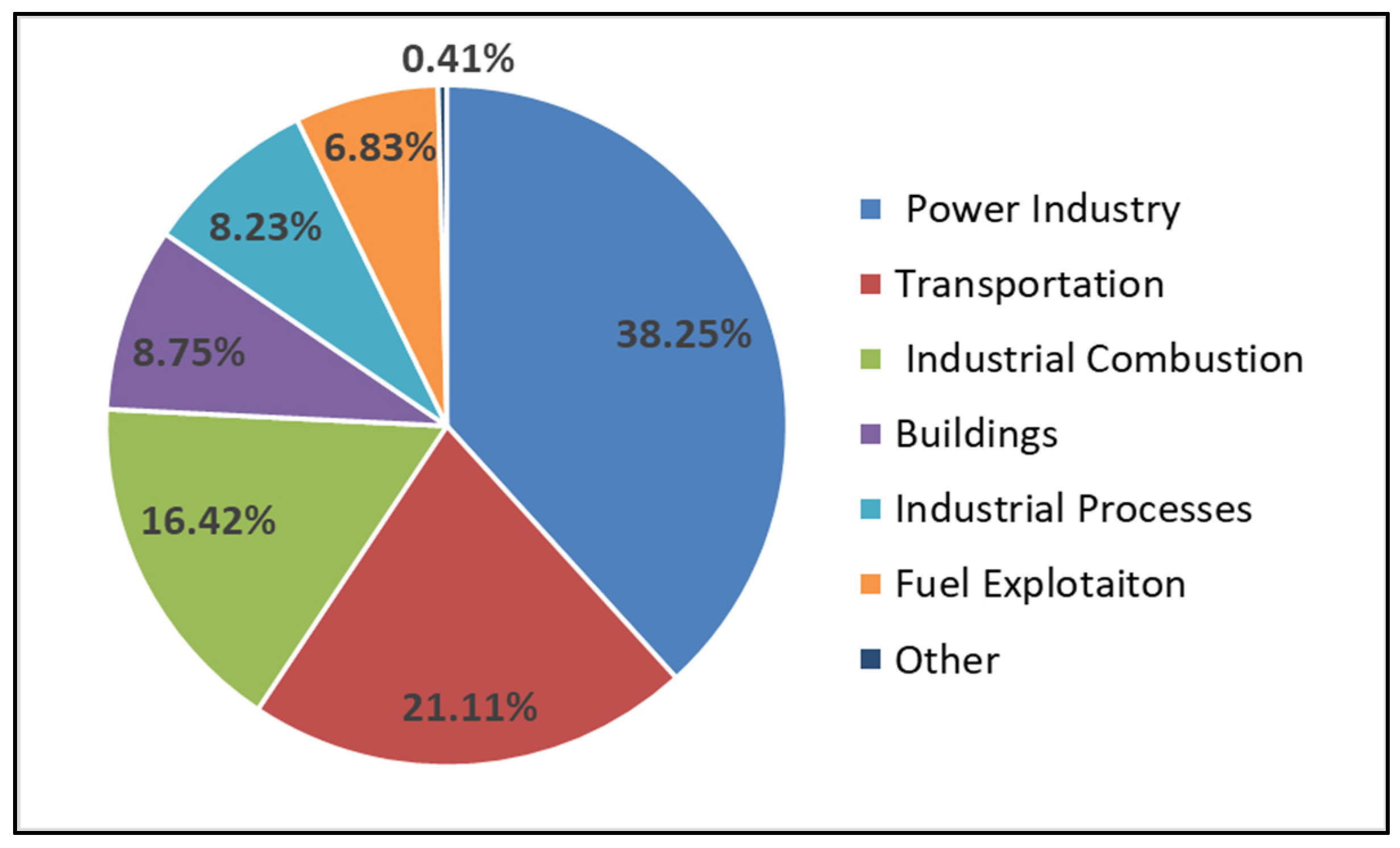
Figure 1, the transportation sector accounted for 21.11% of global CO
2 emissions in 2023, making it the second-largest contributor after the power industry, which was responsible for approximately 40% of emissions. This highlights the sector’s significant impact, contributing nearly one-quarter of total emissions on a global scale [
1]. Further analysis of the sector, broken down into subcategories such as domestic aviation, international shipping, and others, reveals that road transportation is responsible for more than 75% of the emissions [
2].
According to the findings of the EEA 2023 [
3]. transportation not only makes a significant contribution to the greenhouse effect but has also failed to achieve any substantial progress in reducing emissions. In fact, a faint decrease of just 0.8% in CO
2 emissions from the transportation sector was observed in 2023 compared to 2022, while the lower emissions recorded in previous years were directly linked to the outbreak of the pandemic and the associated mobility restrictions. While areas such as industry and agriculture have shown a noticeable reduction in emissions in recent years, aligning with both European and global guidelines, the transportation sector has experienced either a consistent increase or stagnation in its contribution to greenhouse gas emissions [
4]. This persistent trend in transport emissions underscores the urgent need for a more structured and integrated response—one that is guided by the principles of environmental management. Environmental management refers to the systematic approach to managing the interactions between human activities and the natural environment in such a way that the overarching goal of sustainability is achieved. At the same time, it emphasizes the promotion of a collective environmental consciousness that aligns with policies and practices aimed at minimizing the impact on natural resources. This encompasses a broad range of practices and strategies, which are guided by political frameworks, to address critical environmental challenges that include the depletion of natural resources, global warming, air pollution, and other issues that contribute to climate change. Environmental management aims to integrate these issues into practical solutions that balance ecological preservation with human development, ensuring that future generations inherit a sustainable world [
5]. The concept of sustainable mobility serves as an intermediary stage in what we call sustainable development, which is defined as development that successfully meets the needs and goals of the present without compromising the ability of future generations to meet their own needs. It has three dimensions or in other words, it is based on three fundamental elements: the economic, the social, and the environmental [
6]. To establish a connection between environmental management and sustainable mobility, it is essential to first examine the concept of the latter itself. Furthermore, no single, universally accepted definition exists that is agreed upon by the entire academic community [
7]. However, the concept can be best understood through its core objective, which is to ensure that transportation systems effectively address the social, environmental, and economic needs of society without causing harm to the community, the economy, or the environment [
8]. The significance of sustainable mobility in fostering ecological policies and consciousness is undeniable, particularly in its contribution to addressing climate change. Reducing private car usage plays a pivotal role in mitigating greenhouse gas emissions, combating global warming, and curbing pollution [
9]. To achieve such a transformation, another study suggests a less conventional but impactful approach: enhancing ecological awareness by thoroughly studying environmental problems linked to transportation, which is educating individuals about these challenges, can cultivate a lifestyle aligned with sustainability, ultimately driving systemic change [
10]. In order for an idea to become a reality and for the vision of a sustainable future to take shape, the adoption of new policies and strategies is essential. The creation and application of these policies require the collaboration of all involved stakeholders, from governments and local authorities to businesses and citizens. In the context of sustainable mobility and environmental management, these policies must address the need for updating transportation systems, reducing CO
2 emissions, promoting alternative fuels, and improving public transportation in order to make sustainability a tangible part of everyday life.
The adoption of electric vehicle technology offers the potential to address one of the three central objectives of contemporary energy goals—energy security—while simultaneously advancing the other two objectives: energy equity and environmental sustainability [
11]. On the other hand, it is essential to highlight findings from a study that analyzed the life cycle of EVs—from production to disposal—in comparison to ICEVs [
12]. The study demonstrated that the sustainability of EVs is not absolute. The analysis found that EV production demands six times more natural resources and generates six times the amount of waste compared to ICEVs, but the operational analysis indicated that EVs release fewer greenhouse gases overall, although they exhibit higher energy consumption and emit more harmful substances into the atmosphere during use. Furthermore, a recent study showed that the classification of EVs as environmentally friendly compared to conventional cars becomes meaningless if the source of the electricity used to charge them remains unchanged [
13]. Specifically, if the energy grid continues to rely heavily on fossil fuels and does not shift substantially toward renewable energy sources, EVs cannot deliver significant decarbonization benefits. This highlights the fact that technological advancements alone are insufficient, addressing infrastructure and systemic energy challenges is equally critical for the success of electric mobility. On top of that a recent extensive review of over 500 articles which is related to the key challenges in the adoption of electric vehicles, showed the primary obstacles were indeed identified as the limited driving range of the cars and the insufficient number of charging stations [
14]. The widespread occurrence of these findings, coupled with international analyses that emphasize the insufficient availability of charging stations as the primary barrier to the widespread adoption of electric vehicle technology, forms the foundation of the present study [
15]. To effectively address this barrier and guide the development of EV infrastructure, it becomes essential to explore the role of spatial planning as a strategic tool in shaping sustainable mobility solutions. Spatial planning is a multifaceted concept that can take on various interpretations, influenced by the goals it aims to achieve and the country in which it is implemented. In the European context, spatial planning is understood as the collection of actions undertaken by society to bring about changes in how space is allocated and utilized. Its overarching objective is to provide a foundation for sustainable development, ensuring growth occurs without imposing undue strain on the environment. This involves creating a well-organized distribution of land use and striking a balance between social equity and promoting economic growth. Spatial planning has the potential to significantly contribute to tackling climate change. It can facilitate climate adaptation by providing a structure for coordinating different activities within a designated area and serve as a means for executing adaptation strategies for sustainable transportation [
16]. Moreover, for spatial planning to align effectively with the goals of sustainable development and simultaneously address its broader objectives, it must adopt the principles outlined in the Avoid-Shift-Improve framework [
17]. The first key principle, “avoid,” emphasizes the importance of reducing the necessity for travel by enhancing access to activities in our daily lives. “Shift” highlights the urgent need to transition from reliance on cars to more sustainable options like biking, walking, and utilizing public transport. Finally, “improve” focuses on making all transportation methods more efficient through innovations such as electrification and renewable fuels, ultimately paving the way for a cleaner and more sustainable future. In several countries of South-Eastern Europe, like Greece, a significant portion of housing was constructed after 1970. Nevertheless, many local governments in these areas do not have physical or spatial plans in place, and even when plans exist, they often do not keep up with the rapid growth these regions are experiencing. Consequently, ambiguous planning regulations have resulted in unauthorized land development, frequently in locations that are inappropriate for such expansion. This absence of coordinated spatial planning and regulation has impeded effective urban development and economic advancement [
18]. A new plan was introduced in 2021 for the spatial planning of Athens as a compact city [
19]. The main goals can be summarized as follows: enhancing Athens’s image as a Mediterranean capital that highlights its civilization, promoting social inclusion, restructuring the local economy, curbing illegal construction, redistributing and reinforcing development resources, creating green belts and ecological pathways, revitalizing urban areas through the repurposing of land and existing housing, boosting the importance of central areas, promoting sustainable transportation, enhancing the coastal area, and improving spatial planning and governance systems.
At this point, it is worth mentioning that the study and research on the installation of electric vehicle charging stations in Athens can significantly contribute to the achievement of the aforementioned objectives, as they form an integral part of a spatial planning strategy aimed at enhancing sustainable mobility. Nevertheless, it is essential to clarify that the net environmental benefit of electromobility cannot be considered in isolation from the composition of the national electricity mix or from broader transport and air-quality policies. In contexts where electricity generation is still largely fossil-based, EV charging may lead to higher life-cycle emissions than those associated with the latest Euro 6–compliant internal-combustion vehicles. Therefore, a sustainable transition requires a dual strategy: accelerating the decarbonization of the power sector while simultaneously modernizing and properly maintaining the existing vehicle fleet. Complementary measures—such as the gradual phase-out of pre-Euro 6 vehicles, the promotion of hybrid and low-emission technologies, and targeted investments in renewable-energy integration—are essential to ensure that the expansion of EV infrastructure translates into measurable environmental improvements.
A review of the existing literature on the siting and optimization of EV charging stations reveals that the MCDM method is widely utilized, often in conjunction with GIS software. While numerous studies [
20,
21,
22,
23] have been conducted globally on the optimal placement of charging stations, there appears to be a notable gap in this area in Greece. Even in cases where such installations have been examined within the Greek territory, the criteria guiding the selection process often differ significantly, highlighting the potential for further research. In the case of Crete, specifically the region of Chania, the placement of EV charging stations was analyzed using a multi-criteria approach [
24]. This research considered economic factors such as land costs and proximity to distribution networks, social factors including the distance from parking facilities, points of interest, and main roads and environmental factors such as proximity to cultural heritage sites and areas of vegetation. The study provides a comprehensive framework for evaluating potential locations, integrating diverse criteria to ensure both functionality and sustainability.
An extensive analysis of EV charging station placement was conducted, considering economic, social, technical, and environmental criteria [
25]. It also explored alternative locations, three of which are situated in Athens. However, the study did not incorporate the use of GIS software, nor did it generate a suitability map specifically for Athens. This distinction highlights a key gap that this research aims to address by utilizing GIS technology to create a detailed suitability analysis for EV charging station placement in the city.
An MCDM approach was also adopted to identify optimal locations for charging stations [
15]. Their work emphasizes the deployment of stations in private urban spaces to ensure safety and environmental sustainability while exploring investment incentives and market models to support infrastructure development, providing a comprehensive framework that integrates technical, economic, and environmental considerations.
While the previous studies have recently explored the development of charging infrastructure in parts of Greece, these efforts remain rather limited in scope and spatial coverage. There has not yet been a comprehensive analysis that brings together spatial, environmental, and social criteria for the city of Athens. The present work aims to fill this gap by applying a hybrid GIS–MCDM approach that links urban planning priorities with decarbonization goals. Athens provides a particularly interesting case, given its dense morphology, uneven distribution of services, and the early stage of e-mobility adoption. The results can therefore serve both as a reference for local decision-making and as a guide for other Mediterranean cities that face similar planning and infrastructure constraints.
The study employs an MCDA method, which is particularly well-suited for addressing location-based challenges. Especially when combined with the application of the spatial analysis software GIS, it resolves complicated spatial concerns [
26]. Over the years, the combination of these methods has been widely applied by numerous research teams to address similar problems [
27]. This extensive application across various studies further validates the selection of this approach for the present research. The decision to utilize GIS was informed by an extensive review of similar studies, the majority of which consistently selected this particular software for their spatial analyses. GIS are innovative tools that facilitate the collection, storage, management, and analysis of spatial and geographic information [
28].
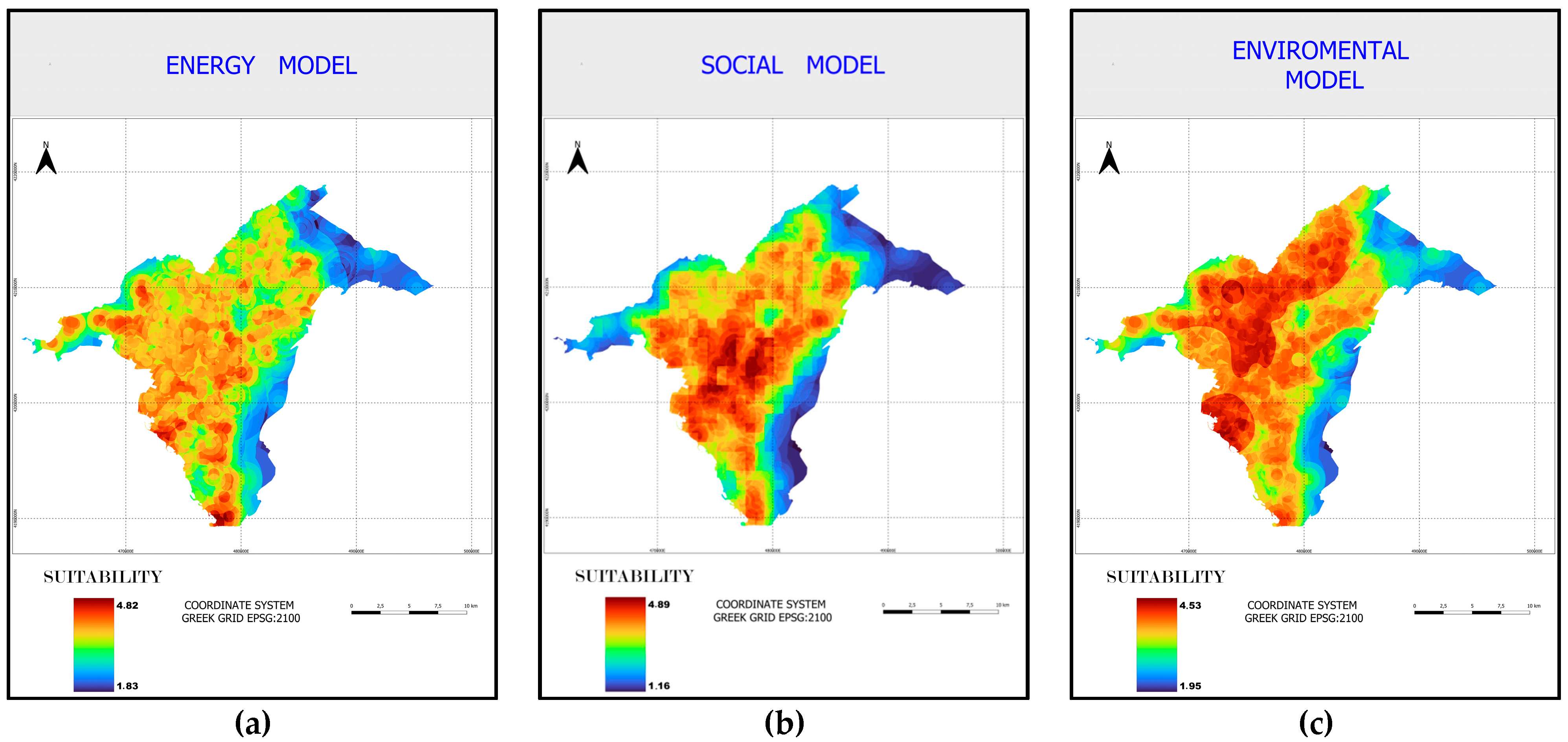
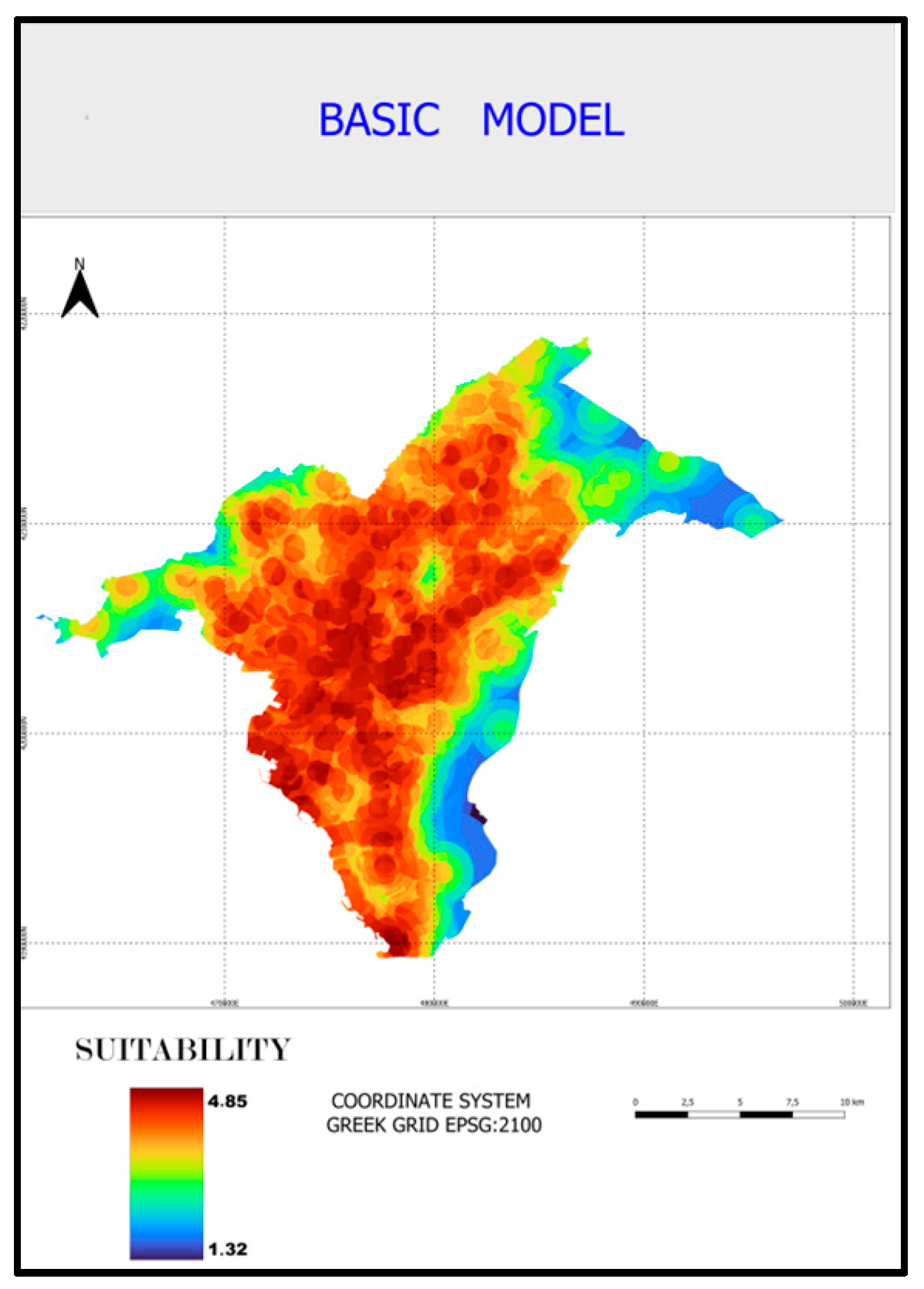
The primary aim of this study is to develop a spatially informed decision-support framework for the optimal siting of electric vehicle charging stations (EVCS) in the Attica region, using a combination of Geographic Information Systems (GIS) and Multi-Criteria Decision Analysis (MCDA) through the Analytic Hierarchy Process (AHP). To capture different policy priorities, four alternative models were constructed—Basic, Energy-focused, Environmental, and Social—each based on a distinct weighting of spatial, infrastructural, environmental, and demographic criteria. The results produced detailed suitability maps for each scenario, demonstrating how spatial analysis can guide EV infrastructure planning in a flexible and policy-responsive manner. The analysis revealed that spatial suitability for EV charging stations in the Attica region varies significantly depending on the selected criteria and policy focus. The Basic model identified high-potential zones in central urban areas with existing infrastructure, while the Energy-focused model prioritized locations near the power grid. The Environmental model emphasized areas with high air pollution (PM2.5), and the Social model highlighted underserved neighborhoods with limited access to public services. These results confirm that no single solution fits all scenarios, and that flexible, multi-criteria planning is essential for effective and equitable EV infrastructure deployment.
Following this brief introduction, this manuscript continues with
Section 2 that focuses on materials and methods used in this study. Subsequently
Section 3 presents the results through a wealth of figures and tables.
Section 4 discusses the results and their broader implications and, finally,
Section 5 provides the concluding remarks.
2. Materials and Methods
2.1. Study Area
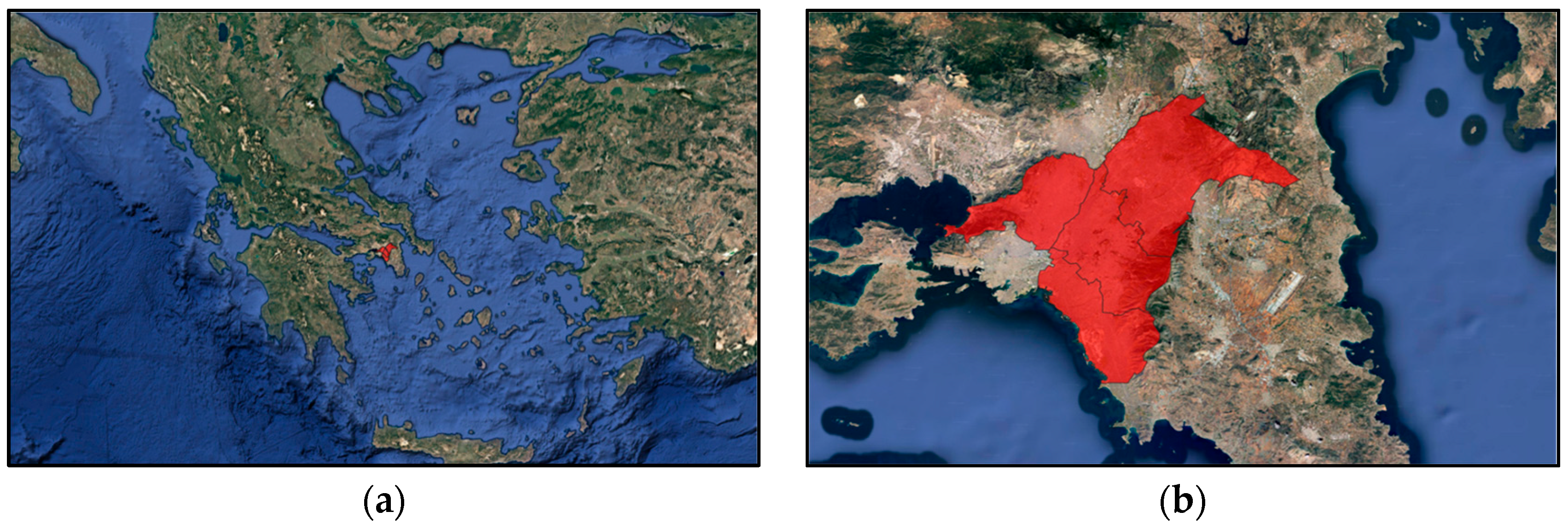
Athens is the capital and the largest urban area in Greece, making it the most politically and economically significant region in the country. For the purpose of this research, the study area is defined as the metropolitan area of Athens, which includes the central, northern, southern, and western districts of the city. The selected study area is located in the Attica region of southern Greece, as is presented in
Figure 2. This region includes the core urban municipality of Athens as well as other densely populated districts that together form the capital’s extended urban agglomeration, with a population exceeding 2.5 million. It accounts for nearly 25% of the total population of Greece [
29], covering an area of approximately 358 km
2.
In the Attica region, there are nearly 4 million vehicles currently in operation [
30]. This accounts for approximately 48% of the country’s total vehicle fleet, highlighting the critical importance of this region as a focus for the strategic planning and installation of electric vehicle charging stations.
The selection of Metropolitan Athens as the study area is based on three main reasons. First, as the country’s primary urban center, it is a strategic location for implementing clean mobility policies, including EV charging infrastructure. Its dense transport network and urban complexity conclude to high levels of traffic which makes it ideal for spatial suitability analysis [
31]. Secondly, persistent environmental challenges, such as elevated PM
10 and PM
2.5 levels, underscore the need for sustainable transport planning. Thirdly, the region offers comprehensive spatial data, including layers on EVCS, metro access, roads, parking, population, and pollution—sourced from national authorities and platforms like OpenStreetMap and Electromaps. This data availability supports robust GIS-based modeling. Aligned with Greece’s National Energy and Climate Plan (NECP) and initiatives like “I Move Electrically”, Athens is a high-priority region for evaluating EV infrastructure strategies that can later inform national urban planning.
2.2. Methodology and Criteria Collection
MCDM is a key challenge in decision-making that seeks to identify the most suitable option by evaluating multiple criteria during the selection process. There are various tools and methods associated with MCDM that can be utilized across diverse fields, ranging from finance to engineering design [
32]. The process of MCDM for selecting sites consists of six essential stages, which may overlap or be rearranged based on the specific context [
33]. The process begins by defining the problem and study area, followed by identifying key evaluation and exclusion criteria, collecting and normalizing relevant data, assigning weightings based on criterion importance, applying exclusion rules and conducting the suitability assessment through MCDM, and finally validating the results to confirm the most appropriate locations. Since the evaluation of suitability is inherently location-dependent, GIS provides the ideal platform for capturing and analyzing the spatial dimensions of each criterion. GIS is an effective tool utilized for the collection, storage, analysis, management, and visualization of spatial data and its distinctive feature is its emphasis on observations that are based on location [
34]. Due to its analytical capabilities, GIS has become essential for site selection and spatial analysis, helping to transform intricate data into more easily understandable formats, such as maps and three-dimensional visualizations [
35]. The growing use of GIS in combination with MCDA underscores once more their value as strategic tools, enabling more effective spatial decision-making through advanced geospatial data analysis, management, and visualization [
36].
Making geographic decisions frequently involves addressing intricate spatial issues, which demand analyzing various options against multiple criteria; to tackle these issues effectively, well-organized approaches that integrate geographic information with decision-making frameworks are required [
37]. For all these reasons, MCDM and GIS were combined.
The GIS-integrated MCDA approach translates spatial information into meaningful decision-making outputs by layering thematic datasets that support spatial analysis. In this research, the site selection process for EVCS begins with clearly defining the core objectives and main challenges, followed by identifying relevant evaluation criteria and possible limitations, details of which are discussed in the methodology section. These criteria act as the foundation for assessing the suitability of potential locations for EVCS installation, taking into account both the technical and environmental requirements specific to this type of infrastructure.
A notable advantage of this method is its capacity to address spatial variability and adjust to shifting planning priorities through sensitivity analysis. By altering the weights of critical criteria, such as population density, proximity to major roads, or existing charging infrastructure, the stability and reliability of the model can be assessed.
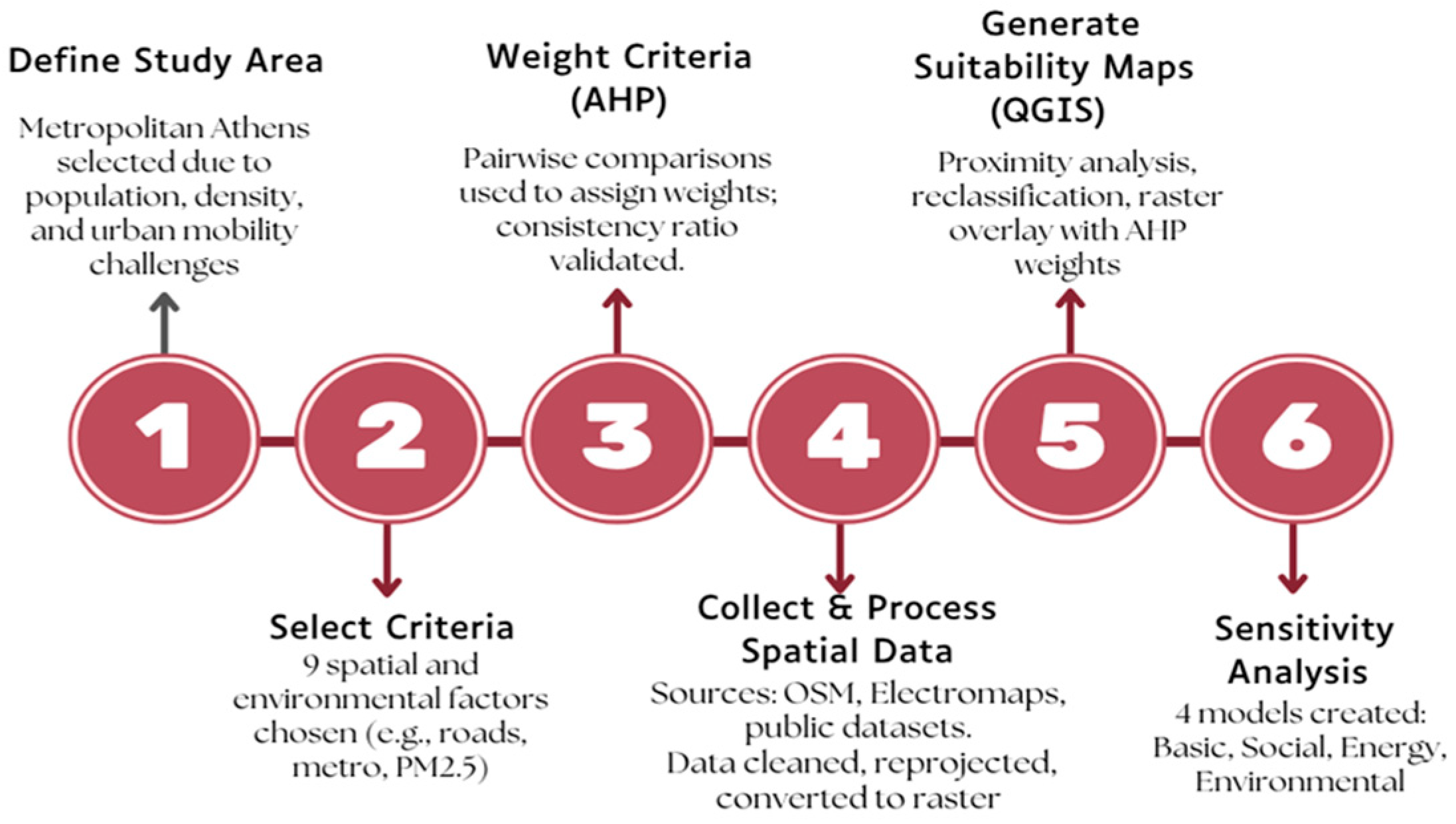
To test the reliability and flexibility of the model, a sensitivity analysis is performed using alternative weighting scenarios, each emphasizing different policy objectives (transportation infrastructure-basic model, energy model, social model and environmental model). This ensures that the framework remains valid under diverse planning conditions and provides valuable support for evidence-based infrastructure development. The workflow chart of the methodology is shown in
Figure 3.
The selection and categorization of the criteria, according to which suitability zones for the installation of charging stations will ultimately be determined within the study area, were based on existing literature. Specifically, following an extensive review of the literature, 10 hybrid studies [
36,
38,
39,
40,
41,
42,
43,
44,
45,
46] were selected that combine the MCDM method and GIS software for site selection of electric vehicle charging stations. These studies incorporate various criteria, as illustrated in the following
Table 1.
This study focuses on evaluating the accessibility of EV charging infrastructure, and as such, the majority of the criteria selected are primarily oriented around distances to public transportation, major roads, gas stations, etc (the symbol (˅) is used to indicate that a given criterion was included in the corresponding reference study).Although design and engineering constraints such as grid capacity, charger specifications, and physical space availability were acknowledged during model development, these parameters were not integrated as direct filters in the spatial analysis due to limited data availability. Instead, their implications are discussed in
Section 4, where they are treated as critical considerations for practical implementation and future research. Specifically, the criteria on which the final map will be constructed are as follows:
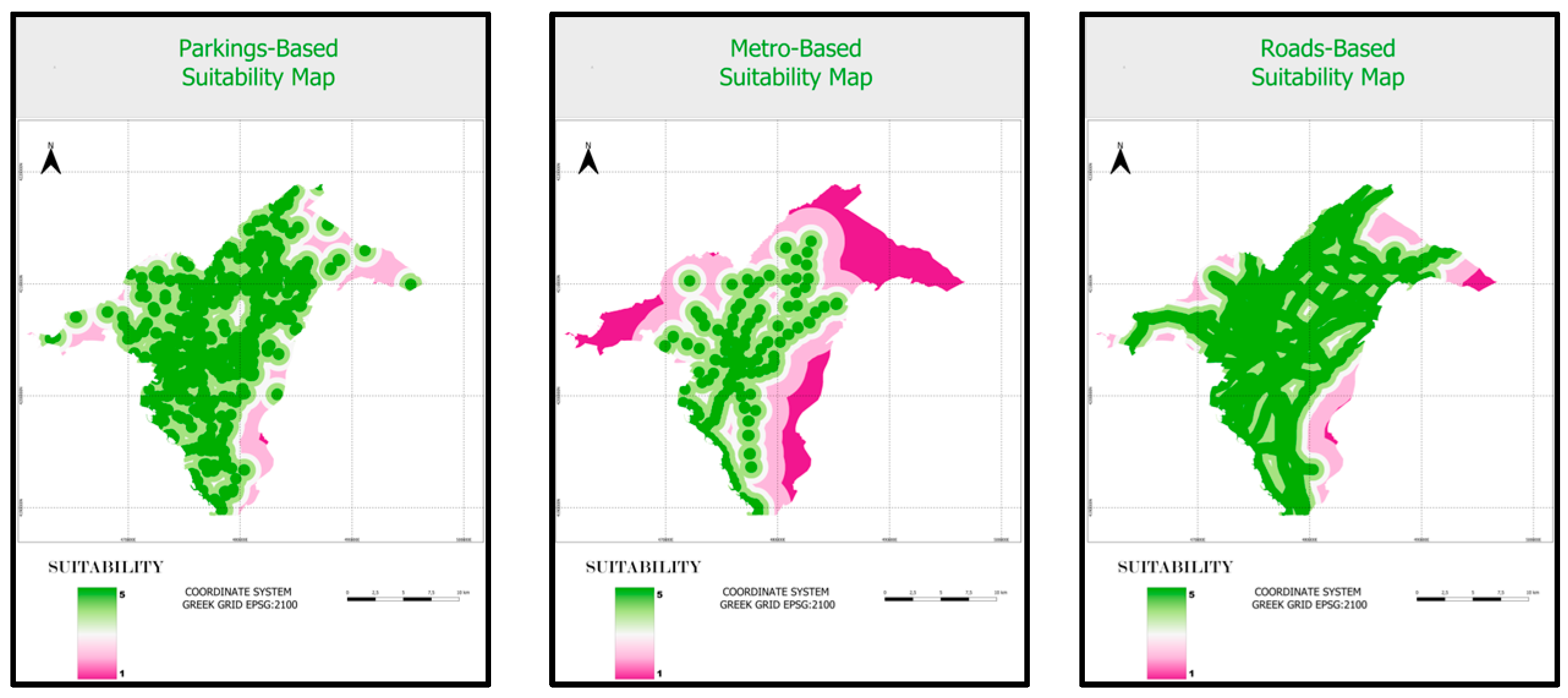
C1: Parking Areas
This criterion considers the proximity of potential EV charging stations to parking areas, which are key hubs for vehicles. Parking lots are natural locations where drivers leave their vehicles for extended periods, making them ideal for installing charging infrastructure. Placing chargers near parking areas ensures convenience for users and encourages EV adoption by integrating charging seamlessly into everyday routines.
C2: Metro Entrances
Metro stations serve as critical nodes in urban mobility networks, attracting a significant volume of commuters daily. Locating EV charging stations near metro entrances creates a dual benefit: offering charging options for EV users and supporting intermodal transportation. Drivers can park their vehicles at metro hubs, charge them, and continue their journeys using public transit. However, in real world planning, their placement should consider broader traffic-management and accessibility objectives. Prioritizing specifically peripheral or suburban metro stations could relieve central-area congestion while providing convenient and spacious sites for charger installation.
C3: Roads
Accessibility is a fundamental consideration for EV charging stations, and proximity to major roads ensures ease of use for drivers. Strategically locating stations near arterial roads, highways, and main traffic routes allows EV owners to recharge during commutes or long-distance travel. This placement enhances the convenience and practicality of the charging network, helping to reduce range anxiety and encourage more people to switch to EVs.
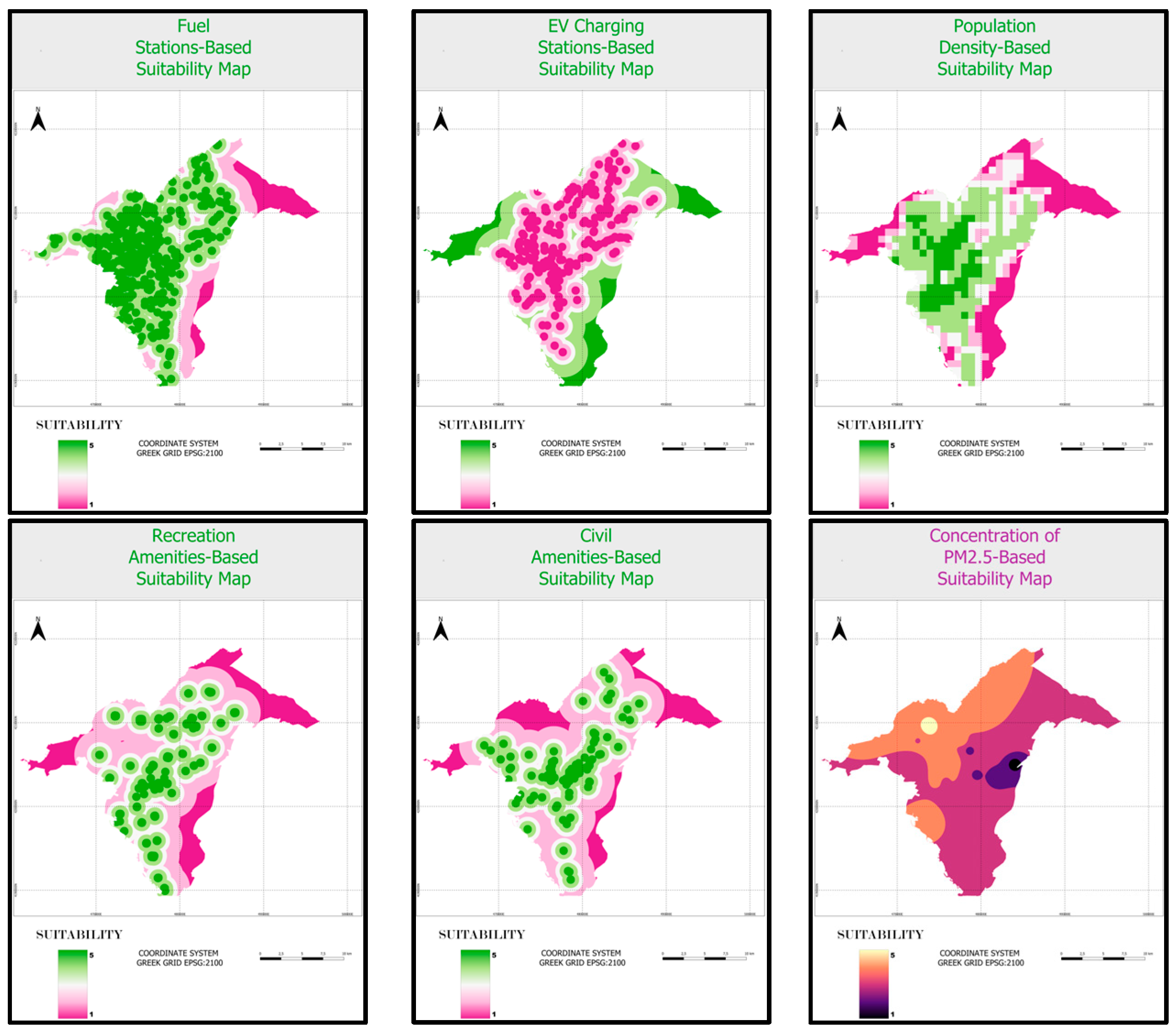
C4: Fuel Stations
Fuel stations already serve as established vehicle service points, making them logical sites for EV charging stations. By collocating chargers with fuel stations, EV infrastructure can leverage existing facilities such as restrooms, convenience stores, and lighting.
C5: Existing EV charging stations
This criterion ensures the strategic expansion of the EV charging network without oversaturating certain areas. By analyzing the distribution of current chargers, planners can identify underserved regions and prioritize them for new installations.
C6: Population density
Population density is a critical factor in determining demand for EV charging infrastructure. Areas with higher populations typically have greater concentrations of vehicles and, consequently, a higher potential demand for charging stations. By focusing on densely populated regions, planners can ensure that charging infrastructure is located where it is most needed, thus optimizing resource allocation and supporting widespread EV adoption.
C7: Civil amenities
Civil amenities are essential public facilities that attract regular traffic. By placing EV chargers near these locations, planners can cater to both public service vehicles and private users visiting these facilities.
C8: Recreation amenities
Recreation areas are popular destinations where people tend to spend significant amounts of time. This makes them ideal locations for EV charging stations, particularly for slow or medium-speed chargers. Users can leave their vehicles to charge while they shop, relax, or engage in recreational activities, turning charging into a seamless part of their daily lives.
C9: Concentration of PM2.5
One of the main and more severe polluters is PM
2.5 [
47,
48]. Targeting areas with high PM
2.5 concentrations emphasizes the environmental benefits of EV adoption. Installing charging stations in polluted regions encourages a shift to cleaner transportation options, helping to mitigate urban air quality issues. This criterion aligns with broader goals of reducing greenhouse gas emissions and promoting public health, particularly in areas with poor air quality.
Once the criteria were selected, their weights were determined through AHP, which is a well-established technique for pairwise comparisons that ensures consistency in assigning weights to the selected criteria. The AHP is a structured and systematic approach to decision-making, particularly suited for complex problems involving multiple criteria [
49]. It facilitates the evaluation process by organizing the problem into a hierarchical structure, starting from the overall goal at the top, followed by criteria and sub-criteria, and concluding with alternatives at the bottom. This method relies on pairwise comparisons to assess the relative importance of each criterion, enabling decision-makers to assign weights that reflect their priorities. The AHP method is versatile and can be effectively utilized to assign weights to criteria even in the absence of predefined alternative solutions, as demonstrated in this study. The distribution of weights follows Saaty’s scaling system, ranging from 1, where the two criteria are of equal importance, to 9, where one criterion is significantly more important than the other. The significance of each number, as used in this study, is explained in
Table 2 below.
After the construction of the pairwise comparison, the following formula is applied to transform the raw data into meaningful absolute values and normalized weight:
A = {aij} with aij = 1/aij.
A: pair wise comparison.
w: normalized weight vector.
λmax: maximum eigen value of matrix A.
aij: numerical comparison between the values i and j.
In the subsequent step, to confirm the results of the AHP, the consistency ratio (CR) is computed using the next formula:
where the consistency index (CI) is calculated through the following formula:
The value of RI is related to the dimension of the matrix and represents the random consistency index, which is equal to 1,45 for n = 9 criteria.
2.3. Data Collection and Processing
The software utilized in this study is QGIS version 3.34.13, an open-source platform that is freely available to users. QGIS operates as a geographic information system application that enables users to analyze and modify spatial data and accommodates raster, vector, mesh, and point cloud layers. Vector information can be represented as point, line, or polygon elements while the software also supports various raster image formats and has the capability to georeferenced images.
For this study, various datasets were gathered from multiple sources to comprehensively assess the suitability of locations for electric vehicle charging stations. Different sources were utilized for each criterion, some of which are directly integrated into the software itself.
Table 3 below presents the sources of the data as well as their respective types.
Notes in Data collection
The data for metro was sourced from OpenStreetMap, while additional data regarding stations to be inaugurated in the coming years, covering a broader area of the city, was manually added. This approach was adopted to ensure that the study could provide meaningful insights and practical solutions for future urban planning in the study area. Notably, several new metro stations are scheduled to become operational within the next five years, highlighting the need for a forward-looking perspective in addressing transportation and infrastructure needs.
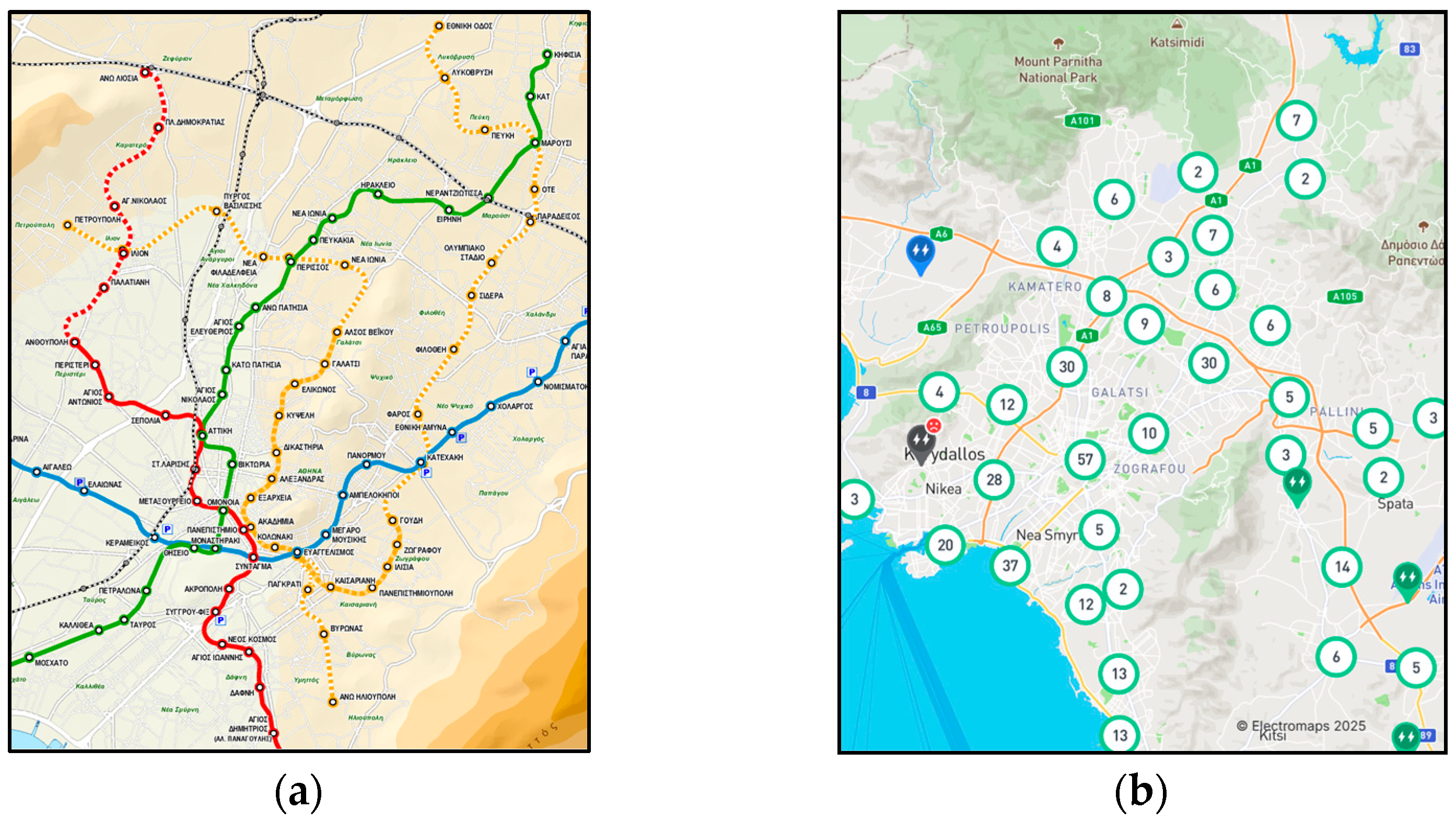
Figure 4a, below, presents the three metro lines currently in operation (red, green, and blue), as well as the orange line, which represents the new line planned for construction in the coming years. Based on this planned expansion, additional stations were manually placed in the layer corresponding to this criterion.
The number of installed charging stations recorded on OpenStreetMap was notably limited, with fewer than 50 stations listed, which did not accurately represent the real situation. To achieve a more comprehensive and objective dataset, information from the ELECTROMAPS website was incorporated, as is shown in
Figure 4b, and manually integrated into the analysis wherever applicable. This process ensured a more reliable depiction of the existing charging infrastructure.
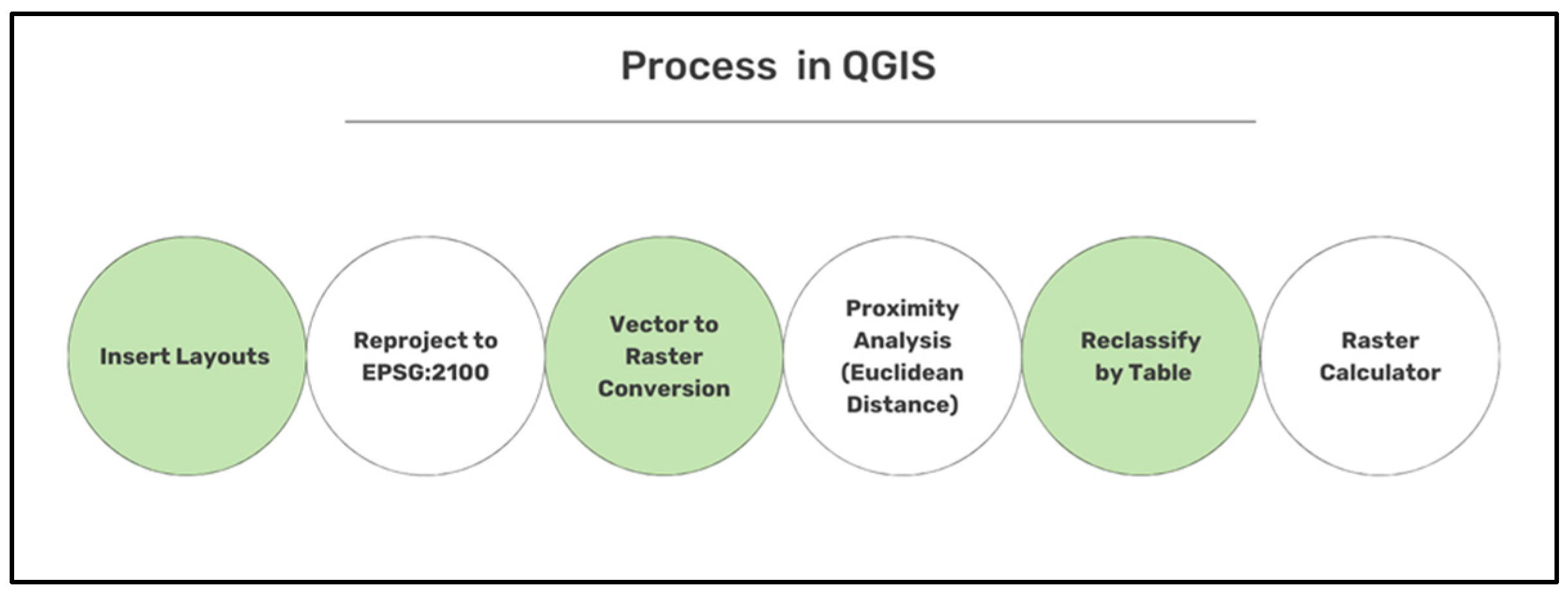
GIS play a pivotal role in spatial data analysis for this study, enabling the integration, visualization, and processing of various datasets related to EV charging station suitability. Several GIS techniques were employed to evaluate and rank each criterion for the siting of charging stations, with a particular focus on proximity analysis and spatial overlays. These techniques helped transform raw spatial data into actionable insights and assisted in identifying the most suitable locations for the charging infrastructure. The steps and tools followed are presented in
Figure 5.
Insert Layouts: All spatial datasets were inserted into the GIS environment as individual layers. These included both vector and raster data corresponding to the criteria under study (e.g., proximity to metro stations, parking, major roads, etc.). This step ensured that all relevant datasets were correctly imported and ready for further processing.
Reproject to EPSG:2100: To ensure spatial consistency, all layers were reprojected to the EPSG:2100 (Greek Grid) coordinate system. This re-projection standardized the spatial reference system, enabling accurate spatial analysis and avoiding discrepancies due to differing coordinate systems in the input datasets.
Vector to Raster Conversion: The seven criteria originally in vector format (e.g., points, lines, polygons) were converted into raster format. This step was necessary because raster data is required for operations such as proximity analysis, reclassification, and overlay in raster calculations. Each raster grid cell contained attribute values corresponding to the original vector features.
Proximity Analysis (Euclidean Distance): Proximity was calculated for relevant criteria using Euclidean Distance. This GIS operation generated a raster layer for each criterion, where each cell value represented the straight-line distance to the nearest feature (e.g., distance to the nearest metro station or major road). Proximity analysis provided a spatial representation of accessibility.
Reclassification by Table: Each proximity raster was reclassified into a uniform scoring system (1–5). This process allowed for a standardized comparison of criteria by converting raw proximity distances into suitability scores, with higher scores indicating greater suitability (
Table 4).
For each criterion, a new calibration and normalization process was conducted, assigning appropriate scores based on factors such as proximity to specific features, population density per square kilometer, and the concentration of particulate matter measured in μg/m
3. The scoring framework for all criteria is detailed in
Table 5.
Raster Calculator: The Raster Calculator tool was used to overlay and combine all nine raster layers (criteria). This tool enabled the application of a weighted linear combination model, where weights derived from the AHP were applied to each criterion. The output was a single suitability map that aggregated the information from all criteria, highlighting the most suitable areas. This calculation happened four times in total, one for each model and the formula is shown in the next formula:
wi: weight of each criterion.
Li: the corresponding layer.
i: the number of criteria.
4. Discussion
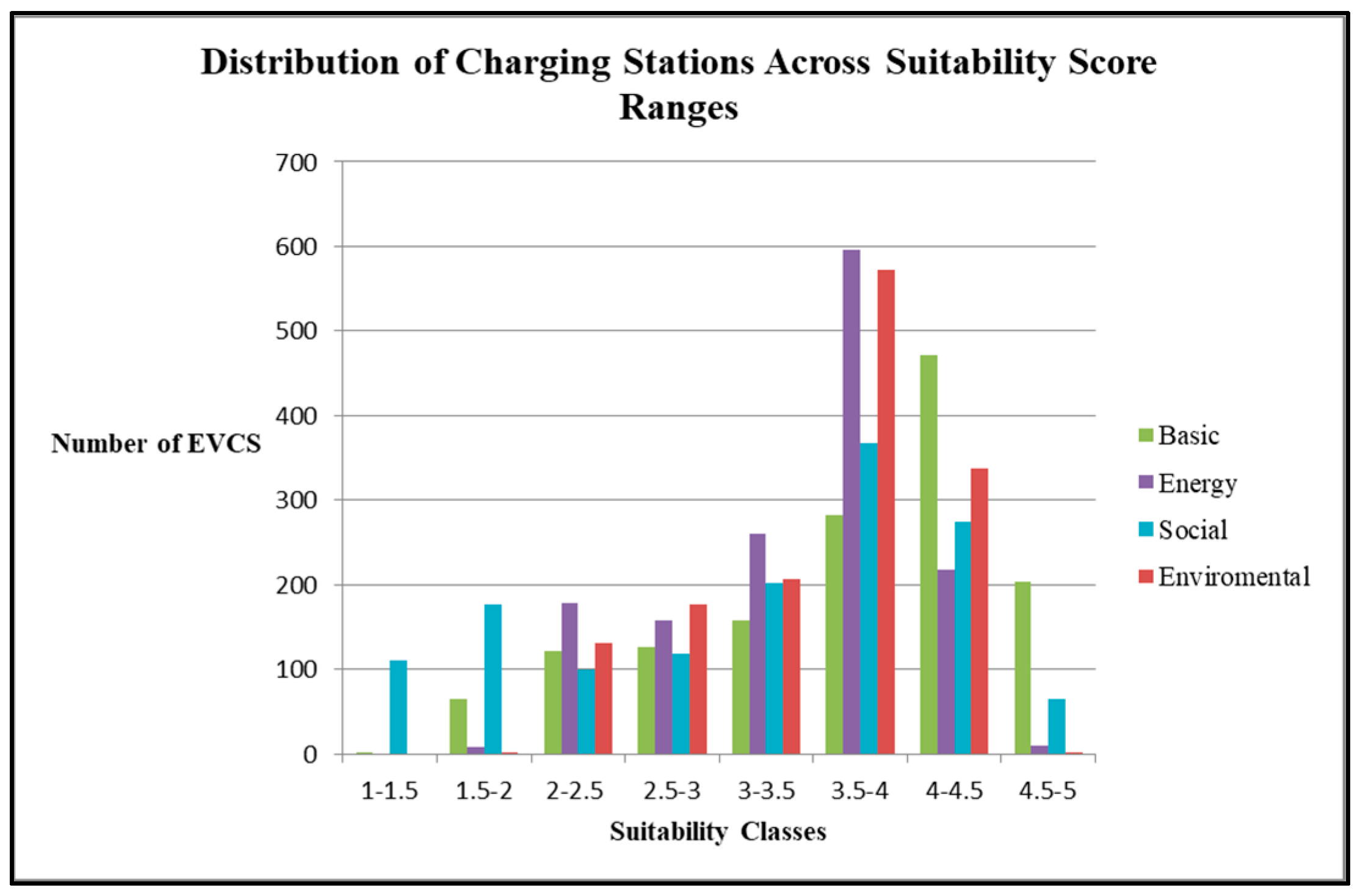
In order to quantitatively represent the results of the spatial analysis, it was deemed appropriate to classify the suitability scores into discrete categories. This classification facilitates the estimation of the exact number of charging stations that can potentially be installed within each suitability class. Through this approach, we move from abstract suitability scores to tangible, spatially explicit infrastructure planning.
Using the data from GIS about the pixel count corresponding to each suitability score, each one was directly translated into available land surface.
To progress from pixel count to a number of feasible charging stations, we make a fundamental assumption: a minimum distance of 500 m between charging stations must be maintained to ensure adequate service coverage and avoid redundancy. Based on this assumption, the analysis considers the creation of square areas measuring 500 m by 500 m, representing the spatial footprint required for a single charging station.
For all models except the social model, spatial resolution is assumed as:
- ○
1 pixel = 10 m × 10 m = 100 m2.
- ○
Therefore, an area of 500 m × 500 m = 250,000 m2 requires 2500 pixels.
For the social model, due to its finer resolution:
- ○
1 pixel = 1 m × 1 m = 1 m2.
- ○
Thus, a 500 m × 500 m area requires 250,000 pixels.
It should be noted that the higher spatial resolution (1 m × 1 m) used in the social suitability model originates from the inherent resolution of the population density raster, which was imported from an external geospatial source. Although this resolution differs from the 10 m × 10 m pixel size adopted in the other sub-models, all datasets cover the same geographic extent. Consequently, the difference affects only the level of spatial detail (i.e., the number of grid cells per area unit) and not the overall spatial weighting or cumulative suitability values. The finer resolution, therefore, does not introduce measurable bias or scale-related distortion in the final integrated suitability maps.
By applying this method, the number of CS was estimated, feasible within each suitability class across the four models. Since the total suitable area is identical for all models, differences in station distribution reflect each model’s unique prioritization and evaluation criteria rather than variations in available land. At this point, it is important to note that the technical and economic feasibility of installing EV-charging infrastructure is closely tied to the quality and structural condition of existing road networks. In areas where surface degradation or outdated underground utilities persist, the deployment of new cabling systems may require extensive rehabilitation works, leading to significantly higher investment and maintenance costs. Consequently, the physical condition of local infrastructure should be systematically evaluated in real-world planning and implementation phases, ensuring that selected locations for charging facilities remain both technically reliable and economically sustainable.
As the tables indicate, the Basic Model (
Table 7) demonstrates the highest efficiency in identifying areas of top-tier suitability for the deployment of charging stations. Specifically, it allows for the installation of 204 stations within the most suitable classes, substantially more than the 10 in the Energy Model (
Table 8), 65 in the Social Model (
Table 9), and 2 in the Environmental Model (
Table 10). The aggregated results for all four models and across all suitability classes are presented in
Figure 9.
The findings of this research extend beyond the immediate spatial context of Athens and hold broader significance for urban sustainability planning, infrastructure development, and policy alignment. This section examines their potential applicability and benefit to a wider range of stakeholders, including urban planners, policymakers, private sector investors, and environmental agencies. In particular, the results are discussed in light of national targets such as those set out in Greece’s NECP for 2030, highlighting how the study can contribute to the operationalization of strategic electrification goals through spatially explicit planning.
In assessing the national objectives for the electrification of transportation, and particularly those outlined in the NECP, it becomes evident that three core scenarios form the foundation upon which projections and policy actions are based. These scenarios not only define the expected trajectory of EV adoption but also determine the scale and scope of infrastructure development required to support the growing electrified vehicle fleet over the coming decades.
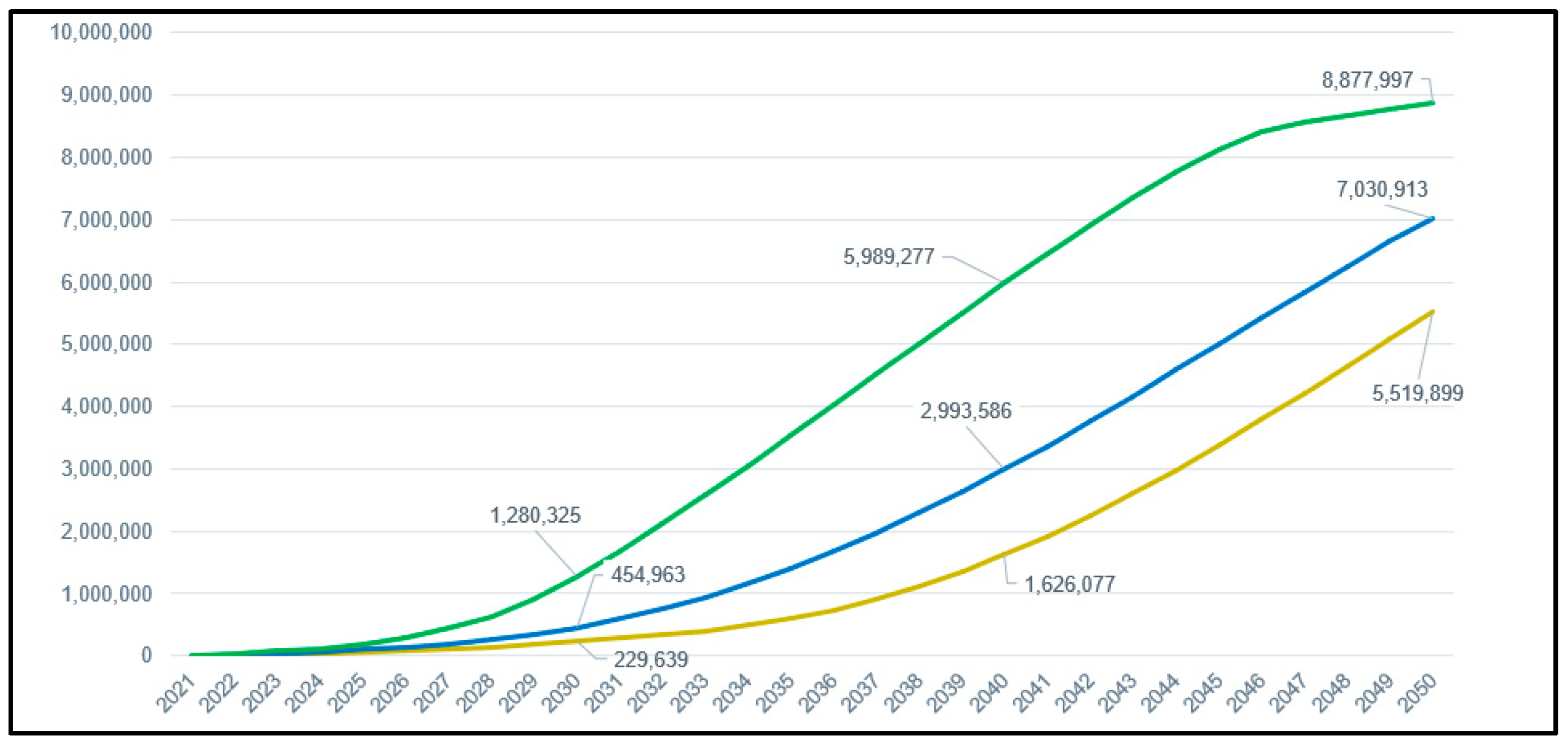
The three scenarios, as outlined in the NECP documentation, are illustrated in
Figure 10. The y-axis represents the projected number of EVs, while the x-axis corresponds to the years from 2021 to 2050. Each trajectory is color-coded: the yellow line represents the Reference Scenario, the blue line denotes the NECP (policy) Scenario, and the green line illustrates the Ambitious Plan 2025 Scenario.
A notable divergence in expectations can be observed among the three pathways. Focusing on the year 2030, a key milestone in both national and EU-level planning, the Reference Scenario forecasts approximately 230,000 EVs, the NECP Scenario projects a more optimistic 450,000 vehicles, and the Accelerated Scenario anticipates a highly ambitious figure of 1,280,000 EVs.
To accommodate such a fleet, significant investment in charging infrastructure is essential. One of the guiding assumptions underpinning infrastructure needs is the adoption of a 1:10 ratio, meaning one publicly accessible charger per ten EVs. Applying this ratio to the three 2030 projections results in highly variable infrastructure demands, ranging from 23,000 to 128,000 charging points nationwide.
Currently, Greece’s charging infrastructure remains relatively modest in scale. Available data indicate that there are, on average, approximately 2.3 charging points per station, a figure significantly lower than that of leading European nations, as well as markets such as China and the United States, where the average is notably higher due to investment in larger, multi-port stations. In
Table 11 that follows, a breakdown of the required number of stations for each scenario is presented, with a focus on the Attica region, which accounts for approximately 50% of the national vehicle fleet, and hence serves as a suitable proxy for half the country’s infrastructure demand [
30]. The calculations assume that each charging station hosts a varying number of charging points, starting from a baseline of two (reflecting current conditions) and extending up to twelve. These projections were juxtaposed with the outcomes of the basic suitability model, as discussed in previous sections, which estimated the number of charging stations that can feasibly be constructed within each suitability class based on land availability and planning constraints.
To further evaluate the compatibility between projected needs and spatial feasibility, a refined spatial analysis was conducted using grid-based calculations at different spatial resolutions. As expected, reducing the minimum allowable distance between stations increases the number of stations that can be hosted within the same geographical area. At the most extreme resolution—assuming a 120 m spacing between stations—a theoretical maximum of 25,000 stations could be installed (
Table 12). However, such density is largely unrealistic under real-world planning constraints, given issues of redundancy, grid capacity, and urban morphology.
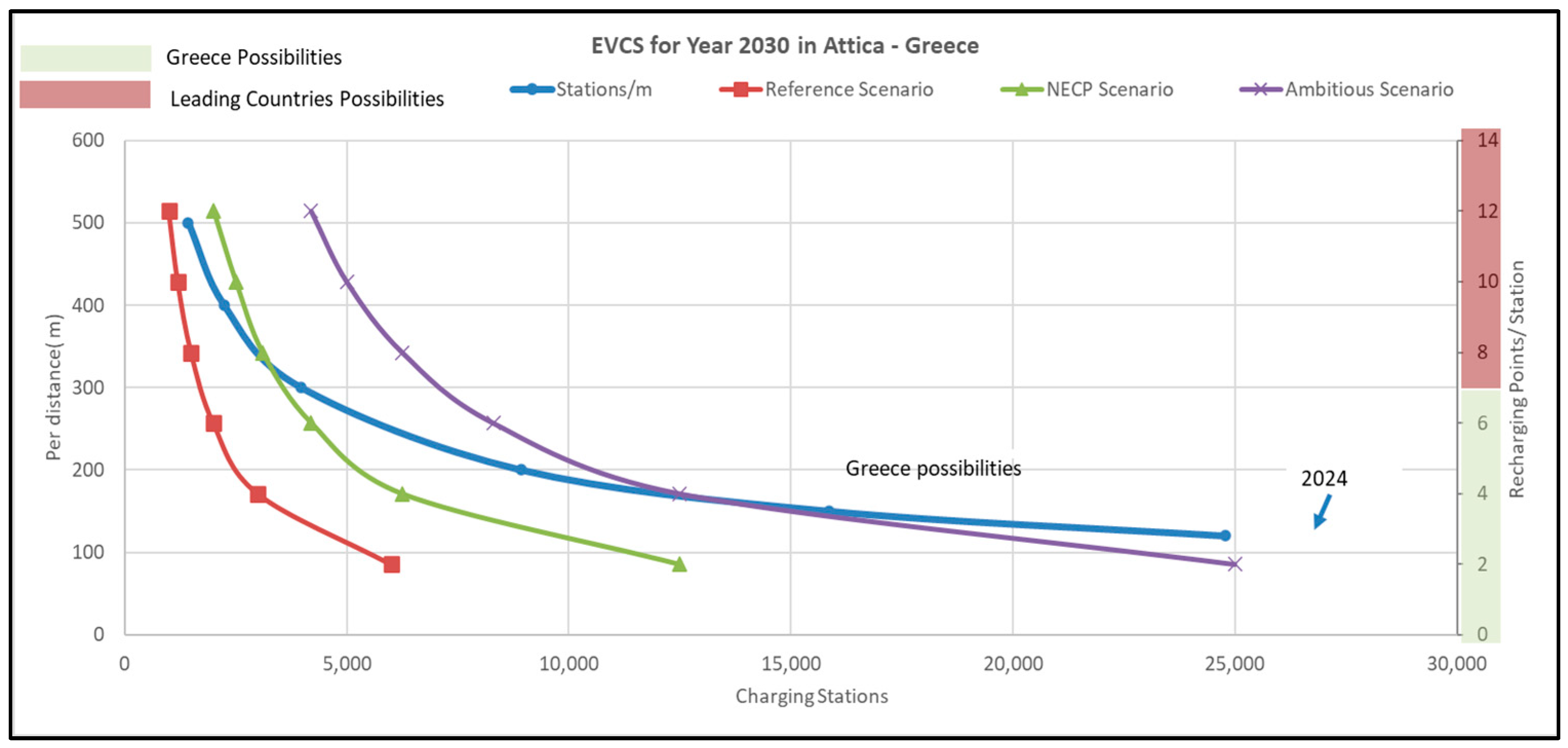
The line chart, in
Figure 11 that accompanies this analysis offers critical insight into the relationship between the number of charging stations and the spatial density required to accommodate them and it is shown below. On the horizontal axis, we see the number of charging stations—on the vertical axis, the average spatial separation required (in meters) between stations to fit them within the Attica study area, based on the available spatial capacity derived from the basic model.
A key observation is that the only scenario under which NECP targets become spatially feasible—within current land use and exclusion constraints—is when a minimum inter-station distance of approximately 120–150 m is used, corresponding to the highest-density outcome under the Ambitious Scenario with 2–4 charging points per station. This reveals an important planning challenge: while the land may theoretically support a high number of stations, such high-density siting is in tension with urban form, traffic flow, and grid limitations, and thus difficult to implement in practice.
The blue line in the graph, which plots station spacing (in meters) against the number of possible installations, is derived directly from the basic suitability model developed in this paper. It reflects the physical capacity of Attica to host a given number of charging stations based on available land and spatial constraints. As expected, this line demonstrates a clear inverse relationship: as minimum spacing between stations decreases, the number of possible installations increases. However, even under relatively compressed spacing—approaching 150 m—the model estimates a maximum of roughly 25,000 stations, a figure only achievable under highly dense and potentially unrealistic deployment conditions. Overlaying the blue line are the three policy-driven curves: the Reference Scenario, NECP Scenario, and Ambitious Scenario. These show the number of stations needed to meet national charging point targets for 2030 in Attica, depending on the assumed number of charging points per station (ranging from 1 to 14). Here, the “Greece Possibilities” shaded area plays a crucial role, as it represents the realistic range of configuration for Greek infrastructure based on current trends and capacity: between 2 and 6 charging points per station. Unlike other countries such as the Netherlands or Germany (Leading countries), where fast chargers and multi-port hubs are common, Greece remains at an early deployment stage, with limited investment in high-density stations. Empirical data suggest the national average remains close to 2.3 points per station, with a possible upper limit of 5 to 6 in the near term.
From this perspective, an important observation emerges: the NECP Scenario becomes spatially feasible only when higher station configurations (6 points per station or more) are assumed. For example, if stations are limited to only 2 ports each, the NECP target would require 12,500 separate installations—exceeding the spatial feasibility of the model unless spacing falls below 200 m. By contrast, at 6 ports per station, the same number of charging points can be achieved with around 4200 stations, aligning closely with what the model estimates is possible at ~250–300 m spacing. This point of intersection between the blue line and the NECP curve suggests a critical planning threshold, where national policy becomes spatially implementable.
Moreover, the Ambitious Scenario, while conceptually bold, sits beyond the spatially efficient zone unless extremely dense or high-capacity stations are assumed—both of which may be incompatible with Greece’s current regulatory and infrastructure development landscape. As such, it risks being symbolic rather than actionable unless supported by strategic densification, private-sector investment, and changes in urban land use regulations.
Consequently, one of the key insights emerging from this analysis is the importance of aligning national targets with spatial realities, especially in dense urban regions like Attica. By using the output of the suitability model as a benchmark, planners can identify the minimum viable inter-station distances (e.g., ~250 m) and infrastructure configurations (e.g., 4–6 points/station) that are both aligned with NECP goals and achievable on the ground. Academically, this reflects findings in urban logistics and facility location theory, where aggregated service centers can improve performance in constrained environments.
Limitations and Future Work
The present study represents one of the first attempts to integrate social, environmental, and infrastructural parameters for assessing the spatial suitability of EV-charging infrastructure in the Attica region. While the results offer valuable insights for planners and policymakers, several methodological and contextual limitations must be acknowledged, and avenues for future research are identified to address these gaps.
First, the analysis relies on secondary datasets with different spatial resolutions and temporal references. The main challenge in acquiring datasets lay in the limited availability of sources providing geospatially compatible data suitable for direct integration into the QGIS environment.
To address this, an existing raster layer from the Geodata Humanitarian Datasets (HDX) repository [
54] was utilized to represent population density. This dataset, already formatted as raster data, corresponds to the year 2019 and was selected for its compatibility and comprehensive spatial coverage.
In contrast, the PM2.5 concentration data required a more complex approach. Two independent data sources were combined to obtain reliable annual mean values for 2024. Specifically, historical air quality data were integrated from IQAir and from the official 2024 environmental report issued by the Ministry of Energy and Environment.
It is important to note that these environmental datasets were initially introduced into QGIS manually as vector data and subsequently transformed into raster format using the Rasterize function. In this process, each raster cell was assigned a single representative value derived from the underlying vector features. While this conversion facilitated subsequent spatial analysis, it also introduced a degree of generalization that inevitably reduced the spatial precision and overall quality of the data.
Such limitations are inherent to the integration of heterogeneous datasets within a unified geospatial framework, yet every effort was made to minimize their impact on the reliability and interpretability of the final outputs.
Beyond dataset limitations, another key limitation of this study lies in the absence of external validation for the produced suitability maps. This challenge arises primarily from the lack of comparable spatial models or verified ground-truth data within the national context, which currently restricts the ability to perform quantitative cross-validation. Despite this, the model’s internal consistency and methodological transparency provide confidence in the qualitative reliability of the outputs. Future research should aim to validate the proposed framework through the integration of field observations, updated geospatial datasets, and comparison with independently developed models once such data become available.
Moving from data limitations to technical assumptions, present study assumes that the existing electricity distribution network in the Attica region can support the planned deployment of EV charging infrastructure without major technical constraints. This assumption aligns with statements by the Hellenic Distribution Network Operator (HEDNO), which reports stable operation and adequate reserve capacity in the Attica grid, with no systemic issues of power supply or stability as of 2024–2025. Additionally, previous studies indicate that under controlled or smart-charging conditions, the effect of electric-vehicle penetration on total energy demand and grid stability remains limited [
55,
56,
57]. Nevertheless, future iterations of this research should integrate temporal load modeling and distribution-level capacity analyses to capture potential localized constraints, substation limitations, and the evolving dynamics of high-penetration EV scenarios. Such analyses would complement the spatial-multi-criteria approach and offer a more comprehensive planning framework.
While network assumptions are necessary for modeling, future research should also aim to build a clearer empirical link between spatial suitability and actual charging demand. This can be achieved by incorporating detailed data on traffic movements, parking availability, and patterns of daily vehicle use. Including origin–destination (O–D) flows, trip durations, and typical travel times would allow for the development of a more demand-responsive framework that captures both spatial and temporal dimensions of charging behavior. Such integration would make it possible to identify areas where demand peaks coincide with accessibility constraints, providing a stronger basis for locating and sizing charging facilities. In addition, combining these datasets with network or agent-based simulations could support more precise planning of charging capacity, operational schedules, and infrastructure investment priorities.
A natural extension of this research also involves integrating detailed engineering constraints directly into the spatial suitability modeling process. Future work could leverage high-resolution data on grid load capacity, site-specific charger requirements, and physical space availability to enable a more realistic, pre-filtered assessment of potential installation locations. Incorporating these constraints early in the modeling workflow would reduce the need for post hoc filtering and allow for a more efficient prioritization of candidate sites. Furthermore, coupling spatial suitability with dynamic grid simulations and real-world operational considerations could provide a comprehensive decision-support tool for planners and policymakers, bridging the gap between exploratory spatial analysis and practical implementation.
Finally, the effective implementation of charging infrastructure requires a combination of spatial suitability, institutional support, and operational feasibility. Beyond the identification of potential sites, successful deployment depends on regulatory facilitation, investment in grid capacity and underground cabling, allocation of dedicated parking spaces, and sustained economic incentives for both infrastructure providers and end-users. Furthermore, business and consumer engagement play a critical role in ensuring the functionality and utilization of the network. Future research should aim to integrate these socio-technical and institutional dimensions into spatial modeling frameworks. Doing so would enable a more comprehensive assessment that not only identifies locations with spatial potential but also evaluates their practical viability in the context of governance, infrastructure constraints, and stakeholder incentives.