
Identifying Consumer Segments for Advanced Driver Assistance Systems (ADAS): A Cluster Analysis of Driver Behavior and Preferences



Abstract
1. Introduction
2. Theoretical Background
2.1. Acceptance of Advanced Driver Assistance Systems
2.2. ADAS in the Context of Future Mobility and Sustainability
3. Materials and Methods
3.1. Research Design and Objectives
- How accepting and knowledgeable are Hungarian drivers about ADAS, and how can they be segmented based on their attitudes, trust, and willingness to adopt these technologies?
- To answer this question, the research pursued three main objectives:
- To explore drivers’ awareness, trust, and attitudes toward ADAS.
- To identify distinct consumer segments through cluster analysis based on their acceptance patterns.
- To derive practical implications for policymakers, driving schools, and manufacturers to accelerate the safe and sustainable adoption of ADAS.
3.2. Data Collection and Questionnaire Design
3.3. Data Analysis
4. Results
4.1. Expert In-Depth Interview
4.2. Cluster Validation and Model Selection
4.3. Demographic Data of the Online Survey Respondents
4.4. Cluster Analysis
4.4.1. Cluster 1—Conservative Controllers
4.4.2. Cluster 2—Cautious Adopters
4.4.3. Cluster 3—Pragmatic Innovators
5. Discussion
6. Conclusions
Author Contributions
Funding
Institutional Review Board Statement
Informed Consent Statement
Data Availability Statement
Acknowledgments
Conflicts of Interest
References
- Greenwood, P.M.; Lenneman, J.K.; Baldwin, C.L. Advanced driver assistance systems (ADAS): Demographics, preferred sources of information, and accuracy of ADAS knowledge. Transp. Res. Part F Traffic Psychol. Behav. 2022, 86, 131–150. [Google Scholar] [CrossRef] [Scilit]
- Medve, S. Share of Hungarians Owning a Driver’s License in 2021. Available online: https://www.statista.com/statistics/1268060/hungary-share-of-people-with-a-driver-s-license/ (accessed on 10 July 2024).
- Medve, S. Number of Driving Schools in Hungary from 2019 to 2021. Available online: https://www.statista.com/statistics/1293462/hungary-number-of-driving-schools/ (accessed on 10 July 2024).
- Medve, S. Number of Road Traffic Accidents Causing Personal Injury in Hungary from 2010 to 2022. Available online: https://www.statista.com/statistics/1140359/hungary-road-traffic-accidents/ (accessed on 10 July 2024).
- Souders, D.J.; Charness, N.; Roque, N.A.; Pham, H. Aging: Older adults’ driving behavior using longitudinal and lateral warning systems. Hum. Factors 2020, 62, 229–248. [Google Scholar] [CrossRef] [Scilit] [PubMed]
- Spicer, R.; Vahabaghaie, A.; Bahouth, G.; Drees, L.; Martinez von Bülow, R.; Baur, P. Field effectiveness evaluation of advanced driver assistance systems. Traffic Inj. Prev. 2018, 19 (Suppl. S2), S91–S95. [Google Scholar] [CrossRef] [Scilit] [PubMed]
- Cicchino, J.B. Effectiveness of forward collision warning and autonomous emergency braking systems in reducing front-to-rear crash rates. Accid. Anal. Prev. 2017, 99, 142–152. [Google Scholar] [CrossRef] [Scilit]
- Nunes, A. The impact of automation use on the mental model: Findings from the air traffic control domain. Proc. Hum. Factors Ergon. Soc. Annu. Meet. 2003, 47, 66–70. [Google Scholar] [CrossRef] [Scilit]
- European Commission. CARS 21: A Competitive Automotive Regulatory System for the 21st Century. Final Report. 2006. Available online: https://op.europa.eu/en/publication-detail/-/publication/2a7fafd4-b124-4ee0-b3d4-3a07f7149511/language-en (accessed on 20 July 2024).
- SAE International. SAE Levels of Driving Automation™ Refined for Clarity and International Audience. 2021. Available online: https://www.sae.org/blog/sae-j3016-update (accessed on 20 July 2024).
- Boelhouwer, A.; Van den Beukel, A.P.; Van der Voort, M.C.; Hottentot, C.; De Wit, R.Q.; Martens, M.H. How are car buyers and car sellers currently informed about ADAS? An investigation among drivers and car sellers in the Netherlands. Transp. Res. Interdiscip. Perspect. 2020, 4, 100103. [Google Scholar] [CrossRef] [Scilit]
- Singh, S. Critical Reasons for Crashes Investigated in the National Motor Vehicle Crash Causation Survey (Report No. DOT HS 812 115). National Highway Traffic Safety Administration. 2015. Available online: https://crashstats.nhtsa.dot.gov/Api/Public/ViewPublication/812115 (accessed on 20 July 2024).
- Reagan, I.J.; Cicchino, J.B.; Teoh, E.R.; Cox, A.E. New and used vehicle buyers’ awareness, understanding, and trust in advanced driver assistance systems. Transp. Res. Part F Traffic Psychol. Behav. 2023, 92, 44–55. [Google Scholar] [CrossRef] [Scilit]
- Koteczki, R.; Balassa, B.E. Systematic literature review of user acceptance factors of advanced driver assistance systems across different social groups. Transp. Res. Interdiscip. Perspect. 2025, 31, 101486. [Google Scholar] [CrossRef] [Scilit]
- Davis, F.D. Perceived usefulness, perceived ease of use, and user acceptance of information technology. MIS Q. 1989, 13, 319–340. [Google Scholar] [CrossRef] [Scilit]
- Al Maskari, A. Theory of Planned Behavior (TPB) Ajzen (1988). In Technology Adoption and Social Issues: Concepts, Methodologies, Tools, and Applications; IGI Global: Hershey, PA, USA, 2018; pp. 46–67. [Google Scholar]
- Venkatesh, V.; Morris, M.G.; Davis, G.B.; Davis, F.D. User acceptance of information technology: Toward a unified view. MIS Q. 2003, 27, 425–478. [Google Scholar] [CrossRef] [Scilit]
- Rahman, M.M.; Lesch, M.F.; Horrey, W.J.; Strawderman, L. Assessing the utility of TAM, TPB, and UTAUT for advanced driver assistance systems. Accid. Anal. Prev. 2017, 108, 361–373. [Google Scholar] [CrossRef] [Scilit]
- DeGuzman, C.A.; Donmez, B. Drivers still have limited knowledge about adaptive cruise control even when they own the system. Transp. Res. Rec. 2021, 2675, 328–339. [Google Scholar] [CrossRef] [Scilit]
- DeGuzman, C.A.; Donmez, B. Knowledge of and trust in advanced driver assistance systems. Accid. Anal. Prev. 2021, 156, 106121. [Google Scholar] [CrossRef] [Scilit]
- Nandavar, S.; Kaye, S.A.; Senserrick, T.; Oviedo-Trespalacios, O. Exploring the factors influencing acquisition and learning experiences of cars fitted with advanced driver assistance systems (ADAS). Transp. Res. Part F Traffic Psychol. Behav. 2023, 94, 341–352. [Google Scholar] [CrossRef] [Scilit]
- European Commission. Directive (EU) 2023/2661 Amending Directive 2010/40/EU on the Framework for the Deployment of Intelligent Transport Systems. Available online: https://transport.ec.europa.eu/transport-themes/smart-mobility/road/its-directive-and-action-plan_en (accessed on 10 July 2024).
- Aleksa, A.; Fellendorf, M.; Mathew, J.K. Impact analysis of advanced driver assistance systems (ADAS) in Austria. Eur. Transp. Res. Rev. 2024, 16, 39. [Google Scholar] [CrossRef] [Scilit]
- Samad, M.A. Assessing the Environmental Impact of Advanced Driver Assistance Systems (ADAS) in Electric Vehicles. EasyChair Preprint. 2024. Available online: https://easychair.org/publications/preprint/LVSD (accessed on 10 July 2024).
- Zhang, L.; De Winter, J.C.F.; Stanton, N.A. Retrofit acceptance of advanced driver assistance systems: A cross-European survey. Transp. Res. Part F Traffic Psychol. Behav. 2024, 98, 94–110. [Google Scholar] [CrossRef] [Scilit]
- DIGITALEUROPE. Embracing the Future of Mobility. 2025. Available online: https://cdn.digitaleurope.org/uploads/2025/05/Embracing-the-future-of-mobility-DIGITALEUROPE.pdf (accessed on 10 July 2025).
- Chu, K.M. A consumer innovation resistance theory perspective on the advanced driver assistance systems. Econ. Res.-Ekon. Istraživanja 2023, 36, 1–26. [Google Scholar] [CrossRef] [Scilit]
- Harms, I.M.; Bingen, L.; Steffens, J. Addressing the awareness gap: A combined survey and vehicle registration analysis to assess car owners’ usage of ADAS in fleets. Transp. Res. Part A Policy Pract. 2020, 134, 65–77. [Google Scholar] [CrossRef] [Scilit]
- Kaye, S.A.; Nandavar, S.; Yasmin, S.; Lewis, I.; Oviedo-Trespalacios, O. Consumer knowledge and acceptance of advanced driver assistance systems. Transp. Res. Part F Traffic Psychol. Behav. 2022, 90, 300–311. [Google Scholar] [CrossRef] [Scilit]
- Yu, B.; Bao, S.; Zhang, Y.; Sullivan, J.; Flannagan, M. Measurement and prediction of driver trust in automated vehicle technologies: An application of hand position transition probability matrix. Transp. Res. Part C Emerg. Technol. 2021, 124, 102957. [Google Scholar] [CrossRef] [Scilit]
- Moon, C. An objective evaluation method for driver or passenger acceptance of an autonomous driving system for lane changes. Appl. Sci. 2023, 13, 9601. [Google Scholar] [CrossRef] [Scilit]
- Viktorová, L.; Sucha, M. Drivers’ acceptance of advanced driver assistance systems—What to consider. Int. J. Traffic Transp. Eng. 2018, 8, 320–333. [Google Scholar] [CrossRef] [Scilit]
- Neumann, T. Analysis of advanced Driver-Assistance systems for safe and comfortable driving of motor vehicles. Sensors 2024, 24, 6223. [Google Scholar] [CrossRef] [Scilit] [PubMed]



| Topic of Questions | Number of Questions | Scales | References |
|---|---|---|---|
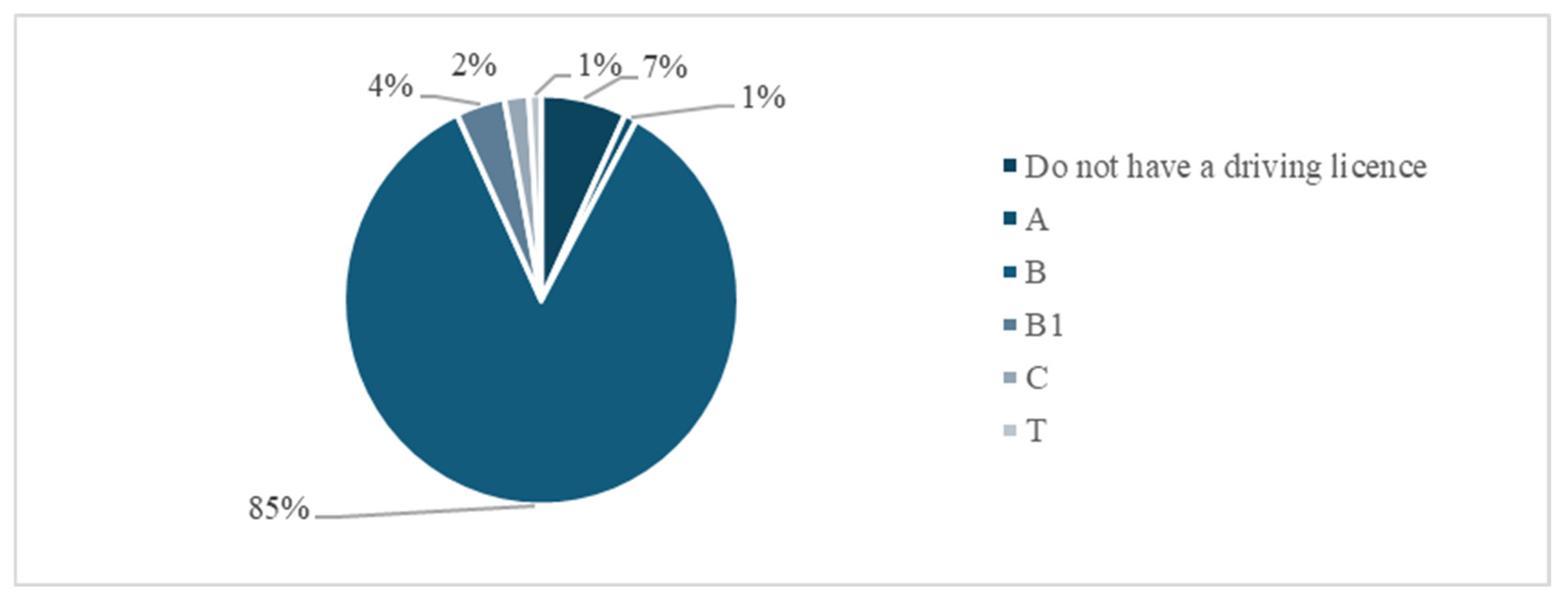
| Demographic Questions | 3 | Multiple-choice | [1,11,27,28,29] |
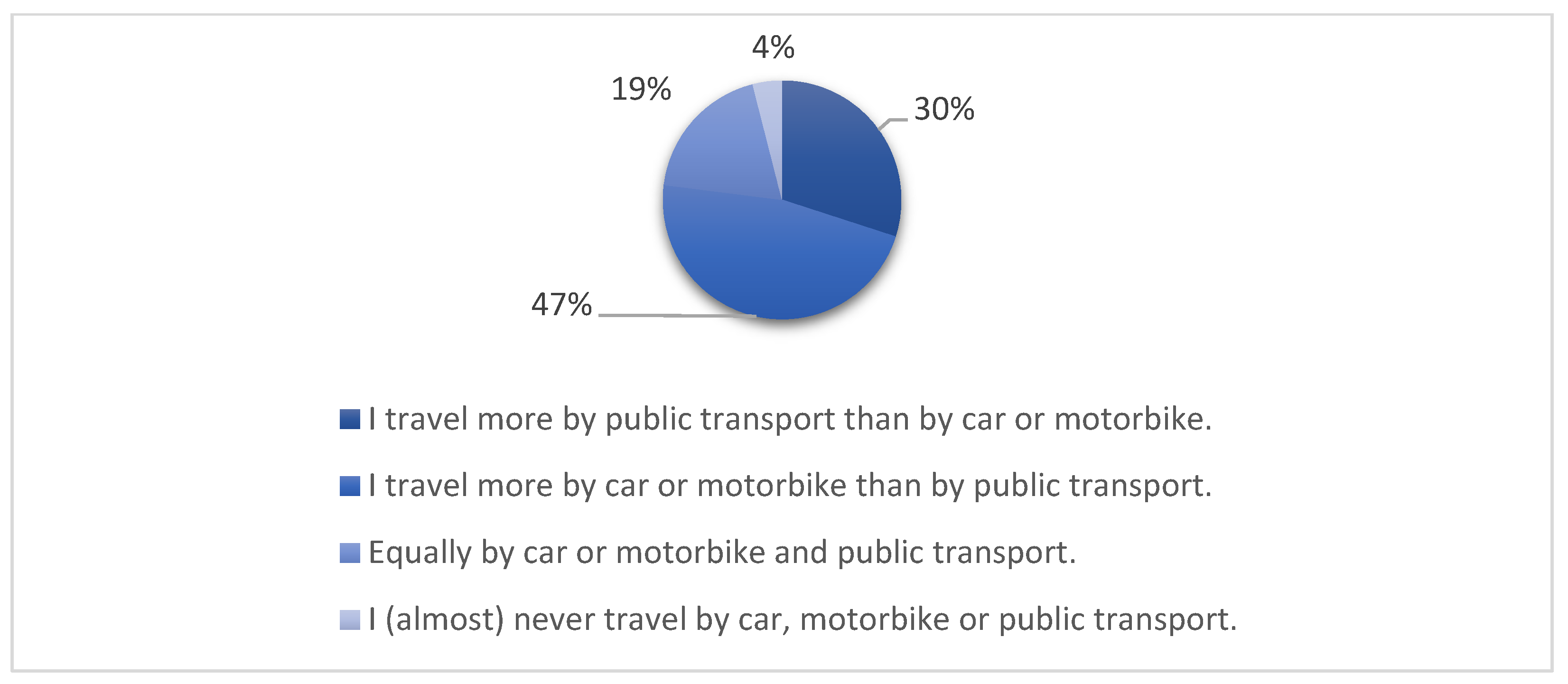
| Travel and Driving Habits | 2 | Multiple-choice | |
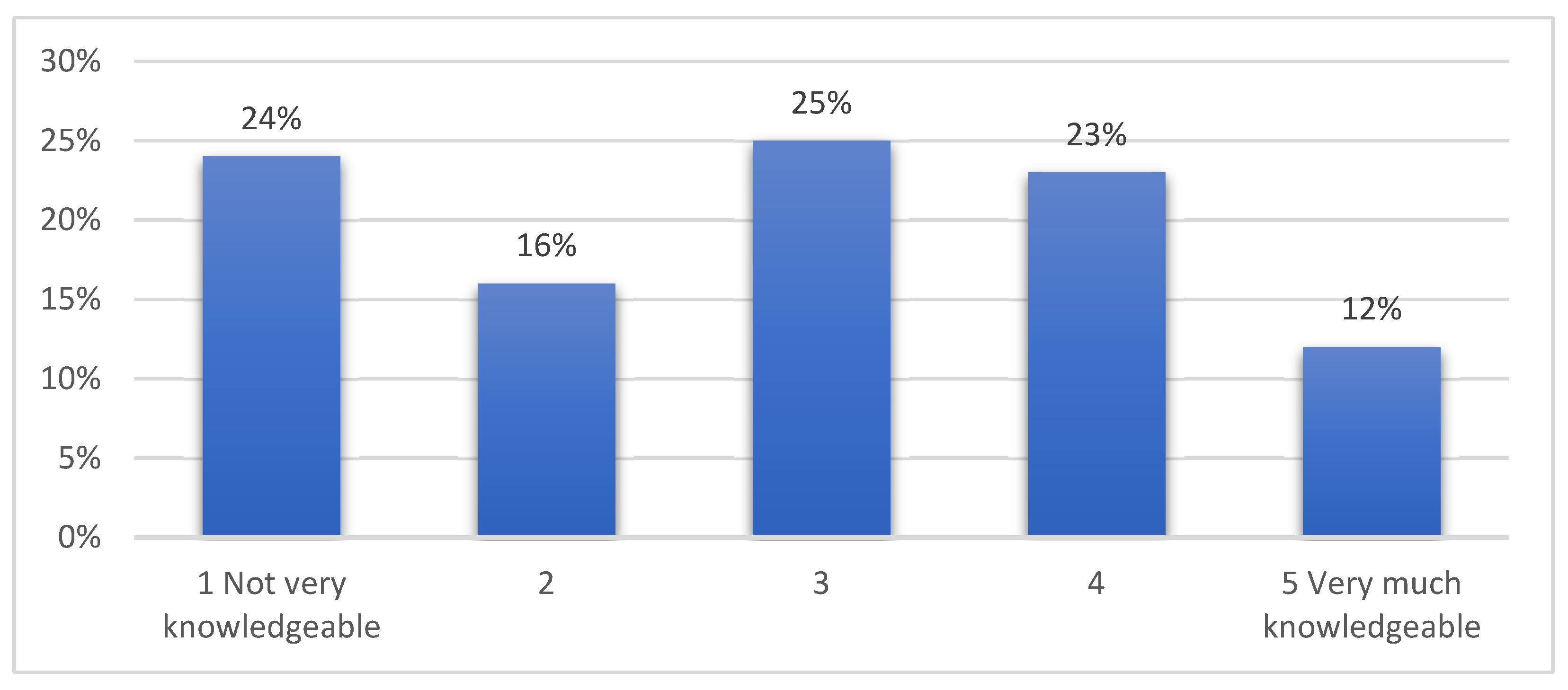
| Familiarity with ADAS | 1 | Five-point Likert scale | |
| Acceptance of ADAS | 33 | Five-point Likert scale |
| Construct | Question | Attitudinal Statement |
|---|---|---|
| Perceived Usefulness/Perceived Expectancy | 6, 7, 28, 29, 30 | This pertains to the belief that ADAS improves the safety, performance, and efficiency in driving. |
| Perceived Ease of Use/Effort Expectancy | 12, 13, 14, 18, 31, 32, 33 | This measures the belief that ADAS requires minimal effort to use. |
| Trust and Control | 1, 2, 3 | This attributes to the driver’s trust in technology and their ability to maintain or relinquish control over the vehicle. |
| Behavioral Intention and Attitude | 4, 5, 8, 9, 15, 19, 21 | This is attributed to the overall attitude and intention of the driver to adopt ADAS. |
| Perceived Cost and Value | 10, 11, 16, 17 | This measures the driver’s perception of ADAS and its benefits vs. costs, and their willingness to pay for such technology. |
| Innovativeness and Risk Propensity | 20, 22, 23, 24, 25, 26, 27 | These are personality traits that are attributed to how open the driver is to new technology and the risks in buying a novel feature in vehicles. |
| k | SSE (Inertia) | Silhouette | Calinski–Harabasz | Davies–Bouldin |
|---|---|---|---|---|
| 2 | 4749.059 | 0.1668 | 43.1571 | 1.8969 |
| 3 | 4366.588 | 0.1400 | 31.0440 | 1.9411 |
| 4 | 4026.073 | 0.1244 | 27.2525 | 2.0480 |
| 5 | 3826.867 | 0.1085 | 23.6449 | 2.1293 |
| 6 | 3676.168 | 0.1059 | 20.9965 | 2.1891 |
| Metric | Value |
|---|---|
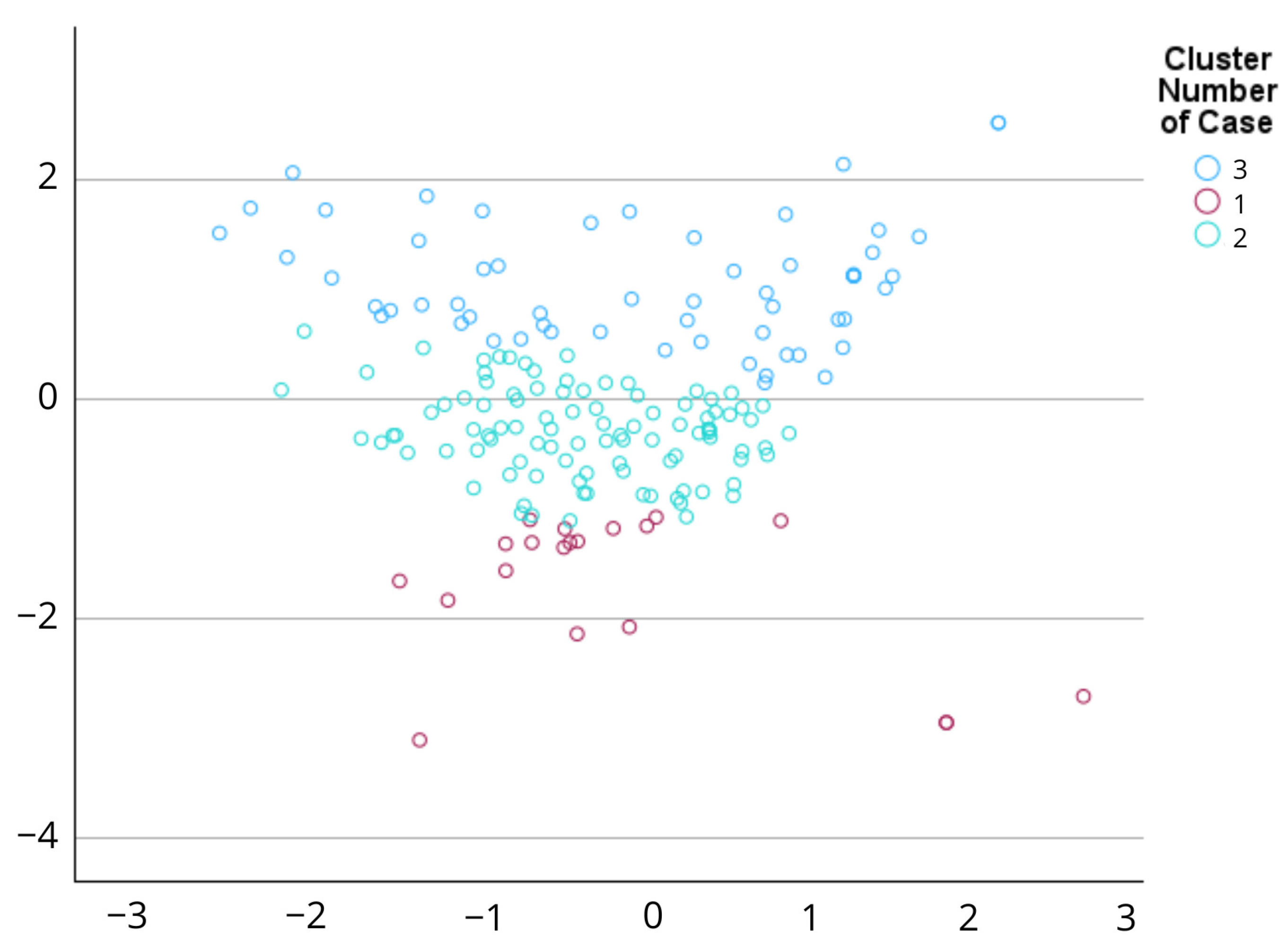
| Cluster sizes (n) | 95, 32, 52 |
| Stability (Ward vs. k-means, ARI) | 0.234 |
| Scale reliability (Cronbach’s α, 33 items) | 0.862 |
| Gender | |
| Male | 45% |
| Female | 55% |
| Age | |
| 18–23 Years | 68% |
| 24–29 Years | 21% |
| 30–35 Years | 4% |
| 36–41 Years | 4% |
| 42–47 Years | 1% |
| 48–53 Years | 1% |
| 54–59 Years | 1% |
| Education | |
| High School | 64% |
| College Degree | 9% |
| University Degree | 25% |
| PhD | 2% |
| Attitude Statements | Mean |
|---|---|
| (Question 11) I would be willing to pay more for the use of Cars equipped with ADAS. | 1.33 |
| (Question 20) I am usually the first in my circle of friends to use Cars equipped with ADAS when they appear. | 1.38 |
| (Question 22) I really enjoy buying new high-tech things first, before other people realize they exist. | 1.38 |
| (Question 7) Using Cars equipped with ADAS would improve my driving performance. | 1.48 |
| (Question 28) Using ADAS improves my driving performance. | 1.48 |
| (Question 9) I would find the use of Cars equipped with ADAS enjoyable. | 1.52 |
| (Question 23) It is very important for me to be the first to buy the latest technology products. | 1.57 |
| (Question 8) Using Cars equipped with ADAS would be compatible with my flexible behavior. | 1.62 |
| (Question 2) It is not important for me to be able to take back control of a car with ADAS. | 1.67 |
| (Question 10) The cost of Cars equipped with ADAS would be outweighed by their benefits. | 1.71 |
| (Question 30) Using ADAS improves my driving efficiency. | 1.71 |
| (Question 6) Using Cars equipped with ADAS would allow me to perform driving tasks more efficiently. | 1.81 |
| (Question 26) I like to take risks by buying unknown brands just to add variety to my purchases. | 1.81 |
| (Question 21) Next time I want a new car, I’ll buy an ADAS car. | 1.95 |
| (Question 24) If I like a brand, I rarely switch just to try something new (reverse). | 2.19 |
| (Question 4) I would like to experiment with cars that have ADAS. | 2.24 |
| (Question 3) Overall, I would trust the technology of an ADAS car. | 2.29 |
| (Question 32) ADAS are difficult to use (reverse). | 2.29 |
| (Question 19) I think that using Cars equipped with ADAS is a wise decision. | 2.33 |
| (Question 29) Using ADAS improves my safety. | 2.38 |
| (Question 12) ADAS is easy to use because I can use it at any time. | 2.48 |
| (Question 13) ADAS is easy to use because I can use it in any situation. | 2.48 |
| (Question 31) Interacting with ADAS is clear and understandable. | 2.52 |
| (Question 14) ADAS is easy to use because it is not complicated. | 2.62 |
| (Question 15) I will wait to buy an ADAS car until it is proven that it is beneficial for me (reverse). | 2.67 |
| (Question 18) In my opinion, an ADAS car is often too complicated to be useful (reverse). | 2.81 |
| (Question 5) I am generally reluctant to try cars with ADAS (reverse). | 2.90 |
| (Question 17) I worry that I might pay more when using an ADAS car (reverse). | 2.90 |
| (Question 33) Interacting with ADAS does not require much mental effort (reverse). | 2.90 |
| (Question 16) Buying an ADAS car can be a waste of money (reverse). | 3.05 |
| (Question 27) I’m very cautious about trying new products (reverse). | 3.05 |
| (Question 25) When I go to an electronics store, I feel safer ordering products I know (reverse). | 3.10 |
| (Question 1) I prefer to keep control when using a car with ADAS (reverse). | 4.10 |
| Attitude Statements | Mean |
|---|---|
| (Question 23) It is very important for me to be the first to buy the latest technology products. | 2.01 |
| (Question 20) I am usually the first in my circle of friends to use Cars equipped with ADAS when they appear. | 2.15 |
| (Question 5) I am generally reluctant to try cars with ADAS (reverse). | 2.33 |
| (Question 18) In my opinion, an ADAS car is often too complicated to be useful (reverse). | 2.43 |
| (Question 22) I really enjoy buying new high-tech things first, before other people realize they exist. | 2.46 |
| (Question 26) I like to take risks by buying unknown brands just to add variety to my purchases. | 2.46 |
| (Question 16) Buying an ADAS car can be a waste of money (reverse). | 2.48 |
| (Question 2) It is not important for me to be able to take back control of a car with ADAS. | 2.55 |
| (Question 32) ADAS are difficult to use (reverse). | 2.67 |
| (Question 7) Using Cars equipped with ADAS would improve my driving performance. | 2.75 |
| (Question 10) The cost of Cars equipped with ADAS would be outweighed by their benefits. | 2.76 |
| (Question 11) I would be willing to pay more for the use of Cars equipped with ADAS. | 2.79 |
| (Question 28) Using ADAS improves my driving performance. | 2.86 |
| (Question 8) Using Cars equipped with ADAS would be compatible with my flexible behavior | 2.89 |
| (Question 21) Next time I want a new car, I’ll buy an ADAS car. | 2.92 |
| (Question 17) I worry that I might pay more when using an ADAS car (reverse). | 2.96 |
| (Question 27) I’m very cautious about trying new products (reverse). | 2.98 |
| (Question 6) Using Cars equipped with ADAS would allow me to perform driving tasks more efficiently. | 3.00 |
| (Question 24) If I like a brand, I rarely switch just to try something new (reverse). | 3.03 |
| (Question 30) Using ADAS improves my driving efficiency. | 3.03 |
| (Question 15) I will wait to buy an ADAS car until it is proven that it is beneficial for me (reverse). | 3.07 |
| (Question 33) Interacting with ADAS does not require much mental effort. | 3.17 |
| (Question 3) Overall, I would trust the technology of an ADAS car. | 3.19 |
| (Question 9) I would find the use of Cars equipped with ADAS enjoyable. | 3.23 |
| (Question 12) ADAS is easy to use because I can use it at any time. | 3.23 |
| (Question 31) Interacting with ADAS is clear and understandable. | 3.24 |
| (Question 13) ADAS is easy to use because I can use it in any situation. | 3.28 |
| (Question 19) I think that using Cars equipped with ADAS is a wise decision. | 3.28 |
| (Question 14) ADAS is easy to use because it is not complicated. | 3.29 |
| (Question 25) When I go to an electronics store, I feel safer ordering products I know (reverse). | 3.39 |
| (Question 29) Using ADAS improves my safety. | 3.46 |
| (Question 4) I would like to experiment with cars that have ADAS. | 3.62 |
| (Question 1) I prefer to keep control when using a car with ADAS (reverse). | 3.74 |
| Attitude Statements | Mean |
|---|---|
| (Question 5) I am generally reluctant to try cars with ADAS (reverse). | 2.69 |
| (Question 18) In my opinion, an ADAS car is often too complicated to be useful (reverse). | 2.86 |
| (Question 32) ADAS are difficult to use (reverse). | 2.93 |
| (Question 16) Buying an ADAS car can be a waste of money (reverse). | 3.02 |
| (Question 26) I like to take risks by buying unknown brands just to add variety to my purchases. | 3.17 |
| (Question 2) It is not important for me to be able to take back control of a car with ADAS. | 3.25 |
| (Question 20) I am usually the first in my circle of friends to use Cars equipped with ADAS when they appear. | 3.25 |
| (Question 23) It is very important for me to be the first to buy the latest technology products. | 3.25 |
| (Question 27) I’m very cautious about trying new products (reverse). | 3.25 |
| (Question 17) I worry that I might pay more when using an ADAS car (reverse). | 3.27 |
| (Question 1) I prefer to keep control when using a car with ADAS (reverse). | 3.39 |
| (Question 15) I will wait to buy an ADAS car until it is proven that it is beneficial for me (reverse). | 3.44 |
| (Question 25) When I go to an electronics store, I feel safer ordering products I know (reverse). | 3.53 |
| (Question 22) I really enjoy buying new high-tech things first, before other people realize they exist. | 3.54 |
| (Question 24) If I like a brand, I rarely switch just to try something new (reverse). | 3.71 |
| (Question 10) The cost of Cars equipped with ADAS would be outweighed by their benefits. | 3.90 |
| (Question 11) I would be willing to pay more for the use of Cars equipped with ADAS. | 3.90 |
| (Question 3) Overall, I would trust the technology of an ADAS car. | 3.95 |
| (Question 4) I would like to experiment with cars that have ADAS. | 3.97 |
| (Question 33) Interacting with ADAS does not require much mental effort (reverse). | 3.97 |
| (Question 21) Next time I want a new car, I’ll buy an ADAS car. | 3.98 |
| (Question 19) I think that using Cars equipped with ADAS is a wise decision. | 4.03 |
| (Question 8) Using Cars equipped with ADAS would be compatible with my flexible behavior | 4.07 |
| (Question 12) ADAS is easy to use because I can use it at any time. | 4.08 |
| (Question 14) ADAS is easy to use because it is not complicated. | 4.08 |
| (Question 13) ADAS is easy to use because I can use it in any situation. | 4.15 |
| (Question 7) Using Cars equipped with ADAS would improve my driving performance. | 4.17 |
| (Question 9) I would find the use of Cars equipped with ADAS enjoyable. | 4.22 |
| (Question 28) Using ADAS improves my driving performance. | 4.24 |
| (Question 30) Using ADAS improves my driving efficiency. | 4.24 |
| (Question 31) Interacting with ADAS is clear and understandable. | 4.25 |
| (Question 6) Using Cars equipped with ADAS would allow me to perform driving tasks more efficiently. | 4.27 |
| (Question 29) Using ADAS improves my safety. | 4.32 |
| Clusters | Acceptance of ADAS (Mean) | Familiarity with ADAS (Mean) | Number of Respondents (N) |
|---|---|---|---|
| Conservative Controllers | 2.30 | 2.52 | 21 |
| Cautious Adopters | 2.99 | 2.73 | 99 |
| Pragmatic Innovators | 3.52 | 3.05 | 59 |
| Characteristic | Conservative Controllers | Cautious Adopters | Pragmatic Innovators |
|---|---|---|---|
| Size of segment | 11.7% | 55.3% | 33.0% |
| General description | Low trust, reluctant to automation, high need for control | Balanced view, weighs cost vs. benefits of adoption | Open to innovation, high trust in automation |
| Trust in ADAS | Low—they do not trust the technology | Moderate—they are willing to trust if the benefits have been vouched for | High—they have high trust and believe in the safety and reliability of ADAS |
| Need for Control | High—they strongly prefer to maintain control over the vehicle | Moderate to High—they prefer to control the vehicle but are willing to relinquish for benefits that have been tested and proven | Low—they are willing to relinquish control and adopt the system |
| Willingness to Pay | Low—they see ADAS as a waste of money | Moderate—they are price-sensitive and are willing to pay if the benefits offset the additional cost | High—they are willing to purchase vehicles with ADAS, even if they command premium prices |
| Intention to Purchase | Low—they are reluctant to purchase and will most likely delay buying | Moderate—if they are sure that the benefits outweigh the costs, they intend to purchase | High—they intend to purchase a vehicle with ADAS |
| Innovativeness | Low—they are risk-averse and therefore very cautious to adopt | Moderate—they will not adopt right away but are open to new products | High—they seek novelty and prefer to be pioneers in adopting technology |
| Communication Approach | Highlight override or deactivate features to appeal to the segment’s need for control | Highlight benefits and product value to appeal to the segment’s price-sensitive nature | Highlight latest and novel features to appeal to the segment’s innovative nature |
Disclaimer/Publisher’s Note: The statements, opinions and data contained in all publications are solely those of the individual author(s) and contributor(s) and not of MDPI and/or the editor(s). MDPI and/or the editor(s) disclaim responsibility for any injury to people or property resulting from any ideas, methods, instructions or products referred to in the content. |
© 2025 by the authors. Licensee MDPI, Basel, Switzerland. This article is an open access article distributed under the terms and conditions of the Creative Commons Attribution (CC BY) license (https://creativecommons.org/licenses/by/4.0/).
Share and Cite
Balassa, B.E.; Choi, M.; Baquillas, J.C.; Koteczki, R. Identifying Consumer Segments for Advanced Driver Assistance Systems (ADAS): A Cluster Analysis of Driver Behavior and Preferences. Future Transp. 2025, 5, 182. https://doi.org/10.3390/futuretransp5040182
Balassa BE, Choi M, Baquillas JC, Koteczki R. Identifying Consumer Segments for Advanced Driver Assistance Systems (ADAS): A Cluster Analysis of Driver Behavior and Preferences. Future Transportation. 2025; 5(4):182. https://doi.org/10.3390/futuretransp5040182
Chicago/Turabian StyleBalassa, Boglárka Eisinger, Minje Choi, Jonna C. Baquillas, and Réka Koteczki. 2025. "Identifying Consumer Segments for Advanced Driver Assistance Systems (ADAS): A Cluster Analysis of Driver Behavior and Preferences" Future Transportation 5, no. 4: 182. https://doi.org/10.3390/futuretransp5040182
APA StyleBalassa, B. E., Choi, M., Baquillas, J. C., & Koteczki, R. (2025). Identifying Consumer Segments for Advanced Driver Assistance Systems (ADAS): A Cluster Analysis of Driver Behavior and Preferences. Future Transportation, 5(4), 182. https://doi.org/10.3390/futuretransp5040182