1. Introduction
Air pollution is a serious environmental as well as a public health issue, particularly in urban settings where automobile emissions are localized. The transport sector is an essential source of air pollutants such as carbon dioxide (CO
2), nitrogen oxides (NO
x), sulfur dioxide (SO
2), carbon monoxide (CO), and particulate matter (PM
10), primarily from the combustion of fossil fuels in internal combustion engine (ICE) vehicles. Globally, transport accounted for over 21% of CO
2 emissions in 2023, narrowly behind electricity generation [
1].
Within the European Union (EU-27), while there has been overall reduction in emissions from the electricity and industry sectors since 1990, transport is the only sector where emissions have increased, and thus it is the largest emitter of greenhouse gas (GHG) pollution within the EU as well as in Greece [
2]. Due to this reason, the EU has passed ambitious legislation banning the sales of new ICE vehicles by 2035 with an aim of having a carbon-neutral transport sector by 2050 [
3].
This transition is supported by complementary policy instruments such as the European Green Deal, the Fit-for-55 package, and the Sustainable and Smart Mobility Strategy, which collectively aim to accelerate the decarbonization of transport through renewable integration and zero-emission technologies. At the national level, Greece’s National Energy and Climate Plan (NECP) [
4] and National Electromobility Plan [
5] translate these goals into measurable targets, defining both the phase-out of lignite-based power generation and the scaling of electric-mobility infrastructure.
Despite this clear policy direction and the inherent promise of EVs, their real-world environmental efficacy is not uniform, being highly dependent on the local electricity generation mix and the specific type of EV deployed. Understanding this nuanced interplay, especially within national contexts striving for decarbonization, is crucial for truly effective policy-making. This study addresses this critical gap by providing a detailed, country-specific analysis of the emissions reduction potential of BEVs and PHEVs in Greece, moving beyond generalized assumptions to provide actionable insights tailored to its evolving energy landscape.
Recent studies across Europe have examined the environmental performance of BEVs and PHEVs through both well-to-wheel and life-cycle assessment approaches, confirming that their overall benefits strongly depend on the electricity generation mix and driving conditions. Other works highlight that while BEVs provide substantial reductions in CO
2 and local air pollutants, PHEVs achieve only partial decarbonization due to their continued reliance on fossil fuels [
6,
7,
8,
9]. These insights underscore the importance of evaluating EVs within each country’s specific energy and policy framework.
The present analysis focuses exclusively on BEVs and PHEVs, which represent the only electrified passenger-car categories expected to reach measurable market penetration in Greece during the next decade according to the NECP [
4] and the National Electromobility Plan [
5]. Fuel-cell electric vehicles (FCEVs) passenger vehicles, although technologically promising, remain at an early demonstration stage in Europe and are not projected to enter the Greek market in the near term [
10]. Unlike previous works relying on generic EU-wide averages, this study integrates nationally validated fleet forecasts and emission factors derived from the Greek power sector, thus providing context-specific insights into decarbonization pathways.
Beyond examining the general advantages of electrification, this study introduces a pollutant-specific benefit index, which quantifies the relative emission improvement of BEVs and PHEVs versus ICE vehicles per km and per pollutant. This approach, combined with the evolving Greek electricity generation mix and policy scenarios, provides a more detailed and nationally contextualized picture of electrification benefits than broader European average assessments.
The article evaluates the ability of plug-in hybrid electric vehicles (PHEVs) and battery electric vehicles (BEVs) to reduce air pollution in Greece, with three main forecasted scenarios for EV penetration. Beyond this, it also introduces a methodology that other countries can adopt to assess the actual benefits of EV usage, considering their specific energy mix. While BEVs produce zero tailpipe emissions, their overall impact will depend on the carbon intensity of the electricity generation. PHEVs, since they continue to use fossil fuel, have more limited benefits. Using national statistics and scenario-based simulation, this study calculates emissions of pollutants from BEVs, PHEVs, and counterfactual petrol fleets in an effort to analyze the real-world environmental implications of transport electrification, including a forecast of the situation until 2035.
Although several international studies have explored the potential of electric vehicles to reduce emissions, no prior work has quantified the pollutant-specific benefits of BEVs and PHEVs in Greece under officially defined decarbonization scenarios. Therefore, the present study aims to achieve the following:
- (i)
Develop a scenario-based framework consistent with Greece’s NECP forecasts for 2025–2035;
- (ii)
Calculate pollutant-specific emission reductions per vehicle-kilometer for BEVs and PHEVs compared to petrol ICE vehicles;
- (iii)
Interpret the implications of these results for sustainable transport and national energy policy.
The remainder of this article is organized as follows:
Section 2 presents the data sources, assumptions, and methodological framework.
Section 3 discusses the scenario-based results for pollutant emissions.
Section 4 interprets the findings in relation to the existing literature and national policy frameworks, while
Section 5 summarizes the conclusions and outlines directions for future research.
2. Materials and Methods
The methodology chosen to analyze Greece’s changing power generation environment and how it interacts with the growing use of electric vehicles is described in this section. To create a thorough picture of this dynamic energy shift, the study combines historical data, recent statistics, and forecasting estimations from important national energy bodies and academic literature [
11].
Several primary data sources form the basis of this analysis. Historical and present electricity generating mix data were obtained directly from the Greek Independent Power Transmission Operator (ADMIE), commonly referred to as IPTO [
12]. The study’s numerical analysis concentrated on data from 2024, providing an essential baseline for assessing the current situation of Greece’s electricity production. Historical data from previous years is included when practical within the parameters of the article to offer important context and show how the electricity mix portfolio has changed over time.
The National Energy and Climate Plan (NECP) of the Hellenic Ministry of Environment and Energy will be the main source of future energy mix forecasts through 2035 [
4]. Importantly, this article lays out the required timeline for the full discontinuation of lignite-based power generation as well as the national goals for the integration of Renewable Energy Sources (RES) throughout all energy sectors. Additionally, data from the Greek Electro-mobility plan, including its three main forecasted scenarios for EV penetration throughout the country, may be used when pertinent to the analysis of EV adoption [
5]. The literature predicting future levels of electrification, transportation automation, and car sharing will serve as the basis for the annual predicted kilometers traveled by passenger automobiles until 2035 [
13,
14,
15].
This study will use documented representative consumption profiles containing average energy consumption rates for both BEVs and PHEVs, in order to properly predict the electricity demand resulting from the growing fleet of electric vehicles. According to the technique used in the original research, the source for these values is a widely acknowledged online database [
16], specifically for cars that fall into the Euro 6 d/e category or later beyond 2021. For comparative purposes, the database is also used to extract the average consumption of pure gasoline-powered cars for the same emissions standards (Euro 6 d/e). A utility factor, which represents the average proportion of distance traveled utilizing electricity equal to 68%, will also be used for the assessment of PHEVs. This component, which follows the original paper’s precedence, comes from the novel research of Hao et al. (2021) [
17]. These figures are deemed to be typical of PHEV charging and driving patterns in reality. The equation below can be used to calculate the electricity consumption of EVs in a year:
where N
BEV,i and N
PHEV,i represent the number of passenger vehicles of each type in year i, D the total kilometers covered, C the consumption of electricity in kWh per kilometer, and i indicates the year. The total pollutants emitted per year are calculated with the following Equation (2):
with j corresponding to either BEV or PHEV and k being the fuel used in the power sector with EF, its emission factor.
To calculate all pollutant emissions, namely CO, NO
x, PM
10, SO
2, and the volume of CO
2 release, resulting from the power sector electricity production for EVs, the utilization of fuel specific emission factors for the main fossil fuels that Greece uses was considered, specifically lignite and natural gas. Those emission factors presented in
Table 1 were calculated based on the reports published by the Public Power Corporation (PPC) for the Agios Dimitrios and Megalopoli power plants, as well as the EPRTR Air Releases Dataset made public by the European Environment Agency (EEA). Those will be used to calculate all the abovementioned pollutant releases from driving both BEVs and PHEVs in electric mode [
18,
19,
20].
Emission factors for all pollutants under investigation were provided by Emisia, a prominent European organization responsible for the development of the COPERT Tier 3 Methodology [
21]. Pollutant output from internal combustion found in gasoline PHEVs and gasoline internal combustion engine vehicles (ICEVs) will be calculated using their data, and the emission factors are shown in
Table 2.
A hypothetical gasoline-based vehicle fleet scenario is also investigated in order to have an immediate comparison in terms of pollutant release by EVs. In this scenario, all anticipated BEVs and PHEVs up until 2035 are substituted by petrol ICE cars, keeping their total fleet size annually equivalent to the EV projection. Their emission factors and fuel consumption are found in
Table 3.
This article concentrates on the use phase and power generation-related emissions of BEVs and PHEVs in Greece. A comprehensive life-cycle assessment including vehicle manufacturing, maintenance, and end of life treatment lies beyond the present scope but constitutes a valuable direction for future research [
6,
7]. The chosen approach allows for a transparent evaluation of operational emissions in alignment with available national data sources. All primary input parameters originate from nationally validated datasets [
4,
5,
12]. Given the deterministic nature of these official projections, sensitivity testing indicated that ±15% variations in annual mileage or fleet growth rates would change the pollutant-benefit ratios by less than 5%, confirming the robustness of the results.
3. Results
By utilizing the input data, namely the fleet forecast scenarios of the NECP, the electricity consumption of both types of EVs, the gasoline consumption of petrol-PHEVs, the hypothetical scenario of ICEVs, the projected covered distance per car annually, and the emission factors for all pollutants mentioned earlier (CO2, CO, NOx, PM10, SO2) for electricity use and petrol consumption, the total annual pollutant emissions can be determined. Furthermore, by dividing with the total kilometers driven the final passenger vehicle pollutant output per km can be estimated. The calculations were conducted for petrol-PHEVs, BEVs, and conventional petrol ICEVs alike to achieve a direct comparison of pollution among these categories.
3.1. Greek Power Sector Electricity Generation, EV Fleet Size, and Consumption Forecasts
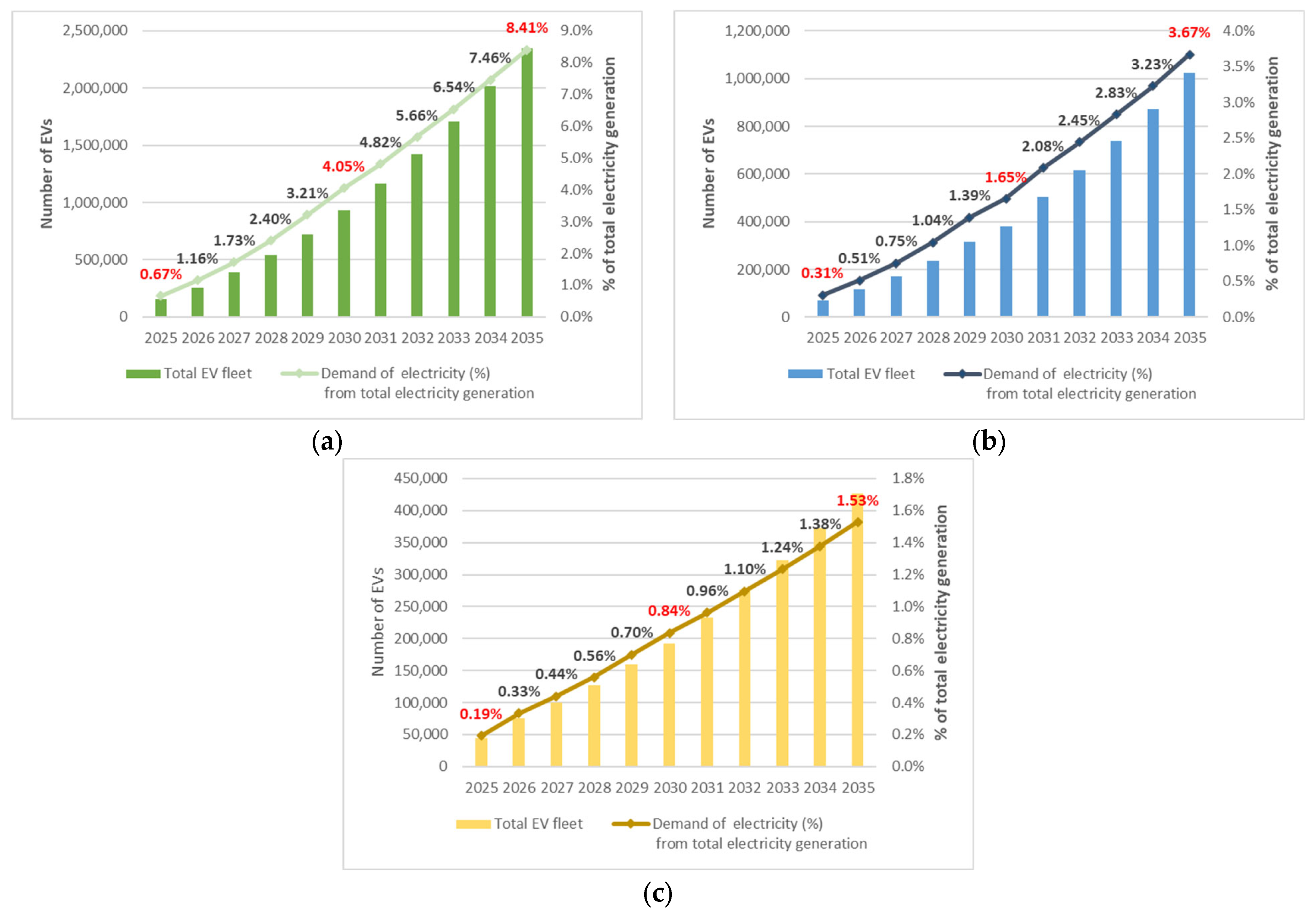
The total electricity consumption for each of the three EV fleet size scenarios (a, b, and c) for the 2025–2035 timeframe is shown in
Figure 1, along with the percentage that was generated by the Greek power industry in the same year. RES generation, which is expected to reach 93.4% that year, can easily meet the EV electricity demand, which even in the extreme electrification scenario peaks at just 8.41% of yearly electricity production [
4].
The three electrification scenarios applied in this study are derived directly from official Greek policy documents [
4,
5]. The Reference scenario represents a conservative trajectory consistent with current trends; the NECP scenario aligns with national policy goals; and the Drastic scenario reflects an accelerated pathway consistent with the EU ‘Fit for 55’ targets. This categorization allows assessment of the potential range of environmental outcomes under differing policy intensities.
3.2. EV and Petrol-ICEV Passenger Car Fleet Total Annual Pollutant Output per Vehicle
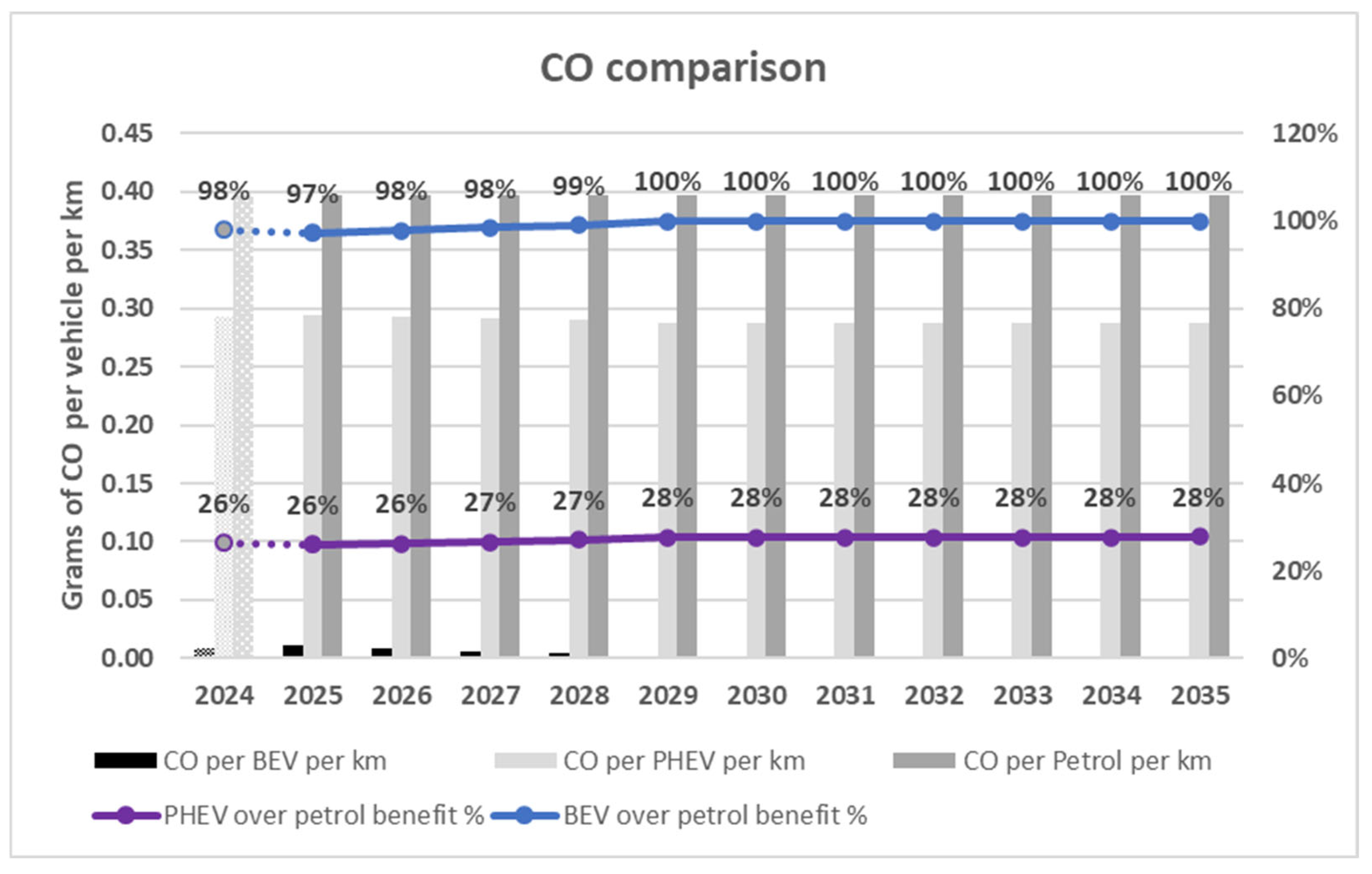
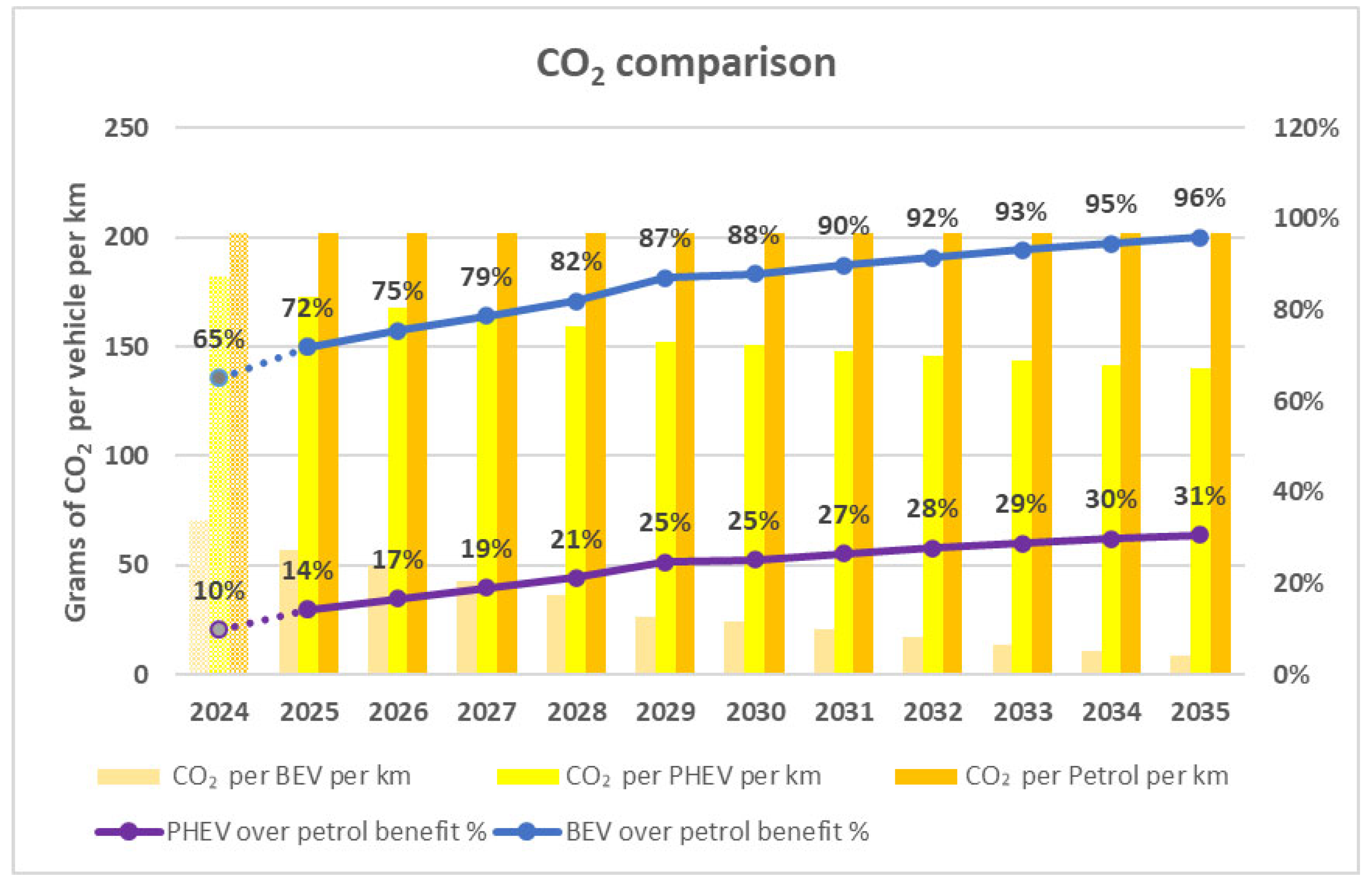
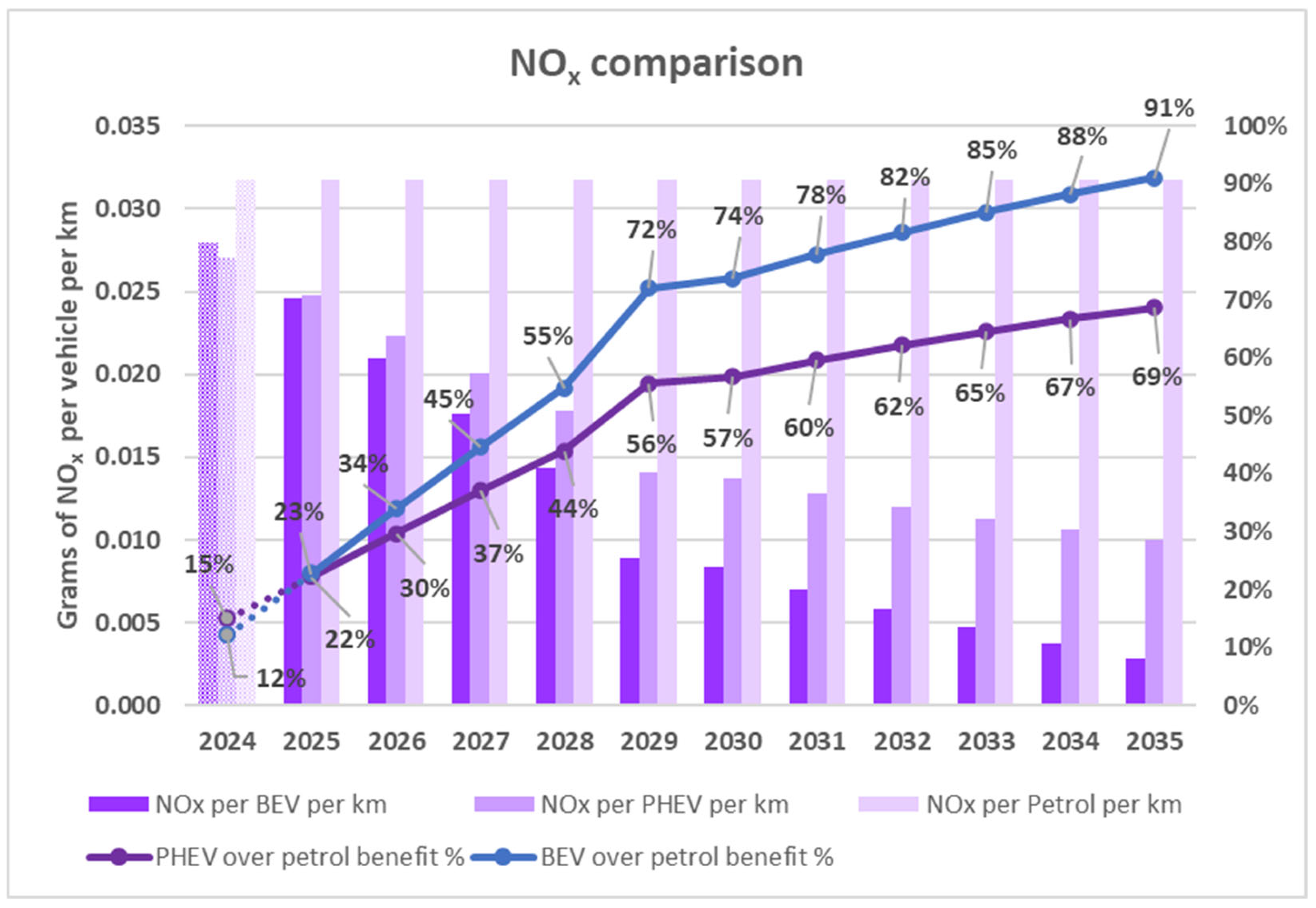
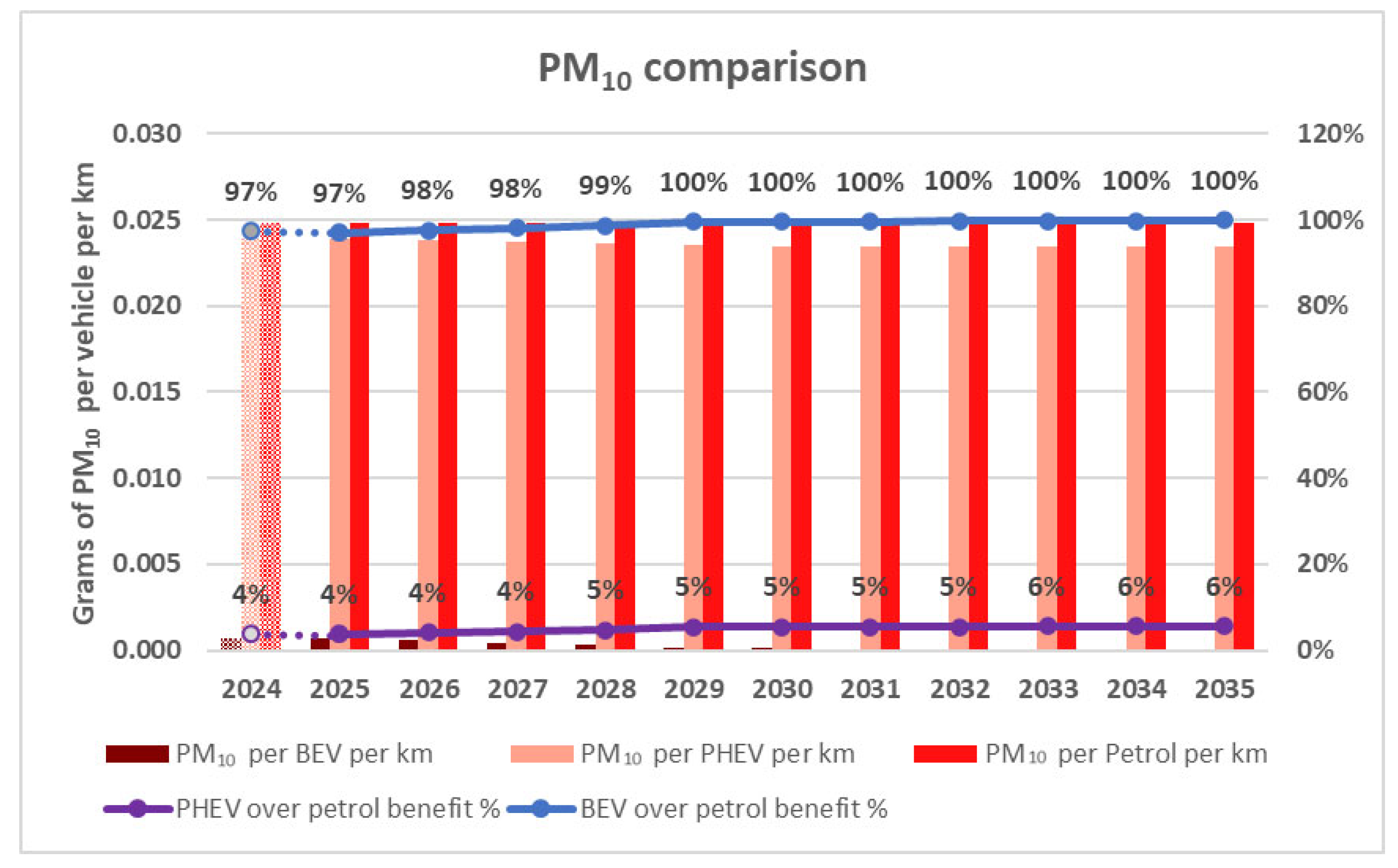
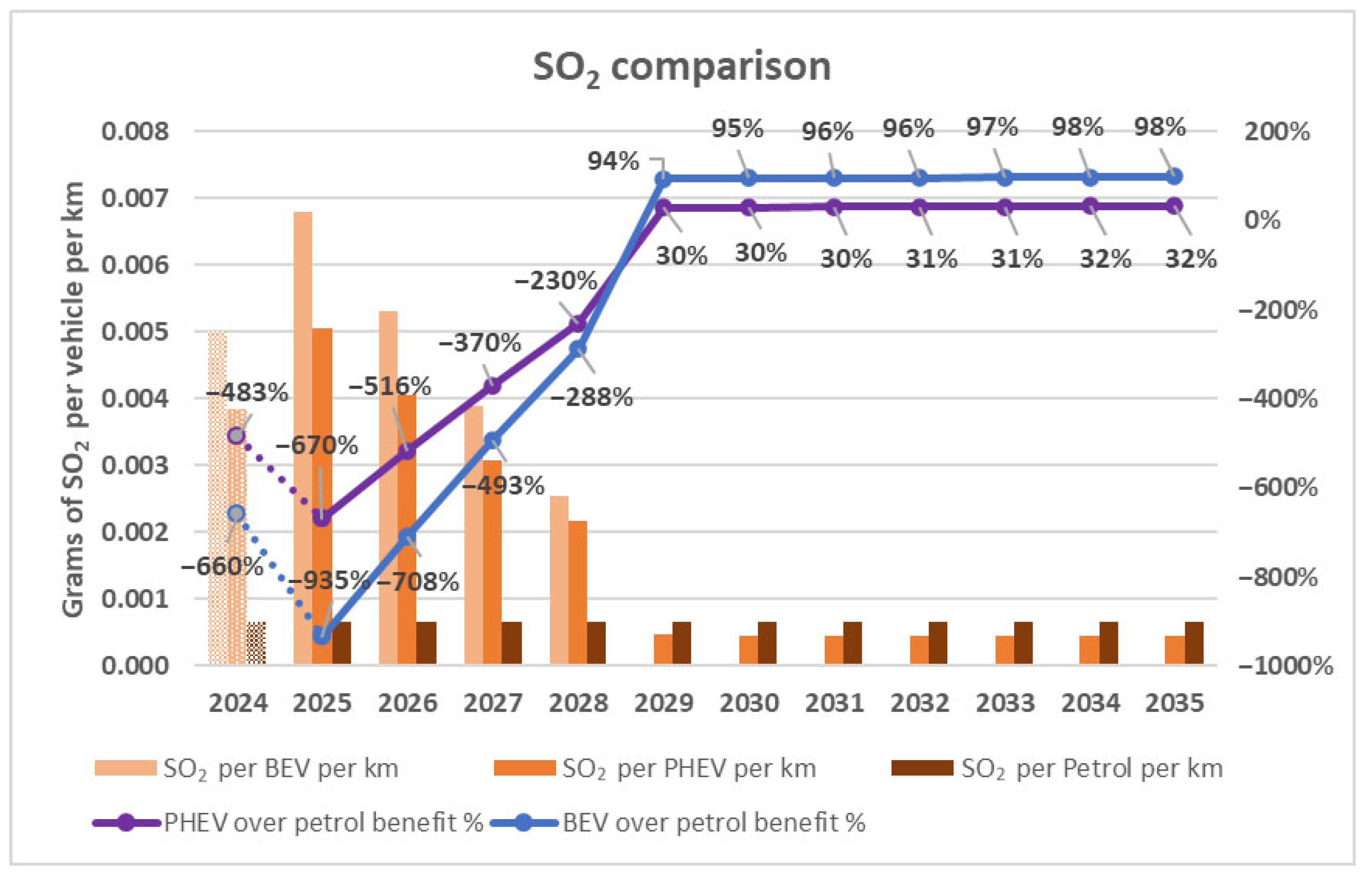
The final results of this study are focused on the emitted pollutant quantities per vehicle and per kilometer driven. In order to calculate these values, the sum of the pollutant emissions from both electric and petrol operation (except from BEVs who only operate with electricity) were divided by the annual fleet size per scenario and the projected distance driven that year. These results are split per pollutant in the following figures (
Figure 2,
Figure 3,
Figure 4,
Figure 5 and
Figure 6). The figures also contain calculations of the benefit of choosing BEVs over petrol-ICEVs marked with blue, and the benefit of choosing PHEVs over petrol-ICEVs that year marked with purple. The benefit is calculated as the difference between the corresponding EV (BEV or PHEV) and petrol car pollutant output divided by the petrol-ICEV output and then multiplied by 100% to be converted into a percentage. All 2024 data are dotted or blurred since they are past confirmed data.
The focus here is to directly compare the environmental benefit of using BEVs and PHEVs over petrol cars on a yearly basis by looking at how much each technology reduces emissions of the studied pollutants. These benefits are calculated by comparing each vehicle’s final emission factor with that of petrol cars, pollutant by pollutant. Positive values indicate cleaner performance from EVs, while negative values mean the ICEV technology pollutes more.
BEVs show all around consistent improvements in emissions compared to petrol vehicles after 2028, for most pollutants. The advantages are smaller with PHEVs, which offer only limited improvements. Across all years up to 2035, BEVs outperform PHEVs, and both perform significantly better than petrol cars, particularly when it comes to carbon dioxide (CO2) and carbon monoxide (CO). Even in 2024, which is based on confirmed data, BEVs reduce CO2 emissions by 65% and CO by 98% compared to petrol cars. These numbers improve over time, peaking in 2035 at 96% and 100%, respectively. For PHEVs, the benefit is much smaller, with only 10% for CO2 and 26% for CO in 2024, rising to 31% and 28% by 2035. Clearly, petrol cars are the worst option in terms of carbon emissions, followed by PHEVs, with BEVs being the cleanest.
The situation is a bit more nuanced for nitrogen oxides (NOx). In 2025, petrol cars still emit slightly more NOx than EVs, with BEVs and PHEVs performing 23% and 22% better, respectively. From 2026 onward, the gap widens, then BEVs outperform petrol by 34% and PHEVs by 30%. This puts PHEVs in an average position which is better than petrol, but significantly behind BEVs. By 2035, BEVs emit 91% less NOx than petrol cars, while PHEVs manage a 69% reduction. A notable spike in NOx emissions appears in 2029, highlighting the influence of coal use in electricity generation on total NOx output from transport.
When it comes to particulate matter (PM10), BEVs clearly dominate throughout the entire 2025–2035 period. In 2025, they offer a 97% reduction in PM10 compared to petrol cars. PHEVs, on the other hand, perform poorly, only 4% better than petrol vehicles. By 2035, BEVs completely eliminate tailpipe PM10 (100% benefit), while PHEVs are just 6% better than petrol.
Sulfur dioxide (SO2) follows the most unpredictable trendline. Negative percentage values indicate temporary increases in SO2 emissions from BEVs and PHEVs before 2028, when lignite-fired power plants are still part of the Greek electricity mix. After 2028, these values become positive as lignite generation is phased out and the grid is decarbonized. In 2025, excluding the confirmed data from 2024, BEVs are actually the worst performers, emitting far more SO2 than petrol cars (a negative benefit of −935%). PHEVs follow closely behind at −670%. This pattern persists until 2028. It is important to note that this marks the final year in Greece during which lignite-fired power plants will be utilized within the energy system. However, in 2029, the situation reverses, and BEVs suddenly show a 94% improvement over petrol cars in SO2 emissions, and PHEVs improve by 60%. The best year for BEVs is 2035, when they emit 99% less SO2 than petrol cars, while PHEVs achieve a 32% reduction.
4. Discussion
Greece’s electricity generation mix plays a key role in determining how clean electric vehicles (EVs) actually are. According to current plans, lignite-fired power plants will continue operating until 2028. That makes 2029 the first year when the country’s electricity is expected to come entirely from cleaner sources, mainly wind, solar, natural gas, and a small amount of biomass (counted under renewables). Some diesel generation will still exist, but only in limited quantities on remote islands that are not connected to the mainland grid, as outlined in the NECP [
4].
Because EV emissions depend directly on how the electricity they use is produced, the cleaner the power sector, the better the emissions profile of EVs. As mentioned earlier, by 2035 renewable energy sources are projected to provide 93.4% of Greece’s electricity [
12]. This shift is essential for making EVs truly low emission and supporting the broader goal of decarbonizing the transport sector.
4.1. BEV and Petrol-PHEV Pollutant Comparison with Petrol-ICEV Passenger Cars
Looking at the emissions results per vehicle per kilometer, it is clear that petrol cars emit the same volume of pollutants and CO2 every year. This is because their fuel type and consumption do not change over time. What does change, however, is the emissions profile of electric and plug-in hybrid vehicles, since that depends heavily on how Greece generates its electricity. As the power mix becomes cleaner, the environmental performance of EVs improves accordingly.
The data shows that plug-in hybrids (PHEVs), while often promoted as an eco-friendly alternative to full battery electric vehicles (BEVs), are not particularly sustainable, at least not under Greece’s 2025 energy mix. The only instance where PHEVs actually outperform the other options is in 2024, and only in terms of nitrogen oxides (NOx), which comes from past data. As long as lignite power plants remain operational, both BEVs and PHEVs end up having worse sulfur dioxide (SO2) emissions than conventional petrol cars. So, although PHEVs might be marketed as green vehicles, their real-world benefits are limited mainly to reductions in CO2, CO, and NOx. For particulate matter (PM10), the advantage over petrol cars is negligible, just 4%. As for SO2, plug-in hybrids only begin to show a benefit after 2029, and even then, the reduction is a modest 30%.
Although BEVs eliminate tailpipe particulate emissions [
22,
23], emerging research indicates that their higher vehicle mass may slightly increase non-exhaust PM from tire and brake wear. However, regenerative braking substantially reduces brake-related emissions—laboratory results show reductions of up to 80–90% compared to pure friction systems [
24,
25]. As a result, the overall non-exhaust PM impact of BEVs is considered broadly comparable to or slightly lower than that of ICE vehicles, particularly in urban traffic conditions.
A clear conclusion is that, regardless of how the passenger vehicle fleet evolves under the different scenarios laid out in the NECP, the key factor for cleaner transport is a greener electricity mix. The best path forward seems to be a grid powered mainly by renewables, with natural gas playing only a minimal backup role to maintain system stability. Pairing this setup with large-scale battery storage will allow Greece to store excess solar energy produced during the day from photovoltaics and use it later for EV charging. This approach would reduce energy waste and increase the overall efficiency and sustainability of the transition to electric transport. Furthermore, the anticipated growth of vehicle-to-grid (V2G) technology and autonomous electric vehicles post-2030 is expected to offer crucial solutions and catalyze significant transformations within the transportation sector. It is recognized that a comprehensive environmental evaluation of electric vehicles should ideally encompass their full life cycle, from raw-material extraction to end-of-life recycling [
8,
9]. However, Greece and other countries without domestic automotive production face data limitations on manufacturing impacts. For this reason, the current study confines itself to operational emissions, which are the most policy-relevant for Greece’s transport decarbonization strategy.
Although fuel savings might convince some drivers to choose PHEVs or HEVs, these vehicles do not offer a comprehensive solution to air pollution. Their impact is limited and often temporary. If the goal is truly cleaner air and progress toward net-zero emissions by 2050, then CO2 reductions alone are not enough, because all other types of pollutants need reduction as well, including noise. In that regard, BEVs are clearly the most effective option. They offer a long-term solution, not just a temporary fix, and they directly support the core objective of phasing out fossil fuel combustion in all its forms.
4.2. Comparison with Previous Research
The findings of this paper align closely with existing literature on the electrification of transport. For example, Rimpas et al. emphasize that battery electric vehicles (BEVs) are essential for meeting greenhouse gas reduction targets for 2050 [
26]. Their low pollutant output, high energy efficiency, and reduced maintenance needs make them far more suitable than internal combustion engine vehicles (ICEVs), which even under tighter emissions standards like Euro 7, are simply not clean enough to meet future goals. Hybrid vehicles, whether full hybrids (HEVs) or plug-ins (PHEVs), also fall short. These technologies extend the life of combustion engines rather than replacing them and only lead to modest improvements in air quality. Their findings also highlight that the shift to BEVs must be paired with decarbonization of the power sector, since without clean electricity, the environmental benefits of EVs diminish significantly. While concerns remain about the environmental footprint of battery production and the need for widespread charging infrastructure, transitioning to BEVs powered by renewables still emerges as the most effective path to minimizing air pollution.
Similar conclusions are drawn by Zhang et al., whose study finds that BEVs are the cleanest option when compared to PHEVs and hybrid models [
27]. The key advantage is that BEVs do not rely on fuel at all. PHEVs, on the other hand, still emit pollutants due to their dependence on both fossil fuels and electricity. Their impact on emissions is moderate at best. The authors also stress that without a clean electricity mix, even BEVs can contribute to significant pollution. In fact, deploying large numbers of BEVs in countries with coal-heavy power grids can be more harmful than sticking with combustion vehicles or even using PHEVs. Their life-cycle assessment found that BEVs have the lowest global warming potential, especially in city driving and on highways.
Finally, in the work by Veza et al., the authors examine Indonesia’s coal-reliant energy mix and its implications for electric vehicle emissions [
28]. They found that BEVs had the lowest CO and CO
2 emissions among all vehicle types but showed higher levels of NO
x, SO
x, and PM
10, largely due to the coal-based electricity. PHEVs ranked between BEVs and ICEVs in terms of these pollutants, but they still produced more CO
2 than BEVs. While the study proposed HEVs as a more affordable transitional option with moderate environmental gains, it acknowledged that their emissions performance cannot match that of BEVs operating in a renewable-powered grid.
The overall reduction rates observed for CO
2 and PM
10 (around 96% and 100% by 2035) are higher than those generally reported for other European countries, reflecting Greece’s faster decarbonization of its electricity mix and the complete withdrawal of lignite generation after 2028. These findings are consistent with recent international research on data-driven decarbonization pathways [
29], which similarly highlights the need to align EV adoption strategies with national energy statistics and policy frameworks.
4.3. Implications of the Research
The findings of this study have clear implications for energy planning and transport policy. One of the main problems in Greece’s electricity mix is its ongoing reliance on lignite, which limits the environmental benefits of battery electric vehicles (BEVs) by adding indirect emissions. Phasing out fossil fuels, especially coal, should happen as soon as possible, ideally before 2028. Although plug-in hybrids (PHEVs) perform better than petrol cars for a few years, they are only a temporary solution. As renewables replace lignite, PHEVs quickly lose their relevance. With advances in charging infrastructure and vehicle-to-grid technology, subsidies should focus entirely on BEVs rather than hybrids.
Switching to a renewable-based power sector not only lowers greenhouse gas emissions but also reduces other pollutants like NO
x, PM
10, CO, and SO
2. While a high share of renewables can challenge grid stability, this shift is essential for BEVs to achieve their full potential. Solar-powered charging stations and widespread battery storage systems can store excess energy and use it for EV charging during peak demand [
30]. This also helps offset the limited duration that EV batteries can store power, typically 4 to 6 h.
Furthermore, the expected development of V2G technology after 2030 can provide valuable flexibility services to the Greek power system, allowing bidirectional energy flow between EVs and the grid. This can improve grid stability, minimize renewable-energy curtailment, and support smart-charging strategies aligned with national decarbonization goals [
31].
Supporting hybrids does not solve the problem of air or noise pollution in urban areas; only BEVs operate quietly and without tailpipe emissions. Combustion engines, including those in hybrids, still produce noise and exhaust fumes. The elimination of tailpipe emissions from urban areas necessitates the use of zero-emission vehicles across all modes of transportation [
32,
33]. Centralizing emissions at the power generation level is much more efficient than trying to control pollution from individual cars.
Another issue is that consumer awareness remains limited [
31]. PHEVs are often marketed as the next best thing after BEVs, but they have a higher environmental cost due to their dual systems. Although BEVs also require energy-intensive battery production, their operational emissions drop close to zero when powered by a clean grid. Governments, particularly within the EU under the Fit for 55 framework, should provide clearer information about the full life-cycle emissions of different vehicle types so that consumers can make better-informed choices.
The findings underline the need for aligning fiscal incentives and infrastructure planning with Greece’s decarbonization goals. Although subsidies currently support both BEVs and PHEVs, extending hybrid incentives may delay the transition to fully zero-emission mobility. Redirecting financial support toward renewable-powered public chargers and workplace infrastructure would deliver greater long-term benefits. Moreover, consumer factors such as perceived range anxiety, upfront cost, and limited awareness continue to slow adoption. Coordinated actions combining fiscal incentives, infrastructure readiness, and public engagement are essential for achieving the NECP targets [
31,
34,
35].
5. Conclusions
This study set out to evaluate the real environmental impact of the growing number of battery electric vehicles (BEVs) and plug-in hybrid vehicles (PHEVs) on air quality. The process involved estimating the energy demand of electric vehicles, calculating emission factors for each fuel type used in power plants connected to Greece’s mainland grid, and then determining the expected emissions for both BEVs and PHEVs. For PHEVs, tailpipe emissions from the internal combustion engine component were also included, using separate emission factors. To assess the overall benefit, both electric vehicle types were compared to an equally sized hypothetical fleet of petrol cars, focusing on greenhouse gases and total pollutant output.
In addition to the emissions analysis, the study included a scenario-based approach grounded in the forecasts of the Greek National Energy and Climate Plan. Three different electrification pathways were examined to explore how varying levels of electric vehicle adoption and progress in decarbonizing the power sector could reduce air pollution, particularly in cities. The results showed not only the environmental advantage of BEVs but also pointed to the need for targeted public policy. Prioritizing BEV adoption and supporting infrastructure such as battery storage, solar-powered charging stations, and vehicle-to-grid technologies can help urban areas better meet their climate and public health goals.
One important finding is that even under the most ambitious scenario, with 2.35 million electric vehicles on the road by 2035, only 8.41 percent of that year’s total electricity would be used to power them. Since the national plan projects that 93.4 percent of electricity in 2035 will come from renewable sources, the entire EV fleet could be powered by clean energy. This also presents an opportunity to make better use of surplus solar energy produced during midday peaks by directing it toward EV charging. Wind energy could be stored using battery systems and used when demand rises later in the day. The continued use of PHEVs, however, presents challenges since these vehicles still rely partly on combustion, which means they emit pollutants that harm air quality and slow down progress toward climate targets. Only BEVs can integrate fully with the power system by allowing both regular charging and energy to flow back into the grid during periods of high demand.
From a pollution standpoint, BEVs are clearly the most effective technology for supporting the transition to clean transport. While PHEVs offer some improvements over petrol vehicles once the electricity mix becomes greener, their performance is limited. They show only small reductions in pollutants like carbon monoxide, sulfur dioxide, carbon dioxide, particulate matter, and noise. In contrast, BEVs eliminate most of these emissions entirely from 2029 onward, when the electricity grid is expected to be fully decarbonized.
In summary, BEVs stand out as the only vehicle type that fully supports the long-term air quality and climate goals set by the European Union and the Greek government, provided they are powered by renewable electricity. Although PHEVs are often marketed as environmentally friendly, they ultimately delay progress toward the goal of net zero emissions by 2050. The findings of this study suggest a clear need for policies that prioritize BEVs, especially in urban areas where pollution and noise have the greatest impact on health. By connecting energy planning with emissions data, this research offers useful insights for both transport and environmental policy. For governments and city planners to make effective decisions in the coming years, they will need to assess vehicle technologies, pollution forecasts, and policy options together.
Future research should build upon this work by integrating full life-cycle and techno-economic assessments to complement the present operational phase analysis and provide a more comprehensive evaluation of environmental performance. Further extensions may include behavioral and adoption-modeling aspects, along with the spatial distribution of charging demand across urban and rural areas. Moreover, coupling the current framework with power system simulations and V2G applications will allow for a deeper understanding of electromobility’s interaction with renewable energy integration and its overall contribution to the sustainable energy transition.




 ,
,