1. Introduction
Resource and energy saving determine the vector of development of heating and ventilation technology. The problems of providing the required microclimate are most pronounced in extremely cold and hot conditions [
1,
2]. The further growth of the livestock industry is associated with an increasing number of problems that cannot be solved by process automation alone. Pollutants, harmful gases, and excess heat accumulate in livestock buildings, especially in pig-breeding facilities [
3,
4]. Solving these issues is only feasible by combining functional capabilities with high-quality regulation of microclimate systems. Taking into account the peculiarities of operating conditions and enormous air exchanges, typical solutions for industrial and domestic air conditioning systems do not meet the existing requirements [
5,
6].
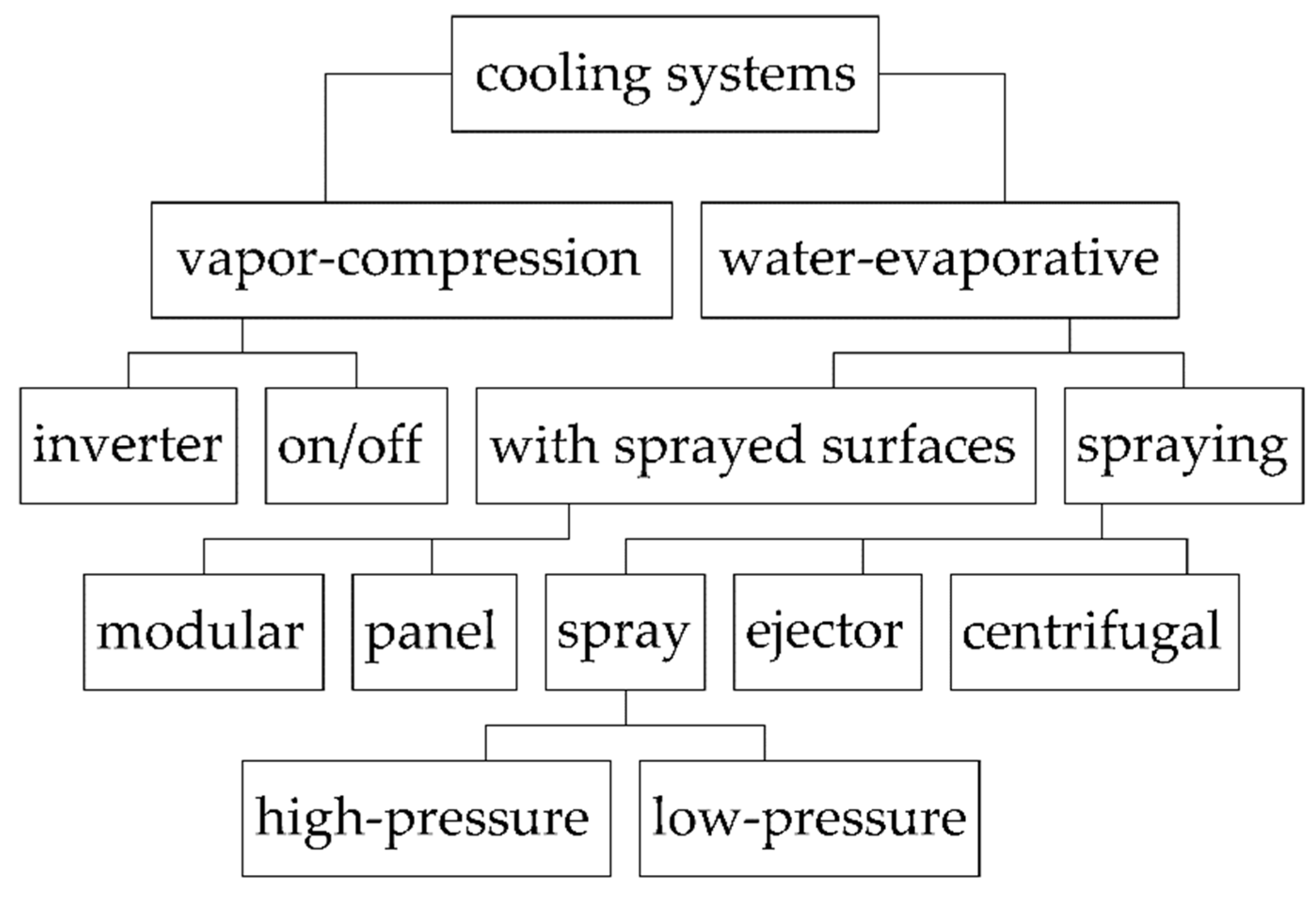
Air cooling in pig farms can be provided by evaporative cooling systems and vapor-compression refrigeration units (VCRU), which are rarely used in livestock farming (
Figure 1) [
7,
8]. Water evaporative cooling is fundamentally simpler, and less demanding in terms of maintenance and operating conditions. Due to their higher energy efficiency in arid regions, evaporative cooling systems are the most promising [
9]. Still, this cooling method features increased water consumption [
10].
However, its potential is significantly dependent on outdoor temperature and relative humidity and has a number of limitations. Water evaporative cooling can be implemented in various ways by means of different designs. Evaporative cooling systems can be of direct, indirect, or multi-stage types. Direct systems are generally the simplest and most effective ones [
11,
12].
It is worth highlighting water spraying systems with sprayed surfaces, which can be in the panel and the modular form (
Figure 1).
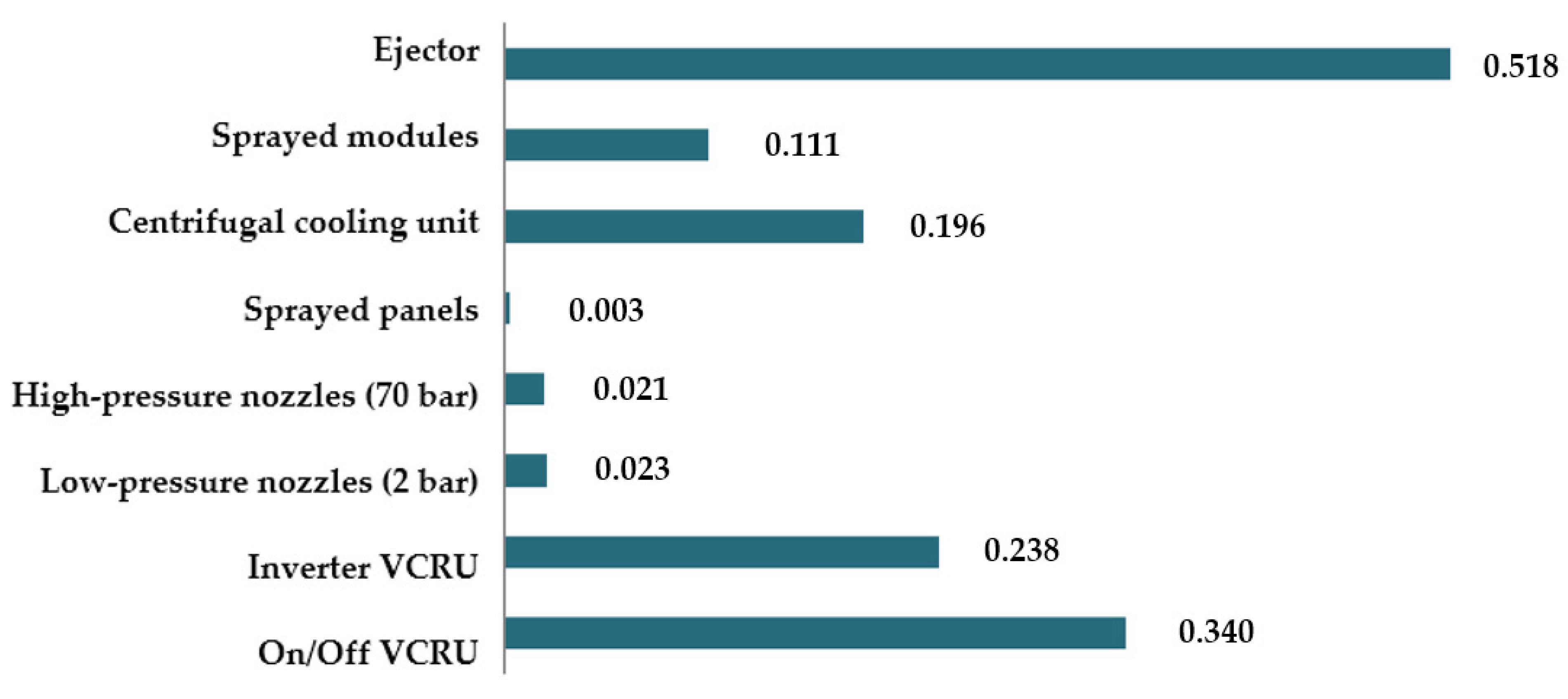
Calculation of energy efficiency of the considered cooling systems for their comparative evaluation, carried out under the condition of completing the pig finishing house for 2300 heads in the Tambov region of Russia showed the greatest energy efficiency of sprayed panels (
Figure 2). In the calculations performed, the potential cooling capacity of the VCRU was considered to be absolute.
Heat recovery systems are a promising trend in microclimate systems design. This is due to the constant rise in energy prices and the need to maintain high air exchange rates. Heat recovery in recycling units is both economically and environmentally effective. Its use in conjunction with evaporative cooling provides significant electrical energy savings during air conditioner operation [
13,
14]. In addition to energy savings, heat recovery units reduce indoor humidity, prevent the growth of harmful microorganisms, and eliminate odors and dust [
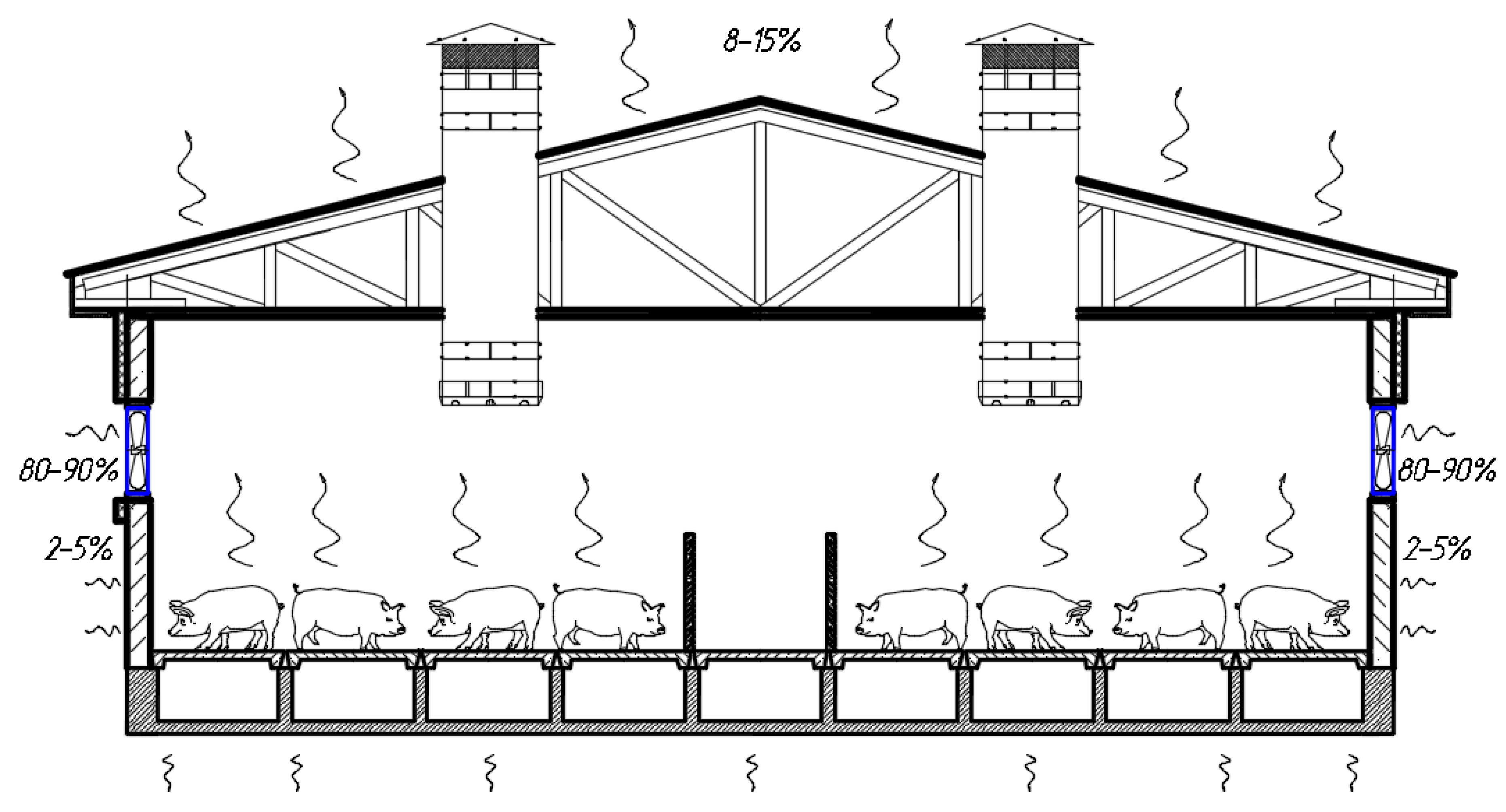
15]. The following distribution of heat losses is typical for livestock buildings: 2–5% of heat is lost through the walls and floor, 8–15% of heat losses are attributed to the roof and 80–90% of heat is removed with ventilation air [
16] (
Figure 3). Thus, utilization of heat removed with ventilation air will reduce the financial costs of heating the livestock room.
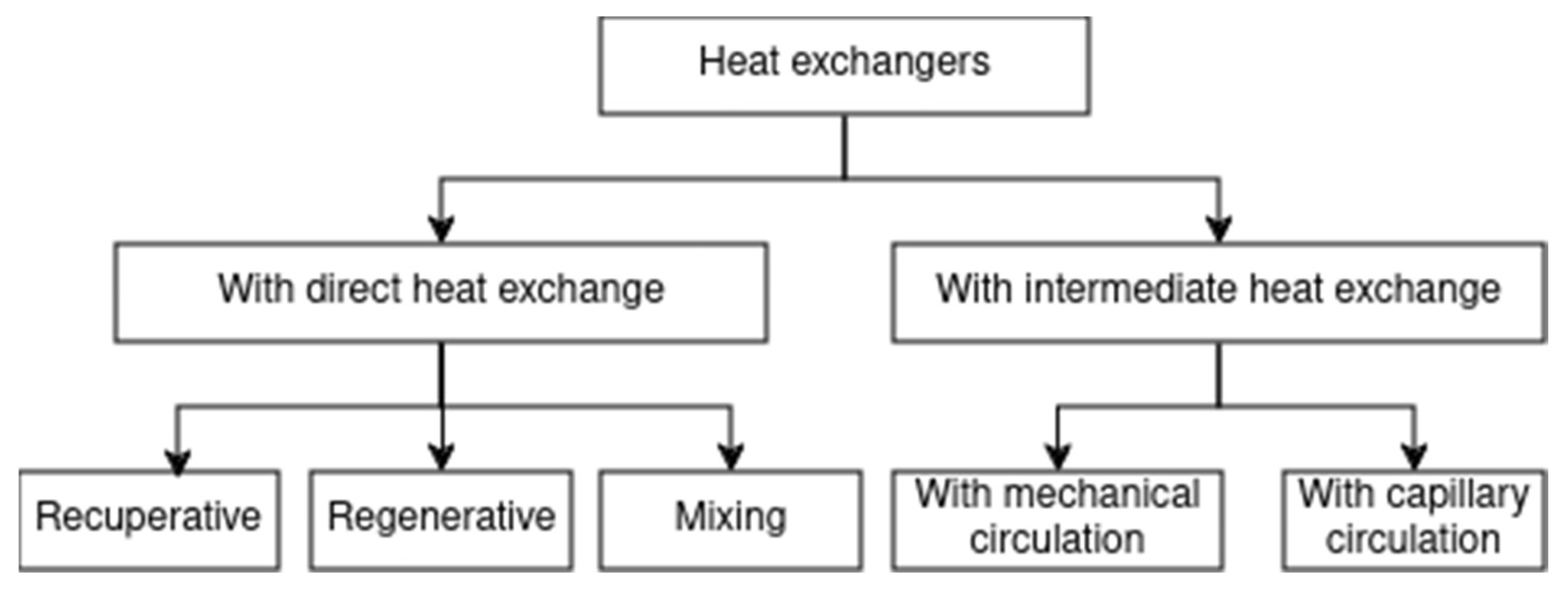
It is possible to utilize the heat of exhaust air by using heat exchangers of various designs, the classification of which is shown in
Figure 4 [
17,
18].
Analysis of the designs and energy performance of heat exchangers has shown that systems with intermediate coolant provide an opportunity for free spatial layout of supply and exhaust systems, while they are relatively resource demanding, complex, require additional maintenance, and have heat pipes of low capacity (
Table 1) [
8]. Regenerative heat exchangers do not provide flow separation, which causes dissolved ammonia, microflora and other pollutants in the condensate to enter the air supply. Recuperative heat exchangers are the most suitable for the required conditions.
Heat recovery and water evaporative cooling was implemented in the design of a combined air-conditioning unit, which is used for heating the supply air in winter, and realizes the effect of water evaporative cooling in summer.
2. Materials and Methods
The implementation of the physical potential of water evaporative cooling depends largely on the properties of the media involved in the process and the nature of their interaction. The process is multifactorial and depends primarily on the parameters of the cooled air (outdoor air temperature (
to) and initial air moisture content (
di)), which are determined by weather conditions and the required microclimate (
tint), (φ
int). The listed fundamental indicators determine the physical potential of water evaporative cooling, while the completeness of its realization depends on the characteristics of a particular unit and is the subject of optimization problems [
19,
20,
21].
The efficiency of saturation of the treated air with moisture, as well as the degree of its cooling, depends on the area of contact between the media, aerodynamic characteristics, process duration and other characteristics. Airflows contacting the water film flowing down the heat exchange surface are cooled and saturated with moisture. Poor wettability of the irrigated surface material leads to insufficient evaporation, which decreases cooling efficiency [
22,
23].
Of those metrics that we can effectively influence, the area of the interaction surface is the most significant. It is important to note that it is different from the sprayed surface area and is determined by the properties of the interacting media, flow rate, and spraying method [
16].
The use of evaporative cooling is significantly cheaper than vapor-compression refrigeration units. Water is extracted at the facility, and the specific energy consumption per unit of cold produced is an order of magnitude lower. At the same time, water is a valuable resource and it is reasonable to identify the dependency that determines the minimum water flow rate that guarantees the realization of the physical potential of water evaporative cooling in a particular unit [
24].
The above statement can be written down in the mathematical form as follows:
where
to is the outside air temperature, °C;
di,
df is the initial and final air moisture content, g/kg of dry air;
S is the area of the sprayed surface, m
2;
Re is the Reynolds criterion;
τ is the process duration, s; Θ is the edge angle of wetting of the heat exchanger surface, °;
b,
h are the dimensions of the tube cross-section, m;
Qw is hourly water flow rate, m
3/h;
PΣ,
Ps.f. is the total length of the water air interaction line in the cross-section at jet and film modes, m;
C(
Ca+2, Mg+2) is the concentration of hardness salts.
This study examines the process of evaporative cooling within a heat exchanger composed of cellular polycarbonate plates with 0.01 × 0.01 m square channels. The use of polycarbonate as the heat exchange surface is due to the material’s good self-supporting capacity. Structural elements of the heat recovery unit are mounted directly on the heat exchanger. When selecting a material for the heat exchanger, one must be guided not only by its thermal performance but also by its cost and resistance to aggressive environments [
25]. Polycarbonate withstands sanitary treatment well and is resistant to service water. The drawbacks of polycarbonate in evaporative cooling are counterbalanced by high-flow water circulation and lower relative humidity in the cooled room, which facilitates heat dissipation via animal respiration [
26]. A downward flow of a two-phase mixture (water and air) in a rectangular channel is assumed, with liquid flowing down the walls and the core of the section represented by a flow of cooled air and small liquid droplets. As assumptions, the air and water flow rate are taken to be constant, with the water flow rate determined from the condition of sufficiency to saturate the cooled air to a given moisture content.
In steady flow, liquid droplets are deposited on the walls of the unit. The process of evaporative cooling involves the evaporation of liquid over the surface of the film with decreasing thickness of the film itself, while on an infinitesimal section (dy) the thickness of the liquid layer can be assumed to be unchanged.
In the steady-state mode the droplet sizes are negligibly small and commensurate with the sizes of molecules, the vapor-gas medium can be considered quasi-homogeneous. The droplet velocities are commensurate with the gas flow velocity, hence a two-speed mode takes place. The flow velocity of the vapor-gas medium is higher than that of the liquid film, which leads to accelerated flow of the liquid phase and increases the drag for the vapor-gas phase. Vertical orientation of channels in space excludes the influence of gravity on the character of phase velocity distribution in the cross section, i.e., axisymmetric distribution is characteristic.
In considering the problem at hand, it is important to determine the volume ratio of the gas and liquid phases. In the cross-section the area of gas phase (
Sg) is distinguished and related to the cross-sectional area of the channel (
Si) (cross-sectional area of one tube), the obtained value is called the volume concentration of the gas medium:
where
Sg is the cross-sectional area of the tube occupied by the gas phase, m
2;
Si is the cross-sectional area of the tube, m
2.
It is known that at gas volume concentrations less than 0.6–0.8 the liquid phase can form overlapping regions, and depending on the ratio of velocities and volume concentrations a bubble or slug flow mode can be formed. Only the dispersed and dispersed-film modes are considered here. The liquid films can be completely interlocked, forming a closed ring in cross-section, or form separate jets. The nature of the film formed is largely determined by the properties of the interacting substances, with wetting ability having the most significant influence.
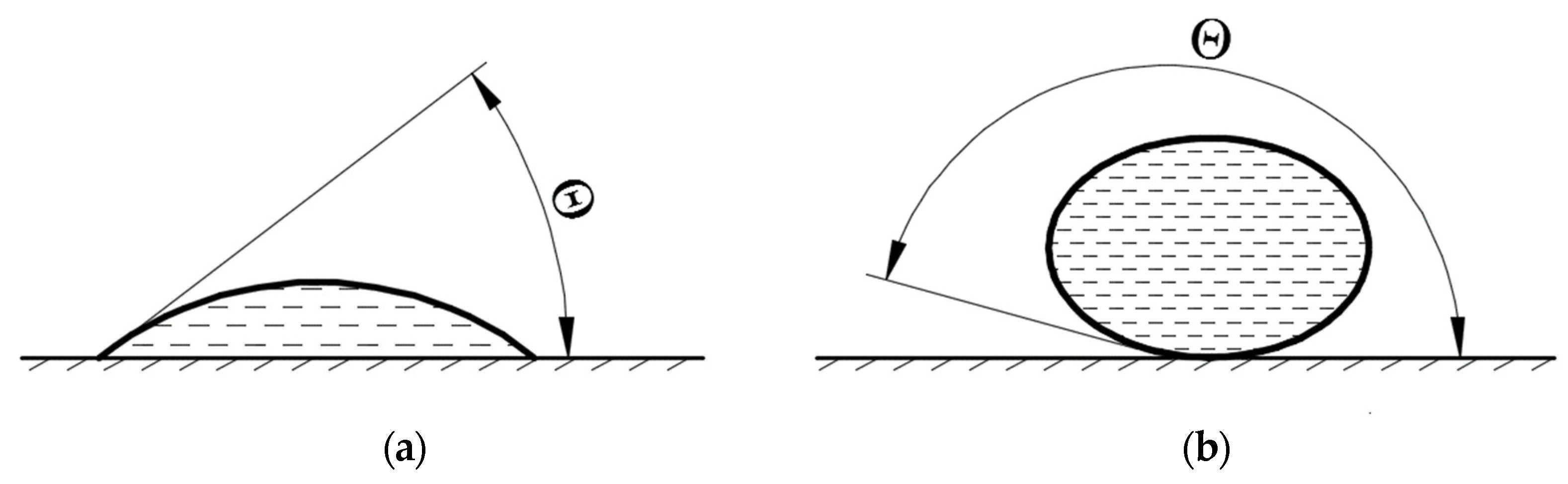
When considering wetting ability, two limiting cases could be distinguished: absolute wetting ability and absolute non-wetting ability. In the first case, the marginal wetting angle is 0° and the liquid spreads out in a thin film over the surface, in the second case, the marginal wetting angle is 180° and the moisture collects in droplets. In most real cases, there is an intermediate state (
Figure 5).
The relationship between the surface energies of interacting bodies and the equilibrium boundary wetting angle is determined by Young’s law [
27].
where σ is the surface energy at the interface; 1, 2, 3 are the liquid, gas and solid, respectively.
The dependencies obtained during theoretical research were verified through experimental testing. To this end, measurements were taken of air temperature, relative humidity, and cooling water flow.
Parameters were measured at control points. These points were established in the animal housing zones (pens) by dividing the technological area into equal sections. Measurements were taken at a height of 0.3 m above the floor. A calibrated Testo-635 multifunctional thermohygrometer (Testo SE & Co. KGaA, Titisee-Neustadt, Germany) was used to measure changes in temperature and relative humidity. The device’s temperature range is −40 to +150 °C, with an accuracy of ±0.2 °C in the −25 to +74.9 °C range. The measured humidity values range from 0 to 100% with a resolution of 0.1% and accuracy depending on the probe used; absolute pressure ranges from 0 to 2000 hPa with a resolution of 0.1 hPa. Air humidity was calculated using standard methods. Water flow was measured using a PM-0.1 ZhUZ rotameter (PRIBOR-M, Arzamas, Russia) with an upper measurement limit for water of 0.1 m3/h and a measurement error of ±2.5% of the upper limit.
3. Results
The analysis explores film and jet fluid flow through both the cross and longitudinal sections of the unit. The unit is a plurality of elementary tubes. Heat exchangers consisting of structured tubes provide for an increased heat transfer area, thereby increasing the efficiency of the heat exchange unit [
28]. To illustrate the process, a single tube is used as a model.
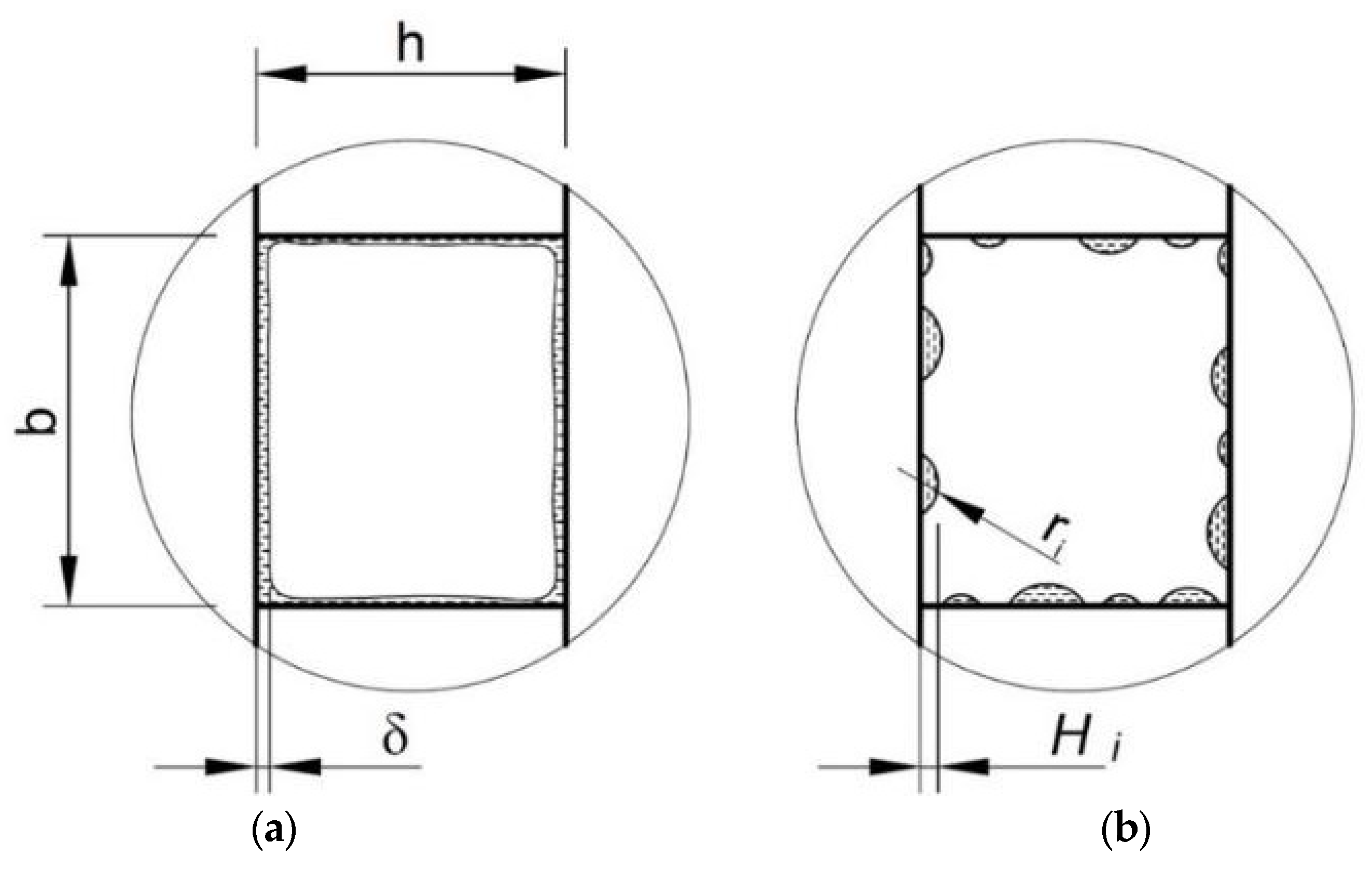
In the case of good wetting ability and sufficient water flow, a continuous film is formed (
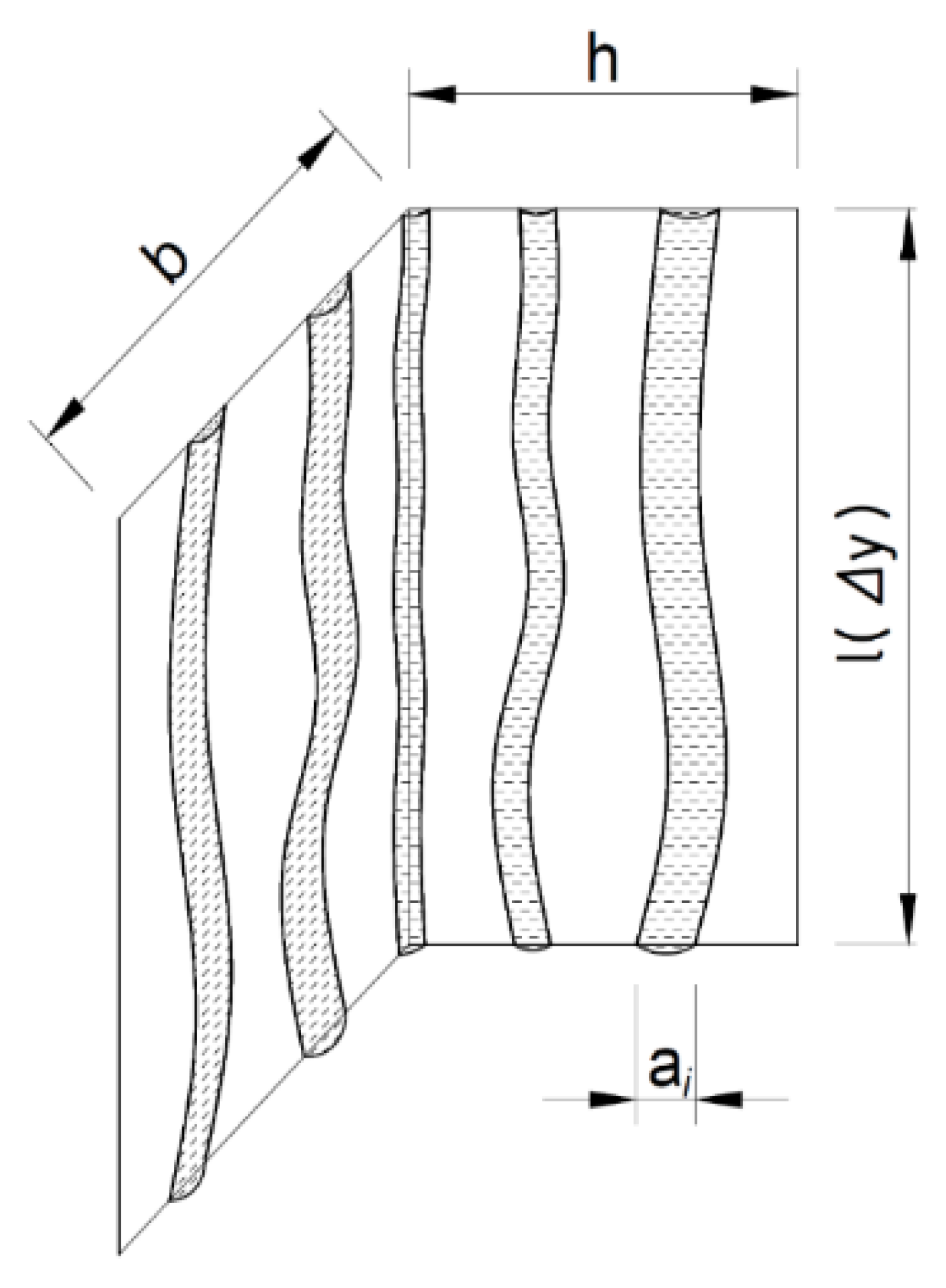
Figure 6a), otherwise water collects in drops or runs down the surface in separate streams, in the hydrodynamics of jets such phenomenon is called semi-limited jet (
Figure 6b and
Figure 7).
The volumetric gas concentration can also be expressed by the following equation:
where
W,
Qw are the air and water flow rates in the cooler, m
3/h.
In the case under consideration, the water flow rate is four orders of magnitude less than the air flow rate, so its effect on the air capacity can be considered insignificant. Consequently, the statement about the constancy of the volumetric flow rate is true.
If the water evaporates completely, dissolved salts are deposited on the surface of the unit. Some form insoluble sludge that contaminates the unit and incurs operational costs for cleaning. Calcium and magnesium salts, so-called hardness salts, have these properties. Taking into account their concentration, water consumption for evaporation should be increased and at least 10% of the circulating water should be discharged to the sewer. Otherwise, the concentration of salts in the recirculating fluid will increase. Salt deposits will promote the capillary effect; however, its impact on cooling will be negligible [
26]. At the same time, surface roughness will increase, the flow cross-section will decrease, and salt deposits will serve as a substrate for the development of microorganisms.
Since the contact area of the media is directly proportional to the evaporation rate, the ratio of the surface areas of the jets facing the gas core at different wetting ability will reflect the effect of wetting ability on the efficiency of evaporative cooling (humidification of the supply air).
The length of the considered section (Δl) of the tube decreases at the ratio of areas and has no influence on the described ratio, only the perimeter matters. It is important to obtain a comparative value derived from the ratio of the contact line length at the current marginal wetting angle to the reference contact length.
This parameter is defined as the evaporation area conversion factor:
where
SΘ,
Sref are the area of contact of media respectively at current value of marginal wetting angle and reference, m
2;
PΘ,
Pref are the lengths of contact line at current marginal wetting angle and reference, m.
It is advisable to take an available well-wetted material as a reference. In water evaporative cooling units, heavy paper is used as the material of choice. The marginal wetting angle for it is 20–30°. The value of 25° is taken as the baseline.
In the case of the film mode, the length of the contact line can be defined as the perimeter of the closed surface by the following equation:
where
b,
h are the dimensions of the tube cross section (
Figure 7), m;
δ is the thickness of the liquid film, m.
Water consumption for evaporation is constant and is determined from the condition of sufficiency for the process:
where
ds,
do are the moisture content of supply and outdoor air, respectively, g/kg dry air.
Air moisture content is determined using the following equation:
where φ is the relative air humidity, %;
e is the base of the natural logarithm;
t is the air temperature, °C [
12].
Outdoor air parameters are taken from climatic data. The moisture content of the supply air should not be greater than the moisture content of the air in the animal housing, hence one of the limit states will be the equality of the moisture content of the supply and indoor air. Solving (7) and (8) together, we obtain the theoretical water flow rate to ensure the given conditions:
The resulting flow rate must be increased by at least 10% based on the recirculated drainage.
The liquid film thickness is determined as follows:
After some mathematical transformations, a quadratic equation of the standard form is obtained:
where
Si,
Pi are the area and perimeter of the tube, respectively.
From this, it follows that:
Solving jointly (6) and (12) with respect to the perimeter of the film, we obtain:
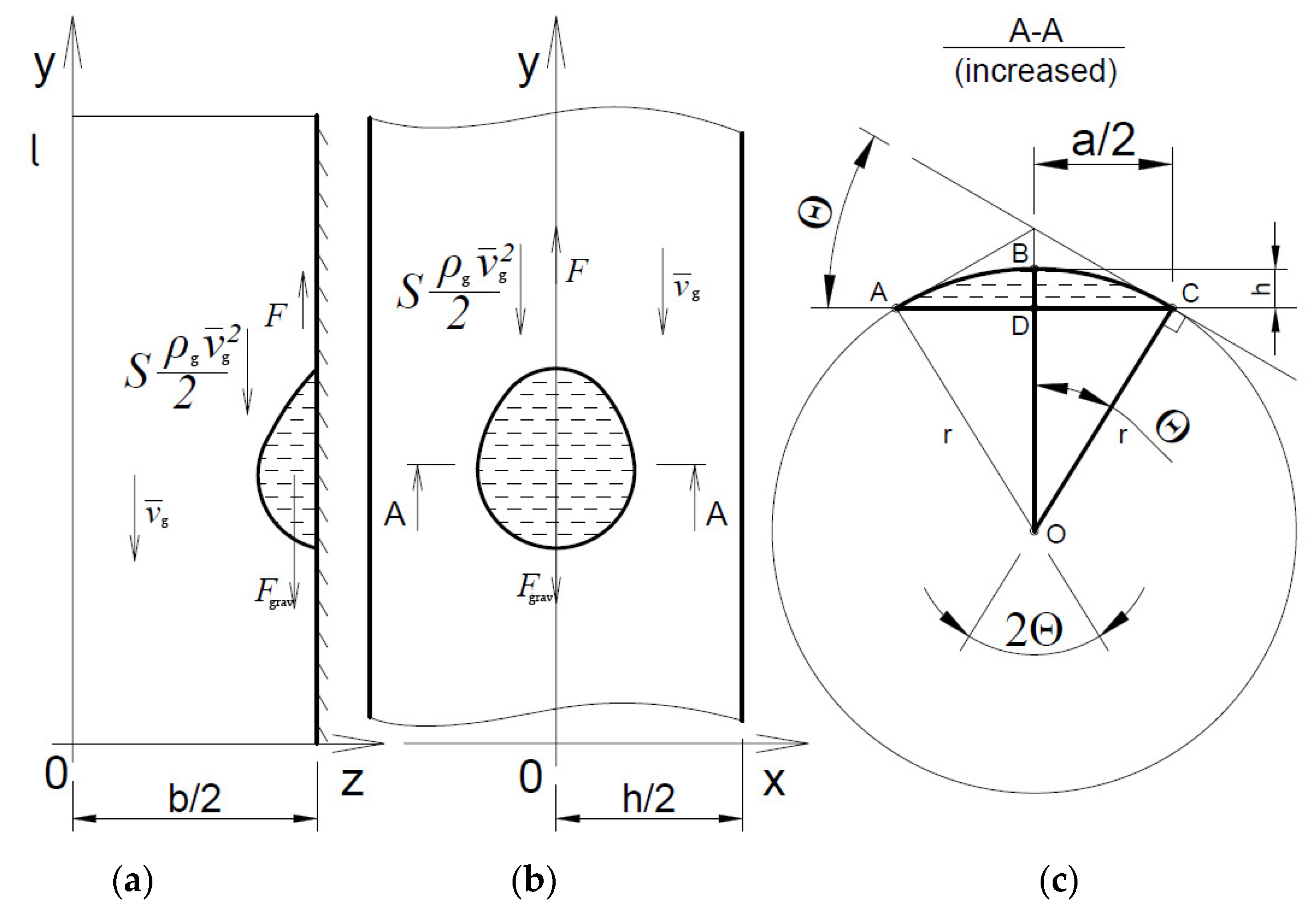
In the jet mode, at the same water flow rate as in the annular mode, the films will cluster under the action of surface tension, tending to adopt an energetically favorable state.
Obviously, the filament band origin is a droplet. Upon reaching a critical size, the drop rolls downward, carried away by gravity and the flow of cross-current air. The process takes place at a constant cooling water flow rate, droplets are formed one after the other, resulting in a filament band.
Water enters the heat exchanger by spraying from nozzles, the droplets have different dispersibility and direction of movement, the surface is wetted randomly, i.e., uniformly within each filament bond. Consequently, it is acceptable to assume that the bonds formed will be close in size.
Determination of the total length of the water-air interaction line in the cross-section at the jet mode can be carried out by the following equation:
where
ri is the radius of the
i-th jet, m; Θ is the arc opening angle, rad (
Figure 8).
As can be seen from
Figure 8, the edge wetting angle is equal to half of the arc opening angle. For the convenience of calculations, we will convert the units of angles from radians to degrees by multiplying by π/180, and the equation will take the following form:
Using the average value of the jet cross-sectional radius, Equation (15) can be rewritten as follows:
where
n is the number of jets;
is the average jet radius in cross-section, m.
If the sum of bases is not less than the perimeter of the tube, the jets will close and the flow mode will change to annular film flow. These conditions can be expressed by a dependency:
where
Pi is the perimeter of the tube, m,
is the length of the base of the elementary jet, m.
From the triangle ODC (
Figure 8) we can see that the base “a” (AC) and the radius of the jet are related, hence
To find the radius of the elementary jet, we examine the moment of drop detachment as fundamental. At this point, the droplet is balanced by the action of gravity, the frontal pressure from the airflow on the droplet, and the force of surface tension (
Figure 8b).
The geometric characteristics of the cross section of the filament bond are assumed to be equal to the parameters of the drop at the moment of detachment. The drop can be represented as a segment of a sphere with radius “r” and base width “a”.
The balance of forces can be expressed by the following formula:
where
S is the frontal area of the drop, m
2;
F is the surface tension force, N.
where σ is the surface tension of water (σ = 0.072 N/m).
The force of gravity is defined as the product of the mass of the liquid by the acceleration of free fall (
g), and the mass is expressed through the product of the volume by the density:
where ρ
w is the density of water, kg/m
3,
Vdrop is the drop volume, m
3.
The volume and frontal area of the droplet are calculated using the following equations:
Solving jointly Equations (22) and (24) we obtain:
Substituting Equations (21)–(24) into Equation (19) we obtain:
The solution of Equation (26) will be as follows:
Solving jointly Equations (2) and (23) we can find the number of jets and express the jet mode condition:
Solving together with Equation (5), we determine the conversion coefficient of evaporation area:
Thus, the minimum water flow rate for evaporation can be determined from the Formula:
Or, taking into account Equation (9):
where
Qw.min is the theoretical water flow rate to ensure cooling in a given mode, kg/h;
kc = 1.1 is the drain coefficient,
kΘ is the coefficient of evaporation area conversion.
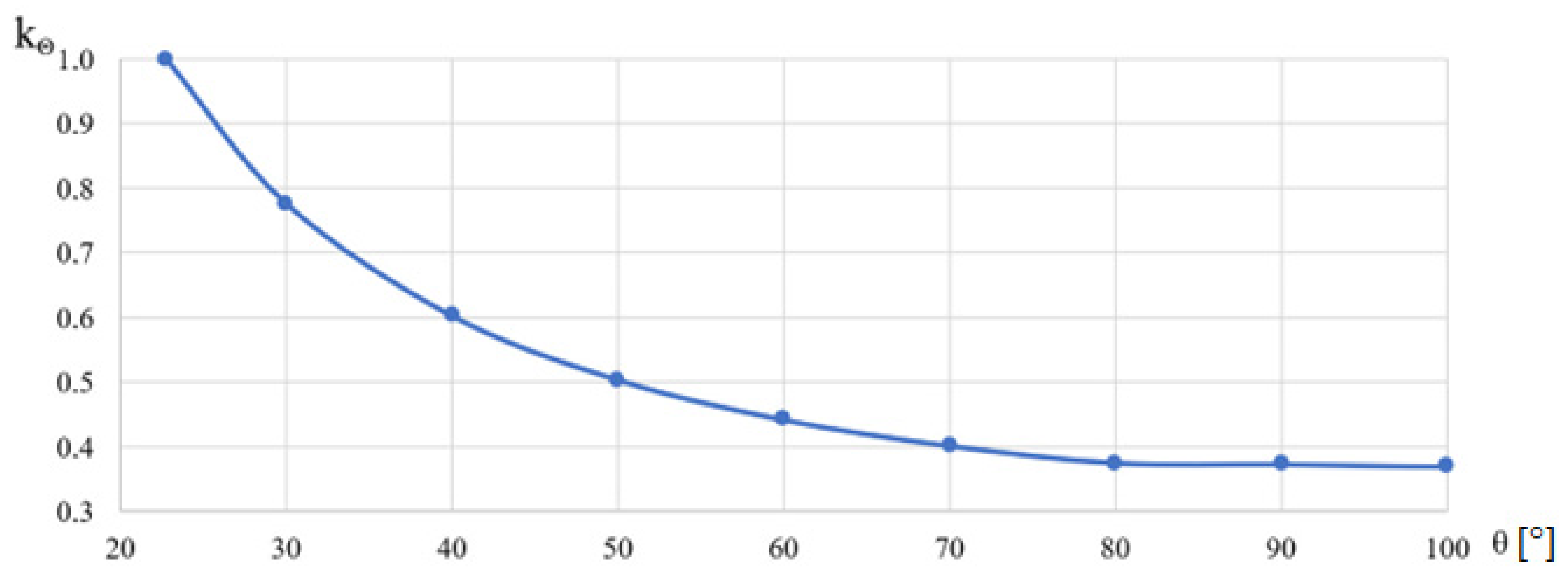
Figure 9 shows the relationship between the relative evaporation area coefficient and the edge angle.
The range of adequate use of the model is in the range of Θ = 20 … 120°. The droplet behavior cannot be described with the assumptions of the model outside of this range of wetting angle values.
At wetting angles above 80°, the coefficient values stabilize and reach 0.36.
With a relative evaporation area for polycarbonate of 0.42, the minimum water flow rate supplied to the irrigated heat exchanger panels must exceed the evaporation rate by 2.6 times. Using highly wettable surfaces for the irrigated panels would lead to a reduction in the required supply water flow rate.
For an installation with a capacity of 6.000 m
3/h, the maximum evaporation rate was determined at an outdoor air temperature of 41 °C and a relative humidity of 40%, which corresponds to the temperature maximum in Astrakhan, Russian Federation. The wet-bulb temperature is 29 °C, and the difference in moisture content between the outdoor and cooled air is 5.4 g/kg of the supply air. Given an outdoor air density of 1.12 kg/m
3, the maximum evaporation water flow rate is
Taking the water flow excess coefficient (2.6) into account, the water in the cooling circuit must circulate at a flow rate of
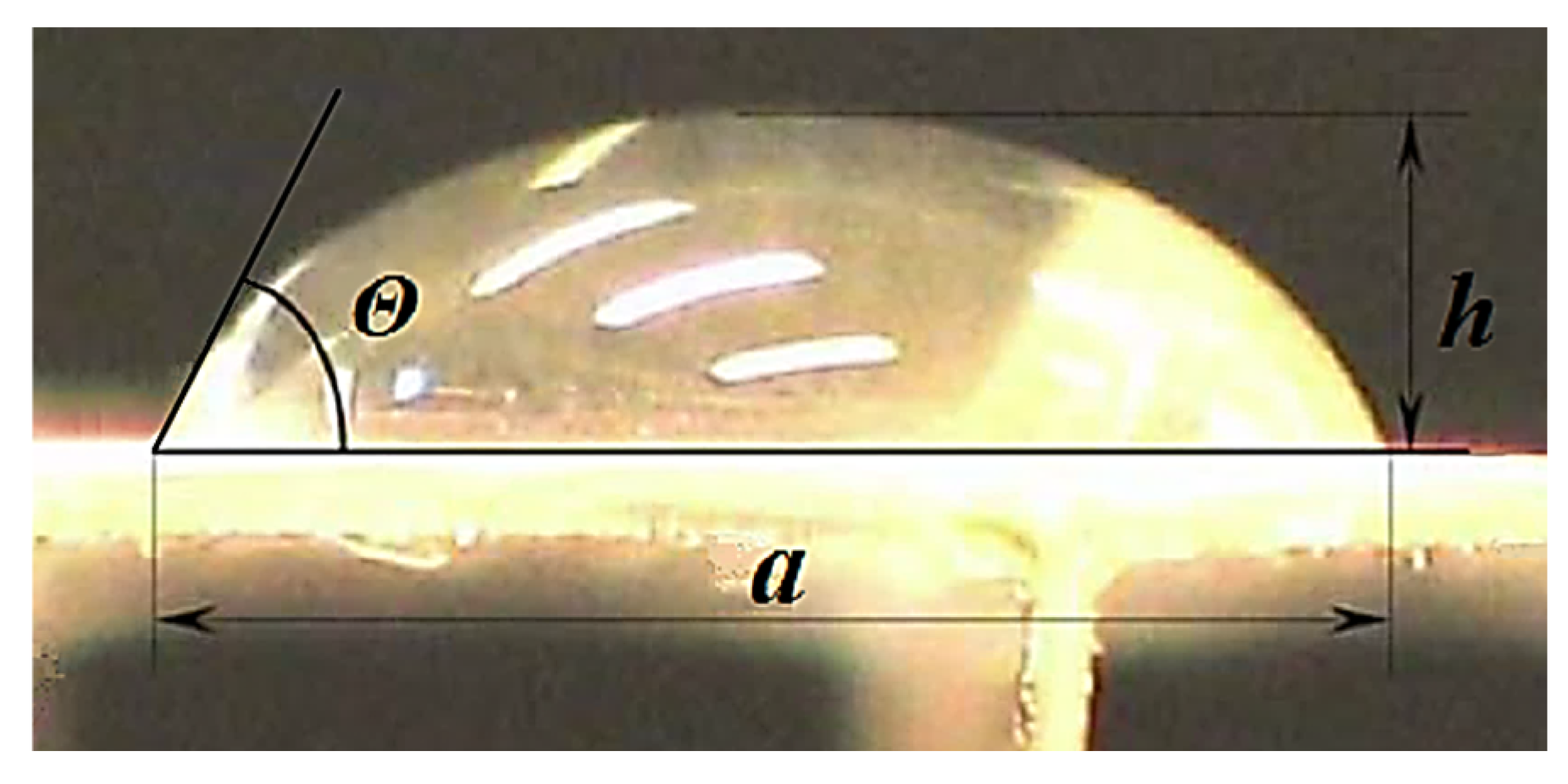
To verify the proposed water flow coefficient for the heat exchanger, additional experiments were made to determine the wetting angle of the polycarbonate and the paper used in the evaporative unit pads.
The experimentally obtained marginal wetting angle of polycarbonate with water is 63° (
Figure 10).
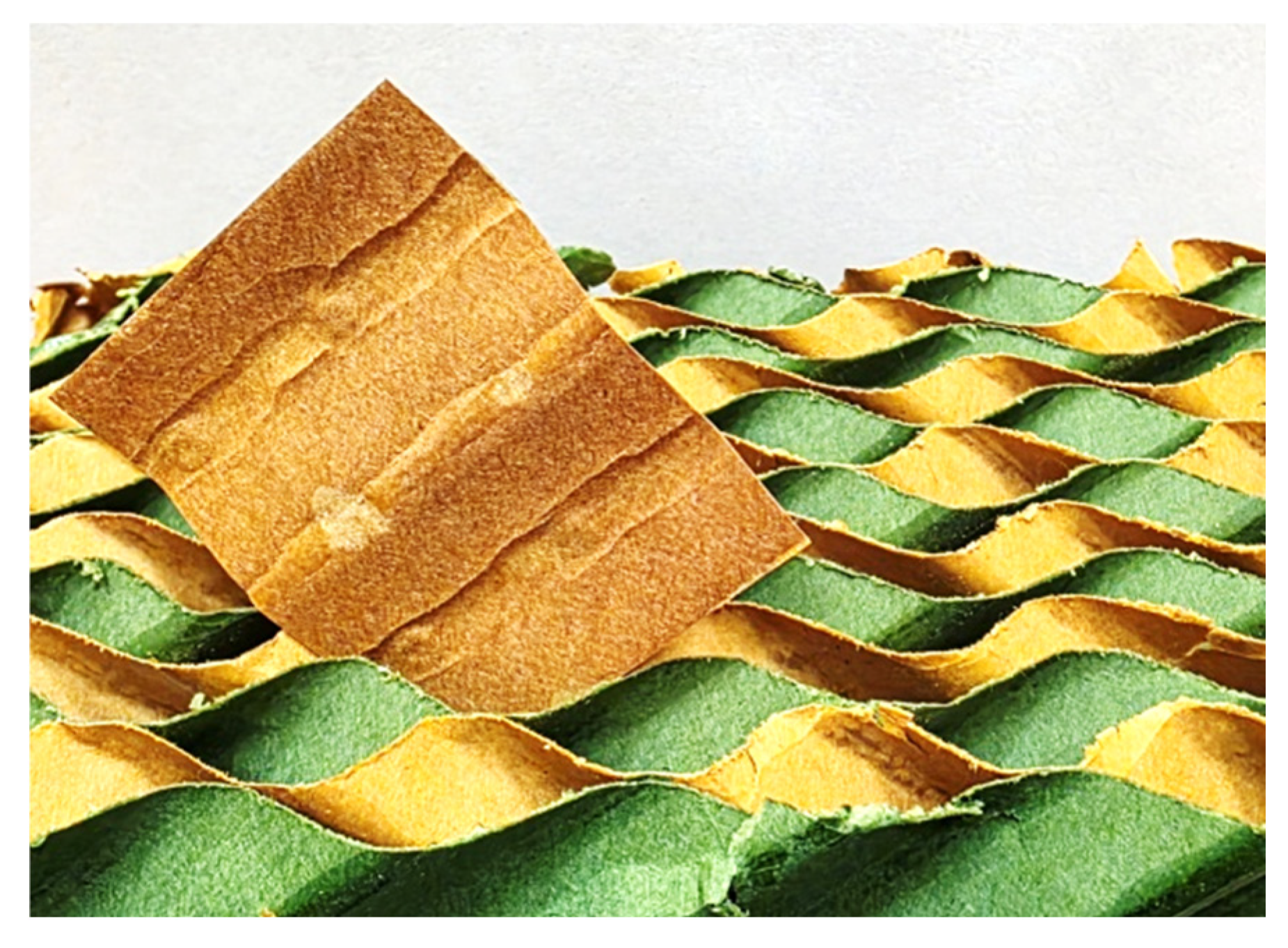
The wetting angle for the paper was found to be within the range between 23 and 27° (
Figure 11 and
Figure 12).
It is well known that to ensure film flow of a liquid, a minimum liquid spray rate must be established on the surface over which the liquid flows; this value depends on the wetting angle [
29]:
where ν
l is the kinematic viscosity of the liquid, m
2/s; ρ is the density of the liquid, kg/m
3; σ is the surface tension coefficient.
In turn, the minimum liquid flow rate is determined by the product of the liquid spray rate and the liquid spray perimeter
It follows from Formula (34) that under identical operating conditions—specifically the spray rate (wetting), viscosity, and surface tension of the supplied liquid—the wetting angle (θ) of the wetted surface exerts the primary influence on the wetting rate. To simplify the evaluation of water flow changes relative to the wetting angle, a system stability coefficient (
j) was introduced into Formula (34), accounting for the physical properties of water as follows:
then
Based on Formula (37), the wetting rates were determined for polycarbonate (using the experimentally established wetting angle θ = 63°) and paper (using the mean experimental value θ = 25°).
For these specific wetting angles, the calculated wetting rates were for polycarbonate
for paper
The ratio of the wetting rates for polycarbonate and paper indicates that forming a liquid film flow on a polycarbonate surface requires a flow rate three times higher than that required for paper.
The results obtained confirm the provided recommendations to increase the minimum required flow rate by a factor of 2.6, with a convergence of results of 87.
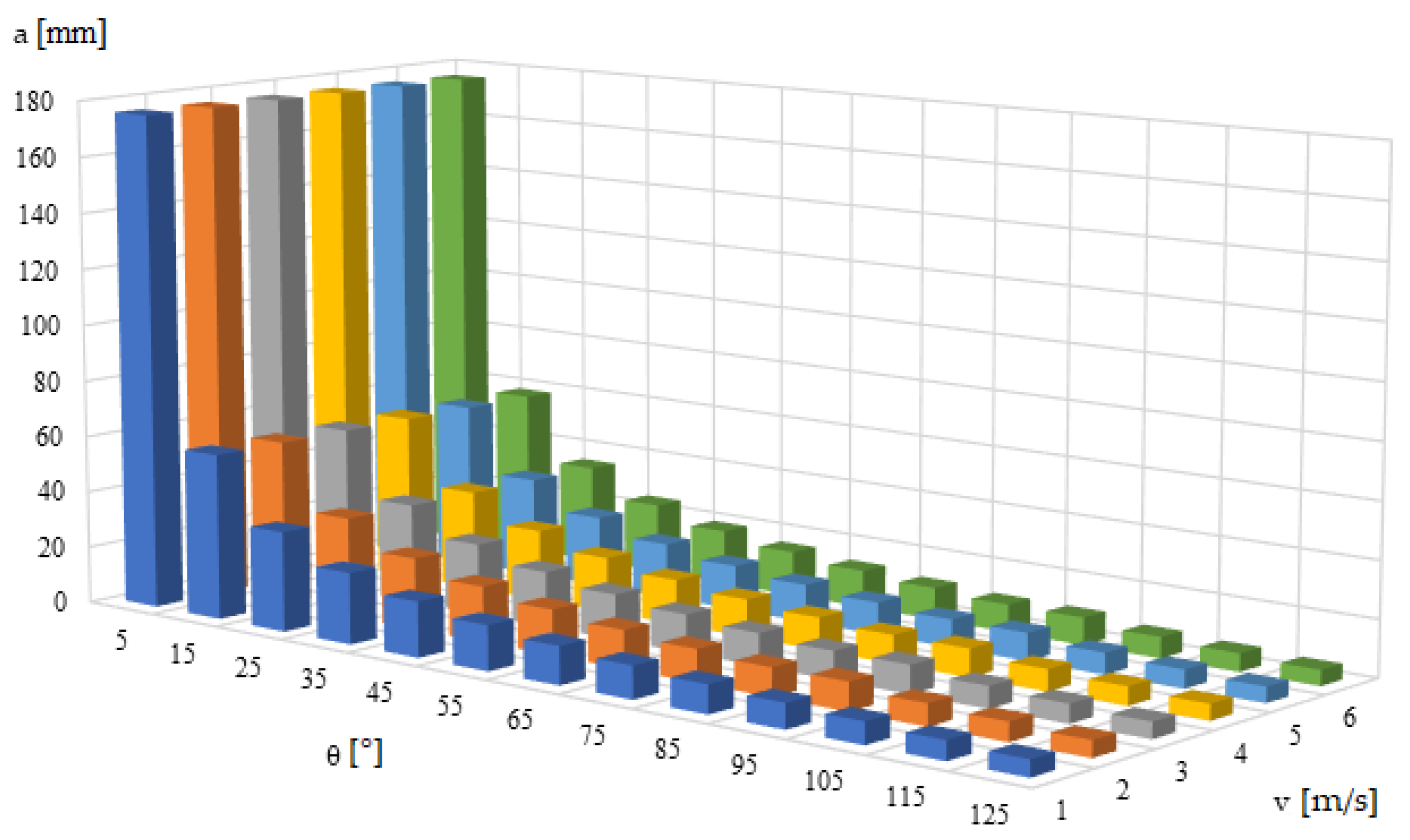
A theoretical graph illustrates the relationship between jet base length, wetting contact angle, and air flow velocity (
Figure 13).
According to the obtained model, it can be concluded that in the considered velocity range its influence on the jet base area is insignificant.
4. Discussion
Field tests were conducted to confirm the feasibility of implementing evaporative water cooling in an installation with a polycarbonate heat exchanger. Experimental trials of the system of a recuperative heat recovery unit with an evaporative cooling system based on irrigated panels were carried out in the pig finishing sector on the farm of Firma Mortadel, OOO during the fattening period. The heat recovery unit was integrated into the pig house climate control system. The microclimate maintenance system was designed by the Canadian company FGC LIMITED (Sebringville, ON, Canada) using the equipment of the Ag-Co products limited company (Duluth, GA, USA). Regulation of microclimate parameters was provided by the automation system according to the temperature and relative humidity sensor. During the control period, the outdoor air temperature ranged from −8 to +31 °C. The efficiency of supply air cooling was monitored on the hottest days of the experimental period. During the tests the ambient air temperature was 30.4 °C, relative humidity 31.2%. Temperature and relative humidity were measured at control points in accordance with the accepted methodology. The tests were carried out to verify the process of evaporative cooling in a multi-wall (cellular) polycarbonate heat exchanger. The results of the tests are summarized in
Table 2.
The data presented in
Table 2 show that temperature measurements in the animal pen nearest to the heat recovery unit demonstrated an air temperature reduction of 6.3 °C.
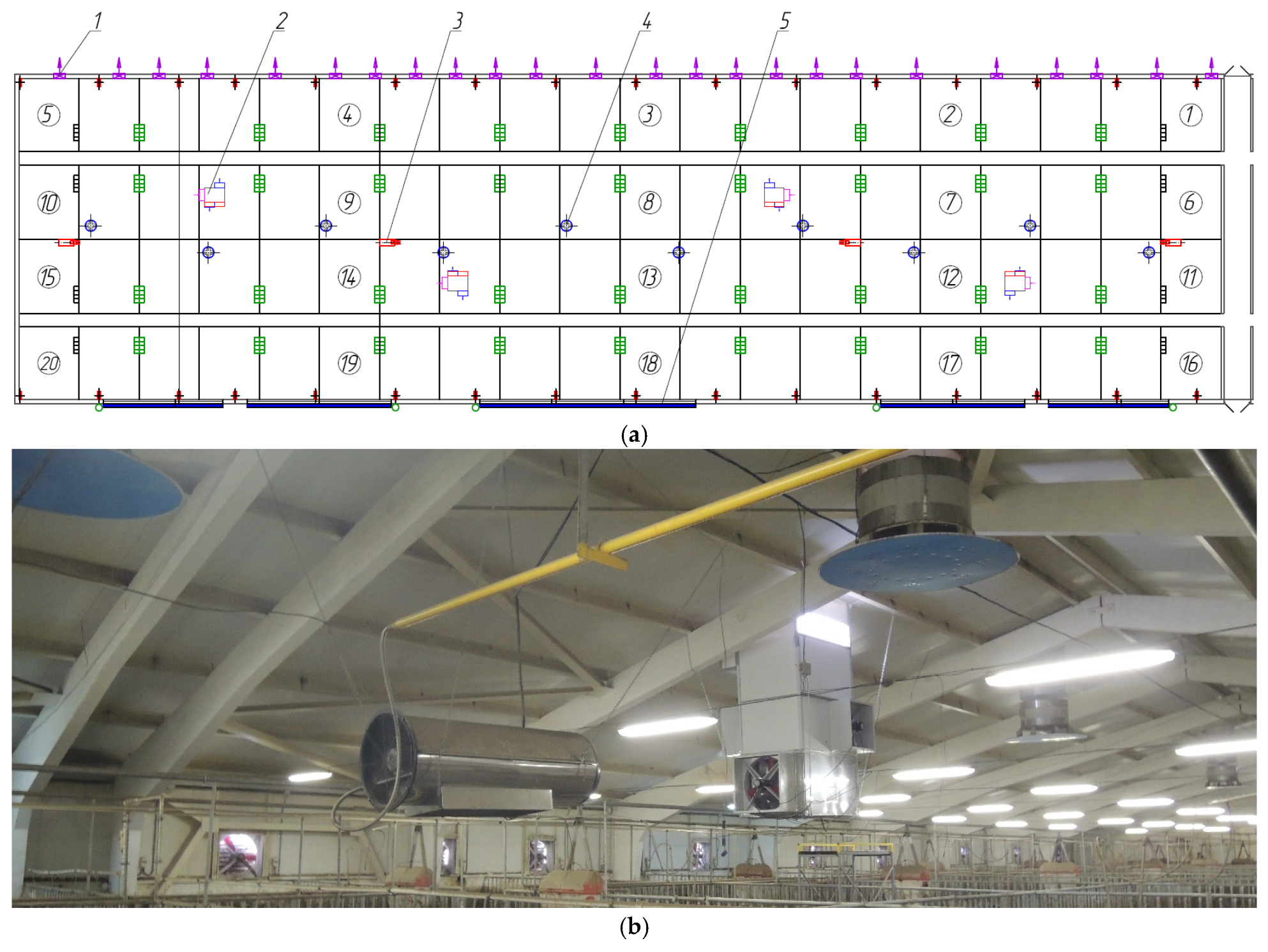
The cooling efficiency in the heat recovery units was also evaluated in the finishing (fattening) section of a pig farm in the Tambov region of Russia. The pig house is equipped with a panel-type evaporative cooling system, which allowed for a comparison of the results. The layout and general view of the pig house are shown in
Figure 14.
Test results are presented in
Table 3.
The reduction in inlet air temperature in the heat recovery unit was 10.5 °C, though splashing was observed. When the water flow rate supplied for evaporation was reduced until splashing ceased, the cooling temperature drop decreased to 10.1 °C.
During the performance measurements of the wetted pads, the reduction in inlet air temperature reached 11.3 °C (without any splashing effect), making the cooling effect of the heat recovery unit (at the point of no splashing) approximately 11% lower than that of the paper pads.
The reliability of temperature measurements was determined by evaluating the measurement uncertainty. The sources of uncertainty for the measurement result include the random component of the thermometer readings (ti), caused by stochastic variations in all possible influence quantities, and the probabilistic nature of the thermometer error estimation.
The combined standard uncertainty (
uΣ) of the temperature measurement is determined from the following relationship:
where
uA is the Type A evaluation of the random component of the combined uncertainty of the temperature measurement result, °C;
uB is the Type B evaluation of the uncertainty component arising from the uncertainty in the thermometer error estimation, °C.
The Type A standard uncertainty of the random component of the temperature measurement result is calculated as:
where
ti is the temperature measured in the experiment, °C;
is the arithmetic mean temperature, °C; and
n is the number of observations.
The evaluation of the standard uncertainty resulting from the instrument error of the thermometer is determined by Type B evaluation.
The thermometer’s verification certificate specifies a confidence error (expanded uncertainty) of 0.2 °C at a 0.95 probability level, which corresponds to a Student’s t-coefficient of 1.96. Consequently, the thermometer’s standard uncertainty (
uB) is:
where 1.96 is Student’s t-coefficient corresponding to a 95% confidence level for a normal distribution.
The calculation results for the combined standard uncertainty (
uΣ) of the temperature measurement are presented in
Table 4.
The methodology described above was used to determine the combined standard uncertainty
uΣ of the relative humidity measurement. The results are presented in
Table 5.
To identify the effectiveness of air cooling, the air temperature reduction as a function of cooling water flow rate was determined. To analyze this, measurements of the supply air temperature reduction at the heat exchanger outlet were taken while varying the calculated water flow rates from 0 to 95 L/h. The data obtained are summarized in
Table 6.
On the basis of the data given in
Table 3, a graph showing the decrease in supply air temperature from the water consumption used for panel irrigation is plotted (
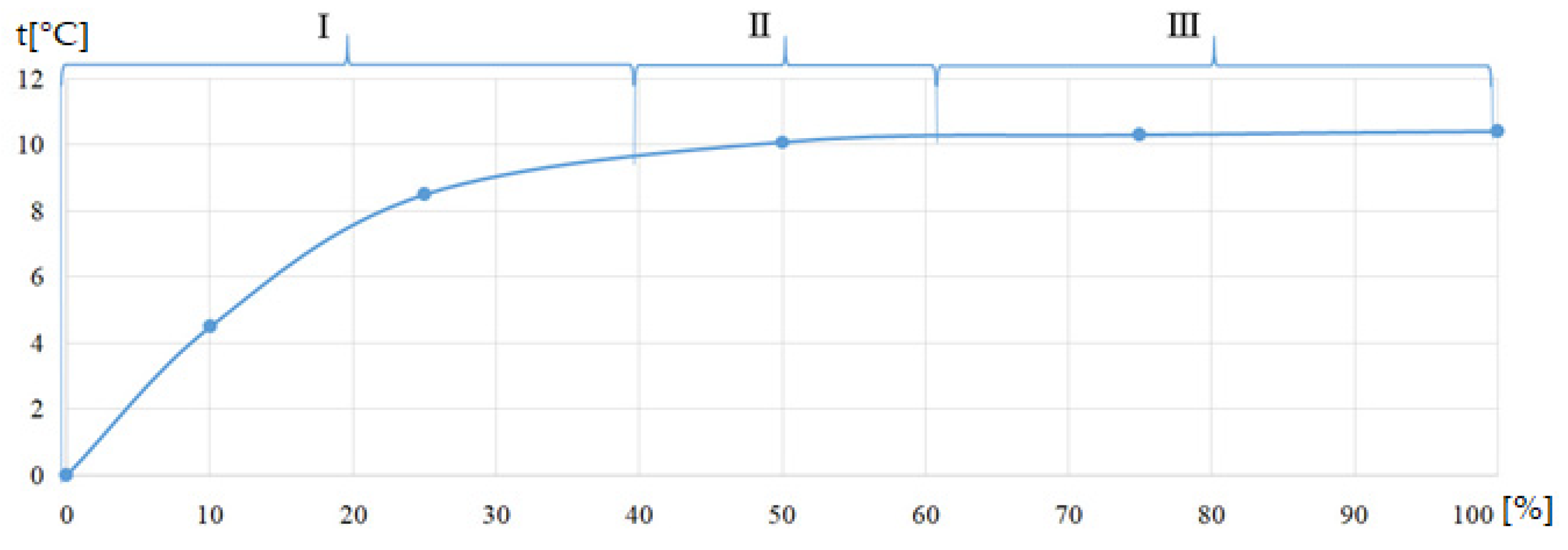
Figure 15).
The graph highlights the zones that characterize the operating modes of the unit, in the first zone there is a rapid decrease in the cooling temperature due to the deficit of moisture necessary for the implementation of the process. In the third zone, there is the detachment of dripping moisture and the spreading of spray with the air jet. The second zone provides effective cooling and is not accompanied by significant splashing.
Intensive cooling of the supply air occurs at cooling water flow rates between 0% and 40% of the maximum possible value. In the range between 40% and 63%, the cooling process stabilizes. A further increase in flow from 63% to 100% does not significantly affect the cooling of the supply air. In Zone II, film water flow was observed along the heat exchanger channels, which empirically confirmed the theoretical relationship of the water streamlet base size and the water contact angle (
Figure 15).
Since the test temperature was significantly lower than the design temperature (the absolute temperature maximum for Astrakhan), the water in the cooling circuit should circulate at a flow rate within 40 to 63% of the maximum design value to achieve effective supply air cooling without splashing or excessive water waste; alternatively, an automated control system should be used to regulate the water supply based on outdoor air temperature and humidity. The fact of water splashing depends on the airflow velocity and the supply water flow rate; as the air velocity remained constant in our case, splashing was determined solely by the water flow rate. Operation of the unit under conditions that lead to water splashing is undesirable.
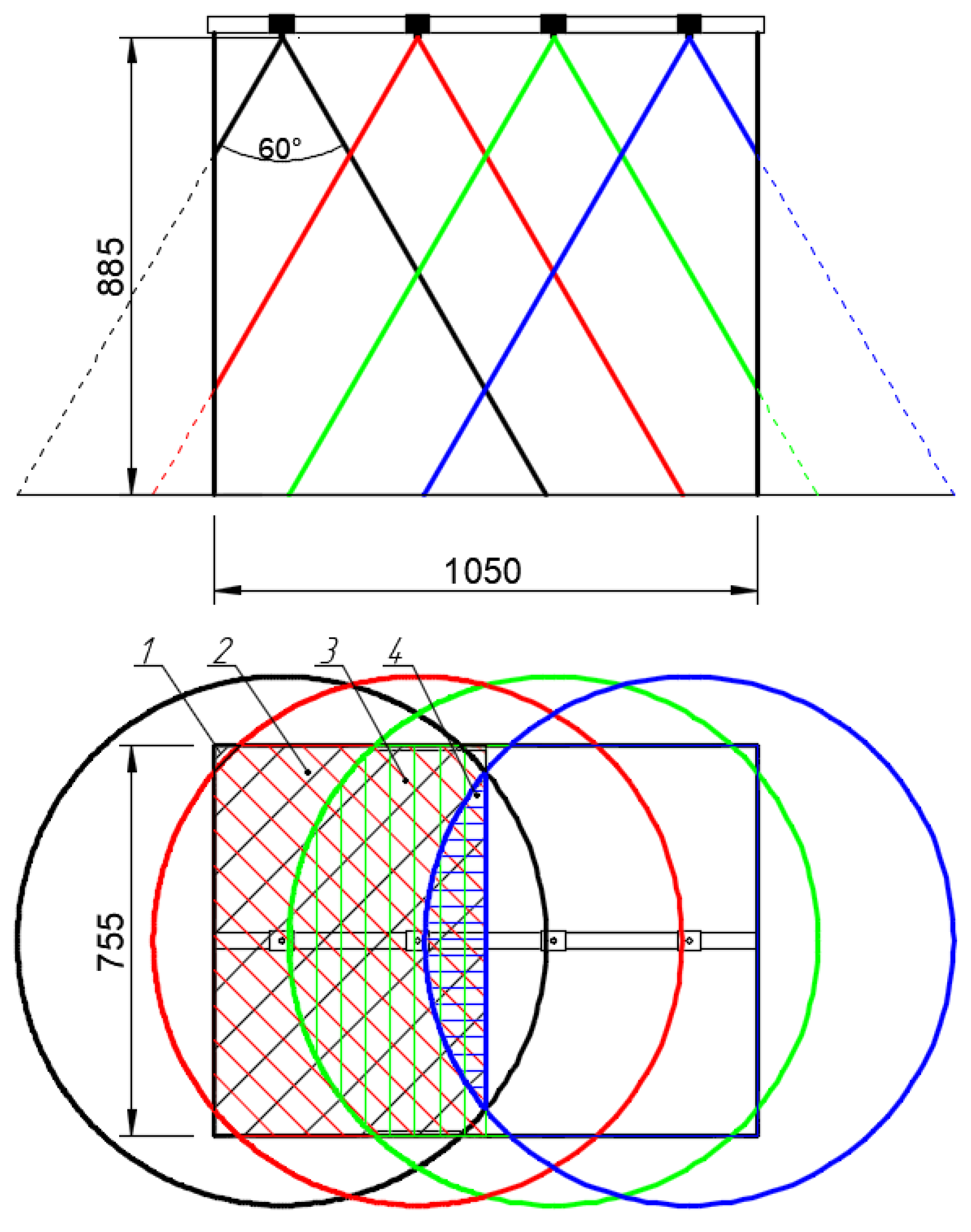
To ensure the efficient operation of the unit, it is crucial to evaluate the uniformity of water distribution across the cross-section of the heat exchanger. In the experimental unit, water spray was provided by four nozzles, the arrangement of which is presented in
Figure 16.
The nozzles produced full-cone spray patterns with a 60° opening angle. Assuming uniform water distribution across the base of the cone and accounting for the degree of pattern overlap, four distinct zones can be identified (
Figure 16). The areas of these zones are presented in
Table 7.
The non-uniformity of the water flow rate within the heat exchanger tubes can be determined using the coefficient of variation:
where σ is the standard deviation of the water flow rate between individual tubes;
is the arithmetic mean value of the liquid flow rate in a single tube, L/min.
The arithmetic mean flow rate in a single tube is derived from the formula:
where
Qi is the flow rate through the
i-th tube, L/min;
n is the number of tubes.
The heat exchanger design includes approximately 3.300 tubes; therefore, calculating the average flow rate using Formula (33) is quite complex. It was proposed to adopt the assumption that the water flow rate in all tubes within a single zone is identical. Thus, Formula (47) can be transformed as follows:
where
Qj is the water flow rate for the
j-th zone, L/min;
Sj is the area of the
j-th zone, m
2;
SΣ is the total cross-sectional area of the heat exchanger, m
2.
Furthermore:
where
Qn is the water flow rate per nozzle, L/min;
Sn is the base area of the conical spray pattern of a single nozzle, m
2;
kj is the overlap factor.
where
QΣ is the total circulation flow rate, L/min;
z is the number of nozzles.
The standard deviation of the flow rate was calculated using the formula:
Assuming the nozzles operate at equal flow rates and accounting for the spray of a portion of the water onto the unit walls, the heat exchanger section measuring one tube-width along the wall cannot be assigned to any of the described zones. This is due to the formation of water runoff into the tubes adjacent to the heat exchanger walls, providing them with additional supply (the edge effect). By excluding this zone from the area calculations, the spray pattern overlap zone areas presented in
Table 7 were obtained. The calculated values for flow rate, standard deviation, and coefficient of variation, accounting for the edge effect, are provided in
Table 8 and
Table 9.
The resulting coefficient of variation is relatively high; however, the actual dispersion is expected to be lower. This is because the water distribution across the base of the nozzle spray cone is non-homogeneous and typically follows a normal distribution, with the density concentrated toward the center.