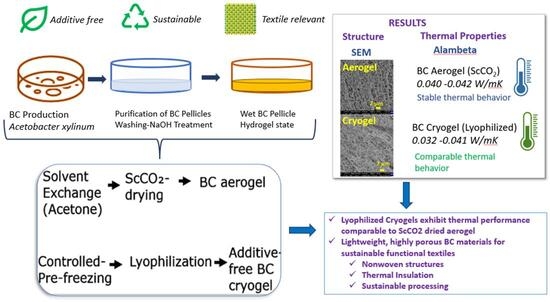
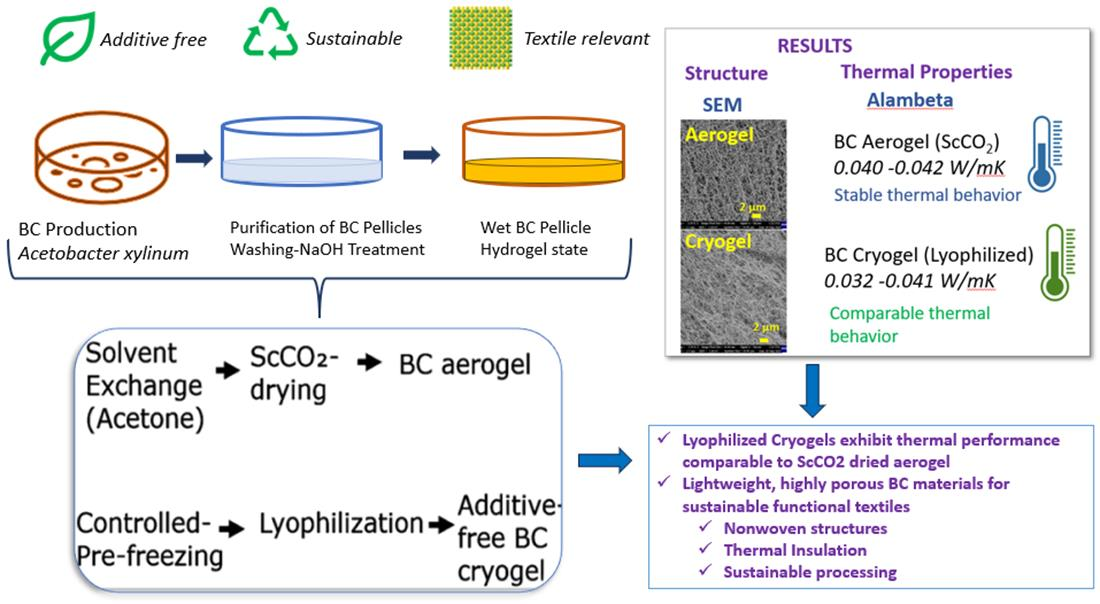
1. Introduction
The textile industry faces major environmental challenges associated with both synthetic and natural fibers. Petroleum-based fibers such as polyester and nylon contribute to greenhouse gas emissions and persistent microplastic pollution, particularly through laundering, where particles enter aquatic systems and food chains [
1,
2,
3]. Natural fibers, although biodegradable, also require substantial land, water, and chemical inputs; for example, producing a single cotton T-shirt may consume up to 2700 gallons of freshwater [
3,
4]. In addition, dyeing and finishing processes are major sources of industrial wastewater pollution through hazardous chemical discharge [
5,
6]. These concerns have intensified interest in sustainable material alternatives and environmentally responsible production strategies. In response, research has increasingly focused on bio-based materials derived from renewable resources, including cellulose, chitin–chitosan, polylactic acid, and polybutylene succinate, because of their biodegradability, low toxicity, and favorable end-of-life characteristics [
7,
8]. These materials are now being explored and applied across construction, automotive, packaging, and biomedical sectors, supporting the transition toward a resource-efficient and biotechnology-driven bioeconomy [
9]. Within the textile sector, this transition has stimulated particular interest in biofabricated and biodegradable fibrous materials that can function as textile surfaces, nonwoven structures, or components of multifunctional textile systems. Bacterial cellulose has consequently attracted increasing attention as a candidate for sustainable biotextiles because it can be biosynthesized directly as a coherent fibrous network and subsequently engineered for different textile functions [
10,
11].
Among bio-based materials, cellulose is especially attractive because of its abundance, renewability, mechanical strength, biocompatibility, and thermal stability [
12]. Beyond traditional uses, it has been widely investigated for advanced applications such as filtration membranes, drug delivery systems, and biosensors [
13,
14,
15]. However, obtaining high-purity cellulose from plant biomass requires energy-intensive and chemically demanding removal of lignin and hemicellulose, which creates significant environmental burdens [
16,
17,
18,
19]. This limitation has encouraged interest in alternative and more sustainable cellulose sources. In parallel, aerogels have emerged as advanced porous materials with ultra-low density, high porosity, large surface area, and excellent thermal insulation properties [
20,
21]. Typically produced by supercritical drying or freeze-drying, these techniques preserve the three-dimensional network structure. Although early silica-based aerogels were limited by toxicity and cost [
21,
22,
23], recent advances in polymeric and bio-based aerogels, particularly cellulose-based systems, have broadened their use in insulation, adsorption, catalysis, and biomedical applications [
24,
25,
26,
27,
28,
29]. Cellulose aerogels in particular combine low density (0.0005–0.35 g·cm
−3), high porosity (up to 99.9%), and favorable mechanical properties, making them promising materials for thermal insulation and environmental applications [
25,
27,
29,
30]. Their performance is strongly influenced by processing conditions, especially drying methods, which govern pore structure and network integrity. For textile engineering, the combination of low density, high porosity, and low thermal conductivity is especially relevant because aerogel-based materials can be incorporated into fibrous assemblies, multilayer structures, and insulating textile systems while limiting added mass and bulk. Recent work has demonstrated both the integration of cellulose-based aerogels into textile structures and the development of mechanically processable aerogel fibers for thermal-insulation textiles [
31,
32]. These advances indicate that control of aerogel morphology and thermal transport is directly relevant to the development of lightweight functional textiles.
BC also exhibits a continuous nanoscale fibrillar network and can be produced as coherent membrane-like sheets, making it relevant not only to biomedical and packaging applications but also to bio fabricated textile surfaces and nonwoven-type structures [
10,
11]. However, conventional BC processing often relies on additives or costly steps, raising concerns about sustainability and scalability. For this reason, the development of additive-free BC aerogels and cryogels through environmentally responsible processing routes is of considerable interest. Drying methods such as supercritical CO
2 drying and freeze-drying play a decisive role in determining porous structure and functional performance. At the same time, BC is formed through biological processes, so even under controlled conditions slight variations in microbial activity and local growth environments can influence fibril formation and network architecture, leading to minor differences in material properties. Against this background, the present study compares additive-free BC aerogels and cryogels produced by ScCO
2 drying and controlled lyophilization, with emphasis on their morphology and thermal-transport behavior. Particular attention is given to whether the simplified lyophilization route can achieve thermal performance comparable to ScCO
2 drying under the investigated conditions. From a textile-engineering perspective, establishing such performance is relevant to the future development of lightweight BC-based nonwoven, layered, or composite textile structures in which high porosity and low thermal conductivity are required. By correlating the observed microstructural characteristics with the measured thermal response, the study evaluates the functional potential of BC porous materials while recognizing the contributions of specimen geometry and inherent BC variability.
2. Material and Methods
2.1. Materials
Bacterial cellulose (BC) pellicles were produced from
Acetobacter xylinum (CCM 2360), obtained from the Czech Collection of Microorganisms, Department of Experimental Biology (Brno, Czech Republic), via static cultivation in a nutritional medium containing sucrose, black tea extract, and bacterial inoculum, as described in our earlier study [
33,
34]. Sugar (TTD crystal white sugar) and black tea (PG Tips Loose Leaf Catering Black Tea), purchased from a local market in Liberec, Czech Republic, were used as carbon and nitrogen sources, respectively. All experiments were carried out using deionized water.
The cultivation medium was prepared as a single batch and subsequently divided between two separate cultivation containers, in which BC was grown in parallel under the same cultivation conditions. The specific correspondence between the characterized specimens and individual pellicles or cultivation containers was not retained in the experimental records and therefore cannot be reconstructed retrospectively.
To ensure equivalent sample quality, cultivation, purification, and washing procedures were performed identically for all samples. Sodium carbonate (Na2CO3, molecular weight 105.99), purchased from Chemapol (Prague, Czech Republic), was used for purification of BC pellicles. The purification procedure was designed to remove residual culture medium and bacterial remnants while preserving the native fibrillar architecture of BC.
2.2. Drying Procedures
Two distinct drying techniques were used to produce bacterial cellulose (BC) aerogels and cryogels, following the identical protocols as in our earlier study [
34,
35], with no modifications for the current analysis. The following sections describe the drying procedures applied for each sample type.
2.2.1. Lyophilization
Lyophilization was performed using a fully automatic Leosmak LEO-004 Freeze Dryer (Wrocław, Poland) without a separate external pre-freezing step. Purified wet BC pellicles were placed directly in the lyophilizer and frozen in situ on the cooled shelves at −30 °C for approximately 3 h. After this integrated freezing stage, sublimation drying was carried out for 48 h at −33 °C under a vacuum pressure of 36 Pa, while the shelves were gently heated to 25–30 °C to facilitate moisture removal [
34]. Thus, freezing and sublimation were conducted sequentially within the same lyophilization system without transfer to a separate freezer or interruption of the drying workflow.
2.2.2. Supercritical CO2 Drying
To make aerogels, water in the BC network was gradually replaced with acetone over 14 days to create a solvent compatible with CO
2. The exchange was carried out by immersing samples in a 1:1 water–acetone mixture, and then pure acetone, which was renewed every three days to ensure total dehydration. Supercritical CO
2 drying of acetone-saturated samples at 65 °C and 90 bar for 48 h resulted in extremely porous, solvent-free BC aerogels with retained nanofibrillar structures. Our earlier paper gave detailed process parameters and instrumentation [
34,
36].
3. Characterization Methods
The morphology of BC samples was examined using a Zeiss Ultra Plus scanning electron microscope (SEM; Zeiss, Potsdam, Germany) operated at an accelerating voltage of 2 kV. Before imaging, the samples were sputter-coated with an Au/Pd (80/20%) layer.
The thermal response of the BC aerogels and cryogels was characterized by differential scanning calorimetry (DSC; Mettler Toledo, Columbus, OH, USA). Approximately 10 mg of each specimen was analyzed under a nitrogen atmosphere at a flow rate of 50 mL·min−1. The specimens were heated from −50 to 500 °C at a constant heating rate of 10 °C·min−1. The exact pan configuration was not retained in the available experimental records and is therefore not specified retrospectively.
Thermophysical properties were measured using a computer-controlled Alambeta instrument (Sensora, Liberec, Czech Republic), which performs non-destructive transient and steady-state thermal measurements while simultaneously determining specimen thickness. The BC specimens were placed between the measuring plates and tested under ambient laboratory conditions using a temperature difference of 32 °C between the measuring surfaces. The measuring head was automatically lowered onto the specimen at the preset contact pressure, and the instrument subsequently determined thermal conductivity (
λ), thermal diffusivity (
α), thermal resistance (
R), and specimen thickness from the recorded transient and steady-state heat-flow response. A minimum of three repeated measurements were performed for each specimen to assess measurement repeatability; these measurements were not treated as independent specimen-level replicates. Thermal conductivity and thermal diffusivity are reported as mean ± standard deviation calculated from these repeated measurements. According to the instrument documentation, the instrument permits an adjustable contact pressure of 100–500 Pa; however, the exact preset pressure used for the present measurements was not retained in the archived experimental record. Thermal resistance is defined as
, where
is specimen thickness and λ is thermal conductivity, while thermal diffusivity is related to thermal conductivity, volumetric heat capacity, and density by
, where is ρ density and
is specific heat capacity. The calculations were performed automatically by the Alambeta instrument using its internal evaluation procedure, as described by Hes and Dolezal [
33,
37,
38]. The effective measuring area, a measurement-specific calibration record, and a formal instrumental uncertainty were not retained in the archived experimental documentation and were therefore not retrospectively estimated.
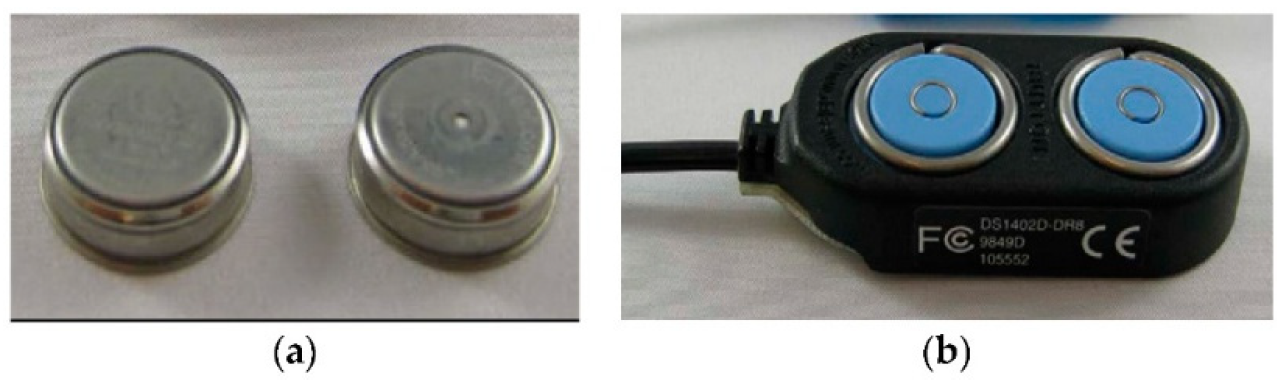
Environmental conditions were monitored using a Thermochron iButton data logger (DS1923, Maxim Integrated Products, Inc., Dallas, TX, USA), as shown in
Figure 1 [
34,
35]. Temperature and relative humidity were recorded at 60 s intervals in triplicate using a 1-Wire communication protocol. Sensors were placed directly on the sample surfaces at multiple positions, and the recorded values were averaged to obtain representative environmental conditions during handling and testing.
Quantitative textural and geometrical characterization of the corresponding BC specimens, including BET specific surface area, pore volume, average pore diameter, bulk density, and porosity, was previously reported by Sözcü et al. [
34] and is referred to here as complementary structural information for interpretation of the present thermal results.
Bacterial cellulose was produced by cellulose-synthesizing bacteria such as
Komagataeibacter xylinus. Despite controlled conditions, minor variations in microbial activity and local environments can influence fibril formation and nanofibrillar network development. Consequently, slight differences in membrane structure and resulting material properties may occur, even under identical drying and characterization conditions. The experimental conditions and sample coding used for all BC samples are summarized in
Table 1.
The lyophilized specimens were intentionally selected to span different thickness configurations (0.13, 0.57, and 0.67 cm) in order to examine thickness-associated differences in thermal behavior. The number and dimensions of the ScCO2-dried specimens were constrained by the availability of specimens produced during the supercritical drying experiments conducted at the collaborating institution. Within the available specimen set, Lyo-BC-NS-2 (0.57 cm) was selected to provide a close thickness match to Sc-BC-NS-1 (0.55 cm), enabling a cross-method comparison at approximately equivalent specimen thickness. Because independent specimen-level replicates were not available for each thickness, the observed thickness-associated differences are interpreted comparatively rather than as an independently established effect of thickness.
4. Results and Discussion
4.1. Surface Morphology and Microstructure Analysis of Bacterial Cellulose
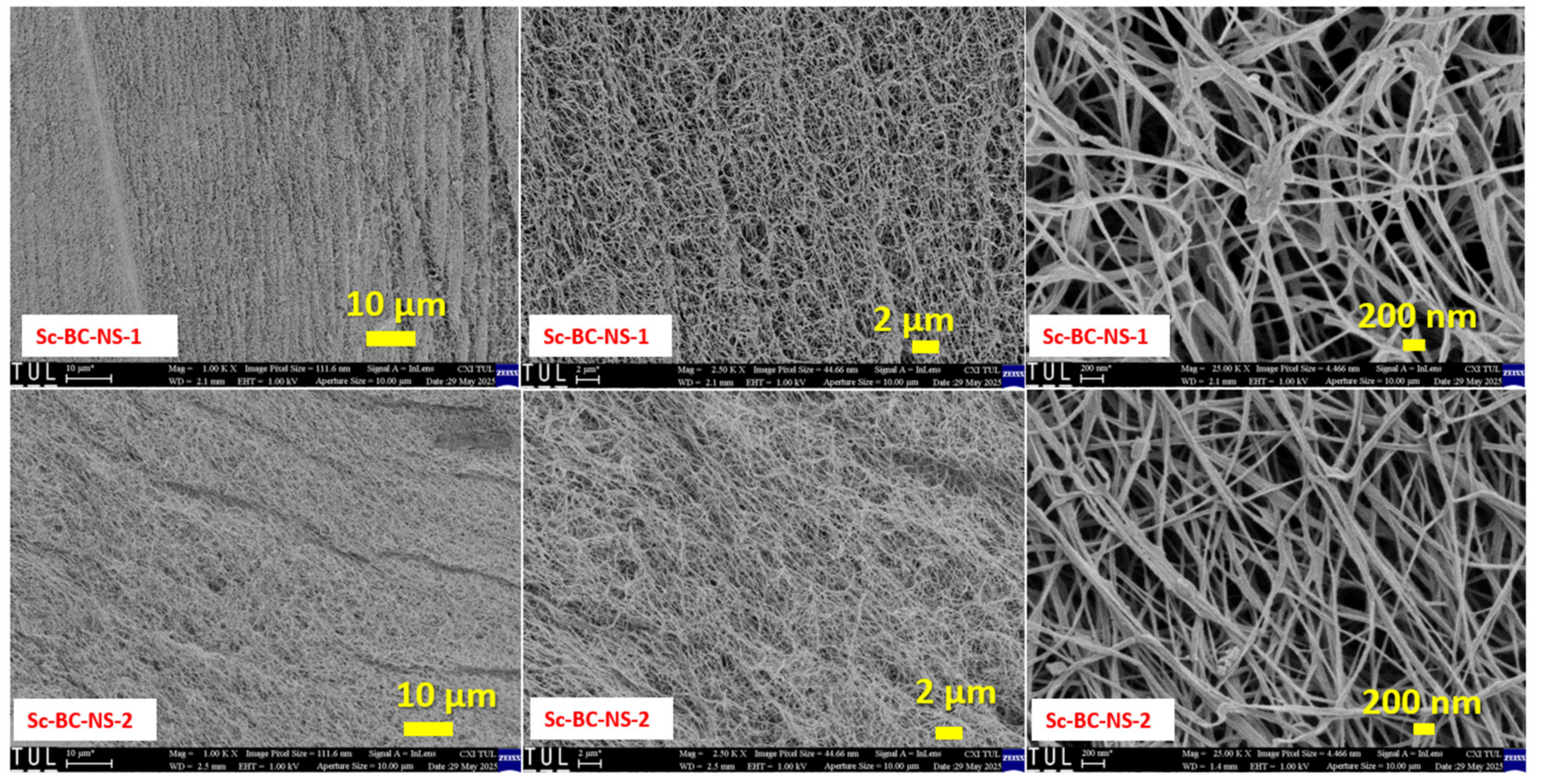
Figure 2 shows SEM micrographs of BC aerogels (Sc-BC-NS-1 and Sc-BC-NS-2) obtained by supercritical CO
2 drying after acetone solvent exchange. Images recorded at 1000×, 2500×, and 25,000× magnification (10 µm, 2 µm, and 200 nm scale bars) allow evaluation of both microscale porosity and nanoscale fibrillar organization. Because the ScCO
2 process eliminates the liquid–gas interface and minimizes capillary forces, it preserves the native three-dimensional nanofibrillar network. At low magnification, the aerogels exhibit an open and relatively homogeneous fibrillar morphology without obvious large-scale collapse or surface densification. At intermediate magnification, a continuous fibrillar network with distributed inter-fibrillar voids is observed, while high-magnification images show preservation of the nanofibrillar architecture. These qualitative morphological observations are consistent with the quantitative porosity and BET characteristics previously reported for the corresponding specimens [
34].
Figure 3 presents SEM images of the selected BC cryogels Lyo-BC-NS-1 and Lyo-BC-NS-3, representing the thinnest (0.13 cm) and thickest (0.67 cm) lyophilized specimens, respectively. Both specimens were prepared by lyophilization after 3 h of controlled in situ shelf freezing. At 1000×, 2500×, and 25,000× magnification (10 µm, 2 µm, and 200 nm scale bars), the selected cryogels display a porous three-dimensional structure composed of randomly oriented, interconnected nanofibrils. At the microscale, the selected cryogels display an open three-dimensional fibrillar morphology with visible inter-fibrillar voids. At intermediate magnification, a continuous fibrillar framework is retained, although localized regions of greater fibril packing are apparent. At the nanoscale, individual ribbon-like fibrils and fibril bundles remain distinguishable. Overall, the SEM images indicate preservation of the principal BC nanofibrillar architecture after lyophilization, although greater local structural heterogeneity is observed than in the ScCO
2-dried aerogels.
Quantitative SEM image analysis of the selected specimens was previously performed using ImageJ (version 1.54g, National Institutes of Health, Bethesda, MD, USA) [
34]. The mean fibril diameters of Sc-BC-NS-1 and Sc-BC-NS-2 were 55.58 and 46.12 nm, respectively. For the selected lyophilized specimens, Lyo-BC-NS-1 exhibited a mean fibril diameter of 37.38 nm and a mean inter-fibril spacing of 634.24 nm, whereas Lyo-BC-NS-3 exhibited corresponding values of 64.50 and 435.48 nm, respectively [
34]. These previously published measurements provide quantitative morphological context for the SEM observations presented here; however, they are not used to establish a direct causal relationship between individual morphological parameters and thermal behavior.
Additional quantitative textural and geometrical characterization previously reported for the corresponding specimens [
34] further supports comparison of the two drying groups. The ScCO
2-dried BC exhibited a mean BET surface area of 123 m
2·g
−1, a total pore volume of 0.36 cm
3·g
−1, and an average pore diameter of 9.8 nm, whereas the lyophilized BC showed a mean surface area of 51.3 m
2·g
−1, a pore volume of 0.13 cm
3·g
−1, and an average pore diameter of 10.6 nm. Despite these differences in accessible surface area and pore volume, both groups retained very high bulk porosity, averaging 99.15 ± 0.07% for ScCO
2-dried BC and 98.84 ± 0.57% for lyophilized BC, with corresponding bulk densities of 13.5 ± 0.70 and 17 ± 8.96 mg·cm
−3, respectively. These previously published measurements indicate that both drying routes preserve highly porous BC structures, while ScCO
2 drying provides greater gas-accessible surface area and pore volume. Quantitative crystallinity was not determined for these specimens and is therefore not used here to explain differences in functional performance.
4.2. Thermal Transition and Heat Flow Analysis of Bacterial Cellulose
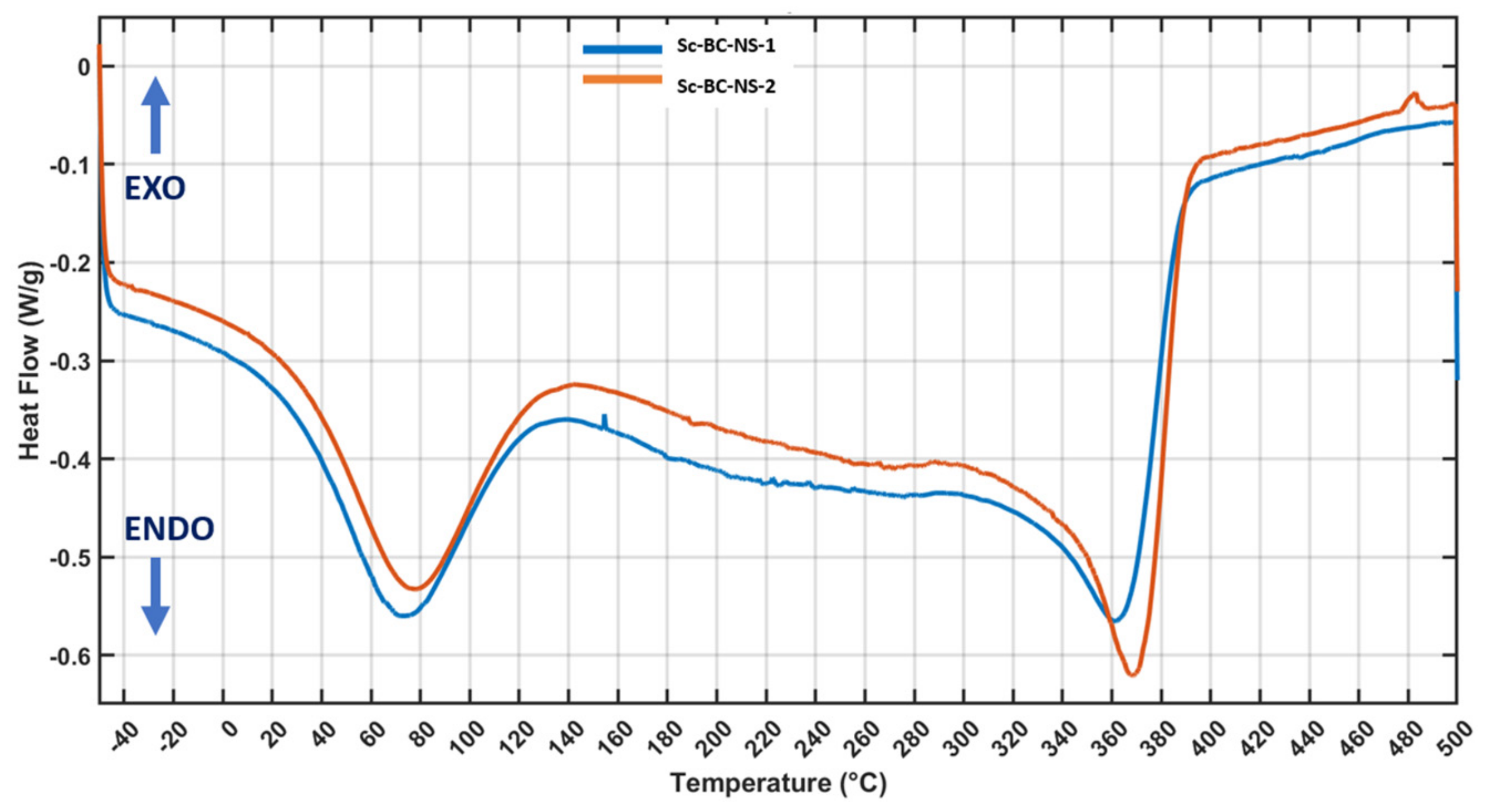
Sc-BC-NS-1 and Sc-BC-NS-2, produced by supercritical CO
2 drying after acetone solvent exchange, showed comparable DSC profiles despite their different thicknesses (0.55 and 0.78 cm). As shown in
Figure 4, the curves largely overlap across the investigated temperature range, with similar baseline profiles, low-temperature endothermic features, and high-temperature thermal events. A broad low-temperature endothermic feature was observed, although its origin was not independently verified in the present study. Because quantitative onset temperatures, peak temperatures, and integrated enthalpy values were not available in the retained experimental output, the comparison is restricted to the recorded heat-flow profiles.
The comparable DSC profiles are consistent with the similar fibrillar morphology observed by SEM and with the reproducible mesoporous characteristics previously quantified by BET analysis for the corresponding ScCO
2-dried specimens [
34]. However, the present DSC measurements do not independently establish a causal relationship between pore characteristics and thermal transitions. Furthermore, because DSC alone does not establish thermal stability or decomposition behavior, the high-temperature features are described only as thermal events and are not assigned to specific degradation or pore-structure mechanisms.
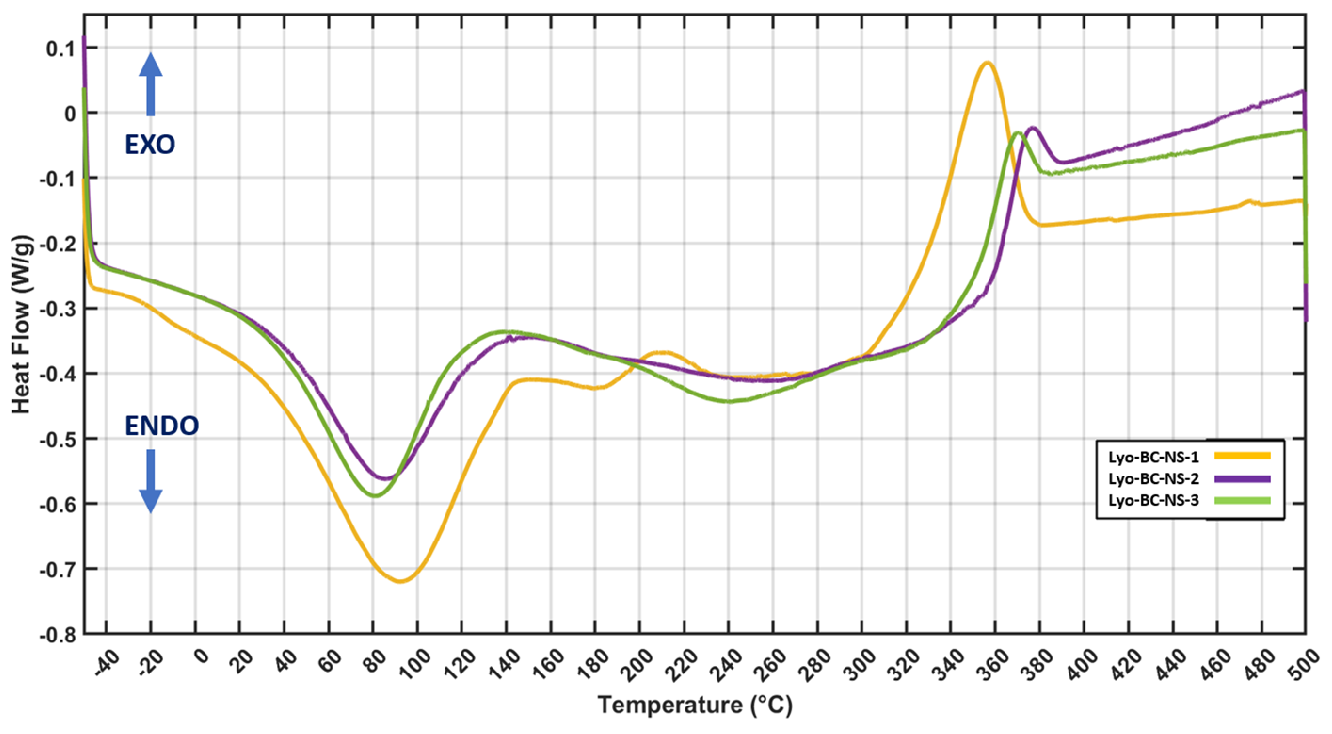
In contrast, BC cryogels (Lyo-BC-NS-1, Lyo-BC-NS-2, and Lyo-BC-NS-3), obtained by lyophilization after 3 h of in situ shelf freezing and with thicknesses of 0.13, 0.57, and 0.67 cm, exhibited greater variability in their DSC response. As shown in
Figure 5, the DSC profiles differ in both shape and intensity. Lyo-BC-NS-1 displays a broader and more pronounced low-temperature endothermic region, whereas Lyo-BC-NS-2 and Lyo-BC-NS-3 show weaker and slightly shifted transitions. High-temperature thermal events also varied in shape and intensity among the specimens; however, without complementary thermogravimetric analysis, these differences cannot be assigned to thermal stability, decomposition behavior, or specific structural rearrangements.
The observed differences indicate greater variability in the DSC response of the lyophilized specimens. This trend is consistent with the greater structural heterogeneity previously observed by SEM and quantified by BET analysis for the corresponding cryogels [
34], which exhibited a broader range of surface area and pore-volume values than the ScCO
2-dried specimens. However, the present measurements do not allow the individual contributions of freezing history, fibrillar organization, specimen geometry, accessible pore structure, retained moisture, or inherent BC variability to be independently distinguished.
Overall, the ScCO
2-dried specimens showed more similar DSC profiles, whereas the lyophilized specimens exhibited greater variation in heat-flow response. These observations, together with the complementary SEM and previously published BET results [
2], indicate differences between the two specimen groups while avoiding attribution of the DSC behavior to any single structural or processing factor.
4.3. Thermal Conductivity and Thermal Resistance of Bacterial Cellulose
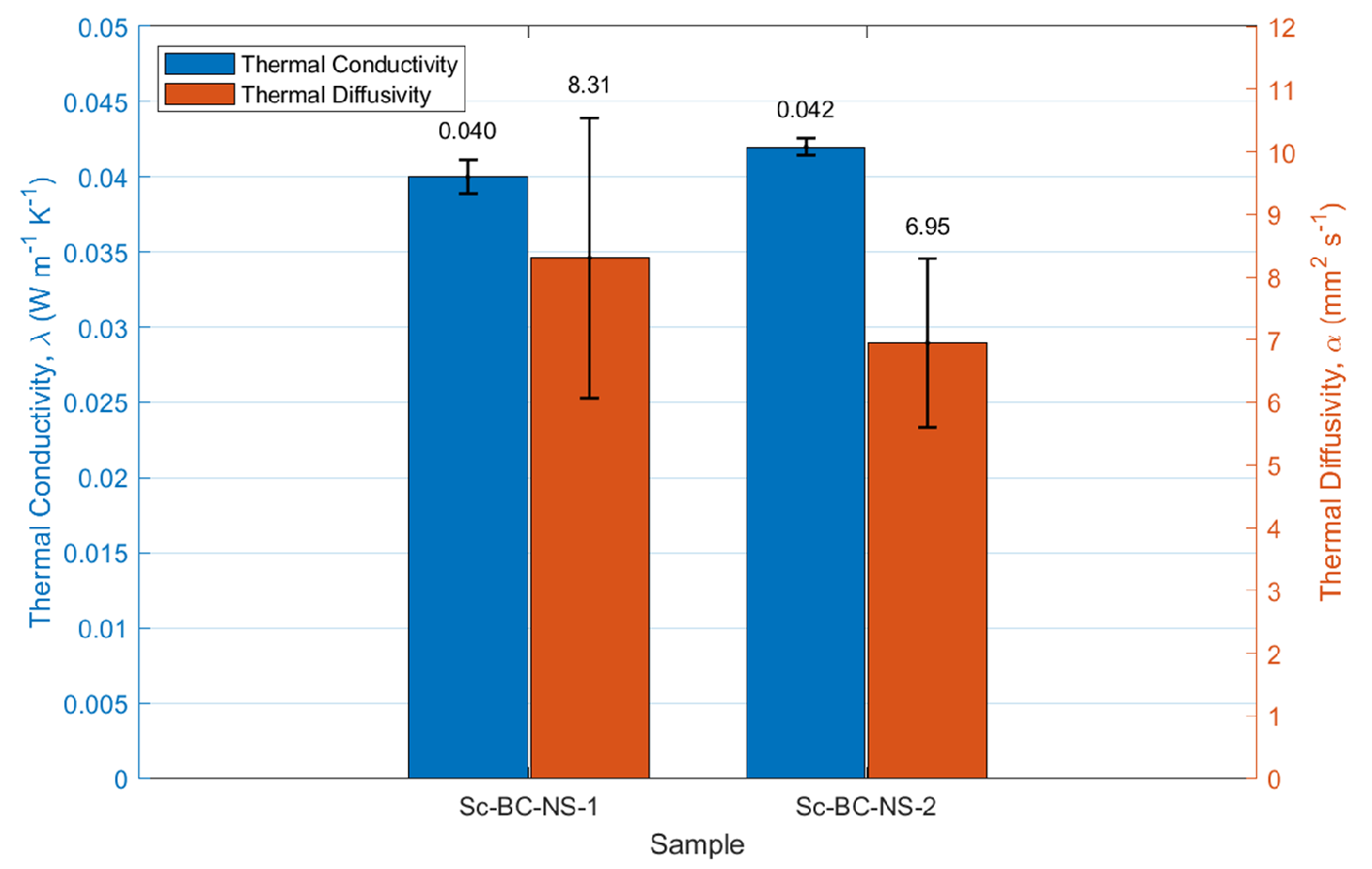
The thermophysical properties of the ScCO
2-dried BC specimens are presented in
Figure 6. Sc-BC-NS-1 exhibited a thermal conductivity of 0.040 ± 0.001 W·m
−1·K
−1 and a thermal diffusivity of 8.31 ± 2.24 mm
2·s
−1, whereas Sc-BC-NS-2 showed corresponding values of 0.042 ± 0.001 W·m
−1·K
−1 and 6.95 ± 1.35 mm
2·s
−1. The comparatively small standard deviations in thermal conductivity indicate good measurement repeatability, while the larger variability in thermal diffusivity, particularly for Sc-BC-NS-1, indicates greater sensitivity of this parameter to repeated measurements. The low conductivity values are consistent with the highly porous BC structure previously quantified for the ScCO
2-dried specimens, which exhibited a mean bulk porosity of 99.15% together with high gas-accessible surface area and pore volume [
34]. However, the individual contributions of pore connectivity, fibrillar organization, density, and other structural parameters to thermal transport cannot be independently resolved from the present measurements.
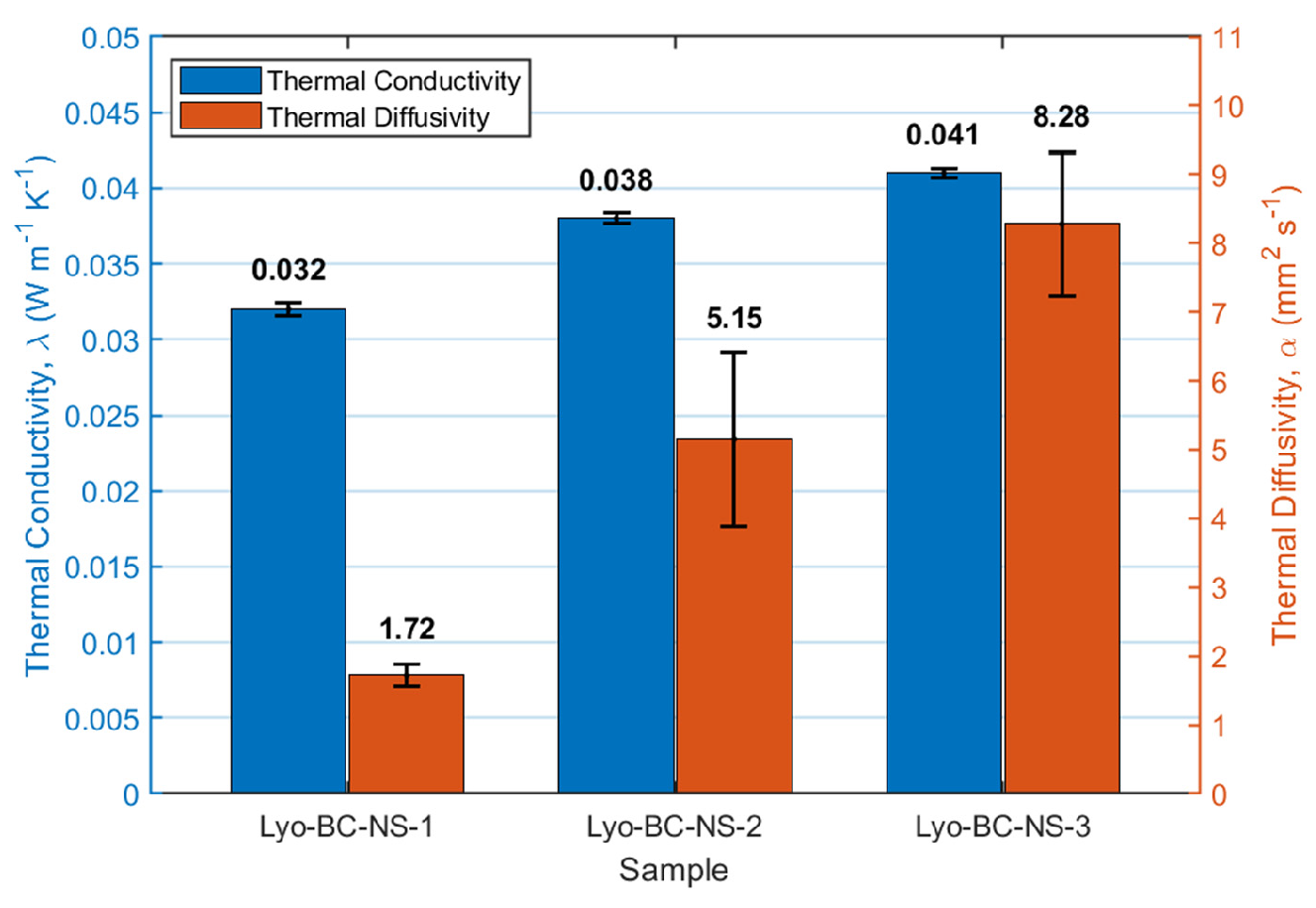
Thermal conductivity and thermal diffusivity of the lyophilized BC specimens are presented in
Figure 7. Lyo-BC-NS-1 exhibited the lowest mean thermal conductivity, 0.032 ± 0.0004 W·m
−1·K
−1, together with a thermal diffusivity of 1.72 ± 0.17 mm
2·s
−1. Lyo-BC-NS-2 showed values of 0.038 ± 0.0004 W·m
−1·K
−1 and 5.15 ± 1.26 mm
2·s
−1, whereas Lyo-BC-NS-3 exhibited 0.041 ± 0.0003 W·m
−1·K
−1 and 8.28 ± 1.05 mm
2·s
−1, respectively. Thermal conductivity showed relatively low measurement variability for all three specimens, whereas thermal diffusivity displayed greater dispersion, particularly for Lyo-BC-NS-2 and Lyo-BC-NS-3. The observed differences in thermal transport are consistent with previously reported differences in fibrillar organization and accessible pore characteristics; however, the contribution of individual structural parameters cannot be independently quantified from the present measurements.
Within the investigated specimen set, Sc-BC-NS-1 and Lyo-BC-NS-2 provide the closest cross-method thickness comparison, with thicknesses of 0.55 and 0.57 cm, respectively. Their mean thermal conductivity values were also similar, at 0.040 ± 0.001 and 0.038 ± 0.0004 W·m−1·K−1. This comparison supports the possibility of obtaining comparable thermal conductivity through the two drying routes at approximately equivalent specimen thickness under the investigated conditions. However, because independent specimen-level replicates were not available at matched thicknesses, this observation should be interpreted as comparative evidence rather than as a statistical demonstration of an independent drying-method effect.
Across the specimens investigated, the ScCO2-dried and lyophilized BC materials exhibited overlapping thermal-conductivity ranges, whereas greater specimen-to-specimen differences were observed in thermal diffusivity. The lyophilized specimens were intentionally selected to span different thickness configurations, and specimen thickness may have influenced freezing behavior and the resulting fibrillar and pore morphology. However, the present experimental design does not allow the contribution of thickness to be separated from specimen-level structural variability. Inherent variability in bacterial cellulose biosynthesis may also contribute to differences in fibrillar organization and thermal response. Overall, the lyophilized specimens exhibited thermal conductivity values comparable to those of the ScCO2-dried specimens, with the closely thickness-matched Sc-BC-NS-1/Lyo-BC-NS-2 pair providing the clearest cross-method comparison. Nevertheless, because specimen thickness, drying route, fibrillar organization, accessible pore structure, and inherent BC variability cannot be independently separated within the present design, the results are interpreted as comparative structure–property observations rather than as evidence of an isolated drying-method effect.
The present comparison is limited by the small and unbalanced number of specimens (n = 2 for ScCO2 drying and n = 3 for lyophilization) and by the absence of independent specimen-level replicates at matched thicknesses. Although the lyophilized specimens were intentionally selected to span different thickness configurations, the limited dataset does not permit the effects of specimen thickness, drying route, fibrillar organization, accessible pore structure, and inherent BC variability to be independently separated. Future investigations employing larger numbers of independently produced specimens with systematically matched dimensions are required for confirmatory statistical evaluation of these factors.
4.4. Monitoring of Environmental Conditioning Parameters (Temperature and Relative Humidity)
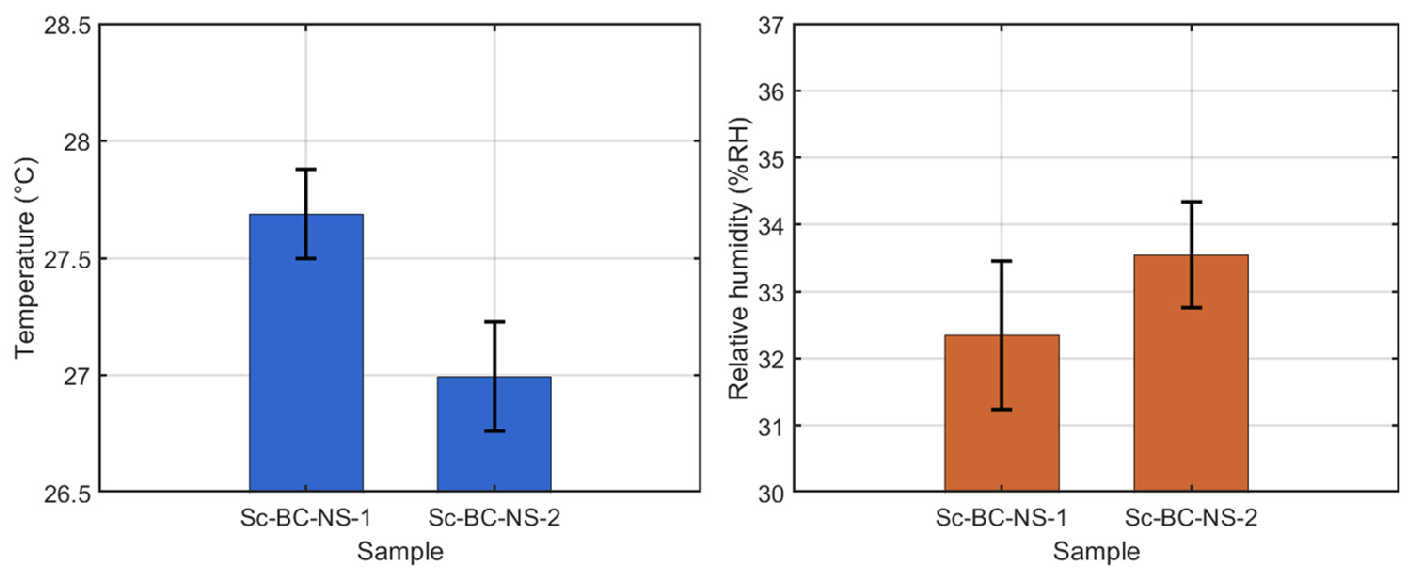
The environmental conditions recorded during conditioning of ScCO
2-dried aerogels are presented in
Figure 8. The mean temperature remained within 27.0–27.7 °C, while relative humidity was stable at 32–34% RH, with low standard deviations in both cases. Sensors were placed directly on the sample surfaces, and measurements from multiple positions were averaged to obtain representative values.
These results confirm stable ambient conditions during handling and characterization. Minor spatial variations at the sample surface cannot be completely excluded; however, any subtle differences in fibrillar organization or pore structure may also reflect inherent biological variability in bacterial cellulose biosynthesis.
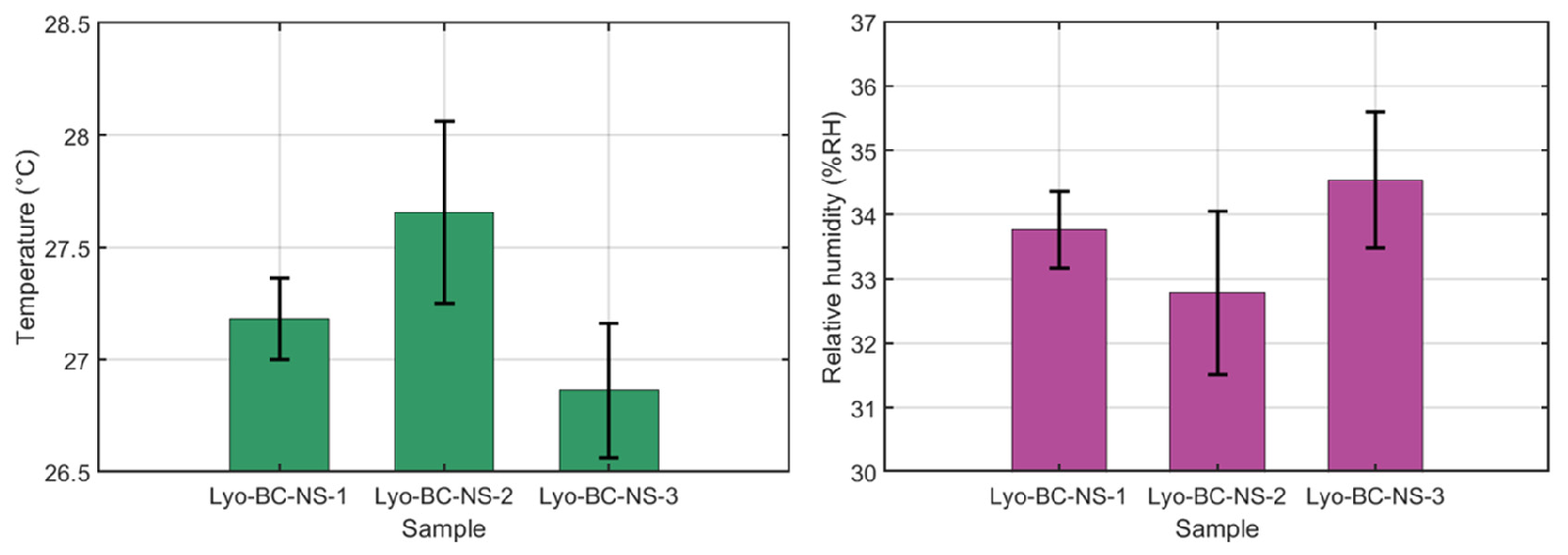
Environmental data for the lyophilized BC cryogels (Lyo-BC-NS-1 to Lyo-BC-NS-3) are shown in
Figure 9. The recorded temperatures ranged from 26.8 to 27.7 °C, with low variability (standard deviation: 0.18–0.40), confirming stable thermal conditions. Relative humidity was similarly consistent, ranging from 32 to 35% RH, with only minor differences among samples within normal environmental fluctuations.
Overall, the monitored conditions indicate a controlled and stable environment during cryogel conditioning. Nevertheless, slight variations in microstructure may still arise from inherent biological variability in BC production combined with localized environmental effects during processing.
5. Conclusions
This study demonstrates that additive-free BC materials obtained through ScCO2 drying and lyophilization exhibit distinct microstructural and functional characteristics. While these differences are associated with the respective processing routes, the contribution of drying cannot be completely separated from specimen geometry and inherent biological variability within the present experimental design. Supercritical CO2 drying preserved a uniform nanofibrillar network and produced aerogels with consistent morphology, stable thermal behavior, and reliable thermophysical properties, whereas freeze-drying generated cryogels with slightly greater structural variability.
Despite this variability, freeze-dried cryogels exhibited thermal properties comparable to those of the ScCO2-dried aerogels under the investigated processing conditions. In particular, some cryogels showed lower thermal conductivity and diffusivity, indicating improved insulation performance.
Environmental conditions during testing remained stable, supporting the reliability of the measurements. At the same time, the results confirm that bacterial cellulose biosynthesis inherently introduces a degree of biological variability, which can influence fibril organization, pore architecture, and the resulting material properties even under carefully controlled cultivation, drying, and characterization conditions.
Overall, the findings demonstrate that additive-free BC pellicles processed by controlled limited pre-freezing followed by lyophilization can produce highly porous materials with performance approaching that of supercritical CO2-dried aerogels. The closely thickness-matched comparison further supports the potential of simplified lyophilization to achieve thermal performance comparable to ScCO2 drying under the investigated conditions. From a textile-engineering perspective, the combination of high porosity, low density, nanofibrillar structure, and low thermal conductivity of these BC materials supports their potential for further development as lightweight bio-based components in nonwoven, layered, or composite textile insulation systems. These results highlight the practical significance of simplified freeze-drying as a more accessible, scalable, and sustainable approach for developing BC-based thermal insulation materials without major loss of functional performance.