
Article

Wild Boar Management and Environmental Degradation: A Matter of Ecophysiology—The Italian Case
by
Andrea Mazzatenta
Scienze Department, ‘G. d’Annunzio’ University of Chieti-Pescara, 66100 Chieti, Italy
Conservation 2026, 6(1), 9; https://doi.org/10.3390/conservation6010009
Submission received: 9 May 2025 / Revised: 23 November 2025 / Accepted: 9 December 2025 / Published: 6 January 2026

Abstract

Despite its global distribution, the impacts of wild pigs on the environment are poorly understood. However, wild boar (Sus scrofa) is recognized as a pest species, causes extensive damage to agriculture, biodiversity, and forests, and contributes to motor vehicle accidents. This study investigates the causes and mechanisms underlying the demographic explosion of wild boar in Italy. The analysis is based exclusively on official datasets from Italian governmental institutes, allowing quantitative correlations between population dynamics, culling rates, and economic impacts. By integrating historical data, population biology, reproductive physiology, and chemical communication, the study reveals that anthropogenic pressures, counterintuitively driven by wildlife management practices, have significantly contributed to population growth. A shift from a K-strategy to an r-strategy in reproductive behavior, induced by sustained control pressure, has led to increased birth rates and accelerated expansion. Disruptions in species homeostasis trigger harmful changes in ecosystem structure and functionality, delineating a model of environmental damage. These findings highlight the urgency of adopting an integrated wildlife management approach that combines conservation biology and physiological principles with targeted operational interventions to prevent further degradation affecting both the species and the ecosystem.

1. Introduction

Sus scrofa (Linnaeus, 1758), commonly known as the wild boar, is increasingly recognized as a problematic species across Europe and the Americas [1,2,3]. Currently classified as a pest, it causes extensive damage to agricultural crops, forests, biodiversity, and private property, and is frequently involved in motor vehicle collisions. These impacts are primarily linked to its feeding behavior, wallowing, rooting, tree rubbing, and nomadic movements [4].
Despite its wide distribution and potential for ecological disruption at multiple scales, the global impact of wild boars remains insufficiently understood from a scientific standpoint [4,5,6]. When anthropogenic conflict is emphasized, it becomes crucial to assess the presence and extent of environmental damage to determine how, when, and under what conditions it occurs [7].
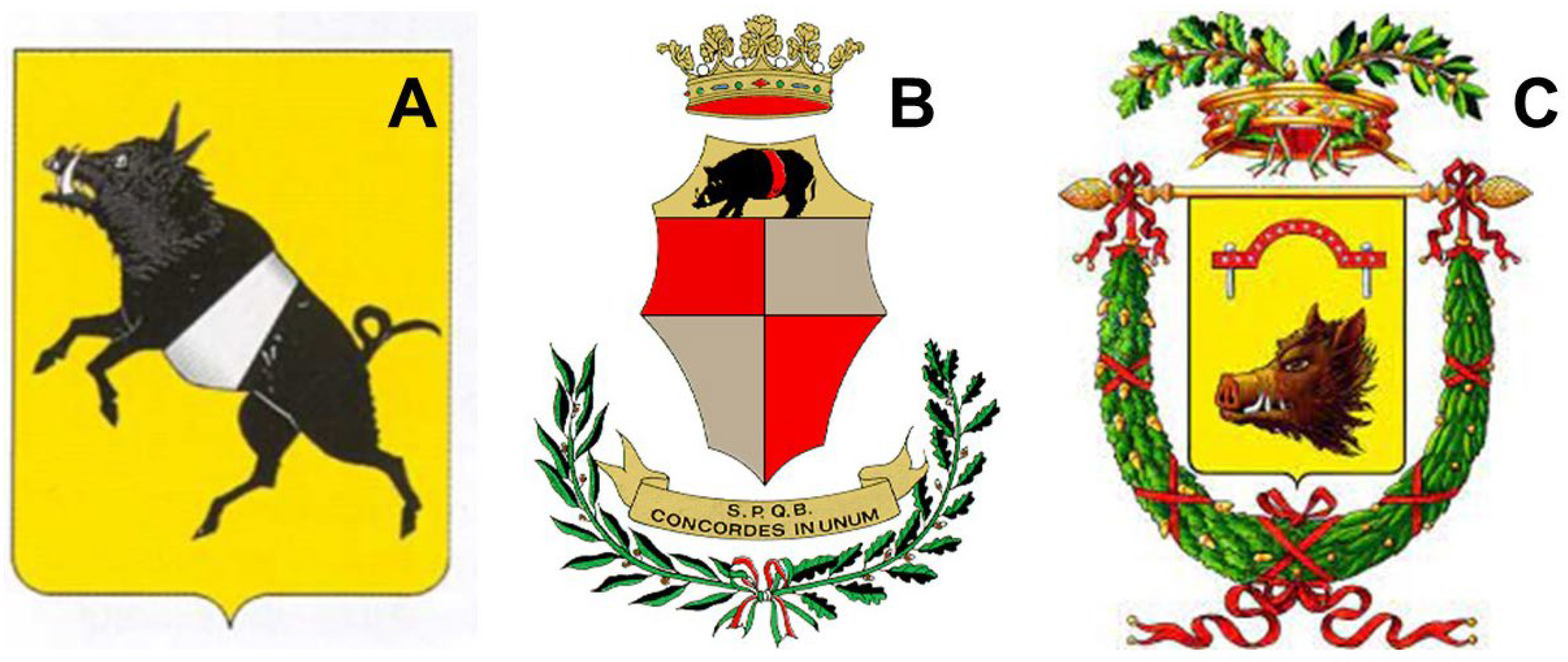
A paradigmatic case of such conflict is the wild boar emergency in Italy, persisting for over 25 years, as it relied exclusively on culling strategies grounded on fragmentary and opaque data, often inaccessible, of dubious reliability, and frequently originating from stakeholders with vested interests. Between 2015 and 2021, the Italian Institute for Environmental Protection and Research (ISPRA) reported agricultural damages totaling approximately €120 million, with annual increases ranging from €14.6 to €18.7 million. Concurrently, emergency management efforts led to a 45% rise in culling, with an average of 300,000 animals harvested annually [8]. Over this seven-year period, approximately 2.1 million wild boars were culled: 86% through ordinary hunting and 14% via wildlife control measures. Tuscany, Emilia-Romagna, Piedmont, Latium, Umbria, Liguria, and Marche accounted for 73% of the total harvest. Notably, 94% of hunting occurred on public lands, with only 6% on private game hunting reserves. In response to African Swine Fever (ASF), targeted control interventions increased by over 300%, underscoring the intensification of management efforts in high-risk areas [9]. The predominant hunting method in Italy remains collective hunting with dogs, beaters, and fixed-post hunters (braccata, or drive hunting), responsible for 88% of the total harvest. This is followed by selective hunting (9%), solitary hunting with a single dog (girata, 2%), and free hunting (1%). Wildlife control activities were conducted both in formally protected areas (e.g., parks and reserves, 38%) and in other territories not classified as such (62%) that may include partial forms of protection, such as urban green areas and archaeological parks, using selective culling (52%), cage trapping (31%), braccata (11%), and girata (6%). Importantly, braccata was the most widely used method across both hunting and control contexts, resulting in a nearly equal sex ratio (51% males, 49% females) but a skewed age distribution, with 60% of culled individuals being adults. ISPRA estimated a minimum population stock of 1.5 million wild boars in 2021 [8]. Understanding the current distribution of wild boars in Italy requires historical contextualization [6,10]. Historically, the species’ ecological resilience and symbolic significance led noble families, municipalities, and provinces to adopt the wild boar as an emblem (Figure 1) [6,10,11]. Since the late 1500s, its distribution declined due to hunting driven by human necessity. Extinctions were recorded progressively from north to south: Trentino in 1600, Liguria, Friuli, and Romagna by 1800. Small populations were re-established in the northeast around 1920 by animals introduced from France, but World War II led to the disappearance of the last Adriatic populations [6,10,12,13].
From the 1950s onward, large-scale introductions of wild boars for hunting purposes, initially from Eastern Europe (Hungary, Poland, and former Czechoslovakia), and later from captive-bred individuals, occurred across nearly all Italian regions [6,10]. Such introductions were largely casual in genetic terms, introducing lineages unrelated to the Mediterranean subspecies of Sus scrofa. Consequently, these animals exhibit phenotypic and behavioural traits markedly different from the autochthonous ecotypes: they are larger, more prolific, and frequently crossbred with domestic pigs to increase fat content for processed meat production. The colonisation of different subspecies, further facilitated by the absence of natural predators, has resulted in highly adaptable populations thriving from coastal areas to high-altitude grasslands. For these reasons, wild boar is sometimes perceived as an alien species in Italy; however, the species itself cannot be considered alien. Rather, distinctions should be drawn between historically typical and non-typical subspecies, native and non-native lineages, and populations affected or not by swine fever. These nuances are particularly relevant in natural or rewilding contexts, whereas in highly anthropogenic landscapes they tend to lose significance due to the artificial nature of such systems. Roughly fifty years later, an exponential population increase was observed, with a 60% growth in just two years [6]. In 2023, Coldiretti, the main national farmers’ organization, estimated a national population of 2.3 million wild boars [14]. However, the absence of a standardized national data collection system hampers accurate assessments of population size and damage [8]. Paradoxically, the incompleteness, heterogeneity, and lack of standardization in regional data collection systems are a central focus of this study: wild boar management and control policies in Italy have been implemented based on fragmented and inconsistent data, which have directly contributed to the species’ population increase. This work highlights how the absence of a shared scientific framework has led to ineffective decisions, emphasizing the need for an integrated eco-physiological approach to sustainable management. Globally, wild boar population explosions are often attributed to rural depopulation, reforestation of former agricultural lands, reduced persecution, and climate change; however, environmental and climatic models only partially support these explanations [5,6,7,10,15].
To understand the species’ population dynamics, it is essential to consider its biological and ecological traits. Belonging to the order Artiodactyla, wild boars exhibit a complex social structure and reproductive physiology [10]. The basic social unit is the family led by a matriarch (matrona), comprising her daughters, offspring, and immature males, occupying a defined home range. Mature dominant males (salengani or solenghi), often solitary or accompanied by younger males, defend larger breeding territories encompassing multiple matriarchal groups [10,16].
This social organization reflects a K-selected reproductive strategy, characterized by slow population growth, low mortality, and stable age structures. Energy and resources are directed toward survival and adaptation rather than rapid reproduction [17,18,19,20,21]. K-strategists exhibit low fertility, long developmental cycles, deferred generational turnover, and behaviors that minimize intraspecific competition, such as territoriality and pheromonal communication. Natural control factors like disease and predation have limited impact [18,19,20,21,22].
In contrast, r-strategists reproduce rapidly, with early sexual maturity, high fecundity, and high mortality, resulting in predominantly young populations [18,19,20,21,22]. The shift from K- to r-strategy in wild boars under anthropogenic pressure is a key question that could explain the population explosions.
An additional regulatory mechanism is chemical communication [22,23,24]. In mammals, including humans, reproductive regulation is mediated by pheromones [25,26]. Mechanisms such as estrus synchronization, cycle suppression, and the Lee-Boot effect (1955) are typical of stable populations and support K-strategy dynamics [27].
Italy was selected as the study area due to its uniquely documented reintroduction events and the paradoxical role of population management, essentially hunting practices such as drive hunts, selective culling, and other control measures that may have acted as key drivers of wild boar population growth.
This makes it an exemplary case for understanding anthropogenic impacts on wildlife dynamics.
This study undertakes an eco-physiological analysis based on data extracted from institutional reports concerning restocking programs and wildlife management actions. Its aim is to investigate the root causes behind the dramatic increase in wild boar populations and the resulting ecological and socio-economic emergency. The primary research objective is to identify and understand the complex interactions between biological traits of the species, such as reproductive strategies, behavioral plasticity, adaptability, and anthropogenic factors, including restocking practices, land use changes, and hunting policies.
By bridging this gap, the study contributes to a more nuanced understanding of the mechanisms driving population explosions, particularly investigating the shift from K-selected to r-selected reproductive strategies under altered environmental and management conditions. This insight is crucial for developing predictive models and adaptive management frameworks.
The practical importance of this research lies in its potential to inform more effective and sustainable wildlife management policies. The proposed homeostatic model offers a conceptual tool for anticipating population responses to various interventions and environmental changes. It can support decision-makers in designing targeted strategies, such as adaptive culling, habitat modification, or fertility control, that are grounded in ecological and physiological realities. Ultimately, the study aims to contribute to restoring ecological balance, reducing human–wildlife conflicts, and minimizing the economic and environmental costs associated with wild boar overabundance.

2. Materials and Methods

2.1. Study Area and Data Collection

The analysis was conducted at the national scale, focusing on areas with significant Sus scrofa population growth. Data acquisition relied on validated third-party institutional sources and open-access repositories, e.g., National Ungulate Database: status, distribution, abundance, management and hunting of Ungulate populations in Italy [6], spanning the temporal range 1900–2023. Institutional and archival sources included datasets and records from: national authorities (Istituto Superiore per la Protezione e la Ricerca Ambientale—ISPRA; and the Ministry of Agricolture); regional authorities (Regional Department of Agriculture—Assessorato all’Agricoltura); and local authorities (Provincial administrations and Territorial Hunting Units—Ambiti Territoriali di Caccia, ATC). These sources provided structured and longitudinal data on wild boar distribution, abundance, and management practices, enabling reconstruction of spatial and demographic trends [6,8,11,12,13,14,20,21,28,29].
Data on pheromones, chemical communication, and reproductive strategies were extracted from peer-reviewed literature and systematically analyzed using curated molecular databases—ChemSpider and Pherobase—to determine compound identity, identify candidate molecules and infer their physiological function [4,5,10,15,20,21,30].
Data were used for statistical analysis and conceptual modelling to characterize geographic expansion, reproductive adaptation under anthropogenic pressure, sex-specific physiological responses, strategic shift from K- to r-selection, environmental impact, and molecular inference of bioactive compounds involved in chemical communication.

2.2. Data Analyses

Population size data were log10-transformed to reduce distribution skewness and stabilize variance for temporal analysis.
Population dynamics were quantified using the Relative Growth Rate (RGR) formula:
RGR = (lnM2 − lnM1)/(t2 − t1)
where M1 and M2 correspond to population size at times t1 and t2, respectively; ln is the natural logarithm [31,32].
Further analysis of RGR segments was conducted to identify correlations with anthropogenic pressures and restocking events, and to detect temporal thresholds in population growth dynamics. The slope of each segment reflects the rate of change in population growth—steeper positive slopes indicate accelerated expansion. Intercepts, representing the initial RGR value at the beginning of each interval, were compared to detect shifts in baseline growth rates. These metrics were used jointly to characterize demographic transitions and their association with external pressures.
Linear regression models were employed to examine the relationship between population size and time, evaluate the impact of management interventions on growth trends, and quantify the predictive contribution of reproductive and mortality rates to population expansion. Model diagnostics included the coefficient of determination (R2) to assess goodness-of-fit, the standard error of estimate to evaluate model precision, and residual analysis to verify assumptions of linearity and homoscedasticity. Additionally, multiple regression models were tested to incorporate interaction terms (e.g., restocking × fertility rate) and assess compound effects.
Pearson’s correlation coefficient (r) was computed to assess linear relationships between variables (e.g., population size vs. fertility rate), with significance threshold set at α = 0.05. Interpretation: r = 1, perfect positive correlation; r = −1, perfect negative correlation; r = 0, no linear correlation.
All analyses were performed using statistical software OriginPro (Version 2.2) and Jamovi (Version 2.2) [33,34].

3. Results

The analysis of the spread and population increase in wild boars in Italy aims to elucidate both the physiological mechanisms behind the phenomenon and its environmental impact. This investigation was conducted through three main approaches: (i) the examination of databases from governmental agencies (national, regional, and local) used for wildlife management; (ii) the study of the species’ population biology; and (iii) the analysis of its reproductive physiology and chemical communication. The outcome is a model illustrating the effects on species homeostasis, understood as an inseparable component of the broader ecosystem, and on the environment from a holistic perspective.

3.1. The Causes of Wild Boar Spread in Italy

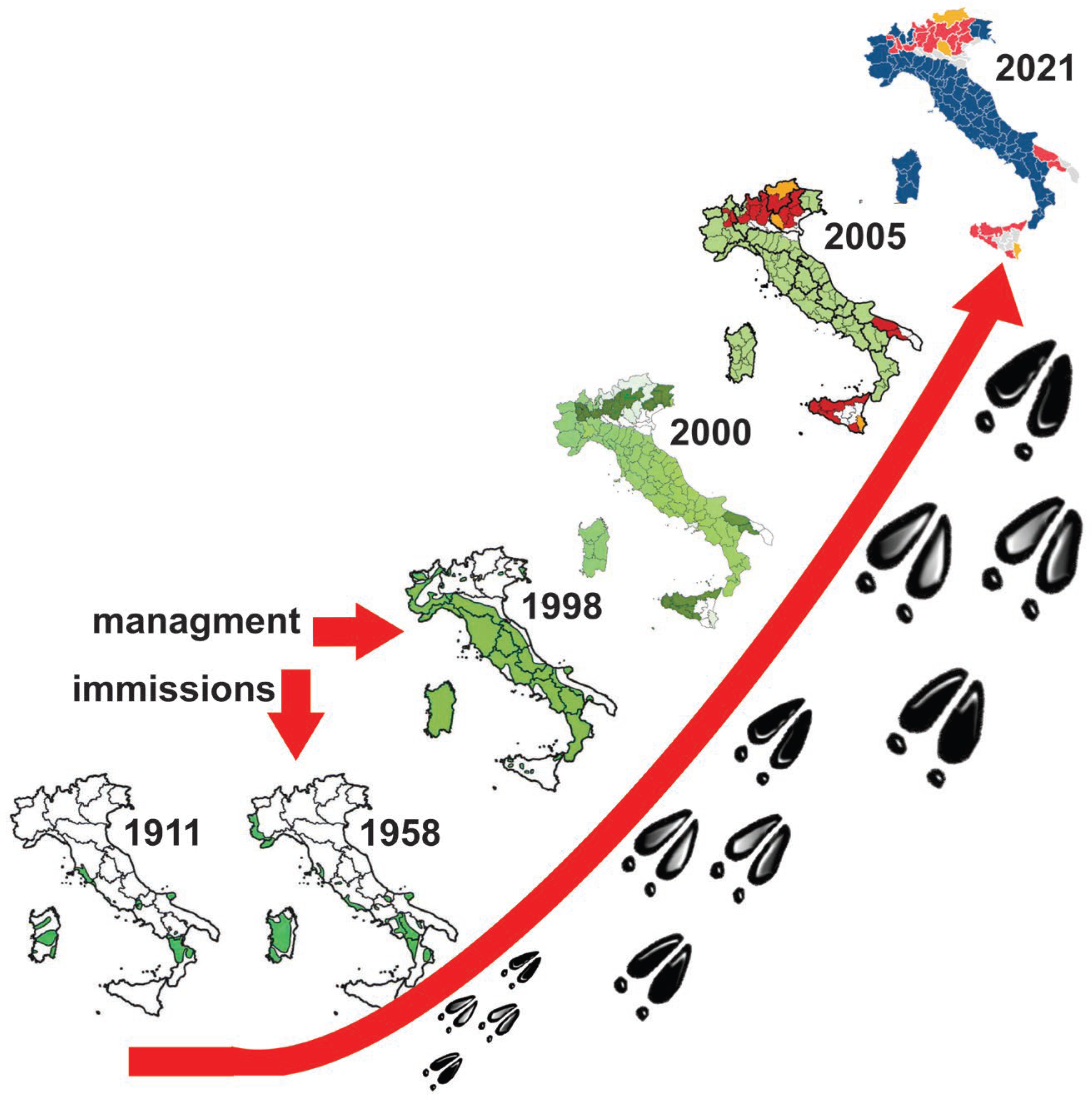
Historical records from the early 1900s indicate a limited and localized presence of wild boars in Italy, covering approximately 1% of the national territory (Figure 2). According to data from 1958, following both World Wars, the distribution of wild boars remained largely unchanged. For nearly half a century, populations were stable, with only minor fluctuations within their established ranges.
In contrast, monitoring conducted in 1998 revealed a widespread presence of wild boars across the country, except for northeastern regions and Sicily. Over the span of roughly 40 years, several key events contributed to this transformation. First, large numbers of wild boars were imported from Eastern Europe and released into the Italian countryside for hunting purposes (Figure 2). Second, within less than a decade, the species had spread to nearly all regions, accompanied by continuous population growth (Figure 2). In recent years, wild boars have increased relentlessly, encroaching upon urban areas, traffic zones, and especially parks and nature reserves [4,6,10,28]. This phenomenon will be examined in detail.
A comprehensive analysis of the available data on wild boar abundance, distribution, and frequency identifies two critical factors that require close examination to understand the current scenario: restocking efforts and wildlife management practices.

3.1.1. Restocking and Management

Data on wild boar populations in Italy from the early to mid-20th century indicate stable and consistent numbers, with only minor fluctuations in areas of occurrence. In contrast, from the second half of the century onward, wild boars began appearing across nearly all Italian regions, primarily due to importation and release for hunting purposes. Subsequently, wildlife management practices became closely associated with the exponential growth of the species.
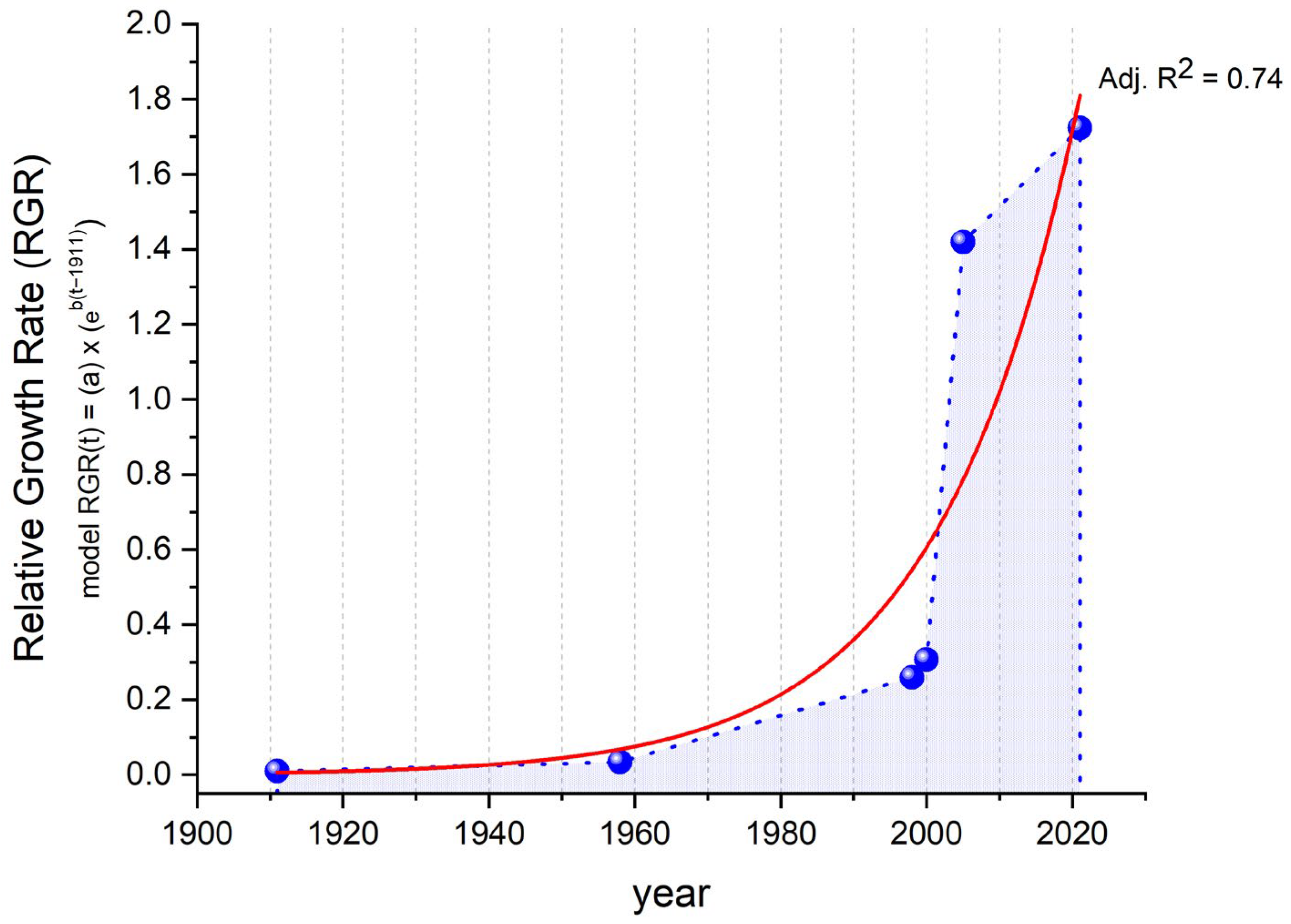
To characterize the temporal dynamics of population expansion, we employed the Relative Growth Rate (RGR), a metric that expresses the rate of change relative to the current population size (Figure 3).
This approach enables comparisons of growth efficiency over time, independent of absolute population values. The RGR data were modelled using a two-parameter exponential function (Exp2P), which provided a robust fit to the data (R2 = 0.793, AIC = −10.01, BIC = −10.43), outperforming a linear model (R2 = 0.500, AIC = 12.30, BIC = 11.89).
Two inflection points were identified: 1958 and 2000, corresponding to significant ecological and management transitions. The first marks the beginning of wild boar reintroduction programs in Italy, involving the translocation of individuals from Eastern European populations. Despite the absence or low density of natural predators, the growth rate during this period remained relatively slow, as indicated by the slope and intercept of the RGR segment (Table 1). The second breakpoint, around the year 2000, reveals a marked acceleration in population growth. This shift coincides with the implementation of new wildlife management strategies, including the institutionalization of culling plans under Italian Law 157/1992, and the widespread adoption of collective hunting methods such as braccata, imported from Eastern Europe. Although these practices were intended to control population size, they may have inadvertently facilitated greater dispersal and reproductive success.
Segmented regression analysis and a Chow test confirmed the statistical significance of these discontinuities. The Chow test comparing the first and second segments yielded an F-statistic approaching infinity (F → ∞), indicating a structural break in the growth trend. Residual diagnostics supported the validity of the model, satisfying assumptions of normality (p = 0.38) and independence (Durbin-Watson ≈ 2), with no influential outliers detected (Cook’s D < 1). These findings underscore the profound impact of management decisions on the trajectory of wild boar population growth in Italy.

3.1.2. Population Biology

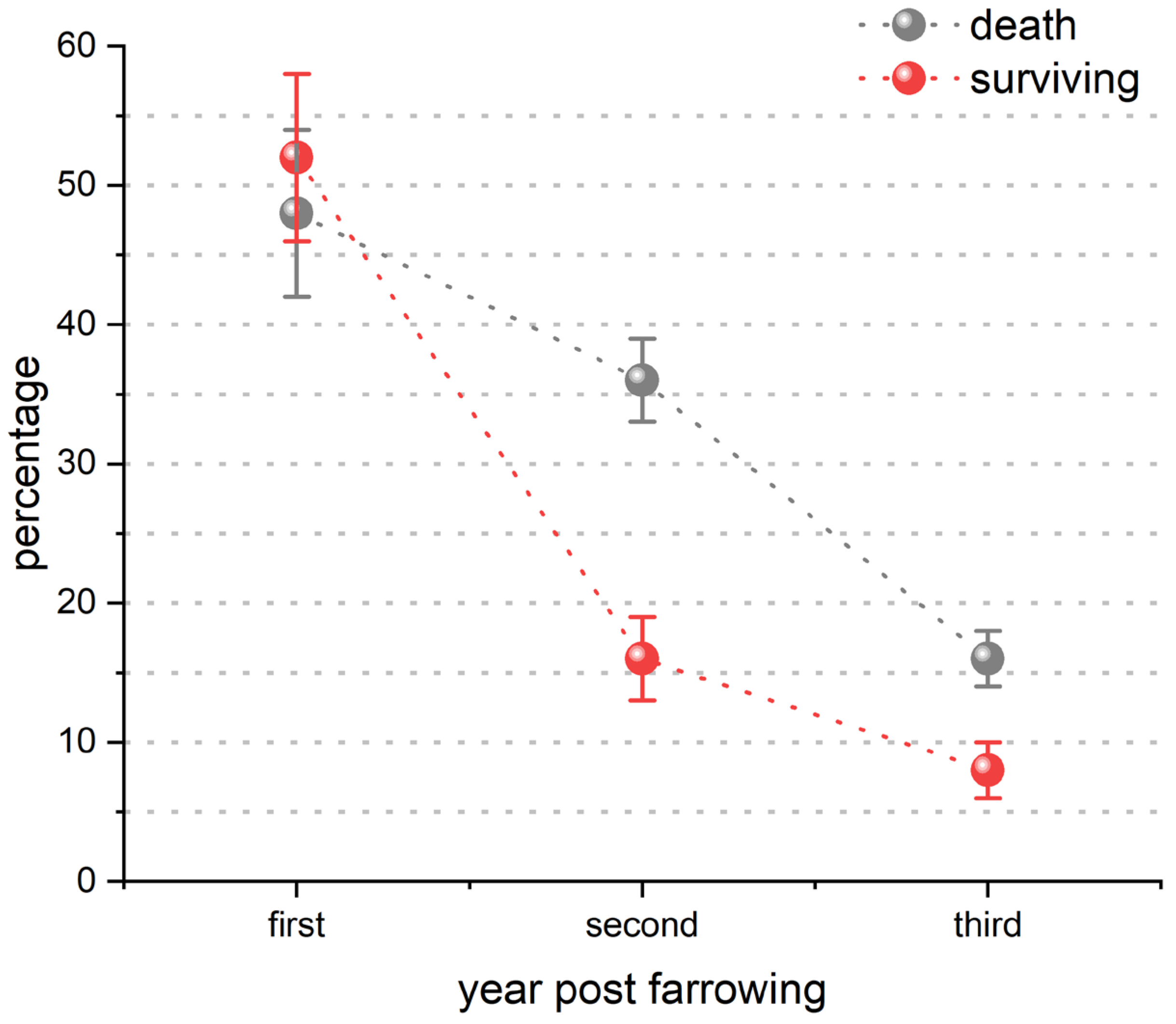
Until the 1980s, wild boar populations in Italy exhibited a mortality pattern consistent with a K-strategy of population regulation, characterized by environmental carrying capacity and homeostatic balance. In the first year after farrowing, mortality and survival rates were nearly equal. In the second year, survival dropped significantly while mortality slightly increased. By the third year, mortality nearly doubled the survival rate, resulting in a stable population dynamic (Figure 4). During this period, the number of third-year survivors was sufficient to balance the loss of adult and older individuals due to predation, disease, or aging, maintaining a homeostatic equilibrium within the ecosystem.
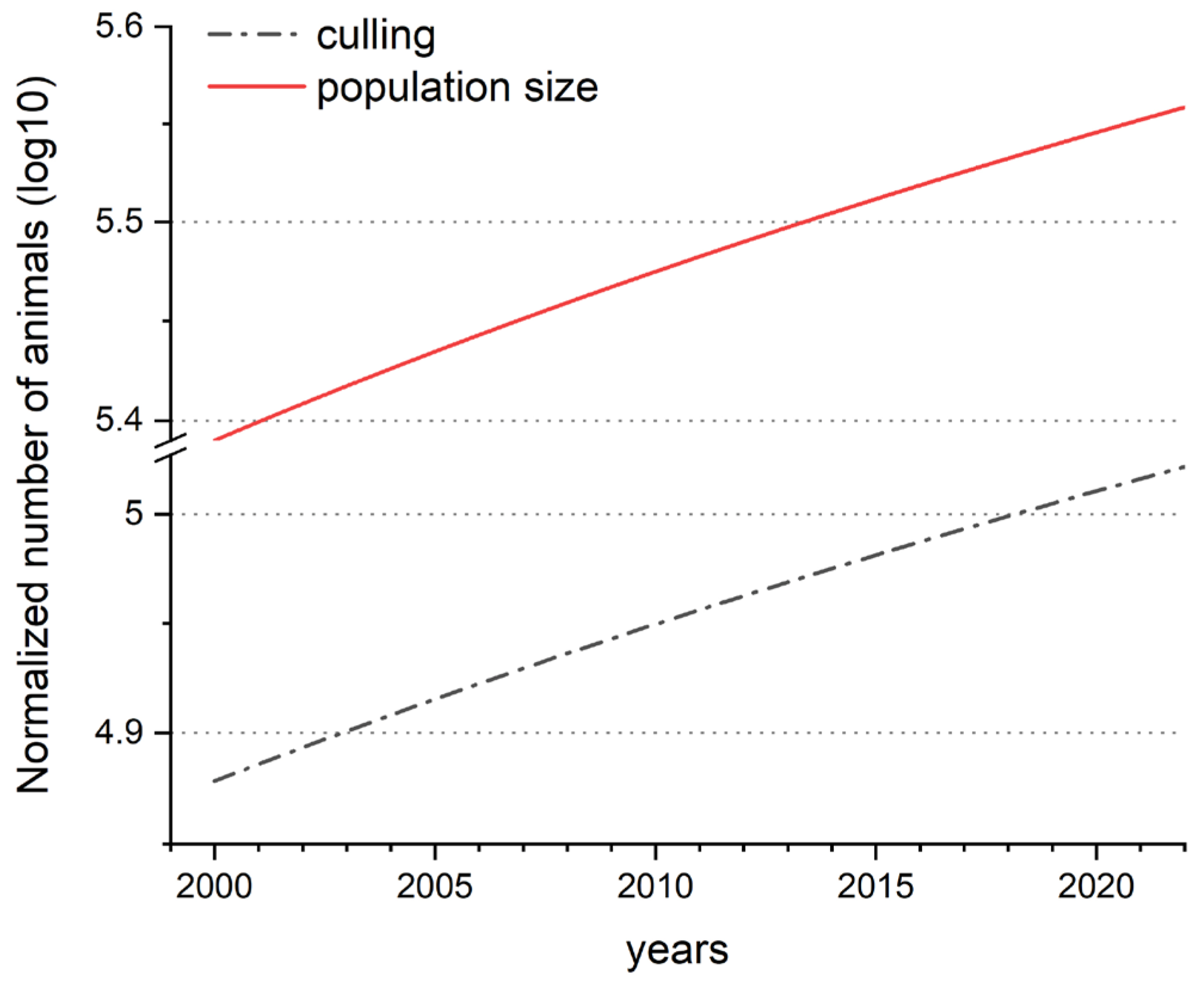
Following the 1980s, significant changes occurred, as previously illustrated in Figure 3. To analyse these shifts, data from the Tuscany region were selected due to their long-term consistency and homogeneous collection methods [29]. A log10 normalization of the data revealed an exceptionally strong correlation (Pearson’s r = 0.99997, α = 0.05) between culling activity and population size (Figure 5).
This correlation suggests that increased culling is not reducing population size, but rather correlates with its growth, likely due to physiological changes in reproduction and dispersal mechanisms, as discussed earlier.

3.1.3. Reproductive Physiology: Pheromonal Regulation

Female philopatry in wild boars promotes kin selection, enhancing inclusive fitness and shaping the matrilineal social structure of populations. This structure plays a crucial role in determining the socio-genetic architecture of the species.
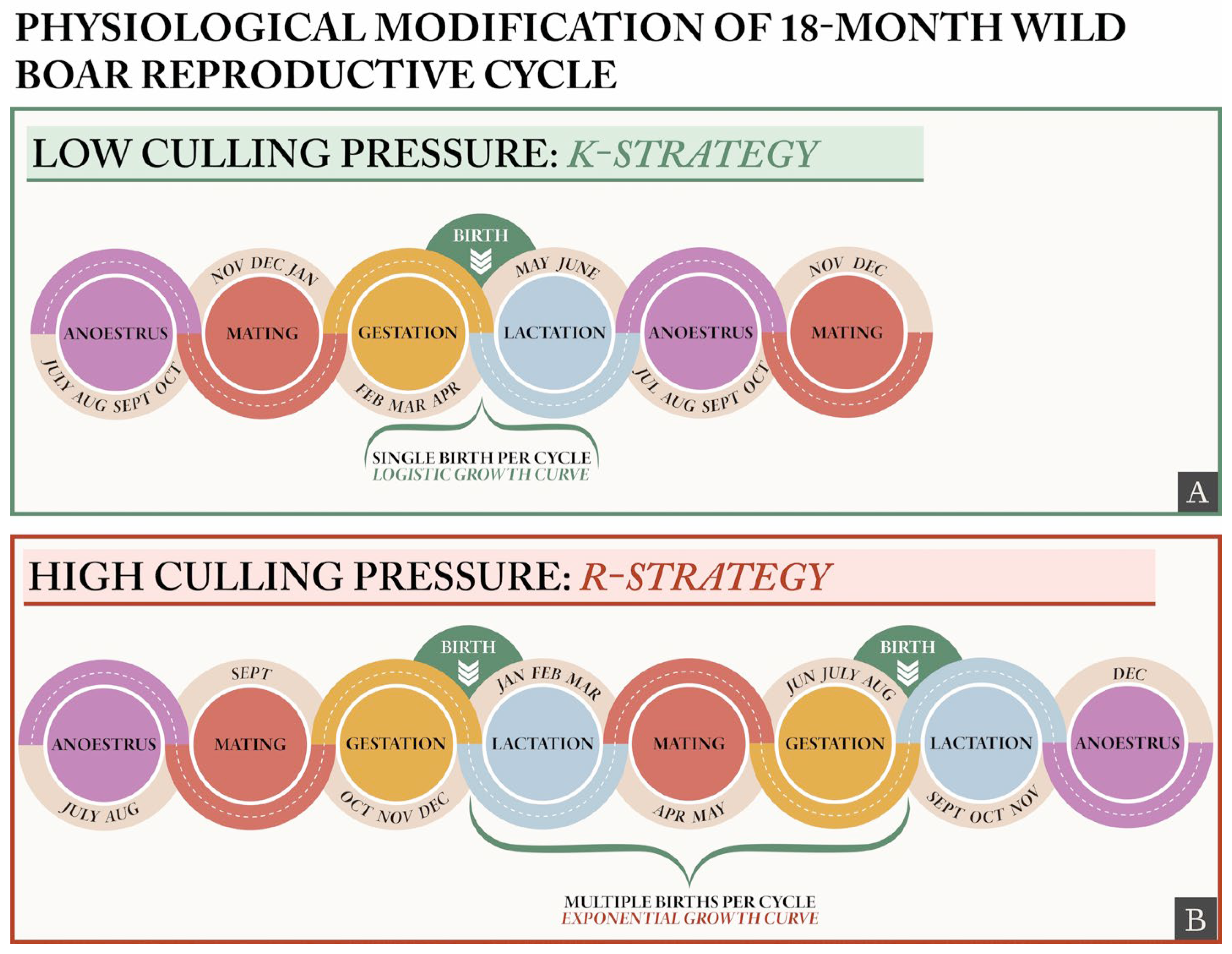
Until the 1980s, wild boars in Italy typically produced one litter per year, consistent with a K-strategy reproductive model. However, following the exponential rise in culling pressure, instances of multiple litters per year began to emerge. This shift suggests a physiological adaptation to anthropogenic stress, resulting in increased reproductive output (Figure 6).
The emergence of multiple annual births must be interpreted through the lens of chemical communication, particularly pheromonal signalling and sex-specific defence mechanisms. Wild boars exhibit precise synchronization of reproductive cycles within female social groups, independent of seasonal constraints, likely mediated by pheromones.
Table 2 presents molecules identified in sow secretions [35], categorized by their potential physiological and behavioural roles. These include volatile fatty acids, esters, indoles, and alcohols, many of which are recognized pheromones in suids.
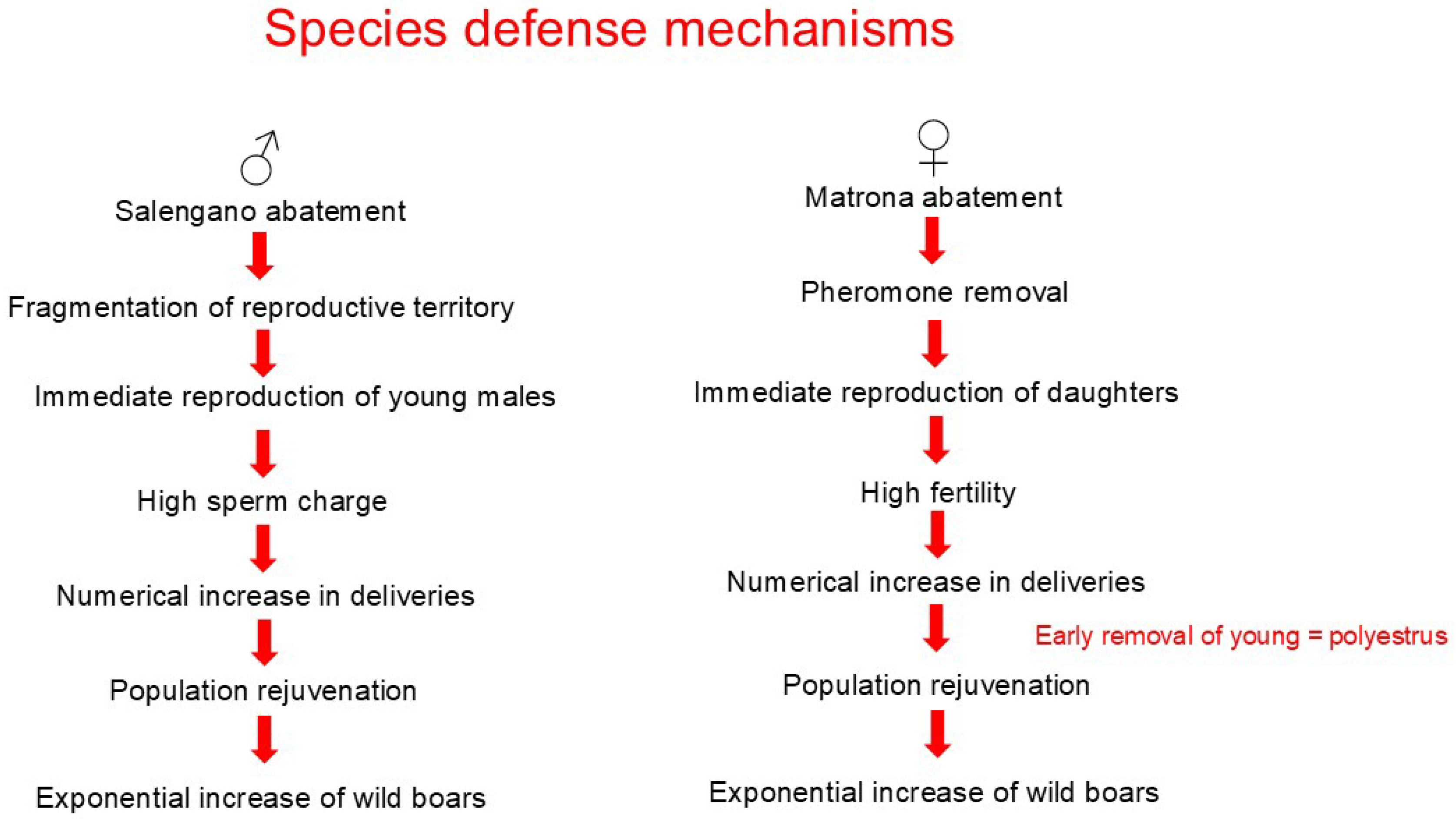
Sex-specific physiological responses to anthropogenic pressure are summarized (Figure 7). In males, increased anthropogenic pressure leads to higher sperm production, driven by the earlier reproductive activation of younger individuals. Similarly, younger females enter reproductive cycles sooner, resulting in enhanced fertility and fecundity—manifested as a lower age at first reproduction and a higher frequency of litters throughout the year. During hunting seasons, the proportion of reproductive females rises, and the body mass threshold for first reproduction significantly decreases.
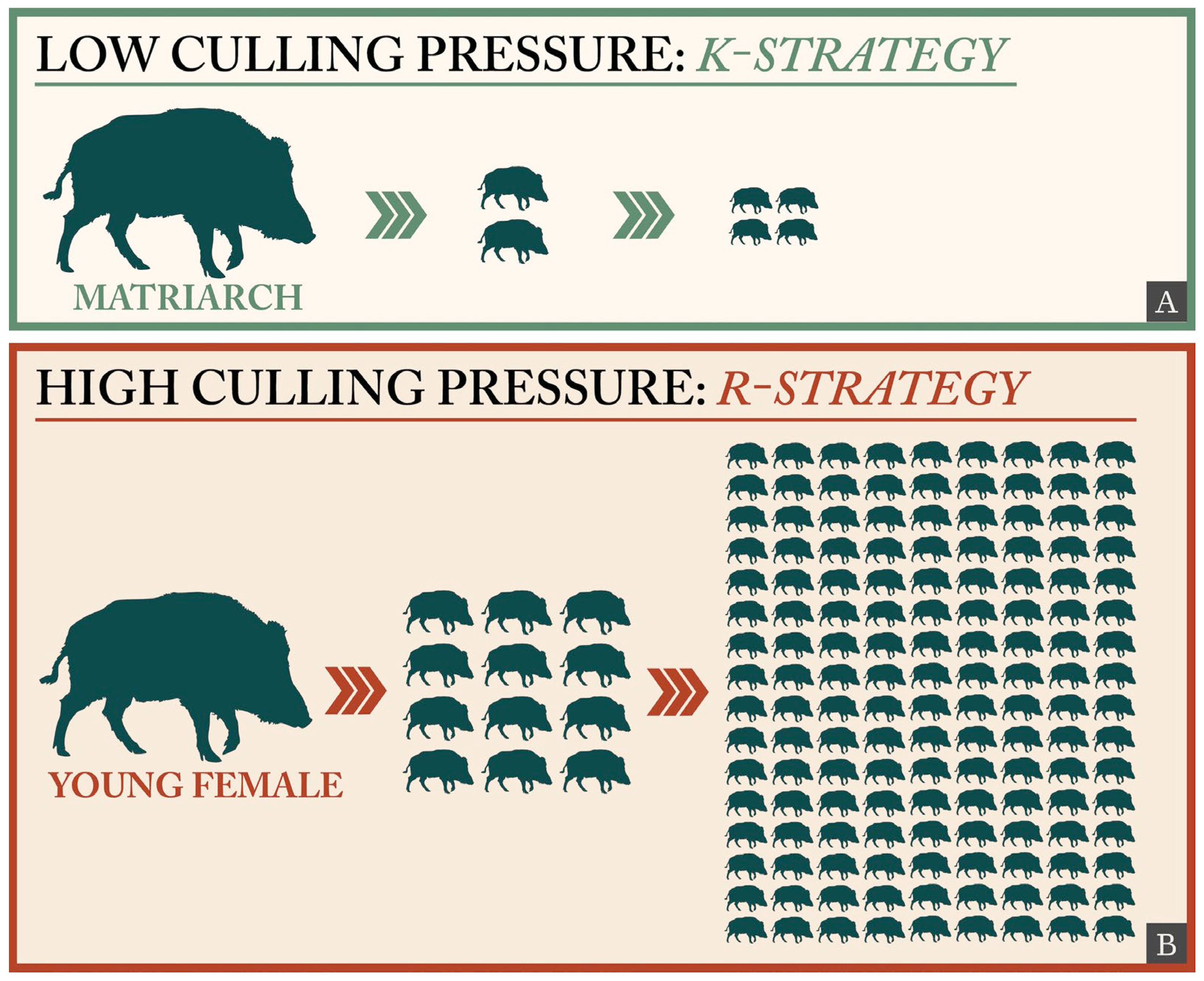
These mechanisms contribute to population rejuvenation and support the species’ exponential growth (Figure 8), marking a transition from a K-strategy to an r-strategy under sustained human-induced pressure.

3.2. The Environmental Factors

The current analysis examined environmental factors hypothesized to influence wild boar population growth, including land use changes, habitat fragmentation, reforestation dynamics, and climate-induced physiological stress.
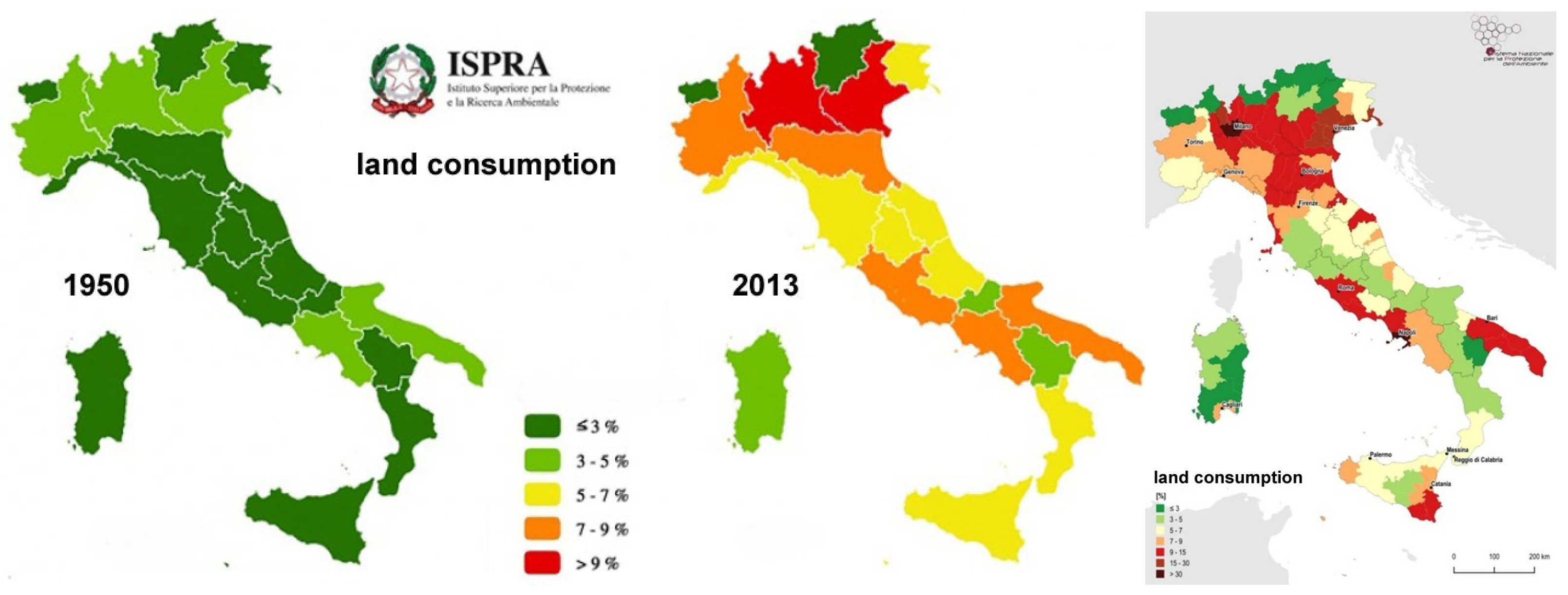
Land use data from Italy indicate a marked and progressive reduction in natural habitats, accompanied by significant fragmentation. Reports document a substantial expansion of urban and peri-urban areas, resulting in widespread habitat loss [36,37]. The increase in artificial surfaces and land conversion associated with infrastructure development has led to the degradation of natural environments, particularly within urban contexts (Figure 9).
Furthermore, CORINE Land Cover data from 2012 to 2018 indicate a net reduction in forest cover across Italy. Notable vegetation transitions include the conversion of approximately 15,900 hectares of broadleaf forests to permanent herbaceous cover, 5033 hectares to periodic herbaceous cover, and 4340 hectares of coniferous forests to permanent herbaceous vegetation [36,37]. Complementary data from the Italian Habitats Directive report show that 54% of terrestrial and inland flora, 53% of fauna, and 89% of terrestrial and inland habitats are currently classified under an unfavourable conservation status [38].
Physiological stress induced by climatic factors has been measured in pigs through cortisol and cortisone concentrations in hair samples [39,40]. This stress has been shown to negatively affect reproductive capacity.
The observed expansion of wild boar populations is marked by changes in age structure, accelerated reproductive rates, earlier onset of sexual maturity, and increased reproductive investment, particularly among juvenile females. These traits are inconsistent with the cyclical or pulsatile dynamics typically induced by environmental factors and instead point to anthropogenic pressures as the primary drivers. Accordingly, data on culling shows a steady increase in harvest intensity: +40% between 1998 and 2005, and +45% between 2015 and 2021, with an annual average of approximately 300,000 individuals removed [6,8]. Furthermore, in response to the health emergency caused by African Swine Fever (ASF), culling interventions in certain areas increased by over 300% [9].

3.3. The Environmental Damage Model

The case of wild boar expansion in Italy offers a valuable model for understanding how disruptions to species homeostasis can lead to significant changes in population dynamics, including abundance, density, and spatial-temporal distribution. These changes represent a modification of the ecological balance.
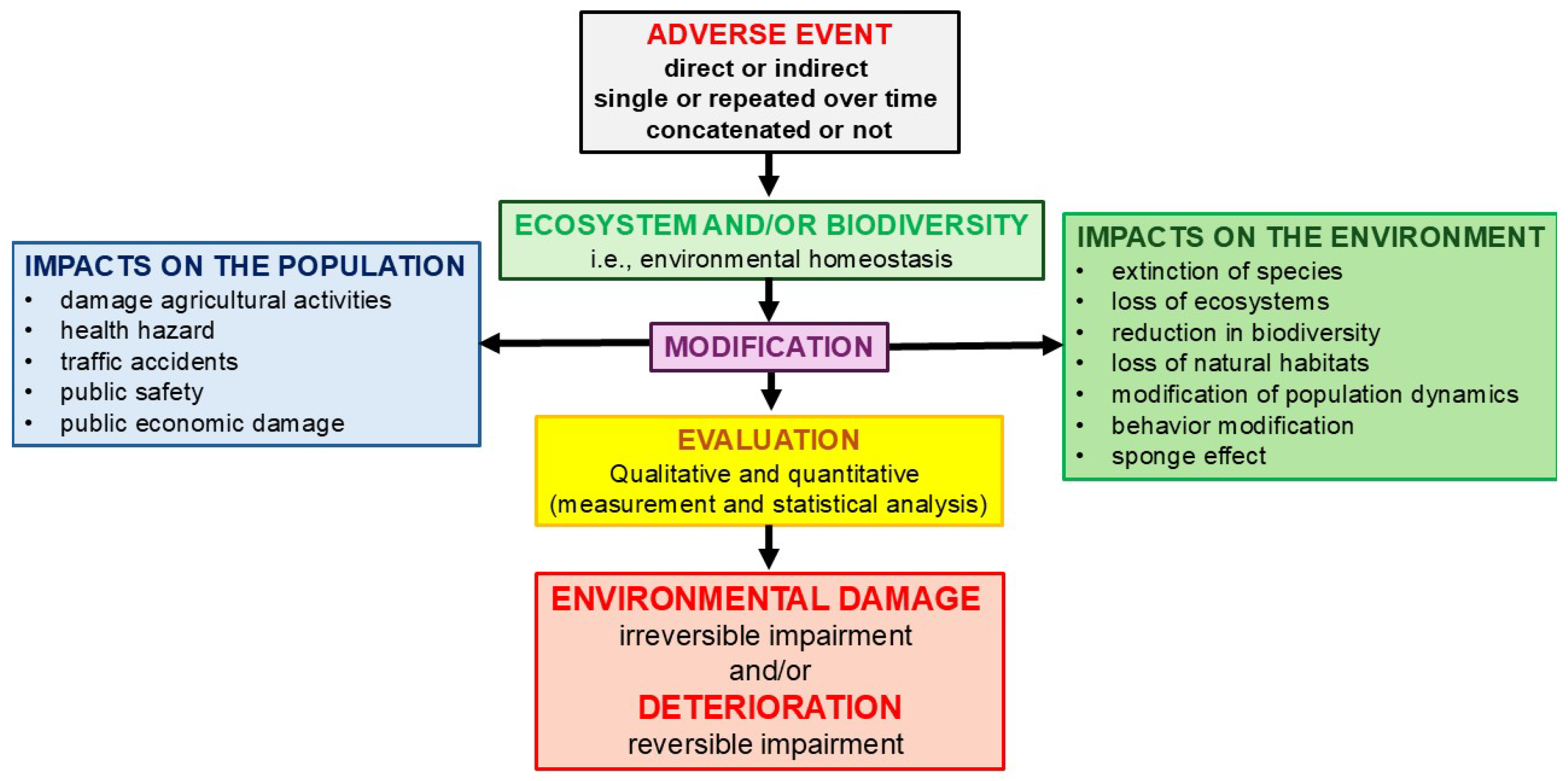
When such modifications exceed the resilience and stability thresholds of the ecosystem or the species itself, they can trigger alterations in both the structural components (e.g., biodiversity) and the functional processes (e.g., ecosystem homeostasis) of the environment (Figure 10). In the specific case of wild boars in Italy, the introduction of non-native individuals without prior genetic screening has led to a permanent alteration of the native gene pool. This constitutes a form of irreversible environmental damage, with long-term consequences for both species’ integrity and ecosystem functionality, particularly in terms of changes in body size and litter size.

4. Discussion

The current wild boar emergency in Italy represents a significant example of paradoxical outcomes where data-driven policies have exacerbated the very issues they were intended to resolve.
This work provides a critical and innovative interpretation of the phenomenon, based on the same official datasets used to validate wildlife management decisions. Despite their fragmentation, heterogeneity, and susceptibility to political, economic, and administrative bias, these data have been systematically reanalyzed to extract coherent patterns and derive conclusions that diverge substantially from those underlying current control strategies.
The analysis reveals that key physiological traits of Sus scrofa (including chemical communication, reproductive plasticity, behavioral adaptability, and ecological resilience) have been largely ignored in the design and implementation of management plans. This oversight has contributed to the failure of containment efforts and to the progressive expansion of the species across a wide range of habitats.
Furthermore, the study evaluates the long-term consequences of a univocal and reductionist management approach. Repeated interventions, such as restocking and selective culling, have induced homeostatic shifts and ecological imbalances, exacerbating the problem rather than resolving it [18,19,20,21]. The expansion of the species’ range is attributable to both remote causes (e.g., restocking programs) and proximate causes (e.g., flawed and reactive management practices), which together have reshaped the ecological dynamics of the affected regions [18,19,20,21].
The findings showed that the observed environmental damage is closely linked to management practices and underscore the urgent need to transition toward a scientifically grounded framework for wildlife management, based on (i) standardized, continuous, and interoperable data acquisition systems, capable of capturing eco-physiological variables relevant to population dynamics and habitat interactions; and (ii) redefine management plans based on integrative ecological and physiological principles, moving beyond reactive control measures toward proactive, evidence-based strategies.
The physiological and homeostatic approach adopted in this study demonstrates that, even when working with imperfect and biased datasets, it is possible to overcome the fragmentation of punctual information and reconstruct a reliable general picture of population dynamics and the effects of management strategies.

4.1. The Causes of Emergency

The current expansion of the wild boar’s range has been driven by both remote and proximate causes, reflecting the cumulative impact of long-term anthropogenic interventions and recent management practices [4,6,10,28] (see Figure 2).

4.1.1. The Remote Causes: “Restocking”

Among the remote causes, as ascertained by the Italian House of Deputies Committee on Agriculture (26 July 2011) and by ISPRA, are the releases of animals for hunting purposes, carried out in an unplanned manner and without adherence to the fundamental principles of wildlife management and sanitary prophylaxis [4,6,10].
Since the 1950s, large contingents of wild boars have been introduced into the national territory, initially imported from Eastern Europe, and later derived from animals raised on farms that gradually developed across various Italian regions. These individuals were subsequently crossbred with residual native wild boar nuclei [4,6,10,28].
Remarkably, between 2001 and 2010, during a period in which a wild boar emergency was already affecting much of Italy and countermeasures to reduce population numbers were being implemented, e.g., [41], the Province of Catanzaro [42] released 436 wild boars for hunting purposes. The justification provided was: “The wild boar restocking has been extremely effective because the species has become firmly established in many areas of the province; the settlement has been favored by the lack of natural enemies and antagonists in the search for food” [42]. This example clearly illustrates a complete lack of coordination, planning, and scientific evaluation in wild boar management.
Another widespread practice during those years was the unauthorized release of interbreeds between wild boars and domestic pigs, aimed at increasing fat content in the meat for commercial purposes and enhancing reproductive capacity [4,6,10,28]. Historically, this practice led to the development of unique breeds across Italy, including the Cinta Senese, Sarda, Casertana, Suino Nero Abruzzese, and Nero dei Nebrodi. However, interbreeding has resulted in both genetic erosion of wild populations [43,44,45] and the introduction of infectious diseases [46,47].
Although wild boars are recognized as the main reservoir of the African swine fever virus, the primary drivers of long-distance transmission are human activities, such as the transportation and illegal trade of pigs [48].

4.1.2. Proximate Causes: Management

The absence of a structured technical-scientific framework, combined with fragmented and non-standardized data acquisition systems, lack of coordination in management interventions, and disregard for the biological mechanisms regulating reproduction in Sus scrofa, have significantly contributed to the current emergency.
Continuous and uncontrolled releases from illegal breeding farms have generated an incremental dynamic, particularly evident in alpine regions, where wild boar populations exhibit a characteristic patchy distribution [4,6,10,28].
Genetic impoverishment has resulted from interbreeding with domestic pigs, aimed at increasing fat content for commercial purposes and enhancing reproductive capacity. This practice has led to a simplification of genetic variability in wild populations, as widely documented by the scientific community [43,44,45].
Despite the existence of national guidelines issued by ISPRA and the ecological principles outlined in current legislation, wild boar management in Italy continues to rely predominantly on culling practices—such as hunting, selective shooting, and control operations—often carried out without adequate planning, coordination, or scientific foundation. These interventions, implemented in the absence of a structured eco-physiological framework and standardized data collection, have proven not only ineffective but counterproductive, frequently facilitating the expansion of the species across the territory [6].
The continued expansion of the species’ geographical distribution is a significant phenomenon. Over the past 30 years, the range has more than quintupled, a trend attributable to management strategies focused exclusively on culling [10].
The lack of scientifically rigorous, rational, and homogeneous management criteria makes it difficult to implement effective control plans. Moreover, the use of braccata (drive hunting) for population control, despite being inadmissible, has also been employed.
Among the most critical proximate causes is the neglect of the biological mechanisms underlying reproduction and dispersal, particularly the role of chemical communication in reproductive physiology [22]. For example, when the matriarch is culled, her daughters, freed from pheromonal and behavioral inhibition, enter reproductive readiness simultaneously. This disrupts the homeostatic balance under anthropogenic pressure. Unlike large carnivores, which selectively prey on juveniles, humans tend to cull older individuals (matriarchs and dominant males), thereby removing the estrous synchronization signals and triggering asynchronous and premature reproduction. This leads to births outside the natural reproductive season (late winter–early spring), which normally ensures optimal feeding conditions for offspring [49,50,51,52,53]. Young females exhibit higher reproductive potential than older matriarchs, and young males have higher sperm counts than older dominant males. Consequently, early reproductive onset in juveniles of both sexes shifts the population toward an r-strategy, characterized by exponential growth. This shift has undoubtedly contributed to the numerical increase and territorial expansion of wild boar populations [6,10]. While the goal of control plans is to stabilize population numbers (i.e., maintain a K-strategy), current practices have instead induced a dynamic typical of r-strategy populations: rapid expansion and high reproductive rates, thus producing effects antithetical to the intended objectives. Population density remains poorly documented across Italy; in some areas, estimates exceed 40 individuals per 100 hectares [54].

4.2. Population Biology

Management based solely on culling triggers a homeostatic response in the species, shifting its reproductive strategy from K to r [18,19,20,21]. This plasticity is a biological trait of wild boar, historically the elective prey of large carnivores and, later, humans. Over evolutionary time, the species has developed adaptive mechanisms to ensure survival under all these predation pressures [25,53,55].
The r-strategy is defined by population dynamics driven by reproductive potential, with short ontogenetic cycles, high fecundity, rapid generational turnover, and broad age pyramids. It is typically represented by a J-shaped growth curve [18,19,20,21]. Such populations are highly spreading and unstable, with intense intraspecific competition and elevated mortality, which paradoxically rejuvenates the population and accelerates growth [17,49,50,51,52].
Population dynamics can follow either a closed or open model. The closed model, rare in nature, is mathematically described by the Lotka–Volterra predator–prey equations, where oscillatory cycles of predator and prey populations are maintained [18,19,20,21]. In contrast, wild boar populations exhibit an open dynamic, where external pressures, such as culling, stimulate reproductive compensation through the adoption of r-strategy traits.
The effectiveness of wild boar control plans may be compromised if they are not continuously informed by wildlife monitoring, including predator abundance. Consequently, effective management requires detailed knowledge of population dynamics, including the number, age, and genetic profile of breeding females and males, family size, home range, offspring survival rates, and chemical communication mechanisms. Furthermore, the actual effort in terms of time, resources, and economic investment needed for effective containment must be quantified [54].

4.3. Environmental Factors

One hypothesis attributes the growth of wild boar populations primarily to weather and environmental factors. However, this assumption lacks robust scientific evidence. Let us examine these postulates in detail.
The first postulate is based on gradual depopulation of rural areas in favor of urban centers that have been cited as a contributing factor to wild boar proliferation. Yet, this phenomenon is counterbalanced by the dramatic increase in land consumption driven by the expansion of anthropized/urbanized areas [36,37]. The continuous rise in artificial surfaces, marked by increased building density at the expense of agricultural and natural land, alongside the fragmentation of areas surrounding infrastructure systems, has led to widespread habitat loss. These zones are particularly vulnerable due to their accessibility and the growing demand for space for logistics, urban sprawl, decentralization, and densification. As a result, valuable natural areas within cities are being lost [36,37]. Italian reports on land consumption clearly document an exponential reduction and fragmentation of natural habitats, contradicting the rural abandonment theory.
Another postulate concerns reforestation. However, CORINE Land Cover data reveals a contraction in tree cover, with significant vegetation changes including the conversion of forested areas into herbaceous land [36,37]. Additionally, the latest Italian Habitats Directive report highlights a dramatic decline in habitat quality and biodiversity [38]. This postulate is therefore contradicted by objective evidence.
Global climate change is often postulated as a contributing factor. Although it exerts broad ecological effects across multiple species and has been suggested to influence the demographic expansion of wild boar [39], it concurrently induces chronic physiological stress in suids, with detrimental consequences for reproductive efficiency and overall productivity [39,40].
Unlike environmental drivers, which typically generate cyclical or pulsatile population dynamics, the exponential and sustained increase in wild boar populations observed over the past decade deviates from such patterns. This trend instead supports the hypothesis that intensified management interventions, particularly selective culling and hunting pressure, are the principal drivers of a demographic shift from K-selected to r-selected reproductive strategies. These pressures significantly alter age structure, reproductive timing, and survival rates [56,57].
Currently, reproduction occurs annually at the end of the hunting season, irrespective of body mass, food availability, or climatic conditions [53]. As documented in other ecological contexts [40], wild boar populations are subjected to unprecedented hunting pressure for a large mammal. Consequently, the onset of sexual maturity prior to reaching full adult body mass appears to be a direct consequence of hunting-induced stress [58].
Accordingly, available data indicate a marked increase in culling intensity since 1998, with localized interventions rising by over 300% [9]. The assertion that reduced persecution has contributed to population growth is inconsistent with these findings and is likewise refuted by objective evidence.
In contrast to the environmental drivers’ hypothesis, current evidence from populations subjected to high hunting pressure supports the predominant influence of anthropogenic management. Reduced life expectancy due to elevated shooting risk leads to increased reproductive investment, particularly among young females with low body mass [58,59,60]. This physiological adaptation to anthropogenic stressors accounts for the high reproductive rates observed in wild boar populations, independent of environmental conditions.

4.4. Chemical Communication

It is highly feasible that pheromones play a key role in regulating reproductive physiology, contributing to the shift from a K-strategy to an r-strategy. Sexual communication in mammals is fundamentally mediated by chemosignals, primarily pheromones [18,19,20,21,22,23,24].
Chemical communication governs both appetitive and consummatory behaviors related to reproduction and fertilization. Species-specific signals are secreted by body glands, and even eggs emit pheromones that attract sperm cells. Pheromones (pherein hormon = hormones transported externally) are invisible substances that are physiologically active in both sexes. They act on the hypothalamus, modulating reproductive physiology [23,24,61,62]. Examples of male pheromone effects on females include estrus synchronization (Whitten effect), puberty acceleration (Vandenbergh effect), postpartum estrus (Zalesky effect), pregnancy block and induced estrus upon exposure to a new male (Bruce effect), and lordosis behavior induced by androstenone, which are essential for fertilization in both domestic pigs and wild boars [23,24,62,63]. Examples of female pheromone effects on males include initiation of male courtship outside the breeding season (Mazzatenta effect) [27], sexual reinvigoration (Coolidge effect) [64,65], cycle suppression or lengthening in female groups (Lee-Boot effect) [66], and cycle synchronization (McClintock effect) [24,61,62,67]. These mechanisms are crucial for regulating reproduction and, consequently, the adopted reproductive strategy.
For instance, myristic acid (1-tetradecanoic acid), a fecal pheromone secreted by sows, along with skatole, positively influences the growth of weaned piglets. Piglets show an affinity for maternal feces, which has a calming effect, reduces aggression, and stimulates feed intake, ultimately promoting higher growth rates [68,69]. In wild boars, estrus synchronization has been documented since 1990 [26]. Females within family groups exhibit synchronized estrous cycles (McClintock effect) [26,61]. This mechanism serves as a natural population control strategy. The Matrona releases pheromones that synchronize and suppress estrus in subordinate females (Lee-Boot effect), thereby limiting reproduction. Consequently, wild boars, like all mammals, possess highly re-fined physiological mechanisms for reproductive regulation.
When the Matrona is removed, her daughters are released from the suppressive pheromonal influence, allowing them to enter estrus, even outside the breeding season, and produce large litters [49,50,51,52]. Young females exhibit higher reproductive potential than older Matronas, and similarly, young males have higher sperm counts than older Salengans. This leads to early reproduction in both sexes, driving a shift toward an r-strategy, which supports exponential population growth. High hunting pressure directly contributes to this outcome [53].
In this context, anthropogenic conflict, often lacking a clear scientific foundation, amplifies public perception of the issue and fosters the search for non-scientific solutions [70]. These mechanisms fall under the domain of chemical communication, an ancestral and fundamental form of animal communication essential to life itself [18,19,20,21,22,23,24]. Therefore, the management of wild boar populations must be approached from an ecophysiological perspective. In contrast, environmental degradation and anthropic conflict may emerge when such physiological mechanisms are overlooked.

4.5. The Environmental Damage Model

The proposed model, based on Italian experience, may have broader applicability beyond national borders. For instance, wild boar, introduced in North America as an alien species around 1900, expanded from 17 states in 1982 to over 35 states by 2024, with current population estimates reaching up to 7 million individuals. In response, targeted culling efforts, particularly under the USDA’s National Feral Swine Damage Management Program, have increased by more than 300% [71,72,73,74].
Although ecological constraints differ due to the non-native status of wild boar in North America, the species’ physiological responses and reproductive patterns closely mirror those observed in Italy. This convergence suggests the existence of general biological principles that transcend regional contexts, reinforcing the relevance and potential applicability of the actual model within broader ecological and wildlife management frameworks.
As illustrated in the conceptual impact model (Figure 10), anthropogenic pressures such as intensive hunting can be interpreted as adverse events that trigger systemic modifications in population dynamics and ecosystem balance. These pressures lead to both environmental and societal impacts, ranging from biodiversity loss to increased human–wildlife conflict, and require rigorous evaluation to distinguish between reversible deterioration and irreversible damage. This model, grounded in physiological mechanisms and chemical communication, offers a valuable framework for understanding and managing these dynamics across different ecological contexts.

5. Conclusions

Conservation biology aims to safeguard species, habitats, and ecosystems from extinction and degradation. While it often intersects with natural resource management, its core mission diverges: conservation biology prioritizes the preservation and restoration of biodiversity in response to anthropogenic pressures, whereas traditional resource management emerged from industrial and bureaucratic paradigms [75,76]. This conceptual distinction is exemplified by the challenges of wildlife management in Italy, particularly the unprecedented growth of the wild boar population. Successful conservation outcomes depend on scientific integrity, an understanding of ecosystem dynamics, and the freedom to pursue inquiry driven by curiosity rather than personal interests or political trends [45,77]. In the Italian case, the lack of ecophysiological expertise has led to high-pressure culling strategies that paradoxically fuel exponential population growth. The drivers of this phenomenon are multifactorial: remote causes include unregulated introductions for hunting and hybridization with domestic pigs, while proximate causes stem from management practices, especially hunting methods, that unintentionally promote population expansion and intensify human–wildlife conflict [4,5,6,7,10,78].
Recreational and selective hunting, in theory, serve different purposes compared to control measures, but all of them result in continuous and unsystematic culling [4,6,7,8,74]. This imposes significant “predator pressure” on wild boar populations, which perceive it biologically as an imbalance in age classes. Hunting disproportionately targets older individuals, often due to their defensive behaviors [4,6,7,10]. For example, matriarchal females frequently expose themselves to protect their group, making them more vulnerable to being shot. Collective hunting methods such as braccata further disrupt family structures and displace individuals beyond their home ranges. This displacement fosters nomadic behavior, driving wild boars to seek refuge and food in cultivated fields and urban waste. These behavioral adaptations exacerbate anthropogenic conflicts and agricultural damage, traffic accidents, and the “sponge effect,” where animals concentrate in no-hunting zones like parks and industrial areas [18,19,20,21,22,45,75,76,77,78,79].
Beyond historical and managerial factors, the exponential population increase is best explained by the species’ biological response to harvesting pressure, which triggers a shift from a K-selected to an r-selected reproductive strategy [18,19,20,21,22]. Addressing this issue requires an integrated approach. Ecophysiology offers a promising framework that bridges conservation biology and operational wildlife management, enabling sustainable solutions to prevent further environmental degradation.
This study presents a comprehensive model of the factors influencing wild boar population dynamics in Italy. It highlights the impact of anthropogenic activities, such as restocking and hunting, on population growth, and the physiological adaptations that facilitate reproductive acceleration and territorial expansion. These findings underscore the need for sustainable management practices to mitigate ecological damage. To reverse current trends, it is recommended to promote demographic aging within wild boar populations. This involves halting indiscriminate culling and prohibiting drive hunts and the targeting of matriarchal females and dominant males, whose removal destabilizes social structures and accelerates reproductive turnover. Once population dynamics are stabilized, hunting should focus exclusively on juvenile individuals (rossicci). Natural predators such as wolves, buzzards, and foxes play a crucial role in regulating wild boar populations. Of all natural predators, the wolf is the most effective regulator, exerting selective pressure on juvenile wild boars. This predation pattern fosters demographic aging and helps maintain stable reproductive hierarchies.
The study’s limitations stem from the scarce availability of official data, which constrained the analysis and required an interpretative approach based on fragmented sources. The resulting theoretical model, while offering an innovative perspective, could be enriched with additional inputs and may yield different outputs in other ecological contexts.
In this context of evident environmental damage, future management choices raise serious concerns. For instance, the use of large “pig-brig” traps to kill wild boar violates all principles of animal welfare, as trapped animals are slaughtered collectively by shooting—a practice comparable to a mass execution. Moreover, the increase in wolf numbers, initially favoured by the rise in wild boar populations, is now being countered through control measures. This approach risks exacerbating environmental damage by triggering a rebound in wild boar numbers during African swine fever outbreaks and causing the disintegration of wolf packs, which in turn heightens human–wildlife conflicts.
Uncoordinated wildlife management often incurs higher economic costs than scientifically guided strategies. Continuous and standardized ecological studies are essential to ensure both effectiveness and sustainability. Sustainable wild boar management cannot rely solely on culling. It must be grounded in an ecophysiological approach based on species-specific physiological and behavioral knowledge, particularly chemical communication. This requires territorial monitoring networks supported by advanced technologies, e.g., drones with thermal imaging, LiDAR systems, and environmental sensors, to enable real-time assessment of population structure and ecological interactions. Only through the integration of physiology, ecology, and technology can adaptive, scientifically grounded interventions be designed, consistent with the complexity of wildlife systems. This approach will help address the socio-political dimensions of wildlife management and facilitate policy integration [77,80,81].
This manuscript qualifies as a position paper in environmental physiology, offering a scientifically grounded interpretation of limited official data. It clarifies the causes of management failure and proposes a conceptual model with potential applicability to other ecological contexts, such as North America, where similar dynamics are observed.

Funding

This research received no external funding.

Institutional Review Board Statement

Not applicable.

Informed Consent Statement

Not applicable.

Data Availability Statement

Data supporting the reported results are available at the following links: www.isprambiente.gov.it/files2023/area-stampa/comunicati-stampa/comunicatocinghiali-1.pdf (accessed on 25 January 2024). www.coldiretti.it/economia/cinghiali-sono-23-mln-in-italia-con-vittime-e-danni (accessed on 25 January 2024); www.coldiretti.it/economia/governo-esercito-in-campo-contro-23-mln-di-cinghiali (accessed on 25 January 2024).

Conflicts of Interest

The author declares no conflicts of interest.

References

  1. National Geographic Society. Wild Boar, Facts and Information. National Geographic. 2023. Available online: https://www.nationalgeographic.com/animals/mammals/facts/wild-boar (accessed on 6 May 2025).
  2. Warnell School of Forestry & Natural Resources University of Georgia. Center for Invasive Species and Ecosystem Health. 2018. Available online: https://warnell.uga.edu/about/centers-labs/center-invasive-species-and-ecosystem-health (accessed on 2 January 2025).
  3. National Invasive Species Council Secretariat. National Invasive Species Information Center (NISIC). Available online: http://www.invasivespeciesinfo.gov/ (accessed on 6 May 2025).
  4. Monaco, A.; Franzetti, B.; Pedrotti, L.; Toso, S. Linee Guida per La Gestione Del Cinghiale. Min. Politiche Agricole e Forestali—Ist. Naz. Fauna Selvatica. ISPRA Ambiente. 2003. Available online: https://www.isprambiente.gov.it/contentfiles/00006600/6683-linee-guida-gestione-cinghiale.pdf (accessed on 6 May 2025).
  5. Monaco, A.; Carnevali, L.; Toso, S. Linee Guida per la Gestione del Cinghiale (Sua Scrofa) Nelle Area Protette. Ministero dell’Ambiente, ISPRA. 2010. Available online: https://www.isprambiente.gov.it/contentfiles/00004300/4315-cinghiale-ii-edizione.pdf (accessed on 6 May 2025).
  6. Carnevali, L.; Pedrotti, L.; Riga, F.; Toso, S. Banca Dati Ungulati: Status, distribuzione, consistenza, gestione e prelievo venatorio delle popolazioni di Ungulati in Italia.Rapporto 2001–2005. Biol. Cons. Fauna 2009, 117, 1–168. [Google Scholar]
  7. Massei, G.; Kindberg, J.; Licoppe, A.; Gačić, D.; Šprem, N.; Kamler, J.; Baubet, E.; Hohmann, U.; Monaco, A.; Ozoliņš, J.; et al. Wild boar populations up, numbers of hunters down? A review of trends and implications for Europe. Pest Manag. Sci. 2015, 71, 492–500. [Google Scholar] [CrossRef]
  8. ISPRA. Al 2021 Stimato un Milione e Mezzo di Cinghiali in Italia in Sette Anni, Abbattimento Aumentato del 45% Danni All’ Agricoltura per 120 Milioni di € Abruzzo e Piemonte Le Regioni Piu’ Colpite. ISPRA Ambiente. 2023. Available online: https://www.isprambiente.gov.it/files2023/area-stampa/comunicati-stampa/comunicatocinghiali-1.pdf (accessed on 6 May 2025).
  9. Piano Straordinario di Catture, Abbattimento e Smaltimento dei Cinghiali (Sus scrofa) e Azioni Strategiche per l’Elaborazione dei Piani di Eradicazione nelle Zone di Restrizione da Peste Suina Africana (PSA). Commissario Straordinario alla Peste Suina Africana 2023–2028. Available online: https://www.salute.gov.it/new/sites/default/files/imported/C_17_pubblicazioni_3357_allegato.pdf (accessed on 2 January 2025).
  10. Massei, G.; Toso, S. Biologia e Gestione del Cinghiale; Istituto Nazionale per la Fauna Selvatica: Bologna, Italy, 1993. Available online: https://www.isprambiente.gov.it/files/pubblicazioni/documenti-tecnici/6651_DOC_TEC_5.pdf (accessed on 6 May 2025).
  11. Iacopi, M. Il Cinghiale Nell’araldica. Societa’ Italiana di Studi Araldici. 2011. Available online: https://www.socistara.it/studi/ (accessed on 2 January 2025).
  12. Ghigi, A. I Mammiferi d’Italia considerati nei loro rapporti coll’agricoltura. Natura 1917, 8, 85–137. [Google Scholar]
  13. Ghigi, A. La Vita Degli Animali. II Mammiferi ed Uccelli Sedentari Delle Terre Continentali; UTET: Milano, Italy, 1950. [Google Scholar]
  14. Paoloni, M. Cinghiali: Sono 2,3 Mln in Italia con Vittime e Danni. Coldiretti. 2022. Available online: https://www.coldiretti.it/economia/cinghiali-sono-23-mln-in-italia-con-vittime-e-danni (accessed on 6 May 2025).
  15. Monaco, A.; Carnevali, L.; Riga, F.; Toso, S. Il cinghiale sull’arco alpino: Status e gestione delle popolazioni. Rep. Cent. Ecol. Alp. 2006, 38, 5–23. [Google Scholar]
  16. Jarolímek, J.; Vaněk, J.; Ježek, M.; Masner, J.; Stočes, M. The telemetric tracking of wild boar as a tool for field crops damage limitation. Plant Soil Environ. 2014, 60, 418–425. [Google Scholar] [CrossRef]
  17. Verhulst, P.-F. Recherches mathématiques sur la loi d’accroissement de la population. In Nouveaux Mémoires de l’Académie Royale Des Sciences et Belles-Lettres de Bruxelles; Académie Royale de Bruxelles: Bruxelles, Belgium, 1845; Volume 18, pp. 1–45. [Google Scholar] [CrossRef]
  18. Mazzatenta, A. Il Buono, il Brutto e Cattivo—Le ragioni biologiche della diffusione del cinghiale e i problemi giuridici annessi. In Diffusione del Cinghiale, Tra Ragioni Biologiche e Problemi Giuridici; Consiglio dell’Ordine degli Avvocati di Vasto e Comune di Vasto: Vasto, Italy, 2019. [Google Scholar]
  19. Mazzatenta, A. Cinghiale, è Ora di Cambiare. Torino; Tavolo Animali & Ambiente. 2020. Available online: https://youtu.be/1PgryCmGS0s?si=QX-ywXiVbfUKQhep (accessed on 5 June 2025).
  20. Mazzatenta, A. Emergenza Cinghiali: Danno Ambientale, Agrario ed Economico. Audizione alla 9ª Commissione Permanente, Agricoltura e Produzione Agroalimentare, Senato della Repubblica Italiana, Seduta n. 248 del 20 Aprile 2021. 2021. Available online: https://www.senato.it/application/xmanager/projects/leg18/attachments/documento_evento_procedura_commissione/files/000/338/301/Prof._MAZZATENTA.pdf (accessed on 6 May 2025).
  21. Danni Causati All’ Agricoltura Dall’ Eccessiva Presenza della Fauna Selvatica (N. 337). Senato della Repubblica—Procedura: Affari Assegnati XVIII Legislatura. Available online: www.senato.it/leg/18/BGT/Schede/ProcANL/ProcANLscheda42532.htm (accessed on 6 May 2025).
  22. Mazzatenta, A. “Emergenza Cinghiali”: Danno Ambientale, Agrario ed Economico. Audizione Commissione Agricoltura della Camera dei Deputati della Repubblica Italiana 20 Ottobre 2021. Available online: https://comunicazione.camera.it/archivio-prima-pagina/18-24307 (accessed on 6 May 2025).
  23. Keveme, E.B. Pheromonal influences on the endocrine regulation of reproduction. Trends Neurosci. 1983, 6, 381–384. [Google Scholar] [CrossRef]
  24. Mazzatenta, A.; Cellerino, A. I feromoni. In Trattato di Sessuologia Medica; Edra: Palm Beach, FL, USA, 2017; ISBN 978-88-214-2911-8. [Google Scholar]
  25. Mazzatenta, A.; Fiorito, S.; Guadagnini, R.; Genovese, S.; Valentini, A.; Bonadiman, F.; Guadagnini, S.; Epifano, F.; Mollica, A. The Evanescent Bouquet of Individual Bear Fingerprint. Animals 2023, 13, 220. [Google Scholar] [CrossRef]
  26. Delcroix, I.; Mauget, R.; Signoret, J.P. Existence of Synchronization of Reproduction at the Level of the Social Group of the European Wild Boar (Sus scrofa). Reproduction 1990, 89, 613–617. [Google Scholar] [CrossRef]
  27. Carluccio, A.; Contri, A.; Amendola, S.; De Angelis, E.; De Amicis, I.; Mazzatenta, A. Male Isolation: A Behavioral Representation of the Pheromonal ‘Female Effect’ in Donkey (Equus asinus). Physiol. Behav. 2013, 118, 1–7. [Google Scholar] [CrossRef] [PubMed]
  28. Apollonio, M.; Randi, E.; Toso, S. The Systematics of the Wild Boar (Sus scrofa L.) in Italy. Bolletino Zool. 1988, 55, 213–221. [Google Scholar] [CrossRef]
  29. Scandura, M.; Fabbri, G.; Caniglia, R.; Iacolina, L.; Mattucci, F.; Mengoni, C.; Pante, G.; Apollonio, M.; Mucci, N. Resilience to Historical Human Manipulations in the Genomic Variation of Italian Wild Boar Populations. Front. Ecol. Evol. 2022, 10, 833081. [Google Scholar] [CrossRef]
  30. Ma, W.; Miao, Z.; Novotny, M.V. Role of the Adrenal Gland and Adrenal-Mediated Chemosignals in Suppression of Estrus in the House Mouse: The Lee-Boot Effect Revisited. Biol. Reprod. 1998, 59, 1317–1320. [Google Scholar] [CrossRef]
  31. Quirós-Fernández, F.; Marcos, J.; Acevedo, P.; Gortázar, C. Hunters serving the ecosystem: The contribution of recreational hunting to wild boar population control. Eur. J. Wildl. Res. 2017, 63, 57. [Google Scholar] [CrossRef]
  32. Pommerening, A.; Muszta, A. Methods of modelling relative growth rate. For. Ecosyst. 2015, 2, 5. [Google Scholar] [CrossRef]
  33. OriginLab Corporation. OriginPro, version 2022; OriginLab Corporation: Northampton, MA, USA, 2022.
  34. The Jamovi Project. Jamovi, version 2.2; Jamovi Team: Sydney, Australia, 2021. Available online: https://www.jamovi.org/ (accessed on 6 May 2025).
  35. Mazzarone, V.; Ferretti, M.; Mattioli, L. Report Sulla Gestione degli Ungulati in Toscana: “La Gestione degli Ungulati in Toscana dal 2000 al 2022”; Regione Toscana: Firenze, Italy, 2023. [Google Scholar]
  36. Rapporti Direttive Natura (2013–2018). Sintesi Dello Stato di Conservazione Delle Specie e Degli Habitat di Interesse Comunitario e Delle Azioni di Contrasto Alle Specie Esotiche di Rilevanza Unionale in Italia. Available online: www.isprambiente.gov.it/it/pubblicazioni/rapporti/rapporti-direttive-natura-2013-2018 (accessed on 6 May 2025).
  37. ISPRA. Report: Land Consumption, Territorial Dynamics and Ecosystem Services. ISPRA Ambiente; 2025. Available online: www.isprambiente.gov.it/en/archive/ispra-events/2023/10/presentation-of-the-report-201cland-consumption-territorial-dynamics-and-ecosystem-services201d (accessed on 6 May 2025).
  38. Il Consumo di Suolo. ISPRA Istituto Superiore per la Protezione e la Ricerca Ambientale. Available online: http://www.consumosuolo.isprambiente.it/ (accessed on 6 May 2025).
  39. Vetter, S.G.; Puskas, Z.; Bieber, C.; Ruf, T. How climate change and wildlife management affect population structure in wild boars. Sci. Rep. 2020, 10, 7298. [Google Scholar] [CrossRef]
  40. Peltoniemi, O.; Tanskanen, T.; Kareskoski, M. One health challenges for pig reproduction. Mol. Reprod. Dev. 2023, 90, 420–435. [Google Scholar] [CrossRef] [PubMed]
  41. Regione Toscana. Risultati di Applicazione della Legge Regionale N. 10 del 9 Febbraio 2016, Legge Obiettivo per La Gestione degli Ungulati in Toscana. 2018. Available online: https://raccoltanormativa.consiglio.regione.toscana.it/articolo?urndoc=urn:nir:regione.toscana:legge:2016-02-09;10 (accessed on 8 May 2025).
  42. Amministrazione Provinciale di Catanzaro. Piano Faunistico-Venatorio. Catanzaro. Assessorato Caccia e Pesca; 2013. Available online: https://www.yumpu.com/it/document/view/15059960/1-piano-faunistico-venatorio-completo-provincia-di-catanzaro#google_vignette (accessed on 6 May 2025).
  43. Sales, J.; Kotrba, R. Meat from Wild Boar (Sus scrofa L.): A Review. Meat Sci. 2013, 94, 187–201. [Google Scholar] [CrossRef]
  44. Goedbloed, D.J.; van Hooft, P.; Megens, H.-J.; Langenbeck, K.; Lutz, W.; Crooijmans, R.P.; van Wieren, S.E.; Ydenberg, R.C.; Prins, H.H. Reintroductions and Genetic Introgression from Domestic Pigs Have Shaped the Genetic Population Structure of Northwest European Wild Boar. BMC Genet. 2013, 14, 43. [Google Scholar] [CrossRef]
  45. Iacolina, L.; Pertoldi, C.; Amills, M.; Kusza, S.; Megens, H.-J.; Bâlteanu, V.A.; Bakan, J.; Cubric-Curik, V.; Oja, R.; Saarma, U.; et al. Author Correction: Hotspots of Recent Hybridization Between Pigs and Wild Boars in Europe. Sci. Rep. 2019, 9, 20187. [Google Scholar] [CrossRef]
  46. Meier, R.; Ryser-Degiorgis, M. Wild Boar and Infectious Diseases: Evaluation of the Current Risk to Human and Domestic Animal Health in Switzerland: A Review. Schweiz Arch. Tierheilkd 2018, 160, 443–460. [Google Scholar] [CrossRef] [PubMed]
  47. Rogoll, L.; Güttner, A.-K.; Schulz, K.; Bergmann, H.; Staubach, C.; Conraths, F.J.; Sauter-Louis, C. Seasonal Occurrence of African Swine Fever in Wild Boar and Domestic Pigs in EU Member States. Viruses 2023, 15, 1955. [Google Scholar] [CrossRef]
  48. Kruszyński, M.; Śróda, K.; Juszkiewicz, M.; Siuda, D.; Olszewska, M.; Woźniakowski, G. Nine Years of African Swine Fever in Poland. Viruses 2023, 15, 2325. [Google Scholar] [CrossRef] [PubMed]
  49. Soede, N.M.; Kemp, B. Expression of Oestrus and Timing of Ovulation in Pigs. J. Reprod. Fertil. Suppl. 1997, 52, 91–103. [Google Scholar]
  50. Kemp, B.; Soede, N.M.; Langendijk, P. Effects of Boar Contact and Housing Conditions on Estrus Expression in Sows. Theriogenology 2005, 63, 643–656. [Google Scholar] [CrossRef]
  51. Pedersen, L.J.; Heiskanen, T.; Damm, B.I. Sexual Motivation in Relation to Social Rank in Pair-Housed Sows. Anim. Reprod. Sci. 2003, 75, 39–53. [Google Scholar] [CrossRef] [PubMed]
  52. Pedersen, L.J. Sexual Behaviour in Female Pigs. Horm. Behav. 2007, 52, 64–69. [Google Scholar] [CrossRef] [PubMed]
  53. Servanty, S.; Gaillard, J.; Carole, T.; Serge, B.; Eric, B. Pulsed Resources and Climate-Induced Variation in the Reproductive Traits of Wild Boar Under High Hunting Pressure. J. Anim. Ecol. 2009, 78, 1278–1290. [Google Scholar] [CrossRef]
  54. Isotti, R.; Focardi, S.; Fanfani, A.; Toso, S. Gli Ungulati della Tenuta Presidenziale di Castelporziano. Accad. Naz. Delle Sci. Detta Dei Quaranta 2001, 26, 187–199. Available online: https://www.researchgate.net/publication/301287748_Gli_ungulati_della_Tenuta_Presidenziale_di_Castelporziano (accessed on 6 May 2025).
  55. Caunu, A.; Scandura, M.; Merli, E.; Chirichella, R.; Bottero, E.; Chianucci, F.; Cutini, A.; Apollonio, M. Reproductivephenology and conception synchrony in a natural wild boar population. Hystrix Ital. J. Mammal. 2015, 26, 77–84. Available online: http://www.italian-journal-of-mammalogy.it/pdf-77172-13325?filename=13325.pdf (accessed on 2 January 2025).
  56. Festa-Bianchet, M.; Apollonio, M. Exploitative wildlife management as a selective pressure for the life-history evolution of large mammals. In Animal Behavior and Wildlife Conservation; Island Press: Washington, DC, USA, 2003; pp. 191–207. Available online: https://www.researchgate.net/publication/304460326_Exploitative_wildlife_management_as_a_selective_pressure_for_the_life-history_evolution_of_large_mammals (accessed on 6 May 2025).
  57. Garel, M.; Cugnasse, J.-M.; Maillard, D.; Gaillard, J.-M.; Hewison, A.J.; Dubray, D. Selective harvesting and habitat loss produce long-term life history changes in a mouflon population. Ecol. Appl. 2007, 17, 1607–1618. [Google Scholar] [CrossRef]
  58. Escribano, D.; Contreras-Jodar, A.; López-Arjona, M.; Cerón, J.J.; Fàbrega, E.; Aymerich, P.; Dalmau, A. Changes in cortisol and cortisone in hair of pigs reared under heat stress conditions. Front. Vet. Sci. 2023, 10, 1156480. [Google Scholar] [CrossRef]
  59. Conover, D.O.; Munch, S.B. Sustaining fisheries yields over evolutionary time scales. Science 2002, 297, 94–96. [Google Scholar] [CrossRef]
  60. Toïgo, C.; Servanty, S.; Gaillard, J.; Brandt, S.; Baubet, E. Disentangling natural from hunting mortality in an intensively hunted wild boar population. J. Wildl. Manag. 2008, 72, 1532–1539. [Google Scholar] [CrossRef]
  61. McClintock, M.K. Menstrual synchrony and suppression. Nature 1971, 229, 244–245. [Google Scholar] [CrossRef] [PubMed]
  62. McClintock, M.K. On the nature of mammalian and human pheromones. Ann. N. Y. Acad. Sci. 1998, 855, 390–392. [Google Scholar] [CrossRef]
  63. Mazzatenta, A.; Mazzatenta, D.; Cellerino, A. Pheromonal regulation of male sexuality. In Hormonal Therapy for Male Sexual Dysfunction; Wiley: Hoboken, NJ, USA, 2011; pp. 11–27. [Google Scholar] [CrossRef]
  64. Beach, F.A.; Jordan, L. Effects of sexual reinforcement upon the performance of male rats in a straight runway. J. Comp. Physiol. Psychol. 1956, 49, 105–110. [Google Scholar] [CrossRef]
  65. Brown, R.E. Sexual arousal, the Coolidge effect and dominance in the rat (Rattus norvegicus). Anim. Behav. 1974, 22, 634–637. [Google Scholar] [CrossRef]
  66. Van Der Lee, S.; Boot, L.M. Spontaneous Pseudopregnancy in Mice. Acta Physiol. Pharmacol. Neerl. 1956, 5, 213–215. [Google Scholar]
  67. Zaĭtsev, V.A. Sinkhronizatsiia povedeniia i individual’nye distantsii v gruppakh kabanov (Sus scrofa L.). Zhurnal Obs. Biol. 1992, 53, 243–257. (In Russian) [Google Scholar]
  68. McGlone, J.J.; Devaraj, S.; Garcia, A. A novel boar pheromone mixture induces sow estrus behaviors and reproductive success. Appl. Anim. Behav. Sci. 2019, 219, 104832. [Google Scholar] [CrossRef]
  69. Aviles-Rosa, E.O.; Surowiec, K.; McGlone, J. Identification of Faecal Maternal Semiochemicals in Swine (Sus scrofa) and their Effects on Weaned Piglets. Sci. Rep. 2020, 10, 5349. [Google Scholar] [CrossRef] [PubMed]
  70. Governo: Esercito in Campo Contro 2,3 Mln di Cinghiali. Coldiretti. 2023. Available online: http://www.coldiretti.it/economia/governo-esercito-in-campo-contro-23-mln-di-cinghiali (accessed on 6 May 2025).
  71. National Feral Swine Damage Management Program. Available online: https://www.aphis.usda.gov/operational-wildlife-activities/feral-swine/program (accessed on 6 May 2025).
  72. Beasley, J.C.; Lavelle, M.J.; Keiter, D.A.; Pepin, K.M.; Kilgo, J.C.; VerCauteren, K.C. Invasive Wild Pigs in North America: Research Methods for Wild Pigs. USDA Forest Service, Southern Research Station. 2020. Available online: https://www.srs.fs.usda.gov/pubs/chap/Chap_2020_kilgo.pdf (accessed on 6 May 2025).
  73. Schlottman, J. Activity Patterns and Behavioral Modifications of Feral Swine in North America and Eurasian Boar in Europe. Texas A&M Natural Resources Institute. 2021. Available online: https://nri.tamu.edu/blog/2021/march/activity-patterns-and-behavioral-modifications-of-feral-swine-in-north-america-and-eurasian-boar-in-europe/ (accessed on 6 May 2025).
  74. Vercauteren, K.; Beasley, J.; Mayer, J.; Strickland, B.; Roloff, G.; Ditchkoff, S. Invasive Wild Pigs in North America: Ecology, Impacts, and Management; CRC Press: Boca Raton, FL, USA, 2020; Available online: https://www.researchgate.net/publication/341489322 (accessed on 6 May 2025).
  75. Groom, M.J.; Meffe, G.K.; Carroll, C.R. Principles of Conservation Biology, 3rd ed.; Sinauer Associates: Sunderland, MA, USA, 2006; ISBN 978-0-87893-518-5. [Google Scholar]
  76. Hunter, M.L. Fundamentals of Conservation Biology; Blackwell Science: Oxford, UK, 1996; ISBN 978-0-86542-371-8. [Google Scholar]
  77. Cianfaglione, K. A Retrospective and Interview with Dr. Kevin Cianfaglione—Editorial Board Member of Conservation. Conservation 2023, 3, 319–333. [Google Scholar] [CrossRef]
  78. Kamieniarz, R.; Jankowiak, Ł.; Fratczak, M.; Panek, M.; Wojtczak, J.; Tryjanowski, P. The relationship between hunting methods and the sex, age and body mass of wild boar sus scrofa. Animals 2020, 10, 2345. [Google Scholar] [CrossRef] [PubMed]
  79. Sodeikat, G.; Pohlmeyer, K. Escape movements of family groups of wild boar Sus scrofa influenced by drive hunts in Lower Saxony, Germany. Wildl. Biol. 2003, 9, 43–49. [Google Scholar] [CrossRef]
  80. Cianfaglione, K. An Editorial to Introduce the New Journal Wild: Issues, Approaches, Ideas and Proposals. Wild 2024, 1, 30–38. [Google Scholar] [CrossRef]
  81. Cianfaglione, K. Editorial from the New Editor in Chief, Open Questions and Outlooks for the Future. J. Zool. Bot. Gard. 2022, 3, 714–724. [Google Scholar] [CrossRef]
Figure 1. Wild boar in heraldry. (A) The coat of arms of the Iacopi family (Pistoia, Tuscany); (B) the emblem of the city of Beneventum; (C) the symbol of the province of Chieti.
Conservation 06 00009 g001
Figure 2. Geographic expansion and population growth of wild boars in Italy over the past century (data sources: [6,29]).
Conservation 06 00009 g002
Figure 3. Relative Growth Rate (RGR) of wild boar populations in Italy from the early 1900s to the present (blue dots represent national surveys estimating wild boar population size), modeled using an exponential function RGR(t) = a × eᵇ(t − 1911). The model captures the efficiency of population growth over time, with a goodness-of-fit of R2 = 0.74 (red line).
Conservation 06 00009 g003
Figure 4. Mortality and survival rates of wild boars during the first three years of life prior to the 1980s, under homeostatic population conditions. The graph shows a decline in survival and a corresponding increase in mortality over time (data from [10]).
Conservation 06 00009 g004
Figure 5. Log10-normalized comparison between wild boar culling activity and population size in Tuscany from 2000 to 2022. The strong positive correlation (r = 0.99997) indicates that increased culling coincides with population growth, rather than suppression (data from [30]).
Conservation 06 00009 g005
Figure 6. Physiological adaptation of the wild boar reproductive cycle under varying pressure. (A) Representation of the K-strategy with low anthropogenic impact. (B) Transition to an r-strategy under high pressure, characterized by increased reproductive frequency [10].
Conservation 06 00009 g006
Figure 7. Sex-specific physiological defense mechanisms in wild boars under anthropogenic pressure. In males, population rejuvenation leads to increased sperm output due to the earlier reproductive activation of younger individuals. In females, it results in earlier and more frequent reproduction, with a reduced age at first breeding and a higher number of litters per year (modify from [20,21]).
Conservation 06 00009 g007
Figure 8. Shift from K-strategy to r-strategy in wild boar populations because of high anthropogenic pressure. (A) Represents the K-strategy of population dynamics, while (B) the r-strategy of population dynamics. The transition is characterized by increased reproductive rates and population expansion (modify from [20,21]).
Conservation 06 00009 g008
Figure 9. Evolution of land consumption in Italy since 1950, coinciding with the reintroduction of wild boar (adapted from [36]).
Conservation 06 00009 g009
Figure 10. Conceptual model of environmental damage derived from wild boar management in Italy. Alterations to species homeostasis, such as genetic disruption and population imbalance, can propagate through the ecosystem, affecting biodiversity and ecological processes, and resulting in long-term environmental degradation (modify from [20,21]).
Conservation 06 00009 g010
Table 1. Segmented linear regression of the Relative Growth Rate (RGR) of wild boar populations in Italy, highlighting changes in growth dynamics across distinct historical periods.
Interval YearInterceptSlope
1911–1958−1.005.29 × 10−4
1958–1998−10.990.0056
1998–2000−46.890.0236
2000–2005−444.840.2226
2005–2021−36.680.0190
Table 2. Candidate pheromonal compounds identified in sow secretions, listed with their IUPAC names and proposed physiological and behavioural roles (data from [35]).
CompoundBehavioral FunctionSecretion Site/Origin
3-methylbutanoic acidsexual/alarmanal glands, sweat glands
4-methylphenolsexual/appeasingurine, anal secretions
methyl heptadecanoateappeasingsebaceous secretions
pentanoic acidalarmfeces, anal glands
methyl octadecanoateappeasingsebaceous secretions
methyl 13-methyltetradecanoatesexualgenital secretions
13-octadecanoic acid, methyl esterappeasingsebaceous secretions
methyl 12-methyltetradecanoatesexualgenital secretions
methyl octadeca-9,12-dienoateappeasingsebaceous secretions
methyl pentadecanoatesexualgenital secretions
tetradecanoic acid (myristic acid)appeasingsebaceous glands
methyl 14-methylpentadecanoateappeasing/social signalingsebaceous glands, possibly skin lipids
pentadecanoic acidappeasingsebaceous glands
methyl 14-methylhexadecanoateappeasingsebaceous glands
hexadecanoic acidappeasingsebaceous glands
methyl 15-methylhexadecanoateappeasingsebaceous glands
1H-indolesexual/inhibitoryfeces, intestinal secretions
hexadecan-1-olsexualskin secretions
3-methylindole (skatole)sexual/inhibitoryfeces, anal glands
methyl (Z)-octadec-9-enoatesexualgenital secretions
methyl (9Z,12Z,15Z)-octadeca-9,12,15-trienoatesexualgenital secretions
methyl (Z)-heptadec-10-enoatesexualgenital secretions
1,3-dihydroindol-2-onesexual/inhibitoryfeces, possibly skin secretions
Disclaimer/Publisher’s Note: The statements, opinions and data contained in all publications are solely those of the individual author(s) and contributor(s) and not of MDPI and/or the editor(s). MDPI and/or the editor(s) disclaim responsibility for any injury to people or property resulting from any ideas, methods, instructions or products referred to in the content.