Article

Challenges and Opportunities in the Artisanal Fishing of Anadara mazatlanica for Its Conservation from a Circular Economy Perspective: Socioeconomic and Environmental Perceptions


by
Yuniria Lizeth Guerrero-Beltrán
1,
Manuel García-Ulloa Gómez
1,*,
Víctor Manuel Peinado-Guevara
2,*,
Celeste Osiris Montoya-Ponce
1,
Andrés Martín Góngora-Gómez
1,
Lizeth Carolina Villanueva-Fonseca
3,
Carlos Humberto Sepúlveda
4,
Héctor José Peinado-Guevara
2,
César Paúl Ley-Quiñónez
1 and
Marcial Arellano Martínez
5
1
Centro Interdisciplinario de Investigación para el Desarrollo Integral Regional (CIIDIR) Unidad Sinaloa, Instituto Politécnico Nacional, Blvd. Juan de Dios Bátiz Paredes, No. 250, Col. San Joaquín, Guasave C.P. 81101, Sinaloa, Mexico
2
Facultad de Ciencias Económicas y Administrativas, Universidad Autónoma de Sinaloa, Carretera a las Glorias, San Joaquín, Guasave C.P. 81101, Sinaloa, Mexico
3
Departamento de Ciencias Naturales y Exactas, Biología, Unidad Guasave, Universidad Autónoma de Occidente, Guasave C.P. 81044, Sinaloa, Mexico
4
Estancias Posdoctorales por México (SECIHTI), Centro Interdisciplinario de Investigación para el Desarrollo Integral Regional (CIIDIR) Unidad Sinaloa, Instituto Politécnico Nacional, Blvd. Juan de Dios Bátiz Paredes, No. 250, Col. San Joaquín, Guasave C.P. 81101, Sinaloa, Mexico
5
Centro Interdisciplinario de Ciencias Marinas (CICIMAR), Instituto Politécnico Nacional, Av. Instituto Politécnico Nacional s/n, Col. Playa Palo de Santa Rita, La Paz C.P. 23096, Baja California Sur, Mexico
*
Authors to whom correspondence should be addressed.
Conservation 2026, 6(1), 36; https://doi.org/10.3390/conservation6010036
Submission received: 6 January 2026 / Revised: 13 February 2026 / Accepted: 6 March 2026 / Published: 12 March 2026

Abstract

The artisanal harvesting of Anadara mazatlanica is of fundamental importance to the sociocultural identity and economic livelihood of the coastal communities located in the San Ignacio–Navachiste–Macapule (SINM) lagoon system in Mexico; its conservation depends on the sustainable use of the species and its habitat, which is considered vulnerable to multiple socioeconomic and environmental pressures. The circular economy (CE) emerges as a potential approach to integrate resource exploitation, waste reduction, and community-oriented conservation management. This study analyzed the perceptions of A. mazatlanica harvesters, covering social, economic, environmental, and recycling dimensions (theoretical approach) and corroborated by exploratory factor analysis, thereby identifying the main challenges and areas of opportunity for the transition to sustainable development models. A quantitative (exploratory–descriptive) approach was used, employing a structured questionnaire that included a sociodemographic section and 23 items on a Likert scale. The findings revealed a high sociocultural appreciation of artisanal fishing and community cohesion ( x ¯ = 4.55). In contrast, economic perceptions showed a moderately negative level ( x ¯ = 2.48), indicating a dependence on intermediaries, limited added value, and institutional support. The CE dimension ( x ¯ = 1.55) suggested an underutilization of shells. In addition, the mean value of 3.44 for environmental perceptions highlighted awareness of ecosystem deterioration and regulatory deficiencies. These results highlight the need to enhance fisheries governance, diversify value chains, and integrate circular innovations to ensure the sustainability of this fishery.

1. Introduction

Artisanal fishing is a traditional socioeconomic practice that is widespread in coastal communities and has been meticulously passed down from generation to generation. This activity facilitates and optimizes the capture of aquatic organisms as a source of livelihood [1]. Fisheries science encompasses the biological study of species, the management of their environment, and the historical and social analysis of the activity. It includes monitoring extraction and harvesting activities, as well as the subsequent logistics of landing, processing, transport, and sale [2]. Within this framework, the artisanal harvesting of Anadara mazatlanica is a specific form of capture fishing, involving the manual collection of bivalves in intertidal zones and integrating ecological, socioeconomic, and cultural dimensions at the local level.
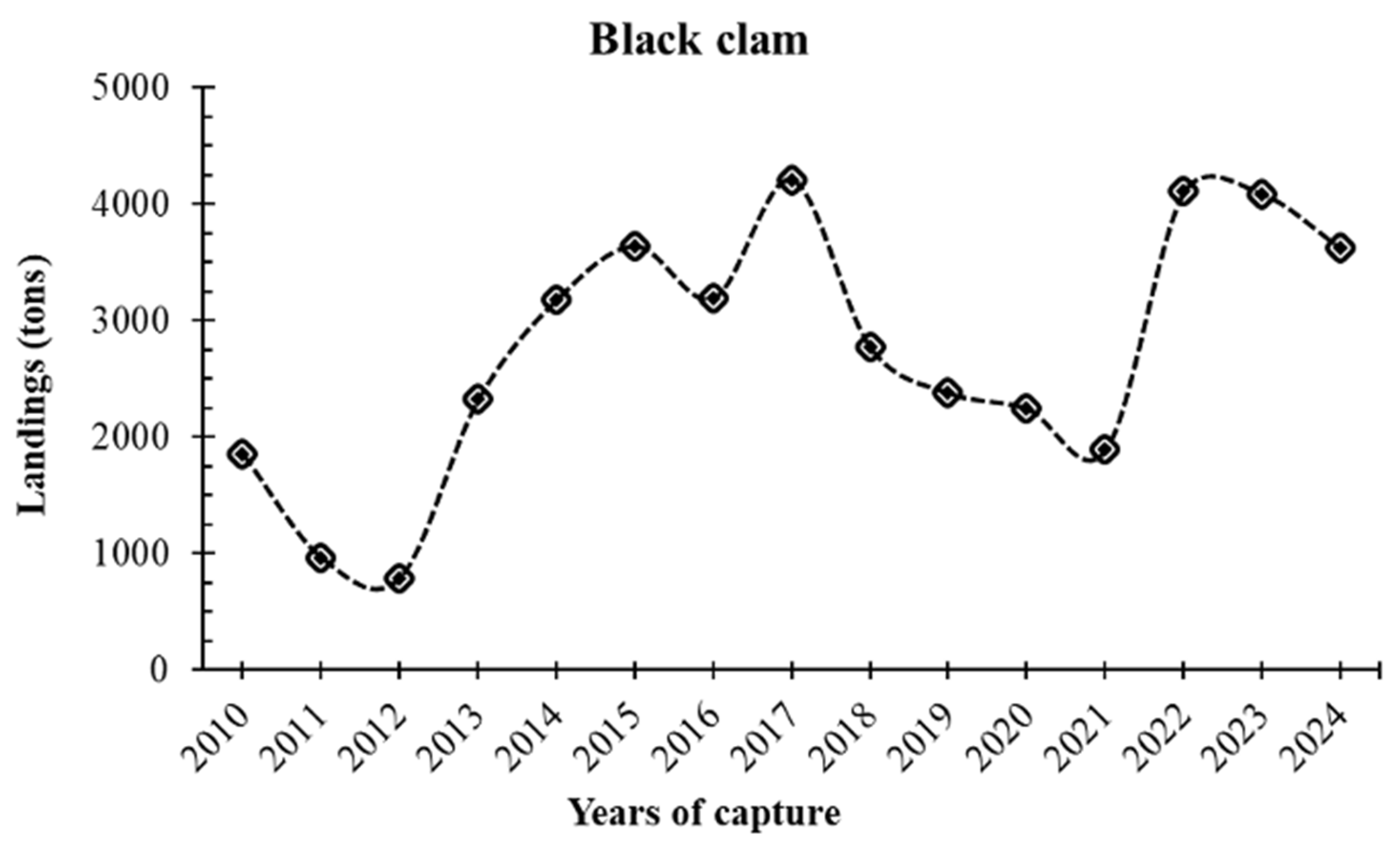
In 2022, global fishery production of aquatic organisms accounted for 49% of the total, with aquaculture surpassing this for the first time [3]. In this context, bivalve mollusks—oysters, clams, and mussels—accounted for 23.9% of global catches [3]. In Mexico, clam production reached 14,301.09 tons in live weight, with Baja California (29%) and Sinaloa (26%) being the primary producing states [4]. In Sinaloa, the harvesting of the “black clam” is of particular interest, as it is destined for regional consumption and commercialization; however, its fishing record, which stands at approximately 3620 tons in 2024, includes the following species: Anadara mazatlanica, A. tuberculosa, A. similis, L. multicostata, and L. grandis [4,5].
The data concerning the harvesting of these bivalves has exhibited an irregular trend over the past 15 years (see Figure 1). This phenomenon may be associated with the specific heterogeneity of the resource, inconsistencies in official reports, variations in fishing effort, and extraordinary factors such as the COVID-19 pandemic [6].
The harvesting of A. mazatlanica has a long tradition of use in the region. Since pre-Hispanic times, it has been utilized as food source and raw material for utensils, while also possessing significant cultural value, as evidenced by the presence of an archeological settlement composed mainly of shells of this species [7,8]. The harvesting of the clams is conducted manually during low tide, when clam collectors traverse the muddy substrate of the mangrove and locate the clams among its roots (Rhizophora spp.) [9,10]. However, this habitat is subject to anthropogenic pressures that compromise the conservation of the species, such as mangrove deforestation, industrial waste dumping, and the absence of specific regulations for its management [11].
Even with the establishment of national regulations that provide health and conservation guidelines applicable to bivalve mollusks, A. mazatlanica lacks an official standard, closed season, or fisheries management plan to ensure its sustainable use [12]. The absence of regulatory oversight impedes the implementation of adaptive management strategies for a resource of cultural, food, and economic importance in the communities where it is exploited. In this context, the concept of a circular economy (CE) in the artisanal harvesting of A. mazatlanica is proposed as a strategic paradigm designed to transform waste into valuable resources, regenerate ecosystems, and optimize the use of natural resources to generate economic and environmental benefits [13,14]. Examples of this include the use of ground shells to produce organic fertilizers [15] or their recent incorporation as aggregates in construction materials [16], highlighting the burgeoning field of applications that integrate local knowledge and technological innovation.
Notwithstanding these prospects, artisanal harvesters of A. mazatlanica perceive a lack of economic value in their activities [17]. This situation undermines the sustainability of the activity and raises concerns about the future of the fishery. These economic constraints are compounded by environmental and social risks that could affect the sustainability of the ecosystem and deteriorate the living conditions of communities that depend on this resource [18].
In artisanal harvesting systems for A. mazatlanica, sustainability outcomes are significantly influenced by the decisions and practices of local harvesters, which are determined by their perceptions of environmental change, economic viability, and resource management. Therefore, it is essential to comprehensively understand the social, economic, and environmental perceptions of A. mazatlanica harvesters to identify opportunities for transitioning to sustainable use models aligned with CE principles. In this regard, the objective of this research is to elucidate how conventional practices, deeply linked to community identity, can be integrated with CE principles to promote sustained regional development. Given that the successful integration of these principles depends on acceptance, interpretation, and possible adoption by local actors, this study analyzes the perceptions of A. mazatlanica harvesters, a key analytical level for assessing the social, economic, environmental, and circular viability of such integration. To this end, perceptions are analyzed from four complementary perspectives:
(a)
Personal, family, and social perceptions: when examined from the perspective of community relations, leadership, and cultural frameworks. From this point of view, this vision is fundamental to the collective management of natural resources [19].
(b)
Economic perceptions: As posited by Basurto et al. [20], this perception underscores the significance of small-scale fisheries not only as a source of animal protein, but also as a foundation for income and food security for coastal communities. This phenomenon is exemplified by the fishing of A. mazatlanica in the communities surrounding the SINM lagoon system. In this region, the extraction of this bivalve is a crucial economic resource for many households, as it facilitates both income generation through sales and domestic savings through self-consumption.
(c)
Perceptions of recycling culture: The study focuses primarily on social norms and perceptions of convenience. The researchers propose that these factors influence harvesters’ willingness to participate in recycling and CE practices, which, in turn, has a direct impact on reducing the environmental impacts of harvesting [21].
(d)
Environmental perception: This section will analyze the importance of incorporating local perspectives on ecosystem quality as a crucial component in the development of participatory sustainable management strategies [19]. Although this study does not include direct biophysical measurements, fishermen from the communities surrounding the bay expressed concern about the conservation of fishing grounds, while perceiving insufficient law enforcement and lack of environmental control as threats to the long-term sustainability of the resource.

2. Materials and Methods

This research employed a quantitative approach with an exploratory-descriptive scope, which is suitable for managing and analyzing social information in community contexts [22]. The research design was structured in three phases: (1) location of the study area; (2) sociodemographic description of the surveyed population; and (3) analysis and interpretation of the results obtained [23].

2.1. First Phase: Location of the Study Area

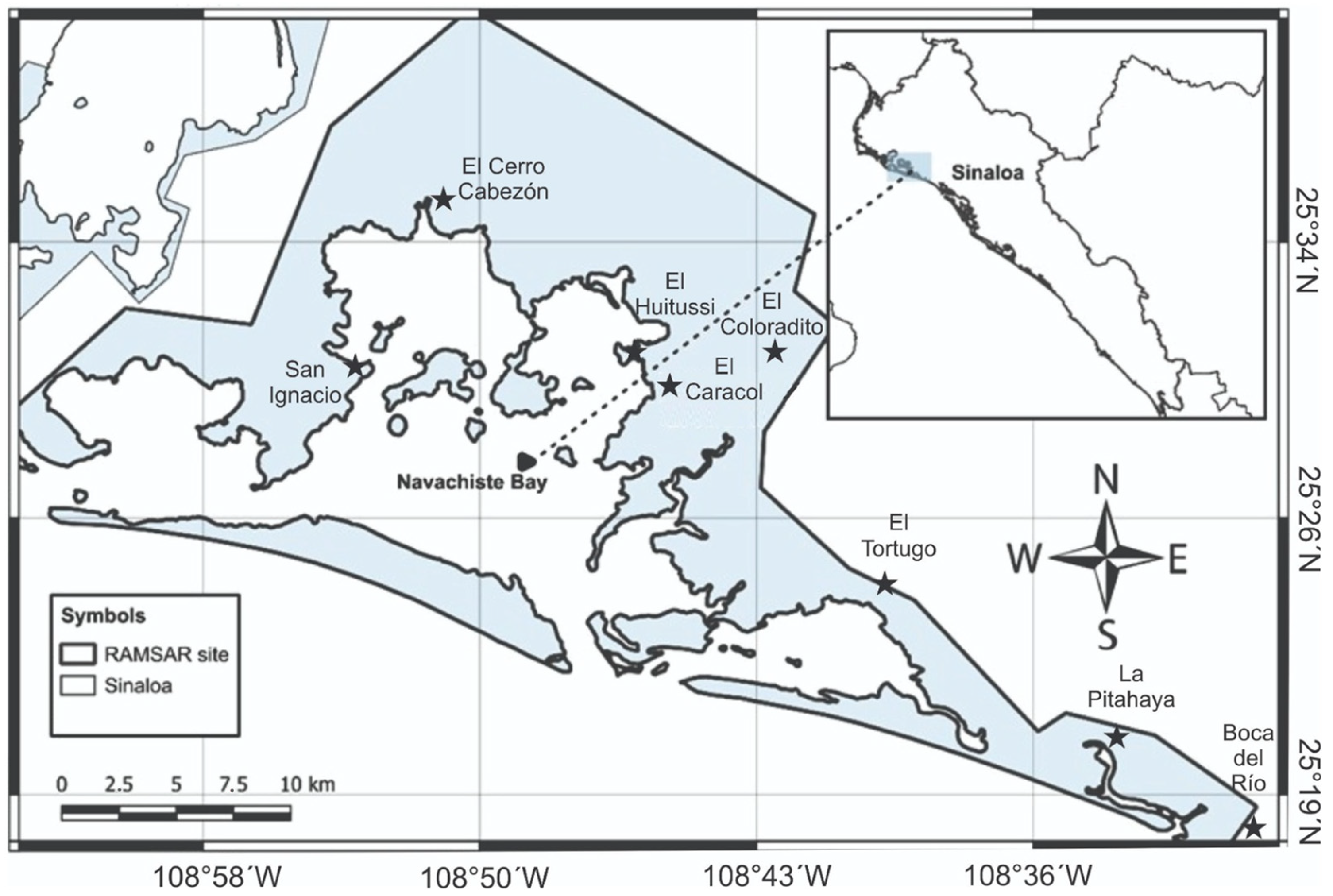
The present study was conducted in various fishing communities within the SINM lagoon system (25°31′18.25″ N; 108°44′03.93″ W), which is located in the northwest of the state of Sinaloa, Mexico. This aquatic ecosystem encompasses regions belonging to the municipalities of Guasave and Ahome; however, a portion of its area of influence corresponds to territories that currently constitute the municipality of Juan José Ríos. The system is included in the Ramsar Convention’s List of Wetlands of International Importance, and its ecological and productive characteristics support the development of fishing and aquaculture activities (Figure 2) [24].

2.2. Second Phase: Sociodemographic Description of the Respondents

According to Pérez-Contreras et al. [25], statistical analysis of social attributes (e.g., gender, educational level, occupation) facilitates the delineation of the sociodemographic profile of the workplace.
The study population consisted of artisanal collectors of A. mazatlanica from communities located around the SINM lagoon system. The localities surveyed—El Cerro Cabezón, El Huitussi, El Caracol, El Coloradito, El Tortugo, La Pitahaya, and La Boca del Río—correspond to the seven coastal communities that contribute most to the regional economy through the harvesting of this mollusk [26].
These communities were considered a homogeneous socio-productive group due to their shared ecosystem, labor mobility between harvesting areas, and similar environmental impacts associated with artisanal harvesting.
Given the absence of an updated registry of artisanal collectors of A. mazatlanica and the lack of accurate information on population size at the community level, data collection was carried out using a probabilistic sampling approach based on random routes. Once the study area was defined, specific starting points were established in each community, and participants were selected as the fieldwork progressed, ensuring adequate geographic coverage of the sample and reducing potential spatial bias [27]. The age of the participants (18–89 years) was used exclusively as an inclusion criterion and not as a stratification variable.
The sample size was determined according to the formula for infinite populations proposed by Torres et al. [27]:
n = ( Z 2 ) . ( p ) ( q ) ( d 2 )
where n is the sample size, Z represents the confidence level (1.96 for a 95% confidence interval), p corresponds to the expected proportion of the population with the characteristic of interest, q represents the complementary proportion (q = 1 − p), and d is the margin of error, since this condition allows the maximum sample size for the research to be obtained [28].
In the absence of prior information on the actual proportion of the population, a conservative hypothesis was adopted (p = 50%; q = 50%), with a margin of error of 6.53%. Substituting these values into the equation yielded a sample size of 225 participants:
n = ( 1.96 2 ) . ( 0.5 ) ( 0.5 ) ( 0.0653 2 ) = 225
Subsequently, a total of 225 surveys were administered to artisanal collectors of A. mazatlanica in the seven communities of the SINM lagoon system, which allowed for a broad characterization of the social, economic, and environmental perceptions of the sector, in line with the exploratory and descriptive approach of the study.

2.3. Third Phase: Application of Surveys

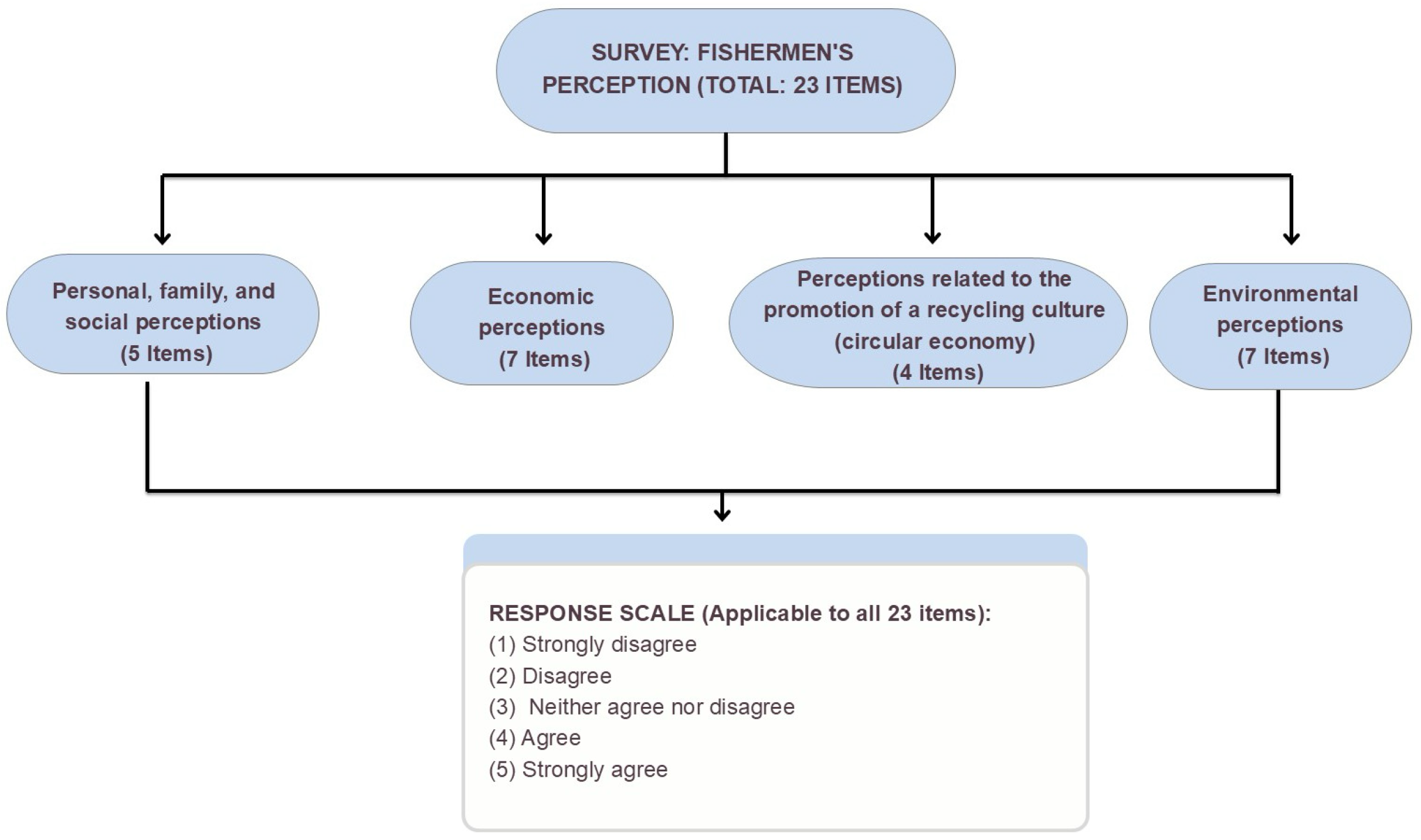
The data collection process entailed the implementation of a face-to-face, individual survey comprising 30 questions. Of these, seven were associated with sociodemographic variables, including gender, age, primary activity, and educational level. The remaining 23 items were structured using a 5-point Likert scale, ranging from (1) ‘Strongly disagree’ to (5) ‘Strongly agree.’ All questions in the questionnaire were formulated using clear, non-technical, everyday language, focusing on specific practices and experiences related to the artisanal collection of A. mazatlanica, recycling behaviors, and local environmental conditions, rather than abstract theoretical constructs.
Figure 3 presents the thematic organization of these items, which includes personal, economic, recycling, cultural, and environmental dimensions. This structure is consistent with the response scale proposed by Vagias [29], ensuring a comprehensive evaluation of fishers’ perceptions of the A. mazatlanica fishery. The complete questionnaire, including the full wording of all items on the Likert scale and their thematic grouping, is provided as Supplementary Materials S1.
The participants’ responses to the 23 questions were subjected to rigorous analysis, which resulted in the identification of four distinct analytical categories that were defined a priori during the instrument design phase [23]. These categories were based on the conceptual framework proposed by García-Lorenzo et al. [30], who organized the perception instruments into sections relating to general aspects of fishing activity, assessment of the state of resources, regulatory outcomes, and perceptions related to commercial, environmental, and technological dimensions. Although based on previously validated frameworks, the wording and thematic adaptation of the items were adapted to the socio-environmental context of A. mazatlanica harvesting. They were then examined using exploratory factor analysis to assess the latent structure and group related items.

2.4. Internal Consistency and Statistical Analysis

The reliability of the instrument was assessed using Cronbach’s alpha coefficient (α), which estimates internal consistency—referring to the homogeneity of the items and their contribution to the overall score of the instrument [31]—by reflecting the covariance between items within an instrument or its dimensions and is the standard for multiple-response scales [32,33]. In this study, α was interpreted as an indicator of internal consistency, under the assumption that the items grouped within each analytical dimension reflect a shared latent construct and contribute comparably to that construct, rather than a universal measure of scale reliability.
To examine the latent structure underlying the questionnaire and support this hypothesis, exploratory factor analysis (EFA) was conducted to identify coherent clusters of items and assess the dimensionality of the measured construct [34,35]. The analysis covered the responses of the 225 respondents to the 23 Likert scale items included in the questionnaire. Statistical analyses were performed using the following software: IBM SPSS Statistics 29.0 for exploratory factor analysis and multidimensional analysis [36]; Jamovi 2.6.44 to calculate McDonald’s omega [37]; and JASP version 0.18.1 to calculate Cronbach’s alpha [38]. The responses were then grouped into four categories, and the arithmetic mean for each topic was calculated. Subsequently, a hierarchical cluster analysis was performed to group the units of analysis according to their responses, using Euclidean distance as a measure of dissimilarity and the simple linkage method as an amalgamation procedure, to identify patterns of similarity between the observations [39].
The instrument was designed based on four theoretical dimensions defined a priori according to the perceptions analyzed: personal, family, and social; economic; promotion of a culture of recycling or circular economy; and environmental. The EFA was used to evaluate the correspondence between the proposed theoretical dimensions and the empirical structure of the instrument, as well as to identify possible subdimensions within those dimensions.

3. Results

3.1. Sociodemographic Profile of the Study Population

The results of the study enabled the characterization of the sociodemographic profile of the participants surveyed according to gender, educational level, and role within the fishing activity. The mean age of the respondents was 47 years (standard deviation [SD] = 15.78), with a predominance of males (85.3%). Regarding educational level, most participants reported had only completed primary school (34.7%) and secondary school (30.2%). With respect to their involvement in fishing activities, 97.8% of respondents identified themselves as harvesters, while 2.2% identified as community leaders (see Table 1).
In addition, the participants surveyed reported an average of 23 years of fishing experience, with a mode of 20 years, reflecting a strong tradition of harvesting A. mazatlanica and the intergenerational transmission of knowledge and practices [40]. The average number of members per household members and of people economically dependent on fishing was four in both cases, indicating that artisanal harvesting represents the main source of livelihood for the family units included in the sample [41,42] (Table 2).

3.2. Internal Consistency and Validity of the Instrument

The internal consistency analysis of the 23-item Likert scale yielded a value of α = 0.642. This result is considered acceptable in the social sciences, especially in exploratory studies and community contexts, where the variability of responses can influence the homogeneity of the scale, so a high coefficient should not always be expected [43]. Taber [44], when analyzing 69 articles published in 2015, presents a graph showing that an alpha value of 0.642, is interpreted in various ways as acceptable, satisfactory, sufficient, adequate, or moderate, although the fundamental thing is that this value is interpreted in the specific context of the study, considering the dimensionality of the construct and the number of items in the instrument, also recognizing the limitations of Cronbach’s alpha and complementing it, when relevant, with other statistical measures.
For this reason, McDonald’s omega was determined, which considers the factor loadings, obtaining a value of 0.646, which, according to Colorado Romero et al. [45], fell within the range of 0.6 to 0.7, considered moderate. Katsiroumpa [46] points out that Cronbach’s alpha and McDonald’s omega coefficient values above 0.60 reflect an acceptable level of internal consistency of the instrument. Overall, the results indicate that the instrument shows an adequate level of internal consistency for measuring the participating community’s perceptions of the social, economic, and environmental dimensions analyzed.
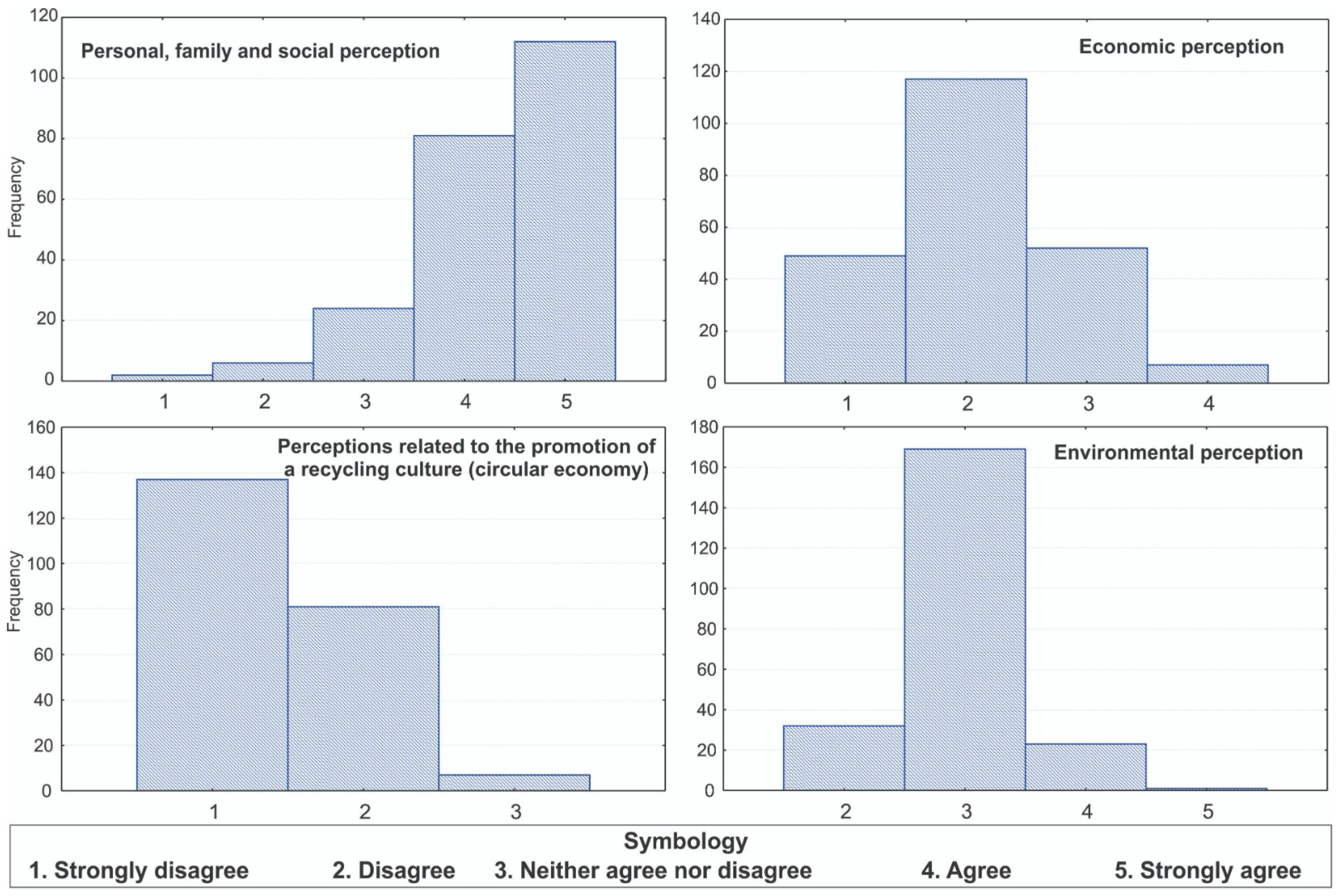
Figure 4 presents the frequency histograms corresponding to the perceptions analyzed: personal, family, and social; economic; promotion of a recycling culture or CE and environmental.
Personal, family, and social perceptions recorded the highest average ( x ¯ = 4.55), with a clear concentration of responses at high levels of agreement. This pattern is consistent with the findings of Joshi et al. [47], who indicate that high averages and distributions skewed toward high values on Likert scales reflect marked levels of agreement or positive assessment. In contrast, economic perception showed a moderately low average ( x ¯ = 2.48), reflecting a slightly unfavorable opinion of the perceived economic benefits.
On the Likert scale, values close to the lower extremes reflect low levels [48]. The dimension related to the promotion of a culture of CE had the lowest average ( x ¯ = 1.55), which shows a clear predominance of disagree responses and low adoption of recycling practices among the population. Environmental perception was at an intermediate level ( x ¯ = 3.44), reflecting a moderate level of agreement on all items related to perceived environmental conditions, monitoring, and concern for the conservation of fishing grounds.
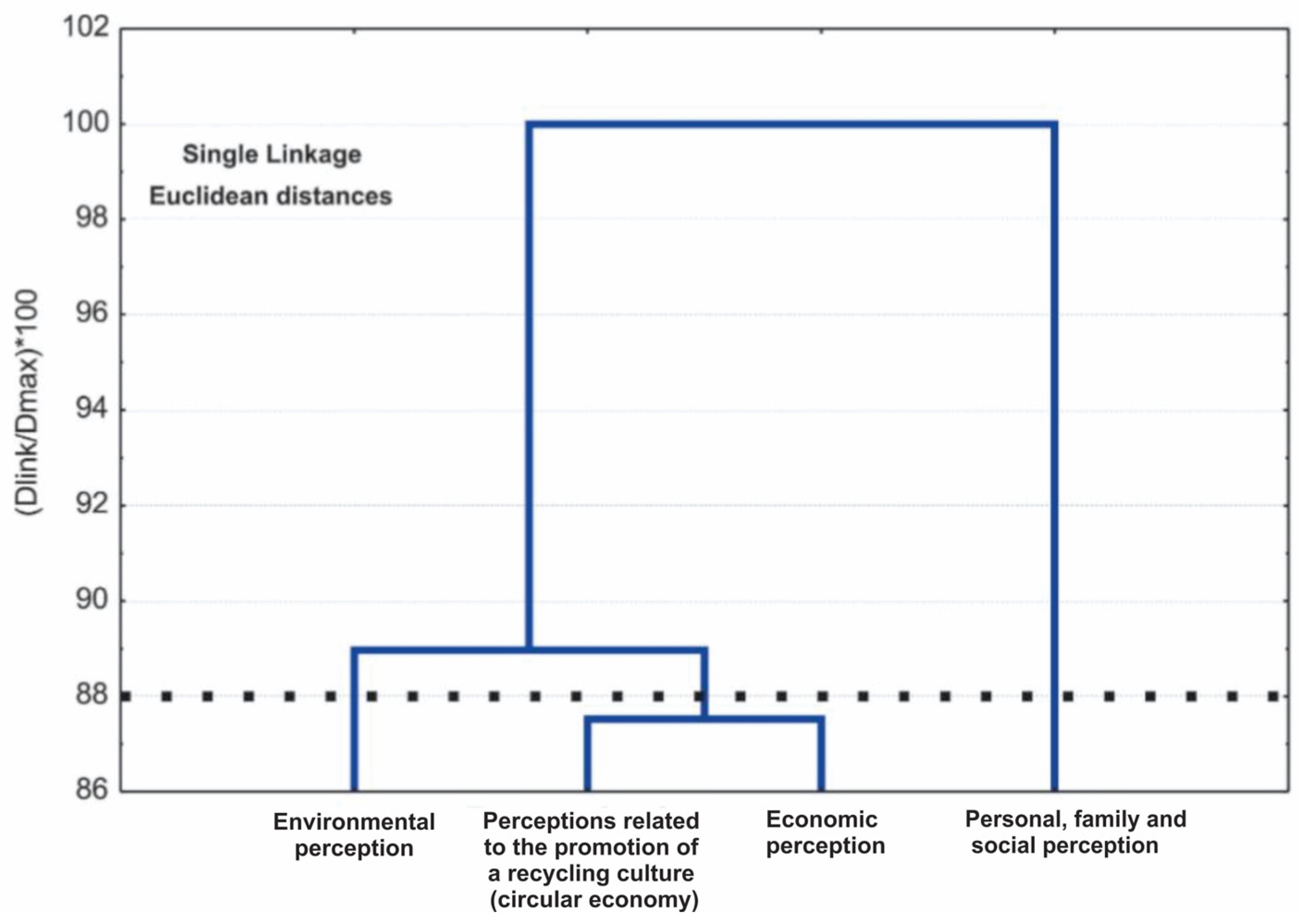
Complementarily, the dendrogram in Figure 5 illustrates the hierarchical clustering of perception dimensions based on Euclidean distances calculated from category-level mean scores, which were treated as continuous indicators of perceived intensity. The Euclidean metric was selected to quantify the absolute differences in magnitude between these aggregated perception dimensions and to support the visual interpretation of their proximity within a linear metric space [49].
The dendrogram reveals a close association between promoting a culture of recycling (CE) and the perception of economic impact. Although both perceptions received the lowest scores, their grouping indicates that fishermen link the future economic viability of the activity to the generation of added value from by-products, particularly shells, which represent one of the main areas of opportunity for regional development [50,51]. Using the cut-off level indicated by the dotted line in the dendrogram, this group is subsequently joined by environmental impact, forming a broader sustainability cluster, while personal, family, and social impact remain the most distant factor.

3.3. Perceptions of Personal, Family, and Social Impact

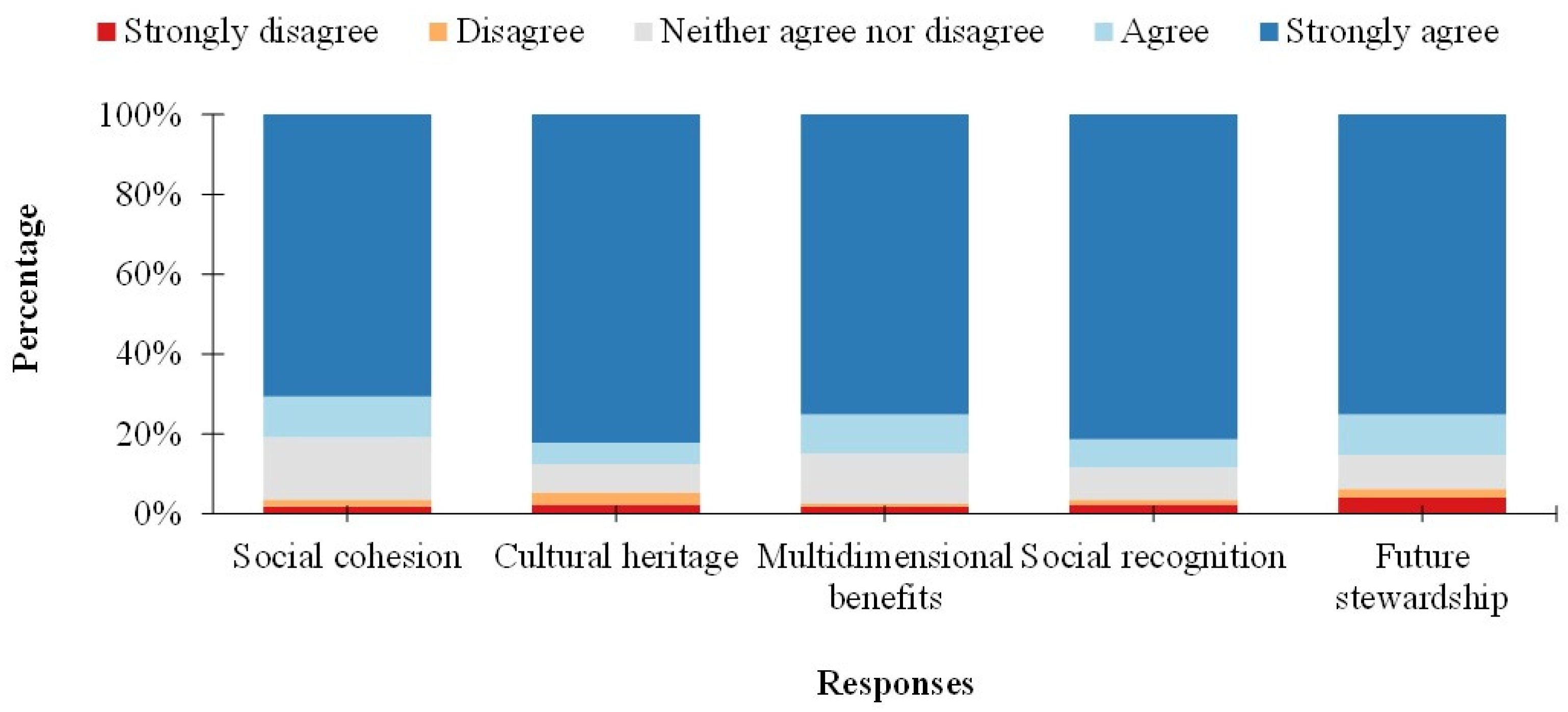
The issue of personal, family, and social impact had an average score of 4.55, reflecting a high social value placed on artisanal fishing for A. mazatlanica in the communities studied. This result coincides with Fernández-Rivera Melo et al. [52], who documented a strong cultural and intergenerational root of fishing in different coastal communities in Mexico. A detailed analysis of the constructs constituting this dimension (see Figure 6) reveals that respondents perceive a substantial level of social recognition, with 88% affirming that the community holds fishing for this bivalve in high esteem. Moreover, a considerable proportion of respondents recognize the activity as a fundamental cultural heritage [51]. About the local social structure, 81% of participants perceive that this economic activity fosters social cohesion, suggesting a positive impact on community bonds.
These perceptions are consistent with the findings of studies that emphasize the role of traditional fishing activities in the establishment of cultural identity and social cohesion within coastal communities [53,54]. Consequently, 85% of A. mazatlanica fishers reported receiving multidimensional benefits, thereby reinforcing the notion of the multifunctionality of artisanal fishing as a source of economic, cultural, and personal satisfaction [30]. Furthermore, fishers evince a profound sense of future stewardship, believing that the continuity of the fishery is intrinsically linked to their collective commitment and sustainable practices. This finding aligns with the conclusions of Weeratunge et al. [55] and Bennett et al. [56], who underscored the pivotal role of integrating human well-being and social justice in ensuring the sustainability of fisheries. When evaluated in its entirety, the evidence indicates that A. mazatlanica fishing plays a pivotal role in the formation of community identity and resilience, which are crucial for facilitating transitions towards CE models [57].

3.4. Economic Perception and Challenges to the Circular Economy

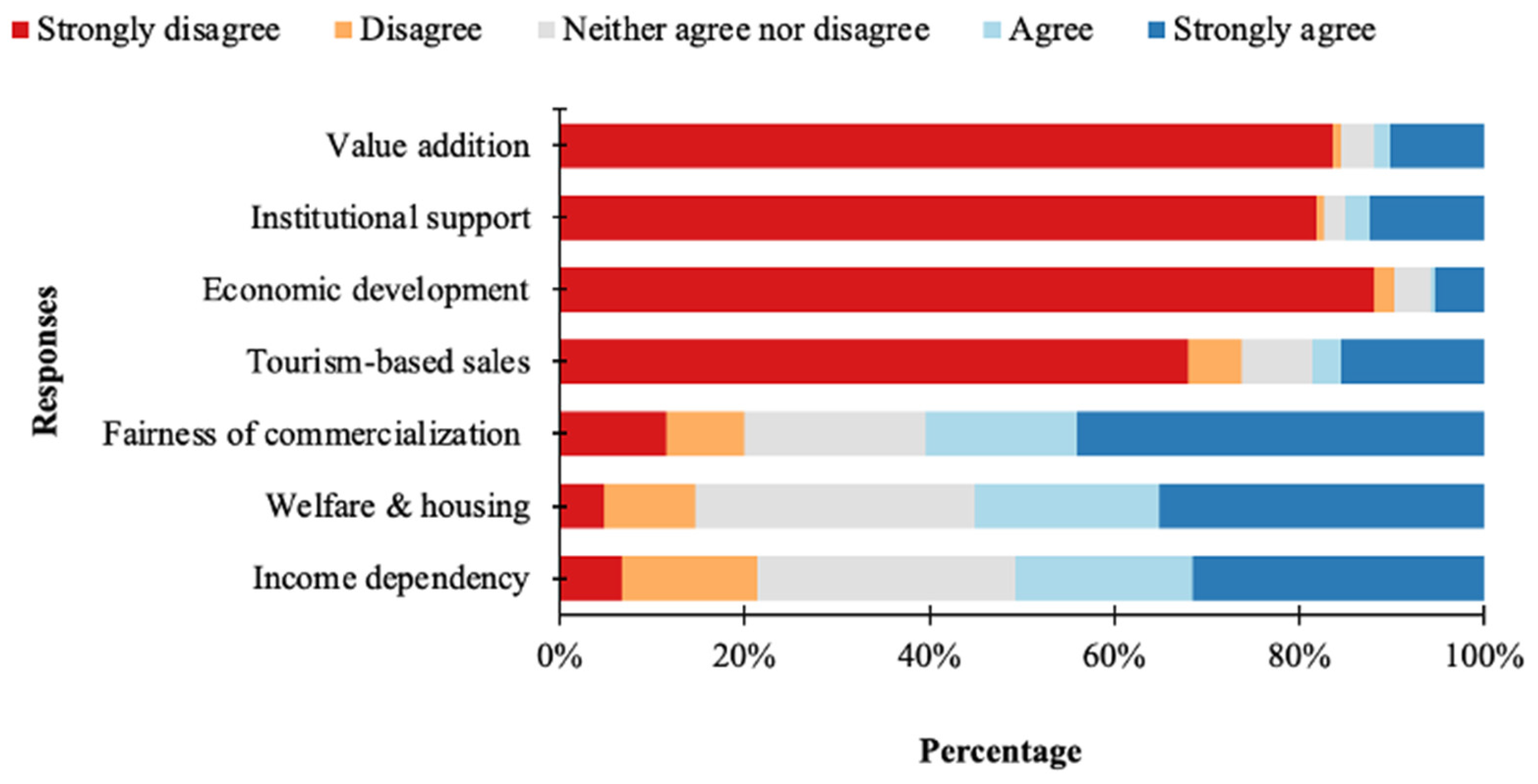
Analysis of perceptions of economic impact shows that, although fishing for A. mazatlanica plays an important role in family livelihoods, structural limitations associated with marketing and insufficient government support persist. These constraints are reflected in the average score obtained ( x ¯ = 2.48) for this dimension (Figure 7), which limits the capacity to generate benefit and move towards CE models [58].
Fifty-five percent of fishers reported positive perceptions of welfare and housing, indicating improvements in living conditions and access to basic services over the last five years (see Figure 7). However, the concomitant existence of negative responses suggests an unequal distribution of economic benefits [59]. Conversely, 51% of respondents reported a high-income dependency, with fishing contributing more than half of their total earnings. This underscores the significance of the resource for the economic and nutritional security of coastal communities [60], while concurrently demonstrating a high vulnerability to fluctuations in the fishery [61].
The survey’s findings suggest a correlation between the absence of value addition and the lack of diversification strategies, with 84% of participants not engaging in value addition. In this context, the enhancement of the bargaining position of fishers within the value chain, through the implementation of cooperative models and the utilization of by-products, has the potential to augment their bargaining power [61]. Regarding the marketing aspect, 60% of respondents reported having fair trade access and selling their product immediately after extraction at a price, they consider equitable. However, the discrepancy observed in one-fifth of respondents suggests persistent problems in price structures and a strong dependence on intermediaries [60,62].
Moreover, 90% of A. mazatlanica fishers asserted that the activity has not driven economic development, indicating a correlation between artisanal fishing and broader regional growth that is deemed to be inadequate. This phenomenon is further compounded by the absence of tourism-based sales, as evidenced by the fact that 74% of fishers reported being unable to sell directly to tourist destinations, thereby reinforcing their reliance on intermediaries [51,63].
A significant impediment to the advancement of the sector is the absence of institutional support, as evidenced by the findings that 83% of respondents indicated that they had not received any form of government assistance. This situation of affairs imposes constraints on access to financing and hinders the development of new ideas. When evaluated in its entirety, the evidence indicates that while specific families have experienced improvements in welfare and housing, inherent flaws in value addition, direct market access, and institutional support impede the effective transition to CE schemes [64].

3.5. Perceptions of Promoting a Culture of Recycling

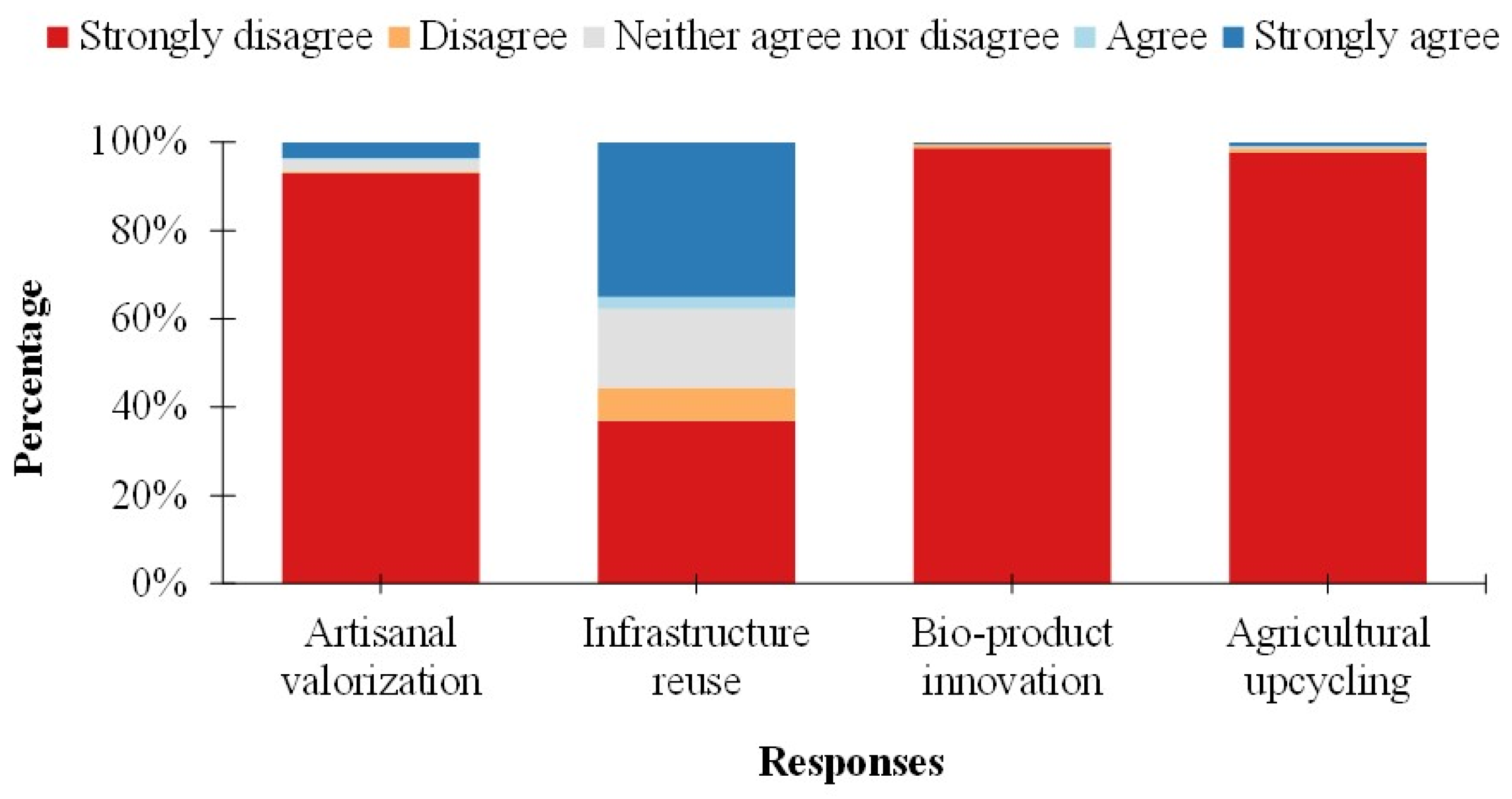
The survey results reflect a significant deficiency in the promotion of A. mazatlanica shell recycling, a criterion that obtained the lowest average score ( x ¯ = 1.55). This finding highlights the inefficient management of this by, whose integration into secondary value chains remains in its infancy. According to Magalhães et al. [65], this situation persists despite the interest of local actors in reusing waste; as such, initiatives are limited by poor coordination between the agents involved and a lack of specialized technical knowledge, factors that contribute to the undervaluation of the potential of shells. In this context, Figure 8 presents the perception of A. mazatlanica fishers regarding the constructs that make up the dimension of promoting a culture of recycling.
The underutilization of shell by-products is virtually complete. The majority of respondents denied participating in bio-product innovation, such as the manufacture of creams, while 99% ruled out agricultural upcycling as organic fertilizer or livestock feed. This scenario signifies a forfeited occasion to monetize the calcium carbonate present in shells, a resource with considerable promise for the cosmetic, pharmaceutical, and agricultural sectors [15,66].
Conversely, the evidence suggests that artisanal valorization is not a viable strategy for productive diversification. This is evidenced by the fact that 93% of the surveyed population reported that they do not use shells for handicrafts. There is a pervasive issue of underutilization of the resource, as evidenced by the fact that even the most fundamental practice of infrastructure reuse (the utilization of shells for road filling) is documented by a mere 38% of fishermen. These findings underscore the nascent stage of the transition to a Circular Economy (CE) approach in A. mazatlanica fishing.
Summa et al. [15] enumerate several alternatives for shell reuse; nevertheless, in the study area, fishers do not exploit this by-product, even for widely documented practical uses. This dearth of engagement in bio-product innovation and artisanal valorization signifies a substantial economic challenge, concomitant with a notable area of opportunity. A substantial body of research has indicated that the promotion of Community-Based (CE) schemes can yield substantial improvements in environmental and economic sustainability within fishing communities [51,62].

3.6. Perceptions of Environmental Impact

The results show a high level of environmental awareness among fishers regarding the importance of the habitat of A. mazatlanica. However, they also reveal substantial deficiencies in compliance with the regulatory framework for fisheries management, which poses a significant risk to the sustainability of the resource. Although Mexico has regulatory instruments aimed at the conservation and sustainable management of fisheries, significant challenges remain in their implementation, particularly about systematic monitoring, effective enforcement of regulations, and inter-institutional coordination [67].
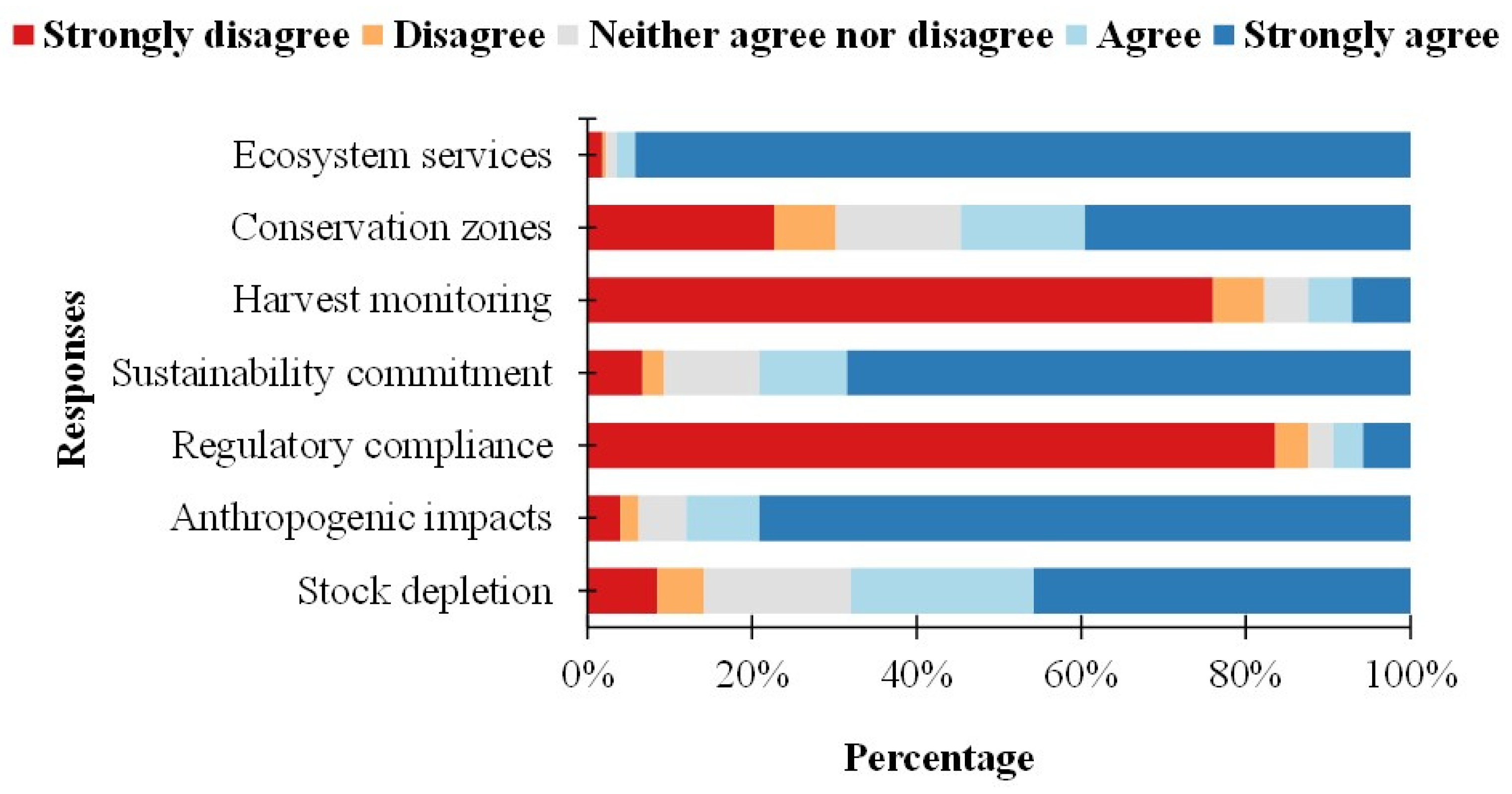
Figure 9 presents the opinions of fishers regarding various statements associated with the environmental impact of black clam fishing. The results indicate that, although some positive assessments are identified, concerns related to the environmental effects of this activity predominate.
A substantial majority of respondents, specifically 96%, acknowledged the significance of ecosystem services, particularly the direct contribution of mangroves to the proliferation and quality of A. mazatlanica habitats. This finding suggests a high level of local ecological knowledge, as mangroves are recognized as being essential for reproduction and larval settlement [68]. Moreover, 88% of fishers identified substantial anthropogenic impacts, perceiving that waste from agricultural and aquaculture activities negatively affects the fishery. Such external pressures have been demonstrated to exert a deleterious effect on water quality and to compromise bivalve populations [69,70].
This environmental awareness is characterized by a pronounced commitment to sustainability, as evidenced by the fact that 79% of fishers expressed a readiness to reduce their catches to ensure the resource’s permanence. Notwithstanding this commitment, 68% of participants perceive a progressive stock depletion, noting a decline in both the abundance and size of catches over time. This finding aligns with the extant literature, which posits that overexploitation and inadequate regulatory frameworks imperil biodiversity [71].
In contrast to the high level of willingness to conserve, 82% of fishers reported a lack of effective harvest monitoring. Moreover, 88% of respondents indicated a failure in regulatory compliance, denying the existence of daily catch records or the enforcement of minimum size requirements. This deficiency in systematic control underscores the inadequacy of fisheries governance, which persists as a principal impediment to the conservation and long-term sustainability of the A. mazatlanica fishery [72].

3.7. Exploratory Factor Analysis

About the results, the Kaiser-Meyer-Olkin (KMO) sample adequacy index was calculated, which reached a value of 0.686, very close to 0.7, and therefore considered acceptable [73]; additionally, Bartlett’s sphericity test was statistically significant (p = 0.000). Bartlett’s test allows the null hypothesis to be rejected when the significance level is ≤0.05, indicating the existence of correlations between the variables [74], which confirms the relevance of applying a factorial analysis to the variables studied.
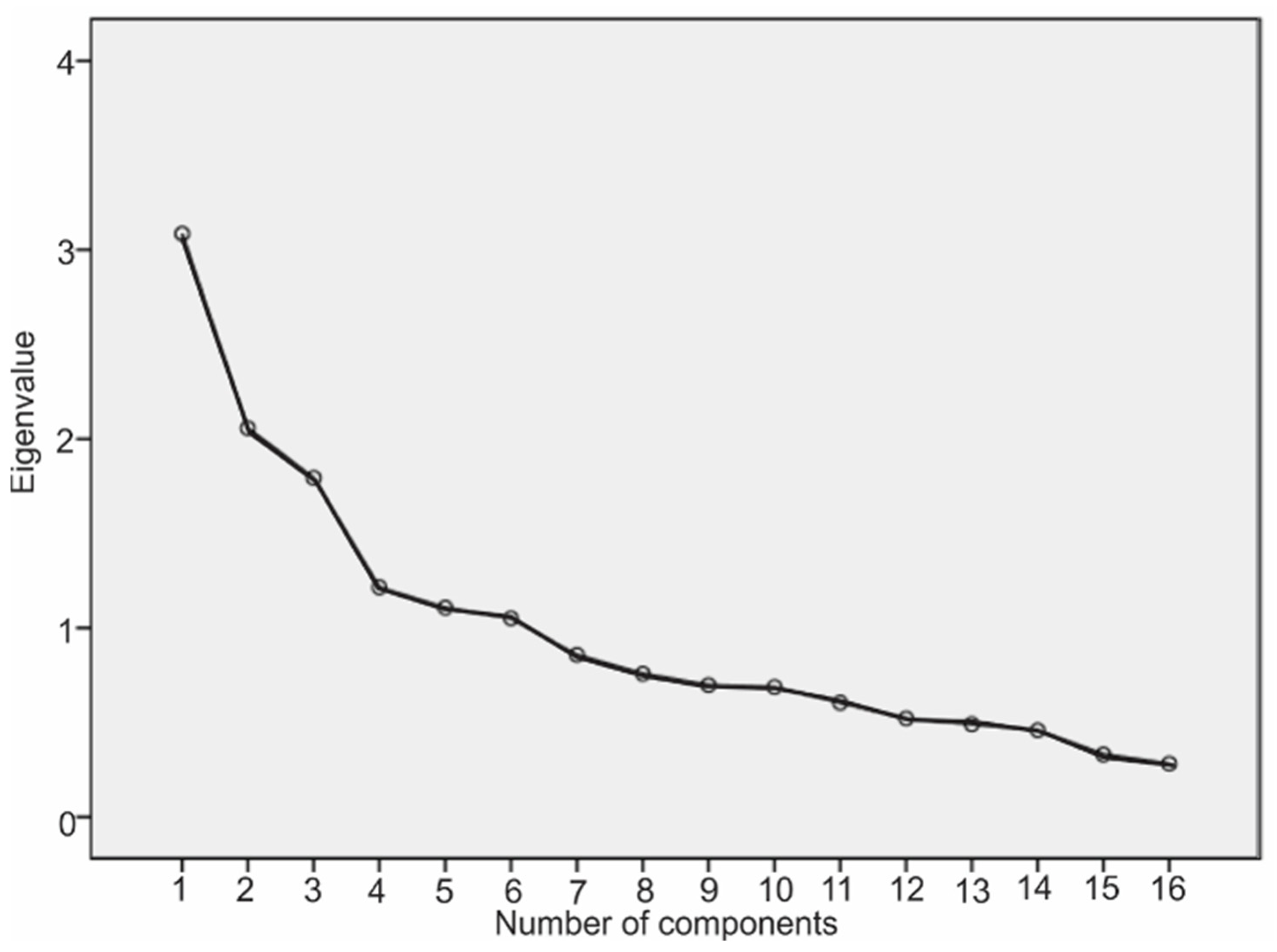
Table 3 of total variance explained indicates that, according to Kaiser’s criterion, six components with eigenvalues greater than 1 were retained, which together explain 64.44% of the total variance. The first component explained 19.28% of the variance, followed by the second (12.86%) and third (11.21%), while the remaining three components contributed smaller but relevant percentages. Rotation allowed for a more balanced distribution of variance among the factors, facilitating their interpretation.
Figure 10 shows the sedimentation graph, which displays a pronounced decrease in eigenvalues in the first components and a clear he changes in the slope from the sixth component onwards, where the curve begins to stabilize. This inflection point suggests the retention of six components, since from this point onwards the eigenvalues show gradual decreases and marginal contributions to the explained variance, which supports the factorial solution obtained.
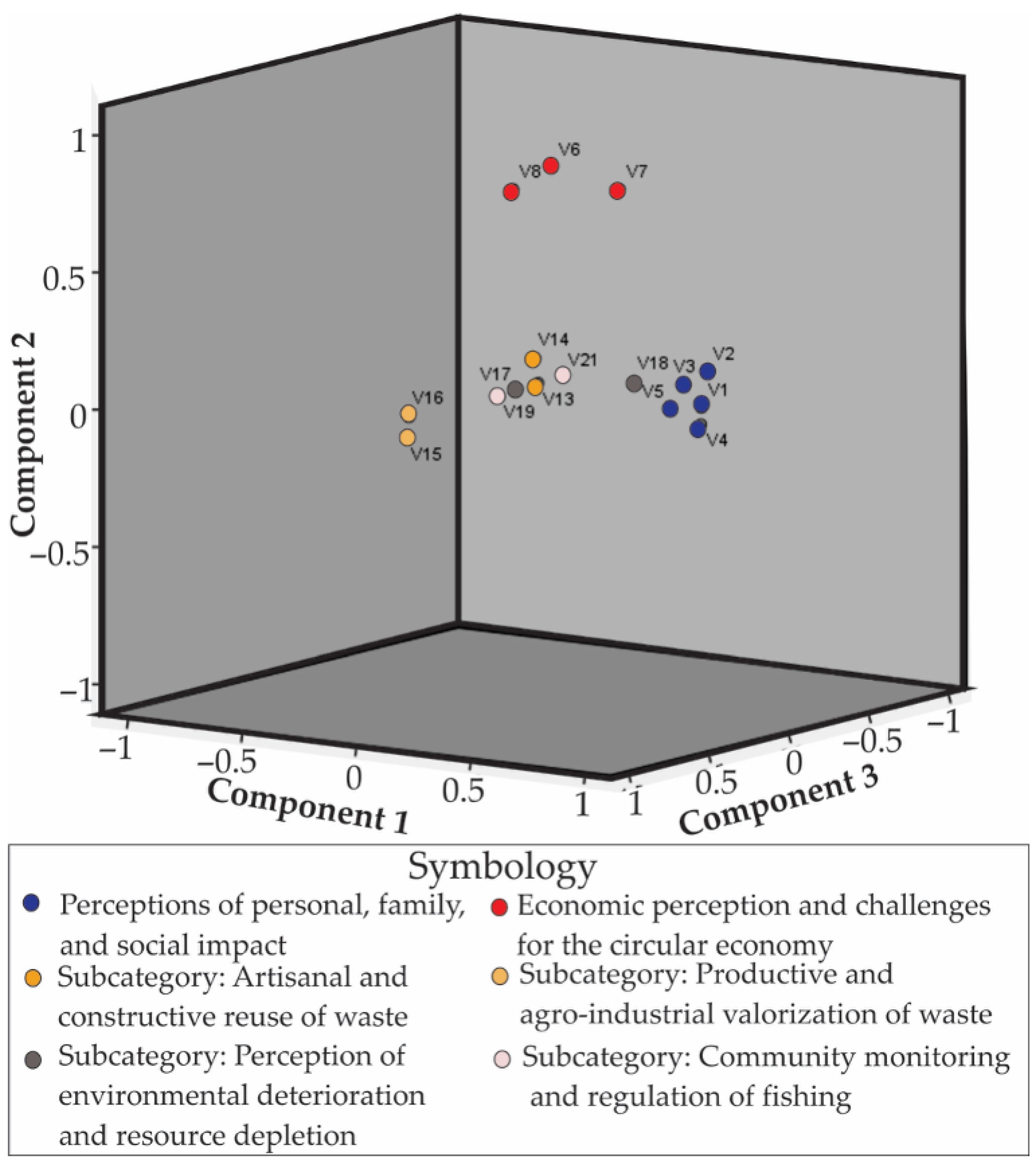
Table 4 presents the rotated component matrix, obtained using the principal component method with Varimax rotation, which revealed a factorial structure composed of six clearly defined components. The first component groups items 1, 2, 3, 4, and 5, associated with perceptions of the personal, family, and social impact of black clam fishing. The second component integrates items 6, 7, and 8, linked to economic perceptions and the challenges for the circular economy derived from this activity. The third and fifth components relate to perceptions about the promotion of a recycling culture, where the third factor corresponds to the subcategory of productive and agro-industrial waste recovery (items 15 and 16), and the fifth to the artisanal and constructive reuse of waste (items 13 and 14).
The fourth and sixth components correspond to perceptions of environmental impact, from which two subcategories emerge: factor 4, related to community monitoring and regulation of fishing (items 19 and 21), and factor 6, consisting of items 17 and 18, associated with the perception of environmental deterioration and resource depletion. It should be noted that items that, although conceptually contributing to the dimensions, did not have sufficiently robust factor loadings for inclusion in the factor analysis were eliminated.
Figure 11 shows the graph of components in rotated space, which shows a differentiated distribution of items based on their factor loadings, evidencing a well-defined factorial structure. The items associated with perceptions of personal, family, and social impact are grouped consistently, indicating high internal consistency of the component, confirming the cultural roots and high value placed on the resource by A. mazatlanica collectors in the communities surrounding the SINM. Similarly, items related to economic perception and challenges for the circular economy are concentrated in a different region of the factorial space, confirming their conceptual independence.
The subcategories related to the productive and agro-industrial valorization of waste (C3) and the artisanal and constructive reuse of waste (C5) form distinct clusters, supporting the relevance of their separation into specific factors. Subcategory C3 relates to innovation processes aimed at using mollusk shells as raw material for the generation of value-added products, involving some degree of physical or chemical transformation. In contrast, subgroup C5 covers items related to the direct reuse of mollusk shells without substantial transformation, proposing innovative alternatives with low technological requirements and little dependence on industrial infrastructure.
On the other hand, the items corresponding to community monitoring and regulation of fishing (C4) and the perception of environmental deterioration and resource depletion (C6) are in different areas, reflecting complementary but conceptually distinct environmental dimensions. Subcategory C4 is linked to perceptions of anthropogenic impacts—including the harvesting of A. mazatlanica and industrial discharges—that affect resource conservation. In contrast, C6 is associated with community management, incorporating monitoring, supervision of population status, and control of harvesting practices. Taken together, the spatial separation observed between the groups of items confirms the structural validity of the instrument and the adequacy of the rotated factor solution.

4. Discussion

The findings on personal, family, and social impact ( x ¯ = 4.55) reflect a high community valuation of A. mazatlanica fishing, which highlights its role as a cultural and social pillar of the communities surrounding the SINM lagoon system. Beyond the numerical indicator, this result suggests that harvesting activities are closely integrated into daily life, family organization, and shared community identity, which determines how fishermen relate to their environment and to each other. This finding is consistent with the observations of Fernández-Rivera Melo et al. [52], who emphasize the fundamental role of intergenerational knowledge transmission in preserving fishing identity within Mexican communities. Similarly, Carvajal-Oses et al. [51] document how artisanal fishing is a family tradition that strengthens community ties and contributes to collective well-being.
The high level of social recognition reported by 88% of the fishermen surveyed indicates that the harvesting of A. mazatlanica is not only economically relevant, but also socially legitimized within the community, which influences participation, cooperation, and local decision-making processes. Similarly, the association of fishing with social cohesion noted by 81% of participants reflects the existence of dense social networks that facilitate collective action and mutual support. In line with García-Lorenzo et al. [53] and D’Agata et al. [54], these findings suggest that conventional fishing practices contribute to community resilience by strengthening social organization and the capacity to adapt to environmental and economic pressures.
In contrast, 85% of fishers reported that their activity provides them with economic, cultural, and personal satisfaction, thereby underscoring the multidimensional benefits of artisanal fishing. This finding aligns with the conclusions of García-Lorenzo et al. [30], who contend that artisanal fishing functions not only as a means of income generation but also plays a pivotal role in identity formation, thereby enhancing the subjective well-being of those engaged in this practice. In this regard, the elevated social value ascertained in this study substantiates that fishing for A. mazatlanica constitutes an integral livelihood, wherein economic, cultural, and emotional dimensions are inextricably intertwined.
As posited by Rubio et al. [75], social organization and relational capital are found to be pivotal in the sustainability of artisanal fisheries. The argument is made that such phenomena as cooperation and collective action serve to strengthen adaptive capacity in the face of environmental and economic changes. In accordance with this, the results obtained—in which 85% of participants recognized that the future of fishing depends on collective commitment—reflect a cohesive social structure capable of sustaining participatory governance mechanisms.
This integrative vision aligns with the approaches of Weeratunge et al. [55] and Bennett et al. [56], who assert that the sustainability of fisheries can only be achieved when social justice and human well-being are incorporated as axes of transformation. In this particular context, the cultural roots and social cohesion observed in the fishing community under study serve as both a strength for society and an indispensable basis for the promotion of just transitions to sustainable management models.
The findings indicate a low rating in the dimensions of promoting a culture of recycling ( x ¯ = 1.55) and economic impact ( x ¯ = 2.48), suggesting limited utilization of by-products and inadequate integration of CE in A. mazatlanica fishing. This finding is consistent with the observations of D’agata et al. [54], who noted that limited Social Adaptive Capacity (SAC) hinders the implementation of sustainable innovations in the face of external shocks. In a similar vein, Amos et al. [76] emphasize that economic and environmental factors, including market fluctuations and climate change, have the potential to diminish community resilience and constrain productive diversification.
Despite the fact that 55% of fishers reported improvements in housing and services, and 51% stated that fishing constitutes more than half of their income, economic dependence on the resource increases the vulnerability of the system. Gallardo Lago et al. [77] and the FAO [78] posit that conditions of economic fragility in artisanal fishing communities are perpetuated by job insecurity, variable incomes, and restricted access to finance. In this regard, while fishing has been demonstrated to enhance social capital, this cohesion has the potential to become a source of risk when economic stability is compromised [54].
Moreover, 84% of respondents asserted that there was no value addition to the resource, while 83% of respondents indicated that they do not receive institutional support. This dearth of incentives is consistent with the findings of Musiello-Fernandes et al. [62] and Purcell et al. [79], who emphasized that the absence of public policies and infrastructure is a significant impediment to the implementation of sustainable practices. In a similar vein, Summa et al. [15] demonstrate that the mismanagement of by-products, such as shells, results in economic and environmental losses. However, they also identify a strategic opportunity to diversify income through the production of fertilizers, cosmetics, or handicrafts.
The findings of Bennett et al. [56] are corroborated by the evidence presented here, which demonstrates that the absence of recycling and the limited economic diversification in the SINM lagoon system are problematic. In order to ascertain the efficacy of transitions to sustainability, it is imperative to evaluate the integration of social justice principles and the attainment of equilibrium between economic and environmental benefits. It is therefore imperative to strengthen SAC, promote benefit, and establish a linkage between fishing and emerging CE models in order to facilitate the transition to more resilient socio-ecological systems in A. mazatlanica fishing in the region.
The environmental impact value ( x ¯ = 3.44) reflected a moderate perception of the ecological effects of fishing activity. This level of awareness aligns with the findings reported by Saenger et al. [80], who emphasized that coastal communities are cognizant of the ecological function of mangroves, despite the limited conservation actions that have been implemented. In the SINM lagoon system, fishers have identified the significance of these ecosystems and the threats posed by agricultural and aquaculture waste. This finding is consistent with the conclusions of Reis-Filho et al. [71] and Carvajal-Oses et al. [51], who emphasized the crucial role of local ecological knowledge in achieving sustainable management objectives. Consequently, the mean value obtained indicates an emerging environmental awareness, which has the capacity to be reinforced through participatory management strategies.

5. Conclusions

Artisanal fishing for A. mazatlanica represents a socio-ecological system that is deeply embedded within the local culture. The sustainability of this system is contingent upon achieving a balance between environmental integrity, economic viability, and community well-being. The challenges confronting this activity are manifold, including the absence of added value, reliance on intermediaries, constrained productive diversification, and a paucity of institutional support. These factors, in turn, serve to impede the adoption of CE practices.
The perspectives expressed by artisanal fishers residing in communities surrounding the SINM lagoon system demonstrate that, despite the extraction of A. mazatlanica strengthening community identity and contributing to family well-being, it also faces significant economic and environmental barriers. These perceptions provide insight into how fishers experience sustainability challenges in practice, highlighting the social meanings, expectations, and constraints that shape decision-making at the local level. Therefore, strengthening value chains, promoting CE practices, and consolidating participatory management and environmental monitoring mechanisms are emerging as keyways for this fishery to contribute more effectively to regional development.
From a policy perspective, the results underscore the need for integrated public strategies aimed at improving the social, economic, and environmental resilience of A. mazatlanica fisheries. The following actions have been identified as priorities: (1) the design and implementation of a fisheries management plan that incorporates participatory monitoring is imperative; (2) the promotion of CE models based on the valorization of by-products is crucial; (3) direct marketing strategies and access to tourist markets must be promoted; (4) local capacities must be strengthened through technical and business training programs; and (5) Collaborative governance processes that integrate communities, institutions, and actors in the value chain must be consolidated.
This study has limitations that should be taken into account: (1) the cross-sectional design captures perceptions at a given point in time and does not take into account temporal variability; (2) although the instrument demonstrated acceptable reliability for an exploratory study, future research could refine and expand the scale to increase internal consistency and conceptual specificity; (3) furthermore, perceptions were assessed using self-reported data, which may be influenced by contextual factors or social desirability.
Future research should integrate longitudinal designs, qualitative approaches, and participatory methods to further explore how perceptions translate into concrete behavioral changes and governance outcomes. The methodology applied here is transferable to other artisanal fisheries and coastal socioecological systems, particularly when circular economy strategies are being considered but institutional data are limited.
In this context, perception-based surveys offer a valuable starting point for understanding how practices related to sustainability and the circular economy are experienced and negotiated at the local level. By capturing local interpretations and priorities, these approaches provide essential guidance for the design of policies and interventions that are socially grounded, culturally legitimate, and institutionally viable.

Supplementary Materials

The following supporting information can be downloaded at: https://www.mdpi.com/article/10.3390/conservation6010036/s1: Supplementary Materials S1: Complete perception questionnaire used in this study, including the full text of all Likert scale items, the response scale, and the thematic structure.

Author Contributions

Conceptualization, Y.L.G.-B., M.G.-U.G. and V.M.P.-G.; methodology, Y.L.G.-B., C.O.M.-P. and V.M.P.-G.; software, H.J.P.-G.; validation, M.G.-U.G., V.M.P.-G., H.J.P.-G., A.M.G.-G. and L.C.V.-F.; formal analysis, C.H.S.; research, M.G.-U.G., L.C.V.-F., A.M.G.-G., C.P.L.-Q., M.A.M. and V.M.P.-G.; resources, M.G.-U.G. and A.M.G.-G.; data curation, H.J.P.-G., C.H.S. and Y.L.G.-B.; writing: preparation of the original draft, Y.L.G.-B.; writing: review and editing, V.M.P.-G., M.G.-U.G., H.J.P.-G. and C.H.S.; visualization, V.M.P.-G. and M.G.-U.G.; supervision, V.M.P.-G. and M.G.-U.G.; project management, M.G.-U.G.; acquisition of funds, M.G.-U.G. All authors have read and agreed to the published version of the manuscript.

Funding

This research was funded by the INSTITUTO POLITÉCNICO NACIONAL (IPN), grant number 20250495 and The APC was funded by SECIHTI.

Institutional Review Board Statement

The study was conducted in accordance with the guidelines of the Declaration of Helsinki and was formally exempted from review by the Research Ethics Committee of the Interdisciplinary Center for Integral Regional Development Research (CIIDIR-Sinaloa Unit) of the National Polytechnic Institute (IPN). This exemption was granted because the research was non-experimental and observational in nature, involving adult participants in voluntary interviews. Prior to the application of the instrument, informed consent was obtained from all respondents. It is essential to note that no personally identifiable or sensitive data was collected, and that all information was treated with the utmost confidentiality and anonymity.

Informed Consent Statement

Informed consent was obtained from all subjects who participated in the study. Participation in the study was voluntary, and participating could withdraw from the study at any time. It is essential to note that no personally identifiable or sensitive data was collected, and all information was treated with the utmost confidentiality and anonymity. Participants did not receive any financial compensation for their participation in the study. The data was used exclusively for scientific and academic purposes, specifically to study sustainable fishing practices for the black clam (Anadara mazatlanica) in Guasave, Sinaloa, Mexico.

Data Availability Statement

The data supporting the results of this study are not publicly available due to privacy and ethical restrictions.

Acknowledgments

The authors would like to express their gratitude to the National Polytechnic Institute (IPN) and the Faculty of Economic and Administrative Sciences of the Autonomous University of Sinaloa for their support and collaboration during this study. The authors also thank SECITI for its financial support. The authors acknowledge the use of artificial intelligence tools exclusively for linguistic purposes during the preparation of this manuscript. Specifically, DeepL (Pro version) was used for style correction and translation, LanguageTool (Premium version) for grammar and spelling verification, and ChatGPT (OpenAI v.4o) for paraphrasing and improving text cohesion by suggesting connectors. None of these tools were used for data analysis, interpretation, or the generation of research results. The authors have reviewed and edited the results and assume full responsibility for the content of this publication.

Conflicts of Interest

The authors declare that they have no conflicts of interest.

Abbreviations

The following abbreviations are used in this manuscript:
SINMSan Ignacio–Navachiste–Macapule lagoon system
CECircular Economy
SACSocial Adaptive Capacity

References

  1. Cortés, S.; Martínez, D.; Llinás, R. Las artes de pesca tradicional en la Bahía de Santa Marta. Oraloteca 2014, 6, 18–27. [Google Scholar]
  2. Aranda-Fragoso, A.; Castillo, A.; Coronado, E. Artisanal fishing on the southern coast of Jalisco: Reflections on its research and management. Soc. Y Ambiente 2023, 26, 1–31. [Google Scholar] [CrossRef]
  3. Food and Agriculture Organization United Nations (FAO). The State of World Fisheries and Aquaculture 2024. In The State of World Fisheries and Aquaculture 2024; FAO: Rome, Italy, 2024. [Google Scholar] [CrossRef]
  4. SIAP. Anuario Estadístico de la Acuacultura y Pesca 2024. 2024. Available online: https://www.gob.mx/conapesca/documentos/anuario-estadistico-de-acuacultura-y-pesca (accessed on 3 September 2025).
  5. Sotelo-Gonzalez, M.I.; Sepúlveda, C.H.; Sánchez-Cárdenas, R.; Salcido-Guevara, L.A.; Arzola-González, J.F.; Góngora-Gómez, A.M.; Hernández-Sepúlveda, J.A.; García-Ulloa, M. Reproductive Biology and Gross Biochemical Composition of Larkinia grandis (Bivalvia: Arcidae) in the Northwestern of the Mexican Pacific. Int. J. Zool. 2025, 2025, 2853287. [Google Scholar] [CrossRef]
  6. Food and Agriculture Organization of the United Nations (FAO). Record Fisheries and Aquaculture Production Contributes Decisively to Global Food Security; FAO: Rome, Italy, 2022; Available online: https://www.fao.org/newsroom/detail/record-fisheries-aquaculture-production-contributes-food-security-290622 (accessed on 3 September 2025).
  7. Grave Tirado, L.A. El Calón, un espacio sagrado en las marismas del sur de Sinaloa. Estud. Mesoam. 2010, 1, 19–39. [Google Scholar]
  8. Grave Tirado, L.A. Evidencias de culto a los ancestros en el sur de Sinaloa. Excavaciones arqueológicas en San Miguel La Atarjea, Escuinapa, Sinaloa. Arqueología 2014, 45, 101–119. [Google Scholar]
  9. Félix-Pico, E.F.; Ramírez-Rodríguez, M.; Holguín-Quiñones, O. Growth and fisheries of the black ark Anadara tuberculosa, a Bivalve Mollusk, in Bahía Magdalena, Baja California Sur, Mexico. N. Am. J. Fish. Manag. 2009, 29, 231–236. [Google Scholar] [CrossRef]
  10. Sotelo-González, I.; Sánchez Cárdenas, R.S.; García-Ulloa, M.; Gómez-Góngora, M.; Salcido-Guevara, L.A.; Arzola-González, F.; Sepulveda, C. Las almejas pata de mula (Arcidae) de Sinaloa, México. Cienc. Y Mar 2019, 23, 45–50. [Google Scholar]
  11. Solano Vera, Y.M.; Fajardo Mite, L.; Soto Valenzuela, J. Analysis of Anadara tuberculosa capture analysis at the Manglares El Morro wildlife refuge and protected zone of Guayas in 2022. J. Pharm. Negat. Results 2022, 13, 4702–4713. [Google Scholar]
  12. Gobierno de México. Carta Nacional Pesquera 2023; Secretaría de Agricultura y Desarrollo Rural (SADER): Mexico City, Mexico; Instituto Mexicano de Investigación en Pesca y Acuacultura Sustentables (IMIPAS): Mexico City, Mexico, 2023. Available online: https://www.gob.mx/cms/uploads/attachment/file/892410/CNP_2023.pdf (accessed on 3 September 2025).
  13. Food and Agriculture Organization United Nations. Circular Economy and the Fish Value Chain. Available online: https://www.fao.org/flw-in-fish-value-chains/overview/food-loss-and-waste-in-fish-value-chains/circular-economy/en/ (accessed on 3 September 2025).
  14. Maldonado Niño, L.G.; Cervera Paz, A. The circular economy in production processes: A source of sustainability to create value in the fishing sector. Eur. Public Soc. Innov. Rev. 2024, 9, 1–22. [Google Scholar] [CrossRef]
  15. Summa, D.; Lanzoni, M.; Castaldelli, G.; Fano, E.A.; Tamburini, E. Trends and Opportunities of Bivalve Shells’ Waste Valorization in a Prospect of Circular Blue Bioeconomy. Resources 2022, 11, 48. [Google Scholar] [CrossRef]
  16. González Caro, Á. Acanthocardia Tuberculata “Circular Economy in the Construction Sector. Application to Acanthocardia Tuberculata Seashells”; University of Cordoba: Cordoba, Spain, 2025; Available online: https://agris.fao.org/search/en/records/6800f4ad974c899542f7fb93 (accessed on 3 September 2025).
  17. Malcolm, C.D.; Olivas, M.L.B.; Dagostino, R.M.C. Reported capture, fishery perceptions, and attitudes toward fisheries management of urban and rural artisanal, small-scale fishers along the Bahía de Banderas coast, Mexico. Environ. Chall. 2021, 4, 100110. [Google Scholar] [CrossRef]
  18. Espinoza, C.; Gallardo, V.A.; Merino, C.; Pizarro, P.; Liu, K.M. Sustainability of the artisanal fishery in northern Chile: A case study of Caleta Pisagua. Sustainability 2020, 12, 7290. [Google Scholar] [CrossRef]
  19. Kitolelei, J.V.; Sato, T. Analysis of perceptions and knowledge in managing coastal resources: A case study in Fiji. Front. Mar. Sci. 2016, 3, 189. [Google Scholar] [CrossRef]
  20. Basurto, X.; Gutierrez, N.L.; Franz, N.; Mancha-Cisneros, M.D.M.; Gorelli, G.; Aguión, A.H.; Thilsted, S. Illuminating the multidimensional contributions of small-scale fisheries. Nature 2025, 637, 875–884. [Google Scholar] [CrossRef]
  21. Sorkun, M.F. How do social norms influence recycling behavior in a collectivistic society? A case study from Turkey. Waste Manag. 2018, 80, 359–370. [Google Scholar] [CrossRef]
  22. Hernández, R.; Fernández, C.; Baptista, M. Research Methodology, 5th ed.; McGraw-Hill Education: New York, NY, USA, 2010. [Google Scholar]
  23. Peinado-Guevara, V.M.; Peinado-Guevara, H.J.; Sánchez-Alcalde, M.C.; González-Félix, G.K.; Herrera-Barrientos, J.; Ladrón de Guevara-Torres, M.D.L.Á.; Cuadras-Berrelleza, A.A. Backyard Activities as Sources of Social and Personal Well-Being: A Study of the Mexican Population (Guasave, Sinaloa). Soc. Sci. 2024, 13, 462. [Google Scholar] [CrossRef]
  24. Ramsar. Sistema Laguna San Ignacio-Navachiste-Macapule. 2025. Available online: https://rsis.ramsar.org/es/ris/1826 (accessed on 5 September 2025).
  25. Pérez-Contreras, B.; González-Otero, K.; y Polo-Bolaño, Y. Perfil sociodemográfico y económico de estudiantes universitarios. Bús-Queda 2018, 5, 48–62. [Google Scholar] [CrossRef]
  26. Municipal Government of Guasave. Fishing. 2017. Available online: https://guasave.gob.mx/s/pesca/ (accessed on 15 September 2025).
  27. Torres, M.; Paz, K.; Salazar, F. Tamaño de una muestra para una investigación de mercado. Bol. Electron. 2006, 2, 1–13. [Google Scholar]
  28. Cortés, M.E.C.; Villar, N.M.; León, M.I.; Iglesias, M.C. Some considerations for calculating sample size in medical science research. MediSur 2020, 18, 937–942. [Google Scholar]
  29. Vagias, W.M. Likert-Type Scale Response Anchors; Clemson International Institute for Tourism & Research Development, Department of Parks, Recreation and Tourism Management, Clemson University: Clemson, SC, USA, 2006. [Google Scholar]
  30. García-Lorenzo, I.; Amigo-Dobano, L.; Garza-Gil, M.D.; Varela-Lafuente, M. Perceptions in small-scale fisheries regarding institutional, economic, technological, and environmental factors. Case study in North-Western Spain. Mar. Policy 2023, 150, 105530. [Google Scholar] [CrossRef]
  31. Orçan, F. Comparison of cronbach’s alpha and McDonald’s omega for ordinal data: Are they different? Int. J. Assess. Tools Educ. 2023, 10, 709–722. [Google Scholar] [CrossRef]
  32. Frías-Navarro, D. Notes on Estimating the Internal Consistency Reliability of Measurement Instrument Items. Universidad de Valencia, España. 2022. Available online: https://www.uv.es/friasnav/AlfaCronbach.pdf? (accessed on 15 September 2025).
  33. Riva, N.; Grandi, D.; Cruzat, B.; Alvarado, R. Validation of questionnaires for measuring health variables: Fundamental concepts. Peer-Rev. Med. J. 2024, 24, e2746. [Google Scholar]
  34. Jiménez, G.; Castillo Leal, M.; Ríos Castillo, M. Validation of a multidimensional measurement model of social capital: A confirmatory factor analysis using SEM. Netw. Hisp. J. Anal. Soc. Netw. 2026, 37, 163–175. [Google Scholar] [CrossRef]
  35. García Magallanes, A.L.; Corona Cruz, K.; Hernández Abrego, R. Exploratory factor analysis of the instrument for measuring the effectiveness of the educational process related to entrepreneurship in higher education students. Rev. Espac. 2025, 46, 27–37. [Google Scholar]
  36. SPSS Statistics. Available online: https://www.ibm.com/docs/es/spss-statistics/28.0.0?topic=features-reliability-analysis (accessed on 9 July 2025).
  37. The Jamovi Project. Jamovi, Version 2.6; Computer Software; The jamovi Project: Sydney, Australia, 2024. Available online: https://www.jamovi.org (accessed on 16 November 2025).
  38. JASP Team. JASP, Version 0.18.1; Computer Software; JASP Team: Amsterdam, The Netherlands, 2025. Available online: https://jasp-stats.org/ (accessed on 16 August 2025).
  39. Aguilar Fernández, M.; Álvarez Sánchez, T.; Álvarez Cedillo, J.A. Urban solid waste management in Oaxaca, Mexico, from a systematic approach. Trayectorias 2020, 22, 85–108. Available online: https://www.researchgate.net/profile/Jesus-Alvarez-Cedillo/publication/343838119 (accessed on 9 July 2025).
  40. Maldonado, J.H.; Moreno-Sánchez, R.d.P.; Vargas-Morales, M.E.; Leguízamo, E. Livelihoods characterization of a small-scale fishing community in the Colombian Caribbean. Mar. Fish. Sci. 2022, 35, 181–210. [Google Scholar] [CrossRef]
  41. Sabando-Zambrano, M.; Palacios-Cedeño, N. Artisanal fishing and its impact on the socioeconomic development of fishermen in Crucita, Ecuador. Digit. Publ. CEIT 2023, 8, 161–173. [Google Scholar] [CrossRef]
  42. Selvaraj, J.J.; Rosero-Henao, L.V.; Cifuentes-Ossa, M.A. Artisanal fishing in the Colombian Pacific: Understanding the impact of climate change on fishermen’s livelihoods. Fishes 2023, 8, 453. [Google Scholar] [CrossRef]
  43. Hernández Sampieri, R.; Mendoza Torres, C.P.; Mendoza Torres, P. Research Methodology: Quantitative, Qualitative, and Mixed Methods, 7th ed.; McGraw-Hill Education: New York, NY, USA, 2018. [Google Scholar]
  44. Taber, K.S. The Use of Cronbach’s Alpha When Developing and Reporting Research Instruments in Science Education. Res. Sci. Educ. 2017, 48, 1273–1296. [Google Scholar] [CrossRef]
  45. Colorado Romero, J.R.C.; Montoya, M.R.; Medina, M.S.; Zepeda, G.C.; Intriago, V.R.C. Comparative Analysis of Cronbach’s Alpha, McDonald’s Omega, and Ordinal Alpha Coefficients in Questionnaire Validation. Stud. Perspect. Sci. Acad. J. 2025, 4, 2738–2755. [Google Scholar]
  46. Katsiroumpa, A.; Konstantakopoulou, O.; Gallos, P.; Moisoglou, I.; Mangoulia, P.; Galani, O.; Tsiachri, M.; Galanis, P. Online Misinformation Susceptibility Scale: An adapted version for health-related misinformation. medRxiv 2025. [Google Scholar] [CrossRef]
  47. Joshi, A.; Kale, S.; Chandel, S.; Pal, D.K. Likert Scale: Explored and explained. Curr. J. Appl. Sci. Technol. 2015, 7, 396–403. [Google Scholar] [CrossRef]
  48. Sullivan, G.M.; Artino, A.R. Analyzing and interpreting data from Likert-type scales. J. Grad. Med. Educ. 2013, 5, 541–542. [Google Scholar] [CrossRef] [PubMed]
  49. Méndez Suárez, M. Data Analysis with R: An Application to Market Research; ESIC Editorial: Madrid, Spain, 2018. [Google Scholar]
  50. Di Cintio, A.; Scianna, C.; Prato, G. Analysis of small-scale fisheries value chain: An interview-based approach in Italian marine protected areas. Fish. Res. 2022, 252, 106358. [Google Scholar] [CrossRef]
  51. Carvajal-Oses, M.; Pérez-Molina, J.P.; Herrera-Ulloa, Á.; Moreira-Segura, C. Structure and composition of a mangrove forest in the Central Pacific region of Costa Rica: Population of commercially important mollusks. Uniciencia 2024, 38, 98–116. [Google Scholar] [CrossRef]
  52. Fernández-Rivera Melo, F.J.; Torre, J.; Cuevas-Gómez, G.A.; Amador-Castro, I.G.; Velázquez-Castillo, M.A.; Espinoza-Tenorio, A. Inheriting wisdom: Transfer of traditional, scientific, and ecological knowledge in fishing communities in Mexico. Front. Sustain. 2024, 5, 1386259. [Google Scholar] [CrossRef]
  53. García-Lorenzo, I.; Varela-Lafuente, M.; Garza-Gil, M.D.; Sumaila, U.R. Social and solidarity economy in small-scale fisheries: An international analysis. Ocean Coast. Manag. 2024, 253, 107166. [Google Scholar] [CrossRef]
  54. D’agata, S.; Darling, E.S.; Gurney, G.G.; McClanahan, T.R.; Muthiga, N.A.; Rabearisoa, A.; Maina, J.M. Multiscale determinants of social adaptive capacity in small-scale fishing communities. Environ. Sci. Policy 2020, 108, 56–66. [Google Scholar] [CrossRef]
  55. Weeratunge, N.; Béné, C.; Siriwardane, R.; Charles, A.; Johnson, D.; Allison, E.H.; Badjeck, M.C. Small-scale fisheries through the wellbeing lens. Fish Fish. 2014, 15, 255–279. [Google Scholar] [CrossRef]
  56. Bennett, N.J.; Blythe, J.; Cisneros-Montemayor, A.M.; Singh, G.G.; Sumaila, U.R. Just transformations to sustainability. Sustainability 2019, 11, 3881. [Google Scholar] [CrossRef]
  57. Pellowe, K.E.; Leslie, H.M. Ecosystem service lens reveals diverse community values of small-scale fisheries. Ambio 2021, 50, 586–600. [Google Scholar] [CrossRef]
  58. Food and Agriculture Organization United Nations. Food Loss and Waste (FLW) in Fish Value Chains; FAO: Rome, Italy; Available online: https://www.fao.org/flw-in-fish-value-chains/flw-in-fish-value-chainsoverviewobjective/flw-in-fish-value-chainsoverviewfood-loss-and-waste-in-fish-value-chains/es/ (accessed on 3 September 2025).
  59. Simmance, F.A.; Nico, G.; Funge-Smith, S.; Basurto, X.; Franz, N.; Teoh, S.J.; Byrd, K.A.; Kolding, J.; Ahern, M.; Cohen, P.J.; et al. Proximity to small-scale inland and coastal fisheries is associated with improved income and food security. Commun. Earth Environ. 2022, 3, 174. [Google Scholar] [CrossRef] [PubMed]
  60. Matera, J.; Hines, E.; Sepúlveda, M.; Pérez-Alvarez, M.J.; Barilari, F.; Gelcich, S.; San Martín, M.A. Evaluating socioecological and governance characteristics associated with marine mammal bycatch in the artisanal fisheries of central Chile. Mar. Policy 2025, 180, 106747. [Google Scholar] [CrossRef] [PubMed]
  61. Jiménez, E.A.; Amaral, M.T.; de Souza, P.L.; Costa, M.D.N.F.; Lira, A.S.; Fredou, F.L. Value chain dynamics and the socioeconomic drivers of small-scale fisheries on the Amazon coast: A case study in the state of Amapá, Brazil. Mar. Policy 2020, 115, 103856. [Google Scholar] [CrossRef]
  62. Musiello-Fernandes, J.; Zappes, C.A.; Hostim-Silva, M. Small-scale fisheries of the Atlantic seabob shrimp (Xiphopenaeus kroyeri): Continuity of commercialization and maintenance of the local culture through making public policies on the Brazilian coast. Ocean Coast. Manag. 2018, 155, 76–82. [Google Scholar] [CrossRef]
  63. Truchet, D.M.; Buzzi, N.S.; Noceti, M.B. A “new normality” for small-scale artisanal Fishers? The case of unregulated fisheries during the COVID-19 pandemic in the Bahía Blanca estuary (SW Atlantic Ocean). Ocean Coast. Manag. 2021, 206, 105585. [Google Scholar] [CrossRef]
  64. Abasilim, C.F.; Samuel, O.B.; Onyewuchi, I.V. Economic analysis of artisanal fisheries value chain in Epe Lagoon, Lagos State, Nigeria. Ife J. Agric. 2020, 32, 91–101. [Google Scholar]
  65. Magalhães, F.C.; Bellei, P.; Flores-Colen, I.; da Costa, E.M. Blue Circular Economy—Reuse and Valorization of Bivalve Shells: The Case of Algarve, Portugal. Recycling 2024, 9, 27. [Google Scholar] [CrossRef]
  66. Vignesh, S.T.; Suja, C.P. Marine molluscan Shell for dermal regeneration: A review. Prog. Aqua Farming Mar. Biol. 2019, 2, 180025. [Google Scholar]
  67. Valenzuela-Reyes, D.M. Sustainability in fishing as the object of fisheries management. J. Fac. Law Mex. 2018, 68, 143–170. [Google Scholar] [CrossRef]
  68. Arceo-Carranza, D.; Mendoza, L.H.; Teutli-Hernández, C.; Herrera-Silveira, J.A.; Vázquez, J.C.; Chiappa-Carrara, X. Mangrove ecosystems as fundamental habitats for fish from the Mexican Caribbean: An evaluation between a conserved and restoration zone. Reg. Stud. Mar. Sci. 2024, 77, 103650. [Google Scholar] [CrossRef]
  69. Guyondet, T.; Filgueira, R.; Pearce, C.M.; Tremblay, R.; Comeau, L.A. Nutrient-loading mitigation by shellfish aquaculture in semi-enclosed estuaries. Front. Mar. Sci. 2022, 9, 909926. [Google Scholar] [CrossRef]
  70. Wang, W. Eutrophication mechanisms and their impacts on coastal marine ecosystems. Int. J. Mar. Sci. 2024, 14, 4. [Google Scholar] [CrossRef]
  71. Reis-Filho, J.A.; Harvey, E.S.; Giarrizzo, T. Impacts of small-scale fisheries on mangrove fish assemblages. ICES J. Mar. Sci. 2019, 76, 153–164. [Google Scholar] [CrossRef]
  72. Pascual-Fernández, J.J.; Pita, C.; Bavinck, M. (Eds.) Small-Scale Fisheries in Europe: Status, Resilience and Governance; Springer: Cham, Switzerland, 2020; Volume 23. [Google Scholar] [CrossRef]
  73. Saeteros Guzmán, M.D.S.; Elizalde, W.J.C.; Gómez, V.A.P.; Sanyer, J.O. GeoGebra-based mathematical simulator as a tool to stimulate learning in technical degree students. Stud. Perspect. Sci. Acad. J. 2024, 4, 1669–1682. [Google Scholar]
  74. Gutierrez, C.; Oscar, H.; Gutierrez, C.; Milciades, M.; Rivera, C.F.; Jois, L.; Flores, G.; Angel, M.; Morales, Y.; María, A.; et al. Instrument validation by exploratory factor analysis and confirmatory factor analysis in physical education. Rev. Trib. 2025, 5, 310–328. [Google Scholar] [CrossRef]
  75. Rubio, I.; Hileman, J.; Ojea, E. Social connectivity and adaptive capacity strategies in large-scale fisheries. Ecol. Soc. 2021, 26, 42. [Google Scholar] [CrossRef]
  76. Amos, H.; Giron-Nava, A.; Nguyen, T.; Cisneros-Montemayor, A.M.; Colléter, M.; González-Espinosa, P.C.; Swartz, W. Collapse and recovery of seafood wholesale prices in time of COVID-19. Fish Fish. 2022, 23, 963–976. [Google Scholar] [CrossRef]
  77. Gallardo Lango, A.; Aguilar-Manjarrez, J.; Norambuena-Cleveland, R.; Mienert-Rauna, A.; Ivanovic-Willumsen, C. Characterization of Small-Scale Artisanal Fisheries and Aquaculture in South America and Public Policy Recommendations; FAO Fisheries and Aquaculture Technical Paper; FAO: Rome, Italy, 2023; p. 78. [Google Scholar] [CrossRef]
  78. Food and Agriculture Organization United Nations. Social Protection in Small-Scale Fisheries and Resource-Limited Aquaculture in Latin America and the Caribbean; Food and Agriculture Organization of the United Nations (FAO): Santiago, Chile, 2019. [Google Scholar]
  79. Purcell, S.W.; Crona, B.I.; Lalavanua, W.; Eriksson, H. Distribution of economic returns in small-scale fisheries for international markets: A value-chain analysis. Mar. Policy 2017, 86, 9–16. [Google Scholar] [CrossRef]
  80. Saenger, P.; Gartside, D.; Funge-Smith, S. A Review of Mangrove and Seagrass Ecosystems and Their Linkage to Fisheries and Fisheries Management; Food and Agriculture Organization of the United Nations Regional Office for Asia and the Pacific: Bangkok, Thailand, 2013. [Google Scholar]
Figure 1. Evolution of the time series of “black clam” landings in Sinaloa, Mexico (2010–2024), expressed in tons [4].
Conservation 06 00036 g001
Figure 2. Location of the study area.
Conservation 06 00036 g002
Figure 3. Thematic structure of the perception-based questionnaire administered to artisanal fishermen of Anadara mazatlanica. The complete questionnaire, including all items and their grouping, is provided as Supplementary Materials S1 [29].
Conservation 06 00036 g003
Figure 4. Frequency histograms by topic: personal, family, and social perceptions; economic perceptions; perceptions of the promotion of a recycling culture; and environmental perceptions of Anadara mazatlanica fishing.
Conservation 06 00036 g004
Figure 5. Dendrogram of the dimensions of perception related to the artisanal harvesting of Anadara mazatlanica. All dimensions were calculated from the same sample of artisanal harvesters (n = 225).
Conservation 06 00036 g005
Figure 6. Personal, family, and social perceptions of Anadara mazatlanica harvesting (5-point Likert scale; n = 225). Social cohesion: “Supports community cohesion (economic, social, and cultural)”; Cultural heritage: “Black clam harvesting represents an important family tradition”; Multidimensional benefits: “Provides economic, cultural, and personal benefits”; Social recognition: “Black clam harvesting is perceived as highly valued by the broader community”; Future stewardship: “The future of black clam harvesting in my community depends on multiple factors, including fishers’ commitment”.
Conservation 06 00036 g006
Figure 7. Economic perceptions and dynamics of Anadara mazatlanica harvesting (5-point Likert scale; n = 225). Value addition: “I add value to black clams”; Institutional support: “I receive government support for black clam harvesting”; Economic development: “Black clam harvesting has attracted investment and improved the local economy”; Tourism-based sales: “I sell black clams at local tourist sites”; Fairness of commercialization: “I sell the product immediately after harvesting at a fair price”; Welfare & housing: “My housing conditions have improved over the past five years (including nutrition and access to services)”; Income dependency: “Black clam harvesting constitutes more than 50% of my total income”.
Conservation 06 00036 g007
Figure 8. Perceptions on recycling culture (circular economy) in the Anadara mazatlanica harvesting (5-point Likert scale; n = 225). Artisanal valorization: “I craft decorative items from black clam shells”; Infrastructure reuse: “I use black clam shells to fill pathways”; Bio-product innovation: “I produce creams or other value-added products”; Agricultural upcycling: “I use black clam shells as fertilizer for crops or as livestock feed”.
Conservation 06 00036 g008
Figure 9. Environmental perceptions of Anadara mazatlanica harvesting (5-point Likert scale; n = 225). Ecosystem services: “Mangrove ecosystems contribute to the availability and quality of black clam habitats”; Conservation zones: “Fishing areas are protected to support sustainable black clam harvesting”; Harvest monitoring: “Adequate monitoring of black clam harvesting is currently conducted”; Sustainability commitment: “Fishers are willing to reduce harvesting to promote the sustainability of the species”; Regulatory compliance: “Fishermen keep daily records of their black clam harvests, and a minimum size limit is enforced.”; Anthropogenic impacts: “Pollution, aquaculture, and agriculture have negatively impacted black clam harvesting”; Stock depletion: “The abundance and size of black clams have decreased”.
Conservation 06 00036 g009
Figure 10. Sedimentation plot.
Conservation 06 00036 g010
Figure 11. Component graph in rotated space. Each point represents a survey item (V1, V2, … Vn) positioned according to its loadings on the rotated components.
Conservation 06 00036 g011
Table 1. Percentage distribution of the sociodemographic characteristics of the participants (n = 225).
Gender(%)Level of Education(%)Role in the Fishery(%)
Male85.3Primary34.7Community leader2.2
Female14.7Secondary30.2Harvester97.8
Total100High school20.4Total100
Professional4.9
No education9.8
Total100
Table 2. Descriptive statistics of the sociodemographic variables of the fishers surveyed.
VariableAgeYears Spent FishingNumber of People in the HouseholdNo. of People Dependent on Fishing
x ¯ 47.8323.154.384.23
Md49.0020.004.004.00
Mo53.0020.004.002.00
SD15.7815.282.072.79
CV0.330.660.470.66
Max89.0064.0012.0012
Min18.001.001.001.00
SE1.051.020.140.19
Abbreviations: x ¯ = mean; Md = median; Mo = mode; SD = standard deviation; CV = coefficient of variation; Max = maximum value; Min = minimum value; SE = standard error.
Table 3. Total variance explained.
ComponentInitial EigenvaluesExtraction (SC)Rotation (SC)
Σ% Var.% Accum.Σ% Var.% Accum.Σ
13.0819.2819.283.0819.2819.282.70
22.0512.8532.132.0512.8532.131.98
31.7911.2143.351.7911.2143.351.77
41.217.5950.941.217.5950.941.41
51.106.9257.861.106.9257.861.22
61.056.5664.431.056.5664.431.20
70.855.3669.79
80.754.7474.53
90.694.3678.89
100.684.2983.19
110.603.7786.97
120.523.2690.23
130.493.0693.30
140.452.8696.17
150.332.0698.23
160.281.76100
Abbreviations: Extraction (SC) = Sum of squared loadings; Σ = Sum; % Var. = % variance; % Accum. = % accumulated; Rotation (SC) = Sum of squared rotations.
Table 4. Rotated component matrix on the perception of Anadara mazatlanica harvesting.
ItemsC1C2C3C4C5C6
1. Black clam fishing helps bring the community closer together in terms of economic, social, or cultural cooperation.0.76
2. Fishing for black clams is an important tradition in my family.0.76
3. Working in black clam fishing brings me economic, cultural, or personal satisfaction.0.64
4. I feel that black clam fishing is valued by the community in general.0.71
5. The future of black clam fishing in my community depends on various factors, including the commitment of fishermen.0.65
6. Black clam fishing accounts for more than 50% of my total income. 0.85
7. The income generated by black clam fishing has enabled my family to improve their quality of life over the last five years, including improvements in housing, food, access to better medical services, and education for my children. 0.78
8. I sell my live black clam product directly as soon as it is harvested and sell it at a fair price. 0.75
13. I make instruments and decorative items (necklaces, bracelets, and key chains) from black clam shells. 0.82
14. I use black clam shells to fill paths. 0.59
15. I make creams or other products using black clam shells. 0.86
16. I use the shells to make fertilizer for crops or feed for poultry and livestock. 0.87
17. Based on my experience fishing for black clams, I have noticed that there are fewer clams in the same harvesting areas and that they are getting smaller. 0.87
18. I believe that the increase in trash at fishing sites, such as waste from nearby communities, agriculture, and aquaculture, has negatively affected black clam fishing. 0.51
19. In my community, a daily record is kept of the fishermen who engage in black clam fishing, and the size of the clams is regulated. 0.69
21. I believe that black clam fishing is adequately monitored in my community. 0.81
Abbreviations: C1 = Component 1; Perceptions of personal, family, and social impact; C2 = Economic perception; C3 = Productive and agro-industrial valuation of waste; C4 = Community monitoring and regulation of fishing; C5 = Artisanal and constructive reuse of waste; C6 = Perceptions of environmental deterioration and waste reduction. Extraction method: principal component analysis. Rotation method: Varimax with Kaiser normalization. The rotation converged in 6 iterations.
Disclaimer/Publisher’s Note: The statements, opinions and data contained in all publications are solely those of the individual author(s) and contributor(s) and not of MDPI and/or the editor(s). MDPI and/or the editor(s) disclaim responsibility for any injury to people or property resulting from any ideas, methods, instructions or products referred to in the content.