Article

Building Ethical Foundations for Economic Models: Ecological Restoration and Conservation in the Ecozoic


by
Lizah Makombore
1,2,3,4,*,
Joshua Farley
1,2,3,4,*,
Julia Danielsen
5 and
Anna Claire Marchessault
1
1
Department of Community Development and Applied Economics, University of Vermont, 205 B Morrill Hall, Burlington, VT 05405, USA
2
Gund Institute for Environment, University of Vermont, 201 Colchester Ave, Burlington, VT 05405, USA
3
Leadership for the Ecozoic, 146 University Place, Burlington, VT 05405, USA
4
Institute for Agroecology, University of Vermont, 63 Carrigan Drive, Burlington, VT 05405, USA
5
Friedman School, Tufts University, Boston, MA 02111, USA
*
Authors to whom correspondence should be addressed.
Conservation 2026, 6(1), 37; https://doi.org/10.3390/conservation6010037
Submission received: 30 December 2025 / Revised: 14 February 2026 / Accepted: 12 March 2026 / Published: 23 March 2026
(This article belongs to the Special Issue Ethical Issues in Conservation)

Abstract

Scientists estimate that humanity has exceeded seven of nine planetary boundaries, threatening the entire planet with potentially catastrophic consequences for all species. We therefore have a moral imperative for future generations and other species to return to the safe side of those boundaries. Threats to these boundaries take the form of social dilemmas, defined as situations in which individuals acting in their own interest undermine collective welfare, which can only be solved through cooperation. Western economic theory has conditioned us to believe that humans are inherently selfish. This assumption has led economists, scientists, and policymakers to increasingly pursue market-based solutions to conservation approaches, which have yielded limited success. In contrast, this article argues that humans are inherently cooperative. We employ Multi-Level Selection Theory (MLS) to depict the evolutionary advantages of cooperation and to define morality as putting the group ahead of the individual. We examine two examples of MLS in action: Territories of Life (TOL) and Ubuntu. The paper provides guidance for pathways of Ecozoic governance, planning, and restoration. Applied in a Western context in Burlington, Vermont, the philosophies hold true, showing that social norms and group identity already shape ecological behavior in Burlington residents’ lawn care practices. Ultimately, providing an alternative economic model built on these ethical foundations, we introduce the Neighbor’s Goodwill that reframes social dilemmas in a game theory context. The Neighbor’s Goodwill demonstrates how loyalty, reciprocity, and social belonging alter payoff structures. This research is founded on the fact that humans are inherently social and tend to make decisions in the interest of the whole group over their own.

1. Introduction: Ecological Necessity of Conservation and Restoration

Over the last 50 years, the human population has more than doubled, and per capita income has nearly doubled. Our growing economy has not expanded into a void, but rather into the finite global ecosystems that sustain us all and now threaten the basic life support functions provided by global ecosystems [1,2,3]. Humans are primarily responsible for an estimated 83% decline in wild mammal populations and, together with livestock, now account for about 95% of all mammalian biomass [4,5]. This growing crisis calls for a profound reimagining of restoration and conservation practices, urging a shift away from traditional methods toward more integrated, adaptive, and systemic approaches. Such strategies aim to transition humanity from the current geological epoch, known as the Anthropocene, to what scientists have named the Ecozoic, an era in which humans and non-human life coexist as a unified community living in a harmonious relationship [6,7]. This vision calls for approaches that prioritize collective, adaptive, and relational values over purely instrumental and transactional ones.
The necessity of these conceptual commitments is emphasized by the historical record of how deeply humans have transformed the biosphere. Human impacts on the biosphere have been enormous [8]. In 1750, approximately half of the planet’s terrestrial ecosystems had already been significantly altered by human activities, and by 2000, this figure had risen to between 75 and 95% [9]. These changes, often sudden and difficult to reverse, are known as regime shifts [10]. Because regime shifts often occur without clear warning signs and are complex to understand and observe, they can be mistaken for gradual or normal environmental variations, despite unfolding over long periods. To address the accelerating ecological degradation, many call for a paradigm shift, or a change in the ethical underpinnings of the Anthropocene economy [11,12].
Such a shift requires confronting the ethical underpinning of economic models themselves, including how they evolve across societies and time. Under certain ecological conditions, systems may approach threshold dynamics such that incremental conversion of additional units can trigger disproportionate and potentially irreversible changes, rendering marginal valuation frameworks increasingly inappropriate [13]. We often fail to recognize an ecosystem service until the ecosystem providing it has been destroyed, and we cannot value what we do not understand. Furthermore, conservation values include ethical elements, such as obligations to future generations, which cannot be measured in the monetary units used for market goods [8,14,15,16,17,18,19]. Ultimately, while market-based mechanisms have accurately modeled several systems, they have an underlying precedent of a rational consumer prioritizing their own self-interest [14,18,20,21,22], which is a root issue of these models’ limits in their effectiveness at addressing systemic ecological crises [13,23,24]. The ethical assumptions embedded in the rational consumer model reveal conceptual constraints that arise when market logic is applied to real-world ecological contexts, highlighting a tension between simplified economic abstractions and the complexity of living systems [25,26,27]. These opening reflections draw on ethical critiques of conventional economic approaches to conservation and ecological restoration. While such normative perspectives inform the conceptual framing and research questions, the study’s conclusions are grounded in an empirical interpretative case study. The following section, therefore, analyzes evidence from urban landowners, rentiers, and residents of Burlington, Vermont, with particular attention to lawn care practices, before turning to the broader ethical and policy implications.
Burlington provides a relevant empirical setting, given ongoing environmental challenges, including phosphorus runoff contributing to harmful algal blooms in Lake Champlain, biodiversity loss associated with turfgrass monocultures, and the underutilization of residential land for food production. While technical interventions such as stormwater infrastructure and beach management address certain symptoms, these dynamics may also reflect broader social and institutional patterns influencing land-use behavior [28]. To interpret these patterns, this study draws on an integrated conceptual framework combining Multi-Level Selection Theory (MLS), Territories of Life (TOL), and Ubuntu. From this perspective, five common and recurring themes—cooperation, solidarity, stewardship, reconciliation, and alternative knowledge systems are examined as potential explanatory dimensions of pro-ecological behavior. In the present analysis, particular attention is given to cooperation as a focal explanatory variable, given its theoretical prominence across the three traditions and its observable relevance within the Burlington case. The remaining themes are treated as analytically relevant but are reserved for more systematic examination in subsequent phases of the research. Given the scale and complexity of anthropogenic impacts, ecological restoration and conservation must be reimagined. The dynamics of suburban lawn care provide a case study that illustrates the complexity of how values, self-identification, and communities are woven into consumer behavior. Individuals sometimes choose to treat their lawns not as isolated private goods but as expressions of a collective identity [25,29]. Observed patterns of cooperation, group-level norms, and pro-environmental behavior suggest that governance approaches emphasizing relational rather than purely atomistic incentives may better account for the behaviors documented here.
This paper, alongside a growing body of scholarship, calls for urgent and systemic action to reconcile economic systems with social and ecological limits. It begins by grounding this call in Multi-Level Selection (MLS) theory, which provides an evolutionary framework for understanding the emergence and persistence of cooperation. MLS posits that while self-interested individuals may outcompete altruistic individuals within groups, groups characterized by higher levels of cooperation ultimately outcompete groups dominated by selfish behavior [30,31,32]. From this perspective, cooperation is not anomalous but adaptive at the group level, particularly in complex and interdependent socio–ecological systems. This insight carries clear ethical implications. If cooperative groups are more stable, resilient, and capable of sustaining shared resources over time, then ethical systems that prioritize relationality, reciprocity, and collective well-being are more evolutionarily robust than those centered on isolated individual gain. By contrast, the individual-level ethical assumptions underlying neoclassical economics, particularly its focus on rational self-interest and material incentives, are less readily applicable to conservation settings, which are characterized by collective action dynamics, ecological threshold effects, and long temporal horizons [7,33,34,35,36]. Such ethics systematically undervalue the social and relational dimensions through which cooperation is sustained, contributing to ecological degradation and governance failure. From an MLS-informed ethical perspective, cooperative behavior is supported by both material incentives and the relational benefits of belonging to a group. This dynamic is captured in what we term the Neighbor’s Goodwill: the tendency of individuals to prefer acting as loyal cooperators embedded within a community rather than as isolated opportunists. This theory is operationalized through a community of practice in the Ecozoic—an era where both humans and non-humans live in mutually beneficial ways [6,7].
This study utilizes an extended Multilevel Selection (MLS) framework to analyze decision-making within broader social–ecological groupings. By incorporating future generations and ecological systems as levels of selection, we shift the analytical focus to how individuals navigate competing interests across scales. This framework suggests that cooperation is not merely a social phenomenon but an ecological one; supporting this with empirical data allows for the design of policies that incentivize stewardship by targeting the specific scales at which cooperative behaviors emerge. The ethical foundations of economic theories are reimagined in this paper, ultimately revealing that cooperation, group-level norms, and pro-environmental behavior are norms for communities. These observed ethics provide a basis for economic models grounded in relational rather than atomistic incentives.

2. Why Our Current Economic Models Fail to Account for Environmental Damage

In response to the urgent need for ecological restoration and conservation, policymakers and pertinent actors in this arena have increasingly relied on market-based instruments (MBIs) and financial incentive structures. These approaches emerge from a dominant Western policy paradigm shaped by neoliberalism and methodological individualism, which assumes rational, self-interested decision-making and often draws on simplistic readings of “survival of the fittest.” Within this logic, ecosystem services—many of which are non-excludable and non-rival—are reframed primarily in terms of their market or exchange value [37,38]. This framing privileges transactional value over intrinsic, relational, cultural, and community-grounded values that contribute to human and more-than-human well-being [39,40,41,42,43,44,45]. By reducing nature to quantifiable units of value, MBIs reinforce the managerial axiom that “if you can’t measure it, you can’t manage it.” Yet they often obscure externalities and defer ecological costs and long-term socio–ecological harm associated with degradation [28,46,47]. Efforts to internalize these externalities—such as Payments for Ecosystem Services (PES) and other forms of nature financialization—have mobilized funding but still fall short of engaging with the complexity, feedback loops, and interdependencies characteristic of socio–ecological systems [42,48,49,50,51,52]. As a result, these mechanisms frequently reproduce narrow behavioral assumptions and overlook deeper relational, cultural, and structural drivers of ecological stewardship.
A substantial body of behavioral research shows that values play a foundational role in shaping pro-environmental attitudes, subjective norms, intentions, and ultimate behavior. Within the Theory of Planned Behavior (TPB) [53], values such as altruism, ecological concern, sustainability, and stewardship shape both attitudes toward environmental actions and perceived social expectations to act responsibly [54,55]. Because values are deeply held and relatively stable, appealing to relational and pro-environmental values such as care for future generations, collective responsibility, or ecological integrity can encourage durable behavior change [55,56,57]. However, in the presence of PES and financialization of nature, even when individuals hold strong environmental values, a persistent value–action gap remains, as stated intentions often do not translate into behavior [56,58,59,60,61]. MBIs frequently widen this gap by promoting narrow, transactional motivations that can crowd out intrinsic motivations and relational commitments [3,25,48,49,50,62]. Furthermore, systems dominated by market logic reduce pro-environmental action to individualized cost–benefit assessments, failing to account for the collective, interdependent, and culturally embedded nature of ecological stewardship [63,64,65,66,67].
Emerging scholarship increasingly highlights the need for alternative behavioral models that center on cooperation, interdependence, social norms, and collective agency as more accurate and ecologically grounded than frameworks based solely on individual rationality. In this paper, we advance a model of environmental behavior informed by Major Evolutionary Transitions (MET) and systems-based ethics, emphasizing that behavior emerges across nested social and ecological scales and requires cooperation at the level of the Ecozoic: inclusive of the whole planet [63]. This perspective integrates insights from evolutionary transitions, systems thinking, and socio–ecological resilience research, recognizing that actions are shaped by relationships, shared identities, and collective purpose rather than by self-interest alone. Such an approach provides a more holistic and socially embedded account of pro-environmental behavior, with greater potential to narrow the persistent gap between values and action while strengthening long-term socio–ecological resilience. The following subsections will delve into different economic models for financializing ecosystem services and how they fail to meet their goals.

2.1. Market Economics and Conservation

Markets are based on private property rights and individual choice. Mainstream economic theory models humans as rational and self-interested agents [27,68], and empirical evidence suggests that exposure to this framework can increase self-interested behavior among those who study economics [69,70,71,72]. However, private property rights and individual choice are not always possible or desirable. Major benefits of conservation include carbon sequestration to mitigate climate change and biodiversity to protect the climate. Over recent decades, both academics and policymakers have increasingly pursued market approaches to conservation. Market approaches to conservation utilize monetary incentives to encourage self-interested individuals to act in the public good. We briefly describe one representative class of market mechanism, Payments for Ecosystem Services (PES), to explain how this works.
Payments for Ecosystem Services (PES) are often presented as dual-purpose instruments that create revenue for forest communities, landholders, and conservation actors while advancing biodiversity protection, climate mitigation, and watershed stability [5,8,15,73,74]. Market-based instruments are framed as flexible and efficient alternatives to traditional regulatory approaches [64]. PES programs can mobilize resources for conservation, recognize stewardship, and complement regulatory and community-based approaches. Rather than being inherently flawed or universally effective, PES mechanisms appear most successful when embedded within broader institutional frameworks that account for ecological complexity and social justice considerations [7,23,33,37]. Yet extensive research questions the suitability and equity of using markets to govern ecosystems. Sunderlin et al. (2005) show that forest communities rely on forests for subsistence and risk buffering, which markets frequently undervalue or ignore [65]. PES programs can displace or de-legitimize traditional livelihood strategies by prioritizing market logics over culturally embedded systems of value. Moreover, PES often fails to account for the broader political–economic drivers of deforestation, including agricultural expansion, insecure tenure, commercial pressures, and weak governance, making “win–win” outcomes unlikely [56,57,75,76,77].
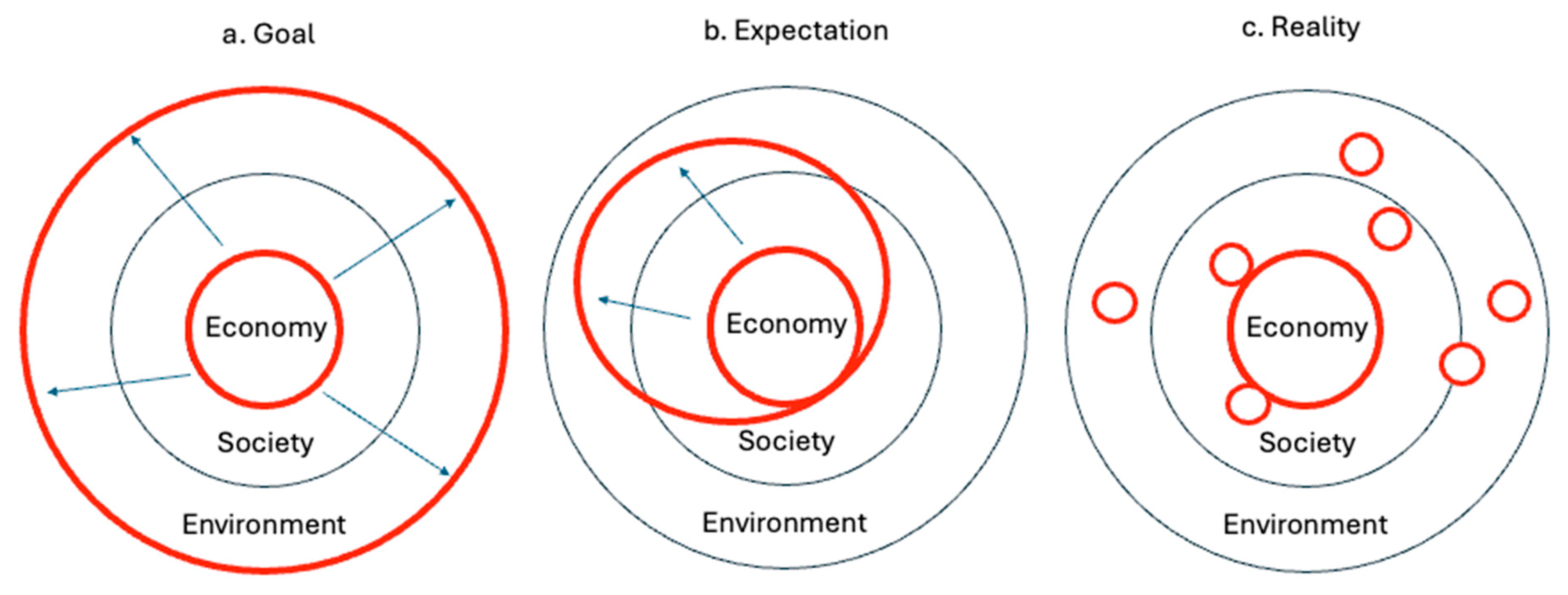
Critics also highlight the ecological, political, and institutional limits of commodifying ecosystem services. Farley and Costanza (2010) argue that many ecosystem services are non-rival, non-excludable, and ecologically interdependent, meaning they function more like public goods than private commodities [23]. Because markets cannot establish clear property rights or efficient prices for such services, they routinely misallocate benefits and costs and fail to reflect ecological realities. Gómez-Baggethun and Ruiz-Pérez (2011) and Muradian et al. (2010), further note that PES can entrench power imbalances by privileging actors with stronger legal and financial capacity while displacing customary stewardship practices [43,47]. Fletcher (2013), McAfee (2012) and Muradian and Gómez-Baggethun (2021), also show that the financialization of nature often reinforces neoliberal logics that prioritize profit over ecological integrity, thereby weakening collective action and crowding out intrinsic motivations for conservation [28,78,79]. Together, these critiques demonstrate that market mechanisms are poorly suited for governing ecosystem services in a just, efficient, or ecologically coherent manner. Figure 1 illustrates the gap in coverage of environmental resources when relying on PES to internalize these costs.
These concerns underscore a failure in ecological ethics and governance, indicating that the conservation and restoration of ecosystems cannot rely solely on market incentives. The behavioral assumptions introduced by PES and the financialization of nature perpetuate the persistent value–action gap by promoting purely transactional value instead of amplifying essential intrinsic values. Payments for Ecosystem Services (PES) are therefore not neutral policy tools; rather, they are complex mechanisms whose effects are highly sensitive to the surrounding context. A study by Moros, Vélez, and Corbera (2019) emphasizes that for PES to be successful, their design and implementation must be flexible, carefully crafted, and adapted over time to align with the existing social–ecological systems [43,80]. The findings support the viability of community-led PES development, recommending them as a suitable option when strong local collective action, high trust levels, and equitable benefit sharing are present, or when the transaction costs associated with individual payments are high. The financialization of ecosystems creates fragmented funding logics and mechanisms that drift away from institutional mandates while deepening power asymmetries by rewarding wealth and behavior shaped by capitalist values [81]. Newbold et al. (2015) attest that modern finance frequently operates in a parasitic manner—extracting value from the real economy rather than creating it [24]. This raises the analytical question of how institutional arrangements might be structured to reduce extractive dynamics and instead support more mutually reinforcing economic relationships in the Ecozoic. Critics of these traditional financialization efforts have developed multiple alternative methods for promoting conservation, namely ecological debt. Ecological debt is the idea that wealthier, wasteful nations owe a debt to poorer nations, future generations, and the world, asserting that restoration cannot emerge from markets built on the inequities that caused ecological degradation. It calls for structural redress, redistribution, and recognition of historical responsibility. Scholars who promote ecological debt argue that carbon trading, biodiversity offsets, and Payments for Ecosystem Services (PES) fail to address historical injustices and instead reproduce unequal ecological exchange in financialized forms [14,43,82].
Figure 1. Adapted from Johan Rockström and Pavan Sukhdev’s nested model of sustainability. The diagram shows a comparison of (a) the goal of Payments for Ecosystems Services (PES), which is to expand the economy to encompass the social and environmental externalities, which have not been well represented by markets in the past; (b) the expectation of PES, in which some externalities are incorporated into the market but many remain excluded; and (c) the reality of PES, which is a disjointed map of fragmented sections of the environment and society being included based on their ability to be measured and translated into economic terms [83].
Conservation 06 00037 g001
In this paper, we suggest that these models are inaccurate because they are based on an incomplete and inaccurate understanding of evolutionary advantages rooted in individualism. Instead, we cite Multi-Level Selection theory (MLS), a well-documented evolutionary theory in both social and ecological evolution, which emerges from collective action and cooperation, significantly increasing the capacity of groups to survive and build resilience. Evolutionary theorists observe that non-cooperating groups tend to become extinct, leaving those that cooperate to thrive at increasingly larger scales. Turning away from PES and the broader financialization of nature opens space for community-rooted, cooperative approaches to ecological restoration, such as Territories of Life (TOL). These collective governance systems are increasingly recognized as a cornerstone of global conservation, central to achieving international biodiversity commitments—including the Convention on Biological Diversity’s (CBD) 30 × 30 target—and vital for sustaining climate resilience through the protection of intact forests, peatlands, and other major carbon sinks. Without such ethical and community-based foundations, the financialization of ecosystem services will continue to underperform—exacerbating inequality, accelerating ecological degradation, and deepening vulnerability to climate disruptions, biodiversity loss, and systemic collapse.

2.2. The Case for an Ethical Foundation Change

Persistent market failures and the limits of the theories that seek to explain them motivate the proposal of a theoretical framework grounded in evolutionary biology, normative ethical values, and Indigenous knowledge systems. This framework aligns with Polanyi’s (1964) concept of the double movement, in which social protection emerges in response to market expansion, creating a necessary dialectical tension between market–state solutions and the embedding of the economy within social and ecological foundations [84].
Rather than privileging the autonomous “I” of the dominant economic paradigm, the framework advances a relational “we,” offering a model of behavior that emphasizes cooperation over competition in addressing large-scale social dilemmas. In doing so, it recognizes the limitations of approaches such as Payments for Ecosystem Services (PES) and ecological debt framing [85]. It foregrounds the need for justice and reconciliation between humans and the more-than-human world. Rooted in evolutionary biology, normative ethics, and Indigenous knowledge systems, this ethical framework is not a naïve moral appeal but a deliberate and pragmatic effort to rethink behavior in ways that help narrow the value–action gap [6,86,87].

3. Reframing the Debate: General Argument for Cooperation Through Evolution, and Relational Ontologies

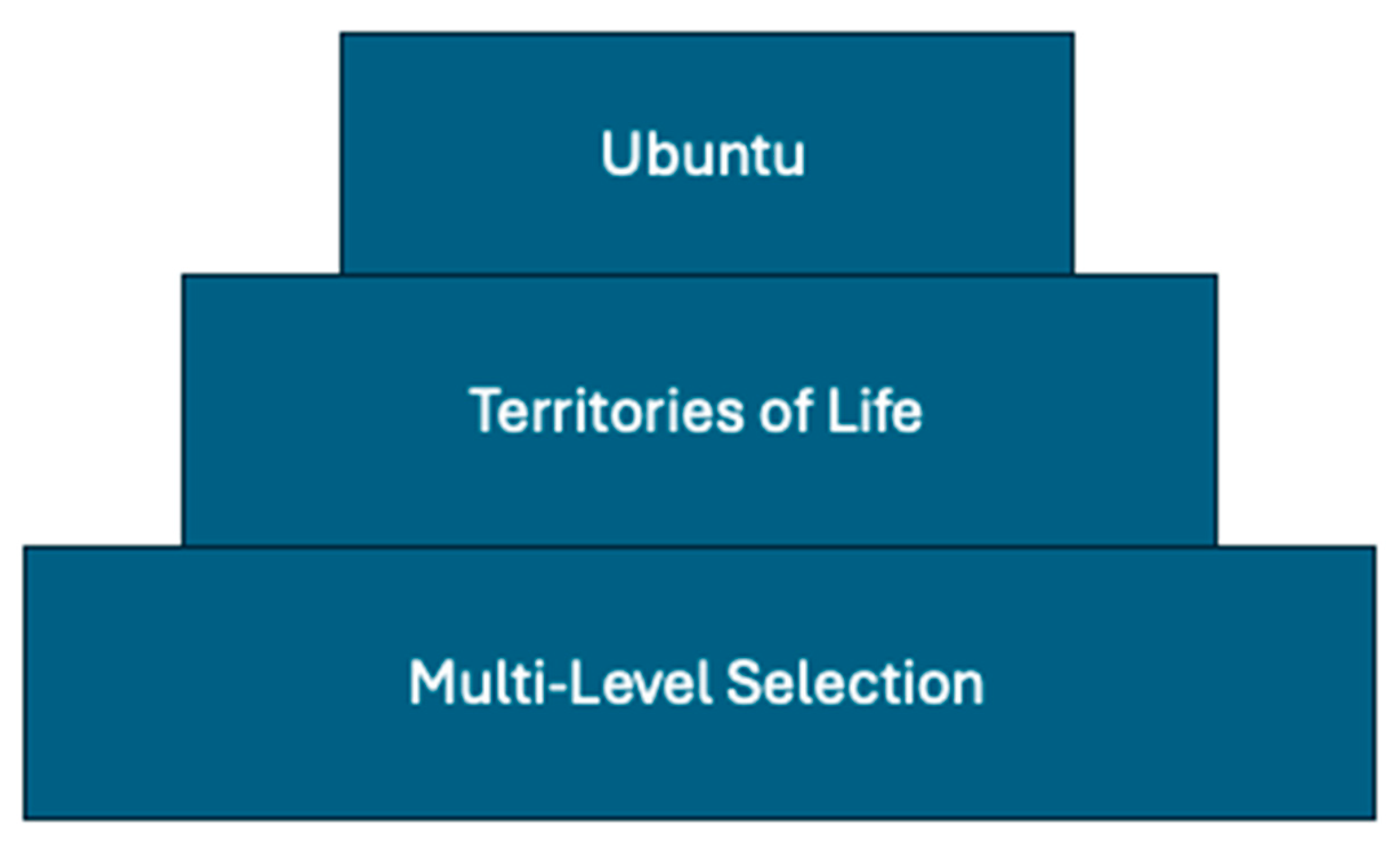
The limitations of market-based conservation approaches point to a deeper need to reimagine the human–nature relationship. There is a strong evolutionary basis for cooperation, which contradicts the dominance of self-interest in economic thinking. In contrast to the solutions that center the economy in ecological and social transformation, we present a case for better integrating our socio–ecological system into our economy. Within both human and more-than-human evolution, cooperation has been used to successfully manage and sustain resources and relationships [24,76,88]. The integration of Multi-Level Selection Theory (MLS), Territories of Life (TOL), and Ubuntu is undertaken within a broader effort to engage multiple knowledge systems as part of the conceptual framework developed here see Figure 2 below for a diagrammatical presentation. While MLS provides one analytical foundation grounded in evolutionary theory, it is not positioned as epistemologically superior. Instead, the framework seeks to examine points of convergence, divergence, and complementarity across these traditions.
The depiction in Figure 2 is not intended to represent a hierarchy among knowledge systems, but rather to illustrate areas of alignment, as well as conceptual tensions that emerge through their integration. In this formulation, Ubuntu and TOL are not treated as illustrative extensions of MLS, nor as normative supplements to a Western analytical structure. They are engaged as distinct epistemological frameworks brought into dialog with MLS. Where theoretical tensions arise, these are identified and examined explicitly rather than resolved through subsumption under a single explanatory model.
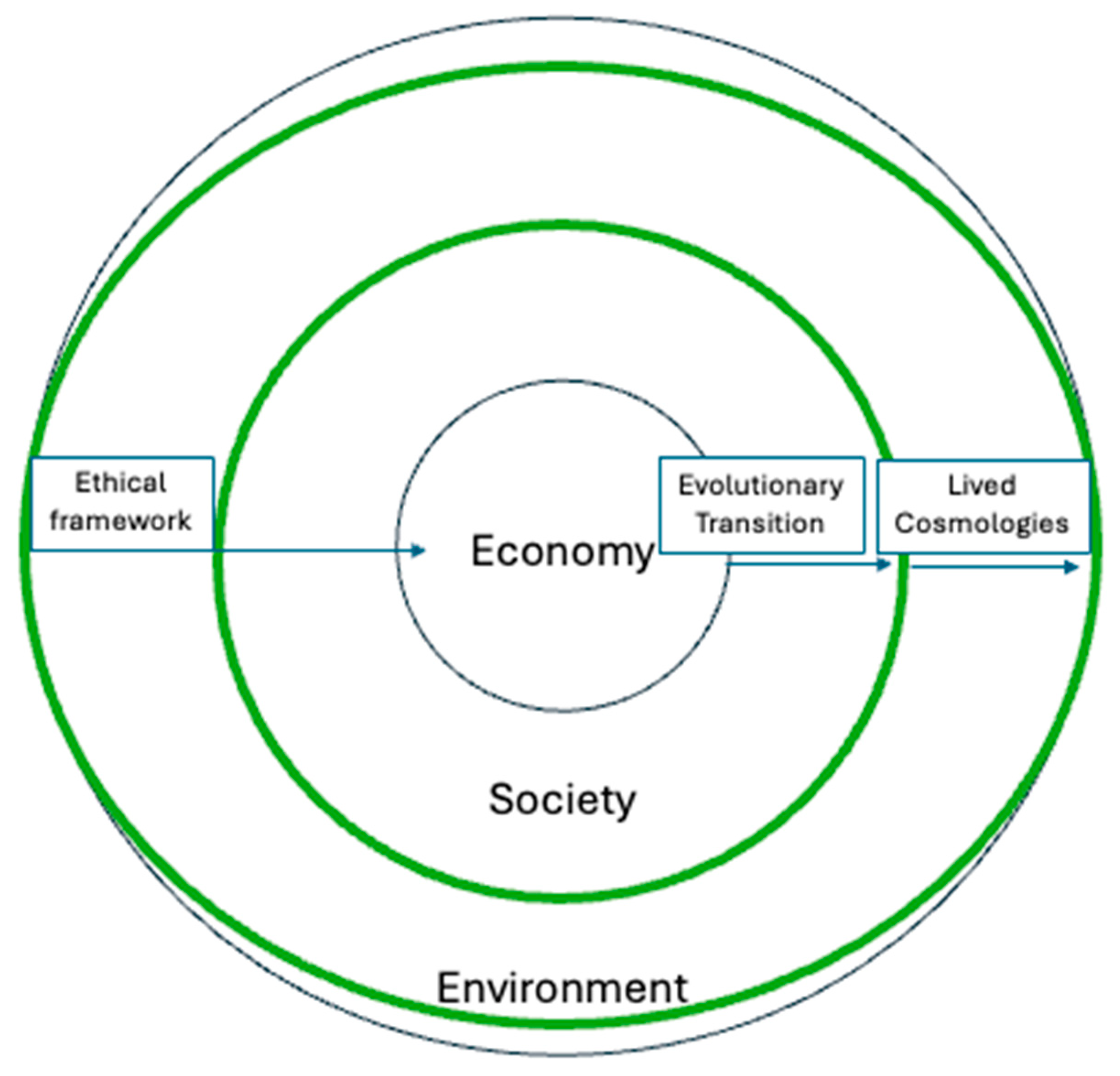
Figure 3 below seeks to demonstrate the significant tensions that exist within the integration of the environment, social and economy with the context of the proposed MLS, TOL & Ubuntu framework. The integration is key particularly regarding the scale of selection and context. While Ubuntu emphasizes between-group natural selection through shared social norms, MLS theory accounts for a more complex dynamic involving both within-group and between-group selection. Furthermore, these frameworks are not intended to be universal models; TOL, for instance, is highly context-dependent, reflecting specific ecological and cultural territorial realities. Ultimately, this framework demonstrates that fostering specific ethical foundations—such as shifting from individual rationality to group-level reciprocity—has direct policy implications by suggesting that sustainable behavior emerges from shared norms and institutionalized cooperation.

3.1. Multi-Level Selection (MLS) Theory: The Origins of Cooperation

Natural selection is often depicted as a fierce competition of all against all, with only the fittest individuals surviving to pass on their genes to the next generation. Within such a world, there is no morality, only survival [89]. But this story is grossly incomplete in at least two ways. First, there is now overwhelming evidence that cooperation between and within species played a critical role in the evolution of all complex life. Second, not all evolution is genetic. Darwin’s theory of natural selection requires only three things: a heredity mechanism, variation, and differential survival. Culture is also a hereditary mechanism encoded in symbols (e.g., language) rather than genes. We inherit culture from our family and community. There is typically more variation between cultures than between individuals within a culture, and our culture has a huge impact on survival. For example, when considering survival north of the Arctic Circle, cultural adaptation may matter more than ancestry: an individual of European descent raised within Inuit cultural practices would likely fare better than an Inuit individual raised in a metropolitan setting such as London. Genetically modern humans evolved 300,000 years ago. While we continue to evolve genetically, our subsequent expansion across the globe was driven by cultural evolution, as will be our adaptation to the ecological changes we have set in motion.
The earliest forms of cooperation were likely purely accidental, with one species serendipitously benefiting from the by-product of another’s metabolism, and vice versa. As the species co-evolved, they reached a point where they became so interdependent that neither could survive without the other. This is known as a major evolutionary transition (MET). Perhaps the most important example of this is the merger of archaeans and bacteria—two different domains of life less closely related to each other than humans are to amoeba—to form the eukaryotic cell, a new domain of life from which all complex life has evolved [89,90,91]. Many lineages of eukaryotic cells became so interdependent that they could only survive as multicellular organisms [90,92] Most multicellular organisms, including humans, host countless numbers of other species in their guts and elsewhere, known as the microbiome. Neither the microbiome nor the host can survive without the other. In an analogous fashion, archaeans, bacteria, eukaryotes, multicelled and social life forms collectively generate the ecosystem life support functions required for their mutual survival.
Multi-level selection theory builds upon MET by recognizing that natural selection can act at the level of the individual or the group. Clearly, prior to undergoing a MET, natural selection must be acting on the individual. Once a lineage has undergone a MET, natural selection can also act on the group, e.g., the eukaryotic cell, the multicellular organism, or the social organism. MLS theory accepts that both types of natural selection continue to act simultaneously. Although selfish behavior confers a competitive advantage to individuals within a group, groups characterized by higher levels of altruism (i.e., fewer selfish individuals) tend to outcompete other groups [91]. A corollary of this is that self-interested individuals undermine the fitness of the group. A selfish cell is a cancer that weakens the body. A selfish human is a sociopath who weakens society. A selfish society can harm the species. A selfish species is a plague that can threaten the life support functions of the ecosystem, as humanity is doing now.
While many species undoubtedly became social entirely through genetic evolution, in humans, cultural evolution plays a dominant role. Culture is a collective phenomenon. For the purposes of this article, we define culture as collective and cumulative knowledge, customs, institutions, technologies, and norms, including ethical and moral values, too complex to have been created by a single individual or a single generation. Moral values are particularly important in cultural evolution. Take a minute to think about the characteristics of a good person and an evil person. We have performed this exercise among many different audiences in different countries (albeit most often in university settings). Without exception, these audiences define a good person as someone who puts the interests of the group ahead of the individual and an evil person as someone who puts themselves ahead of the group. Anthropologists have identified cooperation and concern for others as among the most universal moral values across human societies [48,54,93,94]. Multi-Level Selection (MLS) theory explains how cooperation, altruism, and collective behavior evolve despite competitive pressures at the level of individuals [30,31,34,35,36,95,96]. MLS demonstrates that cooperation, when scaled up from individuals to groups, is not just a moral choice but an evolutionary advantage. Wilson and Sober (1994) revitalized MLS by demonstrating empirically and theoretically that “selfish individuals beat altruists within groups, but groups of altruists beat groups of selfish individuals” [30,31]. The success of cooperative groups outweighs the short-term benefits of individual self-interest. Evolution operates simultaneously at multiple, nested levels: genes, cells, organisms, groups, and societies. Selection pressures at smaller scales (e.g., individuals) are nested within larger-scale dynamics (e.g., ecosystems). When within-group competition dominates, selfish traits spread; when between-group competition dominates, cooperative groups outcompete selfish ones. Although selfish behavior confers a competitive advantage to individuals within a group, groups characterized by higher levels of altruism (i.e., fewer selfish individuals) tend to outcompete other groups.
MLS can be studied across Major Evolutionary Transitions (MET), from single-celled organisms to multicellular life, from genes to chromosomes, and from human bands to tribes, chiefdoms, and nation-states. As (Szathmáry, E. & Smith, J. M. (1995)) show, every major evolutionary transition is marked by previously independent units becoming integrated, cooperative wholes [82]. Human cultural evolution further amplifies this process: shared norms, identities, and cultural group selection [59,97] enable large-scale cooperation far beyond kinship ties. Humanity now faces the evolutionary imperative to complete the next transition, expanding cooperative relationships across all peoples and with the natural world, creating a planetary social unit capable of addressing global challenges. Wilson, (2019) argues humanity has reached a new evolutionary moment: our survival now depends on shifting selection to the planetary level, aligning incentives so that cooperative behaviors benefit not just groups, but all of life [36]. The call is to complete the final evolutionary transition: to extend our cooperative relationships to encompass all of humanity, future generations, and the rest of the natural world, creating a truly planetary-scale social unit [30,31,36,95,96]. By extending Multilevel Selection (MLS) as a framework of analysis, we can conceptualize social–ecological groupings, such as future generations and entire ecosystems, as distinct levels of selection. This approach allows for an analysis of how decision-making scales vary among individuals, who may prioritize outcomes across a spectrum from personal interests to societal and ecosystem-wide stability. Empirically validating these divergent priorities provides a foundation for environmental policies that align economic incentives with cooperative behaviors across both social and ecological scales.

3.2. Territories of Life (TOL)

Within the Indigenous Peoples’ and Community Conserved Areas and Territories Consortium (ICCA Consortium), the term ICCAs—Territories of Life refers to lands and waters that are governed, managed, and conserved by Indigenous peoples and local communities acting as custodians [16,25,98]. Territories of Life (TOL) is grounded in Indigenous territorial governance practices and political struggles for self-determination. In this paper, TOL is not abstracted as a general sustainability framework but engaged as a political–ecological lens rooted in specific territorial contexts. These territories represent a long-standing, globally widespread, and highly diverse phenomenon that takes multiple forms and is known by different names across regions and cultures, reflecting locally embedded governance systems and relationships with place [16]. These territories are grounded in the understanding that Indigenous peoples and local communities have cultivated deep, long-standing cultural, spiritual, and practical relationships with specific places. ICCAs are therefore not merely geographic spaces; they are socio–ecological systems that embody collective identity, intergenerational knowledge, and reciprocal ties between people and the lands and waters that sustain them [99]. The ICCA Consortium describes Territories of Life as areas where a distinct community maintains a profound and enduring bond with a particular territory, exercises primary authority over decision-making, and governs the land, water, and resources in ways that safeguard ecological integrity and cultural continuity. These governance systems rely on customary laws, traditional ecological knowledge, collective responsibilities, and shared norms that have evolved over centuries. Importantly, ecological stewardship is not understood as a technical intervention but as part of a lived, relational ethic embedded in everyday practices, ceremonies, and social obligations.
Across the world, ICCAs TOL encompass sacred forests, forage systems, communal pastures, rotational agroecosystems, fisheries, hunting grounds, wetlands, and mixed-use cultural landscapes. Although they take diverse forms and names, they share a common logic: biodiversity and cultural vitality thrive where communities retain the autonomy to steward their territories according to their own knowledge systems and values. These are ancient and dynamic forms of governance, predating modern conservation frameworks and often persisting despite colonial disruptions, land dispossession, and pressures from extractive industries.

3.3. Ubuntu

Ubuntu is an ethical framework native to southern Africa that embodies communal virtues, lives harmoniously with others, and actively enhances the relational well-being of the community, including the more-than-human world. Central values such as relationality, interdependence, communalism, friendliness, and human–nature interconnectedness define this philosophical tradition [100]. While Ubuntu is not representative of every African ethical tradition, it reflects relational values found widely across the region [100]. These values are not unique to Africa, and similar relational worldviews appear in many societies [101]. Ubuntu is understood to arise wherever communities commit to building harmonious relationships among themselves and with nature. Ubuntu, as an ethical perspective, champions cooperation, compassion, empathy, and shared responsibility. A person realizes full humanity by interacting with the community and honoring others’ dignity [22,57].
In Ubuntu, personal identity is inseparable from one’s ability to live well with others, including nature. It is therefore considered an anti-egoistic ethic, discouraging individuals from seeking their own benefit at the expense of others. Ubuntu has also been observed in the more human world. Wrage et al. (2024) document expressions of Ubuntu in elephant communities in South Africa [102]. In this case, adolescent male elephants had become separated from elder bulls, leading to escalating conflicts at water sources and the deaths of several white rhinos. When conservationists reunited the young elephants with experienced elders, restoring relationships, guidance, and social learning, the conflicts subsided. This example illustrates Ubuntu in practice: a relational ethic through which individuals learn to live well with others. Ubuntu thus fosters harmonious socio–ecological systems by prioritizing the well-being of the larger collective ecosystem over narrow individual interests [103,104].
Within Shona culture, this ethos is expressed in the proverb, Simba rehove riri mumvura—“a fish’s strength and very existence depend on the water ecosystem”—signifying that a fish’s survival and flourishing depend on their community and ecological relationships. Ubuntu thus cultivates the conviction that one’s life is sustained by others, just as one contributes to sustaining them [104,105,106,107]. Ubuntu philosophers argue that when asked about the intrinsic motivations that give life meaning, individuals shaped by Ubuntu would highlight their commitment to the community that formed them and the sense of coherence that comes from experiencing their lives as intertwined with those around them, extending to those before them—their ancestors—and those after them—the future generations [22,108,109]. They often emphasize community vitality, shared well-being, and the interdependence that binds people to those who have supported their existence. According to Shutte (2001), Ubuntu posits that our most fundamental moral duty is to grow into fully realized human beings through ever deeper engagement with others in community; although personal fulfillment remains a legitimate goal, this ethical orientation excludes selfishness [110]. Each person contributes their knowledge, abilities, and strategies toward shared social, ecological, and economic goals. Ubuntu, in this framework, promotes bonds of kinship between humans, plants, animals, and ecosystems. It foregrounds the “we” the recognition that humans share their local environments with other beings. The Ubuntu maxim “I am because we are; and because we are, therefore I am” can be interpreted as referring not only to the human community but also to relationships with nature [106,111,112].
Several South African examples demonstrate how Ubuntu has shaped public moral reasoning. The Ubuntu ethic was pivotal in designing the Truth and Reconciliation Commission, which pursued restorative rather than retributive justice for apartheid-era harms. The Constitutional Court also invoked Ubuntu to rule that the death penalty is incompatible with human dignity [113]. Scholars have drawn on Ubuntu to evaluate democratic governance [114], environmental ethics [115], xenophobia [116], development [117], legal reasoning [109], and business ethics [118].

3.4. Theoretical Underpinnings and Implications: MLS, TOL, and Ubuntu

Alternative knowledge systems embodied by Ubuntu, Multi-Level Selection (MLS) theory, and Territories of Life (TOL) function together as a transdisciplinary foundation for the Ecozoic. Each contributes distinct epistemic strengths: MLS supplies rigorous, empirically grounded theory about how cooperation scales; Ubuntu supplies relational ethics and narrative meaning; and TOL supplies place-based practice and institutional know-how for community stewardship. Donella Meadows taught that the deepest leverage point for systemic change is changing the paradigm, the set of stories, values, and assumptions that shape how societies behave [119].
Together, the three knowledge forms create powerful synergies. MLS provides causal legitimacy that can bridge disciplinary divides and translate moral claims into testable hypotheses and policy recommendations [27,120]. TOL demonstrates how plural knowledge can be institutionalized through tenure, customary rules, and co-management, enabling communities to steward commons and practice solidarity at scale [16]. Ubuntu’s story-based cosmovision and ethics help shift paradigms [113] and repair the epistemic injustices that have silenced Indigenous, relational ways of knowing [90].
Together, these knowledge forms create powerful synergies. MLS provides the causal legitimacy to translate moral claims into testable policy [41,58,79]. TOL demonstrates how plural knowledge is institutionalized through customary rules to steward the commons [16]. Ubuntu offers the ethical cosmovision necessary to shift paradigms and repair epistemic injustices. Together, they reconceptualize economics as ethically grounded and ecologically embedded. This integrated approach moves beyond conventional, individualistic ethics to establish a comprehensive ethical framework grounded in science, philosophy, and practice that can address planetary-scale social–ecological dilemmas. It positions cooperation, reconciliation, stewardship, solidarity, and diverse knowledge systems not as mere aspirations, but as the essential, evolutionarily astute pathways to ecological reconciliation and mutual flourishing in a new, life-affirming era. Ecological restoration and conservation must be guided not by commodification only, but by shared, relational ethics.

4. Drivers of Lawn Behavior in Burlington, Vermont

4.1. Background and Context

The local impacts of climate change in Burlington, Vermont, are amplified by development, agriculture, and other anthropocentric impacts. Chief among these challenges are water quality, increasingly severe precipitation, and habitat loss. Lake Champlain—a 435 square mile lake nestled between Vermont, New York, and Quebec—is a culturally, environmentally, and socially critical resource providing economic benefits to the area, drinking water to nearly 60,000 Vermonters, and recreational and cultural significance to residents [121]. Like many other temperate lakes, Lake Champlain struggles with increasing cyanobacteria (or blue–green algae) blooms brought on by warm, calm, nutrient-rich waters. The nutrients in question come from legacy phosphorus already in the lakebed from decades of development and heavy fertilization, and from runoff from the surrounding watershed, a land area 19 times that of the lake area itself. Approximately 85% of the land in Vermont is privately owned, yet the impacts from this land manifest in public resources.
Residential yards represent a significant yet underutilized opportunity for ecological restoration and conservation within urban environments. In the United States, turfgrass occupies an area approximately three times larger than any other irrigated crop and can require up to 900 L of water per person per day, alongside substantial fertilizer inputs and carbon-related costs [106,107,122]. More broadly, residential yards comprise an estimated 25–35% of total urban land area and as much as 50% of urban green space [103], positioning small-scale, privately managed landscapes as critical sites for restoring and enhancing ecosystem services where people live [123,124]. Despite this potential, traditional turf lawns and yards exemplify the persistence of culturally embedded norms in Western societies, even in the face of well-documented environmental harm. Turf lawns require intensive maintenance, typically involving fossil fuel–powered machinery, chemical fertilizers and pesticides, and large volumes of freshwater—resources for which planetary boundaries related to climate change, nutrient cycles, novel chemicals, and freshwater have already been exceeded. In addition to chemical runoff from fertilizer applications, turf lawns contribute to degraded soil health, reducing soils’ capacity to absorb stormwater and increasing runoff. They also diminish biodiversity by simplifying habitat structure and displacing urban land that could otherwise support food production or multifunctional green spaces. Nevertheless, turf lawns remain the dominant landscape type in the United States, including in Burlington, Vermont [121]. This persistence is particularly striking given that Burlington residents often self-identify as eccentric, revealing a disconnect between expressed environmental values and everyday land-use practices—a phenomenon commonly described as the value–action gap [55,84,108,125].
To explore the relationship between ecological objectives and human behavior, University of Vermont researchers surveyed Burlington residents regarding lawn care practices, with particular attention to the value–action gap and the motivations and constraints influencing pro-ecological lawn conversion. The survey response total was 388 residents. In the survey, the value–action gap refers to the disconnect between residential values, including ecosystem services, food provisioning, and community well-being, and the actions these residents do or do not take to realize them. In order to successfully address the complex dynamic of human–nature impacts on Burlington’s natural resources, this study investigates how individual choices are shaped by individual values, collective values, and social perceptions. By presenting this baseline in the value–action gap of Burlington residents in ecologically beneficial behavior, we can make purposeful steps toward closing it through recognizing humans as embedded within, not separate from, the larger web of life.

4.2. Data and Methods

The Burlington survey was distributed via approximately 10,000 email invitations sent to city residents acquired from the University of Vermont’s Center for Rural Studies. Additionally, we advertised through the local community platform, Front Porch Forum, to broaden outreach. The survey was administered between May and July 2024. The response rates were lower than anticipated, likely due in part to the U.S.A voter and survey fatigue during that period. At this stage, the collected data were used primarily for qualitative analysis; responses were not formally scaled, as the immediate objective was exploratory and interpretive rather than statistical generalization. Future iterations of the analysis will incorporate scaled measures and more robust quantitative techniques. Importantly, the research design does not aim to produce generalizable claims about the broader population, but rather to illustrate and examine patterns of cooperative behavior through the integrated MLS–TOL–Ubuntu framework. We acknowledge a demographic skew in the respondent pool—predominantly White, female, middle-income, and graduate-educated—and recognize this as a limitation. Ongoing and future quantitative analysis will further strengthen the empirical application of the framework.

4.3. Survey Results; Key Insights

The survey data reveal that the respondent pool is demographically narrow, skewing predominantly White, female, highly educated, and middle- to upper-income, with limited racial and ethnic diversity. Survey respondents were predominantly White or Caucasian, with relatively small representation from Black or African American, Asian, American Indian/Alaska Native, and other racial identities. A small number of participants preferred not to disclose their race. This racial composition reflects the broader demographic context of Burlington, Vermont, though it also indicates limited racial diversity within the sample. In terms of gender identity, the majority of respondents identified as female (63%, n = 204), followed by male respondents (33%, n = 106). A small proportion of participants identified as non-binary or third gender (2%, n = 6), preferred not to say (2%, n = 5), or chose to self-describe (less than 1%, n = 1). Overall, the sample was female-dominated, with limited representation of gender-diverse respondents. The age distribution skewed toward middle-aged and older adults. The largest age group was respondents aged 65 years and older (28%, n = 89), followed by those aged 35–44 years (24%, n = 79). Participants aged 45–54 years (18%, n = 59) and 55–64 years (17%, n = 55) were also well represented. Younger adults were less prevalent in the sample, with respondents aged 25–34 years comprising 12% (n = 38) and those aged 18–24 years accounting for only 1% (n = 3). This distribution suggests that survey participation was strongest among older residents. Furthermore, survey respondents were highly educated overall. More than half of participants reported holding a graduate or professional degree (55%, n = 179), including master’s, doctoral, and professional qualifications. An additional 30% (n = 98) reported a bachelor’s degree as their highest level of education. Together, respondents with at least a bachelor’s degree comprised approximately 85% of the sample. Smaller proportions of participants reported some college without completing a degree (7%, n = 23), an associate or technical degree (4%, n = 13), or a high school diploma or GED (3%, n = 9). Very few respondents reported some high school education or less (less than 1%, n = 1), and only one participant preferred not to disclose their educational attainment. This distribution indicates a sample skewed toward individuals with relatively high levels of formal education, a characteristic that may shape environmental knowledge, values, and capacity for engagement in land stewardship practices.
The survey findings suggest that, within this sample of Burlington residents, many respondents’ value ecological health and wildlife. Approximately 74.5% of respondents indicated that a lawn should be maintained for ecological benefits; yet, only 23% reported having considered or planning to convert their grass lawns. Among respondents who expressed ecological values but were not acting (51.5%), a value–action gap appears to be present. While this pattern cannot be generalized beyond this case, it may indicate a subgroup for whom targeted, context-sensitive interventions could support greater alignment between stated values and behavior, potentially benefiting both biotic and abiotic communities at the household scale.
In addition to individual self-defined values, the findings suggest that structural and cultural factors may shape conversion behavior in this context. Homeownership and land-use autonomy emerged within this dataset as important enabling conditions, while norms of tidiness, neighborhood expectations, and fear of social judgment appeared as recurring constraints. These patterns are consistent with prior scholarship on value–action gaps in pro-ecological behavior (such as Blake, 1999), though the present study does not test those theories directly [126]. The data also suggest that successful conversions may be labor-intensive, often relying on hands-on stewardship rather than outsourced maintenance. Higher reported conversion rates in denser areas such as the Old North End, New North End, and South End may reflect localized social dynamics—including visibility, peer influence, or lot size—though further research would be needed to substantiate these interpretations.
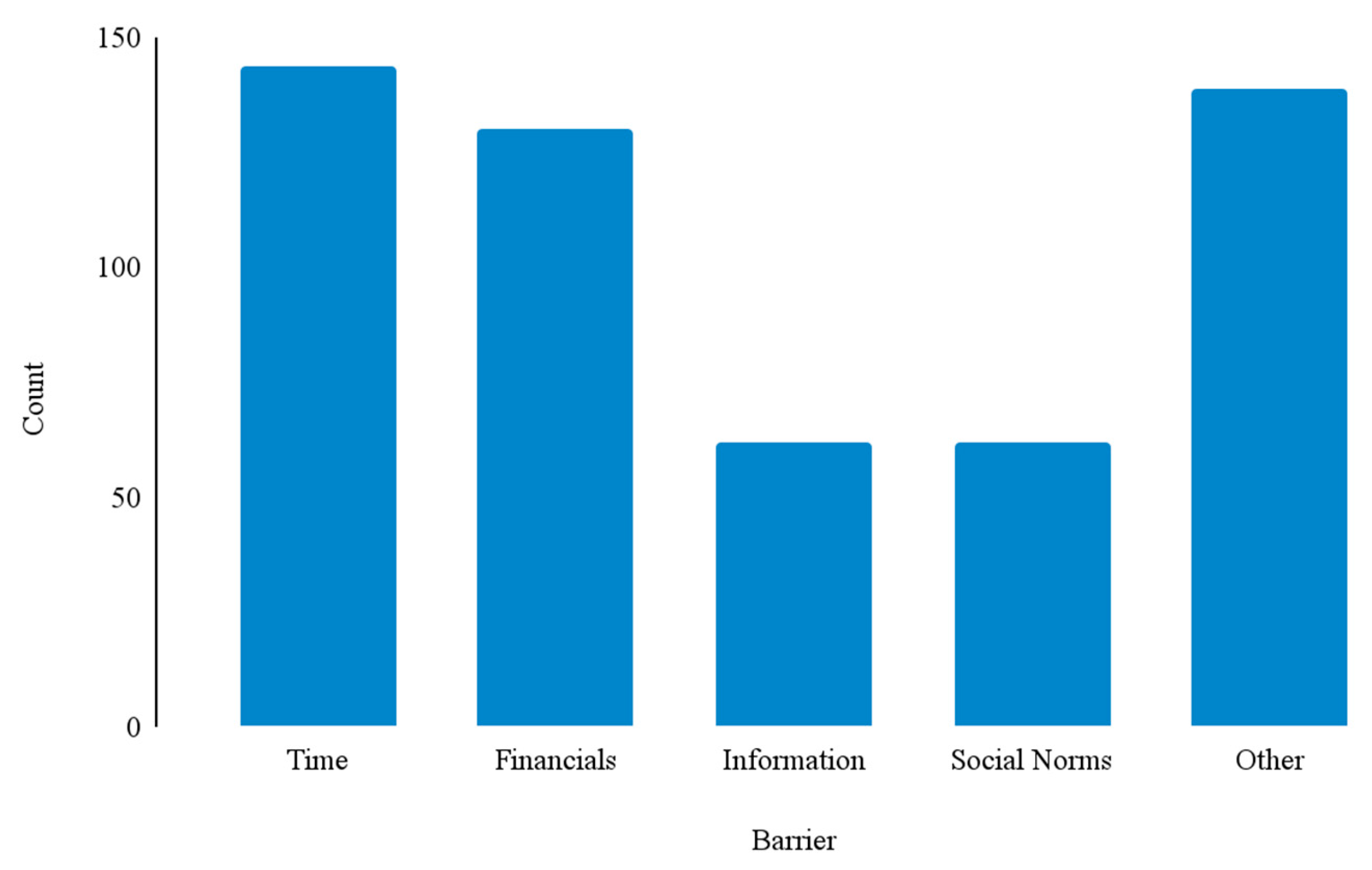
Figure 4 illustrates some of the barriers cited by Burlington residents, which helps to explain the 51.5% of respondents who reported a value–action gap. The most cited barrier was time (37%), then financial costs (34%), followed by a lack of information and social norms (both 16%). Of those who cited barriers, 34 (8.7%) cited just one barrier, with the majority citing multiple barriers that exist together to inhibit action. Despite being the second most cited barrier, only five individuals (1.2%) cited them as the sole inhibitor, indicating that financial constraints alone may be insufficient to prevent participation. Instead, financial barriers appear to operate in conjunction with social, institutional, or logistical constraints. This evidence is in alignment with prior research documenting barriers to lawn conversion in the United States [67,123,124], drawing on a nationwide survey, found that the most frequently cited obstacles to converting a small portion of lawn to native wildflowers were the time required for maintenance and uncertainty about how to proceed. Similarly, Burr et al. (2018) identify limited financial resources, lifestyle constraints, life stage, and the influence of commercial actors as key factors shaping lawn management decisions [127]. In this context, commercial actors—such as garden centers and landscaping retailers—play a significant role by shaping both plant availability and prevailing norms surrounding acceptable landscape maintenance practices. Figure 4 below demonstrates how the data was explored to understand what are the contours of the motivations and barriers to lawn conversion amongst landowners.
Likewise, as individuals in a neighborhood begin to transform lawns, the other individuals in that neighborhood are more likely to transform or want to transform theirs [111]. While the perceived social enforcement of front yard esthetics can stifle the adoption of ecologically beneficial practices, it also highlights a powerful opportunity for change. Because social conformity operates in both directions, public-facing gardening often becomes spatially clustered [61,92,128]. Consequently, encouraging early adoption can create a snowball effect, eventually reaching a tipping point where ecological stewardship replaces the conventional lawn as the dominant yard style and primary reservoir of cultural values. Initiatives like Doug Tallamy’s “Homegrown National Park” movement specifically leverage this socio-cultural importance of private yards to drive large-scale lawn conversion [97,123,124,129,130]. This phenomenon is supported by the research of Nassauer et al. (2009), which demonstrates that landscaping decisions are heavily dictated by broad cultural expectations and localized social norms [88]. Their study found that even when homeowners personally lean toward traditional esthetics, the pressure to conform to the established visual character of their street often overrides individual preference. These findings suggest that, within the scope of this case study, a neighborhood’s collective “look” may function as an important social regulator of environmental behavior. Respondents appeared more likely to consider ecological landscape designs when they perceived similar actions among neighbors. In some instances, social context seemed to reshape preferences, with native plant gardens becoming more desirable as they approached local norm status. Conversely, fear of social disapproval and the absence of “cues to care” visible signals of intentional landscape management (Nassauer et al., 2009) emerged in this dataset as perceived barriers to adopting alternative ecological designs [68,88].
Taken together, these patterns indicate that social relationships may play a meaningful role in shaping how some Burlington residents interact with their lawns and shared ecological spaces. However, as noted in the section, the study is constrained by demographic bias, sample size, and analytical scope. The findings should therefore be interpreted as exploratory rather than generalizable. Alternative interpretations including economic constraints, time availability, or unmeasured household characteristics may also help explain observed behaviors.
While the results are consistent with MLS-informed hypotheses regarding the influence of group-level norms on individual behavior, they do not constitute a formal test of MLS. Rather, the case offers an illustrative example of how social norms, cooperation, and perceived group expectations may intersect with ecological decision-making in a specific urban context [130]. The data also suggest that economic incentives alone, such as Payments for Ecosystem Services (PES) or subsidies, may be insufficient to shift behavior if cultural norms remain unchanged. However, further research would be needed to assess how economic, social, and normative factors interact across different settings.

5. Building Ethical Foundations: The Neighbor’s Goodwill

Carrying through the analogy of two neighbors with lawns in Burlington, VT, multiple outcomes can emerge. In game-theoretic terms, assume each has two strategies: maintain a mowed, manicured lawn that conforms to prevailing social norms, or maintain a lawn of native plant species. A player can choose either option.
A manicured lawn may hold value because it signals status or respectability, but to whom? Who is the audience for this signaling behavior? It is more likely that observers who value this lawn lack ecological knowledge or climate literacy, and they do not hold ecosystem services as intrinsically valuable. Realistically, this lawn has more monetary investments and time in maintaining a landscape that reduces habitat compared to a native lawn. On the other hand, the landowner with a native lawn may want to avoid deviating from esthetic norms because a native lawn may not appear as “conventionally attractive.” Again, the question becomes to whom? Those who do not understand ecology may perceive it as unkempt or lazy, but those who do understand it will see it as a species-rich, ecosystem space that makes ecological flourishing possible.
To describe this further, the former—conventional cut grass with fertilizer inputs—is not conducive to pollinators, native vegetation, or habitat health, and often contributes to nutrient runoff. The latter creates a space for biodiversity, ecosystem services, and ecological resilience. Depending on the landowner’s values, social identity, and payoff structure, the perceived outcomes differ. The bigger picture is about community membership and identity. Which community do you see yourself as belonging to? If you align with a community of all living beings (an ecocentrism), the benefits of a native lawn are greater. If you align primarily with the community of your own ego or status (an egocentric), the perceived benefits of a heavily manicured, fertilized lawn may be higher. These dynamics matter before we approach the framework as economists, who are seduced by models.
The Prisoner’s Dilemma, an example of a social dilemma, is a foundational model that demonstrates how individually rational decisions can produce collectively irrational outcomes [69,125,129,131]. Two players choose to either cooperate or defect. Mutual cooperation yields a jointly beneficial outcome, or the ‘reward’ payoff (R, R); however, each player faces a conflicting incentive to defect for a higher private payoff, or the ‘temptation’ payoff (T), leaving the cooperator with the lowest payoff (S) [71,132]. This tension produces a dominant-strategy equilibrium for selfish individuals in which both defect, resulting in a lower payoff for both the individual and the collective, or the ‘punishment’ payoff (P, P). The Prisoner’s Dilemma depicts a scenario in which self-interest can undermine cooperation. T > R > P > S. See Table 1.
However, the Prisoner’s Dilemma has been contested since it assumes individuals act solely in their own self-interest, meaning they are not embedded in community norms or relationships [120]. This model is based on the same fallacies that underpin how Western society understands evolution: individualistic. As our previous sections have detailed, in reality, cooperation in human societies is even more realized as an evolutionary advantage. Sacrifices made by an individual for the betterment of their community are certainly not an anomaly, but rather something that is frequently observed [10,59]. Shaped by trust and reputation, the incentive structure itself is different from the underlying incentives in the Prisoner’s Dilemma [2,22,57,69,85,125,133,134]. To demonstrate the alternative assumptions, the Neighbor’s Goodwill accurately demonstrates the actors who do not align with the underlying assumptions of the Prisoner’s Dilemma, which is many.
MLS demonstrates that cooperative behavior often yields greater evolutionary fitness than selfish behavior because groups with strong norms of loyalty, reciprocity, and mutual aid outperform groups of individual maximizers [7,30,34]. Though an individual actor may experience short-term benefits from defection, the group is worse off. In the long term, the individual repeatedly prioritizing short-term benefits at the dismay of their community will suffer, and the group of individuals continuously forgoing short-term benefits for each other will prevail. It is important to name this structure where individuals within a group recognize long-run outcomes, even on a short-run scale—players who visualize how their actions on the margin affect their neighbors.
The Neighbor’s Goodwill payoff structure captures this shift (Table 2). When players operate as members of a committed collective—such as a neighborhood, a Rotating Savings Credit Association (ROSCA) [21], or any well-defined community— the true payoffs incorporate community trust, belonging, and long-run reciprocity. Mutual cooperation remains the best outcome (R, R), but now its value is amplified by the other options, which look different. Defection becomes notably costlier because the defector forfeits their community’s trust and the protective structure that the group provides. This aligns with the Ubuntu ethic that normalizes the ostracization of the defector who prioritizes themselves over their community. Instead of receiving the PD’s temptation payoff (T), their payoff becomes the ‘isolated’ outcome (I): a short-term material gain paired with a large social loss. The loyal player maintains group membership and thus preserves their long-term fitness, even at short-term cost, or the ‘sacrificial’ outcome (S). When both defect, the collapse of the community yields an even worse outcome than in the standard PD, or the collective loss outcome (L, L). The model illustrates MLS logic: groups of defectors dissolve; groups of cooperators persist. R > S > I > L
Here, we recognize that the true neighbors would rather be a loyal sucker (S) than an opportunist outcast (I). In other words, they would rather absorb short-run costs than jeopardize their standing within the community that sustains their long-run welfare. It also makes sense in the PD framework—if the prisoner was part of a well-defined group, confessing the evidence would be seen as betrayal. Even though they would receive bail, there would be much less waiting for them on the other side of the bars since trust was broken. In this way, the Neighbor’s Goodwill exemplifies the moral foundations of MLS: groups anchored in loyalty and commitment persist, whereas groups dominated by opportunism erode. The theory is exemplary of the relational consumer, or the consumer that recognizes how their actions constitute a contribution to the collective [21].
Recognizing that players are often a part of a community transforms models of self-interested dilemmas into models of group-level reciprocity. The Neighbor’s Goodwill shows how individuals—when situated within a meaningful collective—shift from optimizing personal gains to optimizing group welfare. The remaining questions linger in how one situates themselves and defines one’s communities. From an ecologist’s perspective, there are egocentrics, anthropocentrists, and ecocentrists, but from anthropologists’ perspectives, our participation in communities is dynamic and hardly straightforward. How we define our communities is an important aspect of defining where our loyalties lie, and ultimately, which collective we want to prioritize.

6. Discussion

Economic models of human behavior may have limited explanatory power when applied to complex social–ecological relationships. In response, market-based mechanisms such as payments for ecosystem services (PES) have been developed to internalize environmental externalities and more closely align private incentives with conservation objectives [102,118,135,136,137,138]. Empirical evidence shows that PES schemes have, in many contexts, generated measurable conservation gains—such as reduced deforestation and improved land stewardship—particularly when supported by strong institutions and clear environmental targets [26,70]. Rather than dismissing market-based incentives outright, these findings suggest that conservation and restoration efforts are most effective when PES mechanisms are embedded within broader ethical, regulatory, and community-based governance frameworks [81,139]. These approaches have been unsuccessful in addressing many of the barriers to pro-ecological behavior contributing to the value–action gap recognized in Western society and provide disjointed, incomplete protection over environmental resources (see Figure 1). In light of this, it is imperative to shift the inputs of our economic models to account for the realities of human behavior and its evolution across space and time.
Applying MLS as a scientific foundation, TOL as a social theory, and Ubuntu as a practical application (Figure 2), this framework illustrates the potential pro-ecological behavior that can, and does, result from cooperation. The findings from the Burlington case study indicate that financial barriers alone do not prevent the adoption of lawn conversion practices, but are a compounding factor, existing with other barriers to adoption, such as a lack of time, knowledge, or social pressures. A primary driver of the value–action gap for pro-ecological lawn care practices is social norms and neighbor perceptions. The survey findings presented here should be interpreted with caution. As with many voluntary survey instruments, the data are subject to potential sampling bias, nonresponse bias, and response effects that may influence how participants interpret and answer questions. The respondent pool, therefore, cannot be assumed to represent the broader Burlington population, and the results should not be generalized beyond the study sample. Rather than serving as a basis for population-level inference, the survey is used here as an exploratory instrument to interpret patterns of behavior and self-reported motivations. In particular, the analysis examines the extent to which cooperative orientations and social norms appear to mediate environmental decision-making in ways that extend beyond purely financial or incentive-based considerations typically modeled in standard economic frameworks.
These findings suggest that financial constraints alone are unlikely to fully explain adoption decisions related to lawn conversion practices and instead operate alongside other factors such as time availability, access to information, and perceived social expectations. Survey and interview responses indicate that social norms and perceptions of neighbors may be associated with the value–action gap in pro-ecological lawn care. Participants often referenced neighbors, peer groups, and local environmental features (e.g., Lake Champlain) when discussing decision-making, implying that identity and group affiliation may play a role in shaping environmental behavior. When applying the Neighbors’ Goodwill, the “neighbor” can exist at different scales, which foster different behaviors. When the view of the “neighbor” is narrow—an HOA or neighborhood—behavior is anthropocentric, whereas when the view of the “neighbor” is broad—all living beings—behavior is egocentric. Anthropologists emphasize that identity is shaped by social norms, obligations, and moral expectations [48,127,140]. Sociologists echo these themes and show that sense of belonging can shape behavior beyond individual self-interest [134]. Economists are formalizing cooperative interest over self-interest by treating relationships and group membership as part of utility though human behavior and psychology are not easily translated into mathematical form [67,91,109,141].
By recognizing a new level of organizing in MLS—a planetary community, as exemplified in TOL and Ubuntu—we expand the “group” to include the environment and future generations. In this understanding of community, residents make decisions at different scales: egocentrics, anthropocentrists, and ecocentrists. Egocentrists prioritize their own exclusive interest, anthropocentrists prioritize the interests of society, and ecocentrists prioritize the interests of the entire ecosystem. This systemic shift has society-wide implications, including pro-ecological behavior as exemplified in the Neighbor’s Goodwill outcomes, which are maximized in cooperation [11,114,141,142]. At the policy level, ethical governance should re-embed mechanisms and incentives into social and ecological interactions that reinforce cooperation, embracing collective identities and destinies in the Ecozoic. From a policy perspective, these findings suggest that accelerating urban agroecological transitions requires more than financial incentives; it calls for strengthening community-level governance and social norms that enable cooperation. Outreach organizations can catalyze this shift by fostering neighborhood stewardship networks, peer learning circles, and visible demonstration sites that normalize ecological practices and create shared “cues to care.” Municipal policies can reinforce these efforts by reforming restrictive ordinances, incentivizing collective landscape projects rather than isolated parcel-level changes, and embedding participatory governance into urban land-use planning. Ecological behavior, in this framing, is not an individual consumer choice but a socially coordinated practice shaped by belonging and shared responsibility [39,55,125].

7. Conclusions

The evidence presented in this paper suggests that certain contemporary environmental challenges may be linked, in part, to foundational assumptions embedded within dominant market-based economic frameworks. Long-standing economic models often emphasize individual-level optimization and material incentives, which may privilege individualized decision-making over collective or relational considerations. In some contexts, this orientation appears to correlate with patterns of environmental degradation, weakened social cohesion, and governance approaches that conceptualize ecosystems primarily in instrumental or commodity-based terms. While these associations do not imply singular causation, they indicate potential limitations in prevailing economic assumptions when applied to complex social–ecological systems. The next step delves into addressing economic models that perpetuate these problems because of how they model human behavior. Economic frameworks demonstrate rational thought as self-interested and equate success with individualism. These alternative frameworks demonstrate relational thought as group-identifying and promote cooperation on multiple levels.
To provide a roadmap for emerging frameworks that champion cooperation, this paper anchors itself in Multi-Level Selection Theory (MLS). Employing MLS as the scientific foundation demonstrates that cooperation is not an anomaly but, in fact, an evolutionary advantage. Groups that organize themselves around mutual interest outperform groups that are dominated by self-interest. Territories of Life (TOL) then offers a step up the pyramid, providing an institutional basis, showing how communities around the world institutionalize cooperative norms. Though cooperative norms can vary by the group-level interests, in TOL, group norms encompass ecocentrist relationships with communities, the environment, and future generations. These institutions identify humans as a part of the ecosystem, and thus, our group-level decisions are made with the entire ecosystem in mind. Ubuntu provides a pointed and specific example of a well-defined ethic shaped by the mantras of “a person is a person because of their communities”, or “I am because We are” [105,106]. In Ubuntu, an opportunist outcast places themselves at an evolutionary disadvantage. Picturing MLS as a base layer of a pyramid, TOL as a middle layer, and Ubuntu as a top layer provides a coherent organizing principle for further group identification strategies that can reshape economic norms from selfish to mutual.
Our Burlington case study provides data that showcases these dynamics at play in Western consumers. Through institutions, lawns are made rival and excludable (private). This case study exemplifies that behavior is not shaped by prices alone, but rather by the motivation of the community. That being said, there is still a value–action gap observed, which should not be viewed as a failure of incentives but rather as an outcome of imposed restrictions. These findings are exemplary of how social norms and group identity shape behavior.
This work, then, calls for a behavioral economic model that accurately represents the decisions of someone who operates on multi-level interest. The Neighbor’s Goodwill represents the dynamics of a decision matrix in which individuals have a strong group identity. Their actions reflect the interests of the whole, not the interests of the self. Mirrored from the decision matrix of the Prisoner’s Dilemma, the model is reframed to show that one who chooses to cooperate will be better off than one who chooses to defect. Rather than pitting the economy against the environment, we harmonize the two by redefining the ethical underpinning of economic models through utilizing the scientific foundations of MLS. We show that the environment is not at odds with the economy itself, but the assumption that individualism is the norm. When Ecozoic group ethics are built into economic design, the economy and the environment cease to compete.

Author Contributions

L.M.: Conceptualization, methodology, software, validation, formal analysis, investigation, resources, data curation, writing—original draft preparation, writing—review and editing, supervision, project administration, and funding acquisition. J.D.: Conceptualization, methodology, validation, formal analysis, investigation, visualization, data, writing—original draft preparation, writing—review and editing, supervision, and project administration. A.C.M.: Conceptualization, methodology, validation, formal analysis, investigation, visualization, data, writing—original draft preparation, writing—review and editing, supervision, and project administration. J.F.: Conceptualization, methodology, software, validation, formal analysis, investigation, resources, data curation, writing—original draft preparation, writing—review and editing, supervision, project administration, and funding acquisition. All authors have read and agreed to the published version of the manuscript.

Funding

This research was supported in part by the USDA National Institute of Food and Agriculture, Hatch project 038725, and by the Leadership for the Ecozoic.

Institutional Review Board Statement

The study was conducted in accordance with the Declaration of Helsinki and approved by the Institutional Review Board (or Ethics Committee) of University of Vermont (protocol code is CHRBSS (Behavioral): STUDY00003043 and 6 June 2024) for studies involving humans.

Informed Consent Statement

Informed consent was obtained from all subjects involved in the study.

Data Availability Statement

The data that support the findings of this study are available on request from the corresponding author. The data are not publicly available due to privacy or ethical restrictions.

Acknowledgments

This manuscript benefited from the use of Perplexity, a free AI-powered answer engine and conversational search platform that interprets natural-language queries, searches the internet in real time, and synthesizes concise, sourced, and contextually relevant information. Perplexity was used solely as a language and research support tool—to assist with refining clarity, organization, and academic expression, particularly in enhancing English language usage. The platform did not generate original ideas, concepts, theoretical frameworks, or interpretations; all intellectual contributions, analyses, and conclusions presented in this article are entirely those of the author(s). The authors have reviewed and edited the output and take full responsibility for the content of this publication.

Conflicts of Interest

The authors declare no conflicts of interest.

References

  1. Daly, H.E. Steady-State Economics; W. H. Freeman: San Francisco, CA, USA, 1977. [Google Scholar]
  2. Richardson, K.; Steffen, W.; Lucht, W.; Bendtsen, J.; Cornell, S.E.; Donges, J.F.; Drüke, M.; Fetzer, I.; Bala, G.; von Bloh, W.; et al. Earth beyond six of nine planetary boundaries. Sci. Adv. 2023, 9, eadh2458. [Google Scholar] [CrossRef] [PubMed]
  3. Rockström, J.; Donges, J.F.; Fetzer, I.; Martin, M.A.; Wang-Erlandsson, L.; Richardson, K. Planetary boundaries guide humanity’s future on Earth. Nat. Rev. Earth Environ. 2024, 5, 773–788. [Google Scholar] [CrossRef]
  4. Bar-On, Y.M.; Phillips, R.; Milo, R. The biomass distribution on Earth. Proc. Natl. Acad. Sci. USA 2018, 115, 6506–6511. [Google Scholar] [CrossRef] [PubMed]
  5. Greenspoon, L.; Krieger, E.; Sender, R.; Rosenberg, Y.; Bar-On, Y.M.; Moran, U.; Antman, T.; Meiri, S.; Roll, U.; Noor, E.; et al. The global biomass of wild mammals. Proc. Natl. Acad. Sci. USA 2023, 120, e2204892120. [Google Scholar] [CrossRef]
  6. Berry, T. The Dream of the Earth; Sierra Club Books: San Francisco, CA, USA, 1988; Volume 2. [Google Scholar]
  7. Farley, J.; Melgar, R.E.; Ansari, D.H.; Burke, M.J.; Danielsen, J.; Egler, M.; Makombore, L.; Neira, J.; Poudel, S.; Sellers, S.; et al. Rethinking ecosystem services from the anthropocene to the Ecozoic: Nature’s benefits to the biotic community. Ecosyst. Serv. 2024, 67, 101624. [Google Scholar] [CrossRef]
  8. Gowdy, J.; Krall, L. The ultrasocial origin of the Anthropocene. Ecol. Econ. 2013, 95, 137–147. [Google Scholar] [CrossRef]
  9. Ellis, E.C.; Gauthier, N.; Klein Goldewijk, K.; Bliege Bird, R.; Boivin, N.; Díaz, S.; Fuller, D.Q.; Gill, J.L.; Kaplan, J.O.; Kingston, N.; et al. People have shaped most of terrestrial nature for at least 12,000 years. Proc. Natl. Acad. Sci. USA 2021, 118, e2023483118. [Google Scholar] [CrossRef]
  10. Hughes, T.P.; Carpenter, S.; Rockström, J.; Scheffer, M.; Walker, B. Multiscale regime shifts and planetary boundaries. Trends Ecol. Evol. 2013, 28, 389–395. [Google Scholar] [CrossRef]
  11. Becker, C.U. Ethical underpinnings for the economy of the Anthropocene: Sustainability ethics as key to a sustainable economy. Ecol. Econ. 2023, 211, 107868. [Google Scholar] [CrossRef]
  12. Escobar, A. Designs for the Pluriverse: Radical Interdependence, Autonomy, and the Making of Worlds; Duke University Press: Durham, NC, USA, 2018. [Google Scholar]
  13. Fanning, A.L.; O’Neill, D.W.; Büchs, M. Provisioning systems for a good life within planetary boundaries. Glob. Environ. Change 2020, 64, 102135. [Google Scholar] [CrossRef]
  14. Gowdy, J.M. The value of biodiversity: Markets, society, and ecosystems. Land Econ. 1997, 73, 25–41. [Google Scholar] [CrossRef]
  15. Greenspoon, L.; Ramot, N.; Moran, U.; Roll, U.; Phillips, R.; Noor, E.; Milo, R. The global biomass of mammals since 1850. Nat. Commun. 2025, 16, 8338. [Google Scholar] [CrossRef] [PubMed]
  16. ICCA Consortium. ICCA Consortium: Strengthening Territories of Life. 2017. Available online: https://www.iccaconsortium.org/ (accessed on 2 August 2023).
  17. Vatn, A.; Bromley, D.W. Choices without prices without apologies. J. Environ. Econ. Manag. 1994, 26, 129–148. [Google Scholar] [CrossRef]
  18. Vatn, A. Rationality, institutions and environmental policy. Ecol. Econ. 2005, 55, 203–217. [Google Scholar] [CrossRef]
  19. Vatn, A. Environmental governance—From public to private? Ecol. Econ. 2018, 148, 170–177. [Google Scholar] [CrossRef]
  20. Bromley, D.W. Environment and Economy: Property Rights and Public Policy; Blackwell: Oxford, UK, 1991. [Google Scholar]
  21. Danielsen, J.; Makombore, L.; Farley, J. The power of the commons. Sustainability 2025, 17, 2512. [Google Scholar] [CrossRef]
  22. Nxumalo, S. Introducing Ubuntu to Property Law: A Case for Environmental Stewardship. Edinb. Stud. Law Rev. 2025, 5, 75. [Google Scholar] [CrossRef]
  23. Farley, J.; Costanza, R. Payments for ecosystem services: From local to global. Ecol. Econ. 2010, 69, 2060–2068. [Google Scholar] [CrossRef]
  24. Newbold, T.; Hudson, L.N.; Hill, S.L.; Contu, S.; Lysenko, I.; Senior, R.A.; Börger, L.; Bennett, D.J.; Choimes, A.; Collen, B.; et al. Global effects of land use on local terrestrial biodiversity. Nature 2015, 520, 45–50. [Google Scholar] [CrossRef]
  25. Feagan, R.; Ripmeester, M. Reading private green space: Competing geographic identities at the level of the lawn. Philos. Geogr. 2001, 4, 79–95. [Google Scholar] [CrossRef]
  26. Fischer, J.; Abson, D.J.; Butsic, V.; Chappell, M.J.; Ekroos, J.; Hanspach, J.; Kuemmerle, T.; Smith, H.G.; von Wehrden, H. Land sparing versus land sharing: Moving forward. Conserv. Lett. 2014, 7, 149–157. [Google Scholar] [CrossRef]
  27. Smith, A. The Wealth of Nations; W. Strahan and T. Cadell: London, UK, 1776. [Google Scholar]
  28. Muradian, R.; Gómez-Baggethun, E. Beyond ecosystem services and nature’s contributions: Is it time to leave utilitarian environmentalism behind? Ecol. Econ. 2021, 185, 107038. [Google Scholar] [CrossRef]
  29. Becker, G.S. A theory of social interactions. J. Political Econ. 1974, 82, 1063–1093. [Google Scholar] [CrossRef]
  30. Wilson, D.S.; Sober, E. Reintroducing group selection to the human behavioral sciences. Behav. Brain Sci. 1994, 17, 585–608. [Google Scholar] [CrossRef]
  31. Wilson, D.S.; Wilson, E.O. Rethinking the theoretical foundations of sociobiology. Q. Rev. Biol. 2007, 82, 327–348. [Google Scholar] [CrossRef]
  32. Wittwer, R.A.; Bender, S.F.; Hartman, K.; Hydbom, S.; Lima, R.A.; Loaiza, V.; Nemecek, T.; Oehl, F.; Olsson, P.A.; Petchey, O.; et al. Organic and conservation agriculture promote ecosystem multifunctionality. Sci. Adv. 2021, 7, eabg6995. [Google Scholar] [CrossRef]
  33. Farley, J.; Gowdy, J.; Marshall, S. Cultural evolution, multi-level selection and institutions for cooperation. In A Research and Action Agenda for Ecological Economics; Costanza, R., Erickson, J., Farley, J., Kubiszewski, I., Eds.; Edward Elgar: Cheltenham, UK, 2020. [Google Scholar]
  34. Wilson, D.S.; Gowdy, J.M. Evolution as a general theoretical framework for economics and public policy. J. Econ. Behav. Organ. 2013, 90, S3–S10. [Google Scholar] [CrossRef]
  35. Wilson, D.S.; Hayes, S.C.; Biglan, A.; Embry, D.D. Evolving the future: Toward a science of intentional change. Behav. Brain Sci. 2014, 37, 395–416. [Google Scholar] [CrossRef]
  36. Wilson, A. The Culture of Nature: North American Landscape from Disney to Exxon Valdez; Between the Lines: Toronto, ON, Canada, 2019. [Google Scholar]
  37. Farley, J.; Burke, M.; Schmitt-Filho, A.; Farr, M. Extending market allocation to ecosystem services: Moral and practical implications on a full and unequal planet. Ecol. Econ. 2015, 117, 244–252. [Google Scholar] [CrossRef]
  38. Kish, K.; Farley, J. A research agenda for the future of ecological economics by emerging scholars. Sustainability 2021, 13, 1557. [Google Scholar] [CrossRef]
  39. Chan, K.M.; Balvanera, P.; Benessaiah, K.; Chapman, M.; Díaz, S.; Gómez-Baggethun, E.; Gould, R.; Hannahs, N.; Jax, K.; Klain, S.; et al. Why protect nature? Rethinking values and the environment. Proc. Natl. Acad. Sci. USA 2016, 113, 1462–1465. [Google Scholar] [CrossRef] [PubMed]
  40. Frey, B.S.; Jegen, R. Motivation crowding theory. J. Econ. Surv. 2001, 15, 589–611. [Google Scholar] [CrossRef]
  41. Fricker, M. Epistemic Injustice: Power and the Ethics of Knowing; Oxford University Press: Oxford, UK, 2007. [Google Scholar]
  42. GEF. Innovative Bonds Are Generating New Funding for Biodiversity. 2022. Available online: https://www.thegef.org/newsroom/feature-stories/innovative-bonds-are-generating-new-funding-biodiversity (accessed on 11 March 2026).
  43. Gómez-Baggethun, E.; Ruiz-Pérez, M. Economic valuation and the commodification of ecosystem services. Prog. Phys. Geogr. 2011, 35, 613–628. [Google Scholar] [CrossRef]
  44. Maggino, F. (Ed.) Encyclopedia of Quality of Life and Well-Being Research; Springer: Berlin/Heidelberg, Germany, 2023. [Google Scholar]
  45. Martinez-Alier, J.; Munda, G.; O’Neill, J. Weak comparability of values as a foundation for ecological economics. Ecol. Econ. 1998, 26, 277–286. [Google Scholar] [CrossRef]
  46. Muradian, R.; Arsel, M.; Pellegrini, L.; Adaman, F.; Aguilar, B.; Agarwal, B.; Corbera, E.; de Blas, D.E.; Farley, J.; Froger, G.; et al. Payments for ecosystem services and the fatal attraction of win-win solutions. Conserv. Lett. 2013, 6, 274–279. [Google Scholar] [CrossRef]
  47. Muradian, R.; Corbera, E.; Pascual, U.; Kosoy, N.; May, P.H. Reconciling theory and practice: An alternative conceptual framework for understanding payments for environmental services. Ecol. Econ. 2010, 69, 1202–1208. [Google Scholar] [CrossRef]
  48. Sahlins, M. Stone Age Economics; Aldine-Atherton: Chicago, IL, USA, 1972. [Google Scholar]
  49. Salzman, J. Creating markets for ecosystem services: Notes from the field. N. Y. Univ. Law Rev. 2005, 80, 870–961. [Google Scholar]
  50. Sandbrook, C.G.; Fisher, J.A.; Vira, B. What do conservationists think about markets? Geoforum 2013, 50, 232–240. [Google Scholar] [CrossRef]
  51. Schröter, M.; Van der Zanden, E.H.; van Oudenhoven, A.P.; Remme, R.P.; Serna-Chavez, H.M.; De Groot, R.S.; Opdam, P. Ecosystem services as a contested concept: A synthesis of critique and counter-arguments. Conserv. Lett. 2014, 7, 514–523. [Google Scholar] [CrossRef]
  52. Singh, N.M. Payments for ecosystem services and the gift paradigm: Sharing the burden and joy of environmental care. Ecol. Econ. 2015, 117, 53–61. [Google Scholar] [CrossRef]
  53. Ajzen, I. The theory of planned behavior. Organ. Behav. Hum. Decis. Process. 1991, 50, 179–211. [Google Scholar] [CrossRef]
  54. Brown, D.E. Human Universals; McGraw-Hill: New York, NY, USA, 1991. [Google Scholar]
  55. Chaplin, G.; Wyton, P. Student engagement with sustainability: Understanding the value–action gap. Int. J. Sustain. High. Educ. 2014, 15, 404–417. [Google Scholar] [CrossRef]
  56. Kollmuss, A.; Agyeman, J. Mind the gap: Why do people act environmentally and what are the barriers to pro-environmental behavior? Environ. Educ. Res. 2002, 8, 239–260. [Google Scholar] [CrossRef]
  57. Ostrom, E. Governing the Commons: The Evolution of Institutions for Collective Action; Cambridge University Press: Cambridge, UK, 1990. [Google Scholar]
  58. Crocker, R.; Lehmann, S. (Eds.) Motivating Change: Sustainable Design and Behaviour in the Built Environment; Routledge: London, UK, 2013. [Google Scholar]
  59. Henrich, J.; Henrich, N. Why Humans Cooperate: A Cultural and Evolutionary Explanation; Oxford University Press: Oxford, UK, 2007. [Google Scholar]
  60. Kothari, A. Pluriverse: A Post-Development Dictionary; Tulika Books: New Delhi, India, 2021. [Google Scholar]
  61. Hunt, W.; Wathen, S.; Drinnan, I. Spatial clustering of residential gardens and its implications for urban biodiversity. J. Urban Ecol. 2022, 8, juac010. [Google Scholar] [CrossRef]
  62. Rode, J.; Gómez-Baggethun, E.; Krause, T. Motivation crowding by economic incentives in conservation policy: A review of the empirical evidence. Ecol. Econ. 2014, 117, 270–282. [Google Scholar] [CrossRef]
  63. Smith, J.M.; Szathmáry, E. The Major Transitions in Evolution; Oxford University Press: Oxford, UK, 1997. [Google Scholar]
  64. Steg, L.; Vlek, C. Encouraging pro-environmental behaviour: An integrative review and research agenda. J. Environ. Psychol. 2009, 29, 309–317. [Google Scholar] [CrossRef]
  65. Sunderlin, W.D.; Angelsen, A.; Belcher, B.; Burgers, P.; Nasi, R.; Santoso, L.; Wunder, S. Livelihoods, forests, and conservation in developing countries: An overview. World Dev. 2005, 33, 1383–1402. [Google Scholar] [CrossRef]
  66. Szathmáry, E. Toward major evolutionary transitions theory 2.0. Proc. Natl. Acad. Sci. USA 2015, 112, 10104–10111. [Google Scholar] [CrossRef]
  67. Tajfel, H.; Turner, J.C. An integrative theory of intergroup conflict. In The Social Psychology of Intergroup Relations; Austin, W.G., Worchel, S., Eds.; Brooks/Cole: Pacific Grove, CA, USA, 1979; pp. 33–47. [Google Scholar]
  68. Arrow, K.J.; Debreu, G. Existence of an Equilibrium for a Competitive Economy; Econometrica: Bethesda, MD, USA, 1954. [Google Scholar]
  69. Bowles, S.; Gintis, H. A Cooperative Species: Human Reciprocity and Its Evolution; Princeton University Press: Princeton, NJ, USA, 2011. [Google Scholar]
  70. Frank, R.H.; Gilovich, T.; Regan, D.T. Does studying economics inhibit cooperation? J. Econ. Perspect. 1993, 7, 159–171. [Google Scholar] [CrossRef]
  71. Flood, M.M. Some Experimental Games; RAND Corporation: Santa Monica, CA, USA, 1950. [Google Scholar]
  72. Gintis, H.; Bowles, S.; Boyd, R.; Fehr, E. Moral Sentiments and Material Interests; MIT Press: Cambridge, MA, USA, 2005. [Google Scholar]
  73. Bishop, J.; Pagiola, S.; Landell-Mills, N. (Eds.) Selling Forest Environmental Services: Market-Based Mechanisms for Conservation and Development; Earthscan: London, UK, 2002. [Google Scholar]
  74. Guillozet, K. Shade trading: An emerging riparian forest-based payment for ecosystem services market in Oregon, USA. Environ. Manag. 2015, 56, 957–970. [Google Scholar] [CrossRef]
  75. Kemkes, R.J.; Farley, J.; Koliba, C.J. Determining when payments are an effective policy approach to ecosystem service provision. Ecol. Econ. 2010, 69, 2069–2074. [Google Scholar] [CrossRef]
  76. Nikolakis, W.; Innes, J.L. Evaluating incentive-based programs to support forest ecosystem services. Environ. Conserv. 2017, 44, 1–4. [Google Scholar] [CrossRef]
  77. Nowak, M.A. Five rules for the evolution of cooperation. Science 2006, 314, 1560–1563. [Google Scholar] [CrossRef] [PubMed]
  78. Fletcher, R. Neoliberal environmentality: Towards a poststructuralist political ecology of the conservation debate. Conserv. Soc. 2013, 11, 171–185. [Google Scholar] [CrossRef]
  79. McAfee, K. The contradictory logic of global ecosystem services markets. Dev. Change 2012, 43, 105–131. [Google Scholar] [CrossRef]
  80. Moros, L.; Vélez, M.A.; Corbera, E. Payments for ecosystem services and motivational crowding in Colombia’s Amazon Piedmont. Ecol. Econ. 2019, 156, 468–488. [Google Scholar] [CrossRef]
  81. Engel, S.; Pagiola, S.; Wunder, S. Designing payments for environmental services in theory and practice: An overview of the issues. Ecol. Econ. 2008, 65, 663–674. [Google Scholar] [CrossRef]
  82. Szathmáry, E.; Smith, J.M. The Major Transitions in Evolution; WH Freeman Spektrum: Oxford, UK, 1995. [Google Scholar]
  83. Rockström, J.; Sukhdev, P. The SDGs Wedding Cake Model; Stockholm Resilience Centre: Stockholm, Sweden, 2016. [Google Scholar]
  84. Polanyi, K. The Great. Transformation, 2; Farrar & Rinehart: New York, NY, USA, 1944. [Google Scholar]
  85. Nyingi, W.; Oguge, N.; Dziba, L.; Chandipo, R.; Didier, T.A.; Gandiwa, E.; Kasiki, S.; Kisanga, D.; Kgosikoma, O.E.; Osano, O.; et al. Direct and Indirect Drivers of Change in Biodiversity and Nature’s Contributions to People; IPBES Secretariat: Bonn, Germany, 2018. [Google Scholar]
  86. Pagiola, S.; Platais, G. Payments for Environmental Services: From Theory to Practice; World Bank: Washington, DC, USA, 2007. [Google Scholar]
  87. Phalan, B. What have we learned from the land sparing–sharing model? Sustainability 2018, 10, 1760. [Google Scholar] [CrossRef]
  88. Nassauer, J.I.; Wang, Z.; Dayrell, E. What will the neighbors think? Cultural norms and ecological design. Landsc. Urban Plan. 2009, 92, 282–292. [Google Scholar] [CrossRef]
  89. Wilson, D.S. Evolution for Everyone: How Darwin’s Theory Can Change the Way We Think About Our Lives; Delacorte Press: New York, NY, USA, 2007. [Google Scholar]
  90. West, S.A.; Fisher, R.M.; Gardner, A.; Kiers, E.T. Major evolutionary transitions in individuality. Proc. Natl. Acad. Sci. USA 2015, 112, 10112–10119. [Google Scholar] [CrossRef]
  91. Wilson, K.; Hofmann, A.; Walker, J.M.; Clokie, S. (Eds.) Wilson and Walker’s Principles and Techniques of Biochemistry and Molecular Biology; Cambridge University Press: Cambridge, UK, 2018. [Google Scholar]
  92. Komparic, A.; Garon-Sayegh, P.; Bensimon, C.M. The promises and limitations of codes of medical ethics as instruments of policy change. Bioethics 2023, 37, 406–415. [Google Scholar] [CrossRef] [PubMed]
  93. Curry, O.S.; Mullins, D.A.; Whitehouse, H. Is it good to cooperate? Testing the theory of morality-as-cooperation in 60 societies. Curr. Anthropol. 2019, 60, 47–69. [Google Scholar] [CrossRef]
  94. Henrich, J.; Boyd, R.; Bowles, S.; Camerer, C.; Fehr, E.; Gintis, H. “Economic man” in cross-cultural perspective: Behavioral experiments in 15 small-scale societies. Behav. Brain Sci. 2005, 28, 795–855. [Google Scholar] [CrossRef]
  95. Wilson, D.S.; Madhavan, G.; Gelfand, M.J.; Hayes, S.C.; Atkins, P.W.; Colwell, R.R. Multilevel cultural evolution: From new theory to practical applications. Proc. Natl. Acad. Sci. USA 2023, 120, e2218222120. [Google Scholar] [CrossRef]
  96. Wilson, D.S.; Ostrom, E.; Cox, M.E. Generalizing the core design principles for the efficacy of groups. J. Econ. Behav. Organ. 2013, 90, S21–S32. [Google Scholar] [CrossRef]
  97. Turchin, P.; Brennan, R.; Currie, T.; Feeney, K.; Francois, P.; Hoyer, D.; Manning, J.; Marciniak, A.; Mullins, D.; Palmisano, A.; et al. Seshat: The global history databank. Cliodynamics 2015, 6, 77–107. [Google Scholar] [CrossRef]
  98. Fernández-Llamazares, Á.; Western, D.; Galvin, K.A.; McElwee, P.; Cabeza, M. Historical shifts in local attitudes towards wildlife by Maasai pastoralists of the Amboseli Ecosystem (Kenya): Insights from three conservation psychology theories. J. Nat. Conserv. 2020, 53, 125763. [Google Scholar] [CrossRef]
  99. Zanjani, L.V.; Govan, H.; Jonas, H.C.; Karfakis, T.; Mwamidi, D.M.; Stewart, J.; Walters, G.; Dominguez, P. Territories of life as key to global environmental sustainability. Curr. Opin. Environ. Sustain. 2023, 63, 101298. [Google Scholar] [CrossRef]
  100. Ewuso, C.; Hall, S. Core aspects of Ubuntu: A systematic review. S. Afr. J. Bioeth. Law 2019, 12, 93–103. [Google Scholar] [CrossRef]
  101. Seroto, J. Relating to others through Ubuntu values. Open Distance Learn (ODL) 2021, 41–52. [Google Scholar]
  102. Wrage, B.; Papadopoulos, D.; Benz-Schwarzburg, J. Ubuntu in elephant communities. J. Am. Philos. Assoc. 2024, 10, 814–835. [Google Scholar] [CrossRef]
  103. Minor, E.S.; Belaire, J.A.; Davis, A.; Franco, M.; Lin, M.; Strohbach, M.W. Socioeconomics and neighbor characteristics influence the frequency of private yard management. Landsc. Urban Plan. 2016, 148, 1–10. [Google Scholar] [CrossRef]
  104. Mnyaka, M.; Motlhabi, M. The African concept of Ubuntu/Botho and its socio-moral significance. Black Theol. 2005, 3, 215–237. [Google Scholar] [CrossRef]
  105. Meiring, P.G.J. Forgiveness, reconciliation and justice á la Desmond Tutu. Acta Theol. 2022, 42, 86–103. [Google Scholar] [CrossRef]
  106. Mbiti, J.S. African Religions Philosophy; Heinemann: Oxford, UK, 1990. [Google Scholar]
  107. Milesi, C.; Running, S.W.; Elvidge, C.D.; Dietz, J.B.; Tuttle, B.T.; Nemani, R.R. Mapping and modeling the biogeochemical cycling of turf grasses in the United States. Environ. Manag. 2005, 36, 426–438. [Google Scholar] [CrossRef]
  108. Portus, R.; Aarnio-Linnanvuori, E.; Dillon, B.; Fahy, F.; Gopinath, D.; Mansikka-Aho, A.; Williams, S.-J.; Reilly, K.; McEwen, L. Exploring the environmental value action gap in education research: A semi-systematic literature review. Environ. Educ. Res. 2024, 30, 833–863. [Google Scholar] [CrossRef]
  109. Praeg, L. A Report on Ubuntu; University of KwaZulu-Natal Press: Pietermaritzburg, South Africa, 2014; Volume 35. [Google Scholar]
  110. Shutte, A. Ubuntu: An Ethic for a New South Africa; Cluster Publications: Pietermaritzburg, South Africa, 2001. [Google Scholar]
  111. Muxe Nkondo, G. Ubuntu as public policy in South Africa: A conceptual framework. Int. J. Afr. Renaiss. Stud. 2007, 2, 88–100. [Google Scholar] [CrossRef]
  112. Ramose, M.B. African Philosophy Through Ubuntu; Mond Books: Oslo, Norway, 1999. [Google Scholar]
  113. Muvangua, N.; Cornell, D. (Eds.) uBuntu and the Law: African Ideals and Postapartheid Jurisprudence; Fordham University Press: New York, NY, USA, 2012. [Google Scholar]
  114. Bennett, N.J.; Whitty, T.S.; Finkbeiner, E.; Pittman, J.; Bassett, H.; Gelcich, S.; Allison, E.H. Environmental stewardship: A conceptual review and analytical framework. Environ. Manag. 2018, 61, 597–614. [Google Scholar] [CrossRef]
  115. Chemhuru, M. African communitarianism and human rights: Towards a compatibilist view. Theoria 2018, 65, 37–56. [Google Scholar] [CrossRef]
  116. Koenane, M.L. Ubuntu and philoxenia: Ubuntu and Christian worldviews as responses to xenophobia. HTS Theol. Stud. 2018, 74, 1–8. [Google Scholar] [CrossRef]
  117. Molefe, M. Ubuntu and development: An African conception of development. Afr. Today 2019, 66, 96–115. [Google Scholar] [CrossRef]
  118. Woermann, M.; Engelbrecht, S. The Ubuntu challenge to business: From stakeholders to relationholders. J. Bus. Ethics 2019, 157, 27–44. [Google Scholar] [CrossRef]
  119. Meadows, D. Leverage points. Places Interv. A Syst. 1999, 19, 28. [Google Scholar]
  120. Kobayashi, K. The Mystery of the Ultimatum Game: Why We Are Predictably Irrational; Springer Nature: Berlin/Heidelberg, Germany, 2025. [Google Scholar]
  121. City of Burlington. Available online: https://www.burlingtonvt.gov/319/About-planBTV-Burlingtons-Comprehensive- (accessed on 1 December 2024).
  122. Ruíz Pérez, M. Territorial Vulnerability and Post-Disaster Damage Assessment: An Approach from Risk Geography; Universidad Complutense de Madrid, Servicio de Publicaciones: Madrid, Spain, 2011. [Google Scholar]
  123. Tallamy, D.W. Nature’s Best Hope: A New Approach to Conservation That Starts in Your Yard; Timber Press: Portland, OR, USA, 2020. [Google Scholar]
  124. Turley, N.E.; Hogan, J.; Diehl, G.J.; Stack, A.C.; Sharanowski, B.J. Nationwide survey on the barriers to converting turfgrass lawns to pollinator-friendly native wildflowers. bioRxiv 2020. [Google Scholar] [CrossRef]
  125. Rabin, M. Incorporating fairness into game theory and economics. Am. Econ. Rev. 1993, 83, 1281–1302. [Google Scholar]
  126. Blake, J. Overcoming the ‘value-action gap’in environmental policy: Tensions between national policy and local experience. Local Environ. 1999, 4, 257–278. [Google Scholar] [CrossRef]
  127. Burr, D.C.; Anobile, G.; Arrighi, R. Psychophysical evidence for the number sense. Philos. Trans. R. Soc. B Biol. Sci. 2018, 373, 20170045. [Google Scholar] [CrossRef]
  128. Henderson, S.; Perkins, N.H.; Nelischer, M. Residential lawn alternatives: A study of their distribution, form and structure. Landsc. Urban Plan. 1998, 42, 135–145. [Google Scholar] [CrossRef]
  129. Tucker, A.W. On jargon: The prisoner’s dilemma. UMAP J. 1980, 1, 101–103. [Google Scholar]
  130. Turner, J.; Bell-Roberts, L.; McCulloch, J.; Brindle, M.; Bonifacii, R.; West, S. Larger colony sizes favour greater division of labour between queens and workers in ants. Evolution 2026, 80, 312–324. [Google Scholar] [CrossRef]
  131. Dresher, M. The Mathematics of Games of Strategy: Theory and Applications; RAND Corporation: Santa Monica, CA, USA, 1950. [Google Scholar]
  132. Cimpeanu, T.; Song, Z.; Han, T.A. The Hidden Price of Cooperation: Incentives and Social Welfare on Networks. In Artificial Life Conference Proceedings 37; MIT Press: Cambridge, MA, USA, 2025; Volume 2025, p. 85. [Google Scholar]
  133. Rapoport, A.; Chammah, A.M. Prisoner’s Dilemma: A Study in Conflict and Cooperation; University of Michigan Press: Ann Arbor, MI, USA, 1965. [Google Scholar]
  134. Rice, P.J.; Horgan, B.P.; Rittenhouse, J.L. Effectiveness of cultivation practices to minimize the off-site transport of pesticides in runoff from managed turf. In Pesticide Mitigation Strategies for Surface Water Quality; American Chemical Society: Washington, DC, USA, 2011; pp. 95–113. [Google Scholar]
  135. Wunder, S. Payments for Environmental Services: Some Nuts and Bolts; Occasional Paper No. 42; CIFOR: Bogor, Indonesia, 2005. [Google Scholar]
  136. Wunder, S. The efficiency of payments for environmental services in tropical conservation. Conserv. Biol. 2007, 21, 48–58. [Google Scholar] [CrossRef]
  137. Wunder, S.; Engel, S.; Pagiola, S. Taking stock: A comparative analysis of payments for environmental services programs in developed and developing countries. Ecol. Econ. 2008, 65, 834–852. [Google Scholar] [CrossRef]
  138. Zhang, H.; Chai, J.; Li, Z.; Li, H.; Gibson, J.; Kumar, P.; Jin, G. Global effects of progress towards SDGs on steeply sloped land use and land cover. Fundam. Res. 2025; in press. [Google Scholar] [CrossRef]
  139. Zimmer, C. Parasite Rex: Inside the Bizarre World of Nature’s Most Dangerous Creatures; Atria Paperback: New York, NY, USA, 2000. [Google Scholar]
  140. Norgaard, K.M. Cognitive and Behavioral Challenges in Responding to Climate Change; World Bank Policy Research Working Paper No. 4940; The World Bank Development Economics World Development Report Team: Washington, DC, USA, 2009. [Google Scholar]
  141. Akerlof, G.A.; Kranton, R.E. Economics and identity. Q. J. Econ. 2000, 115, 715–753. [Google Scholar] [CrossRef]
  142. Bowles, S. Policies designed for self-interested citizens may undermine “the moral sentiments”: Evidence from economic experiments. Science 2008, 320, 1605–1609. [Google Scholar] [CrossRef]
Figure 2. From ecological foundation to practice: the building blocks of cooperation. This figure illustrates the role of each of the three frameworks in this debate. MLS is situated as a scientific foundation, or the base of the pyramid. TOL is introduced as an alternative social theory developed through the recognition of MLS, while Ubuntu, situated at the top of the pyramid, represents a practical application developed from both science and society.
Conservation 06 00037 g002
Figure 3. Conceptual framework: MLS, TOL, and Ubuntu: Ethical Framework, Evolutionary Transition, and Lived Cosmology. This framework draws from the nested model of sustainability, recognizing that economic behavior stems from society and environment. By explicitly integrating the lessons learned from MLS, TOL, and Ubuntu, we create models that more fully depict our relationship with the environment while acknowledging that some elements remain unknown and therefore cannot be internalized. This unknown area is illustrated by the section of the environment that is not within the area of the green oval. In a way, we can begin to address the value–action gap that continues to widen under the current dominant economic thought and practice. In this model, an ethical framework is driven into the layer of the economy as the basis of the model—in this case, MLS. Acknowledgement of MLS and social evolution thus pushes the model to incorporate the middle layer: society. An evolutionary transition then empowers our understanding of how we can understand our society, or our “group,” which, in the framework of TOL, encompasses the environment. Ubuntu shows us how these morals can manifest in lived cosmologies. The model as a whole proposes a reconceptualization of how economics represents behavior. Figure 3 recognizes that our environment dictates our societal norms, and our societal norms dictate our economic institutions. Importantly, this reinforces the thesis that ecological behavior spreads through cooperation and community, not rational choice.
Conservation 06 00037 g003
Figure 4. Barriers to Lawn Conversion in Burlington, Vermont, based on Survey Responses. Respondents were given a multiple-choice question: What obstacles, if any, discouraged you (or would discourage you) from converting your lawn to some lawn alternative? Check all that apply. All responses that were cited by more than 10% of the respondents are included, with the rest of the responses being categorized as “Other”.
Conservation 06 00037 g004
Table 1. The Prisoner’s Dilemma [21,108] illustrating model of behavior T > R > P > S.
CooperateDefect
Cooperate(R, R)(S, T)
Defect(T, S)(P, P)
Table 2. The Neighbor’s Goodwill. R > S > I > L.
CooperateDefect
Cooperate (R, R)(S, I)
Defect(I, S)(L, L)
Disclaimer/Publisher’s Note: The statements, opinions and data contained in all publications are solely those of the individual author(s) and contributor(s) and not of MDPI and/or the editor(s). MDPI and/or the editor(s) disclaim responsibility for any injury to people or property resulting from any ideas, methods, instructions or products referred to in the content.