Next Article in Journal
Assessing Genetic Diversity, Connectivity, and Demographic Parameters of Neotropical Otters (Lontra annectens) in Northern Costa Rica
Previous Article in Journal
Milt Characterization and Sperm Structure of the Parassi Mullet Mugil incilis, Hancock, 1830
 
 
Correction published on 25 March 2026, see Conservation 2026, 6(2), 39.
Article

Floristic Composition of Andean Moorlands and Its Influence on Natural Pasture Productivity: Implications for the Sustainable Management of Alpaca Grazing in Guamote, Ecuador


by
Maritza Lucia Vaca-Cárdenas
1,*,
Julio Mauricio Oleas-Lopez
1,
Santiago Fahureguy Jiménez-Yánez
1,
Freddy Renan Costales Zavala
2,
Pedro Vicente Vaca-Cárdenas
3,
Diego Francisco Cushquicullma-Colcha
2,* and
Marcelo Eduardo Moscoso-Gómez
1
1
Faculty of Livestock Sciences, Escuela Superior Politécnica de Chimborazo, Panamericana Sur, km 1.5, Riobamba 060155, Ecuador
2
Andean Paramos, Research Center, Riobamba 060155, Ecuador
3
Doctoral Program in Natural Resources and Sustainable Management, Universidad de Córdoba, 14071 Cordoba, Spain
*
Authors to whom correspondence should be addressed.
Conservation 2026, 6(1), 15; https://doi.org/10.3390/conservation6010015
Submission received: 7 November 2025 / Revised: 9 January 2026 / Accepted: 26 January 2026 / Published: 2 February 2026 / Corrected: 25 March 2026

Abstract

Alpacas thrive in Andean ecosystems, efficiently converting natural pasture into products such as fiber and meat, making their breeding a production alternative in Guamote. Intensive grazing and the shift in the spatial distribution of plants due to climate change negatively impact the moorlands. In this context, this study analyzed the influence of floristic composition on the productivity and quality of natural pastures. The methodology included a floristic inventory in a sample of 98 cells in four communities, collecting flora data using the Parker method to measure species composition, density, and cover. In addition, soil fertility and nutritional quality of desirable pastures were assessed through physical and chemical analyses. Principal component and cluster analyses were then applied to correlate the variables. The results showed 26 species, with Poaceae and Asteraceae standing out as dominant and abundant. Tablillas and Pull Quishuar stood out for their productivity and carrying capacity (4.83 t/ha), while Galte Bisñag showed high protein and plant vitality in their pastures. Component 1 stood out for its high production (3.71 t/ha) and carrying capacity in fertile soils; Axis 2 linked Galte Bisñag with high nutritional quality and vegetation cover, while Axis 3 related Asaraty with compacted soils and an intermediate balance. The direct influence between floral species and the productivity of natural pastures leads to the exploration and implementation of measures for sustainable grazing.

1. Introduction

Alpacas (Vicugna pacos) are camelids that were domesticated approximately 6000 years ago by the indigenous peoples of the Andean region. They are native to South America, specifically Peru, Bolivia, Chile, Ecuador and Argentina. Peru is home to more than 87% of the world’s population, with significant concentrations in the regions of Puno, Cuzco, and Huancavelica. These animals are adapted to living at elevations between 3600 and 4900 m above sea level [1,2].
In Ecuador, the alpaca population is distributed throughout the Andean highlands and has a significant socioeconomic and cultural importance as it is part of local agricultural systems [3]. The industry focuses on fiber and meat production, which benefits rural communities in provinces such as Chimborazo, Tungurahua, and Cotopaxi. The sector is undergoing a process of modernization aligned with environmental sustainability, as alpacas require fewer resources than traditional livestock and their grazing in the moorlands contributes to local biodiversity [4,5].
However, the health of alpacas is compromised by a high prevalence of gastrointestinal parasites and diseases such as sarcocystosis and fascioliasis [6,7,8,9]. In addition, climate change poses a threat by altering the availability, quality, and productivity of the natural pastures used for their feed [5]. Their diet focuses on wet moor grasslands that provide them with the moisture and nutrients they need in high-elevation environments of the Andes. Alpacas are efficient at converting low-nutritional-value pasture into high-quality products such as fiber and meat [10,11,12].
Unlike other camelids, alpacas are more selective in their grazing and depend on the richer resources found in moor wetlands [13]. Pasture quality directly influences the quality of their fiber [12]. Ecological changes, such as overgrazing by other animals, can affect plant diversity and food availability [14]. Therefore, sustainable pasture management is important to ensure the long-term health and productivity of alpacas in these challenging ecosystems [11].
In this context, the objective of this research was to analyze the influence of the floristic composition of Andean moorlands on the productivity and quality of natural pastures in alpaca grazing areas in the Guamote canton. The results helped to identify whether there are specific patterns in the productivity of moorland pastures in different Andean communities.

2. Materials and Methods

2.1. Study Area

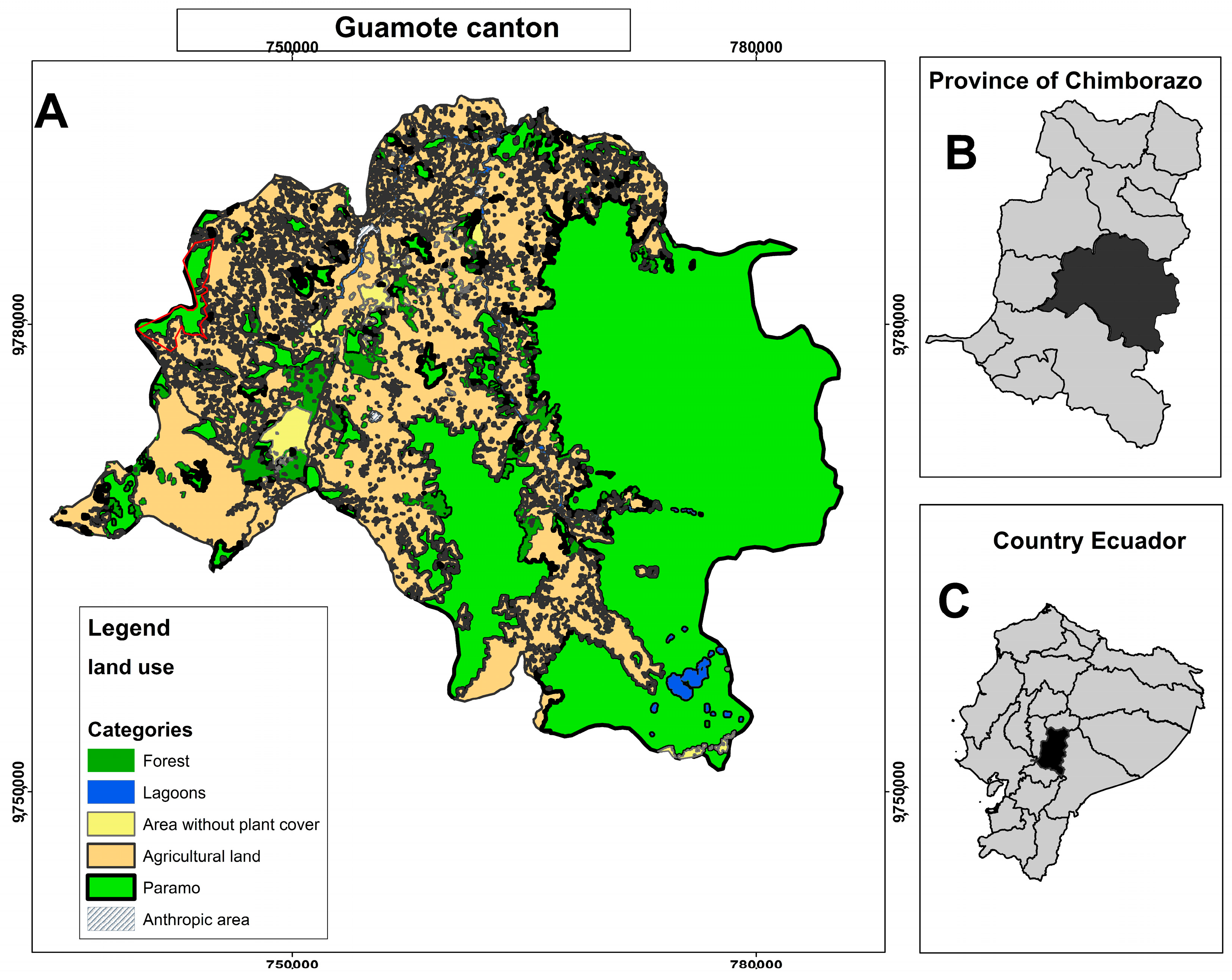
As shown in Figure 1, the research site is located in the province of Chimborazo, Guamote canton, Ecuador, and covers an area of 1200.081 km2. It is situated in the Ecuadorian Andes Mountain range, with elevations between 2600 and 4503 m above sea level, at coordinates 1°56′00″ S and 78°43′00″ W. The area records an annual rainfall of 683.3 mm and an average temperature of 13.7 °C, with predominant climates of alpine tundra (ET), dry winter temperate (Cwb) and subtropical highland (Cfb). The area’s vegetation is characterized by the predominance of the Asteraceae family, which exhibits the greatest species diversity, followed by Ericaceae, Gentianaceae, Hypericaceae, Poaceae, and Rosaceae. These families include species adapted to cold climates and high-Andean environments, many of which function as natural grasslands [15]. Its climatic conditions and geomorphology influence the ecology, subsistence agricultural activities, and health conditions of its inhabitants [16]. In addition, the region is a vital cultural center for indigenous communities such as the Kichwa, who have maintained ancestral practices in the care of grazing animals in the moorlands. The canton’s moorland vegetation covers an area of 59,383.4 hectares, with the remaining areas consisting of lagoons, agricultural zones, human settlements, forest plantations, and areas without vegetation.
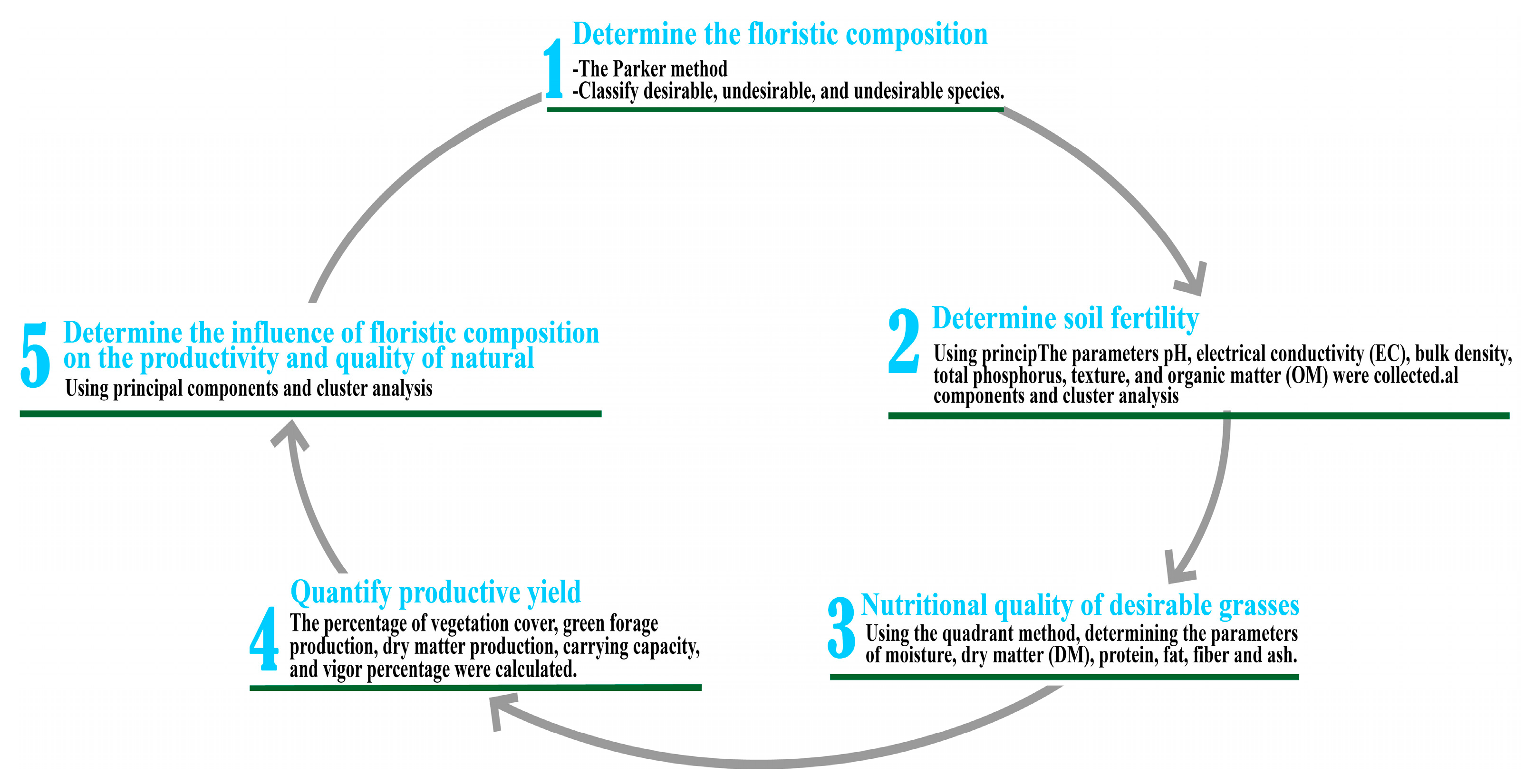
A structured methodology consisting of five interconnected stages was applied to evaluate and correlate the floristic composition and productivity of natural grasslands in the páramos of the Guamote canton, as shown in Figure 2.

2.2. Floristic Composition

For the floristic inventory, cells were applied only to the more grasslands used for alpaca grazing. Using Arc GIS version 10.8 spatial analysis software, 131 cells measuring 2500 × 2500 m were constructed, which became the total population.
To determine the sample, a simple random sampling was used. It is a fundamental method that ensures that each individual in a finite population has the same probability of being selected. Random sampling minimizes bias and ensures that the sample is representative of the population; thus, it allows valid statistical inferences [17,18].
The sample was calculated using the sample size equation for finite populations [19]. The formula was developed by Krejcie and Morgan in their pioneering work in 1970:
n   =   N · Z · ρ ( 1 · ρ ) N 1 · e 2 + Z 2 , ρ · ( 1 ρ )
where (N) is the population size, (Z) is the confidence level, (p) is the expected proportion, (e) is the margin of error, and n is the sample size.
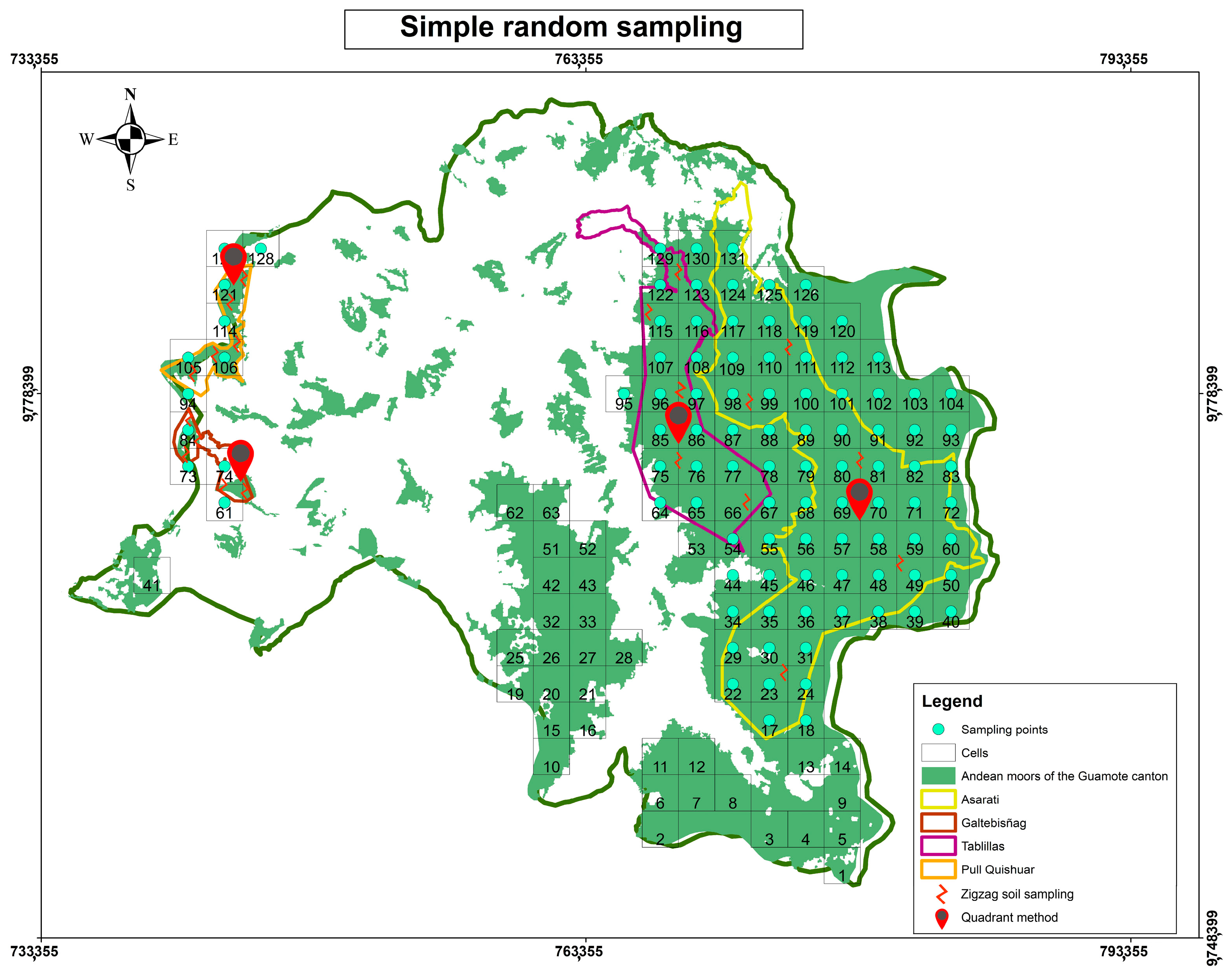
A sample of 98 cells was determined. The sample was selected at random, defining areas for data collection in the quadrants corresponding to the communities of Asaraty, Galte Bisñag, Tablillas, and Pull Quishuar, as shown in Figure 3.
For the vegetation census, Parker’s methodology was applied, which presents a systematic framework characterized by its focus on replicability and standardized metrics [20]. In addition, it uses plot-based sampling to measure species composition, height, and density, facilitating the collection of detailed and comparable data [21,22,23,24]. Parker’s method consisted of establishing five linear transects of 100 m in length each, distributed representatively in each sampling cell. Along each transect, 100 steps of constant length were walked, recording at each point of contact (simulated by the tip of the shoe as a sensor ring). The category of surface cover (identified plant species, mulch or bare rock/soil), which generated a total of 500 independent readings. This procedure allowed quantitative estimation of the cover and relative plant composition.
Subsequently, the plant species were functionally classified into desirable (D), somewhat undesirable (L.D), and undesirable (U) categories to evaluate their palatability and nutritional value for alpacas. Desirable species are characterized by their high digestibility and nutrient density, which promotes greater dry matter intake and energy efficiency [25]. Conversely, somewhat undesirable species present limitations due to antinutritional factors, such as tannins and polyphenols, which, at high concentrations, reduce animal growth performance [26]. Finally, undesirable species can compromise animal welfare by containing toxins or compounds that interfere with protein digestion and cause metabolic disorders [27]. Therefore, this categorization becomes an essential tool for sustainable pasture management and the preservation of the moorland ecosystem.

2.3. Soil Fertility

A rigorous methodology was implemented for measuring and validating soil fertility parameters, including pH, electrical conductivity (E.C.), bulk density, total phosphorus, texture, and organic matter (O.M.) [28]. Five soil subsamples were collected in a zigzag pattern in each community to cover the entire area, ensuring consistency through replicate sampling [29]. The samples were prepared for analysis following standardized protocols to ensure reproducibility and reliability of the data [30].
The pH was measured by mixing a soil sample with distilled water in a 1:1 weight/volume ratio, followed by reading with a pH meter [31]. The instrument was calibrated prior to measurement to ensure accuracy [32]. E.C., as an indicator of salinity, was determined from a saturated soil extract or a soil-water mixture in a 1:5 ratio, using a conductivity meter [33].
Bulk density was quantified using the core sampling method, taking a known volume of soil and determining its weight after drying at 105 °C [34]. The total phosphorus content was evaluated using sulfuric acid digestion methods, followed by colorimetric analysis of the resulting solutions [35]. Soil texture analysis was performed using the hydrometer method [36]. This technique involves dispersing the soil in water and measuring the sedimentation rate of the particles (sand, silt, and clay) over time, allowing the percentage composition for each texture class to be calculated. Organic matter was quantified using the Walkley-Black chemical oxidation method, which involved the oxidation of organic carbon compounds and the calculation of O.M. content from the measured carbon [37]. The validation of the measurements focused on rigorous quality control, including the use of controls and regular calibration of the instruments.

2.4. Nutritional Quality of Desirable Pastures

The quadrant method was used to measure the pasture availability of each community. It consisted of throwing a 1-m square quadrant every 20 steps. This method provides a systematic approach to the comprehensive analysis of various pasture parameters, including moisture, dry matter (DM), protein, fat, fiber, and ash. It also offers a representative view of its nutritional profile and structural characteristics [38,39]. Protein and fat analyses, vital metrics for alpaca health, are affected by the plant’s growth stage [40,41]. Additionally, fiber and ash measurements were essential for determining digestibility and nutritional value, directly influencing animal health and feed efficiency [42,43,44].
The analysis of nutritional and structural parameters was applied to palatable plants and was carried out using standardized laboratory methodologies to ensure accuracy in the evaluation of pasture quality. Moisture content was determined by gravimetric analysis, where the samples were dried in an oven at 105 °C until constant weight [45], from which dry matter (DM) was calculated. The chemical composition was analyzed as follows: crude protein was quantified by using the Kjeldahl method, fat by ether extraction (Soxhlet method), and neutral detergent fiber (NDF) and acid detergent fiber (ADF) by sequential processing [46], with NDF being important for its impact on digestibility [47,48]. Ash content was determined by high-temperature incineration [49]. These analyses, which are sensitive to seasonal variation and management strategies, are essential for optimizing livestock performance [50,51].

2.5. Quantification of Pasture Productive Performance

Using the previous data, the percentage of vegetation cover, green forage production, dry matter production, carrying capacity, and robust percentage [52] was obtained. Vegetation cover was estimated by using ground measurements in quadrants, establishing the proportion of covered area [53]. GF and DM production was quantified by collecting and drying biomass samples to constant weight to determine DM in kg/ha [54], using the formula:
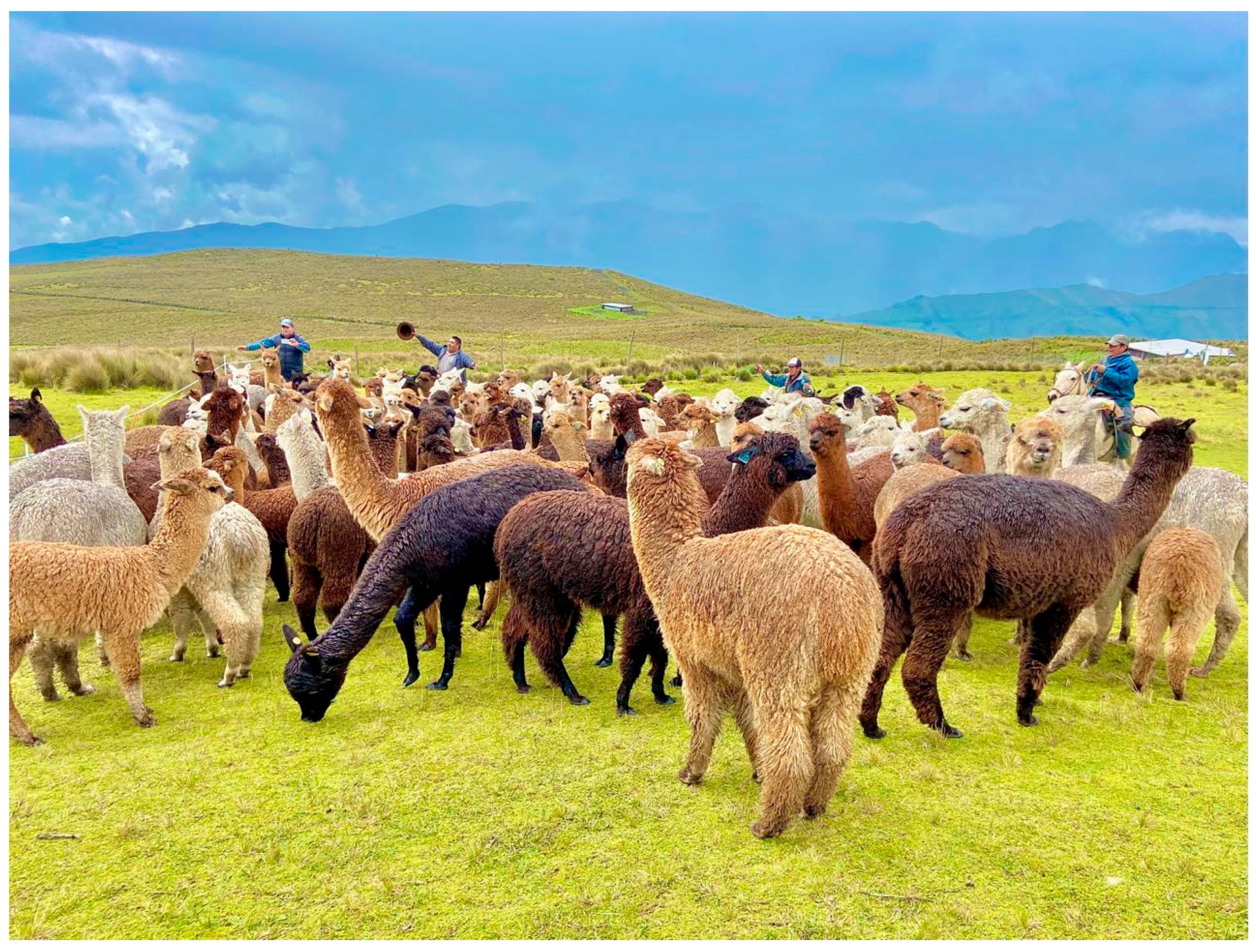
MS Production = T o t a l   f r e s h   w e i g h t   ( k g ) × P e r c e n t a g e   o f   d r y   m a t t e r 100 , parameters significantly influenced by factors such as nitrogen application and soil moisture content [55,56]. Carrying capacity (expressed in animal units, AU/ha) was calculated by dividing total dry matter production by the average dry matter consumption of alpacas throughout the grazing period, as shown in Figure 4 [57,58]. Finally, pasture robustness was assessed using qualitative and quantitative parameters such as leaf area index (LAI), plant height, and overall robustness [52].

2.6. Determination of the Influence of Floristic Composition on Pasture Productivity and Quality

For data analysis, a main table was constructed. The columns contained the 42 variables that bring together data on floristic composition, soil analysis, bromatological analysis (chemical analysis technique to determine the nutritional composition of forages), and pasture yields. The rows contained the four study communities. MULTBIPLOT software version 16.430.0.0 was used, which allowed the management of multiple variables and facilitated the visualization of complex relationships.
The following methods were applied: Principal component analysis (P.C.A.) was applied to identify the main patterns of floristic composition. P.C.A. is a statistical technique for reducing the dimensionality of complex data by transforming correlated variables into uncorrelated components. The first component captured the greatest variance, and the following components captured decreasing variances, revealing significant patterns. Mathematically, P.C.A. centers the data, calculates the covariance matrix, and obtains eigenvalues and eigenvectors, projecting the data onto the subspace of the top eigenvectors. P.C.A. is applied in various fields such as the evaluation of complex environmental data, including land use, vegetation types, and species distribution [59,60]. Its ability to handle diverse data makes it a versatile tool for data analysis.
For P.C.A., the original variables were initially standardized using their mean and standard deviation to ensure data comparability. Subsequently, the covariance matrix was estimated to derive the eigenvalues and eigenvectors necessary for constructing the principal components. The process concluded with the implementation of an HJ-Biplot model, a technique that allows the simultaneous representation of observations and variables in a two-dimensional plane by scaling the eigenvectors by their corresponding eigenvalue roots, thus facilitating the interpretation of correlations and data structure.
Cluster analysis, which is a fundamental unsupervised statistical method in fields such as ecology, medicine, and marketing, was designed to group objects into sets (clusters) based on the similarity of intrinsic characteristics. It revealed hidden patterns in the data without requiring prior labeling. The K-means algorithm was applied, valued for its efficiency in big data [61].

3. Results

3.1. Floristic Composition

Table 1 shows the presence of floristic species in each community. The floristic composition is characterized by a high diversity of species adapted to extreme conditions, such as low temperatures and high ultraviolet radiation. Twenty-six species distributed across 12 families were recorded. Species and family richness differs between communities, with Asaraty and Galte Bisñag showing greater diversity. In Tablillas and Pull Quishuar, there is less diversity, with notable absences in families such as Lamiaceae, Ranunculaceae, Scrophulariaceae, and Geraniaceae in Tablillas, and Cyperaceae, Haloragaceae, Plantaginaceae, and Ranunculaceae in Pull Quishuar.
The Poaceae family emerges as the dominant family in all communities, representing between 29% and 35% of the approximate total abundance, and consistently dominates, with high contributions from species such as A. breviculmis and Calamagrostis sp. The Asteraceae family shows greater abundance in Asaraty and Galte Bisñag, driven by species such as W. nubigena and H. sessiliflora. Rosaceae, although with only two species, stands out for the high abundance of A. orbiculata. Families such as Cyperaceae, Haloragaceae, and Plantaginaceae have low or no abundance in some communities, indicating possible local ecological limitations.
Specific dominance reveals that A. orbiculata (Rosaceae) is the most abundant species in all communities, with values representing up to 27% of the total abundance in Tablillas. Other notable species include A. pedunculata, Calamagrostis sp., and A. breviculmis, which contribute significantly to the plant structure.
The floristic composition of these moorland communities is dominated by grasses and Rosaceae, typical of Ecuadorian high Andean ecosystems. Variations in richness suggest environmental gradients, with Asaraty and Galte Bisñag exhibiting greater floristic heterogeneity. The importance of families such as Asteraceae for diversity is highlighted, while species such as A. pedunculata contribute to the formation of cushions that are characteristic of the moorlands.

3.2. Functional Classification of Species

Desirability is understood as the preference of alpacas for consuming certain species, influenced by factors such as palatability, nutritional value, and texture. It was assumed that abundance values reflect the relative presence of each species in the ecosystem. Poaceae, Rosaceae, and Asteraceae are the most abundant families. However, their desirability varies. Although Poaceae is the most abundant family, most of its species are “Less desirable.” Only A. odoratum, P. bonplandianum, and A. breviculmis are “desirable,” but these are less abundant, especially in Pull Quishuar.
Rosaceae, dominated by A. orbiculata and L. pinnata, both “desirable,” contributes significantly to quality pasture, especially in Tablillas and Pull Quishuar. Asteraceae, with high diversity (7 species), includes “desirable” species, but also ‘undesirable’ and “Less desirable” species. Its contribution is greater in Asaraty and Galte Bisñag.
Other families, such as Cyperaceae and Apiaceae, have lower diversity but make significant contributions in terms of abundance, especially in the case of A. pedunculata. Families with low abundance, such as Ranunculaceae, Plantaginaceae, and Scrophulariaceae, are mostly “Undesirable” or “Less desirable,” limiting their relevance for alpacas.

3.3. Soil Fertility

Table 2 shows that the soil in Tablillas is the most favorable for plant productivity due to its near-neutral pH, high EC, and high phosphorus and organic matter content. The sandy texture promotes drainage, but the high OM compensates for water and nutrient retention. This explains the high abundance of species such as A. orbiculata and A. pedunculata, which prefer soils rich in organic matter.
The soils of Asaraty are similar to those of Tablillas, but with a more acidic pH and lower phosphorus and organic matter content. These conditions support high floristic diversity (23 species), with desirable species such as A. orbiculata and A. breviculmis. However, greater compaction could limit the root development of some plants.
Galte Bisñag has soils with good fertility and less compaction, which favors high species richness. Lower E.C. could indicate greater leaching, limiting the availability of certain nutrients. Species such as A. orbiculata and A. pedunculata thrive in these conditions.
Finally, the soils of Pull Quishuar are the least fertile, with the lowest phosphorus and organic matter content and the highest compaction. This could explain the lower species richness and the dominance of species adapted to more restrictive conditions, such as A. orbiculata and A. pedunculata. The low E.C. suggests lower availability of soluble nutrients.
The soils of the four communities reflect typical characteristics of the moorlands, with sandy textures and high organic matter, but differ in fertility and compaction. Tablillas stands out for its greater fertility, favoring high productivity. Pull Quishuar, in contrast, has limitations due to its low fertility and greater compaction. Asaraty and Galte Bisñag offer intermediate conditions.

3.4. Nutritional Quality of Desirable Pastures

Table 3 indicates that Tablillas forage stands out for its high dry matter and fiber content, making it an excellent location for maintaining the digestive health of alpacas. The high fiber content is important for the proper functioning of the rumen in these animals. However, its protein content is low, which may not be sufficient to meet the growth or wool production needs of young or lactating alpacas.
Asaraty pasture is the most balanced, offering a good equilibrium between fiber and protein. This combination makes it ideal for the general feeding of most alpacas, providing the energy and nutrients necessary for proper development and maintenance. It is a high-quality forage that could be used as a staple in diets.
Galte Bisñag forage stands out for its high protein content, which makes it particularly valuable for alpacas with higher nutritional requirements, such as growing young animals or pregnant and lactating females. However, its lower fiber and dry matter content could mean that it is less suitable as a sole feed in diets seeking high energy intake, as these components are key to energy supply and satiety.
Pull Quishuar forage is characterized by its high fiber and ash content. A high ash content indicates the presence of minerals but also suggests soil contamination. Although its fiber content is high, the low dry matter and moderate protein content reduce its overall nutritional quality, making it less desirable compared to the other forages.

3.5. Quantifying Productive Performance

Table 4 shows that Tablillas has the least favorable conditions for grazing, with low cover, production, and plant vitality. The limited carrying capacity (3 AU/ha) indicates that the ecosystem can sustain only a moderate density of alpacas, making it more suitable for low-intensity or rotational grazing. Asaraty offers intermediate conditions for grazing, with high vegetation cover and moderate forage production. Its carrying capacity (3.3 AU/ha) and robustness suggest a balanced ecosystem, suitable for general grazing, but with potential for productivity improvements through proper management.
Galte Bisñag is the most productive and healthy community with almost total coverage, high forage production, and exceptional robustness. Its carrying capacity makes it ideal for intensive grazing, provided that practices are implemented to prevent overgrazing. Finally, Pull Quishuar stands out for its high production of green forage and dry matter, with maximum carrying capacity. Although its robustness is lower than Galte Bisñag’s, it is still suitable for intensive grazing, provided that it is managed to maintain the health of the ecosystem.

3.6. Determining the Influence of Floristic Composition on the Productivity and Quality of Natural Pastures

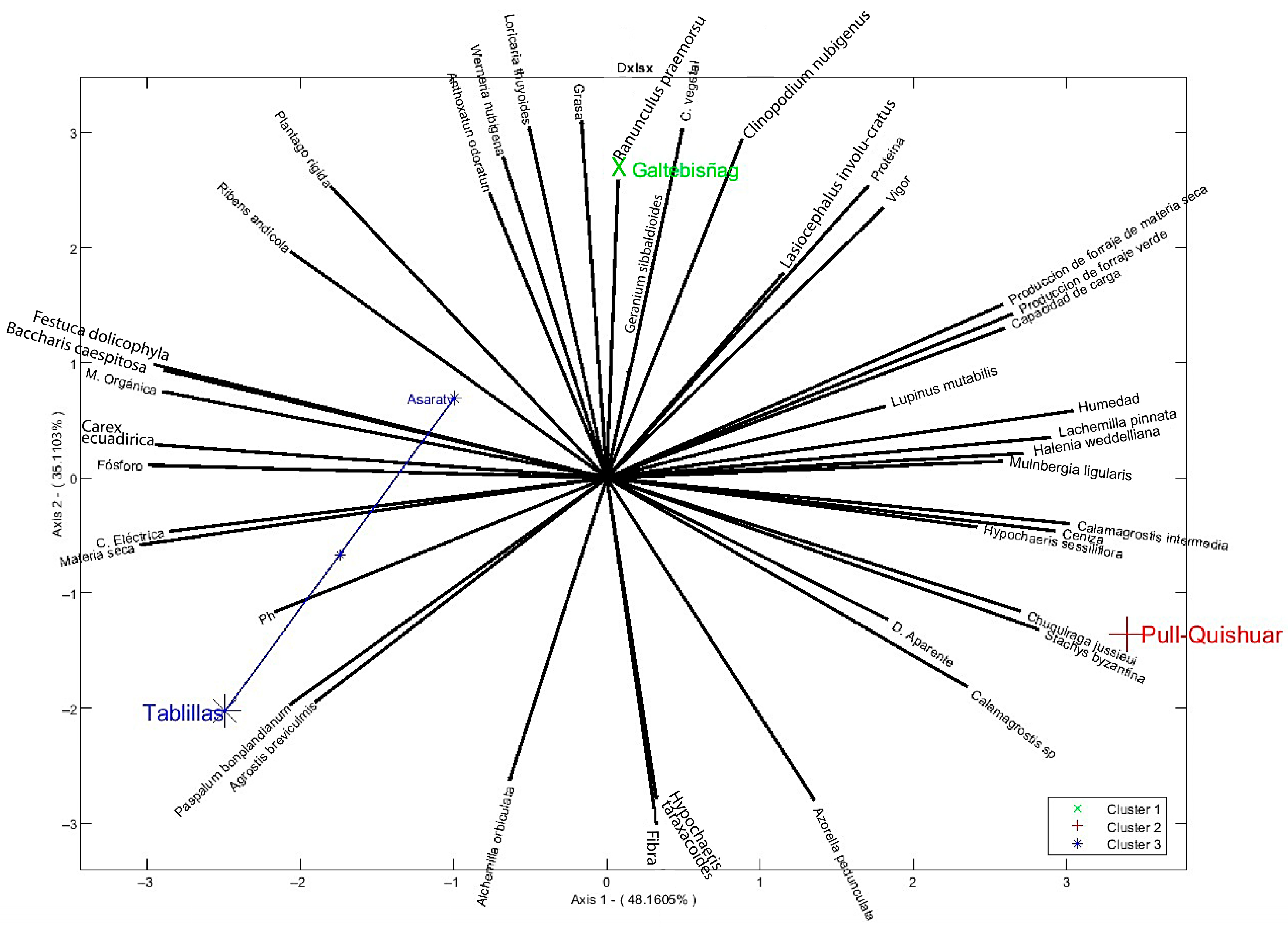
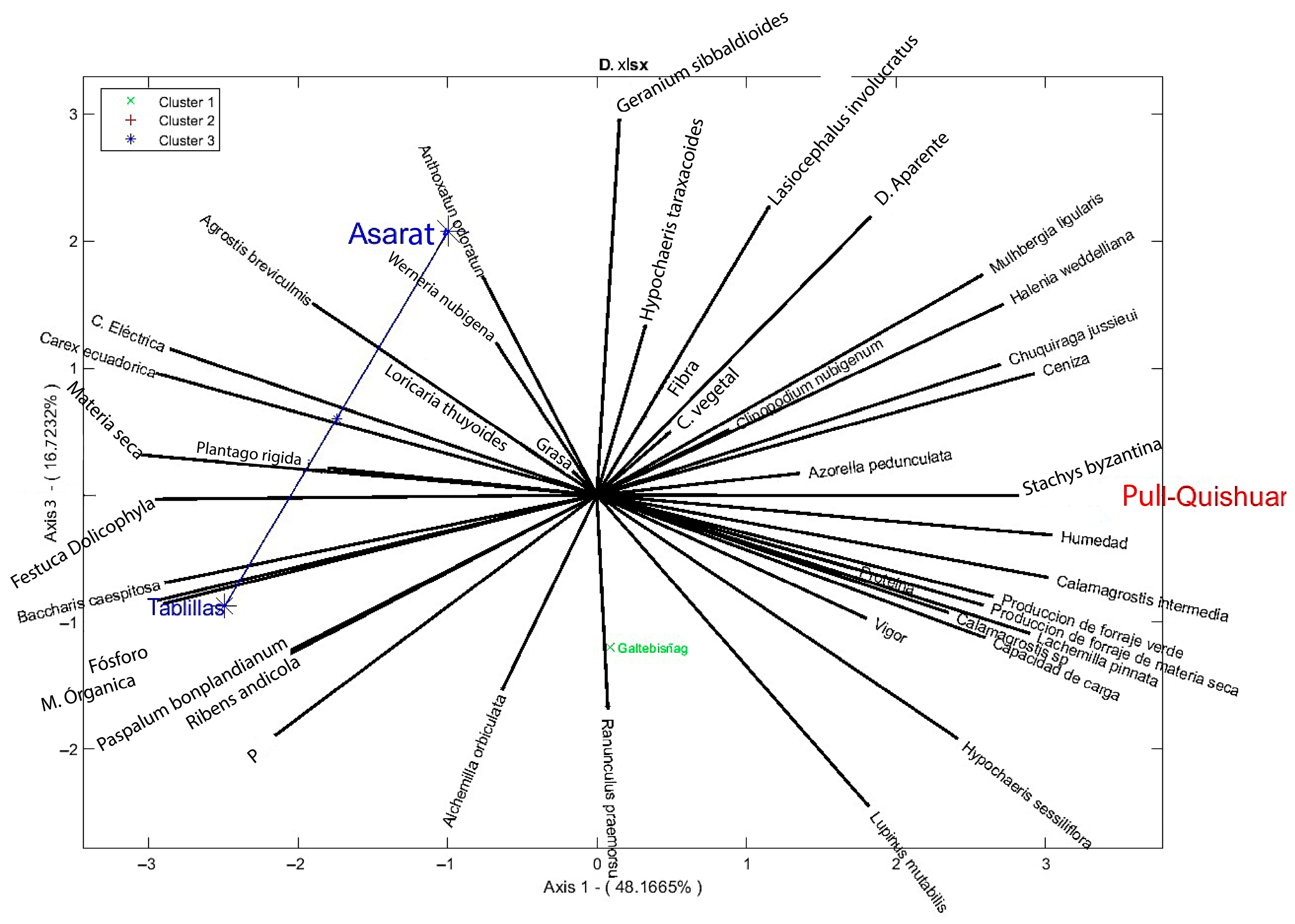
The total variability explained on three axes is 99.99%, the first with 48.16%, the second with 35.11%, and the third with 16.72%. The contributions of the communities to each axis indicate that Tablillas and Pull Quishuar contribute strongly to axis 1, Galte Bisñag to axis 2, and Asaraty to axis 3.
As shown in Figure 5, axis 1 (Tablillas and Pull Quishuar communities) is linked to grasses such as C. ecuadorica, F. dolicophyla, and C. intermedia, which are characteristic species of the moorland that tend to thrive in well-structured soils with good resource availability, reflecting soils rich in phosphorus, organic matter, moisture, and E.C., with good water retention capacity. The presence of these elements suggests optimal conditions for grass growth, and the strong correlation with forage production (both green and dry matter) and carrying capacity suggests that these communities are highly productive, capable of sustaining a significant density of alpacas. This indicates an efficient and well-adapted grazing system. This axis highlights the relationship between moisture and floristic composition.
Axis 2 (Galte Bisniag) is linked to plant species that are not typically dominant in intensively grazed pastures, such as L. thuyoides, Cl. nubigenum, and W. nubigena. They have lower density or coverage. Their presence suggests an ecosystem with lower grazing pressure or conditions that favor botanical diversity rather than massive biomass production. These species are associated with a favorable bromatological profile, characterized by high fat, fiber, and carbohydrate content. This indicates that, although they are not the most abundant, they contribute significant nutritional value to the forage available to alpacas. High fiber improves ruminal digestion, while fat and carbohydrates provide energy, which can be especially beneficial in balanced diets for these animals at Andean elevation. Their soils have lower compaction, different pH, or a nutrient composition that favors fewer common species. The relationship between vegetation cover and floristic composition is noteworthy.
As shown in Figure 6, axis 3 (Asaraty) is linked to plant species that are not dominant in grasslands, such as G. sibbaldioides, L. mutabilis, and L. involucratus, suggesting that they are less abundant or representative compared to productive grasses such as C. ecuadorica or C. intermedia. Their presence could indicate an ecosystem with less favorable conditions for typical grasses or a greater influence of environmental or management factors that limit the dominance of common species. The apparent soil density variable has a strong association with this axis, indicating more compacted soils with less porosity and, therefore, a lower capacity to retain water and air. This can negatively affect root growth and nutrient availability, favoring species adapted to these conditions, but not necessarily contributing to high forage biomass, such as those mentioned above.
Additionally, it is characterized by more compacted soils or soils with lower water retention capacity. The lower water retention capacity could lead to greater vulnerability to drought, affecting the sustainability of grazing in this community if corrective measures are not implemented. The relationship between floristic composition and apparent density is noteworthy.
Biplot analysis reveals that the four communities have distinct characteristics in terms of species composition, forage quality, and soil properties. Tablillas and Pull-Quishuar stand out for their high productivity and favorable grazing conditions. While Galte Bisniag and Asaraty have characteristics that may require differentiated management to optimize alpaca grazing.

3.7. Clusters

The first Cluster 1 (Galte Bisniag): This community has pastures with high nutritional quality, probably less focused on massive biomass, but ideal for nutrient-rich forage for alpacas. Its position in the upper right quadrant indicates an environment that favors botanical diversity.
Cluster 2 (Pull-Quishuar): It is associated with productive species, making it the most suitable community for intensive grazing. Its location in the upper right quadrant reinforces its role as a highly productive system.
Cluster 3 (Asaraty and Tablillas): It shows an intermediate profile, suggesting moderately fertile soils. This cluster combines communities with a range of fertility and moisture, but with less emphasis on mass production. Asaraty could improve its productivity with nutrient inputs, while Tablillas needs drainage management or controlled grazing on moist soils to avoid compaction or loss of productivity.

4. Discussion

The productivity and quality of Andean natural pastures depend on the interaction between moisture and floristic composition, factors that determine the diversity and structure of plant communities in high-elevation ecosystems [62]. Elevation reinforces this relationship, as the high humidity levels in the moor grasslands favor the proliferation of diverse species, increasing biomass, the structural complexity of the moorlands, and the nutritional value of the pastures [15,63]. Endemic species exhibit adaptations to water fluctuations, demonstrating the dynamic nature of these ecosystems [64]. In the context of sustainable alpaca grazing in Guamote, preserving this interaction is important, since management that maintains adequate moisture levels and floristic diversity ensures pastures of high nutritional quality, which improves alpaca productivity and long-term animal health.
Anthropogenic activities, such as agriculture and intensive livestock farming, alter soil moisture retention and floristic composition, degrading pasture quality [65]. These practices favor the proliferation of invasive species under altered moisture conditions, destabilizing native communities and reducing ecosystem resilience [66]. Likewise, agricultural expansion and intensive grazing promote species of low nutritional value that compromise alpaca productivity [67], while monocultures and overgrazing decrease plant diversity, affecting pasture recovery and environmental services [68]. For management and conservation, it is a priority to control these anthropogenic pressures by reducing livestock intensity, limiting agricultural expansion, and preventing exotic invasions. These measures protect the native plant composition and maintain the ecosystem’s capacity to provide sustainable forage and prevent irreversible degradation.
Vegetation cover and its plant composition directly influence pasture quality, affecting soil health and biodiversity, which in turn supports the viability of alpaca farming systems [69]. High Andean grasslands provide essential ecosystem services, such as water regulation and soil stabilization, which support watersheds and offer adequate nutrition to alpacas. Their seasonal variability enhances the growth of nutritious plants during the rainy season and increases alpaca productivity [70]. In terms of sustainable management, implementing pasture rotation preserves floristic diversity, ensures a continuous supply of quality forage, and strengthens ecosystem services vital to local communities and the conservation of the moorland.
It is also important to consider that climate change alters vegetation dynamics by influencing species distribution and abundance. A study by Franca-Rocha et al. describes the transition in land cover driven by climate impacts, indicating a loss of native vegetation and a decline in biodiversity in Brazilian arid lands due to cattle grazing and climate-related stressors [71]. This aligns with the findings of Hofmann, who states that climate change exacerbates pressures on terrestrial biodiversity by intensifying land-use changes and altering fire regimes [72].
Finally, floristic composition and bulk density in alpaca grazing areas are closely interconnected and modulated by grazing intensity. Selective grazing by alpacas reduces species richness and diversity, favoring less palatable plants and suppressing preferred forages [73], while intense grazing pressures decrease the abundance of dominant species and ecosystem resilience [74,75]. Overgrazing induces plant homogenization and reduces the bulk density of key species [76,77], and the redistribution of nutrients via manure alters the floristic composition in the long term, potentially degrading sensitive species [78]. For effective management and conservation in Guamote, moderate and rotational grazing is required, with appropriate stocking rates and monitoring of floristic composition—strategies that maintain ecological balance, preserve biodiversity, prevent degradation, and guarantee sustainable alpaca productivity in the long term.

5. Conclusions

This study evaluated the floristic composition and its influence on forage productivity and nutritional quality of natural pastures for sustainable alpaca grazing. Using principal component analysis, three axes were identified. Axis 1-associated communities, such as Tablillas and Pull Quishuar, with highly productive species (Calamagrostis ecuadorica, Festuca dolichophylla, and Carex intermedia), correlated with fertile soils rich in phosphorus, organic matter, and retained moisture. This favors high biomass, livestock carrying capacity, and a predominance of desirable grasses (Poaceae and Rosaceae, up to 27% relative abundance), although less palatable species limit protein content. Axis 2 linked Galte Bisñag with species such as Lachemilla thuyoides, Cladocolea nubigenum, and Werneria nubigena in soils with low compaction and high nutritional value, promoting almost complete vegetation cover and exceptional plant vitality. Axis 3 linked Asaraty with subdominant species (Gentianella sibbaldioides and Lupinus mutabilis) in compacted soils, resulting in lower biomass but intermediate nutritional balance. The classification into three clusters reinforced these differences: cluster 1 prioritizes quality and diversity (Galte Bisñag); cluster 2 emphasizes productivity in less fertile soils (Pull Quishuar); and cluster 3 exhibits intermediate profiles vulnerable to compaction (Asaraty and Tablillas).
These results highlight that floristic heterogeneity confers ecosystem resilience and supports alpaca productivity in the face of environmental limitations. For sustainable management, it is recommended to implement rotational grazing with rest periods, adjust stocking rates, monitor floristic composition and soil density, control invasive species through selective removal, and limit agricultural expansion. In terms of climate change adaptation, floristic diversity acts as a buffer against water and temperature variations. It positions high-coverage communities as potential refuges. It is necessary to prioritize interventions in vulnerable areas to maintain moisture retention and soil fertility. Finally, future research needs were identified, including longitudinal studies on the impacts of rotational grazing on successional dynamics, predictive modeling of the altitudinal distribution of key species under climate scenarios, restoration trials in degraded areas, and integrated seasonal analyses of nutritional value and animal health, with the aim of refining sustainable management strategies in the Andean moorlands.

Author Contributions

Conceptualization, M.L.V.-C. and M.E.M.-G.; methodology, D.F.C.-C.; software, J.M.O.-L.; validation, D.F.C.-C. and M.L.V.-C.; formal analysis, F.R.C.Z.; investigation, P.V.V.-C.; writing—original draft preparation, M.L.V.-C. and S.F.J.-Y.; writing—review and editing; visualization, P.V.V.-C.; supervision, M.E.M.-G. All authors have read and agreed to the published version of the manuscript.

Funding

This work was supported by the research project IDIPI-323 “Productive and environmental assessment for the alpaca fiber value chain in the province of Chimborazo, Ecuador and the department of Cusco, Perú”, financed by the Escuela Superior Politécnica de Chimborazo through the Research Department (DI-ESPOCH).

Data Availability Statement

The original contributions presented in this study are included in the article. For any additional inquiries, please contact the corresponding authors and leave a note to confirm with the authors.

Conflicts of Interest

The authors declare no conflicts of interest.

References

  1. Kapustka, J.; Garbiec, A. Alpacas in poland: Health, welfare, and anti-parasitic prophylaxis. Med. Weter. 2022, 78, 68–73. [Google Scholar] [CrossRef]
  2. Valdivia, M.; Bravo, Z.; Vasquez, J.; Gonzáles, G. Rescue and conservation of male adult alpacas (Vicugna pacos) based on spermatogonial stem cell biotechnology using atomized black maca as a supplement of cryopreservation medium. Front. Vet. Sci. 2021, 8, 597964. [Google Scholar] [CrossRef]
  3. Mendoza, M.; Raudsepp, T.; More, M.; Gutiérrez, G.; León, F. Cytogenetic mapping of 35 new markers in the alpaca (Vicugna pacos). Genes 2020, 11, 522. [Google Scholar] [CrossRef]
  4. Wieser, S.; Giuliano, S.; Reategui, J.; Marcapura, X.; Olivera, L.; Chávez-Fumagalli, M.; Schnittger, L.; Florin-Christensen, M. Sarcocystis spp. of new and old world camelids: Ancient origin, present challenges. Pathogens 2024, 13, 196. [Google Scholar] [CrossRef]
  5. Monge-Salazar, M.; Tovar, C.; Cuadros-Adriazola, J.; Baiker, J.; Montesinos-Tubée, D.; Bonnesoeur, V.; Antiporta, J.; Román-Dañobeytia, F.; Fuentealba, B.; Ochoa-Tocachi, B.F.; et al. Ecohydrology and ecosystem services of a natural and an artificial bofedal wetland in the central andes. Sci. Total Environ. 2022, 838, 155968. [Google Scholar] [CrossRef] [PubMed]
  6. Cañal, V.; Beltrame, M. Gastrointestinal parasite diversity of south american camelids (artiodactyla: Camelidae): First review throughout the native range of distribution. Int. J. Parasitol. Parasites Wildl. 2022, 19, 222–242. [Google Scholar] [CrossRef]
  7. Sánchez-Herencia, D.; Zapata, C.; Romero, Y.; Huarco, N.; Oros, O.; Alvarado, W.; Quilcate, C.; Guevara-Alvarado, H.M.; Estrada, R.; Coila, P. Parasitism-induced changes in microbial eukaryotes of peruvian alpaca gastrointestinal tract. Life 2024, 14, 187. [Google Scholar] [CrossRef]
  8. Valenzuela, S.; Benites, R.; Moscoso-Muñoz, J.; Youngs, C.; Gómez-Quispe, O. Impact of cria protection strategy on post-natal survival and growth of alpacas (Vicugna pacos). Vet. Anim. Sci. 2021, 11, 100162. [Google Scholar] [CrossRef]
  9. Hayes, C.; O’Brien, P.; Wolfe, A.; Hoey, S.; Chandler, C.; Rhodes, V.; Carty, C.I.; Piras, I.M.; Ryan, E. Acute fasciolosis in an alpaca: A case report. BMC Vet. Res. 2021, 17, 215. [Google Scholar] [CrossRef] [PubMed]
  10. Pacheco, J.; Bengtsson, F.; Killander, J.; Franco, F.; Lundeheim, N.; Varga, C.; Båge, R.; Morrell, J. Fiber quality and fertility in male alpacas in the cusco region of peru. Front. Vet. Sci. 2024, 11, 1421593. [Google Scholar] [CrossRef] [PubMed]
  11. Whitlock, B.; Valkenburgh, P.; Wernke, S. Managing pastoral landscapes: Remote survey of herding infrastructure in huancavelica, peru. Antiquity 2023, 98, 229–244. [Google Scholar] [CrossRef]
  12. Yager, K.; Prieto, M.; Meneses, R. Reframing pastoral practices of bofedal management to increase the resilience of andean water towers. Mt. Res. Dev. 2021, 41, A1–A9. [Google Scholar] [CrossRef]
  13. Roque, B.; Bautista, J.; Beltrán, P.; Calsín, B.; Medina, J.; Aro, J.; Araníbar, M.; Sumari, R.; Benito, D.; Marca, U.; et al. Requerimientos de energía metabolizable para mantenimiento y ganancia de peso de llamas y alpacas determinados mediante la técnica de sacrificio comparativo. Rev. Investig. Vet. Del Perú 2020, 31, e16738. [Google Scholar] [CrossRef]
  14. Basso, W.; Sollberger, E.; Schares, G.; Küker, S.; Ardüser, F.; Moore-Jones, G.; Zanolari, P. Toxoplasma gondii and neospora caninum infections in south american camelids in switzerland and assessment of serological tests for diagnosis. Parasites Vectors 2020, 13, 256. [Google Scholar] [CrossRef]
  15. Cushquicullma-Colcha, D.F.; Ati-Cutiupala, G.M.; Guilcapi-Pacheco, E.D.; Villacis-Uvidia, J.F.; Brito-Mancero, M.Y.; Vaca-Cárdenas, P.V.; Vasco-Lucio, M.M.; Muñoz-Jácome, E.A.; Vaca-Cárdenas, M.L. Influence of Altitude and Climatic Factors on the Floristic Composition of the Moorlands of the Guamote Canton, Ecuador: Key Revelations for Conservation. Sustainability 2025, 17, 383. [Google Scholar] [CrossRef]
  16. Martín-Delgado, J.; Mula, A.; Guilabert, M.; Solís, C.; Gómez, L.; Amat, G.; Mira, J.; EPD Research Group. Development and validation in ecuador of the epd questionnaire, a diabetes-specific patient-reported experience and outcome measure: A mixed-methods study. Health Expect. 2021, 25, 2134–2146. [Google Scholar] [CrossRef] [PubMed]
  17. Deng, S.; Zhang, M.; Li, A.; Ren, L.; Zhang, Y.; Zhao, H.; Zhang, Y.; Song, C.; Han, R.; Tan, Q.; et al. Investigation of sample size estimation for measuring quantitative characteristics in dus testing of shiitake mushrooms. Agronomy 2024, 14, 1130. [Google Scholar] [CrossRef]
  18. Ambo, F. The use of true-random, quasi-random, and nonrandom sampling techniques in in educational studies. Comput. Eng. Intell. Syst. 2023, 14, 19–25. [Google Scholar] [CrossRef]
  19. Diengdoh, I.; Ali, A. Body image and its association with depression, anxiety, and self-esteem among college going students. Indian J. Community Med. 2022, 47, 218–222. [Google Scholar] [CrossRef]
  20. Oujdi, M.; Chafik, Y.; Boukroute, A.; Bourgerie, S.; Sena-Vélez, M.; Morabito, D.; Addi, M. Exploring phytoremediation potential: A comprehensive study of flora inventory and soil heavy metal contents in the northeastern mining districts of morocco. Plants 2024, 13, 1811. [Google Scholar] [CrossRef]
  21. Wang, X.; Zhu, J.; Pan, P. Spatiotemporal dynamics of grassland aboveground biomass in northern china and the alpine region: Impacts of climate change and human activities. PLoS ONE 2024, 19, e0315329. [Google Scholar] [CrossRef]
  22. Liu, W.; Fritz, C.; Nonhebel, S.; Everts, H.; Grootjans, A. Landscape-level vegetation conversion and biodiversity improvement after 33 years of restoration management in the drentsche aa brook valley. Restor. Ecol. 2021, 30, e13601. [Google Scholar] [CrossRef]
  23. Stewart, D.; Hood, W.; Martin, T. Undetected but widespread: The cryptic invasion of non-native cattail (typha) in a pacific northwest estuary. Estuaries Coasts 2023, 46, 802–817. [Google Scholar] [CrossRef]
  24. Castro, A.; Shi, Y.; Maja, J.; Peña, J. Uavs for vegetation monitoring: Overview and recent scientific contributions. Remote Sens. 2021, 13, 2139. [Google Scholar] [CrossRef]
  25. Xie, K.; Wang, Z.; Guo, Y.; Zhang, C.; Zhu, W.; Hou, F. Gentiana straminea supplementation improves feed intake, nitrogen and energy utilization, and methane emission of Simmental calves in northwest China. Anim. Biosci. 2022, 35, 838–846. [Google Scholar] [CrossRef] [PubMed]
  26. Choi, Y.; Shin, M.; Lee, S.; Yoon, H.; Yi, J.; Wang, X.; Kim, H.-W.; Desta, K. Anti-nutrient factors, nutritional components, and antioxidant activities of faba beans (Vicia faba L.) as affected by genotype, seed traits, and their interactions. Food Chem. X 2024, 23, 101780. [Google Scholar] [CrossRef]
  27. Nie, X.; Wei, X.; Niu, W.; Li, F.; Yuan, J.; Lv, G.; Chen, Y.; Liu, J. Use of Cottonseed Meal in Feeding Yellow-Feathered Broilers: Effects on Performance Parameters, Digestibility and Meat Quality. Vet. Sci. 2025, 12, 416. [Google Scholar] [CrossRef]
  28. Novara, A.; Sampino, S.; Paternò, F.; Keesstra, S. Climate smart regenerative agriculture to produce sustainable beauty products: The case study of snail secretion filtrate (lx360®). Sustainability 2022, 14, 2367. [Google Scholar] [CrossRef]
  29. Chepuri, M.; Bharose, R.; Thomas, T.; Toppo, N. Assessment of physico-chemical properties on soil from different blocks of komaram bheem, asifabad district, telangana, india. Int. J. Plant Soil Sci. 2023, 35, 459–466. [Google Scholar] [CrossRef]
  30. Derby, N.; Wick, A.; DeSutter, T.; Daigh, A. Salinity management with subsurface drainage over 9 years in a soybean–wheat–corn rotation. Agrosyst. Geosci. Environ. 2024, 7, e70027. [Google Scholar] [CrossRef]
  31. Vories, E.; O’Shaughnessy, S.; Sudduth, K.; Evett, S.; Andrade, M.; Drummond, S. Comparison of precision and conventional irrigation management of cotton and impact of soil texture. Precis. Agric. 2020, 22, 414–431. [Google Scholar] [CrossRef]
  32. Sepehr, A.; Hosseini, A.; Naseri, K.; Gholamhosseinian, A. Biological soil crusts impress vegetation patches and fertile islands over an arid pediment, iran. J. Ecol. Environ. 2022, 46, 31–40. [Google Scholar] [CrossRef]
  33. Nasif, A.; Hassan, M. Evaluating the chemical properties of soil using its health index in the al-hassi region, south of fallujah. IOP Conf. Ser. Earth Environ. Sci. 2025, 1449, 012116. [Google Scholar] [CrossRef]
  34. El-Salhy, A.; El-Galil, H.; Badawy, S.; Fayyad, I. Relation of balady mandarin trees fruiting to use different nitrogen sources. Assiut J. Agric. Sci. 2024, 55, 203–216. [Google Scholar] [CrossRef]
  35. Rizk, S.; Deshesh, T. Effect of different irrigation levels and methods of humic acid addition on growth, yield and storability of garlic. J. Plant Prod. 2021, 12, 987–997. [Google Scholar] [CrossRef]
  36. Lu, Y.; Li, P.; Li, M.; Wen, M.; Wei, H.; Zhang, Z. Coupled dynamics of soil water and nitrate in the conversion of wild grassland to farmland and apple orchard in the loess drylands. Agronomy 2023, 13, 1711. [Google Scholar] [CrossRef]
  37. Tedone, L.; Verdini, L.; Mastro, G. Effects of different types of soil management on organic carbon and nitrogen contents and the stability index of a durum wheat–faba bean rotation under a mediterranean climate. Agronomy 2023, 13, 1298. [Google Scholar] [CrossRef]
  38. Desta, A.; Ayele, S.; Tiruneh, W.; Alemu, B.; Addis, M. Dry matter yield and nutritional composition of natural pasture in east gojjam zone, amhara region. Appl. Environ. Soil Sci. 2023, 2023, 1276013. [Google Scholar] [CrossRef]
  39. Eastwood, C.; Rue, B.; Kerslake, J. Developing an approach to assess farmer perceptions of the value of pasture assessment technologies. Grass Forage Sci. 2020, 75, 474–485. [Google Scholar] [CrossRef]
  40. Li, X.; Zhang, T.; Xue, Y.; Xu, X.; Cui, X.; Fu, J. Aspergillus aculeatus enhances nutrient uptake and forage quality in bermudagrass by increasing phosphorus and potassium availability. Front. Plant Sci. 2023, 14, 1165567. [Google Scholar] [CrossRef] [PubMed]
  41. Fernandes, M.; FernandesJunior, J.; Adams, J.; Lee, M.; Reis, R.; Tedeschi, L. Using sentinel-2 satellite images and machine learning algorithms to predict tropical pasture forage mass, crude protein, and fiber content. Sci. Rep. 2024, 14, 8704. [Google Scholar] [CrossRef] [PubMed]
  42. Shah, T.; Ding, L.; Din, A.; Hassan, F.; Ahmad, A.; Wei, H.; Wang, X.; Yan, Q.; Ishaq, M.; Ali, N.; et al. Differential effects of natural grazing and feedlot feeding on yak fecal microbiota. Front. Vet. Sci. 2022, 9, 791245. [Google Scholar] [CrossRef]
  43. Brondani, W.; Lemes, J.; Pino, F.; Kröning, A.; Debortoli, E.; Amarilho-Silveira, F.; Evangelho, L.A.; Ferreira, O.G.L.; Vaz, R. Different prepartum feeding systems on ewe metabolic profile and lamb growth. Semin. Ciênc. Agrár. 2022, 43, 1007–1016. [Google Scholar] [CrossRef]
  44. Castro, M.; DeVries, T.; Machado, A.; Ferreira, M.; Rennó, L.; Marcondes, M. Metabolic responses and performance of holstein × gyr heifers grazing brachiaria decumbens supplemented with varied crude protein levels. PLoS ONE 2023, 18, e0289747. [Google Scholar] [CrossRef]
  45. Hampel, V.; Poli, C.; Tontini, J.; Joy, M.; Nabinger, C.; Devincenzi, T.; Rodrigues, E.; Manfroi, V.; Fajardo, N. Physical and biochemical characteristics of tropical grass and legume pastures grazed by lambs. Grassl. Sci. 2024, 71, 3–13. [Google Scholar] [CrossRef]
  46. Tomple, B.; Jo, I.; Bharanidharan, R.; Won, S.; Hamid, M. Effects of multiple harvests and different manure fertilization levels on the yield and feed value of kenaf (Hibiscus cannabinus L.). Pak. J. Agric. Res. 2024, 37, 195–206. [Google Scholar] [CrossRef]
  47. Bell, M.; Huggett, Z.; Slinger, K.; Roos, F. Effect of pasture cover and height on nutrient concentrations in diverse swards in the uk. Grassl. Sci. 2020, 67, 267–272. [Google Scholar] [CrossRef]
  48. Carreira, E.; Serrano, J.; Pinto-Gómes, C.; Shahidian, S.; Paniágua, L.; Pilirito, A.; Castro, J.L.; Carvalho, M.; Pereira, A. Effect of sheep grazing, stocking rates and dolomitic limestone application on the floristic composition of a permanent dryland pasture, in the montado agroforestry system of southern portugal. Animals 2022, 12, 2506. [Google Scholar] [CrossRef]
  49. Siddiqui, B.; Ahmad, A.; Yousuf, O.; Younis, K. Exploring the potential of mosambi peel and sago powder in developing edible spoons. Sustain. Food Technol. 2023, 1, 921–929. [Google Scholar] [CrossRef]
  50. Euclides, V.; Montagner, D.; Araújo, A.; Pereira, M.; Difante, G.; Araújo, I.; Barbosa, L.F.; Barbosa, R.A.; Gurgel, A. Biological and economic responses to increasing nitrogen rates in mombaça guinea grass pastures. Sci. Rep. 2022, 12, 1937. [Google Scholar] [CrossRef]
  51. Nunes, H.; Dias, C.; Vouzela, C.; Borba, A. Seasonal effect of grass nutritional value on enteric methane emission in islands pasture systems. Animals 2023, 13, 2766. [Google Scholar] [CrossRef] [PubMed]
  52. Tunebo, A.; Hegano, A.; Sultan, M. Evaluation of fym and inorganic np fertilizers on yield performance of sweet potato [Ipomoea batatas (L.) lam] in debub ari district, southwestern ethiopia. Eur. J. Ecol. Biol. Agric. 2024, 1, 3–14. [Google Scholar] [CrossRef] [PubMed]
  53. Kiyama, R.; Uchida, Y. Seasonal changes in the prediction accuracy of hayfield productivity using sentinel-2 remote-sensing data in hokkaido, japan. Grasses 2023, 2, 57–67. [Google Scholar] [CrossRef]
  54. Munza, B.; Hassan, M.; Tanko, R.; Yashim, S.; Abashi, T.; Sulim, P.; Alkali, G. Growth parameters and forage yield of two grain sorghum (Sorghum bicolor L. moench) varieties under different planting dates and ages of harvest in shika. Fudma J. Sci. 2021, 4, 316–322. [Google Scholar] [CrossRef]
  55. Şahin, M. Potential use of subsurface drip irrigation systems in landscape irrigation under full and limited irrigation conditions. Sustainability 2023, 15, 15053. [Google Scholar] [CrossRef]
  56. Sanbagavalli, S.; Bhavana, J.; Pavithra, S. Nipping—A simple strategy to boost the yield—Review. Annu. Res. Rev. Biol. 2020, 35, 45–51. [Google Scholar] [CrossRef]
  57. Basiev, S.; Kozaev, P.; Doeva, A.; Kozaeva, D. The availability of new potato cross-breeds for industrial processing. E3s Web Conf. 2021, 262, 03012. [Google Scholar] [CrossRef]
  58. Tripathi, S.; Dawson, J. Influence of phosphorus, sulphur and zinc levels on growth and yield of blackgram [Vigna mungo (L.)]. Int. J. Environ. Clim. Change 2023, 13, 31–35. [Google Scholar] [CrossRef]
  59. Avellaneda-Torres, L.; Sicard, T.; Guerra-Castro, E.; Torres-Rojas, E. Assessing microbial diversity in páramo soils (multistrategy analysis): Effects of potato farming and livestock grazing in nevados national natural park, colombia. Appl. Environ. Soil Sci. 2024, 2024, 1–16. [Google Scholar] [CrossRef]
  60. Cruz, M.; Lasso, E. Insights into the functional ecology of páramo plants in colombia. Biotropica 2021, 53, 1415–1431. [Google Scholar] [CrossRef]
  61. Hu, C.; Li, Y.; Wang, S.; Peng, Z. Application of machine learning for clinical subphenotype identification in sepsis. Infect. Dis. Ther. 2022, 11, 1949–1964. [Google Scholar] [CrossRef]
  62. Barrial-Lujan, A.; Rodríguez, G.; Huamán-Carrión, M.; Espinoza-Montes, F.; Acosta, D.; Laime, M.; Arevalo-Quijano, J.C.; Castro-Paniagua, W.G.; Barrial-Lujan, C.; Canicani, D. Economic valuation of the ecosystem of the high andean hydrographic basin tributary of the chumbao river, through multicriteria analysis. Braz. J. Biol. 2023, 83, e277697. [Google Scholar] [CrossRef]
  63. Joslin, A. Intersections of conservation, cattle, and culture in ecuador’s páramo grasslands. Mt. Res. Dev. 2021, 41, R1–R7. [Google Scholar] [CrossRef]
  64. Jódar, J.; Zakaluk, T.; Ramón, A.; Ruiz-Constán, A.; Lechado, C.; Martín-Civantos, J.; Custodio, E.; Urrutia, J.; Herrera, C.; Lambán, L.; et al. Artificial recharge by means of careo channels versus natural aquifer recharge in a semi-arid, high-mountain watershed (Sierra Nevada, Spain). Sci. Total Environ. 2022, 825, 153937. [Google Scholar] [CrossRef] [PubMed]
  65. Angarita–Sierra, T.; Bonilla-Gómez, M.; Sánchez, D.; Acosta-Galvis, A.; Medina-Ovalle, H.; Solano-Moreno, A.; Ulloa-Rengifo, S.; Guevara-Guevara, D.; Torres-Ramirez, J.J.; Curaca-Fierro, S.; et al. Distribution, habitat suitability, conservation state and natural history of endangered salamanderbolitoglossa pandi. PeerJ 2020, 8, e9901. [Google Scholar] [CrossRef]
  66. Parodi, A.; Valencia-Salazar, S.; Loboguerrero, A.; Barón, D.; Murgueitio, E.; Vázquez-Rowe, I. The sustainable transformation of the colombian cattle sector: Assessing its circularity. PLoS Clim. 2022, 1, e0000074. [Google Scholar] [CrossRef]
  67. Guarderas, P.; Smith, F.; Dufrêne, M. Land use and land cover change in a tropical mountain landscape of northern ecuador: Altitudinal patterns and driving forces. PLoS ONE 2022, 17, e0260191. [Google Scholar] [CrossRef]
  68. Duchicela, S.; Llambí, L.; Bonnesoeur, V.; Román-Dañobeytia, F. Pastoralism in the high tropical andes: A review of the effect of grazing intensity on plant diversity and ecosystem services. Appl. Veg. Sci. 2024, 27, e12791. [Google Scholar] [CrossRef]
  69. Bedada, K.; Kechero, Y.; Janssens, G. Seasonal and agro-ecological associations with feed resource use and milk production of ranging dairy cows in the southern ethiopian rift valley. Trop. Anim. Health Prod. 2021, 53, 411. [Google Scholar] [CrossRef]
  70. Guerra, U.; Macedo, R.; Quispe, Y.; Condori, E.; Gonzáles, H.; Fernández, E.; Luque, N.; Pérez-Durand, M.G.; García-Herreros, M. Seasonal autoregressive integrated moving average (sarima) time-series model for milk production forecasting in pasture-based dairy cows in the andean highlands. PLoS ONE 2023, 18, e0288849. [Google Scholar] [CrossRef]
  71. Franca-Rocha, W.; Vasconcelos, R.; Costa, D.; Duverger, S.; Lobão, J.; Souza, D.; Herrmann, S.M.; Santos, N.A.; Rocha, R.O.F.; Ferreira-Ferreira, J.; et al. Towards Uncovering Three Decades of LULC in the Brazilian Drylands: Caatinga Biome Dynamics (1985–2019). Land 2024, 13, 1250. [Google Scholar] [CrossRef]
  72. Hofmann, G. Climate Change in the Brazilian Cerrado: A Looming Threat to Terrestrial Biodiversity. Wiley Interdiscip. Rev. Clim. Change 2025, 16, e70022. [Google Scholar] [CrossRef]
  73. Menezes, T.; Carmo, R.; Wirth, R.; Leal, I.; Tabarelli, M.; Laurênio, A.; Melo, F. Introduced goats reduce diversity and biomass of herbs in caatinga dry forest. Land Degrad. Dev. 2020, 32, 79–90. [Google Scholar] [CrossRef]
  74. Desta, A.; Ayele, S.; Teshale, W.; Tessema, B.; Tessma, M. Impacts of grazing on the selected features of herbaceous species and harvested dry matter yield of natural pasture. Int. J. For. Res. 2024, 2024, 6689292. [Google Scholar] [CrossRef]
  75. Vaida, I.; Păcurar, F.; Rotar, I.; Tomoș, L.; Stoian, V. Changes in diversity due to long-term management in a high natural value grassland. Plants 2021, 10, 739. [Google Scholar] [CrossRef]
  76. Pessoa, R.; Silva, D.; Filho, J.; Silva, A.; Ferreira, J.; Nascimento, G. Forage availability and weight gain of goats on caatinga enriched with Urochloa trichopus (Hochst.) stapf subjected to fallowing and fertilized with phosphate. Ciência Anim. Bras. 2022, 4–6. [Google Scholar] [CrossRef]
  77. Blanco, L.; Paruelo, J.; Oesterheld, M.; Agüero, W. Radiation use efficiency of the herbaceous layer of dry chaco shrublands and woodlands: Spatial and temporal patterns. Appl. Veg. Sci. 2022, 25, e12653. [Google Scholar] [CrossRef]
  78. Gaga, I.; Păcurar, F.; Vaida, I.; Pleșa, A.; Rotar, I. Responses of diversity and productivity to organo-mineral fertilizer inputs in a high-natural-value grassland, transylvanian plain, romania. Plants 2022, 11, 1975. [Google Scholar] [CrossRef] [PubMed]
Figure 1. Map (A) shows Guamote canton with different land use categories such as forest, lagoon, area without vegetation cover, agricultural land, moorland, and anthropic area. Map (B) shows the location of Guamote canton in the Chimborazo province, highlighting its central position. Finally, map (C) shows the Chimborazo province within the national context of Ecuador. It is located in the central region of the country.
Conservation 06 00015 g001
Figure 2. Methodological process of the research.
Conservation 06 00015 g002
Figure 3. Location of the Guamote canton moorlands and sampling cells in the communities of Asaraty, Galte Bisñag, Tablillas, and Pull Quishuar.
Conservation 06 00015 g003
Figure 4. Alpacas feeding in the natural grasslands of the Asaraty moorlands, Guamote canton.
Conservation 06 00015 g004
Figure 5. Contribution of variables to each community in axes 1 and 2 and cluster analysis.
Conservation 06 00015 g005
Figure 6. Contribution of variables to each community in axes 1 and 3 and cluster analysis.
Conservation 06 00015 g006
Table 1. Floristic composition of natural grasslands in the Guamote canton.
FamilySpeciesCommunitiesDesirability
TablillasAsaratyGalte BisñagPull Quishuar
PoaceaeFestuca dolicophyla4.64.240Less desirable
Calamagrostis sp.8.26.27.211.4Less desirable
Calamagrostis intermedia1.81.83.66.8Less desirable
Anthoxatum odoratum042.80Desirable
Mulhbergia ligularis3.85.44.66Less desirable
Paspalum bonplandianum1.4000Desirable
Agrostis breviculmis98.86.87.6Desirable
FabaceaeLupinus mutabilis2.823.83.6Desirable
AsteraceaeHypochaeris taraxacoides5.253.45.4Desirable
Loricaria thuyoides011.40Undesirable
Werneria nubigena06.25.80Desirable
Chuquiraga jussieui00.200.6Desirable
Hypochaeris sessiliflora53.85.86.8Desirable
Lasiocephalus involucratus02.61.61.6Less desirable
Baccharis caespitosa4.43.440.8Undesirable
CyperaceaeCarex ecuadorica2.42.61.40Desirable
ApiaceaeAzorella pedunculata12.411.811.213Less desirable
RosaceaeLachemilla pinnata1.61.633.8Desirable
Alchemilla orbiculata24.216.21720.4Desirable
HaloragaceaeRibens andicola1.61.22.40Desirable
PlantaginaceaePlantago rigida1.83.23.80Undesirable
LamiaceaeStachys byzantina0000.8Less desirable
Clinopodium nubigenum01.62.21Desirable
RanunculaceaeRanunculus praemorsu001.60Undesirable
ScrophulariaceaeHalenia weddelliana021.23Undesirable
GeraniaceaeGeranium sibbaldioides01.80.40.6Less desirable
Table 2. Soil fertility parameters in four communities.
CommunitiespHElectrical ConductivityBulk DensityTotal PhosphorusTextureOrganic Matter
Tablillas6.790.480.79210.24Sand 81%5.03
Asaraty6.190.480.82192.46Sand 81%4.77
Galte Bisñag6.372.610.78196.08Sand 79%4.91
Pull-Quishuar6.164.330.83170.26Sand 81%4.29
Table 3. Nutritional parameters of desirable pastures.
CommunityHumidityDry MatterProteinFatFiberAsh
Unit (g/100 g)
Tablillas28.6671.347.381.7325.318.11
Asaraty30.2169.797.7402.0323.738.85
Galte Bisñag32.2767.738.252.2021.008.54
Pull-Quishuar34.4165.597.901.7825.449.87
Table 4. Productive yield in the four communities.
VariablesTablillasAsaratyPull-QuishuarGalte Bisñag
Vegetation cover (%)90.296.693.299
Green fodder production (t/ha)2.192.633.713.67
Dry matter production (t/ha)1.551.812.462.48
Load capacity (AU/ha) 33.34.834.81
Vigor (%)56.4866.0476.3689.14
Disclaimer/Publisher’s Note: The statements, opinions and data contained in all publications are solely those of the individual author(s) and contributor(s) and not of MDPI and/or the editor(s). MDPI and/or the editor(s) disclaim responsibility for any injury to people or property resulting from any ideas, methods, instructions or products referred to in the content.