


Abstract
Background: Street food vending plays a central role in urban nutrition and informal employment across South Africa; however, its sustainability largely depends on consumer trust, which is strongly influenced by perceptions of hygiene. Objectives: This paper investigates customer expectations, observed hygiene behaviours, and purchasing decisions within Johannesburg’s informal food economy. Drawing on the Health Belief Model and behavioural economics, this study examines how visible hygiene practices shape customer trust, repurchase behaviour, and gendered risk perceptions. Methods: A cross-sectional mixed-methods study was conducted among 110 consumers of street-vended food in Johannesburg’s inner city. Quantitative data were analysed using descriptive statistics and chi-square tests to assess associations between observed hygiene practices, trust, and purchasing behaviour, while qualitative open-ended responses were analysed thematically. Results: Seventy-four per cent of customers reported preferring vendors with visible hygiene practices, defined as the use of gloves or aprons, clean food displays, and observable handwashing. However, only 41% consistently observed handwashing between transactions, and just 45% had seen any form of hygiene certification displayed. An association was observed between customer trust and repeat purchases (p < 0.001) and between PPE use and customer trust (p = 0.011). Women were significantly more hygiene-sensitive (p = 0.029), expressing greater concern about exposed food, hand contact, and environmental conditions. Thematic analysis revealed that over half of the respondents indicated that trust, once compromised by unhygienic conditions, frequently resulted in permanent customer loss. Conclusions: Customer trust in street food vendors is contingent on hygiene. Hygiene visibility is a core driver of loyalty, especially among female consumers. Interventions to improve food safety should incorporate behavioural insights, vendor-customer feedback loops, and public-facing certification strategies.
1. Introduction
Street food plays a central role in urban food systems across the Global South, providing affordable and accessible meals to working-class populations while supporting the livelihoods of thousands of informal traders (FAO, 2016; Roever & Skinner, 2016). In Johannesburg’s inner city, street food vending constitutes an essential source of daily nutrition and income, particularly in neighbourhoods where formal food outlets are either unaffordable or geographically inaccessible. Despite its socio-economic importance, the informal nature of this sector raises persistent concerns related to food hygiene, safety, and consumer protection, with implications for public health and consumer confidence (Haleegoah et al., 2020; Alimi, 2016; Abrahale et al., 2019).
In informal food environments, regulatory oversight is often limited or inconsistently enforced, and food safety practices rely primarily on individual vendor behaviour. As a result, consumers cannot easily verify compliance with hygiene standards and must instead rely on observable cues when making purchasing decisions. Prior research shows that visible indicators such as clean hands, protective clothing, food separation, and overall stall cleanliness are commonly used by customers as proxies for food safety and vendor professionalism (Samapundo et al., 2016; Haleegoah et al., 2020). More recent studies confirm that reliance on visible hygiene cues remains a dominant strategy for risk assessment in informal urban food markets, particularly in African and Asian cities where formal certification is limited (Abrahale et al., 2019; Choudhury et al., 2011; Sepadi & Nkosi, 2023). These cues play a critical role in shaping perceptions of trust, satisfaction, and willingness to repurchase, especially in contexts characterised by uncertainty and information asymmetry (Clayton et al., 2002).
To better understand how consumers interpret these signals, this study draws on the Health Belief Model (HBM) and principles of behavioural economics (Sepadi & Hutton, 2025). The HBM explains health-related decision-making through perceptions of susceptibility to harm, severity of consequences, perceived benefits of protective behaviour, and perceived barriers to action (Rosenstock, 1974). In the context of street food consumption, these constructs help explain how customers assess the risks associated with unhygienic food and the perceived benefits of choosing vendors who display visible hygiene practices (Steptoe et al., 1995). Behavioural economics complements this framework by highlighting how individuals rely on heuristics and trust-based cues when making decisions under uncertainty, particularly in informal markets where formal guarantees are absent (Thaler & Sunstein, 2008). Together, these perspectives suggest that visible hygiene practices function not only as public health measures but also as behavioural signals that reduce uncertainty and guide consumer choice.
Gender differences further shape perceptions of hygiene and food purchasing behaviour. Research in public health and consumer psychology indicates that women, particularly those responsible for household food provision, tend to exhibit heightened sensitivity to hygiene and contamination risks (Mensah et al., 2002). Recent empirical work continues to show that women are more likely to adjust their food purchasing behaviour in response to perceived hygiene risks, particularly in informal food environments where children’s and household health are central concerns (Davidson & Freudenburg, 1996; Addo-Tham et al., 2020). These patterns are consistent with the HBM’s emphasis on perceived susceptibility and severity and have important implications for consumer behaviour and risk communication strategies.
Improving hygiene and trust within informal food systems also has broader development implications. Safer street food practices contribute to reduced foodborne illness (SDG 3: Good Health and Well-being), support women’s roles in health-related decision-making (SDG 5: Gender Equality), strengthen informal livelihoods through enhanced vendor credibility (SDG 8: Decent Work and Economic Growth), and promote inclusive and resilient urban food systems (SDG 11: Sustainable Cities and Communities) (UNDP, 2023). These linkages underscore the importance of examining hygiene not only as a technical issue but also as a behavioural and governance challenge within urban sustainability agendas.
Against this background, this study examines how visible hygiene practices shape customer trust and purchasing behaviour in Johannesburg’s informal street food economy. Specifically, it addresses the following research questions:
- What hygiene practices do customers expect and observe among street food vendors?
- How does observed hygiene relate to customer trust and repeat purchasing behaviour?
- Are there gender differences in hygiene sensitivity and behavioural responses?
While previous studies have focused mainly on vendor hygiene compliance or food safety knowledge, this study advances the literature by centring on consumer interpretation of visible hygiene cues and empirically examining trust as a mediating mechanism between hygiene perception and repeat purchasing. By integrating behavioural economics with the Health Belief Model, the study demonstrates how hygiene visibility functions as a trust signal in a low-regulation environment and provides insight into the behavioural processes through which hygiene practices influence vendor sustainability in informal urban food systems.
2. Materials and Methods
2.1. Study Design and Setting
This study employed a cross-sectional, mixed-methods design to explore customer perceptions of hygiene and their influence on trust and repurchase behaviour in Johannesburg’s informal food sector, in accordance with the protocol published by Sepadi and Hutton (2026). The setting provided rich contextual variation in both vendor operations and customer profiles, which is vital for generating transferable insights. The cross-sectional approach enabled data collection at a single point in time, thereby capturing prevailing consumer attitudes and behavioural patterns. This design is frequently used in public health and consumer behaviour research, where time or longitudinal data are unavailable but behavioural snapshots are critical (Creswell & Creswell, 2018).
2.2. Sampling and Data Collection
Participants were selected using purposive convenience sampling, targeting individuals who had purchased food from informal street vendors in the preceding six months. A total of 110 participants completed the survey. Recruitment occured both on-site at vending locations and online through referrals and social media, ensuring diversity across age, gender, occupation, and location. Eligibility was confirmed via a screening question that excluded individuals with no prior experience purchasing street food in Johannesburg. Data were collected using a structured questionnaire comprising both closed-ended and open-ended items. The closed-ended items gathered demographic information, hygiene expectations, observed practices, vendor trust, and return behaviour. Open-ended items allowed respondents to elaborate on their views regarding which hygiene signals matter most and how this influences their vendor preferences. Questionnaire items were adapted from established food safety and consumer perception literature, including prior studies on street food hygiene, customer trust, and risk perception. The instrument was also informed by the South African Food Premises and General Hygiene Regulations, which provided context-specific guidance on hygiene standards applicable to informal food vendors (Department of Health, Republic of South Africa, 2018).
The mixed-format design was chosen to enable triangulation of quantitative patterns and qualitative depth, consistent with recommendations for concurrent triangulation in behavioural studies (Patton, 1999).
2.3. Data Analysis
Quantitative data were analysed using IBM SPSS Statistics (Version 28). Descriptive statistics, including frequencies, percentages, and cross-tabulations, were used to summarise participant demographics and reported behaviours. Chi-square tests (χ2) were used to examine associations between socio-demographic variables (e.g., gender, education, age, residency) and hygiene-related attitudes or behaviours. Statistical significance was established at p < 0.05. Chi-square tests were selected because the variables analysed were categorical and the study aimed to assess non-parametric associations rather than predictive or causal relationships.
Qualitative responses were used to contextualise and interpret quantitative findings, allowing for triangulation between observed statistical patterns and participants’ explanatory narratives. For qualitative responses, a thematic analysis approach was employed, following the six-phase framework developed by Braun and Clarke (2006) and the ATLAS.ti v25. Responses were initially coded inductively, followed by grouping into overarching themes that aligned with constructs from the Health Belief Model (HBM) and behavioural economics. This qualitative process enabled the interpretation of nuanced customer expectations, emotional reactions to hygiene lapses, and the underlying cognitive triggers for trust formation or vendor avoidance.
It is important to note that the analysis focuses on customer perceptions of hygiene rather than objectively verified hygiene practices as published in the protocol by Sepadi and Hutton (2026).
2.4. Ethical Considerations
Ethical clearance for the study was obtained from the Tshwane University of Technology Human Research Ethics Committee (HREC 2025/07/030) and the National Health Research Database (NHRD-GP 202503 031). Participation in the study was entirely voluntary, and no personally identifiable information was recorded.
3. Results
3.1. Demographic Profile of Respondents
The survey consisted of 110 participants who had previously purchased food from street vendors in Johannesburg (Table 1). The gender distribution was relatively balanced, with a slight predominance of female participants. Specifically, 54% (n = 59) of the participants were female, and 46% (n = 51) were male. This balanced participation reflects the broad and inclusive appeal of street food consumption in Johannesburg’s informal economy. The higher female representation may also align withprevious literature suggesting that women are more sensitive to food safety and hygiene concerns when selecting food outlets. The age distribution showed that most respondents were economically active. The largest cohort (41%, n = 45) was between 18 and 25 years of age, followed by 36% (n = 40) in the 26 to 35-year range, and 22% (n = 24) in the 36 to 50-year range. Only one respondent (1%) was older than 50. These findings reflect the affordability and convenience of street food for younger urban populations, particularly students and early-career workers, who often rely on informal vendors for cost-effective meals.
Table 1.
Socio-demographic profile of respondents (n = 110).
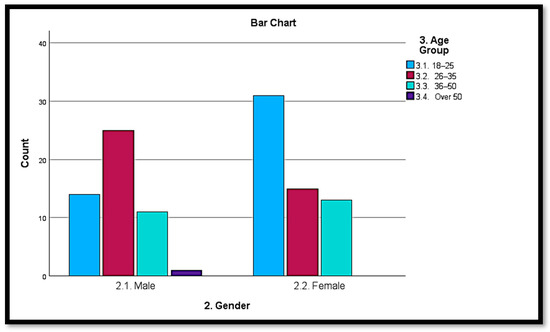
A statistically significant association was found between gender and age group (χ2 = 9.558, p = 0.023), indicating a difference in age composition between male and female participants. Female respondents were more heavily represented in the 18–25-year age group, whereas males tended to cluster in the 26–35-year age group (Figure 1). This demographic variation is reported descriptively and may be relevant to interpreting perceptions of hygiene, although behavioural implications were not directly tested in this analysis.
Figure 1.
The Relationship between customer gender and age.
Regarding employment status, the sample reflected a socioeconomically diverse consumer base. A slight majority of respondents (52%, n = 57) were formally employed, while 26% (n = 28) reported being unemployed. A further 16% (n = 17) identified as informally employed, and 6% (n = 6) were students. This distribution suggests that informal street food vending is accessed by individuals across the employment spectrum, serving both those with regular incomes, those operating on the margins, and those in riskier labour arrangements. No statistically significant association was found between gender and employment status (χ2 = 2.84, p = 0.417), indicating that both men and women access street food vendors at similar rates regardless of work status. These findings highlight the widespread presence of informal food services across class and employment divides, particularly within the densely populated, working-class urban geography of Johannesburg’s inner city.
Regarding residency, 80% (n = 88) of respondents were permanent residents of Johannesburg, while 20% (n = 22) commuted from surrounding areas. This localised pattern aligns with the study’s urban focus and the spatial concentration of street vendors near transport hubs, workplaces, and public facilities. No gender-based differences in residency were found (χ2 = 0.146, p = 0.702), suggesting that access to informal food vending is relatively uniform across residential contexts.
The distribution of age, employment, and residency collectively reflects a customer base that is both mobile and economically mixed, yet highly reliant on informal street food services. This demographic profile highlights the need for customised health and safety policies that take into account the vulnerabilities and expectations of both vendors and the diverse populations they serve.
3.2. Customer Expectations
3.2.1. Customer Expectations and Purchasing Behaviour
All 110 respondents (100%) reported having previously purchased food from informal street vendors in Johannesburg, underscoring the central role of this sector in meeting daily urban food needs. Purchasing frequency varied considerably: 35% of participants (n = 38) reported buying street food weekly, 31% (n = 34) monthly, 26% (n = 28) daily, and 9% (n = 10) reported buying it only rarely. These figures reflect the reliance of many inner-city residents on informal vendors for affordable, accessible meals. These patterns confirm that street food constitutes a regular component of participants’ diets and that most customers have repeated exposure to vendor hygiene practices, making their perceptions behaviourally meaningful for assessing trust and repurchase intentions.
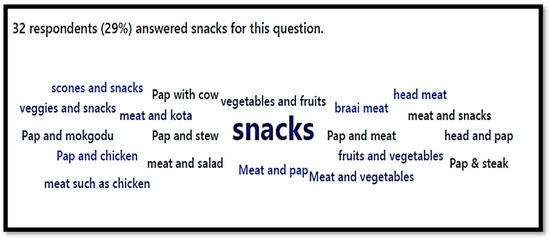
When asked about the types of food purchased, responses clustered around staple, low-cost meals typical of the local informal food economy. The word cloud presented in Figure 2 visually illustrates the dominance of items such as pap (maize meal porridge), meat, gravy, and boerewors (a South African sausage), which appear most prominently due to their high frequency of mention. The starch–protein combinations were widespread (e.g., pap with steak or rice with gravy), suggesting preferences for filling, affordable foods that align with the economic realities of inner-city consumers. Less frequently cited items included chips, vegetables, snacks, and fruit. Collectively, these findings indicate that informal vendors primarily supply staple meals rather than occasional snacks.
Figure 2.
Word cloud of typical food purchased.
Beyond food type, vendor selection was influenced by convenience, taste, and habit. However, qualitative responses indicated that familiarity and trust also played a role, with many respondents reporting repeat purchases from the same vendors. This behavioural loyalty suggests that consistent service quality and perceived hygiene may contribute to sustained customer relationships.
3.2.2. Customer Expectations and Observed Hygiene
Customers had strong expectations of hygiene and safety. More than 74% indicated that they would avoid purchasing from vendors perceived as unhygienic, indicating that hygiene functions as a primary screening criterion in purchasing decisions.
Observed practices, however, revealed inconsistencies. While 67% of respondents reported observing vendors washing their hands, and 63% reported observing the use of gloves or aprons, only 41% reported that these practices were consistently observed across customer transactions. Additionally, only 45% had seen any form of hygiene certification or signage. These findings suggest a gap between customer expectations and the implementation of routine hygiene.
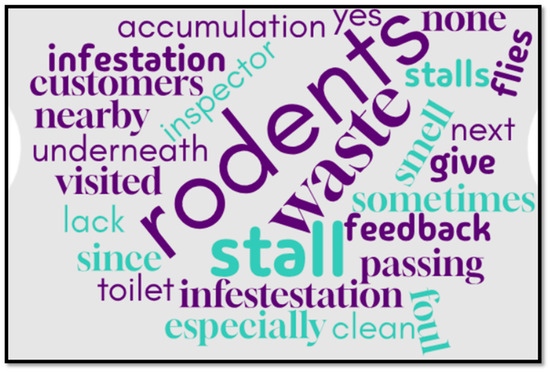
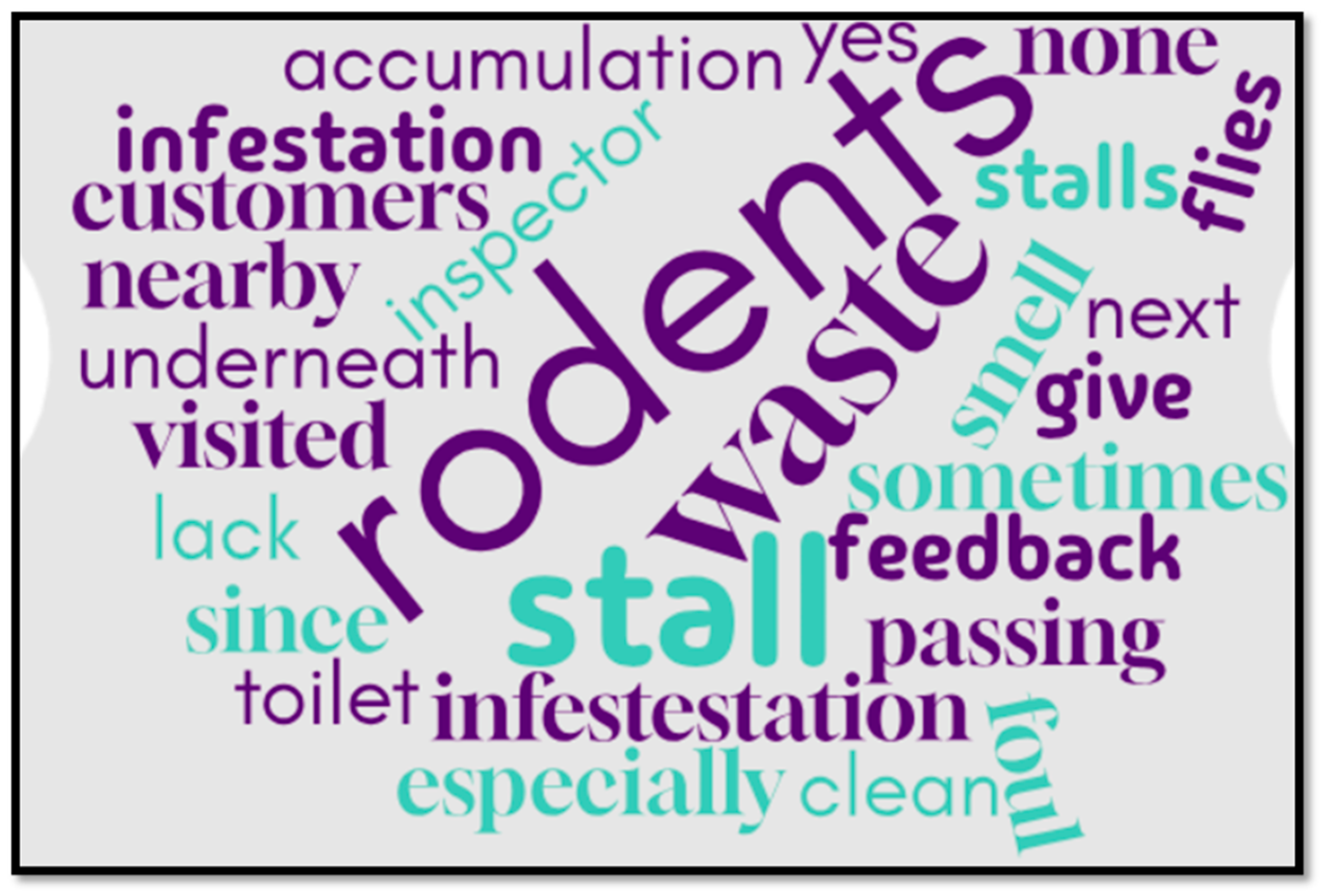
The qualitative word cloud in Figure 3 highlights the most frequently cited hygiene concerns. As illustrated in Figure 3, customer concerns centred on visible rodent infestations, waste, odour, flies, dirt, lack of gloves, and poor surroundings, demonstrating that customers rely heavily on visible environmental and behavioural cues when assessing food safety. These observations indicate that perceptions of hygiene are formed rapidly through visual inspection rather than through formal verification.
Figure 3.
Word cloud of customer hygiene concerns from open-ended responses.
Respondents expressed strong expectations regarding hygiene, with 74% (n = 81) indicating that visible cleanliness was a primary factor influencing their food purchases. Observational experiences further showed that 67% had seen vendors wash their hands and 63% had observed the use of gloves or aprons. However, only 41% reported that these hygiene practices were consistently applied across customer transactions, highlighting a gap between expectations and routine implementation.
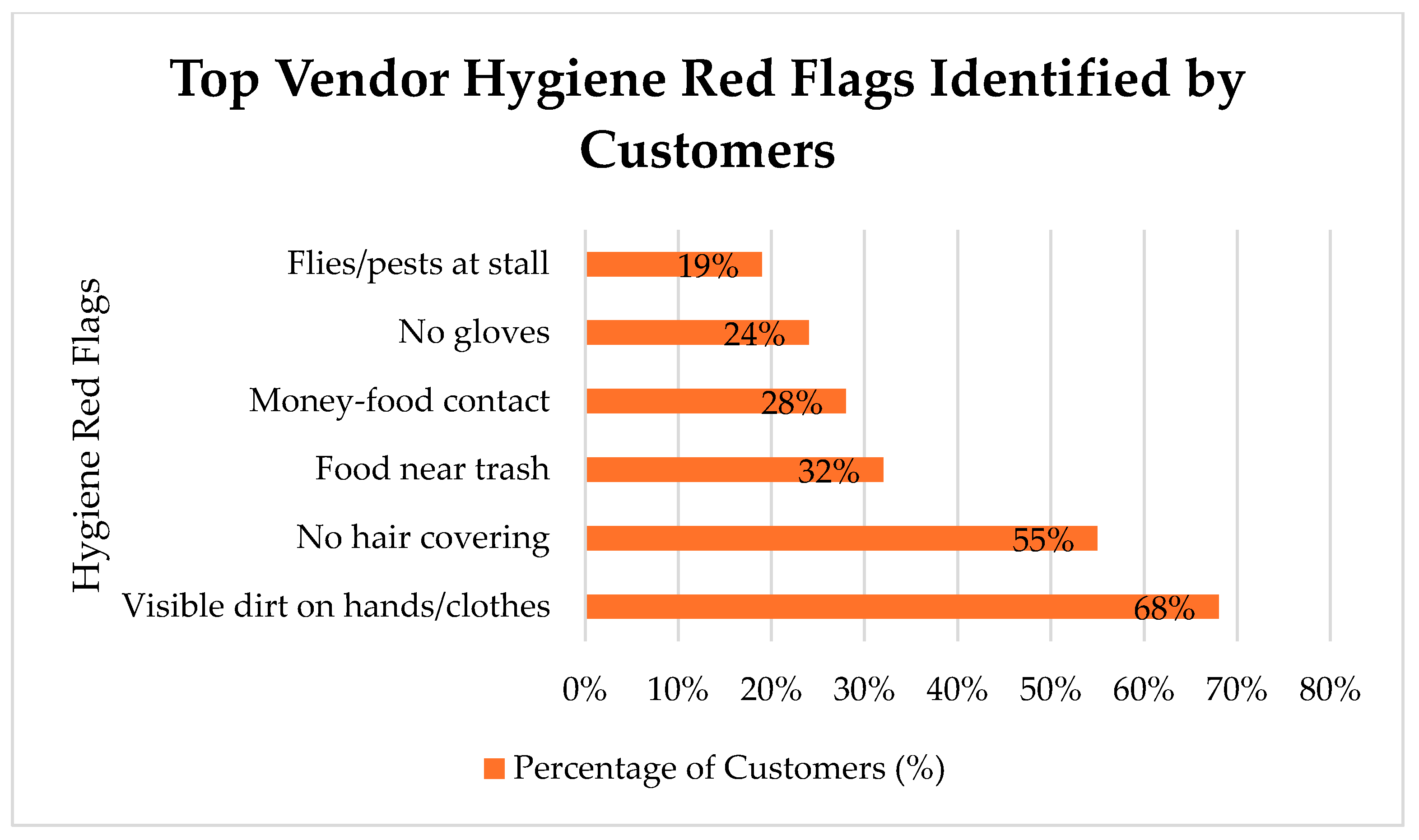
Specific hygiene deterrents are illustrated in Figure 4, which presents the most frequently cited “red flags” that discouraged purchasing. The most common concerns were visible dirt on vendors’ hands or clothing (68%) and the absence of hair coverings (55%). Environmental risks were also noted: 32% reported food displayed near waste or trash; 28% observed vendors handling money and food without handwashing; 24% stated the absence of gloves; and 19% identified flies or pests at vending stalls. These findings demonstrate that customers rely heavily on visible and immediate cues when judging food safety.
Figure 4.
Top hygiene red flags identified by customers.
Beyond these specific red flags, avoidance behaviour was widespread. Among respondents who had previously avoided a vendor due to hygiene concerns (n = 68), many reported permanently discontinuing purchases after a negative experience. Gender differences were also evident: 81% of female respondents indicated they were highly unlikely to return to vendors perceived as unhygienic, compared with 52% of male respondents, suggesting greater sensitivity to hygiene among women.
3.3. Trust and Hygiene Visibility
Chi-square analyses were conducted to assess relationships between hygiene visibility, customer trust, and purchasing behaviour (Table 2). The use of personal protective equipment (PPE) was significantly associated with higher levels of customer trust (χ2 = 6.56, p = 0.011). Trust was, in turn, strongly associated with repeat purchasing behaviour (χ2 = 11.22, p < 0.001). In addition, female respondents were significantly more likely than male respondents to discontinue patronising vendors after observing unhygienic practices (χ2 = 4.79, p = 0.029), indicating greater sensitivity to hygiene among women.
Table 2.
Association between hygiene visibility, trust, and repurchase behaviour.
By contrast, some hygiene indicators presented in Table 2 did not demonstrate statistically significant relationships with trust or repurchase behaviour. Specifically, vendor handwashing frequency (χ2 = 23.88, p = 0.923), observation of food safety certification (χ2 = 6.12, p = 0.987), and previous avoidance behaviour (χ2 = 8.11, p = 0.991) showed positive but non-significant trends. Although respondents generally expressed greater preference for vendors who washed hands or displayed certification, these differences were not statistically significant.
These findings suggest that while customers consider multiple hygiene cues, broader and more visible indicators such as PPE use and overall cleanliness may play a stronger role in shaping trust than isolated or inconsistently observed practices.
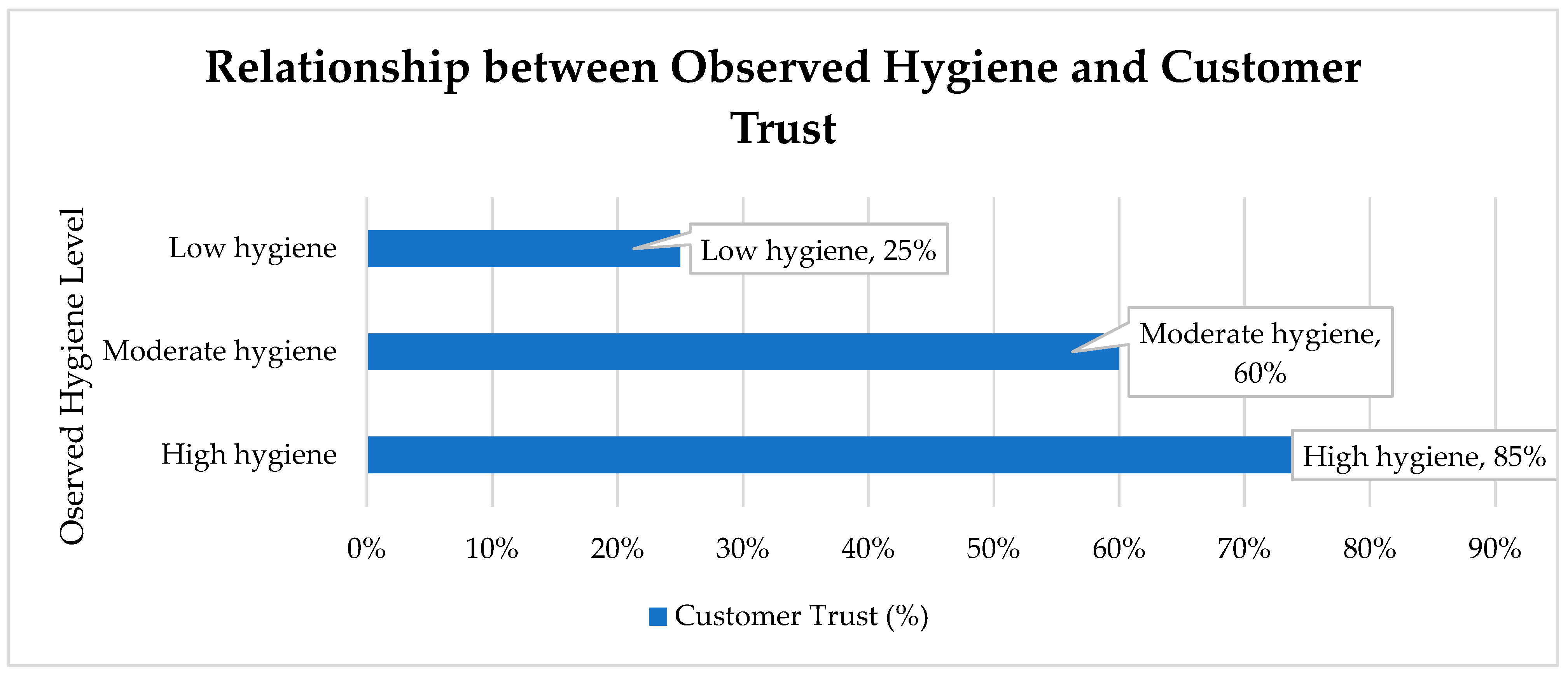
The overall relationship between observed hygiene and customer trust is illustrated in Figure 5. Trust increased progressively with higher levels of observed hygiene. Only 25% of respondents expressed trust in vendors perceived as having low hygiene, compared with 60% under moderate hygiene and 85% under high hygiene. This gradient indicates that customer trust strengthens substantially as visible cleanliness improves, highlighting hygiene as a key determinant of confidence in informal food vendors.
Figure 5.
Relationship between observed hygiene and customer trust.
Beyond this overall pattern, additional behavioural measures further demonstrated the importance of visibility of hygiene. Among respondents who observed vendors using gloves or washing their hands, 81% reported “full trust,” compared with only 33% among those who did not observe these practices. Similarly, 78% indicated they would definitely return to hygienic vendors, and 69% stated they would recommend such vendors to others. Conversely, 53% reported permanently avoiding vendors after a single negative experience with vendor hygiene.
Gender differences were also evident. Female respondents were more likely to require consistently high hygiene standards before expressing trust, with 72% indicating a preference for “always clean” conditions, compared with 49% of male respondents who accepted “mostly clean” conditions.
3.4. Customer Demographic Profile and Associations with Perceptions
A total of 110 respondents participated in the customer survey. The sample was slightly more female (54%), with most participants aged 26–45 years. Over 72% had completed secondary or tertiary education. These characteristics indicate a predominantly economically active and moderately educated customer base that regularly engages with informal street food vendors.
Chi-square tests were conducted to examine whether demographic characteristics were associated with perceptions of hygiene, trust in vendors, or return behaviour. As summarised in Table 3, none of the demographic variables were statistically significant in association with hygiene-related perceptions or purchasing behaviour (all p > 0.05).
Table 3.
Summary of demographic associations of the customer survey.
Specifically, gender was not significantly associated with returning to a vendor based on hygiene (χ2 = 3.33, p = 0.189), stopping purchases due to hygiene concerns (χ2 = 1.04, p = 0.593), or trusting vendors who visibly demonstrate hygienic practices (χ2 = 4.30, p = 0.116). Similarly, education level was not significantly associated with the belief that hygiene influences return behaviour (χ2 = 9.83, p = 0.277). Employment status was also not significantly associated with trust in hygienic vendors (χ2 = 3.70, p = 0.157) or with returning to the same vendor based on hygiene (χ2 = 2.68, p = 0.262).
Although statistical significance was not reached, several directional patterns were observed. Women tended to report slightly stronger agreement with hygiene-based return decisions and expressed somewhat greater trust in visibly hygienic vendors. Respondents with secondary education showed marginally higher agreement that hygiene influenced their purchasing choices, and employed participants were more likely to repeat purchase when vendors appeared clean. These trends, however, should be interpreted cautiously, as they were not statistically reliable.
Overall, the findings suggest that expectations regarding vendor hygiene were broadly consistent across demographic groups, indicating that hygiene visibility is a shared concern among customers rather than one strongly differentiated by gender, education, or employment status.
3.5. Thematic Findings from Open-Ended Responses
Qualitative analysis of open-ended responses identified three dominant themes that contextualise how customers interpret hygiene practices and how these perceptions influence trust and purchasing decisions. The themes are summarised in Table 4. Collectively, the findings indicate that customers evaluate vendors primarily through visible and experiential cues rather than formal regulatory knowledge, with hygiene functioning as a proxy for professionalism, safety, and accountability.
Table 4.
Emerged from the customers of informal vendors.
The first theme, Hygiene as Professionalism, reflects the tendency of customers to equate visible cleanliness with competence and credibility. Vendors who appeared clean and orderly were frequently described using positive descriptors such as “serious,” “respectful,” and “trustworthy,” suggesting that hygiene signals vendor reliability.
The second theme, Health Risk Avoidance, highlights customers’ concerns about illness and previous negative food experiences. Several respondents cited food poisoning or perceived contamination as reasons for caution, with female participants in particular emphasising the protection of family members and health risks. This pattern suggests that hygiene lapses are interpreted as potential threats to personal and household well-being.
The third theme, Visual Signals of Accountability, underscores the importance of observable hygiene measures. Items such as Certificates of Acceptability (COAs), gloves, aprons, and hand sanitiser were viewed as evidence of vendor responsibility and compliance. Some respondents suggested that vendors displaying these measures should be formally recognised or supported, indicating that visible hygiene reinforces trust and legitimacy.
4. Discussion
This study examined how customers interpret visible hygiene practices and how these perceptions shape trust and purchasing behaviour within Johannesburg’s informal street food economy. By centring consumer interpretation rather than vendor compliance alone, the findings provide insight into the behavioural mechanisms through which hygiene visibility influences vendor sustainability in low-regulation food environments.
4.1. Customer Expectations of Hygiene and Observable Practices
The findings demonstrate that customers hold clear, well-articulated expectations regarding hygiene when purchasing food from informal vendors. Hygiene was widely treated as a baseline requirement rather than an added quality feature, with more than 74% of respondents indicating that they would avoid vendors perceived as unhygienic. Customers relied primarily on visible cues such as the use of gloves or aprons, observable handwashing, clean food displays, and overall stall cleanliness to assess food safety. These findings are consistent with prior research in informal food settings across Africa and Asia, where consumers similarly rely on appearance-based indicators as practical heuristics for evaluating risk in the absence of formal oversight (Haleegoah et al., 2020; Mensah et al., 2002; Abrahale et al., 2019).
From a theoretical perspective, these observable hygiene practices function as “cues to action” within the HBM, signalling reduced susceptibility to foodborne illness and lowering perceived severity of potential health consequences (Rosenstock, 1974). Customers did not depend on formal certification or regulatory enforcement to make food safety judgments. Instead, they substituted institutional guarantees with visible hygiene behaviours, a pattern consistent with behavioural economics research on heuristic decision-making under uncertainty (Kahneman, 2011). In this context, hygiene visibility operates as a behavioural shortcut that allows customers to manage risk in an environment characterised by information asymmetry and limited regulation (Akerlof, 1970).
However, these expectations must be interpreted against the structural constraints faced by informal vendors. Limited access to running water, waste-disposal infrastructure, and formal storage facilities remains a persistent challenge in Johannesburg’s informal food sector (Roever & Skinner, 2016; Sepadi & Nkosi, 2023). This tension between consumer expectations (Steptoe et al., 1995) and infrastructural realities highlights the need to understand hygiene not only as an individual responsibility but also as a structural and governance issue embedded within urban informality.
4.2. Hygiene Visibility, Trust Formation, and Repeat Purchasing Behaviour
The findings indicate that visibility of hygiene plays a decisive role in shaping customer trust and subsequent purchasing behaviour. Customers who observed consistent hygiene practices reported significantly higher levels of trust and were substantially more likely to return to the same vendor. Conversely, visible hygiene lapses, such as uncovered food, dirty hands, or handling money and food without handwashing, often led to immediate vendor avoidance. Notably, qualitative responses trigger, indicating that a single negative hygiene experience was often sufficient to cause permanent customer loss, even when food quality had previously been satisfactory.
This pattern reflects a threshold effect in which trust is rapidly eroded once perceived risk exceeds an acceptable level. Statistical analysis confirmed a strong association between customer trust and repeat purchasing behaviour, supporting the interpretation of trust as a mediating mechanism between hygiene perception and consumer loyalty. In informal food markets, where formal monitoring is weak or absent, trust becomes a critical substitute for regulation, reducing uncertainty and enabling repeated transactions (Akerlof, 1970; Loewenstein et al., 2001).
Behavioural economics provides further insight into this process. Customers rely on visible hygiene practices as informal quality assurance signals that reduce cognitive effort and perceived transaction risk. These signals serve as proxies for trust, allowing consumers to make rapid decisions without verifying actual compliance with food safety standards. Similar dynamics have been documented in informal food systems in Ghana, Kenya, Nigeria, and India, where visible cleanliness is closely linked to customer retention and repurchase intentions (Mensah et al., 2002; Muyanja et al., 2011; Okojie & Isah, 2014). Within the Health Belief Model, the durability of negative reactions to hygiene failures can be explained by heightened perceptions of susceptibility and severity, which motivate avoidance behaviour once risk is perceived as unacceptable.
Together, these findings underscore the fragility of customer trust in informal food environments and highlight hygiene visibility as a critical determinant of vendor sustainability rather than a marginal factor.
4.3. Gender Differences in Hygiene Sensitivity and Risk Perception
Clear gender differences emerged in customer responses to hygiene cues. Female respondents were significantly more likely than male respondents to avoid vendors after observing unhygienic practices and to require consistent hygiene before establishing trust. Women also expressed greater concern about food exposure, hand contact, and environmental cleanliness, suggesting heightened sensitivity to contamination risks.
These findings align with the existing literature in public health and behavioural psychology, which shows that women tend to be more risk-averse in health-related decisions, particularly those involving food safety (Slovic, 1999; Davidson & Freudenburg, 1996). The Health Belief Model helps explain this pattern, as women may perceive greater susceptibility and severity due to caregiving roles and heightened responsibility for household health outcomes (Rosenstock, 1974). In informal food contexts, where hygiene lapses can have direct health consequences, these gendered perceptions play a significant role in shaping purchasing behaviour.
Recognising women as key decision-makers and influencers in informal food consumption has important implications for the design of food safety communication and interventions. Hygiene visibility strategies, certification schemes, and public-facing signals of cleanliness are likely to have a disproportionate impact on female consumers and, by extension, household-level food safety outcomes.
4.4. Implications for Sustainable Development and Urban Food Governance
The findings of this study have broader implications for public health, informal livelihoods, and sustainable urban development. By demonstrating how visible hygiene practices shape consumer trust and behaviour, the study contributes directly to SDG 3 (Good Health and Well-being), SDG 5 (Gender Equality), SDG 8 (Decent Work and Economic Growth), and SDG 11 (Sustainable Cities and Communities). Hygiene visibility not only reduces perceived risk of foodborne illness but also strengthens vendor credibility and economic resilience in informal markets.
Customer calls for visible certification and recognition of hygienic vendors suggest a growing demand for transparency and accountability in informal food systems. This aligns with arguments for hybrid governance models that combine formal regulation with community-based oversight and behavioural incentives (Skinner, 2016). However, customer expectations must be balanced against the infrastructural constraints vendors face. Without adequate access to water, sanitation, and waste management services, consistent, adherence to hygiene standards remains difficult (Roever & Skinner, 2016; Sepadi & Nkosi, 2023).
Effective interventions should therefore prioritise low-cost, supportive measures such as hygiene training, access to basic infrastructure, and visible hygiene tools, including signage, gloves, and handwashing stations. These measures can strengthen trust, encourage compliance, and create positive feedback loops in which greater visibility of hygiene enhances customer loyalty and vendor motivation.
4.5. Limitations of the Study
This study is subject to several limitations. First, the cross-sectional design captures perceptions and behaviours at a single point in time. It does not allow for causal inference regarding the relationships among hygiene practices, trust, and repeat purchasing. Second, the analysis is based on self-reported perceptions of hygiene rather than objectively verified practices, and customers may rely on symbolic cues (e.g., gloves or aprons) that do not always reflect actual food safety conditions.
The sample was geographically concentrated in Johannesburg’s inner city and had limited representation of respondents aged 50 or older, which constrains age-based comparisons. While this study is context-specific to Johannesburg, the findings are analytically transferable to similar urban informal food environments characterised by limited regulation and high reliance on visible trust cues. The results are not intended to be statistically generalisable; however, they offer insight into behavioural patterns relevant across comparable settings. Finally, although education level was considered, other potential confounding variables, such as income or household characteristics, were not directly measured and warrant further investigation in future research.
5. Conclusions
This study investigated how visible hygiene practices influence customer trust and repeat purchasing behaviour in Johannesburg’s informal street food economy. The findings demonstrate that hygiene visibility functions as both a public health safeguard and a market signal, strongly shaping consumer trust, loyalty, and vendor sustainability in low-regulation food environments. Customers relied on specific, observable cues such as protective clothing, clean hands, safe food handling, and stall cleanliness to assess vendor professionalism and food safety, rather than on formal certification or regulatory assurance.
Trust emerged as a central mediating mechanism between hygiene perception and purchasing behaviour. Even a single negative observation of hygiene was often sufficient to erode trust and prompt a permanent vendor switch, highlighting the fragility of customer relationships in informal food markets. This threshold effect underscores the importance of consistent visibility of hygiene, as trust once lost is difficult to recover. Gender differences further shaped these dynamics, with female customers exhibiting greater sensitivity to hygiene and more stringent trust requirements, consistent with the HBM’s emphasis on perceived susceptibility and severity.
From a theoretical perspective, the findings illustrate how hygiene operates as a heuristic shortcut for trust under conditions of uncertainty, consistent with behavioural economics. Practically, the results highlight the need for interventions that support both food safety and vendor livelihoods. Vendors seeking to retain customers must prioritise not only hygienic food handling but also the visible communication of these practices. Policy approaches should recognise the structural constraints faced by informal vendors and focus on supportive, low-cost measures such as hygiene training, basic infrastructure provision, and visible certification or recognition schemes. By reframing hygiene as a competitive advantage rather than a regulatory burden, such interventions can improve public health outcomes while advancing SDGs 3, 5, 8, and 11.
Finally, future research could build on these findings by using longitudinal or experimental designs to test causal relationships between hygiene interventions and customer trust. Studies combining consumer perceptions with direct observation of hygiene practices would further enhance understanding of how symbolic and actual hygiene interact in informal food environments.
Author Contributions
Conceptualisation, M.M.S.; methodology, M.M.S.; software, M.M.S.; validation, M.M.S., and T.H.; formal analysis, M.M.S.; investigation, M.M.S.; resources, M.M.S.; data curation, M.M.S., and T.H.; writing—original draft preparation, M.M.S.; writing—review and editing, M.M.S., and T.H.; visualisation, M.M.S.; supervision, T.H.; project administration, M.M.S. All authors have read and agreed to the published version of the manuscript.
Funding
The APC was funded by the Tshwane School for Business and Society.
Institutional Review Board Statement
The study was conducted in accordance with the Tshwane University of Technology and approved by the Tshwane University of Technology Human Research Ethics Committee (Reference number: HREC 2025/07/030) for studies involving humans. In addition, the study was registered on the National Health Research Database (NHRD) under the registration number (NHRD-GP 202503 031).
Informed Consent Statement
Informed consent was obtained from all subjects involved in the study. Participation in the study was entirely voluntary. No personal identifiable information was recorded. Anonymity was maintained through coded identifiers, and confidentiality was maintained throughout the research process. The data were securely stored and used exclusively for academic purposes.
Data Availability Statement
The original contributions presented in this study are included in the article. Further inquiries can be directed to the corresponding author.
Acknowledgments
The authors would like to thank Tshwane University of Technology (Tshwane School for Business and Society) for the support provided to both the student and the supervisor during the student’s studies and the writing of this paper. We are also grateful to the Tshwane School for Business and Society for their insightful feedback on the study, which helped enhance the methods presented in this paper. Furthermore, the authors acknowledge the City of Johannesburg and vendors for their participation in the study and for their tireless efforts to improve health, safety, and hygiene in their jurisdiction.
Conflicts of Interest
The authors declare no conflicts of interest. The funders had no role in the design of the study; in the collection, analyses, or interpretation of data; in the writing of the manuscript; or in the decision to publish the results.
Abbreviations
The following abbreviations are used in this manuscript:
| HBM | Health Belief Model |
| SDG | Sustainable Development Goal |
| COA | Certificate of Acceptability |
References
- Abrahale, K., Sousa, S., Albuquerque, G., Padrão, P., & Lunet, N. (2019). Street food research worldwide: A scoping review. Journal of Human Nutrition and Dietetics, 32, 152–174. [Google Scholar] [CrossRef] [Scilit]
- Addo-Tham, R., Appiah-Brempong, E., Vampere, H., Acquah-Gyan, E., & Gyimah Akwasi, A. (2020). Knowledge on food safety and food-handling practices of street food vendors in Ejisu-Juaben Municipality of Ghana. Advances in Public Health, 2020, 4579573. [Google Scholar] [CrossRef] [Scilit]
- Akerlof, G. A. (1970). The market for “lemons”: Quality uncertainty and the market mechanism. The Quarterly Journal of Economics, 84(3), 488–500. [Google Scholar] [CrossRef] [Scilit]
- Alimi, B. A. (2016). Risk factors in street food practices in developing countries: A review. Food Science and Human Wellness, 5(3), 141–148. [Google Scholar] [CrossRef] [Scilit]
- Braun, V., & Clarke, V. (2006). Using thematic analysis in psychology. Qualitative Research in Psychology, 3(2), 77–101. [Google Scholar] [CrossRef] [Scilit]
- Choudhury, M., Mahanta, L., Goswami, J., Mazumder, M., & Pegoo, B. (2011). Socio-economic profile and food safety knowledge and practice of street food vendors in the city of Guwahati, Assam, India. Food Control, 22, 196–203. [Google Scholar] [CrossRef] [Scilit]
- Clayton, D. A., Griffith, C. J., Price, P., & Peters, A. C. (2002). Food handlers’ beliefs and self-reported practices. International Journal of Environmental Health Research, 12(1), 25–39. [Google Scholar] [CrossRef] [Scilit]
- Creswell, J. W., & Creswell, J. D. (2018). Research design: Qualitative, quantitative, and mixed methods approaches (5th ed.). Sage Publications. [Google Scholar]
- Davidson, D. J., & Freudenburg, W. R. (1996). Gender and environmental risk concerns: A review and analysis of available research: A review and analysis of available research. Environment and Behavior, 28(3), 302–339. [Google Scholar] [CrossRef] [Scilit]
- Department of Health, Republic of South Africa. (2018). Regulations governing general hygiene requirements for food premises, the transport of food and related matters (Regulation R.638). Government Gazette No. 41704; Government Printing Works.
- Food and Agriculture Organization of the United Nations (FAO). (2016). Street food vending in urban areas: Challenges and opportunities. FAO. [Google Scholar]
- Haleegoah, J., Akuoko, K. O., Dwumah, P., Amoako, M. K., Boulard, F. J., Benedicta, N. F., Owusu, A. B., & Lydia, B. (2020). Consumer perceptions of street-vended local foods in Urban Ghana. Food Science & Nutrition Research, 3(1), 1–10. [Google Scholar] [CrossRef] [Scilit]
- Kahneman, D. (2011). Thinking, fast and slow. Farrar, Straus and Giroux. [Google Scholar]
- Loewenstein, G., Weber, E. U., Hsee, C. K., & Welch, N. (2001). Risk as feelings. Psychological Bulletin, 127(2), 267–286. [Google Scholar] [CrossRef] [Scilit]
- Mensah, P., Yeboah-Manu, D., Owusu-Darko, K., & Ablordey, A. (2002). Street foods in Accra, Ghana: How safe are they? Bulletin of the World Health Organization, 80(7), 546–554. [Google Scholar]
- Muyanja, C., Nayiga, L., Brenda, N., & Nasinyama, G. (2011). Practices, knowledge and risk factors of street food vendors in Uganda. Food Control, 22(10), 1551–1558. [Google Scholar] [CrossRef] [Scilit]
- Okojie, P. W., & Isah, E. C. (2014). Sanitary conditions of food vending sites and food handling practices of street food vendors in Benin City, Nigeria: Implication for food hygiene and safety. Journal of Environmental and Public Health, 2014, 701316. [Google Scholar] [CrossRef] [Scilit]
- Patton, M. Q. (1999). Enhancing the quality and credibility of qualitative analysis. Health Services Research, 34(5 Pt 2), 1189–1208. [Google Scholar]
- Roever, S., & Skinner, C. (2016). Street vendors and cities. Environment and Urbanization, 28(2), 359–374. [Google Scholar] [CrossRef] [Scilit]
- Rosenstock, I. M. (1974). Historical origins of the health belief model. Health Education Monographs, 2(4), 328–335. [Google Scholar] [CrossRef] [Scilit]
- Samapundo, S., Cam Thanh, T. N., Xhaferi, R., & Devlieghere, F. (2016). Food safety knowledge, attitudes and practices of street food vendors and consumers in Ho Chi Minh City, Vietnam. Food Control, 70, 79–89. [Google Scholar] [CrossRef] [Scilit]
- Sepadi, M. M., & Hutton, T. (2025). Health and safety practices as drivers of business performance in informal street food economies: An integrative review of global and South African evidence. International Journal of Environmental Research and Public Health, 22(8), 1239. [Google Scholar] [CrossRef] [Scilit] [PubMed]
- Sepadi, M. M., & Hutton, T. (2026). Study protocol: A mixed-methods investigation of the impact of health and safety practices on the business performance among street food vendors in Johannesburg. Businesses, 6, 5. [Google Scholar] [CrossRef] [Scilit]
- Sepadi, M. M., & Nkosi, V. (2023). Health risk assessment of informal food vendors: A comparative study in Johannesburg, South Africa. International Journal of Environmental Research and Public Health, 20(3), 2736. [Google Scholar] [CrossRef] [Scilit]
- Skinner, C. (2016). Informal food retail in Africa: A review of evidence. In Consuming urban poverty project working paper. African Centre for Cities, University of Cape Town. [Google Scholar]
- Slovic, P. (1999). Trust, emotion, sex, politics, and science: Surveying the risk-assessment battlefield. Risk Analysis, 19(4), 689–701. [Google Scholar] [CrossRef] [Scilit] [PubMed]
- Steptoe, A., Pollard, T. M., & Wardle, J. (1995). Development of a measure of the motives underlying the selection of food: The food choice questionnaire. Appetite, 25(3), 267–284. [Google Scholar] [CrossRef] [Scilit] [PubMed]
- Thaler, R. H., & Sunstein, C. R. (2008). Nudge: Improving decisions about health, wealth, and happiness. Yale University Press. [Google Scholar]
- UNDP. (2023). Sustainable development goals report 2023. United Nations Development Programme. Available online: https://www.undp.org/publications/sustainable-development-goals-report-2023 (accessed on 11 October 2025).

Disclaimer/Publisher’s Note: The statements, opinions and data contained in all publications are solely those of the individual author(s) and contributor(s) and not of MDPI and/or the editor(s). MDPI and/or the editor(s) disclaim responsibility for any injury to people or property resulting from any ideas, methods, instructions or products referred to in the content. |
© 2026 by the authors. Licensee MDPI, Basel, Switzerland. This article is an open access article distributed under the terms and conditions of the Creative Commons Attribution (CC BY) license.