1. Introduction
While in space, astronauts face muscle atrophy challenges and bone density loss caused by prolonged exposure to microgravity [
1]. These physiological changes compromise mobility and stability and increase the risk of injury. Motion analysis tools such as motion capture systems, force plates, and electromyography (EMG), coupled with human body models, are often used to assess joint mechanics and muscle activation for applications in sports and rehabilitation.
NASA researchers work to use these tools to assess joint kinematics and kinetics, which allow them to improve exercise prescriptions for astronauts. DeWitt et al. reported that the magnitude and rate of change in the ground reaction (GRF) force determine joint strain magnitudes and strain rates, which affect osteogenesis [
2]. In order to reproduce the joint strain dynamics from normal gravity, weightlessness exercises should mimic the forces that are experienced on Earth. The study was carried out by McCrory et al. and involved healthy exercisers, showing that the gravity replacement load produced in a subject load device directly impacts the loading rate and measurement of ground reaction force peaks during walking and running in a microgravity locomotion simulator [
3]. DeWitt and Ploutz-Snyder went further and conducted a study involving seven astronauts to identify a strategy that can potentially increase exercise session efficacy during in-flight 0 G treadmill running exercise, where mechanical load on the joints can be increased by increasing running speed at a given gravity replacement load magnitude [
4]. Their biomechanics study used a single HD video camera installed on a treadmill operated in the International Space Station (ISS), and they observed that astronauts’ running patterns in terms of joint angles can be maintained during the absence of gravity [
5]. These studies motivate us to collect and analyze joint mechanics data to further investigate whether the participants utilize similar gait patterns as they did in normal gravity.
As part of a decades-long effort, the ARED-Kinematics study has, over the past couple of years, employed motion capture systems—including the ARED force plate and video setup—to analyze joint moment, muscle forces, and bone stresses in astronauts exercising with the Advanced Resistive Exercise Device (ARED) on the ISS [
6]. This ongoing study also utilizes the European Space Agency’s (ESA) physiotherapy program, which monitors astronauts exercising on the ARED through real-time audio and video feedback to ensure proper spinal and lower-limb alignment and safe loading during movements. While this approach provided information about muscle movement quality and external performance, there are no results published yet. A recent study by Nielsen et al. analyzed the kinematics of resistive exercises performed using the European Enhanced Exploration Exercise Device (E4D) to evaluate effective exercise methods for missions in deep space [
7]. Through 17 inertial measurement units, their study measured joint angles and angular velocities across various gym exercises. However, their study remains limited to joint kinematics and does not provide estimates of joint moment and muscle activation.
Methods must be developed to assess how astronauts and such systems perform in deep space destinations based on data collected on the ground and existing flight environments. For future missions, by analyzing how astronauts’ bodies move and respond to reduced-gravity environments, effective countermeasures—such as exploration exercise systems—can be developed to enhance exercise regimens in order to ensure that astronauts maintain the physical capacity needed to perform their duties [
8]. The current method is based on the conventional motion analysis paradigm, which estimates joint mechanics using motion capture systems and force plates and muscle activations at surface level using EMG sensors. It does not account for individual muscle force and path, deep muscle activation, tendon forces, or accurate joint reaction forces. The OpenSim modeling method can address these limitations without direct EMG measurement. For example, it estimates muscle activation by combining inverse dynamics with optimization methods to distribute joint torques across individual muscles based on their anatomical properties. OpenSim provides detailed musculoskeletal models that account for passive structures and realistic joint mechanics, reducing errors from soft tissue artifacts. As a result, OpenSim can estimate both internal joint forces and activations across a wide set of muscles through a five-step process [
9].
Validation studies have shown that the OpenSim simulation method can output joint angles and moments and muscle activations comparable to commercial gait analysis software and EMG sensors in various locomotion tasks such as walking, running, and jumping in the field of sports and rehabilitation medicine in earth gravity [
10,
11,
12,
13]. NASA has been using OpenSim simulation to enhance countermeasure development by assessing joint moments and muscle forces. Gallo et al. used OpenSim to examine the effect of squat exercise on joint force and moment and muscle force between two loading conditions (bar loading and harness loading) via a lifting platform called HULK in earth gravity [
14]. Fregly et al. have reported that ARED squat exercise in zero gravity can replicate Earth-level squat muscle moments in a reference squat position by constructing an astronaut-ARED system in OpenSim [
8]. Lostroscio et al. demonstrated OpenSim-based modeling capability in assessing locomotion feasibility in terms of postural stability in lunar gravity and in incorporating the human dynamic input early in development cycles of spaceflight exercise hardware design [
15]. To address technical gaps in remote crew health and performance monitoring [
16], continued efforts are called for to create an OpenSim workflow to assess joint moments and muscle forces during locomotion in simulated lunar, Martian, and micro-gravities for the NASA Artemis Program and Mars Exploration Program.
In this study, we focus on validating the first three steps of the OpenSim workflow (scaling, inverse kinematics, and inverse dynamics) as a foundational phase toward comprehensive joint biomechanics estimation. The goals of this study are as follows: (1) to establish an OpenSim workflow using experimental gait data from publicly released databases and (2) to evaluate the outcome (joint angle and moment) differences between the OpenSim and alternative human-model-based approaches. We expect that the joint angle and moment results generated by our OpenSim workflow will show a high correlation with respect to reference data using Pearson’s correlation coefficient (PCC) and a low root mean square error (RMSE). In the long term, we would like to develop an OpenSim workflow capable of accurately producing joint angles, joint moments, and muscle activations, and we aim to verify ground laboratory-collected data such that the tools can be extended to estimate reduced-gravity biomechanics outcomes.
2. Materials and Methods
To conduct outcome comparisons between two types of modeling techniques, we first established search criteria for published research datasets, which should satisfy the following items: (1) The dataset includes participant anthropometric information, marker set information, marker position data, and ground reaction force measurements; (2) the dataset includes joint angle and moment (as net internal moment) estimations via a human body model and muscle activation measurements in lower limbs via surface EMGs; (3) the data were collected of healthy participants for various locomotion conditions, preferably in simulated reduced-gravity environments. Two research datasets met our criteria: Dataset 1 is from a locomotion study reported by Lencioni et al. [
17], and Dataset 2 is a walking study in simulated reduced-gravity environments reported by Maclean and Ferris [
18]. An OpenSim workflow was then developed to estimate joint angles and moments, which are later normalized and compared against the reported estimations from these datasets.
2.1. Datasets
Our study focuses on establishing and evaluating an OpenSim workflow, not on population-based clinical analysis. We therefore utilized data of a participant per dataset, representative of young and able-bodied individuals who completed all task conditions with good quality of both marker and GRF data. An able-bodied participant (62.5 kg, 159 cm, 25 years old, female) was selected from Dataset 1. All four locomotion tasks were included for comparison: regular walking (walking on a level floor at different speeds), toe walking (walking on toes), heel walking (walking on heels with no toe touching the ground), and step-down tasks (descending a step). These scenarios allowed us to estimate our OpenSim model’s reliability in some atypical locomotion tasks with respect to reproducing the recorded motion of lower-limb joints in the sagittal plane. In this study, marker trajectories and force plate data were recorded at 200 Hz and at 800 Hz, respectively. Moreover, the LAMB-protocol-based full-body marker set with 29 retro-reflective markers [
19] was used to track the movement of the head, upper limbs, trunk, pelvis, and lower limbs during dynamic trials. By using the markers’ coordinate data, the length of each segment and its local reference frames were computed and used to estimate the hip joint center and reconstruct the anatomical landmarks of a human body model. Joint angles were computed by relating two adjacent segments via a transformation matrix. The configuration of two force plates in series only recorded the ground reaction forces from one leg during each walking trial. Therefore, joint moments were computed for one leg using the standard Newton-Euler inverse dynamics approach, with recorded GRF and center of pressure (COP), calculated joint motion, and segment inertial properties such as joint length and center of mass. In this approach, Newton’s and Euler’s equations were applied recursively for each lower limb segment to solve for moments according to conservation of force and moment, starting at the foot and ending at the torso. Estimation of segment inertial properties is based on the participant’s anthropometry and is derived using a segmental analysis method [
20].
We also selected one able-bodied participant (72 kg, 180 cm, 20 years old, male) from Dataset 2. This study tested four gravity conditions simulated using a body-weight support system—1.0 G, 0.76 G, 0.55 G, and 0.31 G—all performed at a walking speed of 1.2 m/s. Marker trajectories were recorded at 100 Hz, and force plate data were recorded at 1000 Hz. The project used a modified Helen Hayes lower-body marker set with 38 retro-reflective markers, of which 22 were attached to anatomical landmarks of the lower limbs, and 4 four-marker clusters were attached to the thighs and shanks during dynamic trials. Visual3D (version, 2024.10.4, HAS-motion, Kingston, Ontario, CA, USA) software was used to first reconstruct a human body model, which defines the segment properties and hip joint location, and then to calculate the joint angles and moments during the gait cycle.
2.2. OpenSim Workflow
OpenSim’s five-step workflow includes a scaling step, inverse kinematics (IK), inverse dynamics (ID), residual reduction algorithm (RRA), and computed muscle control (CMC).
The OpenSim workflow begins with a scaling step, in which we customize a generic OpenSim model [
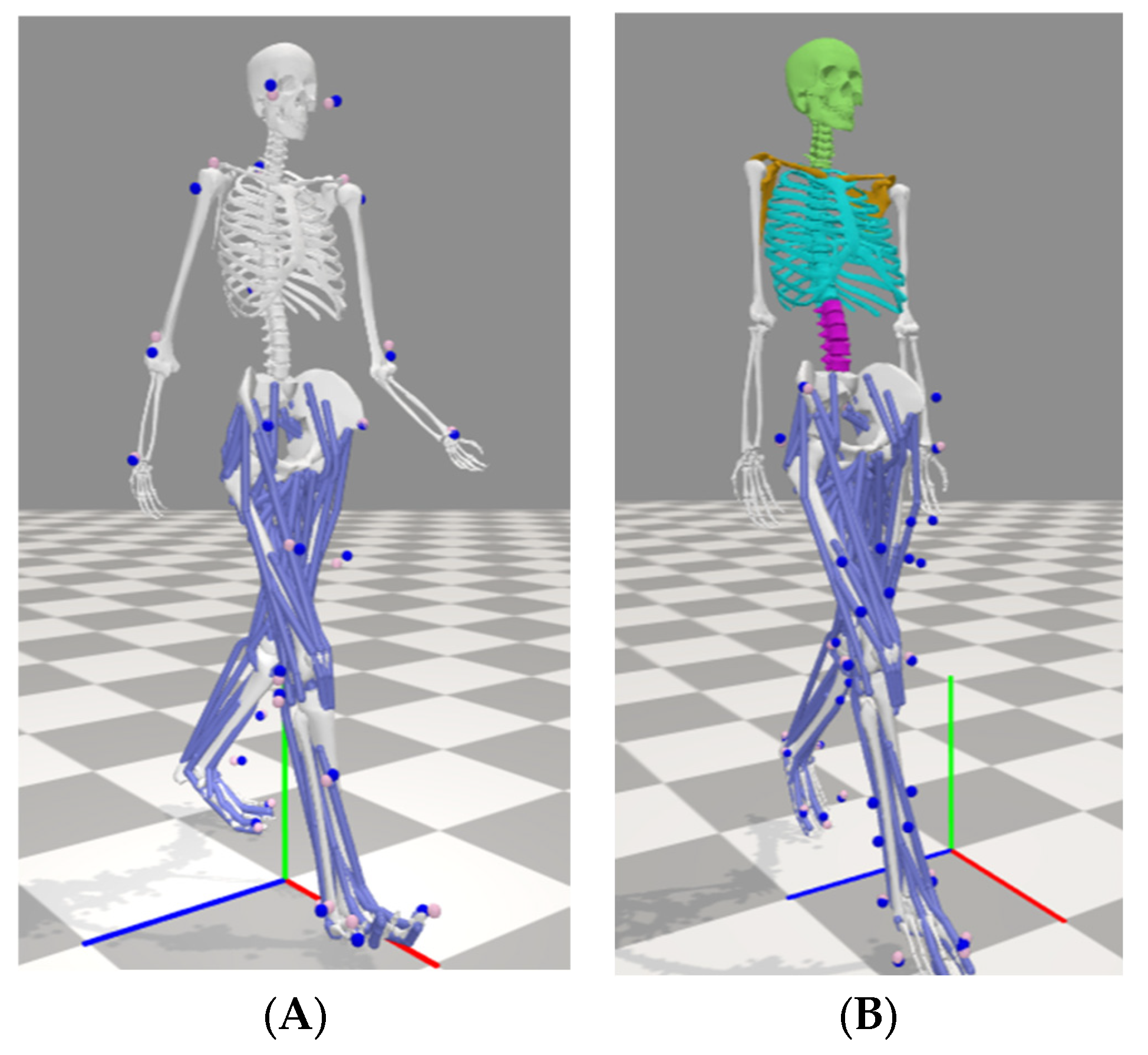
21] to match the subject’s specific segment length and hip joint location. For each dataset, an XML file was produced by incorporating subject mass information, the generic model, and the associated marker set. The “ModelScaler” section in the XML file adjusts body segment dimensions using distances between experimental markers from a static trial. The “MarkerPlacer” section then aligns the model’s markers with experimental ones. Markers such as those on the pelvis and knee are assigned heavier weights to prioritize the closer matching of these points, while other markers are assigned lower weights. A participant-specific OpenSim base model was created for each dataset, as shown in
Figure 1.
We used Rajagopal’s model [
21] as a generic model for scale processing in the OpenSim workflow. However, to accommodate the LAMB total-body marker set in the study of Dataset 1, we added a virtual marker (PSIS_MX) representing the midpoint between the left and right posterior superior iliac spines at the pelvis segment; two virtual markers corresponding to lateral fibular head markers (LxFH and RxFH); two virtual markers corresponding to lateral femoral condyles markers (LxLatCon and RxLatCon) at the lateral side of the knee joints; and virtual markers corresponding to markers tracking the thigh and shank segments of the model.
In addition, markers are placed further away from their corresponding anatomical landmarks in the foot segments of the OpenSim model for Dataset 2 compared to those for Dataset 1, as the Dataset 2 participant walked with shoes on, whereas the Dataset 1 participant walked with bare feet. Similarly to the scaling step, an XML setup file was created to run IK. To best fit the model to the experimental markers’ trajectories, the “IK Task Set” in the IK setup file lists all experimental markers referring to anatomical landmarks, with each assigned a weight that reflects its importance in the fitting process. Consistent weights were used for the IK task set selection in both scaling and IK steps. With respect to the lower limb, key anatomical markers on the pelvis, thigh, and shank are assigned heavier weights, as they strongly influence body alignment and gait, and they experience less impact from soft tissue movement artifacts, while tracking markers are assigned lower weights. In detail: anterior Superior Iliac Spines (LxAsis and RxAsis): 10. Midpoint of Posterior Superior Iliac Spine (Psis): 10; Lateral Condyle markers (LxLatCon and RxLatCon): 10; Fibular Head markers (LxFH and RxFH): 10; Lateral Malleous Markers (LxLatMal and RxLatMal): 1; Heel markers (LxHeel and RxHeel): 10; Toe markers (LxToe and RxToe): 10; 5th Metatarsal markers (LxMeta5 and RxMeta5): 1; Thigh markers (LxThigh and RxThigh): 1; Shank markers (LxShank and RxShank): 1.
We also used the same strategy to assign weights to markers used in the upper body. Markers located on or proximal to the trunk segment were assigned higher weights, whereas the distal markers were assigned lower weights. For example, the shoulder marker’s weights from both sides (LxShoulder and RxShoulder) are 5. This weighting system directs the IK solver to prioritize minimizing errors at significant anatomical landmarks. Lastly, we prepared ID setup files—which include the inputs of the generated IK results and the measured ground reaction force and moments—to estimate the joint moments in each trial. To facilitate OpenSim’s processing, we conducted unit conversion and matrix transformations to properly import marker trajectory and force plate data in the OpenSim coordinate system.
2.3. Data Analysis
We first used MATLAB (Mathworks, Natick, MA, USA) to construct data structures in order to store marker, joint angle, and moment data and their normalized values from both reference datasets and the OpenSim workflow. Joint angle data from the OpenSim IK output were time-normalized to 101 points (0–100% of the gait cycle) for both datasets. Joint moment data from the OpenSim ID output were normalized to participant body mass and time-normalized to 101 points of the gait cycle [
22]. Custom MATLAB scripts were developed to compare normalized joint angles and moments between the reference and OpenSim data across different walking conditions. Joint mechanics comparisons were conducted for the right side of the leg.
For each condition, data were averaged across all selected trials, and standard deviations were computed to evaluate disparity. There were 9 trials for regular walking, 4 trials for heel walking, 5 trials for toe walking, and 2 trials for stepping down for Dataset 1. There were 4 walking trials per gravitational condition for Dataset 2. The results were visualized using line plots with shaded error bars. PCC was calculated to assess the temporal similarity of the normalized angles and moments between reference data and OpenSim’s results. Similarity is categorized into four levels: excellent (PCC > 0.9), strong (0.7 ≤ PCC ≤ 0.9), moderate (0.4 ≤ PCC < 0.7), and low (PCC < 0.4) [
18,
19]. To quantify systematic bias and error magnitudes, we also report the RMSE of differences in joint angles and moments between our OpenSim results and reference data. The mean RMSE of 5 degrees is often considered an acceptable level of agreement for joint angle measurements [
23], and the mean RMSE of 0.23 Nm/kg is reported as an acceptable level of accuracy for joint moment estimation [
24].
3. Results
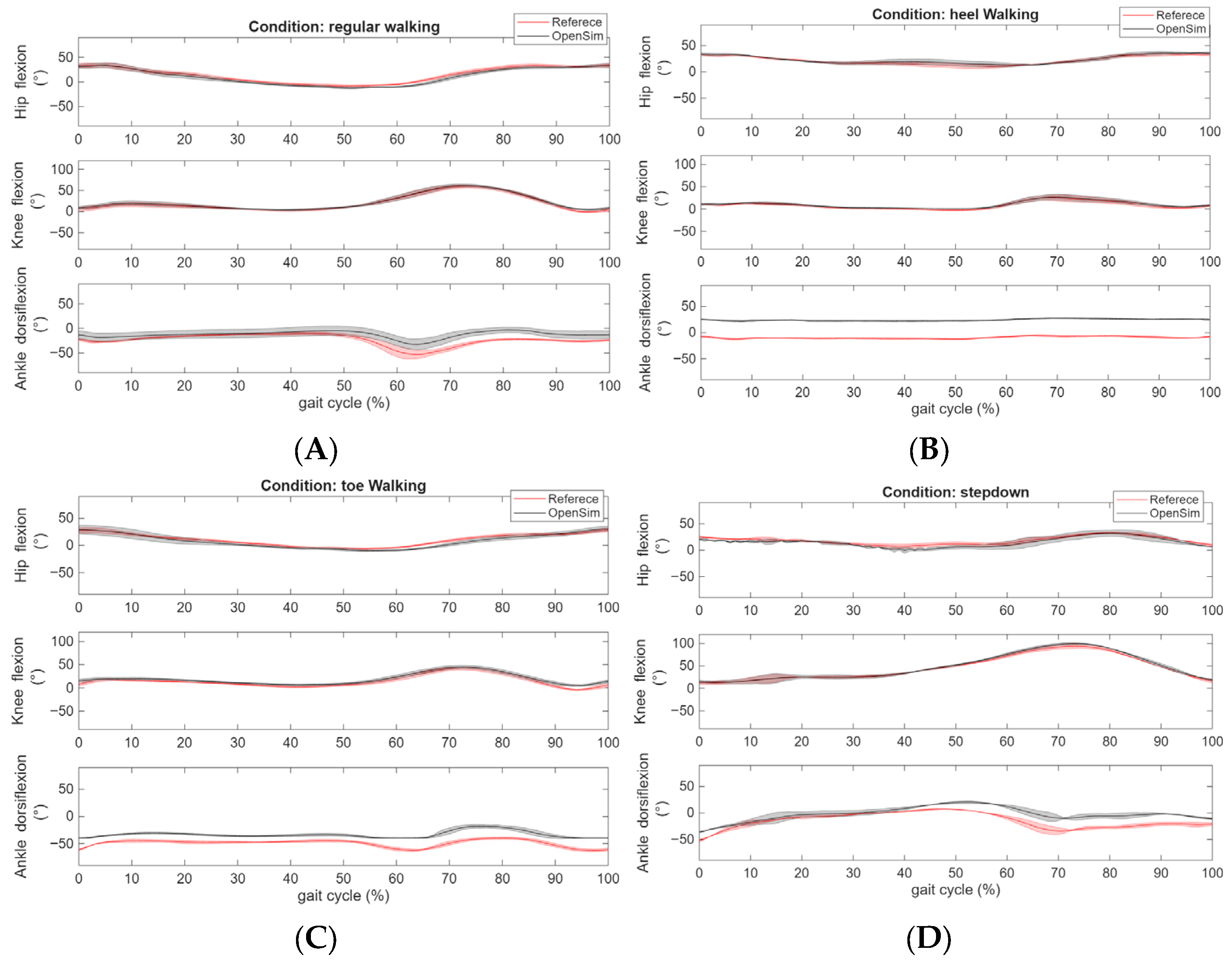
The OpenSim IK results show excellent or strong joint angle correlation (
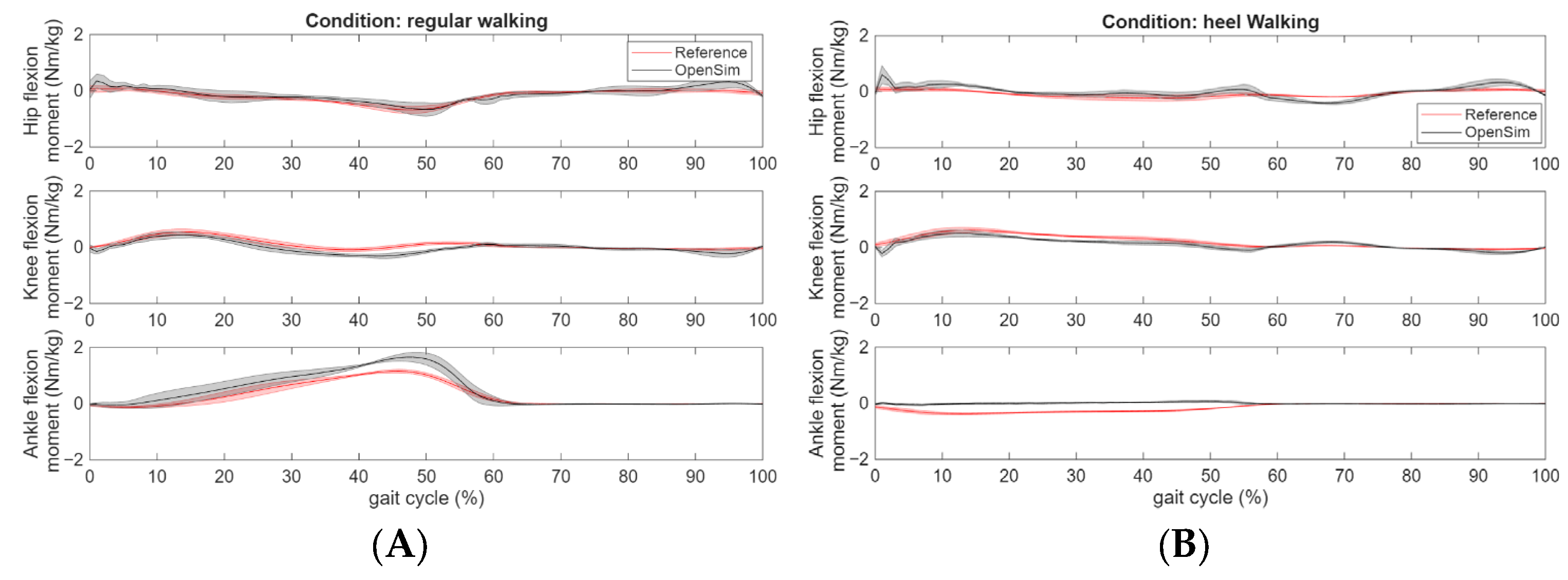
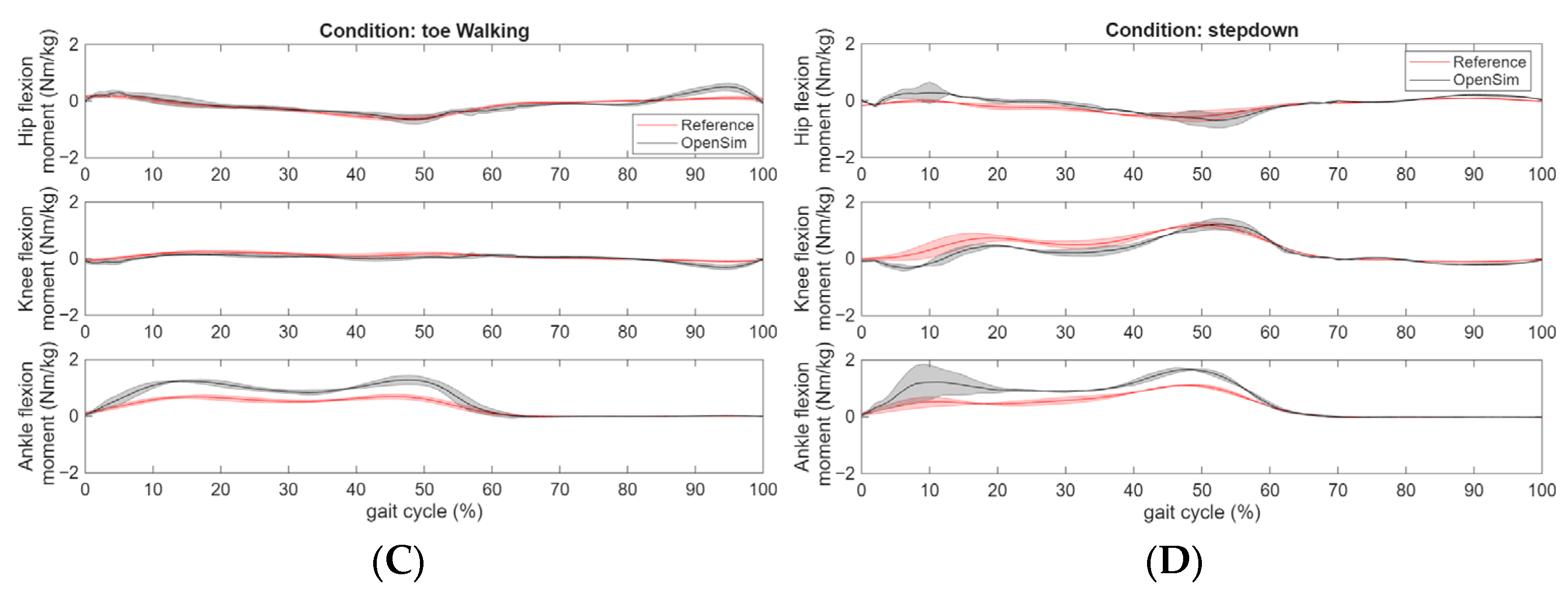
Figure 2) with respect to the regular walking, heel walking, toe walking, and step-down trials when comparing to reference data from Dataset 1, with PCC averaging 0.974 ± 0.002 for hip flexion/extension, 0.994 ± 0.004 for knee flexion/extension, and 0.833 ± 0.091 for ankle dorsi/plantar flexion angles. The OpenSim ID results exhibit strong joint moment correlations (
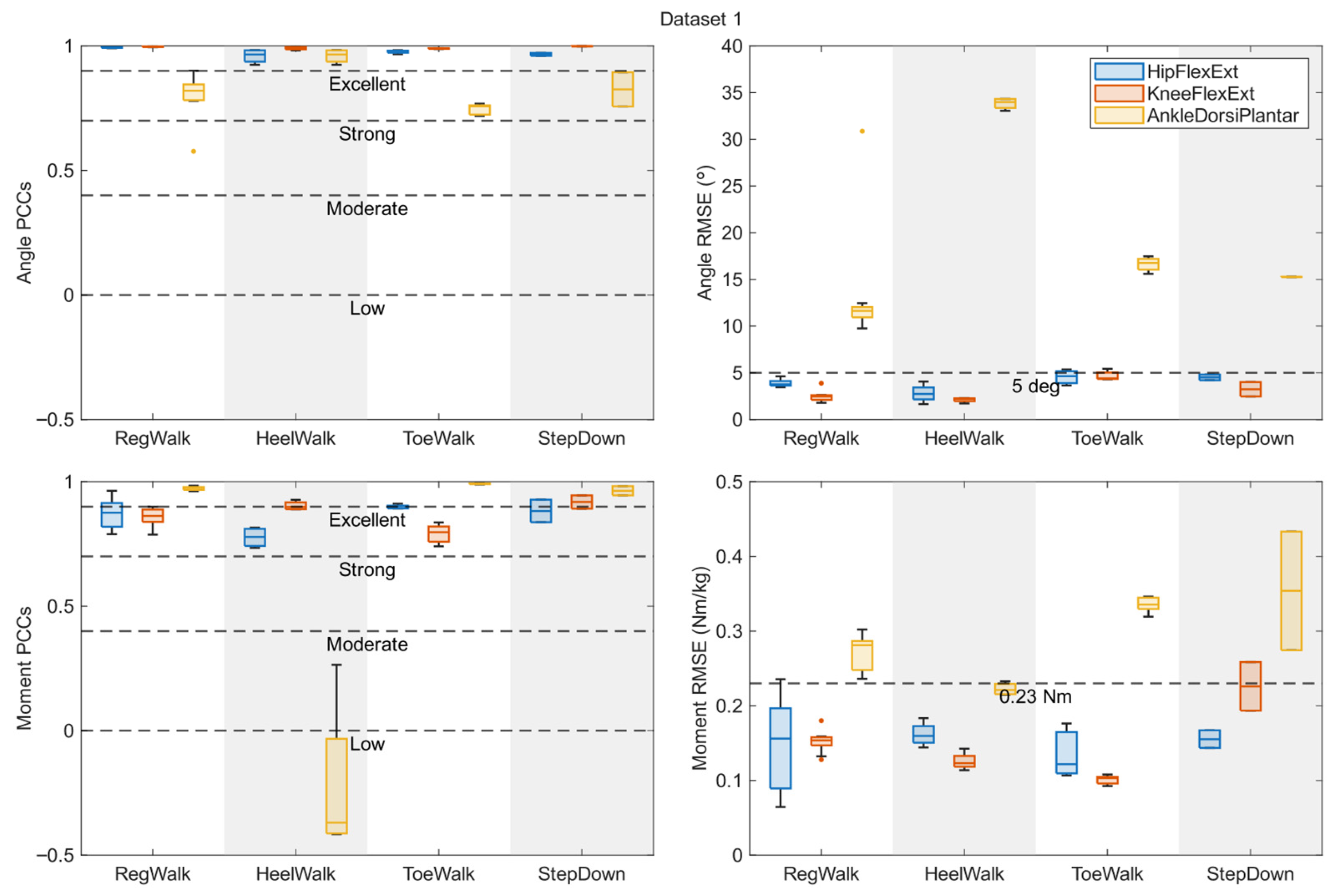
Figure 3) for all four conditions in Dataset 1, with PCC averaging 0.8758 ± 0.055 for hip flexion/extension and 0.868 ± 0.057 for knee flexion/extension moment. However, there is an exception: PCC averaged 0.677 ± 0.600 for ankle dorsi/plantar flexion. The PCCs for each condition are shown in
Figure 4.
Between the OpenSim results and reference data of Dataset 1 across four conditions, the mean RMSEs are 3.936 ± 0.816 deg, 3.128 ± 1.133 deg, and 19.797 ± 9.451 deg for hip and knee flexion/extension angles and ankle dorsiflexion/plantarflexion angles, respectively, and they are 0.149 ± 0.012 Nm/kg, 0.151 ± 0.054 Nm/kg, and 0.295 ± 0.061 Nm/kg for hip and knee flexion/extension moments and ankle dorsi/plantar flexion moments, respectively. The RMSE values for each condition are shown in
Figure 4.
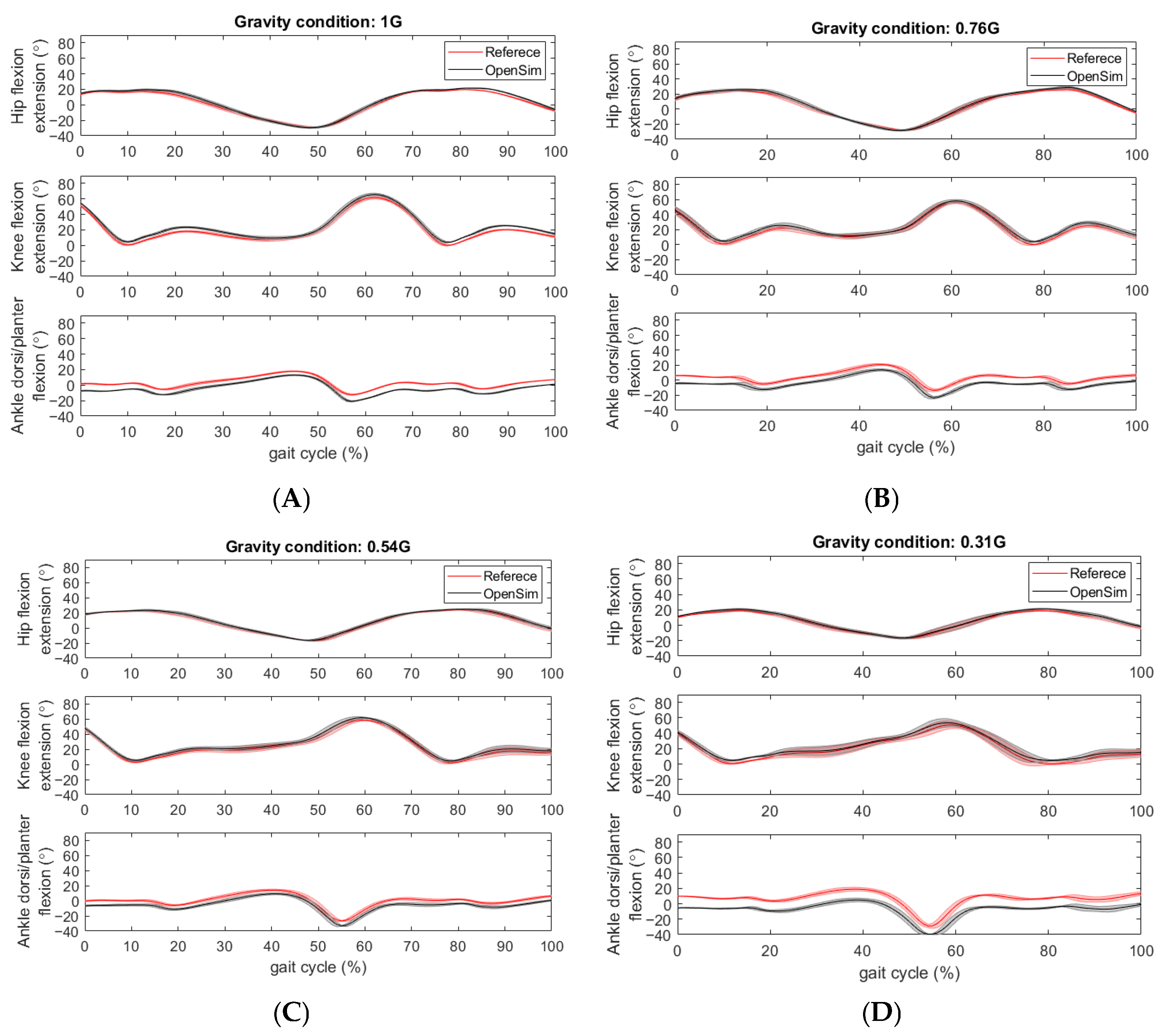
OpenSim IK produced joint angle estimations that closely match reference data from Dataset 2 (
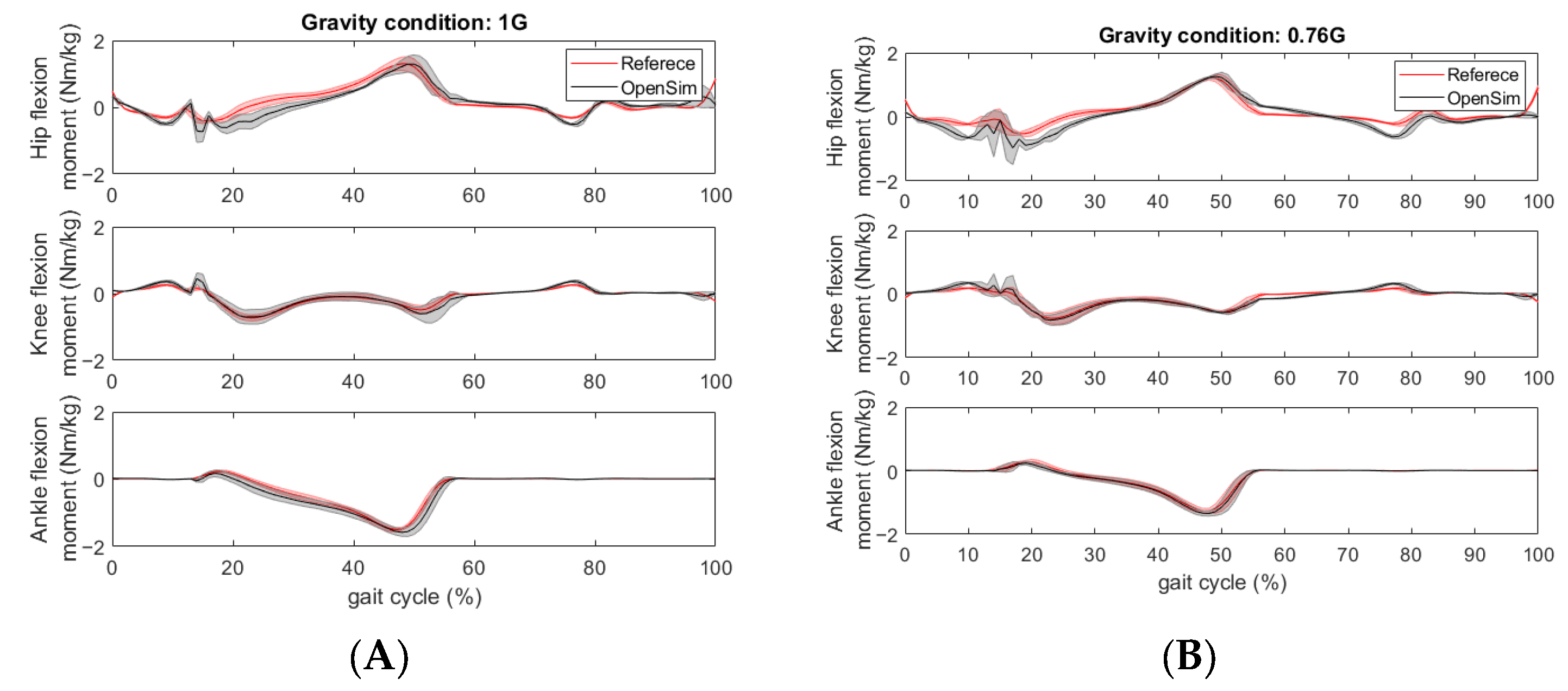
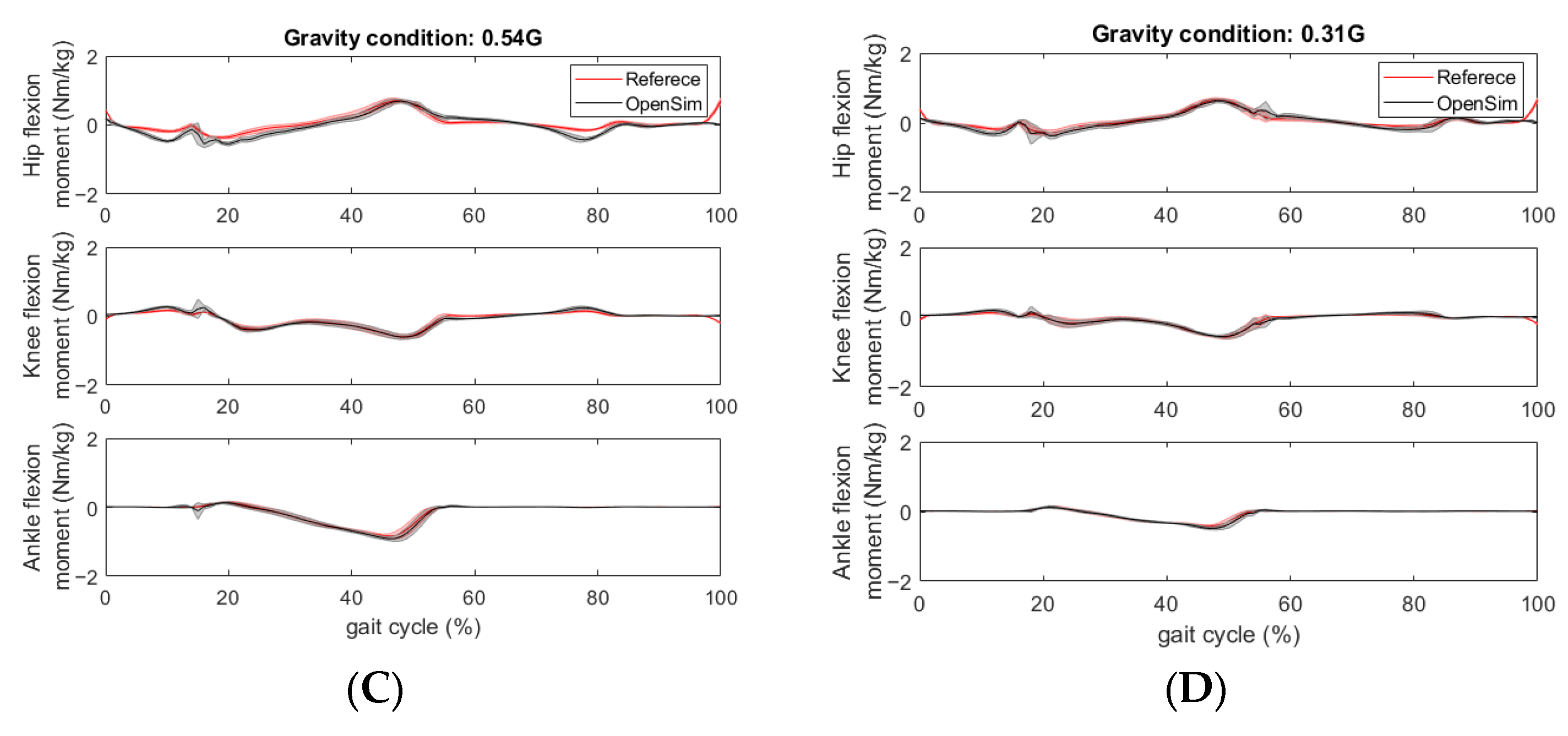
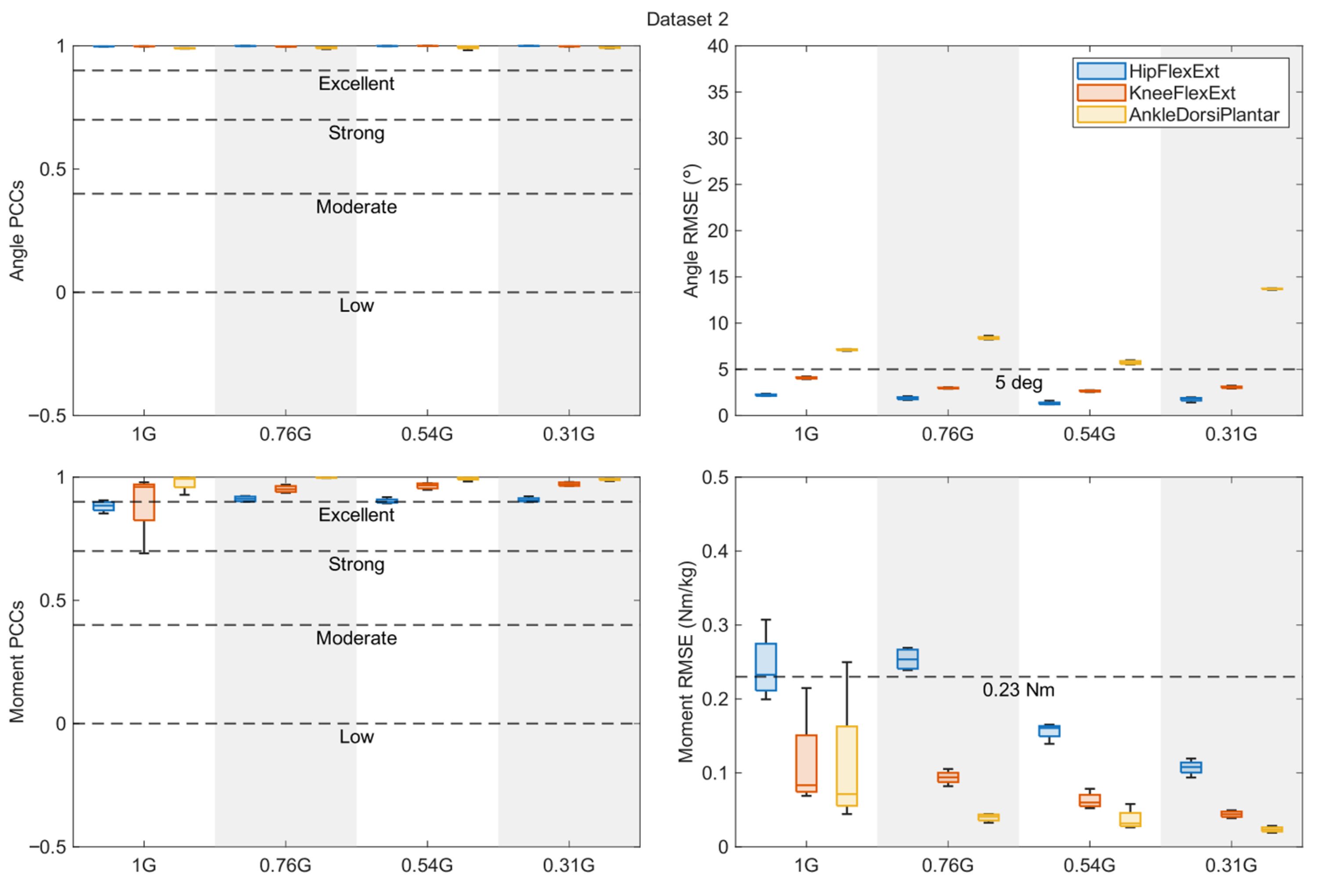
Figure 5). Excellent correlations were observed between simulated and reference data for hip flexion/extension (PCC = 0.999 ± 0.001), knee flexion/extension (PCC = 0.998 ± 0.001), and ankle dorsi/plantar flexion (PCC = 0.995 ± 0.004) across four gravity conditions. OpenSim ID’s results also exhibited excellent joint moment correlations (
Figure 6) for all four conditions in Dataset 2, with PCC averaging 0.912 ± 0.010, 0.970 ± 0.005, and 0.994 ± 0.005. The PCCs for each condition are shown in
Figure 7.
The mean RMSE values for Dataset 2 across four gravity conditions are 1.784 ± 0.368 deg, 3.182 ± 0.616 deg, and 8.731 ± 3.484 deg for hip and knee flexion/extension angles and ankle dorsiflexion/plantarflexion angles, respectively, and they are 0.190 ± 0.070 Nm/kg, 0.078 ± 0.031 Nm/kg, and 0.052 ± 0.039 Nm/kg for hip and knee flexion/extension moments and ankle dorsiflexion/plantarflexion moments, respectively. The RMSE values for each condition are shown in
Figure 7.
4. Discussion
In this section, we describe first the main findings of the study and our interpretation of results, then the novelty and limitations of this study, and our future research plan.
The purpose of this study was to evaluate the viability of an OpenSim workflow in reproducing joint angles and moments from publicly available datasets. Most of our simulated results show excellent or strong correlation with reference angle and moment for hip, knee, and ankle mechanics across various conditions, except for the ankle moment during the heel-walking condition in Dataset 1. Our OpenSim workflow only produced joint moments of one leg for Dataset 1, and the correlation between our joint moment estimations and the reference data falls under the strong category in most conditions, which can be attributed to the setup of two force plates in series (arranging one after another) in our study. This setup only provided the GRFs and COPs from only a single leg and could not provide the same measurements simultaneously from both legs during double stance, which are needed to improve the accuracy of joint moment estimations for one leg during its late stance phase. This setup is also too short to record consecutive heel strikes of the same leg in healthy adults, which are required for estimating joint moments during the leg’s swing phase. To achieve accurate joint moment estimations of one leg in OpenSim, GRF and COP measurements from both legs during double stance and consecutive heel strikes of the targeted leg are needed to prepare OpenSim ID setup files, which require the setup of three force plates in series. The study of Dataset 2 has a setup of three force plates in series; therefore, our OpenSim model estimated joint moments exhibiting excellent correlation with reference moment data, as shown in
Figure 7.
The mean RMSE values also indicate general congruency between the OpenSim results and reference data. Lower RMSE values (<5 deg) were found for hip and knee flexion/extension angles between the two approaches for both datasets. Lower RMSE values (less than 0.190 ± 0.070 Nm/kg) are present with respect to most joint moment estimations between the two approaches, with the exception of the ankle dorsi/plantar flexion moments of Dataset 1 (0.295 ± 0.061 Nm/kg). Larger RMSE values are observed with respect to ankle dorsi/plantar flexion angles (19.797 ± 9.451 deg for Dataset 1; 8.731 ± 3.484 deg for Dataset 2), which are illustrated as noticeable offsets of OpenSim’s ankle angle estimations with respect to the reference data shown in
Figure 2 and
Figure 5. This discrepancy might be due to the lower weights assigned to ankle markers, metatarsal markers, and tracking markers in the OpenSim IK setup file, as well as differences in segment frame definition between the OpenSim and human models used in each dataset.
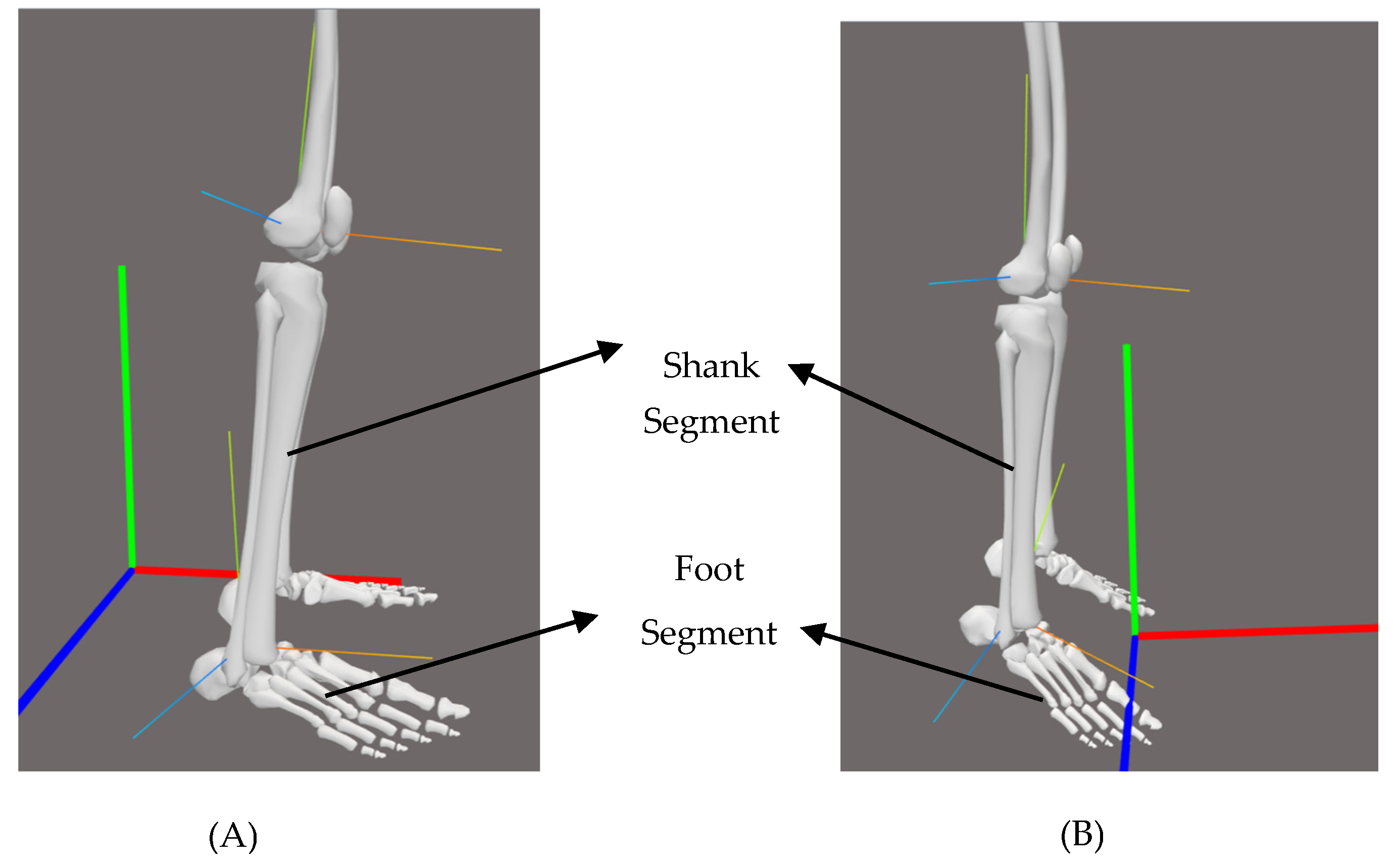
Especially for the ankle modeling discrepancy in Dataset 1, we suspect that the offset stems from the difference in shank segment definition between models. For the OpenSim model, the shank segment frame originates at the knee joint center, and the foot segment frame originates at the ankle joint center, as shown in
Figure 8A. The physical model used in the study of Dataset 1 follows the International Society of Biomechanics (ISB) definition of a joint coordinate system, in which origins of both shank and foot segment frames are coincident with the ankle joint center. The foot segment frame from the OpenSim model aligns with the foot segment frame of the Dataset 1 physical model. However, the X coordinate of the shank segment frame in the physical model is defined as the line perpendicular to the torsional plane of the tibia/fibula and pointing anteriorly. The torsional plane is defined as the plane containing three anatomical landmarks: the intercondylar point located midway between the medial tibial condyle and lateral tibial condyle (IC), the medial malleolus (MM), and the lateral malleolus (LM). Its Z coordinate is defined as the line connecting MM and LM, which is pointing to the right. The Y coordinate is the common line perpendicular to the X and Z axes of the foot segment. During the quiet stance for calibration, the shank segment coordinates are considered not aligned with the foot coordinates in the physical model. Especially in the sagittal plane, the Y axis of the shank points up and backward away from the tibia and fibula bones in the physical model, whereas the Y axis of the shank in the OpenSim model points upward along the longitudinal axis of the tibia/fibula [
25]. Ankle dorsi/plantar flexion angle is the angle by which the Y axis of the foot segment is rotated to align with the axis of the shank segment. The angle becomes positive in the OpenSim model as the rotation of alignment is performed clockwise, which means the ankle performs dorsiflexion. However, the angle becomes negative in the physical model as the rotation of alignment was performed counterclockwise, which means the ankle performs plantarflexion. This difference can be seen in
Figure 8B when the joint angle data from the quiet stance of the physical model were imported to the scaled OpenSim model.
For Dataset 1, the ankle angle results from OpenSim’s output exhibit an average strong correlation (PCC = 0.833 ± 0.091) with the corresponding reference data across four conditions. The ankle moment results from OpenSim’s output exhibiting negative correlations (PCC = −0.223 ± 0.327) (
Figure 4) with the corresponding reference data in the heel-walking condition. This PCC in heel-walking condition skews the averaged PCCs drastically from an excellent level (greater than 0.96 in the other three conditions) to a moderate level across all conditions. Meanwhile, the pattern of ankle flexion angles and moments estimated by our OpenSim workflow (
Figure 2) appears more physiologically plausible for heel walking on level ground, based on evidence reported in previous gait studies [
26,
27,
28]. This is because the ankle flexion angle and moment from reference data remain negative throughout the gait cycle, suggesting the participant’s ankle was maintained in a plantarflexed position across all conditions. On one hand, it is reasonable that the ankle performs plantarflexion throughout all phases of the gait cycle in the toe-walking condition. On the other hand, based on the evidence provided by other gait studies [
26,
27,
28], the ankle generally performs dorsiflexion during the early stance and late swing phases of the gait cycle when engaged in regular walking, and this should also occur during the heel-walking condition.
For Dataset 2, small spikes towards the end of the early stance phase were observed in the OpenSim moment plots, especially in the knee and hip joints. This phenomenon might be due to kinematic inconsistencies in terms of angular acceleration present in the moment calculation of our OpenSim ID step. Simultaneously, unlike the study of Dataset 2, in which a fourth-order 20 Hz Butterworth filter was further applied to smooth out the high-frequency noise [
18], we opted not to apply any filtering process in our results, as these spikes do not skew the moment comparison between the reference data and our OpenSim output. High PCCs and low RMSEs in most angles and moments were still observed despite the absence of additional filtering, supporting the functionality of the workflow (
Figure 7).
The novelty part of the study lies in the fact that our OpenSim workflow can be used to study the effect of reduced gravity on joint mechanics during different locomotion tasks. However, there are two limitations that need to be addressed in order to implement the whole workflow. First, this study was limited to two healthy participants. The results presented in this study may not reflect the inter-subject variability across all participants of each dataset, although each participant is considered a representative of their dataset. Therefore, the generalization of our findings should be applied with caution to the broader population. More participants from these two datasets will be included to further test the reliability of the first three steps of our OpenSim workflow (scaling, IK, and ID). Furthermore, muscle activations comparable to reference data have not been produced in our OpenSim workflow. We have developed setup files of both RRA and CMC steps for a sample trial in Dataset 2 to calculate the muscle activation of targeted muscles while walking at 1 G level. Estimated muscle activation currently does not have a strong correlation with direct EMG measurements in the reference data, and OpenSim’s forward dynamics thus do not reconstruct the similar joint kinematics of the sample trial. Challenges in our RRA configuration include weights selected for tracking a joint coordinate and optimal forces selected for residual and reserve actuators. The challenge in configuring CMC setup files is to balance muscle and reserve actuators. There are 16 degrees of freedom (DOFs), 13 rotational DOFs at the pelvis, hip, knee, and ankle joints, and 3 translational DOFs at the pelvis in our OpenSim model. We have created two levels of weights: high-level weights (500/1000) are used for pelvis tilt and list, ankle dorsi and plantar flexion, and low-level weights (20) for all other DOFs. We utilized the magnitude of optimal forces and excitation similar to those used in OpenSim Gait2354 and Gait2392 RRA and CMC configurations for residual and reserve actuators of our OpenSim model. Minimizing residual errors is a difficult, time-consuming, and iterative process that involves making small adjustments to the model’s trajectory and the torso segment’s center of mass while appropriate tracking weights are selected for each coordinate [
29]. After pelvis COM and kinematic adjustment of several iterations, average residual forces at the pelvis joint in all directions are reduced to a good level (below 5 N for force, below 30 Nm for torque), except for its residual force in the vertical (Y axis) direction (greater than 10 N). The current CMC output does not produce muscle activations matching directed EMG measurements reported in Dataset 2, although it has average position errors for 3 translational DOFs below 2 mm and 13 rotational DOFs below 2 degrees. To generate matching muscle activations, we will follow best practices and troubleshooting tips in OpenSim documentation by feeding the improved CMC task coordinate weights back to the RRA setup file in iterations while reducing the optimal force set for residual actuators to further reduce tracking errors and residual actuator forces.
In addition, we will test more participants in existing datasets, the goal of which is to further validate the angle output from the IK step and moment output from the ID step by taking ankle modeling differences into account and to implement the RRA and CMC steps to produce and compare the estimation of muscle activations with direct EMG measurement. We also plan to conduct a reduced gravity simulation study with a body-weight offload system, ZeroG (Aretech LLC, Sterling, VA, USA), in a newly established gait and balance lab. To capture double-stance kinetics, ten force plates will be used in two rows along the walking path, and each row includes five plates in series in the lab. The goal of this experimental study is to examine the effect of reduced gravity on lower limb mechanics and muscle activation patterns during walking and weighted squat tasks by using our OpenSim workflow. Simulated gravity levels will include lunar, Martian, and micro-gravities, as well as gravity values used in Dataset 2. We hypothesize that altered muscle activation patterns with respect to amplitude and timing will depend not only on the decreased level of reduced gravity but also on specific foot contact strategies participants rely on when performing these tasks. Results of this upcoming study will provide more evidence on identifying muscles with a higher rate of atrophy and bones with a higher rate of density loss so that a customized workout program aboard the ISS can be designed by clinicians to strengthen these muscles and bones of astronauts.