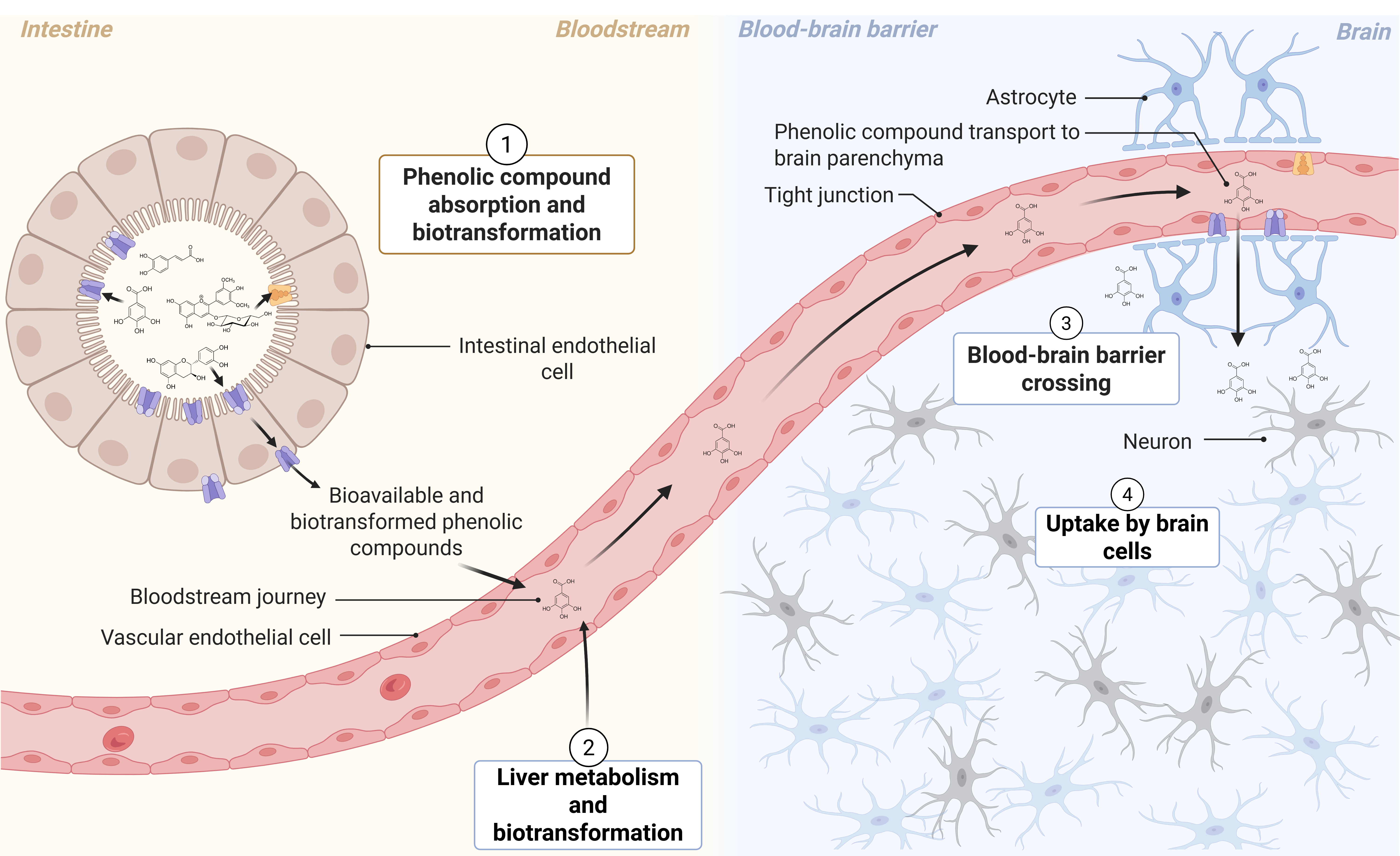

Phenolic Compound Transport from Gut to Brain: Their Chemical Interactions and Transport Pathways


 ,
,  ,
,  , , , , and
Abstract
1. Introduction
2. Oral and Gut Digestion: The Path for Phenolic Compound Absorption
3. Transport of Bioavailable and Biotransformed Phenolic Compounds Through the Bloodstream
3.1. Albumin-Mediated PC Transport
3.2. Fibrinogen Interactions with PCs
4. Transport of BPCs and BTPCs Through the Blood–Brain Barrier (BBB)
5. ABC Transporter Superfamily
6. Solute Carrier (SLC) Proteins
6.1. Organic Cation Transporters (OCTs)
6.2. Multidrug and Toxic Extrusion Protein 1 (MATE1)
7. Conclusions
Author Contributions
Funding
Data Availability Statement
Conflicts of Interest
Abbreviations
| PCs | Phenolic Compounds |
| BAPCs | Bioaccessible phenolic compounds |
| BPCs | Bioavailable phenolic compounds |
| BTPCs | Biotransformed phenolic compounds |
| CNS | Central nervous system |
| BBB | Blood–brain barrier |
| GLUT | Glucose transporter |
| SGLT | Sodium–glucose cotransporter |
| P-gp | P-glycoprotein |
| OATP | Organic anion transport polypeptide |
| OCT | Organic cation transporter |
| MRP | Multidrug resistance protein |
| COMT | Catechol o-methyl transferase |
| UGT | UDP-glucuronosyltransferase |
| SULT | Sulfotransferase |
| MATE1 | Multidrug and toxic extrusion protein 1 |
References
- Khan, N. Decoding Phytohormone Signaling in Plant Stress Physiology: Insights, Challenges, and Future Directions. Environ. Exp. Bot. 2025, 231, 106099. [Google Scholar] [CrossRef] [Scilit]
- Saijo, Y.; Loo, E.P.-I. Plant Immunity in Signal Integration between Biotic and Abiotic Stress Responses. New Phytol. 2020, 225, 87–104. [Google Scholar] [CrossRef] [Scilit]
- Erb, M.; Kliebenstein, D.J. Plant Secondary Metabolites as Defenses, Regulators, and Primary Metabolites: The Blurred Functional Trichotomy. Plant Physiol. 2020, 184, 39–52. [Google Scholar] [CrossRef] [Scilit]
- Singh, P.; Arif, Y.; Bajguz, A.; Hayat, S. The Role of Quercetin in Plants. Plant Physiol. Biochem. PPB 2021, 166, 10–19. [Google Scholar] [CrossRef] [Scilit]
- Pannucci, E.; Spagnuolo, L.; De Gara, L.; Santi, L.; Dugo, L. Phenolic Compounds as Preventive and Therapeutic Agents in Diabetes-Related Oxidative Stress, Inflammation, Advanced Glycation End-Products Production and Insulin Sensitivity. Discov. Med. 2023, 35, 715–732. [Google Scholar] [CrossRef] [Scilit] [PubMed]
- Murai, T.; Matsuda, S. The Chemopreventive Effects of Chlorogenic Acids, Phenolic Compounds in Coffee, against Inflammation, Cancer, and Neurological Diseases. Molecules 2023, 28, 2381. [Google Scholar] [CrossRef] [Scilit] [PubMed]
- González, Y.; Mojica-Flores, R.; Moreno-Labrador, D.; Pecchio, M.; Rao, K.S.J.; Ahumedo-Monterrosa, M.; Fernández, P.L.; Larionov, O.V.; Lakey-Beitia, J. Tetrahydrocurcumin Derivatives Enhanced the Anti-Inflammatory Activity of Curcumin: Synthesis, Biological Evaluation, and Structure-Activity Relationship Analysis. Molecules 2023, 28, 7787. [Google Scholar] [CrossRef] [Scilit]
- Hossain, S.I.; Saha, S.C.; Deplazes, E. Phenolic Compounds Alter the Ion Permeability of Phospholipid Bilayers via Specific Lipid Interactions. Phys. Chem. Chem. Phys. 2021, 23, 22352–22366. [Google Scholar] [CrossRef] [Scilit]
- Shahidi, F.; Dissanayaka, C.S. Phenolic-Protein Interactions: Insight from in-Silico Analyses—A Review. Food Prod. Process. Nutr. 2023, 5, 2. [Google Scholar] [CrossRef] [Scilit]
- Taylor, S.R.; Ramsamooj, S.; Liang, R.J.; Katti, A.; Pozovskiy, R.; Vasan, N.; Hwang, S.-K.; Nahiyaan, N.; Francoeur, N.J.; Schatoff, E.M.; et al. Dietary Fructose Improves Intestinal Cell Survival and Nutrient Absorption. Nature 2021, 597, 263–267. [Google Scholar] [CrossRef] [Scilit] [PubMed]
- Alhajj, M.; Babos, M. Physiology, Salivation. In StatPearls; StatPearls Publishing: Treasure Island, FL, USA, 2025. Available online: https://www.ncbi.nlm.nih.gov/books/NBK542251/ (accessed on 20 January 2026).
- Brignot, H.; Feron, G. Oral Lipolysis and Its Association with Diet and the Perception and Digestion of Lipids: A Systematic Literature Review. Arch. Oral Biol. 2019, 108, 104550. [Google Scholar] [CrossRef] [Scilit] [PubMed]
- Heda, R.; Toro, F.; Tombazzi, C.R. Physiology, Pepsin. In StatPearls; StatPearls Publishing: Treasure Island, FL, USA, 2025. Available online: https://www.ncbi.nlm.nih.gov/books/NBK537005/ (accessed on 20 January 2026).
- Braune, A.; Blaut, M. Bacterial Species Involved in the Conversion of Dietary Flavonoids in the Human Gut. Gut Microbes 2016, 7, 216–234. [Google Scholar] [CrossRef] [Scilit] [PubMed]
- Zhang, P.; Zhang, R.; Sirisena, S.; Gan, R.; Fang, Z. Beta-Glucosidase Activity of Wine Yeasts and Its Impacts on Wine Volatiles and Phenolics: A Mini-Review. Food Microbiol. 2021, 100, 103859. [Google Scholar] [CrossRef] [Scilit]
- Tartaglia, A.; Romasco, T.; D’Ovidio, C.; Rosato, E.; Ulusoy, H.I.; Furton, K.G.; Kabir, A.; Locatelli, M. Determination of Phenolic Compounds in Human Saliva after Oral Administration of Red Wine by High Performance Liquid Chromatography. J. Pharm. Biomed. Anal. 2022, 209, 114486. [Google Scholar] [CrossRef] [Scilit]
- Ferreira, A.S.; Silva, A.M.; Macedo, C.; Laveriano-Santos, E.P.; Lozano-Castellón, J.; Lamuela-Raventós, R.M.; Švarc-Gajíc, J.; Costa, P.C.; Delerue-Matos, C.; Rodrigues, F. Orodispersible Films Containing Chestnut Shell Phenolics for Buccal Delivery: A Preclinical Approach for Oral Mucositis Prevention. Front. Med. Technol. 2025, 7, 1675082. [Google Scholar] [CrossRef] [Scilit]
- Guo, Y.; Li, Z.; Chen, F.; Chai, Y. Polyphenols in Oral Health: Homeostasis Maintenance, Disease Prevention, and Therapeutic Applications. Nutrients 2023, 15, 4384. [Google Scholar] [CrossRef] [Scilit]
- Guerreiro, C.; Brandão, E.; de Jesus, M.; Gonçalves, L.; Pérez-Gregório, R.; Mateus, N.; de Freitas, V.; Soares, S. New Insights into the Oral Interactions of Different Families of Phenolic Compounds: Deepening the Astringency Mouthfeels. Food Chem. 2022, 375, 131642. [Google Scholar] [CrossRef] [Scilit]
- Greenwood-Van Meerveld, B.; Johnson, A.C.; Grundy, D. Gastrointestinal Physiology and Function. Handb. Exp. Pharmacol. 2017, 239, 1–16. [Google Scholar] [CrossRef] [Scilit]
- Boland, M. Human Digestion—A Processing Perspective. J. Sci. Food Agric. 2016, 96, 2275–2283. [Google Scholar] [CrossRef] [Scilit] [PubMed]
- Rocchetti, G.; Gregorio, R.P.; Lorenzo, J.M.; Barba, F.J.; Oliveira, P.G.; Prieto, M.A.; Simal-Gandara, J.; Mosele, J.I.; Motilva, M.-J.; Tomas, M.; et al. Functional Implications of Bound Phenolic Compounds and Phenolics-Food Interaction: A Review. Compr. Rev. Food Sci. Food Saf. 2022, 21, 811–842. [Google Scholar] [CrossRef] [Scilit]
- Takahashi, M.; Tahara, Y. Timing of Food/Nutrient Intake and Its Health Benefits. J. Nutr. Sci. Vitaminol. 2022, 68, S2–S4. [Google Scholar] [CrossRef] [Scilit] [PubMed]
- Yu, L.-E.; Yang, W.-C.; Liang, Y.-C. Crosstalk Within the Intestinal Epithelium: Aspects of Intestinal Absorption, Homeostasis, and Immunity. Biomedicines 2024, 12, 2771. [Google Scholar] [CrossRef] [Scilit]
- Mahdi, L.; Graziani, A.; Baffy, G.; Mitten, E.K.; Portincasa, P.; Khalil, M. Unlocking Polyphenol Efficacy: The Role of Gut Microbiota in Modulating Bioavailability and Health Effects. Nutrients 2025, 17, 2793. [Google Scholar] [CrossRef] [Scilit]
- Rossi, L.D.; Rocchetti, G.; Lucini, L.; Rebecchi, A. Antimicrobial Potential of Polyphenols: Mechanisms of Action and Microbial Responses—A Narrative Review. Antioxidants 2025, 14, 200. [Google Scholar] [CrossRef] [Scilit]
- Burgo-Gutiérrez, C.D.; Tosi, N.; Cid, C.; Rio, D.D.; Bresciani, L.; Ludwig, I.A.; Mena, P.; Peña, M.-P.D. Urinary Excretion Kinetics of (Poly)Phenolic Metabolites Derived from the Consumption of Microwaved Piquillo Pepper (Capsicum annuum Cv. Piquillo). Food Funct. 2025, 16, 5744–5756. [Google Scholar] [CrossRef] [Scilit] [PubMed]
- Kalt, W. Anthocyanins and Their C6-C3-C6 Metabolites in Humans and Animals. Molecules 2019, 24, 4024. [Google Scholar] [CrossRef] [Scilit]
- Scott, M.B.; Styring, A.K.; McCullagh, J.S.O. Polyphenols: Bioavailability, Microbiome Interactions and Cellular Effects on Health in Humans and Animals. Pathogens 2022, 11, 770. [Google Scholar] [CrossRef] [Scilit]
- Choy, Y.Y.; Quifer-Rada, P.; Holstege, D.M.; Frese, S.A.; Calvert, C.C.; Mills, D.A.; Lamuela-Raventos, R.M.; Waterhouse, A.L. Phenolic Metabolites and Substantial Microbiome Changes in Pig Feces by Ingesting Grape Seed Proanthocyanidins. Food Funct. 2014, 5, 2298–2308. [Google Scholar] [CrossRef] [Scilit]
- Czubinski, J.; Dwiecki, K. A Review of Methods Used for Investigation of Protein–Phenolic Compound Interactions. Int. J. Food Sci. Technol. 2016, 52, 573–585. [Google Scholar] [CrossRef] [Scilit]
- Han, F.; Oliveira, H.; Brás, N.F.; Fernandes, I.; Cruz, L.; De Freitas, V.; Mateus, N. In Vitro Gastrointestinal Absorption of Red Wine Anthocyanins—Impact of Structural Complexity and Phase II Metabolization. Food Chem. 2020, 317, 126398. [Google Scholar] [CrossRef] [Scilit]
- Domínguez-Avila, J.A.; Villa-Rodriguez, J.A.; Montiel-Herrera, M.; Pacheco-Ordaz, R.; Roopchand, D.E.; Venema, K.; González-Aguilar, G.A. Phenolic Compounds Promote Diversity of Gut Microbiota and Maintain Colonic Health. Dig. Dis. Sci. 2021, 66, 3270–3289. [Google Scholar] [CrossRef] [Scilit]
- Murota, K.; Nakamura, Y.; Uehara, M. Flavonoid Metabolism: The Interaction of Metabolites and Gut Microbiota. Biosci. Biotechnol. Biochem. 2018, 82, 600–610. [Google Scholar] [CrossRef] [Scilit]
- Han, H.; Liu, C.; Gao, W.; Li, Z.; Qin, G.; Qi, S.; Jiang, H.; Li, X.; Liu, M.; Yan, F.; et al. Anthocyanins Are Converted into Anthocyanidins and Phenolic Acids and Effectively Absorbed in the Jejunum and Ileum. J. Agric. Food Chem. 2021, 69, 992–1002. [Google Scholar] [CrossRef] [Scilit] [PubMed]
- Shi, J.; Zheng, H.; Yu, J.; Zhu, L.; Yan, T.; Wu, P.; Lu, L.; Wang, Y.; Hu, M.; Liu, Z. SGLT-1 Transport and Deglycosylation inside Intestinal Cells Are Key Steps in the Absorption and Disposition of Calycosin-7-O-β-D-Glucoside in Rats. Drug Metab. Dispos. 2016, 44, 283–296. [Google Scholar] [CrossRef] [Scilit] [PubMed]
- Wang, G.N.; Li, Y.P.; Yuan, S.K.; Zhang, H.; Ren, J.; Ren, X.; Liu, J.X. The Intestinal Absorption Mechanism of Chicoric Acid and Its Bioavailability Improvement with Chitosan. Heliyon 2022, 8, e09955. [Google Scholar] [CrossRef] [Scilit]
- Prakash, V.; Bose, C.; Sunilkumar, D.; Cherian, R.M.; Thomas, S.S.; Nair, B.G. Resveratrol as a Promising Nutraceutical: Implications in Gut Microbiota Modulation, Inflammatory Disorders, and Colorectal Cancer. Int. J. Mol. Sci. 2024, 25, 3370. [Google Scholar] [CrossRef] [Scilit]
- Springer, M.; Moco, S. Resveratrol and Its Human Metabolites-Effects on Metabolic Health and Obesity. Nutrients 2019, 11, 143. [Google Scholar] [CrossRef] [Scilit]
- Tufarelli, V.; Casalino, E.; D’ALessandro, A.G.; Laudadio, V. Dietary Phenolic Compounds: Biochemistry, Metabolism and Significance in Animal and Human Health. Curr. Drug Metab. 2017, 18, 905–913. [Google Scholar] [CrossRef] [Scilit]
- Velásquez-Jiménez, D.; Corella-Salazar, D.A.; Zuñiga-Martínez, B.S.; Domínguez-Avila, J.A.; Montiel-Herrera, M.; Salazar-López, N.J.; Rodrigo-Garcia, J.; Villegas-Ochoa, M.A.; González-Aguilar, G.A. Phenolic Compounds That Cross the Blood-Brain Barrier Exert Positive Health Effects as Central Nervous System Antioxidants. Food Funct. 2021, 12, 10356–10369. [Google Scholar] [CrossRef] [Scilit] [PubMed]
- Katada, S.; Watanabe, T.; Mizuno, T.; Kobayashi, S.; Takeshita, M.; Osaki, N.; Kobayashi, S.; Katsuragi, Y. Effects of Chlorogenic Acid-Enriched and Hydroxyhydroquinone-Reduced Coffee on Postprandial Fat Oxidation and Antioxidative Capacity in Healthy Men: A Randomized, Double-Blind, Placebo-Controlled, Crossover Trial. Nutrients 2018, 10, 525. [Google Scholar] [CrossRef] [Scilit]
- Poór, M.; Zrínyi, Z.; Kőszegi, T. Structure Related Effects of Flavonoid Aglycones on Cell Cycle Progression of HepG2 Cells: Metabolic Activation of Fisetin and Quercetin by Catechol-O-Methyltransferase (COMT). Biomed. Pharmacother. Biomedecine Pharmacother. 2016, 83, 998–1005. [Google Scholar] [CrossRef] [Scilit]
- Cao, Y.; Chen, Z.-J.; Jiang, H.-D.; Chen, J.-Z. Computational Studies of the Regioselectivities of COMT-Catalyzed Meta-/Para-O Methylations of Luteolin and Quercetin. J. Phys. Chem. B 2014, 118, 470–481. [Google Scholar] [CrossRef] [Scilit]
- Hazarosova, R.; Momchilova, A.; Vitkova, V.; Yordanova, V.; Kostadinova, A.; Angelova, M.I.; Tessier, C.; Nuss, P.; Staneva, G. Structural Changes Induced by Resveratrol in Monounsaturated and Polyunsaturated Phosphatidylcholine-Enriched Model Membranes. Membranes 2023, 13, 909. [Google Scholar] [CrossRef] [Scilit]
- Colin, D.; Limagne, E.; Jeanningros, S.; Jacquel, A.; Lizard, G.; Athias, A.; Gambert, P.; Hichami, A.; Latruffe, N.; Solary, E.; et al. Endocytosis of Resveratrol via Lipid Rafts and Activation of Downstream Signaling Pathways in Cancer Cells. Cancer Prev. Res. Phila. Pa 2011, 4, 1095–1106. [Google Scholar] [CrossRef] [Scilit]
- Rowland, A.; Miners, J.O.; Mackenzie, P.I. The UDP-Glucuronosyltransferases: Their Role in Drug Metabolism and Detoxification. Int. J. Biochem. Cell Biol. 2013, 45, 1121–1132. [Google Scholar] [CrossRef] [Scilit]
- Hashiba, S.; Nakano, M.; Yokoseki, I.; Takahashi, E.; Kondo, M.; Jimbo, Y.; Ishiguro, N.; Arakawa, H.; Fukami, T.; Nakajima, M. Cytochrome P450 and UDP-Glucuronosyltransferase Expressions, Activities, and Induction Abilities in 3D-Cultured Human Renal Proximal Tubule Epithelial Cells. Drug Metab. Dispos. Biol. Fate Chem. 2024, 52, 949–956. [Google Scholar] [CrossRef] [Scilit]
- Juvonen, R.O.; Rauhamäki, S.; Kortet, S.; Niinivehmas, S.; Troberg, J.; Petsalo, A.; Huuskonen, J.; Raunio, H.; Finel, M.; Pentikäinen, O.T. Molecular Docking-Based Design and Development of a Highly Selective Probe Substrate for UDP-Glucuronosyltransferase 1A10. Mol. Pharm. 2018, 15, 923–933. [Google Scholar] [CrossRef] [Scilit] [PubMed]
- Wu, B.; Kulkarni, K.; Basu, S.; Zhang, S.; Hu, M. First-Pass Metabolism via UDP-Glucuronosyltransferase: A Barrier to Oral Bioavailability of Phenolics. J. Pharm. Sci. 2011, 100, 3655–3681. [Google Scholar] [CrossRef] [Scilit] [PubMed]
- Hill, C.R.; Shafaei, A.; Balmer, L.; Lewis, J.R.; Hodgson, J.M.; Millar, A.H.; Blekkenhorst, L.C. Sulfur Compounds: From Plants to Humans and Their Role in Chronic Disease Prevention. Crit. Rev. Food Sci. Nutr. 2023, 63, 8616–8638. [Google Scholar] [CrossRef] [Scilit] [PubMed]
- Chen, J.; Zheng, H.; Zeng, S.; Xie, C.; Li, X.; Yan, T.; Gong, X.; Lu, L.; Qi, X.; Wang, Y.; et al. Profiles and Gender-Specifics of UDP-Glucuronosyltransferases and Sulfotransferases Expressions in the Major Metabolic Organs of Wild-Type and Efflux Transporter Knockout FVB Mice. Mol. Pharm. 2017, 14, 2967–2976. [Google Scholar] [CrossRef] [Scilit]
- Fritz, A.; Busch, D.; Lapczuk, J.; Ostrowski, M.; Drozdzik, M.; Oswald, S. Expression of Clinically Relevant Drug-Metabolizing Enzymes along the Human Intestine and Their Correlation to Drug Transporters and Nuclear Receptors: An Intra-Subject Analysis. Basic Clin. Pharmacol. Toxicol. 2019, 124, 245–255. [Google Scholar] [CrossRef] [Scilit]
- Feliciano, R.P.; Istas, G.; Heiss, C.; Rodriguez-Mateos, A. Plasma and Urinary Phenolic Profiles after Acute and Repetitive Intake of Wild Blueberry. Molecules 2016, 21, 1120. [Google Scholar] [CrossRef] [Scilit]
- Maier-Salamon, A.; Hagenauer, B.; Reznicek, G.; Szekeres, T.; Thalhammer, T.; Jäger, W. Metabolism and Disposition of Resveratrol in the Isolated Perfused Rat Liver: Role of Mrp2 in the Biliary Excretion of Glucuronides. J. Pharm. Sci. 2008, 97, 1615–1628. [Google Scholar] [CrossRef] [Scilit]
- Böhmdorfer, M.; Szakmary, A.; Schiestl, R.H.; Vaquero, J.; Riha, J.; Brenner, S.; Thalhammer, T.; Szekeres, T.; Jäger, W. Involvement of UDP-Glucuronosyltransferases and Sulfotransferases in the Excretion and Tissue Distribution of Resveratrol in Mice. Nutrients 2017, 9, 1347. [Google Scholar] [CrossRef] [Scilit] [PubMed]
- Barber, T.M.; Kabisch, S.; Randeva, H.S.; Pfeiffer, A.F.H.; Weickert, M.O. Implications of Resveratrol in Obesity and Insulin Resistance: A State-of-the-Art Review. Nutrients 2022, 14, 2870. [Google Scholar] [CrossRef] [Scilit] [PubMed]
- Kim, Y.M.; Park, Y.S.; Park, Y.-K.; Ham, K.-S.; Kang, S.-G.; Shafreen, R.M.B.; Lakshmi, S.A.; Gorinstein, S. Characterization of Bioactive Ligands with Antioxidant Properties of Kiwifruit and Persimmon Cultivars Using In Vitro and in Silico Studies. Appl. Sci. 2020, 10, 4218. [Google Scholar] [CrossRef] [Scilit]
- Kim, Y.-M.; Abas, F.; Park, Y.-S.; Park, Y.-K.; Ham, K.-S.; Kang, S.-G.; Lubinska-Szczygeł, M.; Ezra, A.; Gorinstein, S. Bioactivities of Phenolic Compounds from Kiwifruit and Persimmon. Molecules 2021, 26, 4405. [Google Scholar] [CrossRef] [Scilit]
- De Simone, G.; di Masi, A.; Ascenzi, P. Serum Albumin: A Multifaced Enzyme. Int. J. Mol. Sci. 2021, 22, 10086. [Google Scholar] [CrossRef] [Scilit]
- di Masi, A.; Trezza, V.; Leboffe, L.; Ascenzi, P. Human Plasma Lipocalins and Serum Albumin: Plasma Alternative Carriers? J. Control. Release Off. J. Control. Release Soc. 2016, 228, 191–205. [Google Scholar] [CrossRef] [Scilit]
- López-Yerena, A.; Perez, M.; Vallverdú-Queralt, A.; Escribano-Ferrer, E. Insights into the Binding of Dietary Phenolic Compounds to Human Serum Albumin and Food-Drug Interactions. Pharmaceutics 2020, 12, 1123. [Google Scholar] [CrossRef] [Scilit]
- Xiao, J.; Zhao, Y.; Wang, H.; Yuan, Y.; Yang, F.; Zhang, C.; Yamamoto, K. Noncovalent Interaction of Dietary Polyphenols with Common Human Plasma Proteins. J. Agric. Food Chem. 2011, 59, 10747–10754. [Google Scholar] [CrossRef] [Scilit]
- Rimac, H.; Tandarić, T.; Vianello, R.; Bojić, M. Indomethacin Increases Quercetin Affinity for Human Serum Albumin: A Combined Experimental and Computational Study and Its Broader Implications. Int. J. Mol. Sci. 2020, 21, 5740. [Google Scholar] [CrossRef] [Scilit]
- Zsila, F.; Bikádi, Z.; Simonyi, M. Probing the Binding of the Flavonoid, Quercetin to Human Serum Albumin by Circular Dichroism, Electronic Absorption Spectroscopy and Molecular Modelling Methods. Biochem. Pharmacol. 2003, 65, 447–456. [Google Scholar] [CrossRef] [Scilit]
- Poór, M.; Boda, G.; Needs, P.W.; Kroon, P.A.; Lemli, B.; Bencsik, T. Interaction of Quercetin and Its Metabolites with Warfarin: Displacement of Warfarin from Serum Albumin and Inhibition of CYP2C9 Enzyme. Biomed. Pharmacother. 2017, 88, 574–581. [Google Scholar] [CrossRef] [Scilit] [PubMed]
- Zhang, Y.; Wu, S.; Qin, Y.; Liu, J.; Liu, J.; Wang, Q.; Ren, F.; Zhang, H. Interaction of Phenolic Acids and Their Derivatives with Human Serum Albumin: Structure-Affinity Relationships and Effects on Antioxidant Activity. Food Chem. 2018, 240, 1072–1080. [Google Scholar] [CrossRef] [Scilit]
- Stang, L.J.; Mitchell, L.G. Fibrinogen. In Methods in Molecular Biology; Springer: Clifton, NJ, USA, 2013; Volume 992, pp. 181–192. [Google Scholar] [CrossRef] [Scilit]
- Merlini, M.; Rafalski, V.A.; Rios Coronado, P.E.; Gill, T.M.; Ellisman, M.; Muthukumar, G.; Subramanian, K.S.; Ryu, J.K.; Syme, C.A.; Davalos, D.; et al. Fibrinogen Induces Microglia-Mediated Spine Elimination and Cognitive Impairment in an Alzheimer’s Disease Model. Neuron 2019, 101, 1099–1108.e6. [Google Scholar] [CrossRef] [Scilit] [PubMed]
- Sulimai, N.; Lominadze, D. Fibrinogen and Neuroinflammation During Traumatic Brain Injury. Mol. Neurobiol. 2020, 57, 4692–4703. [Google Scholar] [CrossRef] [Scilit] [PubMed]
- Marchelak, A.; Kolodziejczyk-Czepas, J.; Wasielewska, P.; Nowak, P.; Olszewska, M.A. The Effects of Prunus spinosa L. Flower Extracts, Model Polyphenols and Phenolic Metabolites on Oxidative/Nitrative Modifications of Human Plasma Components with Particular Emphasis on Fibrinogen In Vitro. Antioxidants 2021, 10, 581. [Google Scholar] [CrossRef] [Scilit]
- Shafreen, R.M.B.; Lakshmi, S.A.; Pandian, S.K.; Park, Y.S.; Kim, Y.M.; Paśko, P.; Deutsch, J.; Katrich, E.; Gorinstein, S. Unraveling the Antioxidant, Binding and Health-Protecting Properties of Phenolic Compounds of Beers with Main Human Serum Proteins: In Vitro and In Silico Approaches. Molecules 2020, 25, 4962. [Google Scholar] [CrossRef] [Scilit]
- Cao, H.; Liu, X.; Ulrih, N.P.; Sengupta, P.K.; Xiao, J. Plasma Protein Binding of Dietary Polyphenols to Human Serum Albumin: A High Performance Affinity Chromatography Approach. Food Chem. 2019, 270, 257–263. [Google Scholar] [CrossRef] [Scilit]
- Shafreen, R.M.B.; Lakshmi, S.A.; Pandian, S.K.; Kim, Y.-M.; Deutsch, J.; Katrich, E.; Gorinstein, S. In Vitro and In Silico Interaction Studies with Red Wine Polyphenols against Different Proteins from Human Serum. Molecules 2021, 26, 6686. [Google Scholar] [CrossRef] [Scilit]
- Rezende, J.d.P.; Hudson, E.A.; De Paula, H.M.C.; Meinel, R.S.; Da Silva, A.D.; Da Silva, L.H.M.; Pires, A.C.D.S. Human Serum Albumin-Resveratrol Complex Formation: Effect of the Phenolic Chemical Structure on the Kinetic and Thermodynamic Parameters of the Interactions. Food Chem. 2020, 307, 125514. [Google Scholar] [CrossRef] [Scilit] [PubMed]
- Gligorijević, N.; Radomirović, M.; Rajković, A.; Nedić, O.; Ćirković Veličković, T. Fibrinogen Increases Resveratrol Solubility and Prevents It from Oxidation. Foods 2020, 9, 780. [Google Scholar] [CrossRef] [Scilit]
- Ahishali, B.; Kaya, M. Evaluation of Blood-Brain Barrier Integrity Using Vascular Permeability Markers: Evans Blue, Sodium Fluorescein, Albumin-Alexa Fluor Conjugates, and Horseradish Peroxidase. Methods Mol. Biol. Clifton NJ 2021, 2367, 87–103. [Google Scholar] [CrossRef] [Scilit]
- Kamalinia, G.; Khodagholi, F.; Shaerzadeh, F.; Tavssolian, F.; Chaharband, F.; Atyabi, F.; Sharifzadeh, M.; Amini, M.; Dinarvand, R. Cationic Albumin-Conjugated Chelating Agent as a Novel Brain Drug Delivery System in Neurodegeneration. Chem. Biol. Drug Des. 2015, 86, 1203–1214. [Google Scholar] [CrossRef] [Scilit]
- Glaeser, H.; Bujok, K.; Schmidt, I.; Fromm, M.F.; Mandery, K. Organic Anion Transporting Polypeptides and Organic Cation Transporter 1 Contribute to the Cellular Uptake of the Flavonoid Quercetin. Naunyn. Schmiedebergs Arch. Pharmacol. 2014, 387, 883–891. [Google Scholar] [CrossRef] [Scilit]
- Sanchez-Cano, F.; Hernández-Kelly, L.C.; Ortega, A. The Blood-Brain Barrier: Much More Than a Selective Access to the Brain. Neurotox. Res. 2021, 39, 2154–2174. [Google Scholar] [CrossRef] [Scilit]
- Iadecola, C. The Neurovascular Unit Coming of Age: A Journey through Neurovascular Coupling in Health and Disease. Neuron 2017, 96, 17–42. [Google Scholar] [CrossRef] [Scilit]
- Latif, S.; Kang, Y.-S. Blood-Brain Barrier Solute Carrier Transporters and Motor Neuron Disease. Pharmaceutics 2022, 14, 2167. [Google Scholar] [CrossRef] [Scilit] [PubMed]
- Mahringer, A.; Fricker, G. ABC Transporters at the Blood-Brain Barrier. Expert Opin. Drug Metab. Toxicol. 2016, 12, 499–508. [Google Scholar] [CrossRef] [Scilit]
- Grabska-Kobylecka, I.; Kaczmarek-Bak, J.; Figlus, M.; Prymont-Przyminska, A.; Zwolinska, A.; Sarniak, A.; Wlodarczyk, A.; Glabinski, A.; Nowak, D. The Presence of Caffeic Acid in Cerebrospinal Fluid: Evidence That Dietary Polyphenols Can Cross the Blood-Brain Barrier in Humans. Nutrients 2020, 12, 1531. [Google Scholar] [CrossRef] [Scilit]
- Simon, A.; Darcsi, A.; Kéry, Á.; Riethmüller, E. Blood-Brain Barrier Permeability Study of Ginger Constituents. J. Pharm. Biomed. Anal. 2020, 177, 112820. [Google Scholar] [CrossRef] [Scilit]
- Dauchy, S.; Dutheil, F.; Weaver, R.J.; Chassoux, F.; Daumas-Duport, C.; Couraud, P.-O.; Scherrmann, J.-M.; De Waziers, I.; Declèves, X. ABC Transporters, Cytochromes P450 and Their Main Transcription Factors: Expression at the Human Blood-Brain Barrier. J. Neurochem. 2008, 107, 1518–1528. [Google Scholar] [CrossRef] [Scilit] [PubMed]
- Shawahna, R.; Uchida, Y.; Declèves, X.; Ohtsuki, S.; Yousif, S.; Dauchy, S.; Jacob, A.; Chassoux, F.; Daumas-Duport, C.; Couraud, P.-O.; et al. Transcriptomic and Quantitative Proteomic Analysis of Transporters and Drug Metabolizing Enzymes in Freshly Isolated Human Brain Microvessels. Mol. Pharm. 2011, 8, 1332–1341. [Google Scholar] [CrossRef] [Scilit]
- Faria, A.; Pestana, D.; Teixeira, D.; Couraud, P.-O.; Romero, I.; Weksler, B.; de Freitas, V.; Mateus, N.; Calhau, C. Insights into the Putative Catechin and Epicatechin Transport across Blood-Brain Barrier. Food Funct. 2011, 2, 39–44. [Google Scholar] [CrossRef] [Scilit]
- Figueira, I.; Tavares, L.; Jardim, C.; Costa, I.; Terrasso, A.P.; Almeida, A.F.; Govers, C.; Mes, J.J.; Gardner, R.; Becker, J.D.; et al. Blood-Brain Barrier Transport and Neuroprotective Potential of Blackberry-Digested Polyphenols: An in Vitro Study. Eur. J. Nutr. 2019, 58, 113–130. [Google Scholar] [CrossRef] [Scilit]
- Juan-Carlos, P.-D.M.; Perla-Lidia, P.-P.; Stephanie-Talia, M.-M.; Mónica-Griselda, A.-M.; Luz-María, T.-E. ABC Transporter Superfamily. An Updated Overview, Relevance in Cancer Multidrug Resistance and Perspectives with Personalized Medicine. Mol. Biol. Rep. 2021, 48, 1883–1901. [Google Scholar] [CrossRef] [Scilit] [PubMed]
- Nigam, S.K.; Granados, J.C. OAT, OATP, and MRP Drug Transporters and the Remote Sensing and Signaling Theory. Annu. Rev. Pharmacol. Toxicol. 2023, 63, 637–660. [Google Scholar] [CrossRef] [Scilit] [PubMed]
- Alam, A.; Locher, K.P. Structure and Mechanism of Human ABC Transporters. Annu. Rev. Biophys. 2023, 52, 275–300. [Google Scholar] [CrossRef] [Scilit]
- Feng, J.; Wang, J.; Bu, T.; Ge, Z.; Yang, K.; Sun, P.; Wu, L.; Cai, M. Structural, in Vitro Digestion, and Fermentation Characteristics of Lotus Leaf Flavonoids. Food Chem. 2023, 406, 135007. [Google Scholar] [CrossRef] [Scilit]
- Kido, Y.; Nanchi, I.; Fusamae, Y.; Matsuzaki, T.; Akazawa, T.; Sawada, H.; Iwasaki, M.; Nishida, K.; Tsuchiya, E.; Okuda, T. Species Difference in Brain Penetration of P-Gp and BCRP Substrates among Monkey, Dog and Mouse. Drug Metab. Pharmacokinet. 2022, 42, 100426. [Google Scholar] [CrossRef] [Scilit]
- Al Feteisi, H.; Al-Majdoub, Z.M.; Achour, B.; Couto, N.; Rostami-Hodjegan, A.; Barber, J. Identification and Quantification of Blood–Brain Barrier Transporters in Isolated Rat Brain Microvessels. J. Neurochem. 2018, 146, 670–685. [Google Scholar] [CrossRef] [Scilit]
- Taggi, V.; Schäfer, A.M.; Dolce, A.; Meyer Zu Schwabedissen, H.E. A Face-to-Face Comparison of the BBB Cell Models hCMEC/D3 and hBMEC for Their Applicability to Adenoviral Expression of Transporters. J. Neurochem. 2024, 168, 2611–2620. [Google Scholar] [CrossRef] [Scilit] [PubMed]
- Figueira, I.; Garcia, G.; Pimpão, R.C.; Terrasso, A.P.; Costa, I.; Almeida, A.F.; Tavares, L.; Pais, T.F.; Pinto, P.; Ventura, M.R.; et al. Polyphenols Journey through Blood-Brain Barrier towards Neuronal Protection. Sci. Rep. 2017, 7, 11456. [Google Scholar] [CrossRef] [Scilit] [PubMed]
- SLC2A1 ENSG00000117394. Available online: https://www.bgee.org/gene/ENSG00000117394?expression=anat&data_type=RNA_SEQ&pageNumber=1 (accessed on 20 January 2026).
- SLC2A3 ENSG00000059804. Available online: https://www.bgee.org/gene/ENSG00000059804?data_type=RNA_SEQ&pageNumber=2 (accessed on 20 January 2026).
- SLC5A1 ENSG00000100170. Available online: https://www.bgee.org/gene/ENSG00000100170?expression=anat&data_type=RNA_SEQ&pageNumber=3 (accessed on 20 January 2026).
- SLC22A1 ENSG00000175003. Available online: https://www.bgee.org/gene/ENSG00000175003?expression=anat&data_type=RNA_SEQ&pageNumber=4 (accessed on 20 January 2026).
- SLC22A2 ENSG00000112499. Available online: https://www.bgee.org/gene/ENSG00000112499?data_type=RNA_SEQ&pageNumber=3 (accessed on 20 January 2026).
- SLC47A1 ENSG00000142494. Available online: https://www.bgee.org/gene/ENSG00000142494?data_type=RNA_SEQ&pageNumber=3 (accessed on 20 January 2026).
- SLCO2B1 ENSG00000137491. Available online: https://www.bgee.org/gene/ENSG00000137491?expression=anat&data_type=RNA_SEQ&pageNumber=2 (accessed on 20 January 2026).
- ABCB1 ENSG00000085563. Available online: https://www.bgee.org/gene/ENSG00000085563?data_type=RNA_SEQ&pageNumber=2 (accessed on 20 January 2026).
- ABCC2 ENSG00000023839. Available online: https://www.bgee.org/gene/ENSG00000023839 (accessed on 20 January 2026).
- ABCG2 ENSG00000118777. Available online: https://www.bgee.org/gene/ENSG00000118777 (accessed on 20 January 2026).
- Li, Y.; Lu, J.; Paxton, J.W. The Role of ABC and SLC Transporters in the Pharmacokinetics of Dietary and Herbal Phytochemicals and Their Interactions with Xenobiotics. Curr. Drug Metab. 2012, 13, 624–639. [Google Scholar] [CrossRef] [Scilit]
- Betterton, R.D.; Davis, T.P.; Ronaldson, P.T. Organic Cation Transporter (OCT/OCTN) Expression at Brain Barrier Sites: Focus on CNS Drug Delivery. Handb. Exp. Pharmacol. 2021, 266, 301–328. [Google Scholar] [CrossRef] [Scilit]
- Koepsell, H. The SLC22 Family with Transporters of Organic Cations, Anions and Zwitterions. Mol. Aspects Med. 2013, 34, 413–435. [Google Scholar] [CrossRef] [Scilit]
- Samodelov, S.L.; Kullak-Ublick, G.A.; Gai, Z.; Visentin, M. Organic Cation Transporters in Human Physiology, Pharmacology, and Toxicology. Int. J. Mol. Sci. 2020, 21, 7890. [Google Scholar] [CrossRef] [Scilit]
- Ishimoto, T.; Nakamichi, N.; Taguchi, T.; Nishiyama, M.; Kato, Y. Functional Expression of Carnitine/Organic Cation Transporter 1 in Murine Choroid Plexus. Biol. Pharm. Bull. 2024, 47, 1484–1486. [Google Scholar] [CrossRef] [Scilit] [PubMed]
- Zeng, Y.C.; Sobti, M.; Quinn, A.; Smith, N.J.; Brown, S.H.J.; Vandenberg, J.I.; Ryan, R.M.; O’Mara, M.L.; Stewart, A.G. Structural Basis of Promiscuous Substrate Transport by Organic Cation Transporter 1. Nat. Commun. 2023, 14, 6374. [Google Scholar] [CrossRef] [Scilit]
- Motohashi, H.; Inui, K. Multidrug and Toxin Extrusion Family SLC47: Physiological, Pharmacokinetic and Toxicokinetic Importance of MATE1 and MATE2-K. Mol. Aspects Med. 2013, 34, 661–668. [Google Scholar] [CrossRef] [Scilit] [PubMed]
- Kim, M.-S.; Pinto, S.M.; Getnet, D.; Nirujogi, R.S.; Manda, S.S.; Chaerkady, R.; Madugundu, A.K.; Kelkar, D.S.; Isserlin, R.; Jain, S.; et al. A Draft Map of the Human Proteome. Nature 2014, 509, 575–581. [Google Scholar] [CrossRef] [Scilit] [PubMed]
- Wilhelm, M.; Schlegl, J.; Hahne, H.; Gholami, A.M.; Lieberenz, M.; Savitski, M.M.; Ziegler, E.; Butzmann, L.; Gessulat, S.; Marx, H.; et al. Mass-Spectrometry-Based Draft of the Human Proteome. Nature 2014, 509, 582–587. [Google Scholar] [CrossRef] [Scilit]
- Yonezawa, A.; Inui, K. Importance of the Multidrug and Toxin Extrusion MATE/SLC47A Family to Pharmacokinetics, Pharmacodynamics/Toxicodynamics and Pharmacogenomics. Br. J. Pharmacol. 2011, 164, 1817–1825. [Google Scholar] [CrossRef] [Scilit]
- Lee, J.H.; Lee, J.E.; Kim, Y.; Lee, H.; Jun, H.-J.; Lee, S.-J. Multidrug and Toxic Compound Extrusion Protein-1 (MATE1/SLC47A1) Is a Novel Flavonoid Transporter. J. Agric. Food Chem. 2014, 62, 9690–9698. [Google Scholar] [CrossRef] [Scilit]
- Liu, Y.; Sun, C.; Wu, X.; Chen, W.; Luo, Z.; Xu, L.; Zhang, Q. DkDTX1/MATE1 Mediates the Accumulation of Proanthocyanidin and Affects Astringency in Persimmon. Plant Cell Environ. 2024, 47, 5205–5219. [Google Scholar] [CrossRef] [Scilit] [PubMed]

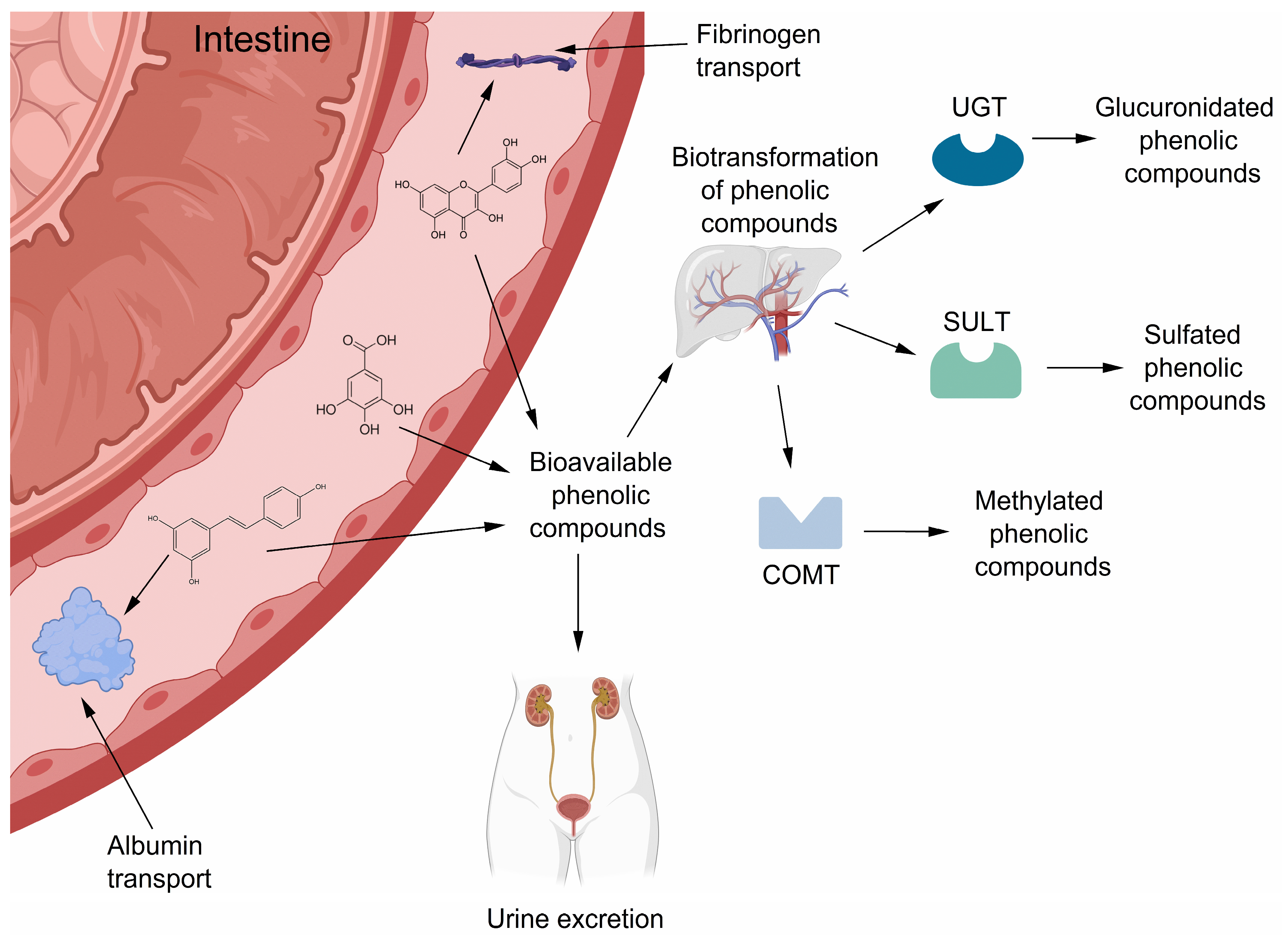
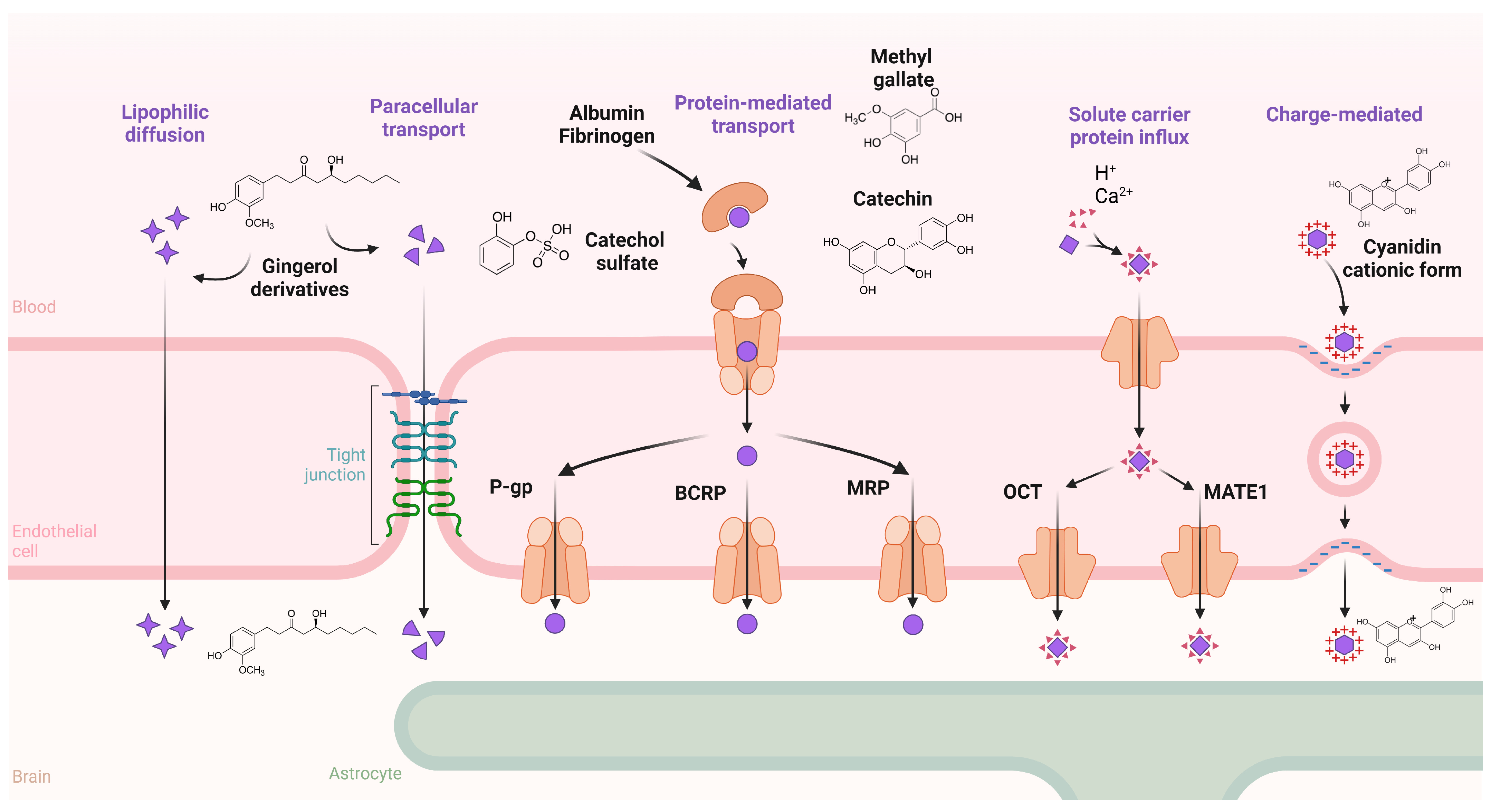

| Family | Phenolic Compound | Serum Protein | Binding Constant (Ka) | Phenolic Interaction Site | Protein Interaction Site | Interaction Type | References |
|---|---|---|---|---|---|---|---|
| Flavonoids | Quercetin | Albumin | 1.1–5.2 × 10⁵ M−1 | –OH group in carbonyl C4 | Trp214, Tyr150, Arg218, | Hydrogen bonding, C–C π interactions, hydrophobic, Van der Waals forces | [62,63,73] |
| Fibrinogen | Not reported | –OH or double bond in C2–C3 of the A ring | Lys532, Arg375, Tyr525 | Hydrogen bonding, hydrophobic interactions | [74] | ||
| Catechin | Albumin | 2.5–8.0 × 10⁴ M−1 | –OH of catechol groups, –OH in C3 | Arg218, Lys195, Trp214 | Hydrogen bonding, hydrophobic interactions | [62,63,73] | |
| Fibrinogen | Not reported | –OH in catechol groups | Ser50, Lys58, Arg104 | Hydrogen bonding | [72] | ||
| Rutin | Albumin | 3.4 × 10⁵ M−1 | –OH in catechol groups, glycosidic residue | Trp214, Lys199, Arg222, Ser192 | Hydrogen bonding, electrostatic interactions | [74] | |
| Fibrinogen | Not reported | –OH in catechol groups, glycosidic residue | Lys321, Tyr363, Arg375 | Hydrogen bonding | [74] | ||
| Stilbenes | Resveratrol | Albumin | 2.0–2.8 × 10⁵ M−1 | –OH groups of aromatic rings | Trp214, Phe211, Leu219, Ala291, Tyr150 | π–π interactions, hydrogen bonding, hydrophobic interactions | [75] |
| Fibrinogen | Not reported | –OH groups of aromatic rings | Phe295, Lys532, Tyr525 | Hydrophobic and π–π interactions | [74] | ||
| Phenolic acids | Gallic acid | Albumin | 1.2–3.6 × 10⁴ M−1 | –OH groups of aromatic ring, carbonyl group | Lys199, Arg257, Tyr150, Ser192 | Hydrogen bonding, electrostatic interactions | [67] |
| Fibrinogen | Not reported | –OH groups of aromatic ring, carbonyl group | Lys58, Arg104, Tyr363 | Hydrogen bonding | [72] | ||
| Caffeic acid | Albumin | 3.8 × 10⁴ M−1 | –OH catechol groups, carbonyl groups, double bond C-C | Arg218, Lys199, Trp214 | Hydrogen bonding, electrostatic and π–π interactions | [67] | |
| Fibrinogen | Not reported | –OH catechol groups, carbonyl | Lys321, Arg375 | Hydrogen bonding, electrostatic interactions | [74] | ||
| Ferulic acid | Albumin | 1.0–2.4 × 10⁴ M−1 | –OH groups in aromatic rings, methoxy groups, carbonyl moieties | Tyr150, Lys199, Arg222 | Hydrogen bonding, hydrophobic and electrostatic interactions | [67] | |
| Tannins | Tannic acid | Albumin | 1.0–5.0 × 10⁶ M−1 | –OH galloyl groups, –OH in aromatic rings | Trp214, Lys199, Arg218, Tyr150, Ser192 | Hydrogen bonding, hydrophobic interactions | [74] |
| Fibrinogen | Not reported | –OH in aromatic rings | Lys532, Tyr525, Arg375, Phe295 | Hydrogen bonding, hydrophobic interactions | [74] |
| Family | Transporter | Gene | Brain Structure | Cell Type | Main Function | References |
|---|---|---|---|---|---|---|
| Solute carriers | GLUT1 | SLC2A1 | Primary visual cortex, substantia nigra, hypothalamus, amygdala | Brain endothelial cells from BBB, astrocytes, oligodendrocytes | Glucose transport | [98] |
| GLUT3 | SLC2A3 | Superior frontal gyrus, hypothalamus, ventricular zone, primary visual cortex, anterior cingulate cortex, cerebellum | Neurons, brain endothelial cells from BBB | [99] | ||
| SGLT1 | SLC5A1 | Hippocampus, cortex, pituitary gland | Pyramidal cortex neurons, Purkinje cells, brain endothelial cells | Glucose, galactose, water and Na+ cotransport | [100] | |
| OCT1 | SLC22A1 | Adenohypophysis, anterior cingulate cortex, frontal lobe, nucleus accumbens, amygdala | Brain microvessel endothelial cells, astrocytes | Positively charged organic molecule influx and efflux | [101] | |
| OCT2 | SLC22A2 | Cortex, hypothalamus, substantia nigra, amygdala | Neurons, brain endothelial cells | [102] | ||
| MATE1 | SLC47A1 | BBB, blood–arachnoid barrier, cortex, putamen, caudate nucleus, ventricular zone | Brain endothelial cells, astrocytes | Cationic and anionic drugs, endogenous compound and toxin influx and efflux | [103] | |
| OATP2B1 | SLCO2B1 | Retina, spinal cord, substantia nigra, putamen, caudate nucleus, hypothalamus | Brain endothelial cells, retina neurons | Drug and endogenous compound influx | [104] | |
| ABC cassette | P-gp | ABCB1 | Substantia nigra, spinal cord, putamen, hypothalamus, corpus callosum | Brain endothelial cells, perivascular astrocytes and microglia | Xenobiotics, glutathione, and anionic compound efflux | [105] |
| MRP | ABCC2 | Cerebellum, hippocampus, ventricular zone | Brain endothelial cells, neurons, astrocytes, | [106] | ||
| BCRP | ABCG2 | Substantia nigra, spinal cord, cortex, corpus callosum, putamen | Brain endothelial cells, neural stem cells | [107] |
Disclaimer/Publisher’s Note: The statements, opinions and data contained in all publications are solely those of the individual author(s) and contributor(s) and not of MDPI and/or the editor(s). MDPI and/or the editor(s) disclaim responsibility for any injury to people or property resulting from any ideas, methods, instructions or products referred to in the content. |
© 2026 by the authors. Licensee MDPI, Basel, Switzerland. This article is an open access article distributed under the terms and conditions of the Creative Commons Attribution (CC BY) license.
Share and Cite
Pérez-Delgado, F.J.; Domínguez-Avila, J.A.; González-Aguilar, G.A.; Ayala-Zavala, J.F.; Villegas-Ochoa, M.A.; Martínez-Martínez, A.; Preciado-Saldaña, A.M.; García-Villa, D.; Montiel-Herrera, M. Phenolic Compound Transport from Gut to Brain: Their Chemical Interactions and Transport Pathways. Compounds 2026, 6, 25. https://doi.org/10.3390/compounds6020025
Pérez-Delgado FJ, Domínguez-Avila JA, González-Aguilar GA, Ayala-Zavala JF, Villegas-Ochoa MA, Martínez-Martínez A, Preciado-Saldaña AM, García-Villa D, Montiel-Herrera M. Phenolic Compound Transport from Gut to Brain: Their Chemical Interactions and Transport Pathways. Compounds. 2026; 6(2):25. https://doi.org/10.3390/compounds6020025
Chicago/Turabian StylePérez-Delgado, Francisco Jonathan, J. Abraham Domínguez-Avila, Gustavo A. González-Aguilar, Jesús Fernando Ayala-Zavala, Mónica A. Villegas-Ochoa, Alejandro Martínez-Martínez, Alejandra M. Preciado-Saldaña, Denisse García-Villa, and Marcelino Montiel-Herrera. 2026. "Phenolic Compound Transport from Gut to Brain: Their Chemical Interactions and Transport Pathways" Compounds 6, no. 2: 25. https://doi.org/10.3390/compounds6020025
APA StylePérez-Delgado, F. J., Domínguez-Avila, J. A., González-Aguilar, G. A., Ayala-Zavala, J. F., Villegas-Ochoa, M. A., Martínez-Martínez, A., Preciado-Saldaña, A. M., García-Villa, D., & Montiel-Herrera, M. (2026). Phenolic Compound Transport from Gut to Brain: Their Chemical Interactions and Transport Pathways. Compounds, 6(2), 25. https://doi.org/10.3390/compounds6020025