Article

Integrated Chemometric Assessment, Antioxidant Potential, and Phytochemical Fingerprinting of Selected Stachys and Betonica Plants


by
Anna Hawrył
1,
Mirosław Hawrył
1,
Mykhaylo Chernetskyy
2,
Wiktor Wojciech Winiarski
3 and
Anna Oniszczuk
1,*
1
Department of Inorganic Chemistry, Medical University of Lublin, Chodźki 4a, 20-053 Lublin, Poland
2
Botanical Garden, Maria Curie-Skłodowska University, Sławinkowska 3, 20-810 Lublin, Poland
3
Research Circle at the Department of Inorganic Chemistry, Medical University of Lublin, Chodźki 4a, 20-053 Lublin, Poland
*
Author to whom correspondence should be addressed.
Compounds 2026, 6(1), 14; https://doi.org/10.3390/compounds6010014
Submission received: 12 November 2025 / Revised: 8 January 2026 / Accepted: 29 January 2026 / Published: 4 February 2026
(This article belongs to the Special Issue Organic Compounds with Biological Activity (2nd Edition))

Abstract

The aim of this study was to evaluate, on a preliminary basis, the ability of multivariate techniques to predict the antioxidant activity of selected Stachys and Betonica species, based on chromatographic data. The methanol extracts of six Stachys species and ten Betonica species were analyzed using reversed-phase high-performance liquid chromatography (RP-HPLC) to obtain their chromatographic profiles. The phytochemical similarity of the samples was assessed using a selected chemometric method (principal component analysis (PCA) and hierarchical cluster analysis (HCA)). The antioxidant activity of the studied extracts (DPPH with 2,2-diphenyl-1-picrylhydrazyl reagent and FRAP—ferric reducing antioxidant power) was determined using a spectrophotometric technique. A multivariate PLS model was then used to predict the antioxidant activity of the methanolic extracts of Stachys and Betonica species based on their RP-HPLC fingerprints. The two obtained PLS models proved useful for predicting the biological activity of the tested extracts. High correlation coefficients (DPPH: R2 = 0.9963; FRAP: R2 = 0.9895) confirmed the reliability of the PLS prediction model. The results confirmed the effectiveness of combining qualitative and quantitative chromatographic fingerprinting methods with antioxidant activity testing and chemometric analysis, demonstrating that extracts from Stachys and Betonica are a rich source of bioactive substances with antioxidant properties.

1. Introduction

Stachys (L.) is a large genus of plants, taxonomically complex, belonging to the family Lamiaceae (Labiatae) [1]. It is considered one of the most numerous genera of the mint family, comprising around 300 species [1]. The genus Stachys has had a long and ambiguous history of classification, which has created serious taxonomic and nomenclatural problems [1]. The most commonly used classification today divides the genus Stachys into two subgenera, Stachys and Betonica. Betonica as a subgenus or a separate genus is still controversial [2]. However, biochemical and morphological studies of these plants suggest that the Betonica group has a distinct status [2]. Current IUCN assessments show that S. tetragona, S. palustris, and B. officinalis are categorized as Least Concern at global or regional levels, whereas B. officinalis and S. pradica exhibit varying regional conservation status (Not Evaluated globally; NT in parts of Switzerland). Some subspecific taxa, such as Betonica haussknechtii, are considered endangered regionally (e.g., in Bulgaria). Additionally, taxonomically, B. officinalis is now accepted as a distinct genus separate from Stachys based on genetic and morphological data; earlier synonyms (Stachys officinalis, Stachys betonica) remain in use [3]. Most species of Stachys genus can be found in tropical and temperate zones of the Mediterranean [4]. Numerous species also occur in Southwest Asia, North and South America, as well as southern Africa [4]. Betonica shows distinct foliage (narrowly oval leaves with wrinkled texture and toothed margins) and flowers (flat upper corolla lip, protruding anthers, bristled calyx) compared to Stachys species. Stachys exhibits varied traits like tomentose leaves in some species (e.g., S. byzantina), with differences in inflorescences and fruits. Betonica species cluster together phytochemically, distinct from Stachys, with unique iridoids, phenolics, and glycosides like betonyosides. Stachys species vary in polyphenolics and volatiles but show less intra-genus similarity to Betonica profiles. Within the Betonica phytochemical group, there are also certain differences in the content of active compounds, which may result from geographical origin (Europe, North Africa, Asia), cultivation conditions (wild vs. organic) and processing (drying method), affecting the chemical composition. The phytochemical composition of samples from different climates varies due to the plants’ adaptation to conditions. In temperate climates such as Poland, Germany, Belgium and the United Kingdom, which have lower sunlight exposure (approximately 1500–2000 h per year) and clayey-sandy soils with a pH of 6–7, flavonoids and iridoids dominate. In dry, sunny Mediterranean locations with over 2500 h of sunshine per year (e.g., Morocco, Algeria, Tunisia and Turkey) and calcareous soils, the content of essential oils (such as sesquiterpenes, e.g., β-caryophyllene) and tannins increases. The accumulation of phenols can be reduced by acidic soils, while the tannin content can be increased by alkaline calcareous soils. The levels of tannins and phenolic acids in dried herbs from different suppliers also differ depending on the harvest date (June–September). These differences affect biological activity, which is key to phytochemical research [5,6,7]. The phytochemical composition of plants of the Stachys genus includes over 200 chemical compounds, different in terms of structure and affiliation, that have or potentially have medicinal properties [2]. Among them, we can distinguish compounds from the terpene group (diterpenoids, triterpenoids, iridoids), polyphenols (flavonoids, phenolic acids), phenylpropanoids or steroids [2,4]. These plants exhibit diverse biological activity, they have antioxidant, anti-inflammatory, antimicrobial and cytotoxic effects [8,9,10,11,12]. Stachys species have been used in folk medicine for many years [2,4,13].
The preliminary phytochemical evaluation of herbal substances is often performed using high-performance liquid chromatography (HPLC) fingerprinting and this method has been accepted by the WHO as a strategy for quality assessment of medicinal plants [14]. In addition, chromatographic fingerprinting analysis has been suggested by the European Medicines Evaluation Agency (EMEA) for the quality assessment of herbal substances and foods [15]. In practice, chromatographic fingerprinting is usually used for phytochemical identification and quality control of herbal substances or foods [16,17]. Fingerprint data combined with different chemometric methods have the potential to assess the complex composition of herbal extracts [18]. Among these techniques used for the comparative analysis of chromatographic fingerprinting herbal substances, the most common are principal component analysis (PCA), hierarchical cluster analysis (HCA) (as an unsupervised classification technique) and partial least squares (PLS) (as a supervised classification technique) [19,20,21,22,23,24,25,26].
The aim of this work was to optimize the HPLC analysis of sixteen selected Stachys and Betonica species in order to obtain their chromatographic fingerprints and also to identify chlorogenic acid and flavonoids (rutin and quercetin) in the analyzed extracts. The similarities and differences between the studied objects were assessed using chemometric tools such as Principal Component Analysis and Hierarchical Cluster Analysis. Antioxidant activity was determined using DPPH and FRAP spectrophotometric techniques. In order to study the active substances in the samples representing their antioxidant activity, chromatographic fingerprints were combined with the antioxidant activity of studied extracts by creating a system using the PLS model. The created PLS model was a tool for predicting the bioactivity of sixteen samples of Stachys and Betonica methanolic extracts based on their chromatographic fingerprints. A high value of the correlation coefficient was obtained, which confirms the good fit of the data in the created model, a high correlation between chromatographic data and their bioactivity was confirmed.

2. Materials and Methods

2.1. Plant Material

Six samples of Stachys species were obtained from Botanical Garden (Maria Curie-Skłodowska University, Lublin, Poland) and they were identified by a garden worker (PhD in biological sciences). The remaining ten samples of Betonica officinalis were purchased from the following ten different sellers (BK1–BK10):
  • BK1—supplier Celtic Wildflowers, Lowestoft, United Kingdom
  • BK2—supplier, Elustu Spice, Izmir, Turkey
  • BK3—supplier Agri Didon, Ariana, Tunisia
  • BK4—supplier Magic Garden Seeds, Regensburg, Germany
  • BK5—supplier Old Dairy Nursery, Sprimont, Belgium
  • BK6—supplier Mystic.Garden, Wrocław, Poland
  • BK7—supplier Plantago, Dzierzążno, Poland
  • BK8—supplier Biosna, Łódź, Poland
  • BK9—supplier Kwietnik.com.pl, Węgrzce Wielkie, Poland
  • BK10—supplier RoslinyRodzime.pl, Ziąbki, Bolimów, Poland
The dried plant material of sixteen species of Stachys and Betonica (Table 1) was ground using a laboratory mill (laboratory mill IKA® WERKE, Staufen, Germany). Then, approximately 5 g of each plant material was weighed precisely and transferred to paper thimbles. The obtained thimbles were filled with 150 mL of solvent (dichloromethane pure-basic 99.8%, POCH Basic, Gliwice, Poland) and subjected to an ultrasound-assisted extraction process using a flat-bottomed flask for 2 h. Dichloromethane was the first solvent used in extraction to remove ballast matter (e.g., chlorophylls). Dichloromethanol extracts were not further analyzed. Then, after drying at room temperature, the thimbles were filled with methanol, also in the amount of 150 mL, and extracted for another 2 h under the same conditions. The extraction process using dichloromethane was carried out to remove ballast bodies and the dichloromethane extracts were not subjected to further analysis. The obtained methanol extracts were evaporated to dryness under reduced pressure at room temperature using an evaporator (Heidolph Instruments GmbH and Co. KG, Schwabach, Germany). The evaporated methanol extracts were quantitatively transferred to 10 mL flasks and dissolved in methanol, making up the flasks to the marked volume. This procedure followed the established protocol as in [27].

2.2. HPLC Procedure and Standards Solutions

High-performance liquid chromatography analysis was performed using a Hitachi LaChrom Elite liquid chromatograph equipped with an L-2300 thermostat. L-2130 gradient pump. L-2200 autosampler and L-2455 diode array detector (Hitachi, Tokyo, Japan). The studies were performed using a Kinetex C18 column with a particle size of 5 µm and dimensions of 150 × 4.6 mm at a temperature of 25 °C. The eluent used consisted of A—methanol and B—0.1% (v/v) water solution of formic acid. Linear concentration gradient (5–100% of A) in 60 min was used for the studies. The flow rate was 1 mL/min. and the volume of methanolic extracts dispensed each time was 5 µL.
In order to obtain solutions of standard substances for qualitative and quantitative analysis, 0.006 g of chlorogenic acid, 0.0053 g of quercetin and 0.005 g of rutin were weighed and then the chemical compounds were transferred to 5 mL measuring flasks and dissolved in methanol to commensurate volume. Analysis for chlorogenic acid was performed at a wavelength of λ = 325 nm and for rutin and quercetin at λ = 254 nm. The retention time values, peak areas and the starting concentration (mg/mL) for chlorogenic acid, rutin and quercetin are presented in Table 2.

2.3. Antioxidant Activity

2.3.1. DPPH Method

The ability to scavenge free radicals was determined based on the modified Brand-Williams method using the synthetic radical DPPH reagent [28]. A DPPH solution was prepared; 3.8 mg of DPPH was weighed and then quantitatively transferred to a 100 mL flask and supplemented with methanol. The reagent obtained in this way was diluted until its absorbance was about 0.9 at a wavelength of λ = 517 nm. The ready solution was stored in a cool, dark place for no longer than 3 days. Measurements were performed at a wavelength of λ = 517 nm using the spectrophotometer (Spektrofotometr Genesys 10S UV-Vis, Thermo Scientific, Waltham, MA, USA) in 1 cm glass cuvette. 20 µL of methanolic extract with 1500 mL of methanol was used as a blank. As negative control methanol was used and as positive control Trolox was used. The tested samples were prepared by mixing 20 µL of extract with 1500 µL of DPPH solution and then setting aside for 30 min in a dark place. After this time, the absorbance was measured three times, and the arithmetic mean was calculated to determine the final result. Concentrations were calculated based on the standard curve prepared for Trolox. The initial 0.2 mg/mL solution was diluted to obtain subsequent solutions with lower concentrations. For extracts whose absorbance did not fall within the range of the calibration curve, the appropriate dilutions were made using methanol, and these were included in the calculations. The scavenging capacity % was calculated by the following formula:
% R S A = ( A 0 A 1 ) A 0 × 100
%RSA—% inhibition.
A0—the absorbance of control.
A—the absorbance of sample.

2.3.2. FRAP Method

The ability of the tested extracts to reduce iron ions in the Fe3+-TPTZ complex to Fe2+-TPTZ is determined using the spectrophotometric method (Spektrofotometr Genesys 10S UV-Vis, Thermo Scientific, Waltham, MA, USA and 1 cm glass cuvette) with the FRAP (Ferric Reducing Antioxidant Power) reagent. To prepare the reagent, the following steps were performed: (1) 300 mM acetate buffer solution—3.1 g of sodium acetate trihydrate was weighed, dissolved in 16 mL of glacial acetic acid, then transferred to a 1000 mL flask and made up to commensurate with distilled water. (2) 10 mM solution of 2.4.6-tripyridyl-s-triazine (TPTZ) in 40 mM hydrochloric acid was prepared by measuring out 1.6 mL of concentrated hydrochloric acid and transferring it to a 500 mL flask, which was then made up to the required volume with distilled water. Then, 1.56 g of TPTZ was weighed, transferred to a 500 mL flask and made up to 40 mM with hydrochloric acid. (3) To prepare a 20 mM aqueous solution of iron (III) chloride, 0.325 g of FeCl3 was weighed and transferred to a 100 mL flask, then made up to the required volume with distilled water. Ready FRAP reagent was obtained by mixing 41.7 mL of iron (III) chloride and 41.7 mL of TPTZ. The mixture was transferred to a 500 mL flask, then supplemented with acetate buffer to proportionality. Samples were prepared by mixing 50 µL of extract and 1450 µL of FRAP reagent and setting the mixture aside for 8 min. After this time, absorbance was measured three times. All measurements were taken at a wavelength of λ = 593 nm. A blank test was performed by mixing 50 µL of distilled water and 1450 µL of FRAP reagent as negative control, and water and Trolox as positive control. Concentrations were calculated based on the arithmetic mean of three measurements and a standard curve made for Trolox and gallic acid. The stock solution of Trolox had a concentration of 0.125 mg/mL. It was then diluted to obtain subsequent solutions. If the absorbance of the extracts did not fall within the given range of the calibration curve, appropriate dilutions were made and included in the calculations.

2.4. Chemometric Calculations (Preprocessing Chromatographic Data PCA, HCA, PLS)

Principal component analysis was performed based on chromatographic data obtained by HPLC. Column chromatograms were exported from the program (EZChrom Elite) as ASCII text files (digitization) which were then imported to Microsoft Excel and subjected to further processing. From each extract chromatogram, the appropriate data were extracted, which were the arithmetic mean of the values for the wavelength range of 190–600 nm. As a result of this operation, each extract corresponded to one column in a matrix consisting of 9001 rows and 16 columns (16 extracts tested). In the next step, the matrix was saved as a CSV (comma-separated values) file, and the data were subjected to normalization, baseline cutoffs, smoothing, denoising and alignment using SpecAlign software (software version 2.4.1). The parameters of the processes listed above were as follows: normalization was performed by subtracting the mean and dividing the value by the standard deviation, the baseline cutoff was performed with a window width of 20, smoothing was performed with the Savitzky–Golay method for a filter width of 8, and denoising was performed with the wavelet denoising method with a threshold set to 0.5. The alignment process (RAFFT) was performed—scale 1, maximum shift—20, PCA was performed in PAST (version 4.2) based on the covariance matrix.
Cluster analysis (HCA) was performed in PAST (version 4.2) using the Ward method and the UPGMA algorithm. The Euclidean distance and correlation coefficient were used as similarity measures. All data were normalized similarly to the PCA method. In order to demonstrate the similarity or lack thereof among methanol extracts, cluster analysis was performed. Appropriate dendrograms were generated using Ward’s method presenting the similarity among the extracts of plants from the Stachys genus.
One of the widely used chemometric tools for exploring colorimetric data is the fast, efficient and optimal Partial Least Squares regression method which was developed by Wold [29]. It is used in regression cases where the number of explanatory variables is large and where it is likely that the explanatory variables are correlated. Correlation and loading plots make it easy to study the relationships between different variables, explanatory variables or dependent variables, as well as between explanatory and dependent variables [30,31]. The quality of prediction can be checked by the cross-validation method (“leave one in”) which consists of temporarily removing the value of the first sample from the data and the values of the remaining samples are used to calculate the regression equation. The equation obtained in this way is then used to estimate (predict) the value of the variable for the omitted sample. The procedure is repeated omitting one sample at a time and then the difference between the measured and predicted values of the variable is calculated for each sample. The sum of the squares of these differences is called the predicted residual error sum of squares (PRESS). A value of the PRESS statistic close to zero indicates better predictive ability of the model. In this work, the calculations were performed using Minitab version (Minitab 21.x.) [32].

3. Results and Discussion

3.1. High Performance Liquid Chromatography

The high-performance chromatographic analysis with gradient elution of sixteen methanolic extracts of Stachys and Betonica species was performed using RP-18 chromatographic column and the mixture of methanol, water and formic acid as mobile phase. Optimization of the chromatographic system allowed the separation of standard substances (one phenolic acid and two flavonoids).
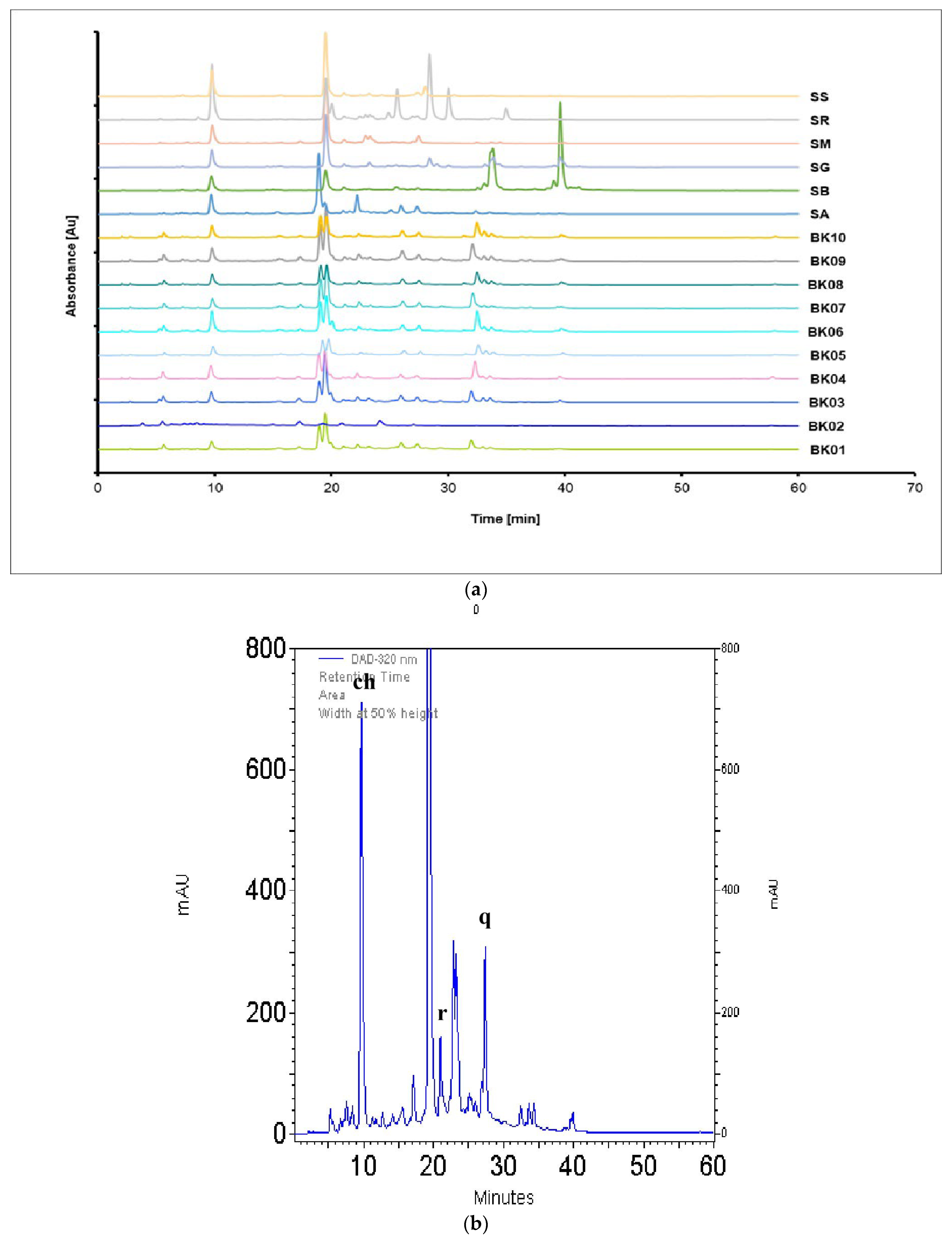
The fingerprint phytochemical profiles of methanolic extracts of sixteen Stachys and Betonica species are presented in Figure 1a. An example chromatogram of the methanol extract of Stachys macrantha at a wavelength of 320 nm is shown in Figure 1b. Three standards (chlorogenic acid, quercetin and rutin) were identified (based on retention time and spectrum) and marked in Figure 1b. The content (mg/mL) of selected standard substances in the analyzed extracts was calculated using the values of the areas under the peak for individual standard substances and their concentrations (proportion rule). The content of reference substances in methanolic extracts of studied extracts expressed in mg/mL (chlorogenic acid, rutin, quercetin) is presented in Table 3.
In this work three standards (chlorogenic acid, quercetin and rutin) were identified in the methanolic extracts of sixteen Stachys species. The highest content of chlorogenic acid was noted for Stachys recta (3.86 ± 0.01 mg/mL) as well as for S. sylvatica (1.94 ± 0.12 mg/mL) and S. macrantha (1.90 ± 0.05 mg/mL), whereas the lowest content of chlorogenic acid was observed for Betonica species BK2 (>0.02). The significant difference in the chlorogenic acid content of S. recta and BK2 may be due to many environmental factors, storage conditions of the plant material or differences in the composition of a given part of the plant. Moreover, relatively high content of chlorogenic was observed in Stachys germanica (1.18 ± 0.01 mg/mL). Previous studies confirm the high content of chlorogenic acid in S. germanica extracts obtained using various solvents, with the highest content observed in the aqueous extract [33]. Therefore, this should be considered when selecting a solvent for future studies analyzing Stachys species.
A significantly lower content of flavonoid compounds (quercetin and rutin) was observed in the tested Stachys and Betonica species. The highest content of rutin was for samples BK10 and BK8 (0.37 ± 0.04 mg/mL and 0.32 ± 0.02 mg/mL, respectively) and the lowest was for S. byzanthina (0.022 ± 0.00 mg/mL). The absence of rutin was noted for four samples (SS, BK2, BK4 and BK5). On the other hand, among the analyzed Stachys extracts, quercetin was absent in three samples: S. byzantina, S. germanica and S. recta.
Polyphenolic compounds, particularly phenolic acids and flavonoids, are widely recognized for their antioxidant properties and their beneficial effects on human health. These bioactive molecules play a crucial role in neutralizing oxidative stress, which is linked to a range of chronic diseases including cardiovascular disorders, neurodegenerative diseases, and certain types of cancer. Due to these properties, polyphenols are considered valuable constituents of not only fruits and vegetables but also medicinal and aromatic plants [34]. One of the most studied polyphenolic acids is chlorogenic acid, which has demonstrated antioxidant, anti-inflammatory, and even anti-carcinogenic properties. The detection and quantification of chlorogenic acid in various plant species from the genus Stachys has provided insight into their potential medicinal value. As highlighted in recent studies using LC-MS-MS techniques, chlorogenic acid was present in ethanolic extracts of several Stachys species, including S. officinalis, S. germanica, S. byzantina, S. sylvatica, S. palustris, and S. recta. Interestingly, S. recta exhibited the highest concentration of chlorogenic acid, suggesting its strong potential as a natural antioxidant source. In contrast, S. officinalis contained the lowest concentration among the samples tested [34]. In terms of flavonoids, rutin—a compound known for its vascular-protective and anti-inflammatory properties—was detected in S. officinalis [10], S. germanica [33] and negligible content in S. palustris [10]. This selective occurrence points to species-specific variations in secondary metabolite profiles, which may be influenced by genetic, environmental, and extraction method factors.
Further investigations into different extraction solvents have shed more light on the polyphenolic composition of S. germanica. For instance, chlorogenic acid and quercetin, another potent flavonoid with anti-inflammatory and immune-boosting effects, were present in ethyl acetate, methanolic, and water extracts of this species [34]. This suggests that the choice of solvent significantly impacts the range of polyphenols that can be isolated and identified. Another noteworthy finding is the presence of both chlorogenic acid and rutin in S. iva, which further supports the idea that Stachys species contain biologically active compounds with therapeutic potential [35].
These outcomes highlight the importance of ongoing phytochemical research into the Stachys genus and related medicinal plants. Understanding the polyphenolic content across different species and extraction methods enriches our knowledge of plant biochemistry and opens avenues for developing natural health products and supplements based on these bioactive compounds.

3.2. Antioxidant Activity (DPPH and FRAP with Trolox as Standard)

3.2.1. DPPH Test

The equation of the calibration curve for six dilutions of Trolox (Table 4) is as follows: y = −3.1477x + 0.8991 with the determination coefficient of calibration curve is R2 = 0.9911. The absorbance values measured for the Stachys extracts tested were entered into the calibration curve equation and the free radical inhibition concentration of the analyzed samples (in terms of Trolox) was calculated; the obtained results are presented in Table 5.
The highest ability to scavenge free radicals was observed for BK2 (11.15 ± 0.21 mg/mL). Slightly lower values were obtained for the next two samples—S. recta (6.75 ± 0.07 mg/mL) and S. macrantha (6.90 ± 0.13). However, the lowest antioxidant activity was observed for S. byzantina (<1 mg/mL).
Based on visual evaluation of the chromatograms obtained for individual Stachys species, two of them (SB and SR) clearly differ from the other samples. The retention times of unidentified and identified (rutin) peaks in SR are within 20–30 min, while the unidentified peaks of the SB species appear later (between 30 and 40 min). Analyzing the antioxidant activity of these two samples (DPPH method), it can be concluded that the relatively high free-radical scavenging capacity of S. recta (6.75 mg/mL) results from the presence of active compounds (from the polyphenol group), which appeared in the chromatogram near rutin and quercetin identified among other Stachys species. In the case of S. byzantina, however, its relatively low antioxidant activity (0.95 mg/mL) was confirmed, suggesting that the peaks visible in the chromatogram represent substances with low free-radical scavenging capacity.
The antioxidant potential of Stachys species has been the subject of growing interest due to their high polyphenol content and associated health benefits. Several studies have explored the free-radical scavenging abilities of extracts from different Stachys species using various solvents and in vitro assays. According to one study, the ethanolic extracts of S. officinalis exhibited the highest DPPH free-radical scavenging capacity, while slightly lower activity was recorded for S. recta and S. sylvatica [10]. This observation aligns with the broader understanding that ethanol, as a polar solvent, is particularly effective at extracting phenolic compounds, including flavonoids and phenolic acids, which are known for their antioxidant properties [36]. The superior activity of S. officinalis may be attributed to the presence of flavonoids such as rutin, which was uniquely identified in this species, as well as other synergistic phytochemicals. Further studies have provided more nuanced insights by evaluating the antioxidant activity of Stachys extracts prepared using solvents of varying polarities—namely methanol, ethanol, and dichloromethane. Methanolic and ethanolic extracts generally demonstrated the highest DPPH radical scavenging activity, while dichloromethane extracts consistently showed the weakest antioxidant effects [37]. Specifically, methanolic extracts of S. recta subsp. recta and S. palustris, as well as ethanolic extracts of S. palustris and S. alpina, showed the most pronounced antioxidant activities. This pattern suggests that polar solvents are more efficient at extracting bioactive antioxidant compounds such as chlorogenic acid, quercetin, all of which have been previously identified in various Stachys species.
The weak activity observed in dichloromethane extracts is not surprising, as this solvent is non-polar and thus less effective in extracting hydrophilic antioxidant compounds like phenolic acids and flavonoids. These findings reinforce earlier reports indicating a strong correlation between total phenolic content and antioxidant capacity in plant extracts [38]. The variations in antioxidant potential across species and extract types highlight the complex phytochemical diversity of the Stachys. It also underscores the importance of solvent selection in maximizing the extraction of desired bioactive compounds. From a pharmacological perspective, these findings provide a rationale for the use of specific Stachys species—particularly S. officinalis, S. recta, and S. palustris—as natural sources of antioxidants for therapeutic or nutraceutical applications.

3.2.2. FRAP Test

In the FRAP method the Trolox as standard was used and the calibration curve of Trolox for seven dilutions (Table 2) is as follows: y = 14.077x + 0.0089 and R2 = 0.999. In this case, the procedure of the Trolox concentrations calculation was similar, the obtained absorbance values for studied extracts were inserted into the equation and the concentrations of antioxidant activity (as Trolox concentration) of analyzed samples were obtained (Table 5).
The antioxidant potential of Stachys species, as measured through various in vitro assays, demonstrates notable variability among different species and extract samples. In a comparative analysis, the highest antioxidant activity—measured as DPPH radical scavenging capacity—was recorded for sample BK2 (8.51 ± 0.47 mg/mL), followed by S. recta (7.76 ± 0.08 mg/mL) and S. macrantha (5.24 ± 0.18 mg/mL). In contrast, the lowest activity was noted for sample BK5 (1.25 ± 0.14 mg/mL). These findings further emphasize the chemotypic diversity within the genus and suggest that antioxidant potential is strongly species-dependent and possibly influenced by geographic or environmental factors [39].
The high antioxidant performance of S. recta is consistent with earlier reports showing that its methanolic and ethanolic extracts have robust DPPH radical scavenging activity, likely due to the presence of chlorogenic acid and other phenolic compounds. Similarly, S. macrantha—although less studied—has shown a considerable polyphenolic content in some preliminary phytochemical screenings, which could explain its relatively high antioxidant capacity [10].
Another study used the FRAP assay to evaluate the antioxidant capacity of ethanolic extracts from various Stachys species. This assay revealed that S. germanica and S. palustris demonstrated the highest ferric-reducing power, while S. sylvatica exhibited the lowest antioxidant potential [10]. These results underscore the fact that antioxidant activity is not only assay-specific but also influenced by the specific chemical profiles of the tested extracts. The discrepancies observed between DPPH and FRAP assays highlight the multifaceted nature of antioxidant mechanisms. While DPPH primarily evaluates the hydrogen-donating ability of compounds, FRAP assesses their electron-donating capacity. Thus, a comprehensive antioxidant evaluation often requires multiple assays to capture the full spectrum of redox activity [40].
The variability in antioxidant activity among Stachys species may also be attributed to differences in total phenolic and flavonoid content, as previously suggested by researchers [10]. These secondary metabolites, particularly flavonoids like quercetin and rutin, and phenolic acids such as chlorogenic are known to play key roles in neutralizing free radicals and protecting against oxidative damage. Overall, the comparative results underline the therapeutic potential of certain Stachys species—such as S. recta, S. palustris, and S. germanica—as natural sources of antioxidants. These species could be further explored for the development of plant-based antioxidant supplements or phytopharmaceuticals.
The relationships between chlorogenic acid concentration and the antioxidant activity (as Trolox concentration) for DPPH or FRAP tests were calculated and compared. While analyzing all these dependencies, it was noticed that one point significantly differed from the others, so it was rejected (sample BK2) and fifteen samples were subjected to calculations. In general, the best correlations were observed for the chlorogenic acid vs. FRAP relationship (y = 1.6816x + 1.2144), where R2 is equal to 0.7754. However, it was also noted that the correlation (y = 1.9464x + 0.5606) is even better only for the first six samples from the Botanical Garden (S. alopecuros, S. byzantina, S. recta, S. macrantha, S. sylvatica, S. germanica) and then R2 = 0.9117. The high value of the correlation coefficient for the samples from the Botanical Garden may be due to the fact that these plants were collected from closely located natural sites where the environmental conditions were the same. In the remaining ten samples no correlation was noted.
In the case of chlorogenic acid vs. DPPH data poor correlations were observed (y = 1.5967x + 1.1621, R2 = 0.6451 for fifteen samples; y = 1.7294x + 0.8407, R2 = 0.6916 for the first six samples). The low R2 value suggests that other biologically active substances are likely responsible for the free-radical scavenging ability. Moreover, the high determination coefficient of the dependence of DPPH and FRAP antioxidant data was obtained for all Stachys extracts and it is equal to R2 = 0.8898 (y = 0.7606x + 0.749).
The relationship between total phenolic content (TPC) and antioxidant activity, particularly as measured by the DPPH radical scavenging assay, has been widely investigated in plant extracts, including those from the Stachys genus. However, the strength of this correlation can vary significantly depending on factors such as the extraction method, plant part used, solvent polarity, and even environmental influences on plant metabolism.
Some studies have reported low correlations between total phenolic content and DPPH antioxidant activity, suggesting that antioxidant capacity in those cases may be influenced by other classes of compounds such as terpenoids, alkaloids, or non-phenolic antioxidants [37]. For example, Stachys species often contain a complex mixture of secondary metabolites, including iridoids and diterpenes, which may contribute to antioxidant activity independently of phenolic compounds [41].
However, contrasting results have been reported in other investigations. In a study focusing on methanolic extracts from the aerial flowering parts of four endemic Stachys taxa, a strong positive correlation was observed between total phenolic content and DPPH radical scavenging activity [42]. This suggests that in certain taxa, especially when extracted with highly polar solvents such as methanol, phenolic compounds are the primary contributors to antioxidant activity. Methanol is known to efficiently extract hydrophilic polyphenols such as chlorogenic acid, quercetin, and rutin, which are well documented for their free-radical scavenging properties [36]. These conflicting findings highlight the complexity of antioxidant mechanisms in plant matrices. It is important to note that, while TPC provides a general estimate of phenolic concentration, it does not differentiate between compounds of varying antioxidant potential. Moreover, the DPPH assay, while useful, represents only one aspect of antioxidant capacity—namely, the ability to donate hydrogen atoms to neutralize free radicals. Therefore, relying solely on TPC as a predictor of antioxidant activity may not always be appropriate, particularly in species or extracts with a diverse array of bioactive compounds. To gain a more comprehensive understanding, a multi-assay approach—including CUPRAC, ABTS, and ORAC assays—alongside detailed phytochemical profiling (e.g., LC-MS/MS) is recommended [40].
In summary, while total phenolic content can be a useful indicator of antioxidant potential in Stachys extracts, its predictive value is context dependent. Strong correlations, such as those observed in methanolic extracts of certain endemic taxa, suggest phenolics play a central role in antioxidant defense. However, weaker correlations in other studies caution against overgeneralization and underscore the need for more nuanced biochemical analyses.

3.3. Chemometric Calculations Results

The obtained RP-HPLC chromatograms of sixteen Stachys and Betonica species were phytochemically compared using two chemometric tools Principal Component Analysis and Hierarchical Cluster Analysis. As the literature reports, the chemometric techniques are an appropriate tool for phytochemical evaluation of plant extracts [32,43,44].
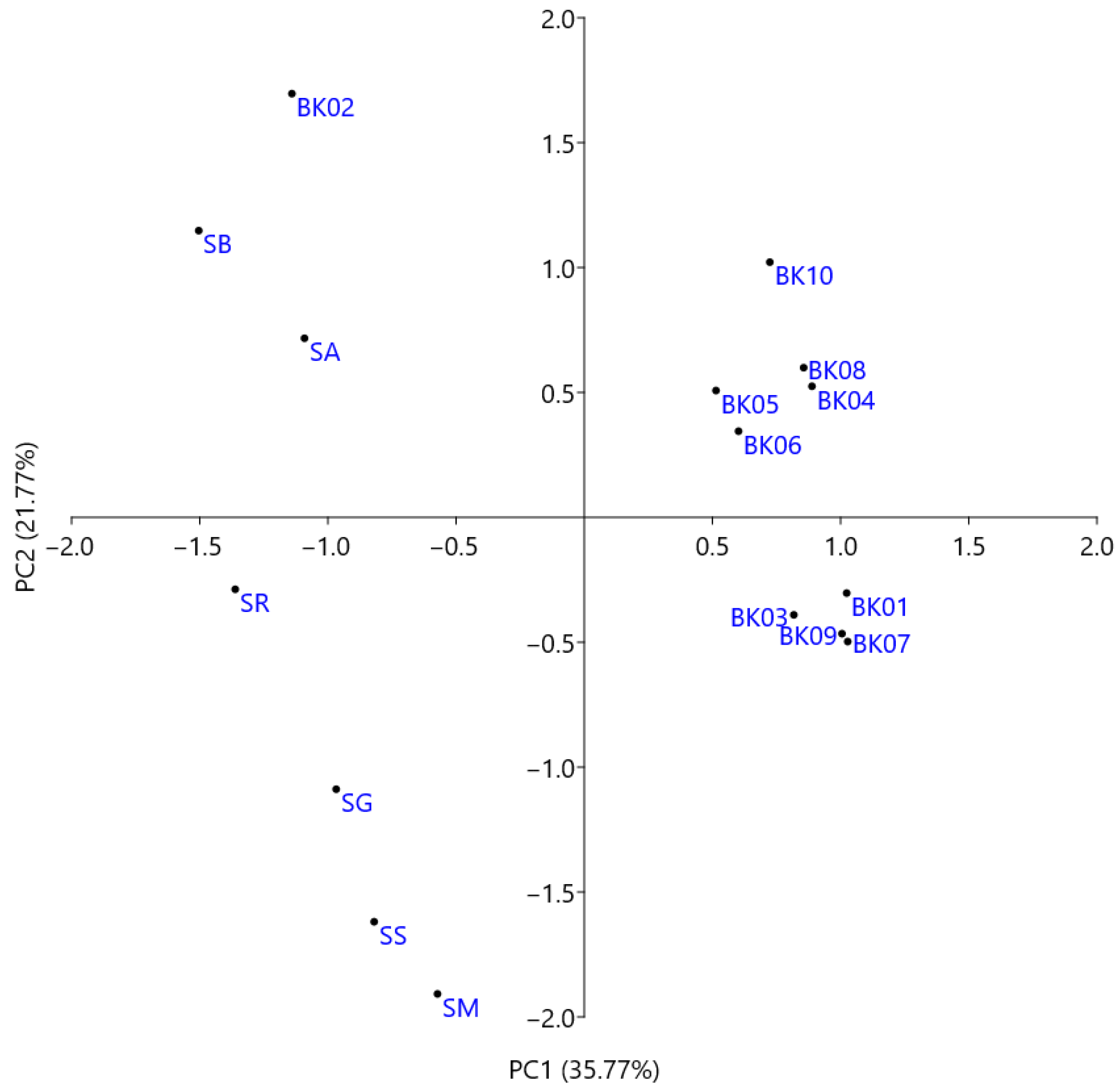
The phytochemical similarity between RP-HPLC chromatograms of sixteen extracts was compared using PCA and the result was presented as PC1 vs. PC2 graph in Figure 2.
In the graph, sixteen points, corresponding to sixteen methanolic extracts of Stachys and Betonica, are grouped into some sets. The close location of these points confirms the phytochemical similarity between the analyzed objects. The highest phytochemical similarity was observed for samples BK1–BK10 (without BK2), especially if we take into account the values of the second principal component (PC2), because these nine samples are located between 0.5 and 1.0 of x-axis. Moreover, it should also be taken into account that the values on the x-axis, the seven objects—BK2 and six samples from Botanical Garden—are located close to each other (−0.5 to −1.5). However, based on both x and y axis values, the similarity between the following grouped samples was confirmed: BK4, BK5, BK6 and BK8; BK1, BK3, BK7 and BK9.
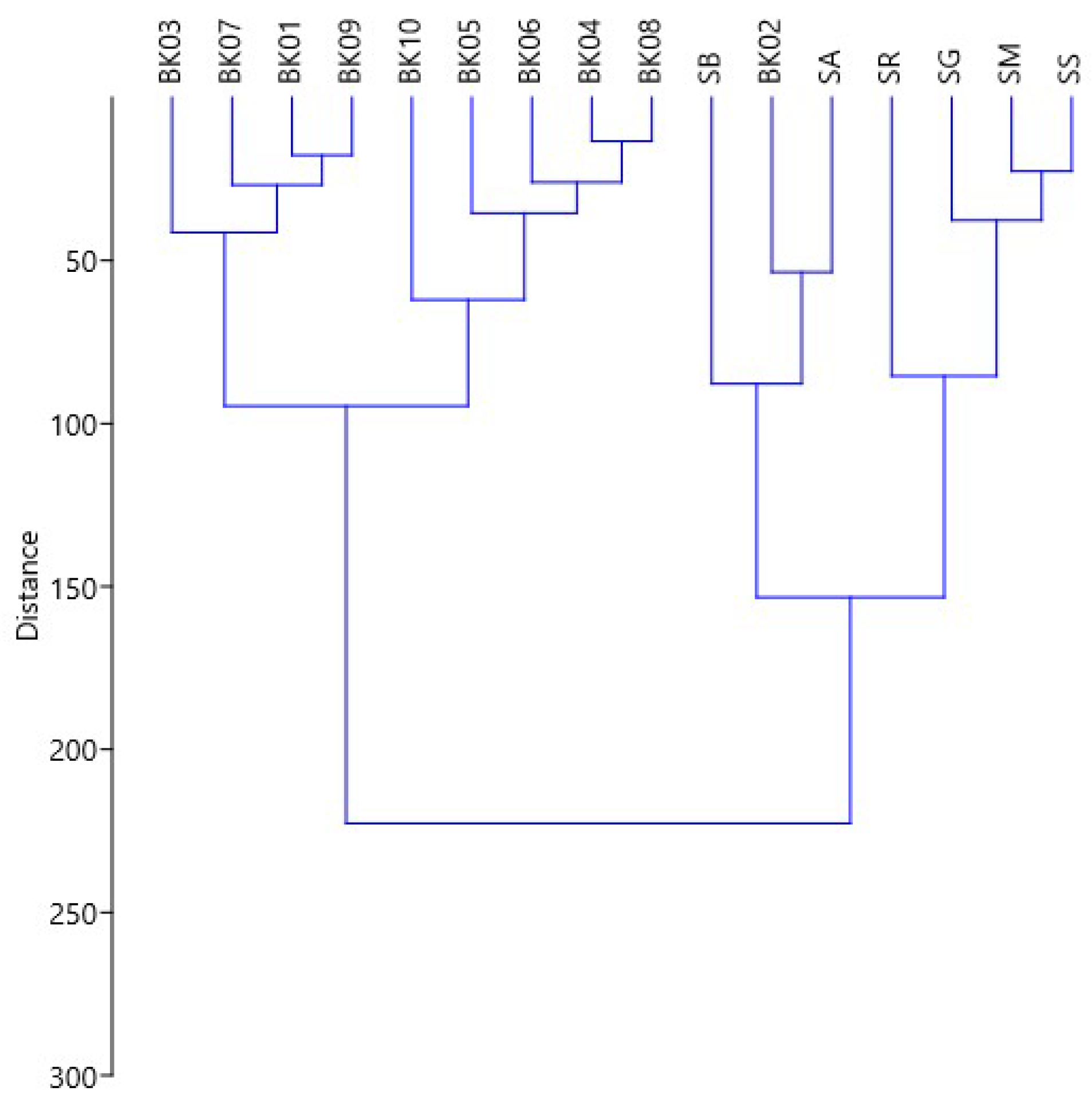
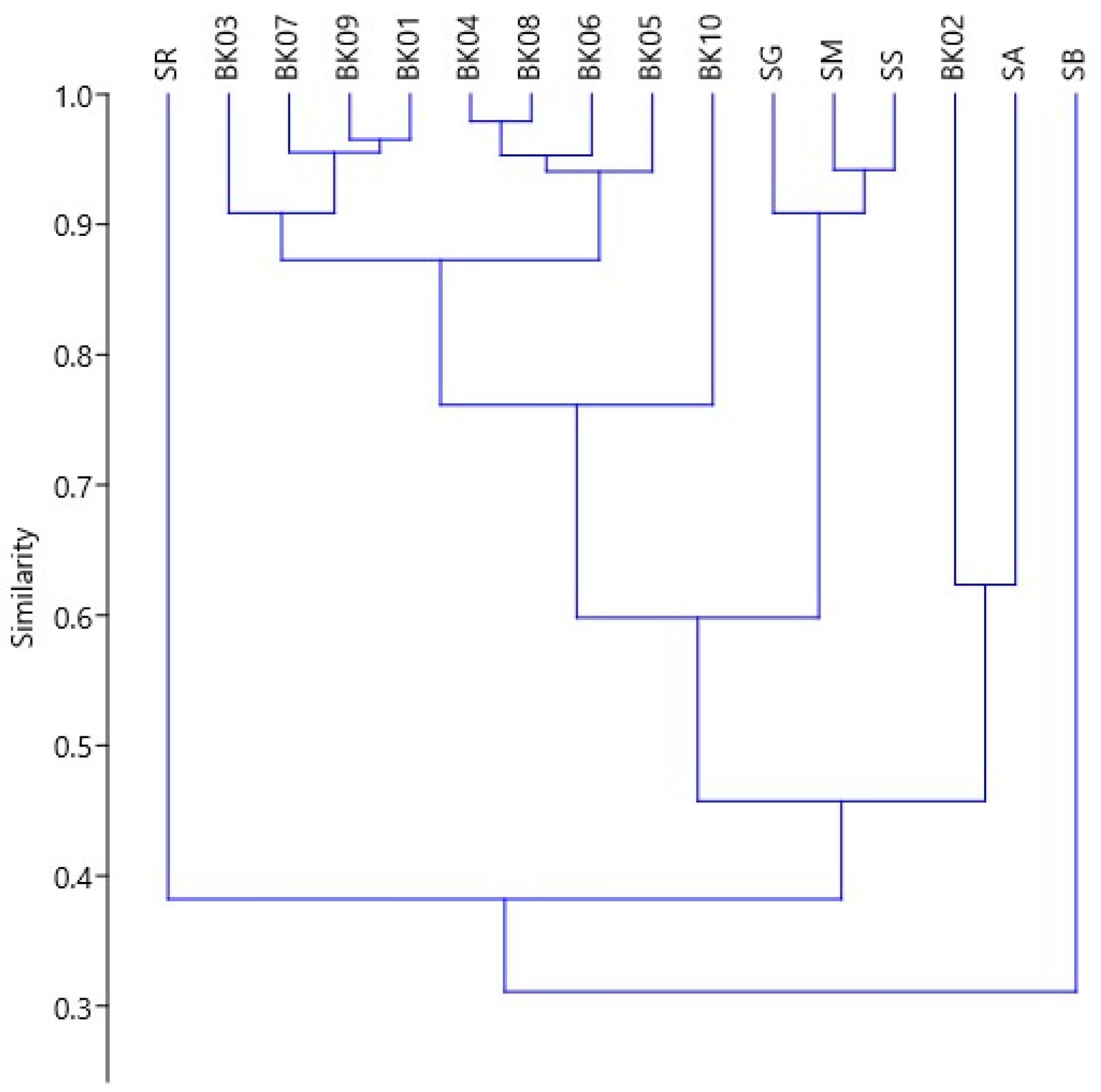
The phytochemical similarity of studied methanolic extracts was also evaluated using Hierarchical Cluster Analysis with Pearson correlation coefficient (as similarity measure) and Euclidean distance (as distance measure) and the results are presented as dendrograms in Figure 3 and Figure 4, respectively.
The high value of Pearson correlation coefficient confirms the high similarity between studied objects. The highest value of Pearson correlation coefficient (>0.9) was observed for the following clusters: BK1, BK3, BK7 and BK9; BK4, BK5, BK6 and BK8; S. macrantha and S. sylvatica.
In the case of Euclidean distance, their low value confirms the high similarity between analyzed samples. As shown in Figure 4, the obtained results are the same as in the case of HCA with Pearson correlation coefficient, and the following sets with low value of Euclidean distance (<50) were obtained: BK1, BK3, BK7 and BK9; BK4, BK5, BK6 and BK8; S. macrantha and S. sylvatica.

3.4. Correlations Between RP-HPLC Fingerprints Antioxidant Activity by PLS Technique

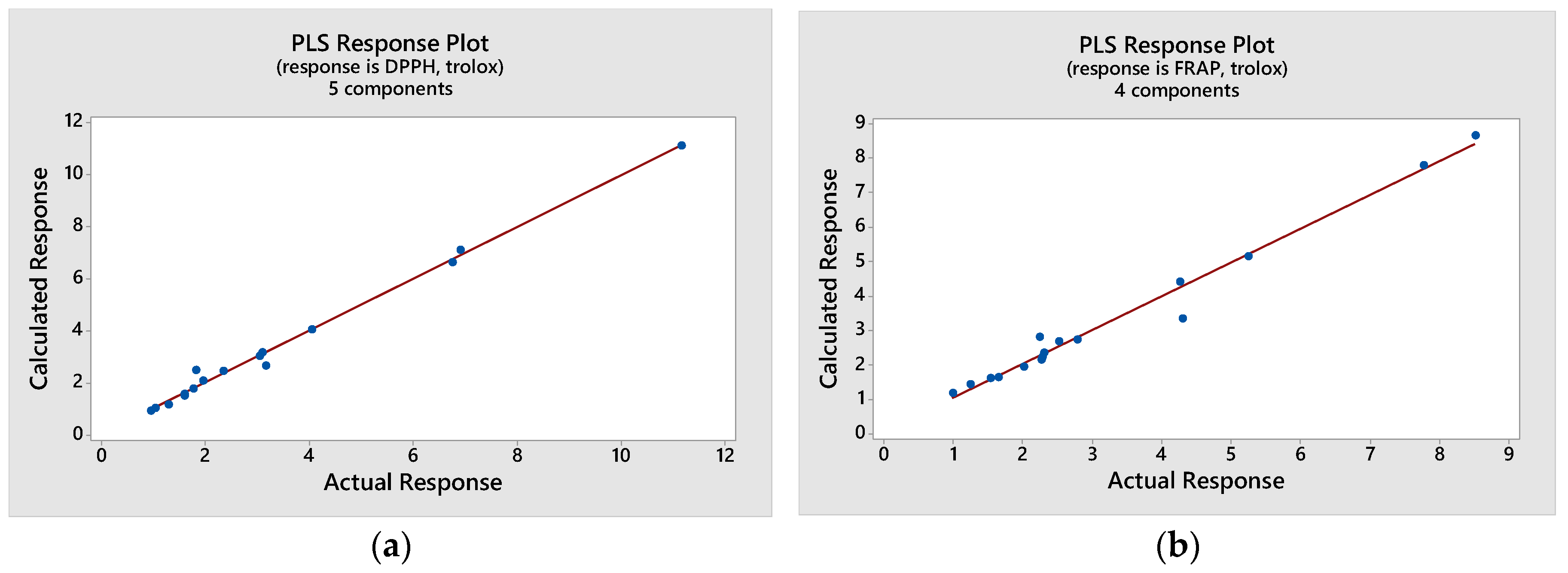
The PLS method is commonly used to predict biological activity of plant substances based on experimental data [45]. In this work, the final step was to estimate the relationship between chromatographic data and antioxidant activity using the multivariate exploratory PLS technique. Multivariate calibration models were created with the data matrix consisting of the sixteen fingerprint RP-HPLC chromatograms and the response vectors presenting the results from the antioxidant activity. The relationships between the independent matrix from the HPLC data and the dependent matrix of antioxidant properties are presented in Figure 5 as scatterplots of the actual data versus the data calculated with the trained PLS model.
The results of the obtained calculations were evaluated using the leave-one-out cross-validation method. The experimental data analyzed by the PLS method were not normalized. The number of components assessed was 10 and the optimal number of terms was assumed to be 5 or 4 (for DPPH or FRAP, respectively) Table 6 and Table 7.
Figure 5a shows a graph of the ability to scavenge free radicals obtained using the DPPH test. A high value of the coefficient of determination (R2 = 0.9963) was obtained between the predicted (calculated) and actual (obtained based on chromatographic data) antioxidant activity, which confirms the good prediction of the applied calibration model. The prediction of antioxidant properties based on the chromatograms of selected Stachys species was also carried out for the FRAP method—Figure 5b. In this case, the coefficient of determination of the calculated (predicted) and actual (determined based on chromatographic data) response was also high, R2 = 0.9895. In this case, the PLS model can also be used to predict the antioxidant activity of the studied samples based on their phytochemical chromatographic fingerprints.

4. Conclusions

The chromatographic profiles of sixteen methanolic extracts of Stachys and Betonica species were obtained using RP-HPLC-DAD technique with chlorogenic acid, rutin and quercetin as standards. The phytochemical similarity between studied samples was evaluated by chemometric tools, PCA and HCA. The samples purchased from local markets were also found to be similar based on the results for the second principal component. HCA (both Pearson similarity index and Euclidean distance) analysis confirmed high phytochemical similarity (highest Pearson index value and lowest Euclidean distance value) for all samples from the market (BK1–BK10, excluding BK2 samples). The highest free-radical scavenging capacity was demonstrated by samples of BK2, S. recta and S. macrantha using both DPPH and FRAP tests. The multivariate PLS model was used to predict the antioxidant activity of Stachys and Betonica species methanolic extracts based on RP-HPLC fingerprints. The obtained two PLS models proved useful for predicting the biological activity of the tested extracts. High values of correlation coefficients (for DPPH R2 = 0.9963 and for FRAP R2 = 0.9895) confirmed good correlation in the PLS prediction model. The obtained results confirmed the usefulness of combining qualitative and quantitative chromatographic fingerprinting methods with antioxidant activity testing and chemometric analysis. This study provides new insights into the phytochemical analysis of Stachys and Betonica species, offering a valuable framework for comprehensive quality control and further pharmacological studies. The obtained results confirmed that methanol extracts of Stachys and Betonica are a rich source of bioactive substances with antioxidant properties and may be valuable and important in the perspective of the development of phytopharmaceuticals.

Author Contributions

Conceptualization, M.H. and A.H.; methodology, M.H. and A.H.; software, M.H.; validation, M.H. and A.H.; formal analysis, M.H. and A.H.; resources, A.H., A.O., M.C. and W.W.W.; data curation, M.H. and M.C.; writing—original draft preparation, M.H., A.H. and A.O.; visualization, M.H., A.H. and W.W.W.; supervision, A.O.; project administration, A.H. All authors have read and agreed to the published version of the manuscript.

Funding

This research was funded by Medical University of Lublin, internal grant number DS 12.

Data Availability Statement

The original contributions presented in this study are included in the article. Further inquiries can be directed to the corresponding author.

Conflicts of Interest

The authors declare no conflicts of interest.

References

  1. Giuliani, C.; Bini, L.M. Glandular Trichomes as Further Differential Characters between Stachys Subgenus Betonica (L.) Bhattacharjee and Stachys Subgenus Stachys. Plant Biosyst. Int. J. Deal. All Asp. Plant Biol. 2012, 146, 1–8. [Google Scholar] [CrossRef]
  2. Tomou, E.-M.; Barda, C.; Skaltsa, H. Genus Stachys: A Review of Traditional Uses, Phytochemistry and Bioactivity. Medicines 2020, 7, 63. [Google Scholar] [CrossRef]
  3. Elliott, A.; Hyam, R.; Watson, M.; Wrankmore, E.; Hartley, H.; Krieger, J.; Gandhi, K.; Acuña, R.; Almeida, R.F.D.; Amorim, G.; et al. World Flora Online Plant List June 2025. 2025. Available online: https://biblio.ugent.be/publication/01K0V9GAHA2EB4N9ZFGC0A4PYS (accessed on 1 June 2025).
  4. Bilušić Vundać, V. Taxonomical and Phytochemical Characterisation of 10 Stachys Taxa Recorded in the Balkan Peninsula Flora: A Review. Plants 2019, 8, 32. [Google Scholar] [CrossRef]
  5. Stegăruș, D.I.; Lengyel, E.; Apostolescu, G.F.; Botoran, O.R.; Tanase, C. Phytochemical Analysis and Biological Activity of Three Stachys Species (Lamiaceae) from Romania. Plants 2021, 10, 2710. [Google Scholar] [CrossRef]
  6. Tundis, R.; Peruzzi, L.; Menichini, F. Phytochemical and Biological Studies of Stachys Species in Relation to Chemotaxonomy: A Review. Phytochemistry 2014, 102, 7–39. [Google Scholar] [CrossRef]
  7. Herre, I.; Stegemann, T.; Zidorn, C. Chemophenetically Relevant Iridoids and Phenolics from Betonica and Stachys (Lamioideae, Lamiaceae). Biochem. Syst. Ecol. 2025, 123, 105113. [Google Scholar] [CrossRef]
  8. Napolitano, A.; Di Napoli, M.; Castagliuolo, G.; Badalamenti, N.; Cicio, A.; Bruno, M.; Piacente, S.; Maresca, V.; Cianciullo, P.; Capasso, L.; et al. The Chemical Composition of the Aerial Parts of Stachys spreitzenhoferi (Lamiaceae) Growing in Kythira Island (Greece), and Their Antioxidant, Antimicrobial, and Antiproliferative Properties. Phytochemistry 2022, 203, 113373. [Google Scholar] [CrossRef]
  9. Bahadori, M.B.; Zengin, G.; Dinparast, L.; Eskandani, M. The Health Benefits of Three Hedgenettle Herbal Teas (Stachys byzantina, Stachys inflata, and Stachys lavandulifolia)—Profiling Phenolic and Antioxidant Activities. Eur. J. Integr. Med. 2020, 36, 101134. [Google Scholar] [CrossRef]
  10. Benedec, D.; Oniga, I.; Hanganu, D.; Tiperciuc, B.; Nistor, A.; Vlase, A.-M.; Vlase, L.; Pușcaș, C.; Duma, M.; Login, C.C.; et al. Stachys Species: Comparative Evaluation of Phenolic Profile and Antimicrobial and Antioxidant Potential. Antibiotics 2023, 12, 1644. [Google Scholar] [CrossRef] [PubMed]
  11. Gad, H.A.; Mukhammadiev, E.A.; Zengen, G.; Musayeib, N.M.A.; Hussain, H.; Bin Ware, I.; Ashour, M.L.; Mamadalieva, N.Z. Chemometric Analysis Based on GC-MS Chemical Profiles of Three Stachys Species from Uzbekistan and Their Biological Activity. Plants 2022, 11, 1215. [Google Scholar] [CrossRef] [PubMed]
  12. Rayaman, E.; Taşkın, T.; Çalışkan Salihi, E.; Hasan Niari Niar, S.; Taşkın, D.; Ekentok Atıcı, C.; Kılıç, Ö.; Rayaman, P.; Özçelik, P.; Elçioğlu, H.K. Biological Activities of Stachys rupestris, Development of S. rupestris Extract-Loaded Alginate Films as Wound Dressing. Pharmaceuticals 2025, 18, 1868. [Google Scholar] [CrossRef]
  13. Salmaki, Y.; Zarre, S.; Govaerts, R.; Bräuchler, C. A Taxonomic Revision of the Genus Stachys (Lamiaceae: Lamioideae) in Iran. Bot. J. Linn. Soc. 2012, 170, 573–617. [Google Scholar] [CrossRef]
  14. Wu, Q.-Y.; Zhou, Y.; Jin, X.; Guan, Y.; Xu, M.; Liu, L.-F. Chromatographic Fingerprint and the Simultaneous Determination of Five Bioactive Components of Geranium carolinianum L. Water Extract by High Performance Liquid Chromatography. Int. J. Mol. Sci. 2011, 12, 8740–8749. [Google Scholar] [CrossRef]
  15. Steinhoff, B. Review: Quality of Herbal Medicinal Products: State of the Art of Purity Assessment. Phytomedicine 2019, 60, 153003. [Google Scholar] [CrossRef] [PubMed]
  16. Liang, Y.-Z.; Xie, P.; Chan, K. Quality Control of Herbal Medicines. J. Chromatogr. B 2004, 812, 53–70. [Google Scholar] [CrossRef]
  17. Esteki, M.; Shahsavari, Z.; Simal-Gandara, J. Food Identification by High Performance Liquid Chromatography Fingerprinting and Mathematical Processing. Food Res. Int. 2019, 122, 303–317. [Google Scholar] [CrossRef]
  18. Bansal, A.; Chhabra, V.; Rawal, R.K.; Sharma, S. Chemometrics: A New Scenario in Herbal Drug Standardization. J. Pharm. Anal. 2014, 4, 223–233. [Google Scholar] [CrossRef] [PubMed]
  19. Daszykowski, M.; Walczak, B.; Massart, D. Density-Based Clustering for Exploration of Analytical Data. Anal. Bioanal. Chem. 2004, 380, 370–372. [Google Scholar] [CrossRef]
  20. Goodarzi, M.; Russell, P.J.; Vander Heyden, Y. Similarity Analyses of Chromatographic Herbal Fingerprints: A Review. Anal. Chim. Acta 2013, 804, 16–28. [Google Scholar] [CrossRef]
  21. Zhang, Y.; Wu, M.; Xi, J.; Pan, C.; Xu, Z.; Xia, W.; Zhang, W. Multiple-Fingerprint Analysis of Poria cocos Polysaccharide by HPLC Combined with Chemometrics Methods. J. Pharm. Biomed. Anal. 2021, 198, 114012. [Google Scholar] [CrossRef] [PubMed]
  22. Wang, Y.; He, T.; Wang, J.; Wang, L.; Ren, X.; He, S.; Liu, X.; Dong, Y.; Ma, J.; Song, R.; et al. High Performance Liquid Chromatography Fingerprint and Headspace Gas Chromatography-Mass Spectrometry Combined with Chemometrics for the Species Authentication of Curcumae rhizoma. J. Pharm. Biomed. Anal. 2021, 202, 114144. [Google Scholar] [CrossRef]
  23. Wei, Y.; An, Q.; Li, J.; Song, H.; Ji, X.; Yang, Y.; Yue, G. Fingerprint and Multicomponent Quantitative Analysis for the Quality Evaluation of Sibiraea angustata Leaves by HPLC-DAD and HPLC-ESI-MS/MS Combined with Chemometrics. J. Liq. Chromatogr. Relat. Technol. 2017, 40, 449–458. [Google Scholar] [CrossRef]
  24. Liu, G.; Ma, Z.; Wen, J.; Zhao, X.; Deng, Y.; Sun, L.; Ren, X. Chemical Fingerprints Combined with Chemometric Analysis to Evaluate and Distinguish Between Plantago asiatica L. and Plantago Depressa Willd. J. AOAC Int. 2025, 108, 479–487. [Google Scholar] [CrossRef] [PubMed]
  25. Zhou, K.; Liu, M.; Gao, J.; Liu, Y.; Ren, X.; Sun, L.; Liu, Y. Discrimination of Polygonati Rhizoma Species: An Investigation Utilizing High-Performance Liquid Chromatography Fingerprints and Chemometrics. Chem. Biodivers. 2023, 20, e202300458. [Google Scholar] [CrossRef] [PubMed]
  26. Sun, L.; Gao, J.; Wang, M.; Zhang, H.; Liu, Y.; Ren, X.; Deng, Y. Comprehensive Evaluation of Chemical Stability of Xuebijing Injection Based on Multiwavelength Chromatographic Fingerprints and Multivariate Chemometric Techniques. J. Liq. Chromatogr. Relat. Technol. 2017, 40, 715–724. [Google Scholar] [CrossRef]
  27. Hawrył, A.; Hawrył, M.; Kowaleczko, A.; Hawrył, D.; Chernetskyy, M. High Performance Thin Layer Chromatography Fingerprint on Cyano-Bonded Stationary Phase of Selected Stachys and Betonica Species and Their Antioxidant Activity with Chemometric Calculations. J. Liq. Chromatogr. Relat. Technol. 2024, 47, 162–170. [Google Scholar] [CrossRef]
  28. Brand-Williams, W.; Cuvelier, M.E.; Berset, C. Use of a Free Radical Method to Evaluate Antioxidant Activity. LWT Food Sci. Technol. 1995, 28, 25–30. [Google Scholar] [CrossRef]
  29. Wold, S.; Sjöström, M.; Eriksson, L. PLS-Regression: A Basic Tool of Chemometrics. Chemom. Intell. Lab. Syst. 2001, 58, 109–130. [Google Scholar] [CrossRef]
  30. Garza-Juárez, A.; de la Luz Salazar-Cavazos, M.; Salazar-Aranda, R.; Pérez-Meseguer, J.; de Torres, N.W. Correlation between Chromatographic Fingerprint and Antioxidant Activity of Turnera diffusa (Damiana). Planta Med. 2011, 77, 958–963. [Google Scholar] [CrossRef]
  31. Aloglu, A.K.; Harrington, P.d.B.; Sahin, S.; Demir, C. Prediction of Total Antioxidant Activity of Prunella L. Species by Automatic Partial Least Square Regression Applied to 2-Way Liquid Chromatographic UV Spectral Images. Talanta 2016, 161, 503–510. [Google Scholar] [CrossRef]
  32. Hawrył, A.; Hawrył, M.; Hajnos-Stolarz, A.; Abramek, J.; Bogucka-Kocka, A.; Komsta, Ł. HPLC Fingerprint Analysis with the Antioxidant and Cytotoxic Activities of Selected Lichens Combined with the Chemometric Calculations. Molecules 2020, 25, 4301. [Google Scholar] [CrossRef]
  33. Sarikurkcu, C.; Ceylan, O.; Benabdallah, A.; Tepe, B. Stachys germanica Subsp. heldreichii (Boiss.) Hayek: Phytochemical Analysis, Antioxidant and Enzyme Inhibitory Activities. South Afr. J. Bot. 2021, 143, 291–300. [Google Scholar] [CrossRef]
  34. Tungmunnithum, D.; Thongboonyou, A.; Pholboon, A.; Yangsabai, A. Flavonoids and Other Phenolic Compounds from Medicinal Plants for Pharmaceutical and Medical Aspects: An Overview. Medicines 2018, 5, 93. [Google Scholar] [CrossRef]
  35. Vantsioti, A.; Makrygiannis, I.; Athanasiadis, V.; Lalas, S.I.; Mitlianga, P. Phytochemical Analysis of Stachys iva: Discovering the Optimal Extract Conditions and Its Bioactive Compounds. Open Life Sci. 2025, 20, 20221053. [Google Scholar] [CrossRef]
  36. Dai, J.; Mumper, R.J. Plant Phenolics: Extraction, Analysis and Their Antioxidant and Anticancer Properties. Molecules 2010, 15, 7313–7352. [Google Scholar] [CrossRef]
  37. Bilušić Vundać, V.; Brantner, A.H.; Plazibat, M. Content of Polyphenolic Constituents and Antioxidant Activity of Some Stachys Taxa. Food Chem. 2007, 104, 1277–1281. [Google Scholar] [CrossRef]
  38. Singleton, V.L.; Orthofer, R.; Lamuela-Raventós, R.M. [14] Analysis of Total Phenols and Other Oxidation Substrates and Antioxidants by Means of Folin-Ciocalteu Reagent. In Methods in Enzymology; Oxidants and Antioxidants Part A; Academic Press: Amsterdam, The Netherlands, 1999; Volume 299, pp. 152–178. [Google Scholar]
  39. Liu, Y.; Chen, P.; Zhou, M.; Wang, T.; Fang, S.; Shang, X.; Fu, X. Geographic Variation in the Chemical Composition and Antioxidant Properties of Phenolic Compounds from Cyclocarya paliurus (Batal) Iljinskaja Leaves. Molecules 2018, 23, 2440. [Google Scholar] [CrossRef]
  40. Apak, R.; Özyürek, M.; Güçlü, K.; Çapanoğlu, E. Antioxidant Activity/Capacity Measurement. 1. Classification, Physicochemical Principles, Mechanisms, and Electron Transfer (ET)-Based Assays. J. Agric. Food Chem. 2016, 64, 997–1027. [Google Scholar] [CrossRef] [PubMed]
  41. Barros, L.; Heleno, S.A.; Carvalho, A.M.; Ferreira, I.C.F.R. Lamiaceae Often Used in Portuguese Folk Medicine as a Source of Powerful Antioxidants: Vitamins and Phenolics. LWT Food Sci. Technol. 2010, 43, 544–550. [Google Scholar] [CrossRef]
  42. Kukić, J.; Petrović, S.; Niketić, M. Antioxidant Activity of Four Endemic Stachys Taxa. Biol. Pharm. Bull. 2006, 29, 725–729. [Google Scholar] [CrossRef] [PubMed]
  43. Deconinck, E.; Sokeng Djiogo, C.A.; Courselle, P. Chemometrics and Chromatographic Fingerprints to Classify Plant Food Supplements According to the Content of Regulated Plants. J. Pharm. Biomed. Anal. 2017, 143, 48–55. [Google Scholar] [CrossRef] [PubMed]
  44. Liu, W.; Zhang, B.; Xin, Z.; Ren, D.; Yi, L. GC-MS Fingerprinting Combined with Chemometric Methods Reveals Key Bioactive Components in Acori Tatarinowii Rhizoma. Int. J. Mol. Sci. 2017, 18, 1342. [Google Scholar] [CrossRef] [PubMed]
  45. Dumarey, M.; van Nederkassel, A.M.; Deconinck, E.; Vander Heyden, Y. Exploration of Linear Multivariate Calibration Techniques to Predict the Total Antioxidant Capacity of Green Tea from Chromatographic Fingerprints. J. Chromatogr. A 2008, 1192, 81–88. [Google Scholar] [CrossRef] [PubMed]
Figure 1. HPLC chromatograms (linear concentration gradient 5–100% of methanol in 60 min, at 320 nm) of studied Stachys and Betonica methanolic extracts. (a) Summary chromatograms for sixteen Stachys and Betonica species presented in 3D projection (abbreviations as in Table 1), (b) Example chromatogram of S. macrantha (ch—chlorogenic acid, r—rutin, q—quercetin).
Compounds 06 00014 g001
Figure 2. The PC1 vs. PC2 graph of HPLC data for sixteen samples of Stachys and Betonica species.
Compounds 06 00014 g002
Figure 3. The dendrogram of the phytochemical similarity with Pearson correlation coefficient.
Compounds 06 00014 g003
Figure 4. The dendrogram of the phytochemical similarity with Euclidean distance.
Compounds 06 00014 g004
Figure 5. The PLS correlation graph for predicted and measured values of the: (a) DPPH and (b) FRAP with Trolox antioxidant effect.
Compounds 06 00014 g005
Table 1. The names of plant material, the mass and concentrations of extracts. M—dry raw material mass for ultrasonic extraction, MMeOH—mass of methanolic extract, CMeOH—concentration of methanolic extract, % d.w.—% dry weight.
Stachys Species
(Abbreviations)
M [g]MMeOH [g];
% d.w.
CMeOH [mg/mL]
Stachys alopecuros (SA)5.0509 g0.5404; 10.70%54.04
Stachys byzantina (SB)5.0386 g0.4047; 8.03%40.47
Stachys recta (SR)5.0284 g0.7651; 15.22%76.51
Stachys macrantha (SM)5.0411 g0.6100; 12.10%61.00
Stachys sylvatica (SS)5.0576 g0.4617; 9.13%46.17
Stachys germanica (SG)4.9964 g0.5965; 11.94%59.65
BK15.0307 g0.5287; 10.51%52.87
BK25.0035 g0.4278; 8.55%42.78
BK35.0223 g0.6105; 12.16%61.05
BK45.0462 g0.9489; 18.80%94.89
BK54.9929 g0.5932; 11.88%59.32
BK65.0067 g0.9267; 18.51%92.67
BK75.0624 g0.4759; 9.40%47.59
BK85.0074 g0.7916; 15.81%79.16
BK95.0006 g0.6599; 13.20%65.99
BK105.0144 g0.7312; 14.58%73.12
Table 2. The retention time values and the peak areas for standards.
StandardRetention TimePeak AreaConcentration
[mg/mL]
Chlorogenic acid9.76 (±0.00)36,110,735.3 (±872)0.00120
Rutin21.02 (±0.06)27,520,636.7 (±418)0.00100
Quercetin27.12 (±0.10)59,225,527.3 (±160)0.00106
Table 3. Concentration [mg/mL] of reference substances (chlorogenic acid, rutin, quercetin) in Stachys methanolic extracts (SA–SG) and Betonica officinalis extracts (BK1–BK10).
Sample
Abbreviation
Chlorogenic AcidRutinQuercetin
SA0.79 (±0.02)0.05 (±0.00)0.20 (±0.01)
SB0.70 (±0.01)0.02 (±0.00)-
SR3.86 (±0.01)0.07 (±0.00)-
SM1.90 (±0.05)0.11 (±0.00)0.33 (±0.01)
SS1.94 (±0.12)-0.12 (±0.01)
SG1.18 (±0.01)0.07 (±0.00)-
BK10.34 (±0.01)0.05 (±0.00)0.05 (±0.00)
BK20.01 (±0.00)-0.02 (±0.00)
BK30.44 (±0.06)0.03 (±0.01)0.05 (±0.01)
BK40.57 (±0.03)-0.06 (±0.00)
BK50.40 (±0.04)-0.06 (±0.01)
BK60.89 (±0.01)0.17 (±0.00)0.12 (±0.00)
BK70.42 (±0.04)0.06 (±0.01)0.06 (±0.01)
BK80.46 (±0.02)0.32 (±0.02)0.08 (±0.00)
BK90.57 (±0.02)0.07 (±0.00)0.07 (±0.00)
BK100.50 (±0.00)0.37 (±0.04)0.10 (±0.00)
Table 4. The data for calibration curves of Trolox for DPPH test and FRAP test; C—Trolox concentrations (mg/mL); A—absorbance value (AU); % I—inhibition %.
NoDPPHFRAP
C [mg/mL]A [AU]% IA0C [mg/mL]A [AU]
10.01250.87 (±0.02)3.440.9010.0031250.05 (±0.00)
20.02500.83 (±0.02)7.990.9020.0062500.10 (±0.01)
30.05000.74 (±0.02)17.650.8990.0125000.18 (±0.02)
40.10000.54 (±0.02)39.840.8980.0250000.35 (±0.02)
50.12500.52 (±0.01)42.730.9080.0500000.74 (±0.02)
60.20000.28 (±0.02)68.650.8930.1000001.44 (±0.03)
7 0.1250001.74 (±0.01)
Table 5. Concentrations of free-radical inhibitors (in terms of Trolox) for individual methanol extracts: DPPH test—dilution 2 + 18 (1:10); * dilution 1 + 19 (1:20); ** dilution 0.5 + 19.5 (1:40); *** dilution 0.25 + 19.75 (1:80); FRAP test—dilution 1 + 49 (1:50); * dilution 5 + 45 (1:10); ** dilution 5 + 495 (1:100). Abbreviations of extracts according to Table 1.
SymbolConcentration
[mg/mL]
SymbolConcentration
[mg/mL]
DPPHFRAP
SA *2.35 (±0.17)SA2.78 (±0.08)
SB0.95 (±0.01)SB *0.99 (±0.02)
SR **6.75 (±0.07)SR **7.76 (±0.08)
SM **6.90 (±0.13)SM **5.24 (±0.18)
SS **4.04 (±0.34)SS **4.26 (±0.15)
SG *1.59 (±0.18)SG2.52 (±0.10)
BK11.82 (±0.12)BK12.24 (±0.02)
BK2 ***11.15 (±0.21)BK2 **8.51 (±0.47)
BK3 *3.04 (±0.18)BK32.27 (±0.10)
BK41.77 (±0.00)BK42.02 (±0.02)
BK51.03 (±0.13)BK51.25 (±0.14)
BK61.96 (±0.01)BK62.30 (±0.16)
BK7 *3.16 (±0.30)BK74.30 (±0.04)
BK81.59 (±0.04)BK81.65 (±0.01)
BK9 *3.10 (±0.34)BK92.28 (±0.05)
BK101.29 (±0.00)BK101.54 (±0.17)
Chlorogenic acid ***19.83 (±0.24)Chlorogenic acid **13.95 (±0.36)
Rutin ***25.38 (±0.89)Rutin **19.87 (±0.94)
Quercetin ***53.67 (±1.05)Quercetin **42.70 (±1.96)
Table 6. Partial Least Squares (PLS) Regression for DPPH with Trolox. Analysis of Variance. Model Selection and Validation.
MethodAnalysis of VarianceModel Selection and Validation
Cross-ValidationLeave-One-OutSourceDFSSMSFPComponentsX VarianceErrorR-SqPRESS
Components to evaluateSetRegression5114.47222.894535.950.00010.169515.5500.865253.38
20.43668.8880.92392.44
30.50031.4080.98871.06
Number of components evaluated10Residua Error100.4270.0427 40.58610.7370.99466.68
50.65880.4270.99664.85
6 0.2530.99882.33
Number of components selected5total15114.899 7 0.0790.99981.74
8 0.0240.99984.55
9 0.0100.99988.21
10 0.0030.99989.00
Table 7. Partial Least Squares (PLS) Regression for FRAP with Trolox. Analysis of Variance. Model Selection and Validation.
MethodAnalysis of VarianceModel Selection and Validation
Cross-ValidationLeave-One-OutSourceDFSSMSFPComponentsX VarianceErrorR-SqPRESS
Components to evaluateSetRegression473.91718.479259.100.00010.15111.1740.850277.67
20.2904.0300.946100.607
30.4971.2710.98367.43
Number of components evaluated10Residua Error110.7850.071 40.5770.7850.98962.95
5 0.5520.99370.48
6 0.3010.996121.67
Number of components selected4total1574.702 7 0.1040.997135.67
8 0.0430.999149.50
9 0.0220.999152.48
10 0.0050.999152.68
Disclaimer/Publisher’s Note: The statements, opinions and data contained in all publications are solely those of the individual author(s) and contributor(s) and not of MDPI and/or the editor(s). MDPI and/or the editor(s) disclaim responsibility for any injury to people or property resulting from any ideas, methods, instructions or products referred to in the content.