
Systematic Review

Association Between Toxoplasma gondii Genotypes (Types I, II, III) and Spontaneous Abortion in Humans: A Systematic Review and Meta-Analysis

by
Kelly Mayanny Inacio Silva
1,
Gessyk Monteiro Marques
1,
Ana Maria de Castro
2,
Silvio Carneiro Cunha Filho
3,
Sandro Estevan Moron
3,
Raphael Gomes Ferreira
3,
Cláudia Denise Mendanha Mangueira
3,
Fabricio Souza Campos
1,
Gil Rodrigues dos Santos
1,
Erica Eugênio Lourenço Gontijo
4,
Sara Falcão de Sousa
4,
Jaqueline Cibene Moreira Borges
4,
Samara Tatielle Monteiro Gomes
4,
João Bartholomeu Neto
4,
Fabio Pegoraro
4,
Walmirton Bezerra D’Alessandro
4,
Janne Marques Silveira
4 and
Marcos Gontijo da Silva
1,*
1
Graduate Program in Biotechnology, Federal University of Tocantins, Gurupi 77402-970, Brazil
2
Institute of Tropical Pathology and Public Health, Federal University of Goias (UFG), Goiania 74605-050, Brazil
3
Medical School, Health Sciences Center, Federal University of Northern Tocantins (UFNT), Araguaína 77814-350, Brazil
4
Graduate Program in Biosciences and Health at UNIRG, Gurupi 77425-500, Brazil
*
Author to whom correspondence should be addressed.
Parasitologia 2026, 6(3), 27; https://doi.org/10.3390/parasitologia6030027

Submission received: 10 March 2026 / Revised: 9 May 2026 / Accepted: 15 May 2026 / Published: 19 May 2026

Abstract

Objective: This study aimed to evaluate the association between T. gondii genotypes (types I, II, III) and cases of spontaneous abortion in humans. Methods: A systematic review and meta-analysis were conducted following PRISMA guidelines. Databases (PubMed, Scopus, Web of Science, EMBASE, and ScienceDirect) were searched for studies published in the last 10 years. Observational studies evaluating T. gondii genotypes in abortion cases were included. Results: Eight cross-sectional studies were included. A pooled positivity proportion for T. gondii of approximately 20% was observed among abortion cases, with substantial heterogeneity (I2 > 90%). Genotype distribution varied across studies, with types I and III being the most frequently reported. Conclusions: Available evidence suggests a possible association between T. gondii infection and spontaneous abortion; however, the role of specific genotypes remains uncertain due to limited and heterogeneous data. More multicenter studies are needed to robustly address the issue.

1. Introduction

Toxoplasma gondii is an obligate intracellular protozoan and the etiological agent of toxoplasmosis, a widely distributed zoonosis considered one of the most prevalent parasitic diseases worldwide [1,2]. Infection is primarily acquired through ingestion of oocysts in contaminated water or food, tissue cysts in undercooked meat from infected animals (the most common route in humans), or vertical transmission. Although most immunocompetent individuals present with mild or asymptomatic infections, congenital toxoplasmosis represents a major public health problem due to its potential to cause severe complications to the fetus during pregnancy, also affecting immunocompromised individuals, such as people living with Acquired Immunodeficiency Syndrome (HIV/SIDA), autoimmune diseases, and transplant recipients [3,4]. Infection during pregnancy, which is an immunosuppressed condition, can result in abortions, stillbirths, and motor, neurological, and ocular lesions [5,6,7,8].
Genetically, T. gondii presents three main clonal lineages—types I, II, and III—in addition to multiple recombinant strains, especially prevalent in South America, characterized by greater genetic variability and virulence [9]. Type I strains are highly virulent and associated with more severe forms of the disease, while type II predominates in Europe and North America, being less virulent, and type III is often related to subclinical infections [10,11].
Understanding the relationship between T. gondii genotypes and adverse gestational outcomes is fundamental to improving diagnostic, therapeutic, and preventive strategies, as well as supporting public policies aimed at maternal and child health [12,13]. This systematic review evaluates the association between congenital infection in humans by different strains of T. gondii (I, II, and III) and the risk of miscarriages.

2. Methods

This systematic review was conducted in accordance with the Preferred Reporting Items for Systematic Reviews and Meta-Analyses (PRISMA-2020) recommendations (www.prisma-statement.org, accessed on 18 May 2026) guidelines, and the checklist is provided in Supplementary Material (S1). This review follows the protocol that was registered and approved in the International Prospective Register of Systematic Reviews (PROSPERO), with registration number: CRD420251179721.

2.1. Eligibility Criteria

The PICO methodology was used for the study protocol: P (Population) were fetuses exposed to congenital T. gondii infection, I (Intervention/Exposure) were the identified genotypes (classic I, II, III) and their recombinant variants, C (Comparison) was not used, and O (Outcome) were lesions in fetuses and newborns, abortion, and prematurity Supplementary Material (S2). Observational studies (cohort or case–control) published in the last 10 years, in any language with full texts, were included. Articles published before the study period and review articles were excluded.

2.2. Information Sources, Search Strategy and Study Selection

The search strategy was developed by two authors in a double-blind, simultaneous manner. With the chosen information sources, systematic searches were performed in the following databases: EMBASE, Science Direct, Web of Science, PubMed, and Scopus. We included observational studies that assessed T. gondii genotypes in pregnant women or fetal/placental samples associated with spontaneous abortion. Studies were selected regardless of formal comparative design, prioritizing those reporting direct genotyping in tissues relevant to the outcome of miscarriage. We excluded reports of acute infections without genotyping or without an explicit association with fetal loss (S3).
Eight observational studies involving pregnant women and/or their fetuses that reported on genotypes, strains, genetic variants, or serotypes of T. gondii and fetal abortions, from Iran, published in the last 10 years, and prior to September 2025 were included. These studies fully met the PICO strategy (P: pregnant women OR newborns OR fetuses OR children OR infants AND Toxoplasma gondii; I: genotypes OR strain OR variant OR lineage; O: abortion). The search strategy used the Boolean operators AND and OR. Duplicate articles and those with incomplete data, or those that did not fully comply with the search strategy, were excluded (Supplementary Material—S2 and S3).
Discrepancies identified during this process were resolved by consensus and/or by a third reviewer. The entire selection and data extraction procedure was performed on the Rayyan platform (https://www.rayyan.ai/, accessed on 18 May 2026).

2.3. Data Collection and Investigated Outcomes

Information on authorship, publication year, characteristics of pregnant women, interventions (investigating the relationship between the different T. gondii genotypes and adverse effects in newborns), absolute numbers of each study, and follow-up period of aborted fetuses were extracted from the studies. Disagreements between the authors (K.M.I.S.) and (G.M.M.) were resolved through consensus or consultation with a third author (M.G.S.).

2.4. Risk of Bias and Quality Assessment of Included Studies

As all identified studies were of a descriptive cross-sectional nature, methodological quality and reporting were assessed by two independent reviewers, with clear inclusion/exclusion criteria for articles and data acquisition. When discrepancies arose between reviewers, they were resolved by combining divergent analyses. Using the Joanna Briggs Institute (https://jbi.global/, accessed on 18 May 2026) tool, criteria were evaluated with categorical responses: “yes,” “no,” “not possible to determine.” Studies were assessed as having a low risk of bias (≥70% “yes”), meaning the study was considered of high methodological quality and the results valid; moderate risk of bias (50% to 69% “yes”), meaning the study had some methodological weaknesses nevertheless probably not enough to invalidate the results; and high risk of bias (<50% “yes”), meaning the study had significant methodological flaws that could invalidate the results. A summary of responses/overall bias classified each study as “good,” “fair,” or “poor,” indicating low, uncertain, and high risk of bias, respectively.

2.5. Certainty of Evidence

The reliability of the evidence was assessed based on the risk of bias and categorized according to the Grading of Recommendations Assessment, Development and Evaluation (GRADE) methodology (www.gradeworkinggroup.org, accessed on 18 May 2026). The classification of certainty of evidence can be high if the results present low risk of bias, consistent, direct, and precise data. Therefore, the effect estimate is unlikely to change with other studies; moderate when new studies may impact and alter the effect estimate; low when new studies have a significant impact; and very low when the effect estimate causes uncertainty [14,15].

2.6. Data Synthesis and Effect Measures

Continuous variables, at the time of analysis, were grouped into percentages (%), accompanied by 95% confidence intervals (95% CI). In meta-analyses, results were furthermore expressed as percentages. Statistical analysis was conducted using R software (version 4.5.2; R Core Team). In the presence of low heterogeneity (I2 < 10% and p > 0.05), a fixed-effect model using the Mantel–Haenszel method was applied. When high heterogeneity was observed (I2 > 75% and p < 0.05), a random-effects model according to the DerSimonian–Laird method was used [16]. Due to the cross-sectional nature of the included studies, without matched control groups, we opted for the pooled proportion positivity metric for T. gondii, appropriate for estimating prevalences in observational meta-analyses, as recommended by Nyaga [16] in a review of methods for proportions. Heterogeneity was managed using the DerSimonian–Laird random-effects model, with sub-analyses by genotype, gestational trimester, and diagnostic method. I2 values close to 25%, 50%, and 75% indicated low, moderate, and high heterogeneity, respectively [15,17]. The sensitivity analysis was conducted using the leave-one-out method and by excluding studies with a high risk of bias (JBI < 50% “yes”), to verify whether or not the pooled estimates were stable. Toxoplasma gondii genotype I was frequently reported; however, evidence remains inconsistent (p-subgroup = 0.08).

2.7. Ethical Aspects

This review exclusively used secondary data available in scientific publications, and no additional data from research participants were requested from any author. Thus, there was no direct involvement of humans, animals, or biological material; therefore, submission to an Ethics Review Board was not necessary.

3. Results

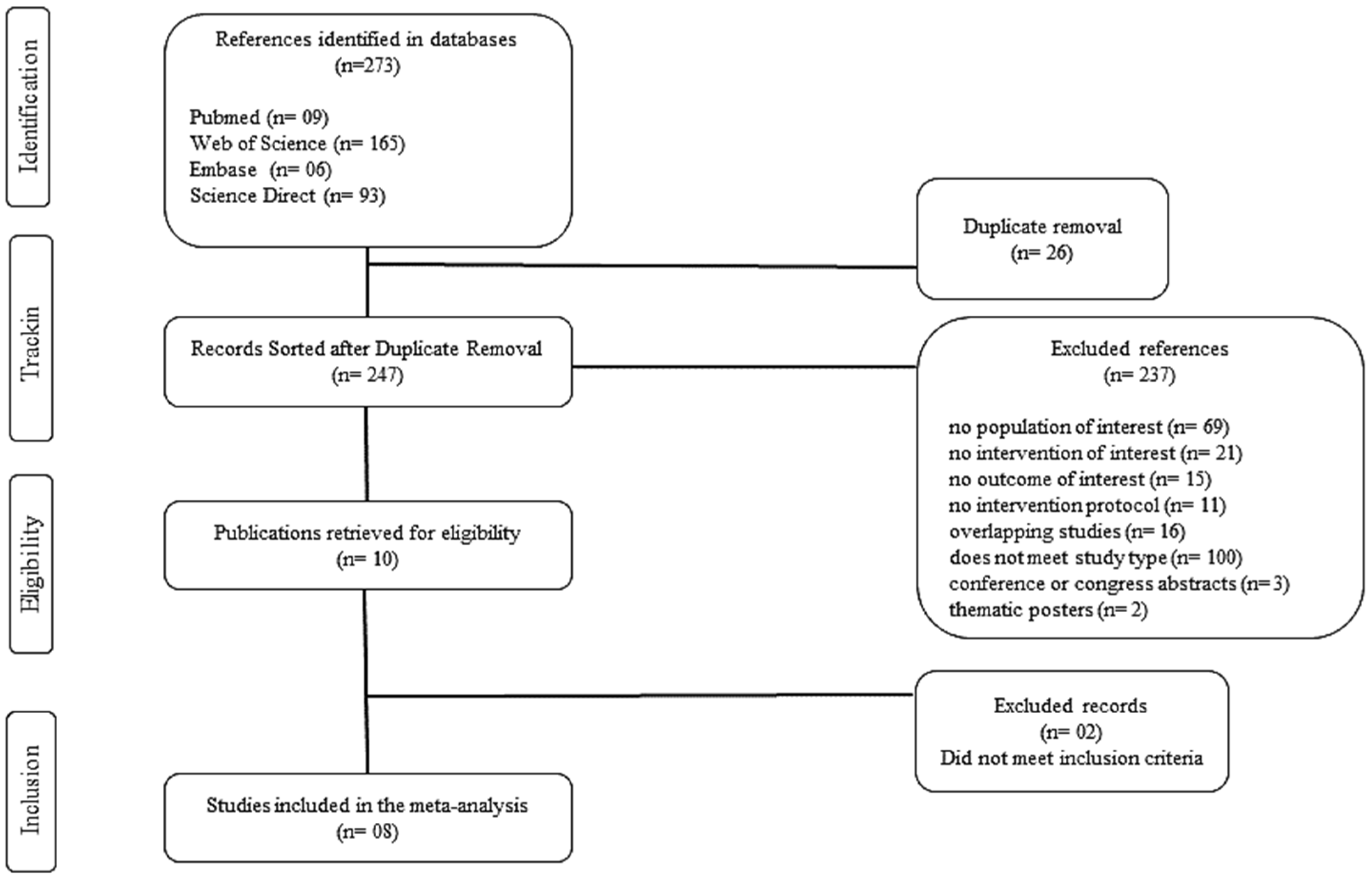
Our systematic review identified 273 records in electronic databases (PubMed = 9; Web of Science = 165; Embase = 6; Science Direct = 93). After removing duplicates (n = 26), 247 records were screened. Of these, 237 were excluded for not meeting inclusion criteria due to not having the population of interest (n = 69), no intervention of interest (n = 21), no outcome of interest (n = 15), no intervention protocol (n = 11), overlapping studies (n = 16), not meeting study type (n = 100), conference abstracts (n = 3), and thematic posters (n = 2). Thus, 10 publications were retrieved for eligibility assessment. Of these, two were excluded for not meeting inclusion criteria with incomplete texts. Therefore, eight studies were included in the meta-analysis, from Iran, represented in the study selection flowchart (Figure 1).
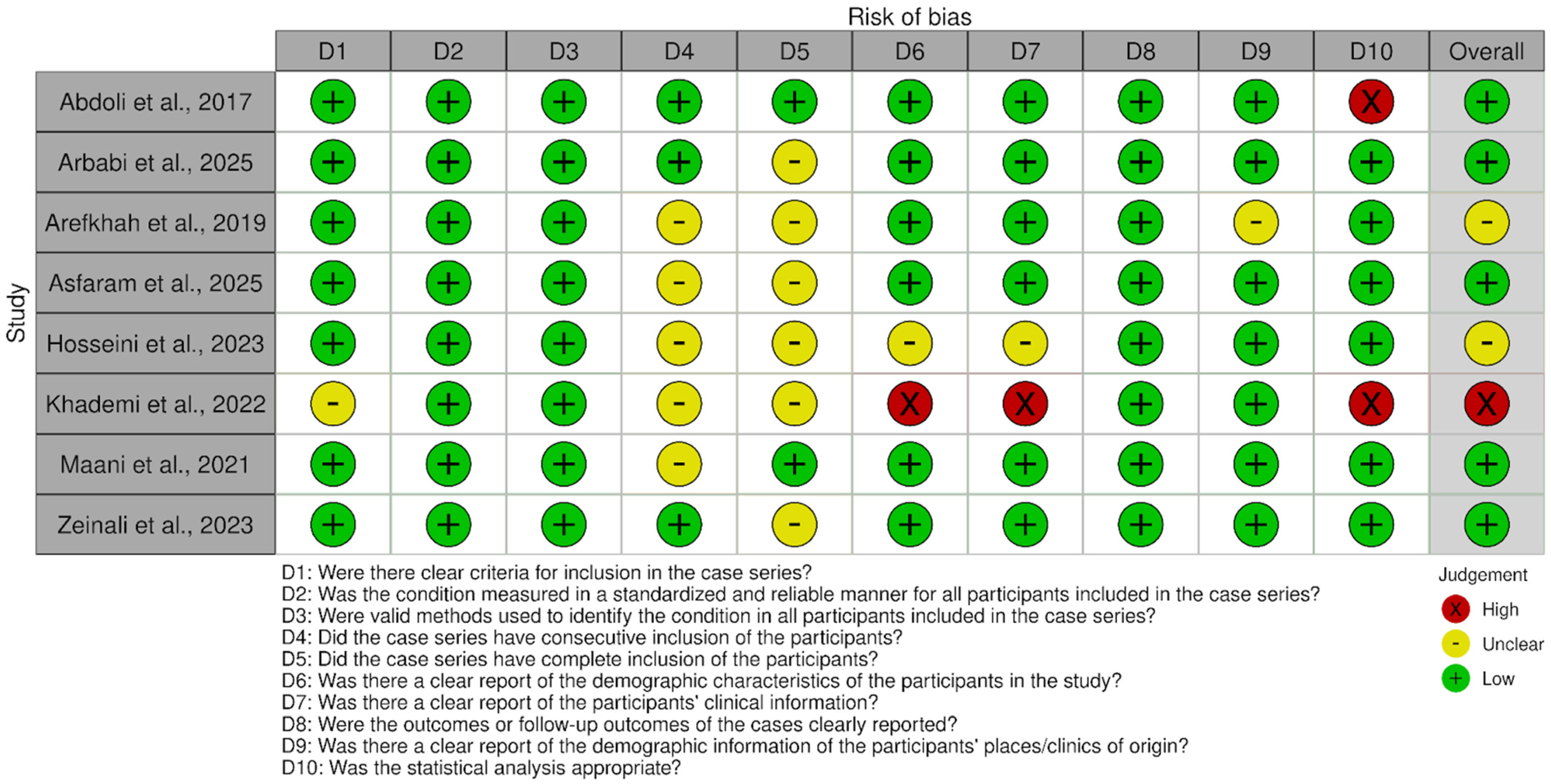
Figure 2 shows the risk of bias analysis of the eight studies considered in the review, conducted according to the Joanna Briggs Institute (JBI) criteria for cross-sectional studies. In general, the methodological quality of the analyzed works was heterogeneous. Regarding the inclusion criteria for condition assessment (domains D1 and D2), most studies showed a low risk of bias, demonstrating consistency in defining the studied group and characterizing cases. The domain related to valid condition identification (D3) furthermore received a positive evaluation in all studies, indicating that the confirmation of T. gondii infection diagnosis is adequate. In contrast, domains addressing the complete and consecutive inclusion of participants (D4 and D5) often showed unclear results, indicating possible doubts about sample representativeness and loss control during data collection. Regarding participants’ demographic characteristics and clinical information (D6 and D7), only one study indicated a high risk for the others, highlighting limitations in the detailed description of the studied population, including factors such as maternal age, gestational history, and exposure conditions to the parasite.
Outcomes and follow-up results (D8) constituted the main point of methodological weakness, being considered at low risk of bias in all studies. This indicates fluidity in presenting results and describing case follow-up, which contributes to the solidity of inferences. Information regarding participants’ origin locations and clinical characteristics (D9) was generally adequately presented, indicating a low risk of bias in this aspect. Statistical analysis (D10) was considered adequate in most studies, although two presented significant methodological limitations and one had a high risk of bias in its analyzed population, possibly due to a lack of multivariate analysis or failure to control for possible confounding factors. Overall, it was observed that studies (18) were classified as unclear in their overall risk of bias, while the others presented low and moderate risks.
A total of 1628 samples were analyzed, of which 362 (20.05%) showed positive results for T. gondii, with 240 for serological samples and 122 for genotyping samples. Regarding the age range of women, 34.8% of positive samples were recorded in pregnant women under 30 years old, while 24.09% were observed in women above this age. These data indicate a higher prevalence of infection among younger pregnant women. Positive results for T. gondii occurred predominantly in the first gestational trimester, a phase where the risk of abortion is higher (Table 1).
Table 2 details the methodological and demographic aspects of each analyzed study, demonstrating a wide regional variation in genotype distribution and reinforcing the relationship between T. gondii and spontaneous abortions in different Iranian populations.
A summary is presented in Table 3, which combines information on the laboratory methods used in each study, observations, and main findings of the included studies. The works confirmed the association between T. gondii infection and abortion, especially in the first trimester of pregnancy. Different parasite genotypes were identified, with a predominance of types I and III, both related to higher virulence and occurrence of gestational losses.
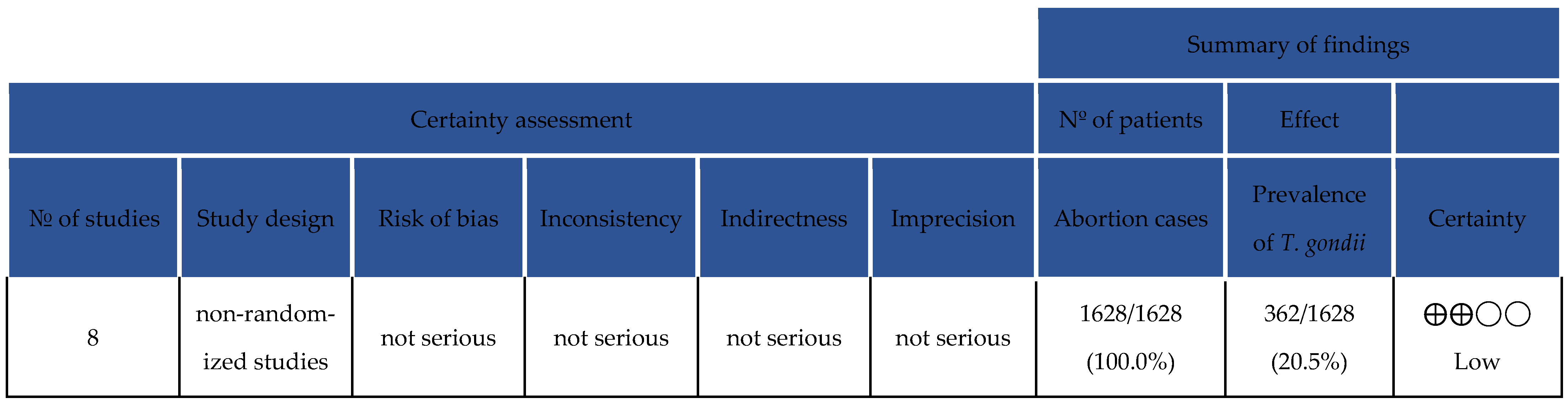
The assessment of evidence reliability for eight non-randomized studies that investigated the association between abortion cases and Toxoplasma gondii prevalence in fetuses is presented in Figure 3. This analysis was conducted according to the GRADE (Grading of Recommendations Assessment, Development, and Evaluation) methodology, which classifies the certainty of evidence based on criteria of risk of bias, inconsistency, and imprecision. In this case, all assessed domain risks were considered non-serious, indicating a low risk of bias, demonstrating consistency in results, direct data, and precise estimates. Despite this, as they are non-randomized studies, the overall certainty of evidence was classified as “low”, since the design is more susceptible to biases and confounding factors compared to randomized clinical trials [26]. The results showed that, among 1628 analyzed abortion cases, 362 (20.5%) tested positive for T. gondii. With a relative risk (RR) of 0.20 (95% CI: 0.19–0.22), and an absolute effect of 22.2% per 1000, there could be a significant association between protozoan infection and abortion cases.

3.1. Summary of Evidence

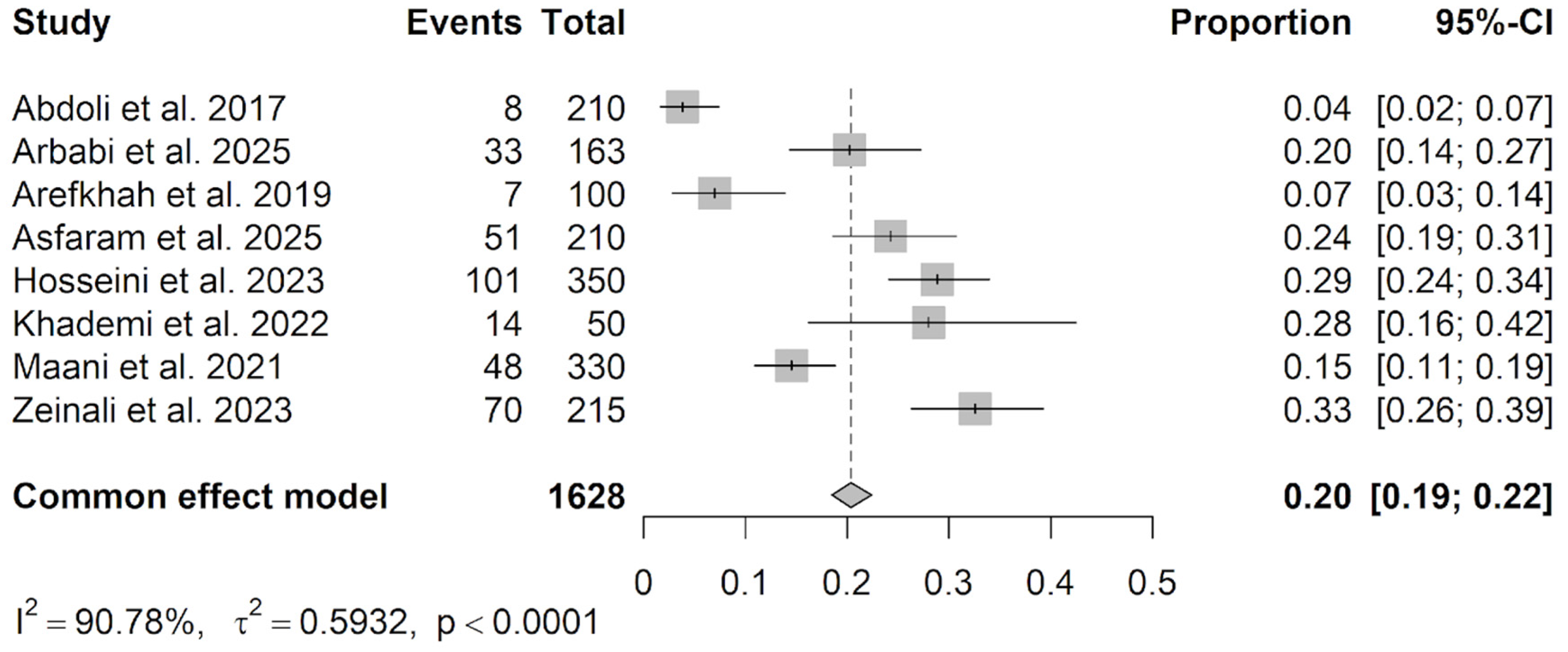
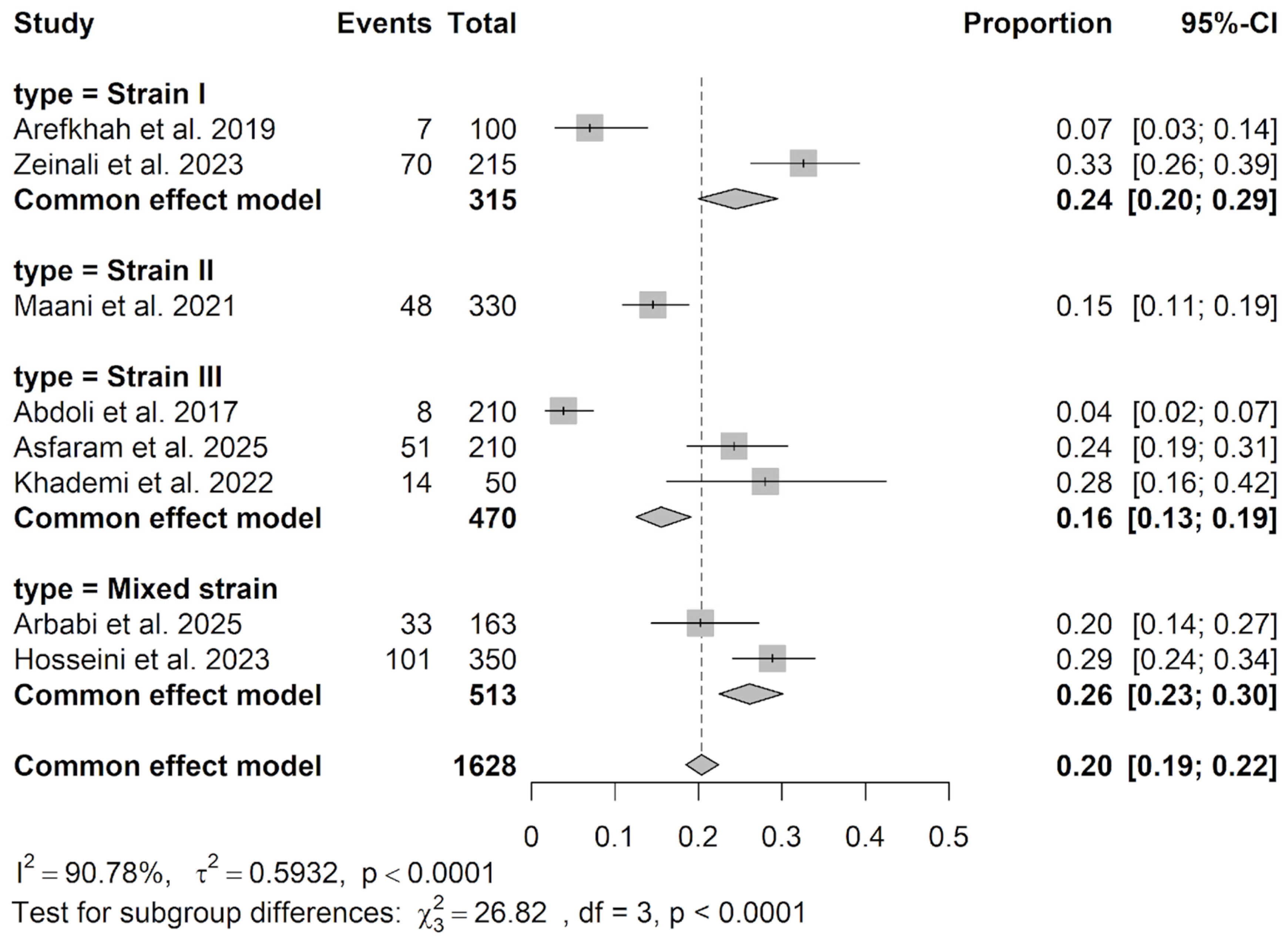
All 1628 samples were observed, and 362 cases positive for Toxoplasma gondii infection were associated with abortion cases (Figure 4). The global effect model estimated an overall proportion of 20.45% (95% CI: 18.56–22.48) of association between T. gondii and abortion (Figure 4). Heterogeneity tests showed high values (I2 = 90.8%; p < 0.0001), demonstrating high variability among the analyzed studies (Figure 4).
The proportions of genotypes identified in abortion cases varied between 24%, 16% and 26%, with significant heterogeneity among subgroups (test for subgroup differences: χ2 = 26.82; df = 3.00; p < 0.0001) (Figure 5).
Heterogeneity reflects methodological variability (multiplex PCR vs. nested PCR); GRADE: low for genotypic causality (inconsistency/indirect).
High heterogeneity was observed between groups (I2 varying from 94.9%, 93.4%, and 76.4%), indicating substantial variation among the included studies of 90.78%, which reflects diagnostic (PCR/serology) and regional variability and is explored by sub-analyses that confirmed the stability of the proportions (Figure 5).

3.2. Publication Bias Risk

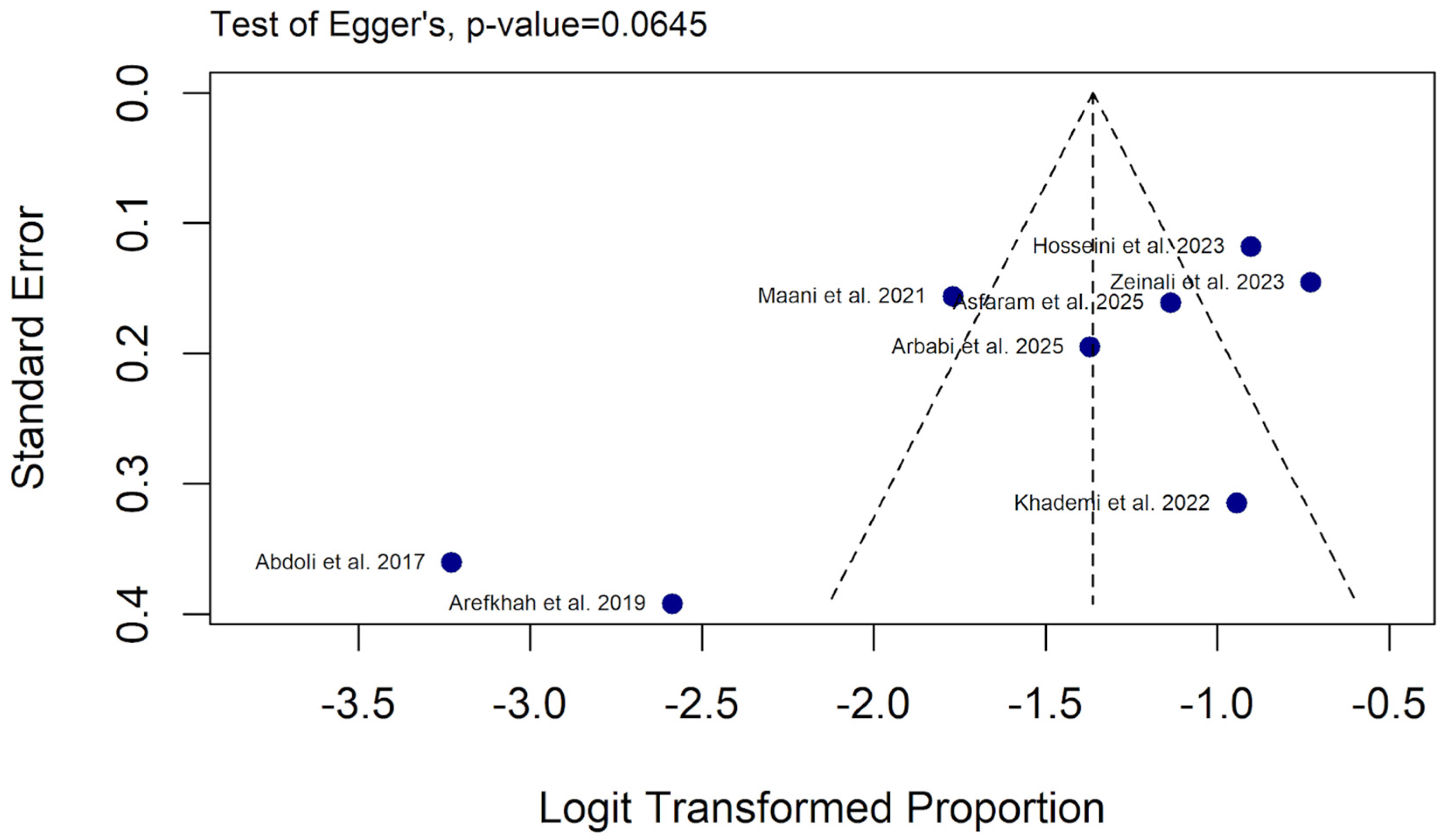
Publication bias was assessed through visual and statistical analysis, using Egger’s linear regression of the funnel plot asymmetry [27]. The funnel plot shows the dispersion of included studies in relation to publication bias risk (Figure 6).

4. Discussion

This systematic review and meta-analysis was conducted with the objective of providing consistent data on the relationship between congenital infection, the T. gondii genotypes involved, and abortion. For this, the authors applied broad and detailed search strategies in multiple databases. The methodological quality of the included works was assessed using the Joanna Briggs Institute (JBI) critical appraisal tool, employing specific checklists for prospective cohort studies and cross-sectional studies.
The strong predominance of cross-sectional studies prevents the establishment of an intrinsic relationship between T. gondii genotypes and adverse gestational outcomes, restricting conclusions to observational correlations only for abortion. The comparative analysis of the eight included studies reveals a consistent association between Toxoplasma gondii infection and the occurrence of abortion, with a higher concentration of cases in the first gestational trimester. Although the predominant cross-sectional designs limit strict causal inferences, pooling of 1628 samples via random-effects model (I2 = 90.8%) enables estimation of robust associations without claiming direct causality. Future longitudinal studies are essential for confirmation.
The high I2 value may be explained by methodological and epidemiological differences between the studies, which was mitigated by the robust sample size, validating genotypic patterns without causal speculation. The high heterogeneity (I2 > 90%) suggests that the pooled estimates should be interpreted with caution.
Antepartum treatment has been associated with lower chances of severe neurological sequelae or death, even when these chances of effect were adjusted for gestational age at the time of maternal seroconversion, reducing the risks of abortion in the initial trimesters [28].
This trend was recurrently observed in all eight studies, indicating that primary infection during the early phase of pregnancy represents the period of greatest fetal vulnerability. Biologically, this finding is plausible, as the first trimester corresponds to the phase of organogenesis and placental establishment, a moment when parasite infection can interfere with embryonic development, placental vascularization, and trophoblast integrity, culminating in fetal death or abortion [29].
Genotyping confirmed the literature by finding genotype I to be more associated with abortion cases than genotypes II and III. In the literature, this genotype is frequently associated with high virulence and a potential ability to cross the placental barrier, although our data only allow for the observation of its prevalence in abortion cases. However, in individual studies, differences were found. Studies by Abdoli [18], Khademi [23], and Asfaram [21] highlighted genotype III in placental and fetal samples, while Arbadi [19] and Zeinali [25] identified genotype I as predominant, indicating regional heterogeneity in genotypic distribution in the study group. From a biological and epidemiological point of view, the predominance of genotypes I and III and the presence of mixed infections are consistent with findings of local genetic diversity and are frequently observed in reports of fetal damage within the studied populations.
Although the findings indicate a consistent association between Toxoplasma gondii infection and the occurrence of abortion, some methodological limitations compromise the integrity of the evidence. The geographical concentration of samples in Iran limits the generalization of results to other populations, thus considering possible regional genetic variations of the parasite that may exist in other regions. The high endemicity in the study region may limit the generalizability of the findings to low-prevalence areas, such as Europe (e.g., Europe, Type II), although it adds robust evidence for similar contexts (Central/Middle Asia). Future multiracial studies are needed for global comparisons [29]. Furthermore, methodological heterogeneity was observed among studies, in relation to different diagnostic methods (such as serology, PCR, PCR-RFLP, multilocus genotyping, among others). Another point is that traditional genotyping (PCR-RFLP in GRA6/SAG3) identified types I/III as predominant in abortions; however, NGS frequently reclassifies them as recombinants due to genetic mosaicism. This correlation highlights the need for hybrid approaches: classical methods for rapid screening, and NGS for a more detailed characterization of genetic variants. In the future, a better understanding of these strains might help in discussing more personalized clinical approaches, although current evidence is strictly observational. informing adaptive public health strategies. In addition, another possible limitation is the fact that a possible survival bias, with an exclusive focus on abortion cases, may overestimate the virulence or association of certain strains with abortion, as the complete “denominator” (all exposed pregnancies, with and without outcome) is not being considered [30].
The risk of bias assessment showed that most studies presented good methodological quality, with low risk in most domains, especially in inclusion criteria, identification, and reporting of results. Moderate inconsistencies were found in items related to consecutive case inclusion and sample completeness, indicating possible limitations in sample representativeness. The study by Khademi [23] stood out for presenting a high risk of bias in multiple domains, mainly regarding demographic description and statistical analysis. Overall, however, the results suggest that the analyzed evidence is mostly reliable, allowing consistent interpretations, albeit with caution given the specific methodological gaps.
According to the GRADE assessment, the association between active T. gondii infection and abortion presents low certainty, with consistency among studies and absence of serious biases. In summary, the high prevalence of genotypes I and III in the studied cases represents a relevant public health finding in endemic regions, requiring integration between serological surveillance, molecular diagnosis, and genotyping to guide screening and prevention policies for congenital toxoplasmosis.
Unlike broad reviews on congenital toxoplasmosis [31], this study quantifies the prevalence of genotypes I, II, and III in aborted fetuses, observing a frequent presence of specific genotypes in cases of first-trimester abortions and reinforcing genotyping in gestational surveillance as an action capable of supporting more assertive clinical decision-making and directing public policy actions.
The exclusive inclusion of studies from Iran significantly limits external validity, restricting generalizability to similar endemic regions (the Middle East). The predominance of cross-sectional studies precludes causal inference, as they do not establish a temporal relationship between genotypic infection and miscarriage. Heterogeneity in diagnostic methods may have influenced the results, with variability in PCR (multiplex vs. nested) and serological criteria. Potential confounding factors were not consistently controlled for, such as gestational comorbidities, immunosuppression, or environmental exposure, which are common in Iranian settings.

5. Considerations

The analyzed studies demonstrate that Toxoplasma gondii infection is associated with abortion gestational outcomes. Corroborating the literature that affirms the parasite’s genetic diversity plays a decisive role in pathogenicity, our results showed variations in virulence among genotypes, with strain I being associated with the worst fetal prognosis [18].
These findings reinforce the importance of molecular genotyping to understand the epidemiology of congenital toxoplasmosis and to guide prevention and screening strategies in pregnant women, especially in regions with high genetic variability of the parasite.
Continuous surveillance and public health education are essential to reduce the incidence of maternal–fetal toxoplasmosis and its impacts on neonatal health. Despite methodological and geographical limitations, the results reinforce the importance of molecular surveillance and gestational screening strategies as essential preventive measures to reduce the rate of congenital toxoplasmosis and its impact on maternal–fetal health.
The findings suggest associations between virulent genotypes (Type I) and abortions; however, due to methodological limitations, high heterogeneity, and limited geographic coverage, the role of specific genotypes remains unclear and requires validation in prospective cohorts to clarify causality.

Supplementary Materials

The following supporting information can be downloaded at: https://www.mdpi.com/article/10.3390/parasitologia6030027/s1, (S1. PRISMA Checklist, S2. Concept Map, S3. Search Strategy Conducted, S4. Pooled sensitivity analysis, S5. Sensitivity analysis plot by subgroup).

Author Contributions

Conceptualization: K.M.I.S., G.M.M. and M.G.d.S.; methodology: M.G.d.S., F.S.C., G.R.d.S., A.M.d.C., E.E.L.G. and S.C.C.F.; funding acquisition: M.G.d.S.; writing—original draft preparation: S.E.M., R.G.F. and M.G.d.S.; software: M.G.d.S.; validation: M.G.d.S.; formal analysis: C.D.M.M.; investigation: S.F.d.S.; resources: M.G.d.S. and W.B.D.; writing—review and editing: J.C.M.B., S.T.M.G., J.M.S. and J.B.N.; supervision: F.P. All authors have read and agreed to the published version of the manuscript.

Funding

This research received no external funding.

Institutional Review Board Statement

Not applicable.

Informed Consent Statement

Not applicable.

Data Availability Statement

The original contributions presented in this study are included in the article/Supplementary Material. Further inquiries can be directed to the corresponding author.

Acknowledgments

We thank the authors of the articles who, when we contacted them, provided their data.

Conflicts of Interest

The authors declare no conflicts of interest.

Abbreviations

The following abbreviations are used in this manuscript:
B1Gene B1 to Toxoplasma gondii
CIConfidence Interval
ELISAEnzyme-Linked Immunosorbent Assay
GRA6Dense Granule Antigen 6
GRADEGrading of Recommendations Assessment, Development and Evaluation
HIVHuman Immunodeficiency Virus
IgGImmunoglobulin G
IgMImmunoglobulin M
JBIJoanna Briggs Institute
MeSHMedical Subject Headings
Nested-PCRNested Polymerase Chain Reaction
OROdds Ratio
PCRPolymerase Chain Reaction
PCR-RFLPPCR-Restriction Fragment Length Polymorphism
PRISMAPreferred Reporting Items for Systematic Reviews and Meta-Analyses
PROSPEROInternational Prospective Register of Systematic Reviews
qPCRQuantitative PCR
RE/RE-529Repetitive Element
RRRelative Risk
SAG3Surface Antigen Gene 3
SIDAAcquired Immunodeficiency Syndrome
T. gondiiToxoplasma gondii

References

  1. Akbari, M.; Azadi, D.; Habibi, D.; Khodashenas, S.; Shariatmadari, F.; Abedi, B. Toxoplasmosis infection in newborn: A systematic review and meta-analysis. Adv. Biomed. Res. 2022, 11, 75. [Google Scholar] [CrossRef]
  2. Teimouri, A.; Mohtasebi, S.; Kazemirad, E.; Keshavarz, H. Role of Toxoplasma gondii IgG avidity testing in discriminating between acute and chronic toxoplasmosis in pregnancy. J. Clin. Microbiol. 2020, 58, e00505-20. [Google Scholar] [CrossRef]
  3. Alraey, Y. Targeted inhibition of human Tankyrase-1 (TNKS1) by ZT-5483 exhibited anti-parasitic activity in Toxoplasma gondii: An in silico-based, high-throughput virtual screen and in vitro approach. Mol. Biochem. Parasitol. 2025, 264, 111705. [Google Scholar] [CrossRef]
  4. Rasambainarivo, F.; Hinson, B.; Rasolofoniaina, O.; Chelaghma, S.; Junge, R.E.; Metcalf, C.J.E.; Williams, C.V.; Rice, B. Evolutionary history, longevity and terrestriality predict Toxoplasma gondii seroprevalence in free-ranging non-human primates. Int. J. Parasitol. Parasites Wildl. 2025, 28, 101143. [Google Scholar] [CrossRef]
  5. Paran-Secretaria de Estado da Saúde. Caderno de Atenção ao Pré-Natal—Toxoplasmose; Secretaria de Estado da Saúde: Paraná, Brazil, 2021. Available online: https://www.sjp.pr.gov.br/wp-content/uploads/2018/04/ANEXO-VII-toxoplasmose-cong%C3%AAnita.pdf (accessed on 6 June 2024).
  6. Vieira, R.C.; Sousa, M.D.R.; Silva, F.M.C.; Alves, C.H.L.; Oliveira, M.C.; Souza, G.S.; Lacerda, E.M.C.B. Visual psychophysics of congenital ocular toxoplasmosis case. Rev. Bras. Oftalmol. 2018, 77, 292–295. [Google Scholar] [CrossRef]
  7. Milne, G.; Webster, J.P.; Walker, M. Toxoplasma gondii: An underestimated threat? Trends Parasitol. 2020, 36, 959–969. [Google Scholar] [CrossRef] [PubMed]
  8. Opsteegh, M.; Kortbeek, T.M.; Havelaar, A.H.; van der Giessen, J.W. Intervention strategies to reduce human Toxoplasma gondii disease burden. Clin. Infect. Dis. 2015, 60, 101–107. [Google Scholar] [CrossRef] [PubMed]
  9. Bollani, L.; Auriti, C.; Achille, C.; Garofoli, F.; De Rose, D.U.; Meroni, V.; Salvatori, G.; Tzialla, C. Congenital toxoplasmosis: The state of the art. Front. Pediatr. 2022, 10, 894573. [Google Scholar] [CrossRef]
  10. Burrells, A.; Opsteegh, M.; Pollock, K.G.; Alexander, C.L.; Chatterton, J.; Evans, R.; Walker, R.; McKenzie, C.-A.; Hill, D.; Innes, E.A.; et al. The prevalence and genotypic analysis of Toxoplasma gondii from individuals in Scotland, 2006–2012. Parasites Vectors 2016, 9, 324. [Google Scholar] [CrossRef]
  11. Firouzeh, N.; Ziaali, N.; Sheibani, V.; Doustimotlagh, A.H.; Afgar, A.; Zamanpour, M.; Keshavarz, H.; Shojaee, S.; Shafiei, R.; Esmaeilpour, K.; et al. Chronic Toxoplasma gondii infection potentiates Parkinson’s disease course in mice model. Iran. J. Parasitol. 2021, 16, 527–537. [Google Scholar] [CrossRef]
  12. Bokaie, S.; Rahmanian, V.; Rahmanian, K.; Jahromi, A.S. Seroprevalence of Toxoplasma gondii infection: An umbrella review of updated systematic reviews and meta-analyses. J. Fam. Med. Prim. Care 2020, 9, 3848–3855. [Google Scholar] [CrossRef]
  13. Rostami, A.; Riahi, S.M.; Gamble, H.R.; Fakhri, Y.; Nourollahpour Shiadeh, M.; Danesh, M.; Behniafar, H.; Paktinat, S.; Foroutan, M.; Mokdad, A.H.; et al. Global prevalence of latent toxoplasmosis in pregnant women: A systematic review and meta-analysis. Clin. Microbiol. Infect. 2020, 26, 673–683. [Google Scholar] [CrossRef]
  14. GRADE Working Group. Grading quality of evidence and strength of recommendations. BMJ 2004, 328, 1490. [Google Scholar] [CrossRef]
  15. Higgins, J.P.T.; Green, S. (Eds.) Cochrane Handbook for Systematic Reviews of Interventions; Wiley: Chichester, UK, 2008. [Google Scholar]
  16. Nyaga, G.N.; Arbyn, M.; Aerts, M. Methods for meta-analysis of proportions: A review of tests, models, transformations, and software. Res. Synth. Methods 2014, 5, 333–348. [Google Scholar] [CrossRef]
  17. Higgins, J.P.; Thompson, S.G. Quantifying heterogeneity in a meta-analysis. Stat. Med. 2002, 21, 1539–1558. [Google Scholar] [CrossRef]
  18. Abdoli, A.; Dalimi, A.; Soltanghoraee, H.; Ghaffarifar, F. Molecular detection and genotypic characterization of Toxoplasma gondii in paraffin-embedded fetoplacental tissues of women with recurrent spontaneous abortion. Int. J. Fertil. Steril. 2016, 10, 327. [Google Scholar] [PubMed]
  19. Arbabi, N.; Firouzeh, N.; Azizi, S.G.; Mehravaran, A.; Etemadi, S.; Shafiei, R.; Mirahmadi, H. Unraveling the link: Serological and molecular insights into Toxoplasma gondii infection in women with spontaneous abortion history. Trop. Dis. Travel Med. Vaccines 2025, 11, 22. [Google Scholar] [CrossRef]
  20. Arefkhah, N.; Pourabbas, B.; Asgari, Q.; Moshfe, A.; Mikaeili, F.; Nikbakht, G.; Sarkari, B. Molecular genotyping and serological evaluation of Toxoplasma gondii in mothers and their spontaneous aborted fetuses in Southwest of Iran. Comp. Immunol. Microbiol. Infect. Dis. 2019, 66, 101342. [Google Scholar] [CrossRef] [PubMed]
  21. Asfaram, S.; Zarei, Z.; Teimoorpour, R.; Heidari, Z.; Iranpour, S.; Azghani, P.; Motavallibashi, S.E.; Rakhshidan, Z.; Khademi, Z.; Mohammadi-Ghalehbin, B.; et al. Serological evaluation and molecular genotyping of Toxoplasma gondii in pregnant women in Meshkin-Shahr District, Northwestern Iran. Iran. J. Parasitol. 2025, 20, 44–53. [Google Scholar] [CrossRef]
  22. Hosseini, S.A.; Sharif, M.; Sarvi, S.; Mirzaei, N.; Abediankenari, S.; Arefkhah, N.; Amouei, A.; Gholami, S.; Anvari, D.; Ahmadpour, E.; et al. Identification and multilocus genotyping of Toxoplasma gondii isolates from congenital infection in north of Iran. Parasitol. Res. 2022, 122, 177–184. [Google Scholar] [CrossRef] [PubMed]
  23. Khademi, S.Z.; Ghaffarifar, F.; Dalimi, A.; Davoodian, P.; Abdoli, A. Spontaneous abortion among Toxoplasma gondii IgG seropositive women: Molecular detection, genotype identification, and serological assessment with conventional ELISA and avidity ELISA. J. Obstet. Gynaecol. Res. 2022, 48, 2479–2485. [Google Scholar] [CrossRef]
  24. Maani, S.; Rezanezhad, H.; Solhjoo, K.; Kalantari, M.; Erfanian, S. Genetic characterization of Toxoplasma gondii isolates from human spontaneous aborted fetuses in Jahrom, southern Iran. Microb. Pathog. 2021, 161, 105217. [Google Scholar] [CrossRef] [PubMed]
  25. Zeinali, S.; Khademvatan, S.; Jafari, R.; Vazifekhah, S.; Yousefi, E.; Behroozi-Lak, T. Prevalence and risk factors of Toxoplasma gondii infection among women with miscarriage and their aborted fetuses in the northwest of Iran. PLoS ONE 2023, 18, e0283493. [Google Scholar] [CrossRef] [PubMed]
  26. McGuinness, L.A.; Higgins, J.P.T. Bias Risk Visualization (robvis): An R package and a Shiny web application for visualizing bias risk assessments. Res. Synth. Methods 2020, 12, 55–61. [Google Scholar] [CrossRef]
  27. Egger, M.; Smith, G.D. Meta-analysis. Potentials and promise. BMJ 1997, 315, 1371–1374. [Google Scholar] [CrossRef]
  28. Cerisola, A.; Francia, M.; Gesuele, J.P. Congenital toxoplasmosis. Semin. Pediatr. Neurol. 2025, 54, 101203. [Google Scholar] [CrossRef]
  29. Dubey, J.P. Toxoplasmosis of Animals and Humans, 3rd ed.; CRC Press: Boca Raton, FL, USA, 2022. [Google Scholar]
  30. Strang, A.G.G.F.; Ferrari, R.G.; Rosário, D.K.; Nishi, L.; Evangelista, F.F.; Santana, P.L.; de Souza, A.H.; Mantelo, F.M.; Guilherme, A.L.F. The congenital toxoplasmosis burden in Brazil: Systematic review and meta-analysis. Acta Trop. 2020, 211, 105608. [Google Scholar] [CrossRef] [PubMed]
  31. Page, M.J.; McKenzie, J.E.; Bossuyt, P.M.; Boutron, I.; Hoffmann, T.C.; Mulrow, C.D.; Shamseer, L.; Tetzlaff, J.M.; Akl, E.A.; Brennan, S.E.; et al. The PRISMA 2020 statement: An updated guideline for reporting systematic reviews. BMJ 2021, 372, n71. [Google Scholar] [CrossRef]
Figure 1. Flowchart of the study selection process to determine the association between Toxoplasma gondii infection, its genetic variants, and abortion cases.
Parasitologia 06 00027 g001
Figure 2. Methodological quality assessment of articles to determine the association between Toxoplasma gondii infection, its genetic variants, and abortion cases, considering the Joanna Briggs Institute tool for cross-sectional studies [18,19,20,21,22,23,24,25]. Note: The overall risk of bias was categorized as “High” when the study obtained up to four “Yes” responses for the evaluated items; “Moderate” when the study obtained five to seven “Yes” responses; and “Low” when the study achieved eight or more “Yes” responses. Individual JBI scores (% of ‘yes’ criteria): Abdoli [18]: 80% (low risk); Arbabi [19]: 75% (low); Khademi [23]: 45% (high risk, weaknesses in demographics/analysis); Asfaram [21]: 70% (low); Zeinali [25]: 85% (low); Studies 6–8: 65–75% (moderate-low). Most (7/8) indicate good-to-fair quality; interpretations nevertheless require caution due to moderate bias in inclusion/consecutivity and uncontrolled confounders, limiting generalizations.
Parasitologia 06 00027 g002
Figure 3. Summary of results and certainty of evidence analysis (GRADE) of the association between Toxoplasma gondii and abortion. GRADE: Grading of Recommendations Assessment, Development, and Evaluation.
Parasitologia 06 00027 g003
Figure 4. Forest plot comparison of the eight studies, showing the combined proportion of T. gondii positive cases among pregnant women with abortion [18,19,20,21,22,23,24,25]. After conducting a sensitivity analysis (excluding the study by Khademi et al. [23] due to a high risk of bias according to the JBI and using a leave-one-out method), the results showed that the pooled estimates remained stable, with a proportion of 20.00% [IC 95% 18.00–22.00%] in the random-effects model (7 remaining studies, 1578 observations, 318 events; I2 = 92.0%; τ2 = 0.6406). Full details (individual proportions, 95% CI, influence) are provided in the Supplementary Material (S4).
Parasitologia 06 00027 g004
Figure 5. Forest plot comparison by subgroups, showing identified genotype types (types I, II, III, and mixed) of T. gondii strains in abortion cases [18,19,20,21,22,23,24,25]. After conducting a sensitivity analysis by subgroups (excluding the study by Khademi et al. [23] due to a high risk of bias according to the JBI and using a “leave-one-out” method), the results showed that the subgroup estimates remained stable, with a proportion for the subgroup of strains with genotype II of 14.00% [95% CI 11.00–18.00%] in the random-effects model (7 remaining studies, 1578 observations, 318 events; I2 = 92.0%; τ2 = 0.6406). Full details (individual proportions, 95% CI, heterogeneity) are provided in the Supplementary Material (S5).
Parasitologia 06 00027 g005
Figure 6. Funnel plot of publication bias risk and distribution of included studies [18,19,20,21,22,23,24,25]. The observed lack of asymmetry in the plot suggests no publication bias, as the points are distributed evenly around the central line, with no evident concentration on only one side, which resulted in t = −2.26, df = 6, and p-value = 0.0645.
Parasitologia 06 00027 g006
Table 1. Descriptive, percentage, and absolute results of serological, gestational, and genetic variables in patients infected with Toxoplasma gondii in cases of abortion.
Authors/YearAge of >30 Years Positive Serologic and Genotyping for T. gondiiAge of <30 Years Positive Serologic and Genotyping for T. gondiiSample Serological Positive for T. gondiiSample Genotyping Positive for T. gondiiSample Negative for T. gondiiPositive Gestational Age for T. gondiiTypes of Genotypes Analyzed
1º. Quarter2º. Quarter3º. QuarterType IType IIType III
Abdoli et al., 2017 [18]6 (78%)2 (25%)08 (3.8%)202 (96.2%)71---8
Arbabi et al., 2025 [19]12 (46.15%)21 (80.8%)26 (12.4%)7 (4.3%)137 (84%)2013-52-
Arefkhah et al., 2019 [20]1 (10%)9 (90%)10 (10%)3 (3%)90 (90%)7--3--
Asfaram et al., 2025 [21]21 (41.17%)30 (58%)51 (24.3%)5 (2.4%)159 (75.8%)40101--5
Hosseini et al., 2023 [22]22 (68.8%)10 (31.25%)69 (69%)32 (12.8%)159 (45.4%)---433
Khademi et al., 2022 [23]3 (21.4%)11 (78.6%)14 (28%)16 (32%)34 (68%)131---7
Maani et al., 2021 [24]--048 (14.5%)282 (85.4%)462--9-
Zeinali et al., 2023 [25]24 (34.3%)46 (65.7%)70 (32.5%)3 (1.4%)145 (67.44%)3931-3--
Total90/362 (24.9%)126/362 (34.8%)2401221208172
(51.65%)
58 (17.41%)1
(0.3%)
15
(4.50%)
14
(4.20%)
23
(6.90%)
Table 2. Summary of characteristics of included studies to determine the association between Toxoplasma gondii infection, its genetic variants, and abortion cases.
Authors/YearCountry/CityAge of the GroupAbortion CasesNumber of People AnalyzedNumber of Samples AnalyzedNumber of People Analyzed with T. gondiiType of Genotype with Highest Prevalence
Abdoli et al., 2017 [18]Teerã, Irã.Average de 33.5 years (28 ± 39)7 abortions in the 1st trimester and 1 in the 2nd trimester210 samples of fetoplacental tissues (FFPTs)210 total samples; 8 positive; 2 sequenced8 positive samples (3.8%)Type III (predominant in all positive samples)
Arbabi et al., 2025 [19]Zahedan, Irã.18–39 years, average 29 years.72.4% in the 1st trimester and 27.6% in the 2nd trimester163 placenta samples163 blood + 163 placenta samples; 7 positive for DNA; 7 genotyped26/163 (16%) positive by serology: 14 IgG (9%), 7 IgM (4%), 5 both (3%). DNA detected in 7/163 placentas (4.29%)Type I (5 isolates) and Type II (2 isolates)
Arefkhah et al., 2019 [20]Províncias de Kohgiluyeh e Boyer-Ahmad, Irã.16–46 years (average 28 ± 6.2).All abortions occurred in the 1st trimester (mean 12.9 weeks)100 fetuses200 total samples (100 maternal + 100 fetal); 2 isolates sequenced10 seropositive (7 IgG, 3 IgM); 3 positive by PCR in maternal blood; no infected fetusesType I (100% of isolates)
Asfaram et al., 2025 [21]Meshkin-Shahr, Irã.10–50 years average 25.9 ± 7.99 yearsAbortions occurred mainly in the 1st trimester; 4.7% (10/210)210 placenta samples10 abortion samples analyzed molecularly; 3 sequenced51 seropositive (49 IgG, 2 IgM); 3 DNA positive in maternal blood; 2 DNA positive in placentaType III (all sequenced isolates)
Hosseini et al., 2023 [22]Província de Mazandaran, Irã.25–35 years, >35 years (12%)-350 samples (100 fetal/placental + 250 archived)350 total; 10 genotyped68 IgG+, 1 IgM+, 33 PCR+ToxoDB #1 (tipo II) e #10 (tipo I).
Khademi et al., 2022 [23]Bandar Abbas, Shariati e Golfo Pérsico), Irâ.20–41 yearsFetuses between 2 and 5 months;50 placentas50 blood + 50 placenta samples; 5 isolates sequenced14 IgG positive (28%), 0 IgM; DNA detected in 9/50 blood (18%) and 7/50 placenta (14%)Type III (all sequenced isolates)
Maani et al., 2021 [24]Jahrom, Irã.21–30 years (18.5%)Spontaneous abortions before the 20th week of gestation; higher prevalence in fetuses of 8–9 weeks (20%)330 placenta samples330 placental samples analyzed; 9 isolates genotypeds48 women (14.5%)Genotype II (all 9 genotyped isolates belonged to this type)
Zeinali et al., 2023 [25]Urmia, Irã.18–41 years (average 28.15 ± 5.82)55.3% of abortions in the 1st trimester; 44.7% in the 2nd trimester215 women and 215 fetuses430 total samples (215 maternal + 215 fetal); 3 positive fetuses sequenced73 seropositive (70 IgG, 3 IgM); 3 fetuses positive by PCR (1.4%)Type I (GRA6I) in all positive fetuses
Table 3. Description of the descriptive cross-sectional studies included in the systematic review to determine the association between Toxoplasma gondii infection, its genetic variants, and cases of miscarriage.
Authors/YearTests Used for AnalysisObservations
Abdoli et al., 2017 [18]Nested-PCR (gene GRA6), PCR-RFLP (genes GRA6 and SAG3), sequencing.T. gondii genotype III is predominantly associated with recurrent spontaneous abortion in Tehran, demonstrating genetic similarity of 99–100% with GenBank sequences, with some patients presenting symptoms such as fever, anemia, and edema before the abortion.
Arbabi et al., 2025 [19]ELISA IgG/IgM, nested PCR B1 e GRA6, PCR-RFLP GRA6.T. gondii infection is associated with spontaneous abortions at different gestational ages, where the participants had no other known causes of spontaneous abortion. Tests performed in duplicate confirm the predominance of type I and II genotypes in isolates from aborted placentas.
Arefkhah et al., 2019 [20]ELISA (IgG/IgM), PCR (genes RE e GRA6), qPCR (gene B1), sequencing and phylogenetic analysis.An association was observed between seropositivity and the consumption of undercooked meat and place of residence (p < 0.05), as well as the detection of Toxoplasma gondii genotype I in mothers with spontaneous abortion without fetal involvement, highlighting the need for studies with a larger sample size to better evaluate this relationship.
Asfaram et al., 2025 [21]ELISA IgG/IgM, IgG avididade, PCR (RE-529 e SAG3), PCR-RFLP, sequencing SAG3.Seropositivity was associated with the consumption of raw or unwashed vegetables, as well as contact with soil and the method of food hygiene (p < 0.05), with type III T. gondii being detected in fetuses and in the maternal blood of women with spontaneous abortion.
Hosseini et al., 2023 [22]ELISA, PCR (529 pb), nested-PCR–RFLP (12 markers).It obtained a high seroprevalence (68 IgG): with genetic diversity of T. gondii genotypes associated with spontaneous abortions; without a correlation with the age of the pregnant women.
Khademi et al., 2022 [23]ELISA IgG/IgM, avididade IgG, PCR RE, PCR-RFLP SAG3/GRA6, sequencing SAG3Most IgG-positive pregnant women had chronic infection (high avidity); only 1 case with low avidity indicated acute infection. All DNA-positive samples were positive for IgG. Type III T. gondii was identified as the main causative agent of spontaneous abortions.
Maani et al., 2021 [24]Nested-PCR para detecção (gene RE, 529 pb) e PCR-RFLP (gene GRA6) for genotyping.Positive samples of T. gondii were significantly associated with maternal education level and fetal age (p < 0.05), with lower prevalence in mothers with higher education and high prevalence of T. gondii in cases of spontaneous abortion in Jahrom.
Zeinali et al., 2023 [25]ELISA (IgG/IgM), nested-PCR (RE-529), PCR GRA6, sequencing and phylogenetic analysis.IgG seropositivity was associated with the age of the pregnant women, consumption of undercooked meat, incorrect vegetable washing methods, and contact with cats and soil (p < 0.05). Samples from aborted fetuses show that T. gondii type I was identified as the main causative agent of spontaneous abortions in the studied region.
Note: Observational genotypic distribution (variations per study), subject to I2 > 90% and regional context.
Disclaimer/Publisher’s Note: The statements, opinions and data contained in all publications are solely those of the individual author(s) and contributor(s) and not of MDPI and/or the editor(s). MDPI and/or the editor(s) disclaim responsibility for any injury to people or property resulting from any ideas, methods, instructions or products referred to in the content.