You are currently viewing a new version of our website. To view the old version click .

Parasitologia

Parasitologia is an international, peer-reviewed, open access journal on parasitology published bimonthly online by MDPI.

Quartile Ranking JCR - Q3 (Parasitology)

All Articles (196)

Paragonimus westermani is a food-borne zoonotic trematode transmitted to humans through the consumption of undercooked crustaceans. Freshwater crabs act as the second intermediate host for the encysted metacercariae stage. However, accurate identification of intermediate hosts remains a challenge. Here, we aimed to detect and identify P. westermani in randomly collected freshwater crabs and determine the species of infected crabs in Davao Oriental through molecular methods. Specifically, Sanger and next-generation sequencing were conducted for species identification through BLASTn, followed by phylogenetic analyses to understand geographic and taxonomic relationships. Results showed P. westermani DNA was detected in five out of eleven crab samples and these sequences were closely grouped to the Philippine reference sequence. Through a similar approach, the infected crabs showed high sequence similarity and formed tight clustering to Isolapotamon sp. Overall, the results provided evidence that P. westermani DNA was detected in Isolapotamon sp., a genus endemic to Mindanao, and can be a potential intermediate host. This expands our current understanding of transmission ecology beyond the only known intermediate host in the Philippines, Sundathelphusa philippina.

11 December 2025

Maximum Likelihood (ML) phylogenetic tree based on a 463 bp region of the tRNA-Thr and 16S rRNA genes of P. westermani sequences from different hosts, constructed using the HKY substitution model. Sample sequences are highlighted and bootstrap support values (percentage) are indicated by node values.

Perceptions, Knowledge, and Attitudes of Communal Farmers Toward Tick-Borne Diseases: Review of South African Case Studies

  • Ditebogo Sharon Molapo,
  • Tsireledzo Goodwill Makwarela and
  • Nimmi Seoraj-Pillai
  • + 2 authors

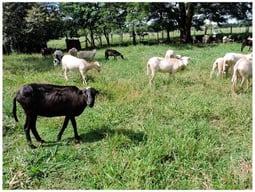
Tick-borne diseases (TBDs) pose a significant threat to livestock productivity and rural livelihoods in South Africa, particularly among resource-poor communal farmers. This narrative review synthesises findings from case studies on communal farmers’ knowledge, attitudes, and practices (KAPs) toward TBDs and their control. The analysis reveals that while many farmers can identify TBDs and their symptoms, significant gaps exist in understanding acaricide resistance and effective tick management. Socioeconomic factors, including age, gender, education, and access to veterinary services, strongly influence knowledge and practices. Indigenous ethnoveterinary practices are commonly used alongside conventional methods, although their efficacy remains understudied. The review emphasises the importance of integrated pest management, participatory approaches, and targeted awareness campaigns. A One Health framework is recommended to enhance surveillance, collaboration, and sustainable TBD control. Empowering farmers through training and inclusive communication strategies is crucial for mitigating the impacts of TBDs on communal farming systems.

31 December 2025

It is now 35 years since the first review on the “The Molecular Epidemiology of Parasites” [...]

25 December 2025

In continuation of our recent report on the antileishmanial activity of an ethanolic extract from leaves of Ptilostemon chamaepeuce subsp. cyprius (Pcc, Asteraceae), we have now isolated the main sesquiterpene lactone, deacylcynaropicrin, along with a minor derivative, 13-hydroxy-11β,13-dihydro-deacylcynaropicrin. The main constituent was tested for antileishmanial activity against promastigotes and amastigotes of Leishmania infantum (Lin), the causative agent of visceral leishmaniasis. Both STLs were tested against additional protozoan pathogens, including L. donovani, Trypanosoma brucei rhodesiense (Tbr), and Plasmodium falciparum. The STL cynaropicrin from Artichoke (Cynara cardunculus), a congener of deacylcynaropicrin with a hydroxymethacrylate ester group, previously known to possess antiprotozoal activity, was retested against Lin for direct comparison. Cynaropicrin was found to be much more potent than either its deacyl congener or the hydroxylated derivative from Pcc against all tested parasites and also against an isolated parasite enzyme, Tbr pteridine reductase (TbPTR1). The ester moiety of cynaropicrin significantly enhances the antiprotozoal activity of this STL. Since cynaropicrin also displayed significant cytotoxicity against mammalian cells (L6 and J774A.1 cell lines), its utility as candidate for further development appears limited. However, this study provides valuable new insight into the structure–activity relationships of these compounds.

11 December 2025

News & Conferences

Issues

Open for Submission

Editor's Choice

Get Alerted

Add your email address to receive forthcoming issues of this journal.

XFacebookLinkedIn
Parasitologia - ISSN 2673-6772