
Masticatory Function and Corticomotor Plasticity Across the Lifespan: Implications for Older Adults—A Scoping Review


Highlights
- Masticatory function influences corticomotor excitability and activity in the distributed sensorimotor network, including the primary motor cortex, indicating participation in activity-dependent neuroplasticity.
- Tooth loss, ageing, and diminished oral sensory input are associated with changes in cortical organisation, while masticatory training and dental rehabilitation lead to alterations in neural activation and corticomotor responsiveness.
- Prosthodontic rehabilitation and oral motor training could be effective neurobiological interventions promoting adaptive cortical reorganisation and sensorimotor functions, though more long-term studies are needed to confirm sustained effects.
- Maintaining masticatory function may correlate with improved cognitive and functional outcomes in ageing populations, hinting at a significant role in healthy ageing, although causal and long-term neuroprotective effects have yet to be proven.
Abstract
1. Introduction
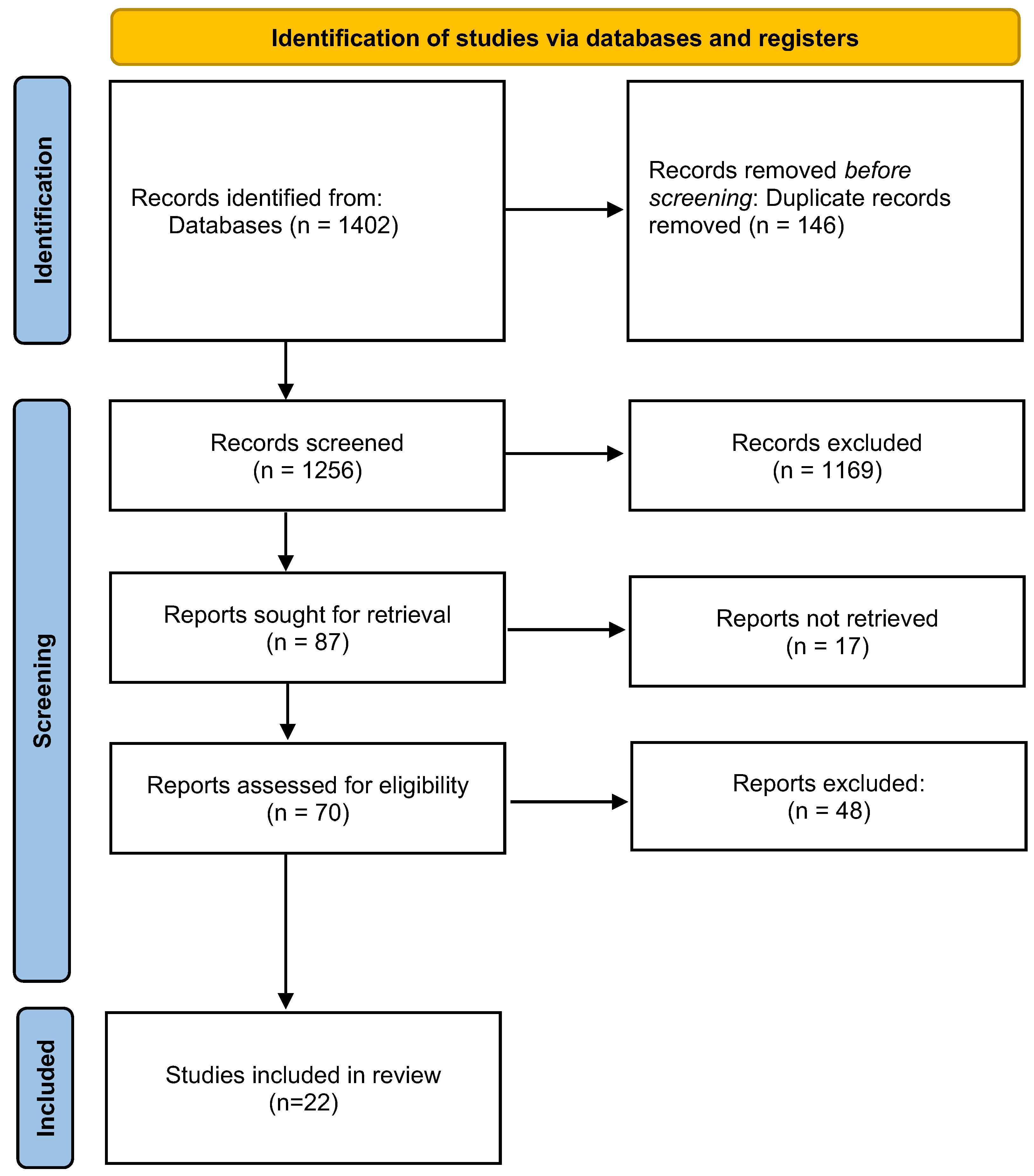
2. Materials and Methods
3. Results
3.1. Peripheral Sensory Plasticity
Reduced Oral Sensory Input and Peripheral Adaptation
3.2. Sensorimotor Integration
Sensory Modulation of Distributed Motor Networks
3.3. Corticomotor Plasticity
Task-Related Modulation of M1 Excitability
3.4. Rehabilitation and Neural Reorganisation
Effects of Oral Rehabilitation and Targeting Training
3.5. Clinical and Translational Evidence
Functional Relevance of Mastication-Related Neural Responses
3.6. Influence of Ageing
Age-Related Differences in Masticatory Function and Neural Response
3.7. Cognitive–Motor Associations
Association Between Mastication and Cognitive Function
3.8. Temporal Dynamics-Based Predictive Markers
Early Functional Changes and Training Response
4. Discussion
4.1. Peripheral Sensory Integrity as a Foundation for Central Plasticity
4.2. Sensorimotor Integration as a Distributed Cortical Process
4.3. Corticomotor Plasticity and Task-Specific Reorganisation
4.4. Rehabilitation, Reversibility, and Monitoring Plasticity
4.5. Clinical and Translational Relevance Across the Lifespan
4.6. Cross-Domain Integration of Evidence vs. Limitations
5. Conclusions
Supplementary Materials
Author Contributions
Funding
Institutional Review Board Statement
Informed Consent Statement
Data Availability Statement
Conflicts of Interest
Abbreviations
| BOLD | Blood Oxygen Level-Dependent signal |
| CPG | Central Pattern Generator |
| EEG | Electroencephalography |
| EMG | Electromyography |
| fMRI | Functional Magnetic Resonance Imaging |
| MeSH | Medical Subject Headings |
| MEP | Motor-Evoked Potential |
| NGF | Nerve Growth Factor |
| M1 | Primary Motor Cortex |
| S1 | Primary Somatosensory Cortex |
| PRISMA-ScR | Preferred Reporting Items for Systematic Scoping reviews and Meta-Analyses Extension for Scoping Reviews |
| PGP 9.5 | Protein Gene Product 9.5 |
| PICO | Population, Intervention, Comparison, Outcome |
| SMA | Supplementary Motor Area |
| tDCS | Transcranial Direct Current Stimulation |
| TMS | Transcranial Magnetic Stimulation |
Appendix A
References
- Lund, J.P.; Kolta, A. Brainstem circuits that control mastication: Do they have anything to say during speech? J. Commun. Disord. 2006, 39, 381–390. [Google Scholar] [CrossRef] [PubMed]
- Onozuka, M.; Fujita, M.; Watanabe, K.; Hirano, Y.; Niwa, M.; Nishiyama, K.; Saito, S. Mapping brain region activity during chewing: A functional magnetic resonance imaging study. J. Dent. Res. 2002, 81, 743–746. [Google Scholar] [CrossRef]
- Tamura, T.; Kanayama, T.; Yoshida, S.; Kawasaki, T. Functional magnetic resonance imaging of human jaw movements. J. Oral Rehabil. 2003, 30, 614–622. [Google Scholar] [CrossRef]
- Pascual-Leone, A.; Amedi, A.; Fregni, F.; Merabet, L.B. The plastic human brain cortex. Annu. Rev. Neurosci. 2005, 28, 377–401. [Google Scholar] [CrossRef] [PubMed]
- Kleim, J.A.; Jones, T.A. Principles of experience-dependent neural plasticity: Implications for rehabilitation after brain damage. J. Speech Lang. Hear. Res. JSLHR 2008, 51, S225–S239. [Google Scholar] [CrossRef]
- Iida, T.; Komoda, Y.; Kothari, M.; Sekihata, S.; Komiyama, O.; Sessle, B.; Svensson, P. Combination of jaw and tongue movement training influences neuroplasticity of corticomotor pathways in humans. Exp. Brain Res. 2019, 237, 2559–2571. [Google Scholar] [CrossRef] [PubMed]
- Boscato, N.; Exposto, F.G.; Costa, Y.M.; Svensson, P. Effect of standardized training in combination with masseter sensitization on corticomotor excitability in bruxer and control individuals: A proof of concept study. Sci. Rep. 2022, 12, 17469. [Google Scholar] [CrossRef]
- Boscato, N.; Exposto, F.; Nascimento, G.G.; Svensson, P.; Costa, Y.M. Is bruxism associated with changes in neural pathways? A systematic review and meta-analysis of clinical studies using neurophysiological techniques. Brain Imaging Behav. 2022, 16, 2268–2280. [Google Scholar] [CrossRef]
- Onozuka, M.; Fujita, M.; Watanabe, K.; Hirano, Y.; Niwa, M.; Nishiyama, K.; Saito, S. Age-related changes in brain regional activity during chewing: A functional magnetic resonance imaging study. J. Dent. Res. 2003, 82, 657–660. [Google Scholar] [CrossRef]
- Weijenberg, R.A.; Scherder, E.J.; Lobbezoo, F. Mastication for the mind—The relationship between mastication and cognition in ageing and dementia. Neurosci. Biobehav. Rev. 2011, 35, 483–497. [Google Scholar] [CrossRef]
- Heath, M.R.; Lucas, P.W. Mastication: The need for collaborative research. J. Texture Stud. 1987, 18, 111–123. [Google Scholar] [CrossRef]
- Müller, F.; Shimazaki, Y.; Kahabuka, F.; Schimmel, M. Oral health for an ageing population: The importance of a natural dentition in older adults. Int. Dent. J. 2017, 67, 7–13. [Google Scholar] [CrossRef]
- Zhang, Q.; Witter, D.J.; Gerritsen, A.E.; Bronkhorst, E.M.; Creugers, N.H. Functional dental status and oral health-related quality of life in an over 40 years old Chinese population. Clin. Oral Investig. 2013, 17, 1471–1480. [Google Scholar] [CrossRef]
- Sessle, B.J. Can you be too old for oral implants? An update on ageing and plasticity in the oro-facial sensorimotor system. J. Oral Rehabil. 2019, 46, 936–951. [Google Scholar] [CrossRef]
- World Health Organization. Global Oral Health Status Report: Towards Universal Health Coverage for Oral Health by 2030; World Health Organization: Geneva, Switzerland, 2022. [Google Scholar]
- Garzino, M.; Ramieri, G.; Panzica, G.; Preti, G. Changes in the density of protein gene product 9.5-immunoreactive nerve fibres in human oral mucosa under implant-retained overdentures. Arch. Oral Biol. 1996, 41, 1073–1079. [Google Scholar] [CrossRef] [PubMed]
- Ramieri, G.A.; Schierano, G.; Spada, M.C.; Giovando, M.L.; Verzè, L.; Preti, G. Growth-associated protein-43 immunoreactivity in human oral mucosa in dentate subjects, in edentulous patients and after implant-anchored rehabilitation. Clin. Oral Implant. Res. 2004, 15, 66–72. [Google Scholar] [CrossRef]
- Svensson, K.G.; Grigoriadis, J.; Trulsson, M. Alterations in intraoral manipulation and splitting of food by subjects with tooth- or implant-supported fixed prostheses. Clin. Oral Implant. Res. 2013, 24, 549–555. [Google Scholar] [CrossRef] [PubMed]
- Xiao, F.L.; Gao, P.Y.; Qian, T.Y.; Sui, B.B.; Xue, J.; Zhou, J.; Lin, Y. Cortical representation of facial and tongue movements: A task functional magnetic resonance imaging study. Clin. Physiol. Funct. Imaging 2017, 37, 341–345. [Google Scholar] [CrossRef]
- Stipancic, K.L.; Kuo, Y.L.; Miller, A.; Ventresca, H.M.; Sternad, D.; Kimberley, T.J.; Green, J.R. The effects of continuous oromotor activity on speech motor learning: Speech biomechanics and neurophysiologic correlates. Exp. Brain Res. 2021, 239, 3487–3505. [Google Scholar] [CrossRef]
- Simione, M.; Fregni, F.; Green, J.R. The Effect of Transcranial Direct Current Stimulation on Jaw Motor Function Is Task Dependent: Speech, Syllable Repetition and Chewing. Front. Hum. Neurosci. 2018, 12, 33. [Google Scholar] [CrossRef] [PubMed]
- Kobayashi, T.; Fukami, H.; Ishikawa, E.; Shibata, K.; Kubota, M.; Kondo, H.; Sahara, Y. An fMRI Study of the Brain Network Involved in Teeth Tapping in Elderly Adults. Front. Aging Neurosci. 2020, 12, 32. [Google Scholar] [CrossRef] [PubMed]
- Iida, T.; Kothari, M.; Sekihata, S.; Shimada, A.; Komiyama, O.; Svensson, P. Plasticity in corticomotor pathways linked to a jaw protrusion training task: Potential implications for management of patients with obstructive sleep apnea. Brain Res. 2020, 1749, 147124. [Google Scholar] [CrossRef]
- Costa, Y.M.; Hayakawa, H.; Castrillon, E.E.; Ferreira, D.M.A.O.; Iida, T.; Kothari, M.; Svensson, P. Impact of a mandibular advancement device on corticomotor plasticity in patients with obstructive sleep apnea. J. Oral Rehabil. 2024, 51, 2600–2610. [Google Scholar] [CrossRef]
- Hara, M.; Hara, N.; Oku, Y. Interferential current stimulation during dental facial treatment improves masticatory function. Sci. Rep. 2026, 16, 6063. [Google Scholar] [CrossRef]
- Habre-Hallage, P.; Dricot, L.; Jacobs, R.; van Steenberghe, D.; Reychler, H.; Grandin, C.B. Brain plasticity and cortical correlates of osseoperception revealed by punctate mechanical stimulation of osseointegrated oral implants during fMRI. Eur. J. Oral Implantol. 2012, 5, 175–190. [Google Scholar] [PubMed]
- Narita, N.; Iwaki, S.; Ishii, T.; Kamiya, K.; Shimosaka, M.; Yamaguchi, H.; Uchida, T.; Kantake, I.; Shibutani, K. Food properties modulate activities in posterior parietal and visual cortex during chewing. Physiol. Behav. 2025, 292, 114816. [Google Scholar] [CrossRef]
- Ishii, T.; Narita, N.; Iwaki, S.; Kamiya, K.; Shimosaka, M.; Yamaguchi, H.; Uchida, T.; Kantake, I.; Shibutani, K. Cross-modal representation of chewing food in posterior parietal and visual cortex. PLoS ONE 2024, 19, e0310513. [Google Scholar] [CrossRef] [PubMed]
- Yajima, Y.; Kikutani, T.; Tamura, F.; Yoshida, M. Relationship between tongue strength and 1-year life expectancy in elderly people needing nursing care. Odontology 2017, 105, 477–483. [Google Scholar] [CrossRef] [PubMed]
- Kashiwazaki, K.; Komagamine, Y.; Uehara, Y.; Yamamoto, M.; Nakai, H.; Bui, N.H.T.; Liu, H.; Namano, S.; Tonprasong, W.; Kanazawa, M.; et al. Effect of gum-chewing exercise on maintaining and improving oral function in older adults: A pilot randomised controlled trial. J. Dent. Sci. 2024, 19, 1021–1027. [Google Scholar] [CrossRef]
- Moriya, S.; Tei, K.; Murata, A.; Yamazaki, Y.; Hata, H.; Muramatsu, M.; Kitagawa, Y.; Inoue, N.; Miura, H. Associations between self-assessed masticatory ability and higher brain function among the elderly. J. Oral Rehabil. 2011, 38, 746–753. [Google Scholar] [CrossRef]
- Moriya, S.; Tei, K.; Yamazaki, Y.; Hata, H.; Shinkai, S.; Yoshida, H.; Muramatsu, M.; Kitagawa, Y.; Inoue, N.; Yamada, H.; et al. Relationships between perceived chewing ability and muscle strength of the body among the elderly. J. Oral Rehabil. 2011, 38, 674–679. [Google Scholar] [CrossRef]
- Lee, H.; Kim, J.H.; Kim, S.; Jang, S.H.; Chang, Y.; Choi, Y.H. Effect of Chewing Hardness on Cognitive-Associated Brain Regions Activation. Int. Dent. J. 2025, 75, 1798–1807. [Google Scholar] [CrossRef]
- Gazerani, P. The neuroplastic brain: Current breakthroughs and emerging frontiers. Brain Res. 2025, 1858, 149643. [Google Scholar] [CrossRef]
- Kolb, B.; Gibb, R. Brain plasticity and behaviour in the developing brain. J. Can. Acad. Child Adolesc. Psychiatry 2011, 20, 265–276. [Google Scholar] [PubMed]
- Finn, E.S.; Poldrack, R.A.; Shine, J.M. Functional neuroimaging as a catalyst for integrated neuroscience. Nature 2023, 623, 263–273. [Google Scholar] [CrossRef] [PubMed]
- Ismail, F.Y.; Fatemi, A.; Johnston, M.V. Cerebral plasticity: Windows of opportunity in the developing brain. Eur. J. Paediatr. Neurol. 2017, 21, 23–48. [Google Scholar] [CrossRef]
- Milbocker, K.A.; Smith, I.F.; Klintsova, A.Y. Maintaining a Dynamic Brain: A review of Empirical Findings Describing the Roles of Exercise, Learning, and Environmental Enrichment in Neuroplasticity from 2017–2023. Brain Plast. 2024, 9, 75–95. [Google Scholar] [CrossRef]
- Chang, M.C.J.; Grieder, F.B. The continued importance of animals in biomedical research. Lab Anim. 2024, 53, 295–297. [Google Scholar] [CrossRef]
- Navakkode, S.; Kennedy, B.K. Neural ageing and synaptic plasticity: Prioritizing brain health in healthy longevity. Front. Aging Neurosci. 2024, 16, 1428244. [Google Scholar] [CrossRef]
- Santisteban, M.M.; Iadecola, C. The pathobiology of neurovascular aging. Neuron 2025, 113, 49–70. [Google Scholar] [CrossRef] [PubMed]
- Lin, C.S. Functional Adaptation of Oromotor Functions and Aging: A Focused review of the Evidence From Brain Neuroimaging Research. Front. Aging Neurosci. 2020, 11, 354. [Google Scholar] [CrossRef]
- Lin, C.S.; Wu, S.Y. Brain mechanisms of oral multisensory processing related to oral health: A systematic review of neuroimaging findings. BDJ Open 2025, 11, 48. [Google Scholar] [CrossRef]
- Mozolic, J.L.; Hugenschmidt, C.E.; Peiffer, A.M.; Laurienti, P.J. Modality-specific selective attention attenuates multisensory integration. Exp. Brain Res. 2008, 184, 39–52. [Google Scholar] [CrossRef] [PubMed]
- Ohkubo, C.; Morokuma, M.; Yoneyama, Y.; Matsuda, R.; Lee, J.S. Interactions between occlusion and human brain function activities. J. Oral Rehabil. 2013, 40, 119–129. [Google Scholar] [CrossRef] [PubMed]
- Avivi-Arber, L.; Martin, R.; Lee, J.C.; Sessle, B.J. Face sensorimotor cortex and its neuroplasticity related to orofacial sensorimotor functions. Arch. Oral Biol. 2011, 56, 1440–1465. [Google Scholar] [CrossRef]
- Glöggler, J.C.; Hellmann, D.; Von Manstein, M.; Jäger, R.; Repky, S.; Beyersmann, J.; Lapatki, B.G. Motor learning might contribute to a therapeutic anterior shift of the habitual mandibular position-An exploratory study. J. Oral Rehabil. 2021, 48, 891–900. [Google Scholar] [CrossRef]
- Li, X.; Zhang, J.; Liu, Y.; Yang, C.; Tan, L.; Yang, Y. Impact of masticatory training on masticatory function: A systematic review and meta-analysis. J. Prosthet. Dent. 2025, 134, 2193.e1–2193.e10. [Google Scholar] [CrossRef]
- Li, Y.; Zhang, Q.; Wang, H.; Wang, L.; Liu, R.; Li, H. Cortical Activation and Functional Connectivity Changes during Swallowing in Patients with Dysphagia in Lateral Medullary Syndrome. Dysphagia 2025, 41, 443–453. [Google Scholar] [CrossRef]
- Biabani, M.; Fornito, A.; Coxon, J.P.; Fulcher, B.D.; Rogasch, N.C. The correspondence between EMG and EEG measures of changes in cortical excitability following transcranial magnetic stimulation. J. Physiol. 2021, 599, 2907–2932. [Google Scholar] [CrossRef] [PubMed]
- Parmigiani, S.; Ross, J.M.; Cline, C.C.; Minasi, C.B.; Gogulski, J.; Keller, C.J. Reliability and Validity of Transcranial Magnetic Stimulation-Electroencephalography Biomarkers. Biol. Psychiatry Cogn. Neurosci. Neuroimaging 2023, 8, 805–814. [Google Scholar] [CrossRef]
- Marzola, P.; Melzer, T.; Pavesi, E.; Gil-Mohapel, J.; Brocardo, P.S. Exploring the Role of Neuroplasticity in Development, Aging, and Neurodegeneration. Brain Sci. 2023, 13, 1610. [Google Scholar] [CrossRef]
- Lin, C.S. Revisiting the link between cognitive decline and masticatory dysfunction. BMC Geriatr. 2018, 18, 5. [Google Scholar] [CrossRef] [PubMed] [PubMed Central]
- Gil-Mohapel, J.; Rajendran, L.; Bettio, L. The effects of aging in the hippocampus and cognitive decline. Neurosci. Biobehav. Rev. 2017, 79, 66–86. [Google Scholar] [CrossRef]
- Vucic, S.; Stanley Chen, K.H.; Kiernan, M.C.; Hallett, M.; Benninger, D.H.; Di Lazzaro, V.; Rossini, P.M.; Benussi, A.; Berardelli, A.; Currà, A.; et al. Clinical diagnostic utility of transcranial magnetic stimulation in neurological disorders. Updated report of an IFCN committee. Clin. Neurophysiol. 2023, 150, 131–175. [Google Scholar] [CrossRef]
- Stee, W.; Peigneux, P. Post-learning micro- and macro-structural neuroplasticity changes with time and sleep. Biochem. Pharmacol. 2021, 191, 114369. [Google Scholar] [CrossRef] [PubMed]
- Sutton, B.P.; Bosshardt, A.; Peng, C.H.; Kim, J.; Jin, R.; Krishna, V.; Pearson, W.G.; Liu, Z.; Malandraki, G.A. SimulScan and Partial Least Squares: Visualising swallowing through functional and dynamic imaging correlations. bioRxiv 2025. [Google Scholar] [CrossRef]
- Chmiel, J.; Malinowska, A. The Neural Correlates of Chewing Gum—A Neuroimaging Review of Its Effects on Brain Activity. Brain Sci. 2025, 15, 657. [Google Scholar] [CrossRef] [PubMed]
- Huang, H.; Yan, J.; Lin, Y.; Lin, J.; Hu, H.; Wei, L.; Zhang, X.; Zhang, Q.; Liang, S. Brain functional activity of swallowing: A meta-analysis of functional magnetic resonance imaging. J. Oral Rehabil. 2023, 50, 165–175. [Google Scholar] [CrossRef] [PubMed]
- Lopez-Chaichio, L.; Galindo-Moreno, P.; Padial-Molina, M.; Gutierrez-Garrido, L.; Rodriguez-Alvarez, R.; O’Valle, F.; Catena, A. Mastication Influences Human Brain Anatomy. J. Oral Maxillofac. Res. 2024, 15, e4. [Google Scholar] [CrossRef]
- Wei, X.; Zhang, X.; Chen, R.; Zhang, X.; Liu, S.; Lai, H.; Shi, J. Diet-related diseases mediate the effect of masticatory function on premature death in older adults. J. Periodontal Res. 2024, 60, 466–472. [Google Scholar] [CrossRef]
- Wei, X.; Zhuang, L.; Zhang, X.; Deng, K.; Chen, R.; Liu, B.; Lai, H. Association of Masticatory Function with Mortality in Older Adults. Int. Dent. J. 2025, 75, 103901. [Google Scholar] [CrossRef] [PubMed]
- Espinoza, S.; Cáceres, S.; Salinas, M.; Moraga-Espinoza, D.; Morreal-Ortega, L.; El-Deredy, W. Chewing modulates theta oscillation and functional connectivity of the frontocentral cortex in attention and working memory. Sci. Rep. 2025, 15, 43568. [Google Scholar] [CrossRef] [PubMed]
- Rupel, K.; Biasotto, M.; Vella, F.; Ottaviani, G.; Di Lenarda, R.; Tettamanti, M.; Marcon, G. Influence of masticatory function on food preferences and cognitive performance in centenarians: An observational study. BDJ Open 2025, 11, 28. [Google Scholar] [CrossRef] [PubMed]
- Piancino, M.G. Experts’ narrative review “Mastication, Hippocampal Structure Changes and Cognition”. Arch. Oral Biol. 2026, 184, 106522. [Google Scholar] [CrossRef]
- Ehlich, H.; Blease, A.; Biju, R.; Gustems, M.; Song, F.; Fessele, S.; Massimi, M.; Bozonelos, K.; Ntafis, V.; Hiltunen, A.E.; et al. A quality framework for cryopreserved rodent disease models: INFRAFRONTIER quality principles in EMMA archiving and distribution. Mamm. Genome 2026, 37, 10. [Google Scholar] [CrossRef]
- Jaffal, S.; Khalil, R. Targeting nerve growth factor for pain relief: Pros and cons. Korean J. Pain 2024, 37, 288–298. [Google Scholar] [CrossRef]
- Tricco, A.C.; Lillie, E.; Zarin, W.; O’Brien, K.K.; Colquhoun, H.; Levac, D.; Moher, D.; Peters, M.D.J.; Horsley, T.; Weeks, L.; et al. PRISMA Extension for Scoping Reviews (PRISMA-ScR):Checklist and Explanation. Ann. Intern. Med. 2018, 169, 467–473. [Google Scholar] [CrossRef]


| No | Author (Year) | Domain | Design/Population | Activity/Evidence | Methods/Outcomes | Key Finding |
|---|---|---|---|---|---|---|
| 1 | Garzino 1996 [16] | Peripheral | Obs histology adults implant n = 36 | Implant loading | PGP9.5 nerve density | ↑ peripheral nerve fibres |
| 2 | Ramieri 2004 [17] | Peripheral | Comparative adults dentate/edentulous n = 29 | Tooth loss/rehab | GAP-43 marker | Neural marker changes post rehab |
| 3 | Onozuka 2002 [2] | Sensorimotor | Exp healthy adults n = 17 | Chewing | fMRI BOLD M1/S1 | Multiregional activation |
| 4 | Tamura 2003 [3] | Sensorimotor | Obs healthy adults n = 30 | Jaw movement | fMRI M1 | Motor cortex activation |
| 5 | Onozuka 2003 [9] | Sensorimotor | Exp adults n = 32 | Chewing gum | fMRI cortical network. Bilateral increase in BOLD signals | Distributed activation |
| 6 | Svensson 2013 [18] | Sensorimotor | Exp teeth and implant fixedprosthesis users n = 20 | Chewing implant use | EMG kinematics | Motor strategy adaptation |
| 7 | Xiao 2017 [19] | Corticomotor | Obs adults n = 20 | Jaw/tongue movement | fMRI somatotopy | Distinct M1 maps |
| 8 | Stipancic 2021 [20] | Corticomotor | Exp adults motor learning n = 20 | Dual oromotor task | Kinematics motor learning | Task-dependent modulation |
| 9 | Simione 2018 [21] | Corticomotor | tDCS study adults n = 10 | tDCS + chewing | Neurostimulation + kinematics | Task-specific excitability |
| 10 | Kobayashi 2020 [22] | Corticomotor and Ageing | Cross-sec dentate/edentulous n = 37 | Teeth tapping | fMRI connectivity | Dentition affects networks |
| 11 | Iida 2020 [23] | Corticomotor and Temporal Dynamics, Predictive Markers | Repeated measures adults n = 16 | Jaw training | TMS MEP | ↑ excitability |
| 12 | Boscato 2022 [7] | Rehab | RCT bruxers n = 28 | Clenching + NGF | TMS MEP/maps | Altered plasticity in bruxism |
| 13 | Costa 2024 [24] | Rehab | RCT adults n = 28 | Mandibular device | TMS MEP | ↑ excitability/maps |
| 14 | Hara 2026 [25] | Rehab | Intervention dental patients n = 46 | Electrical stimulation | EMG chewing | Improved chewing function |
| 15 | Habre-Hallage 2012 [26] | Clinical Translational | Cross-sec implant pts n = 19 | Mechanical stimulation | fMRI S1/S2 | Implant-related activation |
| 16 | Narita 2025 [27] | Clinical Trans-lational | Exp adults n = 7 | Food texture chewing | Neuroimaging | Texture modulates cortex |
| 17 | Ishii 2024 [28] | Clinical Trans-lational | Exp adults n = 9 | Chewing/visual food | fMRI | Multisensory activation |
| 18 | Yajima 2017 [29] | Corticomotor and Ageing | Cohort elderly n = 140 | Tongue strength | Functional tests | Oral function health |
| 19 | Kashiwazaki 2024 [30] | Corticomotor and Ageing | RCT older adults n = 130 | Gum chewing | Functional oral tests | Improved oral function |
| 20 | Moriya 2011a [31] | Corticomotor and Cognitive | Cross-sec elderly n = 208 | Masticatory ability | Cognitive tests | Assoc with cognition |
| 21 | Moriya 2011b [32] | Corticomotor and Cognitive | Cross-sec elderly n = 381 | Chewing ability | Strength/body measures | Assoc with function |
| 22 | Lee 2025 [33] | Corticomotor and Cognitive | Cross-sec young adults n = 52 | Hard vs soft chewing | fMRI | Cognitive region activation |
Disclaimer/Publisher’s Note: The statements, opinions and data contained in all publications are solely those of the individual author(s) and contributor(s) and not of MDPI and/or the editor(s). MDPI and/or the editor(s) disclaim responsibility for any injury to people or property resulting from any ideas, methods, instructions or products referred to in the content. |
© 2026 by the authors. Licensee MDPI, Basel, Switzerland. This article is an open access article distributed under the terms and conditions of the Creative Commons Attribution (CC BY) license.
Share and Cite
Chatzidou, P.; Botskaris, V.; Anastassiadou, V. Masticatory Function and Corticomotor Plasticity Across the Lifespan: Implications for Older Adults—A Scoping Review. Oral 2026, 6, 63. https://doi.org/10.3390/oral6030063
Chatzidou P, Botskaris V, Anastassiadou V. Masticatory Function and Corticomotor Plasticity Across the Lifespan: Implications for Older Adults—A Scoping Review. Oral. 2026; 6(3):63. https://doi.org/10.3390/oral6030063
Chicago/Turabian StyleChatzidou, Panagiota, Vasileios Botskaris, and Vassiliki Anastassiadou. 2026. "Masticatory Function and Corticomotor Plasticity Across the Lifespan: Implications for Older Adults—A Scoping Review" Oral 6, no. 3: 63. https://doi.org/10.3390/oral6030063
APA StyleChatzidou, P., Botskaris, V., & Anastassiadou, V. (2026). Masticatory Function and Corticomotor Plasticity Across the Lifespan: Implications for Older Adults—A Scoping Review. Oral, 6(3), 63. https://doi.org/10.3390/oral6030063