Article

Engagement Depth and Booking Intent in AI-Mediated Tourism Discovery: Evidence from a Regional Destination Portal


Department of Applied Informatics, University of Macedonia, 546 36 Thessaloniki, Greece
*
Author to whom correspondence should be addressed.
Tour. Hosp. 2026, 7(4), 107; https://doi.org/10.3390/tourhosp7040107
Submission received: 28 February 2026 / Revised: 1 April 2026 / Accepted: 7 April 2026 / Published: 9 April 2026

Abstract

Tourism’s digital transformation has reshaped how travelers search for and evaluate destinations. However, relatively little empirical work has examined how user engagement translates into booking intent, especially under the emergent discovery channels mediated by artificial intelligence (AI). This study tests an engagement-driven referral framework using longitudinal behavioral data from a Mediterranean destination portal (April 2022–January 2026; 1.6 million sessions). Engagement depth, measured as average session time, significantly predicts booking intent click rate. Mobile drives 83% of sessions, but desktop users convert at nearly twice the rate (5.69% vs. 3.37%). High traffic, as it turns out, does not equal high commercial intent. Lower-volume international markets routinely outperform the dominant domestic market. The most striking result concerns AI referrals. Traffic arriving from AI assistants converts at 8.26%, more than double the organic search rate of 3.88%, despite shorter sessions, a pattern consistent with compressed decision-making under generative AI. These findings, grounded in real travel portal data, extend engagement theory beyond transactional settings and shed early light on how referrals from AI assistants like ChatGPT or Gemini differ behaviorally from organic search, with practical implications for portal managers, destination marketing organizations (DMOs), and sustainable demand management.

1. Introduction

Digital channels have transformed how tourists access information, assess destinations, and make booking decisions. In this context, destination portals often serve as informational intermediaries in complex digital ecosystems involving search engines, content portals, social platforms, booking engines, and now generative AI systems (Buhalis & Law, 2008; Gutierriz et al., 2025). In this environment, destination portals rarely transact directly; instead, they influence downstream booking behavior through content engagement and referral mechanisms.
This study is situated within a broader sustainable tourism perspective. Sustainable tourism, as defined by the United Nations World Tourism Organization (World Tourism Organization and United Nations Development Programme, 2017), encompasses tourism that takes full account of current and future economic, social, and environmental impacts, addressing the needs of visitors, the industry, host environments, and host communities. In this context, destination portals such as the one examined in this study serve a dual function. From a commercial perspective, they channel visitor demand toward local accommodation and activity providers; and from a sustainable perspective, they distribute this demand across source markets, seasons, and geographic sub-destinations with direct implications for destination capacity management, seasonality mitigation, and the long-term viability of regional tourism ecosystems. Understanding what drives engagement and booking intent in these portals therefore matters not only for digital marketing strategy but also for sustainable destination management, as engagement patterns and referral behavior shape the distribution and timing of tourist flows (OECD, 2024; World Tourism Organization and United Nations Development Programme, 2017).
Extensive research has highlighted the central role of online information search in tourism decision-making (Buhalis & Law, 2008). Travelers engage in multi-stage digital journeys characterized by exploration, comparison, evaluation, and eventual commitment (Court et al., 2009). More recent studies confirm that online travel sites shape trust formation, purchase intention, and e-loyalty through their informational affordances and user experience design (Shariffuddin et al., 2023). However, while prior studies have examined search engine visibility, electronic word-of-mouth, online reviews, and platform trust, relatively limited empirical research has investigated how behavioral engagement within destination portals translates into referral-based booking intent.
Understanding this relationship is particularly important for destination portals that rely on outbound referrals to third-party booking engines rather than direct transactions. In such contexts, booking intent is not captured through completed purchases but through referral-based click behavior. Clickstream research suggests that behavioral signals such as depth of navigation and time spent can predict conversion likelihood (Moe & Fader, 2004). Engagement depth, measured through time spent interacting with content, may therefore serve as a critical behavioral predictor of commercial outcomes in referral-based tourism platforms.
Simultaneously, the rapid emergence of generative artificial intelligence (AI) systems introduces a new dimension to digital tourism discovery. LLMs, such as ChatGPT, Gemini, and other AI-powered interfaces, increasingly mediate user information search by synthesizing content before directing users to external websites (Dwivedi et al., 2023). Unlike traditional search engines, which support extensive exploratory browsing, generative systems may pre-filter informational complexity and accelerate the transition from awareness to decision-making.
Recent tourism research has begun examining AI-based travel advisors and generative systems in destination planning contexts (Al-Romeedy & Alharethi, 2025; Ilieva et al., 2024; Tedjakusuma et al., 2025). These studies indicate that trust in AI-generated recommendations influences destination visit intention and perceived usefulness. However, empirical evidence examining the behavioral analytics of AI-mediated tourism referrals, particularly in comparison to traditional organic search traffic, remains scarce.
This study takes a behavioral analytics approach, drawing on four years of longitudinal data from a multilingual Mediterranean destination portal to examine these following questions empirically. The research investigates (1) whether engagement depth predicts booking-oriented referral behavior, (2) whether device category and country of origin shape booking propensity, (3) whether traffic acquisition channels differ in behavioral efficiency, and (4) whether AI-mediated referrals exhibit distinct engagement and booking patterns compared to traditional organic search traffic.
By integrating engagement theory with tourism decision-making and emerging AI-mediated discovery mechanisms, this study contributes to the literature in three ways. First, it provides empirical evidence linking engagement depth to referral-based booking intent in non-transactional destination portals. In addition, it demonstrates differences in behavioral performance across acquisition channels, devices, and source markets. Finally, it offers one early empirical examination of generative AI-mediated tourism referrals, revealing their distinct intent characteristics relative to traditional search traffic.

2. Theoretical Foundations and Conceptual Development

2.1. Online Information Search and Tourism Decision-Making

Tourism decisions are strongly shaped by digital information acquisition since the sector is information-intensive and travel products are evaluated largely through mediated representations before purchase. Foundational e-Tourism research documents how internet-based intermediation restructured tourism information distribution and marketing practices (Buhalis & Law, 2008; Law, 2019).
The digital information landscape continues to evolve rapidly. Buhalis et al. frame smart tourism as an ecosystem where interconnected digital technologies enable seamless data exchange among travellers, destinations, and platforms, reinforcing the role of destination portals as active nodes in broader referral networks (Buhalis et al., 2022). More recently, the proliferation of mobile-first access has further restructured information search: while mobile devices now account for the majority of online travel traffic, desktop remains disproportionately dominant in completed bookings, evidencing a cross-device, multi-session decision architecture (Murphy et al., 2016). The quality of information retrieved through these channels has also been identified as a critical mediator of travel intention, with content quality and non-content quality dimensions operating through distinct cognitive and affective pathways (Hu et al., 2025). Sustainable tourism considerations are increasingly woven into digital information search itself. A growing share of travellers actively seek sustainability-related content at the destination discovery stage, suggesting that informational affordances of destination portals carry implications not only for commercial outcomes but also for guiding responsible destination choices (OECD, 2024; World Tourism Organization and United Nations Development Programme, 2017).
Within this environment, search engines and social media operate as key “gateways” in the traveler’s information search, shaping what content enters consumers’ consideration sets. Empirical work on the composition of search results for travel queries shows that social media sources constitute a substantial part of the information landscape encountered through search, reinforcing why destination-relevant content visibility matters even for non-transactional portals (Almakayeel, 2023; Xiang & Gretzel, 2010).
For destination portals and supplier sites, website effectiveness remains consequential even when the final transaction happens elsewhere, because perceived quality, usability, security cues, and trust-related signals influence behavioral intention. An invited “luminaries” review in hospitality highlights the evolution of hotel website evaluation and the need to track website effectiveness as digital interfaces rapidly develop (Law, 2019). Research on online travel consumers similarly finds that website quality and trust-related mechanisms explain behavioral intention to purchase travel services online (Tam et al., 2024). Complementary evidence from travel-website quality modelling shows that website quality can influence satisfaction and purchase intention (Almakayeel, 2023; Tam et al., 2024).

2.2. Engagement as a Behavioral Construct

Customer engagement is widely conceptualized as a multi-dimensional construct that extends beyond transactions to include cognitive, emotional, and behavioral manifestations of a consumer’s investment in interactions. Foundational service research defines the engagement domain and proposes core propositions that distinguish engagement from adjacent ideas (e.g., involvement/participation) (Brodie et al., 2011). Related theory explicitly frames “customer engagement behaviors” as customers’ behavioral manifestations toward a brand or firm, with implications for measurement and downstream outcomes (van Doorn et al., 2010). Brand-focused engagement scholarship further clarifies engagement’s link to loyalty processes and the interpretive meaning of engagement-driven action (Brodie et al., 2011; Hollebeek, 2011).
In digital environments, engagement is frequently measured via behavioral traces (e.g., pages viewed, navigation depth, session duration) because such clickstream measures can approximate the behavioral component of engagement at scale. Classic clickstream modelling demonstrates how browsing paths recorded in web logs can be used to infer behavioral patterns and heterogeneity across visitors (Bucklin & Sismeiro, 2003). More recent hospitality-focused digital marketing analytics work explicitly notes that clickstream variables such as visit duration and pages viewed are used in practice and research to identify potential buyers and monitor engagement, echoing their relevance when conversion is indirect (Reklitis et al., 2025; van Doorn et al., 2010).
Recent empirical work has extended engagement theory specifically into tourism and hospitality digital contexts. Shin and Perdue developed a multi-dimensional measure of hotel brand customers’ online engagement behaviors to capture non-transactional value, demonstrating that behavioral engagement signals predict outcomes beyond direct purchase events (Shin & Perdue, 2023). Complementary evidence from social media engagement research in hospitality shows that customer satisfaction and engagement are positively linked to repurchase intention, even when interactions occur through informational rather than transactional touchpoints (Majeed et al., 2022). In technology-facilitated settings, engagement has been conceptualized as fluid and dynamic, encompassing cognitive, affective, and behavioral dimensions across pre-, during-, and post-experience phases (Chen et al., 2025). Within destination discovery platforms, specifically the engagement dept, reflected in session duration and navigation pattern, captures the degree of cognitive absorption during content evaluation. Deeper engagement is theoretically expected to increase the likelihood of transitioning from informational to commercial intent, as the visitor moves along the decision journey from awareness to consideration and, eventually, to booking-oriented action.

2.3. Referral-Based Platforms and Indirect Conversion

Referral-based platforms differ from transactional platforms because the target conversion occurs off-site; therefore, “success” must be inferred from intermediate actions such as outbound clicks to booking engines rather than observed purchases. This aligns with foundational conversion-modelling work in e-commerce that treats conversion behavior as probabilistic and dependent on observed visit histories, explicitly recognizing that many sessions do not convert and that visits can play different roles (browsing vs. purchase-motivated) (Hollebeek, 2011; Moe & Fader, 2004).
Attribution research confirms that granular path-level behavioral data are essential for estimating the commercial contribution of individual channels, as multi-touchpoint journeys make it difficult to credit any single interaction with a downstream conversion outcome (Bucklin & Sismeiro, 2003; Kannan et al., 2016; Li & Kannan, 2014).
Tourism- and hospitality-adjacent evidence reinforces the usefulness of behavioral web-log signals: hotel website browsing studies using longitudinal log files show temporally structured “stickiness” and browsing variability, illustrating how behavioral analytics can inform marketing strategy even without observing the final sale (Chan et al., 2021; Reklitis et al., 2025). More recent evidence reinforces the analytical value of referral-oriented behavioral metrics in destination marketing contexts. Reklitis et al. demonstrate how digital marketing analytics, including engagement time and clickstream indicators, support knowledge-driven transformation strategies in the hospitality industry, validating the use of GA4-level metrics as proxies for commercial intent in non-transactional settings (Reklitis et al., 2025). Critically, digital tourism platforms are increasingly recognized as simultaneously commercial and sustainability-relevant actors due to their ability to guide high-intent visitors toward specific accommodation providers, activity suppliers, or geographic sub-destinations (Garanti et al., 2024).

2.4. AI-Mediated Discovery and Generative Search

Generative AI and LLM systems are becoming salient mediators of information seeking and decision support, with broad implications for marketing and consumer behavior. Multidisciplinary analysis of generative conversational AI (including hospitality/tourism implications) details opportunities and risks (e.g., productivity gains alongside accuracy, bias, and transparency concerns) and identifies priority research needs (Dwivedi et al., 2023). The academic literature on generative AI in tourism has expanded rapidly since 2023. A systematic review of 170 published studies on GenAI in business and tourism (2022–2024) identifies three main research clusters: antecedents of GenAI adoption, impacts and applications, and technical characteristics of GenAI systems (Li et al., 2025). Within tourism specifically, generative AI tools are increasingly understood not merely as information retrieval systems but as cognitive mediators that synthesize destination content and pre-structure decision alternatives for travelers. Hsu et al. argue that current general-purpose LLMs exhibit significant limitations for tourism queries—including outdated data and lack of domain specificity—yet acknowledge their growing practical influence in shaping traveler awareness and consideration sets (Hsu et al., 2024). Nicolau frames GenAI as introducing a new cognitive layer into smart tourism ecosystems, enabling content generation and experience simulation that extend beyond traditional recommendation algorithms (Nicolau, 2025). Foroughi et al. further demonstrate, through a hybrid SEM-ANN approach with 408 users, that perceived intelligence, information accuracy, and personalization are key determinants of trust in GenAI for sustained travel planning use (Foroughi et al., 2025). Meanwhile, Seyfi et al. identify personality-driven barriers to GenAI adoption in travel, suggesting that adoption trajectories will continue to vary across market segments even as penetration grows (Seyfi et al., 2025). More general marketing frameworks anticipate substantial shifts in marketing strategy and customer behavior as AI is deployed across tasks and intelligence levels (Davenport et al., 2020; Moe & Fader, 2004).
Within tourism and hospitality, emerging scholarship increasingly focuses on where and how ChatGPT-like systems may affect travel planning, evaluation, and service encounters. A dedicated tourism/hospitality agenda piece synthesizes early trends and proposes a future research program focused on impacts, risks, and managerial responses (Davenport et al., 2020; Kannan et al., 2016).
Recent articles begin to operationalize these ideas in tourism-relevant constructs: phenomenological evidence examines how tourists experience searching for tourism information via ChatGPT (Jin & Han, 2025). Other empirical work links trust in ChatGPT/information quality perceptions to destination visit intentions (Tedjakusuma et al., 2025). Experimental evidence also evaluates chatbot support in the booking process, connecting conversational AI to booking-related behavior (Wüst & Bremser, 2025). Finally, consumer decision behavior research positions ChatGPT specifically as an emerging digital travel advisor shaping decision processes (Al-Romeedy & Alharethi, 2025; Li & Kannan, 2014).
Evidence on behavioral effects of generative search is also emerging outside tourism. A large-scale field experiment on a major consumer platform reports that generative search can increase purchases while reducing exploratory browsing and clicking, suggesting that AI-mediated interfaces may shift users toward more efficient evaluation and action (Zheng et al., 2025). Complementarily, large-scale first-party analytics across hundreds of websites show that organic LLM referral traffic can have distinct engagement and conversion signatures relative to traditional channels (Kaiser & Schulze, 2025).

2.5. Conceptual Framework

Drawing from information search and engagement theory (Brodie et al., 2011; Hollebeek, 2011; van Doorn et al., 2010), and digital conversion modeling (Bucklin & Sismeiro, 2003; Moe & Fader, 2004), this study conceptualizes booking-oriented referral behavior as a function of engagement intensity and acquisition structure. Engagement depth, measured as time spent interacting with destination content, captures the degree of cognitive absorption during evaluation. Greater engagement is expected to increase the likelihood of referral-based booking intent.
Traffic acquisition channels reflect heterogeneous intent maturity. Organic search traffic may reflect exploratory information-seeking behavior, whereas direct or referral traffic may represent later-stage decision processes. AI-mediated referrals may further differentiate this dynamic by delivering pre-synthesized informational pathways that influence behavioral efficiency (Al-Romeedy & Alharethi, 2025; Dwivedi et al., 2023; Jin & Han, 2025; Kaiser & Schulze, 2025; Tedjakusuma et al., 2025; Wüst & Bremser, 2025; Zheng et al., 2025).
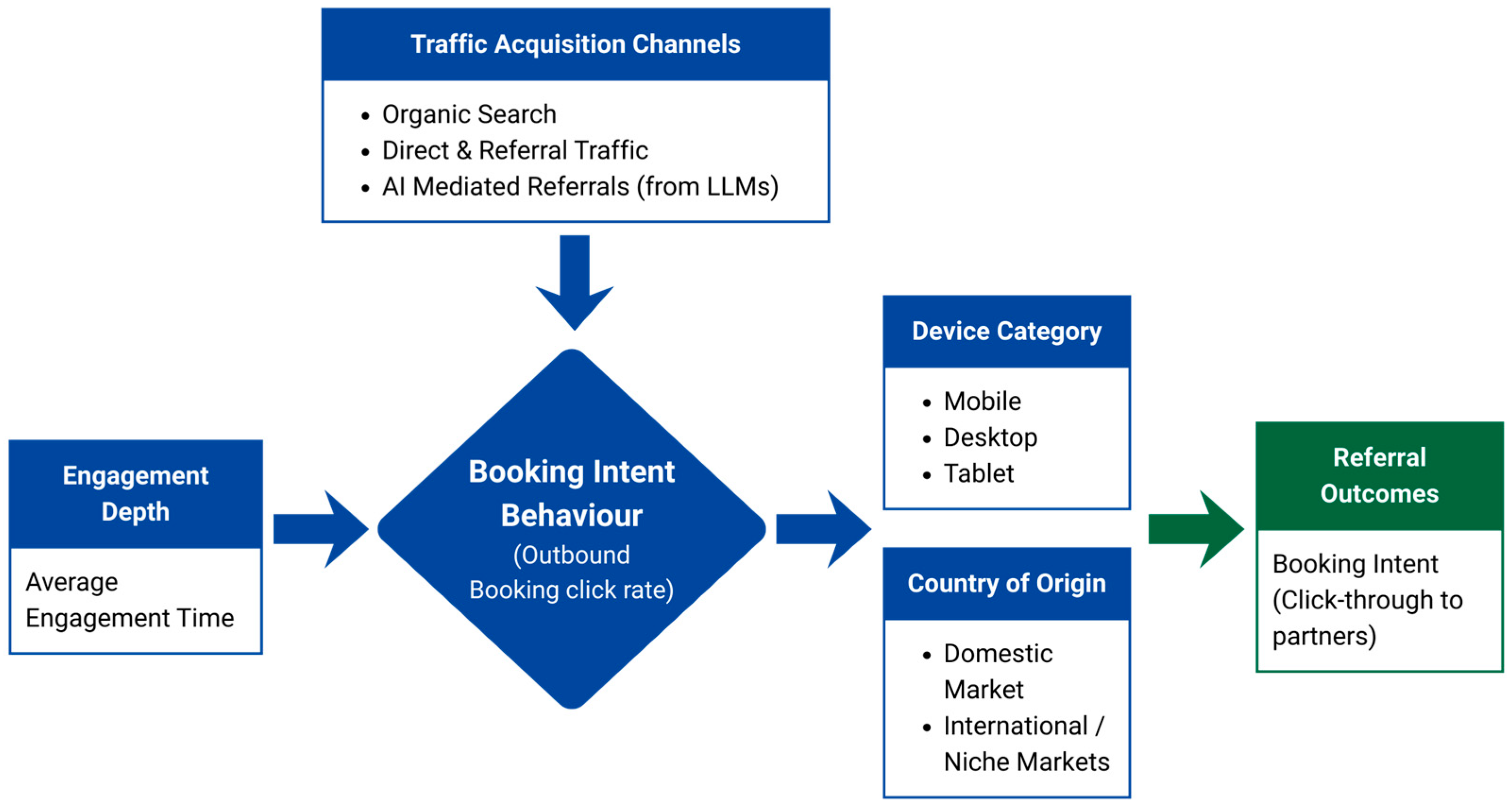
A particularly relevant behavioral dimension concerns how AI-mediated referrals may compress the tourism decision journey. Unlike search engines, which surface a range of exploratory results requiring active user evaluation, LLM systems typically synthesize and rank destination content before surfacing outbound links. This pre-filtering function may explain why users arriving via LLM platforms exhibit more goal-directed navigation patterns, a behavioral signature consistent with the observation in non-tourism e-commerce that generative search reduces exploratory browsing while increasing purchase outcomes (Zheng et al., 2025). This mechanism aligns theoretically with dual-process accounts of decision-making where LLM outputs may engage a more heuristic processing mode, directing attention toward pre-evaluated options and reducing the cognitive cost of destination discovery. The overall conceptual structure of engagement-driven booking intent in referral-based destination portals is summarized in Figure 1.

2.6. Research Questions

Based on the literature, this study addresses the following research questions:
  • RQ1: Does engagement depth significantly predict booking intent behavior in destination portals?
  • RQ2: Do device categories and source markets moderate booking intent behavior?
  • RQ3: Do traffic acquisition channels differ in engagement and booking intent efficiency?
  • RQ4: Does AI-mediated referral traffic exhibit significantly different engagement and booking patterns compared to traditional organic search traffic?

3. Methodology

The empirical analysis is conducted on HalkidikiTravel.com, a destination-oriented travel portal that promotes the region of Halkidiki as a summer holiday destination in Northern Greece. The portal is a content-driven referral platform offering destination guides, practical travel information, and accommodation recommendations. It does not process transactions directly. Instead, it generates value through outbound referrals to external booking engines (e.g., hotel systems, Booking.com). This makes it well suited for examining commercial intent in non-transactional tourism platforms. The observation window extends from April 2022 to January 2026, encompassing several tourism seasons for longitudinal and seasonal analysis.
Behavioral data were extracted from the Google Analytics 4 (GA4) administrative interface using the standard reporting and exploration modules, with no third-party data pipelines or API calls employed. GA4 had been tracking user behavior on the portal continuously since the migration from Universal Analytics in April 2022, covering the full observation window of April 2022 to January 2026 and yielding 46 monthly observations across more than 1.6 million total sessions. All data were exported at the aggregate level. Monthly summaries for longitudinal analysis and cumulative segment-level exports for device, country, and channel breakdowns with no individual-level or user-identifiable data accessed or retained, in compliance with GDPR requirements. The dependent variable is booking-oriented referral behavior, measured as outbound booking intent click events directed toward external booking engines. Key independent variables include average engagement time per session (seconds), traffic acquisition channel (including AI-mediated referrals), device category, and country of origin. Engagement depth is measured as the average engagement time per session in GA4, capturing active foreground interaction time during each visit, and booking intent is the booking click rate, calculated as the number of outbound click events per session.
Traffic classification followed a domain-matching procedure applied to GA4 session source and medium fields. Sessions were classified as LLM-originating when the traffic source field contained any of the following reference strings: “chat.openai.com” or “chatgpt.com” (ChatGPT), “perplexity.ai” (Perplexity), “bard.google.com” or “gemini.google.com” (Gemini), “bing.com/chat” or “copilot.microsoft.com” (Copilot), “claude.ai” (Claude), and related subdomain variants. This classification was applied consistently across the full observation period. All other sessions were assigned to their standard GA4 acquisition channel grouping: Organic Search, Direct, Referral, Paid Search, or Unassigned.
The statistical analysis employs Ordinary Least Squares (OLS) regression, which is appropriate given the continuous nature of both the independent variable (average engagement time, in seconds) and the dependent variable (booking intent click rate, expressed as a proportion). The monthly aggregation structure of the data supports the independence of observations assumption by reducing within-cluster dependence present in session-level analyses. The Pearson correlation coefficient (r = 0.673) and the coefficient of determination (R2 ≈ 0.45) are reported as measures of effect size. For the comparison between LLM and organic search traffic, a two-proportion z-test was used to compare booking click rates and a Welch t-test was used to compare engagement time means, with the Welch correction applied to account for unequal sample variances between the two groups. The analysis proceeded in four stages, each corresponding to one of the study’s research questions: Stage 1 addressed RQ1 through OLS regression analysis testing engagement depth as a predictor of monthly booking intent; Stage 2 addressed RQ2 through device-level and country-level segmentation analysis, comparing engagement and booking intent metrics across device categories and source markets; Stage 3 addressed RQ3 through a cross-channel comparison of behavioral performance metrics across all GA4 traffic acquisition categories; and Stage 4 addressed RQ4 through two-sample statistical tests comparing LLM-mediated referral sessions against traditional organic search sessions on both engagement depth and booking intent dimensions.

4. Results

4.1. Longitudinal Traffic and Behavioral Patterns

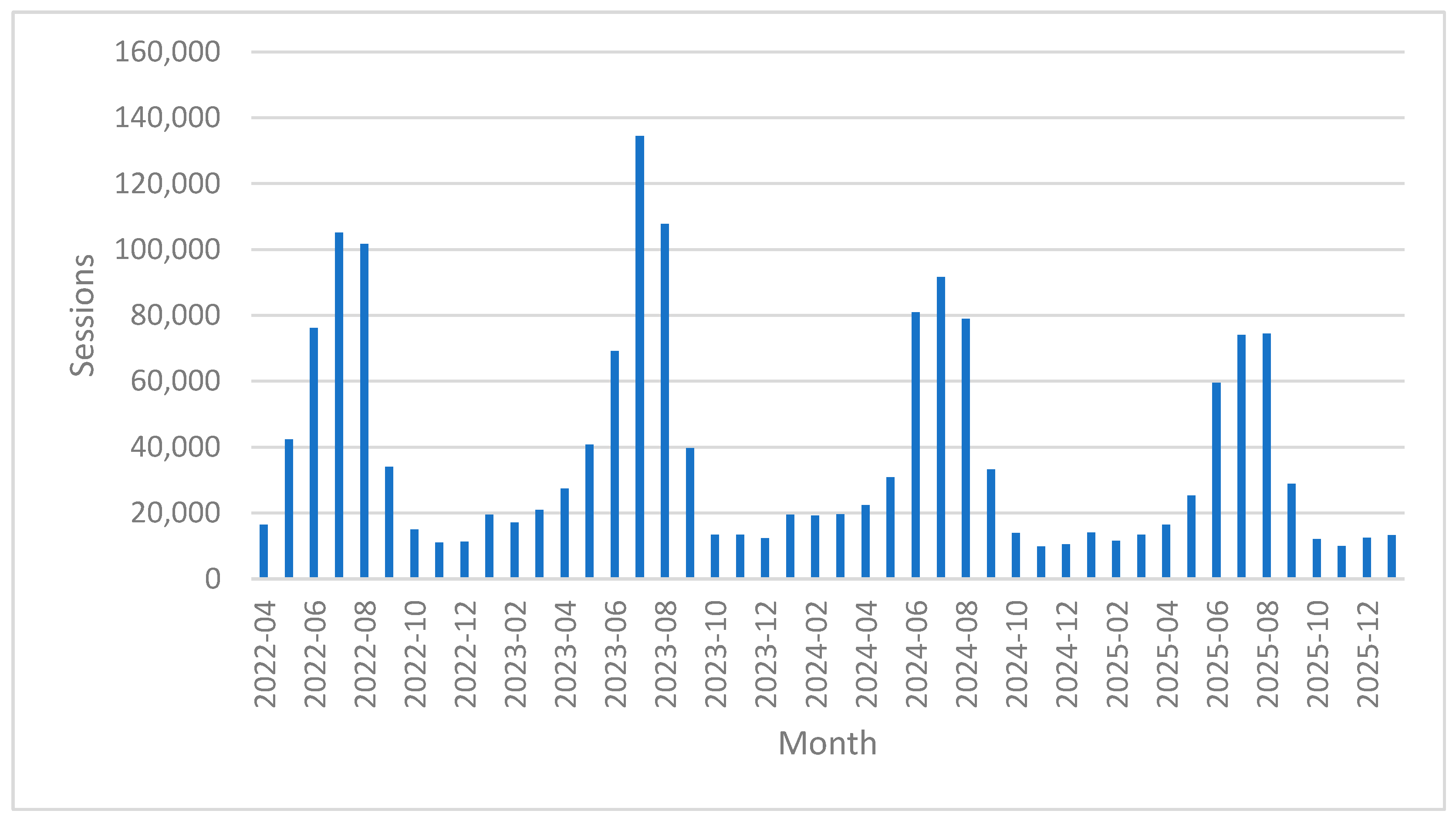
The analysis is based on 46 monthly observations spanning April 2022 to January 2026. Across the observation period, the portal exhibits a pronounced seasonal pattern consistent with Mediterranean tourism demand cycles. As shown in Figure 2, monthly sessions increase sharply from May onward, peak during July and August, and decline substantially from October through March. For example, session volume exceeded 130,000 visits during peak summer months (e.g., July 2023), whereas winter months recorded fewer than 15,000 visits.
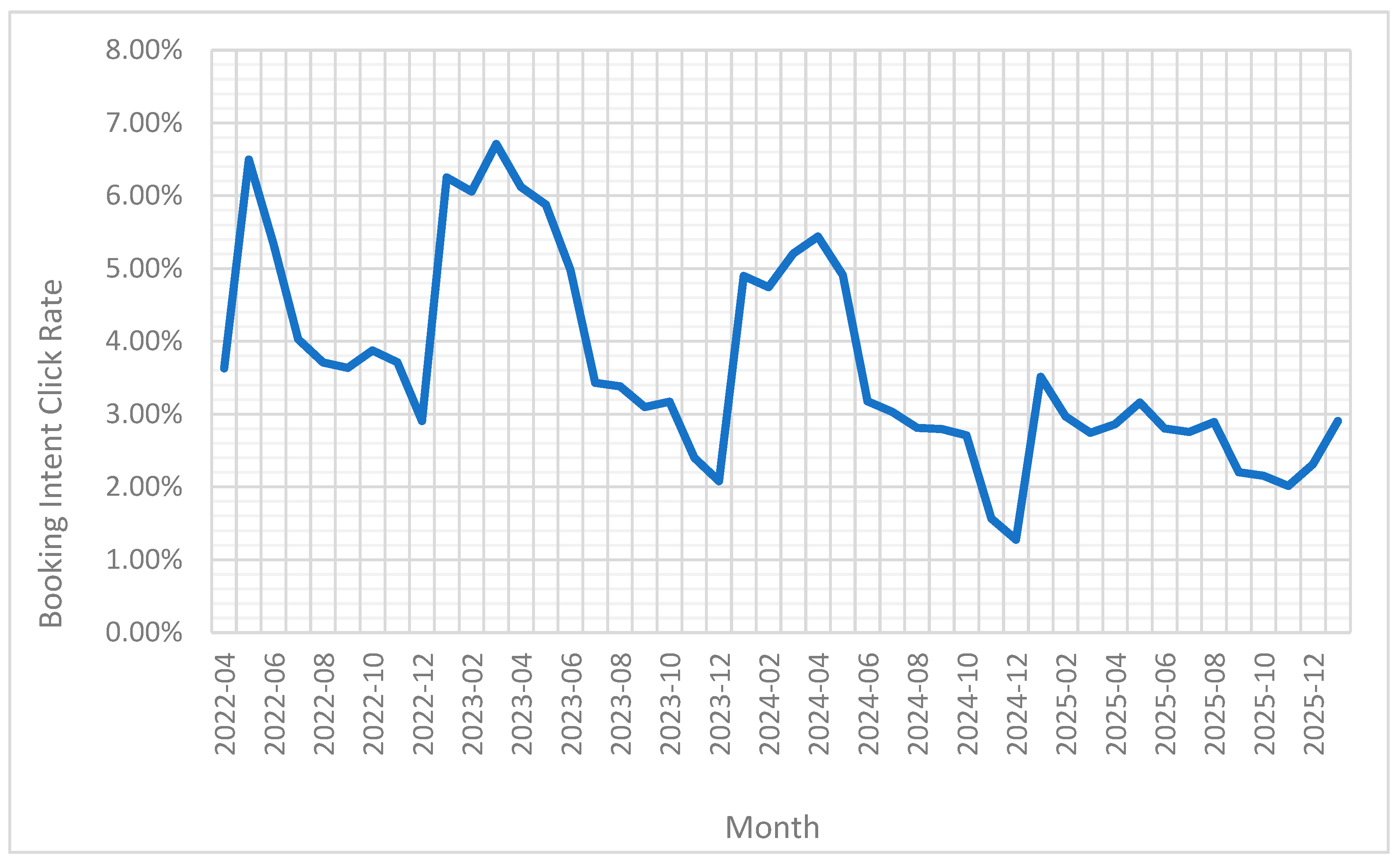
Despite the strong increase in traffic during peak season, outbound booking click rates do not follow the same proportional pattern. Monthly click rates ranged between approximately 1.3% and 6.7%, with notably higher rates observed during pre-season and early planning months (January–May). In contrast, peak visitation months (July–August) tend to display lower click rates relative to total traffic volume (see Figure 3).
This divergence suggests that although traffic increases during peak periods, booking-oriented behavior does not rise proportionally. In other words, peak traffic appears to include a larger share of exploratory or low-intent visitors, whereas off-season visitors demonstrate comparatively stronger booking intent per session.

4.2. Device-Level and Country-Level Segmentation Analysis

Across the full observation period (April 2022–January 2026), mobile devices accounted for the majority of sessions (83%), confirming the mobile-dominant nature of destination discovery. Desktop devices represented 16% of total sessions, while tablets accounted for approximately 1.5%.
However, as shown in Table 1, average engagement time per session was considerably longer for desktop users (62.65 s) relative to mobile users (33.39 s), suggesting deeper information processing behavior on non-mobile devices.
Furthermore, substantial differences emerged in behavioral intensity. The booking intent rate (booking-related click events divided by sessions) was significantly higher among desktop users (5.69%) and tablet users (5.74%) compared to mobile users (3.37%). These findings suggest that mobile devices primarily support exploration, whereas desktop and tablet devices are more strongly associated with decision-stage behavior.
Country-level analysis reveals a highly concentrated traffic structure, with Greece accounting for 60.3% of total sessions, as presented in Table 2. However, domestic traffic demonstrates the lowest booking intent rate (2.61%), indicating predominantly exploratory or informational use. In contrast, several international markets exhibit substantially higher booking intent intensity. Cyprus (6.71%), Serbia (6.36%), the United Kingdom (6.10%), and Italy (6.02%) demonstrate booking intent rates more than twice that of the domestic market. These findings suggest an asymmetry between traffic volume and behavioral intensity, emphasizing that high-volume markets are not necessarily high-conversion markets. International visitors appear to engage in more decision-oriented browsing behavior relative to domestic users.
Beyond the primary volume markets, several lower-traffic countries demonstrate disproportionately high booking intent intensity. Sweden (6.96%), the Netherlands (6.54%), Switzerland (6.45%), and Bulgaria (6.36%) exhibit booking intent rates comparable to those of the core high-intent markets identified earlier (e.g., United Kingdom, Italy, Serbia). Although these countries contribute a relatively modest share of total sessions (each below 1% of overall traffic), their elevated booking intent rates suggest more decision-oriented browsing behavior. This pattern suggests the presence of niche but potentially high-value source markets characterized by strong transactional readiness despite lower visitation volume.

4.3. Engagement Depth and Booking Intent

To examine whether content engagement predicts booking intent behavior, a linear regression model was estimated using monthly average engagement time as the independent variable and outbound booking click rate as the dependent variable.
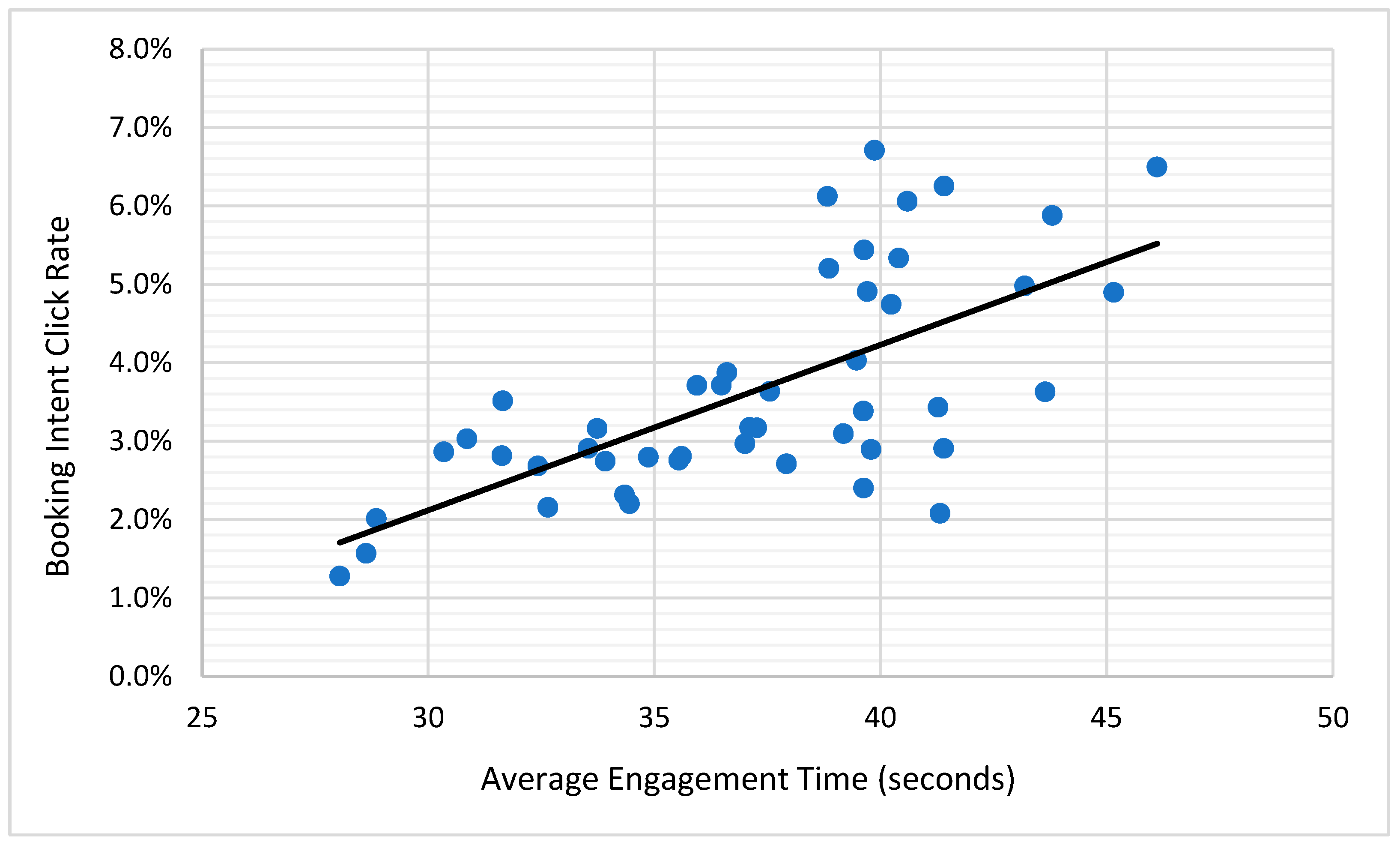
Correlation analysis shows a strong positive association between engagement depth and booking intent (r = 0.673). This suggests that months characterized by longer average session engagement are also associated with higher outbound booking click rates.
The regression results further confirm this relationship, as presented in Table 3. Average engagement time significantly predicts monthly click rate (p < 0.001), with the model explaining approximately 45% of the variance in booking click rate (R2 ≈ 0.45). These findings show that engagement depth constitutes a substantial explanatory factor in referral-based commercial outcomes within destination portals.
The results suggest that deeper content immersion, reflected in longer engagement time, increases the likelihood that users move from information browsing to booking-oriented action. Each additional 10 s of engagement corresponds to an approximate 2% higher click rate (see Figure 4).

4.4. Traffic Source Performance and AI-Mediated Referrals

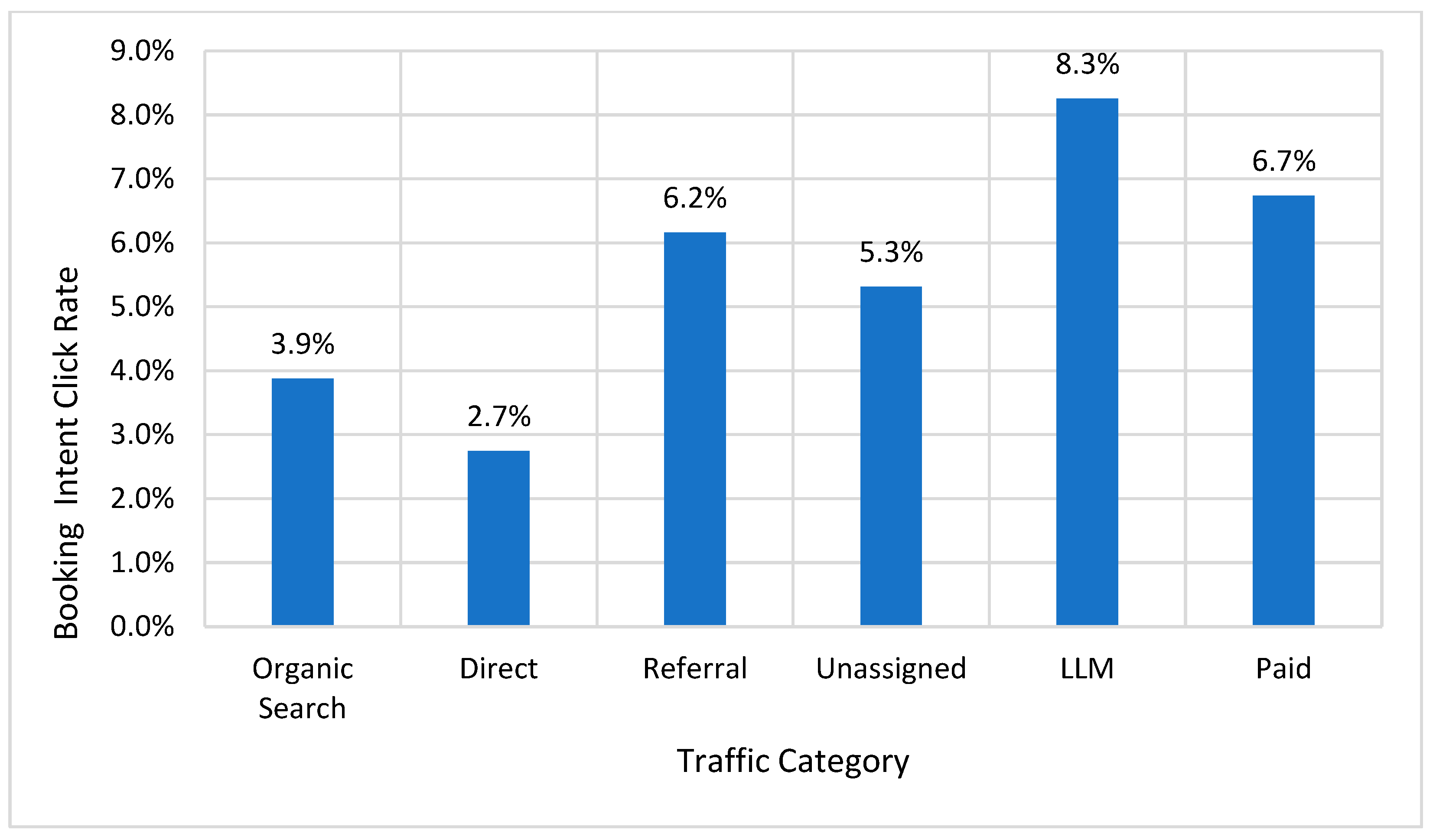
Traffic source analysis reveals substantial heterogeneity in behavioral performance across acquisition categories. Organic search constitutes the dominant traffic source, accounting for more than 1.5 million sessions during the observation period and representing the backbone of the portal’s audience acquisition strategy. Organic visitors exhibit moderate engagement levels (approximately 40 s average engagement time) and a booking click rate of 3.88%. Direct traffic represents the second-largest source (181,209 sessions) but demonstrates significantly lower engagement depth (22.4 s on average) and a reduced booking click rate (2.74%), suggesting notably lower exploratory intensity and commercial propensity. Referral traffic, while considerably smaller in volume, displays stronger behavioral performance, with an average engagement time of approximately 48 s and a booking click rate exceeding 6%. This suggests that curated external links and third-party references may direct users with meaningful higher transactional intent, as presented in Figure 5.
A particularly noteworthy finding concerns traffic from LLM, including ChatGPT, Perplexity, Gemini, Copilot, and Claude. Although still nascent since it represents only 1865 sessions, this channel is now measurable. It shows a booking intent click rate of 8.26%, more than double the rate observed for Google Organic traffic. Engagement time for LLM visitors (approximately 29 s) is lower than that of organic search users but higher than direct traffic, suggesting a more goal-oriented behavioral pattern.
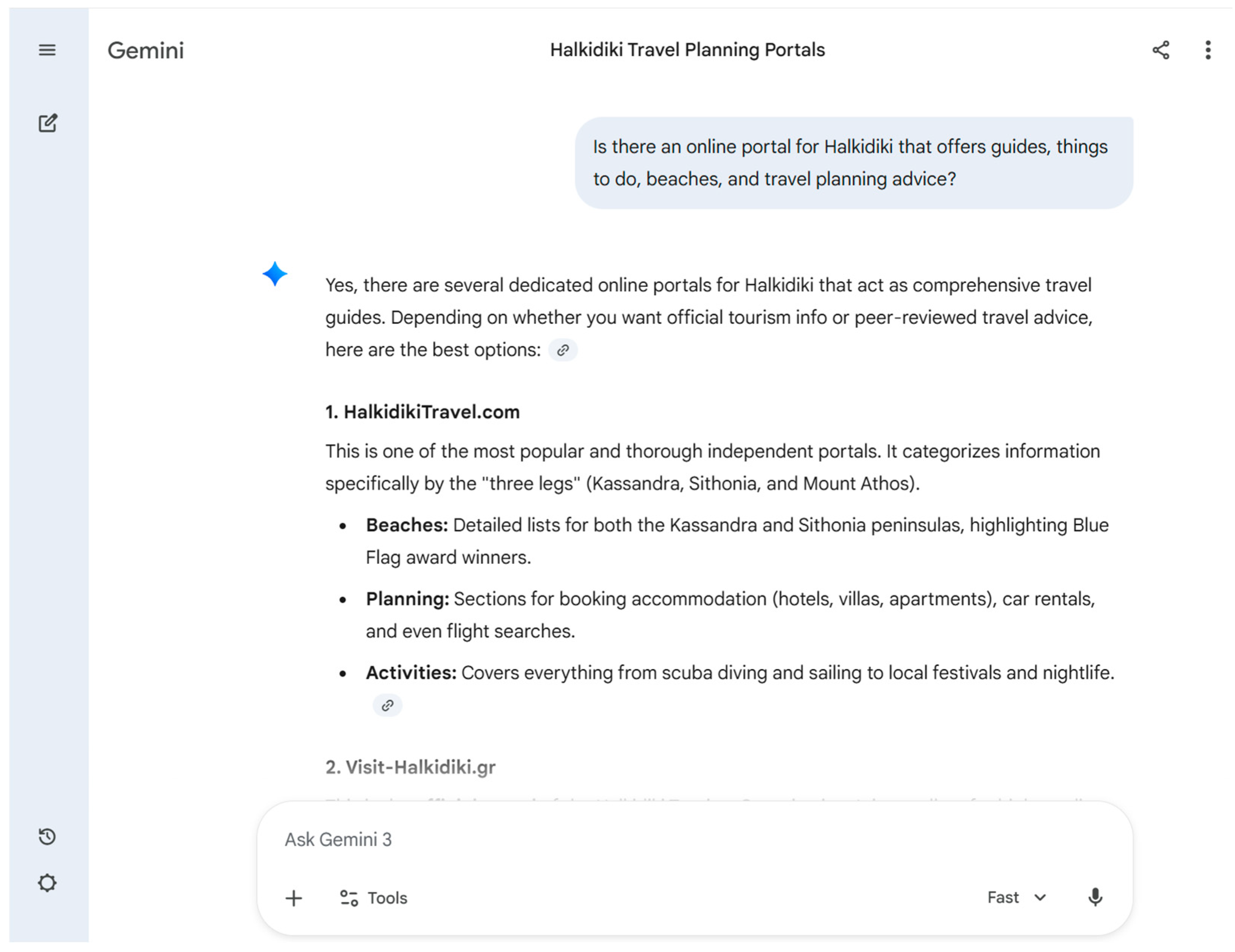
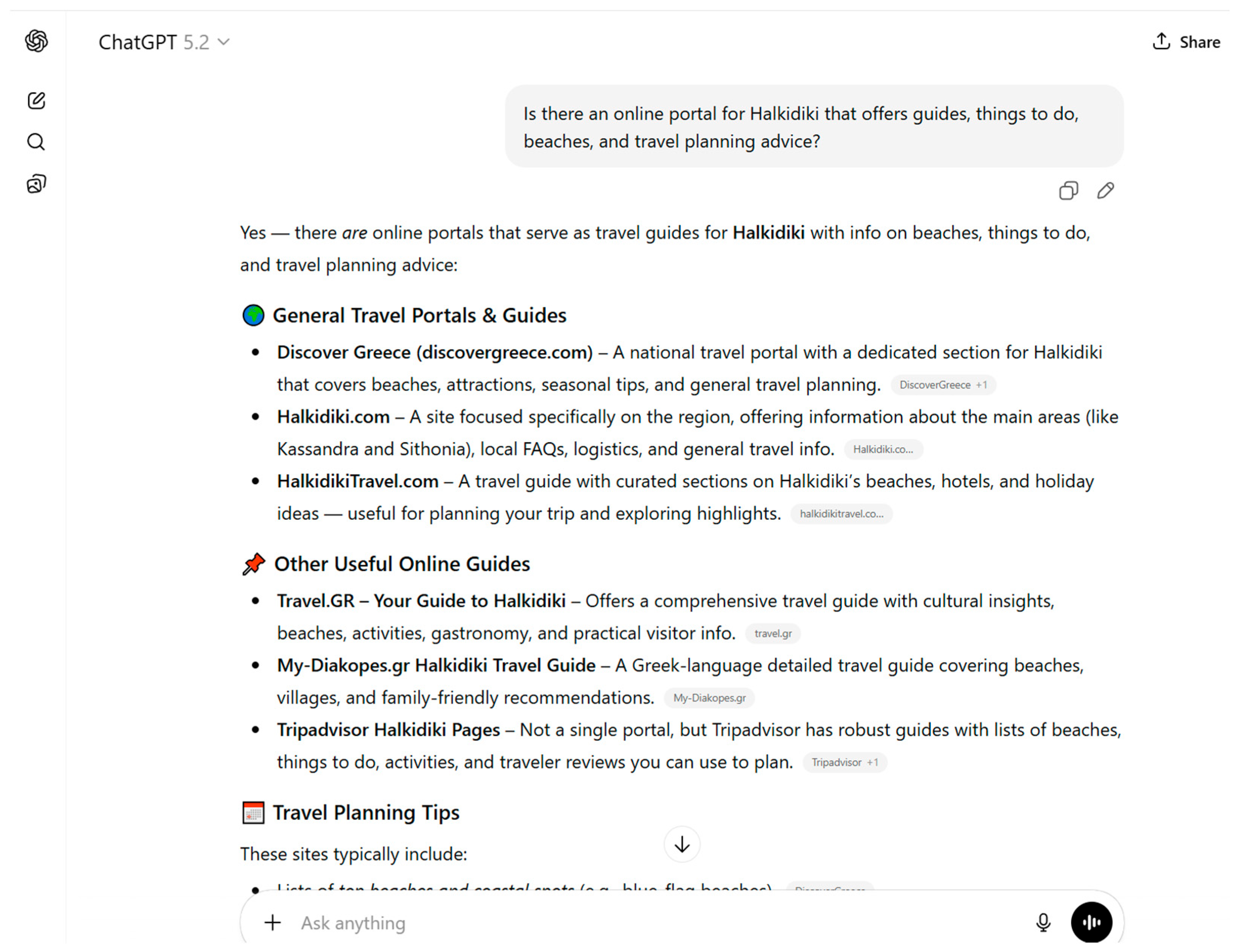
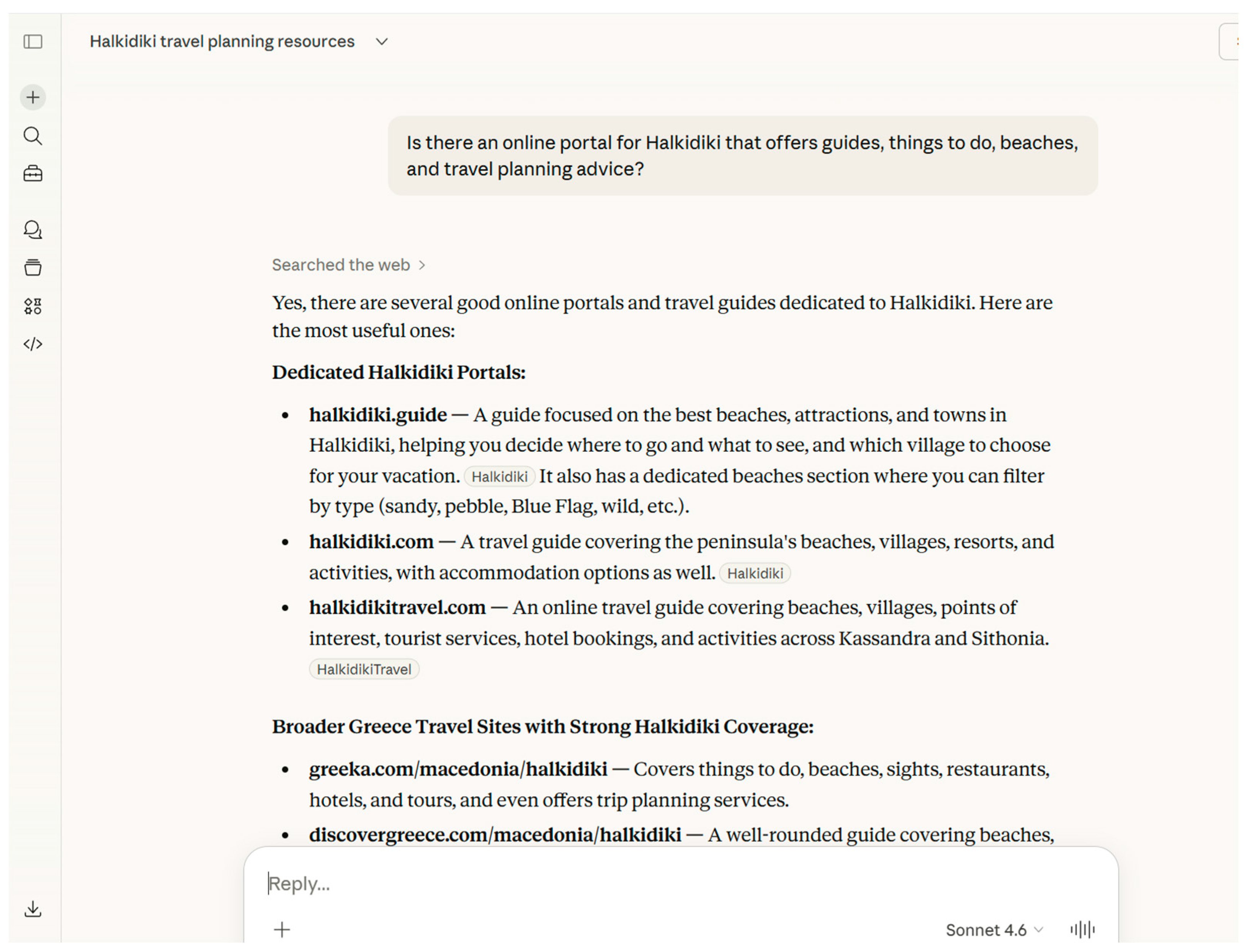
To contextualize the LLM traffic finding and provide qualitative evidence that the focal portal is actively cited within AI-mediated discovery environments, a brief illustrative exercise was conducted in February 2026. The prompt “Is there an online portal for Halkidiki that offers guides, things to do, beaches, and travel planning advice?” was submitted to three major LLM platforms (Gemini, ChatGPT, and Claude) using default settings in a standard browser environment without personalization. All three systems independently referenced the portal under study among their recommended resources. These responses are documented as screenshots in Appendix A.
To examine whether AI-mediated referrals differ from traditional search traffic, statistical comparisons were conducted between LLM-originating sessions and Google Organic sessions. The detailed comparison results are presented in Table 4.
A two-proportion z-test revealed that LLM traffic exhibits a significantly higher booking click rate than Organic Search traffic (z = 9.78, p < 0.001). Specifically, LLM sessions demonstrate a booking click rate of 8.26%, compared to 3.88% for Organic Search sessions. This suggests that AI-mediated referrals are associated with substantially stronger commercial intent.
A Welch t-test further revealed significant differences in engagement depth (t = −60.81, p < 0.001). Organic users spend more time on the portal (approximately 39.8 s) than LLM users (28.9 s on average). This suggests that while organic visitors engage in more extensive exploratory behavior, LLM users appear to exhibit more decisive navigation patterns, transitioning more quickly toward booking-oriented actions.
AI-mediated referral channels stand out for their commercial intensity. Where traditional search engines encourage broad, exploratory browsing, generative systems appear to do some of the decision work in advance, delivering users who arrive already oriented toward booking. The channel is still small, but its behavioral profile is distinct.

5. Discussion

5.1. Theoretical Implications

The findings provide empirical support for the referral framework proposed in this study. Engagement depth acts as a key behavioral driver of booking-oriented referral outcomes. The strong positive association between engagement time and booking intent click rate (R2 ≈ 0.45) indicates that deeper content interaction significantly increases the likelihood of transitioning from exploration to booking-oriented behavior, consistent with evidence that click-through is a critical pre-booking step and can be modelled using behavioral attention proxies such as viewing-time/clickstream signals (Xu & Luo, 2023). This result directly addresses RQ1, confirming that engagement depth significantly predicts booking intent behavior in destination portals (r = 0.673, R2 ≈ 0.45, p < 0.001).
This finding extends engagement theory into a non-transactional destination portal context, where conversion cannot be observed directly but must be inferred from intermediate behavioral signals (Brodie et al., 2011; van Doorn et al., 2010). Prior engagement scholarship has predominantly examined transactional platforms, brand communities, or social media environments (Hollebeek, 2011). The present results demonstrate that the behavioral engagement-to-intent pathway generalizes to referral-based intermediaries, where outbound clicks to booking engines serve as the observable manifestation of booking intent. This has theoretical implications for how engagement is conceptualized and measured in indirect-conversion settings: session duration and engagement time, as captured by GA4, appear to function as reliable proxies for the cognitive depth dimension of engagement, even when the platform’s primary function is informational rather than transactional (Brodie et al., 2011).
In addition, the analysis reveals that seasonal traffic increases do not proportionally translate into higher booking click rates. Peak tourism months are characterized by substantial traffic growth but lower click intensity, suggesting a larger proportion of low-intent visitors during high-demand periods. Conversely, as expected, pre-season and early planning months exhibit stronger booking intensity relative to traffic volume, indicating that engagement depth may reflect more deliberate evaluation behavior outside peak congestion periods. This interpretation is strengthened by evidence that booking lead times and planning horizons can shift substantially, implying temporal variability in decision readiness even within comparable travel contexts (Katz et al., 2025).
Device-level segmentation further strengthens the engagement intent argument. While mobile devices dominate traffic (83% of sessions), desktop and tablet users exhibit significantly higher engagement time and booking intent rates. This asymmetry suggests that mobile devices function primarily as discovery tools, whereas desktop devices are more strongly associated with decision-stage processing. This aligns with multi-device travel-search research showing systematic differences across device categories in the hotel booking process and highlighting the managerial need for device-specific content and design (Murphy et al., 2016). These findings address the device dimension of RQ2, demonstrating that device category shapes booking intent behavior in destination portals.
Country-level analysis reveals that although the domestic market accounts for the most sessions, it has the lowest booking intent rate among major markets. In contrast, several international markets demonstrate double booking intent rates, and niche markets show disproportionately high booking intent despite limited traffic volume. These results reinforce the distinction between traffic dominance and commercial value and are consistent with evidence that domestic and international visitors can exhibit different online booking behaviors and respond differently to online content (Öğüt, 2012).
Theoretically, the country-level asymmetry is consistent with information search theory. International visitors, facing greater informational uncertainty about an unfamiliar destination, may engage in more goal-directed browsing, resulting in higher conversion propensity. Domestic visitors, more familiar with the destination, may use the portal as a lightweight reference tool rather than a primary decision-support platform. This distinction between exploratory and goal-directed information seeking has implications for how portal analytics should be interpreted. Raw traffic volume is a poor proxy for commercial value, and engagement depth and booking intent metrics are more meaningful indicators of a portal’s contribution to destination demand. Together, the device and country findings fully address RQ2, revealing consistent heterogeneity in booking propensity across both contextual moderators.
Traffic acquisition channel analysis addresses RQ3, revealing substantial heterogeneity in behavioral efficiency across acquisition categories. Referral traffic, despite its low volume, outperforms organic search in booking click rate (6.2% vs. 3.88%), while direct traffic underperforms both (2.74%). This pattern is theoretically consistent with intent-maturity models of digital acquisition: referral visitors arrive via curated third-party links, suggesting prior contextual filtering that elevates their decision readiness; organic search visitors are more heterogeneous in intent; and direct visitors may include returning informational users with lower transactional urgency.
The most novel contribution of this study concerns AI-mediated discovery channels. LLM traffic causes significantly higher booking click rates compared to traditional organic search traffic. LLM users exhibit shorter engagement time but stronger booking propensity. This pattern supports the interpretation that generative AI may compress earlier stages of the decision journey. This explanation is compatible with evidence that ChatGPT use can shape travel decision-making through trust/usefulness mechanisms and with field-experimental evidence that generative search may reduce exploratory browsing while increasing purchase outcomes (Al-Romeedy & Alharethi, 2025). While LLM traffic remains limited in volume, its behavioral intensity suggests potential future strategic relevance as adoption grows.
This finding contributes to an emerging body of work on AI-mediated tourism discovery (Foroughi et al., 2025; Hsu et al., 2024; Nicolau, 2025). The observed behavioral signature with shorter engagement and higher booking intent is theoretically consistent with the fact that LLM outputs may engage a more heuristic processing mode, directing user attention toward pre-evaluated options and reducing the cognitive effort required for destination evaluation. Unlike traditional search engines, which surface a range of results requiring active comparison, generative AI systems synthesize and rank destination content before surfacing outbound links. This pre-filtering function effectively performs part of the evaluation stage on behalf of the user, which may explain why LLM-referred visitors arrive at destination portals at a more advanced stage of decision readiness. These findings align with large-scale evidence from e-commerce contexts showing that generative search increases purchase behavior while reducing exploratory browsing (Zheng et al., 2025).
This addresses RQ4 where AI-mediated referral traffic exhibits significantly different engagement and booking patterns compared to traditional organic search, with a substantially higher booking intent click rate (8.26% vs. 3.88%; z = 9.78, p < 0.001) and shorter average engagement time (28.9 vs. 39.8 s; t = −60.81, p < 0.001), consistent with accelerated intent formation under generative AI-mediated discovery.
Across all four dimensions examined, engagement, device, geography, and acquisition channel, the data tell us that not all traffic is equal, and the behavioral signals that distinguish high-intent visitors are both measurable and actionable. The results also establish that engagement theory travels beyond transactional platforms, and that AI-mediated referrals represent a genuinely new behavioral category worth tracking.

5.2. Managerial Implications

The findings carry several actionable implications for destination portal managers, destination marketing organizations (DMOs), and regional tourism stakeholders. For portal managers, the most immediate takeaway is that content depth matters commercially. Given that engagement time explains approximately 45% of the variance in monthly booking intent click rates, investing in long-form destination guides, rich multimedia content, and well-structured accommodation recommendation pages is a good content strategy. This effect is strongest in pre-season months, when visitors arrive with sharper decision intent and higher booking propensity.
Closely related is the question of device experience. The gap in booking intent between desktop users (5.69%) and mobile users (3.37%) suggests that mobile interfaces may not yet fully support the decision-stage behaviors necessary for conversion. Portal managers should invest in streamlined mobile booking pathways, including clearly placed outbound links to booking engines, to reduce friction for mobile users who may already be closer to a booking decision than their engagement time suggests. Desktop experiences, meanwhile, should continue to prioritize richer, more informational formats.
At the audience level, the data make a clear case for prioritizing markets by behavioral efficiency rather than raw traffic volume. High-intent niche source markets for Greece, including Sweden, the Netherlands, Switzerland, Cyprus, the United Kingdom, and several Balkan markets, consistently outperform larger but lower-intent markets in booking click rate. DMOs should consider allocating paid media and content localization budgets in proportion to booking intensity rather than session volume alone, a direction consistent with the growing emphasis on precision audience segmentation in destination marketing (Laesser et al., 2025; Novotny et al., 2024).
Perhaps the most strategically forward-looking implication concerns the LLM referral channel. Despite representing less than 0.2% of total sessions, LLM-mediated traffic delivers a booking click rate (8.26%) more than double that of organic search (3.88%). As AI tool adoption in travel planning continues to accelerate with recent industry data indicating that a substantial majority of travelers now use AI tools for trip planning, this channel is likely to grow substantially (Digital Tourism Think Tank & Sojern, 2024). Portal managers would benefit from ensuring their content is structured in ways that LLM systems can reliably synthesize and cite: factually accurate, well-organized, multilingual, and free of ambiguity. Content that LLMs can reference confidently will increasingly benefit from the disproportionately high commercial intent that characterizes this emerging channel.
Finally, the seasonal pattern of booking intent carries implications for sustainable demand management. Intent peaks in pre-season months and weakens during peak summer. This is a pattern that suggests targeted campaigns emphasizing low season benefits, such as lower prices, fewer crowds, more authentic experiences, could help redistribute demand more evenly across the year, ease carrying-capacity pressures, and extend the economic benefits of tourism beyond the high-season window.

5.3. Limitations

This study has several limitations that should be acknowledged. The empirical analysis is based on a single destination portal serving a specific Mediterranean summer destination. While the portal’s scale (over 1.6 million sessions, 46 months of longitudinal data) provides statistical robustness, the generalizability of findings to portals serving other destination types (e.g., urban, cultural, winter, or non-Mediterranean) remains to be established. In addition, booking intent is operationalized as outbound click rate to external booking engines, which is an intermediate behavioral proxy for actual booking completion. Not all outbound clicks result in confirmed reservations, and the study cannot observe transaction-level conversion. Moreover, LLM-originating traffic, while statistically distinguishable and analytically compelling, represents a small absolute volume (1865 sessions) in the current dataset. The high booking intent click rate for this segment should therefore be interpreted with appropriate caution pending replication in larger samples or across multiple portals. Finally, the analysis does not control for potential confounding variables such as pricing dynamics, promotional campaigns, or competitor activity, which may independently influence both engagement and booking intent across time periods.

5.4. Future Research Directions

Several avenues for future research emerge from this study. Most immediately, multi-destination comparative studies would strengthen the generalizability of the engagement–booking intent framework. Examining whether the R2 ≈ 0.45 relationship between session engagement and booking click rate holds across destination types and portal architectures (transactional vs. referral-only) would establish the boundary conditions of the framework. Second, transaction-level validation, linking outbound click events to confirmed booking records via partner data-sharing arrangements would allow researchers to move beyond behavioral intent proxies and assess the actual commercial contribution of engagement depth. Third, the AI-mediated discovery channel warrants dedicated longitudinal investigation. As LLM adoption in travel planning accelerates, tracking the growth trajectory of LLM-originating traffic, its seasonal patterns, and its booking conversion efficiency over time will be essential for understanding how generative AI is reshaping the destination portal’s role in the digital tourism ecosystem. Fourth, immersive technologies such as augmented reality (AR) and virtual reality (VR) represent an emerging frontier in destination discovery and engagement. Future research might examine whether immersive pre-visit experiences delivered through destination portals (e.g., AR beach previews, VR destination tours) generate deeper engagement and higher subsequent booking intent than conventional content formats. Finally, the governance implications of LLM-mediated destination visibility deserve scholarly attention. As generative AI systems increasingly determine which destination portals are surfaced in response to travel queries, questions of algorithmic fairness, content curation transparency, and the competitive implications for smaller or niche destination portals merit examination from both a marketing management and a sustainable destination governance perspective.

6. Conclusions

This study proposed and tested an engagement-driven framework explaining booking-oriented behavior through engagement intensity and acquisition structure. Using more than 1.6 million sessions, the results show that longer engagement significantly predicts outbound booking clicks. Three main contributions emerge from the analysis. First, it establishes engagement as a behavioral precursor to commercial outcomes in referral-based platforms, where booking intent must be inferred from behavioral intensity rather than observed transactions. In addition, it reveals consistent heterogeneity across devices and source markets: although mobile dominates traffic volume, desktop users exhibit higher booking intensity, and several international and niche markets outperform the domestic market despite lower traffic volume. It also provides early empirical evidence on AI-mediated tourism discovery, showing that LLM referrals demonstrate higher booking click rates and shorter engagement time than traditional organic search, suggesting accelerated intent formation.
From a sustainable tourism perspective, the findings carry additional implications. The observed asymmetry between peak-season traffic volume and booking click rate suggests that higher-intent visitors, those most likely to convert to actual bookings, are disproportionately concentrated in the pre-season and shoulder periods. This pattern aligns with sustainable tourism objectives. Directing commercial engagement toward off-peak periods may help mitigate overtourism pressures during peak summer months and distribute economic benefits more evenly across the tourism calendar. Similarly, the identification of high-intent niche markets, including several Northern and Central European source markets with booking intent rates exceeding 6%, suggests opportunities for targeted destination marketing strategies that favor quality of website visits over volume. Digital platforms that effectively engage and convert these high-intent, lower-volume markets may thus contribute to more sustainable demand structures at the destination level. The emergence of AI-mediated referral as a high-intent channel further reinforces this sustainability-relevant logic. As LLM systems pre-filter and curate destination recommendations, their algorithmic choices carry potential influence over which destinations, sub-destinations, and accommodation types receive disproportionate visibility. This raises governance questions that merit future attention from both destination marketers and platform scholars.
What these findings reveal is that booking intent in destination portals is shaped by more than traffic volume. It is a function of how deeply visitors engage, where they come from, what device they use, and increasingly, which channel first directed them to the portal. As AI systems take a growing role in that last step, understanding their behavioral fingerprint becomes as important as any other dimension of travel portal analytics.

Supplementary Materials

The following supporting information can be downloaded at: https://www.mdpi.com/article/10.3390/tourhosp7040107/s1, Dataset_1_Monthly_Behavioral_Data.csv: Aggregated monthly dataset (April 2022–February 2026) including sessions, average engagement time, and booking-related click events. Dataset_2_Device_Segmentation.csv: Aggregated behavioral metrics by device category (desktop, mobile, tablet), including sessions, engagement time per session, and booking click rates. Dataset_3_Country_Segmentation.csv: Aggregated dataset of user sessions and behavioral indicators across countries, including engagement and booking-related interactions. Dataset_4_Channel_Performance.csv: Traffic acquisition channel data (e.g., organic search, direct, referral, social), including sessions, engagement metrics, and booking click performance. Dataset_5_Channel_Performance_with_LLM.csv: Channel Performance with LLM Traffic. Dataset_6_Daily_Aggregated_Sessions.csv: Daily time-series dataset including session volume and engagement indicators.

Author Contributions

Conceptualization, C.Z.; methodology, C.Z. and M.V.; validation, C.Z. and M.V.; formal analysis, C.Z.; investigation, C.Z.; data curation, C.Z.; writing—original draft preparation, C.Z.; writing—review and editing, C.Z. and M.V.; visualization, C.Z.; supervision, M.V.; project administration, C.Z. All authors have read and agreed to the published version of the manuscript.

Funding

This research received no external funding.

Institutional Review Board Statement

Not applicable.

Informed Consent Statement

Not applicable.

Data Availability Statement

The aggregated datasets supporting the findings of this study are provided as Supplementary Materials. These include monthly behavioral metrics (46 observations), device-level and country-level segmentation statistics, channel-level performance data including AI-mediated referral classification, and daily session counts (1390 observations). All data are anonymized in accordance with GDPR requirements. No user-level or personally identifiable information is disclosed.

Acknowledgments

During the preparation of this manuscript, the authors used Google Analytics 4 (GA4) for the purposes of extracting, segmenting, and analyzing aggregated behavioral traffic data, including engagement time, device category, country of origin, and referral-based booking click events. The authors independently interpreted the data, conducted the statistical analyses, and take full responsibility for the content and conclusions of this publication.

Conflicts of Interest

The author declares no conflicts of interest.

Appendix A

Illustrative Examples of AI-Generated Destination Portal Recommendations

To illustrate the presence of destination portals within AI-mediated discovery environments, example queries were conducted in February 2026 using default settings in three large language model platforms (Gemini 3 Fast, ChatGPT 5.2, and Claude Sonnet 4.6). All searches were performed in a standard browser environment without personalization beyond default system settings. The following prompt was used: “Is there an online portal for Halkidiki that offers guides, things to do, beaches, and travel planning advice?”. Figure A1, Figure A2 and Figure A3 present screenshots of the generated responses.
Figure A1. Gemini response including the focal destination portal analyzed in this study among recommended Halkidiki travel resources.
Tourismhosp 07 00107 g0a1
Figure A2. ChatGPT response listing the destination portal investigated in this study, within general destination guide recommendations.
Tourismhosp 07 00107 g0a2
Figure A3. Claude response referencing the focal destination portal among dedicated Halkidiki travel sites.
Tourismhosp 07 00107 g0a3

References

  1. Almakayeel, N. (2023). Relationship modeling of travel website quality toward customer satisfaction influencing purchase intention. Sustainability, 15(10), 8225. [Google Scholar] [CrossRef] [Scilit]
  2. Al-Romeedy, B. S., & Alharethi, T. (2025). ChatGPT as an emerging digital travel advisor: Insights into AI usefulness, usability, and consumer decision behavior. Journal of Theoretical and Applied Electronic Commerce Research, 21(1), 6. [Google Scholar] [CrossRef] [Scilit]
  3. Brodie, R. J., Hollebeek, L. D., Jurić, B., & Ilić, A. (2011). Customer engagement: Conceptual domain, fundamental propositions, and implications for research. Journal of Service Research, 14(3), 252–271. [Google Scholar] [CrossRef] [Scilit]
  4. Bucklin, R. E., & Sismeiro, C. (2003). A model of web site browsing behavior estimated on clickstream data. Journal of Marketing Research, 40(3), 249–267. [Google Scholar] [CrossRef] [Scilit]
  5. Buhalis, D., & Law, R. (2008). Progress in information technology and tourism management: 20 years on and 10 years after the internet—The state of eTourism research. Tourism Management, 29(4), 609–623. [Google Scholar] [CrossRef] [Scilit]
  6. Buhalis, D., O’Connor, P., & Leung, R. (2022). Smart hospitality: From smart cities and smart tourism towards agile business ecosystems in networked destinations. International Journal of Contemporary Hospitality Management, 35(1), 369–393. [Google Scholar] [CrossRef] [Scilit]
  7. Chan, I. C. C., Ma, J., Law, R., Buhalis, D., & Hatter, R. (2021). Dynamics of hotel website browsing activity: The power of informatics and data analytics. Industrial Management and Data Systems, 121(6), 1398–1416. [Google Scholar] [CrossRef] [Scilit]
  8. Chen, J., Jung, S., & Cai, L. A. (2025). A critical review of technology-facilitated event engagement: Current landscape and pathway forward. International Journal of Contemporary Hospitality Management, 37(13), 169–189. [Google Scholar] [CrossRef] [Scilit]
  9. Court, D., Elzinga, D., Mulder, S., & Vetvik, O. J. (2009). The consumer decision journey. McKinsey Quarterly, 3(3), 96–107. [Google Scholar]
  10. Davenport, T., Guha, A., Grewal, D., & Bressgott, T. (2020). How artificial intelligence will change the future of marketing. Journal of the Academy of Marketing Science, 48(1), 24–42. [Google Scholar] [CrossRef] [Scilit]
  11. Digital Tourism Think Tank & Sojern. (2024). Download now: The state of destination marketing 2024 report. Available online: https://www.sojern.com/reports/state-of-destination-marketing (accessed on 31 March 2026).
  12. Dwivedi, Y. K., Kshetri, N., Hughes, L., Slade, E. L., Jeyaraj, A., Kar, A. K., Baabdullah, A. M., Koohang, A., Raghavan, V., Ahuja, M., Albanna, H., Albashrawi, M. A., Al-Busaidi, A. S., Balakrishnan, J., Barlette, Y., Basu, S., Bose, I., Brooks, L., Buhalis, D., … Wright, R. (2023). “So what if ChatGPT wrote it?” Multidisciplinary perspectives on opportunities, challenges and implications of generative conversational AI for research, practice and policy. International Journal of Information Management, 71, 102642. [Google Scholar] [CrossRef] [Scilit]
  13. Foroughi, B., Vu, H. T. M., & Thaichon, P. (2025). Building trust for sustained generative AI travel adoption. Tourism Review, 81(2), 718–754. [Google Scholar] [CrossRef] [Scilit]
  14. Garanti, Z., Ilkhanizadeh, S., & Liasidou, S. (2024). Sustainable place branding and visitors’ responses: A systematic literature review. Sustainability, 16(8), 3312. [Google Scholar] [CrossRef] [Scilit]
  15. Gutierriz, I., Ferreira, J. J., & Fernandes, P. O. (2025). Digital transformation and the new combinations in tourism: A systematic literature review. Tourism and Hospitality Research, 25(2), 194–213. [Google Scholar] [CrossRef] [Scilit]
  16. Hollebeek, L. D. (2011). Demystifying customer brand engagement: Exploring the loyalty nexus. Journal of Marketing Management, 27(7–8), 785–807. [Google Scholar] [CrossRef] [Scilit]
  17. Hsu, C. H. C., Tan, G., & Stantic, B. (2024). A fine-tuned tourism-specific generative AI concept. Annals of Tourism Research, Annals of Tourism Research: 50th Anniversary Issue, 104, 103723. [Google Scholar] [CrossRef] [Scilit]
  18. Hu, Y., Lu, Y., & Kuang, T. (2025). How does tourism information quality affect tourists’ intention to visit Portugal: Integrating the heuristic-systematic model with the theory of planned behavior. Humanities and Social Sciences Communications, 12(1), 1749. [Google Scholar] [CrossRef] [Scilit]
  19. Ilieva, G., Yankova, T., & Klisarova-Belcheva, S. (2024). Effects of generative AI in tourism industry. Information, 15(11), 671. [Google Scholar] [CrossRef] [Scilit]
  20. Jin, J.-H., & Han, J.-S. (2025). A phenomenological study on the experience of searching for tourism information following the emergence of ChatGPT: Focused on the uncanny valley theory. Sustainability, 17(1), 355. [Google Scholar] [CrossRef] [Scilit]
  21. Kaiser, M., & Schulze, C. (2025). ChatGPT referrals to e-commerce websites: Do LLMs outperform traditional channels? Available online: https://papers.ssrn.com/sol3/papers.cfm?abstract_id=5585812 (accessed on 31 March 2026).
  22. Kannan, P. K., Reinartz, W., & Verhoef, P. C. (2016). The path to purchase and attribution modeling: Introduction to special section. International Journal of Research in Marketing, 33(3), 449–456. [Google Scholar] [CrossRef] [Scilit]
  23. Katz, H., Savage, E., & Coles, P. (2025). Lead times in flux: Analyzing Airbnb booking dynamics during global upheavals (2018–2022). Annals of Tourism Research Empirical Insights, 6(2), 100185. [Google Scholar] [CrossRef] [Scilit]
  24. Laesser, C., Reinhold, S., & Beritelli, P. (2025). The 2024 consensus on advances in destination management. Journal of Destination Marketing & Management, 38, 101038. [Google Scholar] [CrossRef] [Scilit]
  25. Law, R. (2019). Evaluation of hotel websites: Progress and future developments (invited paper for ‘luminaries’ special issue of international journal of hospitality management). International Journal of Hospitality Management, Hospitality Luminaries Issue, 76, 2–9. [Google Scholar] [CrossRef] [Scilit]
  26. Li, H., & Kannan, P. K. (2014). Attributing conversions in a multichannel online marketing environment: An empirical model and a field experiment. Journal of Marketing Research, 51(1), 40–56. [Google Scholar] [CrossRef] [Scilit]
  27. Li, H., Xi, J., Hsu, C. H. C., Yu, B. X. B., & Zheng, X. (2025). Generative artificial intelligence in tourism management: An integrative review and roadmap for future research. Tourism Management, 110, 105179. [Google Scholar] [CrossRef] [Scilit]
  28. Majeed, M., Asare, C., Fatawu, A., & Abubakari, A. (2022). An analysis of the effects of customer satisfaction and engagement on social media on repurchase intention in the hospitality industry. Cogent Business & Management, 9(1), 2028331. [Google Scholar] [CrossRef] [Scilit]
  29. Moe, W. W., & Fader, P. S. (2004). Dynamic conversion behavior at e-commerce sites. Management Science, 50(3), 326–335. [Google Scholar] [CrossRef] [Scilit]
  30. Murphy, H. C., Chen, M.-M., & Cossutta, M. (2016). An investigation of multiple devices and information sources used in the hotel booking process. Tourism Management, 52, 44–51. [Google Scholar] [CrossRef] [Scilit]
  31. Nicolau, J. L. (2025). When ChatGPT designs your trip: How GenAI adds a cognitive layer to smart tourism. Journal of Smart Tourism, 5(4), 137–151. [Google Scholar] [CrossRef] [Scilit]
  32. Novotny, M., Dodds, R., & Walsh, P. R. (2024). The destination marketing organization as an intelligent agent: Evaluating engagement in knowledge management practices. International Journal of Tourism Research, 26(1), e2605. [Google Scholar] [CrossRef] [Scilit]
  33. OECD. (2024). Tourism trends and policies 2024. OECD. [Google Scholar] [CrossRef] [Scilit]
  34. Öğüt, H. (2012). The determinants of domestic and international visitors’ online hotel booking. Procedia-Social and Behavioral Sciences, 58, 971–979. [Google Scholar] [CrossRef] [Scilit]
  35. Reklitis, D. P., Terzi, M. C., Sakas, D. P., & Reklitis, P. (2025). Harnessing digital marketing analytics for knowledge-driven digital transformation in the hospitality industry. Information, 16(10), 868. [Google Scholar] [CrossRef] [Scilit]
  36. Seyfi, S., Kim, M. J., Nazifi, A., Murdy, S., & Vo-Thanh, T. (2025). Understanding tourist barriers and personality influences in embracing generative AI for travel planning and decision-making. International Journal of Hospitality Management, 126, 104105. [Google Scholar] [CrossRef] [Scilit]
  37. Shariffuddin, N. S. M., Azinuddin, M., Yahya, N. E., & Hanafiah, M. H. (2023). Navigating the tourism digital landscape: The interrelationship of online travel sites’ affordances, technology readiness, online purchase intentions, trust, and E-loyalty. Heliyon, 9(8), e19135. [Google Scholar] [CrossRef] [Scilit]
  38. Shin, H., & Perdue, R. R. (2023). Developing a multi-dimensional measure of hotel brand customers’ online engagement behaviors to capture non-transactional value. Journal of Travel Research, 62(3), 593–609. [Google Scholar] [CrossRef] [Scilit]
  39. Tam, C., Pereira, F. C., & Oliveira, T. (2024). What influences the purchase intention of online travel consumers? Tourism and Hospitality Research, 24(2), 304–320. [Google Scholar] [CrossRef] [Scilit]
  40. Tedjakusuma, A. P., Liu, L.-W., Eunike, I. J., & Silalahi, A. D. K. (2025). Rethinking information quality: How trust in ChatGPT shapes destination visit intentions. Tourism and Hospitality, 6(4), 178. [Google Scholar] [CrossRef] [Scilit]
  41. van Doorn, J., Lemon, K. N., Mittal, V., Nass, S., Pick, D., Pirner, P., & Verhoef, P. C. (2010). Customer engagement behavior: Theoretical foundations and research directions. Journal of Service Research, 13(3), 253–266. [Google Scholar] [CrossRef] [Scilit]
  42. World Tourism Organization and United Nations Development Programme. (2017). Tourism and the sustainable development goals—journey to 2030. Default Book Series. World Tourism Organization. Available online: https://www.e-unwto.org/doi/book/10.18111/9789284419401 (accessed on 31 March 2026).
  43. Wüst, K., & Bremser, K. (2025). Artificial intelligence in tourism through chatbot support in the booking process—An experimental investigation. Tourism and Hospitality, 6(1), 36. [Google Scholar] [CrossRef] [Scilit]
  44. Xiang, Z., & Gretzel, U. (2010). Role of social media in online travel information search. Tourism Management, 31(2), 179–188. [Google Scholar] [CrossRef] [Scilit]
  45. Xu, X., & Luo, Y. (2023). What makes customers “Click”? An analysis of hotel list content using deep learning. International Journal of Hospitality Management, 114, 103581. [Google Scholar] [CrossRef] [Scilit]
  46. Zheng, S., Zhu, Y., Ye, X., & Shen, L. (2025). Generative search: Evidence from a large-scale field experiment (SSRN Scholarly Paper No. 5297194). Social Science Research Network. [CrossRef] [Scilit]
Figure 1. Conceptual Framework of Engagement-Driven Booking Intent in Referral-Based Destination Portals.
Tourismhosp 07 00107 g001
Figure 2. Monthly Sessions (April 2022–January 2026).
Tourismhosp 07 00107 g002
Figure 3. Monthly Booking Intent Click Rate (April 2022–January 2026).
Tourismhosp 07 00107 g003
Figure 4. Engagement Time vs. Booking Intent Click Rate.
Tourismhosp 07 00107 g004
Figure 5. Booking Intent Click Rate by Traffic Category.
Tourismhosp 07 00107 g005
Table 1. Device-Based Statistics (April 2022–January 2026).
Device CategorySessions (%)Avg. Engagement (s)Booking Intent (%)
Mobile1,406,462 (83.0%)33.393.37
Desktop276,601 (16.3%)62.655.69
Tablet26,010 (1.5%)57.285.74
Table 2. Top 10 Countries of users and Booking Intent Intensity (April 2022–January 2026).
CountrySessions (%)Avg. Engagement (s)Booking Intent (%)
Greece1,044,495 (60.32%)35.842.61
Romania158,800 (9.17%)41.204.64
Germany125,444 (7.24%)43.445.74
United Kingdom69,147 (3.99%)45.466.10
Italy52,050 (3.01%)42.096.02
Serbia30,289 (1.75%)37.486.36
Türkiye28,342 (1.64%)35.144.63
North Macedonia24,437 (1.41%)30.625.57
Cyprus23,344 (1.35%)47.846.71
Austria19,162 (1.11%)45.355.37
Table 3. Regression Results: Engagement Time Predicting Booking Click Rate.
VariableCoefficientStd. Errortp
Constant−0.0420.013−3.250.002
Engagement Time0.0020.0006.11<0.001
R20.45
Table 4. Comparison of LLM and Organic Traffic Performance.
MetricLLMsOrganic SearchTest Statisticp-Value
Sessions18651,507,183-
Avg Engagement Time (s)28.8939.85t = −60.81<0.001
Booking Click Rate8.26%3.88%z = 9.78<0.001
Disclaimer/Publisher’s Note: The statements, opinions and data contained in all publications are solely those of the individual author(s) and contributor(s) and not of MDPI and/or the editor(s). MDPI and/or the editor(s) disclaim responsibility for any injury to people or property resulting from any ideas, methods, instructions or products referred to in the content.