
Article

E-Servicescape and Consumer Perception: Evidence from Sharing Economy Online Platforms in Hospitality

1
School of Tourism and Maritime Technology, Polytechnic University of Leiria, 2520-614 Peniche, Portugal
2
CiTUR—Centre for Tourism Research, Development and Innovation, 2520-614 Peniche, Portugal
*
Author to whom correspondence should be addressed.
Tour. Hosp. 2026, 7(2), 50; https://doi.org/10.3390/tourhosp7020050
Submission received: 28 December 2025 / Revised: 30 January 2026 / Accepted: 12 February 2026 / Published: 15 February 2026
(This article belongs to the Special Issue Customer Behavior in Tourism and Hospitality)

Abstract

This study aims to examine how e-servicescape dimensions, demographic characteristics and user experience influence consumer perception of Peer-to-Peer (P2P) online platforms. The literature review is focused on servicescape, e-servicescape, and peer-to-peer (P2P) platforms in the hospitality sector. A relevant research model and hypothesis were established. For the empirical study, a questionnaire was developed and conducted on 135 users of P2P online platforms in the hospitality sector. Reliability analysis and hypothesis tests were identified through SPSSv31. Study results and implications were discussed and suggested. The results showed that all six subdimensions such as aesthetics, social presence, perceived personalization, perceived trust and safety, perceived interactivity and superior functionality, overall, create a positive perception in P2P users. While demographic characteristics showed no significant impact on consumer perception of the six e-servicescape dimensions, the user experience (frequency of use) confirmed that individuals that more frequently use P2P online platforms have a more positive perception of the e-servicescape. This study identified the importance of the dimensions of e-servicescape in P2P platforms in the hospitality sector and how they influence consumers’ perceptions, addressing a research gap caused by the limited empirical evidence on the role of demographic characteristics in the e-servicescape within hospitality in the sharing economy.

1. Introduction

While the sharing economy and e-servicescape concept have been widely studied, limited attention has been given to research on peer-to-peer (P2P) platforms and e-servicescape in the hospitality sector. After profound research, no studies were found relating directly our two main concepts, the e-servicescape and the sharing economy in the hospitality industry. Most existing studies concentrate on traditional retail environments, e-commerce, or corporate websites, where service delivery and interaction are controlled and standardized (Eroglu et al., 2003; Harris & Goode, 2010). The aim of this research was to fill the existing investigation gap regarding sharing economy and the e-servicescape. The factors that led to this study include the need to understand general shifts and market adoption, which are influenced by age, gender and nationality and are a priority in understanding how these factors influence and differ in consumption habits. Another factor that led to this study is understanding participation barriers; while younger users (Gen Y and Gen Z) are high adopters, participation decreases with age, and there are significant barriers—such as technology literacy, trust, and perceived ease of use—that prevent wider engagement. The final factor is addressing trust and safety concerns. Trust is the backbone of the sharing economy. Trust in institutions and technological proficiency are more significant factors than previously thought, requiring a deeper look at how demographic factors, like age, affect trust in technology (Hsiao et al., 2018; Wagner et al., 2019). Hsiao et al. (2018) examined four groups of variables that can affect an individual’s participation in the sharing economy: demographic variables, trust, computer self-efficacy, and ease of use of technology. Trust is identified on the basis of three factors: trust in strangers, trust in known others (e.g., family, friends, co-workers), and trust in institutions.
The P2P platforms operate within a different context, characterized by service provision, user-generated content, and direct social interaction between hosts and guests (Botsman & Rogers, 2010; Tussyadiah, 2015). On these platforms, trust-building mechanisms and social proof through reviews and ratings play a central role in shaping consumer perceptions (Ert et al., 2016; Möhlmann, 2015; Prahalad & Ramaswamy, 2004). Previous studies on the corporate or retail e-servicescape are not fully transferable to P2P platforms in hospitality, reinforcing the need for studies within hospitality in sharing economy platforms. This study aims to identify the importance of the dimensions of the e-servicescape on P2P platforms in the hospitality sector and how they influence consumers’ perceptions, addressing a research gap regarding the limited empirical evidence on the role of demographic characteristics in the e-servicescape within hospitality in the sharing economy. These subdimensions are aesthetics, social presence, perceived personalization, perceived trust and safety, perceived interactivity and superior functionality that can be moderated by demographic characteristics and user’s experience by using them. Each tourist interprets and experiences a service in a different way, influenced by their individual characteristics (Addis & Holbrook, 2001; Walls et al., 2011). Various studies have generated evidence suggesting that tourist behavior is influenced by nationality, which justifies differences in tourist behavior (Jönsson & Devonish, 2008; Ritter, 1987, 1989).
In this context, previous research has shown that demographic variables can shape tourists’ perceptions and behavioral responses. Consumption practices around the world have seen multiple shifts with the advent of technology (Khambhata et al., 2025; Bhat & Darzi, 2018; Milićević et al., 2020; Sthapit et al., 2022; Zhao et al., 2020; Okumus et al., 2021). These studies offer empirical evidence on how demographic and user experience impact marketing and consumption outcomes, but further investigations are required to anticipate tourists’ behavior within today’s dynamic experiential hospitality environment. Therefore, this study is essential for travel and hospitality industry agents that need more insight in understanding consumer interests from a gender, age and nationality perspective, crucial in the design and marketing of tourist products (Rodríguez-Pallas et al., 2024).
Consequently, the main research question guiding this study is “How do e-servicescape dimensions, demographic characteristics and user experience influence consumer perception?”. As specific objectives, the study aims to: (i) analyze the impact of e-servicescape dimensions on consumer perception of online P2P platforms; (ii) analyze whether the user experience with the platform has an impact on consumer perception; (iii) understand whether the demographic characteristics of the users influence consumer perception.
A quantitative methodology was adopted using an online questionnaire to collect data from users of P2P platforms. The data was analyzed using statistics (SPSSv31) to calculate distributions and understand participant responses.
This chapter is organized as follows. Section 1 introduces the current issues and study motivations as well as the purpose of this study. Section 2 consists of a literature review with the key words of the study. Section 3 provides the research methodology including the hypothesis and the proposed research model. Section 4 describes the study results with demographic analysis, reliability and hypotheses tests. Section 5 concludes with a study overview and implications and suggests future study directions.
This study seeks to contribute to a deeper understanding of digital consumer experience in hospitality and provide insights for developing effective e-servicescape strategies on P2P platforms in the hospitality sector.

2. Literature Review

2.1. E-Servicescape, Its Dimensions and Sharing Economy

After profound research, a theoretical research gap was found, a void of theories and models relating specifically to the e-servicescape and sharing economy, which has not been effectively addressed. No studies were found relating directly to these two main concepts, the e-servicescape and sharing economy in the hospitality industry. Most existing studies concentrate on traditional retail environments, e-commerce, or corporate websites, where service delivery and interaction are controlled and standardized (Eroglu et al., 2003; Harris & Goode, 2010).
Theoretical results from previous studies relate to the subdimensions of the e-servicescape such as “aesthetics” (Harris & Goode, 2010), “Perceived Trust and Safety” (Harris & Goode, 2010), “Social Presence” (Ert et al., 2016), “Perceived Interactivity (Gao et al., 2020), “Superior Functionality” (Tran-Thien-Y Le & Chen, 2022) and “Perceived Personalization” (Pasupuleti & Seshadri, 2023).
However, to bridge this theoretical gap, using the subdimensions of the e-servicescape and online platforms in the hospitality industry, to create a new model, Pasupuleti and Seshadri (2023) added another subdimension (perceived trust and safety), which was selected to innovate and strengthen the existing literature and bridge the aforementioned gap.
The idea of the e-servicescape came to extend Bitner’s (1992) physical servicescape to online environments, defining the virtual atmosphere through which users interact with a service provider’s website or platform (Harris & Goode, 2010). The servicescape was first introduced by Bitner (1992) based on previous studies of Booms and Bitner (1981) about physical evidence in marketing; here, the importance of tangible cues in shaping consumer perceptions and experiences was shown. Bitner (1992) expanded this idea to consider the overall physical environment to capture the influence of it in both customer and employee behaviors in service settings; here, the servicescape was conceptualized by comprising the overall layout, design, decorations and aesthetics of the service facility. Bitner (1992) also presented a concept that included the dimensions “ambient conditions”, “layout and functionality”, and “signs, symbols and artefacts”.
In this digital age, the idea of the e-servicescape has emerged because of the online environment (Li et al., 2024). According to Pasupuleti and Seshadri (2023), the term e-servicescape originates from two concepts, cybermarketscape (Venkatesh, 1998) and e-scape (Koernig, 2003). When the e-servicescape is incorporated as a new part of the servicescape, we can recognize the importance of the online environment in shaping customer experiences with effective online communication that enhances customers’ anticipation and preparation, leading to a more positive physical experience (Ariffin et al., 2025). Research in different sectors has shown that an effectively designed e-servicescape can greatly strengthen customers’ connections to a brand or service provider (Ariffin et al., 2025).
To achieve deeper insights into how the e-servicescape shapes consumer perception and behavior, it is essential to consider the key dimensions. Harris and Goode (2010) conceptualized the e-servicescape as comprising three principal dimensions: aesthetics, layout and functionality, and financial security/trust. It was demonstrated that these environmental cues foster trust and shape purchase intentions in online contexts. Their research confirmed that higher perceived quality of online design and usability directly enhances consumer trust, which in turn increases intention to purchase. Later, Lai et al. (2014) proposed that the e-servicescape can have four dimensions: “ambience”, photography quality on the website; “design”, including organization, basic arrangement and the navigation bar; “interactivity”, pricing information, confirmation of e-mails or bookings; and “signs, symbols and artifacts”, such as the company logo.
The attributes of places where physical services are provided are transferred to the context of Internet platform settings by the e-servicescape. The sharing economy, also known as collaborative consumption, a collaborative economy and access-based consumption, is an activity of sharing, lending, and acquiring goods and/or services through a peer-to-peer transaction (Botsman & Rogers, 2010; Koernig, 2003).
Relating the e-servicescape with the sharing economy, as a consequence of technological advances, the sharing economy has developed and the consumer has become an active participant in the supply of services in the sharing economy, which competes with established enterprises. The ease with which consumers can access web communities from anywhere via smartphones, as well as the rapid progress of technology, has boosted consumer interest in digital content and its environment (Abdelhady & Ameen, 2022; Henama, 2019).
As consumers tend to associate their product and service quality expectations with the environment, these products and services are purchased or used in the role of the online e-servicescape environment, aesthetics, personalization, and interactivity, provoking emotional responses, perceptions, and attitudes towards the online provider and molding customers’ behavioral responses (Abdelhady & Ameen, 2022; Harris & Goode, 2010; Wu et al., 2017; Kim et al., 2019).
In this new digital era, an attractive and user-friendly online environment where services are explored, delivered, and experienced therefore becomes a priority (Harris & Goode, 2010). Creating a seamless omnichannel, customer experience has consequently become of fundamental importance for the hospitality industry, with many retailers endorsing this as their key strategic priority (Karantinou & Ntzoumanika, 2026; Gahler et al., 2023; Chang & Li, 2022).
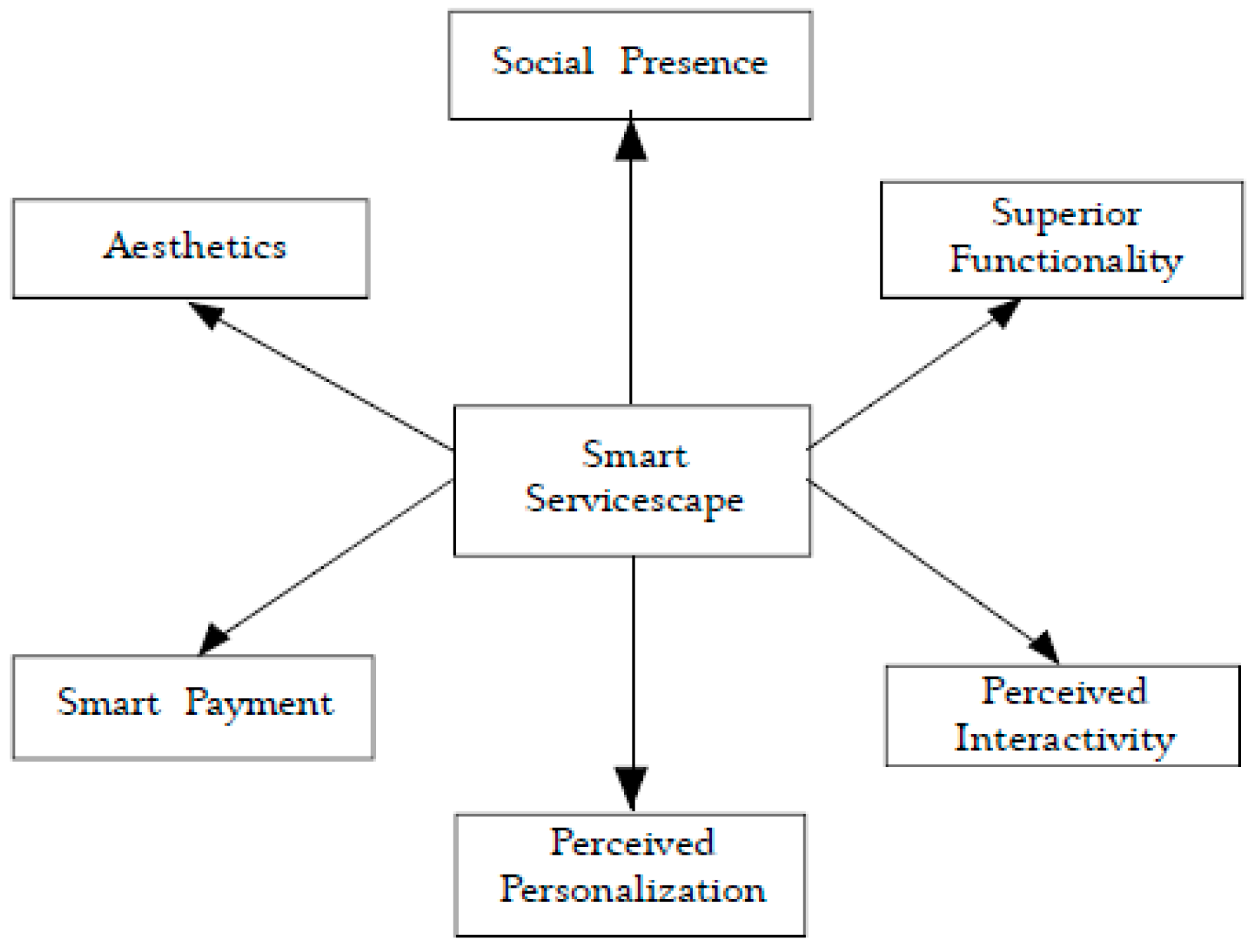
With this relationship of the e-servicescape and sharing economy in mind, this research is based on the study of Pasupuleti and Seshadri (2023). These authors defined an e-servicescape model in which they found that aesthetics, social presence, superior functionality, perceived interactivity, perceived personalization and financial security are the subdimensions of the smart servicescape or e-servicescape, as shown in Figure 1.
Given the above considerations, the following hypotheses for this study were proposed:
H1. 
Trust and safety will have a positive impact on consumer perceived trust and belief in the platform.
H2. 
Aesthetics will have a positive effect on consumer perception.
H3. 
Personalization will have a positive effect on consumer needs and perception.
H4. 
Superior functionality will have a positive impact on consumers’ perception and behavior towards the platform.
H5. 
Social presence will have a positive effect on consumer perception of the platform.
H6. 
Interactivity will positively contribute to consumer perception and satisfaction.

2.2. The Sharing Economy and Peer-to-Peer Online Hospitality Platforms

The hospitality sector was unchallenged for decades, as most major hotel chains were established between 1942 and 1965, with hotels having limited competition until the early 2000s (Jelassi & Martínez-López, 2020). COVID-19 and some other global events accelerated and changed the hospitality industry from traditional service models to digital platforms (Akselrod, 2021).
According to Jelassi and Martínez-López (2020), new digital players have caused three major disruptions that reshaped the hospitality sector. The first disruption occurred in 2005 with the advent of online booking platforms such as Expedia, the second one disruption followed a few years later with the rise of price comparison and review websites like TripAdvisor and KAYAK, finally and the focus of this study, the third disruption was the emergence of the sharing economy, a marketplace built around the exchange of resources such as rooms, services or cars.
The sharing economy is a broad term that includes various concepts and among them is collaborative consumption. The main difference between them is that the sharing economy focuses on sharing unused or underused resources, while collaborative consumption is more about redesigning traditional ways of buying, selling and exchanging goods and services (Giachino et al., 2017; Hamari et al., 2016).
The sharing economy is an economic model based on sharing resources. It is where people share access to goods, services, or skills, often for a fee. It is also known by names like the collaborative economy or peer-to-peer economy. The focus is on the exchange of resources rather than traditional ownership. The sharing phenomenon comes from the development of the economy and society (Gerwe & Silva, 2020; Trentin et al., 2024). Gansky (2010) defines the sharing economy as a trend that grows through new organizations and new business models, with a focus on the sharing of human and physical resources by people and organizations.
Hong (2019) stated that sharing economy can be defined as an economic model based on peer-to-peer (P2P) activity for providing or sharing access to goods and services, which are facilitated by an online-based platform. This type of dynamic can be referred to as the “share economy”, “collaborative consumption”, “collaborative economy” or “peer economy”.
The emergence of platforms like Airbnb, besides others of the same type, presents a new perspective for commercial initiatives (Dubois et al., 2014; Trentin et al., 2024).
The concept of the sharing economy has become a relevant competitor in the hotel industry; more recent evidence suggests that the sharing economy is going to be the main future competitor for hotel chains in a diversity of consumer markets. These platforms leverage digital infrastructure to connect individual hosts with travelers, facilitating temporary lodging without the need for traditional hotels (Guttentag, 2015; Oskam & Boswijk, 2016; Zervas et al., 2017).
According to Akbar and Tracogna (2018), peer-to-peer platforms have typical mechanisms such as the “pre-selection of assets/products to be exchanged through the platform”, “promotion of information-sharing among users”, “exchange of feedback to build the users’ reputation”, “establishment and administration of platform contracts between users” and “management of payments”.
The concept of co-created value and peer-to-peer (P2P) networks was introduced by Prahalad and Ramaswamy (2004). In peer-to-peer networks, consumers actively participate in, and even manage, their own value chains, contributing to a rise in the networked economy (Oskam & Boswijk, 2016).
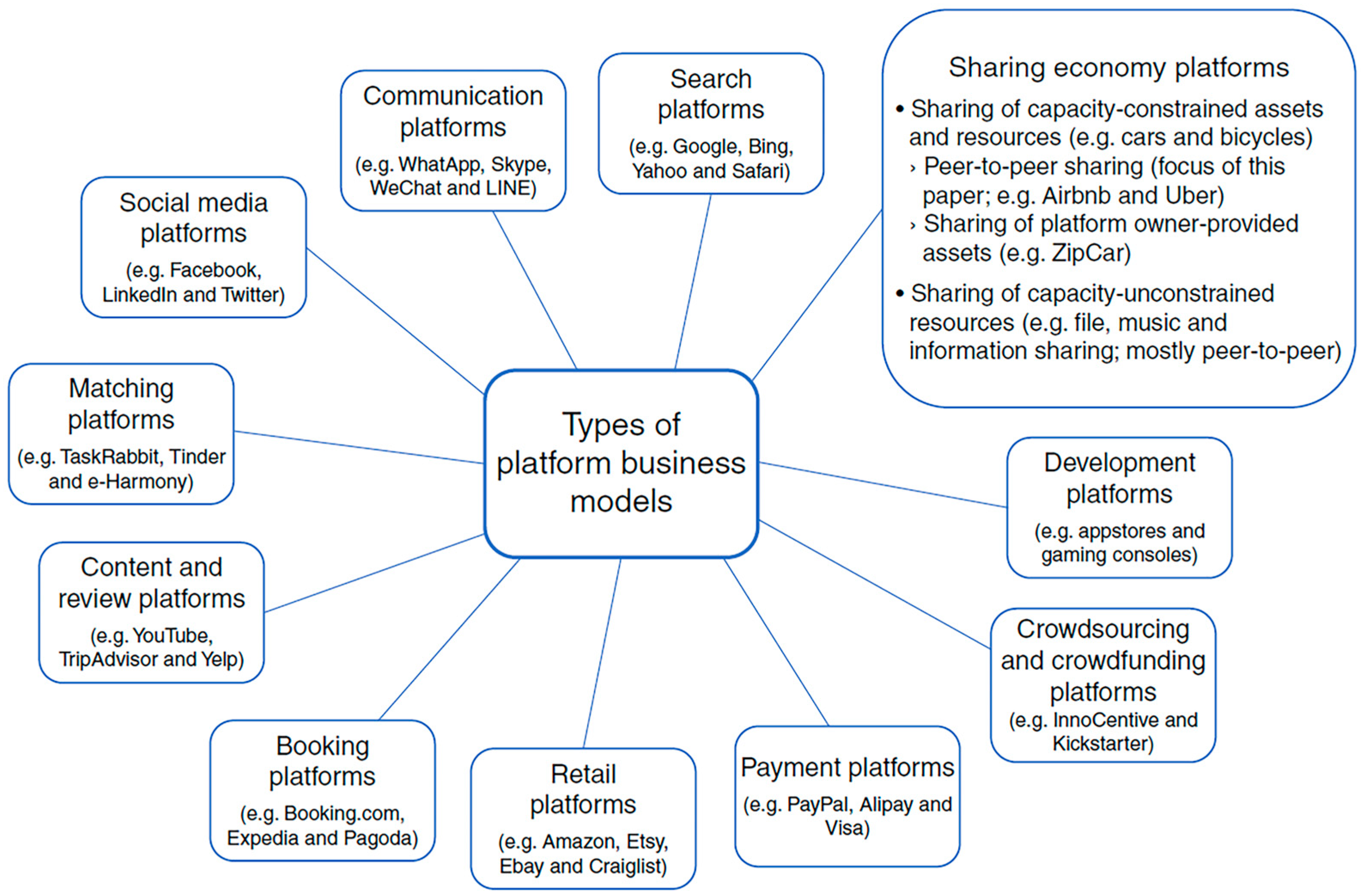
Wirtz et al. (2019) reported that these platforms, shown in Figure 2, emerged as a viable alternative to fulfil a range of customer needs such as in transportation, accommodation, meals and even investments. In hospitality, Wirtz et al. (2019) gave examples of what is included on these platforms; Airbnb, Homestay and Onefinestay are embraced by travelers ranging from budget-conscious individuals to luxury consumers.

2.3. Factors That Influence Consumer Perception in P2P Platforms

It is necessary to have a deep understanding of the customer journey in this digital era. Youssofi (2023) reported that engagement with these platforms extends across three stages: the first stage is pre-stay (messaging hosts, virtual tours), the second stage is in-stay (local recommendations co-created with hosts), and the third stage is post-stay (detailed reviews, social media sharing). Research indicates that enhanced platform usability and a strong sense of social presence led to deeper guest engagement, greater continuance intention, and positive word-of-mouth referrals (Tussyadiah & Pesonen, 2018). Word-of-mouth (WOM) is probably the oldest method of sharing opinions about various goods and services offered on the marketplace (Goyette et al., 2010). Electronic word-of-mouth (E-WOM) takes place online, where the exchange of information is not limited to a familiar environment as in traditional WOM; it can reach anyone, anywhere in the world, if they have access to the Internet (Dias et al., 2018). In this context, Santos (2019), states that e-WOM has a significant influence on consumer choices, as information searching nowadays is mainly done through the Internet, and it has an impact on the booking of tourist accommodations. Patel et al. (2024) found evidence that the e-servicescape plays a significant role in creating emotional attachment, which will further influence purchase intention and with that, it can be essential to apply it and understand how this has influence on online collaborative platforms in hospitality.
Patwardhan et al. (2019) affirm that the ability of visitors to engage meaningfully with a destination fosters place dependence, thus enhancing loyalty.
Hakim and Deswindi (2015) investigated the effects of the e-servicescape on customer intentions by examining hospital websites in South Jakarta. They found that visual design, navigability, and online feedback mechanisms had a significant, positive impact on perceived service quality, which subsequently drove booking intentions. Usability emerged as the strongest predictor of customer intention, underscoring the critical role of intuitive site structure. E-loyalty and customers’ behavior-related outcomes were enhanced by the e-servicescape in the context of travel and tourism websites (Sreejesh & Ponnam, 2016).
Pérez López et al. (2025) report that consumer perceptions in peer-to-peer platforms can be shaped by uncertainty experiences that can emerge through the service journey. This study shows how uncertainty can arise from multiple stimuli like the platform, counterpart or other users and evolves across pre-purchase, purchase and post-purchase stages. These experiences are moderated by boundary conditions, including the type of platform, as said before, and individual user characteristics.
Pérez López et al. (2025) reinforce the idea that the structure, design and interactive features of online platforms play a decisive role in shaping user perceptions in this context.
Consequently, this conceptual background supports the main research question of this study: “How do e-servicescape dimensions, demographic characteristics and user experience influence consumer perception?”

2.4. The Role of User Experience and Demographic Characteristics as Influencing Variables

Demographic characteristics (DCs) have been studied to influence variables in the tourism sector as part of consumer behavior. Studies suggest that gender, age and educational level may significantly affect how consumers perceive quality and satisfaction (Bhat & Darzi, 2018; Milićević et al., 2020; Zhao et al., 2020). Studies have shown that gender differences may influence emotional responses and satisfaction levels, while age and education can shape tourists’ expectations and perceived value of tourism experiences (Okumus et al., 2021).
Empirical evidence shows that demographic factors shape how tourists perceive experiential quality, satisfaction and future behavioral intentions, Pasaco-González et al. (2023) found that gender was statistically significant in experiential quality, satisfaction and behavioral intentions, concluding that males and females evaluate tourism experiences differently.
Rodríguez-Pallas et al. (2024) confirmed in their study that the tourist intermediary industry has faced multiple challenges and has therefore needed to adapt tourist offers for different consumer segments. As differences and inequalities in travelers’ experiences have become more widely recognized in recent years, awareness of the need to address variables that can influence travel decisions has increased. The sociodemographic attributes of tourists are essential factors in decision-making processes, and motivations for travel are explained mainly by a series of indicators, including age, gender, marital status, educational level, employment status, and income level.
In this context of P2P platforms, the demographic differences can influence whether consumers have a positive perception of aspects like the six dimensions of the e-servicescape. Given the above considerations, the following hypothesis was proposed:
H7. 
Demographic characteristics have influence on consumer perception.
User experience in P2P platforms is also closely linked to prior experience and usage frequency, which interacts with demographic characteristics to shape perceptions and decision processes. Pasaco-González et al. (2023) highlighted that previous experience acts as a cognitive reference that influences how consumers interpret and evaluate their next experiences. In P2P platforms, repeatedly use may develop higher familiarity with the platforms’ functionalities, review systems and host interactions; this leads to different experimental evaluations compared to first-time users (Pasaco-González et al., 2023).
From an experiential perspective, tourism experiences are inherently subjective and personal, meaning that individuals may interpret and evaluate the same experience differently based on their personal characteristics and background (Otto & Ritchie, 1996; Walls et al., 2011).
Overall, the literature suggests that understanding the role of user experience and demographic characteristics is essential to explain consumer perception in P2P platforms in hospitality. Given the above considerations, the following hypothesis was proposed:
H8. 
Users that use P2P online platforms more frequently have a positive perception of the e-servicescape.

3. Methodology

A review of the existing literature was used to develop the study’s research model. Empirically, the quantitative survey data was analyzed using descriptive statistics through SPSSv31. The measurement model was designed and evaluated by selecting scales from past studies, leading us to the main research question that guided this study, “How do e-servicescape dimensions, demographic characteristics and user experience influence consumer perception?”.
To address our question, a quantitative approach was adopted through the creation of an online questionnaire. This questionnaire was created to measure how consumers perceive different dimensions of the e-servicescape and how these influence their perception of sharing economy platforms in hospitality. As specific objectives, the study aims to
  • Analyze the impact of e-servicescape dimensions on consumer perception in online P2P platforms;
  • Analyze whether the user experience with the platform has an impact on consumer perception;
  • Understand whether the demographic characteristics of the users influence consumer perception.

3.1. Proposed Research Model

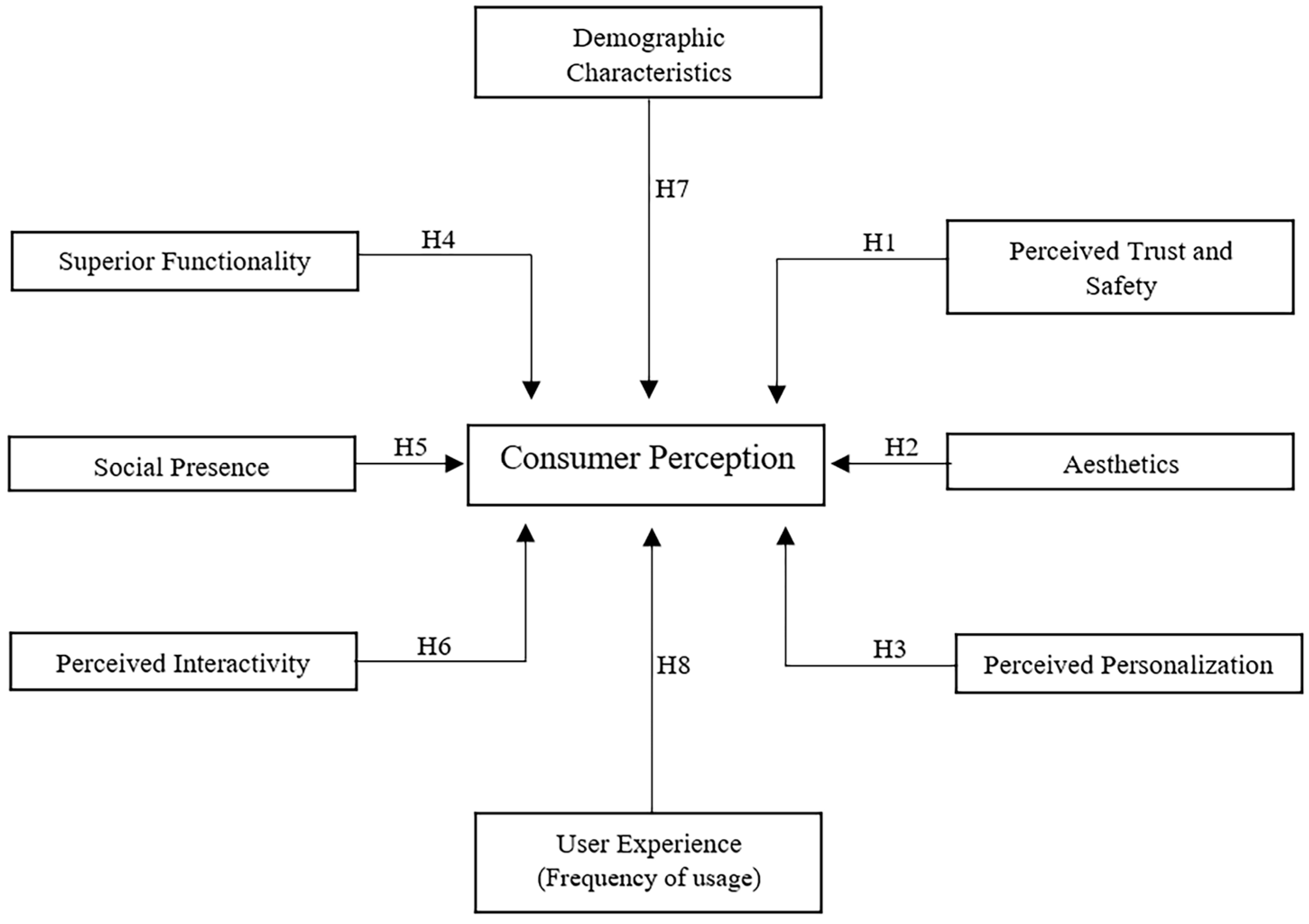
This study was inspired by the research model of Pasupuleti and Seshadri (2023). However, to create a new model, this study added another subdimension (perceived trust and safety), which was designated to be included to innovate and strengthen the existing literature, as shown in Figure 3. The proposed research model includes subdimensions of the e-servicescape as follows: aesthetics, social presence, perceived personalization, perceived interactivity, superior functionality and perceived trust and safety and new variables such as “Demographic Characteristics (DC)” and “User Experience” (which concerns the frequency of usage of the platform). These dimensions are conceptualized as independent variables, and consumer perception represents the dependent variable.
Theoretical results from previous studies showed that the subdimensions of e-servicescape such as “aesthetics” (Harris & Goode, 2010), “Perceived Trust and Safety” (Harris & Goode, 2010), “Social Presence” (Ert et al., 2016), “Perceived Interactivity (Gao et al., 2020), “Superior Functionality” (Tran-Thien-Y Le & Chen, 2022) and “Perceived Personalization” (Pasupuleti & Seshadri, 2023) can lead to greater trust, higher purchase intention and higher engagement with those platforms. Researchers found that demographic variables like age, gender, income, profession, family structure, education, and marital status have an impact on online shopping behavior or intention to purchase on online platforms (Girard et al., 2003; Kalia, 2016; Bhat et al., 2021). Ayar et al. (2019), report that user experience is a crucial indicator for e-retailers; online purchasing behavior, repurchase intention and recommending websites to others can be affected by user experience quality. In this study, user experience refers to the frequency of usage of platforms.
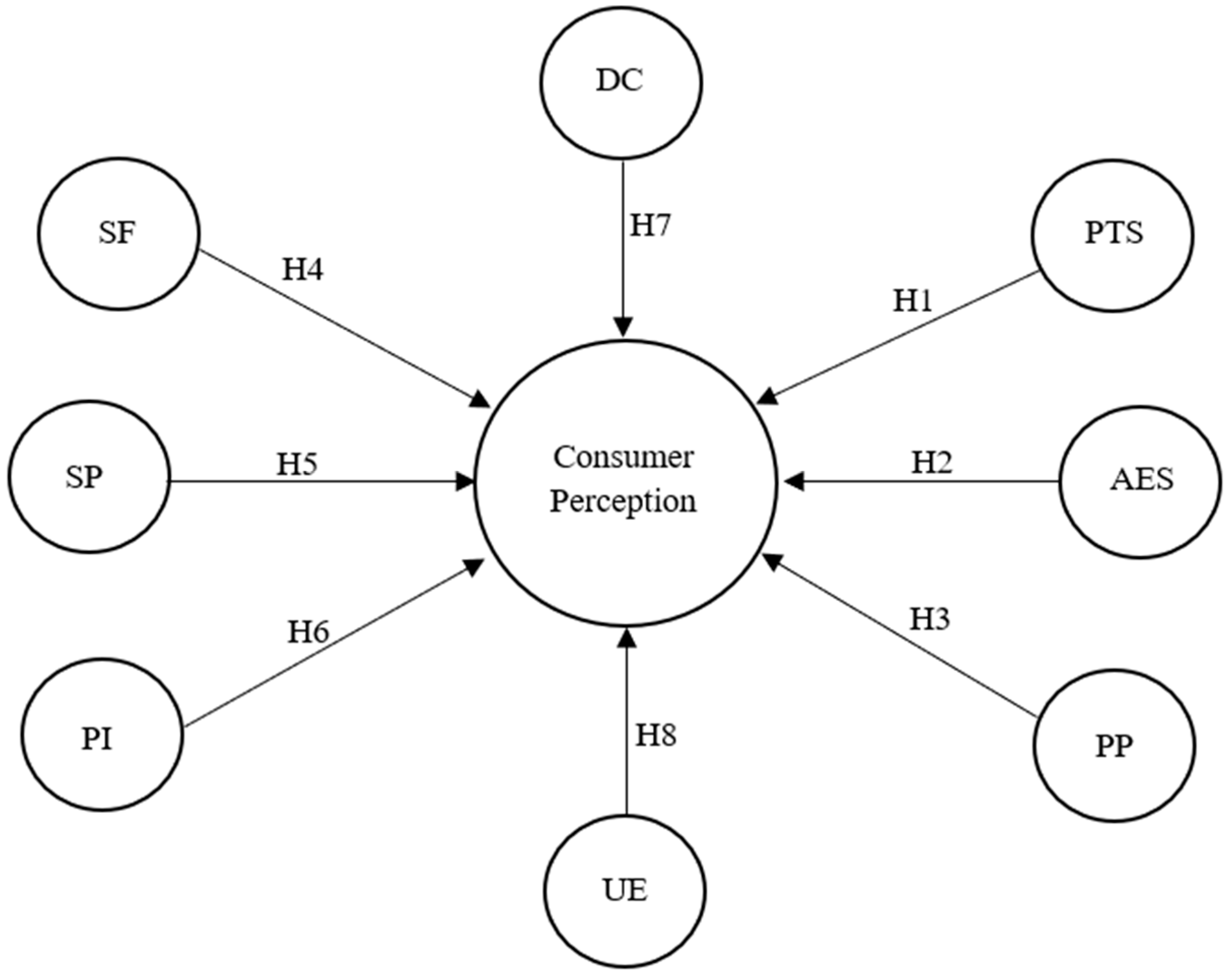
This study aims to understand how e-servicescape dimensions, demographic characteristics and user experience influence consumer perception. The hypothesis correlation model is shown in Figure 4.

3.2. Operational Definition of Measurements

In this study, operational definitions of measurements were made for the e-servicescape; these six subdimensions were assessed using a 5-point Likert scale ranging from “strongly disagree” to “strongly agree”. Each factor had up to 3 to 4 questions to capture a specific facet of user’s perceptions and experiences with peer-to-peer platforms. Aesthetics (AES) is defined through the platform’s visual appeal, i.e., how design elements and overall appearance influence perceptions of service quality. Perceived trust and safety (PTS) relate to user’s confidence in the platform ability to ensure secure payments, protect personal data and give a sense of safety through reliable host interactions. Social presence (SP) explores the extent to which a platform creates a sense of human connection, community and engagement between users. Perceived interactivity (PI) refers to the level of communication and control of user experience throughout the reservation process, including interactions with hosts or customer service. Superior functionality (SF) evaluates the platform’s operational efficiency, such on navigation, information, and accessibility of essential features such as “calendar”, “availability” and “pricing”. Finally, perceived personalization (PP) measures the platform’s capacity to share content and services according to individual user preferences, expectations and needs. The variable “Demographic Characteristics” (DC) is related to “gender” and “nationality”. “User Experience” (UE) referred to users’ frequency of use of the platform: “Rarely”, “Occasionally”, “Frequently” or “Very Frequently”.
Table 1 shows the operational measurements and related sources. The questionnaire of this study consisted of a total of 31 questions.

3.3. Sampling and Analysis

The questionnaire applied was created targeting users of online peer-to-peer platforms in the hospitality sector. A convenience sample was used for this purpose. The convenience sample is not new in the social sciences, and literature reviews about social research issues regularly find most studies based on convenience samples (Ferber, 1977; Sherry et al., 2007). Convenience sample is a general term that refers to participants selected based on their accessibility or availability and represents a non-probability sampling method, where data are collected from an easily reachable group (Sousa et al., 2024; Zickar & Keith, 2023).
The research instrument is an online questionnaire (Google Forms) and is divided into six sections: an introductory section explaining the purpose of the study; a second section to understand whether the respondent knows any of the platforms that are going to be used in this study; a third section to understand the purpose of the use and what the platform is used for the most; a fourth section with items pertaining to study variables (rated on a five-point Likert scale from “strongly disagree” (1) through “strongly agree” (5); a fifth section with demographic information (gender, age, nationality, level of education and professional status; and a final (6th) section that is a reminder to submit the questionnaire. Data was collected in two phases, from May to June 2025 and then from September to October 2025, due to many potential respondents being unavailable during the summer holiday period.
A sample of 174 respondents was obtained; however, one participant declined to answer the questionnaire in a complete manner, resulting in a final sample of 173 respondents. The questionnaire was released through e-mail to the authors’ contacts and social media groups, and respondents were encouraged to share it with their contacts. A total of 135 valid responses were obtained. However, 38 respondents stated in the questionnaire that they had never used a peer-to-peer platform in hospitality before.

4. Results

4.1. Sociodemographic Characteristics

The respondents are characterized by five variables: age, gender, nationality, education level and professional status. In total, 135 valid responses were obtained with 54.1% identified as female and 45.9% as male. Among the respondents, 42.9% hold a bachelor’s degree, followed by a master’s degree with 16.3%, and 14.1% with undergraduate studies. Additionally, 13.3% have a doctorate, 12.6% had secondary education, and 0.7% have completed primary school. Regarding nationality, the majority of the respondents were Portuguese (51.1%), followed by British (18.5%). The remaining 30.4% were of other nationalities, including European, Asian and American countries, reflecting a diverse international sample. In terms of age, the largest group of respondents were between 25 and 34 years old (40.7%), followed by those between 35 and 44 years old (23.7%) and between 45 and 54 years old (15.6%). A smaller proportion of participants were between 18 and 24 years old (9.6%) and between 55 and 64 years old (9.6%), and 0.7% were over 65 years old. This shows that most of our sample consists of young to middle-aged adults. Finally, regarding professional status, most participants were employed (including both employees and other forms of employment) at 80.7%, while 8.1% were self-employed and 9.6% were students. Only a small proportion of respondents were retired (0.7%) or unemployed (0.7%). Overall, the sample consists of professionally active individuals.
The quantitative survey data was analyzed using descriptive statistics (SPSSv31) to calculate frequency distributions and summarize participants’ responses to Likert scale questions. The appropriate statistical tests were selected based on the distribution of the data, with results being discussed with the relevant literature. Table 2 shows the main characteristics of the sample.

4.2. Participants’ Experience with the Platforms

To provide context for further analysis, it is important to note that 71.1% of respondents said that the platform they use the most is Airbnb, followed by Booking.com with 14.8%. Other platforms such as Fairbnb (3.7%), HomeExchange (2.2%), BeWelcome and CouchSurfing (1.5% each), as well as Expedia (0.7%), PureWest (0.7%) and Vrbo (3.7%), were also referred to. This indicates that Airbnb is the most familiar and frequently used peer-to-peer platform among the respondents. Regarding the frequency of platform use, most respondents reported occasional usage, with 46.7% using the platform 1–3 times per year. Rare usage (less than once per year) was reported by 34.8% of the respondents, while frequent usage (4–5 times per year) was reported by 11.9%. A smaller proportion of respondents said that they use the platform frequently (more than six times per year) at 6.6%. The main purpose of respondents’ most recent use of the platform was predominantly leisure (65.2%), followed by work/professional reasons (5.2%) and visiting family or friends (2.2%). Only 3.7% used it for events. Some respondents combined multiple purposes, such as leisure and work, leisure and visiting family or friends and leisure and events (23%); only one indicated an academic purpose (0.7%).
The results show that Airbnb is the most popular and frequently used peer-to-peer accommodation platform among respondents, and it is used for leisure experiences.

4.3. Reliability and Analysis Results

According to Li et al. (2024), reliability means that the results of measuring the same concept should be similar and represents the degree of safety, consistency and accuracy of the measurement values. Cronbach’s alpha is commonly interpreted as a measure of the internal consistency of tests (Pretorius & Padmanabhanunni, 2025; Edelsbrunner et al., 2025; McNeish, 2018; Sijtsma, 2009). It indicates the strength of interrelations between the test items related to test length (Cortina, 1993; Schmitt, 1996). If test items interrelate only moderately, the alpha tends to be low, and if they interrelate strongly, it tends to be high (Schmitt, 1996). Usually, a high alpha is seen as desirable because it is assumed to show that test items reflect a low degree of random measurement error so that a test has high reliability. For a factor to present acceptable consistency, it must have Cronbach’s alpha greater than 0.700 and α < 0.6 means that the reliability is insufficient; if α is between 0.6 and 0.8, it can be considered reliable; and if α > 0.9, that implies high reliability (Li et al., 2024; Pretorius & Padmanabhanunni, 2025; Edelsbrunner et al., 2025).
In this study, the subdimensions of the e-servicescape tested indicate that the values were 0.802 for aesthetics, 0.762 for social presence, 0.767 for perceived personalization, 0.857 for perceived trust and safety, 0.898 for perceived interactivity and 0.883 for superior functionality. The values obtained in the study presented acceptable consistency; i.e., Cronbach’s alpha was greater than 0.700 for all of the subdimensions tested. To tackle concerns about the non-validated variables, internal consistency was assessed through overall Cronbach’s alpha, with α = 0.926, indicating excellent reliability and internal consistency between our measurement items (Pretorius & Padmanabhanunni, 2025; Edelsbrunner et al., 2025; Li et al., 2024).

Correlation Analysis Results

In this study, consumer perception (CP) was considered as the sum of all the relevant subdimensions, as these together capture the overall perception that consumers have of peer-to-peer accommodation platforms in hospitality. This allows a comprehensive assessment of how the different subdimensions contribute to consumer perception.
Normality tests were conducted using the Shapiro–Wilk test, but the results revealed that the variables do not follow a normal distribution (p-value < 0.001 for all variables). Therefore, according to Hair et al. (2011), when we measure data by ordinal or nominal scales, the assumption that the data are normal is not always valid; in these cases, it is better to use non-parametric tests, so correlations between the variables were made using Spearman’s rho correlation coefficient, which is suitable for non-normally distributed variables.
Spearman’s rho correlation analysis was conducted to understand the relationship between each e-servicescape dimension and the overall consumer perception (CP), as well as the other two factors: demographic characteristics and user experience.
The correlation analysis, as shown in Table 3, indicates that all correlations are positive and statistically significant at the 0.01 level (2-tailed). This suggests that improvements in one subdimension tend to be associated with improvements in others, demonstrating internal consistency within the e-servicescape model.
The most positive correlation was observed between PTS and PI (p = 0.764) and between PP and PTS (p = 0.739), as well as between PI and SF (p = 0.731). These strong connections highlight that trust, safety, personalization, interaction and functionality are closely related to shaping user’s perceptions through these platforms. Demographic effects were not that impactful, nationality had weak correlations with PTS, PI and SF (p = 0.174, p = 0.292 and p = 0.288, respectively), and gender showed minimal correlations between the six subdimensions. This means that although there is a slight difference in consumer perception across demographic groups, these factors (gender and nationality) do not have a substantial impact on e-servicescape perception. Platform usage frequency (UE) was moderately positively correlated with AES (p = 0.500) and SF (p = 0.354). This suggests that users who interact more with the platform tend to perceive the e-servicescape in a positive way. These findings show the importance of continued engagement through the P2P online platforms.
Overall, these results reinforce the dimensions of e-servicescape models were all positively related and contributed to the consumer’s perception of the platforms.

4.4. Verification of Research Hypotheses H1 to H6

The empirical study verification was conducted by using the questionnaire, and data analysis was performed with SPSSv31. The SOR (Stimulus–Organism–Response) model by Mehrabian and Russell (1974) was also used to support this study, as it connects features of e-servicescape of peer-to-peer accommodation platforms (as stimuli) with consumer perception (as the organism) and theoretically consumer behavior (as the response). Hypotheses H1 to H6 tests how each stimulus subdimension of the e-servicescape affects consumer perception.
Even though the data did not meet the normality assumption, linear regression was applied due to the moderate sample size (n = 135) and the exploratory nature of this study. Rosselló-Nadal and Sansó-Rosselló (2025) suggested that linear regression is robust to moderate deviations from normality, particularly in studies with moderate to large samples.
H1 to H6 were tested as shown in Table 4 and analyzed. Each hypothesis was tested to check whether the proposed relationships between the variables were supported by the data using linear regression as previously justified.
The aesthetics (AES) subdimension shown a strong positive effect on consumer perception (CP), (β = 0.835; B = 0.746; t = 17.512, p < 0.001) showing the importance of visual elements in shaping consumer perceptions. Perceived trust and safety (PTS) (β = 0.884; B = 0.733; t = 21.818, p < 0.001) and perceived interactivity (PI) (β = 0.886; B = 0.726; t = 22.060, p < 0.001) also showed the impacts of the role of security and interactive features in fostering consumer perception (CP) and engagement. Social presence (SP) (β = 0.786; B = 0.661; t = 14.672, p < 0.001) was a significant predictor of how the perception of social interaction enhances overall consumer evaluation. Finally, superior functionality (SF), (β = 0.827; B = 0.722; t = 16.939, p < 0.001) and perceived personalization (PP), (β = 0.905; B = 0.794; t = 24.586, p < 0.001) contributed positively, suggesting that platform efficiency and tailored user experience further reinforce consumer perception. Perceived personalization showed the strongest effect on consumer perception, followed by perceived interactivity and perceived trust and safety.
Overall, the results obtained from the tests confirm that all six subdimensions of the e-servicescape meaningfully influence consumer perception, supporting our proposed conceptual model.

4.4.1. Verification of Research H7

Normality tests were conducted using the Shapiro–Wilk test, but the results revealed that the variables did not follow a normal distribution (p-value < 0.001 for all variables). Even though the data did not meet the normality assumption, linear regression was applied due to the moderate sample size (n = 135). Rosselló-Nadal and Sansó-Rosselló (2025) suggested that linear regression is robust to moderate deviations from normality, particularly in studies with moderate to large samples.
H7 was tested as shown in Table 5 and analyzed. This hypothesis was tested to observe whether the demographic characteristics (DCs) such as age, nationality (NAT) and gender (GEN) had an influence on consumer perception.
A linear regression analysis was conducted to understand the influence of demographic characteristics (age, nationality and gender) on consumer perception (CP). The results indicate that none of the demographic variables significantly influence CP (p > 0.05), suggesting that when we consider all the subdimensions simultaneously, demographic characteristics do not demonstrate variations in overall consumer perception.
Following the linear regression analysis, non-parametric Kruskal–Wallis tests were conducted to explore whether individual differences existed between demographic groups regarding specific e-servicescape subdimensions.
To facilitate interpretation, mean ranks were used to identify which group attributed higher value to each subdimension. Higher mean ranks indicate stronger value.
There are significant differences across age groups for the subdimensions SP, PTS and PI, showing that age can influence how platform attributes are perceived, even though they do not directly predict overall consumer perception (Table 6).
Overall, males show higher mean ranks across all dimensions, suggesting a stronger perception of the e-servicescape (Table 7).
Between the six subdimensions, British participants consistently have the highest mean ranks, showing that they value the e-servicescape subdimensions more than Portuguese and other nationalities (Table 8).
Although those are descriptive “trends”, statistical significance should always be verified with the Kruskal–Wallis (KW) test before reaching a conclusion.
Descriptive ranks indicated that participants aged between 35 and 44 reported the highest perceptions between most subdimensions, more specifically in SP, PTS, PI and SF, while the age groups 18 to 24 and 55 to 64 showed lower mean ranks. Kruskal–Wallis tests confirmed there are significant differences for SP (p = 0.005), PTS (p = 0.007) and PI (p = 0.001), showing consumer perceptions on those subdimensions differ across age groups. Regarding nationality, British participants showed the highest mean ranks between the six subdimensions, followed by other nationalities, with Portuguese individuals representing the lowest. Kruskal–Wallis test confirmed that these differences were statistically significant for PP (p = 0.009), PTS (p < 0.001) and SF (p < 0.001); this suggests that nationality is important in shaping perceptions of personalization, trust and safety and superior functionality on P2P online platforms. According to gender mean ranks, it was revealed that males tend to perceive all subdimensions slightly more positively than females; however, Kruskal–Wallis tests showed no statistically significant differences across any subdimension (p > 0.05). Only AES showed a small difference (p = 0.056). Gender has a minimal influence on e-servicescape consumer perception (Table 9).

4.4.2. Verification of Research H8

Normality tests were conducted using the Shapiro–Wilk test, but the results revealed that the variables do not follow a normal distribution (p-value < 0.001 for all variables).
Kruskal–Wallis tests were conducted to explore whether there were any differences on consumer perception between individuals that more frequently used P2P online platforms, in specific e-servicescape subdimensions. To facilitate interpretation, mean ranks were used to identify which group attributed higher value to each subdimension. Higher mean ranks indicate stronger value.
Descriptive mean ranks show a clear pattern of participants that use platforms more frequently tend to have higher perceptions of the subdimensions of the e-servicescape; this suggests that higher usage of a P2P online platform is associated with a more positive consumer perception of the e-servicescape. Participants that rarely use the platform value more trust and safety as well as perceived interactivity, participants that occasionally use the platform value the aesthetic factor more, participants that frequently use platforms value perceived interactivity and aesthetics more, and finally, participants that use the platform very frequently value functionality and personalization factors more (Table 10).
Kruskal–Wallis test results for user experience confirmed that there are significant differences across the six e-servicescape subdimensions (all p < 0.001). The mean ranks support this confirmation; thus, H8 is supported: users who use P2P online platforms more frequently have a better perception of the e-servicescape (Table 11).

5. Conclusions

Within sharing economy platforms, positive perceptions such as trust, economic benefits and sense of community increase consumers’ usage behavior (Nadeem et al., 2021; Anaya & De La Vega, 2022).
This study aimed to support the main research question, “How do e-servicescape dimensions, demographic characteristics and user experience influence consumer perception?”. Focusing on the impact of e-servicescape dimensions on consumers’ perceptions within peer-to-peer (P2P) platforms in the hospitality sector, the dimensions of the e-servicescape in this study were classified as aesthetics, social presence, perceived personalization, perceived trust and safety, perceived interactivity and superior functionality. An empirical study was conducted using a questionnaire, and data analysis was performed with SPSSv31. As specific objectives, the study aimed to (i) analyze the impact of e-servicescape dimensions on consumer perception of online P2P platforms; (ii) analyze whether the user experience with the platform has an impact on consumer perception; (iii) understand whether the demographic characteristics of the users influence consumer perception. While the results supported all hypotheses, H7 was not confirmed: demographic characteristics do not have a significant impact on consumer perception. This study demonstrates that all six dimensions of the e-servicescape have a positive effect on consumer perception. Among these, perceived personalization emerged as the strongest predictor, followed by perceived interactivity and perceived trust and safety. Social presence was significant, indicating that social interaction contributes to enhancing overall consumer perception. Not all features are equally important in superior functionalities for the consumer. The most influential elements are the ones that simplify user interaction and reinforce trust in the platform.
Users who engage with P2P online platforms more frequently reported a more positive perception between all the six subdimensions of the e-servicescape.
Prior research supports this relationship across the digital and sharing economy context. Yum and Kim (2024) found in their study that perceived value and customer satisfaction partially mediate the relationship between utilitarian value and loyalty and fully mediate the relationship between hedonic value and user loyalty towards digital platforms, confirming that positive perceptions cause positive behavioral outcomes. Similarly, T. Chen et al. (2022) showed that consumer perceptions derived from online reviews directly affect their purchasing decision, even if it is not a subdimension that was analyzed in this study, showing how a positive perception turns into actual behavioral intention.
This study confirms that in the digital marketplace of P2P platforms, a personalized user experience built of trust, interactivity and a pleasant design are key to fosterin positive consumer perception, which is a crucial competitive advantage for P2P platforms in hospitality.

5.1. Theorical Implications

Based on the empirical analysis results, this study presents the following theoretical implications.
First, this study demonstrates how the dimensions of the e-servicescape, demographic characteristics and user experience can influence consumer perceptions directly and indirectly. Within sharing economy platforms, it was observed that ethical and trustworthy perceptions enhance consumers and value on those platforms, and positive perceptions such as trust, economic benefits and sense of community increase consumers’ usage behavior (Nadeem et al., 2021; Anaya & De La Vega, 2022). T. Chen et al. (2022) showed that consumer perceptions derived from online reviews directly affect their purchasing decision, even if it is not a subdimension that was analyzed in this study, showing how a positive perception turns into actual behavioral intention.
Second, the study also bridges the fields of digital platforms, consumer perception and the sharing economy, demonstrating how trust, personalization, interactivity and social presence work together as a critical mechanism in creating value in P2P platforms in the hospitality sector. Harris and Goode (2010) showed that higher visual design quality on an e-service platform creates greater trust and purchase intention. Tran-Thien-Y Le and Chen (2022) confirmed that technical information and good service can positively influence consumer engagement intentions. Ert et al. (2016) said that a platform that provides host/guest profile photos can enhance trust in peer-to-peer accommodations. Gao et al.’s (2020) study showed that a platform being interactive can boost user satisfaction, which is a strong predictor of engagement with digital platforms.
Third, this research expands the existing knowledge by empirically examining the relationship between e-servicescape dimensions, demographic characteristics, user experience and consumer perception in this context of the sharing economy, a topic that has received limited attention in previous hospitality studies.
By addressing this gap, this study contributes to the theorical understanding of how e-servicescape dimensions, demographic characteristics and user experience influence consumer perception.

5.2. Practical Implications

Besides this study’s findings, and as was related in our literature review, Okumus et al. (2021) showed that gender differences may influence emotional responses and satisfaction levels, while age and education can shape tourists’ expectations and perceived value of tourism experiences.
It is important to create an e-servicescape that matches the characteristics of the users. For example, as perceived personalization emerged as the strongest predictor, followed by perceived interactivity and perceived trust and safety, managers and directors should be paying more attention and investing more in those factors.
Practically, these findings offer guidance for platform developers, managers and hosts of P2P platforms in the hospitality sector, ensuring that aesthetically pleasing and user-friendly interfaces, efficient functionality and strong personalization features can significantly enhance consumer perception. From a managerial perspective, understanding how demographic characteristics and user experience influence consumer perception enables managers to customize communication strategies according to the preferences of a specific target. By carefully managing these dimensions, platforms can improve user satisfaction and differentiate themselves in a competitive digital marketplace. The findings of this study highlight the importance of managers in the hospitality industry adopting a segmented and costumer-orientated approach.

5.3. Study Limitations and Future Study Directions

Based on empirical results, this study offers some implications. Firstly, this study focused on consumer perception, which is essential in future studies to analyze behavioral outcomes, such as satisfaction, loyalty or intention of reuse, which can also be influenced by the e-servicescape. Secondly, P2P platforms in the sharing economy are continuously evolving, future changes in technology can change user experiences, making these findings “time-sensitive”. Finally, this study did not distinguish between different P2P platforms (Airbnb, Booking, Couchsurfing); each of them can have different designs and trust mechanisms that could limit the ability to generalize the findings across sharing economy P2P platforms in the hospitality sector.
Future research directions are suggested, as follows: firstly, it is recommended to integrate behavioral and loyalty related variables into the model and explore how perception turns into actual consumer behavior, for example, booking intention.
Secondly, future studies could explore the e-servicescape from the perspective of individual differences, for example, personality traits, such as introversion or extroversion, this might influence how users perceive and respond to different e-servicescape stimuli. In this context, future research could also benefit from adopting the Elaboration Likelihood Model (ELM) to analyze whether users process e-servicescape cues through the central or peripheral route of persuasion and how different subdimensions of the e-servicescape can be seen differently depending on the level of cognitive involvement.
Thirdly, e-servicescape effects can be analyzed and compared across each platform to perceive how users’ perception changes through different designs or aspects on the different platforms.
Fourthly, future research can adopt a cross-cultural approach to analyze whether cultural background influences e-servicescape perceptions and behavioral responses.
Finally, future research could integrate new technological developments, such as AI personalization, for example, to understand how emerging digital features can enhance the e-servicescape in the hospitality sector.

Author Contributions

Conceptualization, A.C.L., A.E., A.E.S., and C.B.; methodology, A.C.L., A.E., and A.E.S.; software, A.C.L.; validation, A.C.L., A.E., and A.E.S.; formal analysis, A.C.L., A.E., and A.E.S.; investigation, A.C.L., A.E., and A.E.S.; resources, A.C.L., A.E., and A.E.S.; writing—original draft preparation, A.C.L., A.E., and A.E.S.; writing—review and editing, A.C.L., A.E., and A.E.S.; visualization, A.C.L., A.E., and A.E.S.; supervision, A.E. and A.E.S. All authors have read and agreed to the published version of the manuscript.

Funding

This research is funded by National Funds through FCT—Foundation for Science and Technology—IP under the project CiTUR UID/04470/2025, Project FAST–Agenda ATT–PRR.

Institutional Review Board Statement

Ethical review and approval were waived for this study due to the Portuguese Legislation.

Informed Consent Statement

Informed consent was obtained from all subjects involved in the study.

Data Availability Statement

The original contributions presented in this study are included in the article. Further inquiries can be directed to the corresponding author.

Conflicts of Interest

The authors declare no conflicts of interest.

References

  1. Abdelhady, M., & Ameen, F. (2022). The socio-economic implications of tourism sharing economy. Journal of Tourismology, 8(2), 351–366. [Google Scholar] [CrossRef]
  2. Addis, M., & Holbrook, M. (2001). On the conceptual link between mass customization and experiential consumption: An explosion of subjectivity. Journal of Consumer Behaviour, 1, 50–66. [Google Scholar] [CrossRef]
  3. Akbar, Y. H., & Tracogna, A. (2018). The sharing economy and the future of the hotel industry: Transaction cost theory and platform economics. International Journal of Hospitality Management, 71, 91–101. [Google Scholar] [CrossRef]
  4. Akselrod, H. (2021). Crisis standards of care: Cyber attack during a pandemic. Annals of Internal Medicine, 174(5), 713–714. [Google Scholar] [CrossRef]
  5. Anaya, Ó., & De La Vega, I. (2022). Drivers of the sharing economy that affect consumers’ usage behavior: Moderation of perceived risk. Administrative Sciences, 12(4), 171. [Google Scholar] [CrossRef]
  6. Ariffin, A. A. M., Nadesan, G., & Alamssi, A. (2025). The relative impacts of physical, social and e-servicescape on the resort hotel guest loyalty. Cogent Business & Management, 12(1), 2504123. [Google Scholar] [CrossRef]
  7. Ayar, B., Orcan, Ö., & Erdil, T. S. (2019). Consumer perceptions of user experience and risk: A research on online shopping. European Proceedings of Social & Behavioral Sciences, 10, 45–57. [Google Scholar] [CrossRef]
  8. Bhat, S. A., & Darzi, M. (2018). Antecedents of tourist loyalty to tourist destinations: A mediated-moderation study. International Journal of Tourism Cities, 4, 261–278. [Google Scholar] [CrossRef]
  9. Bhat, S. A., Islam, S. B., & Sheikh, A. H. (2021). Evaluating the influence of consumer demographics on online purchase intention: An e-tail perspective. Paradigm, 25(2), 141–160. [Google Scholar] [CrossRef]
  10. Bitner, M. J. (1992). Servicescapes: The impact of physical surroundings on customers and employees. Journal of Marketing, 56(2), 57–71. [Google Scholar] [CrossRef]
  11. Booms, B. H., & Bitner, M. J. (1981). Marketing strategies and organizational structures for service firms. In J. H. Donnelly, & W. R. George (Eds.), Marketing of services (pp. 47–51). American Marketing Association. [Google Scholar]
  12. Botsman, R., & Rogers, R. (2010). What’s mine is yours: The rise of collaborative consumption. Harper Business. [Google Scholar]
  13. Chang, Y. P., & Li, J. (2022). Seamless experience in the context of omnichannel shopping: Scale development and empirical validation. Journal of Retailing and Consumer Services, 64, 102800. [Google Scholar] [CrossRef]
  14. Chen, T., Samaranayake, P., Cen, X., Qi, M., & Lan, Y.-C. (2022). The impact of online reviews on consumers’ purchasing decisions: Evidence from an eye-tracking study. Frontiers in Psychology, 13, 865702. [Google Scholar] [CrossRef] [PubMed]
  15. Cortina, J. M. (1993). What is coefficient alpha? An examination of theory and applications. Journal of Applied Psychology, 78(1), 98. [Google Scholar] [CrossRef]
  16. Dias, Á., Patuleia, M., & Dutschke, G. (2018). Shared value creation, creative tourism and local communities development: The role of cooperation as an antecedent. RPER, 51(1), 10–25. [Google Scholar]
  17. Dubois, E., Schor, J., & Carfagna, L. (2014). Connected consumption: A sharing economy takes hold. Rotman Management, 1(2), 50–55. [Google Scholar]
  18. Edelsbrunner, P. A., Simonsmeier, B. A., & Schneider, M. (2025). The Cronbach’s alpha of domain-specific knowledge tests before and after learning: A meta-analysis of published studies. Educational Psychology Review, 37, 4. [Google Scholar] [CrossRef]
  19. Eroglu, S. A., Machleit, K. A., & Davis, L. M. (2003). Empirical testing of a model of online store atmospherics and shopper responses. Psychology & Marketing, 20(2), 139–150. [Google Scholar] [CrossRef]
  20. Ert, E., Fleischer, A., & Magen, N. (2016). Trust and reputation in the sharing economy: The role of personal photos on Airbnb. Tourism Management, 55, 62–73. [Google Scholar] [CrossRef]
  21. Ferber, R. (1977). Research by convenience: Editorial. Journal of Consumer Research, 4, 57–58. [Google Scholar] [CrossRef]
  22. Gahler, M., Klein, J. F., & Paul, M. (2023). Customer experience: Conceptualization, measurement, and application in omnichannel environments. Journal of Service Research, 26(2), 191–211. [Google Scholar] [CrossRef]
  23. Gansky, L. (2010). The Mesh: Why the future of business is sharing. Portfolio Penguin. [Google Scholar]
  24. Gao, Q., Koufaris, M., & Vogel, D. (2020). Effects of perceived interactivity of augmented reality on consumer responses: A mental imagery perspective. Journal of Retailing and Consumer Services, 52, 101912. [Google Scholar] [CrossRef]
  25. Gerwe, O., & Silva, R. (2020). Clarifying the sharing economy: Conceptualization, typology, antecedents, and effects. Academy of Management Perspectives, 34(1), 65–96. [Google Scholar] [CrossRef]
  26. Giachino, C., Re, P., & Cantino, V. (2017). Collaborative consumption and tourism: Online travelers’ experience. Symphonya. Emerging Issues in Management, 3, 148–160. [Google Scholar] [CrossRef]
  27. Girard, T., Korgaonkar, P., & Silverblatt, R. (2003). Relationship of type of product, shopping orientations, and demographics with preference for shopping on the internet. Journal of Business and Psychology, 18, 101–120. [Google Scholar] [CrossRef]
  28. Goyette, I., Ricard, L., Bergeron, J., & Marticotte, F. (2010). e-WOM scale: Word-of-mouth measurement scale for e-services context. Canadian Journal of Administrative Sciences/Revue Canadienne des Sciences de l’Administration, 27(1), 5–23. [Google Scholar] [CrossRef]
  29. Guttentag, D. (2015). Airbnb: Disruptive innovation and the rise of an informal tourism accommodation sector. Current Issues in Tourism, 18(12), 1192–1217. [Google Scholar] [CrossRef]
  30. Hair, J. F., Jr., Wolfinbarger, M., Money, A. H., Samoel, P., & Page, M. J. (2011). Essentials of business research methods (2nd ed., 498p). Routledge. [Google Scholar]
  31. Hakim, L., & Deswindi, L. (2015). Assessing the effects of e-servicescape on customer intention: A study on the hospital websites in South Jakarta. Procedia—Social and Behavioral Sciences, 169, 227–239. [Google Scholar] [CrossRef]
  32. Hamari, J., Sjöklint, M., & Ukkonen, A. (2016). The sharing economy: Why people participate in collaborative consumption. Journal of the Association for Information Science and Technology, 67(9), 2047–2059. [Google Scholar] [CrossRef]
  33. Harris, L. C., & Goode, M. M. H. (2010). Online servicescapes, trust, and purchase intentions. Journal of Services Marketing, 24(3), 230–243. [Google Scholar] [CrossRef]
  34. Henama, U. S. (2019). The sharing economy in South Africa’s tourism industry: The case of uber E-hailing taxi services. In Improving business performance through innovation in the digital economy (pp. 1–15). IGI Global Scientific Publishing. [Google Scholar] [CrossRef]
  35. Hong, J. (2019). Rise of the sharing economy and the future of travel and tourism industry. Journal of Hotel & Business Management, 7(2), 1000180. [Google Scholar] [CrossRef]
  36. Hsiao, Y. C. Y., Moser, C., Schoenebeck, S., & Dillahunt, T. R. (2018, June 20–22). The role of demographics, trust, computer self-efficacy, and ease of use in the sharing economy. 1st ACM Sigcas Conference on Computing and Sustainable Societies (COMPASS 2018), Menlo Park and San Jose, CA, USA. [Google Scholar]
  37. Jelassi, T., & Martínez-López, F. J. (2020). AccorHotels’ digital transformation: A strategic response to hospitality disruptor Airbnb. In Strategies for e-business (pp. 665–688). Springer Nature Switzerland. [Google Scholar] [CrossRef]
  38. Jönsson, C., & Devonish, D. (2008). Does nationality, gender, and age affect travel motivation? A case of visitors to the Caribbean Island of Barbados. Journal of Travel & Tourism Marketing, 25(3–4), 398–408. [Google Scholar] [CrossRef]
  39. Kalia, P. (2016). Demographic profile of online shoppers: An overview. Indian Journal of Economics and Development, 12(1a), 37–41. [Google Scholar] [CrossRef]
  40. Karantinou, K., & Ntzoumanika, P. (2026). Integrating e-servicescapes and web atmospherics: A systematic literature review applying the TCCM framework. International Journal of Consumer Studies, 50(1), e70156. [Google Scholar] [CrossRef]
  41. Khambhata, K. K., Sharma, B. K., Mistry, J., & Khatwani, R. (2025). Unveiling the influence of sharing economy on socially responsible consumption amidst materialism. FIIB Business Review. [Google Scholar] [CrossRef]
  42. Kim, S. J., Kim, K. H., & Choi, J. (2019). The role of design innovation in understanding purchase behavior of augmented products. Journal of Business Research, 99, 354–362. [Google Scholar] [CrossRef]
  43. Koernig, S. K. (2003). E-scapes: The electronic physical environment and service tangibility. Psychology and Marketing, 20(2), 151–167. [Google Scholar] [CrossRef]
  44. Lai, K. P., Chong, S. C., Ismail, H. B., & Tong, D. Y. K. (2014). An explorative study of shopper-based salient e-servicescape attributes: A means-end chain approach. International Journal of Information Management, 34(4), 517–532. [Google Scholar] [CrossRef]
  45. Li, Z., Tulcanaza-Prieto, A. B., & Lee, C. W. (2024). Effect of E-Servicescape on emotional response and revisit intention in an internet shopping mall. Journal of Theoretical and Applied Electronic Commerce Research, 19(3), 2030–2050. [Google Scholar] [CrossRef]
  46. McNeish, D. (2018). Thanks coefficient alpha, we’ll take it from here. Psychological Methods, 23(3), 412–433. [Google Scholar] [CrossRef]
  47. Mehrabian, A., & Russell, J. A. (1974). The Basic Emotional Impact of Environments. Perceptual and Motor Skills, 38(1), 283–301, (Original work published 1974). [Google Scholar] [CrossRef]
  48. Milićević, S., Lakicevic, M., & Petrovic, J. (2020). The influence of demographic characteristics of tourist on the tourist’s attitudes about the tourism product: Case of Vrnjacka Banja, Serbia. Economy & Market Communication Review, 19, 81–102. [Google Scholar]
  49. Möhlmann, M. (2015). Collaborative consumption: Determinants of satisfaction and the likelihood of using a sharing economy option again. Journal of Consumer Behaviour, 14, 193–207. [Google Scholar] [CrossRef]
  50. Nadeem, W., Juntunen, M., Hajli, N., & Tajvidi, M. (2021). The role of ethical perceptions in consumers’ participation and value co-creation on sharing economy platforms. Journal of Business Ethics, 169, 421–441. [Google Scholar] [CrossRef]
  51. Okumus, B., Shi, F., & Dedeoglu, B. (2021). What is the role of demographics in tourists’ attitudes towards foods? Journal of Gastronomy and Tourism, 5, 207–220. [Google Scholar] [CrossRef]
  52. Oskam, J., & Boswijk, A. (2016). Airbnb: The future of networked hospitality businesses. Journal of Tourism Futures, 2(1), 22–42. [Google Scholar] [CrossRef]
  53. Otto, J., & Ritchie, B. (1996). The service experience in tourism. Tourism Management, 17, 165–174. [Google Scholar] [CrossRef]
  54. Pasaco-González, B. S., Campón-Cerro, A. M., Moreno-Lobato, A., & Sánchez-Vargas, E. (2023). The role of demographics and previous experience in tourists’ experiential perceptions. Sustainability, 15, 3768. [Google Scholar] [CrossRef]
  55. Pasupuleti, R. S., & Seshadri, U. (2023). Subdimensions of smart servicescape: Empirical evidence using confirmatory factor analysis. IUP Journal of Marketing Management, 22(2), 136–153. [Google Scholar]
  56. Patel, V. V., Pandit, R., & Sama, R. (2024). Understanding the impact of fashion app emotional attachment on consumer responses: The role of e-servicescape, customer experience and perceived value of online shopping. Journal of Fashion Marketing and Management: An International Journal, 28(3), 581–601. [Google Scholar] [CrossRef]
  57. Patwardhan, P., Kuruvilla, S., & Soman, D. (2019). Engaging with the destination: A study on tourist place Attachmentin Kerala, India. Tourism Management Perspectives, 31, 226–237. [Google Scholar]
  58. Pérez López, R., Yrjölä, M., Becker, L., Panina, E., & Saarijärvi, H. (2025). An experiential perspective on uncertainty in peer-to-peer platform services. Journal of Service Management, 36(6), 29–52. [Google Scholar] [CrossRef]
  59. Prahalad, C., & Ramaswamy, V. (2004). Co-creation experiences: The next practice in value creation. Journal of Interactive Marketing, 18, 5–14. [Google Scholar] [CrossRef]
  60. Pretorius, T. B., & Padmanabhanunni, A. (2025). Reliability generalization of the problem solving inventory: A meta-analysis of Cronbach’s alpha with a varying-coefficient model. Sage Open, 15(3), 21582440251361978. [Google Scholar] [CrossRef]
  61. Ritter, W. (1987). Styles of tourism in the modern world. Tourism Recreation Research, 12(1), 3–8. [Google Scholar] [CrossRef]
  62. Ritter, W. (1989). On deserts and beaches: Recreational tourism in the Muslim world. Tourism Recreation Research, 14(2), 3–10. [Google Scholar] [CrossRef]
  63. Rodríguez-Pallas, Á., Sarabia-Molina, M. Y., Sánchez- Fernández, M. D., & Ramón-Cardona, J. (2024). Gender and age in the travel choice by Spanish travel agency consumers. Societies, 14, 90. [Google Scholar] [CrossRef]
  64. Rosselló-Nadal, J., & Sansó-Rosselló, A. (2025). Sampling in tourism: The length of stay bias. Annals of Tourism Research, 115, 104038. [Google Scholar] [CrossRef]
  65. Santos, P. R. (2019). Uma análise qualitativa aos comentários do TripAdvisor: O caso dos restaurantes de São Miguel [Master’s thesis, Universidade dos Açores]. [Google Scholar]
  66. Schmitt, N. (1996). Uses and abuses of coefficient alpha. Psychological Assessment, 8(4), 350. [Google Scholar] [CrossRef]
  67. Sherry, J. F., Jr., McGrath, M. A., & Levy, S. J. (2007). A natural history of word-of-mouth: Controlling interpersonal influence in markets. In R. Belk (Ed.), Consumer culture theory (pp. 45–74). Emerald Group Publishing. [Google Scholar]
  68. Sijtsma, K. (2009). On the use, the misuse, and the very limited usefulness of Cronbach’s alpha. Psychometrika, 74(1), 107–120. [Google Scholar] [CrossRef]
  69. Sousa, A. E., Cardoso, P., & Dias, F. (2024). The use of artificial intelligence systems in tourism and hospitality: The tourists’ perspective. Administrative Sciences, 14(165). [Google Scholar] [CrossRef]
  70. Sreejesh, S., & Ponnam, A. (2016). Investigating the process through which e-servicescape creates e-loyalty in travel and tourism websites. Journal of Travel & Tourism Marketing, 34(1), 20–39. [Google Scholar]
  71. Sthapit, E., Björk, P., & Coudounaris, D. N. (2022). Airbnb: What determines a memorable experience? Consumer Behavior in Tourism and Hospitality, 17(1), 42–55. [Google Scholar] [CrossRef]
  72. Tran-Thien-Y Le, T., & Chen, J.-S. (2022). Impact of website interface on customer experience and engagement intention in online hotel booking. International Journal of Information Systems in the Service Sector, 14(1), 1–18. [Google Scholar] [CrossRef]
  73. Trentin, L., Espig, A., Tontini, G., & da Silva, J. C. (2024). Users’ satisfaction and loyalty in hotel and Airbnb hosting services. Revista de Turismo Contemporâneo, 12(1), 1–34. [Google Scholar] [CrossRef]
  74. Tussyadiah, I. P. (2015). An exploratory study on drivers and deterrents of collaborative consumption in travel. In I. Tussyadiah, & A. Inversini (Eds.), Information & communication technologies in tourism 2015 (pp. 817–883). Springer. [Google Scholar] [CrossRef]
  75. Tussyadiah, I. P., & Pesonen, J. (2018). Drivers and barriers of peer-to-peer accommodation stay—An exploratory study with American and Finnish travellers. Current Issues in Tourism, 21(6), 703–720. [Google Scholar] [CrossRef]
  76. Venkatesh, A. (1998). Cybermarketscapes and consumer freedoms and identities. European Journal of Marketing, 32(7/8), 664–676. [Google Scholar] [CrossRef]
  77. Wagner, N., Strulak-Wójcikiewicz, R., & Landowska, A. (2019). Trust in sharing economy business models from the perspective of customers in Szczecin, Poland. Sustainability, 11, 6838. [Google Scholar] [CrossRef]
  78. Walls, R., Okumus, F., Wang, R., & Kwun, J. (2011). An epistemological view of consumer experiences. International Journal of Hospitality Management, 30, 10–21. [Google Scholar] [CrossRef]
  79. Wirtz, J., So, K. K. F., Mody, M. A., Liu, S. Q., & Chun, H. H. (2019). Platforms in the peer-to-peer sharing economy. Journal of Service Management, 30(4), 452–483. [Google Scholar] [CrossRef]
  80. Wu, W. Y., Quyen, P. T. P., & Rivas, A. A. A. (2017). How e-servicescapes affect customer online shopping intention: The moderating effects of gender and online purchasing experience. Information Systems and e-Business Management, 15, 689–715. [Google Scholar] [CrossRef]
  81. Youssofi, A. (2023). Designing the digitalized guest experience: A comprehensive framework and research agenda. Psychology and Marketing, 41(3), 512–531. [Google Scholar] [CrossRef]
  82. Yum, K., & Kim, J. (2024). The influence of perceived value, customer satisfaction, and trust on loyalty in entertainment platforms. Applied Sciences, 14(13), 5763. [Google Scholar] [CrossRef]
  83. Zervas, V., Proserpio, D., & Byers, J. W. (2017). The rise of the sharing economy: Estimating the impact of Airbnb on the hotel industry. Journal of Marketing Research, 54(5), 687–705. [Google Scholar] [CrossRef]
  84. Zhao, Y., Chau, K., Shen, H., Duan, X., & Huang, S. (2020). The influence of tourists perceived value and demographic characteristics on the homestay industry: A study based on social stratification theory. Journal of Hospitality and Tourism Management, 45, 479–485. [Google Scholar] [CrossRef]
  85. Zickar, M. J., & Keith, M. G. (2023). Innovations in sampling: Improving the appropriateness and quality of samples in organisational research. Annual Review of Organisational Psychology and Organisational Behaviour, 10, 315–337. [Google Scholar] [CrossRef]
Figure 1. Model of the e-servicescape. Reprinted with permission from Pasupuleti and Seshadri (2023). Copyright 2023 Pasupuleti and Seshadri.
Tourismhosp 07 00050 g001
Figure 2. Types of platform-based business model. Reprinted from Wirtz et al. (2019).
Tourismhosp 07 00050 g002
Figure 3. Proposed Research Model. Source: Own.
Tourismhosp 07 00050 g003
Figure 4. Hypothesis Correlation Model. Source: Own.
Tourismhosp 07 00050 g004
Table 1. Operational measurements and related sources.
VariablesItemsSources
AESThe visual appearance of the platform contributes to a positive experience.
I find the design of the platform visually appealing.
The visual presentation of the platform reassures me that my needs will be met and positively impacts the quality of service.
(Harris & Goode, 2010)
PTSI feel safe making payments through the platform.
I feel I can trust the platform with my personal data.
The platform verifies hosts to ensure safe experiences.
Hosts that work in this environment will act professionally and respectfully.
(Harris & Goode, 2010)
SPOn this platform, I feel that there is a sense of community among the users.
The fact that I can communicate directly with hosts makes the interaction more human.
Host profiles and reviews make the user experience more personal.
(Ert et al., 2016)
PIDuring use, I can easily interact with the hosts or customer service.
I am able to manage and personalize my reservations in real time.
The platform responds quickly to my actions and inquiries.
I am able to have control over all steps in the reservation process.
(Gao et al., 2020)
SFThe platform provides all the necessary features to complete my reservation.
I can easily make a reservation without technical issues.
The features “calendar” and “availability” provided by the platform are easy to understand.
The feature “pricing” provided by the platform is easy to understand.
(Tran-Thien-Y Le & Chen, 2022)
PPThe platform positively met my personal needs.
I can find relevant content and information for me.
My reservation process feels more personalized on the platform than other websites.
(Pasupuleti & Seshadri, 2023)
Table 2. Demographic information of the respondents (n = 135).
AttributesFrequencyPercentage
GenderFemale7354.1
Male6245.9
Academic levelBachelor’s degree5843
Master’s degree2216.3
Undergraduate1914.1
Doctorate1813.3
Secondary education1712.6
Primary school10.7
NationalityPortuguese6951.1
British2518.5
Other nationalities4130.4
Age18 to 24 years139.6
25 to 24 years5540.7
35 to 44 years3223.7
45 to 54 years2115.6
55 to 64 years139.6
>6510.7
Professional statusEmployed10980.7
Self-employed118.1
Student139.6
Unemployed10.7
Table 3. Results of correlation analysis between the six subdimensions of e-servicescape, demographic characteristics and user experience.
VariablesAESSPPPPTSPISFGENNATUE
AES 0.615 **0.729 **0.598 **0.545 **0.509 **0.1650.0690.500 **
SP 0.608 **0.539 **0.537 **0.399 **0.0920.0840.280 **
PP 0.739 **0.716 **0.630 **0.0150.1040.402 **
PTS 0.764 **0.657 **0.0880.174 *0.273 **
PI 0.731 **0.0400.292 **0.288 **
SF 0.0750.288 **0.354 **
GEN 0.219 *0.135
NAT 0.121
UE 0.1210.135
** Correlation is significant at the 0.01 level (2-tailed). * Correlation is significant at the 0.05 level (2-tailed).
Table 4. Results of the hypothesis 1 to 6 tests.
Hypothesis Path BBeta (β)tp-ValueDecision
H1PTSTourismhosp 07 00050 i001CP0.7330.88421.818<0.001Supported
H2AESTourismhosp 07 00050 i001CP0.7460.83517.512<0.001Supported
H3PPTourismhosp 07 00050 i001CP0.7940.90524.586<0.001Supported
H4SFTourismhosp 07 00050 i001CP0.7220.82716.939<0.001Supported
H5SPTourismhosp 07 00050 i001CP0.6610.78614.672<0.001Supported
H6PITourismhosp 07 00050 i001CP0.7260.88622.060<0.001Supported
Table 5. Results of the hypothesis 7 test.
Hypothesis Path BBeta (β)tSig.Decision
H7AgeTourismhosp 07 00050 i001CP−0.050−0.091−0.9870.326Not Supported
NATTourismhosp 07 00050 i001CP0.0420.0580.6150.539Not Supported
GenderTourismhosp 07 00050 i001CP0.0920.0710.8060.422Not Supported
Table 6. Mean ranks of e-servicescape subdimensions by age group.
Age GroupAESSPPPPTSPISF
18 to 2460.1561.8150.4657.6252.1961.38
25 to 3468.1871.1572.6972.2176.5071.33
35 to 4482.2886.1479.7884.4881.5375.56
45 to 5460.2446.5760.0554.1455.3663.86
55 to 6453.1550.9249.6542.2735.1550.73
>655955.5066.5069.5065.5040.50
Table 7. Mean ranks of e-servicescape subdimensions by gender.
GenderAESSPPPPTSPISF
Female62.1664.7367.4964.8866.6065.38
Male74.8771.8568.6071.6869.6571.09
Table 8. Mean ranks of e-servicescape subdimensions by nationality.
NationalityAESSPPPPTSPISF
Portuguese62.7263.1660.6358.1853.1254.62
British82.7279.6288.2692.68100.7094.48
Others67.9069.0668.0569.4873.1074.37
Table 9. Kruskal–Wallis test results for demographic characteristics (DC).
DCAESSPPPPTSPISF
AgeKW: 7.765
Df: 5
Sig.: 0.170
KW: 16.764
Df: 5
Sig.: 0.005
KW: 10.396
Df: 5
Sig.: 0.065
KW: 15.797
Df: 5
Sig.: 0.007
KW: 29.386
Df: 5
Sig.: 0.001
KW: 5.516
Df: 5
Sig.: 0.356
NationalityKW: 4.937
Df: 2
Sig.: 0.085
KW: 3.377
Df: 2
Sig.: 0.185
KW: 9.484
Df: 2
Sig.: 0.009
KW: 14.635
Df: 2
Sig.: <0.001
KW: 28.816
Df: 2
Sig.: <0.001
KW: 21.741
Df: 2
Sig.: <0.001
GenderKW: 3.642
Df: 1
Sig.: 0.056
KW: 1.137
Df: 1
Sig.: 0.286
KW: 0.028
Df: 1
Sig.: 0.866
KW: 1.033
Df: 1
Sig.: 0.309
KW: 0.210
Df: 1
Sig.: 0.647
KW: 0.754
Df: 1
Sig.: 0.385
Table 10. Mean ranks of e-servicescape subdimensions by user experience.
Frequency of UseAESSPPPPTSPISF
Rarely45.3056.6252.1759.8060.5257.07
Occasionally72.2567.4867.8363.1060.8763.10
Frequently102.72100.9794.5398.13103.2596.47
Very Frequently95.1172.44104.6791.6194.28108.78
Table 11. Kruskal–Wallis test results for user experience.
AESSPPPPTSPISF
Kruskal–Wallis34.49015.86823.79116.13121.359244.168
df333333
Sig.<0.0010.001<0.0010.001<0.001<0.001
Disclaimer/Publisher’s Note: The statements, opinions and data contained in all publications are solely those of the individual author(s) and contributor(s) and not of MDPI and/or the editor(s). MDPI and/or the editor(s) disclaim responsibility for any injury to people or property resulting from any ideas, methods, instructions or products referred to in the content.