Article

No Room for Clio? Digital Approaches to Historical Awareness and Cultural Heritage Education

by
Gonçalo Maia Marques
1,* and
Raquel Oliveira Martins
2
1
Escola Superior de Educação do Instituto Politécnico de Viana do Castelo (IPVC), Centro de Investigação e Inovação em Educação (INED), 4901-908 Viana do Castelo, Portugal
2
Escola Superior de Educação do Instituto Politécnico de Viana do Castelo (IPVC), Lab2PT-Laboratório de Paisagens, Património e Território da Universidade do Minho e Centro de Investigação e Inovação em Educação (INED), 4901-908 Viana do Castelo, Portugal
*
Author to whom correspondence should be addressed.
Tour. Hosp. 2026, 7(1), 11; https://doi.org/10.3390/tourhosp7010011
Submission received: 16 October 2025 / Revised: 27 November 2025 / Accepted: 16 December 2025 / Published: 2 January 2026
(This article belongs to the Special Issue Digital Transformation in Hospitality and Tourism)

Abstract

Recently, young people’s historical and cultural awareness has been increasingly described as fragmented and disengaged, particularly in the context of rapid social change and “liquid modernity”. Drawing on Clio, the Muse of History, as a metaphor for historical knowledge and memory, this study addresses this challenge by examining how heritage education and history didactics can be reimagined through digital transformation within tourism and educational training programmes. Based on an action research project conducted during the academic year 2022–2023 at the Polytechnic Institute of Viana do Castelo (Portugal), we combine a mixed-methods approach with surveys (n = 65) and co-creation workshops (n = 6) inspired by the Finnish Demola model. The research was presented at the INVTUR conference (2024), reinforcing its international relevance and applicability to global debates on heritage, tourism and education. The results indicate that higher education students (mainly from Tourism and Education degrees) show a low level of historical consciousness and limited cultural consumption habits, despite broad access to digital tools and cultural opportunities. However, the co-creation process revealed innovative ways of reconnecting young people with cultural identity and history, particularly through digital storytelling, gamification and virtual heritage experiences. Results show that 68% of participants report low engagement in cultural activities and that less than one-third visit museums or heritage sites regularly. These findings suggest that digital heritage pedagogies can strengthen historical awareness and contribute to more sustainable and culturally rooted forms of education and tourism. The paper concludes by proposing a framework for integrating digital transformation, heritage education, and history didactics in tourism curricula, highlighting implications for policy, pedagogy and cultural sustainability. It also underscores the urgency of rethinking digital heritage pedagogies to strengthen historical awareness and foster a renewed sense of cultural citizenship.

1. Introduction

In recent years, scholars have increasingly highlighted the persistent disconnection of younger generations from history, cultural heritage and identity (OECD, 2019a). This phenomenon is particularly visible in higher education students (Postareff et al., 2007), whose cultural practices and historical awareness appear fragmented and inconsistent (Santos, 2021), despite growing access to cultural opportunities and digital media (Aisiah et al., 2016). This situation raises important challenges for both tourism education (Airey & Tribe, 2005; Airey, 2016; UNWTO, 2022) and heritage education (UNESCO, 2003; Landers, 2014), as future professionals in these fields will need to operate within culturally sustainable and historically grounded frameworks.
At the same time, the digital transformation of tourism and heritage sectors opens new opportunities to re-engage young people with history and identity (Almeida et al., 2025). Tools such as virtual heritage platforms, gamification, and augmented reality (Hmelo-Silver, 2004) are reshaping how historical narratives are communicated. These tools not only allow for more immersive learning experiences (Biggs & Tang, 2011; Stankov & Gretzel, 2020) but also contribute to co-creation processes where students become active participants in the construction of meaning (Rihova et al., 2015; McNiff & Whitehead, 2010). The European Commission (2018) has emphasized that innovation in cultural heritage research must integrate digital and participatory approaches to enhance impact and relevance.
This study builds upon an initial exploratory paper presented at the INVTUR 2024 International Conference (Aveiro, Portugal), which introduced preliminary survey findings (Marques, 2024). The present version significantly expands the empirical dataset, deepens the theoretical framework, incorporates co-creation workshop results, and integrates international policy perspectives.
Clio, the Muse of History in Greek mythology, symbolizes the preservation of human experience through memory. The title ‘No Room for Clio?’ thus questions whether, in a digital and accelerated culture, historical reflection still holds space in education. Therefore, this paper explores these issues by analyzing the outcomes of an action research project (Lee, 2023) carried out in 2022–2023 at the Polytechnic Institute of Viana do Castelo (Portugal). This period is particularly significant, as it represents the post-pandemic reconfiguration of higher education and digital learning environments. The analysis conducted in 2024–2025, after the presentation at the INVTUR 2024 Conference (Marques, 2024), incorporated updated policy frameworks (OECD, UNESCO, and UNWTO) to ensure conceptual contemporaneity in response to ongoing academic debates.
Inspired by the Demola model of co-creation (Catalá-Pérez et al., 2020; Amante & Fernandes, 2022; Tussyadiah et al., 2017), the study engaged students from Tourism and Education programmes in collaborative activities designed to rethink their relationship with history, heritage and cultural identity. Originating in Tampere, Finland, in 2008, the Demola model was conceived as a collaborative innovation platform connecting students, universities, and external partners. It has since evolved into a global co-creation ecosystem applied in over 15 countries, including Portugal and Spain, as a method for linking higher education to real-world challenges.
Drawing on surveys, biographical narratives, and design-thinking processes, the project sought to identify both the limitations and the potential of digital transformation in fostering historical awareness.
The main objective of this paper is to contribute to the ongoing debate on digital heritage pedagogies by proposing an integrative framework that combines digital transformation, heritage education, and history didactics within tourism and educational curricula. Therefore, this study builds upon the conceptual foundations of the HISTOESE model (Marques, 2025b), which integrates historical thinking, cultural sustainability, and active pedagogical methodologies. By operationalizing these principles through the Demola co-creation approach, the present research aims to explore how young people can reconnect with history and heritage in higher education contexts.

2. Literature Review

The literature review was structured around five thematic axes that reflect both the academic debate on history and heritage education and the broader international policy frameworks that shape educational and cultural agendas. These axes were defined with the purpose of situating the challenges of youth engagement with history and heritage in a wider context of globalization, educational change, and digital transformation.
First, the review explores the relationship between history education and young people (Doussot, 2019), highlighting persistent difficulties in developing historical awareness and identity among new generations (Syahputra et al., 2020). Second, it addresses active methodologies in history teaching, emphasizing co-creation, inquiry-based learning, and digital tools as potential responses to disengagement. Third, it considers the loss of cultural and historical bonds in the context of globalization, drawing attention to the erosion of memory and identity in liquid modern societies. Fourth, it analyses the current imbalance in educational priorities, marked by a strong emphasis on STEM and STEAM agendas, often at the expense of the humanities, and its consequences for historical literacy. Finally, the review discusses the centrality of history and heritage education for both education and tourism training, arguing that historical consciousness and cultural identity are essential foundations for the sustainability of tourism.
Contemporary policy frameworks (UNESCO, OECD, Council of Europe, UNWTO) converge in assigning heritage a role in civic education and sustainable development. For instance, UNESCO’s recent resources on living heritage (UNESCO, 2021) emphasize participatory learning and community involvement. The European Commission (2018) highlights innovation in cultural heritage research as a priority for European integration, while the Council of Europe’s Faro Convention (Council of Europe, 2005) underscores heritage as a resource for democracy and social cohesion (European Council, 2017). Meanwhile, the OECD Learning Compass 2030 (OECD, 2019a, 2019b) frames cultural awareness as a transversal competence, and the UNWTO (2022) positions heritage literacy as essential for tourism curricula.
Rather than enumerating these documents, a useful synthesis: international frameworks call for participatory, digitally informed and competency-based heritage education that supports cultural sustainability and active citizenship. The present review connects these policy aims to empirical literature on active methodologies (inquiry, gamification, and digital storytelling), co-creation (including Demola-related adaptations) and the documented erosion of local historical bonds under globalized media flows.
By combining these international perspectives with empirical and theoretical contributions from the fields of education, history didactics, and tourism studies, this literature review establishes the conceptual foundation for the present study.

2.1. History Education and Youth Engagement

Research has consistently shown that younger generations often demonstrate a weak attachment to history, heritage, and cultural identity (OECD, 2019a; Reche & Janissek-Muniz, 2018; OpenAI, 2025). Globally, disengagement manifests in low levels of historical awareness, fragmented cultural practices, and a tendency to perceive history as abstract and disconnected from daily life. This tendency was also observed in our survey, where 62% of respondents described their school experience with history as ‘too factual’ or ‘detached from real life’.
This phenomenon has been recognized internationally. The Council of Europe’s Faro Convention (Council of Europe, 2005) underscores the right of individuals and communities to engage with heritage as a form of democratic participation, while UNESCO’s World Programme on Human Rights Education highlights the link between historical memory and civic responsibility.
The right to education constitutes a universal entitlement (UNESCO, 2015). In contrast, willingness to participate refers to learners’ motivation and engagement in educational contexts, while educational disengagement encompasses cognitive and emotional withdrawal from learning processes, often linked to systemic inequities or motivational decline (Bauman, 2000; Rihova et al., 2015).
According to Aisiah et al. (2016), historical awareness can be understood through measurable dimensions of identity, memory, and civic responsibility, which are often underdeveloped among higher education students. In what Bauman (2000) calls liquid modernity, youth are immersed in fast-paced digital environments that provide information abundance but rarely foster deep historical consciousness.

2.2. Active Methodologies in History Teaching

In response to these challenges, scholars have highlighted the potential of active learning methodologies in reconnecting students with history. Approaches such as inquiry-based learning, gamification, digital storytelling, and field trips have been shown to strengthen motivation and engagement (OECD, 2019a).
The Demola model promotes innovation through design thinking and co-creation, linking students, universities, and external partners in collaborative projects (Catalá-Pérez et al., 2020; Costa et al., 2022; Valduga & Balão, 2023). These methods encourage students to act as co-authors of knowledge rather than passive recipients, thereby developing transversal skills such as collaboration, creativity and problem-solving (Hmelo-Silver, 2004; Amante & Fernandes, 2022; Tussyadiah et al., 2017).
In tourism contexts, co-creation has also been linked to customer experience and community-based value creation (Rihova et al., 2015). Such approaches highlight the pedagogical importance of moving beyond traditional lecture-based teaching towards experiential and participatory learning environments.
This orientation aligns with the OECD Learning Compass 2030, which emphasizes transformative competencies such as creativity, collaboration, and responsibility as essential for education in the twenty-first century (OECD, 2019a, 2019b). Similarly, UNICEF advocates inclusive and participatory educational approaches that recognize young people as active contributors to their own learning environments (UNICEF, 2008). Within tourism education, participatory and co-creative methodologies support not only knowledge acquisition but also the development of interpretive skills essential for engaging meaningfully with cultural and heritage contexts (Smith, 2009; Rihova et al., 2015).

2.3. Identity, Globalization, and the Loss of Historical Bonds

Globalization and cultural homogeneity have contributed to the weakening of local and historical bonds, especially among younger audiences. While digital technologies expand access to cultural information, they often promote superficial and fast consumption of historical narratives, resulting in a paradoxical erosion of cultural identity. As young people navigate hybrid cultural spaces shaped by mobility, tourism, and social media, the role of history and heritage becomes even more critical for anchoring identity and providing continuity. This makes heritage education not only a pedagogical challenge but also a socio-political necessity to face liquid modernity.
The erosion of local historical bonds has been noted in several youth studies (Bauman, 2000), and the risk of superficial engagement with culture through social media has been widely observed in contemporary analyses of liquid modernity and mediated cultural consumption. International frameworks confirm this concern. UNESCO (2021) emphasizes the importance of heritage and history for fostering intercultural dialogue, while the European Commission (2018) stresses heritage as a driver of resilience and social cohesion in globalized societies. These documents align with the argument that globalization requires not abandonment but the reinforcement of cultural identity through innovative educational approaches. Furthermore, they emphasized the need for integrated strategies in cultural heritage research, calling for innovation that reinforces identity and cultural sustainability in the face of globalization (Carvalho et al., 2021).

2.4. Humanities, Tourism and Cultural Sustainability

Another structural challenge lies in the broader transformation of educational priorities. Over recent decades, there has been a strong emphasis on STEM and STEAM-oriented curricula, often at the expense of the humanities. This technocratic turn risks marginalizing disciplines such as history, philosophy and cultural studies, reducing opportunities for critical thinking and historical reflection among students. They also affect tourism and educational programmes, where the historical and cultural dimensions of sustainability are often underrepresented in curricula.
International organizations have acknowledged the imbalance between technological priorities and humanities education. The OECD (2019b) warns against reducing education to employability metrics, while the Council of Europe (European Council, 2017) stresses that humanities-based knowledge is critical for active citizenship. In this context, repositioning history and heritage education as essential, rather than peripheral, becomes fundamental in educational policy and curriculum design (Fidgeon, 2010; Harland & Wald, 2018).
As Reche and Janissek-Muniz argue, innovative methodologies such as design thinking may bridge the gap between technological fields and the humanities, fostering integrative approaches. However, without conscious efforts to valorize humanistic disciplines, history and cultural heritage risk being overshadowed by utilitarian and market-driven educational policies. For tourism education, this imbalance is particularly problematic, as it undermines the formation of professionals capable of interpreting cultural contexts and engaging with heritage in a meaningful way (Fernandes & Andrade, 2023).
Recent studies point to persistent gaps in sustainability-related teaching within tourism curricula. Fernández-Villarán et al. (2024) argue for curricular strategies that cultivate long-term social responsibility, while Wan et al. (2024) similarly observe that digitalization has expanded access to learning resources, but its educational impact remains limited when institutions lack systematic evaluation mechanisms and adequate teacher preparation. These observations are particularly pertinent in the Portuguese higher-education context, where restrictions in academic development opportunities hinder the effective adoption of blended and hybrid learning models.
Tourism education (Martinez-Garcia et al., 2024; González, 2018) has been widely recognized as an interdisciplinary field where cultural and historical dimensions play a central role (Airey, 2016; UNWTO, 2022). Scholars such as Wu (2021) and Lopez and Pérez (2021) emphasize that heritage education and historical awareness are pivotal to sustainable tourism practices. The interpretation of cultural heritage, whether tangible or intangible, depends on the ability of professionals to connect historical narratives with visitor experiences in authentic and engaging ways (Tilden, 2007).
Without historical consciousness, tourism risks reducing culture to mere entertainment. The UNWTO Tourism Education Guidelines explicitly link heritage knowledge to sustainable tourism training, calling for curricula that prepare students for culturally responsible professional practices (UNWTO, 2022). Similarly, UNESCO’s framework on World Heritage Education highlights the central role of historical awareness in safeguarding both tangible and intangible heritage (UNESCO, 2003).
Digital transformation adds a further layer of possibilities, as immersive technologies such as virtual reality and metaverse environments expand the ways in which cultural heritage can be interpreted and communicated (Hmelo-Silver, 2004). From Freeman Tilden’s foundational principles of heritage interpretation (Tilden, 2007) to contemporary UNESCO guidelines and the Ename Charter, there is a broad consensus that heritage interpretation should foster meaning-making, identity formation, and cultural sustainability rather than mere information transmission.
Positioning history and heritage education at the heart of education and tourism curricula (Lopez & Pérez, 2021) constitutes not only an academic requirement but also a cultural responsibility in shaping the next generation of education and tourism professionals.

2.5. Towards an Integrated Model: HISTOESE as a Framework for Historical Literacy

Despite advances in heritage education and co-creation methodologies, limited research explores their intersection in higher education, particularly within tourism and teacher training. This study addresses this gap by integrating digital co-creation (Demola) and historical literacy to examine how participatory and technology-mediated pedagogies can foster cultural awareness among students.
In this study, the HISTOESE model (Marques, 2025b) functions as an interpretive lens through which the integration of historical literacy, sustainability, and digital co-creation can be empirically explored. In fact, this model emphasizes critical historical reasoning, contextual interpretation, and pedagogical intentionality as means to foster both historical awareness and sustainable citizenship (Figure 1).
The HISTOESE framework (History Education for Sustainable Environments) emerged from iterative cycles of pedagogical experimentation within teacher-training programmes. Developed through close collaboration between university instructors and school-placement mentors, the model is anchored in project-based learning. Its central premise is that pedagogy and epistemology are mutually constitutive: only through intentional didactic mediation can heritage function as a field for inquiry, interpretation, and civic participation. Within this perspective, teacher education becomes a bridge connecting academic knowledge, community involvement, and the promotion of culturally sustainable tourism.
The present study draws on these foundations to examine their applicability through co-creative methodologies such as the Demola approach. By operationalizing the HISTOESE principles within the co-creation framework, the study bridges conceptual and empirical dimensions, providing the methodological foundation discussed in the next section.

3. Methodology

This study adopts a qualitative and interpretivist research paradigm, consistent with the principles outlined by Bogdan and Biklen (2007), in which meaning-making, interpretation and participant perspectives are central. Its dual purpose is diagnostic (survey) and transformative (co-creation workshops).
The research design was based on an action research framework (McNiff & Whitehead, 2010) of a participatory nature (Kemmis & McTaggart, 2005), aiming to actively involve students in the process of exploring historical and cultural awareness while, simultaneously, fostering their action in co-creating educational responses. In addition, an interpretivist epistemological approach was adopted, which seeks to understand the meanings, experiences and contextual nuances behind educational practices (Denzin & Lincoln, 2011).
The methodological foundations of this work combine two complementary strands. One follows the tradition of history and heritage education research (Seixas, 2006; Lévesque, 2008), which emphasizes the importance of developing historical literacy and cultural awareness from early education through higher education (Aisiah et al., 2016). The other integrates the pedagogical innovations of the Demola model (Demola Global, 2020; Leinonen & Durall, 2014), characterized by co-creation, design thinking, and real-world problem solving. This binary approach allowed the study to address the specific needs of two target groups: (i) future educators and teachers in basic education, and (ii) students in tourism programmes, whose professional practice requires not only technical skills but also the ability to interpret and communicate cultural heritage.
The research was carried out during the academic year 2022–2023 at the Polytechnic Institute of Viana do Castelo (Portugal), involving two schools: the School of Education (ESE) and the School of Technology and Management (ESTG). Data collection combined multiple techniques:
  • A questionnaire and survey applied to 65 students enrolled in Tourism (undergraduate) and Education (master’s programmes for teaching qualification), designed to assess levels of historical awareness, cultural consumption habits, and perceptions of heritage.
  • A co-creation project conducted with six students from Viana do Castelo and Coimbra polytechnics, using the Demola platform, which engaged participants in collaborative design thinking workshops aimed at developing innovative proposals to motivate young people to reconnect with history and cultural identity.
  • Qualitative techniques such as biographical narratives, reflective journals (field notes and logbooks), and document analysis, which enabled a deeper understanding of individual and collective perspectives.
A convenience sample was used (Figure 2). Participants were recruited voluntarily from two schools of the Polytechnic Institute of Viana do Castelo:
  • School of Technology and Management (ESTG)—Tourism undergraduate students.
  • School of Education (ESE)—Master’s students enrolled in teaching qualification programmes.
Sample distribution (n = 65):
  • Tourism (undergraduate): 58% (n ≈ 38);
  • Education (Master’s–teaching qualification): 42% (n ≈ 27);
  • Gender: Female 68%; Male 32%;
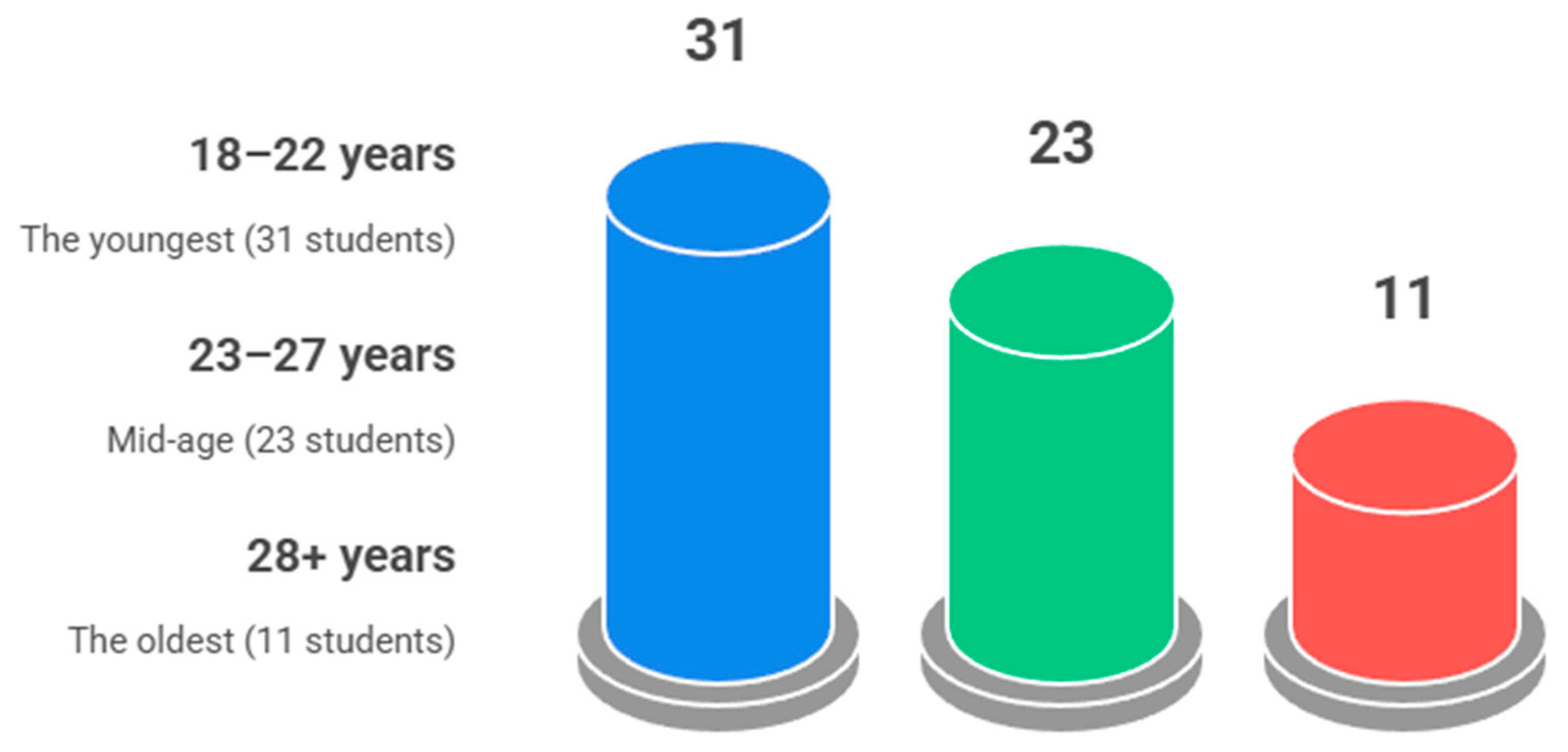
  • Age groups: 18–22 (47%); 23–27 (35%); 28+ (18%).
Justification of sample size and selection: the sample is a convenience cohort from classes where the author(s) taught during the academic year 2022–2023 (Figure 2). Given the exploratory and action-research nature of the project, the sample allowed a diagnostic snapshot to inform the co-creation phase. The Demola pilot (n = 6) was selected through the Demola platform call within partner institutions (Viana do Castelo and Coimbra Polytechnics) and comprised students with interest in the co-creation challenge; its purpose was exploratory and formative rather than representative.
The methodological stance is grounded in constructivist and transdisciplinary principles, connecting education, social sciences and tourism studies. By situating the research within the epistemological framework of participatory action research (Brydon-Miller et al., 2020; Feekery, 2023), the project sought not only to produce knowledge but also to promote meaningful learning experiences capable of enhancing students’ historical literacy and cultural awareness. This orientation responds to the call of UNESCO (2015) and the OECD Learning Compass 2030 (OECD, 2019a, 2019b) for innovative educational practices that integrate critical reflection, cultural identity, and active citizenship.
Within tourism research, qualitative methodologies have gained increasing recognition, largely because the field’s complexity requires approaches capable of capturing human experience, meaning-making, and contextual nuance (UNESCO, 2015). In contrast to quantitative designs that prioritize measurement and generalization, qualitative inquiry offers analytical depth for examining pedagogical aims, learner perspectives, and the socio-cultural dimensions of training practices.
Through qualitative content analysis (Drisko & Maschi, 2016), researchers can identify recurring semantic patterns and extract the underlying concepts and pedagogical orientations embedded in course documentation (Krippendorff, 2018; Council of Europe, 2016).
To summarize, this methodological design allowed the study to combine diagnostic and transformative dimensions, identifying current limitations in students’ historical awareness while simultaneously experimenting with innovative pedagogical solutions rooted in co-creation and digital heritage education.

3.1. Research Questions

The study was guided by the following research questions:
  • To what extent do higher education students demonstrate historical awareness and cultural identity in their personal and professional lives?
  • How do young people perceive the role of history and heritage in their education and cultural consumption habits?
  • What is the potential of active pedagogical methodologies—particularly the Demola co-creation model and design thinking—to foster meaningful historical learning and heritage engagement?
  • How can digital tools, including artificial intelligence, support the development of historical literacy and heritage education in tourism and teacher training contexts?
These questions provided the framework for both the diagnostic phase (questionnaire and survey and qualitative narratives) and the transformative phase (co-creation workshops and pedagogical experimentation).
By addressing these research questions, the study contributes to ongoing scholarly discussions on heritage education and tourism pedagogy (Marques, 2025a; Maricato et al., 2025). It highlights areas of strength as well as persistent gaps, pointing to the need for more intentional pedagogical design, greater interdisciplinary lens, and sustained innovation in the structuring of curricula within both education and tourism programmes.

3.2. Hybrid and Interdisciplinary Design

The methodological approach adopted was hybrid, integrating perspectives from history education, heritage interpretation, and tourism education. It targeted two educational tracks:
  • Students in Tourism programmes (undergraduate), expected to develop skills in interpreting and communicating heritage in professional contexts.
  • Students in Education programmes (master’s level), which will be future teachers responsible for fostering historical literacy and cultural identity from early childhood to basic education.
This dual scope reflects the continuum of heritage education that goes from early educational contexts to higher education, and ultimately to professional practice in tourism and culture.

3.3. Instruments and Data Collection

A convenience sample was used, comprising 65 higher education students enrolled in Tourism (58%) and Education (42%) programmes. Participants were selected voluntarily from two faculties of a Portuguese polytechnic institution, following an invitation to take part in a study on historical and cultural awareness. All participants provided informed consent. Three main instruments were combined:
  • Questionnaire and survey (n = 65)
The instrument combined closed and open items and covered: historical awareness and identity; cultural consumption habits; perceived role of history/heritage; attitudes toward digital tools. Closed items were analyzed with descriptive statistics (frequencies, percentages). Open responses were coded using content analysis (Elo & Kyngäs, 2008), supported by basic text-mining to identify common themes. The questionnaire included an informed consent statement and guaranteed anonymity.
2.
Co-creation (Demola-style) pilot workshops (n = 6)—The pilot followed a structured three-stage design thinking protocol adapted for a semester-long engagement:
-
Stage 1—Framing & Ideation (2 sessions, 3 h each): problem framing; stakeholder mapping; brainstorming.
-
Stage 2—Prototyping (3 sessions, 3 h each): rapid prototyping with digital tools (Miro boards, low-fidelity interactive prototypes), design of storyboards for AR experiences, and initial mock-ups of gamified flows.
-
Stage 3—Testing & Reflection (1 session, 3 h): user-feedback simulation, public presentation, and reflective debrief.
Facilitation and roles: a faculty facilitator (author) guided sessions; an external Demola mentor participated in weekly sessions remotely; students worked in interdisciplinary pairs. AI-assisted platforms (Miro for visual collaboration; basic text-mining for thematic clustering) supported idea organization. All sessions were recorded (audio), and field notes were kept.
Evaluation criteria (applied formatively):
-
Creativity and novelty of solution (rubric: 1–4);
-
Pedagogical relevance to heritage education (rubric: 1–4);
-
Feasibility/technical viability (rubric: 1–4).
3.
Degree of student ownership and collaboration (observational scale 1–4). Qualitative sources—biographical narratives (solicited short reflection essays), reflective journals by participants, and researcher field notes. These were coded for themes: family influence, school experience, digital affordances, motivation, and identity.

3.4. Ethical Considerations

All participants received information sheets and provided written informed consent. The study involved non-interventional educational activities and anonymized survey data. According to Portuguese legislation and institutional guidelines applicable at the time, this type of anonymous educational research did not require formal IRB approval.
The graphical elements presented throughout this article—including conceptual schemes, models and interpretive diagrams—were created using the Napkin AI platform (Napkin AI, 2024). This tool supported only the visual rendering of ideas, ensuring coherence and clarity in the representation of methodological and conceptual frameworks. At no stage did the platform generate or influence the substantive content, analytical procedures or interpretive conclusions of the study, which were entirely developed by the authors.

3.5. Pedagogical Experimentation and Active Learning Framework

The pedagogical dimension of the study was crucial. Activities were designed to:
  • Encourage student participation as co-authors of heritage narratives.
  • Explore digital storytelling, gamification, and virtual simulations as tools for engaging with history.
  • Experiment with AI-driven analysis of historical sources and student feedback, as a way to connect digital innovation with history didactics.
  • Foster transversal competences such as collaboration, creativity, and cultural interpretation, in line with the OECD Learning Compass 2030 (OECD, 2019a, 2019b) and the UNESCO frameworks on cultural heritage education (UNESCO, 2015, 2021).
The workshop followed a three-stage design thinking process: (1) ideation (brainstorming cultural challenges); (2) prototyping (developing digital and educational solutions using Miro and AR tools); and (3) presentation (public sharing and reflection). Data were collected through observation, student reports, and group reflections. Evaluation focused on creativity, collaborative engagement, and pedagogical relevance.
By combining quantitative survey data, qualitative narratives, and co-creation workshops, this research sought not only to triangulate teaching-learning perspectives, but also deepen understanding youth’s disengagement from history and culture. The integration of artificial intelligence (Lund et al., 2023; van Dis et al., 2023) in data processing and collaborative design platforms provided an additional layer of innovation, aligning the study with contemporary debates on digital transformation with regard to matters of education and tourism.
The findings of the study point to a paradox. Although we have students who recognize the importance of history and heritage, their practical engagement is limited, and their historical awareness is often abstract or fragmented. However, when given opportunities to participate in active, co-creative, and digitally enhanced learning processes, students demonstrated enthusiasm, creativity, and deeper connections to cultural identity.
These results point us to a complex reality and highlights the urgency of rethinking pedagogical approaches to history and heritage education, particularly within tourism curricula. One of the ways this can be done is by integrating digital transformation, co-creation, and AI-driven tools as strategies for fostering meaningful historical literacy.
The findings resonate strongly with the HISTOESE framework (Marques, 2025b), which positions historical literacy as a key dimension of sustainable education. The co-creation and digital storytelling activities described here illustrate how HISTOESE principles—critical inquiry, contextual awareness, and participatory engagement—can be implemented through active learning methodologies in higher education (Dredge et al., 2012).
Although still unevenly distributed, student-centred and participatory approaches are gradually becoming more visible in certain Portuguese higher-education contexts. Methods such as project-based learning, field activities, case analysis, and simulation are particularly common in polytechnic institutions (Figueiredo et al., 2021) and in universities with strong international links or specialized tourism departments.
To enhance the potentialities of Small Universities and their important role in the economic and cultural fabric of the region, including tourism related education/formation, a European consortium was created, known as SUNRISE (Smaller (strategic) Universities Network for Regional Innovative and Sustainable Evolution), which encompasses a large number of institutions of higher education across Europe.
Examples from the Portuguese system illustrate this diversity of practices. The Polytechnic Institute of Viana do Castelo frequently incorporates experiential learning and fieldwork; the Universidade Europeia and the University of Aveiro employ case studies and collaborative project work; and institutions such as Universidade Lusófona and the Polytechnic of Coimbra include internships and practice-oriented components. Nevertheless, approaches involving gamification, flipped learning, or digital platforms remain relatively uncommon. This fragmented adoption of contemporary pedagogical innovation echoes Tribe’s (2002) concerns regarding epistemological imbalance within tourism education. That imbalance can create a wide teaching-learning gap, from teachers to students, to future employers.
In other words, to summarize, the methodological framework not only enabled the identification of challenges in students’ historical awareness but also generated experimental practices capable of enhancing historical literacy and cultural sustainability through digital and participatory approaches.

4. Findings

The results of this study emerge from a multi-layered methodological approach, which combined survey data, qualitative narratives, and an active co-creation project (Demola), already mentioned above. In line with the research questions, the results are organized into three main strands: (i) students’ historical awareness and cultural consumption habits, assessed through the questionnaire and survey; (ii) qualitative insights into personal identity, family influence, and educational trajectories, collected through narratives and reflective journals; and (iii) the outputs of the Demola co-creation experience, which explored innovative digital and participatory strategies for reconnecting young people with history and cultural heritage.
This structure enables a clear distinction between the diagnostic dimension (what students currently think and do in relation to history and heritage) and the transformative dimension (what they co-created as possible solutions to improve engagement). By presenting the findings in this way, the study aims not only to highlight the existing challenges in students’ historical awareness but also to identify pathways for action in the fields of history education, heritage interpretation, and tourism training.

4.1. Survey Results: Historical Awareness and Cultural Consumption

The questionnaire was applied to a total of 65 students enrolled in undergraduate Tourism and Master’s programmes in Education (Table 1). Although the data were collected during the 2022–2023 academic year, the analysis was updated and recontextualized in 2024–2025, after the INVUTUR conference, in Aveiro, to align with post-pandemic trends in digital transformation and pedagogical innovation, ensuring the relevance and contemporaneity of findings. The survey aimed to diagnose levels of historical awareness, cultural practices and perceptions of history and heritage.
Quantitative analysis revealed that 68% of respondents expressed strong interest in 20th-century history and World War themes, whereas only 22% reported visiting museums more than twice per year. Qualitative responses reinforced this detachment: as one student noted, ‘I find history fascinating but rarely feel invited to engage with it beyond school.’ These combined insights illustrate the motivational–behavioural gap this study addresses.
This quantitative snapshot, complemented by qualitative narratives, provides an integrated understanding of how digital heritage pedagogies may re-engage students with cultural identity.
This table summarizes key sociodemographic characteristics of the surveyed students, including age distribution, gender, field of study, and cultural participation habits. These variables provide the structural baseline for interpreting levels of historical and cultural awareness.
The results revealed that students’ cultural consumption habits are relatively modest. Reading practices, attendance at museums and exhibitions, and cultural travel were reported at low frequencies, despite the wide availability and accessibility of such opportunities. This finding is consistent with international literature highlighting a general detachment of younger generations from cultural practices (Rusvitaningrum et al., 2018; Santos, 2021). When asked about their preferred historical topics, students highlighted themes such as:
Preferred historical themes: 68% reported strong interest in 20th-century history and World Wars; interest in ancient civilizations and medieval history was also high (>50%).
Cultural engagement gap: although 61% self-reported high interest in history, only 22% visit museums more than twice per year and 31% read historical books monthly—a clear discrepancy between interest and sustained cultural practice.
Consumption habits: audio-visual formats dominate (63% watch history documentaries), suggesting that historical engagement is more episodic and mediated than textually reflective.
Interestingly, although students expressed interest in broad historical narratives, their practical engagement with cultural heritage (e.g., visiting heritage sites, museums, or exhibitions) did not reflect these interests consistently. This discrepancy points to a gap between cognitive interest and active participation.
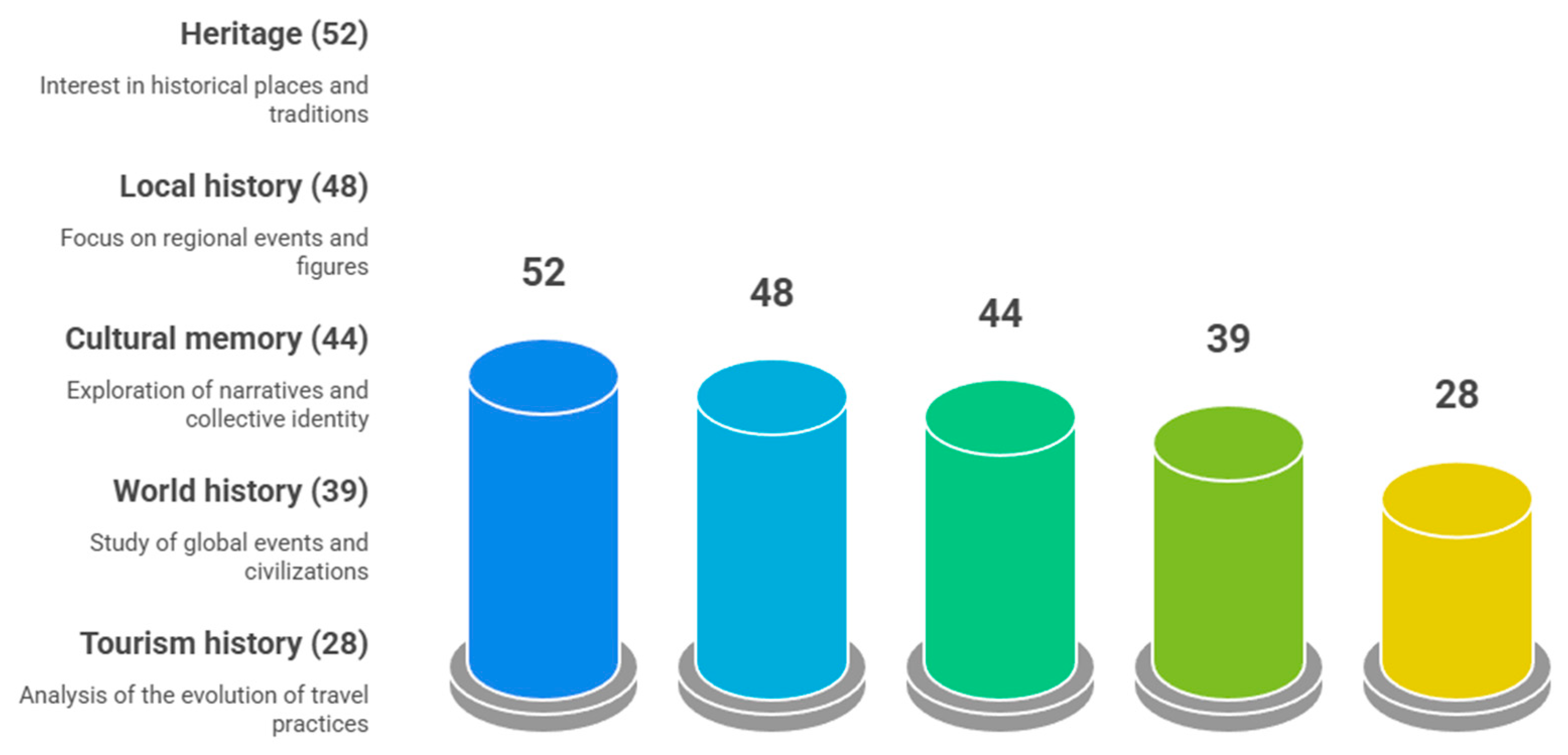
This Figure 3 illustrates the distribution of students’ preferred historical themes, based on the multiple-choice survey question. “Heritage” and “Local history” emerge as the strongest areas of interest, suggesting that proximity and identity-related content remain central in students’ historical engagement.
Students expressed a marked preference for broad and traditionally valorised historical narratives such as Ancient Civilizations, the Middle Ages, and Contemporary History (particularly the World Wars). Portuguese history and national identity, although present, were less frequently mentioned, which raises important questions regarding the extent to which young people connect with their own cultural heritage compared to global or “canonical” historical topics. This distribution suggests that while students demonstrate curiosity for History, their interests are often shaped by globalized cultural references (e.g., widely mediated events and eras) rather than by local or national historical anchors. Rusvitaningrum et al. (2018) and Santos (2021), who note that historical awareness among young adults tends to prioritize macro-narratives over community-based or identity-rooted histories, have reported similar findings. In this matter, a wider reflexion is urgent, especially with regard to school programmes, and schoolbooks, in order to understand the nature of this historical detachment.
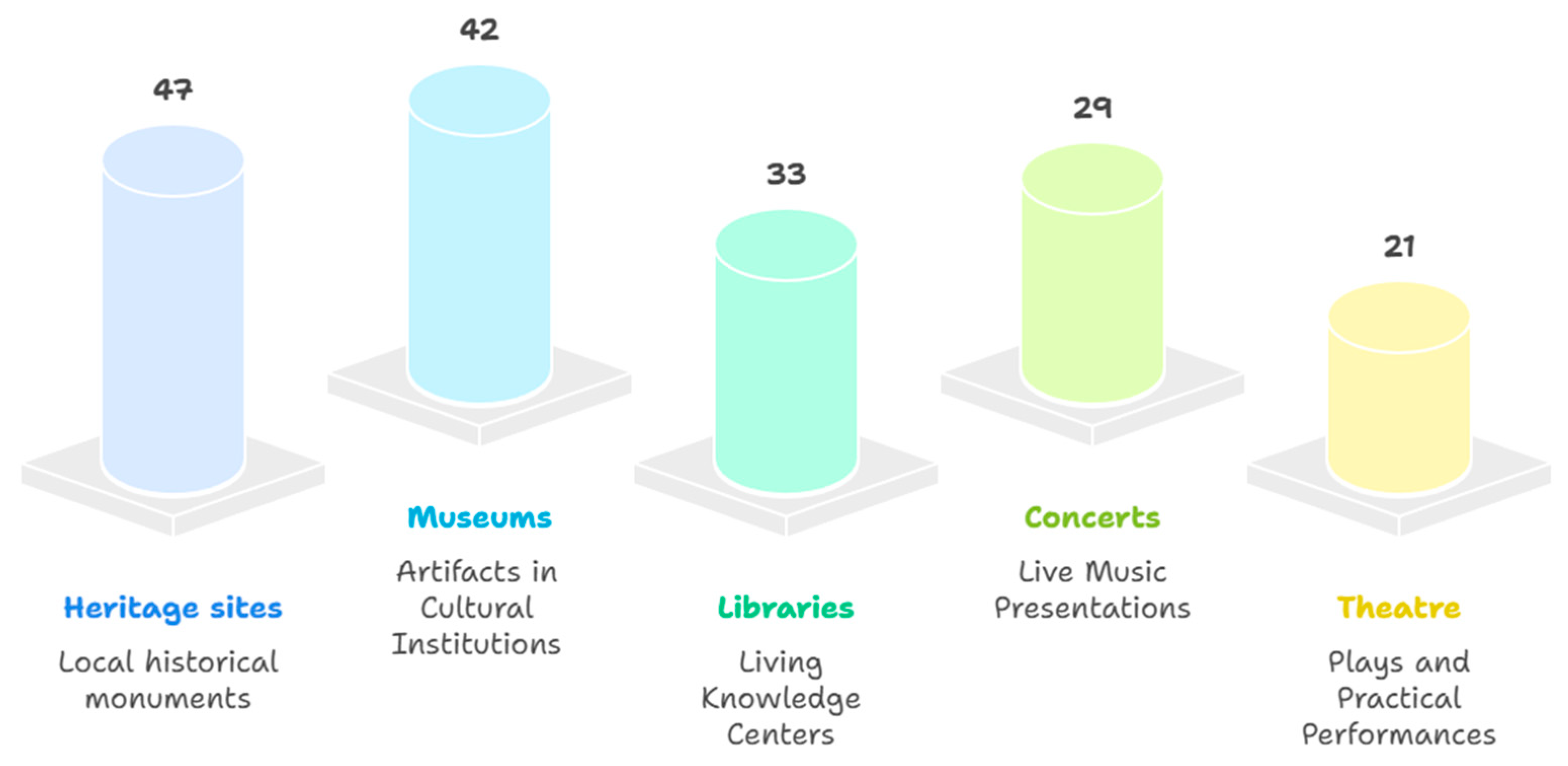
Figure 4 presents the self-reported frequency of participation in cultural activities, such as museum visitation, monument interpretation, reading historical materials, and attendance at cultural events. The data reveal heterogeneous but generally low levels of cultural engagement, supporting the study’s hypothesis that the decline in historical awareness is associated with limited exposure to cultural and heritage contexts.
When it comes to the student’s cultural practices, Figure 3 presents the percentage of students engaging in such activities. Watching history-themed films or documentaries was the most frequent activity (63%), followed by visiting museums/exhibitions (54%) and attending cultural events (46%). Regular reading of history-related materials was less common (31%), suggesting that students’ engagement with cultural content is more audiovisual and episodic than textual or reflective.
These figures indicate a motivational–behavioural gap: students express curiosity for canonical, media-amplified historical narratives but show limited sustained engagement with local heritage sites and reading practices.
This apparent detachment from local heritage also confirms concerns raised by UNESCO (2015, 2021) and the Council of Europe’s Faro Convention (2005), which stress the need to reinforce links between young people, their families and their immediate cultural environment. In pedagogical terms, the results highlight the importance of promoting didactic approaches that bridge the gap between students’ global historical curiosities and their local cultural identities, making heritage education more relevant, contextualized and participatory.

4.2. Qualitative Insights: Narratives and Cultural Identity

Biographical narratives and reflective journals revealed more nuanced insights. Students often described history as abstract and disconnected from their personal lives. Several reported that past experiences with history teaching in basic and secondary education were overly factual and non-engaging, leading to a sense of distance from historical knowledge.
Nevertheless, some narratives showed recognition of history and heritage as resources for identity and belonging. To complement the survey data, several excerpts from students’ reflective narratives illustrate the nuanced relationship between curiosity, identity, and detachment in historical learning. Analysis of narratives and reflective journals produced three overarching themes: (i) school experience as disengaging, (ii) family and local anchors, and (iii) digital mediation enabling re-engagement. Representative quotes:
  • Student A (Tourism, 21): “I’ve always liked history, but at school it felt distant—just dates and names. It was only when I visited local museums that I realized how our past is part of our everyday life.”
  • Student B (Education, 25): “We learn about the world’s history, but not enough about our own towns or families. That makes it harder to feel connected to heritage.”
  • Student C (Tourism, 23): “When we used digital tools in the workshop, it became more engaging. I could see history as something to explore, not just memorize.”
  • Student D (Education, 26): “Heritage is about identity, but if schools don’t make space for it, young people grow up without a sense of belonging. That’s what needs to change.”
Students acknowledged that family influences and school experiences played a role in shaping (or limiting) their relationship with history. This confirms the literature pointing to the family–school nexus as fundamental in transmitting cultural identity (UNESCO, 2015; Council of Europe, 2005). Overall, the qualitative data indicate that while curiosity exists, it is rarely translated into cultural practices or active historical awareness.
This result aligns with broader concerns regarding the role of globalization in the erosion of historical bonds among young adults (Bauman, 2000). These accounts reinforce the interpretivist orientation of this study, emphasizing that cultural identity and historical engagement are not merely cognitive constructs but also emotional and experiential processes.

4.3. The Demola Co-Creation Project: Active and Digital Pedagogies

The Demola project engaged six students from Tourism and Education in a series of co-creation workshops using design thinking methodology. Through brainstorming, storytelling and prototyping, the group developed several innovative ideas aimed at motivating young people to reconnect with history and heritage.
The key proposals included:
-
Gamification of heritage learning through digital quizzes and interactive challenges linked to local cultural sites.
-
Storytelling platforms where students could narrate their own cultural experiences and link them to broader historical contexts.
-
Augmented reality applications to enhance visits to museums and historical landmarks, enabling immersive experiences.
-
AI-supported tools for personalizing heritage learning, such as adaptive quizzes or intelligent recommendation systems for cultural activities.
Although the Demola workshop involved only six students, this pilot served an exploratory purpose. Its primary objective was to test the feasibility of co-creative and digital methods in historical learning, providing qualitative insights rather than generalizable results. The Demola experience confirmed the potential of active and participatory methodologies to stimulate engagement. Students reported that the co-creation process gave them a sense of ownership over historical knowledge and allowed them to perceive history as relevant for their personal and professional futures.

4.4. Intentionality in Pedagogical and Didactic Methodologies: Towards a Pedagogy of Memory

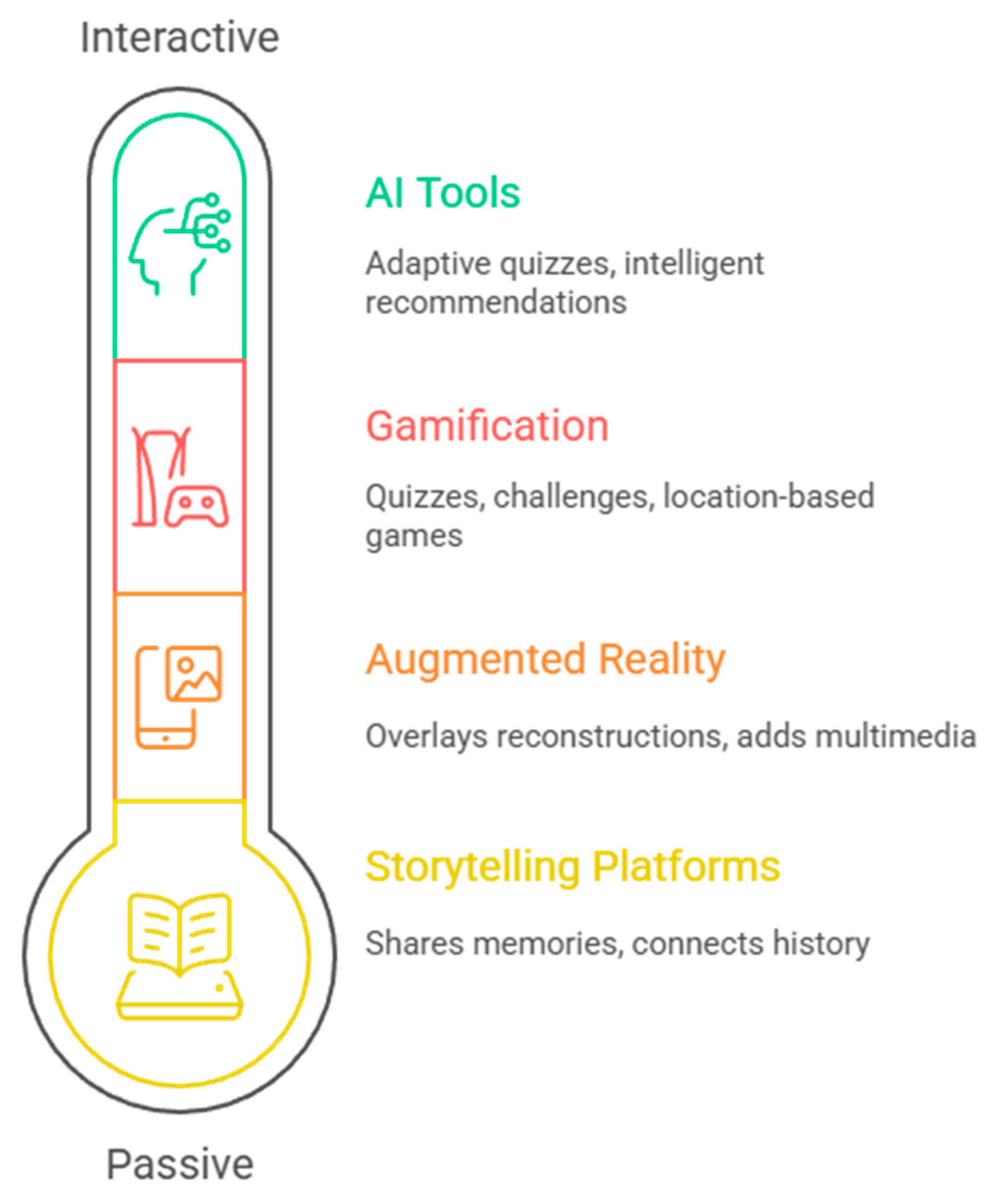
The pilot generated four main proposals (Figure 5) and demonstrated clear pedagogical affordances:
  • Gamification: prototypes included location-based quizzes for local heritage routes tied to short narratives; feasibility: medium (requires app development and content curation). Pedagogical value: high—fosters exploration and social competition.
  • Storytelling platform: low-tech platform to capture oral histories collected by students; feasibility: high (web platform); pedagogical value: strong for identity building and intergenerational exchange.
  • Augmented Reality (AR) applications: AR overlays reconstructing lost features of monuments to enhance on-site interpretation; feasibility: medium-high (requires 3D assets); pedagogical value: strong for contextualisation.
  • Digital-personalisation tools: adaptive quizzes and recommendation engines to align heritage activities with interests; feasibility: medium; pedagogical value: supports differentiated pathways.
The contents in Table 2 summarizes the main outputs of the Demola co-creation workshops, which illustrate the capacity of active and participatory methodologies to stimulate students’ engagement with history and heritage. The four proposals—gamification of heritage learning, storytelling platforms, augmented reality applications, and AI-supported personalization—reveal a strong orientation towards digital and innovative tools. This outcome reflects broader trends identified in the literature, where digital transformation is increasingly seen as a driver of heritage interpretation and education (Lee, 2023; UNESCO, 2003).
This table presents the main analytical categories emerging from the qualitative content analysis of open-ended responses, including representative student quotations. The coding structure is aligned with the HISTOESE model and the Pedagogy of Memory conceptual framework. A particularly relevant aspect is that students themselves proposed solutions that converge with international policy recommendations. For instance, UNESCO (2021) and the OECD (2019a, 2019b) emphasize the importance of creativity, collaboration, and digital literacy in education, while the UNWTO (2022) highlights the integration of cultural heritage in tourism curricula. The Demola results suggest that, when given the opportunity to co-create, students not only re-engage with history but also articulate proposals aligned with these global frameworks.
Finally, the emphasis on gamification and immersive technologies indicates a clear recognition by students of the need for more interactive and personalized approaches to history education. This confirms that innovative didactic models can help to overcome the distance and lack of motivation observed in more traditional, fact-based history teaching, creating meaningful pathways towards a Pedagogy of Memory in the digital age.
Overall, the results presented in this section converge on a central diagnosis: while students show interest in history, their engagement remains fragmented and often detached from local and national heritage, as evidenced by the survey results. The co-creation process (Table 2), however, reveals that when students are invited to actively participate and innovate, they can generate creative and internationally aligned proposals that reconnect history, heritage, and identity with contemporary digital tools and pedagogical trends.
This duality—initial detachment versus potential re-engagement through active and digital approaches—highlights both the challenges and opportunities facing heritage and history education in higher education contexts. It also demonstrates the potential of methodologies such as Demola to foster historical awareness and cultural sensitivity, while bridging the gap between academic knowledge, societal needs, and tourism education.
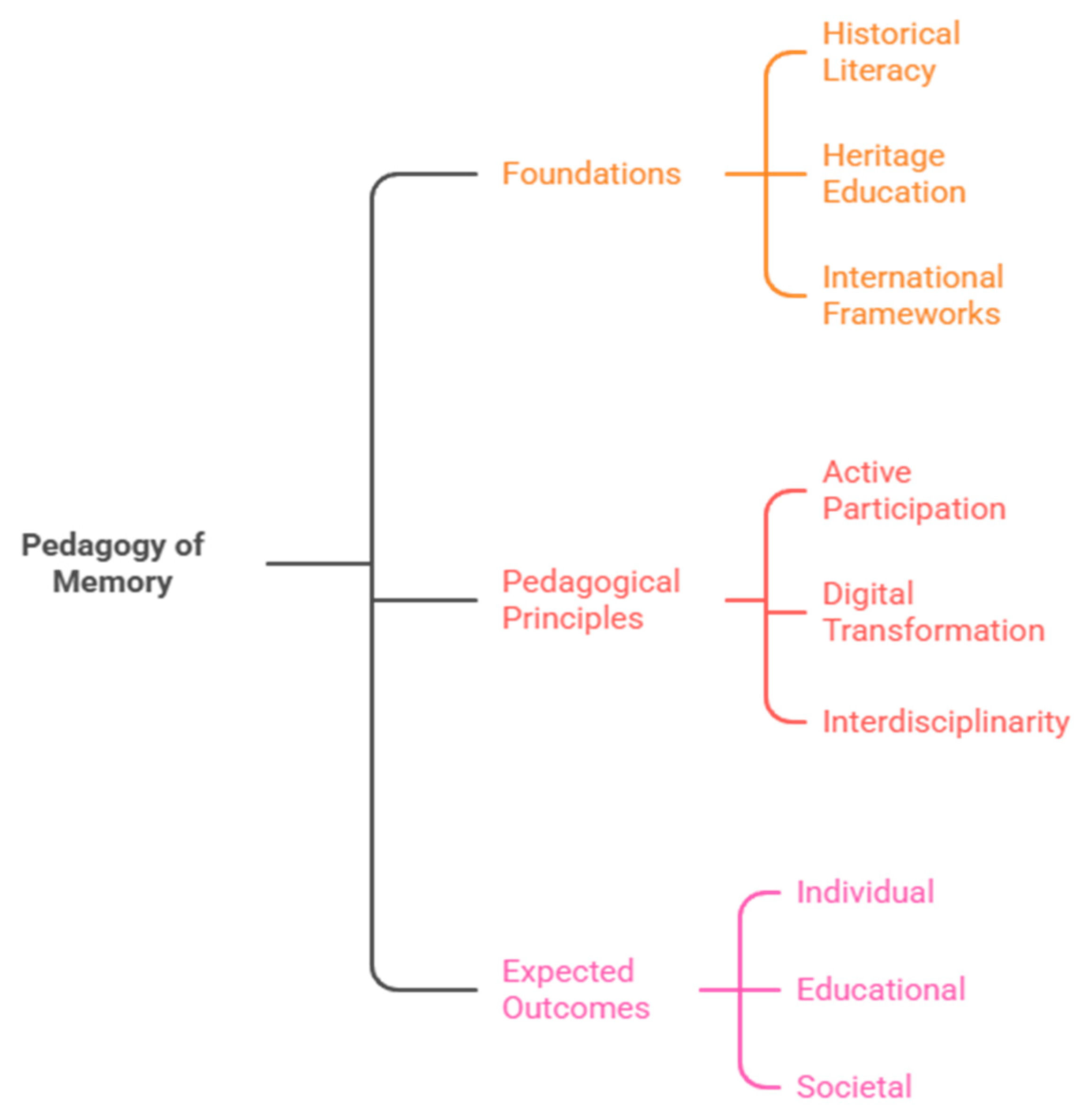
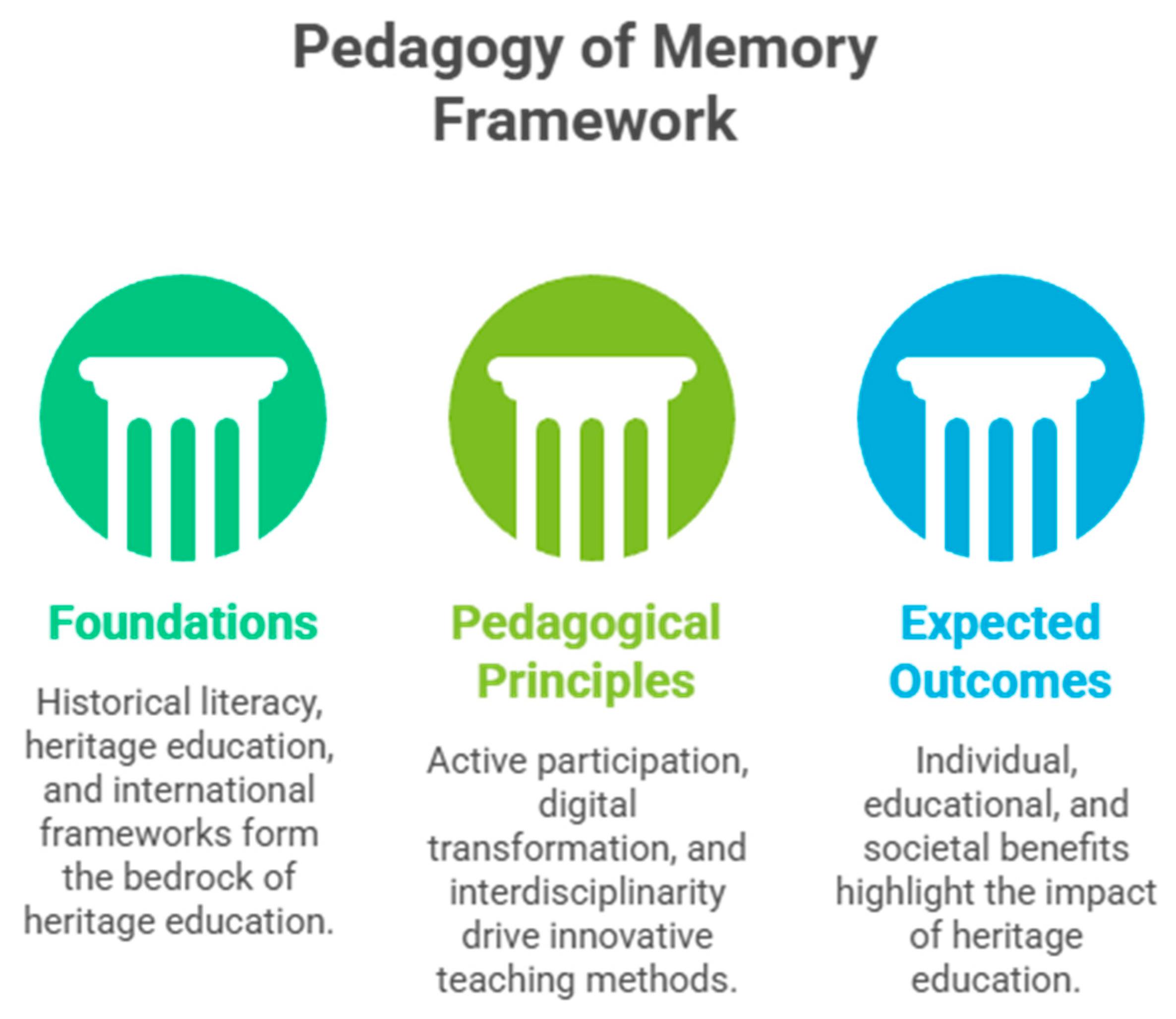
In sum, the findings reinforce the urgent need to rethink didactic strategies, moving beyond technocratic curricula towards integrative models where history and heritage play a central role in identity formation, cultural citizenship, and sustainable tourism development. These insights provide a robust foundation for the subsequent discussion, in which the implications of these results are critically analyzed in light of international frameworks, comparative evidence and the broader pedagogical shift towards a Pedagogy of Memory. Bellow we present in Figure 6 the epistemological and conceptual proposal for its enunciation, being certain that it will serve as a model to consider in these times of ‘historical forgetfulness’, in which the challenge for history teachers and cultural heritage professionals is greater than ever:
In sum, the main axes on which Pedagogy of Memory is based are the ones explained bellow (Figure 7):
1. Foundations
Historical Literacy → historical thinking, temporal awareness, critical interpretation.
Heritage Education → cultural appreciation, identity, sustainability.
International Frameworks → UNESCO (World Heritage Education, Recommendation 2023), OECD (Learning Compass 2030), Council of Europe (Faro Convention), UNWTO (Tourism Education Guidelines).
2. Pedagogical Principles
Active Participation → action research, project-based learning, co-creation (Demola, design thinking).
Digital Transformation → digital storytelling, gamification, AR/VR, artificial intelligence (personalisation).
Interdisciplinarity → connection between Education, Tourism and Humanities, crossing STEAM and Heritage.
3. Expected Outcomes
Individual: greater motivation, curiosity, critical thinking, cultural identity.
Educational: cross-curricular integration of History and Heritage, strengthening the role of Humanities in higher education.
Societal: active cultural citizenship, sociocultural sustainability, valuing heritage in tourism and basic education.
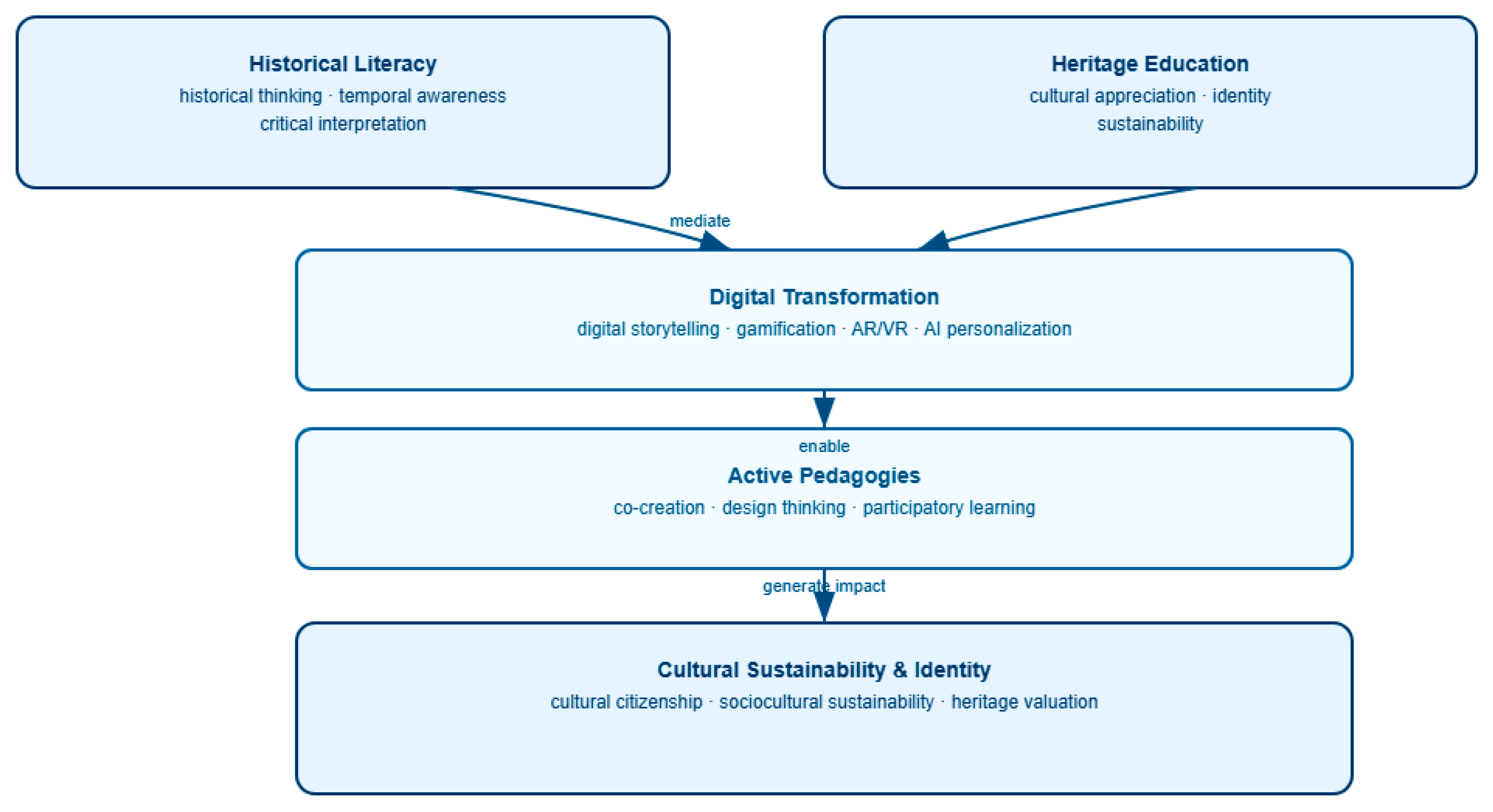
The models show how these mediators contribute to cultural sustainability and identity outcomes, aligning HISTOESE principles with practical classroom and community interventions.
Therefore, this conceptual model integrates the principles of historical literacy, heritage education, and digital transformation within the HISTOESE framework (Figure 8). The diagram illustrates how active pedagogies—such as co-creation and design thinking—mediate between theoretical foundations (historical and heritage literacy) and their societal outcomes in terms of cultural sustainability and identity. It provides a visual synthesis of the pedagogical process underpinning a digital-age Pedagogy of Memory:

5. Discussion

The findings reveal a persistent disconnect between students expressed interest in canonical historical themes and their relatively limited participation in cultural activities. This pattern echoes international evidence (Rusvitaningrum et al., 2018; Santos, 2021), but it also exhibits specific characteristics within the present sample: a marked preference for audio-visual formats and a comparatively weaker involvement with local cultural heritage. Three key interpretative dimensions emerge:
First, the persistence of fact-centred and transmissive history teaching appears to inhibit deeper engagement. Students frequently recalled their prior schooling as repetitive and non-participatory, a perception widely recognized in the literature, which links didactic models to civic engagement and historical thinking (Barton & Levstik, 2004). Although higher education offers opportunities for re-engagement, it cannot fully compensate for long-term exposure to passive approaches; curricular renewal is therefore essential.
Second, digital mediation emerges simultaneously as an opportunity and a risk. As seen in the co-creation proposals, students identify digital tools—AR, gamification, adaptive content—as attractive paths for re-engaging with heritage. However, digital tools alone do not guarantee meaningful learning; they require pedagogical intentionality to avoid superficial experiences. The evidence from this study supports the hypothesis that digital innovation is most effective when embedded in participatory, contextualized learning environments that connect global narratives with local identities.
Third, questions of institutional capacity and scalability must be considered. The Demola pilot demonstrated strong creative potential, but its sustainability depends on institutional support, integration into curricula, and strategic partnerships with museums, cultural institutions, and tourism operators. Comparative studies indicate that short-term interventions can increase motivation but produce limited cognitive transfer unless embedded in sustained, longitudinal practices.
Taken together, these findings suggest that while international frameworks (UNESCO, OECD, UNWTO) offer a robust policy foundation, their implementation requires operational translation into competency descriptors, assessment tools, and institutional incentives. The gap between policy ideal and pedagogical practice becomes evident when interpreting the motivational–behavioural discrepancy: 61% of students express interest in history, but only 22% engage regularly in museum or heritage-related activities. Qualitative narratives further reveal that many continue to view history as distant or overly factual, reinforcing the patterns captured quantitatively.

5.1. International Perspectives on Co-Creation and Heritage Education

The proposals generated through the Demola co-creation workshops (Table 2) align closely with international initiatives that have employed co-creation and participatory approaches in heritage education. Projects such as the WORTHY initiative, which developed virtual museums and collaborative cultural platforms (Marini et al., 2022), as well as co-created archeological interpretation experiences (Tøttrup et al., 2025), highlight the growing trend of involving students and communities as active participants in historical narratives. Similarly, previous applications of the Demola methodology in Finland, Spain, and Portugal (Catalá-Pérez et al., 2020; Costa et al., 2022) confirm its capacity to foster innovation and collaboration between higher education and societal stakeholders.
However, while co-creation is widely praised for enhancing motivation, research on its long-term effects on historical thinking remains limited. Existing studies—including the present one—tend to document short-term outcomes. Thus, while co-creation holds promise, further research must evaluate whether it leads to sustained gains in historical reasoning, critical interpretation, and civic awareness.

5.2. Sustainability of the Demola Approach in Historical and Heritage Education

Adapting the Demola model to history and heritage education represents a relevant innovation, as the methodology has traditionally been associated with entrepreneurship, design, and problem solving (Catalá-Pérez et al., 2020; Amante & Fernandes, 2022). The present findings suggest that integrating design thinking, storytelling, and gamification fosters a sense of ownership over historical narratives and may enhance motivation.
Nevertheless, transferring a model developed for innovation ecosystems into historical education raises epistemological questions—particularly concerning historical accuracy, narrative responsibility, and the balance between creativity and evidentiary rigour.
Sustainability is another concern. Effective integration of Demola-like methodologies requires institutional commitment, interdisciplinary teams, and partnerships with cultural institutions. To determine whether the initial enthusiasm observed can be translated into deeper and longer-term learning, cross-sectional and longitudinal studies are needed.

5.3. Policy Frameworks and Empirical Convergence

The study’s findings resonate strongly with major international policy frameworks, which emphasize the civic, cultural, and educational importance of heritage. UNESCO’s World Heritage Education Programme and the Faro Convention (Council of Europe, 2005) explicitly call for participatory heritage practices, intercultural dialogue, and community engagement.
From a competency-based standpoint, the OECD Learning Compass 2030 (OECD, 2019a, 2019b) supports the integration of cultural awareness, responsibility, collaboration, and creativity across curricula. These competencies were clearly activated in the Demola workshops, where students collaborated, reflected critically, and designed heritage experiences.
Similarly, UNWTO’s Tourism Education Guidelines (UNWTO, 2022) highlight the importance of embedding heritage literacy into professional tourism training—an area particularly relevant to the Tourism students involved in this study.
Empirical findings from history education research reinforce the value of active methodologies. Studies on inquiry-based learning, document-based instruction, and oral history (Claravall & Irey, 2022; Wilke et al., 2020) show measurable improvements in sourcing, contextualisation, corroboration, and argumentation. Digital heritage studies (Lee, 2023) confirm the motivational and contextual benefits of AR/VR.
The HISTOESE framework (Marques, 2025b) provides a contemporary theoretical anchor, linking historical literacy, sustainability, and pedagogical innovation. The Demola proposals—gamification, storytelling, AR—reflect precisely the types of multimodal approaches the HISTOESE model encourages.

5.4. Limitations and Future Research Directions

This study presents several limitations. The sample size (65 survey respondents; 6 students in the Demola pilot) restricts generalisability, and the project’s short-term duration limits the assessment of sustained impacts. Future research should therefore include:
  • Comparative, cross-institutional studies, capturing cultural and educational diversity.
  • Longitudinal research, measuring cognitive gains in historical thinking using validated instruments.
  • Enhanced use of AI for personalized heritage learning and data analysis.
  • Stronger partnerships with museums, heritage institutions, and tourism operators, to co-develop scalable interventions.
The lack of internationally standardized assessments for historical cognition also remains a challenge. Further work is required to develop tools capable of capturing nuanced trends across contexts.
Institutionally, barriers such as rigid curricula and limited interdisciplinarity persist. Although students respond positively to participatory methods, structural constraints may limit the translation of innovative practices into widespread pedagogical change.
Future research directions must consider comparative multi-institutional studies; longitudinal designs with validated historical-thinking instruments; stronger partnership models with museums to scale prototypes; controlled trials to measure cognitive outcomes.

5.5. Towards a Pedagogy of Memory in the Digital Age

The results advocate for the development of a Pedagogy of Memory adapted to contemporary digital and cultural challenges. This pedagogy is not grounded in memorisation; instead, it promotes the collaborative construction of individual and collective memory, informed by evidence, contextual understanding, and community engagement.
Its defining features include:
  • Active and participatory methods, such as co-creation and design thinking, to re-engage students with history.
  • Digital innovation, including gamification, augmented reality, and artificial intelligence, to provide personalized and immersive learning.
  • Institutional and policy support, from both international organizations and national bodies such as CNIPES, to ensure sustainability and integration.
Such pedagogy not only addresses the immediate problem of youth disengagement from history but also contributes to the broader goals of cultural sustainability, civic education, and professional foresight in tourism and education.
This approach also seeks to counterbalance the prevailing erosion of historical consciousness in Europe, marked by curricular marginalization of history and an increasing societal focus on technological skills at the expense of humanistic competencies.
It also reinforces the role of face-to-face sharing, intergenerational dialogue, and emotional connection to heritage—dimensions that cannot be replaced by digital tools alone.
The HISTOESE model (Marques, 2025b) provides a conceptual basis for operationalising this pedagogy by integrating historical reasoning, sustainability, and co-creation into a combined framework for cultural learning and community engagement.

5.6. National Frameworks and the Role of CNIPES

Beyond the international frameworks, the Portuguese context offers a unique opportunity to embed these innovations through the Conselho Nacional para a Inovação no Ensino Superior (CNIPES). As highlighted in recent work (Marques, 2025a), CNIPES plays a critical role in shaping pedagogical innovation across higher education and can serve as a platform to integrate heritage and history education more systematically into curricula (CNIPES—Conselho Nacional da Inovação Pedagógica no Ensino Superior, 2024). CNIPES is, therefore, a bridge between global and national strategies.
By aligning higher education reform with global frameworks (UNESCO, OECD, UNWTO), CNIPES has the potential to establish a new pedagogical paradigm in which the humanities—particularly History and Heritage—are not sidelined by the technocratic emphasis on STEM and STEAM, but are instead recognized as essential for cultural sustainability and professional training in tourism and education.

6. Conclusions

The main objective of this study was to investigate and analyze the historical and cultural awareness of higher education students in Portugal, with a focus on tourism and education programmes, as well to experiment with innovative pedagogical approaches capable of reconnect youth with history and heritage. By combining survey data, qualitative narratives, and a Demola co-creation project, this research provided both a diagnostic and a transformative perspective on this matter.

6.1. Answering the Research Questions

RQ1. 
To what extent do higher education students demonstrate historical awareness and cultural identity in their personal and professional lives?
Findings show that students display fragmented and often abstract historical awareness, with cultural consumption habits (museum visits, exhibitions, reading) at relatively low levels. While they express interest in broad historical themes, this interest does not translate into consistent practices, and their cultural participation remains modest.
RQ2. 
How do young people perceive the role of history and heritage in their education and cultural consumption habits?
Students tend to perceive history as distant and disconnected from their daily lives. Family and school experiences emerged as decisive factors in shaping identity, though often not sufficient to sustain engagement. History is valued more as a general reference than as a practical or professional resource. In other terms, history is valuable, but distant.
RQ3. 
What is the potential of active pedagogical methodologies—particularly the Demola co-creation model and design thinking—to foster meaningful historical learning and heritage engagement?
The Demola workshops confirmed that active, participatory, and co-creative methodologies are effective in generating motivation and ownership. Students produced innovative proposals—including gamification, storytelling platforms, augmented reality applications, and AI-based personalization tools—that reflect a clear potential for rethinking history and heritage education in higher education.
RQ4. 
How can digital tools, including artificial intelligence, support the development of historical literacy and heritage education in tourism and teacher training contexts?
Digital tools proved to be an essential mediator in this process. AI-supported text mining enhanced data analysis, while co-creation platforms (Miro, AR, adaptive tools) expanded opportunities for immersive and personalized learning. This suggests that digital transformation can be strategically leveraged to bridge the gap between students’ historical curiosity and active cultural engagement.

6.2. Broader Implications

The results highlight an urgent need to move beyond a technocratic model of higher education, where humanities are often overshadowed by STEM and STEAM priorities. Instead, history and heritage must be recognized as critical components of professional education in both tourism and teacher training.
International frameworks provide strong support for this repositioning: UNESCO and the Council of Europe emphasize the civic and cultural value of heritage; the OECD Learning Compass 2030 underlines cultural awareness as a transversal competence; and UNWTO guidelines insist on embedding heritage literacy into tourism education. In Portugal, bodies such as CNIPES can play a pivotal role in embedding these approaches into higher education policy, advancing a new pedagogy that integrates heritage and innovation. This multidimensional repositioning situates history and heritage not as auxiliary subjects but as engines of cultural sustainability and ethical innovation in higher education.

6.3. Towards a Pedagogy of Memory

The study contributes to defining a Pedagogy of Memory rooted in:
  • Historical literacy and critical reasoning;
  • Participatory and community engagement;
  • Digital innovation;
  • Cultural sustainability.
This pedagogy calls for renewed attention to humanistic foundations—narrative, identity, intergenerational dialogue—within technologically mediated societies. It also promotes school–community partnerships and micro-credential pathways to strengthen teacher and tourism-professional training.
Based on research conducted in the Portuguese context, we consider that this challenge of a Pedagogy of Memory arises at the European level. This results, to a large extent, from a turning away from the past, starting with school curricula, the downplaying of the subject of History (considered boring and useless, as some of the discourses in the sample reveal), in a social debate that is very focused on technological issues and very little on humanistic ones. It also results in an economy essentially based on production and productivity and very little on reflection on its foundations, horizons and even its consequences for personal and collective identity and the common good.
The study’s findings support the establishment of structured partnerships between schools, cultural organizations, and local communities, along with the development of clear rubrics for assessing heritage literacy and community involvement. Future research should focus on collaborative design processes with museums and tourism stakeholders, enabling shared evaluation of learning outcomes and local impact.
Micro-credential pathways in heritage sustainability for teachers could further operationalise the principles of Pedagogy of Memory and the HISTOESE framework, enhancing the role of educators and tourism professionals as agents of cultural sustainability and territorial resilience. In this integrated perspective, educational practice becomes directly connected with cultural valorisation and community participation, offering practical avenues for supporting cultural-tourism revitalisation through coordinated work with museums, local tourism offices, and heritage associations.

6.4. Final Considerations

Despite its limitations (sample size, short-term scope), this research demonstrates both the magnitude of the challenge—youth detachment from history—and the potential of innovative, digitally supported, co-creative pedagogies to reverse this trend. The study advocates for:
  • Stronger curricular integration of heritage education;
  • Institutional support at national and international levels;
  • Continued experimentation with AI and immersive tools;
  • Longitudinal and comparative studies to measure long-term effects.
Ultimately, history and heritage education must evolve beyond traditional fact-based approaches. By embracing digital transformation, co-creation, and international frameworks, higher education can cultivate culturally aware professionals and citizens capable of shaping sustainable and identity-rich futures.
In conclusion, history and heritage education can no longer be confined to traditional, fact-based approaches and learning. By embracing co-creation, digital transformation, and international frameworks, higher education can cultivate culturally aware professionals and citizens capable of constructing sustainable and identity-rich futures and also nurture a generation of human beings who not only understand their past but are prepared to critically shape the cultural sustainability of the future.

Author Contributions

Conceptualization, G.M.M.; methodology, G.M.M. and R.O.M.; software, G.M.M. and R.O.M.; validation, G.M.M. and R.O.M.; formal analysis, G.M.M. and R.O.M.; investigation, G.M.M. and R.O.M.; resources, G.M.M. and R.O.M.; data curation, G.M.M.; writing—original draft preparation, G.M.M.; writing—review and editing, R.O.M.; visualization, G.M.M. and R.O.M.; supervision, G.M.M.; project administration, G.M.M.; funding acquisition, G.M.M. and R.O.M. All authors have read and agreed to the published version of the manuscript.

Funding

This research received no external funding.

Institutional Review Board Statement

Ethical review and approval were waived for this study due to according to Portuguese national legislation and institutional guidelines. Research of this nature (non-interventional educational studies, involving voluntary and anonymous participation, without the collection of personal or sensitive data) is exempt from Institutional Review Board (IRB) approval.

Informed Consent Statement

Informed consent was obtained from all subjects involved in the study.

Data Availability Statement

This manuscript is a substantially extended version of a paper presented at the INVTUR 2024 International Conference. The original contributions presented in this study are included in the article. Further inquiries can be directed to the corresponding author.

Acknowledgments

The authors acknowledge the use of the Napkin AI tool for preliminary visual structuring of diagrams included in this article.

Conflicts of Interest

The authors declare no conflicts of interest.

Abbreviations

The following abbreviations are used in this manuscript:
GDPGross Domestic Product
PBLProblem-based learning
UNESCOUnited Nations Educational, Scientific and Cultural Organization
UNWTOUnited Nations World Tourism Organization

References

  1. Airey, D. (2016). Tourism education: Past, present and future. Turisticko Poslovanje, 17, 9–12. [Google Scholar] [CrossRef]
  2. Airey, D., & Tribe, J. (Eds.). (2005). An international handbook of tourism education. Elsevier. [Google Scholar] [CrossRef]
  3. Aisiah, A., Suhartono, S., & Sumarno, S. (2016). The measurement model of historical awareness. Research and Evaluation in Education, 2(2), 108–121. [Google Scholar] [CrossRef]
  4. Almeida, D. S. d., e Abreu, F. B., & Boavida-Portugal, I. (2025). Digital twins in tourism: A systematic literature review. Tourism Management Perspectives, 47, 101133. [Google Scholar]
  5. Amante, R., & Fernandes, R. (2022). Learning based on co-creation processes: A glimpse of the (Demola) pedagogical innovation training course at IPV. In Proceedings of the 17th European conference on innovation and entrepreneurship (pp. 15–21). Academic Conferences and Publishing Limited. [Google Scholar] [CrossRef]
  6. Barton, K., & Levstik, L. (2004). Teaching history for the common good. Routledge. [Google Scholar] [CrossRef]
  7. Bauman, Z. (2000). Liquid modernity. Polity Press. [Google Scholar]
  8. Biggs, J., & Tang, C. (2011). Teaching for quality learning at university (4th ed.). McGraw-Hill Education. [Google Scholar]
  9. Bogdan, R. C., & Biklen, S. K. (2007). Qualitative research for education: An introduction to theories and methods (5th ed.). Allyn & Bacon/Pearson. [Google Scholar]
  10. Brydon-Miller, M., Kral, M., & Ortiz Aragón, A. (2020). Participatory action research: International perspectives and practices. International Review of Qualitative Research, 13(2), 103–111. [Google Scholar] [CrossRef]
  11. Carvalho, A., Teixeira, S., Olim, L., Campanella, S., & Costa, T. (2021). Pedagogical innovation in higher education and active learning methodologies—A case study. Education + Training, 63(2), 195–213. [Google Scholar] [CrossRef]
  12. Catalá-Pérez, D., Rask, M., & De-Miguel-Molina, M. (2020). The Demola model as a public policy tool boosting collaboration in innovation: A comparative study between Finland and Spain. Technology in Society, 63, 101358. [Google Scholar] [CrossRef]
  13. Claravall, E. B., & Irey, R. (2022). Fostering historical thinking: The use of document based instruction for students with learning differences. The Journal of Social Studies Research, 46(3), 249–264. [Google Scholar] [CrossRef]
  14. CNIPES—Conselho Nacional da Inovação Pedagógica no Ensino Superior. (2024). Decreto regulamentar n.º 4/2024. Available online: https://diariodarepublica.pt/dr/detalhe/decreto-regulamentar/4-2024-895287961 (accessed on 22 September 2025).
  15. Costa, J., Gonçalves, V., & Ferro-Lebres, V. (2022). Processos de cocriação e colaboração no projeto Demola através da plataforma Miro. In V. Gonçalves, A. García-Valcárcel, J. A. Moreira, & M. R. Patrício (Eds.), ieTIC2022: Livro de atas (pp. 83–99). Instituto Politécnico de Bragança. Available online: http://hdl.handle.net/10198/26307 (accessed on 17 October 2025).
  16. Council of Europe. (2005). Convention on the value of cultural heritage for society (Faro Convention). Council of Europe. Available online: https://www.coe.int/en/web/culture-and-heritage/faro-convention (accessed on 17 October 2025).
  17. Council of Europe. (2016). Presentation of the project "competences for democratic culture". Council of Europe Publishing. Available online: https://www.coe.int/en/web/education/competences-for-democratic-culture (accessed on 17 October 2025).
  18. Demola Global. (2020). Demola co-creation model: From local innovation experiment to global platform. Demola Global. Available online: https://www.demola.net (accessed on 17 October 2025).
  19. Denzin, N. K., & Lincoln, Y. S. (Eds.). (2011). The SAGE handbook of qualitative research (4th ed.). Sage Publications. [Google Scholar]
  20. Doussot, S. (2019). Case studies in history education: Thinking action research through an epistemological framework. Educational Action Research, 28(2), 310–324. [Google Scholar] [CrossRef]
  21. Dredge, D., Airey, D., & Gross, M. J. (2012). The nature and purpose of tourism higher education: A review of curriculum content and learning outcomes. Journal of Teaching in Travel & Tourism, 12(4), 332–347. [Google Scholar] [CrossRef]
  22. Drisko, J. W., & Maschi, T. (2016). Content analysis. Oxford university press. [Google Scholar]
  23. Elo, S., & Kyngäs, H. (2008). The qualitative content analysis process. Journal of Advanced Nursing, 62, 107–115. [Google Scholar] [CrossRef]
  24. European Commission. (2018). Innovation in cultural heritage research: For an integrated European research policy. Directorate-General for Research and Innovation. [Google Scholar] [CrossRef]
  25. European Council. (2017). Competences for democratic culture: Living together as equals in culturally diverse democratic societies. Council of Europe Education Department. Available online: https://www.coe.int/en/web/education/-/competences-for-democratic-culture (accessed on 17 October 2025).
  26. Feekery, A. (2023). The 7 C’s framework for participatory action research: Inducting novice participant-researchers. Educational Action Research, 32(3), 332–347. [Google Scholar] [CrossRef]
  27. Fernandes, A., & Andrade, C. (2023). A avaliação e a educação em turismo: Perspetivas no ensino superior português. Revista Turismo & Desenvolvimento, 39, 231–247. [Google Scholar]
  28. Fernández-Villarán, M., Guereño-Omil, B., & Ageitos, M. C. (2024). Embedding sustainability in tourism education: Bridging curriculum Gaps for a sustainable future. Sustainability, 16(21), 9286. [Google Scholar] [CrossRef]
  29. Fidgeon, P. R. (2010). Tourism education and curriculum design: A time for consolidation and review? Tourism Management, 31(6), 699–723. [Google Scholar] [CrossRef]
  30. Figueiredo, M., Matias, R., Alves, V., Bastos, N., Duarte, R. P., Ferreira, B., & Cunha, C. (2021). Professional development for higher education teaching staff: An experience of peer learning in a Portuguese polytechnic. In L. G. Chova, A. L. Martínez, & I. C. Torres (Eds.), INTED2021 proceedings (pp. 6356–6361). IATED. [Google Scholar] [CrossRef]
  31. González, A. M. (2018). Tourism education: Challenges and innovations. Journal of Hospitality, Leisure, Sport & Tourism Education, 22, 1–10. [Google Scholar] [CrossRef]
  32. Harland, T., & Wald, N. (2018). Curriculum, teaching and powerful knowledge. Higher Education, 76(4), 615–628. [Google Scholar] [CrossRef]
  33. Hmelo-Silver, C. E. (2004). Problem-based learning: What and how do students learn? Educational Psychology Review, 16(3), 235–266. [Google Scholar] [CrossRef]
  34. Kemmis, S., & McTaggart, R. (2005). Participatory action research: Communicative action and the public sphere. In N. K. Denzin, & Y. S. Lincoln (Eds.), The SAGE handbook of qualitative research (3rd ed., pp. 559–603). Sage Publications. [Google Scholar]
  35. Krippendorff, K. (2018). Content analysis: An introduction to its methodology (4th ed.). Sage Publications. [Google Scholar]
  36. Landers, R. N. (2014). Developing a theory of gamified learning: Linking serious games and gamification of learning. Simulation & Gaming, 45(6), 752–768. [Google Scholar] [CrossRef]
  37. Lee, C. (2023, June 25–30). Memorialization through metaverse: New technologies for heritage education. 29th CIPA Symposium—Documenting, Understanding, Preserving Cultural Heritage: Humanities and Digital Technologies for Shaping the Future, Florence, Italy. [Google Scholar] [CrossRef]
  38. Leinonen, T., & Durall, E. (2014). Design thinking and collaborative learning. Comunicar, 21(42), 107–115. [Google Scholar] [CrossRef]
  39. Lévesque, S. (2008). Thinking historically: Educating students for the twenty-first century. University of Toronto Press. [Google Scholar]
  40. Lopez, L., & Pérez, Y. (2021). Cultural tourism and heritage education in the Portuguese way of St. James. In C. Bevilacqua, F. Calabrò, & L. Della Spina (Eds.), New metropolitan perspectives (Smart innovation, systems and technologies, Vol. 178). Springer. [Google Scholar] [CrossRef]
  41. Lund, B. D., Wang, T., Mannuru, N. R., & Nie, B. (2023). Chatting about ChatGPT: How may AI and GPT impact academia and libraries? Library Hi Tech News, 40(3), 9–12. [Google Scholar] [CrossRef]
  42. Maricato, D., Aquino, J., & Johanesson, G. (2025). Pedagogical practices in tourism higher education: A systematic literature review. Frontiers in Sustainable Tourism, 4, 1720759. [Google Scholar]
  43. Marini, C., Agostino, D., & Simoni, L. (2022). Co-creating history: The case of WORTHY as a virtual collaborative museum. Journal of Museum Education, 47(3), 385–394. [Google Scholar] [CrossRef]
  44. Marques, G. M. (2024, May 8–10). No room for clio: Historical and cultural awareness of younger people in liquid times. INVTUR Conference 2024 (pp. 545–548), Aveiro, Portugal. Available online: https://proa.ua.pt/index.php/invtur/article/view/34030 (accessed on 17 October 2025).
  45. Marques, G. M. (2025a). Didactic and pedagogical aspects of tourism training programs in Portugal: Conceptual analysis of study plans. Tourism and Hospitality, 6(3), 138. [Google Scholar] [CrossRef]
  46. Marques, G. M. (2025b). Heritage education, sustainability and community resilience: The HISTOESE PBL model. Sustainability, 17(21), 9891. [Google Scholar] [CrossRef]
  47. Martinez-Garcia, E., Coll-Ramis, D., & Horrach-Rossello, R. (2024). Tourism education research: A bibliometric review of emerging themes. Annals of Tourism Research, 101, 103659. [Google Scholar] [CrossRef]
  48. McNiff, J., & Whitehead, J. (2010). You and your action research project (3rd ed.). Routledge. [Google Scholar] [CrossRef]
  49. Napkin AI. (2024). Napkin AI [Artificial intelligence–assisted visualisation platform]. Available online: https://www.napkin.ai (accessed on 17 October 2025).
  50. OECD. (2019a). Future of education and skills 2030: OECD learning compass 2030. Available online: https://www.oecd.org/en/about/projects/future-of-education-and-skills-2030.html (accessed on 17 October 2025).
  51. OECD. (2019b). The OECD Learning Compass 2030: A framework for education for the future. OECD Publishing. [Google Scholar]
  52. OpenAI. (2025). ChatGPT [Large language model]. Available online: https://chat.openai.com/ (accessed on 17 October 2025).
  53. Postareff, L., Lindblom-Ylänne, S., & Nevgi, A. (2007). The effect of pedagogical training on teaching in higher education. Teaching and Teacher Education, 23(5), 557–571. [Google Scholar] [CrossRef]
  54. Reche, M., & Janissek-Muniz, R. (2018). Inteligência estratégica e design thinking. Future Studies Research Journal, 10(1), 82–108. [Google Scholar]
  55. Rihova, I., Buhalis, D., Moital, M., & Gouthro, M.-B. (2015). Conceptualising customer-to-customer co-creation in socially dense tourism contexts. International Journal of Tourism Research, 17(4), 356–363. [Google Scholar] [CrossRef]
  56. Rusvitaningrum, Y., Agung, S. L., & Sudiyanto, S. (2018). Strengthening students’ historical awareness in history learning in high school through inquiry method. International Journal of Multicultural and Multireligious Understanding, 5(5), 249–254. [Google Scholar] [CrossRef]
  57. Santos, L. (2021). Relationship between students’ historical awareness and their appreciation of local cultural heritage. International Journal of Multidisciplinary: Applied Business and Education Research, 2(6), 520–527. [Google Scholar] [CrossRef]
  58. Seixas, P. (2006). Benchmarks of historical thinking: A framework for assessment in Canada. Centre for the Study of Historical Consciousness. Available online: https://historicalthinking.ca (accessed on 17 October 2025).
  59. Smith, M. K. (2009). Issues in cultural tourism studies. Routledge. [Google Scholar] [CrossRef]
  60. Stankov, U., & Gretzel, U. (2020). Tourism 4.0 technologies and tourist experiences. Information Technology & Tourism, 22(3), 477–488. [Google Scholar] [CrossRef]
  61. Syahputra, M., Sariyatun, N., & Ardianto, D. T. (2020). The level of students’ historical awareness. International Journal of Education and Social Science Research, 3(5), 162–172. [Google Scholar] [CrossRef]
  62. Tilden, F. (2007). Interpreting our heritage (4th ed.). University of North Carolina Press. [Google Scholar]
  63. Tøttrup, A. P., Lillemark, M. R., Hansen, J., Svendsen, S. H., Hickinbotham, S., Toftdal, M., & Brandt, L. Ø. (2025). A concept for co-creation in participatory science: Insights from developing the archaeological next generation lab. Citizen Science: Theory and Practice, 10(1), 22. [Google Scholar] [CrossRef]
  64. Tribe, J. (2002). The philosophic practitioner: Tourism epistemologies. Annals of Tourism Research, 29(2), 338–357. [Google Scholar] [CrossRef]
  65. Tussyadiah, I. P., Inversini, A., Reichenberger, I., & Schlögl, S. (2017). Virtual reality, presence, and attitude change. Tourism Management, 66, 140–154. [Google Scholar] [CrossRef]
  66. UNESCO. (2003). Convention for the safeguarding of the intangible cultural heritage. Available online: https://ich.unesco.org/en/convention (accessed on 17 October 2025).
  67. UNESCO. (2015). Rethinking education: Towards a global common good? Available online: https://unesdoc.unesco.org/ark:/48223/pf0000232555 (accessed on 17 October 2025).
  68. UNESCO. (2021). Teaching and learning with living heritage: A resource kit for teachers. Available online: https://ich.unesco.org/doc/src/52066-EN.pdf (accessed on 17 October 2025).
  69. UNICEF. (2008). Child-friendly schools manual. Available online: https://www.unicef.org/sites/default/files/2020-03/Child-Friendly-Schools-Manual.pdf (accessed on 17 October 2025).
  70. UNWTO. (2022). Tourism education guidelines. World Tourism Organization (UNWTO). [Google Scholar]
  71. Valduga, T., & Balão, A. (2023). A transdisciplinaridade e a cocriação aplicada ao processo de aprendizagem social. Aprender, (45), 58–69. [Google Scholar] [CrossRef]
  72. van Dis, E. A. M., Bollen, J., Zuidema, W., van Rooij, R., & Bockting, C. L. H. (2023). ChatGPT: Five priorities for research. Nature, 614(7947), 224–226. [Google Scholar] [CrossRef]
  73. Wan, Y., Ma, C., & Leung, M. (2024). Digital transformation in tourism higher education. Journal of Hospitality, Leisure, Sport & Tourism Education, 35, 100462. [Google Scholar] [CrossRef]
  74. Wilke, A. M., Green, D. P., & Cooper, J. (2020). A placebo design to detect spillovers. Journal of the Royal Statistical Society: Series A, 183(3), 1075–1096. [Google Scholar] [CrossRef]
  75. Wu, Y. (2021). Roles of education in intangible cultural heritage tourism and managerial strategies analysis based on model of contact opportunity. In Proceedings of the 6th international conference on economics, management, law and education (Advances in economics, business and management research, Vol. 165). Atlantis Press. [Google Scholar]
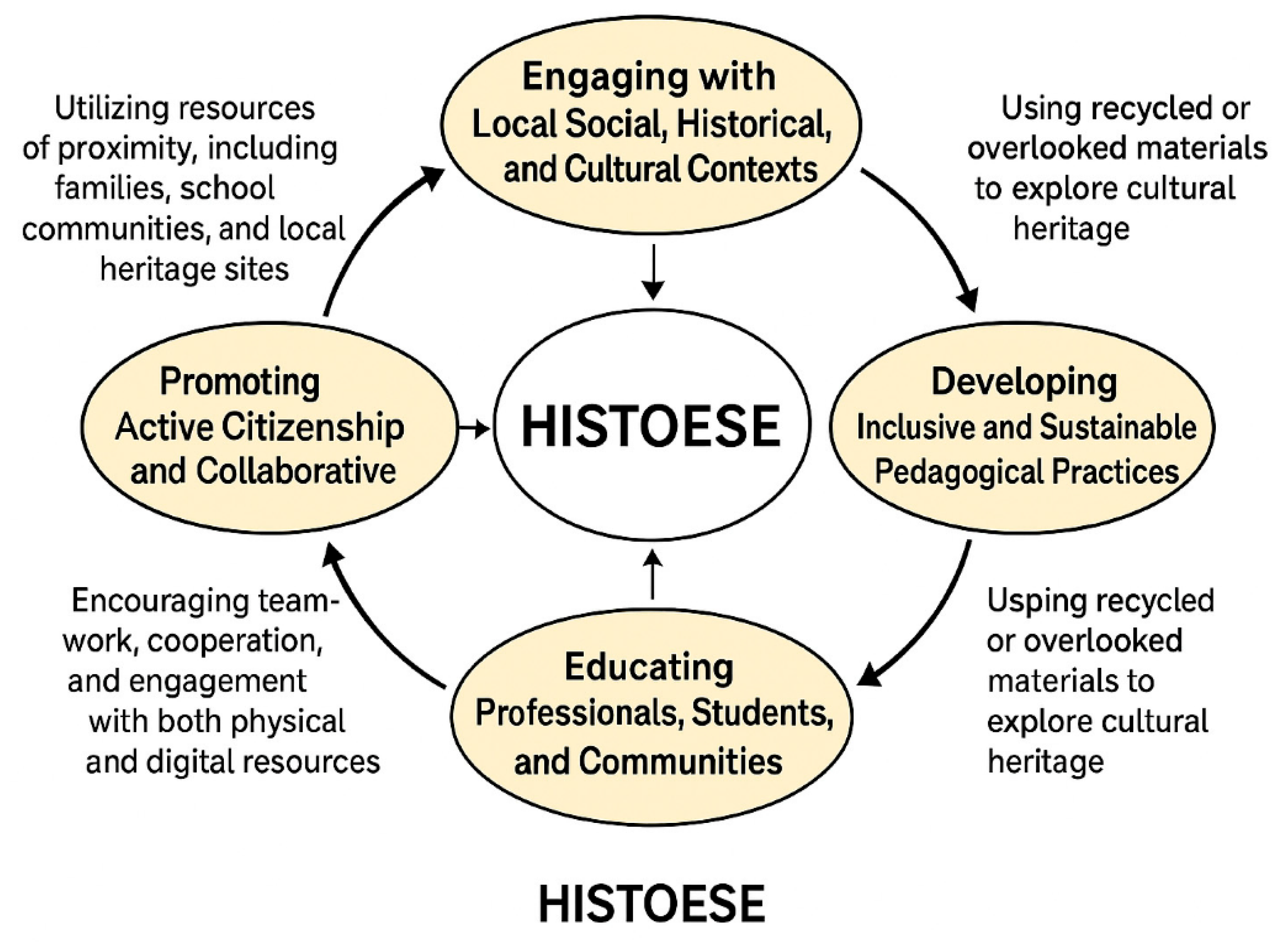
Figure 1. HISTOESE logic approach. Source: Own elaboration.
Tourismhosp 07 00011 g001
Figure 2. Students distribution by age. Source: Own elaboration.
Tourismhosp 07 00011 g002
Figure 3. Preferred Historical Themes among students. Source: Own elaboration.
Tourismhosp 07 00011 g003
Figure 4. Frequency of Cultural Practices among Student. Source: Own Elaboration.
Tourismhosp 07 00011 g004
Figure 5. Co-creation proposals developed during the Demola workshops. Source: Own elaboration from Napkin AI platform.
Tourismhosp 07 00011 g005
Figure 6. Conceptual Framework for Pedagogy of Memory. Source: Own elaboration.
Tourismhosp 07 00011 g006
Figure 7. Pedagogy of Memory Framework. Source: Own elaboration with Napkin AI.
Tourismhosp 07 00011 g007
Figure 8. Pedagogy of Memory + HISTOESE Framework. Source: Own elaboration.
Tourismhosp 07 00011 g008
Table 1. Sociodemographic and cultural profile of respondents (n = 65). Source: Own elaboration based on survey data collected (Polytechnic Institute of Viana do Castelo).
VariableCategory% of Respondents (n)
Programme of studyTourism (Undergraduate)58% (38)
Education (Master’s)42% (27)
GenderFemale68% (44)
Male32% (21)
Age group18–2247% (31)
23–2735% (23)
28+18% (11)
Visits to museums/exhibitions (≥once/year)Yes54% (35)
Attendance at cultural eventsYes46% (30)
Reading historical/cultural books monthlyYes31% (20)
Watching history-themed films/documentariesYes63% (41)
Self-graded interest in historyHigh/Very high61% (40)
Table 2. Summary of co-creation proposals developed during the Demola workshops (n = 6), with brief descriptions and their pedagogical and heritage value.
IdeaDescriptionPedagogical/Heritage Value
Gamification of Heritage LearningDevelopment of digital quizzes, interactive challenges and location-based games linked to local cultural sites and museum collections.Encourages engagement and motivation through play-based learning; facilitates informal learning paths; increases visitation and active exploration of heritage sites.
Storytelling PlatformsOnline platforms and mobile apps where students and community members record, share and map personal memories and local narratives connected to historical themes.Fosters identity building and links personal memory to collective history; promotes oral history practices and intergenerational exchange; supports public history and community participation
Augmented Reality ApplicationsUse of AR to overlay historical reconstructions, interpretive layers and multimedia content on-site or in virtual museum tours.Provides immersive, multisensory experiences that deepen appreciation of material culture; supports experiential learning and contextualized interpretation.
AI-Supported Personalization ToolsAdaptive quizzes, intelligent recommendation systems and text-analysis tools that personalize learning pathways and suggest heritage activities based on user profiles.Promotes personalized learning; makes heritage relevant to individual interests; helps educators identify knowledge gaps and tailor interventions; supports scalable outreach.
Disclaimer/Publisher’s Note: The statements, opinions and data contained in all publications are solely those of the individual author(s) and contributor(s) and not of MDPI and/or the editor(s). MDPI and/or the editor(s) disclaim responsibility for any injury to people or property resulting from any ideas, methods, instructions or products referred to in the content.