

Review

Advances in Antibody Engineering for Therapeutic Development: Molecular Strategies and Clinical Applications


by
Olalekan Chris Akinsulie
1,*,
Sinem Ulusan
2,
Ibrahim Idris
3,
Sammuel Shahzad
1,
James Okon
3,
Chizaram Ukauwa
4,
Moyinoluwa Oladoye
3,
Victor Aliyu
5,
Charles Egede Ugwu
2,
Toyin Ayandokun
6,
Roberta Koku
1,
Jesuferanmi Mary Akinsulie
7,
Muhammad Ipoola Adeyemi
8,
Charity Chinonso Ugwu
9 and
Lilian Chizobam Ugorji
10
1
Department of Veterinary Microbiology and Pathology, College of Veterinary Medicine, Washington State University, Pullman, WA 99164, USA
2
Paul G. Allen School for Global Health, College of Veterinary Medicine, Washington State University, Pullman, WA 99164, USA
3
School of Veterinary Medicine, Texas Tech University, Amarillo, TX 79106, USA
4
Faculty of Veterinary Medicine, University of Abuja, Abuja 902101, Federal Capital Territory, Nigeria
5
School of Molecular Biosciences, College of Veterinary Medicine, Washington State University, Pullman, WA 99164, USA
6
Department of Chemistry, College of Arts and Sciences, Washington State University, Pullman, WA 99164, USA
7
School of Health Sciences and Society, University of Suffolk, Ipswich IP3 0AQ, UK
8
Department of Biological Sciences, University of Bergen, 5007 Bergen, Vestland County, Norway
9
Faculty of Pharmaceutical Sciences, Nnamdi Azikiwe University, Awka 420110, Anambra State, Nigeria
10
Department of Microbiology, Imo State University, Owerri 460108, Imo State, Nigeria
*
Author to whom correspondence should be addressed.
Immuno 2026, 6(2), 23; https://doi.org/10.3390/immuno6020023
Submission received: 2 March 2026 / Revised: 20 March 2026 / Accepted: 30 March 2026 / Published: 2 April 2026

Abstract

Antibodies are highly specialized glycoproteins produced by B cells in response to antigenic stimulation. They are a major component of the adaptive immune system and play a key role in host defenses by detecting, neutralizing, and eliminating foreign antigens. Over the years, their roles have transcended mere immune biomarkers due to their unique specificity, affinity maturation, and structural versatility, making them indispensable tools in biomedical research, including vaccine design, therapeutic development, and diagnostics. In this work, we examine the structural and functional basis of antibody bioactivity while highlighting key engineering strategies, including Fc modification, glycosylation engineering, and the development of novel antibody formats. We also considered the application of engineered antibodies in infectious disease and cancer prevention and treatment, focusing on current challenges, and proposing emerging directions that position antibody engineering as a transformative approach in future biomedical research and innovation.

1. Introduction

Antibodies, or immunoglobulins (Ig), are highly specialized glycoproteins produced by B cells in response to antigenic stimulation [1]. As central members of the immunoglobulin superfamily, they represent one of the most refined products of the adaptive immune system and play an indispensable role in host defenses by detecting, neutralizing and eliminating foreign antigens [2]. Their remarkable specificity, affinity maturation, and structural versatility have also made them indispensable tools in biomedical research, including vaccine design, therapeutic development, and diagnostics [3]. Over the past few decades, antibodies have evolved from basic research reagents into one of the most successful classes of therapeutics. Despite their natural efficacy, unmodified antibodies can exhibit limitations, such as suboptimal pharmacokinetics, limited tissue penetration, and vulnerability to antigenic variation or pathogen escape [4,5,6,7]. These constraints have driven the rapid expansion of antibody engineering, which aims to optimize antibody structure and function to enhance stability, effector activity, and therapeutic outcomes. Advances in molecular biology, recombinant DNA technology, and protein engineering have made it possible to make new types of antibodies, like monoclonal antibodies, bispecific antibodies, antibody-drug conjugates, and chimeric antigen receptor (CAR)-T cells, which are T cells engineered to express antibody-derived recognition domains. These engineered immunotherapeutic modalities have transformed modern immunotherapy. Engineered antibodies are now approved for the treatment of autoimmune diseases, cancers, and a wide range of infectious diseases, including viral, bacterial, fungal, and parasitic infections. This progress shows how important it is for basic immunology and translational medicine to work together, and it shows how antibody engineering is a key part of precision therapeutics. Through evolutionary refinement and molecular selection, antibodies have become the primary mediators of humoral immunity, conferring exquisite antigen specificity, durable immunological memory, and potent effector mechanisms. Building on these naturally optimized properties, antibody engineering involves the deliberate modification of antibody sequences, including structural domains and post-translational features that enhance binding affinity, effector function, stability, and pharmacokinetic behavior [8]. In this context, an understanding of the biological foundations of humoral immunity provides essential background for antibody engineering. B cells are a fundamental component of the adaptive immune system and mediate humoral immunity through the production of antibodies (immunoglobulins), which provide antigen-specific recognition and long-term immune protection [9,10]. Antibodies contribute to host defenses through multiple mechanisms, including direct neutralization of pathogens, opsonization, activation of the complement cascade, and engagement of Fc receptors on innate immune cells [11,12]. Unlike innate immune responses, which rely on germline-encoded receptors, B-cell-mediated immunity generates an extraordinarily diverse antigen receptor repertoire and establishes immunological memory, enabling enhanced secondary responses following antigen re-exposure [13,14]. These properties form the biological basis of vaccine-induced protection and durable immunity. Together, these immunological principles provide the foundation upon which antibody structure, diversity, and engineering strategies are built.
This review aims to examine the structural and functional basis of antibody activity while highlighting key engineering strategies, including Fc modification, glycosylation engineering, and the development of novel antibody formats. We further discuss the application of engineered antibodies in infectious disease and cancer prevention and treatment, address current challenges, and outline emerging directions that position antibody engineering as a transformative approach in future biomedical research and innovation.

2. Antibody Structure, Diversity, and Effector Function

Antibodies are Y-shaped immunoglobulins composed of two identical heavy (H) chains and two identical light (L) chains, stabilized by disulfide bonds and organized into antigen-binding fragments (Fab) and a crystallizable fragment (Fc) that mediates effector functions [15]. The Fab region contains the variable domains and complementarity-determining regions (CDRs) that confer antigen specificity, whereas the Fc region interacts with Fc receptors (FcRs) and complement components to recruit innate immune effector mechanisms [15,16]. This modular architecture underpins the adaptability of antibodies as engineering scaffolds.
Human antibodies are classified into five major isotypes—IgG, IgA, IgM, IgD, and IgE—each specialized for distinct anatomical locations and immunological roles [17]. IgG is the predominant serum isotype, accounting for approximately 85% of circulating immunoglobulins, and serves as the principal scaffold for therapeutic antibody development due to its structural stability, favorable pharmacokinetics, and functional versatility [18]. Within IgG, subclasses (IgG1–IgG4) differ in hinge architecture and FcγR/C1q binding profiles, resulting in distinct effector potencies that influence antibody-dependent cellular cytotoxicity (ADCC), antibody-dependent cellular phagocytosis (ADCP), and complement-dependent cytotoxicity [11,17]. These subclass-specific properties represent critical design parameters in therapeutic antibody engineering.
The molecular diversity that enables precise antigen recognition arises from the variable regions of the Fab domains, which are composed of conserved framework regions (FRs) interspersed with highly diverse CDRs [19]. Antibody diversity is generated through combinatorial rearrangement of variable (V), diversity (D), and joining (J) gene segments, with additional diversification introduced through junctional modifications and somatic hypermutation following antigen exposure [20]. From an antibody engineering perspective, these naturally occurring processes provide the conceptual foundation for in vitro strategies such as affinity maturation, CDR optimization, and rational antibody design aimed at enhancing binding specificity and potency. Among the six CDRs—three from the heavy chain and three from the light chain—CDR-H3 exhibits the greatest sequence variability and often plays a dominant role in antigen engagement [15].
Antibody-mediated protection arises from the coordinated interplay between antigen-binding (Fab-mediated) specificity and Fc-dependent effector mechanisms. Neutralization represents a primary Fab-mediated function by which antibodies block pathogen entry or toxin activity, thereby reducing infectivity and pathogenicity [21]. In viral infections, this often involves interference with surface proteins required for host cell entry, such as the SARS-CoV-2 spike protein [22], although neutralization also extends to bacterial toxins and other soluble pathogenic factors.
The specificity and diversity underlying antigen recognition are generated through V(D)J recombination, a somatic gene rearrangement process that assembles immunoglobulin variable exons from multiple germline gene segments [23]. RAG1 and RAG2 initiate recombination by introducing site-specific DNA breaks adjacent to recombination signal sequences, enabling random joining of V, D, and J segments [24,25]. Junctional modifications during recombination further increase diversity, as imprecise end joining and the addition of non-templated nucleotides by terminal deoxynucleotidyl transferase (TdT) generate highly variable complementarity-determining region 3 (CDR3) sequences that play a dominant role in antigen recognition [26]. These mechanisms collectively produce an immense antibody repertoire capable of recognizing a vast array of antigens.
Following antigen exposure, somatic hypermutation and affinity maturation in germinal centers further refine antibody specificity and binding strength. Somatic hypermutation introduces point mutations into variable region genes at exceptionally high rates and is initiated by activation-induced cytidine deaminase (AID) [27,28]. B cells expressing higher-affinity antibodies are preferentially selected for survival, leading to progressive increases in average antibody affinity over time [29]. In parallel, AID also mediates class-switch recombination, which replaces the constant region of the antibody heavy chain while preserving antigen specificity. This process enables antibodies to acquire distinct effector functions, tissue distribution patterns, and serum half-lives [30]. These natural diversification mechanisms provide the biological foundation for antibody engineering strategies such as in vitro affinity maturation, CDR mutagenesis, and display-based selection systems used to generate high-performance therapeutic antibodies.
Beyond antigen recognition, Fc-mediated effector functions play a critical role in amplifying antibody activity. These mechanisms include opsonization and phagocytosis via Fc receptor (FcR) engagement on macrophages and neutrophils [12], activation of the classical complement pathway through C1q binding leading to inflammation and target lysis [31], and antibody-dependent cellular cytotoxicity mediated by FcγRIII-expressing natural killer cells [32]. In addition, antibody–antigen immune complexes facilitate clearance by reticuloendothelial organs and enhance antigen presentation, thereby supporting adaptive immune memory [33].
The magnitude and quality of these effector functions are dynamically regulated by isotype and subclass selection, Fc structural features, glycosylation patterns, and host Fc receptor polymorphisms, all of which carry significant therapeutic implications [11,34]. Together, the integrated relationship between Fab-mediated specificity and Fc-mediated effector functions forms the biological foundation upon which modern antibody engineering strategies are built.

3. Antibody Engineering Strategies: Fab and Variable Region Optimization

Antibody engineering encompasses a broad range of strategies aimed at improving antigen recognition, binding specificity, and overall therapeutic performance. Fab and variable region engineering primarily focuses on optimizing the antigen-binding interface through modifications of complementarity-determining regions (CDRs) and framework regions to enhance binding affinity, specificity, breadth, and developability [15]. A central experimental approach involves display-based selection technologies, in which large libraries of antibody variants are iteratively enriched for improved binding properties. Phage display enables the isolation of rare high-affinity antigen binders from vast combinatorial libraries [35], while yeast surface display allows for quantitative affinity maturation through flow cytometric selection and has become a widely used platform for fine-tuning antibody–antigen interactions [9].
Beyond affinity optimization, Fab engineering also plays an important role in improving antibody specificity and reducing undesirable polyspecificity, both of which are critical considerations in therapeutic development. Modifications within CDRs and supporting framework regions can be used not only to strengthen target engagement, but also to minimize off-target binding and nonspecific interactions, thereby improving safety, efficacy, and overall developability [16]. These strategies are particularly important for therapeutic antibodies intended for complex biological environments, where off-target interactions may compromise performance.
In addition to sequence-level optimization, Fab engineering can involve reformatting antibodies into alternative architectures, such as Fab fragments, single-chain variable fragments (scFvs), or multivalent and bispecific constructs. These approaches can enhance functional avidity, enable simultaneous targeting of multiple epitopes, or facilitate immune redirection, thereby addressing challenges such as antigenic escape and heterogeneity that are particularly prominent in infectious diseases and cancer [36]. Collectively, Fab- and variable-region-focused strategies define the targeting precision and binding performance of engineered antibodies and provide the molecular foundation for therapeutic antibody design.
Despite significant advances in affinity and specificity optimization, challenges such as polyspecificity, aggregation, and manufacturability remain critical barriers to clinical translation, highlighting the need for integrated design strategies that balance binding performance with developability.

4. Fc Engineering for Enhanced Antibody Function

Fc engineering refers to the deliberate modification of the antibody constant region to modulate effector functions, pharmacokinetics, and safety profiles beyond those achieved through natural immune responses. Unlike Fab-mediated antigen recognition, which primarily determines specificity, the Fc domain governs interactions with Fc receptors (FcRs) and complement components, thereby shaping downstream immune activation. Advances in protein engineering have enabled precise alteration of Fc–receptor engagement to enhance or attenuate mechanisms such as antibody-dependent cellular phagocytosis (ADCP), antibody-dependent cellular cytotoxicity (ADCC), and antibody-dependent complement deposition (ADCD), depending on therapeutic objectives [37].
In infectious diseases, Fc engineering has been leveraged to improve antibody-mediated protection beyond direct neutralization. Although antibodies naturally contribute to viral clearance through Fc-dependent pathways, engineered modulation of Fc–FcR interactions has been shown to optimize effector potency, durability, and breadth of protection. Experimental and clinical studies have demonstrated that enhancing Fc-mediated functions improves protection against pathogens including influenza virus [38,39], respiratory syncytial virus [38,40], HIV [41,42]. SARS-CoV-2 [22], and Ebola virus [43,44]. Conversely, inappropriate Fc engagement can contribute to immunopathology, as exemplified by antibody-dependent enhancement (ADE) observed in dengue virus infection, where non-neutralizing antibodies exacerbate disease severity [45]. These observations underscore the need for rational Fc optimization rather than reliance on naturally elicited antibody responses.
Isotype and subclass selection represent a foundational Fc engineering strategy as distinct antibody classes and IgG subclasses differ in hinge flexibility, FcR affinity, and susceptibility to proteolytic cleavage. IgG subclasses exhibit marked structural and functional heterogeneity, with longer and more flexible hinges in IgG1 and IgG3 supporting stronger engagement of Fc and complement receptors, while shorter hinges in IgG2 and IgG4 confer greater proteolytic stability but reduced effector activity [11,17,46,47,48]. Similarly, alternative isotypes such as IgA and IgM offer distinct functional advantages when engineered for mucosal immunity or enhanced avidity and complement activation, respectively [49,50,51]. Selection of appropriate Fc backbones is therefore a critical design consideration in antibody engineering.
Glycoengineering constitutes another major Fc engineering strategy as post-translational modification of Fc-associated glycans strongly influences receptor binding, effector function, stability, immunogenicity, and serum half-life [52]. Most therapeutic monoclonal antibodies contain a conserved N-glycosylation site in the Fc region, and targeted manipulation of this glycan has been widely used to tune FcR interactions [53,54]. Differences in glycosylation patterns across isotypes—including additional N- and O-linked glycans in IgG3, IgA, IgM, IgD, and IgE—offer further opportunities for engineering Fc conformation and functional outcomes [4,55,56,57,58]. Although some glycan modifications occur naturally, controlled glycoengineering enables reproducible and predictable modulation of antibody activity.
Fc engineering is also widely used to extend antibody half-life by optimizing interactions with the neonatal Fc receptor (FcRn), which rescues IgG from lysosomal degradation and underlies its prolonged serum persistence. By improving FcRn binding under acidic conditions while preserving release at physiological pH, engineered antibodies can achieve longer circulation times and reduced dosing frequency, which are highly desirable properties in therapeutic development [59].
The functional consequences of Fc engineering are ultimately mediated through interactions with Fc receptors, which exist in activating and inhibitory forms and are differentially expressed across innate and adaptive immune cell populations [60,61,62,63,64,65]. By selectively enhancing or dampening FcR engagement, engineered antibodies can be tailored to promote immune activation, limit inflammation, or balance efficacy with safety. Collectively, these approaches demonstrate that Fc engineering transforms naturally occurring antibody properties into programmable therapeutic tools with applications across infectious diseases, cancer, and immune-mediated disorders.
However, precise modulation of Fc-mediated functions remains challenging as excessive immune activation can lead to adverse effects, while insufficient engagement may compromise therapeutic efficacy. Future strategies will require more context-dependent and tunable Fc designs to achieve optimal clinical outcomes.

5. Antibody Formats and Therapeutics Applications

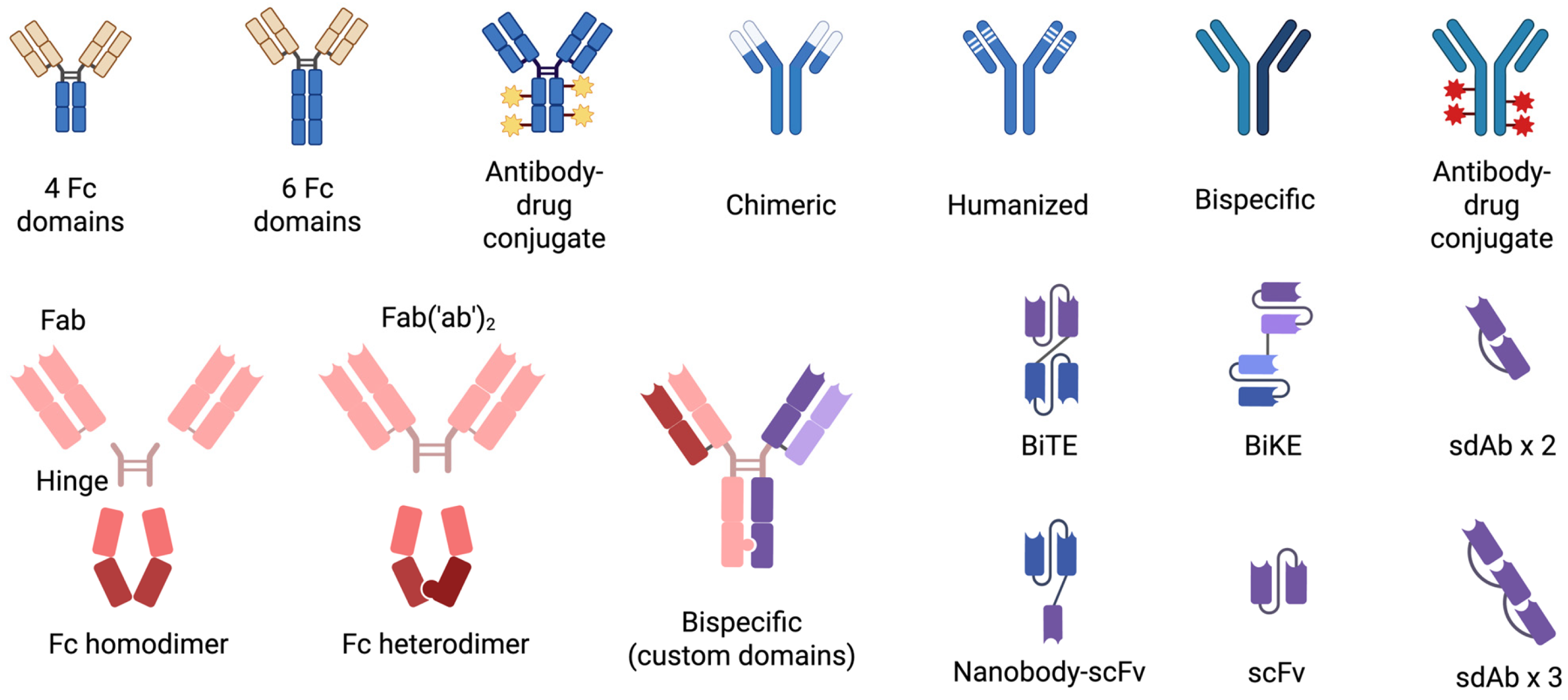
Antibodies have undergone a remarkable evolution from research reagents to clinically validated therapeutics, giving rise to a diverse spectrum of engineered platforms, as shown in Figure 1, including monoclonal antibodies (mAbs), bispecific antibodies (bsAbs), antibody–drug conjugates (ADCs), and chimeric antigen receptor (CAR)-T cells [66,67]. While all antibody-based modalities share high antigen specificity, each format is engineered to overcome distinct biological and therapeutic limitations. Their development reflects a continuum of innovation, whereby shortcomings of earlier formats have informed the design of more complex systems with enhanced potency, durability, or independence from host immune function [67]. Monoclonal antibodies represent the foundational class of antibody therapeutics. Derived from a single B-cell clone, mAbs recognize a defined epitope with high specificity and have become central to immunotherapy across oncology, autoimmune diseases, and infectious diseases, and in diagnostics [68]. Their modular architecture enables pathway blockades, neutralization of soluble mediators, and recruitment of immune effector mechanisms such as antibody-dependent cellular cytotoxicity (ADCC) and complement-dependent cytotoxicity (CDC) [69]. Clinically, agents such as rituximab (anti-CD20) and trastuzumab (anti-HER2) have established benchmarks for targeted cancer therapy [70]. while radiolabelled and fluorescently conjugated mAbs support tumor imaging and precision diagnostics [71]. Despite their success, mAbs face inherent limitations. Their large molecular size (~150 kDa) restricts penetration into solid tumors, and their efficacy often depends on intact host immunity, reducing performance in immunosuppressed patients [4]. Moreover, mAbs are vulnerable to tumor escape, a process distinct from metastasis, whereby tumor cells evade therapy through antigen downregulation, antigen loss variants, or activation of compensatory signaling pathways, rather than physical dissemination to distant sites. These limitations have driven the development of next-generation antibody formats [72,73].
Moving forward, bispecific antibodies are engineered to bind two distinct antigens or epitopes simultaneously, enabling more sophisticated intervention in complex disease biology [74]. T-cell engagers such as blinatumomab exemplify this strategy by linking CD3 on T cells to CD19 on malignant B cells, thereby inducing direct cytotoxic synapse formation [75]. Other bsAbs co-target pathways such as VEGF and Ang2 to inhibit tumor angiogenesis [76]. By engaging two targets, bsAbs can mitigate tumor escape driven by antigen heterogeneity or pathway redundancy, a mechanism distinct from metastasis but often a precursor to therapeutic resistance [77]. However, bsAbs introduce new challenges, including complex manufacturing, chain mispairing, and stability concerns [78]. Immune overactivation, particularly cytokine release syndrome (CRS), necessitates careful dosing and monitoring [79]. Fragment-based formats such as BiTEs offer rapid effector engagement but suffer from short half-lives, whereas IgG-like bsAbs improve persistence at the expense of tissue penetration [80]. Consequently, bsAbs occupy an intermediate therapeutic space, offering off-the-shelf availability and rapid action while lacking the long-term persistence of cellular therapies [66]. Antibody–drug conjugates integrate the specificity of monoclonal antibodies with the cytotoxic potency of small-molecule drugs through chemical linkers, enabling targeted cell killing independent of immune effector function [81]. Clinically approved ADCs such as brentuximab vedotin and trastuzumab deruxtecan demonstrate efficacy in refractory malignancies by selectively delivering toxic payloads to antigen-expressing cells [66,82]. Advances in linker chemistry, site-specific conjugation, and payload diversity have improved ADC stability and therapeutic index [81,83]. Nonetheless, ADC efficacy is constrained by antigen heterogeneity and resistance mechanisms such as drug efflux, and unlike bsAbs or CAR-T cells, ADCs do not provide immune memory or long-term surveillance [84,85,86]. Their capacity to debulk tumors, however, creates synergy with immunotherapies, including checkpoint inhibitors and CAR-T cells, positioning ADCs as a bridge between cytotoxic and immune-mediated approaches [87].
CAR-T cell therapy represents the most advanced extension of antibody engineering, transforming antibody-derived single-chain variable fragments (scFvs) into living cellular therapeutics [88]. By genetically engineering patient-derived T cells to express CARs, this approach enables potent and sustained antitumor responses, particularly in B-cell malignancies where CD19-directed CAR-Ts have achieved durable remissions [89]. Unlike mAbs or bsAbs, CAR-T cells provide long-term persistence and immunological memory, offering protection against relapses rather than merely transient tumor control [90]. However, their clinical deployment is limited by their complex autologous manufacturing, high cost, and severe toxicities such as CRS and neurotoxicity [91,92]. Solid tumors remain challenging to treat due to antigen heterogeneity, immunosuppressive microenvironments, and barriers to trafficking factors that contribute to both tumor escape and metastatic progression [93]. Ongoing innovations, including armoured CAR-Ts, logic-gated designs, and allogeneic “off-the-shelf” products, aim to address these challenges and broaden clinical applicability [94,95]. Collectively, CAR-T cells represent the pinnacle of antibody engineering, transforming antibodies from static molecules into programmable, curative living therapies.
Therapeutic antibodies span conventional monoclonal antibodies (mAbs), Fc-containing fusion proteins, antibody fragments, bispecific formats, and antibody-drug conjugates (ADCs), which are enabled by advances in antibody engineering and manufacturing [15,36].IVIG (pooled IgG) is used in immunodeficiency and inflammatory disorders, and its anti-inflammatory activity involves multiple mechanisms including Fc receptor modulation; these engineered antibodies can enhance complement interactions and exert immunoregulatory effects [96]. BiTEs are bispecific T-cell engagers that physically link CD3 on T cells to tumor antigens, inducing T-cell mediated killing; blinatumomab is a canonical example with substantial clinical impact [75]. ADCs combine antibody targeting with cytotoxic payload delivery to improve the therapeutic index, and they remain a major area of translational innovation [83]. Antibody-derived binding domains (commonly scFvs) also underpin CAR-T therapy design, though their clinical use is constrained by toxicity, antigen escape, and tumor microenvironment barriers [97].
Beside established antibody forms, single-domain antibodies, known as nanobodies, have surfaced as a fast-growing category of antibody-derived therapeutics. Nanobodies originate from the variable domains of heavy-chain-only antibodies present in camelids and comprise a singular monomeric variable domain (VHH) that facilitates antigen identification [98]. In contrast, compared to conventional antibodies, nanobodies are considerably smaller (~12–15 kDa), devoid of light chains, and possess a compact, extremely stable structure [99]. These characteristics provide multiple benefits, such as improved tissue penetration, access to concealed epitopes, high solubility, and exceptional stability under harsh physicochemical circumstances [100]. From a therapeutic standpoint, nanobodies have diverse uses in oncology, infectious diseases, and inflammatory disorders [101]. Their tiny size and modularity facilitate effective tumor targeting, intracellular transport, and swift systemic distribution, while their diminished immunogenicity and straightforward recombinant manufacture endorse scalable manufacturing [100].
Furthermore, nanobodies have become increasingly significant in diagnostic imaging and biosensing since their rapid tissue penetration and quick clearance kinetics enhance signal-to-noise ratios in vivo [102]. Recent advancements have augmented their applicability via multivalent constructions and incorporation into next-generation therapeutic platforms, such as tailored cellular therapeutics and targeted drug delivery systems [103].

6. Antibody Discovery and Engineering for Infectious Diseases

Advances in antibody engineering have fundamentally reshaped infectious disease research, spanning diagnostics, therapeutics, and vaccine design [104]. While early efforts emphasized the identification of neutralizing epitopes and Fab-mediated specificity, contemporary approaches increasingly integrate Fc optimization to enhance effector function, durability, and clinical performance. Through structural biology and protein engineering, antibodies can now be rationally modified to not only neutralize pathogens, but also strengthen Fc-mediated immune mechanisms, modulate inflammation, and extend serum half-life [105]. These advances have enabled the development and regulatory approval of engineered monoclonal antibodies (mAbs) for the prevention and treatment of multiple viral infections, including SARS-CoV-2, respiratory syncytial virus (RSV), Ebola virus, cytomegalovirus (CMV), and influenza [106,107].

6.1. Human Immunodeficiency Virus (HIV)

Human immunodeficiency virus (HIV) exemplifies how antibody engineering integrates Fab-mediated neutralization with Fc-dependent effector functions to overcome viral diversity and immune escape. The high mutation and recombination rates of HIV, particularly within the envelope (Env) glycoprotein, have posed significant challenges to vaccine development [108]. Broadly neutralizing antibodies (bNAbs) targeting conserved Env epitopes—such as the CD4 binding site (CD4bs), V3-glycan, gp120–gp41 interface, and membrane-proximal external region—can neutralize diverse viral clades while also engaging Fc-dependent effector mechanisms [109].
A notable example is the CD4bs-directed bNAb FD22, isolated from a long-term HIV-1-infected elite neutralizer in China. FD22 demonstrates exceptional breadth, neutralizing approximately 82% of diverse HIV-1 strains, and exhibits potent antibody-dependent cellular cytotoxicity (ADCC) through enhanced FcγRIIIa engagement [100]. Structural analyses reveal that its extended CDRH3 contributes to broad antigen recognition, while Fc-dependent mechanisms amplify clearance of infected cells. In preclinical models, engineered neutralizing antibodies have shown strong protective efficacy, and early-phase clinical trials demonstrate favorable safety and pharmacokinetics when bNAbs are administered individually or in combination [41]. Furthermore, Fc-optimized bNAbs can delay viral rebound following interruption of antiretroviral therapy and exert robust antiviral activity in viremic individuals, emphasizing the therapeutic value of Fc-mediated effector functions [41].

6.2. Influenza Virus

Similar antibody engineering strategies are being increasingly applied to rapidly evolving viruses such as influenza. While Fab-mediated targeting of conserved hemagglutinin (HA) stem epitopes remains central to broad neutralization, Fc-dependent interactions critically shape antiviral efficacy and evolutionary pressure. Antibodies directed against the HA stem have emerged as promising candidates for universal influenza protection, but their activity is strongly influenced by Fc engagement with complement and Fc receptors [110].
Recent work demonstrates that the complement protein C1q enhances the neutralizing activity of anti-HA stem antibodies by limiting viral attachment and also influences viral evolution by increasing the frequency and diversity of escape mutations within the HA gene [111].Notably, similar Fc- and complement-dependent effects have been observed for non-RBD-targeting antibodies against SARS-CoV-2, indicating a broader role for Fc-mediated mechanisms in regulating antiviral immunity [111].Advances in structural characterization of HA epitopes and Fc-dependent immune interactions have enabled the rational design of antibodies and related constructs with optimized effector functions and durability [110].

6.3. Ebola Virus: Antibody Discovery and Targeting of Conserved Glycoprotein Interfaces

Antibody engineering has played a pivotal role in advancing countermeasures against ebolaviruses by enabling the development of potent neutralizing antibodies directed at structurally conserved regions of the viral glycoprotein (GP). The Ebola virus GP is the sole envelope protein responsible for host cell entry and a primary determinant of viral pathogenicity, making it a central target for both therapeutic antibodies and vaccine development [112]. Proteolytic cleavage of the GP precursor yields two subunits, GP1 and GP2, which remain associated as a trimeric complex on the viral surface. GP1 contains the receptor-binding domain, while the glycan cap and mucin-like domain are extensively glycosylated, shielding critical epitopes and contributing to immune evasion [112].
Despite this glycan-mediated shielding, antibody discovery and engineering approaches have enabled the identification and targeting of vulnerable GP regions. A vaccination strategy employing vesicular stomatitis virus particles encoding Sudan Ebola virus GP, followed by boosting with soluble GP, elicited robust neutralizing antibody responses in macaques [113]. Importantly, monoclonal antibodies such as EB46 target the conserved GP1/GP2 interface, a region critical for viral fusion and entry. Neutralization of this interface was also observed in polyclonal sera from vaccinated macaques, highlighting it as a key epitope for rational Ebola vaccine and antibody design [113].
These findings illustrate how the integration of antibody discovery, structural biology, and immunogen engineering can guide immune responses toward conserved functional sites, supporting the development of broadly effective antiviral therapeutics and vaccines.

6.4. SARS-CoV-2: Rapid Antibody Engineering and Immunofocusing Strategies

The COVID-19 pandemic exemplified the speed and flexibility of modern antibody engineering approaches in responding to emerging viral threats. Rapid development of tailored monoclonal antibodies targeting the SARS-CoV-2 spike protein—particularly the receptor-binding domain (RBD)—was enabled by technologies such as single-B-cell screening from convalescent individuals and recombinant antibody library platforms [22]. Many potent neutralizing antibodies were found to derive from germline genes including IGHV3-30, IGHV3-53, and IGHV3-66, which display varying degrees of somatic hypermutation, underscoring the accessibility of key spike epitopes to the human immune repertoire [22]. Beyond conventional neutralization strategies, antibody and immunogen engineering have been leveraged to broaden protection against viral diversity. A novel immunofocusing approach, known as protein masked display (PMD), was used to design SARS-CoV-2 RBD immunogens that selectively expose conserved, cryptic epitopes while masking immunodominant but variable regions [114]. Immunization with these engineered antigens elicited broad and potent neutralizing antibodies capable of recognizing multiple Sarbecoviruses, demonstrating a promising strategy for the development of vaccines with enhanced breadth and durability [115]. Collectively, these advances illustrate how antibody and immunogen engineering can be rapidly deployed to generate both therapeutic antibodies and vaccine candidates with resilience against viral evolution.

7. Engineered Antibodies in Cancer Therapy

Engineered antibodies have revolutionized oncology through precision tumor targeting, immunological modulation, and improved treatment specificity. mAbs are fundamental to antibody-based cancer therapy, with drugs like rituximab (anti-CD20) markedly enhancing outcomes in B-cell malignancies and laying the groundwork for combination immunochemotherapy [116]. These therapies operate via several mechanisms, including direct targeting of tumor-associated antigens, recruitment of immune effector functions, and regulation of tumor-associated signaling pathways.
Immune checkpoint inhibitors show the significance of antibody engineering in cancer treatment. Antibodies that target programmed cell death protein 1 (PD-1), such as pembrolizumab, have shown significant enhancements in survival rates compared to previous treatments such as ipilimumab in metastatic melanoma [117]. By obstructing inhibitory immunological checkpoints, these antibodies reinstate T-cell functionality and amplify anti-tumor immune responses, signifying a transformative advancement in cancer immunotherapy.
In addition to conventional mAbs, advanced designed antibody formats have broadened the treatment options in oncology. Bispecific antibodies facilitate the concurrent targeting of tumor-associated antigens and immune effector cells, thereby augmenting cytotoxic responses and addressing tumor heterogeneity. Antibody–drug conjugates (ADCs) enhance therapeutic precision by directly delivering cytotoxic agents to tumor cells, thereby reducing off-target toxicity while preserving significant anticancer activity. These methodologies tackle critical issues including antigen evasion, tumor heterogeneity, and therapeutic resistance.
Regardless of these advancements, significant hurdles persist in the clinical utilization of modified antibodies in oncology. They encompass immune-related side effects linked to checkpoint blocking, restricted efficacy in solid tumors due to inadequate tissue penetration and immunosuppressive tumor microenvironments, as well as the development of resistance mechanisms including antigen loss or pathway redundancy. Overcoming these constraints necessitates ongoing innovation in antibody design, encompassing multispecific constructions, enhanced tumor-targeting tactics, and combination therapies that integrate antibody-based methods with alternative therapeutic modalities. Consequently, modified antibodies have become essential instruments in contemporary oncology, with ongoing improvements anticipated to further improve their clinical effectiveness and broaden their therapeutic range.

8. Challenges and Future Directions in Therapeutic Antibody Development

The development of therapeutic antibodies is accompanied by a set of persistent challenges that continue to shape innovation in antibody engineering. Key limitations include the risk of immunogenicity, manufacturing complexity—particularly for bispecific antibodies and antibody–drug conjugates (ADCs)—as well as aggregation and stability constraints that complicate formulation and long-term storage [15,36]. In addition, achieving an optimal balance between potency and safety remains difficult, especially for antibodies designed to engage immune effector pathways, where excessive activation can lead to unintended toxicity. Clinical deployment further faces challenges such as target-mediated adverse effects, cytokine-release syndrome in immune-redirecting formats, and antigen escape mechanisms observed in both oncology and infectious diseases [97,118].
Addressing these challenges is driving the next generation of antibody engineering strategies. Future efforts are expected to focus on more precise Fc glycoengineering approaches to selectively tune effector functions and inflammatory outcomes, thereby improving therapeutic safety and efficacy [15,119]. Optimization of antibody half-life and tissue distribution through FcRn-based engineering strategies also remains a key priority, particularly for chronic diseases and prophylactic applications [59]. In parallel, the development of modular multispecific antibody architectures aims to integrate antigen targeting, immune redirection, and payload delivery within a single therapeutic entity while minimizing off-target effects and systemic toxicity [83]. Advances in antibody-derived cellular therapies further illustrate how engineering innovations are being leveraged to overcome existing barriers. Continued refinement of CAR-T cell designs, including strategies to mitigate antigen escape and counteract immunosuppressive tumor microenvironments, is expected to expand the applicability and durability of antibody-based cellular immunotherapies [97]. Collectively, these emerging directions highlight a shift toward more programmable, context-aware antibody systems that integrate molecular precision with controlled immune engagement, positioning therapeutic antibodies to have broader and more durable clinical impacts.

9. Conclusions

Engineered antibodies have had a transformative impact across multiple therapeutic domains, including oncology, autoimmune diseases, infectious diseases, and rare genetic disorders. Monoclonal antibodies now constitute a substantial proportion of biologics approved by major regulatory agencies such as the U.S. Food and Drug Administration (FDA) and the European Medicines Agency (EMA), underscoring their clinical and commercial significance. Moreover, the ability to reformat antibodies into advanced platforms—such as antibody–drug conjugates (ADCs), bispecific T-cell engagers (BiTEs), and fusion proteins—has markedly expanded their therapeutic versatility and potency, enabling more precise and effective disease targeting [83,119]. Beyond therapeutics, antibody engineering has also reshaped diagnostic innovation. Engineered antibody fragments, including single-chain variable fragments (scFvs) and nanobodies, exhibit enhanced tissue penetration and favourable pharmacokinetic profiles, making them particularly well suited for in vivo imaging, biosensing, and molecular diagnostics [120]. These attributes are accelerating the development of point-of-care and companion diagnostic tools that support personalized medicine strategies. At the molecular level, antibody structure intrinsically encodes both antigen recognition and effector signaling. Modern engineering approaches exploit this structure–function relationship to rationally tailor binding affinity, effector activity, stability, and pharmacokinetics for specific clinical applications [11,15]. Across oncology and infectious disease settings, engineered antibody therapeutics have demonstrated unequivocal clinical value—from immune checkpoint blockade and anti-CD20 therapies in cancer to outbreak-validated monoclonal antibodies against Ebola virus—highlighting their capacity to address both chronic and acute global health challenges [117,121].
Looking forward, antibody engineering is expected to play a central role in integrating precision medicine, synthetic biology, and immunotherapy. As advances in genome editing technologies, deep immune repertoire sequencing, and artificial intelligence-driven analytics continue to mature, the field is poised to enable increasingly customizable, patient-specific antibody therapies. Although challenges related to immunogenicity, large-scale manufacturing, and clinical translation remain, the current trajectory of research and development strongly suggests a future in which engineered antibodies will remain foundational to next-generation therapeutics, diagnostics, and translational biomedical innovation.

Author Contributions

O.C.A. and S.U.: Conceptualization. O.C.A., R.K., and J.O.: Figures. O.C.A., S.U., I.I., S.S., J.O., C.U., M.O., V.A., C.E.U., T.A., R.K., J.M.A., M.I.A., C.C.U., and L.C.U.: Writing—original draft preparation, review and editing. All authors have read and agreed to the published version of the manuscript.

Funding

The authors received no funding for this work.

Data Availability Statement

Data Availability Statement: No new data were created or analyzed in this study. Data sharing is not applicable to this article.

Conflicts of Interest

The authors declare that the research was conducted in the absence of any competing interests.

References

  1. Patel, P.; Jamal, Z.; Ramphul, K. Immunoglobulin. In StatPearls; StatPearls Publishing: Treasure Island, FL, USA, 2023. Available online: http://www.ncbi.nlm.nih.gov/books/NBK513460/ (accessed on 1 March 2026).
  2. Odales, J.; Valle, J.G.; Martínez-Cortés, F.; Manoutcharian, K. Immunogenic properties of immunoglobulin superfamily members within complex biological networks. Cell. Immunol. 2020, 358, 104235. [Google Scholar] [CrossRef]
  3. Garver, L.S.; Xi, Z.; Dimopoulos, G. Immunoglobulin superfamily members play an important role in the mosquito immune system. Dev. Comp. Immunol. 2008, 32, 519–531. [Google Scholar] [CrossRef] [PubMed]
  4. Chames, P.; Van Regenmortel, M.; Weiss, E.; Baty, D. Therapeutic antibodies: Successes, limitations and hopes for the future. Br. J. Pharmacol. 2009, 157, 220–233. [Google Scholar] [CrossRef] [PubMed]
  5. Sepp, A.; Stader, F.; Derbalah, A.; Liu, C.; Zyla, A.; Gardner, I.; Jamei, M. The physiological limits of bispecific monoclonal antibody tissue targeting specificity. mAbs 2025, 17, 2492236. [Google Scholar] [CrossRef] [PubMed]
  6. Doud, M.B.; Lee, J.M.; Bloom, J.D. How single mutations affect viral escape from broad and narrow antibodies to H1 influenza hemagglutinin. Nat. Commun. 2018, 9, 1386. [Google Scholar] [CrossRef]
  7. Barbour, A.G.; Dai, Q.; Restrepo, B.I.; Stoenner, H.G.; Frank, S.A. Pathogen escape from host immunity by a genome program for antigenic variation. Proc. Natl. Acad. Sci. USA 2006, 103, 18290–18295. [Google Scholar] [CrossRef]
  8. Saxena, A.; Wu, D. Advances in therapeutic Fc engineering—Modulation of IgG-associated effector functions and serum half-life. Front. Immunol. 2016, 7, 580. [Google Scholar] [CrossRef]
  9. Victora, G.D.; Nussenzweig, M.C. Germinal centers. Annu. Rev. Immunol. 2012, 30, 429–457. [Google Scholar] [CrossRef]
  10. Cyster, J.G.; Allen, C.D. B Cell responses: Cell interaction dynamics and decisions. Cell 2019, 177, 524–540. [Google Scholar] [CrossRef]
  11. Lu, L.L.; Suscovich, T.J.; Fortune, S.M.; Alter, G. Beyond binding: Antibody effector functions in infectious diseases. Nat. Rev. Immunol. 2018, 18, 46–61. [Google Scholar] [CrossRef]
  12. Bournazos, S.; Ravetch, J.V. Fcγ receptor pathways during active and passive immunization. Immunol. Rev. 2015, 268, 88–103. [Google Scholar] [CrossRef]
  13. Akkaya, M.; Kwak, K.; Pierce, S.K. B cell memory: Building two walls of protection against pathogens. Nat. Rev. Immunol. 2020, 20, 229–238. [Google Scholar] [CrossRef] [PubMed]
  14. Mesin, L.; Ersching, J.; Victora, G.D. Germinal center B Cell dynamics. Immunity 2016, 45, 471–482. [Google Scholar] [CrossRef] [PubMed]
  15. Chiu, M.L.; Goulet, D.R.; Teplyakov, A.; Gilliland, G.L. Antibody structure and function: The basis for engineering therapeutics. Antibodies 2019, 8, 55. [Google Scholar] [CrossRef] [PubMed]
  16. Wang, W.; Singh, S.; Zeng, D.L.; King, K.; Nema, S. Antibody structure, instability, and formulation. J. Pharm. Sci. 2007, 96, 1–26. [Google Scholar] [CrossRef]
  17. Vidarsson, G.; Dekkers, G.; Rispens, T. IgG subclasses and allotypes: From structure to effector functions. Front. Immunol. 2014, 5, 520. [Google Scholar] [CrossRef]
  18. Mould, D.R.; Green, B. Pharmacokinetics and pharmacodynamics of monoclonal antibodies: Concepts and lessons from drug development. BioDrugs 2010, 24, 23–39. [Google Scholar] [CrossRef]
  19. Pomarici, N.D.; Waibl, F.; Quoika, P.K.; Bujotzek, A.; Georges, G.; Fernández-Quintero, M.L.; Liedl, K.R. Structural mechanism of Fab domain dissociation as a measure of interface stability. J. Comput. Aided Mol. Des. 2023, 37, 201–215. [Google Scholar] [CrossRef]
  20. Briney, B.S.; Crowe, J.E., Jr. Secondary mechanisms of diversification in the human antibody repertoire. Front. Immunol. 2013, 4, 42. [Google Scholar] [CrossRef]
  21. Forthal, D.N. Functions of antibodies. Microbiol. Spectr. 2014, 2, 1–17. [Google Scholar] [CrossRef]
  22. Xiaojie, S.; Yu, L.; Lei, Y.; Guang, Y.; Min, Q. Neutralizing antibodies targeting SARS-CoV-2 spike protein. Stem Cell Res. 2021, 50, 102125. [Google Scholar] [CrossRef] [PubMed]
  23. Schatz, D.G.; Swanson, P.C. V(D)J recombination: Mechanisms of initiation. Annu. Rev. Genet. 2011, 45, 167–202. [Google Scholar] [CrossRef] [PubMed]
  24. Hiom, K.; Gellert, M. A Stable RAG1–RAG2–DNA complex that is active in V(D)J cleavage. Cell 1997, 88, 65–72. [Google Scholar] [CrossRef] [PubMed]
  25. Akamatsu, Y.; Oettinger, M.A. Distinct roles of RAG1 and RAG2 in binding the V(D)J recombination signal sequences. Mol. Cell. Biol. 1998, 18, 4670–4678. [Google Scholar] [CrossRef]
  26. Motea, E.A.; Berdis, A.J. Terminal deoxynucleotidyl transferase: The story of a misguided DNA polymerase. Biochim. Biophys. Acta 2010, 1804, 1151–1166. [Google Scholar] [CrossRef]
  27. Muramatsu, M.; Kinoshita, K.; Fagarasan, S.; Yamada, S.; Shinkai, Y.; Honjo, T. Class switch recombination and hypermutation require activation-induced cytidine deaminase (AID), a potential RNA editing enzyme. Cell 2000, 102, 553–563. [Google Scholar] [CrossRef]
  28. Di Noia, J.M.; Neuberger, M.S. Molecular mechanisms of antibody somatic hypermutation. Annu. Rev. Biochem. 2007, 76, 1–22. [Google Scholar] [CrossRef]
  29. Victora, G.D.; Mesin, L. Clonal and cellular dynamics in germinal centers. Curr. Opin. Immunol. 2014, 28, 90–96. [Google Scholar] [CrossRef]
  30. Stavnezer, J.; Guikema, J.E.; Schrader, C.E. Mechanism and regulation of class switch recombination. Annu. Rev. Immunol. 2008, 26, 261–292. [Google Scholar] [CrossRef]
  31. Duan, L.; Mukherjee, E. Janeway’s Immunobiology, ninth edition. Yale J. Biol. Med. 2016, 89, 424–425. [Google Scholar]
  32. Román, V.R.; Murray, J.C.; Weiner, L.M. Antibody-dependent cellular cytotoxicity (ADCC). In Antibody Fc; Ackerman, M., Nimmerjahn, F., Eds.; Academic Press: Amsterdam, The Netherlands, 2014; pp. 1–27. [Google Scholar] [CrossRef]
  33. Platzer, B.; Stout, M.; Fiebiger, E. Antigen cross-presentation of immune complexes. Front. Immunol. 2014, 5, 140. [Google Scholar] [CrossRef] [PubMed]
  34. Bournazos, S.; Ravetch, J.V. Fcγ receptor function and the design of vaccination strategies. Immunity 2017, 47, 224–233. [Google Scholar] [CrossRef] [PubMed]
  35. McCafferty, J.; Griffiths, A.D.; Winter, G.; Chiswell, D.J. Phage antibodies: Filamentous phage displaying antibody variable domains. Nature 1990, 348, 552–554. [Google Scholar] [CrossRef] [PubMed]
  36. Hudson, P.J.; Souriau, C. Engineered antibodies. Nat. Med. 2003, 9, 129–134. [Google Scholar] [CrossRef]
  37. Murin, C.D.; Wilson, I.A.; Ward, A.B. Antibody responses to viral infections: A structural perspectiv across three different enveloped viruses. Nat. Microbiol. 2019, 4, 734–747. [Google Scholar] [CrossRef]
  38. Padilla-Quirarte, H.O.; Lopez-Guerrero, D.V.; Gutierrez-Xicotencatl, L.; Esquivel-Guadarrama, F. Protective antibodies against influenza proteins. Front. Immunol. 2019, 10, 1677. [Google Scholar] [CrossRef]
  39. Ko, Y.-A.; Yu, Y.-H.; Wu, Y.-F.; Tseng, Y.-C.; Chen, C.-L.; Goh, K.-S.; Liao, H.-Y.; Chen, T.-H.; Cheng, T.-J.R.; Yang, A.-S.; et al. A non-neutralizing antibody broadly protects against influenza virus infection by engaging effector cells. PLoS Pathog. 2021, 17, e1009724. [Google Scholar] [CrossRef]
  40. Rodriguez-Fernandez, R.M.; Mejias, A.; Ramilo, O. Monoclonal antibodies for prevention of respiratory syncytial virus infection. Pediatr. Infect. Dis. J. 2021, 40, S35–S39. [Google Scholar] [CrossRef]
  41. Walsh, S.R.; Seaman, M.S. Broadly neutralizing antibodies for HIV-1 prevention. Front. Immunol. 2021, 12, 712122. [Google Scholar] [CrossRef]
  42. Gruell, H.; Klein, F. Antibody-mediated prevention and treatment of HIV-1 infection. Retrovirology 2018, 15, 73. [Google Scholar] [CrossRef]
  43. Corti, D.; Misasi, J.; Mulangu, S.; Stanley, D.A.; Kanekiyo, M.; Wollen, S.; Ploquin, A.; Doria-Rose, N.A.; Staupe, R.P.; Bailey, M.; et al. Protective monotherapy against lethal Ebola virus infection by a potently neutralizing antibody. Science 2016, 351, 1339–1342. [Google Scholar] [CrossRef]
  44. Saphire, E.O.; Schendel, S.L.; Gunn, B.M.; Milligan, J.C.; Alter, G. Antibody-mediated protection against Ebola virus. Nat. Immunol. 2018, 19, 1169–1178. [Google Scholar] [CrossRef]
  45. Katzelnick, L.C.; Gresh, L.; Halloran, M.E.; Mercado, J.C.; Kuan, G.; Gordon, A.; Balmaseda, A.; Harris, E. Antibody-dependent enhancement of severe dengue disease in humans. Science 2017, 358, 929–932. [Google Scholar] [CrossRef] [PubMed]
  46. Brezski, R.J.; Vafa, O.; Petrone, D.; Tam, S.H.; Powers, G.; Ryan, M.H.; Luongo, J.L.; Oberholtzer, A.; Knight, D.M.; Jordan, R.E. Tumor-associated and microbial proteases compromise host IgG effector functions by a single cleavage proximal to the hinge. Proc. Natl. Acad. Sci. USA 2009, 106, 17864–17869. [Google Scholar] [CrossRef] [PubMed]
  47. Brezski, R.J.; Jordan, R.E. Cleavage of IgGs by proteases associated with invasive diseases: An evasion tactic against host immunity? mAbs 2010, 2, 212–220. [Google Scholar] [CrossRef] [PubMed]
  48. Deveuve, Q.; Lajoie, L.; Barrault, B.; Thibault, G. The proteolytic cleavage of therapeutic monoclonal antibody hinge region: More than a matter of subclass. Front. Immunol. 2020, 11, 168. [Google Scholar] [CrossRef]
  49. Mitchell, A.J.; Edwards, M.R.; Collins, A.M. Valency or wählency: Is the epitope diversity of the B-cell response regulated or chemically determined? Immunol. Cell Biol. 2001, 79, 507–511. [Google Scholar] [CrossRef]
  50. Gong, S.; Ruprecht, R.M. Immunoglobulin M: An ancient antiviral weapon—Rediscovered. Front. Immunol. 2020, 11, 1943. [Google Scholar] [CrossRef]
  51. Steffen, U.; Koeleman, C.A.; Sokolova, M.V.; Bang, H.; Kleyer, A.; Rech, J.; Unterweger, H.; Schicht, M.; Garreis, F.; Hahn, J.; et al. IgA subclasses have different effector functions associated with distinct glycosylation profiles. Nat. Commun. 2020, 11, 120. [Google Scholar] [CrossRef]
  52. Wang, Z.; Zhu, J.; Lu, H. Antibody glycosylation: Impact on antibody drug characteristics and quality control. Appl. Microbiol. Biotechnol. 2020, 104, 1905–1914. [Google Scholar] [CrossRef]
  53. Zhang, Z.; Shah, B.; Richardson, J. Impact of Fc N-glycan sialylation on IgG structure. mAbs 2019, 11, 1381–1390. [Google Scholar] [CrossRef]
  54. Stavenhagen, K.; Plomp, R.; Wuhrer, M. Site-specific protein N- and O-glycosylation analysis by a C18–porous graphitized carbon–LC–ESI–MS approach using pronase-treated glycopeptides. Anal. Chem. 2015, 87, 11691–11699. [Google Scholar] [CrossRef] [PubMed]
  55. Arnold, J.N.; Radcliffe, C.M.; Wormald, M.R.; Royle, L.; Harvey, D.J.; Crispin, M.; Dwek, R.A.; Sim, R.B.; Rudd, P.M. The glycosylation of human serum IgD and IgE and the accessibility of identified oligomannose structures for interaction with mannan-binding lectin. J. Immunol. 2004, 173, 6831–6840. [Google Scholar] [CrossRef] [PubMed]
  56. Arnold, J.N.; Wormald, M.R.; Suter, D.M.; Radcliffe, C.M.; Harvey, D.J.; Dwek, R.A.; Rudd, P.M.; Sim, R.B. Human serum IgM glycosylation. J. Biol. Chem. 2005, 280, 29080–29087. [Google Scholar] [CrossRef] [PubMed]
  57. Hayes, J.M.; Frostell, A.; Karlsson, R.; Müller, S.; Martín, S.M.; Pauers, M.; Reuss, F.; Cosgrave, E.F.; Anneren, C.; Davey, G.P.; et al. Identification of Fc gamma receptor glycoforms that produce differential binding kinetics for rituximab. Mol. Cell. Proteom. 2017, 16, 1770–1788. [Google Scholar] [CrossRef]
  58. Dotz, V.; Visconti, A.; Lomax-Browne, H.J.; Clerc, F.; Ederveen, A.L.H.; Medjeral-Thomas, N.R.; Cook, H.T.; Pickering, M.C.; Wuhrer, M.; Falchi, M. O- and N-glycosylation of serum immunoglobulin A is associated with IgA nephropathy and glomerular function. J. Am. Soc. Nephrol. 2021, 32, 2455–2465. [Google Scholar] [CrossRef]
  59. Roopenian, D.C.; Akilesh, S. FcRn: The neonatal Fc receptor comes of age. Nat. Rev. Immunol. 2007, 7, 715–725. [Google Scholar] [CrossRef]
  60. Takai, T. Roles of Fc receptors in autoimmunity. Nat. Rev. Immunol. 2002, 2, 580–592. [Google Scholar] [CrossRef]
  61. Rosenfeld, S.I.; Looney, R.J.; Leddy, J.P.; Phipps, D.C.; Abraham, G.N.; Anderson, C.L. Human platelet Fc receptor for immunoglobulin G. Identification as a 40,000-molecular-weight membrane protein shared by monocytes. J. Clin. Investig. 1985, 76, 2317–2322. [Google Scholar] [CrossRef]
  62. Lanier, L.L.; Kipps, T.J.; Phillips, J.H. Functional properties of a unique subset of cytotoxic CD3+ T lymphocytes that express Fc receptors for IgG (CD16/Leu-11 antigen). J. Exp. Med. 1985, 162, 2089–2106. [Google Scholar] [CrossRef]
  63. Bertagnolli, M.M.; Canetta, R.; Nass, S.J. Expanding public-private collaborations to enhance cancer drug development. Oncologist 2014, 19, 1179–1185. [Google Scholar] [CrossRef] [PubMed]
  64. Ben Mkaddem, S.; Benhamou, M.; Monteiro, R.C. Understanding Fc receptor involvement in inflammatory diseases: From mechanisms to new therapeutic tools. Front. Immunol. 2019, 10, 811. [Google Scholar] [CrossRef] [PubMed]
  65. Bruhns, P. Properties of mouse and human IgG receptors and their contribution to disease models. Blood 2012, 119, 5640–5649. [Google Scholar] [CrossRef] [PubMed]
  66. Wang, Z.; Wang, G.; Lu, H.; Li, H.; Tang, M.; Tong, A. Development of therapeutic antibodies for the treatment of diseases. Mol. Biomed. 2022, 3, 35. [Google Scholar] [CrossRef]
  67. Sharma, P.; Joshi, R.V.; Pritchard, R.; Xu, K.; Eicher, M.A. Therapeutic antibodies in medicine. Molecules 2023, 28, 6438. [Google Scholar] [CrossRef]
  68. Kothari, M.; Wanjari, A.; Acharya, S.; Karwa, V.; Chavhan, R.; Kumar, S.; Kadu, A.; Patil, R. A comprehensive review of monoclonal antibodies in modern medicine: Tracing the evolution of a revolutionary therapeutic approach. Cureus 2024, 16, e61983. [Google Scholar] [CrossRef]
  69. Gauthier, M.; Laroye, C.; Bensoussan, D.; Boura, C.; Decot, V. Natural Killer cells and monoclonal antibodies: Two partners for successful antibody dependent cytotoxicity against tumor cells. Crit. Rev. Oncol. Hematol. 2021, 160, 103261. [Google Scholar] [CrossRef]
  70. Milenic, D.E.; Brechbiel, M.W. Targeting of radio-isotopes for cancer therapy. Cancer Biol. Ther. 2004, 3, 361–370. [Google Scholar] [CrossRef]
  71. Parakh, S.; Lee, S.T.; Gan, H.K.; Scott, A.M. Radiolabeled antibodies for cancer imaging and therapy. Cancers 2022, 14, 1454. [Google Scholar] [CrossRef]
  72. Marks, C.; Hummer, A.M.; Chin, M.; Deane, C.M. Humanization of antibodies using a machine learning approach on large-scale repertoire data. Bioinformatics 2021, 37, 4041–4047. [Google Scholar] [CrossRef]
  73. Abdeldaim, D.T.; Schindowski, K. Fc-engineered therapeutic antibodies: Recent advances and future directions. Pharmaceutics 2023, 15, 2402. [Google Scholar] [CrossRef]
  74. Sun, Y.; Yu, X.; Wang, X.; Yuan, K.; Wang, G.; Hu, L.; Zhang, G.; Pei, W.; Wang, L.; Sun, C.; et al. Bispecific antibodies in cancer therapy: Target selection and regulatory requirements. Acta Pharm. Sin. B 2023, 13, 3583–3597. [Google Scholar] [CrossRef] [PubMed]
  75. Zhu, M.; Wu, B.; Brandl, C.; Johnson, J.; Wolf, A.; Chow, A.; Doshi, S. Blinatumomab, a bispecific T-cell engager (BiTE®) for CD-19 targeted cancer immunotherapy: Clinical pharmacology and its implications. Clin. Pharmacokinet. 2016, 55, 1271–1288. [Google Scholar] [CrossRef] [PubMed]
  76. Suurs, F.V.; Hooge, M.N.L.-D.; de Vries, E.G.; de Groot, D.J.A. A review of bispecific antibodies and antibody constructs in oncology and clinical challenges. Pharmacol. Ther. 2019, 201, 103–119. [Google Scholar] [CrossRef] [PubMed]
  77. Farhangnia, P.; Ghomi, S.M.; Akbarpour, M.; Delbandi, A.-A. Bispecific antibodies targeting CTLA-4: Game-changer troopers in cancer immunotherapy. Front. Immunol. 2023, 14, 1155778. [Google Scholar] [CrossRef]
  78. Gu, Y.; Zhao, Q. Clinical progresses and challenges of bispecific antibodies for the treatment of solid tumors. Mol. Diagn. Ther. 2024, 28, 669–702. [Google Scholar] [CrossRef]
  79. Haber, L.; Olson, K.; Kelly, M.P.; Crawford, A.; DiLillo, D.J.; Tavaré, R.; Ullman, E.; Mao, S.; Canova, L.; Sineshchekova, O.; et al. Generation of T-cell-redirecting bispecific antibodies with differentiated profiles of cytokine release and biodistribution by CD3 affinity tuning. Sci. Rep. 2021, 11, 14397. [Google Scholar] [CrossRef]
  80. Tian, Z.; Liu, M.; Zhang, Y.; Wang, X. Bispecific T cell engagers: An emerging therapy for management of hematologic malignancies. J. Hematol. Oncol. 2021, 14, 75. [Google Scholar] [CrossRef]
  81. Tsuchikama, K.; Anami, Y.; Ha, S.Y.Y.; Yamazaki, C.M. Exploring the next generation of antibody–drug conjugates. Nat. Rev. Clin. Oncol. 2024, 21, 203–223. [Google Scholar] [CrossRef]
  82. Modi, S.; Jacot, W.; Yamashita, T.; Sohn, J.; Vidal, M.; Tokunaga, E.; Tsurutani, J.; Ueno, N.T.; Prat, A.; Chae, Y.S.; et al. Trastuzumab deruxtecan in previously treated HER2-low advanced breast cancer. N. Engl. J. Med. 2022, 387, 9–20. [Google Scholar] [CrossRef]
  83. Coats, S.; Williams, M.; Kebble, B.; Dixit, R.; Tseng, L.; Yao, N.-S.; Tice, D.A.; Soria, J.-C. Antibody–drug conjugates: Future directions in clinical and translational strategies to improve the therapeutic index. Clin. Cancer Res. 2019, 25, 5441–5448. [Google Scholar] [CrossRef] [PubMed]
  84. Loganzo, F.; Sung, M.; Gerber, H.-P. Mechanisms of resistance to antibody–drug conjugates. Mol. Cancer Ther. 2016, 15, 2825–2834. [Google Scholar] [CrossRef] [PubMed]
  85. Jang, J.Y.; Kim, D.; Lee, N.K.; Im, E.; Kim, N.D. Antibody–drug conjugates powered by deruxtecan: Innovations and challenges in oncology. Int. J. Mol. Sci. 2025, 26, 6523. [Google Scholar] [CrossRef] [PubMed]
  86. Lv, Y.; Cui, X.; Li, T.; Liu, C.; Wang, A.; Wang, T.; Zhou, X.; Li, R.; Zhang, F.; Hu, Y.; et al. Mechanism of action and future perspectives of ADCs in combination with immune checkpoint inhibitors for solid tumors. Clin. Exp. Med. 2025, 25, 139. [Google Scholar] [CrossRef]
  87. Lambert, J.M.; Morris, C.Q. Antibody–drug conjugates (ADCs) for personalized treatment of solid tumors: A review. Adv. Ther. 2017, 34, 1015–1035. [Google Scholar] [CrossRef]
  88. June, C.H.; Sadelain, M. Chimeric antigen receptor therapy. N. Engl. J. Med. 2018, 379, 64–73. [Google Scholar] [CrossRef]
  89. Hucks, G.; Rheingold, S.R. The journey to CAR T cell therapy: The pediatric and young adult experience with relapsed or refractory B-ALL. Blood Cancer J. 2019, 9, 10. [Google Scholar] [CrossRef]
  90. Wittibschlager, V.; Bacher, U.; Seipel, K.; Porret, N.; Wiedemann, G.; Haslebacher, C.; Hoffmann, M.; Daskalakis, M.; Akhoundova, D.; Pabst, T. CAR T-cell persistence correlates with improved outcome in patients with B-Cell lymphoma. Int. J. Mol. Sci. 2023, 24, 5688. [Google Scholar] [CrossRef]
  91. Ayala Ceja, M.; Khericha, M.; Harris, C.M.; Puig-Saus, C.; Chen, Y.Y. CAR-T manufacturing strategies. J. Exp. Med. 2024, 221, e20230903. [Google Scholar] [CrossRef]
  92. Brudno, J.N.; Kochenderfer, J.N. Current understanding and management of CAR T cell-associated toxicities. Nat. Rev. Clin. Oncol. 2024, 21, 501–521. [Google Scholar] [CrossRef]
  93. Guzman, G.; Reed, M.R.; Bielamowicz, K.; Koss, B.; Rodriguez, A. CAR-T Therapies in solid tumors: Opportunities and challenges. Curr. Oncol. Rep. 2023, 25, 479–489. [Google Scholar] [CrossRef] [PubMed]
  94. Tousley, A.M.; Rotiroti, M.C.; Labanieh, L.; Rysavy, L.W.; Kim, W.-J.; Lareau, C.; Sotillo, E.; Weber, E.W.; Rietberg, S.P.; Dalton, G.N.; et al. Co-opting signalling molecules enables logic-gated control of CAR T cells. Nature 2023, 615, 507–516. [Google Scholar] [CrossRef] [PubMed]
  95. Lonez, C.; Breman, E. Allogeneic CAR-T therapy technologies: Has the promise been met? Cells 2024, 13, 146. [Google Scholar] [CrossRef] [PubMed]
  96. Chaigne, B.; Mouthon, L. Mechanisms of action of intravenous immunoglobulin. Transfus. Apher. Sci. 2017, 56, 45–49. [Google Scholar] [CrossRef]
  97. Sterner, R.C.; Sterner, R.M. CAR-T cell therapy: Current limitations and potential strategies. Blood Cancer J. 2021, 11, 69. [Google Scholar] [CrossRef]
  98. Alexander, E.; Leong, K.W. Discovery of nanobodies: A comprehensive review of their applications and potential over the past five years. J. Nanobiotechnol. 2024, 22, 661. [Google Scholar] [CrossRef]
  99. Zhu, H.; Ding, Y. Nanobodies: From discovery to AI-driven design. Biology 2025, 14, 547. [Google Scholar] [CrossRef]
  100. Wang, J.; Tong, T.; Wu, Q. Nanobodies in animal infectious disease control: Diagnosis and therapy. Front. Cell. Infect. Microbiol. 2025, 15, 1640352. [Google Scholar] [CrossRef]
  101. De Greve, H.; Fioravanti, A. Single domain antibodies from camelids in the treatment of microbial infections. Front. Immunol. 2024, 15, 1334829. [Google Scholar] [CrossRef]
  102. Liu, Y.; Liu, J.; Qiu, Z.; Liu, Y.; Zhang, J.; Ji, X.; Han, Y. Advancements in nanobody-based immunodiagnostics and infectious pathogens, foodborne hazards, and human biomarkers. Microchem. J. 2025, 214, 114083. [Google Scholar] [CrossRef]
  103. Ghosh, N.; Sepay, N.; Paul, M.; Im, J. Nanobody-based drug delivery: Emerging strategies for targeted cancer therapy. Int. J. Nanomed. 2026, 21, 584604. [Google Scholar] [CrossRef] [PubMed]
  104. Saeed, A.F.U.H.; Wang, R.; Ling, S.; Wang, S. Antibody engineering for pursuing a healthier future. Front. Microbiol. 2017, 8, 495. [Google Scholar] [CrossRef] [PubMed]
  105. Pantaleo, G.; Correia, B.; Fenwick, C.; Joo, V.S.; Perez, L. Antibodies to combat viral infections: Development strategies and progress. Nat. Rev. Drug Discov. 2022, 21, 676–696. [Google Scholar] [CrossRef] [PubMed]
  106. Florez, C.; Haslwanter, D.; Jangra, R.K. Editorial: Antiviral monoclonal antibody therapies. Front. Cell. Infect. Microbiol. 2024, 14, 1484448. [Google Scholar] [CrossRef]
  107. Jones, H.M.; Tolsma, J.; Zhang, Z.; Jasper, P.; Luo, H.; Weber, G.L.; Wright, K.; Bard, J.; Bell, R.; Messing, D.; et al. A physiologically-based pharmacokinetic model for the prediction of “half-life extension” and “catch and release” monoclonal antibody pharmacokinetics. CPT Pharmacomet. Syst. Pharmacol. 2020, 9, 534–541. [Google Scholar] [CrossRef]
  108. Ng’uNi, T.; Chasara, C.; Ndhlovu, Z.M. Major scientific hurdles in HIV vaccine development: Historical perspective and future directions. Front. Immunol. 2020, 11, 590780. [Google Scholar] [CrossRef]
  109. Nyanhete, T.E.; Edwards, R.J.; LaBranche, C.C.; Mansouri, K.; Eaton, A.; Dennison, S.M.; Saunders, K.O.; Goodman, D.; Janowska, K.; Spreng, R.L.; et al. Polyclonal broadly neutralizing antibody activity characterized by CD4 binding site and V3-Glycan antibodies in a subset of HIV-1 virus controllers. Front. Immunol. 2021, 12, 670561. [Google Scholar] [CrossRef]
  110. Nath Neerukonda, S.; Vassell, R.; Weiss, C.D. Influenza antibodies. Vaccines 2020, 8, 382. [Google Scholar] [CrossRef]
  111. Kosik, I.; Santos, J.D.S.; Angel, M.; Hu, Z.; Holly, J.; Gibbs, J.S.; Gill, T.; Kosikova, M.; Li, T.; Bakhache, W.; et al. C1q enables influenza hemagglutinin stem binding antibodies to block viral attachment and broadens the antibody escape repertoire. Sci. Immunol. 2024, 9, eadj9534. [Google Scholar] [CrossRef]
  112. Ilinykh, P.A.; Huang, K.; Gunn, B.M.; Kuzmina, N.A.; Kedarinath, K.; Jurado-Cobena, E.; Zhou, F.; Subramani, C.; Hyde, M.A.; Velazquez, J.V.; et al. Antibodies targeting the glycan cap of Ebola virus glycoprotein are potent inducers of the complement system. Commun. Biol. 2024, 7, 871. [Google Scholar] [CrossRef]
  113. Wang, Y.; Howell, K.A.; Brannan, J.; Agans, K.N.; Turner, H.L.; Wirchnianski, A.S.; Kailasan, S.; Fusco, M.; Galkin, A.; Chiang, C.-I.; et al. Prominent Neutralizing antibody response targeting the ebolavirus glycoprotein subunit interface elicited by immunization. J. Virol. 2021, 95, e01907-20. [Google Scholar] [CrossRef]
  114. Bruun, T.U.J.; Do, J.; Weidenbacher, P.A.-B.; Utz, A.; Kim, P.S. Engineering a SARS-CoV-2 vaccine targeting the receptor-binding domain cryptic-face via immunofocusing. ACS Cent. Sci. 2024, 10, 1871–1884. [Google Scholar] [CrossRef] [PubMed]
  115. Coiffier, B.; Lepage, E.; Brière, J.; Herbrecht, R.; Tilly, H.; Bouabdallah, R.; Morel, P.; Van Den Neste, E.; Salles, G.; Gaulard, P.; et al. CHOP chemotherapy plus rituximab compared with CHOP alone in elderly patients with diffuse large-B-cell lymphoma. N. Engl. J. Med. 2002, 346, 235–242. [Google Scholar] [CrossRef] [PubMed]
  116. Robert, C.; Schachter, J.; Long, G.V.; Arance, A.; Grob, J.J.; Mortier, L.; Daud, A.; Carlino, M.S.; McNeil, C.; Lotem, M.; et al. Pembrolizumab versus ipilimumab in advanced melanoma. N. Engl. J. Med. 2015, 372, 2521–2532. [Google Scholar] [CrossRef] [PubMed]
  117. Corey, L.; Gilbert, P.B.; Juraska, M.; Montefiori, D.C.; Morris, L.; Karuna, S.T.; Edupuganti, S.; Mgodi, N.M.; Decamp, A.C.; Rudnicki, E.; et al. Two randomized trials of neutralizing antibodies to prevent HIV-1 acquisition. N. Engl. J. Med. 2021, 384, 1003–1014. [Google Scholar] [CrossRef]
  118. Sondermann, P.; Pincetic, A.; Maamary, J.; Lammens, K.; Ravetch, J.V. General mechanism for modulating immunoglobulin effector function. Proc. Natl. Acad. Sci. USA 2013, 110, 9868–9872. [Google Scholar] [CrossRef]
  119. Pettinato, M.C. Introduction to antibody-drug conjugates. Antibodies 2021, 10, 42. [Google Scholar] [CrossRef]
  120. Zahid, R.; Wang, J.; Cai, Z.; Ishtiaq, A.; Liu, M.; Ma, D.; Liang, Y.; Xu, Y. Single-chain fragment variable: A new theranostic approach for cardiovascular diseases. Front. Immunol. 2024, 15, 1443290. [Google Scholar] [CrossRef]
  121. Mulangu, S.; Dodd, L.E.; Davey, R.T., Jr.; Tshiani Mbaya, O.; Proschan, M.; Mukadi, D.; Lusakibanza Manzo, M.; Nzolo, D.; Tshomba Oloma, A.; Ibanda, A.; et al. A randomized, controlled trial of ebola virus disease therapeutics. N. Engl. J. Med. 2019, 381, 2293–2303. [Google Scholar] [CrossRef]
Figure 1. Schematic representing various kinds of antibody formats. Antibody formats range from full-length antibody isotypes to fragments that have undergone engineering. These fragments include antibody drug conjugates, nanobodies, engineered Fab domains, two Fab units linked by disulphide bonds enhancing bivalent binding irrespective of the Fc region, Fc homodimers and heterodimers, single-chain variable fragments (scFvs), bispecific antibodies, bispecific T cell engagers (BiTEs), bispecific Killer cell engagers (BiKEs), and single-domain antibodies (sdAbs). Different types of formats are designed to optimize binding affinity and antibody stability, and facilitate tissue penetration, thereby bolstering therapeutic potentials of biologics.
Immuno 06 00023 g001
Disclaimer/Publisher’s Note: The statements, opinions and data contained in all publications are solely those of the individual author(s) and contributor(s) and not of MDPI and/or the editor(s). MDPI and/or the editor(s) disclaim responsibility for any injury to people or property resulting from any ideas, methods, instructions or products referred to in the content.

