



Immuno, Volume 6, Issue 2 (June 2026) – 22 articles
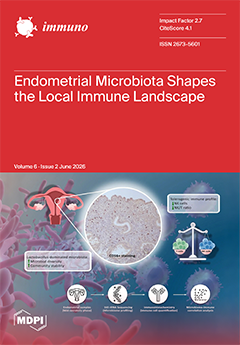
Cover Story (view full-size image):
Successful embryo implantation depends on a finely balanced endometrial immune environment and the composition of the local microbiome. Yet, the association between these two crucial determinants of the endometrial receptivity remains poorly understood. This study investigated the relationship between endometrial microbial composition and immune cell distribution during the window of implantation using 16S rRNA gene sequencing and quantitative immunohistochemistry. The results showed that a Lactobacillus-dominated microbiota was associated with lower natural killer cell abundance and a lower NK/T cell ratio, which has previously been linked to a more tolerogenic immune profile. These findings provide new insights into microbiome–immune interactions in the human endometrium and support further investigation of their potential relevance for endometrial receptivity and reproductive health. View this paper
- Issues are regarded as officially published after their release is announced to the table of contents alert mailing list.
- You may sign up for e-mail alerts to receive table of contents of newly released issues.
- PDF is the official format for papers published in both, html and pdf forms. To view the papers in pdf format, click on the "PDF Full-text" link, and use the free Adobe Reader to open them.
Previous Issue
Next Issue
