
Molecular Programming of Stem-Cell Differentiation: From Soluble Factors to Agonist Antibodies


Abstract
1. Introduction
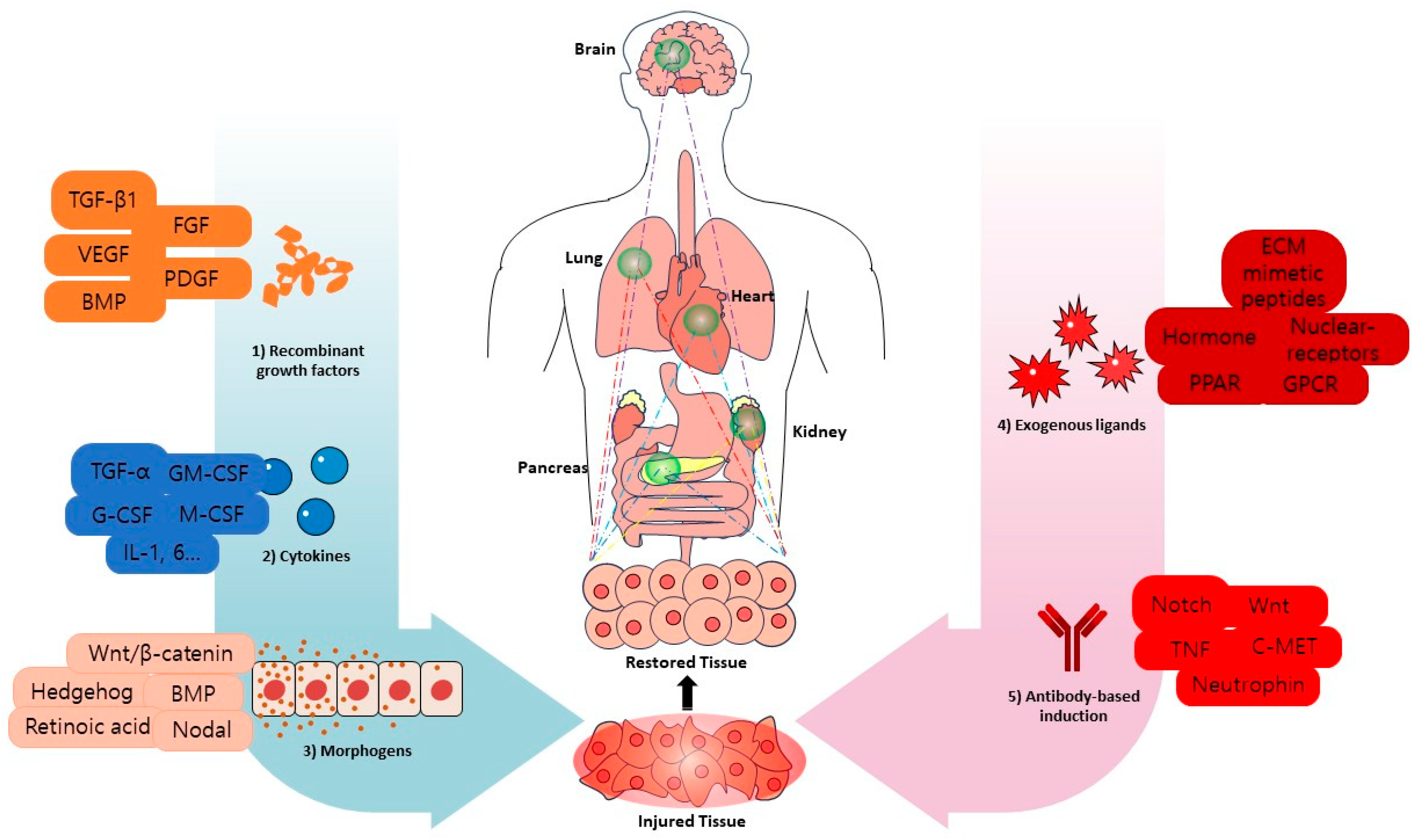
2. Recombinant Growth Factors-Driven Induction
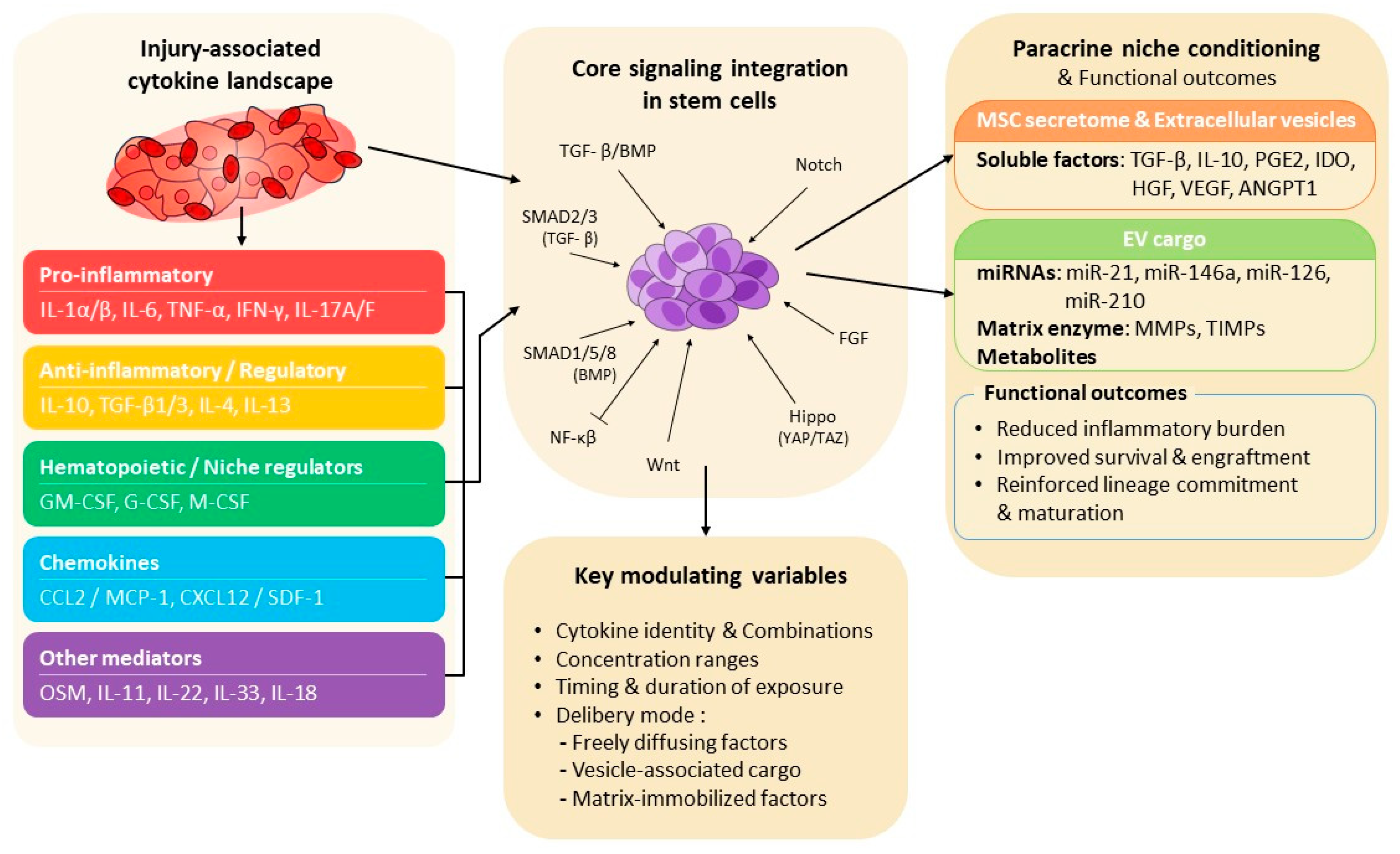
3. Cytokines-Driven Induction
4. Morphogens-Driven Induction
5. Exogenous Ligands-Driven Induction
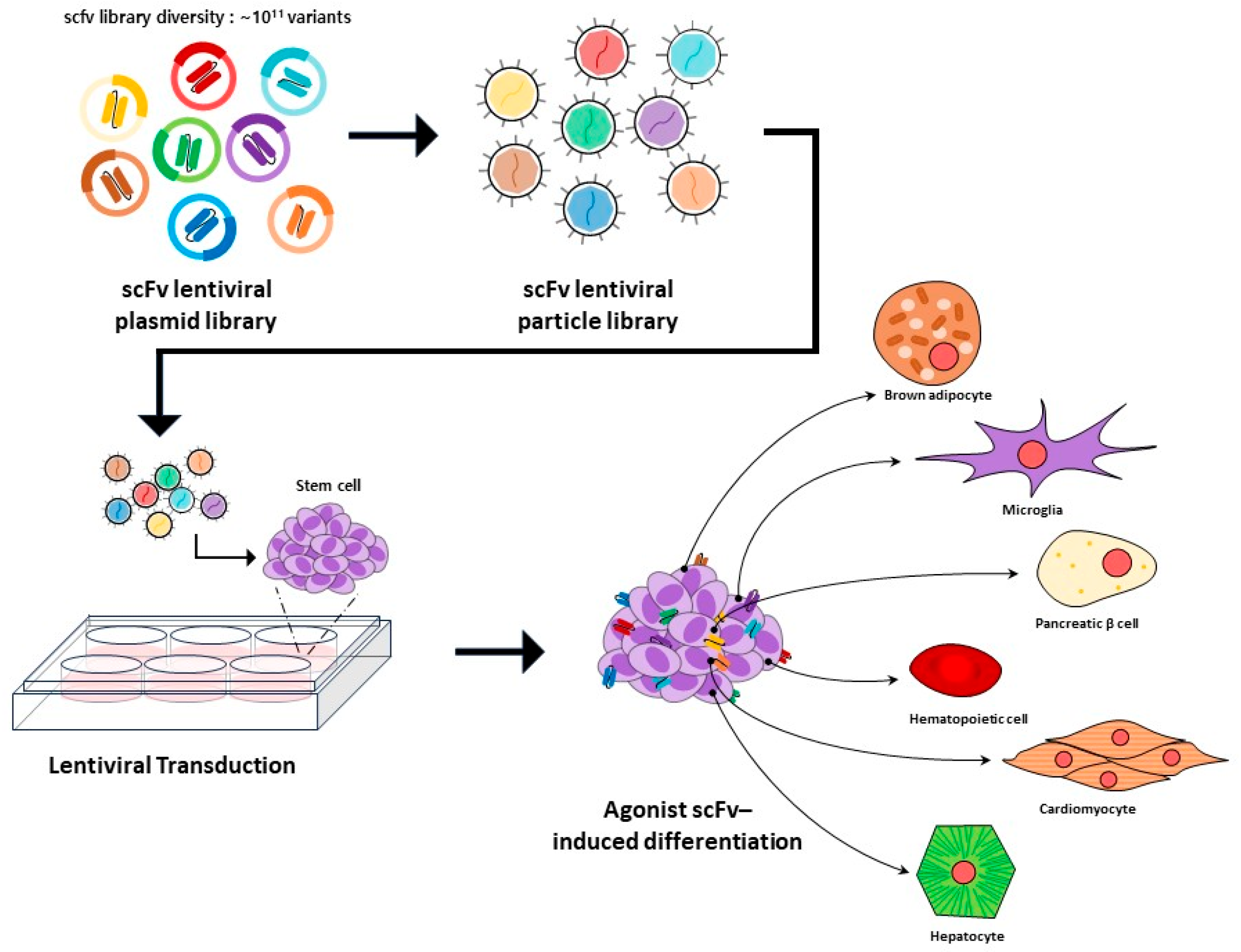
6. Agonist Antibodies-Driven Induction
7. Ongoing Clinical Trials in Stem-Cell Differentiation
8. Conclusions
Author Contributions
Funding
Institutional Review Board Statement
Informed Consent Statement
Data Availability Statement
Conflicts of Interest
References
- Verbakel, J.; de Boer, J. Engineering stem cell metabolism using biomaterial-induced mechanotransduction. Cell Biomater. 2025, 1, 100192. [Google Scholar] [CrossRef] [Scilit]
- Qazi, T.H.; Blatchley, M.R.; Davidson, M.D.; Yavitt, F.M.; Cooke, M.E.; Anseth, K.S.; Burdick, J.A. Programming hydrogels to probe spatiotemporal cell biology. Cell Stem Cell 2022, 29, 678–691. [Google Scholar] [CrossRef] [Scilit]
- O’Grady, B.J.; Lippmann, E.S. Recent Advancements in Engineering Strategies for Manipulating Neural Stem Cell Behavior. Curr. Tissue Microenviron. Rep. 2020, 1, 41–47. [Google Scholar] [CrossRef] [Scilit]
- Vogel, A.M.; Persson, K.M.; Seamons, T.R.; Deans, T.L. Synthetic biology for improving cell fate decisions and tissue engineering outcomes. Emerg. Top. Life Sci. 2019, 3, 631–643. [Google Scholar] [CrossRef] [Scilit]
- Liu, K.; Yu, C.; Xie, M.; Li, K.; Ding, S. Chemical Modulation of Cell Fate in Stem Cell Therapeutics and Regenerative Medicine. Cell Chem. Biol. 2016, 23, 893–916. [Google Scholar] [CrossRef] [Scilit]
- Ma, Y.; Lin, M.; Huang, G.; Li, Y.; Wang, S.; Bai, G.; Lu, T.J.; Xu, F. 3D Spatiotemporal Mechanical Microenvironment: A Hydrogel-Based Platform for Guiding Stem Cell Fate. Adv. Mater. 2018, 30, e1705911. [Google Scholar] [CrossRef] [Scilit]
- Cao, J.; Hao, J.; Wang, L.; Tan, Y.; Tian, Y.; Li, S.; Ma, A.; Fu, B.; Dai, J.; Zhai, P.; et al. Developing standards to support the clinical translation of stem cells. Stem Cells Transl. Med. 2021, 10, S85–S95. [Google Scholar] [CrossRef] [Scilit] [PubMed]
- Kataoka, M.; Niikawa, T.; Nagaishi, N.; Lee, T.L.; Erler, A.; Savulescu, J.; Sawai, T. Beyond consciousness: Ethical, legal, and social issues in human brain organoid research and application. Eur. J. Cell Biol. 2025, 104, 151470. [Google Scholar] [CrossRef] [Scilit] [PubMed]
- Cave, E. Advocating distinct regulatory paths for embryos and embryo-like structures. J. Law Biosci. 2025, 12, lsaf008. [Google Scholar] [CrossRef] [Scilit] [PubMed]
- Clark, A.T.; Cook-Andersen, H.; Franklin, S.; Isasi, R.; Mathews, D.J.H.; Pasque, V.; Rugg-Gunn, P.J.; Tam, P.P.L.; Wang, H.; Zylicz, J.J.; et al. Stem cell-based embryo models: The 2021 ISSCR stem cell guidelines revisited. Stem Cell Rep. 2025, 20, 102514. [Google Scholar] [CrossRef] [Scilit]
- Schnider, S.T.; Vigano, M.A.; Affolter, M.; Aguilar, G. Functionalized Protein Binders in Developmental Biology. Annu. Rev. Cell Dev. Biol. 2024, 40, 119–142. [Google Scholar] [CrossRef] [Scilit]
- Kalogriopoulos, N.A.; Tei, R.; Yan, Y.; Klein, P.M.; Ravalin, M.; Cai, B.; Soltesz, I.; Li, Y.; Ting, A.Y. Synthetic GPCRs for programmable sensing and control of cell behaviour. Nature 2025, 637, 230–239. [Google Scholar] [CrossRef] [Scilit]
- Klumpe, H.E.; Langley, M.A.; Linton, J.M.; Su, C.J.; Antebi, Y.E.; Elowitz, M.B. The context-dependent, combinatorial logic of BMP signaling. Cell Syst. 2022, 13, 388–407 e310. [Google Scholar] [CrossRef] [Scilit]
- Knoedler, L.; Dean, J.; Diatta, F.; Thompson, N.; Knoedler, S.; Rhys, R.; Sherwani, K.; Ettl, T.; Mayer, S.; Falkner, F.; et al. Immune modulation in transplant medicine: A comprehensive review of cell therapy applications and future directions. Front. Immunol. 2024, 15, 1372862. [Google Scholar] [CrossRef] [Scilit]
- Cho, Y.; You, J.; Lee, J.H. Natural Polymer-Based Hydrogel Platforms for Organoid and Microphysiological Systems: Mechanistic Insights and Translational Perspectives. Polymers 2025, 17, 2109. [Google Scholar] [CrossRef] [Scilit]
- Dupont, S. Mechano-metabolism on the rise. Curr. Opin. Cell Biol. 2025, 95, 102529. [Google Scholar] [CrossRef] [Scilit]
- Voss, J.H.; Koszegi, Z.; Yan, Y.; Shorter, E.; Gratz, L.; Lanner, J.T.; Calebiro, D.; Schulte, G. WNT-induced association of Frizzled and LRP6 is not sufficient for the initiation of WNT/beta-catenin signaling. Nat. Commun. 2025, 16, 4848. [Google Scholar] [CrossRef] [Scilit]
- Tsutsumi, N.; Hwang, S.; Waghray, D.; Hansen, S.; Jude, K.M.; Wang, N.; Miao, Y.; Glassman, C.R.; Caveney, N.A.; Janda, C.Y.; et al. Structure of the Wnt-Frizzled-LRP6 initiation complex reveals the basis for coreceptor discrimination. Proc. Natl. Acad. Sci. USA 2023, 120, e2218238120. [Google Scholar] [CrossRef] [Scilit] [PubMed]
- Vanamee, E.S.; Faustman, D.L. The benefits of clustering in TNF receptor superfamily signaling. Front. Immunol. 2023, 14, 1225704. [Google Scholar] [CrossRef] [Scilit] [PubMed]
- Jhajj, H.S.; Schardt, J.S.; Khalasawi, N.; Yao, E.L.; Lwo, T.S.; Kwon, N.Y.; O’Meara, R.L.; Desai, A.A.; Tessier, P.M. Facile generation of biepitopic antibodies with intrinsic agonism for activating tumor necrosis factor receptors. Cell Chem. Biol. 2024, 31, 944–954.E5. [Google Scholar] [CrossRef] [Scilit] [PubMed]
- Romei, M.G.; Leonard, B.; Katz, Z.B.; Le, D.; Yang, Y.; Day, E.S.; Koo, C.W.; Sharma, P.; Bevers Iii, J.; Kim, I.; et al. i-shaped antibody engineering enables conformational tuning of biotherapeutic receptor agonists. Nat. Commun. 2024, 15, 642. [Google Scholar] [CrossRef] [Scilit] [PubMed]
- Schardt, J.S.; Jhajj, H.S.; O’Meara, R.L.; Lwo, T.S.; Smith, M.D.; Tessier, P.M. Agonist antibody discovery: Experimental, computational, and rational engineering approaches. Drug Discov. Today 2022, 27, 31–48. [Google Scholar] [CrossRef] [Scilit] [PubMed]
- Post, Y.; Lu, C.; Fletcher, R.B.; Yeh, W.C.; Nguyen, H.; Lee, S.J.; Li, Y. Design principles and therapeutic applications of novel synthetic WNT signaling agonists. iScience 2024, 27, 109938. [Google Scholar] [CrossRef] [Scilit]
- Singh, P.; Schwarzbauer, J.E. Fibronectin and stem cell differentiation—Lessons from chondrogenesis. J. Cell Sci. 2012, 125, 3703–3712. [Google Scholar] [CrossRef] [Scilit]
- Wang, W.; Rigueur, D.; Lyons, K.M. TGFbeta signaling in cartilage development and maintenance. Birth Defects Res. Part C Embryo Today 2014, 102, 37–51. [Google Scholar] [CrossRef] [Scilit]
- Lang, J.; Morya, V.K.; Kwak, M.K.; Park, S.H.; Noh, K.C. Molecular crosstalk in SP7-mediated osteogenesis: Regulatory mechanisms and therapeutic potential. Osteoporos. Sarcopenia 2025, 11, 31–37. [Google Scholar] [CrossRef] [Scilit] [PubMed]
- Lowery, J.W.; Rosen, V. The BMP Pathway and Its Inhibitors in the Skeleton. Physiol. Rev. 2018, 98, 2431–2452. [Google Scholar] [CrossRef] [Scilit]
- Wu, M.; Wu, S.; Chen, W.; Li, Y.P. The roles and regulatory mechanisms of TGF-beta and BMP signaling in bone and cartilage development, homeostasis and disease. Cell Res. 2024, 34, 101–123. [Google Scholar] [CrossRef] [Scilit]
- Yin, H.; Staples, S.C.R.; Pickering, J.G. The fundamentals of fibroblast growth factor 9. Differentiation 2024, 139, 100731. [Google Scholar] [CrossRef] [Scilit]
- Yang, X.; Ma, P.X. Role of FGF2 in Promoting Osteogenic Differentiation for Craniofacial Bone Regeneration. Regen. Eng. Transl. Med. 2025, 11, 874–892. [Google Scholar] [CrossRef] [Scilit]
- Oliveira, E.R.; Nie, L.; Podstawczyk, D.; Allahbakhsh, A.; Ratnayake, J.; Brasil, D.L.; Shavandi, A. Advances in Growth Factor Delivery for Bone Tissue Engineering. Int. J. Mol. Sci. 2021, 22, 903. [Google Scholar] [CrossRef] [Scilit]
- Chen, R.R.; Silva, E.A.; Yuen, W.W.; Mooney, D.J. Spatio-temporal VEGF and PDGF delivery patterns blood vessel formation and maturation. Pharm. Res. 2007, 24, 258–264. [Google Scholar] [CrossRef] [Scilit] [PubMed]
- Eming, S.A.; Wynn, T.A.; Martin, P. Inflammation and metabolism in tissue repair and regeneration. Science 2017, 356, 1026–1030. [Google Scholar] [CrossRef] [Scilit] [PubMed]
- Pasztoi, M.; Ohnmacht, C. Tissue Niches Formed by Intestinal Mesenchymal Stromal Cells in Mucosal Homeostasis and Immunity. Int. J. Mol. Sci. 2022, 23, 5181. [Google Scholar] [CrossRef] [Scilit]
- Allen, J.E. IL-4 and IL-13: Regulators and Effectors of Wound Repair. Annu. Rev. Immunol. 2023, 41, 229–254. [Google Scholar] [CrossRef] [Scilit] [PubMed]
- Mu, X.; Gu, R.; Tang, M.; Wu, X.; He, W.; Nie, X. IL-17 in wound repair: Bridging acute and chronic responses. Cell Commun. Signal. 2024, 22, 288. [Google Scholar] [CrossRef] [Scilit]
- Mata, R.; Yao, Y.; Cao, W.; Ding, J.; Zhou, T.; Zhai, Z.; Gao, C. The Dynamic Inflammatory Tissue Microenvironment: Signality and Disease Therapy by Biomaterials. Research 2021, 2021, 4189516. [Google Scholar] [CrossRef] [Scilit]
- Gordeeva, O. TGFbeta Family Signaling Pathways in Pluripotent and Teratocarcinoma Stem Cells’ Fate Decisions: Balancing Between Self-Renewal, Differentiation, and Cancer. Cells 2019, 8, 1500. [Google Scholar] [CrossRef] [Scilit]
- Luo, K. Signaling Cross Talk between TGF-beta/Smad and Other Signaling Pathways. Cold Spring Harb. Perspect. Biol. 2017, 9, a022137. [Google Scholar] [CrossRef] [Scilit]
- Ding, J.Y.; Chen, M.J.; Wu, L.F.; Shu, G.F.; Fang, S.J.; Li, Z.Y.; Chu, X.R.; Li, X.K.; Wang, Z.G.; Ji, J.S. Mesenchymal stem cell-derived extracellular vesicles in skin wound healing: Roles, opportunities and challenges. Mil. Med. Res. 2023, 10, 36. [Google Scholar] [CrossRef] [Scilit]
- Murphy, M.B.; Moncivais, K.; Caplan, A.I. Mesenchymal stem cells: Environmentally responsive therapeutics for regenerative medicine. Exp. Mol. Med. 2013, 45, e54. [Google Scholar] [CrossRef] [Scilit] [PubMed]
- Trigo, C.M.; Rodrigues, J.S.; Camoes, S.P.; Sola, S.; Miranda, J.P. Mesenchymal stem cell secretome for regenerative medicine: Where do we stand? J. Adv. Res. 2025, 70, 103–124. [Google Scholar] [CrossRef] [Scilit]
- Zheng, G.; Ge, M.; Qiu, G.; Shu, Q.; Xu, J. Mesenchymal Stromal Cells Affect Disease Outcomes via Macrophage Polarization. Stem Cells Int. 2015, 2015, 989473. [Google Scholar] [CrossRef] [Scilit]
- Jiang, W.; Xu, J. Immune modulation by mesenchymal stem cells. Cell Prolif. 2020, 53, e12712. [Google Scholar] [CrossRef] [Scilit]
- Pauklin, S.; Vallier, L. Activin/Nodal signalling in stem cells. Development 2015, 142, 607–619. [Google Scholar] [CrossRef] [Scilit]
- Sachan, N.; Sharma, V.; Mutsuddi, M.; Mukherjee, A. Notch signalling: Multifaceted role in development and disease. FEBS J. 2024, 291, 3030–3059. [Google Scholar] [CrossRef] [Scilit] [PubMed]
- Siebel, C.; Lendahl, U. Notch Signaling in Development, Tissue Homeostasis, and Disease. Physiol. Rev. 2017, 97, 1235–1294. [Google Scholar] [CrossRef] [Scilit]
- Dey, A.; Varelas, X.; Guan, K.L. Targeting the Hippo pathway in cancer, fibrosis, wound healing and regenerative medicine. Nat. Rev. Drug Discov. 2020, 19, 480–494. [Google Scholar] [CrossRef] [Scilit]
- Cai, X.; Wang, K.C.; Meng, Z. Mechanoregulation of YAP and TAZ in Cellular Homeostasis and Disease Progression. Front. Cell Dev. Biol. 2021, 9, 673599. [Google Scholar] [CrossRef] [Scilit]
- Ragni, E.; Perucca Orfei, C.; De Luca, P.; Mondadori, C.; Vigano, M.; Colombini, A.; de Girolamo, L. Inflammatory priming enhances mesenchymal stromal cell secretome potential as a clinical product for regenerative medicine approaches through secreted factors and EV-miRNAs: The example of joint disease. Stem Cell Res. Ther. 2020, 11, 165. [Google Scholar] [CrossRef] [Scilit] [PubMed]
- Cheng, A.; Choi, D.; Lora, M.; Shum-Tim, D.; Rak, J.; Colmegna, I. Human multipotent mesenchymal stromal cells cytokine priming promotes RAB27B-regulated secretion of small extracellular vesicles with immunomodulatory cargo. Stem Cell Res. Ther. 2020, 11, 539. [Google Scholar] [CrossRef] [Scilit]
- Dubey, A.; Rose, R.E.; Jones, D.R.; Saint-Jeannet, J.P. Generating retinoic acid gradients by local degradation during craniofacial development: One cell’s cue is another cell’s poison. Genesis 2018, 56, e23091. [Google Scholar] [CrossRef] [Scilit]
- Heemskerk, I.; Burt, K.; Miller, M.; Chhabra, S.; Guerra, M.C.; Liu, L.; Warmflash, A. Rapid changes in morphogen concentration control self-organized patterning in human embryonic stem cells. eLife 2019, 8, e40526. [Google Scholar] [CrossRef] [Scilit]
- Akieda, Y.; Ogamino, S.; Furuie, H.; Ishitani, S.; Akiyoshi, R.; Nogami, J.; Masuda, T.; Shimizu, N.; Ohkawa, Y.; Ishitani, T. Cell competition corrects noisy Wnt morphogen gradients to achieve robust patterning in the zebrafish embryo. Nat. Commun. 2019, 10, 4710. [Google Scholar] [CrossRef] [Scilit]
- Sagner, A.; Briscoe, J. Morphogen interpretation: Concentration, time, competence, and signaling dynamics. Wiley Interdiscip. Rev. Dev. Biol. 2017, 6, e271. [Google Scholar] [CrossRef] [Scilit] [PubMed]
- Gurdon, J.B.; Bourillot, P.Y. Morphogen gradient interpretation. Nature 2001, 413, 797–803. [Google Scholar] [CrossRef] [Scilit] [PubMed]
- Jing, J.; Wu, Z.; Wang, J.; Luo, G.; Lin, H.; Fan, Y.; Zhou, C. Hedgehog signaling in tissue homeostasis, cancers, and targeted therapies. Signal Transduct. Target. Ther. 2023, 8, 315. [Google Scholar] [CrossRef] [Scilit]
- Ogasawara, T.; Kawaguchi, H.; Jinno, S.; Hoshi, K.; Itaka, K.; Takato, T.; Nakamura, K.; Okayama, H. Bone morphogenetic protein 2-induced osteoblast differentiation requires Smad-mediated down-regulation of Cdk6. Mol. Cell. Biol. 2004, 24, 6560–6568. [Google Scholar] [CrossRef] [Scilit]
- Mossahebi-Mohammadi, M.; Quan, M.; Zhang, J.S.; Li, X. FGF Signaling Pathway: A Key Regulator of Stem Cell Pluripotency. Front. Cell Dev. Biol. 2020, 8, 79. [Google Scholar] [CrossRef] [Scilit]
- Kozhemyakina, E.; Lassar, A.B.; Zelzer, E. A pathway to bone: Signaling molecules and transcription factors involved in chondrocyte development and maturation. Development 2015, 142, 817–831. [Google Scholar] [CrossRef] [Scilit] [PubMed]
- Azami, T.; Matsumoto, K.; Jeon, H.; Waku, T.; Muratani, M.; Niwa, H.; Takahashi, S.; Ema, M. Klf5 suppresses ERK signaling in mouse pluripotent stem cells. PLoS ONE 2018, 13, e0207321. [Google Scholar] [CrossRef] [Scilit]
- Kim, M.; Jho, E.H. Cross-talk between Wnt/beta-catenin and Hippo signaling pathways: A brief review. BMB Rep. 2014, 47, 540–545. [Google Scholar] [CrossRef] [Scilit]
- Arya, P.N.; Saranya, I.; Selvamurugan, N. Crosstalk between Wnt and bone morphogenetic protein signaling during osteogenic differentiation. World J. Stem Cells 2024, 16, 102–113. [Google Scholar] [CrossRef] [Scilit] [PubMed]
- Wang, L.; Zhu, R.; Wen, Z.; Fan, H.S.; Norwood-Jackson, T.; Jathan, D.; Lee, H.J. Structural and Functional Insights into Dishevelled-Mediated Wnt Signaling. Cells 2024, 13, 1870. [Google Scholar] [CrossRef] [Scilit]
- Riege, D.; Herschel, S.; Fenkl, T.; Schade, D. Small-Molecule Probes as Pharmacological Tools for the Bone Morphogenetic Protein Signaling Pathway. ACS Pharmacol. Transl. Sci. 2023, 6, 1574–1599. [Google Scholar] [CrossRef] [Scilit]
- Najafi, S.; Barasa, L.; Huang, S.Y.; Yoganathan, S.; Perron, J.C. Discovery of a novel class of benzimidazoles as highly effective agonists of bone morphogenetic protein (BMP) receptor signaling. Sci. Rep. 2022, 12, 12146. [Google Scholar] [CrossRef] [Scilit] [PubMed]
- Bilem, I.; Chevallier, P.; Plawinski, L.; Sone, E.D.; Durrieu, M.C.; Laroche, G. RGD and BMP-2 mimetic peptide crosstalk enhances osteogenic commitment of human bone marrow stem cells. Acta Biomater. 2016, 36, 132–142. [Google Scholar] [CrossRef] [Scilit] [PubMed]
- Ligorio, C.; Mata, A. Synthetic extracellular matrices with function-encoding peptides. Nat. Rev. Bioeng. 2023, 1, 518–536. [Google Scholar] [CrossRef] [Scilit]
- Castanon-Cortes, L.G.; Bravo-Vazquez, L.A.; Santoyo-Valencia, G.; Medina-Feria, S.; Sahare, P.; Duttaroy, A.K.; Paul, S. Current advances in the development of microRNA-integrated tissue engineering strategies: A cornerstone of regenerative medicine. Front. Bioeng. Biotechnol. 2024, 12, 1484151. [Google Scholar] [CrossRef] [Scilit]
- Qin, S.; Tang, X.; Chen, Y.; Chen, K.; Fan, N.; Xiao, W.; Zheng, Q.; Li, G.; Teng, Y.; Wu, M.; et al. mRNA-based therapeutics: Powerful and versatile tools to combat diseases. Signal Transduct. Target. Ther. 2022, 7, 166. [Google Scholar] [CrossRef] [Scilit]
- Lee, Y.K.; Ng, K.M.; Chan, Y.C.; Lai, W.H.; Au, K.W.; Ho, C.Y.; Wong, L.Y.; Lau, C.P.; Tse, H.F.; Siu, C.W. Triiodothyronine promotes cardiac differentiation and maturation of embryonic stem cells via the classical genomic pathway. Mol. Endocrinol. 2010, 24, 1728–1736. [Google Scholar] [CrossRef] [Scilit] [PubMed]
- Yang, X.; Rodriguez, M.; Pabon, L.; Fischer, K.A.; Reinecke, H.; Regnier, M.; Sniadecki, N.J.; Ruohola-Baker, H.; Murry, C.E. Tri-iodo-l-thyronine promotes the maturation of human cardiomyocytes-derived from induced pluripotent stem cells. J. Mol. Cell. Cardiol. 2014, 72, 296–304. [Google Scholar] [CrossRef] [Scilit]
- Kim, D.H.; Kim, D.H.; Heck, B.E.; Shaffer, M.; Yoo, K.H.; Hur, J. PPAR-delta agonist affects adipo-chondrogenic differentiation of human mesenchymal stem cells through the expression of PPAR-gamma. Regen. Ther. 2020, 15, 103–111. [Google Scholar] [CrossRef] [Scilit]
- Yuan, S.M.; Guo, Y.; Zhou, X.J.; Shen, W.M.; Chen, H.N. Rosiglitazone accentuates the adipogenesis of hemangioma-derived mesenchymal stem cells induced by adipogenic media. Int. J. Clin. Exp. Med. 2014, 7, 1741–1746. [Google Scholar]
- Hoggatt, J.; Singh, P.; Sampath, J.; Pelus, L.M. Prostaglandin E2 enhances hematopoietic stem cell homing, survival, and proliferation. Blood 2009, 113, 5444–5455. [Google Scholar] [CrossRef] [Scilit]
- Lin, C.I.; Chen, C.N.; Lin, P.W.; Lee, H. Sphingosine 1-phosphate regulates inflammation-related genes in human endothelial cells through S1P1 and S1P3. Biochem. Biophys. Res. Commun. 2007, 355, 895–901. [Google Scholar] [CrossRef] [Scilit]
- Levy, O.; Zhao, W.; Mortensen, L.J.; Leblanc, S.; Tsang, K.; Fu, M.; Phillips, J.A.; Sagar, V.; Anandakumaran, P.; Ngai, J.; et al. mRNA-engineered mesenchymal stem cells for targeted delivery of interleukin-10 to sites of inflammation. Blood 2013, 122, e23–e32. [Google Scholar] [CrossRef] [Scilit]
- Kapinas, K.; Kessler, C.; Ricks, T.; Gronowicz, G.; Delany, A.M. miR-29 modulates Wnt signaling in human osteoblasts through a positive feedback loop. J. Biol. Chem. 2010, 285, 25221–25231. [Google Scholar] [CrossRef] [Scilit]
- Stevens, D.A.; Hasserjian, R.P.; Robson, H.; Siebler, T.; Shalet, S.M.; Williams, G.R. Thyroid hormones regulate hypertrophic chondrocyte differentiation and expression of parathyroid hormone-related peptide and its receptor during endochondral bone formation. J. Bone Miner. Res. 2000, 15, 2431–2442. [Google Scholar] [CrossRef] [Scilit] [PubMed]
- Gresham, R.C.H.; Bahney, C.S.; Leach, J.K. Growth factor delivery using extracellular matrix-mimicking substrates for musculoskeletal tissue engineering and repair. Bioact. Mater. 2021, 6, 1945–1956. [Google Scholar] [CrossRef] [Scilit] [PubMed]
- Lolli, A.; Sivasubramaniyan, K.; Vainieri, M.L.; Oieni, J.; Kops, N.; Yayon, A.; van Osch, G. Hydrogel-based delivery of antimiR-221 enhances cartilage regeneration by endogenous cells. J. Control Release 2019, 309, 220–230. [Google Scholar] [CrossRef] [Scilit] [PubMed]
- Balmayor, E.R. Synthetic mRNA—Emerging new class of drug for tissue regeneration. Curr. Opin. Biotechnol. 2022, 74, 8–14. [Google Scholar] [CrossRef] [Scilit] [PubMed]
- Han, K.H.; Arlian, B.M.; Lin, C.W.; Jin, H.Y.; Kang, G.H.; Lee, S.; Lee, P.C.; Lerner, R.A. Agonist Antibody Converts Stem Cells into Migrating Brown Adipocyte-Like Cells in Heart. Cells 2020, 9, 256. [Google Scholar] [CrossRef] [Scilit]
- Han, K.H.; Arlian, B.M.; Macauley, M.S.; Paulson, J.C.; Lerner, R.A. Migration-based selections of antibodies that convert bone marrow into trafficking microglia-like cells that reduce brain amyloid beta. Proc. Natl. Acad. Sci. USA 2018, 115, E372–E381. [Google Scholar] [CrossRef] [Scilit]
- Han, K.H.; Gonzalez-Quintial, R.; Peng, Y.; Baccala, R.; Theofilopoulos, A.N.; Lerner, R.A. An agonist antibody that blocks autoimmunity by inducing anti-inflammatory macrophages. FASEB J. 2016, 30, 738–747. [Google Scholar] [CrossRef] [Scilit]
- Han, K.H.; Li, Y.C.; Parveen, R.; Venkataraman, S.; Lin, C.W. Technologies for Monoclonal Antibody Discovery and Development. Int. J. Mol. Sci. 2025, 26, 10470. [Google Scholar] [CrossRef] [Scilit]
- In, H.; Choi, Y.H.; Kang, S.; Han, K.H. In vivo antibody library screening identifies PKM2-targeting M1 antibody with antitumor activity in melanoma. Am. J. Cancer Res. 2025, 15, 3460–3470. [Google Scholar] [CrossRef] [Scilit]
- Kang, S.; Park, H.W.; Han, K.H. Antibodies Regulate Dual-Function Enzyme IYD to Induce Functional Synergy between Metabolism and Thermogenesis. Int. J. Mol. Sci. 2022, 23, 7834. [Google Scholar] [CrossRef] [Scilit]
- Kim, J.H.; Lee, E.J.; Han, K.H. An Antagonist Antibody That Inhibits Cancer Cell Growth In Vitro through RACK1. Pharmaceuticals 2024, 17, 1303. [Google Scholar] [CrossRef] [Scilit]
- Lee, E.J.; Baek, S.H.; Song, C.H.; Choi, Y.H.; Han, K.H. Agonist (P1) Antibody Converts Stem Cells into Migrating Beta-Like Cells in Pancreatic Islets. J. Microbiol. Biotechnol. 2022, 32, 1615–1621. [Google Scholar] [CrossRef] [Scilit] [PubMed]
- Lerner, R.A.; Grover, R.K.; Zhang, H.; Xie, J.; Han, K.H.; Peng, Y.; Yea, K. Antibodies from combinatorial libraries use functional receptor pleiotropism to regulate cell fates. Q. Rev. Biophys. 2015, 48, 389–394. [Google Scholar] [CrossRef] [Scilit] [PubMed]
- Song, C.H.; Lin, C.W.; Han, K.H. Cell cycle-based antibody selection for suppressing cancer cell growth. FASEB J. 2025, 39, e70402. [Google Scholar] [CrossRef] [Scilit] [PubMed]
- Janda, C.Y.; Dang, L.T.; You, C.; Chang, J.; de Lau, W.; Zhong, Z.A.; Yan, K.S.; Marecic, O.; Siepe, D.; Li, X.; et al. Surrogate Wnt agonists that phenocopy canonical Wnt and beta-catenin signalling. Nature 2017, 545, 234–237. [Google Scholar] [CrossRef] [Scilit]
- Machuca-Parra, A.I.; Bigger-Allen, A.A.; Sanchez, A.V.; Boutabla, A.; Cardona-Velez, J.; Amarnani, D.; Saint-Geniez, M.; Siebel, C.W.; Kim, L.A.; D’Amore, P.A.; et al. Therapeutic antibody targeting of Notch3 signaling prevents mural cell loss in CADASIL. J. Exp. Med. 2017, 214, 2271–2282. [Google Scholar] [CrossRef] [Scilit]
- Li, K.; Li, Y.; Wu, W.; Gordon, W.R.; Chang, D.W.; Lu, M.; Scoggin, S.; Fu, T.; Vien, L.; Histen, G.; et al. Modulation of Notch signaling by antibodies specific for the extracellular negative regulatory region of NOTCH3. J. Biol. Chem. 2008, 283, 8046–8054. [Google Scholar] [CrossRef] [Scilit]
- Yu, X.; James, S.; Felce, J.H.; Kellermayer, B.; Johnston, D.A.; Chan, H.T.C.; Penfold, C.A.; Kim, J.; Inzhelevskaya, T.; Mockridge, C.I.; et al. TNF receptor agonists induce distinct receptor clusters to mediate differential agonistic activity. Commun. Biol. 2021, 4, 772. [Google Scholar] [CrossRef] [Scilit]
- Desole, C.; Gallo, S.; Vitacolonna, A.; Vigna, E.; Basilico, C.; Montarolo, F.; Zuppini, F.; Casanova, E.; Miggiano, R.; Ferraris, D.M.; et al. Engineering, Characterization, and Biological Evaluation of an Antibody Targeting the HGF Receptor. Front. Immunol. 2021, 12, 775151. [Google Scholar] [CrossRef] [Scilit] [PubMed]
- Kim, G.S.; Cho, S.; Nelson, J.W.; Zipfel, G.J.; Han, B.H. TrkB agonist antibody pretreatment enhances neuronal survival and long-term sensory motor function following hypoxic ischemic injury in neonatal rats. PLoS ONE 2014, 9, e88962. [Google Scholar] [CrossRef] [Scilit]
- Merkouris, S.; Barde, Y.A.; Binley, K.E.; Allen, N.D.; Stepanov, A.V.; Wu, N.C.; Grande, G.; Lin, C.W.; Li, M.; Nan, X.; et al. Fully human agonist antibodies to TrkB using autocrine cell-based selection from a combinatorial antibody library. Proc. Natl. Acad. Sci. USA 2018, 115, E7023–E7032. [Google Scholar] [CrossRef] [Scilit]
- Paul, G.; Morizane, A.; Kirkeby, A.; Takahashi, J.; Henchcliffe, C. Chapter Ten—The future: Stem cells? Current clinical trials using stem cells for dopaminergic cell replacement. In International Review of Movement Disorders; Odin, P., Chaudhuri, K.R., Falup-Pecurariu, C., Eds.; Academic Press: Cambridge, MA, USA, 2024; Volume 7, pp. 191–220. [Google Scholar]
- Morizane, A. Cell therapy for Parkinson’s disease with induced pluripotent stem cells. Inflamm. Regen. 2023, 43, 16. [Google Scholar] [CrossRef] [Scilit]
- Piemonti, L. The Last Mile in Beta-Cell Replacement Therapy for Type 1 Diabetes: Time to Grow Up. Transpl. Int. 2025, 38, 14565. [Google Scholar] [CrossRef] [Scilit]
- Hogrebe, N.J.; Ishahak, M.; Millman, J.R. Developments in stem cell-derived islet replacement therapy for treating type 1 diabetes. Cell Stem Cell 2023, 30, 530–548. [Google Scholar] [CrossRef] [Scilit]
- Chen, Q.; Zg, T.; Chen, Z.; Zeng, J.; O’Connor, A.; Zhu, M.; Gillies, M.C.; Lu, F.; Zhu, L. Retinal Pigment Epithelium Transplantation in Retinal Disease: Clinical Trial Development, Challenges, and Future Directions. Biomolecules 2025, 15, 1167. [Google Scholar] [CrossRef] [Scilit]
- Liu, H.; Huang, S.S.; Lingam, G.; Kai, D.; Su, X.; Liu, Z. Advances in retinal pigment epithelial cell transplantation for retinal degenerative diseases. Stem Cell Res. Ther. 2024, 15, 390. [Google Scholar] [CrossRef] [Scilit]
- Gullapalli, V.K.; Zarbin, M.A. New Prospects for Retinal Pigment Epithelium Transplantation. Asia Pac. J. Ophthalmol. 2022, 11, 302–313. [Google Scholar] [CrossRef] [Scilit] [PubMed]
- Chee, P.L.; Hao, M.; Liu, G.; Yew, P.Y.M.; Kim, E.; Liu, H.; Sathasivam, T.; Xu, G.; Liu, Z.; Kai, D. Functional scaffolds design strategies for retinal repair and regeneration. Mater. Today Bio 2025, 35, 102283. [Google Scholar] [CrossRef] [Scilit] [PubMed]
- Kashani, A.H.; Lebkowski, J.S.; Rahhal, F.M.; Avery, R.L.; Salehi-Had, H.; Chen, S.; Chan, C.; Palejwala, N.; Ingram, A.; Dang, W.; et al. One-Year Follow-Up in a Phase 1/2a Clinical Trial of an Allogeneic RPE Cell Bioengineered Implant for Advanced Dry Age-Related Macular Degeneration. Transl. Vis. Sci. Technol. 2021, 10, 13. [Google Scholar] [CrossRef] [Scilit] [PubMed]
- Kashani, A.H.; Lebkowski, J.S.; Rahhal, F.M.; Avery, R.L.; Salehi-Had, H.; Dang, W.; Lin, C.M.; Mitra, D.; Zhu, D.; Thomas, B.B.; et al. A bioengineered retinal pigment epithelial monolayer for advanced, dry age-related macular degeneration. Sci. Transl. Med. 2018, 10, eaao4097. [Google Scholar] [CrossRef] [Scilit]



| Differentiation Modality | Primary Role in Differentiation | Key Controllable Variables | Typical Mode of Exposure | Specificity vs. Pleiotropy | Most Effective Stage |
|---|---|---|---|---|---|
| Recombinant growth factors | Lineage induction, early priming | Dose, timing, sequence of application | Soluble or staged (often sustained) | Moderate specificity, relatively pleiotropic | Early to mid |
| Cytokines | Context modulation, lineage stabilization, immune conditioning | Cytokine identity & combinations, concentration range, duration, inflammatory balance | Soluble, paracrine, or vesicle-associated | Highly context-dependent, pleiotropic | Mid to late |
| Morphogens | Spatial patterning, fate specification | Gradient shape, dose, exposure time | Gradient-based, spatially distributed | Context-dependent | Early |
| Exogenous ligands (hormonal, peptide, nucleic-acid) | Maturation, functional stabilization | Expression level, duration, localization | Transient, localized, or matrix-associated | Variable, target-dependent | Mid to late |
| Agonist antibodies | Lineage stabilization, spatially restricted signaling | Epitope selection, receptor clustering geometry, affinity, dose | Localized or target-restricted | High specificity, reduced pleiotropy | Late-stage or context-specific |
| Disease Area | Differentiation/Cell Type & Product | Method | Development Stage | Company | Country | NCT Number |
|---|---|---|---|---|---|---|
| Parkinson’s disease | hESC-derived dopaminergic progenitor cell graft/ bemdaneprocel (BRT-DA01) | Growth factors, Stage-wise protocols | Phase 3 | BlueRock Therapeutics/ Bayer | USA/Germany | NCT06944522 |
| Type 1 diabetes | Stem cell-derived islet cells/zimislecel (VX-880) | Growth factors, Cytokines, Small molecules, Stage-wise protocols | Phase 3 | Vertex Pharmaceuticals | USA | NCT04786262 |
| Ophthalmology | PSC-derived RPE transplantation/ sheet, patch, strip and other delivery formats | Growth factors, Biomaterials, Stage-wise protocols | Multiple early-to mid-stage trials | London Project to Cure Blindness | UK/Japan/ USA | Clinical program |
| Intrabony periodontal defect | Periodontium/recombinant human PDGF, enamel matrix derivatives | Growth factors, Cytokines, Biomaterials | Phase 1, 2 | Nova Southeastern University | USA | NCT05442034 |
| Spinal cord injury | Axon/concentrated growth factors | Growth factors, Cytokines | Early Phase 1 | Sun Yat-Sen University | China | NCT07253233 |
| Biliary atresia | Neutrophils and hematopoietic stem cell precursors/ granulocyte colony stimulating factor | Cytokines | Phase 2 | - | USA/Pakistan/ Vietnam | NCT04373941 |
| Horizontal alveolar bone Loss | Alveolar ridge/curcumin | Small molecules | Phase 4 | Ain Shams University | Egypt | NCT04971382 |
| Vertebral compression fracture, Osteoporotic Fractures | Osteoblasts/teriparatide | Hormones | Phase 2 | CHA University | Republic of Korea | NCT05018637 |
| Traumatic spinal cord injury | Spinal cord neural lineage cells/ functional self-assembling peptide nanofiber hydrogels | Growth factors, Biomaterials, Stage-wise protocols | Not Applicable | Kunming Tongren Hospital | China | NCT05967325 |
Disclaimer/Publisher’s Note: The statements, opinions and data contained in all publications are solely those of the individual author(s) and contributor(s) and not of MDPI and/or the editor(s). MDPI and/or the editor(s) disclaim responsibility for any injury to people or property resulting from any ideas, methods, instructions or products referred to in the content. |
© 2026 by the authors. Licensee MDPI, Basel, Switzerland. This article is an open access article distributed under the terms and conditions of the Creative Commons Attribution (CC BY) license.
Share and Cite
In, H.; Han, K.H. Molecular Programming of Stem-Cell Differentiation: From Soluble Factors to Agonist Antibodies. Immuno 2026, 6, 11. https://doi.org/10.3390/immuno6010011
In H, Han KH. Molecular Programming of Stem-Cell Differentiation: From Soluble Factors to Agonist Antibodies. Immuno. 2026; 6(1):11. https://doi.org/10.3390/immuno6010011
Chicago/Turabian StyleIn, Hyukmin, and Kyung Ho Han. 2026. "Molecular Programming of Stem-Cell Differentiation: From Soluble Factors to Agonist Antibodies" Immuno 6, no. 1: 11. https://doi.org/10.3390/immuno6010011
APA StyleIn, H., & Han, K. H. (2026). Molecular Programming of Stem-Cell Differentiation: From Soluble Factors to Agonist Antibodies. Immuno, 6(1), 11. https://doi.org/10.3390/immuno6010011