Systematic Review

A Systematic Review of Attitudes Toward Suicide Among University Students

by
Shirlyn Ming Hui Lee
1,
Shazli Ezzat Ghazali
1,2,*,
Noraziah Mohamad Zin
3,
Shanthi Krishnasamy
3,
Choy Qing Cham
4 and
Ching Sin Siau
1,4,*
1
Clinical Psychology and Behavioural Health Programme, Faculty of Health Sciences, Universiti Kebangsaan Malaysia, Kuala Lumpur 50300, Malaysia
2
Center for Rehabilitation and Special Needs Studies (ICaRehab), Faculty of Health Sciences, Universiti Kebangsaan Malaysia, Kuala Lumpur 50300, Malaysia
3
Centre for Diagnostic, Therapeutic and Investigative Studies (CODTIS), Faculty of Health Sciences, Universiti Kebangsaan Malaysia, Kuala Lumpur 50300, Malaysia
4
Center for Community Health Studies, Faculty of Health Sciences, Universiti Kebangsaan Malaysia, Kuala Lumpur 50300, Malaysia
*
Authors to whom correspondence should be addressed.
Psychiatry Int. 2026, 7(4), 141; https://doi.org/10.3390/psychiatryint7040141
Submission received: 26 March 2026 / Revised: 6 June 2026 / Accepted: 16 June 2026 / Published: 25 June 2026

Abstract

Background: Suicide is a major mental health concern, particularly among university students facing unique stressors. Understanding their attitudes toward suicide is essential for effective prevention, yet the existing literature lacks a systematic review on this population. This review synthesises and evaluates the literature on attitudes toward suicide among university students. Methods: A systematic search was conducted on four databases (MEDLINE, Web of Science, Scopus, and PubMed) using Medical Subject Headings terms and keywords identified from previous studies. The search, conducted in February 2024, included studies published between 2014 and 2024. One researcher screened the titles and abstracts, while two independent researchers extracted the data. Twenty-one articles (N participants = 13,424) were selected for further assessment. Quantitative designs were the most common (n = 18), followed by qualitative (n = 2) and mixed-method designs (n = 1), spanning multiple regions. Themes were derived by organising findings into thematic categories based on recurring patterns across the studies. Results: Two core themes emerged: Factors associated with attitudes toward suicide and their associations with suicide outcomes. Conclusions: The review underscores the need for culturally sensitive approaches to address negative attitudes toward suicide and promote help-seeking among university students, highlighting the importance of further research in this area.

1. Introduction

Suicide and suicidal behaviours encompass a spectrum of behaviours ranging from passive thoughts about death to acts leading to death by suicide. Suicidal ideation refers to thoughts, wishes, or preoccupations related to ending one’s life or engaging in self-harm. Suicide planning involves a process of formulating a specific method, time, or strategy for ending one’s life, while a suicide attempt is a self-inflicted behaviour carried out with at least some intent to die. This is regardless of whether the act results in injury or death. Suicide communication may involve verbal statements, written messages, gestures, or indirect expressions intended to convey a desire to die, with or without an actual desire to end their lives, often as a means of expressing distress, seeking help, or signalling emotional suffering to others [1,2].
Attitudes toward suicide (ATS) may be one of the precedents to suicidal behaviours [3]. ATS refers to how an individual views suicidal behaviour [4]; Lee and colleagues [5] identified and categorised ATS into three groups, namely incomprehensible, mixed, and permissive. ATS is influenced by cultural, societal, and individual factors [6]. Kamaruddin and colleagues [7] suggested that favourable ATS are associated with one’s ability to understand and accept suicide, as well as the acceptability of assisted suicide; on the other hand, unfavourable ATS is associated with judgement and ability to help suicidal persons. Therefore, ATS is closely related to social support and a person’s willingness to intervene suicidal person [8,9,10,11]. ATS is usually measured using validated questionnaires such as the Attitudes Toward Suicide Scale (ATTS) [12], Suicide Opinion Questionnaire (SOQ) [13], Suicide Attitude Questionnaire (SUIATT) [14], Stigma of Suicide Scale (SOSS) [15], and Literacy of Suicide Scale (LOSS) [16], among others.
Among various demographic groups, university students represent a particularly important cohort, as they are often at a transitional stage in life characterised by increased stress, academic pressure, and mental health challenges. Over the past decade, research has investigated the ATS among university students in various countries. For example, studies have been conducted in the United States [17], Italy [18], Turkey [19], Lithuania [20], China [21], Korea [22,23], Japan [24], Malaysia [7,25,26], and Nepal [27]. Moreover, cross-cultural comparison studies have explored ATS using university student samples from multiple countries (e.g., [10,11,28,29]). While there is a preponderance of research on suicide attitudes, the current literature remains fragmented and lacks a systematic review focusing on university students, which limits the ability to establish a coherent understanding and draw well-supported conclusions on this topic within this population. Furthermore, no recent systematic review has comprehensively examined the patterns, determinants, and methodological characteristics of studies on college students’ attitudes towards suicide over the past 10 years. This is important because understanding and addressing ATS is essential for formulating effective suicide prevention strategies. Hence, this review aims to answer the question “What are the current findings on attitudes toward suicide among university students globally?” The objective of this systematic review is to synthesise existing literature on ATS among university students, aiming to identify factors associated with ATS and its association with suicide outcomes among university students during the past ten years (2014–2024).

2. Materials and Methods

This review adhered to the Preferred Reporting Items for Systematic Reviews and Meta-Analyses (PRISMA) guidelines [30]. The process started with defining a clear research question and inclusion/exclusion criteria, followed by a systematic search of relevant databases using predefined search strategies. Retrieved records were then screened by removing duplicates and assessing titles and abstracts against the inclusion criteria. Relevant data were extracted using a standardised form by two independent researchers, and the quality of included studies were appraised. Findings were then synthesised through meta-analysis or narrative/thematic synthesis depending on heterogeneity. Finally, results were reported using the PRISMA flow diagram and a detailed description of methods and findings. The review protocol was registered with the International Database to Register Systematic Review and Meta-analysis Protocols (INPLASY2024100016). Following these guidelines ensured that the review was conducted transparently and methodically, enhancing the reliability and credibility of the findings.

2.1. Eligibility Criteria

In this systematic review, inclusion criteria were established to ensure a comprehensive selection of studies relevant to ATS among university students. Studies had to be published in the English language and focused primarily on university students as the population of interest. The primary or secondary outcome of the studies had to be ATS among university students. Only studies published in peer-reviewed journals were included, and there were no restrictions based on geographic location. Various study designs were considered, including cross-sectional, longitudinal, qualitative, quantitative, mixed-methods, and intervention studies. To ensure the review’s relevance to current attitudes, only studies published within the last 10 years (2014 to 2024) were included. Additionally, studies were required to have established ATS measures, covering stigma, acceptance, knowledge, beliefs, and perceptions.
On the other hand, studies were excluded if they focused solely on postgraduate students to ensure comparability, as past research suggests that the age and experience of students will influence their ATS [10,11,31]. Furthermore, studies focusing on attitudes toward non-suicidal self-injurious behaviours (NSSI), physician-assisted suicide, or euthanasia were excluded, as these behaviours differ from suicidal behaviour in their underlying intention to die [32,33]. Including these studies might blur the specific focus on ATS, as they are driven by different motivations and contexts. Additionally, instrument validation studies were excluded. Lastly, studies lacking clear methodology or reporting, which may compromise the quality and reliability of the findings, were excluded from the review.

2.2. Search Strategy

Relevant articles were systematically searched in February 2024 across four key databases: MEDLINE, Web of Science, Scopus, and PubMed. Search terms were developed using a combination of Medical Subject Headings (MeSH) terms and keywords identified from previous studies. For instance, an example search string used was (attitude* OR opinion* OR view* OR perspective* OR sentiment* OR aware*) (Table 1 and Table S3). Filters were applied to include only full-text articles written in English and published between 2014 and 2024. Furthermore, the search was supplemented by reviewing the reference lists of selected articles and conducting individual searches to identify any additional relevant studies.

2.3. Study Selection

The primary reviewer screened the article titles and abstracts initially for eligibility by using Endnote version 20 (London, UK); a systematic review software. If a study seemed to meet the inclusion criteria, its full text was retrieved and reviewed. Inclusion or exclusion decisions were proposed by the primary reviewer and finalised with the research team after a discussion. Duplicates were removed using the deduplication function in Endnote. Subsequently, titles and abstracts were compared manually to remove any missed duplicates. After identifying all eligible studies, each one was thoroughly reviewed multiple times, and relevant data were extracted.

2.4. Data Extraction

A standardised data extraction form was created using an Excel Sheet to ensure consistency and thoroughness in extracting relevant information from the articles. The extracted data included details on author, year, title, country, study design, study setting, participant characteristics (i.e., age and study background), measures used, and major findings. Two reviewers, SMHL and CSS, independently conducted the data extraction process. Any discrepancies between the two sets of data were identified, reviewed, and resolved through discussion between the reviewers. If a consensus could not be reached, a third reviewer, SEG, was consulted to resolve the discrepancies. Using a dual data extraction process helps minimise errors and reduces the risk of bias that may arise from data being selected by only one individual; this approach is especially crucial for outcome data, as it directly contributes to the evidence synthesis and the overall conclusions drawn from the review [34].

2.5. Data Synthesis

Studies were grouped for synthesis based on similarities in study characteristics, including study design and key outcomes related to attitudes toward suicide. A meta-analysis was not performed due to the considerable perceived heterogeneity among the included studies. Specifically, substantial variations were observed in the study designs, populations, and outcome measures. Consequently, a narrative synthesis approach was employed, and no pooled effect estimates or statistical measures of heterogeneity were calculated. Findings were organised into thematic categories based on recurring patterns identified across the included studies. Initially, key concepts and patterns were independently extracted and grouped into preliminary themes through repeated reading and comparison of study findings. These preliminary themes were then reviewed and refined iteratively through discussion among the reviewers, with disagreements resolved through consensus to ensure consistency and conceptual coherence. The final themes were further validated by cross-checking against the original study data to ensure that they accurately represented the evidence across different contexts. Where data were missing or unclear, this was reported as not available, and no imputation was performed. No data transformation or standardisation procedures were applied, and findings were synthesised in their original reported formats to preserve the integrity of the primary studies. Potential sources of heterogeneity were explored descriptively by examining variations in study characteristics, including geographic location, cultural context, study design, and participant demographics. Differences in findings were interpreted in relation to these factors within the narrative synthesis. As no meta-analysis was conducted, no formal subgroup analyses or meta-regression were performed. Additionally, no sensitivity analyses were undertaken; however, the robustness of the synthesis was supported through careful comparison of findings and consistency of themes identified across studies.

2.6. Quality Assessment

Among the 21 reviewed, 18 articles utilised qualitative designs while two were qualitative and one used a mixed-method approach. Quality assessments for quantitative and mixed-method papers were conducted using the Strengthening the Reporting of Observational Studies in Epidemiology (STROBE) checklist [35]. The checklist consists of 22 items, and each of the articles included in this review was evaluated based on these criteria. Articles meeting at least 50% of the checklist’s adherence were categorised as ‘good,’ following the approach outlined by da Costa and colleagues [36]. The 50% cutoff constitutes a midpoint to distinguish studies that meet at least half of the quality criteria from those that do not. However, this method only allows for a broad classification of studies for descriptive synthesis, rather than a definitive judgment of methodological rigor.
On the other hand, two articles used qualitative approaches to study ATS. Quality assessments were conducted using the Consolidated Criteria for Reporting Qualitative Research (COREQ) checklist developed by Tong and colleagues [37]. There was a total of 32 items on the checklist. These assessments helped ensure that the included studies were of sufficient quality to provide reliable and valid insights into ATS among university students.

3. Results

This review aims to synthesise existing literature on university students’ ATS, focusing on identifying factors associated with these attitudes and their relationship with suicide outcomes from 2014 to 2024. It reports study characteristics (see Table S1), findings (see Table S2), and quality assessment (see Table S4) based on themes to provide a comprehensive overview. Additionally, a summary of the existing tools to measure ATS and the factors associated with these attitudes is presented below.

3.1. Search Results

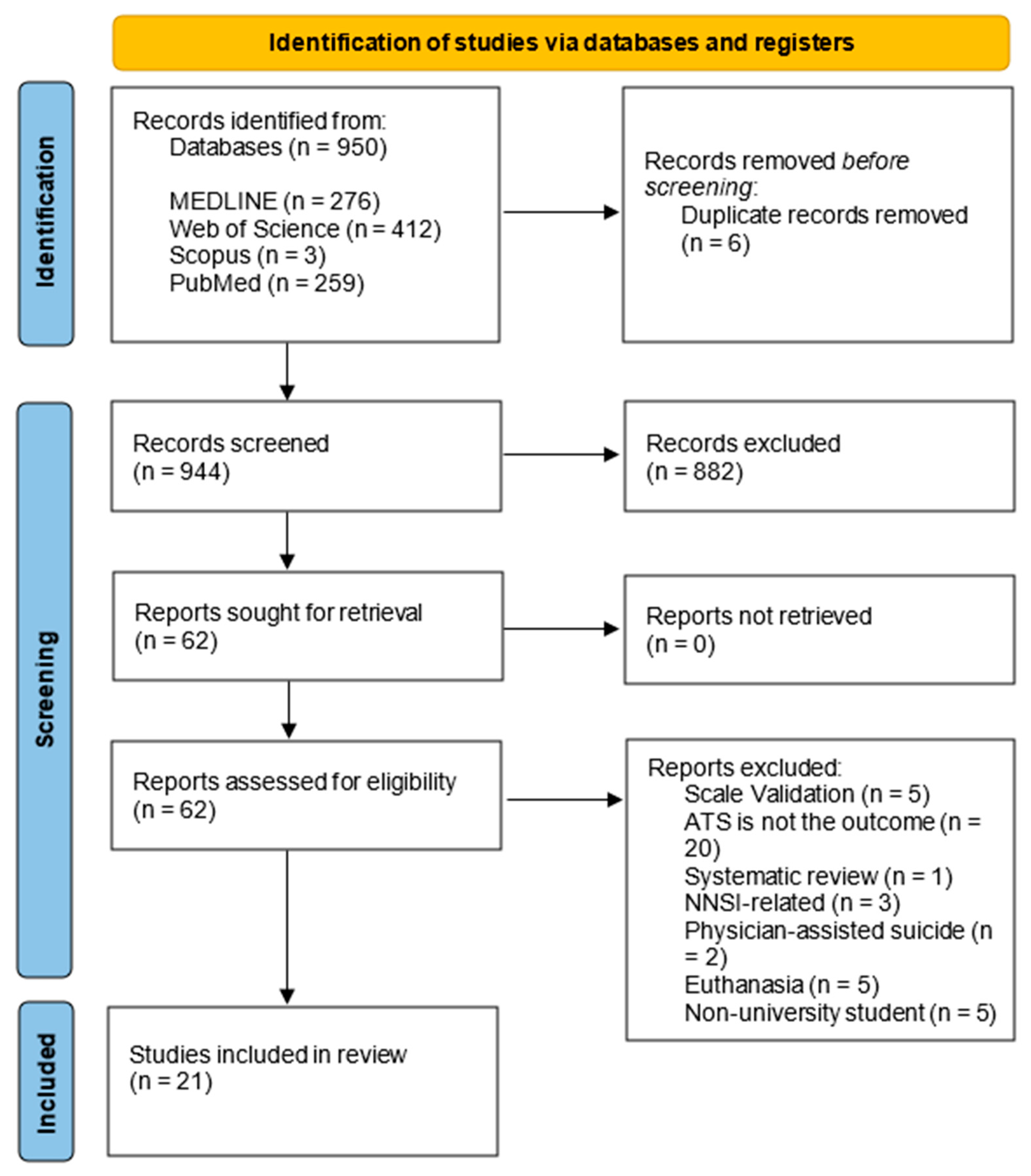
The initial literature search identified 950 articles. After deduplication using Endnote and manual screening, six articles were removed, leaving 944 articles for further review. Following an assessment of titles and abstracts, 62 articles appeared to meet the eligibility criteria. The full texts of these potentially relevant studies were retrieved and assessed for inclusion by the primary reviewer. After a thorough examination, 21 articles remained eligible and were included in the review (refer to Figure 1). No statistical synthesis or meta-analysis was conducted due to substantial heterogeneity in study designs, populations, and outcome measures; therefore, no summary effect estimates, confidence intervals, or measures of statistical heterogeneity were generated.

3.2. Study Characteristics

Of the 21 articles included, 18 were quantitative studies, two were qualitative studies and one was a mixed-method study with a total number of 13,424 participants. Overall, 17 over 21 studies (80.95%) were deemed to be of good quality based on the abovementioned adherence criteria. These studies were conducted in classroom, university, or online settings. They primarily focused on university students from diverse disciplinary backgrounds, including nursing [27,38,39,40], medical science [10,24,25,27,41], dental [41], business [25,42], law [25], psychology [10,43,44], engineering [41], music and arts [45], education [45], human and social sciences [41,42], and other physical or mathematical sciences [43]. Most of the studies utilised a cross-sectional design [7,17,19,25,26,27,38,42].
The research was conducted across various regions and continents, covering Europe, North America, Asia, South America, Oceania, and Africa. In Europe, the studies were carried out in Austria [10,11,31], Italy [11,31], Lithuania [20], Portugal [40], Turkey [10,11,19,31,45], and the United Kingdom [11,31]. In North America, the research included the United States [11,17,29,31,44,45]. Asia saw studies in China [11,31], India [41], Iran [11,31], Japan [11,24,31], Jordan [11,31], Malaysia [7,25,26], Nepal [27,37], Saudi Arabia [11,31], and South Korea [29]. In South America, research was conducted in Brazil [39], while in Oceania, New Zealand was the focus [43]. In Africa, studies took place in Tunisia [11,31,42] and Palestine [11,31].
Most studies did not justify how the sample sizes were derived (except [26,41]). Nevertheless, the sample sizes in the included quantitative studies ranged from 58 [39] to 5572 participants [11,31]. Data collection methods were mainly through online surveys (e.g., [43,44]) and paper-and-pencil questionnaires (e.g., [38]). Other methods include quasi-experiments (e.g., [45]) and interviews or focus groups (e.g., [40,41]). In terms of analysis techniques, quantitative studies typically employ statistical analysis such as regression analysis to analyse the data. Qualitative studies utilised thematic analysis to identify patterns and themes in the data.
A majority of studies reviewed did not utilise a theoretical framework or perspective. However, in four studies by Eskin and colleagues [10,11,19,31], various theories were utilised, including the Interpersonal-Psychological Theory of Suicidal Behavior [46], Social Integration Theory [47], Network Theory [48], and Religious Commitment Theory [49]. Of note, the Differential Stigma Hypothesis [50,51] was proposed to account for the role of cultural orientation in suicide attitudes, specifically that individuals with an individualistic cultural orientation are more likely to perceive the social exclusion of individuals exhibiting suicidal behaviour as an effective strategy for suicide prevention, whereas those with a collectivistic orientation tend to believe that restricting discussions or acknowledgement of suicide itself is a more effective preventive approach.

3.3. Measurement of Attitudes Toward Suicide

The findings indicate that the studies included in the review employed a variety of tools to measure or assess university students’ ATS, namely (1) Suicide Opinion Questionnaire (SOQ; e.g., [2,20,38]), (2) Stigma of Suicide Scale (SOSS) or Stigma of Suicide Scale-Short Form (SOSS-SF; e.g., [27,42,44,45,52]), (3) Eskin’s Attitudes Towards Suicide Scale (E-ATSS; e.g., [10,11,19,31]), (4) Eskin’s Social Reactions to Suicidal Persons Scale (E-SRSPS; e.g., [11,19,31]), (5) Attitudes Toward Suicide questionnaire (ATTS; e.g., [7,20,24,25,26,29]), (6) Suicide Prevention, Exposure, and Awareness Knowledge Survey (SPEAKS) stigma sub-scale (e.g., [17]), (7) Questionnaire of Attitudes Before Suicidal Behaviour (QABSB; e.g., [39]), and (8) qualitative approaches (e.g., [40,41]). Quantitative approaches were more common than qualitative approaches with the most frequently utilised tools being SOSS or SOSS-SF and ATTS.

3.4. Thematic Analysis of Included Studies

To enhance the synthesis of study findings, we organised the findings into two overarching categories: Factors associated with attitudes toward suicide, and the association of attitudes toward suicide with suicide outcomes. Within factors associated with attitudes toward suicide, five themes were identified: (1) awareness, knowledge, and stigma, (2) cultural and religious factors, (3) personal factors, (4) educational intervention, and (5) suicidal disclosures. Within the second category, the association of attitudes toward suicide with suicide outcomes, the following themes were identified: (1) suicidal behaviours, (2) help-seeking and help-providing behaviours, and (3) social support and acceptance.

3.4.1. Factors Associated with Attitudes Toward Suicide

Exploration of heterogeneity across studies indicated that variations in cultural context, geographic location, study design, and participant characteristics contributed to differences in reported attitudes toward suicide.
Awareness, Knowledge, and Stigma
ATS are shaped by levels of awareness, knowledge, and stigma, which play crucial roles in suicide prevention efforts. Cultural norms significantly influence the level of awareness and willingness to address suicide. In Islamic cultures, suicide is often taboo, and discussions surrounding it are limited due to societal and religious constraints [25]. Similarly, Lithuanian students reported a lack of openness in discussing suicide [20]. Conversely, Portuguese nursing students observed a gradual breakdown of the taboo, with younger generations showing greater empathy toward suicide-related issues [40].
Higher levels of knowledge about suicide are often associated with personal exposure to suicide and psychiatric services [26,27,44]. For instance, personal exposure to suicidal patients has been positively linked to higher suicide literacy among nursing students [27]. Similarly, Chesin and colleagues [44] found that students exposed to fictional portrayals of suicide, such as in the television series 13 Reasons Why, exhibited lower stigma and higher knowledge about suicide compared to those who had not watched the series. Additionally, suicide literacy appears to increase among students who have previously had psychiatric consultations or received a psychiatric diagnosis. These students, in particular, tend to view suicide as a means of communication, highlighting the impact of psychiatric exposure on understanding suicide [26,52].
Cultural and Religious Factors
Cultural and religious beliefs, along with the strength of religiosity, were significantly associated with ATS [7,31]. Studies consistently report lower suicide acceptance scores in Muslim-majority countries (e.g., Tunisia, Turkey, Iran, and Palestine) compared to countries like Austria, the United Kingdom, Japan, and, unexpectedly, Saudi Arabia [10,11,31]. Participants affiliated with Islam and Orthodox Christianity demonstrated the strongest belief in punishment after death and the lowest acceptance of suicide [31]. Specifically, identifying with Islam was associated with less permissive ATS [7,11,31]. In contrast, individuals identifying with Protestantism, Catholicism, or no religion reported the highest levels of acceptance [31]. These differences align with stronger religious taboos and beliefs about punishment after death in Islamic and collectivist cultures [19]. Moreover, a higher level of religious commitment has been linked to lower acceptance of suicide among university students [7,25,31].
Personal Factors
Personal experiences and psychological traits were associated with university students’ ATS. Individuals with a history of psychiatric consultations or diagnoses demonstrated greater suicide literacy [26,52]. High-schizotypal individuals showed higher suicide literacy and a greater tendency to normalise or glorify suicide compared to their low-schizotypal counterparts [42]. Additionally, a personal history of suicidal ideation or attempts was associated with lower stigmatising attitudes, increased empathy toward individuals exhibiting suicidal behaviour, and more liberal or permissive ATS [11,42]. Specifically, students who had a history of suicidal thoughts or attempts tended to view suicide more positively or as more normalised [52].
The findings on sex as a personal characteristic associated with ATS are inconsistent. VanDeusen and colleagues [17] observed that male participants tended to exhibit significantly higher levels of stigma, aligning with other research [27,44]. This highlighted that male students might show greater mental health stigma, less understanding of suicidal behaviour, and increased negative judgment. In contrast, Wahab and colleagues [26] found that ATS among male and female medical undergraduates in Malaysia were largely similar, except in the domain of “ability to understand and accept suicide,” which was more pronounced in males. Similarly, Kim and Park [29] reported no significant gender effect on ATS, except concerning the perceived right to prevent suicide.
Age also appears to be associated with ATS among university students. Bajracharya and colleagues [38] found a significant association between nursing students’ age and ATS, with younger students more strongly linking suicide to incomprehensibility and the duration of the suicide process. Additionally, junior nurses exhibited more negative attitudes toward attempted suicide, indicating that age can shape ATS even among college-aged individuals [38]. Younger individuals may lack knowledge about suicide and be more prone to believing myths surrounding it, while more senior students are more likely to accept suicide [20,26]. Therefore, these age-related variations likely stem from knowledge gaps about suicide [20,38].
Educational Intervention
Educational interventions have been shown to affect ATS, primarily by enhancing knowledge, reducing stigma, and fostering empathetic perspectives among learners [17,38,39,45]. Suicide prevention courses have demonstrated significant success in improving foundational knowledge and altering negative ATS. For instance, the Understanding Suicide course, a gatekeeper training program in the United States, effectively increased students’ knowledge about suicide prevention while reducing stigma toward individuals who die by suicide [45]. Similarly, Vedana and colleagues [40] reported reductions in derogatory attitudes among students who participated in such programs, with these positive changes persisting beyond the completion of the course. These programs are particularly effective in addressing common knowledge gaps and misconceptions about suicide, such as the belief that discussing suicide can encourage suicidal behaviour [40].
Current findings indicate that most educational interventions targeting ATS have been focused on medical and nursing students, highlighting the essential role of healthcare professionals in suicide prevention (e.g., [17,39,45]). For example, a comprehensive training program covering suicide epidemiology, associated mental disorders, risk assessment, and prevention strategies significantly reduced negative attitudes toward suicidal behaviour among nursing students [39]. Similarly, Bajracharya and colleagues [38] found that participation in psychiatry nursing courses was linked to changes in perceptions of permissiveness, unpredictability, and incomprehensibility of suicide.
Suicidal Disclosures
Expressing suicidal thoughts to others is often seen as a crucial first step in seeking help [10]. The propensity to seek help and the level of social support has been associated with an individual’s attitudes towards disclosing suicidal thoughts across different cultures [10,29,42]. For example, Korean students exhibit more permissive attitudes towards suicide disclosure [29]. They were less inclined to believe in the obligation to intervene in preventing others’ suicide. They tend to view suicide as predictable, believe that individuals communicate their suicidal intentions, and feel that others do not have the authority to intervene in suicide cases [29]. On the other hand, students from the USA, Italy, the UK, Jordan and Austria believe that people should communicate their suicide-related psychological problems [11].

3.4.2. Attitudes Toward Suicide’s Association with Suicide Outcomes

Suicidal Behaviours
Favourable or permissive ATS are observed to be positively associated with an increased prevalence of suicidal behaviours [7,11]. A study on Malaysian university students found that those who are more accepting of suicide reported not only more lifetime experiences of suicide attempts but also a higher likelihood of future attempts [25]. An underlying factor may be because the normalisation or glorification of suicide may contribute to increased suicidal behaviour [42]. However, educational interventions have been observed to reduce the likelihood of students glorifying or stigmatising suicide [45]. This highlights the importance of targeted educational programs in shaping attitudes, which, in turn, may influence suicidal behaviour.
Cultural and religious factors were found to be associated with ATS and their correlation with suicidal behaviours. Strong religious affiliation was associated with rejecting ATS, which correlated with a lower prevalence of suicidal behaviours [7]. For instance, Foo and colleagues [25] found that Chinese and Buddhist students exhibited more accepting ATS compared to Malay and Muslim students. These attitudes corresponded to higher reported rates of suicidal behaviours among individuals with more permissive views [7,25]. Conversely, Malay students, possibly influenced by a strong religious taboo against suicide, exhibited lower acceptance and a lower proportion of suicide attempts [25]. This aligns with Islamic beliefs that view suicide as a sin punishable in the afterlife [11]. These findings provide a possible explanation of how cultural and religious prohibitions may serve as protective factors against suicide.
Help-Seeking and Help-Providing Behaviours
Even though students hold differing ATS—such as viewing suicide as an escape from problems—they strongly believed that suicidal individuals can be helped and that preventing suicide is a collective responsibility [26]. Similarly, Japanese students also perceived suicide as preventable [24]. However, this belief does not always translate into help-providing behaviours as students with low acceptance of suicide are often less likely to offer support to a suicidal friend [31]. Stigmatising attitudes toward individuals who have attempted suicide can further strain social interactions and discourage help-seeking behaviours [52]. When suicidal individuals openly disclosed their suicidality, students were more likely to seek help on their behalf [42]. Nevertheless, a neglectful, reactive, or confrontational interpersonal style can hinder suicidal individuals from seeking the help they needed [31,39].
Additionally, students with more permissive ATS, including those affiliated with religious traditions such as Protestantism and Catholicism, were generally more willing to support a suicidal peer [11]. In contrast, students from religious backgrounds with strong prohibitions against suicide—such as Islam, Orthodox Christianity, and Buddhism—demonstrated lower acceptance of suicidal peers [31]. They were more likely to confront or engage directly with a peer expressing suicidal intentions, reflecting the influence of their faith on help-providing behaviours [11]. Therefore, Vedana and colleagues [39] emphasised the importance of proactive, preventive measures over reactive or neglectful responses to suicidal behaviour, underscoring the need for structured strategies that guide appropriate help-providing behaviours across different cultural and religious settings.
Furthermore, ATS and mental health were significantly associated with likelihood of seeking help for oneself or others. For example, students who had previously received psychiatric support or had personal experiences with suicidal ideation or attempts displayed greater empathy toward those with suicidal behaviour and were more likely to seek help [42]. This may suggest that lived experience and contact with mental health services contribute to increased psychological awareness and reduced social distance from suicidal distress. Conversely, students who held stigmatising attitudes, viewing suicide as selfish or cowardly, were less likely to help those in need [43]. In particular, high-schizotypal students exhibited negative attitudes toward help-seeking, reflecting how certain personality traits, such as a tendency to glorify or normalise suicide, can hinder help-seeking behaviour [42].
Additionally, students’ awareness of another’s suicidality positively correlated with their willingness to seek help for peers, underscoring the importance of education and exposure to suicide prevention efforts [43,44]. Religious and cultural beliefs also shape help-seeking behaviours. For example, students from strong religious backgrounds, such as Islam and Orthodox Christianity, may not only reject suicide but also hold more negative views on help-seeking due to perceived social stigma [11,25,31]. However, students in medical training who received formal education about suicide prevention, particularly in psychiatric courses, exhibited more supportive attitudes and were more likely to recognise that suicidal persons could be helped [45].
Social Support and Acceptance
Research suggests that higher acceptance of suicide often correlated inversely with the social acceptance of suicidal individuals and the willingness to provide support [11,31]. For example, participants with more permissive ATS—such as those in Austria, the UK, and Japan—tended to demonstrate less social acceptance of suicidal individuals and were less likely to offer help or emotional support [11]. In contrast, individuals from backgrounds with lower suicide acceptance, particularly those affiliated with Islam or Orthodox Christianity, showed higher social disapproval of suicide but were also less likely to engage emotionally with suicidal peers. This reflects the persistent social stigma surrounding suicide in these communities [31].
Religious beliefs significantly influence ATS and social responses to suicidal behaviour. Students strongly affiliated with religions such as Islam, Orthodox Christianity, and Buddhism demonstrated low levels of suicide acceptance [31]. However, a comparison between Buddhists and Muslims revealed that Buddhists exhibited a higher acceptance of suicide [25]. Interestingly, despite religious disapproval of suicide, Austrian students (primarily Roman Catholic) reported significantly higher suicide acceptability and lower beliefs in punishment after death compared to Turkish students (primarily Muslim). These differences highlight the role of cultural factors, such as individualism, in shaping attitudes and social responses [10]. For instance, Turkish students were more likely to provide positive social reactions to disclosures of suicidal thoughts, whereas Austrian students exhibited higher levels of fear of rejection and interpersonal hopelessness, which hindered help-seeking behaviours [10]. Conversely, participants with no religious affiliation or those associated with Protestantism and Catholicism showed higher levels of suicide acceptance, which were associated with greater social acceptance and a stronger willingness to support suicidal peers [31].
Additionally, past experiences with suicide ideation or attempts influenced attitudes and social support behaviours. Students who had previously sought psychiatric support or experienced suicidal ideation displayed lower stigma toward suicide, leading to more positive social interactions and a greater likelihood of offering support [52]. On the other hand, students with stigmatising attitudes, such as perceiving suicide as selfish or cowardly, were less likely to provide emotional support or engage with suicidal peers [43].

4. Discussion

The purpose of this systematic review is to comprehensively examine and synthesise existing literature to identify factors associated with ATS and its association with suicide outcomes among university students. The review of studies on ATS among university students globally reveals a complex landscape influenced by various factors, including (1) awareness, knowledge, and stigma, (2) cultural and religious factors, (3) personal factors, (4) educational intervention, and (5) suicidal disclosures.
The findings indicate that the majority of studies on attitudes towards suicide (ATS) among college students did not explicitly employ a guiding theoretical framework, suggesting that the literature remains largely descriptive and empirically driven rather than theory informed. This lack of theoretical grounding may limit the interpretability and comparability of findings across studies, as results are often not situated within broader explanatory models of suicidal behaviour or stigma. In contrast, the limited number of theory-driven studies, particularly those by Eskin and colleagues [46,47,48,49,50,51], demonstrate the value of integrating established frameworks such as the Interpersonal–Psychological Theory of Suicidal Behaviour, Social Integration Theory, and Network Theory in explaining variations in ATS based on social norms. Notably, the application of the Differential Stigma Hypothesis [50,51] provides a useful cultural lens for understanding how individualistic versus collectivistic orientations shape perceptions of suicide prevention strategies, particularly in relation to social exclusion versus discourse restriction. Collectively, these theoretical perspectives highlight the importance of cultural, social, and religious contexts in shaping ATS, and underscore the need for future research to more consistently adopt and test theoretical frameworks to strengthen explanatory depth and cross-study comparability.
As discussed above, cultural and religious factors emerge as crucial determinants of ATS, and the studies reviewed highlighted how moral and belief systems influence stigma and perceived acceptability of suicidal behaviours. In more religiously restrictive contexts, such as Islamic cultures, strong doctrinal prohibitions and beliefs regarding moral transgression and afterlife consequences may contribute to heightened stigma and less permissive attitudes towards suicide [19,25,31]. In contrast, comparatively more secular or individualistic contexts may be associated with lower levels of stigma and greater attitudinal acceptance, perhaps reflecting weaker religious sanctions and greater emphasis on personal autonomy [31]. The observed differences between Muslim and Buddhist students in Malaysia, as well as between students in Austria and Turkey, further suggest that ATS are not uniform but are deeply embedded within broader cultural value systems, where religion interacts with societal norms to shape how suicide is perceived and responded to [10,25].
Interestingly, these cross-national trends are mirrored within multi-religious countries. For example, in Malaysia, Foo and colleagues [25] found that Muslim students displayed resistant ATS, while Buddhist students exhibited more accepting attitudes. In addition, differences in causal attributions indicate that cultural and religious frameworks may shape not only attitudes towards suicide but also how its underlying causes are interpreted. Based on another Malaysian study, Muslim students, for example, were more likely to attribute suicide to relational issues compared to their Buddhist and Christian counterparts, reflecting cultural and religious differences in the perceived causes of suicide [25]. Similarly, another study in Malaysia suggested that the degree of religiosity, rather than the specific type of religion, is associated with negative ATS, reinforcing the role of religious commitment over religious affiliation in shaping these attitudes [7]. This implies that the intensity of religious commitment may be a more proximal determinant of suicide attitudes than membership in a particular religious group, underscoring the importance of considering religiosity as a continuum rather than a categorical variable.
We found that stigma surrounding suicide is associated with ATS. Stigma is often expressed through negative, judgmental statements that attribute self-injury or suicide to personal weakness [41]. For instance, stigma related to suicide frequently involves negative perceptions, such as the belief that individuals who attempt or die by suicide are selfish, cowardly, weird, prone to violence, vengeful, or attention seeking [27,43,52]. These stigmatising views can lead to those contemplating suicide being perceived less favourably by others [17]. As a result, an individual struggling with suicidal thoughts may be hesitant to reveal their suicidal thoughts and become less likely to seek help. However, despite these beliefs, findings also suggest that students may hold a more nuanced view of suicide. To illustrate, cultural attitudes sometimes reflect positive or neutral perceptions, such as describing individuals who die by suicide as “determined” [27]. This indicates that stigma is not monolithic but rather context-dependent and shaped by cultural meaning systems, highlighting the complexity of how suicide is socially constructed across different settings.
Educational interventions seem to play a positive role in shaping ATS [17,38,39,45]. The findings suggest that targeted suicide prevention courses, especially those focused on healthcare students, can effectively reduce stigma and enhance knowledge. This is crucial, given that higher suicide literacy is associated with awareness, knowledge, and stigma of suicide. The positive impact of educational programs emphasises the potential of structured education in altering negative ATS and fostering empathy. However, most interventions had focused on medical and nursing students [38,39,45], who are future gatekeepers as potential health professionals in the future. Educational interventions should also focus on non-healthcare students, such as communications students who may be responsible for the safe reporting and destigmatisation of suicide in the general population through their works.
Personal factors, including psychiatric history and exposure to suicidal behaviours, are also associated with ATS [26,52]. Students with personal experiences of suicide or psychiatric consultations tended to exhibit lower stigma and greater empathy [11,41,45]. This suggests that personal exposure may serve as a potential factor in shaping more compassionate ATS. Students with personal histories could be invited to share their lived experiences and how these experiences shaped their ATS. This is especially given the increasing popularity of peer-support programmes in suicide prevention, some of which were shown to decrease suicidal behaviours [53]. Nevertheless, such approaches require careful implementation to ensure safety and ethical considerations are maintained. It should also be noted that these studies are observational and cross-sectional in nature, and therefore the directionality of the relationship between psychiatric history, exposure to suicidal behaviors and ATS could not be established.
The study presents mixed findings on the influence of sex or gender on ATS. While some studies indicate that male students exhibit higher stigma [17,27,44], others found no significant sex differences [26,29]. Given the inconsistent results regarding the role of sex or gender, further research is necessary to explore underlying factors that may contribute to these variations. Age-related variations are more consistent, with younger students demonstrating less understanding and more myths about suicide compared to older students [20,26,38]. These differences may be attributed to knowledge gaps and varying levels of exposure to suicide-related information [20,38]. These findings highlight the need for targeted anti-stigma interventions that consider age-related differences in suicide attitudes. Tailoring educational programs to address specific misconceptions and gaps in knowledge among younger students may enhance suicide literacy and reduce stigma.
The observed association between ATS and suicidal behaviours highlights the need for culturally sensitive and context-specific suicide prevention strategies. Permissive ATS are linked to a higher prevalence of suicidal behaviours, perhaps due to suicidal behaviours being normalised or less effectively challenged. Therefore, it is important to develop educational interventions to mitigate these risks [7,11]. Moreover, the findings suggest that fostering supportive help-seeking and help-providing behaviours requires addressing the stigma associated with suicide [45]. However, the effectiveness of such interventions is likely to depend on cultural relevance, as attitudes towards suicide are shaped by underlying cultural, religious, and social norms. Therefore, developing culturally tailored educational programs can help challenge permissive ATS and reduce stigma, ultimately fostering a more supportive and informed student community. Overall, the current review provides valuable insights into the factors shaping ATS among university students.

Strengths and Limitations

The current review paper provides a comprehensive overview of ATS among university students, drawing from a wide range of studies across different regions and disciplines. By including studies from various regions and continents, the review offers valuable insights into cross-cultural differences in ATS among students. This is particularly relevant given the importance of understanding these attitudes for suicide prevention efforts, making the review both timely and significant.
However, it is important to acknowledge the limitations of this review. While a quality assessment of the included studies was conducted to enhance the rigour of the review process, studies that did not meet the adherence criteria were not excluded. Therefore, the results should be interpreted with caution. Future research should focus on ensuring that findings are based on high-quality research. Additionally, the review may be limited by its inclusion of only studies published in English and peer-reviewed journal articles, which could lead to the exclusion of relevant studies published in other languages and grey literature offering unique insights. The language limitation, for example, may preclude insights from non-English speaking cultures, and therefore findings on suicide attitudes in these cultures may be missed. The exclusion of articles with postgraduate participants from this review limits the generalisability of the review findings to only describing the suicide attitudes of undergraduate students. As the initial title and abstract screening was conducted by a single reviewer, there is a potential risk of selection bias due to the absence of an independent second reviewer to separately screen and verify study eligibility. Moreover, the included studies vary in terms of methodologies used, which complicates the comparison and synthesis of their findings. Future researchers are encouraged to address this methodological heterogeneity, for instance, by focusing solely on quantitative studies given the scarcity of qualitative papers in this area. Furthermore, the overall certainty of evidence was not formally assessed using a standardised framework (e.g., Grading of Recommendations Assessment, Development and Evaluation [GRADE]); however, the predominance of observational study designs and variability in methodologies suggest a moderate to low level of confidence in the synthesised findings.

5. Recommendations

The review findings highlight the variability of ATS across cultures, showing that ATS may be associated with socio-cultural factors such as religion and stigma. This indicates that culturally adapted scales and tools to measure and identify students’ ATS are needed, to more accurately assess and compare ATS across different populations, which is a crucial step before developing prevention strategies. Researchers have made commendable efforts in this regard, developing tools that are suitable for their respective cultures. Examples include the Nepalese version of the Suicide Opinion Scale-Short Form (SOSS-SF) [27], and the Turkish version of the SOSS [53]. However, the evidence base also indicates a relative lack of qualitative studies, limiting deeper understanding of how ATS are experienced and constructed among university students. Future research may therefore benefit from incorporating qualitative approaches to explore ATS in greater depth and to complement the predominantly cross-sectional quantitative literature.

6. Conclusions

In conclusion, this review provides a broad synthesis of attitudes towards suicide among university students across different regions and disciplines. Overall, the findings suggest that ATS are shaped by a complex interplay of cultural, societal, and individual factors, although the strength and direction of these associations vary across studies. While some consistent patterns emerge, particularly the role of stigma and cultural or religious influences, other findings remain heterogeneous, likely reflecting differences in study populations, methodologies, and measurement approaches. The review also highlights the potential importance of addressing stigma and promoting help-seeking behaviours among university students, particularly through educational initiatives; however, most evidence is based on cross-sectional designs, limiting causal interpretations. Despite methodological variability, several key themes were identified that may inform future suicide prevention efforts in university settings. Although there is growing research on ATS in non-Western contexts, these areas remain comparatively underexplored, and further research is needed to develop a more nuanced and culturally grounded understanding of ATS across diverse populations.

Supplementary Materials

The following supporting information can be downloaded at: https://www.mdpi.com/article/10.3390/psychiatryint7040141/s1, PRISMA 2020 Checklist; Table S1: Characteristics of Included Studies; Table S2: Main Findings of Included Studies; Table S3: Search terms and number of articles retrieve; Table S4: Strengthening the Reporting of Observational Studies in Epidemiology (STROBE); Table S5: Consolidated Criteria for Reporting Qualitative Research (COREQ).

Author Contributions

Conceptualization, S.M.H.L., S.E.G. and C.S.S.; Mehodology, S.M.H.L., S.E.G. and C.S.S.; Software, S.M.H.L.; Validation, S.M.H.L., S.E.G., N.M.Z., S.K. and C.S.S.; Formal analysis, S.M.H.L.; Investigation, S.M.H.L., N.M.Z., S.K. and C.Q.C.; Resources, S.E.G. and C.S.S.; Data curation, S.M.H.L.; Writing—original draft preparation, S.M.H.L.; Writing—review and editing, S.E.G., C.S.S., N.M.Z., S.K. and C.Q.C.; Visualization, S.M.H.L.; Supervision, S.E.G. and C.S.S.; Project administration, S.E.G. All authors have read and agreed to the published version of the manuscript.

Funding

This research received no external funding.

Institutional Review Board Statement

Not applicable.

Informed Consent Statement

Not applicable.

Data Availability Statement

No new data were created or analyzed in this study.

Acknowledgments

The authors used ChatGPT (GPT-5-mini) for language refinement in this manuscript. This tool was employed to improve clarity, grammar, and overall readability. No content, ideas, or interpretations were generated or altered by the AI. The author takes full responsibility for the work on AI.

Conflicts of Interest

The authors declare no conflicts of interest.

Abbreviations

The following abbreviations are used in this manuscript:
ATSAttitudes towards suicide
ATTSAttitudes toward Suicide Scale
COREQConsolidated Criteria for Reporting Qualitative Research
E-ATTSEskin’s Attitudes towards Suicide Scale
E-SRSPSEskin’s Social Reactions to Suicidal Persons Scale
INPLASYInternational Platform of Registered Systematic Review and Meta-analysis Protocols
LOSSLiteracy of Suicide Scale
MeSHMedical Subject Headings
NSSInon-suicidal self-injurious behaviours
PRISMAPreferred Reporting Items for Systematic Reviews and Meta-Analyses
SOSSStigma of Suicide Scale
SOSS-SFStigma of Suicide Scale—Short Form
SPEAKSSuicide Prevention, Exposure, and Awareness Knowledge Survey
STROBEStrengthening the Reporting of Observational Studies in Epidemiology

References

  1. De Leo, D.; Goodfellow, B.; Silverman, M.; Berman, A.; Mann, J.; Arensman, E.; Hawton, K.; Phillips, M.R.; Vijayakumar, L.; Andriessen, K.; et al. International study of definitions of English-language terms for suicidal behaviours: A survey exploring preferred terminology. BMJ Open 2021, 11, e043409. [Google Scholar] [CrossRef] [Scilit] [PubMed]
  2. Orsolini, L.; Latini, R.; Pompili, M.; Serafini, G.; Volpe, U.; Vellante, F.; Fornaro, M.; Valchera, A.; Tomasetti, C.; Fraticelli, S.; et al. Understanding the complex of suicide in depression: From research to clinics. Psychiatry Investig. 2020, 17, 207–221. [Google Scholar] [CrossRef] [Scilit] [PubMed]
  3. Ghasemi, P.; Shaghaghi, A.; Allahverdipour, H. Measurement scales of suicidal ideation and attitudes: A systematic review article. Health Promot. Perspect. 2015, 5, 156–168. [Google Scholar] [CrossRef] [Scilit] [PubMed]
  4. Zhang, J.; Jia, C.-X. Attitudes toward suicide: The effect of suicide death in the family. Omega 2009, 60, 365–382. [Google Scholar] [CrossRef] [Scilit] [PubMed]
  5. Lee, H.; Rhee, S.J.; Kim, M.J.; Park, C.H.K.; Yang, J.H.; Son, K.; Park, J.-I.; Ahn, Y.M. Shifting attitudes toward suicide over time: A latent profile analysis using the Korea National Suicide Survey. Front. Psychiatry 2023, 14, 1124318. [Google Scholar] [CrossRef] [Scilit] [PubMed]
  6. Siau, C.S.; Wee, L.H.; Ibrahim, N.; Visvalingam, U.; Wahab, S. Cross-cultural adaptation and validation of the attitudes toward suicide questionnaire among healthcare personnel in Malaysia. Inquiry 2017, 54, 46958017707295. [Google Scholar] [CrossRef] [Scilit] [PubMed]
  7. Kamaruddin, M.N.S.B.; Hashim, N.A.B.; Mohamed, S.B.; Azhari, Z.I.B. Associations between suicidal behaviour, attitudes towards suicide, and psychological distress among students in a university in East Malaysia. East Asian Arch. Psychiatry 2023, 33, 114–119. [Google Scholar] [CrossRef] [Scilit] [PubMed]
  8. Aldrich, R.S. Suicide prevention: College students’ intention to intervene. Arch. Suicide Res. 2017, 21, 403–412. [Google Scholar] [CrossRef] [Scilit] [PubMed]
  9. Aldrich, R.S.; Cerel, J.; Drapeau, C.W. Suicide knowledge and intention to intervene: College students. J. Am. Coll. Health 2023, 71, 182–189. [Google Scholar] [CrossRef] [Scilit] [PubMed]
  10. Eskin, M.; Schild, A.; Öncü, B.; Stieger, S.; Voracek, M. A cross-cultural investigation of suicidal disclosures and attitudes in Austrian and Turkish university students. Death Stud. 2015, 39, 584–591. [Google Scholar] [CrossRef] [Scilit] [PubMed]
  11. Eskin, M.; Kujan, O.; Voracek, M.; Shaheen, A.; Carta, M.G.; Sun, J.-M.; Flood, C.; Poyrazli, S.; Janghorbani, M.; Yoshimasu, K.; et al. Cross-national comparisons of attitudes towards suicide and suicidal persons in university students from 12 countries. Scand. J. Psychol. 2016, 57, 554–563. [Google Scholar] [CrossRef] [Scilit] [PubMed]
  12. Renberg, E.S.; Jacobsson, L. Development of a questionnaire on attitudes towards suicide (ATTS) and its application in a Swedish population. Suicide Life Threat. Behav. 2003, 33, 52–64. [Google Scholar] [CrossRef] [Scilit] [PubMed]
  13. Domino, G. The Suicide Opinion Questionnaire. Psychol. Rep. 1982, 50, 695–700. [Google Scholar]
  14. Diekstra, R.F.W.; Kerkhof, A.J.F.M. Attitudes toward suicide: The development of a multidimensional measuring instrument. Omega 1989, 20, 123–152. [Google Scholar]
  15. Batterham, P.J.; Calear, A.L.; Christensen, H. The Stigma of Suicide Scale: Psychometric properties and correlates. J. Affect. Disord. 2013, 150, 812–818. [Google Scholar]
  16. Calear, A.L.; Batterham, P.J.; Christensen, H. The Literacy of Suicide Scale. Crisis 2012, 33, 13–20. [Google Scholar]
  17. VanDeusen, K.M.; Ginebaugh, K.J.L.; Walcott, D.D. Campus suicide prevention: Knowledge, facts, and stigma in a college student sample. SAGE Open 2015, 5, 2158244015580851. [Google Scholar] [CrossRef] [Scilit]
  18. Ferrara, P.; Terzoni, S.; Ruta, F.; Poggi, A.D.; Destrebecq, A.; Gambini, O.; D’Agostino, A. Nursing students’ attitudes towards suicide and suicidal patients: A multicentre cross-sectional survey. Nurse Educ. Today 2022, 109, 105258. [Google Scholar] [CrossRef] [Scilit] [PubMed]
  19. Eskin, M.; Köskün, T.; Harlak, H. Beliefs about suicide prevention by excluding the phenomenon versus the person. Scand. J. Psychol. 2022, 63, 83–90. [Google Scholar] [CrossRef] [Scilit] [PubMed]
  20. Strukcinskiene, B.; Rauckiene-Michaelsson, A.; Strukcinskaite, V. The links between suicidal behaviour and endorsement of myths about suicide in young people. Soc. Welf. Interdiscip. Approach 2019, 9, 57–68. [Google Scholar] [CrossRef] [Scilit]
  21. Wu, R.; Zhu, H.; Wang, Z.-J.; Jiang, C.-L. A large sample survey of suicide risk among university students in China. BMC Psychiatry 2021, 21, 474. [Google Scholar] [CrossRef] [Scilit] [PubMed]
  22. Gselamu, L.; Ha, K. Attitudes towards suicide and risk factors for suicide attempts among university students in South Korea. J. Affect. Disord. 2020, 272, 166–169. [Google Scholar] [CrossRef] [Scilit] [PubMed]
  23. Ji, N.-J.; Hong, Y.-P.; Lee, W.-Y. Comprehensive psychometric examination of the attitudes towards suicide (ATTS) in South Korea. Int. J. Ment. Health Syst. 2016, 10, 2. [Google Scholar] [CrossRef] [Scilit] [PubMed]
  24. Hashimoto, K.; Sugawara, N.; Tanaka, O.; Nakamura, K.; Yasui-Furukori, N. Parental bonding and attitudes toward suicide among medical college students in Japan. Neuropsychiatr. Dis. Treat. 2014, 10, 2015–2020. [Google Scholar] [CrossRef] [Scilit] [PubMed]
  25. Foo, X.Y.; Alwi, M.N.M.; Ismail, S.I.F.; Ibrahim, N.; Osman, Z.J. Religious commitment, attitudes toward suicide, and suicidal behaviors among college students. J. Relig. Health 2014, 53, 731–746. [Google Scholar] [CrossRef] [Scilit] [PubMed]
  26. Wahab, S.; Shah, N.E.; Sivachandran, S.; Shahruddin, I.; Ismail, N.N.S.; Mohan, L.D.; Kamaluddin, M.R.; Nawi, A.M. Attitude towards suicide and help-seeking behavior among medical undergraduates. Acad. Psychiatry 2021, 45, 672–680. [Google Scholar] [CrossRef] [Scilit] [PubMed]
  27. Gupta, A.K.; Sharma, R.; Sah, R.P.; Sharma, S.; Jha, A.; Chapagai, M.; Saeed, F.; Shoib, S. Cross-cultural adaptation of Nepalese literacy and stigma of suicide scales. Brain Behav. 2023, 13, e3344. [Google Scholar] [CrossRef] [Scilit] [PubMed]
  28. Colucci, E.; Lester, D. A cross-cultural study of attitudes toward suicide among young people in India, Italy and Australia. Int. J. Soc. Psychiatry 2020, 66, 700–706. [Google Scholar] [CrossRef] [Scilit] [PubMed]
  29. Kim, K.; Park, J.-I. Attitudes toward suicide among college students in South Korea and the United States. Int. J. Ment. Health Syst. 2014, 8, 17. [Google Scholar] [CrossRef] [Scilit] [PubMed]
  30. Page, M.J.; McKenzie, J.E.; Bossuyt, P.M.; Boutron, I.; Hoffmann, T.C.; Mulrow, C.D.; Shamseer, L.; Tetzlaff, J.M.; Akl, E.A.; Brennan, S.E.; et al. The PRISMA 2020 statement. BMJ 2021, 372, n71. [Google Scholar] [CrossRef] [Scilit] [PubMed]
  31. Eskin, M.; Poyrazli, S.; Janghorbani, M.; Bakhshi, S.; Carta, M.G.; Francesca, M.; Tran, U.S.; Voracek, M.; Mechri, A.; Aidoudi, K.; et al. The role of religion in suicidal behavior, attitudes and psychological distress among university students: A multinational study. Transcult. Psychiatry 2019, 56, 853–877. [Google Scholar] [CrossRef] [Scilit] [PubMed]
  32. Grandclerc, S.; De Labrouhe, D.; Spodenkiewicz, M.; Lachal, J.; Moro, M.R. Relations between nonsuicidal self-injury and suicidal behavior in adolescence. PLoS ONE 2016, 11, e0153760. [Google Scholar] [CrossRef] [Scilit] [PubMed]
  33. Mehlum, L.; Schmahl, C.; Berens, A.; Doering, S.; Hutsebaut, J.; Kaera, A.; Kramer, U.; Moran, P.A.; Renneberg, B.; Ribaudi, J.S.; et al. Euthanasia and assisted suicide in patients with personality disorders. Borderline Personal. Disord. Emot. Dysregul. 2020, 7, 15. [Google Scholar] [CrossRef] [Scilit] [PubMed]
  34. Li, T.; Higgins, J.P.T.; Deeks, J.J. Collecting data. In Cochrane Handbook for Systematic Reviews of Interventions; Cochrane: London, UK, 2019. [Google Scholar]
  35. Cuschieri, S. The STROBE guidelines. Saudi J. Anaesth. 2019, 13, S31–S34. [Google Scholar] [CrossRef] [Scilit] [PubMed]
  36. da Costa, B.R.; Cevallos, M.; Altman, D.G.; Rutjes, A.W.S.; Egger, M. Uses and misuses of the STROBE statement. BMJ Open 2011, 1, e000048. [Google Scholar] [CrossRef] [Scilit] [PubMed]
  37. Tong, A.; Sainsbury, P.; Craig, J. Consolidated criteria for reporting qualitative research (COREQ). Int. J. Qual. Health Care 2007, 19, 349–357. [Google Scholar] [CrossRef] [Scilit] [PubMed]
  38. Bajracharya, J.; Bhandari, N.; Chalise, P.; Tiwari, D. Perception regarding care of attempted suicide patients among nursing students in Kathmandu University School of Medical Sciences. Kathmandu Univ. Med. J. 2020, 18, 402–406. [Google Scholar] [CrossRef] [Scilit]
  39. Bott, N.C.L.; de Araújo, L.M.C.; Costa, E.E.; Machado, J.S. Nursing students’ attitudes across suicidal behavior. Investig. Educ. Enferm. 2015, 33, 334–342. [Google Scholar] [CrossRef] [Scilit] [PubMed]
  40. Vedana, K.G.G.; Dos Santos, J.C.; Zortea, T.C. The meaning of suicidal behaviour for Portuguese nursing students. Int. J. Environ. Res. Public Health 2022, 19, 14153. [Google Scholar] [CrossRef] [Scilit] [PubMed]
  41. Shanmugavinayagam, A.; Usaid, S.; Thangaraju, S.I.; Sinnathambi, S.D. Perspectives of undergraduate students on suicide and prevention programs. Indian J. Psychiatry 2023, 32, 328–333. [Google Scholar] [CrossRef] [Scilit] [PubMed]
  42. Fekih-Romdhane, F.; Amri, A.; Cheour, M. Suicidal ideation, suicide literacy and stigma among university students. Early Interv. Psychiatry 2022, 16, 659–669. [Google Scholar] [CrossRef] [Scilit] [PubMed]
  43. Holman, M.S.; Williams, M.N. Young New Zealanders’ beliefs about youth suicide and how it can be prevented. N. Z. J. Psychol. 2020, 49, 22–28. [Google Scholar]
  44. Chesin, M.; Cascardi, M.; Rosselli, M.; Tsang, W.; Jeglic, E.L. Knowledge of suicide risk factors among college students who viewed 13 Reasons Why. J. Am. Coll. Health 2019, 68, 644–649. [Google Scholar] [CrossRef] [Scilit] [PubMed]
  45. Muehlenkamp, J.J.; Thoen, S.K. Short- and long-term impact of an undergraduate suicidology course. Suicide Life Threat. Behav. 2019, 49, 1573–1586. [Google Scholar] [CrossRef] [Scilit] [PubMed]
  46. Joiner, T. Why People Die by Suicide; Harvard University Press: Cambridge, MA, USA, 2009. [Google Scholar]
  47. Durkheim, E. Suicide: A Study in Sociology; The Free Press: Glencoe, IL, USA, 1951. [Google Scholar]
  48. Pescosolido, B. The social context of religious integration and suicide: Pursuing the network explanation. Sociol. Q. 1990, 31, 337–357. [Google Scholar] [CrossRef] [Scilit]
  49. Stark, R.; Doyle, D.P.; Rushing, L. Beyond Durkheim: Religion and suicide. J. Sci. Study Relig. 1983, 22, 120–131. [Google Scholar] [CrossRef] [Scilit]
  50. Eskin, M. Adolescents’ attitudes toward suicide and a suicidal peer: A comparison between Swedish and Turkish high school students. Scand. J. Psychol. 1995, 36, 201–207. [Google Scholar] [CrossRef] [Scilit] [PubMed]
  51. Eskin, M.; Voracek, M.; Stieger, S.; Altinyazar, V. A cross-cultural investigation of suicidal behavior and attitudes in Austrian and Turkish medical students. Soc. Psychiatry Psychiatr. Epidemiol. 2011, 46, 813–823. [Google Scholar] [PubMed]
  52. Ozturk, A.; Akin, S. Evaluation of knowledge level about suicide and stigmatizing attitudes in university students. J. Psychiatr. Nurs. 2018, 9, 96–104. [Google Scholar] [CrossRef] [Scilit]
  53. Ozturk, A.; Akin, S.; Durna, Z. Psychometric properties of the Turkish version of the Stigma of Suicide Scale. J. Psychiatr. Nurs. 2017, 8, 102–109. [Google Scholar] [CrossRef] [Scilit]
Figure 1. PRISMA Flow Chart of the Literature Review Process.
Psychiatryint 07 00141 g001
Table 1. Search Terms and Strategy.
[1]attitude* OR opinion* OR view* OR perspective* OR sentiment* OR aware*
[2]suicid* OR suicid* ideation* OR suicid* thought* OR suicid* attempt* OR parasuicide OR suicid* behaviour* OR suicide* behavior OR suicid* prevention OR assisted suicide* OR completed suicide* OR suicid* plan
[3]universit* OR university student* OR college* OR college student* OR undergraduate* OR undergraduate student* OR degree student* OR tertiary education student*
[4]1 AND 2 AND 3
[5]Limit to English, Publication year 2014–2024, Full-text article
* truncation symbol was used for plural and suffixes to capture all possible word forms.
Disclaimer/Publisher’s Note: The statements, opinions and data contained in all publications are solely those of the individual author(s) and contributor(s) and not of MDPI and/or the editor(s). MDPI and/or the editor(s) disclaim responsibility for any injury to people or property resulting from any ideas, methods, instructions or products referred to in the content.