Systematic Review

Peripheral Inflammatory Biomarkers in First-Episode, Drug-Naïve Major Depressive Disorder: A Systematic Review


by
Esteban Zavaleta-Monestel
1,*,
Luis Guillermo Herrera-Jiménez
2,
José Miguel Chaverri-Fernández
2,
Sebastián Arguedas-Chacón
1,
Jeaustin Mora-Jiménez
1 and
Ricardo Millán-González
3,4
1
Health Research Department, Hospital Clínica Bíblica, San Jose 1307-1000, Costa Rica
2
Department of Pharmacy, University of Costa Rica, San Jose 11501-2060, Costa Rica
3
Department of Medicine, University of Costa Rica, San Jose 11501-2060, Costa Rica
4
Department of Psychiatry, Hospital Clínica Biblica, San Jose 1307-1000, Costa Rica
*
Author to whom correspondence should be addressed.
Psychiatry Int. 2026, 7(3), 140; https://doi.org/10.3390/psychiatryint7030140 (registering DOI)

Submission received: 12 May 2026 / Revised: 8 June 2026 / Accepted: 9 June 2026 / Published: 22 June 2026
(This article belongs to the Section Clinical Psychiatry and Psychotherapy)

Abstract

Major depressive disorder (MDD) is clinically heterogeneous, and peripheral inflammatory biomarkers may help clarify early biological mechanisms before illness chronicity or pharmacologic treatment confound interpretation. This systematic review synthesized evidence on peripheral inflammatory biomarkers in first-episode, drug-naïve major depressive disorder (FEDN-MDD) compared with healthy controls and examined associations with clinical severity. Following PRISMA 2020, searches of PubMed/MEDLINE, Embase, PsycINFO, and Scopus from inception to 19 March 2026 identified 313 records; after screening, 16 publications were included in qualitative synthesis. Studies varied in age group, biological matrix, assay platform, and statistical reporting, precluding meta-analysis. The most frequently assessed biomarkers were IL-1β, TNF-α, IL-6, and CRP/hs-CRP. IL-6 showed the clearest recurrent tendency toward elevation in FEDN-MDD, whereas CRP/hs-CRP findings were partially positive but methodologically limited. TNF-α and IL-1β findings were mixed, and clinical correlations with depressive severity were sparse and inconsistent. Overall, the evidence supports heterogeneous early immune dysregulation in a subset of patients with FEDN-MDD rather than a single reproducible inflammatory signature. Peripheral inflammatory biomarkers should currently be considered research tools for biological stratification and mechanistic hypothesis generation, pending larger standardized longitudinal studies.

1. Introduction

Major depressive disorder (MDD) remains one of the leading causes of disability worldwide, yet its diagnosis continues to rely primarily on clinical symptoms rather than validated biological measures that could improve prognosis, stratification, or treatment selection. This limitation is particularly relevant for a condition as prevalent, heterogeneous, and clinically consequential as MDD. Accordingly, increasing attention has been directed toward identifying measurable biological signals that may reflect clinically meaningful disease mechanisms [1,2].
Among the candidate systems implicated in MDD, immune and inflammatory pathways have drawn sustained attention. Over the past two decades, peripheral inflammatory biomarkers—including C-reactive protein (CRP), interleukin-6 (IL-6), tumor necrosis factor alpha (TNF-α), and interleukin-1β (IL-1β)—have been repeatedly associated with depressive states, lending support to the broader inflammatory hypothesis of depression [3,4,5].
Importantly, the field has moved beyond the question of simple cross-sectional association. Longitudinal studies suggest that inflammatory dysregulation may precede at least some later depressive outcomes, particularly for IL-6, while more recent meta-analytic and symptom-level work indicates that inflammation may be linked more closely to specific depressive phenotypes—such as fatigue, sleep and appetite disturbance, and anhedonia—than to depression as a unitary construct [6,7,8,9].
These findings have strengthened the biological plausibility of inflammatory models of depression, while also underscoring the likelihood that inflammation is relevant to some patients and some symptom dimensions more than others. Yet a central limitation of this literature is clinical heterogeneity. Much of the biomarker evidence has been derived from mixed samples that combine first and recurrent episodes, variable illness duration, prior antidepressant exposure, and medical or psychiatric comorbidity.
Each of these factors may influence inflammatory signaling independently of early depressive pathophysiology. As a result, the biological signal present near illness onset may be diluted by chronicity, treatment effects, and accumulated disease burden. The more precise question, therefore, is not simply whether inflammation is associated with MDD in general, but whether peripheral immune alterations are already detectable at the first clinically identifiable stage of the disorder [4,5,7].
First-episode, drug-naïve major depressive disorder (FEDN-MDD) offers a particularly informative model in which to address that question. By focusing on patients close to illness onset and before pharmacologic exposure, studies of FEDN-MDD may provide a clearer view of inflammatory alterations that are more closely related to early disease expression rather than to its downstream consequences. In this setting, peripheral biomarkers are especially appealing because they are accessible, clinically scalable, and biologically plausible as translational tools for early stratification and mechanistic subtyping. At the same time, the FEDN-MDD literature remains fragmented, with substantial variation in diagnostic definitions, sample composition, biological matrices, laboratory platforms, and biomarker panels, limiting direct comparison across studies [4,5,7,9].
Accordingly, a focused synthesis of this evidence is needed. The present systematic review aimed to identify, evaluate, and synthesize the available literature on peripheral inflammatory biomarkers in first-episode MDD, with particular attention to drug-naïve patients, cross-study biomarker patterns, clinical correlates, methodological quality, and the extent to which these markers may reflect biologically meaningful processes relevant to early depressive illness.

2. Materials and Methods

2.1. Study Design and Reporting Standards

This systematic review was designed to identify, appraise, and synthesize evidence on peripheral inflammatory biomarkers in FEDN-MDD. The review was conducted in accordance with the PRISMA 2020 statement. The completed PRISMA 2020 checklist is provided as Supplementary Material S1.

2.2. Protocol Registration

The review protocol was registered in an international database of systematic reviews (PROSPERO) prior to study selection with the following ID: CRD420261347590. Any deviations from the registered protocol were documented and justified where applicable.

2.3. Research Question

This review was guided by the following research question: which peripheral inflammatory biomarkers differ between patients with first-episode, drug-naïve major depressive disorder and healthy controls, and how are these biomarkers associated with clinical severity and early-stage illness characteristics? This question was structured according to the PECO framework. The population of interest consisted of individuals diagnosed with first-episode, drug-naïve major depressive disorder. The exposure examined was the presence and levels of peripheral inflammatory biomarkers, while the comparator group was composed of healthy control subjects. The outcomes of interest included between-group differences in biomarker levels, as well as associations between these biomarkers and relevant clinical variables.

2.4. Eligibility Criteria

Studies were considered eligible for inclusion if they were original peer-reviewed research articles published in English and included participants who met standardized diagnostic criteria for major depressive disorder. The depressive sample had to be explicitly described as first-episode and drug-naïve or medication-naïve at the time of biomarker assessment. Eligible studies also had to include a healthy control group and report quantitative data on peripheral inflammatory biomarkers measured in blood-derived or other peripheral biological matrices, such as serum, plasma, saliva, or peripheral blood-derived material. In addition, baseline data had to be available for extraction.
Studies were excluded if they included recurrent, chronic, previously treated, or mixed samples of major depressive disorder without separately extractable data for first-episode, drug-naïve MDD. Studies without a healthy control group, those that did not report extractable quantitative biomarker data, or those focused exclusively on central biomarkers, such as cerebrospinal fluid, without peripheral measurements were also excluded. In addition, studies including major psychiatric or severe medical comorbidities likely to compromise the interpretation of inflammatory markers were excluded unless these factors were clearly controlled for and separately analyzable. Reviews, meta-analyses, editorials, letters, case reports, and conference abstracts without full extractable data were not considered eligible.
Importantly, the review did not assume that terms such as untreated, unmedicated, first diagnosis, or washout were automatically equivalent to drug-naïve or first-episode status unless this was clearly supported by the full study report. Because treatment-status terminology varied across the included literature, we extracted and interpreted the wording used in each article, including drug-naïve, medication-naïve, treatment-naïve, antidepressant-naïve, psychotropic-naïve, and unmedicated. Studies were retained only when the full report supported absence of prior psychotropic or antidepressant exposure before biomarker assessment, rather than merely absence of current treatment.

2.5. Information Sources and Search Strategy

A systematic search was conducted in PubMed/MEDLINE, Embase, PsycINFO, and Scopus. The search covered records from database inception to 19 March 2026, and combined controlled vocabulary with free-text terms related to major depressive disorder, first-episode status, drug-naïve or medication-naïve samples, inflammation, cytokines, and biomarkers. The full database-specific search strategies are reported in Appendix A. In addition, the reference lists of included studies and relevant reviews were screened to identify any further eligible records.

2.6. Study Selection

All records were imported into a reference management and screening platform, and duplicates were removed before screening. Study selection was then performed in two stages: first, title and abstract screening, followed by full-text review.
Eligibility was assessed according to the predefined criteria for first-episode, drug-naïve major depressive disorder. Particular attention was given to explicit confirmation of first-episode status, drug-naïve or medication-naïve status at the time of biomarker assessment, measurement of peripheral biomarkers, and the inclusion of a healthy control group.

2.7. Data Extraction

Data were extracted using a standardized form. The following items were collected:
  • Study characteristics: authors, year, country, and study design
  • Sample characteristics: sample size, age, and sex distribution
  • Diagnostic criteria
  • Operational definition of first-episode status
  • Treatment status at baseline
  • Biological matrix: serum, plasma, saliva, whole blood, or other peripheral material
  • Inflammatory biomarkers assessed
  • Laboratory methods
  • Main biomarker findings
  • Clinical severity measures
  • Correlations between biomarkers and clinical variables
  • Methodological notes relevant to interpretation
When values were missing, they were recorded as “Not reported”. Original reporting formats were preserved. Medians were not converted to means, SEM values were not converted to SD, and original units were retained. Any important differences in unit format, data presentation, or transformation were documented in extraction notes.

2.8. Handling of Overlapping Publications

When multiple eligible publications appeared to arise from the same or partially overlapping cohort, all such publications were retained if they contributed distinct biomarker or analytic information relevant to the review question. However, these reports were not treated as fully independent samples when interpreting cumulative participant totals or the overall weight of evidence. Explicit cohort reuse was documented when stated in the article, and probable overlap was flagged when strongly suggested by recruitment setting, time frame, authorship, and sample characteristics.

2.9. Risk of Bias Assessment

The methodological quality and risk of bias of included studies were assessed independently by two reviewers using the Joanna Briggs Institute (JBI) checklists selected according to study design. Cross-sectional or case–control studies were evaluated using the JBI Analytical Cross-Sectional Studies Checklist, whereas prospective or longitudinal case–control studies were evaluated using the JBI Cohort Studies Checklist. After independent assessment, reviewer ratings were compared item by item. Any discrepancies were resolved through discussion and consensus; no unresolved disagreements remained after consensus adjudication.

2.10. Data Synthesis

A formal meta-analysis was not performed because the included studies showed substantial heterogeneity in biological matrices, assay methods, biomarker units, statistical reporting formats, age composition, and potential cohort overlap. Instead, the direction of reported between-group findings was summarized descriptively at the publication level for biomarkers assessed in multiple studies. Biomarkers most frequently assessed across studies were summarized narratively, with particular attention to CRP, IL-6, TNF-α, and IL-1β as recurrent core inflammatory markers. Additional peripheral biomarkers were retained and described as secondary or exploratory findings when relevant. Findings were synthesized only within the FEDN-MDD framework and were not generalized to major depressive disorder more broadly.

2.11. Generative AI Use for Figure Preparation

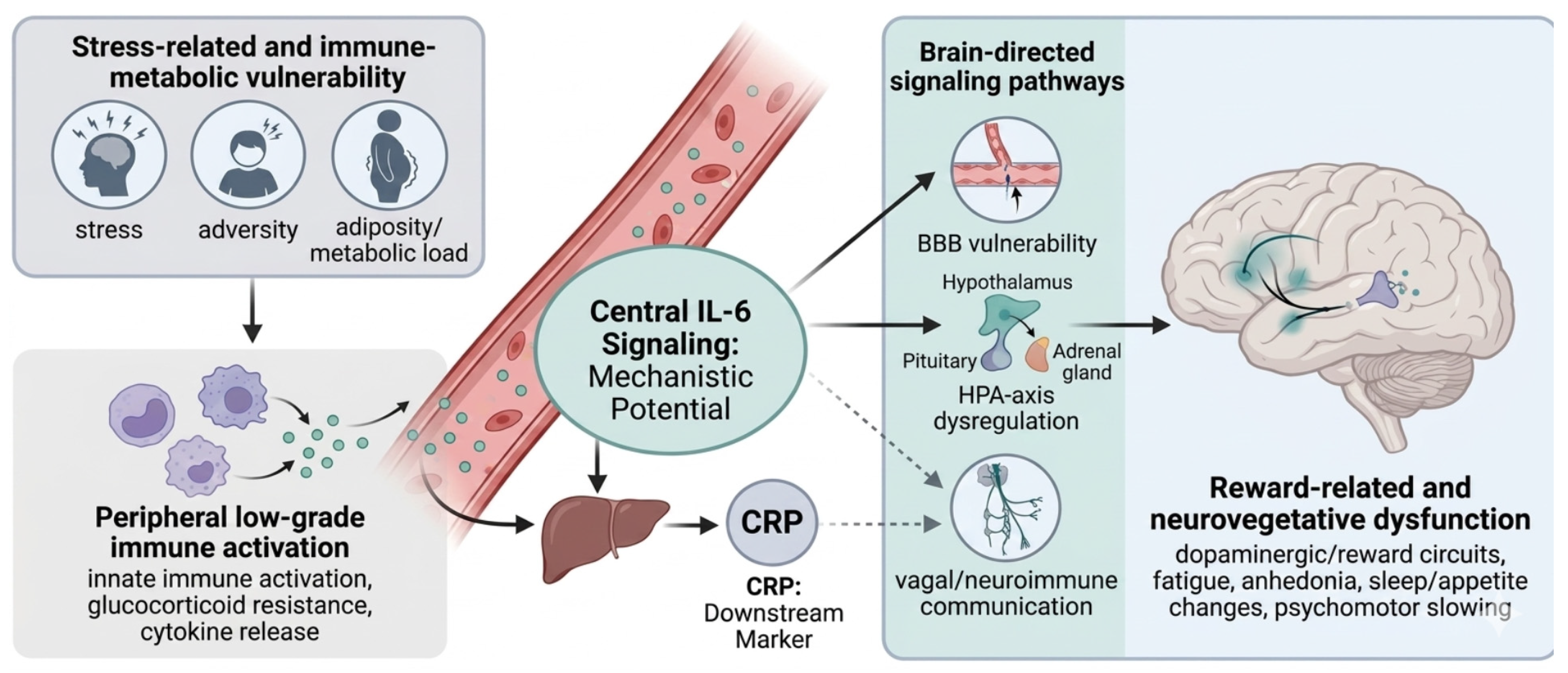
During manuscript preparation, the authors used Google Gemini image-generation tools, specifically Nano Banana 2 (Gemini 3.1 Flash Image model; Google LLC, Mountain View, CA, USA; accessed June 2026), to create an initial visual draft of the mechanistic hypothesis figure presented in the Discussion.
The tool was used only for visual drafting of the figure and was not used for study selection, data extraction, risk-of-bias assessment, data synthesis, interpretation of results, or generation of scientific conclusions. The authors reviewed, edited, and approved the final figure and take full responsibility for the content of this publication.

3. Results

3.1. Study Selection

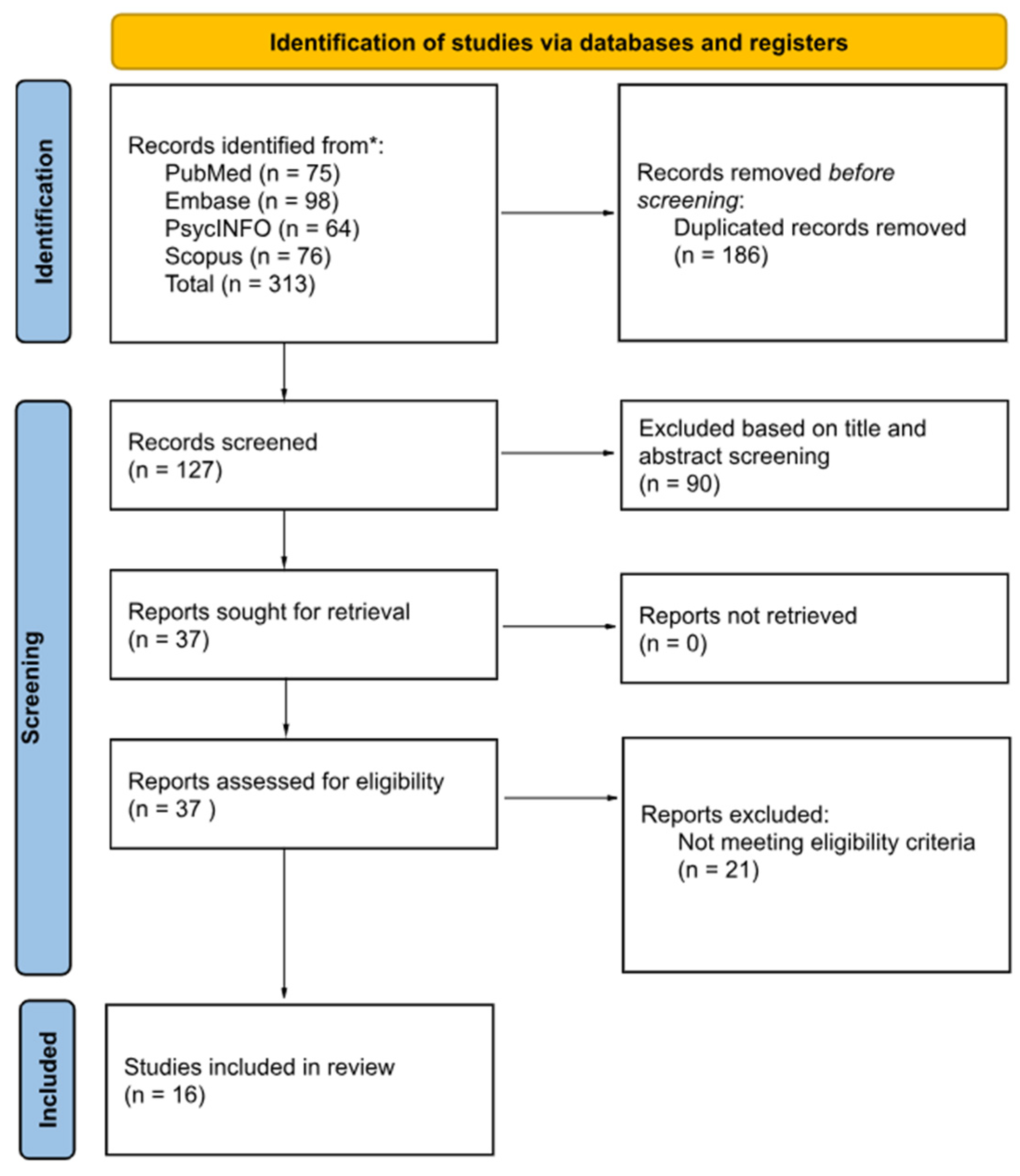
A total of 313 records were identified through database searching: PubMed (n = 75), Embase (n = 98), PsycINFO (n = 64), and Scopus (n = 76). After removal of 186 duplicate records, 127 records remained for title and abstract screening. At this stage, 90 records were excluded because they did not meet the predefined eligibility criteria based on the information available in the title and abstract. The remaining 37 reports were sought for full-text retrieval, successfully retrieved, and assessed for eligibility. Following full-text review, 21 reports were excluded because they did not meet the predefined FEDN-MDD eligibility criteria. Ultimately, 16 publications met the inclusion criteria and were included in the final qualitative synthesis. All included publications examined patients with FEDN-MDD in comparison with a healthy control group. The study selection process is summarized in Figure 1.

3.2. Study Characteristics

The 16 included publications were distributed across six countries: China (n = 9), Japan (n = 3), Poland (n = 1), the Slovak Republic (n = 1), Taiwan (n = 1), and Turkey (n = 1). Thus, 12 of the 16 publications came from East Asian cohorts, particularly China and Japan, a concentration that should be considered when interpreting generalizability beyond these populations. Study designs included cross-sectional or case–control studies (n = 11) and prospective or longitudinal case–control studies (n = 5). Most publications were conducted in adult samples; four focused exclusively on adolescent samples, as detailed in Table 1. The predominant severity instrument was the HDRS/HAMD family, used in 14 publications; the MADRS was used in one study, and the Children’s Depression Inventory (CDI) was used in one adolescent study.
Participant denominators were extractable for most included publications. One included publication used a three-sample-set design and was therefore retained in the qualitative synthesis but not included in the cumulative participant count, because the publication could not be reduced to a single non-overlapping MDD and control denominator. Among the 15 publications with directly summable sample sizes, the review included approximately 935 FEDN-MDD participants and 833 healthy controls. These totals should be interpreted cautiously, because three Japanese publications arose from confirmed or probable overlapping cohorts, as detailed in Table A4, and were therefore not treated as fully independent samples for participant-counting or evidence-weighting purposes.

3.3. Biomarkers Assessed

The most frequently assessed core peripheral inflammatory biomarkers across included publications were IL-1β (n = 10 publications), TNF-α (n = 9), IL-6 (n = 8), and CRP or hs-CRP (n = 5). These constituted the primary basis of the narrative synthesis and are shown in Table 2. In addition, several publications evaluated secondary or exploratory markers, including IFN-γ (n = 4), IL-8 (n = 4), IL-4 (n = 3), and single-study markers such as Claudin-5, ENA78/CXCL5, NOX1, Raftlin, AISI, RvD1, Maresin-1, Zonulin, FABP, LPS, and NLRP3; however, their biological interpretation and comparability across studies were more limited. All biomarkers are shown in Appendix A.

3.4. Main Findings by Biomarker

TNF-α. Findings for TNF-α were mixed. Of nine publications assessing TNF-α, four reported elevated levels in FEDN-MDD [10,11,14,24], whereas five found no significant between-group difference [12,15,19,20,23]. The available evidence therefore does not support describing TNF-α as consistently elevated in FEDN-MDD.
IL-1β. Results for IL-1β were similarly heterogeneous. Ten publications assessed IL-1β: two reported elevated levels in FEDN-MDD [23,24], seven found no significant between-group difference [12,14,15,17,19,20,25], and one reported significantly lower IL-1β levels in FEDN-MDD than in healthy controls (p = 0.001) [16]. This directional reversal substantially limits any claim of elevated IL-1β in FEDN-MDD. Taken across all included publications, the evidence does not support a consistent IL-1β alteration in this population.
CRP/hs-CRP. Findings for CRP and hs-CRP were also variable. Five publications assessed CRP or hs-CRP: three reported higher levels in FEDN-MDD [10,15,23], one found no significant difference using salivary CRP [13], and one was classified as internally inconsistent, because Wang et al.’s original Table 1 reported p = 0.558 while the discussion text stated p = 0.028 [22]. Additional limitations include nonstandardized units across studies and the use of a salivary rather than blood-derived CRP matrix in one publication. These factors limit cross-study interpretation of CRP findings.
IL-6. Findings for IL-6 were also mixed. Of eight publications assessing IL-6, five reported elevated levels in FEDN-MDD [10,17,19,23,24], whereas three found no significant between-group difference [14,15,20]. Overall, IL-6 showed the clearest recurrent tendency toward elevation in FEDN-MDD, but this pattern should not be interpreted as uniform across studies. The contributing publications differed in age group, biological matrix, assay platform, statistical reporting, and possible cohort independence; therefore, IL-6 is best interpreted as the most reproducible signal within a methodologically heterogeneous literature rather than as a validated biomarker signature.
Exploratory biomarkers. Several publications reported findings for markers not assessed in other included studies. NOX1 and Raftlin were both significantly elevated in FEDN-MDD in one study, with large correlations with depression severity [21]; however, these findings require independent replication. AISI, a hematologic inflammatory index, was elevated in one large sample [22]. ENA78/CXCL5 was reduced in FEDN-MDD across multiple sample sets in one study [18]. Pro-resolving mediators showed divergent patterns in adolescent samples, with RvD1 reported as elevated [25] and Maresin-1 reported as reduced [17]. Barrier- and gut-related markers were also reported, including elevated Claudin-5 [10,23] and elevated Zonulin, FABP, and LPS in one adolescent study [10]. Because each of these markers was assessed in only one or two publications, no cross-study patterns can be established for them.
To facilitate interpretation of these mixed findings, Table 2 provides a descriptive publication-level summary of the direction of reported between-group differences for the most frequently assessed biomarkers. This summary was not used as a formal statistical test of consistency or effect size, but rather as a structured aid to the narrative synthesis.

3.5. Clinical Correlations

Clinical associations involving core peripheral inflammatory biomarkers were reported in a limited subset of studies, most commonly using the HDRS/HAMD family of scales. The MADRS was used in one adult study, and the CDI was used in one adolescent study. Although CDI was used in one adolescent study, no additional extractable CDI-based association involving the predefined core biomarkers was available for inclusion in Table 3. In keeping with the focus of the present synthesis, this section summarizes only extractable associations involving IL-6, CRP/hs-CRP, TNF-α, and IL-1β. Associations involving secondary or exploratory biomarkers are described in Appendix A.
Overall, the available evidence was sparse and heterogeneous. One study reported that both IL-6 and IL-1β were positively associated with HDRS-17 scores and emerged as independent positive predictors of depressive severity [17]. In contrast, another study found no association between serum cytokines, including IL-6, TNF-α, and IL-1β, and total HAMD-17 score or duration of depressive episode [19].
Directionality was also inconsistent across studies. One study reported a negative association between IL-1β and MADRS score [16], whereas another found a negative correlation between TNF-α and HAMD-17 score [11]. In a different analytic context, one longitudinal/pre-post study observed a positive correlation between IL-1β and HDRS across pre- and post-treatment assessments rather than at baseline alone [25]. No clear or recurrent clinical correlation pattern was identified for CRP/hs-CRP in the included studies.
At the study level, the available clinical-correlation data did not identify a reproducible association between any single core peripheral inflammatory biomarker and depressive severity in FEDN-MDD. Although isolated associations were reported for IL-6, IL-1β, and TNF-α, these findings were not uniform across studies and varied according to clinical scale, analytic framework, and timing of assessment. Correlations involving secondary or exploratory biomarkers are presented separately in Appendix A.

3.6. Methodological Remarks

Several methodological features limited direct comparability across publications. These included variation in the operational definition of first-episode status and treatment exposure. Although all included studies met the review’s FEDN-MDD eligibility framework, reporting differed across articles, with some using drug-naïve, medication-naïve, treatment-naïve, antidepressant-naïve, psychotropic-naïve, or unmedicated terminology. These terms were not treated as interchangeable by default; each study was assessed according to whether the full report supported absence of prior psychotropic or antidepressant exposure before biomarker assessment. Additional sources of heterogeneity included differences in biological matrices, assay methods, and non-uniform statistical reporting formats, including mean ± SD, median with interquartile range, SEM, and transformed values. In addition, the scope of biomarker panels varied considerably, ranging from classical cytokines to exploratory inflammatory, oxidative, hematologic, and barrier-related markers.
The dataset also identified a subgroup of Japanese publications with confirmed or probable cohort overlap. These publications were retained because they contributed distinct biomarker and imaging-related information relevant to the review question. However, they were not interpreted as fully independent sources of evidence, and this was taken into account when considering cumulative participant counts and the overall weight of the literature. Therefore, repeated biomarker findings from this subgroup were interpreted as related evidence rather than independent replication. In addition, these studies included first-episode samples with relatively high mean ages compared with other included FEDN-MDD cohorts. This feature may reflect differences in ascertainment, timing of first clinical presentation, or operational definitions of first-episode status, but it also limits direct comparability with younger adult and adolescent samples. The interpretation of this subgroup is further complicated by the fact that partly overlapping cohorts did not yield fully homogeneous biomarker findings across publications.

3.7. Narrative Synthesis

Across the included studies, the 16 included publications support a heterogeneous pattern of peripheral inflammatory alterations in FEDN-MDD rather than a single robust inflammatory signature. Within this framework, IL-6 showed the most reproducible tendency toward elevation compared with healthy controls, though this pattern was not observed in all studies assessing it. CRP/hs-CRP findings were partially positive but were limited by unit inconsistencies, nonstandard matrices, and the internally inconsistent Wang et al. CRP result, which was coded as unclear rather than as positive evidence. Findings for TNF-α and IL-1β were predominantly mixed, and IL-1β showed directional reversal in one study. Exploratory and secondary biomarkers were too diverse in biological meaning and study-level reporting to support cross-study patterning.
The evidence is compatible with early peripheral immune dysregulation in at least a subset of patients with FEDN-MDD. However, the substantial methodological heterogeneity across publications—in assay platforms, biological matrices, reporting formats, first-episode definitions, and age-group composition—precludes strong or uniform conclusions. The findings should be interpreted as hypothesis-generating evidence for the role of peripheral inflammation in early-stage depression rather than as proof of a specific or stable biomarker profile.

3.8. Assessments of Risk of Bias

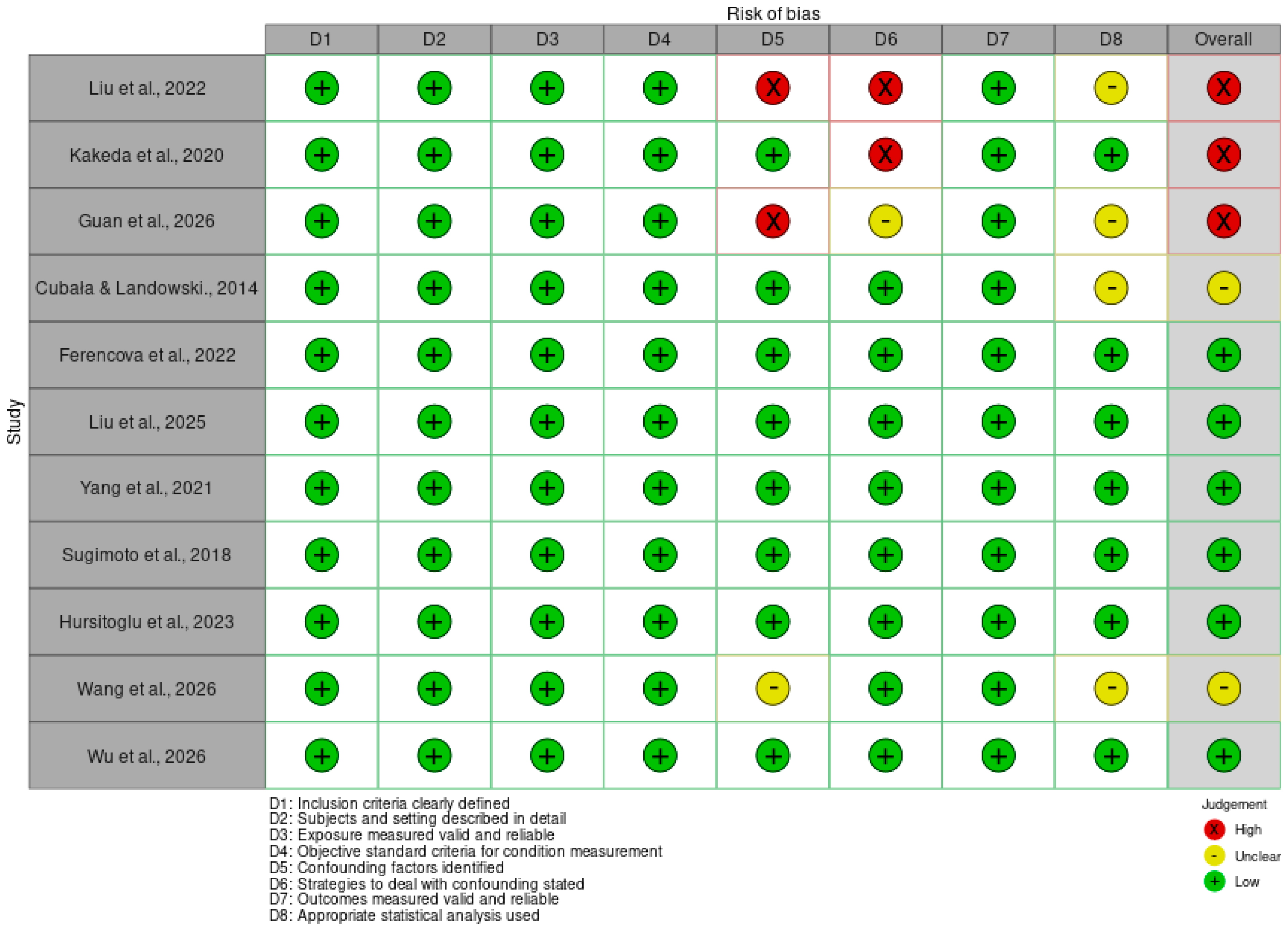
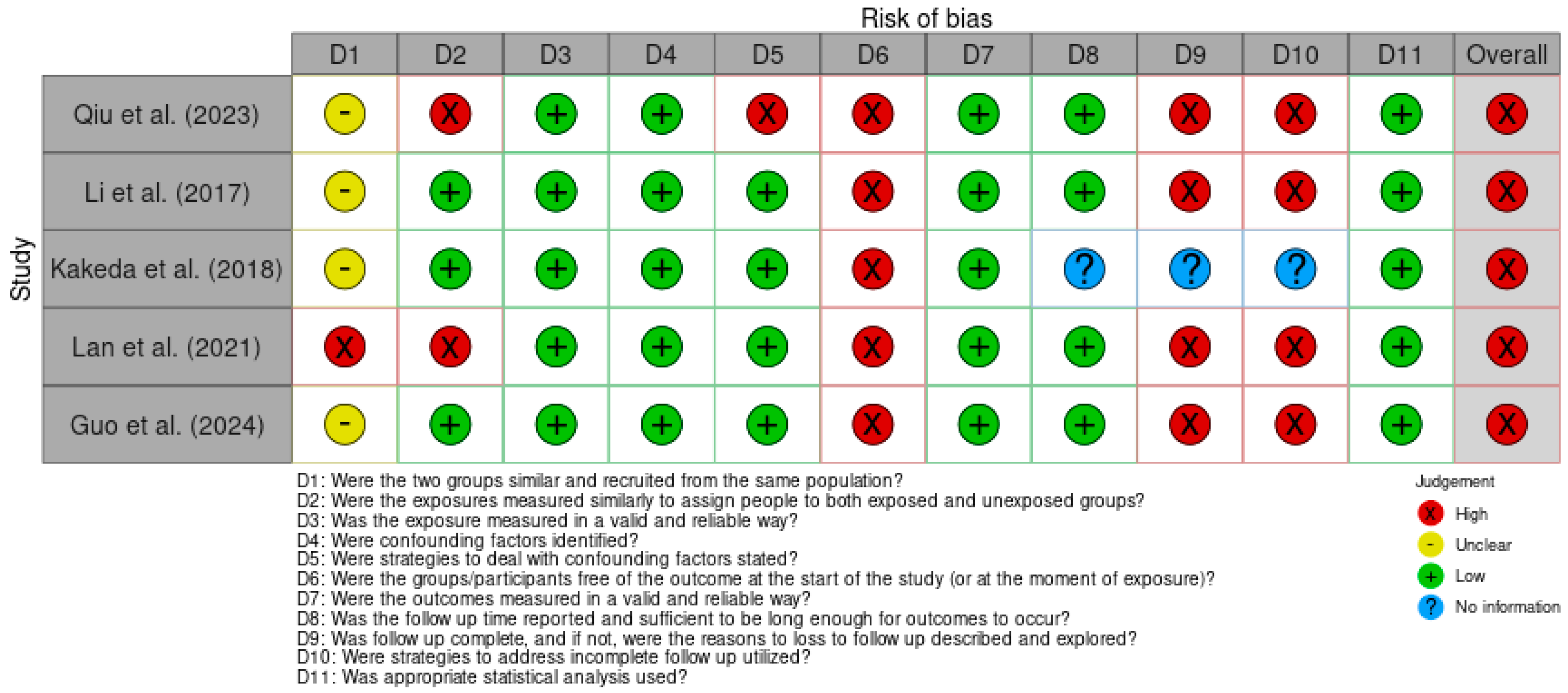
Eleven cross-sectional/case–control studies were evaluated with the JBI Analytical Cross-Sectional Studies Checklist, and five prospective/longitudinal case–control studies were evaluated with the JBI Cohort Studies Checklist. The cross-sectional evidence showed predominantly low to moderate methodological concern, although several studies were limited by incomplete identification or management of confounding factors and, in some cases, insufficiently detailed reporting of statistical handling. By contrast, the longitudinal/cohort-style studies showed greater methodological vulnerability overall, mainly because of concerns related to comparability of groups, management of confounding, follow-up design and reporting, and outcome assessment over time.
Among the cross-sectional studies, most were judged as having low risk of bias overall, while a smaller number were rated as unclear or high risk. In the cohort group, all included studies showed at least some important methodological limitations, resulting in a less favorable overall risk-of-bias profile than that observed for the cross-sectional evidence. These findings should be considered when interpreting the consistency and strength of the biomarker patterns identified in this review, particularly for associations derived from longitudinal analyses.
The risk-of-bias assessment also influenced the qualitative confidence placed in the main biomarker conclusions. Although IL-6 showed the clearest recurrent tendency toward elevation, the strength of this inference was limited by variation across contributing studies in confounding control, biological matrix, assay platform, age composition, and potential cohort overlap. Thus, the IL-6 pattern was treated as the most reproducible signal within the available evidence base, but not as a validated biomarker profile or as independent replication across fully comparable cohorts. The risk-of-bias assessments for cross-sectional/case–control and prospective/longitudinal studies are summarized in Figure 2 and Figure 3, respectively.

4. Discussion

4.1. Principal Findings

This systematic review synthesized the available evidence on peripheral inflammatory biomarkers in FEDN-MDD. The findings support early but heterogeneous peripheral immune alterations rather than a single reproducible inflammatory profile. Among the core biomarkers most frequently studied, IL-6 showed the clearest recurrent tendency toward elevation, whereas CRP/hs-CRP, TNF-α, and IL-1β yielded less consistent results. Associations between inflammatory biomarkers and depressive severity were also mixed, with no stable cross-study pattern.
These findings are important because the review was restricted to first-episode, drug-naïve or medication-naïve samples. By limiting confounding from recurrence, chronicity, and prior treatment exposure, this approach offers a more informative view of inflammatory alterations near illness onset than is often possible in the broader MDD literature. The relative consistency of IL-6 in this setting is notable and aligns with prior meta-analytic evidence in depression more broadly. At the same time, the marked heterogeneity across studies indicates that peripheral inflammation in FEDN-MDD should not be interpreted as a uniform trait. Rather, the current evidence is more consistent with immune dysregulation in a subset of patients than with a single biomarker-defined inflammatory phenotype[4,5,7,26,27,28].

4.2. Why the FEDN-MDD Focus Matters

A major strength of this review is its exclusive focus on FEDN-MDD. Much of the broader inflammation literature in depression has been derived from mixed samples that combine first and recurrent episodes, variable illness duration, prior treatment exposure, and medical or psychiatric comorbidity. These factors may influence inflammatory signaling independently of early depressive pathophysiology and can obscure whether biomarker alterations reflect illness onset, chronic disease burden, or treatment-related effects[4,26,27,28,29,30].
By restricting the synthesis to FEDN-MDD, the present review was better positioned to examine whether peripheral inflammatory alterations are already detectable near the earliest clinically identifiable stage of illness and before substantial pharmacologic exposure. This framework improves etiologic specificity compared with mixed-sample designs, even though it does not eliminate interpretive uncertainty [4,28,29,30].
At the same time, substantial heterogeneity remained across studies in first-episode definitions, biological matrices, assay platforms, biomarker panels, clinical severity instruments, and cultural or clinical ascertainment contexts. Accordingly, the FEDN-MDD framework should be viewed as a more focused but still methodologically variable evidence base, supporting cautious inference rather than a single reproducible inflammatory signature [28,29,30].

4.3. Possible Pathophysiological Explanations for the Observed Positive Trends

A more mechanistically oriented interpretation of the present findings is that, in a biologically susceptible subgroup of patients with FEDN-MDD, early low-grade immune activation may be driven by stress-related neuroendocrine dysregulation and broader immune-metabolic perturbation, with IL-6 signaling representing one potentially proximal component of this broader inflammatory cascade. Within this framework, IL-6 may be more informative than CRP because pathogenic effects appear to be linked not only to circulating IL-6 concentration but also to IL-6 trans-signalling/activity, whereas CRP is better understood as a downstream acute-phase readout of systemic inflammation. Recent work supports this interpretation by showing that IL-6 activity/bioavailability is associated with somatic symptoms, fatigue, psychomotor slowing, and overall depression severity, and that higher baseline IL-6 is associated with worse depressive symptom trajectories across the life course [31,32].
The model summarized in Figure 4 integrates findings from the included FEDN-MDD studies with concepts from broader MDD, inflammatory-depression, neuroimmune, and glymphatic literature. It is therefore intended as a biologically plausible, hypothesis-generating framework rather than as a causal mechanism established specifically in FEDN-MDD. One probable initiating pathway is chronic stress-related immune priming. Recent neuroimmune models indicate that psychological stress activates the HPA axis and sympathetic output, but that persistent stress may lead to glucocorticoid resistance, impaired negative feedback, immune-cell mobilization, and sustained increases in pro-inflammatory cytokines such as IL-6 and TNF-α. These effects are not confined to the circulation alone, but extend to peripheral organs including the gut, liver, and adipose tissue, thereby linking systemic inflammation with immune-metabolic dysregulation. In this context, IL-6 may reflect a more proximal inflammatory signal, whereas CRP may index the broader downstream systemic response that emerges from it [33,34].
A second mechanistic step may involve peripheral-to-central immune communication. Human and translational data increasingly support the idea that stress-related inflammatory states may affect barrier integrity and facilitate the central impact of peripheral cytokine signaling. In particular, genetic evidence in humans supports an interaction among recent stress, IL6-related variation, and CLDN5, suggesting that blood–brain barrier vulnerability may be one pathway through which peripheral inflammatory signals gain greater relevance for depressive symptom formation. Within the brain, these signals may converge less on a unitary “depression pathway” than on specific systems regulating motivation, reward, energy balance, and neurovegetative function [35,36].
This multi-step inflammatory framework aligns closely with and is significantly extended by recent insights into glymphatic dysfunction in psychiatric disorders, as reviewed by Barlattani et al. Within this paradigm, the persistent elevation of peripheral pro-inflammatory cytokines like IL-6 and the subsequent compromise of blood–brain barrier (BBB) integrity do not merely act as isolated signaling events, but actively instigate astrocytic reactivity and the loss of polarized aquaporin-4 (AQP4) water channels. This molecular disruption impairs convective fluid transport within the glymphatic system, drastically reducing the clearance of metabolic waste and parenchymal cytokines, a phenomenon increasingly objectified in major depressive disorder via advanced neuroimaging metrics such as the DTI-ALPS index. Consequently, the failure of this cerebral clearance mechanism creates a pathogenic feedback loop wherein entrapped inflammatory mediators aggravate local neuroinflammation, thereby driving the specific neurovegetative and behavioral phenotypes, such as profound fatigue, psychomotor slowing, and motivational deficits, that characterize severe depressive trajectories [37].
A third and especially relevant downstream mechanism may involve dopaminergic and reward-circuit dysfunction. Recent experimental work showed that IL-6 can directly impair human dopaminergic neurons through the kynurenine pathway, reducing dopamine release and neuronal firing, thereby providing a biologically plausible link between inflammation and motivational impairment. In parallel, contemporary clinical studies indicate that inflammation and metabolic dysregulation cluster preferentially with anhedonia and atypical/energy-related symptoms, and that patients with higher CRP together with dyslipidemia may show greater reward-circuit and symptomatic response to inflammation-targeted or dopamine-enhancing interventions. This may help explain why inflammatory biomarkers may be more closely linked to selected behavioral and neurovegetative dimensions than to global depressive severity alone [38,39,40,41].
The available evidence is compatible with a multistep inflammatory model in which stress-related and partly immune-metabolic low-grade inflammation arises early in a subset of patients with FEDN-MDD, contributes to downstream CRP elevation, and affects the brain through neuroendocrine, barrier-related, and reward-circuit pathways. In this model, CRP is best understood as a downstream systemic marker, whereas IL-6 appears to represent a more proximal and biologically informative inflammatory signal. Because most mechanistic evidence comes from broader MDD and inflammatory-depression research rather than from FEDN-MDD specifically, this interpretation should be considered a provisional mechanistic model rather than established causal evidence for early depressive illness [42,43,44,45].

4.4. Interpretation of the Biomarker Pattern

Within the current FEDN-MDD literature, IL-6 represents the clearest biomarker signal, but only in a relative sense. Its interpretation does not rest on uniform elevation across all studies, but on a more recurrent direction of effect than was observed for the other core biomarkers. This pattern aligns with the wider depression literature, in which IL-6 has repeatedly emerged as one of the more reproducible peripheral inflammatory correlates of major depressive disorder [4,5].
By contrast, the current evidence does not support describing CRP/hs-CRP, TNF-α, or IL-1β as consistently altered in FEDN-MDD. CRP/hs-CRP findings were only partially positive and limited by matrix-related and reporting inconsistencies, while TNF-α and IL-1β showed mixed or contradictory patterns. These differences may reflect true biological variation across patients, but they may also arise from age composition, sampling procedures, assay platforms, and statistical handling.
The IL-6/CRP pattern may also be biologically informative. Prior longitudinal and genetic work suggests that IL-6 may be closer to active inflammatory signaling, whereas CRP may function more as a downstream and less specific index of low-grade immune-metabolic activation. This distinction may help explain why IL-6 appeared somewhat more coherent across studies, while CRP showed directionally similar but less stable associations that were more vulnerable to metabolic and methodological confounding [6,7,46].
Age composition is another possible source of variation. Adolescent, young-adult, and later-adult first-episode samples may differ in developmental context, cumulative inflammatory or metabolic exposures, timing of first clinical presentation, and the phase of the stress–immune cascade captured at biomarker assessment. These differences may contribute to inconsistent or even directionally divergent biomarker findings. Consistent with symptom-level work in the broader depression literature, inflammatory markers may also map more closely onto selected depressive dimensions than onto depression as a single uniform construct [8,27].
Overall, the biomarker pattern identified here is more consistent with heterogeneous early immune involvement in a subset of patients with FEDN-MDD than with a single inflammatory signature. IL-6 may currently be the most informative candidate marker in this literature, whereas the remaining core markers are better interpreted as variable or context-dependent signals that require standardization and replication before stronger conclusions can be drawn.

4.5. Clinical Correlations and Potential Relevance

Clinical correlations in the present review were limited and inconsistent, which argues against a simple linear model in which greater peripheral inflammation maps directly onto greater depressive severity in FEDN-MDD. Rather than functioning as general cross-sectional severity markers, peripheral inflammatory biomarkers may have clinical relevance only in a subset of patients or within specific symptom dimensions. This interpretation is consistent with the broader depression literature, in which associations between inflammation and depression are typically modest and heterogeneous, and are partly shaped by metabolic and other confounding factors [3,7].
A more plausible interpretation is that inflammatory biomarkers may be most informative for identifying biologically meaningful subgroups or phenotypes rather than for indexing overall depressive burden. In large cohort and genetic analyses, IL-6 and CRP have shown stronger associations with selected symptom dimensions, including fatigue, sleep disturbance, appetite change, and anhedonia, than with depression considered as a single uniform construct. Similarly, genetic work suggests overlap between inflammatory and metabolic dysregulation and selected depressive symptoms, with the IL-6 pathway appearing more mechanistically informative than CRP in some phenotypes [8,46].
This framework also helps explain why clinical-correlation findings in FEDN-MDD remain difficult to interpret. If inflammation is linked preferentially to particular symptom domains rather than to total score severity, then inconsistent results across studies using different scales, analytic strategies, and timepoints would be expected. Longitudinal meta-analytic evidence further suggests that associations between depressive symptoms and inflammatory markers are bidirectional and small in magnitude, which makes a single baseline biomarker unlikely to perform as a robust severity marker across all patients [7,47].
Taken together, the current evidence suggests that the clinical value of peripheral inflammatory biomarkers in FEDN-MDD may lie less in measuring overall symptom severity and more in supporting biological stratification. At present, however, the literature remains too limited and methodologically heterogeneous to define reliable inflammatory subgroups or to support clinical application. These markers should therefore be regarded as hypothesis-generating tools for phenotyping and mechanistic research rather than as established clinical severity indicators [7,8,46].

4.6. Methodological Considerations and Limitations

Several methodological issues shape the interpretation of this review. First, although all included studies met the overall FEDN-MDD framework, the operational definition of first-episode and drug-naïve or medication-naïve status was not fully uniform across publications. In a literature focused on early-stage illness, even small differences in how illness onset, prior treatment exposure, or episode status are defined may materially affect biological comparability. This limitation is important because the biological interpretation of inflammatory biomarkers depends on whether participants were truly free of previous psychotropic exposure at the time of biomarker assessment.
Second, the evidence base was geographically concentrated: 12 of the 16 included publications were conducted in East Asian populations, particularly China and Japan. This distribution limits generalizability to populations with different genetic backgrounds, environmental exposures, diet, metabolic risk profiles, health-care systems, and sociocultural contexts. Consequently, the external validity of the observed biomarker patterns remains limited until these findings are replicated in more geographically diverse FEDN-MDD cohorts.
Third, substantial methodological heterogeneity remained in biomarker assessment itself. Studies differed in biological matrix, assay platform, and statistical reporting, with some reporting means and standard deviations, others medians and interquartile ranges, and others transformed or otherwise non-directly comparable values. These differences complicate cross-study interpretation even when nominally similar biomarkers are measured and are particularly relevant for markers such as CRP, for which matrix-related and reporting inconsistencies may partly account for variable findings.
Fourth, the biomarker landscape was broad but uneven. Although the present review prioritized core markers—IL-6, CRP/hs-CRP, TNF-α, and IL-1β—many included studies also examined secondary or exploratory inflammatory, oxidative, hematologic, or barrier-related markers. This broadens the biological scope of the literature but reduces comparability across studies and limits the ability to distinguish replicated signals from study-specific findings.
A further consideration is the presence of confirmed or probable cohort overlap among a subgroup of Japanese publications. These studies were retained because they contributed distinct biomarker or imaging-related information relevant to the review question, but they should not be interpreted as fully independent sources of evidence. Accordingly, cumulative sample counts and the apparent weight of repeated findings should be interpreted with caution. This subgroup also requires careful interpretation because the reported mean ages were relatively high for samples described as first-episode MDD, which may reflect differences in illness ascertainment, timing of first clinical contact, or operational definitions of first-episode status. Moreover, despite probable cohort overlap, biomarker findings were not fully homogeneous across these publications. When considered alongside their less favorable risk-of-bias profile, these issues limit the inferential contribution of this subgroup to conclusions about early inflammatory alterations in FEDN-MDD.
The main limitations of this review are the small number of eligible publications, the geographic concentration of the included studies, heterogeneity in assays and biological matrices, variability in age composition, sparse symptom-level data, and confirmed or probable cohort overlap. These constraints moderated confidence in the observed biomarker patterns and support interpreting the findings as hypothesis-generating rather than clinically definitive.

4.7. Clinical and Translational Implications

The present findings support continued interest in peripheral inflammatory biomarkers as tools for biological stratification in early-stage depression. The observation that inflammatory alterations may already be detectable in FEDN-MDD raises the possibility that immune-related mechanisms are relevant from illness onset rather than emerging only as a consequence of chronicity or treatment exposure. The relative consistency of IL-6 across studies is notable because it aligns with broader evidence that inflammatory dysregulation may define a specific biological subgroup within major depressive disorder rather than the disorder as a whole.
At the same time, the current evidence remains insufficient for direct clinical translation. The heterogeneity of findings, the lack of standardized thresholds, and the limited reproducibility of several markers argue against the use of peripheral inflammatory measures as established diagnostic or severity tools in FEDN-MDD at present. Moreover, the included studies did not provide sufficiently consistent or detailed symptom-level data to support reliable conclusions about specific clinical presentations associated with inflammatory biomarker patterns. More plausibly, their near-term value may lie in enrichment and stratification: identifying patients with a greater likelihood of immune-metabolic involvement, refining phenotypic subgroups, and informing the design of longitudinal or mechanism-based studies.
Accordingly, peripheral inflammatory biomarkers in FEDN-MDD should still be regarded primarily as research tools. Their greatest translational value at present is likely to lie in helping refine biological models of early depression, generate hypotheses about clinically relevant subtypes, and support the development of more targeted prospective studies. Whether such markers will ultimately prove useful for prognosis, treatment selection, or intervention targeting will require larger, methodologically standardized, and longitudinally designed investigations.

4.8. Future Directions

Future work in FEDN-MDD should move beyond asking whether inflammation is present and toward clarifying in whom, when, and in what form it is most clinically relevant. Greater methodological standardization will be essential, including clearer operational definitions of first-episode and drug-naïve status, harmonized sampling procedures, and more consistent use of core biomarker panels spanning inflammatory, metabolic, and stress-related systems. Without greater comparability in study design and biomarker measurement, it will remain difficult to distinguish true biological heterogeneity from methodological noise [48,49,50].
Future studies should also examine age and developmental stage as potential moderators of inflammatory biomarker findings in FEDN-MDD. Comparisons between adolescent, young adult, and later-adult first-episode samples may be particularly informative, because these groups may differ in neurodevelopmental context, cumulative inflammatory exposures, metabolic risk, and the timing at which stress-related immune changes are captured. However, the current evidence base remains too small and methodologically heterogeneous to support robust age-stratified conclusions.
Longitudinal designs should be prioritized. Repeated biomarker assessments beginning near illness onset and extending through early treatment would help determine whether inflammatory alterations are stable, state-dependent, or dynamically related to clinical course. Such designs are particularly important given growing evidence that inflammatory signals may be small in magnitude, context-dependent, and more informative at the symptom level than at the level of overall case status alone [8,51].
An additional priority will be to test whether the relevant biological signal in FEDN-MDD is better captured within an allostatic load framework than by isolated abnormalities in single biomarkers. Recent work conceptualizes allostatic load as a composite, multisystem index of cumulative physiological dysregulation, and studies in broader MDD samples suggest that allostatic load is elevated even in unmedicated patients and may prospectively predict risk for depression. Taken together, these findings suggest that future FEDN-MDD studies should examine biomarker constellations—using composite indices, latent-factor approaches, and network-level relationships among inflammatory, metabolic, cardiovascular, and neuroendocrine markers—rather than relying exclusively on single analytes measured in isolation [48,49,52,53,54].
Future studies should also place greater emphasis on phenotype refinement. Emerging evidence suggests that inflammatory biomarkers may map more closely onto selected symptom dimensions—notably fatigue, sleep or appetite disturbance, anhedonia, and other neurovegetative features—than onto overall depressive severity. Accordingly, FEDN-MDD research may benefit from more detailed symptom-level characterization, rather than relying primarily on total scale scores, as well as from efforts to identify potential inflammatory or immune-metabolic subgroups within early-stage depression [8,41,55,56].
Finally, progress will likely depend on multimodal approaches. Integrating peripheral inflammatory biomarkers with neuroimaging, genetics, stress biology, and detailed clinical phenotyping may provide a more informative framework for understanding whether inflammatory dysregulation is mechanistically relevant in a subset of patients with FEDN-MDD. Recent work in recent-onset depression and transdiagnostic depression samples supports the value of multivariate brain–blood and multi-omics models for identifying biologically meaningful subgroups, and IL-6-related signaling remains a particularly relevant pathway for further mechanistic investigation [8,51,57,58].

5. Conclusions

This systematic review supports the presence of heterogeneous peripheral inflammatory alterations in first-episode, drug-naïve major depressive disorder. Among the core biomarkers most frequently assessed, IL-6 showed the clearest recurrent tendency toward elevation, whereas findings for CRP/hs-CRP, TNF-α, and IL-1β were more variable and less reproducible. The available literature is more compatible with heterogeneous early immune dysregulation in a subset of patients with FEDN-MDD than with a single, reproducible inflammatory signature.
The available data do not justify the use of peripheral inflammatory biomarkers as diagnostic or severity markers in FEDN-MDD. Their near-term role is more likely to be in research settings, where they may help stratify patients biologically, refine symptom-based phenotypes, and inform mechanism-oriented longitudinal studies. Translation into clinical practice will require larger cohorts, standardized biomarker protocols, predefined analytic thresholds, and prospective validation of their prognostic or treatment-selection value.

Supplementary Materials

The following supporting information can be downloaded at: https://www.mdpi.com/article/10.3390/psychiatryint7030140/s1, Supplementary Material S1: PRISMA 2020 Checklist. Reference [59] is cited in the supplementary materials.

Author Contributions

Conceptualization, L.G.H.-J., E.Z.-M. and R.M.-G.; methodology, L.G.H.-J. and R.M.-G.; validation, E.Z.-M., R.M.-G. and L.G.H.-J.; formal analysis, L.G.H.-J. and R.M.-G.; investigation, L.G.H.-J., S.A.-C., J.M.-J. and E.Z.-M.; data curation, L.G.H.-J., S.A.-C. and J.M.-J.; writing—original draft preparation, L.G.H.-J. and E.Z.-M.; writing—review and editing, L.G.H.-J., E.Z.-M., J.M.C.-F., S.A.-C., J.M.-J. and R.M.-G.; visualization, L.G.H.-J. and J.M.C.-F.; supervision, E.Z.-M., R.M.-G. and J.M.C.-F.; project administration, E.Z.-M. All authors have read and agreed to the published version of the manuscript.

Funding

This research received no external funding.

Institutional Review Board Statement

Not applicable.

Informed Consent Statement

Not applicable.

Data Availability Statement

No new data were created or analyzed in this study.

Acknowledgments

The authors acknowledge the use of Google Gemini image-generation tools, specifically Nano Banana 2 (Gemini 3.1 Flash Image model; Google LLC, Mountain View, CA, USA; accessed June 2026), to create an initial visual draft of Figure 4, as described in Section 2.11. The authors reviewed and edited the figure and take full responsibility for the content of this publication.

Conflicts of Interest

The authors declare no conflicts of interest.

Abbreviations

The following abbreviations are used in this manuscript:
AISIAggregate index of systemic inflammation
CDIChildren’s Depression Inventory
DSMDiagnostic and Statistical Manual of Mental Disorders
DSM-5Diagnostic and Statistical Manual of Mental Disorders, Fifth Edition
DSM-IVDiagnostic and Statistical Manual of Mental Disorders, Fourth Edition
DSM-IV-TRDiagnostic and Statistical Manual of Mental Disorders, Fourth Edition, Text Revision
FEDN-MDDFirst-episode, drug-naïve major depressive disorder
HAMDHamilton Depression Rating Scale
HAMD-1717-item Hamilton Depression Rating Scale
HDRSHamilton Depression Rating Scale
HDRS-1717-item Hamilton Depression Rating Scale
HPAHypothalamic–pituitary–adrenal
JBIJoanna Briggs Institute
MADRSMontgomery–Åsberg Depression Rating Scale
MDDMajor depressive disorder

Appendix A

Table A1. Search strategy used in this review.
DatabaseKeywordsStrategyFilters Applied to the DatabaseNumber of Possible Items to Select
PubMed/MEDLINE“major depressive disorder”, “first episode”, “inflammation”, “cytokines”, “biomarkers”(Depressive Disorder, Major[Mesh] OR “major depressive disorder”[ti] OR “first episode depression”[ti] OR “first-episode depression”[ti] OR “first-episode MDD”[ti] OR (“major depressive disorder”[tiab] AND “first episode”[tiab]) OR (“major depression”[tiab] AND “first episode”[tiab])) AND (“first episode”[tiab] OR “first-episode”[tiab] OR “first lifetime episode”[tiab] OR “first diagnosis”[tiab] OR “drug naive”[tiab] OR “drug-naive”[tiab] OR “drug-naïve”[tiab] OR “treatment naive”[tiab] OR “treatment-naive”[tiab] OR “medication naive”[tiab] OR “antidepressant naive”[tiab] OR “psychotropic naive”[tiab] OR “drug free”[tiab]) AND (C-Reactive Protein[Mesh] OR Interleukins[Mesh] OR Tumor Necrosis Factor-alpha[Mesh] OR Acute-Phase Proteins[Mesh] OR Cytokines[Mesh] OR “C-reactive protein”[tiab] OR “CRP”[tiab] OR “interleukin”[tiab] OR “interleukin-1”[tiab] OR “IL-1”[tiab] OR “IL-1beta”[tiab] OR “interleukin-6”[tiab] OR “IL-6”[tiab] OR “interleukin-10”[tiab] OR “IL-10”[tiab] OR “interleukin-17”[tiab] OR “IL-17”[tiab] OR “interleukin-18”[tiab] OR “IL-18”[tiab] OR “tumor necrosis factor”[tiab] OR “TNF”[tiab] OR “TNF-alpha”[tiab] OR “TNF alpha”[tiab] OR “neopterin”[tiab] OR “pentraxin”[tiab] OR “inflammatory marker”[tiab] OR “inflammatory biomarker”[tiab] OR “pro-inflammatory”[tiab] OR “proinflammatory”[tiab] OR “systemic inflammation”[tiab] OR “low-grade inflammation”[tiab] OR “immune activation”[tiab] OR “acute phase protein”[tiab]) AND (“serum”[tiab] OR “plasma”[tiab] OR “peripheral blood”[tiab] OR “whole blood”[tiab] OR “blood sample”[tiab] OR “venous blood”[tiab] OR “peripheral”[tiab]) NOT (“hepatitis C”[tiab] OR “hepatitis B”[tiab] OR “HCV”[tiab] OR “HBV”[tiab] OR “peginterferon”[tiab] OR “interferon therapy”[tiab] OR “antiviral therapy”[tiab] OR “chronic hepatitis”[tiab] OR “schizophrenia”[ti] OR “schizoaffective”[ti] OR “bipolar disorder”[ti] OR “bipolar I”[ti] OR “bipolar II”[ti] OR “autism”[ti] OR “ADHD”[ti] OR “attention deficit”[ti] OR “alzheimer”[ti] OR “dementia”[ti] OR “multiple sclerosis”[ti] OR “rheumatoid arthritis”[ti] OR “lupus”[ti] OR “inflammatory bowel”[ti] OR “crohn”[ti] OR “review”[pt] OR “editorial”[pt] OR “letter”[pt] OR “comment”[pt] OR “case reports”[pt] OR “systematic review”[pt] OR “meta-analysis”[pt])Humans; English; No date restriction75
Embase‘major depressive disorder’, ‘first episode’, ‘inflammation’, ‘cytokines’, ‘biomarkers’(‘major depressive disorder’/exp OR (‘major depressive disorder’:ti OR ‘first episode depression’:ti OR ‘first-episode MDD’:ti OR ‘unipolar depression’:ti OR ‘MDD’:ti) OR (‘major depressive disorder’:ab AND ‘first episode’:ab) OR (‘major depression’:ab AND ‘first episode’:ab)) AND (‘first episode’:ti,ab OR ‘first-episode’:ti,ab OR ‘first episode depression’:ti,ab OR ‘first lifetime episode’:ti,ab OR ‘first diagnosis’:ti,ab OR ‘drug naive’:ti,ab OR ‘drug-naive’:ti,ab OR ‘drug-naïve’:ti,ab OR ‘treatment naive’:ti,ab OR ‘treatment-naive’:ti,ab OR ‘medication naive’:ti,ab OR ‘antidepressant naive’:ti,ab OR ‘psychotropic naive’:ti,ab OR ‘drug free’:ti,ab) AND (‘C reactive protein’/exp OR ‘interleukin’/exp OR ‘tumor necrosis factor’/exp OR ‘acute phase protein’/exp OR ‘interferon’/exp OR ‘C-reactive protein’:ti,ab OR ‘CRP’:ti,ab OR ‘interleukin’:ti,ab OR ‘interleukin-1’:ti,ab OR ‘IL-1’:ti,ab OR ‘IL-1beta’:ti,ab OR ‘interleukin-6’:ti,ab OR ‘IL-6’:ti,ab OR ‘interleukin-10’:ti,ab OR ‘IL-10’:ti,ab OR ‘interleukin-17’:ti,ab OR ‘IL-17’:ti,ab OR ‘interleukin-18’:ti,ab OR ‘IL-18’:ti,ab OR ‘tumor necrosis factor’:ti,ab OR ‘TNF’:ti,ab OR ‘TNF-alpha’:ti,ab OR ‘TNF alpha’:ti,ab OR ‘neopterin’:ti,ab OR ‘pentraxin’:ti,ab OR ‘inflammatory marker’:ti,ab OR ‘inflammatory biomarker’:ti,ab OR ‘pro-inflammatory’:ti,ab OR ‘proinflammatory’:ti,ab OR ‘systemic inflammation’:ti,ab OR ‘low-grade inflammation’:ti,ab OR ‘immune activation’:ti,ab) AND (‘serum’:ti,ab OR ‘plasma’:ti,ab OR ‘peripheral blood’:ti,ab OR ‘whole blood’:ti,ab OR ‘blood sample’:ti,ab OR ‘venous blood’:ti,ab OR ‘peripheral’:ti,ab) NOT (‘hepatitis C’:ti,ab OR ‘hepatitis B’:ti,ab OR ‘HCV’:ti,ab OR ‘HBV’:ti,ab OR ‘peginterferon’:ti,ab OR ‘interferon therapy’:ti,ab OR ‘antiviral therapy’:ti,ab OR ‘chronic hepatitis’:ti,ab OR ‘schizophrenia’:ti OR ‘schizoaffective’:ti OR ‘bipolar disorder’:ti OR ‘bipolar I’:ti OR ‘bipolar II’:ti OR ‘autism’:ti OR ‘ADHD’:ti OR ‘attention deficit’:ti OR ‘alzheimer’:ti OR ‘dementia’:ti OR ‘multiple sclerosis’:ti OR ‘rheumatoid arthritis’:ti OR ‘lupus’:ti OR ‘inflammatory bowel’:ti OR ‘crohn’:ti)Humans; English language; Article; No date restriction98
PsycINFO“major depressive disorder”, “first episode”, “inflammation”, “cytokines”, “biomarkers”(“major depressive disorder”.ti. OR “first episode depression”.ti. OR “first-episode depression”.ti. OR “first-episode MDD”.ti. OR (“major depressive disorder” AND “first episode”).ti,ab. OR (“major depression” AND “first episode”).ti,ab. OR exp Major Depression/) AND (“first episode”.ti,ab. OR “first-episode”.ti,ab. OR “first lifetime episode”.ti,ab. OR “first diagnosis”.ti,ab. OR “drug naive”.ti,ab. OR “drug-naive”.ti,ab. OR “treatment naive”.ti,ab. OR “treatment-naive”.ti,ab. OR “medication naive”.ti,ab. OR “antidepressant naive”.ti,ab. OR “psychotropic naive”.ti,ab. OR “drug free”.ti,ab.) AND (“C-reactive protein”.ti,ab. OR CRP.ti,ab. OR interleukin.ti,ab. OR “interleukin-1”.ti,ab. OR “IL-1”.ti,ab. OR “IL-1beta”.ti,ab. OR “interleukin-6”.ti,ab. OR “IL-6”.ti,ab. OR “interleukin-10”.ti,ab. OR “IL-10”.ti,ab. OR “interleukin-17”.ti,ab. OR “IL-17”.ti,ab. OR “interleukin-18”.ti,ab. OR “IL-18”.ti,ab. OR “tumor necrosis factor”.ti,ab. OR TNF.ti,ab. OR “TNF-alpha”.ti,ab. OR “TNF alpha”.ti,ab. OR neopterin.ti,ab. OR pentraxin.ti,ab. OR “inflammatory marker”.ti,ab. OR “inflammatory biomarker”.ti,ab. OR “pro-inflammatory”.ti,ab. OR proinflammatory.ti,ab. OR “systemic inflammation”.ti,ab. OR “low-grade inflammation”.ti,ab. OR “immune activation”.ti,ab. OR “acute phase protein”.ti,ab. OR exp Inflammation/OR exp Cytokines/) AND (serum.ti,ab. OR plasma.ti,ab. OR “peripheral blood”.ti,ab. OR “whole blood”.ti,ab. OR “blood sample”.ti,ab. OR “venous blood”.ti,ab. OR peripheral.ti,ab.) NOT (“hepatitis C”.ti,ab. OR “hepatitis B”.ti,ab. OR HCV.ti,ab. OR HBV.ti,ab. OR peginterferon.ti,ab. OR “interferon therapy”.ti,ab. OR “antiviral therapy”.ti,ab. OR “chronic hepatitis”.ti,ab. OR schizophrenia.ti. OR schizoaffective.ti. OR “bipolar disorder”.ti. OR “bipolar I”.ti. OR “bipolar II”.ti. OR autism.ti. OR ADHD.ti. OR “attention deficit”.ti. OR alzheimer.ti. OR dementia.ti. OR “multiple sclerosis”.ti. OR “rheumatoid arthritis”.ti. OR lupus.ti. OR “inflammatory bowel”.ti. OR crohn.ti.)Peer-reviewed articles; English; Human
Scopus“major depressive disorder”, “first episode”, “inflammation”, “cytokines”, “biomarkers”(TITLE(“major depressive disorder”) OR TITLE(“first episode depression”) OR TITLE(“first-episode depression”) OR TITLE(“first-episode MDD”) OR (ABS(“major depressive disorder”) AND ABS(“first episode”)) OR (ABS(“major depression”) AND ABS(“first episode”))) AND (TITLE-ABS-KEY(“first episode”) OR TITLE-ABS-KEY(“first-episode”) OR TITLE-ABS-KEY(“first lifetime episode”) OR TITLE-ABS-KEY(“first diagnosis”) OR TITLE-ABS-KEY(“drug naive”) OR TITLE-ABS-KEY(“drug-naive”) OR TITLE-ABS-KEY(“drug-naïve”) OR TITLE-ABS-KEY(“treatment naive”) OR TITLE-ABS-KEY(“treatment-naive”) OR TITLE-ABS-KEY(“medication naive”) OR TITLE-ABS-KEY(“antidepressant naive”) OR TITLE-ABS-KEY(“psychotropic naive”) OR TITLE-ABS-KEY(“drug free”)) AND (TITLE-ABS-KEY(“C-reactive protein”) OR TITLE-ABS-KEY(“CRP”) OR TITLE-ABS-KEY(“interleukin”) OR TITLE-ABS-KEY(“interleukin-1”) OR TITLE-ABS-KEY(“IL-1”) OR TITLE-ABS-KEY(“IL-1beta”) OR TITLE-ABS-KEY(“IL-1β”) OR TITLE-ABS-KEY(“interleukin-6”) OR TITLE-ABS-KEY(“IL-6”) OR TITLE-ABS-KEY(“interleukin-10”) OR TITLE-ABS-KEY(“IL-10”) OR TITLE-ABS-KEY(“interleukin-17”) OR TITLE-ABS-KEY(“IL-17”) OR TITLE-ABS-KEY(“interleukin-18”) OR TITLE-ABS-KEY(“IL-18”) OR TITLE-ABS-KEY(“tumor necrosis factor”) OR TITLE-ABS-KEY(“TNF”) OR TITLE-ABS-KEY(“TNF-alpha”) OR TITLE-ABS-KEY(“TNF-α”) OR TITLE-ABS-KEY(“interferon gamma”) OR TITLE-ABS-KEY(“IFN-γ”) OR TITLE-ABS-KEY(“neopterin”) OR TITLE-ABS-KEY(“pentraxin”) OR TITLE-ABS-KEY(“inflammatory marker”) OR TITLE-ABS-KEY(“inflammatory biomarker”) OR TITLE-ABS-KEY(“pro-inflammatory”) OR TITLE-ABS-KEY(“proinflammatory”) OR TITLE-ABS-KEY(“systemic inflammation”) OR TITLE-ABS-KEY(“low-grade inflammation”) OR TITLE-ABS-KEY(“immune activation”) OR TITLE-ABS-KEY(“acute phase protein”)) AND (TITLE-ABS-KEY(“serum”) OR TITLE-ABS-KEY(“plasma”) OR TITLE-ABS-KEY(“peripheral blood”) OR TITLE-ABS-KEY(“whole blood”) OR TITLE-ABS-KEY(“blood sample”) OR TITLE-ABS-KEY(“venous blood”) OR TITLE-ABS-KEY(“peripheral”)) AND NOT (TITLE-ABS-KEY(“hepatitis C”) OR TITLE-ABS-KEY(“hepatitis B”) OR TITLE-ABS-KEY(“HCV”) OR TITLE-ABS-KEY(“HBV”) OR TITLE-ABS-KEY(“peginterferon”) OR TITLE-ABS-KEY(“interferon therapy”) OR TITLE-ABS-KEY(“antiviral therapy”) OR TITLE-ABS-KEY(“chronic hepatitis”) OR TITLE(“schizophrenia”) OR TITLE(“schizoaffective”) OR TITLE(“bipolar disorder”) OR TITLE(“bipolar I”) OR TITLE(“bipolar II”) OR TITLE(“autism”) OR TITLE(“ADHD”) OR TITLE(“attention deficit”) OR TITLE(“alzheimer”) OR TITLE(“dementia”) OR TITLE(“multiple sclerosis”) OR TITLE(“rheumatoid arthritis”) OR TITLE(“lupus”) OR TITLE(“inflammatory bowel”) OR TITLE(“crohn”))Article; English; Human studies76
Table A2. Biomarkers assessed across included studies.
BiomarkerStudies Assessing It (N)Higher in FEDN-MDDNo Significant DifferenceLower in FEDN-MDDUnclear/Internally InconsistentOverall DirectionNotes on Heterogeneity
IL-685300Tends toward elevationMost consistent signal; values not numerically comparable (ELISA vs. multiplex; log-transformed in Lan et al. [24]; adolescent vs. adult cohorts).
TNF-α94500Mixed; no consistent elevationNearly even split (4 vs. 5); Kakeda et al. [19] and Kakeda et al. [11] show divergent results within overlapping cohort.
IL-1β102710No consistent pattern; majority NSOnly study reporting significant difference in Yang et al. [16] shows LOWER (not higher) IL-1β; heterogeneous assay platforms.
CRP/hs-CRP53101Possible elevation in subset; less stableCRP in Wang et al. [22] internally inconsistent (p = 0.558 Table vs. p = 0.028 text); Cubala et al. [13] uses salivary CRP.
IL-841210Heterogeneous; no consistent directionOpposite directions: 1 higher (adolescent), 1 lower (adult); too few studies for interpretation.
IFN-γ41300Predominantly NSInsufficient evidence for directional conclusion.
IL-432010Directionally inconsistentAdolescent studies show elevation; adult study shows reduction; possible age-group moderator.
Claudin-522000Both studies show elevationTight junction/BBB marker; not a classical cytokine; very few studies.
ENA78/CXCL510010Reduced (single study)Exploratory chemokine; multi-sample study (Li Z. et al. [18]).
NOX111000Elevated (single study)Novel oxidative marker; strong severity correlation (r = 0.847); requires replication.
Raftlin11000Elevated (single study)Novel marker; same study as NOX1.
AISI11000Elevated (single study)Hematologic index from blood routine; not comparable to cytokine assays.
RvD111000Elevated (single adolescent study)Pro-resolving lipid mediator; elevation is biologically atypical.
Maresin-110100Reduced (single adolescent study)Pro-resolving mediator; reduction may indicate impaired inflammation resolution.
Zonulin11000Elevated (single study)Gut permeability marker; adolescent only.
FABP11000Elevated (single study)Barrier protein; adolescent only.
LPS11000Elevated (single study)Gut translocation marker; adolescent only.
NLRP310100NS at baselineInflammasome component; single adolescent study; severity correlation present.
Table A3. Clinical associations reported in included FEDN-MDD publications for exploratory and additional biomarkers.
AuthorYearBiomarker(s)Clinical ScaleAssociation Reported
Kakeda S. et al. [11]2020TNF-αHAMD-17TNF-α was associated with the total HAMD-17 score in MDD (reported as negative correlation: r = −0.350, p = 0.01).
Guan H. et al. [12]2026IL-4HAMD-17; QIDS-SR16Higher serum levels of IL-4 associated significantly with increased severity of symptoms as measured by the HAMD-17 (p = 0.03) and QIDS-SR 16 (p = 0.009) scales; while IL-17 was positively associated with QIDS-SR16 (p = 0.04)
Ferencova N. et al. [14]2022sIL-6R; IL-10CDICorrelation analysis across the entire cohort (depressed and control groups) revealed significant positive associations between CDI scores and both IL-10 (r = 0.167, p = 0.041) and sIL-6R (r = 0.163, p = 0.050). Notably, this relationship with IL-10 remained significant among adolescent males (r = 0.306, p = 0.017), whereas no significant correlations were observed within the adolescent female subgroup.
Yang K.-C. et al [16].2021IL-1βMADRSIL-1β concentration was negatively associated with MADRS score (r = − 0.36, t = − 2.07, p = 0.048).
Qiu T. et al. [17]2023Maresin-1; IL-1β; IL-4; IL-6HDRS-17Maresin-1, IL-1β, IL-4, and IL-6 significantly correlated with HDRS-17 scores. Subsequent multiple linear regression revealed that the HDRS-17 score was independently and negatively associated with serum Maresin-1 levels (standardized beta = −0.618, p < 0.001). Conversely, both IL-6 (beta = 0.162, p < 0.05) and IL-1β (beta = 0.173, p < 0.05) emerged as independent positive predictors of the HDRS-17 score.
Li Z. et al. [18]2017ENA78/CXCL5HRSD-17No significant association was found between ENA78 and HRSD-17 severity. Change in plasma ENA78 was also not associated with reduction rate of HRSD-17 after treatment.
Kakeda S. et al. [19]2018Serum cytokines (including IL-6, TNF-α, IL-1β, IFN-γ)HAMD-17None of the measured serum cytokine levels were associated with total HAMD-17 score or duration of depressive episode.
Hursitoglu et al. [21]2023NOX1; RaftlinHAM-DIn the MDD group, serum NOX1 (r = 0.847, p < 0.001) and Raftlin (r = 0.774, p < 0.001) levels both demonstrated significant positive correlations with HAM-D scores.
Wang et al. [22]2026AISIHAMD-24; SHAPSAISI correlated with HAMD-24 total score, HAMD-24 subdomains, SHAPS score, and disease duration; mediation analyses also linked AISI and anhedonia with depression severity.
Wu et al. [23]2026Claudin-5HAMD-17; HAMANo significant correlations were observed between plasma Claudin-5 levels and either HAMD-17 (r = −0.002, p = 0.985) or HAMA scores (r = −0.007, p = 0.949).
Lan et al. [24]2021ITACHAMD-17 reduction after 4 weeksBaseline ITAC was negatively correlated with reduction in HAMD-17 score after treatment; this reflected treatment-response association rather than baseline severity.
Guo et al. [25]2024RvD1; NLRP3; IL-1β; IL-18; IL-4HDRSAcross pre- and post-treatment assessments, HDRS scores demonstrated significant positive correlations with levels of RvD1 (r = 0.310, p = 0.002), NLRP3 (r = 0.271, p = 0.008), IL-18 (r = 0.257, p = 0.012), and IL-1β (r = 0.286, p = 0.008). In contrast, a significant negative correlation was observed between HDRS scores and IL-4 levels (r = −0.331, p = 0.002). Furthermore, significant inter-correlations were found among NLRP3, IL-1β, and IL-4.
Table A4. Duplicate and probable overlap studies.
StudyPossible Duplicate/Overlap WithReasonWhich Record Retained as Primary
Kakeda S. et al., 2020 [11]Kakeda S. et al., 2018 [19]Same Japanese research group; overlapping recruitment setting, time frame, authorship, sample sizes, and assay platform. Authors share all principal investigators. Confirmed by overlap flag in database.Both retained. Kakeda 2018 [19] = primary for IL-6 data; Kakeda 2020 [11] = primary for TNF-α and imaging data. Neither counted as independent cohort for participant totals.
Kakeda S. et al., 2018 [19]Kakeda S. et al., 2020 [11]See above.See above.
Sugimoto et al., 2018 [20]Kakeda S. et al., 2018 [19] + 2020 [11]Same research institution; identical assay platform (V-PLEX MSD); similar age range and sample size; overlapping publication period. Overlap not confirmed but considered probable.Sugimoto 2018 retained [20]. Participant total flagged as probable overlap; counts not added independently.

References

  1. Ferrari, A.J.; Charlson, F.J.; Norman, R.E.; Patten, S.B.; Freedman, G.; Murray, C.J.L.; Vos, T.; Whiteford, H.A. Burden of Depressive Disorders by Country, Sex, Age, and Year: Findings from the Global Burden of Disease Study 2010. PLoS Med. 2013, 10, e1001547. [Google Scholar] [CrossRef] [PubMed]
  2. Whiteford, H.A.; Degenhardt, L.; Rehm, J.; Baxter, A.J.; Ferrari, A.J.; Erskine, H.E.; Charlson, F.J.; Norman, R.E.; Flaxman, A.D.; Johns, N.; et al. Global burden of disease attributable to mental and substance use disorders: Findings from the Global Burden of Disease Study 2010. Lancet 2013, 382, 1575–1586. [Google Scholar] [CrossRef] [PubMed]
  3. Howren, M.B.; Lamkin, D.M.; Suls, J. Associations of Depression With C-Reactive Protein, IL-1, and IL-6: A Meta-Analysis. Psychosom Med. 2009, 71, 171–186. [Google Scholar] [CrossRef] [PubMed]
  4. Dowlati, Y.; Herrmann, N.; Swardfager, W.; Liu, H.; Sham, L.; Reim, E.K.; Lanctôt, K.L. A Meta-Analysis of Cytokines in Major Depression. Biol. Psychiatry 2010, 67, 446–457. [Google Scholar] [CrossRef] [PubMed]
  5. Haapakoski, R.; Mathieu, J.; Ebmeier, K.P.; Alenius, H.; Kivimäki, M. Cumulative meta-analysis of interleukins 6 and 1β, tumour necrosis factor α and C-reactive protein in patients with major depressive disorder. Brain Behav. Immun. 2015, 49, 206–215. [Google Scholar] [CrossRef] [PubMed]
  6. Khandaker, G.M.; Pearson, R.M.; Zammit, S.; Lewis, G.; Jones, P.B. Association of Serum Interleukin 6 and C-Reactive Protein in Childhood With Depression and Psychosis in Young Adult Life: A Population-Based Longitudinal Study. JAMA Psychiatry 2014, 71, 1121. [Google Scholar] [CrossRef] [PubMed]
  7. Mac Giollabhui, N.; Ng, T.H.; Ellman, L.M.; Alloy, L.B. The longitudinal associations of inflammatory biomarkers and depression revisited: Systematic review, meta-analysis, and meta-regression. Mol. Psychiatry 2021, 26, 3302–3314. [Google Scholar] [CrossRef] [PubMed]
  8. Milaneschi, Y.; Kappelmann, N.; Ye, Z.; Lamers, F.; Moser, S.; Jones, P.B.; Burgess, S.; Penninx, B.W.J.H. Association of inflammation with depression and anxiety: Evidence for symptom-specificity and potential causality from UK Biobank and NESDA cohorts. Mol. Psychiatry 2021, 26, 7393–7402. [Google Scholar] [CrossRef] [PubMed]
  9. Miller, A.H.; Raison, C.L. The role of inflammation in depression: From evolutionary imperative to modern treatment target. Nat. Rev. Immunol. 2016, 16, 22–34. [Google Scholar] [CrossRef] [PubMed]
  10. Liu, X.; Geng, A.; Xia, M.; Lan, J.; Wu, H.; Zhou, Z.; Huang, F.; He, Y.; Lei, T.; Hur, J.; et al. Alterations in short-chain fatty acid-associated gut microbiota and tight junction integrity in adolescent major depressive disorder. Transl. Psychiatry 2025, 16, 11. [Google Scholar] [CrossRef]
  11. Kakeda, S.; Watanabe, K.; Nguyen, H.; Katsuki, A.; Sugimoto, K.; Igata, N.; Abe, O.; Yoshimura, R.; Korogi, Y. An independent component analysis reveals brain structural networks related to TNF-α in drug-naïve, first-episode major depressive disorder: A source-based morphometric study. Transl. Psychiatry 2020, 10, 187. [Google Scholar] [CrossRef] [PubMed]
  12. Guan, H.; Sun, J.; Cheng, J.; Chen, L.; Zhao, Y.; Yang, X.; Wang, D.; Zhang, X. Association Between Clinical Symptoms and Inflammatory Markers in First-Episode Unmedicated Patients with Major Depressive Disorder. Neuropsychiatr. Dis. Treat. 2026, 22, 582480. [Google Scholar] [CrossRef] [PubMed]
  13. Cubała, W.J.; Landowski, J. C-reactive protein and cortisol in drug-naïve patients with short-illness-duration first episode major depressive disorder: Possible role of cortisol immunomodulatory action at early stage of the disease. J. Affect. Disord. 2014, 152–154, 534–537. [Google Scholar] [CrossRef] [PubMed]
  14. Ferencova, N.; Visnovcova, Z.; Ondrejka, I.; Funakova, D.; Hrtanek, I.; Kelcikova, S.; Tonhajzerova, I. Evaluation of Inflammatory Response System (IRS) and Compensatory Immune Response System (CIRS) in Adolescent Major Depression. J. Inflamm. Res. 2022, 15, 5959–5976. [Google Scholar] [CrossRef] [PubMed]
  15. Liu, P.; Gao, M.; Liu, Z.; Zhang, Y.; Tu, H.; Lei, L.; Wu, P.; Zhang, A.; Yang, C.; Li, G.; et al. Gut Microbiome Composition Linked to Inflammatory Factors and Cognitive Functions in First-Episode, Drug-Naive Major Depressive Disorder Patients. Front. Neurosci. 2022, 15, 800764. [Google Scholar] [CrossRef] [PubMed]
  16. Yang, K.-C.; Liu, M.-N.; Liou, Y.-J.; Hu, L.-Y.; Yang, B.-H.; Chou, Y.-H. Interleukin-1 family and serotonin transporter in first-episode, drug-naive major depressive disorder: A pilot study. J. Psychiatr. Res. 2021, 135, 174–180. [Google Scholar] [CrossRef] [PubMed]
  17. Qiu, T.; Li, X.; Chen, W.; He, J.; Shi, L.; Zhou, C.; Zheng, A.; Lei, Z.; Tang, C.; Yu, Q.; et al. Prospective study on Maresin-1 and cytokine levels in medication-naïve adolescents with first-episode major depressive disorder. Front. Psychiatry 2023, 14, 1132791. [Google Scholar] [CrossRef] [PubMed]
  18. Li, Z.; Wang, Z.; Zhang, C.; Chen, J.; Su, Y.; Huang, J.; Yi, Z.; Yuan, C.; Hong, W.; Wang, Y.; et al. Reduced ENA78 levels as novel biomarker for major depressive disorder and venlafaxine efficiency: Result from a prospective longitudinal study. Psychoneuroendocrinology 2017, 81, 113–121. [Google Scholar] [CrossRef] [PubMed]
  19. Kakeda, S.; Watanabe, K.; Katsuki, A.; Sugimoto, K.; Igata, N.; Ueda, I.; Igata, R.; Abe, O.; Yoshimura, R.; Korogi, Y. Relationship between interleukin (IL)-6 and brain morphology in drug-naïve, first-episode major depressive disorder using surface-based morphometry. Sci. Rep. 2018, 8, 10054. [Google Scholar] [CrossRef] [PubMed]
  20. Sugimoto, K.; Kakeda, S.; Watanabe, K.; Katsuki, A.; Ueda, I.; Igata, N.; Igata, R.; Abe, O.; Yoshimura, R.; Korogi, Y. Relationship between white matter integrity and serum inflammatory cytokine levels in drug-naive patients with major depressive disorder: Diffusion tensor imaging study using tract-based spatial statistics. Transl. Psychiatry 2018, 8, 141. [Google Scholar] [CrossRef] [PubMed]
  21. Hursitoglu, O.; Kurutas, E.B.; Strawbridge, R.; Oner, E.; Gungor, M.; Tuman, T.C.; Uygur, O.F. Serum NOX1 and Raftlin as new potential biomarkers of Major Depressive Disorder: A study in treatment-naive first episode patients. Prog. Neuropsychopharmacol. Biol. Psychiatry 2023, 121, 110670. [Google Scholar] [CrossRef] [PubMed]
  22. Wang, Q.; Li, L.; Yang, B.; Wang, J.; Wei, X.; Shen, Y.; Wang, Y.; Fan, L.; Wang, S.; Shao, N.; et al. The aggregate index of systemic inflammation as peripheral inflammatory markers for first-episode drug-naïve patients with major depressive disorder. J. Affect. Disord. 2026, 403, 121435. [Google Scholar] [CrossRef] [PubMed]
  23. Wu, L.; Wu, F.; Li, M.; Liu, Y.; Wang, S.; Guo, S.; Liu, S.; Jiang, X.; Zhou, Y.; Kong, L. The elevated plasma levels of Claudin-5 are associated with peripheral inflammatory activity in patients with major depressive disorder. J. Affect. Disord. 2026, 398, 120988. [Google Scholar] [CrossRef] [PubMed]
  24. Lan, X.; Zhou, Y.; Wu, F.; Wu, K.; Zhan, Y.; Wang, C.; Zheng, W.; Yu, M.; Deng, X.; Ning, Y. The relationship between plasma cytokine levels and antidepressant response in patients with first-episode major depressive disorder. J. Affect. Disord. 2021, 287, 327–333. [Google Scholar] [CrossRef] [PubMed]
  25. Guo, J.; Zhang, T.; Chen, W.; Tan, J.; Li, X.; Zheng, A.; Fu, Y.; Qiu, T. The relationship between serum resolvin D1, NLRP3, cytokine levels, and adolescents with first-episode medication-naïve major depressive disorder. BMC Psychiatry 2024, 24, 285. [Google Scholar] [CrossRef] [PubMed]
  26. de Menezes Galvao, A.C.; Almeida, R.N.; de Sousa, G.M., Jr.; Leocadio-Miguel, M.A.; Palhano-Fontes, F.; de Araujo, D.B.; Lobao-Soares, B.; Maia-de-Oliveira, J.P.; Nunes, E.A.; Hallak, J.E.C.; et al. Pathophysiology of major depression by clinical stages. Front. Psychol. 2021, 12, 641779. [Google Scholar] [CrossRef] [PubMed]
  27. Liu, Y.; Jing, Y.; Gao, Y.; Li, M.; Qin, W.; Xie, Y.; Zhang, B.; Li, J. Exploring the correlation between childhood trauma experiences, inflammation, and brain activity in first-episode, drug-naive major depressive disorder. Eur. Arch. Psychiatry Clin. Neurosci. 2025, 275, 1063–1074. [Google Scholar] [CrossRef] [PubMed]
  28. Osimo, E.F.; Pillinger, T.; Rodriguez, I.M.; Khandaker, G.M.; Pariante, C.M.; Howes, O.D. Inflammatory markers in depression: A meta-analysis of mean differences and variability in 5,166 patients and 5,083 controls. Brain Behav. Immun. 2020, 87, 901–909. [Google Scholar] [CrossRef] [PubMed]
  29. Beurel, E.; Toups, M.; Nemeroff, C.B. The Bidirectional Relationship of Depression and Inflammation: Double Trouble. Neuron 2020, 107, 234–256. [Google Scholar] [CrossRef] [PubMed]
  30. Strawbridge, R.; Arnone, D.; Danese, A.; Papadopoulos, A.; Herane Vives, A.; Cleare, A.J. Inflammation and clinical response to treatment in depression: A meta-analysis. Eur. Neuropsychopharmacol. 2015, 25, 1532–1543. [Google Scholar] [CrossRef] [PubMed]
  31. Foley, É.M.; Slaney, C.; Donnelly, N.A.; Kaser, M.; Ziegler, L.; Khandaker, G.M. A novel biomarker of interleukin 6 activity and clinical and cognitive outcomes in depression. Psychoneuroendocrinology 2024, 164, 107008. [Google Scholar] [CrossRef] [PubMed]
  32. Edmondson-Stait, A.J.; Davyson, E.; Shen, X.; Adams, M.J.; Khandaker, G.M.; Miron, V.E.; McIntosh, A.M.; Lawrie, S.M.; Kwong, A.S.F.; Whalley, H.C. Associations between IL-6 and trajectories of depressive symptoms across the life course: Evidence from ALSPAC and UK Biobank cohorts. Eur. Psychiatry 2025, 68, e27. [Google Scholar] [CrossRef] [PubMed]
  33. Feng, X.; Jia, M.; Cai, M.; Zhu, T.; Hashimoto, K.; Yang, J.-J. Central-peripheral neuroimmune dynamics in psychological stress and depression: Insights from current research. Mol. Psychiatry 2025, 30, 4881–4898. [Google Scholar] [CrossRef] [PubMed]
  34. Singh, B.; Goyal, A.; Patel, B.C. C-Reactive Protein: Clinical Relevance and Interpretation. In StatPearls; StatPearls Publishing: Treasure Island, FL, USA, 2026. [Google Scholar]
  35. Gal, Z.; Torok, D.; Gonda, X.; Eszlari, N.; Anderson, I.M.; Deakin, B.; Petschner, P.; Juhasz, G.; Bagdy, G. New Evidence for the Role of the Blood-Brain Barrier and Inflammation in Stress-Associated Depression: A Gene-Environment Analysis Covering 19,296 Genes in 109,360 Humans. Int. J. Mol. Sci. 2024, 25, 11332. [Google Scholar] [CrossRef] [PubMed]
  36. Gal, Z.; Torok, D.; Gonda, X.; Eszlari, N.; Anderson, I.M.; Deakin, B.; Juhasz, G.; Bagdy, G.; Petschner, P. Inflammation and Blood-Brain Barrier in Depression: Interaction of CLDN5 and IL6 Gene Variants in Stress-Induced Depression. Int. J. Neuropsychopharmacol. 2023, 26, 189–197. [Google Scholar] [CrossRef] [PubMed]
  37. Barlattani, T.; Cavatassi, A.; Bologna, A.; Socci, V.; Trebbi, E.; Malavolta, M.; Rossi, A.; Martiadis, V.; Tomasetti, C.; De Berardis, D.; et al. Glymphatic system and psychiatric disorders: Need for a new paradigm? Front. Psychiatry 2025, 16, 1642605. [Google Scholar] [CrossRef] [PubMed]
  38. Huang, Y.; Michalski, C.; Zhou, Y.; Xu, C.; Niu, W.; Lucido, M.J.; Wang, J.; Feng, Y.; Miller, A.H.; Wen, Z. Synaptic effects of interleukin-6 on human iPSC-derived dopaminergic neurons. Neuropsychopharmacology 2026, 51, 934–945. [Google Scholar] [CrossRef] [PubMed]
  39. Zwiep, J.C.; Lamers, F.; Vinkers, C.H.; Van Der Wee, N.J.A.; Penninx, B.W.J.H.; Nawijn, L.; Milaneschi, Y. Inflammation, metabolic dysregulation, and depression profiles related to anhedonia and atypical, energy-related symptoms. Brain Behav. Immun. 2026, 132, 106240. [Google Scholar] [CrossRef] [PubMed]
  40. Singh, A.; Bekhbat, M.; Goldsmith, D.R.; Le, N.-A.; Wommack, E.C.; Li, Z.; Haroon, E.; Felger, J.C. Lipids and C-reactive protein predict anhedonia and reward circuit functional connectivity responses to anti-cytokine and dopaminergic therapies in patients with depression. Compr. Psychoneuroendocrinology 2025, 21, 100284. [Google Scholar] [CrossRef] [PubMed]
  41. Jha, M.K.; Leboyer, M.; Pariante, C.M.; Miller, A.H. Should Inflammation Be a Specifier for Major Depression in the DSM-6? JAMA Psychiatry 2025, 82, 549. [Google Scholar] [CrossRef] [PubMed]
  42. Upthegrove, R.; Corsi-Zuelli, F.; Couch, A.C.M.; Barnes, N.M.; Vernon, A.C. Current Position and Future Direction of Inflammation in Neuropsychiatric Disorders: A Review. JAMA Psychiatry 2025, 82, 1030. [Google Scholar] [CrossRef] [PubMed]
  43. Miller, A.H. Advancing an Inflammatory Subtype of Major Depression. Am. J. Psychiatry 2025, 182, 516–524. [Google Scholar] [CrossRef] [PubMed]
  44. Miller, A.H.; Felger, J.C.; Haroon, E. Designing Clinical Trials for an Inflammatory Subtype of Major Depressive Disorder. Biol. Psychiatry 2025, 99, 929–931. [Google Scholar] [CrossRef] [PubMed]
  45. Penninx, B.W.J.H.; Lamers, F.; Jansen, R.; Berk, M.; Khandaker, G.M.; De Picker, L.; Milaneschi, Y. Immuno-metabolic depression: From concept to implementation. Lancet Reg. Health-Eur. 2025, 48, 101166. [Google Scholar] [CrossRef] [PubMed]
  46. Kappelmann, N.; Arloth, J.; Georgakis, M.K.; Czamara, D.; Rost, N.; Ligthart, S.; Khandaker, G.M.; Binder, E.B. Dissecting the Association Between Inflammation, Metabolic Dysregulation, and Specific Depressive Symptoms: A Genetic Correlation and 2-Sample Mendelian Randomization Study. JAMA Psychiatry 2021, 78, 161. [Google Scholar] [CrossRef] [PubMed]
  47. Valkanova, V.; Ebmeier, K.P.; Allan, C.L. CRP, IL-6 and depression: A systematic review and meta-analysis of longitudinal studies. J. Affect. Disord. 2013, 150, 736–744. [Google Scholar] [CrossRef] [PubMed]
  48. McCrory, C.; McLoughlin, S.; Layte, R.; NiCheallaigh, C.; O’Halloran, A.M.; Barros, H.; Berkman, L.F.; Bochud, M.; Crimmins, E.M.; Farrell, M.T.; et al. Towards a consensus definition of allostatic load: A multi-cohort, multi-system, multi-biomarker individual participant data (IPD) meta-analysis. Psychoneuroendocrinology 2023, 153, 106117. [Google Scholar] [CrossRef] [PubMed]
  49. Park, I.; Gwon, H.; Jung, Y.; Kim, B.; Ju, G.; Sin, E.; An, H.I.; Bang, H.J.; Yun, T.; Lee, S.H.; et al. Integrating allostasis and emerging technologies to study complex diseases. Commun. Biol. 2025, 8, 1526. [Google Scholar] [CrossRef] [PubMed]
  50. Buller-Peralta, I.; Muniz-Terrera, G.; Lillo, P.; Riquelme, P.; Demanet, M.; Saguez, R.; Damm, F.; Salech, F.; Gonzalez-Billault, C.; Court, F.A.; et al. Allostatic load calculation in a Chilean older-adults cohort reveals the need for age-specific clinical thresholds. npj Dement. 2025, 1, 26. [Google Scholar] [CrossRef]
  51. Mac Giollabhui, N.; Slaney, C.; Hemani, G.; Foley, É.M.; Van Der Most, P.J.; Nolte, I.M.; Snieder, H.; Davey Smith, G.; Khandaker, G.M.; Hartman, C.A. Role of inflammation in depressive and anxiety disorders, affect, and cognition: Genetic and non-genetic findings in the lifelines cohort study. Transl. Psychiatry 2025, 15, 164. [Google Scholar] [CrossRef] [PubMed]
  52. Finlay, S.; Suvarna, B.; Adegboye, O.; Rudd, D.; McDermott, B.; Westphal, S.; Guest, P.C.; Meyer-Lotz, G.; Dobrowolny, H.; Bahn, S.; et al. Allostatic load in major depressive disorder: An in-patient clinical study. Psychoneuroendocrinology 2025, 182, 107653. [Google Scholar] [CrossRef] [PubMed]
  53. Gou, Y.; Cheng, S.; Kang, M.; Zhou, R.; Liu, C.; Hui, J.; Liu, Y.; Wang, B.; Shi, P.; Zhang, F. Association of Allostatic Load With Depression, Anxiety, and Suicide: A Prospective Cohort Study. Biol. Psychiatry 2025, 97, 786–793. [Google Scholar] [CrossRef] [PubMed]
  54. Cremerius, V.; Lipina, S.J.; Poletta, F.A.; Segretin, M.S. Factor structure of allostatic load biomarkers: Associations with puberty and disadvantage. Psychoneuroendocrinology 2026, 183, 107652. [Google Scholar] [CrossRef] [PubMed]
  55. Tsang, R.S.M.; Stow, D.; Kwong, A.S.F.; Donnelly, N.A.; Fraser, H.; Barroso, I.; Holmans, P.A.; Owen, M.J.; Wood, M.L.; LINC Consortium; et al. Immunometabolic blood biomarkers of developmental trajectories of depressive symptoms: Findings from the ALSPAC birth cohort. Mol. Psychiatry 2026, 31, 1746–1756. [Google Scholar] [CrossRef] [PubMed]
  56. Herder, C.; Zhu, A.; Schmitt, A.; Spagnuolo, M.C.; Kulzer, B.; Roden, M.; Hermanns, N.; Ehrmann, D. Associations between biomarkers of inflammation and depressive symptoms—Potential differences between diabetes types and symptom clusters of depression. Transl. Psychiatry 2025, 15, 9. [Google Scholar] [CrossRef] [PubMed]
  57. Hagenberg, J.; Brückl, T.M.; Erhart, M.; Kopf-Beck, J.; Ködel, M.; Rehawi, G.; Röh-Karamihalev, S.; Sauer, S.; Yusupov, N.; Rex-Haffner, M.; et al. Dissecting depression symptoms: Multi-omics clustering uncovers immune-related subgroups and cell-type specific dysregulation. Brain Behav. Immun. 2025, 123, 353–369. [Google Scholar] [CrossRef] [PubMed]
  58. Popovic, D.; Weyer, C.; Dwyer, D.B.; Griffiths, S.L.; Lalousis, P.A.; Barnes, N.M.; Vetter, C.; Neuner, L.-M.; Buciuman, M.-O.; Sarisik, E.; et al. Multivariate Brain-Blood Signatures in Early-Stage Depression and Psychosis. JAMA Psychiatry 2026, 83, 172. [Google Scholar] [CrossRef] [PubMed]
  59. Page, M.J.; McKenzie, J.E.; Bossuyt, P.M.; Boutron, I.; Hoffmann, T.C.; Mulrow, C.D.; Shamseer, L.; Tetzlaff, J.M.; Akl, E.A.; Brennan, S.E.; et al. The PRISMA 2020 statement: An updated guideline for reporting systematic reviews. BMJ 2021, 372, n71. [Google Scholar] [CrossRef] [PubMed]
Figure 1. PRISMA flow diagram for the studies included in this review. * Records were identified from PubMed/MEDLINE, Embase, PsycINFO, and Scopus.
Psychiatryint 07 00140 g001
Figure 2. Risk-of-bias assessment of cross-sectional/case–control studies using the JBI Analytical Cross-Sectional Studies Checklist. The study labels shown in the figure correspond to the included publications summarized in the study characteristics table and cited here as follows: Liu et al., 2025 [10]; Kakeda et al., 2020 [11]; Guan et al., 2026 [12]; Cubała and Landowski, 2014 [13]; Ferencova et al., 2022 [14]; Liu P. et al., 2022 [15]; Yang et al., 2021 [16]; Sugimoto et al., 2018 [20]; Hursitoglu et al., 2023 [21]; Wang et al., 2026 [22]; and Wu et al., 2026 [23]. Green plus signs indicate low risk of bias, yellow symbols indicate unclear risk of bias, and red cross signs indicate high risk of bias.
Psychiatryint 07 00140 g002
Figure 3. Risk-of-bias assessment of prospective/longitudinal studies using the JBI Cohort Studies Checklist. The study labels shown in the figure correspond to the included publications summarized in the study characteristics table and cited here as follows: Qiu et al., 2023 [17]; Li Z. et al., 2017 [18]; Kakeda et al., 2018 [19]; Lan et al., 2021 [24]; and Guo et al., 2024 [25]. Green plus signs indicate low risk of bias, yellow symbols indicate unclear risk of bias, red cross signs indicate high risk of bias, and blue question marks indicate no information.
Psychiatryint 07 00140 g003
Figure 4. Hypothetical multistep inflammatory model involving IL-6-related signaling in FEDN-MDD.
Psychiatryint 07 00140 g004
Table 1. Characteristics of the included studies on peripheral inflammatory biomarkers in first-episode, drug-naïve major depressive disorder.
StudyCountryDesignMDD (N)Health Control (N)Age GroupDiagnostic CriteriaSample TypeCore Biomarker Finding Against Healthy ControlAssay Method
Xueer Liu et al., 2025 [10].ChinaCross-sectional/case–control4644Adolescent (~15.9 y)DSM-5PlasmaCRP, IL-6, TNF-α higherELISA
Kakeda et al., 2020 ** [11].JapanCross-sectional/case–control4538Adult
(~47.2 y)
DSM-IV-TR (SCID-I/NP)SerumTNF-α higherV-PLEX multiplex ELISA (MSD)
Guan et al., 2026 [12].ChinaCross-sectional/case–control3131AdultDSM-5SerumTNF-α and IL-1β not significantly differentELISA
Cubała & Landowski, 2014 [13].PolandCross-sectional/case–control2020Adult (<median 30.5 y)DSM-IV (SCID)Saliva + plasmaSalivary CRP not significantly differentELISA/CMIA
Ferencova et al., 2022 [14].Slovak RepublicCross-sectional/case–control10060Adolescent (~15.4 y)DSM-5PlasmaTNF-α higher; IL-6 and IL-1β not significantly differentMultiplex (Randox Biochip)
Liu P. et al., 2022 [15].ChinaCross-sectional/case–control6643Adult
(~24.2 y)
DSM-IV (MINI)Plasma + stoolhs-CRP higher; IL-6, TNF-α, IL-1β not significantly differentELISA (cytokines); 16S rRNA (microbiota)
Yang et al., 2021 [16].TaiwanCross-sectional/case–control3434Adult
(~43.7 y)
DSM_IV-TRPlasmaIL-1β lowerELISA
Qiu et al., 2023 [17].ChinaProspective/longitudinal case–control4030Adolescent
(~15.7 y)
DSM-5 (SCID-I/P)SerumIL-6 higher; IL-1β not significantly differentELISA
Li Z. et al., 2017 ** [18].ChinaProspective/longitudinal case–controlNot directly summableNot directly summableAdult
(~31–34 y)
DSM-IV-TR (SCID-I/P)Plasma + peripheral blood lymphocytesENA78 findings; no core cytokine panel directly comparableMicroarray; RT-qPCR; ELISA
Kakeda et al., 2018 ** [19].JapanProspective/longitudinal case–control4047Adult (~46.6 y)DSM-IV-TR (SCID-I/NP)SerumIL-6 higher; TNF-α and IL-1β not significantly differentV-PLEX multiplex ELISA (MSD)
Sugimoto et al., 2018 ** [20].JapanCross-sectional/case–control3535Adult
(~46.3 y)
DSM-IV-TR(SCID-I/NP)SerumIL-6, TNF-α, IL-1β not significantly differentV-PLEX multiplex ELISA (MSD)
Hursitoglu et al., 2023 [21].TurkeyCross-sectional/case–control5050Adult
(~31.1 y)
DSM-5 (SCID)SerumExploratory inflammatory proteins associated with severitySandwich ELISA
Wang et al., 2026 [22].ChinaCross-sectional/case–control236207Adult (median 31 y)DSM-5Whole/peripheral bloodCRP internally inconsistent; blood-derived inflammatory indices reportedHematology analyzer (Sysmex)
Wu et al., 2026 [23].ChinaCross-sectional/case–control90104Adult (~28.6 y)DSM-5 (SCID-RV)PlasmaCRP, IL-6, and IL-1β higher; TNF-α not significantly differentELISA (CRP, Claudin-5); Luminex (IL-6, IL-1β, TNF-α)
Lan et al., 2021 [24].ChinaProspective/longitudinal case–control5460Adult (~30.7 y)DSM-5 (SCID)PlasmaIL-6, TNF-α, and IL-1β higherMILLIPLEX MAP (Luminex-based)
Guo et al., 2024 [25].ChinaProspective/longitudinal case–control4830Adolescent (~15.75 y)DSM-5SerumIL-1β not significantly different; exploratory inflammasome/lipid mediator findingsELISA
** Li Z. et al. was retained in the qualitative synthesis but was not included in cumulative participant totals because its three-sample-set design could not be reduced to a single non-overlapping participant denominator. The Japanese publications by Kakeda et al. and Sugimoto et al. were considered confirmed or probable overlapping cohorts and were therefore not treated as fully independent samples for participant-counting purposes.
Table 2. Descriptive direction of reported between-group findings for the most frequently assessed peripheral inflammatory biomarkers in FEDN-MDD compared with healthy controls.
BiomarkerAssessed in PublicationsHigher in FEDN-MDDNo Significant DifferenceLower in FEDN-MDDUnclear/Internally Inconsistent
IL-685300
CRP/hs-CRP53101
TNF-α94500
IL-1β102710
Note: This table summarizes the reported direction of between-group findings at the publication level and should not be interpreted as a vote-counting analysis or as a pooled estimate of effect. Because included studies differed substantially in biological matrix, assay platform, statistical reporting format, biomarker units, age composition, and potential cohort overlap, no formal meta-analysis was undertaken. The table is intended to support the narrative synthesis by showing the descriptive pattern of reported findings across studies.
Table 3. Clinical associations reported for core peripheral inflammatory biomarkers included FEDN-MDD publications.
AuthorYearBiomarker(s)Clinical ScaleAssociation Reported
Kakeda S. et al. [11]2020TNF-αHAMD-17TNF-α was negatively correlated with total HAMD-17 score in MDD (r = −0.350, p = 0.01).
Yang K.-C. et al. [16]2021IL-1βMADRSIL-1β concentration was negatively associated with MADRS score (r = −0.36, p = 0.048).
Qiu T. et al. [17]2023IL-6; IL-1βHDRS-17Both IL-6 and IL-1β were significantly associated with HDRS-17 scores. In multiple linear regression, IL-6 (β = 0.162, p < 0.05) and IL-1β (β = 0.173, p < 0.05) emerged as independent positive predictors of depressive severity.
Kakeda S. et al. [19]2018IL-6; TNF-α; IL-1βHAMD-17None of the measured serum cytokine levels were associated with total HAMD-17 score or duration of depressive episode.
Guo et al. [25]2024IL-1βHDRSAcross pre- and post-treatment assessments, HDRS scores showed a significant positive correlation with IL-1β (r = 0.286, p = 0.008). This reflected a longitudinal/pre-post analytic context rather than baseline-only severity.
Disclaimer/Publisher’s Note: The statements, opinions and data contained in all publications are solely those of the individual author(s) and contributor(s) and not of MDPI and/or the editor(s). MDPI and/or the editor(s) disclaim responsibility for any injury to people or property resulting from any ideas, methods, instructions or products referred to in the content.