Article

Cognitive-Emotional Teacher Burnout Syndrome: A Comprehensive Behavioral Data Analysis of Risk Factors and Resilience Patterns During Educational Crisis

by
Eleni Troubouni
1,
Hera Antonopoulou
1,
Sofia Kourtidou
2,
Evgenia Gkintoni
3 and
Constantinos Halkiopoulos
1,*
1
Department of Management Science and Technology, University of Patras, 265 04 Patras, Greece
2
Department of Psychology, University of Ioannina, 45110 Ioannina, Greece
3
Department of Psychiatry, University General Hospital of Patras, 265 04 Patras, Greece
*
Author to whom correspondence should be addressed.
Psychiatry Int. 2026, 7(1), 26; https://doi.org/10.3390/psychiatryint7010026

Submission received: 6 November 2025 / Revised: 12 January 2026 / Accepted: 27 January 2026 / Published: 2 February 2026

Abstract

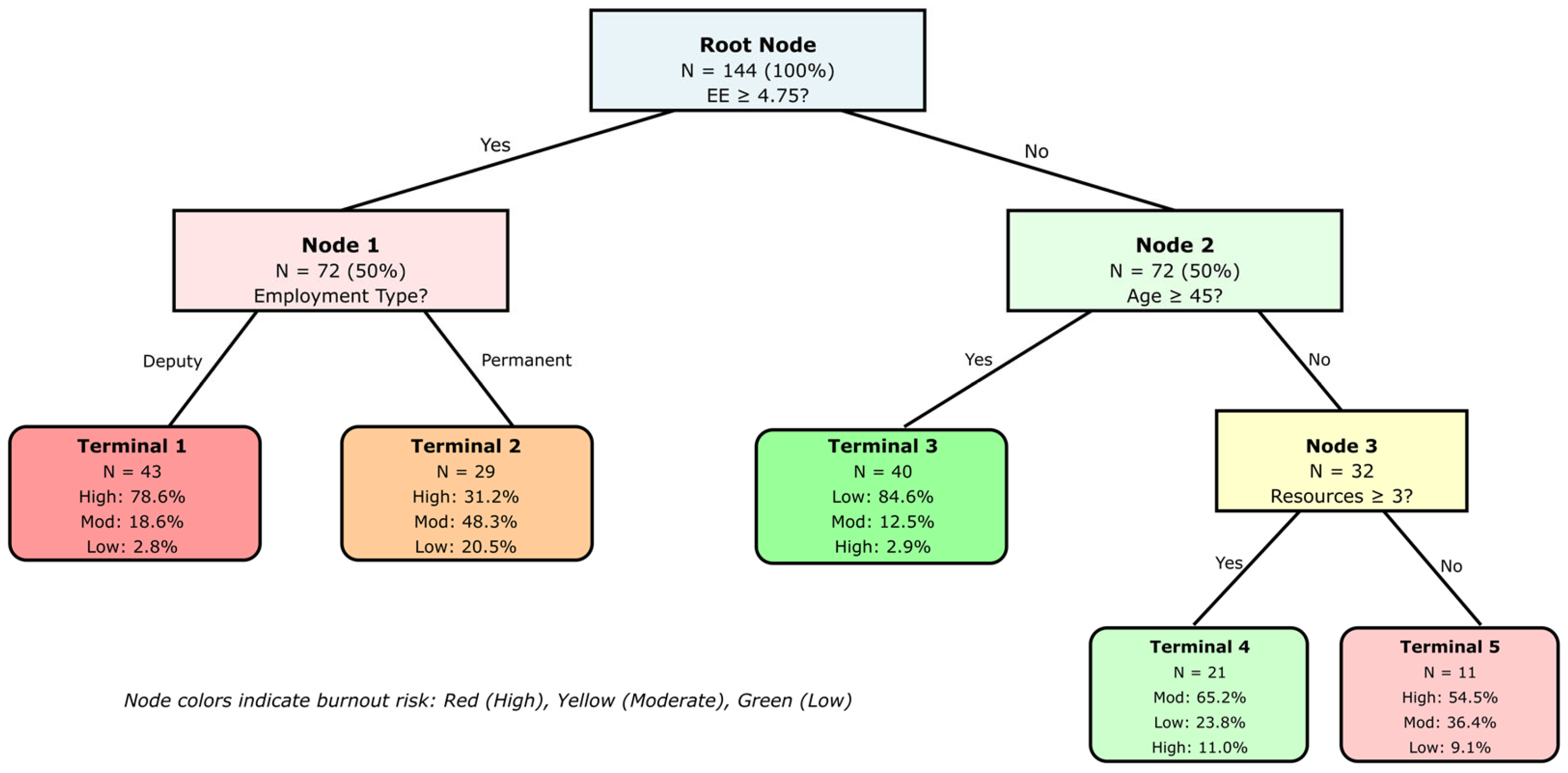
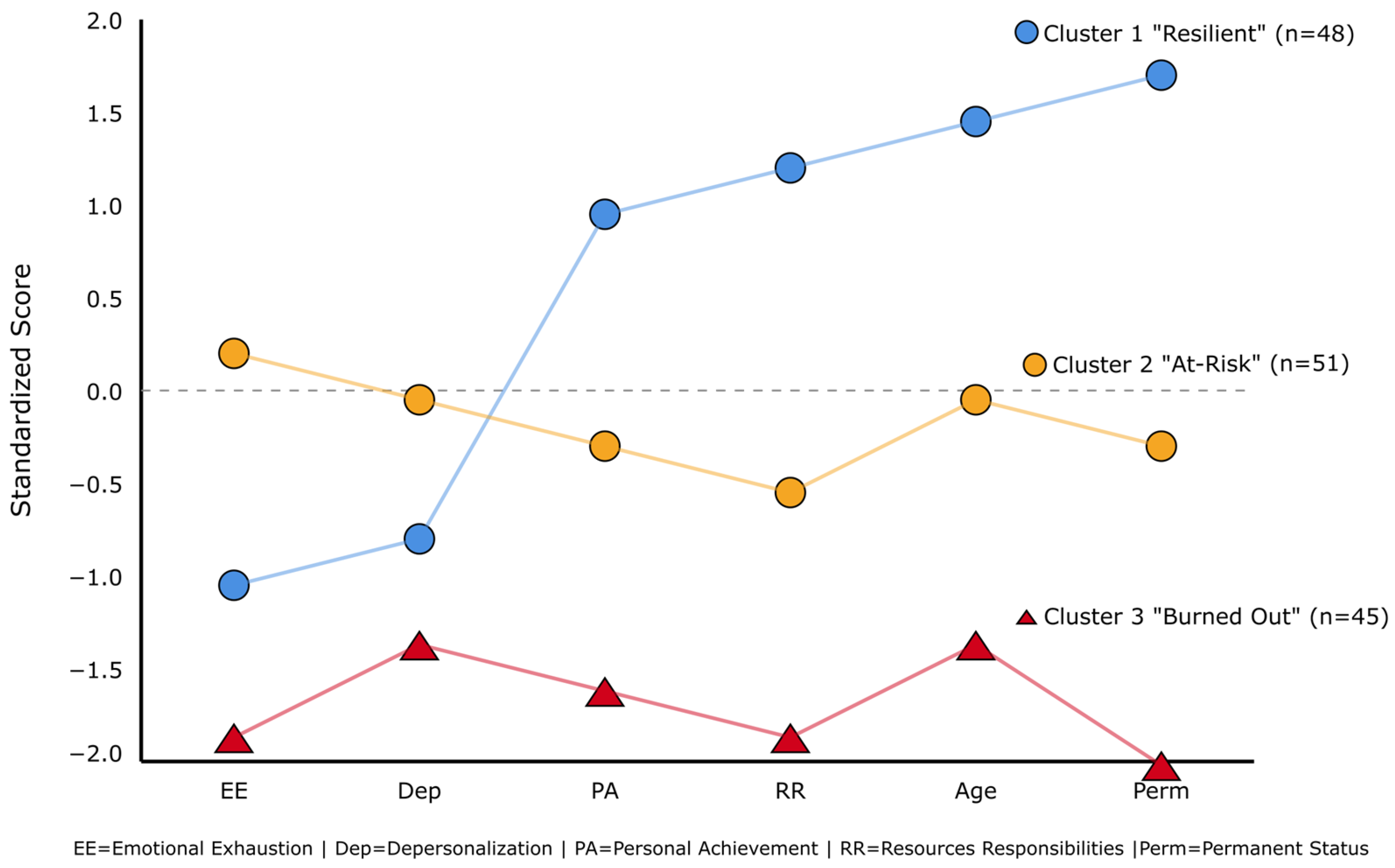
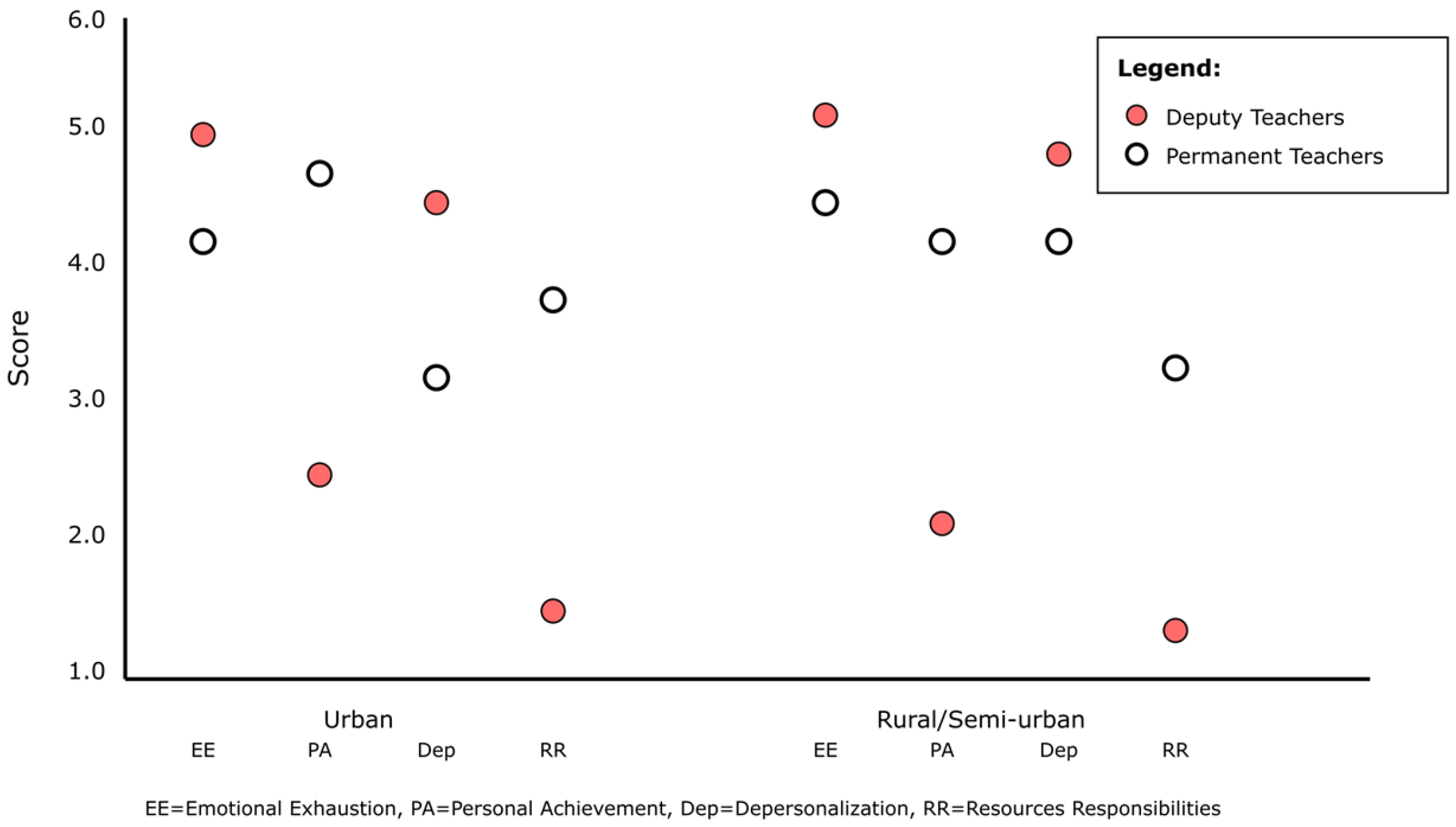
Background/Objectives: Teacher burnout represents a complex cognitive-emotional syndrome characterized by the interplay between mental exhaustion and emotional dysregulation, threatening educational sustainability during crisis periods. This study employed comprehensive behavioral data analysis to investigate burnout syndrome patterns among Greek teachers during the COVID-19 educational crisis, aiming to identify risk factors and resilience patterns through multiple analytical approaches that capture the syndrome’s multidimensional nature. Methods: A cross-sectional study examined primary and secondary school teachers in Western Greece during the autumn of 2021. Stratified random sampling ensured representativeness across school levels, geographic locations, and employment types. Participants completed the Greek-adapted Maslach Burnout Inventory for Educators, which measured emotional exhaustion, depersonalization, and personal accomplishment. Behavioral data analysis integrated traditional statistical methods with advanced pattern recognition techniques, including classification trees for non-linear relationships, association analysis for behavioral patterns, and cluster analysis for profile identification. Results: The majority of teachers experienced high stress with inadequate coping capabilities. Classification analysis achieved high accuracy in predicting burnout severity, identifying emotional exhaustion as the primary predictor. Deputy teachers demonstrated severe cognitive-emotional strain compared to permanent colleagues across all dimensions, with dramatically reduced personal accomplishment and minimal resources. Association analysis revealed that combined low support and high workload more than doubled burnout risk. Three distinct profiles emerged: Resilient teachers, characterized by older age and permanent employment; At-Risk teachers, showing early warning signs; and Burned Out teachers, predominantly young and in precarious employment. Remote teaching, exceeding half of the workload, significantly increased strain. Multiple regression confirmed emotional exhaustion as the dominant syndrome predictor. Conclusions: Behavioral data analysis revealed complex cognitive-emotional patterns constituting burnout syndrome during educational crisis. Employment precarity emerged as the fundamental vulnerability factor, with young deputy teachers facing dramatically higher syndrome probability compared to supported senior permanent teachers. The syndrome manifests through cascading processes where cognitive overload triggers emotional exhaustion, subsequently reducing personal accomplishment. These findings provide an evidence-based framework for early syndrome identification and targeted interventions addressing both cognitive and emotional dimensions of teacher burnout.
Keywords: cognitive-emotional burnout syndrome; teacher burnout; behavioral data analysis; educational crisis; employment status; resilience patterns; risk factors; Greece; Maslach Burnout Inventory; COVID-19 cognitive-emotional burnout syndrome; teacher burnout; behavioral data analysis; educational crisis; employment status; resilience patterns; risk factors; Greece; Maslach Burnout Inventory; COVID-19