1. Introduction
ASD is a complex neurodevelopmental condition characterized by deficits in social communication, restricted interests, and repetitive behaviors. Beyond these core symptoms, individuals with ASD frequently experience comorbidities such as motor coordination difficulties, autonomic irregularities, and heightened CV risk [
1,
2]. Neuromuscular dysfunction manifests as poor grip strength, delayed sensorimotor integration, and impaired postural control [
3], while autonomic dysregulation contributes to unstable blood pressure (BP), irregular HR, and poor circulation [
4]. These physiological challenges exacerbate behavioral difficulties, reduce adaptive functioning, and limit the effectiveness of conventional therapies, which often focus narrowly on cognitive or behavioral domains [
5].
YT integrates physical postures, breath regulation, and relaxation techniques. Emerging evidence suggests that YT enhances neuromuscular coordination, improves sensory-motor integration, and modulates autonomic function [
6,
7,
8]. Neurophysiological studies indicate that yoga practices can increase GABAergic activity, balance dopaminergic and serotonergic pathways, and strengthen prefrontal–limbic connectivity [
9,
10]. These mechanisms are directly relevant to ASD, where deficits in inhibitory control, attentional regulation, and emotional stability are prominent. By targeting both bottom-up autonomic recalibration and top-down cognitive modulation, YT addresses the biological underpinnings of ASD [
11] rather than merely alleviating surface-level symptoms.
This study identified the following gap: only a limited number of trials have integrated objective neurophysiological markers—such as handgrip strength, reaction time, and CV parameters—with standardized behavioral assessments. Long-term investigations employing structured and reproducible YT protocols are rare, restricting clinical translation. The influence of YT on sensorimotor networks and autonomic regulation remains insufficiently examined, with minimal application of neuroimaging or electrophysiological techniques. Furthermore, most interventions prioritize behavioral outcomes, leaving CV and neuromuscular comorbidities insufficiently addressed.
This trial seeks to bridge these gaps by evaluating the impact of YT on neuromuscular function, sensorimotor integration, autonomic regulation, and behavioral outcomes in individuals with ASD. By combining clinical measures with neurophysiological markers, the study aims to provide evidence for YT as an innovative, multidimensional therapy that transforms neurophysiology through stillness, offering a pathway toward comprehensive care in ASD.
2. Materials and Methods
2.1. Trial Design and Setting
The study was conducted between September 2020 and May 2021, when the COVID-19 pandemic was still widespread, and knowledge and resources to manage the pandemic were limited. Nationwide lockdown and social distancing measures created major disruptions in daily life, making it especially difficult for the general public and healthcare workers to access essential services, including mental health support. This particular school conducted regular COVID-19 tests and informed parents that, if positive, the affected individual would be quarantined. None of the study participants tested positive. Despite these challenges, the study was successfully carried out in accordance with government guidelines, within the same school, where both groups experienced similar pandemic-related restrictions, thereby minimizing potential confounding effects. The purposive sampling method was employed for sample collection. Informed consent was obtained from all parents and school authorities for the participation of individuals with ASD in this study. The research adhered to CONSORT reporting guidelines [
12] for the selection of outcome measures and analyses. The study was approved by the Institutional Human Ethical Committee of Aarupadai Veedu Medical College and Hospital [AV/IEC/2020/051] and was prospectively registered with the Clinical Trials Registry of India [CTRI/2021/12/038561]. This study explores the primary objective of the main study, investigating the therapeutic impact of yoga on neurophysiological functions that reduce autism severity in individuals with ASD. Prior publications have comprehensively covered the foundational aspects, including the background, literature review, pilot feasibility, modulation of neurotransmitters, and the innovative methods used in the research design.
2.2. Sample Size
The sample size was calculated using a sample size calculator for comparing two independent mean values (µ
1 = 83.50; µ
2 = 89.55) and standard deviations (σ
1 = 6.0; σ
2 = 6.28), derived from behavioral outcomes reported in a previous study [
13]. With an assumed 80% statistical power and a 95% confidence interval, the required sample size was estimated at 34 participants. Factoring in a 5% anticipated dropout rate, the final required sample size was set at 36. It is relatively small and consistent with sample sizes used in similar randomized controlled trials in special school settings [
13].
2.3. Participants
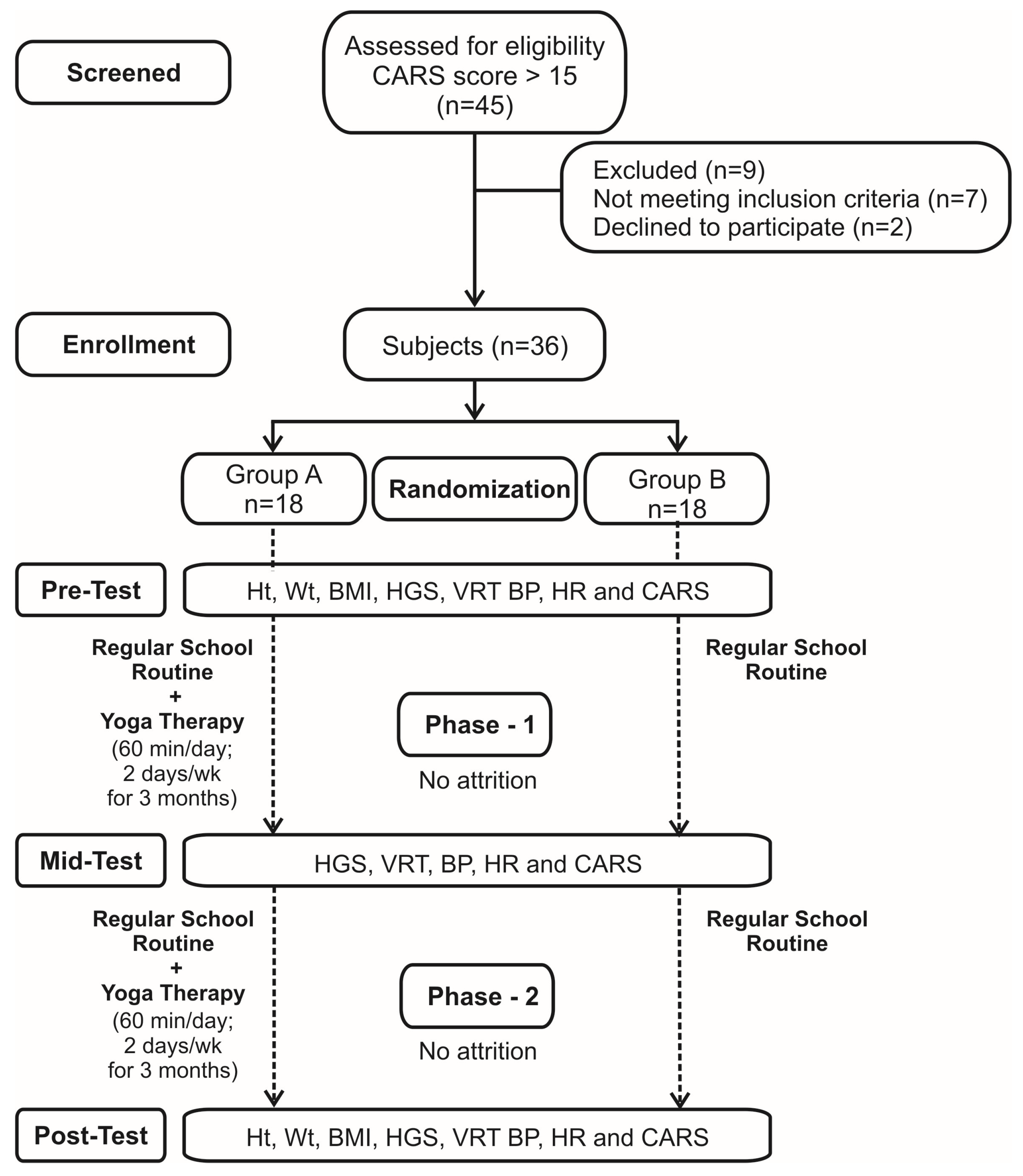
Forty-five individuals with ASD were screened, and thirty-six were recruited based on the criteria. Of the 36 participants, 14 were children (aged 6–12 years) and 18 adolescents (aged 13–18 years), while a smaller subset comprised 4 young adults (aged 19–25 years) who remained eligible for special school enrolment due to developmental delays. After randomization, two individuals over 18 years were included in each arm. This broad age range reflects the heterogeneous population typically served in special schools, ensuring ecological validity and capturing therapeutic effects across a representative developmental spectrum. Participants were included if they had a second-edition high-functioning Childhood Autism Rating Scale (CARS) score above 15 (covering mild to severe autism), had no prior exposure to yoga, and were able to perform yoga techniques with the aid of physical and verbal cues. Exclusion criteria involved difficulty comprehending yoga instructions even with assistance, the presence of acute medical, neurological, or co-morbid conditions such as eczema, uncontrolled asthma, and seizures, and the necessity for a caregiver. As a result, nine autistic individuals who did not meet the inclusion criteria were excluded, as given in
Figure 1.
2.4. Randomization
Screening and recruitment were conducted prospectively, and randomization using a simple random number table, with each participant assigned to either “A” (YG) or “B” (CG) based on the sequence generated. This process ensured that each participant had an equal probability of assignment, and the final distribution resulted in 18 individuals per group. The allocation of participants into these two groups was carried out by the clerical staff of the specialized education school to avoid allocation bias.
2.5. Intervention
YG received 60 min YT sessions twice weekly (Tuesdays and Thursdays), integrated into their regular school routine for six months, while CG continued only with the regular school routine. YT sessions were held in a sensory-friendly hall at the specialized education school, assisted by three trained special educators. The environment was designed to promote relaxation and focus, using soft mats, calming colors, and minimal distractions. The investigator, a certified yoga therapist, also conducted the YT sessions. Full blinding was not feasible due to the nature of the intervention, though participants were partially blinded. Attendance was recorded, but eligibility was not contingent on attendance, as participation was voluntary.
2.6. YT Protocol
The YT protocol employed in this study was developed from prior pilot work and validated by subject experts to ensure reproducibility, as given in
Table A1. All participants received the same structured sequence of practices—including jattis (dynamic balance postures), asana (breath-movement-coordinated postures), pranayama (breath regulation), and relaxation techniques—delivered in 60 min sessions, twice weekly over six months. While the protocol was standardized, minor adaptations (e.g., additional verbal or physical cues) were permitted to accommodate individual differences in comprehension and motor ability, thereby ensuring inclusivity without altering the core sequence.
2.7. Measurement Tools
Two trained special education teachers conducted pre- (1st month), mid- (4th month), and post- (7th month) assessments of demographic, anthropometric, neuromuscular, and CV variables, and autism severity. Height and weight were measured using standardized digital tools, including the CROWN PRESTIGE height measuring stadiometer and the Boldfit digital weighing machine, India. HGS and VRT were assessed using a Camry digital handgrip dynamometer and a validated digital reaction time apparatus (Anand Agencies, Pune, India), administered by trained special education teachers. Participants were instructed to exert maximal voluntary force with their dominant hand, and HGS values were recorded in kilograms to reflect neuromuscular function and motor coordination. VRT was designed to capture the latency between visual stimulus presentation and motor response. Assessments were conducted under controlled conditions by blinded evaluators, ensuring reliability and minimizing detection bias. BP and HR were recorded using an, Omron HEM 7124, OMRON Healthcare India PVT Ltd., Haryana, India. Autism severity was measured using CARS, administered by a clinical psychologist under the supervision of a psychiatrist, minimizing detection bias. The data collectors were blinded throughout the study.
2.8. Data Analysis
Data were analyzed using SPSS (version 16.0), applying descriptive statistics, correlation, repeated measures ANOVA, Post hoc comparison with Bonferroni adjustment, and effect size (Cohen’s d). Analyses were performed at significance levels of p < 0.05, 0.01, and 0.001, with 95% confidence intervals.
3. Results
The demographic, anthropometric, and autism severity variables of the subjects, that is, age, gender, height, and weight, and autism severity, were comparable at the baseline as determined by Student’s
t-test and Chi-square test. Additionally, there was no significant mean difference in the pre-intervention measures of HGS, VRT, SBP, DBP, and HR between the two groups, ensuring no risk of selection bias, as given in
Table 1 and
Table 2. The study showed no significant difference in the mean values of post intervention data of height, weight, and BMI in individuals with ASD.
In
Table 2, RM-ANOVA between-group effects with partial eta squared (ηp
2), Bonferroni-adjusted post hoc within-group comparisons across time (pre, mid, and post), and standardized within-group change magnitudes using Cohen’s d based on pooled standard deviations of the two timepoints were compared.
Participants in YG showed significant improvements in HGS (Δ = 4.74, p < 0.001; d_av ≈ 1.31), nearly doubling their scores, while CG (Δ = 0.62, not significant; d = 0.24) showed only minor changes. VRT also improved markedly in YG (Δ = −542.11, p < 0.01; d = −0.93), indicating enhanced sensorimotor function, whereas CG (Δ = +395.22, not significant; d = +0.53) experienced a slight decline. Although both groups showed increases in SBP (YG, Δ = +35.50, p < 0.001; d = 1.39; CG, Δ = +11.39, p < 0.05; d = 0.72) and DBP (YG, Δ = +18.56, p < 0.001; d = 1.34; CG, Δ = +18.17, p < 0.001; d = 1.11) over time, there were no significant differences between them. HR remained largely unchanged across both groups (YG, Δ = +4.22; CG, Δ = +1.33).
Most notably, autism severity as measured by CARS scores decreased substantially in YG (Δ = −10.56, p < 0.001; d = −1.85), with no meaningful change in CG (Δ = −0.22, not significant; d = −0.11), highlighting the potential of YT to positively impact core symptoms of ASD. Adjusted analysis showed significant differences between yoga and control groups in HGS (ηp2 = 0.210), VRT (ηp2 = 0.233), and CARS (ηp2 = 0.259).
4. Discussion
4.1. Impact of YT on Neurophysiological Modulation
YT produces systemic effects through both bottom-up autonomic pathways and top-down neurocognitive modulation [
14].
4.1.1. Enhancement of Neuromuscular Function: Cortical Drive and Proximal Stabilization
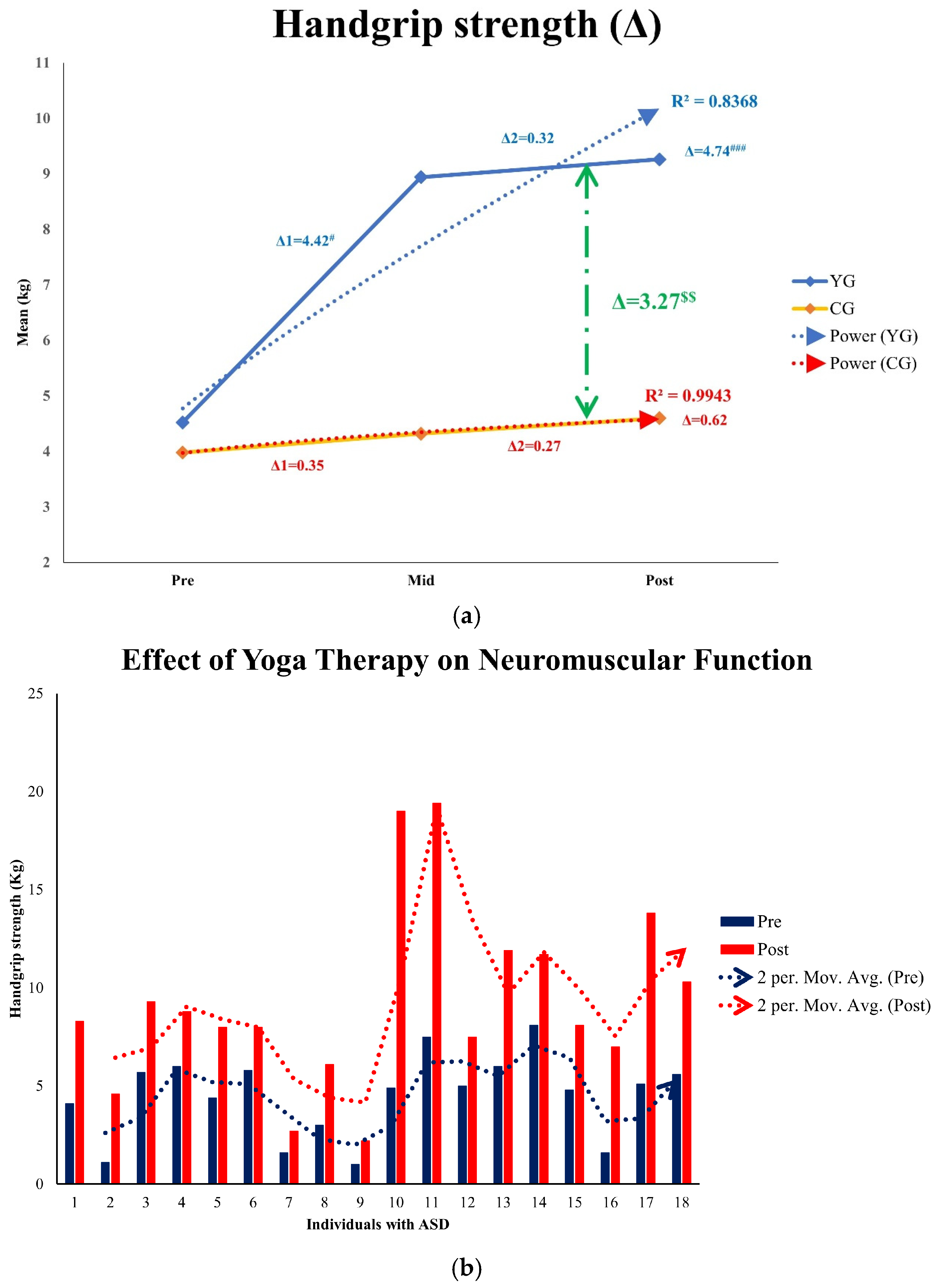
YT produced a substantially greater improvement in HGS (Δ = 3.27 kg,
p < 0.01) than control, with a large within-group increase (Δ = 4.74 kg,
p < 0.001), as shown in
Table 2 and
Figure 2a,b.
This improvement reflects that yoga postures and sustained isometric practices quickly enhance corticospinal excitability, motor unit recruitment, and proprioceptive acuity, leading to measurable increases in grip strength within weeks. These changes are largely peripheral and neuromuscular, explaining their earlier manifestation [
15], and reflect enhanced central motor drive and improved neuromuscular coordination [
15]. Joshi et al. (2017) demonstrated that yoga improves nerve–muscle physiology and motor coordination in occupational groups, consistent with evidence that grip strength responds rapidly to repetitive motor training due to improved central motor drive [
16]. Breath-synchronized movement may further refine motor unit recruitment, while yoga practices enhance proprioceptive acuity and sensorimotor integration, thereby improving voluntary force output [
14,
17,
18,
19,
20]. Additionally, regulated breathing techniques help balance sympathetic–parasympathetic pathways and promote GABAergic modulation, supporting inhibitory control and emotional regulation [
21,
22,
23]. Dopaminergic activation during motor engagement enhances motivation and reward processing [
24], whereas serotonergic shifts contribute to mood stabilization and cognitive development [
25,
26,
27].
4.1.2. VRT: Sensory-Motor Processing and Attentional Efficiency
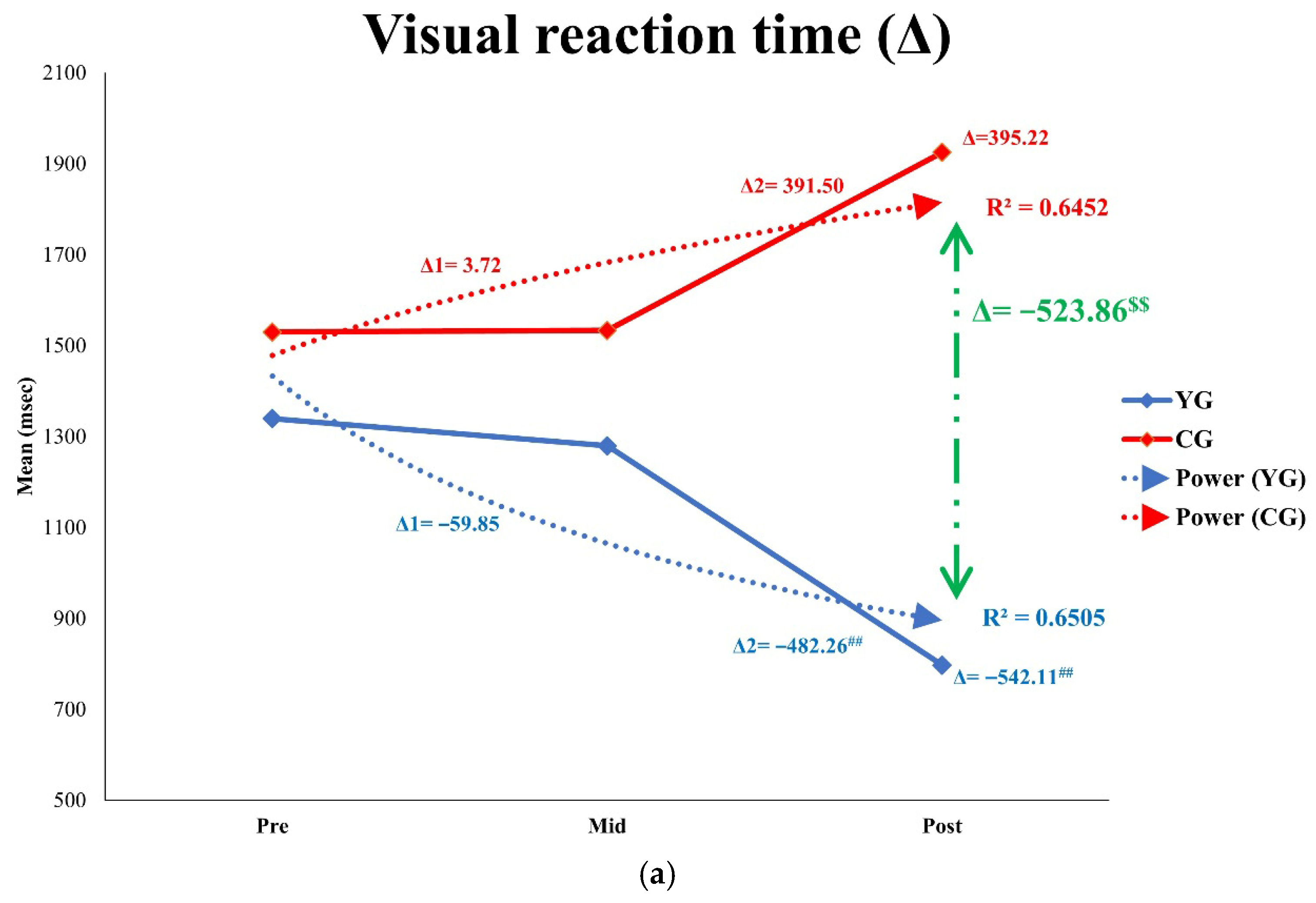
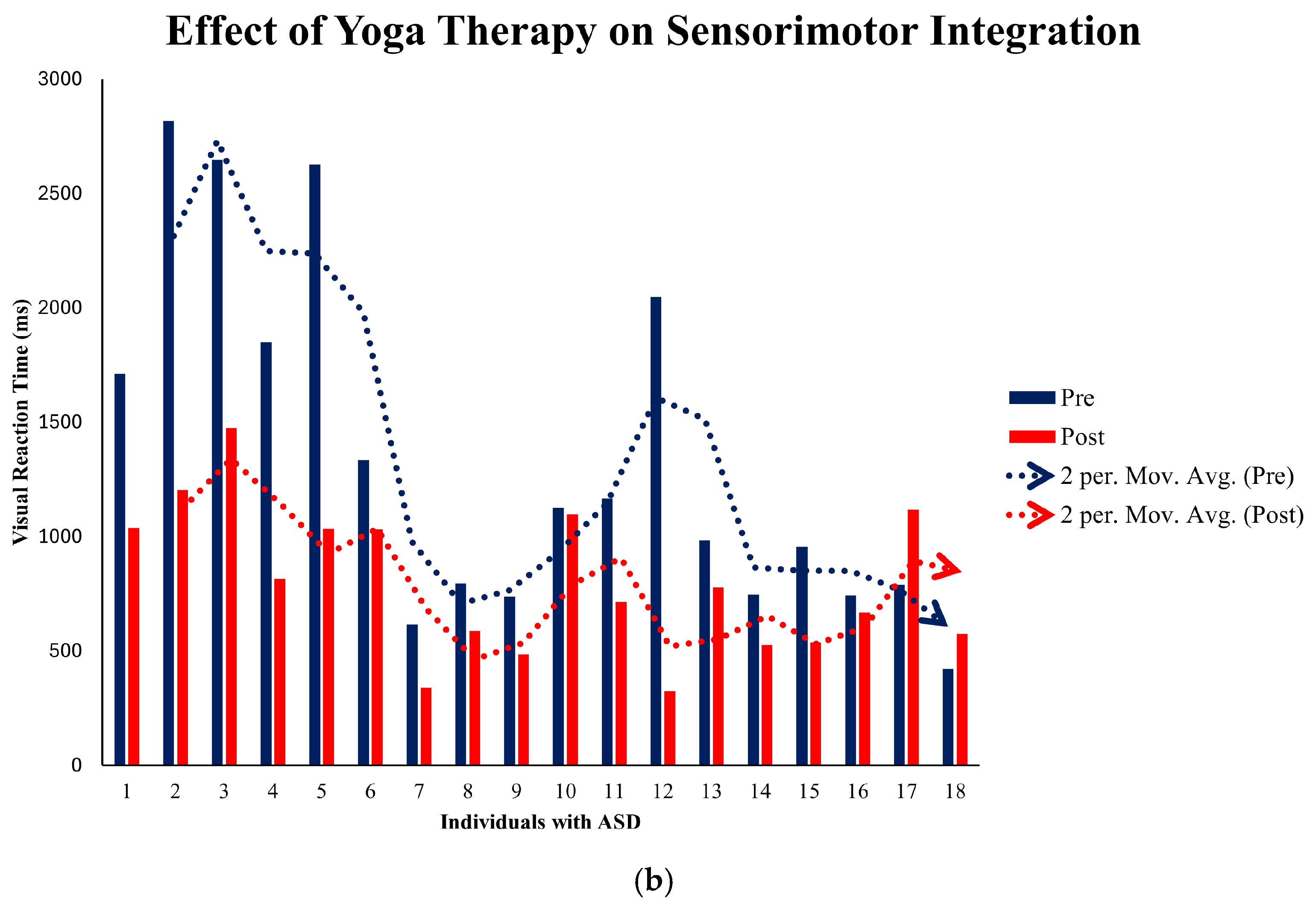
YT led to a clinically meaningful speeding of reaction time by a significant reduction in VRT (Δ = −523.86 ms,
p < 0.01) compared to CG, with a large within-group reduction (Δ = −542.11 ms,
p < 0.01), as illustrated in
Table 2 and
Figure 3a,b.
Improvements in VRT require longer exposure because they involve higher-order processes such as prefrontal activation, sensory–motor integration, GABAergic modulation, and dopaminergic transmission. These cortical and neurotransmitter changes evolve more gradually, supporting attentional efficiency and executive control [
28,
29,
30]. This substantial reduction in VRT, consistent with improved sensory-motor integration and faster central processing, enhances attentional networks and executive function, likely via increased prefrontal activation and reduced limbic interference [
31,
32,
33]. Pranayama techniques further enhance prefrontal activation, facilitating faster stimulus processing and executive control [
34]. These practices also stimulate dopamine transmission, which enhances attention, motivation, and goal-directed behavior through modulation of prefrontal cortical activity [
32,
33]. Additionally, elevated GABA levels—shown to increase by 27% following a 60 min yoga session [
31,
35,
36]—contribute to improved inhibitory control and sensory filtering by regulating neuronal excitability and synchronizing cortical networks [
37,
38,
39]. Furthermore, serotonergic modulation supports emotional regulation and improves interoceptive awareness and adaptive responses, contributing to refined motor precision and cognitive development [
40].
Consistent with these mechanisms, Shobana et al. (2021) found that yoga training significantly reduced VRT in young adults, but changes were more pronounced after sustained practice [
28]; Chatterjee et al. (2021) reported that yoga improves audiovisual reaction times by enhancing sensory–motor association and cortical processing [
41]; and Voss et al. (2023) highlighted that short-term yoga has limited impact, while longer practice improves sensory integration and reaction speed [
42].
4.2. Impact of YT on CV Function
SBP, DBP, and HR showed intra-group variations over time but did not differ significantly between the yoga and control groups. This suggests that while YT may bring about modest autonomic effects [
43,
44], the protocol employed in this study was not sufficient to produce clinically significant CV changes within the six-month timeframe [
45,
46]. Several factors may explain this outcome: (i) the relatively small sample size, which limited statistical power for detecting subtle autonomic shifts; (ii) the heterogeneity of participants in terms of age and autism severity, which may have influenced CV responsiveness; and (iii) the focus of the YT protocol on neuromuscular and behavioral regulation rather than intensive CV training.
Clinically, these findings indicate that YT, as implemented in this study, primarily benefits neuromuscular and behavioral domains, while CV modulation remains limited. Although SBP increased within the YG, this rise reflects normal intragroup variation and neuromuscular engagement rather than anxiety, as evidenced by the absence of significant intergroup differences and the concurrent improvements in behavioral outcomes. Prior studies have shown that yoga enhances corticospinal excitability, proprioceptive acuity, and sensorimotor integration, leading to early neuromuscular gains [
47,
48], while CV recalibration in ASD populations often requires longer duration, higher frequency, or pranayama-dominant protocols to achieve clinically meaningful autonomic shifts [
30,
49,
50]. Thus, the observed SBP changes should be interpreted as benign physiological adaptation rather than adverse stress response, reinforcing that the primary therapeutic impact of yoga in this context lies in neuromuscular strengthening and behavioral regulation.
4.3. Impact of YT on Reduction in Autism Severity
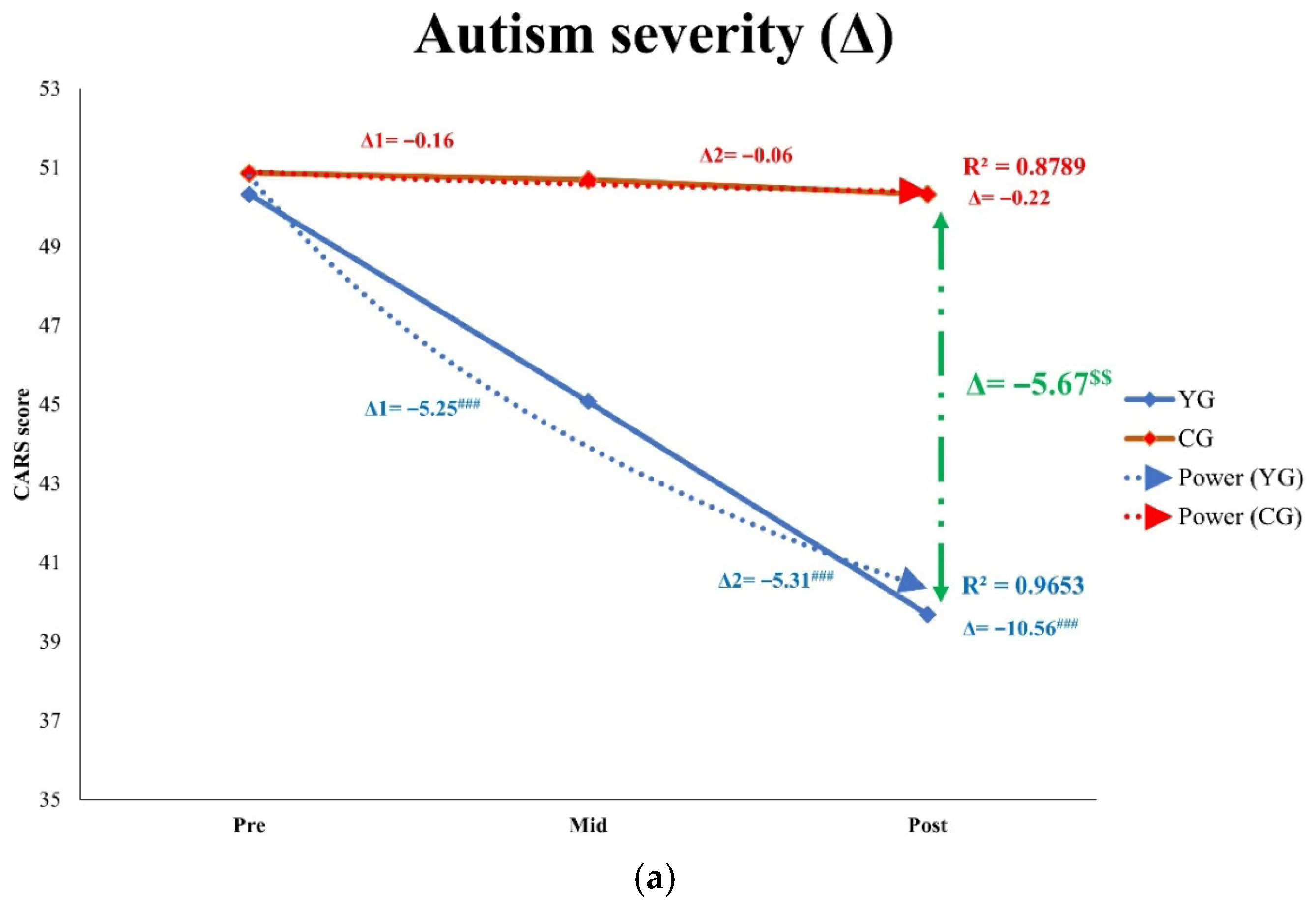
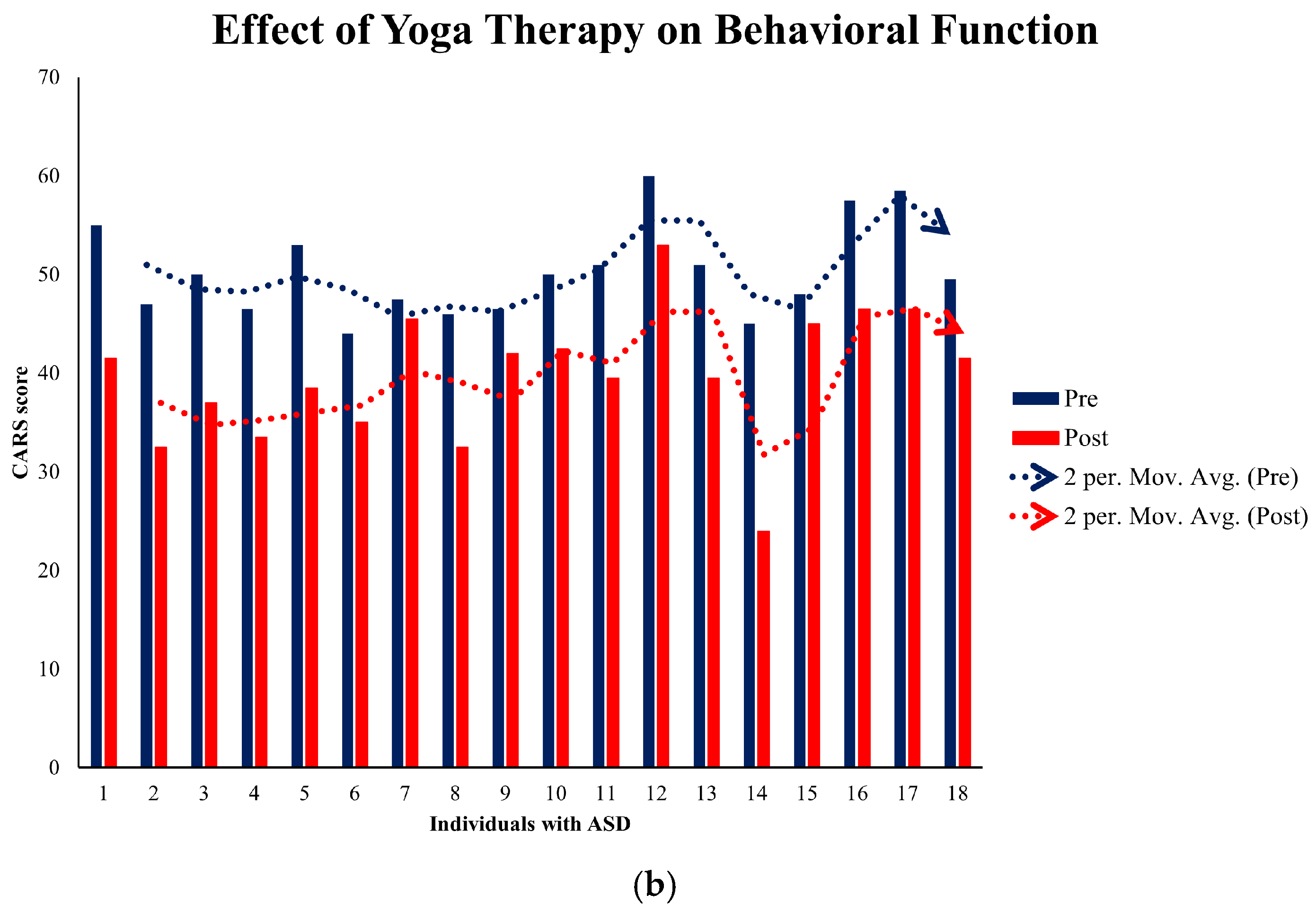
YT produced a significant reduction in CARS score (Δ = −5.67,
p < 0.01) compared to CG, with a large within-group reduction (Δ = −10.56,
p < 0.001), as illustrated in
Table 2 and
Figure 4a,b. This improvement can be attributed to enhanced neuronal plasticity in regions such as the cerebellum and sensorimotor cortex [
51,
52]. These effects are mediated by neurotransmitter shifts: increased GABA improves motor planning and inhibitory control [
53], elevated serotonin supports emotional regulation, and balanced dopamine enhances executive functioning and cognitive flexibility [
54]. This modulation of neurotransmitters in neural circuits can be involved in emotion regulation, attention, and social cognition. Several studies suggest that yoga enhances prefrontal–limbic connectivity and reduces amygdala hyperactivity, which may improve behavioral flexibility and reduce stereotypical behavior [
14].
4.4. Association of Neurophysiological Function with Behavioral Improvements
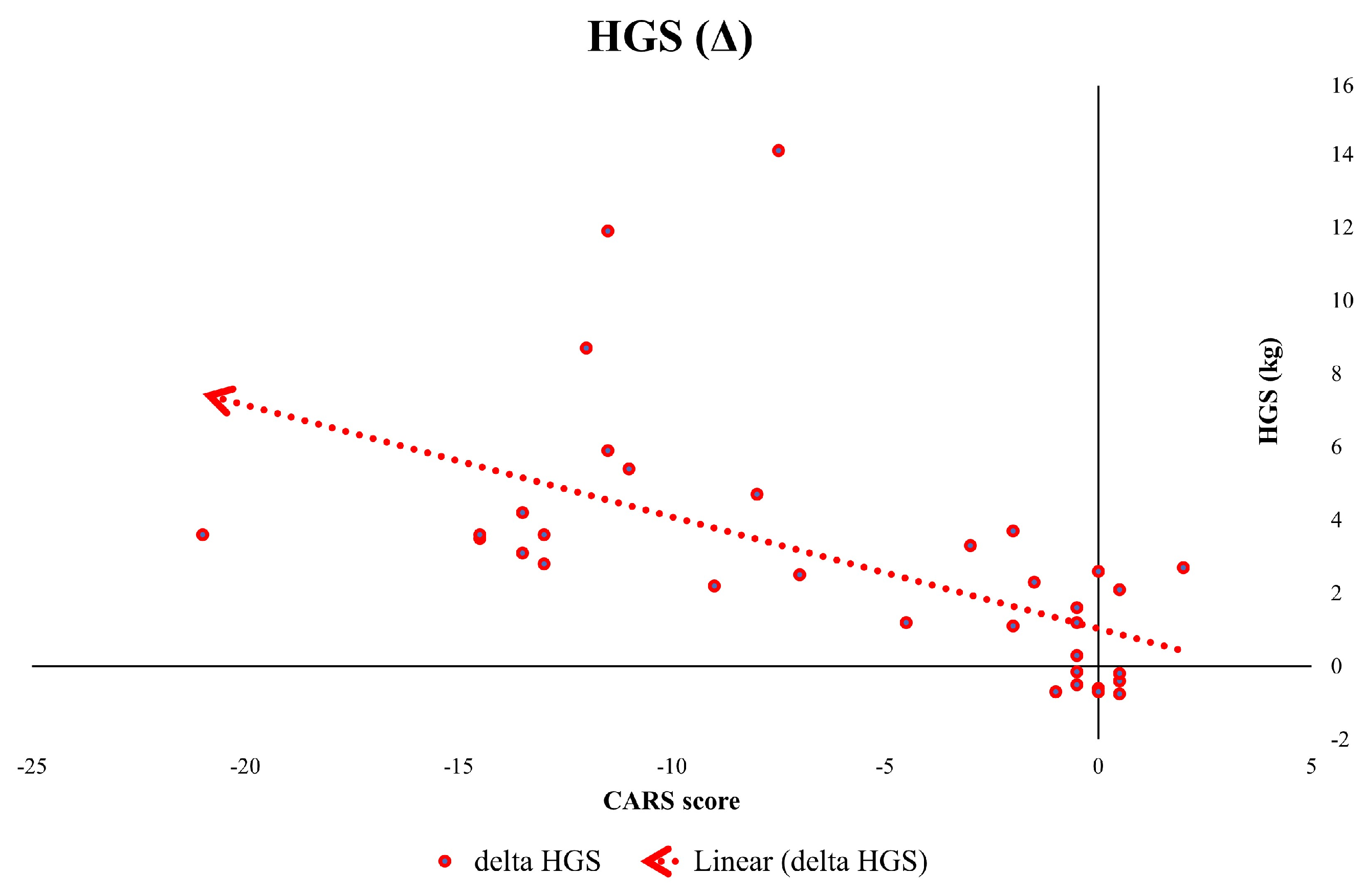
4.4.1. Neuromuscular Function vs. Autism Severity
Figure 5 illustrates an inverse relationship (r = −0.540,
p < 0.001) between increased HGS (Δ = 3.27 kg) and reduced CARS score (Δ = −5.67) in autistic individuals, which can be attributed to enhanced neuromuscular function and sensory–motor integration [
55].
Improved HGS has been associated with enhanced microstructural integrity in sensorimotor-related white matter pathways, including the corticospinal and proprioceptive tracts [
56]. These neural pathways are critical for motor coordination and executive function—domains often impaired in ASD. Moreover, fractional anisotropy in the brainstem’s corticospinal tract has been found to predict both HGS and ASD symptom severity. This suggests that improvements in HGS may reflect enhanced neuroplasticity and integration between cortical and subcortical motor regions, promoting better behavioral regulation and reduced ASD symptom severity [
52,
57,
58,
59,
60].
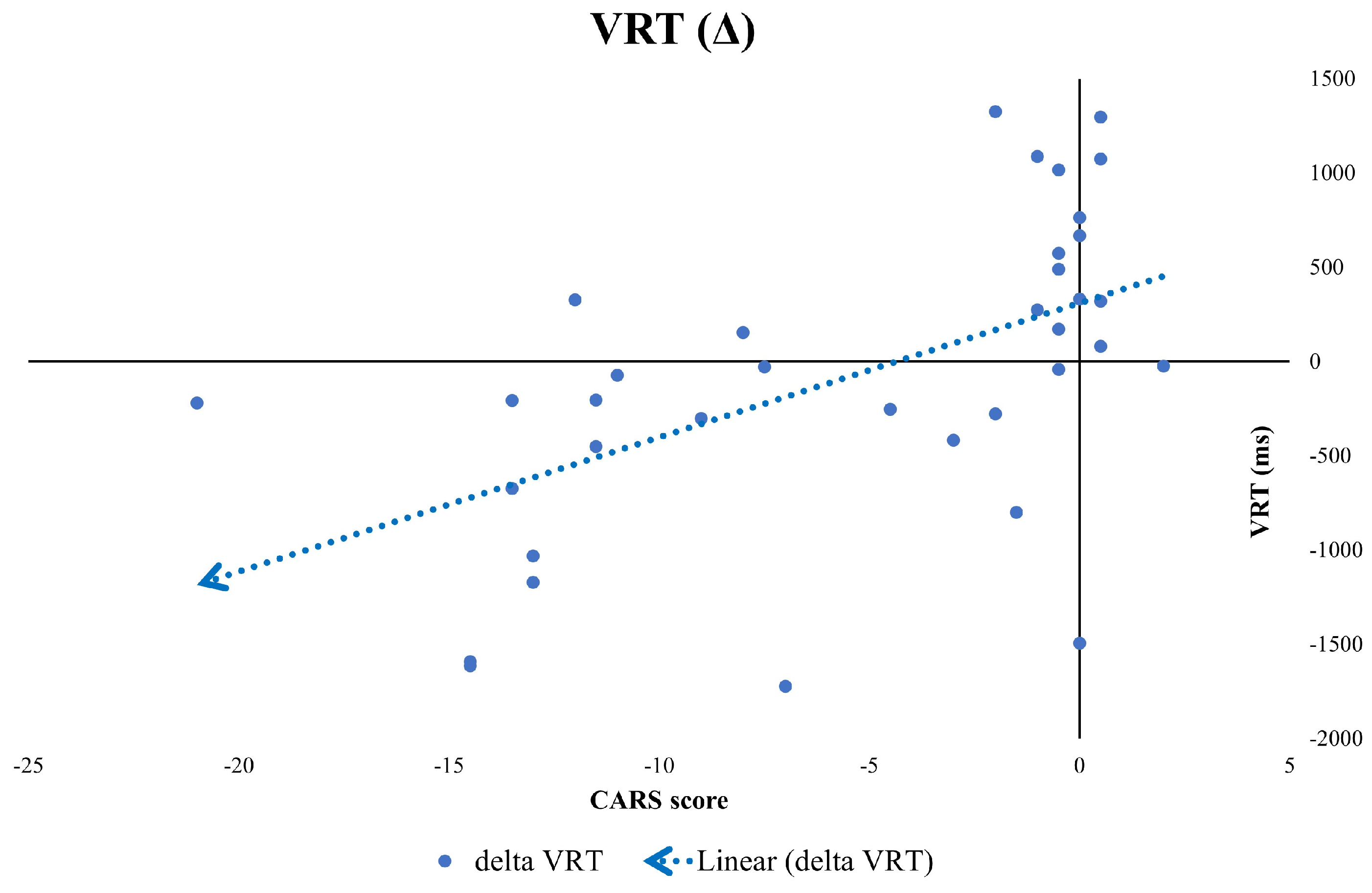
4.4.2. Sensory–Motor Integration vs. Autism Severity
Figure 6 illustrates a significant positive correlation (r = 0.535,
p < 0.001) between reduced VRT (Δ = −523.86 ms) and decreased CARS score (Δ = −5.67) in individuals with ASD. Faster VRT reflects improved sensory processing and attentional control [
61], linked to magnocellular pathway activation essential for detecting dynamic social cues [
62]. Reduced VRT facilitates engagement of cortical–subcortical regions (e.g., amygdala, prefrontal cortex) involved in social cognition [
62]. Due to increased sensory sensitivity and elevated neural activity in the visual cortex among individuals with ASD, strategies that enhance visual processing speed may help alleviate symptom severity by fostering more effective sensory integration, sharper attentional control, and greater behavioral adaptability essential for social engagement [
63]. These findings support the hypothesis that faster visual processing facilitates better integration of sensory input, leading to improved behavioral regulation and reduced autism severity [
64].
The moderate correlations (r ≈ ±0.5) between HGS and autism severity, and between VRT and autism severity, indicate that improvements in neuromuscular strength and sensory-motor integration contribute meaningfully to behavioral change, but are not sole determinants. These biomarkers act as part of a broader neurophysiological network, suggesting that YT exerts multidirectional effects where motor and attentional gains synergize with neurotransmitter modulation and cortical connectivity to reduce autism severity.
4.5. Accelerated Impact of YT on Neurophysiological and Behavioral Functions
In
Figure 4a, the reduction in CARS score observed in YG (Δ = −10.56,
p < 0.001) not only reached statistical significance but also exceeded the threshold generally considered clinically meaningful in prior ASD intervention studies, where a reduction of ≥4–5 points has been associated with observable improvements in social communication and behavioral functioning [
65]. In contrast, CG showed only a minimal change (Δ = −0.22), indicating that YT facilitated behavioral progress at a rate nearly 10 times faster. This rapid and clinically relevant improvement is attributed to multidirectional neurophysiological modulation, alongside the interactive group setting that fostered engagement, peer modeling, and social reciprocity despite baseline challenges linked to social isolation.
4.6. Risk of Bias Analysis
Risk of bias was minimized through allocation concealment, unbiased randomization, standardized outcome measurement, controlled attrition, and impartial data collection and reporting. Lifestyle factors such as diet, physical activity, and medication use could have influenced the outcomes. To minimize these confounders, participants were recruited from the same specialized school setting, where daily routines, dietary provisions, and physical activity schedules were relatively uniform. Parents and teachers confirmed that participants did not engage in extracurricular activity outside of school during the study period, and no new medications were initiated during the intervention. The dual role of investigator and therapist may increase the risk of performance bias. To mitigate this, participant effort during yoga sessions was monitored using the Assessment of Yoga Performance Ability©. The overall quality of the study was rated as “low risk”. The average effect size (Cohen’s d = 0.3) suggests a small to moderate impact, reinforcing the therapeutic potential benefits of yoga for individuals with ASD [
66]. Hence, YT promotes neuroplasticity and emotional regulation, reinforcing its therapeutic value in ASD.
4.7. Generalizability Impact of YT on Neurophysiological Mechanism
The study allowed us to capture the real-world heterogeneity of the school population. However, this subgroup could introduce potential bias, particularly in terms of developmental stage and functional capacity. This diversity is a strength of the study, as it reflects the heterogeneous developmental spectrum typically served in special schools and demonstrates that YT can be feasibly applied across childhood, adolescence, and young adulthood. Importantly, the improvements observed in HGS, VRT, and reductions in CARS scores were consistent across age groups, underscoring the therapeutic impact of yoga on both neurophysiological and behavioral outcomes. The gains in HGS and VRT suggest enhanced sensorimotor integration and cognitive processing, likely mediated by top-down mechanisms such as increased mindfulness and interoception. Meanwhile, changes in SBP and DBP reflect bottom-up autonomic shifts, possibly reducing hyperarousal and sensory overload—common challenges in ASD (
Table A2). The significant reduction in CARS scores correlates with these physiological changes, supporting the hypothesis that neurophysiological regulation through YT can lead to behavioral improvements. This aligns with the biopsychosocial model, where physiological stability fosters emotional and behavioral regulation.
Primary outcomes directly measured were HGS, VRT, CV parameters, and CARS scores. Statements regarding neurotransmitter modulation and cortical connectivity are interpretative in nature and indirectly supported by the present data. These references were included to situate our findings within the broader neurophysiological literature on YT and autism.
5. Limitations
Limitations and their potential impact on the study, and possible strategies to overcome them, are as follows:
- (a)
Heterogeneity of participants (age, autism severity, and psychological categories): This diversity may have introduced variability in responsiveness to YT, limiting the precision of conclusions. Future studies should stratify participants by age bands and severity levels or employ larger samples to allow subgroup analyses.
- (b)
Preponderance of males aged 13–25 years: This gender imbalance, partly due to COVID-19 restrictions and school dropout among females, may reduce generalizability. Strategies to overcome this include targeted recruitment of female participants and multi-site studies to ensure balanced representation.
- (c)
Small sample size: The limited number of participants reduces statistical power and increases the risk of type II error. Larger, multi-center randomized controlled trials are needed to confirm these findings and enhance external validity.
- (d)
Absence of complete blinding (investigator was also the therapist): This may have introduced performance bias. Future studies should employ independent therapists and blinded assessors to minimize bias.
- (e)
Use of CARS as the sole measure of autism severity: While CARS is validated and feasible, it may not capture the full spectrum of behavioral and neurocognitive changes. Future research should integrate complementary scales such as ADOS-2 and Vineland Adaptive Behavior Scales to strengthen clinical interpretation.
- (f)
Lifestyle factors: Individual variations in diet and physical activity were not systematically monitored, which limits the ability to fully attribute observed changes to YT alone. Future studies should incorporate dietary records and physical activity logs to better control for these potential confounders and strengthen causal inference.
- (g)
Parallel controlled group design: The observed effects may or may not be replicated in the absence of the structured school routine, since YT was implemented here as a supplement to daily activities. An alternative design could be participants undergoing an initial six-month phase without YT, followed by a six-month intervention phase. Such within-subject data would arguably provide stronger evidence by accounting for interindividual variability more effectively than the current parallel-group design.
These limitations provide a transparent account of how each factor may have influenced the study outcomes and outline practical strategies to improve methodology in subsequent trials.
6. Conclusions
Biweekly YT sessions over a six-month period showed significant neurophysiological benefits for individuals with ASD, improving HGS and VRT, and reducing autism symptom severity. These improvements reflect enhanced neuromuscular coordination, sensory–motor integration, and neurotransmitter modulation. While CV effects remain modest, the observed SBP rise reflects benign physiological adaptation rather than anxiety; at the same time, the therapy demonstrated substantial impact on cognitive and behavioral functions, with accelerated improvements linked to increased neuroplasticity and cortical activation. Overall, YT emerges as an evidence-based intervention, promoting integrated motor, emotional, and social development in individuals with ASD. Further research is needed to assess the long-term effects of YT with a larger sample size, its scalability, and the specific elements of yoga that contribute most significantly to improvements in these areas.
Author Contributions
All authors had full access to all the data in the study and take responsibility for the integrity of the data and the accuracy of the data analysis. Conceptualization, S.A., A.B.B. and M.R.; methodology, S.A., A.B.B., M.P. and M.R.; software, S.A.; validation, A.B.B., M.P. and M.R.; formal analysis, S.A., A.B.B. and M.R.; investigation, S.A.; resources, M.R. and A.B.B.; data curation, A.B.B. and M.R.; writing—original draft preparation, S.A.; writing—review and editing, S.A., M.R. and A.B.B.; visualization, S.A.; supervision, M.P.; project administration, S.A.; fund acquisition, S.A. All authors have read and agreed to the published version of the manuscript.
Funding
This research received no external funding.
Institutional Review Board Statement
The study was conducted in accordance with the Declaration of Helsinki, and approved by the Institutional Human Ethical Committee of Aarupadai Veedu Medical College and Hospital (Protocol code: AV/IEC/2020/051, Approval Date: 25 July 2020) and was prospectively registered with the Clinical Trials Registry of India (CTRI/2021/12/038561).
Informed Consent Statement
Written informed consent has been obtained from all parents and school authorities for the participation of individuals with ASD in the study.
Data Availability Statement
The data presented in this study are available on request.
Acknowledgments
The authors thank the management and authorities of the School of Rehabilitation and Behavioral Sciences, Vinayaka Mission’s Research Foundation (DU), Puducherry, for setting up the Center for Yogic Sciences. We also thank the authorities of Sri Balaji Vidyapeeth (DU) for setting up the School of Yoga Therapy, Institute of Salutogenesis and Complementary Medicine (ISCM). We are grateful to Madanmohan for his constant motivation and supportive guidance. We offer special thanks to Chitra Shah for her permission for this study at their premises. We thank all the subjects and their parents for their wholehearted participation in these sessions and their authorities for facilitating logistics. During the preparation of this study, the authors have reviewed and edited the output and take full responsibility for the content of this publication.
Conflicts of Interest
The authors declare no conflicts of interest.
Abbreviations
The following abbreviations are used in this manuscript:
| ASD | Autism spectrum disorder |
| CARS | Childhood autism rating scale |
| CG | Control group |
| CV | Cardiovascular |
| DBP | Diastolic blood pressure |
| EEG | Electroencephalogram |
| GABA | Gamma-aminobutyric acid |
| HGS | Handgrip strength |
| HR | Heart rate |
| HRV | Heart rate variability |
| RM-ANOVA | Repeated measures analysis of variance |
| SBP | Systolic blood pressure |
| SPSS | Statistical Package for Social Sciences |
| VRT | Visual reaction time |
| YG | Yoga group |
| YT | Yoga therapy |
Appendix A
Table A1.
Yoga Therapy protocol.
Table A1.
Yoga Therapy protocol.
| S. No. | Yoga Practice * | Procedure | Holding (Counts) | Repetition (Round) | Duration (min) |
|---|
| Play way jattis |
| 1 | Right leg forward and backward | A basic warm-up routine for rehabilitation, incorporating gentle, oscillatory movements in a back-and-forth pattern to promote mobility and engagement in a playful manner. | 10 | 3 | 3 |
| 2 | Left leg forward and backward | 10 | 3 | 3 |
| Asana |
| 3 | Tadasana | The subject stands on the toes with both hands hooked and outstretched above the head. | 10 | 3 | 3 |
| 4 | Vrkshasana | The subject stands on one leg with the opposite knee bent, both hands clasped and extended above the head. | 10 | 3 | 3 |
| 5 | Padahastasana | The subject bends forward from a standing position, with variations that involve grasping the toes. | 10 | 3 | 3 |
| 6 | Paschimottanasana | The subject sits with legs extended forward, bending from the hips to stretch the entire back of the body, including the spine, hamstrings, and shoulders. | 10 | 3 | 3 |
| 7 | Pawanamuktasana | The subject lies on their back and draws both knees toward the chest, a position that may help release trapped gas, alleviate constipation and indigestion, and stimulate the digestive system. | 10 | 3 | 3 |
| 8 | Jathara parivrttasana | The subject lies on their back with one knee drawn across the body toward the opposite side of the chest. | 10 | 3 | 3 |
| 9 | Bhujangasana | In a prone position, the subject inhales while lifting the chest and head, keeping the hips grounded. | 10 | 3 | 3 |
| 10 | Sarvangasana | In a supine position, the subject inhales while lifting the legs, hips, and back off the mat, bringing the legs perpendicular to the floor. | 10 | 3 | 3 |
| | Pranayama (in Padmasana/Sukhasana) |
| 11 | Adham Pranayama | The subject breathes deeply into the abdomen, expanding it during inhalation and contracting it during exhalation, while producing the sound “aaa…”. | | 3 | 3 |
| 12 | Madhyam Pranayama | The subject breathes deeply into the mid-lung area, expanding it during inhalation and contracting it during exhalation, while producing the sound “uuu…”. | | 3 | 3 |
| 13 | Adhyam Pranayama | The subject breathes deeply into the upper-lung area, expanding it during inhalation and contracting it during exhalation, while producing the sound “mmm…”. | | 3 | 3 |
| 14 | Pranava Pranayama | The subject breathes deeply into the lower chest, expanding it during inhalation and contracting it during exhalation, while producing the combined sound “aaauuummm…”. | | 3 | 3 |
| | Relaxation |
| 15 | Shavasana | In a supine position, the subject lies flat on the back with arms and legs extended, palms facing upward, and eyes closed. | | | >3 |
| | Total duration | | | | 60 |
Table A2.
Impact of Yoga Therapy on integrative neurophysiological mechanism.
Table A2.
Impact of Yoga Therapy on integrative neurophysiological mechanism.
| Dependent Variables | Integrative Neurophysiological Mechanism |
|---|
| Handgrip Strength | Yoga promotes biomechanical and neurochemical processes to facilitate better motor performance and enhanced cortical activation. Cortical motor drive, proprioception, and trunk stability. Increased α-EEG power and reduced θ-EEG activity post-yoga suggest heightened cortical readiness and attentional control—key for isometric effort.
|
| Visual Reaction Time | Yoga enhances thalamo-cortical connectivity and reduces sympathetic tone, which may accelerate stimulus-response coupling. Optimizing sensory responsiveness and cognitive-motor performance.
|
| Blood Pressure and Heart Rate | Yoga reduces sympathetic outflow and improves vagal modulation, which stabilizes BP over time. The lack of differential effect in the study may be due to baseline normotension or short intervention duration. While Yoga Therapy supports overall autonomic balance and neurochemical signaling, its impact on CV dysfunction in ASD appears nuanced and modest, involving mechanisms beyond direct cardiac stimulation. Breath-regulated vagal afferents modulate brainstem autonomic centers, reducing HR variability and promoting CV efficiency.
|
| Autism severity | Yoga enhances mindfulness and awareness of internal bodily sensations (interoception), which in turn improves self-regulation through top-down brain mechanisms. Meanwhile, bottom-up shifts in the autonomic nervous system help reduce hyperarousal and alleviate sensory overload.
|
References
- Lai, M.-C.; Lombardo, M.V.; Baron-Cohen, S. Autism. Lancet 2014, 383, 896–910. [Google Scholar] [CrossRef] [PubMed]
- Matson, J.L.; Nebel-Schwalm, M.S. Comorbid Psychopathology with Autism Spectrum Disorder in Children: An Overview. Res. Dev. Disabil. 2007, 28, 341–352. [Google Scholar] [CrossRef] [PubMed]
- Fournier, K.A.; Hass, C.J.; Naik, S.K.; Lodha, N.; Cauraugh, J.H. Motor Coordination in Autism Spectrum Disorders: A Synthesis and Meta-Analysis. J. Autism Dev. Disord. 2010, 40, 1227–1240. [Google Scholar] [CrossRef] [PubMed]
- Ming, X.; Julu, P.O.O.; Brimacombe, M.; Connor, S.; Daniels, M.L. Reduced Cardiac Parasympathetic Activity in Children with Autism. Brain Dev. 2005, 27, 509–516. [Google Scholar] [CrossRef]
- Dawson, G.; Jones, E.J.H.; Merkle, K.; Venema, K.; Lowy, R.; Faja, S.; Kamara, D.; Murias, M.; Greenson, J.; Winter, J.; et al. Early Behavioral Intervention Is Associated with Normalized Brain Activity in Young Children with Autism. J. Am. Acad. Child Adolesc. Psychiatry 2012, 51, 1150–1159. [Google Scholar] [CrossRef]
- Kanojia, S.; Sharma, V.K.; Gandhi, A.; Kapoor, R.; Kukreja, A.; Subramanian, S.K. Effect of Yoga on Autonomic Functions and Psychological Status During Both Phases of Menstrual Cycle in Young Healthy Females. J. Clin. Diagn. Res. 2013, 7, 2133–2139. [Google Scholar] [CrossRef]
- Vinutha, H.T.; Raghavendra, B.R.; Manjunath, N.K. Effect of Integrated Approach of Yoga Therapy on Autonomic Functions in Patients with Type 2 Diabetes. Indian. J. Endocrinol. Metab. 2015, 19, 653. [Google Scholar] [CrossRef]
- Mahara, A.; Reza, M.N.; Rahaman, A.; Mitra, S.; Gazi, M.A.; Rahman, M.H. Yogic Practice Improves Neuromuscular Coordination in Sedentary Middle-Aged Women: An Experimental Study. Phys. Educ. Theory Methodol. 2025, 25, 867–876. [Google Scholar] [CrossRef]
- Balasubramaniam, M.; Telles, S.; Doraiswamy, P.M. Yoga on Our Minds: A Systematic Review of Yoga for Neuropsychiatric Disorders. Front. Psychiatry 2013, 3, 117. [Google Scholar] [CrossRef]
- Streeter, C.C.; Gerbarg, P.L.; Saper, R.B.; Ciraulo, D.A.; Brown, R.P. Effects of Yoga on the Autonomic Nervous System, Gamma-Aminobutyric-Acid, and Allostasis in Epilepsy, Depression, and Post-Traumatic Stress Disorder. Med. Hypotheses 2012, 78, 571–579. [Google Scholar] [CrossRef]
- Villemure, C.; Čeko, M.; Cotton, V.A.; Bushnell, M.C. Neuroprotective Effects of Yoga Practice: Age-, Experience-, and Frequency-Dependent Plasticity. Front. Hum. Neurosci. 2015, 9, 281. [Google Scholar] [CrossRef] [PubMed]
- Schulz, K.F.; Altman, D.G.; Moher, D.; CONSORT Group. CONSORT 2010 Statement: Updated Guidelines for Reporting Parallel Group Randomised Trials. BMJ 2010, 340, c332. [Google Scholar] [CrossRef] [PubMed]
- Kaur, M.; Eigsti, I.-M.; Bhat, A. Effects of a Creative Yoga Intervention on the Joint Attention and Social Communication Skills, as Well as Affective States of Children with Autism Spectrum Disorder. Res. Autism Spectr. Disord. 2021, 88, 101860. [Google Scholar] [CrossRef] [PubMed]
- Schmalzl, L.; Powers, C.; Henje Blom, E. Neurophysiological and Neurocognitive Mechanisms Underlying the Effects of Yoga-Based Practices: Towards a Comprehensive Theoretical Framework. Front. Hum. Neurosci. 2015, 9, 19. [Google Scholar] [CrossRef]
- Xiao, B.; Liu, L.; Chen, L.; Wang, X.; Zhang, X.; Liu, X.; Hou, W.; Wu, X. Neuro-Muscular Responses Adaptation to Dynamic Changes in Grip Strength. IEEE Trans. Neural Syst. Rehabil. Eng. 2024, 32, 3189–3198. [Google Scholar] [CrossRef]
- Joshi, V. Nerve Muscle Physiology Changes with Yoga in Professional Computer Users. Natl. J. Physiol. Pharm. Pharmacol. 2017, 7, 815–819. [Google Scholar] [CrossRef]
- Campelo, G.; de Araújo, J.R.; Aristizabal, J.P.; de Souza, W.; de Castilho, G.M. Long-Term Effects of Yoga-Based Practices on Neural, Cognitive, Psychological, and Physiological Outcomes in Adults: A Scoping Review and Evidence Map. BMC Complement. Med. Ther. 2025, 25, 92. [Google Scholar] [CrossRef]
- Ruas, C.V.; Taylor, J.L.; Latella, C.; Haff, G.G.; Nosaka, K. Neuromuscular Characteristics of Eccentric, Concentric and Isometric Contractions of the Knee Extensors. Eur. J. Appl. Physiol. 2025, 125, 671–686. [Google Scholar] [CrossRef]
- Habibzadeh, N. Physiology of Distinct Modes of Muscular Contraction. Int. Physiol. J. 2018, 1, 1–8. [Google Scholar] [CrossRef]
- Shavikloo, J.; Norasteh, A. The Effect of Integrative Neuromuscular Training on Postural Control of Children with Autism Spectrum. Neurol. Neurosurg. 2018, 1. [Google Scholar] [CrossRef]
- Alharbi, B.; Al-kuraishy, H.M.; Al-Gareeb, A.I.; Elekhnawy, E.; Alharbi, H.; Alexiou, A.; Papadakis, M.; Batiha, G.E.-S. Role of GABA Pathway in Motor and Non-Motor Symptoms in Parkinson’s Disease: A Bidirectional Circuit. Eur. J. Med. Res. 2024, 29, 205. [Google Scholar] [CrossRef] [PubMed]
- Magnon, V.; Dutheil, F.; Vallet, G.T. Benefits from One Session of Deep and Slow Breathing on Vagal Tone and Anxiety in Young and Older Adults. Sci. Rep. 2021, 11, 19267. [Google Scholar] [CrossRef] [PubMed]
- Gothe, N.P.; Erlenbach, E.; Garcia, V.; Malani, R.; Voss, S.; Camacho, P.B.; McAuley, E.; Burd, N.; Sutton, B.P.; Damoiseaux, J.S. Yoga, Aerobic and Stretching Exercise Effects on Neurocognition: Randomized Controlled Trial Protocol. Contemp. Clin. Trials 2023, 131, 107240. [Google Scholar] [CrossRef] [PubMed]
- Lewis, R.G.; Florio, E.; Punzo, D.; Borrelli, E. The Brain’s Reward System in Health and Disease. Adv. Exp. Med. Biol. 2021, 1344, 57–69. [Google Scholar] [CrossRef]
- Gothe, N.P.; Khan, I.; Hayes, J.; Erlenbach, E.; Damoiseaux, J.S. Yoga Effects on Brain Health: A Systematic Review of the Current Literature. Brain Plast. 2019, 5, 105–122. [Google Scholar] [CrossRef]
- Woodyard, C. Exploring the Therapeutic Effects of Yoga and Its Ability to Increase Quality of Life. Int. J. Yoga 2011, 4, 49–54. [Google Scholar] [CrossRef]
- Courtiol, E.; Menezes, E.; Teixeira, C.M. Serotonergic Regulation of the Dopaminergic System: Implications for Reward-Related Functions. Neurosci. Biobehav. Rev. 2021, 128, 282–293. [Google Scholar] [CrossRef]
- Shobana, R.; Maheshkumar, K.; Bagavad Geetha, M.; Padmavathi, R.; Venkateswaran, S.T. Effect of Yoga Training on the Visual and Auditory Reaction Time in Young Adults—A Pilot Study. Int. J. Curr. Res. Rev. 2021, 13, 166–169. [Google Scholar] [CrossRef]
- Naik, L. Effect of Yogic Relaxation Technique on Auditory and Visual Reaction Times. Int. J. Res. Med. Sci. 2021, 9, 1473. [Google Scholar] [CrossRef]
- Shobana, R.; Maheshkumar, K.; Venkateswaran, S.T.; Bagavad Geetha, M.; Padmavathi, R. Effect of Long-Term Yoga Training on Autonomic Function among the Healthy Adults. J. Fam. Med. Prim. Care 2022, 11, 3471–3475. [Google Scholar] [CrossRef]
- Roelfsema, P.R.; Engel, A.K.; König, P.; Singer, W. Visuomotor Integration Is Associated with Zero Time-Lag Synchronization among Cortical Areas. Nature 1997, 385, 157–161. [Google Scholar] [CrossRef]
- Dundon, N.M.; Bertini, C.; Làdavas, E.; Sabel, B.A.; Gall, C. Visual Rehabilitation: Visual Scanning, Multisensory Stimulation and Vision Restoration Trainings. Front. Behav. Neurosci. 2015, 9, 192. [Google Scholar] [CrossRef] [PubMed]
- Kelly, J.; Harel, D.; Krishnamoorthy, S.; Fu, G.; Morris, B.; Medlin, A.; Mischinati, S.; Wang, Z.; Sutera, J.; Perlin, K.; et al. Contextual Sensory Integration Training vs. Traditional Vestibular Rehabilitation: A Pilot Randomized Controlled Trial. J. NeuroEngineering Rehabil. 2023, 20, 104. [Google Scholar] [CrossRef]
- Campanelli, S.; Tort, A.B.L.; Lobão-Soares, B. Pranayamas and Their Neurophysiological Effects. Int. J. Yoga 2020, 13, 183–192. [Google Scholar] [CrossRef] [PubMed]
- The Relationship Between Yoga and GABA. Available online: https://westcoastrecoverycenters.com/blog/the-relationship-between-yoga-and-gaba/ (accessed on 18 August 2025).
- Nairn, B.; Koohi, N.; Kaski, D.; Bamiou, D.; Pavlou, M. Impact of Vestibular Rehabilitation and Dual-Task Training on Balance and Gait in Survivors of Stroke: A Systematic Review and Meta-Analysis. J. Am. Heart Assoc. 2025, 14, e040663. [Google Scholar] [CrossRef]
- Nourollahimoghadam, E.; Gorji, S.; Gorji, A.; Ghadiri, M.K. Therapeutic Role of Yoga in Neuropsychological Disorders. World J. Psychiatry 2021, 11, 754–773. [Google Scholar] [CrossRef]
- Tomassini, A.; Spinelli, D.; Jacono, M.; Sandini, G.; Morrone, M.C. Rhythmic Oscillations of Visual Contrast Sensitivity Synchronized with Action. J. Neurosci. 2015, 35, 7019–7029. [Google Scholar] [CrossRef]
- Alwashmi, K.; Meyer, G.; Rowe, F.; Ward, R. Enhancing Learning Outcomes through Multisensory Integration: A fMRI Study of Audio-Visual Training in Virtual Reality. NeuroImage 2024, 285, 120483. [Google Scholar] [CrossRef]
- Smith, P.J.; Merwin, R.M. The Role of Exercise in Management of Mental Health Disorders: An Integrative Review. Annu. Rev. Med. 2021, 72, 45–62. [Google Scholar] [CrossRef]
- Chatterjee, S.; Mondal, S.; Singh, D. Effect of 12 Weeks of Yogic Training on Neurocognitive Variables: A Quasi-Experimental Study. Indian J. Community Med. Off. Publ. Indian Assoc. Prev. Soc. Med. 2021, 46, 112–116. [Google Scholar] [CrossRef]
- Voss, S.; Cerna, J.; Gothe, N.P. Yoga Impacts Cognitive Health: Neurophysiological Changes and Stress-Regulation Mechanisms. Exerc. Sport Sci. Rev. 2023, 51, 73–81. [Google Scholar] [CrossRef] [PubMed]
- Khatana, C.; Saini, N.K.; Thakur, P.; Saini, R.V.; Saini, A.K. Mechanisms and Biomarkers to Understand Impacts of Yoga in Cardiovascular Diseases. In The Principles and Practice of Yoga in Cardiovascular Medicine; Basu-Ray, I., Mehta, D., Eds.; Springer Nature: Singapore, 2022; pp. 97–103. ISBN 978-981-16-6913-2. [Google Scholar]
- Catherine Cavaliere, P. Yoga and GABA: New Insights from the Science. World J. Yoga Phys. Ther. Rehabil. 2020, 2, 1–3. [Google Scholar]
- Pandya, N.H.; Goswami, T.; Trivedi, R.S. Effect of Yoga on Pulse Rate and Blood Pressure. Indian J. Clin. Anat. Physiol. 2020, 7, 12–15. [Google Scholar] [CrossRef]
- Amy Novotney Yoga as a Practice Tool. Available online: https://www.apa.org/monitor/2009/11/yoga (accessed on 18 August 2025).
- Kanaujia, S.; Srivastava, A. Effect of Yoga on Balance and Coordination in Day-to-Day Life. Int. J. Yogic Hum. Mov. Sports Sci. 2024, 9, 313–316. [Google Scholar] [CrossRef]
- Lew, S.E.; Tseng, K.Y. Dopamine Modulation of GABAergic Function Enables Network Stability and Input Selectivity for Sustaining Working Memory in a Computational Model of the Prefrontal Cortex. Neuropsychopharmacology 2014, 39, 3067–3076. [Google Scholar] [CrossRef]
- Tonhajzerova, I.; Ondrejka, I.; Ferencova, N.; Bujnakova, I.; Grendar, M.; Olexova, L.B.; Hrtanek, I.; Visnovcova, Z. Alternations in the Cardiovascular Autonomic Regulation and Growth Factors in Autism. Physiol. Res. 2021, 70, 551–561. [Google Scholar] [CrossRef]
- Charlier, L.; Cordeiro, L.; Cavalcante Neto, J.L.; Signini, É.D.F.; Barbosa-Silva, J.; Corbellini, C.; Lipka, A.; de Abreu, R.M. Effects of Physical Exercise on Cardiometabolic Health in Individuals with Autism Spectrum Disorder: A Systematic Review. Healthcare 2025, 13, 439. [Google Scholar] [CrossRef]
- Puderbaugh, M.; Emmady, P.D. Neuroplasticity. In StatPearls; StatPearls Publishing: Treasure Island, FL, USA, 2025. [Google Scholar]
- Ju, X.; Liu, H.; Xu, J.; Hu, B.; Jin, Y.; Lu, C. Effect of Yoga Intervention on Problem Behavior and Motor Coordination in Children with Autism. Behav. Sci. 2024, 14, 116. [Google Scholar] [CrossRef]
- Streeter, C.C.; Jensen, J.E.; Perlmutter, R.M.; Cabral, H.J.; Tian, H.; Terhune, D.B.; Ciraulo, D.A.; Renshaw, P.F. Yoga Asana Sessions Increase Brain GABA Levels: A Pilot Study. J. Altern. Complement. Med. 2007, 13, 419–426. [Google Scholar] [CrossRef]
- Sullivan, M.B.; Erb, M.; Schmalzl, L.; Moonaz, S.; Noggle Taylor, J.; Porges, S.W. Yoga Therapy and Polyvagal Theory: The Convergence of Traditional Wisdom and Contemporary Neuroscience for Self-Regulation and Resilience. Front. Hum. Neurosci. 2018, 12, 67. [Google Scholar] [CrossRef]
- McGrath, R.; Johnson, N.; Klawitter, L.; Mahoney, S.; Trautman, K.; Carlson, C.; Rockstad, E.; Hackney, K.J. What Are the Association Patterns between Handgrip Strength and Adverse Health Conditions? A Topical Review. SAGE Open Med. 2020, 8, 2050312120910358. [Google Scholar] [CrossRef] [PubMed]
- Surgent, O.; Guerrero-Gonzalez, J.; Dean, D.C.; Adluru, N.; Kirk, G.R.; Kecskemeti, S.R.; Alexander, A.L.; Li, J.J.; Travers, B.G. Microstructural Neural Correlates of Maximal Grip Strength in Autistic Children: The Role of the Cortico-Cerebellar Network and Attention-Deficit/Hyperactivity Disorder Features. Front. Integr. Neurosci. 2024, 18, 1359099. [Google Scholar] [CrossRef] [PubMed]
- Travers, B.G.; Bigler, E.D.; Tromp, D.P.M.; Adluru, N.; Destiche, D.; Samsin, D.; Froehlich, A.; Prigge, M.D.B.; Duffield, T.C.; Lange, N.; et al. Brainstem White Matter Predicts Individual Differences in Manual Motor Difficulties and Symptom Severity in Autism. J. Autism Dev. Disord. 2015, 45, 3030–3040. [Google Scholar] [CrossRef] [PubMed]
- Ganipineni, V.D.P.; Idavalapati, A.S.K.K.; Tamalapakula, S.S.; Moparthi, V.; Potru, M.; Owolabi, O.J. Depression and Hand-Grip: Unraveling the Association. Cureus 2023, 15, e38632. [Google Scholar] [CrossRef]
- Toscano, C.V.A.; Ferreira, J.P.; Quinaud, R.T.; Silva, K.M.N.; Carvalho, H.M.; Gaspar, J.M. Exercise Improves the Social and Behavioral Skills of Children and Adolescent with Autism Spectrum Disorders. Front. Psychiatry 2022, 13, 1027799. [Google Scholar] [CrossRef]
- Coffey, C.; Sheehan, D.; Faigenbaum, A.D.; Healy, S.; Lloyd, R.S.; Kinsella, S. Comparison of Fitness Levels between Elementary School Children with Autism Spectrum Disorder and Age-Matched Neurotypically Developing Children. Autism Res. 2021, 14, 2038–2046. [Google Scholar] [CrossRef]
- Ray, U.S.; Bhunia, G.B. Improvement in Visual and Auditory Reaction Time with Reduced Detraining Effects of Yogic Breathing ManoeuversA Non Randomised Controlled Study. J. Clin. Diagn. Res. 2023, 17, CC19–CC25. [Google Scholar] [CrossRef]
- Laycock, R.; Crewther, S.G.; Chouinard, P.A. Blink and You Will Miss It: A Core Role for Fast and Dynamic Visual Processing in Social Impairments in Autism Spectrum Disorder. Curr. Dev. Disord. Rep. 2020, 7, 237–248. [Google Scholar] [CrossRef]
- Takarae, Y.; Sablich, S.R.; White, S.P.; Sweeney, J.A. Neurophysiological Hyperresponsivity to Sensory Input in Autism Spectrum Disorders. J. Neurodev. Disord. 2016, 8, 29. [Google Scholar] [CrossRef]
- Marco, E.J.; Hinkley, L.B.N.; Hill, S.S.; Nagarajan, S.S. Sensory Processing in Autism: A Review of Neurophysiologic Findings. Pediatr. Res. 2011, 69, 48R–54R. [Google Scholar] [CrossRef]
- Jurek, L.; Baltazar, M.; Gulati, S.; Novakovic, N.; Núñez, M.; Oakley, J.; O’Hagan, A. Response (Minimum Clinically Relevant Change) in ASD Symptoms after an Intervention According to CARS-2: Consensus from an Expert Elicitation Procedure. Eur. Child Adolesc. Psychiatry 2022, 31, 1–10. [Google Scholar] [CrossRef]
- Cohen, J. Statistical Power Analysis for the Behavioral Sciences; Routledge: Oxfordshire, UK, 2013; ISBN 978-1-134-74270-7. [Google Scholar]
| Disclaimer/Publisher’s Note: The statements, opinions and data contained in all publications are solely those of the individual author(s) and contributor(s) and not of MDPI and/or the editor(s). MDPI and/or the editor(s) disclaim responsibility for any injury to people or property resulting from any ideas, methods, instructions or products referred to in the content. |



 ,
,