2. Methodology
Taking into account the above, the main objective of this research is to analyze the perception of investigative journalists regarding the phenomenon of disinformation and the techniques and guidelines used to expose false information. For this exploratory study, the following research questions were posed:
- RQ1.
What are the main challenges professionals face when verifying information?
- RQ2.
Which areas of information are most affected by the disinformation phenomenon?
- RQ3.
On which channels and formats are most hoaxes detected?
- RQ4.
What role do technological tools play in the verification of data in the process prior to the publication of information?
- RQ5.
What distinguishes the work of investigative journalists from the work of fact-checking platforms?
This research is not so much interested in learning about the phenomenon of disinformation, but rather in focusing on the perception and professional experience of investigative journalists, a particularly rigorous group when it comes to verifying their information. The aim is to achieve a perspective that provides valuable elements to counteract the impact of disinformation. In order to achieve the main research objective, a number of specific research goals were established:
- SRG1.
To determine the perception of Spanish investigative journalists in relation to the phenomenon of disinformation and how it affects their work.
- SRG2.
To study in which channels, topics, and content formats the presence of hoaxes is detected.
- SRG3.
To find out which tools, techniques, and routines are used by investigative journalists in the process of checking data and verifying sources.
- SRG4.
To ascertain the difference between the professional practice of investigative journalists and that of fact-checking platforms.
- SRG5.
To discover what measures investigative journalists propose to counteract the impact of disinformation.
To cover these research goals, this study adopts a mixed-methods approach, combining descriptive quantitative analysis of structured survey responses with thematic qualitative analysis of open-ended questions (
Hernández-Sampieri et al., 2010;
Taylor & Bogdan, 1992). Interviews can be classified according to their structure into three types: structured, semi-structured, and unstructured. Structured interviews are characterized by a fixed list of questions, with an invariable order and wording, which guarantees uniformity and comparability in the responses (
Hernández-Sampieri et al., 2010, p. 392). Similarly,
Taylor and Bogdan (
1992) point out that in highly structured interviews, all participants receive the questions in identical terms, ensuring comparable results and reducing the interviewer’s influence (p. 101). In contrast, semi-structured interviews introduce flexibility: the researcher uses a thematic guide with open-ended questions but can modify the order and add emerging questions, fostering deeper exploration and understanding of the context (
Hernández-Sampieri et al., 2010;
Taylor & Bogdan, 1992). Finally, the unstructured interview unfolds as a free-flowing conversation, without a predefined script, allowing for the exploration of meanings and experiences from the interviewee’s perspective, albeit with less control over the topics discussed. This typology reflects two poles: one oriented towards standardization and the other towards the interpretive exploration of the interviewee’s world, with an intermediate option that balances both approaches.
The first step of the research consisted of a theoretical approach to investigative journalism and the phenomenon of disinformation to form a solid theoretical basis on which to design the research questions. The second step focused on selecting the sample to be studied and then designing the questionnaire and sending it to the interviewees. The last step consisted of collecting responses and analyzing the results.
For the selection of the sample, difficulty arose from the lack of a closed list of professionals specifically dedicated to investigative journalism. Therefore, we followed the criteria used by
Herrero and Herrera-Damas (
2021) as their study demonstrated a similar difficulty in choosing a sample. As there is no mandatory membership or a closed list of professionals who specialize in investigative journalism, the collaboration of the Association of Investigative Journalists (API) was requested so that they could distribute the questionnaire among their members. When the sample was selected, of the total associates integrated in the Association of Investigative Journalists (API), only 49 reporters met the requisites established in our research. To ensure maximum representation, and given that not all investigative journalists are members of this association, the selection of the sample was extended to other journalists who met at least two of the following requirements: a renowned career in the field of journalism with at least ten years of experience; hold the position of head of investigative teams in their media; or have published recognized works in the field of investigative journalism. With respect to the socio-demographic variables of age and gender, it was not considered necessary to impose any limiting criteria.
The sample comprised professionals who are or have been linked to the press, radio, documentary production companies, or television, as well as digital media and its formats. Therefore, a non-probabilistic opinion sampling model was established, following the position of authors such as
Balcells (
1994) and
Sierra (
1991) who point out that when the elements of the sample are reduced, it is advisable to use this type of sampling. This ensures the choice of sample units is reasonable and representative of the research.
It is, therefore, considered that the sample of professionals included in this research is relevant as it is composed of investigative journalists with proven professional careers. The recognitions which some of the respondents received included the International Journalism Award, José Lumbreras National Journalism Award, Award of the Spanish Professional Association of Press (APM); Award of the Association of Investigative Journalists (API), Award of the Association of Investigative Journalists of the USA (IRE), Emmy Award, Peabody Award, Latin Podcasts Awards, and co-winner of the Pulitzer Prize.
The survey was sent online by means of a self-administered questionnaire through the Google Forms tool during the month of January 2024. A structured interview (
Appendix A) with 18 questions was designed for the survey, combining 7 closed questions with a five-point Likert-type scale structure and 11 open-ended questions to allow freedom of response and ascertain the perceptions of respondents in a more precise and objective manner through assessments that could have been omitted from the survey design.
The questionnaire was organized around four fundamental axes: a first block of questions aimed at gathering opinions on investigative journalism and how it is affected by disinformation; a second block of questions aimed at identifying the main sources of disinformation; a third block related to technological tools and verification platforms; and a fourth block on challenges and proposals to counteract the advance of disinformation.
The questionnaire was sent to a total of 66 journalists, 28 of whom answered the survey. These answers cover a wide range of media types and professional backgrounds. Respondents came from legacy national press (ABC, El Confidencial, El Mundo, El País, and Público), digital-native outlets (Calle Público, El Cierre Digital, El Debate, El Español, El Faradio, Frontera D, Fundación por Causa, and Marbella Confidencial), audiovisual media (CAPA, TVE, and freelance television producers), and national talk radio (Onda Cero). This variety is particularly relevant for interpreting the results, since verification routines, production pressures, and audience expectations differ across print, digital, radio, and television.
3. Results
The information retrieved was thematically analyzed, since the questionnaires answered by the journalists (combining both structured elements with open-ended and augmented questions) generated an important volume of qualitative information that was rich in nuances, explanations, and justifications. In qualitative research involving groups that are not specifically to be found in one single place, it is common to use purposive, theoretical, or expert sampling—this is the case for investigative journalists, since they are not always, as has been noted before, integrated into professional associations like the API. In these cases, the aim lies in the informational richness and the relevance of the selected informants’ profiles rather than their quantity, according to the aforementioned criteria. Furthermore, conceptual saturation, rather than a predetermined number of interviews, constitutes the fundamental criterion for determining sampling adequacy in qualitative research.
The answers retrieved in our study were organized around four main blocks: (1) investigative journalism and disinformation, (2) the focal points of disinformation, (3) verification: sources and tools, and (4) challenges and proposals.
3.1. Investigative Journalism and Disinformation
When asked to define investigative journalism and identify its characteristic features, respondents consistently described it as a branch of journalism that seeks to expose information hidden from the public eye, particularly abuses of power, systemic failures, or socially relevant wrongdoing. This near-consensus reflects a professional understanding rooted in watchdog traditions, with respondents emphasizing rigor, depth, verification, and commitment to truth as its defining features. Importantly, they contrasted investigative work with daily reporting, highlighting its slower pace and frequent reliance on teamwork. Such distinctions suggest that investigative journalism is still conceived as a “specialist” form of reporting, demanding resources and professional autonomy that are increasingly scarce in today’s fast-paced, resource-constrained newsrooms.
Two main challenges clearly emerge from the responses, which were mentioned by a majority of participants (15 out of 28): independence and sustainability. Regarding the first element, the respondents point to the challenge of eliminating obstacles that undermine their professional independence, amongst which they listed censorship, lack of legal protection, political biases, and maneuvers by political or economic powers that prevent the truth from being known. The emphasis on sustainability reflects wider debates on the decline of investigative units within newsrooms, as cost-cutting and short-term editorial logics erode the space for long-term inquiries. Both challenges, as respondent 4 noted, demand a cultural shift among editors and media owners who often undervalue the public service role of investigative journalism: “Editors and media owners need to be convinced of the value of investigative journalism”.
Secondary but still relevant concerns include the fight against fake news and growing public distrust, as well as challenges related to verification processes and the quality of sources (each mentioned by three respondents). These responses indicate an awareness of the epistemic crisis affecting journalism more broadly, where boundaries between verified information and disinformation are increasingly blurred. Less frequently, respondents pointed to the need to adapt investigative journalism to new formats capable of reaching broader and younger audiences (two responses). This is one of the current challenges of investigative journalism, reflecting a sense of unease in journalism’s ability to evolve to a digital, platform-driven ecosystem. Respondent 22 explained, accordingly, that the biggest challenge that investigative journalism is facing nowadays is to “manage to get into the dynamics of modern journalism, which goes too fast for this modality (investigative journalism).”
A small number of participants also highlighted more conceptual and structural concerns, such as defining the boundaries of investigative journalism or its declining presence in Spain (two responses in each case). The limited presence of this type of journalism in Spain is considered a challenge, reflected in the statement of respondent 24, who voiced the media’s “(attempt) to return to being the main reference in the media as in the 80s and 90s.” Finally, only one respondent identified the training of journalists as a pressing challenge, which is a strikingly low figure considering the growing complexity of investigative work in the digital age. This relative neglect of training may reflect an assumption that investigative skills are already embedded in professional practice; however, it could also signal an underestimation of the specialized competencies—digital forensics, data analysis, and cross-border collaboration—that contemporary investigative journalism increasingly requires.
Regarding the question of how disinformation affects investigative journalism, 18 respondents believe that disinformation has a decisive effect on investigative journalism because it leads to the dangerous contamination of the veracity of information, radicalizes positions, and discredits the work performed by journalists as well as the credibility of the media for which they work. It creates a general sense of uncertainty in the public regarding any information.
In contrast to this position, four respondents indicated that disinformation hinders their work, but only in a relative way, and much less than in other sectors of the profession. This is because these respondents have a high rate of verification, since the first phase of an investigation consists of verifying any facts. The remaining six believe that disinformation strengthens investigative journalism as a counterweight because it makes it more necessary than ever to tell the reader what is true.
As far as public perception is concerned, 14 respondents agree that people are not very capable of distinguishing between true news and hoaxes. More radical were the responses of five professionals who stated that the public is unable to differentiate reality from fake news. Compared to this, four respondents stated that the public is quite capable of discerning between false and true information, and five stated that the public can do so only on some occasions.
3.2. The Focal Points of Disinformation
When asked about the main channels through which disinformation reaches society, a strong consensus emerged around messaging platforms and social networks as the dominant vectors (22 and 21 mentions, respectively). Blogs and non-journalistic websites were mentioned as secondary channels (11 mentions), while traditional media were only marginally identified as primary entry points (three mentions). This distribution highlights the dominance of interpersonal and networked communication over institutionalized media in the circulation of disinformation, reflecting the shift toward closed and semi-private digital spaces as central vectors.
It is interesting to note, however, that although traditional media have the lowest rate as a route of entry of false information, they appear in one way or another as a constant route of entry. This paradox suggests that even if disinformation originates primarily on platforms, legacy media can function as amplifiers once deceptive content migrates into mainstream agendas, a process documented in the “agenda-setting” literature on mis- and disinformation. In addition, even though messaging platforms and social networks occupy the top positions as routes of entry, respondents did not indicate them as intermediary routes of entry (
Table 1).
Regarding the types of false information encountered, the categorization established by
Salaverría et al. (
2020) was followed to formulate this question. The following response options were considered: The dissemination of false content with a mocking purpose, including jokes using decontextualization as a form of caricaturing. The second type of hoax focuses on the dissemination of real facts or statements in a false context. The third group comprises false content invented with the intention of making people believe it to be true, and the fourth group consists of exaggeration that goes beyond the limits of truth and enters the realm of falsehood.
The most frequently identified types of hoaxes are the invention of content (13 mentions) and exaggeration (12), indicating that respondents perceive disinformation primarily as deliberate fabrication or distortion rather than incidental or humorous manipulation. The dissemination of real content in false contexts and the dissemination of false content for the purpose of mockery were mentioned by seven respondents. This emphasis on outright invention and distortion reveals that journalists perceive disinformation not merely as playful or satirical but as deliberate acts of fabrication designed to mislead. that the types of dissemination they consider to be common are, in order from highest to lowest, exaggeration (13), real content in a false context (11), invention of content (8), and dissemination of false content for the purpose of mockery (6). The dual prominence of invention and exaggeration illustrates how disinformation operates along a spectrum—from entirely fabricated narratives to manipulations of fact that blur the line between truth and falsehood. By contrast, only one respondent considered invention and exaggeration “not common at all,” reinforcing their salience in contemporary practice (
Table 2).
Disinformation is primarily associated with political content, especially national politics (12 responses), followed at some distance by science- and health-related issues (7 responses). Other areas—such as international politics (three responses), economics (two responses), and various social topics (one each)—appear only marginally in comparison.
Respondents were then asked to identify the most common formats through which hoaxes and dissemination are spread (
Table 3). Among dissemination formats, text clearly stands out as the most common, with the majority of respondents rating it as very or rather common (16 and 3 responses, respectively), and fewer considered it neutral or uncommon (neutral (4) and uncommon (5)). None of the respondents answered that it was not at all common to spread disinformation through text. This finding underscores the continuing centrality of textual narratives in shaping misinformation, despite the contemporary emphasis on visual and audiovisual disinformation.
Image-based formats, including both photography and video, are also widely perceived as common vehicles for disinformation, although with slight differences in their distribution across response categories. This pattern suggests that static images retain greater perceived persuasive power or circulation than videos, possibly due to their ease of replication and viral spread on social platforms. However, in the remaining responses, there are differences in favor of photography over video, with two respondents indicating that hoaxes disseminated through a video format are not at all common, compared to one respondent who stated that dissemination through photography is not uncommon.
By contrast, audio is consistently perceived as the least common format for disinformation, with responses concentrated in the neutral to low-frequency range. Respondents consider this format not at all common (1), uncommon (5), neutral (11), rather common (10), and very common (1), reflecting the relatively limited penetration of audio-based disinformation in Spain at the time of the study. However, such responses may underestimate the potential of formats such as voice notes in messaging platforms or manipulated podcasts, which have gained attention in other contexts.
3.3. Verification: Sources and Tools
Focusing on data verification and the sources used for it, survey participants were asked about the type of sources they use to verify the information they investigate.
Most respondents point to the combination of personal sources and official sources as the perfect combination for this. Fourteen respondents value direct contact with personal sources in particular, through calls or visits with protagonists, witnesses, experts, or circles close to those involved in the matters being investigated. Ten journalists reference consulting official documentation such as court records, institutional databases, registers, complaints, reports, or accounts as essential sources for checking data. This dual reliance on personal testimony and institutional documentation illustrates how investigative journalists balance immediacy and human access with the authority of official records, maintaining a hybrid verification culture that blends traditional shoe-leather reporting with formal evidence.
Media libraries that stand out for their rigor were mentioned by two of the participants, fact-checking agencies were mentioned by one respondent, and Open-Source Intelligence (OSINT), which uses open-access data to reveal information that would otherwise be kept hidden, was also mentioned by one respondent. The marginal role of OSINT is striking, given its growing prominence in global investigative practice. This suggests that in the Spanish context, investigative journalism may still be anchored in conventional methods rather than digital or open-source techniques, raising questions about its adaptation to the evolving verification landscape.
As for the number of sources the respondents considered sufficient to verify information, it was stated that this would vary based on each specific case, but that, in any regard, there should always be as many as necessary to guarantee to a judge that what is published is true. When it came to quantifying the number of sources, 14 respondents indicated that they needed at least two sources, and 13 indicated that at least three different sources were necessary. Four percent of journalists raise this figure to more than five sources, as indicated by respondent 7 in the case of “information from anonymous sources.” This insistence on legal defensibility highlights the enduring role of judicial accountability as a benchmark for verification, positioning investigative journalism not only as a professional but also as a quasi-legal practice. The preference for multiple sources reflects a culture of precaution in which credibility is ensured through redundancy and corroboration.
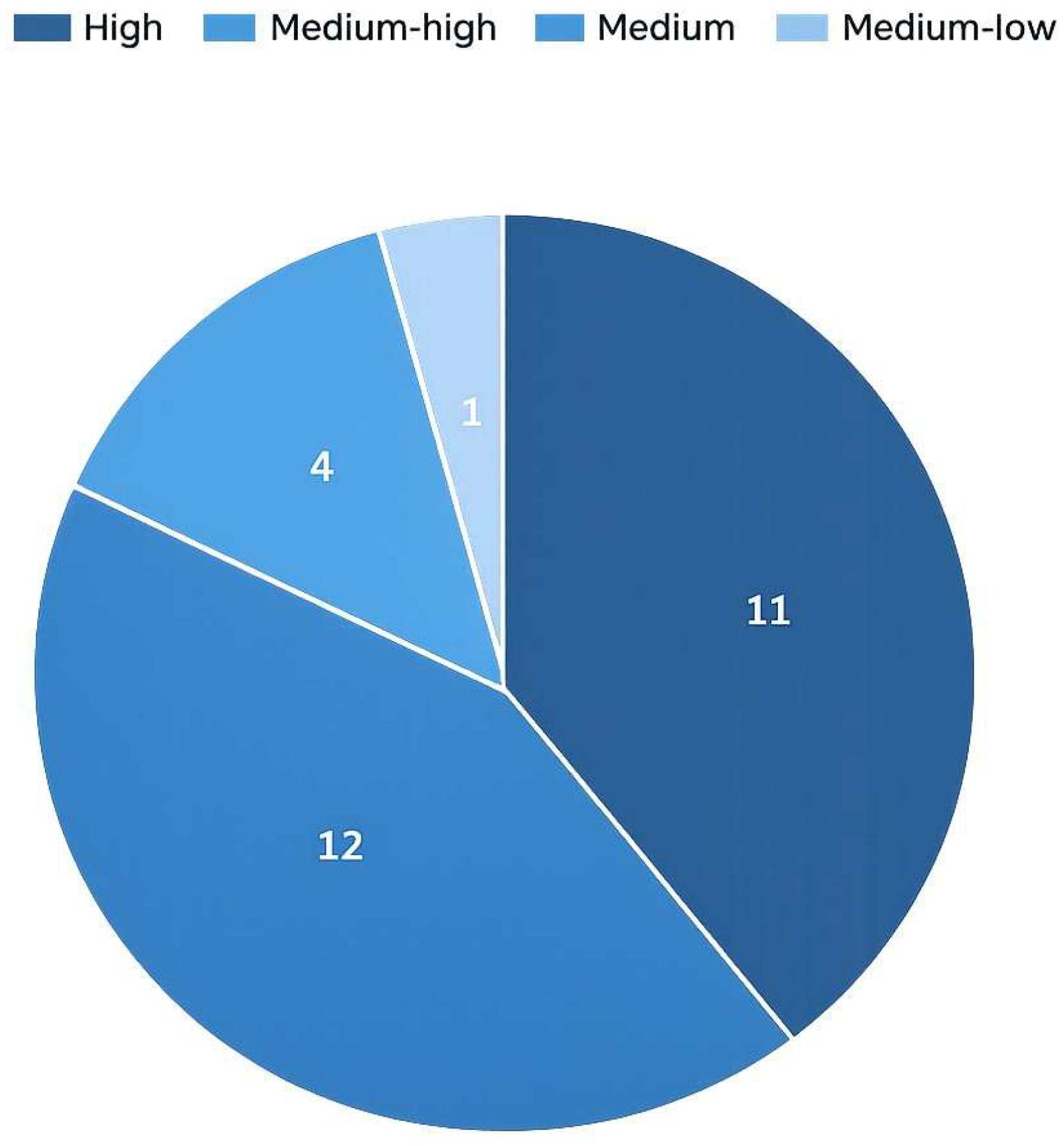
The questions then turned to the use of technology in the process of fact-checking information (
Figure 1). Respondents were first asked to rate on a descending scale the importance of technology in the verification of information. In total, 11 respondents indicated that it was very important, and 12 indicated that it was quite important. Four investigative journalists indicated that technological tools are of average importance, and one considered them to be of little importance. It should be noted that the option “no importance” is not reported because it was not chosen by any of the participants in the survey. These results suggest that while technology is broadly valued, it is perceived as complementary rather than decisive. In other words, investigative journalists appear to integrate technological tools into verification processes without displacing traditional methods, indicating a pragmatic, layered approach to fact-checking rather than a wholesale digital turn.
Next, respondents were asked to list the technological tools they use to verify the information they research. Despite the positive recognition of the importance of technology in the process of data verification in the survey, 13 respondents acknowledged that they did not use technological tools to verify the authenticity of the data, and respondent 26 argued that: “I do not use them because I do not trust them at all.” This distrust highlights a persistent tension between technological innovation and journalistic habitus: while tools exist that could enhance verification, skepticism toward their reliability prevents their widespread adoption. Such hesitation may stem from generational differences, professional socialization, or fears of overreliance on technologies that journalists do not fully control.
In contrast, 15 respondents stated they use technology to verify the authenticity of information. In addition to databases, they acknowledge using applications that allow them to confirm data, from reverse lookup to the location of a street on a map, or the position of the sun at a particular time of day. They also reported using basic Open-Source Intelligence (OSINT), as well as search engines and messaging applications that speed up contact with sources; software for detecting modifications or making edits to photographic images; and information obtained from metadata. The specific names mentioned were Wayback Machine, Google Lens, Yandex, Google Fact Check, Reverse Image Search, Our World in Data, TinEye, Google Maps, and Archive, amongst others.
When asking investigative journalists if they consider artificial intelligence (AI) to encourage the creation of hoaxes and disinformation, 24 answered yes, 4 answered sometimes, and 0 respondents answered negatively. This overwhelming consensus underscores the perception that AI has a disruptive capacity to automate and scale deception, thereby intensifying the epistemic challenges journalism already faces.
The next step in this study was to ask how AI specifically affects news verification. The answers reveal that AI triggers a complex and ambivalent debate rather than a simple division of attitudes. Drawing inspiration from
Eco’s (
1984) essay on the “apocalyptic and integrated” responses to technology, we organized the findings into three broad orientations: those who emphasize risks (“apocalyptic tendency”), those who highlight opportunities (“integrated tendency”), and those who adopt a cautious, exploratory stance (“explorers”). It should be noted, however, that these categories are not absolute; respondents frequently articulated nuanced positions that combined recognition of both benefits and limitations.
Although 24 respondents previously acknowledged that AI facilitates the creation of hoaxes, when asked directly about its impact on news verification, only seven described AI as having a negative effect. Their concern is that AI allows the construction of alternative realities that are increasingly indistinguishable from the truth, requiring ever more sophisticated techniques for detection. They also point to the lack of specific regulation, which permits the production of falsehoods with a convincing appearance of authenticity, thus making it easier for audiences to be misled. We describe this orientation as “apocalyptic,” but it is important to stress that respondents did not wholly reject AI. Rather, they emphasize the seriousness of the challenge while acknowledging the structural and professional responses that are still needed.
Conversely, nine respondents adopted what we term the “integrated” position, noting that AI, if used properly, can be a valuable tool for verification. They stress its ability to process large amounts of information and quickly detect inconsistencies, particularly in visual material. Yet this confidence is tempered by caveats: these journalists underline that AI should support, not replace, human judgment, and that its effectiveness depends on responsible implementation.
Finally, a third orientation emerges among those we call “explorers.” This group neither rejects nor fully embraces AI but adopts a stance of cautious experimentation. They consider it too early to assess AI’s real utility, as expressed by respondent 28: “it is a great tool, but out of tune. As soon as it learns, it will help journalism.” This position treats AI as an unfinished and evolving technology (which correlates with other answers on this topic. Respondent 24, for instance, claims that most AI databases are not fully updated nowadays; this has uncertain consequences for journalism that must be tested over time. For respondent 21, the real danger lies in “websites that create news through AI picking up information from the Internet without any kind of supervision.”
Taken together, these findings suggest that professional perspectives of AI in journalism are not monolithic. Instead, they span a spectrum that blends fear, pragmatism, and cautious optimism. The labels “apocalyptic,” “integrated,” and “exploratory” are thus best understood not as rigid categories but as heuristic markers that help capture the nuanced ways in which journalists are negotiating the risks and opportunities of AI in the verification of news.
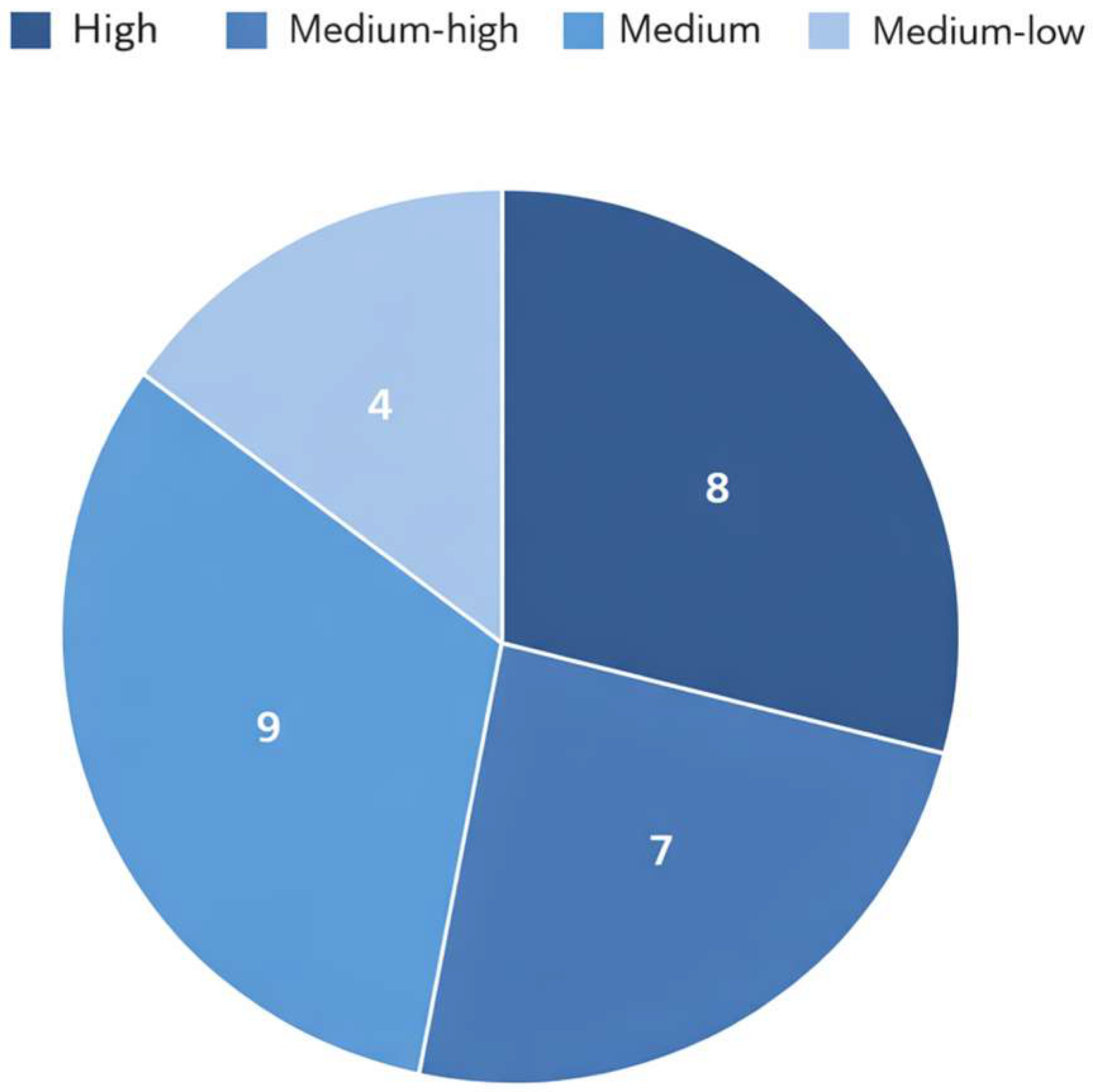
When asked to rate, on a decreasing scale, the importance of the existence of fact-checking platforms to determine the journalistic quality of media content, eight respondents indicated that they were very important, and seven indicated that they were quite important. The highest percentage of respondents (nine) considered fact-checking platforms to be of average importance, and four investigative journalists concluded that they were of little importance in determining the journalistic quality of media content. None of the respondents chose the option “no importance” (
Figure 2). This distribution reveals a lack of consensus about the institutionalization of verification through third-party platforms. While many acknowledge their value, others appear reluctant to outsource journalistic authority to external organizations, reflecting deeper debates about professional autonomy, accountability, and the boundaries of journalism in the age of fact-checking.
The last question in the third block of the questionnaire asked whether the main function of journalism is fact-checking, as well as what distinguishes investigative journalists from fact-checking platforms. Two respondents left the answer blank or indicated that they did not know what to answer. A total of 17 investigative journalists answered that the object of their investigations is different; investigative journalists generate news and unveil new information, while fact-checking platforms review the veracity of previously disclosed information or messages. In respondent 27’s view, “Investigative journalists do not focus on fact-checking, but on exercising social control of those in power.” Respondent 5 added that “fact-checkers act a posteriori: they are reactive by nature; investigative journalism happens at an earlier stage: it produces information from complex facts. Internal verification is part of the internal process of investigative journalism within capable media.”
One respondent believed that fact-checking platforms and investigative journalists complement each other well, and seven percent indicated that fact-checkers focus their activity on verifying non-media information, which mainly comes from social networks.
The percentage of respondents who did not have a positive view of fact-checking platforms rose to six, with some even stating that “they are not necessary” (respondent 9). In addition to pointing out that such platforms make mistakes, the main argument they put forward is that verification platforms can be considered biased and unobjective; as respondent 15 points out: “Journalism has a social responsibility and these platforms have political or group interests.”
Taken together, these results show that investigative journalists tend to draw a clear line between their work and that of fact-checking platforms, valuing their own proactive, generative role over the reactive verification functions of external actors. The fact that more than one-fifth of respondents openly distrust fact-checking platforms reveals a professional anxiety about ceding epistemic authority to organizations perceived as politically partial. At the same time, the small minority who see complementarity suggests an opening for collaboration, but only under conditions that safeguard journalism’s autonomy and reinforce its distinctive social responsibility. This ambivalence illustrates how fact-checking is simultaneously recognized as necessary in the disinformation environment and resisted as a potential threat to journalistic legitimacy.
4. Discussion and Conclusions
The results obtained in this research are essential to understand the challenges inherent in the practice of investigative journalism in connection with the context of growing disinformation. It allows the identification of the channels, formats, and topics that most concern investigative journalists in this context to shed light, from this specialized area, on the complexity of information verification and the role played by technology, specifically artificial intelligence, in this process.
Regarding the nature of investigative journalism, its connection with the current media scenario, and the challenges caused by disinformation, the respondents collectively presented investigative journalism as a fundamental tool to combat the fabrication of hoaxes, as its mission is to unveil hidden information of public interest. The evident consensus of all respondents concerning the nature of investigative journalism is that it is an essential pillar of democracy, crucial for the scrutiny of power and the promotion of an informed society. This vision resonates with classical approaches that link journalism with democratic oversight (
Kovach & Rosenstiel, 2007;
Schudson, 2008), highlighting that investigative journalism is not merely a professional practice but a civic necessity. The attributes of rigor, depth, commitment to truth, and fact-checking are mentioned as essential components of this journalistic praxis; these values connect the very definition and concept of this specialization with the battle against disinformation.
At the same time, this close relationship of opposites presents disinformation as a serious threat to investigative journalism. Not only does disinformation hinder the practice of journalism, given the need for greater diligence and rigor in the verification of events, it also increases external pressures—such as public distrust, doubts about the independence of a professional practice, and economic sustainability—which may further compromise its integrity. These perceptions align with discussions on the fragility of journalistic independence under political and market pressures (
Hanitzsch et al., 2019;
Nielsen, 2017). Censorship, political bias, and economic constraints are perceived as significant obstacles that require strategic attention to preserve the independence and viability of investigative journalism.
In the face of these challenges, the respondents’ perspectives were two-fold. First, responses focused on the evolution and adaptation of investigative journalism into new formats, seeking greater general accessibility and impact on younger audiences. In doing so, traditional methods must be complemented with innovative tools and platforms that are aligned with current preferences for information consumption. A second perspective expresses the need to be more rigorous in the training of journalists and to foster the ability of citizens to discern between true and false news. This emphasis on media literacy echoes the work of
Guess et al. (
2020), who stressed the role that citizens’ critical capacities play in mitigating the spread of falsehoods. Due to the proliferation of audiovisual material in digital environments, the respondents point out that it is in these formats where media literacy efforts should focus.
In terms of channels, topics, and formats, the perception of messaging platforms and social media as the main instruments for the circulation of false information, especially on political and health topics, stands out. In contrast, traditional media are perceived as reliable and controllable. This raises ambivalence in the bulk of respondents’ answers: while investigative journalists refer to the need to innovate media in such channels to reach newer, younger audiences, they also see digital platforms as a place of disinformation dissemination. This perception connects with the findings and conclusions of the study by
Vosoughi et al. (
2018). Such ambivalence reflects the paradox underlined by
Chadwick et al. (
2018) in their concept of the “hybrid media system,” where innovation and manipulation coexist within the same infrastructures. Despite the potential of these platforms to innovate, these applications also present significant challenges in the fight against disinformation.
In terms of the verification processes and tools suggested by respondents, the imperative nature of cross-checking information to maintain journalistic credibility is emphasized across the board. It is also necessary to deploy a balanced approach combining direct human contact and analysis of official documentation. As for the role played by technology in this process, the majority recognize its relevance; at the same time, a significant percentage express reluctance or outright rejection.
This again highlights the tension between recognizing the potential of technology and concerns about its reliability and accuracy: a duality intensified by perceptions of artificial intelligence. This aligns with the case studies on AI and deep fakes by
Chesney and Citron (
2019). In line with
Diakopoulos (
2019), who discusses the promises and pitfalls of algorithmic journalism, our respondents revealed that AI is simultaneously perceived as a tool of empowerment and a potential source of epistemic crisis. There are those who see it as a threat to the authenticity of information and those who see it as an emerging technology and a useful tool for verification. This duality suggests the need for ongoing debate regarding the ethical and effective use of artificial intelligence in journalism, especially in a context where its ability to generate and verify information is rapidly evolving.
In the case of fact-checking platforms, reticence is clear: although such platforms are valued for their contribution to verification, they cannot replace the depth and context provided by investigative journalism. In addition, respondents stress the need to distinguish between investigative journalism and fact-checking. They form two complementary but distinct facets of the fight against disinformation, with fact-checking being a reactive practice and investigative journalism a proactive one—not only verifying facts but uncovering new information. This differentiation corresponds with the analysis of
Graves (
2016), who underline the institutionalization of fact-checking as a separate professional practice with its own logics and limitations. This distinction was endorsed by the benchmark study by
Brandtzaeg and Følstad (
2017).
Finally, responses on the future challenges of investigative journalism in the face of disinformation reveal a strong concern for the precariousness of the journalistic profession and its impact on the capacity of journalists. There is also a need to restore, through transparent and ethical practices, the credibility of the media in the face of a crisis of confidence that is both a cause and an effect of disinformation. This echoes the reflections of
McChesney and Nichols (
2010) on the structural crisis of journalism and the urgent need to design sustainable models capable of supporting investigative work in the digital age.
In conclusion, the main contribution of this research is an updated and empirically based understanding of the specific ways in which investigative journalists in Spain confront disinformation. The main channels, formats, and topics of disinformation are identified, as well as the professional routines and perceptions of journalists regarding the role of technology and artificial intelligence in their practice. The findings contribute not only to distinguishing investigative journalism from fact-checking practices but also to underlining its civic function as a pillar of democracy and an essential counterweight in the current information ecosystem. Our study is limited by its exploratory scope and the size of the sample. Future studies should add qualitative insights to broaden the perspectives of disinformation studied and inform further lines of inquiry. Such studies include comparative analyses with other countries, monitoring of the rapid evolution of generative AI and its implications for verification, and the development of strategies to strengthen both media literacy and the sustainability of investigative journalism in digital contexts.