


Abstract
This study explores how digital media ecosystems shape collective visions of the future under conditions of rapid technological innovation and the growing influence of artificial intelligence (AI). Drawing on a large corpus of social media content comprising 50,036,592 tokens, the research examines institutional narratives and user-generated responses through a hybrid methodological framework. This framework combines information-wave detection, network analysis, semantic and associative modeling (TextAnalyst 2.32), and interpretation supported by a large language model (GPT-5). The methodological contribution of the study lies in the integration of network-based and semantic algorithms with AI-driven analytical tools for the examination of large-scale textual data. The findings indicate that media discourses about the future operate as key mechanisms through which societies interpret the environmental, social, and economic consequences of technological change. Institutional actors promote multiple future-oriented models that often conflict with one another at both discursive and practical levels. In contrast, user-generated content reflects widespread fear, skepticism, and distrust. Prominent themes include nostalgia for the past, anxiety about socio-economic and environmental consequences, and concerns related to expanding forms of digital control. The analysis also reveals divergent perspectives on urban development. Positive narratives emphasize ecological balance, a comfortable urban environment, thoughtfully designed mixed-use development, and solutions to transportation challenges. Negative narratives, by contrast, focus on over-densification, environmental degradation, and the erosion of privacy in technologically saturated urban spaces.
1. Introduction
In contemporary media environments, rapid technological and digital transformations affect both communication infrastructures and collective imaginaries of the future. In this study, future imaginaries are conceptualized as collectively shared representations of anticipated social and technological developments articulated and circulated through media discourse. For example, institutional actors often frame AI-driven innovation as a source of national progress and modernization, while user-generated discussions reveal anxieties related to surveillance, labor displacement, and social inequality. This contrast illustrates how the same technological phenomenon is interpreted differently across discursive levels. For instance, discussions about the future of cities in social media demonstrate how technological innovation is simultaneously associated with sustainable urban development and with dystopian scenarios such as overpopulation and digital surveillance.
Social media have become key arenas where institutional actors promote future imaginaries, while users express their concerns, skepticism, and emotional reactions to ongoing social and technological change. Online communication represents a key empirical site for examining the societal impacts of innovation.
Interest in the study of these representations emerged relatively recently—at the end of the twentieth century and the beginning of the twenty-first—together with the analysis of ideas about the future shared by different social groups. The starting point of these studies is the recognition that the actions of individuals and entire communities depend on their future imaginaries. The identification of social expectations becomes relevant in crisis management and when forming political strategies under conditions of uncertainty. The “image of the future” as a scientific concept is used in futures research aimed at studying collectively shared visions, attitudes toward the future, and readiness for change (Trommsdorff, 1983; Seginer, 2009; Inayatullah, 2012). Early systematic analyses of this aspect of futures research were conducted in the Netherlands (Aalders, 1939; Polak, 1955). Today, studies of the image of the future as a set of ideas and representations are most actively conducted in Finland at the Turku Institute (Rubin & Linturi, 2001; Rubin, 2013; Ahvenharju et al., 2018; Kaboli & Tapio, 2018). Similar research projects have recently been carried out in Spain (Tezanos et al., 1997; Bas, 2008; Guillo, 2013), Switzerland (Ahvenharju et al., 2020), and the United Kingdom (Angheloiu et al., 2020). In the United States, attention to the image of the future appears primarily within scenario-based approaches used to prepare for possible crisis situations in the short term (Boulding, 1956; Godet & Roubelat, 1996; Clark, 1999; Durance, 2010; Lombardo, 2011; Miller et al., 2018).
In this research, we proceed from the authors’ understanding of the image of the future as a phenomenon of collective consciousness—a mental model that represents the future as a coherent reality. The image of the future reflects people’s ideas about what their own lives and the lives of their descendants will be like. Various actors contribute to shaping such images, including national governments, scientific institutions, public leaders, and science-fiction writers. However, all these futuristic constructions, in our view, depend on the broader societal mood, namely on people’s expectations regarding their personal future and the prospects of society as a whole.
The overview of various approaches to studying future imaginaries demonstrates that one of the major gaps in this field is the absence of a well-developed methodology for analyzing collective future imaginaries. We argue that this is partly because attitudes toward the future are not always rational; they are often shaped by emotions, false stimuli, exaggerated fears, and unrealized desires. As a result, this dimension is difficult to identify through direct sociological surveys. An additional methodological challenge concerns the relationship between future-oriented ideas and their visual representations, which is less developed than the analysis of verbal forms.
New opportunities for studying collective representations have emerged with the availability of large volumes of text and visual content generated by users online. Discussions of socially significant topics in networked communication can be used to explore collective imaginaries, including future-oriented ones. The use of social media data in research requires accounting for the specifics of online communication and selecting appropriate methods. The networked nature of user interactions enables the application of network analysis, including methods specifically developed for social network research. Network analysis makes it possible to map user interactions and virtual communities, distinguish artificially generated information waves from natural user reactions, and identify semantic clusters and implicit or explicit opinions expressed by different actors (Gradoselskaya & Raskhodchikov, 2020; Raskhodchikov & Pilgun, 2023; Kharlamov et al., 2025).
Recent studies emphasize that AI is reshaping news production, distribution, and public communication (Biswal & Kulkarni, 2024; Nielsen, 2024; Hillman, 2025; Floridi, 2025), making the analysis of AI-mediated discourses about the future particularly timely.
- Aim of the Study
The study aims to examine how digital media ecosystems—particularly social networks—shape collective imaginaries of the future in the context of rapid technological innovation and the growing influence of AI. Specifically, it investigates how institutional actors and users construct, circulate, and contest future imaginaries, and how AI-based analytical tools can enhance the study of these processes.
- Contribution
This study examines how technological innovation and artificial intelligence (AI) are articulated in future-oriented public discourse within digital media environments. Drawing on large-scale social media data, it compares institutional narratives and user-generated reactions to identify key patterns and tensions in contemporary future imaginaries. Methodologically, the article applies an AI-assisted analytical framework combining semantic network analysis, information-wave detection, and large language model–supported interpretation to explore discursive and emotional dynamics at scale.
- Gap in the Existing Literature
Despite growing scholarly interest in the societal impacts of AI and media innovation, several important gaps remain in the existing literature. First, much of the current research focuses on patterns of technological adoption or on public attitudes toward AI, while paying limited attention to how societies collectively imagine AI-shaped futures and how such imaginaries circulate and stabilize within media discourse. As a result, the symbolic and cultural dimensions of future-oriented communication remain underexplored.
Second, existing studies tend to examine either institutional communication or public opinion in isolation.
Third, despite significant advances in AI technologies and neural network text analysis, they are rarely combined with network methods for analyzing and interpreting large volumes of social media data.
This study contributes to filling existing gaps in the current scientific paradigm and to developing a more complete understanding of how ideas about the future are generated and function in the media space.
- Research Questions (RQs)
The study is guided by the following research questions:
RQ1.
How do media innovation and AI technologies influence the production, circulation, and interpretation of future imaginaries in digital environments?
RQ2.
How are different types of lexical units (stylistically marked, historically layered, borrowed, and phraseological) mobilized in texts, and how do semantic, cultural, and symbolic elements structure these lexical configurations?
RQ3.
How do users respond to institutional future scenarios, and what emotions, fears, and expectations dominate user-generated discourse?
RQ4.
How do institutional and normative lexicographic representations of words align with or diverge from their contextual, discursive, and lived meanings in actual language use?
RQ5.
How can LLMs and neural-network semantic analysis enhance the identification of information waves, semantic clusters, and implicit interpretive structures?
RQ6.
How do positive and negative semantic images (e.g., city, time, love, technology) emerge through lexical and phraseological choices, and how do these reflect broader socio-cultural orientations toward change and value formation?
Because the object of analysis includes communication among various actors (media, bloggers, governmental organizations, commercial companies, and users), it becomes necessary to combine linguistic, computational, and discourse-analytic methods. Social media texts are produced in extremely large volumes—hundreds of thousands or even millions of posts and comments. Therefore, studies of social networks often require the use of specialized computational tools and LLMs capable of processing and analyzing virtually unlimited amounts of content.
2. Materials and Methods
2.1. Materials
The dataset used in this study consisted of publicly available user-generated content and associated digital traces collected from open social media platforms. Data collection was performed using the BrandAnalytics (Moscow, RF) monitoring system (https://brandanalytics.ru/ accessed on 10 November 2025). The dataset contains 50,036,592 tokens. After preprocessing and the removal of irrelevant content for the analysis of information waves, the final dataset consisted of 41,307 messages.
The material was collected in November 2023 and January 2024 and included posts from the Russian-language segment of the Internet. The sources of the data were social networks, messengers, video-hosting platforms, blogs, and microblogs.
Ethical Considerations and Data Protection
This study did not involve human participants, human material, or the collection of personal or sensitive data as defined by the Declaration of Helsinki. The analysis was conducted exclusively on publicly available user-generated content from open social media platforms.
All data were collected in aggregated and anonymized form using the BrandAnalytics monitoring system. The researchers did not have access to private accounts, closed groups, personal messages, or any information allowing the identification of individual users. Usernames, profile metadata, and any potentially identifiable information were excluded at the data collection and preprocessing stages.
According to international research ethics standards and relevant regulations (including the Declaration of Helsinki, point 23), studies based on the analysis of publicly accessible data that do not involve direct interaction with individuals or the processing of personal data do not require approval from an Institutional Review Board or Ethics Committee.
The study complies with the General Data Protection Regulation (GDPR, EU Regulation 2016/679) principles of data minimization, purpose limitation, and anonymization. All analyses were conducted for academic research purposes only.
The research protocol complied with institutional standards for secondary analysis of open digital data.
2.2. Methods
2.2.1. Text Analysis Procedures
Generative AI tools were used for data collection, analysis, and interpretation in this study.
The analysis and interpretation of text data and digital traces were performed using a GPT-5–class large language model developed by OpenAI (San Francisco, CA, USA, accessed on 10 November 2025), in combination with the neural-network-based semantic analysis system TextAnalyst 2.32. (Moscow, RF, accessed on 10 November 2025). Together, these tools enabled large-scale discourse analysis while maintaining interpretive depth and analytical transparency.
GPT-5 served as an advanced natural language processing tool supporting semantic interpretation, meaning clustering, and the detection of implicit structures in user-generated texts.
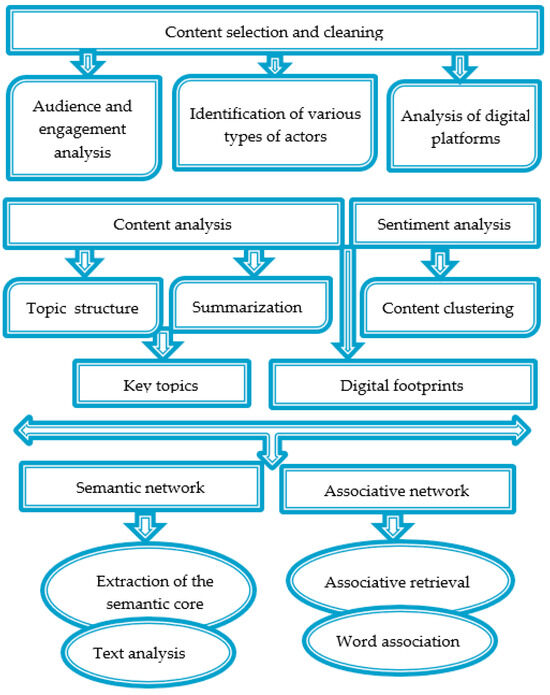
To ensure methodological triangulation, the neural-network technology TextAnalyst 2.32 was additionally employed. This system enables automatic identification of semantic cores and latent associations within large volumes of user-generated content. For this purpose, we used an analytical framework that combined semantic parsing of publication texts with word-association analysis, allowing the identification of both explicit (externally expressed) and implicit (hidden) meanings and motives in users’ communication. The research procedures and study design are described in detail in Kharlamov et al. (2025) and Pilgun (2025).
The methodological approach is based on semantic processing that includes constructing semantic networks, extracting semantic kernels, and interpreting the resulting structures. Neural-network-based semantic extraction made it possible to identify the dominant themes and meaning clusters present in the corpus.
TextAnalyst 2.32 was used as a tool for automatic semantic processing and knowledge-base construction from large corpora of natural-language texts. The system identifies key concepts (words and multiword expressions), evaluates their relative importance, and represents their relationships in the form of a semantic network.
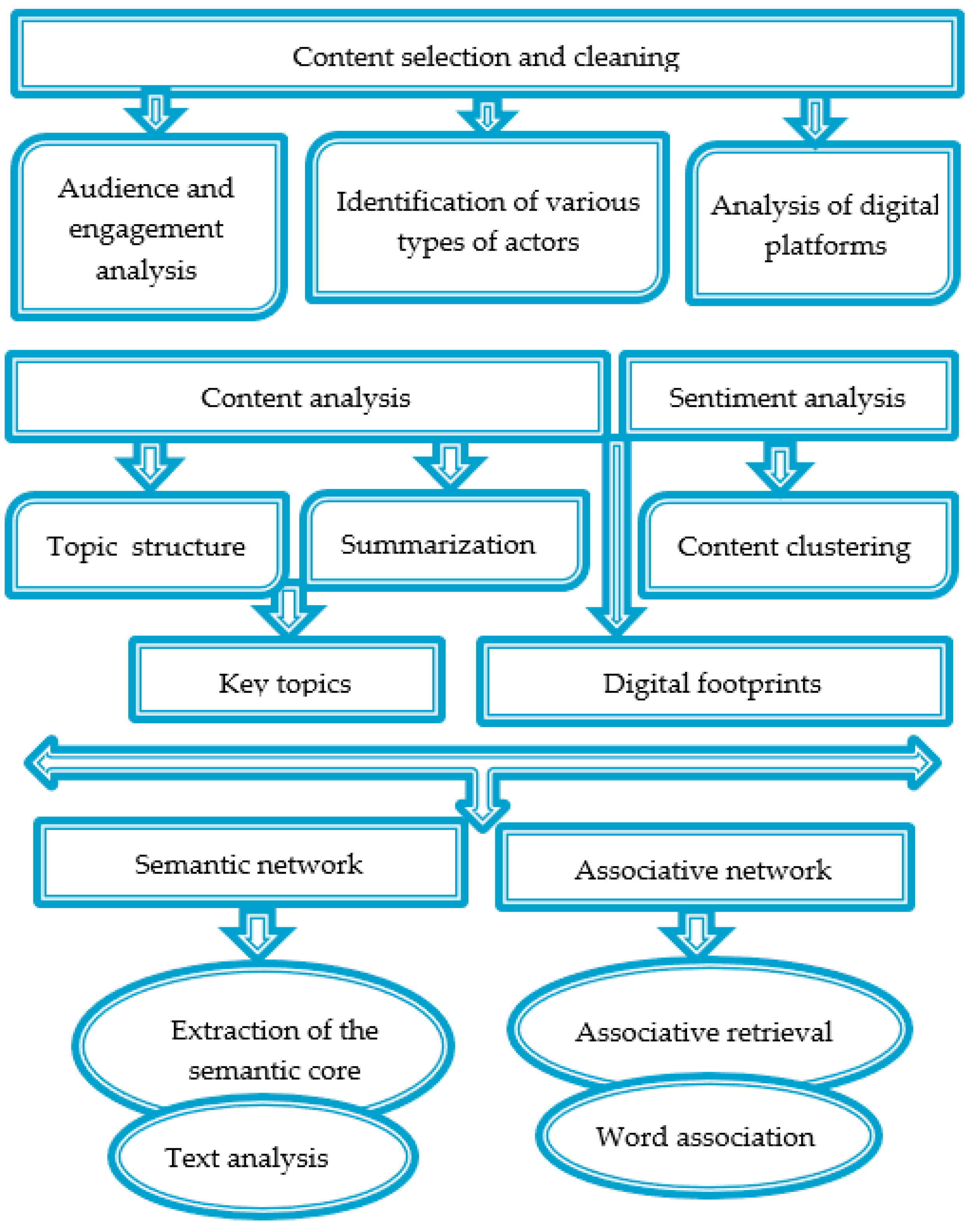
The study design is presented in Figure 1.
Figure 1.
The research design.
The use of neural-network-based semantic analysis itself reflects the integration of AI technologies into media research, mirroring the broader societal incorporation of AI into communicative and cognitive practices.
2.2.2. Information Wave Analysis
In the context of this study, we define information waves as the strategically coordinated dissemination of information to target groups in order to achieve specific social effects (Gradoselskaya & Volgin, 2019). Operationally, an information wave is understood as a temporally distributed series of publications addressing a single subtopic within a broader information event and exhibiting a high degree of similarity in linguistic markers.
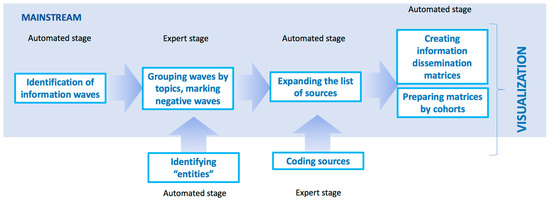
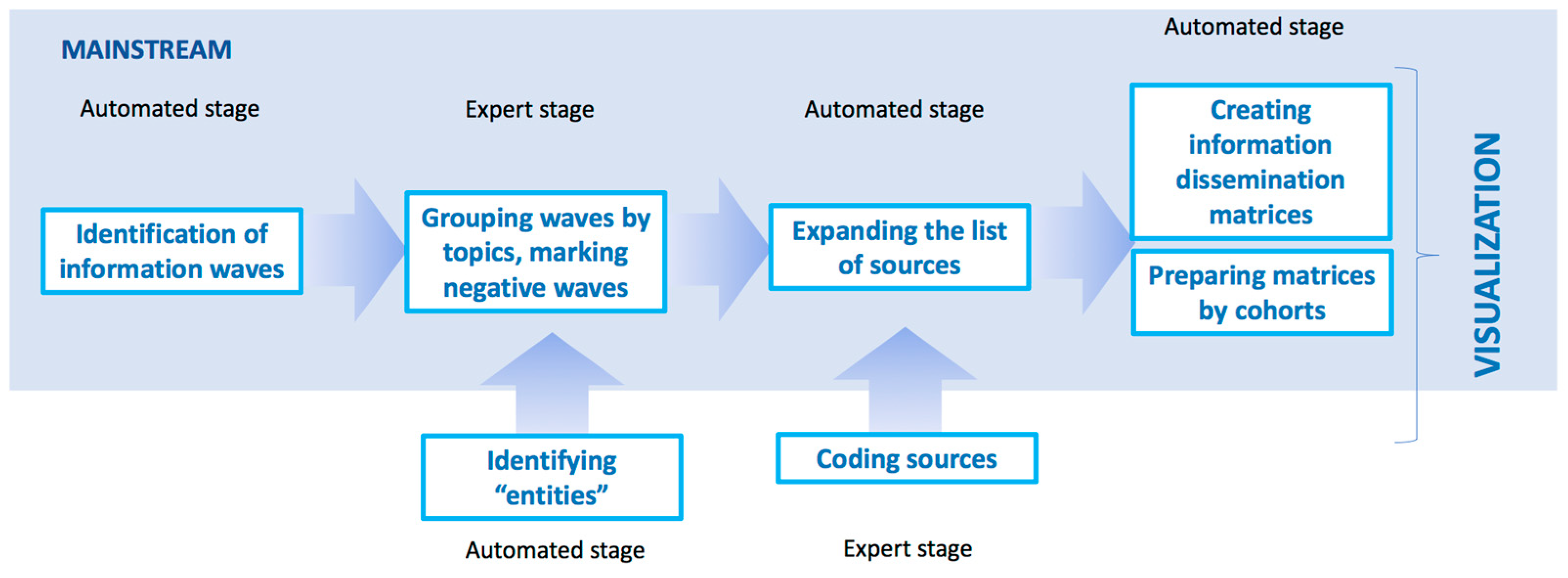
In this study, information-wave analysis was conducted as a multi-stage analytical procedure designed to identify coordinated patterns of information dissemination in the media environment (Figure 2). First, search queries relevant to the research topic were formulated to capture future-oriented and technology-related discourse. Using these queries, messages were retrieved from open Internet sources over a defined temporal period with the BrandAnalytics media-monitoring system. The collected texts were then exported and compiled into a unified database for further processing.
Figure 2.
Sequence of analytical procedures for identifying information waves in the media environment.
At the next stage, information waves were identified using a software-based clustering algorithm that groups semantically similar messages according to textual similarity and temporal proximity, assigning them to distinct waves. Finally, the detected information waves were grouped into higher-order thematic clusters through expert coding, which enabled the interpretation of their dominant narratives, actor composition, and communicative functions.
As a result, a large corpus of text messages acquires an ordered structure comparable to clustering algorithms in network analysis, where previously disconnected messages form semantically coherent clusters. Messages that do not belong to any identified information wave are marked as natural user reactions.
This method makes it possible to distinguish between messages initiated by various collective actors (mass media, government agencies, corporations, etc.) and messages produced by individual users.
Many of the identified information waves were directly linked to technological expectations, including narratives of digital transformation, AI-driven development, and technologically enhanced national progress.
2.2.3. Descriptive Analysis
Descriptive approaches to identifying individual and collective future imaginaries are most commonly associated with questionnaire-based procedures for collecting and processing respondents’ representations of the future. The general aim of this approach is to gather data on how different groups conceptualize the future, to identify recurring patterns in these representations, and to synthesize them into one or more generalized models. Specific studies vary in questionnaire format, sample size, and data-processing techniques.
Survey instruments used in statistical approaches to future-oriented studies range from fully structured questionnaires with predefined response options to semi-structured and open-ended formats. The most formalized instruments include closed-ended items with Likert-type scales or categorical choices. Less formalized tools include short written essays and narrative elicitation. In the study by Mario Guillo (Guillo, 2013), the first stage consisted of in-person seminars designed to stimulate participants’ interest in the future, followed by the writing of a brief essay (up to 150 words) envisioning life in 2030 in one of several domains (Economy, Culture, Politics, Environment, Security). A narrative, imagination-based technique was also used by Kaboli and Tapio (2018), whose participants were asked to freely describe a future life situation in which they imagined themselves.
The generalization of such data depends on the aims of the researchers. The most challenging task is the identification of sufficiently universal future images shared across large respondent groups. This typically requires qualitative content analysis in one form or another. For instance, Angheloiu et al. (2020) identified four generalized future images—“Transform,” “Discipline,” “Collapse,” and “Grow”—while Kaboli and Tapio employed Causal Layered Analysis to derive four alternative future images (“Living with the Chill,” “Fear and Hope,” “Life as a Chance for Dedication,” and “Imagine…!”).
Descriptive approaches also include projective methods, both verbal and non-verbal, such as sentence completion, free association, situational modeling, drawing, or collage-making. In the study by Ahvenharju et al. (2020), projective techniques were used to assess key parameters of future orientation, including “time perspective,” “trust,” “openness to alternatives,” “perceptual system,” and “care for others.” Van Dorsser et al. (2018) investigated the relationship between future-making and policy analysis; using Walker’s classification of uncertainty, they showed how the identification of “a clear future,” “alternative futures,” “multiple plausible futures,” or “an unknown future” can support optimal policy development. In many such studies, respondents’ optimism/pessimism and active/passive orientations toward the future are assessed separately, following the framework proposed by Polak (1973).
All descriptions were reviewed for terminological consistency and linguistic clarity to ensure accurate representation of the analytical procedures.
3. Results
3.1. Semantic Emphases and Key Themes
3.1.1. The Role of Media in Technological Innovation (RQ1)
Addressing RQ1, the study analyzes and interprets future-oriented discourse to identify several semantic emphases and key themes that different actors attribute to the media in the context of technological innovation and imaginaries of the future. Together, these roles constitute a multilayered semantic field in which institutional, user-generated, cultural, political, and esoteric discourses intersect.
- Media as a Constructor of Future Imaginaries
The media actively participate in producing visual, symbolic, and narrative models of the future—from technological to utopian and esoteric ones. Users highlight the gap between media-generated utopias and real experiences of interacting with technological projects, which becomes evident in critiques of urban innovation initiatives and AI-generated visualizations.
In parallel, esoteric and mystical interpretations of the future circulate in the media space, drawing on concepts such as “thought-forms,” annual energy cycles, and collective “thought-creation.” The media thus function as a site where futurist scenarios are produced, allowing modernizing, artistic, and mystical models of the future to coexist.
- Media as a Communicator of Innovation
Institutional actors (architects, urban planners, representatives of city-development projects) understand the media as a mechanism for disseminating knowledge about technological solutions and as a platform for public dialogue. Media formats—podcasts, public discussions, educational initiatives—are viewed as tools for expanding civic participation in innovation processes and for facilitating international exchange of cultural and educational practices.
In user-generated data, this line is complemented by therapeutic practices of future planning, where the media serve as instruments of self-organization and personal goal-setting.
- Media as an Amplifier of Cultural and Social Risks
Religious figures, cultural critics, and ordinary users express concern about the erosion of value structures, the rise in deviant behavior, the loss of moral guidelines, and growing psychological vulnerability in the context of technological change. Political and social commentators link future risks to demographic challenges, geopolitical tensions, and global competition.
Within these discourses, the media are perceived as channels that amplify social anxiety, where technological, economic, cultural, and mystified threats overlap and intensify through digital mechanisms of information dissemination.
- Media as a Tool for Strategic Communications in the AI Era
In political communication, new media formats are actively used to shape the collective image of the future state, foster a positive public perception of political decisions, and mobilize citizens. Media innovations serve as a tool for social governance in the media space when discussing important social processes, leadership, issues of state development, national strategic goals, and other issues related to the country’s future.
Public, religious, and cultural institutions use media to address various challenges, particularly to strengthen the spiritual and moral foundations of society.
In business communications, new media have become an indispensable tool for building an organization’s image, motivating employees and clients, and working with public relations to ensure stable future development.
3.1.2. The Potential of AI to Transform the Social Structure of Society (RQ2)
Data analysis revealed that users perceive AI as a fundamental technological force capable of altering social structures.
Across all content types, actors view AI technologies as a factor rapidly changing the foundations of the existing economy and labor market. The introduction of AI, cloud computing, and quantum technologies into business processes requires new management solutions, while traditional organizational forms are perceived as outdated and less effective.
AI technologies are positioned as a driver of global economic restructuring, which will lead to a restructuring of labor markets, the displacement of low-skilled workers, a decrease in demand for humanities degrees, and an increased demand for people with technological skills and a broad fundamental background.
When discussing the role of AI technologies in changing the social structure of society, many fears arise related to the degradation of useful skills, disinformation, moral hazards, and loss of privacy. Some actors fear the erosion of specialist competencies due to the widespread adoption of AI and the degradation of intellectual activity (see, for example, the claim that “GPT 5.2. degrades the quality of everything it touches”).
AI is also associated with the rise in deepfakes, synthetic content indistinguishable from natural content, which increases the amount of manipulation and misinformation in the media.
Negative attitudes are also fueled by the “destruction of moral mechanisms” and the introduction of mobile technologies into traditional communication models, in which digital algorithms become an extension of the user’s “external brain.”
- The Role of AI Technologies in the Modernization of Medicine and Science
In the positive cluster, AI tools are perceived as the central driver of technological progress. Within medicine, AI is described as enhancing diagnostic accuracy, accelerating treatment processes, enabling new forms of data analysis, and contributing to more personalized healthcare.
Machine-learning algorithms are often framed as surpassing human specialists in specific diagnostic tasks (e.g., ultrasound or X-ray analysis), thereby shaping a new model of medical management and research.
Nevertheless, the analysis also highlights a range of challenges, such as dependence on large datasets, issues of privacy and confidentiality, and the need for training a new generation of specialists.
- Cultural and Spiritual Interpretations of AI: From Mystification to Symbolic Integration
In religious and philosophical discourses, AI is sometimes presented as an extension of human wisdom—“a great abacus”—embedded in a broader civilizational trajectory. Rather than a threat, AI is depicted as a tool enabling humanity’s transition to a new developmental stage, even as a means for accomplishing large-scale civilizational projects such as “reaching the stars.”
At the same time, myths about AI “taking control” are critically challenged. AI is portrayed as fundamentally dependent on human knowledge, constrained by the information provided to it, and incapable of replacing spiritual or cognitive human faculties such as dreaming and interpreting existential meaning.
- AI as an Element of Future-Oriented Governance
AI is also described as part of emerging systems of behavioral management, political decision-making, and the social architecture of the future. A technological order grounded in AI is seen as requiring new symbolic languages, new models of communication, and the adaptation of governance structures to digital realities.
3.1.3. Social and Economic Impacts (RQ3)
When discussing the social and economic consequences of AI-driven technological change, issues related to labor market transformation and shifts in employment structures come to the fore. Within the negative cluster, artificial intelligence and automation are primarily described as forces that redistribute roles in the labor market and generate structural change. These processes are associated with a growing demand for developers, testers, engineers, and other highly qualified IT specialists, alongside a declining relevance of occupations based on routine tasks. In user discourse, particular vulnerability is attributed to humanities-oriented professions—such as legal services, office work, and copywriting—which are perceived as increasingly displaced by the spread of AI tools, including systems such as ChatGPT 5.2. In addition, users emphasize the rising precarity of so-called complementary professions characterized by a low entry threshold, which are seen as especially susceptible to automation.
At the same time, physical labor is often portrayed as less exposed to automation in the short term. User narratives suggest that investments in robotics do not always yield expected economic returns and that many tasks remain easier, more flexible, and less costly to perform with human involvement. This perspective reflects a pragmatic assessment of technological efficiency rather than unconditional technological optimism.
The negative corpus also frames AI as the foundation of a new technological order in which human capital becomes the central resource, while economic and technological power increasingly concentrates in the hands of a limited number of high-tech corporations. References to the dominance of a small group of global companies are accompanied by concerns about growing economic inequality and rising societal dependence on digital platforms. In this context, metaphorical interpretations—such as references to the “Age of Aquarius”—are used to describe a sharp increase in the value of cognitive and technical competencies, which in turn produces new forms of social stratification between those capable of working with AI and those who are excluded from these processes.
Beyond labor and inequality, AI is also depicted as a factor reshaping models of governance and social organization. Traditional frameworks of social management—tribal, industrial, or class-based—are frequently described as ineffective in a digital economy that requires flexible, networked, and algorithmic forms of coordination. Instead, user discourse points to the emergence of new types of social organization grounded in symbolic languages, cultural codes, and digital mechanisms that shape collective behavior. As a result, AI is increasingly perceived as part of the infrastructure of decision-making across multiple levels, from state policy to corporate management.
In contrast, the positive corpus places strong emphasis on the economic and social benefits of AI adoption, particularly in key sectors such as healthcare. AI technologies are described as tools that reduce the time and cost of medical services while increasing diagnostic accuracy and alleviating the workload of physicians, especially in areas such as radiology and ultrasound diagnostics. Positive assessments also highlight the optimization of pharmaceutical research and drug selection, as well as broader transformations in education, scientific research, and practices of self-development.
At the same time, positive narratives underscore the role of AI as a driver of social development, notably through increasing interest in science and technology among schoolchildren and students. However, these developments are accompanied by ambivalent evaluations. Users express concern about the inappropriate or excessive use of AI tools in educational contexts, pointing to the risk of undermining trust in knowledge and learning processes. This ambivalence indicates that social and economic expectations surrounding AI remain highly contested, combining hopes for efficiency and progress with anxieties about inequality, skill erosion, and the weakening of institutional trust.
3.1.4. Future Urban Imaginaries in Institutional and User Discourse (RQ4, RQ6)
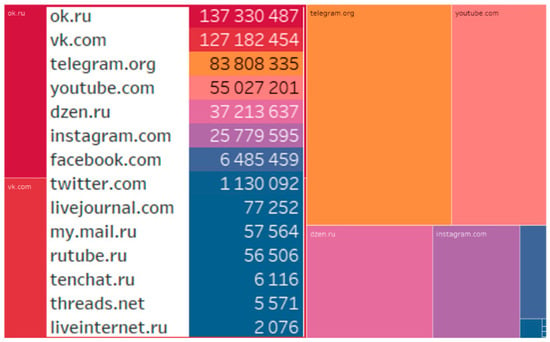
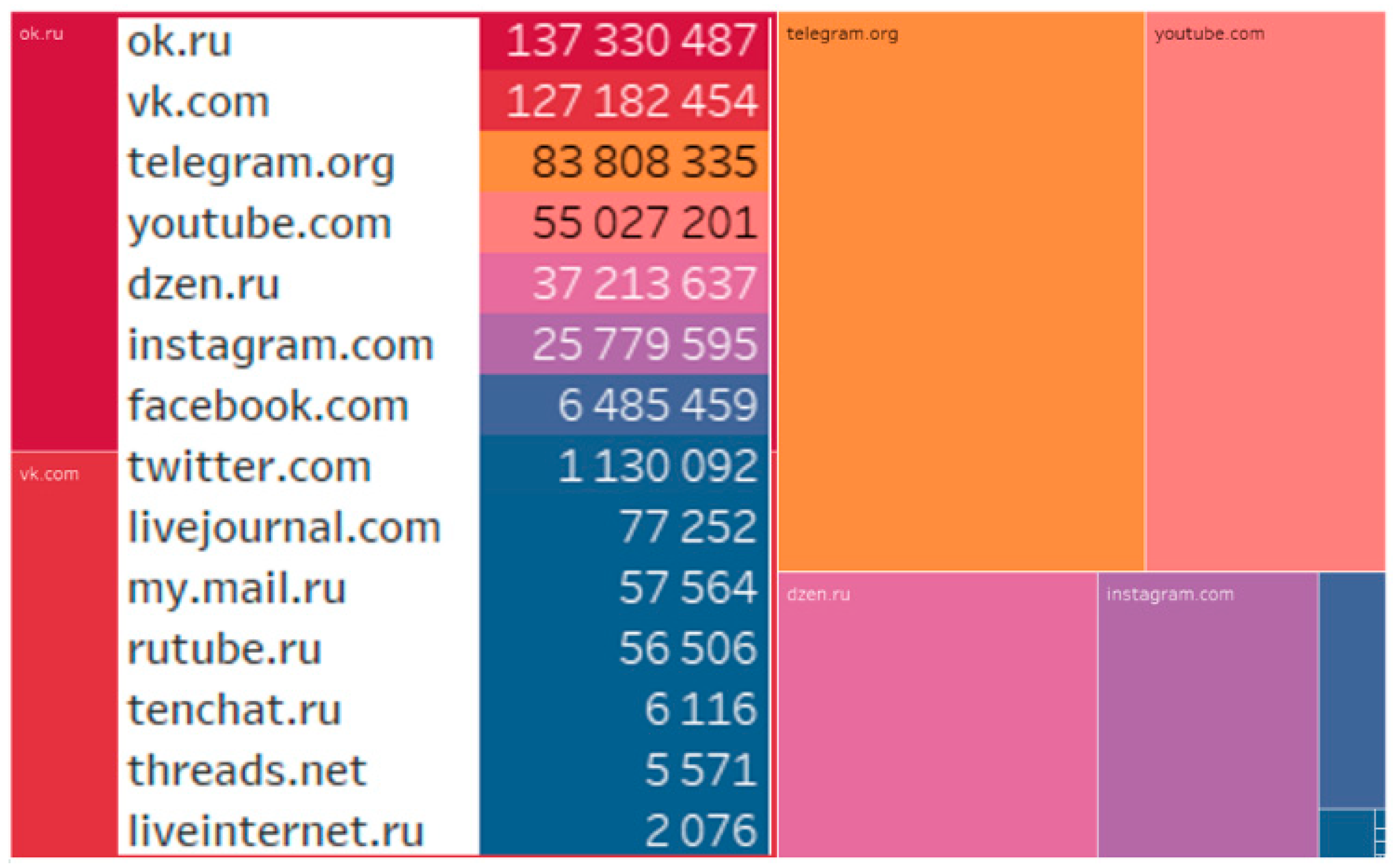
When discussing the future of cities, participants preferred social networks, video hosting sites, and instant messengers. The most active platforms for such discussions were the social networks Odnoklassniki and VKontakte, as well as the Telegram messenger (Figure 3).
Figure 3.
Digital platforms used for discussing future urban imaginaries in institutional and user-generated discourse.
An unexpected finding of the study was the leading position of Odnoklassniki, which may be explained by the demographic profile of its audience: the platform traditionally has a larger share of older users who have more time and motivation to engage in such discussions.
Actors most often expressed their views about the future in original posts; comment-based discussions were less active. Users also frequently reposted content that resonated with their own perspectives.
- Content Tonality Analysis
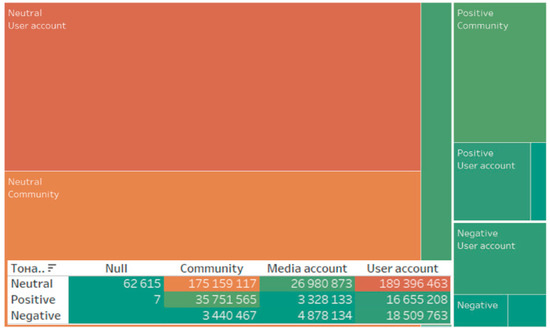
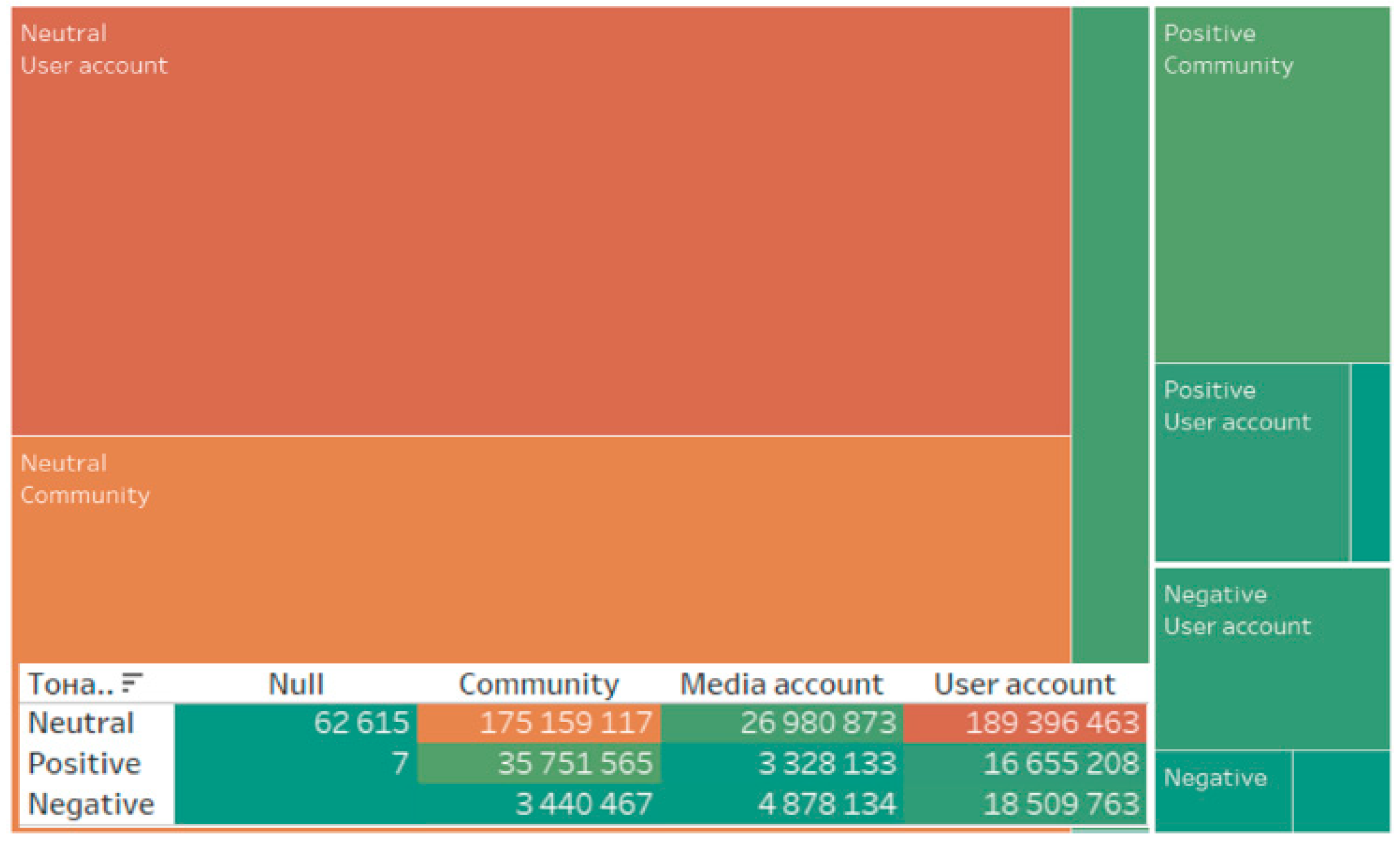
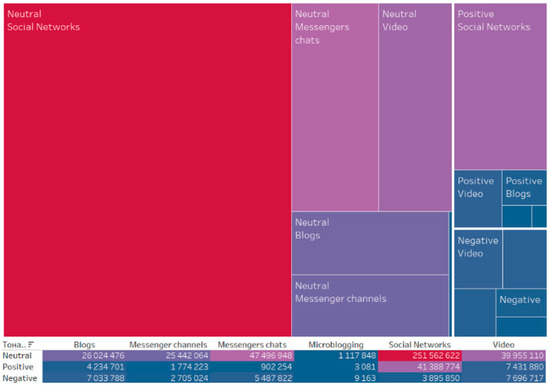
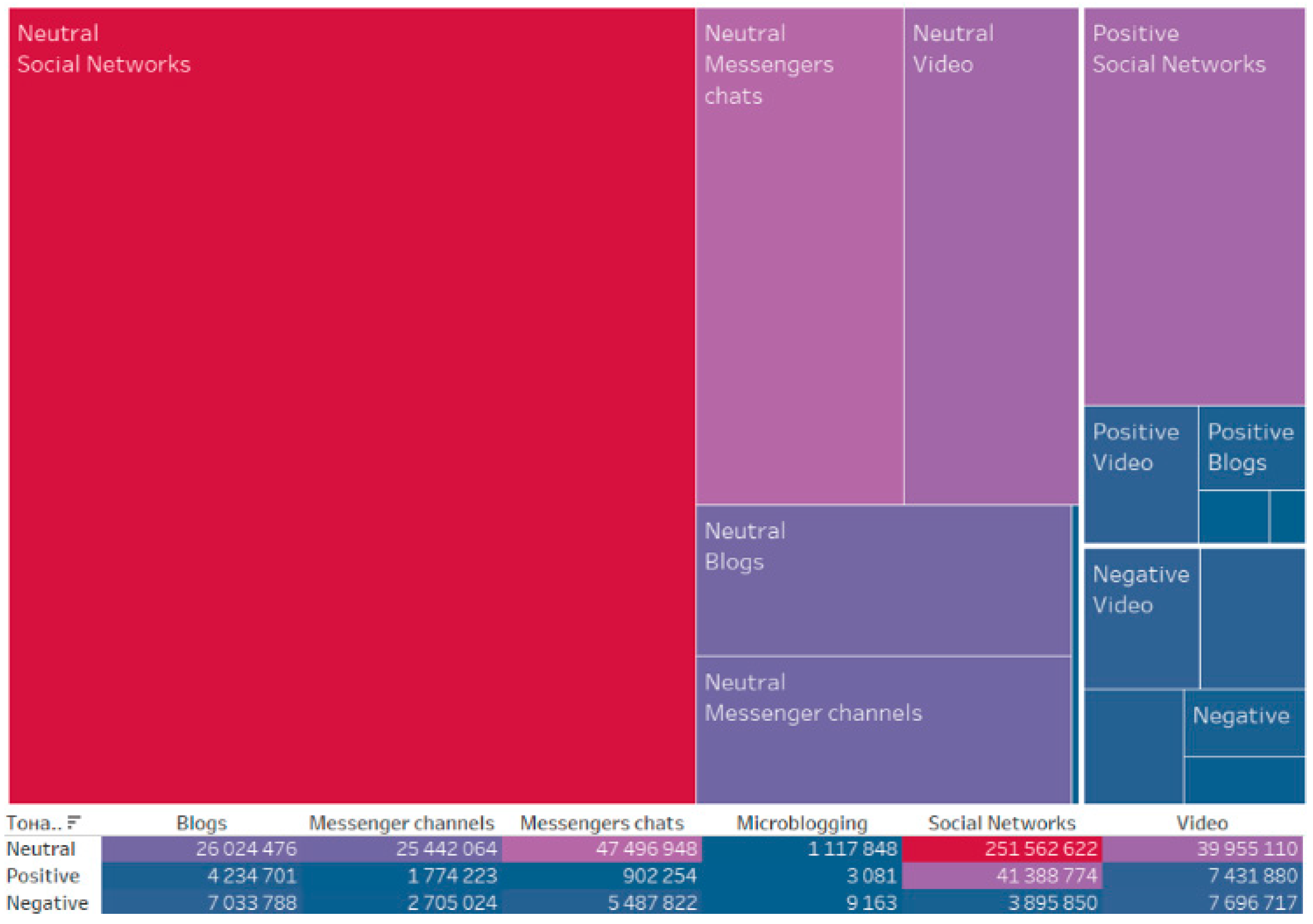
A neutral tone predominates across all types of messages, while negative tonality is most common in comments and positive tonality is more characteristic of original posts. The analysis of content tonality by actor type shows that the highest volume of negative messages is produced by individual users from personal accounts, whereas positive content is generated primarily by online communities (Figure 4).
Figure 4.
Tonality of institutional and user-generated discourse on future urban and technological change.
An analysis of content tonality across platforms and geographic locations showed that negative content was more frequently produced on the Telegram messenger, on video-hosting platforms, and by users in major metropolitan areas—primarily Moscow and St. Petersburg. Positive content, by contrast, was generated more often on the Odnoklassniki and VKontakte social networks (Figure 5).
Figure 5.
Tonality of institutional and user-generated discourse on future urban and technological change across digital platforms.
- Semantic Analysis
Content analysis, thematic summarization, and the identification of structural patterns made it possible to determine the main topics discussed in relation to the future of cities. Following the sentiment analysis, the data were clustered according to the tonality of content generated by different types of actors. The construction of a semantic network and the extraction and interpretation of its semantic core enabled the identification of semantic focal points within each cluster—topics that appeared most meaningful to users.
- Positive Cluster
In the positive cluster, actors articulate a vision of urban futures grounded in sustainability, human-centered design, and environmental responsibility. Cities of the future are imagined as spaces where ecological priorities are integrated into everyday life, emphasizing harmonious coexistence between humans and nature. Particular attention is paid to the creation of comfortable, inclusive, and livable urban environments that support well-being and social interaction. Respondents frequently associate positive urban development with movement toward carbon neutrality, the careful use of resources, and improved energy efficiency at the city level.
Green infrastructure plays a central role in these imaginaries. Users emphasize the expansion of green spaces and the integration of parks and natural elements into residential and office environments, viewing such measures as essential for improving quality of life. Sustainable mobility is also highlighted as a key component of positive urban futures, including the prioritization of bicycles, trams, and rail systems, as well as the reduction or removal of private cars from residential areas. Walkability and pedestrian-friendly design are presented as indicators of a city oriented toward human scale rather than traffic efficiency.
Spatial organization is another important theme. Preferred urban models are characterized by medium-rise, relatively dense, mixed-use development that combines residential and commercial functions while maintaining a clear distinction between public and private spaces, such as streets and courtyards. Advanced IT technologies are perceived positively when they enhance urban services, simplify everyday life, and support accessibility, including the creation of barrier-free environments. Finally, positive visions emphasize the active participation of citizens in decision-making processes and the gradual blurring of rigid boundaries between urban and rural environments, pointing toward more flexible and adaptive forms of settlement.
- Negative Cluster
In contrast, the negative cluster foregrounds anxieties and critical assessments of future urban development. Actors express concern about overpopulation and excessive densification, which are associated with declining living standards and social stress. Environmental pollution and ecological degradation feature prominently, often framed as the result of unchecked urban growth and industrial expansion. Cities are frequently described as increasingly artificial environments in which nature is subordinated to human control, leading to a loss of ecological balance.
Transport-related issues are another source of negative evaluation. Narratives of transportation collapse depict cities as paralyzed by congestion, with mobility systems that undermine both environmental sustainability and everyday functionality. Finally, respondents express growing unease about the erosion of personal boundaries linked to the expansion of digital technologies and surveillance infrastructures. In these accounts, the smart city becomes a space of control rather than comfort, where technological advancement threatens privacy and autonomy rather than enhancing urban life.
3.2. Information-Wave Analysis
Using the information-wave analysis method, 5469 information waves were identified within the dataset on the theme of the “image of the future” (41,307 messages). Approximately 8000 additional messages did not fall into algorithmically generated clusters and were classified as natural user reactions. The substantive analysis of messages was conducted separately for these two categories, as information waves and natural reactions represent two distinct discursive formations.
3.2.1. Content of the Information Waves (RQ5)
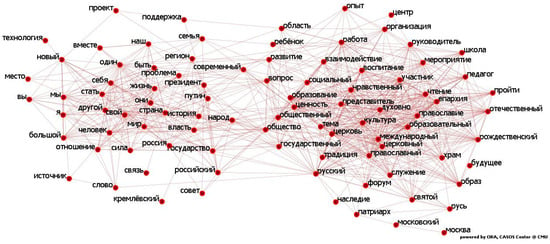
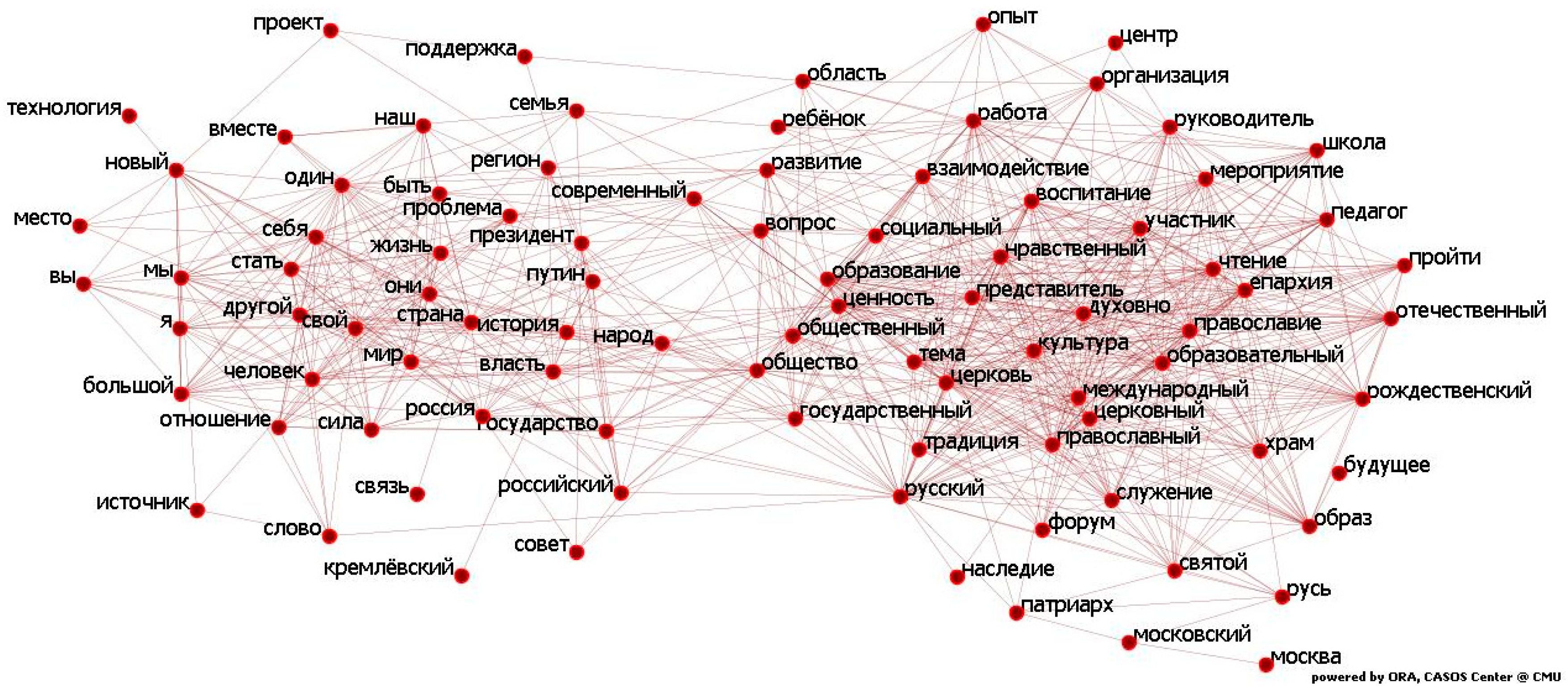
Addressing RQ5, this section examines the structure of information waves identified through network-based and semantic analysis, focusing on publications produced by governmental bodies, political movements, sectarian or fraudulent groups, as well as international events such as conferences. A significant portion of these messages relates to the Russian Orthodox Church, which, according to the dataset, emerges as one of the key actors articulating and promoting future imaginaries. As a counterbalance, a “secular discourse” also becomes visible (Figure 6).
Figure 6.
Polarization of institutional and user-generated discourses identified through network-based semantic analysis (ORA). (Note: The nominations in Figure 6 are presented in the original language, since the entire database was used for visualization, and it is not possible to translate it completely due to its size).
The propagated narratives coalesce around several thematic clusters, including victory-centered narratives linked to the memory of the Soviet Union’s role in World War II, imaginaries of space exploration and aspirations to “return to space,” representations of territorial expansion and large-scale construction projects, especially in the eastern regions of the country, and nostalgic depictions of the Soviet past as a period of stability and predictability.
Stories about moving from large cities to rural areas also appear as a notable trend.
3.2.2. Content of Natural User Reactions
Messages identified as natural user reactions include a large number of negative assessments and opinions, revealing a wide range of fears about the future. Negative narratives describe forced demographic and cultural displacement and the growth of migrant communities. Users also fear for the future of children in the new digital world, with particularly strong concerns surrounding the decline in the quality of education and upbringing. Significantly, children are portrayed as the primary resource for the future, emphasized by both religious and secular actors.
In addition, the housing issue is recognized as an important issue that arises in various discussion contexts, including discussions about so-called “cheloveinik” (a sarcastic term for high-rise buildings with cramped apartments and lack of infrastructure). Users express skepticism and distrust of the assessment of the work of “future planners,” who are portrayed as a wealthy elite who care only about their selfish interests. Future scenario projects that are condemned in the media also receive negative reviews, and their creators are accused of incompetence or ignorance of everyday reality.
A comparison of the volume and thematic structure of information waves and natural user reactions reveals significant differences between the two discursive forms, indicating that they largely function independently in the media environment.
3.2.3. Emerging Ideas About the Future
Several Comprehensive Semantic Constructions Can Be Identified as Sources of Ideas About the Future.
These include nostalgia for the Soviet Union and the aspiration to return to that period in a modernized form, a monarchist discourse that links a positive national future to the revival of monarchy, and aspirations toward innovation and technological development.
The comparative analysis shows that future visions promoted by political parties and groups fail to convince users and tend instead to generate skepticism and mistrust. These institutional narratives are not tied to people’s real concerns, fears, and everyday experiences. As a result, the “image of the future” becomes a popular political technology and a tool of manipulation actively used by political movements and media personalities.
4. Discussion
The findings demonstrate that technological innovation—particularly AI and large-scale digital infrastructures—has become a central symbolic axis of future-oriented public discourse. Institutional narratives frame technological development as a source of national strength, economic modernization, and global competitiveness, whereas user-generated counter-narratives emphasize automation-related job insecurity, digital surveillance, de-humanization, and widening social inequalities. This divergence indicates that AI-driven imaginaries function as a key source of social tension and discursive fragmentation in the contemporary media environment.
Our findings are consistent with earlier studies that describe institutional future narratives as predominantly technocratic and modernization-oriented, emphasizing control, efficiency, and progress (e.g., Miller, 2007; Inayatullah, 2012). Similarly to previous research on futures discourse, institutional actors in our data frame technological innovation as a strategic resource for national development and global competitiveness.
From a theoretical perspective, these findings can be interpreted within the framework of future imaginaries as collectively constructed representations that guide social expectations and orientations toward technological change. Previous research has emphasized that images of the future function as cognitive and cultural resources shaping both individual and collective action (Polak, 1973; Rubin, 2013). Our results extend this perspective by demonstrating how digital media environments and AI-driven communication practices intensify the production, circulation, and contestation of such imaginaries.
At the same time, our study goes beyond existing research by empirically demonstrating how these institutional imaginaries are reinterpreted, contested, and emotionally reframed within social media environments. Unlike studies based on surveys or expert foresight exercises, our large-scale analysis of user-generated content reveals pronounced skepticism, affective polarization, and nostalgia-driven counter-narratives that challenge official visions of technological futures.
With regard to RQ1, the results demonstrate that media innovation—particularly AI-driven analytical tools, platform infrastructures, and data-intensive communication practices—does not merely mediate future-oriented discourse but actively shapes how future imaginaries are produced, circulated, and interpreted. Media function not only as channels of transmission but as innovative environments that structure semantic hierarchies, amplify emotional cues, and enable the large-scale diffusion of competing visions of technological futures.
These findings further demonstrate (RQ4, RQ5) that media discourses about technological innovation and AI constitute a space of competing future imaginaries, where institutional optimism coexists with public anxiety and skepticism.
These patterns directly address RQ2 and RQ3. The content generated by institutional actors is characterized by images of the future focused on technological progress, competitiveness of government structures and modernization, based on symbolic narratives about innovation and control. On the contrary, the discourse created by users is filled with emotional reactions to images that are broadcast by official structures (fear, skepticism, idealization of the past, fears of possible socio-economic vulnerability). This juxtaposition shows how the institutional models of the future are refracted in everyday practices and receive an emotional response in social media. The RQ4 question is revealed through the interpretation of AI-related narratives reflecting perceptions of social, economic, and environmental change, while the RQ5 question is clarified by examining the role of new media as a platform that allows actors to accentuate, challenge, or rethink these stories.
The natural reactions of users reflect a wide range of concerns related to rapid socio-technological changes. Fear-oriented narratives—concerns about overpopulation, digital surveillance, declining housing affordability, or distrust toward reforms—may be interpreted as responses to accelerating economic and institutional change, and to perceived mismatches between top-down future imaginaries and everyday lived realities.
These contradictions are particularly noticeable in discussions of urban development, as technological innovations are actively integrated into the everyday practices of city residents, which form opposing narratives: a comfortable environment for people, ecological balance, and a developed system of services are contrasted with concerns about building density, surveillance, environmental degradation, and loss of privacy. The negative regime draws upon dystopian cultural templates—overcrowded megastructures, ecological collapse, and intrusive digital oversight—which serve as interpretive shortcuts for articulating broader anxieties about socio-technological acceleration. In line with visual and cultural studies of urban futures (Yazykeev, 2022), our analysis shows that urban imaginaries serve as a condensed symbolic space where broader attitudes toward technology, governance, and social change are articulated. At the same time, the strong polarization between ecological-utopian and dystopian urban visions observed in our data indicates a higher level of affective tension than previously reported in qualitative or visual-ethnographic studies.
In relation to RQ6, discussions of urban futures reveal how media-driven representations of cities operate as condensed symbolic expressions of broader attitudes toward technological change. Urban imaginaries function as a key site where abstract debates about AI, governance, and innovation are translated into everyday spatial experiences. These findings also contribute to answering RQ6 by demonstrating how future-oriented urban imaginaries operate as symbolic resources through which users negotiate technological change, social uncertainty, and media-driven representations of innovation. Thus, future-oriented urban discourse provides a concrete lens through which societal expectations, fears, and hopes regarding technological innovation become visible and culturally meaningful.
These contrasting imaginaries demonstrate that debates about urban futures operate not only as reflections of social uncertainty but also as an arena where media innovation actively reshapes how technological change is interpreted, contested, and culturally embedded. In this sense, the media do not merely report on technological innovation—they function as a dynamic infrastructure for producing future visions, mediating societal impacts of AI, and reorganizing the symbolic and political landscapes through which technological futures become thinkable.
Taken together, the discussion demonstrates that all six research questions are interrelated and describe different dimensions of the same communicative process: the media-mediated construction of technological futures. Media innovation and AI shape not only the content of future imaginaries but also their circulation, emotional framing, and social interpretation, reinforcing the role of digital media as a central arena for negotiating societal change.
Overall, positioning the findings within existing theoretical and empirical research highlights both continuity and innovation. While the study confirms earlier insights into the role of future imaginaries in shaping social expectations, it also demonstrates how media innovation and AI-driven communication infrastructures transform the scale, emotional intensity, and visibility of future-oriented discourse. This contributes to a more nuanced understanding of how technological futures are negotiated in contemporary digital media environments.
5. Conclusions
This study demonstrates that media discourse about the future functions as a key mechanism through which societies interpret the environmental, social, and economic implications of technological innovation and artificial intelligence (AI). Institutional actors predominantly promote technologically optimistic and future-oriented models emphasizing modernization, competitiveness, and control, whereas user-generated discourse reveals ambivalence, skepticism, and anxiety toward AI-driven transformations.
Overall, the findings provide coherent answers to all six research questions formulated in the Introduction. The analysis shows how media actors, narratives, and information waves structure future-oriented discourse (RQ1–RQ3), how AI and technological innovation are framed and perceived within media environments (RQ4–RQ5), and how urban and technological imaginaries operate as symbolic frameworks shaping public expectations and anxieties (RQ6).
At the theoretical level, the study advances research on future-oriented communication by conceptualizing technological innovation and AI not merely as technical artifacts but as culturally embedded symbolic anchors that organize collective expectations, fears, and political imaginaries. Empirically, the article draws on a large corpus of Russian-language social media data (50,036,592 tokens) to compare institutional and user-generated future imaginaries, offering a large-scale perspective on the dynamics of future-oriented discourse in digital media. Methodologically, the study validates a hybrid AI-assisted framework that integrates large language model–supported interpretation, neural-network semantic analysis, and information-wave detection, enabling the systematic identification of emotional patterns, semantic cores, and discursive dynamics across extensive datasets.
The findings also demonstrate that online communication in social networks provides an effective empirical lens for examining collective future imaginaries. The synergy of the network-based approach and information-wave analysis makes it possible to distinguish official narratives from spontaneous user reactions and to assess the extent to which strategic institutional visions of the future align with societal expectations. The analysis shows that future scenarios are actively shaped by a wide range of actors—including national governments, scientific institutions, public figures, and the Russian Orthodox Church—who generate competing and often opposing representations of the future.
Despite substantial differences, both secular and religious discourses converge in recognizing the central role of younger generations in the realization of potential future models. At the same time, official narratives frequently elicit skepticism and distrust among users, along with concerns about the potential socio-economic burden of future projects. Nostalgia for the Soviet past emerges as a recurring motif in user discourse, while fears about the future also create favorable conditions for the spread of sectarian and fraudulent narratives that offer pseudo-scientific or mystical forms of reassurance.
Linguistic and semantic analysis further reveals polarized imaginaries of future cities. Positive representations emphasize ecological balance, human-scale development, walkability, and digitally enabled services, whereas negative representations focus on overpopulation, environmental degradation, and digital intrusions into private life, often articulated through dystopian motifs. These urban imaginaries function as condensed symbolic expressions through which broader perspectives on technological change and governance are debated and negotiated.
The limitations of this study include the following. The analysis is based on Russian-language social media data collected within a defined temporal period, which limits the generalizability of the findings to other linguistic, cultural, or media contexts. While the AI-assisted framework enables large-scale textual analysis and the identification of dominant semantic and emotional patterns, it does not capture all contextual nuances or multimodal forms of communication. Future research may extend this approach through cross-linguistic and longitudinal designs, the integration of multimodal methods, and the examination of links between media-driven future imaginaries, public trust, attitudes toward AI-based technologies, and media innovation practices.
Overall, the findings highlight the dual nature of technological futures: while functioning as sources of modernization, strategic vision, and civic mobilization, they simultaneously generate uncertainty, socio-cultural fragmentation, and competing interpretations of what the future should be. In this sense, media innovation and AI-driven communication infrastructures emerge as central arenas in which technological futures are constructed, contested, and rendered socially meaningful.
Author Contributions
Conceptualization, A.N.R. and M.P.; methodology, G.V.G.; software, A.N.Y.; validation, A.N.R., M.P. and G.V.G.; formal analysis, I.V.Z.; investigation, M.P.; resources, A.N.Y.; data curation, A.N.R.; writing—original draft preparation, M.P.; writing—review and editing, G.V.G.; visualization, A.N.Y.; supervision, A.N.R.; project administration, A.N.Y. All authors have read and agreed to the published version of the manuscript.
Funding
This research received no external funding.
Institutional Review Board Statement
Not applicable.
Informed Consent Statement
Not applicable.
Data Availability Statement
Publicly available datasets were analyzed in this study.
Conflicts of Interest
The authors declare no conflicts of interest.
References
- Aalders, W. J. (1939). Toekomstbeelden van vijf eeuwen. J. B. Wolters. [Google Scholar]
- Ahvenharju, S., Minkkinen, M., & Lalot, F. (2018). The five dimensions of futures consciousness. Futures, 104, 1–13. [Google Scholar] [CrossRef] [Scilit]
- Ahvenharju, S., Minkkinen, M., & Wensing, E. (2020). Futures consciousness scale. European Journal of Psychological Assessment, 36(5), 874–888. [Google Scholar]
- Angheloiu, C., Sheldrick, L., & Tennant, M. (2020). Future tense: Exploring dissonance in young people’s future imaginaries through design futures methods. Futures, 117, 102527. [Google Scholar] [CrossRef] [Scilit]
- Bas, E. (2008). Future visions of the Spanish society. In U. Reinhardt, & G. Roos (Eds.), Future expectations for Europe (pp. 214–231). Primus Verlag. [Google Scholar]
- Biswal, S. K., & Kulkarni, A. J. (2024). Exploring the intersection of artificial intelligence and journalism: The emergence of a new journalistic paradigm. Taylor & Francis. [Google Scholar]
- Boulding, K. E. (1956). The image: Knowledge in life and society. University of Michigan Press. [Google Scholar]
- Clark, T. J. (1999). Image of the people: Gustave Courbet and the 1848 revolution. University of California Press. [Google Scholar]
- Durance, P. (2010). Reciprocal influences in future thinking between Europe and the USA. Technological Forecasting & Social Change, 77, 1469–1475. [Google Scholar] [CrossRef] [Scilit]
- Floridi, L. (2025). The ethics of artificial intelligence. Oxford University Press. [Google Scholar]
- Godet, M., & Roubelat, F. (1996). Creating the future: The use and misuse of scenarios. Long Range Planning, 29(2), 164–171. [Google Scholar] [CrossRef] [Scilit]
- Gradoselskaya, G., & Raskhodchikov, A. (2020). Two scenarios for the future of youth. Bulletin of Moscow University. Series 12: Political Sciences, 4, 50–68. (In Russian) [Google Scholar]
- Gradoselskaya, G., & Volgin, A. (2019). Decomposition of a media event through information waves. In MLSD conference proceedings, Moscow. IEEE. Available online: https://ieeexplore.ieee.org/document/8911056 (accessed on 15 January 2025).
- Guillo, M. (2013). Participatory foresight among youth. European Journal of Futures Research, 1, 17. [Google Scholar] [CrossRef] [Scilit]
- Hillman, A. (2025). The role of artificial intelligence in the construction of news [Unpublished manuscript]. SSRN. Available online: https://ssrn.com/abstract=5619371 (accessed on 8 February 2026).
- Inayatullah, S. (2012). Futures studies: Theories and methods. In F. González (Ed.), There’s a future: Visions for a better world (pp. 37–65). BBVA. [Google Scholar]
- Kaboli, S. A., & Tapio, P. (2018). How late-modern nomads imagine tomorrow. Futures, 96(1), 32–43. [Google Scholar] [CrossRef] [Scilit]
- Kharlamov, A. A., Raskhodchikov, A. N., & Pilgun, M. (2025). Social media actors: Perception and optimization of influence. Journal of Combinatorial Optimization, 49(2), 18. [Google Scholar] [CrossRef] [Scilit]
- Lombardo, T. (2011). Creativity, wisdom, and our evolutionary future. Journal of Futures Studies, 16(1), 19–46. [Google Scholar]
- Miller, R. (2007). Futures literacy. Futures, 39(4), 341–362. [Google Scholar] [CrossRef] [Scilit]
- Miller, R., Poli, R., & Rossel, P. (2018). The discipline of anticipation. In R. Miller (Ed.), Transforming the future. Routledge. [Google Scholar]
- Nielsen, R. K. (2024). Evidence, engagement, and expansion: AI and the future of news. Reuters Institute. Available online: https://reutersinstitute.politics.ox.ac.uk/news/evidence-engagement-and-expansion-new-reuters-institute-work-ai-and-future-news (accessed on 8 February 2026).
- Pilgun, M. (2025). Explicit and implicit knowledge in large-scale linguistic data. Big Data and Cognitive Computing, 9(4), 75. [Google Scholar] [CrossRef] [Scilit]
- Polak, F. L. (1955). De toekomst is verleden tijd. W.J. de Haan. (In Dutch) [Google Scholar]
- Polak, F. L. (1973). The image of the future. Elsevier. [Google Scholar]
- Raskhodchikov, A. N., & Pilgun, M. (2023). COVID-19 and public health. International Journal of Environmental Research and Public Health, 20, 971. [Google Scholar] [CrossRef] [Scilit] [PubMed]
- Rubin, A. (2013). Hidden and inconsistent future imaginaries. Futures, 45(2), 38–44. [Google Scholar] [CrossRef] [Scilit]
- Rubin, A., & Linturi, H. (2001). Transition in the making. Futures, 33(2), 267–305. [Google Scholar] [CrossRef] [Scilit]
- Seginer, R. (2009). Future orientation. Springer. [Google Scholar]
- Tezanos, J. F., Villalon, J. J., & Montero, J. M. (1997). Tendencias de futuro en la sociedad española. Sistema. [Google Scholar]
- Trommsdorff, G. (1983). Future orientation and socialization. International Journal of Psychology, 18(1–4), 381–406. [Google Scholar] [CrossRef] [Scilit]
- Van Dorsser, C., Walker, W. E., Taneja, P., & Marchau, V. A. W. J. (2018). Improving the link between the futures field and policymaking. Futures, 104, 75–92. [Google Scholar] [CrossRef] [Scilit]
- Yazykeev, A. (2022). Urban events: Projection of the past and future imaginaries. In Visual anthropology 2022 (pp. 233–240). Yaroslav the Wise Novgorod State University. [Google Scholar] [CrossRef]
Disclaimer/Publisher’s Note: The statements, opinions and data contained in all publications are solely those of the individual author(s) and contributor(s) and not of MDPI and/or the editor(s). MDPI and/or the editor(s) disclaim responsibility for any injury to people or property resulting from any ideas, methods, instructions or products referred to in the content. |
© 2026 by the authors. Licensee MDPI, Basel, Switzerland. This article is an open access article distributed under the terms and conditions of the Creative Commons Attribution (CC BY) license.