
Article

The Impact of Artificial Intelligence Techniques on Developing Media Content Production Skills: A Comparative Quasi-Experimental Study on Students in France, Egypt, and the UAE


by
Hossam Fayez
1,
Muhammad Noor Al Adwan
2,*,
Asmaa Hegazy
3 and
Mohamad El Hajji
4
1
Media Department, Faculty of Specific Education, Minia University, Minia P.O. Box 61519, Egypt
2
College of Communication and Media, Al Ain University, Abu Dhabi P.O. Box 112612, United Arab Emirates
3
College of Arts, Humanities and Social Sciences, University of Khorfakkan, Sharjah P.O. Box 18119, United Arab Emirates
4
Media and International Relations Department, École Supérieure de Journalisme, 92800 Puteaux, France
*
Author to whom correspondence should be addressed.
Journal. Media 2026, 7(1), 43; https://doi.org/10.3390/journalmedia7010043
Submission received: 15 November 2025 / Revised: 16 January 2026 / Accepted: 14 February 2026 / Published: 22 February 2026

Abstract

This study aimed to examine the impact of utilizing artificial intelligence techniques on developing media content production skills among media students in three different educational contexts. This study employed a quasi-experimental design with independent groups, involving 90 students distributed across: France (n = 30) from the École Supérieure de Journalisme et de Communication, Egypt (n = 30) from Minia University, and the United Arab Emirates (n = 30) from Al Ain University. Each group received an applied training program integrating AI tools into editing and proofreading, fact-checking and media verification, and digital media production. The results showed significant improvement in all measured skills after the training, with high effect sizes, most notably, France: η2 = 0.949, Egypt: η2 = 0.912, and the UAE: η2 = 0.887. The results also indicated that the French group outperformed the others in the effective use of the tools and the quality of the produced content, followed by the Egyptian and then the Emirati groups. These results underscore the importance of integrating artificial intelligence techniques into media curricula to enhance students’ skills and improve the quality of their media production.

1. Introduction

The modern technological revolution, the transition to the digital age, and the ascendancy of artificial intelligence techniques have paved the way for public acceptance of new media forms and platforms, and a growing disengagement from traditional media. Alongside this development, digital media have proliferated and expanded their influence over public interests, becoming an inextricable part of daily life (Fayez, 2022). Recently, discussion on the deployment of artificial intelligence in the media field has intensified. This encompasses the use of various tools for research and information verification, extends to journalistic writing optimized for search engine algorithms, and culminates in the comprehensive integration of AI techniques for media content production (Al Adwan et al., 2024). This underscores the critical importance of producing high-quality, professional media content—a responsibility that falls upon media studies students and scholars, as they are the primary content creators.
In the age of artificial intelligence, faculties and departments of media studies are confronting a significant challenge related to the need to keep pace with these changes brought about by AI techniques. This necessitates bridging theory and practice and equipping media students with the requisite methodologies and paradigms that align with the nature of the contemporary era (Al Adwan et al., 2025). Such an approach positively contributes to providing them with an appropriate degree of technological proficiency and qualifies them for future competition within the current climate of extensive media pluralism. Foremost among the aspects that media faculties must reconsider is the pedagogical approach to the curricula delivered to students, specifically those related to media content production. Given the proliferation of artificial intelligence techniques and their incursion into the media field—bringing forth new challenges—it is essential to leverage these techniques to endow students with new skills that aid them in producing media content of higher quality and greater accuracy. By training students to utilize and employ AI techniques pertinent to media, particularly those concerned with verifying news and information sources, detecting fake images and videos, identifying deepfakes, and using digital journalistic writing applications, they can become markedly more capable of producing media content of a superior quality. This advancement can be measured against the content they themselves produced prior to their adoption of AI techniques.
An international comparison between France, Egypt, and the UAE is of scholarly importance, as the literature reveals significant differences in digital systems, educational structures, and levels of AI adoption across these contexts. France is considered a leader in digital transformation policies and boasts an educational environment that fosters technological innovation (J. Li, 2025; Yuting, 2024). Egypt, on the other hand, is experiencing rapid expansion in the use of AI in higher education despite challenges related to resources and digital infrastructure. The UAE, meanwhile, has adopted ambitious national AI strategies and is working to integrate it institutionally into education and media. These differences provide a methodological basis for comparing how the same tools impact student skills within distinct educational and cultural environments (Al Adwan et al., 2024).
Despite the rapid increase in the application of AI techniques in media and educational journalism, the academic literature still lacks systematic comparative studies that measure the impact of these techniques on developing media content production skills across different educational and cultural contexts. Most previous research has focused either on evaluating a single tool or on descriptive studies based on individual cases, with a clear absence of quasi-experimental designs that measure differences before and after intervention and provide comparisons between different educational systems (Matos et al., 2025; Pavlik, 2023). This gap prevents drawing general conclusions about the effectiveness of integrating multiple AI tools in media education and the generalizability of their results across diverse educational and cultural environments.
This study contributes to bridging this gap in three ways. First, it uses a quasi-experimental pre/post design to assess causal effects of a training program that integrates multiple AI techniques (linguistic proofreading, fact-checking tools, and media production assistants). Second, it adopts a comparative cross-country approach (France, Egypt, the UAE), enabling analysis of how cultural and institutional differences influence students’ uptake of AI tools. Third, it evaluates multiple skill dimensions—information verification, digital writing/editing, and digital media production—offering a comprehensive picture of AI’s impact on media content production competencies. This study thus contributes both methodologically and practically to the literature on AI in media education.
This study aimed to measure the impact of utilizing AI techniques, namely Wordsmith, Hemingway Editor, Full Fact, Microsoft Video Authenticator, Sensity AI, Microsoft Azure Speech Services, and Sora, on the development of media production skills, such as digital content writing and editing, information and media verification, and production of digital media for electronic content. This quasi-experimental study included students from France, Egypt, and the UAE. A dedicated training program was implemented to equip the respondents with proficiency in these techniques, focusing on their practical application in media contexts. The media content produced by the respondents was systematically compared before and after their acquisition of these AI competencies to assess the program’s impact.

2. Literature Review

A literature review helps researchers become aware of the state of science at the point of their research, thus determining what they can add to the scientific and academic heritage (Abdelhay et al., 2025). In the current study, the literature review is divided into the following subsections.

2.1. Media and Artificial Intelligence

Recently, the term artificial intelligence has gained significant popularity, although AI itself is not a new concept. Its origin dates back to 1955 when Professor John McCarthy first coined the term to describe “the science and engineering of making intelligent machines.” Over time, AI has evolved substantially, becoming a tangible reality across various fields of life (Mathias & Wilson, 2022). Artificial intelligence refers to systems that mimic human intelligence to perform tasks and improve themselves based on the information they collect. It also encompasses the capacity for superhuman reasoning and data analysis (Aljalabneh et al., 2024). Furthermore, AI can be defined as a form of integration between humans and machines, expressed through a set of computational systems and machines simulating human decision-making while leveraging the immense capacity of machines to process information (Bozdag, 2023). Recently, artificial intelligence techniques have increasingly asserted their dominance and garnered significant attention from both individuals and media institutions across various forms (Naidu & Sevnarayan, 2023). Amid rapid advancements in AI, it is anticipated to exert a profound influence on the future of media. Within media organizations, AI techniques perform several key functions, including automation and intelligent analysis, enhancing user experience in digital media, where intelligent algorithms can deliver personalized content to individual readers based on their interests and preferences, and combating misinformation and verifying information. In this context, AI serves as a crucial tool in the fight against the spread of fake news and in authenticating information. It analyzes texts and content to identify indicators of misleading or false news. Looking forward, it is projected that by 2027, newsrooms will incorporate a significant number of AI systems (Al Adwan et al., 2024).
In the same vein, the recent literature focuses on the profound transformations brought about by artificial intelligence technologies in media learning environments. Technological tools are no longer merely auxiliary tools but have become a cognitive component that participates in the production process itself (Bykov & Medvedeva, 2024; Tiernan et al., 2023; Friesem, 2019). Rather than providing a lengthy description of the tools used, this study focuses on analyzing how AI technologies—including tools for grammar checking, text generation, intelligent verification, and digital production—contribute to reshaping the intellectual processes necessary for producing media content. The literature indicates that the integration of intelligent tools and learning methods leads to higher quality, faster editing, enhanced informational accuracy, and the development of critical thinking in highly mediated learning environments.
It is also important to distinguish between controlled experimental interventions and the reality of AI application in practice. Experimental studies, including current quasi-experimental designs, can isolate the effects of training under standard conditions, but they may not reflect the limitations and trade-offs present in newsrooms or real-world marketing (Diakopoulos, 2019; Radcliffe, 2025; Cools & Diakopoulos, 2024). Therefore, field studies and mixed-method research are needed to complement experimental findings and assess the long-term effects of AI on organizations and business processes.

2.2. Artificial Intelligence Techniques in Media

Artificial intelligence techniques have brought about a transformative shift across various domains of media work, owing to their capacity to save time and effort for users. These techniques demonstrate an ability to make appropriate decisions, adapt to new circumstances, solve problems, and perform tasks with precision (Safori et al., 2023; Abdel Hamid, 2020). They are employed in fields such as news generation, content development, information source verification, and digital media auditing, thereby enhancing efficiency in production and editing. Consequently, AI techniques contribute to reinforcing the foundational pillars of media content production.
Artificial intelligence has become deeply embedded in contemporary media practices, particularly in the domains of writing, content production, verification, multimedia processing, and professional training. In the context of journalistic writing and content production, AI-driven systems have enabled the automation of routine news generation, especially in areas such as weather reporting, financial updates, and sports coverage. Advanced language models and automated journalism platforms—most notably ChatGPT V. 3.5 and Wordsmith V. 6 developed by Automated Insights—rely on algorithmic text generation to produce structured news narratives with high speed and consistency (Shi & Sun, 2024). Alongside automated writing, AI-powered copyediting tools have gained widespread adoption in newsrooms and educational settings, as applications such as Grammarly and Hemingway Editor support journalists and media students in improving linguistic accuracy, stylistic coherence, and overall textual clarity (Walia & Jain, 2024). In addition, automatic summarization technologies have become essential for condensing lengthy reports and facilitating the preparation of daily news briefings or breaking news updates. These tools not only enhance editorial efficiency but also contribute to the evolution of journalistic workflows within modern newsrooms (Marconi, 2020; Sonni et al., 2024).
Beyond content creation, artificial intelligence plays a critical role in news verification and the fight against disinformation. Machine-learning-based systems are increasingly used to assess the credibility of news content by analyzing textual patterns, source reliability, and visual cues. Fact-checking tools such as Full Fact and ClaimBuster exemplify how AI algorithms support journalists in detecting misleading or false claims at scale (Slocombe & Liveley, 2025). This verification function becomes even more significant in the context of deepfake detection, where computer vision techniques are employed to identify visual and audiovisual manipulation. Tools such as Microsoft Video Authenticator provide probabilistic assessments of image and video authenticity and are particularly relevant in countering politically motivated disinformation (P. Liu et al., 2024; Sar et al., 2025). Complementary systems, including Deepware Scanner and Sensity AI, are widely used by media organizations to detect, monitor, and trace manipulated content across digital platforms, reinforcing institutional efforts to safeguard information integrity (Korshunov & Marcel, 2018; Verdoliva, 2020; Sensity AI, 2024; Microsoft Responsible AI Standard, 2022).
Large Language Models (LLMs) further extend these verification and production capabilities by accelerating newsroom operations through intelligent language processing. These models support journalists in drafting news stories, generating headlines, analyzing large datasets, and enhancing fact-checking processes, thereby enabling timelier and data-rich coverage. Their integration into newsroom workflows reflects a broader shift toward hybrid human–AI collaboration in journalistic practice (Ansari et al., 2025).
Artificial intelligence has also transformed the production and enhancement of audio, image, and video content. Speech-to-text and text-to-speech technologies significantly reduce journalists’ workload by facilitating real-time transcription, subtitling, and multilingual translation of interviews and reports. Widely used platforms such as Google Speech-to-Text API, Microsoft Azure Speech Services, and Amazon Transcribe have become standard tools in both professional and educational media environments. In parallel, AI-based systems for audio and video enhancement contribute to noise reduction, image restoration, resolution improvement, and the generation of audiovisual content from textual prompts. Applications such as Runway and Sora exemplify how generative AI expands creative possibilities while streamlining production processes (Fayez, 2024; Radford et al., 2022).
Within media education and professional training, artificial intelligence increasingly functions as a pedagogical catalyst, enabling the simulation of newsroom practices and providing immediate, data-driven feedback to learners. AI-supported learning environments allow students to engage with realistic journalistic scenarios, such as newsroom decision-making, press conferences, and field reporting, without the constraints of physical settings (Fayez, 2023). Furthermore, AI-based media performance analysis tools, including Yoodli, PitchVantage, and Orai, are used to evaluate students’ on-camera performance, speech delivery, and presentation skills, particularly in broadcast journalism contexts (Babacan et al., 2025). Complementing these applications, AI-powered copyediting tools such as Grammarly, Wordtune, Hemingway Editor, and AI Writer continue to support journalistic writing education by enhancing linguistic precision and stylistic competence, reinforcing the integration of intelligent systems into competency-based media training models (Al-Rawi & Saad, 2025; Marconi, 2020).
Several academic institutions have employed artificial intelligence techniques in the field of media training for students and learners. For example, Northwestern University integrates AI models into its Master’s programs in media to analyze journalistic stories and interact with simulation chatbots. Similarly, the BBC Academy has developed virtual training programs that rely on augmented reality and artificial intelligence to train novice journalists (Abdelhay et al., 2023).
In the present study, students were trained on the use of techniques designed to enhance the quality of editorial content and digital writing, as well as on tools for detecting fake news, verifying information, analyzing and authenticating images and videos, and improving their quality. The main techniques taught to the experimental groups during the training program included Wordsmith, Hemingway Editor, Full Fact, Microsoft Video Authenticator, Sensity AI, Microsoft Azure Speech Services, and Sora.
The tools used in this study were selected in accordance with the research objectives of developing media content production skills and based on previous research and studies that confirmed their effectiveness (Khan et al., 2025; Y. Liu et al., 2024). Tools such as Wordsmith and Hemingway Editor were used to improve writing and linguistic editing due to their widespread academic use and effectiveness in supporting journalistic writing skills based on clarity and accuracy. Full Fact was chosen because it is one of the leading AI-powered fact-checking systems, making it suitable for teaching students information verification skills and combating misinformation.
Regarding visual verification, Microsoft Video Authenticator and Sensity AI were integrated due to their proven reliability in detecting deepfakes. These tools are among the most widely used in newsrooms and digital verification labs. In the field of advanced media production, Microsoft Azure Speech Services was used for its high-performance text-to-speech capabilities and ability to produce professional digital files. Additionally, Sora, a video generation tool, was used, representing one of the latest generative models that enables students to employ artificial intelligence in visual production processes.
Other alternatives, such as Grammarly, Google Fact Check Explorer, and Deepware Scanner, were considered. However, the selected tools were deemed most suitable for this study’s target skills in terms of (1) accuracy, (2) reliability, (3) educational usability, and (4) the availability of measurable pre/post learning features.
The selection process aligned with the methodological frameworks of quasi-experimental studies, which require tools capable of producing observable and measurable effects.

2.3. Media Content Production Skills

Professional training and the development of practical skills among media students constitute one of the fundamental pillars and primary concerns of colleges and departments of media across different countries. Such preparation ensures that graduates are genuinely qualified to meet the demands of the labor market and possess the necessary skills for integration into it (Fayez Abdelhay, 2021). The courses and knowledge delivered to media students are among the most significant factors contributing to the acquisition of these essential skills (Elmahdy et al., 2024). Media content production skills comprise a set of practical and cognitive abilities. These enable journalists or content creators to plan, create, edit, and publish impactful and effective media materials, whether written, visual, audio, or digital.
In the present study, the focus will be on three essential skills of content production that can be enhanced and developed among media students through the integration of artificial intelligence techniques in training and production stages.
Digital content writing and editing is the first skill that this study addresses. This skill refers to the ability to produce written media content specifically tailored for digital platforms, such as online newspapers, websites, blogs, social media platforms, and news applications. The goal is to achieve the objectives of digital communication in terms of attractiveness, clarity, visibility optimization, and audience engagement while maintaining linguistic and professional accuracy. This includes the ability to craft clear, concise, and informative media texts that adhere to the standards of digital journalistic storytelling, encompassing: structuring ideas, organizing content, editorial style, and utilizing supporting media. The literature supports the idea that employing AI techniques in text editing enhances writing efficiency by providing immediate feedback, clarifying errors, and suggesting rhetorical improvements (Al Ghaithi & Behforouz, 2025; Mekheimer, 2025). To this end, the researchers refined students’ competencies in the fundamental principles of media writing during the training program. Two artificial intelligence techniques were employed to support the development of this skill: Wordsmith and Hemingway Editor.
The second skill, which is the information and media verification skill, is related to writing proficiency and is the skill of information and media verification, which has become a central competence in contemporary digital journalism. This skill refers to the ability of media content producers to verify the accuracy and credibility of information, images, videos, and circulating claims prior to publication, as well as to detect manipulation, fabrication, or algorithmically generated distortions within digital media. Given the increasing prevalence of automated content and deepfake technologies, verification has evolved from a supplementary practice into a structural component of digital media literacy. To address this dimension, the training program integrated specialized AI-based verification tools, including Full Fact, Microsoft Video Authenticator, and Sensity AI, enabling students to assess content authenticity and identify potential falsification. Media literacy scholarship consistently emphasizes that verification competencies are indispensable in ultramediated and algorithm-driven information environments, where misinformation and synthetic media pose persistent challenges to journalistic credibility (Salman & Fayyad, 2025; Lebid et al., 2020; Fowler-Watt & McDougall, 2019; Fayez et al., 2026).
The third skill examined in this study relates to the production of digital media elements for online content, This refers to the student’s ability to design multimedia content, such as images, videos, audio recordings, animations, infographics, and interactive media to enhance digital texts and make them more attractive, engaging, and impactful. During the training program, the researchers employed Microsoft Azure Speech Services and Sora to equip students with the necessary capabilities for producing digital media as part of the overall media content production process. The literature confirms that AI techniques—such as automated editing and media generation—contribute to increased output efficiency and enable learners to acquire professional production skills in less time (Hemraj, 2025).
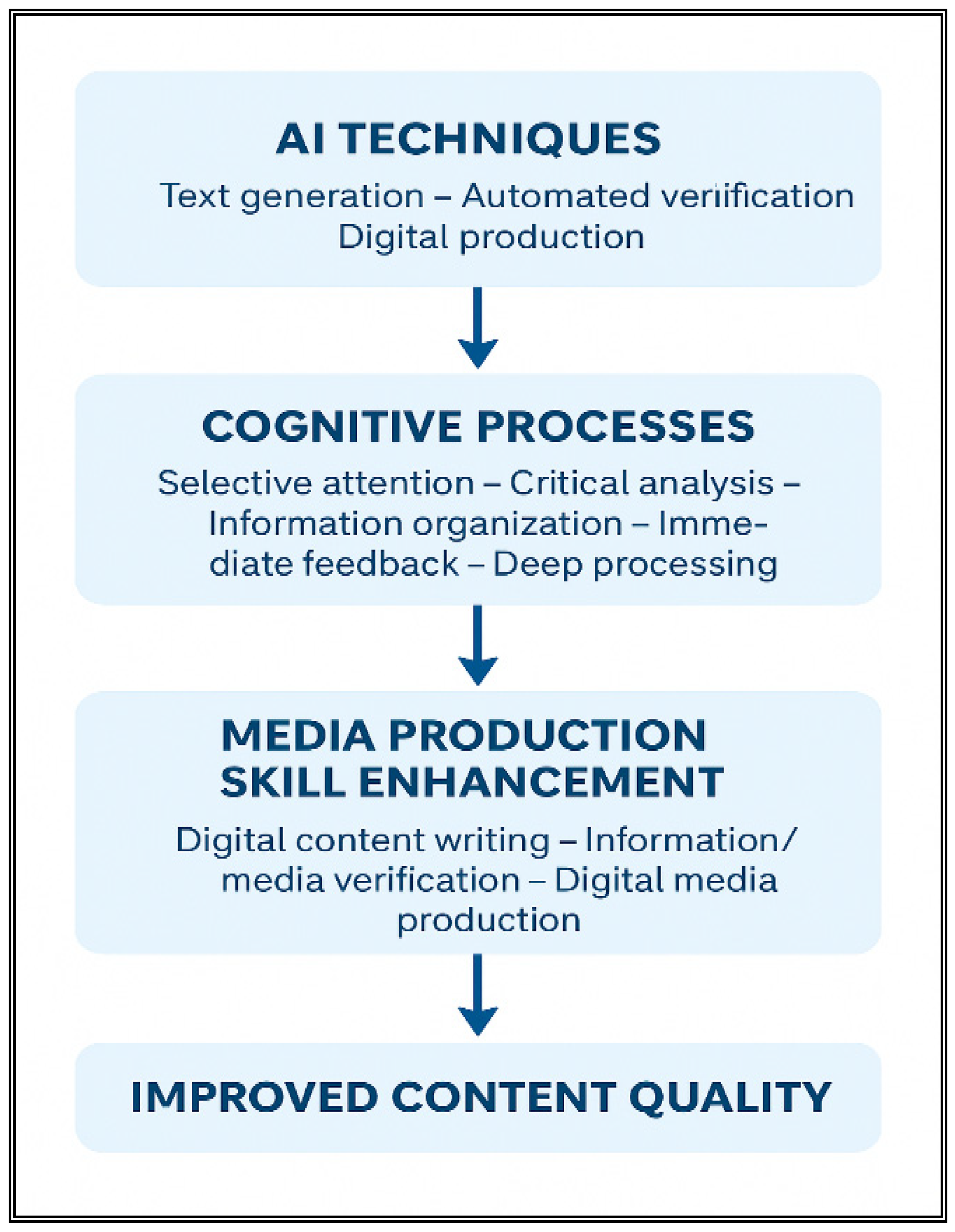
These three skills reflect the nature of societies where individuals receive massive flows of information and the boundaries between producer and receiver blur, making mastery of verification, editing, and production skills essential. Within the framework of AI-assisted learning, studies show that artificial intelligence technologies provide an adaptive learning environment that mimics professional thinking processes and gives students more opportunities to experiment with and improve content. These skills also align with the global trend toward competency-based education, which focuses on measurable learning outcomes and prioritizes skill mastery over the number of study hours (Vargas-Murillo et al., 2023; Munaye et al., 2025; Lai, 2021). Therefore, measuring the impact of AI tools on developing these competencies is a direct extension of recent developments in media literacy and vocational education (Lewis et al., 2025; L. Li, 2025). Researchers have derived from the literature a model of the mechanism by which artificial intelligence affects skill acquisition, as shown in Figure 1.
In the context of rapid digital transformations, the findings of this study can be interpreted within the framework of the concept of the ultramediated society. This refers to an advanced stage of digital societies that transcends traditional mediation, where algorithms, artificial intelligence, and generative language models become key players in knowledge production, shaping media discourse, and reorganizing the relationship between humans and technology. In this type of society, mediation extends beyond content transmission to encompass the reshaping of cognitive processes, thought patterns, and decision-making among individuals, particularly media content producers (Paredes & Andrade, 2025). From this perspective, the application of artificial intelligence technologies in media education is not merely a technical aid, but rather a structural mechanism within the ultramediated society that contributes to reshaping media production skills. Verification, editing, and generative analysis tools enhance critical awareness and strengthen higher-order cognitive processing skills (such as evaluation, comparison, and debunking misinformation), which explains the significant positive impact demonstrated by this study’s findings, especially in information and media verification skills (López-Paredes & Carrillo-Andrade, 2024).
This framework also allows for the explanation of differences between the national contexts under study. The degree of integration of educational and media institutions within the logic of a hypermediated society varies from one country to another, depending on the development of the digital infrastructure, educational policies, and the level of institutional reliance on artificial intelligence technologies. Therefore, the superior performance of the French sample can be understood in light of its operation within an educational and media environment more aligned with the characteristics of a hypermediated society, where smart technologies are integrated into educational and productive practices as part of the knowledge system, not merely as external tools.
Thus, incorporating the concept of a hypermediated society contributes to strengthening the causal explanation of the relationship between the use of artificial intelligence technologies and the development of media content production skills. This is achieved by linking technological infrastructure, cognitive processes, and skill outputs, which supports the theoretical framework of this study and expands its explanatory power.

3. Materials and Methods

3.1. Methodology

This quasi-experimental study aimed to measure the magnitude or effectiveness of experimental interventions on a specific phenomenon or topic to assess the direct impact of the independent variable on the dependent variable under experimental conditions, and measure the difference in the quality of media content produced by students before and after the integration of AI techniques, and assess students’ proficiency in AI tools before and after the training program, identify the primary media content production skills that were developed through the use of AI techniques, detect differences among the three student samples in terms of their benefit from AI tools and the quality of media production, and determine which sample demonstrates the highest effectiveness in employing AI techniques and achieving superior media content quality. That is, the present study aimed to evaluate the effect of employing artificial intelligence techniques on the development of media content production skills among media students.
The quasi-experimental design is suitable for the nature of the educational environment and because it is not possible to control all contextual variables or randomly assign respondents, as required by the rigorous experimental design in medical and applied sciences (Takona, 2024; Campbell & Stanley, 2015; Creswell & Creswell, 2017; Hussain et al., 2025). This design allows for measuring the impact of the research intervention under realistic conditions closer to actual practice while maintaining an appropriate degree of methodological control.
This choice is also consistent with this study’s objectives, which seek to examine the impact of using artificial intelligence techniques in an existing educational environment, rather than in artificial laboratory conditions. This enhances the validity and applicability of the results in similar contexts.
Previous studies on the effects of digital content, audience interactions, and artificial intelligence tools in media have contributed to defining the assumed relationship paths and the nature of the variables under investigation (Al Adwan et al., 2024, 2025; Fayez, 2023). Furthermore, the consistent findings in this literature have helped construct this study’s conceptual model and justify the proposed hypotheses by clarifying the theoretical and practical links between the variables. In light of this, this study hypotheses were formulated as follows:
Hypotheses 1:
There are statistically significant differences among the students of the three experimental groups (France, Egypt, the UAE) in the pre- and post-administration of the proficiency in using AI techniques for media content production, in favor of the post-test.
Hypotheses 2:
There are statistically significant differences among the students of the three experimental groups (France, Egypt, the UAE) in the pre- and post-administration of the media content production skills evaluation rubric in favor of the post-test.
Hypotheses 3:
There are statistically significant differences among the students of the three experimental groups in the post-test of the proficiency in using AI techniques for media content production according to country (France, Egypt, the UAE).
Hypotheses 4:
There are statistically significant differences among the students of the three experimental groups in the post-administration of the media content production skills evaluation rubric according to country (France, Egypt, the UAE).

3.2. Sample

The total sample consisted of 90 media students, divided into three experimental groups. The first group comprised media students from the École Supérieure de Journalisme et de Communication in Paris. The second group included media students from Minia University in Egypt, and the third group consisted of media students from Al Ain University in the United Arab Emirates.
The selection of France, Egypt, and the UAE as comparative contexts is based on their respective positions within the media and (AI) education landscape at both the regional and international levels. These three countries represent diverse educational and technological systems, allowing for a rich comparison to identify differences in how students adopt AI techniques in media content production.
France represents a leading European model in terms of integrating AI techniques into higher education, adopting national strategies for digital transformation and journalism education using AI tools. French journalism schools were among the first institutions to adopt AI applications in newsrooms, making it a mature context for comparative analysis.
In contrast, Egypt is a developing context experiencing rapid digital transformation in media education, with clear efforts to integrate AI tools despite challenges related to infrastructure and technological readiness. The size of Egypt’s media education system makes examining the impact of such interventions particularly important.
The UAE represents a third context characterized by significant national investments in AI and smart education, and it boasts one of the world’s first national AI strategies. Despite this, the integration of artificial intelligence into media education programs is still in its evolving stage, offering a compelling comparison between advanced policy positions and actual educational implementation.
The selection of these three contexts—an advanced European system, a developing system in the Global South, and an innovative Gulf system—provides a robust foundation for an in-depth comparison that contributes to generalizing findings and understanding the impact of cultural, technological, and educational differences on the effectiveness of AI techniques in media content production. Table 1 shows the distribution of the research sample:
The students participating in the study sample were selected based on a range of demographic variables, including age. The sample ranged from 19 to 24 years old, with 50% being male and 50% female in each sample across the three countries. All participants were in their final year of undergraduate studies in the three countries and were selected from this stage because they had completed studies in various media and editorial arts and were capable of producing basic media content. Their level of digital experience was measured using indicators such as the number of years of using smart devices and the level of reliance on digital platforms for learning and communication. These indicators suggest similar levels of digital expertise among the sample in the three countries.

3.3. Data Collection Tools

In light of the review of previous literature examined by the researchers, including the works of Fayez Abdelhay (2021), Aljalabneh et al. (2024), Al Adwan et al. (2024), Walia and Jain (2024), and Marconi (2020), Lai (2021), Salman and Fayyad (2025), the study instruments were designed. These instruments included the following:
  • Artificial Intelligence Proficiency Test: The researchers designed a cognitive achievement test to measure the degree of students’ proficiency in using artificial intelligence techniques before and after receiving training on their application in media content production and their correct utilization. The test consisted of 37 questions, each with one correct answer to be selected by the respondent. The researchers aimed to measure students’ ability to use artificial intelligence (AI) techniques in the areas of verification, writing, editing, and visual production through this test.
    Examples of the test items:
    (1)
    Use an AI tool to verify a news headline and list the verification steps.
    (2)
    Generate a short news story using a large language model, then manually refine it.
    (3)
    Select the best digital manipulation detection tool from the available options.
    (4)
    List two potential limitations or risks associated with using AI for news verification.
  • Media Content Production Skills Evaluation Form: The researchers also designed an evaluation form to measure students’ media content production skills, to accurately judge the quality of the media products (written media texts incorporating various digital media) submitted by students. The purpose was to determine the extent of improvement in their content production skills before and after training in the use and integration of AI techniques in media production. The form comprised three dimensions corresponding to the three core skills of media production: (a) digital content writing and editing, (b) verification of information and media, and (c) production of digital media for electronic content. Each dimension included a set of evaluation items, with an overall score of 30 points.
    Examples of evaluation criteria:
    (1)
    Accuracy and reliability of information used.
    (2)
    Clarity and organization of written text.
    (3)
    Quality of the visual/audio composition of the media product.
    (4)
    Effectiveness of using artificial intelligence tools during the development phase.
    (5)
    Adherence to media ethics and transparency standards.

3.4. Validity and Reliability of the Research Instruments

To enhance the validity and reliability of this study, the researchers followed internationally recognized standards in educational research. Regarding inter-rater reliability, the researchers used Cohen’s Kappa to estimate the degree of agreement among the reviewers. A Kappa ≥ 0.75 and an ICC ≥ 0.80 were considered indicators of good to excellent agreement.
As for the internal consistency of the content quality assessment instrument, Cronbach’s alpha coefficient was calculated. A value of α ≥ 0.70 was considered acceptable, α ≥ 0.80 good, and α ≥ 0.90 excellent, consistent with established standards in educational studies (van Oest & Girard, 2022; Fraenkel & Wallen, 2009). The validity of the data and their content was further confirmed through a review by academic experts in digital media and artificial intelligence. These experts refined the rubric and adjusted the items to ensure their comprehensiveness and relevance to this study’s objectives. These parameters and criteria allow for a high degree of confidence in evaluating the results and enhance the reliability of the study’s conclusions.
Regarding the validity of the test, the researchers employed the extreme group validity method to verify the test’s validity. This was carried out by ranking the students’ scores according to their total score on the pre-test, dividing them into high- and low-achievement groups, and then calculating the differences between the two groups. The results indicated that the t-test value for the differences between the high and low groups was statistically significant at the 0.01 level, which confirms the extreme group validity of the test.
As for the reliability, the researchers calculated the internal consistency of the test using Cronbach’s alpha coefficient. The results showed that the reliability coefficient (Cronbach’s alpha) for the test measuring proficiency in the use of artificial intelligence techniques reached approximately 0.86, indicating that the test has an acceptable level of reliability.
Concerning the validity of the evaluation form, seven professors, specialized in media and communication, reviewed the instrument, assessed its quality, and provided feedback. The form was subsequently revised in light of their comments until it was deemed suitable for application; thus, content validity through expert judgment was established.
As for reliability, in each participating country, each researcher collaborated with two colleagues who independently evaluated the students’ performance and media content production skills. The percentage of agreement between evaluators reached 91%, which confirms the high reliability of the evaluation form. This is in addition to the values of Cohen’s Kappa coefficient of agreement, which amounted to 0.84 in the Egypt sample, 0.87 in France, and 0.82 in the UAE, all of which indicate a strong level of agreement.

3.5. Research Steps and Procedures

This study was conducted based on the following steps:
  • Problem identification and needs assessment: The researchers first identified the research problem, which lay in the decline and inadequacy of media students’ skills in producing media content, as well as their limited ability to employ modern artificial intelligence techniques in media practice within the academic institutions to which the researchers are affiliated.
  • Training standardization across countries: The training standardization procedures included the following:
    (1)
    A unified training curriculum: a four-module training manual was developed and used without modification in all three countries.
    (2)
    Coordination among the researchers “trainers”: two online workshops were held with the participation of the three researchers “trainers” to ensure consistency in: (explanation methods, examples used, application exercises, and assessment guidelines).
    (3)
    Standardized tasks and activities: all students completed the same tasks, including information verification tasks, AI-assisted content writing tasks, and the production of visual materials using AI tools.
    (4)
    Standardized duration: all groups received 24 h of training spread over four weeks.
  • Design of the training program content: To enhance students’ skills, the researchers developed a training program aimed at fostering media content production competencies through the integration of AI techniques at different stages of the production process. The program was designed to equip students with professional and technical skills that would enable them to improve the quality of their media output. The training program comprised a series of sessions that included extensive training exercises and media-related content, focusing on the proper use and application of AI techniques to enhance the quality of media production.
  • Pre-application of the research instruments to the three samples: At this stage, and before the respondents participated in the training program, the researchers administered the instruments to enable the assessment of the quality of media content produced before and after the intervention. The respondents were tasked with writing and producing several media outputs, including news reports and feature stories, while incorporating digital media elements. During this phase, they also responded to the test measuring proficiency in the use of artificial intelligence techniques, which served to determine their level of knowledge regarding AI tools applicable in media contexts. In addition, the researchers evaluated the students’ media content production skills based on the outputs produced at this stage, to establish a baseline for their media content production competencies before the exposure to the training program.
  • Implementation of the training program with the three research samples: At this stage, the researchers commenced the implementation of the training program in early March 2025, continuing until early April of the same year. The program consisted of eight training sessions delivered at a frequency of two sessions per week. Each session lasted approximately two to three hours. Throughout the program, the respondents were provided with the necessary information and skills to employ artificial intelligence techniques in media content production, with a focus on enhancing three core competencies: (a) digital content writing and editing, (b) verification of information and media, and (c) production of digital media for electronic content. The respondents were further supported with practical models and a variety of training exercises involving diverse editorial materials (news texts, videos, news reports, interactive images, infographics), aimed at refining their abilities to produce higher-quality media content. This process depended on the AI techniques covered during the training. Details of the training program are presented in Table 2.
  • Post-application phase: After completing all sessions of the training program, the researchers re-administered both the Artificial Intelligence Proficiency Test and the Media Content Production Skills Evaluation Form to the three groups. The students produced three types of media products: (1) news articles (250–400 words), along with fact-checking reports; (2) short videos (20–60 s); and (3) infographics. Each product was evaluated by the researcher and two evaluators in each country. The aim was to measure the direct impact of the training program and to verify the effectiveness of AI techniques in developing media content production skills. The collected data were subsequently tabulated and subjected to statistical analysis, as can be seen in Table 3.

3.6. Statistical Methods Used

After data collection and coding, the data were analyzed and statistical results were extracted using the Statistical Package for the Social Sciences (SPSS V.25) (Hassan et al., 2024). The following statistical procedures were employed: Cronbach’s Alpha to assess reliability, paired-sample t-test to determine the significance of differences, Eta-squared (η2) to calculate effect size, one-way ANOVA to test the significance of differences among multiple groups, and post hoc comparisons (LSD test) for further analysis of differences between groups.

4. Results

Verification of the First Hypothesis:
  • There are statistically significant differences between the respondents in the three experimental groups (France, Egypt, the UAE) in both the pre- and post-application of the Artificial Intelligence Proficiency Test for media content production, in favor of the post-application results.
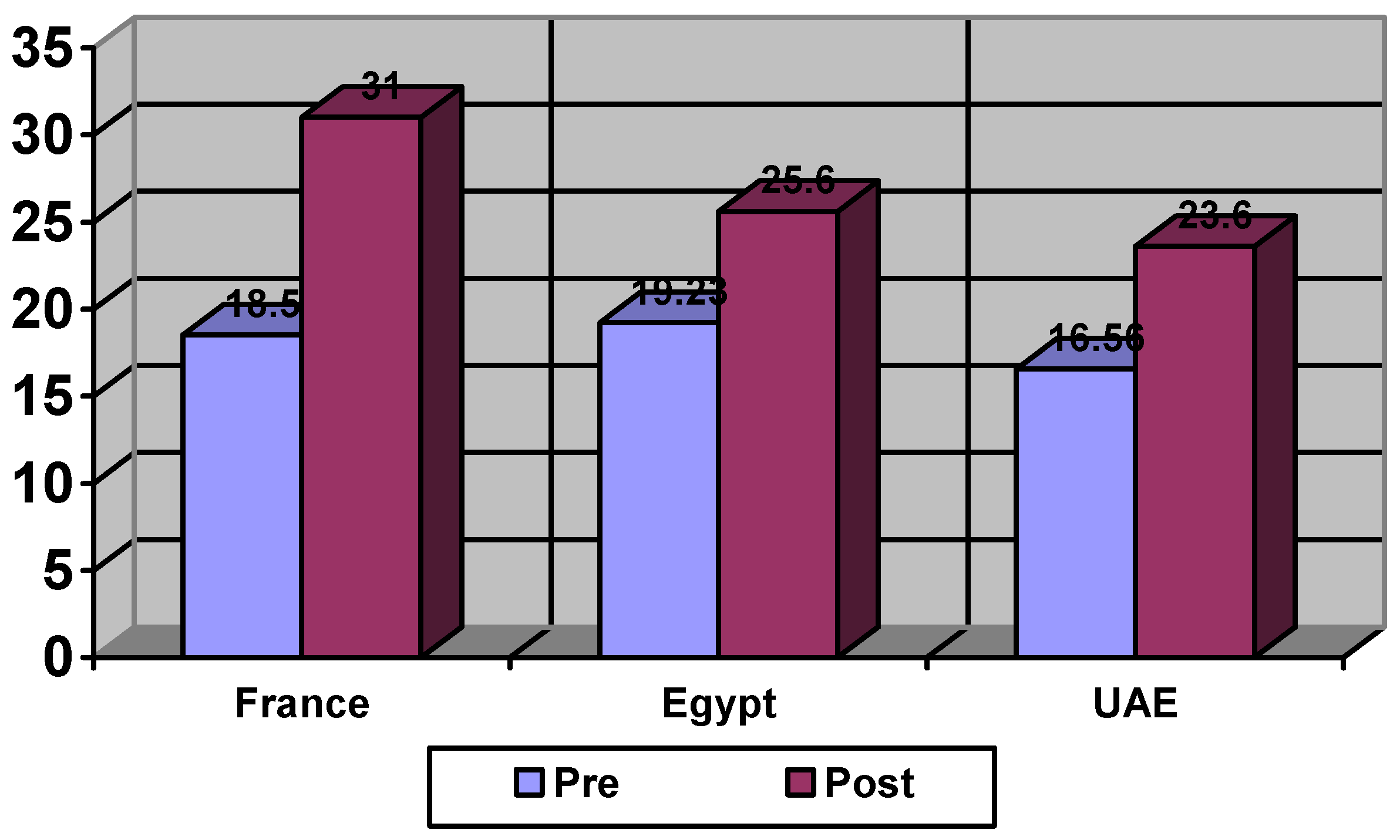
Based on Table 4, it is evident that there are statistically significant differences at the 0.01 level between the members of the three experimental groups in the research sample in their mean scores on the pre- and post-application of the Artificial Intelligence Proficiency Test for media content production, in favor of the post-application scores. The t-values were 23.15 for the France sample, 8.40 for the Egypt sample, and 10.08 for the UAE sample.
To assess the effectiveness of the training program in developing students’ media content production skills, the effect size was calculated using Eta-squared (η2). The effect sizes were found to be large, with η2 values of 0.949, 0.709, and 0.778 for the three samples, respectively. This indicates a substantial impact of the training program on students’ proficiency in using AI techniques for media content production, thereby confirming the effectiveness of the implemented training program on the research sample. Figure 2 illustrates the comparison by country.
The results of the analysis of variance (ANCOVA) showed that it supports the existence of a real effect of the AI-based training program after adjusting for pre-test differences. In short, pre-test scores were introduced as a covariate to adjust post-test means so that the resulting differences were attributed to the effect of the training intervention rather than to baseline differences among students. The ANCOVA results showed statistically significant values: F(2,86) = 41.73, p < 0.001, with η2 = 0.492, meaning that the group variable (country/intervention) explains approximately 49.2% of the variance in post-test scores after adjusting for the effect of the pre-test score—a value classified as a large effect size and indicating a significant practical effect of the program.
As regards the 95% confidence intervals accompanying the pre/post mean differences for each group, they provided important information about the accuracy and direction of the statistical estimates, going beyond simply indicating statistical significance. For the difference between the pre- and post-means for each sample, the estimates and confidence intervals were as follows: France: difference = 12.50, 95% CI [11.36, 13.64]; Egypt: difference = 6.37, 95% CI [4.86, 7.88]; the UAE: difference = 7.04, 95% CI [5.55, 8.53].
Verification of the Second Hypothesis:
There are statistically significant differences between students in the three experimental groups in the pre- and post-application of the Media Content Production Skills Evaluation Form, in favor of the post-application results.
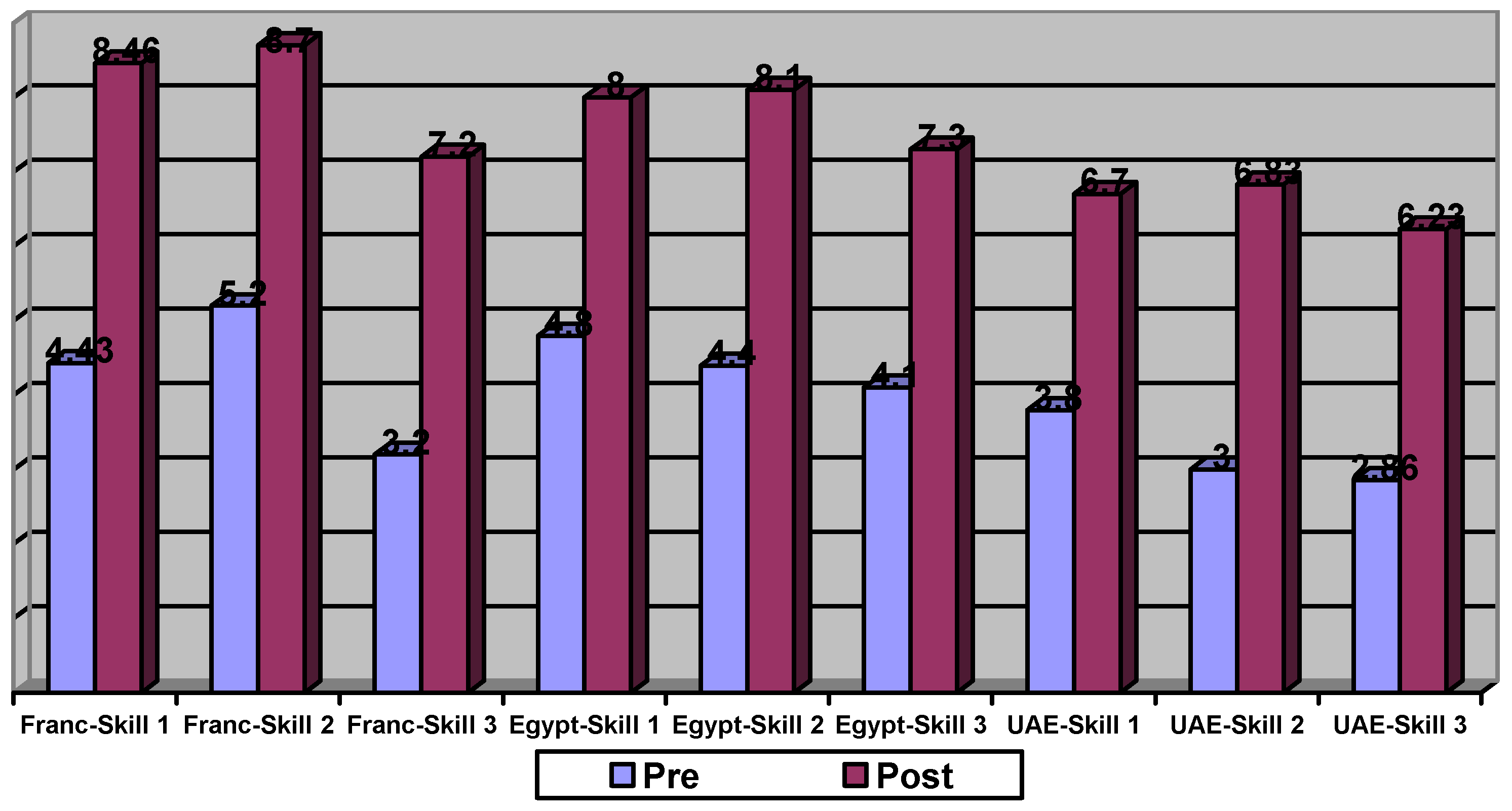
Based on Table 5, there are statistically significant differences at the 0.01 level between members of the three experimental groups in the research sample in their mean scores on the pre- and post-application of the Media Content Production Skills Evaluation Form, in favor of the post-application scores. The t-values for the France sample were 19.56, 18.65, and 13.51; for the Egypt sample, 13.51, 24.22, and 18.95; and for the UAE sample, 13.75, 13.90, and 15.14.
The effect size was also calculated using “eta-squared”; the effect size was found to be “large”; the values were in the range of (0.863–0.953).
Furthermore, the mean post-application scores for media content production skills were higher compared to the pre-application scores across all three experimental groups (France, Egypt, and the UAE). Among the skills, information and media verification showed the greatest improvement following the training program, followed by digital content writing and editing, and then digital media production. Figure 3 illustrates the comparison by country.
Verification of the Third Hypothesis:
  • There are statistically significant differences between the respondents in the three experimental groups in the post-application of the Artificial Intelligence Proficiency Test for media content production, based on country (France, Egypt, the UAE).
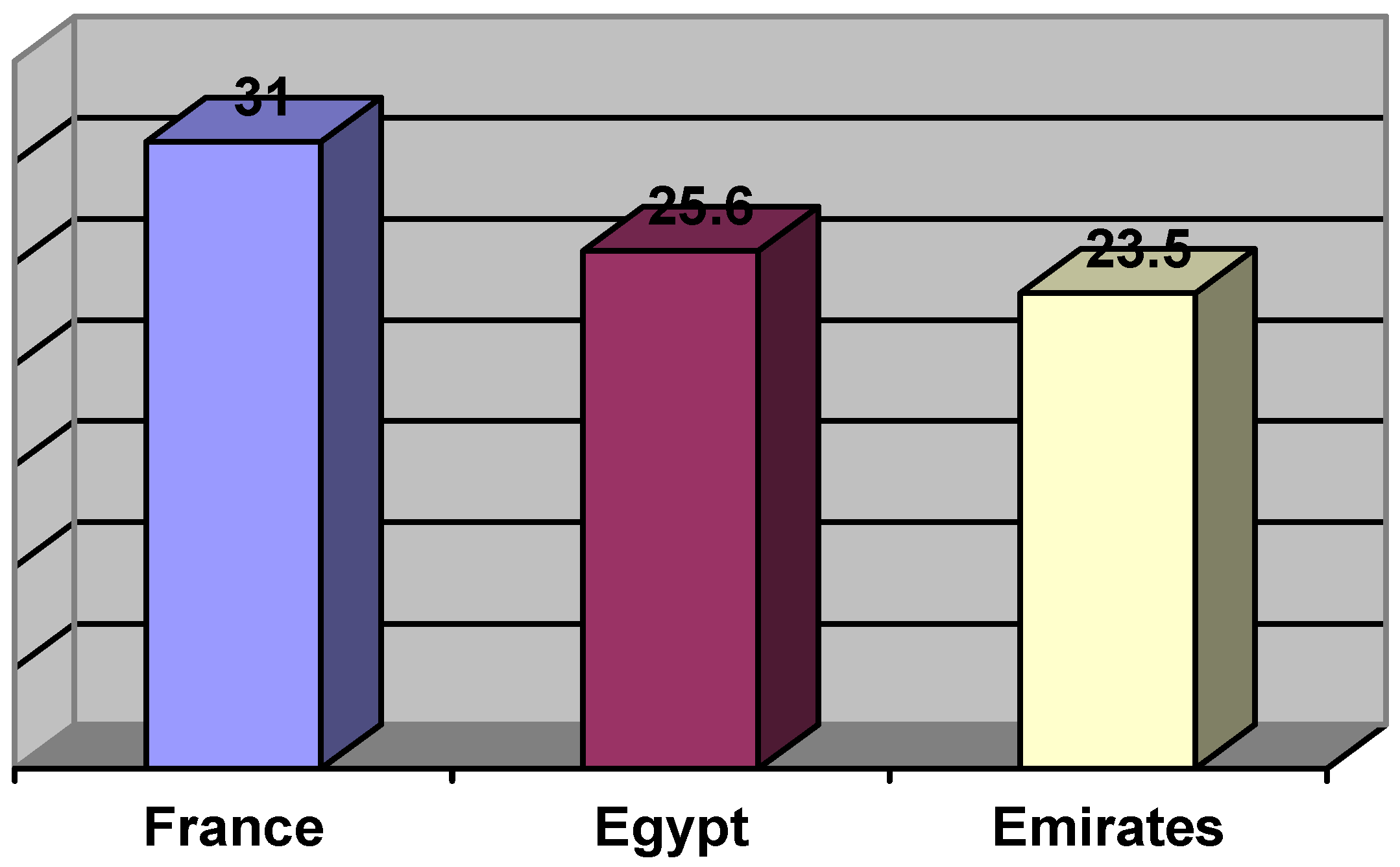
Table 6 shows that there are statistically significant differences between the respondents in the three experimental groups in the post-application of the Artificial Intelligence Proficiency Test for media content production, based on country (France, Egypt, the UAE). To determine the direction of the differences according to the country variable and to identify which group the differences favor, a post hoc comparison test (Scheffé Post Hoc) was conducted.
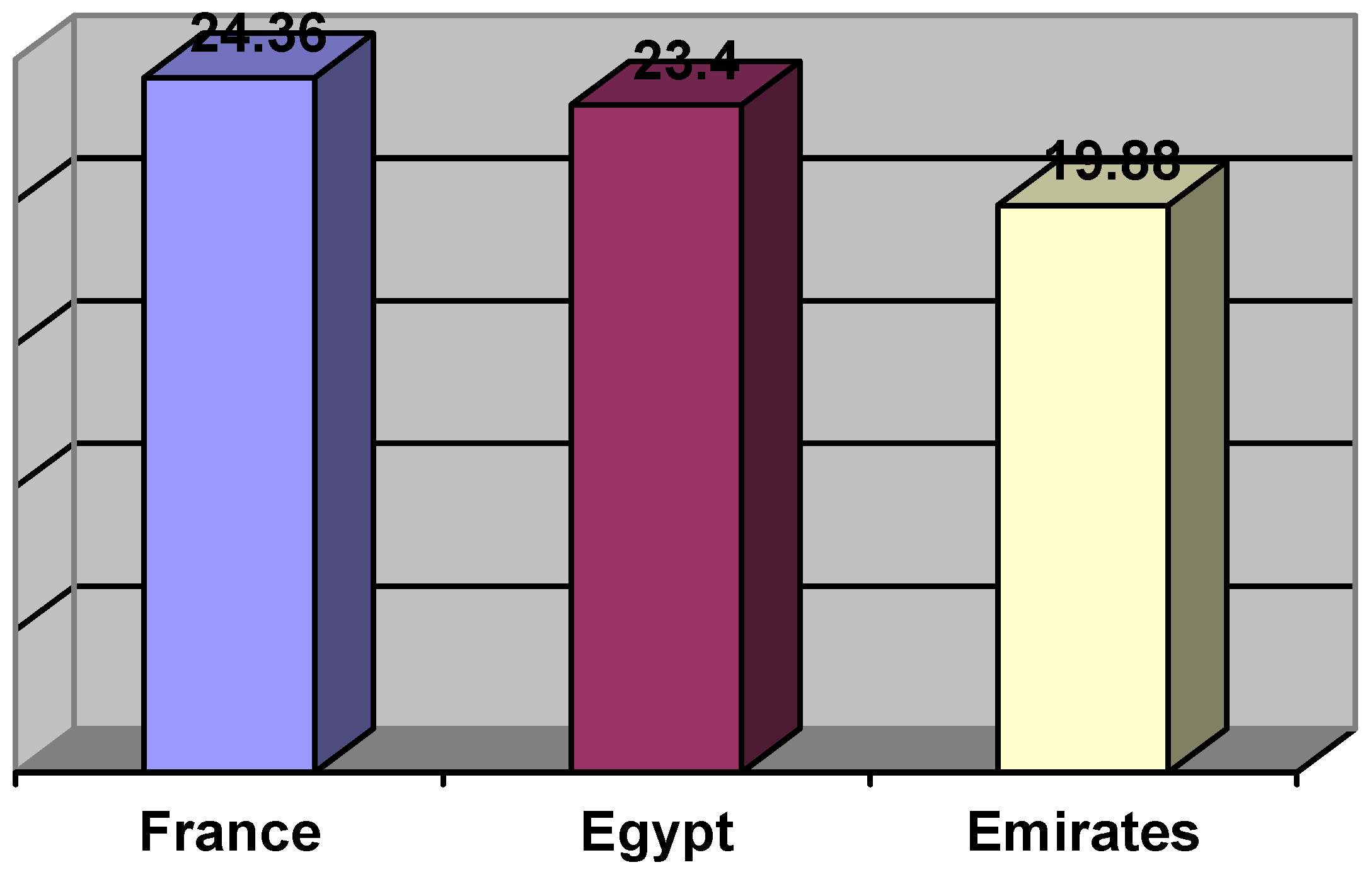
After the application of the Scheffé Post Hoc test, the results indicated that based on the mean scores, there are statistically significant differences between the respondents in the three experimental groups in the post-application of the Artificial Intelligence Proficiency Test for media content production, in favor of the France sample. This implies that students in the French experimental group were the most proficient in using AI techniques for media content production after participating in the training program, compared to the other experimental groups. Table 7 and Figure 4 shows the results of the PostHoc test.
Verification of the Fourth Hypothesis:
  • There are statistically significant differences between the respondents in the three experimental groups in the post-application of the Media Content Production Skills Evaluation Form, based on country.
Table 8 demonstrates the presence of statistically significant differences among the respondents in the three experimental groups in the post-application of the Media Content Production Skills Evaluation Form based on country.
To determine the direction of these differences according to the country variable and to identify which group the differences favor, a Scheffé Post Hoc comparison test was conducted.
Following the application of the Scheffé Post Hoc test, the results revealed that based on the mean scores, there are statistically significant differences among the respondents in the three experimental groups in the post-application of the Media Content Production Skills Evaluation Form, in favor of the France sample. This implies that students in the French experimental group demonstrated the highest level of proficiency in media content production after completing the training program, compared to the other experimental groups. Table 9 and Figure 5 shows the results of the PostHoc test.
The results of the third and fourth hypotheses confirm the substantial impact of artificial intelligence techniques on the media content production skills assessed after the implementation of the training program. They also indicate notable improvements in students’ proficiency levels in the post-program application compared to the pre-program stage. Furthermore, the findings revealed that the France sample outperformed the other groups in both the post-application of the proficiency test and the skills evaluation form.

5. Discussion

This study aimed to measure the impact of artificial intelligence techniques on the development of media content production skills among students in France, Egypt, and the United Arab Emirates. This was achieved through a comparative quasi-experimental study in which a training program based on the integration of AI techniques was delivered to the students to examine the effect of these techniques on the quality of media content they produced before and after the training. The students participated in an eight-session program designed to equip them with technical and professional skills related to the use and application of AI in media content production to enhance their competencies in (a) writing and editing digital content, (b) verifying information and media, and (c) producing digital media. The program also included training on AI tools specifically relevant to media content production, namely Wordsmith, Hemingway Editor, Full Fact, Microsoft Video Authenticator, Sensity AI, Microsoft Azure Speech Services, and Sora.
The findings demonstrated a substantial impact and high effectiveness of employing artificial intelligence techniques in enhancing media content production skills among students in France, Egypt, and the United Arab Emirates. Statistically significant differences were identified between the pre- and post-test results for both the AI Proficiency Test and the Media Content Production Skills Evaluation Form in favor of the post-test. This reflected an improvement in students’ acquisition of media content production skills following the implementation of the training program across all three countries. These results underscore the importance and value of AI techniques and highlight the positive role they can play in media work in general, and in content production in particular. Furthermore, the findings reinforce previous research emphasizing the necessity of properly integrating AI into media practice, not as a threatening factor to human involvement, but as a supportive tool that enhances human capabilities and contributes to improving the quality of content produced by media students and practitioners. This conclusion is consistent with the studies of Y. Li (2019), Fayez Abdelhay (2021), Abdul Khaliq (2025), and Khalifa et al. (2026).
The results also indicated an improvement across all media content production skills following the students’ engagement in the training program. Among these, the skill of verifying information and media showed the greatest development, followed by writing and editing digital content, and then producing digital media. These findings are implicitly consistent with the study of Yen and Yang (2024), which highlighted the significant impact of AI applications in enhancing the quality of media video production, and they also support the results of Nasser El Erafy (2023). All results confirmed an overall improvement in students’ media content production skills across the three countries.
The results showed that the media and information verification skill showed the most improvement compared to the other skills targeted by the training program. This can be explained on several levels:
First, the nature of the training content: The program focused on using artificial intelligence tools to detect misinformation, manipulation, fake content, and to verify images and videos. This type of skill typically shows rapid improvement because it relies on direct, practical procedures (such as reverse image search, metadata analysis, and writing style analysis using linguistic models), making the impact of the training clear.
Second, the immediate response of the AI tools: The tools used in the training (such as tools for detecting generated content, linguistic verification tools, and text comparisons) provided immediate results that support experiential learning, thus enhancing the acquisition of verification skills compared to more complex or abstract skills such as editorial planning or generative storytelling.
Third, the high level of need among the trainees: The improvement is also due to the fact that trainees in the three countries suffer to varying degrees from the spread of misinformation and fake content, making verification skills a pressing need for them. This practical motivation enhances engagement in training and increases the rate of improvement.
Fourth, measurability: verification skills typically have clear assessment criteria (correct/incorrect answer, conform/non-conformity detection), making any improvement statistically more evident than in skills that are subjective or interpretive in nature.
Comparing the three samples representing each country, France ranked first as the group that showed the greatest improvement in students’ media content production skills in the post-test of proficiency in using AI techniques, as well as in the evaluation form of media content production skills. This result may be attributed to the remarkable technological and digital advancements that France is currently experiencing as one of the leading countries in the field of technology. As a member of the European Union, France possesses a large number of media outlets and satellites, and it also has a precedence in the field of artificial intelligence compared to several other European countries. Moreover, France aims to position itself as the European leader in AI, as highlighted in the Artificial Intelligence in France Report (2023), and it hosted the most recent edition of the Global AI Summit in Paris during the first half of 2024 (Artificial Intelligence, 2024).
Egypt and the UAE were not far behind France, as the levels of improvement in students’ media content production skills were also notably high in both samples. This can be primarily associated with the growing interest in both countries in digital transformation and the adoption of AI techniques at the societal level. Recently, Egypt has increasingly focused on integrating technology within media institutions, shifting significantly toward digital journalism and social media, and establishing dedicated departments for SEO and algorithmic journalism (Fayez, 2022). Similarly, the UAE is considered one of the leading countries in digitalization and AI techniques, placing strong emphasis on media studies, continuously expanding the establishment of digital media colleges, and aiming to equip its university graduates with contemporary skills that align with modern technological transformations. These findings are consistent with the studies of Aleessawi and Alzubi (2024) and Al Adwan et al. (2024).
While the positive effect of structured training on participant performance is consistent with previous experimental studies, our study adds value by measuring these outcomes across different national and college contexts. In doing so, we provide an experimental baseline that future research can use to explore the underlying reasons for performance variations across contexts (e.g., infrastructure, prior digital skills, language proficiency, and institutional support). A full explanation of these differences is beyond the scope of our quasi-experimental design and requires targeted comparative or longitudinal studies.
While this study’s findings confirm the importance of integrating artificial intelligence (AI) into media training and education, these raise several ethical considerations that must be addressed to regulate its use. First, there is the risk of over-reliance on AI tools, which could weaken human critical judgment, particularly in fact-checking, potentially creating a generation of trainees who trust the tools’ output without exercising the necessary critical thinking skills. Second, there is the issue of authorship integrity and the originality of production, and what the permissible limits are for automated assistance in academic or media work. Third, AI may give the impression of possessing advanced production and editing skills, while these skills actually depend on machine operation, not the development of the student’s genuine abilities; this could create a gap between actual performance and core skills. Fourth, there are privacy and data issues; many AI tools require the uploading of user data or files, raising concerns about how these data are stored and who owns them.
The findings of this study raise important questions regarding the need to conduct further quasi-experimental studies to develop various skills of media and communication students through the use of modern, constructive, and effective research methods, tools, and approaches. This could be achieved by going beyond mere description or theorization characteristic of descriptive and survey-based studies. The results also underscore the significance of artificial intelligence techniques in the contemporary era and the necessity of approaching them as a positive reality from which benefits can be derived. However, their use should be regulated ethically and responsibly, which preserves the value and professionalism of the media message without undermining human creativity. Furthermore, the findings reinforce perspectives that call for adopting a new philosophy in teaching media courses that emphasizes practical, training-based, and interactive dimensions while integrating modern techniques and employing them constructively to serve both educational and media practices.
Based on this study’s findings and discussion, several concrete, practical recommendations can be made to enhance the integration of artificial intelligence into media education:
Integrate AI-focused learning modules into the curriculum, covering topics such as writing and editing tools (Wordsmith, Hemingway Editor), fact-checking (Full Fact, Sensity AI), and digital media production (Microsoft Azure Speech Services, Sora).
Train faculty members on using emerging AI tools in the classroom, including conducting regular workshops and providing online learning resources to help them utilize these tools in practical teaching.
Develop interactive, project-based learning programs that allow students to produce authentic digital content using AI, focusing on fact-checking, digital writing, and audio-visual production skills.
Establish digital labs equipped with the latest AI tools, enabling students to practice their skills experimentally and realistically before graduation, thus enhancing their competitiveness in modern media work environments.
Strengthen international cooperation among media schools to exchange experiences on best practices in integrating artificial intelligence and to leverage field experiences in different countries to develop advanced and flexible curricula.

6. Limitations and Future Research

Despite the robust design of the present study, which employed pre- and post-tests analyzed with ANCOVA to account for baseline differences, several limitations warrant consideration. First, the reliance on specific AI tools may limit the generalizability of the observed skill development to other tools with different functionalities or interfaces. Variations in technological infrastructure and digital readiness among the three countries could also have contributed to differences in outcomes, reflecting contextual constraints rather than solely the effects of the training program. Additionally, this study did not incorporate longitudinal assessment, leaving open the question of whether the acquired competencies are sustained over time or diminish after the conclusion of training. Some self-assessment items may have been influenced by social desirability bias, as students may have been motivated to present their performance more positively. Furthermore, the quality metrics applied focused on measurable outcomes, leaving broader dimensions such as editorial judgment, stylistic sophistication, ethical considerations, and public perceptions of trust and credibility less thoroughly examined.
Building upon these limitations and the findings of this study, future research could pursue several complementary avenues. Longitudinal studies would provide insight into the durability of AI-assisted skill development, allowing for assessment of how media content production competencies evolve over time. Expanding the scope to include additional regions and cultural contexts could enhance understanding of how AI tool adoption interacts with differing educational systems and digital ecosystems, thereby increasing the generalizability of results. Investigating the integration of more advanced AI applications, including generative AI and Large Language Models (LLMs), within multidisciplinary training programs that combine media, data science, and AI could reveal pathways for fostering more innovative and holistic media competencies. Such research may also examine the effects of these technologies on creativity, quality, and credibility in digital news production, utilizing quasi-experimental or enhanced experimental designs to rigorously evaluate outcomes. Collectively, these directions offer promising opportunities for deepening our understanding of AI in media education and for informing the development of curricula that effectively prepare students for the demands of the modern media landscape.

Author Contributions

Conceptualization, M.N.A.A. and A.H.; Methodology, H.F.; Software, H.F., M.N.A.A. and A.H.; Validation, M.N.A.A., A.H. and M.E.H.; Formal analysis, H.F. and M.E.H.; Investigation, M.N.A.A.; Resources, H.F., A.H. and M.E.H.; Data curation, H.F. and A.H.; Writing—original draft, H.F. and M.N.A.A.; Writing—review & editing, M.N.A.A. and M.E.H.; Visualization, A.H.; Supervision, H.F., M.N.A.A., A.H. and M.E.H.; Project administration, H.F. and M.N.A.A.; Funding acquisition, M.N.A.A., A.H. and M.E.H. All authors have read and agreed to the published version of the manuscript.

Funding

This research did not receive any specific funding.

Institutional Review Board Statement

This study did not involve any clinical experiments or the collection of biological or human samples. This research relied exclusively on theoretical and survey-based instruments, which were administered with informed consent from all participants. As the procedures posed no physical or psychological risk, ethical committee approval was not required under the regulations of the countries where this study was conducted.

Informed Consent Statement

Informed consent was obtained from all subjects involved in this study.

Data Availability Statement

Data is available upon request.

Acknowledgments

The authors would like to thank all the participants in this study.

Conflicts of Interest

The authors declare no conflicts of interest.

References

  1. Abdel Hamid, A. (2020). Implementing artificial intelligence applications in the creation of media content and its relationship to its credibility with the Egyptian public. Journal of Mass Communication Research, 55(5), 2826–2827. [Google Scholar]
  2. Abdelhay, H. F., Al-Nasser, T. Z., & Al-Makhzoomy, A. A. K. (2025). Exposure to natural disaster news on social media and its relationship with psychological immunity and post-traumatic stress among Egyptian and Jordanian youth. Dirasat: Human and Social Sciences, 52(5), 6122. [Google Scholar] [CrossRef]
  3. Abdelhay, H. F., Mabrouk, A. M., & Elhajji, M. (2023). Psychological effects of foreign drama in the context of identity crisis: A theoretical study. International Journal of Contemporary Humanities and Educational Science (IJCHES), 2(4), 41–67. [Google Scholar]
  4. Abdul Khaliq, N. M. (2025). Elite trends towards the use of artificial intelligence technologies in producing journalistic content in Bahraini press institutions. Journal of Digital Communication Research, 1(2), 215–243. [Google Scholar]
  5. Al Adwan, M. N., El Hajji, M., & Fayez, H. (2024). Future anxiety among media professionals and its relationship to utilizing artificial intelligence: The case of Egypt, France, and UAE. Online Journal of Communication and Media Technologies, 14(2), 3–4. [Google Scholar] [CrossRef]
  6. Al Adwan, M. N., Hegazy, A., Basha, S. E., Mamdouh, A., El hAjji, M., Alketbi, B., & Fayez, H. (2025). Investigating the role of public relations campaigns in environment awareness among university students. Sustainability, 17, 5675. [Google Scholar] [CrossRef]
  7. Aleessawi, N. A. K., & Alzubi, S. F. (2024). The implications of Artificial Intelligence (AI) on the quality of media content. Studies in Media and Communication, 12(4), 41–51. [Google Scholar] [CrossRef]
  8. Al Ghaithi, A., & Behforouz, B. (2025). Effects of interaction with AI-assisted writing evaluation on EFL students’ writing performance. Knowledge Management & E-Learning, 17(2), 206–224. [Google Scholar]
  9. Aljalabneh, A., Aljawawdeh, H., Mahmoud, A., Sharadqa, T., & Al-Zoubi, A. (2024). Balancing efficiency and ethics: The challenges of artificial intelligence implementation in journalism. In Intelligent systems, business, and innovation research (pp. 763–773). Springer. Available online: https://link.springer.com/chapter/10.1007/978-3-031-36895-0_64 (accessed on 6 July 2025).
  10. Al-Rawi, A., & Saad, H. (2025). A scoping review of Arab journalists’ perspectives and applications of artificial intelligence. AI & Society, 40, 6633–6643. [Google Scholar] [CrossRef]
  11. Ansari, A., Zhang, D. C., Tripto, N. I., & Lee, D. (2025, October). Echoes of automation: The increasing use of LLMs in newsmaking. In International conference on social computing, behavioral-cultural modeling and prediction and behavior representation in modeling and simulation (pp. 3–13). Springer Nature. [Google Scholar] [CrossRef]
  12. Artificial Intelligence. (2024). Five takeaways from UK’s AI safety summit at Bletchley Park. Available online: https://www.theguardian.com/technology/2023/nov/02/five-takeaways-uk-ai-safety-summit-bletchley-park-rishi-sunak (accessed on 23 October 2025).
  13. Babacan, H., Arık, E., Bilişli, Y., Akgün, H., & Özkara, Y. (2025). Artifcial Intelligence and journalism education in higher education: Digital transformation in undergraduate and graduate curricula in Türkiye. Journalism and Media, 6(2), 52. [Google Scholar] [CrossRef]
  14. Bozdag, A. (2023). AIsmosis and the pas de deux of human-AI interaction: Exploring the communicative dance between society and artificial intelligence. Online Journal of Communication and Media Technologies, 13(4), e202340. [Google Scholar] [CrossRef]
  15. Bykov, I. A., & Medvedeva, M. V. (2024, April). Media literacy and AI-technologies in digital communication: Opportunities and risks. In 2024 Communication Strategies in Digital Society Seminar (ComSDS) (pp. 21–24). IEEE. [Google Scholar] [CrossRef]
  16. Campbell, D. T., & Stanley, J. C. (2015). Experimental and quasi-experimental designs for research. Ravenio Books. [Google Scholar]
  17. Cools, H., & Diakopoulos, N. (2024). Uses of generative AI in the newsroom: Mapping journalists’ perceptions of perils and possibilities. Journalism Practice, 1–19. [Google Scholar] [CrossRef]
  18. Creswell, J. W., & Creswell, J. D. (2017). Research design: Qualitative, quantitative, and mixed methods approaches. Sage Publications. [Google Scholar]
  19. Diakopoulos, N. (2019). Automating the news: How algorithms are rewriting the media (1st ed.). Harvard University Press. [Google Scholar] [CrossRef]
  20. Elmahdy, A., Fayez Abdelhay, H., & Khalifa, P. D. M. (2024). University students’ exposure to tourism advertising on social media sites and its relationship to their attitudes toward it. Journal of Research in the Fields of Specific Education, 10(52), 449–478. [Google Scholar] [CrossRef]
  21. Fayez, H. (2022). Awareness of journalists in online journalism to search engine optimization “SEO” and its relationship to the quality of news and marketing services. Egyptian Journal of Public Opinion Research, 21(1), 291. [Google Scholar] [CrossRef]
  22. Fayez, H. (2023). Basic education students’ practice of educational media activities and their relationship to their mindfulness. The Egyptian Journal of Media Research, 2023(83), 114–151. [Google Scholar] [CrossRef]
  23. Fayez, H. (2024). Audiences interaction with content related to “War on Gaza 2023” via news pages on social media: A study using big data according to sentiment analysis and topic modeling. Journal of Mass Communication Research, 3(69), 1445–1506. [Google Scholar] [CrossRef]
  24. Fayez, H., Al Adwan, M. N., Adway, A., & El Hajji, M. (2026). Audience trends on facebook regarding the Gaza War: A sentiment analysis study using big data. Studies in Media and Communication, 14(2), 170–183. [Google Scholar] [CrossRef]
  25. Fayez Abdelhay, H. (2021). The effectiveness of a training program based on analysis of news content in developing critical thinking skills for students of educational media: A quasi-experimental study. Journal of Research in the Fields of Specific Education, 7(34), 1915–1951. [Google Scholar] [CrossRef]
  26. Fowler-Watt, K., & McDougall, J. (2019). Media literacy versus fake news: Fact checking and verification in the era of fake news and post-truths. Journalism Education: The Journal of the Association for Journalism Education, 8(1), 59–68. [Google Scholar]
  27. Fraenkel, J. R., & Wallen, N. E. (2009). How to: Design and evaluate resecharch in education. Mc Graw-Hill Higher Education. [Google Scholar]
  28. Friesem, Y. (2019). Teaching truth, lies, and accuracy in the digital age: Media literacy as project-based learning. Journalism & Mass Communication Educator, 74(2), 185–198. [Google Scholar] [CrossRef]
  29. Hassan, T. H., Ammar, S., Abdelhay, H. F., Fayyad, S., Noreldeen, M. A., Salem, A. E., Gayed Abdel, A. H., Janzakov, B., Mahmoud, M. H., & Al-Azab, M. R. (2024). The impact of deceptive hospitality and tourism marketing tactics on tourists’ social media interactions and trust and destination image in emerging markets. Geojournal of Tourism and Geosites, 56(4), 1732–1743. [Google Scholar] [CrossRef]
  30. Hemraj, S. (2025). AI and the future of creative development: Redefining digital media production. AI and Ethics, 5, 5105–5119. [Google Scholar] [CrossRef]
  31. Hussain, S. A., Zia, M. H., Zaki, N., & Iqbal, M. Z. (2025). The impact of AI-based learning tools on student motivation and academic self-concept. The Critical Review of Social Sciences Studies, 3(3), 1570–1584. [Google Scholar] [CrossRef]
  32. Khalifa, M. A., Basha, S. E., & Fayez, H. (2026). Using social media sites and its relation with social isolation and selfishness in youth: A predictive study. Studies in Media and Communication, 14(1), 40–53. [Google Scholar] [CrossRef]
  33. Khan, A. A., Laghari, A. A., Inam, S. A., Ullah, S., Shahzad, M., & Syed, D. (2025). A survey on multimedia-enabled deepfake detection: State-of-the-art tools and, emerging trends, current challenges & limitations, and future directions. Discover Computing, 28(1), 48. [Google Scholar] [CrossRef]
  34. Korshunov, P., & Marcel, S. (2018). Deepfakes: A new threat to face recognition? Assessment and detection. arXiv, arXiv:1812.08685. [Google Scholar] [CrossRef]
  35. Lai, C. L. (2021). Exploring university students’ preferences for AI-assisted learning environment. Educational Technology & Society, 24(4), 1–15. [Google Scholar]
  36. Lebid, A. Y., Dehtiarov, S. I., & Polyakova, L. G. (2020). A study into the skills of using data verification tools as a media information literacy instrument for university students. International Journal of Media and Information Literacy, 5(2), 184–190. [Google Scholar] [CrossRef]
  37. Lewis, S. C., Guzman, A. L., Schmidt, T. R., & Lin, B. (2025). Generative AI and its disruptive challenge to journalism: An institutional analysis. Communication and Change, 1(1), 9. [Google Scholar] [CrossRef]
  38. Li, J. (2025). Politics of Generative Artificial Intelligence in Empowering Education in France. In The politics of generative artificial intelligence in empowering education: A global perspective (pp. 79–99). Springer Nature. [Google Scholar] [CrossRef]
  39. Li, L. (2025). AI for content generation: Automating journalism, art, and media production. SSRN, 15, 1–18. [Google Scholar] [CrossRef]
  40. Li, Y. (2019). Impact of artificial intelligence on creative digital content production. Journal of Digital Art Engineering and Multimedia, 6(2), 121–132. [Google Scholar] [CrossRef]
  41. Liu, P., Tao, Q., & Zhou, J. T. (2024). Evolving from single-modal to multi-modal facial deepfake detection: Progress and challenges. arXiv, arXiv:2406.06965. [Google Scholar] [CrossRef]
  42. Liu, Y., Zhang, K., Li, Y., Yan, Z., Gao, C., Chen, R., & Sun, L. (2024). Sora: A review on background, technology, limitations, and opportunities of large vision models. arXiv, arXiv:2402.17177. [Google Scholar] [CrossRef]
  43. López-Paredes, M., & Carrillo-Andrade, A. (2024). Cartography of media consumption in Ecuador: From mediations and hyper-mediations to an ultra-mediated society. Palabra Clave, 27(1), e2712. [Google Scholar] [CrossRef]
  44. Marconi, F. (2020). Newsmakers: Artificial Intelligence and the future of journalism. Columbia University Press. [Google Scholar]
  45. Mathias, F., & Wilson, C. (2022). Artificial intelligence in news media: Current perceptions and future outlook. Journal Media, 3(1), 13–26. [Google Scholar] [CrossRef]
  46. Matos, T., Santos, W., Zdravevski, E., Coelho, P. J., Pires, I. M., & Madeira, F. (2025). A systematic review of artificial intelligence applications in education: Emerging trends and challenges. Decision Analytics Journal, 15, 100571. [Google Scholar] [CrossRef]
  47. Mekheimer, M. (2025). Generative AI-assisted feedback and EFL writing: A study on proficiency, revision frequency and writing quality. Discover Education, 4(1), 170. [Google Scholar] [CrossRef]
  48. Microsoft Responsible AI Standard, v2. (2022). Available online: https://www.microsoft.com/en-us/ai/principles-and-approach (accessed on 19 September 2025).
  49. Munaye, Y. Y., Admass, W., Belayneh, Y., Molla, A., & Asmare, M. (2025). ChatGPT in education: A systematic review on opportunities, challenges, and future directions. Algorithms, 18(6), 352. [Google Scholar] [CrossRef]
  50. Naidu, K., & Sevnarayan, K. (2023). ChatGPT: An ever-increasing encroachment of artificial intelligence in online assessment in distance education. Online Journal of Communication and Media Technologies, 13(1), e202336. [Google Scholar] [CrossRef]
  51. Nasser El Erafy, A. (2023). Applications of Artificial Intelligence in the field of media. International Journal of Artificial Intelligence and Emerging Technology, 6(2), 19–41. [Google Scholar] [CrossRef]
  52. Paredes, M. L., & Andrade, C. A. C. (2025). Disinformation and misinformation in Ecuador Ultramediations in contexts of digital illiteracy. AUCOM—Anuario de Comunicación, 14(3), e01431. [Google Scholar] [CrossRef]
  53. Pavlik, J. V. (2023). Collaborating with ChatGPT: Considering the implications of generative artificial intelligence for journalism and media education. Journalism & Mass Communication Educator, 78(1), 84–93. [Google Scholar] [CrossRef]
  54. Radcliffe, D. (2025). Journalism in the AI era: Opportunities and challenges in the Global South and emerging economies. Thomson Reuters Foundation. Available online: https://www.trust.org/resource/ai-revolution-journalists-global-south/ (accessed on 29 October 2025).
  55. Radford, A., Kim, J. W., Xu, T., Brockman, G., McLeavey, C., & Sutskever, I. (2022). Robust speech recognition via large-scale weak supervision (Whisper). OpenAI. Available online: https://cdn.openai.com/papers/whisper.pdf (accessed on 29 October 2025).
  56. Safori, A., Youssef, E., Attar, R. W., Tahat, O., Al Adwan, M. N., & Habes, M. (2023). New media and crisis management in Jordan: COVID 19 perspective. Information Sciences Letters, 12(7), 3149–3157. [Google Scholar] [CrossRef]
  57. Salman, H. S., & Fayyad, F. S. (2025). The impact of media literacy on developing media students’ skills in verifying AI-generated images published on social media platforms. International Journal of Environmental Sciences, 11(2s), 690–701. [Google Scholar] [CrossRef]
  58. Sar, A., Roy, S., Choudhury, T., & Abraham, A. (2025). Zero-shot visual deepfake detection: Can AI predict and prevent fake content before it’s created? arXiv, arXiv:2509.18461. [Google Scholar] [CrossRef]
  59. Sensity AI. (2024). Deepfake threat landscape report. Available online: https://sensity.ai/ (accessed on 3 November 2025).
  60. Shi, Y., & Sun, L. (2024). How generative AI is transforming journalism: Development, application and ethics. Journalism and Media, 5(2), 582–594. [Google Scholar] [CrossRef]
  61. Slocombe, W., & Liveley, G. (2025). The Routledge handbook of AI and literature. Routledge, Taylor & Francis. Available online: https://www.routledge.com/The-Routledge-Handbook-of-AI-and-Literature/Slocombe-Liveley/p/book/9781032186948 (accessed on 19 August 2025).
  62. Sonni, A. F., Hafied, H., Irwanto, I., & Latuheru, R. (2024). Digital newsroom transformation: A systematic review of the impact of Artificial Intelligence on journalistic practices, news narratives, and ethical challenges. Journalism and Media, 5(4), 1554–1570. [Google Scholar] [CrossRef]
  63. Takona, J. P. (2024). Research design: Qualitative, quantitative, and mixed methods approaches. Quality & Quantity, 58(1), 1011–1013. [Google Scholar] [CrossRef]
  64. Tiernan, P., Costello, E., Donlon, E., Parysz, M., & Scriney, M. (2023). Information and media literacy in the age of AI: Options for the future. Education Sciences, 13(9), 906. [Google Scholar] [CrossRef]
  65. van Oest, R., & Girard, J. M. (2022). Weighting schemes and incomplete data: A generalized Bayesian framework for chance-corrected interrater agreement. Psychological Methods, 27(6), 1069–1088. [Google Scholar] [CrossRef]
  66. Vargas-Murillo, A. R., de la Asuncion, I. N. M., & de Jesús Guevara-Soto, F. (2023). Challenges and opportunities of AI-assisted learning: A systematic literature review on the impact of ChatGPT usage in higher education. International Journal of Learning, Teaching and Educational Research, 22(7), 122–135. [Google Scholar] [CrossRef]
  67. Verdoliva, L. (2020). Media forensics and DeepFakes: An overview. IEEE Journal of Selected Topics in Signal Processing, 14(5), 910–932. [Google Scholar] [CrossRef]
  68. Walia, R., & Jain, K. (2024). Algorithmic Alchemy: The Transformative Power of AI in Shaping Media Narratives. International Journal for Multidimensional Research Perspectives, 1(3), 239–247. [Google Scholar]
  69. Yen, C. S., & Yang, S. C. (2024). The integration of artificial intelligence and video production skills in workplace development: A study from the perspective of vocational training. The Review of Socionetwork Strategies, 18(2), 373–386. [Google Scholar] [CrossRef]
  70. Yuting, C. (2024). The role of digital technology in schools in France. Journal of Artificial Intelligence Practice, 7(1), 77–81. [Google Scholar] [CrossRef]
Figure 1. Model of the mechanism by which artificial intelligence affects skill acquisition.
Journalmedia 07 00043 g001
Figure 2. The differences between the pre- and post-application of the Artificial Intelligence Proficiency Test.
Journalmedia 07 00043 g002
Figure 3. The differences between the pre- and post-application of the Media Content Production Skills Evaluation Form.
Journalmedia 07 00043 g003
Figure 4. One-way analysis of variance between the research samples regarding the results of the proficiency test in using artificial intelligence techniques in media content production.
Journalmedia 07 00043 g004
Figure 5. The differences between the research samples regarding the results of the Media Content Production Skills Evaluation.
Journalmedia 07 00043 g005
Table 1. Distribution of the respondents across research groups.
GroupNumber of StudentsCountry
Experimental Group 130France
Experimental Group 230Egypt
Experimental Group 330UAE
Table 2. Details of the training program.
DaySessionMain ThemesDetailed Content/Tools Used
Day 1Introduction to AI and Media Content Production- Basic concepts.
- Differences between traditional and intelligent tools.
- Content generation models and the ethics and limitations of their use in media.
- Presentation.
- Introduction to content generation tools (ChatGPT 3.5, DALL·E 3, Sora 2).
- Discussion.
- Real-life examples.
Day 2Digital Content Writing and Editing (Session 1)- Fundamentals and rules of digital editing.
- Rephrasing using AI techniques.
- Differences between AI-generated and human-written texts.
- Discussion and practical models using Wordsmith 6.
- Discussion and practical models using Hemingway Editor.
Day 3Digital Content Writing and Editing (Session 2)- Writing for different digital platforms and their distinctions.
- Common errors in digital editing.
- Ethical limits of using AI in editing and content writing.
- Discussion and practical models using Wordsmith.
- Discussion and practical models using Hemingway Editor.
Day 4Verification of Information and Media (Session 1)- Mechanisms for verifying information, figures, and data prior to writing.
- Verification of images for accuracy and quality.
- Verification of videos.
- Discussion, training, and practical models using Full Fact.
- Discussion and training using Microsoft Video Authenticator.
- Discussion and training using Sensity AI.
Day 5Verification of Information and Media (Session 2)- Techniques for detecting video manipulation and digital media falsification using AI techniques.- Discussion, training, and practical models using Microsoft Video Authenticator.
- Discussion, training, and practical models using Sensity AI.
Day 6Digital Media Production for Electronic Content (Session 1)- Principles of digital media production.
- Ethics and limits of proper use in generating and producing digital media.
- Converting text to speech and vice versa, and creating digital stories.
- Presentation.
- Discussion, training, and practical models using Microsoft Azure Speech Services.
Day 7Digital Media Production for Electronic Content (Session 2)- Video editing from texts.
- Quality enhancement and noise reduction.
- Proper generation of images and videos consistent with intellectual property standards.
- Correct embedding of videos and images in digital texts.
- Panel discussion on AI Ethics Guidelines.
- Training and practical models using Microsoft Azure Speech Services.
- Training and practical models using Sora.
Day 8Final Media Content Production Using AI- Presentation of the final outputs of the participating students.
- Evaluation of AI-generated media content quality.
- Application of all techniques covered in the training.
- Re-administration of the AI proficiency test.
- Re-assessment of the students’ produced media content.
Table 3. Steps of the experimental method.
GroupPre-ApplicationTraining ProgramPost-Application
Experimental Group (1)Completed the proficiency test and submitted media content for evaluation.Participated in the training programRe-completed the proficiency test and submitted media content for evaluation after the program.
Experimental Group (2)Completed the proficiency test and submitted media content for evaluation.Participated in the training programRe-completed the proficiency test and submitted media content for evaluation after the program.
Experimental Group (3)Completed the proficiency test and submitted media content for evaluation.Participated in the training programRe-completed the proficiency test and submitted media content for evaluation after the program.
Table 4. Significance of the difference between members of the experimental group in the research sample in their mean scores on the pre- and post-application of the Artificial Intelligence Proficiency Test for media content production.
SampleNoApplicationMeanSDt-ValueSignificanceη2 (Eta-Squared)Effect Size
France30Pre-test18.502.38−23.150.000.949Large
Post-test31.002.01
Egypt30Pre-test19.233.52−8.400.000.709Large
Post-test25.602.81
UAE30Pre-test16.563.03−10.080.000.778Large
Post-test23.602.28
Table 5. Significance of differences between members of the experimental groups in the research sample in their mean scores on the pre- and post-application of the Media Content Production Skills Evaluation Form.
CountrySkill AreaNoApplicationMeanSDt-ValueSignificanceη2 (Eta-Squared)Effect Size
FranceDigital Content Writing and Editing30Pre-test4.430.85−19.560.000.930Large
FranceInformation and Media Verification Post-test8.460.73
30Pre-test5.201.15−14.110.000.873Large
Post-test8.700.59
FranceDigital Media Production30Pre-test3.200.76−18.650.000.924Large
Post-test7.200.88
EgyptDigital Content Writing and Editing30Pre-test4.800.92−13.510.000.863Large
Post-test8.000.78
EgyptInformation and Media Verification30Pre-test4.400.96−24.220.000.953Large
Post-test8.100.71
EgyptDigital Media Production30Pre-test4.101.02−18.950.000.926Large
Post-test7.300.59
UAEDigital Content Writing and Editing30Pre-test3.800.92−13.750.000.868Large
Post-test6.700.70
UAEInformation and Media Verification30Pre-test3.000.98−13.900.000.870Large
Post-test6.830.87
UAEDigital Media Production30Pre-test2.860.93−15.140.000.888Large
Post-test6.230.97
Table 6. One-way analysis of variance between the research sample.
VariablesThe Source of the ContrastSum of SquaresdfMean SquareFSig. (P)
Artificial Intelligence Proficiency Test for Media Content ProductionBetween Groups877.2552438.62775.44 **0.00
Within Groups494.200855.814
(**) significant at level of 0.01.
Table 7. Results of the Post Hoc Scheffe test.
SimpleMeanFranceEgyptUAE
France31ـــــــــــــــــــــــــــــــ5.40 *7.50 *
Egypt25.6 ـــــــــــــــــــــــــــــــ2.10 *
UAE23.5 ـــــــــــــــــــــــــــــــ
(*) significant at level of 0.05.
Table 8. One-way analysis of variance between the research samples.
VariablesThe Source of the ContrastSum of SquaresdfMean SquareFSig. (P)
Media Content Production Skills EvaluationBetween Groups311.1212155.56072.26 **0.00
Within Groups180.833842.153
(**) significant at level of 0.01.
Table 9. The results of the Post Hoc Scheffe test.
SimpleMeanFranceEgyptUAE
France24.36ـــــــــــــــــــــــــــــــ0.96 *4.47 *
Egypt23.4 ـــــــــــــــــــــــــــــــ3.51 *
UAE19.88 ـــــــــــــــــــــــــــــــ
(*) significant at the level of 0.05.
Disclaimer/Publisher’s Note: The statements, opinions and data contained in all publications are solely those of the individual author(s) and contributor(s) and not of MDPI and/or the editor(s). MDPI and/or the editor(s) disclaim responsibility for any injury to people or property resulting from any ideas, methods, instructions or products referred to in the content.