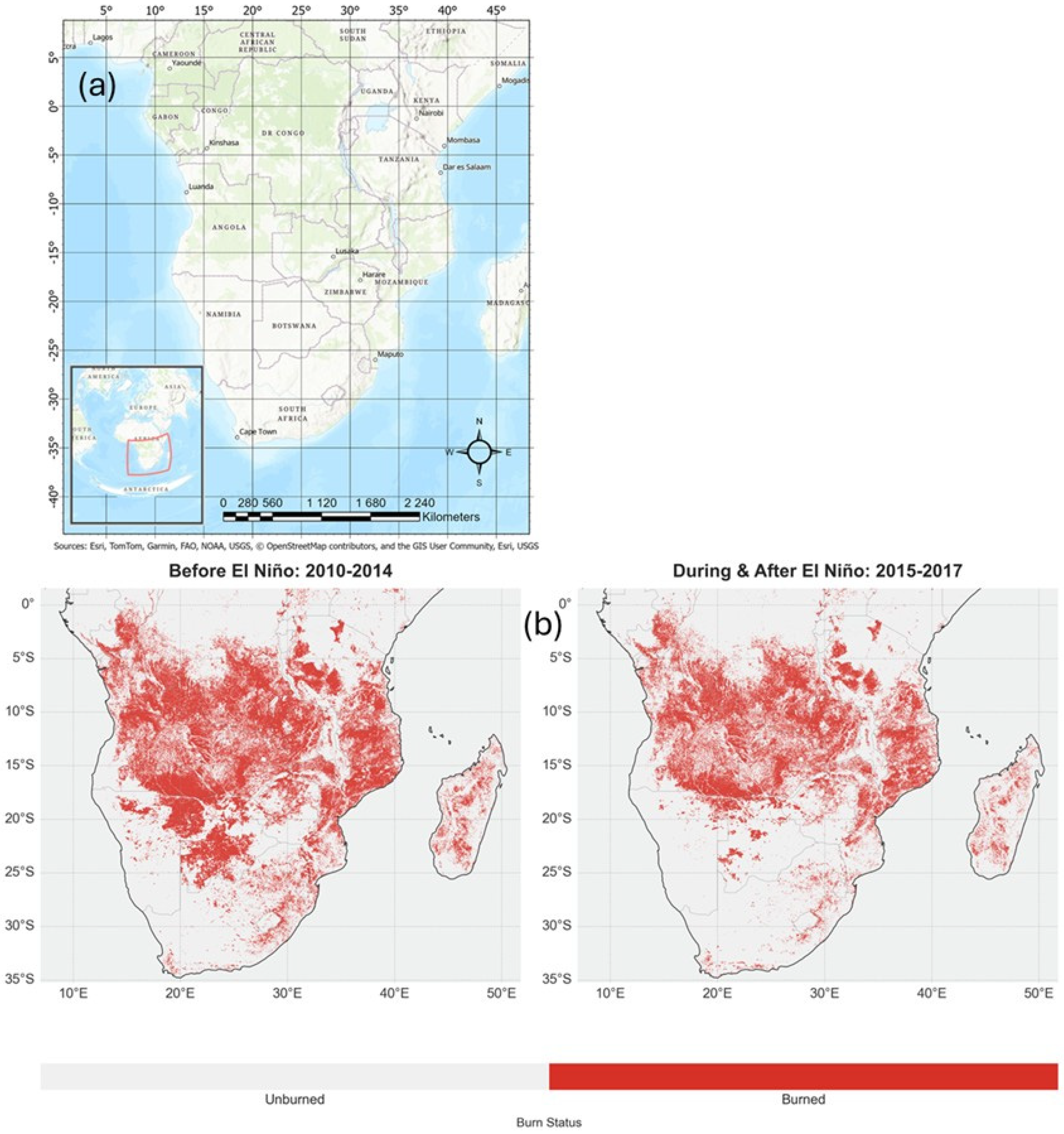
1. Introduction
The El Niño Southern Oscillation (ENSO), characterized by El Niño and La Niña cycles, is an important phenomenon affecting weather and climate in various regions [
1]. In southern Africa, El Niño is known to bring dry, hot air and cause dry conditions through teleconnections, while La Niña provides moist and cool conditions [
2,
3,
4]. In the years when temperature anomalies in the Niño 3.4 region remain within ±1 °C, conditions are classified as neutral. Among the different cycles, El Niño is the most devastating to southern African ecosystems and food security, causing prolonged droughts, losses in livestock and crops, and floral and faunal biodiversity [
5,
6]. In particular, the 2015/16 strong El Niño has been dubbed the worst since 1980, causing widespread economic and agricultural losses across southern Africa [
7,
8]. Mainly, the drier conditions triggered extensive wildfires, and are frequently associated with high atmospheric emissions and poor air-quality [
9,
10].
While most vegetation types in southern Africa are fire-adapted and can benefit from periodic fires for regeneration, increasingly frequent and intense fires—exacerbated by climate anomalies such as El Niño—can exceed the ecological thresholds of some ecosystems, potentially threatening sensitive species and accelerating ecosystem degradation [
10,
11]. Moreover, the increase in wildfire events has significant implications for air-quality and climate [
12,
13,
14]. Fires emit a wide range of atmospheric pollutants [
15,
16], including carbon dioxide (CO
2), carbon monoxide (CO), methane (CH
4), nitrogen oxides (NO
x), and non-methane volatile organic compounds (NMVOCs), as well as particulate matter (PM
2.5 and PM
10) and black carbon (BC), which are known to cause health and environmental hazards [
17,
18]. These pollutants contribute to regional haze, reduced air-quality, and adverse health impacts for human populations. Fine particulate matter in particular can penetrate deep into the lungs, causing respiratory and cardiovascular diseases, while ozone precursors from wildfire smoke may lead to elevated surface ozone levels [
17].
From a climate perspective, wildfire emissions not only release greenhouse gases that contribute to long-term warming but also produce short-lived climate forcers such as aerosols and black carbon that alter radiative forcing and cloud formation [
19]. These emissions can further amplify climate feedback by modifying atmospheric chemistry and energy balance [
20,
21,
22].
Wildfire activity is influenced by several key climatic parameters [
23,
24], including temperature, relative humidity, wind speed, precipitation, and soil moisture. Under El Niño conditions, southern Africa typically experiences significantly reduced precipitation, higher surface temperatures, lower relative humidity, and increased atmospheric stability—creating ideal conditions for fire ignition and propagation [
3]. The combination of hot, dry, and windy conditions accelerates vegetation desiccation, making landscapes more flammable and increasing the likelihood of large-scale fires.
Indeed, several studies have demonstrated increasing wildfire emissions, fire density, and burned area under El Niño conditions, coinciding with lower precipitation and humidity, and elevated temperatures [
9,
25]. However, there remains a lack of studies that evaluate the lagged correlations and causal impacts of El Niño events on fire outcomes, including atmospheric emissions and meteorological variability.
Lagged correlation analysis involves assessing the time-delayed relationships between climatic variables and fire activity—contrasting with standard correlation, which assumes an instantaneous relationship [
26]. This method has been previously applied in hydrological and agricultural studies, but less so in fire–climate interaction research. Meanwhile, causal impact analysis is gaining popularity in environmental science, owing to its ability to estimate the post-intervention effect of a phenomenon (e.g., El Niño) by comparing observed data to a counterfactual scenario—i.e., what would have happened had the event not occurred. Originating in econometrics, causal impact analysis remains underutilized in remote sensing applications related to wildfires and emissions.
Several techniques are available for causal inference, such as difference-in-difference (DiD) [
27], geolift, and summation-based methods. These typically require a control or randomized group, which is often infeasible in ecological systems. As an alternative, interrupted time-series (ITS) analysis requires only a historical time-series with seasonal trends and the known timing of an intervention (e.g., the onset of El Niño), making it suitable for climate–fire studies. ITS can estimate a plausible counterfactual trajectory of variables such as wildfire emissions or air pollutants in the absence of El Niño conditions.
It is against this background that this study sought to analyze the lagged correlations and causal impact of the 2015/16 El Niño on meteorological parameters and wildfire-related emissions. Firstly, we performed time-series correlations between key meteorological indicators and various atmospheric emissions linked to fire activity to identify their temporal relationships. Secondly, each meteorological parameter and fire-emitted pollutant was subjected to ITS-based causal impact analysis to reveal the expected trajectories of emissions and weather variables had the El Niño not occurred. This dual approach provides a robust understanding of how extreme ENSO events shape both wildfire dynamics and atmospheric pollution levels, offering insights essential for mitigation planning, early warning systems, and long-term climate adaptation strategies. Among the previously extreme El Niño events, i.e., 1982–1983, 1997–1998, and 2015–2016, the latter was chosen in this study due to its recency and intensity.
3. Results
3.1. Exploratory Analysis
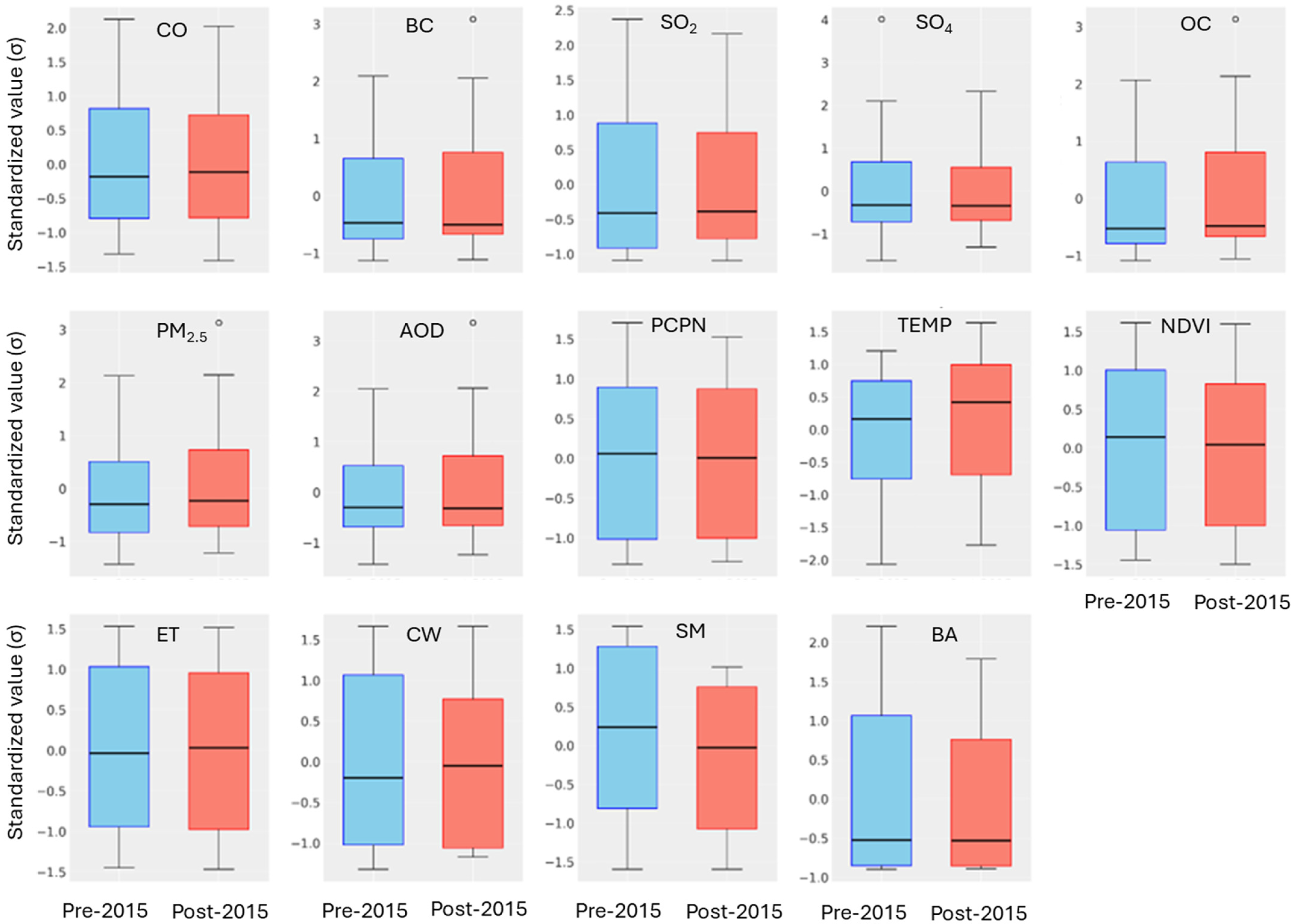
Figure 2 shows the summary statistics of various emission, meteorological, and environmental parameters before and after the 2015/16 El Niño event. As shown, some parameters, such as black carbon (BC), organic carbon (OC), PM
2.5, aerosol optical depth (AOD), and temperature (Temp), were relatively higher post-2015 than before. In contrast, parameters such as CO, SO
2, sulfates (SO
4), normalized difference vegetation index (NDVI), canopy water (CW), soil moisture (SM), precipitation (PCPN and burnt area (BA) were relatively lower post-2015 than before, while there was no apparent difference between the pre- and post-El Niño periods in evapotranspiration (ET).
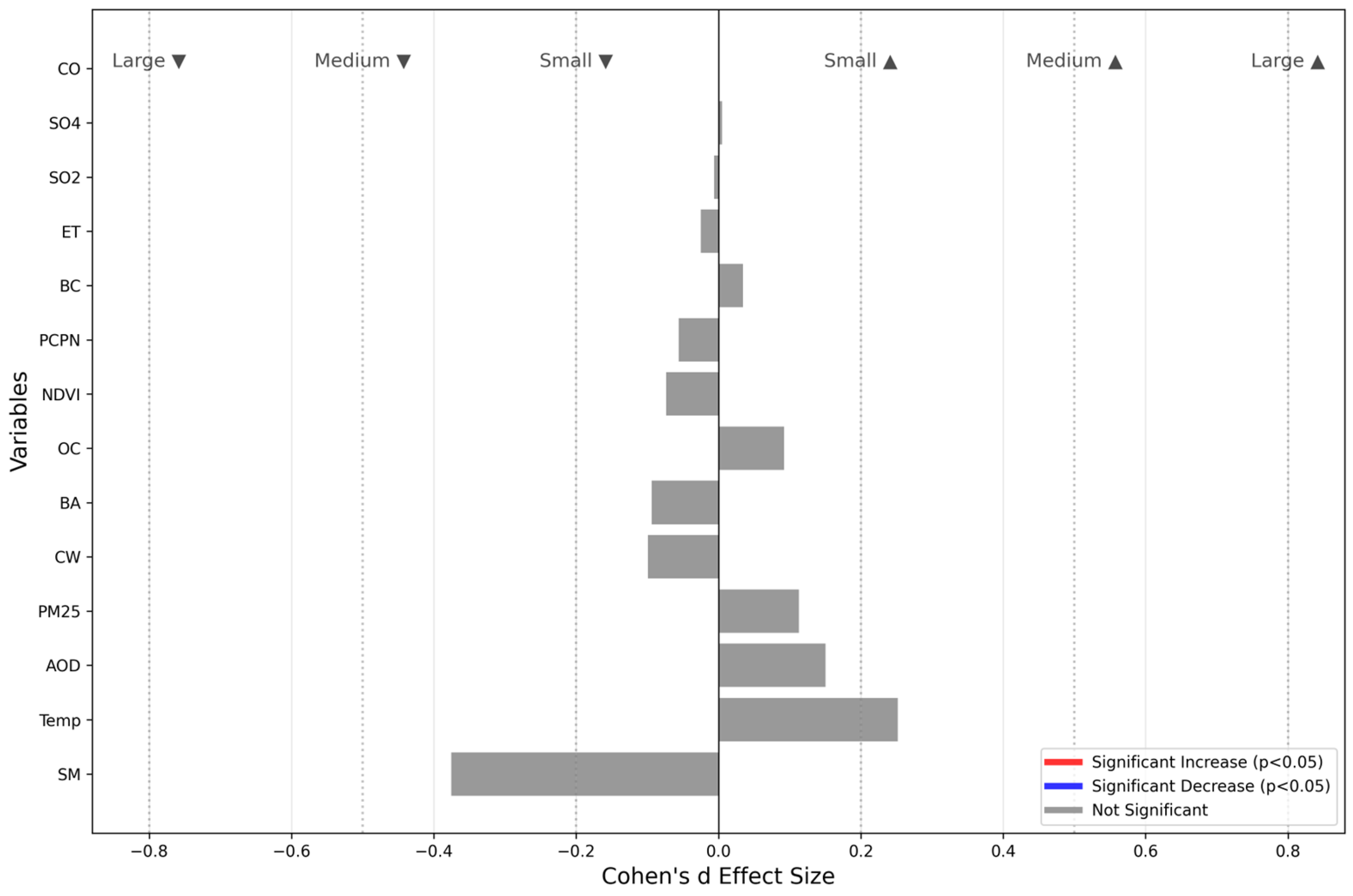
Figure 3 shows the results of Cohen’s d effect sizes [
38] as a standardized measure of the difference between pre-2015 and post-2015 periods, contributing additional information to the summary statistics explored in
Figure 2. Overall, the results show that the response patterns of all parameters considered here were not statistically significant at α = 0.05. Among the parameters that had positive effect size between the periods before and after 2015, Temp had the greatest effect size, i.e., d marginally greater than 0.2, while other parameters, i.e., AOD, PM
2.5, OC, BC, and SO
4, had a small effect size (i.e., d < 0.2). On the other hand, SM has a medium negative effect size (d ~ 0.4), followed by CW, BA, NDVI, PCPN, ET, and SO
2, which all have small negative effect sizes. CO’s effect size is 0, indicating neither a decrease nor an increase.
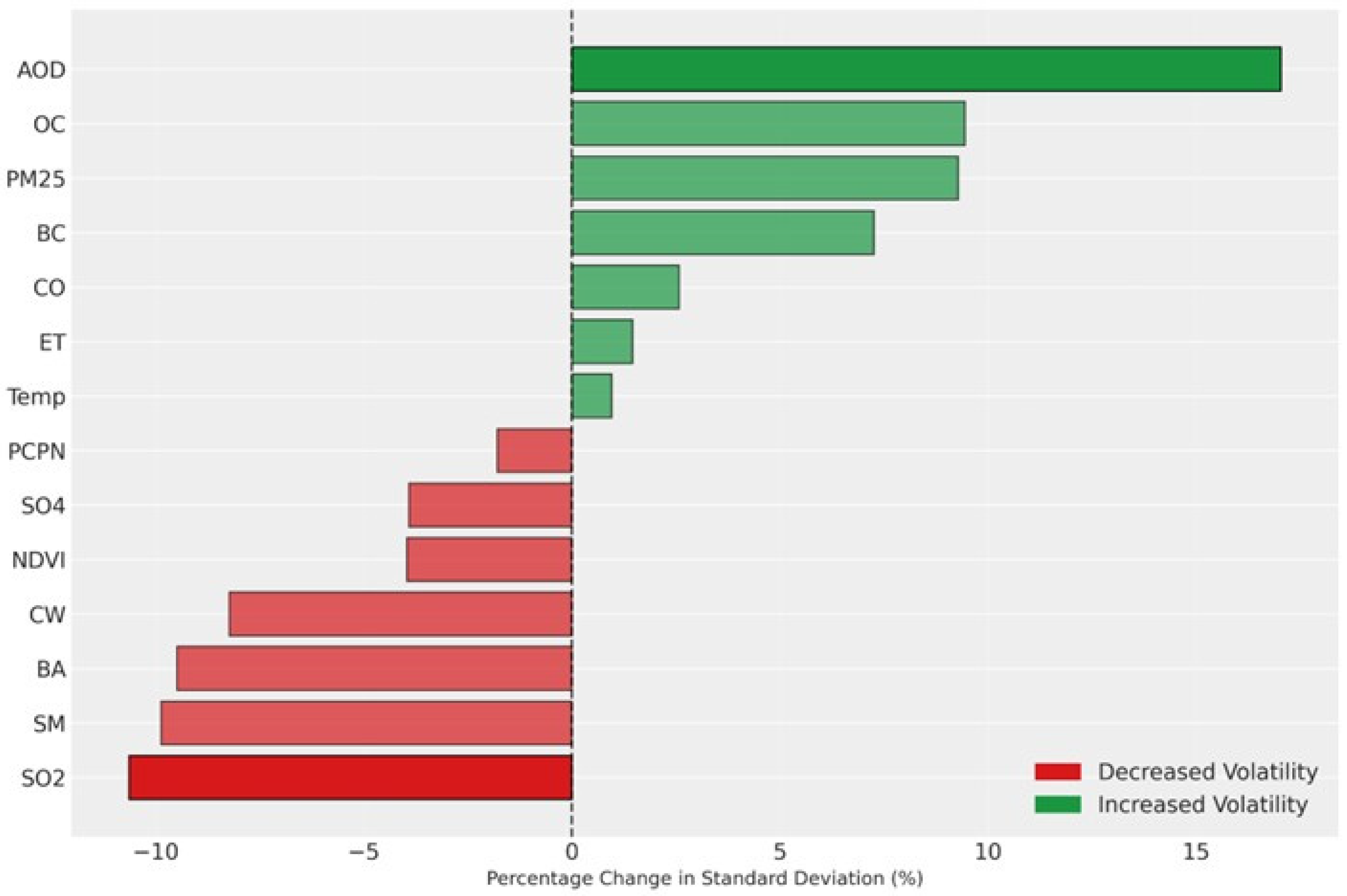
To further understand the differences in various emission, meteorological, and environmental parameters before and after the 2015/16 El Niño event, percentage changes in the standard deviation (volatility) were calculated (
Figure 4).
Figure 4 reveals divergent responses across different parameters. The parameters AOD, OC, PM
2.5, BC, CO, ET, and Temp show increased volatility, while PCPN, SO
4, NDVI, CW, BA, SM, and SO
2 show decreased volatility. Comparatively, the AOD exhibits the most pronounced volatility increase, i.e., 17%, indicating amplified variability in the atmospheric particulate loading, probably from the increased biomass burning and dust under El Niño conditions. Similarly, the emission parameters such as OC, PM
2.5, and BC also show moderate volatility increases, i.e., >7%, suggesting more episodic pollution events linked to variable fire regimes. On the other hand, ET, Temp, and CO have relatively low volatility increases after 2015, <5%, which could be linked to thermal stress and associated moisture flux variability under extreme conditions. Among the parameters that experienced decreased volatility after 2015, SO
2 and SM show the highest declines in volatility, i.e., approximately −10%, followed by BA and CW with approximately 8%, and NDVI and SO
4, which show moderate volatility decreases, i.e., <−5%, as compared to a period before 2015. The decreased volatility may be indicative of reduced response of these parameters to the 2015–2016 El Niño event, while variables showing increased volatility may be more sensitive to ENSO events.
Overall, the volatility results reveal generally similar patterns as Cohen’s d effect sizes (
Figure 3) but reveal differences in magnitude of shifts. Aerosol-related parameters exhibit the clearest post-2015 intensification. For example, AOD, PM
2.5, OC, and BC shows the largest increase in volatility (≈7–17%) and a positive Cohen’s d positive effect sizes, indicating not only greater variability but also a meaningful upward shift in mean conditions and a consistent post-2015 enhancement in aerosol loading. A modest increase in volatility and a positive effect size in Temp reinforces a post-El Niño warming signal. In contrast, several environmental and precursor variables demonstrated reduced volatility and negative effect sizes. The strongest decline was in SO
2, showing ≈−10% volatility and ≈0, while the variability in other variables like SM, BA, and CW also declined notably but has small effect sizes, indicating substantial post-2015 reduction. NDVI and SO
4 reflect moderate decreases in volatility and small negative effect sizes, suggesting weakened vegetation greenness and secondary aerosol formation relative to the pre-El Niño baseline. Meteorological drivers such as PCPN and ET show relatively small changes in both volatility and effect size, implying limited structural shifts. Overall, aerosol parameters exhibit the most coherent post-2015 amplification in both dispersion and central tendency, whereas sulfur species, soil moisture, and biomass burning indicators show consistent reductions, highlighting a divergent post-El Niño regime shift across emission, meteorological, and environmental variables.
3.2. Time-Lagged Cross Correlation Analysis
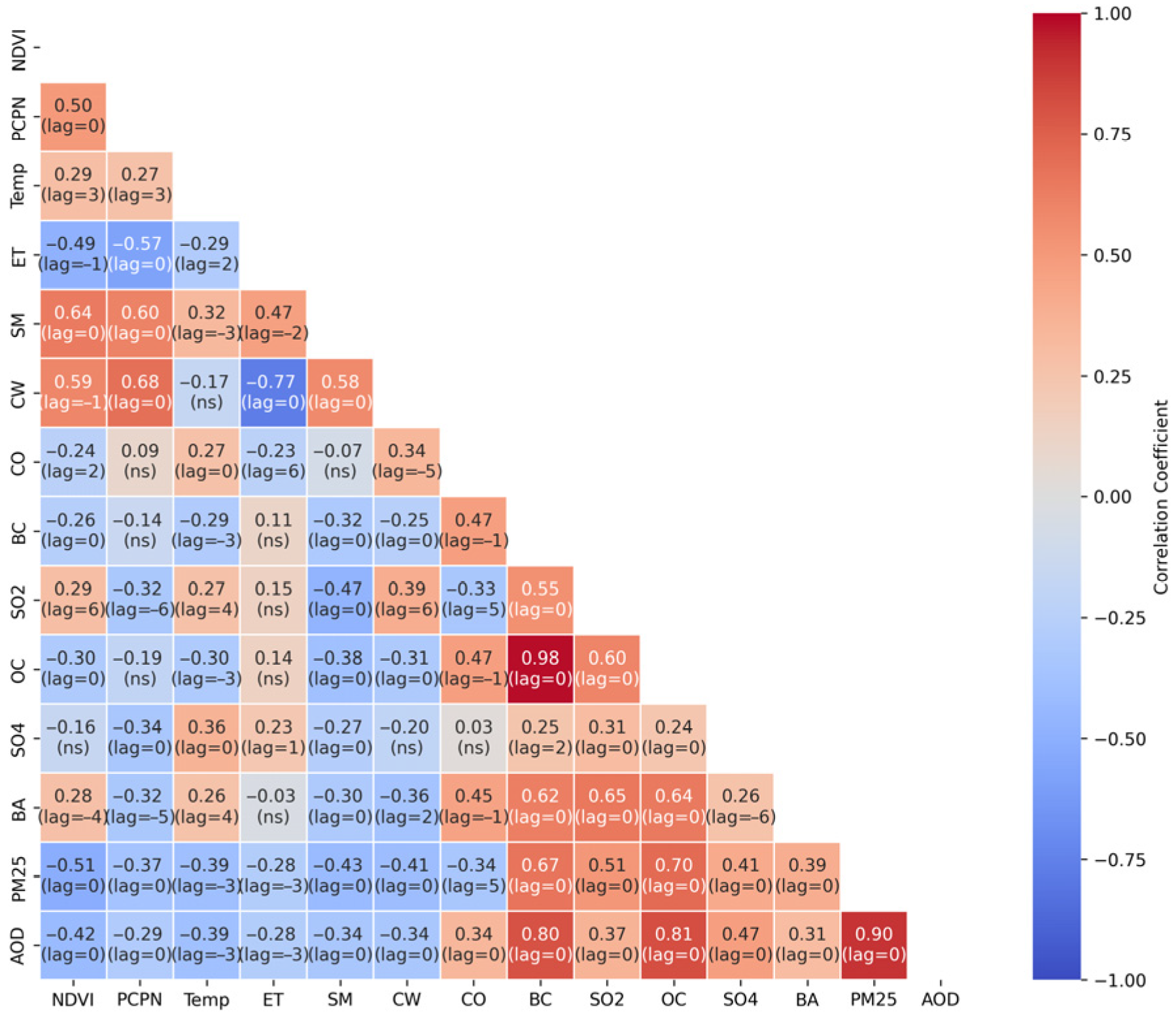
Figure 5 shows the results of the time-lagged cross correlation analysis using Pearson’s
r correlation based on seasonally adjusted time-series from 2010 to 2017 to understand the complex interactions between vegetation, meteorological conditions, and atmospheric emission parameters. The lagged correlation matrix provides an overview of the statistically significant (α < 0.05) temporal and synchronous relationships among climatic, hydrological, and atmospheric emission variables. NDVI, a proxy for vegetation greenness, displays a strong positive contemporaneous correlation with soil moisture (SM;
r = 0.64, lag = 0) and canopy water (CW;
r = 0.59, lag = 0), suggesting that vegetation responds to concurrent moisture and energy-related water demands. NDVI also exhibits a moderately strong negative correlation with PM
2.5 (
r = −0.51, lag = 0) and evapotranspiration (ET;
r = −0.49, lag = 0), indicating that greener conditions are associated with lower particulate pollution and atmospheric water loss. The absence of a lag suggests that these relationships are immediate rather than delayed, potentially due to vegetation acting as a sink for pollutants or a modulator of local water fluxes. On the other hand, PCPN shows a positive correlation with SM (
r = 0.60, lag = 0) and CW (
r = 0.68, lag = 0), emphasizing the role of precipitation in replenishing soil moisture and supporting vegetation water demands. However, it correlates negatively with PM
2.5 (
r = −0.37, lag = −1), ET (
r = −0.57, lag = −1), and AOD (
r = −0.29, lag = −2), indicating that rainfall reduces aerosol loading, with maximum scavenging effects occurring 1–2 months post-rainfall. The PCPN–ET relationship is strongly negative (
r = −0.57, lag = −1), suggesting that high rainfall periods are followed by reductions in ET, possibly due to cloud cover or soil saturation effects.
Temperature (Temp) has a positive correlation with SO4 (r = 0.36, lag = 0) and CO (r = 0.27, lag = 0), highlighting that elevated temperatures coincide with higher sulfate and carbon monoxide concentrations, possibly via enhanced photochemical reactions and stagnation episodes. while it is inversely related to PM2.5 (r = −0.39, lag = −1) and BA (r = −0.32, lag = −1). The results also indicate that indicates that increased temperatures precede reductions in particulate concentrations, possibly due to increased vertical mixing or reduced biomass-burning activity in warmer months.
SM is closely linked to NDVI (r = 0.64, lag = 0), PCPN (r = 0.60, lag = 0), and CW (r = 0.53, lag = −1), underscoring its sensitivity to concurrent and preceding hydrological inputs. In contrast, it has negative correlations with SO2 (r = −0.47, lag = −1) and PM2.5 (r = −0.43, lag = −1) which further imply that wetter conditions contribute to pollutant dilution or deposition, with effects observed approximately one month later. CW, reflecting vegetation water use, correlates positively with PCPN (r = 0.68) and NDVI (r = 0.59) at lags of 0, and with CO (r = 0.34) with a lag of −1. This suggests that water availability drives CW and that it precedes increases in atmospheric CO by 1 month.
Among emission species, OC and BC are nearly collinear (r = 0.98) at a lag of 0, and both are highly correlated with PM2.5 (r = 0.70 and 0.67, respectively) and AOD (r = 0.81 and 0.80, respectively) also at lag 0, emphasizing their dominance in particulate and optical aerosol burdens. Similarly, these relationships are synchronous, indicating that emissions and optical responses occur simultaneously. SO2 shows strong positive correlations with OC (r = 0.60), BC (r = 0.55), and BA (r = 0.65) at lag 0, suggesting co-emission during biomass combustion events. The other parameters showing tightly coupled relationships with zero lags are PM2.5 and AOD (r = 0.90), confirming that columnar aerosol load is strongly governed by surface-level particulate matter. Biomass burning (BA) is found to correlate positively with OC (r = 0.64) and BC (r = 0.62) at lag 0, reinforcing the shared source profile.
Statistically insignificant lagged correlations occur between SO
4 and NDVI, CW and CO, with weak negative
r of −0.27 and less. Similarly, PCPN exhibits weak insignificant lagged correlations with OC, BC, and CO. The other similar weak correlations were between these emission parameters and ET as well as ET and SO
2. It should be noted that for all the parameters exhibiting statistically insignificant correlations across all lags (indicated by ns), we chose to show lag 0 in
Figure 5. In totality, the integration of lag structures reveals that most relationships are immediate, with only select variables—particularly PCPN and SM—exerting delayed effects on atmospheric composition and hydrological dynamics. Further information can be found in the
Supplementary Materials (Figures S1–S6) which shows the variations of lagged Pearson’s
r correlations over several (i.e., 12) lags.
3.3. Causal Analysis
3.3.1. Analysis of Pre-Intervention Conditions
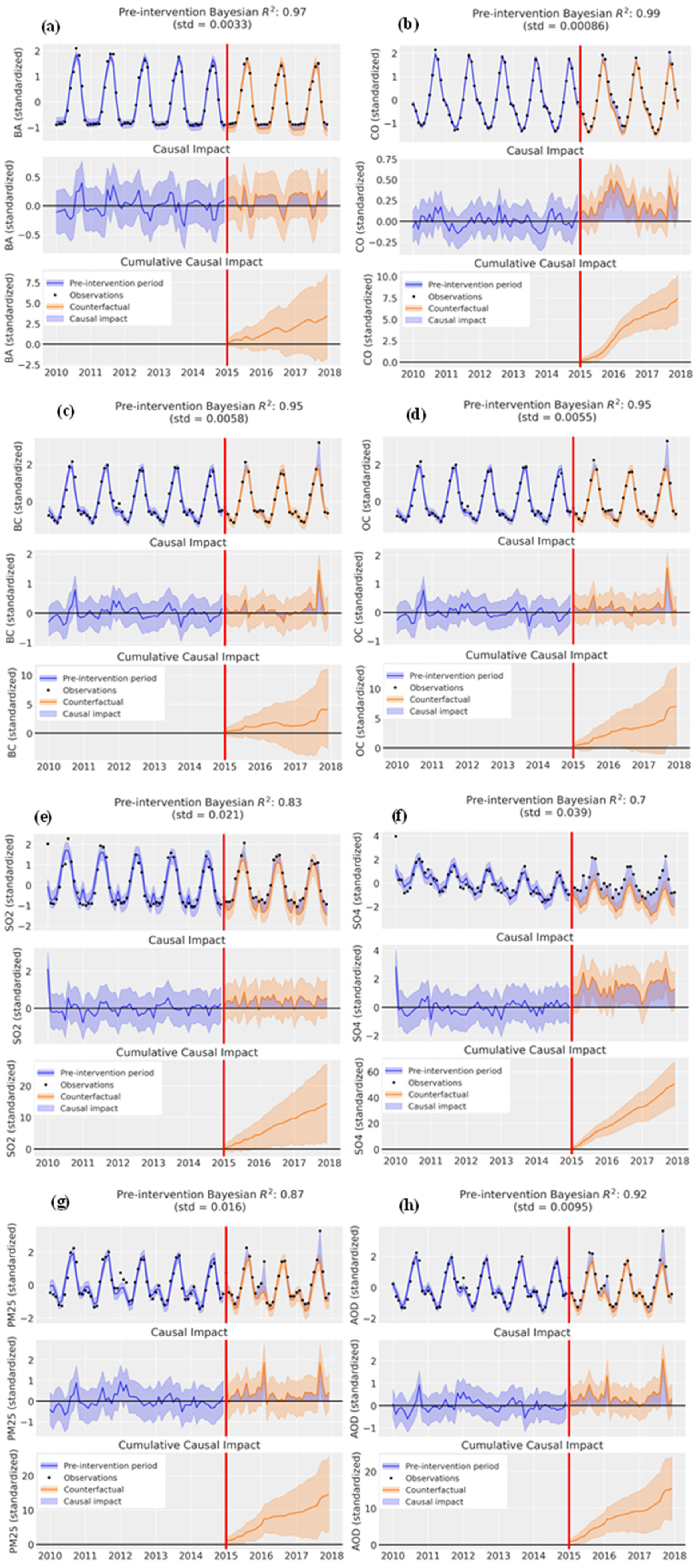
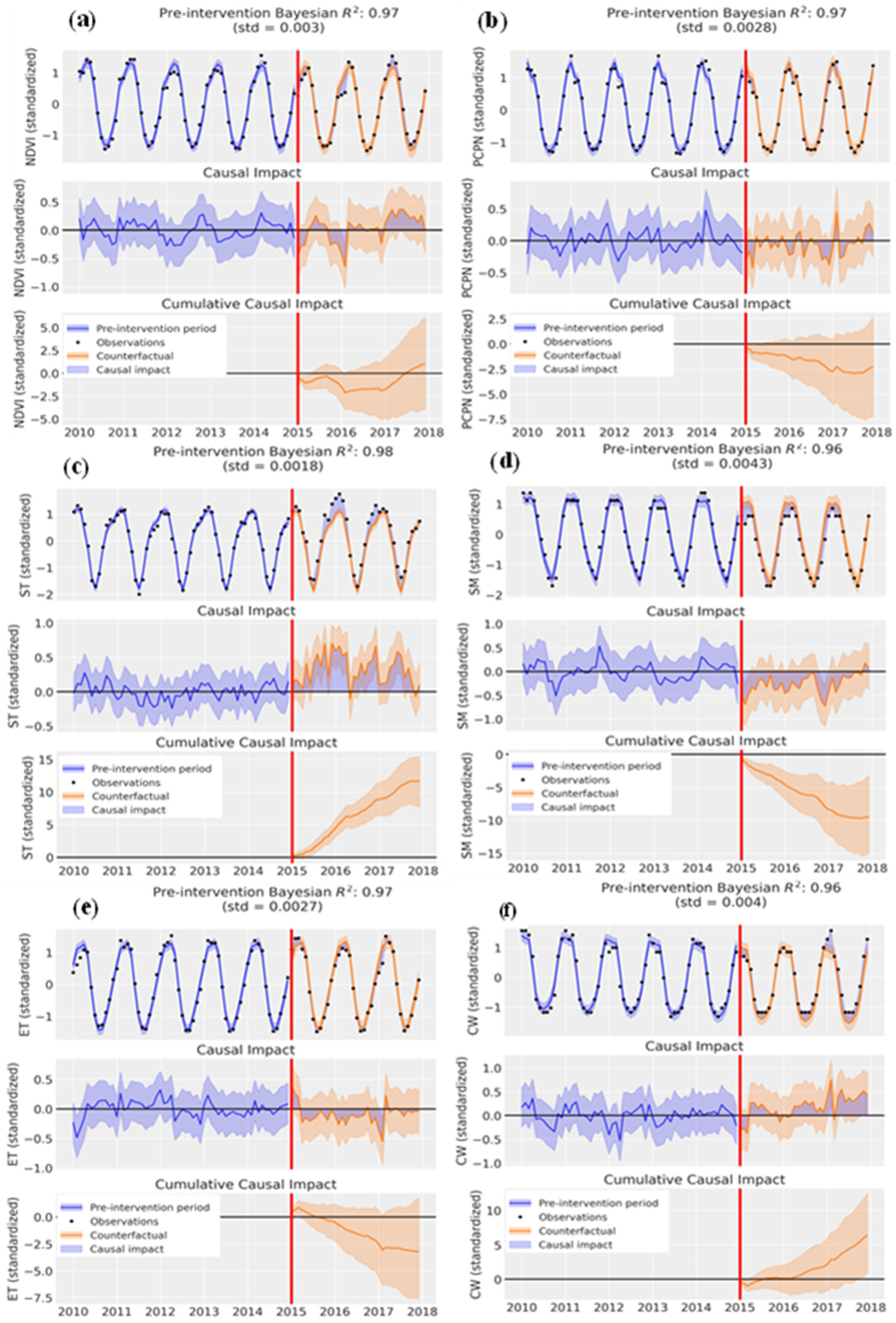
The results of the causal impact of the 2015/16 El Niño were analyzed using the interrupted time-series (ITS) technique. The period starting from January 2015 was selected to indicate the start of the treatment date. A linear regression model was used to create counterfactual predictions of various parameters under the ‘what if?’ scenario of business as usual, i.e., ‘what would have happened if El Niño did not happen?’. By doing this, we could determine the causal impact and the cumulative causal impact by comparing the observed values to the counterfactual predictions (i.e., business as usual scenario). The results for burned area (BA) and various emission parameters (i.e., CO, BC, OC, SO
2, SO
4, PM
2.5, and AOD) are given in
Figure 6, while
Figure 7 provides causal analysis results for vegetation and meteorological conditions (i.e., NDVI, PCPN, TEMP, SM, ET, and CW).
Overall, all the ITS models showed excellent pre-event fits (Bayesian R
2 from 0.7 to 0.99) (
Figure 6 and
Figure 7). Hence, we can assume that post-2015 departures reflect the El Niño impact rather than model bias. Before 2015 (pre-2015–2016 El Niño event), the emission parameters such as BC (
Figure 6c) and OC (
Figure 6d) show generally similar seasonal and temporal patterns. In southern Africa, most biomass burning occur during June-July-August (JJA) and September-October-November (SON) seasons, which constitutes the fire season in this region [
39]. Similarly, PM
2.5 and AOD exhibit co-varying behavior, where both parameters exhibit bi-modal patterns, with highest peaks occurring during the fire season (i.e., dry season) and relatively low peak in December–January–February (DJF) (
Figure 6c,g). There are occasional outliers such as August and September 2010 and DJF of 2012, which may have led to relatively lower fit in the pre-2015 time-series (i.e., Bayesian R
2 of 0.87). Under a stable boundary layer, higher AOD tends to correspond to higher PM
2.5 [
40]. For example, in China, He et al. [
40] found highest correlations (i.e.,
r = 0.61) between the two parameters in winter and at noon, while summer had lowest correlations (
r = 0.47), mainly attributed to lower concentrations. These similarities mean that prior to 2015/16 El Niño, these parameters generally followed the annual cycles. Generally, other parameters, i.e., BA (
Figure 6a), CO (
Figure 6b), SO
2 (
Figure 6e), and SO
4 (
Figure 6f) also show annual patterns, with occasional outliers pre-2015. These outliers were less severe (i.e., did not negatively affect seasonal fit and interannual trends) of BA and CO during the pre-intervention period, while they caused reductions in ITS models fit for SO
2 and SO
4, resulting in Bayesian R
2 values of 0.83 and 0.7, respectively (i.e., lowest among all emissions parameters).
The ITS models for vegetation (i.e., NDVI, ET, and CW) and meteorological parameters (i.e., PCPN, ST, and SM) in the pre-intervention period exhibited highest Bayesian R
2 of >0.96, indicating that pre-event variability was less affected by outliers. Nonetheless, some years exhibited occasional and minor outliers in both extremes (see
Figure 7). Since wildfires are mostly inversely proportional to most of these parameters, the interest is in lower extremes, particularly for NDVI, PCPN, SM, ET, and CW.
3.3.2. Causal Impact of 2015/16 El Niño on Wildfire Emissions
Generally,
Figure 6 shows that after the El Niño onset (red vertical line), the observed values of the emission parameters (black points) rise above the counterfactual baseline (orange line). For certain parameters, such as BA, the difference between the modelled counterfactual (i.e., indicating what would have happened in the absence of an El Niño) and observations is marginal. While for others, such as CO, BC, OC, SO
2, PM
2.5, and AOD, the differences are above the model’s posterior predictive distribution of the counterfactual especially in JJA of 2015 and 2017. Indeed, wildfire’s primary impact is manifested by burned areas as vegetation constitutes fire fuel and its condition and characteristics influence the flammability, intensity, and spread of fires [
41]. In certain vegetation types such as grasslands and shrubland, the fire may spread to large areas albeit at low intensity due to their low amount of fuel, i.e., 2–10 Mg/ha. Despite containing the largest amount of fuel (i.e., 10–1500 Mg/ha), forests and other woody vegetation types tend to burn marginally [
42], resulting in incomplete combustion. In Africa, broadleaved deciduous trees especially in tropical regions are expansively burned as part of land clearance for agriculture [
39,
43]. In
Figure 6a, El Niño had predominantly positive effect on BA, where the cumulative causal impact indicates that BA anomaly increased steadily but relatively marginal, reaching roughly 3 standardized km
2 by the end of 2017. The increase in BA can be linked to similar post-2015 departures from the predicted counterfactual in CO (
Figure 6b), BC (
Figure 6c), and OC (
Figure 6d), reflecting that all three pollutants are co-emitted by biomass burning. The instantaneous Bayesian causal impact in BC and OC show isolated spikes in 2015, 2016, and 2017, which can be associated with emission anomalies driven by drier conditions introduced by the 2015/16 El Niño. In contrast, CO shows consistent rise in emissions post-2015, attributed to El Niño onset. The high Bayesian R
2 (≈0.95) and narrow uncertainty intervals (orange shaded region) indicate that these increases are highly unlikely to be due to chance and that it is statistically significant. The cumulative causal impact is positive, reaching ~7.5 standardized kg/m
3 for CO, ~4 and ~7 standardized µg/m
3 for BC and OC, respectively.
The other emission parameters affected by the anomalies associated with the 2015/16 El Niño include PM
2.5 and AOD (
Figure 6g,h). However, the highest departures from the counterfactual include JJA 2015 and 2017 as well as DJF 2016 for both emission parameters, resulting in significant spikes in Bayesian causal impact especially around early 2016 and late 2017. These outlier spikes contributed to the overall cumulative causal impact of the 2015/16 El Niño on these parameters, which indicates a steady rise after 2015 (reaching roughly 15 standardized µg/m
3 and 15 [unitless] for PM
2.5 and AOD, respectively). This indicates a sustained positive anomaly compared to the pre-2015 baseline. The rise in PM
2.5 post-2015 is consistent with an increase in precursor gases such as CO, which are emitted by wildfires. This is also in agreement with a recent study by Gong et al. [
44] who found a significant positive correlation between PM
2.5 and CO concentrations. Overall, the ITS results imply that not only did the area burned increase under the El Niño, but fires were intensely emitted carbonaceous aerosols.
3.3.3. Causal Impact of 2015/16 El Niño on Vegetation and Meteorological Parameters
The results generally show a decreasing effect on the vegetation (i.e., NDVI, ET, and CW) and meteorological parameters (i.e., PCPN, and SM) except for ST, which increased post-intervention. Indeed, PCPN determines the availability of soil moisture and vegetation, and its decline will cause reciprocal decrease in parameters such as the SM and NDVI.
Figure 7b shows that PCPN exhibits a pronounced post-2015 deficit relative to the counterfactual. The observed PCPN drops below predictions at the intervention date, and several noticeable low-precipitation anomalies occur on discrete dates thereafter; correspondingly the pointwise causal impact is negative and the cumulative impact shows overall declining trend. This sustained precipitation shortfall resulted in the corresponding NDVI decline (
Figure 7a) and explains other hydrological responses observed in parameters such as SM (
Figure 7d) and ET (
Figure 7e). The NDVI (
Figure 7a) departs from its counterfactual post-2015, showing observed values drop below the predicted trajectory on several occasions and the pointwise causal impact is mostly negative for much of the 2015/16 period but positive from 2017 onwards. The cumulative causal impact, therefore, accumulates as a sustained negative anomaly, consistent with reduced photosynthetic activity and canopy greenness during the El Niño event.
The departure in ET from the counterfactual at the beginning of 2015 was positive, and shortly declined sharply, picking up shortly again in 2017. The ET response likely reflects two competing processes. On the one hand, at the beginning of the 2015 crop growing season, higher ST (
Figure 7c) may have caused the increase in ET, especially over cultivated areas and shrubs. On the other hand, as the season progressed, reduced SM and stomatal closure under plant stress may have caused ET to decline steadily. The cumulative impact is negative, indicating a net loss of evaporative fluxes over the post-intervention period. The magnitude and persistence of the SM anomaly (
Figure 7d), indicate a clear drying of the soil column that is commensurate with the observed PCPN deficits and ST increase. Among all the parameters considered, CW displays a more ambiguous pattern (
Figure 7f). While there are some post-2015 departures from the counterfactual, the causal impact and cumulative causal impact are smaller, mostly prominent in 2015. This suggests that CW experienced episodic perturbations, which may have been irrigation-related wetting events and wetland vegetation. However, statistical evidence for a large, persistent El Niño-driven change is weaker. Overall, these results for other parameters indicate a coherent representation of El Niño-associated drought stress and thermal forcing.
4. Discussion
The roles of meteorological conditions in governing soil moisture and vegetation growth are well-established as well as their impact on the wildfire emissions [
45,
46,
47,
48]. Studies [
44,
49] have shown that meteorological parameters, such as precipitation, temperature, relative humidity, wind, and planetary boundary layer modulate the emissions. Using the Partial Least Squares-Structural Equation Modelling (PLS-SEM), Gong et al. [
44] found that meteorological conditions exert a direct influence on precursor emissions of PM
2.5 such as CO, nitrogen dioxide (NO
2), and formaldehyde (HCHO), with a loading/path strength of about 0.918 in the winter season, and overall they contribute to about 89.9% of the variability in precursor emissions. This means that weather conditions not only affect the chemistry and transport of pollutants but also drive changes in the amounts of precursors released into the atmosphere. For wildfire emissions, high precipitation, soil moisture, and relative humidity are often associated with low fire activity, while the deficits in these parameters cause vegetation desiccation, increased fuel load, and higher fire probability and eventually higher release of emissions should the fire occur. For example, the rapid spread and intense burning of biomass during the 2024 wildfires in Canada was attributed to unfavorable El Niño weather conditions, such as high temperatures, dryness, and strong winds [
50]. According to Filonchyk et al. [
50], these meteorological factors led to high fire radiative energy (FRE) and, consequently, significant emissions of pollutants CO
2, CO, CH
4, PM
2.5, and NO
x.
During the 2015/16 El Niño, Southern Africa experienced a pronounced dry–hot anomaly, which caused increased fire activity and related emissions [
3,
9]. Our results from the interrupted time-series (ITS) causal impact analysis corroborate this, showing that precipitation fell sharply below its pre-2015 (before El Niño) trend, producing a large negative anomaly and a significant cumulative shortfall. Simultaneously, the ITS model indicated that observed temperatures during the El Niño period were anomalously high relative to the counterfactual baseline. These causal findings are strongly supported by the time-lagged correlation analysis, which reveals the mechanistic coupling behind these anomalies. The negative lagged correlations between temperature and vegetation indices, alongside positive correlations with fire emissions, suggest that the thermal forcing identified by the ITS analysis directly stressed vegetation and increased atmospheric evaporative demand. This aligns with previous studies [
8,
51,
52] showing that low rainfall and extreme heat drove a record-breaking seasonal drought, exacerbating moisture loss from soils and vegetation.
The dual stress caused by precipitation decline and high temperatures left soils significantly drier than expected under the counterfactual. The ITS results for soil moisture (SM) showed a strong negative departure from baseline, reflecting both reduced recharge and enhanced drying. Because soil moisture is the primary water reservoir for plants, its decline resulted in an immediate (i.e., within one month) ecological response. Indeed, previous studies [
53] underscore that soil moisture regulates vegetation greenness in Southern Africa. In fact, the lagged correlation results indicate that soil moisture typically varies concurrently (i.e., lag = 0) with the normalized difference vegetation index (NDVI) and precipitation (PCPN) (
r = 0.64 and
r = 0.60, respectively). The synchronicity observed in the lagged correlation analysis explains the rapid divergence of NDVI from its counterfactual in the causal analysis, indicating that the vegetation (dominated by Southern African savanna ecosystems) possesses limited hydraulic buffering capacity, when a monthly-aggregated data is considered. The El Niño-linked drought followed an already dry 2014/15 season [
8]; therefore, soils were pre-depleted, and the additional heat and lack of rain in 2015/16 drove soil moisture to record lows, creating ideal conditions for the amplified emissions observed in the causal impact models.
The ITS analysis indicated that while the burned area (BA) showed a steady but relatively marginal cumulative increase, the anomalies in fire-related emissions (CO, BC, OC, PM2.5) were statistically significant at the 95% confidence level. This suggests that the severity of air-quality degradation cannot be explained by the spatial expansion of fires alone. The lagged correlation analysis supports this by demonstrating strong and statistically significant correlation between combustion products (BC, OC) and aerosol loading (AOD, PM2.5), where r = 0.8 and 0.81 at lag = 0 for AOD-BC and AOD-OC correlations and 0.67 and 0.70 at lag 0 for PM2.5-BC and PM2.5-OC correlations. This confirms biomass burning as the dominant source in the post-El Niño period. The BA was strongly correlated with CO, BC, SO2, and OC at lag 0, ascertaining the linkages between these parameters. The findings imply that the El Niño conditions (such as the associated severe drought) likely altered the combustion efficiency of the fuel load. The extreme desiccation of vegetation, resulting from the moisture deficits identified in the ITS, facilitated more complete combustion or intense smoldering phases, thereby enhancing emission factors for particulates and carbon monoxide even where the total area burned did not expand exponentially.
Despite the promising results, the techniques employed in the current study were limited in several ways. First, the ITS assumes that the underlying outcome trajectory would have continued unchanged if the intervention (i.e., El Niño) had not occurred, which may not necessarily hold in practice. Second, it assumes that there are no other simultaneous changes affecting the outcome. For pollutants such as PM2.5 and AOD which may not be necessarily from fires alone, if any external shock such as a dust storm occurs post-El Niño, ITS cannot distinguish its effect from El Niño’s effect. However, in the absence of a control group, ITS is the most promising approach to study the effects of El Niño on wildfires and their related emissions. The counterfactual trajectories were derived exclusively from the pre-intervention time-series in order to characterize the underlying baseline dynamics of the various variables under “business-as-usual” conditions. While many ecological variables exhibit seasonality and excluding such seasonal effects may mistake annual cycles for El Niño impact, the ITS model captured the temporal structure, seasonality, and autocorrelation patterns over the pre-El Niño period of 5-years. Moreover, while the validity of the causal impact results may be questionable, the goodness-of-fit between the modelled and observed values during the pre-El Niño period—quantified using the coefficient of determination (R2)—provided an internal measure of how well the model reproduces the observed dynamics prior to the occurrence of the 2015/16 El Niño. Essentially, a high pre-intervention R2, achieved in this study, strengthens the credibility of the counterfactual projection. Considering the time-lagged correlations, some of the responses may have been masked by monthly-aggregated data, influencing lags of 0 in the results. For example, some vegetation types are sensitive to soil moisture deficits, and their drying out may have happened within weeks. Future studies should consider using weekly or daily data where possible.
Overall, the integration of time-lagged cross-correlation with interrupted time-series (ITS) causal impact analysis provided a robust, multi-dimensional perspective on the Earth system response to the 2015/16 El Niño. While the ITS analysis quantified the magnitude of the divergence from the “business-as-usual” climatology, the lagged correlation analysis elucidated the temporal mechanisms driving these anomalies. These approaches revealed that the observed environmental stress was not merely a function of unpredictable or random variability but a deterministic response to a compound El Niño event that fundamentally altered regional hydro-ecological and atmospheric dynamics.
5. Conclusions
Overall, the time-lagged correlation and causal impact analyses reveal a coherent regional response of Southern Africa to the 2015/16 El Niño, characterized by tightly coupled hydrological, ecological, and atmospheric processes. The lagged correlation results indicate that most vegetation–climate–air-quality interactions in the region are predominantly contemporaneous, while moisture-related variables—particularly precipitation and soil moisture—exert the most pronounced delayed influence on atmospheric composition and surface conditions. This highlights the pivotal role of hydroclimatic variability in Southern Africa in regulating vegetation greenness, evapotranspiration, and pollutant removal, alongside the strong synchronous coupling between carbonaceous aerosols, PM2.5, and AOD that reflects the dominance of biomass-burning emissions.
The causal impact analysis further shows that the 2015/16 El Niño produced statistically significant and sustained positive anomalies in fire-related emissions (CO, BC, OC, PM2.5, and AOD) across Southern Africa, with pronounced departures during austral winter and peak dry-season periods. These patterns suggest that El Niño conditions intensified combustion efficiency and aerosol emissions rather than merely expanding burned area. In contrast, vegetation and hydrometeorological variables display persistent negative deviations from their counterfactual trajectories, indicating widespread drought stress, declining soil moisture, reduced canopy greenness, and suppressed evaporative fluxes under elevated surface temperatures. Overall, the results demonstrate that El Niño acts as a major climatic perturbation in Southern Africa, simultaneously degrading ecosystem functioning and amplifying atmospheric pollution through climate–fire–vegetation feedback. The integrated use of time-lagged correlation and Bayesian causal inference thus provides robust evidence that large-scale climate variability can rapidly propagate through Southern African Earth system components, yielding immediate air-quality impacts and longer-lasting ecological and hydrological consequences.