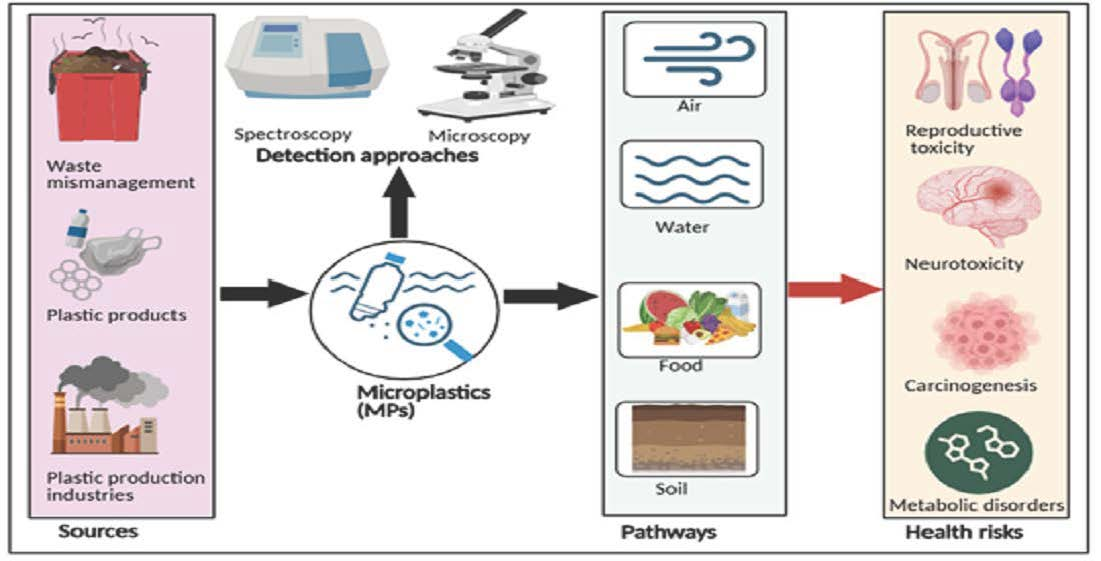




Microplastics as Pervasive Contaminants: Ecosystem Disruption, Human Health Risks, and Detection Approaches

Abstract
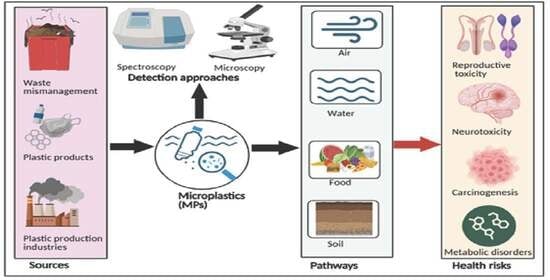
1. Introduction
1.1. Global Plastic Waste and Environmental Dispersion
1.2. Pathways of Human Exposure
1.3. Analytical Challenges and Review Objectives
2. Impact of Microplastics on Ecosystems
2.1. Mechanisms of Ecotoxicity: Dysbiosis, Oxidative Stress, and Endocrine Interference
2.1.1. Gut Microbiota Dysbiosis and Metabolic Disruption
2.1.2. Terrestrial Phytotoxicity and Systemic Oxidative Stress
2.1.3. Endocrine Interference and Reproductive Toxicity
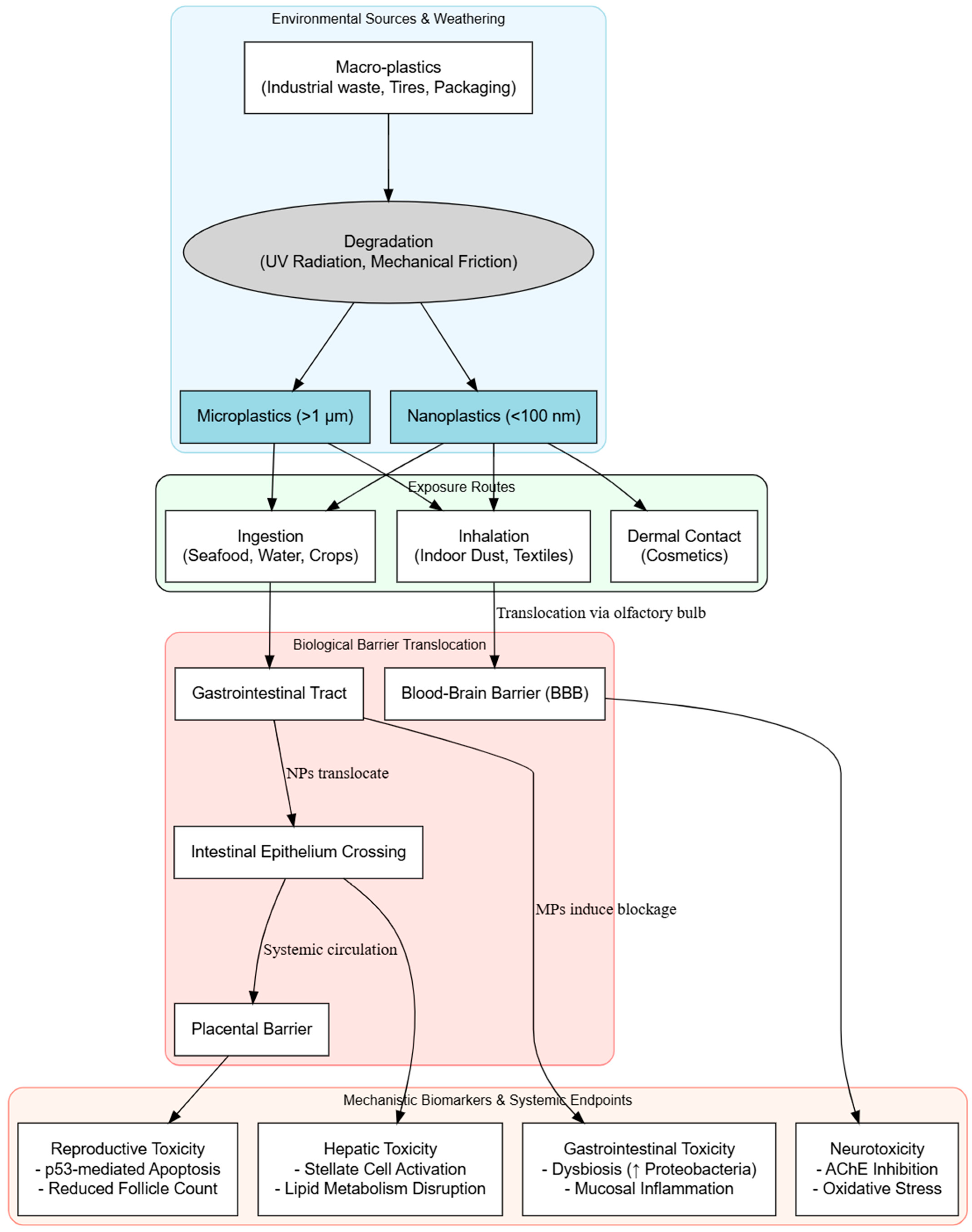
2.2. Systemic Human Health Risks: Barrier Translocation and Synergistic Toxicity
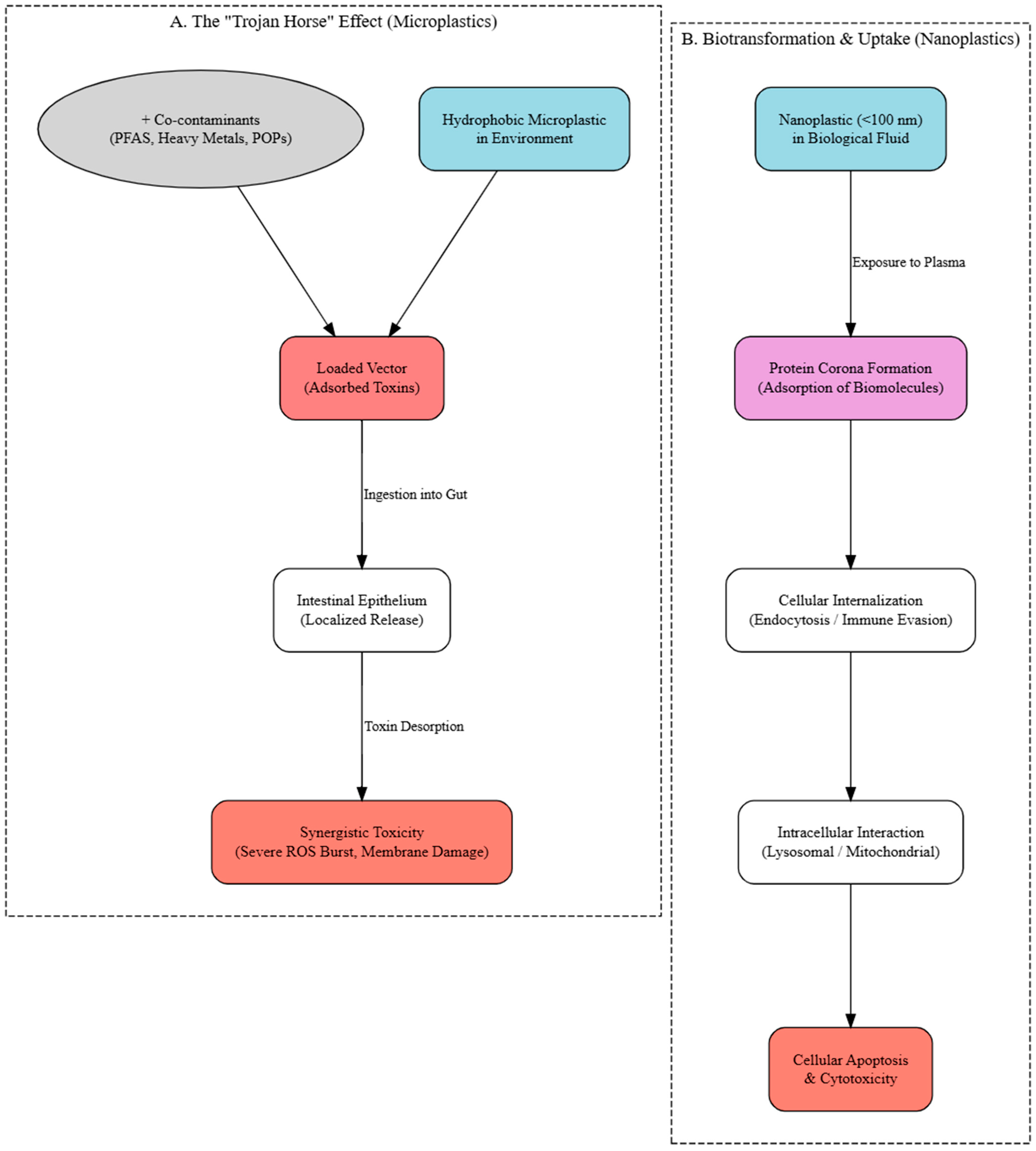
2.2.1. Nano Plastic Biotransformation and Cellular Infiltration
2.2.2. Gastrointestinal Pathogenesis and Neurotoxicity
2.2.3. The “Trojan Horse” Effect and Co-Contaminants
3. Impact of Microplastic Toxicity on Human Health
3.1. Impact of Microplastics on the Gastrointestinal Tract and Nervous System
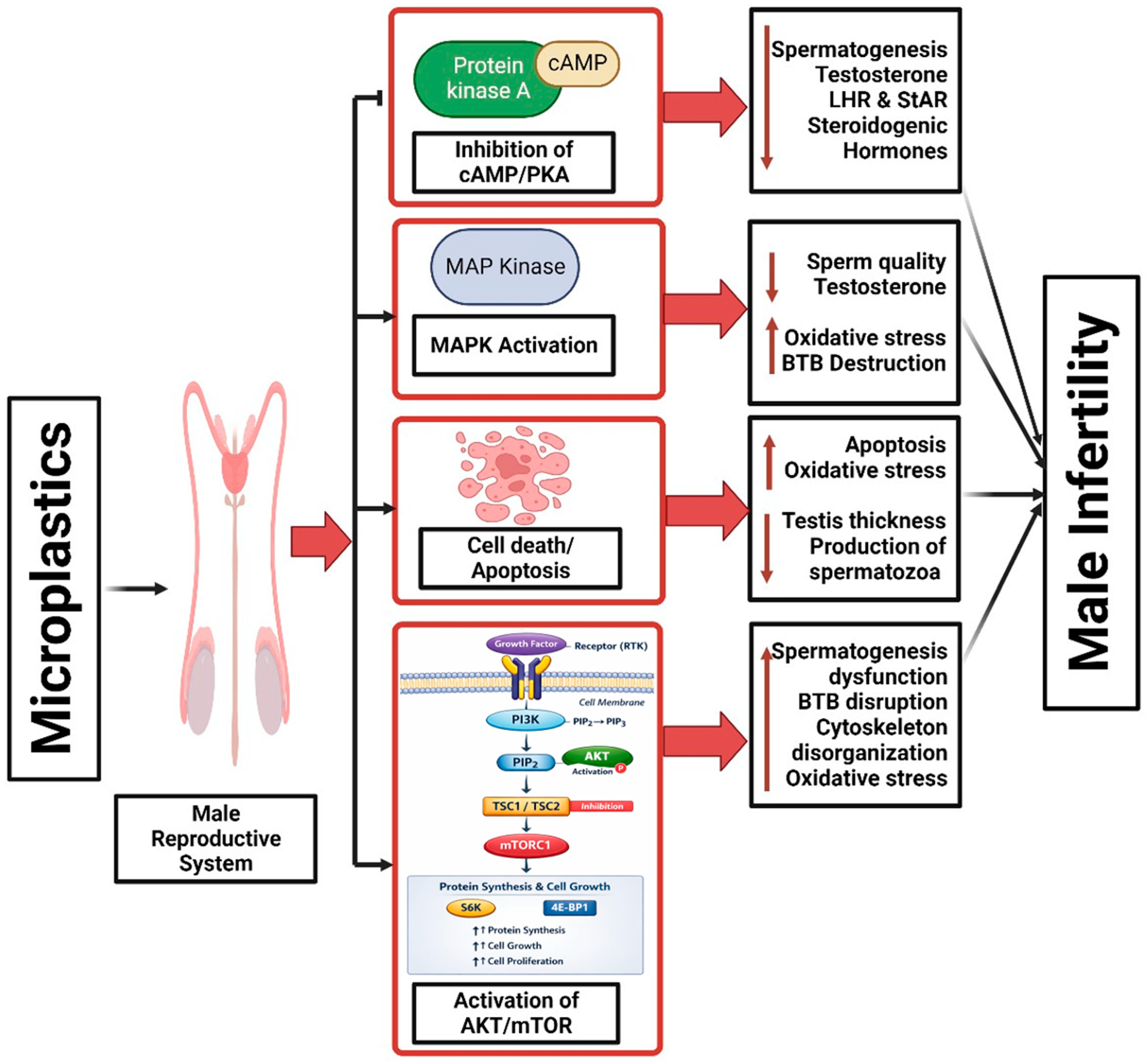
3.2. Impact of Microplastics on the Reproductive and Fertility System
4. The “Trojan Horse” Effect: Co-Contaminants and Vector Dynamics
5. Analytical Methods for Microplastics Detection
5.1. Separation Methods for Microplastics
5.1.1. Membrane Pretreatment
5.1.2. Flotation
5.1.3. Chemical Treatment
5.1.4. Enzymatic Treatment
5.1.5. Extraction Techniques
- Ultrasound extraction (using probe or bath sonicators) enhances solvent penetration and reduces sample loss, proving effective for separating microplastics from marine organisms and other samples [3].
- SPME integrates sampling, extraction, and concentration, with applications in isolating polymers like polystyrene from packaging and complex soil mixtures.
- Magnetic extraction employs nanoparticles to bind microplastics for high-recovery magnetic separation and can be combined with other methods to boost efficiency.
5.2. Detection Techniques
- Scanning Electron Microscopy (SEM) provides high-resolution images of microplastic morphology and size by focusing an electron beam on the surface. SEM has been used to detect microplastics in aquatic ecosystems and foods such as canned sardines, sprats, Malaysian fish, and milk. When combined with infrared spectroscopy, X-ray tomography, or energy-dispersive X-ray analysis, it can reveal detailed surface and compositional features. However, SEM requires careful sample preparation and is less suited for large-scale quantitative assessment [3,77].
5.2.1. Fourier Transform Infrared Spectroscopy (FTIR)
5.2.2. Thermal Analysis Techniques
5.2.3. Critical Comparison and Methodological Limitations
6. Validated Exposure-Risk Assessment Frameworks
7. Current Knowledge Gaps and Mitigation Strategies
8. Conclusions and Actionable Policy Interface
8.1. Scientific Synthesis and Evidence-Based Conclusions
8.2. Policy Recommendations and Risk Management Strategies
Author Contributions
Funding
Data Availability Statement
Acknowledgments
Conflicts of Interest
References
- Kadac-Czapska, K.; Knez, E.; Grembecka, M. Food and human safety: The impact of microplastics. Crit. Rev. Food Sci. Nutr. 2024, 64, 3502–3521. [Google Scholar] [CrossRef]
- Tang, K.H.D.; Li, R.; Li, Z.; Wang, D. Health risk of human exposure to microplastics: A review. Environ. Chem. Lett. 2024, 22, 1155–1183. [Google Scholar] [CrossRef]
- Eze, C.G.; Nwankwo, C.E.; Dey, S.; Sundaramurthy, S.; Okeke, E.S. Food chain microplastics contamination and impact on human health: A review. Environ. Chem. Lett. 2024, 22, 1889–1927. [Google Scholar] [CrossRef]
- Sridhar, A.; Kannan, D.; Kapoor, A.; Prabhakar, S. Extraction and detection methods of microplastics in food and marine systems: A critical review. Chemosphere 2022, 286, 131653. [Google Scholar] [CrossRef]
- Lebreton, L.; Andrady, A. Future scenarios of global plastic waste generation and disposal. Palgrave Commun. 2019, 5, 6. [Google Scholar] [CrossRef]
- Meral, G. Global Plastics Outlook; OECD: Paris, France, 2022; Available online: https://www.oecd.org/content/dam/oecd/en/publications/reports/2022/02/global-plastics-outlook_a653d1c9/de747aef-en.pdf (accessed on 2 April 2026).
- Brooks, A.L.; Wang, S.; Jambeck, J.R. The Chinese import ban and its impact on global plastic waste trade. Sci. Adv. 2018, 4, eaat0131. [Google Scholar] [CrossRef] [PubMed]
- Pham, D.T.; Kim, J.; Lee, S.-H.; Kim, J.; Kim, D.; Hong, S.; Jung, J.; Kwon, J.-H. Analysis of microplastics in various foods and assessment of aggregate human exposure via food consumption in korea. Environ. Pollut. 2023, 322, 121153. [Google Scholar] [CrossRef]
- Kwon, J.-H.; Kim, J.W.; Pham, T.D.; Tarafdar, A.; Hong, S.; Chun, S.H.; Jung, J. Microplastics in food: A review on analytical methods and challenges. Int. J. Environ. Res. Public Health 2020, 17, 6710. [Google Scholar] [CrossRef]
- Fakayode, S.O.; Mehari, T.F.; Fernand Narcisse, V.E.; Grant, C.; Taylor, M.E.; Baker, G.A. Microplastics: Challenges, toxicity, spectroscopic and real-time detection methods. Appl. Spectrosc. Rev. 2024, 59, 1183–1277. [Google Scholar] [CrossRef]
- Joshi, K.; Navalgund, L.; Shet, V.B.; Mubarak, N.M. Toxicity and health impacts of emerging contaminants. In Advances in Treatment Methods Towards Emerging Contaminants; Elsevier: Amsterdam, The Netherlands, 2026; pp. 149–166. [Google Scholar]
- Sharma, D.; Sharma, A. Molecular insights into physiological impact of micro-and nano-plastics on the digestive system and gut-brain axis. Comp. Biochem. Physiol. Part C Toxicol. Pharmacol. 2026, 304, 110473. [Google Scholar]
- Ma, W.; Xiong, X.; Tian, Z.; Li, L.; Huang, Y. Environmental pollutants and the gut microbiota: Mechanistic links from exposure to systemic disease. Front. Microbiol. 2026, 17, 1737229. [Google Scholar] [CrossRef]
- Huang, J.N.; Wen, B.; Zhu, J.G.; Zhang, Y.S.; Gao, J.Z.; Chen, Z.Z. Exposure to microplastics impairs digestive performance, stimulates immune response and induces microbiota dysbiosis in the gut of juvenile guppy (Poecilia reticulata). Sci. Total Environ. 2020, 733, 138929. [Google Scholar] [CrossRef] [PubMed]
- Xie, S.; Zhou, A.; Wei, T.; Li, S.; Yang, B.; Xu, G.; Zou, J. Nanoplastics induce more serious microbiota dysbiosis and inflammation in the gut of adult zebrafish than microplastics. Bull. Environ. Contam. Toxicol. 2021, 107, 640–650. [Google Scholar] [CrossRef] [PubMed]
- Feng, S.; Zeng, Y.; Cai, Z.; Wu, J.; Chan, L.L.; Zhu, J.; Zhou, J. Polystyrene microplastics alter the intestinal microbiota function and the hepatic metabolism status in marine medaka (Oryzias melastigma). Sci. Total Environ. 2021, 759, 143558. [Google Scholar] [CrossRef]
- Subaramaniyam, U.; Allimuthu, R.S.; Vappu, S.; Ramalingam, D.; Balan, R.; Paital, B.; Sahoo, D.K. Effects of microplastics, pesticides and nano-materials on fish health, oxidative stress and antioxidant defense mechanism. Front. Physiol. 2023, 14, 1217666. [Google Scholar] [CrossRef]
- Rillig, M.C.; Lehmann, A.; de Souza Machado, A.A.; Yang, G. Microplastic effects on plants. New Phytol. 2019, 223, 1066–1070. [Google Scholar] [CrossRef]
- Roy, T.; Dey, T.K.; Jamal, M. Microplastic/nanoplastic toxicity in plants: An imminent concern. Environ. Monit. Assess. 2023, 195, 27. [Google Scholar] [CrossRef]
- Li, X.; Wang, X.; Ren, C.; Palansooriya, K.N.; Wang, Z.; Chang, S.X. Microplastic pollution: Phytotoxicity; environmental risks; phytoremediation strategies. Crit. Rev. Environ. Sci. Technol. 2024, 54, 486–507. [Google Scholar] [CrossRef]
- Pignattelli, S.; Broccoli, A.; Renzi, M. Physiological responses of garden cress (L. sativum) to different types of microplastics. Sci. Total Environ. 2020, 727, 138609. [Google Scholar] [CrossRef]
- Zurub, R.E.; Cariaco, Y.; Wade, M.G.; Bainbridge, S.A. Microplastics exposure: Implications for human fertility, pregnancy and child health. Front. Endocrinol. 2023, 14, 1330396. [Google Scholar] [CrossRef] [PubMed]
- Lu, C.; Liang, Y.; Cheng, Y.; Peng, C.; Sun, Y.; Liu, K.; Li, Y. Microplastics cause reproductive toxicity in male mice through inducing apoptosis of spermatogenic cells via p53 signaling. Food Chem. Toxicol. 2023, 179, 113970. [Google Scholar] [CrossRef] [PubMed]
- Jin, H.; Ma, T.; Sha, X.; Liu, Z.; Zhou, Y.; Meng, X.; Chen, Y.; Han, X.; Ding, J. Polystyrene microplastics induced male reproductive toxicity in mice. J. Hazard. Mater. 2021, 401, 123430. [Google Scholar] [CrossRef]
- Hou, B.; Wang, F.; Liu, T.; Wang, Z. Reproductive toxicity of polystyrene microplastics: In Vivo experimental study on testicular toxicity in mice. J. Hazard. Mater. 2021, 405, 124028. [Google Scholar] [CrossRef]
- Ragusa, A.; Svelato, A.; Santacroce, C.; Catalano, P.; Notarstefano, V.; Carnevali, O.; Giorgini, E. Plasticenta: First evidence of microplastics in human placenta. Environ. Int. 2021, 146, 106274. [Google Scholar] [CrossRef]
- Zhao, Q.; Zhu, L.; Weng, J.; Jin, Z.; Cao, Y.; Jiang, H.; Zhang, Z. Detection and characterization of microplastics in the human testis and semen. Sci. Total Environ. 2023, 877, 162713. [Google Scholar] [CrossRef]
- Marcho, C.; Oluwayiose, O.A.; Pilsner, J.R. The preconception environment and sperm epigenetics. Andrology 2020, 8, 924–942. [Google Scholar] [CrossRef]
- Winiarska, E.; Jutel, M.; Zemelka-Wiacek, M. The potential impact of nano- and microplastics on human health: Understanding human health risks. Environ. Res. 2024, 251, 118535. [Google Scholar] [CrossRef]
- Hu, J.; Zhu, Y.; Zhang, J.; Xu, Y.; Wu, J.; Zeng, W.; Lin, Y.; Liu, X. The potential toxicity of polystyrene nanoplastics to human trophoblasts in vitro. Environ. Pollut. 2022, 311, 119924. [Google Scholar] [CrossRef] [PubMed]
- Liu, S.; Guo, J.; Liu, X.; Yang, R.; Wang, H.; Sun, Y.; Chen, B.; Dong, R. Detection of various microplastics in placentas, meconium, infant feces, breastmilk and infant formula: A pilot prospective study. Sci. Total Environ. 2023, 854, 158699. [Google Scholar] [CrossRef]
- Yan, Z.; Liu, Y.; Zhang, T.; Zhang, F.; Ren, H.; Zhang, Y. Analysis of microplastics in human feces reveals a correlation between fecal microplastics and inflammatory bowel disease status. Environ. Sci. Technol. 2021, 56, 414–421. [Google Scholar] [CrossRef] [PubMed]
- Werder, E.J.; Engel, L.S.; Richardson, D.B.; Emch, M.E.; Gerr, F.E.; Kwok, R.K.; Sandler, D.P. Environmental styrene exposure and neurologic symptoms in U.S. Gulf Coast residents. Environ. Int. 2018, 121, 480–490. [Google Scholar] [CrossRef]
- Haleem, N.; Kumar, P.; Zhang, C.; Jamal, Y.; Hua, G.; Yao, B.; Yang, X. Microplastics and associated chemicals in drinking water: A review of their occurrence and human health implications. Sci. Total Environ. 2024, 912, 169594. [Google Scholar] [CrossRef]
- Deng, Y.; Zhang, Y.; Lemos, B.; Ren, H. Tissue accumulation of microplastics in mice and biomarker responses suggest widespread health risks of exposure. Sci. Rep. 2017, 7, 46687. [Google Scholar] [CrossRef]
- Luo, T.; Wang, C.; Pan, Z.; Jin, C.; Fu, Z.; Jin, Y. Maternal polystyrene microplastic exposure during gestation and lactation altered metabolic homeostasis in the dams and their F1 and F2 offspring. Environ. Sci. Technol. 2019, 53, 10978–10992. [Google Scholar] [CrossRef] [PubMed]
- Rafiee, M.; Dargahi, L.; Eslami, A.; Beirami, E.; Jahangiri-Rad, M.; Sabour, S.; Amereh, F. Neurobehavioral assessment of rats exposed to pristine polystyrene nanoplastics upon oral exposure. Chemosphere 2018, 193, 745–753. [Google Scholar] [CrossRef] [PubMed]
- Li, B.; Ding, Y.; Cheng, X.; Sheng, D.; Xu, Z.; Rong, Q.; Wu, Y.; Zhao, H.; Ji, X.; Zhang, Y. Polyethylene microplastics affect the distribution of gut microbiota and inflammation development in mice. Chemosphere 2020, 244, 125492. [Google Scholar] [CrossRef]
- Estrela, F.N.; Guimarães, A.T.B.; da Costa Araújo, A.P.; Silva, F.G.; Da Luz, T.M.; Silva, A.M.; Pereira, P.S.; Malafaia, G. Toxicity of polystyrene nanoplastics and zinc oxide to mice. Chemosphere 2021, 271, 129476. [Google Scholar] [CrossRef]
- Lim, D.; Jeong, J.; Song, K.S.; Sung, J.H.; Oh, S.M.; Choi, J. Inhalation toxicity of polystyrene micro (nano) plastics using modified OECD TG 412. Chemosphere 2021, 262, 128330. [Google Scholar] [CrossRef]
- Saeed, A.; Akhtar, M.F.; Saleem, A.; Akhtar, B.; Sharif, A. Reproductive and metabolic toxic effects of polystyrene microplastics in adult female Wistar rats: A mechanistic study. Environ. Sci. Pollut. Res. 2023, 30, 63185–63199. [Google Scholar] [CrossRef] [PubMed]
- Fan, J.; Ha, Y. Micro- and Nanoplastics and the Immune System: Mechanistic Insights and Future Directions. Immuno 2025, 5, 52. [Google Scholar] [CrossRef]
- Hu, Y.; Yang, Z.; Wang, X.; Li, X.; Wei, M. Oxidative Stress and Lysosomal Dysfunction in Neurodegenerative Diseases: Underlying Mechanisms and Nanotherapeutic Targeting Strategies. Antioxidants 2026, 15, 73. [Google Scholar] [CrossRef] [PubMed]
- Schmidt, C.; Lautenschlaeger, C.; Collnot, E.M.; Schumann, M.; Bojarski, C.; Schulzke, J.D.; Lehr, C.M.; Stallmach, A. Nano-and microscaled particles for drug targeting to inflamed intestinal mucosa—A first in vivo study in human patients. J. Control. Release 2013, 165, 139–145. [Google Scholar] [CrossRef]
- Haddadi, A.; Kessabi, K.; Boughammoura, S.; Rhouma, M.B.; Mlouka, R.; Banni, M.; Messaoudi, I. Exposure to microplastics leads to a defective ovarian function and change in cytoskeleton protein expression in rat. Environ. Sci. Pollut. Res. Int. 2022, 29, 34594–34606. [Google Scholar] [CrossRef] [PubMed]
- Liu, Z.; Zhuan, Q.; Zhang, L.; Meng, L.; Fu, X.; Hou, Y. Polystyrene microplastics induced female reproductive toxicity in mice. J. Hazard. Mater. 2022, 424, 127629. [Google Scholar] [CrossRef]
- Wu, H.; Xu, T.; Chen, T.; Liu, J.; Xu, S. Oxidative stress mediated by the TLR4/NOX2 signalling axis is involved in polystyrene microplastic-induced uterine fibrosis in mice. Sci. Total Environ. 2022, 838, 155825. [Google Scholar] [CrossRef]
- Zhang, Y.; Kumar, P.; Yuan, J.; Haleem, N.; Traub, J.; Gu, Z.; Yang, X. Airborne microplastics (AMPs) and their impact on human health: A critical review. J. Environ. Sci. 2025, 161, 277–295. [Google Scholar] [CrossRef]
- Stuppia, L.; Franzago, M.; Ballerini, P.; Gatta, V.; Antonucci, I. Epigenetics and male reproduction: The consequences of paternal lifestyle on fertility, embryo development, and children lifetime health. Clin. Epigenetics 2015, 7, 120. [Google Scholar] [CrossRef]
- Hu, L.; Feng, X.; Lan, Y.; Zhang, J.; Nie, P.; Xu, H. Co-exposure with cadmium elevates the toxicity of microplastics: Trojan horse effect from the perspective of intestinal barrier. J. Hazard. Mater. 2024, 466, 133587. [Google Scholar] [CrossRef]
- Wang, P.; Shi, Y.Z.; Guan, Q. The Microplastic-PFAS Nexus: From Co-Occurrence to Combined Toxicity in Aquatic Environments. Toxics 2025, 13, 1041. [Google Scholar] [CrossRef] [PubMed]
- Nematollahi, M.J.; Keshavarzi, B.; Moore, F.; Esmaeili, H.R.; Saravi, H.N.; Sorooshian, A. Microplastic fibers in the gut of highly consumed fish species from the southern Caspian Sea. Mar. Pollut. Bull. 2021, 168, 112461. [Google Scholar] [CrossRef]
- Pereira, R.; Rodrigues, S.M.; Silva, D.; Freitas, V.; Almeida, C.M.R.; Ramos, S. Microplastic contamination in large migratory fishes collected in the open Atlantic Ocean. Mar. Pollut. Bull. 2023, 186, 114454. [Google Scholar] [CrossRef]
- Xu, X.; Wong, C.; Tam, N.F.; Lo, H.-S.; Cheung, S.-G. Microplastics in invertebrates on soft shores in Hong Kong: Influence of habitat, taxa and feeding mode. Sci. Total Environ. 2020, 715, 136999. [Google Scholar] [CrossRef]
- Schymanski, D.; Goldbeck, C.; Humpf, H.-U.; Fürst, P. Analysis of microplastics in water by micro-Raman spectroscopy: Release of plastic particles from different packaging into mineral water. Water Res. 2018, 129, 154–162. [Google Scholar] [CrossRef]
- Makhdoumi, P.; Amin, A.A.; Karimi, H.; Pirsaheb, M.; Kim, H.; Hossini, H. Occurrence of microplastic particles in the most popular Iranian bottled mineral water brands and an assessment of human exposure. J. Water Process Eng. 2021, 39, 101708. [Google Scholar] [CrossRef]
- Tong, H.; Jiang, Q.; Hu, X.; Zhong, X. Occurrence and identification of microplastics in tap water from China. Chemosphere 2020, 252, 126493. [Google Scholar] [CrossRef] [PubMed]
- Dessì, C.; Okoffo, E.D.; O’Brien, J.W.; Gallen, M.; Samanipour, S.; Kaserzon, S.; Rauert, C.; Wang, X.; Thomas, K.V. Plastics contamination of store-bought rice. J. Hazard. Mater. 2021, 416, 125778. [Google Scholar] [CrossRef]
- Diaz-Basantes, M.F.; Nacimba-Aguirre, D.; Conesa, J.A.; Fullana, A. Presence of microplastics in commercial canned tuna. Food Chem. 2022, 385, 132721. [Google Scholar] [CrossRef]
- Du, F.; Cai, H.; Zhang, Q.; Chen, Q.; Shi, H. Microplastics in take-out food containers. J. Hazard. Mater. 2020, 399, 122969. [Google Scholar] [CrossRef] [PubMed]
- Habib, R.Z.; Kindi, R.A.; Salem, F.A.; Kittaneh, W.F.; Poulose, V.; Iftikhar, S.H.; Mourad, A.H.I.; Thiemann, T. Microplastic contamination of chicken meat and fish through plastic cutting boards. Int. J. Environ. Res. Public Health 2022, 19, 13442. [Google Scholar] [CrossRef] [PubMed]
- Li, R.; Nie, J.; Qiu, D.; Li, S.; Sun, Y.; Wang, C. Toxic effect of chronic exposure to polyethylene nano/microplastics on oxidative stress, neurotoxicity and gut microbiota of adult zebrafish (Danio rerio). Chemosphere 2023, 339, 139774. [Google Scholar] [CrossRef]
- Wei, W.; Yang, Q.; Xiang, D.; Chen, X.; Wen, Z.; Wang, X.; Xu, X.; Peng, C.; Yang, L.; Luo, M.; et al. Combined impacts of microplastics and cadmium on the liver function, immune response, and intestinal microbiota of crucian carp (Carassius carassius). Ecotoxicol. Environ. Saf. 2023, 261, 115104. [Google Scholar] [CrossRef]
- Yuan, K.K.; Yu, Y.Y.; Mo, Y.H.; Liu, Y.J.; Zhang, W.X.; Lv, J.J.; Shi, W.; Liu, G.X.; Li, H.Y.; Yang, W.D. Exposure to microplastics renders immunity of the thick-shell mussel more vulnerable to diarrhetic shellfish toxin-producing harmful algae. Sci. Total Environ. 2024, 926, 172125. [Google Scholar] [CrossRef] [PubMed]
- Vital, A.L.A.; Liprandi, L.; Laforsch, C.; Mair, M.M. Micro- and nanoplastic effects on the reproduction of Daphnia spp.—A meta-analysis. Environ. Toxicol. Chem. 2025, 44, 3517–3528. [Google Scholar] [CrossRef] [PubMed]
- Li, Y.; Xu, D.; Zhang, X.; Wang, Y.; Sun, K.; Fan, X.; Huang, X.; Sun, Y.; Yang, F.; Wang, Y.; et al. Toxic effects of polylactic acid microplastics on photosynthesis and motility of Microglena sp. J. Oceanol. Limnol. 2025, 1–12. [Google Scholar] [CrossRef]
- Wang, J.; Li, Y.; Lu, L.; Zheng, M.; Zhang, X.; Tian, H.; Wang, W.; Ru, S. Polystyrene microplastics cause tissue damages, sex-specific reproductive disruption and transgenerational effects in marine medaka (Oryzias melastigma). Environ. Pollut. 2019, 254, 113024. [Google Scholar] [CrossRef]
- Bernardini, I.; Tallec, K.; Paul-Pont, I.; Peruzza, L.; Dalla Rovere, G.; Huber, M.; Di Poi, C.; Koechlin, H.; Quéré, C.; Quillien, V.; et al. Effects of tire particles and associated-chemicals on the Pacific oyster (Magallana gigas) physiology, reproduction and next-generation. J. Hazard. Mater. 2024, 480, 135742. [Google Scholar] [CrossRef]
- Kutralam-Muniasamy, G.; Pérez-Guevara, F.; Elizalde-Martínez, I.; Shruti, V. Branded milks–Are they immune from microplastics contamination? Sci. Total Environ. 2020, 714, 136823. [Google Scholar] [CrossRef]
- Lee, D.; Baek, Y.; Son, H.; Chae, S.; Lee, Y. Pre-ozonation for gravity-driven membrane filtration: Effects of ozone dosage and application timing on membrane flux and water quality. Chem. Eng. J. 2023, 473, 145160. [Google Scholar] [CrossRef]
- Xu, Y.; Ou, Q.; Wang, X.; van der Hoek, J.P.; Liu, G. Mass concentration and removal characteristics of microplastics and nanoplastics in a drinking water treatment plant. ACS EST Water 2024, 4, 3348–3358. [Google Scholar] [CrossRef]
- Adetuyi, B.O.; Adetunji, C.O.; Olajide, P.A.; Ogunlana, O.O.; Mathew, J.T.; Inobeme, A.; Popoola, O.A.; Olaitan, F.Y.; Akinbo, O.; Oyewole, O.A.; et al. Removal of Microplastic from Wastewater Treatment Plants. In Microplastic Pollution; Springer: New York, NY, USA, 2024; pp. 271–286. [Google Scholar]
- Lusher, A.Á.; Welden, N.; Sobral, P.; Cole, M. Sampling, isolating and identifying microplastics ingested by fish and invertebrates. In Analysis of Nanoplastics and Microplastics in Food; CRC Press: New York, NY, USA, 2020; pp. 119–148. [Google Scholar]
- Herrera, A.; Garrido-Amador, P.; Martínez, I.; Samper, M.D.; López-Martínez, J.; Gómez, M.; Packard, T.T. Novel methodology to isolate microplastics from vegetal-rich samples. Mar. Pollut. Bull. 2018, 129, 61–69. [Google Scholar] [CrossRef]
- de Boer, J. The Handbook of Environmental Chemistry. 2011. Available online: https://research.vu.nl/en/publications/the-handbook-of-environmental-chemistry/ (accessed on 18 February 2026).
- Karlsson, T.M.; Vethaak, A.D.; Almroth, B.C.; Ariese, F.; van Velzen, M.; Hassellöv, M.; Leslie, H.A. Screening for microplastics in sediment, water, marine invertebrates and fish: Method development and microplastic accumulation. Mar. Pollut. Bull. 2017, 122, 403–408. [Google Scholar] [CrossRef]
- Renner, G.; Schmidt, T.C.; Schram, J. Analytical methodologies for monitoring micro (nano) plastics: Which are fit for purpose? Curr. Opin. Environ. Sci. Health 2018, 1, 55–61. [Google Scholar] [CrossRef]
- Li, J.; Liu, H.; Chen, J.P. Microplastics in freshwater systems: A review on occurrence, environmental effects, and methods for microplastics detection. Water Res. 2018, 137, 362–374. [Google Scholar] [CrossRef] [PubMed]
- Levin, I.W.; Bhargava, R. Fourier transform infrared vibrational spectroscopic imaging: Integrating microscopy and molecular recognition. Annu. Rev. Phys. Chem. 2005, 56, 429–474. [Google Scholar] [CrossRef] [PubMed]
- Rahman, T.; Meadows, D.; Zhan, K.; Kumar, H.K.S.; Smith, M.; Davis, V.A.; Beckingham, B.S.; Peng, Y.; Davis, E. Detection; identification, and quantification of polymer additives: A review of techniques, approaches, challenges, and a possible roadmap in analysis. RSC Appl. Polym. 2026, 4, 466–501. [Google Scholar] [CrossRef]



| Sr. No. | Experimental Models | Polymer Detected | Exposure Route & Duration | Exposure Concentration | Duration | Risk Assessment | Mechanistic Biomarker Altered | Systemic Health Endpoint | References |
|---|---|---|---|---|---|---|---|---|---|
| 1 | Mice | Polystyrene | Oral | 10 and 40 mg/kg/day | 60 Days | Microplastic exposure induces oxidative stress and disrupts energy and lipid metabolism. The study also observed microplastic accumulation in the gut, liver, and kidney tissues | Activation of the p53 signaling pathway | Germ cell apoptosis; testicular vacuolization; male reproductive toxicity | [29,35] |
| 2 | Dams | Polystyrene | Aqueous | 100 µg/L, 1 mg/L, 10 mg/L | Gestation to Lactation | Exposure to microplastics led to dysbiosis of the gut microbiota and damage to the gut barrier, resulting in altered metabolism. The study found hepatic lipid accumulation in adult offspring, altering intergenerational metabolism. | Gut microbiota dysbiosis (increased Proteobacteria); AChE inhibition | Neurotoxicity: induced organ-dependent oxidative damage to gills and intestine | [36] |
| 3 | Adult Wistar male rats | Polystyrene | Cellular Incubation | 1, 3, 6, 10 mg/kg/day | 5 Weeks (35 Days) | Exposure to microplastics for 5 weeks didn’t show any significant impact on the neurological system. | Elevated reactive oxygen species (ROS) production; increased pro-inflammatory cytokines | Cytoplasmic accumulation; cell cycle arrest; compromised placental viability; and reduced cell viability | [27] |
| 4 | Mice | Polyethylene | Oral | 6,606,000 µg/day | 5 Weeks | Exposure to microplastics results in dysbacteriosis and inflammation observed in the colon and duodenum. | Reduced superoxide dismutase (SOD) and catalase (CAT) enzyme activity; activated hepatic stellate cells | Hepatic fibrosis; lipid metabolism disruption; ovarian toxicity and granulosa cell apoptosis | [27,37,38] |
| 5 | ICR male mice | Polystyrene microplastics (5 µm) | Drinking water | 100 µg/L, 1000 µg/L, 10 mg/L | 35 days | Oral exposure to polystyrene microplastics induces reproductive toxicity in mammals | Increased inflammatory markers (IL-1β, IL-6, TNF-α); activation of NF-κB signaling; decreased antioxidant pathway markers (Nrf2, HO-1); increased apoptosis markers (Bax/Bcl-2 ratio) | Testicular tissue damage, reduced sperm viability, increased sperm deformities, impaired spermatogenesis | [25] |
| 6 | Swiss mice | Polystyrene | Gestational/Lactational Oral | 12.5 mg/kg | 30 Days | Microplastic exposure results in oxidative stress, which damages cognitive function and decreases acetylcholinesterase activity but does not alter locomotor and behavioural modifications. | Gut microbiota dysbiosis; severe gut barrier damage | Altered intergenerational metabolism; hepatic lipid accumulation in F1 and F2 offspring | [39] |
| 7 | Sprague–Dawley rats | Polystyrene | Oral | 0.0125 to 1.25 mg/day | 7 to 35 Days | Exposure to microplastics caused inflammation in the lungs | Decreased acetylcholinesterase (AChE) activity; elevated oxidative stress markers | Damaged cognitive function; neurological impairment | [40] |
| 8 | C57BL/6 male mice | Polystyrene | Aqueous (Parental exposure) | 100 ppb (mixed sizes) | 35 Days | Exposure to microplastics resulted in germ cell apoptosis triggered by the p53 pathway, raised epididymis weight, and vacuolization of the spermatogenic cell layer | Altered gene expression related to circadian rhythm | Transgenerational toxicity; reduced hatching rates and immune suppression in F1 offspring | [23] |
| 9 | Wistar rats | Polystyrene | Oral | E2.5, 5, and 10 mg/kg/day | 45 Days | Polystyrene microplastic exposure reduced antioxidant enzyme activity, disrupted lipid metabolism, and altered reproductive hormone levels in adult female Wistar rats | Decreased SOD and catalase (CAT) activity in liver and ovary; increased total cholesterol, triglycerides, and LDL; elevated FSH, estradiol, and testosterone; increased IL-6 and NF-κB levels | Ovarian toxicity; hepatic fibrosis; lipid metabolism disruption; activated hepatic stellate cells; reproductive hormone disruption | [41] |
| 10 | Mice | Polystyrene | Oral | 10 and 40 mg/kg/day | 60 Days | Exposure to microplastics resulted in metabolic disorder, altering the intestinal barrier function, microbiota dysbiosis and decreased intestinal mucus secretion | [24] |
| Sr. No | Samples | Polymer Detected | Detection Method | References |
|---|---|---|---|---|
| 1 | Cultivated fish | Polyethene terephthalate, polystyrene, and polypropylene | Optical microscope, binocular microscope, Raman spectroscopy and high vacuum scanning electron microscope with energy dispersive X-ray microanalyzer | [52] |
| 2 | Commercial migratory fishes | Polyethene, rayon, polypropylene, nylon, and other polymer types | Stereomicroscope, Fourier transform infrared spectroscopy | [53] |
| 3 | Invertebrates | Polyacrylonitrile, Cellophane, polypropylene, polyamide, polyethene, polyethene terephthalate | Stereomicroscope, micro–Fourier Transform Infrared Microscope | [54] |
| 4 | Beverage containers, glass bottles and returnable & single-use plastic bottles | Polyester, polystyrene | Micro-Raman spectroscopy | [55] |
| 5 | Bottled water | Polyethene, polypropylene and Polyethylene terephthalate | Fourier-transform infrared spectroscopy and Raman stereoscopy | [56] |
| 6 | Public potable water | Polypropylene and Polyethene | Micro-Raman spectroscopy | [57] |
| 7 | Infant feeding bottle | Polypropylene | Microscope, Raman spectroscopy | [38] |
| 8 | Rice | Polyethene, polypropylene, Polyethylene terephthalate | Fourier transform infrared spectroscopy; Pressurized liquid extraction combined with double-shot pyrolysis gas chromatography/mass spectrometry | [58] |
| 9 | Refreshing beverage, skimmed milk, industrial honey, industrial beer and craft beer | High-density polyethylene, low-density polyethylene, Polypropylene, and polyacrylamide | Fourier transform infrared spectroscopy, Inverted microscope | [59] |
| 10 | Take-out food container | Polyethene, polypropylene, polystyrene, polyethene terephthalate, x cotton, acrylic, and nylon | scanning electron microscope, Carl Zeiss Discovery microscope, μ-Fourier transform infrared spectroscopy | [60] |
| 11 | Chicken | Polyethene | Differential Scanning Calorimetry, Fourier-Transform Infrared Spectroscopy, and Stereoscope | [61] |
| 12 | Fish | Polyethene | Differential Scanning Calorimetry, Fourier-Transform Infrared spectroscopy and stereoscope | [61] |
| 13 | Zebrafish (Danio rerio) | Polyethene (PE) Micro- and Nano plastics | Induced organ-dependent oxidative damage (gills, intestine); significant gut microbiota dysbiosis (increased Proteobacteria); inhibition of Acetylcholinesterase (AChE) indicating neurotoxicity | [62] |
| 14 | Crucian Carp (Carassius auratus) | Polystyrene (PS) 50–500 µm | Dose-dependent liver cell necrosis and inflammation; downregulation of antioxidant enzymes (CAT, SOD, GST); upregulation of immune-response genes (IL-8, IL-1β). | [63] |
| 15 | Thick-shell Mussel (Mytilus coruscus) | Polystyrene (PS) Microbeads | Immunotoxicity is evidenced by impaired hemocyte viability and phagocytosis, as well as increased vulnerability to harmful algal blooms (HABs) due to compromised immune defense | [64] |
| 16 | Water Flea (Daphnia magna) | Mixed Polymers (Meta-analysis) | Meta-analysis of 64 studies (369 data points) confirms a 20.8% reduction in offspring production; smaller particles (<1 µm) elicited stronger reproductive toxicity than larger ones | [65,66] |
| 17 | Microalgae (Microglena sp.) | Polylactic Acid (PLA) Bio-based plastic | Inhibition of photosynthesis and chlorophyll biosynthesis; downregulation of flagella-related genes, reducing motility; proof that “biodegradable” plastics still pose physical risks | [66] |
| 18 | Marine Medaka (Oryzias melastigma) | Polystyrene (PS) 10 µm | Transgenerational toxicity: parental exposure led to reduced hatching rates and immune suppression in F1 offspring; altered gene expression related to circadian rhythm | [67] |
| 19 | Pacific Oyster (Crassostrea gigas) | Tire Wear Particles (TWP) | Leachates from tire particles caused acute toxicity to larvae; disrupted development and shell formation; high zinc concentrations in leachate were identified as a key stressor | [68] |
| 20 | Marine Algae (Global Analysis) | Global Dataset (Meta-analysis) | Quantified global decline in photosynthesis due to MPs (7–12% reduction); estimated significant losses in net primary productivity (NPP) and carbon sequestration capacity | [65] |
Disclaimer/Publisher’s Note: The statements, opinions and data contained in all publications are solely those of the individual author(s) and contributor(s) and not of MDPI and/or the editor(s). MDPI and/or the editor(s) disclaim responsibility for any injury to people or property resulting from any ideas, methods, instructions or products referred to in the content. |
© 2026 by the authors. Licensee MDPI, Basel, Switzerland. This article is an open access article distributed under the terms and conditions of the Creative Commons Attribution (CC BY) license.
Share and Cite
Boyapati, T.; Gawai, S.R.; Kumar, P. Microplastics as Pervasive Contaminants: Ecosystem Disruption, Human Health Risks, and Detection Approaches. Pollutants 2026, 6, 23. https://doi.org/10.3390/pollutants6020023
Boyapati T, Gawai SR, Kumar P. Microplastics as Pervasive Contaminants: Ecosystem Disruption, Human Health Risks, and Detection Approaches. Pollutants. 2026; 6(2):23. https://doi.org/10.3390/pollutants6020023
Chicago/Turabian StyleBoyapati, Tejaswi, Sumit Ragho Gawai, and Pradeep Kumar. 2026. "Microplastics as Pervasive Contaminants: Ecosystem Disruption, Human Health Risks, and Detection Approaches" Pollutants 6, no. 2: 23. https://doi.org/10.3390/pollutants6020023
APA StyleBoyapati, T., Gawai, S. R., & Kumar, P. (2026). Microplastics as Pervasive Contaminants: Ecosystem Disruption, Human Health Risks, and Detection Approaches. Pollutants, 6(2), 23. https://doi.org/10.3390/pollutants6020023