Article

Visual Analysis of Ecological Remediation for Heavy Metal Pollution in Mining Area Soils Based on WOS and Scopus Data


1
School of Environment and Urban Construction, Lanzhou City University, Lanzhou 730070, China
2
Engineering Center for Pollution Control and Ecological Restoration in Mining of Gansu Province, Lanzhou City University, Lanzhou 730070, China
3
College of Ecology, Lanzhou University, Lanzhou 730000, China
4
School of Biology and Environmental Engineering, Xi’an University, Xi’an 710000, China
*
Author to whom correspondence should be addressed.
Pollutants 2026, 6(2), 24; https://doi.org/10.3390/pollutants6020024
Submission received: 8 January 2026 / Revised: 15 February 2026 / Accepted: 10 April 2026 / Published: 16 April 2026

Abstract

Based on data from the literature in the Web of Science (WOS) and Scopus databases, this study collected 325 articles published between 2020 and 2025. Using Citespace software (version 6.4) to analyze publication volume, countries, institutions, disciplinary categories, and keywords, we examined research characteristics, hotspots, and bottlenecks in the field of ecological remediation for heavy metal pollution in mining area soils. Results indicate: (1) Publication volume in this field showed an upward trend from 2020 to 2024, accounting for 70.2% of this dataset being from the environmental sciences. Chinese scholars demonstrated significant dominance and high engagement, though interdisciplinary depth remained insufficient; (2) from 2020 to 2025, the research focus shifted from risk identification to precise remediation, forming a complete logical chain of ‘identification–remediation–optimization’. Green technologies (biological/combined remediation) emerged as mainstream approaches in integrated remediation. (3) A significant gap exists between research and practice. Many innovative technologies are costly and difficult for enterprises to bear, while low-cost techniques like ‘waste-to-waste treatment’ lack sufficient research and application, hindering large-scale implementation. This study reveals the current situation of ‘intense research but difficult application’ in the ecological remediation of heavy metal-contaminated soils in mining areas. The findings provide a scientific basis for technological innovation, practical implementation, and policy making.

1. Introduction

During mineral resource extraction, heavy metals (such as lead, cadmium, mercury, arsenic, and chromium) enter mining area soils through tailings accumulation, wastewater leakage, and dust deposition [1]. According to the National Soil Pollution Status Survey Bulletin released by the Ministry of Ecology and Environment in 2014, inorganic pollution is the predominant type of soil contamination in China, with a nationwide soil sampling point exceedance rate of 16.1%. Among these, soil pollution in mining areas significantly exceeds the national average: across 70 mining areas covered in this survey, 1672 soil sampling points were established, with 33.4% exceeding standards, highlighting the profound impact of mining activities on surrounding soil environments. From a global perspective, the pollution characteristics of China’s mining areas align with global patterns. Data from a 2025 global soil heavy metal pollution study by Hou Deyi’s team at Tsinghua University, published in Science, indicates that the global soil heavy metal exceedance rate in areas with intensive mining and smelting activities is 17%, while the exceedance rate in global farmland soils reaches as high as 36%. This comparison clearly demonstrates that mining activities are one of the core factors leading to highly elevated soil heavy metal levels [2]. This causes deterioration of soil physicochemical properties and declines in biodiversity. Through the ‘soil–plant–food chain’ bioaccumulation, these metals threaten human nervous system, digestive system, and immune system health. This underscores the urgent need for pollution remediation efforts [3].
Soil heavy metals in mining areas exhibit characteristics of being “Non-degradable, prone to migration, and bioaccumulation [4]”. Traditional remediation methods (such as soil replacement and chemical washing) face challenges, including high costs and significant risks of secondary pollution [5], making them inadequate for meeting the sustainable development demands of ecological restoration in mining areas [6]. In recent years, the remediation technology system for heavy metal contamination in mining areas has become increasingly diverse, with phytoremediation, electrokinetic remediation, soil amendment, and traditional physical and chemical remediation techniques all being applied and researched in different pollution scenarios. Among these, environmentally friendly technologies such as bioremediation [7] and combined remediation [8] have gained prominence. Innovative approaches involving nanomaterials [9], functional microbial agents, and plant–microbial symbiotic systems have continuously emerged, significantly enhancing remediation efficiency and ecological safety [10]. This study adopts a literature visualization analysis approach, focusing specifically on the direction of ecological remediation for heavy metal pollution in mining areas. Such technologies exhibit significantly higher publication volumes and research intensity in the existing literature, representing a core research focus in the current field. Relevant analyses can more accurately reflect the research trends and developmental frontiers in ecological remediation for heavy metal pollution in mining areas.
The concept of information visualization was first proposed in 1989 by Stuart Card, York McKinley, and George Robertson. Its essence lies in transforming large-scale non-numerical information into visual representations [11]. This study involves a substantial volume of literature. If traditional manual sorting and qualitative inductive analysis methods are employed, researchers face limitations in knowledge reserves, research perspectives, and available time. This makes it difficult to systematically deconstruct and comprehensively integrate the research themes, keywords, authors, and institutional collaborations. Moreover, it risks overlooking critical details such as the evolution of emerging research hotspots, cross-disciplinary technological convergence, and institutional collaboration networks embedded within the literature. This approach fails to objectively and comprehensively reflect the research priorities and cutting-edge trends in this field within China in recent years. Furthermore, subjective judgments may lead to biased analytical outcomes, hindering the formulation of scientifically sound and precise research conclusions [12]. Visual analysis based on bibliometrics and knowledge graphs enables systematic analysis of the key literature in the field of ecological remediation for heavy metal contamination in mining area soils. This approach not only clearly reveals the overall academic progress in this field—from fundamental pollution characteristic analysis and traditional remediation technology development to the application of environmentally friendly technologies—but also precisely identifies current research hotspots and emerging frontiers—such as innovative approaches like establishing plant–microbe co-remediation systems and pioneering explorations in scaling remediation technologies. This approach comprehensively and intuitively presents the overall research landscape and developmental trajectory of ecological remediation for heavy metal contamination in mining area soils [13]. As a quantitative analytical method grounded in mathematics and statistics, bibliometrics systematically uncovers disciplinary development trajectories and research trends by mining metadata—including authors, institutions, keywords, and citations—from the vast academic literature [14]. This study spans the period from 2020 to 2025. As China’s soil pollution remediation in mining areas enters a critical phase of precision and green development, major national policies such as the 14th Five-Year Plan for Soil Ecological Environment Protection and the Guiding Opinions on Promoting Soil Pollution Risk Control and Green Low-Carbon Remediation have been successively introduced. This has propelled ecological remediation research for heavy metal pollution in mining areas into a phase of accelerated innovation, making this timeframe ideal for accurately capturing the latest research dynamics and emerging trends in the field. This study employs CiteSpace software to conduct statistical analysis of the literature related to ecological remediation of heavy metal pollution in mining area soils from the Web of Science (WOS) and Scopus databases between 2020 and 2025. It elucidates the contributions of this research relative to existing bibliometric studies while citing the most representative bibliometric papers in this field. This study aims to address five core research questions: First, what characteristics define the annual publication trends and overall research development patterns in this field from 2020 to 2025, and what are the underlying drivers? Second, what are the characteristics of core publishing institutions, inter-institutional collaboration networks, and the research standing of Chinese institutions in this field? How do institutional collaboration models influence research development? Third, what research characteristics define highly cited papers in this field, and what factors contribute to their high impact? Fourth, how are high-output institutions distributed within this field, and what logic and intrinsic patterns underlie this distribution? Fifth, how do keywords evolve and cluster, and what are the formation pathways and development trends of core research hotspots and emerging frontiers?

2. Data Sources and Methods

2.1. Data Sources

This study focuses on the research literature concerning the ecological remediation of heavy metal pollution in mining areas from 2020 to 2025. Using the Web of Science (WOS) and Scopus databases as data sources, the search period was restricted to 1 January 2020 to 31 October 2025. The selection of 2020 as the starting year for the literature search is primarily due to the fact that since this period, the field of ecological remediation for heavy metal contamination in mining areas has entered a phase of rapid development. Significant increases in technological innovations, policy guidance, and research outcomes have emerged, enabling a more precise reflection of recent research hotspots, cutting-edge trends, and developmental trajectories within this domain. In addition, if more than five years of data are used, the amount of data is too large, and the generated charts cannot be displayed clearly. In the Web of Science database, a search was conducted using the Topic field with the query: Ecological remediation of heavy metal pollution in mining area soils. This retrieved 168 documents, including 148 journal articles and 20 review papers. In the Scopus database, a search was conducted using the Article Title–Abstract–Keyword field with the query: “Ecological remediation of heavy metal pollution in mining area soils”. This yielded 157 documents, with the document type restricted to “Article”. To clearly distinguish ecological remediation from other remediation types, this study strictly limited the keyword “ecological remediation” in its search strategy. This term was used to differentiate ecological remediation techniques—such as phytoremediation, bioremediation, and combined biological remediation—from non-ecological methods like physical and chemical remediation, ensuring all included literature falls within the ecological remediation category. The search results were deduplicated using the “Remove Duplicates” function within CiteSpace software, yielding 325 valid documents that constitute the analytical data source for this study.

2.2. Statistical Analysis Methods

Using the knowledge map tool CiteSpace (version 6.4) developed by Professor Chen Chaomei, a Chinese-American scholar, we conducted multi-dimensional, time-series, and dynamic visualization analysis on the selected valid literature. High-frequency keywords directly encapsulate research themes within the field. Their co-occurrence and clustering patterns objectively delineate core research directions and thematic connections in ecological remediation of heavy metal pollution in mining area soils, providing foundational evidence for identifying research hotspots. Highly cited literature, representing classic and benchmark achievements in the field, reveals the knowledge base, core theories, and key technological underpinnings through citation frequency, serving as crucial evidence for tracing academic inheritance and innovation trajectories. This study systematically explores the academic development trajectory and frontier research dynamics in the field of ecological remediation for heavy metal pollution in mining areas. It centers on quantitative analysis of high-frequency keywords and highly cited literature, combined with visual interpretations across dimensions such as the spatiotemporal distribution of literature, keyword clustering, and temporal shifts in research focus.
To perform analysis using CiteSpace, several key parameters must be configured: Time slices are divided into 1-year segments (6 segments total); node types are set to authors, institutions, countries, and keywords; the node extraction criterion employs a g-index threshold; association strength utilizes cosine similarity based on keyword co-occurrence; and network pruning utilizes the Pathfinder algorithm. The selection of these node types stems from this study’s focus on the overall development landscape, distribution of core research forces, characteristics of international collaboration, and evolutionary patterns of research hotspots within the field of ecological remediation for heavy metal pollution in mining areas. Consequently, authors, institutions, and countries were prioritized to delineate research entities and collaborative networks, while keywords were chosen to identify research hotspots and frontier directions. Nodes such as journals, references, and cited authors have not been included at this stage. This exclusion stems from the study’s primary objective of providing a panoramic overview of the field’s developmental trajectory, rather than focusing on the co-cited literature, journal impact, or tracing academic lineage. The aforementioned node types are not directly relevant to the core analytical dimensions and research objectives of this study.
During the data preprocessing phase, this study rigorously verified and normalized the literature records in the database. Issues such as missing abstracts, metadata errors, inconsistent author/institution names, and incomplete literature information were addressed by cross-referencing original sources to supplement and correct details. Literature that could not be verified or contained severe information gaps was excluded to ensure the accuracy and reliability of the analytical data. Prior to keyword analysis, the study standardized raw keywords through the following procedures: merging synonymous keywords, correcting spelling variations, consolidating singular/plural and capitalization variants, and categorizing synonymous terms (e.g., phytoremediation and ecological remediation; heavy metals and toxic metals) to ensure accuracy and consistency in keyword clustering and hotspot analysis.

3. Results and Discussion

3.1. Publication Characteristics

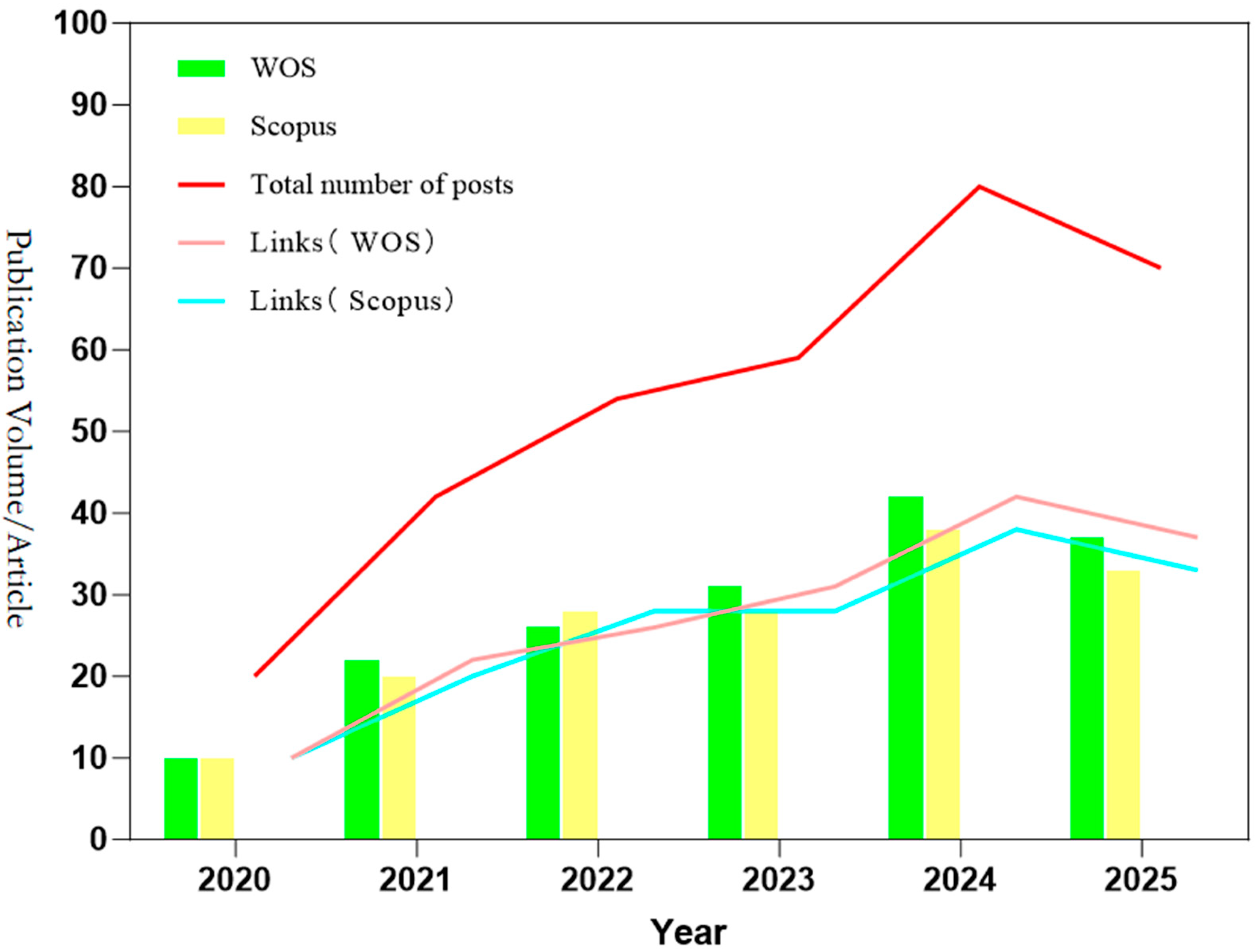
In the WOS and Scopus databases, the number of publications in this field showed a significant upward trend from 2020 to 2024, with an average annual growth rate of 41.4%. Specifically, the year-on-year growth rate increased by 28.6% from 2021 to 2022, and further accelerated to 35.6% from 2023 to 2024 (the highest growth rate during the study period). Publications in 2025 (as of 31 October) totaled 70 articles. Although this represents a 12.5% year-on-year decrease compared to 2024, it remains at a relatively high level. This decline is primarily attributed to the incomplete statistical coverage of the period (excluding November–December) and a decrease in research activity outside the field. As shown in Figure 1, the standard errors for publication counts in both databases are less than 5, indicating good data stability. The cumulative publication count increased from 20 papers in 2020 to 80 papers in 2024, representing a 300% growth rate. This fully reflects the sustained rise in research activity within this field. Both the Web of Science and Scopus databases demonstrated excellent performance in terms of literature coverage and data completeness, providing a solid and reliable data foundation for conducting bibliometric analysis in this field.

3.2. Spatial Distribution Characteristics of the Literature

3.2.1. Analysis of Countries Publishing Foreign-Language Articles

In the WOS database, the top 10 countries by number of publications are China, the United States, India, Spain, Serbia, Russia, Canada, the Czech Republic, Germany, and South Korea. In the Scopus database, the top 10 countries by number of publications are China, the United States, France, Spain, India, Canada, Russia, Romania, Ghana, and Panama, as shown in Table 1.
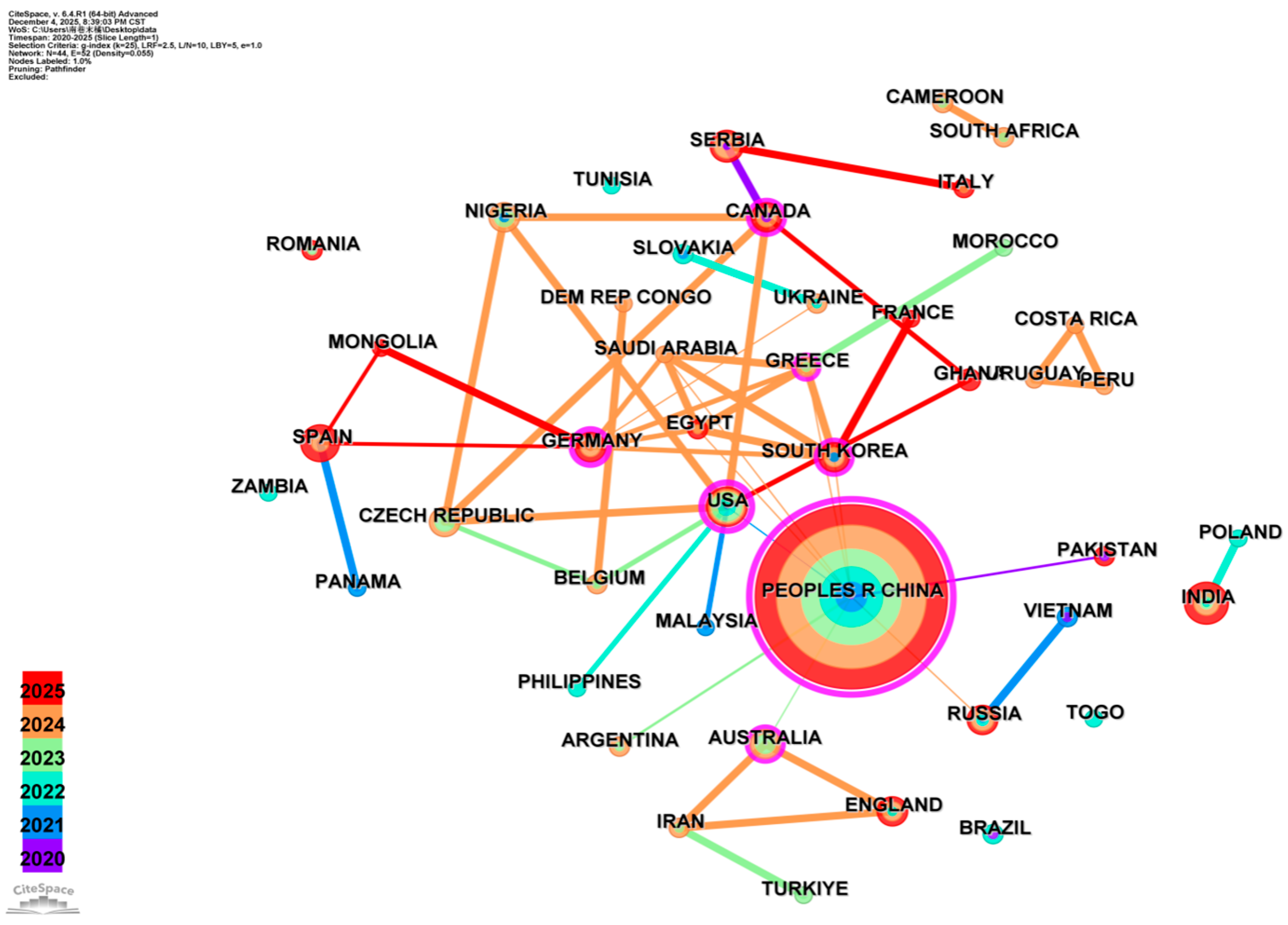
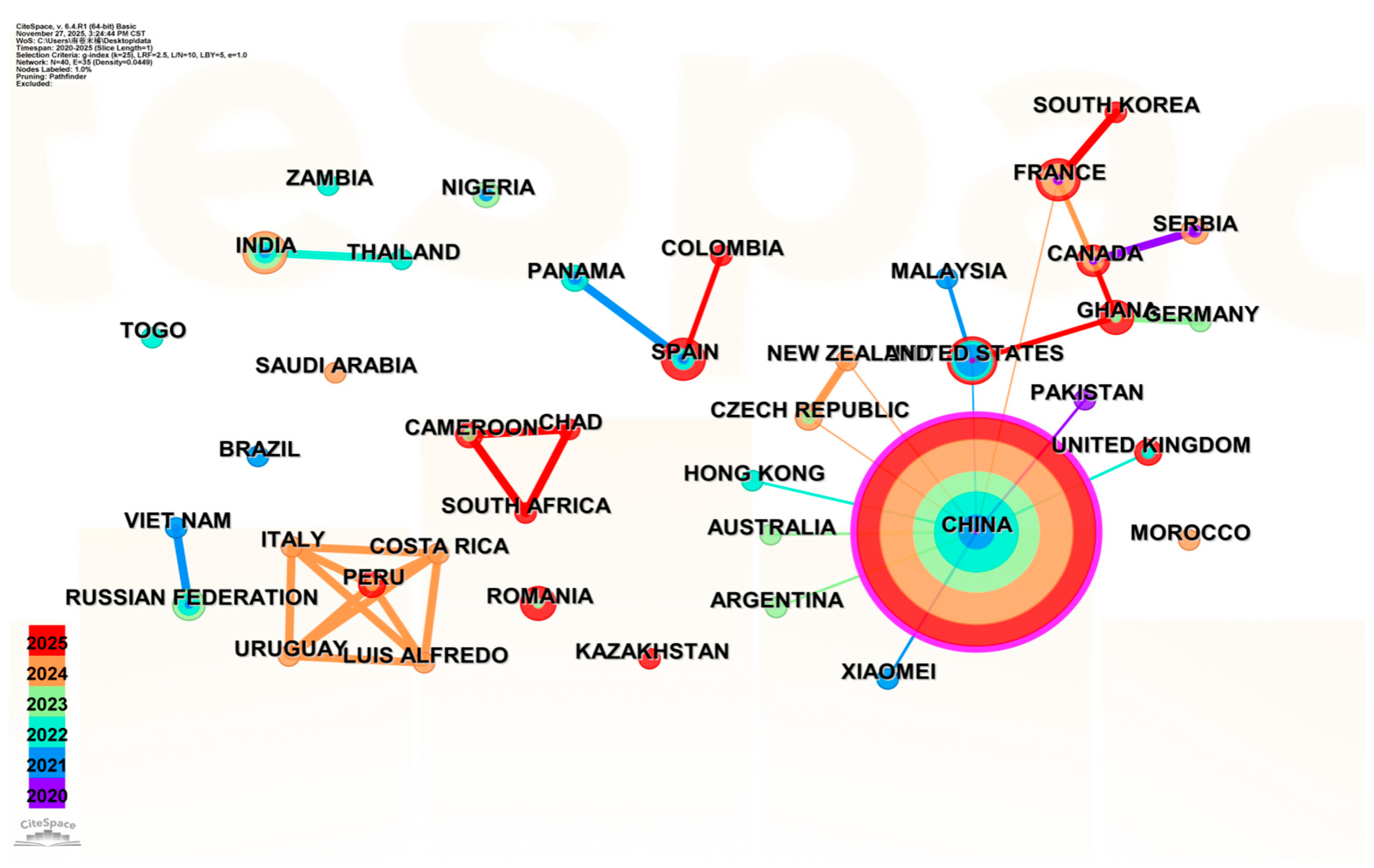
In the knowledge map generated by CiteSpace, this study employs betweenness centrality to measure a node’s connectivity role and importance within the overall network. Its core logic is as follows: the higher a node’s betweenness centrality, the more frequently it appears on the shortest paths between other node pairs, indicating stronger intermediary transmission capabilities, collaborative connectivity, and field influence within the network. In the software, nodes with high betweenness centrality (centrality > 0.1) are surrounded by purple rings, visually identifying them as core hub nodes. It is important to note that centrality in CiteSpace reflects structural properties of the network rather than causal “influence”. This study constructed co-occurrence visualizations for all countries, with results shown in Figure 2 and Figure 3.
The size of nodes in the diagram represents publication volume, while the lines connecting nodes indicate collaborative relationships between countries. The color of the lines signifies the duration of collaboration between nations. This reveals that China is the most prolific and influential country in terms of publications. Five countries exhibit a centrality greater than 0.1 in the Web of Science (WOS) database: China, the United States, Canada, Germany, and South Korea. Four countries show a centrality exceeding 0.1 in the Scopus database: China, the United States, Ghana, and Canada. This indicates that researchers from these nations engage in broader collaborative networks and exert significant influence within the field.
The WOS country co-occurrence map reveals dense, thick orange connections between the United States, Canada, Nigeria, and the Czech Republic, indicating frequent collaboration and close ties among these nations that form the network’s core cooperative circle. Red connections like Spain–Germany and Serbia–Italy represent specific bilateral collaborations, though generally sparse. Countries like Brazil and Romania have fewer connections, positioning them as ‘peripheral participants’. Meanwhile, the Scopus co-occurrence map reveals orange connections between Uruguay and Italy (orange) that are dense and thick, indicating high-frequency collaboration and strong ties among these nations, forming the network’s core cooperative circle. Blue connections like India–Thailand represent specific bilateral collaborations but remain sparse overall. Countries with fewer connections, such as Brazil, Togo, and Saudi Arabia, are classified as ‘peripheral participants’.
From the collaboration timeline perspective, the purple connections between Canada and Serbia, and the blue connections between the United States and China in the WOS database during 2020–2021, indicate that their cooperation began at an early stage. In 2022, a light blue connection between China and England emerged, marking China’s entry into the collaborative network, though at this point, only preliminary ties with England had been established. In 2023, a green connection emerged between the Czech Republic, Belgium, and the United States, while connections also appeared between China and Australia, signaling the expansion of the core circle. In 2024 (orange), China’s node size rapidly expanded, adding orange connections with South Korea, Egypt, Saudi Arabia, Greece, Russia, and Italy. Simultaneously, dense orange connections like Germany–Saudi Arabia and Germany–Egypt emerged, strengthening ties within the core cooperative circle (China, US, Germany, and Saudi Arabia). 2025 (red): Red connections became predominant (e.g., Spain–Germany, Serbia–Italy). China established cooperation with more nations, while the intermediary roles of the US and Germany (connecting Europe and the Middle East) became more prominent. In the Scopus database, the purple connection between China and Pakistan in 2020–2021 and the blue connection between Spain and Panama indicate that cooperation between these pairs had already begun in the early stages. The light blue connection between India and Thailand added in 2022 indicates that this topic has garnered attention globally over the past five years. In 2023, a green connection between China and Australia emerged, alongside a connection between China and Argentina, signaling the expansion of the core circle. By 2024 (orange), the size of the China node had rapidly expanded, with new orange connections established with the Czech Republic and the United States. By 2025 (red), red connections became predominant (e.g., Spain–Colombia and France–South Korea), indicating that the Scopus database now includes a greater number of bilateral cooperation countries in its literature coverage.
From 2020 to 2025, the global collaborative network in the field of ecological remediation of heavy metal pollution in mining areas exhibited a development pattern characterized by “China-led, multi-regional linkage”. China’s international cooperation spanned over 20 countries across Asia, Europe, Africa, and Oceania, with the density and coverage of its collaborative network continuously expanding, highlighting a robust growth trajectory. Quantitative indicators reveal China’s dominant position: accounting for 70% of publications in the Web of Science (WOS) database with an intermediary centrality of 0.75 (ranking first globally), and 78% of publications in the Scopus database with a centrality of 0.25. These metrics fully validate China’s core global standing in research output, international cooperation influence, and comprehensive impact within this field.

3.2.2. Research Institution Analysis

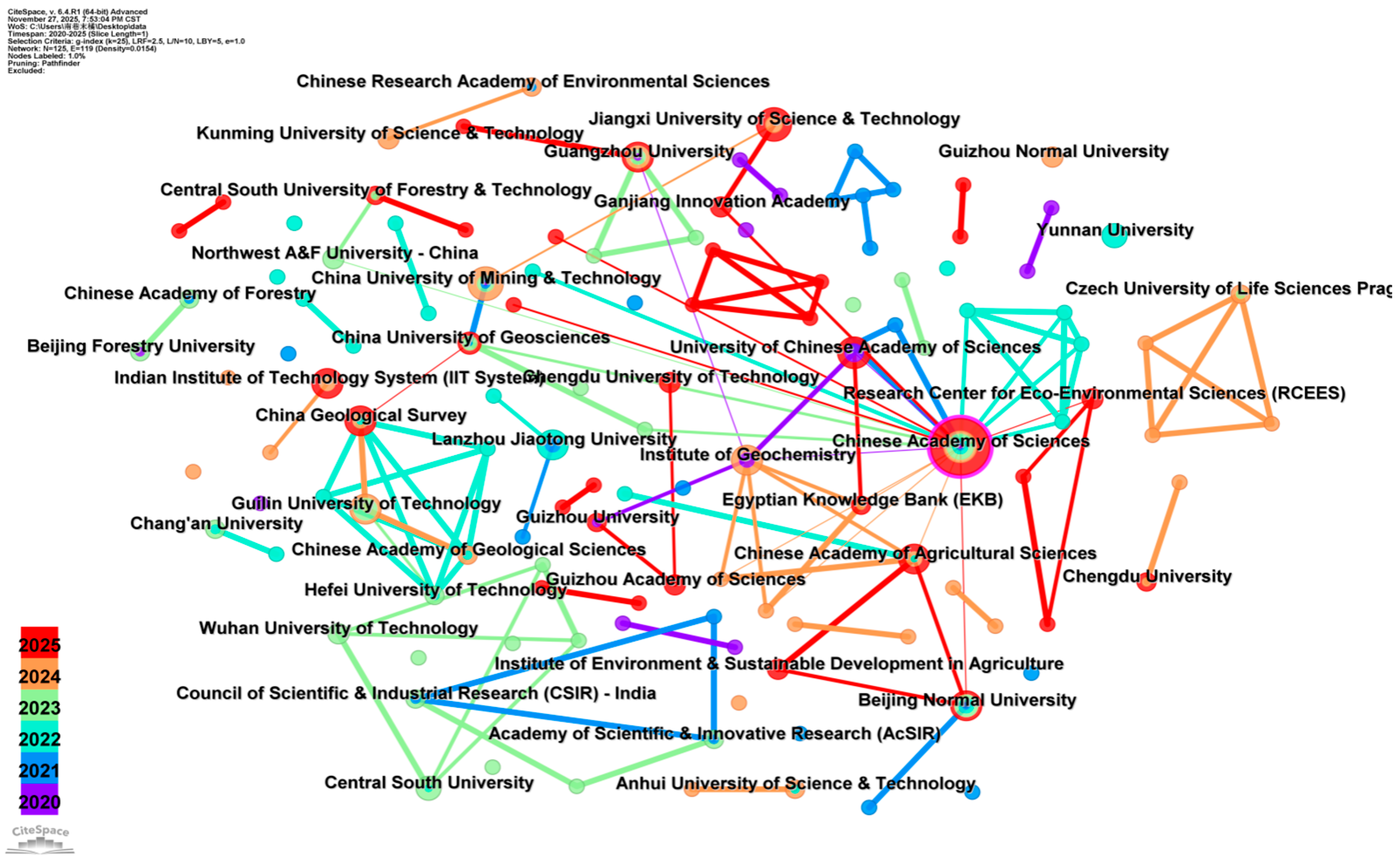
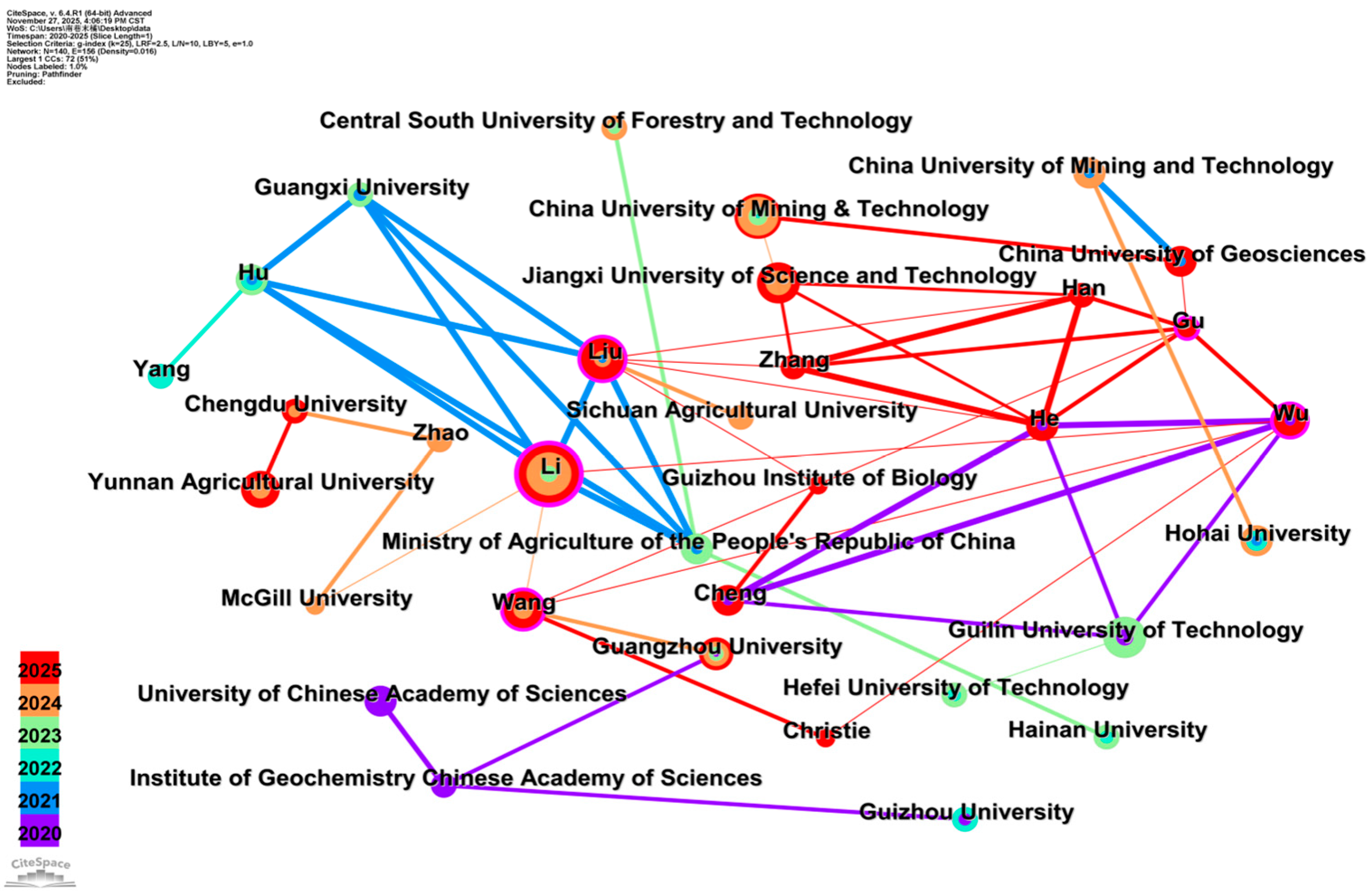
Using Excel software to rank the top 10 institutions by publication volume yields the results shown in Table 2. In the Web of Science database, the Chinese Academy of Sciences led with 19 publications (accounting for 11.3% of the total), followed by the University of Chinese Academy of Sciences with eight publications (4.8% of the total). The top 10 publishing institutions collectively produced 67 papers, accounting for 39.9% of all publications. In the Scopus database, the Ministry of Education of the People’s Republic of China has 15 papers (9.6% of total publications), followed by the Chinese Academy of Sciences with 12 papers (7.6% of total publications). The top 10 publishing institutions collectively produced 69 papers, accounting for 44.0% of the total output. Notably, the top 10 publishing institutions in terms of publication volume in the WOS and Scopus databases are all Chinese institutions. It should be noted that this result may be subject to certain query biases related to factors such as database search scope and literature inclusion criteria, and should be viewed objectively. Based on publication data, the Chinese Academy of Sciences ranks among the top in both databases. It not only holds a significant advantage in publication volume but also demonstrates high academic citation rates and influence for its research outcomes, reflecting the institution’s core research position and academic authority in the field. Other top domestic institutions featured on the list have also become important research forces in this domain through sustained publication output and academic influence. Visualization of the institutional co-occurrence network using Citespace software yielded the results shown in Figure 4 and Figure 5. Collaboration among institutions appears extensive across both WOS and Scopus databases.
The co-occurrence map and quantitative analysis results from the WOS and Scopus databases reveal that the institutional collaboration network in the field of ecological remediation of heavy metal pollution in global mining areas exhibits distinct structural characteristics: In terms of collaboration frequency, the number of effective collaborative pairs between institutions reached 119 and 156 in the two databases, respectively. Core institutions (such as the Chinese Academy of Sciences) engaged in collaborations with 21 institutions, demonstrating their radiating and driving influence. Institutional centrality analysis reveals that the Chinese Academy of Sciences exhibits an intermediary centrality of 0.19 (>0.1, indicated by a purple ring in the periphery) in the WOS database, positioning it as a pivotal hub connecting diverse domestic and international institutional clusters with prominent intermediary transmission capabilities. These quantitative findings demonstrate a tightly knit and orderly institutional collaboration network within the field, where the pivotal role of core institutions lays a solid foundation for deepening cross-institutional and cross-regional cooperation.
A cross-database comparison of institutional rankings between Web of Science (WOS) and Scopus reveals that four Chinese institutions—the Chinese Academy of Sciences, the University of Chinese Academy of Sciences, China University of Mining and Technology, and Jiangxi University of Science and Technology—rank among the top 10 in both databases. This demonstrates consistent core research standing and stable influence across both platforms. However, significant ranking discrepancies exist: WOS’s top 10 list predominantly features research institutes and comprehensive universities, while Scopus includes institutions from the education system and agricultural sectors (e.g., universities directly under the Ministry of Education of the People’s Republic of China, Yunnan Agricultural University). These differences stem from underlying biases in the two databases’ inclusion criteria. When interpreting institutional research strength, it is essential to objectively consider the characteristics of each database.

3.2.3. Analysis of Highly Cited Publications

The citation frequency of the literature serves as a key metric for measuring the impact of academic achievements [15]. To further investigate the citation landscape of research outcomes in the field of ecological remediation for heavy metal pollution in mining area soils, the top 10 articles ranked by citation frequency in this research domain were selected from the Web of Science (WOS) and Scopus databases, as shown in Table 3.
The highly cited references cited in this study all focus on core areas of heavy metal pollution research and are highly relevant to the theme of ecological remediation, fully ensuring the relevance and scientific rigor of the citations: In the Web of Science database, Haiwei Zhang’s 2021 paper ‘Pollutant source [16], ecological and human health risks assessment of heavy metals in soils from coal mining areas in Xinjiang, China’ has been cited 175 times. This study pioneered the use of linear regression models to analyze the pollution characteristics and sources of heavy metal elements in the Zhungeer mining area of Xinjiang, China. Muhammad Adnan’s 2024 paper ‘Heavy metals pollution from smelting activities: A threat to soil and groundwater’ has been cited 147 times [17]. It comprehensively assessed soil heavy metal pollution in Chinese mining and smelting regions, covering potential hazards, pollution sources, and remediation strategies. Li, Sha’s 2021 paper ‘Profiling multiple heavy metal contamination and bacterial communities surrounding an iron tailing pond in Northwest China’ has been cited 143 times [18]. This study analyzed the primary physicochemical properties, composite heavy metal contamination characteristics, and bacterial community structure of soils surrounding an iron tailing pond in Linze County, Zhangye City, Gansu Province. In the Scopus database, Haang’s 2021 paper ‘Pollutant source [19], ecological and human health risks assessment of heavy metals in soils from coal mining areas in Xinjiang, China’ has been cited 198 times. This study pioneered the use of linear regression models to analyze the pollution characteristics and sources of heavy metal elements in the Zhungeer mining area of Xinjiang, China. Sharma, Nitika’s 2021 paper ‘Heavy Metal Pollution: Insights into Chromium Eco-toxicity and Recent Advancements in Its Remediation’ has been cited 176 times [20]. This review examines the ecological toxicity and pollution sources of heavy metals in the environment, focusing on chromium. It systematically discusses chromium’s toxicity mechanisms and recent research progress in heavy metal removal technologies. Additionally, it outlines the latest developments in chromium remediation technologies, emphasizing the practical application of bioremediation and phytoremediation techniques across various environmental media, including soil, air, and water. Li, Sha’s 2021 paper ‘Profiling multiple heavy metal contamination and bacterial communities surrounding an iron tailing pond in Northwest China’ has been cited 165 times [21]. This study analyzed the primary physicochemical properties, characteristics of combined heavy metal contamination, and bacterial community structure in soils surrounding an iron tailing pond in Linze County, Zhangye City, Gansu Province. The aforementioned literature collectively covers the complete research chain of “pollution source tracing–risk assessment–microbial response–remediation technology,” forming a close correspondence with the core direction of this study.
Among these, the 2021 publication by the team of Haiwei Zhang [17], titled “Pollutant source, ecological and human health risks assessment of heavy metals in soils from coal mining areas in Xinjiang,” China’ and Li, Sha’s 2021 [21] paper ‘Profiling multiple heavy metal contamination and bacterial communities surrounding an iron tailing pond in Northwest China’ are both listed as highly cited papers in the Web of Science (WOS) and Scopus databases. This reflects the objective presentation based on the independent collection and citation statistics systems of the two major databases and does not constitute duplicate descriptions. Due to differences in coverage between the two databases, citation counts vary: Haiwei Zhang’s team’s study received 175 citations in WOS and 198 in Scopus, while Li, Sha’s team’s study [21] received 143 citations in WOS and 165 in Scopus. This cross-database consistency in high citation rates further corroborates both studies’ benchmark status and broad international recognition within the field of soil heavy metal pollution research.
In summary, both WOS and Scopus databases exhibit high citation frequencies for their top 10 most cited publications, indicating that the literature they include in the field of ecological remediation of heavy metal pollution in mining area soils possesses significant international influence and broad dissemination.

3.2.4. Subdiscipline Publication Volume and Distribution

Analysis of publication volumes across database subject categories provides an intuitive grasp of research trends and development directions within a field, offering data-driven support for topic selection and directional exploration. To further investigate the distribution characteristics of research outcomes in the field of ecological remediation for heavy metal pollution in mining area soils, this study compiled publication volume data for the top 10 corresponding subject categories from the WOS and Scopus databases, as shown in Table 4.
In summary, environmental science has the highest publication volume, totaling 228 papers, accounting for 70.2% of the total publications. It represents a current research hotspot with moderate research output. The publication volumes of the top 10 corresponding subject categories in the two databases show significant differences. Except for environmental science, the subdiscipline publication volumes of all other corresponding subject categories are below 30 papers.

3.3. Visual Analysis of Research Hotspots

3.3.1. Keyword Co-Occurrence Network Analysis

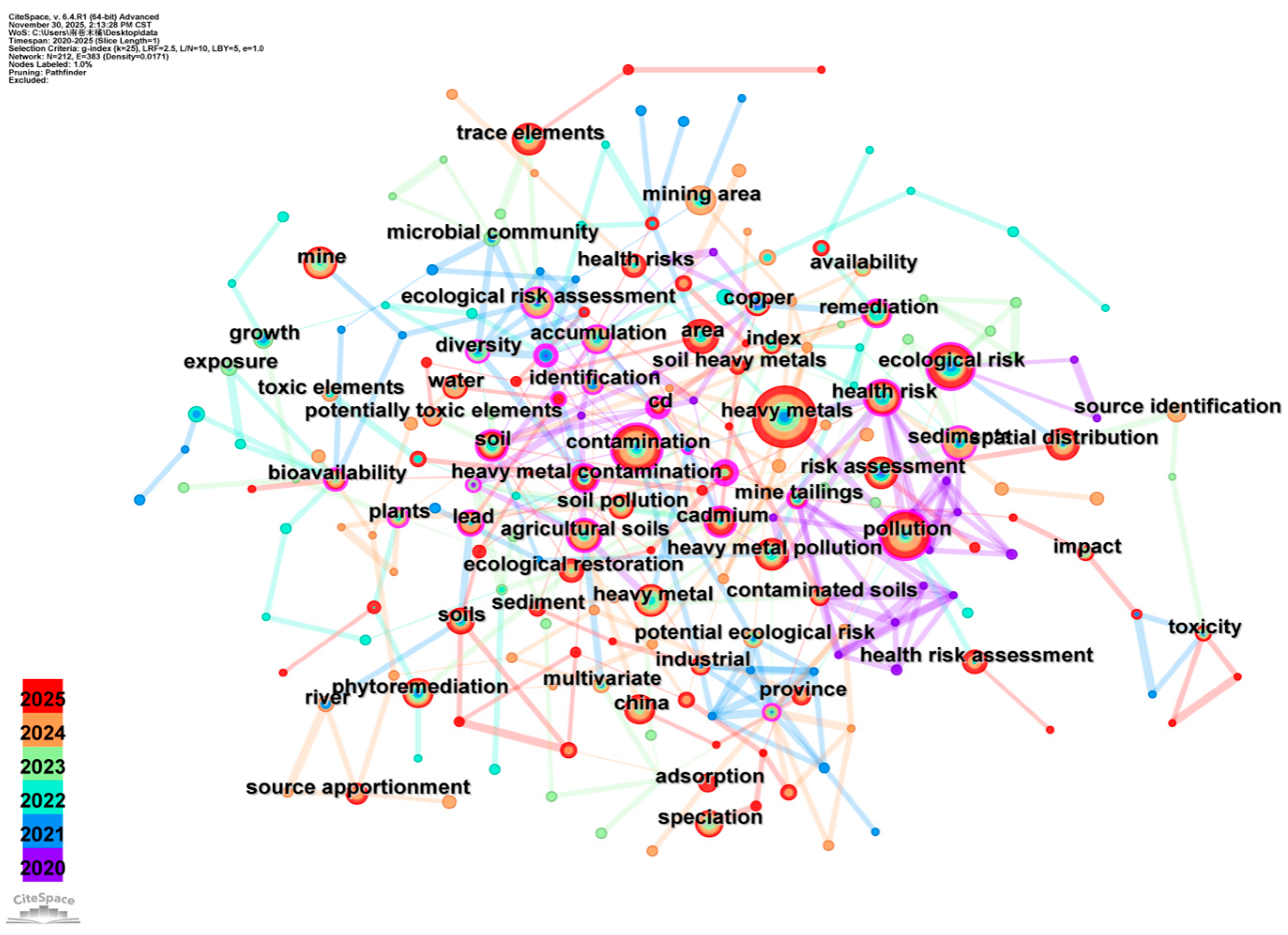
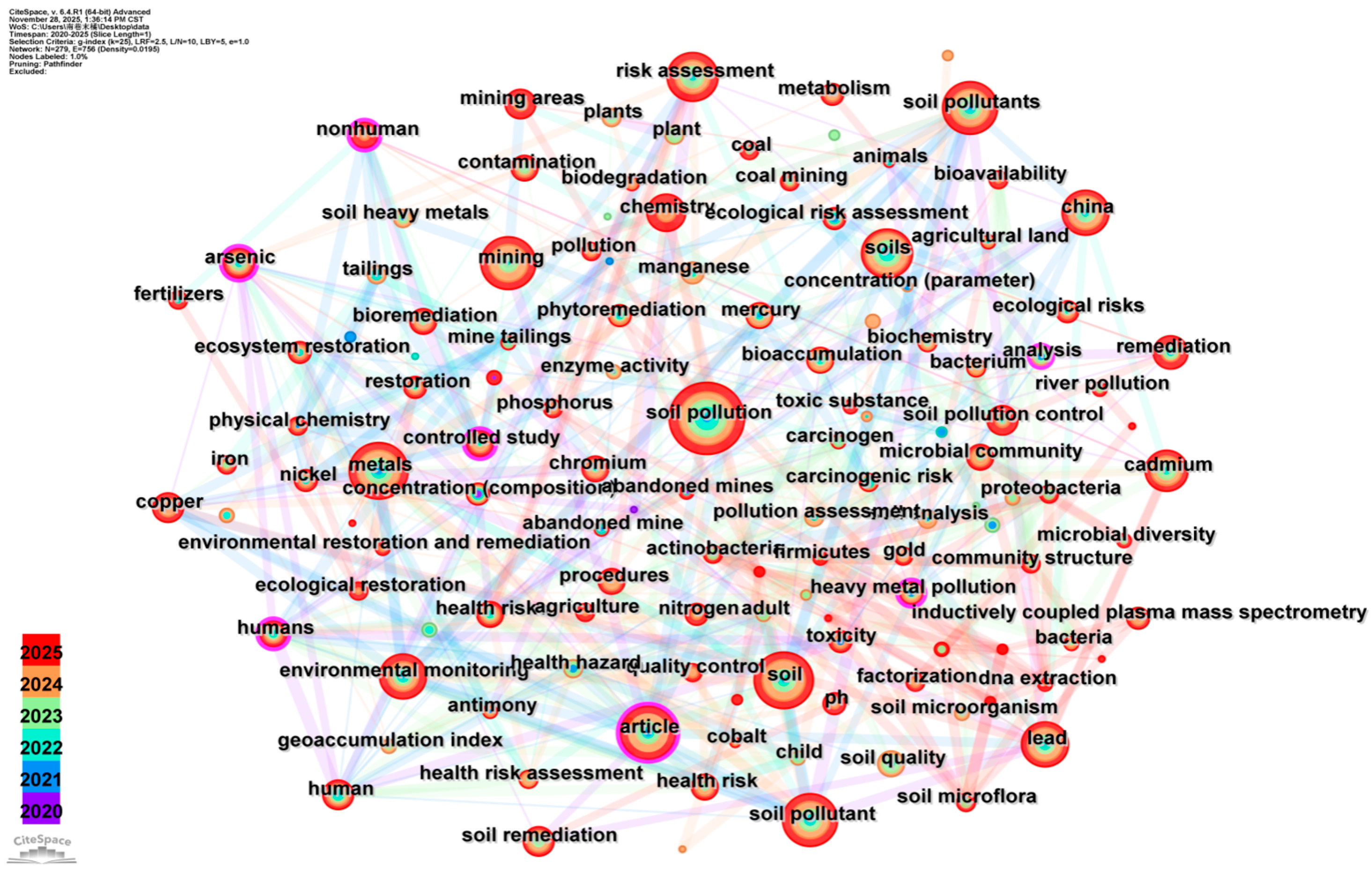
Keywords provide a concise summary of a document’s subject matter. Analyzing high-frequency keywords in the literature can reveal research hotspots, trends, and relationships among various research themes within a field [22]. Keywords were statistically selected from documents in the WOS and Scopus databases and visualized, with the results shown in Table 5. It should be noted that this statistical analysis is based on the original indexed keywords in the database without in-depth cleaning. Consequently, the results include generic terms and common indexing terminology such as “areas” and “controlled study”. Among the original keywords in the WOS database, the top 10 keywords by centrality are as follows: Cd (cadmium), areas, bacterial community, soil, health risk, identification, mine tailings, bioavailability, agricultural soils, and remediation. In the Scopus database, the top 10 keywords by centrality were: controlled study, Firmicutes, Actinobacteria, cadmium, manganese, nickel, heavy metal pollution, mercury, enzyme activity, and maize. After removing generic terms, the core keywords remain concentrated on heavy metals, bacterial communities, bioavailability, cadmium, and heavy metal pollution-related topics. Comprehensive analysis indicates that ecological remediation of heavy metal pollution in mining area soils holds a significant position within the broader field of soil heavy metal pollution remediation.
For the valid literature, high-frequency keyword analysis was conducted using CiteSpace software. The co-occurrence map of keywords in the field of ecological remediation research for heavy metal pollution in mining area soils from 2020 to 2025 is shown in Figure 6 and Figure 7. In Figure 6 and Figure 7, nodes are presented as citation rings. The size of the ring reflects the frequency of keyword occurrence, with larger rings indicating higher frequency. The color of the ring represents the time interval during which the keyword was active, with the color transition from inner to outer rings indicating the publication period from early to present. The thickness of the ring is proportional to the frequency of keyword occurrence within the corresponding time interval. It can be observed that in the WOS database, ‘heavy metals’, ‘pollution’, ‘ecological risk’, ‘region’, and risk assessment’ form the five major keyword nodes. In the Scopus database, ‘heavy metals’, ‘soil pollution’, ‘mining’, ‘soil’, and ‘heavy metal substances’ constitute the five major keyword nodes. These keywords occupy absolutely central positions within the literature collection, generating extensive radiating connections around them that form a complex structural network.
Due to the differing positioning and disciplinary focuses of the two databases, WOS concentrates on specialized environmental science fields (such as environmental engineering and water resources), with keywords centered around processes like “pollution risk assessment, remediation technologies, and source apportionment,” placing greater emphasis on the technical logic chain of pollution control. Scopus covers a broader range of disciplines (including agricultural biology, medicine, and social sciences), with keywords extending to “child health, soil quality, and microbial communities,” focusing more on the cross-disciplinary impacts of pollution on ecosystems and human health. Therefore, the overlap between the two databases is relatively low.

3.3.2. Keyword Clustering Map Analysis

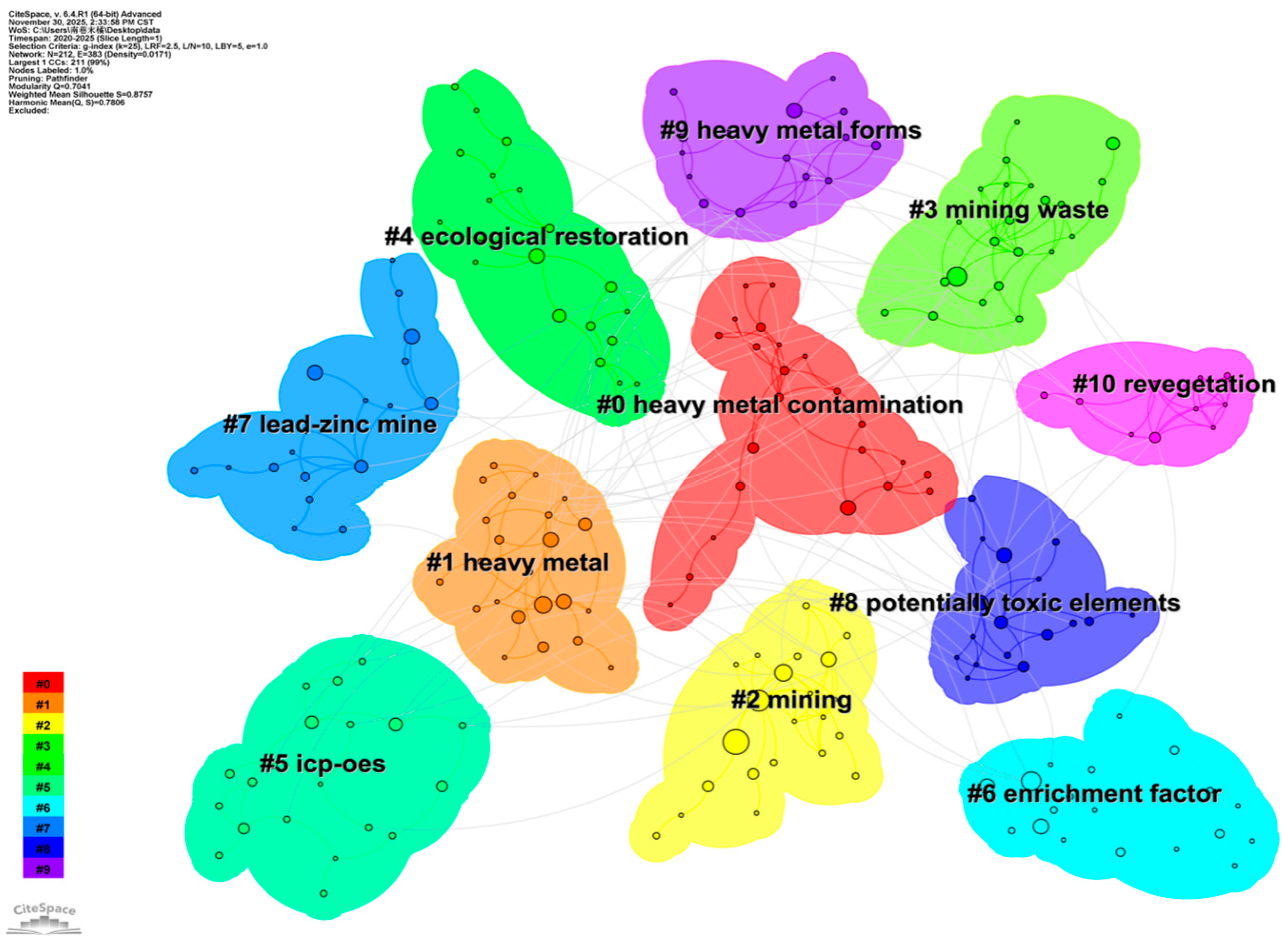
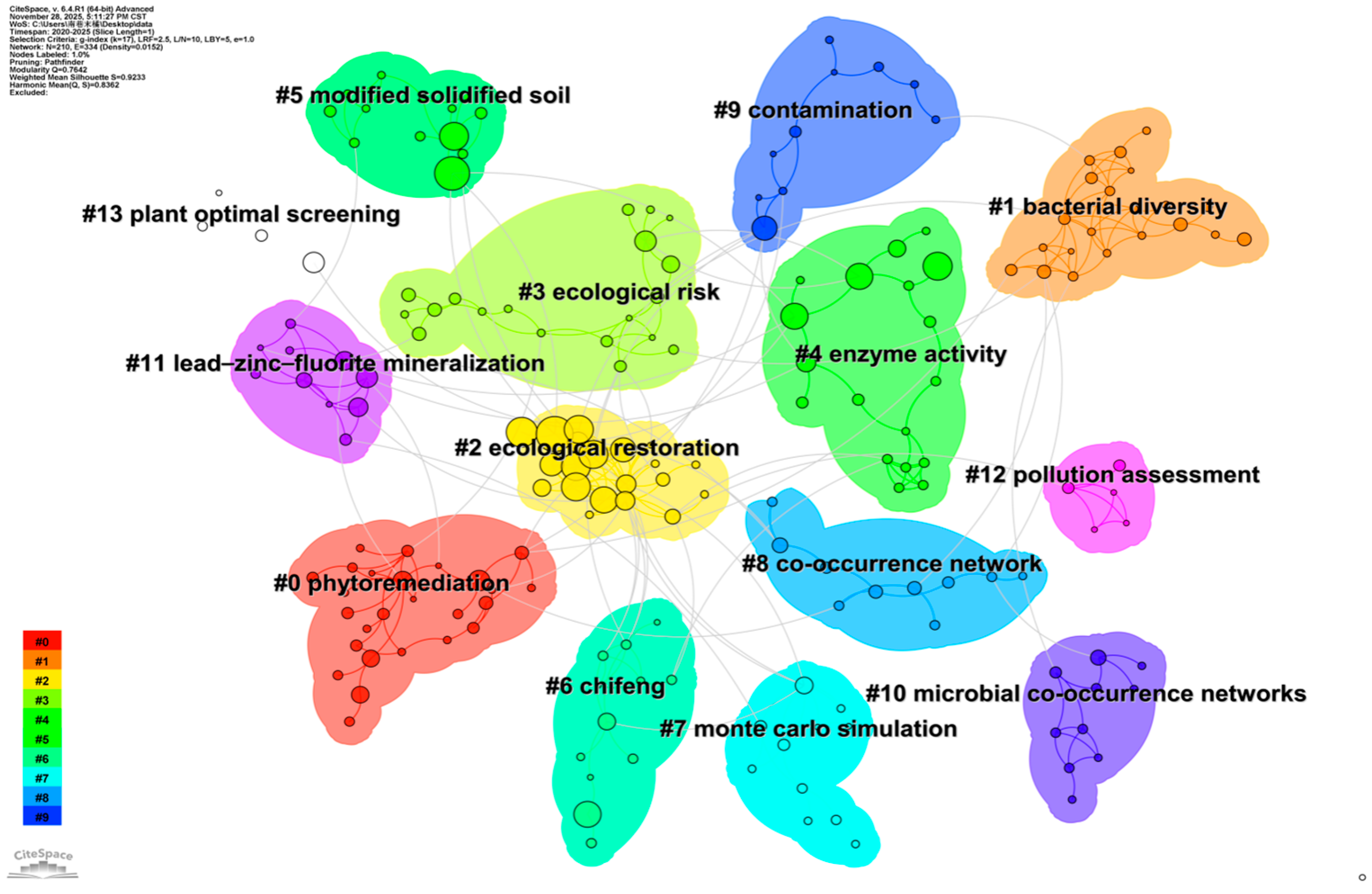
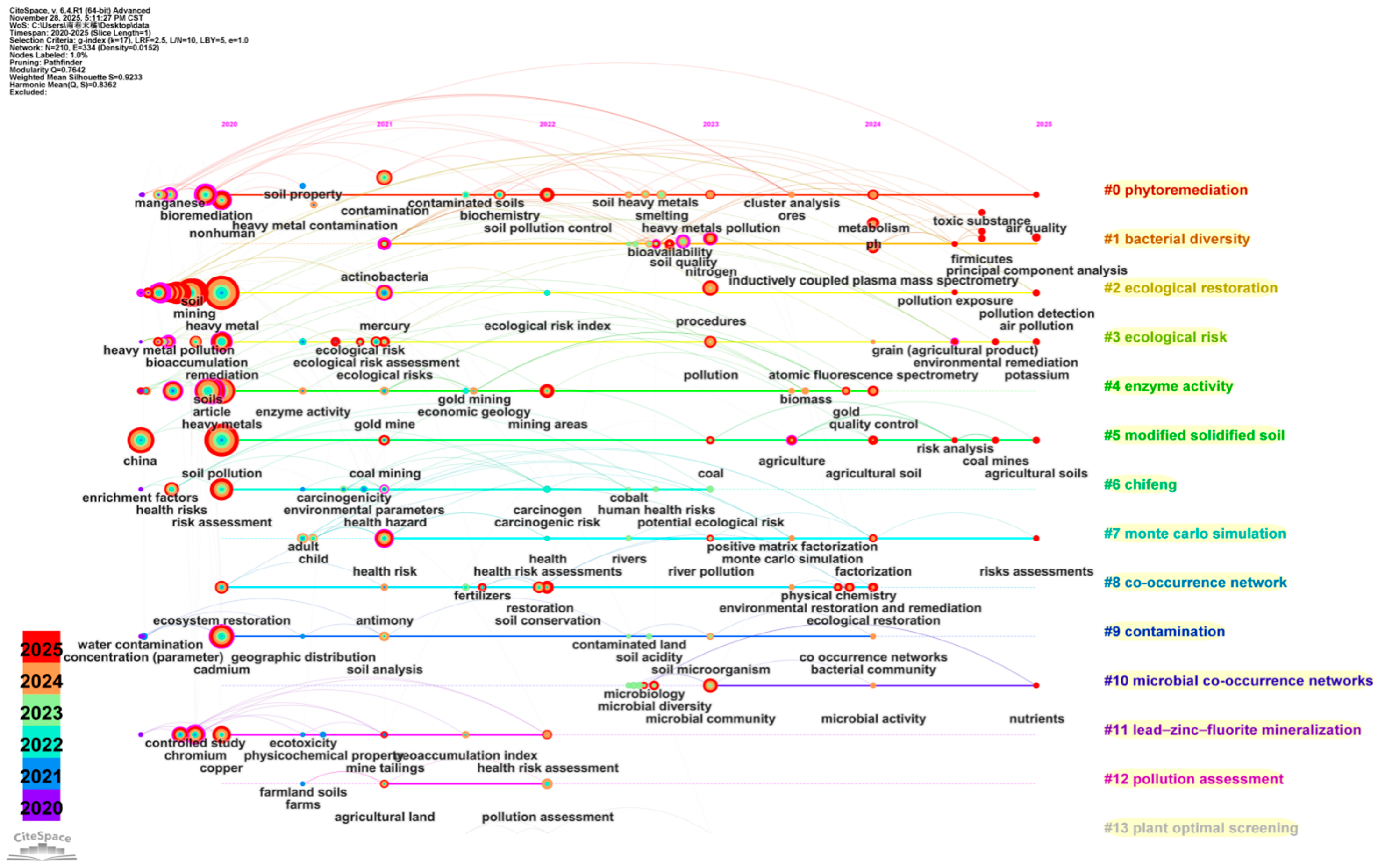
Using CileSpace software for keyword clustering [23], terms with distinct shared characteristics were grouped as clusters. This yielded a keyword clustering map for the field of ecological remediation research on heavy metal contamination in mining area soils, as shown in Figure 8 and Figure 9. Within the WOS database, 11 keyword clusters (#0–#10) were formed: #0 heavy metal contamination, #1 heavy metal, #2 mining, #3 mining waste, #4 ecological restoration, #5 ICP-OES, #6 enrichment factor, #7 lead–zinc mine, #8 potentially toxic elements, #9 heavy metal forms, and #10 revegetation. In the Scopus database, 14 keyword clusters were formed, numbered #0 to #13: #0 phytoremediation, #1 bacterial diversity, #2 ecological restoration, #3 ecological risk, #4 enzyme activity, #5 modified solidified soil, #6 Chifeng, #7 Monte Carlo simulation, #8 co-occurrence network, #9 contamination, #10 microbial co-occurrence networks, #11 lead–zinc–fluorite mineralization, #12 pollution assessment, and #13 plant optimal screening. Based on this framework, thematic classifications within the field of ecological remediation research for heavy metal contamination in mining area soils can be further extracted.

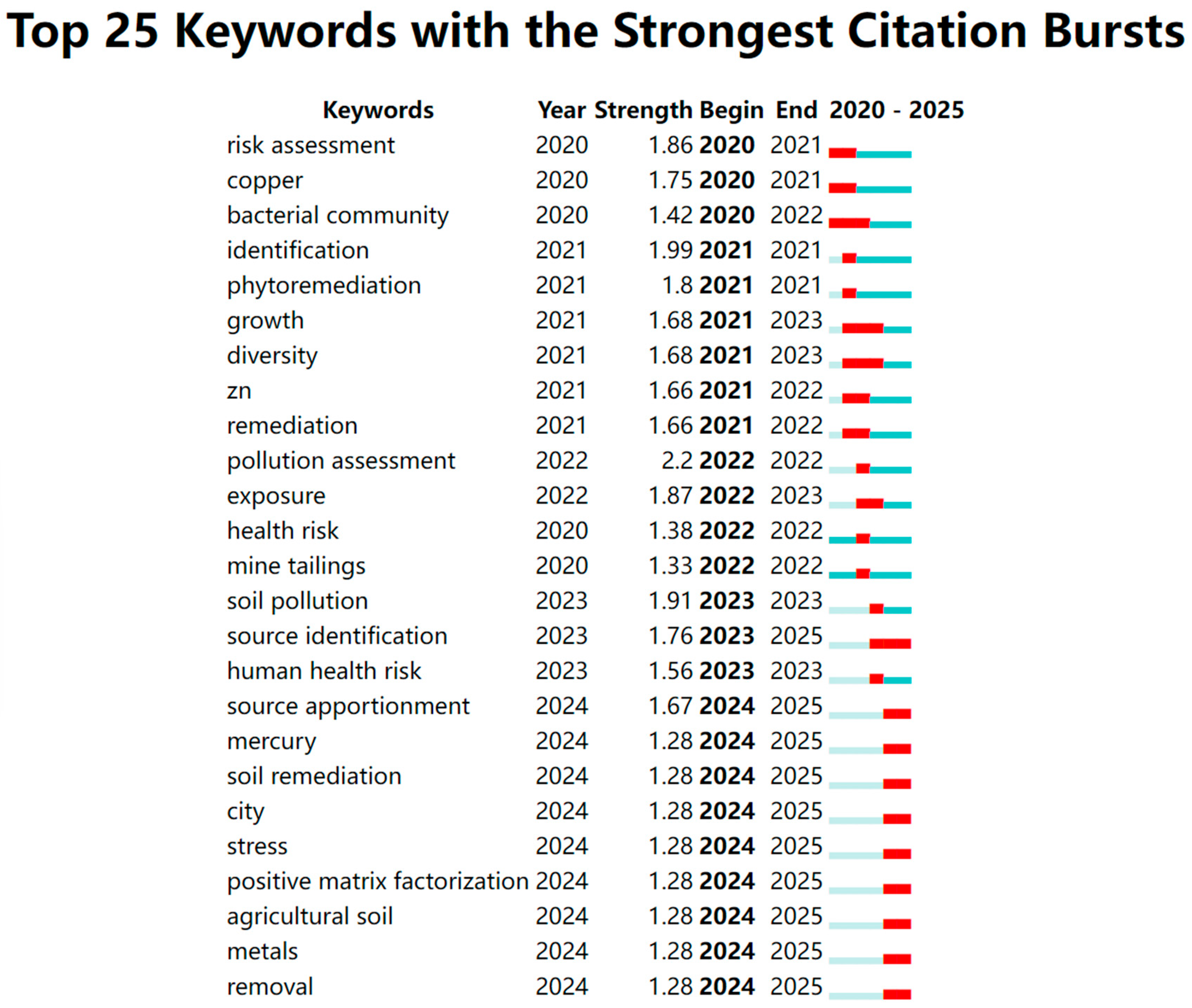
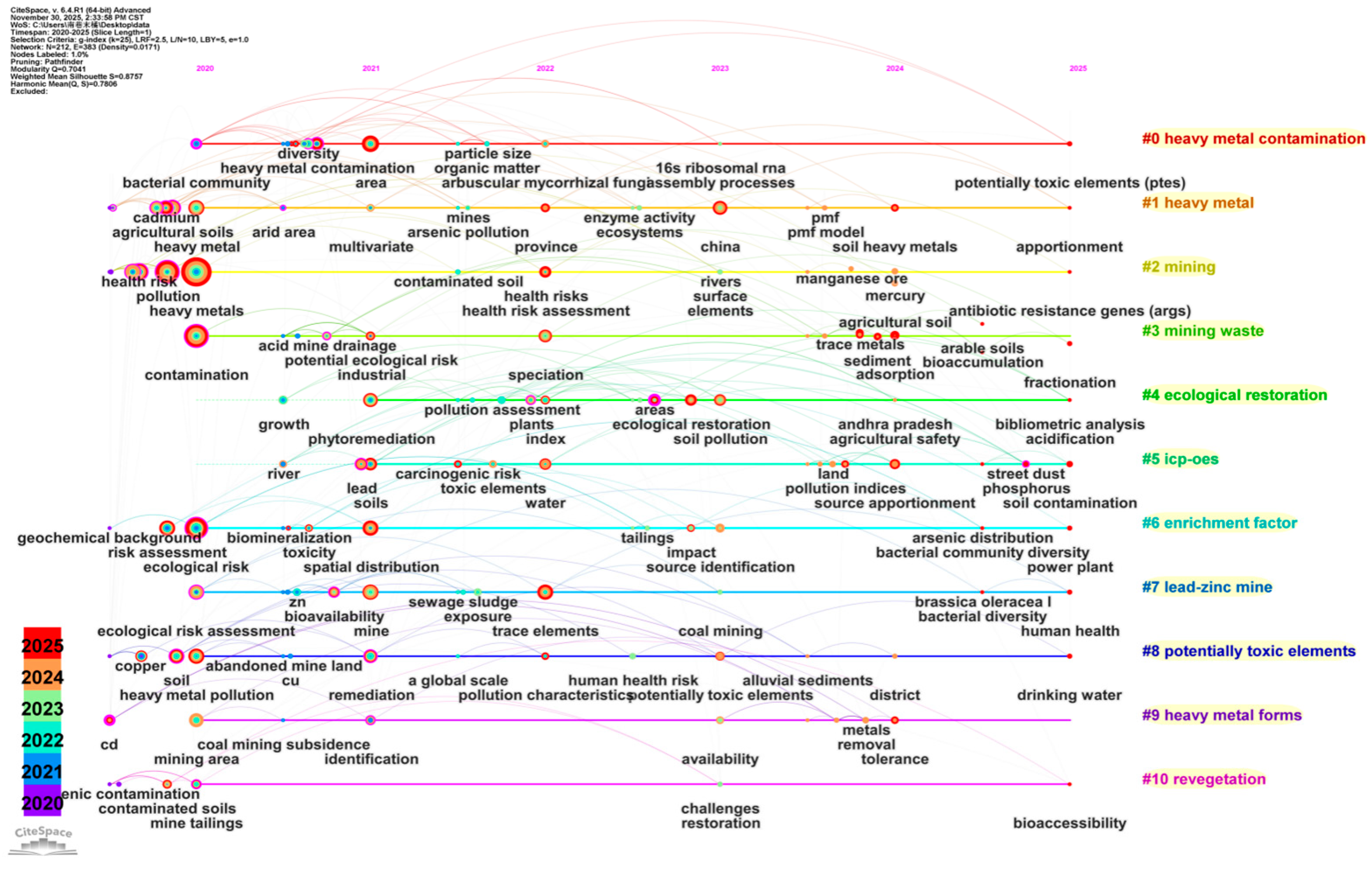
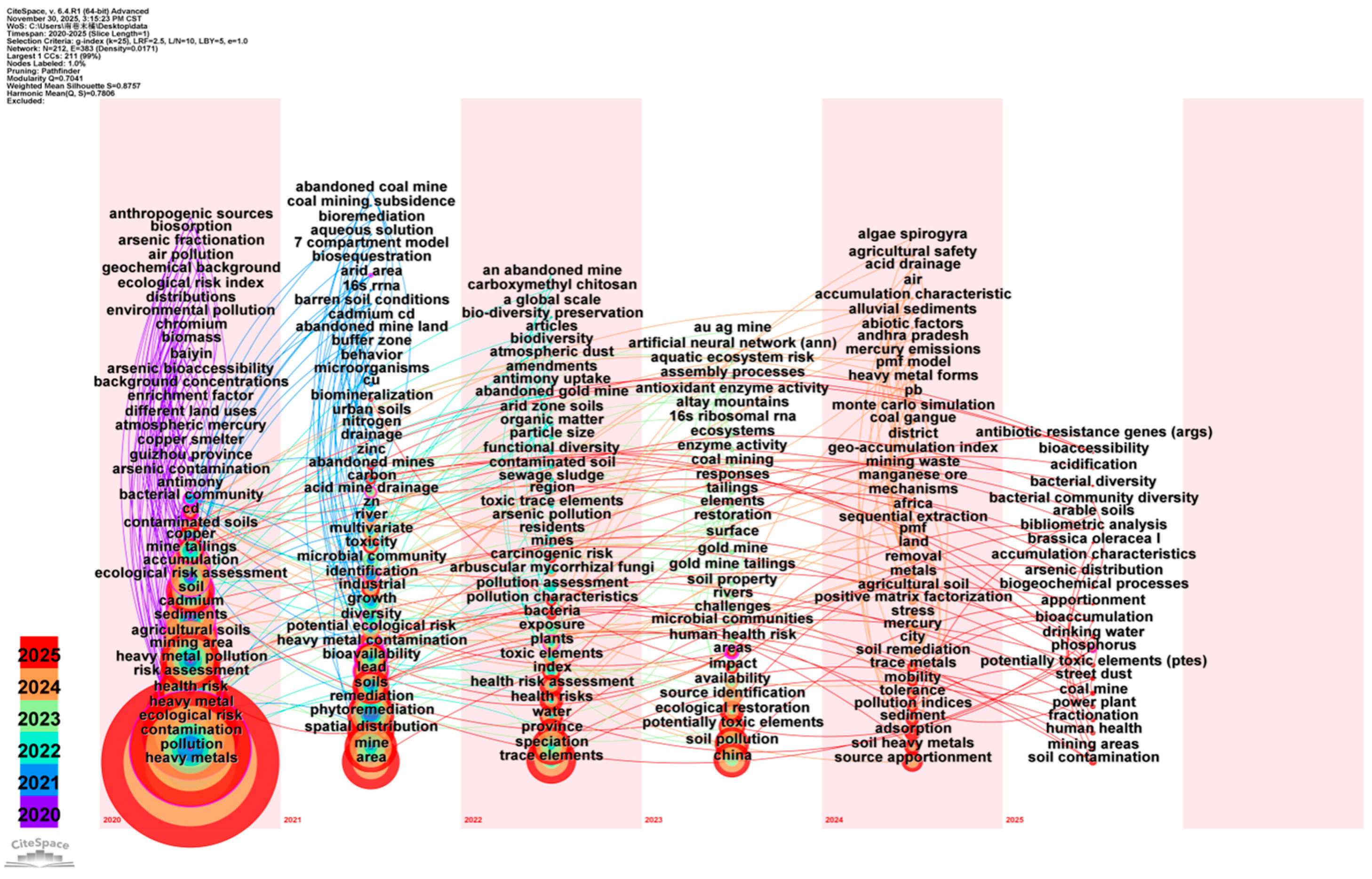
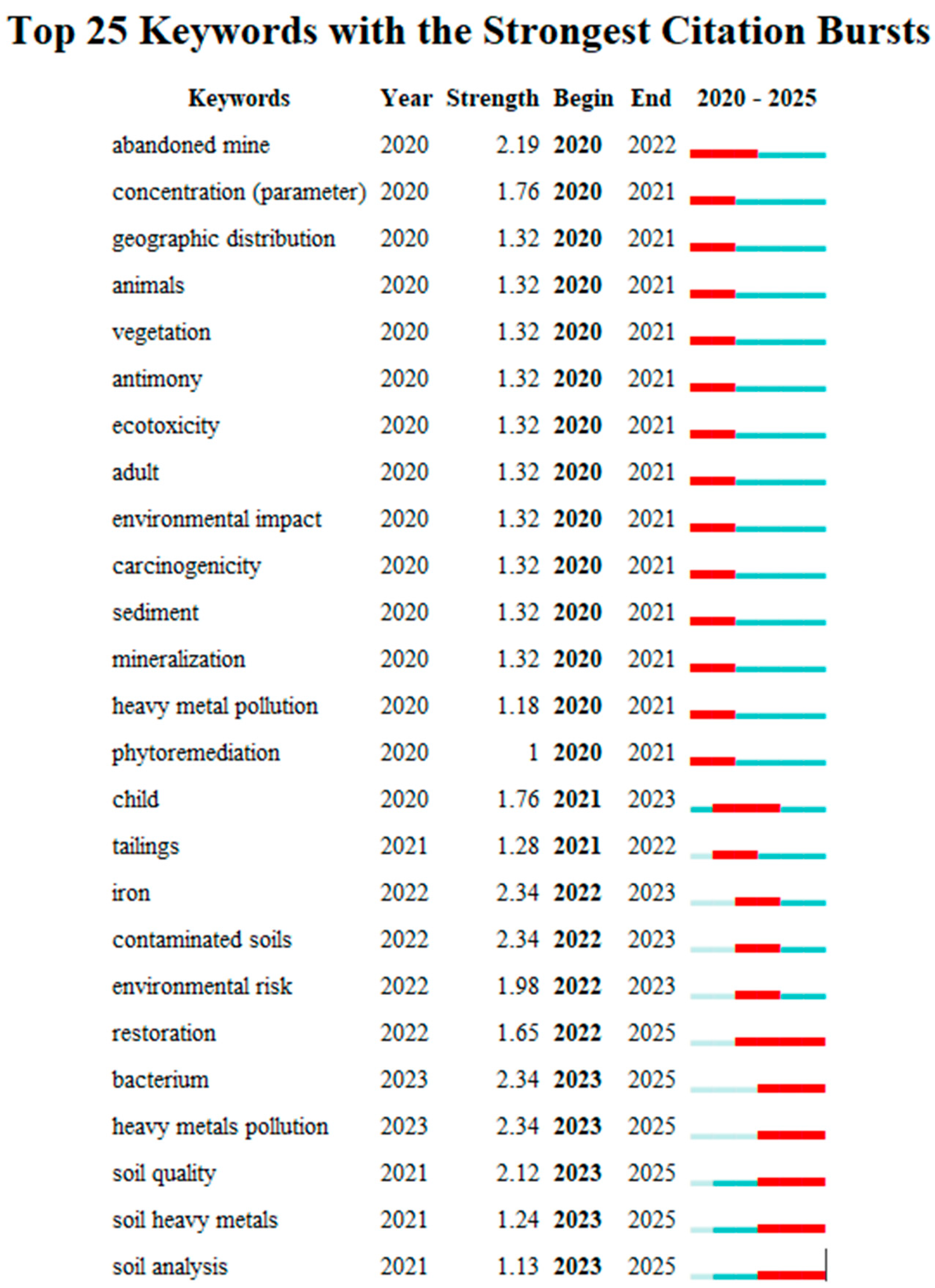
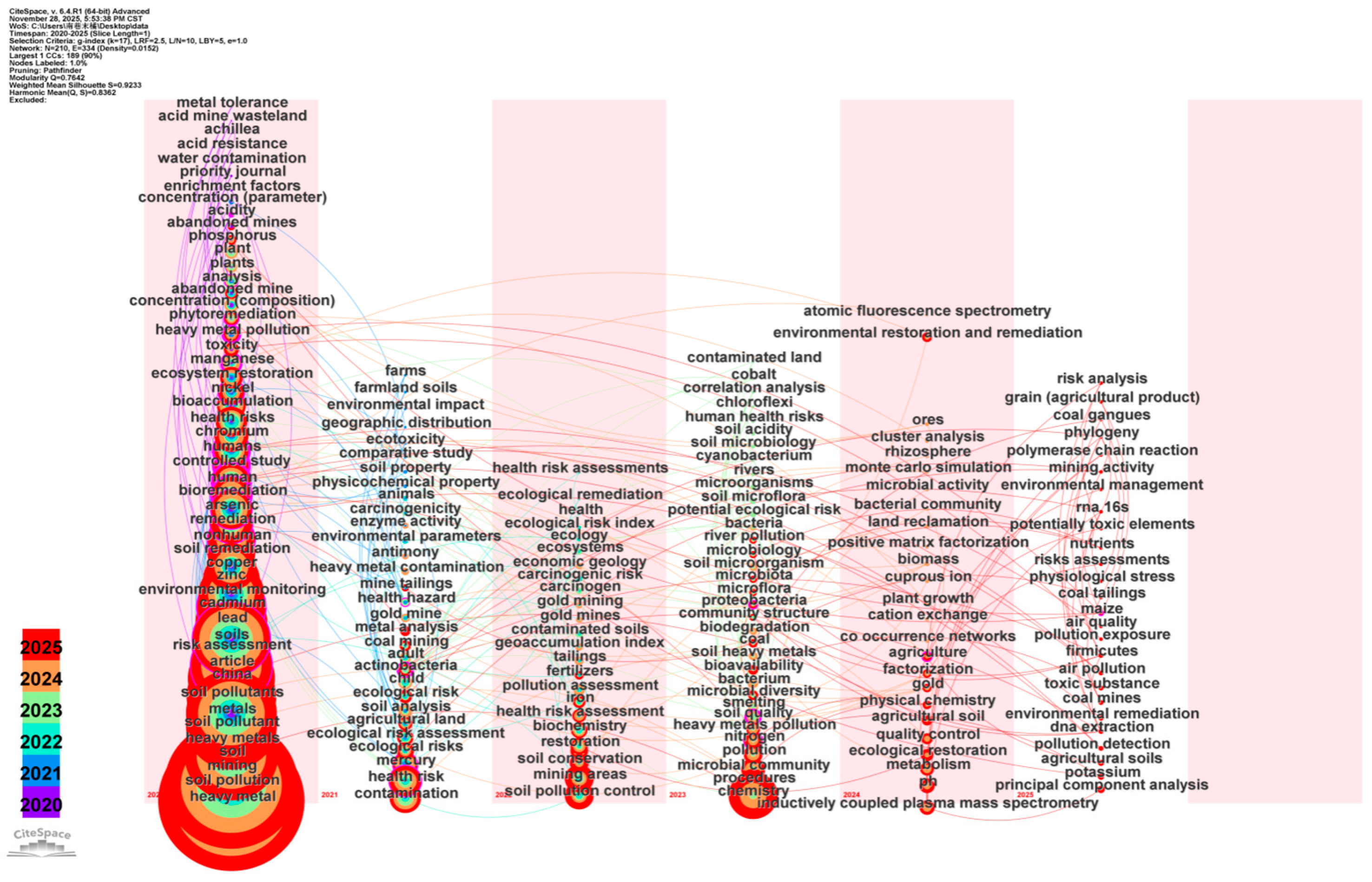
3.3.3. Keyword Emergence, Timeline Diagram, and Time Zone Diagram Analysis

Conducting keyword emergence analysis (including emerging keywords, emergence intensity, and start/end times) along with timeline and time zone analysis for research subjects can clearly illustrate the historical evolution of this research field [24]. Using Citespace software, the top 25 keywords by emergence intensity in both Chinese and English literature within this field were statistically analyzed, with results shown in Figure 10, Figure 11, Figure 12, Figure 13, Figure 14 and Figure 15. In the WOS database, the keywords that emerged prominently in 2020–2021 were primarily ‘risk assessment, copper, bacterial community, health risk, and mine tailings’. This indicates that the main research focus during this period was on risk assessment of heavy metal pollution, encompassing topics such as pollution risks, characteristic elements, and tailings pollution. From 2021 to 2022, the prominent keywords were ‘identification, phytoremediation, growth, diversity, remediation’, indicating that the primary research focus during this period was on pollution remediation technologies, including phytoremediation and the relationship between ecological diversity and remediation effectiveness. The prominent keywords for 2023–2024 were ‘soil pollution, source identification, source apportionment, mercury, and soil remediation’. This indicates that the primary research focus during this period was on pollution source analysis and targeted remediation, with a concurrent emphasis on studying characteristic pollutants such as mercury.
In the Scopus database, the keywords that emerged prominently in 2020–2021 were primarily ‘abandoned mine’, ‘concentration parameter’, ‘heavy metal pollution’, and ‘phytoremediation’. This indicates that the main research focus during this period was on the characteristics of heavy metal pollution associated with abandoned mines and preliminary remediation efforts, encompassing pollution concentrations, spatial distribution, and the application of phytoremediation technologies. From 2021 to 2022, prominent keywords included ‘child’, ‘tailings’, ‘iron’, and ‘contaminated soils’. This indicates that research during this phase focused on detailed studies of tailings and contaminated soils, while also examining the health implications of pollution for specific populations, such as children. The prominent keywords for 2023–2025 are ‘restoration, bacteria, heavy metals pollution, and soil quality’. This indicates that the primary research focus during this phase is on the ecological restoration and quality improvement of contaminated soils, with an emphasis on microbial (bacterial) remediation technologies and long-term enhancement of soil quality.
In summary, the research and keyword characteristics of ecological remediation for heavy metal pollution in mining areas from 2020 to 2025 exhibit a clear evolutionary logic and focus: First, the co-occurrence map reveals a research network centered on ‘heavy metal pollution’, ‘soil pollution’, and ‘ecological remediation’, encompassing mining area soil contamination, remediation technologies, and risk assessment. Second, the emergence map indicates that keywords like ‘soil analysis’ and ‘soil heavy metals’ maintain long-term prominence with high emergence intensity (e.g., ‘pollution assessment’ at 2.2), signifying sustained research focus on mining area soil heavy metal remediation. Third, the keyword clustering map reveals distinct knowledge clusters—such as heavy metal pollution and ecological restoration—that independently cover the entire research process. Fourth, the keyword temporal distribution map shows clusters like ‘heavy metal pollution’ and ‘soil remediation’ spanning the full spectrum from pollution source analysis to remediation and restoration. This reflects both the field’s practical focus on pollution control and its alignment with contemporary demands for precision remediation and ecological security.

4. Conclusions

(1)
Development characteristics of the research field: From 2020 to 2024, the number of publications in this field within the Web of Science (WOS) and Scopus databases showed a steady upward trend. Although there was a slight decline in 2025, the volume remained above 30 papers. This indicates that due to environmental urgency and policy promotion, remediation of heavy metal pollution in mining area soils has become a core research direction within the environmental field, and overcoming bottlenecks in mining area soil remediation is now an urgent priority. China accounted for 70% (WOS) and 78% (Scopus) of publications in these databases, with the highest centrality scores (WOS: 0.75, Scopus: 0.25). Moreover, the top 10 publishing institutions were all Chinese (e.g., Chinese Academy of Sciences, Ministry of Education of the People’s Republic of China), with collaborative networks exhibiting a ‘China-led, multi-regional linkage’ pattern. This reflects China’s globally leading research achievements in this field, directly linked to the urgent domestic demand for mining area pollution control and substantial policy support. Core journals in the environmental science category dominated (228 papers, 70.2% share). The top 10 disciplines in the WOS database are concentrated in environmental subfields (e.g., environmental engineering, water resources), while Scopus extends to agricultural biosciences, medicine, and others. This indicates research has transcended the boundaries of a single environmental discipline. The food contamination, human and animal health impacts, and clinical diseases caused by heavy metal pollution cannot be overlooked. However, except for environmental science, publications in other disciplines remain below 30 articles, indicating room for improvement in the depth and breadth of interdisciplinary collaboration.
(2)
Research hotspots evolution: Analysis of keywords reveals that research hotspots in the field of ecological remediation for heavy metal contamination in mining area soils exhibit a phased progression pattern. 2020–2021 focused on ‘risk assessment and pollution characteristics’ (e.g., ‘risk assessment’ and ‘mine tailings’ in Web of Science; ‘abandoned mine’ and ‘concentration’ in Scopus). 2021–2022 shifted toward ‘remediation technology exploration’ (e.g., ‘phytoremediation’ and ‘remediation’), and advanced to source identification and precision management (e.g., source identification, source apportionment, and soil quality) from 2023 to 2025. This forms a complete research logic chain of ‘pollution identification–remediation–optimization aligning’ with the practical demand for pollution control to shift from ‘passive response’ to ‘proactive prevention and control’. Keyword clustering and emergence analysis reveal that bioremediation (e.g., ‘bacterial community’, ‘Firmicutes’, and ‘Actinobacteria’) and combined remediation have become mainstream approaches, supplanting traditional physical/chemical remediation due to drawbacks like secondary pollution risks and high costs. Concurrently, innovative technologies such as nanomaterials and functional microbial agents have emerged, aligning strongly with policy directives for ‘environmentally friendly remediation’.
(3)
The gap between practice and research: Based on bibliometric analysis and industry realities, there remains a notable disparity between research outcomes in ecological remediation of heavy metal-contaminated mining soils and the practical needs of mining area restoration. First, technological adaptability is insufficient. While the literature often focuses on single heavy metal remediation technologies, composite pollution (heavy metals + organic compounds) accounts for over 60% of actual mining areas. Existing research rarely explores synergistic removal using single technologies. Furthermore, studies targeting special scenarios like acidic mines and abandoned mines are scarce, with keywords related to precise remediation of historical solid waste appearing infrequently, indicating a significant gap in specialized technology research. Second, insufficient industrialization feasibility: Bibliometric analysis indicates high research interest in innovative remediation technologies like nanomaterials. However, keywords related to scaling-up and pilot testing appear extremely infrequently in such studies, lacking research support for pilot and large-scale applications. Concurrently, research output on low-cost remediation technologies like ‘waste-to-waste’ approaches remains scarce, disconnecting from the cost demands of actual mining area remediation. Third, there is a cost-promotion dilemma. Innovative remediation technologies validated in laboratories cost approximately three times more than traditional methods. However, the average cost per hectare for actual mine remediation ranges from 2000 to 6000 RMB yuan. The absence of low-cost technology research makes it difficult to promote existing technologies to small- and medium-sized mining enterprises, creating significant barriers to translating laboratory achievements into engineering practice.

Author Contributions

Y.Z.: Writing—original draft, writing—review and editing. Z.C.: Methodology. D.Y.: Conceptualization. Q.S.: Formal analysis. Z.Y.: Validation. Y.S.: Funding acquisition. X.L.: Resources. G.C.: Investigation. T.G.: Supervision. X.T.: Project administration. All authors have read and agreed to the published version of the manuscript.

Funding

This research was funded by the Gansu Provincial Natural Science Foundation (25JRRA229) and the Shanxi Provincial Natural Science Foundation (2024NC-YBXM-239).

Institutional Review Board Statement

Not applicable.

Informed Consent Statement

Not applicable.

Data Availability Statement

The original contributions presented in this study are included in the article. Further inquiries can be directed to the corresponding author.

Conflicts of Interest

The authors declare no conflicts of interest.

References

  1. Shi, Y.B.; Liu, B.Q.; Li, S.M.; Yang, Z.F.; Yu, T. Heavy Metal Pollution Ecological Risk Assessment and Remediation Technology in the Soil of Metal Mining Areas. 2025. Available online: https://link.cnki.net/urlid/11.1167.P.20251203.1332.004 (accessed on 7 December 2025).
  2. Shi, H.; He, Z.; Deng, C.; Liu, A.; Feng, Y.; Li, L.; Ji, G.; Xie, M.; Liu, X. How Has the Source Apportionment of Heavy Metals in Soil and Water Evolved over the Past 20 Years? A Bibliometric Perspective. Water 2024, 16, 3171. [Google Scholar] [CrossRef]
  3. Fei, Y.Q.; Wang, B.; Zhu, H.L. Analysis of Soil Pollution in Traditional Chinese Medicine Herb Cultivation in Certain Regions of China. Herb. Med. 2020, 43, 2639–2643. [Google Scholar] [CrossRef]
  4. Zhang, K. The Effectiveness of ecological restoration technologies in soil pollution remediation. Res. Conserv. Environ. Prot. 2025, 4, 75–78. [Google Scholar] [CrossRef]
  5. Song, P.; Xu, D.; Yue, J.; Ma, Y.; Dong, S.; Feng, J. Recent advances in soil remediation technology for heavy metal contaminated sites: A critical review. Sci. Total Environ. 2022, 838, 156417. [Google Scholar] [CrossRef]
  6. Phiri, Z.; Moja, N.T.; Nkambule, T.T.I.; de Kock, L.-A. Utilization of biochar for remediation of heavy metals in aqueous environments: A review and bibliometric analysis. Heliyon 2024, 10, e25785. [Google Scholar] [CrossRef]
  7. Liu, N.; Zhao, J.; Du, J.; Hou, C.; Zhou, X.; Chen, J.; Zhang, Y. Non-phytoremediation and phytoremediation technologies of integrated remediation for water and soil heavy metal pollution: A comprehensive review. Sci. Total Environ. 2024, 948, 174237. [Google Scholar] [CrossRef]
  8. Wang, P.P.; Zhang, X.X.; Ma, M. Research on hotspots and trends of mine ecological restoration in China based on citespace. J. Heilongjiang Ecol. Eng. Vocat. Coll. 2025, 38, 1–6. [Google Scholar] [CrossRef]
  9. Zheng, W.; Cui, T.; Li, H. Combined technologies for the remediation of soils contaminated by organic pollutants. A review. Environ. Chem. Lett. 2022, 20, 2043–2062. [Google Scholar] [CrossRef]
  10. Huang, Y.; Wang, L. Experimental studies on nanomaterials for soil improvement: A review. Environ. Earth Sci. 2016, 75, 497. [Google Scholar] [CrossRef]
  11. Wang, X.; Su, S.; Mao, W.; Chen, M.; Liu, X.L.; Yang, T.M.; Zhu, H.Y.; Xu, X.Y. Research progress of plant-microbe remediation for Cd Contaminated soil. Bull. Chin. Agric. 2025, 41, 97–104. [Google Scholar]
  12. Ng, J.Y.; Stephen, D.; Liu, J.P.; Ostermann, T.; Robinson, N.; Cramer, H. Bibliometrics and altmetrics in the context of traditional, complementary, and integrative medicine. Integr. Med. Res. 2025, 14, 101181. [Google Scholar] [CrossRef] [PubMed]
  13. Yan, W.N. Progress, hotspots, and trends in research on popular science journals in China: Visual analysis based on citespace. Res. Chin. Sci. Technol. J. 2024, 35, 163–170. [Google Scholar] [CrossRef]
  14. Chen, Y.; Chen, C.M.; Liu, Z.Y.; Hu, Z.G.; Wang, X.W. The methodology function of Cite Space mapping knowledge domains. Sci. Stud. 2015, 33, 242–253. [Google Scholar] [CrossRef]
  15. Sawangproh, W.; Phaenark, C.; Bridhikitti, A. A research synthesis on heavy metals as emerging atmospheric pollutants: A systematic review and bibliometric analysis (1973–2024). Res. Sq. 2025. [Google Scholar] [CrossRef]
  16. Zhang, H.; Sun, T. Bibliometric Analysis of Mineral Prospectivity Mapping Research from 2006 to 2024. Nat. Resour. Res. 2025, 35, 137–163. [Google Scholar] [CrossRef]
  17. Zhang, H.; Zhang, F.; Song, J.; Tan, M.L.; Kung, H.-T.; Johnson, V.C. Pollutant source, ecological and human health risks assessment of heavy metals in soils from coal mining areas in China. Environ. Res. 2021, 202, 111702. [Google Scholar] [CrossRef]
  18. Adnan, M.; Xiao, B.H.; Ali, M.U.; Xiao, P.W.; Zhao, P.; Wang, H.Y.; Bibi, S. Heavy metals pollution from smelting activities: A threat to soil and groundwater. Ecotoxicol. Environ. Saf. 2024, 274, 116189. [Google Scholar] [CrossRef]
  19. Li, S.; Wu, J.; Huo, Y.; Zhao, X.; Xue, L. Profiling multiple heavy metal contamination and bacterial communities surrounding an iron tailing pond in Northwest China. Sci. Total Environ. 2021, 752, 141827. [Google Scholar] [CrossRef]
  20. Sharma, N.; Sodhi, K.K.; Kumar, M.; Singh, D.K. Heavy metal pollution: Insights into chromium eco-toxicity and recent advancement in its remediation. Environ. Nanotechnol. Monit. Manag. 2021, 15, 100388. [Google Scholar] [CrossRef]
  21. Xiao, Y.; Deng, H.; Wang, P.; Xu, J. Exploring green mining research trends through web of science: A bibliometric analysis based on VOSviewer and CiteSpace. Sustain. Environ. 2025, 11, 2505288. [Google Scholar] [CrossRef]
  22. Zhang, D.; Mak-Mensah, E. A scientometric analysis of biochar applications for soil remediation in mining-affected environments: Research trends, intellectual structure, and emerging themes. Environ. Geochem. Health 2025, 47, 272. [Google Scholar] [CrossRef]
  23. Xie, Y.; Jia, W.; Tan, M.; Feng, Y.; Fu, S.; Zhang, D. Bibliometric and Visualization Analysis of Groundwater Heavy Metal Pollution Research Based on Web of Science. Water 2025, 17, 942. [Google Scholar] [CrossRef]
  24. Tang, S.; Wang, C.; Song, J.; Ihenetu, S.C.; Li, G. Advances in studies on heavy metals in urban soil: A bibliometric analysis. Sustainability 2024, 16, 860. [Google Scholar] [CrossRef]
Figure 1. Publication volume in the field of ecological remediation of heavy metal pollution in mining areas, 2020–2025.
Pollutants 06 00024 g001
Figure 2. Co-occurrence visualization of WOS publishing countries. (Node size represents the number of posts; purple circles indicate high-intermediary centrality nodes; lines represent collaborations, with thickness indicating the strength of the collaboration; node and line colors correspond to time).
Pollutants 06 00024 g002
Figure 3. Visual co-occurrence network of countries publishing in Scopus. (Node size represents the number of posts; purple circles indicate high-intermediary centrality nodes; lines represent collaborations, with thickness indicating the strength of the collaboration; node and line colors correspond to time).
Pollutants 06 00024 g003
Figure 4. WOS institution co-occurrence map. (Node size represents the number of posts; purple circles indicate high-intermediary centrality nodes; lines represent collaborations, with thickness indicating the strength of the collaboration; node and line colors correspond to time).
Pollutants 06 00024 g004
Figure 5. Scopus institution co-occurrence map. (Node size represents the number of posts; purple circles indicate high-intermediary centrality nodes; lines represent collaborations, with thickness indicating the strength of the collaboration; node and line colors correspond to time).
Pollutants 06 00024 g005
Figure 6. Keyword co-occurrence map in the WOS database. (The size of each node represents the frequency of a keyword; the purple circles indicate key nodes with high betweenness centrality; the lines represent co-occurrence relationships, with line thickness indicating the strength of co-occurrence; and the colors of the nodes and lines correspond to time).
Pollutants 06 00024 g006
Figure 7. Co-occurrence map of keywords in the Scopus database. (The size of each node represents the frequency of a keyword; the purple circles indicate key nodes with high betweenness centrality; the lines represent co-occurrence relationships, with line thickness indicating the strength of co-occurrence; and the colors of the nodes and lines correspond to time).
Pollutants 06 00024 g007
Figure 8. WOS database keyword clustering map. (The differently colored blocks represent 11 clusters of research topics (#0–#10, with lower numbers indicating higher popularity); the nodes are keywords, with their size reflecting frequency of occurrence; the lines represent co-occurrence relationships, with their thickness indicating the strength of co-occurrence).
Pollutants 06 00024 g008
Figure 9. Scopus database keyword clustering map. (The differently colored blocks represent 11 clusters of research topics (#0–#10, with lower numbers indicating higher popularity); the nodes are keywords, with their size reflecting frequency of occurrence; the lines represent co-occurrence relationships, with their thickness indicating the strength of co-occurrence).
Pollutants 06 00024 g009
Figure 10. WOS database keyword emergence map.
Pollutants 06 00024 g010
Figure 11. WOS database keyword timeline map. (The horizontal timeline spans 2020–2025; the differently colored bars represent 11 research topic clusters; the nodes are keywords, with size indicating frequency of occurrence and position corresponding to the year of first appearance; the lines represent co-occurrence relationships, with color indicating the time of co-occurrence).
Pollutants 06 00024 g011
Figure 12. WOS database keyword time zone map. (The horizontal timeline spans 2020–2025; nodes represent keywords, with node size indicating frequency of occurrence; purple rings denote high-betweenness centrality key nodes; lines represent co-occurrence relationships, with line thickness indicating co-occurrence strength; node and line colors correspond to specific time periods).
Pollutants 06 00024 g012
Figure 13. Scopus database keyword emergence map.
Pollutants 06 00024 g013
Figure 14. Scopus database keyword timeline map. (The horizontal timeline spans 2020–2025; the differently colored bars represent 11 research topic clusters; the nodes are keywords, with size indicating frequency of occurrence and position corresponding to the year of first appearance; the lines represent co-occurrence relationships, with color indicating the time of co-occurrence).
Pollutants 06 00024 g014
Figure 15. Scopus database keyword time zone map. (The horizontal timeline spans 2020–2025; nodes represent keywords, with node size indicating frequency of occurrence; purple rings denote high-betweenness centrality key nodes; lines represent co-occurrence relationships, with line thickness indicating co-occurrence strength; node and line colors correspond to specific time periods).
Pollutants 06 00024 g015
Table 1. Top 10 countries by publication volume in WOS and Scopus.
Serial NumberWOSScopus
Publication Volume/ArticleCentralityIssuing CountryPercentage of Total Posts/%Publication Volume/ArticleCentralityIssuing CountryPercentage of Total Posts/%
11180.75China70%1220.25China78%
280.52USA5%60.19USA4%
380India5%40.04France3%
460.07Spain4%40Spain3%
540.07Serbia3%40India3%
640.07Russia3%30.11Canada2%
730.13Canada2%30Russian Federation2%
830.01Czech Republic2%30Romania2%
930.3Germany2%30.16Ghana2%
1030.13South Korea2%20Panama1%
Table 2. Top 10 institutions by publication volume in WOS and Scopus.
Serial NumberWOSScopus
OrganizationPublication Volume/ArticleOrganizationPublication Volume/Article
1Chinese Academy of Sciences19Ministry of Education of the People’s Republic of China15
2University of Chinese Academy of Sciences8Chinese Academy of Sciences12
3China University of Mining and Technology 6Ministry of Agriculture of the People’s Republic of China8
4Jiangxi University of Science and Technology6China University of Mining & Technology, Beijing7
5Institute of Geochemistry, Chinese Academy of Sciences5Guilin University of Technology5
6Northwest A&F University, China5University of Chinese Academy of Sciences5
7Sichuan University5Jiangxi University of Science and Technology5
8Yunnan University5Yunnan Agricultural University4
9Beijing Normal University4Lanzhou Jiaotong University4
10China Geological Survey4Beijing Normal University4
Table 3. Top 10 co-cited publications by citation frequency in WOS and Scopus databases.
Serial NumberWOSScopus
CitationsCitation FrequencyAuthorCitationsCitation FrequencyAuthor
1Pollutant source, ecological and human health risks assessment of heavy metals in soils from coal mining areas in Xinjiang, China175Zhang HaiweiPollutant source, ecological and human health risks assessment of heavy metals in soils from coal mining areas in Xinjiang, China198Zhang Haiwei
2Heavy metals pollution from smelting activities: A threat to soil and groundwater147Muhammad AdnanHeavy metal pollution: Insights into chromium eco-toxicity and recent advancement in its remediation176Sharma, Nitika
3Profiling multiple heavy metal contamination and bacterial communities surrounding an iron tailing pond in Northwest China143Li, ShaProfiling multiple heavy metal contamination and bacterial communities surrounding an iron tailing pond in Northwest China165Li, Sha
4Multiple heavy metals immobilization based on microbially induced carbonate precipitation by ureolytic bacteria and the precipitation patterns exploration133Qiao, SuyuHeavy metal pollution in the soil of contaminated sites in China: Research status and pollution assessment over the past two decades114Yan, Kang
5Heavy metal pollution in the soil of contaminated sites in China: Research status and pollution assessment over the past two decades102Yan KangEcological risk assessment of trace metals in soils affected by mine tailings104Bush, Andressa Cristhy
6Ecological network analysis reveals distinctive microbial modules associated with heavy metal contamination of abandoned mine soils in Korea85Chun, Seong-JunSoil bacterial community structure in the habitats with different levels of heavy metal pollution at an abandoned polymetallic mine87Yin Yue
7Cadmium Contamination in Soil and Its Potential Risks in Various Mining Areas of China (2000–2020)83Shi, JingPollution and health risk assessment of toxic metal(loid)s in soils under different land use in sulphide mineralized areas80Ma Liang
8Assessment of heavy metal pollution and the effect on bacterial community in acidic and neutral soils83Ma, YongAssessing the influence of immobilization remediation of heavy metal contaminated farmland on the physical properties of soil61Chen Yanfang
9Environmental and health risk assessment of potentially toxic trace elements in soils near uranium (U) mines: A global meta-analysis79Chen LiFraction distribution of heavy metals and its relationship with iron in polluted farmland soils around distinct mining areas51Zhao Wantong
10Soil bacterial community structure in the habitats with different levels of heavy metal pollution at an abandoned polymetallic mine73Yin YueEffects of biochar on the physiology and heavy metal enrichment of Vetiveria zizanioides in contaminated soil in mining areas50Ai Yanmei
Table 4. Top 10 corresponding subject categories by subdiscipline publication volume in WOS and Scopus.
Serial NumberWOSScopus
Subject CategoryPublication Volume/ArticleSubject CategoryPublication Volume/Article
1Environmental Sciences111Environmental Science117
2Engineering Environmental25Agricultural and Biological Sciences28
3Water Resources22Earth and Planetary Sciences27
4Public Environmental Occupational Health20Medicine17
5Environmental Studies14Biochemistry, Genetics and Molecular Biology14
6Toxicology14Engineering9
7Mining Mineral Processing9Energy9
8Multidisciplinary Sciences9Chemistry9
9Soil Science9Social Sciences7
10Green Sustainable Science Technology8Multidisciplinary7
Table 5. Top 10 keywords by centrality in WOS and Scopus.
Serial NumberWOSScopus
FrequencyCentralityYearKeywordFrequencyCentralityYearKeyword
150.322020cd270.332020controlled study
240.32023areas60.282023firmicutes
340.282020bacterial community100.252021actinobacteria
4180.192020soil540.22020cadmium
5240.182020health risk140.22020manganese
660.182021identification200.172020nickel
7100.172020mine tailings140.172020heavy metal pollution
8120.162021bioavailability210.162021mercury
9200.152020agricultural soils70.152021enzyme activity
10140.152021remediation30.142025maize
Disclaimer/Publisher’s Note: The statements, opinions and data contained in all publications are solely those of the individual author(s) and contributor(s) and not of MDPI and/or the editor(s). MDPI and/or the editor(s) disclaim responsibility for any injury to people or property resulting from any ideas, methods, instructions or products referred to in the content.