Article

Monitoring of VOCs in Indoor Air Quality: Definition of an ISO 16000-Based Sampling Protocol for Inpatient Wards


1
Design & Health Lab, Department of Architecture, Built environment and Construction engineering, Politecnico di Milano, 20133 Milan, Italy
2
Exposure to Air Contaminant, Department of Environment and Health, Italian National Institute of Health, 00161 Rome, Italy
*
Author to whom correspondence should be addressed.
Pollutants 2026, 6(1), 1; https://doi.org/10.3390/pollutants6010001
Submission received: 21 September 2025 / Revised: 30 November 2025 / Accepted: 9 December 2025 / Published: 22 December 2025

Abstract

Indoor Air Quality (IAQ) is a major public health concern, as prolonged exposure to indoor environments can significantly affect users’ well-being. In this context, the research proposes a sampling protocol, developed in compliance with ISO 16000 principles, for the assessment of key chemical and physical parameters influencing air quality in inpatient rooms. These spaces host fragile users, while also requiring adequate protection for healthcare staff. Referring to the scope of the paper, the study outlines a comprehensive methodology for monitoring selected volatile organic compounds (VOCs) and microclimatic factors—temperature and relative humidity—using passive samplers and/or active sensors. The protocol also integrates outdoor measurements to better understand the contribution of internal emission sources. Monitoring activities are scheduled over one year, with regular sampling campaigns (at least one week per month) to analyze seasonal variations and long-term trends. The flexible structure of the protocol allows it to be adapted to different research objectives and types of healthcare facilities. Overall, the proposed approach provides a replicable framework for assessing IAQ in healthcare settings and identifying the main factors affecting indoor environmental performance. This supports improvements in both environmental quality and health protection within healing spaces.

1. Introduction

1.1. Evolution of Inpatient Wards

Through historical analysis and developments in hospital design, the research identifies the main functional and organizational features of healthcare facilities, highlighting how there has been a significant variation in spatial and functional relationships, the inpatient room’s evolution, and knowledge in the medical field and, in the last century, the evolution of installations that have allowed improved environmental quality and more efficient spatial configurations [1].
Inpatient rooms are well-known healing environments, consistently present throughout the history of hospital design, although building typologies and their spatial layouts have changed over time [2].
The quantitative reduction in inpatient wards has contributed to improving spatial and functional quality [3]. In addition, the construction choices and material selection have evolved to enhance user well-being and comfort, making rooms feel more familiar and domestic rather than clinical and distressing.
The organization of the hospital has evolved from large multi-bed wards to smaller units with two, four, or six beds, due to several factors including the risk of contamination and infection, prolonged examination times, and disturbances caused by restless patients, as well as an increased standard of living in high-income countries, encouraged the adoption of more private multi-bed rooms [4].
However, since the 1960s the United States has seen a growing diffusion of single rooms, especially in private hospitals. As many scholars observed, this trend toward single-bed rooms can be attributed to three reasons: the growing importance of nursing workflows, the aim of reducing infection risks by separating environments and patient flows, and rising expectations for comfort, privacy, and better room equipment.
One of the most important steps in the evolution of healthcare models is the organization of healthcare services [5]. In fact, hospitals are structured according to the intensity of care to be provided, moving beyond the traditional division of specialty [3,6]. This has resulted in the definition of main four levels of care intensity (which also influence inpatient ward configurations) and their associated hospitalization costs, as follows:
  • Intensive care: Very high levels of technological support, and very high daily management costs;
  • High-care: Organized in departmental units, offering high-tech assistance and high daily costs; typical stays last about three days;
  • Day hospital and day surgery: Daytime activities with scheduled procedures performed in dedicated areas that do not host overnight stays. Patients are admitted to inpatient wards only in case of complications;
  • Low-care: Requiring limited technological support, with lower daily costs and minimal staff presence. Patients are transferred here when their condition is stable, and they only need basic monitoring before discharge.

1.2. Requirements of Inpatient Rooms

The hospital is a complex construction, and it must meet specific requirements, as outlined by the American Society of Heating, Refrigerating and Air-Conditioning Engineers (ASHRAE) in 2021 [7]:
  • Temperature—It should be around 21–24 °C.
  • Relative humidity—It should have a range around 40–60%.
  • Air change rates—They should ensure and maintain appropriate thermal and hygrometric conditions within the functional units, through the support of ventilation systems (cooling, heating, filtration, and humidity control, etc.). The recommended outdoor air change rate should range between 2 and 6 ACH (Air Changes per Hour) as a minimum; however, according to Geshwiler et al., higher values—between 3 and 12 ACH—may be required depending on the specific functional unit [8].
  • Ventilation systems—As noted above, the outdoor air flow rates should be 11 × 10−3 m3/s per person.
  • Air velocity—It is recommended to remain within 0.05–0.25 m/s, not exceeding 0.3 m/s. Specifically, values between 0.05–0.20 m/s are suggested for heating conditions and 0.05–0.25 m/s for cooling.
  • Air filtration—According to COVID-19 recommendations for airborne infection control, the minimum filter efficiencies should be MERV-13 or higher.
  • Pressure—In a confined environmental unit, the leakage area should be approximately 0.03 m2, with a door undercut of about 1–1.5 cm (as commonly acknowledged, undercutting helps minimize resuspension caused by the door scraping the floor). Moreover, the minimum pressure difference between rooms and corridors, and/or between rooms and toilets, should generally be around 2.5 Pa [8].
  • Finishing material performances—Among the requirements to be observed in inpatient rooms, it is essential to comply with these requirements (such as UNI 9289 [9]) and ensure compatibility with the intended clinical functions.

1.3. Risk of Chemical Pollution in Healthcare Settings

Many analyses have shown that an adequate hospital design can directly affect safety and indirectly compromise it by triggering adverse events that may harm both patients and healthcare staff [10,11,12,13]. Moreover, design can act either as a protective barrier or, if inadequate, fail to prevent harmful events.
The inpatient room’s configuration is characterized by several factors generally categorized into environmental, design, managerial, and social factors.
In hospital facilities, IAQ requires the utmost attention especially highlighted during the COVID-19 pandemic [10]: in fact, ensuring healthy indoor air—protecting patients and healthcare staff against Hospital-Acquired Infections (HAIs), viruses, and occupational diseases caused by chemical or biological agents—is a complex and dynamic challenge. It involves microbiological and chemical contaminants generated indoors, physical factors, as well as outdoor pollutants entering the building through natural, mechanical, or hybrid ventilation systems [10,14].
In hospital wards, one of the main sources of pathogens is linked to respiratory emissions from potentially infectious patients. Hospitalized individuals traditionally spend most of their time in bed, while medical staff spend extended periods in the ward depending on their tasks. In general, both patients and staff may be exposed to a wide range of chemical pollutants emitted from various products, such as construction materials, disinfectants, detergents, etc.
Regarding the chemical composition of indoor air, IAQ may be threatened by numerous indoor and outdoor sources. Indoor ones include building and finishing materials, furniture, cleaning procedures, improperly managed ventilation systems (HVAC), and the use of certain chemical agents. Humans themselves are also considered a source of biological and chemical emissions [15].
HAIs can be significantly prevented through adequate IAQ control, proper staff training, environmental cleaning, and correct disinfection/sterilization procedures [15,16]. Engineering, design, management, and medical communities play a fundamental role in designing facilities that ensure the highest level of infection control [10].
In relation to possible design incongruences, it becomes essential to ensure proper facility management, particularly regarding HVAC systems, which must ensure adequate ventilation strategies, airflow distribution, constant air changes, proper maintenance, and the selection of low-VOC equipment and materials, as well as safe clinical and cleaning procedures (avoiding the use of cleaning products that emit VOCs, odors, and allergens in such concentration as to represent un risk, etc.) that take place inside the healing environments [17].
Therefore, understanding the causes influencing contaminant generation and transport is essential in healing environments, due to their impact on IAQ and their implications for developing effective infection control strategies [18], as well as the potential adsorption of VOCs onto particulate matter (PM), and their possible transport deep into the respiratory tract or directly into the bloodstream, which is an aspect that should not be underestimated for end-user health.

2. The Current Scenario

2.1. International References on Indoor Chemical Pollutants

As World Health Organization (WHO) stated, inadequate IAQ is a real health hazard and can have a significant impact on reducing life expectancy [19,20,21,22,23], especially for vulnerable groups such as children and older adults [24]. Numerous studies show a direct relationship between the concentrations of various chemical and biological pollutants and adverse health outcomes, including allergies, asthma, bronchitis, pneumonia, cardiovascular diseases, and lung cancer. Furthermore, indoor concentrations of certain hazardous pollutants (e.g., formaldehyde and other VOCs) are often higher than outdoor levels. In fact, source control is considered a key preventive strategy for IAQ management according to the American Lung Association.
The current scenario includes several norms and guidelines that do not fully address the complexity of hospital design, including natural and mechanical ventilation, microclimatic requirements, and IAQ monitoring [25].
Currently, no comprehensive guidelines exist specifically for healthcare indoor environments, but the WHO Air Quality Guidelines (AQG) updated in 2021 are useful as references. In any case, the application of WHO standards, together with those developed in other European countries, can help address challenges in monitoring activities. Reference values serve as strategic parameters for assessing indoor environmental risks [26]. For example, the Italian National Institute of Health (ISS) has established a national Indoor Air Study Group (GdS-ISS), including representatives from several authorities, regions, and research institutions, to provide scientific support for developing guidelines and implementing appropriate control strategies for indoor environments.
Overall, exposure to indoor chemical pollutants may significantly contribute to the total pollutant burden for both patients and staff. Following decades of research since the 1970s, the WHO has evolved from providing general guidelines on indoor and outdoor air pollutants (published in 1987, 1999, 2000, 2006, and 2021) to issuing specific indoor air guidelines, with key documents “Dampness and Mould” [26,27]. These references consider several pollutants chemical and physical, such as particulate matter (PM10 and PM2.5), carbon monoxide (CO), nitrogen dioxide (NO2), ozone (O3), naphthalene, polycyclic aromatic hydrocarbons (PAH e.g., benzo[a]pyrene, etc.), benzene, formaldehyde, trichloroethylene, tetrachloroethylene, radon, etc. [22,23].
As the European Environmental Agency (EEA) stated, indoor air is influenced by many variables such as cleaning products, construction materials, energy-saving strategies (e.g., biomass fuel use), HVAC and ventilation systems, outdoor air quality, and user behaviour. In fact, as the European Collaborative Action (ECA) argued, an important role is played by the activities carried.
In the European context, there is a trend toward integrated approaches to health promotion aimed at reducing indoor pollutant levels, despite the lack of comprehensive national standards and plans on indoor air. Existing EU guidelines provide a framework that can support researchers, scholars, and practitioners in applying effective strategies, particularly in the absence of national legislation.
Nowadays norms and regulations on IAQ are applied only in some European countries, such as Austria, Norway, Portugal, Poland, United Kingdom, Germany, and Netherlands, etc. [26,27] gave rise to specific guideline values for indoor air (guideline values, methods for monitoring activity, assessment, etc.). Differently, in other countries, such as France, Belgium, Finland, etc., procedures and regular monitoring activities are already in force for public facilities, and there are public control authorities that carry out those analyses. Countries that currently lack dedicated IAQ guidelines should consider the definition of programs through the coordination of a national institution with the support of regional and local public authorities, responding to the international aims and goals regarding the air quality.
Overall, the list of IAQ parameters and monitoring requirements should be periodically updated. Starting from the existing references, this entails evaluating and enhancing the existing data on the amount, type, and origin of pollutants.
Starting from these considerations, the European Committee for Standardization (CEN) and International Organization for Standardization (ISO) organizations have established a comprehensive set of standard procedures for monitoring activities through the ISO 16000 series. The European Community (EC) and the European Collaborative Action (ECA) conducted a research project involving numerous experts from diverse fields, resulting in the publication of 30 specific documents between 1988 and 2020 [26]. In 2024 the EC introduced the new Air Quality Directive (EU) 2024/2881.
In terms of harmonization, several WHO guidelines and recommendations on IAQ are available, based on robust evidence linking exposure to specific health outcomes [22,23].
Regarding airborne carcinogenic pollutants, WHO provides risk assessments for the general population. These guidelines serve as a basis for establishing norms and limits adopted by many countries, which are regularly updated. However, guidelines for airborne pollutants remain limited due to the vast variety of indoor compounds, leading to a proliferation of norms and reference values across Europe, resulting in a complex and sometimes fragmented regulatory framework [27].
Several European countries have applied some reference values; for example, the “Plan d’actions sur la Qualité de l’Air Intérieur” in France listed various protocols, suggesting also monitoring activities and methods for hospital facilities, scheduled for 2023 came into effect into 2025 [27,28]. In parallel, the importance of the topic gave rise to interdisciplinary working groups for IAQ values in some regions, such as Belgium with Sciensano, Germany with AG IRK/AOLG, France with ANSES and AFSSET, Netherland with RIVM, Finland with Ministry of Social Affairs and Health (MSAH) commission, Flemish Region (Superior Health Council) and United Kingdom with Public Health England (PHE), etc. [26].
Therefore, they have included guideline values in their regulations for certain pollutants to benzene, formaldehyde, nitrogen dioxide, toluene, trichlorethylene, tetrachlorethylene, as well as PM10 and PM2.5, carbon monoxide and carbon dioxide, as an indicator of environments with a poor air exchange. Because of the different methods used for the guide values’ drafting, this may differ for the same substances.
In general, methodologies and reference values are strategic for guaranteeing an homogeneus approach on the topic. For example, several institutes proposed, monitoring methods and analysis, i.e., Netherlands Standardization Institute (NEN), British Standards (BSI), Deutsches Institut für Normung (German Institute for Standardization, DIN), Association Française de Normalisation (AFNOR), Bureau de Normalisation (NBN), Austrian Standards Institute (ASI), Finnish Standards Association (SFS), Italian Standard Body (Ente di Normazione Italiano, UNI), etc. Thus, it is possible to outline a European framework composed of the main institutions, along with significant details regarding the pollutants considered in guidelines and strategies adopted by WHO [25] and various countries.
In addition, several institutions (such as UNI, CEN, ISO) drafted some reference documents, suggesting monitoring methods and strategies for indoor air pollution dilution.
Thus, starting from existing legislation and guideline values by WHO and many international countries, a synthetic table of the main chemical reference values, useful for the protocol, can be synthetized as the following Table 1 lists, as Settimo et al. synthetized [26].

2.2. Chemical Pollution Assessment

Monitoring activities in indoor environments, along with risk assessment, are essential for identifying the actions needed to reduce concentrations and pollution’s exposure. Furthermore, in healing settings, air quality monitoring is a crucial aspect and an essential strategy for hygiene and airborne infection control (according to the updated 2024 [39]) to ensure the health and safety of users.
However, the sampling methods of substances that affect IAQ in hospital facilities are not defined by specific legislation and instead rely on ISO 16000 standards “Indoor Air”, composed of 46 parts. Currently, various countries have established sampling and analysis methods for monitoring and evaluation, though most closely follow the ISO 16000 standards. Some countries, however, have implemented mandatory IAQ monitoring in indoor spaces, including regular inspections conducted by public authorities, as in the case of France [26,27].
Italy currently lacks specific legislation providing standardized, homogeneous, and clearly defined procedures for IAQ monitoring and pollutant sampling. Therefore, to overcome the gap, GdS-ISS is working for providing scientifically based papers and reports for a proper control of indoor environments, to guarantee homogenous activities [40,41,42].
In particular, GdS-ISS has developed a reference document, entitled “Indoor air quality in healthcare environments: strategies for monitoring chemical and biological pollutants” [42]; this provides a set of guidelines on how to operate in such settings, the definition and localization of sampling points, sampling procedures and preservation, as well as analysis techniques and the measurement of other parameters such as temperature and relative humidity, and CO2.
It should be emphasised that the air monitoring strategies must be developed and adapted on a case-by-case basis to meet the objectives and aims of each monitoring activity, taking into account: contaminant types and associated health effects, exposure patterns (continuous, intermittent, occasional), measurement methods and their technical characteristics, timing, duration and frequency of measurements, number of people involved, reference values, guidance values, etc., in order to best collect, interpret, evaluate and communicate the data and results of the monitoring. In fact, monitoring activities can be complemented by information collected via questionnaires administered to occupants to investigate the causes and timing of pollution events [43].
Monitoring methods highly depend on the compounds to be analysed, and different sampling techniques may be used, including active, passive, and canister sampling. To define the research question method, and therefore the optimal instrumentation, preliminary tests may also be conducted on small samples to obtain a practical overview.
For an initial analysis of the concentrations, special attention should be given to pollutant classes such as Volatile Organic Compounds (VOCs) and Particulate Matters (PM10 and PM2.5).

3. Protocol for Chemical Pollutants’ Monitoring Activities in Inpatient Rooms

Starting from different references and the ISO 16000 standards, and some monitoring activities conducted by Gola et al. [15,17], the current knowledge and experiences in chemical pollution monitoring in healthcare facilities, a protocol for IAQ has been defined for supporting sampling activities in inpatient rooms. The scope of the protocol is to support the decision-makers, facility managers and medical directors, in the definition of monitoring activities of chemical pollutants that can be replicated during the time and that can permit to know which are the environmental conditions of the IAQ breathed by the users, both patients and workers.
Referring to Section 2, the operative strategies were defined starting from ISO 16000 standards, also thanks to the support of the report ISTISAN19/17 by ISS [42], that currently lack of sampling methods for low and medium care functional units in healthcare facilities, as well as considering the outcomes and suggestions coming from different researchers in the field of interest. As well as the need to have comparable data for supporting the Scientific Community on the creation of a common database with homogeneous methods and data analysis’ approaches [17].
The monitoring protocol defines the objectives, scope, pollutants to be analyzed, sampling duration, and appropriate analytical and sampling methods. Overall, its purpose is to assess the concentrations of selected chemical pollutants and the physical parameters affecting thermo-hygrometric comfort in healthcare environments not regulated by specific legislation or related to chemical products. In addition, through preliminary studies and information obtained like qualitative analysis (on the medical activities, number of occupants, specific episodes during the days, window openings, etc.) through daily diaries and/or activity logs, the possible sources of pollution in the healing environments investigated and occupants are considered.
It is well-known that environments such as the inpatient wards must ensure adequate IAQ, given the presence of vulnerable individuals in fragile health conditions. Sampling also aims to protect healthcare staff, who are exposed to these substances over extended periods throughout their careers.
The operative phase of the survey is also supported by a daily diary.
In the next paragraphs, the authors list all the useful information about the protocol and its application.

3.1. Aims and Scope of the Protocol for the Monitoring Activities and the Research Question

The protocol recommends measuring weekly indoor concentrations of selected chemical pollutants, particularly formaldehyde and VOCs, as well as the physical parameters influencing thermo-hygrometric comfort in inpatient rooms (T, RH, CO2, air velocity).
The investigation of VOC concentrations considers the ISO 16000 standards including laboratory analysis of collected samples and in situ monitoring through real-time measurement systems. In general, to better understand indoor sources and influences, both indoor and outdoor measurements should be collected, including samplers placed on the façade near the target room.
Starting from the inputs for generic spaces, with the goal of assessing the concentration values of pollutants to which patients—considered vulnerable users—are exposed, the protocol aims to evaluate the pollutants’ concentrations during one week in an inpatient room, through the support of passive samplings, or also with the use of active devices for specific issues to better investigate.
In general, the protocol favors passive sampling methods due to their ease of use, accessibility for hospital staff, and for safety and economic reasons, as active devices—being more expensive—may present a higher risk of damage or theft during week-long deployments.
Therefore, the research question aims at understanding the pollutant concentration levels to which patients are exposed in hospital rooms—data that are currently limited in the international literature. However, the research question may vary: depending on the objective, monitoring durations may be reduced (e.g., 8 or 24 h), provided that reference values appropriate for the exposure period are applied and the same sampling methods are maintained.

3.2. Environmental Unit to Be Considered

In relation to the aim and scope of the analysis and/or issues to be investigated, the environmental units to be analysed are inpatient rooms, or double rooms. Recent trends indicate that these rooms generally accommodate no more than two patients, with a growing preference for single rooms equipped with an additional bed if required [44,45].
No specific room dimensions or architectural features are required. Consequently, the selection of hospital rooms is carried out in collaboration with healthcare managers, based on characteristics relevant to the investigation (e.g., recent renovations, solar exposure, specific functional needs) and according to the study objectives.
In addition, depending on the study scope, the research team may select the most representative rooms. In the case of periodic monitoring, it is recommended to use the same room consistently to enable comparison of environmental conditions over time.

3.3. Chemical Pollutants to Be Investigated

Starting from the existing literature and international norms [17], and ISO 16000 standards, the protocol defines specific selected VOCs with the following reference values, as Table 1 shows:
  • Acetaldehyde: 160 μg/m3 (year);
  • Acetone: 11.88 μg/m3 (24 h);
  • Benzene: indoor 2 μg/m3 (year)—outdoor 3.4 μg/m3 (year);
  • Chloroform: 10 μg/m3 (year);
  • Dichloromethane: 450 μg/m3 (week);
  • Ethylbenzene: 220 μg/m3 (year);
  • Formaldehyde: 10 μg/m3 (year);
  • Styrene: 260 μg/m3 (year);
  • Toluene: 260 μg/m3 (year);
  • Tetrachloroethylene: 250 μg/m3 (year);
  • Trichloroethylene: 10 μg/m3 (year);
  • Xylene o,m,p: 260 μg/m3 (year).
In addition, for understanding general indoor environmental issues, the protocol also considers
  • Carbon Dioxide: 1000 ppm (period of employment-period of non-employment).
  • Carbon Monoxide: 4 mg/m3 (year).
These values may evolve over time in accordance with updates from WHO, international bodies, or regional/national agencies. Therefore, reference to the most recent reports and guidelines (e.g., Settimo et al. [26]) is essential to ensure the use of up-to-date reference values.
While the protocol focuses on a selected set of pollutants, additional compounds may be included in future studies depending on specific research needs or emerging environmental concerns.

3.4. Duration and Frequency of Monitoring Activity

Referring to ISO 16000 standards, the suggested methodology recommends carrying out monitoring activities over the course of one year, with at least one monitoring week per month. It is advisable to maintain regular scheduling, coordinating each monthly monitoring week with the medical director and the facility manager. In addition, the investigation should preferably begin at the start of either the summer or winter season.
Each investigation typically lasts 7 days, although this may be reduced to 5 days when inpatient wards operate only Monday to Friday (this depends on the organizational model proposed by the healthcare facility [46]).
This approach ensures a representative sampling period and enables the assessment of variations related to medical activities, ventilation system functioning, and seasonal microclimatic changes.
In relation to specific needs of the healthcare facility, and to the research question, monitoring activities may be conducted either individually or simultaneously across multiple rooms.
In general, starting from ISO 16000 standards, regular monitoring—at least once per month—is necessary. Maintaining consistent monitoring facilitates data comparison, trend identification, and evaluation of recurring patterns. In addition, since the rooms often were detected in the presence of users (as it is often difficult to access empty rooms, especially double rooms), coordination with healthcare staff is recommended to agree on sampler placement before patient admission [47].

3.5. Environmental Conditions

The protocol does not prescribe specific requirements for selecting the environmental unit, but it is essential to document all the characteristics of the inpatient room in order to identify indoor elements that may influence IAQ performance. As well as, referring to the definition of a database of homogeneous data, it is important to collect detailed information about the room, including its dimensions, number of beds, solar exposure, and other relevant features.
As previous studies demonstrated and ISO 16000 guidelines suggest, sampling should ideally be performed in rooms that are unoccupied and cleaned at least 20 min prior to sampling [25,32]. However, since these conditions are not always feasible in inpatient facilities, monitoring can still be conducted while the room is occupied, provided that the samplers are placed at least 20 min after cleaning especially in naturally ventilated environments. In such cases, recording and reporting initial environmental conditions is essential to ensure accurate interpretation of results.
In addition, in the case of more detailed investigations—depending on the research question—sampling may also be performed in two rooms within the same functional unit but with different solar exposures, to assess the influence of sunlight, microclimatic variations, and shading technologies.
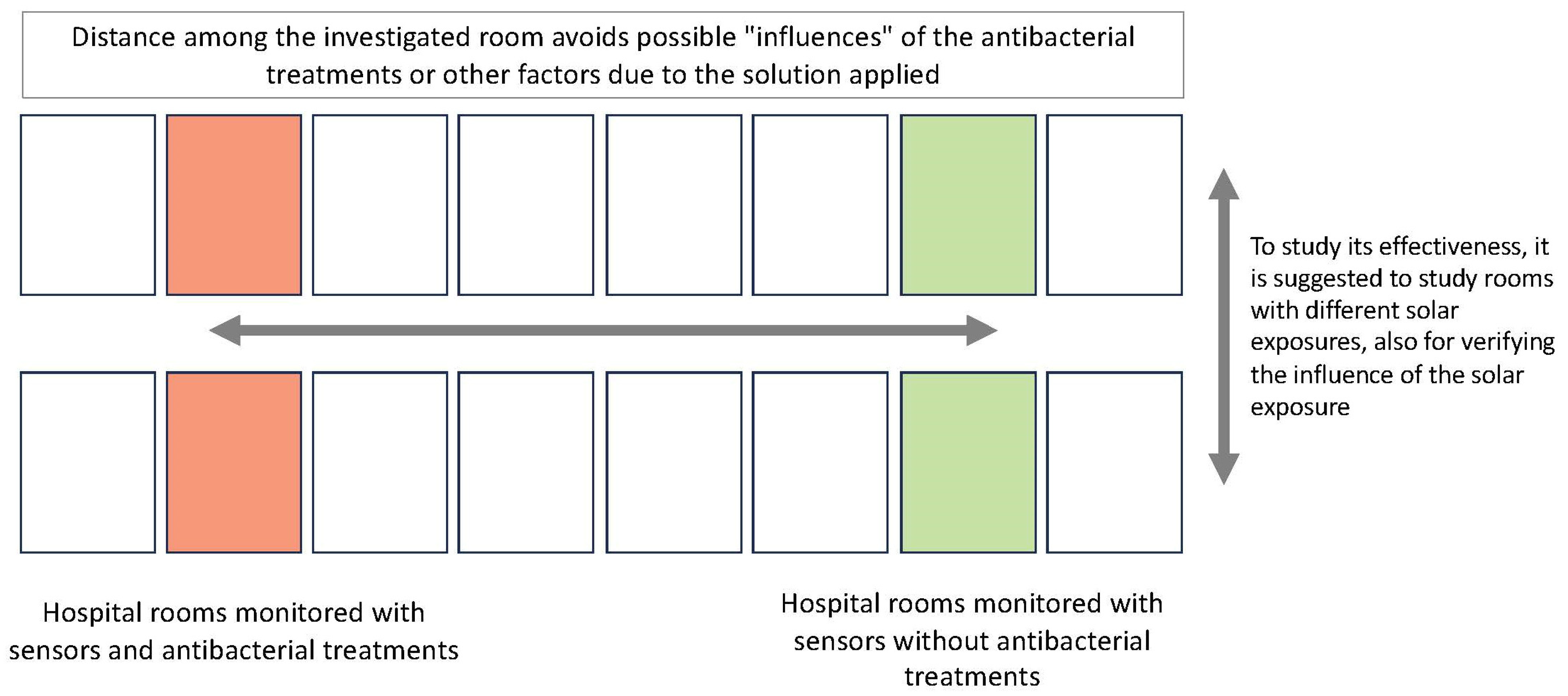
As well as if facility managers wish to investigate the effects of antibacterial materials, coatings, or other interventions, comparable rooms may be selected—one equipped with the treatment and one without—to allow direct comparison. In that case, adequate spatial separation between the investigated rooms should be ensured to avoid cross-influences between treated and untreated spaces, as Figure 1 suggests as a representative example.
In conclusion, although it is not the exclusive criterion, room selection may also take into account the availability of suitable outdoor locations for mounting samplers to collect outdoor concentration values.

3.6. Physical Conditions and Meteorological Factors

For ensuring coherent and accurate data analysis, it is necessary to record the physical conditions of the healing space, among which CO and CO2 concentrations, temperature, relative humidity and air velocity.
For comparing the results, a microclimatic control unit should be used, along with an anemometer equipped with an external thermal probe, positioned inside the inpatient room for 24 h to obtain a detailed understanding of environmental conditions.
In addition, as previously noted in the aims and scope of the protocol, knowing exactly the outdoor concentrations permits for correctly interpreting differences between indoor and outdoor values and identifying indoor emission sources. For this reason, the weekly monitoring period should also include documentation of weather conditions to contextualize variations in temperature, humidity, and other outdoor factors [48]. In this case, no dedicated meteorological instruments are required, as standard weather data may be collected and used to support data interpretation.
In general, all the information should be recorded in a survey log.

3.7. Samplers: Passive or Active/Real-Time Ones?

The ISO 16000 standards introduce both the use of active devices (with a pump that draws air through an absorbent/adsorbent support) and passive samplers (also called diffusive, pumpless, based on molecular diffusion). In relation to the research question, both approaches can be applied in different ways:
  • Active/real-time devices: generally, more precise, equipped with high-quality sensors, suitable for short-term measurements (active ones can collect data every 1–4/8/24 h; differently the real-time ones can collect them every 3/5/10 min, but it depends on the device).
  • Passive samplers: suitable for long-term exposures (8-24/168 h), widespread monitoring, and routine assessments.
Among the sampling methods and several research activities from the scientific literature, passive samplers are recommended for the objectives of this protocol, as they allow parallel analyses across a large facility such as a hospital, with lower costs and reduced risk of theft or damage compared to expensive active IAQ devices [49].
As a passive sampler, Radiello® is recommended, featuring a cylindrical, coaxial design, where the diffusive surface, permeable to gas molecules, constantly faces the surface of a small, concentric adsorbent cartridge. The type is identified by the code number (165 for formaldehyde and 130 for VOCs) printed on the box with the lot number and expiration date. In particular, for the protocol, the research team suggests the following, referring to ISO 16000 standards [43,50]:
  • Cartridge 165 (blue) is used for formaldehyde detection. It contains florisil coated with 2,4-dinitrophenylhydrazine (2,4-DNPH). Aldehydes react with 2,4-DNPH to form 2,4-dinitrophenylhydrazones, which are extracted with acetonitrile and analyzed via reverse-phase HPLC with UV detection.
  • Cartridge 130 (white) is used for VOC detection. It contains about 530 ± 30 mg of activated charcoal (35–50 mesh). VOCs are adsorbed on the charcoal, desorbed with carbon disulfide, and analyzed by capillary gas chromatography (GC-MS).
Note that the cartridge is disposable except those thermally desorbed and must be inserted into the diffusing body. In general, the process to be applied is suggested by ISO 16000 standards: (a) insert the cartridge in the filter; (b) lock the filter; (c) attach the cartridge code on the sampler (with placement and withdrawal dates/times); (d) remove the filter after 5/7 days and attach the code on the tube.
For storage and conservation, proper storage conditions must be ensured, in accordance with ISO 16000, including during transport to the laboratory [43,50].
In general, the total cost per monitored environment (including indoor and outdoor samplers) is approximately €4000, depending on country and currency. This includes sampler purchase, transport, and laboratory analyses for one year of monitoring (one week per month).
In this approach, the use of active or real-time devices is not excluded; however, depending on the type of equipment, it is essential to follow the manufacturer’s specifications. These devices are typically expensive (estimated at €5000–€10,000 each), which increases the risk of theft or accidental damage.
This method enables real-time data collection, allowing detailed temporal analysis of specific conditions allowing detailed temporal analysis linked to occupancy, user activities, and environmental variables. Nevertheless, regular calibration is required to maintain accuracy and comparability with other studies, which can increase operational complexity.

3.8. Devices and/or Samplers’ Localization

According to the prescriptions of ISO 16000 standards, indoor samplers or devices should be placed 1.2 m above the floor (the patients’ breathing zone), while also considering the activities performed by the healthcare staff.
As already noted, in the inpatient room there are several users and different clinical activities carried out, and the architectural features of these settings do not always allow ideal sampler placement [51]. Therefore, any deviations from standard placement should be noted, as they may be relevant for data interpretation.
In the same way, to identify the contribution of indoor pollutant concentrations, they should be compared with outdoor levels measured near the room, considering the façade characteristics and the availability of mounting points for outdoor sampler placement.
In this case, a protective “sampler housing” may be used to safeguard samplers or devices and ensure their integrity. Elements that may influence the evaluation should be avoided; samplers should be kept away from potential pollution sources such as smoking areas, as Gola et al. observed in previous analyses [15].
The architectural features of the façade are not always suitable for supporting sampler or device placement. For this reason, the sampling strategy must be adapted to local architectural constraints and in cases where the façade lacks suitable mounting points, sensors may be installed on external structures such as tripods. However, any deviations from standard placement should be documented for proper interpretation.
It is well-known that each environmental unit must comply with minimum furnishing and ventilation requirements [52]. If possible, samplers may be mounted on existing fixtures (e.g., TV wall mounts, where appropriate), in some cases it is necessary to insert the devices or the samplers on a mobile device, such as IV poles, etc. In such situations, warning labels should be placed near the sensors or samplers, including contact information for the research team, to prevent accidental displacement by users or staff.

3.9. Users Involved in Monitoring Activities and Responsibilities

For the implementation of monitoring activities, collaboration with the medical director and the facility manager is necessary, as they ensure access to healthcare spaces and the availability of staff. In addition, the support of hospital safety and management personnel (Health, Safety and Environment—HSE) can be useful for defining the most critical areas, or the most interesting ones, that host, for example, new or innovative finishing materials, the ones in which specific therapies and healthcare activities carried out, etc., for supporting the data analysis.
This collaboration is strictly important because data analysis can help healthcare facilities identify potential weaknesses in room design or clinical workflows, while also ensuring that monitored rooms remain unchanged throughout the monitoring period. In that sense, the involvement of decision-makers facilitates the implementation of the activity log.
Since the investigation uses active and/or passive samplers, all daily events occurring in the inpatient room must be recorded. For this purpose, the charge nurse (or a designated delegate) must complete a daily activity log documenting all activities carried out, such as cleaning operations, specific patient treatments, the presence of visitors, and any relevant environmental or operative events.
All the useful information is synthesized in an activity log, as developed by Settimo et al. [53]. Additional information may be included depending on the specific research question.
In terms of ethical and privacy issues, patients and visitors are not actively involved, but it is fundamental to inform them about the monitoring activities, what is happening in the room and that they should not touch the devices. For this reason, an information flyer placed inside the room is recommended (refer to the previous paragraphs).
In case of need, and in relation to the research questions, patients and visitors may optionally provide feedback on room conditions during their stay. In fact, through room diary or online questionnaire, users may report perceived environmental conditions or discomfort factors. This diary is optional but can support data interpretation. In such cases, user involvement must be approved by the Ethical Committee, as individuals may be indirectly identifiable based on hospitalization records.

3.10. Activity Log and Survey Log

The activity log is a useful tool for identifying monthly differences and correlations during data analysis. Settimo et al. developed an operative activity log [53], which may be adapted depending on the research question. The activity log, functioning as a daily diary, should be completed to document events occurring in the environmental unit throughout the monitoring period. Referring to Settimo et al. [53], it can be formatted on an A3 sheet (or reduced to A4), allowing it to be placed directly within medical records.
Every diary is characterized by several sections to be filled in day by day.
In addition, the detector should fill in a survey log for each week of investigation, and it needs to be filled in. A representative example of survey log is made by Settimo et al. [53], but it may be adapted in relation to the research question. In the case of some observations by the detector, these can be added to the designated observation section.

3.11. Warning for Supporting the Investigation and Information Flyer for the Users

The samplers should be placed in specific points due to the dimensions and characteristics of the room, as well as to the furniture, or to the façade system. Samplers can hang on existing furniture or additional mobile supports, as long as they are stable and unlikely to be accidentally displaced by users.
In general, as some scholars suggested, it is fundamental to place warning signs to ensure that no one moves or manipulates the samplers during the monitoring period [15].
Since several users and staff members access the room, it is advisable to include contact information for the research team on the warning label to facilitate communication if needed. In addition, adhesives, printing materials, or mounting devices that may emit VOCs or interfere with sampling should be avoided.
For guaranteeing collaboration by users of the inpatient room, since the detector comes one time a week, an information flyer placed inside the room is recommended to explain the purpose, scope, and duration of the monitoring activities.
The research team develops an information flyer with some useful information that can be reported in an information flyer.

3.12. Data Analysis and Report of the Data

In the case of passive samplers, it is necessary to extract the pollutants with solvent, and analyze them using GC-MS, HPLC, or thermal desorption systems, as prescribed by ISO 16000 standards.
The data should be processed in conjunction with the survey log, and the analysis may be conducted by qualified experts from public or private laboratories, provided they are properly trained and certified in the relevant analytical procedures.
For data comparison, the following units of measurement are recommended:
  • µg/m3 for Acetaldehyde, Acetone, Benzene, Chloroform, Dichloromethane, Ethyl-benzene, Formaldehyde, Styrene, Tetrachlorethylene, Trichlorethylene, and Xylene-o,m,p;
  • mg/m3 (or ppm) for Carbon monoxide;
  • ppm v/v for Carbon dioxide.
In general, it is preferable that all analyses are performed by the same laboratory to avoid discrepancies related to different calibration procedures, analytical instruments, or laboratory protocols. However, when multiple laboratories are involved, all analytical procedures must strictly follow ISO 16000-5 requirements to ensure comparability of results [54].

3.13. Other Relevant Information Collected

To perform the analysis, it is essential to collect all relevant information about the hospital, the activities carried out in the analyzed room, and the specific instruments used during the monitoring activities (e.g., formaldehyde, VOCs, relative humidity, temperature, CO, and CO2, air velocity, etc.). For this reason, close collaboration with the hospital’s technical offices is essential for conducting the investigation effectively [55]. However, access to all required data is not always immediate or straightforward; for example, information on certain furniture items or materials may no longer be available, as Gola et al. sustained [51].
For the assessment to be carried out, comprehensive information on the hospital building and its operational processes must be collected [53]. Details about the facility’s development help identify building materials, technical specifications, supplies, safety data sheets, and other relevant documentation, which are more readily available for recently built or renovated structures. The following data are required:
  • Plans and cross-sections drawings of area investigated;
  • Safety data sheets and (chemical) risk assessment;
  • Technical product data sheets related to mechanical equipment within the room (type of system, changes per hour, average temperature of the rooms, etc.); finishing materials and furniture of the inpatient room; and products used for cleaning and disinfecting activities.
For more efficient mapping and success of the investigation, it is advisable to begin by reviewing the documentation available from the technical offices and to ensure the availability and collaboration of hospital staff before starting the investigation. In any case, the increasing use of Life Cycle Assessment (LCA) tools and Building Information Modelling (BIM) systems will facilitate access to detailed material information in the future, improving data availability thanks to ongoing digitalization efforts [56].

4. Final Considerations

Therefore, to implement the protocol, it is necessary to:
  • select the rooms to be monitored in agreement with the medical director and staff, verifying any planned medical or managerial activities that may affect the sampling period;
  • train staff on sampling procedures, required conditions, and the correct completion of activity and survey logs;
  • schedule the sampling periods throughout the year and define daily operational procedures;
  • gather relevant documentation from the hospital’s technical office, including information on materials, furnishings, cleaning and disinfection products, and risk management reports;
  • conduct sampling activities consistently, at least one week per month over a one-year period.
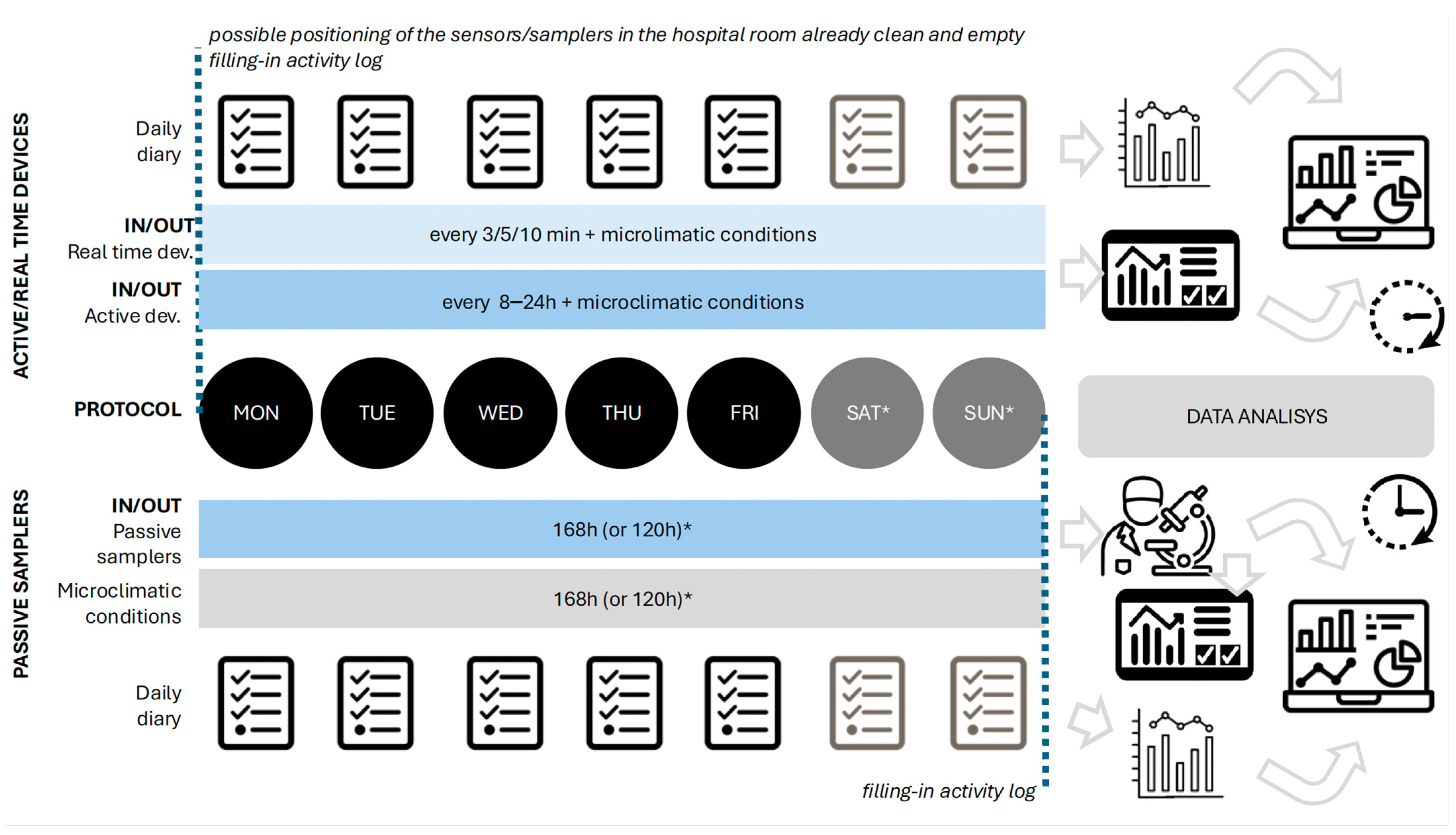
Figure 2 shows a summary of some useful information for conducting the protocol.
Referring to the challenges associated with IAQ monitoring in healthcare facilities and the current gaps in this field, it is fundamental to investigate pollutant concentration levels in hospital rooms using passive samplers, and when necessary, use active sensors to increase measurement detail for specific analyses.
The authors tested and validated this protocol, refining several strategies based on earlier misunderstandings with facility managers, previous operational issues, and observations collected on site (users’ behaviour, movement of the samplers, etc.) [15,53]. Therefore, the protocol is expected to be replicable in different contexts. Nevertheless, on-site inspections, preliminary meetings with managers and staff, and analytical quality-control measures are recommended to minimize errors or interference during monitoring activities.
Monitoring can be extended to different hospital areas and solar exposures to analyze how varying environmental and operational conditions influence IAQ throughout the day. The protocol mainly relies on passive samplers (and/or active sensors) for practicality and reliability, although high-precision or low-cost sensors may also be used, provided their limitations are acknowledged. Regardless of the chosen method, low-cost sensors may serve as useful tools for detecting key pollutants and, through automated or visual alerts, engaging users in IAQ awareness and improvement.
In addition, as performed by several international colleagues, future research may include administering questionnaires to medical staff and patients to assess their experience during the monitored week, evaluating perceived well-being, comfort, and potential correlations between subjective feedback and measured IAQ parameters.
Finally, the research group aims to extend this investigation to a larger sample of healthcare facilities to improve knowledge on pollutant concentrations, identify best practices, and broaden the analysis to different medical departments involving varied clinical activities and occupancy patterns. The opportunity for this contribution also lies in establishing a replicable methodology capable of supporting the creation of an organic and dynamic database to be shared with the scientific community.

Author Contributions

Conceptualization, M.G.; methodology, M.G., G.S. and S.C.; data curation, G.S.; writing—original draft preparation, M.G.; writing—review and editing, G.S.; supervision, S.C. All authors have read and agreed to the published version of the manuscript.

Funding

This research received no external funding.

Data Availability Statement

The original contributions presented in this study are included in the article. Further inquiries can be directed to the corresponding author.

Conflicts of Interest

The authors declare no conflicts of interest.

Abbreviations

ACHAir change rate
AFNORAssociation Française de Normalisation
AFSSETAgence française de sécurité sanitaire de l’environnement et du travail (French Agency for Environmental and Occupational Health Safety)
ANSESAgence nationale de sécurité sanitaire de l’alimentation, de l’environnement et du travail (French Agency for Food, Environmental and Occupational Health & Safety)
AQGAir Quality Guidelines
ASHRAEAmerican Society of Heating, Refrigerating and Air-Conditioning Engineers
ASIAustrian Standards Institute
BIMBuilding Information Modeling
BSBritish Standards
CENEuropean Standards Body
COCarbon Monoxide
CO2Carbon Dioxide
DINGerman Institute for Standardization
DNPHDinitrophenylhydrazine
ECEuropean Community
ECAEuropean Collaborative Action
EEAEuropean Environmental Agency
GC-MS Gas Chromatography–Mass Spectrometry
GdS-ISSGruppo di Studio (Study Group)—Istituto Superiore di Sanità (Italian National Institute of Health)
HAIsHospital Acquired Infections
HCSPHealth Care Savings Program
HPLCHigh-Performance Liquid Chromatography
HSEHealth, Safety and Environment
HVACHeating, Ventilation, and Air Conditioning
IAQIndoor Air Quality
ISOInternational Organization for Standardization
ISSIstituto Superiore di Sanità (Italian National Institute of Health), abbreviation used for the Institution
ISTISANIstituto Superiore di Sanità (Italian National Institute of Health), abbreviation used for the reports
LCALife Cycle Assessment
MERVMinimum Efficiency Reporting Value
MSAHMinistry of Social Affairs and Health
NBNBureau de Normalisation
NENNetherlands Instituut Normalisatie
PHEPublic Health England
PMParticular Matter
RHRelative Humidity
RIVMRijksinstituut voor Volksgezondheid en Milieu (National Institute for Public Health and the Environment)
SFSFinnish Standards Association
TTemperature
UNIEnte di Normazione Italiano (Italian Standardization Body)
URUnit Risks

References

  1. Wagenaar, C. Modern Hospitals and Cultural Heritage. Docomomo J. 2021, 62, 36–43. [Google Scholar] [CrossRef]
  2. Nickl-Weller, C.; Nickl, H. Healing Architecture, 1st ed.; Braun: Berlin/Heidelberg, Germany, 2013. [Google Scholar]
  3. Mauri, M. The future of the hospital and the structures of the NHS. TECHNE—J. Technol. Archit. Environ. 2015, 9, 27–34. [Google Scholar] [CrossRef]
  4. Ferrante, T.; Cellucci, C. Improving the Patient Room: Lessons from Acuity Adaptable Room. In Advances in Human Factors and Ergonomics in Healthcare and Medical Devices, 1st ed.; Kalra, J., Lightner, N.J., Taiar, R., Eds.; AHFE 2021. Lecture Notes in Networks and Systems; Springer: Cham, Switzerland, 2021; Volume 263. [Google Scholar] [CrossRef]
  5. Signorelli, C.; Blandi, L.; Cuciniello, R.; Calabretta, R.; Pregliasco, F.; Odone, A.; Gelatti, U.; Castaldi, S.; Pelissero, G. The New Guarantee System for Monitoring Healthcare Services Delivery in Italy: Technical remarks and recommendations. Ann. Ig. 2025, 37, 618–624. [Google Scholar] [CrossRef]
  6. Meredith, S. Single Rooms Only for New Hospitals. Medscape News UK. 2022. Available online: https://www.medscape.com/viewarticle/single-rooms-only-new-hospitals-2022a10028j3 (accessed on 15 September 2025).
  7. ASHRAE Standard 170; Ventilation of Health Care Facilities. ASHRAE: Atlanta, GA, USA, 2021.
  8. Sehulster, L.M.; Chinn, R.V.W.; CDC; HICPAC. Guidelines for Environmental Infection Control in Healthcare Facilities. Recommendations of CDC and the Healthcare Infection Control Practices Advisory Committee (HICPAC); U.S. Department of Health and Human Services Centers for Disease Control and Prevention (CDC): Atlanta, GA, USA, 2003.
  9. UNI. 9289 Edilizia. Esigenze Dell’utenza Finale. Classificazione; Comitato Tecnico Italiano: Rome, Italy, 1981. [Google Scholar]
  10. Gola, M.; Caggiano, G.; De Giglio, O.; Napoli, C.; Diella, G.; Carlucci, M.; Carpagnano, L.F.; D’Alessandro, D.; Joppolo, C.M.; Capolongo, S.; et al. SARS-CoV-2 indoor contamination: Considerations on anti-COVID-19 management of ventilation systems, and finishing materials in healthcare facilities. Ann. Ig. 2020, 33, 381–392. [Google Scholar]
  11. Gola, M.; Settimo, G.; Capolongo, S. No Impacts on Users’ Health: How Indoor Air Quality Assessments Can Promote Health and Prevent Disease. In Integrating IoT and AI for Indoor Air Quality Assessment, 1st ed.; Saini, J., Dutta, M., Marques, G., Halgamuge, M.N., Eds.; Springer: Cham, Switzerland, 2022. [Google Scholar] [CrossRef]
  12. Arikan, I.; Tekin, O.F.; Erbas, O. Relationship between sick building syndrome and indoor air quality among hospital staff. La Med. Del Lav. 2018, 109, 435–443. [Google Scholar] [CrossRef]
  13. Al Horr, Y.; Arif, M.; Katafygiotou, M.; Mazroei, A.; Kaushik, A.; Elsarrag, E. Impact of indoor environmental quality on occupant well-being and comfort: A review of the literature. Int. J. Sustain. Built Environ. 2016, 5, 1–11. [Google Scholar] [CrossRef]
  14. Joppolo, C.M.; Romano, F. HVAC System Design in Healthcare Facilities and Control of Aerosol Contaminants: Issues, Tools, and Experiments. In Indoor Air Quality in Healthcare Facilities, 1st ed.; Capolongo, S., Settimo, G., Gola, M., Eds.; SpringerBriefs in Public Health; Springer: Cham, Switzerland, 2017. [Google Scholar] [CrossRef]
  15. Gola, M.; Settimo, G.; Capolongo, S. Indoor air in healing environments: Monitoring chemical pollution in inpatient rooms. Facilities 2019, 37, 600–623. [Google Scholar] [CrossRef]
  16. Saini, J.; Dutta, M.; Marques, G. Future Directions on IoT and Indoor Air Quality Management. In Internet of Things for Indoor Air Quality Monitoring, 1st ed.; Saini, J., Dutta, M., Marques, G., Eds.; SpringerBriefs in Applied Sciences and Technology; Springer: Cham, Switzerland, 2021; pp. 69–82. [Google Scholar] [CrossRef]
  17. Amber, M.; Yeoman, M.; Shaw, M.; Ward, M.; Warburton, T.; Lewis, A.C. Volatile organic compounds from topical drugs and medical products: Effects on air quality and healthcare environments. Indoor Environ. 2025, 2, 100117. [Google Scholar] [CrossRef]
  18. Gola, M.; Settimo, G.; Capolongo, S. Chemical Pollution in Healing Spaces: The Decalogue of the Best Practices for Adequate Indoor Air Quality in Inpatient Rooms. Int. J. Environ. Res. Public Health 2019, 16, 4388. [Google Scholar] [CrossRef] [PubMed]
  19. Pereira, M.L.; Knibbs, L.D.; He, C.; Grzybowski, P.; Johnson, G.R.; Huffman, J.A.; Bell, S.C.; Wainwright, C.E.; Matte, D.L.; Dominski, F.H.; et al. Sources and dynamics of fluorescent particles in hospitals. Indoor Air 2017, 27, 988–1000. [Google Scholar] [CrossRef] [PubMed]
  20. WHO. Air Quality Guidelines for Europe; World Health Organization: Copenhagen, Denmark, 1987. [Google Scholar]
  21. WHO. Air Quality Guidelines for Europe, 2nd ed.; World Health Organization: Geneva, Switzerland, 2000. [Google Scholar]
  22. WHO. Air Quality Guidelines. Global Update 2005; World Health Organization: Copenhagen, Denmark, 2006. [Google Scholar]
  23. WHO. Guidelines for Indoor Air Quality: Selected Pollutants; World Health Organization: Copenhagen, Denmark, 2010. [Google Scholar]
  24. WHO. WHO Global Air Quality Guidelines: Particulate Matter (PM2.5 and PM10), Ozone, Nitrogen Dioxide, Sulfur Dioxide and Carbon Monoxide; World Health Organization: Copenhagen, Denmark, 2021. [Google Scholar]
  25. Mead, M.; Nanda, U.; Ibrahim, A.M. The Variable Impact of Clinical Risk-Adjustment Models to Evaluate Hospital Design. Health Environ. Res. Des. J. 2023, 16, 146–155. [Google Scholar] [CrossRef]
  26. Gola, M.; Settimo, G.; Capolongo, S. Indoor Air Quality in Inpatient Environments: A Systematic Review on Factors that Influence Chemical Pollution in Inpatient Wards. J. Healthc. Eng. 2019, 8358306. [Google Scholar] [CrossRef]
  27. Settimo, G.; Yu, Y.; Gola, M.; Buffoli, M.; Capolongo, S. Challenges in IAQ for Indoor Spaces: A Comparison of the Reference Guideline Values of Indoor Air Pollutants from the Governments and International Institutions. Atmosphere 2023, 14, 633. [Google Scholar] [CrossRef]
  28. Settimo, G. Existing Guidelines for Indoor Air Quality: The Case Study of Hospital Environments. In Indoor Air Quality in Healthcare Facilities, 1st ed.; Capolongo, S., Settimo, G., Gola, M., Eds.; SpringerBriefs in Public Health; Springer: Cham, Switzerland, 2017; pp. 13–26. [Google Scholar] [CrossRef]
  29. ONTARIOMOE. Ontario’s Ambient Air Quality Criteria; Ontario Ministry of the Environment, Conservation and Parks: Toronto, ON, Canada, 2012.
  30. European Parliament Council. Directive (EU) 2024/2881 of the European Parliament of the Council of 23 October 2024 on Ambient Air Quality Cleaner Air for Europe (recast). Off. J. Eur. Union 2024, L, 20.11.2024. Available online: https://eur-lex.europa.eu/eli/dir/2024/2881/oj (accessed on 11 September 2025).
  31. ANSES. Air Intérieur: Valeurs Guides; Agence Nationale de Sècuritè Sanitaire: Paris, France, 2014. [Google Scholar]
  32. Gruppo di Studio Nazionale Inquinamento Indoor. Presenza di CO2 e H2S in Ambienti Indoor: Conoscenze Attuali e Letteratura Scientifica in Materia; Istituto Superiore di Sanità: Rome, Italy, 2016; Rapporti ISTISAN 16/15; Available online: http://www.iss.it/binary/publ/cont/16_15_web.pdf (accessed on 11 September 2025).
  33. Gruppo di Studio Nazionale Inquinamento Indoor. Interim Technical Note. CO2 Monitoring for Prevention and Management in Indoor Environments in Relation to the Transmission of SARS-CoV-2 Virus Infection; Istituto Superiore di Sanità: Rome, Italy, 2022. Available online: https://publ.iss.it/ITA/Items/GetPDF?uuid=9faca881-eb08-4c76-ba57-a148f8e64851 (accessed on 11 September 2025).
  34. CIDAD-WHO. Chloroform; World Health Organization: Geneva, Switzerland, 2004; Concise International Chemical Assessment Document 58. [Google Scholar]
  35. Health Council of the Netherlands. Indoor Air Quality in Primary Schools and The Value of Carbon Dioxide as an Indicator of Air Quality; Health Council of the Netherlands: Hague, The Netherlands, 2010; Publication no. 2010/06E. [Google Scholar]
  36. IPCS-WHO. Environmental Health Criteria 186; International Programme bn Chemical Safety; World Health Organization: Geneva, Switzerland, 1987. [Google Scholar]
  37. ANSES. Air Intérieur: Valeurs Guides; Agence Nationale de Sècuritè Sanitaire: Paris, France, 2019; (specific for the values of Formaldehyde). [Google Scholar]
  38. HCSP. Valeurs Repères D’aide à la Gestion de la Qualité de l’air Intérieur; Haut Conseil de la Santé Publique: Paris, France, 2020. [Google Scholar]
  39. WHO. Indoor Airborne Risk Assessment in the Context of SARS-CoV-2 Description of Airborne Transmission Mechanism and Method to Develop a New Standardized Model for Risk Assessment; World Health Organization: Geneva, Switzerland, 2024; Available online: https://iris.who.int/server/api/core/bitstreams/385a5216-f9e5-4a5d-9496-33d3aba07e9f/content (accessed on 21 September 2025).
  40. Gruppo di Studio Nazionale sull’Inquinamento Indoor. Workshop. Problematiche Relative All’inquinamento Indoor: Attuale Situazione in Italia; Istituto Superiore di Sanità: Rome, Italy, 2013. Rapporti ISTISAN 13/39. Available online: http://www.iss.it/binary/publ/cont/13_39_web.pdf (accessed on 21 September 2024).
  41. Gruppo di Studio Nazionale sull’Inquinamento Indoor. Strategie di Monitoraggio dei Composti Organici Volatili (COV) in Ambiente Indoor; Istituto Superiore di Sanità: Rome, Italy, 2013. Rapporti ISTISAN 13/4. Available online: http://www.iss.it/binary/publ/cont/13_4_web.pdf (accessed on 21 September 2024).
  42. Gruppo di Studio Nazionale Inquinamento Indoor. Indoor Air Quality in Healthcare Environments: Strategies for Monitoring Chemical and Biological Pollutants; Istituto Superiore di Sanità: Rome, Italy, 2019. Rapporti ISTISAN 19/17. Available online: https://www.iss.it/documents/20126/45616/1917web.pdf/585f402b-bda7-3c7e-a74c-f8a10891da42?t=1581099479715 (accessed on 21 September 2024).
  43. ISO 16000-1; Indoor Air. Part 1: General Aspects of Sampling Strategy. International Organization for Standardization: Geneva, Switzerland, 2004. Available online: https://www.iso.org/obp/ui/#iso:std:iso:16000:-1:ed-1:v1:en (accessed on 1 February 2025).
  44. van der Schoor, A.S.; Severin, J.A.; van der Weg, A.S.; Strepsis, N.; Klaassen, C.H.W.; van den Akker, J.P.C.; Bruno, M.J.; Hendriks, J.M.; Vos, M.C.; Voor in’t holt, A.F. The effect of 100% single-occupancy rooms on acquisition of extended-spectrum beta-lactamase-producing Enterobacterales and intra-hospital patient transfers: A prospective before-and-after study. Antimicrob. Resist. Infect. Control 2022, 11, 76. [Google Scholar] [CrossRef]
  45. WHO. Hospitals of the Future: A Technical Brief on Re-Thinking the Architecture of Hospitals; World Health Organization, Regional Office for Europe: Copenhagen, Denmark, 2023. [Google Scholar]
  46. Signorelli, C.; Pennisi, F.; Lunetti, C.; Blandi, L.; Pellissero, G.; Fondazione Sanità Futura, W.G. Quality of hospital care and clinical outcomes: A comparison between the Lombardy Region and the Italian national data. Ann. Ig. 2024, 36, 234–249. [Google Scholar] [CrossRef] [PubMed]
  47. Leung, M.; Chan, A.H.S. Control and management of hospital indoor air quality. Med. Sci. Monit. 2006, 12, SR17-23. [Google Scholar]
  48. Hase, H.; Ando, Y.; Sakurai, N.; Ohno, H. The influence of room temperature and relative humidity on odor in a unit-type nursing home. In IAQVEC 2007: Proceedings—6th International Conference on Indoor Air Quality, Ventilation and Energy Conservation in Buildings, Sendai, Japan, 28–31 October 2007; Sustainable Built Environment: Singapore, 2007; pp. 201–206. [Google Scholar]
  49. Cheung, A.; Clayden, N.; Ocampo, W.; Kiplagat, L.; Kaufman, J.; Baylis, B.; Conly, J.M.; Ghali, W.A.; Ho, C.H.; Stelfox, H.T.; et al. Documentation and investigation of missing health care equipment: The need to safeguard high priced devices in health care institutions. J. Hosp. Adm. 2017, 6, 10–14. [Google Scholar] [CrossRef]
  50. ISO 16000-2; Indoor Air. Part 2: Sampling Strategy for Formaldehyde. International Organization for Standardization: Geneva, Switzerland, 2004. Available online: https://www.iso.org/standard/29048.html (accessed on 1 February 2025).
  51. Gola, M.; Settimo, G.; Capolongo, S. How Can Design Features and Other Factors Affect the Indoor Air Quality in Inpatient Rooms? Check-Lists for the Design Phase, Daily Procedures and Maintenance Activities for Reducing the Air Concentrations of Chemical Pollution. Int. J. Environ. Res. Public Health 2020, 17, 4280. [Google Scholar] [CrossRef]
  52. D’Orazio, A.; D’Alessandro, D. Air bio-contamination control in hospital environment by UV-C rays and HEPA filters in HVAC systems. Ann. Ig. 2020, 32, 449–461. [Google Scholar] [CrossRef] [PubMed]
  53. Settimo, G.; Gola, M.; Mannoni, V.; De Felice, M.; Padula, G.; Mele, A.; Tolino, B.; Capolongo, S. Assessment of Indoor Air Quality in Inpatient Wards. In Indoor Air Quality in Healthcare Facilities, 1st ed.; Capolongo, S., Settimo, G., Gola, M., Eds.; SpringerBriefs in Public Health: Cham, Switzerland, 2017; pp. 107–118. [Google Scholar] [CrossRef]
  54. ISO 16000-5; Indoor Air. Part 5: Sampling Strategy for Volatile Organic Compounds (VOCs). International Organization for Standardization: Geneva, Switzerland, 2007. Available online: https://www.iso.org/standard/37388.html (accessed on 1 February 2025).
  55. Dettori, M.; Deiana, G.; Balletto, G.; Borruso, G.; Murgante, B.; Arghittu, A.; Azara, A.; Castiglia, P. Air pollutants and risk of death due to COVID-19 in Italy. Environ. Res. 2021, 192, 10459. [Google Scholar] [CrossRef] [PubMed]
  56. D’Amico, A.; Pini, A.; Zazzini, S.; D’Alessandro, D.; Leuzzi, G.; Currà, E. Modelling VOC Emissions from Building Materials for Healthy Building Design. Sustainability 2021, 13, 184. [Google Scholar] [CrossRef]
Figure 1. Example of a monitoring activity in different inpatient rooms with different technological solutions to be compared, considering also the solar exposure. In particular, the red rooms are monitored with sensors and antibacterial treatments, and the green ones with the sensors without the antibacterial treatments. As well as the arrows suggest the physical distances among the monitored room.
Pollutants 06 00001 g001
Figure 2. A brief summary of the most representative information related to the protocol (* the protocol can be reduced to 5 days, as argued in Section 3).
Pollutants 06 00001 g002
Table 1. Guidelines values for VOCs for generic environments, as well as for some representative substances (CO and CO2).
PollutantIndoor–OutdoorGuideline ValuesRef.Information
AcetalhydeIndoor160 μg/m3
3000 μg/m3
1 year
1 h
[28]n.a.
AcetoneIndoor11.88 μg/m31 day[29]ONTARIO MOE defined values referring to 24 h of exposure.
BenzeneOutdoor3.4 μg/m31 year[30]n.a.
Indoor2 μg/m31 year[28]Missing currently a specific guideline value; the value refers to the Unit Risks valuated:
  • 2 µg/m3 (UR/lifetime)—France values
  • 1.7 µg/m3 (UR/lifetime) 10−6—WHO values
  • 17 µg/m3 (UR/lifetime) 10−5—WHO values
In addition, ANSES considers 10 μg/m3 as a representative value (VGAI) for the preliminary analysis [31]
Carbon dioxideIndoor–Outdoor1000 ppmduration of occupancy of the rooms[32,33]2000 ppm as Intervention Value
Carbon monoxideIndoor4 mg/m31 day[23]n.a.
ChloroformIndoor10 μg/m31 year[34] n.a.
DichloromethaneIndoor200 μg/m31 year[35]n.a.
EthylbenzeneIndoor220 μg/m31 year[36]n.a.
FormaldehydeIndoor–Outdoor100 μg/m330 min[20,22]WHO defined values referring to 30 min of exposure [22]
Indoor10 μg/m31 year[37]n.a.
StyreneIndoor–Outdoor260 μg/m31 week[20]n.a.
TolueneIndoor–Outdoor260 μg/m31 week[20]1000 μg/m3 (30 min) for sensory effects
TetrachloroethyleneIndoor250 μg/m31 year[22]8000 μg/m3 (30 m) for sensory effects
TrichloroethyleneIndoor10 μg/m31 year[38]WHO [23] defines:
2 μg/m3 (UR/lifetime) 10−6
20 μg/m3 (UR/lifetime) 10−5
In addition, HCSP defines 50 μg/m3, as reference values to support the management of IAQ (VAR) [38]
Xylene o,m,pIndoor870 μg/m31 year[36]n.a.
Disclaimer/Publisher’s Note: The statements, opinions and data contained in all publications are solely those of the individual author(s) and contributor(s) and not of MDPI and/or the editor(s). MDPI and/or the editor(s) disclaim responsibility for any injury to people or property resulting from any ideas, methods, instructions or products referred to in the content.