


Abstract
This study examined the seasonal and spatial distribution of heavy metals (Cd, Pb, and Ni) in relation to environmental parameters in five regions of Greater Cairo, Egypt (Helwan, Al-Azhar, Al-Orman, Al-Orman Center, and Al-Moqattam) between 2023 and 2024 using Ficus nitida as a bioindicator. Leaf and soil samples were taken periodically and tested for heavy metal levels, growth factors, chlorophyll, NPK, and moisture content. Concentrations of Cd, Pb, and Ni were highest at Helwan, the industrial site, reaching 0.22 mg/kg, followed by Al-Azhar, a high-traffic urban area, with 0.12 mg/kg, particularly during the summer season. In contrast, the lowest concentrations (0.03 mg/kg) were recorded at Al-Orman Center and Al-Moqattam, both characterized as low-traffic residential zones. A positive correlation was observed between heavy metal concentrations in Ficus nitida leaves and those in the corresponding soils. Additionally, the minimum leaf area was recorded at Helwan during winter, followed by the Al-Azhar region, with values of 36.2 cm2 and 41.7 cm2, respectively. Reductions in chlorophyll content and nutritional composition were linked to heavy metal levels. Ficus nitida may function as a trustworthy bioindicator of the environmental heavy metal contamination and the health of urban ecosystems, and it accurately reflects soil and air pollution levels.
1. Introduction
Environmental pollution occurs when chemicals build up in the air, soil, or water at levels high enough to interfere with human health, ecosystem health, and plant physiology [1]. Because of their persistence, non-biodegradability, and capacity to bioaccumulate and biomagnify across food chains, even at trace quantities, heavy metals (HMs) have received special attention among these contaminants [2]. The primary causes of HM release continue to be anthropogenic activities, such as mining, smelting, burning fossil fuels, car emissions, and the use of metal-based insecticides and fertilizers. According to recent evaluations, heavy metal loading in the air, soils, and seas have significantly increased due to growing urbanization and industrialization, which is a chronic global concern [3].
Urban environments represent complex and highly dynamic systems in which soils are subjected to continuous physical disturbance and intense anthropogenic pressure. Urban soils are often characterized by heterogeneous parent materials, altered soil structure, compaction, reduced organic matter quality, and variable pH and salinity, all of which influence metal retention, mobility, and bioavailability. In urban soils, heavy metals originate from both point and non-point sources and are introduced through atmospheric deposition of particulates, abrasion of vehicle components (e.g., tires, brake linings), fuel combustion residues, industrial dust, sewage sludge application, and irrigation with contaminated water. Once deposited, metals interact with soil constituents and may persist for long periods, particularly in arid and semi-arid environments where leaching is limited. Heavy metals may occur in soils as exchangeable ions, precipitated as carbonates or hydroxides, adsorbed onto Fe/Mn oxides, or complexed with organic matter. These geochemical forms largely determine their mobility, bioavailability, and potential uptake by plants. Elevated metal concentrations in soils are therefore commonly reflected in increased accumulation in plant tissues, posing risks to vegetation, food safety, and human health. Ecologically, heavy metals and organic pollutants are particularly pronounced in urban settings, where dense human activities such as traffic, waste disposal, commercial operations, and industrial processes lead to continuous pollutant inputs. These contaminants may subsequently migrate through runoff, leaching, and atmospheric deposition into soils and nearby water bodies, resulting in persistent heavy metal contamination [4]. Numerous studies have demonstrated that land-use and land-cover patterns serve as strong indicators of heavy metal contamination, with urban soils frequently enriched in Cd, Pb, Ni, and other metals as a consequence of industrial emissions, vehicular traffic, mining-related activities, and construction practices [5,6].
Cadmium (Cd) is used in metal plating, batteries, plastic stabilizer and pesticides. It can reach soil through air deposition and agricultural practices. Amini et al. [7] and Tsadilas et al. [8] mentioned that Cd concentration in soils varies from 0.06 to 0.5 mg kg-1 in unpolluted soils, but it can reach 100 mg kg-1 in polluted soils. Cadmium has many negative effects on the environmental processing. It affects microbial biomass activity in soil [9], poisonous to plants without any nutritious importance, where it reduces photosynthesis, water and nutrients uptake, causes chlorosis and eventually death of plants [10].
Nickel (Ni) is released into the environment through industrial activities such as mining and glass production, as well as via fossil fuel combustion, fertilizer use, and vehicle emissions, contributing to its accumulation and hazardous environmental effects [11]. Although, the benefits of Ni, it is hazardous and prevent plant growth affecting mineral nutrition, sugar transport, photosynthesis and water interactions when present in high concentrations [12]. Nickle toxicity affects the nature of enzymes by changing metabolic structure in metalloenzymes and the biological structure of -SH groups in proteins, enzymes and nucleic acids [13].
Lead (Pb) is the fifth most commonly utilized metal worldwide [14]. Its availability in the environment is influenced by the use of leaded gasoline, industrial activity, and deposition. Plants absorb little lead, but it is more mobile in the environment due to herbivores and human activity [15]. Lead has a long half-life, therefore it is always available for plants [16]. Its toxicity signs include chlorosis, decreased development, and root growth inhibition. It also has an effect on metabolic activity by alternating membrane permeability and lowering enzymatic activities [16].
Heavy metals (HMs) are persistent, non-biodegradable contaminants that pose toxic and detrimental effects on living organisms even at low concentrations [2]. Major sources of HMs are predominantly anthropogenic, including mining, smelting, the use of fertilizers and pesticides, coal combustion, medical waste, leaded petrol, and batteries. Among these, cadmium (Cd), lead (Pb), and nickel (Ni) are of particular concern because they are widespread in the environment and readily enter food chains through soil–plant transfer, posing serious risks to ecological and human health [17,18]. Furthermore, these metals can influence each other’s uptake by plants when present in significant concentrations in soils [19]. In soils, HMs may exist as exchangeable ions, carbonates, hydroxides, Fe/Mn oxides, or bound to organic matter, and elevated soil concentrations are typically mirrored by increased metal accumulation in plants. Plants absorb metals both through their roots and via foliar deposition, with the extent of uptake influenced by metal speciation, soil chemistry, environmental conditions, and species-specific traits. Heavy metals can significantly affect plant physiological activities, including photosynthesis, water and nutrient uptake, chlorophyll content, and mitochondrial respiration, ultimately leading to stunted growth and reduced reproductive capacity. The capacity of certain plants to absorb and accumulate heavy metals renders them effective bioindicators of environmental pollution [20]. Plants acquire air pollutants both directly, through atmospheric gas exchange, and indirectly via uptake from contaminated soils. Even after removal of pollution sources, residual dissolved metals can persist in soils and continue to affect plant growth, despite dilution or leaching by rainfall.
Ficus nitida, commonly planted in Egypt and other subtropical regions, can accumulate heavy metals at potentially toxic concentrations [21]. Its dense, evergreen foliage, heat tolerance, and adaptability to pruning make it widely used for hedges, shade, and landscaping, and also ideal as a bioindicator of air pollution. Plants absorb pollutants directly through gas exchange or indirectly via contaminated soils, and residual metals may continue affecting growth even after pollution sources are removed. Despite the global significance of heavy metal pollution, studies in developing countries remain limited, particularly regarding urban trees and crops [20,22,23].
It was hypothesized that urban soils in Greater Cairo exhibit spatially and seasonally variable contamination by Cd, Pb, and Ni driven by traffic intensity and industrial activity, and that these variations are reflected in corresponding seasonal patterns of metal accumulation in Ficus nitida leaves. Furthermore, increased soil and foliar metal concentrations are expected to negatively affect key physiological traits of F. nitida, supporting its suitability as a bioindicator of urban heavy metal pollution and its potential role in phytoremediation and sustainable urban landscaping. Critical gaps include seasonal variation in metal accumulation, the influence of soil chemistry and atmospheric deposition, and impacts on physiological traits such as leaf area, chlorophyll, moisture, and NPK nutrient status, especially in arid and subtropical urban environments. To address these gaps, this study examines F. nitida across five sites in Greater Cairo representing low-pollution, high-traffic, and industrial areas. The objectives are to quantify cadmium (Cd), lead (Pb), and nickel (Ni) accumulation in leaves and soils over four seasons, relate these patterns to environmental and soil factors, assess physiological responses, and evaluate F. nitida as an indicator species for heavy metal pollution and as a tool for phytoremediation and sustainable urban landscaping.
2. Materials and Methods
2.1. Study Area
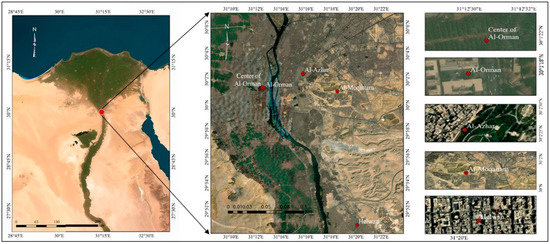
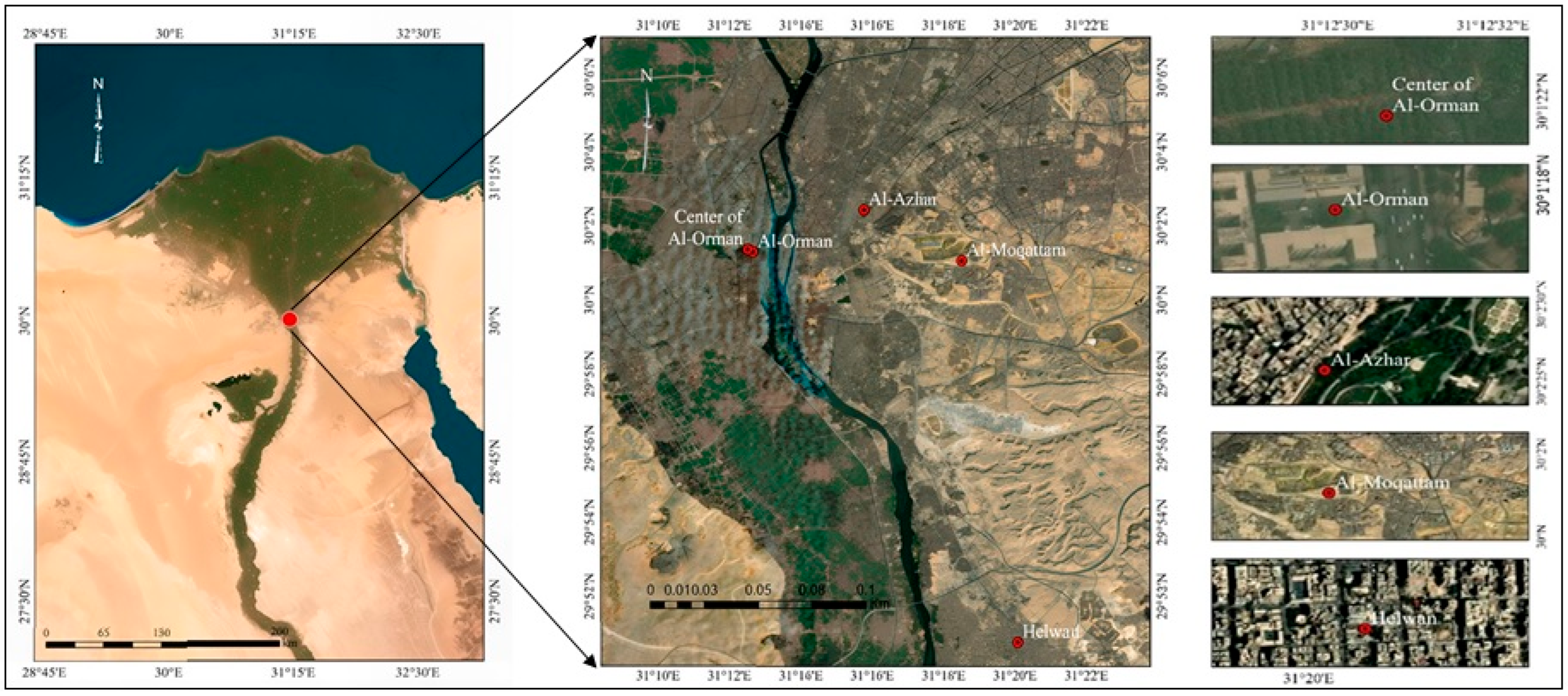
The study was conducted seasonally during 2023–2024 at five locations within Greater Cairo, Egypt, selected to represent a gradient of pollution intensity and environmental conditions. Two urban sites characterized by heavy vehicular traffic were chosen (Al-Azhar and Al-Orman, near Giza Square) alongside one industrial site located near the Helwan cement plants. Two additional low-traffic residential (control sites) were included: center of Al-Orman and Al-Moqattam. These locations (Figure 1) differ substantially in air quality, soil characteristics, and levels of anthropogenic activity, providing an ideal framework for assessing the effects of industrial and urban pollution on Ficus nitida performance and heavy metal accumulation.
Figure 1.
Map of the study area showing the sampling locations, generated using ArcGIS Pro 3.4.
2.2. Plant Sampling and Analysis
At each site, three mature F. nitida trees of comparable size and canopy condition were randomly selected. Approximately 100 fully expanded, healthy leaves were collected per tree from all canopy levels once per season. Morphological and physiological parameters including leaf area, chlorophyll a, chlorophyll b, total chlorophyll, moisture content, and nutrient content (N, P, K) were measured. Leaf area was determined using a LI-COR LI-3000 portable area meter (LI-COR Biosciences, Lincoln, NE, USA), with three replicates per tree. Chlorophyll content (mg g−1 fresh weight) was determined by extraction in 80% acetone following Kamble et al. [24] with slight modification. One gram of homogenized fresh leaves was mixed with 20 mL 80% acetone and 0.5 g MgCO3, incubated at 4 °C for 3 h, and centrifuged at 2500 rpm for 5 min. Absorbance readings were taken at 645 nm and 663 nm using a LABTRONIC Spectrophotometer (LT-39; Labtronic Inc., Melrose Park, IL, USA). Chlorophyll concentrations were calculated using the following Arnon et al. [25] Equations (1)–(3):
where A663 and A645 are the absorbance values measured at 663 and 645 nm, respectively; V is the volume of the extract (mL); and W is the fresh weight of plant tissue (g).
For nitrogen, phosphorus, and potassium (NPK) analysis, approximately 5 g of leaf samples were thoroughly washed with deionized water, oven-dried at 70 °C to constant weight, and ground to pass a 425 µm sieve. One gram of the dried material was digested using a sulfuric–perchloric acid mixture [26]. Nitrogen was determined by the Nesslerization method [27], phosphorus by the tin–molybdate blue colorimetric method [28], and potassium by flame photometry. Quantification of N, P, and K was performed using external calibration curves prepared from certified analytical-grade standard solutions, with reagent blanks included to correct for background contamination. Quality control was ensured through the analysis of duplicate samples and periodic calibration checks, and analytical precision was verified by repeated measurements of selected samples.
Leaf heavy metal concentrations (Cd, Pb, and Ni) were determined using atomic absorption spectrophotometry (AAS; PerkinElmer Analyst 400) following acid digestion of 1 g of dried leaf material with concentrated HNO3 and HClO4 (3:1, v/v). Calibration curves for each metal were constructed using certified standard solutions covering the expected concentration ranges, and method blanks were analyzed concurrently to assess potential contamination. Quality assurance procedures included the analysis of replicate samples and standard solutions after every batch of measurements to confirm instrument stability and accuracy. The limits of detection (LOD) and limits of quantification (LOQ) were calculated based on three and ten times the standard deviation of blank measurements, respectively, ensuring reliable detection and quantification of Cd, Pb, and Ni at trace levels.
2.3. Soil Sampling and Analysis
Soil samples were collected seasonally from the root zones of the same F. nitida trees used for leaf sampling. Composite samples were prepared by mixing three subsamples collected at a depth of 0–30 cm using a clean stainless-steel auger. Samples were air-dried, gently crushed, and sieved through a 2 mm mesh for analysis. Soil pH and electrical conductivity (EC) were measured in a 1:2.5 soil-to-water suspension using a digital pH and conductivity meter [28]. Calcium carbonate (CaCO3) was measured volumetrically by titration with standardized HCl [29]. Moisture content was determined gravimetrically after oven drying at 105 °C [27]. Available nitrogen was measured by the micro-Kjeldahl method, phosphorus by Olsen extraction followed by colorimetric analysis, and exchangeable potassium by flame photometry [23,24]. One gram of fine soil (<2 mm) was digested using a tri-acid mixture of HNO3, HClO4, and H2SO4 (5:1:1 v/v/v) following Renella et al. [9]. The filtrates were diluted with deionized water, and Cd, Pb, and Ni were quantified by AAS (PerkinElmer Analyst 400, PerkinElmer, Waltham, MA, USA). All analyses were performed in triplicate, and results were expressed as mg kg−1 dry weight.
2.4. Climatic Conditions
The mean seasonal temperature and precipitation for Greater Cairo in 2023 and 2024, derived from the ERA5 reanalysis dataset (the fifth-generation global atmospheric reanalysis produced by the European Centre for Medium-Range Weather Forecasts, ECMWF, under the Copernicus Climate Change Service, C3S, which provides a comprehensive and consistent record of atmospheric, land-surface, and ocean-wave conditions from 1940 to the present), indicate clear seasonal and interannual variations. During winter, the mean temperature increased from 14.06 °C in 2023 to 14.87 °C in 2024, while precipitation decreased slightly from 0.1287 to 0.1059 mm/day. In spring, the mean temperature rose from 21.89 °C in 2023 to 22.63 °C in 2024, accompanied by a marked decline in precipitation from 0.1394 to 0.0731 mm/day. Summer exhibited the highest temperatures, with an increase from 29.56 °C in 2023 to 30.98 °C in 2024, together with a pronounced reduction in precipitation from 0.0384 to 0.0003 mm/day. Conversely, autumn showed a decrease in mean temperature from 25.07 °C in 2023 to 23.73 °C in 2024, alongside a substantial decline in precipitation from 0.1219 to 0.0305 mm/day.
2.5. Statistical Analysis
An initial analysis of variance (ANOVA) indicated no significant difference between the two years of observation. Consequently, data from both years were pooled, and average values were used in subsequent analyses. Correlation analysis was performed to assess the relationship between heavy metals accumulation in soil and tree leaves. The effects of season, location, and their interaction on heavy metal concentrations and growth parameters of Ficus nitida were evaluated using ANOVA procedures in SAS/STAT version 15.1 (SAS Institute Inc., Cary, NC, USA) [30]. There were no significant seasonal differences in soil chemical properties. Accordingly, the data were pooled, and the mean values were used for comparison. When significant differences were observed, means were separated using the Least Significant Difference (LSD) test at the 0.05 probability level.
3. Results
3.1. Heavy Metal Contents in Ficus Nitida Leaves and Soil
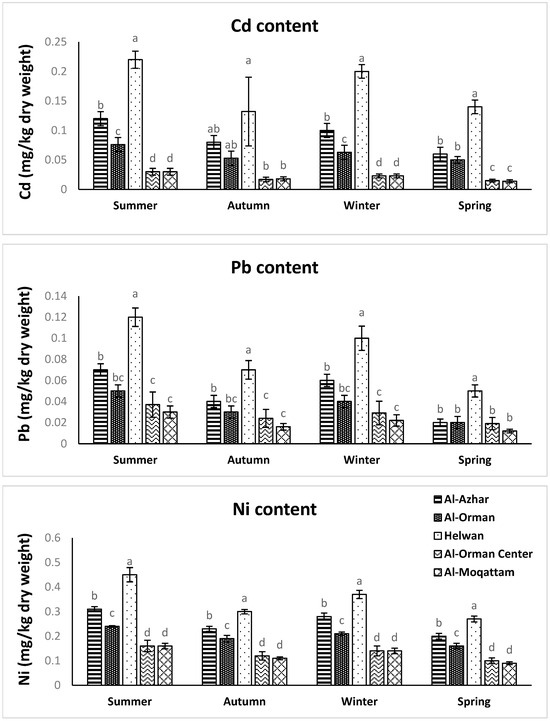
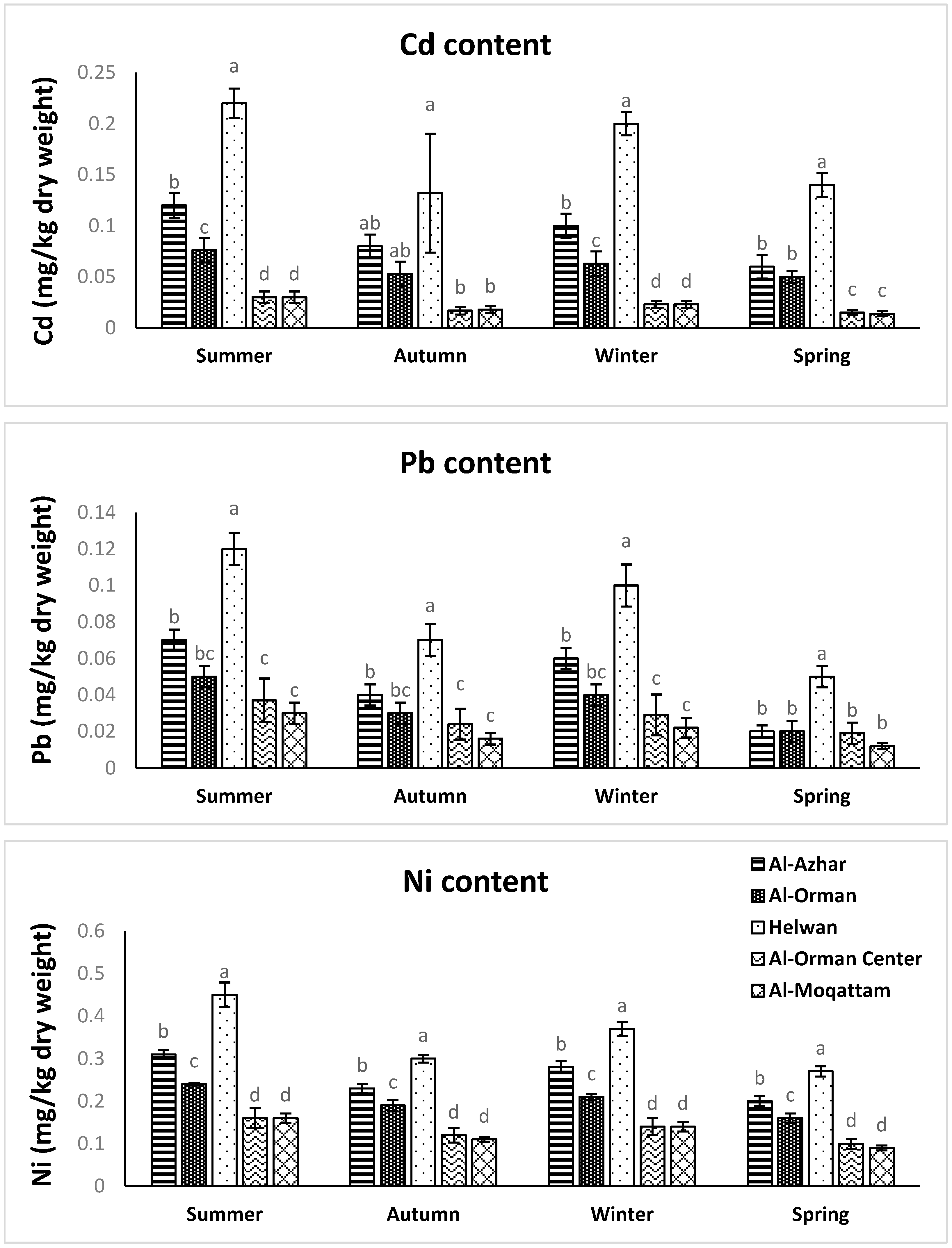
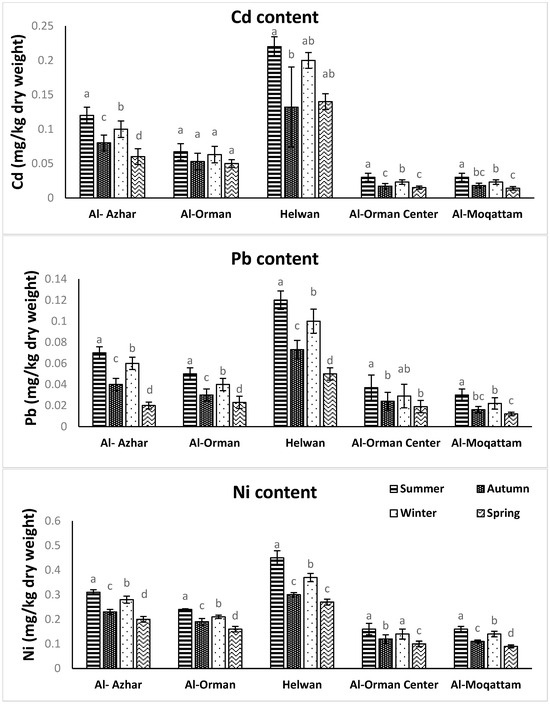
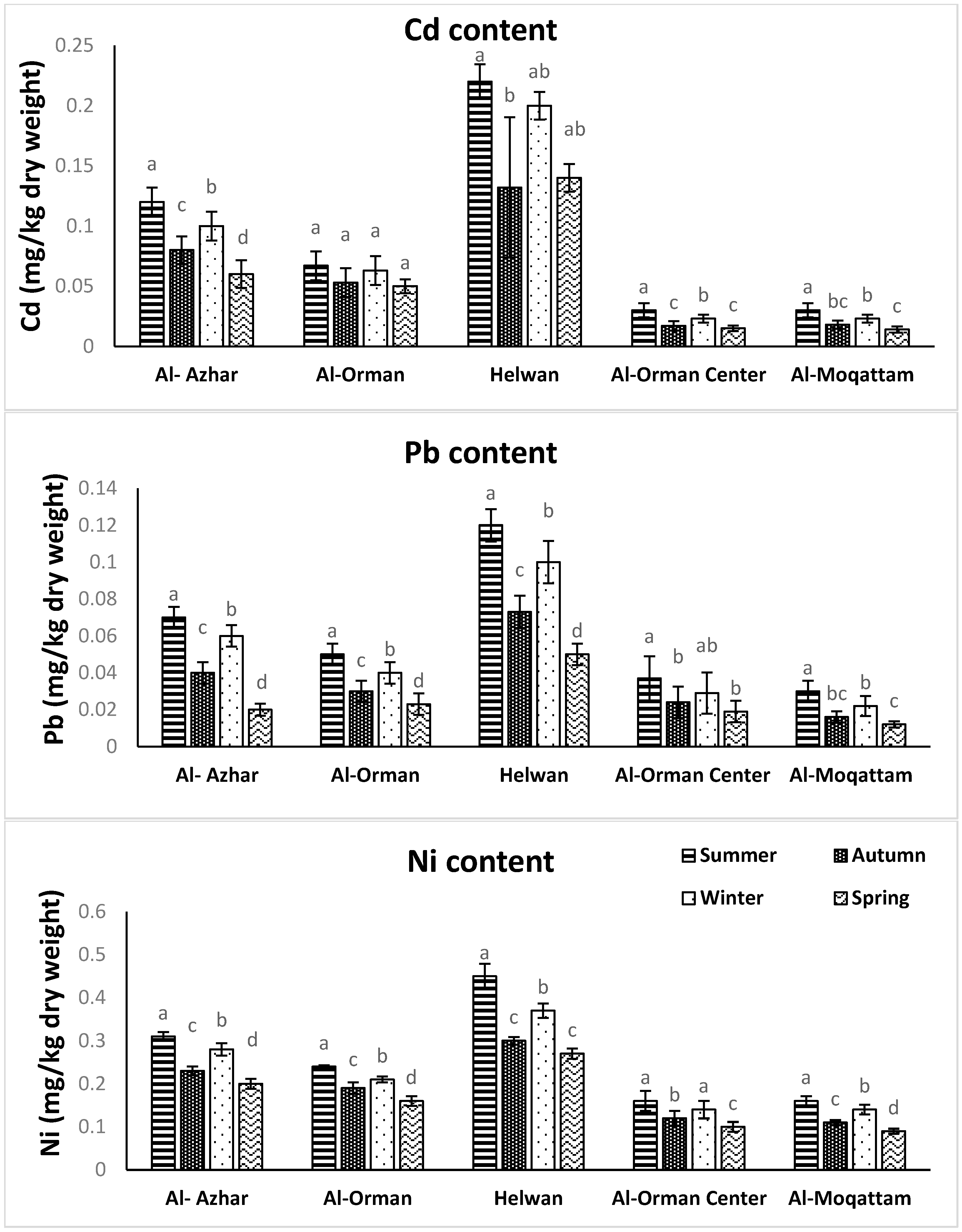
Analysis of variance and mean separation tests revealed significant differences in Cd, Pb, and Ni concentrations among regions within the same season (Figure 2) and among seasons within the same region (Figure 3). Helwan consistently exhibited the highest concentrations of Cd, Pb, and Ni, followed by Al-Azhar, Al-Orman, Al-Orman center, and Al-Moqattam across all seasons. Heavy metal contents were highest in summer, followed by winter, autumn, and spring. Cadmium concentrations in summer were 0.22 ± 0.0145, 0.12 ± 0.012, 0.07 ± 0.012, 0.03 ± 0.0058, and 0.03 ± 0.0058 mg/kg (dry weight) for Helwan, Al-Azhar, Al-Orman, Al-Orman center, and Al-Moqattam, respectively, while the lowest spring values were 0.14 ± 0.0115, 0.06 ± 0.0115, 0.05 ± 0.0058, 0.015 ± 0.0024, and 0.014 ± 0.0026 mg/kg. Lead concentrations followed a similar trend, with the highest summer values of 0.12 ± 0.0088, 0.07 ± 0.0058, 0.05 ± 0.0058, 0.037 ± 0.012, and 0.03 ± 0.0058 mg/kg and lowest spring values of 0.05 ± 0.0058, 0.02 ± 0.0033, 0.019 ± 0.0058, 0.012 ± 0.0058, and 0.012 ± 0.0017 mg/kg. Nickel concentrations were highest in summer (0.45 ± 0.0289, 0.31 ± 0.01, 0.24 ± 0.0033, 0.16 ± 0.0233, and 0.16 ± 0.0115 mg/kg) and lowest in spring (0.27 ± 0.012, 0.2 ± 0.0115, 0.16 ± 0.0115, 0.10 ± 0.0115, and 0.09 ± 0.0058 mg/kg). Overall, heavy metal accumulation followed the order: Helwan > Al-Azhar > Al-Orman > Al-Orman center = Al-Moqattam.
Figure 2.
Regional changes in heavy metal contents (Ni, Pb and Cd) in Ficus nitida leaves in different seasons during 2023 and 2024. Columns labeled with the same letter are not significantly different at p = 0.05 within the same season. Vertical bars at the top of the columns represent the standard error of the mean.
Figure 3.
Seasonal changes in heavy metal contents (Ni, Pb and Cd) of Ficus nitida leaves in different study regions during 2023 and 2024. Columns labeled with the same letter are not significantly different at p = 0.05 within the same region. Vertical bars at the top of the columns represent the standard error of the mean.
Regional soil analysis showed a strong correlation (R2 = 81) between heavy metal content in soil (Table 1) and that found in the leaves of Ficus nitida (Figure 2). Helwan soils had the highest Pb (119.4 mg/kg), Ni (38.5 mg/kg), and Cd (2.4 mg/kg) levels, while Al-Orman center and Al-Moqattam had the lowest. Al-Orman and Al-Azhar exhibited moderate contamination. The data revealed significant regional variation, with the Helwan region having the highest Pb level (119.4 mg/kg), followed by Al-Orman (101.2 mg/kg), Al-Azhar and Al-Moqattam (42.3 mg/kg), and Al-Orman center (recoded as having the lowest Pb concentrations, 15.6 and 10.5 mg/kg, respectively). Helwan and Al-Orman had the greatest Ni contents (38.5 and 34.8 mg/kg, respectively), whereas Al-Orman center and Al-Moqattam had the lowest (8.5 and 8.3 mg/kg, respectively). Helwan had a high Cd content (2.4 mg/kg), while the Al-Azhar and Al-Orman regions did not differ significantly; their Cd amounts were intermediate, at 1.5 and 1.1 mg/kg, respectively. Al-Orman center region has the lowest Cd values (0.7 mg/kg), followed by Al-Moqattam (0.58 mg/kg). Overall, the findings showed that the Al-Orman region had moderate heavy metal contaminations. The Helwan region had high levels of heavy metals. While Al-Orman center and Al-Moqattam are comparatively clean locations with little pollution. Al-Azhar represented a moderate region in heavy metal contamination.
Table 1.
Heavy metal (Ni, Pb, and Cd) contents (mg/kg) in the soil of different study regions during 2023 and 2024 compared to the Chinese national standards for soil environmental quality (pH = 6.5–7.5) of heavy metal (GB 15618-1995; pH 6.5–7.5) [31].
3.2. Soil Chemical Properties
Significant regional differences were observed in the soil chemical properties across the study sites (Table 2). Soil pH ranged from 7.10 to 7.47, indicating slightly alkaline conditions in all regions. Salinity exhibited pronounced variation, with the highest value recorded in Al-Orman (23.75 dS/m) and the lowest in Al-Moqattam (5.90 dS/m). Helwan soils contained the highest levels of calcium carbonate (CaCO3; 15.9%) and calcium (Ca; 93.5 mg/kg), whereas Al-Orman Center recorded the lowest CaCO3 content (4.2%) and Al-Moqattam the lowest Ca concentration (5.9 mg/kg). The soil saturation percentage (SP%), an indicator of water-holding capacity, also varied significantly among regions. SP% ranged from 30.4% in Al-Orman to 39.3% in Al-Azhar, suggesting superior water retention in Al-Azhar soils and reduced water-holding potential in Al-Orman. Such variation may be attributed to differences in soil texture, organic matter content, and compaction. Generally, soils with higher clay and organic matter content exhibit greater saturation percentages, while sandy or compacted soils display reduced water retention capacity. Concentrations of macronutrients and soluble ions showed clear spatial variation. Potassium (K) levels ranged from 0.8 mg/kg in Al-Orman Center to 2.8 mg/kg in Al-Orman. Intermediate concentrations were observed in Al-Moqattam (0.9 mg/kg), Helwan (1.7 mg/kg), and Al-Azhar (2.2 mg/kg).
Table 2.
Soil chemical properties of different study regions during 2023 and 2024.
Magnesium (Mg) content varied between 16.6 mg/kg in Al-Orman Center and 59.0 mg/kg in Al-Orman, with intermediate levels in Al-Azhar (17.8 mg/kg), Al-Moqattam (26.7 mg/kg), and Helwan (43.5 mg/kg). Sodium (Na) concentrations were lowest in Al-Moqattam (29.0 mg/kg) and highest in Al-Orman (101.0 mg/kg), with Al-Orman Center (37.2 mg/kg), Al-Azhar (42.9 mg/kg), and Helwan (98.0 mg/kg) occupying intermediate positions. Distinct differences were also observed in bicarbonate (HCO3−), chloride (Cl−), and sulfate (SO42−) concentrations.
3.3. Leaf Area
HCO3− levels ranged from 2.35 mg/kg in Al-Orman to 3.40 mg/kg in Helwan. Cl− concentrations were lowest in Al-Moqattam (26.7 mg/kg) and highest in Al-Orman (240.7 mg/kg), while SO42− ranged from 29.6 mg/kg in Al-Moqattam to 183.9 mg/kg in Al-Orman.
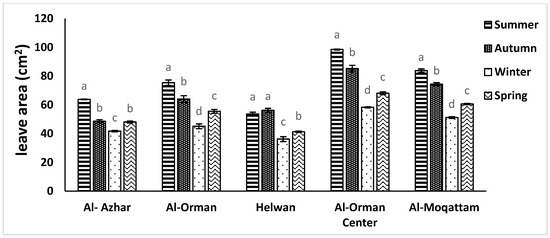
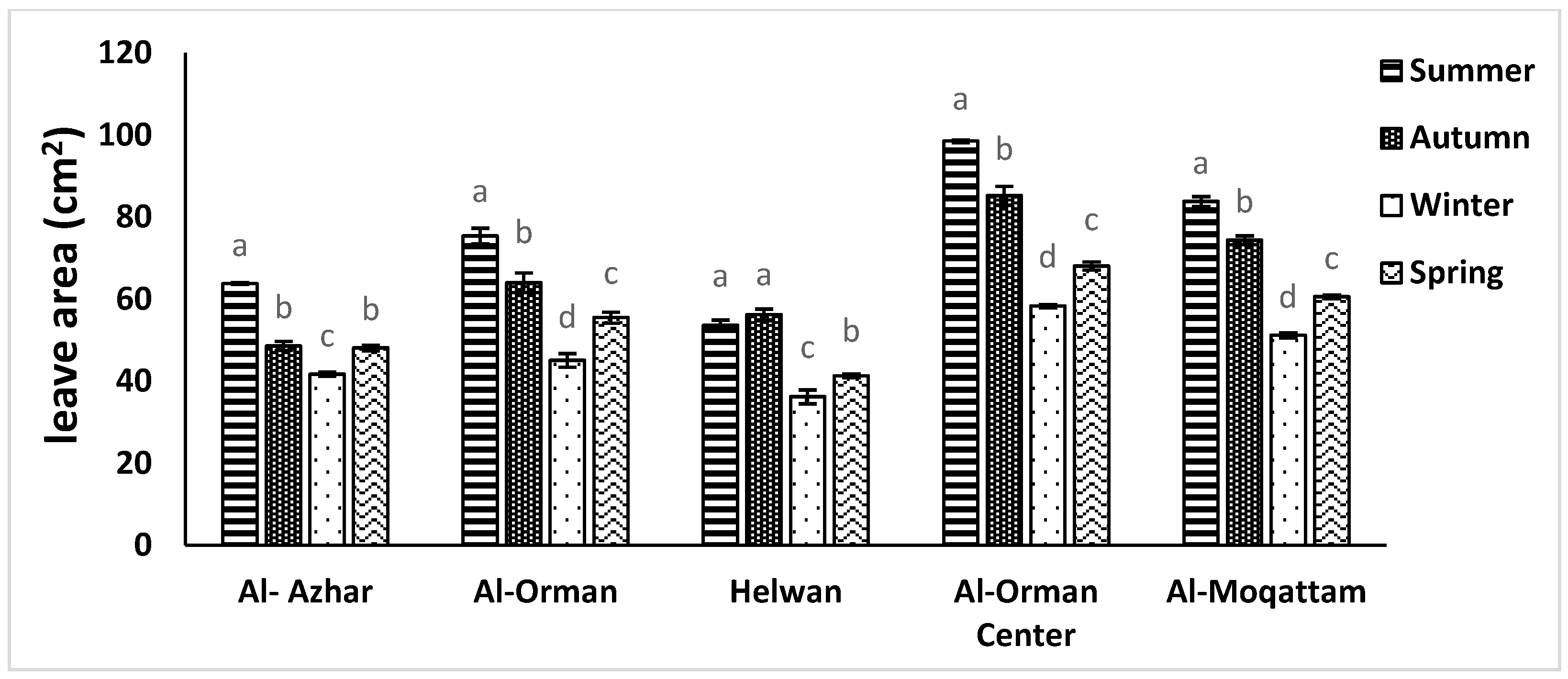
Analysis of variance and LSD tests revealed significant differences in Ficus nitida leaf area both among regions (Table 3) and among seasons within each region (Figure 4). Across all sites, summer consistently produced the largest leaf areas. Al-Orman center recorded the highest summer value (98.5 cm2), followed by Al-Moqattam (83.8 cm2) and Al-Orman (75.4 cm2). Al-Moqattam and Al-Orman center also maintained relatively high values in autumn (74.4 and 85.2 cm2, respectively), with gradual declines through spring and winter. Winter produced the lowest leaf areas in most regions, with the minimum observed in Helwan (36.2 cm2). Seasonal trends varied slightly among sites. In Al-Azhar, leaf area peaked in summer (63.8 cm2) and declined to similar values in autumn (48.6 cm2) and winter (48.1 cm2). Al-Orman showed a clear seasonal gradient: summer (75.4 cm2) > autumn (64.0 cm2) > winter (55.5 cm2) > spring (45.1 cm2). Helwan differed from the general pattern, with the highest value in autumn (56.2 cm2), followed by summer (53.6 cm2), spring (41.3 cm2), and winter (36.2 cm2). In Al-Moqattam, leaf area followed the expected seasonal decline, from summer (83.8 cm2) to autumn (74.4 cm2), spring (60.6 cm2), and winter (51.2 cm2). Overall, Al-Orman center consistently exhibited the largest leaf areas, particularly in summer, while Al-Azhar and Helwan recorded lower values, especially in spring (41.7 cm2) and winter (36.2 cm2), respectively.
Table 3.
The average leaf area of Ficus nitida in different study regions in Egypt during the four seasons of 2023 and 2024.
Figure 4.
Seasonal changes in leaf area (cm2) of Ficus nitida in different study regions during 2023 and 2024. Columns labeled with the same letter are not significantly different at p = 0.05 for seasonal comparison within the same region. Vertical bars at the top of the columns represent the standard error of the mean.
Apart from Helwan, most regions showed high leaf area during summer, reflecting favorable temperature and moisture conditions.
3.4. N, P, and K Content
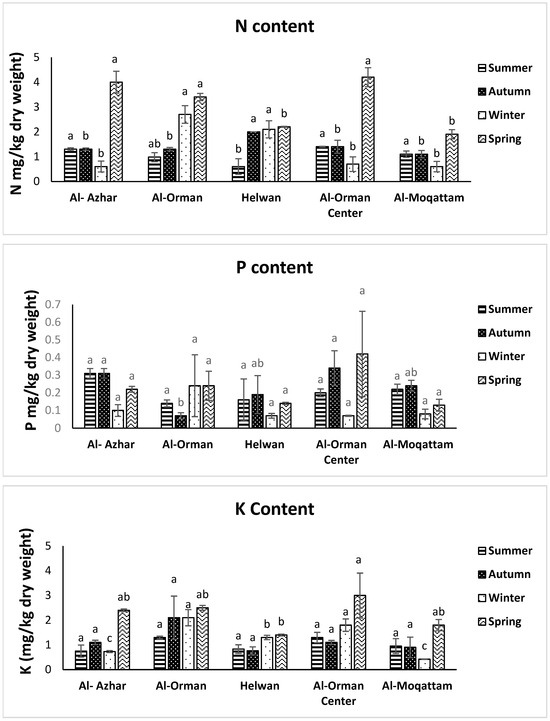
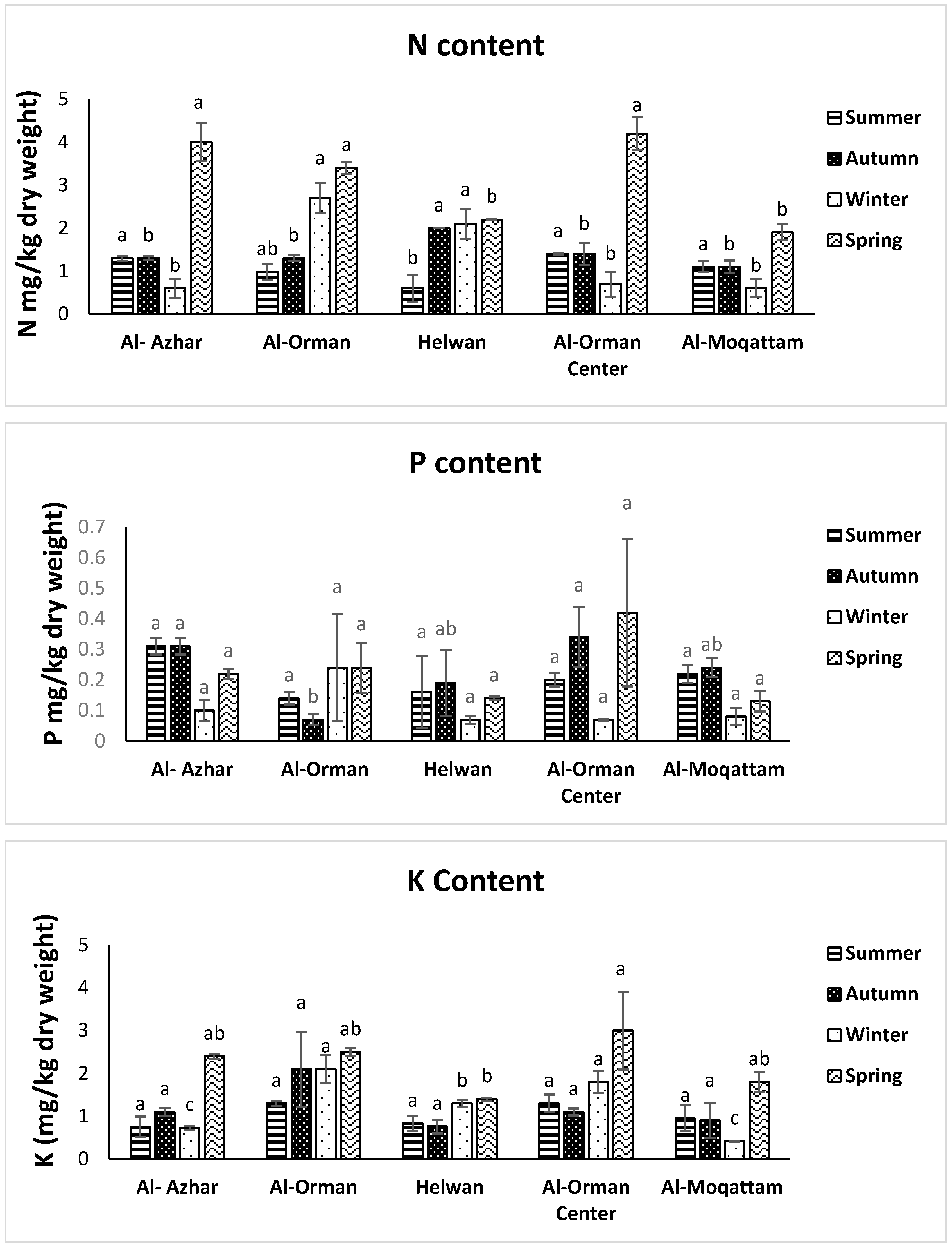
The analysis of variance and LSD tests showed significant seasonal (Figure 5) and regional (Table 4) differences in nitrogen (N), phosphorus (P), and potassium (K) contents in Ficus nitida leaves. Nitrogen varied significantly across both seasons and regions. The highest N concentration occurred in Al-Orman center during spring (4.19 mg/kg), followed by Al-Azhar (4.0 mg/kg) and Al-Orman (3.45 mg/kg). Winter produced the lowest N values, with Al-Azhar and Al-Moqattam each recording 0.59 mg/kg. Most regions showed maximum N in spring and minimum in winter, reflecting seasonal shifts in nutrient uptake and availability. Phosphorus also showed marked variation. Al-Orman center again recorded the highest P in spring (0.42 mg/kg). Moderate values were observed in Al-Moqattam during autumn (0.24 mg/kg) and in Al-Orman during spring and winter (0.24 mg/kg). Al-Azhar showed the lowest P level in winter (0.1 mg/kg). Spring and autumn generally exhibited higher P concentrations than winter, suggesting seasonal differences in soil P mobility and plant demand. Potassium followed a similar pattern, peaking in Al-Orman center during spring (3.01 mg/kg), followed by Al-Orman (2.50 mg/kg) and Al-Azhar (2.37 mg/kg). The lowest K value occurred in Al-Moqattam during winter (0.42 mg/kg). As with N and P, K levels were typically highest in spring and lowest in winter. Across all nutrients, concentrations generally followed the regional ranking: Al-Orman center > Al-Orman > Al-Azhar > Helwan > Al-Moqattam. Seasonally, spring showed the greatest NPK accumulation, followed by winter and autumn, with summer displaying the lowest values.
Figure 5.
Seasonal changes in N, P, and K content (mg/kg dry weight) in Ficus nitida leaves in different study regions during 2023 and 2024. Columns labeled with the same letter are not significantly different at p = 0.05 for seasonal comparison within the same region. Vertical bars at the top of the columns represent the standard error of the mean.
Table 4.
Regional changes in N, P, and K (mg/kg dry weight) within different study seasons during 2023 and 2024.
3.5. Moisture Content
Leaf moisture content showed clear regional and seasonal differences (Table 5). The highest values occurred in Al-Orman Center (85.4%), followed by Al-Moqattam (74.2%) and Al-Orman (65.6%), whereas Al-Azhar (55.8%) and Helwan (45.6%) recorded the lowest. Moisture levels were generally greatest in summer and autumn, declined in spring, and reached their minimum in winter, with Helwan showing the lowest winter value (33 ± 4.15%). Across the year, Al-Orman Center and Al-Moqattam maintained consistently higher moisture compared with the other regions, supporting better leaf development and physiological activity. Overall, moisture content followed the seasonal order: summer > autumn > spring > winter and the regional order Al-Orman Center > Al-Moqattam > Al-Orman > Al-Azhar > Helwan. These variations, alongside corresponding changes in chlorophyll, highlight strong seasonal influences on plant water status and its sensitivity to environmental conditions and pollution levels.
Table 5.
Seasonal changes in Chl a, Chl b, Tchl (mg/gm) and moisture contents in Ficus nitida in different regions of the study during 2023 and 2024.
3.6. Chlorophyll Content
Chlorophyll a (Chl a), chlorophyll b (Chl b), and total chlorophyll (TChl) in Ficus nitida showed significant seasonal and regional variations (Table 5). Al-Orman Center consistently recorded the highest chlorophyll levels, with peak Chl a in summer (85.4 ± 7.99 mg/g) and peak Chl b in winter (9.5 ± 0.12 mg/g). In contrast, Helwan showed the lowest Chl a during winter (33 ± 4.15 mg/g). Overall, TChl was greatest in winter and spring across most regions. Low-traffic areas such as Al-Orman Center and Al-Moqattam maintained higher chlorophyll contents, whereas urban sites (Al-Azhar and Al-Orman) displayed lower pigment levels. Seasonal chlorophyll trends corresponded with heavy metal patterns, with higher metal concentrations generally associated with lower chlorophyll, underscoring its utility as an indicator of environmental stress. Chl a was highest in summer and autumn and declined markedly in winter, while Al-Orman Center retained elevated levels throughout the year. Chl b tended to peak in winter and spring, particularly at Al-Orman Center (9.5 ± 0.12 mg/g) and Al-Orman (7.6 ± 0.49 mg/g), whereas the lowest value occurred at Al-Moqattam in summer (2.4 ± 0.31 mg/g). Similar seasonal patterns were observed for TChl, which reached its maximum in winter at Al-Orman Center (23.2 ± 0.38 mg/g) and Helwan (23.4 ± 1.61 mg/g). Summer showed the lowest TChl values, especially in Al-Azhar (7.3 ± 0.71 mg/g).
4. Discussion
This study revealed distinct spatial and seasonal variations in the accumulation of Cd, Pb, and Ni in Ficus nitida leaves and soils across the Greater Cairo region. The observed patterns underscore the combined influence of anthropogenic emissions, soil properties, and climatic conditions on heavy metal dynamics, and demonstrate the physiological sensitivity of Ficus nitida as a bioindicator of urban environmental quality.
4.1. Heavy Metal Accumulation and Soil Chemical Properties
The highest concentrations of heavy metals were detected in Helwan and Al-Azhar, areas characterized by intensive industrial activity and heavy vehicular traffic, whereas the lowest concentrations occurred in Al-Orman Center and Al-Moqattam, which represent greener and less congested urban zones. These spatial trends are consistent with patterns reported for other Ficus species and in global urban biomonitoring studies. Ficus retusa in Algerian cities accumulated significantly higher levels of Cd, Pb, and Ni in areas with dense vehicular movement [32].
Pronounced seasonal variability was also observed, with the greatest accumulation of heavy metals recorded during summer, followed by winter, autumn, and spring. This pattern reflects the influence of elevated temperature and low humidity, which enhance atmospheric dust deposition and reduce metal leaching, thereby increasing foliar metal loads [33]. Seasonal precipitation and regional topography have been shown to influence heavy metal mobility: rainfall can facilitate metal transfer from the atmosphere to soil, while topographical gradients modulate surface runoff and the localized accumulation of metals [34].
The results of the present study confirm that industrial operations and traffic congestion exert a significant influence on heavy metal accumulation, in agreement with earlier findings [35]. Among the examined elements, lead (Pb) exhibited the lowest concentrations (0.012–0.12 mg/kg), followed by cadmium (Cd; 0.014–0.22 mg/kg), while nickel (Ni) showed the highest concentrations (0.09–0.45 mg/kg). According to World Health Organization (WHO) guidelines, the permissible limits for Ni, Cd, and Pb are 10, 0.2, and 2 mg/kg, respectively [36]. Accordingly, the mean concentrations of Ni and Pb were within permissible levels, whereas Cd concentrations exceeded the recommended limit, indicating a potential adverse effect on plant physiological functions and growth.
Our results showed that the chemical properties of soil vary substantially depending on geography. Al-Orman contains high levels of SO4, Na, and Cl, indicating likely soil salinization. Al-Azhar, on the other hand, can store more water, as seen by its high SP%. The highest HCO3 concentration is reported in Helwan, which may improve soil fertility. The majority of properties in Al-Orman center showed lower results, which could be indicative of nutrient deficiencies or soil deterioration. Overall, the data showed that the Al-Orman region has a significant saline content, which could have been caused by soil compaction or irrigation practices. The elevated mineral levels in the Helwan region may be due to the area’s geology and industrial effluent. On the other hand, Al-Moqattam and Al-Orman center are relatively pollutant-free areas. A moderate area with a moderate salinity level was represented by Al-Azhar.
Soil physicochemical characteristics, particularly pH, salinity, and CaCO3 content, play a pivotal role in determining metal mobility and bioavailability. Overall, Al-Orman soils exhibited elevated salinity and high Na, Cl, and SO42− concentrations, indicating substantial salinization. Helwan soils were enriched in minerals, likely due to the combined effects of geological substrate and industrial effluents. In contrast, Al-Moqattam and Al-Orman Center displayed comparatively low ion concentrations and electrical conductivity, suggesting that these areas are less affected by pollution and salinity. The observed heterogeneity in soil chemical properties among the studied regions underscores the strong influence of both anthropogenic activities and natural factors such as topography, parent material, and microclimate on soil composition and fertility status. Soils from the Al-Orman region, which displayed higher electrical conductivity (EC) and lower water-holding capacity, exhibited moderate but detectable metal enrichment. This observation is likely associated with altered ion-exchange dynamics and reduced metal mobility under saline conditions. Similar results were reported by Suska-Malawska et al. [37], who found that elevated salinity modulates metal availability by competing for root uptake sites. Consequently, soil physicochemical parameters should be regarded as key determinants of heavy metal accumulation patterns in urban bioindicator species such as Ficus nitida.
4.2. Physiological Responses: Leaf Area, Chlorophyll and Pigment Content
Heavy metal exposure markedly reduced growth and key physiological traits of Ficus nitida. Leaf area, chlorophyll a, chlorophyll b, and total chlorophyll were consistently lower in regions with high metal loads. These patterns reflect the combined influence of seasonal conditions and spatial variation in pollution. Leaf area generally declined from summer to autumn, likely due to cooler temperatures and shorter day length, and reached its minimum in winter, particularly in Helwan, where cold conditions and heavy industrial pollution coincide. Although leaf area increased again in spring, values remained lower than those recorded in summer, probably because rising temperatures and improved moisture availability could not fully offset accumulated stress. Regional differences further support the role of environmental contamination. Al-Orman center repeatedly showed the highest leaf area, indicating favorable climatic and edaphic conditions with comparatively low pollution. Moderate leaf area values in Al-Moqattam dropped during winter, while Al-Azhar and Helwan consistently exhibited reduced leaf area, reflecting heavy metal stress and/or suboptimal climatic conditions. These spatial and temporal patterns align with typical phenological cycles driven by temperature, rainfall, and solar exposure, with summer supporting optimal growth and winter marking a period of vegetative dormancy.
The observed decline in chlorophyll content and leaf area is well documented in metal-stressed plants. Heavy metal stress, particularly from Cd and Pb, is known to cause a marked decline in chlorophyll content and leaf area in plants. These toxic metals disrupt chlorophyll biosynthesis by displacing essential cofactors such as Mg2+ and Fe2+ and interfering with enzymes involved in porphyrin metabolism, which in turn hampers the production of chlorophyll [38]. This disruption triggers oxidative stress, reduces photosynthetic efficiency, restricts leaf expansion, and ultimately limits plant growth. The parallel decline in chlorophyll and leaf area in the present study reinforces the close relationship between physiological performance and environmental contamination.
Overall, regions with the highest accumulation of Ni, Pb, and Cd, most notably the industrial site Helwan, followed by the heavily trafficked Al-Azhar, showed the lowest leaf area, whereas low-traffic sites such as Al-Orman center and Al-Moqattam had the highest values. These results are consistent with earlier findings that heavy metal accumulation can inhibit plant growth and impair enzyme activity [39].
4.3. N, P, and K Content Under Heavy Metal Stress
The concentrations of nitrogen (N), phosphorus (P), and potassium (K) in Ficus nitida leaves exhibited pronounced regional and seasonal variation, following the general order: Al-Orman Center > Al-Orman > Al-Azhar > Helwan > Al-Moqattam. Seasonally, spring showed the highest NPK accumulation, winter and autumn displayed intermediate levels, and summer recorded the lowest values. These patterns reflect differences in soil properties, climatic conditions, and local environmental factors that regulate nutrient cycling and uptake. Lower NPK contents in Helwan and Al-Azhar correspond to their higher pollution loads, while the higher levels observed in Al-Orman Center and Al-Moqattam indicate more favorable soil quality and reduced environmental stress. The seasonal trend, with the maximum in spring and with reduced levels in both summer and winter, suggests that nutrient assimilation is most efficient under moderate temperatures and adequate moisture, and limited during periods of environmental stress. Heavy metals hinder nutrient acquisition by competing with essential ions for membrane transporters and root-binding sites, thereby reducing uptake of elements such as Ca2+, Mg2+, and K+.
The reduced NPK levels in Helwan and Al-Azhar are consistent with inhibited nutrient uptake and impaired translocation under heavy metal stress. In contrast, higher foliar NPK contents in Al-Orman Center and Al-Moqattam suggest healthier soils and lower contamination pressure. Spring peaks likely reflect favorable environmental conditions that promote root activity and nutrient assimilation. Because N, P, and K are essential for photosynthesis, energy metabolism, and osmotic regulation, their depletion under metal stress further intensifies reductions in chlorophyll and growth. Accordingly, monitoring foliar nutrient status in Ficus nitida provides an effective indicator of combined pollution and nutritional stress in urban ecosystems.
4.4. Moisture Content Under Heavy Metal and Water-Stress Conditions
The present study revealed significant spatial and seasonal variations in leaf moisture content. Moisture was highest at low-traffic sites (Al-Orman Center, Al-Moqattam) and lowest at polluted industrial zones (Helwan, Al-Azhar). Seasonally, values peaked in summer and autumn and dropped in winter, reflecting both climatic and pollution-driven effects.
Recent studies have clarified how heavy metal toxicity and water availability interact to influence plant hydration. Kumar et al. [40] reported that metal exposure reduces root hydraulic conductivity and damages membranes, leading to decreased leaf relative water content (Plant Stress Physiology). Recent reviews have shown that drought and heavy metal exposure activate overlapping stress-response pathways, including enhanced ROS production, membrane lipid peroxidation, and stomatal closure, collectively impairing plant physiological performance [40,41]. Such mechanisms likely underlie the lower leaf moisture observed in Ficus nitida from Helwan and Al-Azhar, where compacted, saline soils exacerbate physiological water stress.
Soil factors further explain spatial differences. Wang et al. [42] reported that reduced soil moisture altered leaf nitrogen and water-use traits in urban plants. In our case, higher leaf moisture in Al-Orman Center and Al-Moqattam likely reflects more favorable soil texture and water-holding capacity, while elevated salinity (EC = 23.75 dS m−1) and pollution in Helwan restrict root uptake and hydration.
Reduced leaf moisture under metal stress compromises stomatal conductance, photosynthesis, and nutrient transport. Dadkh-Aghdash et al. [43] found that maintaining optimal leaf water content helps urban trees mitigate oxidative damage by supporting antioxidant activity and preserving cellular integrity under pollution stress. Therefore, leaf moisture can serve as a sensitive integrative indicator of physiological stress under combined metal and environmental pressures. Leaf moisture monitoring in Ficus nitida can complement metal and nutrient analyses to evaluate overall tree health. Urban soil management practices that improve structure, reduce compaction, and enhance irrigation may help mitigate pollution-induced water stress. Future studies should assess leaf water potential, stomatal behavior, and root hydraulic conductivity to further elucidate these mechanisms.
4.5. Chlorophyll Content
Chlorophyll a (Chl a), chlorophyll b (Chl b), and total chlorophyll (TChl) in Ficus nitida showed significant regional and seasonal variation, reflecting the influence of environmental conditions and urban pollution. Low-traffic sites, such as Al-Orman Center and Al-Moqattam, maintained higher pigment levels, whereas urban and industrial sites, including Al-Azhar, Al-Orman, and Helwan, exhibited lower concentrations. Helwan showed the lowest Chl a in winter (33 ± 4.15 mg/g) but high TChl (23.4 ± 1.61 mg/g), indicating complex interactions between stress and pigment accumulation. Seasonal trends revealed peak Chl a in summer and autumn, likely due to optimal light and temperature enhancing photosynthetic activity, while Chl b peaked in winter and spring, possibly compensating for reduced light availability. TChl followed similar seasonal patterns, with the maximum in winter and spring, highlighting physiological acclimation under stress conditions.
The inverse relationship between chlorophyll content and heavy metal (HM) concentrations emphasizes its value as a biomarker of environmental stress. Metals such as Cd2+, Pb2+, and Ni2+ disrupt chlorophyll biosynthesis by displacing Mg2+ and Fe2+, impairing porphyrin pathway enzymes, and generating reactive oxygen species that damage chloroplasts, reducing photosynthetic efficiency [23]. Elevated pollutant levels have been shown to reduce pigment synthesis in Ficus species, for example, exposure to lead and cadmium increases reactive oxygen species and lowers chlorophyll content in Ficus microcarpa [44]. Overall, the ability of Ficus nitida to maintain higher chlorophyll in less polluted areas demonstrates its suitability as a bioindicator for urban air metallic contamination and plant stress, providing insights into spatial patterns of pollution and photosynthetic resilience.
4.6. Land Use, Urban Health, Ecological Implications, and Phytoremediation Potential
Metal accumulation in Ficus nitida leaves reflects land-use intensity, with industrial and high-traffic areas exhibiting the highest levels. Seasonal maxima in summer highlight the role of atmospheric deposition, as dry conditions enhance dust accumulation while limiting metal leaching, explaining the strong soil–leaf correlation (R2 = 0.81) and the contribution of both root and foliar uptake. While Pb and Ni remained within permissible limits, Cd exceeded thresholds in industrial zones, posing long-term risks to vegetation and potential indirect effects on human health through dust, soil contact, or food-chain transfer. Chronic low-to-moderate metal exposure reduced leaf area, chlorophyll content, moisture, and NPK status, indicating impaired photosynthesis and diminished ecosystem services such as carbon sequestration, microclimate regulation, and air purification. Despite not being a hyperaccumulator, Ficus nitida’s moderate accumulation, tolerance, evergreen canopy, and longevity make it effective for phytostabilization, atmospheric metal interception, and long-term pollution biomonitoring. Its role is particularly valuable in arid or semi-arid urban areas, where limited rainfall prolongs metal persistence. Integration of phytoremediation and soil contamination indices enables clear classification of pollution intensity and plant response. Overall, land use, urbanization, and seasonal climate jointly drive heavy metal dynamics, emphasizing the value of Ficus nitida for monitoring, urban planning, and pollution mitigation strategies.
4.7. Bioindicator Performance and Phytoremediation Potential
The strong pollutant–response relationships observed confirm Ficus nitida as a reliable bioindicator of urban heavy metal contamination. These results align with findings for Ficus retusa in North Africa [41,45]. The dense evergreen canopy and broad leaf area enable efficient interception of airborne particulates, while robust roots facilitate soil metal uptake.
Beyond biomonitoring, Ficus nitida shows promise for phytoremediation. A meta-analysis by Zhang et al. [46] and Gao et al. [47] highlighted that woody perennials, including Ficus and Populus, can accumulate and sequester heavy metals, contributing to pollution mitigation. Given its tolerance and prevalence, Ficus nitida can thus serve dual roles, urban greening and environmental detoxification.
4.8. Environmental Implications and Future Perspectives
Spatial and seasonal differences emphasize the need for localized biomonitoring and adaptive management in urban ecosystems. Although Ficus nitida withstands moderate pollution, chronic exposure reduces its physiological efficiency and ecosystem services. Integrating pollution monitoring with vegetation health indices can inform sustainable urban planning.
Future research should quantify dust deposition rates, differentiate between foliar and root uptake, and evaluate micro-anatomical traits (e.g., stomatal density, specific leaf area) influencing metal retention. Long-term monitoring with isotopic and remote-sensing approaches could further trace pollutant sources and assess vegetation resilience under climate–pollution interactions.
5. Conclusions
Ficus nitida demonstrated high sensitivity and reliability as a bioindicator of heavy metal contamination in urban environments. Leaf and soil concentrations of Cd, Pb, and Ni varied significantly across seasons and locations, reflecting the impact of industrial emissions, vehicular traffic, and local soil properties. Helwan, an industrial zone, recorded the highest metal accumulation, followed by the high-traffic areas of Al-Azhar and Al-Orman, while Al-Orman Center and Al-Moqattam exhibited lower levels, indicating comparatively cleaner conditions. Seasonal patterns showed increased metal accumulation during summer, likely due to higher temperatures and reduced rainfall that enhance atmospheric deposition. Elevated heavy metal levels were associated with reductions in leaf area, chlorophyll content, and NPK nutrient status, highlighting adverse physiological effects on Ficus nitida. These findings confirm the species’ value as a natural biomonitor for assessing urban pollution and support its potential application in phytoremediation programs.
6. Implications and Future Perspectives
The observed spatial and seasonal variations emphasize the need for localized biomonitoring and adaptive management in urban ecosystems. While Ficus nitida tolerates moderate pollution, chronic exposure can compromise physiological performance and ecosystem services. Integrating pollutant monitoring with plant health indices can inform urban planning and pollution mitigation strategies. Future research should quantify dust deposition, distinguish between foliar and root uptake pathways, and examine leaf micro-anatomical traits, such as stomatal density and specific leaf area that influence metal retention. Long-term studies using isotopic tracing and remote sensing could further identify pollutant sources and assess vegetation resilience under combined pollution and climate stress. Continuous monitoring of Ficus nitida can provide valuable data to guide sustainable environmental management and urban planning in Egyptian cities and other heavily polluted regions.
Author Contributions
Conceptualization, M.A.S. and B.M.W.; methodology, E.A.S.; software, N.F.E.; validation, M.A.S., B.M.W. and N.F.E.; formal analysis, E.A.S.; investigation, E.A.S. and N.F.E.; resources, E.A.S.; data curation, E.A.S. and N.F.E.; writing—original draft preparation, N.F.E.; writing—review and editing, M.A.S.; visualization, M.A.S. and N.F.E.; supervision, M.A.S.; project administration, B.M.W.; funding acquisition, E.A.S. All authors have read and agreed to the published version of the manuscript.
Funding
This research received no external funding.
Data Availability Statement
The data presented in this study are available on request from the corresponding author due to (specify the reason for the restriction).
Conflicts of Interest
The authors declare no conflicts of interest.
Abbreviations
The following abbreviations are used in this manuscript:
| HMs | Heavy metals |
| Chl a | Chlorophyll a |
| Chl b | Chlorophyll b |
| TChl | Total chlorophyll |
| SP% | Soil saturation percentage |
References
- Emberson, L.D.; Ashmore, M.R.; Murray, F.; Kuylenstierna, J.C.I.; Percy, K.E.; Izuta, T.; Zheng, Y.; Shimizu, H.; Sheu, B.H.; Liu, C.P.; et al. Impacts of Air Pollutants on Vegetation in Developing Countries. Water. Air. Soil Pollut. 2001, 130, 107–118. [Google Scholar] [CrossRef] [Scilit]
- Tchounwou, P.B.; Yedjou, C.G.; Patlolla, A.K.; Sutton, D.J. Heavy Metal Toxicity and the Environment. EXS 2012, 101, 133–164. [Google Scholar] [CrossRef] [Scilit]
- Swain, C.K. Environmental Pollution Indices: A Review on Concentration of Heavy Metals in Air, Water, and Soil near Industrialization and Urbanisation. Discov. Environ. 2024, 2, 5. [Google Scholar] [CrossRef] [Scilit]
- Wong, C.S.C.; Li, X.; Thornton, I. Urban Environmental Geochemistry of Trace Metals. Environ. Pollut. 2006, 142, 1–16. [Google Scholar] [CrossRef] [Scilit]
- Liu, Z.; Liu, J.; Davies, S.R.; Kankaew, P. Analysis of Hotspots and Inverse Distance Weighting (IDW) of Polluted Habitats Using ArcGIS Pro.: A Case Study in the Sea of Najaf and Surrounding Terrestrial Area Analysis of Hotspots and Inverse Distance Weighting (IDW) of Polluted Habitats Using ArcGIS Pro.: A Case Study in the Sea of Najaf and Surrounding Terrestrial Area. IOP Conf. Ser. Earth Environ. Sci. 2023, 1215, 012005. [Google Scholar] [CrossRef] [Scilit]
- Yang, J.; Zhang, G.; Yang, J.; Zhang, G. Formation, Characteristics and Eco-Environmental Implications of Urban Soils—A Review. Soil Sci. Plant Nutr. 2015, 61, 30–46. [Google Scholar] [CrossRef] [Scilit]
- Amini, M.; Khademi, H.; Afyuni, M.; Abbaspour, K.C. Variability of Available Cadmium in Relation to Soil Properties and Landuse in an Arid Region in Central Iran. Water Air Soil Pollut. 2005, 162, 205–218. [Google Scholar] [CrossRef] [Scilit]
- Tsadilas, C.D.; Karaivazoglou, N.A.; Tsotsolis, N.C.; Stamatiadis, S.; Samaras, V. Cadmium Uptake by Tobacco as Affected by Liming, N Form, and Year of Cultivation. Environ. Pollut. 2005, 134, 239–246. [Google Scholar] [CrossRef] [Scilit] [PubMed]
- Renella, G.; Adamo, P.; Bianco, M.R.; Landi, L.; Violante, P.; Nannipieri, P. Availability and Speciation of Cadmium Added to a Calcareous Soil under Various Managements. Eur. J. Soil Sci. 2004, 55, 123–133. [Google Scholar] [CrossRef] [Scilit]
- Yadav, S.K. Heavy Metals Toxicity in Plants: An Overview on the Role of Glutathione and Phytochelatins in Heavy Metal Stress Tolerance of Plants. S. Afr. J. Bot. 2010, 76, 167–179. [Google Scholar] [CrossRef] [Scilit]
- Zhang, Y.; Yang, Y.; Zhang, L.; Zhao, C.; Yan, J.; Liu, M.; Zhao, L. Seasonal Variation in Leaf Area Index and Its Impact on the Shading Effects of Vertical Green Facades in Subtropical Areas. Build. Environ. 2022, 225, 109629. [Google Scholar] [CrossRef] [Scilit]
- Gajewska, E.; Skłodowska, M.; Słaba, M.; Mazur, J. Effect of Nickel on Antioxidative Enzyme Activities, Proline and Chlorophyll Contents in Wheat Shoots. Biol. Plant. 2006, 50, 653–659. [Google Scholar] [CrossRef] [Scilit]
- Brzóska, M.M.; Moniuszko-Jakoniuk, J. Interactions between Cadmium and Zinc in the Organism. Food Chem. Toxicol. 2001, 39, 967–980. [Google Scholar] [CrossRef] [Scilit] [PubMed]
- Zhang, Z.; Yuan, W.; Li, P.; Song, Q.; Wang, X.; Xu, W.; Zhu, X.; Zhang, Q.; Yue, J.; Bai, J.; et al. Mechanochemical Immobilization of Lead Contaminated Soil by Ball Milling with the Additive of Ca(H2PO4)2. Chemosphere 2020, 247, 125963. [Google Scholar] [CrossRef] [Scilit]
- Kålås, J.A.; Steinnes, E.; Lierhagen, S. Lead Exposure of Small Herbivorous Vertebrates from Atmospheric Pollution. Environ. Pollut. 2000, 107, 21–29. [Google Scholar] [CrossRef] [Scilit] [PubMed]
- Shafiq, M.; Iqbal, M.; Mohammad, A. Effect of Lead and Cadmium on Germination and Seedling Growth of Leucaena Leucocephala. J. Appl. Sci. Environ. Manag. 2008, 12, 61–66. [Google Scholar] [CrossRef] [Scilit]
- Järup, L. Hazards of Heavy Metal Contamination. Br. Med. Bull. 2003, 68, 167–182. [Google Scholar] [CrossRef] [Scilit]
- Sharma, P.; Dubey, R.S. Lead Toxicity in Plants. Braz. J. Plant Physiol. 2005, 17, 35–52. [Google Scholar] [CrossRef] [Scilit]
- Madyiwa, S.; Chimbari, M.J.; Schutte, F. Lead and Cadmium Interactions in Cynodon Nlemfuensis and Sandy Soil Subjected to Treated Wastewater Application under Greenhouse Conditions. Phys. Chem. Earth Parts A/B/C 2004, 29, 1043–1048. [Google Scholar] [CrossRef] [Scilit]
- Subramanian, R.; Gayathri, S.; Rathnavel, C.; Raj, V. Analysis of Mineral and Heavy Metals in Some Medicinal Plants Collected from Local Market. Asian Pac. J. Trop. Biomed. 2012, 2, S74–S78. [Google Scholar] [CrossRef] [Scilit]
- Youssef, N.A. Bioaccumulation of Heavy Metals in Urban Tree Leaves. Egypt. J. Bot. 2020, 60, 261–273. [Google Scholar] [CrossRef] [Scilit]
- Elkaee, S.; Shirvany, A.; Moeinaddini, M.; Sabbagh, F. Assessment of Particulate Matter, Heavy Metals, and Carbon Deposition Capacities of Urban Tree Species in Tehran, Iran. Forests 2024, 15, 273. [Google Scholar] [CrossRef] [Scilit]
- El-Khatib, A.A.; Youssef, N.A.; Barakat, N.A.; Samir, N.A. Responses of Eucalyptus Globulus and Ficus Nitida to Different Potential of Heavy Metal Air Pollution. Int. J. Phytoremediation 2020, 22, 986–999. [Google Scholar] [CrossRef] [Scilit] [PubMed]
- Kamble, P.N.; Giri, S.P.; Mane, R.S.; Tiwana, A. Estimation of Chlorophyll Content in Young and Adult Leaves of Some Selected Plants. Res. Technol. 2019, 5, 306–310. [Google Scholar]
- Arnon, D.I. Copper Enzymes in Isolated Chloroplasts. Polyphenoloxidase in Beta Vulgaris. Plant Physiol. 1949, 24, 1–15. [Google Scholar] [CrossRef] [Scilit]
- Cresser, M.S.; Parsons, J.W. Sulphuric—Perchloric Acid Digestion of Plant Material for the Determination of Nitrogen, Phosphorus, Potassium, Calcium and Magnesium. Anal. Chim. Acta 1979, 109, 431–436. [Google Scholar] [CrossRef] [Scilit]
- AOAC International. Official Methods of Analysis, 22nd Edition (2023); AOAC Publications: New York, NY, USA, 2023. [Google Scholar] [CrossRef] [Scilit]
- Jackson, M.L. Soil Chemical Analysis—Google Scholar. Available online: https://scholar.google.com/scholar?hl=en&as_sdt=0%2C5&q=Jackson%2C+M.+L.+%281973%29.+Soil+Chemical+Analysis.&btnG=#d=gs_cit&t=1763243931092&u=%2Fscholar%3Fq%3Dinfo%3AvvjgGp_DAEkJ%3Ascholar.google.com%2F%26output%3Dcite%26scirp%3D0%26hl%3Den (accessed on 15 November 2025).
- Chapman, H.D.; Pratt, P.F. Methods of Analysis for Soils, Plants, and Waters, 2nd ed.; University of California, Division of Agricultural Sciences: Riverside, CA, USA, 1978; 309p. [Google Scholar]
- SAS Institute Inc. SAS/STAT® 15.1 User’s Guide; SAS Institute Inc.: Cary, NC, USA, 2018. [Google Scholar]
- GB 15618-1995; Environmental Quality Standard for Soils. State Environmental Protection Administration of China: Beijing, China, 1995.
- Sahli, L.; Belhiouani, H. Ficus retusa L. as Possible Indicator of Air Metallic Pollution in Urban Environment. Int. J. Phytoremediation 2022, 24, 1050–1059. [Google Scholar] [CrossRef] [Scilit] [PubMed]
- Gajbhiye, T.; Pandey, S.K.; Kim, K.H. Foliar Uptake of Toxic Metals Bound to Airborne Particulate Matter in an Urban Environment. Aerosol Air Qual. Res. 2022, 22, 220050. [Google Scholar] [CrossRef] [Scilit]
- Wei, L.; Liu, Y.; Routh, J.; Tang, J.; Liu, G.; Liu, L.; Luo, D.; Li, H.; Zhang, H. Release of Heavy Metals and Metalloids from Two Contaminated Soils to Surface Runoff in Southern China: A Simulated-Rainfall Experiment. Water 2019, 11, 1339. [Google Scholar] [CrossRef] [Scilit]
- Gratani, L.; Crescente, M.F.; Varone, L. Long-Term Monitoring of Metal Pollution by Urban Trees. Atmos. Environ. 2008, 42, 8273–8277. [Google Scholar] [CrossRef] [Scilit]
- World Health Organization. Trace Elements in Human Nutrition and Health; World Health Organization: Geneva, Switzerland, 1996; Available online: https://iris.who.int/handle/10665/37931 (accessed on 21 November 2025).
- Suska-malawska, M.; Vyrakhamanova, A.; Ibraeva, M.; Poshanov, M.; Toderich, K. Spatial and In-Depth Distribution of Soil Salinity and Heavy. Agronomy 2022, 12, 1207. [Google Scholar] [CrossRef] [Scilit]
- Hu, Z.; Zhao, C.; Li, Q.; Feng, Y.; Zhang, X.; Lu, Y.; Ying, R.; Yin, A.; Ji, W. Heavy Metals Can Affect Plant Morphology and Limit Plant Growth and Photosynthesis Processes. Agronomy 2023, 13, 2601. [Google Scholar] [CrossRef] [Scilit]
- Viehweger, K. How Plants Cope with Heavy Metals. Bot. Stud. 2014, 55, 35. [Google Scholar] [CrossRef] [Scilit]
- Kumar, G.; Bharadwaj, A.S.; Masih, J.; Siddiqui, A.; Singh, G.; Bhadauria, V. Heavy Metals Accumulation and Health Risk Potential in Lycopercicum esculentum Plants from Pb Contaminated Soil: A Review. In Proceedings of the International Conference on Sustainable Science and Technology for Tomorrow (SciTech 2024); Thatikonda, S.K., Pandey, B., Shankar, D., Rodriguez, R.V., Eds.; Atlantis Advances in Applied Sciences 2; Atlantis Press International B.V.: Dordrecht, The Netherlands, 2025; pp. 105–116. [Google Scholar] [CrossRef] [Scilit]
- Li, Z.; Chen, W.; Tan, Q.; Hou, Y.; Farooq, T.H.; Iqbal, B.; Li, Y. Interaction of Heavy Metal with Drought/Salinity Stress in Plants. In Heavy Metal Toxicity and Tolerance in Plants: A Biological, Omics, and Genetic Engineering Approach; Wiley: Hoboken, NJ, USA, 2023; pp. 407–423. ISBN 9781119906506. [Google Scholar]
- Wang, L.; Hasnain, M.; Tang, Z.; Makoto, K. Soil Water Availability Alters Plant-Soil Feedback Effects on Invasive Plant Growth and Foliar Herbivory. J. Plant Ecol. 2025, 18, rtaf044. [Google Scholar] [CrossRef] [Scilit]
- Dadkhah-Aghdash, H.; Rasouli, M.; Rasouli, K.; Salimi, A. Detection of Urban Trees Sensitivity to Air Pollution Using Physiological and Biochemical Leaf Traits in Tehran, Iran. Sci. Rep. 2022, 12, 15398. [Google Scholar] [CrossRef] [Scilit] [PubMed]
- Liu, N.; Lin, Z.; Mo, H. Metal (Pb, Cd, and Cu)-Induced Reactive Oxygen Species Accumulations in Aerial Root Cells of the Chinese Banyan (Ficus Microcarpa). Ecotoxicology 2012, 21, 2004–2011. [Google Scholar] [CrossRef] [Scilit] [PubMed]
- Liu, Y.; Zhao, X.; Liu, R.; Zhou, J.; Jiang, Z. Biomonitoring and Phytoremediation Potential of the Leaves, Bark, and Branch Bark of Street Trees for Heavy Metal Pollution in Urban Areas. Environ. Monit. Assess. 2022, 194, 344. [Google Scholar] [CrossRef] [Scilit]
- Zhang, S.; Tan, X.; Zhou, Y.; Liu, N. Effects of a Heavy Metal (Cadmium) on the Responses of Subtropical Coastal Tree Species to Drought Stress. Environ. Sci. Pollut. Res. 2023, 30, 12682–12694. [Google Scholar] [CrossRef] [Scilit] [PubMed]
- Gao, L.Y.; Jing, S.T.; Zhou, Y.J.; Cai, J.Z.; Cheng, Z. Assessment of Heavy Metal Pollution and Health Risks in Urban Park Soil of Chengdu, China: Implications for Ecosystem Management and Public Health. Environ. Geochem. Health 2025, 47, 425. [Google Scholar] [CrossRef] [Scilit]

Disclaimer/Publisher’s Note: The statements, opinions and data contained in all publications are solely those of the individual author(s) and contributor(s) and not of MDPI and/or the editor(s). MDPI and/or the editor(s) disclaim responsibility for any injury to people or property resulting from any ideas, methods, instructions or products referred to in the content. |
© 2025 by the authors. Licensee MDPI, Basel, Switzerland. This article is an open access article distributed under the terms and conditions of the Creative Commons Attribution (CC BY) license.